EP2620434A1 - Crystals of substituted cycloalkene derivatives - Google Patents
Crystals of substituted cycloalkene derivatives Download PDFInfo
- Publication number
- EP2620434A1 EP2620434A1 EP11826892.9A EP11826892A EP2620434A1 EP 2620434 A1 EP2620434 A1 EP 2620434A1 EP 11826892 A EP11826892 A EP 11826892A EP 2620434 A1 EP2620434 A1 EP 2620434A1
- Authority
- EP
- European Patent Office
- Prior art keywords
- crystal
- ray diffraction
- compound
- potassium
- powder
- Prior art date
- Legal status (The legal status is an assumption and is not a legal conclusion. Google has not performed a legal analysis and makes no representation as to the accuracy of the status listed.)
- Granted
Links
Images


Classifications
-
- C—CHEMISTRY; METALLURGY
- C07—ORGANIC CHEMISTRY
- C07D—HETEROCYCLIC COMPOUNDS
- C07D317/00—Heterocyclic compounds containing five-membered rings having two oxygen atoms as the only ring hetero atoms
- C07D317/08—Heterocyclic compounds containing five-membered rings having two oxygen atoms as the only ring hetero atoms having the hetero atoms in positions 1 and 3
- C07D317/72—Heterocyclic compounds containing five-membered rings having two oxygen atoms as the only ring hetero atoms having the hetero atoms in positions 1 and 3 spiro-condensed with carbocyclic rings
-
- A—HUMAN NECESSITIES
- A61—MEDICAL OR VETERINARY SCIENCE; HYGIENE
- A61K—PREPARATIONS FOR MEDICAL, DENTAL OR TOILETRY PURPOSES
- A61K31/00—Medicinal preparations containing organic active ingredients
- A61K31/33—Heterocyclic compounds
- A61K31/335—Heterocyclic compounds having oxygen as the only ring hetero atom, e.g. fungichromin
- A61K31/357—Heterocyclic compounds having oxygen as the only ring hetero atom, e.g. fungichromin having two or more oxygen atoms in the same ring, e.g. crown ethers, guanadrel
-
- A—HUMAN NECESSITIES
- A61—MEDICAL OR VETERINARY SCIENCE; HYGIENE
- A61P—SPECIFIC THERAPEUTIC ACTIVITY OF CHEMICAL COMPOUNDS OR MEDICINAL PREPARATIONS
- A61P29/00—Non-central analgesic, antipyretic or antiinflammatory agents, e.g. antirheumatic agents; Non-steroidal antiinflammatory drugs [NSAID]
-
- A—HUMAN NECESSITIES
- A61—MEDICAL OR VETERINARY SCIENCE; HYGIENE
- A61P—SPECIFIC THERAPEUTIC ACTIVITY OF CHEMICAL COMPOUNDS OR MEDICINAL PREPARATIONS
- A61P31/00—Antiinfectives, i.e. antibiotics, antiseptics, chemotherapeutics
- A61P31/04—Antibacterial agents
-
- A—HUMAN NECESSITIES
- A61—MEDICAL OR VETERINARY SCIENCE; HYGIENE
- A61P—SPECIFIC THERAPEUTIC ACTIVITY OF CHEMICAL COMPOUNDS OR MEDICINAL PREPARATIONS
- A61P31/00—Antiinfectives, i.e. antibiotics, antiseptics, chemotherapeutics
- A61P31/12—Antivirals
-
- A—HUMAN NECESSITIES
- A61—MEDICAL OR VETERINARY SCIENCE; HYGIENE
- A61P—SPECIFIC THERAPEUTIC ACTIVITY OF CHEMICAL COMPOUNDS OR MEDICINAL PREPARATIONS
- A61P43/00—Drugs for specific purposes, not provided for in groups A61P1/00-A61P41/00
-
- A—HUMAN NECESSITIES
- A61—MEDICAL OR VETERINARY SCIENCE; HYGIENE
- A61P—SPECIFIC THERAPEUTIC ACTIVITY OF CHEMICAL COMPOUNDS OR MEDICINAL PREPARATIONS
- A61P9/00—Drugs for disorders of the cardiovascular system
Definitions
- the present invention relates to crystals of substituted cycloalkene derivatives, which have activity to suppress intracellular signal transduction or cell activation in various cells such as monocytes, macrophages, and vascular endothelial cells induced by endotoxin, and to suppress the production of an inflammatory mediator such as TNF- ⁇ caused by the intracellular signal transduction or cell activation, and which are useful as a prophylactic and/or therapeutic agent for various diseases such as sepsis (septic shock, disseminated intravascular coagulation, multiple organ failure, etc.).
- various diseases such as sepsis (septic shock, disseminated intravascular coagulation, multiple organ failure, etc.).
- Endotoxin lipopolysaccharide: LPS
- LPS lipopolysaccharide: LPS
- monocytes, macrophages, and vascular endothelial cells act on cells such as monocytes, macrophages, and vascular endothelial cells, induces the overproduction of various inflammatory mediators such as TNF- ⁇ and the like, causes sudden hypotension, blood coagulation disorders, circulatory disturbances, and the like in addition to systemic inflammatory responses, and thus develops sepsis (see, for example, Non-patent document 2).
- Lipopolysaccharide and Lipid A which corresponds to a partial structure thereof, activate intracellular signal transduction via TLR4 (Toll-like receptor 4), which is a functional cell surface receptor, after binding with CD14 (see, for example, Non-patent document 3), whereby various cell responses represented by the production of inflammatory mediators are initiated. Therefore, it is considered that a substance capable of suppressing the intracellular signal transduction or cell activation induced by endotoxin, and various cell responses, which are induced by such intracellular signal transduction or cell activation and represented by the overproduction of inflammatory mediators such as TNF- ⁇ , can be effective prophylactic and therapeutic agents for sepsis (see, for example, Non-patent documents 3 and 4, and Patent documents 1 and 2).
- Intracellular signal transduction or cell activation induced by endotoxin, and various cell responses such as the overproduction of inflammatory mediators including TNF- ⁇ , etc. induced by the intracellular signal transduction or cell activation lead to development and progress of various diseases such as ischemic brain disorder, arteriosclerosis, poor prognosis after coronary angioplasty, heart failure, diabetes, diabetic complications, arthritis, osteoporosis, osteopenia, autoimmune diseases, tissue disorders and rejection after organ transplantation, bacterial infection, viral infection, gastritis, pancreatitis, nephritis, pneumonia, hepatitis, and leukemia, in addition to the above-described sepsis (for example, Non-patent document 5 and Patent document 3).
- diseases such as ischemic brain disorder, arteriosclerosis, poor prognosis after coronary angioplasty, heart failure, diabetes, diabetic complications, arthritis, osteoporosis, osteopenia, autoimmune diseases, tissue disorders and rejection after organ transplantation, bacterial infection
- the present inventors made intensive studies in order to solve the above problems, and as a result, they found that there are a group of compounds having a desired effect among substituted cycloalkene derivatives (Patent document 4).
- substituted cycloalkene derivatives in the free form
- the present inventors studied pharmacologically acceptable salts thereof.
- An object of the present invention is to provide crystals of substituted cycloalkene derivatives having excellent storage and handling stability.
- the present invention is directed to:
- crystals of substituted cycloalkene derivatives having excellent storage and handling stability can be provided.
- Potassium salts (crystals) of substituted cycloalkene derivatives according to the present invention suppress the production of an inflammatory mediator caused by intracellular signal transduction or cell activation induced by endotoxin and are effective as a prophylactic and/or therapeutic agent for sepsis.
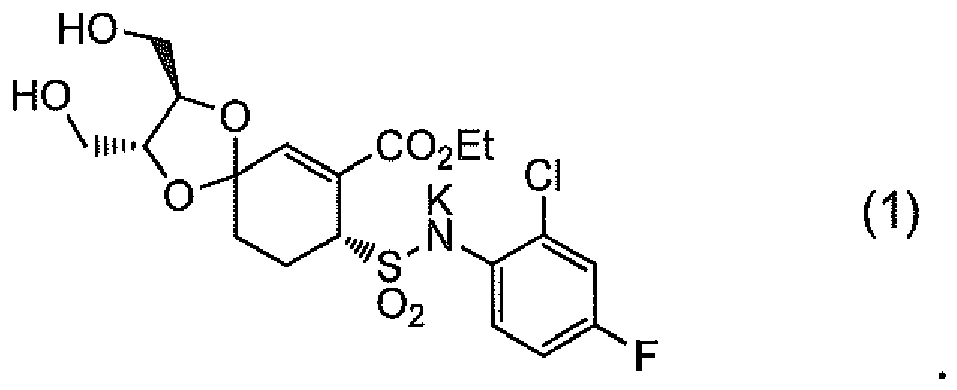
- the present invention relates to a crystal of potassium (2-chloro-4-fluorophenyl) ⁇ [(2R,3R,8R)-7-(ethoxycarbonyl)-2,3-bis(hydroxymethyl)-1,4-dioxaspiro[4.5]deca-6-en-8-yl]sulfonyl ⁇ azanide represented by the following formula (1) (hereinafter sometimes referred to as Compound (1) in this description):
- a crystal refers to a solid whose internal structure is three-dimensionally composed of a regular repetition of constituent atoms (or a group thereof), and is distinguished from an amorphous solid which does not have such a regular internal structure.
- a crystallographic method such as powder X-ray diffraction measurement or differential scanning calorimetric analysis.
- a solid is subjected to powder X-ray diffraction measurement using an X-ray obtained by irradiation with copper K ⁇ radiation.
- the solid is determined to be a crystal when distinct peaks are observed in the X-ray diffraction pattern, while the solid is determined to be amorphous when no distinct peaks are observed.
- the solid is determined to be a crystal whose crystallinity is low when the peaks can be read but are not distinct (for example, broad), and such a crystal whose crystallinity is low is also encompassed within the crystal of the present invention.
- crystal polymorphism Even the same compound can form crystals having a plurality of different internal structures and physicochemical properties (crystal polymorphism) depending on the conditions for crystallization.
- the crystal of the present invention may be any of these crystal polymorphic forms and may be a mixture of two or more crystal polymorphic forms.
- the crystal of the present invention may sometimes form a hydrate by allowing the crystal to stand in the air to absorb water, thereby having attached water, or by heating the crystal to 25 to 150°C in usual atmospheric conditions, etc. Further, the crystal of the present invention may sometimes contain a solvent used at the time of crystallization as an attached residual solvent or a solvate.
- the crystal of the present invention is sometimes represented on the basis of powder X-ray diffraction data.
- the measurement and analysis may be performed by methods conventionally used in this field, and for example, the powder X-ray diffraction can be performed by the method described in the Examples.
- the lattice constant thereof is changed by the addition or removal of water of crystallization, and therefore the diffraction angle (2 ⁇ ) in powder X-ray diffraction may sometimes be changed.
- the peak intensity may sometimes be changed due to a difference in a crystal growth surface or the like (crystal habit), etc.
- crystal of the present invention when represented on the basis of powder X-ray diffraction data, a crystal having an identical peak diffraction angle and X-ray diffraction pattern in powder X-ray diffraction, and also hydrated and dehydrated crystals obtained from the crystal, are encompassed within the scope of the present invention.
- a sample is irradiated with copper K ⁇ radiation (in which Ka1 and K ⁇ 2 radiations are not separated).
- An X-ray diffraction pattern can be obtained by analyzing diffraction derived from K ⁇ radiation, and can also be obtained by analyzing only diffraction derived from K ⁇ 1 radiation taken from diffraction derived from K ⁇ radiation.
- the powder X-ray diffraction pattern obtained by irradiation with K ⁇ radiation includes an X-ray diffraction pattern obtained by analyzing diffraction peaks derived from K ⁇ radiation and an X-ray diffraction pattern obtained by analyzing diffraction derived from K ⁇ 1 radiation, and is preferably an X-ray diffraction pattern obtained by analyzing diffraction derived from K ⁇ 1 radiation.
- One preferred embodiment of the crystal of the present invention is a crystal of potassium (2-chloro-4-fluorophenyl) ⁇ [(2R,3R,8R)-7-(ethoxycarbonyl)-2,3-bis(hydroxymethyl)-1,4-dioxaspiro[4.5]deca-6-en-8-yl]sulfonyl ⁇ azanide referred to as Compound (1).
- the crystal of Compound (1) has the X-ray diffraction pattern shown in Fig. 1 in a powder diffraction pattern obtained by irradiation with copper K ⁇ radiation.
- the crystal of Compound (1) has characteristic peaks at diffraction angles 2 ⁇ (°) of 3.82, 7.64, 11.48, 19.06, 23.08, 25.22, and 26.98.
- the "characteristic peak” refers to a peak having a relative intensity of 9 or more when the maximum peak intensity in the powder X-ray diffraction is taken as 100.
- crystal of the present invention is a crystal of potassium (2-bromo-4-fluorophenyl) ⁇ [(2R,3R,8R)-7-(ethoxycarbonyl)-2,3-bis(hydroxymethyl)-1,4-dioxaspiro[4.5]deca-6-en-8-yl]sulfonyl ⁇ azanide referred to as a crystal of Compound (2).
- the crystal of Compound (2) has the X-ray diffraction pattern shown in Fig. 2 in a powder diffraction pattern obtained by irradiation with copper K ⁇ radiation.
- the crystal of Compound (2) has characteristic peaks at diffraction angles 2 ⁇ (°) of 7.66, 15.36, 19.08, 23.76, 25.26, and 27.04.
- the "characteristic peak” refers to a peak having a relative intensity of 10 or more when the maximum peak intensity in the powder X-ray diffraction is taken as 100.
- the ordinate indicates diffraction intensity [counts/sec (cps)]
- the abscissa indicates the diffraction angle 2 ⁇ (°).
- the 2 ⁇ can be slightly changed in its position and relative intensity depending on the measurement conditions and the like, therefore even when 2 ⁇ is slightly changed, the identification of the crystal form should be appropriately determined by reference to the pattern of the entire spectrum.
- the limit of such error is generally within the range of ⁇ 2, preferably within the range of +1, more preferably within the range of ⁇ 0.5, further more preferably within the range of ⁇ 0.2.
- the intensities of the respective diffraction peaks can be changed by various factors (including preferred orientation occurring in a specific crystalline form and the effect of grain size), and therefore, the relative intensities of the above-described main peaks for identifying the crystal of the present invention can also be changed, and these crystals are also encompassed within the crystal of the present invention.
- the Compound (1) or (2) of the present invention has activity to suppress the production of an inflammatory mediator caused by intracellular signal transduction or cell activation induced by endotoxin, and also has excellent storage and handling stability, and therefore is useful as a pharmaceutical. Further such a pharmaceutical is preferably used for warm-blooded animals, more preferably used for humans.
- the compound per se or as a mixture with an appropriate pharmacologically acceptable excipient, diluent, or the like can be administered orally in the form of a tablet, a capsule, a granule, a powder, a syrup, or the like, or parenterally in the form of an injection, a suppository, or the like.
- an excipient for example, an organic excipient such as a sugar derivative such as lactose, sucrose, glucose, mannitol, or sorbitol; a starch derivative such as corn starch, potato starch, pregelatinized starch or dextrin; a cellulose derivative such as crystalline cellulose; gum arabic; dextrane; or pullulan; or an inorganic excipient such as a silicate derivative such as light silicic anhydride, synthetic aluminum silicate, calcium silicate, or magnesium aluminometasilicate; a phosphate such as calcium hydrogen phosphate; a carbonate such as calcium carbonate; or a sulfate such as calcium sulfate can be used), a lubricant (for example, stearic acid, a metal salt of stearic acid such as calcium stearate or magnesium stearate; talc; a wax such as bee
- an excipient for example, an organic excipient such as
- a precipitated solid was obtained by filtration and washed with diethyl ether, whereby a crude product was obtained as an amorphous solid. Then, the crude product was dissolved in 3 mL of ethyl acetate, and a seed crystal obtained by the above-described method was added thereto, and the resulting mixture was heated under reflux at 100°C for 5 minutes. After the resulting mixture was cooled, a precipitated solid was obtained by filtration and washed with ethyl acetate, whereby 236 mg of the title compound was obtained as a white crystal (yield: 73%).
- a precipitated solid was obtained by filtration and washed with diethyl ether, whereby a crude product was obtained as an amorphous solid. Then, the crude product was dissolved in 1 mL of ethanol, and the resulting solution was heated under stirring at 70°C for 1 minute. After the resulting mixture was cooled, a precipitated solid was obtained by filtration and washed with ethanol and diethyl ether, whereby 197 mg of the title compound was obtained as a white crystal (yield: 66%).
- Rint TTR-III (provided with a scintillation counter tube and a long slit for removing K ⁇ radiations) manufactured by Rigaku Corporation was used. A sample was placed uniformly on a non-reflective sample holder, and measurement was performed under the following conditions.
- X-ray species Cu-K a (wavelength: 1.54 A), Tube voltage: 50 kV, Tube current: 300 mA, Scanning rate: 2°/min, Step: 0.02°, Scanning range (2q): 2° to 60°, Divergence slit: 0.5 mm, Scattering slit: 0.5 mm, Receiving slit: 0.5 mm
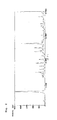
- Fig. 1 The powder X-ray diffraction pattern obtained by measuring the crystal of the compound obtained in Example 1 in accordance with the above-described method is shown in Fig. 1 . Peaks having a relative intensity of 9 or more when the maximum peak intensity in Fig. 1 is taken as 100 are shown in Table 1.
- Fig. 2 The powder X-ray diffraction pattern obtained by measuring the crystal of the compound obtained in Example 2 in accordance with the above-described method is shown in Fig. 2 . Peaks having a relative intensity of 10 or more when the maximum peak intensity in Fig. 2 is taken as 100 are shown in Table 2.
- a sample was weighed in a glass sample cup, and the weight thereof was measured under the following conditions.
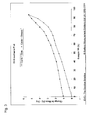
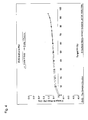
- ethyl (2R,3R,8R)-8-[N-(2-chloro-4-fluorophenyl)sulfamoyl]-2,3-bis(hydroxymethyl)-1,4-dioxaspiro[4.5]deca-6-ene-7-carboxylate (a compound in the free form described as a low polarity compound (first peak) of Example 162 in WO 2007/032362 ) used as the compound of Comparative Example showed high hygroscopicity at every measurement humidity (see Fig. 3 ), however, the compounds of Examples 1 and 2 did not show hygroscopicity (see Figs. 4 and 5 ). In particular, the compound of Example 1 did not show hygroscopicity at any measurement humidity in a consistent manner (see Fig. 4 ).
- the compound (in the free form) of Comparative Example had low solubility. Meanwhile, the compounds of Examples 1 and 2 showed a solubility of 13.8 mg/mL and 9.6 mg/mL, respectively.
- each of the compounds (Examples 1 and 2 and Comparative Example) of the present invention was precisely weighed and placed in a 10-mL volumetric flask and dissolved in PBS at pH 6. Then, 1 N HCl was added thereto to adjust the solution of the compound of Example 1 to pH 6, the solution of the compound of Example 2 to pH 7, and the solution of the compound of Comparative Example to pH 8.
- the above flasks as such and the flasks covered with aluminum foil for light shielding as controls were placed in a light tester at 25°C. After one day, each solution was diluted to 10 mL with 50% MeCN. The concentration of each solution was calculated by performing HPLC under the same conditions as used in the above-described solubility test, and the change in concentration from the control was calculated.
- the values for the solution stability after storage for 1 day were 99.4% in the case of the compound (in the free form) of Comparative Example, 99.9% in the case of the compound of Example 1, and 99.4% in the case of the compound of Example 2.
- a sample was precisely weighed in a quartz sample cup and placed in a 10-mL volumetric flask. Then, the flask was left in a desiccator containing silica gel for 3 days while keeping the mouth of the flask open. Thereafter, the flask was further stored in an environment at a temperature of 25°C and a humidity of 30% for 4 weeks while keeping the mouth of the flask open. Then, the residual amount was measured by performing HPLC under the same conditions as used in the solubility test in Example 5.
- the rate of suppression of TNF- ⁇ production when human monocytic cell line U937 was stimulated with endotoxin was determined for the compound of the present invention. Specifically, to RPMI-1640 medium containing 10% (volume %) of inactivated newborn bovine serum, 12-O-tetradecanoylphorbol-13-acetate was added to give a final concentration of 30 ng/ml. U937 cells were suspended in the medium and plated into a 96-well culture plate (Sumilon) so that the number of cells per well/volume was 2 x 10 4 /0.1 mL, and the culture plate was then incubated for 3 days at 37°C in a carbon dioxide incubator with 5% CO 2 and 100% humidity.
- the culture supernatant was removed.
- the compound of the present invention was added to each well at different concentrations, and also lipopolysaccharide (LPS) (E. coli 0111:B4, Sigma) was added thereto to give a final concentration of 30 ng/ml.
- LPS lipopolysaccharide
- the culture plate was incubated in the carbon dioxide incubator again for 4.5 hours, the culture supernatant was collected.
- the concentration of TNF- ⁇ in the culture supernatant was measured as time-resolved fluorescence by Discovery (Packard).
- Rate of suppression of TNF - ⁇ production % 1 - Z - X / Y - X ⁇ 100
- the compound of the present invention showed an excellent suppressive effect on the production of TNF- ⁇ in cells stimulated with endotoxin.
- the suppressive effect of the compound of the present invention on the elevation of blood TNF- ⁇ level was studied.
- a test for the elevation of blood TNF- ⁇ level was performed in accordance with the method of Parant et al. described in Journal of Leukocyte Biology, Vol. 47, page 164 (1990 ). In the test, 3 to 4 male Sprague Dawley rats (8 to 9 weeks of age) were used for each group.
- muramyl dipeptide dissolved in physiological saline (1 mg/mL) was administered to each rat through the tail vein at a dose of 1 mL/kg.
- the rats were anaesthetized with pentobarbital (40 mg/kg), and the compound of the present invention dissolved in a 5% dimethyl acetamide/95% polyethylene glycol 400 solution was administered to each rat through the right femoral vein at a dose of 1 mL/kg.
- a 5% dimethyl acetamide/95% polyethylene glycol 400 solution was administered at a dose of 1 mL/kg.
- LPS dissolved in physiological saline (3 ⁇ g/mL) was administered to each rat through the left femoral vein at a dose of 1 mL/kg.
- the blood was collected using a 3.8% (w/v) sodium citrate solution as an anticoagulant, and the blood plasma was separated by centrifugation (10,000 g, 5 minutes, 4°C).
- the plasma TNF- ⁇ level was determined using a TNF- ⁇ quantitative determination kit (BioSource International, Inc.). From the blood TNF- ⁇ level in the control group (X) and the blood TNF- ⁇ level in the group administered with the compound of the present invention (Y), the rate of suppression of TNF- ⁇ production was calculated according to the following calculation formula [II].
- Rate of suppression of TNF - ⁇ production % 1 - Y / X ⁇ 100
- the compounds of the present invention showed an excellent suppressive effect on the elevation of blood TNF- ⁇ level.
- crystals of substituted cycloalkene derivatives having excellent storage and handling stability can be provided.
- the potassium salts of substituted cycloalkene derivatives of the present invention suppress the production of an inflammatory mediator caused by intracellular signal transduction or cell activation induced by endotoxin, and therefore are effective as a prophylactic and/or therapeutic agent for sepsis.
Landscapes
- Health & Medical Sciences (AREA)
- Chemical & Material Sciences (AREA)
- Organic Chemistry (AREA)
- Life Sciences & Earth Sciences (AREA)
- Veterinary Medicine (AREA)
- Public Health (AREA)
- General Health & Medical Sciences (AREA)
- Animal Behavior & Ethology (AREA)
- Medicinal Chemistry (AREA)
- Pharmacology & Pharmacy (AREA)
- Chemical Kinetics & Catalysis (AREA)
- General Chemical & Material Sciences (AREA)
- Nuclear Medicine, Radiotherapy & Molecular Imaging (AREA)
- Epidemiology (AREA)
- Oncology (AREA)
- Bioinformatics & Cheminformatics (AREA)
- Engineering & Computer Science (AREA)
- Communicable Diseases (AREA)
- Cardiology (AREA)
- Virology (AREA)
- Heart & Thoracic Surgery (AREA)
- Pain & Pain Management (AREA)
- Rheumatology (AREA)
- Pharmaceuticals Containing Other Organic And Inorganic Compounds (AREA)
- Organic Low-Molecular-Weight Compounds And Preparation Thereof (AREA)
- Heterocyclic Compounds That Contain Two Or More Ring Oxygen Atoms (AREA)
Abstract
Description
- The present invention relates to crystals of substituted cycloalkene derivatives, which have activity to suppress intracellular signal transduction or cell activation in various cells such as monocytes, macrophages, and vascular endothelial cells induced by endotoxin, and to suppress the production of an inflammatory mediator such as TNF-α caused by the intracellular signal transduction or cell activation, and which are useful as a prophylactic and/or therapeutic agent for various diseases such as sepsis (septic shock, disseminated intravascular coagulation, multiple organ failure, etc.).
- Endotoxin (lipopolysaccharide: LPS), which is a membrane component of bacteria, acts on cells such as monocytes, macrophages, and vascular endothelial cells, induces the overproduction of various inflammatory mediators such as TNF-α and the like, causes sudden hypotension, blood coagulation disorders, circulatory disturbances, and the like in addition to systemic inflammatory responses, and thus develops sepsis (see, for example, Non-patent document 2). Lipopolysaccharide and Lipid A, which corresponds to a partial structure thereof, activate intracellular signal transduction via TLR4 (Toll-like receptor 4), which is a functional cell surface receptor, after binding with CD14 (see, for example, Non-patent document 3), whereby various cell responses represented by the production of inflammatory mediators are initiated. Therefore, it is considered that a substance capable of suppressing the intracellular signal transduction or cell activation induced by endotoxin, and various cell responses, which are induced by such intracellular signal transduction or cell activation and represented by the overproduction of inflammatory mediators such as TNF-α, can be effective prophylactic and therapeutic agents for sepsis (see, for example, Non-patent
documents 3 and 4, andPatent documents 1 and 2). - Intracellular signal transduction or cell activation induced by endotoxin, and various cell responses such as the overproduction of inflammatory mediators including TNF-α, etc. induced by the intracellular signal transduction or cell activation lead to development and progress of various diseases such as ischemic brain disorder, arteriosclerosis, poor prognosis after coronary angioplasty, heart failure, diabetes, diabetic complications, arthritis, osteoporosis, osteopenia, autoimmune diseases, tissue disorders and rejection after organ transplantation, bacterial infection, viral infection, gastritis, pancreatitis, nephritis, pneumonia, hepatitis, and leukemia, in addition to the above-described sepsis (for example, Non-patent document 5 and Patent document 3).
- The present inventors made intensive studies in order to solve the above problems, and as a result, they found that there are a group of compounds having a desired effect among substituted cycloalkene derivatives (Patent document 4). However, substituted cycloalkene derivatives (in the free form) are amorphous and have hygroscopicity. In view of this, the present inventors studied pharmacologically acceptable salts thereof. However, it was not easy to find crystals having storage and handling stability, and therefore industrialization thereof was extremely difficult.
-
- Patent Document 1:
JP-A-2000-178246 - Patent Document 2:
JP-A-2004-2370 - Patent Document 3:
WO 2000/41698 - Patent Document 4:
WO 2007/032362 -
- Non-patent Document 1: Iqbal et al., Expert Opin. Emerging Drugs, Vol. 7, page 111, 2002
- Non-patent Document 2: Hawkins et al., Current Topics in Medicinal Chemistry, Vol. 4, page 1147, 2004
- Non-patent Document 3: Beutler, Nature, Vol. 430, pages 257-263, 2004
- Non-patent Document 4: Kakutani et al., Inflammation Research, Vol. 48, page 461, 1999
- Non-patent Document 5: Donald N. Cook et al., Nature Immunology, Vol. 5, pages 975-979, 2004
- An object of the present invention is to provide crystals of substituted cycloalkene derivatives having excellent storage and handling stability.
- That is, the present invention is directed to:
- (1) potassium (2-chloro-4-fluorophenyl){(2R,3R,8R)-7-(ethoxycarbonyl)-2,3-bis(hydroxymethyl)-1,4-dioxaspiro[4.5]deca-6-en-8-yl]sulfonyl}azanide represented by the following formula (1):
-

- (2) potassium (2-bromo-4-fluorophenyl){[(2R,3R,8R) - 7-(ethoxycarbonyl)-2,3-bis(hydroxymethyl)-1,4-dioxaspiro[4.5]deca-6-en-8-yl]sulfonyl}azanide represented by the following formula (2):
-


-
- (3) a crystal of the compound according to the above (1);
- (4) the crystal according to the above (3), which has the X-ray diffraction pattern shown in
Fig. 1 in powder X-ray diffraction obtained by irradiation with copper Kα radiation; - (5) the crystal according to the above (3), which shows characteristic peaks at diffraction angles 2θ (°) of 3.82, 7.64, 11.48, 19.06, 23.08, 25.22, and 26.98 (±2, respectively) in powder X-ray diffraction obtained by irradiation with copper Kα radiation;
- (6) a crystal of the compound according to the above (2);
- (7) the crystal according to the above (6), which has the X-ray diffraction pattern shown in
Fig. 2 in powder X-ray diffraction obtained by irradiation with copper Kα radiation; - (8) the crystal according to the above (6), which shows characteristic peaks at diffraction angles 2θ (°) of 7.66, 15.36, 19.08, 23.76, 25.26, and 27.04 (±2, respectively) in powder X-ray diffraction obtained by irradiation witha copper Kα, radiation;
- (9) a pharmaceutical composition, comprising the compound according to the above (1) or (2) as an active ingredient;
- (10) a pharmaceutical composition, comprising the compound according to the above (1) or (2) as an active ingredient, for use in suppressing the production of an inflammatory mediator caused by intracellular signal transduction or cell activation induced by endotoxin;
- (11) a prophylactic and/or therapeutic agent for sepsis, comprising the compound according to the above (1) or (2) as an active ingredient;
- (12) a pharmaceutical composition, comprising the crystal according to any one of the above (1) to (8);
- (13) a method for producing the compound according to the above (1), characterized by adding a solution of potassium 2-ethylhexanoate hydrate in ethyl acetate dropwise to a solution or suspension of ethyl (2R,3R,8R)-8-[N-(2-chloro-4-fluorophenyl)sulfamoyl]-2,3-bis(hydroxymethyl)-1,4-dioxaspiro[4.5]deca-6-ene-7-carboxylate; or
- (14) a method for producing the compound according to the above (2), characterized by adding ethyl (2R,3R,8R)-8-[N-(2-bromo-4-fluorophenyl)sulfamoyl]-2,3-bis(hydroxymethyl)-1,4-dioxaspiro[4.5]deca-6-ene-7-carboxylate dropwise to a solution of potassium 2-ethylhexanoate hydrate in ethyl acetate.
- According to the present invention, crystals of substituted cycloalkene derivatives having excellent storage and handling stability can be provided. Potassium salts (crystals) of substituted cycloalkene derivatives according to the present invention suppress the production of an inflammatory mediator caused by intracellular signal transduction or cell activation induced by endotoxin and are effective as a prophylactic and/or therapeutic agent for sepsis.
-
- [
Fig. 1] Fig. 1 shows a powder X-ray diffraction pattern of a crystal obtained in Example 1. In the drawing, the ordinate indicates diffraction intensity in units of counts/sec (cps), and the abscissa indicates the value of diffraction angle 2θ. - [
Fig. 2] Fig. 2 shows a powder X-ray diffraction pattern of a crystal obtained in Example 2. In the drawing, the ordinate indicates diffraction intensity in units of counts/sec (cps), and the abscissa indicates the value of diffraction angle 2θ. - [
Fig. 3] Fig. 3 shows moisture absorption and desorption equilibrium curves of a compound (in the free form) of Comparative Example in a moisture absorption test. In the drawing, the ordinate indicates the weight of a sample, and the abscissa indicates the measurement humidity. "Cycle 1 Sorp" represents "a moisture absorption equilibrium curve (in the first cycle)", and change in weight against relative humidity at the time of obtaining a constant weight when the humidity was increased is plotted. "Cycle 1 Desorp" represents "a moisture desorption equilibrium curve (in the first cycle)", and change in weight against relative humidity at the time of obtaining a constant weight when the humidity was decreased is plotted. - [
Fig. 4] Fig. 4 shows moisture absorption and desorption equilibrium curves of a compound of Example 1 in a moisture absorption test. In the drawing, the ordinate indicates the change in weight of a sample, and the abscissa indicates the set measurement humidity. "Cycle 1 Sorp" represents "a moisture absorption equilibrium curve (in the first cycle)", and change in weight against relative humidity at the time of obtaining a constant weight when the humidity was increased is plotted. "Cycle 1 Desorp" represents "a moisture desorption equilibrium curve (in the first cycle)", and change in weight against relative humidity at the time of obtaining a constant weight when the humidity was decreased is plotted. - [
Fig. 5] Fig. 5 shows moisture absorption and desorption equilibrium curves of a compound of Example 2 in a moisture absorption test. In the drawing, the ordinate indicates the change in weight of a sample, and the abscissa indicates the set measurement humidity. "Cycle 1 Sorp" represents "a moisture absorption equilibrium curve (in the first cycle)", and change in weight against relative humidity at the time of obtaining a constant weight when the humidity was increased is plotted. "Cycle 1 Desorp" represents "a moisture desorption equilibrium curve (in the first cycle)", and change in weight against relative humidity at the time of obtaining a constant weight when the humidity was decreased is plotted. - The present invention relates to a crystal of potassium (2-chloro-4-fluorophenyl){[(2R,3R,8R)-7-(ethoxycarbonyl)-2,3-bis(hydroxymethyl)-1,4-dioxaspiro[4.5]deca-6-en-8-yl]sulfonyl}azanide represented by the following formula (1) (hereinafter sometimes referred to as Compound (1) in this description):
-

- or potassium (2-bromo-4-fluorophenyl){[(2R,3R,8R)-7-(ethoxycarbonyl)-2,3-bis(hydroxymethyl)-1,4-dioxaspiro[4.5]deca-6-en-8-yl]sulfonyl}azanide represented by the following formula (2) (hereinafter sometimes referred to as Compound (2) in this description).
-

- Here, a crystal refers to a solid whose internal structure is three-dimensionally composed of a regular repetition of constituent atoms (or a group thereof), and is distinguished from an amorphous solid which does not have such a regular internal structure. Whether or not a solid is a crystal can be examined by a known crystallographic method (such as powder X-ray diffraction measurement or differential scanning calorimetric analysis). For example, a solid is subjected to powder X-ray diffraction measurement using an X-ray obtained by irradiation with copper Kα radiation. The solid is determined to be a crystal when distinct peaks are observed in the X-ray diffraction pattern, while the solid is determined to be amorphous when no distinct peaks are observed. The solid is determined to be a crystal whose crystallinity is low when the peaks can be read but are not distinct (for example, broad), and such a crystal whose crystallinity is low is also encompassed within the crystal of the present invention.
- Even the same compound can form crystals having a plurality of different internal structures and physicochemical properties (crystal polymorphism) depending on the conditions for crystallization. The crystal of the present invention may be any of these crystal polymorphic forms and may be a mixture of two or more crystal polymorphic forms.
- The crystal of the present invention may sometimes form a hydrate by allowing the crystal to stand in the air to absorb water, thereby having attached water, or by heating the crystal to 25 to 150°C in usual atmospheric conditions, etc. Further, the crystal of the present invention may sometimes contain a solvent used at the time of crystallization as an attached residual solvent or a solvate.
- In this description, the crystal of the present invention is sometimes represented on the basis of powder X-ray diffraction data. In powder X-ray diffraction, the measurement and analysis may be performed by methods conventionally used in this field, and for example, the powder X-ray diffraction can be performed by the method described in the Examples. Further, in general, in the case of a hydrated or dehydrated crystal, the lattice constant thereof is changed by the addition or removal of water of crystallization, and therefore the diffraction angle (2θ) in powder X-ray diffraction may sometimes be changed. Further, the peak intensity may sometimes be changed due to a difference in a crystal growth surface or the like (crystal habit), etc. Therefore, when the crystal of the present invention is represented on the basis of powder X-ray diffraction data, a crystal having an identical peak diffraction angle and X-ray diffraction pattern in powder X-ray diffraction, and also hydrated and dehydrated crystals obtained from the crystal, are encompassed within the scope of the present invention.
- In powder diffraction measurement using copper Kα radiation, generally, a sample is irradiated with copper Kα radiation (in which Ka1 and Kα2 radiations are not separated). An X-ray diffraction pattern can be obtained by analyzing diffraction derived from Kα radiation, and can also be obtained by analyzing only diffraction derived from Kα1 radiation taken from diffraction derived from Kα radiation. In the present invention, the powder X-ray diffraction pattern obtained by irradiation with Kα radiation includes an X-ray diffraction pattern obtained by analyzing diffraction peaks derived from Kα radiation and an X-ray diffraction pattern obtained by analyzing diffraction derived from Kα1 radiation, and is preferably an X-ray diffraction pattern obtained by analyzing diffraction derived from Kα1 radiation.
- One preferred embodiment of the crystal of the present invention is a crystal of potassium (2-chloro-4-fluorophenyl){[(2R,3R,8R)-7-(ethoxycarbonyl)-2,3-bis(hydroxymethyl)-1,4-dioxaspiro[4.5]deca-6-en-8-yl]sulfonyl}azanide referred to as Compound (1). The crystal of Compound (1) has the X-ray diffraction pattern shown in
Fig. 1 in a powder diffraction pattern obtained by irradiation with copper Kα radiation. Further, the crystal of Compound (1) has characteristic peaks at diffraction angles 2θ (°) of 3.82, 7.64, 11.48, 19.06, 23.08, 25.22, and 26.98. Here, the "characteristic peak" refers to a peak having a relative intensity of 9 or more when the maximum peak intensity in the powder X-ray diffraction is taken as 100. - Another preferred embodiment of the crystal of the present invention is a crystal of potassium (2-bromo-4-fluorophenyl){[(2R,3R,8R)-7-(ethoxycarbonyl)-2,3-bis(hydroxymethyl)-1,4-dioxaspiro[4.5]deca-6-en-8-yl]sulfonyl}azanide referred to as a crystal of Compound (2). The crystal of Compound (2) has the X-ray diffraction pattern shown in
Fig. 2 in a powder diffraction pattern obtained by irradiation with copper Kα radiation. Further, the crystal of Compound (2) has characteristic peaks at diffraction angles 2θ (°) of 7.66, 15.36, 19.08, 23.76, 25.26, and 27.04. Here, the "characteristic peak" refers to a peak having a relative intensity of 10 or more when the maximum peak intensity in the powder X-ray diffraction is taken as 100. - In the powder X-ray diffraction patterns shown in
Figs. 1 and2 , the ordinate indicates diffraction intensity [counts/sec (cps)], and the abscissa indicates the diffraction angle 2θ (°). The 2θ can be slightly changed in its position and relative intensity depending on the measurement conditions and the like, therefore even when 2θ is slightly changed, the identification of the crystal form should be appropriately determined by reference to the pattern of the entire spectrum. The limit of such error is generally within the range of ±2, preferably within the range of +1, more preferably within the range of ±0.5, further more preferably within the range of ±0.2. - Further, as is well known in the field of crystallography, also the intensities of the respective diffraction peaks can be changed by various factors (including preferred orientation occurring in a specific crystalline form and the effect of grain size), and therefore, the relative intensities of the above-described main peaks for identifying the crystal of the present invention can also be changed, and these crystals are also encompassed within the crystal of the present invention.
- The Compound (1) or (2) of the present invention has activity to suppress the production of an inflammatory mediator caused by intracellular signal transduction or cell activation induced by endotoxin, and also has excellent storage and handling stability, and therefore is useful as a pharmaceutical. Further such a pharmaceutical is preferably used for warm-blooded animals, more preferably used for humans.
- In the case where Compound (1) and Compound (2) of the present invention are used as a therapeutic agent or a prophylactic agent for the above-described diseases, the compound per se or as a mixture with an appropriate pharmacologically acceptable excipient, diluent, or the like can be administered orally in the form of a tablet, a capsule, a granule, a powder, a syrup, or the like, or parenterally in the form of an injection, a suppository, or the like.
- These pharmaceutical preparations are prepared in accordance with known methods using additives such as an excipient (for example, an organic excipient such as a sugar derivative such as lactose, sucrose, glucose, mannitol, or sorbitol; a starch derivative such as corn starch, potato starch, pregelatinized starch or dextrin; a cellulose derivative such as crystalline cellulose; gum arabic; dextrane; or pullulan; or an inorganic excipient such as a silicate derivative such as light silicic anhydride, synthetic aluminum silicate, calcium silicate, or magnesium aluminometasilicate; a phosphate such as calcium hydrogen phosphate; a carbonate such as calcium carbonate; or a sulfate such as calcium sulfate can be used), a lubricant (for example, stearic acid, a metal salt of stearic acid such as calcium stearate or magnesium stearate; talc; a wax such as beeswax or spermaceti wax; boric acid; adipic acid; a sulfate such as sodium sulfate; glycol; fumaric acid; sodium benzoate; D- or L-leucine; a lauryl sulfate such as sodium lauryl sulfate or magnesium lauryl sulfate; a silicic acid such as silicic anhydride or silicate hydrate; or any of the above-described starch derivatives can be used), a binder (for example, hydroxypropyl cellulose, hydroxypropyl methyl cellulose, polyvinylpyrrolidone, macrogol, or a compound similar to any of the above-described excipients can be used), a disintegrant (for example, a cellulose derivative such as low-substituted hydroxypropyl cellulose, carboxymethyl cellulose, calcium carboxymethyl cellulose, or internally crosslinked sodium carboxymethyl cellulose; a chemically modified water-soluble polymer such as carboxymethyl starch, sodium carboxymethyl starch, or crosslinked polyvinylpyrrolidone; or any of the above-described starch derivatives can be used), an emulsifier (for example, a colloidal clay such as bentonite or veegum; a metal hydroxide such as magnesium hydroxide or aluminum hydroxide; an anionic surfactant such as sodium lauryl sulfate or calcium stearate; a cationic surfactant such as benzalkonium chloride; or a nonionic surfactant such as a polyoxyethylene alkyl ether, a polyoxyethylene sorbitan fatty acid ester, or a sucrose fatty acid ester can be used), a stabilizer (for example, a paraoxybenzoic acid ester such as methyl paraben or propyl paraben; an alcohol such as chlorobutanol, benzyl alcohol, or phenyl ethyl alcohol; benzalkonium chloride; a phenol such as phenol or cresol; thimerosal; dehydroacetic acid; or sorbic acid can be used) and a corrigent (for example, a commonly used sweetener, acidifier, flavor, or the like can be used) or a diluent.
- Hereinafter, the present invention will be described in further detail with reference to Examples and Test Examples.
-

- 100 mg (0.208 mmol) of ethyl (2R,3R,8R)-8-[N-(2-chloro-4-fluorophenyl)sulfamoyl]-2,3-bis(hydroxymethyl)-1,4-dioxaspiro[4.5]deca-6-ene-7-carboxylate [a compound described as a low polarity compound (first peak) of Example 162 in
WO 2007/032362 ] was dissolved in 1 mL of ethyl acetate, and 2 mL of a solution containing 38 mg (0.208 mmol) of potassium 2-ethylhexanoate hydrate in ethyl acetate was added thereto under stirring at room temperature. The resulting reaction solution was concentrated under reduced pressure, and to the residue, diethyl ether was added. A precipitated solid was obtained by filtration and washed with diethyl ether, whereby 92 mg of a crude product was obtained as an amorphous solid. Then, the crude product was dissolved in ethyl acetate, and the resulting solution was heated under reflux at 130°C for 2 hours. After the resulting mixture was cooled, a precipitated solid was obtained by filtration and washed with ethyl acetate, whereby the title compound was obtained as a white crystal.
1H-NMR spectrum (400 MHz, DMSO-d6) δ ppm: - 7.40 (1H, dd, J=9Hz, 6Hz), 7.07-6.97 (1H, m), 6.84-6.75 (1H, m), 6.46 (1H, s),
- 4.98 (1H, t, J=6Hz), 4.82 (1H, t, J=6Hz), 4.11-4.02 (1H, m), 4.02-3.93 (1H, m),
- 3.93-3.80 (3H, m), 3.63-3.41 (4H, m), 2.78-2.65 (1H, m), 2.34-2.25 (1H, m),
- 1.87-1.74 (1H, m), 1.65-1.58 (1H, m), 1.14 (3H, t, J=7Hz)
- 300 mg (0.625 mmol) of ethyl (2R,3R,8R)-8-[N-(2-chloro-4-fluorophenyl)sulfamoyl]-2,3-bis(hydroxymethyl)-1,4-dioxaspiro[4.5]deca-6-ene-7-carboxylate was dissolved in 2 mL of ethyl acetate, and 4 mL of a solution containing 114 mg (0.625 mmol) of potassium 2-ethylhexanoate hydrate in ethyl acetate was added thereto under stirring at room temperature. The resulting reaction solution was concentrated under reduced pressure, and to the residue, diethyl ether was added. A precipitated solid was obtained by filtration and washed with diethyl ether, whereby a crude product was obtained as an amorphous solid. Then, the crude product was dissolved in 3 mL of ethyl acetate, and a seed crystal obtained by the above-described method was added thereto, and the resulting mixture was heated under reflux at 100°C for 5 minutes. After the resulting mixture was cooled, a precipitated solid was obtained by filtration and washed with ethyl acetate, whereby 236 mg of the title compound was obtained as a white crystal (yield: 73%).
-

- 422 mg (2.31 mmol) of potassium 2-ethylhexanoate hydrate was dissolved in 23 mL of ethyl acetate, and 1.215 g (2.31 mmol) of ethyl (2R,3R,8R)-8-[N-(2-bromo-4-fluorophenyl)sulfamoyl]-2,3-bis(hydroxymethyl)-1,4-dioxaspiro[4.5]deca-6-ene-7-carboxylate [a compound described as a low polarity compound (first peak) of Example 166 in
WO 2007/032362 ] was added thereto under stirring at room temperature. The resulting reaction solution was concentrated under reduced pressure, and to the residue, diethyl ether was added. A precipitated solid was obtained by filtration and washed with diethyl ether, whereby 954 mg of a crude product was obtained as an amorphous solid. Then, the crude product was dissolved in 6 mL of ethyl acetate, and the resulting solution was heated under stirring at 70°C for 5 minutes. After the resulting mixture was cooled, a precipitated solid was obtained by filtration and washed with ethyl acetate and diethyl ether, whereby 850 mg of the title compound was obtained as a white crystal (yield: 65%).
1H-NMR spectrum (400 MHz, DMSO-d6) δ ppm: - 7.39 (1H, dd, J=9Hz, 6Hz), 7.17 (1H, dd, J=9Hz, 3Hz), 6.83 (1H, dt, J=9Hz, 3Hz), 6.45 (1H, s), 4.98 (1H, t, J=5Hz), 4.83 (1H, t, J=5Hz), 4.13-3.81 (5H, m), 3.64 -3.41 (4H, m), 2.84-2.63 (1H, m), 2.35-2.26 (1H, m), 1.85-1.73 (1H, m), 1.65-1.56 (1H, m), 1.14 (3H, t, J=7Hz)
- 102 mg (0.560 mmol) of potassium 2-ethylhexanoate hydrate was dissolved in 5 mL of ethyl acetate, and 280 mg (0.534 mmol) of ethyl (2R,3R,8R)-8-[N-(2-bromo-4-fluorophenyl)sulfamoyl]-2,3-bis(hydroxymethyl)-1,4-dioxaspiro[4.5]deca-6-ene-7-carboxylate was added thereto under stirring at room temperature. The resulting reaction solution was concentrated under reduced pressure, and to the residue, diethyl ether was added. A precipitated solid was obtained by filtration and washed with diethyl ether, whereby a crude product was obtained as an amorphous solid. Then, the crude product was dissolved in 1 mL of ethanol, and the resulting solution was heated under stirring at 70°C for 1 minute. After the resulting mixture was cooled, a precipitated solid was obtained by filtration and washed with ethanol and diethyl ether, whereby 197 mg of the title compound was obtained as a white crystal (yield: 66%).
- Rint TTR-III (provided with a scintillation counter tube and a long slit for removing Kβ radiations) manufactured by Rigaku Corporation was used. A sample was placed uniformly on a non-reflective sample holder, and measurement was performed under the following conditions.
- X-ray species: Cu-Ka (wavelength: 1.54 A), Tube voltage: 50 kV, Tube current: 300 mA, Scanning rate: 2°/min, Step: 0.02°, Scanning range (2q): 2° to 60°, Divergence slit: 0.5 mm, Scattering slit: 0.5 mm, Receiving slit: 0.5 mm
- The powder X-ray diffraction pattern obtained by measuring the crystal of the compound obtained in Example 1 in accordance with the above-described method is shown in
Fig. 1 . Peaks having a relative intensity of 9 or more when the maximum peak intensity inFig. 1 is taken as 100 are shown in Table 1. -
[Table 1] 2θ d value Relative intensity 3.82 23.11 24 7.64 11.56 100 11.48 7.70 9 19.06 4.65 12 23.08 3.85 12 25.22 3.53 9 26.98 3.30 30 - The powder X-ray diffraction pattern obtained by measuring the crystal of the compound obtained in Example 2 in accordance with the above-described method is shown in
Fig. 2 . Peaks having a relative intensity of 10 or more when the maximum peak intensity inFig. 2 is taken as 100 are shown in Table 2. -
[Table 2] 2θ d value Relative intensity 7.66 11.53 100 15.36 5.76 12 19.08 4. 65 11 23.76 3.74 13 25.26 3.52 13 27.04 3.29 28 - A sample was weighed in a glass sample cup, and the weight thereof was measured under the following conditions.
-
- Measuring device: DVS Advantage, manufactured by Surface Measurement System Ltd.
- Measurement humidity: 10, 20, 30, 40, 50, 60, 65, 70, 75, 80, 85, 90, 95, 95, 90, 85, 80, 75, 70, 65, 60, 50, 40, 30, 25, 20, and 10% RH
- Measurement temperature: 25°C, Minimum exposure time: 15 min, Maximum exposure time: 120 min, Step transition condition: within 0.006 wt.%
- As shown in Table 4 and
Figs. 3 ,4 , and5 , ethyl (2R,3R,8R)-8-[N-(2-chloro-4-fluorophenyl)sulfamoyl]-2,3-bis(hydroxymethyl)-1,4-dioxaspiro[4.5]deca-6-ene-7-carboxylate (a compound in the free form described as a low polarity compound (first peak) of Example 162 inWO 2007/032362 ) used as the compound of Comparative Example showed high hygroscopicity at every measurement humidity (seeFig. 3 ), however, the compounds of Examples 1 and 2 did not show hygroscopicity (seeFigs. 4 and5 ). In particular, the compound of Example 1 did not show hygroscopicity at any measurement humidity in a consistent manner (seeFig. 4 ). - 150 mg of each of the compounds of Examples 1 and 2 and Comparative Example 1 was dissolved in 5 mL of an aqueous phosphate solution containing sodium chloride (containing 150 mM NaCl and 10 mM NaH2PO3·2H2O). After the resulting mixture was stirred for 30 minutes while measuring the pH of the mixture, a 0.5 mL portion of the resulting suspension was taken and filtered through a syringe filter. A 100 µL portion of the obtained filtrate was transferred into a 10-mL volumetric flask and diluted to 10 mL with an aqueous solution of 50% MeCN, whereby a sample solution was prepared. To the suspension, concentrated HCl was added dropwise to adjust the pH thereof to around 7.5.
Measurement was performed using HPLC under the following conditions. -
- HPLC system: Water's Alliance
- Column: XTerra MS C18 3.5 µm, Column Size: 4.6 x 100 mm Column Temp: 40°C, Flow Rate: 1.2 mL/min
- Solvent A: 0.1% phosphoric acid in water, Solvent B: 0.1% phosphoric acid in MeCN
-
[Table 3] Time Total flow %A %B Curve 0 1.2 95 5 15 1.2 5 95 6 15.01 1.2 95 5 11 20 1.2 95 5 6 - As shown in Table 4, the compound (in the free form) of Comparative Example had low solubility. Meanwhile, the compounds of Examples 1 and 2 showed a solubility of 13.8 mg/mL and 9.6 mg/mL, respectively.
- Each of the compounds (Examples 1 and 2 and Comparative Example) of the present invention was precisely weighed and placed in a 10-mL volumetric flask and dissolved in PBS at
pH 6. Then, 1 N HCl was added thereto to adjust the solution of the compound of Example 1 topH 6, the solution of the compound of Example 2 to pH 7, and the solution of the compound of Comparative Example to pH 8. The above flasks as such and the flasks covered with aluminum foil for light shielding as controls were placed in a light tester at 25°C. After one day, each solution was diluted to 10 mL with 50% MeCN. The concentration of each solution was calculated by performing HPLC under the same conditions as used in the above-described solubility test, and the change in concentration from the control was calculated. - As shown in Table 4, the values for the solution stability after storage for 1 day were 99.4% in the case of the compound (in the free form) of Comparative Example, 99.9% in the case of the compound of Example 1, and 99.4% in the case of the compound of Example 2.
- In a low-humidity room (25°C, 30% RH), a sample was precisely weighed in a quartz sample cup and placed in a 10-mL volumetric flask. Then, the flask was left in a desiccator containing silica gel for 3 days while keeping the mouth of the flask open. Thereafter, the flask was further stored in an environment at a temperature of 25°C and a humidity of 30% for 4 weeks while keeping the mouth of the flask open. Then, the residual amount was measured by performing HPLC under the same conditions as used in the solubility test in Example 5.
- As shown in Table 4, it was impossible to perform this test for the compound (in the free form) of Comparative Example because the compound is hygroscopic, however, the compounds of Examples 1 and 2 showed a residual amount of 98.9% and 98.8%, respectively, which revealed that the compounds of Examples 1 and 2 are stable.
-
[Table 4] Comparative Example Example 1 Example 2 Free form or potassium salt Free form Potassium salt Potassium salt Crystalline form Amorphous Crystalline Crystalline Hygroscopicity With hygroscopicity 2.6% ( relative humidity 10→80%) Changed into candy-like formWithout hygroscopicity < 0.1% ( relative humidity 10→80%) no change in appearanceWithout hygroscopicity < 0.1% ( relative humidity 10→80%) no change in appearanceSolubility (PBS pH 7.5) Since the compound is transformed into a viscous solid in an aqueous solution, it was impossible to measure the concentration in a reproducible manner. 13.8 mg/ml 9.6 mg/ml Solution stability (25°C, 1 day) 99.4% McIIvaine buffer pH 8 99.9 % PBS pH 699.4% PBS pH 7 Chemical stability (25°C, 4 weeks) Due to high hygroscopicity, it was impossible to perform this test. 98.9% ( relative humidity 30%)98.8% ( relative humidity 30%) - The rate of suppression of TNF-α production when human monocytic cell line U937 was stimulated with endotoxin was determined for the compound of the present invention. Specifically, to RPMI-1640 medium containing 10% (volume %) of inactivated newborn bovine serum, 12-O-tetradecanoylphorbol-13-acetate was added to give a final concentration of 30 ng/ml. U937 cells were suspended in the medium and plated into a 96-well culture plate (Sumilon) so that the number of cells per well/volume was 2 x 10⁴/0.1 mL, and the culture plate was then incubated for 3 days at 37°C in a carbon dioxide incubator with 5% CO2 and 100% humidity. After completion of the incubation, the culture supernatant was removed. The compound of the present invention was added to each well at different concentrations, and also lipopolysaccharide (LPS) (E. coli 0111:B4, Sigma) was added thereto to give a final concentration of 30 ng/ml. After the culture plate was incubated in the carbon dioxide incubator again for 4.5 hours, the culture supernatant was collected. By using a 384-well half area black plate (Greiner) and an HTRF quantitative determination kit manufactured by Cisbio International, the concentration of TNF-α in the culture supernatant was measured as time-resolved fluorescence by Discovery (Packard). From the measured value in the absence of LPS (X), the measured value in the absence of the compound of the present invention (Y), and the measured value in the presence of the compound of the present invention (Z), the rate of suppression of TNF-α production was obtained according to the following calculation formula [I].
-

-
[Table 5] <Suppressive Effect on Production of TNF-α (in vitro)> Test compound Rate of suppression of TNF-α production [%] (concentration of test compound: 100 nM) Compound of Example 1 89 - As shown in Table 5, in this test, the compound of the present invention showed an excellent suppressive effect on the production of TNF-α in cells stimulated with endotoxin.
- The suppressive effect of the compound of the present invention on the elevation of blood TNF-α level was studied. A test for the elevation of blood TNF-α level was performed in accordance with the method of Parant et al. described in Journal of Leukocyte Biology, Vol. 47, page 164 (1990).
In the test, 3 to 4 male Sprague Dawley rats (8 to 9 weeks of age) were used for each group. - At 4 hours before the administration of LPS, muramyl dipeptide dissolved in physiological saline (1 mg/mL) was administered to each rat through the tail vein at a dose of 1 mL/kg. At 0.5 hours before the administration of LPS, the rats were anaesthetized with pentobarbital (40 mg/kg), and the compound of the present invention dissolved in a 5% dimethyl acetamide/95% polyethylene glycol 400 solution was administered to each rat through the right femoral vein at a dose of 1 mL/kg. To the control group, a 5% dimethyl acetamide/95% polyethylene glycol 400 solution was administered at a dose of 1 mL/kg. LPS dissolved in physiological saline (3 µg/mL) was administered to each rat through the left femoral vein at a dose of 1 mL/kg. At 2 hours after the administration of LPS, the blood was collected using a 3.8% (w/v) sodium citrate solution as an anticoagulant, and the blood plasma was separated by centrifugation (10,000 g, 5 minutes, 4°C). The plasma TNF-α level was determined using a TNF-α quantitative determination kit (BioSource International, Inc.). From the blood TNF-α level in the control group (X) and the blood TNF-α level in the group administered with the compound of the present invention (Y), the rate of suppression of TNF-α production was calculated according to the following calculation formula [II].
-

-
[Table 6] <Suppressive Effect on Production of TNF-α (in vivo)> Test compound Rate of suppression of TNF-α production [%] (concentration of test compound: 0.3 mg/kg) Compound of Example 1 96 Compound of Example 2 81 - As shown in Table 6, in this test, the compounds of the present invention showed an excellent suppressive effect on the elevation of blood TNF-α level.
- According to the present invention, crystals of substituted cycloalkene derivatives having excellent storage and handling stability can be provided. The potassium salts of substituted cycloalkene derivatives of the present invention suppress the production of an inflammatory mediator caused by intracellular signal transduction or cell activation induced by endotoxin, and therefore are effective as a prophylactic and/or therapeutic agent for sepsis.
Claims (14)
- Potassium (2-chloro-4-fluorophenyl){[(2R,3R,8R)-7-(ethoxycarbonyl)-2,3-bis(hydroxymethyl)-1,4-dioxaspiro[4.5]deca-6-en-8-yl]sulfonyl)azanide represented by the following formula (1):
- Potassium (2-bromo-4-fluorophenyl){[(2R,3R,8R)-7-(ethoxycarbonyl)-2,3-bis(hydroxymethyl)-1,4-dioxaspiro[4.5]deca-6-en-8-yl]sulfonyl}azanide represented by the following formula (2):

- A crystal of the compound according to claim 1.
- The crystal according to claim 3, which has the X-ray diffraction pattern shown in Fig. 1 in powder X-ray diffraction obtained by irradiation with copper Kα radiation.
- The crystal according to claim 3, which shows characteristic peaks at diffraction angles 2θ (°) of 3.82, 7.64, 11.48, 19.06, 23.08, 25.22, and 26.98 (±2, respectively) in powder X-ray diffraction obtained by irradiation with copper Kα radiation.
- A crystal of the compound according to claim 2.
- The crystal according to claim 6, which has the X-ray diffraction pattern shown in Fig. 2 in powder X-ray diffraction obtained by irradiation with copper Kα radiation.
- The crystal according to claim 6, which shows characteristic peaks at diffraction angles 2θ (°) of 7.66, 15.36, 19.08, 23.76, 25.26, and 27.04 (±2, respectively) in powder X-ray diffraction obtained by irradiation with copper Kα radiation.
- A pharmaceutical composition, comprising the compound according to claim 1 or 2 as an active ingredient.
- A pharmaceutical composition, comprising the compound according to claim 1 or 2 as an active ingredient, for use in suppressing the production of an inflammatory mediator caused by intracellular signal transduction or cell activation induced by endotoxin.
- A prophylactic and/or therapeutic agent for sepsis, comprising the compound according to claim 1 or 2 as an active ingredient.
- A pharmaceutical composition, comprising the crystal according to any one of claims 1 to 8.
- A method for producing the compound according to claim 1, characterized by adding a solution of potassium 2-ethylhexanoate hydrate in ethyl acetate dropwise to a solution or suspension of ethyl (2R,3R,8R)-8-[N-(2-chloro-4-fluorophenyl)sulfamoyl]-2,3-bis(hydroxymethyl)-1,4-dioxaspiro[4.5]deca-6-ene-7-carboxylate.
- A method for producing the compound according to claim 2, characterized by adding ethyl (2R,3R,8R)-8-[N-(2-bromo-4-fluorophenyl7sulfamoyl]-2,3-bis(hydroxymethyl)-1,4-dioxaspiro[4.5]deca-6-ene-7-carboxylate dropwise to a solution of potassium 2-ethylhexanoate hydrate in ethyl acetate.
Applications Claiming Priority (2)
| Application Number | Priority Date | Filing Date | Title |
|---|---|---|---|
| JP2010213236 | 2010-09-24 | ||
| PCT/JP2011/071557 WO2012039447A1 (en) | 2010-09-24 | 2011-09-22 | Crystals of substituted cycloalkene derivatives |
Publications (3)
| Publication Number | Publication Date |
|---|---|
| EP2620434A1 true EP2620434A1 (en) | 2013-07-31 |
| EP2620434A4 EP2620434A4 (en) | 2014-07-09 |
| EP2620434B1 EP2620434B1 (en) | 2017-01-04 |
Family
ID=45873931
Family Applications (1)
| Application Number | Title | Priority Date | Filing Date |
|---|---|---|---|
| EP11826892.9A Not-in-force EP2620434B1 (en) | 2010-09-24 | 2011-09-22 | A method of preparing crystals of a substituted cycloalkene derivative |
Country Status (6)
| Country | Link |
|---|---|
| US (1) | US8933117B2 (en) |
| EP (1) | EP2620434B1 (en) |
| JP (1) | JP5778161B2 (en) |
| ES (1) | ES2620243T3 (en) |
| TW (1) | TW201219034A (en) |
| WO (1) | WO2012039447A1 (en) |
Cited By (1)
| Publication number | Priority date | Publication date | Assignee | Title |
|---|---|---|---|---|
| TWI659023B (en) * | 2014-01-24 | 2019-05-11 | 住友化學股份有限公司 | Salt and photoresist composition comprising the same |
Families Citing this family (1)
| Publication number | Priority date | Publication date | Assignee | Title |
|---|---|---|---|---|
| CN108136062B (en) * | 2015-10-02 | 2020-09-22 | 伊西康公司 | Method and system for processing medical devices and fluids |
Family Cites Families (10)
| Publication number | Priority date | Publication date | Assignee | Title |
|---|---|---|---|---|
| EP0464901A3 (en) * | 1990-06-26 | 1992-07-29 | Merck & Co. Inc. | 2-phenanthrenyl carbapenems |
| DK0867515T3 (en) * | 1997-03-24 | 2000-06-13 | Cipan Comp Ind Prod | Process for isolating a pharmaceutically acceptable alkali metal salt of clavulanic acid |
| DK1063228T5 (en) | 1998-03-09 | 2009-06-15 | Takeda Pharmaceutical | Cycloalkene derivatives, process for their preparation and use thereof |
| EP2298311B1 (en) | 1999-01-13 | 2012-05-09 | Bayer HealthCare LLC | w-Carboxy aryl substituted diphenyl ureas as p38 kinase inhibitors |
| JP2004002370A (en) | 2002-04-08 | 2004-01-08 | Takeda Chem Ind Ltd | Drug for preventing and treating severe sepsis |
| EP1495756A4 (en) | 2002-04-08 | 2009-10-28 | Takeda Pharmaceutical | THERAPEUTICS FOR THE PREVENTION OF HEAVY SEPSIS |
| EP1944354B1 (en) | 2005-09-12 | 2011-02-16 | Takasago International Corporation | Flavor composition or fragrance composition, and flavor-improving agent |
| US7935835B2 (en) * | 2005-09-14 | 2011-05-03 | Daiichi Sankyo Company, Limited | Substituted cycloalkene derivative |
| EP2103610B1 (en) * | 2006-12-06 | 2011-09-21 | Shanghai Allist Pharmaceutical., Inc. | Salts of imidazol-5-carboxylic acid derivatives, preparation methods and use thereof |
| JP2008260760A (en) * | 2007-03-12 | 2008-10-30 | Daiichi Sankyo Co Ltd | Pharmaceutical composition containing a substituted cycloalkene derivative |
-
2011
- 2011-09-22 WO PCT/JP2011/071557 patent/WO2012039447A1/en not_active Ceased
- 2011-09-22 ES ES11826892.9T patent/ES2620243T3/en active Active
- 2011-09-22 EP EP11826892.9A patent/EP2620434B1/en not_active Not-in-force
- 2011-09-22 US US13/825,875 patent/US8933117B2/en not_active Expired - Fee Related
- 2011-09-22 JP JP2012535063A patent/JP5778161B2/en not_active Expired - Fee Related
- 2011-09-23 TW TW100134255A patent/TW201219034A/en unknown
Cited By (1)
| Publication number | Priority date | Publication date | Assignee | Title |
|---|---|---|---|---|
| TWI659023B (en) * | 2014-01-24 | 2019-05-11 | 住友化學股份有限公司 | Salt and photoresist composition comprising the same |
Also Published As
| Publication number | Publication date |
|---|---|
| US20130178521A1 (en) | 2013-07-11 |
| US20140073689A9 (en) | 2014-03-13 |
| JPWO2012039447A1 (en) | 2014-02-03 |
| US8933117B2 (en) | 2015-01-13 |
| EP2620434A4 (en) | 2014-07-09 |
| WO2012039447A1 (en) | 2012-03-29 |
| EP2620434B1 (en) | 2017-01-04 |
| TW201219034A (en) | 2012-05-16 |
| ES2620243T3 (en) | 2017-06-28 |
| JP5778161B2 (en) | 2015-09-16 |
Similar Documents
| Publication | Publication Date | Title |
|---|---|---|
| US12398138B2 (en) | FGFR inhibitor compound in solid form and preparation method therefor | |
| US9394328B2 (en) | Crystalline dapagliflozin hydrate | |
| CA2793413C (en) | Crystal form of edoxaban tosylate monohydrate and method of producing same | |
| RU2686722C1 (en) | New crystals of uracil compound | |
| JP6917910B2 (en) | (4-((3R, 4R) -3-methoxytetrahydro-pyran-4-ylamino) piperidine-1-yl) (5-methyl-6-(((2R, 6S) -6- (P-tolyl) tetrahydro) -2H-pyran-2-yl) methylamino) pyrimidine-4yl) metanone citrate | |
| US20150315167A1 (en) | New salt of abexinostat, associated crystalline form, a process for their preparation and pharmaceutical compositions containing them | |
| JP2020502224A (en) | Crystal forms of Janus kinase inhibitors | |
| CN109369748A (en) | A kind of icariside I class compound, derivative, pharmaceutical composition and its application | |
| EP2620434B1 (en) | A method of preparing crystals of a substituted cycloalkene derivative | |
| EP4406955A1 (en) | Crystal form of imidazolinone derivative | |
| CN118302430A (en) | Mono-p-toluenesulfonate salt of AXL kinase inhibitor and its crystal form | |
| EP2128145A2 (en) | Improved method for synthesizing lamotrigine | |
| CN114181161A (en) | (2- ((substituted oxy) phenyl) amino) pyrimidine-4-yl) aminobenzoyl derivative and preparation method and application thereof | |
| EP3368527B1 (en) | Palbociclib tosylate | |
| EP2975035A1 (en) | Salt of pyrrolidin-3-yl acetic acid derivative and crystals thereof | |
| RS64880B1 (en) | Pharmaceutical compound, the method of its making and use as medicinal agent | |
| HK40052085A (en) | Pharmaceutical compound, the method of its making and use as medicinal agent | |
| HK40052085B (en) | Pharmaceutical compound, the method of its making and use as medicinal agent | |
| OA20239A (en) | Pharmaceutical compound, the method of its making and use as medicinal agent. | |
| SK288226B6 (en) | Alpha crystalline form of Imatinib mesylate with new habit and method for its preparation and use | |
| HK1180341A (en) | Crystal of diamine derivative and method of producing same | |
| WO1998011086A1 (en) | Chromone derivatives and nerve cell death inhibitors containing the same | |
| HK1227853A1 (en) | Crystalline form of jak kinase inhibitor bisulfate and a preparation method thereof | |
| HK1227853B (en) | Crystalline form of jak kinase inhibitor bisulfate and a preparation method thereof | |
| WO2006018842A2 (en) | Inhibitors of p38-alpha kinase |
Legal Events
| Date | Code | Title | Description |
|---|---|---|---|
| PUAI | Public reference made under article 153(3) epc to a published international application that has entered the european phase |
Free format text: ORIGINAL CODE: 0009012 |
|
| 17P | Request for examination filed |
Effective date: 20130308 |
|
| AK | Designated contracting states |
Kind code of ref document: A1 Designated state(s): AL AT BE BG CH CY CZ DE DK EE ES FI FR GB GR HR HU IE IS IT LI LT LU LV MC MK MT NL NO PL PT RO RS SE SI SK SM TR |
|
| DAX | Request for extension of the european patent (deleted) | ||
| A4 | Supplementary search report drawn up and despatched |
Effective date: 20140612 |
|
| RIC1 | Information provided on ipc code assigned before grant |
Ipc: A61P 43/00 20060101ALI20140605BHEP Ipc: C07D 317/72 20060101AFI20140605BHEP Ipc: A61P 29/00 20060101ALI20140605BHEP Ipc: A61K 31/357 20060101ALI20140605BHEP Ipc: A61P 31/04 20060101ALI20140605BHEP Ipc: A61P 31/12 20060101ALI20140605BHEP |
|
| 17Q | First examination report despatched |
Effective date: 20150330 |
|
| GRAP | Despatch of communication of intention to grant a patent |
Free format text: ORIGINAL CODE: EPIDOSNIGR1 |
|
| INTG | Intention to grant announced |
Effective date: 20160729 |
|
| GRAS | Grant fee paid |
Free format text: ORIGINAL CODE: EPIDOSNIGR3 |
|
| GRAA | (expected) grant |
Free format text: ORIGINAL CODE: 0009210 |
|
| AK | Designated contracting states |
Kind code of ref document: B1 Designated state(s): AL AT BE BG CH CY CZ DE DK EE ES FI FR GB GR HR HU IE IS IT LI LT LU LV MC MK MT NL NO PL PT RO RS SE SI SK SM TR |
|
| REG | Reference to a national code |
Ref country code: GB Ref legal event code: FG4D |
|
| REG | Reference to a national code |
Ref country code: CH Ref legal event code: EP |
|
| REG | Reference to a national code |
Ref country code: AT Ref legal event code: REF Ref document number: 859113 Country of ref document: AT Kind code of ref document: T Effective date: 20170115 |
|
| REG | Reference to a national code |
Ref country code: IE Ref legal event code: FG4D |
|
| REG | Reference to a national code |
Ref country code: DE Ref legal event code: R096 Ref document number: 602011034138 Country of ref document: DE |
|
| REG | Reference to a national code |
Ref country code: LT Ref legal event code: MG4D Ref country code: NL Ref legal event code: MP Effective date: 20170104 |
|
| REG | Reference to a national code |
Ref country code: AT Ref legal event code: MK05 Ref document number: 859113 Country of ref document: AT Kind code of ref document: T Effective date: 20170104 |
|
| REG | Reference to a national code |
Ref country code: ES Ref legal event code: FG2A Ref document number: 2620243 Country of ref document: ES Kind code of ref document: T3 Effective date: 20170628 |
|
| PG25 | Lapsed in a contracting state [announced via postgrant information from national office to epo] |
Ref country code: NL Free format text: LAPSE BECAUSE OF FAILURE TO SUBMIT A TRANSLATION OF THE DESCRIPTION OR TO PAY THE FEE WITHIN THE PRESCRIBED TIME-LIMIT Effective date: 20170104 |
|
| PG25 | Lapsed in a contracting state [announced via postgrant information from national office to epo] |
Ref country code: LT Free format text: LAPSE BECAUSE OF FAILURE TO SUBMIT A TRANSLATION OF THE DESCRIPTION OR TO PAY THE FEE WITHIN THE PRESCRIBED TIME-LIMIT Effective date: 20170104 Ref country code: FI Free format text: LAPSE BECAUSE OF FAILURE TO SUBMIT A TRANSLATION OF THE DESCRIPTION OR TO PAY THE FEE WITHIN THE PRESCRIBED TIME-LIMIT Effective date: 20170104 Ref country code: NO Free format text: LAPSE BECAUSE OF FAILURE TO SUBMIT A TRANSLATION OF THE DESCRIPTION OR TO PAY THE FEE WITHIN THE PRESCRIBED TIME-LIMIT Effective date: 20170404 Ref country code: HR Free format text: LAPSE BECAUSE OF FAILURE TO SUBMIT A TRANSLATION OF THE DESCRIPTION OR TO PAY THE FEE WITHIN THE PRESCRIBED TIME-LIMIT Effective date: 20170104 Ref country code: GR Free format text: LAPSE BECAUSE OF FAILURE TO SUBMIT A TRANSLATION OF THE DESCRIPTION OR TO PAY THE FEE WITHIN THE PRESCRIBED TIME-LIMIT Effective date: 20170405 Ref country code: IS Free format text: LAPSE BECAUSE OF FAILURE TO SUBMIT A TRANSLATION OF THE DESCRIPTION OR TO PAY THE FEE WITHIN THE PRESCRIBED TIME-LIMIT Effective date: 20170504 |
|
| REG | Reference to a national code |
Ref country code: FR Ref legal event code: PLFP Year of fee payment: 7 |
|
| PG25 | Lapsed in a contracting state [announced via postgrant information from national office to epo] |
Ref country code: AT Free format text: LAPSE BECAUSE OF FAILURE TO SUBMIT A TRANSLATION OF THE DESCRIPTION OR TO PAY THE FEE WITHIN THE PRESCRIBED TIME-LIMIT Effective date: 20170104 Ref country code: SE Free format text: LAPSE BECAUSE OF FAILURE TO SUBMIT A TRANSLATION OF THE DESCRIPTION OR TO PAY THE FEE WITHIN THE PRESCRIBED TIME-LIMIT Effective date: 20170104 Ref country code: PT Free format text: LAPSE BECAUSE OF FAILURE TO SUBMIT A TRANSLATION OF THE DESCRIPTION OR TO PAY THE FEE WITHIN THE PRESCRIBED TIME-LIMIT Effective date: 20170504 Ref country code: RS Free format text: LAPSE BECAUSE OF FAILURE TO SUBMIT A TRANSLATION OF THE DESCRIPTION OR TO PAY THE FEE WITHIN THE PRESCRIBED TIME-LIMIT Effective date: 20170104 Ref country code: PL Free format text: LAPSE BECAUSE OF FAILURE TO SUBMIT A TRANSLATION OF THE DESCRIPTION OR TO PAY THE FEE WITHIN THE PRESCRIBED TIME-LIMIT Effective date: 20170104 Ref country code: BG Free format text: LAPSE BECAUSE OF FAILURE TO SUBMIT A TRANSLATION OF THE DESCRIPTION OR TO PAY THE FEE WITHIN THE PRESCRIBED TIME-LIMIT Effective date: 20170404 Ref country code: LV Free format text: LAPSE BECAUSE OF FAILURE TO SUBMIT A TRANSLATION OF THE DESCRIPTION OR TO PAY THE FEE WITHIN THE PRESCRIBED TIME-LIMIT Effective date: 20170104 |
|
| REG | Reference to a national code |
Ref country code: DE Ref legal event code: R097 Ref document number: 602011034138 Country of ref document: DE |
|
| PG25 | Lapsed in a contracting state [announced via postgrant information from national office to epo] |
Ref country code: RO Free format text: LAPSE BECAUSE OF FAILURE TO SUBMIT A TRANSLATION OF THE DESCRIPTION OR TO PAY THE FEE WITHIN THE PRESCRIBED TIME-LIMIT Effective date: 20170104 Ref country code: EE Free format text: LAPSE BECAUSE OF FAILURE TO SUBMIT A TRANSLATION OF THE DESCRIPTION OR TO PAY THE FEE WITHIN THE PRESCRIBED TIME-LIMIT Effective date: 20170104 Ref country code: CZ Free format text: LAPSE BECAUSE OF FAILURE TO SUBMIT A TRANSLATION OF THE DESCRIPTION OR TO PAY THE FEE WITHIN THE PRESCRIBED TIME-LIMIT Effective date: 20170104 Ref country code: SK Free format text: LAPSE BECAUSE OF FAILURE TO SUBMIT A TRANSLATION OF THE DESCRIPTION OR TO PAY THE FEE WITHIN THE PRESCRIBED TIME-LIMIT Effective date: 20170104 |
|
| PLBE | No opposition filed within time limit |
Free format text: ORIGINAL CODE: 0009261 |
|
| STAA | Information on the status of an ep patent application or granted ep patent |
Free format text: STATUS: NO OPPOSITION FILED WITHIN TIME LIMIT |
|
| PG25 | Lapsed in a contracting state [announced via postgrant information from national office to epo] |
Ref country code: SM Free format text: LAPSE BECAUSE OF FAILURE TO SUBMIT A TRANSLATION OF THE DESCRIPTION OR TO PAY THE FEE WITHIN THE PRESCRIBED TIME-LIMIT Effective date: 20170104 Ref country code: DK Free format text: LAPSE BECAUSE OF FAILURE TO SUBMIT A TRANSLATION OF THE DESCRIPTION OR TO PAY THE FEE WITHIN THE PRESCRIBED TIME-LIMIT Effective date: 20170104 |
|
| 26N | No opposition filed |
Effective date: 20171005 |
|
| PG25 | Lapsed in a contracting state [announced via postgrant information from national office to epo] |
Ref country code: SI Free format text: LAPSE BECAUSE OF FAILURE TO SUBMIT A TRANSLATION OF THE DESCRIPTION OR TO PAY THE FEE WITHIN THE PRESCRIBED TIME-LIMIT Effective date: 20170104 |
|
| REG | Reference to a national code |
Ref country code: CH Ref legal event code: PL |
|
| PG25 | Lapsed in a contracting state [announced via postgrant information from national office to epo] |
Ref country code: MC Free format text: LAPSE BECAUSE OF FAILURE TO SUBMIT A TRANSLATION OF THE DESCRIPTION OR TO PAY THE FEE WITHIN THE PRESCRIBED TIME-LIMIT Effective date: 20170104 |
|
| REG | Reference to a national code |
Ref country code: IE Ref legal event code: MM4A |
|
| REG | Reference to a national code |
Ref country code: BE Ref legal event code: MM Effective date: 20170930 |
|
| PG25 | Lapsed in a contracting state [announced via postgrant information from national office to epo] |
Ref country code: LU Free format text: LAPSE BECAUSE OF NON-PAYMENT OF DUE FEES Effective date: 20170922 |
|
| PG25 | Lapsed in a contracting state [announced via postgrant information from national office to epo] |
Ref country code: CH Free format text: LAPSE BECAUSE OF NON-PAYMENT OF DUE FEES Effective date: 20170930 Ref country code: LI Free format text: LAPSE BECAUSE OF NON-PAYMENT OF DUE FEES Effective date: 20170930 Ref country code: IE Free format text: LAPSE BECAUSE OF NON-PAYMENT OF DUE FEES Effective date: 20170922 |
|
| REG | Reference to a national code |
Ref country code: FR Ref legal event code: PLFP Year of fee payment: 8 |
|
| PG25 | Lapsed in a contracting state [announced via postgrant information from national office to epo] |
Ref country code: BE Free format text: LAPSE BECAUSE OF NON-PAYMENT OF DUE FEES Effective date: 20170930 |
|
| PG25 | Lapsed in a contracting state [announced via postgrant information from national office to epo] |
Ref country code: MT Free format text: LAPSE BECAUSE OF NON-PAYMENT OF DUE FEES Effective date: 20170922 |
|
| PGFP | Annual fee paid to national office [announced via postgrant information from national office to epo] |
Ref country code: FR Payment date: 20180813 Year of fee payment: 8 Ref country code: DE Payment date: 20180911 Year of fee payment: 8 Ref country code: IT Payment date: 20180919 Year of fee payment: 8 |
|
| PGFP | Annual fee paid to national office [announced via postgrant information from national office to epo] |
Ref country code: GB Payment date: 20180919 Year of fee payment: 8 |
|
| PGFP | Annual fee paid to national office [announced via postgrant information from national office to epo] |
Ref country code: ES Payment date: 20181002 Year of fee payment: 8 |
|
| PG25 | Lapsed in a contracting state [announced via postgrant information from national office to epo] |
Ref country code: HU Free format text: LAPSE BECAUSE OF FAILURE TO SUBMIT A TRANSLATION OF THE DESCRIPTION OR TO PAY THE FEE WITHIN THE PRESCRIBED TIME-LIMIT; INVALID AB INITIO Effective date: 20110922 |
|
| PG25 | Lapsed in a contracting state [announced via postgrant information from national office to epo] |
Ref country code: CY Free format text: LAPSE BECAUSE OF NON-PAYMENT OF DUE FEES Effective date: 20170104 |
|
| PG25 | Lapsed in a contracting state [announced via postgrant information from national office to epo] |
Ref country code: MK Free format text: LAPSE BECAUSE OF FAILURE TO SUBMIT A TRANSLATION OF THE DESCRIPTION OR TO PAY THE FEE WITHIN THE PRESCRIBED TIME-LIMIT Effective date: 20170104 |
|
| PG25 | Lapsed in a contracting state [announced via postgrant information from national office to epo] |
Ref country code: TR Free format text: LAPSE BECAUSE OF FAILURE TO SUBMIT A TRANSLATION OF THE DESCRIPTION OR TO PAY THE FEE WITHIN THE PRESCRIBED TIME-LIMIT Effective date: 20170104 |
|
| REG | Reference to a national code |
Ref country code: DE Ref legal event code: R119 Ref document number: 602011034138 Country of ref document: DE |
|
| PG25 | Lapsed in a contracting state [announced via postgrant information from national office to epo] |
Ref country code: AL Free format text: LAPSE BECAUSE OF FAILURE TO SUBMIT A TRANSLATION OF THE DESCRIPTION OR TO PAY THE FEE WITHIN THE PRESCRIBED TIME-LIMIT Effective date: 20170104 Ref country code: DE Free format text: LAPSE BECAUSE OF NON-PAYMENT OF DUE FEES Effective date: 20200401 |
|
| PG25 | Lapsed in a contracting state [announced via postgrant information from national office to epo] |
Ref country code: IT Free format text: LAPSE BECAUSE OF NON-PAYMENT OF DUE FEES Effective date: 20190922 |
|
| GBPC | Gb: european patent ceased through non-payment of renewal fee |
Effective date: 20190922 |
|
| PG25 | Lapsed in a contracting state [announced via postgrant information from national office to epo] |
Ref country code: FR Free format text: LAPSE BECAUSE OF NON-PAYMENT OF DUE FEES Effective date: 20190930 Ref country code: GB Free format text: LAPSE BECAUSE OF NON-PAYMENT OF DUE FEES Effective date: 20190922 |
|
| REG | Reference to a national code |
Ref country code: ES Ref legal event code: FD2A Effective date: 20210129 |
|
| PG25 | Lapsed in a contracting state [announced via postgrant information from national office to epo] |
Ref country code: ES Free format text: LAPSE BECAUSE OF NON-PAYMENT OF DUE FEES Effective date: 20190923 |