EP2620060A1 - Method for producing thermally reacted seasoning, and seasoning, food and drink - Google Patents
Method for producing thermally reacted seasoning, and seasoning, food and drink Download PDFInfo
- Publication number
- EP2620060A1 EP2620060A1 EP11826721.0A EP11826721A EP2620060A1 EP 2620060 A1 EP2620060 A1 EP 2620060A1 EP 11826721 A EP11826721 A EP 11826721A EP 2620060 A1 EP2620060 A1 EP 2620060A1
- Authority
- EP
- European Patent Office
- Prior art keywords
- weight
- seasoning
- producing
- content
- yeast extract
- Prior art date
- Legal status (The legal status is an assumption and is not a legal conclusion. Google has not performed a legal analysis and makes no representation as to the accuracy of the status listed.)
- Granted
Links
Images
Classifications
-
- A—HUMAN NECESSITIES
- A23—FOODS OR FOODSTUFFS; TREATMENT THEREOF, NOT COVERED BY OTHER CLASSES
- A23L—FOODS, FOODSTUFFS OR NON-ALCOHOLIC BEVERAGES, NOT OTHERWISE PROVIDED FOR; PREPARATION OR TREATMENT THEREOF
- A23L27/00—Spices; Flavouring agents or condiments; Artificial sweetening agents; Table salts; Dietetic salt substitutes; Preparation or treatment thereof
- A23L27/10—Natural spices, flavouring agents or condiments; Extracts thereof
-
- A—HUMAN NECESSITIES
- A23—FOODS OR FOODSTUFFS; TREATMENT THEREOF, NOT COVERED BY OTHER CLASSES
- A23L—FOODS, FOODSTUFFS OR NON-ALCOHOLIC BEVERAGES, NOT OTHERWISE PROVIDED FOR; PREPARATION OR TREATMENT THEREOF
- A23L2/00—Non-alcoholic beverages; Dry compositions or concentrates therefor; Preparation or treatment thereof
- A23L2/52—Adding ingredients
- A23L2/56—Flavouring or bittering agents
-
- A—HUMAN NECESSITIES
- A23—FOODS OR FOODSTUFFS; TREATMENT THEREOF, NOT COVERED BY OTHER CLASSES
- A23L—FOODS, FOODSTUFFS OR NON-ALCOHOLIC BEVERAGES, NOT OTHERWISE PROVIDED FOR; PREPARATION OR TREATMENT THEREOF
- A23L27/00—Spices; Flavouring agents or condiments; Artificial sweetening agents; Table salts; Dietetic salt substitutes; Preparation or treatment thereof
- A23L27/20—Synthetic spices, flavouring agents or condiments
- A23L27/21—Synthetic spices, flavouring agents or condiments containing amino acids
-
- A—HUMAN NECESSITIES
- A23—FOODS OR FOODSTUFFS; TREATMENT THEREOF, NOT COVERED BY OTHER CLASSES
- A23L—FOODS, FOODSTUFFS OR NON-ALCOHOLIC BEVERAGES, NOT OTHERWISE PROVIDED FOR; PREPARATION OR TREATMENT THEREOF
- A23L27/00—Spices; Flavouring agents or condiments; Artificial sweetening agents; Table salts; Dietetic salt substitutes; Preparation or treatment thereof
- A23L27/20—Synthetic spices, flavouring agents or condiments
- A23L27/21—Synthetic spices, flavouring agents or condiments containing amino acids
- A23L27/215—Synthetic spices, flavouring agents or condiments containing amino acids heated in the presence of reducing sugars, e.g. Maillard's non-enzymatic browning
-
- A—HUMAN NECESSITIES
- A23—FOODS OR FOODSTUFFS; TREATMENT THEREOF, NOT COVERED BY OTHER CLASSES
- A23L—FOODS, FOODSTUFFS OR NON-ALCOHOLIC BEVERAGES, NOT OTHERWISE PROVIDED FOR; PREPARATION OR TREATMENT THEREOF
- A23L27/00—Spices; Flavouring agents or condiments; Artificial sweetening agents; Table salts; Dietetic salt substitutes; Preparation or treatment thereof
- A23L27/20—Synthetic spices, flavouring agents or condiments
- A23L27/21—Synthetic spices, flavouring agents or condiments containing amino acids
- A23L27/22—Synthetic spices, flavouring agents or condiments containing amino acids containing glutamic acids
-
- A—HUMAN NECESSITIES
- A23—FOODS OR FOODSTUFFS; TREATMENT THEREOF, NOT COVERED BY OTHER CLASSES
- A23L—FOODS, FOODSTUFFS OR NON-ALCOHOLIC BEVERAGES, NOT OTHERWISE PROVIDED FOR; PREPARATION OR TREATMENT THEREOF
- A23L27/00—Spices; Flavouring agents or condiments; Artificial sweetening agents; Table salts; Dietetic salt substitutes; Preparation or treatment thereof
- A23L27/20—Synthetic spices, flavouring agents or condiments
- A23L27/26—Meat flavours
-
- A—HUMAN NECESSITIES
- A23—FOODS OR FOODSTUFFS; TREATMENT THEREOF, NOT COVERED BY OTHER CLASSES
- A23L—FOODS, FOODSTUFFS OR NON-ALCOHOLIC BEVERAGES, NOT OTHERWISE PROVIDED FOR; PREPARATION OR TREATMENT THEREOF
- A23L27/00—Spices; Flavouring agents or condiments; Artificial sweetening agents; Table salts; Dietetic salt substitutes; Preparation or treatment thereof
- A23L27/88—Taste or flavour enhancing agents
Definitions
- the present invention relates to a method for producing a thermal reaction seasoning, a seasoning and a food or beverage.
- a method is known in the prior art for producing a seasoning having a flavor resembling that of roasted meat by heating a yeast extract containing glutathione and a sugar (see Patent Document 1).
- a method is also known for producing a seasoning that comprises heating glutamic acid in the presence of glutathione (see Patent Document 2).
- a seasoning is known that contains glutamic acid and glutathione (see Patent Documents 3 and 4).
- an object of the present invention is to solve the various problems of the prior art as described above and achieve the following objectives. Namely, an object of the present invention is to provide a method for producing a seasoning that can be added to foods and beverages, has favorable taste, and is able to impart flavor (Umami), saltiness, richness, sweetness, foretaste, aftertaste or meat flavor and the like, a seasoning, flavor enhancer, saltiness enhancer, richness enhancer and meat flavor enhancer, and a food or beverage containing that seasoning.
- a method for producing a seasoning that is able to solve the various problems of the prior art as previously described and achieve the aforementioned objectives, is able to be added to foods and beverages, has a favorable taste, and is able to impart flavor, saltiness, richness, sweetness, foretaste, aftertaste or meat flavor and the like; a seasoning, flavor enhancer, saltiness enhancer, richness enhancer or meat flavor enhancer, and a food or beverage containing the seasoning can be provided.
- the method for producing a seasoning of the present invention comprises a step for heating a mixture containing a yeast extract having a high glutamic acid content and a yeast extract having a high glutathione content, and may further comprise other steps suitably selected as necessary.
- the aforementioned mixture at least contains a yeast extract having a high glutamic acid content and a yeast extract having a high glutathione content, and further contains other yeast extracts, reducing sugar, salt or water and the like as necessary.
- yeast extract having a high glutamic acid content there are no particular limitations on the aforementioned yeast extract having a high glutamic acid content and can be suitably selected provided the glutamic acid content thereof is 10% by weight or more as powdered yeast extract and can be provided for edible use, examples of which include brewer's yeast extract, bread yeast extract and torula yeast extract.
- a commercially available product can also be used for the aforementioned yeast extract having a high glutamic acid content, and examples of such commercially available products include Hyper Meast HG (Asahi Food & Healthcare Co., Ltd., glutamic acid content: 18% by weight or more) and Hyper Meast HG Paste (Asahi Food & Healthcare Co., Ltd.).
- the content of the yeast extract having a high glutamic acid content in the aforementioned mixture provided it is 3% by weight to 24% by weight as powdered yeast extract, and although the content thereof can be suitably selected, it is preferably 6% by weight to 21% by weight and more preferably 9% by weight to 18% by weight. If the aforementioned content is less than 3% by weight, meat flavor, flavor (Umami) and richness are lacking, while if the content exceeds 24% by weight, meat flavor decreases while a roasted sensation and off-flavor increase. On the other hand, if the aforementioned content is 9% by weight to 18% by weight, meat flavor is generated and off-flavor is reduced, thereby making this advantageous.
- yeast extract refers to a yeast extract having a moisture content of 5% by weight or less and solid fraction of 95% by weight or more.
- the yeast extract may be in the form of a powder, paste or solution.
- the concentration of the yeast extract having a high glutamic acid content in the mixture may be suitably determined based on the powdered yeast extract.
- yeast extract in the form of a paste or liquid provided the moisture content thereof does not exceed 5% by weight, and although it can be suitably selected corresponding to the objective, this typically refers to a yeast extract having a moisture content of 20% by weight to 35% by weight and solid fraction of 65% by weight to 80% by weight.
- this moisture content is calculated based on the yeast extract solid fraction after omitting the salt.
- yeast extract having a high glutathione content there are no particular limitations on the aforementioned yeast extract having a high glutathione content and can be suitably selected provided the glutathion content thereof is 5% by weight or more as powdered yeast extract and can be provided for edible use, examples of which include brewer's yeast extract, bread yeast extract and torula yeast extract.
- a commercially available product can also be used for the aforementioned yeast extract having a high glutathione content, and examples of such commercially available products include High Thione Extract YH-15 (Kohjin Co., Ltd., glutathione content: 15% by weight or more).
- the content of the yeast extract having a high glutathione content in the aforementioned mixture is 5% by weight to 35% by weight as powdered yeast extract, and although the content thereof can be suitably selected, it is preferably 8% by weight to 25% by weight and more preferably 11% by weight to 20% by weight. If the aforementioned content is less than 5% by weight, the generation of meat flavor decreases considerably, while if the content exceeds 35% by weight, off-flavor (such as the smell of sulfur) becomes strong and flavor decreases. On the other hand, if the aforementioned content is 11% by weight to 20% by weight, meat flavor is generated and off-flavor is reduced, thereby making this advantageous.
- the yeast extract when using the aforementioned yeast extract having a high glutathione content in the method for producing a seasoning, the yeast extract may be in the form of a powder or solution (paste).
- the concentration of the yeast extract having a high glutathione content in the mixture may be suitably determined based on the powdered yeast extract.
- a method can be suitably selected according to the objective, examples of which include autolysis (method in which yeast cells are solubilized using protease and the like inherently present in the yeast cells), zymolysis (method consisting of solubilization by adding an enzyme preparation derived from microorganisms, plants and the like), hot water extraction (method consisting of solubilization by immersing in hot water for a fixed period of time), acid and/or alkaline decomposition (method consisting of solubilization by adding various acids or bases), physical crushing (method consisting of crushing by ultrasonic treatment, high-pressure homogenization or mixing and/or grinding with a solid such as glass beads), and freezing-thawing (method consisting of crushing by carrying out at least one cycle of freezing and thawing).
- autolysis method in which yeast cells are solubilized using protease and the like inherently present in the yeast cells
- zymolysis method consisting of solubilization by adding an enzyme preparation derived from microorganisms, plants and
- brewer's yeast extract obtained in a beer production process is suitably filtered and washed, the yeast cells are subjected to crushing and/or decomposition according to at least one of the methods described above, and the resulting crude yeast is either used directly and/or additionally subjected to filtration and concentration and the like to obtain a refined yeast in the form of brewer's yeast extract.
- the glutamic acid content in the aforementioned yeast extract can be measured by ordinary total amino acid determination using the Acquity UPLC® (manufactured by Nihon Waters K.K.).
- the glutathione content in the aforementioned yeast extract can be determined by measuring total glutathione in accordance with the method of Titze et al. (Analytical Biochemistry, Vol. 27, p. 502 (1969 )) using a spectrophotometer (Model U-2800A Spectrophotometer, Hitachi Biotechnologies, Ltd.).
- the aforementioned mixture preferably further contains a reducing sugar.
- a reducing sugar there are no particular limitations on the reducing sugar and the reducing sugar can be suitably selected, xylose, glucose, fructose, sucrose, maltose, arabinose, lactose and ribose are preferable.
- One type of these reducing sugars may be used alone or two or more types may be used in combination.
- xylose is more preferable from the viewpoint of being able to generate good-quality flavor in a short period of time due to its high reactivity.
- the content of the aforementioned reducing sugar in the mixture is preferably 0% by weight to 5% by weight.
- heating temperature there are no particular limitations on the method used to heat the aforementioned mixture, and conditions such as heating temperature, heating time or mixture pH can be suitably selected.
- the aforementioned heating temperature provided it is 90°C to 150°C, and although the heating temperature can be suitably selected corresponding to the objective, it is preferably 90°C to 130°C, more preferably 95°C to 125°C, and particularly preferably 100°C to 120°C. If the aforementioned heating temperature is lower than 90°C, meat flavor is unable to be effectively obtained, while if the heating temperature is higher than 150°C, roasted flavor and off-flavor increase.
- the aforementioned heating time is preferably 1 minute to 4 hours and more preferably 1 minute to 1 hour. If the aforementioned heating time is less than 1 minute, there is a lack of stability, while if the heating time exceeds 4 hours, off-flavor increases. On the other hand, if the aforementioned heating time is 1 minute to 1 hour, this is advantageous in terms of the quality of the generated flavor and production efficiency.
- the pH of the aforementioned mixture is preferably 3 to 8 and more preferably 4 to 6.
- the aforementioned pH is lower than 3, meat flavor may not be generated, while if the pH is higher than 8, roasted flavor and off-flavor increase, while flavor and richness decrease.
- the aforementioned pH is from 4 to 6, it is advantageous in terms of the generation of good-quality flavor and favorable taste.
- the mixture is preferably heated under the aforementioned heating conditions while stirring at 100 rpm to 600 rpm, and an example of a device that can be used for that purpose is a pressurized thermal reactor (manufactured by Taiatsu Techno Corp.).
- the product obtained following thermal reaction can be used directly as a seasoning and/or used directly after cooling (brown paste having a Brix value of about 50 to 70), it may further be purified.
- the resulting liquid seasoning may further be concentrated (Brix value of about 80) or diluted, or it may be converted to a powder by a drying step using spray drying, freeze drying, vacuum drying or air drying and the like.
- An additive ordinarily permitted for use in seasonings can be further added to the seasoning obtained in this manner depending on the particular case.
- the method for producing a seasoning of the present invention comprises a step for adding an oil to the aforementioned mixture followed by heating, and may further comprise other steps such as an emulsification step or drying step suitably selected as necessary.
- a seasoning is produced that can be added to foods and beverages, has favorable taste, and is able to impart meat flavor and the like.
- taste can be altered by suitably adjusting the amount of the aforementioned seasoning added as well as the amount of the mixture, thereby enabling the seasoning to be used as a salad dressing and the like.
- a seasoning can also be produced in the form of an emulsified composition in which an aqueous layer and oil layer have been emulsified, and a seasoning can be obtained in which these layers have been dried in a drying step such as spray drying.
- the method for producing a seasoning of the present invention comprises a step for adding an oil to the aforementioned mixture, heating the mixture and fractionating the oil layer, and may further comprise other steps suitably selected as necessary.
- a seasoning is produced that can be added to foods and beverages, has a favorable taste, and is able to impart meat flavor and the like, and the seasoning produced is in the form of a flavoring oil.
- the aforementioned oil is an edible oil, and although it can be suitably selected corresponding to the objective, vegetable oil is preferable in terms of not containing animal allergens and being able to effectively impart meat flavor similar to that associated with animal fats and oils by using the method for producing a seasoning of the present invention, while animal oil is preferable in terms of being able to enhance meat flavor similar to that associated with animal fats and oils by using the method for producing a seasoning of the present invention.
- the aforementioned vegetable oil and can be suitably selected corresponding to the objective, examples of which include sunflower oil, palm oil, canola oil (rapeseed oil), soybean oil, rice oil, cottonseed oil and corn oil.
- sunflower oil, palm oil, canola oil and soybean oil are preferable since they are representative vegetable oils; sunflower oil, palm oil and canola oil are more preferable since they do not constitute major allergens, sunflower oil and canola oil are particularly preferable since they are liquids at room temperature and have superior handling ease, and sunflower oil is most preferable since it is lean and resistant to oxidation.
- the content of the aforementioned mixture allows the providing of a seasoning that can be added to foods and beverages, has favorable taste and is able to impart meat flavor and the like, and although the content thereof can be suitably selected corresponding to the objective, the content of the mixture is preferably 0.5% by weight or more, more preferably 1% by weight or more and even more preferably 3% by weight or more based on the total weight of the mixture and oil. If the aforementioned content is from 0.5% by weight to less than 3% by weight, a seasoning is produced that has a mild meat flavor, and this is advantageous in terms of being able to be preferably used to enhance taste and impart meat flavor to oily products such as salad dressings, garlic oil or onion oil.
- the content of the mixture can be suitably selected corresponding to the application in order to provide a seasoning having a desired meat flavor intensity.
- a known method can be suitably selected corresponding to the objective, examples of which include a method consisting of preparing a suspension by mixing the aforementioned mixture with the aforementioned oil.
- a method used to heat the aforementioned suspension containing the aforementioned mixture and the oil and conditions such as heating temperature, heating time or mixture pH can be suitably selected in the same manner as the method used to heat the aforementioned mixture.
- a known method can be suitably selected corresponding to the objective, and heating may be carried out without stirring or stirring may be suitably carried out under conditions such as stirring at 100 rpm to 600 rpm.
- a known method can be suitably selected corresponding to the objective, and examples thereof include a method consisting of cooling or allowing the product to stand undisturbed after fractionating only the upper layer (oil layer) formed by layer separation, and a method consisting of discarding the separated lower layer (aqueous layer) and the boundary between the upper layer and lower layer to obtain only the upper layer (oil layer).
- the seasoning of the present invention is a seasoning obtained according to the aforementioned method for producing a seasoning, and other ingredients such as additives ordinarily permitted for use in seasonings can be further contained as necessary.
- additives can be suitably selected corresponding to the objective, and examples thereof include sodium glutamate, inosinic acid, guanylic acid and thickening polysaccharides.
- the flavor enhancer of the present invention contains the aforementioned seasoning as an active ingredient thereof, and may further contain other ingredients such as additives ordinarily permitted for use in seasonings as necessary.
- the aforementioned flavor enhancer demonstrates a flavor enhancing action due to the action of the aforementioned seasoning contained therein as an active ingredient.
- the saltiness enhancer of the present invention contains the aforementioned seasoning as an active ingredient thereof, and may further contain other ingredients such as additives ordinarily permitted for use in seasonings as necessary.
- the aforementioned saltiness enhancer demonstrates a saltiness enhancing action due to the action of the aforementioned seasoning contained therein as an active ingredient.
- the richness enhancer of the present invention contains the aforementioned seasoning as an active ingredient thereof, and may further contain other ingredients such as additives ordinarily permitted for use in seasonings as necessary.
- the aforementioned richness enhancer demonstrates a richness enhancing action due to the action of the aforementioned seasoning contained therein as an active ingredient.
- the meat flavor enhancer of the present invention contains the aforementioned seasoning as an active ingredient thereof, and may further contain other ingredients such as additives ordinarily permitted for use in seasonings as necessary.
- the aforementioned meat flavor enhancer demonstrates a meat flavor enhancing action due to the action of the aforementioned seasoning contained therein as an active ingredient.
- the food or beverage of the present invention incorporates at least any of the seasoning, flavor enhancer, saltiness enhancer, richness enhancer and meat flavor enhancer of the present invention, and may further contain other ingredients as necessary.
- the aforementioned food or beverage refers to that for which there is little risk of impairing human health and which is ingested orally or by transintestinal administration during the course of ordinary social life, is not limited to classifications such as administrative classifications in the manner of foods or beverages, prescription drugs or quasi-drugs, and includes a wide range of products such as ordinary foods, health foods, foods with health claims, beauty foods, quasi-drugs or prescription drugs.
- beverages such as beer, beer-tasting beverages, soft drinks, carbonate beverages, nutritional drinks, fruit drinks and lactic acid drinks (and including concentrates and powdered forms of these beverages) ; frozen confections such as ice cream, ice sherbet or snow cones; noodles such as buckwheat noodles, wheat flour noodles, vermicelli, Japanese dumpling skins, Chinese dumpling skins, Chinese-style noodles and instant noodles; confections such as soft candy, hard candy, gum, chocolate, tablet candy, snacks, biscuits, jelly, jam, cream, baked confections or bread; marine products such as crab, salmon, clams, tuna, sardines, shrimp, bonito, horse mackerel, whale, oysters, saury, squid, blood clams, scallops, abalone, sea urchin, salmon roe or omer; processed marine and livestock products such as boiled fish paste, ham or sausage
- the amount of the seasoning, flavor enhancer, saltiness enhancer, richness enhancer and meat flavor enhancer of the present invention added to the aforementioned food or beverage cannot be strictly defined since it varies according to the food or beverage to which it is added, and is preferably 0.05% by weight to 5.0% by weight.
- Examples of the aforementioned other ingredients include supplemental raw materials and/or additives normally used when producing foods and beverages.
- supplemental raw materials and/or additives normally used when producing foods and beverages.
- the aforementioned raw materials and/or additives can be suitably selected corresponding to the objective, examples of which include glucose, fructose, sucrose, maltose, sorbitol, stevioside, rubusoside, corn syrup, lactose, citric acid, tartaric acid, malic acid, succinic acid, lactic acid, L-ascorbic acid, dl- ⁇ -tocopherol, sodium erythorbate, glycerin, propylene glycol, glycerin-fatty acid esters, polyglycerin-fatty acid esters, sucrose fatty acid esters, sorbitan fatty acid esters, gum arabic, carrageenan, casein, gelatin, pectin, agar, vitamin B, nicotinic amide, calcium pantoth
- the food or beverage of the present invention can be ingested orally on a routine basis, and is able to extremely effectively achieve at least any of the actions of flavor enhancing action, saltiness enhancing action, richness enhancing action and meat flavor enhancing action due to the action of the seasoning, flavor enhancer, saltiness enhancer, richness enhancer and meat flavor enhancer of the present invention.
- the food or beverage of the present invention is preferably applied to humans, it can also be applied to animals other than humans provided each of the actions and effects thereof are demonstrated. Examples
- a mixture obtained by mixing 16% by weight of a yeast extract having a high glutamic acid content (Hyper Meast HG, glutamic acid content: 18% by weight or more, Asahi Food & Healthcare Co., Ltd.), 19% by weight of a yeast extract having a high glutathione content (High Thione Extract YH-15, glutathione content: 15% by weight or more, Kohjin Co., Ltd.), 3.0% by weight of xylose, 14% by weight of salt and 48% by weight of water, was heated for 30 minutes at 120°C. Following completion of the reaction, the mixture was cooled to obtain a Seasoning 1 having a solid fraction of 50% by weight. Furthermore, the pH of the mixture was 5.0 (non-adjusted).
- Seasonings 10 to 16 of Examples 10 to 16 were obtained in the same manner as Example 1 with the exception of changing the formulation of the yeast extract having a high glutathione content as shown in Table 4. Furthermore, Meast Powder N (glutamic acid content: 3.7% by weight, Asahi Food & Healthcare Co., Ltd.) was used as a control yeast extract. In addition, the formulations of Examples 15 and 16 were prepared by correspondingly reducing the moisture content since the total content of the yeast extract exceeded 35% by weight.
- Seasonings 1, 3 and 5 (Examples 1, 3 and 5) and Seasoning A (Comparative Example 1) were respectively added to hot water at 70°C at 0.7% by weight (salt content: 0.3% by weight) followed by carrying out a sensory evaluation.
- the sensory evaluation was carried out in the form of a blind test using 11 in-house panelists, and the seasonings were evaluated for evaluation parameters consisting of "meat flavor", “flavor” and “richness” according to the evaluation criteria indicated below based on a score of 4 for each evaluation parameter in the evaluations of the Seasoning A serving as a control.
- the evaluation results were averaged and shown in Table 1.
- the evaluation parameters were evaluated to one of seven levels by respectively comparing with the control and assigning a score of 4 for the control.
- Seasonings 1, 3 and 5 (Examples 1, 3 and 5) and Seasoning A (Comparative Example 1) were respectively added to hot water at 70°C at 0.7% by weight (salt content: 0.3% by weight), and a sensory evaluation was carried out using each of the resulting samples.
- the sensory evaluation was carried out in the form of a blind test using 11 in-house panelists, and the seasonings were evaluated for evaluation parameters consisting of "meat flavor”, "richness”, “complexity”, “flavor”, “saltiness”, bitterness”, “sweetness”, “sourness”, “foretaste” and “aftertaste” according to the aforementioned evaluation criteria based on a score of 4 for each evaluation parameter in the evaluations of the Seasoning A serving as a control.
- foretaste refers the rapid onset of taste in the mouth, and indicates the punch or impact of the taste.
- aftertaste refers to the degree to which taste persists in the mouth.
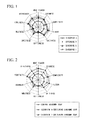
- the evaluation results were averaged and shown in Table 2 and FIG. 1 .
- a comparative sensory evaluation relating to preference was also carried out on the sample of Comparative Example 1 and samples of Examples 1, 3 and 5.
- the comparative sensory evaluation was carried out by having 11 in-house panelists indicate which sample they preferred based on its preferable and/or potent meat flavor.
- the values shown in Table 3 indicate the number of panelists who judged the sample to be preferable and/or potent in each group.
- Seasonings 1 and 10 to 16 (Examples 1 and 10 to 16) and Seasonings A, E and F(Comparative Examples 1, 5 and 6) were respectively added to hot water at 70°C at 0.7% by weight (salt content: 0.3% by weight) followed by carrying out a sensory evaluation.
- the sensory evaluation was carried out in the form of a blind test using 11 in-house panelists, and the seasonings were evaluated for evaluation parameters consisting of "meat flavor", "richness” and “flavor” according to the aforementioned evaluation criteria based on a score of 4 for each evaluation parameter in the evaluations of the Seasoning A serving as a control.
- the evaluation results were averaged and shown in Table 4.
- Consomme soup prepared by dissolving 1.0% by weight of processed Knorr Bouillon KF (beef-free consomme soup, Aj inomoto Corp.) in hot water at 70°C was used as a control consomme soup (control sample).
- Consomme soup obtained by adding 0.35% by weight of either Seasoning 1 (Example 1) or Seasoning A (Comparative Example 1) was used as seasoning-containing consomme soup (test sample), followed by carrying out a sensory evaluation. Furthermore, the salt content of each sample was corrected so as to be constant.
- the sensory evaluation was carried out in the form of a blind test using 11 in-house panelists, and the soups were evaluated for evaluation parameters consisting of "meat flavor", “richness”, “complexity”, “flavor”, “saltiness”, bitterness”, “sweetness”, “sourness”, “foretaste” and “aftertaste” according to the aforementioned evaluation criteria based on a score of 4 for each evaluation parameter in the evaluations of the control sample.
- the evaluation results were averaged and shown in Table 5 and FIG. 2 .
- a comparative sensory evaluation relating to preference was also carried out on the control sample and test sample.
- the comparative sensory evaluation was carried out by having 11 in-house panelists indicate which consomme soup they preferred based on its preferable and/or potent meat flavor.
- the values shown in Table 6 indicate the number of panelists who judged the sample to be preferable and/or potent in each group.
- Seasonings 1, 17 and 18 (Examples 1, 17 and 18) and Seasonings G and H (Comparative Examples 7 and 8) were respectively added to hot water at 70°C at 0.7% by weight (salt content: 0.3% by weight), and a sensory evaluation was carried out using each of the resulting samples.
- the sensory evaluation was carried out in the form of a blind test using 11 in-house panelists, the seasonings were evaluated for evaluation parameters consisting of "meat flavor", "roasted flavor” and "off-flavor" according to the following evaluation criteria, and the evaluations selected by the most panelists were recorded. The evaluation results are shown in Table 7.
- Seasonings 1 and 19 to 23 (Examples 1 and 19 to 23) and Seasoning I (Comparative Example 9) were respectively added to hot water at 70°C at 0.7% by weight (salt content: 0.3% by weight), and a sensory evaluation was carried out using each of the resulting samples.
- the sensory evaluation was carried out in the form of a blind test using 11 in-house panelists, the seasonings were evaluated for evaluation parameters consisting of "meat flavor", "roasted flavor” and "off-flavor” according to the following evaluation criteria, and the evaluations selected by the most panelists were recorded. The evaluation results are shown in Table 8.
- Seasonings 24 to 28 of Examples 24 to 28 and Seasoning J of Comparative Example 10 were obtained in the same manner as Example 1 with the exception of changing the xylose (reducing sugar) content in Example 1 from 3.0% by weight to 0.0% by weight, 0.5% by weight, 1.0% by weight, 2.0% by weight, 5.0% by weight and 10.0% by weight, respectively, as shown in Table 9.
- Seasonings 1 and 24 to 28 (Examples 1 and 24 to 28) and Seasoning J (Comparative Example 10) were respectively added to hot water at 70°C at 0.7% by weight (salt content: 0.3% by weight), and a sensory evaluation was carried out using each of the resulting samples.
- the sensory evaluation was carried out in the form of a blind test using 11 in-house panelists, the seasonings were evaluated for evaluation parameters consisting of "meat flavor", "roasted flavor” and "off-flavor” according to the following evaluation criteria, and the evaluations selected by the most panelists were recorded. The evaluation results are shown in Table 9.
- a mixture was first prepared by mixing 16% by weight of a yeast extract having a high glutamic acid content (Hyper Meast HG, glutamic acid content: 18% by weight or more, Asahi Food & Healthcare Co., Ltd.), 19% by weight of a yeast extract having a high glutathione content (High Thione Extract YH-15, glutathione content: 15% by weight or more, Kohj in Co., Ltd.), 3.0% by weight of xylose, 14% by weight of salt and 48% by weight of water in the same manner as Example 1. Next, 80 parts by weight of oil in the form of sunflower oil was added to and mixed with 20 parts by weight of the resulting mixture, and the resulting suspension was heated for 30 minutes at 120°C. Following completion of the reaction, the suspension was allowed to stand undisturbed and cool followed by fractionating only the separated upper layer (oil layer) to obtain a Seasoning 29. Furthermore, the pH of the mixture was 5.0 (non-adjusted).
- a mixture obtained by mixing 16% by weight of a yeast extract having a high glutamic acid content (Hyper Meast HG, glutamic acid content: 18% by weight or more, Asahi Food & Healthcare Co., Ltd.), 19% by weight of a yeast extract having a high glutathione content (High Thione Extract YH-15, glutathione content: 15% by weight or more, Kohj in Co., Ltd.), 3.0% by weight of xylose, 14% by weight of salt and 48% by weight of water in the same manner as Example 1 was heated for 30 minutes at 120°C.
- Example 31 was obtained in the same manner as Example 30 with the exception of only adding and mixing 80 parts by weight of sunflower oil to 20 parts by weight of the heated mixture without heating.
- Seasoning L of Comparative Example 12 was obtained in the same manner as Example 29 with the exception of changing the formulation of the yeast extract in Example 29 as shown in Table 10.
- Seasoning M of Comparative Example 13 was obtained in the same manner as Comparative Example 12 with the exception of only adding and mixing the oil in Comparative Example 12 without heating.
- Seasonings 29 to 31 (Examples 29 to 31) and Seasonings K to M (Comparative Examples 11 to 13) were respectively added to hot water at 70°C at 0.7% by weight (salt content: 0.3% by weight), and a sensory evaluation was carried out using each of the resulting samples.
- the sensory evaluation was carried out in the form of a blind test using 7 in-house panelists, and the seasonings were evaluated for evaluation parameters consisting of "meat flavor", "roasted flavor” and "off-flavor” according to the evaluation criteria used in Evaluation 1 based on a score of 4 for each evaluation parameter in the evaluations of the Seasoning A serving as a control.
- the evaluation results were averaged and shown in Table 10.
- the results of carrying out a similar sensory evaluation on Seasoning 29 (Example 29) and Seasonings N to O (Comparative Examples 14 and 15) were averaged and shown in Table 11.
- Seasonings 29, 32 and 33 (Examples 29, 32 and 33) and Seasonings K, P and Q (Comparative Examples 11, 16 and 17) were respectively added to hot water at 70°C at 0.7% by weight (salt content: 0.3% by weight), and a sensory evaluation was carried out using each of the resulting samples.
- the sensory evaluation was carried out in the form of a blind test using 7 in-house panelists, the seasonings were evaluated for evaluation parameters consisting of "meat flavor” and "oxidized odor" according to the evaluation criteria indication below, and the evaluations selected by the most panelists were recorded.
- the evaluation results are shown in Table 12.
- "oxidized odor” refers to the odor of oxidized oil generated when oil is heated.
- Seasonings 34 to 37 of Examples 34 and 37 and Seasoning R of Comparative Example 18 were obtained in the same manner as Example 29 with the exception of changing the content of the mixture in Example 29 (content of the mixture based on the total weight of the mixture and oil) from 20% by weight to the contents shown in Table 13.
- Seasonings 29 and 34 to 37 (Examples 29 and 34 to 37) and Seasoning R (Comparative Example 18) were respectively added to hot water at 70°C at 0.7% by weight (salt content: 0.3% by weight), and a sensory evaluation was carried out using each of the resulting samples.
- the sensory evaluation was carried out in the form of a blind test using 7 in-house panelists, the seasonings were evaluated for the intensity of flavor generation to levels ranging from " ⁇ " (flavor absent or unable to be detected) to one of five levels from "+" to "+++++”, and the evaluations selected by the most panelists were recorded.
- the evaluation results are shown in Table 13.
- Blend No. Content of mixture (wt%) Intensity of flavor generation Comp.Ex.18 SR 0 ⁇ Ex.34 S34 1 ++ Ex.35 S35 3 +++ Ex.36 S36 5 +++ Ex.37 S37 10 ++++ Ex.29 S29 20 +++++++
Landscapes
- Life Sciences & Earth Sciences (AREA)
- Health & Medical Sciences (AREA)
- Nutrition Science (AREA)
- Chemical & Material Sciences (AREA)
- Engineering & Computer Science (AREA)
- Food Science & Technology (AREA)
- Polymers & Plastics (AREA)
- Proteomics, Peptides & Aminoacids (AREA)
- Seasonings (AREA)
- Coloring Foods And Improving Nutritive Qualities (AREA)
Abstract
Description
- The present invention relates to a method for producing a thermal reaction seasoning, a seasoning and a food or beverage.
- A method is known in the prior art for producing a seasoning having a flavor resembling that of roasted meat by heating a yeast extract containing glutathione and a sugar (see Patent Document 1). In addition, a method is also known for producing a seasoning that comprises heating glutamic acid in the presence of glutathione (see Patent Document 2). Moreover, a seasoning is known that contains glutamic acid and glutathione (see
Patent Documents 3 and 4). - However, although there is an extremely high demand among consumers for a seasoning that can be added to foods and beverages, has favorable taste, and is able to impart flavor, saltiness, richness or meat flavor and the like more effectively than conventional seasonings, a seasoning has yet to be provided that is able to adequately satisfy this demand.
-
- Patent Document 1: Japanese Patent Publication No.
2903659 - Patent Document 2: Japanese Patent Publication No.
3458514 - Patent Document 3: Japanese Examined Patent Application, Second Publication No.
S63-13661 - Patent Document 4: Japanese Unexamined Patent Application, First Publication No.
2001-78702 - An object of the present invention is to solve the various problems of the prior art as described above and achieve the following objectives. Namely, an object of the present invention is to provide a method for producing a seasoning that can be added to foods and beverages, has favorable taste, and is able to impart flavor (Umami), saltiness, richness, sweetness, foretaste, aftertaste or meat flavor and the like, a seasoning, flavor enhancer, saltiness enhancer, richness enhancer and meat flavor enhancer, and a food or beverage containing that seasoning.
- Means for solving the aforementioned problems are as indicated below.
- <1> A method for producing a seasoning, comprising: heating a mixture containing a yeast extract having a high glutamic acid content in which the glutamic acid content thereof is 10% by weight or more, and a yeast extract having a high glutathione content in which the glutathione content thereof is 5% by weight or more.
- <2> A method for producing a seasoning, comprising: heating a mixture containing 3% by weight to 24% by weight of a yeast extract having a high glutamic acid content in which the glutamic acid content thereof is 10% by weight or more, and 5% by weight to 35% by weight of a yeast extract having a high glutathione content in which the glutathione content thereof is 5% by weight or more.
- <3> The method for producing a seasoning described in either of <1> or <2> above, wherein the mixture contains 6% by weight to 21% by weight of the yeast extract having a high glutamic acid content.
- <4> The method for producing a seasoning described in either of <1> or <2> above, wherein the mixture contains 9% by weight to 18% by weight of the yeast extract having a high glutamic acid content.
- <5> The method for producing a seasoning described in any of <1> to <4> above, wherein the mixture contains 8% by weight to 25% by weight of the yeast extract having a high glutathione content.
- <6> The method for producing a seasoning described in any of <1> to <4> above, wherein the mixture contains 11% by weight to 20% by weight of the yeast extract having a high glutathione content.
- <7> The method for producing a seasoning described in any of <1> to <6> above, wherein the mixture further contains a reducing sugar.
- <8> The method for producing a seasoning described in <7> above, wherein the reducing sugar is at least one type selected from the group consisting of xylose, glucose, fructose, sucrose, maltose, arabinose, lactose and ribose.
- <9> The method for producing a seasoning described in any of <1> to <8> above, wherein an oil is further added to the mixture, and then the mixture is heated.
- <10> The method for producing a seasoning described in any of <1> to <8> above, wherein an oil is added to the mixture and the oil layer is fractionated by heating.
- <11> The method for producing a seasoning described in either of <9> or <10> above, wherein the oil is at least one type selected from the group consisting of sunflower oil, palm oil, canola oil and soybean oil.
- <12> The method for producing a seasoning described in any of <9> to <11> above, wherein the content of the mixture is 0.5% by weight or more based on the total weight of the mixture and the oil.
- <13> The method for producing a seasoning described in <12> above, wherein the content of the mixture is 3% by weight or more based on the total weight of the mixture and the oil.
- <14> The method for producing a seasoning described in any of <1> to <13> above, wherein heating is carried out at 90°C to 130°C.
- <15> The method for producing a seasoning described in any of <1> to <14> above, wherein heating is carried out for 1 minute to 4 hours.
- <16> The method for producing a seasoning described in any of <1> to <15> above, wherein heating is carried out at a pH of 3 to 8.
- <17> A seasoning obtained according to the method for producing a seasoning described in any of <1> to <16> above.
- <18> The seasoning described in <17> above, which demonstrates meat flavor.
- <19> The seasoning described in <18> above, wherein the meat flavor is at least chicken flavor or beef flavor.
- <20> A flavor enhancer containing the seasoning described in <17> above as an active ingredient thereof.
- <21> A saltiness enhancer containing the seasoning described in <17> above as an active ingredient thereof.
- <22> A richness enhancer containing the seasoning described in <17> above as an active ingredient thereof.
- <23> A meat flavor enhancer containing the seasoning described in <17> above as an active ingredient thereof.
- <24> The meat flavor enhancer described in <23> above, wherein the meat flavor is at least chicken flavor or beef flavor.
- <25> A food or beverage containing the seasoning described in any of <17> to <19> above.
- According to the present invention, a method for producing a seasoning that is able to solve the various problems of the prior art as previously described and achieve the aforementioned objectives, is able to be added to foods and beverages, has a favorable taste, and is able to impart flavor, saltiness, richness, sweetness, foretaste, aftertaste or meat flavor and the like; a seasoning, flavor enhancer, saltiness enhancer, richness enhancer or meat flavor enhancer, and a food or beverage containing the seasoning can be provided.
-
-
FIG. 1 is a graph indicating the results of a parameter sensory evaluation of a yeast extract having a high glutamic acid content. -
FIG. 2 is a graph indicating the results of a sensory evaluation of an application test. - The method for producing a seasoning of the present invention comprises a step for heating a mixture containing a yeast extract having a high glutamic acid content and a yeast extract having a high glutathione content, and may further comprise other steps suitably selected as necessary.
- The aforementioned mixture at least contains a yeast extract having a high glutamic acid content and a yeast extract having a high glutathione content, and further contains other yeast extracts, reducing sugar, salt or water and the like as necessary.
- There are no particular limitations on the aforementioned yeast extract having a high glutamic acid content and can be suitably selected provided the glutamic acid content thereof is 10% by weight or more as powdered yeast extract and can be provided for edible use, examples of which include brewer's yeast extract, bread yeast extract and torula yeast extract. A commercially available product can also be used for the aforementioned yeast extract having a high glutamic acid content, and examples of such commercially available products include Hyper Meast HG (Asahi Food & Healthcare Co., Ltd., glutamic acid content: 18% by weight or more) and Hyper Meast HG Paste (Asahi Food & Healthcare Co., Ltd.).
There are no particular limitations on the content of the yeast extract having a high glutamic acid content in the aforementioned mixture provided it is 3% by weight to 24% by weight as powdered yeast extract, and although the content thereof can be suitably selected, it is preferably 6% by weight to 21% by weight and more preferably 9% by weight to 18% by weight. If the aforementioned content is less than 3% by weight, meat flavor, flavor (Umami) and richness are lacking, while if the content exceeds 24% by weight, meat flavor decreases while a roasted sensation and off-flavor increase. On the other hand, if the aforementioned content is 9% by weight to 18% by weight, meat flavor is generated and off-flavor is reduced, thereby making this advantageous.
Here, "powdered yeast extract" refers to a yeast extract having a moisture content of 5% by weight or less and solid fraction of 95% by weight or more.
In addition, when using the aforementioned yeast extract having a high glutamic acid content in the method for producing a seasoning, the yeast extract may be in the form of a powder, paste or solution. In the case the yeast extract having a high glutamic acid content is in the form of a paste or solution, the concentration of the yeast extract having a high glutamic acid content in the mixture may be suitably determined based on the powdered yeast extract.
Furthermore, there are no particular limitations on the "yeast extract in the form of a paste or liquid" provided the moisture content thereof does not exceed 5% by weight, and although it can be suitably selected corresponding to the objective, this typically refers to a yeast extract having a moisture content of 20% by weight to 35% by weight and solid fraction of 65% by weight to 80% by weight.
Furthermore, although there are some commercially available yeast extracts to which salt has been initially added, in the case of using such a yeast extract, the aforementioned moisture content is calculated based on the yeast extract solid fraction after omitting the salt. - There are no particular limitations on the aforementioned yeast extract having a high glutathione content and can be suitably selected provided the glutathion content thereof is 5% by weight or more as powdered yeast extract and can be provided for edible use, examples of which include brewer's yeast extract, bread yeast extract and torula yeast extract. A commercially available product can also be used for the aforementioned yeast extract having a high glutathione content, and examples of such commercially available products include High Thione Extract YH-15 (Kohjin Co., Ltd., glutathione content: 15% by weight or more).
There are no particular limitations on the content of the yeast extract having a high glutathione content in the aforementioned mixture provided it is 5% by weight to 35% by weight as powdered yeast extract, and although the content thereof can be suitably selected, it is preferably 8% by weight to 25% by weight and more preferably 11% by weight to 20% by weight. If the aforementioned content is less than 5% by weight, the generation of meat flavor decreases considerably, while if the content exceeds 35% by weight, off-flavor (such as the smell of sulfur) becomes strong and flavor decreases. On the other hand, if the aforementioned content is 11% by weight to 20% by weight, meat flavor is generated and off-flavor is reduced, thereby making this advantageous.
In addition, when using the aforementioned yeast extract having a high glutathione content in the method for producing a seasoning, the yeast extract may be in the form of a powder or solution (paste). In the case the yeast extract having a high glutathione content is in the form of a solution, the concentration of the yeast extract having a high glutathione content in the mixture may be suitably determined based on the powdered yeast extract. - There are no particular limitations on the method used to prepare the aforementioned yeast extracts, and a method can be suitably selected according to the objective, examples of which include autolysis (method in which yeast cells are solubilized using protease and the like inherently present in the yeast cells), zymolysis (method consisting of solubilization by adding an enzyme preparation derived from microorganisms, plants and the like), hot water extraction (method consisting of solubilization by immersing in hot water for a fixed period of time), acid and/or alkaline decomposition (method consisting of solubilization by adding various acids or bases), physical crushing (method consisting of crushing by ultrasonic treatment, high-pressure homogenization or mixing and/or grinding with a solid such as glass beads), and freezing-thawing (method consisting of crushing by carrying out at least one cycle of freezing and thawing). These methods for preparing a yeast extract are well known among persons with ordinary skill in the art. One type of these methods may be used alone or two or more types may be used in combination.
For example, in the case of using brewer's yeast extract, brewer's yeast obtained in a beer production process is suitably filtered and washed, the yeast cells are subjected to crushing and/or decomposition according to at least one of the methods described above, and the resulting crude yeast is either used directly and/or additionally subjected to filtration and concentration and the like to obtain a refined yeast in the form of brewer's yeast extract. - The glutamic acid content in the aforementioned yeast extract can be measured by ordinary total amino acid determination using the Acquity UPLC® (manufactured by Nihon Waters K.K.).
In addition, the glutathione content in the aforementioned yeast extract can be determined by measuring total glutathione in accordance with the method of Titze et al. (Analytical Biochemistry, Vol. 27, p. 502 (1969)) using a spectrophotometer (Model U-2800A Spectrophotometer, Hitachi Biotechnologies, Ltd.). - The aforementioned mixture preferably further contains a reducing sugar. Although there are no particular limitations on the reducing sugar and the reducing sugar can be suitably selected, xylose, glucose, fructose, sucrose, maltose, arabinose, lactose and ribose are preferable. One type of these reducing sugars may be used alone or two or more types may be used in combination. Among these, xylose is more preferable from the viewpoint of being able to generate good-quality flavor in a short period of time due to its high reactivity.
The content of the aforementioned reducing sugar in the mixture is preferably 0% by weight to 5% by weight. In the case of not adding the reducing sugar and/or in the case the content thereof is low, there is no roasted flavor or off-flavor and a good-quality meat flavor is obtained, thereby making this preferable with respect to this point, while in the case of a high content thereof, in addition to good-quality meat flavor, a rich, suitable roasted flavor (such as roast beef flavor) is obtained, thereby making this preferable with respect to this point. In this manner, various types of flavors not found in the prior art can be obtained by suitably selecting the content of the aforementioned reducing sugar.
On the other hand, if the content of the reducing sugar exceeds 5% by weight, roasted flavor and off-flavor increase considerably and the generation of meat flavor decreases remarkably. - There are no particular limitations on the method used to heat the aforementioned mixture, and conditions such as heating temperature, heating time or mixture pH can be suitably selected.
There are no particular limitations on the aforementioned heating temperature provided it is 90°C to 150°C, and although the heating temperature can be suitably selected corresponding to the objective, it is preferably 90°C to 130°C, more preferably 95°C to 125°C, and particularly preferably 100°C to 120°C. If the aforementioned heating temperature is lower than 90°C, meat flavor is unable to be effectively obtained, while if the heating temperature is higher than 150°C, roasted flavor and off-flavor increase. On the other hand, if the aforementioned heating temperature is 100°C to 120°C, there is considerable generation of meat flavor and generation of off-flavor is low, thereby making this advantageous.
The aforementioned heating time is preferably 1 minute to 4 hours and more preferably 1 minute to 1 hour. If the aforementioned heating time is less than 1 minute, there is a lack of stability, while if the heating time exceeds 4 hours, off-flavor increases. On the other hand, if the aforementioned heating time is 1 minute to 1 hour, this is advantageous in terms of the quality of the generated flavor and production efficiency.
The pH of the aforementioned mixture is preferably 3 to 8 and more preferably 4 to 6. If the aforementioned pH is lower than 3, meat flavor may not be generated, while if the pH is higher than 8, roasted flavor and off-flavor increase, while flavor and richness decrease. On the other hand, if the aforementioned pH is from 4 to 6, it is advantageous in terms of the generation of good-quality flavor and favorable taste.
In addition, in the method used to heat the aforementioned mixture, the mixture is preferably heated under the aforementioned heating conditions while stirring at 100 rpm to 600 rpm, and an example of a device that can be used for that purpose is a pressurized thermal reactor (manufactured by Taiatsu Techno Corp.). - Although the product obtained following thermal reaction can be used directly as a seasoning and/or used directly after cooling (brown paste having a Brix value of about 50 to 70), it may further be purified. The resulting liquid seasoning may further be concentrated (Brix value of about 80) or diluted, or it may be converted to a powder by a drying step using spray drying, freeze drying, vacuum drying or air drying and the like.
An additive ordinarily permitted for use in seasonings can be further added to the seasoning obtained in this manner depending on the particular case. - In another embodiment thereof, the method for producing a seasoning of the present invention comprises a step for adding an oil to the aforementioned mixture followed by heating, and may further comprise other steps such as an emulsification step or drying step suitably selected as necessary.
According to the aforementioned method for producing a seasoning, a seasoning is produced that can be added to foods and beverages, has favorable taste, and is able to impart meat flavor and the like. In addition, taste can be altered by suitably adjusting the amount of the aforementioned seasoning added as well as the amount of the mixture, thereby enabling the seasoning to be used as a salad dressing and the like. Moreover, a seasoning can also be produced in the form of an emulsified composition in which an aqueous layer and oil layer have been emulsified, and a seasoning can be obtained in which these layers have been dried in a drying step such as spray drying. - In addition, in still another embodiment thereof, the method for producing a seasoning of the present invention comprises a step for adding an oil to the aforementioned mixture, heating the mixture and fractionating the oil layer, and may further comprise other steps suitably selected as necessary.
According to the aforementioned method for producing a seasoning, a seasoning is produced that can be added to foods and beverages, has a favorable taste, and is able to impart meat flavor and the like, and the seasoning produced is in the form of a flavoring oil. - There are no particular limitations on the aforementioned oil provided it is an edible oil, and although it can be suitably selected corresponding to the objective, vegetable oil is preferable in terms of not containing animal allergens and being able to effectively impart meat flavor similar to that associated with animal fats and oils by using the method for producing a seasoning of the present invention, while animal oil is preferable in terms of being able to enhance meat flavor similar to that associated with animal fats and oils by using the method for producing a seasoning of the present invention.
There are no particular limitations on the aforementioned vegetable oil and can be suitably selected corresponding to the objective, examples of which include sunflower oil, palm oil, canola oil (rapeseed oil), soybean oil, rice oil, cottonseed oil and corn oil. Among these, sunflower oil, palm oil, canola oil and soybean oil are preferable since they are representative vegetable oils; sunflower oil, palm oil and canola oil are more preferable since they do not constitute major allergens, sunflower oil and canola oil are particularly preferable since they are liquids at room temperature and have superior handling ease, and sunflower oil is most preferable since it is lean and resistant to oxidation. - There are no particular limitations on the content of the aforementioned mixture provided it allows the providing of a seasoning that can be added to foods and beverages, has favorable taste and is able to impart meat flavor and the like, and although the content thereof can be suitably selected corresponding to the objective, the content of the mixture is preferably 0.5% by weight or more, more preferably 1% by weight or more and even more preferably 3% by weight or more based on the total weight of the mixture and oil.
If the aforementioned content is from 0.5% by weight to less than 3% by weight, a seasoning is produced that has a mild meat flavor, and this is advantageous in terms of being able to be preferably used to enhance taste and impart meat flavor to oily products such as salad dressings, garlic oil or onion oil. In addition, if the aforementioned content is 3% by weight or more, a seasoning is produced that has a stronger meat flavor. Thus, the content of the mixture can be suitably selected corresponding to the application in order to provide a seasoning having a desired meat flavor intensity. - There are no particular limitations on the method used to add the aforementioned oil to the aforementioned mixture, and a known method can be suitably selected corresponding to the objective, examples of which include a method consisting of preparing a suspension by mixing the aforementioned mixture with the aforementioned oil.
There are no particular limitations on the method used to heat the aforementioned suspension containing the aforementioned mixture and the oil, and conditions such as heating temperature, heating time or mixture pH can be suitably selected in the same manner as the method used to heat the aforementioned mixture. There are no particular limitations on the heating method, a known method can be suitably selected corresponding to the objective, and heating may be carried out without stirring or stirring may be suitably carried out under conditions such as stirring at 100 rpm to 600 rpm. - There are no particular limitations on the method used to fractionate the oil layer from the product obtained following thermal reaction of the aforementioned suspension, a known method can be suitably selected corresponding to the objective, and examples thereof include a method consisting of cooling or allowing the product to stand undisturbed after fractionating only the upper layer (oil layer) formed by layer separation, and a method consisting of discarding the separated lower layer (aqueous layer) and the boundary between the upper layer and lower layer to obtain only the upper layer (oil layer).
- The seasoning of the present invention is a seasoning obtained according to the aforementioned method for producing a seasoning, and other ingredients such as additives ordinarily permitted for use in seasonings can be further contained as necessary.
- There are no particular limitations on the aforementioned additives, additives can be suitably selected corresponding to the objective, and examples thereof include sodium glutamate, inosinic acid, guanylic acid and thickening polysaccharides.
- The flavor enhancer of the present invention contains the aforementioned seasoning as an active ingredient thereof, and may further contain other ingredients such as additives ordinarily permitted for use in seasonings as necessary. The aforementioned flavor enhancer demonstrates a flavor enhancing action due to the action of the aforementioned seasoning contained therein as an active ingredient.
- The saltiness enhancer of the present invention contains the aforementioned seasoning as an active ingredient thereof, and may further contain other ingredients such as additives ordinarily permitted for use in seasonings as necessary. The aforementioned saltiness enhancer demonstrates a saltiness enhancing action due to the action of the aforementioned seasoning contained therein as an active ingredient.
- The richness enhancer of the present invention contains the aforementioned seasoning as an active ingredient thereof, and may further contain other ingredients such as additives ordinarily permitted for use in seasonings as necessary. The aforementioned richness enhancer demonstrates a richness enhancing action due to the action of the aforementioned seasoning contained therein as an active ingredient.
- The meat flavor enhancer of the present invention contains the aforementioned seasoning as an active ingredient thereof, and may further contain other ingredients such as additives ordinarily permitted for use in seasonings as necessary. The aforementioned meat flavor enhancer demonstrates a meat flavor enhancing action due to the action of the aforementioned seasoning contained therein as an active ingredient.
- The food or beverage of the present invention incorporates at least any of the seasoning, flavor enhancer, saltiness enhancer, richness enhancer and meat flavor enhancer of the present invention, and may further contain other ingredients as necessary.
- The aforementioned food or beverage refers to that for which there is little risk of impairing human health and which is ingested orally or by transintestinal administration during the course of ordinary social life, is not limited to classifications such as administrative classifications in the manner of foods or beverages, prescription drugs or quasi-drugs, and includes a wide range of products such as ordinary foods, health foods, foods with health claims, beauty foods, quasi-drugs or prescription drugs.
- There are no particular limitations on the aforementioned food or beverage, and can be suitably selected corresponding to the objective, examples of which include beverages such as beer, beer-tasting beverages, soft drinks, carbonate beverages, nutritional drinks, fruit drinks and lactic acid drinks (and including concentrates and powdered forms of these beverages) ; frozen confections such as ice cream, ice sherbet or snow cones; noodles such as buckwheat noodles, wheat flour noodles, vermicelli, Japanese dumpling skins, Chinese dumpling skins, Chinese-style noodles and instant noodles; confections such as soft candy, hard candy, gum, chocolate, tablet candy, snacks, biscuits, jelly, jam, cream, baked confections or bread; marine products such as crab, salmon, clams, tuna, sardines, shrimp, bonito, horse mackerel, whale, oysters, saury, squid, blood clams, scallops, abalone, sea urchin, salmon roe or omer; processed marine and livestock products such as boiled fish paste, ham or sausage; milk products such as processed milk or fermented milk; oils, fats and processed oily foods such as salad oil, tempura oil, margarine, mayonnaise, shortening, whipping cream or salad dressing; seasonings such as sauces or gravies; pre-prepared in-pouch foods such as curry sauce, stew, chicken and rice, rice gruel, rice porridge, Chinese vegetables and rice, pork cutlet and rice, tempura and rice, braised eel and rice, hashed meat and rice, fish and vegetable soup, Chinese tofu sauce, beef and rice, spaghetti sauce, egg drop soup, rice omelet, Japanese dumplings, Chinese dumplings, hamburger or meat balls; simple foods such as salads or pickles; various forms of health foods, beauty foods or nutritional supplements; prescription drugs such as tablets, granules, capsules, drinks or lozenges; and quasi-drugs. Furthermore, the foods and beverages are not limited to the aforementioned examples.
- The amount of the seasoning, flavor enhancer, saltiness enhancer, richness enhancer and meat flavor enhancer of the present invention added to the aforementioned food or beverage cannot be strictly defined since it varies according to the food or beverage to which it is added, and is preferably 0.05% by weight to 5.0% by weight.
- Examples of the aforementioned other ingredients include supplemental raw materials and/or additives normally used when producing foods and beverages.
There are no particular limitations on the aforementioned raw materials and/or additives and they can be suitably selected corresponding to the objective, examples of which include glucose, fructose, sucrose, maltose, sorbitol, stevioside, rubusoside, corn syrup, lactose, citric acid, tartaric acid, malic acid, succinic acid, lactic acid, L-ascorbic acid, dl-α-tocopherol, sodium erythorbate, glycerin, propylene glycol, glycerin-fatty acid esters, polyglycerin-fatty acid esters, sucrose fatty acid esters, sorbitan fatty acid esters, gum arabic, carrageenan, casein, gelatin, pectin, agar, vitamin B, nicotinic amide, calcium pantothenate, amino acids, calcium salts, pigments, spices and preservatives. - The food or beverage of the present invention can be ingested orally on a routine basis, and is able to extremely effectively achieve at least any of the actions of flavor enhancing action, saltiness enhancing action, richness enhancing action and meat flavor enhancing action due to the action of the seasoning, flavor enhancer, saltiness enhancer, richness enhancer and meat flavor enhancer of the present invention.
- Furthermore, although the food or beverage of the present invention is preferably applied to humans, it can also be applied to animals other than humans provided each of the actions and effects thereof are demonstrated. Examples
- Although the following provides a more detailed explanation of the present invention by indicating examples thereof, the present invention is not limited thereto.
- A mixture obtained by mixing 16% by weight of a yeast extract having a high glutamic acid content (Hyper Meast HG, glutamic acid content: 18% by weight or more, Asahi Food & Healthcare Co., Ltd.), 19% by weight of a yeast extract having a high glutathione content (High Thione Extract YH-15, glutathione content: 15% by weight or more, Kohjin Co., Ltd.), 3.0% by weight of xylose, 14% by weight of salt and 48% by weight of water, was heated for 30 minutes at 120°C. Following completion of the reaction, the mixture was cooled to obtain a
Seasoning 1 having a solid fraction of 50% by weight. Furthermore, the pH of the mixture was 5.0 (non-adjusted). - Seasonings 2 to 9 of Examples 2 to 9 were obtained in the same manner as Example 1 with the exception of changing the formulation of the yeast extract having a high glutamic acid content as shown in Table 1. Furthermore, Meast Powder N (glutamic acid content: 3.7% by weight, Asahi Food & Healthcare Co., Ltd.) was used as a control yeast extract. In addition, the formulations of Examples 7 to 9 were prepared by correspondingly reducing the moisture content since the total content of the yeast extract exceeded 35% by weight.
- Seasonings 10 to 16 of Examples 10 to 16 were obtained in the same manner as Example 1 with the exception of changing the formulation of the yeast extract having a high glutathione content as shown in Table 4. Furthermore, Meast Powder N (glutamic acid content: 3.7% by weight, Asahi Food & Healthcare Co., Ltd.) was used as a control yeast extract. In addition, the formulations of Examples 15 and 16 were prepared by correspondingly reducing the moisture content since the total content of the yeast extract exceeded 35% by weight.
- Seasonings A to D of Comparative Examples 1 to 4 were obtained in the same manner as Example 1 with the exception of changing the formulation of yeast extract as shown in Table 1.
- Seasoning E of Comparative Example 5 was obtained in the same manner as Example 1 with the exception of only carrying out mixing and not heating.
- Seasoning F of Comparative Example 6 was obtained in the same manner as Example 1 with the exception of changing the formulation of the yeast extract as shown in Table 4.
- Sensory evaluations were carried out on the
prepared Seasonings 1 to 9 (Examples 1 to 9) and Seasonings A to E (Comparative Examples 1 to 5) in the manner described below. -
Seasonings - The evaluation parameters were evaluated to one of seven levels by respectively comparing with the control and assigning a score of 4 for the control.
- 7: Considerably stronger than the control
- 6: Clearly stronger than the control
- 5: Somewhat stronger than the control
- 4: Equally strong as the control
- 3: Somewhat weaker than the control
- 2: Clearly weaker than the control
- 1: Considerably weaker than the control
-
[Table 1] Blend No. Content of yeast extract having high glutamic acid content (wt%) Content of yeast extract having high glutathione content (wt%) Content of control yeast extract (wt%) Heating Sensory Evaluation Meat flavor Flavor Richness Comp. Ex.1 SA 0 19 16 O 4 4 4 Ex.2 S2 3 19 13 O 4.1 4.4 4.2 Ex.3 S3 6 19 10 O 4.8 5.3 5.1 Ex.4 S4 9 19 7 O 5.2 5.3 5.1 Ex.5 S5 12 19 4 O 5.3 5.5 5.2 Ex.6 S6 15 19 1 O 5.5 5.8 5.2 Ex.1 S1 16 19 0 O 5.5 5.8 5.4 Ex.7 S7 18 19 0 O 5.5 5.9 5.5 Ex.8 S8 21 19 0 O 5.4 5.5 5.5 Ex.9 S9 24 19 0 O 4.8 5.3 5.3 Comp. Ex.2 SB 30 5 0 O 3.2 4.4 4.2 Comp. Ex.3 SC 35 0 0 O 2.9 4.3 3.8 Comp. Ex.4 SD 0 0 35 O 3.1 2.4 3.2 Comp. Ex.5 SE 16 19 0 - 3.5 4.7 4.5 -
Seasonings FIG. 1 .
In addition, a comparative sensory evaluation relating to preference was also carried out on the sample of Comparative Example 1 and samples of Examples 1, 3 and 5. The comparative sensory evaluation was carried out by having 11 in-house panelists indicate which sample they preferred based on its preferable and/or potent meat flavor. The values shown in Table 3 indicate the number of panelists who judged the sample to be preferable and/or potent in each group. -
[Table 2] Blend No. Content of yeast extract having high glutamic acid content (wt%) Meat flavor Richness Compplexity Flavor Saltiness Bitterness Sweetness Sourness Foretaste Aftertaste Comp. Ex.1 SA 0% 4 4 4 4 4 4 4 4 4 4 Ex.3 S3 6% 4.8 5.1 4.5 5.3 5.1 3.5 4.1 3.6 5.5 4.9 Ex.5 S5 12% 5.3 5.2 4.9 5.5 5.4 3.5 4.9 3.7 5.6 5.5 Ex.1 S1 16% 5.5 5.4 4.9 5.8 5.4 3.6 4.6 4.3 5.5 5.7 -
[Table 3] Comp. Ex. 1 Example 3 Preferred 0 11 Comp. Ex. 1 Example 5 Preferred 0 11 Comp. Ex. 1 Example 1 Preferred 0 11 -
Seasonings 1 and 10 to 16 (Examples 1 and 10 to 16) and Seasonings A, E and F(Comparative Examples 1, 5 and 6) were respectively added to hot water at 70°C at 0.7% by weight (salt content: 0.3% by weight) followed by carrying out a sensory evaluation. The sensory evaluation was carried out in the form of a blind test using 11 in-house panelists, and the seasonings were evaluated for evaluation parameters consisting of "meat flavor", "richness" and "flavor" according to the aforementioned evaluation criteria based on a score of 4 for each evaluation parameter in the evaluations of the Seasoning A serving as a control. The evaluation results were averaged and shown in Table 4. -
[Table 4] Blend No. Content of yeast extract having high glutamic acid content (wt%) Content of yeast extract having high glutathione content (wt%) Content of control yeast extract (wt%) Heating Sensory Evaluation Meat flavor Flavor Richness Comp. Ex.6 SF 16 0 19 O 3 4.5 3.5 Hex.10 S10 16 5 13 O 4.3 4.8 4.6 Ex.11 S11 16 8 10 O 5.1 5.3 5.1 Ex.12 S12 16 11 7 O 5.3 5.3 5.2 Ex.13 S13 16 14 4 O 5.4 5.5 5.2 Ex.14 S14 16 17 1 O 5.4 5.8 5.3 Ex.1 S1 16 19 0 O 5.5 5.8 5.4 Ex.15 S15 16 22 0 O 5.5 5.3 5.7 Ex.16 S16 16 25 0 O 5.1 5.3 5.8 Comp. Ex.1 SA 0 19 16 O 4 4 4 Comp. Ex.5 SE 16 19 0 - 3.5 4.7 4.5 - Consomme soup prepared by dissolving 1.0% by weight of processed Knorr Bouillon KF (beef-free consomme soup, Aj inomoto Corp.) in hot water at 70°C was used as a control consomme soup (control sample). Consomme soup obtained by adding 0.35% by weight of either Seasoning 1 (Example 1) or Seasoning A (Comparative Example 1) was used as seasoning-containing consomme soup (test sample), followed by carrying out a sensory evaluation. Furthermore, the salt content of each sample was corrected so as to be constant. The sensory evaluation was carried out in the form of a blind test using 11 in-house panelists, and the soups were evaluated for evaluation parameters consisting of "meat flavor", "richness", "complexity", "flavor", "saltiness", bitterness", "sweetness", "sourness", "foretaste" and "aftertaste" according to the aforementioned evaluation criteria based on a score of 4 for each evaluation parameter in the evaluations of the control sample. The evaluation results were averaged and shown in Table 5 and
FIG. 2 .
In addition, a comparative sensory evaluation relating to preference was also carried out on the control sample and test sample. The comparative sensory evaluation was carried out by having 11 in-house panelists indicate which consomme soup they preferred based on its preferable and/or potent meat flavor. The values shown in Table 6 indicate the number of panelists who judged the sample to be preferable and/or potent in each group. -
[Table 5] Meat flavor Richness Compplexity Flavor Saltiness Bitterness Sweetness Sourness Foretaste Aftertaste Control consomme soup 4 4 4 4 4 4 4 4 4 4 Consomme soup containing Seasoning A 4.9 5.1 5.1 5.1 4.4 4.1 4.4 4.4 5 4.6 Consomme soup containing Seasoning 15.8 6 5.5 5.8 5.1 4 4.8 4 5.9 5.6 -
[Table 6] Preferred Control consomme soup 0 Consomme soup containing Seasoning A 1 Consomme soup containing Seasoning 110 - Seasonings 17 and 18 of Examples 17 and 18 and Seasonings G and H of Comparative Examples 7 and 8 were obtained in the same manner as Example 1 with the exception of changing the heating temperature in Example 1 to 100°C, 150°C, 80°C and 180°C, respectively, as shown in Table 7.
-
Seasonings 1, 17 and 18 (Examples 1, 17 and 18) and Seasonings G and H (Comparative Examples 7 and 8) were respectively added to hot water at 70°C at 0.7% by weight (salt content: 0.3% by weight), and a sensory evaluation was carried out using each of the resulting samples. The sensory evaluation was carried out in the form of a blind test using 11 in-house panelists, the seasonings were evaluated for evaluation parameters consisting of "meat flavor", "roasted flavor" and "off-flavor" according to the following evaluation criteria, and the evaluations selected by the most panelists were recorded. The evaluation results are shown in Table 7. -
- +++: Extremely potent and prominent
- ++: Potent and/or distinct
- +: Present and/or weak
- ±: Absent and/or unable to be detected
-
[Table 7] Blend No. Heating temperature Meat flavor Roasted flavor Off-flavor Comp.Ex.7 SG 80°C + ± + Hex.17 S17 100°C ++ + + Ex.1 S1 120°C +++ + + Hex.18 S18 150°C ++ ++ ++ Comp.Ex.8 SH 180°C + +++ +++ - Seasonings 19 to 23 of Examples 19 to 23 and Seasoning I of Comparative Example 9 were obtained in the same manner as Example 1 with the exception of changing the pH of the mixture in Example 1 to 3, 4, 6, 7, 8 and 2, respectively, as shown in Table 8.
-
Seasonings 1 and 19 to 23 (Examples 1 and 19 to 23) and Seasoning I (Comparative Example 9) were respectively added to hot water at 70°C at 0.7% by weight (salt content: 0.3% by weight), and a sensory evaluation was carried out using each of the resulting samples. The sensory evaluation was carried out in the form of a blind test using 11 in-house panelists, the seasonings were evaluated for evaluation parameters consisting of "meat flavor", "roasted flavor" and "off-flavor" according to the following evaluation criteria, and the evaluations selected by the most panelists were recorded. The evaluation results are shown in Table 8. -
- +++: Extremely potent and prominent
- ++: Potent and/or distinct
- +: Present and/or weak
- ±: Absent and/or unable to be detected
-
[Table 8] Blend No. pH Meat flavor Roasted flavor Off-flavor Comp.Ex.9 SI 2 + ± + Hex.19 S19 3 ++ ± ± Ex.20 S20 4 +++ + ± Ex.1 S1 5 +++ + + Ex.21 S21 6 +++ + + Ex.22 S22 7 ++ ++ ++ Ex.23 S23 8 ++ ++ ++ - Seasonings 24 to 28 of Examples 24 to 28 and Seasoning J of Comparative Example 10 were obtained in the same manner as Example 1 with the exception of changing the xylose (reducing sugar) content in Example 1 from 3.0% by weight to 0.0% by weight, 0.5% by weight, 1.0% by weight, 2.0% by weight, 5.0% by weight and 10.0% by weight, respectively, as shown in Table 9.
-
Seasonings 1 and 24 to 28 (Examples 1 and 24 to 28) and Seasoning J (Comparative Example 10) were respectively added to hot water at 70°C at 0.7% by weight (salt content: 0.3% by weight), and a sensory evaluation was carried out using each of the resulting samples. The sensory evaluation was carried out in the form of a blind test using 11 in-house panelists, the seasonings were evaluated for evaluation parameters consisting of "meat flavor", "roasted flavor" and "off-flavor" according to the following evaluation criteria, and the evaluations selected by the most panelists were recorded. The evaluation results are shown in Table 9. -
- +++: Extremely potent and prominent
- ++: Potent and/or distinct
- +: Present and/or weak
- ±: Absent and/or unable to be detected
-
[Table 9] Blend No. Reducing sugar (wt%) Meat flavor Roasted flavor Off-flavor Ex.24 S24 0.0 ++ ± ± Ex.25 S25 0.5 ++ ± ± Ex.26 S26 1.0 ++ + + Ex.27 S27 2.0 ++ + + Ex. 1 S1 3.0 +++ + + Ex.28 S28 5.0 + ++ ++ Comp.Ex.10 SJ 10.0 ± +++ +++ - A mixture was first prepared by mixing 16% by weight of a yeast extract having a high glutamic acid content (Hyper Meast HG, glutamic acid content: 18% by weight or more, Asahi Food & Healthcare Co., Ltd.), 19% by weight of a yeast extract having a high glutathione content (High Thione Extract YH-15, glutathione content: 15% by weight or more, Kohj in Co., Ltd.), 3.0% by weight of xylose, 14% by weight of salt and 48% by weight of water in the same manner as Example 1. Next, 80 parts by weight of oil in the form of sunflower oil was added to and mixed with 20 parts by weight of the resulting mixture, and the resulting suspension was heated for 30 minutes at 120°C. Following completion of the reaction, the suspension was allowed to stand undisturbed and cool followed by fractionating only the separated upper layer (oil layer) to obtain a Seasoning 29. Furthermore, the pH of the mixture was 5.0 (non-adjusted).
- Seasoning K of Comparative Example 11 was obtained in the same manner as Example 29 with the exception of only adding and mixing the oil in Example 29 without heating.
- First, a mixture obtained by mixing 16% by weight of a yeast extract having a high glutamic acid content (Hyper Meast HG, glutamic acid content: 18% by weight or more, Asahi Food & Healthcare Co., Ltd.), 19% by weight of a yeast extract having a high glutathione content (High Thione Extract YH-15, glutathione content: 15% by weight or more, Kohj in Co., Ltd.), 3.0% by weight of xylose, 14% by weight of salt and 48% by weight of water in the same manner as Example 1 was heated for 30 minutes at 120°C.
Next, 80 parts by weight of oil in the form of sunflower oil was added to and mixed with 20 parts by weight of the resulting heated mixture, and the resulting suspension was heated for 30 minutes at 120°C. Following completion of the reaction, the suspension was allowed to stand undisturbed and cool followed by fractionating only the separated upper layer (oil layer) to obtain a Seasoning 30.
In addition, Seasoning 31 of Example 31 was obtained in the same manner as Example 30 with the exception of only adding and mixing 80 parts by weight of sunflower oil to 20 parts by weight of the heated mixture without heating. - Seasoning L of Comparative Example 12 was obtained in the same manner as Example 29 with the exception of changing the formulation of the yeast extract in Example 29 as shown in Table 10.
In addition, Seasoning M of Comparative Example 13 was obtained in the same manner as Comparative Example 12 with the exception of only adding and mixing the oil in Comparative Example 12 without heating. - Seasonings N and O of Comparative Examples 14 and 15 were obtained in the same manner as Example 29 with the exception of changing the formulation of the yeast extract in Example 29 as shown in Table 11.
- Seasonings 29 to 31 (Examples 29 to 31) and Seasonings K to M (Comparative Examples 11 to 13) were respectively added to hot water at 70°C at 0.7% by weight (salt content: 0.3% by weight), and a sensory evaluation was carried out using each of the resulting samples. The sensory evaluation was carried out in the form of a blind test using 7 in-house panelists, and the seasonings were evaluated for evaluation parameters consisting of "meat flavor", "roasted flavor" and "off-flavor" according to the evaluation criteria used in
Evaluation 1 based on a score of 4 for each evaluation parameter in the evaluations of the Seasoning A serving as a control. The evaluation results were averaged and shown in Table 10.
In addition, the results of carrying out a similar sensory evaluation on Seasoning 29 (Example 29) and Seasonings N to O (Comparative Examples 14 and 15) were averaged and shown in Table 11. -
[Table 10] Blend No. Content of yeast extract having high glutamic acid content (wt%) Content of yeast extract having high glutathione content (wt%) Content of control yeast extract (wt%) Heating of mixture Addition of oil Heating with oil Sensory Evaluation Meat flavor Roasted flavor Off-flavor Ex.29 S29 16 19 0 - O O 6.1 5.6 4.4 Comp.Ex.11 SK 16 19 0 - O - 4.7 4.3 4.3 Ex.30 S30 16 19 0 O O O 5.4 5.9 5.1 Ex.31 S31 16 19 0 O O - 5.1 5.0 4.4 Comp.Ex.12 SL 0 0 35 - O O 4.7 6.0 4.9 Comp.Ex.13 SM 0 0 35 - O - 4.4 4.4 4.4 -
[Table 11] Blend No. Content of yeast extract having high glutamic acid content (wt%) Content of yeast extract having high glutathione content (wt%) Content of control yeast extract (wt%) Heating of mixture Addition of oil Heating with oil Sensory Evaluation Meat flavor Roasted flavor Off-flavor Ex.29 S29 16 19 0 - O O 6.4 5.4 4.6 Comp.Ex.14 SN 35 0 0 - O O 5.1 5.6 5.0 Comp.Ex.15 SO 0 19 16 - O O 5.4 5.0 4.7 - Seasonings 32 and 33 of Examples 32 and 33 were obtained in the same manner as Example 29 with the exception of changing the oil as shown in Table 12.
- Seasonings P and Q of Comparative Examples 16 and 17 were obtained in the same manner as Examples 32 and 33 with the exception of only adding and mixing the oil in Examples 32 and 33 without heating.
- Seasonings 29, 32 and 33 (Examples 29, 32 and 33) and Seasonings K, P and Q (Comparative Examples 11, 16 and 17) were respectively added to hot water at 70°C at 0.7% by weight (salt content: 0.3% by weight), and a sensory evaluation was carried out using each of the resulting samples. The sensory evaluation was carried out in the form of a blind test using 7 in-house panelists, the seasonings were evaluated for evaluation parameters consisting of "meat flavor" and "oxidized odor" according to the evaluation criteria indication below, and the evaluations selected by the most panelists were recorded. The evaluation results are shown in Table 12.
Furthermore, "oxidized odor" refers to the odor of oxidized oil generated when oil is heated. -
- +++: Extremely potent and prominent
- ++: Potent and/or distinct
- +: Present and/or weak
- ±: Absent and/or unable to be detected
-
[Table 12] Blend No. Oil Heating of oil Sensory Evaluation Meat flavor Oxidized odor Ex.29 S29 Sunflower oil O +++ ± Ex.32 S32 Palm oil O +++ + Ex.33 S33 Canola oil O ++ ++ Comp.Ex.11 SK Sunflower oil - ± ± Comp.Ex.16 SP Palm oil - ± ± Comp.Ex.17 SQ Canola oil - ± ± - Seasonings 34 to 37 of Examples 34 and 37 and Seasoning R of Comparative Example 18 were obtained in the same manner as Example 29 with the exception of changing the content of the mixture in Example 29 (content of the mixture based on the total weight of the mixture and oil) from 20% by weight to the contents shown in Table 13.
- Seasonings 29 and 34 to 37 (Examples 29 and 34 to 37) and Seasoning R (Comparative Example 18) were respectively added to hot water at 70°C at 0.7% by weight (salt content: 0.3% by weight), and a sensory evaluation was carried out using each of the resulting samples. The sensory evaluation was carried out in the form of a blind test using 7 in-house panelists, the seasonings were evaluated for the intensity of flavor generation to levels ranging from "±" (flavor absent or unable to be detected) to one of five levels from "+" to "+++++", and the evaluations selected by the most panelists were recorded. The evaluation results are shown in Table 13.
-
[Table 13] Blend No. Content of mixture (wt%) Intensity of flavor generation Comp.Ex.18 SR 0 ± Ex.34 S34 1 ++ Ex.35 S35 3 +++ Ex.36 S36 5 +++ Ex.37 S37 10 ++++ Ex.29 S29 20 +++++
Claims (20)
- A method for producing a seasoning, comprising: heating a mixture containing a yeast extract having a high glutamic acid content in which the glutamic acid content thereof is 10% by weight or more, and a yeast extract having a high glutathione content in which the glutathione content thereof is 5% by weight or more.
- A method for producing a seasoning, comprising: heating a mixture containing 3% by weight to 24% by weight of a yeast extract having a high glutamic acid content in which the glutamic acid content thereof is 10% by weight or more, and 5% by weight to 35% by weight of a yeast extract having a high glutathione content in which the glutathione content thereof is 5% by weight or more.
- The method for producing a seasoning according to claim 1 or 2, wherein the mixture contains 6% by weight to 21% by weight of the yeast extract having a high glutamic acid content.
- The method for producing a seasoning according to claim 1 or 2, wherein the mixture contains 9% by weight to 18% by weight of the yeast extract having a high glutamic acid content.
- The method for producing a seasoning according to any of claims 1 to 4, wherein the mixture contains 8% by weight to 25% by weight of the yeast extract having a high glutathione content.
- The method for producing a seasoning according to any of claims 1 to 4, wherein the mixture contains 11% by weight to 20% by weight of the yeast extract having a high glutathione content.
- The method for producing a seasoning according to any of claims 1 to 6, wherein the mixture further contains a reducing sugar.
- The method for producing a seasoning according to claim 7, wherein the reducing sugar is at least one type selected from the group consisting of xylose, glucose, fructose, sucrose, maltose, arabinose, lactose and ribose.
- The method for producing a seasoning according to any of claims 1 to 8, wherein an oil is further added to the mixture, and then the mixture is heated.
- The method for producing a seasoning according to any of claims 1 to 8, wherein an oil is added to the mixture and the oil layer is fractionated by heating.
- The method for producing a seasoning according to claim 9 or 10, wherein the oil is at least one type selected from the group consisting of sunflower oil, palm oil, canola oil and soybean oil.
- The method for producing a seasoning according to any of claims 9 to 11, wherein the content of the mixture is 0.5% by weight or more based on the total weight of the mixture and the oil.
- The method for producing a seasoning according to any of claims 1 to 12, wherein heating is carried out at 90°C to 130°C.
- The method for producing a seasoning according to any of claims 1 to 13, wherein heating is carried out for 1 minute to 4 hours.
- The method for producing a seasoning according to any of claims 1 to 14, wherein heating is carried out at a pH of 3 to 8.
- A seasoning obtained according to the method for producing a seasoning according to any of claims 1 to 15.
- The seasoning according to claim 16, which demonstrates meat flavor.
- The seasoning according to claim 17, wherein the meat flavor is at least chicken flavor or beef flavor.
- A flavor enhancer, saltiness enhancer, richness enhancer and/or meat flavor enhancer containing the seasoning according to claim 16 as an active ingredient.
- A food or beverage containing the seasoning according to any of claims 16 to 18.
Priority Applications (1)
| Application Number | Priority Date | Filing Date | Title |
|---|---|---|---|
| RS20200366A RS60367B1 (en) | 2010-09-24 | 2011-09-06 | Method for producing thermally reacted seasoning |
Applications Claiming Priority (2)
| Application Number | Priority Date | Filing Date | Title |
|---|---|---|---|
| JP2010214412 | 2010-09-24 | ||
| PCT/JP2011/070199 WO2012039275A1 (en) | 2010-09-24 | 2011-09-06 | Method for producing thermally reacted seasoning, and seasoning, food and drink |
Publications (3)
| Publication Number | Publication Date |
|---|---|
| EP2620060A1 true EP2620060A1 (en) | 2013-07-31 |
| EP2620060A4 EP2620060A4 (en) | 2015-03-04 |
| EP2620060B1 EP2620060B1 (en) | 2020-02-12 |
Family
ID=45873764
Family Applications (1)
| Application Number | Title | Priority Date | Filing Date |
|---|---|---|---|
| EP11826721.0A Active EP2620060B1 (en) | 2010-09-24 | 2011-09-06 | Method for producing thermally reacted seasoning |
Country Status (6)
| Country | Link |
|---|---|
| EP (1) | EP2620060B1 (en) |
| JP (1) | JPWO2012039275A1 (en) |
| KR (1) | KR20130117762A (en) |
| DK (1) | DK2620060T3 (en) |
| RS (1) | RS60367B1 (en) |
| WO (1) | WO2012039275A1 (en) |
Cited By (3)
| Publication number | Priority date | Publication date | Assignee | Title |
|---|---|---|---|---|
| CN110063484A (en) * | 2019-04-12 | 2019-07-30 | 佛山市海天(高明)调味食品有限公司 | A kind of low salinity soy sauce and preparation method thereof |
| EP3459554B1 (en) | 2016-05-17 | 2021-10-27 | KOHJIN Life Sciences Co., Ltd. | Yeast extract having diabetes prevention effect |
| US11185100B2 (en) | 2014-12-10 | 2021-11-30 | Mars, Incorporated | Methods for modulating taste receptors |
Families Citing this family (7)
| Publication number | Priority date | Publication date | Assignee | Title |
|---|---|---|---|---|
| JP2012196188A (en) * | 2011-03-23 | 2012-10-18 | Kohjin Co Ltd | Method for producing seasoning increasing full-bodied taste |
| WO2013140901A1 (en) * | 2012-03-21 | 2013-09-26 | アサヒグループホールディングス株式会社 | Thermally reacted yeast extract seasoning agent |
| CN105475950B (en) * | 2015-12-13 | 2018-09-14 | 浙江顶味食品有限公司 | A kind of preparation method for making the nutrient condiments of soup-stock |
| JP6847582B2 (en) * | 2016-03-03 | 2021-03-24 | テーブルマーク株式会社 | Dispersion composition containing liquid phase and processed microbial cell, and seasoning composition using yeast extract |
| JPWO2017209226A1 (en) * | 2016-06-03 | 2019-04-04 | 興人ライフサイエンス株式会社 | Yeast extract with cataract prevention effect |
| JP6696835B2 (en) * | 2016-06-08 | 2020-05-20 | オリエンタル酵母工業株式会社 | Fermented flavor liquid manufacturing method and food manufacturing method |
| JP2022049288A (en) * | 2020-09-16 | 2022-03-29 | 三菱商事ライフサイエンス株式会社 | Food material that promotes the growth of bifidobacteria |
Family Cites Families (14)
| Publication number | Priority date | Publication date | Assignee | Title |
|---|---|---|---|---|
| JPS6313661A (en) | 1986-07-02 | 1988-01-20 | Hitachi Cable Ltd | Brazing method |
| JP2903659B2 (en) | 1990-07-06 | 1999-06-07 | 味の素株式会社 | Seasoning manufacturing method |
| JP2830415B2 (en) * | 1990-08-03 | 1998-12-02 | 味の素株式会社 | Method for producing flavor composition |
| JP3458514B2 (en) | 1995-03-01 | 2003-10-20 | 味の素株式会社 | Method for producing seasoning containing sugar and amino acid |
| JP3519572B2 (en) * | 1997-05-27 | 2004-04-19 | 日本たばこ産業株式会社 | Yeast extract composition and yeast mutant for obtaining the same |
| JP2001078702A (en) | 1999-07-12 | 2001-03-27 | Nippon Suisan Kaisha Ltd | Seasonings with enhanced mellowness, aftertaste and umami |
| JP2007166902A (en) * | 2003-06-12 | 2007-07-05 | Ajinomoto Co Inc | Method for producing seasoning |
| JP4620404B2 (en) * | 2004-08-02 | 2011-01-26 | アサヒビール株式会社 | Yeast mutant, method for producing yeast having high glutathione content, culture thereof, fraction thereof, yeast extract, and food and drink containing glutathione |
| JP4651361B2 (en) * | 2004-11-09 | 2011-03-16 | キリンフードテック株式会社 | Glutamic acid-rich yeast extract and method for producing the same |
| JP4838690B2 (en) * | 2006-11-16 | 2011-12-14 | キリンフードテック株式会社 | Powder seasoning and method for producing the same |
| JP5637507B2 (en) * | 2008-03-31 | 2014-12-10 | 興人ライフサイエンス株式会社 | Yeast mutants and yeast extracts |
| JP4909326B2 (en) * | 2008-04-01 | 2012-04-04 | キリンフードテック株式会社 | Cheese flavor and / or milk texture enhancing method |
| JP2010081886A (en) * | 2008-09-30 | 2010-04-15 | Fuji Oil Co Ltd | Spice oil, and animal fat using the same and having improved flavor |
| WO2010058616A1 (en) * | 2008-11-18 | 2010-05-27 | アサヒビール株式会社 | Method for production of glutamic acid-rich yeast |
-
2011
- 2011-09-06 JP JP2012534986A patent/JPWO2012039275A1/en active Pending
- 2011-09-06 EP EP11826721.0A patent/EP2620060B1/en active Active
- 2011-09-06 KR KR1020137006155A patent/KR20130117762A/en not_active Withdrawn
- 2011-09-06 WO PCT/JP2011/070199 patent/WO2012039275A1/en not_active Ceased
- 2011-09-06 RS RS20200366A patent/RS60367B1/en unknown
- 2011-09-06 DK DK11826721.0T patent/DK2620060T3/en active
Cited By (3)
| Publication number | Priority date | Publication date | Assignee | Title |
|---|---|---|---|---|
| US11185100B2 (en) | 2014-12-10 | 2021-11-30 | Mars, Incorporated | Methods for modulating taste receptors |
| EP3459554B1 (en) | 2016-05-17 | 2021-10-27 | KOHJIN Life Sciences Co., Ltd. | Yeast extract having diabetes prevention effect |
| CN110063484A (en) * | 2019-04-12 | 2019-07-30 | 佛山市海天(高明)调味食品有限公司 | A kind of low salinity soy sauce and preparation method thereof |
Also Published As
| Publication number | Publication date |
|---|---|
| EP2620060A4 (en) | 2015-03-04 |
| WO2012039275A1 (en) | 2012-03-29 |
| JPWO2012039275A1 (en) | 2014-02-03 |
| KR20130117762A (en) | 2013-10-28 |
| DK2620060T3 (en) | 2020-03-23 |
| EP2620060B1 (en) | 2020-02-12 |
| RS60367B1 (en) | 2020-07-31 |
Similar Documents
| Publication | Publication Date | Title |
|---|---|---|
| EP2620060B1 (en) | Method for producing thermally reacted seasoning | |
| KR102098155B1 (en) | Sweetness and/or milk flavor enhancer | |
| JP6014197B2 (en) | Composition containing sucralose and its application | |
| TW202108015A (en) | Novel fermented seasoning composition | |
| JPWO2000024273A1 (en) | Sucralose-containing compositions and their applications | |
| KR20170129102A (en) | A sweetener composition comprising erythritol | |
| JPWO2013140901A1 (en) | Yeast extract heat reaction seasoning | |
| JP7388469B2 (en) | Taste improver | |
| CN116782778A (en) | Rich flavor enhancement and related screening methods | |
| JP5101727B2 (en) | Soy sauce-like seasoning | |
| KR20190037634A (en) | Manufacturing Method for Multi Using Kimchi Meat Sauce and the Same | |
| JP5354520B2 (en) | Novel peptide composition having kokumi imparting function | |
| JP2005179195A (en) | Mucosal immunostimulant | |
| JP2013169203A (en) | Egg spread | |
| Suwankanit et al. | Influences of different soup stocks on chemical and organoleptic properties of Tom Yum | |
| KR20100007596A (en) | Method of producing sauce, sauce produced thereby, and cutlet | |
| EP4585052A1 (en) | Oil/fat sensation enhancing agent | |
| JP4377663B2 (en) | Intestinal function improving agent | |
| Premavalli et al. | TASTE OF FOODS |
Legal Events
| Date | Code | Title | Description |
|---|---|---|---|
| PUAI | Public reference made under article 153(3) epc to a published international application that has entered the european phase |
Free format text: ORIGINAL CODE: 0009012 |
|
| 17P | Request for examination filed |
Effective date: 20130222 |
|
| AK | Designated contracting states |
Kind code of ref document: A1 Designated state(s): AL AT BE BG CH CY CZ DE DK EE ES FI FR GB GR HR HU IE IS IT LI LT LU LV MC MK MT NL NO PL PT RO RS SE SI SK SM TR |
|
| DAX | Request for extension of the european patent (deleted) | ||
| A4 | Supplementary search report drawn up and despatched |
Effective date: 20150129 |
|
| RIC1 | Information provided on ipc code assigned before grant |
Ipc: A23L 1/231 20060101ALI20150123BHEP Ipc: A23L 1/221 20060101AFI20150123BHEP Ipc: A23L 1/228 20060101ALI20150123BHEP Ipc: A23L 1/22 20060101ALI20150123BHEP Ipc: A23L 2/56 20060101ALI20150123BHEP Ipc: A23L 1/227 20060101ALI20150123BHEP |
|
| STAA | Information on the status of an ep patent application or granted ep patent |
Free format text: STATUS: EXAMINATION IS IN PROGRESS |
|
| 17Q | First examination report despatched |
Effective date: 20171031 |
|
| REG | Reference to a national code |
Ref country code: DE Ref legal event code: R079 Ref document number: 602011064994 Country of ref document: DE Free format text: PREVIOUS MAIN CLASS: A23L0001221000 Ipc: A23L0002560000 |
|
| GRAP | Despatch of communication of intention to grant a patent |
Free format text: ORIGINAL CODE: EPIDOSNIGR1 |
|
| STAA | Information on the status of an ep patent application or granted ep patent |
Free format text: STATUS: GRANT OF PATENT IS INTENDED |
|
| RIC1 | Information provided on ipc code assigned before grant |
Ipc: A23L 27/26 20160101ALI20190801BHEP Ipc: A23L 27/22 20160101ALI20190801BHEP Ipc: A23L 27/00 20160101ALI20190801BHEP Ipc: A23L 27/21 20160101ALI20190801BHEP Ipc: A23L 2/56 20060101AFI20190801BHEP |
|
| INTG | Intention to grant announced |
Effective date: 20190827 |
|
| GRAS | Grant fee paid |
Free format text: ORIGINAL CODE: EPIDOSNIGR3 |
|
| GRAA | (expected) grant |
Free format text: ORIGINAL CODE: 0009210 |
|
| STAA | Information on the status of an ep patent application or granted ep patent |
Free format text: STATUS: THE PATENT HAS BEEN GRANTED |
|
| AK | Designated contracting states |
Kind code of ref document: B1 Designated state(s): AL AT BE BG CH CY CZ DE DK EE ES FI FR GB GR HR HU IE IS IT LI LT LU LV MC MK MT NL NO PL PT RO RS SE SI SK SM TR |
|
| REG | Reference to a national code |
Ref country code: GB Ref legal event code: FG4D |
|
| REG | Reference to a national code |
Ref country code: CH Ref legal event code: EP |
|
| REG | Reference to a national code |
Ref country code: AT Ref legal event code: REF Ref document number: 1230911 Country of ref document: AT Kind code of ref document: T Effective date: 20200215 |
|
| REG | Reference to a national code |
Ref country code: IE Ref legal event code: FG4D |
|
| REG | Reference to a national code |
Ref country code: DE Ref legal event code: R096 Ref document number: 602011064994 Country of ref document: DE |
|
| REG | Reference to a national code |
Ref country code: DK Ref legal event code: T3 Effective date: 20200322 |
|
| REG | Reference to a national code |
Ref country code: NL Ref legal event code: FP |
|
| PG25 | Lapsed in a contracting state [announced via postgrant information from national office to epo] |
Ref country code: NO Free format text: LAPSE BECAUSE OF FAILURE TO SUBMIT A TRANSLATION OF THE DESCRIPTION OR TO PAY THE FEE WITHIN THE PRESCRIBED TIME-LIMIT Effective date: 20200512 Ref country code: FI Free format text: LAPSE BECAUSE OF FAILURE TO SUBMIT A TRANSLATION OF THE DESCRIPTION OR TO PAY THE FEE WITHIN THE PRESCRIBED TIME-LIMIT Effective date: 20200212 |
|
| REG | Reference to a national code |
Ref country code: LT Ref legal event code: MG4D |
|
| PG25 | Lapsed in a contracting state [announced via postgrant information from national office to epo] |
Ref country code: HR Free format text: LAPSE BECAUSE OF FAILURE TO SUBMIT A TRANSLATION OF THE DESCRIPTION OR TO PAY THE FEE WITHIN THE PRESCRIBED TIME-LIMIT Effective date: 20200212 Ref country code: GR Free format text: LAPSE BECAUSE OF FAILURE TO SUBMIT A TRANSLATION OF THE DESCRIPTION OR TO PAY THE FEE WITHIN THE PRESCRIBED TIME-LIMIT Effective date: 20200513 Ref country code: BG Free format text: LAPSE BECAUSE OF FAILURE TO SUBMIT A TRANSLATION OF THE DESCRIPTION OR TO PAY THE FEE WITHIN THE PRESCRIBED TIME-LIMIT Effective date: 20200512 Ref country code: IS Free format text: LAPSE BECAUSE OF FAILURE TO SUBMIT A TRANSLATION OF THE DESCRIPTION OR TO PAY THE FEE WITHIN THE PRESCRIBED TIME-LIMIT Effective date: 20200612 Ref country code: LV Free format text: LAPSE BECAUSE OF FAILURE TO SUBMIT A TRANSLATION OF THE DESCRIPTION OR TO PAY THE FEE WITHIN THE PRESCRIBED TIME-LIMIT Effective date: 20200212 Ref country code: SE Free format text: LAPSE BECAUSE OF FAILURE TO SUBMIT A TRANSLATION OF THE DESCRIPTION OR TO PAY THE FEE WITHIN THE PRESCRIBED TIME-LIMIT Effective date: 20200212 |
|
| PG25 | Lapsed in a contracting state [announced via postgrant information from national office to epo] |
Ref country code: CZ Free format text: LAPSE BECAUSE OF FAILURE TO SUBMIT A TRANSLATION OF THE DESCRIPTION OR TO PAY THE FEE WITHIN THE PRESCRIBED TIME-LIMIT Effective date: 20200212 Ref country code: RO Free format text: LAPSE BECAUSE OF FAILURE TO SUBMIT A TRANSLATION OF THE DESCRIPTION OR TO PAY THE FEE WITHIN THE PRESCRIBED TIME-LIMIT Effective date: 20200212 Ref country code: PT Free format text: LAPSE BECAUSE OF FAILURE TO SUBMIT A TRANSLATION OF THE DESCRIPTION OR TO PAY THE FEE WITHIN THE PRESCRIBED TIME-LIMIT Effective date: 20200705 Ref country code: ES Free format text: LAPSE BECAUSE OF FAILURE TO SUBMIT A TRANSLATION OF THE DESCRIPTION OR TO PAY THE FEE WITHIN THE PRESCRIBED TIME-LIMIT Effective date: 20200212 Ref country code: SK Free format text: LAPSE BECAUSE OF FAILURE TO SUBMIT A TRANSLATION OF THE DESCRIPTION OR TO PAY THE FEE WITHIN THE PRESCRIBED TIME-LIMIT Effective date: 20200212 Ref country code: LT Free format text: LAPSE BECAUSE OF FAILURE TO SUBMIT A TRANSLATION OF THE DESCRIPTION OR TO PAY THE FEE WITHIN THE PRESCRIBED TIME-LIMIT Effective date: 20200212 Ref country code: EE Free format text: LAPSE BECAUSE OF FAILURE TO SUBMIT A TRANSLATION OF THE DESCRIPTION OR TO PAY THE FEE WITHIN THE PRESCRIBED TIME-LIMIT Effective date: 20200212 Ref country code: SM Free format text: LAPSE BECAUSE OF FAILURE TO SUBMIT A TRANSLATION OF THE DESCRIPTION OR TO PAY THE FEE WITHIN THE PRESCRIBED TIME-LIMIT Effective date: 20200212 |
|
| REG | Reference to a national code |
Ref country code: DE Ref legal event code: R097 Ref document number: 602011064994 Country of ref document: DE |
|
| REG | Reference to a national code |
Ref country code: AT Ref legal event code: MK05 Ref document number: 1230911 Country of ref document: AT Kind code of ref document: T Effective date: 20200212 |
|
| PLBE | No opposition filed within time limit |
Free format text: ORIGINAL CODE: 0009261 |
|
| STAA | Information on the status of an ep patent application or granted ep patent |
Free format text: STATUS: NO OPPOSITION FILED WITHIN TIME LIMIT |
|
| 26N | No opposition filed |
Effective date: 20201113 |
|
| PG25 | Lapsed in a contracting state [announced via postgrant information from national office to epo] |
Ref country code: AT Free format text: LAPSE BECAUSE OF FAILURE TO SUBMIT A TRANSLATION OF THE DESCRIPTION OR TO PAY THE FEE WITHIN THE PRESCRIBED TIME-LIMIT Effective date: 20200212 Ref country code: IT Free format text: LAPSE BECAUSE OF FAILURE TO SUBMIT A TRANSLATION OF THE DESCRIPTION OR TO PAY THE FEE WITHIN THE PRESCRIBED TIME-LIMIT Effective date: 20200212 |
|
| PG25 | Lapsed in a contracting state [announced via postgrant information from national office to epo] |
Ref country code: PL Free format text: LAPSE BECAUSE OF FAILURE TO SUBMIT A TRANSLATION OF THE DESCRIPTION OR TO PAY THE FEE WITHIN THE PRESCRIBED TIME-LIMIT Effective date: 20200212 Ref country code: SI Free format text: LAPSE BECAUSE OF FAILURE TO SUBMIT A TRANSLATION OF THE DESCRIPTION OR TO PAY THE FEE WITHIN THE PRESCRIBED TIME-LIMIT Effective date: 20200212 |
|
| PG25 | Lapsed in a contracting state [announced via postgrant information from national office to epo] |
Ref country code: MC Free format text: LAPSE BECAUSE OF FAILURE TO SUBMIT A TRANSLATION OF THE DESCRIPTION OR TO PAY THE FEE WITHIN THE PRESCRIBED TIME-LIMIT Effective date: 20200212 |
|
| REG | Reference to a national code |
Ref country code: CH Ref legal event code: PL |
|
| REG | Reference to a national code |
Ref country code: BE Ref legal event code: MM Effective date: 20200930 |
|
| PG25 | Lapsed in a contracting state [announced via postgrant information from national office to epo] |
Ref country code: LU Free format text: LAPSE BECAUSE OF NON-PAYMENT OF DUE FEES Effective date: 20200906 |
|
| PG25 | Lapsed in a contracting state [announced via postgrant information from national office to epo] |
Ref country code: LI Free format text: LAPSE BECAUSE OF NON-PAYMENT OF DUE FEES Effective date: 20200930 Ref country code: IE Free format text: LAPSE BECAUSE OF NON-PAYMENT OF DUE FEES Effective date: 20200906 Ref country code: CH Free format text: LAPSE BECAUSE OF NON-PAYMENT OF DUE FEES Effective date: 20200930 Ref country code: BE Free format text: LAPSE BECAUSE OF NON-PAYMENT OF DUE FEES Effective date: 20200930 |
|
| PG25 | Lapsed in a contracting state [announced via postgrant information from national office to epo] |
Ref country code: TR Free format text: LAPSE BECAUSE OF FAILURE TO SUBMIT A TRANSLATION OF THE DESCRIPTION OR TO PAY THE FEE WITHIN THE PRESCRIBED TIME-LIMIT Effective date: 20200212 Ref country code: MT Free format text: LAPSE BECAUSE OF FAILURE TO SUBMIT A TRANSLATION OF THE DESCRIPTION OR TO PAY THE FEE WITHIN THE PRESCRIBED TIME-LIMIT Effective date: 20200212 Ref country code: CY Free format text: LAPSE BECAUSE OF FAILURE TO SUBMIT A TRANSLATION OF THE DESCRIPTION OR TO PAY THE FEE WITHIN THE PRESCRIBED TIME-LIMIT Effective date: 20200212 |
|
| PG25 | Lapsed in a contracting state [announced via postgrant information from national office to epo] |
Ref country code: MK Free format text: LAPSE BECAUSE OF FAILURE TO SUBMIT A TRANSLATION OF THE DESCRIPTION OR TO PAY THE FEE WITHIN THE PRESCRIBED TIME-LIMIT Effective date: 20200212 Ref country code: AL Free format text: LAPSE BECAUSE OF FAILURE TO SUBMIT A TRANSLATION OF THE DESCRIPTION OR TO PAY THE FEE WITHIN THE PRESCRIBED TIME-LIMIT Effective date: 20200212 |
|
| PGFP | Annual fee paid to national office [announced via postgrant information from national office to epo] |
Ref country code: NL Payment date: 20250814 Year of fee payment: 15 |
|
| PGFP | Annual fee paid to national office [announced via postgrant information from national office to epo] |
Ref country code: DK Payment date: 20250911 Year of fee payment: 15 Ref country code: DE Payment date: 20250730 Year of fee payment: 15 |
|
| PGFP | Annual fee paid to national office [announced via postgrant information from national office to epo] |
Ref country code: GB Payment date: 20250731 Year of fee payment: 15 |
|
| PGFP | Annual fee paid to national office [announced via postgrant information from national office to epo] |
Ref country code: FR Payment date: 20250808 Year of fee payment: 15 |
|
| PGFP | Annual fee paid to national office [announced via postgrant information from national office to epo] |
Ref country code: RS Payment date: 20250818 Year of fee payment: 15 |