EP2617259B1 - A method for providing a local traffic shortcut in a packet-oriented mobile communication network - Google Patents
A method for providing a local traffic shortcut in a packet-oriented mobile communication network Download PDFInfo
- Publication number
- EP2617259B1 EP2617259B1 EP20100859165 EP10859165A EP2617259B1 EP 2617259 B1 EP2617259 B1 EP 2617259B1 EP 20100859165 EP20100859165 EP 20100859165 EP 10859165 A EP10859165 A EP 10859165A EP 2617259 B1 EP2617259 B1 EP 2617259B1
- Authority
- EP
- European Patent Office
- Prior art keywords
- lts
- network node
- network
- tsp
- packet
- Prior art date
- Legal status (The legal status is an assumption and is not a legal conclusion. Google has not performed a legal analysis and makes no representation as to the accuracy of the status listed.)
- Not-in-force
Links
- 238000000034 method Methods 0.000 title claims description 41
- 238000010295 mobile communication Methods 0.000 title claims description 29
- 239000013256 coordination polymer Substances 0.000 claims description 4
- 238000004891 communication Methods 0.000 description 16
- XNRPVPHNDQHWLJ-UHFFFAOYSA-N Tryprostatin A Natural products N1C(=O)C2CCCN2C(=O)C1CC1=C(CC=C(C)C)NC2=CC(OC)=CC=C21 XNRPVPHNDQHWLJ-UHFFFAOYSA-N 0.000 description 13
- 230000006870 function Effects 0.000 description 12
- 235000019801 trisodium phosphate Nutrition 0.000 description 11
- 101000578834 Synechocystis sp. (strain PCC 6803 / Kazusa) Methionine aminopeptidase A Proteins 0.000 description 9
- 238000012986 modification Methods 0.000 description 6
- 230000004048 modification Effects 0.000 description 6
- 238000010586 diagram Methods 0.000 description 5
- 238000013507 mapping Methods 0.000 description 4
- 230000007246 mechanism Effects 0.000 description 4
- 238000012790 confirmation Methods 0.000 description 2
- 230000003993 interaction Effects 0.000 description 2
- 230000004044 response Effects 0.000 description 2
- 101000578766 Synechocystis sp. (strain PCC 6803 / Kazusa) Methionine aminopeptidase B Proteins 0.000 description 1
- 230000005540 biological transmission Effects 0.000 description 1
- 230000009977 dual effect Effects 0.000 description 1
- 230000007774 longterm Effects 0.000 description 1
- 238000012544 monitoring process Methods 0.000 description 1
- 238000005457 optimization Methods 0.000 description 1
- 238000012545 processing Methods 0.000 description 1
- 230000003068 static effect Effects 0.000 description 1
Images



Classifications
-
- H—ELECTRICITY
- H04—ELECTRIC COMMUNICATION TECHNIQUE
- H04W—WIRELESS COMMUNICATION NETWORKS
- H04W72/00—Local resource management
- H04W72/04—Wireless resource allocation
-
- H—ELECTRICITY
- H04—ELECTRIC COMMUNICATION TECHNIQUE
- H04W—WIRELESS COMMUNICATION NETWORKS
- H04W8/00—Network data management
- H04W8/02—Processing of mobility data, e.g. registration information at HLR [Home Location Register] or VLR [Visitor Location Register]; Transfer of mobility data, e.g. between HLR, VLR or external networks
- H04W8/08—Mobility data transfer
- H04W8/082—Mobility data transfer for traffic bypassing of mobility servers, e.g. location registers, home PLMNs or home agents
-
- H—ELECTRICITY
- H04—ELECTRIC COMMUNICATION TECHNIQUE
- H04W—WIRELESS COMMUNICATION NETWORKS
- H04W76/00—Connection management
- H04W76/10—Connection setup
- H04W76/11—Allocation or use of connection identifiers
-
- H—ELECTRICITY
- H04—ELECTRIC COMMUNICATION TECHNIQUE
- H04W—WIRELESS COMMUNICATION NETWORKS
- H04W88/00—Devices specially adapted for wireless communication networks, e.g. terminals, base stations or access point devices
- H04W88/18—Service support devices; Network management devices
Definitions
- the invention relates to a method for providing a local traffic shortcut in a packet-oriented mobile communication network and in particular in a 3GPP network.
- Mobile communication networks are applying a specific mechanism to provide mobility for end devices such as user equipment (UE).
- This mechanism ensures that IP packets can be transferred between the respective end device and an edge gateway in the mobile communication network where an IP address of the end device is maintained.
- a mobility mechanism is tunnelling the IP packets through the infrastructure of the mobile communication network along a path consisting of a radio access node and one or more gateways.
- edge gateway It is a characteristics of mobile communication networks that a certain amount of data traffic is exchanged between end devices that are locally close to each other, for example persons in the same street, town or city area.
- the location of the edge gateway of the mobile communication network is, however, typically in a certain distance from the radio access node.
- an edge gateway can be responsible for a large area (like a whole city) but also for a whole country. Consequently, in conventional mobile communication networks data traffic exchanged between two end devices may run through a very large area (such as a whole country) even if the two end devices are connected to the very same radio access node.
- the document US 2004/228343 A1 shows a communication network comprising a number of UEs and a number of routers. Moreover, it comprises a route server resource, which is configured to provide routers with routing information enabling the routers to establish short communication paths, which directly connect to the routers.
- the document US 2010/0202455 A1 shows a communication network comprising UEs and routers.
- the routers can perform shortcut connections to reduce a network lag.
- a method for providing a local traffic shortcut (LTS) in a packet oriented mobile communication network comprises the steps of:
- a LTS permission indicating whether an establishment of a LTS path is admissible for the respective served device is provided to the network node when the served device connects to the network node and stored in the network node, wherein the network node interacts with the LTSCP only if the LTS permission is provided.
- the served device is formed by a UE.
- the destination IP-address of an IP-data flow is extracted from a header of a first IP-data packet of said IP data flow to query the LTSCP for the existence and identity of a network node to establish an LTS path.
- the querying network node receives the identity of the network node for performing LTS only if this complies with configuration data of said LTSCP.
- the packet oriented mobile communication network is formed by a hierarchical network having different hierarchy levels.
- the LTS path is established between network nodes of the same hierarchy level.
- the LTS path is established at the lowest possible hierarchy level of the network.
- a LTS-database is provided at the LTSCP which receives the extracted destination IP-address of the received IP data packet from the network node for performing the query in the LTS-database.
- the network node serving the user equipment devices is formed by a traffic shortcut point (TSP).
- TSP traffic shortcut point
- the traffic shortcut point is formed by a serving gateway.
- the traffic shortcut point is formed by an enhanced packet data gateway (ePDG) of the network.
- ePDG enhanced packet data gateway
- the served UE is formed by a mobile device which is connected with a base station via a wireless link.
- the established LTS path is stored in a local memory of the serving network node having received the IP data packet from the served device and removed if no IP data packets are transferred along the LTS path for a configurable duration.
- the established LTS path stored in the local memory of the serving network node is updated when a handover of the served device to another base station is performed.
- a packet-oriented network communication network comprising:
- a LTSCP performing a query in a LTS-database on the basis of an extracted destination IP-address of a data packet received by a first network node from a served device to identify at least one second network node for establishment of an LTS path between the first network node and the identified second network node.
- the LTS-database of the LTSCP stores the IP-addresses of UEs served by at least one network node of said network along with a node-ID of the respective serving network node.
- the serving network node is formed by a TSP.
- This traffic shortcut point can be formed in a possible implementation by a base station.
- the network further comprises means adapted to route IP data packets having said ID-address through the established data path and means adapted to provide and store in the network node a LTS permission indicating whether an establishment of a LTS path is admissible for the respective served device to the network node when the served device connects to the network node.
- the network node is adapted to interact with the LTSCP only if the LTS permission is provided.
- the TSP can be formed by a serving gateway SGW of the network.
- the traffic shortcut point can be formed by an ePDG of the network.
- the served device is a UE which can be formed by a mobile device connected to a base station via a wireless link.
- the packet-oriented mobile communication network can be formed by a hierarchical network having different hierarchy levels wherein the LTS path may be established in a possible embodiment between network nodes of the same hierarchy level.
- the packet-oriented mobile communication network can comprise a 3GPP network or a WIMAX network.
- Fig. 1 showing a possible exemplary implementation of a method for providing an LTS in a packet-oriented mobile communication network the method can comprise several steps S1 - S4.
- IP-addresses of devices such as UEs served by at least one network node of the network are stored in a local traffic shortcut control point (LTSCP) having a LTS-database along with a node-ID of the respective network node.
- the node-ID can be formed by an IP-address of the respective network node.
- the served device can be formed by a network element in particular a user equipment device. Further, it is possible that the served device comprises another network node element of the network such as a server.
- an IP data packet is received by a network node from a served UE and a destination IP-address is extracted from the received data packet.
- step S3 the LTS-CP is queried by the network node with the extracted destination IP-address of the received data packet to identify the existence and identity of a network node for performing an LTS.
- an LTS path is established with the identified network node.
- the identified network node can be the querying network itself or another network node of the packet-oriented mobile communication network.
- step S5 IP data packets having the extracted destination IP address are routed through the established LTS path.
- the mechanism provided by a method for providing a local traffic shortcut LTS in a packet-oriented mobile communication network is primarily based on an IP-address of an end device such as a terminal or a UE in a local area wherein the IP-address is stored together with addresses of network entities or network nodes serving the respective end device or UE.
- IP-address is stored together with addresses of network entities or network nodes serving the respective end device or UE.
- the respective receiving network node Upon receiving an IP data packet it is checked by the respective receiving network node whether the data traffic received is a local data traffic or a non-local data traffic. This can be done based on a destination IP-address of the IP data packet and the IP-address is stored in step S 1. If the received data traffic is a local data traffic in a possible implementation a LTS data path for the special data traffic is setup in step S4. For the local traffic the IP data packet is then routed via the established LTS data path.
- step S1 it is further checked whether the establishment of a local traffic shortcut LTS is allowed or not. This check can be performed in a possible embodiment based on an LTS policy received in advance. If the establishment of a LTS path is allowed the IP-address of the end device or UE is stored in step S1. The IP-address of the UE can be stored together with identity information of the entity or network node serving the respective UE or end device. This allows that the data traffic of other end devices or UE can be checked against the stored information data. In contrast, if establishment of a local traffic shortcut LTS is not allowed the IP-address of the end device UE is not stored in a possible implementation.
- the storage of IP-address of the network entities serving the UE are updated when the user equipment device UE or mobile terminal moves.
- it is checked whether LTS is allowed or not for the bearer tunnel where the IP packet is received based on a LTS policy received in advance.
- data traffic with the same destination IP-address checking of local traffic can be performed only on the basis of the first IP packet of the respective packet flow.
- the established LTS path can be used.
- the established LTS path is kept or maintained for a configurable period of time. If the configurable duration expires and no IP packet has been received within the configurable time duration the IP path can be cancelled in a possible embodiment.
- This packet-oriented communication network can comprise at least one LTS-database for storing the IP-addresses of UE served by at least one network node of the network along with a node-ID of the respective serving network node.
- the packet-oriented communication network can comprise in a possible implementation a local traffic shortcut control point LTS CP performing a query in the LTS-database on the basis of an extracted destination IP-address of a data packet (DP) received by a first network node from a UE to identify at least one second network node for establishment of an LTS path between the first network node and the identified second network node.
- the first and second network node can be different network nodes of the network but can also be formed by the same querying network node.
- the serving network node can be formed by an TSP comprising a base station, a serving gateway or e.g. an enhanced packet data gateway of the network.
- the packet-oriented mobile communication network according to the second aspect of the present invention can be formed by a hierarchical network having different hierarchy levels wherein the LTS path is established in a possible embodiment between network nodes of the same hierarchy level. In a possible implementation if a direct connection between a network node and another network node is available the LTS path can be established in a possible embodiment at the lowest possible hierarchy level of the network.
- the network can comprise different functional elements located in the same or different network nodes, in particular the equipment devices, UE or mobile terminals connected via wireless links to the TSPs which can be formed by radio access networks, in particular base stations BS.
- the communication network can comprise mobile anchor points (MAPs) and at least one LTSCP gathering data and information for LTS decision and establishing of LTS paths.
- MAPs mobile anchor points
- LTSCP mobile anchor points
- O-MAP and T-MAP can be co-located in one PGW if the PGW is selected for both UE-A and UE-B, or O-TSP and T-TSP can be co-located in the same eNodeB/SGW/ePDG.
- the architecture for LTS can include a PCC which provides the QoS and Charging policy for the traffic flows and may also provide the LTS policy (e.g. whether LTS is allowed or not).
- a TFT (src IP, src port, dst IP, dst port, proto) can be:
- UE-B performs also a setup of the PDN connection to the network and a default bearer is created for the internet traffic.
- PCC can send the default TFT with the charging and QoS rules to TSP and MAP served UE-B.
- the TFT can be:
- the LTS policy can also be sent to the TSP and MAP on both UE-A and UE-B sides.
- the LTS policy can indicate whether the traffic in the default bearer is LTS allowed or not.
- the LTS policy can be built in PCC, based on the subscription profile, or charging policy (e.g. for offline charging only) or any other information.
- the LTS policy can also be built in TSP, MAP (e.g. PDN GW) based on the pre-configuration information (e.g. LI policy).
- a bearer binding can be performed on both UE-A and UE-B sides, and a bearer setup request can be sent to the access.
- traffic with the same PCC rules (charging and QoS) can be bound to the same bearer.
- the bearer is bound to TFTs with the same LTS policy, i.e. LTS is allowed or not.
- bearers between UE and TSP, and the bearer between TSP and MAP can be established in both UE-A and UE-B sides.
- LTS it is checked whether LTS is allowed or not based on the LTS policy received. If LTS is allowed, the IP address of the end device UE can be stored together with identity information of the entity serving the end device UE. Otherwise, if LTS is not allowed, the IP address of the end device UE is not stored.
- the TSPs can report its LTS policy to the LTSCP, which can maintain the database which includes the UE IP address and TSP list, e.g., for UE-A and UE-B, LTSCP can maintain the following information: UE IP address TSP 10.11.1.9 TSP-A List 10.11.2.31 TSP-B List
- the LTSCP can also maintain additional information (e.g. IP port, protocol type) for performing a LTS decision.
- additional information is reported by TSP based on the LTS policy received, e.g. LTSCP can maintain the following information: UE IP address Destination IP port Protocol type TSP 10.11.1.9 All All TSP-A List 10.11.2.31 2000 ⁇ 4000 All TSP-B List 10.11.3.201 5000 ⁇ 6000 TCP TSP-C List 10.11.4.88 21 UDP TSP-D List
- the database maintained in LTSCP can be updated in a possible implementation upon:
- the data traffic can be routed to MAP-A by TSP-A.
- the data traffic between UE-A and UE-B can be internet traffic, e.g. a P2P download, FTP file exchange or a social network service.
- LTS path For the special traffic can be setup between TSP-A and T-TSP-B.
- the IP data packet received from TSP-A can also be routed to the MAP-A to avoid a transmission delay caused by the local traffic decision.
- the LTSCP can perform the LTS decision as follows:
- the LTSCP sends in step 4b a LTS response to TSP-A.
- the LTS response can include the following options:
- the O-TSP Upon receiving the LTS indication from the LTSCP, the O-TSP can respond to initialize the local bearer with the target TSP, based on the request parameters from LTSCP.
- the local bearer can be a single direction, or a bi-direction bearer which is bound to the existing bearer between O-TSP and T-TSP.
- the following LTS paths can be established in step 4c as shown in Figure 3 :
- the local bearer can be used for IP packet forwarding.
- Fig. 4 shows an IP packet forwarding when TSP-A and TSP-B are located in the same network element.
- the TSP can maintain the mapping data between the UE tunnel and LTS path, e.g. for the LTS in the same TSP, the TSP-A(B) can maintain the following table: UE Tunnel MA Tunnel Dest IP LTS status LTS Path Ta Tma 10.11.2.31 Active Tb Ta Tma 10.11.9.8 Inactive Null Ta Tma 0.0.0.0 Unknown Unknown Tb Tmb 10.11.1.9 Active Ta Tb Tmb 10.11.9.8 Inactive Null Tb Tmb 0.0.0.0 Unknown Null
- Fig. 5 shows an IP packet forwarding when TSP-A and TSP-B are located in different network elements.
- TSP-A can maintain the following table: UE Tunnel MA Tunnel Dest IP LTS status LTS Path Ta Tma 10.11.2.31 Active Tab Ta Tma 10.11.9.8 Inactive Null Ta Tma 0.0.0.0 Unknown Null
- TSP-B can maintain the following table: UE Tunnel MA Tunnel Dest IP LTS status LTS Path Tb Tmb 10.11.1.9 Active Tab Tb Tmb 10.11.9.8 Inactive Null Tb Tmb 0.0.0.0 Unknown Null
- the TSP can check the LTS status of the UE tunnel. There are for example three status types: active, inactive, unknown. If it is active, the TSP can forward the IP packet to the LTS path, and reset the expired timer of the destination IP. If it is inactive, the TSP can forward it to the MA tunnel, and reset the expired timer of the destination IP. If status is unknown, the TSP can perform a LTS decision. The TSP can create a record on the destination IP address to the table, which indicates LTS status as inactive. The record can be updated after the LTS decision.
- the TSP Upon receiving a downlink IP data packet from the LTS path, the TSP can check the table and find the UE tunnel and forward it to the UE tunnel.
- the O-TSP can be responsible for monitoring of the usage of the LTS path. If there is no IP data packet to a destination IP is received within a predetermined flow, a timer of the LTS path for the destination IP expires.
- the LTS path can be updated when a terminal or UE moves, which includes:
- the LTS paths can be for special traffic flows. In case that a handover happens to a UE, some of the traffic flows in the UE can be established after handover, and other traffic flows in the UE can be terminated after handover.
- TSP-A1 there are two TSPs in UE-A side, TSP-A1 and TSP-A2.
- the handover is performed e.g. from source TSP-A1 to target TSP-A1.
- Fig. 6 shows an example handover procedure.
- a remote TSP is not used as an anchor point during handover, but the related LTS paths are released during handover, and the LTS paths are re-established after handover.
- the procedure includes the following steps:
- Step 1 Handover notification
- the handover notification is sent to TSP and LTSCP for LTS handover decision; it includes the information of source TSP-A1 and target TSP-A2.
- Step 2 Related LTS path decision
- the LTSCP interacts with the TSPs to find the related LTS path for the handover.
- the related LTS path can be decided.
- the LTS path is the related LTS path for the handover.
- the related LTS path decision can be performed in the source TSP.
- the related LTS path is not used during handover.
- the traffic in the related LTS path can be shifted to MAP-A via TSP-A2.
- the source TSP can release the related LTS path, and forward the IP packet received to MAP-A via TSP-A2.
- the IP packet forwarding path updating from LTS path to TSP-A2 can be performed after receiving the LTS path release confirmation, or in parallel with the related LTS path release procedure.
- the LTS path release confirmation is received, the LTS path is released and the non-LTS path on UE-B side is ready, and the QoS can be ensured during handover. In parallel with the related LTS path release procedure, this can reduce the delay of handover procedure.
- the traffic flow 2, 3, 4 will can be routed to the MAP-A via TSP-A2.
- Step 4 UE-A handover
- a handover from TSP-A1 to TSP-A2 can be performed.
- a common handover procedure according to 3GPP specification can be used.
- the mapping of the IP address of the end device and the network entities serving the end device can be updated in the LTSCP.
- LTSCP maintains the following mapping: UE IP address TSP UE-A (10.11.1.9) Source TSP-A1, TSP-A2
- LTSCP can maintain the following mapping: UE IP address TSP UE-A (10.11.1.9) Target TSP-A1, TSP-A2
- Step 5 LTS path re-establishment
- a LTS decision can be performed between the LTSCSP and target TSP-A1, TSP-A2 based on the updated information in LTSCP.
- the LTS decision can be performed with a similar procedure as described above.
- the LTS path can be re-established.
- the LTS path re-establishment can use a similar procedure as the LTS path establishment described above.
- Fig. 7 shows another example for a handover procedure.
- the remote TSP is used as an anchor point during handover, only the unavailable LTS paths are released, the other related LTS paths are kept during handover, and the LTS paths are re-established after handover.
- Fig. 7 shows the following steps:
- the LTSCP interacts with the TSPs to find the related LTS path which is not available after handover based on the network topology of source TSP and target TSP.
- traffic flow 2, 3, 4 are related LTS path, however, traffic 3 is still available after handover, traffic 2, 4 are the unavailable LTS paths.
- the traffic in the unavailable LTS path can be shifted to MAP-A via TSP-A2.
- Source TSP can release the related LTS path, and can forward the IP packet received to MAP-A via TSP-A2.
- the LTS path for traffic flow 2, 4 are released and the traffic flow 2, 4 can be routed to the MAP-A via TSP-A2.
- Step 4 UE-A handover
- a handover from TSP-A1 to TSP-A2 can be performed.
- the common handover procedure in current 3GPP specification can be used.
- Step 5 LTS path re-establishment
- LTS decision is performed between the LTCSP and target TSP-A1, TSP-A2.
- the LTS decision can use the similar procedure as described above.
- the LTS path can be re-established.
- the LTS path re-establishment can use the similar procedure as the LTS path establishment described above.
- the method according to the first aspect of the present invention offers the following enhanced functions.
- L1 reference point The following information is transferred in the L1 reference point from PCC to MAP:
- L2 reference point The following information is transferred in the L2 reference point between MAP and TSP:
- L3 reference point the following information is transferred in the L3 reference point between TSP to LTSCP:
- L4 reference point The following information is transferred in the L4 reference point between TSPs which serve the same UE (between up-TSP and down-TSP):
- L5 reference point The following information is transferred in the L5 reference point between TSPs serve the different UEs:
Landscapes
- Engineering & Computer Science (AREA)
- Computer Networks & Wireless Communication (AREA)
- Signal Processing (AREA)
- Databases & Information Systems (AREA)
- Mobile Radio Communication Systems (AREA)
Description
- The invention relates to a method for providing a local traffic shortcut in a packet-oriented mobile communication network and in particular in a 3GPP network.
- Mobile communication networks are applying a specific mechanism to provide mobility for end devices such as user equipment (UE). This mechanism ensures that IP packets can be transferred between the respective end device and an edge gateway in the mobile communication network where an IP address of the end device is maintained. Accordingly, a mobility mechanism is tunnelling the IP packets through the infrastructure of the mobile communication network along a path consisting of a radio access node and one or more gateways.
- It is a characteristics of mobile communication networks that a certain amount of data traffic is exchanged between end devices that are locally close to each other, for example persons in the same street, town or city area. In contrast, the location of the edge gateway of the mobile communication network is, however, typically in a certain distance from the radio access node. Depending on the expected overall amount of data traffic an edge gateway can be responsible for a large area (like a whole city) but also for a whole country. Consequently, in conventional mobile communication networks data traffic exchanged between two end devices may run through a very large area (such as a whole country) even if the two end devices are connected to the very same radio access node.
- Consequently, data traffic is unnecessarily transferred throughout the conventional mobile communication network thus wasting resources, processing capacity and energy. Accordingly, it is a goal of the present invention to provide a method which uses efficiently a transport capacity provided by a mobile communication network.
- The document
US 2004/228343 A1 shows a communication network comprising a number of UEs and a number of routers. Moreover, it comprises a route server resource, which is configured to provide routers with routing information enabling the routers to establish short communication paths, which directly connect to the routers. - The document
US 2010/0202455 A1 shows a communication network comprising UEs and routers. The routers can perform shortcut connections to reduce a network lag. - The document "3rd Generation Partnership Project; Technical Specification Group Services and System Aspects; Local IP Access and Selected IP Traffic Offload; (Release 10)" is a specification of a part of the 3G communication standard.
- The document "Service Continuity and Routing Optimization" shows a part of the 3G communication standard specification.
- According to a first aspect of the present invention a method for providing a local traffic shortcut (LTS) in a packet oriented mobile communication network is provided, wherein the method comprises the steps of:
- (a) storing in a local traffic shortcut control point (LTSCP) IP addresses of devices served by at least one network node of said network along with a node-ID of the respective network node;
- (b) receiving an IP data packet by a network node from a served device and extracting a destination IP-address from the received data packet;
- (c) querying the local traffic shortcut control point (LTSCP) by said network node with the extracted destination IP-address of the received data packet to identify at least one network node for performing an LTS;
- (d) establishing an LTS path with the identified network node; and
- (e) routing IP data packets having said destination IP address through the established LTS path.
- A LTS permission indicating whether an establishment of a LTS path is admissible for the respective served device is provided to the network node when the served device connects to the network node and stored in the network node, wherein the network node interacts with the LTSCP only if the LTS permission is provided.
- According to a possible implementation of the first aspect of the present invention the served device is formed by a UE.
- According to a possible implementation of the first aspect of the present invention the destination IP-address of an IP-data flow is extracted from a header of a first IP-data packet of said IP data flow to query the LTSCP for the existence and identity of a network node to establish an LTS path.
- In a possible implementation of the first aspect of the present invention the querying network node receives the identity of the network node for performing LTS only if this complies with configuration data of said LTSCP.
- In a possible implementation of the first aspect of the present invention the packet oriented mobile communication network is formed by a hierarchical network having different hierarchy levels.
- In a possible implementation the LTS path is established between network nodes of the same hierarchy level.
- According to a possible implementation of the first aspect of the present invention if a direct connection between a network node and another network node is available, the LTS path is established at the lowest possible hierarchy level of the network.
- In a possible implementation of the first aspect of the present invention a LTS-database is provided at the LTSCP which receives the extracted destination IP-address of the received IP data packet from the network node for performing the query in the LTS-database.
- In a possible implementation of the first aspect of the present invention the network node serving the user equipment devices is formed by a traffic shortcut point (TSP).
- In a possible implementation of the first aspect of the present invention the traffic shortcut point is formed by a base station.
- In a further possible implementation of the method according to the present invention the traffic shortcut point is formed by a serving gateway.
- In a still further possible implementation of the first aspect of the present invention the traffic shortcut point is formed by an enhanced packet data gateway (ePDG) of the network.
- In a still further possible implementation of the first aspect of the present invention the served UE is formed by a mobile device which is connected with a base station via a wireless link.
- In a possible implementation of the first aspect of the present invention the established LTS path is stored in a local memory of the serving network node having received the IP data packet from the served device and removed if no IP data packets are transferred along the LTS path for a configurable duration.
- In a possible implementation of the first aspect of the present invention the established LTS path stored in the local memory of the serving network node is updated when a handover of the served device to another base station is performed.
- According to a second aspect of the present invention a packet-oriented network communication network is provided comprising:
- a LTSCP performing a query in a LTS-database on the basis of an extracted destination IP-address of a data packet received by a first network node from a served device to identify at least one second network node for establishment of an LTS path between the first network node and the identified second network node.
- wherein the LTS-database of the LTSCP stores the IP-addresses of UEs served by at least one network node of said network along with a node-ID of the respective serving network node.
- According to a possible implementation of the packet-oriented network communication network according to the second aspect of the present invention the serving network node is formed by a TSP. This traffic shortcut point can be formed in a possible implementation by a base station. The network further comprises means adapted to route IP data packets having said ID-address through the established data path and means adapted to provide and store in the network node a LTS permission indicating whether an establishment of a LTS path is admissible for the respective served device to the network node when the served device connects to the network node. The network node is adapted to interact with the LTSCP only if the LTS permission is provided.
- Furthermore, the TSP can be formed by a serving gateway SGW of the network.
- In a still further possible implementation the traffic shortcut point can be formed by an ePDG of the network.
- In a possible implementation of the packet-oriented network communication network according to the second aspect of the present invention the served device is a UE which can be formed by a mobile device connected to a base station via a wireless link.
- According to a possible implementation of the packet-oriented network communication network according to the second aspect of the present invention the packet-oriented mobile communication network can be formed by a hierarchical network having different hierarchy levels wherein the LTS path may be established in a possible embodiment between network nodes of the same hierarchy level.
- In a possible implementation of the packet-oriented network communication network according to the second aspect of the present invention the packet-oriented mobile communication network can comprise a 3GPP network or a WIMAX network.
-
-
Fig. 1 shows a flow chart of a possible implementation of a method for providing an LTS in a packet-oriented mobile communication network according to a first aspect of the present invention; -
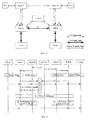
Fig. 2 shows a block diagram of a reference architecture of a packet-oriented mobile communication network according to a second aspect of the present invention wherein a method for providing an LTS can be employed; -
Fig. 3 shows an exemplary signal diagram for an example procedure as an exemplary implementation of a method for providing an LTS according to the first aspect of the present invention; -
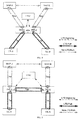
Fig. 4 shows a diagram for illustrating an IP packet forwarding between traffic shortcut points located in the same network element; -
Fig. 5 shows a diagram for illustrating forwarding of an IP packet when traffic shortcut points are located in different network elements; and -
Fig. 6 show diagrams for illustrating handover procedures performed by possible implementations of a method according to a further aspect of the present invention. - In the following possible implementations of different aspects of the present invention are described with reference to the enclosed figures.
- As can be seen in
Fig. 1 showing a possible exemplary implementation of a method for providing an LTS in a packet-oriented mobile communication network the method can comprise several steps S1 - S4. - In a first step S1 IP-addresses of devices such as UEs served by at least one network node of the network are stored in a local traffic shortcut control point (LTSCP) having a LTS-database along with a node-ID of the respective network node. The node-ID can be formed by an IP-address of the respective network node. The served device can be formed by a network element in particular a user equipment device. Further, it is possible that the served device comprises another network node element of the network such as a server.
- In a further step S2 an IP data packet is received by a network node from a served UE and a destination IP-address is extracted from the received data packet.
- In a further step S3 the LTS-CP is queried by the network node with the extracted destination IP-address of the received data packet to identify the existence and identity of a network node for performing an LTS.
- In a step S4 an LTS path is established with the identified network node. The identified network node can be the querying network itself or another network node of the packet-oriented mobile communication network.
- In step S5 IP data packets having the extracted destination IP address are routed through the established LTS path.
- The mechanism provided by a method for providing a local traffic shortcut LTS in a packet-oriented mobile communication network according to a first aspect of the present invention is primarily based on an IP-address of an end device such as a terminal or a UE in a local area wherein the IP-address is stored together with addresses of network entities or network nodes serving the respective end device or UE. Upon receiving an IP data packet it is checked by the respective receiving network node whether the data traffic received is a local data traffic or a non-local data traffic. This can be done based on a destination IP-address of the IP data packet and the IP-address is stored in
step S 1. If the received data traffic is a local data traffic in a possible implementation a LTS data path for the special data traffic is setup in step S4. For the local traffic the IP data packet is then routed via the established LTS data path. - In a possible implementation in step S1 it is further checked whether the establishment of a local traffic shortcut LTS is allowed or not. This check can be performed in a possible embodiment based on an LTS policy received in advance. If the establishment of a LTS path is allowed the IP-address of the end device or UE is stored in step S1. The IP-address of the UE can be stored together with identity information of the entity or network node serving the respective UE or end device. This allows that the data traffic of other end devices or UE can be checked against the stored information data. In contrast, if establishment of a local traffic shortcut LTS is not allowed the IP-address of the end device UE is not stored in a possible implementation. In a still further implementation of the first aspect of the present invention the storage of IP-address of the network entities serving the UE are updated when the user equipment device UE or mobile terminal moves. In a possible implementation it is checked whether LTS is allowed or not for the bearer tunnel where the IP packet is received based on a LTS policy received in advance. In a further possible implementation for data traffic with the same destination IP-address checking of local traffic can be performed only on the basis of the first IP packet of the respective packet flow. In this possible implementation for the subsequent IP data packets of the packet flow the established LTS path can be used. In a still further implementation the established LTS path is kept or maintained for a configurable period of time. If the configurable duration expires and no IP packet has been received within the configurable time duration the IP path can be cancelled in a possible embodiment.
- As described the method according to the exemplary implementation shown in
Fig. 1 can be employed in a packet-oriented mobile communication network, and in particular in a 3GPP network or a WIMAX network. This packet-oriented communication network can comprise at least one LTS-database for storing the IP-addresses of UE served by at least one network node of the network along with a node-ID of the respective serving network node. Further, the packet-oriented communication network can comprise in a possible implementation a local traffic shortcut control point LTS CP performing a query in the LTS-database on the basis of an extracted destination IP-address of a data packet (DP) received by a first network node from a UE to identify at least one second network node for establishment of an LTS path between the first network node and the identified second network node. The first and second network node can be different network nodes of the network but can also be formed by the same querying network node. - In the packet-oriented network communication network according to the second aspect of the present invention the serving network node can be formed by an TSP comprising a base station, a serving gateway or e.g. an enhanced packet data gateway of the network. The packet-oriented mobile communication network according to the second aspect of the present invention can be formed by a hierarchical network having different hierarchy levels wherein the LTS path is established in a possible embodiment between network nodes of the same hierarchy level. In a possible implementation if a direct connection between a network node and another network node is available the LTS path can be established in a possible embodiment at the lowest possible hierarchy level of the network.
- Further exemplary embodiments and implementations are described in the following with reference to a basic reference architecture of a packet-oriented network communication network which can employ a method providing an LTS according to the first aspect of the present invention. The network can comprise different functional elements located in the same or different network nodes, in particular the equipment devices, UE or mobile terminals connected via wireless links to the TSPs which can be formed by radio access networks, in particular base stations BS. Further, the communication network can comprise mobile anchor points (MAPs) and at least one LTSCP gathering data and information for LTS decision and establishing of LTS paths. In a possible implementation the packet-oriented communication network according to the second aspect of the present invention comprises according to the reference architecture shown in
Figure 2 the following elements: - UE: There are two UEs in the reference architecture, UE-A and UE-B. LTS does not have an impact to UE: its functionality remains as defined in EPS.
- MAP: Mobile Anchor Point, e.g. PGW, which serves the corresponding UE. It is included in a non-LTS path, but not included in the LTS path. It could be separated to the Originating MAP (O-MAP), which serves the UE sending the IP packet, and the Target MAP (T-MAP), which serves the UE receiving the IP packet.
- TSP: Traffic Shortcut Point, i.e. the user plane node which can shortcut the data traffic. It can include O-TSP and T-TSP functions. There can be several TSPs in the user plane for each of the UEs.
- O-TSP: Originating Traffic Shortcut Point, i.e. the user plane node which routes the IP packet from UE-A to the LTS path and bypasses the MAPs. Examples of O-TSP are eNodeB, SGW, ePDG which serve the UE sending the IP packet;
- T-TSP: Terminating Traffic Shortcut Point, i.e. the user plane node which receives the IP packet from the LTS path and forwards it to the UE-B. Example of a T-TSP are eNodeB, SGW, ePDG which serve the UE receiving the IP packet;
- LTSCP: the Local Traffic Shortcut Control Point gathers the information for LTS decision making. LTSCP is involved to the LTS decision making together with TSPs. The LTSCP can serve a certain LTS area (e.g. one country) inside an operator, to ensure that the same LTSCP is selected for all the terminals or UEs in the LTS area. Furthermore, the LTS areas served by different LTSCPs can be overlapped in the edge of the LTS area. If a UE is located in the overlapping area of the multiple LTS areas, all LTSCPs serving the overlapping areas are informed. The LTSCP can be an MME in a 3GPP network, which serves the 3GPP access only. Alternatively, the LTSCP can be collocated in a TSP, e.g. eNodeB or it can also be an additional network function.
- All above functional elements of the LTS basic reference architecture can be implemented as logical functions. For example, O-MAP and T-MAP can be co-located in one PGW if the PGW is selected for both UE-A and UE-B, or O-TSP and T-TSP can be co-located in the same eNodeB/SGW/ePDG.
- Furthermore, the architecture for LTS can include a PCC which provides the QoS and Charging policy for the traffic flows and may also provide the LTS policy (e.g. whether LTS is allowed or not).
- First in a UE-A setup of a PDN connection to the network a default bearer or tunnel is created for the internet traffic. PCC sends the default TFT with the charging and QoS rules to TSP and MAP served UE-A. For example a TFT (src IP, src port, dst IP, dst port, proto) can be:
- Traffic flow 1: source IP: (10.11.1.9. *, *, *, *);
- Traffic flow 2: destination IP: (*, *, 10.11.1.9, *, *), where * is indicating any value.
- UE-B performs also a setup of the PDN connection to the network and a default bearer is created for the internet traffic. PCC can send the default TFT with the charging and QoS rules to TSP and MAP served UE-B. For example the TFT can be:
- Traffic flow 1: source IP: 10.11.2.31;
- Traffic flow 2: destination IP: 10.11.2.31.
- In LTS, besides the charging and QoS policy, the LTS policy can also be sent to the TSP and MAP on both UE-A and UE-B sides. The LTS policy can indicate whether the traffic in the default bearer is LTS allowed or not. The LTS policy can be built in PCC, based on the subscription profile, or charging policy (e.g. for offline charging only) or any other information. The LTS policy can also be built in TSP, MAP (e.g. PDN GW) based on the pre-configuration information (e.g. LI policy).
- Upon receiving the PCC policy from the PCC, a bearer binding can be performed on both UE-A and UE-B sides, and a bearer setup request can be sent to the access. Currently in EPS, traffic with the same PCC rules (charging and QoS) can be bound to the same bearer.
- In LTS, the bearer is bound to TFTs with the same LTS policy, i.e. LTS is allowed or not.
- After bearer binding, if there is no existing bearer that can be used, further bearers can be established. The bearers between UE and TSP, and the bearer between TSP and MAP can be established in both UE-A and UE-B sides.
- In LTS, it is checked whether LTS is allowed or not based on the LTS policy received. If LTS is allowed, the IP address of the end device UE can be stored together with identity information of the entity serving the end device UE. Otherwise, if LTS is not allowed, the IP address of the end device UE is not stored.
- For example, if the bearer is LTS allowed, the TSPs can report its LTS policy to the LTSCP, which can maintain the database which includes the UE IP address and TSP list, e.g., for UE-A and UE-B, LTSCP can maintain the following information:
UE IP address TSP 10.11.1.9 TSP-A List 10.11.2.31 TSP-B List - The LTSCP can also maintain additional information (e.g. IP port, protocol type) for performing a LTS decision. The additional information is reported by TSP based on the LTS policy received, e.g. LTSCP can maintain the following information:
UE IP address Destination IP port Protocol type TSP 10.11.1.9 All All TSP-A List 10.11.2.31 2000∼4000 All TSP-B List 10.11.3.201 5000∼6000 TCP TSP-C List 10.11.4.88 21 UDP TSP-D List - The database maintained in LTSCP can be updated in a possible implementation upon:
- UE registration or de-registration, or
- UE IP address updating, or
- LTS policy updating, or
- TSP updating when terminal moves.
- Upon receiving an IP data packet from UE-A, in the current network, the data traffic can be routed to MAP-A by TSP-A. In this example, the data traffic between UE-A and UE-B can be internet traffic, e.g. a P2P download, FTP file exchange or a social network service.
- It can be checked whether LTS is allowed in the bearer, and if the data traffic received is local traffic or not based on the source and destination IP address in the IP packet. If so, a local bearer (LTS path) for the special traffic can be setup between TSP-A and T-TSP-B. Before the setup of the LTS path, the IP data packet received from TSP-A can also be routed to the MAP-A to avoid a transmission delay caused by the local traffic decision.
- Following are additional steps performed to establish a LTS path as shown in
Figure 3 : - TSP-A sends a LTS decision request in
step 4a to LTSCP with source IP address and destination IP address of the IP packet. - The LTSCP can perform the LTS decision as follows:
- i) LTSCP retrieves a list of O-TSPs based the LTS decision requests received from TSP-A.
- ii) LTSCP retrieves a list of T-TSPs by searching the destination IP address of the traffic in the database.
- iii) Based on the network topology information in the area, the possible O-TSP and T-TSP for the traffic can be selected.
- The LTSCP sends in
step 4b a LTS response to TSP-A. The LTS response can include the following options: - i) Non LTS, the LTS is not performed for the traffic, or is performed by another TSP.
- ii) LTS indication, LTS can be performed for the data traffic. It may include the following additional information:
- T-TSP ID: the TSP which receives the IP packet;
- TFTs: the traffics can be LTS to the T-TSP.
- QoS policy: if the QoS in UE-A and UE-B is different as the QoS policies are applied for different bearers, the minimum one can be selected by the LTSCP. If MBR is used for the bearer for UE-A and UE-B, it is possible that the MBR in MAP-A and MAP-B are reduced.
- Upon receiving the LTS indication from the LTSCP, the O-TSP can respond to initialize the local bearer with the target TSP, based on the request parameters from LTSCP. The local bearer can be a single direction, or a bi-direction bearer which is bound to the existing bearer between O-TSP and T-TSP. In a 3GPP SAE network architecture, the following LTS paths can be established in
step 4c as shown inFigure 3 : - a LTS path in eNodeB, or
- a LTS path between eNodeBs, or
- a LTS path in AGW (SGW, ePDG), or
- a LTS path between AGWs.
- When the LTS path is established, the local bearer can be used for IP packet forwarding.
-
Fig. 4 shows an IP packet forwarding when TSP-A and TSP-B are located in the same network element. - After LTS path establishment, the TSP can maintain the mapping data between the UE tunnel and LTS path, e.g. for the LTS in the same TSP, the TSP-A(B) can maintain the following table:
UE Tunnel MA Tunnel Dest IP LTS status LTS Path Ta Tma 10.11.2.31 Active Tb Ta Tma 10.11.9.8 Inactive Null Ta Tma 0.0.0.0 Unknown Unknown Tb Tmb 10.11.1.9 Active Ta Tb Tmb 10.11.9.8 Inactive Null Tb Tmb 0.0.0.0 Unknown Null -
Fig. 5 shows an IP packet forwarding when TSP-A and TSP-B are located in different network elements. - After LTS path establishment, TSP-A can maintain the following table:
UE Tunnel MA Tunnel Dest IP LTS status LTS Path Ta Tma 10.11.2.31 Active Tab Ta Tma 10.11.9.8 Inactive Null Ta Tma 0.0.0.0 Unknown Null - While TSP-B can maintain the following table:
UE Tunnel MA Tunnel Dest IP LTS status LTS Path Tb Tmb 10.11.1.9 Active Tab Tb Tmb 10.11.9.8 Inactive Null Tb Tmb 0.0.0.0 Unknown Null - Upon receiving an uplink IP data packet from the UE tunnel, the TSP can check the LTS status of the UE tunnel. There are for example three status types: active, inactive, unknown. If it is active, the TSP can forward the IP packet to the LTS path, and reset the expired timer of the destination IP. If it is inactive, the TSP can forward it to the MA tunnel, and reset the expired timer of the destination IP. If status is unknown, the TSP can perform a LTS decision. The TSP can create a record on the destination IP address to the table, which indicates LTS status as inactive. The record can be updated after the LTS decision.
- Upon receiving a downlink IP data packet from the LTS path, the TSP can check the table and find the UE tunnel and forward it to the UE tunnel.
- The O-TSP can be responsible for monitoring of the usage of the LTS path. If there is no IP data packet to a destination IP is received within a predetermined flow, a timer of the LTS path for the destination IP expires.
- The LTS path can be updated when a terminal or UE moves, which includes:
- the LTS path is established after handover, or
- the LTS path terminates after handover, or
- the LTS path remains unchanged after handover; e.g. eNodeB handover in the same SGW, the LTS path is performed in SGW, or
- the LTS path is changed after handover.
- The LTS paths can be for special traffic flows. In case that a handover happens to a UE, some of the traffic flows in the UE can be established after handover, and other traffic flows in the UE can be terminated after handover.
- In an example or procedure for a handover in case of LTS, there are two TSPs in UE-A side, TSP-A1 and TSP-A2. The handover is performed e.g. from source TSP-A1 to target TSP-A1.
- During handover of UE-A, this includes the following six data traffic flows:
Traffic Flow Before handover After handover Impact of LTS path Traffic 1 Non LTS LTS via target TSP-A1 LTS path established Traffic 2LTS via source TSP-A1 NonLTS LTS path terminated Traffic 3LTS via source TSP-A1 LTS via target TSP-A1 LTS path changed Traffic 4LTS via source TSP-A1 LTS via TSP-A2 LTS path changed Traffic 5LTS via TSP-A2 LTS via target TSP-A1 LTS path changed Traffic 6LTS via TSP-A2 LTS via TSP-A2 LTS path unchanged -
Fig. 6 shows an example handover procedure. In this example, a remote TSP is not used as an anchor point during handover, but the related LTS paths are released during handover, and the LTS paths are re-established after handover. - The procedure includes the following steps:
- The handover notification is sent to TSP and LTSCP for LTS handover decision; it includes the information of source TSP-A1 and target TSP-A2.
- The LTSCP interacts with the TSPs to find the related LTS path for the handover. The related LTS path can be decided.
- If the TSP in the LTS path is changed during handover, the LTS path is the related LTS path for the handover.
- As the source TSP has the LTS path information, the related LTS path decision can be performed in the source TSP.
- To ensure a traffic continuity during handover, the related LTS path is not used during handover. The traffic in the related LTS path can be shifted to MAP-A via TSP-A2.
- The source TSP can release the related LTS path, and forward the IP packet received to MAP-A via TSP-A2.
- The IP packet forwarding path updating from LTS path to TSP-A2, can be performed after receiving the LTS path release confirmation, or in parallel with the related LTS path release procedure.
- In case that the LTS path release confirmation is received, the LTS path is released and the non-LTS path on UE-B side is ready, and the QoS can be ensured during handover. In parallel with the related LTS path release procedure, this can reduce the delay of handover procedure.
- In this example, if the LTS path for
traffic flow traffic flow - A handover from TSP-A1 to TSP-A2 can be performed. A common handover procedure according to 3GPP specification can be used.
- After handover, all the traffic to source TSP-A1 can be shifted to target TSP-A1.
- The mapping of the IP address of the end device and the network entities serving the end device can be updated in the LTSCP. E.g. before UE-A handover, LTSCP maintains the following mapping:
UE IP address TSP UE-A (10.11.1.9) Source TSP-A1, TSP-A2 - After UE-A handover, LTSCP can maintain the following mapping:
UE IP address TSP UE-A (10.11.1.9) Target TSP-A1, TSP-A2 - After handover, a LTS decision can be performed between the LTSCSP and target TSP-A1, TSP-A2 based on the updated information in LTSCP. The LTS decision can be performed with a similar procedure as described above.
- After LTS decision, the LTS path can be re-established. The LTS path re-establishment can use a similar procedure as the LTS path establishment described above.
- In this example, the following LTS paths can be re-established:
- Traffic 1: the LTS path can be established via target TSP-A1.
- Traffic 3: the LTS path can be established via target TSP-A1.
- Traffic 4: the LTS path can be established via TSP-A2.
- Traffic 5: the LTS path can be changed from TSP-A2 to target TSP-A1.
-
Fig. 7 shows another example for a handover procedure. In this example, the remote TSP is used as an anchor point during handover, only the unavailable LTS paths are released, the other related LTS paths are kept during handover, and the LTS paths are re-established after handover. -
Fig. 7 shows the following steps: - Step 1: A handover notification being the same as in the example of
Fig. 6 - Step 2: Unavailable LTS path decision
- The LTSCP interacts with the TSPs to find the related LTS path which is not available after handover based on the network topology of source TSP and target TSP.
- In this example,
traffic flow traffic 3 is still available after handover,traffic - The traffic in the unavailable LTS path can be shifted to MAP-A via TSP-A2.
- Source TSP can release the related LTS path, and can forward the IP packet received to MAP-A via TSP-A2.
- In this example, the LTS path for
traffic flow traffic flow - A handover from TSP-A1 to TSP-A2 can be performed. The common handover procedure in current 3GPP specification can be used.
- After handover, all the traffic to source TSP-A1 are shifted to target TSP-A1.
- After handover, a LTS decision is performed between the LTCSP and target TSP-A1, TSP-A2. The LTS decision can use the similar procedure as described above.
- After LTS decision, the LTS path can be re-established. The LTS path re-establishment can use the similar procedure as the LTS path establishment described above.
- In this example, the following LTS paths are re-established:
- Traffic 1: the LTS path is established via target TSP-A1.
- Traffic 4: the LTS path is established via TSP-A2.
- Traffic 5: the LTS path is changed from TSP-A2 to target TSP-A1.
- Compared to the current EPS architecture, the method according to the first aspect of the present invention offers the following enhanced functions.
- 1) PCC: PCC can perform the following enhanced functions:
- Sending the LTS policy to the MAP. In case of PMIP S5/S8 interface is used, the LTS policy is sent to TSP directly.
The LTS enhanced PCC function is optional. If there is no LTS policy sent from PCC, the static policy preconfigured in MAP and TSP can be used. - 2) MAP: MAP can perform the following enhanced functions:
- Sending the LTS policy to the TSP. In case of PMIP S5/S8 interface is used, the LTS policy is sent to TSP directly.
- Bearer binding based on the LTS policy if the bearer binding function is located in MAP.
- MA tunnel modification upon the request from TSP.
- 3) TSP: TSP can perform the following enhanced functions:
- Bearer binding based on the LTS policy if the bearer binding function is located in TSP.
- Sending the LTS policy between the TSPs.
- Sending the traffic flow identifier to the LTSCP for the local traffic decision.
- Interaction between TSPs for TSP selection in case of a distributed controller.
- Interaction with LTSCP for TSP selection in case of a centralized controller.
- LTS path establishment/modification/release between TSP-A and TSP-B.
- MA tunnel modification during LTS path establishment.
- Uplink and downlink IP packet forwarding.
- Related LTS path checking in case of handover.
- 4) LTSCP: LTSCP is an additional functionality provided by the present invention and can perform the following functions:
- A local traffic decision based on the traffic flow identifier received from TSP and
- A TSP selection in case of a centralized controller.
- L1 reference point: The following information is transferred in the L1 reference point from PCC to MAP:
- 1) Traffic flow identifier, a unique identifier which correlates the traffic flows sent to both UE-A and UE-B sides, e.g. unique session ID in IMS, TFT.
- 2) LTS policy: LTS allowed or not.
- L2 reference point: The following information is transferred in the L2 reference point between MAP and TSP:
- 1) LTS policy from MAP to TSP
- Traffic flow identifier, a unique identifier which correlates the traffic flows sent to both UE-A and UE-B sides, e.g. unique session ID in IMS, TFT.
- LTS policy: LTS allowed or not.
- 1) MA tunnel modification from TSP to MAP
- QoS parameters
- L3 reference point: the following information is transferred in the L3 reference point between TSP to LTSCP:
- 1) Traffic flow identifier from TSP to LTSCP
- 2) Local traffic indication from LTSCP to TSP
- 3) TSP selection from LTSCP to TSP in case of centralized controller.
- L4 reference point: The following information is transferred in the L4 reference point between TSPs which serve the same UE (between up-TSP and down-TSP):
- 1) LTS policy from up-TSP to down-TSP
- Traffic flow identifier, a unique identifier which correlates the traffic flows sent to both UE-A and UE-B sides, e.g. unique session ID in IMS, TFT.
- LTS policy: LTS allowed or not:
- 2) MA tunnel modification from down-TSP to u-TSP
- QoS parameters
- 3) TSP selection notification from down-TSP to up-TSP in case of a distributed controller.
- L5 reference point: The following information is transferred in the L5 reference point between TSPs serve the different UEs:
- 1) LTS path establishment/modification/release.
| Abbreviation | Full spelling |
| AGW | Access Gateway |
| AS | Application Server |
| DSMIP | Dual Stack Mobile IP |
| EPC | Evolved Packet Core |
| ePDG | enhanced Packet Data Gateway |
| EPS | Enhanced Packet System |
| FA CoA | Foreign Agent Care Of Address |
| GW | Gateway |
| HA | Home Agent |
| HSS | Home Subscriber Server |
| IP | Internet Protocol |
| LMA | Local Mobility Anchor |
| LTE | Long Term Evolution |
| LTS | Local Traffic Shortcut |
| LTSCP | Local Traffic Shortcut Control Point |
| MA | Mobility Anchor |
| MAG | Mobile Access Gateway |
| MAP | Mobile Anchor Point |
| MIP | Mobile IP |
| MME | Mobile Management Entity |
| O-TSP | Originating Traffic Shortcut Point |
| PCC | Policy and Charging Control |
| PCRF | Policy and Charing Rule Function |
| PDN | Packet Data Network |
| PGW | PDN Gateway |
| PMIP | Proxy Mobile IP |
| SAE | System Architecture Evolution |
| SGW | Serving Gateway |
| TFT | Traffic Flow Template |
| TSP | Traffic Shortcut Point |
| T-TSP | Terminating Traffic Shortcut Point |
| UE | User Equipment |
Claims (14)
- A method for providing a local traffic shortcut, LTS, in a packet oriented mobile communication network comprising the steps of :a) storing in a local traffic shortcut control point, LTSCP, the IP addresses of devices served by at least one network node of said network along with a node-ID of the respective network node (S1);b) receiving an IP data packet by a network node from a served device and extracting a destination IP-address from the received data packet (S2);c) querying the LTSCP by said network node with the extracted destination IP- address of the received data packet to identify the existence and identity of a network node for performing a local traffic shortcut, LTS (S3);d) establishing a LTS path with the identified network node (S4); ande) routing IP data packets having said destination IP-address through the established LTS path,characterized in that
a LTS permission indicating whether an establishment of a LTS path is admissible for the respective served device is provided to the network node when the served device connects to the network node, and stored in the network node, wherein the network node interacts with the LTSCP only if the LTS permission is provided. - The method according to claim 1,
wherein the destination IP-address of an IP data flow is extracted from the header of the first IP-data packet of said IP data flow to query said LTS CP for the existence and identity of a network node to establish an LTS path. - The method according to claim 1 or 2,
wherein the querying network node receives the identity of the network node for performing a local traffic shortcut LTS only if this complies with configuration data of said local traffic shortcut control point LTSCP. - The method according to claims 1 to 3,
wherein the packet-oriented mobile communication network is formed by a hierarchical network having hierarchy levels wherein said LTS path is established between network nodes of the same hierarchy level. - The method according to claim 4,
wherein, if a direct connection between a network node and another network node is available the LTS path is established at the lowest possible hierarchy level of said network. - The method according to claims 1 to 5,
wherein a LTS database is provided at the local traffic shortcut Control Point (LTS CP) which receives the extracted destination IP-address of the received IP data packet from the network node for performing the query in said LTS database. - The method according to claims 1 to 6,
wherein the network node serving the devices is formed by a traffic shortcut point (TSP) comprising
a base station,
a serving gateway or
an enhanced packet data gateway, ePDG, of said network. - The method according to claims 1 to 7,
wherein the served device is a user equipment device, UE, which is formed by a mobile device being connected with a base station via a wireless link. - The method according to claims 1 to 8,
wherein the established LTS path is stored in a local memory of the serving network node having received the IP data packet from the served device and removed if no IP packets are transferred along the LTS path for a configurable duration. - The method according to claim 9,
wherein the established LTS path stored in the local memory of the serving network node is updated when a handover of the served device to another base station is performed. - A packet-oriented mobile communication network comprising:a local traffic shortcut Control Point, LTSCP, performing a query in a LTS database on the basis of an extracted destination IP-address of a data packet received by a first network node from a served device to identify at least one second network node for establishment of an LTS path between the first network node and the identified second network node, wherein the LTS database of the LTSCP stores the IP-addresses of devices served by at least one network node of said network along with a node-ID of the respective serving network node;means adapted to route IP data packets having said IP-address through the established data path;characterized in thatthe packet-oriented mobile communication network further comprises:means adapted to provide and store in the network node a LTS permission indicating whether an establishment of a LTS path is admissible for the respective served device to the network node when the served device connects to the network node,wherein the network node is adapted to interact with the LTSCP only if the LTS permission is provided.
- The packet-oriented mobile communication network according to claim 11, wherein said serving network node is formed by a traffic shortcut point (TSP) comprising: a base station
a serving gateway, SGW, or
an enhanced packet data gateway, ePDG, of said network. - The packet-oriented mobile communication network according to claim 11 or 12, when said served device is a user equipment device, UE, being a mobile device connected to a base station via a wireless link.
- The packet-oriented mobile communication network according to claims 11 to 13, wherein said packet-oriented mobile communication network comprises a 3GPP network or a WIMAX network.
Applications Claiming Priority (1)
| Application Number | Priority Date | Filing Date | Title |
|---|---|---|---|
| PCT/CN2010/078444 WO2012058817A1 (en) | 2010-11-05 | 2010-11-05 | A method for providing a local traffic shortcut in a packet-oriented mobile communication network |
Publications (3)
| Publication Number | Publication Date |
|---|---|
| EP2617259A1 EP2617259A1 (en) | 2013-07-24 |
| EP2617259A4 EP2617259A4 (en) | 2013-10-23 |
| EP2617259B1 true EP2617259B1 (en) | 2015-05-13 |
Family
ID=46023939
Family Applications (1)
| Application Number | Title | Priority Date | Filing Date |
|---|---|---|---|
| EP20100859165 Not-in-force EP2617259B1 (en) | 2010-11-05 | 2010-11-05 | A method for providing a local traffic shortcut in a packet-oriented mobile communication network |
Country Status (4)
| Country | Link |
|---|---|
| US (1) | US20130242918A1 (en) |
| EP (1) | EP2617259B1 (en) |
| CN (1) | CN103125139B (en) |
| WO (1) | WO2012058817A1 (en) |
Families Citing this family (6)
| Publication number | Priority date | Publication date | Assignee | Title |
|---|---|---|---|---|
| EP2904749A1 (en) * | 2012-10-04 | 2015-08-12 | Telefonaktiebolaget L M Ericsson (Publ) | Network resource modification |
| KR20140124116A (en) * | 2013-04-16 | 2014-10-24 | 삼성전자주식회사 | Apparatus and method for optimizing data-path in mobile communication network |
| DE102015012569A1 (en) * | 2014-10-31 | 2016-05-04 | Intel Corporation | Apparatus, system and method for distinguishing between an IMS connection and a non-IMS connection |
| US10172044B2 (en) | 2016-03-24 | 2019-01-01 | Motorola Mobility Llc | Method and device for data communication over a peer-to-peer connection in a mobile communication network |
| US10728748B2 (en) | 2016-03-24 | 2020-07-28 | Motorola Mobility Llc | Method and device for establishing a peer-to-peer connection in a mobile communication network |
| CN108076487B (en) * | 2016-11-15 | 2020-05-12 | 中国联合网络通信集团有限公司 | Method and system for ensuring service QoS under base station pass-through architecture |
Family Cites Families (12)
| Publication number | Priority date | Publication date | Assignee | Title |
|---|---|---|---|---|
| US6128296A (en) * | 1997-10-03 | 2000-10-03 | Cisco Technology, Inc. | Method and apparatus for distributed packet switching using distributed address tables |
| EP0939576B8 (en) * | 1998-02-26 | 2009-07-08 | Nippon Telegraph And Telephone Corporation | Circuit-switched network |
| US6904027B1 (en) * | 2000-08-17 | 2005-06-07 | Telefonaktiebolaget Lm Ericsson | System and method for call transfer in packet switched local area networks |
| DE10106351B4 (en) * | 2001-02-09 | 2006-01-26 | T-Mobile Deutschland Gmbh | Method for carrying out surveillance measures in packet-oriented telecommunications and data networks |
| JP4142459B2 (en) * | 2003-01-24 | 2008-09-03 | 株式会社エヌ・ティ・ティ・ドコモ | Wireless communication system, wireless communication method, wireless control device, and local exchange |
| US7552234B2 (en) * | 2003-02-11 | 2009-06-23 | Cisco Technology, Inc. | Arrangement for establishing a bidirectional tunnel between a mobile router and a correspondent node |
| US7486659B1 (en) * | 2003-02-24 | 2009-02-03 | Nortel Networks Limited | Method and apparatus for exchanging routing information between virtual private network sites |
| US7886075B2 (en) * | 2003-05-16 | 2011-02-08 | Cisco Technology, Inc. | Arrangement for retrieving routing information for establishing a bidirectional tunnel between a mobile router and a correspondent router |
| US8369213B2 (en) * | 2006-12-22 | 2013-02-05 | Cisco Technology, Inc. | Optimization of distributed tunnel rerouting in a computer network with path computation at an intermediate node |
| CN101541096A (en) * | 2008-03-18 | 2009-09-23 | 中国移动通信集团公司 | A interface IP-based local exchange method and equipment thereof |
| US9258696B2 (en) * | 2009-02-11 | 2016-02-09 | Alcatel-Lucent | Method for secure network based route optimization in mobile networks |
| US20110105130A1 (en) * | 2009-10-30 | 2011-05-05 | Openwave Systems, Inc. | Back-channeled packeted data |
-
2010
- 2010-11-05 WO PCT/CN2010/078444 patent/WO2012058817A1/en not_active Ceased
- 2010-11-05 EP EP20100859165 patent/EP2617259B1/en not_active Not-in-force
- 2010-11-05 CN CN201080026697.XA patent/CN103125139B/en not_active Expired - Fee Related
-
2013
- 2013-05-02 US US13/875,876 patent/US20130242918A1/en not_active Abandoned
Also Published As
| Publication number | Publication date |
|---|---|
| WO2012058817A1 (en) | 2012-05-10 |
| CN103125139B (en) | 2015-12-09 |
| US20130242918A1 (en) | 2013-09-19 |
| EP2617259A1 (en) | 2013-07-24 |
| CN103125139A (en) | 2013-05-29 |
| EP2617259A4 (en) | 2013-10-23 |
Similar Documents
| Publication | Publication Date | Title |
|---|---|---|
| US20240306069A1 (en) | Support of user plane transactions over a mobile network | |
| EP2250827B1 (en) | A method and an apparatus for providing route optimisation | |
| EP2428053B1 (en) | Determination of local breakout capability support of apn | |
| US9750071B1 (en) | Method and apparatus for supporting multiple connections over different types of access in 3GPP systems | |
| CN107534994B (en) | Method and node for handling access to EPC services via non-3 GPP networks | |
| US20150138952A1 (en) | Communication system and method for path control | |
| US8891432B2 (en) | Routing method, routing system, mobile node, home agent, and home base station | |
| EP2919528B1 (en) | Mobile network communication method, communication device and communication system | |
| JP2013509760A (en) | Extension of connection procedure for connecting UE to 3GPP access network | |
| CN101394331A (en) | Non-3GPP access network roaming attachment, roaming exit method and system, and roaming system | |
| US20130242918A1 (en) | Method for providing a local traffic shortcut in a packet-oriented mobile communication network | |
| CN104717626A (en) | Session routing information sharing method, device and system | |
| EP2617238B1 (en) | Method for providing local traffic shortcut in packet-oriented mobile communication network | |
| JP2011509611A (en) | Techniques for optimizing routes in communication networks | |
| US10701754B2 (en) | Terminal devices, PGW, and TWAG | |
| CN102918885B (en) | Method, system and related device for implementing service data stream offload | |
| WO2016163410A1 (en) | TERMINAL DEVICE, TWAG, ePDG, AND PGW | |
| US10512112B1 (en) | Method and apparatus for supporting multiple connections over different types of access in 3GPP systems | |
| EP2312890A1 (en) | IP packet downlink routing in I-WLAN via multiple PDGS | |
| WO2016155277A1 (en) | Method, core network element, user equipment and system for realizing default route decision |
Legal Events
| Date | Code | Title | Description |
|---|---|---|---|
| PUAI | Public reference made under article 153(3) epc to a published international application that has entered the european phase |
Free format text: ORIGINAL CODE: 0009012 |
|
| 17P | Request for examination filed |
Effective date: 20130415 |
|
| AK | Designated contracting states |
Kind code of ref document: A1 Designated state(s): AL AT BE BG CH CY CZ DE DK EE ES FI FR GB GR HR HU IE IS IT LI LT LU LV MC MK MT NL NO PL PT RO RS SE SI SK SM TR |
|
| A4 | Supplementary search report drawn up and despatched |
Effective date: 20130925 |
|
| RIC1 | Information provided on ipc code assigned before grant |
Ipc: H04W 8/08 20090101ALI20130919BHEP Ipc: H04W 76/02 20090101AFI20130919BHEP Ipc: H04W 88/18 20090101ALI20130919BHEP |
|
| DAX | Request for extension of the european patent (deleted) | ||
| RIC1 | Information provided on ipc code assigned before grant |
Ipc: H04W 88/18 20090101ALI20140630BHEP Ipc: H04W 76/02 20090101AFI20140630BHEP Ipc: H04W 8/08 20090101ALI20140630BHEP |
|
| GRAP | Despatch of communication of intention to grant a patent |
Free format text: ORIGINAL CODE: EPIDOSNIGR1 |
|
| INTG | Intention to grant announced |
Effective date: 20140820 |
|
| GRAS | Grant fee paid |
Free format text: ORIGINAL CODE: EPIDOSNIGR3 |
|
| GRAP | Despatch of communication of intention to grant a patent |
Free format text: ORIGINAL CODE: EPIDOSNIGR1 |
|
| INTG | Intention to grant announced |
Effective date: 20150127 |
|
| GRAA | (expected) grant |
Free format text: ORIGINAL CODE: 0009210 |
|
| AK | Designated contracting states |
Kind code of ref document: B1 Designated state(s): AL AT BE BG CH CY CZ DE DK EE ES FI FR GB GR HR HU IE IS IT LI LT LU LV MC MK MT NL NO PL PT RO RS SE SI SK SM TR |
|
| REG | Reference to a national code |
Ref country code: GB Ref legal event code: FG4D |
|
| REG | Reference to a national code |
Ref country code: CH Ref legal event code: EP |
|
| REG | Reference to a national code |
Ref country code: IE Ref legal event code: FG4D |
|
| REG | Reference to a national code |
Ref country code: AT Ref legal event code: REF Ref document number: 727208 Country of ref document: AT Kind code of ref document: T Effective date: 20150615 |
|
| REG | Reference to a national code |
Ref country code: DE Ref legal event code: R096 Ref document number: 602010024692 Country of ref document: DE Effective date: 20150625 |
|
| REG | Reference to a national code |
Ref country code: FR Ref legal event code: PLFP Year of fee payment: 6 |
|
| REG | Reference to a national code |
Ref country code: AT Ref legal event code: MK05 Ref document number: 727208 Country of ref document: AT Kind code of ref document: T Effective date: 20150513 |
|
| REG | Reference to a national code |
Ref country code: NL Ref legal event code: MP Effective date: 20150513 |
|
| REG | Reference to a national code |
Ref country code: LT Ref legal event code: MG4D |
|
| PG25 | Lapsed in a contracting state [announced via postgrant information from national office to epo] |
Ref country code: NO Free format text: LAPSE BECAUSE OF FAILURE TO SUBMIT A TRANSLATION OF THE DESCRIPTION OR TO PAY THE FEE WITHIN THE PRESCRIBED TIME-LIMIT Effective date: 20150813 Ref country code: LT Free format text: LAPSE BECAUSE OF FAILURE TO SUBMIT A TRANSLATION OF THE DESCRIPTION OR TO PAY THE FEE WITHIN THE PRESCRIBED TIME-LIMIT Effective date: 20150513 Ref country code: FI Free format text: LAPSE BECAUSE OF FAILURE TO SUBMIT A TRANSLATION OF THE DESCRIPTION OR TO PAY THE FEE WITHIN THE PRESCRIBED TIME-LIMIT Effective date: 20150513 Ref country code: PT Free format text: LAPSE BECAUSE OF FAILURE TO SUBMIT A TRANSLATION OF THE DESCRIPTION OR TO PAY THE FEE WITHIN THE PRESCRIBED TIME-LIMIT Effective date: 20150914 Ref country code: HR Free format text: LAPSE BECAUSE OF FAILURE TO SUBMIT A TRANSLATION OF THE DESCRIPTION OR TO PAY THE FEE WITHIN THE PRESCRIBED TIME-LIMIT Effective date: 20150513 Ref country code: ES Free format text: LAPSE BECAUSE OF FAILURE TO SUBMIT A TRANSLATION OF THE DESCRIPTION OR TO PAY THE FEE WITHIN THE PRESCRIBED TIME-LIMIT Effective date: 20150513 |
|
| PG25 | Lapsed in a contracting state [announced via postgrant information from national office to epo] |
Ref country code: AT Free format text: LAPSE BECAUSE OF FAILURE TO SUBMIT A TRANSLATION OF THE DESCRIPTION OR TO PAY THE FEE WITHIN THE PRESCRIBED TIME-LIMIT Effective date: 20150513 Ref country code: LV Free format text: LAPSE BECAUSE OF FAILURE TO SUBMIT A TRANSLATION OF THE DESCRIPTION OR TO PAY THE FEE WITHIN THE PRESCRIBED TIME-LIMIT Effective date: 20150513 Ref country code: IS Free format text: LAPSE BECAUSE OF FAILURE TO SUBMIT A TRANSLATION OF THE DESCRIPTION OR TO PAY THE FEE WITHIN THE PRESCRIBED TIME-LIMIT Effective date: 20150913 Ref country code: GR Free format text: LAPSE BECAUSE OF FAILURE TO SUBMIT A TRANSLATION OF THE DESCRIPTION OR TO PAY THE FEE WITHIN THE PRESCRIBED TIME-LIMIT Effective date: 20150814 Ref country code: BG Free format text: LAPSE BECAUSE OF FAILURE TO SUBMIT A TRANSLATION OF THE DESCRIPTION OR TO PAY THE FEE WITHIN THE PRESCRIBED TIME-LIMIT Effective date: 20150813 Ref country code: RS Free format text: LAPSE BECAUSE OF FAILURE TO SUBMIT A TRANSLATION OF THE DESCRIPTION OR TO PAY THE FEE WITHIN THE PRESCRIBED TIME-LIMIT Effective date: 20150513 |
|
| PG25 | Lapsed in a contracting state [announced via postgrant information from national office to epo] |
Ref country code: EE Free format text: LAPSE BECAUSE OF FAILURE TO SUBMIT A TRANSLATION OF THE DESCRIPTION OR TO PAY THE FEE WITHIN THE PRESCRIBED TIME-LIMIT Effective date: 20150513 Ref country code: DK Free format text: LAPSE BECAUSE OF FAILURE TO SUBMIT A TRANSLATION OF THE DESCRIPTION OR TO PAY THE FEE WITHIN THE PRESCRIBED TIME-LIMIT Effective date: 20150513 |
|
| REG | Reference to a national code |
Ref country code: DE Ref legal event code: R097 Ref document number: 602010024692 Country of ref document: DE |
|
| PG25 | Lapsed in a contracting state [announced via postgrant information from national office to epo] |
Ref country code: PL Free format text: LAPSE BECAUSE OF FAILURE TO SUBMIT A TRANSLATION OF THE DESCRIPTION OR TO PAY THE FEE WITHIN THE PRESCRIBED TIME-LIMIT Effective date: 20150513 Ref country code: CZ Free format text: LAPSE BECAUSE OF FAILURE TO SUBMIT A TRANSLATION OF THE DESCRIPTION OR TO PAY THE FEE WITHIN THE PRESCRIBED TIME-LIMIT Effective date: 20150513 Ref country code: RO Free format text: LAPSE BECAUSE OF NON-PAYMENT OF DUE FEES Effective date: 20150513 Ref country code: SK Free format text: LAPSE BECAUSE OF FAILURE TO SUBMIT A TRANSLATION OF THE DESCRIPTION OR TO PAY THE FEE WITHIN THE PRESCRIBED TIME-LIMIT Effective date: 20150513 |
|
| PLBE | No opposition filed within time limit |
Free format text: ORIGINAL CODE: 0009261 |
|
| STAA | Information on the status of an ep patent application or granted ep patent |
Free format text: STATUS: NO OPPOSITION FILED WITHIN TIME LIMIT |
|
| 26N | No opposition filed |
Effective date: 20160216 |
|
| PG25 | Lapsed in a contracting state [announced via postgrant information from national office to epo] |
Ref country code: IT Free format text: LAPSE BECAUSE OF FAILURE TO SUBMIT A TRANSLATION OF THE DESCRIPTION OR TO PAY THE FEE WITHIN THE PRESCRIBED TIME-LIMIT Effective date: 20150513 |
|
| PG25 | Lapsed in a contracting state [announced via postgrant information from national office to epo] |
Ref country code: SI Free format text: LAPSE BECAUSE OF FAILURE TO SUBMIT A TRANSLATION OF THE DESCRIPTION OR TO PAY THE FEE WITHIN THE PRESCRIBED TIME-LIMIT Effective date: 20150513 |
|
| PG25 | Lapsed in a contracting state [announced via postgrant information from national office to epo] |
Ref country code: MC Free format text: LAPSE BECAUSE OF FAILURE TO SUBMIT A TRANSLATION OF THE DESCRIPTION OR TO PAY THE FEE WITHIN THE PRESCRIBED TIME-LIMIT Effective date: 20150513 Ref country code: LU Free format text: LAPSE BECAUSE OF FAILURE TO SUBMIT A TRANSLATION OF THE DESCRIPTION OR TO PAY THE FEE WITHIN THE PRESCRIBED TIME-LIMIT Effective date: 20151105 |
|
| REG | Reference to a national code |
Ref country code: CH Ref legal event code: PL |
|
| PG25 | Lapsed in a contracting state [announced via postgrant information from national office to epo] |
Ref country code: CH Free format text: LAPSE BECAUSE OF NON-PAYMENT OF DUE FEES Effective date: 20151130 Ref country code: LI Free format text: LAPSE BECAUSE OF NON-PAYMENT OF DUE FEES Effective date: 20151130 |
|
| REG | Reference to a national code |
Ref country code: IE Ref legal event code: MM4A |
|
| PG25 | Lapsed in a contracting state [announced via postgrant information from national office to epo] |
Ref country code: BE Free format text: LAPSE BECAUSE OF FAILURE TO SUBMIT A TRANSLATION OF THE DESCRIPTION OR TO PAY THE FEE WITHIN THE PRESCRIBED TIME-LIMIT Effective date: 20150513 |
|
| REG | Reference to a national code |
Ref country code: FR Ref legal event code: PLFP Year of fee payment: 7 |
|
| PG25 | Lapsed in a contracting state [announced via postgrant information from national office to epo] |
Ref country code: IE Free format text: LAPSE BECAUSE OF NON-PAYMENT OF DUE FEES Effective date: 20151105 |
|
| PG25 | Lapsed in a contracting state [announced via postgrant information from national office to epo] |
Ref country code: HU Free format text: LAPSE BECAUSE OF FAILURE TO SUBMIT A TRANSLATION OF THE DESCRIPTION OR TO PAY THE FEE WITHIN THE PRESCRIBED TIME-LIMIT; INVALID AB INITIO Effective date: 20101105 Ref country code: SM Free format text: LAPSE BECAUSE OF FAILURE TO SUBMIT A TRANSLATION OF THE DESCRIPTION OR TO PAY THE FEE WITHIN THE PRESCRIBED TIME-LIMIT Effective date: 20150513 |
|
| PG25 | Lapsed in a contracting state [announced via postgrant information from national office to epo] |
Ref country code: SE Free format text: LAPSE BECAUSE OF FAILURE TO SUBMIT A TRANSLATION OF THE DESCRIPTION OR TO PAY THE FEE WITHIN THE PRESCRIBED TIME-LIMIT Effective date: 20150513 Ref country code: CY Free format text: LAPSE BECAUSE OF FAILURE TO SUBMIT A TRANSLATION OF THE DESCRIPTION OR TO PAY THE FEE WITHIN THE PRESCRIBED TIME-LIMIT Effective date: 20150513 Ref country code: NL Free format text: LAPSE BECAUSE OF FAILURE TO SUBMIT A TRANSLATION OF THE DESCRIPTION OR TO PAY THE FEE WITHIN THE PRESCRIBED TIME-LIMIT Effective date: 20150513 |
|
| PG25 | Lapsed in a contracting state [announced via postgrant information from national office to epo] |
Ref country code: MT Free format text: LAPSE BECAUSE OF FAILURE TO SUBMIT A TRANSLATION OF THE DESCRIPTION OR TO PAY THE FEE WITHIN THE PRESCRIBED TIME-LIMIT Effective date: 20150513 |
|
| REG | Reference to a national code |
Ref country code: FR Ref legal event code: PLFP Year of fee payment: 8 |
|
| REG | Reference to a national code |
Ref country code: DE Ref legal event code: R079 Ref document number: 602010024692 Country of ref document: DE Free format text: PREVIOUS MAIN CLASS: H04W0076020000 Ipc: H04W0076100000 |
|
| PG25 | Lapsed in a contracting state [announced via postgrant information from national office to epo] |
Ref country code: TR Free format text: LAPSE BECAUSE OF FAILURE TO SUBMIT A TRANSLATION OF THE DESCRIPTION OR TO PAY THE FEE WITHIN THE PRESCRIBED TIME-LIMIT Effective date: 20150513 Ref country code: MK Free format text: LAPSE BECAUSE OF FAILURE TO SUBMIT A TRANSLATION OF THE DESCRIPTION OR TO PAY THE FEE WITHIN THE PRESCRIBED TIME-LIMIT Effective date: 20150513 |
|
| REG | Reference to a national code |
Ref country code: FR Ref legal event code: PLFP Year of fee payment: 9 |
|
| PG25 | Lapsed in a contracting state [announced via postgrant information from national office to epo] |
Ref country code: AL Free format text: LAPSE BECAUSE OF FAILURE TO SUBMIT A TRANSLATION OF THE DESCRIPTION OR TO PAY THE FEE WITHIN THE PRESCRIBED TIME-LIMIT Effective date: 20150513 |
|
| PGFP | Annual fee paid to national office [announced via postgrant information from national office to epo] |
Ref country code: DE Payment date: 20181023 Year of fee payment: 9 |
|
| PGFP | Annual fee paid to national office [announced via postgrant information from national office to epo] |
Ref country code: FR Payment date: 20181011 Year of fee payment: 9 Ref country code: GB Payment date: 20181031 Year of fee payment: 9 |
|
| REG | Reference to a national code |
Ref country code: DE Ref legal event code: R119 Ref document number: 602010024692 Country of ref document: DE |
|
| GBPC | Gb: european patent ceased through non-payment of renewal fee |
Effective date: 20191105 |
|
| PG25 | Lapsed in a contracting state [announced via postgrant information from national office to epo] |
Ref country code: GB Free format text: LAPSE BECAUSE OF NON-PAYMENT OF DUE FEES Effective date: 20191105 Ref country code: DE Free format text: LAPSE BECAUSE OF NON-PAYMENT OF DUE FEES Effective date: 20200603 Ref country code: FR Free format text: LAPSE BECAUSE OF NON-PAYMENT OF DUE FEES Effective date: 20191130 |