EP2615870A1 - Systems for facilitating wireless communication and related methods - Google Patents
Systems for facilitating wireless communication and related methods Download PDFInfo
- Publication number
- EP2615870A1 EP2615870A1 EP13000115.9A EP13000115A EP2615870A1 EP 2615870 A1 EP2615870 A1 EP 2615870A1 EP 13000115 A EP13000115 A EP 13000115A EP 2615870 A1 EP2615870 A1 EP 2615870A1
- Authority
- EP
- European Patent Office
- Prior art keywords
- radio
- ble
- capable device
- monitoring
- information corresponding
- Prior art date
- Legal status (The legal status is an assumption and is not a legal conclusion. Google has not performed a legal analysis and makes no representation as to the accuracy of the status listed.)
- Withdrawn
Links
Images




Classifications
-
- H—ELECTRICITY
- H04—ELECTRIC COMMUNICATION TECHNIQUE
- H04W—WIRELESS COMMUNICATION NETWORKS
- H04W48/00—Access restriction; Network selection; Access point selection
- H04W48/08—Access restriction or access information delivery, e.g. discovery data delivery
- H04W48/10—Access restriction or access information delivery, e.g. discovery data delivery using broadcasted information
-
- H—ELECTRICITY
- H04—ELECTRIC COMMUNICATION TECHNIQUE
- H04W—WIRELESS COMMUNICATION NETWORKS
- H04W4/00—Services specially adapted for wireless communication networks; Facilities therefor
- H04W4/80—Services using short range communication, e.g. near-field communication [NFC], radio-frequency identification [RFID] or low energy communication
-
- H—ELECTRICITY
- H04—ELECTRIC COMMUNICATION TECHNIQUE
- H04W—WIRELESS COMMUNICATION NETWORKS
- H04W84/00—Network topologies
- H04W84/18—Self-organising networks, e.g. ad-hoc networks or sensor networks
-
- H—ELECTRICITY
- H04—ELECTRIC COMMUNICATION TECHNIQUE
- H04W—WIRELESS COMMUNICATION NETWORKS
- H04W88/00—Devices specially adapted for wireless communication networks, e.g. terminals, base stations or access point devices
- H04W88/02—Terminal devices
- H04W88/06—Terminal devices adapted for operation in multiple networks or having at least two operational modes, e.g. multi-mode terminals
-
- Y—GENERAL TAGGING OF NEW TECHNOLOGICAL DEVELOPMENTS; GENERAL TAGGING OF CROSS-SECTIONAL TECHNOLOGIES SPANNING OVER SEVERAL SECTIONS OF THE IPC; TECHNICAL SUBJECTS COVERED BY FORMER USPC CROSS-REFERENCE ART COLLECTIONS [XRACs] AND DIGESTS
- Y02—TECHNOLOGIES OR APPLICATIONS FOR MITIGATION OR ADAPTATION AGAINST CLIMATE CHANGE
- Y02D—CLIMATE CHANGE MITIGATION TECHNOLOGIES IN INFORMATION AND COMMUNICATION TECHNOLOGIES [ICT], I.E. INFORMATION AND COMMUNICATION TECHNOLOGIES AIMING AT THE REDUCTION OF THEIR OWN ENERGY USE
- Y02D30/00—Reducing energy consumption in communication networks
- Y02D30/70—Reducing energy consumption in communication networks in wireless communication networks
Definitions
- the present disclosure generally relates to Wi-Fi communication.
- An electronic device such as mobile phone or tablet computer, may be configured to scan for a Wi-Fi-capable device, such as a Wi-Fi access point (AP) or a peer device (e.g., Wi-Fi speakers, Wi-Fi dongles, Wi-Fi printers, etc.) with Wi-Fi capability.
- Scanning for a Wi-Fi-capable device may be performed by the electronic device in a passive manner. For instance, in the U.S., there are currently 12 and 23 operating channels in the 2.4 and 5GHz bands, respectively. For each scan cycle, the device typically scans for all 35 channels and monitors for beacon transmission on each of the channels for up to the duration of the beacon interval, which is typically 100ms.
- Wi-Fi passive scanning is performed every 5 minutes, this translates to a 3500ms passive scanning time every 5 minutes, which corresponds to a duty cycle of 1.167%.
- 70mA power consumption for the Wi-Fi receiver of the device this corresponds to power consumption of over 0.8mAh for each scan cycle.
- one embodiment is a system comprising: an electronic device operative to communicate using Bluetooth Low Energy (BLE) and at least a second radio format different from BLE, the device having a radio monitoring system operative to: monitor BLE advertising channels; receive information corresponding to a multi-radio-capable device via BLE Advertisement packets communicated on at least one of the BLE advertising channels; and establish communication with the multi-radio-capable device using the information provided by the BLE Advertisement packets.
- BLE Bluetooth Low Energy
- Another embodiment is a method for method for facilitating wireless communication comprising: monitoring BLE advertising channels with an electronic device; receiving, at the electronic device, information corresponding to a multi-radio-capable device via BLE Advertisement packets associated with at least one of the BLE advertising channels; and establishing communication between the electronic device and the multi-radio-capable device via appropriate communication protocol using the information provided by the BLE Advertisement packets.
- FIG. 1 is a schematic diagram of an example embodiment of a system for facilitating wireless communication.
- FIG. 2 is a flowchart depicting an example embodiment of a method for facilitating wireless communication.
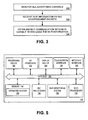
- FIG. 3 is a flowchart depicting another example embodiment of a method for facilitating wireless communication.
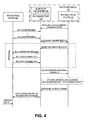
- FIG. 4 is a communication flow diagram depicting functionality that may be performed by the embodiment of FIG. 1 .
- FIG. 5 is a schematic diagram of an example embodiment of an electronic device.
- FIG. 6 is a flowchart depicting functionality that may be performed by an example embodiment of an electronic device, such as that depicted in FIG. 5 .
- FIG. 7 is a schematic diagram of an example embodiment of a Wi-Fi access point.
- FIG. 8 is a flowchart depicting functionality that may be performed by an example embodiment of a Wi-Fi access point, such as that depicted in FIG. 7 .
- FIG. 9 is a schematic diagram of an example embodiment of a system for facilitating wireless communication.
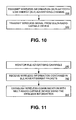
- FIG. 10 is a flowchart depicting an example embodiment of a method for facilitating wireless communication.
- FIG. 11 is a flowchart depicting another example embodiment of a method for facilitating wireless communication.
- FIG. 12 is a schematic diagram of an example embodiment of an electronic device.
- a Bluetooth transmitter may be collocated (e.g., provided within a common housing) with a Wi-Fi capable device, such as a Wi-Fi access point (AP) or Wi-Fi peer device.
- a Bluetooth low energy (BLE) transmitter transmits Wi-Fi information associated with the Wi-Fi-capable device.
- An electronic device monitors for such information using a BLE receiver and, responsive to detecting the Wi-Fi information, may begin authentication and association or peer-to-peer connection procedures for facilitating communication with the Wi-Fi-capable device.
- use of the BLE receiver for monitoring for Wi-Fi information uses less energy than may be required for such scanning using standard Wi-Fi scanning procedures.
- FIG. 1 is a schematic diagram of an example embodiment of a system for facilitating wireless communication.
- system 100 includes a Wi-Fi capable device 102 and an electronic device 104, which may be configured as a smartphone or tablet computer, among others, for communicating with the Wi-Fi-capable device.
- the Wi-Fi-capable device incorporates a Bluetooth transceiver 106 and a Wi-Fi transceiver 108.
- the communication components in the embodiment of FIG. 1 (or any other disclosed embodiments) should be understood to alternatively refer to components that are only able to perform the functionality described.
- reference to a transceiver for example, may also be understood to refer to a transmitter when functionality only involving transmitting of signals is required.
- the box surrounding the transceivers 106 and 108 although intended to indicate a physical structure such as a housing in FIG. 1 , may merely indicate proximity of the enclosed components in other embodiments.
- Bluetooth transceiver 110 e.g., a Bluetooth Low Energy (BLE) receiver
- Wi-Fi monitoring system 112 e.g., Wi-Fi monitoring system 112
- Wi-Fi transceiver 114 e.g., a Wi-Fi monitoring system 112
- Bluetooth transceiver 110 scans (e.g., passively scans) for information in the form of Bluetooth advertisement packets (e.g., ADV_IND or ADV_NONCONN_IND packets) that contain Wi-Fi information, which is specific to the Wi-Fi-capable device.
- the transmission of a BLE advertisement packet is represented by the single arrowed line directed toward the electronic device.
- the Wi-Fi information carried by the BLE advertisement packets may include, but is not limited to, SSID, BSSID, operating band, channel number, and other predefined information elements for the Wi-Fi-capable device.
- Wi-Fi monitoring system 112 may optionally instruct the Bluetooth transceiver 110 to establish a data connection with Bluetooth transceiver 106 (represented by the double arrowed line) to further exchange information with the Wi-Fi-capable device 102. Upon receiving required information, Wi-Fi monitoring system 112 then enables Wi-Fi transceiver 114 to initiate authentication and association or peer-to-peer connection procedures with the Wi-Fi-capable device (represented by the double arrowed line) in order to establish communication between the electronic device and the Wi-Fi-capable device using appropriate Wi-Fi protocol.
- FIG. 2 is a flowchart depicting an example embodiment of a method for facilitating wireless communication, which may be performed by Wi-Fi-capable device 102 of FIG. 1 , for example.
- the method involves transmitting BLE Advertisements containing Wi-Fi information (and optionally predefined proprietary information elements) on a BLE advertising channel (block 120).
- a Wi-Fi signal (which exhibits characteristics referenced in the Wi-Fi information, is transmitted from the Wi-Fi-capable device.
- FIG. 3 is a flowchart depicting another example embodiment of a method for facilitating wireless communication, which may be performed by an electronic device.
- the method involves monitoring BLE advertising channels for BLE Advertisement packets carrying Wi-Fi information (block 130).
- Wi-Fi information is received.
- Wi-Fi communication is established with a Wi-Fi-capable device using the Wi-Fi information that was received via the BLE Advertisement packets.
- an optional function may be involved in which a BLE data connection is established to further exchange Wi-Fi-capable device information.
- FIG. 4 is a communication flow diagram depicting functionality that may be performed by the embodiment of FIG. 1 .
- electronic device 104 enters a BLE Advertisement scanning state.
- Wi-Fi-capable device 102 transmits BLE Advertisement packets, which are detected by Bluetooth transceiver 110. Responsive to the detection, a BLE Advertisement report is communicated to Wi-Fi monitoring system 112, after which an optional state is entered.
- the Wi-Fi monitoring system enters a BLE Initiating State, in which the Bluetooth transceiver transmits a connection request to the Wi-Fi-capable device. Thereafter, an exchange of BLE data channel PDU is conducted.
- This optional state may end after the completion of the exchange of BLE information. It should also be noted that an optional information exchange may take place that involves an exchange of information corresponding to BLE baseband/host and Wi-Fi baseband/host.
- the Wi-Fi monitoring system switches to Wi-Fi channel via the Wi-Fi transceiver 114 for communicating with the Wi-Fi-capable device. This is accomplished through a Wi-Fi connection set-up information exchange. Thereafter, the Wi-Fi-capable device may suspend BLE Advertisement, such as until the Wi-Fi connection is terminated, for example.
- FIG. 5 is a schematic diagram of an example embodiment of an electronic device that may form a portion of a system for facilitating wireless communication.
- device 140 (which in this embodiment is configured as a smartphone) includes a processing device (processor) 150, input/output interfaces 152, a display device 154, a touchscreen interface 156, a network/communication interface 158, a memory 160, and an operating system 162, with each communicating across a local data bus 164.
- the system incorporates a Bluetooth Low Energy transceiver 166, a Wi-Fi monitoring system 168 and a Wi-Fi transceiver 170.
- the processing device 150 may include a custom made or commercially available processor, a central processing unit (CPU) or an auxiliary processor among several processors, a semiconductor based microprocessor (in the form of a microchip), a macroprocessor, one or more application specific integrated circuits (ASICs), a plurality of suitably configured digital logic gates, and other electrical configurations comprising discrete elements both individually and in various combinations to coordinate the overall operation of the system.
- a custom made or commercially available processor a central processing unit (CPU) or an auxiliary processor among several processors, a semiconductor based microprocessor (in the form of a microchip), a macroprocessor, one or more application specific integrated circuits (ASICs), a plurality of suitably configured digital logic gates, and other electrical configurations comprising discrete elements both individually and in various combinations to coordinate the overall operation of the system.
- CPU central processing unit
- ASICs application specific integrated circuits
- the memory 160 may include any one of a combination of volatile memory elements (e.g., random-access memory (RAM, such as DRAM, and SRAM, etc.)) and nonvolatile memory elements.
- the memory typically comprises native operating system 162, one or more native applications, emulation systems, or emulated applications for any of a variety of operating systems and/or emulated hardware platforms, emulated operating systems, etc.
- the applications may include application specific software which may comprise some or all the components of the system.
- the components are stored in memory and executed by the processing device.
- Wi-Fi monitoring system 168 may be stored in memory.
- the memory 160 may also be configured to exchange information between BLE transceiver 166, Wi-Fi monitoring system 168 and/or Wi-Fi transceiver 170.
- Touchscreen interface 156 is configured to detect contact within the display area of the display 154 and provides such functionality as on-screen buttons, menus, keyboards, soft keys, etc. that allows users to navigate user interfaces by touch. Notably, navigating via the touchscreen interface may facilitate various functions associated with displayed content items such as searching and downloading.
- a non-transitory computer-readable medium stores one or more programs for use by or in connection with an instruction execution system, apparatus, or device.
- network/communication interface 158 comprises various components used to transmit and/or receive data over a networked environment.
- such components may include a wireless communications interface.
- the one or more components may be stored on a non-transitory computer-readable medium and executed by the processing device.
- BLE transceiver 166 and Wi-Fi transceiver 170 are depicted separately in this embodiment to facilitate description.
- BLE transceiver 166 monitors for and receives information in the form of BLE Advertisement packets (e.g., ADV_IND or ADV_NONCONN_IND packets) that may contain Wi-Fi information.
- BLE Advertisement packets e.g., ADV_IND or ADV_NONCONN_IND packets
- Wi-Fi information may include SSID, BSSID, operating band and channel number, as well as other proprietarily encoded information.
- Wi-Fi monitoring system 168 Responsive to detection of Wi-Fi information, Wi-Fi monitoring system 168, which may optionally instruct Bluetooth transceiver 166 to establish a BLE data connection for further information exchange, enables Wi-Fi transceiver 170 to initiate authentication and association or peer-to-peer connection procedures with the Wi-Fi-capable device in order to establish communication between the electronic device and the Wi-Fi-capable device using appropriate Wi-Fi protocols.
- FIG. 6 is a flowchart depicting functionality that may be performed by an example embodiment of an electronic device, such as device 140 of FIG. 5 .
- the functionality (or method) may be construed as beginning at block 180, in which BLE advertising channels are monitored.
- block 182 a determination is made as to whether BLE Advertisement packets containing Wi-Fi information has been received. If such information has been received, the process may proceed to block 184, in which communication may be established with the Wi-Fi-capable device using the received information. If, however, the BLE Advertisement packets containing Wi-Fi information have not been received, the process may proceed to block 186.
- the threshold may be determined to have been met, responsive to which the process may proceed to block 188.
- Wi-Fi channels are monitored by invoking appropriate Wi-Fi scanning procedures. Notably, this may allow access to a Wi-Fi-capable device that is only capable of communicating via Wi-Fi protocols.
- the process may return to block 182 and proceed as previously described.
- the process may proceed to block 190, in which Wi-Fi information is received via appropriate Wi-Fi scanning. Thereafter, such as depicted in block 184 (and regardless of whether the Wi-Fi information was obtained via Wi-Fi or BLE), communication may be established with a Wi-Fi-capable device.
- FIG. 7 is a schematic diagram of an example embodiment of a Wi-Fi-capable device.
- Wi-Fi-capable device (or system) 200 incorporates a BLE transceiver 202, a Wi-Fi control system 204 and a Wi-Fi transceiver 206.
- the BLE transceiver 202 selectively transmits packets (e.g., ADV_IND or ADV_NONCONN_IND packets, for example) that contain Wi-Fi information.
- Wi-Fi control system 204 communicates with BLE transceiver 202 and Wi-Fi transceiver 206 to coordinate the transmission of the Wi-Fi information so that it corresponds to the operating parameters of the Wi-Fi transceiver. This coordination permits devices to establish Wi-Fi communication with the Wi-Fi-capable device.
- FIG. 8 is a flowchart depicting functionality that may be performed by an example embodiment of a Wi-Fi-capable device, such as by the Wi-Fi control system 204 depicted in FIG. 6 .
- the functionality (or method) may be construed as beginning at block 210, in which Wi-Fi operating parameters are set. For example, one or more of SSID, BSSID and channel number, among others, may be set.
- block 212 a determination is made as to whether any changes are to be made to the Wi-Fi operating parameters. If changes are to be made, the process may return to block 210. If, however, changes are not to be made, the process may proceed to block 214, in which operating parameters of a BLE transceiver are set. The process may then proceed to block 216.
- each block depicted in the flowchart of FIG. 8 represents a module, segment, or portion of code that comprises program instructions stored on a non-transitory computer readable medium to implement the specified logical function(s).
- the program instructions may be embodied in the form of source code that comprises statements written in a programming language or machine code that comprises numerical instructions recognizable by a suitable execution system. The machine code may be converted from the source code, etc.
- each block may represent a circuit or a number of interconnected circuits to implement the specified logical function(s).
- the flowcharts show specific orders of execution, it is to be understood that the orders of execution may differ.
- a Bluetooth transmitter may be collocated (e.g., provided within a common housing) with a multi-radio-capable device, such as a device that uses a wireless transceiver operating on other than Wi-Fi protocols. This may be in addition to or to the exclusion of another collocated transceiver that uses Wi-Fi.
- a Bluetooth Low Energy (BLE) transmitter transmits information associated with the multi-radio-capable device. An electronic device monitors for such information using a BLE receiver and, responsive to detecting the information, may begin procedures for facilitating communication with the multi-radio-capable device.
- BLE Bluetooth Low Energy
- FIG. 9 is a schematic diagram of an example embodiment of a system for facilitating wireless communication.
- system 300 includes multi-radio-capable devices 302 and 303, and an electronic device 304.
- the multi-radio-capable devices may be, for example, display devices, media set-top boxes, POS devices, audio systems, gaming consoles and home control systems.
- electronic device 304 may be configured as a smartphone or tablet computer, among others, for communicating with the multi-radio-capable devices.
- the multi-radio-capable device 302 incorporates a BLE transceiver 306 and a wireless transceiver 308.
- the communication components in the embodiment of FIG. 9 should be understood to alternatively refer to components that are only able to perform the functionality described.
- reference to a transceiver may also be understood to refer to a transmitter when functionality only involving transmitting of signals is required.
- the box surrounding the transceivers 306 and 308, although intended to indicate a physical structure such as a housing in FIG. 9 may merely indicate proximity of the enclosed components in other embodiments.
- the multi-radio-capable device 303 incorporates a BLE transceiver 318, and wireless transceivers 320 and 322.
- the wireless transceivers 320, 322 each uses a different wireless radio interface and protocol (a protocol selected from among Wi-Fi, NFC, 60GHz, ZigBee, and IR protocols, for example).
- Electronic device 304 incorporates a BLE transceiver 310, a radio monitoring system 312 and wireless transceivers 314 and 316.
- Bluetooth Low Energy transceiver 310 scans (e.g., passively scans) for BLE advertisement packets (e.g., ADV_IND or ADV_NONCONN_IND packets) that contain information, which is specific to the multi-radio-capable devices 302 and 303.
- BLE advertisement packets e.g., ADV_IND or ADV_NONCONN_IND packets
- the transmission of a BLE advertisement packet is represented by the single arrowed line directed toward the electronic device.
- the information carried by the BLE advertisement packets in payloads may include, but is not limited to, SSID, BSSID, operating band, channel number, and other predefined information elements if the advertising multi-radio-capable device is Wi-Fi capable.
- an advertising multi-radio-capable device may include in the payload of BLE advertisement packets additional bitmap elements, with each of the wireless radio capability of the multi-radio-capable device being represented by at least a bit (e.g., a bit combination) in the bitmap.
- radio monitoring system 312 may optionally establish connection with one or more of the multi-radio-capable devices using the appropriate wireless radio interface and protocol.
- FIG. 10 is a flowchart depicting an example embodiment of a method for facilitating wireless communication, which may be performed by multi-radio-capable device 302 of FIG. 9 , for example.
- the method involves transmitting BLE Advertisements containing wireless information on a BLE advertising channel (block 330).
- the multi-radio-capable device is readying itself for incoming connections by either transmitting wireless signal (which exhibits characteristics referenced in the wireless information) to other wireless devices or awaiting wireless signals transmitted by other wireless devices on respective radio interfaces.
- FIG. 11 is a flowchart depicting another example embodiment of a method for facilitating wireless communication, which may be performed by an electronic device.
- the method involves monitoring BLE advertising channels for BLE Advertisement packets carrying wireless radio capability information, such as may be provided in the form of a bitmap in some embodiments (block 340).
- the wireless radio capability information is received.
- wireless communication is established with a multi-radio-capable device using the appropriate radio interface determined through the wireless radio capability information that was received via the BLE Advertisement packets.
- the electronic device may determine which of the radio interfaces and protocols to use for facilitating communication. In some embodiments, the determination of which protocol to use may be based on numerous factors such as the capabilities of other devices within communication proximity, among others.
- radio monitoring system 378 receives wireless information from devices, such as multi-radio-capable devices, via BLE transceiver 376.
- the information which may be in the form of a bitmap, is used to build the device list 380.
- the device list contains information about the multi-radio-capable devices currently within the communications range of the device 350 and includes information pertaining to the radio interfaces present in those devices.
- the radio monitoring system determines which wireless technologies are appropriate for establishing communication with which of the multi-radio-capable devices and selectively establishes communication with the multi-radio-capable devices using selected wireless technologies.
Landscapes
- Engineering & Computer Science (AREA)
- Computer Security & Cryptography (AREA)
- Computer Networks & Wireless Communication (AREA)
- Signal Processing (AREA)
- Telephone Function (AREA)
- Mobile Radio Communication Systems (AREA)
Abstract
Description
- This application is a continuation-in-part application that claims priority to co-pending U.S. Patent Application entitled, "Systems for Facilitating Wireless Communication and Related Methods", having Serial Number
13/372,701, filed February 14, 2012 61/584,926, filed January 10, 2012 61/592,556, filed January 30, 2012 - The present disclosure generally relates to Wi-Fi communication.
- An electronic device, such as mobile phone or tablet computer, may be configured to scan for a Wi-Fi-capable device, such as a Wi-Fi access point (AP) or a peer device (e.g., Wi-Fi speakers, Wi-Fi dongles, Wi-Fi printers, etc.) with Wi-Fi capability. Scanning for a Wi-Fi-capable device may be performed by the electronic device in a passive manner. For instance, in the U.S., there are currently 12 and 23 operating channels in the 2.4 and 5GHz bands, respectively. For each scan cycle, the device typically scans for all 35 channels and monitors for beacon transmission on each of the channels for up to the duration of the beacon interval, which is typically 100ms. Assuming Wi-Fi passive scanning is performed every 5 minutes, this translates to a 3500ms passive scanning time every 5 minutes, which corresponds to a duty cycle of 1.167%. Assuming 70mA power consumption for the Wi-Fi receiver of the device, this corresponds to power consumption of over 0.8mAh for each scan cycle.
- Systems for facilitating wireless communication and related methods are provided. Briefly described, one embodiment, among others, is a system comprising: an electronic device operative to communicate using Bluetooth Low Energy (BLE) and at least a second radio format different from BLE, the device having a radio monitoring system operative to: monitor BLE advertising channels; receive information corresponding to a multi-radio-capable device via BLE Advertisement packets communicated on at least one of the BLE advertising channels; and establish communication with the multi-radio-capable device using the information provided by the BLE Advertisement packets.
- Another embodiment is a method for method for facilitating wireless communication comprising: monitoring BLE advertising channels with an electronic device; receiving, at the electronic device, information corresponding to a multi-radio-capable device via BLE Advertisement packets associated with at least one of the BLE advertising channels; and establishing communication between the electronic device and the multi-radio-capable device via appropriate communication protocol using the information provided by the BLE Advertisement packets.
- Other systems, methods, features, and advantages of the present disclosure will be or may become apparent to one with skill in the art upon examination of the following drawings and detailed description. It is intended that all such additional systems, methods, features, and advantages be included within this description, be within the scope of the present disclosure, and be protected by the accompanying claims.
- Many aspects of the disclosure can be better understood with reference to the following drawings. The components in the drawings are not necessarily to scale, emphasis instead being placed upon clearly illustrating the principles of the present disclosure. Moreover, in the drawings, like reference numerals designate corresponding parts throughout the several views.
-
FIG. 1 is a schematic diagram of an example embodiment of a system for facilitating wireless communication. -
FIG. 2 is a flowchart depicting an example embodiment of a method for facilitating wireless communication. -
FIG. 3 is a flowchart depicting another example embodiment of a method for facilitating wireless communication. -
FIG. 4 is a communication flow diagram depicting functionality that may be performed by the embodiment ofFIG. 1 . -
FIG. 5 is a schematic diagram of an example embodiment of an electronic device. -
FIG. 6 is a flowchart depicting functionality that may be performed by an example embodiment of an electronic device, such as that depicted inFIG. 5 . -
FIG. 7 is a schematic diagram of an example embodiment of a Wi-Fi access point. -
FIG. 8 is a flowchart depicting functionality that may be performed by an example embodiment of a Wi-Fi access point, such as that depicted inFIG. 7 . -
FIG. 9 is a schematic diagram of an example embodiment of a system for facilitating wireless communication. -
FIG. 10 is a flowchart depicting an example embodiment of a method for facilitating wireless communication. -
FIG. 11 is a flowchart depicting another example embodiment of a method for facilitating wireless communication. -
FIG. 12 is a schematic diagram of an example embodiment of an electronic device. - Having summarized various aspects of the present disclosure, reference will now be made in detail to that which is illustrated in the drawings. While the disclosure will be described in connection with these drawings, there is no intent to limit the scope of legal protection to the embodiment or embodiments disclosed herein. Rather, the intent is to cover all alternatives, modifications and equivalents included within the spirit and scope of the disclosure as defined by the appended claims.
- In this regard, systems for facilitating wireless communication and related methods are provided, some embodiments of which involve the use of Bluetooth transmitters associated with Wi-Fi-capable devices (i.e., devices capable of Wi-Fi communication). By way of example, in some embodiments, a Bluetooth transmitter may be collocated (e.g., provided within a common housing) with a Wi-Fi capable device, such as a Wi-Fi access point (AP) or Wi-Fi peer device. In an example embodiment, a Bluetooth low energy (BLE) transmitter transmits Wi-Fi information associated with the Wi-Fi-capable device. An electronic device monitors for such information using a BLE receiver and, responsive to detecting the Wi-Fi information, may begin authentication and association or peer-to-peer connection procedures for facilitating communication with the Wi-Fi-capable device. Notably, use of the BLE receiver for monitoring for Wi-Fi information uses less energy than may be required for such scanning using standard Wi-Fi scanning procedures.
-
FIG. 1 is a schematic diagram of an example embodiment of a system for facilitating wireless communication. As shown inFIG. 1 ,system 100 includes a Wi-Ficapable device 102 and anelectronic device 104, which may be configured as a smartphone or tablet computer, among others, for communicating with the Wi-Fi-capable device. The Wi-Fi-capable device incorporates a Bluetoothtransceiver 106 and a Wi-Fi transceiver 108. It should be noted that the communication components in the embodiment ofFIG. 1 (or any other disclosed embodiments) should be understood to alternatively refer to components that are only able to perform the functionality described. Thus, in this embodiment, reference to a transceiver, for example, may also be understood to refer to a transmitter when functionality only involving transmitting of signals is required. It should also be noted that the box surrounding thetransceivers FIG. 1 , may merely indicate proximity of the enclosed components in other embodiments. -
Electronic device 104 incorporates a Bluetooth transceiver 110 (e.g., a Bluetooth Low Energy (BLE) receiver), a Wi-Fi monitoring system 112 and a Wi-Fi transceiver 114. In operation, Bluetoothtransceiver 110 scans (e.g., passively scans) for information in the form of Bluetooth advertisement packets (e.g., ADV_IND or ADV_NONCONN_IND packets) that contain Wi-Fi information, which is specific to the Wi-Fi-capable device. The transmission of a BLE advertisement packet is represented by the single arrowed line directed toward the electronic device. Notably, the Wi-Fi information carried by the BLE advertisement packets may include, but is not limited to, SSID, BSSID, operating band, channel number, and other predefined information elements for the Wi-Fi-capable device. - Responsive to detection of Wi-Fi information, Wi-
Fi monitoring system 112 may optionally instruct the Bluetoothtransceiver 110 to establish a data connection with Bluetooth transceiver 106 (represented by the double arrowed line) to further exchange information with the Wi-Fi-capable device 102. Upon receiving required information, Wi-Fi monitoring system 112 then enables Wi-Fi transceiver 114 to initiate authentication and association or peer-to-peer connection procedures with the Wi-Fi-capable device (represented by the double arrowed line) in order to establish communication between the electronic device and the Wi-Fi-capable device using appropriate Wi-Fi protocol. - While operating in this manner, energy typically consumed by performing Wi-Fi-based scans may be avoided, resulting in a corresponding reduction in energy usage of the electronic device. By way of example, if
electronic device 104 sniffs for BLE packets for 11.25ms in every 1.28s, the duty cycle of such scanning is 0.88%. Based on a Bluetooth receiver power consumption of approximately 18mA, only 0.158mAh of power is consumed during each sniffing cycle (compared to 70mA power consumption for a Wi-Fi receiver and power consumption of over 0.8mAh for each scan cycle as described previously). -
FIG. 2 is a flowchart depicting an example embodiment of a method for facilitating wireless communication, which may be performed by Wi-Fi-capable device 102 ofFIG. 1 , for example. As shown inFIG. 2 , the method involves transmitting BLE Advertisements containing Wi-Fi information (and optionally predefined proprietary information elements) on a BLE advertising channel (block 120). Inblock 122, a Wi-Fi signal (which exhibits characteristics referenced in the Wi-Fi information, is transmitted from the Wi-Fi-capable device. -
FIG. 3 is a flowchart depicting another example embodiment of a method for facilitating wireless communication, which may be performed by an electronic device. As shown inFIG. 3 , the method involves monitoring BLE advertising channels for BLE Advertisement packets carrying Wi-Fi information (block 130). Inblock 132, Wi-Fi information is received. Then, as depicted inblock 134, Wi-Fi communication is established with a Wi-Fi-capable device using the Wi-Fi information that was received via the BLE Advertisement packets. It should be noted that, in some embodiments, an optional function may be involved in which a BLE data connection is established to further exchange Wi-Fi-capable device information. -
FIG. 4 is a communication flow diagram depicting functionality that may be performed by the embodiment ofFIG. 1 . As shown inFIG. 4 ,electronic device 104 enters a BLE Advertisement scanning state. Meanwhile, Wi-Fi-capable device 102 transmits BLE Advertisement packets, which are detected byBluetooth transceiver 110. Responsive to the detection, a BLE Advertisement report is communicated to Wi-Fi monitoring system 112, after which an optional state is entered. - In the optional state, the Wi-Fi monitoring system enters a BLE Initiating State, in which the Bluetooth transceiver transmits a connection request to the Wi-Fi-capable device. Thereafter, an exchange of BLE data channel PDU is conducted. This optional state may end after the completion of the exchange of BLE information. It should also be noted that an optional information exchange may take place that involves an exchange of information corresponding to BLE baseband/host and Wi-Fi baseband/host.
- After appropriate information exchanges are completed, the Wi-Fi monitoring system switches to Wi-Fi channel via the Wi-
Fi transceiver 114 for communicating with the Wi-Fi-capable device. This is accomplished through a Wi-Fi connection set-up information exchange. Thereafter, the Wi-Fi-capable device may suspend BLE Advertisement, such as until the Wi-Fi connection is terminated, for example. -
FIG. 5 is a schematic diagram of an example embodiment of an electronic device that may form a portion of a system for facilitating wireless communication. As shown inFIG. 5 , device 140 (which in this embodiment is configured as a smartphone) includes a processing device (processor) 150, input/output interfaces 152, adisplay device 154, atouchscreen interface 156, a network/communication interface 158, amemory 160, and anoperating system 162, with each communicating across a local data bus 164. Additionally, the system incorporates a BluetoothLow Energy transceiver 166, a Wi-Fi monitoring system 168 and a Wi-Fi transceiver 170. - The
processing device 150 may include a custom made or commercially available processor, a central processing unit (CPU) or an auxiliary processor among several processors, a semiconductor based microprocessor (in the form of a microchip), a macroprocessor, one or more application specific integrated circuits (ASICs), a plurality of suitably configured digital logic gates, and other electrical configurations comprising discrete elements both individually and in various combinations to coordinate the overall operation of the system. - The
memory 160 may include any one of a combination of volatile memory elements (e.g., random-access memory (RAM, such as DRAM, and SRAM, etc.)) and nonvolatile memory elements. The memory typically comprisesnative operating system 162, one or more native applications, emulation systems, or emulated applications for any of a variety of operating systems and/or emulated hardware platforms, emulated operating systems, etc. For example, the applications may include application specific software which may comprise some or all the components of the system. In accordance with such embodiments, the components are stored in memory and executed by the processing device. Note that although depicted as being resident separate frommemory 160, Wi-Fi monitoring system 168 may be stored in memory. Thememory 160 may also be configured to exchange information betweenBLE transceiver 166, Wi-Fi monitoring system 168 and/or Wi-Fi transceiver 170. -
Touchscreen interface 156 is configured to detect contact within the display area of thedisplay 154 and provides such functionality as on-screen buttons, menus, keyboards, soft keys, etc. that allows users to navigate user interfaces by touch. Notably, navigating via the touchscreen interface may facilitate various functions associated with displayed content items such as searching and downloading. - One of ordinary skill in the art will appreciate that the memory may, and typically will, comprise other components which have been omitted for purposes of brevity. Note that in the context of this disclosure, a non-transitory computer-readable medium stores one or more programs for use by or in connection with an instruction execution system, apparatus, or device.
- With further reference to
FIG. 5 , network/communication interface 158 comprises various components used to transmit and/or receive data over a networked environment. By way of example, such components may include a wireless communications interface. When such components are embodied as an application, the one or more components may be stored on a non-transitory computer-readable medium and executed by the processing device. Although capable of being depicted in association with the network/communication interface 158,BLE transceiver 166 and Wi-Fi transceiver 170 are depicted separately in this embodiment to facilitate description. - In particular,
BLE transceiver 166 monitors for and receives information in the form of BLE Advertisement packets (e.g., ADV_IND or ADV_NONCONN_IND packets) that may contain Wi-Fi information. Such Wi-Fi information may include SSID, BSSID, operating band and channel number, as well as other proprietarily encoded information. Responsive to detection of Wi-Fi information, Wi-Fi monitoring system 168, which may optionally instructBluetooth transceiver 166 to establish a BLE data connection for further information exchange, enables Wi-Fi transceiver 170 to initiate authentication and association or peer-to-peer connection procedures with the Wi-Fi-capable device in order to establish communication between the electronic device and the Wi-Fi-capable device using appropriate Wi-Fi protocols. -
FIG. 6 is a flowchart depicting functionality that may be performed by an example embodiment of an electronic device, such asdevice 140 ofFIG. 5 . As shown inFIG. 6 , the functionality (or method) may be construed as beginning atblock 180, in which BLE advertising channels are monitored. Inblock 182, a determination is made as to whether BLE Advertisement packets containing Wi-Fi information has been received. If such information has been received, the process may proceed to block 184, in which communication may be established with the Wi-Fi-capable device using the received information. If, however, the BLE Advertisement packets containing Wi-Fi information have not been received, the process may proceed to block 186. - In
block 186, a determination is made as to whether a BLE monitoring threshold has been met. By way of example, if sniffing for BLE packets has occurred for a predetermined period of time, number of cycles, etc., the threshold may be determined to have been met, responsive to which the process may proceed to block 188. Inblock 188, Wi-Fi channels are monitored by invoking appropriate Wi-Fi scanning procedures. Notably, this may allow access to a Wi-Fi-capable device that is only capable of communicating via Wi-Fi protocols. However, if it determined inblock 186 that a threshold has not been met, the process may return to block 182 and proceed as previously described. - After monitoring of Wi-Fi channels in
block 188, the process may proceed to block 190, in which Wi-Fi information is received via appropriate Wi-Fi scanning. Thereafter, such as depicted in block 184 (and regardless of whether the Wi-Fi information was obtained via Wi-Fi or BLE), communication may be established with a Wi-Fi-capable device. -
FIG. 7 is a schematic diagram of an example embodiment of a Wi-Fi-capable device. As shown inFIG. 7 , Wi-Fi-capable device (or system) 200 incorporates aBLE transceiver 202, a Wi-Fi control system 204 and a Wi-Fi transceiver 206. In operation, theBLE transceiver 202 selectively transmits packets (e.g., ADV_IND or ADV_NONCONN_IND packets, for example) that contain Wi-Fi information. Wi-Fi control system 204 communicates withBLE transceiver 202 and Wi-Fi transceiver 206 to coordinate the transmission of the Wi-Fi information so that it corresponds to the operating parameters of the Wi-Fi transceiver. This coordination permits devices to establish Wi-Fi communication with the Wi-Fi-capable device. - In this regard,
FIG. 8 is a flowchart depicting functionality that may be performed by an example embodiment of a Wi-Fi-capable device, such as by the Wi-Fi control system 204 depicted inFIG. 6 . As shown inFIG. 8 , the functionality (or method) may be construed as beginning atblock 210, in which Wi-Fi operating parameters are set. For example, one or more of SSID, BSSID and channel number, among others, may be set. Inblock 212, a determination is made as to whether any changes are to be made to the Wi-Fi operating parameters. If changes are to be made, the process may return to block 210. If, however, changes are not to be made, the process may proceed to block 214, in which operating parameters of a BLE transceiver are set. The process may then proceed to block 216. - In
block 216, a determination is made as to whether any changes are to be made to the BLE operating parameters. If changes are to be made, the process may return to block 214. If, however, changes are not to be made, the process may proceed to block 218, in which transmission of BLE Advertising packets containing Wi-Fi information on a BLE advertising channel is enabled. Optionally, proprietary information may be encoded into the BLE Advertisement packets prior to transmission. Then, as depicted inblock 220, transmission of a Wi-Fi signal exhibiting the selected Wi-Fi operating parameters is enabled. - If embodied in software, it should be noted that each block depicted in the flowchart of
FIG. 8 (or any of the other flowcharts) represents a module, segment, or portion of code that comprises program instructions stored on a non-transitory computer readable medium to implement the specified logical function(s). In this regard, the program instructions may be embodied in the form of source code that comprises statements written in a programming language or machine code that comprises numerical instructions recognizable by a suitable execution system. The machine code may be converted from the source code, etc. If embodied in hardware, each block may represent a circuit or a number of interconnected circuits to implement the specified logical function(s). Additionally, although the flowcharts show specific orders of execution, it is to be understood that the orders of execution may differ. - In some embodiments, a Bluetooth transmitter may be collocated (e.g., provided within a common housing) with a multi-radio-capable device, such as a device that uses a wireless transceiver operating on other than Wi-Fi protocols. This may be in addition to or to the exclusion of another collocated transceiver that uses Wi-Fi. In an example embodiment, a Bluetooth Low Energy (BLE) transmitter transmits information associated with the multi-radio-capable device. An electronic device monitors for such information using a BLE receiver and, responsive to detecting the information, may begin procedures for facilitating communication with the multi-radio-capable device.
-
FIG. 9 is a schematic diagram of an example embodiment of a system for facilitating wireless communication. As shown inFIG. 9 ,system 300 includes multi-radio-capable devices electronic device 304. Notably, the multi-radio-capable devices may be, for example, display devices, media set-top boxes, POS devices, audio systems, gaming consoles and home control systems. Additionally,electronic device 304 may be configured as a smartphone or tablet computer, among others, for communicating with the multi-radio-capable devices. - The multi-radio-
capable device 302 incorporates aBLE transceiver 306 and a wireless transceiver 308. It should be noted that the communication components in the embodiment ofFIG. 9 (or any other disclosed embodiments) should be understood to alternatively refer to components that are only able to perform the functionality described. Thus, in this embodiment, reference to a transceiver, for example, may also be understood to refer to a transmitter when functionality only involving transmitting of signals is required. It should also be noted that the box surrounding thetransceivers 306 and 308, although intended to indicate a physical structure such as a housing inFIG. 9 , may merely indicate proximity of the enclosed components in other embodiments. - The multi-radio-
capable device 303 incorporates aBLE transceiver 318, andwireless transceivers wireless transceivers -
Electronic device 304 incorporates aBLE transceiver 310, aradio monitoring system 312 andwireless transceivers 314 and 316. In operation, BluetoothLow Energy transceiver 310 scans (e.g., passively scans) for BLE advertisement packets (e.g., ADV_IND or ADV_NONCONN_IND packets) that contain information, which is specific to the multi-radio-capable devices - Responsive to detection of information,
radio monitoring system 312 may optionally establish connection with one or more of the multi-radio-capable devices using the appropriate wireless radio interface and protocol. -
FIG. 10 is a flowchart depicting an example embodiment of a method for facilitating wireless communication, which may be performed by multi-radio-capable device 302 ofFIG. 9 , for example. As shown inFIG. 10 , the method involves transmitting BLE Advertisements containing wireless information on a BLE advertising channel (block 330). Inblock 332, the multi-radio-capable device is readying itself for incoming connections by either transmitting wireless signal (which exhibits characteristics referenced in the wireless information) to other wireless devices or awaiting wireless signals transmitted by other wireless devices on respective radio interfaces. -
FIG. 11 is a flowchart depicting another example embodiment of a method for facilitating wireless communication, which may be performed by an electronic device. As shown inFIG. 11 , the method involves monitoring BLE advertising channels for BLE Advertisement packets carrying wireless radio capability information, such as may be provided in the form of a bitmap in some embodiments (block 340). Inblock 342, the wireless radio capability information is received. Then, as depicted inblock 344, wireless communication is established with a multi-radio-capable device using the appropriate radio interface determined through the wireless radio capability information that was received via the BLE Advertisement packets. It should be noted that, in some embodiments, such as when a multi-radio-capable device includes the ability to communicate using more than one communications protocol, the electronic device may determine which of the radio interfaces and protocols to use for facilitating communication. In some embodiments, the determination of which protocol to use may be based on numerous factors such as the capabilities of other devices within communication proximity, among others. -
FIG. 12 is a schematic diagram of an example embodiment of an electronic device that may form a portion of a system for facilitating wireless communication. As shown inFIG. 12 , device 350 (which in this embodiment is configured as a smartphone) includes a processing device (processor) 360, input/output interfaces 362, adisplay device 364, atouchscreen interface 366, a network/communication interface 368, amemory 370, and anoperating system 372, with each communicating across a local data bus 374. Additionally, the system incorporates a BluetoothLow Energy transceiver 376, a radio monitoring system 378 (which has access to a device list 380) andwireless transceivers transceivers - Operation of
device 350 is similar in many respects todevice 150 ofFIG. 5 , and as such, much of the operations will not be described again. In contrast to those operations, however,radio monitoring system 378 receives wireless information from devices, such as multi-radio-capable devices, viaBLE transceiver 376. The information, which may be in the form of a bitmap, is used to build thedevice list 380. The device list contains information about the multi-radio-capable devices currently within the communications range of thedevice 350 and includes information pertaining to the radio interfaces present in those devices. Based on the information contained in the device list, the radio monitoring system determines which wireless technologies are appropriate for establishing communication with which of the multi-radio-capable devices and selectively establishes communication with the multi-radio-capable devices using selected wireless technologies. - It should be emphasized that the above-described embodiments are merely examples of possible implementations. Many variations and modifications may be made to the above-described embodiments without departing from the principles of the present disclosure. By way of example, the systems described may be implemented in hardware, software or combinations thereof. All such modifications and variations are intended to be included herein within the scope of this disclosure and protected by the following claims.
Claims (15)
- A system for facilitating wireless communication comprising:an electronic device operative to communicate using Bluetooth Low Energy (BLE) and at least a second radio format different from BLE, the device having a radio monitoring system operative to:monitor BLE advertising channels;receive information corresponding to a multi-radio-capable device via BLE Advertisement packets communicated on at least one of the BLE advertising channels; andestablish communication with the multi-radio-capable device using the information provided by the BLE Advertisement packets.
- The system of claim 1, wherein the electronic device is operative to receive the information corresponding to a multi-radio-capable device via a bitmap contained in the BLE Advertisement packets, with at least a bit in the bitmap including information corresponding to an identification of various communication capability of the multi-radio-capable device.
- The system of claim 1, wherein the electronic device is a smartphone or a tablet computer.
- The system of claim 1, further comprising the multi-radio-capable device, wherein the multi-radio-capable device has a BLE transceiver and a second transceiver operative to communicate using the second radio format.
- The system of claim 1, wherein:the electronic device has a BLE transceiver and a second transceiver operative to communicate using the second radio format; andthe radio monitoring system is further operative to facilitate monitoring of signals associated with a multi-radio-capable device such that monitoring for the signals is alternately performed by the BLE transceiver and the second transceiver.
- The system of claim 1, wherein the radio monitoring system is further operative to selectively monitor Wi-Fi operating bands and channels for presence of a Wi-Fi-capable device.
- A method for facilitating wireless communication comprising:monitoring Bluetooth Low Energy (BLE) advertising channels with an electronic device;receiving, at the electronic device, information corresponding to a multi-radio-capable device via BLE Advertisement packets associated with at least one of the BLE advertising channels; andestablishing communication between the electronic device and the multi-radio-capable device via appropriate communication protocol using the information provided by the BLE Advertisement packets.
- The method of claim 7, wherein, in receiving the information corresponding to the multi-radio-capable device, the information received via a bitmap contained in the BLE Advertisement packets, with at least a bit in the bitmap including information corresponding to an identification of communication capability of the multi-radio-capable device.
- The method of claim 8, wherein each wireless technology represented in the BLE Advertisement packets is associated with at least one corresponding bit of the bitmap.
- The method of claim 7, further comprising:receiving, at the electronic device, information corresponding to additional multi-radio-capable devices via BLE Advertisement packets;determining which wireless technologies are appropriate for establishing communication with the multi-radio-capable devices; andestablishing communication with the multi-radio-capable devices using selected wireless technologies.
- The method of claim 7, wherein receiving information corresponding to a multi-radio -capable device comprises receiving information corresponding to operating band and channel of the multi-radio-capable device.
- The method of claim 7, further comprising monitoring the operating band and channel of the multi-radio-capable device responsive to receiving the information corresponding to the multi-radio-capable device.
- The method of claim 7, further comprising selectively monitoring Wi-Fi operating bands and channels for presence of a Wi-Fi-capable device.
- The method of claim 13, wherein selectively monitoring Wi-Fi comprises:monitoring BLE advertising channels for information corresponding to a Wi-Fi-capable device unsuccessfully for a predetermined time period; andmonitoring for Wi-Fi operating bands and channels associated with a Wi-Fi-capable device responsive to the predetermined time period having elapsed.
- The method of claim 13, wherein selectively monitoring Wi-Fi comprises alternately monitoring for BLE and Wi-Fi signals.
Applications Claiming Priority (3)
| Application Number | Priority Date | Filing Date | Title |
|---|---|---|---|
| US201261584926P | 2012-01-10 | 2012-01-10 | |
| US201261592556P | 2012-01-30 | 2012-01-30 | |
| US13/372,701 US9155026B2 (en) | 2012-01-10 | 2012-02-14 | Systems for facilitating wireless communication and related methods |
Publications (1)
| Publication Number | Publication Date |
|---|---|
| EP2615870A1 true EP2615870A1 (en) | 2013-07-17 |
Family
ID=47519974
Family Applications (2)
| Application Number | Title | Priority Date | Filing Date |
|---|---|---|---|
| EP12001242.2A Not-in-force EP2615869B1 (en) | 2012-01-10 | 2012-02-24 | Systems for facilitating wireless communication and related methods |
| EP13000115.9A Withdrawn EP2615870A1 (en) | 2012-01-10 | 2013-01-10 | Systems for facilitating wireless communication and related methods |
Family Applications Before (1)
| Application Number | Title | Priority Date | Filing Date |
|---|---|---|---|
| EP12001242.2A Not-in-force EP2615869B1 (en) | 2012-01-10 | 2012-02-24 | Systems for facilitating wireless communication and related methods |
Country Status (4)
| Country | Link |
|---|---|
| US (1) | US9155026B2 (en) |
| EP (2) | EP2615869B1 (en) |
| CN (1) | CN103199899A (en) |
| TW (1) | TWI481213B (en) |
Families Citing this family (49)
| Publication number | Priority date | Publication date | Assignee | Title |
|---|---|---|---|---|
| US10419907B2 (en) | 2012-02-22 | 2019-09-17 | Qualcomm Incorporated | Proximity application discovery and provisioning |
| US10360593B2 (en) | 2012-04-24 | 2019-07-23 | Qualcomm Incorporated | Retail proximity marketing |
| KR102022666B1 (en) * | 2013-05-16 | 2019-09-18 | 삼성전자주식회사 | Method and divece for communication |
| CN105557031A (en) * | 2013-09-17 | 2016-05-04 | 高通股份有限公司 | Interleaving advertising packets for improved detectability and security |
| KR20150044330A (en) * | 2013-10-16 | 2015-04-24 | 삼성전자주식회사 | Method and device for operating as an access point, and method for transmitting data |
| US9380119B2 (en) | 2013-12-16 | 2016-06-28 | Nokia Technologies Oy | Method, apparatus, and computer program product for network discovery |
| US9258695B2 (en) | 2013-12-16 | 2016-02-09 | Nokia Technologies Oy | Method, apparatus, and computer program product for service discovery in short-range communication environment |
| US9398437B2 (en) | 2013-12-16 | 2016-07-19 | Nokia Technologies Oy | Method, apparatus, and computer program product for service discovery in wireless short-range communication |
| US10264448B2 (en) | 2013-12-17 | 2019-04-16 | Sony Corporation | Method and apparatus for facilitating use of services available via wireless connection |
| EP2894834A1 (en) | 2014-01-08 | 2015-07-15 | Nokia Corporation | Providing service description |
| JP6515083B2 (en) * | 2014-02-18 | 2019-05-15 | 京セラ株式会社 | User terminal and communication control method |
| KR102126994B1 (en) * | 2014-06-17 | 2020-06-25 | 삼성전자주식회사 | Method for selecting channel and an electronic device thereof |
| CN105307184A (en) * | 2014-06-17 | 2016-02-03 | 中兴通讯股份有限公司 | Method, device and system for managing mobile hotspots |
| CN104219065B (en) * | 2014-07-31 | 2017-09-29 | 北京升哲科技有限公司 | Broadcasting method and Beacon equipment based on Beacon |
| KR102149337B1 (en) * | 2015-02-08 | 2020-08-28 | 애플 인크. | In-vehicle wireless communication |
| JP2016167679A (en) * | 2015-03-09 | 2016-09-15 | 株式会社リコー | Image processing apparatus, information processing apparatus, and image processing system |
| PL3284275T3 (en) | 2015-05-18 | 2022-09-05 | Apple Inc. | PRE-PERSONALIZATION OF eSIMs TO SUPPORT LARGE-SCALE eSIM DELIVERY |
| US9949063B2 (en) * | 2015-06-01 | 2018-04-17 | Apple Inc. | Bluetooth low energy triggering NAN for further discovery and connection |
| CN105101376B (en) * | 2015-06-12 | 2019-10-29 | 联想(北京)有限公司 | A kind of data processing method and electronic equipment |
| US10567479B2 (en) * | 2015-08-05 | 2020-02-18 | Facebook, Inc. | Managing a device cloud |
| JP6594212B2 (en) | 2016-01-15 | 2019-10-23 | キヤノン株式会社 | COMMUNICATION DEVICE, ITS CONTROL METHOD, COMMUNICATION SYSTEM |
| US9961484B2 (en) * | 2016-01-22 | 2018-05-01 | Lg Electronics Inc. | Method and apparatus for controlling a device using bluetooth technology |
| US10004079B2 (en) | 2016-02-23 | 2018-06-19 | Nokia Technologies Oy | Method, apparatus, and computer program product for wireless short-range communication channel selection |
| CA2946190C (en) * | 2016-06-16 | 2020-02-11 | Axon Enterprise, Inc. | Systems and methods for automatically activating wireless networks |
| US11089608B2 (en) * | 2016-09-01 | 2021-08-10 | Ikabit, Inc. | System and method for wireless communication |
| JP6297123B1 (en) * | 2016-11-29 | 2018-03-20 | キヤノン株式会社 | Printing apparatus, printing apparatus control method, and program |
| US10219219B2 (en) | 2017-01-20 | 2019-02-26 | Microsoft Technology Licensing, Llc | Method for connecting a network receiver with one or more devices while minimizing power usage |
| US20180262974A1 (en) * | 2017-03-09 | 2018-09-13 | Aruba Networks, Inc. | Out-of-band radio |
| KR102328449B1 (en) * | 2017-03-28 | 2021-11-18 | 삼성전자주식회사 | Electronic device and method for operation thereof |
| GB201707050D0 (en) | 2017-05-03 | 2017-06-14 | British American Tobacco Investments Ltd | Data communication |
| US10553100B2 (en) | 2017-06-17 | 2020-02-04 | Ikabit, Inc. | Remote audio monitor system |
| DE102017213630A1 (en) * | 2017-08-07 | 2019-02-07 | Robert Bosch Gmbh | A method for waking up a receiver by a transmitter using the Bluetooth low energy radio technology |
| CN107231627B (en) * | 2017-08-10 | 2020-11-10 | 乐鑫信息科技(上海)股份有限公司 | Bluetooth network and network distribution method |
| US10820375B2 (en) * | 2017-11-07 | 2020-10-27 | Lg Electronics Inc. | Method and apparatus for turning on Wi-Fi infrastructure using BLE interface in wireless communication system |
| GB201722278D0 (en) | 2017-12-29 | 2018-02-14 | British American Tobacco Investments Ltd | Device identification and method |
| GB201722241D0 (en) | 2017-12-29 | 2018-02-14 | British American Tobacco Investments Ltd | Data capture across devices |
| GB201801146D0 (en) | 2018-01-24 | 2018-03-07 | Nicoventures Trading Ltd | Aerosol source for a vapour provision system |
| US11570632B1 (en) * | 2018-03-20 | 2023-01-31 | Amazon Technologies, Inc. | Algorithm for improving zigbee reliability and latency in a multi-radio system |
| JP7183671B2 (en) * | 2018-10-02 | 2022-12-06 | カシオ計算機株式会社 | Wireless communication device, wireless communication method, and program |
| SG10201912989TA (en) | 2019-01-15 | 2021-04-29 | Carrier Corp | Wireless switching for container controller |
| US10924906B1 (en) * | 2019-11-14 | 2021-02-16 | H.M. Electronics, Inc. | Systems and methods for secure localized communications in a local communications network |
| US11146949B2 (en) * | 2020-02-18 | 2021-10-12 | Dell Products L.P. | System and method for providing a seamless and secure access to management and monitoring systems |
| JP7472676B2 (en) * | 2020-06-23 | 2024-04-23 | ブラザー工業株式会社 | Computer program for communication device and terminal device |
| US11729844B2 (en) * | 2021-05-06 | 2023-08-15 | Microsoft Technology Licensing, Llc | Device pairing via two wireless communication protocols |
| CN113485179B (en) * | 2021-06-25 | 2023-07-21 | 青岛海尔科技有限公司 | Control system and control method for home appliances |
| US12058591B2 (en) | 2021-10-29 | 2024-08-06 | Google Llc | Automated wireless connection for operating system projection in vehicles |
| GB202214984D0 (en) | 2022-10-11 | 2022-11-23 | Nicoventures Holdings Ltd | Data communication |
| GB202214983D0 (en) | 2022-10-11 | 2022-11-23 | Nicoventures Holdings Ltd | Data communication |
| WO2025083379A1 (en) | 2023-10-19 | 2025-04-24 | Nicoventures Trading Limited | Feedback methods relating to aerosol delivery devices |
Citations (3)
| Publication number | Priority date | Publication date | Assignee | Title |
|---|---|---|---|---|
| US20090047991A1 (en) * | 2007-08-13 | 2009-02-19 | Sony Ericsson Mobile Communications Ab | Automatically enabling and disabling wireless networks |
| US20090234728A1 (en) * | 2008-03-13 | 2009-09-17 | Nokia Corporation | Advertising introductory information including multiple profiles |
| US20110014868A1 (en) * | 2007-08-10 | 2011-01-20 | Yun Chan Phill | method for recognizing a module, apparatus for implementing the same |
Family Cites Families (4)
| Publication number | Priority date | Publication date | Assignee | Title |
|---|---|---|---|---|
| EP1895713B1 (en) | 2006-08-31 | 2012-10-03 | LG Electronics Inc. | Apparatus and method of optimizing the power saving in a handset with WLAN and Bluetooth |
| US20100141400A1 (en) | 2008-11-19 | 2010-06-10 | Qualcomm Incorporated | Lower power discovery and wake up using service set identifier probabilistic scanning synchronization verification and optional sensor |
| US8509211B2 (en) * | 2009-06-25 | 2013-08-13 | Bose Corporation | Wireless audio communicating method and component |
| WO2011072437A1 (en) * | 2009-12-14 | 2011-06-23 | Nokia Corporation | Use of low power radio to detect presence of access point |
-
2012
- 2012-02-14 US US13/372,701 patent/US9155026B2/en not_active Expired - Fee Related
- 2012-02-24 EP EP12001242.2A patent/EP2615869B1/en not_active Not-in-force
- 2012-11-01 TW TW101140469A patent/TWI481213B/en not_active IP Right Cessation
- 2012-11-07 CN CN2012104413485A patent/CN103199899A/en active Pending
-
2013
- 2013-01-10 EP EP13000115.9A patent/EP2615870A1/en not_active Withdrawn
Patent Citations (3)
| Publication number | Priority date | Publication date | Assignee | Title |
|---|---|---|---|---|
| US20110014868A1 (en) * | 2007-08-10 | 2011-01-20 | Yun Chan Phill | method for recognizing a module, apparatus for implementing the same |
| US20090047991A1 (en) * | 2007-08-13 | 2009-02-19 | Sony Ericsson Mobile Communications Ab | Automatically enabling and disabling wireless networks |
| US20090234728A1 (en) * | 2008-03-13 | 2009-09-17 | Nokia Corporation | Advertising introductory information including multiple profiles |
Also Published As
| Publication number | Publication date |
|---|---|
| US20130178160A1 (en) | 2013-07-11 |
| EP2615869A1 (en) | 2013-07-17 |
| CN103199899A (en) | 2013-07-10 |
| TWI481213B (en) | 2015-04-11 |
| TW201330523A (en) | 2013-07-16 |
| US9155026B2 (en) | 2015-10-06 |
| EP2615869B1 (en) | 2014-04-09 |
Similar Documents
| Publication | Publication Date | Title |
|---|---|---|
| US9155026B2 (en) | Systems for facilitating wireless communication and related methods | |
| US20130178163A1 (en) | Systems for Facilitating Wireless Communication and Related Methods | |
| CN108476060B (en) | Method for establishing classic Bluetooth connection between dual-mode Bluetooth devices and dual-mode Bluetooth device | |
| CN110113739B (en) | Information processing method and electronic equipment | |
| KR102140753B1 (en) | Method and apparatus for beamforming in wireless device | |
| KR102448170B1 (en) | Wireless communication method and electronic device using wireless short-range communication | |
| EP3080704B1 (en) | Automatic internet sharing | |
| KR101644090B1 (en) | Method for connecting wireless communications, wireless communications station and wireless communications system | |
| JP2016042693A (en) | Method for detecting manipulation by user of device provided with communication tag, corresponding computer program product, user terminal, device and system | |
| KR20100042048A (en) | Bluetooth connection method and apparatus | |
| CN109699084A (en) | Information transferring method, terminal and the network equipment under unauthorized frequency range | |
| EP2838309A1 (en) | Method, device and system for establishing data connection | |
| CN105103618A (en) | Systems and methods for wirelessly modifying detection signatures of portable devices | |
| EP3742844B1 (en) | Beam failure recovery method and terminal | |
| KR20130029912A (en) | Apparatus and method for connecting bluetooth device in portable terminal | |
| CN113970171A (en) | Method for starting distribution network mode of air conditioner and control terminal | |
| CN110574402A (en) | Low energy beacon configuration via tap beacon with another device | |
| EP3177097A1 (en) | Method for establishing network connection by means of wps, and mobile wi-fi device | |
| CN108307485B (en) | Wireless network scanning method, device, terminal device and storage medium | |
| CN111615143A (en) | Information reporting method, information receiving method, terminal and network control entity | |
| CN106506296A (en) | A kind of control method of smart machine and control system | |
| CN113491167B (en) | Communication method, communication system and wireless communication device | |
| KR20150127390A (en) | Communication terminal for automatic activation of local area network | |
| KR20120014957A (en) | Apparatus and Method for Improving Wi-Fi Function in Wireless Communication System | |
| KR101632627B1 (en) | Communication terminal for automatic setting of local area network |
Legal Events
| Date | Code | Title | Description |
|---|---|---|---|
| PUAI | Public reference made under article 153(3) epc to a published international application that has entered the european phase |
Free format text: ORIGINAL CODE: 0009012 |
|
| 17P | Request for examination filed |
Effective date: 20130110 |
|
| AK | Designated contracting states |
Kind code of ref document: A1 Designated state(s): AL AT BE BG CH CY CZ DE DK EE ES FI FR GB GR HR HU IE IS IT LI LT LU LV MC MK MT NL NO PL PT RO RS SE SI SK SM TR |
|
| AX | Request for extension of the european patent |
Extension state: BA ME |
|
| RBV | Designated contracting states (corrected) |
Designated state(s): AL AT BE BG CH CY CZ DE DK EE ES FI FR GB GR HR HU IE IS IT LI LT LU LV MC MK MT NL NO PL PT RO RS SE SI SK SM TR |
|
| RAP1 | Party data changed (applicant data changed or rights of an application transferred) |
Owner name: HTC CORPORATION |
|
| STAA | Information on the status of an ep patent application or granted ep patent |
Free format text: STATUS: THE APPLICATION IS DEEMED TO BE WITHDRAWN |
|
| 18D | Application deemed to be withdrawn |
Effective date: 20150429 |