EP2615797A2 - System and method for managing emergency requests - Google Patents
System and method for managing emergency requests Download PDFInfo
- Publication number
- EP2615797A2 EP2615797A2 EP13162615.2A EP13162615A EP2615797A2 EP 2615797 A2 EP2615797 A2 EP 2615797A2 EP 13162615 A EP13162615 A EP 13162615A EP 2615797 A2 EP2615797 A2 EP 2615797A2
- Authority
- EP
- European Patent Office
- Prior art keywords
- emergency
- sip
- request
- service
- message
- Prior art date
- Legal status (The legal status is an assumption and is not a legal conclusion. Google has not performed a legal analysis and makes no representation as to the accuracy of the status listed.)
- Granted
Links
Images




Classifications
-
- H—ELECTRICITY
- H04—ELECTRIC COMMUNICATION TECHNIQUE
- H04W—WIRELESS COMMUNICATION NETWORKS
- H04W4/00—Services specially adapted for wireless communication networks; Facilities therefor
- H04W4/90—Services for handling of emergency or hazardous situations, e.g. earthquake and tsunami warning systems [ETWS]
-
- H—ELECTRICITY
- H04—ELECTRIC COMMUNICATION TECHNIQUE
- H04L—TRANSMISSION OF DIGITAL INFORMATION, e.g. TELEGRAPHIC COMMUNICATION
- H04L65/00—Network arrangements, protocols or services for supporting real-time applications in data packet communication
- H04L65/10—Architectures or entities
- H04L65/1016—IP multimedia subsystem [IMS]
-
- H—ELECTRICITY
- H04—ELECTRIC COMMUNICATION TECHNIQUE
- H04L—TRANSMISSION OF DIGITAL INFORMATION, e.g. TELEGRAPHIC COMMUNICATION
- H04L65/00—Network arrangements, protocols or services for supporting real-time applications in data packet communication
- H04L65/1066—Session management
- H04L65/1069—Session establishment or de-establishment
-
- H—ELECTRICITY
- H04—ELECTRIC COMMUNICATION TECHNIQUE
- H04L—TRANSMISSION OF DIGITAL INFORMATION, e.g. TELEGRAPHIC COMMUNICATION
- H04L65/00—Network arrangements, protocols or services for supporting real-time applications in data packet communication
- H04L65/1066—Session management
- H04L65/1101—Session protocols
- H04L65/1104—Session initiation protocol [SIP]
-
- H—ELECTRICITY
- H04—ELECTRIC COMMUNICATION TECHNIQUE
- H04M—TELEPHONIC COMMUNICATION
- H04M3/00—Automatic or semi-automatic exchanges
- H04M3/42—Systems providing special services or facilities to subscribers
- H04M3/42348—Location-based services which utilize the location information of a target
-
- H—ELECTRICITY
- H04—ELECTRIC COMMUNICATION TECHNIQUE
- H04W—WIRELESS COMMUNICATION NETWORKS
- H04W76/00—Connection management
- H04W76/50—Connection management for emergency connections
-
- H—ELECTRICITY
- H04—ELECTRIC COMMUNICATION TECHNIQUE
- H04M—TELEPHONIC COMMUNICATION
- H04M2242/00—Special services or facilities
- H04M2242/04—Special services or facilities for emergency applications
-
- H—ELECTRICITY
- H04—ELECTRIC COMMUNICATION TECHNIQUE
- H04M—TELEPHONIC COMMUNICATION
- H04M3/00—Automatic or semi-automatic exchanges
- H04M3/42—Systems providing special services or facilities to subscribers
- H04M3/42025—Calling or Called party identification service
- H04M3/42034—Calling party identification service
- H04M3/42059—Making use of the calling party identifier
- H04M3/42068—Making use of the calling party identifier where the identifier is used to access a profile
-
- H—ELECTRICITY
- H04—ELECTRIC COMMUNICATION TECHNIQUE
- H04M—TELEPHONIC COMMUNICATION
- H04M7/00—Arrangements for interconnection between switching centres
- H04M7/006—Networks other than PSTN/ISDN providing telephone service, e.g. Voice over Internet Protocol (VoIP), including next generation networks with a packet-switched transport layer
Definitions
- Such a UE might consist of a wireless device and its associated Universal Integrated Circuit Card (UICC) that includes a Subscriber Identity Module (SIM) application, a Universal Subscriber Identity Module (USIM) application, or a Removable User Identity Module (R-UIM) application or might consist of the device itself without such a card.
- UICC Universal Integrated Circuit Card
- SIM Subscriber Identity Module
- USIM Universal Subscriber Identity Module
- R-UIM Removable User Identity Module
- UE may also refer to devices that have similar capabilities but that are not transportable, such as fixed line telephones, desktop computers, or set-top boxes.
- UE can also refer to any hardware or software component that can terminate a SIP session.
- FIG. 2 is a diagram of an illustrative IP network including a UE and a PSAP according to another embodiment of the disclosure.
- Figure 3 is a diagram illustrating a method for a UE to respond to an emergency-related message according to an embodiment of the disclosure.
- Figure 4 is a diagram of a wireless communications system including user equipment operable for some of the various embodiments of the disclosure.
- Figure 5 is a block diagram of user equipment operable for some of the various embodiments of the disclosure.
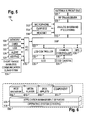
- Figure 6 is a diagram of a software environment that may be implemented on user equipment operable for some of the various embodiments of the disclosure.
- Figure 7 is an illustrative computing system suitable for some of the various embodiments of the disclosure.
- a user equipment including a component, such that responsive to making an emergency request that is rejected, the component configured to receive a message containing information associating the emergency request with a combined emergency centre.
- a network component in another embodiment, includes a component, such that upon receiving an emergency request from a user equipment, the component configured to determine whether the emergency request is related to a combined emergency centre and to send the user equipment a message containing information identifying that the emergency request is related to a combined emergency centre.
- a user of a UE can typically place an emergency call by dialing 911 (in North America), 112 (in most of Europe), 999 (in the United Kingdom), 110, 118, or 119 (in Japan), or some other emergency-specific number.
- a PSAP Public Safety Answering Point
- Any call made to a PSAP will be referred to herein as an emergency call.
- a PSAP could also be an emergency centre or emergency centers.
- a UE might not be aware that a call that it placed was an emergency call.
- a UE manufactured for use in North America might be programmed to recognize that a call to 911 is an emergency call. If such a UE is taken to a country where a number other than 911 is used for emergency calls, and the UE user dials that other emergency number, the UE might not recognize the call as an emergency call. Undesirable results may occur if the UE does not recognize that a call is an emergency call.
- the UE could fail to provide relevant information to the PSAP, the UE may treat the call as a regular call and place it on hold or call waiting, the call could be blocked, or the UE might otherwise fail to treat the call appropriately.
- the network may not apply special treatment, for example, in a congested network or cell, and the unrecognized emergency call may not be subjected to emergency call procedures (e.g., may not receive priority).
- the present disclosure provides for indicating to a UE that a call that the UE placed was an IMS emergency call by including in a message to the UE an indicator that the call was an emergency call.
- the indicator might be included in a SIP message that may be but is not limited to a SIP 2xx or SIP 1xx message sent to the UE in response to an initial SIP request for a dialog or standalone transaction, or unknown method (e.g., a SIP INVITE request), or a similar message, that the UE sends in attempting to set up the emergency call.
- SIP message may refer to a SIP request (including, e.g., a re-INVITE request or a Target refresh request for a dialog or an initial SIP request for a dialog or standalone transaction, or an unknown method) or a SIP response.
- a SIP request including, e.g., a re-INVITE request or a Target refresh request for a dialog or an initial SIP request for a dialog or standalone transaction, or an unknown method
- IETF Internet Engineering Task Force
- RRC Request for Comments
- the SIP message that includes the indicator might be sent by the PSAP or by a component of a network through which the PSAP and the UE communicate with one another. Examples of such components are P-CSCF and E-CSCF.
- the emergency-related indicator can be encoded in SIP using the following alternatives: a) SIP bodies such as "application/3gpp-ims+xml" have been used in IMS to indicate additional information or directives to receiving UAs. It can be extended to also indicate to the UE that, upon receipt in an INVITE or similar request, the request is to be taken as an emergency call or PSAP callback and that the functionality associated with calls of such type is to be invoked. This functionality may include but it not limited to alerting the user by visual, audible, or other methods as well as including location information in the response. A new content-disposition header field value may need to be defined. b) A new SIP header could be defined or an existing SIP header could be enhanced.
- the PSAP itself or the S-CSCF handling the PSAP call back on behalf of the PSAP or another network element such as a signaling gateway can introduce an indicator.
- the indicator could be a new SIP header field.
- the indicator could be a new SIP header field value, e.g., a standardized SIP URN indicating the PSAP function (e.g. mountain rescue or coast guard or general 911) or emergency centre function or emergency personnel function.
- the indicator could be a new URI field.
- the solution can allow for mapping between appropriate Calling-Party-Category fields which is sometimes used to carry the indication of an emergency call in ISUP/TUP (ISDN User Part/Telephone User Part) based systems.
- ISUP/TUP ISDN User Part/Telephone User Part
- the ISUP/TUP signaling information does not allow for a granularity as fine as the emergency urn:service:sos identifiers defined in RFC 5031.
- the response message 150 includes an indicator 160 that indicates that the call placed by the UE 110 was an emergency call.
- the indicator 160 may be a bit, a flag, or some other data element that is recognizable by the UE as a designation that a call placed by the UE 110 was an emergency call (e.g., emergency service URNs as specified in RFC 5031 such as urn:service:sos, urn:service:sos.animal-control, or urn:service:sos.police, if it is determined that the call that was placed can be categorized as, e.g., a urn:service:sos call, a urn:service:sos.animal-control call, or a urn:service:sos.police call).
- the UE 110 When the UE 110 receives the response message 150 that includes the indicator 160, the UE 110 identifies that the call it placed was an IMS emergency call and can then take appropriate actions and invoke functionality for an emergency call.
- One action that the UE 110 might take is to indicate to the UE user the nature of the original call. That is, the UE 110 might alert the user that the call was an emergency call.
- the alert might be a message that appears on the display screen of the UE 110, a visual or audible alert, or some other type of environmental condition or indication of the nature of the call.
- Other actions taken by the UE 110 can involve transmitting a SIP request message 170 such as a SIP ACK or SIP PRACK message or any subsequent SIP request part of the dialog (including target refresh requests) or request for a new dialog, where the request for the dialog uses the SIP Target-Dialog header field with a value set identical to the corresponding dialog identifier value for the emergency session.
- a SIP request message 170 such as a SIP ACK or SIP PRACK message or any subsequent SIP request part of the dialog (including target refresh requests) or request for a new dialog
- the request for the dialog uses the SIP Target-Dialog header field with a value set identical to the corresponding dialog identifier value for the emergency session.
- SIP Target-Dialog header field set it can indicate to the recipient that the sender is aware of an existing dialog with the recipient, either because the sender is on the other side of that dialog, or because it has access to the dialog identifiers, the recipient can then authorize the request based on this awareness.
- a policy could be stored in the UE 110.
- the policy or policies can be used to determine if including one or more indicators to request privacy when requesting emergency sessions is allowed, or if emergency-related information is provided when a PSAP makes a call-back, or if it is allowed to request privacy when emergency-related information is provided in response to a PSAP call-back.
- the policy could be consulted when the UE 110 wants to divulge information that is sensitive to privacy, such as, but not limited to, location.
- the policy could be user-provided, operator-provided, or both. When the information is both user-provided and operator-provided, the operator might provide a default policy, but the user might be able to override this policy if they so wish.
- the policy can be stored in memory that is either internal or external to the device.
- the policy/preference could be set up in a way that is against the PSAP's regulatory requirements.
- the UE 110 might come from a country where it can choose whether or not to provide user-related or event-related information, and the policy/preference may be set such that the information will not be provided.
- the policy/preference may be set such that the information may be provided (e.g., for the purposes of determining the nearest PSAP), but a request might be made that the information not be released.
- the UE 110 may subsequently go to a country where by law location information must be provided if available. In such cases, the network might signal to the UE 110 that the policy/preference is overridden and that information must be provided.
- the token could be carried in a callback from the PSAP 130, such as a SIP INVITE.
- the token could be provided at the time the UE 110 makes registration with the network 120, such that in IMS the token could be provided in a SIP 200OK message in response to an emergency registration.
- the token if the token is coded as a new feature tag, a new URI parameter, or an XML body, the token might be a secure token.
- the 200OK message could be transmitted in response to a request to attach to the network or as part of the authentication sequence of the UE 110.
- the policy may be implemented in different formats.
- One example of a format for the policy is provided below, but the formats should not be limited by this example, as other formats are contemplated.
- / ⁇ X>/Emergency Location policy upon PSAP call back/ The Emergency Location policy leaf indicates whether the UE provides emergency information or not for emergency call back.
- the UE 110 when the UE 110 receives the response message 150 that includes the indicator 160, the UE 110 might transmit information 180 about itself to the PSAP 130. If policy allows, one piece of the information 180 that the UE 110 might include in the SIP message 170 is the UE's public user identities (such as Tel URI, SIP URI, or Mobile Station International ISDN Number (MSISDN)) or some other identifying symbol. Including such information could be subject to policy or could be accompanied by an indicator that private information is not shared with the PSAP or emergency centre or untrusted network elements.
- the public user identities might be in GRUU format or may contain sufficient information that a callback over Circuit Switch technology is possible, e.g., in Tel URI format.
- the UE 110 can include its location as another piece of the information 180, such as but not limited to Cell Global Identity (CGI), Service Set Identifier (SSID), waypoints such as landmarks, and the signal strength of adjacent cells with corresponding CGls. If the UE 110 is not aware of its geographic location, location-related data is not included in the information 180. If a GRUU (globally routable UA (user agent) URI (uniform resource identifier)) is associated with the UE 110, the UE's GRUU can be included as another piece of the information 180. Depending on the privacy settings of the user, the GRUU may be a P-GRUU or a T-GRUU, although a public GRUU (P-GRUU) is preferred over a temporary GRUU (T-GRUU).
- CGI Cell Global Identity
- SSID Service Set Identifier
- waypoints such as landmarks
- signal strength of adjacent cells with corresponding CGls e.g., a G
- Other items that can be included in the information 180 might include the capabilities of the UE 100, the radio access technology being used by the UE 110, the battery life of the UE 110, the signal strength, and the network identity (e.g., CGI, SSID, SID).
- the UE 110 could also invoke what is commonly known as ecall functionality to be sent to the PSAP 130.
- Updating the request might be done if the UE provides a T-GRUU and the network operator policy settings (e.g., in the P-CSCF) indicate that the public user identities must be provided. In such a case, the T-GRUU can be replaced with the GRUU.
- the network operator policy settings e.g., in the P-CSCF
- Updating can include changing the GRUU from a temporary GRUU into a public GRUU. This is done because a temporary GRUU is invalid if the UE is disconnected and has to reregister. A PSAP cannot make a callback to a temporary GRUU after the UE de-registers and re-registers.
- Public GRUUs on the other hand, have the property that they are routable even after the UE de-registers and re-registers (making a PSAP callback to that public GRUU more likely to complete).
- "Updating” can also include not propagating of ICSI or IARI feature tags, P-Preferred-Service header fields, and/or P-Asserted-Service header fields.
- the network may be configured to reject the request: a) the network is not able to handle emergency sessions; b) the IM CN subsystem to which the P-CSCF belongs is not able to handle emergency sessions; c) due to local policy, the network does not handle emergency sessions; d) the network only handles certain types of emergency session requests; e) the UE is roaming; f) the P-CSCF is in a different network than the UE's home operator's network; g) the network does not support emergency sessions for either the geographical location where the UE is located or the IP-CAN to which the UE is attached.
- a 3xx redirection response may be valid or routable in the currently attached network only.
- urn:service:sos.animal-control may be valid in the address book only for some networks to which the UE 110 can attach/register. Usage of an address in the address book can be conditional to the operator or region to which the UE 110 is attach/registered.
- a 3xx response urging the UE to use another address for this emergency-related request or a request determined to be not related to an emergency should not be followed by simply changing the corresponding address book entry, if present, in the address book.
- a CS-enabled UE has received a list of local CS emergency numbers (e.g. received a result of the Location-Update procedure).
- a UE could indicate the requested emergency service type in a CS emergency request and be connected to the requested PSAP using procedures in 3GPP TS 24.008.
- 'police', 'fire' or 'ambulance' for example is extendible and indicates the type of emergency service associated with the address for a given phone context.
- the country or region where the emergency services apply can be identified using applicable ITU, IANA, ISO codes, however, in some cases certain emergency services are provided in an area not coinciding with a "country" or region, in which case a standard ITU, IANA, ISO code might not have been allocated.
- Some ITI, IANA, ISO or other codes applicable for encoding locations, countries or regions are extendible, such as ISO 3166-1, and the ISO 3166/MA.
- the network sends such alternate address information to the UE, for example, as part of the body of a SIP 300 (Multiple Choices) response, in one or more Contact field headers of the SIP 300 (Multiple Choices) response or in another SIP 3xx response (e.g. a SIP 380 (Alternative Service) response).
- SIP 300 Multiple Choices
- SIP 3xx e.g. a SIP 380 (Alternative Service) response.
- the UE or network are configured to select or reduce the alternatives in the response and to remove some of the less probable possibilities. Such selection or reduction can be achieved based on the current network of a UE, the home network of the UE, the nationality of the user of the UE, or past travel plans of the user of the UE for example.
- a UE which performs selection or reduction could include a policy which hard codes a mapping between an address, an emergency type and phone context, thereby enabling the UE to explicitly select the intended emergency type when making an emergency call over the CS domain or PS domain.
- an emergency type can be either indicated per a RFC 5031 URN or per a TEL URL including a country or region indicator such as 'phone context'.
- An emergency type selection function on the UE could be further enhanced if the UE is aware of the country or region it is in and if a locally stored or received mapping of emergency types, location indicators and emergency call addresses is present.
- the emergency type selection function could then determine that that in certain countries or regions a certain mapping does or does NOT apply, or the mapping applies universally (e.g. for UMTS/GSM handsets the number "112" can map to a GSM/UMTS CS domain emergency call setup with all Emergency Service Category Value bits set to '0' (see Table 10.5.135d/3GPP TS 24.008: Service Category information element)).
- Such further interaction between the network and the UE to select a translation also includes, for example, placing choices for the translation in a textual field to be displayed on the UE (such as the ⁇ reason> element in the 3GPP IMS XML body).
- the UE user could then select one of the choices, the selection could be transmitted to the network, and the network could translate the emergency number based on the selection.
- the network could make the selection in the following order: map the address (e.g., 119) as defined in the home network; if the address is not defined in the home network, map the address as defined in the current visited network, if the address is not defined in the current visited network, map the address as defined for roaming partners or route the call to the default or most capable PSAP.
- the request can always be routed to the default or most capable PSAP.
- the UE is configured with one translation to prevent this problem from occurring.
- the UE can interact with the user to select a desired translation.
- the UE can be configured to route the call to the default or most capable PSAP.
- the UE could route the call based on the network it is attached to and could map the digits according to that network's rules. The UE could also interact with the network and use any advice it gets.
- the P-CSCF will not reject the request for an unsupported emergency service type (such as urn:service:sos.poison) but prepare it for forwarding to the user's home network S-CSCF using normal procedures (as opposed to forwarding it to an E-CSCF).
- the user's home network's S-SCSF should then be configured to handle the unrouteable Request URI value.
- the IMS network may also be configured to take account of roaming users requesting a session with urn:service:sos.police, such that the service requested by a UE which may be half way around the world, can still be handled in a timely and effective manner.
- the IMS network could provide an indication in a SIP message to the UE that the call has been determined to not be an emergency call and that its handling will be different.
- the indication could be a flag and/or alphanumeric information. Possible encodings of this type of indicator are given in this document.
- the IMS network 120 includes the emergency call indicator 160 in a SIP response that is sent to the UE 110.
- the indicator 160 is provided during the call setup signaling phase.
- the emergency call indicator 160 is included in a message that originates at the PSAP 130. The IMS network 120 then transfers the message from the PSAP 130 to the U E 110.
- a component in the IMS network 120 includes the emergency call indicator 160 in the SIP response that is sent to the UE 110
- the UE 110 can abort the current signaling and initiate regular emergency call setup procedures, which may involve originating a call over a Circuit Switched network, if capable and available, or after initiating emergency registration procedures, or sending a SIP INVITE request containing an indicator indicating that the SIP INVITE request is an emergency-related call request and containing emergency-related information about itself.
- Information that is similar to the information 180 that the UE 110 includes in the SIP message 170 might be included by the UE 110 in a message sent under different circumstances. This is illustrated in Figure 2 , where the UE 110, the IMS network 120, and the PSAP 130 are again present. However, in this case the PSAP 130 initiates a callback to the UE 110. As is well known in the art, after an emergency call is terminated, the PSAP 130 may place a callback to the UE 110 for various reasons. For example, if the emergency call appears to have terminated abnormally, the PSAP 130 might call the UE 110 back to determine if the UE user wishes to convey any additional information.
- the PSAP 130 might call the user back to ask for information that was inadvertently not requested in the initial call.
- Other reasons for a callback from the PSAP 130 to an emergency caller after the termination of an emergency call may be familiar to one of skill in the art.
- the PSAP 130 might initiate the callback by sending a SIP INVITE message 210, or a similar message, to the UE 110 via the IMS network 120.
- the SIP INVITE message 210 contains an indicator 220 that indicates that the SIP INVITE message 210 is related to an emergency callback.
- the indicator 220 might be substantially similar to the indicator 160 of Figure 1 or might be some other type of indicator.
- the UE 110 can recognize that the indicator 220 is an indication of an emergency callback from the PSAP 130 and can respond to the indicator 220 appropriately by invoking emergency callback functionality, subject to policies.
- the response of the UE 110 to receiving the indicator 220 is substantially similar to the response that the UE 110 had upon receiving the indicator 160 of Figure 1 .
- one action that the UE 110 might take upon recognizing the indicator 220 is visually or audibly indicating the nature of the session to the user. That is, the UE 110 might alert the user that the incoming call is an emergency callback. The alert might be a message that appears on the display screen of the UE 110 or some other type of indication of the nature of the call.
- Other actions taken by the UE 110 can involve transmitting a SIP 2xx or 1xx response (e.g. SIP 200(OK) response) 230, or a similar message, that includes information 240 about the UE 110, subject to policies.
- the information 240 can be transmitted over several SIP messages or network messages (e.g., UE-provided IP-CAN identity information may not be completely reliable and hence a mechanism based on network provision (e.g., using Policy Control and Charging (PCC)) can provide such information) or within a target refresh request such as a SIP re-INVITE request or an UPDATE request or partially in a SIP PRACK request.
- PCC Policy Control and Charging
- the information 240 might be substantially similar to the information 180 that the UE 110 provided upon receiving the indicator 160 of Figure 1 .
- One piece of the information 240 that the UE 110 might send to the PSAP 130 is the UE's public user identity or some other identifying symbol.
- Another piece of information 240 that the UE 110 might transmit in the SIP 200OK message 230 is the type of access that the UE 110 used for the original emergency call. For example, if the emergency call was made over a wireless LAN, the UE 110 might include that fact in the information 240, as well as a cell ID, a line ID, and/or a wireless LAN access node ID.
- the UE 110 can include its location as another piece of the information 240. If the UE 110 is not aware of its geographic location, location-related data is not included in the information 240. If a GRUU is associated with the UE 110, the UE's GRUU can be included as another piece of the information 240.
- the PSAP 130 might setup a Circuit Switched (CS) call and a CS gateway might then convert the call and the signaling in packet switched technology if the CS call is routed to the CS gateway.
- CS gateway Triggered by the incoming call from the PSAP 130, the CS gateway might initiate the callback over packet switched technology by sending a SIP INVITE message 210, or a similar message, to the UE 110 via the IMS network 120.
- Figure 3 illustrates an embodiment of a method 300 for a UE to respond to an emergency-related message sent to the UE.
- the UE receives a message containing an indicator indicating that an emergency-related call has been placed.
- the emergency-related call may have been placed by the UE without the UE being aware that the call was related to an emergency.
- the emergency-related call might be a callback from a PSAP to the UE in response to a previous emergency call from the UE.
- the UE recognizes the indicator as an indication that its first message (initial SIP request for a dialog or standalone transaction, or unknown method or similar message) is related to an emergency.
- the UE provides a visual, audible, or other indication to the UE user that the emergency-related call is related to an emergency.
- the UE sends a message containing emergency-related information about itself.
- FIG. 4 illustrates a wireless communications system including an embodiment of the UE 110.
- the UE 110 is operable for implementing aspects of the disclosure, but the disclosure should not be limited to these implementations.
- the UE 110 may take various forms including a wireless handset, a pager, a personal digital assistant (PDA), a portable computer, a tablet computer, or a laptop computer. Many suitable devices combine some or all of these functions.
- the UE 110 is not a general purpose computing device like a portable, laptop or tablet computer, but rather is a special-purpose communications device such as a mobile phone, wireless handset, pager, or PDA.
- the UE 110 may be a portable, laptop or other computing device.
- the UE 110 may support specialized activities such as gaming, inventory control, job control, and/or task management functions, and so on.
- the UE 110 includes a display 402.
- the UE 110 also includes a touch-sensitive surface, a keyboard or other input keys generally referred as 404 for input by a user.
- the keyboard may be a full or reduced alphanumeric keyboard such as QWERTY, Dvorak, AZERTY, and sequential types, or a traditional numeric keypad with alphabet letters associated with a telephone keypad.
- the input keys may include a trackwheel, an exit or escape key, a trackball, and other navigational or functional keys, which may be inwardly depressed to provide further input function.
- the UE 110 may present options for the user to select, controls for the user to actuate, and/or cursors or other indicators for the user to direct.
- the various applications executable by the UE 110 are a web browser, which enables the display 402 to show a web page.
- the web page may be obtained via wireless communications with a wireless network access node, a cell tower, a peer UE 110, or any other wireless communication network or system 400.
- the network 400 is coupled to a wired network 408, such as the Internet.
- the UE 110 has access to information on various servers, such as a server 410.
- the server 410 may provide content that may be shown on the display 402.
- the UE 110 may access the network 400 through a peer UE 110 acting as an intermediary, in a relay type or hop type of connection.
- FIG. 5 shows a block diagram of the UE 110. While a variety of known components of UEs 110 are depicted, in an embodiment a subset of the listed components and/or additional components not listed may be included in the UE 110.
- the UE 110 includes a digital signal processor (DSP) 502 and a memory 504.
- DSP digital signal processor
- the UE 110 may further include an antenna and front end unit 506, a radio frequency (RF) transceiver 508, an analog baseband processing unit 510, a microphone 512, an earpiece speaker 514, a headset port 516, an input/output interface 518, a removable memory card 520, a universal serial bus (USB) port 522, a short range wireless communication sub-system 524, an alert 526, a keypad 528, a liquid crystal display (LCD), which may include a touch sensitive surface 530, an LCD controller 532, a charge-coupled device (CCD) camera 534, a camera controller 536, and a global positioning system (GPS) sensor 538.
- the UE 110 may include another kind of display that does not provide a touch sensitive screen.
- the DSP 502 may communicate directly with the memory 504 without passing through the input/output interface 518.
- the DSP 502 may perform modulation, coding, interleaving, inverse fast Fourier transforming, and cyclic prefix appending, and for a receiver function the DSP 502 may perform cyclic prefix removal, fast Fourier transforming, deinterleaving, decoding, and demodulation.
- OFDMA orthogonal frequency division multiplex access
- the RAM 1330 might be used to store volatile data and perhaps to store instructions that are executed by the processor 1310.
- the ROM 1340 is a non-volatile memory device that typically has a smaller memory capacity than the memory capacity of the secondary storage 1350. ROM 1340 might be used to store instructions and perhaps data that are read during execution of the instructions. Access to both RAM 1330 and ROM 1340 is typically faster than to secondary storage 1350.
- the secondary storage 1350 is typically comprised of one or more disk drives or tape drives and might be used for non-volatile storage of data or as an over-flow data storage device if RAM 1330 is not large enough to hold all working data. Secondary storage 1350 may be used to store programs that are loaded into RAM 1330 when such programs are selected for execution.
- a method for a network component to handle requests sent to the network component is provided.
- the network component inspects requests sent to the network component to determine if the requests are related to emergencies, and if one of the requests is determined to relate to an emergency, the network component updates the request.
- the network component includes a configurable list with local and roaming partners' emergency service identifiers that indicate on a per emergency service identifier basis the handling of requests.
- a configurable list of alternate emergency service identifiers is sent to the UE.
- the at least one alternative emergency service URI might be presented to the user of the UE.
Landscapes
- Engineering & Computer Science (AREA)
- Signal Processing (AREA)
- Computer Networks & Wireless Communication (AREA)
- Multimedia (AREA)
- Business, Economics & Management (AREA)
- General Business, Economics & Management (AREA)
- Health & Medical Sciences (AREA)
- Emergency Management (AREA)
- Environmental & Geological Engineering (AREA)
- Public Health (AREA)
- Telephonic Communication Services (AREA)
- Mobile Radio Communication Systems (AREA)
- Alarm Systems (AREA)
- Data Exchanges In Wide-Area Networks (AREA)
Abstract
Description
- The IP (Internet Protocol) Multimedia Subsystem (IMS) is a standardized architecture for providing multimedia services and voice-over-IP calls to both mobile and fixed user equipment (UE). The Session Initiation Protocol (SIP) been standardized and governed primarily by the Internet Engineering Task Force (IETF) as a protocol for setting up and managing IMS-based calls. As used herein, the term "UE" can refer to mobile devices such as mobile telephones, personal digital assistants, handheld or laptop computers, and similar devices that have telecommunications capabilities. Such a UE might consist of a wireless device and its associated Universal Integrated Circuit Card (UICC) that includes a Subscriber Identity Module (SIM) application, a Universal Subscriber Identity Module (USIM) application, or a Removable User Identity Module (R-UIM) application or might consist of the device itself without such a card. The term "UE" may also refer to devices that have similar capabilities but that are not transportable, such as fixed line telephones, desktop computers, or set-top boxes. The term "UE" can also refer to any hardware or software component that can terminate a SIP session.
The document Nokia Siemens Networks et al "Corrections for emergency procedures" 3GPP Draft; C1-072991_24229CR1997R2_EMC1_REL-8_Procedure, 3RD Generation Partnership Project (3GPP), Mobile Competance Centre; 650, Route Des Lucioles; F-06921 Sophia-Antipolis Cedex; France, vol. CT WG1, no. Sophia Antipolis, France; 20071112, 12 November 2007 (2007-11-12), XP050027161, discloses a number of change requests for the 3GPP standards at the time of submission that relate to IMS emergency services. - Aspects of the present invention are defined in
claims 1, 19, 27 and 28. - For a more complete understanding of this disclosure, reference is now made to the following brief description, taken in connection with the accompanying drawings and detailed description, wherein like reference numerals represent like parts.
-
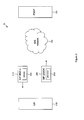
Figure 1 is a diagram of an illustrative IP network including a UE and a PSAP according to an embodiment of the disclosure. -
Figure 2 is a diagram of an illustrative IP network including a UE and a PSAP according to another embodiment of the disclosure. -
Figure 3 is a diagram illustrating a method for a UE to respond to an emergency-related message according to an embodiment of the disclosure. -
Figure 4 is a diagram of a wireless communications system including user equipment operable for some of the various embodiments of the disclosure. -
Figure 5 is a block diagram of user equipment operable for some of the various embodiments of the disclosure. -
Figure 6 is a diagram of a software environment that may be implemented on user equipment operable for some of the various embodiments of the disclosure. -
Figure 7 is an illustrative computing system suitable for some of the various embodiments of the disclosure. - It should be understood at the outset that although illustrative implementations of one or more embodiments of the present disclosure are provided below, the disclosed systems and/or methods may be implemented using any number of techniques, whether currently known or in existence. The disclosure should in no way be limited to the illustrative implementations, drawings, and techniques illustrated below, including the exemplary designs and implementations illustrated and described herein, but may be modified within the scope of the appended claims along with their full scope of equivalents.
- In an embodiment, a user equipment is provided. The user equipment including a component, such that responsive to making an emergency request that is rejected, the component configured to receive a message containing information associating the emergency request with a combined emergency centre.
- In another embodiment, a network component is provided that includes a component, such that upon receiving an emergency request from a user equipment, the component configured to determine whether the emergency request is related to a combined emergency centre and to send the user equipment a message containing information identifying that the emergency request is related to a combined emergency centre.
- A user of a UE, such as an IMS-capable UE, can typically place an emergency call by dialing 911 (in North America), 112 (in most of Europe), 999 (in the United Kingdom), 110, 118, or 119 (in Japan), or some other emergency-specific number. Such a call may be handled by a Public Safety Answering Point (PSAP), which might be an emergency call center or system that can coordinate an appropriate response to the emergency. Any call made to a PSAP will be referred to herein as an emergency call. In this document, a PSAP could also be an emergency centre or emergency centers.
- In some cases, a UE might not be aware that a call that it placed was an emergency call. For example, a UE manufactured for use in North America might be programmed to recognize that a call to 911 is an emergency call. If such a UE is taken to a country where a number other than 911 is used for emergency calls, and the UE user dials that other emergency number, the UE might not recognize the call as an emergency call. Undesirable results may occur if the UE does not recognize that a call is an emergency call. For example, the UE could fail to provide relevant information to the PSAP, the UE may treat the call as a regular call and place it on hold or call waiting, the call could be blocked, or the UE might otherwise fail to treat the call appropriately. In addition, the network may not apply special treatment, for example, in a congested network or cell, and the unrecognized emergency call may not be subjected to emergency call procedures (e.g., may not receive priority).
- The present disclosure provides for indicating to a UE that a call that the UE placed was an IMS emergency call by including in a message to the UE an indicator that the call was an emergency call. The indicator might be included in a SIP message that may be but is not limited to a SIP 2xx or SIP 1xx message sent to the UE in response to an initial SIP request for a dialog or standalone transaction, or unknown method (e.g., a SIP INVITE request), or a similar message, that the UE sends in attempting to set up the emergency call. Hereinafter, the term "SIP message" may refer to a SIP request (including, e.g., a re-INVITE request or a Target refresh request for a dialog or an initial SIP request for a dialog or standalone transaction, or an unknown method) or a SIP response. It should be noted that the re-INVITE method request can only be sent when conditions documented in the Internet Engineering Task Force (IETF) Request for Comments (RFC) 3261 are satisfied. The SIP message that includes the indicator might be sent by the PSAP or by a component of a network through which the PSAP and the UE communicate with one another. Examples of such components are P-CSCF and E-CSCF.
- The emergency-related indicator can be encoded in SIP using the following alternatives: a) SIP bodies such as "application/3gpp-ims+xml" have been used in IMS to indicate additional information or directives to receiving UAs. It can be extended to also indicate to the UE that, upon receipt in an INVITE or similar request, the request is to be taken as an emergency call or PSAP callback and that the functionality associated with calls of such type is to be invoked. This functionality may include but it not limited to alerting the user by visual, audible, or other methods as well as including location information in the response. A new content-disposition header field value may need to be defined. b) A new SIP header could be defined or an existing SIP header could be enhanced. The PSAP itself or the S-CSCF handling the PSAP call back on behalf of the PSAP or another network element such as a signaling gateway can introduce an indicator. c) The indicator could be a new SIP header field. d) The indicator could be a new SIP header field value, e.g., a standardized SIP URN indicating the PSAP function (e.g. mountain rescue or coast guard or general 911) or emergency centre function or emergency personnel function. e) The indicator could be a new URI field. f) The indicator could be a new URI field value, e.g., user = psap, where 'user' is a SIP URI field and 'psap' is a new value that might be put in the Contact header field. g) The standardized SIP URN could be put in the P-Asserted-Identity by the trust domain in which the PSAP or emergency centre or emergency personnel resides. h) The indicator could be contained in the FROM header field value and the FROM header field value can be asserted according to RFC 4474 or RFC 3893. This solution is based on certificates.
- As identified above, a number of possibilities could be used to indicate that a session is in fact an emergency session. It has been highlighted that the PSAP could be in a visited network such as a VPLMN network and has no trust relationship with the home network such as an HPLMN (Home Public Land Mobile Network). Assuming this is the case when the UE is setting up an emergency session the UE doesn't recognize or when receiving a mobile terminated request containing an indication in the SIP message (e.g., 1xx or 2xx responses or a SIP target refresh request or a similar message) that the request is a PSAP callback, the PSAP or the network could also send back a token that the UE would store. The network could provide this token when the UE registers with IM core network (CN) subsystem. The token could be stored in memory, which could be internal or removable. In the event the UE's emergency call is disconnected or the UE needs to be informed it is requesting an emergency session, the network or PSAP could include this token. Upon receipt of the token from the network, the UE can compare it to the shared token. If the tokens do not match, the UE knows the call is not emergency related.
- The SI P "priority" header field set to "emergency" has so far not been used as a trusted indicator for emergency call [RFC 3261]. The installed base of SIP UAs will have different and diverging treatment for this header, if any treatment.
- In the event the PSAP callback or emergency call signaling response is received over a Circuit Switched network, the solution can allow for mapping between appropriate Calling-Party-Category fields which is sometimes used to carry the indication of an emergency call in ISUP/TUP (ISDN User Part/Telephone User Part) based systems. Typically, the ISUP/TUP signaling information does not allow for a granularity as fine as the emergency urn:service:sos identifiers defined in RFC 5031.
-
Figure 1 illustrates asystem 10 that includes one or more components associated with anIMS network 120. AUE 110 may be any end user device or system that can connect to theIMS network 120. Examples of theUE 110 can include, but are not limited to, mobile phones, fixed line phones, mobile wireless devices (including digital, cellular, or dual mode devices), personal digital assistants, laptop/tablet/notebook computers, and desktop computers. TheUE 110 can communicate via theIMS network 120 with aPSAP 130, which may be a 911 system or another emergency call center or system. - The
IMS network 120 might include any well known set of components, such as base stations and other radio transmission and reception equipment, that can promote an IMS-based connection between theUE 110 and thePSAP 130. Other components that might be present in theIMS network 120 but that are not shown include a P-CSCF (Proxy Call Session Control Function) that may be the first point of contact for theUE 110; an S-CSCF (Serving CSCF) that may perform session control, downloading and uploading of user profiles, and other functions; an E-CSCF (Emergency CSCF) that may provide session control functions for thePSAP 130; and other well known components for initiating and maintaining IMS-based sessions. - To make an emergency call, the
UE 110 might send an initial SIP request for a dialog or standalone transaction, or unknown method (e.g. a SIP INVITE request) 140, or a similar invitation message, to thePSAP 130 via theIMS network 120. ThePSAP 130 typically responds to theinvitation message 140 with a SIP 1xx or SIP 2xx response (e.g., SIP 200 OK)message 150, or a similar response message. Alternatively, thePSAP 130 could transmit a target refresh request (e.g. re-INVITE request). Standard SIP procedures might then be followed to establish the emergency call between theUE 110 and thePSAP 130. - In an embodiment, the
response message 150 includes anindicator 160 that indicates that the call placed by theUE 110 was an emergency call. Theindicator 160 may be a bit, a flag, or some other data element that is recognizable by the UE as a designation that a call placed by theUE 110 was an emergency call (e.g., emergency service URNs as specified in RFC 5031 such as urn:service:sos, urn:service:sos.animal-control, or urn:service:sos.police, if it is determined that the call that was placed can be categorized as, e.g., a urn:service:sos call, a urn:service:sos.animal-control call, or a urn:service:sos.police call). When theUE 110 receives theresponse message 150 that includes theindicator 160, theUE 110 identifies that the call it placed was an IMS emergency call and can then take appropriate actions and invoke functionality for an emergency call. One action that theUE 110 might take is to indicate to the UE user the nature of the original call. That is, theUE 110 might alert the user that the call was an emergency call. The alert might be a message that appears on the display screen of theUE 110, a visual or audible alert, or some other type of environmental condition or indication of the nature of the call. Other actions taken by theUE 110 can involve transmitting aSIP request message 170 such as a SIP ACK or SIP PRACK message or any subsequent SIP request part of the dialog (including target refresh requests) or request for a new dialog, where the request for the dialog uses the SIP Target-Dialog header field with a value set identical to the corresponding dialog identifier value for the emergency session. In the case of sending a request for anew dialog message 170 with SIP Target-Dialog header field set, it can indicate to the recipient that the sender is aware of an existing dialog with the recipient, either because the sender is on the other side of that dialog, or because it has access to the dialog identifiers, the recipient can then authorize the request based on this awareness. Subject to limitations of SIP, either of these messages can include information in the request as part of information available to thePSAP 130 if the recipient is thePSAP 130. As mentioned, themessage 170 might be a SIP target refresh request, a SIP UPDATE, a SIPre-INVITE message 170, or a similar (acknowledgement) message (e.g. SIP PRACK). Themessage 170 can includeinformation 180 about theUE 110, to be described in detail below. Due to limitations in the SIP protocol, theinformation 180 may be spread over several SIP messages, e.g. some information may be in SIP PRACK requests, some in responses to PSAP- or network-originated requests or SIP UPDATE requests, and some in other SIP target refresh requests. Theinformation 180 might be intended for thePSAP 130 or for one or more components in theIMS network 120. Theinformation 180 could optionally include a flag or other indicator that indicates that certain emergency-related information, such as identification, network access, and location information, is not to be shared (e.g., with the PSAP 130). If one or more privacy indicators are set, the network might still be able to use the emergency-related information for routing purposes or to provide anonymous call-back. - In another embodiment, a policy could be stored in the
UE 110. The policy or policies can be used to determine if including one or more indicators to request privacy when requesting emergency sessions is allowed, or if emergency-related information is provided when a PSAP makes a call-back, or if it is allowed to request privacy when emergency-related information is provided in response to a PSAP call-back. The policy could be consulted when theUE 110 wants to divulge information that is sensitive to privacy, such as, but not limited to, location. The policy could be user-provided, operator-provided, or both. When the information is both user-provided and operator-provided, the operator might provide a default policy, but the user might be able to override this policy if they so wish. The policy can be stored in memory that is either internal or external to the device. - It is possible that the policy/preference could be set up in a way that is against the PSAP's regulatory requirements. For example, the
UE 110 might come from a country where it can choose whether or not to provide user-related or event-related information, and the policy/preference may be set such that the information will not be provided. Alternatively, the policy/preference may be set such that the information may be provided (e.g., for the purposes of determining the nearest PSAP), but a request might be made that the information not be released. TheUE 110 may subsequently go to a country where by law location information must be provided if available. In such cases, the network might signal to theUE 110 that the policy/preference is overridden and that information must be provided. This override notification could be signaled as a token in a message from the network. For example, a SIP message could contain a token that is coded as a new feature tag, a new URI parameter, an XML body, an SDP parameter, or a similar coding feature. The token might also need the property that it can be trusted by theUE 110. - The following illustrates one possible embodiment of how the
UE 110 may behave.
 Basic procedure will be
      Policy / Preference set
      Message received from network containing override token
            Consult preference / policy
                  Allow location information provide
                  Not allowed determine if token received
                         Token received ascertain authenticity of token and if valid
                  provide
                               location information
                         Token received, fake, provide indication to network fake token
                               received, provide no location information.
/<X>/Emergency Location policy upon PSAP call back/
The Emergency Location policy leaf indicates whether the UE provides emergency information or not for emergency call back.
- Occurrence: One
- Format: bool
- Access Types: Get, Replace
- Values: 0, 1
- 0 - UE provides emergency information.
- 1- UE does not provide emergency information.
            <Node>
                  <NodeName> Emergency Location policy </NodeName>
                  <DFProperties>
                         <AccessType>
                               <Get/>
                               <Replace/>
                         </AccessType>
                         <DFFormat>
                               <bool/>
                         </DFFormat>
                         <Occurrence>
                               <One/>
                         </Occurrence>
                         <DFTitle> Emergency Location policy </DFTitle>
                         <DFType>
                               <MIME>text/plain</MIME>
                         </DFType>
                  </DFProperties>
            </Node
| Emergency Service Category Value (octet 3) | |
| The meaning of the Emergency Category Value is derived from the following settings (Please see 3GPP TS 22.101 clause 8): | |
| | Police |
| Bit 2 | Ambulance |
| Bit 3 | Fire Brigade |
| Bit 4 | Marine Guard |
| Bit 5 | Mountain Rescue |
| Bits 6,7,8 | are spare and set to "0" |
| Mobile station may set one or more bits to "1" | |
| If more than one bit is set to "1", routing to a combined Emergency centre (e.g. ambulance and fire brigade in Japan) is required. If the MSC can not match the received service category to any of the emergency centres, it shall route the call to an operator defined default emergency centre. | |
| If no bit is set to "1", the MSC shall route the Emergency call to an operator defined default emergency centre | |
      <ims-3gpp version=" ... ">
            <alternative-service>
                  <type alternate="
                         tel: 119;phone-context=+81
                         urn: service: sos.fire-urn:service: sos. ambulance">
                         <emergency/>
                  </type>
                  <reason/>
            </alternative-service>
      </ims-3gpp>
 <ims-3gpp version="2">
      <alternative-service>
            <type><emergency/></type>
            <reason lang="en">emergency</reason>
            <reason lang="nl">noodgeval</reason>
      </alternative-service>
      <lims-3gpp>
 <ims-3gpp version="...">
      <alternative-service>
            <type>
                   <emergency/>
            </type>
            <reason/>
            <actions>
                   <alternative>
                         <alternativeURI>tel:112;phone-
                         context=+57</alternativeURI>
                         <sos/>
                   </alternative>
                   <alternative>
                         <alternativeURI>tel:123;phone-
                         context=+57</alternativeURI>
                         <ambulance/>
                         <fire/>
                         <police/>
                   </alternative>
                   <alternative>
                         <alternativeURI>tel:119;phone-
                         context=+81</alternativeURI>
                         <alternativeURI>tel:119;phone-
                         context=+82</alternativeURI>
                         <alternativeURI>tel:119;phone-
                         context=+886</alternativeURI>
                         <ambulance/>
                         <fire/>
                   </alternative>
                   <alternative>
                         <alternativeURI>te1:119;phone-
                         context=+94</alternativeURI>
                         <alternativeURI>tel:119;phone-
                         context=+1876</alternativeURI>
                         <police/>
                   </alternative>
                   <alternative>
                         <alternativeURI>tel:119;phone-
                         context=+57</alternativeURI>
                         <alternativeURI>tel:119;phone-
                         context=+86</alternativeURI>
                         <fire/>
                   </alternative>
                   <alternative>
                         <alternativeURI>tel:119;phone-
                         context=+62</alternativeURI>
                         <alternativeURI>tel:118;phone-
                         context=+62</alternativeURI>
                         <ambulance/>
                   </alternative>
            </action>
      </alternative-service>
      </ims-3gpp>
- In the event the UE receives a 380 (Alternative Service) response to an INVITE request the response containing a XML body that includes an <alternative service> element with the <type> child element's "alternate" attribute containing one or more emergency service URIs, the UE can attempt a normal call as described in subclause 5.1.3.1 using a emergency service URI or using call setup according to the procedures described in 3GPP TS 24.008 [8]. The behavior of the UE is implementation specific if the <type> child element's "alternate" attribute is absent or contains no emergency service URIs.
- The P-CSCF shall store a configurable list of local emergency service identifiers, i.e. emergency numbers and the emergency service URN, which are valid for the operator to which the P-CSCF belongs to. In addition to that, the P-CSCF shall store a configurable list of roaming partners' emergency service identifiers. The configurable lists with local and roaming partners' emergency service identifiers shall indicate per emergency service identifier the handling. When the handling indicated that the request shall be rejected, a configurable list of alternate emergency service URIs may be included in the response.
- If the P-CSCF detects that the Request-URI of the initial request for a dialog, or a standalone transaction, or an unknown method matches an unsupported type of emergency in the VPLMN or HPLMN's emergency service identifiers, the P-CSCF shall:
- shall respond to the INVITE request with a 380 (Alternative Service) response;
- shall assume that the UE supports
version 1 of the XML Schema for the IM CN subsystem XML body if support for the 3GPP IMS XML body in the Accept header is not indicated; and - shall include in the 380 (Alternative Service) response:
- a Content-Type header field with the value set to associated MIME type of the 3GPP IMS XML body as described in subclause 7.6.1.
- The body shall contain:
- a) an <alternative-service> element, set to the parameters of the alternative service;
- b) if the Accept header indicates support for version 2 of the XML Schema for the IM CN subsystem XML body
- then, a <type> child element with an "alternate" attribute set to a list of alternate emergency service URIs,
- otherwise, a <type> child element, set to "emergency";
- c) a <reason> child element, set to an operator configurable reason.
- If the P-CSCF detects that the Request-URI of the initial request for a dialog, or a standalone transaction, or an unknown method matches an unsupported type of emergency in the VPLMN or HPLMN's emergency service identifiers, the P-CSCF shall:
- shall respond to the INVITE request with a 380 (Alternative Service) response;
- shall assume that the UE supports
version 1 of the XML Schema for the IM CN subsystem XML body if support for the 3GPP IMS XML body in the Accept header is not indicated; and - shall include in the 380 (Alternative Service) response:
- a Content-Type header field with the value set to associated MIME type of the 3GPP IMS XML body as described in subclause 7.6.1.
- a) an <alternative-service> element, set to the parameters of the alternative service;
- b) a <type> child element with an "alternate" attribute set to a list of alternate emergency service URIs,
- c) a <reason> child element, set to an operator configurable reason.
- If the P-CSCF receives an initial request for a dialog, or a standalone transaction, or an unknown method, for a registered user the P-CSCF shall inspect the Request URI independent of values of possible entries in the received Route headers for known emergency service identifiers, i.e. emergency numbers and the emergency service URN from these configurable lists. If the P-CSCF detects that the Request-URI of the initial request for a dialog, or a standalone transaction, or an unknown method matches one of the emergency service identifiers in any of these lists, the P-CSCF shall:
- 0) determine the geographical location of the UE. Access technology specific procedures are described in each access technology specific annex. If the P-CSCF is not capable to handle emergency sessions or due to local policy does not handle emergency sessions or only handles certain type of emergency session request or the IP-CAN to which the UE is attached or the UE is roaming or the P-CSCF is in a different network than the UE's home operator's network, then the P-CSCF:
- shall reject the request by returning a 380 (Alternative Service) response to the UE;
- shall assume that the UE supports
version 1 of the XML Schema for the IM CN subsystem XML body if support for the 3GPP IMS XML body in the Accept header is not indicated; and - shall include in the 380 (Alternative Service) response:
- a Content-Type header field with the value set to associated MIME type of the 3GPP IMS XML body as described in subclause 7.6.1.
- 0) determine the geographical location of the UE. Access technology specific procedures are described in each access technology specific annex. If the P-CSCF is not capable to handle emergency sessions or due to local policy does not handle emergency sessions or only handles certain type of emergency session request or the IP-CAN to which the UE is attached or the UE is roaming or the P-CSCF is in a different network than the UE's home operator's network, then the P-CSCF:
- The body shall contain:
- a) an <alternative-service> element, set to the parameters of the alternative service;
- b) if the Accept header indicates support for version 2 of the XML Schema for the IM CN subsystem XML body
- then, a <type> child element with an "alternate" attribute set to a list of alternate emergency service URIs, and
- if the initial request for a dialog, or standalone transaction, or unknown method was for a supported type of emergency, the <type> child element is set to "emergency" to indicate that it was a supported emergency call,
- otherwise, a <type> child element, set to "emergency";
- then, a <type> child element with an "alternate" attribute set to a list of alternate emergency service URIs, and
- c) a <reason> child element, set to an operator configurable reason; and
- d) an <action> child element, set to "emergency-registration" if the request included an emergency service URN in the Request-URI.
NOTE 1a: "sip:911 @example.com;user=phone" could be an alternate emergency service URI. "um:service:sos.animal-control" could be an unsupported type of emergency call.
NOTE 2: Emergency service URN in the request-URI indicates for the network that the emergency call attempt is recognized by the UE.
- If the P-CSCF receives an initial request for a dialog, or a standalone transaction, or an unknown method, for a registered user the P-CSCF shall inspect the Request URI independent of values of possible entries in the received Route headers for known emergency service identifiers, i.e. emergency numbers and the emergency service URN from these configurable lists. If the P-CSCF detects that the Request-URI of the initial request for a dialog, or a standalone transaction, or an unknown method matches one of the emergency service identifiers in any of these lists, the P-CSCF shall:
- 0) determine the geographical location of the UE. Access technology specific procedures are described in each access technology specific annex. If the P-CSCF is not capable to handle emergency sessions or due to local policy does not handle emergency sessions or only handles certain type of emergency session request or the IP-CAN to which the UE is attached or the UE is roaming or the P-CSCF is in a different network than the UE's home operator's network, then the P-CSCF:
- shall reject the request by returning a 380 (Alternative Service) response to the UE;
- shall assume that the UE supports
version 1 of the XML Schema for the IM CN subsystem XML body if support for the 3GPP IMS XML body in the Accept header is not indicated; and - shall include in the 380 (Alternative Service) response:
- a Content-Type header field with the value set to associated MIME type of the 3GPP IMS XML body as described in subclause 7.6.1.
- 0) determine the geographical location of the UE. Access technology specific procedures are described in each access technology specific annex. If the P-CSCF is not capable to handle emergency sessions or due to local policy does not handle emergency sessions or only handles certain type of emergency session request or the IP-CAN to which the UE is attached or the UE is roaming or the P-CSCF is in a different network than the UE's home operator's network, then the P-CSCF:
- The body shall contain:
- a) an <alternative-service> element, set to the parameters of the alternative service;
- b) a <type> child element with an "alternate" attribute set to a list of alternate emergency service URIs, and
- if the initial request for a dialog, or standalone transaction, or unknown method was for a supported type of emergency, the <type> child element is set to "emergency" to indicate that it was a supported emergency call;
- c) a <reason> child element, set to an operator configurable reason; and
- d) an <action> child element, set to "emergency-registration" if the request included an emergency service URN in the Request-URI.
NOTE 2: Emergency service URN in the request-URI indicates for the network that the emergency call attempt is recognized by the UE.
- If the IM CN subsystem to where the P-CSCF belongs to is not capable to handle emergency sessions or due to local policy does not handle emergency sessions or only handles certain type of emergency session request or does not support emergency sessions for either the geographical location of the UE is located or the IP-CAN to which the UE is attached, the P-CSCF shall not forward the INVITE request. The P-CSCF:
- shall respond to the INVITE request with a 380 (Alternative Service) response;
- shall assume that the UE supports
version 1 of the XML Schema for the IM CN subsystem XML body if support for the 3GPP IMS XML body in the Accept header is not indicated; and - shall include in the 380 (Alternative Service) response:
- a Content-Type header field with the value set to associated MIME type of the 3GPP IMS XML body as described in subclause 7.6.1.
- The body shall contain:
- a) an <alternative-service> element, set to the parameters of the alternative service;
- b) if the Accept header indicates support for version 2 of the XML Schema for the IM CN subsystem XML body
- then, a <type> child element with an "alternate" attribute set to a list of alternate emergency service URIs, and
- if the initial request for a dialog, or standalone transaction, or unknown method was for a supported type of emergency, the <type> child element is set to "emergency" to indicate that it was a supported emergency call,
- otherwise, a <type> child element, set to "emergency";
- then, a <type> child element with an "alternate" attribute set to a list of alternate emergency service URIs, and
- c) a <reason> child element, set to an operator configurable reason; and
- d) an <action> child element, set to "emergency-registration" if the request included an emergency service URN in the Request-URI.
NOTE 1a: "sip:911 @example.com;user=phone" could be an alternate emergency service URI. "um:service:sos.animal-control" could be an unsupported type of emergency call.
NOTE 2: Some networks only allow session requests with a Request-URI containing an emergency service URN, i.e. a service URN with a top-level service type of "sos" as specified in draft-ietf-ecrit-service-urn [69].
- If the IM CN subsystem to where the P-CSCF belongs to is not capable to handle emergency sessions or due to local policy does not handle emergency sessions or only handles certain type of emergency session request or does not support emergency sessions for either the geographical location of the UE is located or the IP-CAN to which the UE is attached, the P-CSCF shall not forward the INVITE request. The P-CSCF:
- shall respond to the INVITE request with a 380 (Alternative Service) response;
- shall assume that the UE supports
version 1 of the XML Schema for the IM CN subsystem XML body if support for the 3GPP IMS XML body in the Accept header is not indicated; and - shall include in the 380 (Alternative Service) response:
- a Content-Type header field with the value set to associated MIME type of the 3GPP IMS XML body as described in subclause 7.6.1.
- The body shall contain:
- a) an <alternative-service> element, set to the parameters of the alternative service;
- b) a <type> child element with an "alternate" attribute set to a list of alternate emergency service URIs, and
- if the initial request for a dialog, or standalone transaction, or unknown method was for a supported type of emergency, the <type> child element is set to "emergency" to indicate that it was a supported emergency call;
- c) a <reason> child element, set to an operator configurable reason; and
- d) an <action> child element, set to "emergency-registration" if the request included an emergency service URN in the Request-URI.
NOTE 2: Some networks only allow session requests with a Request-URI containing an emergency service URN, i.e. a service URN with a top-level service type of "sos" as specified in draft-ietf-ecrit-service-urn [69].
| <xs:complexType name="tType"> | ||||
| <xs:sequence> | ||||
| <xs:element name="emergency" minOccurs="0" maxOccurs="1"> | ||||
| <xs:complexType/> | ||||
| </xs:element> | ||||
| <xs:any namespace-"##any" processContents="lax" minOccurs="0" maxOccurs="unbounded"/> | ||||
| </xs:sequence> | ||||
| <xs:attribute name="alternate" type="anyURIlist"/> | ||||
| <xs:anyAttribute/> | ||||
| </xs:complexType> | ||||
present document. The "alternate" attribute can be set to a list of alternate emergency service URIs.
- Upon generating an initial request for a dialog, or a standalone transaction, or an unknown method, excluding ACK and CANCEL, the UE shall include the Accept header with "application/sdp", the MIME type associated with the 3GPP IMS XML body (see subclause 7.6.1) and any other MIME type the UE is willing and capable to accept.
- In the event the UE receives a 380 (Alternative Service) response to an initial request for a dialog, or a standalone transaction, or an unknown method, the response including an IM CN subsystem XML body as described in subclause 7.6 that includes an <alternative service> element with the <type> child element set to "emergency", the UE shall attempt an emergency call as described in subclause 5.1.6.
- If 1xx or 2xx response to an initial request for a dialog, or a standalone transaction, or an unknown method, contains an emergency session indicator, then the UE shall send a re-INVITE request method according to RFC 3261 [26], and:
- 1) the UE shall indicate the nature of the session to the user;
NOTE 17 the UE does not change the From header to include a public user identity or the tel URI associated with the public user identity, in this version of the specification. - 2) if available to the UE, and if defined for the access type as specified in subclause 7.2A.4, the UE shall include a P-Access-Network-Info header and it shall contain a location identifier such as the cell id, line id or the identity of the I-WLAN access node;
NOTE 18:The IMS emergency specification in 3GPP TS 23.167 [4B] describes several methods how the UE can get its location information from the access network or from a server. Such methods are not in the scope of this specification. - 3) the UE shall insert a P-Preferred-Identity that includes the public user identity or the tel URI associated with the public user identity as described in subclause 4.2;
- 4) if the UE has its location information available, then the UE shall include it in the following way:
- if the UE is aware of the URI that points to where the UE's location is stored, include the URI in the Geolocation header in accordance with draft-ietf-sip-location-conveyance [89]; or
- if the geographical location information of the UE is available to the UE, include its geographical location information as PIDF location object in accordance with RFC 4119 [90] and include the location object in a message body with the content type application/pidf+xml in accordance with draft-ietf-sip-location-conveyance [89]. The Geolocation header is set to a Content ID in accordance with draft-ietf-sip-location-conveyance [89]; and
- 5) if the UE has no geographical location information available, the UE shall not include any geographical location information as specified in draft-ietf-sip-location-conveyance [89]; and
- 6) if a public GRUU value (pub-gruu) has been saved associated with the public user identity and the UE does not indicate privacy of the P-Asserted-Identity, then the UE shall insert the public GRUU (pub-gruu) value in the Contact header as specified in draft-ietf-sip-gruu [93]; otherwise the UE shall include the protected server port in the address in the Contact header.
NOTE 19 according to RFC 3261 [26], a reINVITE request can not be sent while another INVITE transaction is in progress in either direction.
NOTE 20 it is not necessary for this reINVITE request to change the session parameters.
NOTE 21:It is suggested that UE's only use the option of providing a URI when the domain part belongs to the current P-CSCF or S-CSCF provider. This is an issue on which the network operator needs to provide guidance to the end user. A URI that is only resolvable to the UE which is making the emergency call is not desirable.
NOTE 22: During the dialog, the points of attachment to the IP-CAN of the UE can change (e.g. UE connects to different cells). The UE will populate the P-Access-Network-Info header in any request (except ACK requests and CANCEL requests) or response (except CANCEL responses) within a dialog with the current point of attachment to the IP-CAN (e.g. the current cell information).
- 1) the UE shall indicate the nature of the session to the user;
- When the E-CSCF receives a request for a dialog requesting privacy or standalone transaction requesting privacy or any request or response related to a UE-originated dialog requesting privacy or standalone transaction requesting privacy, and if local operator policy allows user request for suppression of public user identifiers and location information, the E-CSCF shall:
- apply any privacy required by RFC 3323 [33] relating to privacy and RFC 3325 [34] to the P-Asserted-Identity header;
- if present, remove the P-ACCESS-NETWORK-INFO header field;
- if present, remove the location object from the message's body and remove the content type application/pidf+xml from the Content-Type header field;
- if present, remove the Geolocation header field.
- 6) select, based on location information and optionally type of emergency service:
- a PSAP connected to the IM CN subsystem network and add the PSAP URI to the topmost Route header; or
NOTE 3: If the user did not request privacy, the E-CSCF conveys the P-Access-Network-Info header containing the location identifier, if defined for the access type as specified in subclause 7.2A.4, to the PSAP. - a PSAP in the PSTN, add the BGCF URI to the topmost Route header and add a PSAP URI in tel URI format to the Request-URI with an entry used in the PSTN/CS domain to address the PSAP;
NOTE 4: If the user did not request privacy, the E-CSCF conveys the P-Access-Network-Info header containing the location identifier, if defined for the access type as specified in subclause 7.2A.4, towards the MGCF. The MGCF can translate the location information if included in INVITE (i.e. both the geographical location information in PIDF-LO and the location identifier in the P-Access-Network-Info header) into ISUP signalling, see 3GPP TS 29.163 [11B].
NOTE 5: The E-CSCF can request location information and routeing information from the LRF. The E-CSCF can for example send the location identifier to LRF and LRF maps the location identifier into the corresponding geographical location information that LRF sends to E-CSCF. The LRF can invoke an RDF to convert the location information into a proper PSAP/EC URI. Both the location information and the PSAP URI are returned to the E-CSCF.
NOTE 6: The way the E-CSCF determines the next hop address when the PSAP address is a tel URI is implementation dependent.
- a PSAP connected to the IM CN subsystem network and add the PSAP URI to the topmost Route header; or
- 7) If the user did not request privacy and if the E-CSCF receives a reference number from the LRF the E-CSCF shall include the reference number in the P-Asserted-Identity header;
NOTE 7: The reference number is used in the communication between the PSAP and LRF.
-
Numbered clause 1. An apparatus comprising:- a network component configured to:
- receive from a user equipment ("UE") (110) a Session Initiation Protocol ("SIP") request message for a dialog (140), that is an emergency-related request,
- send to the UE (110) a SIP response message (150) containing a P-Asserted-Identity header field with an indicator (160) indicating that the SIP request message for a dialog (140) is an emergency-related request; and
- receive from the UE (110), in response to the SIP response message (150), a SIP request message within the dialog (170), the SIP request message within the dialog (170) containing emergency-related information (180) associated with the UE (110).
- a network component configured to:
- Numbered clause 2. A method for a network component to manage emergency-related information, comprising:
- receiving from a user equipment ("UE") (110) a Session Initiation Protocol ("SIP") request message for a dialog (140), that is an emergency-related request,
- sending from the network component to the UE (110) a SIP response message (150) containing a P-Asserted-Identity header field with an indicator (160) indicating that a SIP request message for a dialog (170), sent by the UE (110), is an emergency-related request; and
- receiving from the UE (110), in response to the SIP response message (150), a SIP request message within the dialog (170), the SIP request message within the dialog (170) containing emergency-related information (180) associated with the UE (110).
- Numbered clause 3. The apparatus of
clause 1 or the method of clause 2, wherein the emergency-related information (180) associated with the UE (110) contained in the SIP request message within the dialog (170) comprises a UE identity. - Numbered clause 4. The apparatus or method of clause 3, wherein the UE identity is a globally routable user agent uniform resource identifier ("GRUU").
- Numbered clause 5. The apparatus of
clause 1 or the method of clause 2, wherein the emergency-related information (180) associated with the UE (110) contained in the SIP request message within the dialog (170) comprises a UE location. - Numbered clause 6. The apparatus of
clause 1 or the method of clause 2, wherein the emergency-related information (180) associated with the UE (110) contained in the SIP request message within the dialog (170) comprises UE access network information. - Numbered clause 7. The apparatus or method of any of the preceding clauses, wherein the network component is an emergency call session control function ("E-CSCF").
- Numbered clause 8. The apparatus or method of any of the preceding clauses, wherein the SIP response message (150) is one of a SIP 1xx or 200 (OK) response.
- Numbered clause 9. The apparatus or method of any of the preceding clauses, wherein the SIP request message within the dialog (170) is one of:
- a SIP ACK;
- a SIP PRACK;
- a SIP target refresh;
- a SIP UPDATE; and
- a SIP RE-INVITE request.
- Numbered
clause 10. The apparatus or method of any of the preceding clauses, wherein a geolocation header field of the SIP request message within the dialog (170) includes a URI (Uniform Resource Identifier) that points to the UE location. - Numbered clause 11. The apparatus or method of any of the preceding clauses, wherein the message body of the SIP request message within the dialog (170) includes geographical location information (180) of the UE (110) as a PIDF location object.
- Numbered clause 12. The apparatus or method of any of the preceding clauses, wherein a contact header field of the SIP request message within the dialog (170) includes a public GRUU value associated with a public user identity.
- Numbered clause 13. The apparatus or method of clause 6, wherein the UE access network information is included in a P-Access-Network-Info header field in the SIP request message within the dialog (170) and comprises one of a location identifier, a cell identifier or an identity of an I-WLAN access node.
- Numbered clause 14. The apparatus or method of any preceding clauses, wherein the indicator (160) indicating that a SIP request message for a dialog (140) is an emergency-related request, is a Uniform Resource Name ("URN").
- Numbered clause 15. The apparatus or method of clause 14, wherein the URN indicates a PSAP function.
- Numbered clause 16. The apparatus or method of any of the preceding clauses, wherein the indicator indicates general 911.
- Numbered clause 17. A computer readable medium storing computer readable instructions executable by a processor of a computing device to cause said device to implement the method of any of clauses 2-16.
- Numbered clause 18. An apparatus comprising:
- a network component configured to:
- receive from a user equipment ("UE") (110) a Session Initiation Protocol ("SIP") request message for a dialog (140), that is an emergency-related request,
- send to the UE (110) a SIP response message (150) containing a Uniform Resource Identifier ("URI") indicating that the SIP request message for a dialog (140) is an emergency-related request; and
- receive from the UE (110), in response to the SIP response message (150), a SIP request message within the dialog (170), the SIP request message within the dialog (170) containing emergency-related information (180) associated with the UE (110).
- a network component configured to:
- Numbered clause 19. The apparatus of clause 18, wherein the URI is comprised within a SIP header field.
- Numbered clause 20. A method for a network component to manage emergency-related information, comprising:
- receiving from a user equipment (UE) a Session Initiation Protocol (SIP) request message for a SIP dialog, the SIP request message containing a Request Uniform Resource Identifier (URI);
- inspecting the Request URI of the SIP request message for an identifier that matches an emergency service identifier in a configurable list stored by the network component;
- if the Request URI matches an emergency service identifier in the configurable list:
- sending from the network component to the UE a SIP response message containing a P-Asserted-Identity header field with an indicator indicating that the SIP request message for a SIP dialog, sent by the UE, was an emergency-related request; and
- receiving from the UE, in response to the SIP response message, a SIP request message within the same SIP dialog, the SIP request message within the same SIP dialog containing emergency-related information associated with the UE comprising the UE location.
- Numbered clause 21. The method of clause 20, wherein the emergency-related information associated with the UE contained in the SIP request message within the same SIP dialog comprises a UE identity.
- Numbered clause 22. The method of clause 20, wherein the emergency-related information associated with the UE contained in the SIP request message within the same SIP dialog comprises UE access network information.
- Numbered clause 23. The method of any of clauses 20 to 22, wherein the SIP response message is one of a SIP 1xx or 200 (OK) response.
- Numbered clause 24. The method of any of clauses 20 to 23, wherein the SIP request message within the same SIP dialog is one of:
- a SIP ACK;
- a SIP PRACK;
- a SIP target refresh;
- a SIP UPDATE; and
- a SIP RE-INVITE request.
- Numbered clause 25. The method of clause 21, wherein the UE identity is a globally routable user agent uniform resource identifier (GRUU).
- Numbered clause 26. The method of any of clauses 20 to 25, wherein a geolocation header field of the SIP request message within the same SIP dialog includes a URI (Uniform Resource Identifier) that points to the UE location.
- Numbered clause 27. The method of any of clauses 20 to 26, wherein a message body of the SIP request message within the same SIP dialog includes geographical location information of the UE as a PIDF location object.
- Numbered clause 28. The method of any of clauses 20 to 27, wherein a contact header field of the SIP request message within the same SIP dialog includes a public GRUU value associated with a public user identity.
- Numbered clause 29. The method of clause 22, wherein the UE access network information is included in a P-Access-Network-Info header field in the SIP request message within the same SIP dialog and comprises one of a location identifier, a cell identifier or an identity of an WLAN access node.
- Numbered clause 30. The method of clause 20, wherein the network component is further configured to update the SIP request message.
- Numbered clause 31. The method of clause 30, further comprising sending the updated SIP request message to another network component.
- Numbered clause 32. The method of clause 31, wherein the other network component is an E-CSCF.
- Numbered clause 33. The method of clause 31, further comprising receiving the SIP response message from the other network component before sending the SIP response message to the U E.
- Numbered clause 34. The method of clause 20, wherein the configurable list comprises local emergency service identifiers.
- Numbered clause 35. The method of clause 34, wherein the indicator is a Uniform Resource Name (URN), and the local emergency service identifiers comprise emergency numbers and the emergency service URN.
- Numbered clause 36. The method of clause 20, wherein the configurable list comprises emergency service identifiers of roaming partners for the UE.
- Numbered clause 37. The method of clause 20, wherein the configurable list indicates the handling for each emergency service identifier in the configurable list.
- Numbered clause 38. An apparatus comprising a network component configured to perform the method of any of clauses 20 to 37.
- Numbered clause 39. The apparatus of clause 38, wherein the SIP request message within the same SIP dialog is a SIP UPDATE request.
- Numbered clause 40. The apparatus of clause 38, wherein the indicator consists of a name and a value.
- Numbered clause 41. The apparatus of clause 38, wherein the indicator is a feature tag.
- Numbered clause 42. The apparatus of clause 38, wherein the network component is a P-CSCF.
- Numbered clause 43. The apparatus of clause 38, wherein the indicator is a Uniform Resource Name (URN).
- Numbered clause 44. The apparatus of clause 43, wherein the URN indicates a PSAP function.
- Numbered clause 45. The apparatus of clause 43, wherein the URN indicates general 911.
- Numbered clause 46. An apparatus comprising:
- a network component configured to
receive from a user equipment (UE) a Session Initiation Protocol (SIP) request message for a SIP dialog, the SIP request message containing a Request Uniform Resource Identifier (URI);
inspect the Request URI of the SIP request message for an identifier that matches an emergency service identifier in a configurable list stored by the network component;
if the Request URI matches an emergency service identifier in the configurable list:- send the updated SIP request message to another network component;
- receive a SIP response message from the other network component, the SIP response message containing a P-Asserted-Identity header field with an indicator indicating that the SIP request message for a SIP dialog, sent by the UE is an emergency-related request;
- send to the UE the SIP response message; and
- receive from the UE, in response to the SIP response message, a SIP request message within the same SIP dialog, the SIP request message within the same SIP dialog containing emergency-related information associated with the UE comprising the UE location.
- a network component configured to
- Numbered clause 47. A method for a network component to manage emergency-related information, comprising:
- receiving from a user equipment (UE) a Session Initiation Protocol (SIP) request message for a SIP dialog, the SIP request message containing a Request Uniform Resource Identifier (URI);
- inspecting the Request URI of the SIP request message for an identifier that matches an emergency service identifier in a configurable list stored by the network component;
- if the Request URI matches an emergency service identifier in the configurable list:
- sending the updated SIP request message to another network component;
- receiving a SIP response message from the other network component, the SIP response message containing a P-Asserted-Identity header field with an indicator indicating that the SIP request message for a SIP dialog, sent by the UE is an emergency-related request;
- sending from the network component to the UE the SIP response message; and
- receiving from the UE, in response to the SIP response message, a SIP request message within the same SIP dialog, the SIP request message within the same SIP dialog containing emergency-related information associated with the UE comprising the UE location.
Claims (17)
- An apparatus comprising:a network component configured to:receive from a user equipment, UE, (110) a Session Initiation Protocol, SIP, request message for a dialog (140) that is an emergency-related request;update header information of the SIP request message for a dialog;forward the SIP request message for a dialog toward a Public Safety Answering Point, PSAP; andsend to the UE (110) a SIP response message (150) in response to the SIP request message, the SIP response message containing a P-Asserted-Identity header field with an indicator (160) indicating that the SIP request message for a dialog, sent by the UE, is an emergency-related request, that the network component is part of a trust domain, and that the UE (110) should include location information in a response to the SIP response message (150).
- The apparatus of claim 1, wherein the network component is further configured to receive from the UE (110), in response to the SIP response message, a SIP request message within the dialog (170), the SIP request message within the dialog (170) containing emergency-related information (180) associated with the UE (110).
- The apparatus of claim 1 or 2, wherein the apparatus is configured to update header information by removing one or more feature tags related to the request.
- The apparatus of claim 3, wherein the header information comprises an Accept-Contact header field.
- The apparatus of claim 3 or 4, wherein the one or more feature tags related to the request comprise one or more IMS Communication Service Identifier, ICSI, values, or one or more IMS Application Reference Identifier, IARI, values.
- The apparatus according to any preceding claim, wherein the apparatus is configured to update header information so as to prevent the request from being routed based on services supported on the UE; and/or the apparatus is configured to update header information so as to enable the request to be routed based on geographical proximity and type of service requested.
- The apparatus according to claim any preceding claim, wherein the apparatus is configured to update header information if the message comprises a P-Preferred-Service header field and/or a P-Asserted-Service header field.
- The apparatus of any preceding claim, wherein the network component is a proxy call session control function, P-CSCF, or an emergency call session control function, E-CSCF.
- A method for a network component to manage emergency-related information, comprising:receiving from a user equipment, UE, a Session Initiation Protocol, SIP, request message for a dialog (140) that is an emergency-related request;updating header information of the SIP request message for a dialog;forwarding the SIP request message for a dialog toward a Public Safety Answering Point, PSAP; andsending from the network component to the UE (110) a SIP response message (150) in response to the SIP request message, the SIP response message containing a P-Asserted-Identity header field with an indicator (160) indicating that a SIP request message for a dialog (170), sent by the UE (110), is an emergency-related request, and that the network component is part of a trust domain, and that the UE (110) should include location information in a response to the SIP response message (150).
- The method of claim 9, further comprising receiving from the UE (110), in response to the SIP response message (150), a SIP request message within the dialog (170), the SIP request message within the dialog containing emergency-related information (180) associated with the UE (110).
- The method of claim 9 or 10, further comprising updating header information by removing one or more feature tags related to the request.
- The method of claim 11, wherein the header information comprises an Accept-Contact header field.
- The method of claim 11 or 12, wherein the one or more feature tags related to the request comprise one or more IMS Communication Service Identifier, ICSI, values, or one or more IMS Application Reference Identifier, IARI, values.
- The method according to any of claims 9 to 13, further comprising updating header information so as to prevent the request from being routed based on services supported on the UE; and/or updating header information so as to enable the request to be routed based on geographical proximity and type of service requested.
- The method of any of claims 9 to 14, further comprising updating header information if the message comprises a P-Preferred-Service header field and/or a P-Asserted-Service header field.
- The method according to any of claims 9 to 15, wherein the network component is a proxy call session control function, P-CSCF, or an emergency call session control function, E-CSCF.
- A tangible computer readable medium storing computer readable instructions executable by a processor of a computing device to cause said device to implement the method of any of claims 9 to 16.
Applications Claiming Priority (5)
| Application Number | Priority Date | Filing Date | Title |
|---|---|---|---|
| US12/131,785 US8478226B2 (en) | 2008-06-02 | 2008-06-02 | Updating a request related to an IMS emergency session |
| US6150708P | 2008-06-13 | 2008-06-13 | |
| US8157608P | 2008-07-17 | 2008-07-17 | |
| EP12172479.3A EP2503757B1 (en) | 2008-06-02 | 2009-06-02 | System and method for managing emergency requests |
| EP09759255A EP2260633B1 (en) | 2008-06-02 | 2009-06-02 | System and method for managing emergency requests |
Related Parent Applications (4)
| Application Number | Title | Priority Date | Filing Date |
|---|---|---|---|
| EP12172479.3A Division EP2503757B1 (en) | 2008-06-02 | 2009-06-02 | System and method for managing emergency requests |
| EP09759255.4 Division | 2009-06-02 | ||
| EP09759255A Division EP2260633B1 (en) | 2008-06-02 | 2009-06-02 | System and method for managing emergency requests |
| EP12172479.3 Division | 2012-06-18 |
Publications (3)
| Publication Number | Publication Date |
|---|---|
| EP2615797A2 true EP2615797A2 (en) | 2013-07-17 |
| EP2615797A3 EP2615797A3 (en) | 2013-08-14 |
| EP2615797B1 EP2615797B1 (en) | 2015-03-04 |
Family
ID=41380444
Family Applications (3)
| Application Number | Title | Priority Date | Filing Date |
|---|---|---|---|
| EP13162557.6A Active EP2615796B1 (en) | 2008-06-02 | 2009-06-02 | System and method for managing emergency requests |
| EP13162615.2A Active EP2615797B1 (en) | 2008-06-02 | 2009-06-02 | System and method for managing emergency requests |
| EP12172479.3A Active EP2503757B1 (en) | 2008-06-02 | 2009-06-02 | System and method for managing emergency requests |
Family Applications Before (1)
| Application Number | Title | Priority Date | Filing Date |
|---|---|---|---|
| EP13162557.6A Active EP2615796B1 (en) | 2008-06-02 | 2009-06-02 | System and method for managing emergency requests |
Family Applications After (1)
| Application Number | Title | Priority Date | Filing Date |
|---|---|---|---|
| EP12172479.3A Active EP2503757B1 (en) | 2008-06-02 | 2009-06-02 | System and method for managing emergency requests |
Country Status (2)
| Country | Link |
|---|---|
| US (3) | US8478226B2 (en) |
| EP (3) | EP2615796B1 (en) |
Families Citing this family (85)
| Publication number | Priority date | Publication date | Assignee | Title |
|---|---|---|---|---|
| US20070112512A1 (en) * | 1987-09-28 | 2007-05-17 | Verizon Corporate Services Group Inc. | Methods and systems for locating source of computer-originated attack based on GPS equipped computing device |
| AU2005254265B2 (en) * | 2004-06-21 | 2010-07-29 | Sika Technology Ag | Cement grinding aid |
| US8418246B2 (en) * | 2004-08-12 | 2013-04-09 | Verizon Patent And Licensing Inc. | Geographical threat response prioritization mapping system and methods of use |
| US8572734B2 (en) * | 2004-08-12 | 2013-10-29 | Verizon Patent And Licensing Inc. | Geographical intrusion response prioritization mapping through authentication and flight data correlation |
| US8631493B2 (en) * | 2004-08-12 | 2014-01-14 | Verizon Patent And Licensing Inc. | Geographical intrusion mapping system using telecommunication billing and inventory systems |
| US8082506B1 (en) | 2004-08-12 | 2011-12-20 | Verizon Corporate Services Group Inc. | Geographical vulnerability mitigation response mapping system |
| US7720489B2 (en) * | 2006-10-12 | 2010-05-18 | At&T Mobility Ii Llc | Network initiated USSD in mixed networks |
| US9008617B2 (en) * | 2006-12-28 | 2015-04-14 | Verizon Patent And Licensing Inc. | Layered graphical event mapping |
| US8407299B2 (en) * | 2007-10-27 | 2013-03-26 | Research In Motion Limited | Content disposition system and method for processing message content in a distributed environment |
| CN101547161B (en) | 2008-03-28 | 2012-09-26 | 阿里巴巴集团控股有限公司 | Folder transmission system, folder transmission device and folder transmission method |
| US9148769B2 (en) * | 2008-05-07 | 2015-09-29 | Qualcomm Incorporated | System, apparatus and method to enable mobile stations to identify calls based on predetermined values set in a call header |
| US9602552B2 (en) | 2008-06-02 | 2017-03-21 | Blackberry Limited | Coding and behavior when receiving an IMS emergency session indicator from authorized source |
| US8478226B2 (en) | 2008-06-02 | 2013-07-02 | Research In Motion Limited | Updating a request related to an IMS emergency session |
| ES2393301T3 (en) | 2008-06-02 | 2012-12-20 | Research In Motion Limited | System and method to manage emergency requests |
| US20090296689A1 (en) | 2008-06-02 | 2009-12-03 | Research In Motion Limited | Privacy-Related Requests for an IMS Emergency Session |
| US20090323672A1 (en) * | 2008-06-25 | 2009-12-31 | Vivek Gupta | Techniques to enable emergency services in an unauthenticated state on wireless networks |
| US8112262B1 (en) | 2008-09-30 | 2012-02-07 | Interactive TKO, Inc. | Service modeling and virtualization |
| WO2010120432A1 (en) * | 2009-04-13 | 2010-10-21 | Research In Motion Limited | System and method for determining trust for sip messages |
| US20100267355A1 (en) * | 2009-04-17 | 2010-10-21 | Varney Douglas W | Method for allowing Reestablishment of A call to A mobile terminal that is blocked from receiving calls |
| US8995978B2 (en) * | 2009-06-12 | 2015-03-31 | Intel Mobile Communications GmbH | Emergency call capable wireless device provisioning |
| CN102576486A (en) * | 2009-08-26 | 2012-07-11 | 大陆汽车有限责任公司 | Systems and methods for emergency response of network access devices |
| US8750268B2 (en) | 2009-12-04 | 2014-06-10 | Blackberry Limited | System and method for multimedia emergency access in a wireless network |
| US8793388B2 (en) | 2009-12-28 | 2014-07-29 | At&T Intellectual Property I, L.P. | Method and apparatus for processing a call to an aggregate endpoint device |
| US8451841B2 (en) | 2009-12-28 | 2013-05-28 | At&T Intellectual Property I, L.P. | Method and apparatus for processing a call to an aggregate endpoint device |
| CA2696037A1 (en) | 2010-03-15 | 2011-09-15 | Research In Motion Limited | Advertisement and dynamic configuration of wlan prioritization states |
| US8904511B1 (en) | 2010-08-23 | 2014-12-02 | Amazon Technologies, Inc. | Virtual firewalls for multi-tenant distributed services |
| US8811393B2 (en) * | 2010-10-04 | 2014-08-19 | Cisco Technology, Inc. | IP address version interworking in communication networks |
| US8867411B2 (en) * | 2011-02-03 | 2014-10-21 | T-Mobile Usa, Inc. | Emergency call mode preference in wireless communication networks |
| CN102651716A (en) * | 2011-02-24 | 2012-08-29 | 阿里巴巴集团控股有限公司 | Method and system for file folder transmission in instant communication, and instant receiving client side |
| US8938257B2 (en) * | 2011-08-19 | 2015-01-20 | Qualcomm, Incorporated | Logo detection for indoor positioning |
| US8750180B2 (en) | 2011-09-16 | 2014-06-10 | Blackberry Limited | Discovering network information available via wireless networks |
| GB2486518B (en) * | 2011-09-27 | 2013-01-02 | Renesas Mobile Corp | Method and processing system for a wireless device |
| US8880020B2 (en) | 2011-09-27 | 2014-11-04 | Broadcom Corporation | Method, and apparatus for attempting an eCALL regardless of response to a location update request |
| US8942221B2 (en) | 2011-11-10 | 2015-01-27 | Blackberry Limited | Caching network discovery responses in wireless networks |
| US20130185372A1 (en) * | 2012-01-16 | 2013-07-18 | Alcatel-Lucent Usa Inc. | Management of user equipment security status for public warning system |
| US8838971B2 (en) | 2012-01-16 | 2014-09-16 | Alcatel Lucent | Management of public keys for verification of public warning messages |
| US9602634B2 (en) * | 2012-02-15 | 2017-03-21 | Avaya Inc. | Global session identifier |
| US9480087B2 (en) * | 2012-03-01 | 2016-10-25 | Alcatel Lucent | Method and apparatus for public safety answering point (PSAP) discreet alert system |
| US9204299B2 (en) | 2012-05-11 | 2015-12-01 | Blackberry Limited | Extended service set transitions in wireless networks |
| US10812964B2 (en) | 2012-07-12 | 2020-10-20 | Blackberry Limited | Address assignment for initial authentication |
| US9137621B2 (en) | 2012-07-13 | 2015-09-15 | Blackberry Limited | Wireless network service transaction protocol |
| US9451469B2 (en) * | 2012-07-23 | 2016-09-20 | Intel Corporation | Apparatus and method for tunneled GPM |
| JP5559846B2 (en) * | 2012-07-25 | 2014-07-23 | 株式会社Nttドコモ | Mobile communication system, call control device, mobile station, and mobile communication method |
| US9497227B2 (en) * | 2012-12-19 | 2016-11-15 | Unify Gmbh & Co. Kg | Method of conveying a location information representing a physical location of a first communication device, a computer program product for executing the method, and the first communication device for conveying the location information |
| US9301127B2 (en) | 2013-02-06 | 2016-03-29 | Blackberry Limited | Persistent network negotiation for peer to peer devices |
| US8898681B1 (en) | 2013-02-22 | 2014-11-25 | Ca, Inc. | Mainframe virtualization |
| US9558105B2 (en) | 2013-03-15 | 2017-01-31 | Ca, Inc. | Transactional boundaries for virtual model generation |
| US9380609B2 (en) | 2013-08-28 | 2016-06-28 | Qualcomm Incorporated | Method and apparatus for processing emergency calls |
| WO2015039123A1 (en) * | 2013-09-16 | 2015-03-19 | Blackberry Limited | System and method for maintaining privacy applied to communications caused by an emergency |
| US9918209B2 (en) * | 2013-10-28 | 2018-03-13 | Microsoft Technology Licensing, Llc | Policies for selecting sources for resource strings |
| US9866672B2 (en) * | 2013-11-08 | 2018-01-09 | Telefonaktiebolaget Lm Erisccon (Publ) | Method and apparatus for assisted emergency calls |
| US10025839B2 (en) | 2013-11-29 | 2018-07-17 | Ca, Inc. | Database virtualization |
| US9860722B1 (en) * | 2014-01-30 | 2018-01-02 | Sprint Communications Company L.P. | Converting location information into public safety answering point (PSAP) signaling |
| US9727314B2 (en) | 2014-03-21 | 2017-08-08 | Ca, Inc. | Composite virtual services |
| US9531609B2 (en) | 2014-03-23 | 2016-12-27 | Ca, Inc. | Virtual service automation |
| CA2940294A1 (en) * | 2014-05-23 | 2015-11-26 | Redknee Inc. | Method, system and apparatus for emergency call handling |
| US9826370B2 (en) * | 2014-10-10 | 2017-11-21 | T-Mobile Usa, Inc. | Location identifiers in mobile messaging |
| WO2016074747A1 (en) * | 2014-11-14 | 2016-05-19 | Nokia Solutions And Networks Oy | Ims emergency session handling |
| US9477454B2 (en) | 2015-02-12 | 2016-10-25 | Ca, Inc. | Automated software deployment |
| WO2016208768A1 (en) * | 2015-06-26 | 2016-12-29 | 日本電気株式会社 | Communication device, terminal, and communication method |
| EP3318075B1 (en) | 2015-06-30 | 2020-12-02 | NEC Corporation | Communication system |
| US10296445B2 (en) | 2015-09-13 | 2019-05-21 | Ca, Inc. | Automated system documentation generation |
| KR102396800B1 (en) | 2015-11-19 | 2022-05-11 | 삼성전자 주식회사 | Method and apparatus for supporting public safety network access in a wireless communication system |
| US10628420B2 (en) | 2015-12-18 | 2020-04-21 | Ca, Inc. | Dynamic virtual service |
| US10154098B2 (en) | 2016-01-07 | 2018-12-11 | Ca, Inc. | Transactional boundaries for software system profiling |
| US9886365B2 (en) | 2016-01-07 | 2018-02-06 | Ca, Inc. | Transactional boundaries for software system debugging |
| US9983856B2 (en) | 2016-01-08 | 2018-05-29 | Ca, Inc. | Transaction flow visualization |
| US9898390B2 (en) | 2016-03-30 | 2018-02-20 | Ca, Inc. | Virtual service localization |
| US10341214B2 (en) | 2016-03-30 | 2019-07-02 | Ca, Inc. | Scenario coverage in test generation |
| US9946639B2 (en) | 2016-03-30 | 2018-04-17 | Ca, Inc. | Transactional boundaries for virtualization within a software system |
| US10114736B2 (en) | 2016-03-30 | 2018-10-30 | Ca, Inc. | Virtual service data set generation |
| US10394583B2 (en) | 2016-03-31 | 2019-08-27 | Ca, Inc. | Automated model generation for a software system |
| US10619630B2 (en) * | 2017-01-03 | 2020-04-14 | Sparrow Product Development, Inc. | Multi-port thumb pump system |
| RS59582B1 (en) * | 2017-03-22 | 2019-12-31 | Deutsche Telekom Ag | Method for an improved handling of a packet switched emergency call within a telecommunications network and/or for an enhanced handling of local emergency service information by a user equipment, system, user equipment and program |
| CN107689955B (en) * | 2017-08-30 | 2019-04-16 | 平安科技(深圳)有限公司 | SIP information analysis method and server |
| US11455522B2 (en) | 2017-11-17 | 2022-09-27 | International Business Machines Corporation | Detecting personal danger using a deep learning system |
| US10424185B2 (en) * | 2017-11-17 | 2019-09-24 | International Business Machines Corporation | Responding to personal danger using a mobile electronic device |
| US10349257B1 (en) | 2017-12-29 | 2019-07-09 | Blackberry Limited | Methods and systems for provisioning emergency numbers |
| US10462643B1 (en) | 2018-04-04 | 2019-10-29 | T-Mobile Usa, Inc. | Call setup logic with emerg-request-non-100 timer |
| CN112154697B (en) | 2018-09-25 | 2021-09-03 | 黑莓有限公司 | Method for managing local emergency numbers, user equipment and computer readable medium |
| KR102882847B1 (en) | 2019-01-03 | 2025-11-10 | 삼성전자 주식회사 | An electronic device providing an IMS (IP multimedia subsystem) service in a network environment supporting mobile edge computing (MEC) |
| US12200021B2 (en) | 2021-11-04 | 2025-01-14 | Charter Communications Operating, Llc | Continued PCMM session establishment |
| US12035420B2 (en) | 2021-11-18 | 2024-07-09 | T-Mobile Usa, Inc. | Breakout gateway control function number modification based on SIP invite header information |
| US11936694B2 (en) | 2021-11-18 | 2024-03-19 | T-Mobile Usa, Inc. | Cross-domain routing based on session initiation protocol information |
| KR20240038375A (en) * | 2022-09-16 | 2024-03-25 | 삼성전자주식회사 | Method and device for providing notification for urgent call |
Family Cites Families (38)
| Publication number | Priority date | Publication date | Assignee | Title |
|---|---|---|---|---|
| JP3115268B2 (en) | 1997-10-08 | 2000-12-04 | 孝雄 三枝 | Emergency call system |
| CN1222807A (en) | 1998-01-08 | 1999-07-14 | 摩托罗拉公司 | Cell-based emergency call systems and methods |
| US6184829B1 (en) | 1999-01-08 | 2001-02-06 | Trueposition, Inc. | Calibration for wireless location system |
| US6766159B2 (en) | 2000-03-10 | 2004-07-20 | Nokia Mobile Phones Ltd. | Alpha tagging and type indication of emergency call number |
| US6738808B1 (en) | 2000-06-30 | 2004-05-18 | Bell South Intellectual Property Corporation | Anonymous location service for wireless networks |
| US6687504B1 (en) | 2000-07-28 | 2004-02-03 | Telefonaktiebolaget L. M. Ericsson | Method and apparatus for releasing location information of a mobile communications device |
| PT1386509E (en) * | 2001-04-27 | 2010-07-27 | Nokia Corp | User equipment, network element, and method and communication system for establishing an emergency session |
| CN1625914B (en) | 2002-05-06 | 2010-12-08 | 诺基亚公司 | System and method for handling certain types of sessions in a communication network |
| CN1784910B (en) | 2003-03-14 | 2011-05-25 | 北方电讯网络有限公司 | Provision of location services in a wireless communication network using an indication of whether the location service is an emergency-related location service or a law enforcement-related location service |
| US7177623B2 (en) | 2003-07-02 | 2007-02-13 | The United States Of America As Represented By The Secretary Of The Army | Localized cellular awareness and tracking of emergencies |
| US7050785B2 (en) | 2003-12-08 | 2006-05-23 | Research In Motion Limited | Apparatus and method of explicit indication of call from emergency call centre |
| US20060018272A1 (en) * | 2004-07-20 | 2006-01-26 | Nokia Corporation | Instance identification |
| US7336962B2 (en) | 2005-06-17 | 2008-02-26 | Nextel Communications Inc. | System and method for position equipment dusting in search and rescue operations |
| CN1889606B (en) | 2005-06-30 | 2011-04-06 | 华为技术有限公司 | Group domain geographic location information query method |
| KR101030627B1 (en) | 2005-08-02 | 2011-04-20 | 콸콤 인코포레이티드 | JOIP Emergency Call Processing |
| US10178522B2 (en) | 2005-08-02 | 2019-01-08 | Qualcomm Incorporated | VoIP emergency call support |
| US7245900B1 (en) | 2005-08-24 | 2007-07-17 | Sprint Spectrum L.P. | Method and system for using basic service set identifiers (BSSIDs) for emergency services routing |
| US7676234B2 (en) | 2005-11-23 | 2010-03-09 | Research In Motion Limited | Routing of a short message originated by a mobile device |
| US20070117539A1 (en) | 2005-11-23 | 2007-05-24 | Research In Motion Limited | Notification of a received message in a wireless mobile communication device based upon authentication |
| US20070143423A1 (en) | 2005-12-21 | 2007-06-21 | Oliver Kieselbach | Method and system for allowing a session initiating user to select one or more privacy settings to be applied to an instant messaging session from among multiple possible privacy controls |
| US20070149166A1 (en) | 2005-12-23 | 2007-06-28 | Telefonaktiebolaget Lm Ericsson (Publ) | Voice call continuity for emergency calls |
| US7710950B2 (en) | 2006-02-06 | 2010-05-04 | Research In Motion Limited | System and methods for originating a SIP call via a circuit-switched network from a user equipment device |
| US7702081B1 (en) * | 2006-02-21 | 2010-04-20 | Sprint Communications Company L.P. | Call back number provisioning for emergency call services |
| CN101496387B (en) | 2006-03-06 | 2012-09-05 | 思科技术公司 | System and method for access authentication in a mobile wireless network |
| US8340626B2 (en) | 2006-04-28 | 2012-12-25 | Qualcomm Incorporated | System and method for supporting voice call continuity for VOIP emergency calls |
| US8090830B2 (en) | 2006-05-02 | 2012-01-03 | Research In Motion Limited | Apparatus, and associated method, for generating and transmitting an anonymous routing identifier to identify user agent |
| US20080008157A1 (en) | 2006-07-06 | 2008-01-10 | Edge Stephen W | Method And Apparatus For Parallel Registration And Call Establishment |
| WO2008022554A1 (en) | 2006-08-16 | 2008-02-28 | Huawei Technologies Co., Ltd. | Method and apparatus for transmit-receiving emergency services |
| US8774370B2 (en) | 2006-08-21 | 2014-07-08 | Connexon Telecom Inc. | System and method for delivering callback numbers for emergency calls in a VOIP system |
| CN101132623B (en) | 2006-08-25 | 2011-08-10 | 华为技术有限公司 | Emergency business processing method and communication network |
| US7668159B2 (en) | 2007-04-25 | 2010-02-23 | Research In Motion Limited | Methods and apparatus for obtaining variable call parameters suitable for use in originating a SIP call via a circuit-switched network from a user equipment device |
| US9185216B2 (en) | 2007-06-15 | 2015-11-10 | Blackberry Limited | System and method for indicating emergency call back to user equipment |
| US20090047922A1 (en) | 2007-08-13 | 2009-02-19 | Research In Motion Limited | Apparatus, and associated method, for facilitating an emergency call session using a packet-switched-capable wireless device |
| JP5001436B2 (en) | 2008-01-10 | 2012-08-15 | テレフオンアクチーボラゲット エル エム エリクソン(パブル) | Message processing in communication networks |
| US8200185B2 (en) | 2008-04-02 | 2012-06-12 | Qualcomm Incorporated | Method and apparatus for supporting emergency calls (eCalls) |
| US9602552B2 (en) | 2008-06-02 | 2017-03-21 | Blackberry Limited | Coding and behavior when receiving an IMS emergency session indicator from authorized source |
| US20090296689A1 (en) | 2008-06-02 | 2009-12-03 | Research In Motion Limited | Privacy-Related Requests for an IMS Emergency Session |
| US8478226B2 (en) | 2008-06-02 | 2013-07-02 | Research In Motion Limited | Updating a request related to an IMS emergency session |
-
2008
- 2008-06-02 US US12/131,785 patent/US8478226B2/en active Active
-
2009
- 2009-06-02 EP EP13162557.6A patent/EP2615796B1/en active Active
- 2009-06-02 EP EP13162615.2A patent/EP2615797B1/en active Active
- 2009-06-02 EP EP12172479.3A patent/EP2503757B1/en active Active
- 2009-06-02 US US12/937,199 patent/US9215734B2/en active Active
-
2013
- 2013-04-30 US US13/873,646 patent/US8755765B2/en active Active
Non-Patent Citations (1)
| Title |
|---|
| NOKIA SIEMENS NETWORKS ET AL.: "3GPP Draft; C1-072991_24229CR1997R2_EMC1_REL-8_Procedure, 3RD Generation Partnership Project (3GPP", vol. CT WG1, 12 November 2007, MOBILE COMPETANCE CENTRE, article "Corrections for emergency procedures" |
Also Published As
| Publication number | Publication date |
|---|---|
| EP2503757B1 (en) | 2013-09-18 |
| EP2615797A3 (en) | 2013-08-14 |
| US20090298458A1 (en) | 2009-12-03 |
| US20130337766A1 (en) | 2013-12-19 |
| US8478226B2 (en) | 2013-07-02 |
| EP2503757A3 (en) | 2012-10-10 |
| EP2503757A2 (en) | 2012-09-26 |
| US8755765B2 (en) | 2014-06-17 |
| US20110099281A1 (en) | 2011-04-28 |
| EP2615796A2 (en) | 2013-07-17 |
| EP2615796B1 (en) | 2014-11-19 |
| EP2615796A3 (en) | 2013-08-14 |
| US9215734B2 (en) | 2015-12-15 |
| EP2615797B1 (en) | 2015-03-04 |
Similar Documents
| Publication | Publication Date | Title |
|---|---|---|
| US10856359B2 (en) | System and method for managing emergency requests | |
| EP2503757B1 (en) | System and method for managing emergency requests | |
| EP2615795B1 (en) | Coding and behavior when receiving an IMS emergency session indicator from authorized source | |
| EP2289226B1 (en) | Privacy-related requests for an ims emergency session | |
| HK1151148B (en) | System and method for managing emergency requests | |
| HK1212123B (en) | Coding and behavior when receiving an ims emergency session indicator from authorized source | |
| HK1212123A1 (en) | Coding and behavior when receiving an ims emergency session indicator from authorized source | |
| HK1151147B (en) | Privacy-related requests for an ims emergency session | |
| HK1151147A (en) | Privacy-related requests for an ims emergency session | |
| HK1150915B (en) | Coding and behavior when receiving an ims emergency session indicator from authorized source | |
| HK1177836B (en) | Coding and behavior when receiving an ims emergency session indicator from authorized source |
Legal Events
| Date | Code | Title | Description |
|---|---|---|---|
| PUAL | Search report despatched |
Free format text: ORIGINAL CODE: 0009013 |
|
| PUAI | Public reference made under article 153(3) epc to a published international application that has entered the european phase |
Free format text: ORIGINAL CODE: 0009012 |
|
| 17P | Request for examination filed |
Effective date: 20130405 |
|
| AC | Divisional application: reference to earlier application |
Ref document number: 2503757 Country of ref document: EP Kind code of ref document: P Ref document number: 2260633 Country of ref document: EP Kind code of ref document: P |
|
| AK | Designated contracting states |
Kind code of ref document: A2 Designated state(s): AT BE BG CH CY CZ DE DK EE ES FI FR GB GR HR HU IE IS IT LI LT LU LV MC MK MT NL NO PL PT RO SE SI SK TR |
|
| AK | Designated contracting states |
Kind code of ref document: A3 Designated state(s): AT BE BG CH CY CZ DE DK EE ES FI FR GB GR HR HU IE IS IT LI LT LU LV MC MK MT NL NO PL PT RO SE SI SK TR |
|
| RIC1 | Information provided on ipc code assigned before grant |
Ipc: H04M 3/42 20060101ALI20130709BHEP Ipc: H04L 29/06 20060101AFI20130709BHEP |
|
| RAP1 | Party data changed (applicant data changed or rights of an application transferred) |
Owner name: BLACKBERRY LIMITED |
|
| RAP1 | Party data changed (applicant data changed or rights of an application transferred) |
Owner name: BLACKBERRY LIMITED |
|
| GRAP | Despatch of communication of intention to grant a patent |
Free format text: ORIGINAL CODE: EPIDOSNIGR1 |
|
| INTG | Intention to grant announced |
Effective date: 20140625 |
|
| GRAP | Despatch of communication of intention to grant a patent |
Free format text: ORIGINAL CODE: EPIDOSNIGR1 |
|
| INTG | Intention to grant announced |
Effective date: 20141023 |
|
| GRAS | Grant fee paid |
Free format text: ORIGINAL CODE: EPIDOSNIGR3 |
|
| GRAA | (expected) grant |
Free format text: ORIGINAL CODE: 0009210 |
|
| AC | Divisional application: reference to earlier application |
Ref document number: 2503757 Country of ref document: EP Kind code of ref document: P Ref document number: 2260633 Country of ref document: EP Kind code of ref document: P |
|
| AK | Designated contracting states |
Kind code of ref document: B1 Designated state(s): AT BE BG CH CY CZ DE DK EE ES FI FR GB GR HR HU IE IS IT LI LT LU LV MC MK MT NL NO PL PT RO SE SI SK TR |
|
| REG | Reference to a national code |
Ref country code: GB Ref legal event code: FG4D |
|
| REG | Reference to a national code |
Ref country code: CH Ref legal event code: EP |
|
| REG | Reference to a national code |
Ref country code: IE Ref legal event code: FG4D |
|
| REG | Reference to a national code |
Ref country code: AT Ref legal event code: REF Ref document number: 714701 Country of ref document: AT Kind code of ref document: T Effective date: 20150415 |
|
| REG | Reference to a national code |
Ref country code: DE Ref legal event code: R096 Ref document number: 602009029884 Country of ref document: DE Effective date: 20150423 |
|
| REG | Reference to a national code |
Ref country code: SE Ref legal event code: TRGR |
|
| REG | Reference to a national code |
Ref country code: NL Ref legal event code: T3 |
|
| REG | Reference to a national code |
Ref country code: AT Ref legal event code: MK05 Ref document number: 714701 Country of ref document: AT Kind code of ref document: T Effective date: 20150304 |
|
| PG25 | Lapsed in a contracting state [announced via postgrant information from national office to epo] |
Ref country code: LT Free format text: LAPSE BECAUSE OF FAILURE TO SUBMIT A TRANSLATION OF THE DESCRIPTION OR TO PAY THE FEE WITHIN THE PRESCRIBED TIME-LIMIT Effective date: 20150304 Ref country code: NO Free format text: LAPSE BECAUSE OF FAILURE TO SUBMIT A TRANSLATION OF THE DESCRIPTION OR TO PAY THE FEE WITHIN THE PRESCRIBED TIME-LIMIT Effective date: 20150604 Ref country code: HR Free format text: LAPSE BECAUSE OF FAILURE TO SUBMIT A TRANSLATION OF THE DESCRIPTION OR TO PAY THE FEE WITHIN THE PRESCRIBED TIME-LIMIT Effective date: 20150304 Ref country code: ES Free format text: LAPSE BECAUSE OF FAILURE TO SUBMIT A TRANSLATION OF THE DESCRIPTION OR TO PAY THE FEE WITHIN THE PRESCRIBED TIME-LIMIT Effective date: 20150304 |
|
| REG | Reference to a national code |
Ref country code: LT Ref legal event code: MG4D |
|
| PG25 | Lapsed in a contracting state [announced via postgrant information from national office to epo] |
Ref country code: GR Free format text: LAPSE BECAUSE OF FAILURE TO SUBMIT A TRANSLATION OF THE DESCRIPTION OR TO PAY THE FEE WITHIN THE PRESCRIBED TIME-LIMIT Effective date: 20150605 Ref country code: LV Free format text: LAPSE BECAUSE OF FAILURE TO SUBMIT A TRANSLATION OF THE DESCRIPTION OR TO PAY THE FEE WITHIN THE PRESCRIBED TIME-LIMIT Effective date: 20150304 Ref country code: AT Free format text: LAPSE BECAUSE OF FAILURE TO SUBMIT A TRANSLATION OF THE DESCRIPTION OR TO PAY THE FEE WITHIN THE PRESCRIBED TIME-LIMIT Effective date: 20150304 |
|
| PG25 | Lapsed in a contracting state [announced via postgrant information from national office to epo] |
Ref country code: EE Free format text: LAPSE BECAUSE OF FAILURE TO SUBMIT A TRANSLATION OF THE DESCRIPTION OR TO PAY THE FEE WITHIN THE PRESCRIBED TIME-LIMIT Effective date: 20150304 Ref country code: SK Free format text: LAPSE BECAUSE OF FAILURE TO SUBMIT A TRANSLATION OF THE DESCRIPTION OR TO PAY THE FEE WITHIN THE PRESCRIBED TIME-LIMIT Effective date: 20150304 Ref country code: CZ Free format text: LAPSE BECAUSE OF FAILURE TO SUBMIT A TRANSLATION OF THE DESCRIPTION OR TO PAY THE FEE WITHIN THE PRESCRIBED TIME-LIMIT Effective date: 20150304 Ref country code: PT Free format text: LAPSE BECAUSE OF FAILURE TO SUBMIT A TRANSLATION OF THE DESCRIPTION OR TO PAY THE FEE WITHIN THE PRESCRIBED TIME-LIMIT Effective date: 20150706 Ref country code: RO Free format text: LAPSE BECAUSE OF FAILURE TO SUBMIT A TRANSLATION OF THE DESCRIPTION OR TO PAY THE FEE WITHIN THE PRESCRIBED TIME-LIMIT Effective date: 20150304 |
|
| PG25 | Lapsed in a contracting state [announced via postgrant information from national office to epo] |
Ref country code: PL Free format text: LAPSE BECAUSE OF FAILURE TO SUBMIT A TRANSLATION OF THE DESCRIPTION OR TO PAY THE FEE WITHIN THE PRESCRIBED TIME-LIMIT Effective date: 20150304 Ref country code: IS Free format text: LAPSE BECAUSE OF FAILURE TO SUBMIT A TRANSLATION OF THE DESCRIPTION OR TO PAY THE FEE WITHIN THE PRESCRIBED TIME-LIMIT Effective date: 20150704 |
|
| REG | Reference to a national code |
Ref country code: DE Ref legal event code: R097 Ref document number: 602009029884 Country of ref document: DE |
|
| PG25 | Lapsed in a contracting state [announced via postgrant information from national office to epo] |
Ref country code: IT Free format text: LAPSE BECAUSE OF FAILURE TO SUBMIT A TRANSLATION OF THE DESCRIPTION OR TO PAY THE FEE WITHIN THE PRESCRIBED TIME-LIMIT Effective date: 20150304 |
|
| PLBE | No opposition filed within time limit |
Free format text: ORIGINAL CODE: 0009261 |
|
| STAA | Information on the status of an ep patent application or granted ep patent |
Free format text: STATUS: NO OPPOSITION FILED WITHIN TIME LIMIT |
|
| PG25 | Lapsed in a contracting state [announced via postgrant information from national office to epo] |
Ref country code: MC Free format text: LAPSE BECAUSE OF FAILURE TO SUBMIT A TRANSLATION OF THE DESCRIPTION OR TO PAY THE FEE WITHIN THE PRESCRIBED TIME-LIMIT Effective date: 20150304 Ref country code: DK Free format text: LAPSE BECAUSE OF FAILURE TO SUBMIT A TRANSLATION OF THE DESCRIPTION OR TO PAY THE FEE WITHIN THE PRESCRIBED TIME-LIMIT Effective date: 20150304 |
|
| REG | Reference to a national code |
Ref country code: CH Ref legal event code: PL |
|
| 26N | No opposition filed |
Effective date: 20151207 |
|
| PG25 | Lapsed in a contracting state [announced via postgrant information from national office to epo] |
Ref country code: LU Free format text: LAPSE BECAUSE OF FAILURE TO SUBMIT A TRANSLATION OF THE DESCRIPTION OR TO PAY THE FEE WITHIN THE PRESCRIBED TIME-LIMIT Effective date: 20150602 Ref country code: SI Free format text: LAPSE BECAUSE OF FAILURE TO SUBMIT A TRANSLATION OF THE DESCRIPTION OR TO PAY THE FEE WITHIN THE PRESCRIBED TIME-LIMIT Effective date: 20150304 |
|
| REG | Reference to a national code |
Ref country code: IE Ref legal event code: MM4A |
|
| PG25 | Lapsed in a contracting state [announced via postgrant information from national office to epo] |
Ref country code: IE Free format text: LAPSE BECAUSE OF NON-PAYMENT OF DUE FEES Effective date: 20150602 Ref country code: LI Free format text: LAPSE BECAUSE OF NON-PAYMENT OF DUE FEES Effective date: 20150630 Ref country code: CH Free format text: LAPSE BECAUSE OF NON-PAYMENT OF DUE FEES Effective date: 20150630 |
|
| REG | Reference to a national code |
Ref country code: FR Ref legal event code: PLFP Year of fee payment: 8 |
|
| PG25 | Lapsed in a contracting state [announced via postgrant information from national office to epo] |
Ref country code: BE Free format text: LAPSE BECAUSE OF FAILURE TO SUBMIT A TRANSLATION OF THE DESCRIPTION OR TO PAY THE FEE WITHIN THE PRESCRIBED TIME-LIMIT Effective date: 20150304 |
|
| PG25 | Lapsed in a contracting state [announced via postgrant information from national office to epo] |
Ref country code: MT Free format text: LAPSE BECAUSE OF FAILURE TO SUBMIT A TRANSLATION OF THE DESCRIPTION OR TO PAY THE FEE WITHIN THE PRESCRIBED TIME-LIMIT Effective date: 20150304 |
|
| PG25 | Lapsed in a contracting state [announced via postgrant information from national office to epo] |
Ref country code: BG Free format text: LAPSE BECAUSE OF FAILURE TO SUBMIT A TRANSLATION OF THE DESCRIPTION OR TO PAY THE FEE WITHIN THE PRESCRIBED TIME-LIMIT Effective date: 20150304 Ref country code: HU Free format text: LAPSE BECAUSE OF FAILURE TO SUBMIT A TRANSLATION OF THE DESCRIPTION OR TO PAY THE FEE WITHIN THE PRESCRIBED TIME-LIMIT; INVALID AB INITIO Effective date: 20090602 |
|
| REG | Reference to a national code |
Ref country code: FR Ref legal event code: PLFP Year of fee payment: 9 |
|
| PG25 | Lapsed in a contracting state [announced via postgrant information from national office to epo] |
Ref country code: CY Free format text: LAPSE BECAUSE OF FAILURE TO SUBMIT A TRANSLATION OF THE DESCRIPTION OR TO PAY THE FEE WITHIN THE PRESCRIBED TIME-LIMIT Effective date: 20150304 |
|
| PG25 | Lapsed in a contracting state [announced via postgrant information from national office to epo] |
Ref country code: TR Free format text: LAPSE BECAUSE OF FAILURE TO SUBMIT A TRANSLATION OF THE DESCRIPTION OR TO PAY THE FEE WITHIN THE PRESCRIBED TIME-LIMIT Effective date: 20150304 |
|
| REG | Reference to a national code |
Ref country code: FR Ref legal event code: PLFP Year of fee payment: 10 |
|
| PG25 | Lapsed in a contracting state [announced via postgrant information from national office to epo] |
Ref country code: MK Free format text: LAPSE BECAUSE OF FAILURE TO SUBMIT A TRANSLATION OF THE DESCRIPTION OR TO PAY THE FEE WITHIN THE PRESCRIBED TIME-LIMIT Effective date: 20150304 |
|
| REG | Reference to a national code |
Ref country code: DE Ref legal event code: R079 Ref document number: 602009029884 Country of ref document: DE Free format text: PREVIOUS MAIN CLASS: H04L0029060000 Ipc: H04L0065000000 |
|
| REG | Reference to a national code |
Ref country code: DE Ref legal event code: R082 Ref document number: 602009029884 Country of ref document: DE Ref country code: DE Ref legal event code: R081 Ref document number: 602009029884 Country of ref document: DE Owner name: MALIKIE INNOVATIONS LTD., IE Free format text: FORMER OWNER: BLACKBERRY LTD., WATERLOO, ONTARIO, CA |
|
| REG | Reference to a national code |
Ref country code: GB Ref legal event code: 732E Free format text: REGISTERED BETWEEN 20240530 AND 20240605 |
|
| PGFP | Annual fee paid to national office [announced via postgrant information from national office to epo] |
Ref country code: FI Payment date: 20250624 Year of fee payment: 17 |
|
| PGFP | Annual fee paid to national office [announced via postgrant information from national office to epo] |
Ref country code: DE Payment date: 20250626 Year of fee payment: 17 |
|
| PGFP | Annual fee paid to national office [announced via postgrant information from national office to epo] |
Ref country code: GB Payment date: 20250617 Year of fee payment: 17 |
|
| PGFP | Annual fee paid to national office [announced via postgrant information from national office to epo] |
Ref country code: NL Payment date: 20250624 Year of fee payment: 17 |
|
| PGFP | Annual fee paid to national office [announced via postgrant information from national office to epo] |
Ref country code: FR Payment date: 20250624 Year of fee payment: 17 |
|
| PGFP | Annual fee paid to national office [announced via postgrant information from national office to epo] |
Ref country code: SE Payment date: 20250619 Year of fee payment: 17 |