EP2615259A2 - Gas turbine engine bearing chamber seals - Google Patents
Gas turbine engine bearing chamber seals Download PDFInfo
- Publication number
- EP2615259A2 EP2615259A2 EP12193851.8A EP12193851A EP2615259A2 EP 2615259 A2 EP2615259 A2 EP 2615259A2 EP 12193851 A EP12193851 A EP 12193851A EP 2615259 A2 EP2615259 A2 EP 2615259A2
- Authority
- EP
- European Patent Office
- Prior art keywords
- air
- duct
- sealing
- air supply
- starter
- Prior art date
- Legal status (The legal status is an assumption and is not a legal conclusion. Google has not performed a legal analysis and makes no representation as to the accuracy of the status listed.)
- Granted
Links
Images


Classifications
-
- F—MECHANICAL ENGINEERING; LIGHTING; HEATING; WEAPONS; BLASTING
- F02—COMBUSTION ENGINES; HOT-GAS OR COMBUSTION-PRODUCT ENGINE PLANTS
- F02C—GAS-TURBINE PLANTS; AIR INTAKES FOR JET-PROPULSION PLANTS; CONTROLLING FUEL SUPPLY IN AIR-BREATHING JET-PROPULSION PLANTS
- F02C7/00—Features, components parts, details or accessories, not provided for in, or of interest apart form groups F02C1/00 - F02C6/00; Air intakes for jet-propulsion plants
- F02C7/28—Arrangement of seals
-
- F—MECHANICAL ENGINEERING; LIGHTING; HEATING; WEAPONS; BLASTING
- F01—MACHINES OR ENGINES IN GENERAL; ENGINE PLANTS IN GENERAL; STEAM ENGINES
- F01D—NON-POSITIVE DISPLACEMENT MACHINES OR ENGINES, e.g. STEAM TURBINES
- F01D11/00—Preventing or minimising internal leakage of working-fluid, e.g. between stages
- F01D11/02—Preventing or minimising internal leakage of working-fluid, e.g. between stages by non-contact sealings, e.g. of labyrinth type
- F01D11/04—Preventing or minimising internal leakage of working-fluid, e.g. between stages by non-contact sealings, e.g. of labyrinth type using sealing fluid, e.g. steam
-
- F—MECHANICAL ENGINEERING; LIGHTING; HEATING; WEAPONS; BLASTING
- F01—MACHINES OR ENGINES IN GENERAL; ENGINE PLANTS IN GENERAL; STEAM ENGINES
- F01D—NON-POSITIVE DISPLACEMENT MACHINES OR ENGINES, e.g. STEAM TURBINES
- F01D25/00—Component parts, details, or accessories, not provided for in, or of interest apart from, other groups
- F01D25/16—Arrangement of bearings; Supporting or mounting bearings in casings
- F01D25/162—Bearing supports
-
- F—MECHANICAL ENGINEERING; LIGHTING; HEATING; WEAPONS; BLASTING
- F02—COMBUSTION ENGINES; HOT-GAS OR COMBUSTION-PRODUCT ENGINE PLANTS
- F02C—GAS-TURBINE PLANTS; AIR INTAKES FOR JET-PROPULSION PLANTS; CONTROLLING FUEL SUPPLY IN AIR-BREATHING JET-PROPULSION PLANTS
- F02C7/00—Features, components parts, details or accessories, not provided for in, or of interest apart form groups F02C1/00 - F02C6/00; Air intakes for jet-propulsion plants
- F02C7/26—Starting; Ignition
- F02C7/268—Starting drives for the rotor, acting directly on the rotor of the gas turbine to be started
- F02C7/275—Mechanical drives
- F02C7/277—Mechanical drives the starter being a separate turbine
Definitions
- the present invention relates to a sealing air supply system for gas turbine engine seals. In particular, it relates to improvements in such systems during gas turbine engine starting.
- seals in a gas turbine engine act to prevent oil loss from a chamber, for example of a bearing, by supply of sealing air into that chamber.
- Such seals are known as bearing chamber seals. This introduces a pressure differential across the bearing chamber seal which prevents egress of the oil. It is known to supply air bled from a compressor for this purpose.
- compressor bleed air One disadvantage of using compressor bleed air is that during engine starting the air pressure may be lower than that in the chamber. This means that the pressure differential across the bearing chamber seal is reversed and oil is able to leak from the chamber.
- the present invention provides a sealing air supply system that seeks to address the aforementioned problems.
- the present invention provides a gas turbine engine sealing air supply system comprising: a bearing chamber seal to prevent lubricant fluid loss from a fluid chamber, the sealing effected by ingress of sealing air; an air supply duct coupled to the bearing chamber seal to provide the sealing air; a starter air system of the gas turbine engine; and a first duct coupled between the starter air system and the air supply duct to supply sealing air during gas turbine engine starting.
- the sealing air supply system of the present invention maintains a positive pressure drop across the bearing chamber seal at all engine conditions, particularly during starting and cranking.
- the sealing air supply system may further comprise a second air source and a second duct coupled between the second air source and the air supply duct to supply the sealing air during other periods of gas turbine engine operation.
- the second air source may comprise a compressor bleed of the gas turbine engine and the second duct may comprise a bleed duct.
- the sealing air supply system may further comprise a switching mechanism to switch the supply of sealing air between the starter air system and the second air source.
- the switching mechanism may be active or passive.
- the sealing air supply system may comprise a control system arranged to control the switching mechanism.
- the control system may be arranged to switch between the starter air system and the second air source dependent on the air pressure of the starter air system.
- the control system may be arranged to switch between the starter air system and the second air source dependent on the air pressure of the second air source.
- the control system may be arranged to switch between the starter air system and the second air source dependent on the relative air pressure of the starter air system and the second air source.
- the sealing air supply system may comprise more than one bearing chamber seal each coupled to the air supply duct to receive the sealing air.
- the starter air supply system may comprise a starter air turbine, a starter air valve and a starter air supply duct coupled therebetween.
- the first duct may be coupled to any component in the starter air system.
- the sealing air supply system may further comprise a non-return valve in the first duct, the second duct or in each of the first and second ducts.
- the first duct may be coupled between the starter air system and the air supply duct to supply sealing air at other periods of gas turbine engine operation.
- the lubricant fluid may be oil.
- the fluid chamber may comprise a bearing.
- the present invention also comprises a gas turbine engine comprising the sealing air supply system described.
- a gas turbine engine 10 is shown in Figure 1 and comprises an air intake 12 and a propulsive fan 14 that generates two airflows A and B.
- the gas turbine engine 10 comprises, in axial flow A, an intermediate pressure compressor 16, a high pressure compressor 18, a combustor 20, a high pressure turbine 22, an intermediate pressure turbine 24, a low pressure turbine 26 and an exhaust nozzle 28.
- a nacelle 30 surrounds the gas turbine engine 10 and defines, in axial flow B, a bypass duct 32.
- the gas turbine engine 10 may be used to power an aircraft, and may be one of two or more gas turbine engines 10 used to power such an aircraft.
- Figure 2 illustrates a portion of a compressor, for example the intermediate pressure compressor 16, of the gas turbine engine 10 which rotates about the engine's centre line 34.
- the core airflow A is directed through the compressor duct 36 towards the combustor 20 and turbines 22, 24, 26.
- a bleed duct 38 is supplied to extract a proportion of the air from the compressor duct 36, for example 0.25% of the air flow.
- the bleed ducts 38 are equi-angularly spaced.
- the or each bleed duct 38 is coupled to an annular buffer 40.
- the buffer 40 surrounds a bearing 42, the bearing 42 being radially inward of the buffer 40.
- the bearing 42 is located within a chamber 44 that comprises a mixture of air and oil or another lubricant fluid.
- the buffer inner wall 46 is preferably also the outer wall of the bearing chamber 44.
- the buffer 40 is separated from the bearing 42 and the bearing chamber 44 by a bearing chamber sealing arrangement comprised of a bearing chamber seal 48 in this arrangement.
- a bearing chamber seal 49 is provided to isolate the pressure and temperature of the buffer 40 from the pressure and temperature of the intermediate pressure compressor 16 and other proximal zones of the engine 10.
- the bearing chamber seal 48 and buffer seal 49 typically comprises a labyrinth seal or other compliant seal to accommodate relative movement between the rotating element 50 to which the bearing chamber seal 48 and buffer seal 49 are attached and the buffer inner wall 46 and buffer outer wall 52 against which the bearing chamber seal 48 and buffer seal 49 respectively seal.
- the present invention comprises many of the same features, each of which has the same reference numeral.
- the gas turbine engine 10 also comprises a starter air system 56 as known in the art.
- the starter air system 56 comprises an air turbine starter 58, a starter air valve 60 and a starter air supply duct 62 therebetween.
- the starter air valve 60 is supplied with relatively high pressure air from a source, such as a ground cart, an auxiliary power unit of the aircraft or another gas turbine engine 10.
- the starter air valve 60 is opened to allow the air to flow through the starter air supply duct 62 to the air turbine starter 58 which is drivingly coupled to one or more of the shafts of the gas turbine engine 10 in order to crank the gas turbine engine 10.
- the bleed duct 38 is coupled to an air supply duct 64 so that air bled from the intermediate pressure compressor 16 flows through the bleed duct 38, into the air supply duct 64 and into the buffer 40.
- a first duct 66 is provided that couples between the starter air system 56 and the air supply duct 64. As shown in Figure 3 the first duct 66 is a tapping from the starter air supply duct 62.
- the bleed duct 38, air supply duct 64 and first duct 66 meet at a switching mechanism 68.
- the switching mechanism is arranged to switch supply to the air supply duct 64 between the starter air system 56 using the first duct 66 and the intermediate pressure compressor 16 using the bleed duct 38.
- a control system 70 arranged to control the switching mechanism 68.
- the control system 70 may exert active or passive control.
- the control system 70 may form part of the engine electronic controller, another extant controller or may be a separate control unit or control function.
- the switching mechanism 68 is arranged to open a flow path between the first duct 66 and the air supply duct 64 so that the buffer 40 is supplied by air from the starter air system 56 of the gas turbine engine 10.
- This air is at relatively high pressure and so there is a sufficient positive pressure differential between the buffer 40 and the bearing chamber 44 to prevent egress of the lubricant fluid.
- the sealing air supply system 100 of the present invention overcomes the problem of the known system during starting by sourcing the sealing air from the starter air system 56 which is at higher pressure than the intermediate pressure compressor 16 or elsewhere in the core of the gas turbine engine 10.
- FIG 4 shows the sealing air supply system 100 of the present invention during other engine conditions than starting, collectively "engine running".
- the air bled from the intermediate pressure compressor 16 is of sufficient pressure to effectively seal the bearing chamber seal 48.
- the starter air system 56 may also be switched off so no air is available therefrom. Therefore, the switching mechanism 68 is arranged to close the flow path between the first duct 66 and the air supply duct 64 and open, instead, a flow path between a second duct, the bleed duct 38 and the air supply duct 64.
- the sealing air supply system 100 acts in the same manner as the known arrangement discussed with respect to Figure 2 .
- the switching mechanism 68 closes off the flow path that is not in use so that air is not fed into the back of the intermediate pressure compressor 16 during engine starting. This prevents the gas turbine engine 10 surging and/or stalling during start or experiencing other disadvantageous effects. Similarly, it is important to close off the other flow path during engine running so that air is not fed back into the starter air system 56 which may contaminate the air, or cause other disadvantageous effects to the starter system. This air may be used to supply air to the aircraft cabin in some applications.
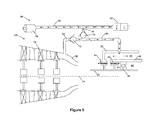
- FIG. 5 shows the sealing air supply system 100 of the present invention with a different arrangement of switching mechanism 68.
- a passive switching mechanism 68 which comprises a first non-return valve 72 located within the bleed duct 38. This acts to prevent air from flowing into the back of the intermediate pressure compressor 16, particularly when the pressure from the starter air system 56 is higher than the pressure of the intermediate pressure compressor 16, during engine starting.
- This is a passive switching mechanism because it is the pressure in the intermediate pressure compressor 16, or the relative pressure between that and the starter air system 56, that determines which air source supplies the air supply duct 64.
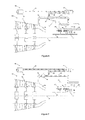
- Figure 6 shows the sealing air supply system 100 of the present invention with a further arrangement of first duct 66.
- the first duct 66 is coupled between the starter air valve 60 and the air supply duct 64 via the switching mechanism 68.
- the first duct 66 inlet comprises a second outlet of the starter air valve 60 instead of a tapping from the starter air supply duct 62.
- This arrangement allows better control of the relative proportions of starter air directed to the air turbine starter 58 and the bearing chamber seal 48 at the expense of additional ducting.
- Figure 7 shows the sealing air supply system 100 of the present invention with a further arrangement of first duct 66 and switching mechanism 68.
- This arrangement incorporates the first duct 66 arrangement shown in and described with respect to Figure 6 which extends between the starter air valve 60 and the air supply duct 64.
- this arrangement includes the first non-return valve 72 as a passive switching mechanism 68.
- the second non-return valve 74 may be provided (not shown) or another device may be provided to close the first duct 66 when the engine is running not starting.
- sealing air supply system 100 of the present invention has been described for use during engine starting, it may also be used during other engine phases.
- the starter air system 56 may supply the bearing chamber seal 48 during descent idle when it is desirable to run the gas turbine engine 10 at low power but this results in too low pressure in the intermediate pressure compressor 16 to satisfactorily prevent lubricant fluid egress from the bearings 42.
- the invention has been described as supplying one bearing chamber seal 48, it may equally be used to supply multiple bearing chamber seals 48.
- these bearing chamber seals 48 are all fed from the buffer 40.
- the air supply duct 64 is in the form of a manifold to supply each bearing chamber seal 48 or group of bearing chamber seals 48 from a pair of sources (the starter air system 56 and the second air source).
- the buffer 40 has been described as annular. However, it may instead be an annular array of buffers 40, for example arc-shaped buffers 40. Each buffer 40 in this case would be coupled to the air supply duct 64 or an array of air supply ducts 64.
- the second air source has been described as a compressor bleed from the intermediate pressure compressor 16, other sources are within the scope of the present invention.
- the second air source may be a compressor bleed from the high pressure compressor 18, or from the bypass duct 32.
- a compressor bleed may be tapped from an intermediate position axially along the compressor and not at the back end where air is delivered to the next component in the gas path through the gas turbine engine 10.
- seals than bearing chamber seals 48 may be supplied with equal felicity by the sealing air supply system 100 of the present invention.
- Other types of switching mechanism 68 and ducts are within the scope of the present invention.
- no buffer 40 is provided. Instead, sealing air is supplied directly from the source to the bearing chamber seal 48. There may be an intermediate chamber which performs other functions in addition to buffering. Thus a chamber may act as buffer 40 but also have other functions. In this arrangement the buffer seal 49 is also omitted.
- chamber 44 may be sealed using the sealing air system 100 of the present invention.
- a gearbox or oil tank may be ventilated using a bearing chamber seal 48.
- the gearbox or oil tank therefore includes an air supply duct 64 which is supplied with motive fluid from the first duct 66 in accordance with the present invention.
- Other types of switching mechanism 68 and ducts are within the scope of the present invention. The switching may be controlled on the basis of any parameter from which pressure can be inferred, although it is not necessary to calculate pressure if the relationship between pressure and the other parameter is known. Examples of such parameters include mass flow, temperature, shaft speed, throttle position, variable geometry position, inlet conditions or a combination of these.
- the sealing air supply system 100 of the present invention has been described with particular reference to a gas turbine engine 10 used to power an aircraft. However, it is equally applicable to any gas turbine engine 10 used for other purposes including marine and industrial gas turbine engines. It also finds application in wind turbines and tidal turbines.
- the lubricant fluid is generally oil it may be other lubricants, especially in other applications.
- the sealing air supply system 100 of the present invention can be retro-fitted to existing gas turbine engines 10 with minor modifications to the ducting already available.
- existing gas turbine engines 10 can obtain the advantages of the present invention with little investment.
Landscapes
- Engineering & Computer Science (AREA)
- Mechanical Engineering (AREA)
- General Engineering & Computer Science (AREA)
- Chemical & Material Sciences (AREA)
- Combustion & Propulsion (AREA)
- Turbine Rotor Nozzle Sealing (AREA)
- Sealing Using Fluids, Sealing Without Contact, And Removal Of Oil (AREA)
- Sealing Of Bearings (AREA)
Abstract
Description
- The present invention relates to a sealing air supply system for gas turbine engine seals. In particular, it relates to improvements in such systems during gas turbine engine starting.
- Various seals in a gas turbine engine act to prevent oil loss from a chamber, for example of a bearing, by supply of sealing air into that chamber. Such seals are known as bearing chamber seals. This introduces a pressure differential across the bearing chamber seal which prevents egress of the oil. It is known to supply air bled from a compressor for this purpose.
- One disadvantage of using compressor bleed air is that during engine starting the air pressure may be lower than that in the chamber. This means that the pressure differential across the bearing chamber seal is reversed and oil is able to leak from the chamber.
- The present invention provides a sealing air supply system that seeks to address the aforementioned problems.
- Accordingly the present invention provides a gas turbine engine sealing air supply system comprising: a bearing chamber seal to prevent lubricant fluid loss from a fluid chamber, the sealing effected by ingress of sealing air; an air supply duct coupled to the bearing chamber seal to provide the sealing air; a starter air system of the gas turbine engine; and a first duct coupled between the starter air system and the air supply duct to supply sealing air during gas turbine engine starting.
- Advantageously the sealing air supply system of the present invention maintains a positive pressure drop across the bearing chamber seal at all engine conditions, particularly during starting and cranking.
- The sealing air supply system may further comprise a second air source and a second duct coupled between the second air source and the air supply duct to supply the sealing air during other periods of gas turbine engine operation. The second air source may comprise a compressor bleed of the gas turbine engine and the second duct may comprise a bleed duct.
- The sealing air supply system may further comprise a switching mechanism to switch the supply of sealing air between the starter air system and the second air source. The switching mechanism may be active or passive. The sealing air supply system may comprise a control system arranged to control the switching mechanism. The control system may be arranged to switch between the starter air system and the second air source dependent on the air pressure of the starter air system. Alternatively, the control system may be arranged to switch between the starter air system and the second air source dependent on the air pressure of the second air source. In a further alternative, the control system may be arranged to switch between the starter air system and the second air source dependent on the relative air pressure of the starter air system and the second air source.
- The sealing air supply system may comprise more than one bearing chamber seal each coupled to the air supply duct to receive the sealing air.
- The starter air supply system may comprise a starter air turbine, a starter air valve and a starter air supply duct coupled therebetween. The first duct may be coupled to any component in the starter air system.
- The sealing air supply system may further comprise a non-return valve in the first duct, the second duct or in each of the first and second ducts.
- The first duct may be coupled between the starter air system and the air supply duct to supply sealing air at other periods of gas turbine engine operation.
- The lubricant fluid may be oil. The fluid chamber may comprise a bearing.
- The present invention also comprises a gas turbine engine comprising the sealing air supply system described.
- The present invention will be more fully described by way of example with reference to the accompanying drawings, in which:
-
Figure 1 is a sectional side view of a gas turbine engine. -
Figure 2 is a schematic illustration of the known sealing air supply system. -
Figure 3 is a schematic illustration of a sealing air supply system in an engine starting configuration according to the present invention. -
Figure 4 is a schematic illustration of a sealing air supply system in an engine running configuration according to the present invention. -
Figures 5 to 7 are schematic illustrations of other sealing air supply systems in an engine starting configuration according to the present invention. - A
gas turbine engine 10 is shown inFigure 1 and comprises anair intake 12 and apropulsive fan 14 that generates two airflows A and B. Thegas turbine engine 10 comprises, in axial flow A, anintermediate pressure compressor 16, ahigh pressure compressor 18, acombustor 20, ahigh pressure turbine 22, anintermediate pressure turbine 24, alow pressure turbine 26 and anexhaust nozzle 28. Anacelle 30 surrounds thegas turbine engine 10 and defines, in axial flow B, abypass duct 32. Thegas turbine engine 10 may be used to power an aircraft, and may be one of two or moregas turbine engines 10 used to power such an aircraft. -
Figure 2 illustrates a portion of a compressor, for example theintermediate pressure compressor 16, of thegas turbine engine 10 which rotates about the engine'scentre line 34. The core airflow A is directed through thecompressor duct 36 towards thecombustor 20 andturbines bleed duct 38 is supplied to extract a proportion of the air from thecompressor duct 36, for example 0.25% of the air flow. There may be a plurality ofbleed ducts 38 in an annular array. Preferably thebleed ducts 38 are equi-angularly spaced. - The or each
bleed duct 38 is coupled to anannular buffer 40. Thebuffer 40 surrounds abearing 42, thebearing 42 being radially inward of thebuffer 40. Thebearing 42 is located within achamber 44 that comprises a mixture of air and oil or another lubricant fluid. The bufferinner wall 46 is preferably also the outer wall of thebearing chamber 44. Thebuffer 40 is separated from thebearing 42 and thebearing chamber 44 by a bearing chamber sealing arrangement comprised of abearing chamber seal 48 in this arrangement. Abearing chamber seal 49 is provided to isolate the pressure and temperature of thebuffer 40 from the pressure and temperature of theintermediate pressure compressor 16 and other proximal zones of theengine 10. Thebearing chamber seal 48 andbuffer seal 49 typically comprises a labyrinth seal or other compliant seal to accommodate relative movement between the rotatingelement 50 to which thebearing chamber seal 48 andbuffer seal 49 are attached and the bufferinner wall 46 and bufferouter wall 52 against which thebearing chamber seal 48 andbuffer seal 49 respectively seal. - During normal operation of the
gas turbine engine 10 air is bled from theintermediate pressure compressor 16 through thebleed duct 38 to thebuffer 40. A small amount of sealing air is forced through thebearing chamber seal 48, as shown byarrow 54, due to the pressure differential between thebuffer 40 and thebearing chamber 44. This sealingair flow 54 prevents the lubricant fluid from being lost from thebearing chamber 44 into thebuffer 40, where it would contaminate the air. A small amount of sealing air is also forced through thebuffer seal 49. - The present invention comprises many of the same features, each of which has the same reference numeral. During starting of the
gas turbine engine 10 the pressure in theintermediate pressure compressor 16 is low. The sealingair supply system 100 of the present invention is described with respect toFigure 3 for engine starting conditions. Thegas turbine engine 10 also comprises astarter air system 56 as known in the art. Thestarter air system 56 comprises anair turbine starter 58, astarter air valve 60 and a starterair supply duct 62 therebetween. To start thegas turbine engine 10 thestarter air valve 60 is supplied with relatively high pressure air from a source, such as a ground cart, an auxiliary power unit of the aircraft or anothergas turbine engine 10. Thestarter air valve 60 is opened to allow the air to flow through the starterair supply duct 62 to theair turbine starter 58 which is drivingly coupled to one or more of the shafts of thegas turbine engine 10 in order to crank thegas turbine engine 10. - In the sealing
air supply system 100 of the present invention thebleed duct 38 is coupled to anair supply duct 64 so that air bled from theintermediate pressure compressor 16 flows through thebleed duct 38, into theair supply duct 64 and into thebuffer 40. Afirst duct 66 is provided that couples between thestarter air system 56 and theair supply duct 64. As shown inFigure 3 thefirst duct 66 is a tapping from the starterair supply duct 62. In the preferred arrangement shown inFigure 3 , thebleed duct 38,air supply duct 64 andfirst duct 66 meet at aswitching mechanism 68. The switching mechanism is arranged to switch supply to theair supply duct 64 between thestarter air system 56 using thefirst duct 66 and theintermediate pressure compressor 16 using thebleed duct 38. Optionally there may also be acontrol system 70 arranged to control theswitching mechanism 68. Thecontrol system 70 may exert active or passive control. Thecontrol system 70 may form part of the engine electronic controller, another extant controller or may be a separate control unit or control function. - During gas turbine engine starting, the
switching mechanism 68 is arranged to open a flow path between thefirst duct 66 and theair supply duct 64 so that thebuffer 40 is supplied by air from thestarter air system 56 of thegas turbine engine 10. This air is at relatively high pressure and so there is a sufficient positive pressure differential between thebuffer 40 and the bearingchamber 44 to prevent egress of the lubricant fluid. Thus the sealingair supply system 100 of the present invention overcomes the problem of the known system during starting by sourcing the sealing air from thestarter air system 56 which is at higher pressure than theintermediate pressure compressor 16 or elsewhere in the core of thegas turbine engine 10. -
Figure 4 shows the sealingair supply system 100 of the present invention during other engine conditions than starting, collectively "engine running". In these conditions the air bled from theintermediate pressure compressor 16 is of sufficient pressure to effectively seal thebearing chamber seal 48. Thestarter air system 56 may also be switched off so no air is available therefrom. Therefore, theswitching mechanism 68 is arranged to close the flow path between thefirst duct 66 and theair supply duct 64 and open, instead, a flow path between a second duct, thebleed duct 38 and theair supply duct 64. In this arrangement the sealingair supply system 100 acts in the same manner as the known arrangement discussed with respect toFigure 2 . - It is important that the
switching mechanism 68 closes off the flow path that is not in use so that air is not fed into the back of theintermediate pressure compressor 16 during engine starting. This prevents thegas turbine engine 10 surging and/or stalling during start or experiencing other disadvantageous effects. Similarly, it is important to close off the other flow path during engine running so that air is not fed back into thestarter air system 56 which may contaminate the air, or cause other disadvantageous effects to the starter system. This air may be used to supply air to the aircraft cabin in some applications. - Each of
Figures 5 to 7 is illustrated in the engine starting configuration. It will be understood that in the engine running configuration, the air flow to thebuffer 40 is provided through thebleed duct 38 instead of through thefirst duct 66. The engine running configuration has not been illustrated for the additional arrangements. -
Figure 5 shows the sealingair supply system 100 of the present invention with a different arrangement of switchingmechanism 68. This is an example of apassive switching mechanism 68 which comprises a firstnon-return valve 72 located within thebleed duct 38. This acts to prevent air from flowing into the back of theintermediate pressure compressor 16, particularly when the pressure from thestarter air system 56 is higher than the pressure of theintermediate pressure compressor 16, during engine starting. This is a passive switching mechanism because it is the pressure in theintermediate pressure compressor 16, or the relative pressure between that and thestarter air system 56, that determines which air source supplies theair supply duct 64. There may also be a secondnon-return valve 74 located in thefirst duct 66 to prevent air from flowing back into thestarter air system 56 during normal engine running. -
Figure 6 shows the sealingair supply system 100 of the present invention with a further arrangement offirst duct 66. In this arrangement, thefirst duct 66 is coupled between thestarter air valve 60 and theair supply duct 64 via theswitching mechanism 68. Thus thefirst duct 66 inlet comprises a second outlet of thestarter air valve 60 instead of a tapping from the starterair supply duct 62. This arrangement allows better control of the relative proportions of starter air directed to theair turbine starter 58 and the bearingchamber seal 48 at the expense of additional ducting. -
Figure 7 shows the sealingair supply system 100 of the present invention with a further arrangement offirst duct 66 andswitching mechanism 68. This arrangement incorporates thefirst duct 66 arrangement shown in and described with respect toFigure 6 which extends between thestarter air valve 60 and theair supply duct 64. In addition, this arrangement includes the firstnon-return valve 72 as apassive switching mechanism 68. Optionally, the secondnon-return valve 74 may be provided (not shown) or another device may be provided to close thefirst duct 66 when the engine is running not starting. - The following modifications and variations can be applied to any of the arrangements described and illustrated herein. Although the sealing
air supply system 100 of the present invention has been described for use during engine starting, it may also be used during other engine phases. For example, for agas turbine engine 10 used to power an aircraft thestarter air system 56 may supply thebearing chamber seal 48 during descent idle when it is desirable to run thegas turbine engine 10 at low power but this results in too low pressure in theintermediate pressure compressor 16 to satisfactorily prevent lubricant fluid egress from thebearings 42. - Although the invention has been described as supplying one
bearing chamber seal 48, it may equally be used to supply multiple bearing chamber seals 48. In particular, there are often bearing chamber seals 48 on each side of the bearingchamber 44, the one nearer theintermediate pressure compressor 16 as illustrated and a second one downstream of thebearing 42. Typically these bearing chamber seals 48 are all fed from thebuffer 40. There may beother bearings 42 in other parts of thegas turbine engine 10 that are also fluidly isolated by bearing chamber seals 48. Preferably theair supply duct 64 is in the form of a manifold to supply each bearingchamber seal 48 or group of bearing chamber seals 48 from a pair of sources (thestarter air system 56 and the second air source). Alternatively there may be multipleair supply ducts 64 each coupled to thestarter air system 56 and the second air source. - The
buffer 40 has been described as annular. However, it may instead be an annular array ofbuffers 40, for example arc-shapedbuffers 40. Eachbuffer 40 in this case would be coupled to theair supply duct 64 or an array ofair supply ducts 64. - Although the second air source has been described as a compressor bleed from the
intermediate pressure compressor 16, other sources are within the scope of the present invention. The second air source may be a compressor bleed from thehigh pressure compressor 18, or from thebypass duct 32. A compressor bleed may be tapped from an intermediate position axially along the compressor and not at the back end where air is delivered to the next component in the gas path through thegas turbine engine 10. There may be multiple second air sources, for example from theintermediate pressure compressor 16 and from thehigh pressure compressor 18. - Other seals than bearing chamber seals 48 may be supplied with equal felicity by the sealing
air supply system 100 of the present invention. Other types ofswitching mechanism 68 and ducts are within the scope of the present invention. - In some applications of the present invention, no
buffer 40 is provided. Instead, sealing air is supplied directly from the source to the bearingchamber seal 48. There may be an intermediate chamber which performs other functions in addition to buffering. Thus a chamber may act asbuffer 40 but also have other functions. In this arrangement thebuffer seal 49 is also omitted. - Other types of
chamber 44 may be sealed using the sealingair system 100 of the present invention. For example, a gearbox or oil tank may be ventilated using abearing chamber seal 48. The gearbox or oil tank therefore includes anair supply duct 64 which is supplied with motive fluid from thefirst duct 66 in accordance with the present invention. Other types ofswitching mechanism 68 and ducts are within the scope of the present invention. The switching may be controlled on the basis of any parameter from which pressure can be inferred, although it is not necessary to calculate pressure if the relationship between pressure and the other parameter is known. Examples of such parameters include mass flow, temperature, shaft speed, throttle position, variable geometry position, inlet conditions or a combination of these. - The sealing
air supply system 100 of the present invention has been described with particular reference to agas turbine engine 10 used to power an aircraft. However, it is equally applicable to anygas turbine engine 10 used for other purposes including marine and industrial gas turbine engines. It also finds application in wind turbines and tidal turbines. Although the lubricant fluid is generally oil it may be other lubricants, especially in other applications. - The sealing
air supply system 100 of the present invention can be retro-fitted to existinggas turbine engines 10 with minor modifications to the ducting already available. Thus existinggas turbine engines 10 can obtain the advantages of the present invention with little investment. There is little impact on thestarter air system 56 as the bearing chamber seals 48 will draw up to 20% of starter air during starting, which is not detrimental to the starting functionality.
Claims (15)
- A gas turbine engine sealing air supply system (100) comprising:• a bearing chamber seal (48) to prevent lubricant fluid loss from a fluid chamber (44), the sealing effected by ingress of sealing air;• an air supply duct (64) coupled to the bearing chamber seal (48) to provide the sealing air;• a starter air system (56) of the gas turbine engine (10); and• a first duct (66) coupled between the starter air system (56) and the air supply duct (64) to supply the sealing air during gas turbine engine (10) starting.
- A sealing air supply system (100) as claimed in claim 1 further comprising a second air source (16) and a second duct (38) coupled between the second air source (16) and the air supply duct (64) to supply the sealing air during other periods of gas turbine engine (10) operation.
- A sealing air supply system (100) as claimed in claim 2 wherein the second air source (16) comprises a compressor bleed of the gas turbine engine (10) and the second duct (38) comprises a bleed duct.
- A sealing air supply system (100) as claimed in any preceding claim further comprising a switching mechanism (68) to switch the supply of sealing air between the starter air system (56) and the second air source (16).
- A sealing air supply system (100) as claimed in claim 4 further comprising a control system (70) arranged to control the switching mechanism (68).
- A sealing air supply system (100) as claimed in claim 5 wherein the control system (70) is arranged to switch between the starter air system (56) and the second air source (16) dependent on the air pressure of the starter air system (56).
- A sealing air supply system (100) as claimed in claim 5 wherein the control system (70) is arranged to switch between the starter air system (56) and the second air source (16) dependent on the air pressure of the second air source (16).
- A sealing air supply system (100) as claimed in claim 5 wherein the control system (70) is arranged to switch between the starter air system (56) and the second air source (16) dependent on the relative air pressure of the starter air system (56) and the second air source (16).
- A sealing air supply system (100) as claimed in any preceding claim comprising more than one bearing chamber seal (48) each coupled to the air supply duct (64) to receive the sealing air.
- A sealing air supply system (100) as claimed in any preceding claim wherein the starter air system (56) comprises a starter air turbine (58), a starter air valve (60) and a starter air supply duct (62) coupled therebetween.
- A sealing air supply system (100) as claimed in any preceding claim further comprising a non-return valve (72) in the first duct (66).
- A sealing air supply system (100) as claimed in any of claims 2 to 11 further comprising a non-return valve (74) in the second duct (38).
- A sealing air supply system (100) as claimed in any preceding claim wherein the first duct (66) is coupled between the starter air system (56) and the air supply duct (64) to supply sealing air at other periods of gas turbine engine (10) operation.
- A sealing air supply system (100) as claimed in any preceding claim wherein the fluid chamber (44) comprises a bearing (42).
- A gas turbine engine (10) comprising a sealing air supply system (100) as claimed in any preceding claim.
Applications Claiming Priority (1)
| Application Number | Priority Date | Filing Date | Title |
|---|---|---|---|
| GBGB1200289.5A GB201200289D0 (en) | 2012-01-10 | 2012-01-10 | Gas turbine engine buffer seals |
Publications (3)
| Publication Number | Publication Date |
|---|---|
| EP2615259A2 true EP2615259A2 (en) | 2013-07-17 |
| EP2615259A3 EP2615259A3 (en) | 2017-11-01 |
| EP2615259B1 EP2615259B1 (en) | 2019-01-09 |
Family
ID=45788661
Family Applications (1)
| Application Number | Title | Priority Date | Filing Date |
|---|---|---|---|
| EP12193851.8A Active EP2615259B1 (en) | 2012-01-10 | 2012-11-22 | Gas turbine engine bearing chamber seals |
Country Status (4)
| Country | Link |
|---|---|
| US (1) | US20130174574A1 (en) |
| EP (1) | EP2615259B1 (en) |
| CA (1) | CA2799107C (en) |
| GB (1) | GB201200289D0 (en) |
Cited By (1)
| Publication number | Priority date | Publication date | Assignee | Title |
|---|---|---|---|---|
| EP4001597A1 (en) * | 2020-11-23 | 2022-05-25 | Raytheon Technologies Corporation | Starter turbine providing gas turbine bearing compartment buffer air |
Families Citing this family (15)
| Publication number | Priority date | Publication date | Assignee | Title |
|---|---|---|---|---|
| FR3007459B1 (en) * | 2013-06-19 | 2016-10-14 | Airbus Operations Sas | SYSTEM AND METHOD FOR ROTATING A ROTARY MEMBER OF A MECHANICAL DEVICE, IN PARTICULAR A TURBOMACHINE. |
| US10443622B2 (en) * | 2016-06-13 | 2019-10-15 | United Technologies Corporation | Active core cooling system |
| EP3409903B1 (en) * | 2017-06-01 | 2021-09-01 | General Electric Company | Gas turbine system with an intercooler providing cooled fluid as bearing pressurization fluid |
| CN107559596B (en) * | 2017-10-18 | 2023-08-08 | 常州港华燃气有限公司 | Pipeline gas flow velocity detection device and gas pipeline overhauling system |
| US10781751B1 (en) * | 2018-03-22 | 2020-09-22 | Florida Turbine Technologies, Inc. | Gas turbine engine secondary air system and axial thrust management system for a rotor of the engine |
| US11274599B2 (en) * | 2019-03-27 | 2022-03-15 | Pratt & Whitney Canada Corp. | Air system switching system to allow aero-engines to operate in standby mode |
| US11391219B2 (en) | 2019-04-18 | 2022-07-19 | Pratt & Whitney Canada Corp. | Health monitor for air switching system |
| US11274611B2 (en) | 2019-05-31 | 2022-03-15 | Pratt & Whitney Canada Corp. | Control logic for gas turbine engine fuel economy |
| US11859563B2 (en) | 2019-05-31 | 2024-01-02 | Pratt & Whitney Canada Corp. | Air system of multi-engine aircraft |
| JP7336919B2 (en) * | 2019-08-30 | 2023-09-01 | 川崎重工業株式会社 | gas turbine engine |
| US11326525B2 (en) | 2019-10-11 | 2022-05-10 | Pratt & Whitney Canada Corp. | Aircraft bleed air systems and methods |
| CN116163811A (en) * | 2021-11-25 | 2023-05-26 | 中国航发商用航空发动机有限责任公司 | Sealing systems for bearing chambers and turbine engines |
| CN114704386B (en) * | 2022-04-24 | 2024-03-19 | 中国航发沈阳发动机研究所 | Sealing method and structure for turbine engine pivot of hypersonic vehicle |
| US20260009361A1 (en) * | 2024-07-02 | 2026-01-08 | Rtx Corporation | Gas turbine engine buffer air augmentation system and method |
| US12565845B1 (en) | 2024-08-29 | 2026-03-03 | Pratt & Whitney Canada Corp. | Dual air source bearing assembly housing for an aircraft propulsion system |
Family Cites Families (13)
| Publication number | Priority date | Publication date | Assignee | Title |
|---|---|---|---|---|
| GB702931A (en) * | 1951-04-18 | 1954-01-27 | Bristol Aeroplane Co Ltd | Improvements in or relating to rotary machines comprising fluid compressing means |
| GB790835A (en) * | 1954-12-03 | 1958-02-19 | Rolls Royce | Improvements in or relating to gas-turbine engines |
| DE1290011B (en) * | 1965-09-06 | 1969-02-27 | Rolls Royce | Lubricating oil supply system for gas turbine engines |
| US5363641A (en) * | 1993-08-06 | 1994-11-15 | United Technologies Corporation | Integrated auxiliary power system |
| AU1192897A (en) * | 1995-06-23 | 1997-01-22 | Revolve Technologies Inc. | Dry seal contamination prevention system |
| US5911678A (en) * | 1997-07-11 | 1999-06-15 | Rolls-Royce Plc | Gas turbine engine starting |
| EP0890781B1 (en) * | 1997-07-11 | 2005-05-04 | ROLLS-ROYCE plc | Gas turbine lubrication during starting |
| US6305156B1 (en) * | 1999-09-03 | 2001-10-23 | Alliedsignal Inc. | Integrated bleed air and engine starting system |
| US6622490B2 (en) * | 2002-01-11 | 2003-09-23 | Watson Cogeneration Company | Turbine power plant having an axially loaded floating brush seal |
| US20100092116A1 (en) * | 2008-10-15 | 2010-04-15 | Honeywell International Inc. | Pressure balanced valve assembly and aircraft buffer cooler system employing the same |
| US8529189B2 (en) * | 2009-01-30 | 2013-09-10 | Honeywell International Inc. | Linear quadratic regulator control for bleed air system fan air valve |
| US8522521B2 (en) * | 2010-11-09 | 2013-09-03 | Hamilton Sundstrand Corporation | Combined air turbine starter, air-oil cooler, and fan |
| US20120156005A1 (en) * | 2010-12-16 | 2012-06-21 | Caterpillar Inc. | Buffer air for a labyrinth seal |
-
2012
- 2012-01-10 GB GBGB1200289.5A patent/GB201200289D0/en not_active Ceased
- 2012-11-22 EP EP12193851.8A patent/EP2615259B1/en active Active
- 2012-11-23 US US13/684,342 patent/US20130174574A1/en not_active Abandoned
- 2012-12-18 CA CA2799107A patent/CA2799107C/en active Active
Cited By (1)
| Publication number | Priority date | Publication date | Assignee | Title |
|---|---|---|---|---|
| EP4001597A1 (en) * | 2020-11-23 | 2022-05-25 | Raytheon Technologies Corporation | Starter turbine providing gas turbine bearing compartment buffer air |
Also Published As
| Publication number | Publication date |
|---|---|
| GB201200289D0 (en) | 2012-02-22 |
| EP2615259B1 (en) | 2019-01-09 |
| EP2615259A3 (en) | 2017-11-01 |
| US20130174574A1 (en) | 2013-07-11 |
| CA2799107A1 (en) | 2013-07-10 |
| CA2799107C (en) | 2019-10-22 |
Similar Documents
| Publication | Publication Date | Title |
|---|---|---|
| CA2799107C (en) | Gas turbine engine bearing chamber seals | |
| US10138812B2 (en) | Gas turbine engine bearing chamber seals | |
| US11002195B2 (en) | Intercooled cooling air with auxiliary compressor control | |
| US10823005B2 (en) | Lubrication system for a turbine engine | |
| US20140331639A1 (en) | Turbomachine Lubrication System with an Anti-Siphon Valve for Windmilling | |
| EP2789806B1 (en) | Methods and systems for preventing lube oil leakage in gas turbines | |
| US9163562B2 (en) | Constant speed pump system for engine ECS loss elimination | |
| EP3483414A1 (en) | Gas turbine engine having an air-oil heat exchanger | |
| EP2949883B1 (en) | Gas turbine engine lubrication system | |
| WO2014051678A1 (en) | Gas turbine engine thermal management system for heat exchanger using bypass flow | |
| US10371055B2 (en) | Intercooled cooling air using cooling compressor as starter | |
| EP4276295A3 (en) | Geared turbofan with overspeed protection | |
| US20150252731A1 (en) | Gas turbine engine including bleed system coupled to upstream and downstream locations of compressor | |
| JP6027193B2 (en) | Geared turbofan engine with low pressure environmental control system for aircraft | |
| EP3056716B1 (en) | Intercooled cooling air | |
| US20150176497A1 (en) | Geared turbofan with a gearbox upstream of a fan drive turbine | |
| EP3287620A1 (en) | Boost compressor for engine cooling circuit driven by low spool | |
| EP2781704A1 (en) | Chamber fluid removal system | |
| US10550724B2 (en) | System and method for the pressurization of a sump of a gas turbine engine | |
| EP3477064A1 (en) | Gas turbine engine with vacuum generator for reducing bearing compartment pressure |
Legal Events
| Date | Code | Title | Description |
|---|---|---|---|
| PUAI | Public reference made under article 153(3) epc to a published international application that has entered the european phase |
Free format text: ORIGINAL CODE: 0009012 |
|
| AK | Designated contracting states |
Kind code of ref document: A2 Designated state(s): AL AT BE BG CH CY CZ DE DK EE ES FI FR GB GR HR HU IE IS IT LI LT LU LV MC MK MT NL NO PL PT RO RS SE SI SK SM TR |
|
| AX | Request for extension of the european patent |
Extension state: BA ME |
|
| RAP1 | Party data changed (applicant data changed or rights of an application transferred) |
Owner name: ROLLS-ROYCE PLC |
|
| PUAL | Search report despatched |
Free format text: ORIGINAL CODE: 0009013 |
|
| AK | Designated contracting states |
Kind code of ref document: A3 Designated state(s): AL AT BE BG CH CY CZ DE DK EE ES FI FR GB GR HR HU IE IS IT LI LT LU LV MC MK MT NL NO PL PT RO RS SE SI SK SM TR |
|
| AX | Request for extension of the european patent |
Extension state: BA ME |
|
| RIC1 | Information provided on ipc code assigned before grant |
Ipc: F01D 25/16 20060101AFI20170925BHEP Ipc: F01D 11/04 20060101ALI20170925BHEP Ipc: F02C 7/28 20060101ALI20170925BHEP |
|
| STAA | Information on the status of an ep patent application or granted ep patent |
Free format text: STATUS: REQUEST FOR EXAMINATION WAS MADE |
|
| 17P | Request for examination filed |
Effective date: 20180416 |
|
| RBV | Designated contracting states (corrected) |
Designated state(s): AL AT BE BG CH CY CZ DE DK EE ES FI FR GB GR HR HU IE IS IT LI LT LU LV MC MK MT NL NO PL PT RO RS SE SI SK SM TR |
|
| GRAP | Despatch of communication of intention to grant a patent |
Free format text: ORIGINAL CODE: EPIDOSNIGR1 |
|
| STAA | Information on the status of an ep patent application or granted ep patent |
Free format text: STATUS: GRANT OF PATENT IS INTENDED |
|
| RIC1 | Information provided on ipc code assigned before grant |
Ipc: F02C 7/28 20060101ALI20181002BHEP Ipc: F01D 11/04 20060101ALI20181002BHEP Ipc: F01D 25/16 20060101AFI20181002BHEP Ipc: F02C 7/27 20060101ALI20181002BHEP |
|
| GRAS | Grant fee paid |
Free format text: ORIGINAL CODE: EPIDOSNIGR3 |
|
| INTG | Intention to grant announced |
Effective date: 20181019 |
|
| GRAA | (expected) grant |
Free format text: ORIGINAL CODE: 0009210 |
|
| STAA | Information on the status of an ep patent application or granted ep patent |
Free format text: STATUS: THE PATENT HAS BEEN GRANTED |
|
| AK | Designated contracting states |
Kind code of ref document: B1 Designated state(s): AL AT BE BG CH CY CZ DE DK EE ES FI FR GB GR HR HU IE IS IT LI LT LU LV MC MK MT NL NO PL PT RO RS SE SI SK SM TR |
|
| REG | Reference to a national code |
Ref country code: GB Ref legal event code: FG4D |
|
| REG | Reference to a national code |
Ref country code: CH Ref legal event code: EP Ref country code: AT Ref legal event code: REF Ref document number: 1087563 Country of ref document: AT Kind code of ref document: T Effective date: 20190115 |
|
| REG | Reference to a national code |
Ref country code: DE Ref legal event code: R096 Ref document number: 602012055652 Country of ref document: DE |
|
| REG | Reference to a national code |
Ref country code: IE Ref legal event code: FG4D |
|
| REG | Reference to a national code |
Ref country code: NL Ref legal event code: MP Effective date: 20190109 |
|
| REG | Reference to a national code |
Ref country code: LT Ref legal event code: MG4D |
|
| PG25 | Lapsed in a contracting state [announced via postgrant information from national office to epo] |
Ref country code: NL Free format text: LAPSE BECAUSE OF FAILURE TO SUBMIT A TRANSLATION OF THE DESCRIPTION OR TO PAY THE FEE WITHIN THE PRESCRIBED TIME-LIMIT Effective date: 20190109 |
|
| REG | Reference to a national code |
Ref country code: AT Ref legal event code: MK05 Ref document number: 1087563 Country of ref document: AT Kind code of ref document: T Effective date: 20190109 |
|
| PG25 | Lapsed in a contracting state [announced via postgrant information from national office to epo] |
Ref country code: SE Free format text: LAPSE BECAUSE OF FAILURE TO SUBMIT A TRANSLATION OF THE DESCRIPTION OR TO PAY THE FEE WITHIN THE PRESCRIBED TIME-LIMIT Effective date: 20190109 Ref country code: ES Free format text: LAPSE BECAUSE OF FAILURE TO SUBMIT A TRANSLATION OF THE DESCRIPTION OR TO PAY THE FEE WITHIN THE PRESCRIBED TIME-LIMIT Effective date: 20190109 Ref country code: LT Free format text: LAPSE BECAUSE OF FAILURE TO SUBMIT A TRANSLATION OF THE DESCRIPTION OR TO PAY THE FEE WITHIN THE PRESCRIBED TIME-LIMIT Effective date: 20190109 Ref country code: PT Free format text: LAPSE BECAUSE OF FAILURE TO SUBMIT A TRANSLATION OF THE DESCRIPTION OR TO PAY THE FEE WITHIN THE PRESCRIBED TIME-LIMIT Effective date: 20190509 Ref country code: PL Free format text: LAPSE BECAUSE OF FAILURE TO SUBMIT A TRANSLATION OF THE DESCRIPTION OR TO PAY THE FEE WITHIN THE PRESCRIBED TIME-LIMIT Effective date: 20190109 Ref country code: NO Free format text: LAPSE BECAUSE OF FAILURE TO SUBMIT A TRANSLATION OF THE DESCRIPTION OR TO PAY THE FEE WITHIN THE PRESCRIBED TIME-LIMIT Effective date: 20190409 Ref country code: FI Free format text: LAPSE BECAUSE OF FAILURE TO SUBMIT A TRANSLATION OF THE DESCRIPTION OR TO PAY THE FEE WITHIN THE PRESCRIBED TIME-LIMIT Effective date: 20190109 |
|
| PG25 | Lapsed in a contracting state [announced via postgrant information from national office to epo] |
Ref country code: IS Free format text: LAPSE BECAUSE OF FAILURE TO SUBMIT A TRANSLATION OF THE DESCRIPTION OR TO PAY THE FEE WITHIN THE PRESCRIBED TIME-LIMIT Effective date: 20190509 Ref country code: BG Free format text: LAPSE BECAUSE OF FAILURE TO SUBMIT A TRANSLATION OF THE DESCRIPTION OR TO PAY THE FEE WITHIN THE PRESCRIBED TIME-LIMIT Effective date: 20190409 Ref country code: GR Free format text: LAPSE BECAUSE OF FAILURE TO SUBMIT A TRANSLATION OF THE DESCRIPTION OR TO PAY THE FEE WITHIN THE PRESCRIBED TIME-LIMIT Effective date: 20190410 Ref country code: HR Free format text: LAPSE BECAUSE OF FAILURE TO SUBMIT A TRANSLATION OF THE DESCRIPTION OR TO PAY THE FEE WITHIN THE PRESCRIBED TIME-LIMIT Effective date: 20190109 Ref country code: RS Free format text: LAPSE BECAUSE OF FAILURE TO SUBMIT A TRANSLATION OF THE DESCRIPTION OR TO PAY THE FEE WITHIN THE PRESCRIBED TIME-LIMIT Effective date: 20190109 Ref country code: LV Free format text: LAPSE BECAUSE OF FAILURE TO SUBMIT A TRANSLATION OF THE DESCRIPTION OR TO PAY THE FEE WITHIN THE PRESCRIBED TIME-LIMIT Effective date: 20190109 |
|
| REG | Reference to a national code |
Ref country code: DE Ref legal event code: R097 Ref document number: 602012055652 Country of ref document: DE |
|
| PG25 | Lapsed in a contracting state [announced via postgrant information from national office to epo] |
Ref country code: AL Free format text: LAPSE BECAUSE OF FAILURE TO SUBMIT A TRANSLATION OF THE DESCRIPTION OR TO PAY THE FEE WITHIN THE PRESCRIBED TIME-LIMIT Effective date: 20190109 Ref country code: SK Free format text: LAPSE BECAUSE OF FAILURE TO SUBMIT A TRANSLATION OF THE DESCRIPTION OR TO PAY THE FEE WITHIN THE PRESCRIBED TIME-LIMIT Effective date: 20190109 Ref country code: IT Free format text: LAPSE BECAUSE OF FAILURE TO SUBMIT A TRANSLATION OF THE DESCRIPTION OR TO PAY THE FEE WITHIN THE PRESCRIBED TIME-LIMIT Effective date: 20190109 Ref country code: DK Free format text: LAPSE BECAUSE OF FAILURE TO SUBMIT A TRANSLATION OF THE DESCRIPTION OR TO PAY THE FEE WITHIN THE PRESCRIBED TIME-LIMIT Effective date: 20190109 Ref country code: EE Free format text: LAPSE BECAUSE OF FAILURE TO SUBMIT A TRANSLATION OF THE DESCRIPTION OR TO PAY THE FEE WITHIN THE PRESCRIBED TIME-LIMIT Effective date: 20190109 Ref country code: AT Free format text: LAPSE BECAUSE OF FAILURE TO SUBMIT A TRANSLATION OF THE DESCRIPTION OR TO PAY THE FEE WITHIN THE PRESCRIBED TIME-LIMIT Effective date: 20190109 Ref country code: RO Free format text: LAPSE BECAUSE OF FAILURE TO SUBMIT A TRANSLATION OF THE DESCRIPTION OR TO PAY THE FEE WITHIN THE PRESCRIBED TIME-LIMIT Effective date: 20190109 Ref country code: CZ Free format text: LAPSE BECAUSE OF FAILURE TO SUBMIT A TRANSLATION OF THE DESCRIPTION OR TO PAY THE FEE WITHIN THE PRESCRIBED TIME-LIMIT Effective date: 20190109 |
|
| PLBE | No opposition filed within time limit |
Free format text: ORIGINAL CODE: 0009261 |
|
| STAA | Information on the status of an ep patent application or granted ep patent |
Free format text: STATUS: NO OPPOSITION FILED WITHIN TIME LIMIT |
|
| PG25 | Lapsed in a contracting state [announced via postgrant information from national office to epo] |
Ref country code: SM Free format text: LAPSE BECAUSE OF FAILURE TO SUBMIT A TRANSLATION OF THE DESCRIPTION OR TO PAY THE FEE WITHIN THE PRESCRIBED TIME-LIMIT Effective date: 20190109 |
|
| 26N | No opposition filed |
Effective date: 20191010 |
|
| PG25 | Lapsed in a contracting state [announced via postgrant information from national office to epo] |
Ref country code: SI Free format text: LAPSE BECAUSE OF FAILURE TO SUBMIT A TRANSLATION OF THE DESCRIPTION OR TO PAY THE FEE WITHIN THE PRESCRIBED TIME-LIMIT Effective date: 20190109 |
|
| PG25 | Lapsed in a contracting state [announced via postgrant information from national office to epo] |
Ref country code: TR Free format text: LAPSE BECAUSE OF FAILURE TO SUBMIT A TRANSLATION OF THE DESCRIPTION OR TO PAY THE FEE WITHIN THE PRESCRIBED TIME-LIMIT Effective date: 20190109 |
|
| REG | Reference to a national code |
Ref country code: CH Ref legal event code: PL |
|
| PG25 | Lapsed in a contracting state [announced via postgrant information from national office to epo] |
Ref country code: LU Free format text: LAPSE BECAUSE OF NON-PAYMENT OF DUE FEES Effective date: 20191122 Ref country code: CH Free format text: LAPSE BECAUSE OF NON-PAYMENT OF DUE FEES Effective date: 20191130 Ref country code: LI Free format text: LAPSE BECAUSE OF NON-PAYMENT OF DUE FEES Effective date: 20191130 Ref country code: MC Free format text: LAPSE BECAUSE OF FAILURE TO SUBMIT A TRANSLATION OF THE DESCRIPTION OR TO PAY THE FEE WITHIN THE PRESCRIBED TIME-LIMIT Effective date: 20190109 |
|
| REG | Reference to a national code |
Ref country code: BE Ref legal event code: MM Effective date: 20191130 |
|
| PG25 | Lapsed in a contracting state [announced via postgrant information from national office to epo] |
Ref country code: IE Free format text: LAPSE BECAUSE OF NON-PAYMENT OF DUE FEES Effective date: 20191122 |
|
| PG25 | Lapsed in a contracting state [announced via postgrant information from national office to epo] |
Ref country code: BE Free format text: LAPSE BECAUSE OF NON-PAYMENT OF DUE FEES Effective date: 20191130 |
|
| PG25 | Lapsed in a contracting state [announced via postgrant information from national office to epo] |
Ref country code: CY Free format text: LAPSE BECAUSE OF FAILURE TO SUBMIT A TRANSLATION OF THE DESCRIPTION OR TO PAY THE FEE WITHIN THE PRESCRIBED TIME-LIMIT Effective date: 20190109 |
|
| PG25 | Lapsed in a contracting state [announced via postgrant information from national office to epo] |
Ref country code: MT Free format text: LAPSE BECAUSE OF FAILURE TO SUBMIT A TRANSLATION OF THE DESCRIPTION OR TO PAY THE FEE WITHIN THE PRESCRIBED TIME-LIMIT Effective date: 20190109 Ref country code: HU Free format text: LAPSE BECAUSE OF FAILURE TO SUBMIT A TRANSLATION OF THE DESCRIPTION OR TO PAY THE FEE WITHIN THE PRESCRIBED TIME-LIMIT; INVALID AB INITIO Effective date: 20121122 |
|
| PG25 | Lapsed in a contracting state [announced via postgrant information from national office to epo] |
Ref country code: MK Free format text: LAPSE BECAUSE OF FAILURE TO SUBMIT A TRANSLATION OF THE DESCRIPTION OR TO PAY THE FEE WITHIN THE PRESCRIBED TIME-LIMIT Effective date: 20190109 |
|
| PGFP | Annual fee paid to national office [announced via postgrant information from national office to epo] |
Ref country code: DE Payment date: 20221128 Year of fee payment: 11 |
|
| P01 | Opt-out of the competence of the unified patent court (upc) registered |
Effective date: 20230528 |
|
| REG | Reference to a national code |
Ref country code: DE Ref legal event code: R119 Ref document number: 602012055652 Country of ref document: DE |
|
| PG25 | Lapsed in a contracting state [announced via postgrant information from national office to epo] |
Ref country code: DE Free format text: LAPSE BECAUSE OF NON-PAYMENT OF DUE FEES Effective date: 20240601 |
|
| PG25 | Lapsed in a contracting state [announced via postgrant information from national office to epo] |
Ref country code: DE Free format text: LAPSE BECAUSE OF NON-PAYMENT OF DUE FEES Effective date: 20240601 |
|
| PGFP | Annual fee paid to national office [announced via postgrant information from national office to epo] |
Ref country code: GB Payment date: 20251125 Year of fee payment: 14 |
|
| PGFP | Annual fee paid to national office [announced via postgrant information from national office to epo] |
Ref country code: FR Payment date: 20251124 Year of fee payment: 14 |