EP2613609B1 - Collection and recycling system for organic el lighting apparatus - Google Patents
Collection and recycling system for organic el lighting apparatus Download PDFInfo
- Publication number
- EP2613609B1 EP2613609B1 EP11840033.2A EP11840033A EP2613609B1 EP 2613609 B1 EP2613609 B1 EP 2613609B1 EP 11840033 A EP11840033 A EP 11840033A EP 2613609 B1 EP2613609 B1 EP 2613609B1
- Authority
- EP
- European Patent Office
- Prior art keywords
- organic
- panel
- recycling
- information
- collection
- Prior art date
- Legal status (The legal status is an assumption and is not a legal conclusion. Google has not performed a legal analysis and makes no representation as to the accuracy of the status listed.)
- Active
Links
Images



Classifications
-
- H—ELECTRICITY
- H05—ELECTRIC TECHNIQUES NOT OTHERWISE PROVIDED FOR
- H05B—ELECTRIC HEATING; ELECTRIC LIGHT SOURCES NOT OTHERWISE PROVIDED FOR; CIRCUIT ARRANGEMENTS FOR ELECTRIC LIGHT SOURCES, IN GENERAL
- H05B33/00—Electroluminescent light sources
- H05B33/10—Apparatus or processes specially adapted to the manufacture of electroluminescent light sources
-
- B—PERFORMING OPERATIONS; TRANSPORTING
- B09—DISPOSAL OF SOLID WASTE; RECLAMATION OF CONTAMINATED SOIL
- B09B—DISPOSAL OF SOLID WASTE NOT OTHERWISE PROVIDED FOR
- B09B3/00—Destroying solid waste or transforming solid waste into something useful or harmless
- B09B3/30—Destroying solid waste or transforming solid waste into something useful or harmless involving mechanical treatment
-
- B—PERFORMING OPERATIONS; TRANSPORTING
- B09—DISPOSAL OF SOLID WASTE; RECLAMATION OF CONTAMINATED SOIL
- B09B—DISPOSAL OF SOLID WASTE NOT OTHERWISE PROVIDED FOR
- B09B3/00—Destroying solid waste or transforming solid waste into something useful or harmless
- B09B3/70—Chemical treatment, e.g. pH adjustment or oxidation
-
- G—PHYSICS
- G06—COMPUTING OR CALCULATING; COUNTING
- G06Q—INFORMATION AND COMMUNICATION TECHNOLOGY [ICT] SPECIALLY ADAPTED FOR ADMINISTRATIVE, COMMERCIAL, FINANCIAL, MANAGERIAL OR SUPERVISORY PURPOSES; SYSTEMS OR METHODS SPECIALLY ADAPTED FOR ADMINISTRATIVE, COMMERCIAL, FINANCIAL, MANAGERIAL OR SUPERVISORY PURPOSES, NOT OTHERWISE PROVIDED FOR
- G06Q50/00—Information and communication technology [ICT] specially adapted for implementation of business processes of specific business sectors, e.g. utilities or tourism
Definitions
- the present invention relates to a collecting/renewing system of an organic EL lighting device.
- an organic EL panel used in an organic EL lighting device on a transparent supporting board including a transparent conductive film such as ITO as an anode, for example, a hole injecting layer, a hole transporting layer, a RGB emitting layer, a hole block layer, and an electron transporting layer are formed; and, furthermore, an electron injecting material and a cathode electrode are formed to form an organic EL element part.
- a sealing/heat-transferring agent, etc. are applied thereon, and, for example, an opposing glass (sealing cap) is bonded to a peripheral part thereof with a sealing agent, thereby blocking it from the external environment.
- a sputtering apparatus is used for formation of a transparent electrode
- a vapor deposition apparatus is used for formation of an organic film
- an application apparatus such as an ODF, screen, ink-jet (IJ), or dispenser is used for formation of the sealing agent or the heat transferring agent.
- IJ or a slit applying apparatus is used for a polymer-based organic EL element; and, for example, a CVD apparatus is used for carrying out film sealing.
- preceding processes including board cleaning thereof, patterning steps, etc. and post-processes including formation into modules, etc. are included, an extremely large number of steps are carried out as well as semiconductor and FPD.
- organic EL panels require various materials such as organic materials, inorganic materials, metals, and adhesive agents. Moreover, used members and used materials are extremely expensive, and manufacturing apparatuses thereof are also expensive. When the cost of materials used in manufacturing, fixed cost, depreciation cost, etc. are taken into consideration, the price or selling price thereof is about several times higher compared with that of an existing lighting device. Therefore, it is not easy to establish a profitable business using organic EL parts. Specifically, when a list showing the breakdown of manufacturing cost is viewed, fixed cost is around 30%, and variable cost is around 65%.
- an organic metal complex using a noble metal such as platinum (Pt) or iridium (Ir) as a central metal is used as a light emitting material dopant; lithium (Li), which is a rare earth metal and is becoming more difficult to obtain since demands therefor have been significantly increased recently for lithium ion batteries, is used as an electron injecting material; and a high-purity metal of, for example, aluminum (Al) or silver (Ag) is used in a cathode. Reducing the cost of the material cost by cost reduction and a quantity effect upon material production and collecting/recycling or diverting the materials can largely contribute to cost reduction.
- the anode-equipped transparent electrode board and the sealing members can be reutilized, which can largely contribute to cost reduction.
- Patent Literature 1 A method of collecting a metal contained in a light emitting element utilizing electroluminescence is disclosed in Patent Literature 1.
- Patent Literature 1 JP2008-144269A
- JP 2000181958 A discloses a recycle system arranged to synthetically manage the recycle process in relation to component materials up to, and including, a final discard step and including recycle information storing means, a recycle/recovery predicting means and means for setting a recycle production plan.
- Patent Literature 1 the metal contained in the light emitting element utilizing electroluminescence is merely collected, and collection as a whole organic EL lighting device is not taken into consideration.
- the present invention has been accomplished in view of the problem of the techniques as described above, and it is an object to provide a system for collecting/recycling organic EL lighting device that is capable of reducing cost, effectively utilizing resources, and reducing the amount of discarded objects and is friendly to the environment of the earth.
- a collecting/ recycling system of an organic EL lighting device using an organic EL panel comprising:
- organic EL panels can be effectively collected and reutilized; therefore, manufacturing costs can be reduced, and the sales price thereof can be reduced as a result. Therefore, the price that is equivalent to that of other lighting devices can be achieved, which makes it profitable as a business. Moreover, by virtue of reduction in the amount of new energy consumption and reduction in the amount of discarded objects, this is friendly to the environment of the earth and is effective for preventing contamination.
- organic EL panels are reutilized, members can be shared in designing stages of products, and designing of the products in which recycling processes are easy is facilitated.
- the total volumes of the organic EL panels of, for example: the shipped volume of the organic EL panels, the volumes distributed to a market such as an in-use volume in the market, the collection rate of a life-passed-over products after usage, and the renewable volume/rate including those of parts are found out, and an optimal production plan can be made.
- the volume of shipment is small and there is almost no collection/ recycle at the beginning of the above described market; however, by estimating the probability of recycled panels and modules including parts in advance, set prices can be prevented, and price competitiveness can be obtained against other lighting devices.
- a cost composition was analyzed in order to solve the above described problem.
- a variable cost rate material cost rate
- a fixed cost rate (amortization cost, etc.) is around 30%, wherein these two rates are extremely large. Therefore, reducing the material cost rate is the most effective for improving a business environment.
- the most effective means for reducing the material cost rate is to reduce material cost; however, it is almost impossible since the number of material suppliers related to organic EL is extremely small.
- so-called recycling is carried out by collecting and recycling organic EL panels, which have been shipped to a market, when the panels reach the end of the lives thereof.
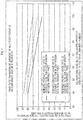
- Figure 1 is a graph showing price rate transitions of the cases in which collected/renewed products are mixed with shipment/new products.
- organic EL panels used in organic EL lighting devices when the product lives (brightness lives) thereof have elapsed and reutilizing or recycling members, and part of processes is omitted.
- the organic EL panels may be sold in stores or rented or leased like conventional cases.
- the collection rate of the organic EL panels can be increased by collecting the organic EL panels, which have been sold in stores, convenience stores, etc., by carry-in reversely in the stores, etc.
- the panels may be collected by collection boxes, postal/delivery services, etc. (freight collect may be employed as a means for increasing the collection rate), specified agents and representatives may carry out management from sales to collection, or a management department (company) may be provided to make rental or lease contracts.
- the organic EL panels in the market can be collected and efficiently systematically utilized as parts/materials of renewed products, and, as a whole organic EL lighting business, the price of the organic EL panels can be caused to be equivalent to or less than those of other lighting devices.
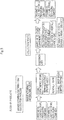
- Figure 2 is a drawing showing one exemplary embodiment of a system for collecting/ recycling organic EL lighting devices.
- the present exemplary embodiment includes information collecting section 10, information processing section 20, collection/ recycling predicting section 30, and production plan setting section 40.
- Information collecting section 10 obtains the status of the organic EL panels used in the market by finding out and managing the information and total volume of the organic EL panels as regard: the production, shipment, and sales volumes of the organic EL panels and the status of usage of in the market; the volume distributed in the market such as an in-use volume; the collection rate of the products whose product lives have expired after being used; the recycling rate and volume for disassembling and reutilizing including parts and materials of the panels; and the volume to be discarded.
- Information processing section 20 processes the information about reutilizeable members, parts, and materials of the organic EL panels as collection/ recycling information and stores the information in database 21.
- collection/ recycling predicting section 30 predicts the timing and quantity of the reutilizable members, parts, and materials of the organic EL panels, whose the status has been obtained by information collecting section 10, to be distributed to a recycling step.
- Production plan setting section 40 sets a production plan of recycled organic EL panels using the reutilizable members, parts, and materials based on the timing and quantity predicted by collection/renewal predicting section 30; finds out the volume of the organic EL panels to be newly produced and sold and the volume to be collected, recycled, and sold; sets a production plan; and sets prices.
- FIGS. 3 to Figure 5 are drawings showing the specific business method in the system for collecting/ recycling organic EL lighting device shown in Figure 2 .
- a timekeeping timer, a count-up counter, an optical sensor, which observes brightness reduction, etc. and information processing devices thereof are incorporated, and the status of usage of the organic EL panel is captured so as to recognize pass-over of the product life (brightness life) of the organic EL panel.
- the information thereof is configured to enable recognition of the product life (brightness life) by blinking the organic EL panel or by displaying in a display device at the place of a user who uses the organic EL panel.
- the state of usage of the organic EL panel is obtained by information collecting section 10; however, a rental/lease system may be employed, and the status of usage may be managed by a rental/lease company. If a specified agent/ representative system is employed, a company of may carry out the management.
- production plan setting section 40 which is owned by the producing/recycling company of the organic lighting device, based on the timing and quantity predicted by collection/ recycling predicting section 30, a production plan of recycled organic EL panels using the reutilizable members, parts, and materials is set, and the volume of organic EL panels to be newly produced and sold and the volume thereof to be collected, recycled, and sold are understood to set a production plan and set prices.
- a sales and collection system is operated by a lease or rental company or department, wherein the status of usage by the user and the status of stock are reliably captured.
- management of the status of steps of production, sales, user, collection, and recycling may be carried out by the company which manages/operates the information as described above, or that the management may be carried out by a department of a production company which manages/operates the information.
- Figure 6 is a drawing showing an example of the disassembling process of the organic EL panel used in the present invention.
- the collected organic EL panel is subjected to recycling of members and materials in a member recycling route.
- the collected organic EL panel is disassembled and separated into reusable members/parts, reutilizable members/parts, and materials to be recycled.
- circuits and wiring members are separated and collected from the collected organic EL panel, whose product/brightness life has expired, and distributed for reutilization.
- the organic EL panel is subjected to mutual peel-off between an organic El element board and a sealing board, and the boards are sent to recycling steps respectively.
- organic layers and electron injection layers and metal cathodes stacked thereon are separated from the board by using a solvent and alkaline cleaning.
- the separated and collected materials can be distributed to recycling of noble metals such as Ir and Pt or recycling steps of Li, Al, Ag, etc.
- the organic El element board thereafter can be recycled and reutilized as a board with a transparent electrode (ITO) after steps of dry ashing, etc.
- the other one, i.e., the sealing board is subjected to peel-off of a seal member between boards by solvent cleaning, dry ashing, etc. and is recycled and reutilized as a sealing board.
- Figure 7 is a drawing showing an example of the recycling process of the organic EL panel used in the present invention.
- recycled products are used as all of the materials and members; however, an optimum distribution may be employed, for example, by partially using recycled products and partially using new products depending on characteristics, owned members, etc.
- Information management/operation may be carried out by a producing/recycling company or may be carried out by a department or company which carries out information management/operation.
- the information of pass-over of the life is delivered to and recognized by a user who uses the organic El panel.
- the organic El panel may be blinked or an attempt can be made activate the device display as well as the above description.
- the panel may be directly set to the producing/recycling company by the postal service or the like, or the panel may be collected by the operating department/company.
- Separation of the collected organic EL panel, recycling of members, and panel recycling steps can be carried out in a manner similar to that described above. If members are shared by various organic EL lighting models in designing stages of, recycling efficiency is improved, and the effect of price reduction is also large.
- Examples of utilization of a surface emitting device include backlights of, for example, organic EL lighting devices and liquid crystal displays.
Landscapes
- Engineering & Computer Science (AREA)
- Business, Economics & Management (AREA)
- Health & Medical Sciences (AREA)
- Environmental & Geological Engineering (AREA)
- General Health & Medical Sciences (AREA)
- Manufacturing & Machinery (AREA)
- Marketing (AREA)
- Theoretical Computer Science (AREA)
- Tourism & Hospitality (AREA)
- Physics & Mathematics (AREA)
- General Business, Economics & Management (AREA)
- General Physics & Mathematics (AREA)
- Primary Health Care (AREA)
- Strategic Management (AREA)
- Human Resources & Organizations (AREA)
- Economics (AREA)
- Chemical & Material Sciences (AREA)
- Chemical Kinetics & Catalysis (AREA)
- General Chemical & Material Sciences (AREA)
- Toxicology (AREA)
- Electroluminescent Light Sources (AREA)
- Processing Of Solid Wastes (AREA)
Description
- The present invention relates to a collecting/renewing system of an organic EL lighting device.
- In an organic EL panel used in an organic EL lighting device, on a transparent supporting board including a transparent conductive film such as ITO as an anode, for example, a hole injecting layer, a hole transporting layer, a RGB emitting layer, a hole block layer, and an electron transporting layer are formed; and, furthermore, an electron injecting material and a cathode electrode are formed to form an organic EL element part. Then, a sealing/heat-transferring agent, etc. are applied thereon, and, for example, an opposing glass (sealing cap) is bonded to a peripheral part thereof with a sealing agent, thereby blocking it from the external environment.
- Generally, a sputtering apparatus is used for formation of a transparent electrode, a vapor deposition apparatus is used for formation of an organic film, and an application apparatus such as an ODF, screen, ink-jet (IJ), or dispenser is used for formation of the sealing agent or the heat transferring agent. For example, IJ or a slit applying apparatus is used for a polymer-based organic EL element; and, for example, a CVD apparatus is used for carrying out film sealing. Furthermore, when preceding processes including board cleaning thereof, patterning steps, etc. and post-processes including formation into modules, etc. are included, an extremely large number of steps are carried out as well as semiconductor and FPD.
- When organic EL lighting is viewed from the aspect of a business, organic EL panels require various materials such as organic materials, inorganic materials, metals, and adhesive agents. Moreover, used members and used materials are extremely expensive, and manufacturing apparatuses thereof are also expensive. When the cost of materials used in manufacturing, fixed cost, depreciation cost, etc. are taken into consideration, the price or selling price thereof is about several times higher compared with that of an existing lighting device. Therefore, it is not easy to establish a profitable business using organic EL parts. Specifically, when a list showing the breakdown of manufacturing cost is viewed, fixed cost is around 30%, and variable cost is around 65%.
- Furthermore, in view of details of the manufacturing cost, most of the variable cost is occupied by material cost of direct material cost, which is a main cause of the high manufacturing cost. The material cost rate is high as described above, and the unit prices of materials per se are extremely high. Therefore, it is thought to be almost impossible that EL lighting can used to establish a profitable business having normal manufacturing, distribution and sales channels.
- Look at the list showing the breakdown of manufacturing cost, organic EL element materials occupy around 70%, an anode transparent electrode board is next to that and is around 20%, and sealing members such as sealing boards are around 5%. Therefore, reducing the cost of the organic EL element materials, anode boards, and sealing members is important for reducing the cost of the organic EL panel. A measure for reducing the organic EL element material cost rate will be reviewed. It is difficult to directly reutilize organic materials after brightness has deteriorated. However, an organic metal complex using a noble metal such as platinum (Pt) or iridium (Ir) as a central metal is used as a light emitting material dopant; lithium (Li), which is a rare earth metal and is becoming more difficult to obtain since demands therefor have been significantly increased recently for lithium ion batteries, is used as an electron injecting material; and a high-purity metal of, for example, aluminum (Al) or silver (Ag) is used in a cathode. Reducing the cost of the material cost by cost reduction and a quantity effect upon material production and collecting/recycling or diverting the materials can largely contribute to cost reduction. The anode-equipped transparent electrode board and the sealing members can be reutilized, which can largely contribute to cost reduction.
- A method of collecting a metal contained in a light emitting element utilizing electroluminescence is disclosed in
Patent Literature 1. - Patent Literature 1:
JP2008-144269A - Also
JP 2000181958 A - However, in the technique disclosed in
Patent Literature 1, the metal contained in the light emitting element utilizing electroluminescence is merely collected, and collection as a whole organic EL lighting device is not taken into consideration. - The present invention has been accomplished in view of the problem of the techniques as described above, and it is an object to provide a system for collecting/recycling organic EL lighting device that is capable of reducing cost, effectively utilizing resources, and reducing the amount of discarded objects and is friendly to the environment of the earth.
- According to the present invention there is provided a collecting/ recycling system of an organic EL lighting device using an organic EL panel comprising:
- information collecting means that obtain the status of the organic EL panel used in a market;
- information processing means that processes and stores, as collection/ recycling information, information about a re-utilizable member, part and material of the organic EL panel;
- collection/ recycling predicting means that predict the timing and quantity of the re-utilizable member, part and material of the organic EL panel whose status has been obtained by said information collecting means, to be distributed to a recycling step based on the collection/ recycling information stored in said information processing means; and
- production plan setting means that set a production plan of a recycled organic EL panel for recycling an organic EL using part or all the re-utilizable member/ part/ material based on the timing and quantity predicted by said collection/ recycling predicting means;
- wherein said information collecting means: captures pass-over of the product life of the organic EL panel as a status of usage of the organic EL panel by using a timekeeping timer, a count-up counter, an optical sensor to observe brightness reduction, and information processing devices thereof which are incorporated in the system.
- As explained above, in the present invention, organic EL panels can be effectively collected and reutilized; therefore, manufacturing costs can be reduced, and the sales price thereof can be reduced as a result. Therefore, the price that is equivalent to that of other lighting devices can be achieved, which makes it profitable as a business. Moreover, by virtue of reduction in the amount of new energy consumption and reduction in the amount of discarded objects, this is friendly to the environment of the earth and is effective for preventing contamination.
- Obtaining information regarding history of products becomes easy, referencing the history information for designing new products is useful for improving reliability of the products, and improvements such as extended lives of products can be made.
- Moreover, while organic EL panels are reutilized, members can be shared in designing stages of products, and designing of the products in which recycling processes are easy is facilitated.
- Furthermore, for a lighting business of the organic EL lighting panels, the total volumes of the organic EL panels of, for example: the shipped volume of the organic EL panels, the volumes distributed to a market such as an in-use volume in the market, the collection rate of a life-passed-over products after usage, and the renewable volume/rate including those of parts are found out, and an optimal production plan can be made. The volume of shipment is small and there is almost no collection/ recycle at the beginning of the above described market; however, by estimating the probability of recycled panels and modules including parts in advance, set prices can be prevented, and price competitiveness can be obtained against other lighting devices.
-
- [
Figure 1] Figure 1 is a graph showing price rate transitions of the cases in which collected/renewed products are mixed with shipment/new products. - [
Figure 2] Figure 2 is a drawing showing one exemplary embodiment of a collecting/ recycling system of organic EL lighting devices. - [
Figure 3] Figure 3 is a drawing showing a specific business method in the collecting/renewing system of the organic EL lighting device shown inFigure 2 . - [
Figure 4] Figure 4 is a drawing showing a specific business method in the collecting/renewing system of the organic EL lighting device shown inFigure 2 - [
Figure 5] Figure 5 is a drawing showing a specific business method in the collecting/renewing system of the organic EL lighting device shown inFigure 2 - [
Figure 6] Figure 6 is a drawing showing an example of a disassembling process of the organic EL panel used in the present invention. - [
Figure 7] Figure 7 is a drawing showing an example of the recycling process of the organic EL panel used in the present invention. - Hereinafter, exemplary embodiments will be explained with reference to drawings.
- First, a cost composition was analyzed in order to solve the above described problem. In view of cost composition rates of an organic EL panel, a variable cost rate (material cost rate) is around 65%, a fixed cost rate (amortization cost, etc.) is around 30%, wherein these two rates are extremely large. Therefore, reducing the material cost rate is the most effective for improving a business environment. The most effective means for reducing the material cost rate is to reduce material cost; however, it is almost impossible since the number of material suppliers related to organic EL is extremely small. As another means, so-called recycling is carried out by collecting and recycling organic EL panels, which have been shipped to a market, when the panels reach the end of the lives thereof.
- Herein, the reutilization rate of incorporation of collected products thereinto and price transitions with respect to the prices thereof of the case in which all of the products in that case were new were studied with respect to the total shipment number of organic EL panels.
-
Figure 1 is a graph showing price rate transitions of the cases in which collected/renewed products are mixed with shipment/new products. - As shown in
Figure 1 , the price of organic EL panels in the case in which all of the shipped panels had been collected and 70% thereof in terms of the cost thereof in comparison with the price thereof could be renewed and reused was reduced to about half of the case in which all products were newly manufactured. In view of this, it is recognized that way to improve collection efficiency and the way to carry out recycling and reusing organic panels is important. - Therefore, member cost is reduced by collecting and recycling organic EL panels used in organic EL lighting devices when the product lives (brightness lives) thereof have elapsed and reutilizing or recycling members, and part of processes is omitted. In this case, the organic EL panels may be sold in stores or rented or leased like conventional cases.
- The collection rate of the organic EL panels can be increased by collecting the organic EL panels, which have been sold in stores, convenience stores, etc., by carry-in reversely in the stores, etc. The panels may be collected by collection boxes, postal/delivery services, etc. (freight collect may be employed as a means for increasing the collection rate), specified agents and representatives may carry out management from sales to collection, or a management department (company) may be provided to make rental or lease contracts.
- In this process, in order to collect the organic EL panels, which have been manufactured, sold, used, and have passed over the product (brightness) lives thereof, at high efficiency and distribute them to recycling steps, a traceability system capable of managing the status of usage of the organic EL panels after manufacturing and sales is built. Moreover, a recycling system capable of systematically producing the collected organic EL panels as recycled/reused/reutilized products. In an actual plan, if the status of the organic EL panels used in a market is captured in a temporal manner in real-time, the timing of collection and the volume of collection can be estimated from the product life time; therefore, production plans of the rates, production number, etc. of recycled products and new products can be made appropriate. As a result, the organic EL panels in the market can be collected and efficiently systematically utilized as parts/materials of renewed products, and, as a whole organic EL lighting business, the price of the organic EL panels can be caused to be equivalent to or less than those of other lighting devices.
-
Figure 2 is a drawing showing one exemplary embodiment of a system for collecting/ recycling organic EL lighting devices. - As shown in
Figure 2 , the present exemplary embodiment includesinformation collecting section 10,information processing section 20, collection/recycling predicting section 30, and productionplan setting section 40. -
Information collecting section 10 obtains the status of the organic EL panels used in the market by finding out and managing the information and total volume of the organic EL panels as regard: the production, shipment, and sales volumes of the organic EL panels and the status of usage of in the market; the volume distributed in the market such as an in-use volume; the collection rate of the products whose product lives have expired after being used; the recycling rate and volume for disassembling and reutilizing including parts and materials of the panels; and the volume to be discarded. -
Information processing section 20 processes the information about reutilizeable members, parts, and materials of the organic EL panels as collection/ recycling information and stores the information in database 21. - Based on the collection/ recycling information stored in database 21 of
information processing section 20, collection/recycling predicting section 30 predicts the timing and quantity of the reutilizable members, parts, and materials of the organic EL panels, whose the status has been obtained byinformation collecting section 10, to be distributed to a recycling step. - Production plan setting section 40: sets a production plan of recycled organic EL panels using the reutilizable members, parts, and materials based on the timing and quantity predicted by collection/
renewal predicting section 30; finds out the volume of the organic EL panels to be newly produced and sold and the volume to be collected, recycled, and sold; sets a production plan; and sets prices. - Hereinafter, a specific business method in a collecting/ recycling system of the organic EL lighting device configured in the above described manner will be explained.
-
Figure 3 to Figure 5 are drawings showing the specific business method in the system for collecting/ recycling organic EL lighting device shown inFigure 2 . - First, a timekeeping timer, a count-up counter, an optical sensor, which observes brightness reduction, etc. and information processing devices thereof are incorporated, and the status of usage of the organic EL panel is captured so as to recognize pass-over of the product life (brightness life) of the organic EL panel. The information thereof is configured to enable recognition of the product life (brightness life) by blinking the organic EL panel or by displaying in a display device at the place of a user who uses the organic EL panel. The state of usage of the organic EL panel is obtained by
information collecting section 10; however, a rental/lease system may be employed, and the status of usage may be managed by a rental/lease company. If a specified agent/ representative system is employed, a company of may carry out the management. - Comprehensive information management is carried out by a producing/recycling company of the organic EL lighting device. In
information processing section 20, which is owned by the producing/ recycling company of the organic EL lighting device, the information about the reutilizable members, parts, and materials of the organic EL panel is stored in database 21 as collection/ recycling information. In collection/recycling predicting section 30, based on the collection/ recycling information stored in database 21 ofinformation processing section 20, the transfer volume/timing, etc. of the organic EL panel in production, sales, user, collection, and recycling are captured and predicted in real time for the reutilizable members, parts, and materials of the organic EL panel for whose status has been obtained byinformation collecting section 10. Then, in productionplan setting section 40, which is owned by the producing/recycling company of the organic lighting device, based on the timing and quantity predicted by collection/recycling predicting section 30, a production plan of recycled organic EL panels using the reutilizable members, parts, and materials is set, and the volume of organic EL panels to be newly produced and sold and the volume thereof to be collected, recycled, and sold are understood to set a production plan and set prices. A sales and collection system is operated by a lease or rental company or department, wherein the status of usage by the user and the status of stock are reliably captured. Note that the management of the status of steps of production, sales, user, collection, and recycling may be carried out by the company which manages/operates the information as described above, or that the management may be carried out by a department of a production company which manages/operates the information. - Hereinafter, a disassembling process of the collected organic EL panel will be explained.
-
Figure 6 is a drawing showing an example of the disassembling process of the organic EL panel used in the present invention. - As shown in
Figure 6 , the collected organic EL panel is subjected to recycling of members and materials in a member recycling route. In the recycling step, the collected organic EL panel is disassembled and separated into reusable members/parts, reutilizable members/parts, and materials to be recycled. Specifically, circuits and wiring members are separated and collected from the collected organic EL panel, whose product/brightness life has expired, and distributed for reutilization. The organic EL panel is subjected to mutual peel-off between an organic El element board and a sealing board, and the boards are sent to recycling steps respectively. In the organic EL element board, organic layers and electron injection layers and metal cathodes stacked thereon are separated from the board by using a solvent and alkaline cleaning. The separated and collected materials can be distributed to recycling of noble metals such as Ir and Pt or recycling steps of Li, Al, Ag, etc. The organic El element board thereafter can be recycled and reutilized as a board with a transparent electrode (ITO) after steps of dry ashing, etc. The other one, i.e., the sealing board is subjected to peel-off of a seal member between boards by solvent cleaning, dry ashing, etc. and is recycled and reutilized as a sealing board. - Hereinafter, a recycling process of the organic EL panel will be explained.
-
Figure 7 is a drawing showing an example of the recycling process of the organic EL panel used in the present invention. - As shown in
Figure 7 , when the organic El panel is to be recycled, first, an organic layer using an organic EL material of collected and recycled Ir or Pt is formed on the recycled transparent-electrode-equipped board by vacuum vapor deposition or application. Then, an electron injection layer is generated by using recycled Li, and a cathode is formed by using recycled Al or Ag, thereby preparing organic EL elements. Then, a sealing agent, a heat-transfer material, etc. are applied to the recycled sealing board, and the board is bonded with the organic EL element board to provide an organic EL panel. Recycled wiring and circuits are further attached to the organic El panel to complete a recycled organic EL module. - In the present exemplary embodiment, recycled products are used as all of the materials and members; however, an optimum distribution may be employed, for example, by partially using recycled products and partially using new products depending on characteristics, owned members, etc.
- As another exemplary embodiment, it is conceivable to employ a configuration of incorporating a timekeeping timer, information processing means thereof, and communication means, and capturing the status of usage of the organic EL panel through, for example, an Internet line so that pass-over of the product life (brightness life) of the organic EL panel can be recognized. Information management/operation may be carried out by a producing/recycling company or may be carried out by a department or company which carries out information management/operation. The information of pass-over of the life is delivered to and recognized by a user who uses the organic El panel. As a way to determine whether the product life has expired, the organic El panel may be blinked or an attempt can be made activate the device display as well as the above description. Also, contact to communication means such as a personal computer or a mobile phone may be made. As collection of the organic El panel, the panel may be directly set to the producing/recycling company by the postal service or the like, or the panel may be collected by the operating department/company.
- Separation of the collected organic EL panel, recycling of members, and panel recycling steps can be carried out in a manner similar to that described above. If members are shared by various organic EL lighting models in designing stages of, recycling efficiency is improved, and the effect of price reduction is also large.
- Examples of utilization of a surface emitting device include backlights of, for example, organic EL lighting devices and liquid crystal displays.
Claims (3)
- A collecting/ recycling system of an organic EL lighting device using an organic EL panel comprising:information collecting means that obtain the status of the organic EL panel used in a market;information processing means that processes and stores, as collection/ recycling information, information about a re-utilizable member, part and material of the organic EL panel;collection/ recycling predicting means that predict the timing and quantity of the re-utilizable member, part and material of the organic EL panel whose status has been obtained by said information collecting means, to be distributed to a recycling step based on the collection/ recycling information stored in said information processing means; andproduction plan setting means that set a production plan of a recycled organic EL panel for recycling an organic EL using part or all the re-utilizable member/ part/ material based on the timing and quantity predicted by said collection/ recycling predicting means;wherein said information collecting means: captures pass-over of the product life of the organic EL panel as a status of usage of the organic EL panel by using a timekeeping timer, a count-up counter, an optical sensor to observe brightness reduction, and information processing devices thereof which are incorporated in the system.
- The collecting/ recycling system of an organic EL lighting device according to claim 1, wherein
said information collecting means finds out and manages information and a total volume of the organic EL panel as regards: production, shipment and sales volume of the organic EL panel; status of usage in the market; volume distributed in the market such as in-use volume; collection rate of a product that has passed over a life thereof after usage; recycling rate and volume for disassembling and reutilizing including a part and material of the panel; and a volume to be discarded; and
said production plan setting means: finds out the volume of organic EL panels to be newly produced and sold and the volume of organic EL panels to be collected, recycled, and sold; sets the production plan that includes the organic EL panels to be newly produced and sold and the organic EL panels to be collected, recycled and sold; and carries out price setting. - The collecting/ recycling system of an organic EL lighting device according to claim 1, wherein
said information means informs pass-over of the product life of the organic EL panel by blinking the organic EL panel or by displaying in a display device.
Applications Claiming Priority (2)
| Application Number | Priority Date | Filing Date | Title |
|---|---|---|---|
| JP2010249736 | 2010-11-08 | ||
| PCT/JP2011/074158 WO2012063616A1 (en) | 2010-11-08 | 2011-10-20 | Collection and recycling system for organic el lighting apparatus |
Publications (3)
| Publication Number | Publication Date |
|---|---|
| EP2613609A1 EP2613609A1 (en) | 2013-07-10 |
| EP2613609A4 EP2613609A4 (en) | 2017-11-15 |
| EP2613609B1 true EP2613609B1 (en) | 2019-12-11 |
Family
ID=46050769
Family Applications (1)
| Application Number | Title | Priority Date | Filing Date |
|---|---|---|---|
| EP11840033.2A Active EP2613609B1 (en) | 2010-11-08 | 2011-10-20 | Collection and recycling system for organic el lighting apparatus |
Country Status (4)
| Country | Link |
|---|---|
| US (1) | US9288868B2 (en) |
| EP (1) | EP2613609B1 (en) |
| JP (1) | JP5704663B2 (en) |
| WO (1) | WO2012063616A1 (en) |
Families Citing this family (1)
| Publication number | Priority date | Publication date | Assignee | Title |
|---|---|---|---|---|
| JP7218485B2 (en) * | 2015-09-10 | 2023-02-07 | 協立化学産業株式会社 | Method for producing photocurable resin composition, photocurable resin composition, adhesive composition, composite structure, and method for producing and dismantling composite structure |
Family Cites Families (8)
| Publication number | Priority date | Publication date | Assignee | Title |
|---|---|---|---|---|
| JP2000181958A (en) | 1998-12-15 | 2000-06-30 | Ricoh Co Ltd | Recycling system |
| JP3990898B2 (en) * | 2001-11-20 | 2007-10-17 | キヤノン株式会社 | Recycling system and control method thereof |
| US10185922B2 (en) * | 2005-02-07 | 2019-01-22 | Recyclebank Llc | Methods and system for managing recycling of recyclable material |
| WO2007112577A1 (en) * | 2006-04-04 | 2007-10-11 | Rutherford Peter Bruce Browne | Methods and systems for recycling and re-use of manufactured items |
| WO2008059770A1 (en) | 2006-11-15 | 2008-05-22 | Semiconductor Energy Laboratory Co., Ltd. | Method for collecting metal |
| CN101909770B (en) | 2008-01-10 | 2014-05-07 | 学校法人芝浦工业大学 | Methods of recycling useful metals |
| JP2009206009A (en) | 2008-02-29 | 2009-09-10 | Fujitec International Inc | Light-emitting device, server device for managing lending status of light emitting device, and method for reproducing light-emitting device |
| JP4533964B1 (en) | 2009-03-23 | 2010-09-01 | フジテック・インターナショナル株式会社 | Light emitting device reproduction method and light emitting device reproduction device |
-
2011
- 2011-10-20 JP JP2012542856A patent/JP5704663B2/en active Active
- 2011-10-20 US US13/878,476 patent/US9288868B2/en active Active
- 2011-10-20 EP EP11840033.2A patent/EP2613609B1/en active Active
- 2011-10-20 WO PCT/JP2011/074158 patent/WO2012063616A1/en not_active Ceased
Non-Patent Citations (1)
| Title |
|---|
| None * |
Also Published As
| Publication number | Publication date |
|---|---|
| WO2012063616A1 (en) | 2012-05-18 |
| EP2613609A4 (en) | 2017-11-15 |
| EP2613609A1 (en) | 2013-07-10 |
| JPWO2012063616A1 (en) | 2014-05-12 |
| JP5704663B2 (en) | 2015-04-22 |
| US20130217292A1 (en) | 2013-08-22 |
| US9288868B2 (en) | 2016-03-15 |
Similar Documents
| Publication | Publication Date | Title |
|---|---|---|
| JP6017594B2 (en) | Device manufacturing method and EL module manufacturing method | |
| US20190165072A1 (en) | Flexible display panel and manufacturing method thereof | |
| JP4402144B2 (en) | Method for manufacturing semiconductor device | |
| Akulenko et al. | Eco-design for perovskite solar cells to address future waste challenges and recover valuable materials | |
| CN106653812A (en) | Flexible display panel making method | |
| JP2006172159A (en) | Electronic device manufacturing system, electronic device manufacturing method, electronic device, and electro-optical device | |
| US20160285017A1 (en) | Flexible substrate, oled device and defect detecting method for the same | |
| US11335869B2 (en) | Display device and method of manufacturing the display device | |
| US20190173054A1 (en) | Display panel and manufacturing method thereof and display device including display panel | |
| EP3544058A1 (en) | Oled substrate and manufacturing method thereof | |
| CN111129089B (en) | Display panel and preparation method thereof | |
| US9288868B2 (en) | Collecting/recycling system of organic EL lighting device | |
| US10403694B2 (en) | OLED substrate comprising corresponding pixel definition layer patterns, manufacturing method thereof, and display device | |
| McCalmont et al. | Life cycle cost assessment of material recovery from perovskite solar cells | |
| Chen et al. | The core industry manufacturing process of electronics assembly based on smart manufacturing | |
| CN109659344B (en) | Flexible OLED device | |
| US10991785B2 (en) | Double-sided display panel, fabricating method of same, and display device | |
| US20180366527A1 (en) | Double-sided display device, manufacturing method thereof, and electronic apparatus | |
| US7154235B2 (en) | Organic electroluminescent device having solar cells | |
| JP2002196704A (en) | Organic EL panel and manufacturing method thereof | |
| CN103839865A (en) | Manufacturing method of touch device | |
| CN203530415U (en) | Frame with replaceable block | |
| JP2006330185A (en) | Electro-optical panel, sealing member, and manufacturing method of electro-optical panel | |
| Zhang et al. | Indium recycling pathways from heterojunction solar cells: Processes, challenges, and prospects | |
| KR102340746B1 (en) | Display Device |
Legal Events
| Date | Code | Title | Description |
|---|---|---|---|
| PUAI | Public reference made under article 153(3) epc to a published international application that has entered the european phase |
Free format text: ORIGINAL CODE: 0009012 |
|
| 17P | Request for examination filed |
Effective date: 20130405 |
|
| AK | Designated contracting states |
Kind code of ref document: A1 Designated state(s): AL AT BE BG CH CY CZ DE DK EE ES FI FR GB GR HR HU IE IS IT LI LT LU LV MC MK MT NL NO PL PT RO RS SE SI SK SM TR |
|
| DAX | Request for extension of the european patent (deleted) | ||
| RA4 | Supplementary search report drawn up and despatched (corrected) |
Effective date: 20171013 |
|
| RIC1 | Information provided on ipc code assigned before grant |
Ipc: B09B 5/00 20060101ALI20171009BHEP Ipc: H05B 33/10 20060101AFI20171009BHEP Ipc: H01L 51/50 20060101ALI20171009BHEP Ipc: G06Q 10/00 20120101ALI20171009BHEP Ipc: G06Q 50/04 20120101ALI20171009BHEP |
|
| STAA | Information on the status of an ep patent application or granted ep patent |
Free format text: STATUS: EXAMINATION IS IN PROGRESS |
|
| 17Q | First examination report despatched |
Effective date: 20180810 |
|
| GRAP | Despatch of communication of intention to grant a patent |
Free format text: ORIGINAL CODE: EPIDOSNIGR1 |
|
| STAA | Information on the status of an ep patent application or granted ep patent |
Free format text: STATUS: GRANT OF PATENT IS INTENDED |
|
| INTG | Intention to grant announced |
Effective date: 20190716 |
|
| GRAS | Grant fee paid |
Free format text: ORIGINAL CODE: EPIDOSNIGR3 |
|
| GRAA | (expected) grant |
Free format text: ORIGINAL CODE: 0009210 |
|
| STAA | Information on the status of an ep patent application or granted ep patent |
Free format text: STATUS: THE PATENT HAS BEEN GRANTED |
|
| AK | Designated contracting states |
Kind code of ref document: B1 Designated state(s): AL AT BE BG CH CY CZ DE DK EE ES FI FR GB GR HR HU IE IS IT LI LT LU LV MC MK MT NL NO PL PT RO RS SE SI SK SM TR |
|
| REG | Reference to a national code |
Ref country code: GB Ref legal event code: FG4D |
|
| REG | Reference to a national code |
Ref country code: CH Ref legal event code: EP |
|
| REG | Reference to a national code |
Ref country code: AT Ref legal event code: REF Ref document number: 1213508 Country of ref document: AT Kind code of ref document: T Effective date: 20191215 |
|
| REG | Reference to a national code |
Ref country code: DE Ref legal event code: R096 Ref document number: 602011064008 Country of ref document: DE |
|
| REG | Reference to a national code |
Ref country code: IE Ref legal event code: FG4D |
|
| REG | Reference to a national code |
Ref country code: NL Ref legal event code: MP Effective date: 20191211 |
|
| REG | Reference to a national code |
Ref country code: LT Ref legal event code: MG4D |
|
| PG25 | Lapsed in a contracting state [announced via postgrant information from national office to epo] |
Ref country code: ES Free format text: LAPSE BECAUSE OF FAILURE TO SUBMIT A TRANSLATION OF THE DESCRIPTION OR TO PAY THE FEE WITHIN THE PRESCRIBED TIME-LIMIT Effective date: 20191211 Ref country code: BG Free format text: LAPSE BECAUSE OF FAILURE TO SUBMIT A TRANSLATION OF THE DESCRIPTION OR TO PAY THE FEE WITHIN THE PRESCRIBED TIME-LIMIT Effective date: 20200311 Ref country code: FI Free format text: LAPSE BECAUSE OF FAILURE TO SUBMIT A TRANSLATION OF THE DESCRIPTION OR TO PAY THE FEE WITHIN THE PRESCRIBED TIME-LIMIT Effective date: 20191211 Ref country code: LT Free format text: LAPSE BECAUSE OF FAILURE TO SUBMIT A TRANSLATION OF THE DESCRIPTION OR TO PAY THE FEE WITHIN THE PRESCRIBED TIME-LIMIT Effective date: 20191211 Ref country code: SE Free format text: LAPSE BECAUSE OF FAILURE TO SUBMIT A TRANSLATION OF THE DESCRIPTION OR TO PAY THE FEE WITHIN THE PRESCRIBED TIME-LIMIT Effective date: 20191211 Ref country code: LV Free format text: LAPSE BECAUSE OF FAILURE TO SUBMIT A TRANSLATION OF THE DESCRIPTION OR TO PAY THE FEE WITHIN THE PRESCRIBED TIME-LIMIT Effective date: 20191211 Ref country code: GR Free format text: LAPSE BECAUSE OF FAILURE TO SUBMIT A TRANSLATION OF THE DESCRIPTION OR TO PAY THE FEE WITHIN THE PRESCRIBED TIME-LIMIT Effective date: 20200312 Ref country code: NO Free format text: LAPSE BECAUSE OF FAILURE TO SUBMIT A TRANSLATION OF THE DESCRIPTION OR TO PAY THE FEE WITHIN THE PRESCRIBED TIME-LIMIT Effective date: 20200311 |
|
| PG25 | Lapsed in a contracting state [announced via postgrant information from national office to epo] |
Ref country code: RS Free format text: LAPSE BECAUSE OF FAILURE TO SUBMIT A TRANSLATION OF THE DESCRIPTION OR TO PAY THE FEE WITHIN THE PRESCRIBED TIME-LIMIT Effective date: 20191211 Ref country code: HR Free format text: LAPSE BECAUSE OF FAILURE TO SUBMIT A TRANSLATION OF THE DESCRIPTION OR TO PAY THE FEE WITHIN THE PRESCRIBED TIME-LIMIT Effective date: 20191211 |
|
| PG25 | Lapsed in a contracting state [announced via postgrant information from national office to epo] |
Ref country code: AL Free format text: LAPSE BECAUSE OF FAILURE TO SUBMIT A TRANSLATION OF THE DESCRIPTION OR TO PAY THE FEE WITHIN THE PRESCRIBED TIME-LIMIT Effective date: 20191211 |
|
| PG25 | Lapsed in a contracting state [announced via postgrant information from national office to epo] |
Ref country code: RO Free format text: LAPSE BECAUSE OF FAILURE TO SUBMIT A TRANSLATION OF THE DESCRIPTION OR TO PAY THE FEE WITHIN THE PRESCRIBED TIME-LIMIT Effective date: 20191211 Ref country code: CZ Free format text: LAPSE BECAUSE OF FAILURE TO SUBMIT A TRANSLATION OF THE DESCRIPTION OR TO PAY THE FEE WITHIN THE PRESCRIBED TIME-LIMIT Effective date: 20191211 Ref country code: NL Free format text: LAPSE BECAUSE OF FAILURE TO SUBMIT A TRANSLATION OF THE DESCRIPTION OR TO PAY THE FEE WITHIN THE PRESCRIBED TIME-LIMIT Effective date: 20191211 Ref country code: EE Free format text: LAPSE BECAUSE OF FAILURE TO SUBMIT A TRANSLATION OF THE DESCRIPTION OR TO PAY THE FEE WITHIN THE PRESCRIBED TIME-LIMIT Effective date: 20191211 Ref country code: PT Free format text: LAPSE BECAUSE OF FAILURE TO SUBMIT A TRANSLATION OF THE DESCRIPTION OR TO PAY THE FEE WITHIN THE PRESCRIBED TIME-LIMIT Effective date: 20200506 |
|
| PG25 | Lapsed in a contracting state [announced via postgrant information from national office to epo] |
Ref country code: SM Free format text: LAPSE BECAUSE OF FAILURE TO SUBMIT A TRANSLATION OF THE DESCRIPTION OR TO PAY THE FEE WITHIN THE PRESCRIBED TIME-LIMIT Effective date: 20191211 Ref country code: SK Free format text: LAPSE BECAUSE OF FAILURE TO SUBMIT A TRANSLATION OF THE DESCRIPTION OR TO PAY THE FEE WITHIN THE PRESCRIBED TIME-LIMIT Effective date: 20191211 Ref country code: IS Free format text: LAPSE BECAUSE OF FAILURE TO SUBMIT A TRANSLATION OF THE DESCRIPTION OR TO PAY THE FEE WITHIN THE PRESCRIBED TIME-LIMIT Effective date: 20200411 |
|
| REG | Reference to a national code |
Ref country code: DE Ref legal event code: R097 Ref document number: 602011064008 Country of ref document: DE |
|
| RAP2 | Party data changed (patent owner data changed or rights of a patent transferred) |
Owner name: HOTALUX, LTD. |
|
| REG | Reference to a national code |
Ref country code: AT Ref legal event code: MK05 Ref document number: 1213508 Country of ref document: AT Kind code of ref document: T Effective date: 20191211 |
|
| PLBE | No opposition filed within time limit |
Free format text: ORIGINAL CODE: 0009261 |
|
| STAA | Information on the status of an ep patent application or granted ep patent |
Free format text: STATUS: NO OPPOSITION FILED WITHIN TIME LIMIT |
|
| PG25 | Lapsed in a contracting state [announced via postgrant information from national office to epo] |
Ref country code: DK Free format text: LAPSE BECAUSE OF FAILURE TO SUBMIT A TRANSLATION OF THE DESCRIPTION OR TO PAY THE FEE WITHIN THE PRESCRIBED TIME-LIMIT Effective date: 20191211 |
|
| 26N | No opposition filed |
Effective date: 20200914 |
|
| PG25 | Lapsed in a contracting state [announced via postgrant information from national office to epo] |
Ref country code: SI Free format text: LAPSE BECAUSE OF FAILURE TO SUBMIT A TRANSLATION OF THE DESCRIPTION OR TO PAY THE FEE WITHIN THE PRESCRIBED TIME-LIMIT Effective date: 20191211 Ref country code: PL Free format text: LAPSE BECAUSE OF FAILURE TO SUBMIT A TRANSLATION OF THE DESCRIPTION OR TO PAY THE FEE WITHIN THE PRESCRIBED TIME-LIMIT Effective date: 20191211 Ref country code: AT Free format text: LAPSE BECAUSE OF FAILURE TO SUBMIT A TRANSLATION OF THE DESCRIPTION OR TO PAY THE FEE WITHIN THE PRESCRIBED TIME-LIMIT Effective date: 20191211 |
|
| PG25 | Lapsed in a contracting state [announced via postgrant information from national office to epo] |
Ref country code: IT Free format text: LAPSE BECAUSE OF FAILURE TO SUBMIT A TRANSLATION OF THE DESCRIPTION OR TO PAY THE FEE WITHIN THE PRESCRIBED TIME-LIMIT Effective date: 20191211 |
|
| REG | Reference to a national code |
Ref country code: CH Ref legal event code: PL |
|
| GBPC | Gb: european patent ceased through non-payment of renewal fee |
Effective date: 20201020 |
|
| PG25 | Lapsed in a contracting state [announced via postgrant information from national office to epo] |
Ref country code: MC Free format text: LAPSE BECAUSE OF FAILURE TO SUBMIT A TRANSLATION OF THE DESCRIPTION OR TO PAY THE FEE WITHIN THE PRESCRIBED TIME-LIMIT Effective date: 20191211 Ref country code: LU Free format text: LAPSE BECAUSE OF NON-PAYMENT OF DUE FEES Effective date: 20201020 |
|
| REG | Reference to a national code |
Ref country code: BE Ref legal event code: MM Effective date: 20201031 |
|
| PG25 | Lapsed in a contracting state [announced via postgrant information from national office to epo] |
Ref country code: FR Free format text: LAPSE BECAUSE OF NON-PAYMENT OF DUE FEES Effective date: 20201031 |
|
| PG25 | Lapsed in a contracting state [announced via postgrant information from national office to epo] |
Ref country code: LI Free format text: LAPSE BECAUSE OF NON-PAYMENT OF DUE FEES Effective date: 20201031 Ref country code: GB Free format text: LAPSE BECAUSE OF NON-PAYMENT OF DUE FEES Effective date: 20201020 Ref country code: BE Free format text: LAPSE BECAUSE OF NON-PAYMENT OF DUE FEES Effective date: 20201031 Ref country code: CH Free format text: LAPSE BECAUSE OF NON-PAYMENT OF DUE FEES Effective date: 20201031 |
|
| PG25 | Lapsed in a contracting state [announced via postgrant information from national office to epo] |
Ref country code: IE Free format text: LAPSE BECAUSE OF NON-PAYMENT OF DUE FEES Effective date: 20201020 |
|
| PG25 | Lapsed in a contracting state [announced via postgrant information from national office to epo] |
Ref country code: TR Free format text: LAPSE BECAUSE OF FAILURE TO SUBMIT A TRANSLATION OF THE DESCRIPTION OR TO PAY THE FEE WITHIN THE PRESCRIBED TIME-LIMIT Effective date: 20191211 Ref country code: MT Free format text: LAPSE BECAUSE OF FAILURE TO SUBMIT A TRANSLATION OF THE DESCRIPTION OR TO PAY THE FEE WITHIN THE PRESCRIBED TIME-LIMIT Effective date: 20191211 Ref country code: CY Free format text: LAPSE BECAUSE OF FAILURE TO SUBMIT A TRANSLATION OF THE DESCRIPTION OR TO PAY THE FEE WITHIN THE PRESCRIBED TIME-LIMIT Effective date: 20191211 |
|
| PG25 | Lapsed in a contracting state [announced via postgrant information from national office to epo] |
Ref country code: MK Free format text: LAPSE BECAUSE OF FAILURE TO SUBMIT A TRANSLATION OF THE DESCRIPTION OR TO PAY THE FEE WITHIN THE PRESCRIBED TIME-LIMIT Effective date: 20191211 |
|
| PGFP | Annual fee paid to national office [announced via postgrant information from national office to epo] |
Ref country code: DE Payment date: 20240828 Year of fee payment: 14 |