EP2613514A2 - Image forming apparatus and method of booting image forming apparatus having hibernation function - Google Patents
Image forming apparatus and method of booting image forming apparatus having hibernation function Download PDFInfo
- Publication number
- EP2613514A2 EP2613514A2 EP12179794.8A EP12179794A EP2613514A2 EP 2613514 A2 EP2613514 A2 EP 2613514A2 EP 12179794 A EP12179794 A EP 12179794A EP 2613514 A2 EP2613514 A2 EP 2613514A2
- Authority
- EP
- European Patent Office
- Prior art keywords
- forming apparatus
- image forming
- storage device
- booting
- defect
- Prior art date
- Legal status (The legal status is an assumption and is not a legal conclusion. Google has not performed a legal analysis and makes no representation as to the accuracy of the status listed.)
- Withdrawn
Links
Images

Classifications
-
- G—PHYSICS
- G06—COMPUTING OR CALCULATING; COUNTING
- G06F—ELECTRIC DIGITAL DATA PROCESSING
- G06F9/00—Arrangements for program control, e.g. control units
- G06F9/06—Arrangements for program control, e.g. control units using stored programs, i.e. using an internal store of processing equipment to receive or retain programs
- G06F9/22—Microcontrol or microprogram arrangements
- G06F9/24—Loading of the microprogram
-
- H—ELECTRICITY
- H04—ELECTRIC COMMUNICATION TECHNIQUE
- H04N—PICTORIAL COMMUNICATION, e.g. TELEVISION
- H04N1/00—Scanning, transmission or reproduction of documents or the like, e.g. facsimile transmission; Details thereof
- H04N1/00885—Power supply means, e.g. arrangements for the control of power supply to the apparatus or components thereof
-
- G—PHYSICS
- G06—COMPUTING OR CALCULATING; COUNTING
- G06F—ELECTRIC DIGITAL DATA PROCESSING
- G06F11/00—Error detection; Error correction; Monitoring
- G06F11/07—Responding to the occurrence of a fault, e.g. fault tolerance
- G06F11/14—Error detection or correction of the data by redundancy in operations
- G06F11/1402—Saving, restoring, recovering or retrying
- G06F11/1415—Saving, restoring, recovering or retrying at system level
- G06F11/1417—Boot up procedures
-
- G—PHYSICS
- G06—COMPUTING OR CALCULATING; COUNTING
- G06F—ELECTRIC DIGITAL DATA PROCESSING
- G06F11/00—Error detection; Error correction; Monitoring
- G06F11/07—Responding to the occurrence of a fault, e.g. fault tolerance
- G06F11/14—Error detection or correction of the data by redundancy in operations
- G06F11/1446—Point-in-time backing up or restoration of persistent data
- G06F11/1458—Management of the backup or restore process
- G06F11/1469—Backup restoration techniques
-
- G—PHYSICS
- G06—COMPUTING OR CALCULATING; COUNTING
- G06F—ELECTRIC DIGITAL DATA PROCESSING
- G06F3/00—Input arrangements for transferring data to be processed into a form capable of being handled by the computer; Output arrangements for transferring data from processing unit to output unit, e.g. interface arrangements
- G06F3/12—Digital output to print unit, e.g. line printer, chain printer
-
- G—PHYSICS
- G06—COMPUTING OR CALCULATING; COUNTING
- G06F—ELECTRIC DIGITAL DATA PROCESSING
- G06F9/00—Arrangements for program control, e.g. control units
- G06F9/06—Arrangements for program control, e.g. control units using stored programs, i.e. using an internal store of processing equipment to receive or retain programs
- G06F9/44—Arrangements for executing specific programs
- G06F9/4401—Bootstrapping
- G06F9/4418—Suspend and resume; Hibernate and awake
-
- G—PHYSICS
- G06—COMPUTING OR CALCULATING; COUNTING
- G06F—ELECTRIC DIGITAL DATA PROCESSING
- G06F1/00—Details not covered by groups G06F3/00 - G06F13/00 and G06F21/00
- G06F1/26—Power supply means, e.g. regulation thereof
- G06F1/32—Means for saving power
-
- G—PHYSICS
- G06—COMPUTING OR CALCULATING; COUNTING
- G06F—ELECTRIC DIGITAL DATA PROCESSING
- G06F1/00—Details not covered by groups G06F3/00 - G06F13/00 and G06F21/00
- G06F1/26—Power supply means, e.g. regulation thereof
- G06F1/32—Means for saving power
- G06F1/3203—Power management, i.e. event-based initiation of a power-saving mode
- G06F1/3234—Power saving characterised by the action undertaken
- G06F1/325—Power saving in peripheral device
- G06F1/3284—Power saving in printer
-
- G—PHYSICS
- G06—COMPUTING OR CALCULATING; COUNTING
- G06F—ELECTRIC DIGITAL DATA PROCESSING
- G06F11/00—Error detection; Error correction; Monitoring
- G06F11/07—Responding to the occurrence of a fault, e.g. fault tolerance
- G06F11/0703—Error or fault processing not based on redundancy, i.e. by taking additional measures to deal with the error or fault not making use of redundancy in operation, in hardware, or in data representation
- G06F11/0766—Error or fault reporting or storing
-
- G—PHYSICS
- G06—COMPUTING OR CALCULATING; COUNTING
- G06F—ELECTRIC DIGITAL DATA PROCESSING
- G06F11/00—Error detection; Error correction; Monitoring
- G06F11/07—Responding to the occurrence of a fault, e.g. fault tolerance
- G06F11/0703—Error or fault processing not based on redundancy, i.e. by taking additional measures to deal with the error or fault not making use of redundancy in operation, in hardware, or in data representation
- G06F11/0793—Remedial or corrective actions
-
- G—PHYSICS
- G06—COMPUTING OR CALCULATING; COUNTING
- G06F—ELECTRIC DIGITAL DATA PROCESSING
- G06F11/00—Error detection; Error correction; Monitoring
- G06F11/07—Responding to the occurrence of a fault, e.g. fault tolerance
- G06F11/14—Error detection or correction of the data by redundancy in operations
- G06F11/1446—Point-in-time backing up or restoration of persistent data
- G06F11/1458—Management of the backup or restore process
-
- G—PHYSICS
- G06—COMPUTING OR CALCULATING; COUNTING
- G06F—ELECTRIC DIGITAL DATA PROCESSING
- G06F21/00—Security arrangements for protecting computers, components thereof, programs or data against unauthorised activity
- G06F21/60—Protecting data
-
- G—PHYSICS
- G06—COMPUTING OR CALCULATING; COUNTING
- G06F—ELECTRIC DIGITAL DATA PROCESSING
- G06F9/00—Arrangements for program control, e.g. control units
- G06F9/06—Arrangements for program control, e.g. control units using stored programs, i.e. using an internal store of processing equipment to receive or retain programs
- G06F9/44—Arrangements for executing specific programs
- G06F9/4401—Bootstrapping
Definitions
- Example embodiments of the following disclosure relate to an image forming apparatus and a method of booting an image forming apparatus having a hibernation function, and more particularly, to an image forming apparatus and method of checking whether a storage device has a defect, based on a flag indicating whether a hibernation function is activated.
- the following disclosure provides an image forming apparatus and a method of booting an image forming apparatus having a hibernation function.
- the following disclosure also provides a non-transitory computer readable recording medium having recorded thereon a computer program for executing the method.
- a method of booting an image forming apparatus having a hibernation function including loading a stored bootloader and kernel in the image forming apparatus; when the loading starts booting of a system of the image forming apparatus, checking whether a storage device that stores a booting image has a defect, based on a flag indicating whether the hibernation function is activated; and if it is determined that the storage device does not have a defect, booting the system by using the stored boot image.
- a non-transitory, or non-volatile, computer readable recording medium having recorded thereon a computer program for performing the methods.
- an image forming apparatus which is operable to be booted using a hibernation function
- the image forming apparatus including a controller for loading a stored bootloader and kernel in the image forming apparatus; a checking unit for checking whether a storage device that stores a booting image has a defect, based on a flag indicating whether the hibernation function is activated, when the loading starts booting of a system of the image forming apparatus; and a booting unit for booting the system by using the stored boot image when it is determined that the storage device does not have a defect.
- a computer program comprising computer program code means adapted to perform any of the methods disclosed herein when said program is run on a computer.
- a computer program as claimed in any of the methods disclosed herein embodied on a computer readable medium.
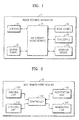
- FIG. 1 is a block diagram of an image forming apparatus 1 according to an example embodiment.
- the image forming apparatus 1 includes a main board (video board) 10, a user interface (UI) board 20, an engine board 30, a scan board 40, a fax board 50, and a storage device 60.
- FIG. 1 illustrates only some hardware components of the image forming apparatus 1 related to the current embodiment in order to prevent the characteristics of the current embodiment from being obscured. However, it will be obvious to those of ordinary skill in the art that the image forming apparatus 1 may further include other general hardware components.
- the image forming apparatus 1 may be an individual device, such as a printer, a scanner, or a facsimile machine, or a multi-functional peripheral (MFP) device capable of performing various functions, e.g., copying, printing, scanning, faxing, sending email, and so on.
- MFP multi-functional peripheral
- the image forming apparatus 1 may include not only the main board 10 but also other types of boards.
- the UI board 20 controls a user interface function via which a user may manipulate the image forming apparatus 1.
- the engine board 30 controls functions of a printer engine (not shown) included in the image forming apparatus 1.
- the scan board 40 controls a scanner function of scanning a document and generating an image from among functions of the image forming apparatus 1.
- the fax board 50 controls a fax function of generating an image from fax data received from the outside from among the functions of the image forming apparatus 1.
- the main board 10 controls the other boards, for example, the UI board 20, the engine board 30, the scan board 40, and the fax board 50.
- the main board 10 generates an image to be printed by the image forming apparatus 1, and performs a key function of controlling the overall system of the image forming apparatus 1.
- Booting of the system of the image forming apparatus 1 is completed by first booting the main board 10 and then booting the other boards under control of the main board 10.
- the main board 10 should have higher processing performance than those of the other boards, and various types of software needed to be processed in a more complicated manner than those included in the other boards are driven to boot the main board 10. That is, since an operating system (OS) for controlling the other boards and various types of software are driven in the main board 10, a time for booting the main board 10 is longer than those for booting the other boards.
- OS operating system
- the time for booting the main board 10 is recognized to be substantially the same as a time for booting the system.
- a hibernation function has been used to reduce a booting time of an electronic device, e.g., an embedded device, a mobile device, and a computing device.
- the hibernation function allows the system to be powered off while all data retained in, for example, a system memory is recorded or stored in a non-volatile memory, such as a hard disc drive (HDD), and the data stored in the non-volatile memory to be loaded again into the system memory to restore to the original system state when the system is powered on again.
- a non-volatile memory such as a hard disc drive (HDD)
- boot image To perform the hibernation function, all the data stored in the system memory is stored in the form of a boot image.
- a boot image may also be referred to as a snapshot image.
- the boot image means data that contains all information for booting an electronic device to restore to a system state at a particular point of time when the boot image was generated.
- the boot image is an image containing data stored in a volatile memory, data stored in a central processing unit (CPU) register, and cache information, which indicate information needed at a system state when the electronic product is initially booted.
- CPU central processing unit
- the hibernation function may be activated in the main board 10.
- OS main operating system
- the hibernation function cannot also be used. As described above, conventionally, whether a HDD, e.g., the storage device 60, has a defect is not checked, before the system is booted using the hibernation function.
- whether the storage device 60 has a defect is checked before the system is booted using the hibernation function so as to prevent the system from being booted due to the defect in the storage device 60.
- the defect may be corrected and then the image forming apparatus 1 may be booted using the hibernation function.
- the storage device 60 that communicates with the main board 10 may be an HDD or a non-volatile memory device installed in the image forming apparatus 1, or an external non-volatile detachably installed in the memory image forming apparatus 1.
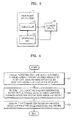
- FIG. 2 is a block diagram of a main board 10 included in the image forming apparatus 1 of FIG. 1 , according to an example embodiment.
- the main board 10 includes a controller 110, a booting unit 120, a checking unit 130, a restoration unit 140, and a generation unit 150. These components of the main board 10 will be described in detail below.
- the components of the main board 10 illustrated in FIG. 2 may correspond to a processor of the main board 10.
- the processor of the main board 10 may be embodied as an array of logic gates or a general microprocessor. In other words, it will be obvious to those of ordinary skill in the art that the processor of the main board 10 may be embodied as any of various types of hardware.
- FIG. 2 illustrates only some components of the main board 10 related to an example embodiment in order to prevent the characteristics of the present embodiment from being obscured. However, it will be obvious to those of ordinary skill in the art that the main board 10 may further include other general hardware components.
- FIG. 3 is a block diagram of a main board 10 for generating a boot image to perform the hibernation function, according to another example embodiment.
- the main board 10 includes a controller 110 and a generation unit 150, as illustrated in FIG. 2 .
- FIG. 3 illustrates only some components of the main board 10 related to the present embodiment.
- FIG. 4 is a flowchart illustrating a method of generating a boot image to perform the hibernation function in the image forming apparatus 1 with the main board 10 illustrated in FIG. 1 , according to an example embodiment. Operations included in the method of FIG. 4 may be sequentially performed by the main board 10 of FIG. 3 . Thus, this method will be described with reference to FIGS. 3 and 4 below.
- the controller 110 freezes processes that are being performed in the image forming apparatus 1. More specifically, a user of the image forming apparatus 1 may input this request to the main board 10 via a UI screen of the image forming apparatus 1 controlled by the UI board 20. In this case, the user may request to power off the image forming apparatus 1 in such a manner that the hibernation function may be activated. In other words, the activating of the hibernation function of the image forming apparatus 1 may be understood as a maximum power save mode of the image forming apparatus 1. That is, in operation 401, when the user requests to power off the image forming apparatus 1 in such a manner that the hibernation function may be activated, the processes that are being performed in the image forming apparatus 1 are frozen.
- the controller 110 records a flag indicating whether the hibernation function is activated to check whether the storage device 60 for storing a boot image has a defect. That is, the boot image is stored in the storage device 60 after operation 402 is performed.
- the storage device 60 may be an HDD or a non-volatile memory device installed in the image forming apparatus 1, or an external non-volatile memory device detachably installed in the memory image forming apparatus 1.
- the boot image may be stored in an HDD of the storage device 60 and the recorded flag may be stored in the non-volatile memory in the storage device 60.
- the boot image may be stored in the HDD in the storage device 60 and the recorded flag may be stored in the external non-volatile memory.
- the recorded flag may be stored in the external non-volatile memory.
- the generation unit 150 generates a boot image containing information about a system state while the processes that are being performed are frozen.
- the boot image is stored in the storage device 60, e.g., the HDD or the internal non-volatile memory device.
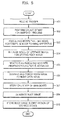
- FIG. 5 is a flowchart illustrating a method of generating a boot image to perform the hibernation function in the image forming apparatus 1 with the main board 10 illustrated in FIG. 1 , according to another example embodiment.
- FIG. 5 may be understood as a detailed flowchart of the method of FIG. 4 .
- the controller 110 receives a request to power off the image forming apparatus 1 by using the hibernation function. That is, the controller 110 may receive a trigger input by a user of the image forming apparatus 1 to activate the hibernation function of the image forming apparatus 1. The user may input the trigger for activating the hibernation function, via a UI screen of the image forming apparatus 1 controlled by the UI board 20. For example, if an OS of the image forming apparatus 1 is Linux, the controller 110 may call an 'echo disk > /sys/power/state' command when the trigger is input by the user.
- the controller 110 performs a create bitmap for snapshot process to store a bitmap that was displayed on the UI screen by the UI board 20 before the controller 110 receives the request.
- the controller 110 freezes processes that are being performed in the image forming apparatus 1. If these processes are not frozen, an error may occur during creation of a boot image.
- the controller 110 may freeze processes related to, for example, copying, printing, scanning, faxing, an address book, and a document box, which are being performed in the image forming apparatus 1.
- the controller 110 may freeze processes for controlling the engine board 30, the scan board 40, and the fax board 50 that are related to copying, printing, scanning, and faxing.
- the controller 110 may freeze these processes by calling a 'freeze_processes()' command.
- the controller 110 initializes a space of the storage device 60 for storing a boot image in order to secure a sufficient memory to store the boot image. That is, the controller 110 performs a shrink memory process.
- the controller 110 may initialize the space of the storage device 60 for storing a boot image by calling a 'free_some_memory()' or 'shrink_all_memory()' command.
- the controller 110 records or marks a flag indicating whether the hibernation function is activated, in the storage device 60.
- the flag is used to check whether the storage device 60 for storing a boot image has a defect, when the image forming apparatus 1 that is in a hibernation state is rebooted.
- the controller 110 may record or mark a flag '1' in the storage device 60.
- the flag is stored in the storage device 60, e.g., an HDD, an internal non-volatile memory device, or an external non-volatile memory device.
- the flag may be stored in the storage device 60 in which a boot image is stored or is not stored. Since the flag should not be lost even when a power cutoff occurs in the image forming apparatus 1, the flag is stored in a HDD or a non-volatile memory capable of retaining data even when a power cutoff occurs.
- the controller 110 performs a suspend and power down device process to suspend and power down the image forming apparatus 1.
- the controller 110 may perform the suspend and power down device process by calling the 'device_suspend()' and 'device_power_down()' commands.
- the controller 110 performs a save system state process to store a CPU state of the main board 10.
- the controller 110 may perform the save system state process by calling the 'save_processor_state()' and 'swsusp_arch_suspend()' commands.
- the generation unit 150 performs an allocate memory and copy memory contents process to generate a boot image containing information about a system state while the processes that are being performed are frozen.
- the information about the system state includes data stored in a volatile memory, data stored in a CPU register, and cache data, which indicate information needed to boot the image forming apparatus 1 while these processes are frozen.
- the controller 110 may perform an allocate memory and copy memory contents process by calling the 'swsusp_alloc()' and 'copy_data_pages()' commands.
- the controller 110 performs a write to swap process to store the boot image in a swap region of the storage device 60.
- the swap region may correspond to some partitions of the storage device 60, such as an HDD or an internal/external non-volatile memory.
- the image forming apparatus 1 enters the hibernation state.
- the controller 110 may perform the write to swap process by calling a 'write_suspend_image()' command.
- the image forming apparatus 1 perform operation 505 of recording or marking the flag indicating whether the hibernation function is activated, in the storage device 60 to check whether the storage device 60 has a defect, unlike in a conventional method.
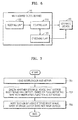
- FIG. 6 is a block diagram of a main board 10 booted using the hibernation function, according to another example embodiment.
- the main board 10 includes the controller 110, the booting unit 120, and the checking unit 130, as illustrated in FIG. 2 .
- FIG. 6 illustrates only some components of the main board 10 related to the present embodiment.
- FIG. 7 is a flowchart illustrating a method of booting the image forming apparatus 1 with the main board 10 illustrated in FIG. 1 by using the hibernation function, according to an example embodiment. Operations included in the method of FIG. 7 may be sequentially performed by the main board 10 of FIG. 6 . Thus, this method will be described with reference to FIGS. 6 and 7 below.
- the controller 110 controls a stored bootloader and a kernel to be loaded in the image forming apparatus 1. In other words, the controller 110 controls booting of the image forming apparatus 1 to be started.
- the checking unit 130 checks whether the storage device 60 that stores a boot image has a defect, based on a flag indicating whether the hibernation function is activated. The flag is recorded or marked in the storage device 60 when the boot image is generated and stored to perform the hibernation function, as described above with reference to FIGS. 3 to 5 .
- the booting unit 120 boots the system, based on the stored boot image.
- FIG. 8 is a flowchart illustrating a method of booting the image forming apparatus 1 with the main board 10 illustrated in FIG. 1 by using the hibernation function, according to another example embodiment.
- FIG. 8 may be understood as a detailed flowchart of the method of FIG. 7 .
- the controller 110 controls a stored bootloader and a kernel to be loaded in the image forming apparatus 1. More specifically, when the controller 110 controls the bootloader to be loaded in the image forming apparatus 1, the bootloader loads the kernel. By loading the kernel, the main board 10 is driven to start booting of the image forming apparatus 1.
- the controller 110 performs an initialize kernel core process to initialize a kernel core, thereby setting a CPU core in the main board 10.
- controller 110 performs an arch/machine initcall process of initializing the loaded kernel to initialize basic settings related to the booting of the main board 10.
- the booting unit 120 performs an initial booting process included in a normal booting process to initialize the system of the image forming apparatus 1 by mounting a root files system (rootfs). More specifically, the controller 110 performs a subsystem, fs, rootfs, and device initcall process. In other words, during hibernation booting according to the present embodiment, the controller 110 first performs the initial booting process included in the normal booting process, unlike conventional hibernation booting that does not include the initial booting process included in the normal booting process.
- the controller 110 checks a flag indicating whether the hibernation function is activated. If the flag indicates that the hibernation function is activated, e.g., if the flag is '1', then the controller 110 controls the checking unit 130 to check whether the storage device 60 that stores a boot image has a defect.
- the checking unit 130 checks whether the storage device 60 that stores a boot image has a defect, based on the flag. In other words, if the flag indicates that the hibernation function is activated, e.g., if the flag is '1', then the checking unit 130 checks whether the storage device 60 that stores a boot image has a defect.
- the controller 110 controls the flag to be changed to indicate that the hibernation function is deactivated or to be changed to '0', and be then recorded or marked.
- the restoration unit 140 restores the storage device 60.
- the restoration unit 140 may restore the storage device 60 by using an 'e2fsck' command provided in Linux.
- the controller 110 determines whether the storage device 60 stores a boot image. In this case, the controller 110 may read a header of a swap region to determine whether the boot image is stored in the swap region of the storage device 60.
- the controller 110 freezes processes that are being performed in the image forming apparatus 1. For example, the controller 110 freezes processes related to an OS and applications that are being performed in the image forming apparatus 1.
- the controller 110 loads the stored boot image in the storage device 60.
- the controller 110 suspends the image forming apparatus 1. That is, the controller 110 suspends all systems that are being operated in the image forming apparatus 1. For example, the controller 110 suspends the other boards of the image forming apparatus 1, e.g., the UI board 20, the engine board 30, the scan board 40, and the fax board 50, a network device of the image forming apparatus 1, and peripheral devices, such as a universal serial bus (USB) device.
- the controller 110 suspends the other boards of the image forming apparatus 1, e.g., the UI board 20, the engine board 30, the scan board 40, and the fax board 50, a network device of the image forming apparatus 1, and peripheral devices, such as a universal serial bus (USB) device.
- USB universal serial bus
- the booting unit 120 restores the image forming apparatus 1 to a system state defined in the boot image, based on the loaded boot mage.
- the booting unit 120 resumes the image forming apparatus 1 and thaws the frozen processes.
- the controller 110 performs a resume device and thaw process.
- the booting unit 120 performs normal booting, e.g., cold booting.
- the above example embodiments may be embodied as a computer program.
- the computer program may be stored in a non-transitory computer readable recording medium, and executed using a general digital computer. Data structures used in the above embodiments may be recorded on a computer readable recording medium via any of various means.
- Examples of the computer readable medium are a magnetic recording medium (a ROM, a floppy disc, a hard disc, etc.), and an optical recording medium (a CD-ROM, a DVD, etc.).
- Examples of the magnetic recording apparatus include a hard disk device (HDD), a flexible disk (FD), and a magnetic tape (MT).
- Examples of the optical disk include a DVD (Digital Versatile Disc), a DVD-RAM, a CD-ROM (Compact Disc - Read Only Memory), and a CD-R (Recordable)/RW.
- the image forming apparatus 1 may include at least one processor to execute at least one of the above-described units and methods.
Landscapes
- Engineering & Computer Science (AREA)
- Theoretical Computer Science (AREA)
- Software Systems (AREA)
- General Engineering & Computer Science (AREA)
- General Physics & Mathematics (AREA)
- Physics & Mathematics (AREA)
- Quality & Reliability (AREA)
- Multimedia (AREA)
- Signal Processing (AREA)
- Computer Security & Cryptography (AREA)
- Human Computer Interaction (AREA)
- Stored Programmes (AREA)
- Facsimiles In General (AREA)
Abstract
Description
- Example embodiments of the following disclosure relate to an image forming apparatus and a method of booting an image forming apparatus having a hibernation function, and more particularly, to an image forming apparatus and method of checking whether a storage device has a defect, based on a flag indicating whether a hibernation function is activated.
- Recently, various hardware functions of electronic products have been replaced with software functions thereof. This is because advancement in hardware technologies has reduced restrictions to software. However, as various functions have been provided using software, software capacity has been increased and software processing has become complicated. Thus, a system booting time/speed of an electronic product has become slower. Although a system booting time varies according to system type, a personal computer (PC) or a server system has a very long booting time for initializing device drivers therein and the system, thus causing a waste of energy or time. Additionally, a system booting speed has been an important issue for not only computers and server systems but also other electronic products having various functions, such as digital televisions, mobile communication terminals, and navigators, for example. In recent years, the speeds of booting electronic products range from about several seconds to several minutes.
- The following disclosure provides an image forming apparatus and a method of booting an image forming apparatus having a hibernation function.
- The following disclosure also provides a non-transitory computer readable recording medium having recorded thereon a computer program for executing the method.
- Additional aspects will be set forth in part in the description which follows and, in part, will be apparent from the description, or may be learned by practice of the presented embodiments.
- According to the present invention there is provided an apparatus and method as set forth in the appended claims. Other features of the invention will be apparent from the dependent claims, and the description which follows.
- According to an aspect of the following disclosure, there is provided a method of booting an image forming apparatus having a hibernation function, the method including loading a stored bootloader and kernel in the image forming apparatus; when the loading starts booting of a system of the image forming apparatus, checking whether a storage device that stores a booting image has a defect, based on a flag indicating whether the hibernation function is activated; and if it is determined that the storage device does not have a defect, booting the system by using the stored boot image.
- According to another aspect of the following disclosure, there is provided a non-transitory, or non-volatile, computer readable recording medium having recorded thereon a computer program for performing the methods.
- According to another aspect of the following disclosure, there is provided an image forming apparatus which is operable to be booted using a hibernation function, the image forming apparatus including a controller for loading a stored bootloader and kernel in the image forming apparatus; a checking unit for checking whether a storage device that stores a booting image has a defect, based on a flag indicating whether the hibernation function is activated, when the loading starts booting of a system of the image forming apparatus; and a booting unit for booting the system by using the stored boot image when it is determined that the storage device does not have a defect.
- A computer program comprising computer program code means adapted to perform any of the methods disclosed herein when said program is run on a computer.
- A computer program as claimed in any of the methods disclosed herein embodied on a computer readable medium.
- The above and other features and advantages of the following disclosure will become more apparent by describing in detail exemplary embodiments thereof with reference to the attached drawings in which:
-
FIG. 1 is a block diagram of an image forming apparatus according to an example embodiment; -
FIG. 2 is a block diagram of a main board included in the image forming apparatus ofFIG. 1 , according to an example embodiment; -
FIG. 3 is a block diagram of a main board for generating a boot image to perform a hibernation function, according to another example embodiment; -
FIG. 4 is a flowchart illustrating a method of generating a boot image to perform the hibernation function in an image forming apparatus with a main board, according to an example embodiment; -
FIG. 5 is a flowchart illustrating a method of generating a boot image to perform the hibernation function in the image forming apparatus with the main board illustrated inFIG. 1 , according to another example embodiment; -
FIG. 6 is a block diagram of a main board booted using the hibernation function, according to another example embodiment; -
FIG. 7 is a flowchart illustrating a method of booting the image forming apparatus with the main board illustrated inFIG. 1 by using the hibernation function, according to an example embodiment; and -
FIG. 8 is a flowchart illustrating a method of booting the image forming apparatus with the main board illustrated inFIG. 1 by using the hibernation function, according to another example embodiment. - Reference will now be made in detail to the embodiments, examples of which are illustrated in the accompanying drawings, wherein like reference numerals refer to the like elements throughout. The embodiments are described below to explain the present invention by referring to the figures.
- Example embodiments will now be described more fully with reference to the accompanying drawings. Expressions such as "at least one of," when preceding a list of components, modify the entire list of components and do not modify the individual components of the list.
-
FIG. 1 is a block diagram of animage forming apparatus 1 according to an example embodiment. Referring toFIG. 1 , theimage forming apparatus 1 includes a main board (video board) 10, a user interface (UI)board 20, anengine board 30, ascan board 40, afax board 50, and astorage device 60.FIG. 1 illustrates only some hardware components of theimage forming apparatus 1 related to the current embodiment in order to prevent the characteristics of the current embodiment from being obscured. However, it will be obvious to those of ordinary skill in the art that theimage forming apparatus 1 may further include other general hardware components. - The
image forming apparatus 1 may be an individual device, such as a printer, a scanner, or a facsimile machine, or a multi-functional peripheral (MFP) device capable of performing various functions, e.g., copying, printing, scanning, faxing, sending email, and so on. For convenience of explanation, it will be hereinafter assumed that theimage forming apparatus 1 is an MFP device, but the disclosure is not limited thereto. - Referring to
FIG. 1 , when theimage forming apparatus 1 is an MFP device, theimage forming apparatus 1 may include not only themain board 10 but also other types of boards. TheUI board 20 controls a user interface function via which a user may manipulate theimage forming apparatus 1. Theengine board 30 controls functions of a printer engine (not shown) included in theimage forming apparatus 1. Thescan board 40 controls a scanner function of scanning a document and generating an image from among functions of theimage forming apparatus 1. Thefax board 50 controls a fax function of generating an image from fax data received from the outside from among the functions of theimage forming apparatus 1. - The
main board 10 controls the other boards, for example, theUI board 20, theengine board 30, thescan board 40, and thefax board 50. In other words, themain board 10 generates an image to be printed by theimage forming apparatus 1, and performs a key function of controlling the overall system of theimage forming apparatus 1. - Booting of the system of the
image forming apparatus 1 is completed by first booting themain board 10 and then booting the other boards under control of themain board 10. Thus, themain board 10 should have higher processing performance than those of the other boards, and various types of software needed to be processed in a more complicated manner than those included in the other boards are driven to boot themain board 10. That is, since an operating system (OS) for controlling the other boards and various types of software are driven in themain board 10, a time for booting themain board 10 is longer than those for booting the other boards. Thus, when the system of theimage forming apparatus 1 is booted, the time for booting themain board 10 is recognized to be substantially the same as a time for booting the system. - Recently, a hibernation function has been used to reduce a booting time of an electronic device, e.g., an embedded device, a mobile device, and a computing device. The hibernation function allows the system to be powered off while all data retained in, for example, a system memory is recorded or stored in a non-volatile memory, such as a hard disc drive (HDD), and the data stored in the non-volatile memory to be loaded again into the system memory to restore to the original system state when the system is powered on again.
- To perform the hibernation function, all the data stored in the system memory is stored in the form of a boot image. A boot image according to an example embodiment may also be referred to as a snapshot image. The boot image means data that contains all information for booting an electronic device to restore to a system state at a particular point of time when the boot image was generated. In other words, the boot image is an image containing data stored in a volatile memory, data stored in a central processing unit (CPU) register, and cache information, which indicate information needed at a system state when the electronic product is initially booted.
- With the hibernation function, it is possible to far more rapidly boot the electronic product than when all processes of booting the system are performed again.
- In an example embodiment, since a main operating system (OS) of the
image forming apparatus 1 is booted by themain board 10 of theimage forming apparatus 1, the hibernation function may be activated in themain board 10. However, if a conventional hibernation function is used in each of most electronic products, including theimage forming apparatus 1, then the supply of power to an HDD is forcibly cut off, and may thus be broken when a user forcibly powers off the electronic product or power cutoff occurs in the electronic device. If the HDD is broken, the electronic product cannot normally operate, and booting of the system may be impossible. Furthermore, the hibernation function cannot also be used. As described above, conventionally, whether a HDD, e.g., thestorage device 60, has a defect is not checked, before the system is booted using the hibernation function. - In the
image forming apparatus 1 according to an example embodiment, whether thestorage device 60 has a defect is checked before the system is booted using the hibernation function so as to prevent the system from being booted due to the defect in thestorage device 60. Thus, even if thestorage device 60 has a defect, the defect may be corrected and then theimage forming apparatus 1 may be booted using the hibernation function. - Referring to
FIG. 1 , thestorage device 60 that communicates with themain board 10 may be an HDD or a non-volatile memory device installed in theimage forming apparatus 1, or an external non-volatile detachably installed in the memoryimage forming apparatus 1. - First, a process of generating a boot image in the
image forming apparatus 1 having the hibernation function in order to check whether thestorage device 60 has a defect will be described in detail below. Then, a process of booting theimage forming apparatus 1 by using the hibernation function to check whether thestorage device 60 has a defect will be described in detail. -
FIG. 2 is a block diagram of amain board 10 included in theimage forming apparatus 1 ofFIG. 1 , according to an example embodiment. Referring toFIG. 2 , themain board 10 includes acontroller 110, abooting unit 120, achecking unit 130, arestoration unit 140, and ageneration unit 150. These components of themain board 10 will be described in detail below. The components of themain board 10 illustrated inFIG. 2 may correspond to a processor of themain board 10. The processor of themain board 10 may be embodied as an array of logic gates or a general microprocessor. In other words, it will be obvious to those of ordinary skill in the art that the processor of themain board 10 may be embodied as any of various types of hardware. -
FIG. 2 illustrates only some components of themain board 10 related to an example embodiment in order to prevent the characteristics of the present embodiment from being obscured. However, it will be obvious to those of ordinary skill in the art that themain board 10 may further include other general hardware components. -
FIG. 3 is a block diagram of amain board 10 for generating a boot image to perform the hibernation function, according to another example embodiment. Referring toFIG. 3 , themain board 10 includes acontroller 110 and ageneration unit 150, as illustrated inFIG. 2 . For convenience of explanation,FIG. 3 illustrates only some components of themain board 10 related to the present embodiment. -
FIG. 4 is a flowchart illustrating a method of generating a boot image to perform the hibernation function in theimage forming apparatus 1 with themain board 10 illustrated inFIG. 1 , according to an example embodiment. Operations included in the method ofFIG. 4 may be sequentially performed by themain board 10 ofFIG. 3 . Thus, this method will be described with reference toFIGS. 3 and 4 below. - In
operation 401, when thecontroller 110 receives a request to power off theimage forming apparatus 1 by using the hibernation function, thecontroller 110 freezes processes that are being performed in theimage forming apparatus 1. More specifically, a user of theimage forming apparatus 1 may input this request to themain board 10 via a UI screen of theimage forming apparatus 1 controlled by theUI board 20. In this case, the user may request to power off theimage forming apparatus 1 in such a manner that the hibernation function may be activated. In other words, the activating of the hibernation function of theimage forming apparatus 1 may be understood as a maximum power save mode of theimage forming apparatus 1. That is, inoperation 401, when the user requests to power off theimage forming apparatus 1 in such a manner that the hibernation function may be activated, the processes that are being performed in theimage forming apparatus 1 are frozen. - In
operation 402, thecontroller 110 records a flag indicating whether the hibernation function is activated to check whether thestorage device 60 for storing a boot image has a defect. That is, the boot image is stored in thestorage device 60 afteroperation 402 is performed. As described above, thestorage device 60 may be an HDD or a non-volatile memory device installed in theimage forming apparatus 1, or an external non-volatile memory device detachably installed in the memoryimage forming apparatus 1. According to an example embodiment, the boot image may be stored in an HDD of thestorage device 60 and the recorded flag may be stored in the non-volatile memory in thestorage device 60. According to another example embodiment, the boot image may be stored in the HDD in thestorage device 60 and the recorded flag may be stored in the external non-volatile memory. In other words, it will be obvious to those of ordinary skill in the art that spaces for respectively storing the boot image and the flag are not limited thereto. - In
operation 403, thegeneration unit 150 generates a boot image containing information about a system state while the processes that are being performed are frozen. As described above, the boot image is stored in thestorage device 60, e.g., the HDD or the internal non-volatile memory device. -
FIG. 5 is a flowchart illustrating a method of generating a boot image to perform the hibernation function in theimage forming apparatus 1 with themain board 10 illustrated inFIG. 1 , according to another example embodiment.FIG. 5 may be understood as a detailed flowchart of the method ofFIG. 4 . - Referring to
FIGS. 1, 2 , and5 , inoperation 501, thecontroller 110 receives a request to power off theimage forming apparatus 1 by using the hibernation function. That is, thecontroller 110 may receive a trigger input by a user of theimage forming apparatus 1 to activate the hibernation function of theimage forming apparatus 1. The user may input the trigger for activating the hibernation function, via a UI screen of theimage forming apparatus 1 controlled by theUI board 20. For example, if an OS of theimage forming apparatus 1 is Linux, thecontroller 110 may call an 'echo disk > /sys/power/state' command when the trigger is input by the user. - In
operation 502, thecontroller 110 performs a create bitmap for snapshot process to store a bitmap that was displayed on the UI screen by theUI board 20 before thecontroller 110 receives the request. - In
operation 503, thecontroller 110 freezes processes that are being performed in theimage forming apparatus 1. If these processes are not frozen, an error may occur during creation of a boot image. For example, thecontroller 110 may freeze processes related to, for example, copying, printing, scanning, faxing, an address book, and a document box, which are being performed in theimage forming apparatus 1. Thus, thecontroller 110 may freeze processes for controlling theengine board 30, thescan board 40, and thefax board 50 that are related to copying, printing, scanning, and faxing. - If the OS of the
image forming apparatus 1 is Linux, thecontroller 110 may freeze these processes by calling a 'freeze_processes()' command. - In
operation 504, thecontroller 110 initializes a space of thestorage device 60 for storing a boot image in order to secure a sufficient memory to store the boot image. That is, thecontroller 110 performs a shrink memory process. For example, if the OS of theimage forming apparatus 1 is Linux, thecontroller 110 may initialize the space of thestorage device 60 for storing a boot image by calling a 'free_some_memory()' or 'shrink_all_memory()' command. - In
operation 505, thecontroller 110 records or marks a flag indicating whether the hibernation function is activated, in thestorage device 60. The flag is used to check whether thestorage device 60 for storing a boot image has a defect, when theimage forming apparatus 1 that is in a hibernation state is rebooted. For example, when the hibernation function is activated, thecontroller 110 may record or mark a flag '1' in thestorage device 60. - As described above, the flag is stored in the
storage device 60, e.g., an HDD, an internal non-volatile memory device, or an external non-volatile memory device. In addition, the flag may be stored in thestorage device 60 in which a boot image is stored or is not stored. Since the flag should not be lost even when a power cutoff occurs in theimage forming apparatus 1, the flag is stored in a HDD or a non-volatile memory capable of retaining data even when a power cutoff occurs. - In
operation 506, thecontroller 110 performs a suspend and power down device process to suspend and power down theimage forming apparatus 1. For example, if the OS of theimage forming apparatus 1 is Linux, thecontroller 110 may perform the suspend and power down device process by calling the 'device_suspend()' and 'device_power_down()' commands. - In
operation 507, thecontroller 110 performs a save system state process to store a CPU state of themain board 10. For example, if the OS of theimage forming apparatus 1 is Linux, thecontroller 110 may perform the save system state process by calling the 'save_processor_state()' and 'swsusp_arch_suspend()' commands. - In
operation 508, thegeneration unit 150 performs an allocate memory and copy memory contents process to generate a boot image containing information about a system state while the processes that are being performed are frozen. In other words, the information about the system state includes data stored in a volatile memory, data stored in a CPU register, and cache data, which indicate information needed to boot theimage forming apparatus 1 while these processes are frozen. For example, if the OS of theimage forming apparatus 1 is Linux, thecontroller 110 may perform an allocate memory and copy memory contents process by calling the 'swsusp_alloc()' and 'copy_data_pages()' commands. - In operation 509, the
controller 110 performs a write to swap process to store the boot image in a swap region of thestorage device 60. The swap region may correspond to some partitions of thestorage device 60, such as an HDD or an internal/external non-volatile memory. - Then, the
image forming apparatus 1 enters the hibernation state. For example, if the OS of theimage forming apparatus 1 is Linux, thecontroller 110 may perform the write to swap process by calling a 'write_suspend_image()' command. - As described above, according to an example embodiment, the
image forming apparatus 1perform operation 505 of recording or marking the flag indicating whether the hibernation function is activated, in thestorage device 60 to check whether thestorage device 60 has a defect, unlike in a conventional method. - A process of booting the
image forming apparatus 1 to check whether thestorage device 60 has a defect when such a flag is recorded or marked in thestorage device 60, will now be described. -
FIG. 6 is a block diagram of amain board 10 booted using the hibernation function, according to another example embodiment. Referring toFIG. 6 , themain board 10 includes thecontroller 110, thebooting unit 120, and thechecking unit 130, as illustrated inFIG. 2 . For convenience of explanation,FIG. 6 illustrates only some components of themain board 10 related to the present embodiment. -
FIG. 7 is a flowchart illustrating a method of booting theimage forming apparatus 1 with themain board 10 illustrated inFIG. 1 by using the hibernation function, according to an example embodiment. Operations included in the method ofFIG. 7 may be sequentially performed by themain board 10 ofFIG. 6 . Thus, this method will be described with reference toFIGS. 6 and 7 below. - In
operation 701, thecontroller 110 controls a stored bootloader and a kernel to be loaded in theimage forming apparatus 1. In other words, thecontroller 110 controls booting of theimage forming apparatus 1 to be started. - In
operation 702, when the booting of the system of theimage forming apparatus 1 is started by loading the bootloader and the kernel, thechecking unit 130 checks whether thestorage device 60 that stores a boot image has a defect, based on a flag indicating whether the hibernation function is activated. The flag is recorded or marked in thestorage device 60 when the boot image is generated and stored to perform the hibernation function, as described above with reference toFIGS. 3 to 5 . - In
operation 703, if it is determined inoperation 702 that thestorage device 60 does not have a defect, thebooting unit 120 boots the system, based on the stored boot image. -
FIG. 8 is a flowchart illustrating a method of booting theimage forming apparatus 1 with themain board 10 illustrated inFIG. 1 by using the hibernation function, according to another example embodiment.FIG. 8 may be understood as a detailed flowchart of the method ofFIG. 7 . - In
operation 801, when theimage forming apparatus 1 is powered on, thecontroller 110 controls a stored bootloader and a kernel to be loaded in theimage forming apparatus 1. More specifically, when thecontroller 110 controls the bootloader to be loaded in theimage forming apparatus 1, the bootloader loads the kernel. By loading the kernel, themain board 10 is driven to start booting of theimage forming apparatus 1. - In
operation 802, thecontroller 110 performs an initialize kernel core process to initialize a kernel core, thereby setting a CPU core in themain board 10. - In
operation 803, thecontroller 110 performs an arch/machine initcall process of initializing the loaded kernel to initialize basic settings related to the booting of themain board 10. - In
operation 804, thebooting unit 120 performs an initial booting process included in a normal booting process to initialize the system of theimage forming apparatus 1 by mounting a root files system (rootfs). More specifically, thecontroller 110 performs a subsystem, fs, rootfs, and device initcall process. In other words, during hibernation booting according to the present embodiment, thecontroller 110 first performs the initial booting process included in the normal booting process, unlike conventional hibernation booting that does not include the initial booting process included in the normal booting process. - In
operation 805, thecontroller 110 checks a flag indicating whether the hibernation function is activated. If the flag indicates that the hibernation function is activated, e.g., if the flag is '1', then thecontroller 110 controls thechecking unit 130 to check whether thestorage device 60 that stores a boot image has a defect. - In
operation 806, thechecking unit 130 checks whether thestorage device 60 that stores a boot image has a defect, based on the flag. In other words, if the flag indicates that the hibernation function is activated, e.g., if the flag is '1', then thechecking unit 130 checks whether thestorage device 60 that stores a boot image has a defect. - When the checking performed in
operation 806 ends, thecontroller 110 controls the flag to be changed to indicate that the hibernation function is deactivated or to be changed to '0', and be then recorded or marked. - If the
checking unit 130 determines that thestorage device 60 has a defect, therestoration unit 140 restores thestorage device 60. For example, if the OS of theimage forming apparatus 1 is Linux, therestoration unit 140 may restore thestorage device 60 by using an 'e2fsck' command provided in Linux. - That is, in
operation 806, a Check HDD and recovery process is performed. - In
operation 807, if inoperation 806, thestorage device 60 is determined to not have a defect or is restored to a normal state, then thecontroller 110 determines whether thestorage device 60 stores a boot image. In this case, thecontroller 110 may read a header of a swap region to determine whether the boot image is stored in the swap region of thestorage device 60. - In
operation 808, if it is determined inoperation 807 that the boot image is stored, then thecontroller 110 freezes processes that are being performed in theimage forming apparatus 1. For example, thecontroller 110 freezes processes related to an OS and applications that are being performed in theimage forming apparatus 1. - In
operation 809, thecontroller 110 loads the stored boot image in thestorage device 60. - In
operation 810, thecontroller 110 suspends theimage forming apparatus 1. That is, thecontroller 110 suspends all systems that are being operated in theimage forming apparatus 1. For example, thecontroller 110 suspends the other boards of theimage forming apparatus 1, e.g., theUI board 20, theengine board 30, thescan board 40, and thefax board 50, a network device of theimage forming apparatus 1, and peripheral devices, such as a universal serial bus (USB) device. - In
operation 811, thebooting unit 120 restores theimage forming apparatus 1 to a system state defined in the boot image, based on the loaded boot mage. - In
operation 812, thebooting unit 120 resumes theimage forming apparatus 1 and thaws the frozen processes. In other words, thecontroller 110 performs a resume device and thaw process. - In
operation 813, if it is determined inoperation 805 that the flag indicates that the hibernation function is deactivated, e.g., the flag is '0', or if it is determined inoperation 807 that the boot image is not stored, then thebooting unit 120 performs normal booting, e.g., cold booting. - The above example embodiments may be embodied as a computer program. The computer program may be stored in a non-transitory computer readable recording medium, and executed using a general digital computer. Data structures used in the above embodiments may be recorded on a computer readable recording medium via any of various means. Examples of the computer readable medium are a magnetic recording medium (a ROM, a floppy disc, a hard disc, etc.), and an optical recording medium (a CD-ROM, a DVD, etc.). Examples of the magnetic recording apparatus include a hard disk device (HDD), a flexible disk (FD), and a magnetic tape (MT). Examples of the optical disk include a DVD (Digital Versatile Disc), a DVD-RAM, a CD-ROM (Compact Disc - Read Only Memory), and a CD-R (Recordable)/RW.
- Further, according to an aspect of the embodiments, any combinations of the described features, functions and/or operations can be provided.
- Moreover, the
image forming apparatus 1 may include at least one processor to execute at least one of the above-described units and methods. - While the above disclosure has been particularly shown and described with reference to exemplary embodiments thereof, it will be understood by those of ordinary skill in the art that various changes in form and details may be made therein without departing from the scope of the disclosure as defined by the appended claims. The exemplary embodiments should be considered in descriptive sense only and not for purposes of limitation. Therefore, the scope of the disclosure is defined not by the detailed descriptions but by the appended claims, and all differences within the scope will be construed as being included in the disclosure.
- Although a few embodiments have been shown and described, it would be appreciated by those skilled in the art that changes may be made in these embodiments without departing from the principles of the disclosure, the scope of which is defined in the claims and their equivalents.
- Attention is directed to all papers and documents which are filed concurrently with or previous to this specification in connection with this application and which are open to public inspection with this specification, and the contents of all such papers and documents are incorporated herein by reference.
- All of the features disclosed in this specification (including any accompanying claims, abstract and drawings), and/or all of the steps of any method or process so disclosed, may be combined in any combination, except combinations where at least some of such features and/or steps are mutually exclusive.
- Each feature disclosed in this specification (including any accompanying claims, abstract and drawings) may be replaced by alternative features serving the same, equivalent or similar purpose, unless expressly stated otherwise. Thus, unless expressly stated otherwise, each feature disclosed is one example only of a generic series of equivalent or similar features.
- The invention is not restricted to the details of the foregoing embodiment(s). The invention extends to any novel one, or any novel combination, of the features disclosed in this specification (including any accompanying claims, abstract and drawings), or to any novel one, or any novel combination, of the steps of any method or process so disclosed.
Claims (15)
- A method of booting an image forming apparatus having a hibernation function, the method comprising:loading a stored bootloader and kernel in the image forming apparatus;checking whether a storage device that stores a booting image has a defect, based on a flag indicating whether the hibernation function is activated, when the loading starts booting of a system of the image forming apparatus; andbooting the system by using the stored boot image, when it is determined that the storage device does not have a defect.
- The method of claim 1, wherein the checking of whether the storage device storing the booting image has a defect comprises checking whether the storage device has a defect when the flag indicates that the hibernation function is activated.
- The method of claim 2, when the checking of whether the storage device has a defect ends, further comprising changing the flag to have a state indicating that the hibernation function is deactivated.
- The method of any preceding claim, wherein the flag is recorded when the boot image for performing the hibernation function is stored.
- The method of any preceding claim, when it is determined that the storage device has a defect, further comprising restoring the storage device, and
wherein the booting of the system comprises booting the system when the storage device is restored to a normal state. - The method of any preceding claim, wherein the restoring of the storage device comprises restoring the storage device by using an e2fsck command.
- The method of any preceding claim, when the loading starts booting of the system, further comprising performing an initial booting process included in a normal booting process of the system to initialize the system by mounting a root files system, and
wherein the checking of whether the storage device storing a booting image has a defect comprises checking whether the storage device has a defect when the performing of the initial booting process ends. - The method of any preceding claim, when it is determined that the storage device does not have a defect, further comprising determining whether the storage device stores the boot image, and
wherein the booting of the system comprises booting the system when it is determined that the boot image is stored. - The method of any preceding claim, wherein the storage device comprises at least one from among a hard disc drive included in the image forming apparatus, an internal non-volatile memory device, and an external non-volatile memory device connected to the image forming apparatus.
- The method of any preceding claim, wherein the loading of the stored bootloader and kernel comprises loading the stored bootloader and kernel to drive at least a main board included in the image forming apparatus.
- A non-transitory computer readable recording medium having recorded thereon a computer program for executing the method according to one of claims 1 to 10.
- An image forming apparatus which is booted using a hibernation function, the image forming apparatus comprising:a controller to load a stored bootloader and kernel in the image forming apparatus;a checking unit to check whether a storage device that stores a booting image has a defect, based on a flag indicating whether the hibernation function is activated, when the loading starts booting of a system of the image forming apparatus; anda booting unit to boot the system by using the stored boot image when it is determined that the storage device does not have a defect.
- The image forming apparatus of claim 12, wherein the checking unit checks whether the storage device has a defect when the flag indicates that the hibernation function is activated.
- The image forming apparatus of claim 12 or claim 13, further comprising a restoration unit for restoring the storage device when it is determined that the storage device has a defect, and
wherein the booting unit boots the system when the storage device is restored to a normal state. - The image forming apparatus of any one of claims 12 to 14, further comprising a generation unit to generate the boot image to include information about a system state while the processes are frozen.
Applications Claiming Priority (1)
| Application Number | Priority Date | Filing Date | Title |
|---|---|---|---|
| KR1020110119126A KR101813641B1 (en) | 2011-11-15 | 2011-11-15 | Image forming apparatus and method for booting the same having hibernation function |
Publications (2)
| Publication Number | Publication Date |
|---|---|
| EP2613514A2 true EP2613514A2 (en) | 2013-07-10 |
| EP2613514A3 EP2613514A3 (en) | 2017-03-15 |
Family
ID=47044745
Family Applications (1)
| Application Number | Title | Priority Date | Filing Date |
|---|---|---|---|
| EP12179794.8A Withdrawn EP2613514A3 (en) | 2011-11-15 | 2012-08-09 | Image forming apparatus and method of booting image forming apparatus having hibernation function |
Country Status (4)
| Country | Link |
|---|---|
| US (1) | US9332147B2 (en) |
| EP (1) | EP2613514A3 (en) |
| KR (1) | KR101813641B1 (en) |
| CN (1) | CN103106087B (en) |
Families Citing this family (9)
| Publication number | Priority date | Publication date | Assignee | Title |
|---|---|---|---|---|
| JP6164938B2 (en) * | 2013-05-28 | 2017-07-19 | キヤノン株式会社 | Image forming apparatus, control method therefor, and program |
| WO2015167455A1 (en) * | 2014-04-29 | 2015-11-05 | Hewlett-Packard Development Company, L.P. | Resuming a system using state information |
| JP6589681B2 (en) * | 2016-02-19 | 2019-10-16 | コニカミノルタ株式会社 | Image forming apparatus, activation control method, and activation control program |
| US10564986B2 (en) * | 2016-12-22 | 2020-02-18 | Intel Corporation | Methods and apparatus to suspend and resume computing systems |
| JP7009885B2 (en) * | 2017-09-27 | 2022-01-26 | セイコーエプソン株式会社 | Printing device and control method of printing device |
| JP7107069B2 (en) * | 2018-03-30 | 2022-07-27 | 株式会社リコー | Information processing device and startup method |
| CN109413497B (en) * | 2018-09-12 | 2021-04-13 | 海信视像科技股份有限公司 | Intelligent television and system starting method thereof |
| EP4639290A1 (en) * | 2022-12-23 | 2025-10-29 | Harman International Industries, Incorporated | Systems and methods for controlling a vehicle system startup |
| US20250231609A1 (en) * | 2024-01-16 | 2025-07-17 | Cisco Technology, Inc. | Systems and Methods for Power Management in Network Devices |
Family Cites Families (18)
| Publication number | Priority date | Publication date | Assignee | Title |
|---|---|---|---|---|
| US6438708B1 (en) * | 1997-11-07 | 2002-08-20 | Hitachi, Ltd. | Information processing apparatus that can hold internal information |
| US6209088B1 (en) * | 1998-09-21 | 2001-03-27 | Microsoft Corporation | Computer hibernation implemented by a computer operating system |
| US7549042B2 (en) * | 2003-12-16 | 2009-06-16 | Microsoft Corporation | Applying custom software image updates to non-volatile storage in a failsafe manner |
| US20070112899A1 (en) * | 2005-11-14 | 2007-05-17 | Edwards Matthew F | Method and apparatus for fast boot of an operating system |
| CN100383739C (en) * | 2006-03-15 | 2008-04-23 | 浙江大学 | Startup Optimization Method for Embedded Operating System Image Startup |
| US8065563B2 (en) * | 2006-03-23 | 2011-11-22 | Mediatek Inc. | System for booting from a non-XIP memory utilizing a boot engine that does not have ECC capabilities during booting |
| CN100377085C (en) * | 2006-03-31 | 2008-03-26 | 浙江大学 | Implementation Method of Embedded Operating System Hardware Image Boot Optimization |
| US7640440B2 (en) * | 2006-04-25 | 2009-12-29 | Apple Inc. | Method and apparatus for facilitating device hibernation |
| US7624260B2 (en) * | 2006-05-04 | 2009-11-24 | Qnx Software Systems Gmbh & Co. Kg | System executing a fast boot wake-up |
| JP2009145931A (en) * | 2007-12-11 | 2009-07-02 | Hitachi Ltd | Migration method between virtual computer and physical computer and computer system thereof |
| US8327066B2 (en) * | 2008-09-30 | 2012-12-04 | Samsung Electronics Co., Ltd. | Method of managing a solid state drive, associated systems and implementations |
| CN101572748B (en) * | 2009-06-15 | 2012-05-02 | 北京握奇数据系统有限公司 | Method and device for starting mobile phone |
| KR101573330B1 (en) * | 2009-08-13 | 2015-12-01 | 삼성전자주식회사 | Method and apparatus for booting a video playback apparatus |
| KR101596222B1 (en) * | 2009-08-25 | 2016-02-23 | 삼성전자주식회사 | Method and apparatus for controlling operation of booting for video image reproducing apparatus |
| US20110107020A1 (en) | 2009-10-30 | 2011-05-05 | Duan Binghua | Hibernation solution for embedded devices and systems |
| KR101636870B1 (en) * | 2010-02-26 | 2016-07-06 | 삼성전자주식회사 | Method and apparatus for generating minimal boot image |
| US8578144B2 (en) * | 2010-08-04 | 2013-11-05 | International Business Machines Corporation | Partial hibernation restore for boot time reduction |
| US8694764B2 (en) * | 2011-02-24 | 2014-04-08 | Microsoft Corporation | Multi-phase resume from hibernate |
-
2011
- 2011-11-15 KR KR1020110119126A patent/KR101813641B1/en not_active Expired - Fee Related
-
2012
- 2012-08-09 EP EP12179794.8A patent/EP2613514A3/en not_active Withdrawn
- 2012-09-25 US US13/626,469 patent/US9332147B2/en active Active
- 2012-11-15 CN CN201210459235.8A patent/CN103106087B/en not_active Expired - Fee Related
Non-Patent Citations (1)
| Title |
|---|
| None |
Also Published As
| Publication number | Publication date |
|---|---|
| US20130124842A1 (en) | 2013-05-16 |
| CN103106087B (en) | 2018-02-06 |
| KR101813641B1 (en) | 2018-01-02 |
| CN103106087A (en) | 2013-05-15 |
| EP2613514A3 (en) | 2017-03-15 |
| KR20130053624A (en) | 2013-05-24 |
| US9332147B2 (en) | 2016-05-03 |
Similar Documents
| Publication | Publication Date | Title |
|---|---|---|
| US9332147B2 (en) | Image forming apparatus and method of booting image forming apparatus having hibernation function | |
| US9354895B2 (en) | Method of updating boot image for fast booting and image forming apparatus for performing the same | |
| US8793521B2 (en) | Image forming apparatus and methods to avoid read disturb errors by prohibiting a deep sleep state of the image apparatus until a recovery process has implemented when a read count of a program in a non-volatile memory reaches a threshold | |
| US10394570B2 (en) | Method of generating boot image for fast booting and image forming apparatus for performing the method, and method of performing fast booting and image forming apparatus for performing the method | |
| CN1302016A (en) | Fast startor and method | |
| US20130042097A1 (en) | Method of updating boot image for fast booting and image forming apparatus for performing the method | |
| US9317281B2 (en) | Information processing apparatus, program update method for information processing apparatus, and storage medium | |
| US9310877B2 (en) | Apparatus and power-saving method for controlling a return to a normal power mode | |
| US11797292B2 (en) | Information processing apparatus using swap file, control method therefor, and storage medium | |
| US11327769B2 (en) | Control device, image forming apparatus, and start-up method thereof | |
| JP2004303216A (en) | Information processing apparatus, image forming apparatus, error processing method at program startup, and recording medium | |
| US9253344B2 (en) | Job processing apparatus, method for controlling the same, and storage medium | |
| US11288077B2 (en) | Boot image loading | |
| US8180993B2 (en) | Information processing apparatus and control method thereof | |
| KR101850275B1 (en) | Method for generating boot image for fast booting and image forming apparatus for performing the same, method for performing fast booting and image forming apparatus for performing the same | |
| US12524257B2 (en) | Information processing system including multiple storages, information processing apparatus, method of controlling the same, and storage medium | |
| US20180146111A1 (en) | Image forming apparatus, control method therefor, and storage medium | |
| KR101845467B1 (en) | Method for restoring error of boot image for fast booting and image forming apparatus for performing the same | |
| KR101850272B1 (en) | Method for updating boot image for fast booting and image forming apparatus for performing the same | |
| US12474860B2 (en) | Information processing apparatus, control method of information processing apparatus, and non-transitory storage medium | |
| JP7047268B2 (en) | Information processing equipment and programs | |
| US12210437B2 (en) | Information processing apparatus to determine an external device with maximum capacity among a plurality of external devices with storage media for storing log information, information processing method, and non-transitory recording medium | |
| US20110047339A1 (en) | Information processing apparatus and method of backing up memory in said apparatus | |
| JP2013196513A (en) | Image processing system, image processing method and program | |
| JP6953828B2 (en) | Information processing equipment and programs |
Legal Events
| Date | Code | Title | Description |
|---|---|---|---|
| PUAI | Public reference made under article 153(3) epc to a published international application that has entered the european phase |
Free format text: ORIGINAL CODE: 0009012 |
|
| AK | Designated contracting states |
Kind code of ref document: A2 Designated state(s): AL AT BE BG CH CY CZ DE DK EE ES FI FR GB GR HR HU IE IS IT LI LT LU LV MC MK MT NL NO PL PT RO RS SE SI SK SM TR |
|
| AX | Request for extension of the european patent |
Extension state: BA ME |
|
| PUAL | Search report despatched |
Free format text: ORIGINAL CODE: 0009013 |
|
| AK | Designated contracting states |
Kind code of ref document: A3 Designated state(s): AL AT BE BG CH CY CZ DE DK EE ES FI FR GB GR HR HU IE IS IT LI LT LU LV MC MK MT NL NO PL PT RO RS SE SI SK SM TR |
|
| AX | Request for extension of the european patent |
Extension state: BA ME |
|
| RIC1 | Information provided on ipc code assigned before grant |
Ipc: H04N 1/00 20060101AFI20170206BHEP Ipc: G06F 9/445 20060101ALI20170206BHEP Ipc: G06F 11/07 20060101ALN20170206BHEP Ipc: G06F 1/32 20060101ALN20170206BHEP Ipc: G06F 9/06 20060101ALN20170206BHEP Ipc: G06F 21/57 20130101ALI20170206BHEP Ipc: G06F 11/14 20060101ALI20170206BHEP Ipc: G06F 21/60 20130101ALN20170206BHEP Ipc: G06F 9/44 20060101ALN20170206BHEP |
|
| RAP1 | Party data changed (applicant data changed or rights of an application transferred) |
Owner name: S-PRINTING SOLUTION CO., LTD. |
|
| STAA | Information on the status of an ep patent application or granted ep patent |
Free format text: STATUS: REQUEST FOR EXAMINATION WAS MADE |
|
| 17P | Request for examination filed |
Effective date: 20170608 |
|
| RBV | Designated contracting states (corrected) |
Designated state(s): AL AT BE BG CH CY CZ DE DK EE ES FI FR GB GR HR HU IE IS IT LI LT LU LV MC MK MT NL NO PL PT RO RS SE SI SK SM TR |
|
| STAA | Information on the status of an ep patent application or granted ep patent |
Free format text: STATUS: EXAMINATION IS IN PROGRESS |
|
| 17Q | First examination report despatched |
Effective date: 20180312 |
|
| RAP1 | Party data changed (applicant data changed or rights of an application transferred) |
Owner name: HP PRINTING KOREA CO., LTD. |
|
| STAA | Information on the status of an ep patent application or granted ep patent |
Free format text: STATUS: THE APPLICATION IS DEEMED TO BE WITHDRAWN |
|
| 18D | Application deemed to be withdrawn |
Effective date: 20190301 |