EP2613293B1 - Image registration method - Google Patents
Image registration method Download PDFInfo
- Publication number
- EP2613293B1 EP2613293B1 EP11821079.8A EP11821079A EP2613293B1 EP 2613293 B1 EP2613293 B1 EP 2613293B1 EP 11821079 A EP11821079 A EP 11821079A EP 2613293 B1 EP2613293 B1 EP 2613293B1
- Authority
- EP
- European Patent Office
- Prior art keywords
- average distance
- image
- preset
- registration
- coordinate transformation
- Prior art date
- Legal status (The legal status is an assumption and is not a legal conclusion. Google has not performed a legal analysis and makes no representation as to the accuracy of the status listed.)
- Active
Links
Images


Classifications
-
- G—PHYSICS
- G06—COMPUTING OR CALCULATING; COUNTING
- G06V—IMAGE OR VIDEO RECOGNITION OR UNDERSTANDING
- G06V10/00—Arrangements for image or video recognition or understanding
- G06V10/70—Arrangements for image or video recognition or understanding using pattern recognition or machine learning
- G06V10/74—Image or video pattern matching; Proximity measures in feature spaces
- G06V10/75—Organisation of the matching processes, e.g. simultaneous or sequential comparisons of image or video features; Coarse-fine approaches, e.g. multi-scale approaches; using context analysis; Selection of dictionaries
- G06V10/754—Organisation of the matching processes, e.g. simultaneous or sequential comparisons of image or video features; Coarse-fine approaches, e.g. multi-scale approaches; using context analysis; Selection of dictionaries involving a deformation of the sample pattern or of the reference pattern; Elastic matching
-
- G—PHYSICS
- G06—COMPUTING OR CALCULATING; COUNTING
- G06T—IMAGE DATA PROCESSING OR GENERATION, IN GENERAL
- G06T3/00—Geometric image transformations in the plane of the image
- G06T3/14—Transformations for image registration, e.g. adjusting or mapping for alignment of images
-
- G—PHYSICS
- G06—COMPUTING OR CALCULATING; COUNTING
- G06T—IMAGE DATA PROCESSING OR GENERATION, IN GENERAL
- G06T7/00—Image analysis
- G06T7/30—Determination of transform parameters for the alignment of images, i.e. image registration
- G06T7/33—Determination of transform parameters for the alignment of images, i.e. image registration using feature-based methods
-
- G—PHYSICS
- G06—COMPUTING OR CALCULATING; COUNTING
- G06V—IMAGE OR VIDEO RECOGNITION OR UNDERSTANDING
- G06V20/00—Scenes; Scene-specific elements
- G06V20/60—Type of objects
- G06V20/69—Microscopic objects, e.g. biological cells or cellular parts
- G06V20/695—Preprocessing, e.g. image segmentation
-
- G—PHYSICS
- G06—COMPUTING OR CALCULATING; COUNTING
- G06T—IMAGE DATA PROCESSING OR GENERATION, IN GENERAL
- G06T2207/00—Indexing scheme for image analysis or image enhancement
- G06T2207/10—Image acquisition modality
- G06T2207/10072—Tomographic images
-
- G—PHYSICS
- G06—COMPUTING OR CALCULATING; COUNTING
- G06T—IMAGE DATA PROCESSING OR GENERATION, IN GENERAL
- G06T2207/00—Indexing scheme for image analysis or image enhancement
- G06T2207/10—Image acquisition modality
- G06T2207/10132—Ultrasound image
- G06T2207/10136—3D ultrasound image
Definitions
- the present application relates to the image processing technical field, and in particular, to an image registration method based on ICP algorithm.
- image data obtained by different image sensors have obvious limitations and differences, merely using one kind of image data generally can hardly meet actual requirements. Therefore, there is a need to combine images obtained by different sensors via an image fusion technique to achieve more comprehensive, clearer and more accurate understanding and recognition of targets in the images.
- images obtained in different forms e.g., computed tomography imaging (CT), magnetic resonance imaging (MRI), and ultrasound (US)
- CT computed tomography imaging
- MRI magnetic resonance imaging
- US ultrasound
- the image registration technique is an important precondition for achieving the image fusion, and is a problem to be firstly solved for the image fusion.
- the ICP (Iterative Closest Point) algorithm is a method for achieving a registration of images, and the ICP algorithm is a process of repeatedly performing "determination of a set of corresponding points, and calculation of an optimal rigid change" based on a registration method of a curved surface in a free form, until a preset registration convergence criteria is reached, the final coordinate change being a composition of respective changes.
- G.P.Penney ET AL A Stochastic Iterative Closest Point Algorithm (stochastlCP)" in :"Network and Parallel Computing", 2001, Springer International Publishing, Cham 032548, XP55379169, ISSN: 0302-9743 ISBN: 978-3-642-38591-9 vol. 2208, pages 762-769, DOL: 10.1007, 3-540-45469-3_91 discloses an image registration method based on the ICP algorithm.
- the existing image registration method based on the ICP algorithm generally employs two methods, i.e., "applying a random rigid perturbation transformation to a registration” and “applying a random perturbation to three-dimensional coordinate points of a registration target so that it is deformed", to achieve the object of getting rid of the local limit of the conventional ICP algorithm to make the registration effect better.
- the employment of the method of "applying a random rigid perturbation transformation to a registration” requires sampling in a space with six-dimensional freedom, needs a large amount of calculations, and takes time.
- the parameters thereof are set empirically in actual applications in accordance with different experimental models, and with regard to different experimental models, the setting of parameters is comparatively difficult, and a wrong setting is likely to result in an unsuccessful registration.
- the embodiments of the present application provide an image registration method to achieve the object of achieving registration under a circumstance where a registration source and a registration target are in a large range of initial deviations, and effectively getting rid of bondage of local limits to improve registration accuracy and registration success rate without manual adjustment of parameters.
- an image registration method comprising selecting a registration source image ⁇ pi
- i 1, whil,M ⁇ and a registration target image ⁇ q j
- the image registration method is applied for cardiac chamber model, the registration source image ⁇ p i ⁇ and the registration target image ⁇ q j ⁇ are located in different coordinate systems, and the p i and q j are column vectors of 3 ⁇ 1.
- said obtaining closest points on the image ⁇ q j ⁇ corresponding to points on the image ⁇ p i ' ⁇ is specifically: searching for the closest points on the image ⁇ q j ⁇ corresponding to the points on the image ⁇ p i ' ⁇ by means of KD binary tree.
- said judging the magnitudes of the average distance ⁇ E 1 ⁇ and the ideal average distance E x is specifically: judging in turn whether the average distance ⁇ E 1 ⁇ is smaller than or equal to the ideal average distance E x (S205).
- said judging the magnitudes of the average distance ⁇ E 1 ⁇ and the ideal average distance E x is specifically:
- the method after said recalculating an average distance ⁇ E 1 ' ⁇ or said recalculating an average distance ⁇ E 1 " ⁇ , further comprises: judging whether a number of iteration times is larger than a preset number of iteration times K, and terminating the registration and reporting an error when the number of iteration times is larger than the preset number of iteration times K (S400).
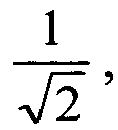
- the fixed decaying rate of the random perturbation control parameter ⁇ is 1 2
- the step length L is in a range of 50 ⁇ 200.
- An image registration method comprising selecting a registration source image ⁇ p i
- i 1, whil,M ⁇ and a registration target image ⁇ q j
- the image registration method is applied for cardiac chamber model, the registration source image ⁇ p i ⁇ and the registration target image ⁇ q j ⁇ are located in different coordinate systems, and the p i and q j are column vectors of 3 ⁇ 1.
- said obtaining closest points on the image ⁇ q j ⁇ corresponding to points on the image ⁇ p i ' ⁇ is specifically: searching for the closest points on the image ⁇ q j ⁇ corresponding to the points on the image ⁇ p i ' ⁇ by means of KD binary tree.
- said judging the magnitudes of the average distance ⁇ E 1 ⁇ and the ideal average distance E x is specifically: judging in turn whether the average distance ⁇ E l ⁇ is smaller than or equal to the ideal average distance E x (S205).
- said judging the magnitudes of the average distance ⁇ E 1 ⁇ and the ideal average distance E x is specifically:
- the method after said recalculating an average distance ⁇ E 1 ' ⁇ or said recalculating an average distance ⁇ E 1 " ⁇ , further comprises: judging whether a number of iteration times is larger than a preset number of iteration times K, and terminating the registration and reporting an error when the number of iteration times is larger than the preset number of iteration times K (S400).
- the fixed decaying rate of the random perturbation control parameter ⁇ is 1 2
- the step length L is in a range of 50 ⁇ 200.
- the random perturbation control parameter ⁇ in this method can be decayed automatically in the whole iteration process.
- the model can be made to get rid of the bondage of local limits so as to be transformed to a better position to undergo the iteration by adding the random perturbation, i.e., approaching the global optimization by searching.
- the random perturbation control parameter ⁇ in this method is not set empirically but is comprehensively set after a consideration of the global search performance and the iteration speed.
- the random perturbation control parameters ⁇ can be set to the same value and all obtain a comparatively good registration effect.
- the image registration method provided in the embodiments of the present application can not only achieve registration under a circumstance where a registration source and a registration target are in a large range of initial deviations, but also effectively get rid of bondage of local limits to improve registration accuracy and registration success rate without manual adjustment of parameters.
- Fig. 1 is a schematic diagram of a flow of an image registration method provided in Embodiment 1 of the present application.
- the method comprises:
- Step S104 judging whether the average distance ⁇ E 1 ⁇ is larger than a preset ideal average distance E x , and if not, terminating the registration. If one value in the average distance ⁇ E 1 ⁇ is smaller than or equal to the preset ideal average distance E x , this value in the average distance ⁇ E 1 ⁇ is the ideal coordinate transformation, and thus the registration can be terminated.
- Fig. 2 is a schematic diagram of a flow of an image registration method provided in Embodiment 2 of the present application.
- step S201 ⁇ step S204 in the embodiment of the present application are the same as step S101 ⁇ step S104 in Embodiment 1, and no further descriptions are given herein.
- this method can further comprise steps of:step S205: judging in turn whether the average distance ⁇ E 1 ⁇ is larger than an initial average distance E 0 , wherein the initial average distance E 0 is corresponding to the initial coordinate transformation H 0 ;step S206: if not, terminating the judgment between the average distance ⁇ E 1 ⁇ and the initial average distance E 0 , replacing the initial coordinate transformation H 0 with a coordinate transformation H g corresponding to a current average distance E g , decaying the random perturbation control parameter ⁇ in accordance with a fixed decaying rate, recalculating an average distance ⁇ E 1 ' ⁇ in accordance with the coordinate transformation H g and the decayed random perturbation control parameter
- step S207 if so, after decaying the random perturbation control parameter ⁇ in accordance with the fixed decaying rate, reapplying a random perturbation to the image ⁇ p i ⁇ , recalculating an average distance ⁇ E 1 " ⁇ by using the initial coordinate transformation H 0 , and judging whether the average distance ⁇ E 1 )" ⁇ is smaller than or equal to the preset ideal average distance E x .
- the global search performance and the iterative speed of the algorithm are in a reverse relationship, and the relationship between the global search performance and the iterative speed can be balanced by setting the range of the random perturbation control parameter ⁇ and setting the step length L.
- the preset random perturbation control parameter ⁇ is 10% of the geometric proportion of the registration source image ⁇ p i ⁇ or the registration target image ⁇ q j ⁇
- the step length L is in a range of 50 ⁇ 200.
- Fig. 3 is a schematic diagram of a flow of an image registration method provided in Embodiment 3 of the present application.
- step S301 ⁇ step S304 in the embodiment of the present application are the same as step S101 ⁇ step S104 in Embodiment 1, and no further descriptions are given herein.
- this method can further comprise steps of:
- Step S305 and step S205 only differ in how to judge the magnitudes of the average distance ⁇ E 1 ⁇ and the initial average distance E 0 .
- the average distance ⁇ E 1 ⁇ is compared with the initial average distance E 0 in turn, and in step S305, the minimum average distance E min in the average distance ⁇ E 1 ⁇ is firstly selected, and then the minimum average distance E min is compared with the initial average distance E 0 .
- Fig. 4 is a schematic diagram of a flow of an image registration method provided in Embodiment 4 of the present application
- Fig. 5 is a flow of another image registration method provided in Embodiment 4 of the present application.
- this method can further comprise: step S400: judging whether a number of iteration times is larger than a preset number of iteration times K, and if so, terminating the registration and reporting an error.
- Presetting the number of iteration times K aims to control the iterations within a reasonable range to avoid waste of a large amount of time to perform the operation under the circumstance where the registration cannot be achieved.
- the preset number of iteration times K is selected to be 100.
- the random perturbation control parameter ⁇ in this method can be decayed automatically in the whole iteration process, when the preset initial transformation is at the optimal starting position, there is no need to worry about a transformation of the model to a worse position due to adding the random perturbation, and when the initial transformation itself is not optimal, the model can be made to get rid of the bondage of local limits so as to be transformed to a better position to undergo the iteration by adding the random perturbation, i.e., approaching the global optimization by searching.
- the random perturbation control parameter ⁇ in this method is not set empirically but is comprehensively set after a consideration of the global search performance and the iteration speed, and with regard to multiple groups of cardiac chamber models, the random perturbation control parameters ⁇ can be set to the same value, and all obtain a comparatively good registration effect.
- the image registration method provided in the embodiments of the present application can not only achieve registration under a circumstance where a registration source and a registration target are in a large range of initial deviations, but also effectively get rid of bondage of local limits to improve registration accuracy and registration success rate without manual adjustment of parameters.
Landscapes
- Engineering & Computer Science (AREA)
- Theoretical Computer Science (AREA)
- General Physics & Mathematics (AREA)
- Physics & Mathematics (AREA)
- Computer Vision & Pattern Recognition (AREA)
- Health & Medical Sciences (AREA)
- Multimedia (AREA)
- General Health & Medical Sciences (AREA)
- Databases & Information Systems (AREA)
- Software Systems (AREA)
- Medical Informatics (AREA)
- Evolutionary Computation (AREA)
- Computing Systems (AREA)
- Artificial Intelligence (AREA)
- Life Sciences & Earth Sciences (AREA)
- Biomedical Technology (AREA)
- Molecular Biology (AREA)
- Image Processing (AREA)
- Ultra Sonic Daignosis Equipment (AREA)
- Image Analysis (AREA)
Description
- The present application relates to the image processing technical field, and in particular, to an image registration method based on ICP algorithm.
- Along with continuous emergence of new types of sensors, the ability of people to obtain images is improved rapidly, and images generated by sensors of different physical characteristics are also increased continuously. Since image data obtained by different image sensors have obvious limitations and differences, merely using one kind of image data generally can hardly meet actual requirements. Therefore, there is a need to combine images obtained by different sensors via an image fusion technique to achieve more comprehensive, clearer and more accurate understanding and recognition of targets in the images. For example, in medical science, images obtained in different forms, e.g., computed tomography imaging (CT), magnetic resonance imaging (MRI), and ultrasound (US), by a comprehensive analysis of anatomic and physiological information are fused to realize an improved diagnosing process.
- The image registration technique is an important precondition for achieving the image fusion, and is a problem to be firstly solved for the image fusion. The ICP (Iterative Closest Point) algorithm is a method for achieving a registration of images, and the ICP algorithm is a process of repeatedly performing "determination of a set of corresponding points, and calculation of an optimal rigid change" based on a registration method of a curved surface in a free form, until a preset registration convergence criteria is reached, the final coordinate change being a composition of respective changes. However, since the disadvantages that the initial deviation range of the registration target and the registration source cannot be too large, and although the convergence can be made to a local limit, a global optimization generally cannot be achieved (i.e., failing to get rid of the local limit) exist in the conventional ICP algorithm, accuracy and success rate of the image registration are comparatively low, which cannot meet actual requirements.
- For example, G.P.Penney ET AL:" A Stochastic Iterative Closest Point Algorithm (stochastlCP)" in :"Network and Parallel Computing", 2001, Springer International Publishing, Cham 032548, XP55379169, ISSN: 0302-9743 ISBN: 978-3-642-38591-9 vol. 2208, pages 762-769, DOL: 10.1007, 3-540-45469-3_91 discloses an image registration method based on the ICP algorithm.
- US patent applications with the publication numbers
US2007047840A1 andUS2007031064A1 discloses the use of a k-d tree to perform a search in an ICP algorithm. - Upon a study of the prior art, the applicant finds that the existing image registration method based on the ICP algorithm generally employs two methods, i.e., "applying a random rigid perturbation transformation to a registration" and "applying a random perturbation to three-dimensional coordinate points of a registration target so that it is deformed", to achieve the object of getting rid of the local limit of the conventional ICP algorithm to make the registration effect better. However, the employment of the method of "applying a random rigid perturbation transformation to a registration" requires sampling in a space with six-dimensional freedom, needs a large amount of calculations, and takes time. With respect to the employment of the method of "applying a random perturbation to three-dimensional coordinate points of a registration target to deform it", the parameters thereof are set empirically in actual applications in accordance with different experimental models, and with regard to different experimental models, the setting of parameters is comparatively difficult, and a wrong setting is likely to result in an unsuccessful registration.
- In view of the above, the embodiments of the present application provide an image registration method to achieve the object of achieving registration under a circumstance where a registration source and a registration target are in a large range of initial deviations, and effectively getting rid of bondage of local limits to improve registration accuracy and registration success rate without manual adjustment of parameters.
- In order to achieve the above object, the present application employs the following technical solutions:An image registration method, comprising selecting a registration source image {pi | i=1,......,M} and a registration target image {qj | j=1,......,N}, wherein 0<i<=M, 0<j<=N, i, j, M and N are positive integers, and M<<N (S101); and applying a random perturbation to the image {pi} in accordance with a preset random perturbation control parameter σ so that it is deformed to obtain an image {pi'}, and obtaining closest points on the image {qj} corresponding to points
on the image {pi'}, the obtained set of points being an image {qj '} (S102);
characterized by comprising: - performing an iterative operation on the image {pi'} and the image {qj'} within a preset step length L in accordance with a preset initial coordinate transformation H0 to obtain a coordinate transformation {H1|1=1,......,L}, between the image {pi'} and
- the image {qj'}, and calculating an average distance {E1 |1=1,......,L} between the image {pi'} and the image {qj'} in accordance with the coordinate transformation {H1}, the average distance {E1} corresponding to the coordinate transformation {H1} (S103) ;judging magnitudes of the average distance {E1} and a preset ideal average distance
Ex, and terminating the registration when the average distance {E1} is smaller than or equal to the preset ideal average distance (S104); - when the average distance {E1} is larger than the preset ideal average distance, further comprising steps of:
- judging in turn magnitudes of the average distance {E1} and an initial average distance E0, wherein the initial average distance E0 is corresponding to the initial coordinate transformation H0 (S205);
- when any value in the average distance {E1} is smaller than or equal to the initial average distance E0, terminating the judgment between the average distance {E1} and the initial average distance E0, replacing the initial coordinate transformation H0 with a coordinate transformation Hg corresponding to a current average distance Eg, decaying the random perturbation control parameter σ in accordance with a fixed decaying rate, recalculating an average distance {E1'} in accordance with the coordinate transformation Hg and the decayed random perturbation control parameter σ, and judging whether the average distance {E1'} is smaller than or equal to the preset ideal average distance Ex (S206);
- when all the values in the average distance {E1} are larger than the initial average distance E0, after decaying the random perturbation control parameter σ in accordance with the fixed decaying rate, reapplying a random perturbation to the image {pi}, recalculating an average distance {E1"} by using the initial coordinate transformation H0, and judging whether the average distance {E1"} is smaller than or equal to the preset ideal average distance Ex (S207).
- Preferably, the image registration method is applied for cardiac chamber model, the registration source image {pi} and the registration target image {qj} are located in different coordinate systems, and the pi and qj are column vectors of 3∗1.
- Preferably, said obtaining closest points on the image {qj} corresponding to points on the image {pi'} is specifically:
searching for the closest points on the image {qj} corresponding to the points on the image {pi'} by means of KD binary tree. - Preferably, said judging the magnitudes of the average distance {E1} and the ideal average distance Ex is specifically:
judging in turn whether the average distance {E1} is smaller than or equal to the ideal average distance Ex (S205). - Preferably, said judging the magnitudes of the average distance {E1} and the ideal average distance Ex is specifically:
- selecting the minimum average distance Emin in the average distance {E1}(S305);
- judging the magnitudes of the minimum average distance Emin and the ideal average distance Ex (S306).
- Preferably, the method, after said recalculating an average distance {E1'} or said recalculating an average distance {E1"}, further comprises:
judging whether a number of iteration times is larger than a preset number of iteration times K, and terminating the registration and reporting an error when the number of iteration times is larger than the preset number of iteration times K (S400). - Preferably, the fixed decaying rate of the random perturbation control parameter σ is

- In order to achieve the above object, the present application also employs the following technical solutions
An image registration method, comprising selecting a registration source image {pi | i=1,......,M} and a registration target image {qj | j=1,......,N}, wherein 0<i<=M, 0<j<=N, i, j, M and N are positive integers, and M<<N (S101); and applying a random perturbation to the image {pi} in accordance with a preset random perturbation control parameter σ so that it is deformed to obtain an image {pi'}, and obtaining closest points on the image {qj} corresponding to points on the image {pi'}, the obtained set of points being an image {qi'} (S102);
, characterized by comprising: - performing an iterative operation on the image {pi'} and the image {qi'} within a preset step length L in accordance with a preset initial coordinate transformation H0 to obtain a coordinate transformation {H1|1=1,......,L}, between the image {pi'} and the image {qi'}, and calculating an average distance {E1|1=1,......,L} between the image {pi'} and the image {qi'} in accordance with the coordinate transformation {H1}, the average distance {E1} corresponding to the coordinate transformation {H1} (S13) ;
- judging magnitudes of the average distance {E1} and a preset ideal average distance Ex, and terminating the registration when the average distance {E1} is smaller than or equal to the preset ideal average distance (S104);
- when the average distance {E1} is larger than the preset ideal average distance, further comprising steps of:
selecting the minimum average distance Emin in the average distance {E1}(S305); - judging magnitudes of the minimum average distance Emin and the initial average distance E0, wherein the initial average distance E0 is corresponding to the initial coordinate transformation H0 (S306);
- when the minimum average distance Emin is smaller than or equal to the initial average distance E0, replacing the initial coordinate transformation H0 with a coordinate transformation Hmin corresponding to the minimum average distance Emin, decaying the random perturbation control parameter σ in accordance with a fixed decaying rate, recalculating an average distance {E1'} in accordance with the coordinate transformation Hmin and the decayed random perturbation control parameter σ, and judging whether the average distance {E1'} is smaller than or equal to the preset ideal average distance Ex (S307);
- when the minimum average distance Emin is larger than the initial average distance E0, after decaying the random perturbation control parameter σ in accordance with the fixed decaying rate, reapplying a random perturbation to the image {pi}, recalculating an average distance {E1"} by using the initial coordinate transformation H0, and judging whether the average distance {E1"} is smaller than or equal to the preset ideal average distance Ex (S308).
- Preferably, the image registration method is applied for cardiac chamber model, the registration source image {pi} and the registration target image {qj} are located in different coordinate systems, and the pi and qj are column vectors of 3∗1.
- Preferably, said obtaining closest points on the image {qj} corresponding to points on the image {pi'} is specifically:
searching for the closest points on the image {qj} corresponding to the points on the image {pi'} by means of KD binary tree. - Preferably, said judging the magnitudes of the average distance {E1} and the ideal average distance Ex is specifically:
judging in turn whether the average distance {El} is smaller than or equal to the ideal average distance Ex (S205). - Preferably, said judging the magnitudes of the average distance {E1} and the ideal average distance Ex is specifically:
- selecting the minimum average distance Emin in the average distance {E1}(S305);
- judging the magnitudes of the minimum average distance Emin and the ideal average distance Ex (S306).
- Preferably, the method, after said recalculating an average distance {E1'} or said recalculating an average distance {E1"}, further comprises:
judging whether a number of iteration times is larger than a preset number of iteration times K, and terminating the registration and reporting an error when the number of iteration times is larger than the preset number of iteration times K (S400). - Preferably, the fixed decaying rate of the random perturbation control parameter σ is

- It can be seen from the above technical solutions provided in the embodiments of the present application that the random perturbation control parameter σ in this method can be decayed automatically in the whole iteration process. When the preset initial transformation is at the optimal starting position, there is no need to worry about a transformation of the model to a worse position due to adding the random perturbation, and when the initial transformation itself is not optimal, the model can be made to get rid of the bondage of local limits so as to be transformed to a better position to undergo the iteration by adding the random perturbation, i.e., approaching the global optimization by searching. Meanwhile, the random perturbation control parameter σ in this method is not set empirically but is comprehensively set after a consideration of the global search performance and the iteration speed. With regard to multiple groups of cardiac chamber models, the random perturbation control parameters σ can be set to the same value and all obtain a comparatively good registration effect.
- Therefore, the image registration method provided in the embodiments of the present application can not only achieve registration under a circumstance where a registration source and a registration target are in a large range of initial deviations, but also effectively get rid of bondage of local limits to improve registration accuracy and registration success rate without manual adjustment of parameters.
- In order to describe more clearly the technical solutions of the embodiments of the present application or the prior art, brief description of the accompanying figures to be used in the descriptions of the embodiments or the prior art will be given below. Obviously, the figures in the descriptions below are only some embodiments recorded in the present application, and those skilled in the art can obtain other figures in accordance with these figures without making creative efforts.
- In order for those skilled in the art to understand the technical solutions in the present application better, clear and complete descriptions of the technical solutions in the embodiments of the present application will be given below by referring to the figures in the embodiments of the present application. Obviously, the described embodiments are only parts of the embodiments of the present application, rather than all of the embodiments. Based on the embodiments in the present application, all other embodiments obtained by those skilled in the art that fall within the scope of the claims shall belong to the protection scope of the present application.
-
Fig. 1 is a schematic diagram of a flow of an image registration method provided in Embodiment 1 of the present application. - As shown in
Fig. 1 , the method comprises: - Step S101: selecting a registration source image {pi} and a registration target image {qj}, the registration source image being {pi |i=1,······,M}, the registration target image being {qj |j=1,······,N}, M«N, the registration source image {pi} and the registration target image {qj} being located in different coordinate systems, and

- Step S102: applying a random perturbation to the image {pi} to deform it in accordance with a preset random perturbation control parameter σ so as to obtain an image {pi'}, and obtaining closest points on the image {qj} corresponding to points on the image {pi'}, the obtained set of points being
an image {qj'}. - Firstly applying the random perturbation to the registration source image {pi}, specifically:adding a random perturbation ni that meets normal distribution with (0, σ2) to each point in the registration source image {pi}, so that the registration source image {pi} is deformed, i.e., pi'=pi+ni, wherein ni is a column vector of 3∗1.
- Then searching for closest points on the registration target image {qj |j=1,······,N} corresponding to the points on the deformed registration
source image {pi'|i=1,······,M} by means of KD binary tree, the set of points obtained by searching being {qj'|i=1,······,M}; and calculating a matrix X of 3∗3 in accordance with


- Finally respectively calculating the rotation matrix R and the translation vector T, wherein

- Step S103: performing an iterative operation on the image {pi'} and the image {qj'} within a preset step length L in accordance with a preset initial coordinate transformation H0 to obtain a coordinate transformation {H1}, 0<1<L, between the image {pi'} and the image {q j'}, and calculating an average distance {E1} between the image {pi'} and the image {qj'} in accordance with the coordinate transformation {H1}, and the average distance {E1} corresponding to the coordinate transformation {H1};
calculating a coordinate transformation H between {pi} and {qj} in accordance with {pi}=H∗{qj}, and

- Step S104: judging whether the average distance {E1} is larger than a preset ideal average distance Ex, and if not, terminating the registration. If one value in the average distance {E1} is smaller than or equal to the preset ideal average distance Ex, this value in the average distance {E1} is the ideal coordinate transformation, and thus the registration can be terminated.
- In the embodiment of the present application, there are two approaches to judge magnitudes of the average distance {E1} and the preset ideal average distance Ex, i.e., Approach 1: judging in turn the magnitudes of the average distance {E1} and the ideal average distance Ex, and Approach 2: selecting the minimum average distance Emin in the average distance {E1}, and then judging the magnitudes of the minimum average distance Emin and the ideal average distance Ex.
-
Fig. 2 is a schematic diagram of a flow of an image registration method provided in Embodiment 2 of the present application. - As shown in
Fig. 2 , step S201∼step S204 in the embodiment of the present application are the same as step S101 ∼ step S104 in Embodiment 1, and no further descriptions are given herein. In step S204, if the average distance {E1} is larger than the preset ideal average distance Ex, this method can further comprise steps of:step S205: judging in turn whether the average distance {E1} is larger than an initial average distance E0, wherein the initial average distance E0 is corresponding to the initial coordinate transformation H0;step S206: if not, terminating the judgment between the average distance {E1} and the initial average distance E0, replacing the initial coordinate transformation H0 with a coordinate transformation Hg corresponding to a current average distance Eg, decaying the random perturbation control parameter σ in accordance with a fixed decaying rate, recalculating an average distance {E1'} in accordance with the coordinate transformation Hg and the decayed random perturbation control parameter σ, and judging whether the average distance {E1'} is smaller than or equal to the preset ideal average distance Ex; - step S207: if so, after decaying the random perturbation control parameter σ in accordance with the fixed decaying rate, reapplying a random perturbation to the image {pi}, recalculating an average distance {E1"} by using the initial coordinate transformation H0, and judging whether the average distance {E1)"} is smaller than or equal to the preset ideal average distance Ex.
- The global search performance and the iterative speed of the algorithm are in a reverse relationship, and the relationship between the global search performance and the iterative speed can be balanced by setting the range of the random perturbation control parameter σ and setting the step length L. In the embodiment of the present application, the preset random perturbation control parameter σ is 10% of the geometric proportion of the registration source image {pi} or the registration target image {qj}, and the step length L is in a range of 50∼200.
-
Fig. 3 is a schematic diagram of a flow of an image registration method provided in Embodiment 3 of the present application. - As shown in
Fig. 3 , step S301 ∼ step S304 in the embodiment of the present application are the same as step S101 ∼step S104 in Embodiment 1, and no further descriptions are given herein. In step S304, after judging the magnitudes of the average distance {E1} and the preset ideal average distance Ex, this method can further comprise steps of: - step S305: selecting the minimum average distance Emin in the average distance {E1};
- step S306: judging whether the minimum average distance Emin is larger than the initial average distance E0, wherein the initial average distance E0 is corresponding to the initial coordinate transformation H0;
- step S307: if not, replacing the initial coordinate transformation H0 with a coordinate transformation Hmin corresponding to the minimum average distance Emin, decaying the random perturbation control parameter σ in accordance with a fixed decaying rate, recalculating an average distance {E1'} in accordance with the coordinate transformation Hmin and the decayed random perturbation control parameter σ, and judging whether the average distance {E1'} is smaller than or equal to the preset ideal average distance Ex;
- step S308: if so, after decaying the random perturbation control parameter σ in accordance with the fixed decaying rate, reapplying the random perturbation to the image {pi}, recalculating the average distance {E1"} by using the initial coordinate transformation H0, and judging whether the average distance {E1"} is smaller than or equal to the preset ideal average distance Ex.
- Step S305 and step S205 only differ in how to judge the magnitudes of the average distance {E1} and the initial average distance E0. In step S205, the average distance {E1} is compared with the initial average distance E0 in turn, and in step S305, the minimum average distance Emin in the average distance {E1} is firstly selected, and then the minimum average distance Emin is compared with the initial average distance E0.
-
Fig. 4 is a schematic diagram of a flow of an image registration method provided in Embodiment 4 of the present application, andFig. 5 is a flow of another image registration method provided in Embodiment 4 of the present application. As shown inFig. 4 andFig. 5 , after step S206 or S207 of Embodiment 2, or after step S307 or S308 of Embodiment 3, this method can further comprise:
step S400: judging whether a number of iteration times is larger than a preset number of iteration times K, and if so, terminating the registration and reporting an error. - Presetting the number of iteration times K aims to control the iterations within a reasonable range to avoid waste of a large amount of time to perform the operation under the circumstance where the registration cannot be achieved. In the embodiment of the present application, the preset number of iteration times K is selected to be 100.
- It can be seen from the above technical solutions provided in the embodiments of the present application that the random perturbation control parameter σ in this method can be decayed automatically in the whole iteration process, when the preset initial transformation is at the optimal starting position, there is no need to worry about a transformation of the model to a worse position due to adding the random perturbation, and when the initial transformation itself is not optimal, the model can be made to get rid of the bondage of local limits so as to be transformed to a better position to undergo the iteration by adding the random perturbation, i.e., approaching the global optimization by searching. Meanwhile, the random perturbation control parameter σ in this method is not set empirically but is comprehensively set after a consideration of the global search performance and the iteration speed, and with regard to multiple groups of cardiac chamber models, the random perturbation control parameters σ can be set to the same value, and all obtain a comparatively good registration effect.
- Accordingly, the image registration method provided in the embodiments of the present application can not only achieve registration under a circumstance where a registration source and a registration target are in a large range of initial deviations, but also effectively get rid of bondage of local limits to improve registration accuracy and registration success rate without manual adjustment of parameters.
- The above embodiments, which are only preferred embodiments of the present application, enable those skilled in the art to understand or implement the present application. Multiple amendments to these embodiments are obvious to those skilled in the art, and general principles defined in this context can be achieved in other embodiments within the scope of the present application. Therefore, the present application will not be limited to these embodiments shown in this context, but shall comply with the broadest scope consistent with the scope of the claims.
Claims (14)
- An image registration method, comprising selecting a registration source image {pi| i=1,......,M } and a registration target image {qj | j=1,......,N}, wherein 0<i<=M, 0<j<=N, i, j, M and N are positive integers, and M<<N (S101); and applying a random perturbation to the image {pi} in accordance with a preset random perturbation control parameter σ so that it is deformed to obtain an image {pi'}, and obtaining closest points on the image {qj} corresponding to points on the image {pi'}, the obtained set of points being an image {qj'} (S102);
characterized by comprising:performing an iterative operation on the image {pi'} and the image {qj '} within a preset step length L in accordance with a preset initial coordinate transformation H0 to obtain a coordinate transformation {H1| 1=1,......,L}, between the image {pi'} and the image {qj'}, and calculating an average distance {E1|l=1,.......L} between the image {pi'} and the image {qj'} in accordance with the coordinate transformation {H1}, the average distance {E1} corresponding to the coordinate transformation {H1} (S103) ;judging magnitudes of the average distance {E1} and a preset ideal average distance Ex, and terminating the registration when the average distance {E1} is smaller than or equal to the preset ideal average distance (S104);when the average distance {E1} is larger than the preset ideal average distance, further comprising steps of:judging in turn magnitudes of the average distance {E1} and an initial average distance E0, wherein the initial average distance E0 is corresponding to the initial coordinate transformation H0 (S205);when any value in the average distance {E1} is smaller than or equal to the initial average distance E0, terminating the judgment between the average distance {E1} and the initial average distance E0, replacing the initial coordinate transformation H0 with a coordinate transformation Hg corresponding to a current average distance Eg, decaying the random perturbation control parameter σ in accordance with a fixed decaying rate, recalculating an average distance {E1'} in accordance with the coordinate transformation Hg and the decayed random perturbation control parameter σ, and judging whether the average distance {E1'} is smaller than or equal to the preset ideal average distance Ex (S206);when all the values in the average distance {E1} are larger than the initial average distance E0, after decaying the random perturbation control parameter σ in accordance with the fixed decaying rate, reapplying a random perturbation to the image {pi}, recalculating an average distance {E1"} by using the initial coordinate transformation H0, and judging whether the average distance {E1"} is smaller than or equal to the preset ideal average distance Ex (S207). - The method according to claim 1, characterized in that the image registration method is applied for cardiac chamber model, the registration source image {pi} and the registration target image {qj} are located in different coordinate systems, and the pi and qj are column vectors of 3∗1.
- The method according to claim 2, characterized in that said obtaining closest points on the image {qj} corresponding to points on the image {pi'} is specifically: searching for the closest points on the image {qj} corresponding to the points on the image {pi'} by means of KD binary tree.
- The method according to claim 3, characterized in that said judging magnitudes of the average distance {E1} and the preset ideal average distance Ex is specifically: judging in turn whether the average distance {E1} is smaller than or equal to the ideal average distance Ex (S205).
- The method according to claim 3, characterized in that said judging magnitudes of the average distance {E1} and the preset ideal average distance Ex is specifically: selecting the minimum average distance Emin in the average distance {E1}(S305); judging magnitudes of the minimum average distance Emin and the ideal average distance Ex(S306).
- The method according to claim 1, characterized by, after said recalculating an average distance {E1'} or recalculating an average distance {E1"}, further comprising:
judging whether a number of iteration times is larger than a preset number of iteration times K, and terminating the registration and reporting an error when the number of iteration times is larger than the preset number of iteration times K (S400). - The method according to claim 1, characterized in that the fixed decaying rate of the random perturbation control parameter σ is

- An image registration method, comprising selecting a registration source image {pi| i=1,......,M} and a registration target image {qj | j=1,......,N}, wherein 0<i<=M, 0<j<=N, i, j, M and N are positive integers, and M<<N (S101); and applying a random perturbation to the image {pi} in accordance with a preset random perturbation control parameter σ so that it is deformed to obtain an image {pi'}, and obtaining closest points on the image {qj} corresponding to points on the image {pi'}, the obtained set of points being an image {qj'} (S102);
characterized by comprising:performing an iterative operation on the image {pi'} and the image {qj '} within a preset step length L in accordance with a preset initial coordinate transformation H0 to obtain a coordinate transformation {H1| 1=1,......,L}, between the image {pi'} and the image {qj'}, and calculating an average distance {E1|l=1,......,L} between the image {pi'} and the image {qj'} in accordance with the coordinate transformation {H1}, the average distance {E1} corresponding to the coordinate transformation {H1} (S103) ;judging magnitudes of the average distance {E1} and a preset ideal average distance Ex, and terminating the registration when the average distance {E1} is smaller than or equal to the preset ideal average distance (S104);when the average distance {E1} is larger than the preset ideal average distance, further comprising steps of:selecting the minimum average distance Emin in the average distance {E1}(S305); judging magnitudes of the minimum average distance Emin and the initial average distance E0, wherein the initial average distance E0 is corresponding to the initial coordinate transformation H0 (S306);when the minimum average distance Emin is smaller than or equal to the initial average distance E0, replacing the initial coordinate transformation H0 with a coordinate transformation Hmin corresponding to the minimum average distance Emin, decaying the random perturbation control parameter σ in accordance with a fixed decaying rate, recalculating an average distance {E1'} in accordance with the coordinate transformation Hmin and the decayed random perturbation control parameter σ, and judging whether the average distance {E1'} is smaller than or equal to the preset ideal average distance EX (S307);when the minimum average distance Emin is larger than the initial average distance E0, after decaying the random perturbation control parameter σ in accordance with the fixed decaying rate, reapplying a random perturbation to the image {pi}, recalculating an average distance {E1"} by using the initial coordinate transformation H0, and judging whether the average distance {E1"} is smaller than or equal to the preset ideal average distance EX (S308). - The method according to claim 8, characterized in that the image registration method is applied for cardiac chamber model, the registration source image {pi} and the registration target image {qj} are located in different coordinate systems, and the pi and qj are column vectors of 3∗1.
- The method according to claim 9, characterized in that said obtaining closest points on the image {qj} corresponding to points on the image {pi'} is specifically: searching for the closest points on the image {qj} corresponding to the points on the image {pi'} by means of KD binary tree.
- The method according to claim 10, characterized in that said judging magnitudes of the average distance {E1} and the preset ideal average distance Ex is specifically: judging in turn whether the average distance {E1} is smaller than or equal to the ideal average distance Ex (S205).
- The method according to claim 10, characterized in that said judging magnitudes of the average distance {E1} and the preset ideal average distance Ex is specifically:selecting the minimum average distance Emin in the average distance {E1}(S305);judging magnitudes of the minimum average distance Emin and the ideal average distance Ex(S306).
- The method according to claim 8, characterized by, after said recalculating an average distance {E1'} or recalculating an average distance {E1"}, further comprising:
judging whether a number of iteration times is larger than a preset number of iteration times K, and terminating the registration and reporting an error when the number of iteration times is larger than the preset number of iteration times K (S400). - The method according to claim 8, characterized in that the fixed decaying rate of the random perturbation control parameter σ is
Applications Claiming Priority (2)
| Application Number | Priority Date | Filing Date | Title |
|---|---|---|---|
| CN2010102701489A CN102385748B (en) | 2010-08-31 | 2010-08-31 | Image registration method |
| PCT/CN2011/078267 WO2012028053A1 (en) | 2010-08-31 | 2011-08-11 | Image registration method |
Publications (3)
| Publication Number | Publication Date |
|---|---|
| EP2613293A1 EP2613293A1 (en) | 2013-07-10 |
| EP2613293A4 EP2613293A4 (en) | 2017-07-26 |
| EP2613293B1 true EP2613293B1 (en) | 2019-06-12 |
Family
ID=45772146
Family Applications (1)
| Application Number | Title | Priority Date | Filing Date |
|---|---|---|---|
| EP11821079.8A Active EP2613293B1 (en) | 2010-08-31 | 2011-08-11 | Image registration method |
Country Status (5)
| Country | Link |
|---|---|
| US (1) | US9042614B2 (en) |
| EP (1) | EP2613293B1 (en) |
| CN (1) | CN102385748B (en) |
| ES (1) | ES2739052T3 (en) |
| WO (1) | WO2012028053A1 (en) |
Families Citing this family (9)
| Publication number | Priority date | Publication date | Assignee | Title |
|---|---|---|---|---|
| CN104966287B (en) * | 2015-06-08 | 2017-08-08 | 浙江大学 | The multi-disc point cloud Rigid Registration method of stratification |
| US20170337682A1 (en) | 2016-05-18 | 2017-11-23 | Siemens Healthcare Gmbh | Method and System for Image Registration Using an Intelligent Artificial Agent |
| CN110136177B (en) * | 2018-02-08 | 2022-02-18 | 北京连心医疗科技有限公司 | Image registration method, device and storage medium |
| CN110368027B (en) * | 2018-04-13 | 2022-02-18 | 北京柏惠维康科技有限公司 | Image fusion method and device |
| CN112950706B (en) * | 2019-12-11 | 2023-11-03 | 京东科技信息技术有限公司 | Removable device positioning data processing methods, devices, equipment and storage media |
| CN111899286B (en) * | 2020-07-13 | 2024-01-05 | 江西理工大学 | Image registration method based on elite differential evolution |
| CN112465883B (en) * | 2020-11-23 | 2022-03-29 | 山东科技大学 | A High-precision Surface Non-Uniform Image Registration Method |
| CN113558766B (en) * | 2021-07-19 | 2022-05-17 | 北京纳通医学研究院有限公司 | Image registration method and device, surgical robot and surgical robot system |
| CN113570648B (en) * | 2021-07-30 | 2023-09-26 | 武汉联影智融医疗科技有限公司 | Multi-skeletal image registration method, electronic device and medical navigation system |
Family Cites Families (13)
| Publication number | Priority date | Publication date | Assignee | Title |
|---|---|---|---|---|
| US7177486B2 (en) * | 2002-04-08 | 2007-02-13 | Rensselaer Polytechnic Institute | Dual bootstrap iterative closest point method and algorithm for image registration |
| CN1229751C (en) * | 2003-08-14 | 2005-11-30 | 中国人民解放军第一军医大学 | Rigid registration method of multi-device medical images based on the framework of the same overlapping area |
| US7187809B2 (en) * | 2004-06-10 | 2007-03-06 | Sarnoff Corporation | Method and apparatus for aligning video to three-dimensional point clouds |
| US7715604B2 (en) * | 2005-01-18 | 2010-05-11 | Siemens Medical Solutions Usa, Inc. | System and method for automatically registering three dimensional cardiac images with electro-anatomical cardiac mapping data |
| US7583857B2 (en) * | 2005-08-24 | 2009-09-01 | Siemens Medical Solutions Usa, Inc. | System and method for salient region feature based 3D multi modality registration of medical images |
| AU2006302057B2 (en) * | 2005-10-11 | 2013-03-21 | Carnegie Mellon University | Sensor guided catheter navigation system |
| EP1780672A1 (en) * | 2005-10-25 | 2007-05-02 | Bracco Imaging, S.P.A. | Method of registering images, algorithm for carrying out the method of registering images, a program for registering images using the said algorithm and a method of treating biomedical images to reduce imaging artefacts caused by object movement |
| CN100498839C (en) * | 2006-03-08 | 2009-06-10 | 杭州电子科技大学 | Multi-modality medical data three-dimensional visualization method |
| US8064731B2 (en) * | 2006-11-13 | 2011-11-22 | Siemens Audiologische Technik Gmbh | Generalized rigid alignment of 3D ear impression models |
| KR100884066B1 (en) * | 2007-03-30 | 2009-02-19 | 한국전자통신연구원 | SVD based image comparison system and method |
| CN100559398C (en) * | 2007-06-19 | 2009-11-11 | 北京航空航天大学 | Automatic deepness image registration method |
| US8126291B2 (en) | 2007-07-16 | 2012-02-28 | Ecole Centrale De Paris | System and method for dense image registration using Markov Random Fields and efficient linear programming |
| US9025841B2 (en) * | 2009-11-18 | 2015-05-05 | Siemens Aktiengesellschaft | Method and system for segmentation of the prostate in 3D magnetic resonance images |
-
2010
- 2010-08-31 CN CN2010102701489A patent/CN102385748B/en active Active
-
2011
- 2011-08-11 WO PCT/CN2011/078267 patent/WO2012028053A1/en not_active Ceased
- 2011-08-11 US US13/814,760 patent/US9042614B2/en active Active
- 2011-08-11 ES ES11821079T patent/ES2739052T3/en active Active
- 2011-08-11 EP EP11821079.8A patent/EP2613293B1/en active Active
Non-Patent Citations (1)
| Title |
|---|
| None * |
Also Published As
| Publication number | Publication date |
|---|---|
| US9042614B2 (en) | 2015-05-26 |
| WO2012028053A1 (en) | 2012-03-08 |
| US20130156281A1 (en) | 2013-06-20 |
| EP2613293A4 (en) | 2017-07-26 |
| CN102385748A (en) | 2012-03-21 |
| CN102385748B (en) | 2013-12-25 |
| EP2613293A1 (en) | 2013-07-10 |
| ES2739052T3 (en) | 2020-01-28 |
Similar Documents
| Publication | Publication Date | Title |
|---|---|---|
| EP2613293A1 (en) | Image registration method | |
| CN114022847B (en) | A method, system, device and storage medium for predicting trajectory of intelligent agent | |
| CN110599528B (en) | Unsupervised three-dimensional medical image registration method and system based on neural network | |
| CN114066953B (en) | A deformable registration method for 3D multimodal images for rigid targets | |
| EP4272176B1 (en) | Rendering new images of scenes using geometry-aware neural networks conditioned on latent variables | |
| CN106054170B (en) | A kind of maneuvering target tracking method under constraints | |
| Fletcher et al. | Gaussian distributions on Lie groups and their application to statistical shape analysis | |
| CN103644903A (en) | Simultaneous localization and mapping method based on distributed edge unscented particle filter | |
| CN113658194B (en) | Point cloud splicing method and device based on reference object and storage medium | |
| CN113902779B (en) | Point cloud registration method based on tensor voting method | |
| CN104615880A (en) | Rapid ICP (inductively coupled plasma) method for point cloud matching of three-dimensional laser radar | |
| CN102663351A (en) | Face characteristic point automation calibration method based on conditional appearance model | |
| CN114972454B (en) | A method and device for spatial target point cloud registration based on neural network | |
| Delibasis et al. | A novel tool for segmenting 3D medical images based on generalized cylinders and active surfaces | |
| CN113034461A (en) | Pancreas tumor region image segmentation method and device and computer readable storage medium | |
| CN115511935A (en) | Normal distribution transformation point cloud registration method based on iterative discretization and linear interpolation | |
| CN109087333A (en) | Target scale estimation method and its device based on correlation filter tracking algorithm | |
| Bayro-Corrochano et al. | Lie algebra approach for tracking and 3D motion estimation using monocular vision | |
| CN103295236B (en) | Markov multiple features random field models construction method and brain MR image cutting techniques thereof | |
| Dubbelman et al. | Efficient trajectory bending with applications to loop closure | |
| CN102880869A (en) | Method for extracting fingerprint direction field under Morkov random field condition based on priori knowledge | |
| CN106228573A (en) | A kind of motion target tracking method and device | |
| Gao et al. | Filtering in the diffeomorphism group and the registration of point sets | |
| CN119863479A (en) | Intelligent three-dimensional segmentation method and related equipment for three-dimensional digital core hole seam characteristics | |
| CN111127638B (en) | Method for realizing positioning and grabbing point of protruding mark position of workpiece by using three-dimensional template library |
Legal Events
| Date | Code | Title | Description |
|---|---|---|---|
| PUAI | Public reference made under article 153(3) epc to a published international application that has entered the european phase |
Free format text: ORIGINAL CODE: 0009012 |
|
| 17P | Request for examination filed |
Effective date: 20130326 |
|
| AK | Designated contracting states |
Kind code of ref document: A1 Designated state(s): AL AT BE BG CH CY CZ DE DK EE ES FI FR GB GR HR HU IE IS IT LI LT LU LV MC MK MT NL NO PL PT RO RS SE SI SK SM TR |
|
| DAX | Request for extension of the european patent (deleted) | ||
| RAP1 | Party data changed (applicant data changed or rights of an application transferred) |
Owner name: SHANGHAI MICROPORT EP MEDTECH CO., LTD. |
|
| RA4 | Supplementary search report drawn up and despatched (corrected) |
Effective date: 20170622 |
|
| RIC1 | Information provided on ipc code assigned before grant |
Ipc: G06T 7/00 20170101AFI20170616BHEP |
|
| STAA | Information on the status of an ep patent application or granted ep patent |
Free format text: STATUS: EXAMINATION IS IN PROGRESS |
|
| 17Q | First examination report despatched |
Effective date: 20180516 |
|
| GRAP | Despatch of communication of intention to grant a patent |
Free format text: ORIGINAL CODE: EPIDOSNIGR1 |
|
| STAA | Information on the status of an ep patent application or granted ep patent |
Free format text: STATUS: GRANT OF PATENT IS INTENDED |
|
| RIC1 | Information provided on ipc code assigned before grant |
Ipc: G06T 7/33 20170101ALI20181220BHEP Ipc: G06K 9/62 20060101ALI20181220BHEP Ipc: G06T 7/00 20170101AFI20181220BHEP Ipc: G06T 3/00 20060101ALI20181220BHEP Ipc: G06K 9/00 20060101ALI20181220BHEP |
|
| INTG | Intention to grant announced |
Effective date: 20190122 |
|
| GRAS | Grant fee paid |
Free format text: ORIGINAL CODE: EPIDOSNIGR3 |
|
| GRAA | (expected) grant |
Free format text: ORIGINAL CODE: 0009210 |
|
| STAA | Information on the status of an ep patent application or granted ep patent |
Free format text: STATUS: THE PATENT HAS BEEN GRANTED |
|
| AK | Designated contracting states |
Kind code of ref document: B1 Designated state(s): AL AT BE BG CH CY CZ DE DK EE ES FI FR GB GR HR HU IE IS IT LI LT LU LV MC MK MT NL NO PL PT RO RS SE SI SK SM TR |
|
| REG | Reference to a national code |
Ref country code: GB Ref legal event code: FG4D |
|
| REG | Reference to a national code |
Ref country code: CH Ref legal event code: EP |
|
| REG | Reference to a national code |
Ref country code: AT Ref legal event code: REF Ref document number: 1143558 Country of ref document: AT Kind code of ref document: T Effective date: 20190615 |
|
| REG | Reference to a national code |
Ref country code: DE Ref legal event code: R096 Ref document number: 602011059713 Country of ref document: DE |
|
| REG | Reference to a national code |
Ref country code: IE Ref legal event code: FG4D |
|
| REG | Reference to a national code |
Ref country code: NL Ref legal event code: MP Effective date: 20190612 |
|
| REG | Reference to a national code |
Ref country code: LT Ref legal event code: MG4D |
|
| PG25 | Lapsed in a contracting state [announced via postgrant information from national office to epo] |
Ref country code: NO Free format text: LAPSE BECAUSE OF FAILURE TO SUBMIT A TRANSLATION OF THE DESCRIPTION OR TO PAY THE FEE WITHIN THE PRESCRIBED TIME-LIMIT Effective date: 20190912 Ref country code: FI Free format text: LAPSE BECAUSE OF FAILURE TO SUBMIT A TRANSLATION OF THE DESCRIPTION OR TO PAY THE FEE WITHIN THE PRESCRIBED TIME-LIMIT Effective date: 20190612 Ref country code: AL Free format text: LAPSE BECAUSE OF FAILURE TO SUBMIT A TRANSLATION OF THE DESCRIPTION OR TO PAY THE FEE WITHIN THE PRESCRIBED TIME-LIMIT Effective date: 20190612 Ref country code: SE Free format text: LAPSE BECAUSE OF FAILURE TO SUBMIT A TRANSLATION OF THE DESCRIPTION OR TO PAY THE FEE WITHIN THE PRESCRIBED TIME-LIMIT Effective date: 20190612 Ref country code: HR Free format text: LAPSE BECAUSE OF FAILURE TO SUBMIT A TRANSLATION OF THE DESCRIPTION OR TO PAY THE FEE WITHIN THE PRESCRIBED TIME-LIMIT Effective date: 20190612 Ref country code: LT Free format text: LAPSE BECAUSE OF FAILURE TO SUBMIT A TRANSLATION OF THE DESCRIPTION OR TO PAY THE FEE WITHIN THE PRESCRIBED TIME-LIMIT Effective date: 20190612 |
|
| PG25 | Lapsed in a contracting state [announced via postgrant information from national office to epo] |
Ref country code: RS Free format text: LAPSE BECAUSE OF FAILURE TO SUBMIT A TRANSLATION OF THE DESCRIPTION OR TO PAY THE FEE WITHIN THE PRESCRIBED TIME-LIMIT Effective date: 20190612 Ref country code: BG Free format text: LAPSE BECAUSE OF FAILURE TO SUBMIT A TRANSLATION OF THE DESCRIPTION OR TO PAY THE FEE WITHIN THE PRESCRIBED TIME-LIMIT Effective date: 20190912 Ref country code: LV Free format text: LAPSE BECAUSE OF FAILURE TO SUBMIT A TRANSLATION OF THE DESCRIPTION OR TO PAY THE FEE WITHIN THE PRESCRIBED TIME-LIMIT Effective date: 20190612 Ref country code: GR Free format text: LAPSE BECAUSE OF FAILURE TO SUBMIT A TRANSLATION OF THE DESCRIPTION OR TO PAY THE FEE WITHIN THE PRESCRIBED TIME-LIMIT Effective date: 20190913 |
|
| REG | Reference to a national code |
Ref country code: AT Ref legal event code: MK05 Ref document number: 1143558 Country of ref document: AT Kind code of ref document: T Effective date: 20190612 |
|
| REG | Reference to a national code |
Ref country code: ES Ref legal event code: FG2A Ref document number: 2739052 Country of ref document: ES Kind code of ref document: T3 Effective date: 20200128 |
|
| PG25 | Lapsed in a contracting state [announced via postgrant information from national office to epo] |
Ref country code: CZ Free format text: LAPSE BECAUSE OF FAILURE TO SUBMIT A TRANSLATION OF THE DESCRIPTION OR TO PAY THE FEE WITHIN THE PRESCRIBED TIME-LIMIT Effective date: 20190612 Ref country code: RO Free format text: LAPSE BECAUSE OF FAILURE TO SUBMIT A TRANSLATION OF THE DESCRIPTION OR TO PAY THE FEE WITHIN THE PRESCRIBED TIME-LIMIT Effective date: 20190612 Ref country code: SK Free format text: LAPSE BECAUSE OF FAILURE TO SUBMIT A TRANSLATION OF THE DESCRIPTION OR TO PAY THE FEE WITHIN THE PRESCRIBED TIME-LIMIT Effective date: 20190612 Ref country code: EE Free format text: LAPSE BECAUSE OF FAILURE TO SUBMIT A TRANSLATION OF THE DESCRIPTION OR TO PAY THE FEE WITHIN THE PRESCRIBED TIME-LIMIT Effective date: 20190612 Ref country code: NL Free format text: LAPSE BECAUSE OF FAILURE TO SUBMIT A TRANSLATION OF THE DESCRIPTION OR TO PAY THE FEE WITHIN THE PRESCRIBED TIME-LIMIT Effective date: 20190612 Ref country code: AT Free format text: LAPSE BECAUSE OF FAILURE TO SUBMIT A TRANSLATION OF THE DESCRIPTION OR TO PAY THE FEE WITHIN THE PRESCRIBED TIME-LIMIT Effective date: 20190612 Ref country code: PT Free format text: LAPSE BECAUSE OF FAILURE TO SUBMIT A TRANSLATION OF THE DESCRIPTION OR TO PAY THE FEE WITHIN THE PRESCRIBED TIME-LIMIT Effective date: 20191014 |
|
| PG25 | Lapsed in a contracting state [announced via postgrant information from national office to epo] |
Ref country code: IS Free format text: LAPSE BECAUSE OF FAILURE TO SUBMIT A TRANSLATION OF THE DESCRIPTION OR TO PAY THE FEE WITHIN THE PRESCRIBED TIME-LIMIT Effective date: 20191012 Ref country code: SM Free format text: LAPSE BECAUSE OF FAILURE TO SUBMIT A TRANSLATION OF THE DESCRIPTION OR TO PAY THE FEE WITHIN THE PRESCRIBED TIME-LIMIT Effective date: 20190612 |
|
| REG | Reference to a national code |
Ref country code: DE Ref legal event code: R097 Ref document number: 602011059713 Country of ref document: DE |
|
| PG25 | Lapsed in a contracting state [announced via postgrant information from national office to epo] |
Ref country code: TR Free format text: LAPSE BECAUSE OF FAILURE TO SUBMIT A TRANSLATION OF THE DESCRIPTION OR TO PAY THE FEE WITHIN THE PRESCRIBED TIME-LIMIT Effective date: 20190612 |
|
| PLBE | No opposition filed within time limit |
Free format text: ORIGINAL CODE: 0009261 |
|
| STAA | Information on the status of an ep patent application or granted ep patent |
Free format text: STATUS: NO OPPOSITION FILED WITHIN TIME LIMIT |
|
| PG25 | Lapsed in a contracting state [announced via postgrant information from national office to epo] |
Ref country code: PL Free format text: LAPSE BECAUSE OF FAILURE TO SUBMIT A TRANSLATION OF THE DESCRIPTION OR TO PAY THE FEE WITHIN THE PRESCRIBED TIME-LIMIT Effective date: 20190612 Ref country code: DK Free format text: LAPSE BECAUSE OF FAILURE TO SUBMIT A TRANSLATION OF THE DESCRIPTION OR TO PAY THE FEE WITHIN THE PRESCRIBED TIME-LIMIT Effective date: 20190612 |
|
| 26N | No opposition filed |
Effective date: 20200313 |
|
| PG25 | Lapsed in a contracting state [announced via postgrant information from national office to epo] |
Ref country code: SI Free format text: LAPSE BECAUSE OF FAILURE TO SUBMIT A TRANSLATION OF THE DESCRIPTION OR TO PAY THE FEE WITHIN THE PRESCRIBED TIME-LIMIT Effective date: 20190612 Ref country code: LU Free format text: LAPSE BECAUSE OF NON-PAYMENT OF DUE FEES Effective date: 20190811 Ref country code: IS Free format text: LAPSE BECAUSE OF FAILURE TO SUBMIT A TRANSLATION OF THE DESCRIPTION OR TO PAY THE FEE WITHIN THE PRESCRIBED TIME-LIMIT Effective date: 20200224 Ref country code: LI Free format text: LAPSE BECAUSE OF NON-PAYMENT OF DUE FEES Effective date: 20190831 Ref country code: CH Free format text: LAPSE BECAUSE OF NON-PAYMENT OF DUE FEES Effective date: 20190831 Ref country code: MC Free format text: LAPSE BECAUSE OF FAILURE TO SUBMIT A TRANSLATION OF THE DESCRIPTION OR TO PAY THE FEE WITHIN THE PRESCRIBED TIME-LIMIT Effective date: 20190612 |
|
| REG | Reference to a national code |
Ref country code: BE Ref legal event code: MM Effective date: 20190831 |
|
| PG2D | Information on lapse in contracting state deleted |
Ref country code: IS |
|
| PG25 | Lapsed in a contracting state [announced via postgrant information from national office to epo] |
Ref country code: IE Free format text: LAPSE BECAUSE OF NON-PAYMENT OF DUE FEES Effective date: 20190811 |
|
| PG25 | Lapsed in a contracting state [announced via postgrant information from national office to epo] |
Ref country code: BE Free format text: LAPSE BECAUSE OF NON-PAYMENT OF DUE FEES Effective date: 20190831 |
|
| PG25 | Lapsed in a contracting state [announced via postgrant information from national office to epo] |
Ref country code: CY Free format text: LAPSE BECAUSE OF FAILURE TO SUBMIT A TRANSLATION OF THE DESCRIPTION OR TO PAY THE FEE WITHIN THE PRESCRIBED TIME-LIMIT Effective date: 20190612 |
|
| PG25 | Lapsed in a contracting state [announced via postgrant information from national office to epo] |
Ref country code: HU Free format text: LAPSE BECAUSE OF FAILURE TO SUBMIT A TRANSLATION OF THE DESCRIPTION OR TO PAY THE FEE WITHIN THE PRESCRIBED TIME-LIMIT; INVALID AB INITIO Effective date: 20110811 Ref country code: MT Free format text: LAPSE BECAUSE OF FAILURE TO SUBMIT A TRANSLATION OF THE DESCRIPTION OR TO PAY THE FEE WITHIN THE PRESCRIBED TIME-LIMIT Effective date: 20190612 |
|
| PG25 | Lapsed in a contracting state [announced via postgrant information from national office to epo] |
Ref country code: MK Free format text: LAPSE BECAUSE OF FAILURE TO SUBMIT A TRANSLATION OF THE DESCRIPTION OR TO PAY THE FEE WITHIN THE PRESCRIBED TIME-LIMIT Effective date: 20190612 |
|
| PGFP | Annual fee paid to national office [announced via postgrant information from national office to epo] |
Ref country code: ES Payment date: 20250925 Year of fee payment: 15 |
|
| PGFP | Annual fee paid to national office [announced via postgrant information from national office to epo] |
Ref country code: DE Payment date: 20250820 Year of fee payment: 15 |
|
| PGFP | Annual fee paid to national office [announced via postgrant information from national office to epo] |
Ref country code: IT Payment date: 20250825 Year of fee payment: 15 |
|
| PGFP | Annual fee paid to national office [announced via postgrant information from national office to epo] |
Ref country code: GB Payment date: 20250820 Year of fee payment: 15 |
|
| PGFP | Annual fee paid to national office [announced via postgrant information from national office to epo] |
Ref country code: FR Payment date: 20250829 Year of fee payment: 15 |