EP2613273A1 - Control method for wireless communications device compatible with universal serial bus mass storage device class protocol - Google Patents
Control method for wireless communications device compatible with universal serial bus mass storage device class protocol Download PDFInfo
- Publication number
- EP2613273A1 EP2613273A1 EP12001642.3A EP12001642A EP2613273A1 EP 2613273 A1 EP2613273 A1 EP 2613273A1 EP 12001642 A EP12001642 A EP 12001642A EP 2613273 A1 EP2613273 A1 EP 2613273A1
- Authority
- EP
- European Patent Office
- Prior art keywords
- wireless communications
- file
- file system
- control method
- specific predetermined
- Prior art date
- Legal status (The legal status is an assumption and is not a legal conclusion. Google has not performed a legal analysis and makes no representation as to the accuracy of the status listed.)
- Granted
Links
Images




Classifications
-
- G—PHYSICS
- G06—COMPUTING OR CALCULATING; COUNTING
- G06F—ELECTRIC DIGITAL DATA PROCESSING
- G06F8/00—Arrangements for software engineering
- G06F8/60—Software deployment
- G06F8/65—Updates
-
- G—PHYSICS
- G06—COMPUTING OR CALCULATING; COUNTING
- G06F—ELECTRIC DIGITAL DATA PROCESSING
- G06F16/00—Information retrieval; Database structures therefor; File system structures therefor
- G06F16/10—File systems; File servers
- G06F16/16—File or folder operations, e.g. details of user interfaces specifically adapted to file systems
Definitions
- the present invention relates to a control method for a wireless communications device compatible with a universal serial bus mass storage device class (UMS) protocol according to the pre-characterizing clause of claim 1.
- UMS universal serial bus mass storage device class
- a portable peripheral electronic device e.g., a flash drive or a 3G network dongle
- a driver and a control/configuring interface may only be provided for a particular operating system (e.g. Microsoft Windows or Mac OS), thus limiting the compatibility of the portable periphery electronic device.
- a 3G network dongle may not be recognized by a host computer running a Linux operating system, if there is no appropriate driver installed on the host computer.
- the present invention aims at providing a control method for a wireless communications device compatible with a universal serial bus mass storage device class (UMS) protocol that enhances the compatibility of portable periphery electronic devices.
- UMS universal serial bus mass storage device class
- the claimed control method for a wireless communications device compatible with a universal serial bus mass storage device class (UMS) protocol includes a step of monitoring occurrence of a change in the file system that when the change in the file system is detected, performing at least one predetermined operation corresponding to a specific predetermined file associated with the change.
- UMS universal serial bus mass storage device class
- the present invention utilizes the universal serial bus mass storage device class (USB MSC or UMS) protocol to control a wireless communications device (e.g., a 3G network dongle).
- the UMS includes a set of computing communications protocols that run on the universal serial bus, allowing a USB device to become accessible to a host device. Due to its ubiquity and relative simplicity, the UMS may be used to implement a cross-operating-system/cross-platform control method for a wireless communications dongle with a relatively low production cost. Further details are described as below.
- FIG. 1 is a diagram illustrating an exemplary file system of a wireless communications device according to an embodiment of the present invention.
- the wireless communications device supports the UMS protocol.
- the wireless communications device may be a wireless communications dongle which is externally connected to a host computer. After the wireless communications device is plugged into a host computer, the wireless communications device detects a file system of the host computer and accordingly generates the exemplary file system 100.
- the exemplary file system 100 includes an FAT32 file table and a plurality of files ACT1, ACT2 and ACT3, wherein the files ACT1, ACT2 and ACT3 correspond to one or more predetermined operations. That is, the files ACT1, ACT2 and ACT3 are generated by a default hardware/firmware setting, and each or a combination of the files ACT1, ACT2 and ACT3 corresponds to a predetermined operation.
- the file system 100 is monitored to detect occurrence of a file system change.
- the corresponding predetermined operation is performed automatically. For example, if the file system change detected is removing the file ACT1 from the file system 100, the corresponding predetermined operation is to reboot the wireless communications device.
- the exemplary file system 100 is an FAT32 file system.
- the exemplary file system 100 may be any file system that is supported by an operating system executed on the host computer.
- the exemplary file system 100 may be determined by detecting the file system of the host computer, and then be generated as the same file system used by the host computer.
- the wireless communications device can be accommodated by the host computer regardless the type of the operating systems installed thereon. In this fashion, the wireless communications device requires no additional drivers to be controlled or configured, which enables the present invention to be feasible for an ubiquitous solution.
- FIG. 2A and FIG. 2B are diagrams illustrating a first control mechanism of a wireless communications device according to an embodiment of the present invention.
- the first control mechanism may be employed on a wireless communications dongle.
- the wireless communications dongle detects a file system of the host computer and accordingly generates the exemplary file system 200 shown in FIG. 2A .
- the exemplary file system 200 includes an FAT32 file table and a plurality of files named "RBT" and "CNCT", respectively.
- the file RBT corresponds to a reboot operation
- the file CNCT corresponds to a connection establishment operation.
- the file system 200 is monitored to detect occurrence of a file system change.
- the file RBT is deleted from the file system 200, resulting in a corresponding file system change.
- a processor of the wireless communications dongle restarts the wireless communications dongle in response to the detected file system change (i.e., the file deletion).
- the processor of the wireless communications dongle will establish a connection with a nearby terminal in response to the file system change (i.e., the file deletion).
- the first control mechanism may detect deletion of one or more of the predetermined files (i.e., the files RBT and CNCT) and to perform the predetermined corresponding operation corresponding to the deleted predetermined file(s).
- the predetermined files i.e., the files RBT and CNCT
- the predetermined corresponding operation corresponding to the deleted predetermined file(s).
- FIG. 3A and FIG. 3B are diagrams illustrating a second control mechanism of a wireless communications device according to a first embodiment of the present invention.
- the second control mechanism may be employed on a wireless communications dongle which is externally connected to host computer.
- the wireless communications dongle detects a file system of the host computer and accordingly generates the exemplary file system 300 shown in FIG. 3A .
- the exemplary file system 300 includes an FAT32 file table.
- the file system 300 is monitored to detect occurrence of a file system change.
- a file named "CONFIG” is detected being added into the file system 300, resulting in a file system change correspondingly. Due to the detected file system change (i.e., the file addition), a processor of the wireless communications dongle parses the file CONFIG and accordingly generates a parsed result, and then configures the wireless communications dongle according to the parsed result.
- the file CONFIG may contain a string, such as "APN_internet”.
- the processor of the wireless communications dongle parses the file CONFIG and obtains the parsed result indicating that the access point name (APN) should be configured to "internet”. Based on the parsed result, the processor of the wireless communications dongle configures "internet” as the APN of the wireless communications dongle and create a wireless connection with this configuration.
- APN access point name
- the file CONFIG may contain a web-based interface (e.g. an inquiry sheet shown in FIG. 3C ) implemented by hyper-text markup language (HTML) or javascript.
- a web browser when the processor of the wireless communications dongle detects that a file named "CONFIG" is added into the file system 300, the processor of the wireless communications dongle executes the file CONFIG to display the web-based interface and then configures the wireless communications dongle according to a user's input received via the displayed web-based interface.
- the means of configuration is for illustrative purpose only, and not meant to be a limitation of the present invention. Those skilled in the art may readily make alternations and modifications without departing from the capacity of the first control mechanism, and these alternative designs all fall in the scope of the present invention.
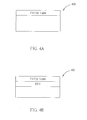
- FIG. 4A and FIG. 4B are diagrams illustrating a second control mechanism of a wireless communications device according to a second embodiment of the present invention.
- the second control mechanism may be employed on a wireless communications dongle which is externally connected to a host computer.
- the wireless communications dongle detects a file system of the host computer and accordingly generates the exemplary file system 400 shown in FIG. 4A .
- the exemplary file system 400 includes an FAT32 file table.
- the file system 400 is monitored to detect occurrence of a file system change.
- a file named "KEY” is detected being added into the file system 400, resulting in a file system change correspondingly. Due to the detected file system change, the processor of the wireless communications dongle parses the file KEY and accordingly generates a parsed result, and then switches the wireless communications dongle from a user mode to an engineer mode.
- the file KEY may contain a string encoded by a certain coding algorithm.
- the processor of the wireless communications dongle detects that a file named "KEY” is added into the file system 400
- the processor of the wireless communications dongle starts to parse the file KEY for security verification.
- the processor of the wireless communications dongle parses the file KEY and obtains the parsed result. If the parsed result indicates that the encoded string conforms to an engineer mode lock-up password, the processor of the wireless communications dongle will reboot the wireless communications dongle, thereby making the wireless communications dongle enter the engineer mode after rebooting.
- FIG. 5A and FIG. 5B are diagrams illustrating a second control mechanism of a wireless communications device according to a third embodiment of the present invention.
- the second control mechanism may be employed on a wireless communications dongle which is externally connected to a host computer.
- the wireless communications dongle detects a file system of the host computer and accordingly generates the exemplary file system 500 shown in FIG. 5A .
- the exemplary file system 500 includes an FAT32 file table.
- the file system 500 is monitored to detect occurrence of a file system change.
- FIG. 5A and FIG. 5B are diagrams illustrating a second control mechanism of a wireless communications device according to a third embodiment of the present invention.
- the second control mechanism may be employed on a wireless communications dongle which is externally connected to a host computer.
- the wireless communications dongle detects a file system of the host computer and accordingly generates the exemplary file system 500 shown in FIG. 5A .
- the exemplary file system 500 includes an FAT32 file table.
- a file named "UPGRADE” is detected being added into the file system 500, resulting in a corresponding file system change. Due to the detected file system change (e.g., the file addition), the processor of the wireless communications dongle parses the file UPGRADE and accordingly generates a parsed result, and then upgrades firmware of the wireless communications dongle.
- the processor of the wireless communications dongle parses the file UPGRADE and accordingly generates a parsed result, and then upgrades firmware of the wireless communications dongle.
- the file UPGRADE may contain a string indicating an address of a firmware upgrading server and a version number of the firmware.
- the processor of the wireless communications dongle detects that a file named "UPGRADE" is added into the file system 500, the processor of the wireless communications dongle starts to parse the UPGRADE file for firmware upgrade.
- the processor of the wireless communications dongle parses the file UPGRADE and obtains the parsed result.
- the processor of the wireless communications dongle connects the wireless communications dongle to the designated firmware upgrading server and retrieves the firmware with the designated version number.
- the processor of the wireless communications dongle upgrades the wireless communications dongle with the downloaded firmware.
- FIG. 6A and FIG. 6B are diagrams illustrating a second control mechanism of a wireless communications device according to a fourth embodiment of the present invention.
- the second control mechanism may be employed on a wireless communications dongle which is externally connected to a host computer.
- the wireless communications dongle detects a file system of the host computer and accordingly generates the exemplary file system 600 shown in FIG. 6A .
- the exemplary file system 600 includes an FAT32 file table, and a plurality of directories named "SMS", "MMS" and "FTP", respectively.
- the directory SMS corresponds to a simple message service (SMS) provided by the wireless communications dongle
- the directory MMS corresponds to a multimedia messaging service (MMS) provided by the wireless communications dongle
- the directory FTP corresponds to a file transfer protocol (FTP) service provided by the wireless communications dongle.
- SMS simple message service
- MMS multimedia messaging service
- FTP file transfer protocol
- the file system 600 is monitored to detect occurrence of a file system change.
- a file named "IDNUM" is detected being added into the directory SMS, resulting in a corresponding file system change.
- the processor of the wireless communications dongle parses the file IDNUM and accordingly generates a parsed result, then creates at least one wireless communications network packet according to the parsed result, and then sends the at least one wireless communications network packet via a wireless communications network (e.g., UMTS network or GSM network).
- a wireless communications network e.g., UMTS network or GSM network.
- the file IDNUM may contain a string indicating a callee ID and a text message.
- the processor of the wireless communications dongle When the processor of the wireless communications dongle detects that a file named "IDNUM" is added into the directory SMS, the processor of the wireless communications dongle starts to parse the file IDNUM for simple message service. Next, the processor of the wireless communications dongle parses the file IDNUM and obtains the parsed result. The processor of the wireless communications dongle then creates an SMS message according to the parsed result, and sends the SMS message via a telecommunications network. Similarly, if the file IDNUM is detected being added into the directory MMS, the processor of the wireless communications dongle will send a MMS message instead.
- operations regarding the directory FTP are substantially the same as operations regarding the directory SMS/MMS.
- a difference is that information required for establishing an FTP connection, including an IP address, a port number, an upload directory, etc., may not be included in the transferred file. That is, the information required for establishing the FTP connection may be previously configured.
- the second control mechanism detects addition of a predetermined file (e.g., a file having a predetermined file name or file header) and performs a predetermined corresponding operation corresponding to the added file.
- FIG. 7 is a flowchart illustrating a control method for a wireless communications device according to an embodiment of the present invention. Provided that the result is substantially the same, the steps are not required to be executed in the exact order shown in FIG. 7 .
- the exemplary control method may be briefly summarized by following steps.
- Steps 702 and 704 may be preferably performed to ensure the wireless communications device to be accommodated by the host computer regardless the type of the operating systems installed thereon. However, steps 702 and 704 may be optional under certain conditions. For example, considering a case where the wireless communications device is configured to have a fixed and pre-defined file system, the aforementioned adaptive file system generation scheme may be omitted. As a person skilled in the art can readily understand the operation of each step shown in FIG. 7 after reading above paragraphs, further description is omitted here for brevity.
Landscapes
- Engineering & Computer Science (AREA)
- Theoretical Computer Science (AREA)
- General Engineering & Computer Science (AREA)
- Physics & Mathematics (AREA)
- General Physics & Mathematics (AREA)
- Software Systems (AREA)
- Human Computer Interaction (AREA)
- Data Mining & Analysis (AREA)
- Databases & Information Systems (AREA)
- Computer Security & Cryptography (AREA)
- Mobile Radio Communication Systems (AREA)
- Communication Control (AREA)
Abstract
Description
- The present invention relates to a control method for a wireless communications device compatible with a universal serial bus mass storage device class (UMS) protocol according to the pre-characterizing clause of claim 1.
- For a portable peripheral electronic device (e.g., a flash drive or a 3G network dongle), it often requires a driver and a control/configuring interface to function properly on a conforming device. However, the driver and the control/configuring interface may only be provided for a particular operating system (e.g. Microsoft Windows or Mac OS), thus limiting the compatibility of the portable periphery electronic device. For example, a 3G network dongle may not be recognized by a host computer running a Linux operating system, if there is no appropriate driver installed on the host computer.
- Thus, there is a need for a ubiquitous control method to enhance the compatibility of portable periphery electronic devices.
- This in mind, the present invention aims at providing a control method for a wireless communications device compatible with a universal serial bus mass storage device class (UMS) protocol that enhances the compatibility of portable periphery electronic devices.
- This is achieved by a control method for a wireless communications device compatible with a universal serial bus mass storage device class (UMS) protocol according to claim 1. The dependent claims pertain to corresponding further developments and improvements.
- As will be seen more clearly from the detailed description following below, the claimed control method for a wireless communications device compatible with a universal serial bus mass storage device class (UMS) protocol includes a step of monitoring occurrence of a change in the file system that when the change in the file system is detected, performing at least one predetermined operation corresponding to a specific predetermined file associated with the change.
- In the following, the invention is further illustrated by way of example, taking reference to the accompanying drawings. Thereof
-
FIG. 1 is a diagram illustrating an exemplary file system of a wireless communications device according to an embodiment of the present invention, -
FIG. 2A and FIG. 2B are diagrams illustrating a first control mechanism of a wireless communications device according to an embodiment of the present invention, -
FIG. 3A and FIG. 3B are diagrams illustrating a second control mechanism of a wireless communications device according to a first embodiment of the present invention, -
FIG. 3C is a diagram illustrating an exemplary web-based interface according to the first embodiment of the present invention, -
FIG. 4A and FIG. 4B are diagrams illustrating a second control mechanism of a wireless communications device according to a second embodiment of the present invention, -
FIG. 5A and FIG. 5B are diagrams illustrating a second control mechanism of a wireless communications device according to a third embodiment of the present invention, -
FIG. 6A and FIG. 6B are diagrams illustrating a second control mechanism of a wireless communications device according to a fourth embodiment of the present invention, and -
FIG. 7 is a flowchart illustrating a control method for a wireless communications device according to an embodiment of the present invention. - Certain terms are used throughout the description and following claims to refer to particular components. As one skilled in the art will appreciate, manufacturers may refer to a component by different names. This document does not intend to distinguish between components that differ in name but not function. In the following description and in the claims, the terms "include" and "comprise" are used in an open-ended fashion, and thus should be interpreted to mean "include, but not limited to ...". Also, the term "couple" is intended to mean either an indirect or direct electrical connection. Accordingly, if one device is electrically connected to another device, that connection may be through a direct electrical connection, or through an indirect electrical connection via other devices and connections.
- The present invention utilizes the universal serial bus mass storage device class (USB MSC or UMS) protocol to control a wireless communications device (e.g., a 3G network dongle). The UMS includes a set of computing communications protocols that run on the universal serial bus, allowing a USB device to become accessible to a host device. Due to its ubiquity and relative simplicity, the UMS may be used to implement a cross-operating-system/cross-platform control method for a wireless communications dongle with a relatively low production cost. Further details are described as below.
- Please refer to
FIG. 1 , which is a diagram illustrating an exemplary file system of a wireless communications device according to an embodiment of the present invention. The wireless communications device supports the UMS protocol. For example, the wireless communications device may be a wireless communications dongle which is externally connected to a host computer. After the wireless communications device is plugged into a host computer, the wireless communications device detects a file system of the host computer and accordingly generates theexemplary file system 100. In this embodiment, theexemplary file system 100 includes an FAT32 file table and a plurality of files ACT1, ACT2 and ACT3, wherein the files ACT1, ACT2 and ACT3 correspond to one or more predetermined operations. That is, the files ACT1, ACT2 and ACT3 are generated by a default hardware/firmware setting, and each or a combination of the files ACT1, ACT2 and ACT3 corresponds to a predetermined operation. - The
file system 100 is monitored to detect occurrence of a file system change. When the file system change is detected, the corresponding predetermined operation is performed automatically. For example, if the file system change detected is removing the file ACT1 from thefile system 100, the corresponding predetermined operation is to reboot the wireless communications device. Please note that, in one embodiment, theexemplary file system 100 is an FAT32 file system. However, this is for illustrative purpose only, and not meant to be a limitation of the present invention. Theexemplary file system 100 may be any file system that is supported by an operating system executed on the host computer. For example, theexemplary file system 100 may be determined by detecting the file system of the host computer, and then be generated as the same file system used by the host computer. In this way, the wireless communications device can be accommodated by the host computer regardless the type of the operating systems installed thereon. In this fashion, the wireless communications device requires no additional drivers to be controlled or configured, which enables the present invention to be feasible for an ubiquitous solution. - Please concurrently refer to
FIG. 2A and FIG. 2B. FIG. 2A and FIG. 2B are diagrams illustrating a first control mechanism of a wireless communications device according to an embodiment of the present invention. By way of example, but not limitation, the first control mechanism may be employed on a wireless communications dongle. For example, after the wireless communications dongle is plugged into a host computer, the wireless communications dongle detects a file system of the host computer and accordingly generates theexemplary file system 200 shown inFIG. 2A . Theexemplary file system 200 includes an FAT32 file table and a plurality of files named "RBT" and "CNCT", respectively. The file RBT corresponds to a reboot operation, and the file CNCT corresponds to a connection establishment operation. - The
file system 200 is monitored to detect occurrence of a file system change. InFIG. 2B , the file RBT is deleted from thefile system 200, resulting in a corresponding file system change. When the file RBT is deleted from thefile system 200, a processor of the wireless communications dongle restarts the wireless communications dongle in response to the detected file system change (i.e., the file deletion). Similarly, if the file CNCT is deleted from thefile system 200, the processor of the wireless communications dongle will establish a connection with a nearby terminal in response to the file system change (i.e., the file deletion). Please note that the first control mechanism may detect deletion of one or more of the predetermined files (i.e., the files RBT and CNCT) and to perform the predetermined corresponding operation corresponding to the deleted predetermined file(s). Those skilled in the pertinent art may readily make alternations and modifications without departing from the capacity of the first control mechanism, and these alternative designs all fall in the scope of the present invention. - Please concurrently refer to
FIG. 3A and FIG. 3B. FIG. 3A and FIG. 3B are diagrams illustrating a second control mechanism of a wireless communications device according to a first embodiment of the present invention. By way of example, but not limitation, the second control mechanism may be employed on a wireless communications dongle which is externally connected to host computer. For example, after the wireless communications dongle is plugged into a host computer, the wireless communications dongle detects a file system of the host computer and accordingly generates theexemplary file system 300 shown inFIG. 3A . Theexemplary file system 300 includes an FAT32 file table. Thefile system 300 is monitored to detect occurrence of a file system change. - In
FIG. 3B , a file named "CONFIG" is detected being added into thefile system 300, resulting in a file system change correspondingly. Due to the detected file system change (i.e., the file addition), a processor of the wireless communications dongle parses the file CONFIG and accordingly generates a parsed result, and then configures the wireless communications dongle according to the parsed result. For example, the file CONFIG may contain a string, such as "APN_internet". When the processor of the wireless communications dongle detects that a file named "CONFIG" is added into thefile system 300, the processor of the wireless communications dongle starts to parse the file CONFIG for hardware configuration. Next, the processor of the wireless communications dongle parses the file CONFIG and obtains the parsed result indicating that the access point name (APN) should be configured to "internet". Based on the parsed result, the processor of the wireless communications dongle configures "internet" as the APN of the wireless communications dongle and create a wireless connection with this configuration. - In an alternative design, the file CONFIG may contain a web-based interface (e.g. an inquiry sheet shown in
FIG. 3C ) implemented by hyper-text markup language (HTML) or javascript. In a case where a web browser is available, when the processor of the wireless communications dongle detects that a file named "CONFIG" is added into thefile system 300, the processor of the wireless communications dongle executes the file CONFIG to display the web-based interface and then configures the wireless communications dongle according to a user's input received via the displayed web-based interface. Please note, the means of configuration is for illustrative purpose only, and not meant to be a limitation of the present invention. Those skilled in the art may readily make alternations and modifications without departing from the capacity of the first control mechanism, and these alternative designs all fall in the scope of the present invention. - Please concurrently refer to
FIG. 4A and FIG. 4B. FIG. 4A and FIG. 4B are diagrams illustrating a second control mechanism of a wireless communications device according to a second embodiment of the present invention. By way of example, but not limitation, the second control mechanism may be employed on a wireless communications dongle which is externally connected to a host computer. For example, after the wireless communications dongle is plugged into a host computer, the wireless communications dongle detects a file system of the host computer and accordingly generates theexemplary file system 400 shown inFIG. 4A . Theexemplary file system 400 includes an FAT32 file table. Thefile system 400 is monitored to detect occurrence of a file system change. - In
FIG. 4B , a file named "KEY" is detected being added into thefile system 400, resulting in a file system change correspondingly. Due to the detected file system change, the processor of the wireless communications dongle parses the file KEY and accordingly generates a parsed result, and then switches the wireless communications dongle from a user mode to an engineer mode. For example, the file KEY may contain a string encoded by a certain coding algorithm. When the processor of the wireless communications dongle detects that a file named "KEY" is added into thefile system 400, the processor of the wireless communications dongle starts to parse the file KEY for security verification. Next, the processor of the wireless communications dongle parses the file KEY and obtains the parsed result. If the parsed result indicates that the encoded string conforms to an engineer mode lock-up password, the processor of the wireless communications dongle will reboot the wireless communications dongle, thereby making the wireless communications dongle enter the engineer mode after rebooting. - Please concurrently refer to
FIG. 5A and FIG. 5B. FIG. 5A and FIG. 5B are diagrams illustrating a second control mechanism of a wireless communications device according to a third embodiment of the present invention. By way of example, but not limitation, the second control mechanism may be employed on a wireless communications dongle which is externally connected to a host computer. For example, after the wireless communications dongle is plugged into a host computer, the wireless communications dongle detects a file system of the host computer and accordingly generates theexemplary file system 500 shown inFIG. 5A . Theexemplary file system 500 includes an FAT32 file table. Thefile system 500 is monitored to detect occurrence of a file system change. InFIG. 5B , a file named "UPGRADE" is detected being added into thefile system 500, resulting in a corresponding file system change. Due to the detected file system change (e.g., the file addition), the processor of the wireless communications dongle parses the file UPGRADE and accordingly generates a parsed result, and then upgrades firmware of the wireless communications dongle. - For example, the file UPGRADE may contain a string indicating an address of a firmware upgrading server and a version number of the firmware. When the processor of the wireless communications dongle detects that a file named "UPGRADE" is added into the
file system 500, the processor of the wireless communications dongle starts to parse the UPGRADE file for firmware upgrade. Next, the processor of the wireless communications dongle parses the file UPGRADE and obtains the parsed result. Based on the parsed result, the processor of the wireless communications dongle connects the wireless communications dongle to the designated firmware upgrading server and retrieves the firmware with the designated version number. After the desired firmware is correctly and successfully downloaded from the firmware upgrading server, the processor of the wireless communications dongle upgrades the wireless communications dongle with the downloaded firmware. - Please concurrently refer to
FIG. 6A and FIG. 6B. FIG. 6A and FIG. 6B are diagrams illustrating a second control mechanism of a wireless communications device according to a fourth embodiment of the present invention. By way of example, but not limitation, the second control mechanism may be employed on a wireless communications dongle which is externally connected to a host computer. For example, after the wireless communications dongle is plugged into a host computer, the wireless communications dongle detects a file system of the host computer and accordingly generates theexemplary file system 600 shown inFIG. 6A . Theexemplary file system 600 includes an FAT32 file table, and a plurality of directories named "SMS", "MMS" and "FTP", respectively. The directory SMS corresponds to a simple message service (SMS) provided by the wireless communications dongle, the directory MMS corresponds to a multimedia messaging service (MMS) provided by the wireless communications dongle, and the directory FTP corresponds to a file transfer protocol (FTP) service provided by the wireless communications dongle. - The
file system 600 is monitored to detect occurrence of a file system change. InFIG. 6B , a file named "IDNUM" is detected being added into the directory SMS, resulting in a corresponding file system change. Due to the detected file system change (e.g., the file addition), the processor of the wireless communications dongle parses the file IDNUM and accordingly generates a parsed result, then creates at least one wireless communications network packet according to the parsed result, and then sends the at least one wireless communications network packet via a wireless communications network (e.g., UMTS network or GSM network). For example, the file IDNUM may contain a string indicating a callee ID and a text message. When the processor of the wireless communications dongle detects that a file named "IDNUM" is added into the directory SMS, the processor of the wireless communications dongle starts to parse the file IDNUM for simple message service. Next, the processor of the wireless communications dongle parses the file IDNUM and obtains the parsed result. The processor of the wireless communications dongle then creates an SMS message according to the parsed result, and sends the SMS message via a telecommunications network. Similarly, if the file IDNUM is detected being added into the directory MMS, the processor of the wireless communications dongle will send a MMS message instead. - Alternatively, operations regarding the directory FTP are substantially the same as operations regarding the directory SMS/MMS. A difference is that information required for establishing an FTP connection, including an IP address, a port number, an upload directory, etc., may not be included in the transferred file. That is, the information required for establishing the FTP connection may be previously configured. However, the aforementioned embodiments are for illustrative purpose only, and not meant to be limitations of the present invention. The second control mechanism detects addition of a predetermined file (e.g., a file having a predetermined file name or file header) and performs a predetermined corresponding operation corresponding to the added file.
- Please refer to
FIG. 7 , which is a flowchart illustrating a control method for a wireless communications device according to an embodiment of the present invention. Provided that the result is substantially the same, the steps are not required to be executed in the exact order shown inFIG. 7 . The exemplary control method may be briefly summarized by following steps. - Step 700: Start.
- Step 702: Detect a file system of a host device by the wireless communications device.
- Step 704: Generate a file system for the wireless communications device according to the detected file system.
- Step 706: Monitor occurrence of a change in the file system (e.g., file deletion or file addition).
- Step 708: When the change in the file system is detected, perform at least one predetermined operation corresponding to a specific predetermined file associated with the change.
- Step 710: End.
-
Steps FIG. 7 after reading above paragraphs, further description is omitted here for brevity. - All combinations and sub-combinations of above-described features also belong to the invention.
Claims (12)
- A control method for a wireless communications device compatible with a universal serial bus mass storage device class (UMS) protocol, characterized by:monitoring occurrence of a change in the file system (100, 200, 300, 400, 500, 600); andwhen the change in the file system (100, 200, 300, 400, 500, 600)
is detected, performing at least one predetermined operation corresponding to a specific predetermined file associated with the change. - The control method of claim 1, characterized in that the wireless communications device is a wireless communications dongle.
- The control method of claim 1, characterized in that the control method further comprises:detecting a file system (100, 200, 300, 400, 500, 600) of a host
device of the wireless communications device; andgenerating the file system (100, 200, 300, 400, 500, 600) for the
wireless communications device according to the detected file system (100, 200, 300, 400, 500, 600). - The control method of claim 1, characterized in that the change in the file system (200) is removing the specific predetermined file from the file system (200).
- The control method of claim 1, characterized in that the change in the file system (300, 400, 500, 600) is adding the specific predetermined file to the file system (300, 400, 500, 600).
- The control method of claim 5, characterized in that the step of performing the at least one predetermined operation corresponding to the specific predetermined file associated with the change comprises:parsing the specific predetermined file and generating a parsed
result; andconfiguring the wireless communications device according to the
parsed result. - The control method of claim 5, characterized in that the specific predetermined file comprises a web-based interface, and the step of performing the at least one predetermined operation corresponding to the specific predetermined file associated with the change comprises:executing the specific predetermined file to display the
web-based interface; andconfiguring the wireless communications device according to a
user's input received via the web-based interface. - The control method of claim 5, characterized in that the step of performing the at least one predetermined operation corresponding to the specific predetermined file associated with the change comprises:parsing the specific predetermined file and generating a parsed
result; andswitching the wireless communications device from one
operation mode to another operation mode according to the parsed result. - The control method of claim 5, characterized in that the step of performing the at least one predetermined operation corresponding to the specific predetermined file associated with the change comprises:parsing the specific predetermined file and generating a parsed
result; andupgrading a firmware of the wireless communications device
according to the parsed result. - The control method of claim 5, characterized in that the step of performing the at least one predetermined operation corresponding to the specific predetermined file associated with the change comprises:parsing the specific predetermined file and generating a parsed
result;creating at least one wireless communications network packet
according to the parsed result; andsending the at least one wireless communications network packet
via a wireless communications network. - The control method of claim 10, characterized in that the at least one wireless communications network packet includes information of a short message service (SMS) message or a multimedia messaging service (MMS) message.
- The control method of claim 10, characterized in that the at least one wireless communications network packet is a file transfer protocol (FTP) packet.
Applications Claiming Priority (1)
| Application Number | Priority Date | Filing Date | Title |
|---|---|---|---|
| US13/345,737 US8595354B2 (en) | 2012-01-08 | 2012-01-08 | Control method for wireless communications device compatible with universal serial bus mass storage device class protocol |
Publications (2)
| Publication Number | Publication Date |
|---|---|
| EP2613273A1 true EP2613273A1 (en) | 2013-07-10 |
| EP2613273B1 EP2613273B1 (en) | 2016-04-27 |
Family
ID=45819001
Family Applications (1)
| Application Number | Title | Priority Date | Filing Date |
|---|---|---|---|
| EP12001642.3A Active EP2613273B1 (en) | 2012-01-08 | 2012-03-09 | Control method for wireless communications device compatible with universal serial bus mass storage device class protocol |
Country Status (3)
| Country | Link |
|---|---|
| US (1) | US8595354B2 (en) |
| EP (1) | EP2613273B1 (en) |
| CN (1) | CN103198003B (en) |
Families Citing this family (4)
| Publication number | Priority date | Publication date | Assignee | Title |
|---|---|---|---|---|
| TWI486876B (en) * | 2013-07-29 | 2015-06-01 | Hon Hai Prec Ind Co Ltd | Host and method of upgrading connection manager of dongle |
| KR101666313B1 (en) * | 2015-06-25 | 2016-10-13 | 주식회사 아이리버 | UMS type Terminal, Database Renewal System thereof, Method and Computer Program Stored Medium to executing the same |
| CN111339744B (en) * | 2015-07-31 | 2023-07-04 | 小米科技有限责任公司 | Ticket information display method, device and storage medium |
| WO2022011683A1 (en) * | 2020-07-17 | 2022-01-20 | Micron Technology, Inc. | Storage of video data and file system metadata |
Citations (4)
| Publication number | Priority date | Publication date | Assignee | Title |
|---|---|---|---|---|
| US20030074512A1 (en) * | 2001-10-16 | 2003-04-17 | Klissner Paul K. | Configuring an external device |
| US20060068910A1 (en) * | 2004-09-30 | 2006-03-30 | Microsoft Corporation | Game console communication with a device |
| US20060104238A1 (en) * | 2004-11-17 | 2006-05-18 | Brother Kogyo Kabushiki Kaisha | Wireless communication device and setup method |
| US20090109871A1 (en) * | 2007-10-31 | 2009-04-30 | Alex Ho | Configuration techniques for wireless communications devices |
Family Cites Families (9)
| Publication number | Priority date | Publication date | Assignee | Title |
|---|---|---|---|---|
| ATE377336T1 (en) * | 2002-08-05 | 2007-11-15 | Roamware Inc | METHOD AND SYSTEM FOR FORWARDING TRAFFIC IN A CELLULAR NETWORK |
| US20070011207A1 (en) * | 2005-07-05 | 2007-01-11 | Vishnubhotla Prasad R | Method and system for integrating file system events into a relational database |
| KR20070054865A (en) * | 2005-11-24 | 2007-05-30 | 엘지전자 주식회사 | Storage Device and its Memory Information Display Method |
| US8438239B2 (en) * | 2006-05-11 | 2013-05-07 | Vocollect, Inc. | Apparatus and method for sharing data among multiple terminal devices |
| JP2009237843A (en) * | 2008-03-27 | 2009-10-15 | Brother Ind Ltd | File management system, mobile terminal, and mobile terminal program |
| CN101419572B (en) * | 2008-11-20 | 2010-09-29 | 四川长虹电器股份有限公司 | Large-capacity Nandflash memory space sharing method in embedded equipment |
| JP2011011462A (en) * | 2009-07-02 | 2011-01-20 | Seiko Epson Corp | Service providing apparatus for digital processing service, wireless communication system, and wireless communication method |
| US20110026369A1 (en) * | 2009-07-31 | 2011-02-03 | Tai Wai Luk | Timepiece with Wireless Transmission Arrangement |
| US8516236B2 (en) * | 2009-09-30 | 2013-08-20 | Imation Corp. | Portable desktop device and method of host computer system hardware recognition and configuration |
-
2012
- 2012-01-08 US US13/345,737 patent/US8595354B2/en active Active
- 2012-03-09 EP EP12001642.3A patent/EP2613273B1/en active Active
- 2012-04-16 CN CN201210111087.0A patent/CN103198003B/en not_active Expired - Fee Related
Patent Citations (4)
| Publication number | Priority date | Publication date | Assignee | Title |
|---|---|---|---|---|
| US20030074512A1 (en) * | 2001-10-16 | 2003-04-17 | Klissner Paul K. | Configuring an external device |
| US20060068910A1 (en) * | 2004-09-30 | 2006-03-30 | Microsoft Corporation | Game console communication with a device |
| US20060104238A1 (en) * | 2004-11-17 | 2006-05-18 | Brother Kogyo Kabushiki Kaisha | Wireless communication device and setup method |
| US20090109871A1 (en) * | 2007-10-31 | 2009-04-30 | Alex Ho | Configuration techniques for wireless communications devices |
Also Published As
| Publication number | Publication date |
|---|---|
| CN103198003A (en) | 2013-07-10 |
| US20130179559A1 (en) | 2013-07-11 |
| EP2613273B1 (en) | 2016-04-27 |
| CN103198003B (en) | 2015-11-18 |
| US8595354B2 (en) | 2013-11-26 |
Similar Documents
| Publication | Publication Date | Title |
|---|---|---|
| CN105262627B (en) | Firmware upgrading method, device and system | |
| JP5989807B2 (en) | Software installation method, device and system | |
| CN107346252B (en) | Application update method and device | |
| JP5129770B2 (en) | Network equipment | |
| CN105917613B (en) | Software upgrade method and device | |
| EP2922267B1 (en) | Method for achieving communication based on mbim interface and device therefor | |
| EP3190766A1 (en) | Method, device and system for invoking local service assembly by browser | |
| CN102869125A (en) | Data card and communication method and system thereof | |
| EP2613273B1 (en) | Control method for wireless communications device compatible with universal serial bus mass storage device class protocol | |
| CN105354488A (en) | Application installation method, related apparatus and application installation system | |
| EP2685374B1 (en) | Wireless network access terminal and running method thereof | |
| US20170280410A1 (en) | Method, device and system for implementing information self-registration, and computer storage medium | |
| CN106020917B (en) | A kind of software installation method and device, user terminal | |
| CN106961361A (en) | From detection/processing method, apparatus and system | |
| CN107450955A (en) | Radio configuration method, equipment, mobile terminal, system, lockset and the readable storage medium storing program for executing of equipment | |
| EP3136238A1 (en) | Method and apparatus for recovering system software of intelligent terminal | |
| CN107465724B (en) | Method for downloading application program, user equipment and application server | |
| US9820310B2 (en) | Network connection method and system | |
| EP2713269B1 (en) | Method for updating data card, personal computer and data card | |
| CN110045969B (en) | Application installation method, server, system, device and storage medium | |
| CN106033398A (en) | Data processing system, external device starting method, and data processing method | |
| CN116700751A (en) | Method for upgrading server firmware and computing device | |
| CN118689514B (en) | Terminal firmware upgrading method, system, equipment and medium based on communication module | |
| CN111371601A (en) | Server configuration method, device, equipment and computer readable storage medium | |
| CN112486543A (en) | Firmware upgrading method, device, storage medium and system of network equipment |
Legal Events
| Date | Code | Title | Description |
|---|---|---|---|
| PUAI | Public reference made under article 153(3) epc to a published international application that has entered the european phase |
Free format text: ORIGINAL CODE: 0009012 |
|
| AK | Designated contracting states |
Kind code of ref document: A1 Designated state(s): AL AT BE BG CH CY CZ DE DK EE ES FI FR GB GR HR HU IE IS IT LI LT LU LV MC MK MT NL NO PL PT RO RS SE SI SK SM TR |
|
| AX | Request for extension of the european patent |
Extension state: BA ME |
|
| 17P | Request for examination filed |
Effective date: 20130730 |
|
| RBV | Designated contracting states (corrected) |
Designated state(s): AL AT BE BG CH CY CZ DE DK EE ES FI FR GB GR HR HU IE IS IT LI LT LU LV MC MK MT NL NO PL PT RO RS SE SI SK SM TR |
|
| GRAP | Despatch of communication of intention to grant a patent |
Free format text: ORIGINAL CODE: EPIDOSNIGR1 |
|
| INTG | Intention to grant announced |
Effective date: 20160114 |
|
| GRAS | Grant fee paid |
Free format text: ORIGINAL CODE: EPIDOSNIGR3 |
|
| GRAA | (expected) grant |
Free format text: ORIGINAL CODE: 0009210 |
|
| AK | Designated contracting states |
Kind code of ref document: B1 Designated state(s): AL AT BE BG CH CY CZ DE DK EE ES FI FR GB GR HR HU IE IS IT LI LT LU LV MC MK MT NL NO PL PT RO RS SE SI SK SM TR |
|
| REG | Reference to a national code |
Ref country code: GB Ref legal event code: FG4D |
|
| REG | Reference to a national code |
Ref country code: CH Ref legal event code: EP |
|
| REG | Reference to a national code |
Ref country code: AT Ref legal event code: REF Ref document number: 795515 Country of ref document: AT Kind code of ref document: T Effective date: 20160515 |
|
| REG | Reference to a national code |
Ref country code: IE Ref legal event code: FG4D |
|
| REG | Reference to a national code |
Ref country code: DE Ref legal event code: R096 Ref document number: 602012017508 Country of ref document: DE |
|
| REG | Reference to a national code |
Ref country code: NL Ref legal event code: FP |
|
| REG | Reference to a national code |
Ref country code: LT Ref legal event code: MG4D |
|
| REG | Reference to a national code |
Ref country code: AT Ref legal event code: MK05 Ref document number: 795515 Country of ref document: AT Kind code of ref document: T Effective date: 20160427 |
|
| PG25 | Lapsed in a contracting state [announced via postgrant information from national office to epo] |
Ref country code: NO Free format text: LAPSE BECAUSE OF FAILURE TO SUBMIT A TRANSLATION OF THE DESCRIPTION OR TO PAY THE FEE WITHIN THE PRESCRIBED TIME-LIMIT Effective date: 20160727 Ref country code: PL Free format text: LAPSE BECAUSE OF FAILURE TO SUBMIT A TRANSLATION OF THE DESCRIPTION OR TO PAY THE FEE WITHIN THE PRESCRIBED TIME-LIMIT Effective date: 20160427 Ref country code: LT Free format text: LAPSE BECAUSE OF FAILURE TO SUBMIT A TRANSLATION OF THE DESCRIPTION OR TO PAY THE FEE WITHIN THE PRESCRIBED TIME-LIMIT Effective date: 20160427 Ref country code: FI Free format text: LAPSE BECAUSE OF FAILURE TO SUBMIT A TRANSLATION OF THE DESCRIPTION OR TO PAY THE FEE WITHIN THE PRESCRIBED TIME-LIMIT Effective date: 20160427 |
|
| PG25 | Lapsed in a contracting state [announced via postgrant information from national office to epo] |
Ref country code: AT Free format text: LAPSE BECAUSE OF FAILURE TO SUBMIT A TRANSLATION OF THE DESCRIPTION OR TO PAY THE FEE WITHIN THE PRESCRIBED TIME-LIMIT Effective date: 20160427 Ref country code: RS Free format text: LAPSE BECAUSE OF FAILURE TO SUBMIT A TRANSLATION OF THE DESCRIPTION OR TO PAY THE FEE WITHIN THE PRESCRIBED TIME-LIMIT Effective date: 20160427 Ref country code: LV Free format text: LAPSE BECAUSE OF FAILURE TO SUBMIT A TRANSLATION OF THE DESCRIPTION OR TO PAY THE FEE WITHIN THE PRESCRIBED TIME-LIMIT Effective date: 20160427 Ref country code: GR Free format text: LAPSE BECAUSE OF FAILURE TO SUBMIT A TRANSLATION OF THE DESCRIPTION OR TO PAY THE FEE WITHIN THE PRESCRIBED TIME-LIMIT Effective date: 20160728 Ref country code: HR Free format text: LAPSE BECAUSE OF FAILURE TO SUBMIT A TRANSLATION OF THE DESCRIPTION OR TO PAY THE FEE WITHIN THE PRESCRIBED TIME-LIMIT Effective date: 20160427 Ref country code: SE Free format text: LAPSE BECAUSE OF FAILURE TO SUBMIT A TRANSLATION OF THE DESCRIPTION OR TO PAY THE FEE WITHIN THE PRESCRIBED TIME-LIMIT Effective date: 20160427 Ref country code: PT Free format text: LAPSE BECAUSE OF FAILURE TO SUBMIT A TRANSLATION OF THE DESCRIPTION OR TO PAY THE FEE WITHIN THE PRESCRIBED TIME-LIMIT Effective date: 20160829 Ref country code: ES Free format text: LAPSE BECAUSE OF FAILURE TO SUBMIT A TRANSLATION OF THE DESCRIPTION OR TO PAY THE FEE WITHIN THE PRESCRIBED TIME-LIMIT Effective date: 20160427 |
|
| PG25 | Lapsed in a contracting state [announced via postgrant information from national office to epo] |
Ref country code: IT Free format text: LAPSE BECAUSE OF FAILURE TO SUBMIT A TRANSLATION OF THE DESCRIPTION OR TO PAY THE FEE WITHIN THE PRESCRIBED TIME-LIMIT Effective date: 20160427 Ref country code: BE Free format text: LAPSE BECAUSE OF FAILURE TO SUBMIT A TRANSLATION OF THE DESCRIPTION OR TO PAY THE FEE WITHIN THE PRESCRIBED TIME-LIMIT Effective date: 20160427 |
|
| REG | Reference to a national code |
Ref country code: DE Ref legal event code: R097 Ref document number: 602012017508 Country of ref document: DE |
|
| PG25 | Lapsed in a contracting state [announced via postgrant information from national office to epo] |
Ref country code: RO Free format text: LAPSE BECAUSE OF FAILURE TO SUBMIT A TRANSLATION OF THE DESCRIPTION OR TO PAY THE FEE WITHIN THE PRESCRIBED TIME-LIMIT Effective date: 20160427 Ref country code: SK Free format text: LAPSE BECAUSE OF FAILURE TO SUBMIT A TRANSLATION OF THE DESCRIPTION OR TO PAY THE FEE WITHIN THE PRESCRIBED TIME-LIMIT Effective date: 20160427 Ref country code: DK Free format text: LAPSE BECAUSE OF FAILURE TO SUBMIT A TRANSLATION OF THE DESCRIPTION OR TO PAY THE FEE WITHIN THE PRESCRIBED TIME-LIMIT Effective date: 20160427 Ref country code: EE Free format text: LAPSE BECAUSE OF FAILURE TO SUBMIT A TRANSLATION OF THE DESCRIPTION OR TO PAY THE FEE WITHIN THE PRESCRIBED TIME-LIMIT Effective date: 20160427 Ref country code: CZ Free format text: LAPSE BECAUSE OF FAILURE TO SUBMIT A TRANSLATION OF THE DESCRIPTION OR TO PAY THE FEE WITHIN THE PRESCRIBED TIME-LIMIT Effective date: 20160427 |
|
| PG25 | Lapsed in a contracting state [announced via postgrant information from national office to epo] |
Ref country code: SM Free format text: LAPSE BECAUSE OF FAILURE TO SUBMIT A TRANSLATION OF THE DESCRIPTION OR TO PAY THE FEE WITHIN THE PRESCRIBED TIME-LIMIT Effective date: 20160427 |
|
| PLBE | No opposition filed within time limit |
Free format text: ORIGINAL CODE: 0009261 |
|
| STAA | Information on the status of an ep patent application or granted ep patent |
Free format text: STATUS: NO OPPOSITION FILED WITHIN TIME LIMIT |
|
| 26N | No opposition filed |
Effective date: 20170130 |
|
| PG25 | Lapsed in a contracting state [announced via postgrant information from national office to epo] |
Ref country code: SI Free format text: LAPSE BECAUSE OF FAILURE TO SUBMIT A TRANSLATION OF THE DESCRIPTION OR TO PAY THE FEE WITHIN THE PRESCRIBED TIME-LIMIT Effective date: 20160427 |
|
| REG | Reference to a national code |
Ref country code: CH Ref legal event code: PL |
|
| PG25 | Lapsed in a contracting state [announced via postgrant information from national office to epo] |
Ref country code: MC Free format text: LAPSE BECAUSE OF FAILURE TO SUBMIT A TRANSLATION OF THE DESCRIPTION OR TO PAY THE FEE WITHIN THE PRESCRIBED TIME-LIMIT Effective date: 20160427 |
|
| REG | Reference to a national code |
Ref country code: IE Ref legal event code: MM4A |
|
| REG | Reference to a national code |
Ref country code: FR Ref legal event code: ST Effective date: 20171130 |
|
| PG25 | Lapsed in a contracting state [announced via postgrant information from national office to epo] |
Ref country code: FR Free format text: LAPSE BECAUSE OF NON-PAYMENT OF DUE FEES Effective date: 20170331 Ref country code: LU Free format text: LAPSE BECAUSE OF NON-PAYMENT OF DUE FEES Effective date: 20170309 |
|
| PG25 | Lapsed in a contracting state [announced via postgrant information from national office to epo] |
Ref country code: IE Free format text: LAPSE BECAUSE OF NON-PAYMENT OF DUE FEES Effective date: 20170309 Ref country code: CH Free format text: LAPSE BECAUSE OF NON-PAYMENT OF DUE FEES Effective date: 20170331 Ref country code: LI Free format text: LAPSE BECAUSE OF NON-PAYMENT OF DUE FEES Effective date: 20170331 |
|
| PG25 | Lapsed in a contracting state [announced via postgrant information from national office to epo] |
Ref country code: MT Free format text: LAPSE BECAUSE OF NON-PAYMENT OF DUE FEES Effective date: 20170309 |
|
| PG25 | Lapsed in a contracting state [announced via postgrant information from national office to epo] |
Ref country code: AL Free format text: LAPSE BECAUSE OF FAILURE TO SUBMIT A TRANSLATION OF THE DESCRIPTION OR TO PAY THE FEE WITHIN THE PRESCRIBED TIME-LIMIT Effective date: 20160427 |
|
| REG | Reference to a national code |
Ref country code: DE Ref legal event code: R079 Ref document number: 602012017508 Country of ref document: DE Free format text: PREVIOUS MAIN CLASS: G06F0017300000 Ipc: G06F0016000000 |
|
| PG25 | Lapsed in a contracting state [announced via postgrant information from national office to epo] |
Ref country code: HU Free format text: LAPSE BECAUSE OF FAILURE TO SUBMIT A TRANSLATION OF THE DESCRIPTION OR TO PAY THE FEE WITHIN THE PRESCRIBED TIME-LIMIT; INVALID AB INITIO Effective date: 20120309 |
|
| PG25 | Lapsed in a contracting state [announced via postgrant information from national office to epo] |
Ref country code: BG Free format text: LAPSE BECAUSE OF FAILURE TO SUBMIT A TRANSLATION OF THE DESCRIPTION OR TO PAY THE FEE WITHIN THE PRESCRIBED TIME-LIMIT Effective date: 20160427 |
|
| PG25 | Lapsed in a contracting state [announced via postgrant information from national office to epo] |
Ref country code: CY Free format text: LAPSE BECAUSE OF NON-PAYMENT OF DUE FEES Effective date: 20160427 |
|
| PG25 | Lapsed in a contracting state [announced via postgrant information from national office to epo] |
Ref country code: MK Free format text: LAPSE BECAUSE OF FAILURE TO SUBMIT A TRANSLATION OF THE DESCRIPTION OR TO PAY THE FEE WITHIN THE PRESCRIBED TIME-LIMIT Effective date: 20160427 |
|
| PG25 | Lapsed in a contracting state [announced via postgrant information from national office to epo] |
Ref country code: TR Free format text: LAPSE BECAUSE OF FAILURE TO SUBMIT A TRANSLATION OF THE DESCRIPTION OR TO PAY THE FEE WITHIN THE PRESCRIBED TIME-LIMIT Effective date: 20160427 |
|
| PG25 | Lapsed in a contracting state [announced via postgrant information from national office to epo] |
Ref country code: IS Free format text: LAPSE BECAUSE OF FAILURE TO SUBMIT A TRANSLATION OF THE DESCRIPTION OR TO PAY THE FEE WITHIN THE PRESCRIBED TIME-LIMIT Effective date: 20160827 |
|
| P01 | Opt-out of the competence of the unified patent court (upc) registered |
Effective date: 20230607 |
|
| REG | Reference to a national code |
Ref country code: DE Ref legal event code: R081 Ref document number: 602012017508 Country of ref document: DE Owner name: INTERLINK SILICON SOLUTIONS INC, CA Free format text: FORMER OWNER: MEDIATEK INC., HSIN-CHU, TW |
|
| REG | Reference to a national code |
Ref country code: GB Ref legal event code: 732E Free format text: REGISTERED BETWEEN 20250206 AND 20250212 |
|
| REG | Reference to a national code |
Ref country code: NL Ref legal event code: PD Owner name: INTERLINK SILICON SOLUTIONS INC.; CA Free format text: DETAILS ASSIGNMENT: CHANGE OF OWNER(S), ASSIGNMENT; FORMER OWNER NAME: MEDIATEK INC. Effective date: 20250616 |
|
| PGFP | Annual fee paid to national office [announced via postgrant information from national office to epo] |
Ref country code: NL Payment date: 20260106 Year of fee payment: 15 |
|
| PGFP | Annual fee paid to national office [announced via postgrant information from national office to epo] |
Ref country code: GB Payment date: 20260106 Year of fee payment: 15 |
|
| PGFP | Annual fee paid to national office [announced via postgrant information from national office to epo] |
Ref country code: DE Payment date: 20260102 Year of fee payment: 15 |