EP2612935B1 - Low rhenium single crystal superalloy for turbine blades and vane applications - Google Patents
Low rhenium single crystal superalloy for turbine blades and vane applications Download PDFInfo
- Publication number
- EP2612935B1 EP2612935B1 EP12166494.0A EP12166494A EP2612935B1 EP 2612935 B1 EP2612935 B1 EP 2612935B1 EP 12166494 A EP12166494 A EP 12166494A EP 2612935 B1 EP2612935 B1 EP 2612935B1
- Authority
- EP
- European Patent Office
- Prior art keywords
- ppm
- single crystal
- weight
- nickel
- base superalloy
- Prior art date
- Legal status (The legal status is an assumption and is not a legal conclusion. Google has not performed a legal analysis and makes no representation as to the accuracy of the status listed.)
- Active
Links
Images




Classifications
-
- F—MECHANICAL ENGINEERING; LIGHTING; HEATING; WEAPONS; BLASTING
- F01—MACHINES OR ENGINES IN GENERAL; ENGINE PLANTS IN GENERAL; STEAM ENGINES
- F01D—NON-POSITIVE DISPLACEMENT MACHINES OR ENGINES, e.g. STEAM TURBINES
- F01D5/00—Blades; Blade-carrying members; Heating, heat-insulating, cooling or antivibration means on the blades or the members
- F01D5/12—Blades
- F01D5/28—Selecting particular materials; Particular measures relating thereto; Measures against erosion or corrosion
- F01D5/288—Protective coatings for blades
-
- C—CHEMISTRY; METALLURGY
- C22—METALLURGY; FERROUS OR NON-FERROUS ALLOYS; TREATMENT OF ALLOYS OR NON-FERROUS METALS
- C22C—ALLOYS
- C22C19/00—Alloys based on nickel or cobalt
- C22C19/03—Alloys based on nickel or cobalt based on nickel
- C22C19/05—Alloys based on nickel or cobalt based on nickel with chromium
-
- C—CHEMISTRY; METALLURGY
- C22—METALLURGY; FERROUS OR NON-FERROUS ALLOYS; TREATMENT OF ALLOYS OR NON-FERROUS METALS
- C22C—ALLOYS
- C22C19/00—Alloys based on nickel or cobalt
- C22C19/03—Alloys based on nickel or cobalt based on nickel
- C22C19/05—Alloys based on nickel or cobalt based on nickel with chromium
- C22C19/051—Alloys based on nickel or cobalt based on nickel with chromium and Mo or W
- C22C19/057—Alloys based on nickel or cobalt based on nickel with chromium and Mo or W with the maximum Cr content being less 10%
-
- C—CHEMISTRY; METALLURGY
- C22—METALLURGY; FERROUS OR NON-FERROUS ALLOYS; TREATMENT OF ALLOYS OR NON-FERROUS METALS
- C22F—CHANGING THE PHYSICAL STRUCTURE OF NON-FERROUS METALS AND NON-FERROUS ALLOYS
- C22F1/00—Changing the physical structure of non-ferrous metals or alloys by heat treatment or by hot or cold working
- C22F1/10—Changing the physical structure of non-ferrous metals or alloys by heat treatment or by hot or cold working of nickel or cobalt or alloys based thereon
-
- C—CHEMISTRY; METALLURGY
- C30—CRYSTAL GROWTH
- C30B—SINGLE-CRYSTAL GROWTH; UNIDIRECTIONAL SOLIDIFICATION OF EUTECTIC MATERIAL OR UNIDIRECTIONAL DEMIXING OF EUTECTOID MATERIAL; REFINING BY ZONE-MELTING OF MATERIAL; PRODUCTION OF A HOMOGENEOUS POLYCRYSTALLINE MATERIAL WITH DEFINED STRUCTURE; SINGLE CRYSTALS OR HOMOGENEOUS POLYCRYSTALLINE MATERIAL WITH DEFINED STRUCTURE; AFTER-TREATMENT OF SINGLE CRYSTALS OR A HOMOGENEOUS POLYCRYSTALLINE MATERIAL WITH DEFINED STRUCTURE; APPARATUS THEREFOR
- C30B29/00—Single crystals or homogeneous polycrystalline material with defined structure characterised by the material or by their shape
- C30B29/10—Inorganic compounds or compositions
- C30B29/52—Alloys
-
- F—MECHANICAL ENGINEERING; LIGHTING; HEATING; WEAPONS; BLASTING
- F01—MACHINES OR ENGINES IN GENERAL; ENGINE PLANTS IN GENERAL; STEAM ENGINES
- F01D—NON-POSITIVE DISPLACEMENT MACHINES OR ENGINES, e.g. STEAM TURBINES
- F01D5/00—Blades; Blade-carrying members; Heating, heat-insulating, cooling or antivibration means on the blades or the members
- F01D5/12—Blades
- F01D5/28—Selecting particular materials; Particular measures relating thereto; Measures against erosion or corrosion
- F01D5/282—Selecting composite materials, e.g. blades with reinforcing filaments
-
- F—MECHANICAL ENGINEERING; LIGHTING; HEATING; WEAPONS; BLASTING
- F05—INDEXING SCHEMES RELATING TO ENGINES OR PUMPS IN VARIOUS SUBCLASSES OF CLASSES F01-F04
- F05D—INDEXING SCHEME FOR ASPECTS RELATING TO NON-POSITIVE-DISPLACEMENT MACHINES OR ENGINES, GAS-TURBINES OR JET-PROPULSION PLANTS
- F05D2300/00—Materials; Properties thereof
-
- F—MECHANICAL ENGINEERING; LIGHTING; HEATING; WEAPONS; BLASTING
- F05—INDEXING SCHEMES RELATING TO ENGINES OR PUMPS IN VARIOUS SUBCLASSES OF CLASSES F01-F04
- F05D—INDEXING SCHEME FOR ASPECTS RELATING TO NON-POSITIVE-DISPLACEMENT MACHINES OR ENGINES, GAS-TURBINES OR JET-PROPULSION PLANTS
- F05D2300/00—Materials; Properties thereof
- F05D2300/10—Metals, alloys or intermetallic compounds
- F05D2300/15—Rare earth metals, i.e. Sc, Y, lanthanides
-
- F—MECHANICAL ENGINEERING; LIGHTING; HEATING; WEAPONS; BLASTING
- F05—INDEXING SCHEMES RELATING TO ENGINES OR PUMPS IN VARIOUS SUBCLASSES OF CLASSES F01-F04
- F05D—INDEXING SCHEME FOR ASPECTS RELATING TO NON-POSITIVE-DISPLACEMENT MACHINES OR ENGINES, GAS-TURBINES OR JET-PROPULSION PLANTS
- F05D2300/00—Materials; Properties thereof
- F05D2300/10—Metals, alloys or intermetallic compounds
- F05D2300/17—Alloys
- F05D2300/175—Superalloys
-
- F—MECHANICAL ENGINEERING; LIGHTING; HEATING; WEAPONS; BLASTING
- F05—INDEXING SCHEMES RELATING TO ENGINES OR PUMPS IN VARIOUS SUBCLASSES OF CLASSES F01-F04
- F05D—INDEXING SCHEME FOR ASPECTS RELATING TO NON-POSITIVE-DISPLACEMENT MACHINES OR ENGINES, GAS-TURBINES OR JET-PROPULSION PLANTS
- F05D2300/00—Materials; Properties thereof
- F05D2300/60—Properties or characteristics given to material by treatment or manufacturing
- F05D2300/607—Monocrystallinity
Definitions
- Rhenium is an example of a truly rare metal that is important to various industries. It is recovered in very small quantities as a by-product of copper-molybdenum and copper production. In addition to its high cost, use of rhenium presents a supply chain risk of both economic and strategic consequence.
- Rhenium has been widely employed in the production of nickel-base superalloys used to cast single crystal gas turbine components for jet aircraft and power generation equipment. More specifically, rhenium is used as an additive in advanced single crystal superalloys for turbine blades, vanes and seal segments, because of its potent effect at slowing diffusion and thus slowing creep deformation, particularly at high temperatures (e.g., in excess of 1,000 degrees C) for sustained periods of time. High temperature creep resistance is directly related to the useful service life of gas turbine components and turbine engine performance such as power output, fuel burn and carbon dioxide emissions.
- Typical nickel-base superalloys used for single crystal castings contain from about 3% rhenium to about 7% rhenium by weight. Although rhenium has been used as only a relatively minor additive, it has been regarded as critical to single crystal nickel-base superalloys to inhibit diffusion and improve high temperature creep resistance, it adds considerably to the total cost of these alloys.
- the low rhenium single crystal nickel-base superalloys disclosed herein rely on, among other things, balancing the refractory metal elements (tantalum, tungsten, rhenium and molybdenum) at a total amount of from about 18% to 19% by weight in order to achieve good creep-rupture mechanical properties along with acceptable alloy phase stability, including freedom from excessive deleterious topological close-packed (TCP) phases that are rich in tungsten, rhenium and chromium, while substantially reducing the rhenium content.
- refractory metal elements tantalum, tungsten, rhenium and molybdenum
- the incidental impurity elements of the nickel-base superalloy are present at maximum amounts of 100 ppm carbon, 0.04% silicon, 0.01% manganese, 3 ppm sulfur, 30 ppm phosphorous, 30 ppm boron, 0.10% niobium, 150 ppm zirconium, 0.01% copper, 0.15% iron, 0.10% vanadium, 0.10% ruthenium, 0.15% platinum, 0.15% palladium, 200 ppm magnesium, 5 ppm nitrogen (generally in the form of a metal nitride or carbonitride), 5 ppm oxygen (generally in the form of a stable metal oxide), and other trace elements present in amounts of about 25 ppm or less.
- the trace elements of the incidental impurity elements in the nickel-base superalloys are present at maximum amounts of 2 ppm silver, 0.2 ppm bismuth, 10 ppm gallium, 25 ppm calcium, 1 ppm lead, 0.5 ppm selenium, 0.2 ppm tellurium, 0.2 ppm thallium, 10 ppm tin, 2 ppm antimony, 2 ppm arsenic, 5 ppm zinc, 2 ppm mercury, 2 ppm cadmium, 2 ppm germanium, 2 ppm gold, 2 ppm indium, 20 ppm sodium, 10 ppm potassium, 20 ppm barium, 30 ppm phosphorous, 2 ppm uranium, and 2 ppm thorium.
- sulfur is present at a maximum amount of 0.5 ppm, and lanthanum and yttrium are added to target an amount of total lanthanum and yttrium of from 5 ppm to 80 ppm in the single crystal components cast from the alloy.
- carbon is added in an amount from 0.02% to 0.05%, and boron is added in an amount of from 40 ppm to 100 ppm.
- the alloy has a density that is 8.90 gms/cc or less, such as 8.85 gms/cc (kg/dm 3 ) at room temperature.
- CMSX®-8 The low-rhenium nickel-base superalloys for single crystal casting disclosed herein will be designated "CMSX®-8" alloys, and will be referred to as such herein.
- CMSX is a trademark registered to Cannon-Muskegon Corporation for use in connection with the sale of a family of single crystal (SX) nickel-base superalloys.
- Single crystal superalloys and castings have been developed to exhibit an array of outstanding properties including high temperature creep resistance, long fatigue life, oxidation and corrosion resistance, and solid solution strengthening, with desired casting properties with low rejection rates, and phase stability, among others. While it is possible to optimize a single additive for a particular property, the effects on other properties are often extremely unpredictable. Generally, the relationships among the various properties and various elemental components are extremely complex and unpredictable such that it is surprising when a substantial change can be made to the composition without deleteriously affecting at least certain essential properties.
- refractory metal elements tantalum, tungsten, rhenium and molybdenum
- Table 1 refractory metal elements (tantalum, tungsten, rhenium and molybdenum) (Table 1) were maintained at a total amount of from about 18% to about 19% by weight, while balancing the amounts of the refractory elements to achieve good creep-rupture mechanical properties along with acceptable alloy phase stability (freedom from excessive deleterious topological close-packed (TCP) phases - normally tungsten, rhenium and chromium rich in this type of alloy). Chromium and cobalt amounts are targeted accordingly to ensure this required phase stability.
- TCP topological close-packed
- the high tantalum at approximately 8% is designed to give good single crystal castability and freedom from "freckling" defects, and, along with the 5.7% aluminum and the 0.7% titanium, appropriate ⁇ ' volume fraction at approximately 70% and low negative ⁇ / ⁇ ' mismatch for high temperature creep strength, and acceptable room temperature density of 8.85 gms/cc (kg/dm 3 ).
- the density of CMSX-4® is 8.70 gms/cc (kg/dm 3 ) and PWA 1484 is 8.95 gms/cc (kg/dm 3 ).
- Aluminum, tantalum and titanium are targeted at ⁇ ' volume fraction (Vf) attainment, along with low molybdenum for good high temperature oxidation properties. The small hafnium addition is required for coating life attainment at high temperatures.
- Typical chemistry for the alloys disclosed and claimed herein are listed in Table 1. However, there are certain minor variations.
- Burner rig dynamic, cyclic oxidation and hot corrosion (sulfidation) testing is currently scheduled at a major turbine engine company.
- Mini-flat bar stress-rupture testing was performed on single crystal solid turbine blades 10 ( Fig. 21 ) cast from alloys as disclosed herein that have facility to machine mini-bar specimens 15 and mini-flat specimens 20.
- a Larson-Miller stress-rupture graph shows CMSX®-8 alloy has surprisingly good stress-rupture life properties, from machined-from-blade (MFB) mini-flat (0.020" (0.508mm) gage thickness) specimens, that are close to those of a CMSX-4® alloy.
Landscapes
- Chemical & Material Sciences (AREA)
- Engineering & Computer Science (AREA)
- Materials Engineering (AREA)
- Mechanical Engineering (AREA)
- Metallurgy (AREA)
- Organic Chemistry (AREA)
- Crystallography & Structural Chemistry (AREA)
- General Engineering & Computer Science (AREA)
- Inorganic Chemistry (AREA)
- Composite Materials (AREA)
- Physics & Mathematics (AREA)
- Thermal Sciences (AREA)
- Turbine Rotor Nozzle Sealing (AREA)
- Crystals, And After-Treatments Of Crystals (AREA)
Description
- Disclosed are single crystal nickel-base superalloys exhibiting excellent high temperature creep resistance, while having a reduced or low rhenium content, without deleteriously affecting other relevant characteristics for many turbine engine airfoil applications.
- Because of a worldwide growing demand for products that have customarily required substantial quantities of relatively scarce metal elements, both the demand and prices of rare metal elements have sharply increased. As a result, manufacturers are searching for new technologies that will reduce or eliminate the need for these metal elements.
- Rhenium is an example of a truly rare metal that is important to various industries. It is recovered in very small quantities as a by-product of copper-molybdenum and copper production. In addition to its high cost, use of rhenium presents a supply chain risk of both economic and strategic consequence.
- Rhenium has been widely employed in the production of nickel-base superalloys used to cast single crystal gas turbine components for jet aircraft and power generation equipment. More specifically, rhenium is used as an additive in advanced single crystal superalloys for turbine blades, vanes and seal segments, because of its potent effect at slowing diffusion and thus slowing creep deformation, particularly at high temperatures (e.g., in excess of 1,000 degrees C) for sustained periods of time. High temperature creep resistance is directly related to the useful service life of gas turbine components and turbine engine performance such as power output, fuel burn and carbon dioxide emissions.
- Typical nickel-base superalloys used for single crystal castings contain from about 3% rhenium to about 7% rhenium by weight. Although rhenium has been used as only a relatively minor additive, it has been regarded as critical to single crystal nickel-base superalloys to inhibit diffusion and improve high temperature creep resistance, it adds considerably to the total cost of these alloys.
- From the foregoing discussion, it should be apparent that it would be extremely desirable to develop single crystal nickel-base superalloys that exhibit excellent high temperature creep resistance, while significantly reducing the need for rhenium alloying additions, and while retaining other desirable properties such as creep-rupture, low cycle fatigue (LCF) strength and oxidation coating performance.
- The low rhenium single crystal nickel-base superalloys disclosed herein rely on, among other things, balancing the refractory metal elements (tantalum, tungsten, rhenium and molybdenum) at a total amount of from about 18% to 19% by weight in order to achieve good creep-rupture mechanical properties along with acceptable alloy phase stability, including freedom from excessive deleterious topological close-packed (TCP) phases that are rich in tungsten, rhenium and chromium, while substantially reducing the rhenium content.
- It has been discovered that a low rhenium single crystal nickel-base superalloy exhibiting excellent high temperature creep resistance and other properties well suited for use in casting gas turbine components can be achieved in an alloy composition consisting of 5.60% to 5.80% aluminum by weight, 9.4% to 9.9% cobalt by weight, 4.9% to 5.5% chromium by weight, 0.08% to 0.35% hafnium by weight, 0.50% to 0.70% molybdenum by weight, 1.4% to 1.6% rhenium by weight, 8.1% to 8.5% tantalum by weight, 0.60% to 0.80% titanium by weight, 7.6% to 8.0% tungsten by weight, and optionally 5 to 80 ppm total lanthanum and yttrium by weight; 0.02% to 0.05% carbon by weight; or 40 to 100 ppm boron by weight, the balance being nickel and minor amounts of incidental impurity elements, the total amount of incidental impurity elements being less than 1% by weight.
- In the case of certain embodiments of the invention, the incidental impurity elements of the nickel-base superalloy are present at maximum amounts of 100 ppm carbon, 0.04% silicon, 0.01% manganese, 3 ppm sulfur, 30 ppm phosphorous, 30 ppm boron, 0.10% niobium, 150 ppm zirconium, 0.01% copper, 0.15% iron, 0.10% vanadium, 0.10% ruthenium, 0.15% platinum, 0.15% palladium, 200 ppm magnesium, 5 ppm nitrogen (generally in the form of a metal nitride or carbonitride), 5 ppm oxygen (generally in the form of a stable metal oxide), and other trace elements present in amounts of about 25 ppm or less.
- In accordance with certain embodiments, the trace elements of the incidental impurity elements in the nickel-base superalloys are present at maximum amounts of 2 ppm silver, 0.2 ppm bismuth, 10 ppm gallium, 25 ppm calcium, 1 ppm lead, 0.5 ppm selenium, 0.2 ppm tellurium, 0.2 ppm thallium, 10 ppm tin, 2 ppm antimony, 2 ppm arsenic, 5 ppm zinc, 2 ppm mercury, 2 ppm cadmium, 2 ppm germanium, 2 ppm gold, 2 ppm indium, 20 ppm sodium, 10 ppm potassium, 20 ppm barium, 30 ppm phosphorous, 2 ppm uranium, and 2 ppm thorium.
- In certain embodiments in which enhanced oxidation resistance and/or enhanced thermal barrier coating life are desired, sulfur is present at a maximum amount of 0.5 ppm, and lanthanum and yttrium are added to target an amount of total lanthanum and yttrium of from 5 ppm to 80 ppm in the single crystal components cast from the alloy.
- In accordance with certain embodiments for large industrial gas turbine (IGT) single crystal applications in which a low angle boundary (LAB) strengthening of up to 12 degrees is desired, carbon is added in an amount from 0.02% to 0.05%, and boron is added in an amount of from 40 ppm to 100 ppm.
- In accordance with certain embodiments, the alloy has a density that is 8.90 gms/cc or less, such as 8.85 gms/cc (kg/dm3) at room temperature.
-
-
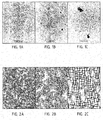
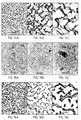
Figs. 1A, 1B and 1C are optical micrographs of castings made from the disclosed alloys (LA-11825, CMSX®-8, test bar #N926, solutioned + 2050°F/4 hours, gage area). -
Figs. 2A, 2B and 2C are scanning electron micrographs of castings made using the disclosed alloys (LA-11825, CMSX®-8, test bar #N926, solutioned + 2050°F/4 hours, gage area). -
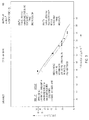
Figs. 3 and4 are Larson-Miller stress-rupture and stress-1.0% creep diagrams showing that the alloys disclosed herein have properties similar to advanced CMSX-4® single crystal nickel-base superalloy having a substantially higher rhenium content, up to 1900°F (1040°C). -
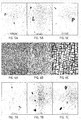
Figs. 5A, 5B and 5C are optical micrographs demonstrating that the post-test phase stability of single crystal test bar castings made using the disclosed alloys is surprisingly good, and that there are no detectable TCP phases (LA-11848, CMSX®-8, test bar #A925, 1562°F/94.4 ksi/211.9 hours, fracture area). -
Figs. 6A, 6B and 6C are scanning electron micrographs demonstrating that the post-test phase stability of single crystal test bar castings made using the disclosed alloys is surprisingly good, and that there are no detectable TCP phases (LA-11848, CMSX®-8, test bar #A925, 1562°F/94.4 ksi/211.9 hours, fracture area). -
Figs. 7A, 7B and 7C are optical micrographs demonstrating that the post-test phase stability of single crystal test bar castings made using the disclosed alloys is surprisingly good, and that there are no detectable TCP phases (LA-11848, CMSX®-8, test bar #A925, 1562°F/94.4 ksi/211.9 hours, gage area). -
Figs. 8A, 8B and 8C are scanning electron micrographs demonstrating that the post-test phase stability of single crystal test bar castings made using the disclosed alloys is surprisingly good, and that there are no detectable TCP phases (LA-11848, CMSX®-8, test bar #A925, 1562°F/94.4 ksi/211.9 hours, gage area). -
Figs. 9A, 9B and 9C are optical micrographs demonstrating that the post-test phase stability of single crystal test bar castings made using the disclosed alloys is surprisingly good, and that there are no detectable TCP phases (A-11848, CMSX®-8, test bar #E926, 1800°F/36 ksi/246.7 hours, fracture area). -
Figs. 10A, 10B and 10C are scanning electron micrographs demonstrating that the post-test phase stability of single crystal test bar castings made using the disclosed alloys is surprisingly good, and that there are no detectable TCP phases (LA-11848, CMSX®-8, test bar #E926, 1800°F/36 ksi/246.7 hours, fracture area). -
Figs. 11A, 11B and 11C are optical micrographs demonstrating that the post-test phase stability of single crystal test bar castings made using the disclosed alloys is surprisingly good, and that there are no detectable TCP phases (LA-11848, CMSX®-8, test bar #E926, 1800°F/36 ksi/246.7 hours, gage area). -
Figs. 12A, 12B and 12C are scanning electron micrographs demonstrating that the post-test phase stability of single crystal test bar castings made using the disclosed alloys is surprisingly good, and that there are no detectable TCP phases (LA-11848, CMSX®-8, test bar #E926, 1800°F/36 ksi/246.7 hours, gage area). -
Figs. 13A, 13B and 13C are optical micrographs demonstrating that the post-test phase stability of single crystal test bar castings made using the disclosed alloys is surprisingly good, and that there are no detectable TCP phases (LA-11848, CMSX®-8, test bar #L926, 2050°F/15 ksi/285.4 hours, fracture area). -
Figs. 14A, 14B and 14C are scanning electron micrographs demonstrating that the post-test phase stability of single crystal test bar castings made using the disclosed alloys is surprisingly good, and that there are no detectable TCP phases (LA-11848, CMSX®-8, test bar #L926, 2050°F/15 ksi/285.4 hours, fracture area). -
Figs. 15A, 15B and 15C are optical micrographs demonstrating that the post-test phase stability of single crystal test bar castings made using the disclosed alloys is surprisingly good, and that there are no detectable TCP phases (LA-11848, CMSX®-8, test bar #L926, 2050°F/15 ksi/285.4 hours, gage area). -
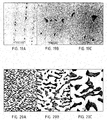
Figs. 16A, 16B and 16C are scanning electron micrographs demonstrating that the post-test phase stability of single crystal test bar castings made using the disclosed alloys is surprisingly good, and that there are no detectable TCP phases (LA-11848, CMSX®-8, test bar #L926, 2050°F/15 ksi/285.4 hours, gage area). -
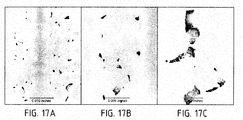
Figs. 17A, 17B and 17C are optical micrographs showing adequate solutioning and/or homogenizing of an alloy casting using a shortened heat treatment cycle (LA-11862, CMSX®-8, test bar #A926, solutioned to 2408°F/8 hours, longitudinal). -
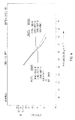
Fig. 18 is a Larson-Miller stress-rupture graphs showing the surprisingly good stress-rupture life properties of single crystal test bars and turbine blade castings made from the disclosed alloys. -
Figs. 19A, 19B and 19C are optical micrographs demonstrating that the post-test phase stability of single crystal test bar castings made using the disclosed alloys is surprisingly good, and that there are no detectable TCP phases (LA-11890, CMSX®-8, test bar #A926, 2050°F/15 ksi (1121°C/103 MPa)/271.8 hours, gage area). -
Figs. 20A, 20B and 20C are scanning electron micrographs demonstrating that the post-test phase stability of single crystal test bar castings made using the disclosed alloys is surprisingly good, and that there are no detectable TCP phases (LA-11890, CMSX®-8, test bar #A926, 2050°F/15 ksi (1121°C/103 MPa)/271.8 hours, gage area). -
Fig. 21 is a drawing in cross section of a single crystal solid turbine blade cast from an alloy as disclosed herein which has the facility to machine both mini-bar and mini-flat specimens for machined-from-blade (MFB) stress-rupture testing. -
Figs. 22A, 22B and 22C are optical micrographs demonstrating that the post-test phase stability of single crystal test bar castings made using the disclosed alloys is surprisingly good, and that there are negligible detectable TCP phases (needles) (LA-11895, CMSX®-8, test bar #R926, 2000°F (1093°C/83 MPa)/12 ksi/1979.9 hours, gage area). -
Figs. 23A, 23B and 23C are scanning electron micrographs demonstrating that the post-test phase stability of single crystal test bar castings made using the disclosed alloys is surprisingly good, and that there are negligible detectable TCP phases (needles) (LA-11895, CMSX®-8, test bar #R926, 2000°F (1093°C/83 MPa)/12 ksi/1979.9 hours, gage area). - The low-rhenium nickel-base superalloys for single crystal casting disclosed herein will be designated "CMSX®-8" alloys, and will be referred to as such herein. The term "CMSX" is a trademark registered to Cannon-Muskegon Corporation for use in connection with the sale of a family of single crystal (SX) nickel-base superalloys.
- Unless otherwise indicated herein, all amounts of elements are given as a percentage by weight or in parts per million (ppm) by weight based on the entire weight of the alloy composition.
- Single crystal superalloys and castings have been developed to exhibit an array of outstanding properties including high temperature creep resistance, long fatigue life, oxidation and corrosion resistance, and solid solution strengthening, with desired casting properties with low rejection rates, and phase stability, among others. While it is possible to optimize a single additive for a particular property, the effects on other properties are often extremely unpredictable. Generally, the relationships among the various properties and various elemental components are extremely complex and unpredictable such that it is surprising when a substantial change can be made to the composition without deleteriously affecting at least certain essential properties.
- With the embodiments disclosed herein, refractory metal elements (tantalum, tungsten, rhenium and molybdenum) (Table 1) were maintained at a total amount of from about 18% to about 19% by weight, while balancing the amounts of the refractory elements to achieve good creep-rupture mechanical properties along with acceptable alloy phase stability (freedom from excessive deleterious topological close-packed (TCP) phases - normally tungsten, rhenium and chromium rich in this type of alloy). Chromium and cobalt amounts are targeted accordingly to ensure this required phase stability. The high tantalum at approximately 8% is designed to give good single crystal castability and freedom from "freckling" defects, and, along with the 5.7% aluminum and the 0.7% titanium, appropriate γ' volume fraction at approximately 70% and low negative γ/γ' mismatch for high temperature creep strength, and acceptable room temperature density of 8.85 gms/cc (kg/dm3). The density of CMSX-4® is 8.70 gms/cc (kg/dm3) and PWA 1484 is 8.95 gms/cc (kg/dm3). Aluminum, tantalum and titanium are targeted at γ' volume fraction (Vf) attainment, along with low molybdenum for good high temperature oxidation properties. The small hafnium addition is required for coating life attainment at high temperatures.
- Typical chemistry for the alloys disclosed and claimed herein are listed in Table 1. However, there are certain minor variations. First, in order to achieve enhanced oxidation resistance and/or enhanced thermal barrier coating life, it is desirable to add lanthanum and/or yttrium in amounts such that the total of lanthanum and yttrium is targeted to provide from 5 to 80 ppm in the single crystal castings made from the alloys. As another variation, in the case of large industrial gas turbine (IGT) single crystal applications where low angle boundary (LAB) strengthening is provided up to 12 degrees, carbon and boron additions are targeted in the range from 0.02% to 0.05% and 40-100 ppm, respectively.
Table 1 CHEMISTRY (WT% / ppm) SPECIFICATIONS CMSX®-8 ALLOY • Aero engine Applications C 100 ppm Ta 8.1-8.5 Si .04% Max Ti .60 - .80 Mn .01% Max W 7.6-8.0 S 3 ppm Max Zr 150 ppm Max Al 5.60-5.85 Cu Max B 30 ppm Max Fe .15% Max Cb (Nb) .10% Max V .10% Max Co 9.4-9.9 Ru .10% Max Cr 4.9-5.5 Pt Max Hf .08 - 35 Pd .15% Max Mo .50-.70 Mg 200 ppm Max Ni Balance [N] 5 ppm Max Re 1.4 - 1..6 [O] 5 ppm Max • Enhanced oxidation resistance/coating and thermal barrier coating (TBC) life S 0.5 ppm max La + Y 5 - 80 ppm (In the SX castings). • Industrial Gas Turbine (IGT) SX Applications Low angle boundary (LAB) Strengthened up to 12°. C 0.05 % Max B 100 ppm. Max TRACE ELEMENT CONTROLS - ALL APPLICATIONS Ag 2 ppm Max Hg 2 ppm Max Bi .2 ppm Max Cd 2 ppm Max Ga 10 ppm Max Ge 2 ppm Max Ca 25 ppm Max Au 2 ppm Max Pb 1 ppm Max In 2 ppm Max Se .5 ppm Max Na 20 ppm Max Te .2 ppm Max K 10 ppm Max Tl .2 ppm Max Ba 10 ppm Max Sn 10 ppm Max P 30 ppm Max Sb 2 ppm Max U 2 ppm Max As 2 ppm Max Th 2 ppm Max Zn 5 ppm Max Density: 8.85 gms/cc (kg/dm3). - The invention will be described below with respect to certain illustrative embodiments that will facilitate a better understanding.
- A 470
lb 100% virgin initial heat of CMSX®-8 alloy was melted in May 2011 in the CM V-5 Consarc VIM furnace using aim chemistry to CM KH 04/20/11 (CM CRMP #81-1708 Issue 1). The heat (5V0460) chemistry is shown in Table 2. - Two molds (#s 925 and 926) of SX NNS DL-10 test bars were cast to CMSX-4® casting parameters by Rolls-Royce Corporation (SCFO). DL-10 test bar yield at 23 fully acceptable out of a total 24 cast was excellent.
- These DL-10 test bars were solutioned/homogenized and double aged heat treated at Cannon-Muskegon Corporation as follows - based on prior work with a precursor similar family alloy designated CMSX®-7.
-
- 2 hrs / 2340°F (1282°C) + 2 hrs / 2360°F (1293°C)
- + 4 hrs / 2380°F (1304°C) + 4 hrs / 2390°F (1310°C)
- + 12 hrs / 2400°F (1316°C) AC (air cool) - ramping up at 1°F / min. between steps
- +
- Double Aged Heat Treatment
4 hrs / 2050°F (1121°C) AC + 20 hrs / 1600°F (871°C) AC - Good microstructure attainment is evident in
Figs 1-2 - complete γ' solutioning, little remnant γ/γ' eutectic, no incipient melting and approximately 0.45 µm average cubic, aligned γ', indicating appropriate γ/γ' mismatch and γ/γ' inter-facial chemistry, following the 4 hr / 2050°F (1121°C) high temperature age. - Creep - and stress-rupture specimens were low stress ground and tested by Joliet Metallurgical Labs, with the results to date shown in Table 3. Larson-Miller stress-rupture and stress- 1.0% creep (
Figs. 3 &4 ) show CMSX®-8 has similar and surprisingly good creep strength / stress-rupture life properties to CMSX-4® alloy (3% Re) up to approximate 1850°F - 1900°F (1010 - 1038°C), with fall-off at 2050°F (1121°C) due to its cost saving lower Re (1.5%) content. All these properties are significantly higher than Rene' N-5 (3% Re) and Rene' N-515 (low Re) alloys (JOM, Volume 62, ).Table 2 HEAT #5V0460 CMSX®-8 - 100% VIRGIN CHEMISTRY (WT ppm / %) C 9 ppm Cu < .001 Si <.02 Fe .010 Mn <.001 V <.005 S 1 ppm Ru < .01 Al 5.72 Pt < .001 B < 20 ppm Pd < .001 Cb (Nb) < .05 Mg < 100 ppm Co 9.7 [N] 2 ppm Cr 5.4 [O] 2 ppm Hf .30 Y < .001 Mo .59 La < .001 Ni Balance Ce < .002 Re 1.5 Ta 8.3 Ti .71 W 7.8 Zr < 10 ppm Ag < .4 ppm Bi < .2 ppm Ga < 10 ppm Ca < 25 ppm Pb < .5 ppm Se < .5ppm Te < .2ppm Tl < .2 ppm Sn < 2 ppm Sb < 1 ppm As < 1 ppm Zn < 1 ppm Hg < 2 ppm Cd < .2 ppm Ge < 1 ppm Au < .5 ppm In < .2 ppm Na < 10 ppm K < 5 ppm Ba <10 ppm P 6 ppm U <.5ppm Th < 1 ppm Table 3 CMSX ® -8 Heat - 5V0460 Molds 925/926 - RR SCFO [Indy] - LA 11832 (Joliet / CM 366) Fully Heat Treated - Solution + Double Age [DL-10s] Creep-Rupture Test Condition ID Rupture Life, hrs % Elong % RA 1% Creep 2% Creep 1562°F/94.4 ksi A925 211.9 17.5 21.5 7.3 39.1 [850°C/651 Mpa] B926 157.1 16.4 22.8 2.3 23.2 1600°F/65.0 ksi B925 1072.0 27.4 33.5 482.8 631.5 [871°C/448 Mpa] C926 983.5 26.8 33.0 407.8 536.4 1800°F/36.0 ksi C925 200.2 35.0 43.3 109.7 125.1 [982°C/248 Mpa] E926 246.7 44.6 46.0 120.0 140.1 1850°F/38.0 ksi E925 86.0 37.2 38.6 39.7 46.6 [1010°C/262 Mpa] H926 65.9 41.4 44.0 28.6 35.6 1900□F/25.0 ksi H925 214.7 38.6 39.4 82.0 105.0 1038°C/172 Mpa] J926 199.6 33.2 39.5 65.3 93.7 1904°F/21.0 ksi J925 362.4 30.0 37.5 141.3 182.6 [1040°C/145 Mpa] K926 359.1 33.1 34.8 164.2 194.6 1950°F/18.0 ksi L925 481.1 31.4 34.9 194.1 246.1 [1066°C/124 Mpa] M926 449.6 40.0 38.9 166.1 211.5 Stress-Rupture Test Condition ID Rupture Life, hrs (4D) % Elong % RA 2000°F/12.0 ksi N925 1983.2 13.0 37.9 [1093°/83Mpa] R926 1979.9 24.8 33.0 2050°F/15.0 ksi R925 275.5 24.5 38.3 [1121°/103 Mpa] L926 285.4 22.9 40.4 Alternate Heat Treatment (Tmax 2408°F) 1800°F/36.0 ksi D925 249.0 43.1 44.0 114.5 134.8 [982°C/248 Mpa] 2050°F/15.0 ksi A926 271.8 13.6 38.1 - - [1121°/103 Mpa] - Phase stability is surprisingly good with absolutely negligible TCP phases apparent in the post-test creep/stress rupture bars examined to date (
Figs. 5-16 inclusive and 22-23 inclusive). - Recent work has shown it is possible to adequately solution/homogenize heat treat a single crystal test bar in the alloy (
Fig. 17 ), using a shortened cycle - 2 hrs / 2365°F (1296°C) + 2 hrs / 2385°F (1307°C) + 2 hrs / 2395°F (1313°C) + 2 hrs / 2403°F (1317°C) + 8 hrs / 2408°F (1320°C) AC (8 hrs shorter). Limited creep/stress-rupture properties at critical conditions using this shorter solution/homogenization heat treatment show very similar results to the original solution heat treatment condition (Table 3 and 4) and good phase stability [no TCP phases] (Figs 19 & 20 ). - Burner rig dynamic, cyclic oxidation and hot corrosion (sulfidation) testing is currently scheduled at a major turbine engine company.
- Creep/stress-rupture data for fully heat treated solution/homogenized and double aged (DL-10s) test specimens for the disclosed alloys are presented in Table 4.
Table 4 CMSX®-8 Heat 5V0460 Heat 5V0460 - Mold 54275 - HP2 Solid Turbine Blades RR SCFO [Indy] - LA11865 (Joliet 9220/CM-373) Fully Heat Treated - Solution + double age - 2050°F Primary age Stress-Rupture MFB Mini Bars [0.070"ø gage] (LLE) Test Condition ID Rupture Life, hrs % (4D) Elong % RA 1562°F/94.4 ksi 54275A-B 449.0 16.3 18.7 [850°C/651 MPa] 54275B-B 359.8 18.7 19.9 1800°F/36.0 ksi 54275E-B 223.4 43.1 45.6 [982°C/248 MPa] 54275H-B 219.1 45.1 46.9 1850°F/38.0ksi 54275I-B 74.2 46.2 47.8 [1010°C/262 MPa] 54275J-B 76.7 39.2 43.8 1900°F/25.0 ksi 54275K-B 181.8 41.2 48.5 [1038°C/172 MPa] 54275L-B 190.8 41.8 38.9 1904°F121.0 ksi 54275R-B 354.0 43.9 40.2 [1040°C/45 MPa] 54275O-B 599.3 39.2 45.7 1950°F/18.0 ksi 54275T-B 410.1 27.9 48.8 [1066°C/124 MPa] 54275U-B 420.6 39.1 41.1 2050°F/15.0 ksi 54275X-B 287.5 26.3 32.7 [1121°C/103 Mpa] 54275Y-B 205.8 22.7 25.1 MFB Mini Flats [0.020" Thick Gage] (LTE) Test Condition ID Rupture Life, hrs % Elong 1800°F/30.0 ksi 54275A-F 490.7 41.1 [982°C/207 MPa] 54275B-F 446.0 28.8 54275E-F 437.5 24.2 54275H-F 381.9 31.6 1904°F/21.0 ksi 54275I-F 404.0 36.4 [1040°C/145 MPa] 54275J-F 325.1 28.6 54275K-F 312.1 24.5 54275L-F 341.1 26.6 - Mini-flat bar stress-rupture testing was performed on single crystal solid turbine blades 10 (
Fig. 21 ) cast from alloys as disclosed herein that have facility tomachine mini-bar specimens 15 andmini-flat specimens 20. - A Larson-Miller stress-rupture graph (
Fig. 18 ) shows CMSX®-8 alloy has surprisingly good stress-rupture life properties, from machined-from-blade (MFB) mini-flat (0.020" (0.508mm) gage thickness) specimens, that are close to those of a CMSX-4® alloy.
Claims (10)
- A nickel-base superalloy for single crystal casting, consisting of:5.60% to 5.80% aluminum by weight;9.4% to 9.9% cobalt by weight;4.9% to 5.5% chromium by weight;0.08% to 0.35% hafnium by weight;0.50% to 0.70% molybdenum by weight;1.4% to 1.6% rhenium by weight;8.1 % to 8.5% tantalum by weight;0.60% to 0.80% titanium by weight;7.6 to 8.0% tungsten by weight; andoptionally 5 to 80 ppm total lanthanum and yttrium by weight;0.02% to 0.05% carbon by weight;or 40 to 100 ppm boron by weight,the balance being nickel and minor amounts of incidental impurity elements, the total amount of incidental impurity elements being about 1% or less.
- A nickel-base superalloy for single crystal casting according to claim 1, in which the incidental impurity elements are present at maximum amounts of 100 ppm carbon, 0.04% silicon, 0.01% manganese, 3 ppm sulfur, 30 ppm phosphorous, 30 ppm boron, 0.10% niobium, 150 ppm zirconium, 0.01% copper, 0.15% iron, 0.10% vanadium, 0.10% ruthenium, 0.15% platinum, 0.15% palladium, 200 ppm magnesium, 5 ppm nitrogen, 5 ppm oxygen, and other trace elements present in amounts of about 25 ppm or less.
- A nickel-base superalloy for single crystal casting according to claim 2, in which the trace elements are present at maximum amounts of 2 ppm silver, 0.2 ppm bismuth, 10 ppm gallium, 25 ppm calcium, 1 ppm lead, 0.5 ppm selenium, 0.2 ppm tellurium, 0.2 ppm thallium, 10 ppm tin, 2 ppm antimony, 2 ppm arsenic, 5 ppm zinc, 2 ppm mercury, 2 ppm cadmium, 2 ppm germanium, 2 ppm gold, 2 ppm indium, 20 ppm sodium, 10 ppm potassium, 20 ppm barium, 30 ppm phosphorous, 2 ppm uranium, and 2 ppm thorium.
- A nickel-base superalloy for single crystal casting according to claim 1, in which sulfur is present at a maximum of 0.5 ppm, and lanthanum and/or yttrium are added in an amount targeted to achieve from 5 ppm to 80 ppm of total lanthanum and yttrium in a single crystal casting.
- A nickel-base superalloy for single crystal casting according to claim 1, in which carbon is present in an amount of from 0.02% to 0.05%, and boron is present in an amount of from 40 ppm to 100 ppm.
- A nickel-base superalloy for single crystal casting according to claim 1, having a density of 8.90 gms/cc (kg/dm3) or less.
- A nickel-base superalloy for single crystal casting according to claim 1, having a density of 8.85 gms/cc (kg/dm3).
- A single crystal component cast from an alloy according to claim 1.
- A single crystal component according to claim 8 that is a gas turbine component.
- A single crystal component according to claim 8 that is a turbine blade, a vane, or a seal segment for a gas turbine.
Applications Claiming Priority (1)
| Application Number | Priority Date | Filing Date | Title |
|---|---|---|---|
| US13/311,626 US20130142637A1 (en) | 2011-12-06 | 2011-12-06 | Low rhenium single crystal superalloy for turbine blades and vane applications |
Publications (3)
| Publication Number | Publication Date |
|---|---|
| EP2612935A2 EP2612935A2 (en) | 2013-07-10 |
| EP2612935A3 EP2612935A3 (en) | 2014-02-19 |
| EP2612935B1 true EP2612935B1 (en) | 2016-01-20 |
Family
ID=46084847
Family Applications (1)
| Application Number | Title | Priority Date | Filing Date |
|---|---|---|---|
| EP12166494.0A Active EP2612935B1 (en) | 2011-12-06 | 2012-05-03 | Low rhenium single crystal superalloy for turbine blades and vane applications |
Country Status (7)
| Country | Link |
|---|---|
| US (2) | US20130142637A1 (en) |
| EP (1) | EP2612935B1 (en) |
| JP (1) | JP5746998B2 (en) |
| KR (1) | KR101470069B1 (en) |
| CA (1) | CA2774730C (en) |
| ES (1) | ES2562011T3 (en) |
| IL (1) | IL219180A (en) |
Families Citing this family (11)
| Publication number | Priority date | Publication date | Assignee | Title |
|---|---|---|---|---|
| US9518311B2 (en) * | 2014-05-08 | 2016-12-13 | Cannon-Muskegon Corporation | High strength single crystal superalloy |
| EP3149216B1 (en) * | 2014-05-27 | 2020-04-01 | Questek Innovations LLC | Highly processable single crystal nickel alloys |
| GB201615496D0 (en) * | 2016-09-13 | 2016-10-26 | Rolls Royce Plc | Nickel-based superalloy and use thereof |
| GB2554898B (en) * | 2016-10-12 | 2018-10-03 | Univ Oxford Innovation Ltd | A Nickel-based alloy |
| FR3072717B1 (en) * | 2017-10-20 | 2019-10-11 | Safran | SUPERALLIATION TURBINE PIECE COMPRISING RHENIUM AND METHOD OF MANUFACTURING THE SAME |
| KR102340057B1 (en) * | 2017-11-21 | 2021-12-17 | 한국재료연구원 | Ni base single crystal superalloy and Method of manufacturing thereof |
| GB2579580B (en) | 2018-12-04 | 2022-07-13 | Alloyed Ltd | A nickel-based alloy |
| FR3097879B1 (en) * | 2019-06-28 | 2021-05-28 | Safran Aircraft Engines | PROCESS FOR MANUFACTURING A PART IN MONOCRISTALLINE SUPERALLY |
| DE102019213990A1 (en) * | 2019-09-13 | 2021-03-18 | Siemens Aktiengesellschaft | Nickel-based alloy for additive manufacturing, process and product |
| US11739398B2 (en) | 2021-02-11 | 2023-08-29 | General Electric Company | Nickel-based superalloy |
| JP7810472B2 (en) * | 2022-10-03 | 2026-02-03 | 国立研究開発法人物質・材料研究機構 | Manufacturing method of Ni-based superalloy preventing deterioration of oxidation resistance due to Sb, and Ni-based superalloy member preventing deterioration of oxidation resistance due to Sb |
Citations (4)
| Publication number | Priority date | Publication date | Assignee | Title |
|---|---|---|---|---|
| DE3686525T2 (en) | 1985-06-10 | 1993-01-21 | United Technologies Corp | HIGH-STRENGTH SINGLE CRYSTAL SUPER ALLOY COMPOSITIONS. |
| US6074602A (en) | 1985-10-15 | 2000-06-13 | General Electric Company | Property-balanced nickel-base superalloys for producing single crystal articles |
| CA2764664A1 (en) | 2009-08-10 | 2011-02-17 | Ihi Corporation | Ni-based single crystal superalloy and turbine blade |
| EP2415888A2 (en) | 2010-08-05 | 2012-02-08 | Cannon-Muskegon Corporation | Improved low sulfur nickel-base single crystal superalloy with ppm additions of lanthanum and yttrium |
Family Cites Families (8)
| Publication number | Priority date | Publication date | Assignee | Title |
|---|---|---|---|---|
| US5346563A (en) * | 1991-11-25 | 1994-09-13 | United Technologies Corporation | Method for removing sulfur from superalloy articles to improve their oxidation resistance |
| JP3164972B2 (en) * | 1993-08-06 | 2001-05-14 | 株式会社日立製作所 | Moving blade for gas turbine, method of manufacturing the same, and gas turbine using the same |
| JPH09170402A (en) * | 1995-12-20 | 1997-06-30 | Hitachi Ltd | Nozzle for gas turbine, manufacturing method thereof, and gas turbine using the same |
| JPH11310839A (en) * | 1998-04-28 | 1999-11-09 | Hitachi Ltd | High-strength Ni-base superalloy directionally solidified casting |
| JP2000144289A (en) * | 1998-11-02 | 2000-05-26 | United Technol Corp <Utc> | Stably heat-treatable nickel-base superalloy single- crystal body and composition, and gas turbine parts |
| US20030041930A1 (en) * | 2001-08-30 | 2003-03-06 | Deluca Daniel P. | Modified advanced high strength single crystal superalloy composition |
| JP4449337B2 (en) * | 2003-05-09 | 2010-04-14 | 株式会社日立製作所 | High oxidation resistance Ni-base superalloy castings and gas turbine parts |
| EP1900839B1 (en) * | 2006-09-07 | 2013-11-06 | Alstom Technology Ltd | Method for the heat treatment of nickel-based superalloys |
-
2011
- 2011-12-06 US US13/311,626 patent/US20130142637A1/en not_active Abandoned
-
2012
- 2012-04-15 IL IL219180A patent/IL219180A/en active IP Right Grant
- 2012-04-17 CA CA2774730A patent/CA2774730C/en active Active
- 2012-05-02 KR KR1020120046045A patent/KR101470069B1/en active Active
- 2012-05-03 ES ES12166494.0T patent/ES2562011T3/en active Active
- 2012-05-03 EP EP12166494.0A patent/EP2612935B1/en active Active
- 2012-05-21 JP JP2012115725A patent/JP5746998B2/en active Active
-
2017
- 2017-10-17 US US15/785,989 patent/US10519787B2/en active Active
Patent Citations (4)
| Publication number | Priority date | Publication date | Assignee | Title |
|---|---|---|---|---|
| DE3686525T2 (en) | 1985-06-10 | 1993-01-21 | United Technologies Corp | HIGH-STRENGTH SINGLE CRYSTAL SUPER ALLOY COMPOSITIONS. |
| US6074602A (en) | 1985-10-15 | 2000-06-13 | General Electric Company | Property-balanced nickel-base superalloys for producing single crystal articles |
| CA2764664A1 (en) | 2009-08-10 | 2011-02-17 | Ihi Corporation | Ni-based single crystal superalloy and turbine blade |
| EP2415888A2 (en) | 2010-08-05 | 2012-02-08 | Cannon-Muskegon Corporation | Improved low sulfur nickel-base single crystal superalloy with ppm additions of lanthanum and yttrium |
Non-Patent Citations (3)
| Title |
|---|
| FINK ET AL.: "Rhenium reduction - Alloy design using an economically strategic element", JOM, vol. 62, no. 1, 2010, New York LLC, USA, pages 55 - 57, XP001554549 |
| GELL ET AL.: "THE DEVELOPMENT OF SINGLE CRYSTAL SUPERALLOY TURBINE BLADES", SUPERALLOYS, 1980, pages 205 - 214, XP009069296 |
| HARRIS ET AL.: "Improved Single Crystal Superalloys, CMSX-4 (SLS)[La+Y] and CMSX-486", SUPERALLOYS 2004 - TENTH INTERNATIONAL SYMPOSIUM ON SUPERALLOYS, 2004, pages 45 - 52, XP008108157 |
Also Published As
| Publication number | Publication date |
|---|---|
| ES2562011T3 (en) | 2016-03-02 |
| JP5746998B2 (en) | 2015-07-08 |
| IL219180A (en) | 2016-04-21 |
| EP2612935A3 (en) | 2014-02-19 |
| EP2612935A2 (en) | 2013-07-10 |
| US20130142637A1 (en) | 2013-06-06 |
| KR101470069B1 (en) | 2014-12-05 |
| US10519787B2 (en) | 2019-12-31 |
| KR20130063445A (en) | 2013-06-14 |
| CA2774730A1 (en) | 2013-06-06 |
| JP2013119668A (en) | 2013-06-17 |
| IL219180A0 (en) | 2012-07-31 |
| US20180100401A1 (en) | 2018-04-12 |
| CA2774730C (en) | 2020-02-25 |
Similar Documents
| Publication | Publication Date | Title |
|---|---|---|
| US10519787B2 (en) | Low rhenium single crystal superalloy for turbine blades and vane applications | |
| EP2612936B1 (en) | Rhenium-free single crystal superalloy for turbine blades and vane applications | |
| CN104520457B (en) | Ni-based single crystal superalloy | |
| EP3149216A2 (en) | Highly processable single crystal nickel alloys | |
| JP3820430B2 (en) | Ni-based single crystal superalloy, manufacturing method thereof, and gas turbine component | |
| US20080240972A1 (en) | Low-density directionally solidified single-crystal superalloys | |
| US10024174B2 (en) | Ni-based casting superalloy and cast article therefrom | |
| US9518311B2 (en) | High strength single crystal superalloy | |
| US9404388B2 (en) | Article and method for forming an article | |
| JP6267890B2 (en) | Ni-base cast superalloy and casting made of the Ni-base cast superalloy | |
| CN104911407B (en) | A kind of ability creep resistance monocrystal nickel-base superalloy high of bearing high temperature containing Re/Ru | |
| JP2000239771A (en) | Ni-base superalloy, method for producing the same, and gas turbine component | |
| JPH10317080A (en) | Ni-base heat-resistant superalloy, method for producing Ni-base heat-resistant superalloy, and Ni-base heat-resistant superalloy component | |
| JPH11246954A (en) | Method for producing Ni-based directionally solidified alloy | |
| WO2017154809A1 (en) | Ni-BASED UNIDIRECTIONALLY SOLIDIFIED ALLOY | |
| RU2325453C2 (en) | Nickel-based heat resistant alloy | |
| JP2023018394A (en) | Ni-based superalloy and turbine wheel |
Legal Events
| Date | Code | Title | Description |
|---|---|---|---|
| PUAI | Public reference made under article 153(3) epc to a published international application that has entered the european phase |
Free format text: ORIGINAL CODE: 0009012 |
|
| 17P | Request for examination filed |
Effective date: 20120920 |
|
| AK | Designated contracting states |
Kind code of ref document: A2 Designated state(s): AL AT BE BG CH CY CZ DE DK EE ES FI FR GB GR HR HU IE IS IT LI LT LU LV MC MK MT NL NO PL PT RO RS SE SI SK SM TR |
|
| AX | Request for extension of the european patent |
Extension state: BA ME |
|
| PUAL | Search report despatched |
Free format text: ORIGINAL CODE: 0009013 |
|
| AK | Designated contracting states |
Kind code of ref document: A3 Designated state(s): AL AT BE BG CH CY CZ DE DK EE ES FI FR GB GR HR HU IE IS IT LI LT LU LV MC MK MT NL NO PL PT RO RS SE SI SK SM TR |
|
| AX | Request for extension of the european patent |
Extension state: BA ME |
|
| RIC1 | Information provided on ipc code assigned before grant |
Ipc: F01D 5/12 20060101ALI20140110BHEP Ipc: F01D 5/00 20060101ALI20140110BHEP Ipc: C22C 19/05 20060101AFI20140110BHEP Ipc: C22F 1/10 20060101ALI20140110BHEP |
|
| RBV | Designated contracting states (corrected) |
Designated state(s): AL AT BE BG CH CY CZ DE DK EE ES FI FR GB GR HR HU IE IS IT LI LT LU LV MC MK MT NL NO PL PT RO RS SE SI SK SM TR |
|
| GRAP | Despatch of communication of intention to grant a patent |
Free format text: ORIGINAL CODE: EPIDOSNIGR1 |
|
| INTG | Intention to grant announced |
Effective date: 20150416 |
|
| GRAP | Despatch of communication of intention to grant a patent |
Free format text: ORIGINAL CODE: EPIDOSNIGR1 |
|
| INTG | Intention to grant announced |
Effective date: 20150710 |
|
| GRAS | Grant fee paid |
Free format text: ORIGINAL CODE: EPIDOSNIGR3 |
|
| GRAA | (expected) grant |
Free format text: ORIGINAL CODE: 0009210 |
|
| AK | Designated contracting states |
Kind code of ref document: B1 Designated state(s): AL AT BE BG CH CY CZ DE DK EE ES FI FR GB GR HR HU IE IS IT LI LT LU LV MC MK MT NL NO PL PT RO RS SE SI SK SM TR |
|
| REG | Reference to a national code |
Ref country code: GB Ref legal event code: FG4D |
|
| REG | Reference to a national code |
Ref country code: CH Ref legal event code: EP |
|
| REG | Reference to a national code |
Ref country code: IE Ref legal event code: FG4D |
|
| REG | Reference to a national code |
Ref country code: AT Ref legal event code: REF Ref document number: 771766 Country of ref document: AT Kind code of ref document: T Effective date: 20160215 |
|
| REG | Reference to a national code |
Ref country code: SE Ref legal event code: TRGR |
|
| REG | Reference to a national code |
Ref country code: ES Ref legal event code: FG2A Ref document number: 2562011 Country of ref document: ES Kind code of ref document: T3 Effective date: 20160302 |
|
| REG | Reference to a national code |
Ref country code: DE Ref legal event code: R096 Ref document number: 602012014046 Country of ref document: DE |
|
| REG | Reference to a national code |
Ref country code: LT Ref legal event code: MG4D Ref country code: NL Ref legal event code: MP Effective date: 20160120 |
|
| REG | Reference to a national code |
Ref country code: FR Ref legal event code: PLFP Year of fee payment: 5 |
|
| REG | Reference to a national code |
Ref country code: AT Ref legal event code: MK05 Ref document number: 771766 Country of ref document: AT Kind code of ref document: T Effective date: 20160120 |
|
| PG25 | Lapsed in a contracting state [announced via postgrant information from national office to epo] |
Ref country code: NL Free format text: LAPSE BECAUSE OF FAILURE TO SUBMIT A TRANSLATION OF THE DESCRIPTION OR TO PAY THE FEE WITHIN THE PRESCRIBED TIME-LIMIT Effective date: 20160120 |
|
| PG25 | Lapsed in a contracting state [announced via postgrant information from national office to epo] |
Ref country code: HR Free format text: LAPSE BECAUSE OF FAILURE TO SUBMIT A TRANSLATION OF THE DESCRIPTION OR TO PAY THE FEE WITHIN THE PRESCRIBED TIME-LIMIT Effective date: 20160120 Ref country code: FI Free format text: LAPSE BECAUSE OF FAILURE TO SUBMIT A TRANSLATION OF THE DESCRIPTION OR TO PAY THE FEE WITHIN THE PRESCRIBED TIME-LIMIT Effective date: 20160120 Ref country code: GR Free format text: LAPSE BECAUSE OF FAILURE TO SUBMIT A TRANSLATION OF THE DESCRIPTION OR TO PAY THE FEE WITHIN THE PRESCRIBED TIME-LIMIT Effective date: 20160421 Ref country code: NO Free format text: LAPSE BECAUSE OF FAILURE TO SUBMIT A TRANSLATION OF THE DESCRIPTION OR TO PAY THE FEE WITHIN THE PRESCRIBED TIME-LIMIT Effective date: 20160420 |
|
| PG25 | Lapsed in a contracting state [announced via postgrant information from national office to epo] |
Ref country code: IS Free format text: LAPSE BECAUSE OF FAILURE TO SUBMIT A TRANSLATION OF THE DESCRIPTION OR TO PAY THE FEE WITHIN THE PRESCRIBED TIME-LIMIT Effective date: 20160520 Ref country code: RS Free format text: LAPSE BECAUSE OF FAILURE TO SUBMIT A TRANSLATION OF THE DESCRIPTION OR TO PAY THE FEE WITHIN THE PRESCRIBED TIME-LIMIT Effective date: 20160120 Ref country code: PT Free format text: LAPSE BECAUSE OF FAILURE TO SUBMIT A TRANSLATION OF THE DESCRIPTION OR TO PAY THE FEE WITHIN THE PRESCRIBED TIME-LIMIT Effective date: 20160520 Ref country code: LV Free format text: LAPSE BECAUSE OF FAILURE TO SUBMIT A TRANSLATION OF THE DESCRIPTION OR TO PAY THE FEE WITHIN THE PRESCRIBED TIME-LIMIT Effective date: 20160120 Ref country code: PL Free format text: LAPSE BECAUSE OF FAILURE TO SUBMIT A TRANSLATION OF THE DESCRIPTION OR TO PAY THE FEE WITHIN THE PRESCRIBED TIME-LIMIT Effective date: 20160120 Ref country code: AT Free format text: LAPSE BECAUSE OF FAILURE TO SUBMIT A TRANSLATION OF THE DESCRIPTION OR TO PAY THE FEE WITHIN THE PRESCRIBED TIME-LIMIT Effective date: 20160120 Ref country code: LT Free format text: LAPSE BECAUSE OF FAILURE TO SUBMIT A TRANSLATION OF THE DESCRIPTION OR TO PAY THE FEE WITHIN THE PRESCRIBED TIME-LIMIT Effective date: 20160120 Ref country code: BE Free format text: LAPSE BECAUSE OF NON-PAYMENT OF DUE FEES Effective date: 20160531 |
|
| REG | Reference to a national code |
Ref country code: DE Ref legal event code: R026 Ref document number: 602012014046 Country of ref document: DE |
|
| PLBI | Opposition filed |
Free format text: ORIGINAL CODE: 0009260 |
|
| 26 | Opposition filed |
Opponent name: SIEMENS AKTIENGESELLSCHAFT Effective date: 20160922 |
|
| PG25 | Lapsed in a contracting state [announced via postgrant information from national office to epo] |
Ref country code: DK Free format text: LAPSE BECAUSE OF FAILURE TO SUBMIT A TRANSLATION OF THE DESCRIPTION OR TO PAY THE FEE WITHIN THE PRESCRIBED TIME-LIMIT Effective date: 20160120 Ref country code: EE Free format text: LAPSE BECAUSE OF FAILURE TO SUBMIT A TRANSLATION OF THE DESCRIPTION OR TO PAY THE FEE WITHIN THE PRESCRIBED TIME-LIMIT Effective date: 20160120 |
|
| PLAX | Notice of opposition and request to file observation + time limit sent |
Free format text: ORIGINAL CODE: EPIDOSNOBS2 |
|
| PG25 | Lapsed in a contracting state [announced via postgrant information from national office to epo] |
Ref country code: SK Free format text: LAPSE BECAUSE OF FAILURE TO SUBMIT A TRANSLATION OF THE DESCRIPTION OR TO PAY THE FEE WITHIN THE PRESCRIBED TIME-LIMIT Effective date: 20160120 Ref country code: SM Free format text: LAPSE BECAUSE OF FAILURE TO SUBMIT A TRANSLATION OF THE DESCRIPTION OR TO PAY THE FEE WITHIN THE PRESCRIBED TIME-LIMIT Effective date: 20160120 Ref country code: RO Free format text: LAPSE BECAUSE OF FAILURE TO SUBMIT A TRANSLATION OF THE DESCRIPTION OR TO PAY THE FEE WITHIN THE PRESCRIBED TIME-LIMIT Effective date: 20160120 Ref country code: CZ Free format text: LAPSE BECAUSE OF FAILURE TO SUBMIT A TRANSLATION OF THE DESCRIPTION OR TO PAY THE FEE WITHIN THE PRESCRIBED TIME-LIMIT Effective date: 20160120 |
|
| PG25 | Lapsed in a contracting state [announced via postgrant information from national office to epo] |
Ref country code: LU Free format text: LAPSE BECAUSE OF FAILURE TO SUBMIT A TRANSLATION OF THE DESCRIPTION OR TO PAY THE FEE WITHIN THE PRESCRIBED TIME-LIMIT Effective date: 20160503 Ref country code: BE Free format text: LAPSE BECAUSE OF FAILURE TO SUBMIT A TRANSLATION OF THE DESCRIPTION OR TO PAY THE FEE WITHIN THE PRESCRIBED TIME-LIMIT Effective date: 20160120 |
|
| REG | Reference to a national code |
Ref country code: CH Ref legal event code: PL |
|
| PG25 | Lapsed in a contracting state [announced via postgrant information from national office to epo] |
Ref country code: LI Free format text: LAPSE BECAUSE OF NON-PAYMENT OF DUE FEES Effective date: 20160531 Ref country code: CH Free format text: LAPSE BECAUSE OF NON-PAYMENT OF DUE FEES Effective date: 20160531 |
|
| REG | Reference to a national code |
Ref country code: IE Ref legal event code: MM4A |
|
| PG25 | Lapsed in a contracting state [announced via postgrant information from national office to epo] |
Ref country code: BG Free format text: LAPSE BECAUSE OF FAILURE TO SUBMIT A TRANSLATION OF THE DESCRIPTION OR TO PAY THE FEE WITHIN THE PRESCRIBED TIME-LIMIT Effective date: 20160420 Ref country code: SI Free format text: LAPSE BECAUSE OF FAILURE TO SUBMIT A TRANSLATION OF THE DESCRIPTION OR TO PAY THE FEE WITHIN THE PRESCRIBED TIME-LIMIT Effective date: 20160120 |
|
| PLBB | Reply of patent proprietor to notice(s) of opposition received |
Free format text: ORIGINAL CODE: EPIDOSNOBS3 |
|
| REG | Reference to a national code |
Ref country code: FR Ref legal event code: PLFP Year of fee payment: 6 |
|
| PG25 | Lapsed in a contracting state [announced via postgrant information from national office to epo] |
Ref country code: IE Free format text: LAPSE BECAUSE OF NON-PAYMENT OF DUE FEES Effective date: 20160503 |
|
| PLAB | Opposition data, opponent's data or that of the opponent's representative modified |
Free format text: ORIGINAL CODE: 0009299OPPO |
|
| R26 | Opposition filed (corrected) |
Opponent name: SIEMENS AKTIENGESELLSCHAFT Effective date: 20160922 |
|
| REG | Reference to a national code |
Ref country code: FR Ref legal event code: PLFP Year of fee payment: 7 |
|
| PG25 | Lapsed in a contracting state [announced via postgrant information from national office to epo] |
Ref country code: CY Free format text: LAPSE BECAUSE OF FAILURE TO SUBMIT A TRANSLATION OF THE DESCRIPTION OR TO PAY THE FEE WITHIN THE PRESCRIBED TIME-LIMIT Effective date: 20160120 Ref country code: HU Free format text: LAPSE BECAUSE OF FAILURE TO SUBMIT A TRANSLATION OF THE DESCRIPTION OR TO PAY THE FEE WITHIN THE PRESCRIBED TIME-LIMIT; INVALID AB INITIO Effective date: 20120503 |
|
| PG25 | Lapsed in a contracting state [announced via postgrant information from national office to epo] |
Ref country code: MK Free format text: LAPSE BECAUSE OF FAILURE TO SUBMIT A TRANSLATION OF THE DESCRIPTION OR TO PAY THE FEE WITHIN THE PRESCRIBED TIME-LIMIT Effective date: 20160120 Ref country code: MC Free format text: LAPSE BECAUSE OF FAILURE TO SUBMIT A TRANSLATION OF THE DESCRIPTION OR TO PAY THE FEE WITHIN THE PRESCRIBED TIME-LIMIT Effective date: 20160120 Ref country code: TR Free format text: LAPSE BECAUSE OF FAILURE TO SUBMIT A TRANSLATION OF THE DESCRIPTION OR TO PAY THE FEE WITHIN THE PRESCRIBED TIME-LIMIT Effective date: 20160120 Ref country code: MT Free format text: LAPSE BECAUSE OF NON-PAYMENT OF DUE FEES Effective date: 20160531 |
|
| PLCK | Communication despatched that opposition was rejected |
Free format text: ORIGINAL CODE: EPIDOSNREJ1 |
|
| REG | Reference to a national code |
Ref country code: DE Ref legal event code: R100 Ref document number: 602012014046 Country of ref document: DE |
|
| PG25 | Lapsed in a contracting state [announced via postgrant information from national office to epo] |
Ref country code: AL Free format text: LAPSE BECAUSE OF FAILURE TO SUBMIT A TRANSLATION OF THE DESCRIPTION OR TO PAY THE FEE WITHIN THE PRESCRIBED TIME-LIMIT Effective date: 20160120 |
|
| PLBN | Opposition rejected |
Free format text: ORIGINAL CODE: 0009273 |
|
| STAA | Information on the status of an ep patent application or granted ep patent |
Free format text: STATUS: OPPOSITION REJECTED |
|
| 27O | Opposition rejected |
Effective date: 20181007 |
|
| PGFP | Annual fee paid to national office [announced via postgrant information from national office to epo] |
Ref country code: DE Payment date: 20250529 Year of fee payment: 14 |
|
| PGFP | Annual fee paid to national office [announced via postgrant information from national office to epo] |
Ref country code: GB Payment date: 20250527 Year of fee payment: 14 Ref country code: ES Payment date: 20250602 Year of fee payment: 14 |
|
| PGFP | Annual fee paid to national office [announced via postgrant information from national office to epo] |
Ref country code: IT Payment date: 20250521 Year of fee payment: 14 |
|
| PGFP | Annual fee paid to national office [announced via postgrant information from national office to epo] |
Ref country code: FR Payment date: 20250526 Year of fee payment: 14 |
|
| PGFP | Annual fee paid to national office [announced via postgrant information from national office to epo] |
Ref country code: SE Payment date: 20250527 Year of fee payment: 14 |