EP2611242A2 - Method and apparatus for broadcast assistance in direct communication system - Google Patents
Method and apparatus for broadcast assistance in direct communication system Download PDFInfo
- Publication number
- EP2611242A2 EP2611242A2 EP12189775.5A EP12189775A EP2611242A2 EP 2611242 A2 EP2611242 A2 EP 2611242A2 EP 12189775 A EP12189775 A EP 12189775A EP 2611242 A2 EP2611242 A2 EP 2611242A2
- Authority
- EP
- European Patent Office
- Prior art keywords
- broadcast
- coordinator
- resource indication
- indication signal
- devices
- Prior art date
- Legal status (The legal status is an assumption and is not a legal conclusion. Google has not performed a legal analysis and makes no representation as to the accuracy of the status listed.)
- Withdrawn
Links
- 238000000034 method Methods 0.000 title claims abstract description 80
- 238000004891 communication Methods 0.000 title claims abstract description 79
- 238000012790 confirmation Methods 0.000 claims abstract description 43
- 238000013468 resource allocation Methods 0.000 claims abstract description 23
- 239000000969 carrier Substances 0.000 claims description 40
- 230000005540 biological transmission Effects 0.000 claims description 15
- 238000010586 diagram Methods 0.000 description 13
- 238000013459 approach Methods 0.000 description 7
- 230000006870 function Effects 0.000 description 3
- 238000006243 chemical reaction Methods 0.000 description 2
- 238000001914 filtration Methods 0.000 description 2
- 230000003321 amplification Effects 0.000 description 1
- 230000001413 cellular effect Effects 0.000 description 1
- 230000007774 longterm Effects 0.000 description 1
- 238000003199 nucleic acid amplification method Methods 0.000 description 1
- 238000012545 processing Methods 0.000 description 1
- XLYOFNOQVPJJNP-UHFFFAOYSA-N water Substances O XLYOFNOQVPJJNP-UHFFFAOYSA-N 0.000 description 1
Images




Classifications
-
- H—ELECTRICITY
- H04—ELECTRIC COMMUNICATION TECHNIQUE
- H04W—WIRELESS COMMUNICATION NETWORKS
- H04W4/00—Services specially adapted for wireless communication networks; Facilities therefor
- H04W4/06—Selective distribution of broadcast services, e.g. multimedia broadcast multicast service [MBMS]; Services to user groups; One-way selective calling services
-
- H—ELECTRICITY
- H04—ELECTRIC COMMUNICATION TECHNIQUE
- H04W—WIRELESS COMMUNICATION NETWORKS
- H04W4/00—Services specially adapted for wireless communication networks; Facilities therefor
- H04W4/24—Accounting or billing
-
- H—ELECTRICITY
- H04—ELECTRIC COMMUNICATION TECHNIQUE
- H04W—WIRELESS COMMUNICATION NETWORKS
- H04W48/00—Access restriction; Network selection; Access point selection
- H04W48/08—Access restriction or access information delivery, e.g. discovery data delivery
- H04W48/12—Access restriction or access information delivery, e.g. discovery data delivery using downlink control channel
-
- H—ELECTRICITY
- H04—ELECTRIC COMMUNICATION TECHNIQUE
- H04W—WIRELESS COMMUNICATION NETWORKS
- H04W72/00—Local resource management
- H04W72/04—Wireless resource allocation
- H04W72/044—Wireless resource allocation based on the type of the allocated resource
- H04W72/0446—Resources in time domain, e.g. slots or frames
-
- H—ELECTRICITY
- H04—ELECTRIC COMMUNICATION TECHNIQUE
- H04W—WIRELESS COMMUNICATION NETWORKS
- H04W72/00—Local resource management
- H04W72/30—Resource management for broadcast services
-
- H—ELECTRICITY
- H04—ELECTRIC COMMUNICATION TECHNIQUE
- H04W—WIRELESS COMMUNICATION NETWORKS
- H04W74/00—Wireless channel access
- H04W74/02—Hybrid access
-
- H—ELECTRICITY
- H04—ELECTRIC COMMUNICATION TECHNIQUE
- H04W—WIRELESS COMMUNICATION NETWORKS
- H04W84/00—Network topologies
- H04W84/02—Hierarchically pre-organised networks, e.g. paging networks, cellular networks, WLAN [Wireless Local Area Network] or WLL [Wireless Local Loop]
- H04W84/04—Large scale networks; Deep hierarchical networks
- H04W84/042—Public Land Mobile systems, e.g. cellular systems
- H04W84/045—Public Land Mobile systems, e.g. cellular systems using private Base Stations, e.g. femto Base Stations, home Node B
-
- H—ELECTRICITY
- H04—ELECTRIC COMMUNICATION TECHNIQUE
- H04W—WIRELESS COMMUNICATION NETWORKS
- H04W84/00—Network topologies
- H04W84/02—Hierarchically pre-organised networks, e.g. paging networks, cellular networks, WLAN [Wireless Local Area Network] or WLL [Wireless Local Loop]
- H04W84/04—Large scale networks; Deep hierarchical networks
- H04W84/042—Public Land Mobile systems, e.g. cellular systems
- H04W84/047—Public Land Mobile systems, e.g. cellular systems using dedicated repeater stations
-
- Y—GENERAL TAGGING OF NEW TECHNOLOGICAL DEVELOPMENTS; GENERAL TAGGING OF CROSS-SECTIONAL TECHNOLOGIES SPANNING OVER SEVERAL SECTIONS OF THE IPC; TECHNICAL SUBJECTS COVERED BY FORMER USPC CROSS-REFERENCE ART COLLECTIONS [XRACs] AND DIGESTS
- Y02—TECHNOLOGIES OR APPLICATIONS FOR MITIGATION OR ADAPTATION AGAINST CLIMATE CHANGE
- Y02D—CLIMATE CHANGE MITIGATION TECHNOLOGIES IN INFORMATION AND COMMUNICATION TECHNOLOGIES [ICT], I.E. INFORMATION AND COMMUNICATION TECHNOLOGIES AIMING AT THE REDUCTION OF THEIR OWN ENERGY USE
- Y02D30/00—Reducing energy consumption in communication networks
- Y02D30/70—Reducing energy consumption in communication networks in wireless communication networks
Definitions
- the disclosure relates to a method and an apparatus for broadcast assistance in a direct communication system.
- Advertising is an attractive revenue growing service for service providers. For example, Google Inc. earns significant revenues through its advertisement services.
- advertisements may be implemented through a broadcast function in a communication system with broadcast channels and resource indications.
- a base station (BS) broadcasts the resource area map of the advertisement message and broadcasts the advertisement message at the allocated area.
- a mobile station (MS) listens to the map and prepares to listen to the advertisement message in the allocated resource.
- LTE Long Term Evolution
- the map might be the region for the Physical Control Channel (PDCCH), and in the IEEE 802.16e/802.16m standards, the map might be the region for the MAP/A-MAP/EMBS-MAP.
- the BS then broadcasts the advertisement message on the allocated area.
- An advertisement scheme can also be implemented in a direct communication system, and a general procedure for advertising in a direct communication system for one to one communication may be as follows.
- a device contents the resource for transmission and an access point acknowledges the transmission.
- the device then transmits the data.
- the procedure can be modified to suit the situation at hand.
- An approach to realize broadcasting in the direct communication system is for the broadcast device to wait for a time window. If there is no device transmitting signals, the device broadcasts the message. This approach puts the broadcast function at a low priority, even though this approach is adopted for the IEEE 802.11 standard. However, performance cannot be guaranteed when there is a plurality of direct communication devices contenting for the available resource. In some cases, such as in the broadcast transmission for streaming or video applications, equal priority may be necessary.
- the disclosure provides a method for broadcast assistance in a direct communication system including at least one coordinator and at least one broadcast device.
- the method includes the at least one coordinator executing the following steps.
- a broadcast assistance request message is received from the broadcast devices.
- a resource indication signal including a resource allocation is broadcasted.
- the disclosure provides a coordinator for broadcast assistance in a direct communication system including at least one of the coordinator and at least one broadcast device.
- the coordinator includes a communication protocol module configured for receiving a broadcast assistance request message from the broadcast devices and broadcasting a resource indication signal including a resource allocation.
- the disclosure provides a method for broadcast assistance in a direct communication system including at least one coordinator and at least one broadcast device.
- the method includes the broadcast devices executing the following steps.
- a broadcast assistance request message is transmitted to the at least one coordinator.
- a broadcast assistance confirmation signal is received from the at least one coordinator.
- an information message is respectively broadcasted.
- the disclosure provides a broadcast device for broadcast assistance in a direct communication system including at least one coordinator and at least one broadcast device.
- the broadcast device includes a communication protocol module configured for transmitting a broadcast assistance request message to the at least one coordinator, receiving a broadcast assistance confirmation signal from the at least one coordinator, and respectively broadcasting an information message.
- the disclosure provides a method for broadcast assistance in a direct communication system including at least one coordinator and at least one listening device.
- the method includes the at least one listening device executing the following steps.
- a resource indication signal broadcasted by the at least one coordinator is listened to, in which the resource indication signal is broadcasted by the at least one coordinator after receiving a broadcast assistance request message and transmitting a broadcast assistance confirmation signal.
- an information message having a category of interest is listened to according to the resource allocation acquired from listening to the resource indication signal.
- the disclosure provides a listening device for broadcast assistance in a direct communication system including at least one coordinator and at least one listening device.
- the listening device includes a communication protocol module configured for listening to a resource indication signal broadcasted by the at least one coordinator, in which the resource indication signal is broadcasted by the at least one coordinator after receiving a broadcast assistance request message and transmitting a broadcast assistance confirmation signal.
- the communication protocol module is configured for listening to an information message having a category of interest according to the resource allocation acquired from listening to the resource indication signal.
- FIG. 1 is a flow diagram of a broadcast method in a direct communication system.
- FIG. 1A is a flow diagram of another broadcast method in a direct communication system.
- FIG. 2 illustrates a timing relationship between a coordinator and two broadcast devices in a direct communication system.
- FIG. 3 is a schematic view of a direct communication system according to an exemplary embodiment.
- FIG. 4 is a functional block diagram of a coordinator according to an exemplary embodiment.
- FIG. 5 illustrates a timing relationship among a coordinator and two broadcast devices according to an exemplary embodiment.
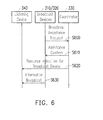
- FIG. 6 is a flow diagram of a method for broadcast assistance in a direct communication system according to an exemplary embodiment.
- FIG. 7 is a flow diagram of another method for broadcast assistance in a direct communication system according to an exemplary embodiment.
- FIG. 8 illustrates a flow diagram of a procedure associated with a charging server according to an exemplary embodiment.
- FIG. 9 illustrates a flow diagram of a procedure for resource acquisition and release according to an exemplary embodiment.
- FIG. 10 illustrates a timing relationship of a method for broadcast assistance in a direct communication system connected in a network supporting three carriers according to an exemplary embodiment.
- FIG. 11 illustrates a timing relationship of a method for broadcast assistance in a direct communication system connected in a network supporting three carriers according to an exemplary embodiment.
- FIG. 1 a flow diagram of a broadcast method in a direct communication system is illustrated, in which broadcasting in a direct communication system 100 may be accomplished by performing a random access step 110 and a transmission step 120.
- a broadcast device 20 sends a random access signal 11 to announce a broadcast message 13.
- a device or a coordinator 10 listens to the random access signal 11. When the device or coordinator 10 receives the random access signal 11, the device or coordinator 10 can send a "Denial" signal 12 to stop the broadcast device 20 from broadcasting. During the transmission step 120, the broadcast device 20 can send the broadcast message 13 if the broadcast device 20 does not receive any further message to halt the transmission.
- the coordinator 10 can further allocate resource to the broadcast device 20 if multiple broadcast devices 20 transmit at the same time to increase the successful transmission opportunities of the broadcast message 13.
- FIG. 2 illustrates a timing relationship between a coordinator 200 and two broadcast devices 1 and 2 in the direct communication system 100. Both broadcast devices 1 and 2 content for the transmission opportunity. At a time slot A, the coordinator 200 indicates the resource for both broadcast devices 1 and 2. Both broadcast devices 1 and 2 transmit at a different time (time slots B and C) to avoid transmission collision at the transmission step. In this scenario, the coordinator 200 does not send the "Denial" message but instead message to allow the broadcast devices 1 and 2 to broadcast signal.
- the procedure depicted in FIG. 1 may be further modified, as shown in FIG. 1A . If the resource is pre-allocated, the broadcast device 20A can broadcast at a pre-defined region. That is, the random access step 110 depicted in FIG. 1 can be ignored because the resource has been authorized, and the broadcast device 20A can directly send a broadcast message 13A to a device or coordinator 10A. On the other hand, the procedure of FIG. 1 may also be modified such that the "Denial" signal 12 can be ignored.
- the random access step 110 can be limited in a contention region 210 depicted in FIG. 2 to facilitate the coordinator 10 for allocating the resource or interlacing the transmissions of the two broadcast devices 1 and 2.
- FIG. 2 depicts the contention region 210 for the broadcast devices 1 and 2 to content for the resource, in which the device or coordinator 10 can only listen to signals on the contention interval. If there is no random access signal, the device or coordinator 10 can be turned off to save power.
- the first issue is the contention-induced resource wastage. Since a large number of devices content at the same time, when collisions increase, the resource contention fails.
- the second issue is the lower resource utilization due to the long wait time. If a broadcast device can only broadcast or advertise a message when there is no transmission, the broadcast device may wait for a long time to get a transmission opportunity. As the wait time becomes longer, the more resource is wasted.
- the third issue is the significant power consumption on the listening device, which has to listen to all broadcasted messages to acquire the message of interest. The listening device consumes extra power for the redundant message listening.
- a coordinator can provide assistance for the broadcast/advertisement of the broadcast devices.
- the coordinator can reserve a resource for a broadcast device.
- the reserved resource can not be contented for by other devices which are not allowed to transmit at this resource.
- the device allocated to use this resource can broadcast/advertise without contention.
- the timing of the scheduled broadcast/advertisement is predicable for all of the listening devices.
- the content categories of these broadcast devices can be further identified or broadcasted with the assistance of the coordinator.
- the coordinator can classify a message from these broadcast devices for the listening devices if the message has a category of interest.
- a charging system can bill the broadcast devices for the allowed resource.
- FIG. 3 is a schematic view of a direct communication system according to an exemplary embodiment.
- the broadcast devices 310 and 320 request a coordinator 330 for broadcast assistance in a direct communication system 300.
- the coordinator 330 broadcasts a resource indication signal including a resource allocation for the broadcast devices 310 and 320.
- An associated category of the broadcast message may be broadcasted as well.
- a listening device 340 listens to the resource indication signal from the coordinator 330 and listens to an information message from the broadcast device 320 having a category of interest.
- FIG. 4 is a functional block diagram of a coordinator according to an exemplary embodiment.
- a coordinator 400 may include a transceiver 401, a communication protocol module 402, and a memory 403.
- the transceiver 401 and the memory 403 may be both connected to the communication protocol module 402.
- the transceiver 401 is configured to transmit and receive signals from the broadcast devices 310 and 320 within the coverage range thereof.
- the transceiver 401 may perform analog-to-digital signal conversion (ADC), digital-to-analog signal conversion (DAC), modulation, demodulation, signal amplification, low-pass filtering, and bandpass filtering.
- ADC analog-to-digital signal conversion
- DAC digital-to-analog signal conversion
- modulation demodulation
- signal amplification low-pass filtering
- bandpass filtering bandpass filtering.
- the transceiver 401 is, for example, configured to provide information of a received signal to the communication protocol module 402, modulate data received from the communication protocol module 402 into a modulated signal, and transmit the modulated signal to the broadcast devices 310 and 320 or to other devices in the direct communication system 300.
- the communication protocol module 402 may be connected to the transceiver 401.
- the communication protocol module 402 is configured for receiving a broadcast assistance request message from the broadcast devices 310 and 320 and processing a command in the message (or executing corresponding operations according to parameters in the message).
- the communication protocol module 402 may include a processor (not drawn) and an embedded software or firmware program.
- the embedded software or firmware program may include program codes of a communication protocol stack.
- the communication protocol module 402 can be configured for executing various procedures in a method for broadcast assistance in the direct communication system 300 (which will be described below in the emboidments illustrated in FIG. 5-11 ).
- the memory 403 may be configured for temporarily storing parameters used in the procedures.
- the coordinator 330 may further include other components (not shown), such as an antenna module to accomplish the aforementioned functions of the transceiver 401, the communication protocol module 402, and the memory 403.
- the listening device 340, the coordinator 330, and the broadcast devices 310 and 320 depicted in FIG. 3 may be a user equipment (UE), a mobile station (MS), an advanced mobile station (AMS), a wireless terminal communication device, a M2M device, or a MTC device.
- the devices may also be a digital television (TV), a digital set-top box, a personal computer (PC), a notebook computer, a tablet computer, a netbook, a mobile phone, a smart mobile phone, a water meter, a gas meter, a watt-hour meter, an alarm, a sensor, or a monitor.
- the listening device 340 and the broadcast devices 310 and 320 may also include similar elements as those contained in the coordinator 330, such as the transceiver 401, the communication protocol module 402, and the memory 403 depicted in FIG. 4 .
- the quantity of the coordinator 330, the broadcast devices 310 and 320, and the listening devices 340 are not restricted to the numbers used in the disclosure for illustrative purposes.
- FIG. 5 illustrates a timing relationship among the coordinator 330 and the broadcast devices 310 and 320 according to an exemplary embodiment.
- the coordinator 330 may content for a resource 50 to broadcast the associated information.
- the coordinator may apply a contention in a time slot #1 to ensure all devices can listen to the broadcast information, where the priority of contention might be higher than some devices.
- the coordinator 330 broadcasts a resource indication signal 51 at a time slot #2 after time slot #1, and the broadcast devices 310 and 320 and the listening device 340 may listen to the resource indication signal at time slot #2 to acquire the corresponding resource allocation.
- the resource indication signal allocates the resource for the broadcast devices 310 and 320 to respectively broadcast at time slots #3 and #4, and for the listening device 340 to listen to an information message 52 having a category of interest from the broadcast device 320 at time slot #4.
- FIG. 6 is a flow diagram of a method for broadcast assistance in a direct communication system according to an exemplary embodiment.
- the broadcast devices 310 and 320 transmit a broadcast assistance request message to the coordinator 330.
- the coordinator 330 confirms the broadcast assistance request by transmitting a broadcast assistance confirmation signal to the broadcast devices 310 and 320.
- the coordinator 330 then broadcasts a resource indication signal including a resource allocation.
- the broadcast devices 310 and 320 respectively broadcast an information message to the at least one listening device according to the resource allocation acquired from listening to the resource indication signal.
- the listening device 340 listens to one of the information messages having a category of interest according to the resource allocation acquired from listening to the resource indication signal.
- FIG. 7 is a flow diagram of another method for broadcast assistance in a direct communication system according to an exemplary embodiment.
- the method for broadcast assistance depicted in FIG. 7 is similar to the method illustrated in FIG. 6 , with a difference being the additional association with a charging server 700 in the method embodied in FIG. 7 .
- the broadcast devices 310 and 320 transmit a broadcast assistance request message to the coordinator 330.
- the coordinator 330 transmits a pricing service request to the charging server 700.
- the charging server 700 allocates a price for the broadcast assistance request, and the coordinator 330 receives a price indication message from the charging server 700.
- the coordinator 330 transmits the price indication message to the broadcast devices 310 and 320.
- Step S740 the broadcast devices 310 and 320 confirm the price for the broadcast assistance request to the coordinator 330 by transmitting a price confirmation signal to the coordinator 330.
- Step S750 the coordinator 330 confirms the price for the broadcast assistance request to the charging server 700 by transmitting the price confirmation signal to the charging server 700.
- Step S760 the charging server 700 transmits a pricing service confirmation signal to the coordinator 330. It should be noted that, the charging server 700 may command multiple coordinators for broadcast assisting the broadcast devices 310 and 320 to enhance the reception probability of the broadcast information.
- Step S770 the coordinator 330 confirms the broadcast assistance request by transmitting a broadcast assistance confirmation signal to the broadcast devices 310 and 320.
- FIG. 8 illustrates a flow diagram of a procedure associated with a charging server 800 according to another exemplary embodiment, in which Steps S800, S810, S860, and S880 are the same as Steps S700, S710, S760, and S780 in FIG. 7 , and thus further elaboration thereof is omitted hereafter.
- the coordinator 330 may broadcast for a duration.
- the coordinator 330 may execute one of three procedures to terminate the broadcast assistance.
- a first procedure of resource acquisition and release according to an exemplary embodiment is illustrated in a flow diagram of FIG. 9 , where Steps 900 and 910 are the same as the broadcast assistance request and confirmation steps S600 and S610 in FIG. 6 .
- the first procedure includes the coordinator 330 transmitting a status query message to the broadcast devices 310 and 320 so as to determine whether the broadcast devices 310 and 320 are in an alive state (Step S920).
- the broadcast assistance is continuously performed when the broadcast devices indicate an alive state (Step S930), and the broadcast assistance is terminated when the broadcast devices indicate an off-line state or broadcast devices does not respond Step S920.
- a second procedure includes the coordinator 330 terminating the broadcast assistance after a predetermined duration. If the coordinator 330 receives the broadcast assistant request message before the termination of the broadcast assistance, the coordinator 330 resets the broadcast assistance, where the received broadcast assistant request message might be different to message sent in S900.
- a third procedure includes the coordinator 330 listening to status information from the broadcast devices 310 and 320 and terminating the broadcast assistance when no status information has been received.
- the broadcast service may require more resources due to the insufficient allocated resources.
- methods for multi-carrier broadcast assistance may be adopted to enhance the capacity of the broadcast service.
- FIG. 10 at least two interlaced information broadcasting is shown in a timing relationship of a method for broadcast assistance in a direct communication system connected in a network supporting at least two carriers according to an exemplary embodiment.
- the coordinators 1010, 1020, and 1030 on different carriers 1, 2, and 3 interlace their resource indication intervals at time slots #2, #4, and #6.
- the coordinators 1010, 1020, and 1030 may content for resources at time slots #1, #3, and #5.
- each resource indication signal is respectively broadcasted by the at least one coordinator in an interlaced manner on multiple carriers.
- a resource to broadcast the resource indication signal is contented and each resource indication signal is broadcasted on consecutive time slots of each carrier, and the at least one listening device listens to each resource indication signal at the time slot the resource indication signal is broadcasted.
- FIG. 11 Another approach for multi-carrier broadcast assistance is depicted in FIG. 11 .
- cross-carrier indication is shown in a timing relationship of a method for broadcast assistance in a direct communication system connected in a network supporting three carriers according to an exemplary embodiment.
- a listening device 1140 listens on a carrier 1 and a coordinator 1110 broadcasts the resource indication signals among the three carriers 1, 2, and 3, for example.
- each of the coordinators 1110, 1120, and 1130 can indicate resource on different carriers.
- the listening device 1140 can listen to the information message on a same carrier and acquire information on different carriers when needed. For example, as shown in FIG.
- the resource indication signals for each of the carriers 1-3 can be broadcasted at time slots #2, #4, and #6 on carrier 1 by the coordinator 1110, and the listening device 1140 can listen at time slots #2, #4, and #6 on carrier 1.
- the resource contention for time slots #1, #3 and #5 on carrier 1 may be further included when resource contention is necessary. Accordingly, the listening device 1140 can acquire broadcasted messages on a single carrier.
- this cross-carrier indication approach for multi-carrier broadcast assistance is not limited to the aforementioned three carrier case.
- the resource indication signal on multiple carriers is respectively broadcasted on one of the carriers by the at least one coordinator.
- a resource to broadcast each resource indication signal is contented and each resource indication signal is broadcasted on consecutive time slots of one of the carriers, and the at least one listening device listens to each resource indication signal on one of carriers at the time slot the resource indication signal is broadcasted.
- the disclosure provides methods and apparatuses for broadcast assistance in a direct communication system.
- the broadcast devices transmit a broadcast assistance request message to the coordinator.
- the coordinator confirms the broadcast assistance request by transmitting a broadcast assistance confirmation signal to the broadcast devices.
- the coordinator then broadcasts a resource indication signal including a resource allocation.
- the broadcast devices respectively broadcasts an information message to the at least one listening device according to the resource allocation acquired from listening to the resource indication signal.
- the listening device listens to one of the information messages having a category of interest according to the resource allocation acquired from listening to the resource indication signal.
- a charging server may also be associated in order to determine a price of the broadcast assistance request.
- interlaced information broadcasting or cross-carrier indication can enhance the capacity of the broadcast service. Accordingly, the methods and apparatuses provided in the disclosure can reduce contention-induced resource shortage as well as lower power consumption on the listening device.
Landscapes
- Engineering & Computer Science (AREA)
- Computer Networks & Wireless Communication (AREA)
- Signal Processing (AREA)
- Multimedia (AREA)
- Computer Security & Cryptography (AREA)
- Business, Economics & Management (AREA)
- Accounting & Taxation (AREA)
- Mobile Radio Communication Systems (AREA)
- Two-Way Televisions, Distribution Of Moving Picture Or The Like (AREA)
Abstract
Description
- This application claims the priority benefits of
U.S. provisional application serial no. 61/581,077, filed on December 28, 2011 - The disclosure relates to a method and an apparatus for broadcast assistance in a direct communication system.
- Advertising is an attractive revenue growing service for service providers. For example, Google Inc. earns significant revenues through its advertisement services. In a cellular network, advertisements may be implemented through a broadcast function in a communication system with broadcast channels and resource indications. A base station (BS) broadcasts the resource area map of the advertisement message and broadcasts the advertisement message at the allocated area. A mobile station (MS) listens to the map and prepares to listen to the advertisement message in the allocated resource. For example, in Long Term Evolution (LTE), the map might be the region for the Physical Control Channel (PDCCH), and in the IEEE 802.16e/802.16m standards, the map might be the region for the MAP/A-MAP/EMBS-MAP. The BS then broadcasts the advertisement message on the allocated area.
- An advertisement scheme can also be implemented in a direct communication system, and a general procedure for advertising in a direct communication system for one to one communication may be as follows. A device contents the resource for transmission and an access point acknowledges the transmission. The device then transmits the data. In a broadcasting scenario, the procedure can be modified to suit the situation at hand.
- An approach to realize broadcasting in the direct communication system is for the broadcast device to wait for a time window. If there is no device transmitting signals, the device broadcasts the message. This approach puts the broadcast function at a low priority, even though this approach is adopted for the IEEE 802.11 standard. However, performance cannot be guaranteed when there is a plurality of direct communication devices contenting for the available resource. In some cases, such as in the broadcast transmission for streaming or video applications, equal priority may be necessary.
- The disclosure provides a method for broadcast assistance in a direct communication system including at least one coordinator and at least one broadcast device. The method includes the at least one coordinator executing the following steps. A broadcast assistance request message is received from the broadcast devices. Moreover, a resource indication signal including a resource allocation is broadcasted.
- The disclosure provides a coordinator for broadcast assistance in a direct communication system including at least one of the coordinator and at least one broadcast device. The coordinator includes a communication protocol module configured for receiving a broadcast assistance request message from the broadcast devices and broadcasting a resource indication signal including a resource allocation.
- The disclosure provides a method for broadcast assistance in a direct communication system including at least one coordinator and at least one broadcast device. The method includes the broadcast devices executing the following steps. A broadcast assistance request message is transmitted to the at least one coordinator. A broadcast assistance confirmation signal is received from the at least one coordinator. Moreover, an information message is respectively broadcasted.
- The disclosure provides a broadcast device for broadcast assistance in a direct communication system including at least one coordinator and at least one broadcast device. The broadcast device includes a communication protocol module configured for transmitting a broadcast assistance request message to the at least one coordinator, receiving a broadcast assistance confirmation signal from the at least one coordinator, and respectively broadcasting an information message.
- The disclosure provides a method for broadcast assistance in a direct communication system including at least one coordinator and at least one listening device. The method includes the at least one listening device executing the following steps. A resource indication signal broadcasted by the at least one coordinator is listened to, in which the resource indication signal is broadcasted by the at least one coordinator after receiving a broadcast assistance request message and transmitting a broadcast assistance confirmation signal. Moreover, an information message having a category of interest is listened to according to the resource allocation acquired from listening to the resource indication signal.
- The disclosure provides a listening device for broadcast assistance in a direct communication system including at least one coordinator and at least one listening device. The listening device includes a communication protocol module configured for listening to a resource indication signal broadcasted by the at least one coordinator, in which the resource indication signal is broadcasted by the at least one coordinator after receiving a broadcast assistance request message and transmitting a broadcast assistance confirmation signal. Moreover, the communication protocol module is configured for listening to an information message having a category of interest according to the resource allocation acquired from listening to the resource indication signal.
- Several exemplary embodiments accompanied with figures are described in detail below to further describe the disclosure in details.
- The accompanying drawings are included to provide further understanding, and are incorporated in and constitute a part of this specification. The drawings illustrate exemplary embodiments and, together with the description, serve to explain the principles of the disclosure.
-
FIG. 1 is a flow diagram of a broadcast method in a direct communication system. -
FIG. 1A is a flow diagram of another broadcast method in a direct communication system. -
FIG. 2 illustrates a timing relationship between a coordinator and two broadcast devices in a direct communication system. -
FIG. 3 is a schematic view of a direct communication system according to an exemplary embodiment. -
FIG. 4 is a functional block diagram of a coordinator according to an exemplary embodiment. -
FIG. 5 illustrates a timing relationship among a coordinator and two broadcast devices according to an exemplary embodiment. -
FIG. 6 is a flow diagram of a method for broadcast assistance in a direct communication system according to an exemplary embodiment. -
FIG. 7 is a flow diagram of another method for broadcast assistance in a direct communication system according to an exemplary embodiment. -
FIG. 8 illustrates a flow diagram of a procedure associated with a charging server according to an exemplary embodiment. -
FIG. 9 illustrates a flow diagram of a procedure for resource acquisition and release according to an exemplary embodiment. -
FIG. 10 illustrates a timing relationship of a method for broadcast assistance in a direct communication system connected in a network supporting three carriers according to an exemplary embodiment. -
FIG. 11 illustrates a timing relationship of a method for broadcast assistance in a direct communication system connected in a network supporting three carriers according to an exemplary embodiment. - With reference to
FIG. 1 , a flow diagram of a broadcast method in a direct communication system is illustrated, in which broadcasting in adirect communication system 100 may be accomplished by performing arandom access step 110 and atransmission step 120. During therandom access step 110, abroadcast device 20 sends a random access signal 11 to announce abroadcast message 13. - A device or a
coordinator 10 listens to the random access signal 11. When the device orcoordinator 10 receives the random access signal 11, the device orcoordinator 10 can send a "Denial"signal 12 to stop thebroadcast device 20 from broadcasting. During thetransmission step 120, thebroadcast device 20 can send thebroadcast message 13 if thebroadcast device 20 does not receive any further message to halt the transmission. - In the
random access step 110, thecoordinator 10 can further allocate resource to thebroadcast device 20 ifmultiple broadcast devices 20 transmit at the same time to increase the successful transmission opportunities of thebroadcast message 13.FIG. 2 illustrates a timing relationship between acoordinator 200 and twobroadcast devices direct communication system 100. Bothbroadcast devices coordinator 200 indicates the resource for bothbroadcast devices broadcast devices coordinator 200 does not send the "Denial" message but instead message to allow thebroadcast devices - The procedure depicted in
FIG. 1 may be further modified, as shown inFIG. 1A . If the resource is pre-allocated, thebroadcast device 20A can broadcast at a pre-defined region. That is, therandom access step 110 depicted inFIG. 1 can be ignored because the resource has been authorized, and thebroadcast device 20A can directly send abroadcast message 13A to a device orcoordinator 10A. On the other hand, the procedure ofFIG. 1 may also be modified such that the "Denial"signal 12 can be ignored. - The
random access step 110 can be limited in acontention region 210 depicted inFIG. 2 to facilitate thecoordinator 10 for allocating the resource or interlacing the transmissions of the twobroadcast devices FIG. 2 depicts thecontention region 210 for thebroadcast devices coordinator 10 can only listen to signals on the contention interval. If there is no random access signal, the device orcoordinator 10 can be turned off to save power. - When the number of direct communication devices is large, three issues arise. The first issue is the contention-induced resource wastage. Since a large number of devices content at the same time, when collisions increase, the resource contention fails. The second issue is the lower resource utilization due to the long wait time. If a broadcast device can only broadcast or advertise a message when there is no transmission, the broadcast device may wait for a long time to get a transmission opportunity. As the wait time becomes longer, the more resource is wasted. The third issue is the significant power consumption on the listening device, which has to listen to all broadcasted messages to acquire the message of interest. The listening device consumes extra power for the redundant message listening.
- In order to mitigate these issues, a coordinator according to an exemplary embodiment of the disclosure can provide assistance for the broadcast/advertisement of the broadcast devices. For instance, the coordinator can reserve a resource for a broadcast device. The reserved resource can not be contented for by other devices which are not allowed to transmit at this resource. The device allocated to use this resource can broadcast/advertise without contention. The timing of the scheduled broadcast/advertisement is predicable for all of the listening devices. Moreover, the content categories of these broadcast devices can be further identified or broadcasted with the assistance of the coordinator. The coordinator can classify a message from these broadcast devices for the listening devices if the message has a category of interest. Furthermore, a charging system can bill the broadcast devices for the allowed resource.
-
FIG. 3 is a schematic view of a direct communication system according to an exemplary embodiment. With reference toFIG. 3 , in an exemplary embodiment, thebroadcast devices coordinator 330 for broadcast assistance in adirect communication system 300. Thecoordinator 330 broadcasts a resource indication signal including a resource allocation for thebroadcast devices listening device 340 listens to the resource indication signal from thecoordinator 330 and listens to an information message from thebroadcast device 320 having a category of interest. -
FIG. 4 is a functional block diagram of a coordinator according to an exemplary embodiment. Referring toFIG. 4 , acoordinator 400 may include atransceiver 401, acommunication protocol module 402, and amemory 403. Thetransceiver 401 and thememory 403 may be both connected to thecommunication protocol module 402. - With reference to
FIGs. 3 and4 , thetransceiver 401 is configured to transmit and receive signals from thebroadcast devices transceiver 401 may perform analog-to-digital signal conversion (ADC), digital-to-analog signal conversion (DAC), modulation, demodulation, signal amplification, low-pass filtering, and bandpass filtering. Thetransceiver 401 is, for example, configured to provide information of a received signal to thecommunication protocol module 402, modulate data received from thecommunication protocol module 402 into a modulated signal, and transmit the modulated signal to thebroadcast devices direct communication system 300. - The
communication protocol module 402 may be connected to thetransceiver 401. Thecommunication protocol module 402 is configured for receiving a broadcast assistance request message from thebroadcast devices communication protocol module 402 may include a processor (not drawn) and an embedded software or firmware program. The embedded software or firmware program may include program codes of a communication protocol stack. When the processor of thecommunication protocol module 402 executes the program codes of the communication protocol stack, thecommunication protocol module 402 can be configured for executing various procedures in a method for broadcast assistance in the direct communication system 300 (which will be described below in the emboidments illustrated inFIG. 5-11 ). In addition, thememory 403 may be configured for temporarily storing parameters used in the procedures. Thecoordinator 330 may further include other components (not shown), such as an antenna module to accomplish the aforementioned functions of thetransceiver 401, thecommunication protocol module 402, and thememory 403. - In the disclosure, it should be appreciated that the
listening device 340, thecoordinator 330, and thebroadcast devices FIG. 3 may be a user equipment (UE), a mobile station (MS), an advanced mobile station (AMS), a wireless terminal communication device, a M2M device, or a MTC device. Moreover, the devices may also be a digital television (TV), a digital set-top box, a personal computer (PC), a notebook computer, a tablet computer, a netbook, a mobile phone, a smart mobile phone, a water meter, a gas meter, a watt-hour meter, an alarm, a sensor, or a monitor. Furthermore, thebroadcast devices coordinator 330 depicted inFIG. 3 may be advanced base stations, node B systems, or evolved node Bs (eNBs). It should be further appreciated that thelistening device 340 and thebroadcast devices coordinator 330, such as thetransceiver 401, thecommunication protocol module 402, and thememory 403 depicted inFIG. 4 . - It should be further noted that the quantity of the
coordinator 330, thebroadcast devices listening devices 340 are not restricted to the numbers used in the disclosure for illustrative purposes. For instance, in other embodiments of the disclosure, there may be more than onecoordinator 330, more than twobroadcast devices listening device 340, for example, and one skilled in the art can adjust the methods and apparatuses disclosed herein to suit a particular situation. -
FIG. 5 illustrates a timing relationship among thecoordinator 330 and thebroadcast devices coordinator 330 may content for aresource 50 to broadcast the associated information. The coordinator may apply a contention in atime slot # 1 to ensure all devices can listen to the broadcast information, where the priority of contention might be higher than some devices. Thecoordinator 330 broadcasts aresource indication signal 51 at atime slot # 2 aftertime slot # 1, and thebroadcast devices listening device 340 may listen to the resource indication signal attime slot # 2 to acquire the corresponding resource allocation. The resource indication signal allocates the resource for thebroadcast devices time slots # 3 and #4, and for thelistening device 340 to listen to aninformation message 52 having a category of interest from thebroadcast device 320 attime slot # 4. -
FIG. 6 is a flow diagram of a method for broadcast assistance in a direct communication system according to an exemplary embodiment. In Step S600, thebroadcast devices coordinator 330. In Step S610, thecoordinator 330 confirms the broadcast assistance request by transmitting a broadcast assistance confirmation signal to thebroadcast devices coordinator 330 then broadcasts a resource indication signal including a resource allocation. In Step S630, thebroadcast devices listening device 340 listens to one of the information messages having a category of interest according to the resource allocation acquired from listening to the resource indication signal. -
FIG. 7 is a flow diagram of another method for broadcast assistance in a direct communication system according to an exemplary embodiment. The method for broadcast assistance depicted inFIG. 7 is similar to the method illustrated inFIG. 6 , with a difference being the additional association with a chargingserver 700 in the method embodied inFIG. 7 . In Step S700, thebroadcast devices coordinator 330. In Step S710, thecoordinator 330 then transmits a pricing service request to the chargingserver 700. In Step S720, the chargingserver 700 allocates a price for the broadcast assistance request, and thecoordinator 330 receives a price indication message from the chargingserver 700. In Step S730, thecoordinator 330 transmits the price indication message to thebroadcast devices broadcast devices coordinator 330 by transmitting a price confirmation signal to thecoordinator 330. In Step S750, thecoordinator 330 confirms the price for the broadcast assistance request to the chargingserver 700 by transmitting the price confirmation signal to the chargingserver 700. In Step S760, the chargingserver 700 transmits a pricing service confirmation signal to thecoordinator 330. It should be noted that, the chargingserver 700 may command multiple coordinators for broadcast assisting thebroadcast devices coordinator 330 confirms the broadcast assistance request by transmitting a broadcast assistance confirmation signal to thebroadcast devices - The steps of price indication from charging server to coordinator (S720), price indication from
coordinator 330 to thebroadcast devices 310 and 320 (S730), price confirmation from thebroadcast devices broadcast devices broadcast devices server 700.FIG. 8 illustrates a flow diagram of a procedure associated with a chargingserver 800 according to another exemplary embodiment, in which Steps S800, S810, S860, and S880 are the same as Steps S700, S710, S760, and S780 inFIG. 7 , and thus further elaboration thereof is omitted hereafter. - In one embodiment of the disclosure, when the
broadcast devices coordinator 330, thecoordinator 330 may broadcast for a duration. Thecoordinator 330 may execute one of three procedures to terminate the broadcast assistance. A first procedure of resource acquisition and release according to an exemplary embodiment is illustrated in a flow diagram ofFIG. 9 , whereSteps FIG. 6 . The first procedure includes thecoordinator 330 transmitting a status query message to thebroadcast devices broadcast devices coordinator 330 terminating the broadcast assistance after a predetermined duration. If thecoordinator 330 receives the broadcast assistant request message before the termination of the broadcast assistance, thecoordinator 330 resets the broadcast assistance, where the received broadcast assistant request message might be different to message sent in S900. A third procedure includes thecoordinator 330 listening to status information from thebroadcast devices - In some instances, the broadcast service may require more resources due to the insufficient allocated resources. According to some embodiments of the disclosure, methods for multi-carrier broadcast assistance may be adopted to enhance the capacity of the broadcast service. In
FIG. 10 , at least two interlaced information broadcasting is shown in a timing relationship of a method for broadcast assistance in a direct communication system connected in a network supporting at least two carriers according to an exemplary embodiment. InFIG. 10 , thecoordinators different carriers time slots # 2, #4, and #6. Thecoordinators time slots # 1, #3, and #5. If the contention of resources attime slots # 1, #3 and #5 is not necessary in the entire procedure,time slots # 1, #3 and #5 could be removed inFIG. 10 . Moreover, alistening device 1040 can listen to each resource indication signal broadcasted from thecoordinators time slots # 2, #4, and #6 oncarriers - Another approach for multi-carrier broadcast assistance is depicted in
FIG. 11 . InFIG. 11 , cross-carrier indication is shown in a timing relationship of a method for broadcast assistance in a direct communication system connected in a network supporting three carriers according to an exemplary embodiment. InFIG. 11 , alistening device 1140 listens on acarrier 1 and acoordinator 1110 broadcasts the resource indication signals among the threecarriers coordinators listening device 1140 can listen to the information message on a same carrier and acquire information on different carriers when needed. For example, as shown inFIG. 11 , the resource indication signals for each of the carriers 1-3 can be broadcasted attime slots # 2, #4, and #6 oncarrier 1 by thecoordinator 1110, and thelistening device 1140 can listen attime slots # 2, #4, and #6 oncarrier 1. The resource contention fortime slots # 1, #3 and #5 oncarrier 1 may be further included when resource contention is necessary. Accordingly, thelistening device 1140 can acquire broadcasted messages on a single carrier. However, this cross-carrier indication approach for multi-carrier broadcast assistance is not limited to the aforementioned three carrier case. In a direct communication system according to another embodiment, the resource indication signal on multiple carriers is respectively broadcasted on one of the carriers by the at least one coordinator. Moreover, a resource to broadcast each resource indication signal is contented and each resource indication signal is broadcasted on consecutive time slots of one of the carriers, and the at least one listening device listens to each resource indication signal on one of carriers at the time slot the resource indication signal is broadcasted. - In view of the foregoing, the disclosure provides methods and apparatuses for broadcast assistance in a direct communication system. The broadcast devices transmit a broadcast assistance request message to the coordinator. The coordinator confirms the broadcast assistance request by transmitting a broadcast assistance confirmation signal to the broadcast devices. The coordinator then broadcasts a resource indication signal including a resource allocation. The broadcast devices respectively broadcasts an information message to the at least one listening device according to the resource allocation acquired from listening to the resource indication signal. Moreover, the listening device listens to one of the information messages having a category of interest according to the resource allocation acquired from listening to the resource indication signal. A charging server may also be associated in order to determine a price of the broadcast assistance request. For multi-carrier broadcast assistance, interlaced information broadcasting or cross-carrier indication can enhance the capacity of the broadcast service. Accordingly, the methods and apparatuses provided in the disclosure can reduce contention-induced resource shortage as well as lower power consumption on the listening device.
Claims (52)
- A method for broadcast assistance in a direct communication system comprising at least one coordinator and at least one broadcast device, the method comprising:the at least one coordinator executing the following steps:receiving (S600, S700) a broadcast assistance request message from the broadcast device; andbroadcasting (S620) a resource indication signal comprising a resource allocation.
- The method of claim 1, wherein after the step of receiving the broadcast assistance request message from the broadcast devices, the method further comprises:the at least one coordinator transmitting (S610) a broadcast assistance confirmation signal to the broadcast device.
- The method of claim 2, wherein after the step of transmitting the broadcast assistance confirmation signal to the broadcast devices, the method further comprises:the at least one coordinator contenting in a first time slot for a resource to broadcast the resource indication signal, the coordinator applying a high priority contention in the first time slot.
- The method of claim 2, the method further comprises:the at least one coordinator executing the following steps:receiving (S720) a price indication message from a charging server in response to a pricing service request being transmitted to a charging server;receiving (S740) a price confirmation signal from the broadcast devices in response to the price indication message being transmitted to the broadcast devices; andreceiving (S760, S860) a pricing service confirmation signal from the charging server in response to the price confirmation signal being transmitted to the charging server.
- The method of claim 1, wherein after the step of transmitting the broadcast assistance confirmation signal to the broadcast devices, the method further comprises:the at least one coordinator transmitting (S920) a status query message to the broadcast devices so as to determine whether the broadcast devices are in an alive state, wherein the broadcast assistance is continuously performed when the broadcast devices indicate an alive state, and the broadcast assistance is terminated when the broadcast devices indicate an off-line state.
- The method of claim 1, wherein the at least one coordinator terminates the broadcast assistance after a predetermined duration, and restarts the broadcast assistance after receiving the broadcast assistance request message from the broadcast devices again.
- The method of claim 1, wherein the at least one coordinator listens to a status information from the broadcast devices and terminates the broadcast assistance when no status information has been received.
- The method of claim 1, wherein each resource indication signal is respectively broadcasted by the at least one coordinator in an interlaced manner on multiple carriers, a resource to broadcast the resource indication signal being contented and each resource indication signal being broadcasted on consecutive time slots of each carrier, and the at least one listening device listens to each resource indication signal at the time slot the resource indication signal is broadcasted.
- The method of claim 1, wherein the resource indication signal on multiple carriers is respectively broadcasted on one of the carriers by the at least one coordinator, a resource to broadcast each resource indication signal being contented and each resource indication signal being broadcasted on consecutive time slots of one of the carriers, and the at least one listening device listens to each resource indication signal on one of carriers at the time slot the resource indication signal is broadcasted.
- A method for broadcast assistance in a direct communication system comprising at least one coordinator and at least one broadcast device, the method comprising:the broadcast devices executing the following steps:transmitting (S600) a broadcast assistance request message to the at least one coordinator;receiving (S610) a broadcast assistance confirmation signal from the at least one coordinator; andrespectively (S630) broadcasting an information message.
- The method of claim 10, wherein contents of the at least one coordinator are in a first time slot for a resource to broadcast the resource indication signal before transmitting the broadcast assistance confirmation signal to the broadcast devices, the at least one coordinator applying a high priority contention in the first time slot.
- The method of claim 10, wherein before transmitting the broadcast assistance confirmation signal to the broadcast devices, the at least one coordinator transmits (S710, S810) a pricing service request to a charging server, receives (S720) a price indication message from the charging server and transmits (S730) the price indication message to the broadcast devices, receives (S740) a price confirmation signal from the broadcast devices and transmits (S750) the price confirmation signal to the charging server, and receives (S760, S860) a pricing service confirmation signal from the charging server.
- The method of claim 10, wherein after transmitting the broadcast assistance confirmation signal to the broadcast devices, the at least one coordinator transmits (S920) a status query message to the broadcast devices so as to determine whether the broadcast devices are in an alive state, the broadcast assistance being continuously performed when the broadcast devices indicate an alive state, and the broadcast assistance being terminated when the broadcast devices indicate an off-line state.
- The method of claim 10, wherein the at least one coordinator terminates the broadcast assistance after a predetermined duration, and restarts the broadcast assistance after receiving the broadcast assistance request message from the broadcast devices again.
- The method of claim 10, wherein the at least one coordinator listens to a status information from the broadcast devices and terminates the broadcast assistance when no status information has been received.
- The method of claim 10, wherein each resource indication signal is respectively broadcasted by the at least one coordinator in an interlaced manner on multiple carriers, a resource to broadcast the resource indication signal being contented and each resource indication signal being broadcasted on consecutive time slots of each carrier, and the at least one listening device listens to each resource indication signal at the time slot the resource indication signal is broadcasted.
- The method of claim 10, wherein the resource indication signal on multiple carriers is respectively broadcasted on one of the carriers by the at least one coordinator, a resource to broadcast each resource indication signal being contented and each resource indication signal being broadcasted on consecutive time slots of one of the carriers, and the at least one listening device listens to each resource indication signal on one of carriers at the time slot the resource indication signal is broadcasted.
- A method for broadcast assistance in a direct communication system comprising at least one coordinator and at least one listening device, the method comprising:the at least one listening device executing the following steps:listening (S620) to a resource indication signal broadcasted by the at least one coordinator, wherein the resource indication signal is broadcasted by the at least one coordinator after receiving a broadcast assistance request message and transmitting a broadcast assistance confirmation signal; andlistening (S630) to an information message having a category of interest according to the resource allocation acquired from listening to the resource indication signal.
- The method of claim 18, wherein the direct communication system further comprises a plurality of broadcast devices.
- The method of claim 19, wherein the listening device listens to the resource indication signal to acquire the corresponding resource allocation.
- The method of claim 20, wherein each of the broadcast devices respectively broadcasts the corresponding information message at a time slot after the second time slot according to the corresponding resource allocation; and
the at least one listening device listens to one of the information messages having the category of interest from one of the broadcast devices at the corresponding time slot. - A method for broadcast assistance in a direct communication system comprising at least one coordinator and a plurality of broadcast devices, the method comprising:the at least one coordinator executing the following steps:receiving (11) a random access signal from the broadcast devices; andreceiving (13) a broadcast message from the broadcast devices.
- The method of claim 22, wherein before the step of receiving the broadcast message from the broadcast devices, the method further comprises:the at least one coordinator sending (12) a denial message to the broadcast devices in response to the random access signal.
- A method for broadcast assistance in a direct communication system comprising at least one coordinator and a plurality of broadcast devices, the method comprising:the broadcast devices executing the following steps:transmitting (11) a random access signal; andtransmitting (13) a broadcast message.
- The method of claim 24, wherein before the step of transmitting the broadcast message to the at least one coordinator, the method further comprises:the broadcast devices receiving (12) a denial message from the at least one coordinator and stopping the transmission of the broadcast message.
- A coordinator for broadcast assistance in a direct communication system (300) comprising at least one of the coordinator (330) and at least one broadcast device (310, 320), the coordinator comprising:a communication protocol module (402), configured for receiving a broadcast assistance request message from the broadcast devices (310, 320) and broadcasting a resource indication signal comprising a resource allocation.
- The coordinator of claim 26, wherein after receiving the broadcast assistance request message from the broadcast devices (310, 320), the communication protocol module (402) is further configured for transmitting a broadcast assistance confirmation signal to the broadcast devices (310, 320).
- The coordinator of claim 27, wherein after transmitting the broadcast assistance confirmation signal to the broadcast devices, the communication protocol module (402) is further configured for contenting in a first time slot for a resource to broadcast the resource indication signal, wherein the coordinator (330) applies a high priority contention in the first time slot.
- The coordinator of claim 27, wherein before transmitting the broadcast assistance confirmation signal to the broadcast devices (310, 320), the communication protocol module (402) is further configured for receiving a price indication message from the charging server (700) in response to a price indication message being transmitted to a charging server (700), receiving a price confirmation signal from the broadcast devices (310, 320) in response to the price indication message being transmitted to the broadcast devices (310, 320), and receiving a pricing service confirmation signal from the charging server (700) in response to the price confirmation signal being transmitted to the charging server (700).
- The coordinator of claim 26, wherein after transmitting the broadcast assistance confirmation signal to the broadcast devices (310, 320), the communication protocol (402) module is further configured for transmitting a status query message to the broadcast devices so as to determine whether the broadcast devices (310, 320) are in an alive state, wherein the broadcast assistance is continuously performed when the broadcast devices (310, 320) indicate an alive state, and the broadcast assistance is terminated when the broadcast devices (310, 320) indicate an off-line state.
- The coordinator of claim 26, wherein the coordinator (330) terminates the broadcast assistance after a predetermined duration, and restarts the broadcast assistance after receiving the broadcast assistance request message from the broadcast devices (310, 320) again.
- The coordinator of claim 26, wherein the coordinator (330) listens to a status information from the broadcast devices (310, 320) and terminates the broadcast assistance when no status information has been received.
- The coordinator of claim 26, wherein each resource indication signal is respectively broadcasted by at least one coordinator (1010, 1020, 1030) in an interlaced manner on multiple carriers, a resource to broadcast the resource indication signal being contented and each resource indication signal being broadcasted on consecutive time slots of each carrier, and the at least one listening device (1040) listens to each resource indication signal at the time slot the resource indication signal is broadcasted.
- The coordinator of claim 26, wherein the resource indication signal on multiple carriers is respectively broadcasted on one of the carriers by at least one coordinator (1110), a resource to broadcast each resource indication signal being contented and each resource indication signal being broadcasted on consecutive time slots of one of the carriers, and the at least one listening device (1140) listens to each resource indication signal on one of carriers at the time slot the resource indication signal is broadcasted.
- A broadcast device for broadcast assistance in a direct communication system (300) comprising at least one coordinator (330) and at least one broadcast device (310, 320), the broadcast device comprising:a communication protocol module (402), configured for transmitting a broadcast assistance request message to the at least one coordinator (330), receiving a broadcast assistance confirmation signal from the at least one coordinator (330), and respectively broadcasting an information message.
- The broadcast device of claim 35, wherein contents of the at least one coordinator (330) are in a first time slot for a resource to broadcast the resource indication signal before transmitting the broadcast assistance confirmation signal to the broadcast devices (310, 320), the at least one coordinator (330) applying a high priority contention in the first time slot.
- The broadcast device of claim 35, wherein before transmitting the broadcast assistance confirmation signal to the broadcast devices (310, 320), the at least one coordinator (330) transmits a pricing service request to a charging server (700), receives a price indication message from the charging server (700) and transmits the price indication message to the broadcast devices (310, 320), receives a price confirmation signal from the broadcast devices (310, 320) and transmitting the price confirmation signal to the charging server (700), and receives a pricing service confirmation signal from the charging server (700).
- The broadcast device of claim 35, wherein after transmitting the broadcast assistance confirmation signal to the broadcast devices (310, 320), the at least one coordinator (330) transmits a status query message to the broadcast devices (310, 320) so as to determine whether the broadcast devices (310, 320) are in an alive state, the broadcast assistance being continuously performed when the broadcast devices indicate an alive state, and the broadcast assistance being terminated when the broadcast devices (310, 320) indicate an off-line state.
- The broadcast device of claim 35, wherein the at least one coordinator (330) terminates the broadcast assistance after a predetermined duration, and restarts the broadcast assistance after receiving the broadcast assistance request message from the broadcast devices (310, 320) again.
- The broadcast device of claim 35, wherein the at least one coordinator listens to a status information from the broadcast devices (310, 320) and terminates the broadcast assistance when no status information has been received.
- The broadcast device of claim 35, wherein each resource indication signal is respectively broadcasted by the at least one coordinator (1010, 1020, 1030) in an interlaced manner on multiple carriers, a resource to broadcast the resource indication signal being contented and each resource indication signal being broadcasted on consecutive time slots of each carrier, and the at least one listening device (1040) listens to each resource indication signal at the time slot the resource indication signal is broadcasted.
- The broadcast device of claim 35, wherein the resource indication signal on multiple carriers is respectively broadcasted on one of the carriers by the at least one coordinator (1110), a resource to broadcast each resource indication signal being contented and each resource indication signal being broadcasted on consecutive time slots of one of the carriers, and the at least one listening device (1140) listens to each resource indication signal on one of carriers at the time slot the resource indication signal is broadcasted.
- A listening device for broadcast assistance in a direct communication system (300) comprising at least one coordinator (330) and at least one the listening device (340), the listening device comprising:a communication protocol module (402), configured for listening to a resource indication signal broadcasted by the at least one coordinator (330), wherein the resource indication signal is broadcasted by the at least one coordinator (330) after receiving a broadcast assistance request message and transmitting a broadcast assistance confirmation signal; andlistening to an information message having a category of interest according to the resource allocation acquired from listening to the resource indication signal.
- The listening device of claim 43, wherein the direct communication system (300) further comprises a plurality of broadcast devices (310, 320).
- The listening device of claim 44, wherein the listening device (340) listens to the resource indication signal at the second time slot to acquire the corresponding resource allocation.
- The listening device of claim 45, wherein each of the broadcast devices (310, 320) respectively broadcasts the corresponding information message at a time slot after the second time slot according to the corresponding resource allocation; and
the at least one listening device (340) listens to one of the information messages having the category of interest from one of the broadcast devices (310, 320) at the corresponding time slot. - The listening device of claim 43, wherein each resource indication signal is respectively broadcasted by the at least one coordinator (1010, 1020, 1030) in an interlaced manner on multiple carriers, a resource to broadcast the resource indication signal being contented and each resource indication signal being broadcasted on consecutive time slots of each carrier, and the at least one listening device (1040) listens to each resource indication signal at the time slot the resource indication signal is broadcasted.
- The listening device of claim 43, wherein the resource indication signal on multiple carriers is respectively broadcasted on one of the carriers by the at least one coordinator (1110), a resource to broadcast each resource indication signal being contented and each resource indication signal being broadcasted on consecutive time slots of one of the carriers, and the at least one listening device (1140) listens to each resource indication signal on one of carriers on the time slot the resource indication signal is broadcasted.
- A coordinator for broadcast assistance in a direct communication system (300) comprising at least one of the coordinator (330) and a plurality of broadcast devices (310, 320), the coordinator (330) comprising:a communication protocol module (402), configured for receiving a random access signal and a broadcast message from the broadcast devices (310, 320).
- The coordinator of claim 49, wherein before receiving the broadcast message from the broadcast devices (310, 320), the communication protocol module (402) is further configured for sending a denial message to the broadcast devices (310, 320) in response to the random access signal.
- A broadcast device for broadcast assistance in a direct communication system (300) comprising at least one coordinator (330) and a plurality of the broadcast devices (310, 320), the broadcast device comprising:a communication protocol module (402), configured for transmitting a random access signal and a broadcast message to the at least one coordinator (330).
- The broadcast device of claim 51, wherein before transmitting the broadcast message to the at least one coordinator (330), the communication protocol module (402) is further configured for receiving a denial message from the at least one coordinator (330) and stopping the transmission of the broadcast message.
Applications Claiming Priority (2)
| Application Number | Priority Date | Filing Date | Title |
|---|---|---|---|
| US201161581077P | 2011-12-28 | 2011-12-28 | |
| US13/645,469 US9247395B2 (en) | 2011-12-28 | 2012-10-04 | Method and apparatus for broadcast assistance in direct communication system |
Publications (2)
| Publication Number | Publication Date |
|---|---|
| EP2611242A2 true EP2611242A2 (en) | 2013-07-03 |
| EP2611242A3 EP2611242A3 (en) | 2017-07-05 |
Family
ID=47225951
Family Applications (1)
| Application Number | Title | Priority Date | Filing Date |
|---|---|---|---|
| EP12189775.5A Withdrawn EP2611242A3 (en) | 2011-12-28 | 2012-10-24 | Method and apparatus for broadcast assistance in direct communication system |
Country Status (5)
| Country | Link |
|---|---|
| US (1) | US9247395B2 (en) |
| EP (1) | EP2611242A3 (en) |
| KR (1) | KR101509545B1 (en) |
| CN (2) | CN106851588A (en) |
| TW (1) | TWI479858B (en) |
Families Citing this family (4)
| Publication number | Priority date | Publication date | Assignee | Title |
|---|---|---|---|---|
| KR102093485B1 (en) * | 2013-02-19 | 2020-03-25 | 삼성전자주식회사 | Apparatus and method for providing service access control in packet data communication system |
| KR101459479B1 (en) | 2013-07-01 | 2014-11-07 | 현대자동차 주식회사 | All in one jigless projection loading system and vehicle parts assembly method with the same |
| TWI612837B (en) * | 2014-03-11 | 2018-01-21 | 財團法人資訊工業策進會 | Direct mode communication system and communication resource scheduling method thereof |
| EP4535842A4 (en) * | 2023-08-20 | 2025-04-30 | Samsung Electronics Co., Ltd | Electronic device for assisting transmission of advertisement signal for bis service, and operation method therefor |
Family Cites Families (21)
| Publication number | Priority date | Publication date | Assignee | Title |
|---|---|---|---|---|
| MXPA04007224A (en) | 2002-01-24 | 2005-07-05 | Newport Coast Invest Llc | Dynamic selection and scheduling of radio frequency communications. |
| US8468252B2 (en) | 2002-09-26 | 2013-06-18 | Sharp Laboratories Of America, Inc. | Selecting optimal transmission in a centralized network |
| KR100574517B1 (en) | 2003-10-28 | 2006-04-27 | 삼성전자주식회사 | Broadcasting Method in Wireless Personal Area Network and Communication System Using the Method |
| CN101371603B (en) | 2006-01-11 | 2013-10-23 | 高通股份有限公司 | Wireless Device Discovery in Wireless Peer-to-Peer Networks |
| US7953890B1 (en) | 2006-01-27 | 2011-05-31 | Symantec Operating Corporation | System and method for switching to a new coordinator resource |
| US7920540B2 (en) | 2006-05-17 | 2011-04-05 | Samsung Electronics Co., Ltd. | Method and system for reliable broadcast or multicast communication in wireless networks |
| KR100914707B1 (en) | 2006-12-01 | 2009-08-28 | 엘지전자 주식회사 | Method of allocating instant channel resources and device in a wireless network |
| CN100550808C (en) | 2007-06-14 | 2009-10-14 | 北京泛亚创知科技发展有限公司 | Utilize the method for extended superframe transmission data in a kind of short-distance radio territory net |
| US8773968B2 (en) * | 2007-08-06 | 2014-07-08 | Texas Instruments Incorporated | Signaling of random access preamble sequences in wireless networks |
| CN101505514A (en) * | 2008-02-04 | 2009-08-12 | 华为技术有限公司 | Processing method for handover failure, method and apparatus for detecting handover success |
| US8526987B2 (en) | 2008-03-06 | 2013-09-03 | Qualcomm Incorporated | Resolving contention for communication resources |
| US8537850B2 (en) * | 2008-07-18 | 2013-09-17 | Samsung Electronics Co., Ltd. | Method and system for directional virtual sensing random access for wireless networks |
| US8817676B2 (en) * | 2008-11-03 | 2014-08-26 | Samsung Electronics Co., Ltd. | Method and system for station-to-station directional wireless communication |
| US8345586B2 (en) | 2008-12-23 | 2013-01-01 | Nxp B.V. | Wireless data communication system and method |
| CN101883423B (en) * | 2009-05-07 | 2012-07-04 | 电信科学技术研究院 | Method, system and device for determining position information of terminal |
| US8619649B2 (en) | 2009-07-14 | 2013-12-31 | Htc Corporation | Method of handling random access procedure and related communication device |
| CN101662836B (en) * | 2009-09-23 | 2012-02-08 | 普天信息技术研究院有限公司 | Method, system and evolved base station for contention random access |
| WO2011126286A2 (en) | 2010-04-05 | 2011-10-13 | 엘지전자 주식회사 | Method and apparatus for transmitting a broadcasting service in a system that supports machine to machine communications |
| CN102237978B (en) * | 2010-04-27 | 2013-12-04 | 华为技术有限公司 | Collaborative link establishment and maintenance method and related device |
| GB2497740B (en) * | 2011-12-19 | 2013-12-11 | Renesas Mobile Corp | Method,apparatus and computer program for device-to-device discovery |
| US20130159531A1 (en) * | 2011-12-19 | 2013-06-20 | Telefonaktiebolaget L M Ericsson (Publ) | Bandwidth management in a home network |
-
2012
- 2012-10-04 US US13/645,469 patent/US9247395B2/en active Active
- 2012-10-24 EP EP12189775.5A patent/EP2611242A3/en not_active Withdrawn
- 2012-10-30 TW TW101140171A patent/TWI479858B/en active
- 2012-12-04 KR KR20120139455A patent/KR101509545B1/en active Active
- 2012-12-24 CN CN201610896787.3A patent/CN106851588A/en active Pending
- 2012-12-24 CN CN201210566820.8A patent/CN103297928B/en active Active
Non-Patent Citations (1)
| Title |
|---|
| None |
Also Published As
| Publication number | Publication date |
|---|---|
| EP2611242A3 (en) | 2017-07-05 |
| KR101509545B1 (en) | 2015-04-07 |
| TW201328265A (en) | 2013-07-01 |
| TWI479858B (en) | 2015-04-01 |
| CN103297928A (en) | 2013-09-11 |
| CN103297928B (en) | 2017-08-04 |
| US20130170446A1 (en) | 2013-07-04 |
| CN106851588A (en) | 2017-06-13 |
| US9247395B2 (en) | 2016-01-26 |
| KR20130076708A (en) | 2013-07-08 |
Similar Documents
| Publication | Publication Date | Title |
|---|---|---|
| US11219042B2 (en) | Apparatus and method for performing vehicle to everything communication | |
| US20130170414A1 (en) | System and Method for Device-to-Device Communication Overlaid on a Cellular Network | |
| CN113922937A (en) | Wireless signal transmission method and device | |
| US9538321B2 (en) | Location determination of wireless stations using one-to-many communication techniques | |
| US9408236B2 (en) | Method for distributing random access, method for distributing and performing random access, and device therefor | |
| US11153847B2 (en) | Method and apparatus of paging transmission and reception, system information window determination and uplink carrier selection | |
| CN102769843B (en) | Identification symbol sharing method of wireless communication device and its base station and device thereof | |
| US8964721B1 (en) | Service period recovery scheme for wireless communications | |
| CN102883439B (en) | The communication means of broadband terminal in discrete spectrum communication system | |
| EP3854157A1 (en) | Apparatus and method of vehicle-to-everything communication of same background of disclosure | |
| US9247395B2 (en) | Method and apparatus for broadcast assistance in direct communication system | |
| WO2017016305A1 (en) | Data transmission method, system, user equipment and base station | |
| US20200045677A1 (en) | Method for allocating network resource, method for connecting to target device in network, base station, and terminal device | |
| US20160316452A1 (en) | Control node resource selection and allocation method and device | |
| EP4535701A1 (en) | Signal transmission method and apparatus | |
| WO2021159418A1 (en) | Method for determining sidelink duration, and apparatus therefor | |
| US12302281B2 (en) | Apparatus and method of wireless communication | |
| EP4668897A1 (en) | Communication method, apparatus, and system | |
| WO2025223251A1 (en) | Communication method and related apparatus | |
| CN120917816A (en) | Method and apparatus for performing WI-FI aware communications | |
| CN121603975A (en) | Low-power consumption wake-up signal monitoring method and device |
Legal Events
| Date | Code | Title | Description |
|---|---|---|---|
| PUAI | Public reference made under article 153(3) epc to a published international application that has entered the european phase |
Free format text: ORIGINAL CODE: 0009012 |
|
| AK | Designated contracting states |
Kind code of ref document: A2 Designated state(s): AL AT BE BG CH CY CZ DE DK EE ES FI FR GB GR HR HU IE IS IT LI LT LU LV MC MK MT NL NO PL PT RO RS SE SI SK SM TR |
|
| AX | Request for extension of the european patent |
Extension state: BA ME |
|
| PUAL | Search report despatched |
Free format text: ORIGINAL CODE: 0009013 |
|
| AK | Designated contracting states |
Kind code of ref document: A3 Designated state(s): AL AT BE BG CH CY CZ DE DK EE ES FI FR GB GR HR HU IE IS IT LI LT LU LV MC MK MT NL NO PL PT RO RS SE SI SK SM TR |
|
| AX | Request for extension of the european patent |
Extension state: BA ME |
|
| RIC1 | Information provided on ipc code assigned before grant |
Ipc: H04W 72/00 20090101AFI20170601BHEP Ipc: H04W 4/06 20090101ALI20170601BHEP Ipc: H04W 48/12 20090101ALI20170601BHEP Ipc: H04W 84/04 20090101ALN20170601BHEP |
|
| STAA | Information on the status of an ep patent application or granted ep patent |
Free format text: STATUS: THE APPLICATION HAS BEEN PUBLISHED |
|
| STAA | Information on the status of an ep patent application or granted ep patent |
Free format text: STATUS: THE APPLICATION IS DEEMED TO BE WITHDRAWN |
|
| 18D | Application deemed to be withdrawn |
Effective date: 20180106 |