EP2611056B1 - Data retransmission method, apparatus and system - Google Patents
Data retransmission method, apparatus and system Download PDFInfo
- Publication number
- EP2611056B1 EP2611056B1 EP11746878.5A EP11746878A EP2611056B1 EP 2611056 B1 EP2611056 B1 EP 2611056B1 EP 11746878 A EP11746878 A EP 11746878A EP 2611056 B1 EP2611056 B1 EP 2611056B1
- Authority
- EP
- European Patent Office
- Prior art keywords
- data packet
- nack
- node
- corresponds
- copy
- Prior art date
- Legal status (The legal status is an assumption and is not a legal conclusion. Google has not performed a legal analysis and makes no representation as to the accuracy of the status listed.)
- Active
Links
Images



Classifications
-
- H—ELECTRICITY
- H04—ELECTRIC COMMUNICATION TECHNIQUE
- H04B—TRANSMISSION
- H04B17/00—Monitoring; Testing
- H04B17/40—Monitoring; Testing of relay systems
-
- H—ELECTRICITY
- H04—ELECTRIC COMMUNICATION TECHNIQUE
- H04L—TRANSMISSION OF DIGITAL INFORMATION, e.g. TELEGRAPHIC COMMUNICATION
- H04L1/00—Arrangements for detecting or preventing errors in the information received
- H04L1/12—Arrangements for detecting or preventing errors in the information received by using return channel
- H04L1/16—Arrangements for detecting or preventing errors in the information received by using return channel in which the return channel carries supervisory signals, e.g. repetition request signals
- H04L1/18—Automatic repetition systems, e.g. Van Duuren systems
- H04L1/1806—Go-back-N protocols
-
- H—ELECTRICITY
- H04—ELECTRIC COMMUNICATION TECHNIQUE
- H04L—TRANSMISSION OF DIGITAL INFORMATION, e.g. TELEGRAPHIC COMMUNICATION
- H04L1/00—Arrangements for detecting or preventing errors in the information received
- H04L1/12—Arrangements for detecting or preventing errors in the information received by using return channel
- H04L1/16—Arrangements for detecting or preventing errors in the information received by using return channel in which the return channel carries supervisory signals, e.g. repetition request signals
- H04L1/18—Automatic repetition systems, e.g. Van Duuren systems
- H04L1/1867—Arrangements specially adapted for the transmitter end
- H04L1/189—Transmission or retransmission of more than one copy of a message
-
- H—ELECTRICITY
- H04—ELECTRIC COMMUNICATION TECHNIQUE
- H04L—TRANSMISSION OF DIGITAL INFORMATION, e.g. TELEGRAPHIC COMMUNICATION
- H04L1/00—Arrangements for detecting or preventing errors in the information received
- H04L2001/0092—Error control systems characterised by the topology of the transmission link
- H04L2001/0097—Relays
Definitions
- the present invention relates to the field of communications, and in particular, to a data packet retransmission method, apparatus, and system.
- a data packet of a wireless communication system often cannot be received correctly.
- An ARQ (Automatic Repeat Request, automatic repeat request) technology is provided in the prior art.
- an stop and wait automatic repeat request SW-ARQ, technology and a Go-Back-N ARQ, go-back-N automatic repeat request, GBN-ARQ technology are often used.
- SW-ARQ when a receiving end returns a reception acknowledgment message, ACK, for a previous data packet, a transmitting end transmits a next data packet; and when the receiving end returns a reception negative acknowledgment message, NACK, for the previous data packet, the transmitting end retransmits the previous data packet. Therefore, by using this technology, a system resource is wasted in a process of waiting for ACK/NACK.
- the transmitting end continuously transmits data packets in sequence; and when receiving NACK returned by the receiving end, the transmitting end stops transmitting a new data packet, retransmits a data packet that corresponds to the NACK, and retransmits, in sequence, data packets subsequent to the data packet that corresponds to the NACK.
- a utilization ratio of a channel is improved.
- a relay cooperation communications technology is more and more used in an existing communication system to improve a success ratio of data transmission; however, for GBN-ARQ, a solution of the relay cooperation communications technology is not used, and therefore, when data retransmission is performed by using the GBN-ARQ technology, a success ratio of data packet retransmission is relatively low.
- Embodiments of the present invention provide a data retransmission method, apparatus, and system, which can improve a success ratio of data packet retransmission.
- a relay cooperation communications technology is used, and a relay node is set to perform monitoring and decoding and participate in performing data transmission, so that the relay node performs data retransmission according to a monitored response message when a communication system performs data retransmission in go-back-N mode, thereby improving a success ratio of data retransmission of the system.
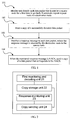
- An embodiment of the present invention provides a data retransmission method. As shown in FIG. 1 , the method includes the following steps.
- a source node When sending a data packet in go-back-N automatic repeat request, GBN-ARQ, mode, a source node continuously sends N data packets first, where the N data packets are at least two data packets. When the N data packets are sent, a relay node monitors and attempts to decode the data packets. After finishing sending the N data packets, the source node temporarily stops data packet sending and waits for return of ACK or NACK, where the ACK or NACK corresponds to a first sent data packet among the N sent data packets.
- the relay node For a successfully decoded data packet, the relay node stores a copy of the data packet.
- a returned response message is ACK; and when the destination node cannot successfully receive a data packet sent by the source node, a returned response message is NACK.
- the relay node monitors a response message to each data packet.
- the relay node When NACK is monitored, if a data packet that corresponds to the NACK is successfully decoded, the relay node sends, in a time slot that is in a frame and corresponds to the relay node itself, a copy of a data packet that corresponds to the monitored NACK to the destination node.
- An embodiment of the present invention further provides a data retransmission apparatus.
- the apparatus includes a first monitoring and decoding unit 21, a copy storage unit 22, a response monitoring unit 23, and a copy sending unit 24.
- the first monitoring and decoding unit 21 is configured to monitor and decode each data packet that is sent by a source node for a first time in go-back-N automatic repeat request, GBN-ARQ mode to a destination node.
- the copy storage unit 22 is configured to store a copy of a successfully decoded data packet.
- the response monitoring unit 23 is configured to monitor a response message returned by the destination node to the source node.
- the copy sending unit 24 is configured to send a copy of a data packet that corresponds to NACK, when the monitored response message is the NACK.
- a relay cooperation communications technology is used, and a relay node is set to perform monitoring and decoding and participate in performing data transmission, so that the relay node performs data retransmission according to a monitored response message when a communication system performs data retransmission in go-back-N mode according to the GBN-ARQ protocol, thereby improving a success ratio of data retransmission of the system.
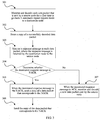
- An embodiment of the present invention provides a data retransmission method. As shown in FIG. 3 , the method includes the following steps.
- a source node When sending a data packet according to GBN-ARQ, a source node continuously sends N data packets first, where the N data packets are at least two data packets. When the N data packets are sent, a relay node monitors and attempts to decode the data packets.
- the source node After finishing sending the N data packets, the source node temporarily stops data packet sending, waits for return of ACK or NACK, where the ACK or NACK corresponds to a first sent data packet among the at least two sent data packets, and performs a next action according to a returned response message.
- the relay node For a successfully decoded data packet, the relay node stores a copy of the data packet.
- a returned response message is ACK; and when the destination node cannot successfully receive a data packet sent by the source node, a returned response message is NACK.
- the relay node monitors a response message to each data packet.
- step 305 If the monitored response message is NACK, perform step 305; otherwise, proceed to step 307.
- a sequence between step 305 and step 306 may not be limited.
- the NACK is also received by the source node. After receiving the NACK, the source node re-sends the data packet that corresponds to the NACK and a subsequent sent data packet.
- FIG. 8 is a schematic diagram of a structure of the frame.
- a duration of the whole frame is T F
- one frame is formed by M time slots
- a duration of each time slot is T F /M.
- a time slot s 3 is a time slot that corresponds to the source node
- a time slot s R is a time slot that corresponds to the relay node.
- the destination node receives data packets in sequence, and when an error occurs to reception of a data packet, subsequent data packets are discarded. Therefore, after re-sending the data packet that corresponds to the NACK, the source node needs to re-send, in sequence, sent data packets subsequent to the data packet that corresponds to the NACK to the destination node.
- the relay node re-monitors and re-decodes a sent data packet that is not correctly decoded.
- the relay node may also re-monitor and re-decode all sent data packets that are re-sent by the source node in sequence and are subsequent to the data packet that corresponds to the NACK.
- the source node After receiving the ACK, the source node continues to send a new data packet to the destination node; and at this time, the relay node monitors and attempts to decode the new data packet sent by the source node.
- a duration of a frame is T F
- the source node occupies a time slot S 1 of a frame to send a data packet
- the relay node occupies a time slot S R of a frame to send a copy of a data packet. It is assumed that, in a system shown in FIG. 9 , when sending a data packet according to the GBN-ARQ, the source node first continuously sends 5 data packets in a sequence from PACKET1 to PACKET5, and then stops the sending and waits for return of ACK/NACK.
- a response message of the PACKET1 is ACK1 or NACK1.
- the relay node monitors the data packet.
- FIG. 9 when the source node finishes sending the PACKET1 to PACKET5, a response message of the PACKET1 is returned to the source node. If the response message is ACK1, the source node continues to send a sixth data packet PACKET6, and the relay node continues to perform monitoring.
- PACKET2 When a response message of the second data packet PACKET2 is NACK2, if the relay node successfully decodes the PACKET2, the source node and the relay node respectively re-send, in their corresponding time slot in the same frame, the PACKET2 to the destination node, as shown in FIG. 10 . Meanwhile, the source node re-sends all transmitted data packets subsequent to the second data packet, that is, PACKET3 to PACKET6. If the relay node fails to decode the PACKET2, the relay node cannot send a copy of the PACKET2 but only the source node re-sends the PACKET2, as shown in FIG. 11 .
- the relay node if the relay node fails to decode a packet subsequent to the data packet that corresponds to the NACK, the relay node re-monitors and re-decodes, in a re-sending process of the source node, the data packet that is subsequent to the data packet that corresponds to the NACK and fails to be decoded. As shown in FIG. 12 , the relay node successfully decodes the PACKET1 but fails to decode the PACKET2, and a response message that corresponds to the PACKET1 is NACK1. After receiving the NACK1, the source node re-sends data packets from the PACKET1 to the PACKET5.
- the relay node When re-sending the PACKET2, the relay node re-monitors and re-decodes the PACKET2 that fails to be decoded. Alternatively, alternately the relay node may also re-monitor and re-decode all the data packets from the PACKET1 to the PACKET5 that are re-sent by the source node in sequence.
- a relay cooperation communications technology is used, and a relay node is set to perform monitoring and decoding and participate in performing data transmission, so that a source node and the relay node can perform data retransmission in different time slots in the same frame when a communication system performs data retransmission in go-back-N mode according to the GBN-ARQ protocol, thereby improving a success ratio of data retransmission of the system.
- An embodiment of the present invention provides a data retransmission apparatus.
- the apparatus includes a first monitoring and decoding unit 41, a copy storage unit 42, a response monitoring unit 43, a copy sending unit 44, and a copy deleting unit 45.
- the first monitoring and decoding unit 41 is configured to monitor and decode each data packet that is sent by a source node for a first time in go-back-N automatic repeat request, GBN-ARQ mode to a destination node.
- the copy storage unit 42 is configured to store a copy of a successfully decoded data packet.
- the response monitoring unit 43 is configured to monitor a response message returned by the destination node to the source node.
- the copy sending unit 44 is configured to send a copy of a data packet that corresponds to NACK, when the monitored response message is the NACK.
- the copy deleting unit 45 is configured to delete all stored copies of data packets that are previous to the copy of the data packet that corresponds to the NACK, after the NACK is monitored.
- the source node In a frame in which the copy storage unit 42 of the relay node sends the copy of the data packet that corresponds to the NACK, the source node also re-sends the data packet that corresponds to the NACK to the destination node, and the source node and the relay node respectively send a data packet in their corresponding time slot in the same frame.
- the source node When receiving ACK, the source node continues to send a new data packet to the destination node. At this time, the first monitoring and decoding unit 41 monitors and decodes the new data packet sent by the source node. In addition, after re-sending the data packet that corresponds to the NACK, the source node re-sends, in sequence, sent data packets subsequent to the data packet that corresponds to the NACK.
- the apparatus may include a second monitoring and decoding unit 412, configured to re-monitor and re-decode a sent data packet that is not correctly decoded, when the source node re-sends the sent data packets subsequent to the data packet that corresponds to the NACK.
- a relay cooperation communications technology is used, and a relay node is used to perform monitoring and decoding and participate in performing data transmission, so that a source node and the relay node can perform data retransmission in different time slots in the same frame when a communication system performs data retransmission in go-back-N mode according to the GBN-ARQ protocol, thereby improving a success ratio of data retransmission of the system.
- An embodiment of the present invention provides a data retransmission system. As shown in FIG. 5 and FIG. 6 , the system includes a source node 51, a relay node 52, and a destination node 53.
- the source node 51 is configured to send N data packets to the destination node in go-back-N automatic repeat request, GBN-ARQ, mode, and receive a response message of the destination node to each data packet.
- the relay node 52 is configured to monitor and decode each data packet that is sent by the source node 51 for a first time in go-back-N automatic repeat request, GBN-ARQ, mode to the destination node, and store a copy of a successfully decoded data packet.
- the destination node 53 is configured to receive the N data packets sent by the source node 51, and return a response message to the source node 51.
- the source node 51 sends a data packet i to the destination node 53, and the relay node 52 monitors and decodes the data packet i.
- the source node 51 re-sends the data packet i and re-sends, in sequence, sent data packets subsequent to the data packet i to the destination node 53.
- the relay node 52 After monitoring the NACK, if the relay node 52 itself has successfully finished decoding the data packet i, the relay node 52 sends a copy of the data packet i.
- the source node 51 sends or re-sends data in a fixed time slot that corresponds to the source node 51.
- the relay node 52 sends, in its corresponding time slot, a copy of the data packet that corresponds to the NACK.
- the relay node 52 is further configured to re-monitor and re-decode a sent data packet that is not successfully decoded, when the source node re-sends all sent data packets.
- the source node When the response message received by the source node is ACK, the source node sends a new data packet subsequent to the data packet i, as shown in FIG. 6 .
- a decoding failure may occur when the relay node 52 monitors a data packet sent by the source node 51.
- the relay node 52 fails to decode a data packet and the destination node 53 returns NACK for the data packet, after the relay node 52 monitors the NACK that corresponds to the data packet, the relay node 52 cannot send a copy of the data packet that fails to be decoded, but the source node 51 can re-send the data packet after the source node 51 receives the NACK.
- the relay node 52 After monitoring the NACK, the relay node 52 further needs to delete all stored copies of data packets that are previous to the copy of the data packet that corresponds to the NACK. By deleting all the stored copies of the data packets that are previous to the copy of the data packet that corresponds to the NACK, cache space of the relay node 52 is saved, so as to store a copy of a new arriving data packet.
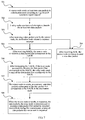
- the data retransmission system provided in this embodiment of the present invention performs data transmission according to the following procedure, as shown in FIG. 7 .
- a source node sends N data packets to a destination node in go-back-N automatic repeat request, GBN-ARQ, mode, where the N data packets are at least two data packets.
- a relay node monitors and attempts to decode the N data packets.
- step 703 After receiving a data packet sent by the source node, the destination node returns a response message. If the data packet sent by the source node is successfully received and the returned response message is ACK, proceed to step 704; and if the data packet sent by the source node cannot be received successfully and the returned response message is NACK, proceed to step 705.
- the source node After receiving the ACK, the source node continues to send a new data packet.
- the source node After receiving the NACK, the source node retransmits a data packet that corresponds to the NACK.
- the relay node After monitoring the NACK, if the relay node successfully decodes the data packet that corresponds to the NACK, the relay node sends a copy of the data packet that corresponds to the NACK.
- the relay node After monitoring the NACK, the relay node needs to delete stored copies of data packets that are previous to the copy of the data packet that corresponds to the NACK. If the relay node cannot successfully decode the data packet that corresponds to the NACK, the relay node cannot send the copy of the data packet that corresponds to the NACK to the destination node.
- step 707 After the relay node and the relay node finish retransmitting the data packet/transmitting the copy of the data packet, the procedure proceeds to step 707.
- the source node re-sends, in sequence, sent data packets subsequent to the data packet that corresponds to the NACK to the destination node.
- a duration of each frame is T F
- each frame has M time slots
- a length of a time slot is T F M .
- T R N ⁇ T F , where N > 1.
- Time of transmitting a data packet from the source node to a destination node is T t .
- Transmission time of returning ACK/NACK from the destination node to the source node is T f .
- T R T F + T t + T f .
- a duration of a working status of a systems is T F M .
- a duration of an idle status of the systems is M ⁇ 1 T F M .
- An error probability is P when each frame is sent.
- Required time for successfully transmitting a data packet is X.
- Waiting time that a data packet waits for a time slot of a next frame is V.
- An average packet loss rate from the source node to the destination node is P S,D .
- An average packet loss rate from the source node to a relay node is P S,R .
- An average packet loss rate from the relay node to the destination node is P R,D .
- the source node when a data packet fails to be sent, the source node re-sends the data packet that fails to be sent and (N-1) sent data packets subsequent to the data packet that fails to be sent.
- E K 1 ⁇ 1 ⁇ P X 1 + N + 1 ⁇ P X 1 ⁇ 1 ⁇ P X 2 + 2 N + 1 ⁇ P X 1 ⁇ P X 2 ⁇ 1 ⁇ P X 2 + ... + lN + 1 ⁇ P X 1 ⁇ P X 2 l ⁇ 1 ⁇ 1 ⁇ P X 2
- P X 1 indicates a failure possibility of first transmission
- P X 2 indicates a failure possibility of retransmission.
- Table 1 shows settings of basic parameters in (1) and (2). Table 1 T R T f ⁇ N 8 0.2 0.01 8
- the MATLAB software is run to obtain a curve shows that Th changes along the average packet loss rate P S,R , as shown in FIG. 13 . It can be seen that a throughput rate of the GBN-CARQ technology is higher than that of the GBN-ARQ technology when the average packet loss rate increases.
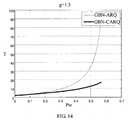
- a curve shows that T changes along P S,R can also be obtained, as shown in FIG. 14 .
- a relay cooperation communications technology is used, and a relay node is used to perform monitoring and decoding and participate in performing data transmission, so that a source node can retransmit a data packet and the relay node can send a copy of a data packet in different time slots in a retransmission frame respectively when a communication system performs data retransmission in go-back-N mode according to the GBN-ARQ protocol, thereby improving a success ratio of data retransmission of the system and also improving a throughput rate of the whole system.
- the present invention may be implemented by software plus necessary universal hardware, and definitely may also be implemented by hardware, but in many cases, the software implementation is preferred.
- the technical solutions of the present invention essentially, or the part contributing to the prior art may be implemented in the form of a software product.
- the computer software product is stored in a readable storage medium, for example, a floppy disk, a hard disk, or an optical disk of a computer, and includes several instructions for instructing a computer device (which may be a personal computer, a server, or a network device) to perform the methods described in the embodiments of the present invention.
Landscapes
- Engineering & Computer Science (AREA)
- Computer Networks & Wireless Communication (AREA)
- Signal Processing (AREA)
- Physics & Mathematics (AREA)
- Electromagnetism (AREA)
- Detection And Prevention Of Errors In Transmission (AREA)
- Mobile Radio Communication Systems (AREA)
- Communication Control (AREA)
Description
- The present invention relates to the field of communications, and in particular, to a data packet retransmission method, apparatus, and system.
- A data packet of a wireless communication system often cannot be received correctly. To improve reliability of data transmission, An ARQ (Automatic Repeat Request, automatic repeat request) technology is provided in the prior art.
- In the ARQ technology, an stop and wait automatic repeat request, SW-ARQ, technology and a Go-Back-N ARQ, go-back-N automatic repeat request, GBN-ARQ technology are often used. In the SW-ARQ technology, when a receiving end returns a reception acknowledgment message, ACK, for a previous data packet, a transmitting end transmits a next data packet; and when the receiving end returns a reception negative acknowledgment message, NACK, for the previous data packet, the transmitting end retransmits the previous data packet. Therefore, by using this technology, a system resource is wasted in a process of waiting for ACK/NACK. In the GBN-ARQ technology, the transmitting end continuously transmits data packets in sequence; and when receiving NACK returned by the receiving end, the transmitting end stops transmitting a new data packet, retransmits a data packet that corresponds to the NACK, and retransmits, in sequence, data packets subsequent to the data packet that corresponds to the NACK. Compared with the SW-ARQ technology, by using the GBN-ARQ technology, a utilization ratio of a channel is improved.
- The prior art has the following disadvantages: A relay cooperation communications technology is more and more used in an existing communication system to improve a success ratio of data transmission; however, for GBN-ARQ, a solution of the relay cooperation communications technology is not used, and therefore, when data retransmission is performed by using the GBN-ARQ technology, a success ratio of data packet retransmission is relatively low.
- Following three documents disclose examples of ARQ protocols known in the art:
- NIKOLAJ MARCHENKO ET AL: "Incremental Cooperative Relaying in Time-Correlated Rayleigh Fading Channels", GLOBECOM 2010, 2010 IEEE GLOBAL TELECOMMUNICATIONS CONFERENCE, IEEE, PISCATAWAY, NJ, USA, 6 December 2010 (2010-12-06), pages 1-5, ISBN: 978-1-4244-5636-9,
- MAYMOUNA BEN SAID ET AL: "Cooperative ARQ protocols for dual-hop systems", COMMUNICATIONS AND NETWORKING (COMNET), 2010 SECOND INTERNATIONAL CONFERENCE ON, IEEE, PISCATAWAY, NJ, USA, 4 November 2010 (2010-11-04), pages 1-5, ISBN: 978-1-4244-8839-1,
- TACCA M ET AL: "Cooperative and non-cooperative ARQ protocols for microwave recharged sensor nodes", WIRELESS SENSOR NETWORKS, 2005. PROCEEEDINGS OF THE SECOND EUROPEAN WO RKSHOP ON ISTANBUL, TURKEY 31 JAN.-2 FEB. 2005, PISCATAWAY, NJ, USA, IEEE, US, 31 January 2005 (2005-01-31), pages 45-56, DOI: 10.1109/EWSN.2005.1461998, ISBN: 978-0-7803-8801-7.
- Embodiments of the present invention provide a data retransmission method, apparatus, and system, which can improve a success ratio of data packet retransmission.
- In order to achieve the foregoing objective, the embodiments of the present invention adopt the technical solutions disclosed in the appended claims.
- With the data retransmission method, apparatus provided in the embodiments of the present invention, in an existing GBN-ARQ protocol, a relay cooperation communications technology is used, and a relay node is set to perform monitoring and decoding and participate in performing data transmission, so that the relay node performs data retransmission according to a monitored response message when a communication system performs data retransmission in go-back-N mode, thereby improving a success ratio of data retransmission of the system.
-
-
FIG. 1 is a flow chart of a data retransmission method according toEmbodiment 1 of the present invention; -
FIG. 2 is a block diagram of a data retransmission apparatus according toEmbodiment 1 of the present invention; -
FIG. 3 is a flow chart of a data retransmission method according toEmbodiment 2 of the present invention; -
FIG. 4 is a block diagram of a data retransmission apparatus according toEmbodiment 3 of the present invention; -
FIG. 5 is a block diagram of a data retransmission system when a response message is NACK according to Embodiment 4 of the present invention; -
FIG. 6 is a block diagram of a data retransmission system when a response message is ACK according to Embodiment 4 of the present invention; -
FIG. 7 is a flow chart of a working method of a data retransmission system according to Embodiment 4 of the present invention; -
FIG. 8 is a schematic diagram of a structure of a frame according toEmbodiment 2 of the present invention; -
FIG. 9 is a schematic diagram of normally receiving/sending a data packet by each node according toEmbodiment 2 of the present invention; -
FIG. 10 is a schematic diagram of assisting a source node by a relay node in sending data according toEmbodiment 2 of the present invention; -
FIG. 11 is a schematic diagram showing that a relay node fails to decode a data packet and cannot send a copy of the data packet according toEmbodiment 2 of the present invention; -
FIG. 12 is a schematic diagram showing that a relay node re-monitors and re-decodes a re-sent data packet according toEmbodiment 3 of the present invention; -
FIG. 13 is a simulation data diagram of a simulation experiment according to Embodiment 4 of the present invention; and -
FIG. 14 is a simulation data diagram of a simulation experiment according to Embodiment 4 of the present invention. - The technical solutions in the embodiments of the present invention are described clearly and completely in the following with reference to the accompanying drawings in the embodiments of the present invention. Apparently, the embodiments to be described are merely a part rather than all of the embodiments of the present invention. All other embodiments obtained by persons of ordinary skill in the art based on the embodiments of the present invention without creative efforts shall fall within the protection scope of the present invention.
- An embodiment of the present invention provides a data retransmission method. As shown in
FIG. 1 , the method includes the following steps. - 101: Monitor and decode each data packet that is sent by a source node for a first time in go-back-N automatic repeat request, GBN-ARQ mode to a destination node.
- When sending a data packet in go-back-N automatic repeat request, GBN-ARQ, mode, a source node continuously sends N data packets first, where the N data packets are at least two data packets. When the N data packets are sent, a relay node monitors and attempts to decode the data packets. After finishing sending the N data packets, the source node temporarily stops data packet sending and waits for return of ACK or NACK, where the ACK or NACK corresponds to a first sent data packet among the N sent data packets.
- 102: Store a copy of a successfully decoded data packet.
- For a successfully decoded data packet, the relay node stores a copy of the data packet.
- 103: Monitor a response message to each data packet, where the response message is returned by the destination node to the source node.
- When the destination node successfully receives a data packet sent by the source node, a returned response message is ACK; and when the destination node cannot successfully receive a data packet sent by the source node, a returned response message is NACK. The relay node monitors a response message to each data packet.
- 104: When the monitored response message is NACK, send a copy of a data packet that corresponds to the NACK.
- When NACK is monitored, if a data packet that corresponds to the NACK is successfully decoded, the relay node sends, in a time slot that is in a frame and corresponds to the relay node itself, a copy of a data packet that corresponds to the monitored NACK to the destination node.
- An embodiment of the present invention further provides a data retransmission apparatus. As shown in
FIG. 2 , the apparatus includes a first monitoring anddecoding unit 21, acopy storage unit 22, aresponse monitoring unit 23, and acopy sending unit 24. - The first monitoring and
decoding unit 21 is configured to monitor and decode each data packet that is sent by a source node for a first time in go-back-N automatic repeat request, GBN-ARQ mode to a destination node. Thecopy storage unit 22 is configured to store a copy of a successfully decoded data packet. Theresponse monitoring unit 23 is configured to monitor a response message returned by the destination node to the source node. Thecopy sending unit 24 is configured to send a copy of a data packet that corresponds to NACK, when the monitored response message is the NACK. - With the data retransmission method and apparatus provided in the embodiments of the present invention, in an existing GBN-ARQ protocol, a relay cooperation communications technology is used, and a relay node is set to perform monitoring and decoding and participate in performing data transmission, so that the relay node performs data retransmission according to a monitored response message when a communication system performs data retransmission in go-back-N mode according to the GBN-ARQ protocol, thereby improving a success ratio of data retransmission of the system.
- An embodiment of the present invention provides a data retransmission method. As shown in
FIG. 3 , the method includes the following steps. - 301: Monitor and decode each data packet that is sent by a source node for a first time in go-back-N automatic repeat request, GBN-ARQ mode to a destination node.
- When sending a data packet according to GBN-ARQ, a source node continuously sends N data packets first, where the N data packets are at least two data packets. When the N data packets are sent, a relay node monitors and attempts to decode the data packets.
- After finishing sending the N data packets, the source node temporarily stops data packet sending, waits for return of ACK or NACK, where the ACK or NACK corresponds to a first sent data packet among the at least two sent data packets, and performs a next action according to a returned response message.
- 302: Store a copy of a successfully decoded data packet.
- For a successfully decoded data packet, the relay node stores a copy of the data packet.
- 303: Monitor a response message to each data packet, where the response message is returned by the destination node to the source node.
- When the destination node successfully receives a data packet sent by the source node, a returned response message is ACK; and when the destination node cannot successfully receive a data packet sent by the source node, a returned response message is NACK. The relay node monitors a response message to each data packet.
- 304: Determine whether the monitored response message is NACK.
- If the monitored response message is NACK, perform
step 305; otherwise, proceed to step 307. - 305: When the monitored response message is the NACK, delete all stored copies of data packets that are previous to a copy of a data packet that corresponds to the reception negative acknowledgment message NACK.
- 306: Send the copy of the data packet that corresponds to the NACK.
- A sequence between
step 305 and step 306 may not be limited. - The NACK is also received by the source node. After receiving the NACK, the source node re-sends the data packet that corresponds to the NACK and a subsequent sent data packet.
- Specifically, in a frame in which the relay node sends the copy of the data packet that corresponds to the NACK, the source node also re-sends the data packet that corresponds to the NACK to the destination node. The source node re-sends the data packet and the relay node sends the copy of the data packet respectively in their corresponding time slot in the same frame.
FIG. 8 is a schematic diagram of a structure of the frame. A duration of the whole frame is TF, one frame is formed by M time slots, and a duration of each time slot is TF/M. For example, a time slot s3 is a time slot that corresponds to the source node, and a time slot sR is a time slot that corresponds to the relay node. - Generally, the destination node receives data packets in sequence, and when an error occurs to reception of a data packet, subsequent data packets are discarded. Therefore, after re-sending the data packet that corresponds to the NACK, the source node needs to re-send, in sequence, sent data packets subsequent to the data packet that corresponds to the NACK to the destination node. When the source node re-sends, in sequence, the sent data packets subsequent to the data packet that corresponds to the NACK, the relay node re-monitors and re-decodes a sent data packet that is not correctly decoded. Definitely, alternately the relay node may also re-monitor and re-decode all sent data packets that are re-sent by the source node in sequence and are subsequent to the data packet that corresponds to the NACK.
- 307: When the monitored response message is ACK, monitor and decode a new data packet sent by the source node.
- After receiving the ACK, the source node continues to send a new data packet to the destination node; and at this time, the relay node monitors and attempts to decode the new data packet sent by the source node.
- The method described in this embodiment of the present invention is described in the following by using an example. As shown in
FIG. 9 , it is assumed that a duration of a frame is TF, the source node occupies a time slot S1 of a frame to send a data packet, and the relay node occupies a time slot SR of a frame to send a copy of a data packet. It is assumed that, in a system shown inFIG. 9 , when sending a data packet according to the GBN-ARQ, the source node first continuously sends 5 data packets in a sequence from PACKET1 to PACKET5, and then stops the sending and waits for return of ACK/NACK. For example, for thePACKET 1, a response message of the PACKET1 is ACK1 or NACK1. When the source node sends a data packet, the relay node monitors the data packet. InFIG. 9 , when the source node finishes sending the PACKET1 to PACKET5, a response message of the PACKET1 is returned to the source node. If the response message is ACK1, the source node continues to send a sixth data packet PACKET6, and the relay node continues to perform monitoring. - When a response message of the second data packet PACKET2 is NACK2, if the relay node successfully decodes the PACKET2, the source node and the relay node respectively re-send, in their corresponding time slot in the same frame, the PACKET2 to the destination node, as shown in
FIG. 10 . Meanwhile, the source node re-sends all transmitted data packets subsequent to the second data packet, that is, PACKET3 to PACKET6. If the relay node fails to decode the PACKET2, the relay node cannot send a copy of the PACKET2 but only the source node re-sends the PACKET2, as shown inFIG. 11 . - In addition, if the relay node fails to decode a packet subsequent to the data packet that corresponds to the NACK, the relay node re-monitors and re-decodes, in a re-sending process of the source node, the data packet that is subsequent to the data packet that corresponds to the NACK and fails to be decoded. As shown in
FIG. 12 , the relay node successfully decodes the PACKET1 but fails to decode the PACKET2, and a response message that corresponds to the PACKET1 is NACK1. After receiving the NACK1, the source node re-sends data packets from the PACKET1 to the PACKET5. When re-sending the PACKET2, the relay node re-monitors and re-decodes the PACKET2 that fails to be decoded. Definitely, alternately the relay node may also re-monitor and re-decode all the data packets from the PACKET1 to the PACKET5 that are re-sent by the source node in sequence. - With the data retransmission method provided in this embodiment of the present invention, in an existing GBN-ARQ protocol, a relay cooperation communications technology is used, and a relay node is set to perform monitoring and decoding and participate in performing data transmission, so that a source node and the relay node can perform data retransmission in different time slots in the same frame when a communication system performs data retransmission in go-back-N mode according to the GBN-ARQ protocol, thereby improving a success ratio of data retransmission of the system.
- An embodiment of the present invention provides a data retransmission apparatus. As shown in
FIG. 4 , the apparatus includes a first monitoring anddecoding unit 41, acopy storage unit 42, aresponse monitoring unit 43, acopy sending unit 44, and acopy deleting unit 45. - The first monitoring and
decoding unit 41 is configured to monitor and decode each data packet that is sent by a source node for a first time in go-back-N automatic repeat request, GBN-ARQ mode to a destination node. Thecopy storage unit 42 is configured to store a copy of a successfully decoded data packet. Theresponse monitoring unit 43 is configured to monitor a response message returned by the destination node to the source node. Thecopy sending unit 44 is configured to send a copy of a data packet that corresponds to NACK, when the monitored response message is the NACK. Thecopy deleting unit 45 is configured to delete all stored copies of data packets that are previous to the copy of the data packet that corresponds to the NACK, after the NACK is monitored. - In a frame in which the
copy storage unit 42 of the relay node sends the copy of the data packet that corresponds to the NACK, the source node also re-sends the data packet that corresponds to the NACK to the destination node, and the source node and the relay node respectively send a data packet in their corresponding time slot in the same frame. - When receiving ACK, the source node continues to send a new data packet to the destination node. At this time, the first monitoring and
decoding unit 41 monitors and decodes the new data packet sent by the source node. In addition, after re-sending the data packet that corresponds to the NACK, the source node re-sends, in sequence, sent data packets subsequent to the data packet that corresponds to the NACK. Optionally, the apparatus may include a second monitoring anddecoding unit 412, configured to re-monitor and re-decode a sent data packet that is not correctly decoded, when the source node re-sends the sent data packets subsequent to the data packet that corresponds to the NACK. - With the data retransmission apparatus provided in this embodiment of the present invention, in an existing GBN-ARQ protocol, a relay cooperation communications technology is used, and a relay node is used to perform monitoring and decoding and participate in performing data transmission, so that a source node and the relay node can perform data retransmission in different time slots in the same frame when a communication system performs data retransmission in go-back-N mode according to the GBN-ARQ protocol, thereby improving a success ratio of data retransmission of the system.
- An embodiment of the present invention provides a data retransmission system. As shown in
FIG. 5 and FIG. 6 , the system includes asource node 51, arelay node 52, and adestination node 53. - The
source node 51 is configured to send N data packets to the destination node in go-back-N automatic repeat request, GBN-ARQ, mode, and receive a response message of the destination node to each data packet. Therelay node 52 is configured to monitor and decode each data packet that is sent by thesource node 51 for a first time in go-back-N automatic repeat request, GBN-ARQ, mode to the destination node, and store a copy of a successfully decoded data packet. Thedestination node 53 is configured to receive the N data packets sent by thesource node 51, and return a response message to thesource node 51. - Specifically, as shown in
FIG. 5 , thesource node 51 sends a data packet i to thedestination node 53, and therelay node 52 monitors and decodes the data packet i. When a response message that is received by thesource node 51 and corresponds to the data packet i is NACK, thesource node 51 re-sends the data packet i and re-sends, in sequence, sent data packets subsequent to the data packet i to thedestination node 53. After monitoring the NACK, if therelay node 52 itself has successfully finished decoding the data packet i, therelay node 52 sends a copy of the data packet i. - In each frame, the
source node 51 sends or re-sends data in a fixed time slot that corresponds to thesource node 51. In the same frame in which thesource node 51 re-sends the data packet that corresponds to the NACK, therelay node 52 sends, in its corresponding time slot, a copy of the data packet that corresponds to the NACK. Therelay node 52 is further configured to re-monitor and re-decode a sent data packet that is not successfully decoded, when the source node re-sends all sent data packets. - When the response message received by the source node is ACK, the source node sends a new data packet subsequent to the data packet i, as shown in
FIG. 6 . - A decoding failure may occur when the
relay node 52 monitors a data packet sent by thesource node 51. When therelay node 52 fails to decode a data packet and thedestination node 53 returns NACK for the data packet, after therelay node 52 monitors the NACK that corresponds to the data packet, therelay node 52 cannot send a copy of the data packet that fails to be decoded, but thesource node 51 can re-send the data packet after thesource node 51 receives the NACK. - After monitoring the NACK, the
relay node 52 further needs to delete all stored copies of data packets that are previous to the copy of the data packet that corresponds to the NACK. By deleting all the stored copies of the data packets that are previous to the copy of the data packet that corresponds to the NACK, cache space of therelay node 52 is saved, so as to store a copy of a new arriving data packet. - The data retransmission system provided in this embodiment of the present invention performs data transmission according to the following procedure, as shown in
FIG. 7 . - 701: A source node sends N data packets to a destination node in go-back-N automatic repeat request, GBN-ARQ, mode, where the N data packets are at least two data packets.
- 702: A relay node monitors and attempts to decode the N data packets.
- 703: After receiving a data packet sent by the source node, the destination node returns a response message. If the data packet sent by the source node is successfully received and the returned response message is ACK, proceed to step 704; and if the data packet sent by the source node cannot be received successfully and the returned response message is NACK, proceed to step 705.
- 704: After receiving the ACK, the source node continues to send a new data packet.
- 705: After receiving the NACK, the source node retransmits a data packet that corresponds to the NACK.
- 706: After monitoring the NACK, if the relay node successfully decodes the data packet that corresponds to the NACK, the relay node sends a copy of the data packet that corresponds to the NACK.
- After monitoring the NACK, the relay node needs to delete stored copies of data packets that are previous to the copy of the data packet that corresponds to the NACK. If the relay node cannot successfully decode the data packet that corresponds to the NACK, the relay node cannot send the copy of the data packet that corresponds to the NACK to the destination node.
- After the relay node and the relay node finish retransmitting the data packet/transmitting the copy of the data packet, the procedure proceeds to step 707.
- 707: The source node re-sends, in sequence, sent data packets subsequent to the data packet that corresponds to the NACK to the destination node.
- 708: When the source node re-sends, in sequence, the data packets, the relay node re-monitors and re-decodes a data packet that cannot be decoded successfully during first transmission among all data packets that are re-sent in sequence.
- Effects of this embodiment of the present invention are described in the following through a simulation experiment performed by using MATLAB software.
- Parameters in the simulation experiment are described first.
- A duration of each frame is TF, each frame has M time slots, and a length of a time slot is

- A delay between time of sending a data packet from a source node and time of receiving ACK/NACK is TR , and it is assumed that TR = N · TF, where N > 1.
- Time of transmitting a data packet from the source node to a destination node is Tt .
- Transmission time of returning ACK/NACK from the destination node to the source node is Tf.
- It is assumed that a data packet that arrives at the destination node complies with Poisson distribution in which a parameter λ = 0.01.
- The following can be obtained:

- A duration of a working status of a systems is

- A duration of an idle status of the systems is

- An error probability is P when each frame is sent.
- Required time for successfully transmitting a data packet is X.
- When the system reaches a stable status, a throughput rate of the system is Th, and Th = 1/X.
- A required waiting time before each data packet obtains a service is W, and

X <1 - Waiting time that a data packet waits for a time slot of a next frame is V.
- The following can be obtained:

- Based on the foregoing result, the following cant be obtained:

- A total transmission time of each data packet in the system is T = W +
X . - An average packet loss rate from the source node to the destination node is
PS,D . - An average packet loss rate from the source node to a relay node is
PS,R . - An average packet loss rate from the relay node to the destination node is
PR,D . - For a GBN-ARQ technology and a technology (represented by GBN-CARQ in the simulation experiment) in this embodiment of the present invention, where the technology uses a relay cooperation communications technology on the basis of GBN-ARQ, when a data packet fails to be sent, the source node re-sends the data packet that fails to be sent and (N-1) sent data packets subsequent to the data packet that fails to be sent. Therefore, finally, the number of times required for successfully transmitting the data packets is:


- Therefore, the following can be obtained:


- (1) For GBN-ARQ, a specific algorithm is:




- (2) For GBN-CARQ according to this embodiment of the present invention, a specific algorithm is:


- Table 1 shows settings of basic parameters in (1) and (2).
Table 1 TR Tf λ N 8 0.2 0.01 8 - To facilitate calculation,
PS,R =PR,D may be assumed in the simulation. According to calculation formulas of Th in (1) and (2), the MATLAB software is run to obtain a curve shows that Th changes along the average packet loss ratePS,R , as shown inFIG. 13 . It can be seen that a throughput rate of the GBN-CARQ technology is higher than that of the GBN-ARQ technology when the average packet loss rate increases. In addition, a curve shows that T changes alongPS,R can also be obtained, as shown inFIG. 14 . It can be seen that increasing amplitude of T in the GBN-CARQ technology is lower than that of T in the GBN-ARQ technology when the average packet loss rate increases, that is, in the GBN-CARQ technology, time that each data packet stays in the system is shorter when the whole system reaches a stable status. - With the data retransmission system provided in this embodiment of the present invention, in an existing GBN-ARQ protocol, a relay cooperation communications technology is used, and a relay node is used to perform monitoring and decoding and participate in performing data transmission, so that a source node can retransmit a data packet and the relay node can send a copy of a data packet in different time slots in a retransmission frame respectively when a communication system performs data retransmission in go-back-N mode according to the GBN-ARQ protocol, thereby improving a success ratio of data retransmission of the system and also improving a throughput rate of the whole system.
- Through the foregoing description of the embodiments, persons skilled in the art may clearly understand that the present invention may be implemented by software plus necessary universal hardware, and definitely may also be implemented by hardware, but in many cases, the software implementation is preferred. Based on such an understanding, the technical solutions of the present invention essentially, or the part contributing to the prior art may be implemented in the form of a software product. The computer software product is stored in a readable storage medium, for example, a floppy disk, a hard disk, or an optical disk of a computer, and includes several instructions for instructing a computer device (which may be a personal computer, a server, or a network device) to perform the methods described in the embodiments of the present invention.
Claims (7)
- A data retransmission method, comprising:monitoring and decoding, by a relay node, each data packet that is sent by a source node for a first time in go-back-N automatic repeat request, GBN-ARQ, mode to a destination node;storing, by a relay node, a copy of each successfully decoded data packet;monitoring, by said relay node, a response message to each data packet, wherein the response message is returned by the destination node to the source node; andwhen the monitored response message is the reception negative acknowledgment message, NACK, sending, by said relay node, a copy of a data packet that corresponds to a reception negative acknowledgment message, NACK, to the destination node;wherein in a frame in which the relay node sends the copy of the data packet that corresponds to the reception negative acknowledgment message, NACK, to the destination node, the source node re-sends the data packet that corresponds to the reception negative acknowledgment message, NACK, to the destination node; wherein the source node re-sends the data packet in a time slot in the frame and the relay node sends the copy of the data packet respectively in another time slot in the same frame.
- The data retransmission method according to claim 1, wherein after re-sending the data packet that corresponds to the reception negative acknowledgment message, NACK, the source node re-sends, in sequence, sent data packets subsequent to the data packet that corresponds to the reception negative acknowledgment message, NACK.
- The data retransmission method according to claim 2, further comprising:when the source node re-sends the sent data packets subsequent to the data packet that corresponds to the reception negative acknowledgment message, NACK, re-monitoring and re-decoding, by said relay node, a sent data packet that is not correctly decoded;or, re-monitoring and re-decoding, by said relay node, all sent data packets that are re-sent by the source node in sequence and are subsequent to the data packet that corresponds to the NACK.
- The data retransmission method according to any one of claims 1 to 3, further comprising:after monitoring the NACK, deleting, by said relay node, all stored copies of data packets that are previous to the copy of the data packet that corresponds to the reception negative acknowledgment message, NACK.
- A data retransmission apparatus, comprising:a first monitoring and decoding unit, configured to monitor and decode each data packet that is sent by a source node for a first time in go-back-N automatic repeat request, GBN-ARQ, mode to a destination node;a copy storage unit, configured to store a copy of each successfully decoded data packet;a response monitoring unit, configured to monitor a response message returned by the destination node to the source node; anda copy sending unit, configured to send a copy of a data packet that corresponds to a reception negative acknowledgment message, NACK, to the destination node, when the monitored response message is the reception negative acknowledgment message, NACK;wherein the copy sending unit is specifically configured to, in the same frame in which the source node re-sends the data packet that corresponds to the reception negative acknowledgment message, NACK, to the destination node, the copy sending unit sends, in a time slot that corresponds to a relay node, the copy of the data packet that corresponds to the reception negative acknowledgment NACK message.
- The data retransmission apparatus according to claim 5, further comprising:a second monitoring and decoding unit, configured to re-monitor and re-decode a sent data packet that is not correctly decoded, when the source node re-sends sent data packets subsequent to the data packet that corresponds to the reception negative acknowledgment message, NACK;or, configured to re-monitor and re-decode all sent data packets that are re-sent by the source node in sequence and are subsequent to the data packet that corresponds to the NACK.
- The data retransmission apparatus according to any one of claims 5 to 6, further comprising:a copy deleting unit, configured to, after the NACK is monitored, delete all stored copies of data packets that are previous to the copy of the data packet that corresponds to the reception negative acknowledgment message, NACK.
Applications Claiming Priority (1)
| Application Number | Priority Date | Filing Date | Title |
|---|---|---|---|
| PCT/CN2011/072965 WO2011103836A2 (en) | 2011-04-18 | 2011-04-18 | Data retransmission method, apparatus and system |
Publications (3)
| Publication Number | Publication Date |
|---|---|
| EP2611056A2 EP2611056A2 (en) | 2013-07-03 |
| EP2611056A4 EP2611056A4 (en) | 2013-09-04 |
| EP2611056B1 true EP2611056B1 (en) | 2016-08-17 |
Family
ID=44507280
Family Applications (1)
| Application Number | Title | Priority Date | Filing Date |
|---|---|---|---|
| EP11746878.5A Active EP2611056B1 (en) | 2011-04-18 | 2011-04-18 | Data retransmission method, apparatus and system |
Country Status (5)
| Country | Link |
|---|---|
| US (1) | US9584229B2 (en) |
| EP (1) | EP2611056B1 (en) |
| JP (1) | JP2014501059A (en) |
| CN (1) | CN102273118B (en) |
| WO (1) | WO2011103836A2 (en) |
Families Citing this family (15)
| Publication number | Priority date | Publication date | Assignee | Title |
|---|---|---|---|---|
| JP2014501059A (en) | 2011-04-18 | 2014-01-16 | ▲華▼▲為▼▲終▼端有限公司 | Data retransmission method, data retransmission apparatus, and data retransmission system |
| JP5637115B2 (en) * | 2011-10-18 | 2014-12-10 | 株式会社バッファロー | Network storage system, data operation method in network storage system, and storage device |
| US9544250B2 (en) * | 2013-02-26 | 2017-01-10 | Fastly Inc. | Enhanced acknowledgement handling in communication packet transfer |
| CN103428895B (en) * | 2013-08-27 | 2016-12-28 | 海能达通信股份有限公司 | Communication establishing method based on transfer mode, mobile station and transferring equipment |
| CN103684707B (en) * | 2013-12-20 | 2017-02-15 | 广州华多网络科技有限公司 | Server-side and user-side message transmission processing method, message transmission method and message transmission system |
| KR102147679B1 (en) * | 2014-08-13 | 2020-08-25 | 삼성전자 주식회사 | Hybrid arq method and apparatus in a relay wireless communication system using compress and forward scheme |
| US9614646B2 (en) * | 2015-03-20 | 2017-04-04 | Vmware, Inc. | Method and system for robust message retransmission |
| EP3432635B1 (en) * | 2016-06-17 | 2021-09-01 | Guangdong Oppo Mobile Telecommunications Corp., Ltd. | Method and device for data transmission |
| CN106603205B (en) * | 2016-12-09 | 2020-01-03 | 广州华多网络科技有限公司 | Data transmission method, device and system |
| CN109064524A (en) * | 2018-08-16 | 2018-12-21 | 上海联影医疗科技有限公司 | A kind of data transmission method, rebuilds machine and medium at data collection plate |
| US10877836B2 (en) * | 2018-08-29 | 2020-12-29 | Arm Limited | Method and apparatus for coherent interconnect recovery with protocol layer re-transmission |
| CN110211416B (en) * | 2019-06-06 | 2021-12-21 | 广域铭岛数字科技有限公司 | Information transmission method and system for Internet of things intelligent garage |
| CN114268946B (en) * | 2021-12-31 | 2023-07-25 | 中国人民解放军陆军工程大学 | A Probabilistic Retransmission Covert Wireless Communication Method for Poisson Data Streams |
| CN114465918B (en) * | 2022-02-24 | 2024-03-08 | 杭州中天微系统有限公司 | Message response method and device |
| CN116760512B (en) * | 2023-08-17 | 2023-11-17 | 上海朗力半导体有限公司 | HARQ retransmission control method and device for Multi-Link |
Family Cites Families (13)
| Publication number | Priority date | Publication date | Assignee | Title |
|---|---|---|---|---|
| JP3237323B2 (en) * | 1993-07-21 | 2001-12-10 | 株式会社デンソー | Mobile communication device |
| JP2000312201A (en) * | 1999-04-28 | 2000-11-07 | Mitsubishi Electric Corp | Communication device and error control method |
| JP4022625B2 (en) * | 2004-03-08 | 2007-12-19 | 独立行政法人情報通信研究機構 | Communication system, communication method, base station, and mobile station |
| JP4952138B2 (en) * | 2006-08-17 | 2012-06-13 | 富士通株式会社 | Relay station, radio base station, and communication method |
| CN101174930B (en) * | 2006-11-03 | 2012-01-04 | 华为技术有限公司 | Method and apparatus for implementing automatic retransmission request in relay system |
| CN101267241A (en) * | 2007-03-15 | 2008-09-17 | 华为技术有限公司 | Method, system and relay station for automatic retransmission request in relay network |
| CN101383685A (en) * | 2007-09-07 | 2009-03-11 | 华为技术有限公司 | Method, system and device for downlink hybrid automatic retransmission |
| CN104601215A (en) | 2008-01-02 | 2015-05-06 | 交互数字技术公司 | Relay node, network node and method for use in relay node |
| GB0903517D0 (en) * | 2009-03-03 | 2009-04-08 | Vodafone Plc | L2 transparent relay |
| CN101605355B (en) * | 2009-06-12 | 2011-08-24 | 中国科学技术大学 | ROHC mixed operation mode for LTE-advanced network relay node |
| WO2010150417A1 (en) * | 2009-06-25 | 2010-12-29 | 株式会社日立製作所 | Base station, wireless communication system, wireless resource assigning method, and wireless communication method |
| JP5515558B2 (en) * | 2009-09-25 | 2014-06-11 | ソニー株式会社 | COMMUNICATION SYSTEM, RELAY DEVICE, AND COMMUNICATION DEVICE |
| JP2014501059A (en) | 2011-04-18 | 2014-01-16 | ▲華▼▲為▼▲終▼端有限公司 | Data retransmission method, data retransmission apparatus, and data retransmission system |
-
2011
- 2011-04-18 JP JP2013535245A patent/JP2014501059A/en active Pending
- 2011-04-18 CN CN201180000361.0A patent/CN102273118B/en active Active
- 2011-04-18 EP EP11746878.5A patent/EP2611056B1/en active Active
- 2011-04-18 WO PCT/CN2011/072965 patent/WO2011103836A2/en not_active Ceased
-
2013
- 2013-05-23 US US13/900,785 patent/US9584229B2/en active Active
Also Published As
| Publication number | Publication date |
|---|---|
| CN102273118A (en) | 2011-12-07 |
| EP2611056A2 (en) | 2013-07-03 |
| WO2011103836A2 (en) | 2011-09-01 |
| CN102273118B (en) | 2016-06-22 |
| WO2011103836A3 (en) | 2012-04-05 |
| US20130329573A1 (en) | 2013-12-12 |
| US9584229B2 (en) | 2017-02-28 |
| EP2611056A4 (en) | 2013-09-04 |
| JP2014501059A (en) | 2014-01-16 |
Similar Documents
| Publication | Publication Date | Title |
|---|---|---|
| US9584229B2 (en) | Data retransmission method, apparatus, and system | |
| US10623146B2 (en) | Method and arrangements in a telecommunication system for handling status information of data units | |
| CN101223759B (en) | Transmission device, information communication method | |
| US6496481B1 (en) | Data transfer method for wire real-time communications | |
| EP2810180B1 (en) | Multi-path data transfer using network coding | |
| US8281202B2 (en) | Method and apparatus for improving transmission time interval bundling | |
| US20090319850A1 (en) | Local drop control for a transmit buffer in a repeat transmission protocol device | |
| US9037935B2 (en) | Apparatus and method for retransmitting message in message transmission system | |
| CN107113114B (en) | Method and node in a wireless communication system | |
| US20170099128A1 (en) | Radio resource scheduling method and apparatus | |
| US10284340B2 (en) | Multicast sending apparatus, multicast receiving apparatus, and multicast transmission determining method | |
| JP2008227642A (en) | Retransmission control method and radio communication system | |
| EP2685654A1 (en) | A method, relay station, base station and communication system for data retransmission | |
| US20110126069A1 (en) | Method and apparatus for controlling retransmission | |
| Saif et al. | SRA-MSDU: Enhanced A-MSDU frame aggregation with selective retransmission in 802.11 n wireless networks | |
| CN110168983A (en) | The method and apparatus retransmitted for data | |
| CN101174930B (en) | Method and apparatus for implementing automatic retransmission request in relay system | |
| KR101532222B1 (en) | Communication system and its RRC access method | |
| CN107959554A (en) | The repeating method and device of a kind of data | |
| US20110170491A1 (en) | Communication device and communication method | |
| US10849160B2 (en) | Reinstating poll retransmission timer | |
| JP4888571B2 (en) | Reception device, reception method, wireless communication system, and communication method | |
| CN107733589A (en) | Implementation method, device, equipment and the storage medium of MANET HARQ | |
| JP2009273094A (en) | Data communication system, data communication terminal, data communication method, and program | |
| KR20090116610A (en) | Method and apparatus for processing radio link control data in mobile communication system |
Legal Events
| Date | Code | Title | Description |
|---|---|---|---|
| PUAI | Public reference made under article 153(3) epc to a published international application that has entered the european phase |
Free format text: ORIGINAL CODE: 0009012 |
|
| 17P | Request for examination filed |
Effective date: 20130327 |
|
| AK | Designated contracting states |
Kind code of ref document: A2 Designated state(s): AL AT BE BG CH CY CZ DE DK EE ES FI FR GB GR HR HU IE IS IT LI LT LU LV MC MK MT NL NO PL PT RO RS SE SI SK SM TR |
|
| A4 | Supplementary search report drawn up and despatched |
Effective date: 20130807 |
|
| RIC1 | Information provided on ipc code assigned before grant |
Ipc: H04L 1/18 20060101AFI20130801BHEP |
|
| DAX | Request for extension of the european patent (deleted) | ||
| 17Q | First examination report despatched |
Effective date: 20140807 |
|
| REG | Reference to a national code |
Ref country code: DE Ref legal event code: R079 Ref document number: 602011029354 Country of ref document: DE Free format text: PREVIOUS MAIN CLASS: H04L0001180000 Ipc: H04B0017400000 |
|
| GRAP | Despatch of communication of intention to grant a patent |
Free format text: ORIGINAL CODE: EPIDOSNIGR1 |
|
| RIC1 | Information provided on ipc code assigned before grant |
Ipc: H04L 1/18 20060101ALI20160201BHEP Ipc: H04B 17/40 20150101AFI20160201BHEP Ipc: H04L 1/00 20060101ALN20160201BHEP |
|
| INTG | Intention to grant announced |
Effective date: 20160218 |
|
| GRAS | Grant fee paid |
Free format text: ORIGINAL CODE: EPIDOSNIGR3 |
|
| GRAA | (expected) grant |
Free format text: ORIGINAL CODE: 0009210 |
|
| AK | Designated contracting states |
Kind code of ref document: B1 Designated state(s): AL AT BE BG CH CY CZ DE DK EE ES FI FR GB GR HR HU IE IS IT LI LT LU LV MC MK MT NL NO PL PT RO RS SE SI SK SM TR |
|
| REG | Reference to a national code |
Ref country code: GB Ref legal event code: FG4D |
|
| REG | Reference to a national code |
Ref country code: CH Ref legal event code: EP |
|
| REG | Reference to a national code |
Ref country code: IE Ref legal event code: FG4D |
|
| REG | Reference to a national code |
Ref country code: AT Ref legal event code: REF Ref document number: 821945 Country of ref document: AT Kind code of ref document: T Effective date: 20160915 |
|
| REG | Reference to a national code |
Ref country code: DE Ref legal event code: R096 Ref document number: 602011029354 Country of ref document: DE |
|
| REG | Reference to a national code |
Ref country code: NL Ref legal event code: MP Effective date: 20160817 |
|
| REG | Reference to a national code |
Ref country code: LT Ref legal event code: MG4D |
|
| REG | Reference to a national code |
Ref country code: AT Ref legal event code: MK05 Ref document number: 821945 Country of ref document: AT Kind code of ref document: T Effective date: 20160817 |
|
| PG25 | Lapsed in a contracting state [announced via postgrant information from national office to epo] |
Ref country code: FI Free format text: LAPSE BECAUSE OF FAILURE TO SUBMIT A TRANSLATION OF THE DESCRIPTION OR TO PAY THE FEE WITHIN THE PRESCRIBED TIME-LIMIT Effective date: 20160817 Ref country code: LT Free format text: LAPSE BECAUSE OF FAILURE TO SUBMIT A TRANSLATION OF THE DESCRIPTION OR TO PAY THE FEE WITHIN THE PRESCRIBED TIME-LIMIT Effective date: 20160817 Ref country code: HR Free format text: LAPSE BECAUSE OF FAILURE TO SUBMIT A TRANSLATION OF THE DESCRIPTION OR TO PAY THE FEE WITHIN THE PRESCRIBED TIME-LIMIT Effective date: 20160817 Ref country code: NL Free format text: LAPSE BECAUSE OF FAILURE TO SUBMIT A TRANSLATION OF THE DESCRIPTION OR TO PAY THE FEE WITHIN THE PRESCRIBED TIME-LIMIT Effective date: 20160817 Ref country code: NO Free format text: LAPSE BECAUSE OF FAILURE TO SUBMIT A TRANSLATION OF THE DESCRIPTION OR TO PAY THE FEE WITHIN THE PRESCRIBED TIME-LIMIT Effective date: 20161117 Ref country code: RS Free format text: LAPSE BECAUSE OF FAILURE TO SUBMIT A TRANSLATION OF THE DESCRIPTION OR TO PAY THE FEE WITHIN THE PRESCRIBED TIME-LIMIT Effective date: 20160817 |
|
| PG25 | Lapsed in a contracting state [announced via postgrant information from national office to epo] |
Ref country code: GR Free format text: LAPSE BECAUSE OF FAILURE TO SUBMIT A TRANSLATION OF THE DESCRIPTION OR TO PAY THE FEE WITHIN THE PRESCRIBED TIME-LIMIT Effective date: 20161118 Ref country code: LV Free format text: LAPSE BECAUSE OF FAILURE TO SUBMIT A TRANSLATION OF THE DESCRIPTION OR TO PAY THE FEE WITHIN THE PRESCRIBED TIME-LIMIT Effective date: 20160817 Ref country code: PT Free format text: LAPSE BECAUSE OF FAILURE TO SUBMIT A TRANSLATION OF THE DESCRIPTION OR TO PAY THE FEE WITHIN THE PRESCRIBED TIME-LIMIT Effective date: 20161219 Ref country code: PL Free format text: LAPSE BECAUSE OF FAILURE TO SUBMIT A TRANSLATION OF THE DESCRIPTION OR TO PAY THE FEE WITHIN THE PRESCRIBED TIME-LIMIT Effective date: 20160817 Ref country code: AT Free format text: LAPSE BECAUSE OF FAILURE TO SUBMIT A TRANSLATION OF THE DESCRIPTION OR TO PAY THE FEE WITHIN THE PRESCRIBED TIME-LIMIT Effective date: 20160817 Ref country code: SE Free format text: LAPSE BECAUSE OF FAILURE TO SUBMIT A TRANSLATION OF THE DESCRIPTION OR TO PAY THE FEE WITHIN THE PRESCRIBED TIME-LIMIT Effective date: 20160817 Ref country code: ES Free format text: LAPSE BECAUSE OF FAILURE TO SUBMIT A TRANSLATION OF THE DESCRIPTION OR TO PAY THE FEE WITHIN THE PRESCRIBED TIME-LIMIT Effective date: 20160817 |
|
| REG | Reference to a national code |
Ref country code: FR Ref legal event code: PLFP Year of fee payment: 7 |
|
| PG25 | Lapsed in a contracting state [announced via postgrant information from national office to epo] |
Ref country code: RO Free format text: LAPSE BECAUSE OF FAILURE TO SUBMIT A TRANSLATION OF THE DESCRIPTION OR TO PAY THE FEE WITHIN THE PRESCRIBED TIME-LIMIT Effective date: 20160817 Ref country code: EE Free format text: LAPSE BECAUSE OF FAILURE TO SUBMIT A TRANSLATION OF THE DESCRIPTION OR TO PAY THE FEE WITHIN THE PRESCRIBED TIME-LIMIT Effective date: 20160817 |
|
| REG | Reference to a national code |
Ref country code: DE Ref legal event code: R097 Ref document number: 602011029354 Country of ref document: DE |
|
| PG25 | Lapsed in a contracting state [announced via postgrant information from national office to epo] |
Ref country code: BE Free format text: LAPSE BECAUSE OF FAILURE TO SUBMIT A TRANSLATION OF THE DESCRIPTION OR TO PAY THE FEE WITHIN THE PRESCRIBED TIME-LIMIT Effective date: 20160817 Ref country code: BG Free format text: LAPSE BECAUSE OF FAILURE TO SUBMIT A TRANSLATION OF THE DESCRIPTION OR TO PAY THE FEE WITHIN THE PRESCRIBED TIME-LIMIT Effective date: 20161117 Ref country code: SK Free format text: LAPSE BECAUSE OF FAILURE TO SUBMIT A TRANSLATION OF THE DESCRIPTION OR TO PAY THE FEE WITHIN THE PRESCRIBED TIME-LIMIT Effective date: 20160817 Ref country code: CZ Free format text: LAPSE BECAUSE OF FAILURE TO SUBMIT A TRANSLATION OF THE DESCRIPTION OR TO PAY THE FEE WITHIN THE PRESCRIBED TIME-LIMIT Effective date: 20160817 Ref country code: DK Free format text: LAPSE BECAUSE OF FAILURE TO SUBMIT A TRANSLATION OF THE DESCRIPTION OR TO PAY THE FEE WITHIN THE PRESCRIBED TIME-LIMIT Effective date: 20160817 Ref country code: SM Free format text: LAPSE BECAUSE OF FAILURE TO SUBMIT A TRANSLATION OF THE DESCRIPTION OR TO PAY THE FEE WITHIN THE PRESCRIBED TIME-LIMIT Effective date: 20160817 |
|
| PLBE | No opposition filed within time limit |
Free format text: ORIGINAL CODE: 0009261 |
|
| STAA | Information on the status of an ep patent application or granted ep patent |
Free format text: STATUS: NO OPPOSITION FILED WITHIN TIME LIMIT |
|
| 26N | No opposition filed |
Effective date: 20170518 |
|
| PG25 | Lapsed in a contracting state [announced via postgrant information from national office to epo] |
Ref country code: SI Free format text: LAPSE BECAUSE OF FAILURE TO SUBMIT A TRANSLATION OF THE DESCRIPTION OR TO PAY THE FEE WITHIN THE PRESCRIBED TIME-LIMIT Effective date: 20160817 |
|
| REG | Reference to a national code |
Ref country code: CH Ref legal event code: PL |
|
| REG | Reference to a national code |
Ref country code: IE Ref legal event code: MM4A |
|
| PG25 | Lapsed in a contracting state [announced via postgrant information from national office to epo] |
Ref country code: MC Free format text: LAPSE BECAUSE OF FAILURE TO SUBMIT A TRANSLATION OF THE DESCRIPTION OR TO PAY THE FEE WITHIN THE PRESCRIBED TIME-LIMIT Effective date: 20160817 |
|
| PG25 | Lapsed in a contracting state [announced via postgrant information from national office to epo] |
Ref country code: LI Free format text: LAPSE BECAUSE OF NON-PAYMENT OF DUE FEES Effective date: 20170430 Ref country code: LU Free format text: LAPSE BECAUSE OF NON-PAYMENT OF DUE FEES Effective date: 20170418 Ref country code: CH Free format text: LAPSE BECAUSE OF NON-PAYMENT OF DUE FEES Effective date: 20170430 |
|
| REG | Reference to a national code |
Ref country code: FR Ref legal event code: PLFP Year of fee payment: 8 |
|
| PG25 | Lapsed in a contracting state [announced via postgrant information from national office to epo] |
Ref country code: IE Free format text: LAPSE BECAUSE OF NON-PAYMENT OF DUE FEES Effective date: 20170418 |
|
| PG25 | Lapsed in a contracting state [announced via postgrant information from national office to epo] |
Ref country code: MT Free format text: LAPSE BECAUSE OF NON-PAYMENT OF DUE FEES Effective date: 20170418 |
|
| PG25 | Lapsed in a contracting state [announced via postgrant information from national office to epo] |
Ref country code: AL Free format text: LAPSE BECAUSE OF FAILURE TO SUBMIT A TRANSLATION OF THE DESCRIPTION OR TO PAY THE FEE WITHIN THE PRESCRIBED TIME-LIMIT Effective date: 20160817 |
|
| REG | Reference to a national code |
Ref country code: DE Ref legal event code: R081 Ref document number: 602011029354 Country of ref document: DE Owner name: HUAWEI DEVICE CO., LTD., DONGGUAN, CN Free format text: FORMER OWNER: HUAWEI DEVICE CO., LTD., SHENZHEN, GUANGDONG, CN |
|
| REG | Reference to a national code |
Ref country code: GB Ref legal event code: 732E Free format text: REGISTERED BETWEEN 20190124 AND 20190130 |
|
| PG25 | Lapsed in a contracting state [announced via postgrant information from national office to epo] |
Ref country code: HU Free format text: LAPSE BECAUSE OF FAILURE TO SUBMIT A TRANSLATION OF THE DESCRIPTION OR TO PAY THE FEE WITHIN THE PRESCRIBED TIME-LIMIT; INVALID AB INITIO Effective date: 20110418 |
|
| PG25 | Lapsed in a contracting state [announced via postgrant information from national office to epo] |
Ref country code: CY Free format text: LAPSE BECAUSE OF NON-PAYMENT OF DUE FEES Effective date: 20160817 |
|
| PG25 | Lapsed in a contracting state [announced via postgrant information from national office to epo] |
Ref country code: MK Free format text: LAPSE BECAUSE OF FAILURE TO SUBMIT A TRANSLATION OF THE DESCRIPTION OR TO PAY THE FEE WITHIN THE PRESCRIBED TIME-LIMIT Effective date: 20160817 |
|
| PG25 | Lapsed in a contracting state [announced via postgrant information from national office to epo] |
Ref country code: TR Free format text: LAPSE BECAUSE OF FAILURE TO SUBMIT A TRANSLATION OF THE DESCRIPTION OR TO PAY THE FEE WITHIN THE PRESCRIBED TIME-LIMIT Effective date: 20160817 |
|
| PG25 | Lapsed in a contracting state [announced via postgrant information from national office to epo] |
Ref country code: IS Free format text: LAPSE BECAUSE OF FAILURE TO SUBMIT A TRANSLATION OF THE DESCRIPTION OR TO PAY THE FEE WITHIN THE PRESCRIBED TIME-LIMIT Effective date: 20161217 |
|
| PGFP | Annual fee paid to national office [announced via postgrant information from national office to epo] |
Ref country code: FR Payment date: 20250310 Year of fee payment: 15 |
|
| PGFP | Annual fee paid to national office [announced via postgrant information from national office to epo] |
Ref country code: IT Payment date: 20250320 Year of fee payment: 15 Ref country code: GB Payment date: 20250306 Year of fee payment: 15 |
|
| PGFP | Annual fee paid to national office [announced via postgrant information from national office to epo] |
Ref country code: DE Payment date: 20250305 Year of fee payment: 15 |