EP2610127A2 - Fuel economy mode to modify cruise control for an automobile - Google Patents
Fuel economy mode to modify cruise control for an automobile Download PDFInfo
- Publication number
- EP2610127A2 EP2610127A2 EP12198515.4A EP12198515A EP2610127A2 EP 2610127 A2 EP2610127 A2 EP 2610127A2 EP 12198515 A EP12198515 A EP 12198515A EP 2610127 A2 EP2610127 A2 EP 2610127A2
- Authority
- EP
- European Patent Office
- Prior art keywords
- fuel economy
- vehicle
- cruise control
- control system
- level
- Prior art date
- Legal status (The legal status is an assumption and is not a legal conclusion. Google has not performed a legal analysis and makes no representation as to the accuracy of the status listed.)
- Withdrawn
Links
Images
Classifications
-
- B—PERFORMING OPERATIONS; TRANSPORTING
- B60—VEHICLES IN GENERAL
- B60K—ARRANGEMENT OR MOUNTING OF PROPULSION UNITS OR OF TRANSMISSIONS IN VEHICLES; ARRANGEMENT OR MOUNTING OF PLURAL DIVERSE PRIME-MOVERS IN VEHICLES; AUXILIARY DRIVES FOR VEHICLES; INSTRUMENTATION OR DASHBOARDS FOR VEHICLES; ARRANGEMENTS IN CONNECTION WITH COOLING, AIR INTAKE, GAS EXHAUST OR FUEL SUPPLY OF PROPULSION UNITS IN VEHICLES
- B60K31/00—Vehicle fittings, acting on a single sub-unit only, for automatically controlling vehicle speed, i.e. preventing speed from exceeding an arbitrarily established velocity or maintaining speed at a particular velocity, as selected by the vehicle operator
-
- B—PERFORMING OPERATIONS; TRANSPORTING
- B60—VEHICLES IN GENERAL
- B60K—ARRANGEMENT OR MOUNTING OF PROPULSION UNITS OR OF TRANSMISSIONS IN VEHICLES; ARRANGEMENT OR MOUNTING OF PLURAL DIVERSE PRIME-MOVERS IN VEHICLES; AUXILIARY DRIVES FOR VEHICLES; INSTRUMENTATION OR DASHBOARDS FOR VEHICLES; ARRANGEMENTS IN CONNECTION WITH COOLING, AIR INTAKE, GAS EXHAUST OR FUEL SUPPLY OF PROPULSION UNITS IN VEHICLES
- B60K2310/00—Arrangements, adaptations or methods for cruise controls
- B60K2310/24—Speed setting methods
- B60K2310/242—Speed setting methods setting initial target speed, e.g. initial algorithms
-
- B—PERFORMING OPERATIONS; TRANSPORTING
- B60—VEHICLES IN GENERAL
- B60W—CONJOINT CONTROL OF VEHICLE SUB-UNITS OF DIFFERENT TYPE OR DIFFERENT FUNCTION; CONTROL SYSTEMS SPECIALLY ADAPTED FOR HYBRID VEHICLES; ROAD VEHICLE DRIVE CONTROL SYSTEMS FOR PURPOSES NOT RELATED TO THE CONTROL OF A PARTICULAR SUB-UNIT
- B60W2540/00—Input parameters relating to occupants
- B60W2540/21—Voice
-
- B—PERFORMING OPERATIONS; TRANSPORTING
- B60—VEHICLES IN GENERAL
- B60W—CONJOINT CONTROL OF VEHICLE SUB-UNITS OF DIFFERENT TYPE OR DIFFERENT FUNCTION; CONTROL SYSTEMS SPECIALLY ADAPTED FOR HYBRID VEHICLES; ROAD VEHICLE DRIVE CONTROL SYSTEMS FOR PURPOSES NOT RELATED TO THE CONTROL OF A PARTICULAR SUB-UNIT
- B60W2540/00—Input parameters relating to occupants
- B60W2540/30—Driving style
-
- B—PERFORMING OPERATIONS; TRANSPORTING
- B60—VEHICLES IN GENERAL
- B60W—CONJOINT CONTROL OF VEHICLE SUB-UNITS OF DIFFERENT TYPE OR DIFFERENT FUNCTION; CONTROL SYSTEMS SPECIALLY ADAPTED FOR HYBRID VEHICLES; ROAD VEHICLE DRIVE CONTROL SYSTEMS FOR PURPOSES NOT RELATED TO THE CONTROL OF A PARTICULAR SUB-UNIT
- B60W2552/00—Input parameters relating to infrastructure
- B60W2552/15—Road slope, i.e. the inclination of a road segment in the longitudinal direction
-
- B—PERFORMING OPERATIONS; TRANSPORTING
- B60—VEHICLES IN GENERAL
- B60W—CONJOINT CONTROL OF VEHICLE SUB-UNITS OF DIFFERENT TYPE OR DIFFERENT FUNCTION; CONTROL SYSTEMS SPECIALLY ADAPTED FOR HYBRID VEHICLES; ROAD VEHICLE DRIVE CONTROL SYSTEMS FOR PURPOSES NOT RELATED TO THE CONTROL OF A PARTICULAR SUB-UNIT
- B60W2556/00—Input parameters relating to data
- B60W2556/45—External transmission of data to or from the vehicle
- B60W2556/50—External transmission of data to or from the vehicle of positioning data, e.g. GPS [Global Positioning System] data
-
- B—PERFORMING OPERATIONS; TRANSPORTING
- B60—VEHICLES IN GENERAL
- B60W—CONJOINT CONTROL OF VEHICLE SUB-UNITS OF DIFFERENT TYPE OR DIFFERENT FUNCTION; CONTROL SYSTEMS SPECIALLY ADAPTED FOR HYBRID VEHICLES; ROAD VEHICLE DRIVE CONTROL SYSTEMS FOR PURPOSES NOT RELATED TO THE CONTROL OF A PARTICULAR SUB-UNIT
- B60W2710/00—Output or target parameters relating to a particular sub-units
- B60W2710/06—Combustion engines, Gas turbines
-
- B—PERFORMING OPERATIONS; TRANSPORTING
- B60—VEHICLES IN GENERAL
- B60W—CONJOINT CONTROL OF VEHICLE SUB-UNITS OF DIFFERENT TYPE OR DIFFERENT FUNCTION; CONTROL SYSTEMS SPECIALLY ADAPTED FOR HYBRID VEHICLES; ROAD VEHICLE DRIVE CONTROL SYSTEMS FOR PURPOSES NOT RELATED TO THE CONTROL OF A PARTICULAR SUB-UNIT
- B60W2710/00—Output or target parameters relating to a particular sub-units
- B60W2710/06—Combustion engines, Gas turbines
- B60W2710/0616—Position of fuel or air injector
- B60W2710/0627—Fuel flow rate
-
- B—PERFORMING OPERATIONS; TRANSPORTING
- B60—VEHICLES IN GENERAL
- B60W—CONJOINT CONTROL OF VEHICLE SUB-UNITS OF DIFFERENT TYPE OR DIFFERENT FUNCTION; CONTROL SYSTEMS SPECIALLY ADAPTED FOR HYBRID VEHICLES; ROAD VEHICLE DRIVE CONTROL SYSTEMS FOR PURPOSES NOT RELATED TO THE CONTROL OF A PARTICULAR SUB-UNIT
- B60W2720/00—Output or target parameters relating to overall vehicle dynamics
- B60W2720/10—Longitudinal speed
-
- B—PERFORMING OPERATIONS; TRANSPORTING
- B60—VEHICLES IN GENERAL
- B60Y—INDEXING SCHEME RELATING TO ASPECTS CROSS-CUTTING VEHICLE TECHNOLOGY
- B60Y2300/00—Purposes or special features of road vehicle drive control systems
- B60Y2300/52—Engine fuel consumption
-
- Y—GENERAL TAGGING OF NEW TECHNOLOGICAL DEVELOPMENTS; GENERAL TAGGING OF CROSS-SECTIONAL TECHNOLOGIES SPANNING OVER SEVERAL SECTIONS OF THE IPC; TECHNICAL SUBJECTS COVERED BY FORMER USPC CROSS-REFERENCE ART COLLECTIONS [XRACs] AND DIGESTS
- Y02—TECHNOLOGIES OR APPLICATIONS FOR MITIGATION OR ADAPTATION AGAINST CLIMATE CHANGE
- Y02T—CLIMATE CHANGE MITIGATION TECHNOLOGIES RELATED TO TRANSPORTATION
- Y02T10/00—Road transport of goods or passengers
- Y02T10/10—Internal combustion engine [ICE] based vehicles
- Y02T10/40—Engine management systems
Definitions
- the present disclosure relates to automotive vehicles, and more particularly to fuel economy for automotive vehicles.
- Automotive vehicles utilize cruise control systems to assist vehicle operators in maintaining vehicles at a constant speed when traveling long distances. Operation of the vehicle in cruise control mode may increase fuel economy over long distances. As is known, the vehicle operator can engage and disengaged the cruise control systems as desired. Vehicle speed is typically maintained at a constant speed over differing road terrains. However, as is known, operation of the cruise control system may be terminated by application of the brakes by the vehicle operator.
- ACC systems adjust the speed of the vehicle to accommodate changes in traffic speed when operating in cruise control mode.
- ACC systems maintain a desired distance from a forward vehicle. If the forward vehicle changes speeds or changes lanes the ACC system will return the vehicle to the cruising speed originally set by the vehicle operator.
- the ACC systems may be terminated by application of the vehicle brakes.
- a method of operating a cruise control system for a vehicle comprises selecting a fuel economy mode for the cruise control system and determining a desired fuel economy.
- a fuel economy level of the vehicle is maintained at the desired fuel economy when operating in fuel economy mode.
- a method of operating a vehicle comprises selecting an operating mode for a cruise control system. At least one of a desired fuel economy and an initial cruise control speed for the vehicle are determined. A fuel supply to an engine for the vehicle is adjusted with an engine controller in communication with a fuel supply system to maintain a fuel economy level of the vehicle at the desired fuel economy when operating in a fuel economy mode.
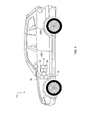
- FIG. 1 is a schematic illustration of a vehicle 10 having a cruise control system 12 having a standard operating mode and a fuel economy mode 14.
- the cruise control system 12 may also be an adaptive cruise control (ACC) system and preferably incorporates other existing vehicle 10 systems and components for simplicity, such as forward looking sensors.
- ACC adaptive cruise control
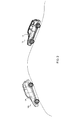
- FIG. 2 illustrates the vehicle 10 with the cruise control system 12 where the operating mode of the cruise control system is selected by a control device 24.
- the fuel efficiency of the vehicle 10 may be maintained at a desired fuel economy.
- the desired fuel economy may correspond to the fuel economy level for the vehicle 10 at a pre-selected speed when traveling along a flat surface. If the vehicle 10 recognizes a hill is approaching the control device 24 for the cruise control system 12 may switch to a fuel economy mode 14and maintain the vehicle at the desired fuel economy rather than at a desired speed.
- the vehicle 10 may have at least one sensor, such as a longitudinal gravity sensor or may utilize other vehicle systems, such as a navigation system to detect an approaching hill.
- the fuel economy mode 14 would allow the vehicle 10 to slow while ascending the hill and regain speed while descending the hill.
- the overall speed of the vehicle 10 after the hill will be approximately the same speed as before the hill while the fuel economy of the vehicle 10 is maintained above the desired fuel economy level.
- the cruise control system 12 in a standard operating mode the cruise control system 12 maintains the speed of the vehicle 10 at the speed selected by the driver. If the cruise control system 12 is an ACC system the cruise control system 12 will adjust the speed of the vehicle 10 to maintain a predetermined distance from forward objects. In the standard operating mode the cruise control system 12 maintains the vehicle 10 at the selected speed regardless of the terrain and contours of the road and only adjusts the vehicle speed 10 based upon intervening objects as mentioned above.
- the speed of the vehicle 10 is typically maintained within a range of the preselected speed by an engine controller 16. The vehicle 10 speed is maintain even when encountering changes in the slope of the road, such as when ascending or descending a hill.
- the engine controller 16 cooperates with a fuel supply system 18 to adjust the fuel supply as required to maintain the vehicle 10 at the preselected speed.
- the fuel economy mode 14 may be selected by the vehicle operator using the control device 24.
- the speed of the vehicle 10 may be allowed to vary while the cruise control system 12 operates to maintain a desired fuel economy.
- the desired fuel economy may correspond to the fuel economy level for the vehicle 10 at a pre-selected speed when traveling along a flat surface.
- the desired fuel economy of the vehicle 10 can be determined by the fuel economy level that is calculated when the fuel economy mode 14 of the cruise control system 12 is initiated. Thereafter, the vehicle 10 will maintain the desired fuel economy regardless of the changes in the road. Again the engine controller 16 and the fuel supply system 18 cooperate with the cruise control system 12 to operate the vehicle 10 in a manner that maintains the fuel economy as the desired fuel economy level.
- a high fuel economy level is generally desirable. Therefore, maintaining the vehicle 10 at the desired fuel economy may mean allowing the fuel economy of the vehicle 10 to increase, but not allowing the fuel economy to decrease below the desired level.
- the fuel economy level may also be limited from increasing. For example, due to terrain an increase in the fuel economy level may also correspond to an increase in speed of the vehicle 10, e.g. when the vehicle 10 is travelling downhill. In order to maintain the vehicle 10 at safe operating speed the fuel economy level may be maintained at the pre-selected level and not allowed to increase outside of a predetermined range, thus, restricting the speed of the vehicle 10. In this instance, an increase in the fuel economy level would be allowable as long as the vehicle 10 is travelling within safe operating speeds.
- FIG. 2 An example of the vehicle 10 operating in the fuel economy mode 14 is illustrated in Figure 2 .
- the vehicle 10 is in the fuel economy mode 14 as the vehicle 10 begins to ascend a hill.
- the speed of the vehicle 10 may be allowed to decrease to maintain the desired fuel economy level that was determined when the fuel economy mode 14 was initiated.
- Preferably the fuel economy mode 14 is initiated while traveling a flat surface.
- the fuel economy of the vehicle 10 is not allowed below the desired fuel economy level. As a result, the vehicle 10 will slow in speed while ascending the hill.
- the engine controller 16 cooperates with the fuel system 18 to only provide the amount of fuel necessary for the desired fuel economy. Therefore, the vehicle 10 will slow while ascending the hill and regain speed when descending the hill such that, the overall speed of the vehicle 10 after the hill will be approximately the same speed as before the hill while the fuel economy of the vehicle 10 is maintained above the desired fuel economy level.
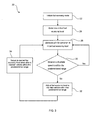
- FIG 3 illustrates a method 20 for operating the vehicle 10 having the cruise control system 12 with the fuel economy mode 14. Also with reference to Figures 1 and 2 , the method 20 for operating the vehicle 10 having the cruise control system 12 with the fuel economy mode 14 is described below.
- the fuel economy mode 14 is initiated by the operator of the vehicle 10, step 22.
- the fuel economy mode 14 may initiated by a control device 24.
- the control device 24 may be a control unit for the cruise control system 12 or may be a separate selector or switch that is part of the controls the vehicle driver uses to operate the cruise control system 12.
- the cruise control system 12 determines a desired fuel economy level, step 26.
- the desired fuel economy level may be an average or instantaneous fuel economy for the vehicle 10 when the fuel economy mode 14 is initiated.
- the average fuel economy level may be an average of the fuel economy determined for a preselected period of the time, i.e. for 60 seconds of vehicle 10 operation prior to the initiation of the fuel economy mode 14.
- the vehicle 10 Upon initiation of the fuel economy mode 14 the vehicle 10 is operated at the desired fuel economy level, step 28.
- the cruise control system 12 monitors the instantaneous fuel economy of the vehicle 10.
- the desired fuel economy level may be adjusted by the vehicle 10 operator through the use of the control device 24. For example, the fuel economy may be increased or decreased in an incremental manner.
- the adjustment of the desired fuel economy level may be similar to adjusting a preselected speed of the vehicle 10 when operating in the standard operating mode of the cruise control system 12
- the fuel economy level may be adjusted under selected conditions. For example, if the cruise control system 12 is an ACC system the vehicle 10 may be operated at another fuel economy level to maintain a desired distance between the vehicle 10 and a forward object. Once the forward object is no longer in the path of the vehicle 10 the cruise control system 12 may return operation to the desired fuel economy level 14.
- the cruise control system 12 may be arranged to operate at a desired fuel economy level, with a predetermined speed range. In this instance, the vehicle 10 will maintain the desired fuel economy level, step 28. However, the cruise control system 12 will also monitor the vehicle 10 speed, step 30. If the vehicle 10 speed drops below a predetermined level the cruise control system 12 may temporarily adjust the fuel economy level to operate the vehicle 10 at a minimum determined speed, step 32. The vehicle 10 will return to operating at the desired fuel economy level once the vehicle 10 is able to maintain the minimum determined speed with the original desired fuel economy, step 34.
- the desired fuel economy when the cruise control system 12 is in fuel economy mode 14 the desired fuel economy may be maintained as long as the vehicle 10 is within a predetermined range of the speed at the time the fuel economy mode 14 was initiated by the driver.
- the fuel economy supplied by the vehicle 10 may be adjusted to maintain the vehicle within the predetermined speed range, until the vehicle 10 speed can be maintained without requiring adjustment from the desired fuel economy.
- the fuel economy mode 14 will continue operation at the desired fuel economy level, i.e. at the fuel economy level that was selected when the fuel economy mode 14 was initiated.
- the cruise control system 12 will maintain the vehicle 10 at the selected fuel economy level as long as the vehicle 10 speed is within a predetermined range of the initial vehicle speed, e.g. within 10 mph of the original speed of 60 mph. If the vehicle 10 departs the predetermined range the fuel economy level of the vehicle 10 will be adjusted to maintain the closest limit of the predetermined range. That is, if the vehicle 10 begins to slow down below 50 mph the fuel economy will be adjusted to maintain the vehicle speed at 50 mph. At such time that the vehicle 10 is able to stay within the predetermined range without the adjusted fuel economy level, the cruise control system 12 will return to maintaining the fuel economy for the vehicle at the initial fuel economy level.
- a predetermined range of the initial vehicle speed e.g. within 10 mph of the original speed of 60 mph.
- the fuel economy level may be limited from increase to maintain the vehicle within safe operating speeds.
- the vehicle speed may be limited by the fuel economy mode 14 of the cruise control system 12 without requiring braking action to slow the vehicle 10.
Landscapes
- Engineering & Computer Science (AREA)
- Chemical & Material Sciences (AREA)
- Combustion & Propulsion (AREA)
- Transportation (AREA)
- Mechanical Engineering (AREA)
- Control Of Driving Devices And Active Controlling Of Vehicle (AREA)
Abstract
A method of operating a cruise control system for a vehicle comprises selecting a fuel economy mode for the cruise control system and determining a desired fuel economy. A fuel economy level of the vehicle is maintained at the desired fuel economy while in the fuel economy mode for the cruise control system.
Description
- The present disclosure relates to automotive vehicles, and more particularly to fuel economy for automotive vehicles.
- Automotive vehicles utilize cruise control systems to assist vehicle operators in maintaining vehicles at a constant speed when traveling long distances. Operation of the vehicle in cruise control mode may increase fuel economy over long distances. As is known, the vehicle operator can engage and disengaged the cruise control systems as desired. Vehicle speed is typically maintained at a constant speed over differing road terrains. However, as is known, operation of the cruise control system may be terminated by application of the brakes by the vehicle operator.
- Recently adaptive cruise control (ACC) systems have been developed. ACC systems adjust the speed of the vehicle to accommodate changes in traffic speed when operating in cruise control mode. Typically, ACC systems maintain a desired distance from a forward vehicle. If the forward vehicle changes speeds or changes lanes the ACC system will return the vehicle to the cruising speed originally set by the vehicle operator. As with standard cruise control systems, the ACC systems may be terminated by application of the vehicle brakes.
- The background description provided herein is for the purpose of generally presenting the context of the disclosure. Work of the presently named inventors, to the extent it is described in this background section, as well as aspects of the description that may not otherwise qualify as prior art at the time of filing, are neither expressly nor impliedly admitted as prior art against the present disclosure.
- A method of operating a cruise control system for a vehicle comprises selecting a fuel economy mode for the cruise control system and determining a desired fuel economy. A fuel economy level of the vehicle is maintained at the desired fuel economy when operating in fuel economy mode.
- A method of operating a vehicle comprises selecting an operating mode for a cruise control system. At least one of a desired fuel economy and an initial cruise control speed for the vehicle are determined. A fuel supply to an engine for the vehicle is adjusted with an engine controller in communication with a fuel supply system to maintain a fuel economy level of the vehicle at the desired fuel economy when operating in a fuel economy mode.
- Further areas of applicability of the present disclosure will become apparent from the detailed description provided hereinafter. It should be understood that the detailed description and specific examples, while indicating the preferred embodiment of the disclosure, are intended for purposes of illustration only and are not intended to limit the scope of the disclosure.
- The present disclosure will become more fully understood from the detailed description and the accompanying drawings, wherein:
-
FIG. 1 is a schematic side view of a vehicle having a cruise control system having a fuel economy mode of the present invention; -
FIG. 2 is a schematic side view illustration of the vehicle having the cruise control system of the present invention on a hill; and -
FIG. 3 is a schematic diagram of an exemplary implementation of the cruise control system of the present invention for the vehicle ofFigures 1-2 . - The following description is merely exemplary in nature and is in no way intended to limit the disclosure, its application, or uses. For purposes of clarity, the same reference numbers will be used in the drawings to identify similar elements.
Figure 1 is a schematic illustration of avehicle 10 having acruise control system 12 having a standard operating mode and afuel economy mode 14. Thecruise control system 12 may also be an adaptive cruise control (ACC) system and preferably incorporates other existingvehicle 10 systems and components for simplicity, such as forward looking sensors. Throughout the application the relative directions of forward and rear are in reference to the direction which an operator for thevehicle 10 would be facing when operating thevehicle 10. -
Figure 2 illustrates thevehicle 10 with thecruise control system 12 where the operating mode of the cruise control system is selected by acontrol device 24. In thefuel economy mode 14 the fuel efficiency of thevehicle 10 may be maintained at a desired fuel economy. The desired fuel economy may correspond to the fuel economy level for thevehicle 10 at a pre-selected speed when traveling along a flat surface. If thevehicle 10 recognizes a hill is approaching thecontrol device 24 for thecruise control system 12 may switch to a fuel economy mode 14and maintain the vehicle at the desired fuel economy rather than at a desired speed. Thevehicle 10 may have at least one sensor, such as a longitudinal gravity sensor or may utilize other vehicle systems, such as a navigation system to detect an approaching hill. Thefuel economy mode 14 would allow thevehicle 10 to slow while ascending the hill and regain speed while descending the hill. The overall speed of thevehicle 10 after the hill will be approximately the same speed as before the hill while the fuel economy of thevehicle 10 is maintained above the desired fuel economy level. - In another embodiment, in a standard operating mode the
cruise control system 12 maintains the speed of thevehicle 10 at the speed selected by the driver. If thecruise control system 12 is an ACC system thecruise control system 12 will adjust the speed of thevehicle 10 to maintain a predetermined distance from forward objects. In the standard operating mode thecruise control system 12 maintains thevehicle 10 at the selected speed regardless of the terrain and contours of the road and only adjusts thevehicle speed 10 based upon intervening objects as mentioned above. The speed of thevehicle 10 is typically maintained within a range of the preselected speed by anengine controller 16. Thevehicle 10 speed is maintain even when encountering changes in the slope of the road, such as when ascending or descending a hill. Theengine controller 16 cooperates with afuel supply system 18 to adjust the fuel supply as required to maintain thevehicle 10 at the preselected speed. - The
fuel economy mode 14 may be selected by the vehicle operator using thecontrol device 24. In thefuel economy mode 14, the speed of thevehicle 10 may be allowed to vary while thecruise control system 12 operates to maintain a desired fuel economy. The desired fuel economy may correspond to the fuel economy level for thevehicle 10 at a pre-selected speed when traveling along a flat surface. The desired fuel economy of thevehicle 10 can be determined by the fuel economy level that is calculated when thefuel economy mode 14 of thecruise control system 12 is initiated. Thereafter, thevehicle 10 will maintain the desired fuel economy regardless of the changes in the road. Again theengine controller 16 and thefuel supply system 18 cooperate with thecruise control system 12 to operate thevehicle 10 in a manner that maintains the fuel economy as the desired fuel economy level. - A high fuel economy level is generally desirable. Therefore, maintaining the
vehicle 10 at the desired fuel economy may mean allowing the fuel economy of thevehicle 10 to increase, but not allowing the fuel economy to decrease below the desired level. Alternatively, the fuel economy level may also be limited from increasing. For example, due to terrain an increase in the fuel economy level may also correspond to an increase in speed of thevehicle 10, e.g. when thevehicle 10 is travelling downhill. In order to maintain thevehicle 10 at safe operating speed the fuel economy level may be maintained at the pre-selected level and not allowed to increase outside of a predetermined range, thus, restricting the speed of thevehicle 10. In this instance, an increase in the fuel economy level would be allowable as long as thevehicle 10 is travelling within safe operating speeds. - An example of the
vehicle 10 operating in thefuel economy mode 14 is illustrated inFigure 2 . Thevehicle 10 is in thefuel economy mode 14 as thevehicle 10 begins to ascend a hill. The speed of thevehicle 10 may be allowed to decrease to maintain the desired fuel economy level that was determined when thefuel economy mode 14 was initiated. Preferably thefuel economy mode 14 is initiated while traveling a flat surface. The fuel economy of thevehicle 10 is not allowed below the desired fuel economy level. As a result, thevehicle 10 will slow in speed while ascending the hill. - When the
vehicle 10 descends the other side of the hill, illustrated byvehicle 10A inFigure 2 , the speed of thevehicle 10A will again begin to increase, as a result of gravity, without requiring a decrease in fuel economy. In fact, the fuel economy level will increase. The increase in fuel economy on the descent of the hill is allowable as long as thevehicle 10A is travelling at safe operating speeds. - In the
fuel economy mode 14 theengine controller 16 cooperates with thefuel system 18 to only provide the amount of fuel necessary for the desired fuel economy. Therefore, thevehicle 10 will slow while ascending the hill and regain speed when descending the hill such that, the overall speed of thevehicle 10 after the hill will be approximately the same speed as before the hill while the fuel economy of thevehicle 10 is maintained above the desired fuel economy level. -
Figure 3 illustrates amethod 20 for operating thevehicle 10 having thecruise control system 12 with thefuel economy mode 14. Also with reference toFigures 1 and2 , themethod 20 for operating thevehicle 10 having thecruise control system 12 with thefuel economy mode 14 is described below. Thefuel economy mode 14 is initiated by the operator of thevehicle 10,step 22. Thefuel economy mode 14 may initiated by acontrol device 24. Thecontrol device 24 may be a control unit for thecruise control system 12 or may be a separate selector or switch that is part of the controls the vehicle driver uses to operate thecruise control system 12. Following initiation of thefuel economy mode 14 thecruise control system 12 determines a desired fuel economy level,step 26. The desired fuel economy level may be an average or instantaneous fuel economy for thevehicle 10 when thefuel economy mode 14 is initiated. The average fuel economy level may be an average of the fuel economy determined for a preselected period of the time, i.e. for 60 seconds ofvehicle 10 operation prior to the initiation of thefuel economy mode 14. Upon initiation of thefuel economy mode 14 thevehicle 10 is operated at the desired fuel economy level,step 28. Thecruise control system 12 monitors the instantaneous fuel economy of thevehicle 10. - The desired fuel economy level may be adjusted by the
vehicle 10 operator through the use of thecontrol device 24. For example, the fuel economy may be increased or decreased in an incremental manner. The adjustment of the desired fuel economy level may be similar to adjusting a preselected speed of thevehicle 10 when operating in the standard operating mode of thecruise control system 12 - In
fuel economy mode 14 the fuel economy level may be adjusted under selected conditions. For example, if thecruise control system 12 is an ACC system thevehicle 10 may be operated at another fuel economy level to maintain a desired distance between thevehicle 10 and a forward object. Once the forward object is no longer in the path of thevehicle 10 thecruise control system 12 may return operation to the desiredfuel economy level 14. - In
fuel economy mode 14 the fuel economy of thevehicle 10 is maintained above the desired level while speed of thevehicle 10 is allowed to vary,step 28. However, this may be inconvenient to the driver on a steep incline when thevehicle 10 will slow more than is preferred to maintain the desired fuel economy level. Thus, thecruise control system 12 may be arranged to operate at a desired fuel economy level, with a predetermined speed range. In this instance, thevehicle 10 will maintain the desired fuel economy level,step 28. However, thecruise control system 12 will also monitor thevehicle 10 speed,step 30. If thevehicle 10 speed drops below a predetermined level thecruise control system 12 may temporarily adjust the fuel economy level to operate thevehicle 10 at a minimum determined speed,step 32. Thevehicle 10 will return to operating at the desired fuel economy level once thevehicle 10 is able to maintain the minimum determined speed with the original desired fuel economy,step 34. - In this embodiment, when the
cruise control system 12 is infuel economy mode 14 the desired fuel economy may be maintained as long as thevehicle 10 is within a predetermined range of the speed at the time thefuel economy mode 14 was initiated by the driver. When the predetermined range is exceeded the fuel economy supplied by thevehicle 10 may be adjusted to maintain the vehicle within the predetermined speed range, until thevehicle 10 speed can be maintained without requiring adjustment from the desired fuel economy. At that time thefuel economy mode 14 will continue operation at the desired fuel economy level, i.e. at the fuel economy level that was selected when thefuel economy mode 14 was initiated. - For example, if the
vehicle 10 was traveling at 60 mph when thefuel economy mode 14 was initiated thecruise control system 12 will maintain thevehicle 10 at the selected fuel economy level as long as thevehicle 10 speed is within a predetermined range of the initial vehicle speed, e.g. within 10 mph of the original speed of 60 mph. If thevehicle 10 departs the predetermined range the fuel economy level of thevehicle 10 will be adjusted to maintain the closest limit of the predetermined range. That is, if thevehicle 10 begins to slow down below 50 mph the fuel economy will be adjusted to maintain the vehicle speed at 50 mph. At such time that thevehicle 10 is able to stay within the predetermined range without the adjusted fuel economy level, thecruise control system 12 will return to maintaining the fuel economy for the vehicle at the initial fuel economy level. - As mentioned above, while an increase in fuel economy is desirable it the fuel economy level may be limited from increase to maintain the vehicle within safe operating speeds. Thus, the vehicle speed may be limited by the
fuel economy mode 14 of thecruise control system 12 without requiring braking action to slow thevehicle 10. - While the best modes for carrying out the invention have been described in detail the true scope of the disclosure should not be so limited, since those familiar with the art to which this invention relates will recognize various alternative designs and embodiments for practicing the invention within the scope of the appended claims.
-
- 1. A method of operating a cruise control system for a vehicle comprising:
- selecting a fuel economy mode for the cruise control system;
- determining a desired fuel economy; and
- maintaining a fuel economy level of the vehicle at the desired fuel economy.
- 2. The method of embodiment 1, wherein selecting the fuel economy mode for the cruise control system further comprises a control device for the cruise control selecting the fuel economy mode when an approaching hill is detected.
- 3. The method of embodiment 2, wherein an approaching hill is detected by one of a longitudinal gravity sensor and a navigation system for the vehicle.
- 4. The method of embodiment 1, wherein maintaining the fuel economy level of the vehicle at the desired fuel economy includes maintaining a fuel economy level of the vehicle above the desired fuel economy.
- 5. The method of embodiment 1, wherein maintaining operation of the vehicle at the desired fuel economy includes limiting the fuel economy level to maintain the vehicle operation at a safe travelling speed.
- 6. The method of embodiment 1, further comprising adjusting the fuel economy level to maintain the vehicle at an operating speed that is within a preselected range from the initial operating speed.
- 7. The method of embodiment 6, further comprising adjusting the fuel economy level back to the desired fuel economy once the vehicle is operating within the preselected range.
- 8. The method of embodiment 7, wherein maintaining a fuel economy level of the vehicle at the desired fuel economy includes adjusting a fuel supply to an engine for the vehicle with an engine controller in communication with a fuel supply system and the cruise control system.
- 9. The method of embodiment 8, further comprising adjusting the desired fuel economy within a control device for the cruise control system.
- 10. The method of embodiment 1, further comprising:
- selecting a normal operating mode for the cruise control system;
- determining a desired operating speed of the vehicle; and
- maintaining an operating speed of the vehicle at the desired fuel operating speed while in the normal operating mode for the cruise control system.
- 11. A method of operating a vehicle comprising:
- selecting an operating mode for a cruise control system;
- determining at least one of a desired fuel economy and an initial cruise control speed for the vehicle; and
- adjusting a fuel supply to an engine for the vehicle with an engine controller in communication with a fuel supply system to maintain a fuel economy level of the vehicle at the desired fuel economy when operating in a fuel economy mode.
- 12. The method of embodiment 11, wherein selecting the fuel economy mode for the cruise control system further comprises a control device for the cruise control selecting the fuel economy mode when an approaching hill is detected.
- 13. The method of
embodiment 12, wherein an approaching hill is detected by one of a longitudinal gravity sensor and a navigation system for the vehicle. - 14. The method of embodiment 11, wherein adjusting the fuel supply to the engine includes limiting the fuel supply to the engine to maintain the fuel economy level of the vehicle above the desired fuel economy.
- 15. The method of embodiment 11, wherein adjusting the fuel supply to the engine includes limiting the fuel economy level to maintain the vehicle operation at a safe travelling speed.
- 16. The method of embodiment 11, further comprising adjusting the fuel economy level to maintain the vehicle at an operating speed that is within a preselected range from an initial operating speed when the fuel economy mode was initiated.
- 17. The method of
embodiment 16, further comprising adjusting the fuel economy level back to the desired fuel economy once the vehicle is operating within the preselected range. - 18. The method of embodiment 11, further comprising adjusting the desired fuel economy within a control device for the cruise control system.
Claims (15)
- A method of operating a cruise control system for a vehicle comprising:selecting a fuel economy mode or another operating mode for the cruise control system;determining a desired fuel economy; andmaintaining a fuel economy level of the vehicle at the desired fuel economy when operating in the fuel economy mode.
- The method of claim 1, wherein selecting the fuel economy mode for the cruise control system further comprises a control device for the cruise control selecting the fuel economy mode when an approaching hill is detected; wherein an approaching hill is detected by one of a longitudinal gravity sensor and a navigation system for the vehicle.
- The method of claim 1, wherein maintaining the fuel economy level of the vehicle at the desired fuel economy includes maintaining a fuel economy level of the vehicle above the desired fuel economy.
- The method of claim 1, wherein maintaining operation of the vehicle at the desired fuel economy includes limiting the fuel economy level to maintain the vehicle operation at a safe travelling speed; and
further comprising adjusting the fuel economy level to maintain the vehicle at an operating speed that is within a preselected range from the initial operating speed. - The method of claim 4, further comprising adjusting the fuel economy level back to the desired fuel economy once the vehicle is operating within the preselected range.
- The method of claim 5, wherein maintaining a fuel economy level of the vehicle at the desired fuel economy includes adjusting a fuel supply to an engine for the vehicle with an engine controller in communication with a fuel supply system and the cruise control system.
- The method of claim 6, further comprising adjusting the desired fuel economy within a control device for the cruise control system.
- The method of claim 1, further comprising:selecting a normal operating mode for the cruise control system;determining a desired operating speed of the vehicle; andmaintaining an operating speed of the vehicle at the desired fuel operating speed while in the normal operating mode for the cruise control system.
- The method of claim 1, further comprising:determining at least one of a desired fuel economy and an initial cruise control speed for the vehicle; andadjusting a fuel supply to an engine for the vehicle with an engine controller in communication with a fuel supply system to maintain a fuel economy level of the vehicle at the desired fuel economy when operating in the fuel economy mode.
- The method of claim 9, wherein selecting the fuel economy mode for the cruise control system further comprises a control device for the cruise control selecting the fuel economy mode when an approaching hill is detected; wherein an approaching hill is detected by one of a longitudinal gravity sensor and a navigation system for the vehicle.
- The method of claim 9, wherein adjusting the fuel supply to the engine includes limiting the fuel supply to the engine to maintain the fuel economy level of the vehicle above the desired fuel economy.
- The method of claim 9, wherein adjusting the fuel supply to the engine includes limiting the fuel economy level to maintain the vehicle operation at a safe travelling speed.
- The method of claim 9, further comprising adjusting the fuel economy level to maintain the vehicle at an operating speed that is within a preselected range from an initial operating speed when the fuel economy mode was initiated.
- The method of claim 13, further comprising adjusting the fuel economy level back to the desired fuel economy once the vehicle is operating within the preselected range.
- The method of claim 9, further comprising adjusting the desired fuel economy within a control device for the cruise control system.
Applications Claiming Priority (1)
| Application Number | Priority Date | Filing Date | Title |
|---|---|---|---|
| US13/331,166 US20130158829A1 (en) | 2011-12-20 | 2011-12-20 | Fuel economy mode to modify cruise control for an automobile |
Publications (1)
| Publication Number | Publication Date |
|---|---|
| EP2610127A2 true EP2610127A2 (en) | 2013-07-03 |
Family
ID=47681524
Family Applications (1)
| Application Number | Title | Priority Date | Filing Date |
|---|---|---|---|
| EP12198515.4A Withdrawn EP2610127A2 (en) | 2011-12-20 | 2012-12-20 | Fuel economy mode to modify cruise control for an automobile |
Country Status (2)
| Country | Link |
|---|---|
| US (1) | US20130158829A1 (en) |
| EP (1) | EP2610127A2 (en) |
Cited By (1)
| Publication number | Priority date | Publication date | Assignee | Title |
|---|---|---|---|---|
| US10590879B2 (en) | 2017-12-15 | 2020-03-17 | Ford Global Technologies, Llc | Variable displacement engine diagnostic method |
Families Citing this family (6)
| Publication number | Priority date | Publication date | Assignee | Title |
|---|---|---|---|---|
| US9233690B2 (en) * | 2011-10-05 | 2016-01-12 | Volvo Lastvagnar Ab | Arrangement and method for adapting a cruise control system in a vehicle |
| US9187093B1 (en) * | 2014-08-04 | 2015-11-17 | Cummins, Inc. | Systems and methods of cruise droop control |
| US9393963B2 (en) | 2014-09-19 | 2016-07-19 | Paccar Inc | Predictive cruise control system with advanced operator control and feedback |
| KR102521655B1 (en) * | 2016-09-01 | 2023-04-13 | 삼성전자주식회사 | Autonomous driving method and apparatus |
| US10618516B2 (en) * | 2017-08-24 | 2020-04-14 | Fca Us Llc | Automotive vehicle with cruise control that enhances fuel economy |
| SE547535C2 (en) * | 2024-01-16 | 2025-10-14 | Scania Cv Ab | Method of Controlling Operation of a Vehicle, Computer Program, Computer-Readable Medium, Control Arrangement, and Vehicle |
-
2011
- 2011-12-20 US US13/331,166 patent/US20130158829A1/en not_active Abandoned
-
2012
- 2012-12-20 EP EP12198515.4A patent/EP2610127A2/en not_active Withdrawn
Non-Patent Citations (1)
| Title |
|---|
| None |
Cited By (1)
| Publication number | Priority date | Publication date | Assignee | Title |
|---|---|---|---|---|
| US10590879B2 (en) | 2017-12-15 | 2020-03-17 | Ford Global Technologies, Llc | Variable displacement engine diagnostic method |
Also Published As
| Publication number | Publication date |
|---|---|
| US20130158829A1 (en) | 2013-06-20 |
Similar Documents
| Publication | Publication Date | Title |
|---|---|---|
| US10913456B2 (en) | Method and system for adaptive cruise control and vehicle | |
| EP2610127A2 (en) | Fuel economy mode to modify cruise control for an automobile | |
| JP6577002B2 (en) | Improved vehicle cruise control | |
| US8265850B2 (en) | Method and apparatus for target vehicle following control for adaptive cruise control | |
| EP2885174B1 (en) | Vehicle speed control system and method with external force compensation | |
| EP2885178B1 (en) | Vehicle speed control system | |
| KR101679273B1 (en) | Speed control method and system | |
| CN106414203B (en) | Apparatus and method for cruise control braking in a vehicle | |
| CN108025750B (en) | vehicle control device | |
| CN108466618B (en) | Adaptive cruise control method and system | |
| CN102712320B (en) | Starting aids for motor vehicles | |
| JP2009061941A (en) | Vehicle travel control device | |
| CN108137057B (en) | Condition recognition of an active chassis | |
| US10507831B2 (en) | Cruise control system for a motor vehicle | |
| EP2678203A1 (en) | Method and system for control of cruise control | |
| CN104284824A (en) | Method and system for controlling at least one speed regulator | |
| WO2019151918A1 (en) | A method and an apparatus for controlling shifting of a transmission in a motor vehicle | |
| US20170129467A1 (en) | An arrangement and method for supporting a cruise control brake in a vehicle | |
| JP2014000900A (en) | Vehicle control device | |
| US20250058775A1 (en) | Adaptive cruise control system and method | |
| WO2013114625A1 (en) | Operation assist apparatus | |
| JP2024030184A (en) | Vehicle control device | |
| SE1450044A1 (en) | Method and system for controlling a parameter related to the performance of a vehicle | |
| KR20060014185A (en) | Driving Speed Control Method of Vehicles | |
| KR20100040507A (en) | Cruise control method for vehicle |
Legal Events
| Date | Code | Title | Description |
|---|---|---|---|
| PUAI | Public reference made under article 153(3) epc to a published international application that has entered the european phase |
Free format text: ORIGINAL CODE: 0009012 |
|
| AK | Designated contracting states |
Kind code of ref document: A2 Designated state(s): AL AT BE BG CH CY CZ DE DK EE ES FI FR GB GR HR HU IE IS IT LI LT LU LV MC MK MT NL NO PL PT RO RS SE SI SK SM TR |
|
| AX | Request for extension of the european patent |
Extension state: BA ME |
|
| STAA | Information on the status of an ep patent application or granted ep patent |
Free format text: STATUS: THE APPLICATION HAS BEEN PUBLISHED |
|
| STAA | Information on the status of an ep patent application or granted ep patent |
Free format text: STATUS: THE APPLICATION IS DEEMED TO BE WITHDRAWN |
|
| 18D | Application deemed to be withdrawn |
Effective date: 20170701 |