EP2609879A1 - Surgical access assembly and method of use therefor - Google Patents
Surgical access assembly and method of use therefor Download PDFInfo
- Publication number
- EP2609879A1 EP2609879A1 EP12198750.7A EP12198750A EP2609879A1 EP 2609879 A1 EP2609879 A1 EP 2609879A1 EP 12198750 A EP12198750 A EP 12198750A EP 2609879 A1 EP2609879 A1 EP 2609879A1
- Authority
- EP
- European Patent Office
- Prior art keywords
- distal
- access port
- proximal
- ring
- sealing adapter
- Prior art date
- Legal status (The legal status is an assumption and is not a legal conclusion. Google has not performed a legal analysis and makes no representation as to the accuracy of the status listed.)
- Granted
Links
- 238000000034 method Methods 0.000 title description 21
- 238000007789 sealing Methods 0.000 claims abstract description 141
- 239000000463 material Substances 0.000 claims description 9
- 239000013013 elastic material Substances 0.000 claims description 4
- 210000001519 tissue Anatomy 0.000 description 44
- 238000003780 insertion Methods 0.000 description 14
- 230000037431 insertion Effects 0.000 description 14
- 239000012530 fluid Substances 0.000 description 10
- 238000001356 surgical procedure Methods 0.000 description 8
- 239000007789 gas Substances 0.000 description 6
- 238000005096 rolling process Methods 0.000 description 6
- 230000006835 compression Effects 0.000 description 3
- 238000007906 compression Methods 0.000 description 3
- 210000003734 kidney Anatomy 0.000 description 3
- 230000007704 transition Effects 0.000 description 3
- 238000011109 contamination Methods 0.000 description 2
- 208000015181 infectious disease Diseases 0.000 description 2
- 238000002324 minimally invasive surgery Methods 0.000 description 2
- 210000000056 organ Anatomy 0.000 description 2
- 239000004698 Polyethylene Substances 0.000 description 1
- 210000001015 abdomen Anatomy 0.000 description 1
- 230000003187 abdominal effect Effects 0.000 description 1
- 239000000853 adhesive Substances 0.000 description 1
- 230000001070 adhesive effect Effects 0.000 description 1
- 238000004873 anchoring Methods 0.000 description 1
- 230000000712 assembly Effects 0.000 description 1
- 238000000429 assembly Methods 0.000 description 1
- 238000004891 communication Methods 0.000 description 1
- 238000010276 construction Methods 0.000 description 1
- 230000001419 dependent effect Effects 0.000 description 1
- 229920001971 elastomer Polymers 0.000 description 1
- 239000000806 elastomer Substances 0.000 description 1
- 208000014674 injury Diseases 0.000 description 1
- 238000002357 laparoscopic surgery Methods 0.000 description 1
- 238000012423 maintenance Methods 0.000 description 1
- 238000012986 modification Methods 0.000 description 1
- 230000004048 modification Effects 0.000 description 1
- 210000003200 peritoneal cavity Anatomy 0.000 description 1
- -1 polyethylene Polymers 0.000 description 1
- 229920000573 polyethylene Polymers 0.000 description 1
- 229920001296 polysiloxane Polymers 0.000 description 1
- 229920002635 polyurethane Polymers 0.000 description 1
- 239000004814 polyurethane Substances 0.000 description 1
- 238000011084 recovery Methods 0.000 description 1
- 239000000523 sample Substances 0.000 description 1
- 238000004904 shortening Methods 0.000 description 1
- 230000008733 trauma Effects 0.000 description 1
- 210000001835 viscera Anatomy 0.000 description 1
- 238000012800 visualization Methods 0.000 description 1
Images







Classifications
-
- A—HUMAN NECESSITIES
- A61—MEDICAL OR VETERINARY SCIENCE; HYGIENE
- A61B—DIAGNOSIS; SURGERY; IDENTIFICATION
- A61B17/00—Surgical instruments, devices or methods
- A61B17/02—Surgical instruments, devices or methods for holding wounds open, e.g. retractors; Tractors
- A61B17/0218—Surgical instruments, devices or methods for holding wounds open, e.g. retractors; Tractors for minimally invasive surgery
-
- A—HUMAN NECESSITIES
- A61—MEDICAL OR VETERINARY SCIENCE; HYGIENE
- A61B—DIAGNOSIS; SURGERY; IDENTIFICATION
- A61B1/00—Instruments for performing medical examinations of the interior of cavities or tubes of the body by visual or photographical inspection, e.g. endoscopes; Illuminating arrangements therefor
- A61B1/32—Devices for opening or enlarging the visual field, e.g. of a tube of the body
-
- A—HUMAN NECESSITIES
- A61—MEDICAL OR VETERINARY SCIENCE; HYGIENE
- A61B—DIAGNOSIS; SURGERY; IDENTIFICATION
- A61B17/00—Surgical instruments, devices or methods
- A61B17/34—Trocars; Puncturing needles
- A61B17/3417—Details of tips or shafts, e.g. grooves, expandable, bendable; Multiple coaxial sliding cannulas, e.g. for dilating
- A61B17/3421—Cannulas
- A61B17/3423—Access ports, e.g. toroid shape introducers for instruments or hands
-
- A—HUMAN NECESSITIES
- A61—MEDICAL OR VETERINARY SCIENCE; HYGIENE
- A61B—DIAGNOSIS; SURGERY; IDENTIFICATION
- A61B17/00—Surgical instruments, devices or methods
- A61B17/34—Trocars; Puncturing needles
- A61B17/3417—Details of tips or shafts, e.g. grooves, expandable, bendable; Multiple coaxial sliding cannulas, e.g. for dilating
- A61B17/3421—Cannulas
- A61B17/3431—Cannulas being collapsible, e.g. made of thin flexible material
-
- A—HUMAN NECESSITIES
- A61—MEDICAL OR VETERINARY SCIENCE; HYGIENE
- A61B—DIAGNOSIS; SURGERY; IDENTIFICATION
- A61B17/00—Surgical instruments, devices or methods
- A61B17/02—Surgical instruments, devices or methods for holding wounds open, e.g. retractors; Tractors
- A61B17/0293—Surgical instruments, devices or methods for holding wounds open, e.g. retractors; Tractors with ring member to support retractor elements
-
- A—HUMAN NECESSITIES
- A61—MEDICAL OR VETERINARY SCIENCE; HYGIENE
- A61B—DIAGNOSIS; SURGERY; IDENTIFICATION
- A61B17/00—Surgical instruments, devices or methods
- A61B17/00234—Surgical instruments, devices or methods for minimally invasive surgery
- A61B2017/00238—Type of minimally invasive operation
- A61B2017/00265—Hand assisted surgery, i.e. minimally invasive surgery with at least part of an assisting hand inside the body
-
- A—HUMAN NECESSITIES
- A61—MEDICAL OR VETERINARY SCIENCE; HYGIENE
- A61B—DIAGNOSIS; SURGERY; IDENTIFICATION
- A61B17/00—Surgical instruments, devices or methods
- A61B17/02—Surgical instruments, devices or methods for holding wounds open, e.g. retractors; Tractors
- A61B17/0218—Surgical instruments, devices or methods for holding wounds open, e.g. retractors; Tractors for minimally invasive surgery
- A61B2017/0225—Surgical instruments, devices or methods for holding wounds open, e.g. retractors; Tractors for minimally invasive surgery flexible, e.g. fabrics, meshes, or membranes
-
- A—HUMAN NECESSITIES
- A61—MEDICAL OR VETERINARY SCIENCE; HYGIENE
- A61B—DIAGNOSIS; SURGERY; IDENTIFICATION
- A61B17/00—Surgical instruments, devices or methods
- A61B17/34—Trocars; Puncturing needles
- A61B17/3417—Details of tips or shafts, e.g. grooves, expandable, bendable; Multiple coaxial sliding cannulas, e.g. for dilating
- A61B17/3421—Cannulas
- A61B17/3423—Access ports, e.g. toroid shape introducers for instruments or hands
- A61B2017/3429—Access ports, e.g. toroid shape introducers for instruments or hands having a unitary compressible body, e.g. made of silicone or foam
-
- A—HUMAN NECESSITIES
- A61—MEDICAL OR VETERINARY SCIENCE; HYGIENE
- A61B—DIAGNOSIS; SURGERY; IDENTIFICATION
- A61B17/00—Surgical instruments, devices or methods
- A61B17/34—Trocars; Puncturing needles
- A61B17/3417—Details of tips or shafts, e.g. grooves, expandable, bendable; Multiple coaxial sliding cannulas, e.g. for dilating
- A61B17/3421—Cannulas
- A61B2017/3445—Cannulas used as instrument channel for multiple instruments
Definitions
- the present disclosure relates to a surgical access assembly, and more particularly, to a surgical access assembly including an access port and a seal anchor adaptably engaging each other in a sealing relation and a method of use therefor.
- the proximal end portion is configured and dimensioned to engage a least a portion of the distal ring of the access port in a sealing relation therewith, wherein the sealing adapter is transitionable between a first state in which the sealing adapter has a first diameter and a second state in which the sealing adapter has a second diameter.
- the second diameter is larger than the first diameter.
- the method further includes positioning the access port at least partially in a body cavity, rolling the sleeve of the access port such that proximal and distal portions of the access port engage an outer epidermal tissue and an internal peritoneal wall of tissue, respectively, positioning the seal anchor at least partially within the access port, and introducing a surgical instrument into the body cavity through the seal anchor.
- FIG. 11 is a longitudinal cross-sectional view of an access assembly including the sealing adapter of FIG. 10 ;
- FIG. 14 is a perspective view of another embodiment of an access assembly in accordance with the present disclosure.
- Surgical access assembly 10 includes a seal anchor 100, a sealing adapter 150, and an access port 1000.
- Access port 1000 is adapted for insertion within a tissue tract, e.g., through an opening in the abdominal or peritoneal lining, as well as a naturally occurring orifice. Access port 1000 protects the opening from, for example, infection and contamination. In addition, access port 1000 may serve to retract the opening, as will be discussed below.
- Seal anchor 100 is disposed at least partially within access port 1000. Sealing adapter 150 is configured to engage seal anchor 100 and access port 1000 to provide a substantially fluid-tight seal between a body cavity of a patient and the atmosphere. Both access port 1000 and seal anchor 100, however, may be used as a stand-alone device for insertion of endoscopic instruments.
- seal anchor 100 is configured to receive surgical instruments of varying diameter therethrough.
- Seal anchor 100 is formed from elastic/compressible type material having sufficient compliance to form a seal about a surgical object and to establish a sealing relation with access port 1000. Furthermore, such material enables seal anchor 100 to accommodate off-axis motion of the surgical object extending therethrough.
- seal anchor 100 includes proximal and distal end portions 102, 104 and an intermediate portion 106 extending between proximal and distal end portions 102, 104.
- Seal anchor 100 defines at least one lumen or channel 108 that extends longitudinally between proximal and distal end portions 102, 104.
- Proximal and distal end portions 102, 104 define substantially planar surfaces. However, proximal and distal end portions 102, 104 may define surfaces that are substantially arcuate to assist in the insertion of seal anchor 100 within tissue.
- the radial dimension of intermediate portion 106 is appreciably less than those of respective proximal and distal end portions 102, 104. Under such configuration, seal anchor 100 defines an hourglass shape or profile to assist in anchoring seal anchor 100 within tissue when seal anchor 100 is used as a stand-alone device.
- distal and proximal rings 1020, 1030 can vary in size.
- the dimensions of distal and proximal rings 1020, 1030 may be selectively chosen to be larger than that of a desired opening, as shown in FIG. 8 . In this manner, distal and proximal rings 1020, 1030 may have sufficient footing to maintain elastic sleeve 1010 that has been stretched.
- proximal ring 1030 can be rolled in the direction of arrow "X," as shown in FIG. 5 , such that distal ring 1020 causes proximal end portion 154 of sealing adapter 150 to engage the internal peritoneal wall T I , and proximal ring 1030 of access port 1000 engages the outer epidermal tissue To.
- access port 1000 is securely disposed within the opening in tissue "T”
- a portion of sealing adapter 150 is securely fixed between distal ring 1020 of access port 1000 and the internal peritoneal wall T I of tissue "T.”
- distal end portion 152 of sealing adapter 150 is disposed within access port 1000 at a position easily accessible to the surgeon.
- the opening in tissue "T" may be retracted by further rolling sleeve 1010 about proximal ring 1030.
- one or more surgical objects "I” may be inserted through lumen 108 of seal anchor 100.
- the user may swivel or rotate surgical instrument “I” to a desired orientation with respect to tissue "T,” while maintaining a fluid-tight seal between a body cavity of a patient and the atmosphere.
- Sealing adapter 350 is configured to engage intermediate portion 106 of seal anchor 100 and distal ring 2020 of access port 2000 having kidney shaped cross-section in a sealing relation therewith.
- access port 5000 includes distal and proximal rings 5020, 5030 that both include kidney-shaped cross-section. Kidney-shaped cross-sectional profile of proximal ring 5030 facilitates rolling of sleeve 5010 about proximal ring 5030, and kidney-shaped cross-sectional profile of distal ring 5020 facilitates securement and engagement with sealing adapter 550, as will be discussed hereinbelow.
- Seal anchor 500 is substantially similar to seal anchor 100. However, a proximal end portion 502 of seal anchor 500 includes a radially extending flange that is substantially larger than that of a distal end portion 504 to facilitate securement of seal anchor 500 in the opening in tissue "T," as will be discussed hereinbelow.
- sealing adapter 550 may securely engage seal anchor 500, and proximal ring 554a of sealing adapter 550 may be affixed, e.g., by a biocompatible adhesive, to the outer epidermal tissue To, whereby proximal ring 1030 of access port 1000 is enclosed by proximal ring 554a of sealing adapter 550.
- sealing adapter 550 establishes a fluid-tight seal between the body cavity and the atmosphere, while accessibly exposed to the atmosphere.
Landscapes
- Health & Medical Sciences (AREA)
- Life Sciences & Earth Sciences (AREA)
- Surgery (AREA)
- Molecular Biology (AREA)
- General Health & Medical Sciences (AREA)
- Biomedical Technology (AREA)
- Heart & Thoracic Surgery (AREA)
- Medical Informatics (AREA)
- Nuclear Medicine, Radiotherapy & Molecular Imaging (AREA)
- Animal Behavior & Ethology (AREA)
- Engineering & Computer Science (AREA)
- Public Health (AREA)
- Veterinary Medicine (AREA)
- Pathology (AREA)
- Physics & Mathematics (AREA)
- Biophysics (AREA)
- Optics & Photonics (AREA)
- Radiology & Medical Imaging (AREA)
- Surgical Instruments (AREA)
Abstract
Description
- The present application claims the benefit of and priority to
U.S. Provisional Application Serial No.61/581,197, filed on December 29, 2011 - The present disclosure relates to a surgical access assembly, and more particularly, to a surgical access assembly including an access port and a seal anchor adaptably engaging each other in a sealing relation and a method of use therefor.
- Various surgical procedures are performed in a minimally invasive manner. This includes forming a small opening through a body wall of the patient, e.g., in the abdomen, and inserting a seal anchor through the opening to provide a substantially fluid-tight seal between a body cavity of a patient and the atmosphere. Due to the relatively small interior dimensions of the access devices used in endoscopic procedures, only the elongated, small diametered instrumentation such as, e.g., trocar and cannula assemblies, may be used to access the internal body cavities and organs. In general, prior to the introduction of the surgical object into the patient's body, insufflation gases are used to enlarge the area surrounding the target surgical site to create a larger, more accessible work area.
- When compared to the larger openings typically found in traditional procedures, both trauma to the patient and recovery time are reduced for procedures involving small openings. However, minimally invasive surgery such as, e.g., laparoscopy, has several limitations. In particular, surgery of this type requires a great deal of skill in manipulating the long narrow endoscopic instruments to a remote site under endoscopic visualization. To this end, hand-assisted laparoscopic techniques and procedures have been developed. These procedures include both laparoscopic and conventional surgical methodologies. The hand-assisted technique is performed utilizing a seal anchor in conjunction with an access port, which is an enlarged device that protects the incised opening from, for example, infection and contamination.
- The maintenance of a substantially fluid-tight seal is desirable to prevent the escape of the insufflation gases and the deflation or collapse of the enlarged surgical site. Accordingly, there is a need for an access assembly used in a hand-assisted minimally invasive procedure that can accommodate a variety of surgical objects while maintaining the integrity of an insufflated workspace.
- In accordance with an embodiment of the present disclosure, there is provided a surgical access assembly including an access port, a seal anchor and a sealing adapter. The access port includes a proximal ring, a distal ring, and a sleeve defining a passage therethrough. The proximal and distal rings are concentrically arranged with the passage of the sleeve. The sleeve extends between the proximal and distal rings. The seal anchor is adapted to be at least partially disposed in the access port. The seal anchor defines a lumen therethrough. The sealing adapter includes a proximal end portion and a distal end portion. The distal end portion is configured and dimensioned to engage the seal anchor in a sealing relation therewith. The proximal end portion is configured and dimensioned to engage a least a portion of the distal ring of the access port in a sealing relation therewith, wherein the sealing adapter is transitionable between a first state in which the sealing adapter has a first diameter and a second state in which the sealing adapter has a second diameter. The second diameter is larger than the first diameter.
- In an embodiment, at least one of the proximal and distal end portions of the sealing adapter may include an O-ring. The sealing adapter may include a first inflatable balloon adapted to engage the seal anchor in a sealing relation therewith. In addition, the sealing adapter may include a second inflatable balloon adapted to engage at least a portion of the distal ring of the access port. In particular, the first and second inflatable balloons of the sealing adapter may be concentrically arranged and coplanar with respect to each other. The first and second inflatable balloons may be adapted to be disposed within the distal ring of the access port when positioned in the body cavity. Moreover, the sealing adapter may further include an elongate guide member attached to the first inflatable balloon for manipulation of the first inflatable balloon from a remote position.
- The distal ring of the access port may be an O-ring. The proximal ring of the access port may have a kidney-shaped cross-section. The distal ring of the access port may also have a kidney-shaped cross-section. The sleeve of the access port may be rollable about the proximal ring. The seal anchor may include a radially extending flange adapted to engage a portion of the sleeve of the access port in a sealing relation therewith. The proximal and distal rings of the access port may be elastic. The sealing adapter may be made of an elastic material. The seal anchor may be made of a compressible material. The lumen defined in the seal anchor may be dimensioned to receive surgical instruments therethrough.
- In accordance with another aspect of the present disclosure, there is provided a method of accessing an internal body cavity. The method includes providing a surgical access assembly including an access port, a seal anchor, and a sealing adapter. In particular, the access port includes a sleeve defining a passage therethrough. The seal anchor is adapted to be at least partially disposed in the access port. The sealing adapter includes proximal and distal end portions. The proximal end portion is configured to engage at least a portion of the access port in a sealing relation therewith. The distal end portion is configured and dimensioned to engage a portion of the seal anchor in a sealing relation therewith. The method further includes positioning the access port at least partially in a body cavity, rolling the sleeve of the access port such that proximal and distal portions of the access port engage an outer epidermal tissue and an internal peritoneal wall of tissue, respectively, positioning the seal anchor at least partially within the access port, and introducing a surgical instrument into the body cavity through the seal anchor.
- In an embodiment, the access port may include a proximal ring and a distal ring, wherein the sleeve extends between the proximal and distal rings. The method may further include placing the distal ring of the access port in the sealing adapter adjacent the proximal end portion of the sealing adapter prior to positioning the access port at least partially in the body cavity. The method may further include placing the distal end portion of the sealing adapter into the sleeve of the access port through the distal ring of the access port after placing the distal ring of the access port in the sealing adapter adjacent the proximal end portion of the sealing adapter. Positioning the seal anchor at least partially within the access port may include securely engaging the distal end portion of the sealing adapter disposed in the sleeve of the access port with the seal anchor in a sealing relation therewith.
- In an embodiment, the sealing adapter may include a first inflatable balloon adapted to engage the seal anchor in a sealing relation therewith. In addition, the sealing adapter may further include a second inflatable balloon adapted to engage the distal ring of the access port in a sealing relation therewith. The proximal ring of the access port may have a kidney-shaped cross-section. The distal ring of the access port may have a kidney-shaped cross-section adapted to engage a portion of the sealing adapter in a sealing relation therewith. The sleeve may be rollable about the proximal ring. The sealing adapter may be made of elastic material.
- The method may further include placing the first and second inflatable balloons of the sealing adapter within the distal ring of the access port. The method may further include removing tissue through the sleeve of the access port. Removing tissue through the sleeve of the access port may include securely engaging the distal portion of the sealing adapter with the proximal ring of the access port. The method may further include insufflating the body cavity.
- Various embodiments of the present disclosure are described hereinbelow with reference to the drawings, wherein:
-
FIG. 1 is a perspective view of a surgical access assembly in accordance with an embodiment of the present disclosure; -
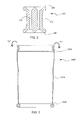
FIG. 2 is a longitudinal cross-sectional view of a seal anchor of the surgical access assembly ofFIG. 1 ; -
FIG. 3 is a longitudinal cross-sectional view of a seal anchor of the surgical access assembly ofFIG. 1 ; -
FIG. 4 is a longitudinal cross-sectional view of a sealing adapter of the surgical access assembly ofFIG. 1 ; -
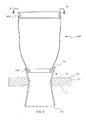
FIGS. 5-9 are longitudinal cross-sectional views of the surgical access assembly ofFIG. 1 illustrating a method of use therefor; -
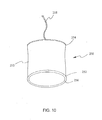
FIG. 10 is a perspective view of another sealing adapter including an inflatable balloon; -
FIG. 11 is a longitudinal cross-sectional view of an access assembly including the sealing adapter ofFIG. 10 ; -
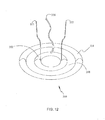
FIG. 12 is a perspective view of another embodiment of a sealing adapter including a pair of inflatable balloons; -
FIG. 13 is a longitudinal cross-sectional view of an access assembly including the sealing adapter ofFIG. 12 inserted through the opening in tissue; -
FIG. 14 is a perspective view of another embodiment of an access assembly in accordance with the present disclosure; -
FIG. 15 is a longitudinal cross-sectional view of a sealing adapter of the access assembly ofFIG. 14 ; -
FIG. 16 is a longitudinal cross-sectional view of the access assembly secured to the opening in tissue; -
FIG. 17 is a longitudinal cross-sectional view of another embodiment of the access assembly; and -
FIG. 18 is a longitudinal cross-sectional view of the access assembly ofFIG. 17 illustrating an opening established through the sealing adapter. - Embodiments of the present disclosure will now be described in detail with reference to the drawings, in which like reference numerals designate identical or corresponding elements in each of the several views. As used herein, the term "distal," as is conventional, will refer to that portion of the instrument, apparatus, device or component thereof which is farther from the user while, the term "proximal," will refer to that portion of the instrument, apparatus, device or component thereof which is closer to the user. In the following description, well-known functions or constructions are not described in detail to avoid obscuring the present disclosure in unnecessary detail.
- With reference to
FIG. 1 , there is illustrated asurgical access assembly 10 in accordance with an embodiment of the present disclosure.Surgical access assembly 10 includes aseal anchor 100, a sealingadapter 150, and anaccess port 1000.Access port 1000 is adapted for insertion within a tissue tract, e.g., through an opening in the abdominal or peritoneal lining, as well as a naturally occurring orifice.Access port 1000 protects the opening from, for example, infection and contamination. In addition,access port 1000 may serve to retract the opening, as will be discussed below.Seal anchor 100 is disposed at least partially withinaccess port 1000.Sealing adapter 150 is configured to engageseal anchor 100 andaccess port 1000 to provide a substantially fluid-tight seal between a body cavity of a patient and the atmosphere. Bothaccess port 1000 andseal anchor 100, however, may be used as a stand-alone device for insertion of endoscopic instruments. - With continued reference to
FIG. 1 ,seal anchor 100 is configured to receive surgical instruments of varying diameter therethrough.Seal anchor 100 is formed from elastic/compressible type material having sufficient compliance to form a seal about a surgical object and to establish a sealing relation withaccess port 1000. Furthermore, such material enablesseal anchor 100 to accommodate off-axis motion of the surgical object extending therethrough. -
Seal anchor 100 contemplates introduction of various types of instrumentation adapted for insertion through a trocar and/or cannula assembly while maintaining a substantially fluid-tight interface about the instrument to help preserve the atmospheric integrity of a surgical workspace from gas and/or fluid leakage. Examples of instrumentation include, but are not limited to, clip appliers, graspers, dissectors, retractors, staplers, laser probes, photographic devices, endoscopes and laparoscopes, tubes, and the like. Such instruments will collectively be referred to as "instruments" or "instrumentation." - With reference now to
FIG. 2 ,seal anchor 100 includes proximal anddistal end portions intermediate portion 106 extending between proximal anddistal end portions Seal anchor 100 defines at least one lumen orchannel 108 that extends longitudinally between proximal anddistal end portions distal end portions distal end portions seal anchor 100 within tissue. The radial dimension ofintermediate portion 106 is appreciably less than those of respective proximal anddistal end portions seal anchor 100 defines an hourglass shape or profile to assist in anchoringseal anchor 100 within tissue whenseal anchor 100 is used as a stand-alone device. -
Seal anchor 100 is adapted to transition from an expanded condition to a deformed condition to facilitate insertion and securement of the surgical instruments in tissue.Seal anchor 100 is formed of a biocompatible compressible material that facilitates the resilient, reciprocal transitioning ofseal anchor 100 between the expanded and deformed conditions thereof.Seal anchor 100 may be biased to the initial condition, and thus in the absence of any force applied to sealanchor 100,seal anchor 100 is in the expanded condition. -
Lumen 108 is configured to removably receive a surgical object "I" (FIG. 9 ).Lumen 108 may be provided with a built-in valve (not shown) to provide a substantially fluid-tight seal between the body cavity and the atmosphere in the absence of a surgical object "I" inlumen 108 whenseal anchor 100 is placed in the opening in tissue "T." Moreover, an access cannula (not shown) having a built-in valve may be utilized to provide a substantially fluid-tight seal between the body cavity and the atmosphere in the absence of surgical objects "I" in the access cannula. - It is also envisioned that prior to the insertion of surgical object "I,"
lumen 108 may be in a first state in which lumen 108 defines a first or initial dimension that substantially prevents escape of insufflation gas throughlumen 108 in the absence of surgical object "I." Upon insertion of surgical object "I" throughlumen 108,lumen 108 may transition to a second state in which lumen 108 defines a second, larger dimension that substantially approximates the diameter of surgical object "I" such that a substantially fluid-tight seal is formed with surgical object "I." In particular, the compressible material comprisingseal anchor 100 facilitates the resilient transitioning oflumen 108 between its first state and its second state. An example of a seal anchor is disclosed in a commonly assignedU.S. Patent Application Serial No. 12/939,204, filed on November 4, 2010 - With reference now to
FIG. 3 ,access port 1000 includes adistal ring 1020, aproximal ring 1030, and aflexible sleeve 1010 defining a passage therethrough. Distal andproximal rings sleeve 1010. Distal andproximal rings proximal rings proximal rings proximal rings proximal rings proximal rings Distal ring 1020 engages the internal peritoneal wall TI, andproximal ring 1030 engages the outer epidermal tissue To (FIG. 8 ). -
Sleeve 1010 has elastomeric properties to facilitate securement ofaccess port 1000 to the opening in tissue "T."Proximal ring 1030 is rollable to gatherflexible sleeve 1010 aroundproximal ring 1030. For example,proximal ring 1030 is rollable, e.g., in the outward direction (as shown by arrow "X" inFIG. 3 ) to shortensleeve 1010 and in the inward direction to lengthen thesleeve 1010, or vice versa.Sleeve 1010 may be shortened such thatproximal ring 1030 engages the outer epidermal tissue To adjacent the opening in tissue "T," anddistal ring 1020 positioned in the body cavity engages the internal peritoneal wall TI (FIG. 8 ). In this manner,access port 1000 is securely fixed to tissue "T." - With continued reference to
FIG. 3 ,proximal ring 1030 has a kidney-shaped cross-sectional profile. Kidney-shaped cross-section facilitates rolling ofsleeve 1010 aboutproximal ring 1030 and inhibits unrolling ofsleeve 1010 overproximal ring 1030 by providing a flattened edge disposed on the outer epidermal tissue To. Distal rings 1020, on the other hand, is an O-ring having a circular cross-section. However, other cross-sectional profiles are also contemplated for distal andproximal rings - In addition, distal and
proximal rings proximal rings FIG. 8 . In this manner, distal andproximal rings elastic sleeve 1010 that has been stretched. - By having dimensions of distal and
proximal rings access port 1000 is adapted to retract/dilate the opening to a desired dimension. More retraction is possible through shortening ofsleeve 1010 by rollingproximal ring 1030 outward, in the direction of arrow "X," while less retraction is possible by rollingproximal ring 1030 inward. - With reference now to
FIG. 4 , sealingadapter 150 is a flexible tubular member having elastomeric properties to facilitate securement withseal anchor 100 andaccess port 1000 to establish a fluid-tight seal between the body cavity and the atmosphere.Sealing adapter 150 includes distal andproximal end portions sleeve 155 that extends between distal andproximal end portions Sleeve 155 defines a passage therethrough. Distal andproximal end portions adapter 150 can be utilized in an inverted manner. - With brief reference to
FIG. 9 , the flexible nature of sealingadapter 150 enables radial and longitudinal expansion and compression thereof. However, the diameters of distal andproximal end portions adapter 150 may be tailored to the particular surgical procedure being performed requiring, for example, particular dimensions of the opening in tissue "T."Proximal end portion 154 of sealingadapter 150 is adapted to engage the internal peritoneal wall TI andflexible sleeve 1010 ofaccess port 1000. On the other hand,distal end portion 152 of sealingadapter 150 is adapted to engageintermediate portion 106 ofseal anchor 100 in a sealing relation therewith. - In use, the peritoneal cavity (not shown) is insufflated with a suitable biocompatible gas such as, e.g., CO2 gas, such that the cavity wall is raised and lifted away from the internal organs and tissue housed therein, thereby providing greater access thereto. The insufflation may be performed with an insufflation needle or similar device, as is conventional in the art. Either prior or subsequent to insufflation, an opening is made in tissue "T," the dimensions of which may be varied dependent upon the nature of the procedure.
- With reference to
FIG. 5 , prior to the insertion ofaccess port 1000 within tissue "T,"distal end portion 152 of sealingadapter 150 is positioned within the body cavity through the opening in tissue "T." In addition,distal ring 1020 ofaccess port 1000 is positioned at least partially within sealingadapter 150 adjacentproximal end portion 154 of sealingadapter 150.Access port 1000 is in its expanded condition, which inhibits the insertion thereof through the opening in tissue "T." To facilitate insertion, the user transitionsdistal rings 1020 into the compressed condition by, e.g., squeezingdistal ring 1020. Compresseddistal ring 1020 enclosed by a portion of sealingadapter 150 is inserted through the opening in tissue "T," as shown inFIG. 6 . Subsequent to its insertion,distal ring 1020 expands to its expanded state beneath tissue "T." At this time,distal end portion 152 of sealingadapter 150 is pulled proximally throughdistal ring 1020. - With reference to
FIGS. 7 and 8 ,proximal ring 1030 can be rolled in the direction of arrow "X," as shown inFIG. 5 , such thatdistal ring 1020 causesproximal end portion 154 of sealingadapter 150 to engage the internal peritoneal wall TI, andproximal ring 1030 ofaccess port 1000 engages the outer epidermal tissue To. In this manner,access port 1000 is securely disposed within the opening in tissue "T," and a portion of sealingadapter 150 is securely fixed betweendistal ring 1020 ofaccess port 1000 and the internal peritoneal wall TI of tissue "T." At this time,distal end portion 152 of sealingadapter 150 is disposed withinaccess port 1000 at a position easily accessible to the surgeon. Depending on the nature of the procedure being performed, the opening in tissue "T" may be retracted by further rollingsleeve 1010 aboutproximal ring 1030. - With reference to
FIG. 9 ,seal anchor 100 can now be disposed at least partially withinaccess port 1000.Distal end portion 152 of sealingadapter 150, which hasproximal end portion 154 thereof in a sealing relation with the internal peritoneal wall TI, engagesintermediate portion 106 ofseal anchor 100 in a fluid-tight seal therewith. In this manner, a fluid-tight seal is established between the body cavity and the atmosphere. - At this time, one or more surgical objects "I" may be inserted through
lumen 108 ofseal anchor 100. With surgical instruments "I" inserted throughlumen 108 and into the body cavity of the patient, the user may swivel or rotate surgical instrument "I" to a desired orientation with respect to tissue "T," while maintaining a fluid-tight seal between a body cavity of a patient and the atmosphere. - During the surgical procedure, surgical instrument "I" and
seal anchor 100 may be removed fromaccess port 1000, to enable passage of the surgeon's hand through the opening in tissue "T" to access the body cavity of the patient, if needed.Distal end portion 152 ofseal adapter 150 may surround, e.g., the arm of the surgeon, in a fluid-tight seal therewith. Upon completing the surgical procedure, the user may remove thesurgical access assembly 10 from the opening of the patient. - With reference now to
FIGS. 10 and11 , another embodiment of a seal adapter is illustrated. In the interest of brevity, the present embodiment will focus on the differences between a sealingadapter 250 and the previously described sealingadapter 150.Sealing adapter 250 is a flexible tubular member having elastomeric properties to facilitate securement withseal anchor 100 andaccess port 1000 to establish a fluid-tight seal between the body cavity and the atmosphere.Sealing adapter 250 includes distal andproximal end portions sleeve 255 that extends between distal andproximal end portions distal end portion 252 includes aninflatable balloon 256 connected to a fluid supply (not shown) through atube 258. - The flexible nature of sealing
adapter 250 enables radial and longitudinal expansion and compression thereof. However, the diameters of distal andproximal end portions - With particular reference to
FIG. 11 ,proximal end portion 254 of sealingadapter 250 is securely supported against the internal peritoneal wall TI of tissue "T" bydistal ring 1020, in conjunction withsleeve 1010 ofaccess port 1000.Inflatable balloon 256 of sealingadapter 250 engagesintermediate portion 106 ofseal anchor 100.Inflatable balloon 256 is connected to a fluid supply (not shown), wherein upon insertion ofinflatable balloon 256 through the opening in tissue "T," the fluid is supplied toinflatable balloon 256 throughtube 258 connected to the fluid supply to inflateballoon 256. Theinflated balloon 256 establishes a fluid-tight seal againstintermediate portion 106 ofseal anchor 100. In this manner, sealingadapter 250 establishes a fluid-tight seal between the body cavity and the atmosphere. Fluid can be removed the same way to collapseballoon 256. - With reference now to
FIGS. 12 and13 , still another embodiment of a seal adapter is illustrated. In the interest of brevity, the present embodiment will focus on the differences between a sealingadapter 350 and the previously described sealingadapters Sealing adapter 350 is configured to engageintermediate portion 106 ofseal anchor 100 anddistal ring 2020 ofaccess port 2000 having kidney shaped cross-section in a sealing relation therewith. -
Sealing adapter 350 is formed from elastic/compressible type material having sufficient compliance to form a seal withseal anchor 100 andaccess port 2000. In particular, sealingadapter 350 includes an inflatableinner balloon 352 and an inflatableouter balloon 354. Inflatable inner andouter balloons fluid passage 358. In addition,inner tube 352 is connected to a fluid supply (not shown) through atube 356. Inflatable inner andouter balloons - With particular reference to
FIG. 13 ,access port 2000 is substantially similar toaccess port 1000. However, as discussed hereinabove,access port 2000 includedistal ring 2020 having a kidney shaped cross-section. In particular, kidney shaped cross-section ofdistal ring 2020 defines an inward concavity which improves securement and the fluid-tight seal withouter balloon 354 disposed withindistal ring 2020. -
Sealing adapter 350 may be in a deflated state during insertion through the opening in tissue "T" to facilitate insertion. However, upon placement of sealingadapter 350 within the body cavity, fluid may be supplied throughtube 356, wherebyinner balloon 352 securely engagesintermediate portion 106 ofseal anchor 100 in a sealing relation therewith, andouter balloon 354 engages at least an inwardly directed concaved portion ofdistal ring 2020 ofaccess port 2000. In this manner, sealingadapter 350 is concentrically disposed withindistal ring 2020 ofaccess port 2000. - It is further envisioned that sealing
adapter 350 may includeguide members 357, as shown inFIG. 13 , to facilitate positioning of sealingadapter 350 withseal anchor 100 andaccess port 2000.Guide members 357 are connected toinner ring 352 such thatguide members 357 protrude through the opening in tissue "T" without much difficulty. It is further contemplated thattube 356 may be coupled with one of theguide members 357 to reduce entanglement or any other interference withguide members 357. - In accordance with another embodiment of the present disclosure, access assembly 50 (
FIG. 14 ) is illustrated. In the interest of brevity, the present embodiment will focus on the differences betweenaccess assembly 50 and the previously describedaccess assembly 10. With reference toFIG. 14 ,access assembly 50 includes anaccess port 5000,seal anchor 500, and a sealingadapter 550.Access port 5000 includes adistal ring 5020, aproximal ring 5030 and aflexible sleeve 5010 defining a passage therethrough. Distal andproximal rings sleeve 5010. - In contrast to access
port 1000,access port 5000 includes distal andproximal rings proximal ring 5030 facilitates rolling ofsleeve 5010 aboutproximal ring 5030, and kidney-shaped cross-sectional profile ofdistal ring 5020 facilitates securement and engagement with sealingadapter 550, as will be discussed hereinbelow.Seal anchor 500 is substantially similar to sealanchor 100. However, aproximal end portion 502 ofseal anchor 500 includes a radially extending flange that is substantially larger than that of adistal end portion 504 to facilitate securement ofseal anchor 500 in the opening in tissue "T," as will be discussed hereinbelow. - With reference now to
FIG. 15 , sealingadapter 550 is substantially similar to sealingadapter 150.Sealing adapter 550 is a flexible tubular member having elastomeric properties to facilitate securement withseal anchor 500 andaccess port 5000 to establish a fluid-tight seal between the body cavity and the atmosphere.Sealing adapter 550 includes distal andproximal end portions sleeve 555 that extends between distal andproximal end portions Sleeve 555 defines a passage therethrough. However, distal andproximal end portions proximal rings proximal rings proximal rings proximal rings - With reference to
FIG. 16 ,proximal end portion 502 ofseal anchor 500, which includes a radially extending flange, at least partially engagessleeve 5010 ofaccess port 5000 that engages the outer epidermal tissue To.Distal ring 5020 ofaccess port 5000 defines a kidney-shaped cross-sectional profile.Proximal ring 554a of sealingadapter 550 securely engagesdistal ring 5020 ofaccess port 5000, wherein the outwardly directed concaved portion of kidney-shaped cross-section ofdistal ring 5020 facilitate securement ofproximal ring 554a.Distal ring 552a of sealingadapter 550 engagesseal anchor 500 in a sealing relation therewith. In this manner, the body cavity is maintained in a fluid-tight seal during a surgical procedure by sealingadapter 550, as well asproximal end portion 502 ofseal anchor 500 including a radially extending flange. - With respect to
FIG. 17 , it is also envisioned that access port 1000 (FIG. 1 ) can be used with sealingadapter 550 andseal anchor 500. In particular,access port 1000 includesdistal ring 1020 such as, for example, an O-ring having a circular cross-section. Under such configuration,proximal ring 554a of sealinganchor 550 securely engages the internal peritoneal wall TI of tissue "T" supported bydistal ring 1020 andsleeve 1010 ofaccess port 1000.Distal ring 552a of sealingadapter 550 is adapted to engageseal anchor 500 in a fluid-tight seal. In this manner, sealingadapter 550 in conjunction withseal anchor 500 including a radially extending flange establishes and maintains a fluid-tight seal between the body cavity and the atmosphere during a surgical procedure. - The use and operation of the access assembly shown in
FIG. 17 is substantially similar to that ofaccess assembly 10 described hereinabove. Thus, the operation and use of the access assembly will not be discussed herein in the interest of brevity. However, it is further contemplated that whenseal anchor 500 is not in use, i.e., positioned within the opening in tissue "T,"distal ring 552a of sealingadapter 550 may be securely disposed in the outwardly facing concaved portion of kidney-shapedproximal ring 1030 ofaccess port 1000, as shown inFIG. 18 . In this manner, an opening is established through sealingadapter 550. At this time, tissue or other organs may be extracted through the opening. However, asseal anchor 500 is repositioned in the opening in tissue "T," a fluid-tight seal may be re-established by engagingdistal ring 552a of sealingadapter 550 withseal anchor 500 in a sealing relation therewith. - Although the illustrative embodiments of the present disclosure have been described herein with reference to the accompanying drawings, the above description, disclosure, and figures should not be construed as limiting, but merely as exemplifications of particular embodiments. For example,
distal ring 552a of sealingadapter 550 may securely engageseal anchor 500, andproximal ring 554a of sealingadapter 550 may be affixed, e.g., by a biocompatible adhesive, to the outer epidermal tissue To, wherebyproximal ring 1030 ofaccess port 1000 is enclosed byproximal ring 554a of sealingadapter 550. In this manner, sealingadapter 550 establishes a fluid-tight seal between the body cavity and the atmosphere, while accessibly exposed to the atmosphere. - It is to be understood, therefore, that the disclosure is not limited to those precise embodiments, and that various other changes and modifications may be effected therein by one skilled in the art without departing from the scope or spirit of the disclosure.
- The invention may be described by reference to the following numbered paragraphs:-
- 1. A surgical access assembly comprising:
- an access port including a proximal ring, a distal ring, and a sleeve defining a passage therethrough, the proximal and distal rings concentrically arranged with the passage of the sleeve, the sleeve extending between the proximal and distal rings;
- a seal anchor adapted to be at least partially disposed in the access port, the seal anchor defining a lumen therethrough; and
- a sealing adapter including a proximal end portion and a distal end portion, the distal end portion configured and dimensioned to engage the seal anchor in a sealing relation therewith, the proximal end portion configured and dimensioned to engage a least a portion of the distal ring of the access port in a sealing relation therewith, wherein the sealing adapter is transitionable between a first state in which the sealing adapter has a first diameter and a second state in which the sealing adapter has a second diameter, the second diameter being larger than the first diameter.
- 2. The surgical access assembly according to paragraph 1, wherein at least one of the proximal and distal end portions of the sealing adapter includes an O-ring.
- 3. The surgical access assembly according to paragraph 1, wherein the sealing adapter includes a first inflatable balloon adapted to engage the seal anchor in a sealing relation therewith.
- 4. The surgical access assembly according to paragraph 3, wherein the sealing adapter includes a second inflatable balloon adapted to engage at least a portion of the distal ring of the access port.
- 5. The surgical access assembly according to paragraph 4, wherein the first and second inflatable balloons of the sealing adapter are concentrically arranged and coplanar with respect to each other, the first and second inflatable balloons adapted to be disposed within the distal ring of the access port when positioned in the body cavity.
- 6. The surgical access assembly according to paragraph 3, wherein the sealing adapter further includes an elongate guide member attached to the first inflatable balloon for manipulation of the first inflatable balloon from a remote position.
- 7. The surgical access assembly according to paragraph 1, wherein the distal ring of the access port is an O-ring.
- 8. The surgical access assembly according to paragraph 1, wherein the proximal ring of the access port has a kidney-shaped cross-section.
- 9. The surgical access assembly according to paragraph 8, wherein the distal ring of the access port has a kidney-shaped cross-section.
- 10. The surgical access assembly according to paragraph 1, wherein the sleeve of the access port is rollable about the proximal ring.
- 11. The surgical access assembly according to paragraph 1, wherein the seal anchor includes a radially extending flange adapted to engage a portion of the sleeve of the access port in a sealing relation therewith.
- 12. The surgical access assembly according to paragraph 1, wherein the proximal and distal rings of the access port are elastic.
- 13. The surgical access assembly according to paragraph 1, wherein the sealing adapter is made of an elastic material.
- 14. The surgical access assembly according to paragraph 1, wherein the seal anchor is made of a compressible material.
- 15. The surgical access assembly according to paragraph 1, wherein the lumen defined in the seal anchor is dimensioned to receive surgical instruments therethrough.
Claims (15)
- A surgical access assembly comprising:an access port including a proximal ring, a distal ring, and a sleeve defining a passage therethrough, the proximal and distal rings concentrically arranged with the passage of the sleeve, the sleeve extending between the proximal and distal rings;a seal anchor adapted to be at least partially disposed in the access port, the seal anchor defining a lumen therethrough; anda sealing adapter including a proximal end portion and a distal end portion, the distal end portion configured and dimensioned to engage the seal anchor in a sealing relation therewith, the proximal end portion configured and dimensioned to engage a least a portion of the distal ring of the access port in a sealing relation therewith, wherein the sealing adapter is transitionable between a first state in which the sealing adapter has a first diameter and a second state in which the sealing adapter has a second diameter, the second diameter being larger than the first diameter.
- The surgical access assembly according to claim 1, wherein at least one of the proximal and distal end portions of the sealing adapter includes an O-ring.
- The surgical access assembly according to claim 1 or claim 2, wherein the sealing adapter includes a first inflatable balloon adapted to engage the seal anchor in a sealing relation therewith.
- The surgical access assembly according to claim 3, wherein the sealing adapter includes a second inflatable balloon adapted to engage at least a portion of the distal ring of the access port.
- The surgical access assembly according to claim 4, wherein the first and second inflatable balloons of the sealing adapter are concentrically arranged and coplanar with respect to each other, the first and second inflatable balloons adapted to be disposed within the distal ring of the access port when positioned in the body cavity.
- The surgical access assembly according to claim 3, wherein the sealing adapter further includes an elongate guide member attached to the first inflatable balloon for manipulation of the first inflatable balloon from a remote position.
- The surgical access assembly according to any preceding claim, wherein the distal ring of the access port is an O-ring.
- The surgical access assembly according to any preceding claim, wherein the proximal ring of the access port has a kidney-shaped cross-section.
- The surgical access assembly according to claim 8, wherein the distal ring of the access port has a kidney-shaped cross-section.
- The surgical access assembly according to any preceding claim, wherein the sleeve of the access port is rollable about the proximal ring.
- The surgical access assembly according to any preceding claim, wherein the seal anchor includes a radially extending flange adapted to engage a portion of the sleeve of the access port in a sealing relation therewith.
- The surgical access assembly according to any preceding claim, wherein the proximal and distal rings of the access port are elastic.
- The surgical access assembly according to any preceding claim, wherein the sealing adapter is made of an elastic material.
- The surgical access assembly according to any preceding claim, wherein the seal anchor is made of a compressible material.
- The surgical access assembly according to any preceding claim, wherein the lumen defined in the seal anchor is dimensioned to receive surgical instruments therethrough.
Applications Claiming Priority (2)
| Application Number | Priority Date | Filing Date | Title |
|---|---|---|---|
| US201161581197P | 2011-12-29 | 2011-12-29 | |
| US13/650,162 US8845529B2 (en) | 2011-12-29 | 2012-10-12 | Surgical access assembly and method of use therefor |
Publications (2)
| Publication Number | Publication Date |
|---|---|
| EP2609879A1 true EP2609879A1 (en) | 2013-07-03 |
| EP2609879B1 EP2609879B1 (en) | 2016-05-04 |
Family
ID=47631199
Family Applications (1)
| Application Number | Title | Priority Date | Filing Date |
|---|---|---|---|
| EP12198750.7A Not-in-force EP2609879B1 (en) | 2011-12-29 | 2012-12-20 | Surgical access assembly |
Country Status (4)
| Country | Link |
|---|---|
| US (2) | US8845529B2 (en) |
| EP (1) | EP2609879B1 (en) |
| AU (1) | AU2012258297A1 (en) |
| CA (1) | CA2796764A1 (en) |
Cited By (1)
| Publication number | Priority date | Publication date | Assignee | Title |
|---|---|---|---|---|
| CN103654885A (en) * | 2013-12-13 | 2014-03-26 | 东南大学 | Single port laparoscopic surgery flexible cannula with adjustable diameter of operative table surface |
Families Citing this family (14)
| Publication number | Priority date | Publication date | Assignee | Title |
|---|---|---|---|---|
| KR101082762B1 (en) * | 2011-02-18 | 2011-11-10 | 이정삼 | Laparoscopic Traction System |
| US8845529B2 (en) * | 2011-12-29 | 2014-09-30 | Covidien Lp | Surgical access assembly and method of use therefor |
| US9028403B2 (en) * | 2012-01-19 | 2015-05-12 | Covidien Lp | Access port having rollable proximal end |
| US9463007B2 (en) * | 2012-02-23 | 2016-10-11 | Covidien Lp | Adjustable height port including retention elements |
| US9017249B2 (en) * | 2012-03-26 | 2015-04-28 | Covidien Lp | Surgical access assembly and method of use therefor |
| EP3134014B1 (en) * | 2014-04-23 | 2020-06-03 | Applied Medical Resources Corporation | Systems for tissue removal |
| EP3285664B1 (en) | 2015-04-23 | 2021-08-04 | Applied Medical Resources Corporation | Systems for tissue removal |
| KR102785191B1 (en) * | 2017-05-11 | 2025-03-26 | 브펜도, 엘엘씨 | Intake maintenance device |
| US10874386B2 (en) * | 2018-01-24 | 2020-12-29 | Covidien Lp | Specimen retrieval device |
| US10932767B2 (en) | 2018-12-07 | 2021-03-02 | Covidien Lp | Surgical access assembly and method of use therefor |
| EP4011320B1 (en) * | 2020-12-10 | 2023-09-20 | Ivoclar Vivadent AG | Film clamping element |
| EP4297656B1 (en) * | 2021-02-26 | 2026-05-20 | Applied Med Resources | CIRCULATED RETRACTOR SYSTEM |
| US20220211263A1 (en) * | 2021-03-23 | 2022-07-07 | Axcess Instruments Inc. | Multi-piece access port imaging systems |
| US20250160885A1 (en) * | 2022-02-09 | 2025-05-22 | Children's National Medical Center | Access tool for delivering cardiac therapies to the pericardial space |
Citations (3)
| Publication number | Priority date | Publication date | Assignee | Title |
|---|---|---|---|---|
| US20060161050A1 (en) * | 2003-10-15 | 2006-07-20 | John Butler | A surgical sealing device |
| US20100249516A1 (en) * | 2006-04-05 | 2010-09-30 | Shelton Iv Frederick E | Access Device |
| EP2238926A2 (en) * | 2009-03-31 | 2010-10-13 | Ethicon Endo-Surgery, Inc. | Devices for providing access into a body cavity |
Family Cites Families (44)
| Publication number | Priority date | Publication date | Assignee | Title |
|---|---|---|---|---|
| US4984564A (en) | 1989-09-27 | 1991-01-15 | Frank Yuen | Surgical retractor device |
| US5366478A (en) | 1993-07-27 | 1994-11-22 | Ethicon, Inc. | Endoscopic surgical sealing device |
| HU216885B (en) | 1994-02-18 | 1999-10-28 | Gaya Limited | Introductory cuff for minimal invasive surgical procedures |
| US5741298A (en) | 1995-04-28 | 1998-04-21 | Macleod; Cathel | Method and devices for video-assisted surgical techniques |
| US5524644A (en) | 1995-06-09 | 1996-06-11 | Medical Creative Technologies, Inc. | Incrementally adjustable incision liner and retractor |
| US5735791A (en) | 1997-01-31 | 1998-04-07 | Research Medical, Inc. | Inflatable heart elevation apparatus and method |
| US5906577A (en) | 1997-04-30 | 1999-05-25 | University Of Massachusetts | Device, surgical access port, and method of retracting an incision into an opening and providing a channel through the incision |
| US6440063B1 (en) | 1997-04-30 | 2002-08-27 | University Of Massachusetts | Surgical access port and laparoscopic surgical method |
| JPH1199156A (en) | 1997-07-29 | 1999-04-13 | Olympus Optical Co Ltd | Access device for surgical treatment |
| US7998068B2 (en) | 1998-12-01 | 2011-08-16 | Atropos Limited | Instrument access device |
| US7195590B2 (en) | 1998-12-01 | 2007-03-27 | Atropos Limited | Surgical device |
| US7559893B2 (en) | 1998-12-01 | 2009-07-14 | Atropos Limited | Wound retractor device |
| AU1405700A (en) | 1998-12-01 | 2000-06-19 | Atropos Limited | Laparoscopic sealed access device |
| CA2351643C (en) | 1998-12-01 | 2010-02-02 | Atropos Limited | A surgical device for retracting and/or sealing an incision |
| DE19902036C1 (en) | 1999-01-20 | 2000-03-16 | Storz Karl Gmbh & Co Kg | Device to hold trocar tube aligned in various spaces; is designed to fasten trocar tube in different adjustable in situ positions on patient |
| IE990795A1 (en) | 1999-07-30 | 2001-03-07 | Gaya Ltd | Hand Access Port Device |
| US20050203346A1 (en) | 1999-10-14 | 2005-09-15 | Frank Bonadio | Wound retractor device |
| CN1331441C (en) | 1999-10-14 | 2007-08-15 | 阿特波斯有限公司 | Wound retractor |
| US8021296B2 (en) | 1999-12-01 | 2011-09-20 | Atropos Limited | Wound retractor |
| DE60142978D1 (en) | 2000-10-19 | 2010-10-14 | Applied Med Resources | SURGICAL ACCESSORY AND METHOD |
| US6450983B1 (en) | 2001-10-03 | 2002-09-17 | Robert D. Rambo | O-ring for incrementally adjustable incision liner and retractor |
| US6958037B2 (en) | 2001-10-20 | 2005-10-25 | Applied Medical Resources Corporation | Wound retraction apparatus and method |
| US6723044B2 (en) | 2002-03-14 | 2004-04-20 | Apple Medical Corporation | Abdominal retractor |
| EP2343032B1 (en) | 2002-06-05 | 2012-05-09 | Applied Medical Resources Corporation | Wound retractor |
| US20050020884A1 (en) | 2003-02-25 | 2005-01-27 | Hart Charles C. | Surgical access system |
| EP1617755A4 (en) * | 2003-04-25 | 2012-10-24 | Tyco Healthcare | Surgical hand access apparatus |
| JP2007500034A (en) | 2003-07-30 | 2007-01-11 | アトロポス・リミテッド | Medical instruments |
| WO2005034766A2 (en) | 2003-10-15 | 2005-04-21 | Atropos Limited | A surgical sealing device |
| EP2272447B1 (en) | 2005-10-14 | 2012-01-18 | Applied Medical Resources Corporation | Split hoop wound retractor |
| US8142354B1 (en) * | 2007-10-30 | 2012-03-27 | Ethicon Endo-Surgery, Inc. | Laminated surgical access port |
| US8353824B2 (en) * | 2009-03-31 | 2013-01-15 | Ethicon Endo-Surgery, Inc. | Access method with insert |
| US8257251B2 (en) | 2009-04-08 | 2012-09-04 | Ethicon Endo-Surgery, Inc. | Methods and devices for providing access into a body cavity |
| US9078695B2 (en) | 2009-06-05 | 2015-07-14 | Ethicon Endo-Surgery, Inc. | Methods and devices for accessing a body cavity using a surgical access device with modular seal components |
| US8821390B2 (en) | 2010-04-12 | 2014-09-02 | Covidien Lp | Surgical access method and assembly including sleeve and port |
| US20110251463A1 (en) | 2010-04-12 | 2011-10-13 | Tyco Healthcare Group Lp | Bariatric foam port |
| US20120130177A1 (en) | 2010-11-23 | 2012-05-24 | Michael Davis | Portal assembly with adjustable height |
| US20120130186A1 (en) | 2010-11-23 | 2012-05-24 | Tyco Healthcare Group Lp | Adjustable surgical portal |
| US8727973B2 (en) | 2010-11-23 | 2014-05-20 | Covidien Lp | Seal port with adjustable height |
| US8550992B2 (en) | 2010-12-20 | 2013-10-08 | Covidien Lp | Two-part access assembly |
| US20120157786A1 (en) | 2010-12-21 | 2012-06-21 | Russell Pribanic | Surgical retractor having ring of variable durometer |
| US8696557B2 (en) | 2010-12-21 | 2014-04-15 | Covidien Lp | Access assembly including inflatable seal member |
| US20120190933A1 (en) | 2011-01-24 | 2012-07-26 | Tyco Healthcare Group Lp | Inflatable access assembly |
| US8668641B2 (en) * | 2011-03-30 | 2014-03-11 | Covidien, LP | Surgical access assembly with sleeve and adjustable fastener |
| US8845529B2 (en) * | 2011-12-29 | 2014-09-30 | Covidien Lp | Surgical access assembly and method of use therefor |
-
2012
- 2012-10-12 US US13/650,162 patent/US8845529B2/en not_active Expired - Fee Related
- 2012-11-20 AU AU2012258297A patent/AU2012258297A1/en not_active Abandoned
- 2012-11-21 CA CA2796764A patent/CA2796764A1/en not_active Abandoned
- 2012-12-20 EP EP12198750.7A patent/EP2609879B1/en not_active Not-in-force
-
2014
- 2014-09-26 US US14/498,139 patent/US9144422B2/en not_active Expired - Fee Related
Patent Citations (3)
| Publication number | Priority date | Publication date | Assignee | Title |
|---|---|---|---|---|
| US20060161050A1 (en) * | 2003-10-15 | 2006-07-20 | John Butler | A surgical sealing device |
| US20100249516A1 (en) * | 2006-04-05 | 2010-09-30 | Shelton Iv Frederick E | Access Device |
| EP2238926A2 (en) * | 2009-03-31 | 2010-10-13 | Ethicon Endo-Surgery, Inc. | Devices for providing access into a body cavity |
Cited By (2)
| Publication number | Priority date | Publication date | Assignee | Title |
|---|---|---|---|---|
| CN103654885A (en) * | 2013-12-13 | 2014-03-26 | 东南大学 | Single port laparoscopic surgery flexible cannula with adjustable diameter of operative table surface |
| CN103654885B (en) * | 2013-12-13 | 2015-06-17 | 东南大学 | Single port laparoscopic surgery flexible cannula with adjustable diameter of operative table surface |
Also Published As
| Publication number | Publication date |
|---|---|
| EP2609879B1 (en) | 2016-05-04 |
| AU2012258297A1 (en) | 2013-07-18 |
| US20150011835A1 (en) | 2015-01-08 |
| CA2796764A1 (en) | 2013-06-29 |
| US8845529B2 (en) | 2014-09-30 |
| US20130172684A1 (en) | 2013-07-04 |
| US9144422B2 (en) | 2015-09-29 |
Similar Documents
| Publication | Publication Date | Title |
|---|---|---|
| EP2609879B1 (en) | Surgical access assembly | |
| US9149178B2 (en) | Surgical access assembly and method of use therefor | |
| US9113952B1 (en) | Surgical access assembly and method of use therefor | |
| JP7133953B2 (en) | cannula assembly | |
| US8317690B2 (en) | Foam port and introducer assembly | |
| AU2019200038B2 (en) | Trocar surgical seal | |
| EP2457523A2 (en) | Access device including expanding distal flange | |
| EP2617373A1 (en) | Access port having rollable proximal end | |
| US20130253277A1 (en) | Surgical access assembly and method of use therefor | |
| US20210161516A1 (en) | Surgical access assembly and method of use therefor | |
| US11925387B2 (en) | Surgical access device with fascial closure system |
Legal Events
| Date | Code | Title | Description |
|---|---|---|---|
| PUAI | Public reference made under article 153(3) epc to a published international application that has entered the european phase |
Free format text: ORIGINAL CODE: 0009012 |
|
| AK | Designated contracting states |
Kind code of ref document: A1 Designated state(s): AL AT BE BG CH CY CZ DE DK EE ES FI FR GB GR HR HU IE IS IT LI LT LU LV MC MK MT NL NO PL PT RO RS SE SI SK SM TR |
|
| AX | Request for extension of the european patent |
Extension state: BA ME |
|
| 17P | Request for examination filed |
Effective date: 20131223 |
|
| RBV | Designated contracting states (corrected) |
Designated state(s): AL AT BE BG CH CY CZ DE DK EE ES FI FR GB GR HR HU IE IS IT LI LT LU LV MC MK MT NL NO PL PT RO RS SE SI SK SM TR |
|
| GRAP | Despatch of communication of intention to grant a patent |
Free format text: ORIGINAL CODE: EPIDOSNIGR1 |
|
| INTG | Intention to grant announced |
Effective date: 20151119 |
|
| GRAS | Grant fee paid |
Free format text: ORIGINAL CODE: EPIDOSNIGR3 |
|
| GRAA | (expected) grant |
Free format text: ORIGINAL CODE: 0009210 |
|
| AK | Designated contracting states |
Kind code of ref document: B1 Designated state(s): AL AT BE BG CH CY CZ DE DK EE ES FI FR GB GR HR HU IE IS IT LI LT LU LV MC MK MT NL NO PL PT RO RS SE SI SK SM TR |
|
| REG | Reference to a national code |
Ref country code: GB Ref legal event code: FG4D |
|
| REG | Reference to a national code |
Ref country code: CH Ref legal event code: EP |
|
| REG | Reference to a national code |
Ref country code: AT Ref legal event code: REF Ref document number: 796171 Country of ref document: AT Kind code of ref document: T Effective date: 20160515 |
|
| REG | Reference to a national code |
Ref country code: IE Ref legal event code: FG4D |
|
| REG | Reference to a national code |
Ref country code: DE Ref legal event code: R096 Ref document number: 602012018022 Country of ref document: DE |
|
| REG | Reference to a national code |
Ref country code: NL Ref legal event code: MP Effective date: 20160504 |
|
| REG | Reference to a national code |
Ref country code: LT Ref legal event code: MG4D |
|
| PG25 | Lapsed in a contracting state [announced via postgrant information from national office to epo] |
Ref country code: FI Free format text: LAPSE BECAUSE OF FAILURE TO SUBMIT A TRANSLATION OF THE DESCRIPTION OR TO PAY THE FEE WITHIN THE PRESCRIBED TIME-LIMIT Effective date: 20160504 Ref country code: NL Free format text: LAPSE BECAUSE OF FAILURE TO SUBMIT A TRANSLATION OF THE DESCRIPTION OR TO PAY THE FEE WITHIN THE PRESCRIBED TIME-LIMIT Effective date: 20160504 Ref country code: LT Free format text: LAPSE BECAUSE OF FAILURE TO SUBMIT A TRANSLATION OF THE DESCRIPTION OR TO PAY THE FEE WITHIN THE PRESCRIBED TIME-LIMIT Effective date: 20160504 Ref country code: NO Free format text: LAPSE BECAUSE OF FAILURE TO SUBMIT A TRANSLATION OF THE DESCRIPTION OR TO PAY THE FEE WITHIN THE PRESCRIBED TIME-LIMIT Effective date: 20160804 |
|
| REG | Reference to a national code |
Ref country code: AT Ref legal event code: MK05 Ref document number: 796171 Country of ref document: AT Kind code of ref document: T Effective date: 20160504 |
|
| REG | Reference to a national code |
Ref country code: FR Ref legal event code: PLFP Year of fee payment: 5 |
|
| PG25 | Lapsed in a contracting state [announced via postgrant information from national office to epo] |
Ref country code: LV Free format text: LAPSE BECAUSE OF FAILURE TO SUBMIT A TRANSLATION OF THE DESCRIPTION OR TO PAY THE FEE WITHIN THE PRESCRIBED TIME-LIMIT Effective date: 20160504 Ref country code: GR Free format text: LAPSE BECAUSE OF FAILURE TO SUBMIT A TRANSLATION OF THE DESCRIPTION OR TO PAY THE FEE WITHIN THE PRESCRIBED TIME-LIMIT Effective date: 20160805 Ref country code: RS Free format text: LAPSE BECAUSE OF FAILURE TO SUBMIT A TRANSLATION OF THE DESCRIPTION OR TO PAY THE FEE WITHIN THE PRESCRIBED TIME-LIMIT Effective date: 20160504 Ref country code: SE Free format text: LAPSE BECAUSE OF FAILURE TO SUBMIT A TRANSLATION OF THE DESCRIPTION OR TO PAY THE FEE WITHIN THE PRESCRIBED TIME-LIMIT Effective date: 20160504 Ref country code: ES Free format text: LAPSE BECAUSE OF FAILURE TO SUBMIT A TRANSLATION OF THE DESCRIPTION OR TO PAY THE FEE WITHIN THE PRESCRIBED TIME-LIMIT Effective date: 20160504 Ref country code: PT Free format text: LAPSE BECAUSE OF FAILURE TO SUBMIT A TRANSLATION OF THE DESCRIPTION OR TO PAY THE FEE WITHIN THE PRESCRIBED TIME-LIMIT Effective date: 20160905 Ref country code: HR Free format text: LAPSE BECAUSE OF FAILURE TO SUBMIT A TRANSLATION OF THE DESCRIPTION OR TO PAY THE FEE WITHIN THE PRESCRIBED TIME-LIMIT Effective date: 20160504 |
|
| PG25 | Lapsed in a contracting state [announced via postgrant information from national office to epo] |
Ref country code: IT Free format text: LAPSE BECAUSE OF FAILURE TO SUBMIT A TRANSLATION OF THE DESCRIPTION OR TO PAY THE FEE WITHIN THE PRESCRIBED TIME-LIMIT Effective date: 20160504 |
|
| PG25 | Lapsed in a contracting state [announced via postgrant information from national office to epo] |
Ref country code: DK Free format text: LAPSE BECAUSE OF FAILURE TO SUBMIT A TRANSLATION OF THE DESCRIPTION OR TO PAY THE FEE WITHIN THE PRESCRIBED TIME-LIMIT Effective date: 20160504 Ref country code: SK Free format text: LAPSE BECAUSE OF FAILURE TO SUBMIT A TRANSLATION OF THE DESCRIPTION OR TO PAY THE FEE WITHIN THE PRESCRIBED TIME-LIMIT Effective date: 20160504 Ref country code: EE Free format text: LAPSE BECAUSE OF FAILURE TO SUBMIT A TRANSLATION OF THE DESCRIPTION OR TO PAY THE FEE WITHIN THE PRESCRIBED TIME-LIMIT Effective date: 20160504 Ref country code: RO Free format text: LAPSE BECAUSE OF FAILURE TO SUBMIT A TRANSLATION OF THE DESCRIPTION OR TO PAY THE FEE WITHIN THE PRESCRIBED TIME-LIMIT Effective date: 20160504 Ref country code: CZ Free format text: LAPSE BECAUSE OF FAILURE TO SUBMIT A TRANSLATION OF THE DESCRIPTION OR TO PAY THE FEE WITHIN THE PRESCRIBED TIME-LIMIT Effective date: 20160504 |
|
| PGFP | Annual fee paid to national office [announced via postgrant information from national office to epo] |
Ref country code: DE Payment date: 20161121 Year of fee payment: 5 Ref country code: IE Payment date: 20161123 Year of fee payment: 5 Ref country code: GB Payment date: 20161128 Year of fee payment: 5 Ref country code: FR Payment date: 20161121 Year of fee payment: 5 |
|
| REG | Reference to a national code |
Ref country code: DE Ref legal event code: R097 Ref document number: 602012018022 Country of ref document: DE |
|
| PG25 | Lapsed in a contracting state [announced via postgrant information from national office to epo] |
Ref country code: PL Free format text: LAPSE BECAUSE OF FAILURE TO SUBMIT A TRANSLATION OF THE DESCRIPTION OR TO PAY THE FEE WITHIN THE PRESCRIBED TIME-LIMIT Effective date: 20160504 Ref country code: AT Free format text: LAPSE BECAUSE OF FAILURE TO SUBMIT A TRANSLATION OF THE DESCRIPTION OR TO PAY THE FEE WITHIN THE PRESCRIBED TIME-LIMIT Effective date: 20160504 Ref country code: SM Free format text: LAPSE BECAUSE OF FAILURE TO SUBMIT A TRANSLATION OF THE DESCRIPTION OR TO PAY THE FEE WITHIN THE PRESCRIBED TIME-LIMIT Effective date: 20160504 Ref country code: BE Free format text: LAPSE BECAUSE OF FAILURE TO SUBMIT A TRANSLATION OF THE DESCRIPTION OR TO PAY THE FEE WITHIN THE PRESCRIBED TIME-LIMIT Effective date: 20160504 |
|
| PLBE | No opposition filed within time limit |
Free format text: ORIGINAL CODE: 0009261 |
|
| STAA | Information on the status of an ep patent application or granted ep patent |
Free format text: STATUS: NO OPPOSITION FILED WITHIN TIME LIMIT |
|
| 26N | No opposition filed |
Effective date: 20170207 |
|
| PG25 | Lapsed in a contracting state [announced via postgrant information from national office to epo] |
Ref country code: SI Free format text: LAPSE BECAUSE OF FAILURE TO SUBMIT A TRANSLATION OF THE DESCRIPTION OR TO PAY THE FEE WITHIN THE PRESCRIBED TIME-LIMIT Effective date: 20160504 |
|
| PG25 | Lapsed in a contracting state [announced via postgrant information from national office to epo] |
Ref country code: MC Free format text: LAPSE BECAUSE OF FAILURE TO SUBMIT A TRANSLATION OF THE DESCRIPTION OR TO PAY THE FEE WITHIN THE PRESCRIBED TIME-LIMIT Effective date: 20160504 |
|
| REG | Reference to a national code |
Ref country code: CH Ref legal event code: PL |
|
| PG25 | Lapsed in a contracting state [announced via postgrant information from national office to epo] |
Ref country code: CH Free format text: LAPSE BECAUSE OF NON-PAYMENT OF DUE FEES Effective date: 20161231 Ref country code: LU Free format text: LAPSE BECAUSE OF NON-PAYMENT OF DUE FEES Effective date: 20161220 Ref country code: LI Free format text: LAPSE BECAUSE OF NON-PAYMENT OF DUE FEES Effective date: 20161231 |
|
| PG25 | Lapsed in a contracting state [announced via postgrant information from national office to epo] |
Ref country code: HU Free format text: LAPSE BECAUSE OF FAILURE TO SUBMIT A TRANSLATION OF THE DESCRIPTION OR TO PAY THE FEE WITHIN THE PRESCRIBED TIME-LIMIT; INVALID AB INITIO Effective date: 20121220 Ref country code: CY Free format text: LAPSE BECAUSE OF FAILURE TO SUBMIT A TRANSLATION OF THE DESCRIPTION OR TO PAY THE FEE WITHIN THE PRESCRIBED TIME-LIMIT Effective date: 20160504 |
|
| PG25 | Lapsed in a contracting state [announced via postgrant information from national office to epo] |
Ref country code: TR Free format text: LAPSE BECAUSE OF FAILURE TO SUBMIT A TRANSLATION OF THE DESCRIPTION OR TO PAY THE FEE WITHIN THE PRESCRIBED TIME-LIMIT Effective date: 20160504 Ref country code: IS Free format text: LAPSE BECAUSE OF FAILURE TO SUBMIT A TRANSLATION OF THE DESCRIPTION OR TO PAY THE FEE WITHIN THE PRESCRIBED TIME-LIMIT Effective date: 20160504 Ref country code: MK Free format text: LAPSE BECAUSE OF FAILURE TO SUBMIT A TRANSLATION OF THE DESCRIPTION OR TO PAY THE FEE WITHIN THE PRESCRIBED TIME-LIMIT Effective date: 20160504 |
|
| REG | Reference to a national code |
Ref country code: DE Ref legal event code: R119 Ref document number: 602012018022 Country of ref document: DE |
|
| PG25 | Lapsed in a contracting state [announced via postgrant information from national office to epo] |
Ref country code: BG Free format text: LAPSE BECAUSE OF FAILURE TO SUBMIT A TRANSLATION OF THE DESCRIPTION OR TO PAY THE FEE WITHIN THE PRESCRIBED TIME-LIMIT Effective date: 20160504 |
|
| GBPC | Gb: european patent ceased through non-payment of renewal fee |
Effective date: 20171220 |
|
| REG | Reference to a national code |
Ref country code: IE Ref legal event code: MM4A |
|
| PG25 | Lapsed in a contracting state [announced via postgrant information from national office to epo] |
Ref country code: MT Free format text: LAPSE BECAUSE OF NON-PAYMENT OF DUE FEES Effective date: 20161220 |
|
| REG | Reference to a national code |
Ref country code: FR Ref legal event code: ST Effective date: 20180831 |
|
| PG25 | Lapsed in a contracting state [announced via postgrant information from national office to epo] |
Ref country code: IE Free format text: LAPSE BECAUSE OF NON-PAYMENT OF DUE FEES Effective date: 20171220 Ref country code: AL Free format text: LAPSE BECAUSE OF FAILURE TO SUBMIT A TRANSLATION OF THE DESCRIPTION OR TO PAY THE FEE WITHIN THE PRESCRIBED TIME-LIMIT Effective date: 20160504 Ref country code: FR Free format text: LAPSE BECAUSE OF NON-PAYMENT OF DUE FEES Effective date: 20180102 Ref country code: DE Free format text: LAPSE BECAUSE OF NON-PAYMENT OF DUE FEES Effective date: 20180703 |
|
| PG25 | Lapsed in a contracting state [announced via postgrant information from national office to epo] |
Ref country code: GB Free format text: LAPSE BECAUSE OF NON-PAYMENT OF DUE FEES Effective date: 20171220 |