EP2608496B1 - Firmware upgrade function for deskphone electronic protocol converter - Google Patents
Firmware upgrade function for deskphone electronic protocol converter Download PDFInfo
- Publication number
- EP2608496B1 EP2608496B1 EP11194291.8A EP11194291A EP2608496B1 EP 2608496 B1 EP2608496 B1 EP 2608496B1 EP 11194291 A EP11194291 A EP 11194291A EP 2608496 B1 EP2608496 B1 EP 2608496B1
- Authority
- EP
- European Patent Office
- Prior art keywords
- protocol
- firmware
- accordance
- data
- headset
- Prior art date
- Legal status (The legal status is an assumption and is not a legal conclusion. Google has not performed a legal analysis and makes no representation as to the accuracy of the status listed.)
- Active
Links
Images


Classifications
-
- H—ELECTRICITY
- H04—ELECTRIC COMMUNICATION TECHNIQUE
- H04M—TELEPHONIC COMMUNICATION
- H04M1/00—Substation equipment, e.g. for use by subscribers
- H04M1/60—Substation equipment, e.g. for use by subscribers including speech amplifiers
- H04M1/6033—Substation equipment, e.g. for use by subscribers including speech amplifiers for providing handsfree use or a loudspeaker mode in telephone sets
-
- H—ELECTRICITY
- H04—ELECTRIC COMMUNICATION TECHNIQUE
- H04M—TELEPHONIC COMMUNICATION
- H04M1/00—Substation equipment, e.g. for use by subscribers
- H04M1/60—Substation equipment, e.g. for use by subscribers including speech amplifiers
- H04M1/6033—Substation equipment, e.g. for use by subscribers including speech amplifiers for providing handsfree use or a loudspeaker mode in telephone sets
- H04M1/6041—Portable telephones adapted for handsfree use
- H04M1/6058—Portable telephones adapted for handsfree use involving the use of a headset accessory device connected to the portable telephone
- H04M1/6066—Portable telephones adapted for handsfree use involving the use of a headset accessory device connected to the portable telephone including a wireless connection
Definitions
- the invention relates to the field of updating firmware controlling functionality of a protocol converter arranged for operatively coupling a telephone device to an audio interface system, such as a headset system.
- Such telephone devices may be connected to headset systems to enable hands-free telephony.
- headsets may be provided with or without electronic hook switch systems, the latter to enable remote switching of a telephone connection via the headset systems, analogously to the operation of a mechanical hook switch of a telephone device. This means that besides speech and other audio data, also instruction data is communicated between the telephone device and the headset system.
- adapters are provided to enable communication between a more or less generic headset system and telephones of various manufacturers, the adapter being adapted to both the headset system and the telephone device.
- Such adapters are as simple as possible, acting as translators only. They comprise two interfaces and a processor, usually programmed by firmware.
- US 2008/0052702 discloses a method of updating firmware through a digital broadcasting system.
- sophisticated electronic interfaces including receivers and decoders, are required.
- interfaces are not required for normal operation.
- Providing such interfaces for updating firmware through a digital broadcasting to such small and simple devices dramatically increases complexity to such device, resulting in more than significant increase of cost for such device.
- WO2005064813 discloses an integrated communication apparatus using Bluetooth that is capable of achieving various functions, such as a conference, a hands-free device for vehicle, an IP phone, etc.
- a PSTN adaptor is directly connected with the PSTN wired/wireless phone or PSTN network and performs Bluetooth communication with the wireless headset, and a USB Dongle engaged in the computer is provided for performing Bluetooth communication with the wireless headset or the PSTN adaptor.
- a method is provided of programming a processing unit by firmware in a protocol converter for providing first data received from a telephone device in accordance with a first protocol to a headset system in accordance with a second protocol and for providing second data received from the headset system in accordance with the second protocol to the telephone device in accordance with the first protocol.
- the operation of the protocol converter may be controlled by the programmable processing unit and the method may comprise: receiving from the headset system the firmware comprised by at least one data message in accordance with the second protocol; retrieving the firmware from the data message; storing the firmware in a memory coupled to the processing unit; and programming the processing unit by loading the firmware in the processing unit.
- functionality of such protocol converters is limited to keep the complexity of the protocol converter limited and the price low. Functionality is therefore limited to the bare necessity: receiving communications, converting communications in the first protocol to the second protocol and vice versa and re-sending the converted data.
- the data communication is done in a very basic way, for example in 8-bit messages only.
- the firmware may be provided using the same protocol in which data is communicated between the headset system and the protocol converter to thereby keep the complexity of the protocol converter low. In this way, the protocol converter does not need to be equipped with for example a USB interface, with a separate connector and protocol hardware. This means that the complexity of the protocol converter may be kept low, together with the costs.
- the headset system may comprise a headset base unit and a headset, and the headset may be connected to the headset base unit via a wired connection, or the headset may communicate wirelessly with the headset base unit, such as via a standard wireless protocol, such as for example DECT or Bluetooth.
- a standard wireless protocol such as for example DECT or Bluetooth.
- the data communicated between the telephone device and the headset system may relate to audio and voice in particular, and may also comprise control commands, such as control commands for establishing and disconnecting a telephone connection, adjusting a volume or muting a connection, or any other functionality provided with the electronic hook switch system, or any combination(s) thereof.
- the user may be able to activate control commands of the protocol converter via the headset, such as via control elements, such as for example push buttons or adjustment wheels, on the headset.
- control elements such as for example push buttons or adjustment wheels
- a user may activate control commands remotely from the telephone device.
- the protocol converter may comprise an electronic hook switch adapter, and thus be an electronic solution that enables remote operation of compatible wireless headsets with various phones.
- an electronic hook switch adapter may comprise an electronic solution that enables remote operation of compatible wireless headsets with various phones.
- the need for a mechanical handset lifter is eliminated. It is an advantage that as mobility within the working environment continues to increase, the users have the possibility of remotely controlling an associated telephone device, such as a desktop telephone.
- An embodiment may comprise sending, to the headset system, version data identifying a specific version of the firmware stored in the memory to thereby enable verification of the process of installing the firmware.
- the firmware may enable the processing unit to be programmed to receive new commands from the telephone device.
- New or updated firmware of the protocol converter may be installed for fixing bugs, in case functionality of the telephone device and/or the headset system is changed, extended, etc., and in particular in case new commands may need to be exchanged between the headset system and the telephone device. This means that the functionality of the protocol converter may need to be modified as well, which may be enabled by new or updated firmware.
- the firmware may enable the processing unit to be programmed to control the protocol converter to receive the first data from the telephone device in accordance with a third protocol and to provide the second data to the telephone device in accordance with the third protocol.
- Such firmware may enable the processing unit to be programmed to communicate with the telephone device in accordance with another protocol.
- the protocol converter may be used to work with other telephone devices of other manufacturers that communicate with headset systems and/or electronic hook switch systems (EHS systems) in accordance with the third protocol instead of the second protocol.
- EHS systems electronic hook switch systems
- a method is provided of providing a protocol converter with firmware for programming a protocol converter processing unit by a headset system for communicating with a telephone device through the protocol converter for providing first data received from the telephone device in accordance with a first protocol to the headset system in accordance with a second protocol and for providing second data received from the headset system in accordance with the second protocol to the telephone device in accordance with the first protocol.
- the protocol converter may be controlled by the programmable protocol converter processing unit, the method comprising, in the headset system: receiving the firmware from a firmware supplier; incorporating the firmware in a at least one data message for communication in accordance with the second protocol; and sending the data message comprising the firmware to the protocol converter communication in accordance with the second protocol.
- the protocol converter By providing the protocol converter with firmware via the headset system in accordance with the second protocol, an already available way of communicating data to the protocol converter may be used for providing the firmware to the protocol converter. It is an advantage to use the existing protocol in that equipping the protocol converter with another firmware delivery interface like a USB communication interface is made superfluous. Hence, the method provided may allow for a relatively simple and cost efficient protocol converter that may be updated without requiring a significant amount of hardware other than already available for standard operation of the protocol converter.
- the method may further comprise sending, to the protocol converter, a request for sending version data identifying a loaded version of the firmware with which the processing unit has been programmed; obtaining version data identifying a received version of the firmware received from the firmware supplier; and if the received version of the firmware received from the firmware supplier is newer than the loaded version of the firmware with which the processing unit is programmed, sending the data message to the protocol converter.
- the data message may comprise the received firmware to be sent from the headset system to the protocol converter.
- the method may further comprise receiving an acknowledgement message in the headset system confirming that the data message has been received after receiving the acknowledgment message, sending a reset message to the protocol converter in accordance with the second protocol for instructing the processing unit to reset.
- the programmable processing unit may reset and be prepared to be reprogrammed with the new firmware.
- a third aspect provides a protocol converter for providing first data received from a telephone device in accordance with a first protocol to a headset system in accordance with a second protocol and for providing second data received from the headset system in accordance with the second protocol to the telephone device in accordance with the first protocol.
- the protocol converter may comprise: a first data interface for receiving the first data in accordance with the first protocol and sending the second data in accordance with the first protocol; a second data interface for receiving the second data in accordance with the second protocol and sending the first data in accordance with the second protocol.
- the protocol converter may further comprise a memory circuit for storing firmware, a firmware controller circuit for receiving firmware data comprised by at least one data message in accordance with the second protocol and for storing the firmware in the memory; and a programmable processing unit for controlling operation of the protocol converter arranged to be programmed by the firmware stored in the memory.
- a fourth aspect provides a headset system for communicating with a telephone device through a protocol converter for providing first data received from the telephone device in accordance with a first protocol to the headset system in accordance with a second protocol and for providing second data received from the headset system in accordance with the second protocol to the telephone device in accordance with the first protocol.
- the protocol converter may be controlled by a programmable processing unit, the headset system comprising: an interface communication circuit arranged to receive firmware from a firmware supplier; an interface processing unit arranged to incorporate the firmware in a at least one data message for communication in accordance with the second protocol; and a data interface arranged to send the data message comprising the firmware to the protocol converter in accordance with the second protocol.
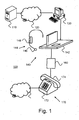
- Fig. 1 shows a telecommunication infrastructure 100.
- the telecommunication infrastructure 100 comprises a firmware distribution server 110, a data network 120, a computer device 130, a headset system 140 comprising a headset 144 and a headset base unit 142, a protocol converter 160, a telephone device, such as a desktop telephone 170 comprising a telephone base unit 172 and a telephone handset 174 and a telecommunication network 180.
- the data network 120 and the telecommunication network 180 may be distinct networks or one and the same network.
- the desktop telephone 170 enables a user to communicate with other people by means of speech via the telecommunication network 180.
- the other people have other telephones, such as either desktop, cellular, software based on a computer, etc., connected to the telecommunication network 180.
- the user is enabled to communicate with the other people by means of the telephone handset 174 which is provided with a microphone and a loudspeaker.
- the desktop telephone 170 may be provided with other or additional means for communication, like video communication by means of a screen and/or camera or data communication by means of a keypad and display, touch screen, etc. or a combination thereof.
- the desktop telephone 170 is connected to the headset system 140 via at least protocol converter 160.
- the protocol converter 160 enables the desktop telephone 170 and the headset system 140 to communicate with one another, in particular if the headset system 140 also comprises an electronic hook switch system.
- Such electronic hook switch system has at least the same functionality as a conventional (mechanical) hook switch system of a desktop telephone for connecting and disconnection communication connections, in an electronic fashion.
- the protocol converter, such as a electronic hook switch system adapter, 160 is required in many such scenarios, as headset systems and desktop telephones are typically provided by different manufacturers that use different communication protocols.
- the telephone device and headset system may further be connected by separate audio lines, so that primarily commands are provided via the protocol converter.
- the protocol converter 160 receives data from the desktop telephone 170 in accordance with a first protocol and sends that data in accordance with a second protocol to the headset system 140. Analogously, the protocol converter 160 receives data from the headset system 140 in accordance with the second protocol and sends that data in accordance with the first protocol to the desktop telephone 170.
- the data communicated may relate to audio and voice in particular, instructions for establishing and disconnecting a telephone connection, adjusting a volume or muting a connection, or any other functionality provided with the electronic hook switch system, or any combination thereof.
- the first protocol is standardised for communication by the desktop telephone 170 and the second protocol is standardised for communication by the headset system 142.
- the protocol converter 160 is preferably a relatively simple and low cost device as an extension to the headset system 140 that has usually far more functionality.
- the headset system 140 comprises the headset 144 and a headset base unit 142.
- the headset 144 comprises microphone 146 and an ear piece 148 comprising a loudspeaker and a transceiver for communicating with the headset base unit 142.
- the headset 144 and the headset base unit 142 may be connected in any conventional way using a wired or a wireless connection.
- the headset system 140 is configured for controlling multiple functions of the desktop telephone 170 and for multiple communication options with the desktop telephone 170.
- the headset system 140 may be used to pick up the telephone and disconnect the line by means of a so-called Electronic Hook Switch system (EHS system), to perform all audio communication functions of a conventional hook like full duplex audio communication with a person at the other end of the communication line, controlling the volume of a conversation, etc.
- EHS system Electronic Hook Switch system
- the protocol converter 160 should be arranged to communicate instructions for such multiple functionality between the headset system 140 and the headset base unit 142 in particular on one side and the desktop telephone 170 on the other side. Over time, such functionality may change and additional functionality may be provided. This means in most cases that the protocol converter 160 has to convert other or new data, which may not have been foreseen and/or implemented when sold.
- the firmware of the protocol converter 160 can be upgraded via the headset system 140.
- the headset system 140 receives firmware from the desktop computer 130 that in turn receives the firmware from the firmware distribution server 110 via the data network 120.
- the headset system 140 may be permanently connected to the desktop computer 130 or the headset system 140 may be temporarily connected to the desktop computer 130.
- the user may be prompted to connect to the desktop computer 130 via a message on a display provided on the headset base unit 142.
- the connection between the headset base unit 142 and the desktop computer 130 may be provided by any suitable means, like a USB or another standardised protocol or a proprietary protocol.
- the headset base unit 142 Once the headset base unit 142 has received the new firmware, it is communicated to the protocol converter 160 for programming the protocol converter 160.
- the headset base unit 142 is directly connected to the data network 120 and receives firmware directly from the firmware distribution server 110.
- Fig. 2 shows a more detailed view of the headset base unit 142.
- the headset base unit 142 comprises a base processing unit 210, a base memory 220, a computer communication unit 230, a firmware envelope unit 240, a telephone communication unit 250, an audio processing unit 260, an audio communication unit 270 and a user input/output unit 280.
- the base processing unit 210 is arranged for controlling the operation of the various components of the headset base unit 142.
- the telephone communication unit 250 communicates with the desktop telephone 170 via the protocol converter 160. Sending and receiving data by the telephone communication unit 250 is done in accordance with the second protocol. Audio data is by the telephone communication unit 250 provided to and received from the audio processing unit 260. The audio processing unit 260 communicates audio data with the audio communication unit 270 that in turn communicates with the headset 144 which receives and produces audible sound signals to enable a telephone conversation.
- audio data received from the headset 144 by the audio communication unit 270 is encoded by the audio processing unit 260 to enable audio data received to be sent in accordance with the first protocol by the telephone communication unit 250. Furthermore, the audio processing unit 260 is arranged to decode audio data encoded and received by the telephone communication unit 250 in accordance with the second protocol and provide the decoded audio data to the audio communication unit 270. It is noted that besides audio data, also other data like volume up, volume down, open line, close line or other instructions may be received from the headset 144 via the audio communication unit 270. Such instructions can be encoded and sent to the desktop telephone 270 via the telephone communication unit or provided to the base processing unit 210.
- the base processing unit 210 is connected to the user input/output unit 280 for receiving instructions from the user, for providing information to the user or a combination thereof.
- the user input/output unit 280 may comprise one or more keys, a screen, a touch screen, etc., or a combination thereof.
- the computer communication unit 230 is arranged to receive new firmware for programming the protocol converter 160.
- the computer communication unit 230 is in this embodiment arranged to communicate in accordance with the USB protocol with the desktop computer 130 for receiving the firmware.
- the received firmware is subsequently provided to the firmware envelope unit 240 for sending the firmware in accordance with the second protocol.
- the firmware provided in an envelope for sending in accordance with the second protocol is provided to the telephone communication unit 250 for communication to the protocol converter 160.
- the protocol converter 160 comprises a first transceiver 320 for communicating with the desktop telephone 170 in accordance with the first protocol, a programmable processing unit 310 for converting data received in accordance with the first protocol to data to be communicated in accordance with the second protocol and vice versa, a second transceiver 350 for communicating with the headset base unit 142 in accordance with the second protocol, a firmware controller 330 for receiving firmware received from the headset base unit 142 in accordance with the second protocol and extracting the firmware and a firmware memory 340 for storing the firmware and providing the firmware to the programmable processing unit 310.
- the protocol converter 160 is preferably a relatively low cost device. To provide new firmware to the protocol converter 160 directly from the desktop computer 130 to the protocol converter 160, additional circuitry would be required in the protocol converter 160, like a USB controller, as well as a USB socket. This involves additional cost and increases complexity of the protocol converter. Hence, the firmware is provided via the headset base unit 142 and communicated by the telephone communication unit 250 in accordance with the second protocol.
- Fig. 4 shows a first flowchart 400 depicting a method to be executed by the headset base unit 142 for providing firmware to the data converter 160.
- the process starts in a terminator 402 and continues with step 404 wherein firmware is received by the computer communication unit 230. Subsequently, the firmware is coded for communication in accordance with the second protocol by the firmware envelope unit 240 in step 406. The coded firmware is subsequently sent by the telephone communication unit 250 to the data converter 160 in accordance with the second protocol in step 408. The process subsequently ends in terminator 410.
- Fig. 5 shows a second flowchart 500 depicting a method for programming the programmable processing unit 310 of the data converter 160.
- the process starts in terminator 502 and subsequently the firmware is received by the second transceiver 350 in step 504. Subsequently, the firmware is extracted from the format in which it was received, i.e. the second protocol, by the firmware controller 330 in step 506.
- the extracted or encoded firmware is stored in the firmware memory 340 in step 508.
- Firmware stored in the firmware memory 340 may be loaded in the programmable processing unit 310. In a preferred embodiment, this is done during start up of the data converter 160, in a boot sequence.
- the programmable processing unit 310 is programmed with the new firmware in step 510, after which the process ends in terminator 512.
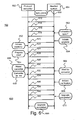
- Fig. 6 shows a protocol diagram 600.
- the protocol diagram 600 provides at the left the protocol converter 160 and at the right the headset base unit 142.
- Arrows indicate data messaging between the protocol converter 160 and the headset base unit 142 and terminators indicate steps taken by either the protocol converter 160 or the headset base unit.
- the first table below indicates content of the data messaging and the second table below provides information on the steps identified by the terminators.
- Data communication between the protocol converter 160 and the headset base unit 142 as depicted by Fig. 6 is in accordance with the second protocol. Ref. no.
- the protocol converter initialises the firmware memory 340 654
- the protocol converter 160 prepares for reset operation 656
- the protocol converter 160 resets 658
- the protocol converter 160 returns to operational state 662
- the headset base unit 142 determines whether the firmware release is in accordance with the specification 664 If the firmware is needed, the headset base initiates the upgrade 666
- the headset base unit 142 waits for the protocol converter to return to operational state 668
- the headset base unit 142 initiates a procedure to verify the firmware upgrade procedure 670
- the headset base unit 142 determines whether the firmware upgrade has been completed. 690
- the upgrade has been completed; end of procedure
- the procedure depicted by the protocol diagram starts with the user applying power to the headset base unit 142, in step 606. Subsequently, in communication 612, the headset base unit request the protocol converter 160 for the version number of the firmware currently stored in the firmware memory 340. The protocol converter 160 acknowledges the request in communication 614 and sends the firmware number in communication 616. Based on the version number received, the headset base unit 142 determines whether the version currently operating on the protocol converter 160 is the same as the latest version received from the firmware distribution server 110 and/or the personal computer 130, in step 662. Subsequently, the receipt of the version information of the firmware operating on the protocol converter 160 is acknowledged in communication 618.
- the headset base unit 142 starts the firmware upgrade procedure in case firmware received by the headset base unit 142 is newer than firmware operating on the protocol converter 160.
- the headset base unit 142 sends a request for firmware upgrade start to the protocol converter 160 in communication 620.
- the protocol converter 160 initialises the firmware memory 340 in step 652, after which an acknowledgement is sent in communication 622.
- the headset base unit 142 sends the firmware in communication 624 to the protocol converter 160 in communication 624.
- the protocol converter 160 prepares for reset of the programmable processing unit 310 in step 654 and sends an acknowledgement in communication 626 to the headset base unit 142.
- the headset base unit 142 sends a request for reset to the protocol converter 160 in communication 628, which is acknowledged in communication 630.
- the protocol converter 160 resets itself in step 656 and subsequently returns to operational state in step 658.
- the protocol converter 160 returns to its operational state by loading firmware stored in the firmware memory 340 as part of a boot procedure.
- the headset base unit 142 waits for the protocol converter 160 to return to its operational state in step 666.
- the protocol converter 160 indicates that it has returned to its operational state in communication 632 to the headset base unit 142 by initialising communication with the headset base unit 142.
- the headset base unit 142 sends an initialisation communication 634 to the protocol converter 160.
- the headset base unit 142 initiates a procedure to verify the procedure executed, in step 668.
- a communication 636 is sent to the protocol converter, requesting version information on the firmware operating on the programmable processing unit 310 of the protocol converter 160.
- the protocol converter 160 acknowledges this by sending communication 638 and subsequently sends information on the version of the firmware in communication 640.
- the headset base unit 142 determines whether the firmware operating on the protocol converter 160 is the version that has just been sent in communication 624. Subsequently, the headset base unit 142 sends an acknowledgement in communication 642.
- the invention may also be embodied with less components than provided in the embodiments described here, wherein one component carries out multiple functions.
- the invention be embodied using more elements than depicted in the Figures, wherein functions carried out by one component in the embodiment provided are distributed over multiple components.
Landscapes
- Engineering & Computer Science (AREA)
- Signal Processing (AREA)
- Computer Networks & Wireless Communication (AREA)
- Telephone Function (AREA)
- Telephonic Communication Services (AREA)
Description
- The invention relates to the field of updating firmware controlling functionality of a protocol converter arranged for operatively coupling a telephone device to an audio interface system, such as a headset system.
- Despite the introduction of IP telephony implemented in software for use on computers, desktop telephones are still abundant. In particular in professional office use, such telephone devices may be connected to headset systems to enable hands-free telephony. Such headsets may be provided with or without electronic hook switch systems, the latter to enable remote switching of a telephone connection via the headset systems, analogously to the operation of a mechanical hook switch of a telephone device. This means that besides speech and other audio data, also instruction data is communicated between the telephone device and the headset system.
- Manufacturers of desktop telephones provide different and often proprietary protocols instead of widely standardised protocols for communication with headset systems. This means that it is difficult or impossible to provide a generic headset system. Therefore, adapters are provided to enable communication between a more or less generic headset system and telephones of various manufacturers, the adapter being adapted to both the headset system and the telephone device. Such adapters are as simple as possible, acting as translators only. They comprise two interfaces and a processor, usually programmed by firmware.
- Software is rarely perfectly programmed and bug-free. Furthermore, desktop telephones have a long lifetime and long economical lifetime in particular, far longer than for example personal computers. This means that also the adapters provided between the telephone device and the headset have a long lifetime. Over this lifetime, the firmware may have to be updated regularly, for bug fixes and/or updates of functionality. However, with the adapter being a simple device with only two interfaces for communicating with the telephone device and the headset system, the only option for providing firmware is by returning the adapter to the manufacturer for a firmware update with the manufacturer. This is a time consuming and expensive solution.
-
US 2008/0052702 discloses a method of updating firmware through a digital broadcasting system. For connecting to a digital broadcast system, sophisticated electronic interfaces, including receivers and decoders, are required. For small electronic devices, such interfaces are not required for normal operation. Providing such interfaces for updating firmware through a digital broadcasting to such small and simple devices dramatically increases complexity to such device, resulting in more than significant increase of cost for such device. -
WO2005064813 discloses an integrated communication apparatus using Bluetooth that is capable of achieving various functions, such as a conference, a hands-free device for vehicle, an IP phone, etc. A PSTN adaptor is directly connected with the PSTN wired/wireless phone or PSTN network and performs Bluetooth communication with the wireless headset, and a USB Dongle engaged in the computer is provided for performing Bluetooth communication with the wireless headset or the PSTN adaptor. - It is an object of the present invention to provide an improved and more efficient possibility for updating a protocol converter.
- In a first aspect, a method is provided of programming a processing unit by firmware in a protocol converter for providing first data received from a telephone device in accordance with a first protocol to a headset system in accordance with a second protocol and for providing second data received from the headset system in accordance with the second protocol to the telephone device in accordance with the first protocol. The operation of the protocol converter may be controlled by the programmable processing unit and the method may comprise: receiving from the headset system the firmware comprised by at least one data message in accordance with the second protocol; retrieving the firmware from the data message; storing the firmware in a memory coupled to the processing unit; and programming the processing unit by loading the firmware in the processing unit.
- Typically, functionality of such protocol converters is limited to keep the complexity of the protocol converter limited and the price low. Functionality is therefore limited to the bare necessity: receiving communications, converting communications in the first protocol to the second protocol and vice versa and re-sending the converted data. The data communication is done in a very basic way, for example in 8-bit messages only. It is an advantage that also the firmware may be provided using the same protocol in which data is communicated between the headset system and the protocol converter to thereby keep the complexity of the protocol converter low. In this way, the protocol converter does not need to be equipped with for example a USB interface, with a separate connector and protocol hardware. This means that the complexity of the protocol converter may be kept low, together with the costs.
- The headset system may comprise a headset base unit and a headset, and the headset may be connected to the headset base unit via a wired connection, or the headset may communicate wirelessly with the headset base unit, such as via a standard wireless protocol, such as for example DECT or Bluetooth.
- The data communicated between the telephone device and the headset system may relate to audio and voice in particular, and may also comprise control commands, such as control commands for establishing and disconnecting a telephone connection, adjusting a volume or muting a connection, or any other functionality provided with the electronic hook switch system, or any combination(s) thereof.
- In one or more embodiments the user may be able to activate control commands of the protocol converter via the headset, such as via control elements, such as for example push buttons or adjustment wheels, on the headset. Thereby, for e.g. a headset connected wirelessly to the headset base unit, a user may activate control commands remotely from the telephone device.
- The protocol converter may comprise an electronic hook switch adapter, and thus be an electronic solution that enables remote operation of compatible wireless headsets with various phones. Hereby the need for a mechanical handset lifter is eliminated. It is an advantage that as mobility within the working environment continues to increase, the users have the possibility of remotely controlling an associated telephone device, such as a desktop telephone.
- An embodiment may comprise sending, to the headset system, version data identifying a specific version of the firmware stored in the memory to thereby enable verification of the process of installing the firmware.
- In a further embodiment, the firmware may enable the processing unit to be programmed to receive new commands from the telephone device.
- New or updated firmware of the protocol converter may be installed for fixing bugs, in case functionality of the telephone device and/or the headset system is changed, extended, etc., and in particular in case new commands may need to be exchanged between the headset system and the telephone device. This means that the functionality of the protocol converter may need to be modified as well, which may be enabled by new or updated firmware.
- In one or more embodiments, the firmware may enable the processing unit to be programmed to control the protocol converter to receive the first data from the telephone device in accordance with a third protocol and to provide the second data to the telephone device in accordance with the third protocol.
- Such firmware may enable the processing unit to be programmed to communicate with the telephone device in accordance with another protocol. In this way, the protocol converter may be used to work with other telephone devices of other manufacturers that communicate with headset systems and/or electronic hook switch systems (EHS systems) in accordance with the third protocol instead of the second protocol.
- In a second aspect, a method is provided of providing a protocol converter with firmware for programming a protocol converter processing unit by a headset system for communicating with a telephone device through the protocol converter for providing first data received from the telephone device in accordance with a first protocol to the headset system in accordance with a second protocol and for providing second data received from the headset system in accordance with the second protocol to the telephone device in accordance with the first protocol. The protocol converter may be controlled by the programmable protocol converter processing unit, the method comprising, in the headset system: receiving the firmware from a firmware supplier; incorporating the firmware in a at least one data message for communication in accordance with the second protocol; and sending the data message comprising the firmware to the protocol converter communication in accordance with the second protocol.
- By providing the protocol converter with firmware via the headset system in accordance with the second protocol, an already available way of communicating data to the protocol converter may be used for providing the firmware to the protocol converter. It is an advantage to use the existing protocol in that equipping the protocol converter with another firmware delivery interface like a USB communication interface is made superfluous. Hence, the method provided may allow for a relatively simple and cost efficient protocol converter that may be updated without requiring a significant amount of hardware other than already available for standard operation of the protocol converter.
- The method may further comprise sending, to the protocol converter, a request for sending version data identifying a loaded version of the firmware with which the processing unit has been programmed; obtaining version data identifying a received version of the firmware received from the firmware supplier; and if the received version of the firmware received from the firmware supplier is newer than the loaded version of the firmware with which the processing unit is programmed, sending the data message to the protocol converter. The data message may comprise the received firmware to be sent from the headset system to the protocol converter.
- By controlling the firmware version with which the protocol converter processing unit is programmed, it may be ensured that always the newest software is installed on the programmable processing unit of the headset system.
- The method may further comprise receiving an acknowledgement message in the headset system confirming that the data message has been received after receiving the acknowledgment message, sending a reset message to the protocol converter in accordance with the second protocol for instructing the processing unit to reset.
- By instructing the processing unit to reset, the programmable processing unit may reset and be prepared to be reprogrammed with the new firmware.
- A third aspect provides a protocol converter for providing first data received from a telephone device in accordance with a first protocol to a headset system in accordance with a second protocol and for providing second data received from the headset system in accordance with the second protocol to the telephone device in accordance with the first protocol. The protocol converter may comprise: a first data interface for receiving the first data in accordance with the first protocol and sending the second data in accordance with the first protocol; a second data interface for receiving the second data in accordance with the second protocol and sending the first data in accordance with the second protocol. The protocol converter may further comprise a memory circuit for storing firmware, a firmware controller circuit for receiving firmware data comprised by at least one data message in accordance with the second protocol and for storing the firmware in the memory; and a programmable processing unit for controlling operation of the protocol converter arranged to be programmed by the firmware stored in the memory.
- A fourth aspect provides a headset system for communicating with a telephone device through a protocol converter for providing first data received from the telephone device in accordance with a first protocol to the headset system in accordance with a second protocol and for providing second data received from the headset system in accordance with the second protocol to the telephone device in accordance with the first protocol. The protocol converter may be controlled by a programmable processing unit, the headset system comprising: an interface communication circuit arranged to receive firmware from a firmware supplier; an interface processing unit arranged to incorporate the firmware in a at least one data message for communication in accordance with the second protocol; and a data interface arranged to send the data message comprising the firmware to the protocol converter in accordance with the second protocol.
- The various aspects and embodiments thereof will now be discussed in further detail by means of Figures. In the Figures,
-
Fig. 1 shows a communication infrastructure, -
Fig. 2 shows a schematic view of a headset base unit, -
Fig. 3 shows a schematic view of a protocol converter, -
Fig. 4 shows a first flowchart depicting a method for execution by the headset base unit, -
Fig. 5 shows a first flowchart depicting a method for execution by the protocol converter, -
Fig. 6 shows a protocol diagram depicting a communication procedure for communication between the base unit architecture and the protocol converter. -
Fig. 1 shows atelecommunication infrastructure 100. Thetelecommunication infrastructure 100 comprises afirmware distribution server 110, adata network 120, acomputer device 130, aheadset system 140 comprising aheadset 144 and aheadset base unit 142, aprotocol converter 160, a telephone device, such as adesktop telephone 170 comprising atelephone base unit 172 and atelephone handset 174 and a telecommunication network 180. Thedata network 120 and the telecommunication network 180 may be distinct networks or one and the same network. - The
desktop telephone 170 enables a user to communicate with other people by means of speech via the telecommunication network 180. For that purpose, the other people have other telephones, such as either desktop, cellular, software based on a computer, etc., connected to the telecommunication network 180. The user is enabled to communicate with the other people by means of thetelephone handset 174 which is provided with a microphone and a loudspeaker. Optionally, thedesktop telephone 170 may be provided with other or additional means for communication, like video communication by means of a screen and/or camera or data communication by means of a keypad and display, touch screen, etc. or a combination thereof. - The
desktop telephone 170 is connected to theheadset system 140 via atleast protocol converter 160. Theprotocol converter 160 enables thedesktop telephone 170 and theheadset system 140 to communicate with one another, in particular if theheadset system 140 also comprises an electronic hook switch system. Such electronic hook switch system has at least the same functionality as a conventional (mechanical) hook switch system of a desktop telephone for connecting and disconnection communication connections, in an electronic fashion. The protocol converter, such as a electronic hook switch system adapter, 160 is required in many such scenarios, as headset systems and desktop telephones are typically provided by different manufacturers that use different communication protocols. The telephone device and headset system may further be connected by separate audio lines, so that primarily commands are provided via the protocol converter. - The
protocol converter 160 receives data from thedesktop telephone 170 in accordance with a first protocol and sends that data in accordance with a second protocol to theheadset system 140. Analogously, theprotocol converter 160 receives data from theheadset system 140 in accordance with the second protocol and sends that data in accordance with the first protocol to thedesktop telephone 170. The data communicated may relate to audio and voice in particular, instructions for establishing and disconnecting a telephone connection, adjusting a volume or muting a connection, or any other functionality provided with the electronic hook switch system, or any combination thereof. - The first protocol is standardised for communication by the
desktop telephone 170 and the second protocol is standardised for communication by theheadset system 142. Theprotocol converter 160 is preferably a relatively simple and low cost device as an extension to theheadset system 140 that has usually far more functionality. - The
headset system 140 comprises theheadset 144 and aheadset base unit 142. Theheadset 144 comprisesmicrophone 146 and anear piece 148 comprising a loudspeaker and a transceiver for communicating with theheadset base unit 142. Theheadset 144 and theheadset base unit 142 may be connected in any conventional way using a wired or a wireless connection. Theheadset system 140 is configured for controlling multiple functions of thedesktop telephone 170 and for multiple communication options with thedesktop telephone 170. Theheadset system 140 may be used to pick up the telephone and disconnect the line by means of a so-called Electronic Hook Switch system (EHS system), to perform all audio communication functions of a conventional hook like full duplex audio communication with a person at the other end of the communication line, controlling the volume of a conversation, etc. - The
protocol converter 160 should be arranged to communicate instructions for such multiple functionality between theheadset system 140 and theheadset base unit 142 in particular on one side and thedesktop telephone 170 on the other side. Over time, such functionality may change and additional functionality may be provided. This means in most cases that theprotocol converter 160 has to convert other or new data, which may not have been foreseen and/or implemented when sold. The firmware of theprotocol converter 160 can be upgraded via theheadset system 140. - The
headset system 140 receives firmware from thedesktop computer 130 that in turn receives the firmware from thefirmware distribution server 110 via thedata network 120. Theheadset system 140 may be permanently connected to thedesktop computer 130 or theheadset system 140 may be temporarily connected to thedesktop computer 130. Optionally, the user may be prompted to connect to thedesktop computer 130 via a message on a display provided on theheadset base unit 142. The connection between theheadset base unit 142 and thedesktop computer 130 may be provided by any suitable means, like a USB or another standardised protocol or a proprietary protocol. Once theheadset base unit 142 has received the new firmware, it is communicated to theprotocol converter 160 for programming theprotocol converter 160. Alternatively, theheadset base unit 142 is directly connected to thedata network 120 and receives firmware directly from thefirmware distribution server 110. -
Fig. 2 shows a more detailed view of theheadset base unit 142. Theheadset base unit 142 comprises abase processing unit 210, abase memory 220, acomputer communication unit 230, afirmware envelope unit 240, atelephone communication unit 250, anaudio processing unit 260, anaudio communication unit 270 and a user input/output unit 280. Thebase processing unit 210 is arranged for controlling the operation of the various components of theheadset base unit 142. - In normal operation, the
telephone communication unit 250 communicates with thedesktop telephone 170 via theprotocol converter 160. Sending and receiving data by thetelephone communication unit 250 is done in accordance with the second protocol. Audio data is by thetelephone communication unit 250 provided to and received from theaudio processing unit 260. Theaudio processing unit 260 communicates audio data with theaudio communication unit 270 that in turn communicates with theheadset 144 which receives and produces audible sound signals to enable a telephone conversation. - To enable communication of audio data between the
headset base unit 142 and thedesktop telephone 170, audio data received from theheadset 144 by theaudio communication unit 270 is encoded by theaudio processing unit 260 to enable audio data received to be sent in accordance with the first protocol by thetelephone communication unit 250. Furthermore, theaudio processing unit 260 is arranged to decode audio data encoded and received by thetelephone communication unit 250 in accordance with the second protocol and provide the decoded audio data to theaudio communication unit 270. It is noted that besides audio data, also other data like volume up, volume down, open line, close line or other instructions may be received from theheadset 144 via theaudio communication unit 270. Such instructions can be encoded and sent to thedesktop telephone 270 via the telephone communication unit or provided to thebase processing unit 210. - The
base processing unit 210 is connected to the user input/output unit 280 for receiving instructions from the user, for providing information to the user or a combination thereof. The user input/output unit 280 may comprise one or more keys, a screen, a touch screen, etc., or a combination thereof. - The
computer communication unit 230 is arranged to receive new firmware for programming theprotocol converter 160. Thecomputer communication unit 230 is in this embodiment arranged to communicate in accordance with the USB protocol with thedesktop computer 130 for receiving the firmware. The received firmware is subsequently provided to thefirmware envelope unit 240 for sending the firmware in accordance with the second protocol. The firmware provided in an envelope for sending in accordance with the second protocol is provided to thetelephone communication unit 250 for communication to theprotocol converter 160. -
Fig. 3 shows theprotocol converter 160 in more detail. Theprotocol converter 160 comprises afirst transceiver 320 for communicating with thedesktop telephone 170 in accordance with the first protocol, aprogrammable processing unit 310 for converting data received in accordance with the first protocol to data to be communicated in accordance with the second protocol and vice versa, asecond transceiver 350 for communicating with theheadset base unit 142 in accordance with the second protocol, afirmware controller 330 for receiving firmware received from theheadset base unit 142 in accordance with the second protocol and extracting the firmware and afirmware memory 340 for storing the firmware and providing the firmware to theprogrammable processing unit 310. - As discussed, the
protocol converter 160 is preferably a relatively low cost device. To provide new firmware to theprotocol converter 160 directly from thedesktop computer 130 to theprotocol converter 160, additional circuitry would be required in theprotocol converter 160, like a USB controller, as well as a USB socket. This involves additional cost and increases complexity of the protocol converter. Hence, the firmware is provided via theheadset base unit 142 and communicated by thetelephone communication unit 250 in accordance with the second protocol. -
Fig. 4 shows afirst flowchart 400 depicting a method to be executed by theheadset base unit 142 for providing firmware to thedata converter 160. The process starts in a terminator 402 and continues withstep 404 wherein firmware is received by thecomputer communication unit 230. Subsequently, the firmware is coded for communication in accordance with the second protocol by thefirmware envelope unit 240 instep 406. The coded firmware is subsequently sent by thetelephone communication unit 250 to thedata converter 160 in accordance with the second protocol instep 408. The process subsequently ends in terminator 410. -
Fig. 5 shows asecond flowchart 500 depicting a method for programming theprogrammable processing unit 310 of thedata converter 160. The process starts in terminator 502 and subsequently the firmware is received by thesecond transceiver 350 instep 504. Subsequently, the firmware is extracted from the format in which it was received, i.e. the second protocol, by thefirmware controller 330 instep 506. The extracted or encoded firmware is stored in thefirmware memory 340 instep 508. Firmware stored in thefirmware memory 340 may be loaded in theprogrammable processing unit 310. In a preferred embodiment, this is done during start up of thedata converter 160, in a boot sequence. Theprogrammable processing unit 310 is programmed with the new firmware instep 510, after which the process ends in terminator 512. -
Fig. 6 shows a protocol diagram 600. In the protocol diagram 600, the processes for sending the firmware, receiving the firmware and programming theprogrammable processing unit 310 are shown in further detail and in relation to one another. The protocol diagram 600 provides at the left theprotocol converter 160 and at the right theheadset base unit 142. Arrows indicate data messaging between theprotocol converter 160 and theheadset base unit 142 and terminators indicate steps taken by either theprotocol converter 160 or the headset base unit. The first table below indicates content of the data messaging and the second table below provides information on the steps identified by the terminators. Data communication between theprotocol converter 160 and theheadset base unit 142 as depicted byFig. 6 is in accordance with the second protocol.Ref. no. Messaging content 612 Request for firmware release level information 614 Acknowledgement 616 Firmware release information 618 Acknowledgement 620 Request for firmware upgrade start 622 Acknowledgement 624 Headset base unit 142 sendsfirmware data 626 Acknowledgement 628 Request for reset 630 Acknowledgement 632 Initialisation 634 Initialisation 636 Request for firmware release level information 638 Acknowledgement 640 Firmware release information 642 Acknowledgement Ref. no. Action 606 User applies power to the headset base unit 142652 The protocol converter initialises the firmware memory 340654 The protocol converter 160 prepares forreset operation 656 The protocol converter 160resets 658 The protocol converter 160 returns tooperational state 662 The headset base unit 142 determines whether the firmware release is in accordance with thespecification 664 If the firmware is needed, the headset base initiates the upgrade 666 The headset base unit 142 waits for the protocol converter to return tooperational state 668 The headset base unit 142 initiates a procedure to verify thefirmware upgrade procedure 670 The headset base unit 142 determines whether the firmware upgrade has been completed.690 The upgrade has been completed; end of procedure - The procedure depicted by the protocol diagram starts with the user applying power to the
headset base unit 142, instep 606. Subsequently, incommunication 612, the headset base unit request theprotocol converter 160 for the version number of the firmware currently stored in thefirmware memory 340. Theprotocol converter 160 acknowledges the request incommunication 614 and sends the firmware number incommunication 616. Based on the version number received, theheadset base unit 142 determines whether the version currently operating on theprotocol converter 160 is the same as the latest version received from thefirmware distribution server 110 and/or thepersonal computer 130, instep 662. Subsequently, the receipt of the version information of the firmware operating on theprotocol converter 160 is acknowledged incommunication 618. - In
step 664, theheadset base unit 142 starts the firmware upgrade procedure in case firmware received by theheadset base unit 142 is newer than firmware operating on theprotocol converter 160. Upon start of the firmware upgrade procedure, theheadset base unit 142 sends a request for firmware upgrade start to theprotocol converter 160 incommunication 620. Upon receiving this communication, theprotocol converter 160 initialises thefirmware memory 340 instep 652, after which an acknowledgement is sent incommunication 622. Subsequently, theheadset base unit 142 sends the firmware incommunication 624 to theprotocol converter 160 incommunication 624. Having received and stored the firmware, theprotocol converter 160 prepares for reset of theprogrammable processing unit 310 instep 654 and sends an acknowledgement incommunication 626 to theheadset base unit 142. Upon receiving this communication, theheadset base unit 142 sends a request for reset to theprotocol converter 160 incommunication 628, which is acknowledged incommunication 630. - The
protocol converter 160 resets itself instep 656 and subsequently returns to operational state instep 658. Theprotocol converter 160 returns to its operational state by loading firmware stored in thefirmware memory 340 as part of a boot procedure. In parallel, theheadset base unit 142 waits for theprotocol converter 160 to return to its operational state instep 666. Theprotocol converter 160 indicates that it has returned to its operational state incommunication 632 to theheadset base unit 142 by initialising communication with theheadset base unit 142. Analogously, theheadset base unit 142 sends aninitialisation communication 634 to theprotocol converter 160. - Subsequently, the
headset base unit 142 initiates a procedure to verify the procedure executed, instep 668. In this procedure, acommunication 636 is sent to the protocol converter, requesting version information on the firmware operating on theprogrammable processing unit 310 of theprotocol converter 160. Theprotocol converter 160 acknowledges this by sendingcommunication 638 and subsequently sends information on the version of the firmware incommunication 640. Having received the firmware information from theprotocol converter 160, theheadset base unit 142 determines whether the firmware operating on theprotocol converter 160 is the version that has just been sent incommunication 624. Subsequently, theheadset base unit 142 sends an acknowledgement incommunication 642. - Expressions such as "comprise", "include", "incorporate", "contain", "is" and "have" are to be construed in a non-exclusive manner when interpreting the description and its associated claims, namely construed to allow for other items or components which are not explicitly defined also to be present. Reference to the singular is also to be construed as being a reference to the plural and vice versa.
- In the description above, it will be understood that when an element such as being "on", "onto" or "connected to" another element, the element is either directly on or connected to the other element, or intervening elements may also be present.
- Furthermore, the invention may also be embodied with less components than provided in the embodiments described here, wherein one component carries out multiple functions. Just as well may the invention be embodied using more elements than depicted in the Figures, wherein functions carried out by one component in the embodiment provided are distributed over multiple components.
- A person skilled in the art will readily appreciate that various parameters disclosed in the description may be modified and that various embodiments disclosed and/or claimed may be combined without departing from the scope of the invention.
- It is stipulated that the reference signs in the claims do not limit the scope of the claims, but are merely inserted to enhance the legibility of the claims.
Claims (15)
- A method of programming a processing unit (310) by firmware in a protocol converter (160), the protocol converter (160) providing first data received from a telephone device (170) in accordance with a first protocol to a headset system (140) in accordance with a second protocol and providing second data received from the headset system (140) in accordance with the second protocol to the telephone device (170) in accordance with the first protocol, the operation of the protocol converter (160) being controlled by the programmable processing unit (310), the method characterized by:receiving from the headset system (140) the firmware comprised by at least one data message in accordance with the second protocol;retrieving the firmware from the data message;storing the firmware in a memory (340) coupled to the processing unit (310); andprogramming the processing unit (310) by loading the firmware in the processing unit (310).
- The method according to claim 1, further comprising resetting the processing unit (310) after the firmware has been stored in the memory (340).
- The method according to any of claims 1-2, further comprising sending, to the headset system (140), version data identifying a specific version of the firmware stored in the memory (340).
- The method according to any of the previous claims, wherein the firmware enables the processing unit (310) to be programmed to receive new commands from the telephone device (170).
- The method according to any of the previous claims, wherein the firmware enables the processing unit (310) to be programmed to control the protocol converter (160) to receive the first data from the telephone device (170) in accordance with a third protocol and to provide the second data to the telephone device (170) in accordance with the third protocol.
- A method according to any of the previous claims, wherein the protocol converter (160) is an electronic hook switch adapter.
- A method according to any of the previous claims, wherein the headset system (140) comprises a headset (144) and a headset base unit (142) communicating wirelessly.
- A method according to any of the previous claims wherein a user is able to activate control commands of the protocol converter (160) via headset (144) of the headset system (140).
- A method of providing a protocol converter (160) with firmware for programming a processing unit (310) via a headset system (140) for communicating with a telephone device (170) through the protocol converter (160), the protocol converter providing first data received from the telephone device (170) in accordance with a first protocol to the headset system (140) in accordance with a second protocol and providing second data received from the headset system (140) in accordance with the second protocol to the telephone device (170) in accordance with the first protocol, the protocol converter (160) being controlled by the programmable processing unit (310), the method characterized by:receiving the firmware from a firmware supplier;incorporating the firmware in at least one data message for communication in accordance with the second protocol; andsending the data message comprising the firmware to the protocol converter (160) in accordance with the second protocol.
- A method according to claim 9, further comprising:sending, to the protocol converter (160), a request for sending version data identifying a loaded version of the firmware with which the processing unit (310) has been programmed;obtaining version data identifying a received version of the firmware received from the firmware supplier; andif the received version of the firmware received from the firmware supplier is newer than the loaded version of the firmware with which the processing unit (310) is programmed, sending the data message to the protocol converter (160).
- A method according to claims 9 or 10, further comprising:after sending the data message, receiving an acknowledgement message in the headset system (140) that the data message has been received;after receiving the acknowledgment message, sending a reset message to the protocol converter (160) in accordance with the second protocol for instructing the processing unit (310) to reset.
- A protocol converter (160) for providing first data received from a telephone device (170) in accordance with a first protocol to a headset system (140) in accordance with a second protocol and for providing second data received from the headset system (140) in accordance with the second protocol to the telephone device (170) in accordance with the first protocol, the protocol converter (160) comprising:a first data interface (320) for receiving the first data in accordance with the first protocol and sending the second data in accordance with the first protocol; anda second data interface (350) for receiving the second data in accordance with the second protocol and sending the first data in accordance with the second protocol;
characterized in the protocol converter (160) further comprising:a memory (340) for storing firmware;a firmware controller (330) for receiving firmware data comprised by at least one data message in accordance with the second protocol and for storing the firmware in the memory (330); anda programmable processing unit (310) for controlling operation of the protocol converter (160) arranged to be programmed by the firmware stored in the memory (330). - A headset system (140) for communicating with a telephone device (170) through a protocol converter (160) according to claim 12, the headset system (140) comprising:an interface communication unit (230) arranged to receive firmware from a firmware supplier;an interface processing unit (210) arranged to incorporate the firmware in a at least one data message for communication in accordance with the second protocol; anda data interface (250) arranged to send the data message comprising the firmware to the protocol converter communication in accordance with the second protocol.
- A headset system according to claim 13, comprising a headset base unit (142) and a headset (144) arranged to communicate with the headset base unit (142), wherein the interface communication circuit (230), the interface processing unit (210) and the data interface (250) are comprised by the headset base unit (142).
- A headset system according to claims 13 or 14, wherein the protocol converter (160) is an electronic hook switch adapter.
Priority Applications (3)
| Application Number | Priority Date | Filing Date | Title |
|---|---|---|---|
| EP11194291.8A EP2608496B1 (en) | 2011-12-19 | 2011-12-19 | Firmware upgrade function for deskphone electronic protocol converter |
| US13/717,976 US9197728B2 (en) | 2011-12-19 | 2012-12-18 | Firmware upgrade function for deskphone electronic protocol converter |
| CN201210551922.2A CN103164240B (en) | 2011-12-19 | 2012-12-18 | The firmware upgrade functionality of desk phone electronic protocol converter |
Applications Claiming Priority (1)
| Application Number | Priority Date | Filing Date | Title |
|---|---|---|---|
| EP11194291.8A EP2608496B1 (en) | 2011-12-19 | 2011-12-19 | Firmware upgrade function for deskphone electronic protocol converter |
Publications (2)
| Publication Number | Publication Date |
|---|---|
| EP2608496A1 EP2608496A1 (en) | 2013-06-26 |
| EP2608496B1 true EP2608496B1 (en) | 2015-06-17 |
Family
ID=45445797
Family Applications (1)
| Application Number | Title | Priority Date | Filing Date |
|---|---|---|---|
| EP11194291.8A Active EP2608496B1 (en) | 2011-12-19 | 2011-12-19 | Firmware upgrade function for deskphone electronic protocol converter |
Country Status (3)
| Country | Link |
|---|---|
| US (1) | US9197728B2 (en) |
| EP (1) | EP2608496B1 (en) |
| CN (1) | CN103164240B (en) |
Families Citing this family (11)
| Publication number | Priority date | Publication date | Assignee | Title |
|---|---|---|---|---|
| EP2784668B1 (en) | 2013-03-26 | 2020-02-19 | GN Audio A/S | Headset firmware update from headset base unit |
| CN103488497A (en) * | 2013-08-29 | 2014-01-01 | Tcl通力电子(惠州)有限公司 | Upgrading method and system of audio equipment |
| CN105138365B (en) * | 2015-08-21 | 2019-01-08 | 硅谷数模半导体(北京)有限公司 | The upgrade method and device of interface convertor |
| US11231448B2 (en) | 2017-07-20 | 2022-01-25 | Targus International Llc | Systems, methods and devices for remote power management and discovery |
| CN108804124B (en) * | 2018-06-15 | 2020-08-28 | 歌尔科技有限公司 | TWS earphone, charging box, upgrading method of charging box and storage medium |
| CN108804123B (en) * | 2018-06-15 | 2020-08-28 | 歌尔科技有限公司 | TWS earphone, upgrading method and device thereof, and storage medium |
| GB2580420B (en) * | 2019-01-11 | 2022-02-16 | Arm Ip Ltd | Electronic message adaptation |
| CN114270812A (en) | 2019-08-22 | 2022-04-01 | 泰格斯国际有限责任公司 | System and method for participant-controlled video conferencing |
| CN111163387B (en) * | 2019-12-29 | 2021-08-24 | 歌尔科技有限公司 | TWS earphone upgrading method and device, charging box and storage medium |
| CN113722120B (en) * | 2021-07-30 | 2024-04-05 | 龙芯中科(太原)技术有限公司 | Integrated circuit and method for realizing program development thereof |
| US12073205B2 (en) | 2021-09-14 | 2024-08-27 | Targus International Llc | Independently upgradeable docking stations |
Family Cites Families (6)
| Publication number | Priority date | Publication date | Assignee | Title |
|---|---|---|---|---|
| WO2005045671A1 (en) * | 2003-10-27 | 2005-05-19 | American Power Conversion Corporation | System and method for updating a software program |
| KR100611626B1 (en) * | 2003-12-31 | 2006-08-11 | 시코드 주식회사 | Integrated communication device using Bluetooth |
| US8086281B2 (en) * | 2007-01-06 | 2011-12-27 | Apple Inc. | Apparatuses and methods that facilitate the transfer of power and information among electrical devices |
| US20080052702A1 (en) | 2006-07-07 | 2008-02-28 | Inventec Multimedia & Telecom Corporation | Firmware update method and system utilizing digital broadcasting system |
| US7778829B2 (en) * | 2006-11-01 | 2010-08-17 | Broadcom Corporation | Real time monitoring and control for audio devices |
| US20130080541A1 (en) * | 2011-09-23 | 2013-03-28 | Bulletin.Net Inc. | Peer-Based Messaging Systems and Methods |
-
2011
- 2011-12-19 EP EP11194291.8A patent/EP2608496B1/en active Active
-
2012
- 2012-12-18 US US13/717,976 patent/US9197728B2/en not_active Expired - Fee Related
- 2012-12-18 CN CN201210551922.2A patent/CN103164240B/en active Active
Also Published As
| Publication number | Publication date |
|---|---|
| CN103164240B (en) | 2016-05-11 |
| CN103164240A (en) | 2013-06-19 |
| US20130157649A1 (en) | 2013-06-20 |
| EP2608496A1 (en) | 2013-06-26 |
| US9197728B2 (en) | 2015-11-24 |
Similar Documents
| Publication | Publication Date | Title |
|---|---|---|
| US9197728B2 (en) | Firmware upgrade function for deskphone electronic protocol converter | |
| CA2599829C (en) | Remote control system for a hearing aid | |
| US11233894B2 (en) | Apparatus and method for controlling built-in microphone of portable terminal | |
| JP2002261686A (en) | Link connection method between communication terminals having a Bluetooth wireless device | |
| WO2010082334A1 (en) | Communication device, communication system, and method for connecting devices | |
| EP2784668A1 (en) | Headset firmware update from headset base unit | |
| KR20070120017A (en) | Method and system for integrating fixed wireless terminals with broadcast radio receivers | |
| JP2002186063A (en) | Remote control system and mobile wireless terminal | |
| US20100062806A1 (en) | Apparatus for establishing communicational environment to be connected with a mobile phone and method using the same | |
| US8761383B2 (en) | Telephone interface unit and a method of configuring headset system to telephone device | |
| CN112948007B (en) | Initialization method and device of Bluetooth sound box and Bluetooth sound box | |
| KR100815558B1 (en) | Mobile device, Bluetooth dongle device, method and program recording device for providing one-phone service with them | |
| JP6262003B2 (en) | Smartphone adapter | |
| KR101355099B1 (en) | Method for updating a firmware of an emergency service system and emergency service terminal capable of updating a firmware | |
| WO2011070570A1 (en) | System & method for a cordless end station of a land line | |
| KR20060124124A (en) | Method of stopping incoming call during data communication and mobile communication terminal using same | |
| JP2002182920A (en) | Device and program transfer system and transfer method | |
| KR20060101833A (en) | Software download device and method between mobile communication terminals using serial communication | |
| KR20060005249A (en) | How to display upgrades on your mobile device | |
| KR20030045744A (en) | Apparatus for processing voice data of mobile communication terminal and method thereof |
Legal Events
| Date | Code | Title | Description |
|---|---|---|---|
| AK | Designated contracting states |
Kind code of ref document: A1 Designated state(s): AL AT BE BG CH CY CZ DE DK EE ES FI FR GB GR HR HU IE IS IT LI LT LU LV MC MK MT NL NO PL PT RO RS SE SI SK SM TR |
|
| AX | Request for extension of the european patent |
Extension state: BA ME |
|
| PUAI | Public reference made under article 153(3) epc to a published international application that has entered the european phase |
Free format text: ORIGINAL CODE: 0009012 |
|
| 17P | Request for examination filed |
Effective date: 20140102 |
|
| RBV | Designated contracting states (corrected) |
Designated state(s): AL AT BE BG CH CY CZ DE DK EE ES FI FR GB GR HR HU IE IS IT LI LT LU LV MC MK MT NL NO PL PT RO RS SE SI SK SM TR |
|
| GRAP | Despatch of communication of intention to grant a patent |
Free format text: ORIGINAL CODE: EPIDOSNIGR1 |
|
| INTG | Intention to grant announced |
Effective date: 20150226 |
|
| GRAS | Grant fee paid |
Free format text: ORIGINAL CODE: EPIDOSNIGR3 |
|
| GRAA | (expected) grant |
Free format text: ORIGINAL CODE: 0009210 |
|
| AK | Designated contracting states |
Kind code of ref document: B1 Designated state(s): AL AT BE BG CH CY CZ DE DK EE ES FI FR GB GR HR HU IE IS IT LI LT LU LV MC MK MT NL NO PL PT RO RS SE SI SK SM TR |
|
| REG | Reference to a national code |
Ref country code: GB Ref legal event code: FG4D |
|
| REG | Reference to a national code |
Ref country code: CH Ref legal event code: EP |
|
| REG | Reference to a national code |
Ref country code: AT Ref legal event code: REF Ref document number: 732446 Country of ref document: AT Kind code of ref document: T Effective date: 20150715 |
|
| REG | Reference to a national code |
Ref country code: IE Ref legal event code: FG4D |
|
| REG | Reference to a national code |
Ref country code: DE Ref legal event code: R096 Ref document number: 602011017162 Country of ref document: DE |
|
| PG25 | Lapsed in a contracting state [announced via postgrant information from national office to epo] |
Ref country code: FI Free format text: LAPSE BECAUSE OF FAILURE TO SUBMIT A TRANSLATION OF THE DESCRIPTION OR TO PAY THE FEE WITHIN THE PRESCRIBED TIME-LIMIT Effective date: 20150617 Ref country code: LT Free format text: LAPSE BECAUSE OF FAILURE TO SUBMIT A TRANSLATION OF THE DESCRIPTION OR TO PAY THE FEE WITHIN THE PRESCRIBED TIME-LIMIT Effective date: 20150617 Ref country code: NO Free format text: LAPSE BECAUSE OF FAILURE TO SUBMIT A TRANSLATION OF THE DESCRIPTION OR TO PAY THE FEE WITHIN THE PRESCRIBED TIME-LIMIT Effective date: 20150917 Ref country code: HR Free format text: LAPSE BECAUSE OF FAILURE TO SUBMIT A TRANSLATION OF THE DESCRIPTION OR TO PAY THE FEE WITHIN THE PRESCRIBED TIME-LIMIT Effective date: 20150617 |
|
| REG | Reference to a national code |
Ref country code: AT Ref legal event code: MK05 Ref document number: 732446 Country of ref document: AT Kind code of ref document: T Effective date: 20150617 |
|
| REG | Reference to a national code |
Ref country code: LT Ref legal event code: MG4D Ref country code: NL Ref legal event code: MP Effective date: 20150617 |
|
| PG25 | Lapsed in a contracting state [announced via postgrant information from national office to epo] |
Ref country code: RS Free format text: LAPSE BECAUSE OF FAILURE TO SUBMIT A TRANSLATION OF THE DESCRIPTION OR TO PAY THE FEE WITHIN THE PRESCRIBED TIME-LIMIT Effective date: 20150617 Ref country code: GR Free format text: LAPSE BECAUSE OF FAILURE TO SUBMIT A TRANSLATION OF THE DESCRIPTION OR TO PAY THE FEE WITHIN THE PRESCRIBED TIME-LIMIT Effective date: 20150918 Ref country code: LV Free format text: LAPSE BECAUSE OF FAILURE TO SUBMIT A TRANSLATION OF THE DESCRIPTION OR TO PAY THE FEE WITHIN THE PRESCRIBED TIME-LIMIT Effective date: 20150617 Ref country code: BG Free format text: LAPSE BECAUSE OF FAILURE TO SUBMIT A TRANSLATION OF THE DESCRIPTION OR TO PAY THE FEE WITHIN THE PRESCRIBED TIME-LIMIT Effective date: 20150917 |
|
| REG | Reference to a national code |
Ref country code: FR Ref legal event code: PLFP Year of fee payment: 5 |
|
| PG25 | Lapsed in a contracting state [announced via postgrant information from national office to epo] |
Ref country code: EE Free format text: LAPSE BECAUSE OF FAILURE TO SUBMIT A TRANSLATION OF THE DESCRIPTION OR TO PAY THE FEE WITHIN THE PRESCRIBED TIME-LIMIT Effective date: 20150617 |
|
| PG25 | Lapsed in a contracting state [announced via postgrant information from national office to epo] |
Ref country code: CZ Free format text: LAPSE BECAUSE OF FAILURE TO SUBMIT A TRANSLATION OF THE DESCRIPTION OR TO PAY THE FEE WITHIN THE PRESCRIBED TIME-LIMIT Effective date: 20150617 Ref country code: IS Free format text: LAPSE BECAUSE OF FAILURE TO SUBMIT A TRANSLATION OF THE DESCRIPTION OR TO PAY THE FEE WITHIN THE PRESCRIBED TIME-LIMIT Effective date: 20151017 Ref country code: PL Free format text: LAPSE BECAUSE OF FAILURE TO SUBMIT A TRANSLATION OF THE DESCRIPTION OR TO PAY THE FEE WITHIN THE PRESCRIBED TIME-LIMIT Effective date: 20150617 Ref country code: RO Free format text: LAPSE BECAUSE OF NON-PAYMENT OF DUE FEES Effective date: 20150617 Ref country code: PT Free format text: LAPSE BECAUSE OF FAILURE TO SUBMIT A TRANSLATION OF THE DESCRIPTION OR TO PAY THE FEE WITHIN THE PRESCRIBED TIME-LIMIT Effective date: 20151019 Ref country code: SK Free format text: LAPSE BECAUSE OF FAILURE TO SUBMIT A TRANSLATION OF THE DESCRIPTION OR TO PAY THE FEE WITHIN THE PRESCRIBED TIME-LIMIT Effective date: 20150617 Ref country code: ES Free format text: LAPSE BECAUSE OF FAILURE TO SUBMIT A TRANSLATION OF THE DESCRIPTION OR TO PAY THE FEE WITHIN THE PRESCRIBED TIME-LIMIT Effective date: 20150617 Ref country code: AT Free format text: LAPSE BECAUSE OF FAILURE TO SUBMIT A TRANSLATION OF THE DESCRIPTION OR TO PAY THE FEE WITHIN THE PRESCRIBED TIME-LIMIT Effective date: 20150617 |
|
| REG | Reference to a national code |
Ref country code: DE Ref legal event code: R097 Ref document number: 602011017162 Country of ref document: DE |
|
| PLBE | No opposition filed within time limit |
Free format text: ORIGINAL CODE: 0009261 |
|
| STAA | Information on the status of an ep patent application or granted ep patent |
Free format text: STATUS: NO OPPOSITION FILED WITHIN TIME LIMIT |
|
| PG25 | Lapsed in a contracting state [announced via postgrant information from national office to epo] |
Ref country code: DK Free format text: LAPSE BECAUSE OF FAILURE TO SUBMIT A TRANSLATION OF THE DESCRIPTION OR TO PAY THE FEE WITHIN THE PRESCRIBED TIME-LIMIT Effective date: 20150617 Ref country code: IT Free format text: LAPSE BECAUSE OF FAILURE TO SUBMIT A TRANSLATION OF THE DESCRIPTION OR TO PAY THE FEE WITHIN THE PRESCRIBED TIME-LIMIT Effective date: 20150617 |
|
| 26N | No opposition filed |
Effective date: 20160318 |
|
| PG25 | Lapsed in a contracting state [announced via postgrant information from national office to epo] |
Ref country code: BE Free format text: LAPSE BECAUSE OF NON-PAYMENT OF DUE FEES Effective date: 20151231 |
|
| PG25 | Lapsed in a contracting state [announced via postgrant information from national office to epo] |
Ref country code: MC Free format text: LAPSE BECAUSE OF FAILURE TO SUBMIT A TRANSLATION OF THE DESCRIPTION OR TO PAY THE FEE WITHIN THE PRESCRIBED TIME-LIMIT Effective date: 20150617 Ref country code: LU Free format text: LAPSE BECAUSE OF FAILURE TO SUBMIT A TRANSLATION OF THE DESCRIPTION OR TO PAY THE FEE WITHIN THE PRESCRIBED TIME-LIMIT Effective date: 20151219 |
|
| REG | Reference to a national code |
Ref country code: CH Ref legal event code: PL |
|
| PG25 | Lapsed in a contracting state [announced via postgrant information from national office to epo] |
Ref country code: SI Free format text: LAPSE BECAUSE OF FAILURE TO SUBMIT A TRANSLATION OF THE DESCRIPTION OR TO PAY THE FEE WITHIN THE PRESCRIBED TIME-LIMIT Effective date: 20150617 |
|
| REG | Reference to a national code |
Ref country code: IE Ref legal event code: MM4A |
|
| PG25 | Lapsed in a contracting state [announced via postgrant information from national office to epo] |
Ref country code: LI Free format text: LAPSE BECAUSE OF NON-PAYMENT OF DUE FEES Effective date: 20151231 Ref country code: CH Free format text: LAPSE BECAUSE OF NON-PAYMENT OF DUE FEES Effective date: 20151231 Ref country code: IE Free format text: LAPSE BECAUSE OF NON-PAYMENT OF DUE FEES Effective date: 20151219 |
|
| REG | Reference to a national code |
Ref country code: FR Ref legal event code: PLFP Year of fee payment: 6 |
|
| PG25 | Lapsed in a contracting state [announced via postgrant information from national office to epo] |
Ref country code: BE Free format text: LAPSE BECAUSE OF FAILURE TO SUBMIT A TRANSLATION OF THE DESCRIPTION OR TO PAY THE FEE WITHIN THE PRESCRIBED TIME-LIMIT Effective date: 20150617 |
|
| PG25 | Lapsed in a contracting state [announced via postgrant information from national office to epo] |
Ref country code: SM Free format text: LAPSE BECAUSE OF FAILURE TO SUBMIT A TRANSLATION OF THE DESCRIPTION OR TO PAY THE FEE WITHIN THE PRESCRIBED TIME-LIMIT Effective date: 20150617 Ref country code: HU Free format text: LAPSE BECAUSE OF FAILURE TO SUBMIT A TRANSLATION OF THE DESCRIPTION OR TO PAY THE FEE WITHIN THE PRESCRIBED TIME-LIMIT; INVALID AB INITIO Effective date: 20111219 |
|
| PG25 | Lapsed in a contracting state [announced via postgrant information from national office to epo] |
Ref country code: CY Free format text: LAPSE BECAUSE OF FAILURE TO SUBMIT A TRANSLATION OF THE DESCRIPTION OR TO PAY THE FEE WITHIN THE PRESCRIBED TIME-LIMIT Effective date: 20150617 Ref country code: SE Free format text: LAPSE BECAUSE OF FAILURE TO SUBMIT A TRANSLATION OF THE DESCRIPTION OR TO PAY THE FEE WITHIN THE PRESCRIBED TIME-LIMIT Effective date: 20150617 Ref country code: NL Free format text: LAPSE BECAUSE OF FAILURE TO SUBMIT A TRANSLATION OF THE DESCRIPTION OR TO PAY THE FEE WITHIN THE PRESCRIBED TIME-LIMIT Effective date: 20150617 |
|
| PG25 | Lapsed in a contracting state [announced via postgrant information from national office to epo] |
Ref country code: MT Free format text: LAPSE BECAUSE OF FAILURE TO SUBMIT A TRANSLATION OF THE DESCRIPTION OR TO PAY THE FEE WITHIN THE PRESCRIBED TIME-LIMIT Effective date: 20150617 |
|
| REG | Reference to a national code |
Ref country code: FR Ref legal event code: PLFP Year of fee payment: 7 |
|
| PG25 | Lapsed in a contracting state [announced via postgrant information from national office to epo] |
Ref country code: MK Free format text: LAPSE BECAUSE OF FAILURE TO SUBMIT A TRANSLATION OF THE DESCRIPTION OR TO PAY THE FEE WITHIN THE PRESCRIBED TIME-LIMIT Effective date: 20150617 Ref country code: TR Free format text: LAPSE BECAUSE OF FAILURE TO SUBMIT A TRANSLATION OF THE DESCRIPTION OR TO PAY THE FEE WITHIN THE PRESCRIBED TIME-LIMIT Effective date: 20150617 |
|
| PG25 | Lapsed in a contracting state [announced via postgrant information from national office to epo] |
Ref country code: AL Free format text: LAPSE BECAUSE OF FAILURE TO SUBMIT A TRANSLATION OF THE DESCRIPTION OR TO PAY THE FEE WITHIN THE PRESCRIBED TIME-LIMIT Effective date: 20150617 |
|
| P01 | Opt-out of the competence of the unified patent court (upc) registered |
Effective date: 20230522 |
|
| PGFP | Annual fee paid to national office [announced via postgrant information from national office to epo] |
Ref country code: GB Payment date: 20251219 Year of fee payment: 15 |
|
| PGFP | Annual fee paid to national office [announced via postgrant information from national office to epo] |
Ref country code: FR Payment date: 20251211 Year of fee payment: 15 |
|
| REG | Reference to a national code |
Ref country code: GB Ref legal event code: 732E Free format text: REGISTERED BETWEEN 20260115 AND 20260121 |
|
| REG | Reference to a national code |
Ref country code: DE Ref legal event code: R081 Ref document number: 602011017162 Country of ref document: DE Owner name: GN HEARING A/S, DK Free format text: FORMER OWNER: GN NETCOM A/S, BALLERUP, DK |
|
| PGFP | Annual fee paid to national office [announced via postgrant information from national office to epo] |
Ref country code: DE Payment date: 20251222 Year of fee payment: 15 |