EP2608460B1 - Method and device for sending messages - Google Patents
Method and device for sending messages Download PDFInfo
- Publication number
- EP2608460B1 EP2608460B1 EP11817754.2A EP11817754A EP2608460B1 EP 2608460 B1 EP2608460 B1 EP 2608460B1 EP 11817754 A EP11817754 A EP 11817754A EP 2608460 B1 EP2608460 B1 EP 2608460B1
- Authority
- EP
- European Patent Office
- Prior art keywords
- onu
- packet
- buffer
- speed limit
- value
- Prior art date
- Legal status (The legal status is an assumption and is not a legal conclusion. Google has not performed a legal analysis and makes no representation as to the accuracy of the status listed.)
- Not-in-force
Links
- 238000000034 method Methods 0.000 title claims description 17
- 230000003287 optical effect Effects 0.000 claims description 15
- 238000007493 shaping process Methods 0.000 claims description 13
- 238000010586 diagram Methods 0.000 description 10
- 230000007246 mechanism Effects 0.000 description 6
- 230000005540 biological transmission Effects 0.000 description 4
- 230000000694 effects Effects 0.000 description 4
- 238000005516 engineering process Methods 0.000 description 4
- 238000012545 processing Methods 0.000 description 3
- 230000004044 response Effects 0.000 description 3
- 230000003111 delayed effect Effects 0.000 description 2
- 230000006855 networking Effects 0.000 description 2
- 230000008569 process Effects 0.000 description 2
- 230000008859 change Effects 0.000 description 1
- 238000012790 confirmation Methods 0.000 description 1
- 238000011161 development Methods 0.000 description 1
- 238000012423 maintenance Methods 0.000 description 1
- 230000001960 triggered effect Effects 0.000 description 1
Images

Classifications
-
- H—ELECTRICITY
- H04—ELECTRIC COMMUNICATION TECHNIQUE
- H04L—TRANSMISSION OF DIGITAL INFORMATION, e.g. TELEGRAPHIC COMMUNICATION
- H04L47/00—Traffic control in data switching networks
- H04L47/10—Flow control; Congestion control
- H04L47/22—Traffic shaping
Definitions
- the disclosure relates to the field of Passive Optical Network (PON), and in particular to a method and an apparatus for sending a packet.
- PON Passive Optical Network
- the PON technology is an optical access technology for Point to Multi Point (P2MP) transmission.
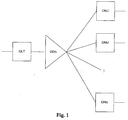
- Fig. 1 is a diagram of the structure of the PON system, which structure comprises an Optical Line Terminal (OLT) at a local side and multiple Optical Network Units (ONUs) at a remote end.
- the OLT is connected with the ONUs through an Optical Distribution Network (ODN) in a P2MP topological structure.
- ODN Optical Distribution Network
- the ONU also provides a user port function, such as an Ethernet user port or a Plain Old Telephone Service (POTS) user port, it is called an Optical Network Terminal (ONT).
- POTS Plain Old Telephone Service
- the ONU and ONT are uniformly referred to as ONU hereinafter unless noted otherwise.
- the PON Compared with the active optical access technology, the PON removes the active device between a local side and a user side so as to achieve the effect of simple maintenance, high reliability and low cost.
- the PON terminal has been applied to Internet bars as a network access device in several provinces in South China.
- each ONU port is connected with many PCs through a router.
- each ONU port may be connected with dozens or even hundreds of PCs. Such circumstance may also occur in factories or internet enterprises.
- the description below takes the internet bar as an example.
- the internet bar is a place where the wideband service is widely applied. Services applied here include browsing the web pages, QQ chat software (a common internet chatting software in China) or MSN chat software etc. for live chat, video chat, video movie, online game, downloading, uploading etc. Sometimes, even multicast is involved. Meanwhile, as a commercial place opening 24 hours a day, the service features of the internet bar comprise:
- the main problem of the PON terminal applied in the internet bar is that: users often report slow internet speed and disconnection from online games.
- Many common download tools such as the Thunder and Thunder Kankan in the internet bar adopt the Point to Point (P2P) technology. These download tools are characterized by distributed sharing of resources and parallel transmission, so as to occupy a large amount of bandwidth. Therefore, if such tools as Thunder (a common download software in China) are applied in an environment of limited bandwidth, particularly in case of small network bandwidth, the packets of other services will be discarded or delayed in sending, thereby seriously affecting the normal use of other services.
- Thunder a common download software in China
- the main objective of the disclosure is to provide a method and an apparatus for sending a packet, so as to at least solve the problem that when some users download a service by the P2P in a multi-user network environment, other users cannot use the internet normally due to high delay or even large amount of packet loss.
- the disclosure provides a method for sending a packet, comprising: when a speed of sending the packet by an Optical Network Unit (ONU) exceeds a traffic speed limit of the ONU, caching the packet in a buffer of the ONU and evenly sending the packet according to the traffic speed limit, wherein the traffic speed limit is determined by performing traffic shaping on the ONU, and a value of the buffer of the ONU is determined according to a bandwidth of a network where the ONU is located.
- ONU Optical Network Unit
- determining the traffic speed limit by performing traffic shaping on the ONU and determining the value of the buffer of the ONU according to the bandwidth of the network where the ONU is located comprises: locally setting the traffic speed limit and the value of the buffer of the ONU by the ONU, to determine the traffic speed limit and the value of the buffer of the ONU; or, performing remote control by an Optical Line Terminal (OLT) connected with the ONU to configure the traffic speed limit and the value of the buffer of the ONU.
- OLT Optical Line Terminal
- m is 20 and n is 5000; and when the downlink bandwidth of the network is not less than 10M, m is 15 and n is 55000.
- the traffic speed limit of the ONU is 500 bit/s, and the value of the buffer is 512k.
- evenly sending the packet according to the traffic speed limit comprises: adopting a token bucket algorithm to control the evenly sending of the packet; if there is a token in a token bucket, allowing to send the packet; and if there is no token in the token bucket, not allowing to send the packet.
- adopting the token bucket algorithm to control the evenly sending of the packet comprises: adding one token into the token bucket every 1/r second, wherein r is a value of the traffic speed limit, and one token represents one byte; and if the token bucket is full when the token reaches the token bucket, discarding the token; if there are at least n tokens in the token bucket when the packet of n bytes reaches the ONU, deleting n tokens from the token bucket, and sending the packet of n bytes by using the deleted n tokens; and if there are less than n tokens in the token bucket when the packet of n bytes reaches the ONU, confirming that the packet of n bytes exceeds traffic limit and discarding the packet of n bytes; or, placing the packet of n bytes in the buffer and sending the packet of n bytes till there are n tokens in the token bucket; or, identifying the packet of n bytes, sending the identified packet of n bytes by using the tokens in the token bucket, and discard
- the disclosure provides an apparatus for sending a packet, comprising: a determination module, configured to determine a traffic speed limit of an Optical Network Unit (ONU) by performing traffic shaping on the ONU, and determine a value of a buffer of the ONU according to a bandwidth of a network where the ONU is located; and a caching module, configured to when a speed of sending the packet by the ONU exceeds the traffic speed limit of the ONU, cache the packet in the buffer of the ONU and evenly send the packet according to the traffic speed limit.
- ONU Optical Network Unit
- the determination module comprises: a first determining sub-module, configured to locally set the traffic speed limit and the value of the buffer of the ONU by the ONU, and a second determining sub-module, configured to adopt an Optical Line Terminal (OLT) connected with the ONU to perform remote control to configure the traffic speed limit and the value of the buffer of the ONU.
- OLT Optical Line Terminal
- the packet when the speed of sending a packet by the ONU exceeds the traffic speed limit of the ONU, the packet is cached in the buffer of the ONU and evenly sent according to the traffic speed limit, wherein the traffic speed limit is determined by performing traffic shaping on the ONU and the value of the buffer of the ONU is determined according to the bandwidth of the network where the ONU is located.
- the traffic speed limit is determined by performing traffic shaping on the ONU and a buffer is set, so as to reduce the delay of the PING packet.
- the embodiment of the disclosure provides a method for sending a packet.
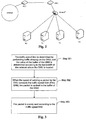
- the processing flow of the method is as shown in Fig. 3 , comprising the following steps.
- Step 301 the traffic speed limit is determined by performing traffic shaping on the ONU; and the value of the buffer of the ONU is determined according to the bandwidth of the network where the ONU is located.
- Step 302 when the speed of sending a packet by the ONU exceeds the traffic speed limit of the ONU, the packet is cached in the buffer of the ONU.
- Step 303 the packet is evenly sent according to the traffic speed limit.
- the value of the buffer of the ONU is determined according to the bandwidth of the network where the ONU is located.
- the buffer is determined to be larger than the indicated buffer according to the bandwidth to increase the amount of allocable buffer of the ONU.
- a simulated internet packet PING packet is placed in the buffer so as to reduce the packet loss rate.
- the delay of the PING packet will be correspondingly increased.
- the traffic speed limit is determined by performing traffic shaping on the ONU to shorten the delay of the PING packet, thereby achieving the effect of reducing the packet loss rate and response time of the PING packet.
- a token bucket algorithm may be selected to control the evenly sending of the packet. Specifically, if there is a token in the token bucket, the packet is allowed to be sent. If there is no token in the token bucket, the packet is not allowed to be sent.
- other algorithms may also be selected, such as the bearing balancing algorithm, and the dynamic traffic limiting algorithm. It only needs to adopt an algorithm which can control the traffic of sending the packet. Which algorithm is specifically adopted is determined according to the actual condition.
- the token bucket When the token bucket algorithm is adopted, the token bucket generally has several parameters: an update rate (or Committed Information Rate, CIR) of token bucket, which only affects the overall download speed but rarely affect the result of PING, and a total size (or Committed Burst Size, CBS) of token bucket, which only affect the initial speed rather than the result of PING.
- update rate or Committed Information Rate, CIR
- CIR Committed Information Rate
- CBS Committed Burst Size
- the control mechanism of the token bucket is that: when the traffic can be sent is determined by whether there is a token in the token bucket. Each token in the token bucket represents a byte. If there is a token, the traffic is allowed to be sent. If there is no token in the token bucket, the traffic is not allowed to be sent. Therefore, if a burst threshold is rationally configured and there are enough tokens in the token bucket, the traffic can be sent at a peak rate.
- the basic process of the token bucket algorithm adopted in the embodiment of the disclosure is that: a token is added in the token bucket every 1 / r second, wherein r is the value of the traffic speed limit, and one token represents one byte; and if the token bucket is full when a token reaches, the token is discarded; when a packet of n bytes reaches the ONU, if there are at least n tokens in the token bucket, n tokens are deleted from the token bucket and the packet of n bytes is sent by using the deleted n tokens; and if there are less than n tokens in the token bucket, the packet of n bytes is confirmed to exceed the traffic limit and is discarded; or, the packet of n bytes is placed in the buffer and is sent till there are n tokens in the token bucket; or, the packet of n bytes is identified and is sent by using the tokens in the token bucket, and the identified packet is discarded when the network is overloaded; wherein n is a positive integer.
- a buffer (including an uplink buffer and a downlink buffer) is configured for the ONU.
- This solution solves the problem of inadequate forwarding capacity of the ONU or PON terminal and ensures the continuity of the packet, i.e., losing as few packets as possible.
- the interrupt be triggered to send the packet stored in the buffer.
- the buffer if the buffer is overlarge, it will greatly increase the delay. The delay is very critical to such software as online game, and the game will be lagged or even offline when the delay reaches 1000ms, which is unacceptable by users.
- tokens are stored in the bucket at a specified rate.
- the packet to be sent is classified. When there are enough tokens in the token bucket, the packet is directly sent out. When there are not enough token in the token bucket, the packet is placed in the queue and not sent until there are enough tokens in the token bucket.
- m is preferably 20
- n is preferably 5000.
- the value of the buffer 20*maximum downlink bandwidth (bitls) / 1000 + 5000.
- the downlink bandwidth of the network is not less than 10M
- m is preferably 15, and n is preferably 55000.
- the value of the buffer 95*maximum downlink bandwidth (bit / s) / 1000 + 55000.
- the value of the buffer deduced by the formula is related to the speed-limited bandwidth of the network. Referring to the relationship between two traffic fluctuation curves and the value of the buffer in Fig. 5 , it can be seen that when the value of the buffer meets the requirement of its network environment, the traffic fluctuation is made to be within the acceptable range of the buffer, such as the traffic fluctuation curve marked as 1. If the value of the buffer does not meet the requirement of its network environment, it is out of the range of the buffer, such as the traffic fluctuation curve marked as 2.
- the change of the download speed of such tools as Thunder depends on the traffic control mechanism of the Transmission Control Protocol (TCP) and the User Datagram Protocol (UDP).
- TCP Transmission Control Protocol
- UDP User Datagram Protocol
- the TCP adopts a sliding window mechanism. And, in the UDP the rate is controlled by the application layer.
- the application layer traffic control mechanism dynamically controls the sending rate according to confirmation (the three-way handshake protocol is also a traffic control mechanism), as shown in Fig. 6 .
- the protocol regulates the sliding window, i.e. the sending rate, according to the actual packet loss behavior.
- Fig. 7 shows the packet capture of an uplink port of an ONU
- Fig. 8 shows the packet capture of a user port of an ONU.
- the curve of the overall uplink and downlink rate is marked as 1
- the curve of the downlink rate is marked as 2
- the curve of the uplink rate is marked as 3.
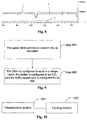
- a preferred speed limit method is as shown in Fig. 9 , comprising the following steps.
- Step 901 the speed limit control on a switch chip is cancelled.
- Step 902 the ONU is configured to work in a shape mode, the buffer is configured to be 512, and the traffic speed limit is configured to be 500.
- the ONU can only be locally configured.
- the commands on the OLT include:
- the embodiment of the disclosure further provides an apparatus for sending a packet.
- the structure of the apparatus for sending a packet is as shown in Fig. 10 , comprising:
- the determination module 1001 can comprise:
- the caching module 1002 can be configured to adopt the token bucket algorithm to control the evenly sending of the packet, wherein if there is a token in the token bucket, the packet is allowed to be sent, and if there is no token in the token bucket, the packet is not allowed to be sent.
- the caching module 1002 can comprise:
- the determination module 1001 determines the value of the buffer according to the following formula:
- the value of the buffer 20*maximum downlink bandwidth (bit/s)/1000 + 5000.
- the value of the buffer 15*maximum downlink bandwidth (bit/s)/1000 + 55000.
- the packet is cached in the buffer of the ONU and evenly sent according to the traffic speed limit when the speed of sending the packet by the ONU exceeds the traffic speed limit of the ONU.
- the traffic speed limit is determined by performing traffic shaping on the ONU and the value of the buffer of the ONU is determined according to the bandwidth of the network where the ONU is located. Therefore, this solution solves the problem in the conventional art that when some users download a service by the P2P in a multi-user network environment, other users cannot use the internet normally due to high delay or even a large amount of packet loss.
- the traffic speed limit is determined by performing traffic shaping on the ONU and a buffer is set. This solution reduces the delay of the PING packet and achieves the effect of reducing the packet loss rate and response time of the PING packet.
- modules or steps of the disclosure may be implemented by general computing apparatuses and centralized in a single computing apparatus or allocated in a network consisting of multiple computing apparatuses.
- the modules or steps may be implemented by program codes executable by the computing apparatus, so that they may be stored in a storage apparatus and executed by the computing apparatus; in some cases, the shown or described steps may be executed in a different order, or the modules or steps are respectively made into integrated circuit modules or a single integrated circuit module.
- the disclosure is not limited to any specific combination of hardware and software.
Landscapes
- Engineering & Computer Science (AREA)
- Computer Networks & Wireless Communication (AREA)
- Signal Processing (AREA)
- Data Exchanges In Wide-Area Networks (AREA)
- Small-Scale Networks (AREA)
Description
- The disclosure relates to the field of Passive Optical Network (PON), and in particular to a method and an apparatus for sending a packet.
- The PON technology is an optical access technology for Point to Multi Point (P2MP) transmission.
Fig. 1 is a diagram of the structure of the PON system, which structure comprises an Optical Line Terminal (OLT) at a local side and multiple Optical Network Units (ONUs) at a remote end. The OLT is connected with the ONUs through an Optical Distribution Network (ODN) in a P2MP topological structure. If the ONU also provides a user port function, such as an Ethernet user port or a Plain Old Telephone Service (POTS) user port, it is called an Optical Network Terminal (ONT). The ONU and ONT are uniformly referred to as ONU hereinafter unless noted otherwise. - Compared with the active optical access technology, the PON removes the active device between a local side and a user side so as to achieve the effect of simple maintenance, high reliability and low cost. As the Chinese market gradually matures, the PON terminal has been applied to Internet bars as a network access device in several provinces in South China.
- The specific environment for networking by taking the PON terminal as the network access device is as shown in
Fig. 2 . It can be seen that one end of the PON terminal is connected with an Ethernet, while the other end is connected with a router and a Personnel Computer (PC). As shown inFig. 2 , each ONU port is connected with many PCs through a router. For example, in an internet bar, each ONU port may be connected with dozens or even hundreds of PCs. Such circumstance may also occur in factories or internet enterprises. The description below takes the internet bar as an example. - The internet bar is a place where the wideband service is widely applied. Services applied here include browsing the web pages, QQ chat software (a common internet chatting software in China) or MSN chat software etc. for live chat, video chat, video movie, online game, downloading, uploading etc. Sometimes, even multicast is involved. Meanwhile, as a commercial place opening 24 hours a day, the service features of the internet bar comprise:
- long online time;
- various types of services and random occurrence of the services;
- high traffic demand and much burst traffic;
- limited egress bandwidth;
- high real-time requirement of users; and
- no service management.
- The main problem of the PON terminal applied in the internet bar is that: users often report slow internet speed and disconnection from online games. Many common download tools such as the Thunder and Thunder Kankan in the internet bar adopt the Point to Point (P2P) technology. These download tools are characterized by distributed sharing of resources and parallel transmission, so as to occupy a large amount of bandwidth. Therefore, if such tools as Thunder (a common download software in China) are applied in an environment of limited bandwidth, particularly in case of small network bandwidth, the packets of other services will be discarded or delayed in sending, thereby seriously affecting the normal use of other services.
- In other multi-user network environments similar to the internet bar, such as factory or internet enterprise, the problems above may also occur.
-
US 2006/013247 A1 ),US 2006/268719 A1 ) andEP 1 833 207 A2 - The main objective of the disclosure is to provide a method and an apparatus for sending a packet, so as to at least solve the problem that when some users download a service by the P2P in a multi-user network environment, other users cannot use the internet normally due to high delay or even large amount of packet loss.
- In one aspect, the disclosure provides a method for sending a packet, comprising: when a speed of sending the packet by an Optical Network Unit (ONU) exceeds a traffic speed limit of the ONU, caching the packet in a buffer of the ONU and evenly sending the packet according to the traffic speed limit, wherein the traffic speed limit is determined by performing traffic shaping on the ONU, and a value of the buffer of the ONU is determined according to a bandwidth of a network where the ONU is located.
- Preferably, determining the traffic speed limit by performing traffic shaping on the ONU and determining the value of the buffer of the ONU according to the bandwidth of the network where the ONU is located comprises: locally setting the traffic speed limit and the value of the buffer of the ONU by the ONU, to determine the traffic speed limit and the value of the buffer of the ONU; or, performing remote control by an Optical Line Terminal (OLT) connected with the ONU to configure the traffic speed limit and the value of the buffer of the ONU.
- Preferably, determining the value of the buffer of the ONU according to the bandwidth of the network where the ONU is located comprises: the value of the buffer = m*maximum downlink bandwidth/1000 + n, wherein m is a radix determined according to the downlink bandwidth of a terminal, n is a bandwidth threshold, and a unit of the maximum downlink bandwidth and n is bit per second (bps).
- Preferably, when the downlink bandwidth of the network is less than 10M, m is 20 and n is 5000; and when the downlink bandwidth of the network is not less than 10M, m is 15 and n is 55000.
- Preferably, the traffic speed limit of the ONU is 500 bit/s, and the value of the buffer is 512k.
- Preferably, evenly sending the packet according to the traffic speed limit comprises: adopting a token bucket algorithm to control the evenly sending of the packet; if there is a token in a token bucket, allowing to send the packet; and if there is no token in the token bucket, not allowing to send the packet.
- Preferably, adopting the token bucket algorithm to control the evenly sending of the packet comprises: adding one token into the token bucket every 1/r second, wherein r is a value of the traffic speed limit, and one token represents one byte; and if the token bucket is full when the token reaches the token bucket, discarding the token; if there are at least n tokens in the token bucket when the packet of n bytes reaches the ONU, deleting n tokens from the token bucket, and sending the packet of n bytes by using the deleted n tokens; and if there are less than n tokens in the token bucket when the packet of n bytes reaches the ONU, confirming that the packet of n bytes exceeds traffic limit and discarding the packet of n bytes; or, placing the packet of n bytes in the buffer and sending the packet of n bytes till there are n tokens in the token bucket; or, identifying the packet of n bytes, sending the identified packet of n bytes by using the tokens in the token bucket, and discarding the identified packet of n bytes when the network is overloaded; wherein n is a positive integer.
- In another aspect, the disclosure provides an apparatus for sending a packet, comprising: a determination module, configured to determine a traffic speed limit of an Optical Network Unit (ONU) by performing traffic shaping on the ONU, and determine a value of a buffer of the ONU according to a bandwidth of a network where the ONU is located; and
a caching module, configured to when a speed of sending the packet by the ONU exceeds the traffic speed limit of the ONU, cache the packet in the buffer of the ONU and evenly send the packet according to the traffic speed limit. - Preferably, the determination module comprises: a first determining sub-module, configured to locally set the traffic speed limit and the value of the buffer of the ONU by the ONU, and a second determining sub-module, configured to adopt an Optical Line Terminal (OLT) connected with the ONU to perform remote control to configure the traffic speed limit and the value of the buffer of the ONU.
- Preferably, the determination module determines the value of the buffer according to a formula of: the value of the buffer = m*maximum downlink bandwidth/1000 + n, wherein m is a radix determined according to a downlink bandwidth of a terminal, n is a bandwidth threshold, and a unit of the downlink bandwidth and n is bit per second (bps).
- In the disclosure, when the speed of sending a packet by the ONU exceeds the traffic speed limit of the ONU, the packet is cached in the buffer of the ONU and evenly sent according to the traffic speed limit, wherein the traffic speed limit is determined by performing traffic shaping on the ONU and the value of the buffer of the ONU is determined according to the bandwidth of the network where the ONU is located. This solution solves the problem in the conventional art that when some users use the P2P service to download in a multi-user network environment, other users cannot use the internet normally due to high delay or even large amount of packet loss. In the embodiments of the disclosure, the traffic speed limit is determined by performing traffic shaping on the ONU and a buffer is set, so as to reduce the delay of the PING packet. Thus, this solution can achieve the effect of reducing the packet loss rate and response time of the PING packet.
- The drawings described herein are to provide a further understanding of the disclosure and constitute one part of this application. The schematic embodiments of the disclosure and description thereof are used for explaining the disclosure and not for improperly limiting the disclosure. In the drawings:
-
Fig. 1 is a diagram showing the structure of a PON system provided by the related arts; -
Fig. 2 is a diagram showing the specific environment for networking by taking a PON terminal as a network access device provided by the related arts; -
Fig. 3 is a flowchart of a method for sending a packet according to an embodiment of the disclosure; -
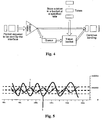
Fig. 4 is a basic process of a token bucket algorithm according to an embodiment of the disclosure; -
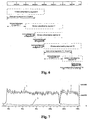
Fig. 5 is a diagram showing the relationship between a traffic fluctuation curve and the value of a buffer according to an embodiment of the disclosure; -
Fig. 6 is a diagram of a traffic control mechanism of the Transmission Control Protocol (TCP) and User Datagram Protocol (UDP) according to an embodiment of the disclosure; -
Fig. 7 is a diagram showing the packet capture of an uplink of an ONU according to an embodiment of the disclosure; -
Fig. 8 is a diagram showing the packet capture of a user port of an ONU according to an embodiment of the disclosure; -
Fig. 9 is a flowchart of a speed limit method according to an embodiment of the disclosure; -
Fig. 10 is a diagram showing the structure of an apparatus for sending a packet according to an embodiment of the disclosure; -
Fig. 11 is a diagram showing the structure of a determination module according to an embodiment of the disclosure; and -
Fig. 12 is a diagram showing the structure of a caching module according to an embodiment of the disclosure. - The disclosure is described in detail hereinafter with reference to the drawings and in conjunction with the embodiments. It should be noted that the embodiments of the application and features therein can be combined with each other, if there is no conflict.
- In the conventional art, when the download tools, such as Thunder and Thunder Kankan, are used in case of limited bandwidth in the multi-user network environment, a lot of bandwidth is occupied. Then, the packets of other services will be discarded or delayed in sending so as to largely affect the normal use of such services. To solve the above problem, the embodiment of the disclosure provides a method for sending a packet. The processing flow of the method is as shown in
Fig. 3 , comprising the following steps. - Step 301: the traffic speed limit is determined by performing traffic shaping on the ONU; and the value of the buffer of the ONU is determined according to the bandwidth of the network where the ONU is located.
- Step 302: when the speed of sending a packet by the ONU exceeds the traffic speed limit of the ONU, the packet is cached in the buffer of the ONU.
- Step 303: the packet is evenly sent according to the traffic speed limit.
- During the implementation of the flow shown in
Fig. 3 , the value of the buffer of the ONU is determined according to the bandwidth of the network where the ONU is located. Generally, the buffer is determined to be larger than the indicated buffer according to the bandwidth to increase the amount of allocable buffer of the ONU. In this case, if other users use such download tools as Thunder in the network, a simulated internet packet PING packet is placed in the buffer so as to reduce the packet loss rate. Meanwhile, the delay of the PING packet will be correspondingly increased. In the embodiment, the traffic speed limit is determined by performing traffic shaping on the ONU to shorten the delay of the PING packet, thereby achieving the effect of reducing the packet loss rate and response time of the PING packet. - In one embodiment, preferably, a token bucket algorithm may be selected to control the evenly sending of the packet. Specifically, if there is a token in the token bucket, the packet is allowed to be sent. If there is no token in the token bucket, the packet is not allowed to be sent. During implementation, other algorithms may also be selected, such as the bearing balancing algorithm, and the dynamic traffic limiting algorithm. It only needs to adopt an algorithm which can control the traffic of sending the packet. Which algorithm is specifically adopted is determined according to the actual condition.
- When the token bucket algorithm is adopted, the token bucket generally has several parameters: an update rate (or Committed Information Rate, CIR) of token bucket, which only affects the overall download speed but rarely affect the result of PING, and a total size (or Committed Burst Size, CBS) of token bucket, which only affect the initial speed rather than the result of PING.
- The control mechanism of the token bucket is that: when the traffic can be sent is determined by whether there is a token in the token bucket. Each token in the token bucket represents a byte. If there is a token, the traffic is allowed to be sent. If there is no token in the token bucket, the traffic is not allowed to be sent. Therefore, if a burst threshold is rationally configured and there are enough tokens in the token bucket, the traffic can be sent at a peak rate.
- The basic process of the token bucket algorithm adopted in the embodiment of the disclosure is that: a token is added in the token bucket every 1/r second, wherein r is the value of the traffic speed limit, and one token represents one byte; and if the token bucket is full when a token reaches, the token is discarded;
when a packet of n bytes reaches the ONU, if there are at least n tokens in the token bucket, n tokens are deleted from the token bucket and the packet of n bytes is sent by using the deleted n tokens; and
if there are less than n tokens in the token bucket, the packet of n bytes is confirmed to exceed the traffic limit and is discarded; or, the packet of n bytes is placed in the buffer and is sent till there are n tokens in the token bucket; or, the packet of n bytes is identified and is sent by using the tokens in the token bucket, and the identified packet is discarded when the network is overloaded; wherein n is a positive integer. - In the embodiment, a buffer (including an uplink buffer and a downlink buffer) is configured for the ONU. This solution solves the problem of inadequate forwarding capacity of the ONU or PON terminal and ensures the continuity of the packet, i.e., losing as few packets as possible. However, only when the buffer is full, can the interrupt be triggered to send the packet stored in the buffer. Thus, in implementation, if the buffer is overlarge, it will greatly increase the delay. The delay is very critical to such software as online game, and the game will be lagged or even offline when the delay reaches 1000ms, which is unacceptable by users.
- To further illustrate the token bucket algorithm in the embodiment, description is given below in conjunction with the drawings. Specifically, as shown in
Fig. 4 , it can be seen that tokens are stored in the bucket at a specified rate. The packet to be sent is classified. When there are enough tokens in the token bucket, the packet is directly sent out. When there are not enough token in the token bucket, the packet is placed in the queue and not sent until there are enough tokens in the token bucket. - In one embodiment, preferably, the value of the buffer of the ONU is determined according to the bandwidth of the network where the ONU is located by the following formula:

- In implementation, when the downlink bandwidth of the network is less than 10M, m is preferably 20, and n is preferably 5000. In this case, the value of the buffer = 20*maximum downlink bandwidth (bitls)/1000 + 5000.
- When the downlink bandwidth of the network is not less than 10M, m is preferably 15, and n is preferably 55000. In this case, the value of the buffer = 95*maximum downlink bandwidth (bit/s)/1000 + 55000.
- The value of the buffer deduced by the formula is related to the speed-limited bandwidth of the network. Referring to the relationship between two traffic fluctuation curves and the value of the buffer in
Fig. 5 , it can be seen that when the value of the buffer meets the requirement of its network environment, the traffic fluctuation is made to be within the acceptable range of the buffer, such as the traffic fluctuation curve marked as 1. If the value of the buffer does not meet the requirement of its network environment, it is out of the range of the buffer, such as the traffic fluctuation curve marked as 2. - In implementation, the change of the download speed of such tools as Thunder depends on the traffic control mechanism of the Transmission Control Protocol (TCP) and the User Datagram Protocol (UDP).
- The TCP adopts a sliding window mechanism. And, in the UDP the rate is controlled by the application layer. The application layer traffic control mechanism dynamically controls the sending rate according to confirmation (the three-way handshake protocol is also a traffic control mechanism), as shown in
Fig. 6 . - Under the condition of limited rate of a port, the protocol regulates the sliding window, i.e. the sending rate, according to the actual packet loss behavior.
- In the above, the packet loss behavior is determined by a buffer depth and a packet loss policy. If the actual packet loss behavior of the PON terminal cannot make the sending end effectively reduce the packet loss rate, the packet loss rate of all the traffic (including the online traffic, represented by the PING packet) is: packet loss rate = (1 - port limit rate) sending rate*100%.
Fig. 7 shows the packet capture of an uplink port of an ONU, andFig. 8 shows the packet capture of a user port of an ONU. InFig. 7 andFig. 8 , the curve of the overall uplink and downlink rate is marked as 1, the curve of the downlink rate is marked as 2, and the curve of the uplink rate is marked as 3. Referring to the data inFig. 7 andFig. 8 , it can be seen that if the sending end does not use the buffer to reduce the sending rate, when the average sending rate is 3M and the traffic speed limit is 2M, the packet loss rate of all the traffic is very high, about 30% to 40%. This causes the loss of a large number of packets and affects the online experience. - In implementation, a preferred speed limit method is as shown in
Fig. 9 , comprising the following steps. - Step 901: the speed limit control on a switch chip is cancelled.
- Step 902: the ONU is configured to work in a shape mode, the buffer is configured to be 512, and the traffic speed limit is configured to be 500.
- In an embodiment, generally the ONU can only be locally configured. With the rapid development of the PON project, locally configuring the ONU one by one is not only tedious but also unpractical. This problem can be solved by remotely controlling the ONU on the OLT. The commands on the OLT include:
- (1) Allocating, on the OLT, the bandwidth for a registered ONU: the registered ONU is selected, and is allocated the bandwidth, wherein both the maximum uplink value and the maximum downlink value are 20480;
- (2) Disabling, on the OLT, the speed limit function of the switch chip on the registered ONU: the registered ONU is selected, and the eth_0/1 uplink interface and the eth_0/1 downlink interface are found on the switch chip, and the two interfaces are set to be disabled;
- (3) Enabling, on the OLT, the shape function of the PON Media Access Control (MAC) chip on the registered ONU and configuring, on the OLT, the size of the buffer: the shape function of the registered ONU is enabled, the maximum value of the buffer is set to be 8000, and the buffer is set to be 5000 according to the instruction of a user; and
- (4) Configuring, on the OLT, the traffic under the shape function of the PON MAC chip on the registered ONU: this traffic is set to be from 800,000 to 6,000,000 in the embodiment.
- In order to solve the above technical problem, the embodiment of the disclosure further provides an apparatus for sending a packet. The structure of the apparatus for sending a packet is as shown in
Fig. 10 , comprising: - a
determination module 1001, configured to determine the traffic speed limit of the ONU by performing traffic shaping on the ONU, and determine the value of the buffer of the ONU according to the bandwidth of the network where the ONU is located; and - a
caching module 1002, configured to buffer the packet in the buffer of the ONU and evenly send the packet according to the traffic speed limit when the speed of sending the packet by the ONU exceeds the traffic speed limit of the ONU. - In an embodiment, as shown in
Fig. 11 , thedetermination module 1001 can comprise: - a first determining sub-module 1101, configured to locally set the traffic speed limit and the value of the buffer of the ONU by the ONU, and
- a second determining sub-module 1102, configured to adopt an OLT connected with the ONU to perform remote control to configure the traffic speed limit and the value of the buffer of the ONU.
- In an embodiment, the
caching module 1002 can be configured to adopt the token bucket algorithm to control the evenly sending of the packet, wherein if there is a token in the token bucket, the packet is allowed to be sent, and if there is no token in the token bucket, the packet is not allowed to be sent. - In an embodiment, as shown in
Fig. 12 , thecaching module 1002 can comprise: - a
token management sub-module 1201, configured to add one token in the token bucket every 1/r second wherein r is the value of the traffic speed limit and one token represents one byte, and discard the token if the token bucket is full when the token reaches; - a
first processing sub-module 1202, configured to delete n tokens from the token bucket and send a packet of n bytes by using the deleted n tokens if there are at least n tokens in the token bucket when the packet of n bytes reaches the ONU; and - a
second processing sub-module 1203, configured to if there are less than n tokens in the token bucket when the packet of n bytes reaches the ONU, confirm that the packet of n bytes exceeds the traffic limit and discard the packet of n bytes; or, place the packet of n bytes in the buffer and send the packet of n bytes till there are n tokens in the token bucket; or, identify the packet of n bytes and send the identified packet of n bytes by using the tokens in the token bucket, and discard the identified packet of n bytes when the network is overloaded; wherein n is a positive integer. - In an embodiment, the
determination module 1001 determines the value of the buffer according to the following formula: - the value of the buffer = m*maximum downlink bandwidth/1000 + n, wherein m is a radix determined according to the downlink bandwidth of the terminal, n is a bandwidth threshold, and the unit of the downlink bandwidth and n is bps.
- Preferably, in an embodiment, when the downlink bandwidth of the network is less than 10M, the value of the buffer = 20*maximum downlink bandwidth (bit/s)/1000 + 5000. When the downlink bandwidth of the network is not less than 10M, the value of the buffer = 15*maximum downlink bandwidth (bit/s)/1000 + 55000.
- In the disclosure, the packet is cached in the buffer of the ONU and evenly sent according to the traffic speed limit when the speed of sending the packet by the ONU exceeds the traffic speed limit of the ONU. The traffic speed limit is determined by performing traffic shaping on the ONU and the value of the buffer of the ONU is determined according to the bandwidth of the network where the ONU is located. Therefore, this solution solves the problem in the conventional art that when some users download a service by the P2P in a multi-user network environment, other users cannot use the internet normally due to high delay or even a large amount of packet loss. In the embodiments of the disclosure, the traffic speed limit is determined by performing traffic shaping on the ONU and a buffer is set. This solution reduces the delay of the PING packet and achieves the effect of reducing the packet loss rate and response time of the PING packet.
- Obviously, those skilled in the art shall understand that respective modules or steps of the disclosure may be implemented by general computing apparatuses and centralized in a single computing apparatus or allocated in a network consisting of multiple computing apparatuses. Optionally, the modules or steps may be implemented by program codes executable by the computing apparatus, so that they may be stored in a storage apparatus and executed by the computing apparatus; in some cases, the shown or described steps may be executed in a different order, or the modules or steps are respectively made into integrated circuit modules or a single integrated circuit module. By doing so, the disclosure is not limited to any specific combination of hardware and software.
Claims (9)
- A method for sending a packet, characterized by comprising:when a speed of sending the packet by an Optical Network Unit, ONU, exceeds a traffic speed limit of the ONU, caching the packet in a buffer of the ONU (Step 302) and evenly sending the packet according to the traffic speed limit (Step 303),wherein the traffic speed limit is determined by performing traffic shaping on the ONU, and a value of the buffer of the ONU is determined according to a bandwidth of a network where the ONU is located (Step 301),wherein the evenly sending the packet according to the traffic speed limit further comprises: adopting a token bucket algorithm to control the evenly sending of the packet; if there is a token in a token bucket, allowing to send the packet; and if there is no token in the token bucket, not allowing to send the packet.
- The method according to claim 1, characterized in that determining the traffic speed limit by performing traffic shaping on the ONU and determining the value of the buffer of the ONU according to the bandwidth of the network where the ONU is located comprises:locally setting the traffic speed limit and the value of the buffer of the ONU by the ONU, to determine the traffic speed limit and the value of the buffer of the ONU;or, performing remote control by an Optical Line Terminal, OLT, connected with the ONU to configure the traffic speed limit and the value of the buffer of the ONU.
- The method according to claim 1 or 2, characterized in that determining the value of the buffer of the ONU according to the bandwidth of the network where the ONU is located comprises:

- The method according to claim 3, characterized in that:when the downlink bandwidth of the network is less than 10M, m is 20 and n is 5000; andwhen the downlink bandwidth of the network is not less than 10M, m is 15 and n is 55000.
- The method according to claim 1 or 2, characterized in that the traffic speed limit of the ONU is 500 bit/s, and the value of the buffer is 512k.
- The method according to claim 1, characterized in that adopting the token bucket algorithm to control the evenly sending of the packet comprises:adding one token into the token bucket every 1/r second, wherein r is a value of the traffic speed limit, and one token represents one byte; and if the token bucket is full when the token reaches the token bucket, discarding the token;if there are at least n tokens in the token bucket when the packet of n bytes reaches the ONU, deleting n tokens from the token bucket, and sending the packet of n bytes by using the deleted n tokens; andif there are less than n tokens in the token bucket when the packet of n bytes reaches the ONU, confirming that the packet of n bytes exceeds traffic limit and discarding the packet of n bytes; or, placing the packet of n bytes in the buffer and sending the packet of n bytes till there are n tokens in the token bucket; or, identifying the packet of n bytes, sending the identified packet of n bytes by using the tokens in the token bucket, and discarding the identified packet of n bytes when the network is overloaded; wherein n is a positive integer.
- An apparatus for sending a packet, characterized by comprising:a determination module (1001), configured to determine a traffic speed limit of an Optical Network Unit, ONU, by performing traffic shaping on the ONU, and determine a value of a buffer of the ONU according to a bandwidth of a network where the ONU is located; anda caching module (1002), configured to when a speed of sending the packet by the ONU exceeds the traffic speed limit of the ONU, cache the packet in the buffer of the ONU and evenly send the packet according to the traffic speed limit,wherein the caching module further configured to adopt a token bucket algorithm to control the evenly sending of the packet; if there is a token in a token bucket, allowing to send the packet; and if there is no token in the token bucket, not allowing to send the packet.
- The apparatus according to claim 7, characterized in that the determination module comprises:a first determining sub-module (1101), configured to locally set the traffic speed limit and the value of the buffer of the ONU by the ONU, anda second determining sub-module (1102), configured to adopt an Optical Line Terminal, OLT, connected with the ONU to perform remote control to configure the traffic speed limit and the value of the buffer of the ONU.
- The apparatus according to claim 7 or 8, characterized in that the determination module determines the value of the buffer according to a formula of:

Applications Claiming Priority (2)
| Application Number | Priority Date | Filing Date | Title |
|---|---|---|---|
| CN201010256259.4A CN101917646B (en) | 2010-08-17 | 2010-08-17 | Message transmitting method and device |
| PCT/CN2011/078130 WO2012022227A1 (en) | 2010-08-17 | 2011-08-08 | Method and device for sending messages |
Publications (3)
| Publication Number | Publication Date |
|---|---|
| EP2608460A1 EP2608460A1 (en) | 2013-06-26 |
| EP2608460A4 EP2608460A4 (en) | 2015-06-17 |
| EP2608460B1 true EP2608460B1 (en) | 2016-09-21 |
Family
ID=43325011
Family Applications (1)
| Application Number | Title | Priority Date | Filing Date |
|---|---|---|---|
| EP11817754.2A Not-in-force EP2608460B1 (en) | 2010-08-17 | 2011-08-08 | Method and device for sending messages |
Country Status (5)
| Country | Link |
|---|---|
| EP (1) | EP2608460B1 (en) |
| CN (1) | CN101917646B (en) |
| DK (1) | DK2608460T3 (en) |
| HU (1) | HUE031241T2 (en) |
| WO (1) | WO2012022227A1 (en) |
Families Citing this family (7)
| Publication number | Priority date | Publication date | Assignee | Title |
|---|---|---|---|---|
| CN101917646B (en) * | 2010-08-17 | 2015-07-22 | 中兴通讯股份有限公司 | Message transmitting method and device |
| CN102750283A (en) * | 2011-04-20 | 2012-10-24 | 阿里巴巴集团控股有限公司 | Massive data synchronization system and method |
| CN105306384A (en) * | 2014-06-24 | 2016-02-03 | 中兴通讯股份有限公司 | Message processing method and device, and line card |
| EP3346641A4 (en) * | 2015-09-21 | 2018-07-18 | Huawei Technologies Co., Ltd. | Method and apparatus for collecting statistics on packet congestions |
| CN107222358A (en) * | 2016-03-21 | 2017-09-29 | 深圳市中兴微电子技术有限公司 | Wrap flux monitoring method per second and device |
| US10841670B2 (en) | 2018-02-13 | 2020-11-17 | Juniper Networks, Inc. | Methods and apparatus for consistency check in disaggregated dense wavelength-division multiplexing (DWDM) systems |
| CN111865675B (en) * | 2020-07-09 | 2023-05-30 | 广州虎牙科技有限公司 | Container receiving and dispatching speed limiting method, device and system |
Family Cites Families (9)
| Publication number | Priority date | Publication date | Assignee | Title |
|---|---|---|---|---|
| US7672233B2 (en) * | 2004-07-15 | 2010-03-02 | Calix Networks, Inc. | Traffic management for a passive optical network terminal |
| CN100388742C (en) * | 2004-07-22 | 2008-05-14 | 烽火通信科技股份有限公司 | Flow control method for Ether net passive light network and device used in said method |
| JP2006287385A (en) * | 2005-03-31 | 2006-10-19 | Nec Corp | Packet scheduling method and apparatus utilizing hsdpa |
| JP3961000B2 (en) * | 2005-05-26 | 2007-08-15 | 株式会社日立コミュニケーションテクノロジー | Packet transfer apparatus and network system |
| CN101035389A (en) * | 2006-03-08 | 2007-09-12 | 上海交通大学 | System and method for bandwidth allocation in the remote device of the passive optical network |
| CN101060523B (en) * | 2006-04-26 | 2010-09-08 | 华为技术有限公司 | Optical network terminal, its port speed limit attribute configuration method and message processing method |
| CN101415129B (en) * | 2007-10-16 | 2011-09-21 | 中兴通讯股份有限公司 | Method for configuring service quality parameter of Ethernet passive optical network |
| CN101753412B (en) * | 2008-11-28 | 2013-02-27 | 中兴通讯股份有限公司 | Method and device for dynamically treating bandwidth |
| CN101917646B (en) * | 2010-08-17 | 2015-07-22 | 中兴通讯股份有限公司 | Message transmitting method and device |
-
2010
- 2010-08-17 CN CN201010256259.4A patent/CN101917646B/en not_active Expired - Fee Related
-
2011
- 2011-08-08 EP EP11817754.2A patent/EP2608460B1/en not_active Not-in-force
- 2011-08-08 DK DK11817754.2T patent/DK2608460T3/en active
- 2011-08-08 WO PCT/CN2011/078130 patent/WO2012022227A1/en not_active Ceased
- 2011-08-08 HU HUE11817754A patent/HUE031241T2/en unknown
Also Published As
| Publication number | Publication date |
|---|---|
| CN101917646B (en) | 2015-07-22 |
| WO2012022227A1 (en) | 2012-02-23 |
| CN101917646A (en) | 2010-12-15 |
| EP2608460A4 (en) | 2015-06-17 |
| DK2608460T3 (en) | 2017-01-02 |
| HUE031241T2 (en) | 2017-07-28 |
| EP2608460A1 (en) | 2013-06-26 |
Similar Documents
| Publication | Publication Date | Title |
|---|---|---|
| Wu et al. | Tuning ECN for data center networks | |
| EP2608460A1 (en) | Method and device for sending messages | |
| US8908522B2 (en) | Transmission rate control | |
| Gao et al. | Dcqcn+: Taming large-scale incast congestion in rdma over ethernet networks | |
| EP2685758B1 (en) | Method, device and system for scheduling data flow | |
| US8320242B2 (en) | Active response communications network tap | |
| Siemon | Queueing in the Linux network stack | |
| US10673704B2 (en) | System and method of dynamic hardware policer allocation | |
| US10389636B2 (en) | Technologies for adaptive routing using network traffic characterization | |
| EP3086588A1 (en) | Configuration processing and configuration method and device for binding link | |
| CN114650091B (en) | Network quality evaluation method and device, electronic device, and storage medium | |
| CN101478539A (en) | Method and network appliance for preventing network attack | |
| CN105915464B (en) | A kind of quick and easy quantization congestion notification method | |
| US20200036779A1 (en) | Popularity-based load-balancing for fog-cloud placement | |
| KR20160071832A (en) | Method and apparatus of allocating resource of terminal in wireless communication system | |
| Zhang et al. | Taming the aggressiveness of heterogeneous TCP traffic in data center networks | |
| US10965605B2 (en) | Communication system, communication control method, and communication apparatus | |
| Xue et al. | A study of fairness among heterogeneous TCP variants over 10 Gbps high-speed optical networks | |
| Huang et al. | Packet slicing for highly concurrent TCPs in data center networks with COTS switches | |
| CN107026716B (en) | A transmission control method based on concurrency awareness in data center network | |
| M. Abdelmoniem et al. | Reducing latency in multi-tenant data centers via cautious congestion watch | |
| CN105207908A (en) | Message processing method and system framework | |
| US8650323B2 (en) | Managing multi-step retry reinitialization protocol flows | |
| Shan et al. | Micro-burst in data centers: Observations, implications, and applications | |
| CA2868712A1 (en) | Communication apparatus, control apparatus, communication system, communication method, method for controlling communication apparatus, and program |
Legal Events
| Date | Code | Title | Description |
|---|---|---|---|
| PUAI | Public reference made under article 153(3) epc to a published international application that has entered the european phase |
Free format text: ORIGINAL CODE: 0009012 |
|
| 17P | Request for examination filed |
Effective date: 20130315 |
|
| AK | Designated contracting states |
Kind code of ref document: A1 Designated state(s): AL AT BE BG CH CY CZ DE DK EE ES FI FR GB GR HR HU IE IS IT LI LT LU LV MC MK MT NL NO PL PT RO RS SE SI SK SM TR |
|
| DAX | Request for extension of the european patent (deleted) | ||
| REG | Reference to a national code |
Ref country code: DE Ref legal event code: R079 Ref document number: 602011030633 Country of ref document: DE Free format text: PREVIOUS MAIN CLASS: H04L0012560000 Ipc: H04L0012815000 |
|
| RA4 | Supplementary search report drawn up and despatched (corrected) |
Effective date: 20150518 |
|
| RIC1 | Information provided on ipc code assigned before grant |
Ipc: H04L 12/815 20130101AFI20150511BHEP |
|
| GRAP | Despatch of communication of intention to grant a patent |
Free format text: ORIGINAL CODE: EPIDOSNIGR1 |
|
| INTG | Intention to grant announced |
Effective date: 20151209 |
|
| GRAS | Grant fee paid |
Free format text: ORIGINAL CODE: EPIDOSNIGR3 |
|
| GRAP | Despatch of communication of intention to grant a patent |
Free format text: ORIGINAL CODE: EPIDOSNIGR1 |
|
| INTG | Intention to grant announced |
Effective date: 20160613 |
|
| GRAA | (expected) grant |
Free format text: ORIGINAL CODE: 0009210 |
|
| AK | Designated contracting states |
Kind code of ref document: B1 Designated state(s): AL AT BE BG CH CY CZ DE DK EE ES FI FR GB GR HR HU IE IS IT LI LT LU LV MC MK MT NL NO PL PT RO RS SE SI SK SM TR |
|
| REG | Reference to a national code |
Ref country code: GB Ref legal event code: FG4D |
|
| REG | Reference to a national code |
Ref country code: CH Ref legal event code: EP |
|
| REG | Reference to a national code |
Ref country code: AT Ref legal event code: REF Ref document number: 831823 Country of ref document: AT Kind code of ref document: T Effective date: 20161015 |
|
| REG | Reference to a national code |
Ref country code: IE Ref legal event code: FG4D |
|
| REG | Reference to a national code |
Ref country code: DE Ref legal event code: R096 Ref document number: 602011030633 Country of ref document: DE |
|
| REG | Reference to a national code |
Ref country code: NL Ref legal event code: FP |
|
| REG | Reference to a national code |
Ref country code: DK Ref legal event code: T3 Effective date: 20161222 |
|
| REG | Reference to a national code |
Ref country code: SE Ref legal event code: TRGR |
|
| REG | Reference to a national code |
Ref country code: LT Ref legal event code: MG4D |
|
| PG25 | Lapsed in a contracting state [announced via postgrant information from national office to epo] |
Ref country code: NO Free format text: LAPSE BECAUSE OF FAILURE TO SUBMIT A TRANSLATION OF THE DESCRIPTION OR TO PAY THE FEE WITHIN THE PRESCRIBED TIME-LIMIT Effective date: 20161221 Ref country code: FI Free format text: LAPSE BECAUSE OF FAILURE TO SUBMIT A TRANSLATION OF THE DESCRIPTION OR TO PAY THE FEE WITHIN THE PRESCRIBED TIME-LIMIT Effective date: 20160921 Ref country code: LT Free format text: LAPSE BECAUSE OF FAILURE TO SUBMIT A TRANSLATION OF THE DESCRIPTION OR TO PAY THE FEE WITHIN THE PRESCRIBED TIME-LIMIT Effective date: 20160921 Ref country code: RS Free format text: LAPSE BECAUSE OF FAILURE TO SUBMIT A TRANSLATION OF THE DESCRIPTION OR TO PAY THE FEE WITHIN THE PRESCRIBED TIME-LIMIT Effective date: 20160921 |
|
| REG | Reference to a national code |
Ref country code: AT Ref legal event code: MK05 Ref document number: 831823 Country of ref document: AT Kind code of ref document: T Effective date: 20160921 |
|
| PG25 | Lapsed in a contracting state [announced via postgrant information from national office to epo] |
Ref country code: LV Free format text: LAPSE BECAUSE OF FAILURE TO SUBMIT A TRANSLATION OF THE DESCRIPTION OR TO PAY THE FEE WITHIN THE PRESCRIBED TIME-LIMIT Effective date: 20160921 Ref country code: GR Free format text: LAPSE BECAUSE OF FAILURE TO SUBMIT A TRANSLATION OF THE DESCRIPTION OR TO PAY THE FEE WITHIN THE PRESCRIBED TIME-LIMIT Effective date: 20161222 |
|
| PG25 | Lapsed in a contracting state [announced via postgrant information from national office to epo] |
Ref country code: EE Free format text: LAPSE BECAUSE OF FAILURE TO SUBMIT A TRANSLATION OF THE DESCRIPTION OR TO PAY THE FEE WITHIN THE PRESCRIBED TIME-LIMIT Effective date: 20160921 Ref country code: RO Free format text: LAPSE BECAUSE OF FAILURE TO SUBMIT A TRANSLATION OF THE DESCRIPTION OR TO PAY THE FEE WITHIN THE PRESCRIBED TIME-LIMIT Effective date: 20160921 |
|
| PG25 | Lapsed in a contracting state [announced via postgrant information from national office to epo] |
Ref country code: AT Free format text: LAPSE BECAUSE OF FAILURE TO SUBMIT A TRANSLATION OF THE DESCRIPTION OR TO PAY THE FEE WITHIN THE PRESCRIBED TIME-LIMIT Effective date: 20160921 Ref country code: BG Free format text: LAPSE BECAUSE OF FAILURE TO SUBMIT A TRANSLATION OF THE DESCRIPTION OR TO PAY THE FEE WITHIN THE PRESCRIBED TIME-LIMIT Effective date: 20161221 Ref country code: SK Free format text: LAPSE BECAUSE OF FAILURE TO SUBMIT A TRANSLATION OF THE DESCRIPTION OR TO PAY THE FEE WITHIN THE PRESCRIBED TIME-LIMIT Effective date: 20160921 Ref country code: PT Free format text: LAPSE BECAUSE OF FAILURE TO SUBMIT A TRANSLATION OF THE DESCRIPTION OR TO PAY THE FEE WITHIN THE PRESCRIBED TIME-LIMIT Effective date: 20170123 Ref country code: PL Free format text: LAPSE BECAUSE OF FAILURE TO SUBMIT A TRANSLATION OF THE DESCRIPTION OR TO PAY THE FEE WITHIN THE PRESCRIBED TIME-LIMIT Effective date: 20160921 Ref country code: BE Free format text: LAPSE BECAUSE OF FAILURE TO SUBMIT A TRANSLATION OF THE DESCRIPTION OR TO PAY THE FEE WITHIN THE PRESCRIBED TIME-LIMIT Effective date: 20160921 Ref country code: CZ Free format text: LAPSE BECAUSE OF FAILURE TO SUBMIT A TRANSLATION OF THE DESCRIPTION OR TO PAY THE FEE WITHIN THE PRESCRIBED TIME-LIMIT Effective date: 20160921 Ref country code: IS Free format text: LAPSE BECAUSE OF FAILURE TO SUBMIT A TRANSLATION OF THE DESCRIPTION OR TO PAY THE FEE WITHIN THE PRESCRIBED TIME-LIMIT Effective date: 20170121 Ref country code: SM Free format text: LAPSE BECAUSE OF FAILURE TO SUBMIT A TRANSLATION OF THE DESCRIPTION OR TO PAY THE FEE WITHIN THE PRESCRIBED TIME-LIMIT Effective date: 20160921 Ref country code: ES Free format text: LAPSE BECAUSE OF FAILURE TO SUBMIT A TRANSLATION OF THE DESCRIPTION OR TO PAY THE FEE WITHIN THE PRESCRIBED TIME-LIMIT Effective date: 20160921 |
|
| REG | Reference to a national code |
Ref country code: DE Ref legal event code: R097 Ref document number: 602011030633 Country of ref document: DE |
|
| PG25 | Lapsed in a contracting state [announced via postgrant information from national office to epo] |
Ref country code: IT Free format text: LAPSE BECAUSE OF FAILURE TO SUBMIT A TRANSLATION OF THE DESCRIPTION OR TO PAY THE FEE WITHIN THE PRESCRIBED TIME-LIMIT Effective date: 20160921 |
|
| PLBE | No opposition filed within time limit |
Free format text: ORIGINAL CODE: 0009261 |
|
| REG | Reference to a national code |
Ref country code: HU Ref legal event code: AG4A Ref document number: E031241 Country of ref document: HU |
|
| STAA | Information on the status of an ep patent application or granted ep patent |
Free format text: STATUS: NO OPPOSITION FILED WITHIN TIME LIMIT |
|
| 26N | No opposition filed |
Effective date: 20170622 |
|
| PG25 | Lapsed in a contracting state [announced via postgrant information from national office to epo] |
Ref country code: SI Free format text: LAPSE BECAUSE OF FAILURE TO SUBMIT A TRANSLATION OF THE DESCRIPTION OR TO PAY THE FEE WITHIN THE PRESCRIBED TIME-LIMIT Effective date: 20160921 |
|
| REG | Reference to a national code |
Ref country code: DE Ref legal event code: R119 Ref document number: 602011030633 Country of ref document: DE |
|
| REG | Reference to a national code |
Ref country code: CH Ref legal event code: PL |
|
| PG25 | Lapsed in a contracting state [announced via postgrant information from national office to epo] |
Ref country code: MC Free format text: LAPSE BECAUSE OF FAILURE TO SUBMIT A TRANSLATION OF THE DESCRIPTION OR TO PAY THE FEE WITHIN THE PRESCRIBED TIME-LIMIT Effective date: 20160921 |
|
| GBPC | Gb: european patent ceased through non-payment of renewal fee |
Effective date: 20170808 |
|
| PG25 | Lapsed in a contracting state [announced via postgrant information from national office to epo] |
Ref country code: LI Free format text: LAPSE BECAUSE OF NON-PAYMENT OF DUE FEES Effective date: 20170831 Ref country code: CH Free format text: LAPSE BECAUSE OF NON-PAYMENT OF DUE FEES Effective date: 20170831 |
|
| REG | Reference to a national code |
Ref country code: FR Ref legal event code: ST Effective date: 20180430 |
|
| REG | Reference to a national code |
Ref country code: IE Ref legal event code: MM4A |
|
| PG25 | Lapsed in a contracting state [announced via postgrant information from national office to epo] |
Ref country code: LU Free format text: LAPSE BECAUSE OF NON-PAYMENT OF DUE FEES Effective date: 20170808 |
|
| PG25 | Lapsed in a contracting state [announced via postgrant information from national office to epo] |
Ref country code: IE Free format text: LAPSE BECAUSE OF NON-PAYMENT OF DUE FEES Effective date: 20170808 Ref country code: DE Free format text: LAPSE BECAUSE OF NON-PAYMENT OF DUE FEES Effective date: 20180301 Ref country code: GB Free format text: LAPSE BECAUSE OF NON-PAYMENT OF DUE FEES Effective date: 20170808 |
|
| PG25 | Lapsed in a contracting state [announced via postgrant information from national office to epo] |
Ref country code: FR Free format text: LAPSE BECAUSE OF NON-PAYMENT OF DUE FEES Effective date: 20170831 |
|
| PG25 | Lapsed in a contracting state [announced via postgrant information from national office to epo] |
Ref country code: MT Free format text: LAPSE BECAUSE OF NON-PAYMENT OF DUE FEES Effective date: 20170808 |
|
| PG25 | Lapsed in a contracting state [announced via postgrant information from national office to epo] |
Ref country code: AL Free format text: LAPSE BECAUSE OF FAILURE TO SUBMIT A TRANSLATION OF THE DESCRIPTION OR TO PAY THE FEE WITHIN THE PRESCRIBED TIME-LIMIT Effective date: 20160921 |
|
| PGFP | Annual fee paid to national office [announced via postgrant information from national office to epo] |
Ref country code: NL Payment date: 20190826 Year of fee payment: 9 |
|
| PG25 | Lapsed in a contracting state [announced via postgrant information from national office to epo] |
Ref country code: CY Free format text: LAPSE BECAUSE OF NON-PAYMENT OF DUE FEES Effective date: 20160921 |
|
| PGFP | Annual fee paid to national office [announced via postgrant information from national office to epo] |
Ref country code: DK Payment date: 20190824 Year of fee payment: 9 Ref country code: SE Payment date: 20190827 Year of fee payment: 9 |
|
| PG25 | Lapsed in a contracting state [announced via postgrant information from national office to epo] |
Ref country code: MK Free format text: LAPSE BECAUSE OF FAILURE TO SUBMIT A TRANSLATION OF THE DESCRIPTION OR TO PAY THE FEE WITHIN THE PRESCRIBED TIME-LIMIT Effective date: 20160921 |
|
| PGFP | Annual fee paid to national office [announced via postgrant information from national office to epo] |
Ref country code: HU Payment date: 20190910 Year of fee payment: 9 |
|
| PG25 | Lapsed in a contracting state [announced via postgrant information from national office to epo] |
Ref country code: TR Free format text: LAPSE BECAUSE OF FAILURE TO SUBMIT A TRANSLATION OF THE DESCRIPTION OR TO PAY THE FEE WITHIN THE PRESCRIBED TIME-LIMIT Effective date: 20160921 |
|
| PG25 | Lapsed in a contracting state [announced via postgrant information from national office to epo] |
Ref country code: HR Free format text: LAPSE BECAUSE OF FAILURE TO SUBMIT A TRANSLATION OF THE DESCRIPTION OR TO PAY THE FEE WITHIN THE PRESCRIBED TIME-LIMIT Effective date: 20160921 |
|
| REG | Reference to a national code |
Ref country code: DK Ref legal event code: EBP Effective date: 20200831 |
|
| REG | Reference to a national code |
Ref country code: SE Ref legal event code: EUG |
|
| REG | Reference to a national code |
Ref country code: NL Ref legal event code: MM Effective date: 20200901 |
|
| PG25 | Lapsed in a contracting state [announced via postgrant information from national office to epo] |
Ref country code: HU Free format text: LAPSE BECAUSE OF NON-PAYMENT OF DUE FEES Effective date: 20200809 |
|
| PG25 | Lapsed in a contracting state [announced via postgrant information from national office to epo] |
Ref country code: SE Free format text: LAPSE BECAUSE OF NON-PAYMENT OF DUE FEES Effective date: 20200809 |
|
| PG25 | Lapsed in a contracting state [announced via postgrant information from national office to epo] |
Ref country code: DK Free format text: LAPSE BECAUSE OF NON-PAYMENT OF DUE FEES Effective date: 20200831 |
|
| PG25 | Lapsed in a contracting state [announced via postgrant information from national office to epo] |
Ref country code: NL Free format text: LAPSE BECAUSE OF NON-PAYMENT OF DUE FEES Effective date: 20200901 |