EP2608089A1 - Method to transfer personal health information of a subscriber - Google Patents
Method to transfer personal health information of a subscriber Download PDFInfo
- Publication number
- EP2608089A1 EP2608089A1 EP11306751.6A EP11306751A EP2608089A1 EP 2608089 A1 EP2608089 A1 EP 2608089A1 EP 11306751 A EP11306751 A EP 11306751A EP 2608089 A1 EP2608089 A1 EP 2608089A1
- Authority
- EP
- European Patent Office
- Prior art keywords
- information
- user
- ice
- previous
- transferring
- Prior art date
- Legal status (The legal status is an assumption and is not a legal conclusion. Google has not performed a legal analysis and makes no representation as to the accuracy of the status listed.)
- Withdrawn
Links
- 238000000034 method Methods 0.000 title claims abstract description 27
- 238000004891 communication Methods 0.000 claims abstract description 10
- 239000008280 blood Substances 0.000 claims description 6
- 210000004369 blood Anatomy 0.000 claims description 6
- 206010020751 Hypersensitivity Diseases 0.000 claims description 5
- 230000007815 allergy Effects 0.000 claims description 5
- 238000002255 vaccination Methods 0.000 claims description 3
- 208000003443 Unconsciousness Diseases 0.000 description 4
- 238000005516 engineering process Methods 0.000 description 2
- 238000010586 diagram Methods 0.000 description 1
- 229940079593 drug Drugs 0.000 description 1
- 239000003814 drug Substances 0.000 description 1
- 238000002483 medication Methods 0.000 description 1
Images

Classifications
-
- G—PHYSICS
- G16—INFORMATION AND COMMUNICATION TECHNOLOGY [ICT] SPECIALLY ADAPTED FOR SPECIFIC APPLICATION FIELDS
- G16H—HEALTHCARE INFORMATICS, i.e. INFORMATION AND COMMUNICATION TECHNOLOGY [ICT] SPECIALLY ADAPTED FOR THE HANDLING OR PROCESSING OF MEDICAL OR HEALTHCARE DATA
- G16H10/00—ICT specially adapted for the handling or processing of patient-related medical or healthcare data
- G16H10/60—ICT specially adapted for the handling or processing of patient-related medical or healthcare data for patient-specific data, e.g. for electronic patient records
- G16H10/65—ICT specially adapted for the handling or processing of patient-related medical or healthcare data for patient-specific data, e.g. for electronic patient records stored on portable record carriers, e.g. on smartcards, RFID tags or CD
-
- G—PHYSICS
- G16—INFORMATION AND COMMUNICATION TECHNOLOGY [ICT] SPECIALLY ADAPTED FOR SPECIFIC APPLICATION FIELDS
- G16H—HEALTHCARE INFORMATICS, i.e. INFORMATION AND COMMUNICATION TECHNOLOGY [ICT] SPECIALLY ADAPTED FOR THE HANDLING OR PROCESSING OF MEDICAL OR HEALTHCARE DATA
- G16H10/00—ICT specially adapted for the handling or processing of patient-related medical or healthcare data
- G16H10/60—ICT specially adapted for the handling or processing of patient-related medical or healthcare data for patient-specific data, e.g. for electronic patient records
Definitions
- the present invention relates generally to an ICE (In Case of Emergency) application and more specifically to a method for accessing to ICE information from a first device of a first user to a second device of a second user.
- ICE In Case of Emergency
- the emergency contact process may take a long time to identify a person in an accident when unconscious, and to research a next of kin or health information.
- a known application called ICE In Case of Emergency
- ICE is used for the storage on a mobile device of critical personal and medical information comprising the name, contact, telephone numbers, blood type, allergies, medications prescribed, existing medical conditions, health insurance provider information...
- Such an application is useful for example in case of an accident for a first responder such as emergency medical staff to retrieve the patient's health information and emergency contacts via a mobile device in peer-to-peer mode, a portable contactless reader in card emulation mode or a terminal device, e.g. a personal laptop, a desktop computer, a tablet or any digital system running an operating system hosting applications....
- a first responder such as emergency medical staff to retrieve the patient's health information and emergency contacts via a mobile device in peer-to-peer mode, a portable contactless reader in card emulation mode or a terminal device, e.g. a personal laptop, a desktop computer, a tablet or any digital system running an operating system hosting applications....
- This application allows the retrieval of medical information even if the subscriber lies unconscious.
- the contact information and health information are not necessarily readily accessible with the existing ICE application when the device is locked with a user password or PIN screen.
- the present invention provides a method for transferring in-case-of-emergency (ICE) information from a first device of a first user to a second device of a second user characterized in that it comprises transferring said information with a near range communication.
- ICE in-case-of-emergency
- the method may comprise storing said information securely in said first device by the first user, said information being related to said first user and encrypted with the public key of the second user; fetching said encrypted information by/with the second device over the near range communication.
- said information may comprise name, medical history, allergies, vaccinations, blood type and/or emergency contact information related to said first user.
- the information may be signed with the public key of the second user.
- the second user may be an authorized authority or works for an authorized authority, said authorized authority being a health authority or other government entity needing access to ICE information.
- the method may comprise transferring said information over NFC, Bluetooth, zigbee, or Wi-Fi.
- the method may comprise using a secure element supporting contactless data exchange for storing said ICE information into the first device.
- the method may comprise using an embedded secure element or an NFC-capable UICC, or a MicroSD as secure element.
- the method may comprise using a contactless reader or a mobile phone device as second device.
- the second device upon receiving the encrypted information, may apply its private key to said information and may decrypt said first information.
- Another advantage of the invention is that such information may be transferred securely. The first user can then decide which ICE information may be available unsecurely and which ICE information may need a secure transfer.
- a first device 1 of a first user such as a mobile phone, comprising an embedded secured element 10 such as an NFC-capable UICC, a MicroSD or any other type of secure element supporting contactless or wireless data exchange or integrated circuit providing access to data over a personal area network.
- an embedded secured element 10 such as an NFC-capable UICC, a MicroSD or any other type of secure element supporting contactless or wireless data exchange or integrated circuit providing access to data over a personal area network.
- the first device 1 comprises the In-Case-of-Emergency application as decribed above.
- the method comprises a registration step wherein the first user registers information related to himself/herself.
- the first user when launching the application for example for the first time, the first user sees a prompt to input information which comprises medical history, allergies, vaccinations, blood type and/or emergency contact information related to him as represented in figure 2 .
- the first user can for example optionally also store information on his/her medical insurance.
- the method comprises using the secure element 10 for storing said ICE information into the first device.
- the information related to the first user is stored securely, i.e. encrypted with the public key of a second user or delivered to a second user by an authorized authority.
- An authorized authority is for example a health authority or other government entity needing access to such information.
- a second user has to be understood as a health authority or someone who works for a health authority, an authorized authority or someone who works for the authorized authority.... The second user is then someone authorized by an authorized authority to access ICE information.
- the health authority is for example entitled to deliver a public key for the encryption of the ICE information.
- the second user is then authorized by this health authority to access to information related to ICE information of the first user 1.
- He may be for example a member of an emergency team, or a member of the police or a firefighter, ... as long as such persons are authorized by the authorized authority for example by being delivered the private key necessary for the decryption of the ICE information stored into the first device 1 of the first user.
- the information is signed with the public key of the second user.
- the method comprises using a contactless reader or a mobile phone device as second device of the second user.
- the contactless reader is for example connected to or integrated within a PC, laptop, tablet...
- the method comprises a step of accessing said information over a near range communication such as NFC, Bluetooth, zigbee, Wi-Fi or any other near range communication technology. It comprises using the first device 1 of the first user for transferring contactlessly said ICE information from the first device 1 of the first user to the second device 2 of the second user.
- a near range communication such as NFC, Bluetooth, zigbee, Wi-Fi or any other near range communication technology.
- the method comprises taping the first device 1 of the first user, and fetching said encrypted ICE information with the second device 2 of the second user over the short range communication link.
- the second user such as a member of an ambulance or a member of the first rescue team uses the second device 2 such as a contactless reader 2 or a mobile device such as a mobile phone, the contactless reader 2 or the mobile device comprising the private key of the health authority.
- the second user then taps the first device 1 of the first user.
- the encrypted ICE information is decrypted with the private key of the health authority.
- the ICE application is installed on the secured element 10 of the first device 1 of the first user, the ICE information related to the first user encrypted with the public key of the health authority is fetched by the contactless reader or the second device 2 of the second user using near range communication such as NFC, Bluetooth, zigbee, Wi-Fi or other near range communication technologies.
- near range communication such as NFC, Bluetooth, zigbee, Wi-Fi or other near range communication technologies.
- the second device 2 of the second user upon receiving the encrypted data, applies its private key to the received data and decrypts the first user's sensitive health information, emergency contact. It optionally decrypts health insurance information.
- the emergency team can then directly contact the patient's next of kin and can be instantly aware of any allergies, blood type of the patient ...
- the ICE information is not encrypted and the health authority can access directly to ICE information.
- the first user when registering is aware of which ICE information is readily accessible or not. This is advantageous when the first user visits a foreign country and renders ICE information accessible in case of accident.
- the first user is able to decide which ICE information may be available such as the blood type unsecurely and which ICE information needs a secure transfer such as his/her personal address.
Landscapes
- Health & Medical Sciences (AREA)
- Engineering & Computer Science (AREA)
- Epidemiology (AREA)
- General Health & Medical Sciences (AREA)
- Medical Informatics (AREA)
- Primary Health Care (AREA)
- Public Health (AREA)
- Telephonic Communication Services (AREA)
- Telephone Function (AREA)
- Medical Treatment And Welfare Office Work (AREA)
- Mobile Radio Communication Systems (AREA)
- Alarm Systems (AREA)
Abstract
The invention relates to a method for transferring in-case-of-emergency (ICE) information from a first device (1) of a first user to a second device (2) of a second user characterized in that it comprises transferring said information with a near range communication.
Description
- The present invention relates generally to an ICE (In Case of Emergency) application and more specifically to a method for accessing to ICE information from a first device of a first user to a second device of a second user.
- The emergency contact process may take a long time to identify a person in an accident when unconscious, and to research a next of kin or health information. A known application called ICE (In Case of Emergency) is used for the storage on a mobile device of critical personal and medical information comprising the name, contact, telephone numbers, blood type, allergies, medications prescribed, existing medical conditions, health insurance provider information...
- Such an application is useful for example in case of an accident for a first responder such as emergency medical staff to retrieve the patient's health information and emergency contacts via a mobile device in peer-to-peer mode, a portable contactless reader in card emulation mode or a terminal device, e.g. a personal laptop, a desktop computer, a tablet or any digital system running an operating system hosting applications.... This application allows the retrieval of medical information even if the subscriber lies unconscious.
- However the contact information and health information are not necessarily readily accessible with the existing ICE application when the device is locked with a user password or PIN screen.
- There is then a need for accessing such information very quickly and easily as the speed of intervention by the medical crew may be determining.
- It is then an object of the invention to provide access to this information in a quick and easy manner.
- Thereto, the present invention provides a method for transferring in-case-of-emergency (ICE) information from a first device of a first user to a second device of a second user characterized in that it comprises transferring said information with a near range communication.
- According to another aspect of the invention, the method may comprise storing said information securely in said first device by the first user, said information being related to said first user and encrypted with the public key of the second user; fetching said encrypted information by/with the second device over the near range communication.
- According to another aspect of the invention, said information may comprise name, medical history, allergies, vaccinations, blood type and/or emergency contact information related to said first user.
- According to another aspect of the invention, the information may be signed with the public key of the second user.
- According to another aspect of the invention, the second user may be an authorized authority or works for an authorized authority, said authorized authority being a health authority or other government entity needing access to ICE information.
- According to another aspect of the invention, the method may comprise transferring said information over NFC, Bluetooth, zigbee, or Wi-Fi.
- According to another aspect of the invention, the method may comprise using a secure element supporting contactless data exchange for storing said ICE information into the first device.
- According to another aspect of the invention, the method may comprise using an embedded secure element or an NFC-capable UICC, or a MicroSD as secure element.
- According to another aspect of the invention, the method may comprise using a contactless reader or a mobile phone device as second device.
- According to another aspect of the invention, upon receiving the encrypted information, the second device may apply its private key to said information and may decrypt said first information.
- Thanks to the invention, it is advantageously possible to access and to transfer faster, simply and rapidly such information which could save a life.
- Another advantage of the invention is that such information may be transferred securely. The first user can then decide which ICE information may be available unsecurely and which ICE information may need a secure transfer.
- The various aspects, features and advantages of the invention will become more fully apparent to those having ordinary skill in the art upon careful consideration of the following Detailed Description, given by way of example thereof, with the accompanying drawings described below:
-
FIGURE.1 schematically shows an embodiment of the present invention. -
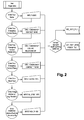
FIGURE.2 schematically shows flowchart diagram of a step of the method according to the invention. - The present invention may be understood according to the detailed description provided herein.
- Shown in
Figure 1 is afirst device 1 of a first user, such as a mobile phone, comprising an embedded securedelement 10 such as an NFC-capable UICC, a MicroSD or any other type of secure element supporting contactless or wireless data exchange or integrated circuit providing access to data over a personal area network. - The
first device 1 comprises the In-Case-of-Emergency application as decribed above. According to the present invention the method comprises a registration step wherein the first user registers information related to himself/herself. During this registration step, when launching the application for example for the first time, the first user sees a prompt to input information which comprises medical history, allergies, vaccinations, blood type and/or emergency contact information related to him as represented infigure 2 . - It will be well understood that other data related to the first user can be stored. The first user can for example optionally also store information on his/her medical insurance.
- The method comprises using the
secure element 10 for storing said ICE information into the first device. - The information related to the first user is stored securely, i.e. encrypted with the public key of a second user or delivered to a second user by an authorized authority. An authorized authority is for example a health authority or other government entity needing access to such information.
- Thus in the following description, a second user has to be understood as a health authority or someone who works for a health authority, an authorized authority or someone who works for the authorized authority.... The second user is then someone authorized by an authorized authority to access ICE information.
- The health authority is for example entitled to deliver a public key for the encryption of the ICE information. The second user is then authorized by this health authority to access to information related to ICE information of the
first user 1. He may be for example a member of an emergency team, or a member of the police or a firefighter, ... as long as such persons are authorized by the authorized authority for example by being delivered the private key necessary for the decryption of the ICE information stored into thefirst device 1 of the first user. - Optionally the information is signed with the public key of the second user.
- The method comprises using a contactless reader or a mobile phone device as second device of the second user. The contactless reader is for example connected to or integrated within a PC, laptop, tablet...
- The method comprises a step of accessing said information over a near range communication such as NFC, Bluetooth, zigbee, Wi-Fi or any other near range communication technology. It comprises using the
first device 1 of the first user for transferring contactlessly said ICE information from thefirst device 1 of the first user to thesecond device 2 of the second user. - The method comprises taping the
first device 1 of the first user, and fetching said encrypted ICE information with thesecond device 2 of the second user over the short range communication link. For doing so, when thefirst user 1 is for example found unconscious after an accident, the second user such as a member of an ambulance or a member of the first rescue team uses thesecond device 2 such as acontactless reader 2 or a mobile device such as a mobile phone, thecontactless reader 2 or the mobile device comprising the private key of the health authority. The second user then taps thefirst device 1 of the first user. The encrypted ICE information is decrypted with the private key of the health authority. - If the ICE application is installed on the secured
element 10 of thefirst device 1 of the first user, the ICE information related to the first user encrypted with the public key of the health authority is fetched by the contactless reader or thesecond device 2 of the second user using near range communication such as NFC, Bluetooth, zigbee, Wi-Fi or other near range communication technologies. - Then upon receiving the encrypted data, the
second device 2 of the second user applies its private key to the received data and decrypts the first user's sensitive health information, emergency contact. It optionally decrypts health insurance information. The emergency team can then directly contact the patient's next of kin and can be instantly aware of any allergies, blood type of the patient ... - In another embodiment, the ICE information is not encrypted and the health authority can access directly to ICE information. In this case, the first user when registering is aware of which ICE information is readily accessible or not. This is advantageous when the first user visits a foreign country and renders ICE information accessible in case of accident.
- In another embodiment, the first user is able to decide which ICE information may be available such as the blood type unsecurely and which ICE information needs a secure transfer such as his/her personal address.
- Thanks to this method, it is possible to access easily to sensitive information related to a person. There is no need to enter a PIN code and an authorized person accessing to ICE information is advantageously fast and allows to save person even when unconscious.
Claims (10)
- Method for transferring in-case-of-emergency (ICE) information from a first device (1) of a first user to a second device (2) of a second user characterized in that it comprises transferring said information with a near range communication.
- Method for transferring in-case-of-emergency (ICE) information according to claim 1, characterized in that it comprisesa. storing said information securely in said first device by the first user, said information being related to said first user and encrypted with the public key of the second user;b. fetching said encrypted information with the second device over the near range communication.
- Method according to one of the previous claims, characterized in that said information comprises name, medical history, allergies, vaccinations, blood type and/or emergency contact information related to said first user.
- Method according to one of the previous claim, characterized in that the information is signed with the public key of the second user.
- Method according to one of the previous claims, characterized in that the second user is an authorized authority or works for an authorized authority, said authorized authority being a health authority or other government entity needing access to ICE information.
- Method according to any of the previous claims, characterized in that it comprises transferring said information over NFC, Bluetooth, zigbee, or Wi-Fi.
- Method according to one of the previous claims, characterized in that it comprises using a secure element supporting contactless data exchange for storing said ICE information into the first device.
- Method according to claim 7, characterized in that it comprises using an embedded secure element or an NFC-capable UICC, or a MicroSD as secure element.
- Method according to any of the previous claims, characterized in that it comprises using a contactless reader or a mobile phone device as second device.
- Method according to any of the previous claims, characterized in that upon receiving the encrypted information, the second device applies its private key to said information and decrypts said first information.
Priority Applications (2)
| Application Number | Priority Date | Filing Date | Title |
|---|---|---|---|
| EP11306751.6A EP2608089A1 (en) | 2011-12-22 | 2011-12-22 | Method to transfer personal health information of a subscriber |
| PCT/EP2012/075185 WO2013092331A2 (en) | 2011-12-22 | 2012-12-12 | Method to transfer personal health information of a subscriber |
Applications Claiming Priority (1)
| Application Number | Priority Date | Filing Date | Title |
|---|---|---|---|
| EP11306751.6A EP2608089A1 (en) | 2011-12-22 | 2011-12-22 | Method to transfer personal health information of a subscriber |
Publications (1)
| Publication Number | Publication Date |
|---|---|
| EP2608089A1 true EP2608089A1 (en) | 2013-06-26 |
Family
ID=47358459
Family Applications (1)
| Application Number | Title | Priority Date | Filing Date |
|---|---|---|---|
| EP11306751.6A Withdrawn EP2608089A1 (en) | 2011-12-22 | 2011-12-22 | Method to transfer personal health information of a subscriber |
Country Status (2)
| Country | Link |
|---|---|
| EP (1) | EP2608089A1 (en) |
| WO (1) | WO2013092331A2 (en) |
Families Citing this family (1)
| Publication number | Priority date | Publication date | Assignee | Title |
|---|---|---|---|---|
| WO2016015097A1 (en) * | 2014-07-28 | 2016-02-04 | Safemate Australia Pty Ltd | Systems and methods for making personal emergency information available to third parties |
-
2011
- 2011-12-22 EP EP11306751.6A patent/EP2608089A1/en not_active Withdrawn
-
2012
- 2012-12-12 WO PCT/EP2012/075185 patent/WO2013092331A2/en not_active Ceased
Non-Patent Citations (2)
| Title |
|---|
| "STATEMENT IN ACCORDANCE WITH THE NOTICE FROM THE EUROPEAN PATENT OFFICE DATED 1 OCTOBER 2007 CONCERNING BUSINESS METHODS - EPC / ERKLAERUNG GEMAESS DER MITTEILUNG DES EUROPAEISCHEN PATENTAMTS VOM 1.OKTOBER 2007 UEBER GESCHAEFTSMETHODEN - EPU / DECLARATION CONFORMEMENT AU COMMUNIQUE DE L'OFFICE EUROP", 20071101, 1 November 2007 (2007-11-01), XP002456252 * |
| EPO: "Mitteilung des Europäischen Patentamts vom 1. Oktober 2007 über Geschäftsmethoden = Notice from the European Patent Office dated 1 October 2007 concerning business methods = Communiqué de l'Office européen des brevets,en date du 1er octobre 2007, concernant les méthodes dans le domaine des activités", JOURNAL OFFICIEL DE L'OFFICE EUROPEEN DES BREVETS.OFFICIAL JOURNAL OF THE EUROPEAN PATENT OFFICE.AMTSBLATTT DES EUROPAEISCHEN PATENTAMTS, OEB, MUNCHEN, DE, vol. 30, no. 11, 1 November 2007 (2007-11-01), pages 592 - 593, XP002498048, ISSN: 0170-9291 * |
Also Published As
| Publication number | Publication date |
|---|---|
| WO2013092331A3 (en) | 2013-10-31 |
| WO2013092331A2 (en) | 2013-06-27 |
| WO2013092331A4 (en) | 2013-12-12 |
Similar Documents
| Publication | Publication Date | Title |
|---|---|---|
| EP3370443B1 (en) | System and method for providing information using near field communication | |
| US20260050610A1 (en) | Method and System for Entry, Transfer, Storage, Transmission and Retrieval of Medical, Health and Healthcare Related Data | |
| US20160234176A1 (en) | Electronic device and data transmission method thereof | |
| US20200258606A1 (en) | Apparatus and method for emergency response data acquisition and retrieval | |
| US20200388380A1 (en) | System and method for communicating medical data | |
| US20170300629A1 (en) | Responder-aware auto-triggering of triaged contact events | |
| US10026507B2 (en) | Apparatus and method for managing a care service | |
| EP3347870A1 (en) | Secure real-time health record exchange | |
| US9668131B2 (en) | Mobile device and wireless pairing method | |
| KR20120076559A (en) | Method and system for personal health record management based on short range radio communication | |
| US20210043288A1 (en) | Individual Health Information Aggregation System | |
| US20130086201A1 (en) | Mobile Patient Information System | |
| US20220139510A1 (en) | System and method for communicating medical data | |
| KR102544488B1 (en) | Electronic apparatus and method for performing authentication | |
| EP2051184A2 (en) | Telemedical system | |
| US20220385643A1 (en) | End-to-end encryption for location sharing | |
| KR102526959B1 (en) | Electronic device and method for operating the same | |
| US20130179185A1 (en) | System and method for tactical medical triage data capture and transmission | |
| US11955211B2 (en) | First-aid information provision system, information display device, information output device, first-aid information provision method, and recording medium | |
| WO2011021314A1 (en) | Information communication system, emergency use device, and portable communication device | |
| WO2013092331A2 (en) | Method to transfer personal health information of a subscriber | |
| Meng et al. | Framework for Near-Field-Communication-Based Geo-Localization and Personalization for Android-Based Smartphones-Application in Hospital Environments. | |
| EP4371124A1 (en) | System and method for communicating medical data | |
| JP3220291U (en) | Medical information processing system and server | |
| JP6405668B2 (en) | Presentation method, system, terminal device, information disclosure control method, and information disclosure system |
Legal Events
| Date | Code | Title | Description |
|---|---|---|---|
| AK | Designated contracting states |
Kind code of ref document: A1 Designated state(s): AL AT BE BG CH CY CZ DE DK EE ES FI FR GB GR HR HU IE IS IT LI LT LU LV MC MK MT NL NO PL PT RO RS SE SI SK SM TR |
|
| AX | Request for extension of the european patent |
Extension state: BA ME |
|
| PUAI | Public reference made under article 153(3) epc to a published international application that has entered the european phase |
Free format text: ORIGINAL CODE: 0009012 |
|
| STAA | Information on the status of an ep patent application or granted ep patent |
Free format text: STATUS: THE APPLICATION IS DEEMED TO BE WITHDRAWN |
|
| 18D | Application deemed to be withdrawn |
Effective date: 20140103 |