EP2607373A1 - Liquid phase synthesis of self-assembling peptides to be linked to polymers or to other bioactive and/or self-assembling peptides - Google Patents
Liquid phase synthesis of self-assembling peptides to be linked to polymers or to other bioactive and/or self-assembling peptides Download PDFInfo
- Publication number
- EP2607373A1 EP2607373A1 EP11195626.4A EP11195626A EP2607373A1 EP 2607373 A1 EP2607373 A1 EP 2607373A1 EP 11195626 A EP11195626 A EP 11195626A EP 2607373 A1 EP2607373 A1 EP 2607373A1
- Authority
- EP
- European Patent Office
- Prior art keywords
- xaa3
- xaa1
- xaa5
- peptide
- xaa6
- Prior art date
- Legal status (The legal status is an assumption and is not a legal conclusion. Google has not performed a legal analysis and makes no representation as to the accuracy of the status listed.)
- Withdrawn
Links
- 108090000765 processed proteins & peptides Proteins 0.000 title claims abstract description 151
- 230000015572 biosynthetic process Effects 0.000 title claims abstract description 36
- 238000003786 synthesis reaction Methods 0.000 title claims abstract description 30
- 229920000642 polymer Polymers 0.000 title claims abstract description 7
- 102000004196 processed proteins & peptides Human genes 0.000 title claims description 50
- 239000007791 liquid phase Substances 0.000 title claims description 13
- 230000000975 bioactive effect Effects 0.000 title claims description 6
- 150000001413 amino acids Chemical group 0.000 claims abstract description 88
- 235000001014 amino acid Nutrition 0.000 claims abstract description 81
- 229940024606 amino acid Drugs 0.000 claims abstract description 81
- 238000000034 method Methods 0.000 claims abstract description 63
- 230000008569 process Effects 0.000 claims abstract description 42
- 238000004519 manufacturing process Methods 0.000 claims abstract description 15
- 230000002209 hydrophobic effect Effects 0.000 claims abstract description 11
- CKLJMWTZIZZHCS-REOHCLBHSA-N L-aspartic acid Chemical compound OC(=O)[C@@H](N)CC(O)=O CKLJMWTZIZZHCS-REOHCLBHSA-N 0.000 claims abstract description 9
- 235000003704 aspartic acid Nutrition 0.000 claims abstract description 9
- OQFSQFPPLPISGP-UHFFFAOYSA-N beta-carboxyaspartic acid Natural products OC(=O)C(N)C(C(O)=O)C(O)=O OQFSQFPPLPISGP-UHFFFAOYSA-N 0.000 claims abstract description 9
- AGPKZVBTJJNPAG-WHFBIAKZSA-N L-isoleucine Chemical compound CC[C@H](C)[C@H](N)C(O)=O AGPKZVBTJJNPAG-WHFBIAKZSA-N 0.000 claims abstract description 8
- ROHFNLRQFUQHCH-YFKPBYRVSA-N L-leucine Chemical compound CC(C)C[C@H](N)C(O)=O ROHFNLRQFUQHCH-YFKPBYRVSA-N 0.000 claims abstract description 8
- COLNVLDHVKWLRT-QMMMGPOBSA-N L-phenylalanine Chemical compound OC(=O)[C@@H](N)CC1=CC=CC=C1 COLNVLDHVKWLRT-QMMMGPOBSA-N 0.000 claims abstract description 8
- QIVBCDIJIAJPQS-VIFPVBQESA-N L-tryptophane Chemical compound C1=CC=C2C(C[C@H](N)C(O)=O)=CNC2=C1 QIVBCDIJIAJPQS-VIFPVBQESA-N 0.000 claims abstract description 8
- OUYCCCASQSFEME-QMMMGPOBSA-N L-tyrosine Chemical compound OC(=O)[C@@H](N)CC1=CC=C(O)C=C1 OUYCCCASQSFEME-QMMMGPOBSA-N 0.000 claims abstract description 8
- ROHFNLRQFUQHCH-UHFFFAOYSA-N Leucine Natural products CC(C)CC(N)C(O)=O ROHFNLRQFUQHCH-UHFFFAOYSA-N 0.000 claims abstract description 8
- QIVBCDIJIAJPQS-UHFFFAOYSA-N Tryptophan Natural products C1=CC=C2C(CC(N)C(O)=O)=CNC2=C1 QIVBCDIJIAJPQS-UHFFFAOYSA-N 0.000 claims abstract description 8
- ODKSFYDXXFIFQN-UHFFFAOYSA-N arginine Natural products OC(=O)C(N)CCCNC(N)=N ODKSFYDXXFIFQN-UHFFFAOYSA-N 0.000 claims abstract description 8
- 235000014705 isoleucine Nutrition 0.000 claims abstract description 8
- AGPKZVBTJJNPAG-UHFFFAOYSA-N isoleucine Natural products CCC(C)C(N)C(O)=O AGPKZVBTJJNPAG-UHFFFAOYSA-N 0.000 claims abstract description 8
- 229960000310 isoleucine Drugs 0.000 claims abstract description 8
- 235000005772 leucine Nutrition 0.000 claims abstract description 8
- 235000008729 phenylalanine Nutrition 0.000 claims abstract description 8
- COLNVLDHVKWLRT-UHFFFAOYSA-N phenylalanine Natural products OC(=O)C(N)CC1=CC=CC=C1 COLNVLDHVKWLRT-UHFFFAOYSA-N 0.000 claims abstract description 8
- OUYCCCASQSFEME-UHFFFAOYSA-N tyrosine Natural products OC(=O)C(N)CC1=CC=C(O)C=C1 OUYCCCASQSFEME-UHFFFAOYSA-N 0.000 claims abstract description 8
- 235000002374 tyrosine Nutrition 0.000 claims abstract description 8
- 239000004475 Arginine Substances 0.000 claims abstract description 7
- WHUUTDBJXJRKMK-UHFFFAOYSA-N Glutamic acid Natural products OC(=O)C(N)CCC(O)=O WHUUTDBJXJRKMK-UHFFFAOYSA-N 0.000 claims abstract description 7
- ODKSFYDXXFIFQN-BYPYZUCNSA-P L-argininium(2+) Chemical compound NC(=[NH2+])NCCC[C@H]([NH3+])C(O)=O ODKSFYDXXFIFQN-BYPYZUCNSA-P 0.000 claims abstract description 7
- WHUUTDBJXJRKMK-VKHMYHEASA-N L-glutamic acid Chemical compound OC(=O)[C@@H](N)CCC(O)=O WHUUTDBJXJRKMK-VKHMYHEASA-N 0.000 claims abstract description 7
- LRQKBLKVPFOOQJ-YFKPBYRVSA-N L-norleucine Chemical compound CCCC[C@H]([NH3+])C([O-])=O LRQKBLKVPFOOQJ-YFKPBYRVSA-N 0.000 claims abstract description 7
- KZSNJWFQEVHDMF-BYPYZUCNSA-N L-valine Chemical compound CC(C)[C@H](N)C(O)=O KZSNJWFQEVHDMF-BYPYZUCNSA-N 0.000 claims abstract description 7
- KZSNJWFQEVHDMF-UHFFFAOYSA-N Valine Natural products CC(C)C(N)C(O)=O KZSNJWFQEVHDMF-UHFFFAOYSA-N 0.000 claims abstract description 7
- 235000009697 arginine Nutrition 0.000 claims abstract description 7
- 235000013922 glutamic acid Nutrition 0.000 claims abstract description 7
- 239000004220 glutamic acid Substances 0.000 claims abstract description 7
- 239000004474 valine Substances 0.000 claims abstract description 7
- 235000014393 valine Nutrition 0.000 claims abstract description 7
- QNAYBMKLOCPYGJ-REOHCLBHSA-N L-alanine Chemical compound C[C@H](N)C(O)=O QNAYBMKLOCPYGJ-REOHCLBHSA-N 0.000 claims abstract description 6
- HNDVDQJCIGZPNO-YFKPBYRVSA-N L-histidine Chemical compound OC(=O)[C@@H](N)CC1=CN=CN1 HNDVDQJCIGZPNO-YFKPBYRVSA-N 0.000 claims abstract description 6
- 235000004279 alanine Nutrition 0.000 claims abstract description 6
- 235000014304 histidine Nutrition 0.000 claims abstract description 6
- HNDVDQJCIGZPNO-UHFFFAOYSA-N histidine Natural products OC(=O)C(N)CC1=CN=CN1 HNDVDQJCIGZPNO-UHFFFAOYSA-N 0.000 claims abstract description 6
- 230000008878 coupling Effects 0.000 claims description 71
- 238000010168 coupling process Methods 0.000 claims description 71
- 238000005859 coupling reaction Methods 0.000 claims description 71
- 238000005897 peptide coupling reaction Methods 0.000 claims description 33
- 125000006239 protecting group Chemical group 0.000 claims description 33
- 150000002148 esters Chemical class 0.000 claims description 13
- 125000000539 amino acid group Chemical group 0.000 claims description 12
- 125000002843 carboxylic acid group Chemical group 0.000 claims description 12
- RTZKZFJDLAIYFH-UHFFFAOYSA-N Diethyl ether Chemical compound CCOCC RTZKZFJDLAIYFH-UHFFFAOYSA-N 0.000 claims description 8
- 125000003588 lysine group Chemical group [H]N([H])C([H])([H])C([H])([H])C([H])([H])C([H])([H])C([H])(N([H])[H])C(*)=O 0.000 claims description 8
- 150000001875 compounds Chemical class 0.000 claims description 7
- 230000032050 esterification Effects 0.000 claims description 7
- 238000005886 esterification reaction Methods 0.000 claims description 7
- 239000000543 intermediate Substances 0.000 claims description 7
- 125000000291 glutamic acid group Chemical group N[C@@H](CCC(O)=O)C(=O)* 0.000 claims description 6
- 125000002924 primary amino group Chemical group [H]N([H])* 0.000 claims description 6
- 210000004899 c-terminal region Anatomy 0.000 claims description 5
- 230000002378 acidificating effect Effects 0.000 claims description 3
- 125000001493 tyrosinyl group Chemical group [H]OC1=C([H])C([H])=C(C([H])=C1[H])C([H])([H])C([H])(N([H])[H])C(*)=O 0.000 claims description 3
- 125000003368 amide group Chemical group 0.000 claims description 2
- 229920000208 temperature-responsive polymer Polymers 0.000 claims description 2
- 150000003568 thioethers Chemical class 0.000 claims description 2
- 125000002987 valine group Chemical group [H]N([H])C([H])(C(*)=O)C([H])(C([H])([H])[H])C([H])([H])[H] 0.000 claims 1
- KDXKERNSBIXSRK-YFKPBYRVSA-N L-lysine Chemical compound NCCCC[C@H](N)C(O)=O KDXKERNSBIXSRK-YFKPBYRVSA-N 0.000 abstract description 5
- KDXKERNSBIXSRK-UHFFFAOYSA-N Lysine Natural products NCCCCC(N)C(O)=O KDXKERNSBIXSRK-UHFFFAOYSA-N 0.000 abstract description 5
- 239000004472 Lysine Substances 0.000 abstract description 5
- 235000018977 lysine Nutrition 0.000 abstract description 5
- 238000004128 high performance liquid chromatography Methods 0.000 description 47
- 125000004213 tert-butoxy group Chemical group [H]C([H])([H])C(O*)(C([H])([H])[H])C([H])([H])[H] 0.000 description 47
- 239000000047 product Substances 0.000 description 35
- XLYOFNOQVPJJNP-UHFFFAOYSA-N water Substances O XLYOFNOQVPJJNP-UHFFFAOYSA-N 0.000 description 35
- OKKJLVBELUTLKV-UHFFFAOYSA-N Methanol Chemical compound OC OKKJLVBELUTLKV-UHFFFAOYSA-N 0.000 description 33
- YMWUJEATGCHHMB-UHFFFAOYSA-N Dichloromethane Chemical compound ClCCl YMWUJEATGCHHMB-UHFFFAOYSA-N 0.000 description 30
- 125000003275 alpha amino acid group Chemical group 0.000 description 27
- QOSSAOTZNIDXMA-UHFFFAOYSA-N N,N′-Dicyclohexylcarbodiimide Substances C1CCCCC1N=C=NC1CCCCC1 QOSSAOTZNIDXMA-UHFFFAOYSA-N 0.000 description 25
- FXHOOIRPVKKKFG-UHFFFAOYSA-N N,N-Dimethylacetamide Chemical compound CN(C)C(C)=O FXHOOIRPVKKKFG-UHFFFAOYSA-N 0.000 description 24
- KDLHZDBZIXYQEI-UHFFFAOYSA-N Palladium Chemical compound [Pd] KDLHZDBZIXYQEI-UHFFFAOYSA-N 0.000 description 24
- 238000006243 chemical reaction Methods 0.000 description 23
- WEVYAHXRMPXWCK-UHFFFAOYSA-N Acetonitrile Chemical compound CC#N WEVYAHXRMPXWCK-UHFFFAOYSA-N 0.000 description 20
- QTBSBXVTEAMEQO-UHFFFAOYSA-N Acetic acid Chemical compound CC(O)=O QTBSBXVTEAMEQO-UHFFFAOYSA-N 0.000 description 18
- LMDZBCPBFSXMTL-UHFFFAOYSA-N 1-Ethyl-3-(3-dimethylaminopropyl)carbodiimide Substances CCN=C=NCCCN(C)C LMDZBCPBFSXMTL-UHFFFAOYSA-N 0.000 description 15
- 238000005481 NMR spectroscopy Methods 0.000 description 15
- ZMANZCXQSJIPKH-UHFFFAOYSA-N Triethylamine Chemical compound CCN(CC)CC ZMANZCXQSJIPKH-UHFFFAOYSA-N 0.000 description 15
- 239000003153 chemical reaction reagent Substances 0.000 description 15
- IJGRMHOSHXDMSA-UHFFFAOYSA-N Atomic nitrogen Chemical compound N#N IJGRMHOSHXDMSA-UHFFFAOYSA-N 0.000 description 14
- KFZMGEQAYNKOFK-UHFFFAOYSA-N Isopropanol Chemical compound CC(C)O KFZMGEQAYNKOFK-UHFFFAOYSA-N 0.000 description 14
- 239000000203 mixture Substances 0.000 description 14
- 239000011541 reaction mixture Substances 0.000 description 14
- 239000000725 suspension Substances 0.000 description 14
- XEKOWRVHYACXOJ-UHFFFAOYSA-N Ethyl acetate Chemical compound CCOC(C)=O XEKOWRVHYACXOJ-UHFFFAOYSA-N 0.000 description 13
- 238000002360 preparation method Methods 0.000 description 13
- LWFWUJCJKPUZLV-UHFFFAOYSA-N n-trimethylsilylacetamide Chemical compound CC(=O)N[Si](C)(C)C LWFWUJCJKPUZLV-UHFFFAOYSA-N 0.000 description 12
- 239000007787 solid Substances 0.000 description 12
- ZMXDDKWLCZADIW-UHFFFAOYSA-N N,N-Dimethylformamide Chemical compound CN(C)C=O ZMXDDKWLCZADIW-UHFFFAOYSA-N 0.000 description 11
- JXWLMUIXUXLIJR-QWRGUYRKSA-N Phe-Glu Chemical compound OC(=O)CC[C@@H](C(O)=O)NC(=O)[C@@H](N)CC1=CC=CC=C1 JXWLMUIXUXLIJR-QWRGUYRKSA-N 0.000 description 11
- 108010012581 phenylalanylglutamate Proteins 0.000 description 11
- 239000002244 precipitate Substances 0.000 description 11
- BZLVMXJERCGZMT-UHFFFAOYSA-N Methyl tert-butyl ether Chemical compound COC(C)(C)C BZLVMXJERCGZMT-UHFFFAOYSA-N 0.000 description 10
- KBPLFHHGFOOTCA-UHFFFAOYSA-N caprylic alcohol Natural products CCCCCCCCO KBPLFHHGFOOTCA-UHFFFAOYSA-N 0.000 description 10
- 238000001914 filtration Methods 0.000 description 10
- DTQVDTLACAAQTR-UHFFFAOYSA-N trifluoroacetic acid Substances OC(=O)C(F)(F)F DTQVDTLACAAQTR-UHFFFAOYSA-N 0.000 description 10
- SJRJJKPEHAURKC-UHFFFAOYSA-N N-Methylmorpholine Chemical compound CN1CCOCC1 SJRJJKPEHAURKC-UHFFFAOYSA-N 0.000 description 9
- KWYUFKZDYYNOTN-UHFFFAOYSA-M Potassium hydroxide Chemical compound [OH-].[K+] KWYUFKZDYYNOTN-UHFFFAOYSA-M 0.000 description 9
- 239000000463 material Substances 0.000 description 9
- 239000002904 solvent Substances 0.000 description 9
- JOXIMZWYDAKGHI-UHFFFAOYSA-N toluene-4-sulfonic acid Chemical compound CC1=CC=C(S(O)(=O)=O)C=C1 JOXIMZWYDAKGHI-UHFFFAOYSA-N 0.000 description 9
- JVSFQJZRHXAUGT-UHFFFAOYSA-N 2,2-dimethylpropanoyl chloride Chemical compound CC(C)(C)C(Cl)=O JVSFQJZRHXAUGT-UHFFFAOYSA-N 0.000 description 8
- XDTMQSROBMDMFD-UHFFFAOYSA-N Cyclohexane Chemical compound C1CCCCC1 XDTMQSROBMDMFD-UHFFFAOYSA-N 0.000 description 8
- SECXISVLQFMRJM-UHFFFAOYSA-N N-Methylpyrrolidone Chemical compound CN1CCCC1=O SECXISVLQFMRJM-UHFFFAOYSA-N 0.000 description 8
- 239000007810 chemical reaction solvent Substances 0.000 description 8
- 239000003795 chemical substances by application Substances 0.000 description 8
- 239000012071 phase Substances 0.000 description 8
- UFHFLCQGNIYNRP-UHFFFAOYSA-N Hydrogen Chemical compound [H][H] UFHFLCQGNIYNRP-UHFFFAOYSA-N 0.000 description 7
- NQTADLQHYWFPDB-UHFFFAOYSA-N N-Hydroxysuccinimide Chemical compound ON1C(=O)CCC1=O NQTADLQHYWFPDB-UHFFFAOYSA-N 0.000 description 7
- 239000000654 additive Substances 0.000 description 7
- 239000001257 hydrogen Substances 0.000 description 7
- 229910052739 hydrogen Inorganic materials 0.000 description 7
- 229910052757 nitrogen Inorganic materials 0.000 description 7
- CHKVPAROMQMJNQ-UHFFFAOYSA-M potassium bisulfate Chemical compound [K+].OS([O-])(=O)=O CHKVPAROMQMJNQ-UHFFFAOYSA-M 0.000 description 7
- 229910000343 potassium bisulfate Inorganic materials 0.000 description 7
- 238000000746 purification Methods 0.000 description 7
- ASOKPJOREAFHNY-UHFFFAOYSA-N 1-Hydroxybenzotriazole Chemical compound C1=CC=C2N(O)N=NC2=C1 ASOKPJOREAFHNY-UHFFFAOYSA-N 0.000 description 6
- JGFZNNIVVJXRND-UHFFFAOYSA-N N,N-Diisopropylethylamine (DIPEA) Chemical compound CCN(C(C)C)C(C)C JGFZNNIVVJXRND-UHFFFAOYSA-N 0.000 description 6
- 238000001816 cooling Methods 0.000 description 6
- 235000019439 ethyl acetate Nutrition 0.000 description 6
- 239000000499 gel Substances 0.000 description 6
- NPZTUJOABDZTLV-UHFFFAOYSA-N hydroxybenzotriazole Substances O=C1C=CC=C2NNN=C12 NPZTUJOABDZTLV-UHFFFAOYSA-N 0.000 description 6
- 238000005259 measurement Methods 0.000 description 6
- 238000010926 purge Methods 0.000 description 6
- 125000001424 substituent group Chemical group 0.000 description 6
- KFYRJJBUHYILSO-YFKPBYRVSA-N (2s)-2-amino-3-dimethylarsanylsulfanyl-3-methylbutanoic acid Chemical compound C[As](C)SC(C)(C)[C@@H](N)C(O)=O KFYRJJBUHYILSO-YFKPBYRVSA-N 0.000 description 5
- YOETUEMZNOLGDB-UHFFFAOYSA-N 2-methylpropyl carbonochloridate Chemical compound CC(C)COC(Cl)=O YOETUEMZNOLGDB-UHFFFAOYSA-N 0.000 description 5
- 239000012620 biological material Substances 0.000 description 5
- FJDQFPXHSGXQBY-UHFFFAOYSA-L caesium carbonate Chemical compound [Cs+].[Cs+].[O-]C([O-])=O FJDQFPXHSGXQBY-UHFFFAOYSA-L 0.000 description 5
- 230000000052 comparative effect Effects 0.000 description 5
- JMMWKPVZQRWMSS-UHFFFAOYSA-N isopropanol acetate Natural products CC(C)OC(C)=O JMMWKPVZQRWMSS-UHFFFAOYSA-N 0.000 description 5
- 229940011051 isopropyl acetate Drugs 0.000 description 5
- GWYFCOCPABKNJV-UHFFFAOYSA-N isovaleric acid Chemical compound CC(C)CC(O)=O GWYFCOCPABKNJV-UHFFFAOYSA-N 0.000 description 5
- TVMXDCGIABBOFY-UHFFFAOYSA-N n-Octanol Natural products CCCCCCCC TVMXDCGIABBOFY-UHFFFAOYSA-N 0.000 description 5
- HGASFNYMVGEKTF-UHFFFAOYSA-N octan-1-ol;hydrate Chemical compound O.CCCCCCCCO HGASFNYMVGEKTF-UHFFFAOYSA-N 0.000 description 5
- 239000012044 organic layer Substances 0.000 description 5
- 238000010647 peptide synthesis reaction Methods 0.000 description 5
- 239000007790 solid phase Substances 0.000 description 5
- -1 tert-butoxycarbonyl DCC Chemical compound 0.000 description 5
- 125000000999 tert-butyl group Chemical group [H]C([H])([H])C(*)(C([H])([H])[H])C([H])([H])[H] 0.000 description 5
- RRONHWAVOYADJL-HNNXBMFYSA-N (2s)-3-phenyl-2-(phenylmethoxycarbonylamino)propanoic acid Chemical compound C([C@@H](C(=O)O)NC(=O)OCC=1C=CC=CC=1)C1=CC=CC=C1 RRONHWAVOYADJL-HNNXBMFYSA-N 0.000 description 4
- JUJWROOIHBZHMG-UHFFFAOYSA-N Pyridine Chemical compound C1=CC=NC=C1 JUJWROOIHBZHMG-UHFFFAOYSA-N 0.000 description 4
- CDBYLPFSWZWCQE-UHFFFAOYSA-L Sodium Carbonate Chemical compound [Na+].[Na+].[O-]C([O-])=O CDBYLPFSWZWCQE-UHFFFAOYSA-L 0.000 description 4
- FAPWRFPIFSIZLT-UHFFFAOYSA-M Sodium chloride Chemical compound [Na+].[Cl-] FAPWRFPIFSIZLT-UHFFFAOYSA-M 0.000 description 4
- 239000002253 acid Substances 0.000 description 4
- 239000006227 byproduct Substances 0.000 description 4
- 238000001704 evaporation Methods 0.000 description 4
- 230000008020 evaporation Effects 0.000 description 4
- 229960003646 lysine Drugs 0.000 description 4
- VVQIIIAZJXTLRE-QMMMGPOBSA-N (2s)-2-amino-6-[(2-methylpropan-2-yl)oxycarbonylamino]hexanoic acid Chemical compound CC(C)(C)OC(=O)NCCCC[C@H](N)C(O)=O VVQIIIAZJXTLRE-QMMMGPOBSA-N 0.000 description 3
- 125000003088 (fluoren-9-ylmethoxy)carbonyl group Chemical group 0.000 description 3
- KXDHJXZQYSOELW-UHFFFAOYSA-M Carbamate Chemical compound NC([O-])=O KXDHJXZQYSOELW-UHFFFAOYSA-M 0.000 description 3
- ZAFNJMIOTHYJRJ-UHFFFAOYSA-N Diisopropyl ether Chemical compound CC(C)OC(C)C ZAFNJMIOTHYJRJ-UHFFFAOYSA-N 0.000 description 3
- LFQSCWFLJHTTHZ-UHFFFAOYSA-N Ethanol Chemical compound CCO LFQSCWFLJHTTHZ-UHFFFAOYSA-N 0.000 description 3
- 230000004913 activation Effects 0.000 description 3
- 230000000996 additive effect Effects 0.000 description 3
- 229910000024 caesium carbonate Inorganic materials 0.000 description 3
- 150000001718 carbodiimides Chemical class 0.000 description 3
- 238000001035 drying Methods 0.000 description 3
- 125000004494 ethyl ester group Chemical group 0.000 description 3
- HVTICUPFWKNHNG-UHFFFAOYSA-N iodoethane Chemical compound CCI HVTICUPFWKNHNG-UHFFFAOYSA-N 0.000 description 3
- 125000002496 methyl group Chemical group [H]C([H])([H])* 0.000 description 3
- ZUSSTQCWRDLYJA-UHFFFAOYSA-N n-hydroxy-5-norbornene-2,3-dicarboximide Chemical compound C1=CC2CC1C1C2C(=O)N(O)C1=O ZUSSTQCWRDLYJA-UHFFFAOYSA-N 0.000 description 3
- 238000005192 partition Methods 0.000 description 3
- NTEDOEBWPRVVSG-FQUUOJAGSA-N (2s)-1-[(2r)-2-[[(2s)-2-[[2-[[(2s)-2-[(2-aminoacetyl)amino]-5-(diaminomethylideneamino)pentanoyl]amino]acetyl]amino]-3-carboxypropanoyl]amino]-3-hydroxypropanoyl]pyrrolidine-2-carboxylic acid Chemical compound NC(N)=NCCC[C@H](NC(=O)CN)C(=O)NCC(=O)N[C@@H](CC(O)=O)C(=O)N[C@H](CO)C(=O)N1CCC[C@H]1C(O)=O NTEDOEBWPRVVSG-FQUUOJAGSA-N 0.000 description 2
- 125000004178 (C1-C4) alkyl group Chemical group 0.000 description 2
- ADFXKUOMJKEIND-UHFFFAOYSA-N 1,3-dicyclohexylurea Chemical compound C1CCCCC1NC(=O)NC1CCCCC1 ADFXKUOMJKEIND-UHFFFAOYSA-N 0.000 description 2
- OKKJLVBELUTLKV-MZCSYVLQSA-N Deuterated methanol Chemical compound [2H]OC([2H])([2H])[2H] OKKJLVBELUTLKV-MZCSYVLQSA-N 0.000 description 2
- DHMQDGOQFOQNFH-UHFFFAOYSA-N Glycine Chemical compound NCC(O)=O DHMQDGOQFOQNFH-UHFFFAOYSA-N 0.000 description 2
- 238000003109 Karl Fischer titration Methods 0.000 description 2
- QUOGESRFPZDMMT-UHFFFAOYSA-N L-Homoarginine Natural products OC(=O)C(N)CCCCNC(N)=N QUOGESRFPZDMMT-UHFFFAOYSA-N 0.000 description 2
- QUOGESRFPZDMMT-YFKPBYRVSA-N L-homoarginine Chemical compound OC(=O)[C@@H](N)CCCCNC(N)=N QUOGESRFPZDMMT-YFKPBYRVSA-N 0.000 description 2
- NQRYJNQNLNOLGT-UHFFFAOYSA-N Piperidine Chemical compound C1CCNCC1 NQRYJNQNLNOLGT-UHFFFAOYSA-N 0.000 description 2
- UIIMBOGNXHQVGW-UHFFFAOYSA-M Sodium bicarbonate Chemical compound [Na+].OC([O-])=O UIIMBOGNXHQVGW-UHFFFAOYSA-M 0.000 description 2
- XSQUKJJJFZCRTK-UHFFFAOYSA-N Urea Chemical compound NC(N)=O XSQUKJJJFZCRTK-UHFFFAOYSA-N 0.000 description 2
- 125000003277 amino group Chemical group 0.000 description 2
- 239000008346 aqueous phase Substances 0.000 description 2
- 125000001584 benzyloxycarbonyl group Chemical group C(=O)(OCC1=CC=CC=C1)* 0.000 description 2
- IYYIVELXUANFED-UHFFFAOYSA-N bromo(trimethyl)silane Chemical compound C[Si](C)(C)Br IYYIVELXUANFED-UHFFFAOYSA-N 0.000 description 2
- 238000005251 capillar electrophoresis Methods 0.000 description 2
- 229910052799 carbon Inorganic materials 0.000 description 2
- 125000004432 carbon atom Chemical group C* 0.000 description 2
- 210000004027 cell Anatomy 0.000 description 2
- 239000002178 crystalline material Substances 0.000 description 2
- 238000005828 desilylation reaction Methods 0.000 description 2
- 125000001495 ethyl group Chemical group [H]C([H])([H])C([H])([H])* 0.000 description 2
- 108010053299 glycyl-arginyl-glycyl-aspartyl-seryl-proline Proteins 0.000 description 2
- FFUAGWLWBBFQJT-UHFFFAOYSA-N hexamethyldisilazane Chemical compound C[Si](C)(C)N[Si](C)(C)C FFUAGWLWBBFQJT-UHFFFAOYSA-N 0.000 description 2
- 238000007327 hydrogenolysis reaction Methods 0.000 description 2
- UYWQUFXKFGHYNT-UHFFFAOYSA-N phenylmethyl ester of formic acid Natural products O=COCC1=CC=CC=C1 UYWQUFXKFGHYNT-UHFFFAOYSA-N 0.000 description 2
- 239000003880 polar aprotic solvent Substances 0.000 description 2
- BWHMMNNQKKPAPP-UHFFFAOYSA-L potassium carbonate Chemical compound [K+].[K+].[O-]C([O-])=O BWHMMNNQKKPAPP-UHFFFAOYSA-L 0.000 description 2
- 239000000843 powder Substances 0.000 description 2
- 238000002953 preparative HPLC Methods 0.000 description 2
- 239000003586 protic polar solvent Substances 0.000 description 2
- UMJSCPRVCHMLSP-UHFFFAOYSA-N pyridine Natural products COC1=CC=CN=C1 UMJSCPRVCHMLSP-UHFFFAOYSA-N 0.000 description 2
- 229910000029 sodium carbonate Inorganic materials 0.000 description 2
- 239000011780 sodium chloride Substances 0.000 description 2
- 238000007655 standard test method Methods 0.000 description 2
- LEIMLDGFXIOXMT-UHFFFAOYSA-N trimethylsilyl cyanide Chemical compound C[Si](C)(C)C#N LEIMLDGFXIOXMT-UHFFFAOYSA-N 0.000 description 2
- 125000002221 trityl group Chemical group [H]C1=C([H])C([H])=C([H])C([H])=C1C([*])(C1=C(C(=C(C(=C1[H])[H])[H])[H])[H])C1=C([H])C([H])=C([H])C([H])=C1[H] 0.000 description 2
- AGOOUZZBQZNYCU-AJNGGQMLSA-N (2s)-1-[(2s)-2-[[(2s)-2-[[2-[[(2s)-2-[(2-aminoacetyl)amino]-5-(diaminomethylideneamino)pentanoyl]amino]acetyl]amino]-4-carboxybutanoyl]amino]-3-hydroxypropanoyl]pyrrolidine-2-carboxylic acid Chemical compound NC(N)=NCCC[C@H](NC(=O)CN)C(=O)NCC(=O)N[C@@H](CCC(O)=O)C(=O)N[C@@H](CO)C(=O)N1CCC[C@H]1C(O)=O AGOOUZZBQZNYCU-AJNGGQMLSA-N 0.000 description 1
- CWAHAVYVGPRZJU-XUXIUFHCSA-N (2s)-1-[(2s)-4-amino-2-[[(2s)-2-[[2-[[(2s)-2-[(2-aminoacetyl)amino]-5-(diaminomethylideneamino)pentanoyl]amino]acetyl]amino]-3-carboxypropanoyl]amino]-4-oxobutanoyl]pyrrolidine-2-carboxylic acid Chemical compound NC(=N)NCCC[C@H](NC(=O)CN)C(=O)NCC(=O)N[C@@H](CC(O)=O)C(=O)N[C@@H](CC(N)=O)C(=O)N1CCC[C@H]1C(O)=O CWAHAVYVGPRZJU-XUXIUFHCSA-N 0.000 description 1
- XQQUSYWGKLRJRA-RABCQHRBSA-N (2s)-2-[[(2s)-2-[[(2s)-2-[[(2s)-6-amino-2-[[(2s,3s)-2-amino-3-methylpentanoyl]amino]hexanoyl]amino]-3-methylbutanoyl]amino]propanoyl]amino]-3-methylbutanoic acid Chemical compound CC[C@H](C)[C@H](N)C(=O)N[C@@H](CCCCN)C(=O)N[C@@H](C(C)C)C(=O)N[C@@H](C)C(=O)N[C@@H](C(C)C)C(O)=O XQQUSYWGKLRJRA-RABCQHRBSA-N 0.000 description 1
- MDNRBNZIOBQHHK-KWBADKCTSA-N (2s)-2-[[(2s)-2-[[2-[[(2s)-2-amino-5-(diaminomethylideneamino)pentanoyl]amino]acetyl]amino]-3-carboxypropanoyl]amino]-3-methylbutanoic acid Chemical compound CC(C)[C@@H](C(O)=O)NC(=O)[C@H](CC(O)=O)NC(=O)CNC(=O)[C@@H](N)CCCN=C(N)N MDNRBNZIOBQHHK-KWBADKCTSA-N 0.000 description 1
- MWOGMBZGFFZBMK-LJZWMIMPSA-N (2s)-2-[[(2s)-2-[[2-[[(2s,3s)-2-[[(2s)-2-amino-3-(4-hydroxyphenyl)propanoyl]amino]-3-methylpentanoyl]amino]acetyl]amino]-3-hydroxypropanoyl]amino]-5-(diaminomethylideneamino)pentanoic acid Chemical compound NC(N)=NCCC[C@@H](C(O)=O)NC(=O)[C@H](CO)NC(=O)CNC(=O)[C@H]([C@@H](C)CC)NC(=O)[C@@H](N)CC1=CC=C(O)C=C1 MWOGMBZGFFZBMK-LJZWMIMPSA-N 0.000 description 1
- OIOAKXPMBIZAHL-LURJTMIESA-N (2s)-2-azaniumyl-5-[(2-methylpropan-2-yl)oxy]-5-oxopentanoate Chemical compound CC(C)(C)OC(=O)CC[C@H](N)C(O)=O OIOAKXPMBIZAHL-LURJTMIESA-N 0.000 description 1
- ZRVZOBGMZWVJOS-VMXHOPILSA-N (2s)-6-amino-2-[[(2s)-1-[(2s)-2-[[(2s)-2-[[2-[[(2s)-2-[(2-aminoacetyl)amino]-5-(diaminomethylideneamino)pentanoyl]amino]acetyl]amino]-3-carboxypropanoyl]amino]-3-hydroxypropanoyl]pyrrolidine-2-carbonyl]amino]hexanoic acid Chemical compound NCCCC[C@@H](C(O)=O)NC(=O)[C@@H]1CCCN1C(=O)[C@H](CO)NC(=O)[C@H](CC(O)=O)NC(=O)CNC(=O)[C@H](CCCN=C(N)N)NC(=O)CN ZRVZOBGMZWVJOS-VMXHOPILSA-N 0.000 description 1
- RGNVSYKVCGAEHK-GUBZILKMSA-N (3s)-3-[[2-[[(2s)-2-[(2-aminoacetyl)amino]-5-(diaminomethylideneamino)pentanoyl]amino]acetyl]amino]-4-[[(1s)-1-carboxy-2-hydroxyethyl]amino]-4-oxobutanoic acid Chemical compound NC(N)=NCCC[C@H](NC(=O)CN)C(=O)NCC(=O)N[C@@H](CC(O)=O)C(=O)N[C@@H](CO)C(O)=O RGNVSYKVCGAEHK-GUBZILKMSA-N 0.000 description 1
- VOESDNNEDODLBS-XSLAGTTESA-N (3s)-3-[[2-[[(2s)-2-[(2-aminoacetyl)amino]-5-(diaminomethylideneamino)pentanoyl]amino]acetyl]amino]-4-[[(2s)-1-[[(1s)-1-carboxy-2-(4-hydroxyphenyl)ethyl]amino]-3-hydroxy-1-oxopropan-2-yl]amino]-4-oxobutanoic acid Chemical compound NC(N)=NCCC[C@H](NC(=O)CN)C(=O)NCC(=O)N[C@@H](CC(O)=O)C(=O)N[C@@H](CO)C(=O)N[C@H](C(O)=O)CC1=CC=C(O)C=C1 VOESDNNEDODLBS-XSLAGTTESA-N 0.000 description 1
- NNRFRJQMBSBXGO-CIUDSAMLSA-N (3s)-3-[[2-[[(2s)-2-amino-5-(diaminomethylideneamino)pentanoyl]amino]acetyl]amino]-4-[[(1s)-1-carboxy-2-hydroxyethyl]amino]-4-oxobutanoic acid Chemical compound NC(N)=NCCC[C@H](N)C(=O)NCC(=O)N[C@@H](CC(O)=O)C(=O)N[C@@H](CO)C(O)=O NNRFRJQMBSBXGO-CIUDSAMLSA-N 0.000 description 1
- HZHXMUPSBUKRBW-FXQIFTODSA-N (4s)-4-[[2-[[(2s)-2-amino-3-carboxypropanoyl]amino]acetyl]amino]-5-[[(1s)-1-carboxyethyl]amino]-5-oxopentanoic acid Chemical compound OC(=O)[C@H](C)NC(=O)[C@H](CCC(O)=O)NC(=O)CNC(=O)[C@@H](N)CC(O)=O HZHXMUPSBUKRBW-FXQIFTODSA-N 0.000 description 1
- UMZVBZDHGKJFGQ-UHFFFAOYSA-N 1-[2-[[2-[[2-[[2-[(2-aminoacetyl)amino]-5-(diaminomethylideneamino)pentanoyl]amino]acetyl]amino]-3-carboxypropanoyl]amino]-3-hydroxybutanoyl]pyrrolidine-2-carboxylic acid Chemical compound NC(N)=NCCCC(NC(=O)CN)C(=O)NCC(=O)NC(CC(O)=O)C(=O)NC(C(O)C)C(=O)N1CCCC1C(O)=O UMZVBZDHGKJFGQ-UHFFFAOYSA-N 0.000 description 1
- DFPYXQYWILNVAU-UHFFFAOYSA-N 1-hydroxybenzotriazole Chemical compound C1=CC=C2N(O)N=NC2=C1.C1=CC=C2N(O)N=NC2=C1 DFPYXQYWILNVAU-UHFFFAOYSA-N 0.000 description 1
- 238000005160 1H NMR spectroscopy Methods 0.000 description 1
- VHSHLMUCYSAUQU-UHFFFAOYSA-N 2-hydroxypropyl methacrylate Chemical compound CC(O)COC(=O)C(C)=C VHSHLMUCYSAUQU-UHFFFAOYSA-N 0.000 description 1
- FPQQSJJWHUJYPU-UHFFFAOYSA-N 3-(dimethylamino)propyliminomethylidene-ethylazanium;chloride Chemical compound Cl.CCN=C=NCCCN(C)C FPQQSJJWHUJYPU-UHFFFAOYSA-N 0.000 description 1
- YSFGBPCBPNVLOK-UHFFFAOYSA-N 6-hydroxy-2-methylhex-2-enamide Chemical compound NC(=O)C(C)=CCCCO YSFGBPCBPNVLOK-UHFFFAOYSA-N 0.000 description 1
- 241000208199 Buxus sempervirens Species 0.000 description 1
- 108010016626 Dipeptides Proteins 0.000 description 1
- JOYRKODLDBILNP-UHFFFAOYSA-N Ethyl urethane Chemical compound CCOC(N)=O JOYRKODLDBILNP-UHFFFAOYSA-N 0.000 description 1
- 239000004471 Glycine Substances 0.000 description 1
- 101000829980 Homo sapiens Ral guanine nucleotide dissociation stimulator Proteins 0.000 description 1
- XUJNEKJLAYXESH-REOHCLBHSA-N L-Cysteine Chemical compound SC[C@H](N)C(O)=O XUJNEKJLAYXESH-REOHCLBHSA-N 0.000 description 1
- AHLPHDHHMVZTML-BYPYZUCNSA-N L-Ornithine Chemical compound NCCC[C@H](N)C(O)=O AHLPHDHHMVZTML-BYPYZUCNSA-N 0.000 description 1
- ONIBWKKTOPOVIA-BYPYZUCNSA-N L-Proline Chemical compound OC(=O)[C@@H]1CCCN1 ONIBWKKTOPOVIA-BYPYZUCNSA-N 0.000 description 1
- RHGKLRLOHDJJDR-BYPYZUCNSA-N L-citrulline Chemical compound NC(=O)NCCC[C@H]([NH3+])C([O-])=O RHGKLRLOHDJJDR-BYPYZUCNSA-N 0.000 description 1
- FFEARJCKVFRZRR-BYPYZUCNSA-N L-methionine Chemical compound CSCC[C@H](N)C(O)=O FFEARJCKVFRZRR-BYPYZUCNSA-N 0.000 description 1
- ZKGNPQKYVKXMGJ-UHFFFAOYSA-N N,N-dimethylacetamide Chemical compound CN(C)C(C)=O.CN(C)C(C)=O ZKGNPQKYVKXMGJ-UHFFFAOYSA-N 0.000 description 1
- RHGKLRLOHDJJDR-UHFFFAOYSA-N Ndelta-carbamoyl-DL-ornithine Natural products OC(=O)C(N)CCCNC(N)=O RHGKLRLOHDJJDR-UHFFFAOYSA-N 0.000 description 1
- AHLPHDHHMVZTML-UHFFFAOYSA-N Orn-delta-NH2 Natural products NCCCC(N)C(O)=O AHLPHDHHMVZTML-UHFFFAOYSA-N 0.000 description 1
- UTJLXEIPEHZYQJ-UHFFFAOYSA-N Ornithine Natural products OC(=O)C(C)CCCN UTJLXEIPEHZYQJ-UHFFFAOYSA-N 0.000 description 1
- ONIBWKKTOPOVIA-UHFFFAOYSA-N Proline Natural products OC(=O)C1CCCN1 ONIBWKKTOPOVIA-UHFFFAOYSA-N 0.000 description 1
- 102100023320 Ral guanine nucleotide dissociation stimulator Human genes 0.000 description 1
- 108091081062 Repeated sequence (DNA) Proteins 0.000 description 1
- 241000702660 Rice gall dwarf virus Species 0.000 description 1
- CJNCVBHTDXKTMJ-CYDGBPFRSA-N Ser-Asp-Lys-Pro Chemical compound OC[C@H](N)C(=O)N[C@@H](CC(O)=O)C(=O)N[C@@H](CCCCN)C(=O)N1CCC[C@H]1C(O)=O CJNCVBHTDXKTMJ-CYDGBPFRSA-N 0.000 description 1
- OKJPEAGHQZHRQV-UHFFFAOYSA-N Triiodomethane Natural products IC(I)I OKJPEAGHQZHRQV-UHFFFAOYSA-N 0.000 description 1
- 230000003213 activating effect Effects 0.000 description 1
- 125000000217 alkyl group Chemical group 0.000 description 1
- 239000002168 alkylating agent Substances 0.000 description 1
- 229940100198 alkylating agent Drugs 0.000 description 1
- 238000010640 amide synthesis reaction Methods 0.000 description 1
- 238000004458 analytical method Methods 0.000 description 1
- 238000013459 approach Methods 0.000 description 1
- 125000000637 arginyl group Chemical group N[C@@H](CCCNC(N)=N)C(=O)* 0.000 description 1
- 125000003710 aryl alkyl group Chemical group 0.000 description 1
- 125000003118 aryl group Chemical group 0.000 description 1
- 229920002988 biodegradable polymer Polymers 0.000 description 1
- 239000004621 biodegradable polymer Substances 0.000 description 1
- 238000000533 capillary isoelectric focusing Methods 0.000 description 1
- 239000004202 carbamide Substances 0.000 description 1
- 238000004113 cell culture Methods 0.000 description 1
- 238000002659 cell therapy Methods 0.000 description 1
- IJOOHPMOJXWVHK-UHFFFAOYSA-N chlorotrimethylsilane Chemical compound C[Si](C)(C)Cl IJOOHPMOJXWVHK-UHFFFAOYSA-N 0.000 description 1
- 238000004587 chromatography analysis Methods 0.000 description 1
- 235000013477 citrulline Nutrition 0.000 description 1
- 229960002173 citrulline Drugs 0.000 description 1
- 239000012141 concentrate Substances 0.000 description 1
- 238000002425 crystallisation Methods 0.000 description 1
- 238000012258 culturing Methods 0.000 description 1
- 125000004122 cyclic group Chemical group 0.000 description 1
- 235000018417 cysteine Nutrition 0.000 description 1
- XUJNEKJLAYXESH-UHFFFAOYSA-N cysteine Natural products SCC(N)C(O)=O XUJNEKJLAYXESH-UHFFFAOYSA-N 0.000 description 1
- DEZRYPDIMOWBDS-UHFFFAOYSA-N dcm dichloromethane Chemical compound ClCCl.ClCCl DEZRYPDIMOWBDS-UHFFFAOYSA-N 0.000 description 1
- 238000010511 deprotection reaction Methods 0.000 description 1
- 238000001514 detection method Methods 0.000 description 1
- VAYGXNSJCAHWJZ-UHFFFAOYSA-N dimethyl sulfate Chemical compound COS(=O)(=O)OC VAYGXNSJCAHWJZ-UHFFFAOYSA-N 0.000 description 1
- IUNMPGNGSSIWFP-UHFFFAOYSA-N dimethylaminopropylamine Chemical compound CN(C)CCCN IUNMPGNGSSIWFP-UHFFFAOYSA-N 0.000 description 1
- 229940079593 drug Drugs 0.000 description 1
- 239000003814 drug Substances 0.000 description 1
- 238000012377 drug delivery Methods 0.000 description 1
- 239000003480 eluent Substances 0.000 description 1
- 239000000839 emulsion Substances 0.000 description 1
- 238000005538 encapsulation Methods 0.000 description 1
- 238000002474 experimental method Methods 0.000 description 1
- 108010000421 fibronectin attachment peptide Proteins 0.000 description 1
- 239000000706 filtrate Substances 0.000 description 1
- 238000011010 flushing procedure Methods 0.000 description 1
- 230000013595 glycosylation Effects 0.000 description 1
- 238000006206 glycosylation reaction Methods 0.000 description 1
- 108010064365 glycyl- arginyl-glycyl-aspartyl-seryl-prolyl-lysine Proteins 0.000 description 1
- 108010088970 glycyl-arginyl-glycyl-aspartyl-asparaginyl-proline Proteins 0.000 description 1
- 108010034892 glycyl-arginyl-glycyl-aspartyl-serine Proteins 0.000 description 1
- 108010034534 glycyl-arginyl-glycyl-aspartyl-seryl-tyrosine Proteins 0.000 description 1
- 108010044896 glycyl-arginyl-glycyl-glutamyl-seryl-proline Proteins 0.000 description 1
- 125000000487 histidyl group Chemical group [H]N([H])C(C(=O)O*)C([H])([H])C1=C([H])N([H])C([H])=N1 0.000 description 1
- 239000000017 hydrogel Substances 0.000 description 1
- 150000002440 hydroxy compounds Chemical class 0.000 description 1
- 125000002883 imidazolyl group Chemical group 0.000 description 1
- 150000007529 inorganic bases Chemical class 0.000 description 1
- INQOMBQAUSQDDS-UHFFFAOYSA-N iodomethane Chemical compound IC INQOMBQAUSQDDS-UHFFFAOYSA-N 0.000 description 1
- 208000018989 iridogoniodysgenesis Diseases 0.000 description 1
- 125000000959 isobutyl group Chemical group [H]C([H])([H])C([H])(C([H])([H])[H])C([H])([H])* 0.000 description 1
- 238000002955 isolation Methods 0.000 description 1
- 108010088381 isoleucyl-lysyl-valyl-alanyl-valine Proteins 0.000 description 1
- 125000001449 isopropyl group Chemical group [H]C([H])([H])C([H])(*)C([H])([H])[H] 0.000 description 1
- 239000010410 layer Substances 0.000 description 1
- 230000014759 maintenance of location Effects 0.000 description 1
- BCVXHSPFUWZLGQ-UHFFFAOYSA-N mecn acetonitrile Chemical compound CC#N.CC#N BCVXHSPFUWZLGQ-UHFFFAOYSA-N 0.000 description 1
- 235000006109 methionine Nutrition 0.000 description 1
- 229930182817 methionine Natural products 0.000 description 1
- 125000004492 methyl ester group Chemical group 0.000 description 1
- 230000004048 modification Effects 0.000 description 1
- 238000012986 modification Methods 0.000 description 1
- 108091005601 modified peptides Proteins 0.000 description 1
- WOOWBQQQJXZGIE-UHFFFAOYSA-N n-ethyl-n-propan-2-ylpropan-2-amine Chemical compound CCN(C(C)C)C(C)C.CCN(C(C)C)C(C)C WOOWBQQQJXZGIE-UHFFFAOYSA-N 0.000 description 1
- VWBWQOUWDOULQN-UHFFFAOYSA-N nmp n-methylpyrrolidone Chemical compound CN1CCCC1=O.CN1CCCC1=O VWBWQOUWDOULQN-UHFFFAOYSA-N 0.000 description 1
- 230000000269 nucleophilic effect Effects 0.000 description 1
- HMMGMWAXVFQUOA-UHFFFAOYSA-N octamethylcyclotetrasiloxane Chemical compound C[Si]1(C)O[Si](C)(C)O[Si](C)(C)O[Si](C)(C)O1 HMMGMWAXVFQUOA-UHFFFAOYSA-N 0.000 description 1
- 150000007530 organic bases Chemical class 0.000 description 1
- 239000003960 organic solvent Substances 0.000 description 1
- 229960003104 ornithine Drugs 0.000 description 1
- 239000000863 peptide conjugate Substances 0.000 description 1
- 239000000816 peptidomimetic Substances 0.000 description 1
- 125000001997 phenyl group Chemical group [H]C1=C([H])C([H])=C(*)C([H])=C1[H] 0.000 description 1
- 229910000027 potassium carbonate Inorganic materials 0.000 description 1
- 235000018102 proteins Nutrition 0.000 description 1
- 108090000623 proteins and genes Proteins 0.000 description 1
- 102000004169 proteins and genes Human genes 0.000 description 1
- 239000011347 resin Substances 0.000 description 1
- 229920005989 resin Polymers 0.000 description 1
- 238000012552 review Methods 0.000 description 1
- 150000003839 salts Chemical class 0.000 description 1
- 229920006395 saturated elastomer Polymers 0.000 description 1
- 125000000467 secondary amino group Chemical group [H]N([*:1])[*:2] 0.000 description 1
- 238000001338 self-assembly Methods 0.000 description 1
- 230000035945 sensitivity Effects 0.000 description 1
- 229910000030 sodium bicarbonate Inorganic materials 0.000 description 1
- 125000006850 spacer group Chemical group 0.000 description 1
- 239000000126 substance Substances 0.000 description 1
- MYJDOZLWSJZLJY-QMMMGPOBSA-N tert-butyl n-[(5s)-5,6-diamino-6-oxohexyl]carbamate Chemical compound CC(C)(C)OC(=O)NCCCC[C@H](N)C(N)=O MYJDOZLWSJZLJY-QMMMGPOBSA-N 0.000 description 1
- WROMPOXWARCANT-UHFFFAOYSA-N tfa trifluoroacetic acid Chemical compound OC(=O)C(F)(F)F.OC(=O)C(F)(F)F WROMPOXWARCANT-UHFFFAOYSA-N 0.000 description 1
- 230000017423 tissue regeneration Effects 0.000 description 1
- 230000009466 transformation Effects 0.000 description 1
- 230000001131 transforming effect Effects 0.000 description 1
- 125000005270 trialkylamine group Chemical group 0.000 description 1
- SIOVKLKJSOKLIF-HJWRWDBZSA-N trimethylsilyl (1z)-n-trimethylsilylethanimidate Chemical compound C[Si](C)(C)OC(/C)=N\[Si](C)(C)C SIOVKLKJSOKLIF-HJWRWDBZSA-N 0.000 description 1
- DWNFNBPPSFIIBG-AWEZNQCLSA-N trimethylsilyl (2s)-3-phenyl-2-(trimethylsilylamino)propanoate Chemical compound C[Si](C)(C)OC(=O)[C@@H](N[Si](C)(C)C)CC1=CC=CC=C1 DWNFNBPPSFIIBG-AWEZNQCLSA-N 0.000 description 1
- 125000000026 trimethylsilyl group Chemical group [H]C([H])([H])[Si]([*])(C([H])([H])[H])C([H])([H])[H] 0.000 description 1
- 125000000430 tryptophan group Chemical group [H]N([H])C(C(=O)O*)C([H])([H])C1=C([H])N([H])C2=C([H])C([H])=C([H])C([H])=C12 0.000 description 1
- 108010052768 tyrosyl-isoleucyl-glycyl-seryl-arginine Proteins 0.000 description 1
- 229960005486 vaccine Drugs 0.000 description 1
- 238000003221 volumetric titration Methods 0.000 description 1
Images

Classifications
-
- C—CHEMISTRY; METALLURGY
- C07—ORGANIC CHEMISTRY
- C07K—PEPTIDES
- C07K1/00—General methods for the preparation of peptides, i.e. processes for the organic chemical preparation of peptides or proteins of any length
- C07K1/02—General methods for the preparation of peptides, i.e. processes for the organic chemical preparation of peptides or proteins of any length in solution
-
- C—CHEMISTRY; METALLURGY
- C07—ORGANIC CHEMISTRY
- C07K—PEPTIDES
- C07K1/00—General methods for the preparation of peptides, i.e. processes for the organic chemical preparation of peptides or proteins of any length
- C07K1/02—General methods for the preparation of peptides, i.e. processes for the organic chemical preparation of peptides or proteins of any length in solution
- C07K1/026—General methods for the preparation of peptides, i.e. processes for the organic chemical preparation of peptides or proteins of any length in solution by fragment condensation in solution
-
- C—CHEMISTRY; METALLURGY
- C07—ORGANIC CHEMISTRY
- C07K—PEPTIDES
- C07K5/00—Peptides containing up to four amino acids in a fully defined sequence; Derivatives thereof
- C07K5/04—Peptides containing up to four amino acids in a fully defined sequence; Derivatives thereof containing only normal peptide links
- C07K5/06—Dipeptides
- C07K5/06008—Dipeptides with the first amino acid being neutral
- C07K5/06078—Dipeptides with the first amino acid being neutral and aromatic or cycloaliphatic
-
- C—CHEMISTRY; METALLURGY
- C07—ORGANIC CHEMISTRY
- C07K—PEPTIDES
- C07K5/00—Peptides containing up to four amino acids in a fully defined sequence; Derivatives thereof
- C07K5/04—Peptides containing up to four amino acids in a fully defined sequence; Derivatives thereof containing only normal peptide links
- C07K5/08—Tripeptides
- C07K5/0802—Tripeptides with the first amino acid being neutral
- C07K5/0804—Tripeptides with the first amino acid being neutral and aliphatic
- C07K5/0806—Tripeptides with the first amino acid being neutral and aliphatic the side chain containing 0 or 1 carbon atoms, i.e. Gly, Ala
-
- C—CHEMISTRY; METALLURGY
- C07—ORGANIC CHEMISTRY
- C07K—PEPTIDES
- C07K5/00—Peptides containing up to four amino acids in a fully defined sequence; Derivatives thereof
- C07K5/04—Peptides containing up to four amino acids in a fully defined sequence; Derivatives thereof containing only normal peptide links
- C07K5/08—Tripeptides
- C07K5/0815—Tripeptides with the first amino acid being basic
-
- C—CHEMISTRY; METALLURGY
- C07—ORGANIC CHEMISTRY
- C07K—PEPTIDES
- C07K5/00—Peptides containing up to four amino acids in a fully defined sequence; Derivatives thereof
- C07K5/04—Peptides containing up to four amino acids in a fully defined sequence; Derivatives thereof containing only normal peptide links
- C07K5/08—Tripeptides
- C07K5/0821—Tripeptides with the first amino acid being heterocyclic, e.g. His, Pro, Trp
- C07K5/0823—Tripeptides with the first amino acid being heterocyclic, e.g. His, Pro, Trp and Pro-amino acid; Derivatives thereof
-
- C—CHEMISTRY; METALLURGY
- C07—ORGANIC CHEMISTRY
- C07K—PEPTIDES
- C07K5/00—Peptides containing up to four amino acids in a fully defined sequence; Derivatives thereof
- C07K5/04—Peptides containing up to four amino acids in a fully defined sequence; Derivatives thereof containing only normal peptide links
- C07K5/10—Tetrapeptides
- C07K5/1002—Tetrapeptides with the first amino acid being neutral
- C07K5/1005—Tetrapeptides with the first amino acid being neutral and aliphatic
- C07K5/101—Tetrapeptides with the first amino acid being neutral and aliphatic the side chain containing 2 to 4 carbon atoms, e.g. Val, Ile, Leu
-
- C—CHEMISTRY; METALLURGY
- C07—ORGANIC CHEMISTRY
- C07K—PEPTIDES
- C07K5/00—Peptides containing up to four amino acids in a fully defined sequence; Derivatives thereof
- C07K5/04—Peptides containing up to four amino acids in a fully defined sequence; Derivatives thereof containing only normal peptide links
- C07K5/10—Tetrapeptides
- C07K5/1002—Tetrapeptides with the first amino acid being neutral
- C07K5/1005—Tetrapeptides with the first amino acid being neutral and aliphatic
- C07K5/1013—Tetrapeptides with the first amino acid being neutral and aliphatic the side chain containing O or S as heteroatoms, e.g. Cys, Ser
-
- C—CHEMISTRY; METALLURGY
- C07—ORGANIC CHEMISTRY
- C07K—PEPTIDES
- C07K5/00—Peptides containing up to four amino acids in a fully defined sequence; Derivatives thereof
- C07K5/04—Peptides containing up to four amino acids in a fully defined sequence; Derivatives thereof containing only normal peptide links
- C07K5/10—Tetrapeptides
- C07K5/1002—Tetrapeptides with the first amino acid being neutral
- C07K5/1016—Tetrapeptides with the first amino acid being neutral and aromatic or cycloaliphatic
-
- C—CHEMISTRY; METALLURGY
- C07—ORGANIC CHEMISTRY
- C07K—PEPTIDES
- C07K5/00—Peptides containing up to four amino acids in a fully defined sequence; Derivatives thereof
- C07K5/04—Peptides containing up to four amino acids in a fully defined sequence; Derivatives thereof containing only normal peptide links
- C07K5/10—Tetrapeptides
- C07K5/1019—Tetrapeptides with the first amino acid being basic
-
- C—CHEMISTRY; METALLURGY
- C07—ORGANIC CHEMISTRY
- C07K—PEPTIDES
- C07K5/00—Peptides containing up to four amino acids in a fully defined sequence; Derivatives thereof
- C07K5/04—Peptides containing up to four amino acids in a fully defined sequence; Derivatives thereof containing only normal peptide links
- C07K5/10—Tetrapeptides
- C07K5/1021—Tetrapeptides with the first amino acid being acidic
Definitions
- the present invention relates to a process for preparing self-assembling peptides in liquid phase.
- These self-assembling peptides can be covalently linked to thermoresponsive or biodegradable polymers, to another peptide comprising another self-assembling peptide moiety, or a bioactive sequence.
- the self-assembling peptide alone or in combination with a peptide-peptide or polymer-peptide conjugate can be used as a support for cell cultures or for the encapsulation of drugs or cells. Therefore, the materials provided by the processes of the present invention can be advantageously employed in areas such as production of vaccines for human and veterinary use, culturing cell layers for cell therapy, tissue engineering and tissue repair as well as in drug delivery systems.
- Amino acids are designated by the commonly used one-letter or three-letter codes.
- SPPS solid phase peptide synthesis
- a process for preparing a self-assembling peptide moiety comprising an amino acid sequence (I) H-Xaa1-Xaa5-Xaa3-Xaa6-R1 (I), wherein R1 is selected from OH and NH 2 and of a self-assembling peptide moiety comprising an amino acid sequence (II) H-Xaa1-Xaa2-Xaa3-Xaa4-Xaa1-Xaa5-Xaa3-Xaa6-R1 (II), wherein R1 is selected from OH and NH 2 , is disclosed by a highly convergent liquid phase peptide synthesis (LPPS) to be preferably performed on industrial scale.
- LPPS highly convergent liquid phase peptide synthesis
- Xaa1 and Xaa3 are residues of hydrophobic amino acids and are preferably selected from the group consisting of phenylalanine, tryptophan, histidine, tyrosine, isoleucine, alanine, leucine and valine.
- Xaa2, Xaa4, Xaa5 and Xaa6 are residues of charged amino acids and are preferably selected from the group consisting of arginine, aspartic acid, glutamic acid and lysine.
- the process of the present invention is carried out in liquid phase and comprises the following peptide coupling steps a)-c) for amino acid sequence (I) :
- the process of the present invention is carried out in liquid phase and comprises the following peptide coupling steps aa)-gg) for amino acid sequence (II) :
- the peptide moiety comprising the amino acid sequence (I) can serve as an intermediate in the process for preparing the peptide moiety comprising the amino acid sequence (II). Consequently, in these particular embodiments the peptide coupling steps a)-c) correspond to the peptide coupling steps dd)-ff).
- sequence (II) can be symmetrical or asymmetrical.
- the process of the present invention is suitable for the preparation of a wide variety of self-assembling peptides.
- the coupling steps a)-c) and aa)-gg) employ persilylated amino acids or persilylated peptides, such as for instance persilylated dipeptides or persilylated tetrapeptides as intermediates.
- amino acid residues Xaa2 and Xaa5 are identical residues.
- residues Xaa4 and Xaa6 are also identical residues.
- amino acid sequence (II) is symmetrical.
- amino acid residues Xaa2 and Xaa4 are identical.
- amino acid residues Xaa5 and Xaa6 are also identical residues.
- sequence (II) is asymmetrical.
- One aspect of the present invention relates to a process for preparing a peptide moiety comprising an amino acid sequence (I) H-Xaa1-Xaa5-Xaa3-Xaa6-R1 (I), wherein R1 is selected from OH and NH 2 whereby Xaa1 and Xaa3 are residues of hydrophobic amino acids.
- R1 is selected from OH and NH 2
- Xaa1 and Xaa3 are residues of hydrophobic amino acids.
- Xaa1 and Xaa3 are selected from the group consisting of phenylalanine, tryptophan, histidine, tyrosine, leucine, isoleucine, norleucine, alanine and valine.
- Xaa5 and Xaa6 are residues of charged amino acids and are preferably selected from the group consisting of arginine, aspartic acid, glutamic acid and lysine.
- Another aspect of the present invention relates to a process for preparing a peptide moiety comprising an amino acid sequence (II) H-Xaa1-Xaa2-Xaa3-Xaa4-Xaa1-Xaa5-Xaa3-Xaa6-R1 (II), wherein R1 is selected from OH and NH 2 , whereby Xaa1 and Xaa3 are residues of hydrophobic amino acids.
- Xaa1 and Xaa3 are selected from the group consisting of phenylalanine, tryptophan, histidine, tyrosine, leucine, isoleucine, norleucine, alanine and valine.
- Xaa2, Xaa4, Xaa5 and Xaa6 are residues of charged amino acids and are preferably selected from the group consisting of arginine, aspartic acid, glutamic acid and lysine.
- the process is carried out in liquid phase and comprises the following peptide coupling steps aa)-gg) :
- amino acid is intended to denote any compound having at least one primary or secondary amino group, preferably at least one primary amino group and at least one carboxylic acid group.
- the amino acids of the present invention can be naturally occurring or synthetic.
- the naturally occurring amino acids with exception of glycine, contain a chiral carbon atom.
- the compounds containing natural amino acids with the L-configuration are preferred, whereby proteinogenic amino acids are particularly preferred.
- hydrophobic amino acid refers to an amino acid having log P value (partition coefficient) higher than -3.0.
- hydrophobic amino acids include but are not limited to alanine, cysteine, phenylalanine, histidine, isoleucine, leucine, methionine, norleucine, proline, tryptophan, tyrosine and valine.
- n -Octanol-water partition coefficient P of an amino acid is defined as ratio of concentrations (mol/volume) of an amino acid in n -octanol and in water. Suitable methods for the measurement of n -octanol-water coefficients are, for instance described in the publication " Octanol-Water Partition Coefficients : Fundamentals and Physical Chemistry", John Wiley and Sons Ltd., 1997, ISBN : 0-417-97397 1 .
- n -octanol phase contains 2.3 mol/l of water and the aqueous phase contains 4.5 x 10 -3 mol/l of n -octanol.
- the measurement is carried out at the isoelectric point of the amino acid at temperature of 25°C.
- n -octanol-water coefficient P of an amino acid is preferably determined by the shake-flask method, which is, for example, described in the review of J. Sangster (J. Phys. Chem. Ref. Data 18, 3, pp. 1111-1227, 1989 ). The measurement is carried out under the conditions described by T. Fujita et al (J. Am. Chem. Soc. 86, pp. 5175-5180, 1964 ).
- the concentration of the amino acid in the system should be less than 0.01 mol/l in any single phase. Very pure n -octanol and water must be used for the measurement.
- the system usually in a separator funnel or similar device, is shaken gently until equilibrium is achieved (0.5 hours to 3 days). The system is then centrifuged to separate the two phases and break any emulsions.
- n -octanol phase and the aqueous phase are analysed to achieve mass balance whereby an HPLC instrument equipped with a suitable reversed-phase column is employed for the analysis.
- n -octanol-water coefficient of an amino acid can be evaluated by using the ALOGPS 2.1 software by I. V. Tetko et al. (J. Comput. Aid. Mol. Des. 19, pp. 453-63, 2005 and J. Chem. Inf. Comput. Sci. 41, pp. 1488-1493, 2001 ).
- the software is available from the Virtual Computational Chemistry Laboratory (VCCLAB, http://www.vcclab.org).
- charged amino acids refers to positively charged amino acids and negatively charged amino acids.
- a positively charged amino acid has log P value lower or equal to -3.0 and isoelectric point pI above 9.0.
- positively charged amino acids include but are not limited to arginine, homoarginine, ornithine, citrulline and lysine.
- a negatively charged amino acid has log P value lower or equal to -3.0 and isoelectric point pI lower than 4.0.
- Negatively charged amino acids include but are not limited to glutamic acid and aspartic acid.
- Isoelectric point pI is the pH at which an amino acid carries no net electrical charge.
- Isoelectric point pI of an amino acid can be determined experimentally by using volumetric titration at 25°C as known in the prior art. Alternatively, pI can be determined by capillary isoelectric focusing, which can be carried out on a commercially available capillary electrophoresis system such as Agilent capillary electrophoresis system Agilent 7100.
- a peptide is a compound produced by amide formation between a carboxylic acid group of one amino acid and an amino group of another.
- the amide bond in peptides is called peptide bond.
- the term "peptide” comprises peptides and peptide analogues.
- Peptide analogues comprise natural amino acids and non-natural amino acids. They can also comprise modifications such as glycosylations.
- the peptides or peptide analogues can also comprise unnatural amino acids and amino acid mimetics that function in a manner similar to the naturally occurring amino acids.
- the peptides may also be formed from amino acids analogues that have modified peptide backbones.
- Peptide analogues usually include at least one bond in the peptide sequence which is different from an amide bond, such as urethane, urea, ester or thioester bond.
- Peptides or peptide analogues according to the present invention can be linear, cyclic or branched and are preferably linear.
- the peptide moiety comprising an amino acid sequence (I) or an amino acid sequence (II) consists of 4 to 20 amino acid residues.
- the peptide moiety comprising an amino acid sequence (I) is a tetrapeptide having amino acid sequence (I).
- the peptide moiety comprising an amino acid sequence (II) is an octapeptide having amino acid sequence (II).
- the carboxylic acid group (C-terminus) of the amino acid residue Xaa6 of sequences (I) and (II) does not carry any protective group.
- the C-terminus of the amino acid residue Xaa6 of sequences (I) and (II) is protected as an ester, preferably as ethyl ester.
- PGs Protective groups
- typical reaction conditions and reagents for introducing and cleaving PGs are known in the prior art and described in e.g. T. W. Greene, P. G. M. Wuts “Greene's Protective Groups in Organic Synthesis", John Wiley & Sons, Inc., 2006 ; and in P. Lloyd-Williams, F. Albericio, E. Giralt, "Chemical Approaches to the Synthesis of Peptides and Proteins", CRC Press LLC, Boca Raton, Florida, 1997. Principles of peptide synthesis are also described in Sewald and Jakube : “Peptides : Chemistry and Biology", 2nd edition, Wiley-VCH, 2009 .
- side chains of amino acid residues having substituents such as carboxylic acid group, amino group or imidazolyl group are protected with suitable PGs during the process of the present invention.
- the side chains of aspartic acid and glutamic acid residues are protected with ester type protective groups
- the side chains of lysine residues are protected with carbamate type protective groups.
- the side chains of histidine residues can be protected as trityl (Trt), tert -butoxycarbonyl (Boc) or benzyloxycarbonyl (Z).
- the side chain of tyrosine residues are either not protected or protected as ester or ether.
- Side chains of arginine, tyrosine and tryptophan residues are preferably not protected during the process of the present invention.
- PG1 is a carbamate type protective group.
- a carbamate type protective group suitable for the process of the present invention can be for instance Z, Boc, fluorenyl-9-methoxycarbonyl (Fmoc) or allyloxycarbonyl (Alloc).
- a suitable ester type protective group can be selected from protective groups such as methyl ester, ethyl ester, benzyl ester or tert -butyl ester.
- the side chains of aspartic acid and glutamic acid residues are protected as tert -butyl esters and the side chains of lysine residues are protected with at least one Boc protective group.
- all PGs of side chains can be preferably removed under acidic conditions in a single step.
- N -terminal protective group PG1 is orthogonal to protective groups of the side chains and is stable under strongly acidic conditions.
- PG1 is Z and is therefore cleavable under reducing conditions.
- PG1 is Fmoc.
- a solvent such as acetonitrile (MeCN), ethyl acetate (EtOAc), isopropyl acetate (iPrOAc), dichloromethane (DCM), N,N- dimethylacetamide (DMA), N,N -dimethylformamide (DMF) or N -methyl-2-pyrrolidone (NMP) can be employed as a reaction solvent in the peptide coupling steps a)-c) and aa)-gg).
- MeCN acetonitrile
- EtOAc ethyl acetate
- iPrOAc isopropyl acetate
- DCM dichloromethane
- DMA N,N- dimethylacetamide
- DMF N,N -dimethylformamide
- NMP N -methyl-2-pyrrolidone
- the reaction solvent used in the peptide coupling steps a)-c) and aa)-gg) is substantially water-free and contains less than 1 wt.- % water, more preferred less than 0.1 wt.- % water, even more preferred less than 0.01 wt.- % water and particularly preferred less than 0.001 wt.- % water.
- the water content in the reaction solvent can be determined by Karl Fischer titration according to the standard test method ASTM E203-08.
- the peptide coupling steps a)-c) and aa)-gg) are carried out upon using one or more coupling reagents, preferably in the presence of one or more coupling additives, and preferably in the presence of one or more tertiary bases.
- the coupling reagents and coupling additives used for the peptide coupling steps a)-c) and aa)-gg) are chosen in such a way that they preferably do not lead to desilylation of persilylated amino acids or persilylated peptides employed in one of preferred embodiments and no substantial epimerisation of the stereogenic centre adjacent to the activated carboxylic acid group takes place.
- Preferred coupling reagents are either carbodiimide coupling reagents such as N,N' -dicyclohexylcarbodiimide (DCC) and 1-ethyl-3-(3-dimethylaminopropyl) carbodiimide (EDC), or isobutylchloroformate (IBCF) and pivaloyl chloride (PivCl), whereby PivCl and IBCF are particularly preferred.
- DCC N,N' -dicyclohexylcarbodiimide
- EDC 1-ethyl-3-(3-dimethylaminopropyl) carbodiimide
- IBCF isobutylchloroformate
- PivCl pivaloyl chloride
- a coupling additive is preferably a nucleophilic hydroxy compound capable of forming active esters.
- Coupling additives are known in the prior art and are for instance described in Houben-Weyl "Synthesis of Peptides and Peptidomimetics", Vol. E22a-E22e (Methods in Organic Chemistry), Thieme Publishing Group, 4th edition, 2001-2003 .
- Preferred coupling additives are selected from the group consisting of N- hydroxysuccinimide (HOSu), N- hydroxy-5-norbornene-2,3-dicarboximide (HONb) and 1-hydroxybenzotriazole (HOBt).
- HOSu is used in combination with the coupling reagent DCC, preferably in the peptide coupling steps a), b), aa), bb), dd) and ee).
- the reaction between an amino acid or a peptide, a coupling reagent and a coupling additive leads to formation of an active ester.
- the reaction temperature for this transformation is chosen depending on the sensitivity of the amino acid or the peptide and of the resulting active ester.
- the reaction temperature is preferably chosen from -30°C to 30°C, more preferably from -20°C to 20°C, even more preferably from -10°C to 10°C. Under these conditions epimerisation of the stereogenic centre adjacent to the activated C-terminus and formation of undesired by-products such as N- acylureas are substantially suppressed.
- the reaction temperature can be increased to a temperature between 5°C and 45°C, preferably between 10°C and 20°C.
- the tertiary base employed in the peptide coupling steps a)-c) and aa)-gg) is not particularly limited and is preferably compatible with the products of the peptide coupling steps a)-c) and aa)-gg) and with the coupling reagent.
- the conjugated acid of said tertiary base used in the peptide coupling reaction has a pKa value from 7.5 to 15, more preferably from 7.5 to 10.
- Said tertiary base is preferably selected from the group consisting of trialkylamines, such as N,N- diisopropylethylamine (DIPEA) or triethylamine (TEA) or N- C 1-4 alkylmorpholines, such as N- methylmorpholine, with any C 1-4 alkyl being identical or different and independently from each other unbranched or branched C 1-4 alkyl.
- DIPEA, TEA and N- methylmorpholine are particularly preferred as tertiary bases for the peptide coupling steps a)-c) and aa)-gg).
- a carbodiimide coupling reagent such as DCC or EDC is used as a coupling reagent
- the excess of the coupling reagent is preferable decomposed by an addition of an acid, for instance acetic acid.
- the silylated compounds are preferable hydrolysed by an addition of a protic solvent such as water, methanol, acetic acid or a mixture thereof.
- a protic solvent such as water, methanol, acetic acid or a mixture thereof.
- N,N- dimethyl-1,3-propanediamine (DMAPA) is added to the reaction mixture in order to decompose unreacted active esters.
- the products of the peptide coupling steps a)-c) and aa)-gg) are advantageously crystallized from solvents such as methyl-t-butyl ether (MTBE), diisopropyl ether (IPE), isopropanol and cyclohexane or from a combination thereof, whereby MTBE and isopropanol / cyclohexane mixture are particularly preferred.
- solvents such as methyl-t-butyl ether (MTBE), diisopropyl ether (IPE), isopropanol and cyclohexane or from a combination thereof, whereby MTBE and isopropanol / cyclohexane mixture are particularly preferred.
- the resulting crystalline products have a purity of at least 90 % of surface area, preferably at least 95 % of surface area, more preferred at least 97 % of surface area and particularly preferred at least 98 % of surface area as determined by analytical HPLC.
- At least one of the peptide coupling steps a)-c) and aa)-gg) employs persilylated amino acids or persilylated peptides as intermediates, whereby in the particularly preferred embodiment all peptide coupling steps a)-c) and aa)-gg) employ persilylated amino acids or persilylated peptides as intermediates.
- this embodiment is designated as "persilylation technique”. Persilylated amino acids and persilylated peptides are obtained from the corresponding amino acids and peptides in the presence of a silylating agent.
- a persilylated amino acid or a persilylated peptide comprises at least one trialkylsilylamino substituent R 2 R 3 R 4 SiNH- and can be described by the Formula (III) : R 2 R 3 R 4 SiNH-Xaa8-OSiR 2 R 3 R 4 (III), wherein the substituents R 2 , R 3 and R 4 can be alkyl, aryl, arylalkyl or alkenyl substituents having 1-12, preferably 1-7 carbon atoms and Xaa8 is an amino acid or a peptide.
- the substituents R 2 , R 3 and R 4 are selected from the group of substituents consisting of methyl, ethyl, isopropyl, tert -butyl and phenyl.
- the substituents R 2 , R 3 and R 4 are identical and are methyl or ethyl groups, preferably methyl groups.
- Examples of persilylated amino acids are N -trimethylsilyl glycine trimethylsilyl ester, L- N- trimethylsilyl alanine trimethylsilyl ester and L- N- trimethylsilyl phenylalanine trimethylsilyl ester.
- a peptide coupling step employing a persilylated amino acid or a persilylated peptide as an intermediate comprises the following steps :
- the peptide PG1-Xaa7-XaaB-OSiR 2 R 3 R 4 is preferable hydrolysed by a subsequent addition of a protic solvent such as water, methanol, acetic acid or a mixture thereof.
- a protic solvent such as water, methanol, acetic acid or a mixture thereof.
- silylating agent used for the preparation of persilylated amino acids or persilylated peptides is not particularly limited as long as it is compatible with the reaction solvent and the PGs employed.
- the silylating agents are known in the prior art and are, for instance, described in the publication "Silylating Agents” by Fluka Chemie AG, Buchs, Switzerland, ISBN-3-905617-07-2, 1995.
- silylating agents such as N , O -bis(trimethylsilyl)acetamide, trimethylsilyl chloride, trimethylsilyl bromide, N- trimethylsilylacetamide (TMA), trimethylsilylcyanide (TMSCN) or hexamethyldisilazane can be used in the process of the present invention.
- silylating agents such as trimethylsilyl bromide or trimethylsilyl chlorde are employed, step ⁇ ) is preferably carried out in the presence of a tertiary base in order to neutralise the released acid.
- TMA is the particularly preferred silylating agent for the preparation of persilylated amino acids and persilylated peptides in step ⁇ ).
- persilylated amino acids and persilylated peptides usually have better solubility in common organic solvents than the corresponding amino acids and peptides. Consequently, the corresponding peptide coupling step does not necessarily require that a polar aprotic solvent such as DMF or DMA is used as a reaction solvent.
- the peptide coupling can be therefore carried out in a less polar reaction solvent such as MeCN, DCM, EtOAc, iPrOAc or mixtures thereof.
- the reaction solvent employed for the steps ⁇ )- ⁇ ) of the present invention is preferably selected from the group consisting of DCM, MeCN, DMA or mixtures thereof.
- reaction temperature for the preparation of persilylated amino acids or persilylated peptides is preferably chosen to be between 0°C and 100°C, more preferably between 10°C and 80°C and particularly preferred between 30°C and 70°C.
- amino acid residues Xaa2 and Xaa5 are identical.
- Xaa4 and Xaa6 are also identical. It is particularly preferred that Xaa2 and Xaa5 are glutamic acid residues and Xaa4 and Xaa6 are lysine residues.
- the peptide moiety prepared by the process of the present invention comprises an amino acid sequence (IV) H-Xaa1-Xaa2-Xaa3-Xaa4-Xaa1-Xaa2-Xaa3-Xaa4-R1 (IV) wherein R1 is selected from OH and NH 2 .
- the process for preparing a peptide moiety comprising the amino acid sequence (IV) is particularly convergent and comprises the following peptide coupling steps aa)-dd) :
- amino acid residues Xaa2 and Xaa4 are identical.
- Xaa5 and Xaa6 are also identical. It is particularly preferred that Xaa2 and Xaa4 are glutamic acid residues and Xaa5 and Xaa6 are lysine residues.
- the peptide moiety prepared by the process of the present invention comprises an amino acid sequence (V) H-Xaa1-Xaa2-Xaa3-Xaa2-Xaa1-Xaa5-Xaa3-Xaa5-R1 (V) wherein R1 is selected from OH or NH 2 .
- the process comprises the following peptide coupling steps aa)-gg) :
- residues of amino acids Xaa1 and Xaa3 are identical and selected from the group consisting of valine, leucine, isoleucine, norleucine, phenylalanine, tryptophan and tyrosine residues.
- Preferred peptide moieties comprise one type of hydrophobic amino acids and two types of charged amino acids.
- Especially suitable peptide moieties are formed by the combination of two sequences chosen independently from the group consisting of FEFE, FEFK, FEFD, FEFR, FRFR, FRFK, FRFE, FRFD, FKFE, FKFK, FKFR, FKFD, FDFD, FDFE, FDFR, FDFK, WEWE, WEWK, WRWR, WKWE, WEWR, WRWE, WKWR, WRWK, WDWD, WDWE, WEWD, WDWK, WKWD, WDWR, WRWD, IEIE, IEIK, IRIR, IKIE, IEIR, IRIE, IKIR, IRIK, IDID, IDFE, IEID, IDIK, IKID, IDIR, IRID, YEYE, YRYR, YEYK, YKY
- the peptide moiety provided by the process of the present invention might for instance be selected from the group consisting of FEFKFEFK, FEFEFKFK, FDFKFDFK, FDFDFKFK, FEFRFEFR, FEFEFRFR, YDYKYDYK, YDYDYKYK, YEYRYEYR, YEYKYEYK, YEYEYKYK, WEWKWEWK, WEWEWKWK, WDWKWDWK, WDWDWKWK.
- the peptide moiety provided by the process of the present invention is selected from the group consisting of FEFKFEFK-NH 2 , FEFEFKFK-NH 2 , FDFKFDFK-NH 2 , FDFDFKFK-NH 2 , FEFRFEFR-NH 2 , FEFEFRFR-NH 2 , YDYKYDYK-NH 2 , YDYDYKYK-NH 2 , YEYRYEYR-NH 2 , YEYKYEYK-NH 2 , YEYEYKYK-NH 2 , WEWKWEWK-NH 2 , WEWEWKWK-NH 2 , WDWKWDWK-NH 2 , WDWDWKWK-NH 2 .
- the amino sequences FEFKFEFK, FEFKFEFK-NH 2 , FEFEFKFK or FEFEFKFK-NH 2 are particularly preferred.
- the peptide moiety prepared by the process of the present invention is preferably able to self-assemble into a secondary structure selected from the group consisting of a ⁇ -sheet, a coiled coil, an ⁇ -helix structure and a peptide triple helix structure or to a combination thereof, for instance into a ⁇ -sheet structure. Therefore, it can form a hydrogel when the corresponding peptide is provided in suitable conditions.
- This feature of the peptide moiety is important for its use in biomaterials but it also renders handling and purification of the peptide moiety as well of some intermediates during its preparation challenging.
- the reaction solvent employed for the peptide coupling step contains between 5 vol.-% and 50 vol.-%, preferably between 10 vol.-% and 30 vol.-%, for example 20 vol.-%, of a polar aprotic solvent, such as DMA.
- the process for preparing a peptide moiety allows an efficient preparation of self-assembling peptides on an industrial scale. Moreover the self-assembling peptides obtained by this process have a higher purity in comparison to the self-assembling peptides, prepared by a SPPS.
- Another aspect on the present invention relates to a process for synthesis of a polymer covalently linked with at least one peptide unit, wherein the peptide unit comprises the peptide moiety obtained by the process described above and a functional peptide moiety comprising a bioactive amino acid sequence.
- the bioactive amino acid sequence comprises one or more sequences selected from the group consisting of RGD, Har-Gly-Asp, RGDS, GRGDS, GRGDY, GRGDF, YGRGD, GRGDSY, GRGDSP, GRGDSPK, YRGDS, GRGETP, GRGESP, GRGDTP, GRGDSP, GRGDK, GRADSPK, GGGGRGDS, GRGDNP, RGDYK, RGDFK, LDV, REDV, RGDV, LRGDN, IKVAV, YIGSR, PDSGR, RNAIEIIKDA, RGDT, DGEA, VTXG (with X equal to any amino acid except Pro), GHK, QHREDGS, RGDWP, Har-Gly-Asp-Trp-Pro, SDKP, (PPG) z , (PEG) z , (PDG) z , (PKG) z , (PRG) z where z
- the process for synthesis of a polymer covalently linked with at least one peptide unit is carried out in liquid phase and comprises the following steps :
- Yet another aspect of the present invention relates to a process for the synthesis of the peptide moiety comprising an amino sequence (II) covalently linked with another self-assembling peptide moiety or with a functional peptide moiety, the process comprising the steps i)-iii) :
- reaction conditions chosen for the esterification of the C-terminal carboxylic acid group of the peptide moiety in step i) are not particularly limited and depend on the protective groups of the peptide moiety.
- acid sensitive protective groups such as Boc esterification of the C-terminal carboxylic acid group is preferably carried out under basic conditions.
- this step can be carried out in the presence of an alkylating agent such as iodomethane, iodoethane or dimethyl sulfate and an inorganic base such as for instance sodium carbonate, potassium carbonate or caesium carbonate.
- step i) can be performed in the presence of iodoethane and caesium carbonate.
- PG1 is Z and therefore, step ii) is carried out under reducing conditions, preferably in the presence of a slight excess of PTSA.
- PG1 is a Fmoc and step ii) is carried out in the presence of an organic base such as for instance piperidine.
- reaction conditions suitable for step iii) are not particularly limited and are known to a person skilled in the art.
- carbodiimide coupling reagents such as DCC or EDC are employed and HOBt is used as preferred coupling additive.
- the sample, the chromatogram of which is shown on the right hand side was prepared according to the process of the present invention (Example 2.3).
- the purity of this material was 97% of surface area.
- the water contents of the product samples were determined by volumetric Karl Fischer titration according to the standard test method ASTM E203-08.
- the purity of the isolated product was determined by quantitative 1 H-NMR measurements in CD 3 OD as a solvent. Octamethylcyclotetrasiloxane was used as an internal standard.
- the solution of Z-Phe-OSu was added into a solution of 432 g of H-Glu(O t Bu)-OH previously silylated by 1123 g of N- trimethylsilyacetamide (TMA). 253 g of extra TMA are then poured into the solution. After checking the completion of the reaction by HPLC, 36 g of N,N- dimethylaminopropylamide (DMAPA) and 47 g of water were added to the reaction mixture.
- DMAPA N,N- dimethylaminopropylamide
- Example 1.3 44.1 g of H-Phe-Lys(Boc)-OH obtained in Example 1.3 were added to a mixture of 68 g of TMA and 46 ml of dichloromethane (DCM). The suspension was heated to 50°C until solubilisation of H-Phe-Lys(Boc)-OH. 50 g of Z-Phe-Glu(O t Bu)-OH obtained in Example 1.1, 13.7 g of N,N- diisopropylethylamine (DIPEA), and 8.3 g of pyridine were solubilized in 649 ml of DCM and 32 ml of N,N- dimethylacetamide (DMA).
- DIPEA N,N- diisopropylethylamine
- DMA N,N- dimethylacetamide
- the product could be isolated as a sufficiently pure crystalline material (97 % of surface area by HPLC) from a mixture of isopropanol and cyclohexane.
- Example 1.4 The synthetic protocol of Example 1.4 was modified in that the activation of Z-Phe-Glu(O t Bu)-OH was carried out in the presence of isobutyl chloroformiate and N- methyl morpholine.
- the isolated product yield was 64 % i.e. lower than in Example 1.4.
- Octapeptide H-Phe-Glu-Phe-Lys-Phe-Glu-Phe-Lys-OH was synthesized as disclosed by A. Maslovskis et al. (Macromol. Symp., 296, pp.248-253, 2010 ), on a ChemTech ACT 90 peptide synthesizer using N -methyl-2-pyrrolidone (NMP) as solvent, and standard solid phase peptide protocols.
- NMP N -methyl-2-pyrrolidone
- the obtained material was analysed by the same HPLC method as the material prepared in Example 2.3 and its purity was 63 % of surface area.
- the combined filtrates, containing H-Phe-Glu(O t Bu)-Phe-Lys(Boc)-Phe-Glu(O t Bu)-Phe-Lys(Boc)-OEt can be used without further purification in the subsequent steps.
Landscapes
- Chemical & Material Sciences (AREA)
- Organic Chemistry (AREA)
- Genetics & Genomics (AREA)
- Biochemistry (AREA)
- Biophysics (AREA)
- General Health & Medical Sciences (AREA)
- Health & Medical Sciences (AREA)
- Medicinal Chemistry (AREA)
- Molecular Biology (AREA)
- Proteomics, Peptides & Aminoacids (AREA)
- Life Sciences & Earth Sciences (AREA)
- Analytical Chemistry (AREA)
- Peptides Or Proteins (AREA)
Abstract
R-Xaa1-Xaa5-Xaa3-Xaa6-R1 (I),
wherein R1 is selected from OH and NH2
and a peptide moiety comprising an amino acid sequence (II)
H-Xaa1-Xaa2-Xaa3-Xaa4-Xaal-Xaa5-Xaa3-Xaa6-R1 (II),
wherein R1 is selected from OH and NH2
whereby Xaa1 and Xaa3 are residues of hydrophobic amino acids and are preferably selected from the group consisting of phenylalanine, tryptophan, histidine, tyrosine, isoleucine, alanine, leucine, norleucine and valine ; and Xaa2, Xaa4, Xaa5 and Xaa6 are residues of charged amino acids and are preferably selected from the group consisting of arginine, aspartic acid, glutamic acid and lysine.
Description
- The present invention relates to a process for preparing self-assembling peptides in liquid phase. These self-assembling peptides can be covalently linked to thermoresponsive or biodegradable polymers, to another peptide comprising another self-assembling peptide moiety, or a bioactive sequence. The self-assembling peptide alone or in combination with a peptide-peptide or polymer-peptide conjugate can be used as a support for cell cultures or for the encapsulation of drugs or cells. Therefore, the materials provided by the processes of the present invention can be advantageously employed in areas such as production of vaccines for human and veterinary use, culturing cell layers for cell therapy, tissue engineering and tissue repair as well as in drug delivery systems.
- In the text of the present application, the nomenclature of amino acids and of peptides is used according to "Nomenclature and symbolism for amino acids and peptides", Pure & Appl. Chem., Vol. 56, No. 5, pp. 595-624, 1984, if not stated otherwise. The following abbreviations have the meaning as given in the following list :
- Alloc
- allyloxycarbonyl
- Boc
- tert-butoxycarbonyl
- DCC
- N,N'-dicyclohexylcarbodiimide
- DCM
- dichloromethane
- DCU
- N,N'-dicyclohexylurea
- DIPEA
- N,N-diisopropylethylamine
- DMA
- N,N-dimethylacetamide
- DMAPA
- N,N-dimethylaminopropylamide
- DMF
- N,N-dimethylformamide
- EDC
- 1-ethyl-3-(3-dimethylaminopropyl)carbodiimide
- EtOAc
- ethyl acetate
- Fmoc
- fluorenyl-9-methoxycarbonyl
- h
- hour(s)
- hArg, hR
- homoarginine
- HOBt
- 1-hydroxybenzotriazole
- HONb
- N-hydroxy-5-norbornene-2,3-dicarboximide
- HOSu
- N-hydroxysuccinimide
- HPLC
- high-performance liquid chromatography
- HPMA
- hydroxypropyl methacrylamide
- IBCF
- isobutylchloroformate
- IPE
- diisopropyl ether
- iPrOAc
- isopropyl acetate
- KOH
- potassium hydroxide
- LPPS
- liquid phase peptide synthesis
- MeCN
- acetonitrile
- min
- minute(s)
- MTBE
- methyl-t-buthyl ether
- NMP
- N-methyl-2-pyrrolidone
- NMR
- nuclear magnetic resonance spectroscopy
- Nle
- norleucine
- OtBu
- tert-butoxy
- PG
- protective group
- PivCl
- pivaloyl chloride
- pTosOH
- p-toluene sulfonic acid
- SPPS
- solid phase peptide synthesis
- tBu
- tert-butyl
- TEA
- triethylamine
- TFA
- trifluoroacetic acid
- TMA
- N-trimethylsilylacetamide
- tR
- retention time
- Trt
- trityl
- UV
- ultraviolet
- Z
- benzyloxycarbonyl
- Amino acids are designated by the commonly used one-letter or three-letter codes.
- Peptides that self-assemble into a macroscopic structure when present in unmodified form are known in the prior art. For instance, S. Zhang et al. (Biotechnology Advances, vol. 20, p. 321-339, 2002) disclose several types of such self-assembling peptides.
- M. R. Caplan et al. (Biomaterials, Vol. 23, p. 219-227, 2002) describe a class of self-assembling peptides capable of forming β-strands. These peptides have a repeated sequence of amino acid residues with the type : hydrophobic/negatively-charged/hydrophobic/positively-charged.
- Another example is given by
US7713923 , which discloses self-assembling peptides comprising a first domain that mediates self-assembly into a macroscopic structure and a second domain comprising biologically active peptide motif. - The synthesis of such self-assembling peptides is typically carried out by a solid phase peptide synthesis (SPPS). Industrial peptide manufacturing employing SPPS is relatively cost- and material intensive, which leads to high manufacturing costs of the target peptides. In addition, these peptides often require an additional purification by preparative high-performance liquid chromatography (HPLC), which further increases their manufacturing costs. Consequently, the biomaterials comprising such peptides are also relatively expensive and their practical use is limited to some extent for this reason.
- Thus, there is a significant demand for a cost- and material efficient process allowing a preparation of self-assembling peptides in a sufficient purity on industrial scale. Such process would allow a cost-efficient manufacturing of biomaterials comprising these peptides and therefore provide these biomaterials for a wide range of applications.
- According to the present invention a process for preparing a self-assembling peptide moiety comprising an amino acid sequence (I)
H-Xaa1-Xaa5-Xaa3-Xaa6-R1 (I),
wherein R1 is selected from OH and NH2
and of a self-assembling peptide moiety comprising an amino acid sequence (II)
H-Xaa1-Xaa2-Xaa3-Xaa4-Xaa1-Xaa5-Xaa3-Xaa6-R1 (II),
wherein R1 is selected from OH and NH2,
is disclosed by a highly convergent liquid phase peptide synthesis (LPPS) to be preferably performed on industrial scale. The isolated peptide moiety is sufficiently pure for the subsequent use and does not require any purification by preparative HPLC. - Xaa1 and Xaa3 are residues of hydrophobic amino acids and are preferably selected from the group consisting of phenylalanine, tryptophan, histidine, tyrosine, isoleucine, alanine, leucine and valine. Xaa2, Xaa4, Xaa5 and Xaa6 are residues of charged amino acids and are preferably selected from the group consisting of arginine, aspartic acid, glutamic acid and lysine.
- The process of the present invention is carried out in liquid phase and comprises the following peptide coupling steps a)-c) for amino acid sequence (I) :
- a) coupling of PG1-Xaa1-OH and H-Xaa5-OH to form PG1-Xaa1-Xaa5-OH ;
- b) coupling of PG1-Xaa3-OH and H-Xaa6-R1 to form PG1-Xaa3-Xaa6-R1 ; and
- c) coupling of PG1-Xaa1-Xaa5-OH and H-Xaa3-Xaa6-R1 to form PG1-Xaa1-Xaa5-Xaa3-Xaa6-R1 ;
- Yet according to another aspect of the present invention, the process of the present invention is carried out in liquid phase and comprises the following peptide coupling steps aa)-gg) for amino acid sequence (II) :
- aa) coupling of PG1-Xaa1-OH and H-Xaa2-OH to form PG1-Xaa1-Xaa2-OH ;
- bb) coupling of PG1-Xaa3-OH and H-Xaa4-OH to form PG1-Xaa3-Xaa4-OH ;
- cc) coupling of PG1-Xaal-Xaa2-OH and H-Xaa3-Xaa4-OH to form PG1-Xaa1-Xaa2-Xaa3-Xaa4-OH;
- dd) coupling of PG1-Xaa1-OH and H-Xaa5-OH to form PG1-Xaa1-Xaa5-OH ;
- ee) coupling of PG1-Xaa3-OH and H-Xaa6-R1 to form PG1-Xaa3-Xaa6-R1 ;
- ff) coupling of PG1-Xaa1-Xaa5-OH and H-Xaa3-Xaa6-R1 to form PG1-Xaa1-Xaa5-Xaa3-Xaa6-R1 ;
- gg) coupling of PG1-Xaa1-Xaa2-Xaa3-Xaa4-OH and H-Xaa1-Xaa5-Xaa3-Xaa6-R1 to form the peptide moiety comprising the amino acid sequence (II).
- Thus, in some embodiments of the present invention the peptide moiety comprising the amino acid sequence (I) can serve as an intermediate in the process for preparing the peptide moiety comprising the amino acid sequence (II). Consequently, in these particular embodiments the peptide coupling steps a)-c) correspond to the peptide coupling steps dd)-ff).
- Depending on the choice of amino acid residues Xaa1 to Xaa6 the sequence (II) can be symmetrical or asymmetrical. Thus, the process of the present invention is suitable for the preparation of a wide variety of self-assembling peptides.
- In a preferred embodiment the coupling steps a)-c) and aa)-gg) employ persilylated amino acids or persilylated peptides, such as for instance persilylated dipeptides or persilylated tetrapeptides as intermediates.
- In one of the preferred embodiments of the present invention the amino acid residues Xaa2 and Xaa5 are identical residues. The residues Xaa4 and Xaa6 are also identical residues. Thus, the amino acid sequence (II) is symmetrical.
- In another preferred embodiment of the present invention the amino acid residues Xaa2 and Xaa4 are identical. The amino acid residues Xaa5 and Xaa6 are also identical residues. Thus, in this particular embodiment the sequence (II) is asymmetrical.
- These self-assembling peptides prepared by the process of the present invention can be covalently linked directly or through a spacer to :
- peptides comprising a bioactive peptide sequence,
- other self-assembling peptides,
- biodegradable, thermoresponsive, pH sensitive polymer, or
- a combination thereof.
- One aspect of the present invention relates to a process for preparing a peptide moiety comprising an amino acid sequence (I)
H-Xaa1-Xaa5-Xaa3-Xaa6-R1 (I),
wherein R1 is selected from OH and NH2
whereby Xaa1 and Xaa3 are residues of hydrophobic amino acids. Preferably Xaa1 and Xaa3 are selected from the group consisting of phenylalanine, tryptophan, histidine, tyrosine, leucine, isoleucine, norleucine, alanine and valine. Xaa5 and Xaa6 are residues of charged amino acids and are preferably selected from the group consisting of arginine, aspartic acid, glutamic acid and lysine. - The corresponding process is carried out in liquid phase and comprises the following peptide coupling steps a)-c) :
- a) coupling of PG1-Xaa1-OH and H-Xaa5-OH to form PG1-Xaa1-Xaa5-OH ;
- b) coupling of PG1-Xaa3-OH and H-Xaa6-R1 to form PG1-Xaa3-Xaa6-R1 ;
and - c) coupling of PG1-Xaa1-Xaa5-OH and H-Xaa3-Xaa6-R1 to form PG1-Xaa1-Xaa5-Xaa3-Xaa6-R1 ;
to form the peptide moiety comprising the amino acid sequence (I),
whereby PG1 is a N-terminal protective group. - Another aspect of the present invention relates to a process for preparing a peptide moiety comprising an amino acid sequence (II)
H-Xaa1-Xaa2-Xaa3-Xaa4-Xaa1-Xaa5-Xaa3-Xaa6-R1 (II),
wherein R1 is selected from OH and NH2,
whereby Xaa1 and Xaa3 are residues of hydrophobic amino acids. Preferably Xaa1 and Xaa3 are selected from the group consisting of phenylalanine, tryptophan, histidine, tyrosine, leucine, isoleucine, norleucine, alanine and valine. Xaa2, Xaa4, Xaa5 and Xaa6 are residues of charged amino acids and are preferably selected from the group consisting of arginine, aspartic acid, glutamic acid and lysine. - The process is carried out in liquid phase and comprises the following peptide coupling steps aa)-gg) :
- aa) coupling of PG1-Xaa1-OH and H-Xaa2-OH to form PG1-Xaa1-Xaa2-OH ;
- bb) coupling of PG1-Xaa3-OH and H-Xaa4-OH to form PG1-Xaa3-Xaa4-OH ;
- cc) coupling of PG1-Xaa1-Xaa2-OH and H-Xaa3-Xaa4-OH to form PG1-Xaa1-Xaa2-Xaa3-Xaa4-OH;
- dd) coupling of PG1-Xaa1-OH and H-Xaa5-OH to form PG1-Xaa1-Xaa5-OH ; ee) coupling of PG1-Xaa3-OH and H-Xaa6-R1 to form PG1-Xaa3-Xaa6-R1 ; ff) coupling of PG1-Xaa1-Xaa5-OH and H-Xaa3-Xaa6-R1 to form PG1-Xaa1-Xaa5-Xaa3-Xaa6-R1 ;
- gg) coupling of PG1-Xaa1-Xaa2-Xaa3-Xaa4-OH and H-Xaa1-Xaa5-Xaa3-Xaa6-R1 to form the peptide moiety comprising the amino acid sequence (II),
- As used herein, the term "amino acid" (Xaa) is intended to denote any compound having at least one primary or secondary amino group, preferably at least one primary amino group and at least one carboxylic acid group. The amino acids of the present invention can be naturally occurring or synthetic. The naturally occurring amino acids, with exception of glycine, contain a chiral carbon atom. Unless otherwise specifically indicated, the compounds containing natural amino acids with the L-configuration are preferred, whereby proteinogenic amino acids are particularly preferred.
- In the text of the present application the term "hydrophobic amino acid" refers to an amino acid having log P value (partition coefficient) higher than -3.0. Thus, hydrophobic amino acids include but are not limited to alanine, cysteine, phenylalanine, histidine, isoleucine, leucine, methionine, norleucine, proline, tryptophan, tyrosine and valine.
- n-Octanol-water partition coefficient P of an amino acid is defined as ratio of concentrations (mol/volume) of an amino acid in n-octanol and in water. Suitable methods for the measurement of n-octanol-water coefficients are, for instance described in the publication "Octanol-Water Partition Coefficients : Fundamentals and Physical Chemistry", John Wiley and Sons Ltd., 1997, ISBN : 0-417-97397 1.
- Both solvents are mutually saturated before the measurement. At equilibrium the n-octanol phase contains 2.3 mol/l of water and the aqueous phase contains 4.5 x 10⁻³ mol/l of n-octanol. The measurement is carried out at the isoelectric point of the amino acid at temperature of 25°C.
- The n-octanol-water coefficient P of an amino acid is preferably determined by the shake-flask method, which is, for example, described in the review of J. Sangster (J. Phys. Chem. Ref. ). The measurement is carried out under the conditions described by T. Fujita et al (J. Am. Chem. Soc. 86, pp. 5175-5180, 1964).
- The concentration of the amino acid in the system should be less than 0.01 mol/l in any single phase. Very pure n-octanol and water must be used for the measurement. The system, usually in a separator funnel or similar device, is shaken gently until equilibrium is achieved (0.5 hours to 3 days). The system is then centrifuged to separate the two phases and break any emulsions.
- Subsequently, both n-octanol phase and the aqueous phase are analysed to achieve mass balance whereby an HPLC instrument equipped with a suitable reversed-phase column is employed for the analysis.
- Alternatively, the n-octanol-water coefficient of an amino acid can be evaluated by using the ALOGPS 2.1 software by I. V. Tetko et al. (J. Comput. Aid. Mol. Des. 19, pp. 453-63, 2005 and J. Chem. Inf. Comput. Sci. 41, pp. 1488-1493, 2001). The software is available from the Virtual Computational Chemistry Laboratory (VCCLAB, http://www.vcclab.org).
- In the text of the present application the term "charged amino acids" refers to positively charged amino acids and negatively charged amino acids. A positively charged amino acid has log P value lower or equal to -3.0 and isoelectric point pI above 9.0. Thus, positively charged amino acids include but are not limited to arginine, homoarginine, ornithine, citrulline and lysine. A negatively charged amino acid has log P value lower or equal to -3.0 and isoelectric point pI lower than 4.0. Negatively charged amino acids include but are not limited to glutamic acid and aspartic acid.
- Isoelectric point pI is the pH at which an amino acid carries no net electrical charge. Isoelectric point pI of an amino acid can be determined experimentally by using volumetric titration at 25°C as known in the prior art. Alternatively, pI can be determined by capillary isoelectric focusing, which can be carried out on a commercially available capillary electrophoresis system such as Agilent capillary electrophoresis system Agilent 7100.
- A peptide is a compound produced by amide formation between a carboxylic acid group of one amino acid and an amino group of another. The amide bond in peptides is called peptide bond. As used herein, the term "peptide" comprises peptides and peptide analogues. Peptide analogues comprise natural amino acids and non-natural amino acids. They can also comprise modifications such as glycosylations. The peptides or peptide analogues can also comprise unnatural amino acids and amino acid mimetics that function in a manner similar to the naturally occurring amino acids. The peptides may also be formed from amino acids analogues that have modified peptide backbones. Peptide analogues usually include at least one bond in the peptide sequence which is different from an amide bond, such as urethane, urea, ester or thioester bond. Peptides or peptide analogues according to the present invention can be linear, cyclic or branched and are preferably linear.
- In a preferred embodiment of the present invention the peptide moiety comprising an amino acid sequence (I) or an amino acid sequence (II) consists of 4 to 20 amino acid residues. However, in a particularly preferred embodiment, the peptide moiety comprising an amino acid sequence (I) is a tetrapeptide having amino acid sequence (I). In another particularly preferred embodiment, the peptide moiety comprising an amino acid sequence (II) is an octapeptide having amino acid sequence (II).
- In one embodiment of the present invention the carboxylic acid group (C-terminus) of the amino acid residue Xaa6 of sequences (I) and (II) does not carry any protective group. In another embodiment of the present invention the C-terminus of the amino acid residue Xaa6 of sequences (I) and (II) is protected as an ester, preferably as ethyl ester.
- Protective groups (PGs) and typical reaction conditions and reagents for introducing and cleaving PGs, which are conventionally used in the process of the present invention, are known in the prior art and described in e.g. T. W. Greene, P. G. M. Wuts "Greene's Protective Groups in Organic Synthesis", John Wiley & Sons, Inc., 2006 ; and in P. Lloyd-Williams, F. Albericio, E. Giralt, "Chemical Approaches to the Synthesis of Peptides and Proteins", CRC Press LLC, Boca Raton, Florida, 1997. Principles of peptide synthesis are also described in Sewald and Jakube : "Peptides : Chemistry and Biology", 2nd edition, Wiley-VCH, 2009.
- Preferably, side chains of amino acid residues having substituents such as carboxylic acid group, amino group or imidazolyl group are protected with suitable PGs during the process of the present invention. In a particularly preferred embodiment the side chains of aspartic acid and glutamic acid residues are protected with ester type protective groups, the side chains of lysine residues are protected with carbamate type protective groups. The side chains of histidine residues can be protected as trityl (Trt), tert-butoxycarbonyl (Boc) or benzyloxycarbonyl (Z). The side chain of tyrosine residues are either not protected or protected as ester or ether. Side chains of arginine, tyrosine and tryptophan residues are preferably not protected during the process of the present invention.
- Preferably, PG1 is a carbamate type protective group.
- A carbamate type protective group suitable for the process of the present invention can be for instance Z, Boc, fluorenyl-9-methoxycarbonyl (Fmoc) or allyloxycarbonyl (Alloc). A suitable ester type protective group can be selected from protective groups such as methyl ester, ethyl ester, benzyl ester or tert-butyl ester.
- In a particularly preferred embodiment of the present invention the side chains of aspartic acid and glutamic acid residues are protected as tert-butyl esters and the side chains of lysine residues are protected with at least one Boc protective group. Thus, all PGs of side chains can be preferably removed under acidic conditions in a single step.
- In a preferred embodiment the N-terminal protective group PG1 is orthogonal to protective groups of the side chains and is stable under strongly acidic conditions. Preferably, PG1 is Z and is therefore cleavable under reducing conditions. In yet another preferred embodiment PG1 is Fmoc.
- A solvent such as acetonitrile (MeCN), ethyl acetate (EtOAc), isopropyl acetate (iPrOAc), dichloromethane (DCM), N,N-dimethylacetamide (DMA), N,N-dimethylformamide (DMF) or N-methyl-2-pyrrolidone (NMP) can be employed as a reaction solvent in the peptide coupling steps a)-c) and aa)-gg). Preferably, the reaction solvent used in the peptide coupling steps a)-c) and aa)-gg) is substantially water-free and contains less than 1 wt.- % water, more preferred less than 0.1 wt.- % water, even more preferred less than 0.01 wt.- % water and particularly preferred less than 0.001 wt.- % water. The water content in the reaction solvent can be determined by Karl Fischer titration according to the standard test method ASTM E203-08.
- The peptide coupling steps a)-c) and aa)-gg) are carried out upon using one or more coupling reagents, preferably in the presence of one or more coupling additives, and preferably in the presence of one or more tertiary bases.
- The coupling reagents and coupling additives used for the peptide coupling steps a)-c) and aa)-gg) are chosen in such a way that they preferably do not lead to desilylation of persilylated amino acids or persilylated peptides employed in one of preferred embodiments and no substantial epimerisation of the stereogenic centre adjacent to the activated carboxylic acid group takes place. Preferred coupling reagents are either carbodiimide coupling reagents such as N,N'-dicyclohexylcarbodiimide (DCC) and 1-ethyl-3-(3-dimethylaminopropyl) carbodiimide (EDC), or isobutylchloroformate (IBCF) and pivaloyl chloride (PivCl), whereby PivCl and IBCF are particularly preferred.
- A coupling additive is preferably a nucleophilic hydroxy compound capable of forming active esters. Coupling additives are known in the prior art and are for instance described in Houben-Weyl "Synthesis of Peptides and Peptidomimetics", Vol. E22a-E22e (Methods in Organic Chemistry), Thieme Publishing Group, 4th edition, 2001-2003. Preferred coupling additives are selected from the group consisting of N-hydroxysuccinimide (HOSu), N-hydroxy-5-norbornene-2,3-dicarboximide (HONb) and 1-hydroxybenzotriazole (HOBt). In particularly preferred embodiment HOSu is used in combination with the coupling reagent DCC, preferably in the peptide coupling steps a), b), aa), bb), dd) and ee).
- The reaction between an amino acid or a peptide, a coupling reagent and a coupling additive leads to formation of an active ester. The reaction temperature for this transformation is chosen depending on the sensitivity of the amino acid or the peptide and of the resulting active ester. Thus, the reaction temperature is preferably chosen from -30°C to 30°C, more preferably from -20°C to 20°C, even more preferably from -10°C to 10°C. Under these conditions epimerisation of the stereogenic centre adjacent to the activated C-terminus and formation of undesired by-products such as N-acylureas are substantially suppressed. Once the coupling reagent has been added, the reaction temperature can be increased to a temperature between 5°C and 45°C, preferably between 10°C and 20°C.
- The tertiary base employed in the peptide coupling steps a)-c) and aa)-gg) is not particularly limited and is preferably compatible with the products of the peptide coupling steps a)-c) and aa)-gg) and with the coupling reagent. Preferably, the conjugated acid of said tertiary base used in the peptide coupling reaction has a pKa value from 7.5 to 15, more preferably from 7.5 to 10. Said tertiary base is preferably selected from the group consisting of trialkylamines, such as N,N-diisopropylethylamine (DIPEA) or triethylamine (TEA) or N-C1-4 alkylmorpholines, such as N-methylmorpholine, with any C1-4 alkyl being identical or different and independently from each other unbranched or branched C1-4 alkyl. DIPEA, TEA and N-methylmorpholine are particularly preferred as tertiary bases for the peptide coupling steps a)-c) and aa)-gg).
- If a carbodiimide coupling reagent such as DCC or EDC is used as a coupling reagent, after completion of the peptide coupling step the excess of the coupling reagent is preferable decomposed by an addition of an acid, for instance acetic acid.
- After completion of the peptide coupling step using the persilylation technique, the silylated compounds are preferable hydrolysed by an addition of a protic solvent such as water, methanol, acetic acid or a mixture thereof.
- In a preferred embodiment after completion of the peptide coupling step N,N-dimethyl-1,3-propanediamine (DMAPA) is added to the reaction mixture in order to decompose unreacted active esters.
- According to the present invention it has surprisingly been found that the products of the peptide coupling steps a)-c) and aa)-gg) are advantageously crystallized from solvents such as methyl-t-butyl ether (MTBE), diisopropyl ether (IPE), isopropanol and cyclohexane or from a combination thereof, whereby MTBE and isopropanol / cyclohexane mixture are particularly preferred. The resulting crystalline products have a purity of at least 90 % of surface area, preferably at least 95 % of surface area, more preferred at least 97 % of surface area and particularly preferred at least 98 % of surface area as determined by analytical HPLC.
- In a preferred embodiment of the present invention at least one of the peptide coupling steps a)-c) and aa)-gg) employs persilylated amino acids or persilylated peptides as intermediates, whereby in the particularly preferred embodiment all peptide coupling steps a)-c) and aa)-gg) employ persilylated amino acids or persilylated peptides as intermediates. Hereinafter this embodiment is designated as "persilylation technique". Persilylated amino acids and persilylated peptides are obtained from the corresponding amino acids and peptides in the presence of a silylating agent. A persilylated amino acid or a persilylated peptide comprises at least one trialkylsilylamino substituent R2R3R4SiNH- and can be described by the Formula (III) : R2R3R4SiNH-Xaa8-OSiR2R3R4 (III), wherein the substituents R2, R3 and R4 can be alkyl, aryl, arylalkyl or alkenyl substituents having 1-12, preferably 1-7 carbon atoms and Xaa8 is an amino acid or a peptide.
- Preferably, the substituents R2, R3 and R4 are selected from the group of substituents consisting of methyl, ethyl, isopropyl, tert-butyl and phenyl. In a particularly preferred embodiment the substituents R2, R3 and R4 are identical and are methyl or ethyl groups, preferably methyl groups. Examples of persilylated amino acids are N-trimethylsilyl glycine trimethylsilyl ester, L-N-trimethylsilyl alanine trimethylsilyl ester and L-N-trimethylsilyl phenylalanine trimethylsilyl ester.
- Thus, a peptide coupling step employing a persilylated amino acid or a persilylated peptide as an intermediate comprises the following steps :
- α) persilylation of an amino acid or a peptide H-Xaa8-OH to yield a persilylated amino acid or a persilylated peptide R2R3R4Si-Xaa8-OSiR2R3R4 ;
- (β) activating of an amino acid or a peptide PG1-Xaa7-OH to form an active ester ;
- γ) coupling of the active ester obtained in step β) with the persilylated amino acid or the persilylated peptide R2R3R4Si-Xaa8-OSiR2R3R4 obtained in step α) whereby the peptide PG1-Xaa7-Xaa8-OSiR2R3R4 is formed.
- The peptide PG1-Xaa7-XaaB-OSiR2R3R4 is preferable hydrolysed by a subsequent addition of a protic solvent such as water, methanol, acetic acid or a mixture thereof.
- The choice of a silylating agent used for the preparation of persilylated amino acids or persilylated peptides is not particularly limited as long as it is compatible with the reaction solvent and the PGs employed. The silylating agents are known in the prior art and are, for instance, described in the publication "Silylating Agents" by Fluka Chemie AG, Buchs, Switzerland, ISBN-3-905617-07-2, 1995. For instance, silylating agents such as N,O-bis(trimethylsilyl)acetamide, trimethylsilyl chloride, trimethylsilyl bromide, N-trimethylsilylacetamide (TMA), trimethylsilylcyanide (TMSCN) or hexamethyldisilazane can be used in the process of the present invention. If silylating agents such as trimethylsilyl bromide or trimethylsilyl chlorde are employed, step α) is preferably carried out in the presence of a tertiary base in order to neutralise the released acid. TMA is the particularly preferred silylating agent for the preparation of persilylated amino acids and persilylated peptides in step α).
- Without wishing to be bound by any theory, it is believed that transforming an amino acid or a peptide to the corresponding persilylated amino acids or persilylated peptide improves the selectivity and the yield of the subsequent peptide coupling step γ). As a consequence, the resulting product can be isolated with a higher purity and in a better yield compared to the coupling of unsilylated amino acids or peptides. Moreover, when persilylated amino acids or persilylated peptides are used in the process of the present invention, a less extensive use of PGs is required. For instance, the side chains of tyrosine and arginine residues do not require any PGs in this embodiment. Furthermore, when persilylated amino acids or persilylated peptides are used, the steps involving protection and deprotection of the carboxylic acid groups of the obtained peptides prior to the subsequent peptide coupling steps are no longer necessary. This means that the synthesized peptide can be directly used for the next peptide coupling step. Consequently, the formation of undesired side-products resulting from amino acids and peptides with protected carboxylic acid groups is also avoided.
- Moreover, persilylated amino acids and persilylated peptides usually have better solubility in common organic solvents than the corresponding amino acids and peptides. Consequently, the corresponding peptide coupling step does not necessarily require that a polar aprotic solvent such as DMF or DMA is used as a reaction solvent. The peptide coupling can be therefore carried out in a less polar reaction solvent such as MeCN, DCM, EtOAc, iPrOAc or mixtures thereof. Thus, the reaction solvent employed for the steps α)-γ) of the present invention is preferably selected from the group consisting of DCM, MeCN, DMA or mixtures thereof.
- The reaction temperature for the preparation of persilylated amino acids or persilylated peptides is preferably chosen to be between 0°C and 100°C, more preferably between 10°C and 80°C and particularly preferred between 30°C and 70°C.
- In one of preferred embodiments of the present invention the amino acid residues Xaa2 and Xaa5 are identical. In this preferred embodiment Xaa4 and Xaa6 are also identical. It is particularly preferred that Xaa2 and Xaa5 are glutamic acid residues and Xaa4 and Xaa6 are lysine residues.
- Thus, in this particular embodiment the peptide moiety prepared by the process of the present invention comprises an amino acid sequence (IV)
H-Xaa1-Xaa2-Xaa3-Xaa4-Xaa1-Xaa2-Xaa3-Xaa4-R1 (IV)
wherein R1 is selected from OH and NH2. - Accordingly, in this embodiment the process for preparing a peptide moiety comprising the amino acid sequence (IV) is particularly convergent and comprises the following peptide coupling steps aa)-dd) :
- aa) coupling of PG1-Xaa1-OH and H-Xaa2-OH to form PG1-Xaa1-Xaa2-OH ;
- bb1) coupling of PG1-Xaa3-OH and H-Xaa4-OH to form PG1-Xaa3-Xaa4-OH ;
- bb2) coupling of PG1-Xaa3-OH and H-Xaa4-NH2 to form PG1-Xaa3-Xaa4-NH2 ;
- cc) coupling of PG1-Xaa1-Xaa2-OH and H-Xaa3-Xaa4-OH or H-Xaa3-Xaa4-NH2 to form PG1-Xaa1-Xaa2-Xaa3-Xaa4-OH or PG1-Xaa1-Xaa2-Xaa3-Xaa4-NH2 ;
- dd) coupling of PG1-Xaa1-Xaa2-Xaa3-Xaa4-OH and H-Xaa1-Xaa2-Xaa3-Xaa4-OH or H-Xaa1-Xaa2-Xaa3-Xaa4-NH2 to form the peptide moiety comprising the amino acid sequence (IV).
- In another preferred embodiment of the present invention the amino acid residues Xaa2 and Xaa4 are identical. In this preferred embodiment Xaa5 and Xaa6 are also identical. It is particularly preferred that Xaa2 and Xaa4 are glutamic acid residues and Xaa5 and Xaa6 are lysine residues.
- Thus, in this embodiment the peptide moiety prepared by the process of the present invention comprises an amino acid sequence (V)
H-Xaa1-Xaa2-Xaa3-Xaa2-Xaa1-Xaa5-Xaa3-Xaa5-R1 (V)
wherein R1 is selected from OH or NH2. - Accordingly, the process comprises the following peptide coupling steps aa)-gg) :
- aa) coupling of PG1-Xaa1-OH and H-Xaa2-OH to form PG1-Xaa1-Xaa2-OH;
- bb) coupling of PG1-Xaa3-OH and H-Xaa2-OH to form PG1-Xaa3-Xaa2-OH ;
- cc) coupling of PG1-Xaa1-Xaa2-OH and H-Xaa3-Xaa2-OH to form PG1-Xaa1-Xaa2-Xaa3-Xaa2-OH;
- dd) coupling of PG1-Xaa1-OH and H-Xaa5-OH to form PG1-Xaa1-Xaa5-OH ;
- ee) coupling of PG1-Xaa3-OH and H-Xaa5-R1 to form PG1-Xaa3-Xaa5-R1 ;
- ff) coupling of PG1-Xaa1-Xaa5-OH and H-Xaa3-Xaa5-R1 to form PG1-Xaa1-Xaa5-Xaa3-Xaa5-R1 ;
- gg) coupling of PG1-Xaa1-Xaa2-Xaa3-Xaa2-OH and H-Xaa1-Xaa5-Xaa3-Xaa5-R1 to form the peptide moiety comprising the amino acid sequence (V).
- In yet another preferred embodiment of the present invention the residues of amino acids Xaa1 and Xaa3 are identical and selected from the group consisting of valine, leucine, isoleucine, norleucine, phenylalanine, tryptophan and tyrosine residues.
- Preferred peptide moieties comprise one type of hydrophobic amino acids and two types of charged amino acids. Especially suitable peptide moieties are formed by the combination of two sequences chosen independently from the group consisting of FEFE, FEFK, FEFD, FEFR, FRFR, FRFK, FRFE, FRFD, FKFE, FKFK, FKFR, FKFD, FDFD, FDFE, FDFR, FDFK, WEWE, WEWK, WRWR, WKWE, WEWR, WRWE, WKWR, WRWK, WDWD, WDWE, WEWD, WDWK, WKWD, WDWR, WRWD, IEIE, IEIK, IRIR, IKIE, IEIR, IRIE, IKIR, IRIK, IDID, IDFE, IEID, IDIK, IKID, IDIR, IRID, YEYE, YRYR, YEYK, YKYE, YEYR, YRYE, YKYR, YRYK, YDYD, YDYE, YEYD, YDYK, YKYD, YDYR, YRYD, Nle-E-Nle-E, Nle-K-Nle-K, Nle-R-Nle-R, Nle-E-Nle-K, Nle-K-Nle-E, Nle-E-Nle-R, Nle-R-Nle-E, Nle-K-Nle-R, Nle-R-Nle-K, Nle-D-Nle-D, Nle-D-Nle-E, Nle-E-Nle-D, Nle-D-Nle-K, Nle-K-Nle-D, Nle-D-Nle-R, and Nle-R-Nle-D. The two sequences can be the same or different, especially the same.
- Thus the peptide moiety provided by the process of the present invention might for instance be selected from the group consisting of FEFKFEFK, FEFEFKFK, FDFKFDFK, FDFDFKFK, FEFRFEFR, FEFEFRFR, YDYKYDYK, YDYDYKYK, YEYRYEYR, YEYKYEYK, YEYEYKYK, WEWKWEWK, WEWEWKWK, WDWKWDWK, WDWDWKWK. Further, the peptide moiety provided by the process of the present invention is selected from the group consisting of FEFKFEFK-NH2, FEFEFKFK-NH2, FDFKFDFK-NH2, FDFDFKFK-NH2, FEFRFEFR-NH2, FEFEFRFR-NH2, YDYKYDYK-NH2, YDYDYKYK-NH2, YEYRYEYR-NH2, YEYKYEYK-NH2, YEYEYKYK-NH2, WEWKWEWK-NH2, WEWEWKWK-NH2, WDWKWDWK-NH2, WDWDWKWK-NH2. The amino sequences FEFKFEFK, FEFKFEFK-NH2, FEFEFKFK or FEFEFKFK-NH2 are particularly preferred.
- The peptide moiety prepared by the process of the present invention is preferably able to self-assemble into a secondary structure selected from the group consisting of a β-sheet, a coiled coil, an α-helix structure and a peptide triple helix structure or to a combination thereof, for instance into a β-sheet structure. Therefore, it can form a hydrogel when the corresponding peptide is provided in suitable conditions.
- This feature of the peptide moiety is important for its use in biomaterials but it also renders handling and purification of the peptide moiety as well of some intermediates during its preparation challenging.
- Since the peptides are brought into contact with water in the course of preparing the peptide, gel formation may cause problems. The authors of the present invention surprisingly found that the gel formation during the preparation of the peptide moiety can be efficiently avoided if the reaction solvent employed for the peptide coupling step contains between 5 vol.-% and 50 vol.-%, preferably between 10 vol.-% and 30 vol.-%, for example 20 vol.-%, of a polar aprotic solvent, such as DMA.
- In summary, the process for preparing a peptide moiety provided by the present invention allows an efficient preparation of self-assembling peptides on an industrial scale. Moreover the self-assembling peptides obtained by this process have a higher purity in comparison to the self-assembling peptides, prepared by a SPPS.
- Another aspect on the present invention relates to a process for synthesis of a polymer covalently linked with at least one peptide unit, wherein the peptide unit comprises the peptide moiety obtained by the process described above and a functional peptide moiety comprising a bioactive amino acid sequence.
- The bioactive amino acid sequence comprises one or more sequences selected from the group consisting of RGD, Har-Gly-Asp, RGDS, GRGDS, GRGDY, GRGDF, YGRGD, GRGDSY, GRGDSP, GRGDSPK, YRGDS, GRGETP, GRGESP, GRGDTP, GRGDSP, GRGDK, GRADSPK, GGGGRGDS, GRGDNP, RGDYK, RGDFK, LDV, REDV, RGDV, LRGDN, IKVAV, YIGSR, PDSGR, RNAIEIIKDA, RGDT, DGEA, VTXG (with X equal to any amino acid except Pro), GHK, QHREDGS, RGDWP, Har-Gly-Asp-Trp-Pro, SDKP, (PPG)z, (PEG)z, (PDG)z, (PKG)z, (PRG)z where z is 1-50 but not limited to it.
- The process for synthesis of a polymer covalently linked with at least one peptide unit is carried out in liquid phase and comprises the following steps :
- i) esterification of the C-terminal carboxylic acid group of the peptide moiety ;
- ii) removal of the N-terminal protective group PG1 ;
- iii) coupling of the compound obtained in step ii) with the functional peptide moiety, whereby said peptide unit is obtained ;
- iv) covalent linking of the peptide unit obtained in step iii) with the polymer through a linkage selected from the group consisting of a thioether linkage, an amino linkage, an amido linkage, an ester linkage or an ether linkage.
- Yet another aspect of the present invention relates to a process for the synthesis of the peptide moiety comprising an amino sequence (II) covalently linked with another self-assembling peptide moiety or with a functional peptide moiety, the process comprising the steps i)-iii) :
- i) esterification of the C-terminal carboxylic acid group of the peptide moiety ;
- ii) removal of the N-terminal protective group PG1 ;
- iii) coupling of the compound obtained in step ii) with the functional peptide moiety or another self-assembling peptide moiety.
- The reaction conditions chosen for the esterification of the C-terminal carboxylic acid group of the peptide moiety in step i) are not particularly limited and depend on the protective groups of the peptide moiety. For instance, when the amino acid side chains of the peptide moiety are protected with acid sensitive protective groups, such as Boc esterification of the C-terminal carboxylic acid group is preferably carried out under basic conditions. Thus, this step can be carried out in the presence of an alkylating agent such as iodomethane, iodoethane or dimethyl sulfate and an inorganic base such as for instance sodium carbonate, potassium carbonate or caesium carbonate. For example, step i) can be performed in the presence of iodoethane and caesium carbonate.
- The conditions preferably employed for the removal of the N-terminal protective group PG1 depend on the properties of this protective group. In one preferred embodiment of the present invention PG1 is Z and therefore, step ii) is carried out under reducing conditions, preferably in the presence of a slight excess of PTSA. In yet another preferred embodiment PG1 is a Fmoc and step ii) is carried out in the presence of an organic base such as for instance piperidine.
- The reaction conditions suitable for step iii) are not particularly limited and are known to a person skilled in the art. Preferably, carbodiimide coupling reagents such as DCC or EDC are employed and HOBt is used as preferred coupling additive.
- Should the disclosure of any patents, patent applications, and publications which are incorporated herein by reference conflict with the description of the present application to the extent that it might render a term unclear, the present description shall take precedence.
-
-
Figure 1 shows two HPLC chromatograms of the octapeptide Phe-Glu-Phe-Lys-Phe-Glu-Phe-Lys (FEFKFEFK). The sample corresponding to the chromatogram on the left hand side was synthesized by the protocol disclosed in A. Maslovskis et al. (Macromol. Symp., 296, pp. 248-253, 2010) (Comparative Example 2.3). The purity of this material was 63 % of surface area. - The sample, the chromatogram of which is shown on the right hand side was prepared according to the process of the present invention (Example 2.3). The purity of this material was 97% of surface area.
- All amino acids reagents as well as coupling reagents were used as purchased from commercial suppliers without further purification. If not specified otherwise, all operations were carried out at ambient temperature of 20±2°C and at atmospheric pressure of 101±5 kPa.
- The water contents of the product samples were determined by volumetric Karl Fischer titration according to the standard test method ASTM E203-08.
- Eluent detection was performed with a UV photodiode array detector.
Mobile Phase A : water mQ, 0.1% TFA
Mobile Phase B : CH3CN, 0.1% TFA - Method CH-GS-8
Column : Merck Chromolith RP C18-e
Oven temperature : 40°C
Flow rate : 4.0 ml/min Detector wavelength : 220 nm
Gradient run time : 9.6 min
Gradient composition :Time (min) Solvent B (Vol.- %) 0.0 2.0 8.0 73.3 8.1 100.00 8.5 100.00 8.6 2.0 9.6 2.0 - Column : Merck Chromolith RP C18-e
Oven temperature : 40°C
Flow rate : 4.0 ml/min
Detector wavelength : 220 nm
Gradient run time : 9.6 min
Gradient composition :Time (min) Solvent B (Vol.- %) 0.0 2.0 10.0 91.6 10.1 100.00 10.5 100.00 10.6 2.0 11.6 2.0 - The purity of the isolated product was determined by quantitative 1H-NMR measurements in CD3OD as a solvent. Octamethylcyclotetrasiloxane was used as an internal standard.
- 521 g of Z-Phe-OH and 200 g of HOSu were dissolved in 5.71 of acetonitrile (CH3CN). After cooling the solution to 0 ± 5°C, 359 g of N,N'-dicyclohexylcarbodiimide (DCC) were added thereto in small portions. At the end of the addition, the suspension was progressively brought back to ambient temperature (20°C). After HPLC control of the completion of the reaction, 5 g of acetic acid were added and the reaction mixture was further stirred for at least ½ h. After filtration of the N,N'-dicyclohexylurea (DCU), the solution of Z-Phe-OSu was added into a solution of 432 g of H-Glu(OtBu)-OH previously silylated by 1123 g of N-trimethylsilyacetamide (TMA). 253 g of extra TMA are then poured into the solution. After checking the completion of the reaction by HPLC, 36 g of N,N-dimethylaminopropylamide (DMAPA) and 47 g of water were added to the reaction mixture. After a partial evaporation of CH3CN and its replacement by EtOAc, the organic layer was successively washed with 5.21 of aqueous KHSO4/NaCl, twice by 3.15 1 of water, and finally concentrated under vacuum. During the concentration, Z-Phe-Glu(OtBu)-OH precipitated. The filtered solid was finally washed with 3.63 l of cyclohexane and dried at 45°C under vacuum. 549 g of Z-Phe-Glu(OtBu)-OH as off-white solid were obtained.
- The HPLC analysis of the product was carried out as follows : a sample was dissolved in 1 ml of methanol and analyzed by the method CH-GS-8 ; tR = 5.6±0.5 min.
- Product purity : 99 wt.- % (NMR), 100 % of surface area (HPLC).
- Yield : 75 %.
- 521 g of Z-Phe-OH and 200 g of HOSu were dissolved in 5.7 l of CH3CN. After cooling the solution to 0 ± 5°C, 359 g of DCC were slowly added thereto. At the end of the addition, the suspension was progressively brought back to ambient temperature (20°C). After HPLC control of the reaction, 5 g of acetic acid were added and the reaction mixture was further stirred for at least ½ h. After filtration of the DCU, the solution of Z-Phe-OSu was added into a solution of 429 g of H-Lys(Boc)-OH previously silylated with 638 g of TMA. 357 g of extra TMA were then poured into the solution. After HPLC control of the reaction, 36 g of DMAPA and 47 g of water were added to the reaction mixture. After a partial evaporation of CH3CN and its replacement by EtOAc, the organic layer was successively washed with 3.7 l of aqueous KHSO4, twice with 6.1 l of water and finally concentrated under vacuum. After the concentration and cooling down, Z-Phe-Lys(Boc)-OH precipitated. The precipitate was diluted with 6 l diisopropylether (IPE). The filtered solid was finally washed with 3.63 l of IPE, and dried at 45°C under vacuum. 698 g of Z-Phe-Lys(Boc)-OH as white solid were obtained.
- The HPLC analysis of the product was carried out as follows : a sample was dissolved in 1 ml of methanol and analyzed by the method CH-GS-8 ; tR = 5.8±0.5 min.
- Product purity : 97 wt.- % (NMR), 98 % of surface area (HPLC).
- Yield : 74 %.
- An alternative synthetic protocol employing 1-hydroxybenzotriazole (HOBt) / DCC for the pre-activation of Z-Phe-OH was tested. After the pre-activation was complete, the silylated H-Lys(Boc)-OH was added thereto according to the procedure of Example 1.2. However, a substantial desilylation of the silylated H-Lys(Boc)-OH took place during the attempted coupling. This undesired reaction could not be suppressed by an addition of an excess of TMA to the reaction mixture. Moreover, a substantial formation of several by-products took place.
- 27 g of Pd/C (5 wt.- %) and 685 g of Z-Phe-Lys(Boc)-OH from Example 1.2 were dispersed in 537 ml of water and 7.3 l of methanol. The suspension was heated up to 50°C. After purging the reactor with nitrogen several times, hydrogen was introduced. After completion of the reaction as confirmed by HPLC, Pd/C was removed by filtration. The filtrated solution was then concentrated under vacuum and CH3CN was progressively introduced during evaporation. The precipitated H-Phe-Lys(Boc)-OH was filtered, washed with 5.21 of CH3CN and dried under vacuum at 45°C. 481 g of H-Phe-Lys(Boc)-OH were obtained as white solid.
- The HPLC analysis of the product was carried out as follows : a sample was dissolved in 1 ml of methanol and analyzed by the method CH-GS-8 ; tR = 3.4±0.5 min.
- Product purity : 98 wt.- % (NMR), 95 % of surface area (HPLC).
- Water content : 0.9 wt.- %.
- Yield : 95 %.
- 44.1 g of H-Phe-Lys(Boc)-OH obtained in Example 1.3 were added to a mixture of 68 g of TMA and 46 ml of dichloromethane (DCM). The suspension was heated to 50°C until solubilisation of H-Phe-Lys(Boc)-OH. 50 g of Z-Phe-Glu(OtBu)-OH obtained in Example 1.1, 13.7 g of N,N-diisopropylethylamine (DIPEA), and 8.3 g of pyridine were solubilized in 649 ml of DCM and 32 ml of N,N-dimethylacetamide (DMA). After cooling down the solution to -10 ± 5°C, 12.7 g of pivaloyl chloride (PivCl) were added. After about 10 min, the cooled solution of silylated H-Phe-Lys(Boc)-OH was poured thereto. The reaction mixture was then progressively brought back to ambient temperature. After HPLC control, the organic layer was washed successively with 976 ml of 5 wt.- % aqueous KHSO4, 972 ml of 5 wt.- % aqueous NaCl, and finally with 972 ml of water. The washed organic layer was concentrated under vacuum, and isopropanol was progressively introduced to it. The concentrated isopropanol phase was added drop wise to 1470 ml of cooled cyclohexane. The precipitate was filtered, washed with 143 ml of cyclohexane and dried at 45°C under vacuum. 67 g of Z-Phe-Glu(OtBu)-Phe-Lys(Boc)-OH was obtained as an off-white product.
- The HPLC analysis of the product was carried out as follows : a sample was dissolved in 1 ml of methanol and analyzed by the method CH-GS-10 ; tR = 7.2±0.5 min.
- Product purity : 99 wt.- % (NMR), 97 % of surface area (HPLC).
- Yield : 78 %.
- The preparation of Z-Phe-Glu(OtBu)-Phe-Lys(Boc)-OH described above was accompanied by formation of by-product Piv-Phe-Lys(Boc)-OH (5 % of surface area by HPLC). Therefore, in order to isolate the desired product in a crystalline and sufficiently pure form, the crystallisation experiments in a number of solvents were carried out (s. Table 1 below).
Table 1 Solvent employed Product appearance DCM gel EtOAc gel methanol sticky oil isopropanol sticky oil water sticky resin MTBE gel cyclohexane gel isopropanol / cyclohexane crystalline material - Surprisingly, the product could be isolated as a sufficiently pure crystalline material (97 % of surface area by HPLC) from a mixture of isopropanol and cyclohexane.
- The synthetic protocol of Example 1.4 was modified in that the activation of Z-Phe-Glu(OtBu)-OH was carried out in the presence of isobutyl chloroformiate and N-methyl morpholine. The isolated product yield was 64 % i.e. lower than in Example 1.4.
- 65 g of Z-Phe-Glu(OtBu)-Phe-Lys(Boc)-OH from Example 1.4 were suspended in a mixture of 717 ml of methanol and 59 ml of water. By adding 13 g of KOH thereto, a solution was obtained. 1.6 g of Pd/C (5 wt.- %) were then dispersed in the solution. The suspension was heated up to 50°C. After purging the reactor with nitrogen several times, hydrogen was introduced. After completion of the reaction was verified by HPLC control, the Pd/C was removed by filtration. The filtrated solution was then partially concentrated under vacuum. The concentrated solution diluted with 443 ml of water was neutralized by adding 10.5 g of 37 wt.- % aqueous HCl. The precipitate was filtered, washed with 369 ml of water, and dried under vacuum at 45°C. 52 g of H-Phe-Glu(OtBu)-Phe-Lys(Boc)-OH were obtained as a white solid.
- The HPLC analysis of the product was carried out as follows : a sample was dissolved in 1 ml of methanol and analyzed by the method CH-GS-8 ; tR = 5.0±0.5 min.
- Product purity : 96 wt.- % (NMR), 96 % of surface area (HPLC).
- Water content: 3 wt.- %.
- Yield : 95 %.
- 8.9 g of H-Phe-Glu(OtBu)-Phe-Lys(Boc)-OH from Example 1.5 were poured into 89 ml of a TFA/water mixture (vol. ratio : 95/5). After at least 2 h, the deprotected peptide was precipitated in 300 ml methyl t-butyl ether (MTBE), washed with 100 ml MTBE and dried under vacuum.
- 41.6 g of H-Phe-Glu(OtBu)-Phe-Lys(Boc)-OH obtained in Example 1.5 were added to a mixture of 65 g of TMA and 40 ml of DCM. The suspension was heated to 50°C until solubilisation of H-Phe-Glu(OtBu)-Phe-Lys(Boc)-OH was complete. 43 g of Z-Phe-Glu(OtBu)-Phe-Lys(Boc)-OH, 6.8 g of DIPEA and 4.1 g of pyridine were solubilized in 950 ml of DCM and 193 ml of DMA. After cooling down the solution to -10 ± 5°C, 6.0 g of PivCl were added. After 10 min, the cooled solution of silylated H-Phe-Glu(OtBu)-Phe-Lys(Boc)-OH was poured thereto. The reaction mixture was then progressively brought back to ambient temperature (20°C). After HPLC control, the organic layer was added to 829 ml of 2.5 wt.- % aqueous KHSO4. The suspension was partially concentrated under vacuum. The precipitate was filtered, washed with 731 ml of water, then with 432 ml of methanol, and dried at 45°C under vacuum. 62.7 g of Z-[Phe-Glu(OtBu)-Phe-Lys(Boc)]2-OH were obtained as an off-white product.
- The HPLC analysis of the product was carried out as follows : a sample was dissolved in 1 ml of DMA and analyzed by the method CH-GS-10 ; tR = 8.8±0.5 min.
- Product purity : 96 wt.- % (NMR), 98 % of surface area (HPLC).
- Yield : 80 %.
- 10 g of Z-[Phe-Glu(OtBu)-Phe-Lys(Boc)]2-OH from Example 2.1 and 0.14 g of para-toluenesulfonic acid (pTosOH) were introduced in 91.5 ml of DMA. 1.23 g of Pd/C (5 wt.- %) were then dispersed therein. The suspension was heated to 60°C. After purging the reactor with nitrogen several times, hydrogen was introduced. After the reaction completion was verified by HPLC control, Pd/C was removed by filtration. The filtrated solution was then added drop wise into 2000 ml of cooled IPE. The precipitate was filtered, washed with 500 ml of IPE, and dried under vacuum at 45°C. 10.7 g of pTosOH·H-[Phe-Glu(OtBu)-Phe-Lys(Boc)]2-OH were obtained as a white solid.
- The HPLC analysis of the product was carried out as follows : a sample was dissolved in 1 ml of DMA and analyzed by the method CH-GS-10 ; tR = 6.8±0.5 min.
- Product purity : 72 wt.- % (NMR, 72 wt.- % peptide, 9.9 wt.- % PTSA, 7.4 wt.- % DMA and 2 wt.- % IPE), 97 % of surface area (HPLC).
- Yield : 84 %.
- 10 g of pTosOH·H-[Phe-Glu(OtBu)-Phe-Lys(BOC)]2-OH obtained in Example 2.2 were dissolved in a mixture of 88 ml TFA and 4.6 ml water. After 2 h, the reaction mixture was partially evaporated under vacuum and poured into 1800 ml of cooled IPE. The precipitate was filtered, washed with 500 ml of IPE and dried under vacuum at 45°C. 9.3 g of pTosOH·TFA·H-Phe-Glu-Phe-Lys-Phe-Glu-Phe-Lys-OH were obtained as a white solid.
- The HPLC analysis of the product was carried out as follows : a sample was dissolved in 1 ml DMA and analyzed by the method CH-GS-8 ; tR = 3.7±0.5 min.
- Product purity : 64 wt.- % (NMR, 64 wt.- % peptide, 9.8 wt.- % PTSA, 23.3 wt.- % TFA), 97 % of surface area (HPLC).
- Yield : 98 %.
- Octapeptide H-Phe-Glu-Phe-Lys-Phe-Glu-Phe-Lys-OH was synthesized as disclosed by A. Maslovskis et al. (Macromol. Symp., 296, pp.248-253, 2010), on a ChemTech ACT 90 peptide synthesizer using N-methyl-2-pyrrolidone (NMP) as solvent, and standard solid phase peptide protocols.
- The obtained material was analysed by the same HPLC method as the material prepared in Example 2.3 and its purity was 63 % of surface area.
- The chromatograms of both materials are shown in
Figure 1 . As can be recognized there from, the liquid phase synthesis of the present invention allows preparation of material having a significantly higher purity than the standard solid phase peptide protocol. - This esterification step was performed according to the procedure described in the literature : P. Jouin et al. (J. Org. Chem., 54, 3, pp. 617-627, 1989).
- 50 g of Z-Phe-Glu(OtBu)-Phe-Lys(Boc)-Phe-Glu(OtBu)-Phe-Lys(Boc)-OH (32 mmol) and 5.3 g of cesium carbonate (16 mmol) were introduced in 500 ml of DMF. 5.5 ml of iodoethane (69 mmol) were added, and the solution was heated at 48°C for 2 h. After filtration of the salts and partial evaporation of DMF, the concentrate was poured into 500 ml of 2.5 wt.- % aqueous KHSO4, filtered, washed with water and finally with 500 ml warm ethanol. After drying under reduced pressure at 45°C, 47 g of a solid, corresponding to Z-Phe-Glu(OtBu)-Phe-Lys(Boc)-Phe-Glu(OtBu)-Phe-Lys(Boc)-OEt were obtained.
- The HPLC analysis of the product was carried out as follows : a sample was dissolved in 1 ml DMA and analyzed by the method CH-GS-10 ; tR = 9.0 ±0.5 min.
- Product purity : 99 wt.- % (NMR), 97 % of surface area (HPLC).
- Yield : 84 %.
- 21.6 g of Z-Phe-Glu(OtBu)-Phe-Lys(Boc)-Phe-Glu(OtBu)-Phe-Lys(Boc)-OEt (13.6 mmol) obtained in Example 2.4 were dissolved in 215 ml of DMA. After flushing the solution several times with nitrogen, 14.5 g of Pd/Si (2 wt.- %) were added. Hydrogenolysis was initiated by the introduction of hydrogen. After 2 h of reaction, the suspension was passed through a 0.45 µm filter and Pd/Si was washed with DMA.
- The combined filtrates, containing H-Phe-Glu(OtBu)-Phe-Lys(Boc)-Phe-Glu(OtBu)-Phe-Lys(Boc)-OEt can be used without further purification in the subsequent steps.
- The yield was quantitative.
- 60 g of Z-Phe-OH and 23 g of HOSu were dissolved in 660 ml of CH3CN. After cooling the solution to 0 ± 5°C, 41.3 g of DCC were added slowly thereto. At the end of the addition, the suspension was progressively brought back to ambient temperature. After the completion of the reaction was verified by HPLC control, 0.6 g of acetic acid were added and the reaction mixture was further stirred for at least ½ h. After filtration of the DCU, the solution of Z-Phe-OSu was added to a solution of 54 g of H-Lys(Boc)-NH2 in 660 ml of CH3CN. The immediate apparition of a precipitate was observed. After checking the completion of the reaction by HPLC, 5.05 ml of DMAPA were added to the reaction mixture. After a partial concentration of CH3CN, the suspension was filtered, washed twice with 1000 ml of a mixture CH3CN/water (vol. ratio : 80/20) and finally dried at 45°C under vacuum. 72.1 g of Z-Phe-Lys(Boc)-NH2 were obtained as a white solid.
- The HPLC analysis of the product was carried out as follows : a sample was dissolved in 1 ml DMA and analyzed by the method CH-GS-8 ; tR = 6.0±0.5 min.
- Product purity : 99 wt.- % (NMR), 100 % of surface area (HPLC).
- Yield : 68 %.
- 5.37 g of Z-Phe-Lys(Boc)-NH2 from Example 3.1 were dissolved at 50°C in 58 ml of DMA. 1.1 g of Pd/C (5 wt.- %) were then dispersed in it. The suspension was heated up to 60°C. After purging the reactor with nitrogen several times, hydrogen was introduced. After the completion of reaction was verified by HPLC control, Pd/C was removed by filtration. This solution was used in the next step without further purification.
- The yield was quantitative.
- 4.75 g of Z-Phe-Glu(OtBu)-OH from Example 1.1 were dispersed in the DMA solution of H-Phe-Lys(Boc)-NH2 prepared in Example 3.2. 1.39 g of 1-hydroxybenzotriazole (HOBt) and 1.97 g of 1-ethyl-3-(3-dimethylaminopropyl) carbodiimide hydrochloride (EDC·HCl) were then added at 0°C. After the completion of the coupling was verified by HPLC control, the reaction mixture was precipitated in 835 ml of 5 wt.- % aqueous KHSO4. The white precipitate was successively washed with 430 ml water, 400 ml of 5 wt.- % aqueous Na2CO3 and finally three times with 400 ml of water.
- After drying under vacuum at 45°C, 7 g of Z-Phe-Glu(OtBu)-Phe-Lys(Boc)-NH2 was obtained as a white powder.
- The HPLC analysis of the product was carried out as follows : a sample was dissolved in 1 ml DMA and analyzed by the method CH-GS-8 ; tR = 5.5±0.5 min.
- Product purity : 99 wt.- % (NMR), 99 % of surface area (HPLC).
- Yield : 83 %.
- 4 g of Z-Phe-Glu(OtBu)-Phe-Lys(Boc)-NH2 from Example 3.3 were dissolved at 50°C in 43 ml of DMA. 0.5 g of Pd/C (5 wt.- %) were then dispersed therein. The suspension was heated to 60°C. After purging the reactor with nitrogen several times, hydrogen was introduced. After the reaction completion was verified by HPLC control, Pd/C was removed by filtration. This solution was used in the next step without further purification.
- The yield was quantitative.
- 4.3 g of Z-Phe-Glu(OtBu)-Phe-Lys(Boc)-OH from Example 1.4 was solubilized in the DMA solution of H-Phe-Glu(OtBu)-Phe-Lys(Boc)-NH2 obtained in Example 3.4. 667 mg of HOBt and 946 mg of EDC·HCl were then added. After the completion of the coupling was verified by HPLC control, the reaction mixture was precipitated in 1000 ml of 5 wt.- % aqueous KHSO4. The white precipitate was successively washed with 400 ml water, 400 ml of 5 wt.- % aqueous NaHCO3 and finally three times with 400 ml of water.
- After drying under vacuum at 45°C, 6.3 g of Z-[Phe-Glu(OtBu)-Phe-Lys(Boc)]2-NH2 was obtained as a white powder.
- Yield : 81 %.
- 4.15 g of Z-[Phe-Glu(OtBu)-Phe-Lys(Boc)]2-NH2 and 0.5 g ofpTosOH were introduced in 55 ml of DMA. 2.7 g of Pd/C (5 wt.- %) were then dispersed. The suspension was heated to 60°C. After purging the reactor with nitrogen several times, hydrogen was introduced. After completion of the reaction was verified by HPLC control, Pd/C was removed by filtration. The filtrated solution was then poured into 350 ml of cooled IPE. The precipitate was filtered, washed with 75 ml of IPE, and dried under vacuum at 45°C. 3.26 g of pTosOH·H-[Phe-Glu(OtBu)-Phe-Lys(Boc)]2-NH2 were obtained as an off-white solid.
- Product purity : 86 wt.- % (NMR, 10.4 % pTos, 1.2 % DMA),
- Yield : 75 %.
- 3.26 g of pTosOH·H-[Phe-Glu(OtBu)-Phe-Lys(Boc)]2-NH2 were dissolved in 31 ml TFA and 2 ml water. After 2 h of reaction, the reaction mixture was partially evaporated under vacuum and poured into 400 ml of cooled MTBE. The precipitate was filtered, washed with 100 ml of MTBE, and dried under vacuum at 45°C. 2.4 g of pTosOH·TFA·H-Phe-Glu-Phe-Lys-Phe-Glu-Phe-Lys-NH2 were obtained as an off-white solid.
- Yield : 85 %.


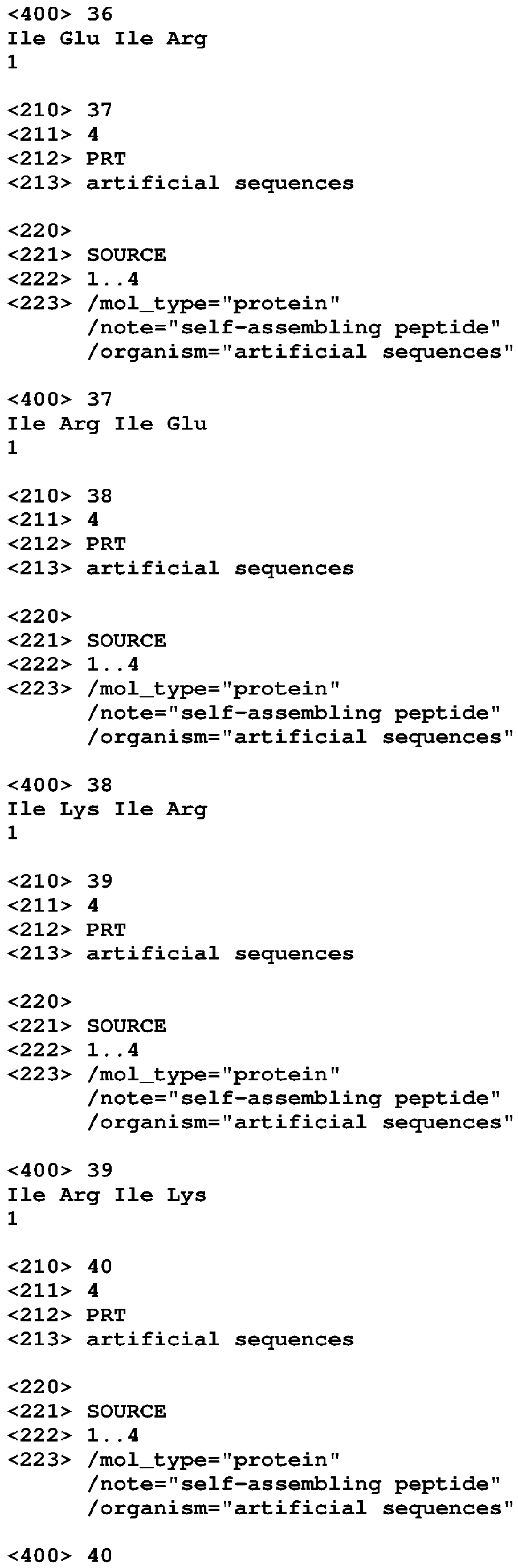


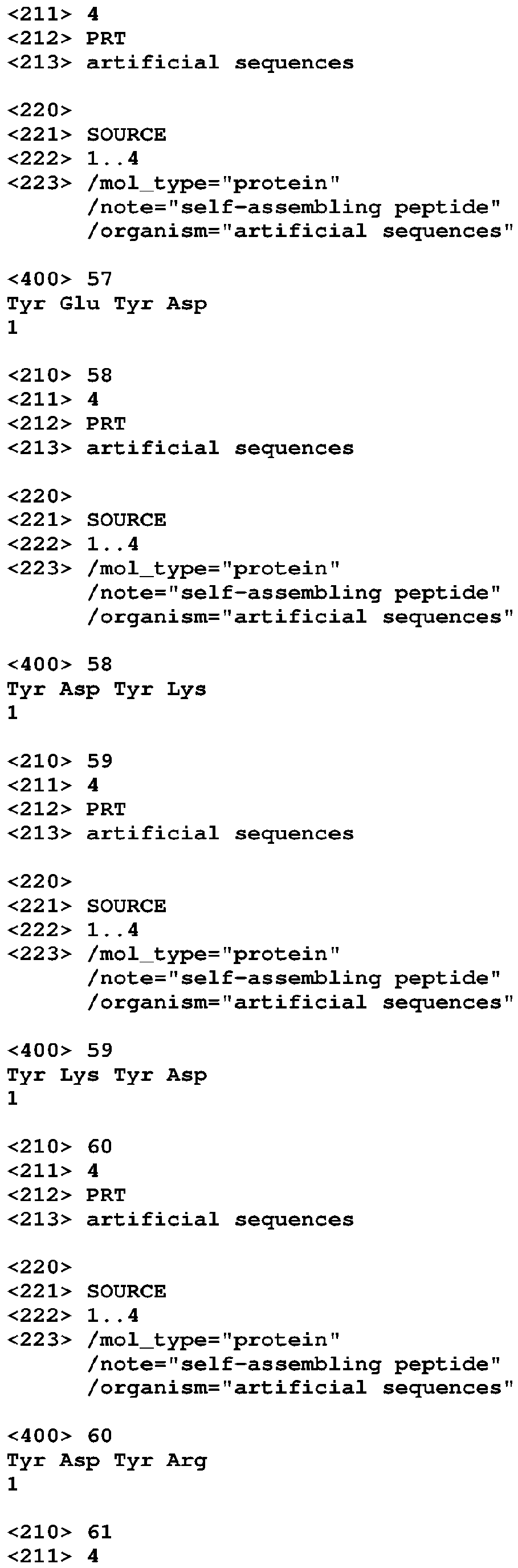
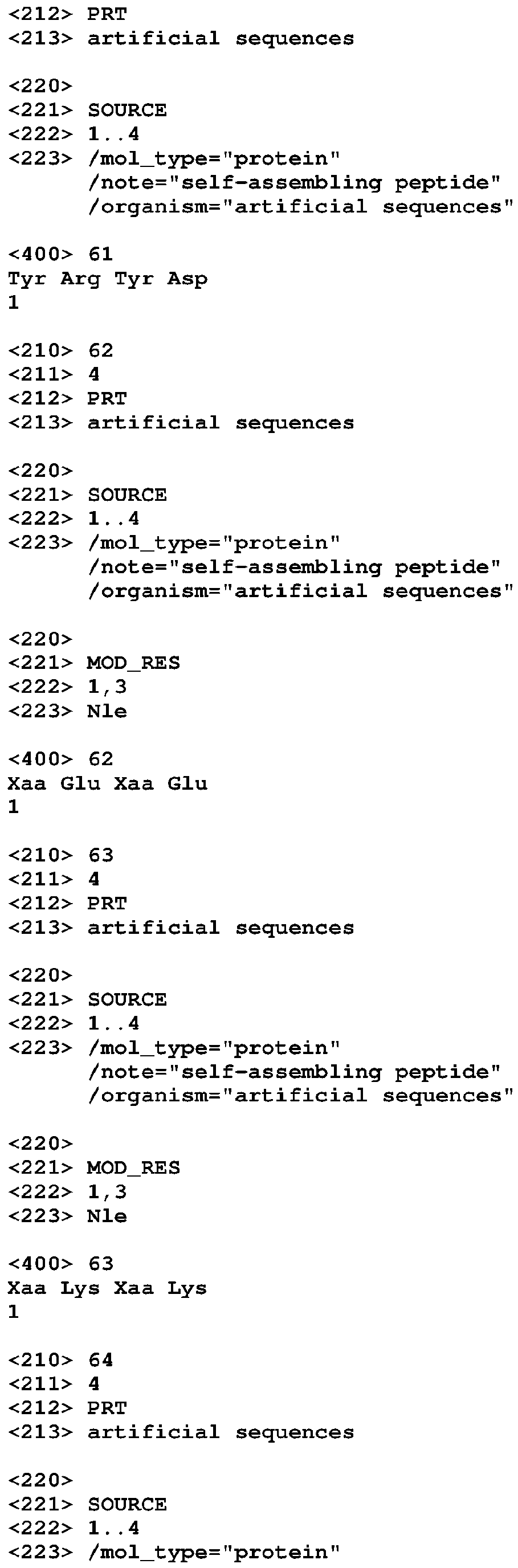


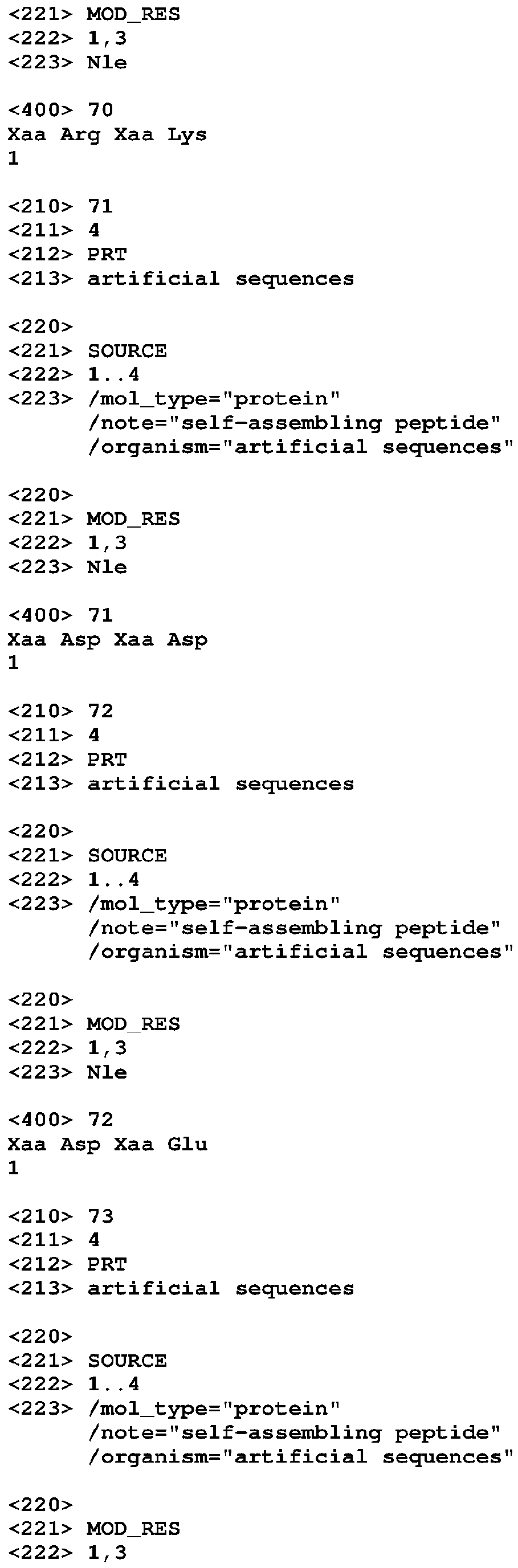


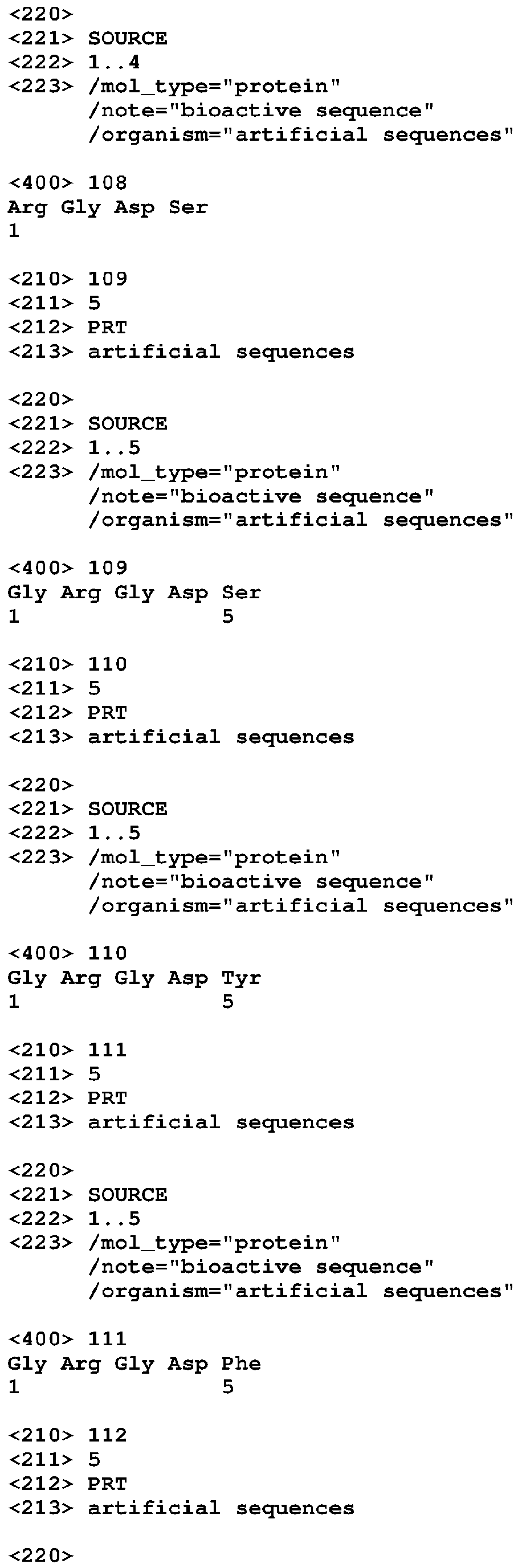
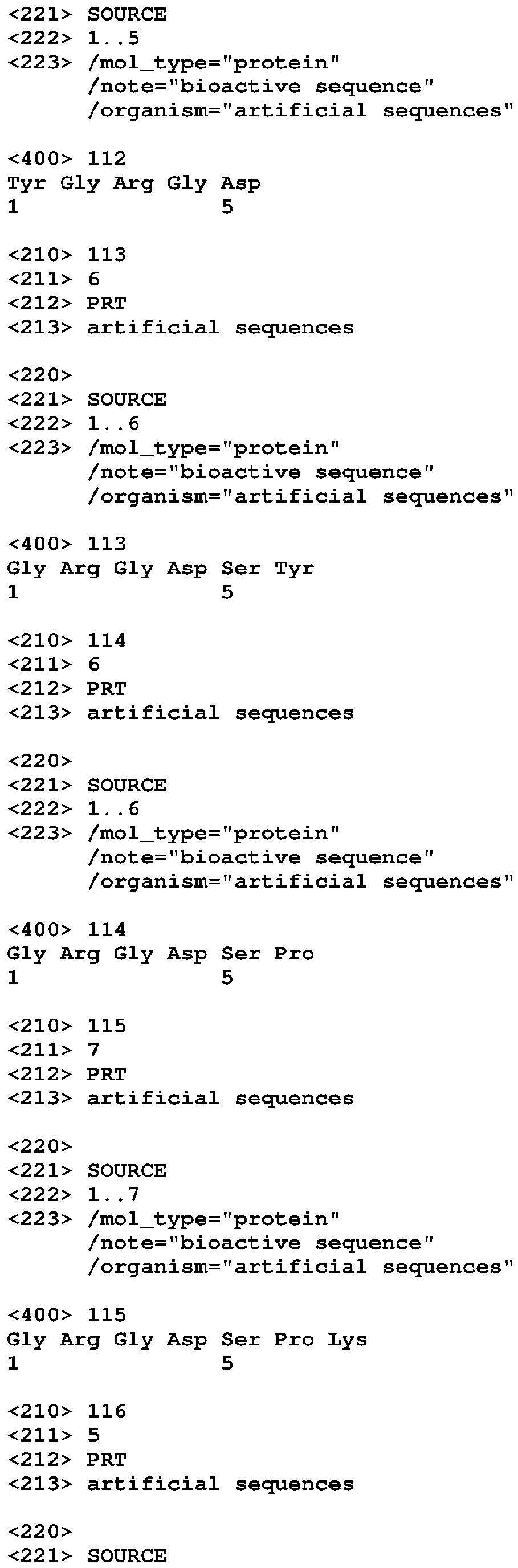


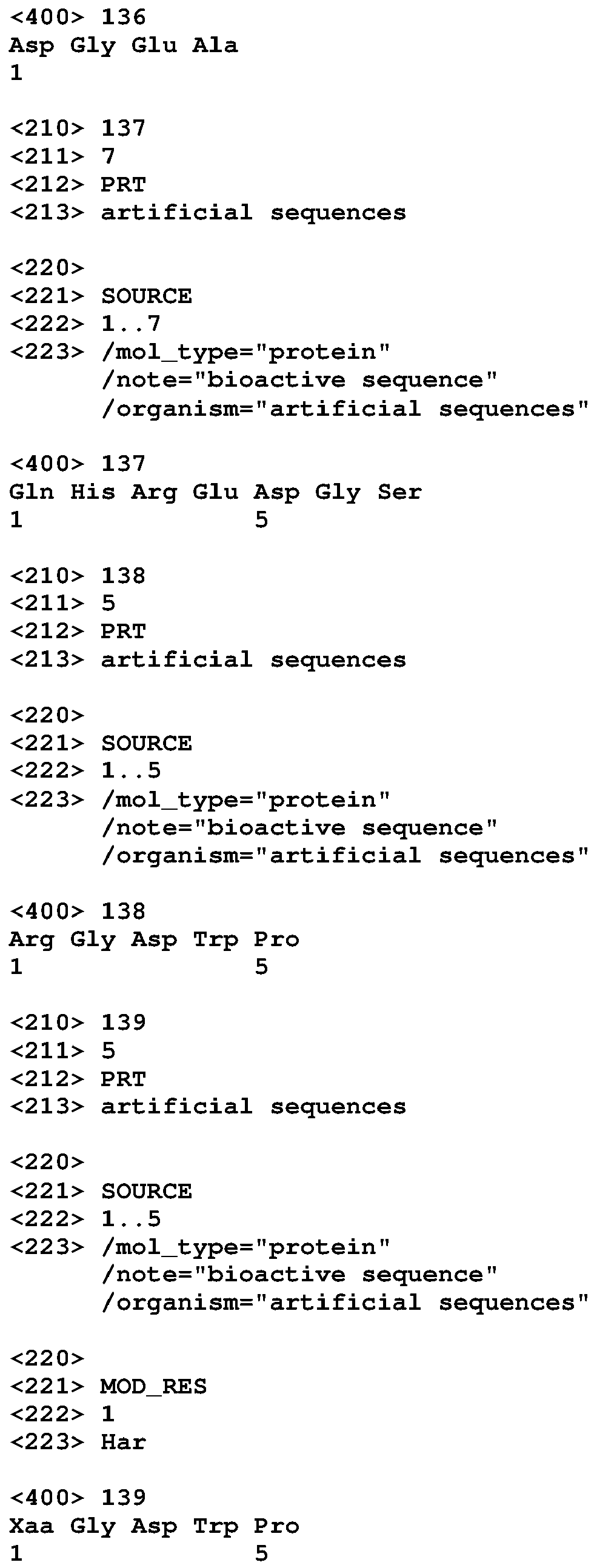
Claims (11)
- A process for preparing a peptide moiety comprising an amino acid sequence (I)
H-Xaa1-Xaa5-Xaa3-Xaa6-R1 (I),
wherein R1 is selected from OH and NH2 whereby Xaa1 and Xaa3 are residues of hydrophobic amino acids ; and
Xaa5 and Xaa6 are residues of charged amino acids,
whereby the process is carried out in liquid phase and comprises the following peptide coupling steps :a) coupling of PG1-Xaa1-OH and H-Xaa5-OH to form PG1-Xaa1-Xaa5-OH;b) coupling of PG1-Xaa3-OH and H-Xaa6-R1 to form PG1-Xaa3-Xaa6-R1 ; andc) coupling of PG1-Xaa1-Xaa5-OH and H-Xaa3-Xaa6-R1 to form PG1-Xaa1-Xaa5-Xaa3-Xaa6-R1 ;to form the peptide moiety comprising the amino acid sequence (I),
whereby PG1 is a N-terminal protective group. - A process for preparing a peptide moiety comprising an amino acid sequence (II)
H-Xaa1-Xaa2-Xaa3-Xaa4-Xaa1-Xaa5-Xaa3-Xaa6-R1 (II),
wherein R1 is selected from OH and NH2
whereby Xaa1 and Xaa3 are residues of hydrophobic amino acids ; and
Xaa2, Xaa4, Xaa5 and Xaa6 are residues of charged amino acids,
whereby the process is carried out in liquid phase and comprises the following peptide coupling steps :aa) coupling of PG1-Xaa1-OH and H-Xaa2-OH to form PG1-Xaa1-Xaa2-OH ;bb) coupling of PG1-Xaa3-OH and H-Xaa4-OH to form PG1-Xaa3-Xaa4-OH ;cc) coupling of PG1-Xaa1-Xaa2-OH and H-Xaa3-Xaa4-OH to form PG1-Xaa1-Xaa2-Xaa3-Xaa4-OH ;dd) coupling of PG1-Xaa1-OH and H-Xaa5-OH to form PG1-Xaa1-Xaa5-OH ;ee) coupling of PG1-Xaa3-OH and H-Xaa6-R1 to form PG1-Xaa3-Xaa6-R1 ;ff) coupling of PG1-Xaa1-Xaa5-OH and H-Xaa3-Xaa6-R1 to form PG1-Xaa1-Xaa5-Xaa3-Xaa6-R1 ;gg) coupling of PG1-Xaa1-Xaa2-Xaa3-Xaa4-OH and H-Xaa1-Xaa5-Xaa3-Xaa6-R1 to form the peptide moiety comprising the amino acid sequence (II),whereby PG1 is a N-terminal protective group. - The process of claims 1 or 2, whereby Xaa1 and Xaa3 are selected from the group consisting of phenylalanine, tryptophan, histidine, tyrosine, leucine, isoleucine, norleucine, alanine and valine residues ; and
Xaa2, Xaa4, Xaa5 and Xaa6 are selected from the group consisting of arginine, aspartic acid, glutamic acid and lysine residues. - The process of any of claims 1 to 3, whereby the peptide coupling steps a)-c) and aa)-gg) employ persilylated amino acids or persilylated peptides as intermediates.
- The process of any of claims 2 to 4, whereby the residues of amino acids Xaa2 and Xaa5 are identical and are glutamic acid residues ; and
Xaa4 and Xaa6 are identical and are lysine residues. - The process of any of claims 2 to 4, whereby the residues of amino acids Xaa2 and Xaa4 are identical and are glutamic acid residues ; and
Xaa5 and Xaa6 are identical and are lysine residues. - The process of any of claims 1 to 6, whereby the residues of amino acids Xaa1 and Xaa3 are identical and are selected from the group consisting of valine, leucine, isoleucine, norleucine, phenylalanine, tryptophan and tyrosine residues.
- The process of any of claims 1 to 7, whereby the peptide moiety consists of 4 to 20 amino acid residues.
- The process of any of claims 1 to 8, whereby the N-terminal protective group PG1 is cleavable under reducing conditions.
- The process of any of claims 1 to 9, whereby the side chains of aspartic acid, glutamic acid and lysine residues are protected by protective groups cleavable under acidic conditions.
- A process for synthesis of a polymer covalently linked with at least one peptide, wherein the peptide comprises the peptide moiety obtained by the process according to claims 1 to 10 and a functional peptide moiety comprising a bioactive amino acid sequence,
whereby the process is carried out in liquid phase and comprises the following steps :i) esterification of the C-terminal carboxylic acid group of the peptide moiety;ii) removal of the N-terminal protective group PG1 ;iii) coupling of the compound obtained in step ii) with the functional peptide moiety, whereby said peptide is obtained ;iv) covalent linking of the peptide obtained in step iii) with the thermoresponsive polymer through a linkage selected from the group consisting of a thioether linkage, an amino linkage, an amido linkage, an ester linkage or an ether linkage.
Priority Applications (1)
| Application Number | Priority Date | Filing Date | Title |
|---|---|---|---|
| EP11195626.4A EP2607373A1 (en) | 2011-12-23 | 2011-12-23 | Liquid phase synthesis of self-assembling peptides to be linked to polymers or to other bioactive and/or self-assembling peptides |
Applications Claiming Priority (1)
| Application Number | Priority Date | Filing Date | Title |
|---|---|---|---|
| EP11195626.4A EP2607373A1 (en) | 2011-12-23 | 2011-12-23 | Liquid phase synthesis of self-assembling peptides to be linked to polymers or to other bioactive and/or self-assembling peptides |
Publications (1)
| Publication Number | Publication Date |
|---|---|
| EP2607373A1 true EP2607373A1 (en) | 2013-06-26 |
Family
ID=45463370
Family Applications (1)
| Application Number | Title | Priority Date | Filing Date |
|---|---|---|---|
| EP11195626.4A Withdrawn EP2607373A1 (en) | 2011-12-23 | 2011-12-23 | Liquid phase synthesis of self-assembling peptides to be linked to polymers or to other bioactive and/or self-assembling peptides |
Country Status (1)
| Country | Link |
|---|---|
| EP (1) | EP2607373A1 (en) |
Cited By (3)
| Publication number | Priority date | Publication date | Assignee | Title |
|---|---|---|---|---|
| CN111171115A (en) * | 2020-01-06 | 2020-05-19 | 山东大学 | Method for controlling reversible assembly of polypeptide crystal by adjusting pH value |
| EP3819308A1 (en) * | 2019-11-07 | 2021-05-12 | Fresenius Kabi iPSUM S.r.l. | Process for the manufacture of derivatized amino acids |
| CN115819621A (en) * | 2022-09-27 | 2023-03-21 | 华南理工大学 | A fusion protein containing salinity-induced self-assembly peptide and its application in recombinant protein purification |
Citations (4)
| Publication number | Priority date | Publication date | Assignee | Title |
|---|---|---|---|---|
| US4725645A (en) * | 1984-11-23 | 1988-02-16 | Solvay & Cie. (Societe Anonyme) | Process for synthesising peptides |
| WO2006014570A2 (en) * | 2004-07-06 | 2006-02-09 | 3D Matrix, Inc. | Purified amphilic peptide compositions and uses thereof |
| US20090162437A1 (en) * | 2006-09-26 | 2009-06-25 | Massachusetts Institute Of Technology | Modified self-assembling peptides |
| US20100298537A1 (en) * | 2007-11-19 | 2010-11-25 | Solvay (Societe Anonyme) | Process for the manufacture of persilylated peptides |
-
2011
- 2011-12-23 EP EP11195626.4A patent/EP2607373A1/en not_active Withdrawn
Patent Citations (4)
| Publication number | Priority date | Publication date | Assignee | Title |
|---|---|---|---|---|
| US4725645A (en) * | 1984-11-23 | 1988-02-16 | Solvay & Cie. (Societe Anonyme) | Process for synthesising peptides |
| WO2006014570A2 (en) * | 2004-07-06 | 2006-02-09 | 3D Matrix, Inc. | Purified amphilic peptide compositions and uses thereof |
| US20090162437A1 (en) * | 2006-09-26 | 2009-06-25 | Massachusetts Institute Of Technology | Modified self-assembling peptides |
| US20100298537A1 (en) * | 2007-11-19 | 2010-11-25 | Solvay (Societe Anonyme) | Process for the manufacture of persilylated peptides |
Non-Patent Citations (3)
| Title |
|---|
| EBERT G ET AL: "Salt effect on the conformation of an alternating copolymer of l-leucine and l-lysine", POLYMER, ELSEVIER SCIENCE PUBLISHERS B.V, GB, vol. 23, no. 8, 1 July 1982 (1982-07-01), pages 1154 - 1158, XP024122031, ISSN: 0032-3861, [retrieved on 19820701], DOI: 10.1016/0032-3861(82)90370-6 * |
| FUKUSHIMA, YASUMASA: "Synthesis and highly stable .beta.-sheet formation of", POLYMER JOURNAL (TOKYO) , 28(2), 113-20 CODEN: POLJB8; ISSN: 0032-3896, 1996, XP002676461 * |
| GERHARD SEIPKE ET AL: "Synthesis and properties of alternating poly(Lys-Phe) and comparison with the random copolymer poly(Lys51, Phe49)", BIOPOLYMERS, vol. 13, no. 8, 1 August 1974 (1974-08-01), pages 1621 - 1633, XP055027890, ISSN: 0006-3525, DOI: 10.1002/bip.1974.360130809 * |
Cited By (3)
| Publication number | Priority date | Publication date | Assignee | Title |
|---|---|---|---|---|
| EP3819308A1 (en) * | 2019-11-07 | 2021-05-12 | Fresenius Kabi iPSUM S.r.l. | Process for the manufacture of derivatized amino acids |
| CN111171115A (en) * | 2020-01-06 | 2020-05-19 | 山东大学 | Method for controlling reversible assembly of polypeptide crystal by adjusting pH value |
| CN115819621A (en) * | 2022-09-27 | 2023-03-21 | 华南理工大学 | A fusion protein containing salinity-induced self-assembly peptide and its application in recombinant protein purification |
Similar Documents
| Publication | Publication Date | Title |
|---|---|---|
| EP2873677B1 (en) | Method of producing self-assembling peptide derivative | |
| ES2786225T3 (en) | Method for preparing AMG 416 | |
| CA3017926C (en) | Methods for synthesizing .alpha.4.beta.7 peptide antagonists | |
| AU716531B2 (en) | Collagen-like peptoid residue-containing structures | |
| US9051349B2 (en) | Larazotide acetate compositions | |
| CA2705693A1 (en) | Process for the manufacture of persilylated peptides | |
| AU2019393261A1 (en) | An improved process for the preparation of plecanatide | |
| US6184345B1 (en) | Branched building units for synthesizing cyclic peptides | |
| US20030073807A1 (en) | Bi-directional synthesis of oligoguanidine transport agents | |
| KR20200078999A (en) | Process for the Preparation of Tripeptide | |
| EP2864347B1 (en) | Synthesis of beta-turn peptidomimetic cyclic compounds | |
| WO2017175233A1 (en) | Process for large scale liquid phase synthesis of carbetocin and its novel intermediates | |
| Demin et al. | Synthesis of glutaryl-containing derivatives of GRGD and KRGD peptides | |
| RU2777327C1 (en) | Method for synthesising peptides | |
| JP2620727B2 (en) | Peptide lipid | |
| TW201730203A (en) | Method for preparation of RADA-16 | |
| US20080242836A1 (en) | Convergent Solid Phase Peptide Synthesis By Reaction Of Two Fragments Bound To Solid Support | |
| Lobo Ruiz | Pushing peptides further: Novel methodologies for the synthesis of backbone-modified peptides | |
| Knauer | Aqueous solid-phase peptide synthesis (ASPPS): A novel concept of peptide synthesis | |
| JPH04221395A (en) | Peptide lipid | |
| JP2620729B2 (en) | Peptide derivative | |
| US20090099307A1 (en) | Inverse solid phase peptide synthesis with additional capping step | |
| JPWO2007043615A1 (en) | Peptide ester reagents and their use for the production of ligation or thioester compounds | |
| Chen | Ionic liquids as novel reaction media for the chemical synthesis of peptides | |
| TW201307379A (en) | A process for extraction of peptides and its application in liquid phase peptide synthesis |
Legal Events
| Date | Code | Title | Description |
|---|---|---|---|
| AK | Designated contracting states |
Kind code of ref document: A1 Designated state(s): AL AT BE BG CH CY CZ DE DK EE ES FI FR GB GR HR HU IE IS IT LI LT LU LV MC MK MT NL NO PL PT RO RS SE SI SK SM TR |
|
| AX | Request for extension of the european patent |
Extension state: BA ME |
|
| PUAI | Public reference made under article 153(3) epc to a published international application that has entered the european phase |
Free format text: ORIGINAL CODE: 0009012 |
|
| RAP1 | Party data changed (applicant data changed or rights of an application transferred) |
Owner name: PEPTISYNTHA SA |
|
| 17P | Request for examination filed |
Effective date: 20140102 |
|
| RBV | Designated contracting states (corrected) |
Designated state(s): AL AT BE BG CH CY CZ DE DK EE ES FI FR GB GR HR HU IE IS IT LI LT LU LV MC MK MT NL NO PL PT RO RS SE SI SK SM TR |
|
| 17Q | First examination report despatched |
Effective date: 20150909 |
|
| STAA | Information on the status of an ep patent application or granted ep patent |
Free format text: STATUS: THE APPLICATION IS DEEMED TO BE WITHDRAWN |
|
| 18D | Application deemed to be withdrawn |
Effective date: 20160120 |