EP2605764B1 - Compositions for the treatment of cancer - Google Patents
Compositions for the treatment of cancer Download PDFInfo
- Publication number
- EP2605764B1 EP2605764B1 EP11749393.2A EP11749393A EP2605764B1 EP 2605764 B1 EP2605764 B1 EP 2605764B1 EP 11749393 A EP11749393 A EP 11749393A EP 2605764 B1 EP2605764 B1 EP 2605764B1
- Authority
- EP
- European Patent Office
- Prior art keywords
- compound
- day
- cetuximab
- acceptable salt
- bid
- Prior art date
- Legal status (The legal status is an assumption and is not a legal conclusion. Google has not performed a legal analysis and makes no representation as to the accuracy of the status listed.)
- Active
Links
Images





Classifications
-
- A—HUMAN NECESSITIES
- A61—MEDICAL OR VETERINARY SCIENCE; HYGIENE
- A61K—PREPARATIONS FOR MEDICAL, DENTAL OR TOILETRY PURPOSES
- A61K31/00—Medicinal preparations containing organic active ingredients
- A61K31/33—Heterocyclic compounds
- A61K31/395—Heterocyclic compounds having nitrogen as a ring hetero atom, e.g. guanethidine or rifamycins
- A61K31/435—Heterocyclic compounds having nitrogen as a ring hetero atom, e.g. guanethidine or rifamycins having six-membered rings with one nitrogen as the only ring hetero atom
- A61K31/4353—Heterocyclic compounds having nitrogen as a ring hetero atom, e.g. guanethidine or rifamycins having six-membered rings with one nitrogen as the only ring hetero atom ortho- or peri-condensed with heterocyclic ring systems
- A61K31/437—Heterocyclic compounds having nitrogen as a ring hetero atom, e.g. guanethidine or rifamycins having six-membered rings with one nitrogen as the only ring hetero atom ortho- or peri-condensed with heterocyclic ring systems the heterocyclic ring system containing a five-membered ring having nitrogen as a ring hetero atom, e.g. indolizine, beta-carboline
-
- A—HUMAN NECESSITIES
- A61—MEDICAL OR VETERINARY SCIENCE; HYGIENE
- A61K—PREPARATIONS FOR MEDICAL, DENTAL OR TOILETRY PURPOSES
- A61K31/00—Medicinal preparations containing organic active ingredients
-
- A—HUMAN NECESSITIES
- A61—MEDICAL OR VETERINARY SCIENCE; HYGIENE
- A61K—PREPARATIONS FOR MEDICAL, DENTAL OR TOILETRY PURPOSES
- A61K31/00—Medicinal preparations containing organic active ingredients
- A61K31/33—Heterocyclic compounds
- A61K31/395—Heterocyclic compounds having nitrogen as a ring hetero atom, e.g. guanethidine or rifamycins
- A61K31/435—Heterocyclic compounds having nitrogen as a ring hetero atom, e.g. guanethidine or rifamycins having six-membered rings with one nitrogen as the only ring hetero atom
- A61K31/47—Quinolines; Isoquinolines
- A61K31/4738—Quinolines; Isoquinolines ortho- or peri-condensed with heterocyclic ring systems
- A61K31/4745—Quinolines; Isoquinolines ortho- or peri-condensed with heterocyclic ring systems condensed with ring systems having nitrogen as a ring hetero atom, e.g. phenantrolines
-
- A—HUMAN NECESSITIES
- A61—MEDICAL OR VETERINARY SCIENCE; HYGIENE
- A61K—PREPARATIONS FOR MEDICAL, DENTAL OR TOILETRY PURPOSES
- A61K31/00—Medicinal preparations containing organic active ingredients
- A61K31/33—Heterocyclic compounds
- A61K31/395—Heterocyclic compounds having nitrogen as a ring hetero atom, e.g. guanethidine or rifamycins
- A61K31/495—Heterocyclic compounds having nitrogen as a ring hetero atom, e.g. guanethidine or rifamycins having six-membered rings with two or more nitrogen atoms as the only ring heteroatoms, e.g. piperazine or tetrazines
- A61K31/505—Pyrimidines; Hydrogenated pyrimidines, e.g. trimethoprim
- A61K31/517—Pyrimidines; Hydrogenated pyrimidines, e.g. trimethoprim ortho- or peri-condensed with carbocyclic ring systems, e.g. quinazoline, perimidine
-
- A—HUMAN NECESSITIES
- A61—MEDICAL OR VETERINARY SCIENCE; HYGIENE
- A61K—PREPARATIONS FOR MEDICAL, DENTAL OR TOILETRY PURPOSES
- A61K39/00—Medicinal preparations containing antigens or antibodies
- A61K39/395—Antibodies; Immunoglobulins; Immune serum, e.g. antilymphocytic serum
-
- A—HUMAN NECESSITIES
- A61—MEDICAL OR VETERINARY SCIENCE; HYGIENE
- A61K—PREPARATIONS FOR MEDICAL, DENTAL OR TOILETRY PURPOSES
- A61K45/00—Medicinal preparations containing active ingredients not provided for in groups A61K31/00 - A61K41/00
-
- A—HUMAN NECESSITIES
- A61—MEDICAL OR VETERINARY SCIENCE; HYGIENE
- A61K—PREPARATIONS FOR MEDICAL, DENTAL OR TOILETRY PURPOSES
- A61K45/00—Medicinal preparations containing active ingredients not provided for in groups A61K31/00 - A61K41/00
- A61K45/06—Mixtures of active ingredients without chemical characterisation, e.g. antiphlogistics and cardiaca
-
- A—HUMAN NECESSITIES
- A61—MEDICAL OR VETERINARY SCIENCE; HYGIENE
- A61P—SPECIFIC THERAPEUTIC ACTIVITY OF CHEMICAL COMPOUNDS OR MEDICINAL PREPARATIONS
- A61P35/00—Antineoplastic agents
-
- A—HUMAN NECESSITIES
- A61—MEDICAL OR VETERINARY SCIENCE; HYGIENE
- A61P—SPECIFIC THERAPEUTIC ACTIVITY OF CHEMICAL COMPOUNDS OR MEDICINAL PREPARATIONS
- A61P43/00—Drugs for specific purposes, not provided for in groups A61P1/00-A61P41/00
-
- C—CHEMISTRY; METALLURGY
- C07—ORGANIC CHEMISTRY
- C07K—PEPTIDES
- C07K16/00—Immunoglobulins [IG], e.g. monoclonal or polyclonal antibodies
- C07K16/18—Immunoglobulins [IG], e.g. monoclonal or polyclonal antibodies against material from animals or humans
- C07K16/28—Immunoglobulins [IG], e.g. monoclonal or polyclonal antibodies against material from animals or humans against receptors, cell surface antigens or cell surface determinants
- C07K16/2863—Immunoglobulins [IG], e.g. monoclonal or polyclonal antibodies against material from animals or humans against receptors, cell surface antigens or cell surface determinants against receptors for growth factors, growth regulators
-
- A—HUMAN NECESSITIES
- A61—MEDICAL OR VETERINARY SCIENCE; HYGIENE
- A61K—PREPARATIONS FOR MEDICAL, DENTAL OR TOILETRY PURPOSES
- A61K39/00—Medicinal preparations containing antigens or antibodies
- A61K2039/505—Medicinal preparations containing antigens or antibodies comprising antibodies
-
- C—CHEMISTRY; METALLURGY
- C07—ORGANIC CHEMISTRY
- C07K—PEPTIDES
- C07K2317/00—Immunoglobulins specific features
- C07K2317/20—Immunoglobulins specific features characterized by taxonomic origin
- C07K2317/24—Immunoglobulins specific features characterized by taxonomic origin containing regions, domains or residues from different species, e.g. chimeric, humanized or veneered
-
- C—CHEMISTRY; METALLURGY
- C07—ORGANIC CHEMISTRY
- C07K—PEPTIDES
- C07K2317/00—Immunoglobulins specific features
- C07K2317/70—Immunoglobulins specific features characterized by effect upon binding to a cell or to an antigen
- C07K2317/76—Antagonist effect on antigen, e.g. neutralization or inhibition of binding
Definitions
- the present invention relates to a combination therapy for treating a patient suffering from a proliferative disorder, in particular a solid tumor, for example, colorectal cancer, melanoma, and thyroid cancer, comprising administering to the patient propane-1-sulfonic acid ⁇ 3-[5-(4-chlorophenyl)-1H-pyrrolo [2,3-b] pyridine-3-carbonyl]-2,4-difluoro-phenyl ⁇ -amide and a EGFR inhibitor, i.e. erlotinib or cetuximab.
- a proliferative disorder in particular a solid tumor, for example, colorectal cancer, melanoma, and thyroid cancer
- propane-1-sulfonic acid ⁇ 3-[5-(4-chlorophenyl)-1H-pyrrolo [2,3-b] pyridine-3-carbonyl]-2,4-difluoro-phenyl ⁇ -amide
- a EGFR inhibitor i
- b-Raf Normally functioning b-Raf is a kinase which is involved in the relay of signals from the cell membrane to the nucleus and is active only when it is needed to relay such signals. Mutant b-Raf having the V600E mutation, however, is constantly active and thus plays a role in tumor development. Such mutant b-Raf has been implicated in various tumors, for example, colorectal cancer, melanoma, and thyroid cancer.
- Propane-1-sulfonic acid ⁇ 3-[5-(4-chloro-phenyl)-1H-pyrrolo [2,3-b] pyridine-3-carbonyl]-2,4-difluoro-phenyl ⁇ -amide (hereafter also referred to as "Compound I”) is a b-raf kinase inhibitor that specifically targets mutant b-Raf having the V600E mutation.
- This compound is described in WO 2007/002325 . Accordingly, such an inhibitor is used in the inhibition of tumors, particularly solid tumors, for example, colorectal cancer, melanoma, and thyroid cancer, which comprise b-Raf having a V600 mutation, preferably the V600E mutation.
- PTKs Protein tyrosine kinases catalyze the phosphorylation of tyrosyl residues in various proteins involved in the regulation of cell growth and differentiation ( Wilks et al., Progress in Growth Factor Research 97 (1990) 2 ; Chan, A. C., and Shaw, A. S., Curr. Opin. Immunol. 8 (1996) 394-401 ).
- PTKs can be divided into receptor tyrosine kinases (e.g. EGFR/HER-1, c-erbB-2/HER-2, c-met, PDGFr, FGFr) and non-receptor tyrosine kinases (e.g. src, lck).
- receptor tyrosine kinases of the HER-family like HER-2 and EGFR are frequently aberrantly expressed in common human cancers such as breast cancer, gastrointestinal cancer (colon, rectal or stomach cancer), thyroid, leukemia and ovarian, bronchial and pancreatic cancer and melanoma. High levels of these receptors correlate with poor prognosis and response to treatment ( Wright, C., et al., Br. J. Cancer 65 (1992) 118-121 ).
- Inhibitors of PTKs have been developed. Tumors comprising b-Raf having the V600E mutation, however, have been known to be resilient to treatment with EGFR inhibitors. See Prewett et al., Clin. Cancer Res. (2002), 8:994-1003 and Ouchi et al., Cancer Chemother. Pharmacol. (2006), 57:693-702 . Applicants have unexpectedly found, however, that combination therapy with Compound I and an EGFR inhibitor not only is capable of reducing such resilience but also results in improved antineoplastic effects that are significantly superior to the results obtained with each compound alone without a significant increase in toxicity.
- topoisomerase inhibitors are also antiproliferative agents. Tumors containing the V600E mutation, however, have also been known to be resilient to treatment with topoisomerase inhibtors. See Prewett et al., Clin. Cancer Res. (2002), 8:994-1003 and Abal et al., Oncogene (2004), 23:1737-44 .
- the present invention relates to a pharmaceutical product comprising (A) a first component which comprises, as an active agent, propane-1-sulfonic acid ⁇ 3-[5-(4-chloro-phenyl)-1H-pyrrolo [2,3-b]pyridine-3-carbonyl]-2,4-difluoro-phenyl ⁇ -amide, or a pharmaceutically-acceptable salt thereof; and (B) a second component which comprises, as an active agent, an EGFR inhibitor erlotinib or cetuximab; as a combined preparation for the simultaneous or sequential use in the treatment of cancer comprising b-Raf having a V600 mutation.
- A a first component which comprises, as an active agent, propane-1-sulfonic acid ⁇ 3-[5-(4-chloro-phenyl)-1H-pyrrolo [2,3-b]pyridine-3-carbonyl]-2,4-difluoro-phenyl ⁇ -amide, or a pharmaceutically-acceptable salt thereof
- the present invention also relates to a kit comprising: (A) a first component which comprises, as an active agent, Compound I, or a pharmaceutically-acceptable salt thereof; and (B) a second component which comprises, as an active agent, an EGFR inhibitor erlotinib or cetuximab.
- the present invention further relates to a pharmaceutical product comprising: (A) a first component which comprises, as an active agent, Compound I, or a pharmaceutically-acceptable salt thereof; and (B) a second component which comprises, as an active agent, an EGFR inhibitor erlotinib or cetuximab; and optionally (C) a third component which comprises a topoisomerase inhibitor irinotecan or a pharmaceutically acceptable salt thereof; as a combined preparation for the simultaneous or sequential use in the treatment of cancer comprising b-Raf having a V600 mutation.
- the present invention relates to the combination comprising Compound I, or a pharmaceutically-acceptable salt thereof, and an EGFR inhibitor erlotinib or cetuximab for use in the treatment of cancer comprising b-Raf having a V600 mutation.
- a yet further aspect of the present invention is the use of Compound I, or a pharmaceutically-acceptable salt thereof, and an EGFR inhibitor erlotinib or cetuximab for the preparation of a medicament for the treatment of cancer comprising b-Raf having a V600 mutation.
- Compound I shall herein refer to propane-1-sulfonic acid ⁇ 3-[5-(4-chlorophenyl)-1H-pyrrolo [2,3-b] pyridine-3-carbonyl]-2,4-difluoro-phenyl ⁇ -amide. This is a compound having the following structure.
- Compound I is a b-Raf kinase inhibitor that specifically targets b-Raf having the V600E mutation.
- V600E mutation of b-Raf refers to a mutation in the b-Raf protein wherein the valine residue at residue position 600 of b-Raf is replaced by glutamic acid.
- HER refers to human epidermal receptor
- EGFR epidermal growth factor receptor
- the term "combined preparation" as used herein means simultaneous or sequential combination.
- the active agents used in the present combinations for example compound I, or a topoisomerase inhibitor such irinotecan, or an EGFR inhibitor erlotinib or a pharmaceutically acceptable salt, or cetuximab can be used in any applicable dosage form, such as for example tablets, capsules, solutions, suspensions and the like, depending on the properties of the selected active ingredient.
- Compound I, or a pharmaceutically acceptable salt thereof may, for example, be administered orally.
- Erlotinib, or a pharmaceutically acceptable salt thereof may, for example, be administered orally.
- Cetuximab may, for example, be administered intraperitoneally or intravenously.
- Irinotecan HCl or the pharmaceutically acceptable salt thereof may, for example, be administered intraperitoneally or intravenously.
- the term "pharmaceutically acceptable carrier” indicates that the indicated carrier does not have properties that would cause a reasonably prudent medical practitioner to avoid administration thereof to a patient, taking into consideration the disease or conditions to be treated and the respective route of administration.
- the term “pharmaceutically acceptable salt” of a compound refers to any conventional salt or base addition salt that retains the biological effectiveness and properties of the compound and which is formed from a suitable non-toxic organic or inorganic acid or organic or inorganic base.
- the term “therapeutically effective” means an amount of drug, or combination or composition, which is effective for producing a desired therapeutic effect upon administration to a patient, for example, to stem the growth, or result in the shrinkage, of a cancerous tumor or to increase the patient's life span.
- cell proliferative disorder and “proliferative disorder” refer to disorders that are associated with some degree of abnormal cell proliferation.
- the proliferative disorder is cancer.
- cancer and “cancerous” refer to or describe the physiological condition in mammals that is typically characterized by unregulated cell growth/proliferation.
- examples of cancer include, but are not limited to, colorectal cancer, melanoma, and thyroid cancer.
- colon tumor or “colorectal cancer” refers to any tumor or cancer of the large bowel, which includes the colon (the large intestine from the cecum to the rectum) and the rectum, including, e.g., adenocarcinomas and less prevalent forms, such as lymphomas and squamous cell carcinomas.
- “Inhibiting cell growth or proliferation” means decreasing a cell's growth or proliferation by at least 10%, 20%, 30%, 40%, 50%, 60%, 70%, 80%, 90%, 95%, or 100%, and includes inducing cell death.
- substantially reduced refers to a sufficiently high degree of difference between two numeric values (generally one associated with a molecule and the other associated with a reference/comparator molecule) such that one of skill in the art would consider the difference between the two values to be of statistical significance within the context of the biological characteristic measured by said values.
- tumor refers to all neoplastic cell growth and proliferation, whether malignant or benign, and all pre-cancerous and cancerous cells and tissues.
- cancer refers to all neoplastic cell growth and proliferation, whether malignant or benign, and all pre-cancerous and cancerous cells and tissues.
- cancer refers to all neoplastic cell growth and proliferation, whether malignant or benign, and all pre-cancerous and cancerous cells and tissues.
- regression of a tumor is said to occur following treatment when the volume of said tumor is reduced. If the tumor remains present (tumor volume > 0 mm 3 ) but its volume is reduced from what it was at the initiation of treatment, “partial regression” (PR) is said to have occurred. If the tumor is palpably absent following treatment, “complete regression” (CR) is said to have occurred.
- small molecule as used herein is a chemical compound with a molecular weight of less than 1000 g/mol, preferably less than 700 g/mol.
- Small molecules according to the present inventions can be obtained by chemical reactions know to the person of skill in the art of organic chemistry and/or medicinal chemistry. Examples of small molecules may be, without limitation, the compound I or the compound known as erlotinib, preferably erlotinib hydrochloride.
- large molecule refers to chemical compounds with a molecular weight of more than 1000 g/mol.
- large molecules are compounds that can be obtained via biotechnological production processes, such as fermentation.
- the term “large molecule” refers to polypeptides, such as for example antibodies, more specifically monoclonal antibodies.
- cetuximab is one example of a large molecule according to the present invention.
- the present invention relates to a pharmaceutical product comprising (A) a first component which comprises, as an active agent, Compound I, or a pharmaceutically-acceptable salt thereof; and (B) a second component which comprises, as an active agent, an EGFR inhibitor erlotinib or cetuximab; the amount of said active agents being such that the combination thereof is therapeutically-effective in the treatment of cancer comprising b-Raf having a V600 mutation.
- the present invention further relates to the above-mentioned product as a combined preparation for the simultaneous or sequential use in the treatment of cancer comprising b-Raf carrying the V600E mutation.
- a method of treating a patient suffering from a proliferative disorder comprising administering to the patient the combination or pharmaceutical preparations as mentioned above, is disclosed.
- Treatment of a proliferative disorder shall be understood to include maintaining or decreasing tumor size, inducing tumor regression (either partial or complete), inhibiting tumor growth, and/or increasing the life span of a patient suffering from said disorder.
- the present invention also relates to a kit or a composition
- a kit or a composition comprising: (A) a first component which comprises, as an active agent, Compound I, or a pharmaceutically-acceptable salt thereof; and (B) a second component which comprises, as an active agent, an EGFR inhibitor erlotinib or cetuximab.
- the kit or composition may be used, for example, in the treatment of cancer comprising b-Raf having a V600 mutation.
- the proliferative disorder is a solid tumor, in particular colorectal cancer, melanoma and/or thyroid cancer.
- the proliferative disorder is a tumor comprising b-Raf having a V600 mutation, preferably the V600E mutation.
- the proliferative disorder is selected from the group consisting of colorectal cancer, melanoma, and thyroid cancer and the cancer involves a tumor comprising b-Raf having a V600 mutation, preferably the V600E mutation.
- the proliferative disorder is a solid tumor comprising b-Raf having a V600 mutation, preferably the V600E mutation.
- the proliferative disorder is colorectal cancer.
- the proliferative disorder is colorectal cancer involving a tumor comprising b-Raf having a V600 mutation, preferably the V600E mutation.
- the EGFR inhibitor is a small molecule EGFR inhibitor.
- the EGFR inhibitor is erlotinib, or a pharmaceutically acceptable salt thereof, for example, erlotinib hydrochloride (erlotinib HCl).
- Erlotinib HCl is also known under its trade name Tarceva ® , and is for example sold in the U.S. by Genentech, South San Francisco, U.S.A.
- the EGFR inhibitor is a large molecule EGFR inhibitor, for example, an antibody that targets EGFR.
- the EGFR inhibitor may be a monoclonal antibody that targets EGFR, for example, cetuximab. Cetuximab is also known under its trade name Erbitux ® and is for example sold in the U.S. by ImClone Systems, Inc., New York, U.S.A.
- the present invention relates to a pharmaceutical product for the treatment of colorectal cancer involving a tumor comprising b-Raf having the V600E mutation, comprising (A) a first component which comprises, as an active agent, Compound I, or a pharmaceutically-acceptable salt thereof; and (B) a second component which comprises, as an active agent, erlotinib, or a pharmaceutically acceptable salt thereof; the amount of said active agents being such that the combination thereof is therapeutically-effective in the treatment of said cancer.
- the present invention relates to a pharmaceutical product for the treatment of colorectal cancer involving a tumor comprising b-Raf having the V600E mutation, comprising (A) a first component which comprises, as an active agent, Compound I, or a pharmaceutically-acceptable salt thereof; and (B) a second component which comprises, as an active agent, cetuximab; the amount of said active agents being such that the combination thereof is therapeutically-effective in the treatment of said cancer.
- each component administered by the present combinations or compositions may, but does not have to be therapeutically effective by itself. That is, this invention specifically contemplates combinations wherein the amount of Compound I, or a pharmaceutically-acceptable salt thereof, and/or the amount of EGFR inhibitor erlotinib or cetuximab, in the combination may be less than the amount that is therapeutically-effective for each active agent when said agent is administered in monotherapy.
- the first component (A) and the second component (B) of the present invention are administered in any amount and for any duration that the combined amounts thereof are therapeutically effective in treating a proliferative disorder.
- Compound I is administered in an amount of from about 200 mg/day to about 3000 mg/day, from about 1000 mg/day to about 2500 mg/day, or from about 1700 mg/day to about 2100 mg/day. In yet another embodiment, the dosage amount is about 1920 mg/day.
- the foregoing amounts of Compound I, or a pharmaceutically acceptable salt thereof may be administered as a single dose daily or divided, for example into equal doses (though this is not required), and administered twice daily (bid).
- Compound I, or a pharmaceutically acceptable salt thereof may be administered in a dosage amount of from about 100 mg to about 1500 mg bid, from about 500 mg to about 1250 mg bid, from about 850 mg to about 1050 mg bid, or about 960 mg bid.
- the administration of Compound I, or a pharmaceutically acceptable salt thereof occurs until disease progression or unacceptable toxicity.
- erlotinib is administered at a dosage amount of from about 20 mg/day to about 500 mg/day, from about 100 mg/day to about 400 mg/day, or from about 100 mg/day to about 200 mg/day.
- the administration of erlotinib, or a pharmaceutically acceptable salt thereof occurs until disease progression or unacceptable toxicity.
- cetuximab is administered at a dosage amount of from about 50 mg/m 2 /week to about 700 mg/m 2 /week, from about 100 mg/m 2 /week to about 600 mg/m 2 /week, or from about 200 mg/m 2 /week to about 500 mg/m 2 /week.
- cetuximab is administered weekly with the first administration being in an amount of from about 400 mg/m 2 to about 500 mg/m 2 and each subsequent administration being in an amount of from about 200 mg/m 2 to about 300 mg/m 2 .
- cetuximab is administered weekly with the first administration being in an amount of about 450 mg/m 2 and each subsequent administration being in an amount of about 250 mg/m 2 .
- the administration of cetuximab occurs until disease progression or unacceptable toxicity.
- the present invention provides a pharmaceutical product comprising (A) a first component which comprises, as an active agent, Compound I or a pharmaceutically-acceptable salt thereof; and (B) a second component which comprises, as an active agent, erlotinib or a pharmaceutically acceptable salt thereof, as a combined preparation for simultaneous or sequential use in the treatment of a proliferative disorder, wherein
- Compound I or a pharmaceutically acceptable salt thereof may be administered twice daily.
- the proliferative disorder to be treated in this way is a solid tumor, in particular colorectal cancer, melanoma, and thyroid cancer, comprising b-Raf having the V600E mutation. More particularly, the proliferative disorder is colorectal cancer involving a tumor comprising b-Raf having the V600E mutation.
- the product of the present invention may comprises compound I or a pharmaceutically acceptable salt thereof, being administered orally in a dosage amount of from about 850 mg to about 1050 mg twice daily or about 960 mg twice daily, and erlotinib or a pharmaceutically acceptable salt thereof, being administered orally in a dosage amount of from about 100 mg/day to about 400 mg/day, or from about 100 mg/day to about 200 mg/day. Both agents may, for example, be administered until disease progression or unacceptable toxicity.
- the present invention also provides a pharmaceutical product comprising (A) a first component which comprises, as an active agent, Compound I, or a pharmaceutically-acceptable salt thereof; and (B) a second component which comprises, as an active agent, cetuximab; as a combined preparation for simultaneous or sequential use in the treatment of a proliferative disorder, wherein
- the proliferative disorder to be treated in this way is a solid tumor, in particular colorectal cancer, melanoma, and thyroid cancer, comprising b-Raf having the V600E mutation. More particularly, the proliferative disorder is colorectal cancer involving a tumor comprising b-Raf having the V600E mutation.
- the product of the present invention may comprises compound I or a pharmaceutically acceptable salt thereof, being administered orally in a dosage amount of from about 850 mg to about 1050 mg twice daily or about 960 mg twice daily; and cetuximab being administered intravenously in a dosage amount of from about 200 mg/m 2 /week to about 500 mg/m 2 /week.
- cetuximab is administered initially as a 400 mg/m 2 dose as a 120-minute intravenous infusion, followed after a week by 250 mg/m 2 doses intravenously infused over 60 minutes once weekly. Both agents may, for example, be administered until disease progression or unacceptable toxicity.
- the present invention also further provides a kit or a composition
- a kit or a composition comprising: (A) a first component which comprises, as an active agent, Compound I, or a pharmaceutically-acceptable salt thereof; and (B) a second component which comprises, as an active agent, erlotinib, or a pharmaceutically-acceptable salt thereof.
- the present invention also further provides a kit or a composition
- a kit or a composition comprising: (A) a first component which comprises, as an active agent, Compound I, or a pharmaceutically-acceptable salt thereof; and (B) a second component which comprises, as an active agent, cetuximab.
- the pharmaceutical product comprising the components (A) and (B) described above is administered in conjunction with radiotherapy and/or in conjunction with the administration of another active agent.
- the present invention provides a pharmaceutical product comprising the components (A) and (B) as described above and a third component (C) which comprises, as an active agent, a topoisomerase inhibitor; as a combined preparation for the simultaneous or sequential use in the treatment of a proliferative disorder such as solid tumors comprising b-Raf having a V600 mutation, preferably the V600E mutation.
- a proliferative disorder such as solid tumors comprising b-Raf having a V600 mutation, preferably the V600E mutation.
- the amount of each component administered with the present combination product may, but does not have to be therapeutically effective by itself and this invention specifically contemplates combinations wherein the amount of each of the active agents in the combination may be less than the amount that is therapeutically-effective for each active agent when said agent is administered in monotherapy.
- the topoisomerase inhibitor is an inhibitor of type I topoisomerase.
- the topoisomerase inhibitor is irinotecan, or a pharmaceutically acceptable salt thereof, for example, irinotecan hydrochloride (irinotecan HCl).
- Irinotecan HCl is sold as Camptosar ® by Pfizer Inc., New York, U.S.A.
- Irinotecan, or the pharmaceutically acceptable salt thereof may, for example, be administered intraperitoneally or intravenously.
- irinotecan, or a pharmaceutically acceptable salt thereof is administered in an amount of from about 1 to about 400 mg/m 2 /week, or from about 1 to about 250 mg/m 2 /week. In another embodiment, irinotecan, or a pharmaceutically acceptable salt thereof, is administered at a dosage amount of from about 50 to about 200 mg/m 2 /week. In yet another embodiment, irinotecan, or a pharmaceutically acceptable salt thereof, is administered at a dosage amount of about 125 mg/m 2 /week.
- dosing of irinotecan, or a pharmaceutically acceptable salt thereof is with a six week cycle at about 75 to about 175 mg/m 2 weekly, for example about 125 mg/m 2 weekly, for the first four weeks, for example on days 1, 8, 15, and 22.
- dosing of irinotecan is with a six week cycle at about 130 to about 230 mg/m 2 weekly, for example about 180 mg/m 2 weekly, every two weeks starting on the first week, for example on days 1, 15, and 29.
- dosing of irinotecan is once every three weeks at about from 300 to about 400 mg/m 2 , for example about 350 mg/m 2 .
- dosing of irinotecan is once every two weeks at about 130 to about 230 mg/m 2 , for example about 180 mg/m 2 . Dosing may be by infusion, for example, over about 90 minutes. Treatment may be until disease progression or unacceptable toxicity.
- each of the components (A), (B) or (C) may be modified by the physician to be lower or higher than that stated herein depending on the needs of the patient, and the reaction of the patient to the treatment.
- the dosages may be administered according to any dosage schedule determined by the physician in accordance with the requirements of the patient.
- the dosages of each of the components may be administered in single or in divided doses over a period of several days, or alternating daily schedules.
- the present invention also provides a pharmaceutical product comprising (A) a first component which comprises, as an active agent, Compound I or a pharmaceutically-acceptable salt thereof; (B) a second component which comprises, as an active agent, cetuximab; and (C) a third component which comprises, as an active agent, irinotecan or a pharmaceutically-acceptable salt thereof; as a combined preparation for simultaneous or sequential use in the treatment of a proliferative disorder, wherein
- the proliferative disorder to be treated in this way is a solid tumor, in particular colorectal cancer, melanoma, and thyroid cancer, comprising b-Raf having the V600E mutation. More particularly, the proliferative disorder is colorectal cancer involving a tumor comprising b-Raf having the V600E mutation.
- the product of the present invention comprises compound I, or a pharmaceutically acceptable salt thereof, being administered orally in a dosage amount of from about 850 mg to about 1050 mg twice daily or about 960 mg twice daily; and cetuximab being administered intravenously in a dosage form and a dosage amount of from about 200 mg/m 2 /week to about 500 mg/m 2 /week; and irinotecan being administered intravenously in a dosage amount of from about 50 to about 200 mg/m 2 /week, or about 125 mg/m 2 /week. All agents may, for example, be administered until disease progression or unacceptable toxicity.
- the present invention also further provides a kit or a composition
- a kit or a composition comprising: (A) a first component which comprises, as an active agent, Compound I, or a pharmaceutically-acceptable salt thereof; (B) a second component which comprises, as an active agent, cetuximab; and (C) a third component which comprises, as an active agent, irinotecan, or a pharmaceutically-acceptable salt thereof.
- Compound I exists in its natural state in a crystalline form.
- the amorphous form of the compound has greater solubility in water as compared with the crystalline form and thus has an improved dissolution rate and, therefore, improved bioavailability as compared to the crystalline form.
- the amorphous form of the compound is preferred.
- Compound I is in substantially amorphous form and, more preferably, in amorphous form.
- substantially amorphous material embraces material which has no more than about 10% crystallinity; and "amorphous" material embraces material which has no more than about 2% crystallinity.
- Compound I is contained in a solid molecular complex formed with hydroxypropyl methyl cellulose acetate succinate (HPMC-AS).
- solid molecular complex means a composition wherein Compound I is randomly distributed ("molecularly dispersed") within a matrix formed by HPMC-AS.
- composition of compound I and HPMC-AS form a one phase system, which can be characterized by X-ray powder diffraction patterns which are substantially free, or free, of crystalline signals related to crystalline form of compound I.
- Compound I is present in the polymer in a final state of subdivision.
- Compound I is molecularly dispersed within the HPMC-AS matrix such that it is immobilized in its amorphous form.
- immobilized it is meant that the molecules of Compound I interact with molecules of HPMC-AS in such a way that they are held in the aforementioned matrix and prevented from crystal nucleation due to lack of mobility.
- the polymer may prevent intramolecular hydrogen bonding or weak dispersion forces between two or more molecules of Compound I.
- the ratio of the amount by weight of Compound I within the solid molecular complex to the amount by weight of HPMC-AS therein is from about 1:9 to about 5:5. In an embodiment, said ratio is from about 2:8 to about 4:6. In another embodiment, said ratio is about 3:7.
- the first component comprises the aforementioned solid molecular complex of Compound I and HPMC-AS blended with colloidal silicon dioxide.
- the blend is at least 0.5% by weight silicon dioxide. In an embodiment of the present invention, the blend is about 97% complex and about 3% silicon dioxide.
- the first component includes a composition comprising the aforementioned solid molecular complex, either blended or not blended with silicon dioxide as described above, and a pharmaceutically acceptable carrier.
- a pharmaceutically acceptable carrier is hydroxypropylcellulose (HPC).
- HPC hydroxypropylcellulose
- the vehicle contains about 2% by weight HPC.
- Each component may also contain additional agents such as preserving agents, solubilizing agents, stabilizing agents, wetting agents, emulsifying agents, sweetening agents, coloring agents, flavoring agents, salts for varying the osmotic pressure, buffers, coating agents and antioxidants.
- additional agents such as preserving agents, solubilizing agents, stabilizing agents, wetting agents, emulsifying agents, sweetening agents, coloring agents, flavoring agents, salts for varying the osmotic pressure, buffers, coating agents and antioxidants.
- the first component may comprise a solid molecular complex of Compound I and HPMC-AS blended with colloidal silicon dioxide, hydroxypropylcellulose, Crospovidone (a disintegrating agent), magnesium stearate (a lubricant that may be used in tablet and capsulation operations), and/or croscarmellose sodium (a disintegrating agent).
- colloidal silicon dioxide hydroxypropylcellulose
- Crospovidone a disintegrating agent
- magnesium stearate a lubricant that may be used in tablet and capsulation operations
- croscarmellose sodium a disintegrating agent
- the first component is a hard gelatin capsule comprising a solid molecular complex of Compound I and HPMC-AS blended with colloidal silicon dioxide, hydroxypropylcellulose, magnesium stearate, and croscarmellose sodium.
- the first component is a tablet comprising Compound I, or a pharmaceutically acceptable salt thereof.
- the tablet comprises a solid molecular complex of Compound I, or a pharmaceutically acceptable salt thereof, and HPMC-AS.
- the complex may, for example, be blended with colloidal silicon dioxide, hydroxypropylcellulose, magnesium stearate, and croscarmellose sodium.
- the tablet may, for example, be coated with a film coating.
- the film coating may, for example, comprise polyvinyl alcohol, titanium dioxide, polyethylene glycol 3350, talc, and iron oxide red.
- the second component may comprise cetuximab in solution.
- the solution is about 2 mg/ml cetuximab.
- the second component may comprise a tablet comprising erlotinib, or a pharmaceutically-acceptable salt thereof, for example erlotinib hydrochloride.
- the third component may comprise a solution comprising irinotecan, or a pharmaceutically acceptable salt thereof, for example irinotecan hydrochloride.
- the solution is an about 5% dextrose solution.
- each ml of the solution contains about 20 mg irinotecan hydrochloride, about 45 mg sorbitol, and about 0.9 mg lactic acid.
- the solution has a pH of from about 3.0 to about 3.8, for example, about 3.5.
- the present invention provides the composition comprising Compound I, or a pharmaceutically-acceptable salt thereof, and an EGFR inhibitor erlotinib or cetuximab, optionally also in combination with a topoisomerase inhibitor irinotecan, for the treatment of a proliferative disorder, in particular a solid tumor, more particularly colorectal cancer, melanoma and/or thyroid cancer, all comprising b-Raf having the V600E mutation.
- a proliferative disorder in particular a solid tumor, more particularly colorectal cancer, melanoma and/or thyroid cancer, all comprising b-Raf having the V600E mutation.
- the invention further provides the composition comprising Compound I, or a pharmaceutically-acceptable salt thereof, and an EGFR inhibition erlotinib or cetuximab, optionally also in combination with a topoisomerase inhibitor irinotecan, for the preparation of a medicament for the treatment of a proliferative disorder, in particular a solid tumor, more particularly colorectal cancer, melanoma and/or thyroid cancer, all comprising b-Raf having the V600E mutation.
- a proliferative disorder in particular a solid tumor, more particularly colorectal cancer, melanoma and/or thyroid cancer, all comprising b-Raf having the V600E mutation.
- methods for treating a patient suffering from a proliferative disorder, in particular a solid tumor, more particularly colorectal cancer, melanoma and/or thyroid cancer, all comprising b-Raf having the V600E mutation comprising administering to said patient any of the combinations of (A) and (B) or (A), (B) and (C) together with the dosages and dosage schemes as disclosed herein before, are also disclosed.
- mice containing a human colorectal cancer xenograft have conducted studies using mice containing a human colorectal cancer xenograft. Applicants found that the combination of Compound I at 75 mg/kg bid and erlotinib hydrochloride at 67 mg/kg qd produced tumor growth inhibition (TGI) and increased life span (ILS) results that were significantly better than correlative monotherapy results at p ⁇ 0.05 as well as results achieved with erlotinib hydrochloride monotherapy at 100 mg/kg qd. In addition, 9 out of the 10 mice subjected to the combination therapy had partial regressions whereas no regressions (partial or complete) were observed with any of the monotherapy groups.
- TGI tumor growth inhibition
- ILS increased life span
- TGI tumor growth inhibition
- ILS increased life span
- the Compound I at 25 mg/kg bid and irinotecan hydrochloride at 40 mg/kg q4dx5 combination therapy resulted in 4 out of 10 partial regressions and no complete regressions and the Compound I at 25 mg/kg bid and cetuximab at 40 mg/kg 2x/wk combination therapy resulted in 5 out of 10 partial regressions and no complete regressions.
- the cetuximab at 40 mg/kg 2x/wk and irinotecan at 40 mg/kg q4dx5 combination therapy and the correlative Compound I, cetuximab, and irinotecan hydrochloride monotherapies resulted in no regressions.
- the Compound I at 25 mg/kg bid, cetuximab at 40 mg/kg 2x/wk, and irinotecan hydrochloride at 40 mg/kg q4dx5 therapy produced 10 out of 10 regressions with 9 being partial and one being complete.
- weight loss was graphically represented as percent change in mean group body weight, using the formula: ((W - W 0 )/W 0 ) x 100, where 'W' represents mean body weight of the treated group at a particular day, and 'W 0 ' represents mean body weight of the same treated group at initiation of treatment.
- Maximum weight loss was also represented using the above formula, and indicated the maximum percent body weight loss that was observed at any time during the entire experiment for a particular group.
- Efficacy data was graphically represented as the mean tumor volume ⁇ standard error of the mean (SEM).
- tumor volumes of treated groups were presented as percentages of tumor volumes of the control groups (%T/C), using the formula: 100 x ((T - T 0 )/(C - C 0 )), where T represented mean tumor volume of a treated group on a specific day during the experiment, To represented mean tumor volume of the same treated group on the first day of treatment; C represented mean tumor volume of a control group on the specific day during the experiment, and C 0 represented mean tumor volume of the same treated group on the first day of treatment.
- Tumor volume (in cubic millimeters) was calculated using the ellipsoid formula: (D x (d 2 ))/2, where "D" represents the large diameter of the tumor and “d” represents the small diameter.
- tumor regression and/or percent change in tumor volume was calculated using the formula: ((T- To)/ To) x 100, where 'T' represents mean tumor volume of the treated group at a particular day, and 'T 0 ' represents mean tumor volume of the same treated group at initiation of treatment.
- the percent of increased life space was calculated as: 100 x [(median survival day of treated group - median survival day of control group)/median survival day of control group]. Median survival was determined utilizing Kaplan Meier survival analysis. Survival in treated groups was statistically compared with the vehicle group and survival comparisons were done between groups using the log-rank test (Graph Pad Prism, La Jolla, CA, USA). Differences between groups were considered significant when the probability value (p) was ⁇ 0.05.
- This example describes the formation of a suspension comprising Compound I.
- a solid molecular complex comprising Compound I and hydroxypropyl methyl cellulose acetate succinate (HPMC-AS) was first formed.
- the co-precipitate was then washed with water to remove DMA, filtered, dried to ⁇ 2% moisture content and passed through a # 30 mesh screen prior to evaluation.
- the resulting solid molecular complex was 30% by weight Compound I and 70% by weight HPMC.
- the complex was then blended with colloidal silicon dioxide (available as Aerosil® 200 from Evonik Industries AG, Essen, Germany) such that, per 100g of the blend, 97g was the complex and 3g was colloidal silicon dioxide.
- colloidal silicon dioxide available as Aerosil® 200 from Evonik Industries AG, Essen, Germany
- mice were implanted with human HT-29 cell xenografts. The mice, cell line used, and implantation are described below.
- mice Female athymic Crl:NU-Foxnlnu mice were used for efficacy testing (Charles River, Wilmington, MA, USA). Mice were 10-12 weeks of age and weighed 23-25 grams. The health of the mice was assessed daily by observation and analysis of blood samples taken from sentinel animals on shared shelf racks. All animals were allowed to acclimate and recover from shipping-related stress for one week. Autoclaved water and irradiated food (5058-ms Pico Lab mouse chow, Purina Mills, Richmond, IN, USA) were provided ad libitum, and the animals were kept in a 12 hour light and dark cycle. Cages, bedding and water bottles were autoclaved before use and changed weekly. All animal experiments were conducted in accordance with the Guide for the Care and Use of Laboratory Animals, local regulations, and protocols approved by the Roche Animal Care and Use Committee in our AAALAC accredited facility.
- HT-29 cells (American Type Culture Collection, Rockville, MD) were grown in McCoy-5 medium supplemented with 10% Fetal Bovine Serum (FBS) and 1% of 200 nM L-glutamine, scaled up, harvested, and prepared so that each mouse received 3 x 10 6 cells in 0.2 ml calcium and magnesium free phosphate-buffered saline (PBS). Cells were implanted subcutaneously in the right flank of each of the mice.
- FBS Fetal Bovine Serum
- PBS calcium and magnesium free phosphate-buffered saline
- This example describes the preparation of a suspension of erlotinib hydrochloride.
- Tween 80 One gram of Tween 80 was added to approximately 950 ml of water. While stirring at high speed, three grams of sodium carboxymethyl cellulose were added to the solution. Mixing was continued until the sodium carboxymethyl cellulose was dissolved. Water was then added q.s. until 1 liter. 12.5 grams of erlotinib hydrochloride (available from Genentech as Tarceva®) was then suspended in the solution and passed through a dissolver. The solution was then deaereated with nitrogen.
- erlotinib hydrochloride available from Genentech as Tarceva®
- the contents of the final suspension are as follows: Component Amount Erlotinib hydrochloride 12.5 g Sodium carboxymethyl cellulose 3 g Tween 80 1 g Water for injection q.s. to 1 liter
- a suspension comprising Compound I was produced as described in Example 1.
- the 12.5 mg/ml erlotinib hydrochloride solution was made as described in Example 3. A further 8.30 mg/ml solution was made in a manner similar to that in example 3 with the exception that 8.30 g of erlotinib hydrochloride was used instead of 12.5 g.
- HT-29 xenograft-containing mice as produced in the manner described in Example 2 were randomized into groups of 10 mice each according to tumor volume so that all groups had similar starting mean tumor volumes.
- the approximate starting mean tumor volume for this study was 136 mm 3 .
- mice Treatment of the mice began on day 12 post-cell implant and ended at day 29 post cell implant. Each group was subjected to a different therapy as follows:
- the Compound I suspension and its corresponding vehicle were dosed using a sterile 1cc syringe and 18-gauge gavage needle (0.2 ml/animal) twice daily.
- the erlotinib hydrochloride solution and its corresponding vehicle were dosed using a sterile 1cc syringe and 18-gauge needle (0.2 ml/animal) once daily starting on day 12 and ending on day 29 post-implantation.
- the 12.5 mg/ml solution was used for the erlotinib hydrochloride at 100 mg/kg groups and the 8.30 mg/ml solution was used for the erlotinib hydrochloride at 67 mg/kg qd groups. All dosing was based on an average mouse weight of 25 grams.
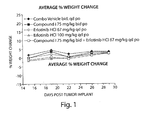
- mice treated with erlotinib hydrochloride with a self limiting nature even under continuous treatment See Table 1 and Figure 1 .
- Table 1 Group Frequency Route % Change in Body Weight at end of Study Day 29 Max % Weight Loss Max % Weight Gain # animals ⁇ 20% BWL Mortality Combo Vehicle bid, qd po 3.5 1.7 4.4 0 0 Compound I 75 mg/kg bid po 2.4 -0.1 3.6 0 0 Erlotinib HCl 67 mg/kg qd po 3.1 0.1 3.1 0 0 Erlotinib HCl 100 mg/kg qd po 2.9 -1.6 3.0 0 0 Compound I 75 mg/kg + Erlotinib HCl 67 mg/kg bid, qd po 2.5 -1.0 2.5 0 0 0
- TGI Tumor Growth Inhibition
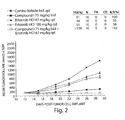
- the group receiving Compound I monotherapy at 75 mg/kg bid exhibited 91% TGI whereas the group receiving erlotinib hydrochloride at 100 mg/kg qd exhibited 51 % TGI and the group receiving erlotinib hydrochloride at 67 mg/kg qd exhibited 38% TGI. No tumor regression was observed with any of the aforementioned groups.
- the group receiving combination therapy of Compound I at 75 mg/kg bid and erlotinib hydrochloride at 67 mg/kg qd exhibited greater than 100% TGI with 9 out of 10 partial regressions (PRs). See Tables 2 and 3 and Figure 2 .
- the group receiving Compound I monotherapy at 75 mg/kg exhibited 100% increased life span (ILS).
- the group receiving erlotinib hydrochloride monotherapy at 100 mg/kg qd exhibited 38% ILS.
- the group receiving erlotinib hydrochloride monotherapy at 67 mg/kg qd exhibited 35% ILS.
- the group receiving combination therapy of Compound I at 75 mg/kg bid and erlotinib hydrochloride at 67 mg/kg qd exhibited 142% ILS. See Table 4 and Figure 3 .
- the %TGI in the Compound I at 75 mg/kg bid and erlotinib hydrochloride at 67 mg/kg qd combination therapy was statistically superior to that of all monotherapy arms (p ⁇ 0.05).
- the %ILS in the Compound I at 75 mg/kg bid and erlotinib hydrochloride at 67 mg/kg qd combination therapy combination therapy group was also statistically superior to that of all monotherapy arms tested (p ⁇ 0.05 for all comparisons). See Table 5.
- Cetuximab was purchased from ImClone Systems, Inc. (available as Erbitux ® ) as a 2 mg/ml solution.
- HT-29 xenograft-containing mice as produced in the manner described in Example 2 were randomized into groups of 10 mice each according to tumor volume so that all groups had similar starting mean tumor volumes.
- the approximate starting mean tumor volume for this study was 135 mm 3 .
- the Compound I suspension and its corresponding vehicle were dosed using a sterile 1cc syringe and 18-gauge gavage needle (0.2 ml/animal) twice daily.
- the 9.375 mg/ml suspension was used for the Compound I at 75 mg/kg bid groups and the 3.125 mg/ml suspension was used for the Compound I at 25 mg/kg bid groups.
- Cetuximab and its corresponding vehicle were dosed intraperitoneally using a sterile 1cc syringe and 26-gauge needle (0.5 ml/animal) twice a week on a Monday/Thursday or Tuesday/Friday schedule. All dosing was based on an average mouse weight of 25 grams.
- TGI Tumor Growth Inhibition
- the group receiving Compound I monotherapy at 25 mg/kg bid exhibited 74 %TGI and the group receiving Compound I monotherapy at 75 mg/kg bid exhibited 93 %TGI.
- the group receiving cetuximab at 40 mg/kg 2x/wk achieved 51 %TGI. No tumor regression was observed with any of the aforementioned groups. Both combination therapy groups, however, exhibited >100 %TGI.
- the group receiving Compound I at 25 mg/kg bid and cetuximab at 40 mg/kg 2x/wk exhibited 7 out of 10 partial regressions (PRs) but no complete regressions (CRs).
- the group receiving Compound I at 75 mg/kg bid and cetuximab at 40 mg/kg 2x/wk exhibited 7 out of 10 PRs and 3 out of 10 CRs.
- the group receiving Compound I monotherapy at 25 mg/kg bid exhibited 44 %ILS and the group receiving Compound I monotherapy at 75 mg/kg bid exhibited 75 %ILS.
- the group receiving cetuximab at 40 mg/kg 2x/wk achieved 16 %ILS.
- the group receiving Compound I at 25 mg/kg bid and cetuximab at 40 mg/kg 2x/wk exhibited 97 %ILS.
- the group receiving Compound I at 75 mg/kg bid and cetuximab at 40 mg/kg 2x/wk exhibited 122 %ILS. See Table 9 and Figure 6 .
- the %TGIs of both the Compound I at 25 mg/kg bid and cetuximab at 40 mg/kg 2x/wk combination therapy and the Compound I at 75 mg/kg bid and cetuximab at 40 mg/kg 2x/wk combination therapy were statistically superior to that of all monotherapy arms (p ⁇ 0.05).
- the %ILSs achieved in both monotherapies were also statistically superior to that of all monotherapy arms tested (p ⁇ 0.05 for all comparisons). See Table 10.
- a suspension comprising Compound I was made in a manner similar to that in Example 1 with the exception that 40 ml of a 3.125 mg/ml suspension was made using 39.6 ml of the vehicle and 429.6 mg of the blend.
- Cetuximab was purchased from ImClone Systems, Inc. (available as Erbitux ® ) as a 2 mg/ml solution.
- Irinotecan HCl hydrochloride was purchased from Pfizer Inc. (available as Camptosar ® ) as a stock sterile solution of 20 mg/ml, which was diluted as required with sterile saline to 2 mg/ml.
- HT-29 xenograft-containing mice as produced in the manner described in Example 2 were randomized into groups of 10 mice each according to tumor volume so that groups has similar starting mean tumor volumes.
- the approximate starintg mean tumor volume for this study was 135 mm 3 .
- the Compound I suspension and its corresponding vehicle were dosed using a sterile 1cc syringe and 18-gauge gavage needle (0.2 ml/animal) twice daily.
- Cetuximab and its corresponding vehicle were dosed intraperitoneally using a sterile 1cc syringe and 26-gauge needle (0.2 ml/animal) twice a week on a Monday/Thursday or Tuesday/Friday schedule.
- Irinotecan HCl and its corresponding vehicle were dosed intraperitoneally using a sterile 1cc syringe and 26-gauge needle (0/2 ml/animal) on a q4d x5 schedule. All dosing was based on an average mouse weight of 25 grams.
- TGI Tumor Growth Inhibition
- the group receiving Compound I monotherapy at 25 mg/kg bid exhibited 76 %TGI.
- the group receiving cetuximab monotherapy at 40 mg/kg 2x/wk exhibited 58 %TGI.
- the group receiving irinotecan HCl monotherapy at 40 mg/kg q4dx5 exhibited 59 %TGI.
- the group receiving cetuximab at 40 mg/kg 2x/wk and irinotecan HCl at 40 mg/kg q4dx5 exhibited 92 %TGI.
- the group receiving Compound I at 25 mg/kg bid and cetuximab at 40 mg/kg 2x/wk exhibited 5 out of 10 partial regressions (PRs) but no complete regressions (CRs).
- the group receiving Compound I monotherapy at 25 mg/kg bid exhibited 80 % ILS.
- the group receiving cetuximab monotherapy at 40 mg/kg 2x/wk exhibited 27 % ILS.
- the group receiving irinotecan HCl monotherapy at 40 mg/kg q4dx5 exhibited 17 % ILS.
- the group receiving cetuximab at 40 mg/kg 2x/wk and irinotecan HCl at 40 mg/kg q4dx5 exhibited 80 % ILS.
- the %TGIs of the Compound I/cetuximab, the Compound I/irinotecan HCl, and the Compound I/cetuximab/irinotecan HCl combination therapies were statistically superior to that of all monotherapy arms (p ⁇ 0.05).
- the %TGI of the Compound I/cetuximab/irinotecan HCl combination therapy was also statistically superior to that of the Compound I/irinotecan HCl and cetuximab/irinotecan HCl combination therapies (p ⁇ 0.05).
- the %ILSs of the Compound I/cetuximab, the Compound I/irinotecan HCl, and the Compound I/cetuximab/irinotecan HCl combination therapies were statistically superior to that of all monotherapy arms (p ⁇ 0.05 for all comparisons).
- the %ILS of the Compound I/cetuximab/irinotecan HCl combination therapy was also statistically superior to that of the Compound I/irinotecan HCl and Compound I/cetuximab combination therapies. See Table 15.
Landscapes
- Health & Medical Sciences (AREA)
- Chemical & Material Sciences (AREA)
- Medicinal Chemistry (AREA)
- Life Sciences & Earth Sciences (AREA)
- General Health & Medical Sciences (AREA)
- Veterinary Medicine (AREA)
- Pharmacology & Pharmacy (AREA)
- Animal Behavior & Ethology (AREA)
- Public Health (AREA)
- Epidemiology (AREA)
- Immunology (AREA)
- Organic Chemistry (AREA)
- Bioinformatics & Cheminformatics (AREA)
- Engineering & Computer Science (AREA)
- Microbiology (AREA)
- Mycology (AREA)
- Genetics & Genomics (AREA)
- Chemical Kinetics & Catalysis (AREA)
- General Chemical & Material Sciences (AREA)
- Biochemistry (AREA)
- Biophysics (AREA)
- Nuclear Medicine, Radiotherapy & Molecular Imaging (AREA)
- Molecular Biology (AREA)
- Proteomics, Peptides & Aminoacids (AREA)
- Pharmaceuticals Containing Other Organic And Inorganic Compounds (AREA)
- Nitrogen Condensed Heterocyclic Rings (AREA)
- Medicines That Contain Protein Lipid Enzymes And Other Medicines (AREA)
- Medicines Containing Antibodies Or Antigens For Use As Internal Diagnostic Agents (AREA)
- Medicines Containing Material From Animals Or Micro-Organisms (AREA)
Description
- The present invention relates to a combination therapy for treating a patient suffering from a proliferative disorder, in particular a solid tumor, for example, colorectal cancer, melanoma, and thyroid cancer, comprising administering to the patient propane-1-sulfonic acid {3-[5-(4-chlorophenyl)-1H-pyrrolo [2,3-b] pyridine-3-carbonyl]-2,4-difluoro-phenyl}-amide and a EGFR inhibitor, i.e. erlotinib or cetuximab.
- Normally functioning b-Raf is a kinase which is involved in the relay of signals from the cell membrane to the nucleus and is active only when it is needed to relay such signals. Mutant b-Raf having the V600E mutation, however, is constantly active and thus plays a role in tumor development. Such mutant b-Raf has been implicated in various tumors, for example, colorectal cancer, melanoma, and thyroid cancer.
- Propane-1-sulfonic acid {3-[5-(4-chloro-phenyl)-1H-pyrrolo [2,3-b] pyridine-3-carbonyl]-2,4-difluoro-phenyl}-amide (hereafter also referred to as "Compound I") is a b-raf kinase inhibitor that specifically targets mutant b-Raf having the V600E mutation. This compound is described in
WO 2007/002325 . Accordingly, such an inhibitor is used in the inhibition of tumors, particularly solid tumors, for example, colorectal cancer, melanoma, and thyroid cancer, which comprise b-Raf having a V600 mutation, preferably the V600E mutation. - Protein tyrosine kinases (PTKs) catalyze the phosphorylation of tyrosyl residues in various proteins involved in the regulation of cell growth and differentiation (Wilks et al., Progress in Growth Factor Research 97 (1990) 2; Chan, A. C., and Shaw, A. S., Curr. Opin. Immunol. 8 (1996) 394-401). Such PTKs can be divided into receptor tyrosine kinases (e.g. EGFR/HER-1, c-erbB-2/HER-2, c-met, PDGFr, FGFr) and non-receptor tyrosine kinases (e.g. src, lck).
- It is known that receptor tyrosine kinases of the HER-family like HER-2 and EGFR (HER-1) are frequently aberrantly expressed in common human cancers such as breast cancer, gastrointestinal cancer (colon, rectal or stomach cancer), thyroid, leukemia and ovarian, bronchial and pancreatic cancer and melanoma. High levels of these receptors correlate with poor prognosis and response to treatment (Wright, C., et al., Br. J. Cancer 65 (1992) 118-121).
- Inhibitors of PTKs, and in particular of EGFR, have been developed. Tumors comprising b-Raf having the V600E mutation, however, have been known to be resilient to treatment with EGFR inhibitors. See Prewett et al., Clin. Cancer Res. (2002), 8:994-1003 and Ouchi et al., Cancer Chemother. Pharmacol. (2006), 57:693-702. Applicants have unexpectedly found, however, that combination therapy with Compound I and an EGFR inhibitor not only is capable of reducing such resilience but also results in improved antineoplastic effects that are significantly superior to the results obtained with each compound alone without a significant increase in toxicity.
- In addition to EGFR inhibitors, topoisomerase inhibitors are also antiproliferative agents. Tumors containing the V600E mutation, however, have also been known to be resilient to treatment with topoisomerase inhibtors. See Prewett et al., Clin. Cancer Res. (2002), 8:994-1003 and Abal et al., Oncogene (2004), 23:1737-44. Applicants have unexpectedly found, however, that the combination of Compound I with an EGFR inhibitor and a topoisomerase inhibitor not only is capable of reducing such resilience but also results in improved antineoplastic effects that are significantly superior to the results obtained with each compound alone or with the aforementioned combination therapy of Compound I and EGFR inhibitor without a significant increase in toxicity.
- The scope of the present application is defined by appended claims.
- The present invention relates to a pharmaceutical product comprising (A) a first component which comprises, as an active agent, propane-1-sulfonic acid {3-[5-(4-chloro-phenyl)-1H-pyrrolo [2,3-b]pyridine-3-carbonyl]-2,4-difluoro-phenyl}-amide, or a pharmaceutically-acceptable salt thereof; and (B) a second component which comprises, as an active agent, an EGFR inhibitor erlotinib or cetuximab; as a combined preparation for the simultaneous or sequential use in the treatment of cancer comprising b-Raf having a V600 mutation.
- The present invention also relates to a kit comprising: (A) a first component which comprises, as an active agent, Compound I, or a pharmaceutically-acceptable salt thereof; and (B) a second component which comprises, as an active agent, an EGFR inhibitor erlotinib or cetuximab.
- The present invention further relates to a pharmaceutical product comprising: (A) a first component which comprises, as an active agent, Compound I, or a pharmaceutically-acceptable salt thereof; and (B) a second component which comprises, as an active agent, an EGFR inhibitor erlotinib or cetuximab; and optionally (C) a third component which comprises a topoisomerase inhibitor irinotecan or a pharmaceutically acceptable salt thereof; as a combined preparation for the simultaneous or sequential use in the treatment of cancer comprising b-Raf having a V600 mutation.
- In addition, the present invention relates to the combination comprising Compound I, or a pharmaceutically-acceptable salt thereof, and an EGFR inhibitor erlotinib or cetuximab for use in the treatment of cancer comprising b-Raf having a V600 mutation.
- A yet further aspect of the present invention is the use of Compound I, or a pharmaceutically-acceptable salt thereof, and an EGFR inhibitor erlotinib or cetuximab for the preparation of a medicament for the treatment of cancer comprising b-Raf having a V600 mutation.
-
-
Figure 1 illustrates the tolerability, as demonstrated by % body weight change, of Compound I monotherapy at 75 mg/kg bid, erlotinib hydrochloride monotherapy at 67 mg/kg qd, erlotinib hydrochloride monotherapy at 100 mg/kg qd, and Compound I at 75 mg/kg bid and erlotinib hydrochloride at 67 mg/kg qd combination therapy. -
Figure 2 illustrates the antitumor activity, as demonstrated by the change in mean tumor volume over time, of Compound I monotherapy at 75 mg/kg bid, erlotinib hydrochloride monotherapy at 67 mg/kg qd, erlotinib hydrochloride monotherapy at 100 mg/kg qd, and Compound I at 75 mg/kg bid and erlotinib hydrochloride at 67 mg/kg qd combination therapy. -
Figure 3 illustrates the effect on survival, as demonstrated by percentage of surviving mice over time, of Compound I monotherapy at 75 mg/kg bid, erlotinib hydrochloride monotherapy at 67 mg/kg qd, erlotinib hydrochloride monotherapy at 100 mg/kg qd, and Compound I at 75 mg/kg bid and erlotinib hydrochloride at 67 mg/kg qd combination therapy. -
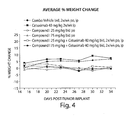
Figure 4 illustrates the tolerability, as demonstrated by % body weight change, of Compound I monotherapy at 75 mg/kg bid, Compound I monotherapy at 25 mg/kg bid, cetuximab monotherapy at 40 mg/kg 2x/wk, Compound I at 25 mg/kg bid and cetuximab at 40 mg/kg 2x/wk combination therapy, and Compound I at 75 mg/kg bid and cetuximab at 40 mg/kg 2x/wk combination therapy. -
Figure 5 illustrates the antitumor activity, as demonstrated by the change in mean tumor volume over time, of Compound I monotherapy at 75 mg/kg bid, Compound I monotherapy at 25 mg/kg bid, cetuximab monotherapy at 40 mg/kg 2x/wk, Compound I at 25 mg/kg bid and cetuximab at 40 mg/kg 2x/wk combination therapy, and Compound I at 75 mg/kg bid and cetuximab at 40 mg/kg 2x/wk combination therapy. -
Figure 6 illustrates the effect on survival, as demonstrated by percentage of surviving mice over time, of Compound I monotherapy at 75 mg/kg bid, Compound I monotherapy at 25 mg/kg bid, cetuximab monotherapy at 40 mg/kg 2x/wk, Compound I at 25 mg/kg bid and cetuximab at 40 mg/kg 2x/wk combination therapy, and Compound I at 75 mg/kg bid and cetuximab at 40 mg/kg 2x/wk combination therapy. -
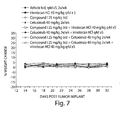
Figure 7 illustrates the tolerability, as demonstrated by % body weight change, of Compound I monotherapy at 25 mg/kg bid, cetuximab monotherapy at 40 mg/kg 2x/wk, irinotecan HCl monotherapy at 40 mg/kg q4dx5, Compound I at 25 mg/kg bid and irinotecan HCl at 40 mg/kg q4dx5 combination therapy, cetuximab at 40 mg/kg 2x/wk and irinotecan HCl at 40 mg/kg q4dx5 combination therapy, Compound I at 25 mg/kg bid and cetuximab at 40 mg/kg 2x/wk combination therapy, and Compound I at 25 mg/kg bid, cetuximab at 40 mg/kg 2x/wk, and irinotecan HCl at 40 mg/kg q4dx5 combination therapy. -
Figure 8 illustrates the antitumor activity, as demonstrated by the change in mean tumor volume over time, of Compound I monotherapy at 25 mg/kg bid, cetuximab monotherapy at 40 mg/kg 2x/wk, irinotecan HCl monotherapy at 40 mg/kg q4dx5, Compound I at 25 mg/kg bid and irinotecan HCl at 40 mg/kg q4dx5 combination therapy, cetuximab at 40 mg/kg 2x/wk and irinotecan HCl at 40 mg/kg q4dx5 combination therapy, Compound I at 25 mg/kg bid and cetuximab at 40 mg/kg 2x/wk combination therapy, and Compound I at 25 mg/kg bid, cetuximab at 40 mg/kg 2x/wk, and irinotecan HCl at 40 mg/kg q4dx5 combination therapy. -
Figure 9 illustrates the effect on survival, as demonstrated by percentage of surviving mice over time, of Compound I monotherapy at 25 mg/kg bid, cetuximab monotherapy at 40 mg/kg 2x/wk, irinotecan HCl monotherapy at 40 mg/kg q4dx5, Compound I at 25 mg/kg bid and irinotecan HCl at 40 mg/kg q4dx5 combination therapy, cetuximab at 40 mg/kg 2x/wk and irinotecan HCl at 40 mg/kg q4dx5 combination therapy, Compound I at 25 mg/kg bid and cetuximab at 40 mg/kg 2x/wk combination therapy, and Compound I at 25 mg/kg bid, cetuximab at 40 mg/kg 2x/wk, and irinotecan HCl at 40 mg/kg q4dx5 combination therapy. - As stated above, "Compound I" shall herein refer to propane-1-sulfonic acid {3-[5-(4-chlorophenyl)-1H-pyrrolo [2,3-b] pyridine-3-carbonyl]-2,4-difluoro-phenyl}-amide. This is a compound having the following structure.

- Compound I is a b-Raf kinase inhibitor that specifically targets b-Raf having the V600E mutation.
- The "V600E" mutation of b-Raf, as used herein, refers to a mutation in the b-Raf protein wherein the valine residue at
residue position 600 of b-Raf is replaced by glutamic acid. - As used herein, when referring to the receptor tyrosine kinases of the HER-family like HER-2 and EGFR (HER-1), the acronym "HER" refers to human epidermal receptor and the acronym "EGFR" refers to epidermal growth factor receptor.
- The term "combined preparation" as used herein means simultaneous or sequential combination. The active agents used in the present combinations, for example compound I, or a topoisomerase inhibitor such irinotecan, or an EGFR inhibitor erlotinib or a pharmaceutically acceptable salt, or cetuximab can be used in any applicable dosage form, such as for example tablets, capsules, solutions, suspensions and the like, depending on the properties of the selected active ingredient. Compound I, or a pharmaceutically acceptable salt thereof, may, for example, be administered orally. Erlotinib, or a pharmaceutically acceptable salt thereof, may, for example, be administered orally. Cetuximab may, for example, be administered intraperitoneally or intravenously. Irinotecan HCl or the pharmaceutically acceptable salt thereof may, for example, be administered intraperitoneally or intravenously. Certain combinations disclosed herein may show a therapeutic effect, which is more than additive (synergistic).
- As used herein, the term "pharmaceutically acceptable carrier" indicates that the indicated carrier does not have properties that would cause a reasonably prudent medical practitioner to avoid administration thereof to a patient, taking into consideration the disease or conditions to be treated and the respective route of administration.
- As used herein, the term "pharmaceutically acceptable salt" of a compound refers to any conventional salt or base addition salt that retains the biological effectiveness and properties of the compound and which is formed from a suitable non-toxic organic or inorganic acid or organic or inorganic base. As used herein, the term "therapeutically effective" means an amount of drug, or combination or composition, which is effective for producing a desired therapeutic effect upon administration to a patient, for example, to stem the growth, or result in the shrinkage, of a cancerous tumor or to increase the patient's life span.
- The terms "cell proliferative disorder" and "proliferative disorder" refer to disorders that are associated with some degree of abnormal cell proliferation. In one embodiment, the proliferative disorder is cancer.
- The terms "cancer" and "cancerous" refer to or describe the physiological condition in mammals that is typically characterized by unregulated cell growth/proliferation. Examples of cancer include, but are not limited to, colorectal cancer, melanoma, and thyroid cancer.
- The term "colorectal tumor" or "colorectal cancer" refers to any tumor or cancer of the large bowel, which includes the colon (the large intestine from the cecum to the rectum) and the rectum, including, e.g., adenocarcinomas and less prevalent forms, such as lymphomas and squamous cell carcinomas.
- "Inhibiting cell growth or proliferation" means decreasing a cell's growth or proliferation by at least 10%, 20%, 30%, 40%, 50%, 60%, 70%, 80%, 90%, 95%, or 100%, and includes inducing cell death.
- The phrase "substantially reduced" or "substantially different," as used herein, refers to a sufficiently high degree of difference between two numeric values (generally one associated with a molecule and the other associated with a reference/comparator molecule) such that one of skill in the art would consider the difference between the two values to be of statistical significance within the context of the biological characteristic measured by said values.
- The term "tumor" refers to all neoplastic cell growth and proliferation, whether malignant or benign, and all pre-cancerous and cancerous cells and tissues. The terms "cancer," "cancerous," "cell proliferative disorder," "proliferative disorder," and "tumor" are not mutually exclusive as referred to herein.
- "Regression" of a tumor is said to occur following treatment when the volume of said tumor is reduced. If the tumor remains present (tumor volume > 0 mm3) but its volume is reduced from what it was at the initiation of treatment, "partial regression" (PR) is said to have occurred. If the tumor is palpably absent following treatment, "complete regression" (CR) is said to have occurred.
- The term "small molecule" as used herein is a chemical compound with a molecular weight of less than 1000 g/mol, preferably less than 700 g/mol. Small molecules according to the present inventions can be obtained by chemical reactions know to the person of skill in the art of organic chemistry and/or medicinal chemistry. Examples of small molecules may be, without limitation, the compound I or the compound known as erlotinib, preferably erlotinib hydrochloride.
- The term "large molecule" as used herein refers to chemical compounds with a molecular weight of more than 1000 g/mol. Preferably "large molecules" are compounds that can be obtained via biotechnological production processes, such as fermentation. More preferably, the term "large molecule" refers to polypeptides, such as for example antibodies, more specifically monoclonal antibodies. One example of a large molecule according to the present invention is cetuximab.
- The present invention relates to a pharmaceutical product comprising (A) a first component which comprises, as an active agent, Compound I, or a pharmaceutically-acceptable salt thereof; and (B) a second component which comprises, as an active agent, an EGFR inhibitor erlotinib or cetuximab; the amount of said active agents being such that the combination thereof is therapeutically-effective in the treatment of cancer comprising b-Raf having a V600 mutation. The present invention further relates to the above-mentioned product as a combined preparation for the simultaneous or sequential use in the treatment of cancer comprising b-Raf carrying the V600E mutation.
- In one aspect a method of treating a patient suffering from a proliferative disorder, comprising administering to the patient the combination or pharmaceutical preparations as mentioned above, is disclosed.
- "Treatment of a proliferative disorder" shall be understood to include maintaining or decreasing tumor size, inducing tumor regression (either partial or complete), inhibiting tumor growth, and/or increasing the life span of a patient suffering from said disorder.
- The present invention also relates to a kit or a composition comprising: (A) a first component which comprises, as an active agent, Compound I, or a pharmaceutically-acceptable salt thereof; and (B) a second component which comprises, as an active agent, an EGFR inhibitor erlotinib or cetuximab. The kit or composition may be used, for example, in the treatment of cancer comprising b-Raf having a V600 mutation.
- In an embodiment of the invention, the proliferative disorder is a solid tumor, in particular colorectal cancer, melanoma and/or thyroid cancer.
- In another embodiment of the invention, the proliferative disorder is a tumor comprising b-Raf having a V600 mutation, preferably the V600E mutation.
- In a further embodiment of the invention, the proliferative disorder is selected from the group consisting of colorectal cancer, melanoma, and thyroid cancer and the cancer involves a tumor comprising b-Raf having a V600 mutation, preferably the V600E mutation.
- In yet a further embodiment of the invention, the proliferative disorder is a solid tumor comprising b-Raf having a V600 mutation, preferably the V600E mutation.
- In yet a further embodiment of the invention, the proliferative disorder is colorectal cancer.
- In yet a further embodiment of the invention, the proliferative disorder is colorectal cancer involving a tumor comprising b-Raf having a V600 mutation, preferably the V600E mutation.
- In yet a further embodiment of the invention, the EGFR inhibitor is a small molecule EGFR inhibitor. In one such embodiment, the EGFR inhibitor is erlotinib, or a pharmaceutically acceptable salt thereof, for example, erlotinib hydrochloride (erlotinib HCl). Erlotinib HCl is also known under its trade name Tarceva®, and is for example sold in the U.S. by Genentech, South San Francisco, U.S.A.
- In yet a further embodiment of the invention, the EGFR inhibitor is a large molecule EGFR inhibitor, for example, an antibody that targets EGFR. In one such embodiment, the EGFR inhibitor may be a monoclonal antibody that targets EGFR, for example, cetuximab. Cetuximab is also known under its trade name Erbitux® and is for example sold in the U.S. by ImClone Systems, Inc., New York, U.S.A.
- In certain embodiments the present invention relates to a pharmaceutical product for the treatment of colorectal cancer involving a tumor comprising b-Raf having the V600E mutation, comprising (A) a first component which comprises, as an active agent, Compound I, or a pharmaceutically-acceptable salt thereof; and (B) a second component which comprises, as an active agent, erlotinib, or a pharmaceutically acceptable salt thereof; the amount of said active agents being such that the combination thereof is therapeutically-effective in the treatment of said cancer.
- In a further embodiment the present invention relates to a pharmaceutical product for the treatment of colorectal cancer involving a tumor comprising b-Raf having the V600E mutation, comprising (A) a first component which comprises, as an active agent, Compound I, or a pharmaceutically-acceptable salt thereof; and (B) a second component which comprises, as an active agent, cetuximab; the amount of said active agents being such that the combination thereof is therapeutically-effective in the treatment of said cancer.
- The amount of each component administered by the present combinations or compositions may, but does not have to be therapeutically effective by itself. That is, this invention specifically contemplates combinations wherein the amount of Compound I, or a pharmaceutically-acceptable salt thereof, and/or the amount of EGFR inhibitor erlotinib or cetuximab, in the combination may be less than the amount that is therapeutically-effective for each active agent when said agent is administered in monotherapy.
- The first component (A) and the second component (B) of the present invention are administered in any amount and for any duration that the combined amounts thereof are therapeutically effective in treating a proliferative disorder.
- In certain embodiments of the present invention, Compound I, or a pharmaceutically acceptable salt thereof, is administered in an amount of from about 200 mg/day to about 3000 mg/day, from about 1000 mg/day to about 2500 mg/day, or from about 1700 mg/day to about 2100 mg/day. In yet another embodiment, the dosage amount is about 1920 mg/day.
- In another embodiment of the present invention, the foregoing amounts of Compound I, or a pharmaceutically acceptable salt thereof, may be administered as a single dose daily or divided, for example into equal doses (though this is not required), and administered twice daily (bid). For example, Compound I, or a pharmaceutically acceptable salt thereof, may be administered in a dosage amount of from about 100 mg to about 1500 mg bid, from about 500 mg to about 1250 mg bid, from about 850 mg to about 1050 mg bid, or about 960 mg bid.
- In an embodiment of the present invention, the administration of Compound I, or a pharmaceutically acceptable salt thereof, occurs until disease progression or unacceptable toxicity.
- In certain embodiments of the present invention, erlotinib, or a pharmaceutically acceptable salt thereof, is administered at a dosage amount of from about 20 mg/day to about 500 mg/day, from about 100 mg/day to about 400 mg/day, or from about 100 mg/day to about 200 mg/day.
- In another embodiment of the present invention, the administration of erlotinib, or a pharmaceutically acceptable salt thereof, occurs until disease progression or unacceptable toxicity.
- In yet another embodiment of the present invention, cetuximab is administered at a dosage amount of from about 50 mg/m2/week to about 700 mg/m2/week, from about 100 mg/m2/week to about 600 mg/m2/week, or from about 200 mg/m2/week to about 500 mg/m2/week.
- In yet another embodiment, cetuximab is administered weekly with the first administration being in an amount of from about 400 mg/m2 to about 500 mg/m2 and each subsequent administration being in an amount of from about 200 mg/m2 to about 300 mg/m2.
- In still another embodiment, cetuximab is administered weekly with the first administration being in an amount of about 450 mg/m2 and each subsequent administration being in an amount of about 250 mg/m2.
- In still another embodiment of the present invention, the administration of cetuximab occurs until disease progression or unacceptable toxicity.
- Therefore, in another embodiment, the present invention provides a pharmaceutical product comprising (A) a first component which comprises, as an active agent, Compound I or a pharmaceutically-acceptable salt thereof; and (B) a second component which comprises, as an active agent, erlotinib or a pharmaceutically acceptable salt thereof, as a combined preparation for simultaneous or sequential use in the treatment of a proliferative disorder, wherein
- (A) is administered in an amount of from about 200 mg/day to about 3000 mg/day, from about 1000 mg/day to about 2500 mg/day, from about 1700 mg/day to about 2100 mg/day or about 1920 mg/day, and
- (B) is administered in an amount of from about 20 mg/day to about 500 mg/day, from about 100 mg/day to about 400 mg/day, or from about 100 mg/day to about 200 mg/day.
- Within this embodiment, Compound I or a pharmaceutically acceptable salt thereof, may be administered twice daily. The proliferative disorder to be treated in this way is a solid tumor, in particular colorectal cancer, melanoma, and thyroid cancer, comprising b-Raf having the V600E mutation. More particularly, the proliferative disorder is colorectal cancer involving a tumor comprising b-Raf having the V600E mutation.
- Also, within this embodiment the product of the present invention may comprises compound I or a pharmaceutically acceptable salt thereof, being administered orally in a dosage amount of from about 850 mg to about 1050 mg twice daily or about 960 mg twice daily, and erlotinib or a pharmaceutically acceptable salt thereof, being administered orally in a dosage amount of from about 100 mg/day to about 400 mg/day, or from about 100 mg/day to about 200 mg/day. Both agents may, for example, be administered until disease progression or unacceptable toxicity.
- The present invention also provides a pharmaceutical product comprising (A) a first component which comprises, as an active agent, Compound I, or a pharmaceutically-acceptable salt thereof; and (B) a second component which comprises, as an active agent, cetuximab; as a combined preparation for simultaneous or sequential use in the treatment of a proliferative disorder, wherein
- (A) is administered in an amount of from about 200 mg/day to about 3000 mg/day, from about 1000 mg/day to about 2500 mg/day, from about 1700 mg/day to about 2100 mg/day or about 1920 mg/day; and
- (B) is administered in an amount of from about 50 mg/m2/week to about 700 mg/m2/week, from about 100 mg/m2/week to about 600 mg/m2/week, or from about 200 mg/m2/week to about 500 mg/m2/week.
- Within this embodiment, the proliferative disorder to be treated in this way is a solid tumor, in particular colorectal cancer, melanoma, and thyroid cancer, comprising b-Raf having the V600E mutation. More particularly, the proliferative disorder is colorectal cancer involving a tumor comprising b-Raf having the V600E mutation.
- Also, within this embodiment, the product of the present invention may comprises compound I or a pharmaceutically acceptable salt thereof, being administered orally in a dosage amount of from about 850 mg to about 1050 mg twice daily or about 960 mg twice daily; and cetuximab being administered intravenously in a dosage amount of from about 200 mg/m2/week to about 500 mg/m2/week. In one embodiment, cetuximab is administered initially as a 400 mg/m2 dose as a 120-minute intravenous infusion, followed after a week by 250 mg/m2 doses intravenously infused over 60 minutes once weekly. Both agents may, for example, be administered until disease progression or unacceptable toxicity.
- The present invention also further provides a kit or a composition comprising: (A) a first component which comprises, as an active agent, Compound I, or a pharmaceutically-acceptable salt thereof; and (B) a second component which comprises, as an active agent, erlotinib, or a pharmaceutically-acceptable salt thereof.
- The present invention also further provides a kit or a composition comprising: (A) a first component which comprises, as an active agent, Compound I, or a pharmaceutically-acceptable salt thereof; and (B) a second component which comprises, as an active agent, cetuximab.
- In another aspect of this invention, the pharmaceutical product comprising the components (A) and (B) described above is administered in conjunction with radiotherapy and/or in conjunction with the administration of another active agent.
- Thus, in certain embodiments the present invention provides a pharmaceutical product comprising the components (A) and (B) as described above and a third component (C) which comprises, as an active agent, a topoisomerase inhibitor; as a combined preparation for the simultaneous or sequential use in the treatment of a proliferative disorder such as solid tumors comprising b-Raf having a V600 mutation, preferably the V600E mutation. As previously stated, the amount of each component administered with the present combination product may, but does not have to be therapeutically effective by itself and this invention specifically contemplates combinations wherein the amount of each of the active agents in the combination may be less than the amount that is therapeutically-effective for each active agent when said agent is administered in monotherapy.
- In an embodiment of the present invention, the topoisomerase inhibitor is an inhibitor of type I topoisomerase. In an embodiment of the invention, the topoisomerase inhibitor is irinotecan, or a pharmaceutically acceptable salt thereof, for example, irinotecan hydrochloride (irinotecan HCl). Irinotecan HCl is sold as Camptosar® by Pfizer Inc., New York, U.S.A. Irinotecan, or the pharmaceutically acceptable salt thereof, may, for example, be administered intraperitoneally or intravenously.
- In an embodiment of the present invention, irinotecan, or a pharmaceutically acceptable salt thereof, is administered in an amount of from about 1 to about 400 mg/m2/week, or from about 1 to about 250 mg/m2/week. In another embodiment, irinotecan, or a pharmaceutically acceptable salt thereof, is administered at a dosage amount of from about 50 to about 200 mg/m2/week. In yet another embodiment, irinotecan, or a pharmaceutically acceptable salt thereof, is administered at a dosage amount of about 125 mg/m2/week.
- In yet another embodiment, dosing of irinotecan, or a pharmaceutically acceptable salt thereof, is with a six week cycle at about 75 to about 175 mg/m2 weekly, for example about 125 mg/m2 weekly, for the first four weeks, for example on
days days - The dosage levels of each of the components (A), (B) or (C) may be modified by the physician to be lower or higher than that stated herein depending on the needs of the patient, and the reaction of the patient to the treatment. The dosages may be administered according to any dosage schedule determined by the physician in accordance with the requirements of the patient. For example, the dosages of each of the components may be administered in single or in divided doses over a period of several days, or alternating daily schedules.
- The present invention also provides a pharmaceutical product comprising (A) a first component which comprises, as an active agent, Compound I or a pharmaceutically-acceptable salt thereof; (B) a second component which comprises, as an active agent, cetuximab; and (C) a third component which comprises, as an active agent, irinotecan or a pharmaceutically-acceptable salt thereof; as a combined preparation for simultaneous or sequential use in the treatment of a proliferative disorder, wherein
- (A) is administered in an amount of from about 200 mg/day to about 3000 mg/day, from about 1000 mg/day to about 2500 mg/day, from about 1700 mg/day to about 2100 mg/day or about 1920 mg/day;
- (B) is administered in an amount of from about 50 mg/m2/week to about 700 mg/m2/week, from about 100 mg/m2/week to about 600 mg/m2/week, or from about 200 mg/m2/week to about 500 mg/m2/week; and
- (C) is administered in an amount of from about 1 to about 250 mg/m2/week, about 50 to about 200 mg/m2/week, or about 125 mg/m2/week.
- Within this embodiment, the proliferative disorder to be treated in this way is a solid tumor, in particular colorectal cancer, melanoma, and thyroid cancer, comprising b-Raf having the V600E mutation. More particularly, the proliferative disorder is colorectal cancer involving a tumor comprising b-Raf having the V600E mutation.
- Also, within this embodiment the product of the present invention comprises compound I, or a pharmaceutically acceptable salt thereof, being administered orally in a dosage amount of from about 850 mg to about 1050 mg twice daily or about 960 mg twice daily; and cetuximab being administered intravenously in a dosage form and a dosage amount of from about 200 mg/m2/week to about 500 mg/m2/week; and irinotecan being administered intravenously in a dosage amount of from about 50 to about 200 mg/m2/week, or about 125 mg/m2/week. All agents may, for example, be administered until disease progression or unacceptable toxicity.
- The present invention also further provides a kit or a composition comprising: (A) a first component which comprises, as an active agent, Compound I, or a pharmaceutically-acceptable salt thereof; (B) a second component which comprises, as an active agent, cetuximab; and (C) a third component which comprises, as an active agent, irinotecan, or a pharmaceutically-acceptable salt thereof.
- Compound I exists in its natural state in a crystalline form. However, the amorphous form of the compound has greater solubility in water as compared with the crystalline form and thus has an improved dissolution rate and, therefore, improved bioavailability as compared to the crystalline form. As such, the amorphous form of the compound is preferred. Accordingly, in preferred embodiments of the method and kit of the present invention, Compound I is in substantially amorphous form and, more preferably, in amorphous form. As used herein, the term "substantially amorphous" material embraces material which has no more than about 10% crystallinity; and "amorphous" material embraces material which has no more than about 2% crystallinity.
- In an embodiment of the present invention, Compound I is contained in a solid molecular complex formed with hydroxypropyl methyl cellulose acetate succinate (HPMC-AS). As used herein, the term "solid molecular complex" means a composition wherein Compound I is randomly distributed ("molecularly dispersed") within a matrix formed by HPMC-AS. Preferably such composition of compound I and HPMC-AS form a one phase system, which can be characterized by X-ray powder diffraction patterns which are substantially free, or free, of crystalline signals related to crystalline form of compound I. In certain embodiments Compound I is present in the polymer in a final state of subdivision. In certain embodiments, Compound I is molecularly dispersed within the HPMC-AS matrix such that it is immobilized in its amorphous form. By "immobilized", it is meant that the molecules of Compound I interact with molecules of HPMC-AS in such a way that they are held in the aforementioned matrix and prevented from crystal nucleation due to lack of mobility. In some embodiments the polymer may prevent intramolecular hydrogen bonding or weak dispersion forces between two or more molecules of Compound I.
- In some embodiments the ratio of the amount by weight of Compound I within the solid molecular complex to the amount by weight of HPMC-AS therein is from about 1:9 to about 5:5. In an embodiment, said ratio is from about 2:8 to about 4:6. In another embodiment, said ratio is about 3:7.
- In certain embodiments of the method and kit of the present invention, the first component comprises the aforementioned solid molecular complex of Compound I and HPMC-AS blended with colloidal silicon dioxide. In certain embodiments, the blend is at least 0.5% by weight silicon dioxide. In an embodiment of the present invention, the blend is about 97% complex and about 3% silicon dioxide.
- In another embodiment, the first component includes a composition comprising the aforementioned solid molecular complex, either blended or not blended with silicon dioxide as described above, and a pharmaceutically acceptable carrier. In certain embodiments, the aforementioned complex or blend comprising the same is suspended in the carrier. An example of a carrier is hydroxypropylcellulose (HPC). In an embodiment, the vehicle contains about 2% by weight HPC.
- Each component may also contain additional agents such as preserving agents, solubilizing agents, stabilizing agents, wetting agents, emulsifying agents, sweetening agents, coloring agents, flavoring agents, salts for varying the osmotic pressure, buffers, coating agents and antioxidants.
- In certain embodiments, the first component may comprise a solid molecular complex of Compound I and HPMC-AS blended with colloidal silicon dioxide, hydroxypropylcellulose, Crospovidone (a disintegrating agent), magnesium stearate (a lubricant that may be used in tablet and capsulation operations), and/or croscarmellose sodium (a disintegrating agent).
- In an embodiment, the first component is a hard gelatin capsule comprising a solid molecular complex of Compound I and HPMC-AS blended with colloidal silicon dioxide, hydroxypropylcellulose, magnesium stearate, and croscarmellose sodium.
- In an embodiment, the first component is a tablet comprising Compound I, or a pharmaceutically acceptable salt thereof. In an embodiment, the tablet comprises a solid molecular complex of Compound I, or a pharmaceutically acceptable salt thereof, and HPMC-AS. The complex may, for example, be blended with colloidal silicon dioxide, hydroxypropylcellulose, magnesium stearate, and croscarmellose sodium. The tablet may, for example, be coated with a film coating. The film coating may, for example, comprise polyvinyl alcohol, titanium dioxide, polyethylene glycol 3350, talc, and iron oxide red.
- In certain embodiments, the second component may comprise cetuximab in solution. In an embodiment, the solution is about 2 mg/ml cetuximab.
- In certain embodiments, the second component may comprise a tablet comprising erlotinib, or a pharmaceutically-acceptable salt thereof, for example erlotinib hydrochloride.
- In certain embodiments, the third component may comprise a solution comprising irinotecan, or a pharmaceutically acceptable salt thereof, for example irinotecan hydrochloride. In an embodiment, the solution is an about 5% dextrose solution. In an embodiment, each ml of the solution contains about 20 mg irinotecan hydrochloride, about 45 mg sorbitol, and about 0.9 mg lactic acid. In an embodiment, the solution has a pH of from about 3.0 to about 3.8, for example, about 3.5.
- In addition, the present invention provides the composition comprising Compound I, or a pharmaceutically-acceptable salt thereof, and an EGFR inhibitor erlotinib or cetuximab, optionally also in combination with a topoisomerase inhibitor irinotecan, for the treatment of a proliferative disorder, in particular a solid tumor, more particularly colorectal cancer, melanoma and/or thyroid cancer, all comprising b-Raf having the V600E mutation.
- The invention further provides the composition comprising Compound I, or a pharmaceutically-acceptable salt thereof, and an EGFR inhibition erlotinib or cetuximab, optionally also in combination with a topoisomerase inhibitor irinotecan, for the preparation of a medicament for the treatment of a proliferative disorder, in particular a solid tumor, more particularly colorectal cancer, melanoma and/or thyroid cancer, all comprising b-Raf having the V600E mutation.
- In one aspect methods for treating a patient suffering from a proliferative disorder, in particular a solid tumor, more particularly colorectal cancer, melanoma and/or thyroid cancer, all comprising b-Raf having the V600E mutation, comprising administering to said patient any of the combinations of (A) and (B) or (A), (B) and (C) together with the dosages and dosage schemes as disclosed herein before, are also disclosed.
- Applicants have conducted studies using mice containing a human colorectal cancer xenograft. Applicants found that the combination of Compound I at 75 mg/kg bid and erlotinib hydrochloride at 67 mg/kg qd produced tumor growth inhibition (TGI) and increased life span (ILS) results that were significantly better than correlative monotherapy results at p<0.05 as well as results achieved with erlotinib hydrochloride monotherapy at 100 mg/kg qd. In addition, 9 out of the 10 mice subjected to the combination therapy had partial regressions whereas no regressions (partial or complete) were observed with any of the monotherapy groups.
These studies indicate that treating patients with a combination of Compound I and erlotinib hydrochloride is superior to treatment with either agent alone. Further, they indicate that combining the two agents allows for at least reduction in the dose of erlotinib hydrochloride to obtain equivalent or better results. - Applicants also found that the combination of Compound I at 25 mg/kg bid and cetuximab at 40 mg/
kg 2x/wk growth inhibition (TGI) and increased life span (ILS) results that were significantly better than correlative monotherapy results at p<0.05 and also better than the results achieved with monotherapy of Compound I at 75 mg/kg bid. Applicants also found that both the combination of Compound I at 75 mg/kg bid and cetuximab at 40 mg/kg 2x/wk produced TGI and ILS results that were significantly better than correlative monotherapy results at p<0.05 and also better than the results achieved with monotherapy of Compound I at 25 mg/kg bid. In addition, 7 out of the 9 mice subjected to the Compound I at 25 mg/kg bid and cetuximab at 40 mg/kg 2x/wk combination therapy had partial regressions and 10 out of 10 mice subjected to the Compound I at 75 mg/kg bid and cetuximab at 40 mg/kg 2x/wk combination therapy exhibited regression with 7 being partial and 3 being complete. By contrast, no regressions (partial or complete) were observed with any of the monotherapy groups. - In addition to the above, applicants found that the combination of Compound I at 25 mg/kg bid, cetuximab at 40 mg/
kg 2x/wk, and irinotecan hydrochloride at 40 mg/kg q4dx5 produced tumor growth inhibition (TGI) and increased life span (ILS) results that were significantly better than correlative monotherapy results at p<0.05 and also better than the results achieved with Compound I at 25 mg/kg bid and irinotecan hydrochloride at 40 mg/kg q4dx5 combination therapy and Compound I at 25 mg/kg bid and cetuximab at 40 mg/kg 2x/wk combination therapy. In the study, the Compound I at 25 mg/kg bid and irinotecan hydrochloride at 40 mg/kg q4dx5 combination therapy resulted in 4 out of 10 partial regressions and no complete regressions and the Compound I at 25 mg/kg bid and cetuximab at 40 mg/kg 2x/wk combination therapy resulted in 5 out of 10 partial regressions and no complete regressions. The cetuximab at 40 mg/kg 2x/wk and irinotecan at 40 mg/kg q4dx5 combination therapy and the correlative Compound I, cetuximab, and irinotecan hydrochloride monotherapies resulted in no regressions. By contrast, the Compound I at 25 mg/kg bid, cetuximab at 40 mg/kg 2x/wk, and irinotecan hydrochloride at 40 mg/kg q4dx5 therapy produced 10 out of 10 regressions with 9 being partial and one being complete. - These studies indicate that treating patients with a combination of Compound I and cetuximab is superior to treatment with either agent alone. Further, they indicate that combining the two agents allows for at least reduction in the dose of Compound I to obtain equivalent or better results. In addition, the studies indicate that treating patients with a combination of Compound I, cetuximab, and irinotecan hydrochloride produces even more superior results.
- Abbreviations used herein are as follows:
q.s. as much as needed x times po orally ip intraperitoneally bid twice daily wk week qd once daily q4d x5 once every four days for a total of five doses BWL body weight loss - In the examples below, weight loss was graphically represented as percent change in mean group body weight, using the formula: ((W - W0)/W0) x 100, where 'W' represents mean body weight of the treated group at a particular day, and 'W0' represents mean body weight of the same treated group at initiation of treatment. Maximum weight loss was also represented using the above formula, and indicated the maximum percent body weight loss that was observed at any time during the entire experiment for a particular group.
- Efficacy data was graphically represented as the mean tumor volume ± standard error of the mean (SEM). In addition, tumor volumes of treated groups were presented as percentages of tumor volumes of the control groups (%T/C), using the formula: 100 x ((T - T0)/(C - C0)), where T represented mean tumor volume of a treated group on a specific day during the experiment, To represented mean tumor volume of the same treated group on the first day of treatment; C represented mean tumor volume of a control group on the specific day during the experiment, and C0 represented mean tumor volume of the same treated group on the first day of treatment.
- Tumor volume (in cubic millimeters) was calculated using the ellipsoid formula: (D x (d2))/2, where "D" represents the large diameter of the tumor and "d" represents the small diameter.
- Also, tumor regression and/or percent change in tumor volume was calculated using the formula: ((T- To)/ To) x 100, where 'T' represents mean tumor volume of the treated group at a particular day, and 'T0' represents mean tumor volume of the same treated group at initiation of treatment.
- Statistical analysis was determined by the rank sum test and One Way Anova and a post-hoc Bonferroni t-test (SigmaStat, version 2.0, Jandel Scientific, San Francisco, CA, USA). Differences between groups were considered to be significant when the probability value (p) was ≤0.05.
- For survival assessment, the percent of increased life space (ILS) was calculated as: 100 x [(median survival day of treated group - median survival day of control group)/median survival day of control group]. Median survival was determined utilizing Kaplan Meier survival analysis. Survival in treated groups was statistically compared with the vehicle group and survival comparisons were done between groups using the log-rank test (Graph Pad Prism, La Jolla, CA, USA). Differences between groups were considered significant when the probability value (p) was ≤0.05.
- This example describes the formation of a suspension comprising Compound I.
- A solid molecular complex comprising Compound I and hydroxypropyl methyl cellulose acetate succinate (HPMC-AS) was first formed.
- Compound I and HPMC-AS in a ratio of approximately 3:7, respectively, were dissolved in dimethylacetamide (DMA). The resulting solution was then added with stirring to very cold dilute hydrochloric acid resulting in the co-precipitation of Compound I and HPMC-AS as a solid molecular complex wherein Compound I was present in a nanoparticulate size range. The ratio of DMA to acid was in the range of 1:5 to 1:10.
- The co-precipitate was then washed with water to remove DMA, filtered, dried to < 2% moisture content and passed through a # 30 mesh screen prior to evaluation. The resulting solid molecular complex was 30% by weight Compound I and 70% by weight HPMC.
- The complex was then blended with colloidal silicon dioxide (available as
Aerosil® 200 from Evonik Industries AG, Essen, Germany) such that, per 100g of the blend, 97g was the complex and 3g was colloidal silicon dioxide. - An aqueous vehicle containing 2% hydroxypropylcellulose (available as Klucel® LF from Aqualon, Wilmington, Delaware, USA) and 1N HCl at Qs to pH4 for the purpose of pH adjustment was then prepared.
- 23.2 ml of the vehicle was equilibrated to room temperature and slowly transferred into 773.2 mg of the aforementioned blend. The resulting preparation was then slowly mixed until a homogenous suspension was obtained. The resulting suspension contained 9.375 mg/ml of Compound I. The suspension was stored at 2-8°C and protected from light.
- Mice were implanted with human HT-29 cell xenografts. The mice, cell line used, and implantation are described below.
- Female athymic Crl:NU-Foxnlnu mice were used for efficacy testing (Charles River, Wilmington, MA, USA). Mice were 10-12 weeks of age and weighed 23-25 grams. The health of the mice was assessed daily by observation and analysis of blood samples taken from sentinel animals on shared shelf racks. All animals were allowed to acclimate and recover from shipping-related stress for one week. Autoclaved water and irradiated food (5058-ms Pico Lab mouse chow, Purina Mills, Richmond, IN, USA) were provided ad libitum, and the animals were kept in a 12 hour light and dark cycle. Cages, bedding and water bottles were autoclaved before use and changed weekly. All animal experiments were conducted in accordance with the Guide for the Care and Use of Laboratory Animals, local regulations, and protocols approved by the Roche Animal Care and Use Committee in our AAALAC accredited facility.
- HT-29 cells (American Type Culture Collection, Rockville, MD) were grown in McCoy-5 medium supplemented with 10% Fetal Bovine Serum (FBS) and 1% of 200 nM L-glutamine, scaled up, harvested, and prepared so that each mouse received 3 x 10⁶ cells in 0.2 ml calcium and magnesium free phosphate-buffered saline (PBS). Cells were implanted subcutaneously in the right flank of each of the mice.
- This example describes the preparation of a suspension of erlotinib hydrochloride.
- One gram of
Tween 80 was added to approximately 950 ml of water. While stirring at high speed, three grams of sodium carboxymethyl cellulose were added to the solution. Mixing was continued until the sodium carboxymethyl cellulose was dissolved. Water was then added q.s. until 1 liter. 12.5 grams of erlotinib hydrochloride (available from Genentech as Tarceva®) was then suspended in the solution and passed through a dissolver. The solution was then deaereated with nitrogen. - The contents of the final suspension are as follows:
Component Amount Erlotinib hydrochloride 12.5 g Sodium carboxymethyl cellulose 3 g Tween 80 1 g Water for injection q.s. to 1 liter - This provided a solution that was 12.5 mg/ml erlotinib hydrochloride. The solution was stored at 2 to 8°C.
- A suspension comprising Compound I was produced as described in Example 1.
- The 12.5 mg/ml erlotinib hydrochloride solution was made as described in Example 3. A further 8.30 mg/ml solution was made in a manner similar to that in example 3 with the exception that 8.30 g of erlotinib hydrochloride was used instead of 12.5 g.
- HT-29 xenograft-containing mice as produced in the manner described in Example 2 were randomized into groups of 10 mice each according to tumor volume so that all groups had similar starting mean tumor volumes. The approximate starting mean tumor volume for this study was 136 mm3.
- Treatment of the mice began on
day 12 post-cell implant and ended at day 29 post cell implant. Each group was subjected to a different therapy as follows: - (1) mice receiving Compound I vehicle bid po and erlotinib hydrochloride vehicle qd po;
- (2) mice receiving Compound I at 75 mg/kg bid po;
- (3) mice receiving erlotinib hydrochloride at 67 mg/kg qd po;
- (4) mice receiving erlotinib hydrochloride at 100 mg/kg qd po;
- (5) mice receiving Compound I at 75 mg/kg bid po and erlotinib hydrochloride at 67 mg/kg qd po.
- The Compound I suspension and its corresponding vehicle were dosed using a sterile 1cc syringe and 18-gauge gavage needle (0.2 ml/animal) twice daily. The erlotinib hydrochloride solution and its corresponding vehicle were dosed using a sterile 1cc syringe and 18-gauge needle (0.2 ml/animal) once daily starting on
day 12 and ending on day 29 post-implantation. The 12.5 mg/ml solution was used for the erlotinib hydrochloride at 100 mg/kg groups and the 8.30 mg/ml solution was used for the erlotinib hydrochloride at 67 mg/kg qd groups. All dosing was based on an average mouse weight of 25 grams. - Tumor measurements were taken once or twice per week. All animals were individually followed throughout the experiment.
- In general, no major signs of toxicity were noted in any dose group in this study described as assessed by measuring changes in body weight and gross observation of individual animals. Erlotinib hydrochloride at 100 mg/kg qd is historically not well tolerated in combination (Higgins et al., Anticancer Drugs, 15:503-12 (2004)), hence use of 67 mg/kg qd for the combination arm to ensure tolerability. Erlotinib hydrochloride at 100 mg/kg qd was included as a monotherapy arm for comparison. Compound I however is very well tolerated and was dosed at 75 mg/kg bid even in combination with erlotinib hydrochloride. EGFR inhibitor related skin rash was common in mice treated with erlotinib hydrochloride with a self limiting nature even under continuous treatment. See Table 1 and
Figure 1 .Table 1 Group Frequency Route % Change in Body Weight at end of Study Day 29 Max % Weight Loss Max % Weight Gain # animals ≥ 20% BWL Mortality Combo Vehicle bid, qd po 3.5 1.7 4.4 0 0 Compound I 75 mg/kg bid po 2.4 -0.1 3.6 0 0 Erlotinib HCl 67 mg/kgqd po 3.1 0.1 3.1 0 0 Erlotinib HCl 100 mg/kgqd po 2.9 -1.6 3.0 0 0 Compound I 75 mg/kg + Erlotinib HCl 67 mg/kgbid, qd po 2.5 -1.0 2.5 0 0 - The group receiving Compound I monotherapy at 75 mg/kg bid exhibited 91% TGI whereas the group receiving erlotinib hydrochloride at 100 mg/kg qd exhibited 51 % TGI and the group receiving erlotinib hydrochloride at 67 mg/kg qd exhibited 38% TGI. No tumor regression was observed with any of the aforementioned groups. The group receiving combination therapy of Compound I at 75 mg/kg bid and erlotinib hydrochloride at 67 mg/kg qd exhibited greater than 100% TGI with 9 out of 10 partial regressions (PRs). See Tables 2 and 3 and
Figure 2 .


- The group receiving Compound I monotherapy at 75 mg/kg exhibited 100% increased life span (ILS). The group receiving erlotinib hydrochloride monotherapy at 100 mg/kg qd exhibited 38% ILS. The group receiving erlotinib hydrochloride monotherapy at 67 mg/kg qd exhibited 35% ILS. The group receiving combination therapy of Compound I at 75 mg/kg bid and erlotinib hydrochloride at 67 mg/kg qd exhibited 142% ILS. See Table 4 and
Figure 3 .Table 4 ILS Calculations 50% 50% Group Treatment Days Vehicle Days % ILS p value Combo Vehicle --- --- --- --- Compound I 75 mg/kg bid 52 26 100 < 0.0001 Erlotinib HCl 67 mg/kg qd35 26 35 < 0.0001 Erlotinib HCl 100 mg/kg qd36 26 38 < 0.0001 Compound I 75 mg/kg bid + Erlotinib HCl 67 mg/kg qd63 26 142 < 0.0001 - The %TGI in the Compound I at 75 mg/kg bid and erlotinib hydrochloride at 67 mg/kg qd combination therapy was statistically superior to that of all monotherapy arms (p<0.05). The %ILS in the Compound I at 75 mg/kg bid and erlotinib hydrochloride at 67 mg/kg qd combination therapy combination therapy group was also statistically superior to that of all monotherapy arms tested (p<0.05 for all comparisons). See Table 5.
Table 5 Treatment versus Treatment TGI p value* ILS p value** Compound I 75 mg/kg bid Erlotinib HCl 67 mg/kg qd<0.05 <0.0001 Compound I 75 mg/kg bid Erlotinib HCl 100 mg/kg qd<0.05 <0.0001 Compound I 75 mg/kg bid Erlotinib HCl 67 mg/kg qd +Compound I 75 mg/kg bid<0.05 0.0003 Erlotinib HCl 67 mg/kg qdErlotinib HCl 100 mg/kg qd<0.05 0.2041 Erlotinib HCl 67 mg/kg qdErlotinib HCl 67 mg/kg qd +Compound I 75 mg/kg bid<0.05 <0.0001 Erlotinib HCl 100 mg/kg qdErlotinib HCl 67 mg/kg qd +Compound I 75 mg/kg bid<0.05 <0.0001 * One-Way ANOVA, post-hoc Bonferroni
** Breslow-Gehan-Wilcoxon - Two suspensions comprising Compound I were made in a manner similar to that in example 1 with the exception that 20 ml of a 9.375 mg/ml suspension was made using 19.4 ml of the vehicle and 644 mg of the blend and 20 ml of a 3.125 mg/ml suspension was made using 19.8 ml of the vehicle and 214.8 mg of the blend.
- Cetuximab was purchased from ImClone Systems, Inc. (available as Erbitux®) as a 2 mg/ml solution.
- HT-29 xenograft-containing mice as produced in the manner described in Example 2 were randomized into groups of 10 mice each according to tumor volume so that all groups had similar starting mean tumor volumes. The approximate starting mean tumor volume for this study was 135 mm3.
- Treatment began on
day 12 post-cell implant and ended atday 34 post cell implant. Each group was subjected to a different therapy as follows: - (1) mice receiving Compound I vehicle bid po and
cetuximab vehicle 2x/wk ip; - (2) mice receiving cetuximab at 40 mg/
kg 2x/wk ip; - (3) mice receiving Compound I at 25 mg/kg bid po;
- (4) mice receiving Compound I at 75 mg/kg bid po;
- (5) mice receiving Compound I at 25 mg/kg bid po and cetuximab at 40 mg/
kg 2x/wk ip; - (6) mice receiving Compound I at 75 mg/kg bid po and cetuximab at 40 mg/
kg 2x/wk ip. - The Compound I suspension and its corresponding vehicle were dosed using a sterile 1cc syringe and 18-gauge gavage needle (0.2 ml/animal) twice daily. The 9.375 mg/ml suspension was used for the Compound I at 75 mg/kg bid groups and the 3.125 mg/ml suspension was used for the Compound I at 25 mg/kg bid groups. Cetuximab and its corresponding vehicle were dosed intraperitoneally using a sterile 1cc syringe and 26-gauge needle (0.5 ml/animal) twice a week on a Monday/Thursday or Tuesday/Friday schedule. All dosing was based on an average mouse weight of 25 grams.
- Tumor measurements were taken once or twice per week. All animals were individually followed throughout the experiment.
- In general, no major signs of toxicity were noted in any dose group in this study described as assessed by measuring changes in body weight and gross observation of individual animals. See Table 6 and
Figure 4 . EGFR inhibitor related skin rash was common in cetuximab treated mice with a self-limiting nature even under continuous treatment. One mouse appeared to have a bacterial infection as a sequela to rash leading to progressive weight loss > 20% thereby requiring humane sacrifice. This mouse was censored from the overall tumor growth inhibition and survival analysis.Table 6 Group Frequency Route % Change in Body Weight at end of Study Day 34Max % Weight Loss Max % Weight Gain # animals ≥ 20% BWL Mortality Combo Vehicle bid, 2x/wk po, ip 6.6 0.5 6.6 0 0 Cetuximab 40 mg/kg 2x/wk ip 7.2 3.7 8.9 0 0 Compound I 25 mg/kg bid po 0.1 -2.2 0.3 0 0 Compound I 75 mg/kg bid po -0.1 -1.4 0.7 0 0 Compound I 25 mg/kg + Cetuximab 40 mg/kgbid, 2x/wk po, ip 0.5 -2.1 2.9 1 0 Compound I 25 mg/kg + Cetuximab 40 mg/kgbid, 2x/wk po, ip -0.8 -2.4 1.6 0 0 - The group receiving Compound I monotherapy at 25 mg/kg bid exhibited 74 %TGI and the group receiving Compound I monotherapy at 75 mg/kg bid exhibited 93 %TGI. The group receiving cetuximab at 40 mg/
kg 2x/wk achieved 51 %TGI. No tumor regression was observed with any of the aforementioned groups. Both combination therapy groups, however, exhibited >100 %TGI. The group receiving Compound I at 25 mg/kg bid and cetuximab at 40 mg/kg 2x/wk exhibited 7 out of 10 partial regressions (PRs) but no complete regressions (CRs). The group receiving Compound I at 75 mg/kg bid and cetuximab at 40 mg/kg 2x/wk exhibited 7 out of 10 PRs and 3 out of 10 CRs. - See Tables 7 and 8 and
Figure 5 .

- The group receiving Compound I monotherapy at 25 mg/kg bid exhibited 44 %ILS and the group receiving Compound I monotherapy at 75 mg/kg bid exhibited 75 %ILS. The group receiving cetuximab at 40 mg/
kg 2x/wk achieved 16 %ILS. The group receiving Compound I at 25 mg/kg bid and cetuximab at 40 mg/kg 2x/wk exhibited 97 %ILS. The group receiving Compound I at 75 mg/kg bid and cetuximab at 40 mg/kg 2x/wk exhibited 122 %ILS. See Table 9 andFigure 6 .Table 9 ILS Calculations 50% 50% Group Treatment Days Vehicle Days % ILS p value Combo Vehicle --- --- --- --- Cetuximab 40 mg/kg 2x/wk37 32 16 < 0.0001 Compound I 25 46 32 44 < 0.0001 mg/kg bid Compound I 75 mg/kg bid 56 32 75 < 0.0001 Compound I 25 mg/kg bid + Cetuximab 40 mg/kg 2x/wk63 32 97 < 0.0001 Compound I 75 mg/kg bid + Cetuximab 40 mg/kg 2x/wk71 32 122 < 0.0001 - The %TGIs of both the Compound I at 25 mg/kg bid and cetuximab at 40 mg/
kg 2x/wk combination therapy and the Compound I at 75 mg/kg bid and cetuximab at 40 mg/kg 2x/wk combination therapy were statistically superior to that of all monotherapy arms (p<0.05). The %ILSs achieved in both monotherapies were also statistically superior to that of all monotherapy arms tested (p<0.05 for all comparisons). See Table 10.Table 10 Treatment versus Treatment TGI p value* ILS p value ** Cetuximab 40 mg/kg 2x/wk Compound I 25 mg/kg bid <0.05 0.0010 Cetuximab 40 mg/kg 2x/wk Compound I 75 kg/mg bid <0.05 <0.0001 Cetuximab 40 mg/kg 2x/wk Compound I 25 mg/kg bid + Cetuximab 40 mg/kg 2x/wk <0.05 <0.0001 Cetuximab 40 mg/kg 2x/wk Compound I 75 kg/mg bid + Cetuximab 40 mg/kg 2x/wk <0.05 <0.0001 Compound I 25 mg/kg bid Compound I 75 kg/mg bid <0.05 0.0025 Compound I 25 mg/kg bid Compound I 25 mg/kg bid + Cetuximab 40 mg/kg 2x/wk <0.05 <0.0001 Compound I 25 mg/kg bid Compound I 75 mg/kg bid + Cetuximab 40 mg/kg 2x/wk <0.05 <0.0001 Compound 175 mg/kg bid Compound I 25 mg/kg bid + Cetuximab 40 mg/kg 2x/wk <0.05 0.0089 Compound I 75 mg/kg bid Compound I 75 kg/mg bid + Cetuximab 40 mg/kg 2x/wk <0.05 0.0002 Compound I 25 mg/kg bid + Cetuximab 40 mg/kg 2x/wk Compound I 75 kg/mg bid + Cetuximab 40 mg/kg 2x/wk >0.05 0.3210 *One-Way ANOVA, post-hoc Bonferroni
** Breslow-Gehan-Wilcoxon - A suspension comprising Compound I was made in a manner similar to that in Example 1 with the exception that 40 ml of a 3.125 mg/ml suspension was made using 39.6 ml of the vehicle and 429.6 mg of the blend.
- Cetuximab was purchased from ImClone Systems, Inc. (available as Erbitux®) as a 2 mg/ml solution. Irinotecan HCl hydrochloride was purchased from Pfizer Inc. (available as Camptosar®) as a stock sterile solution of 20 mg/ml, which was diluted as required with sterile saline to 2 mg/ml.
- HT-29 xenograft-containing mice as produced in the manner described in Example 2 were randomized into groups of 10 mice each according to tumor volume so that groups has similar starting mean tumor volumes. The approximate starintg mean tumor volume for this study was 135 mm3.
- Treatment began on day 11 post-cell implant and ended at
day 32 post cell implant. Each group was subjected to a different therapy as follows: - (1) mice receiving Compound I vehicle bid po,
cetuximab vehicle 2x/wk ip, and irinotecan HCl vehicle q4d x5 ip; - (2) mice receiving irinotecan HCl at 40 mg/kg q4d x5 ip;
- (3) mice receiving Compound I at 25 mg/kg bid po;
- (4) mice receiving cetuximab at 40 mg/
kg 2x/wk ip; - (5) mice receiving Compound I at 25 mg/kg bid po and irinotecan HCl at 40 mg/kg q4d x5 ip;
- (6) mice receiving cetuximab at 40 mg/
kg 2x/wk ip and irinotecan HCl at 40 mg/kg q4d x5 ip; - (7) mice receiving Compound I at 25 mg/kg bid po and cetuximab at 40 mg/
kg 2x/wk ip; - (8) mice receiving Compound I at 25 mg/kg bid po, cetuximab at 40 mg/
kg 2x/wk ip, and irinotecan HCl at 40 mg/kg q4d x5 ip. - The Compound I suspension and its corresponding vehicle were dosed using a sterile 1cc syringe and 18-gauge gavage needle (0.2 ml/animal) twice daily. Cetuximab and its corresponding vehicle were dosed intraperitoneally using a sterile 1cc syringe and 26-gauge needle (0.2 ml/animal) twice a week on a Monday/Thursday or Tuesday/Friday schedule. Irinotecan HCl and its corresponding vehicle were dosed intraperitoneally using a sterile 1cc syringe and 26-gauge needle (0/2 ml/animal) on a q4d x5 schedule. All dosing was based on an average mouse weight of 25 grams.
- Tumor measurements were taken once or twice per week. All animals were individually followed throughout the experiment.
- In general, no major signs of toxicity were noted in any dose group in this study described as assessed by measuring changes in body weight and gross observation of individual animals. See Table 11 and
Figure 7 . EGFR inhibitor related skin rash was common in cetuximab treated mice with a self-limiting nature even under continuous treatment.Table 11 Group Frequency Route % Change in Body Weight at end of Study Day 32Max % Weight Loss Max % Weight Gain # animals ≥ 20% BWL Mortality Combo Vehicle bid, 2x/wk, q4d x5 po, ip, ip 3.2 1.3 4.4 0 0 Irinotecan HCl 40 mg/kgq4d x5 ip 2.7 0.1 2.8 0 0 Compound I 25 mg/kg bid po 2.9 -0.6 3.8 0 0 Cetuximab 40 mg/kg 2x/wk ip 4.0 0.1 4.0 0 0 Compound I 25 mg/kg + irinotecan HCl 40 mg/kgbid, q4d x5 po, ip 1.2 -0.1 2.3 0 0 Cetuximab 40 mg/kg + irinotecanHCl 40 mg/kg 2x/wk, q4d x5 ip, ip 2.8 0.2 3.2 0 0 Compound I 25 mg/kg + cetuximab 40 mg/kgbid, 2x/wk po, ip 0.8 0.3 2.6 0 0 Compound I 25 mg/kg + cetuximab 40 mg/kg + irinotecanHCl 40 mg/kgbid, 2x/wk, q4d x5 po, ip, ip 0.8 -0.7 2.4 0 0 - The group receiving Compound I monotherapy at 25 mg/kg bid exhibited 76 %TGI. The group receiving cetuximab monotherapy at 40 mg/
kg 2x/wk exhibited 58 %TGI. The group receiving irinotecan HCl monotherapy at 40 mg/kg q4dx5 exhibited 59 %TGI. The group receiving Compound I at 25 mg/kg bid and irinotecan HCl at 40 mg/kg q4dx5 exhibited 98 %TGI. The group receiving cetuximab at 40 mg/kg 2x/wk and irinotecan HCl at 40 mg/kg q4dx5 exhibited 92 %TGI. The group receiving Compound I at 25 mg/kg bid and cetuximab at 40 mg/kg 2x/wk exhibited >100 %TGI. The group receiving Compound I at 25 mg/kg bid, cetuximab at 40 mg/kg 2x/wk and irinotecan HCl at 40 mg/kg q4dx5 exhibited >100 %TGI. No tumor regression was observed with any of the monotherapy groups. The group receiving Compound I at 25 mg/kg bid and cetuximab at 40 mg/kg 2x/wk exhibited 5 out of 10 partial regressions (PRs) but no complete regressions (CRs). The group receiving Compound I at 25 mg/kg bid, cetuximab at 40 mg/kg 2x/wk, and irinotecan HCl at 40 mg/kg q4dx5 exhibited 9 out of 10 PRs and 1 out of 10 CRs. - See Tables 12 and 13 and
Figure 8 .

- The group receiving Compound I monotherapy at 25 mg/kg bid exhibited 80 % ILS. The group receiving cetuximab monotherapy at 40 mg/
kg 2x/wk exhibited 27 % ILS. The group receiving irinotecan HCl monotherapy at 40 mg/kg q4dx5 exhibited 17 % ILS. The group receiving Compound I at 25 mg/kg bid and irinotecan HCl at 40 mg/kg q4dx5 exhibited 163 % ILS. The group receiving cetuximab at 40 mg/kg 2x/wk and irinotecan HCl at 40 mg/kg q4dx5 exhibited 80 % ILS. The group receiving Compound I at 25 mg/kg bid and cetuximab at 40 mg/kg 2x/wk exhibited 127 % ILS. The group receiving Compound I at 25 mg/kg bid, cetuximab at 40 mg/kg 2x/wk and irinotecan HCl at 40 mg/kg q4dx5 exhibited 259 %ILS. See Table 14 andFigure 9 .Table 14 ILS Calculations Group 50 % Treatment Days 50% Vehicle Days % ILS p value Combo Vehicle --- --- --- --- Irinotecan HCl 40 mg/kg q4d x5 35 30 17 < 0.0001 Compound I 25 mg/kg bid 54 30 80 < 0.0001 Cetuximab 40 mg/ kg 2x/wk 38 30 27 < 0.0001 Compound I 25 mg/kg bid + irinotecan HCl 40 mg/kg q4d x579 30 163 < 0.0001 Cetuximab 40 mg/ kg 2x/wk + irinotecanHCl 40 mg/kg q4d x554 30 80 < 0.0001 Compound I 25 mg/kg bid + cetuximab 40 mg/kg 2x/wk68 30 127 < 0.0001 Compound I 25 mg/kg bid + cetuximab 40 mg/kg 2x/wk + irinotecanHCl 40 mg/kg q4d x5105 30 250 < 0.0001 - The %TGIs of the Compound I/cetuximab, the Compound I/irinotecan HCl, and the Compound I/cetuximab/irinotecan HCl combination therapies were statistically superior to that of all monotherapy arms (p<0.05). The %TGI of the Compound I/cetuximab/irinotecan HCl combination therapy was also statistically superior to that of the Compound I/irinotecan HCl and cetuximab/irinotecan HCl combination therapies (p<0.05).
- The %ILSs of the Compound I/cetuximab, the Compound I/irinotecan HCl, and the Compound I/cetuximab/irinotecan HCl combination therapies were statistically superior to that of all monotherapy arms (p<0.05 for all comparisons). The %ILS of the Compound I/cetuximab/irinotecan HCl combination therapy was also statistically superior to that of the Compound I/irinotecan HCl and Compound I/cetuximab combination therapies. See Table 15.
Table 15 Treatment versus Treatment TGI p value* ILS p value ** Irinotecan HCl 40 mg/kg q4d x5 Compound I 25 mg/kg bid >0.05 <0.0001 Irinotecan HCl 40 mg/kg q4d x5 Cetuximab 40 mg/kg 2x/wk >0.05 0.5370 Irinotecan HCl 40 mg/kg q4d x5 Compound I 25 mg/kg bid + Irinotecan HCl 40 mg/kg q4d x5 <0.05 <0.0001 Irinotecan HCl 40 mg/kg q4d x5 Irinotecan HCl 40 mg/kg q4d x5 + Cetuximab 40 mg/kg 2x/wk <0.05 <0.0001 Irinotecan HCl 40 mg/kg q4d x5 Compound I 25 mg/kg bid + Cetuximab 40 mg/kg 2x/wk <0.05 <0.0001 Irinotecan HCl 40 mg/kg q4d x5 Compound I 25 mg/kg bid + Cetuximab 40 mg/kg 2x/wk + Irinotecan HCl 40 mg/kg q4d x5 <0.05 <0.0001 Compound I 25 mg/kg bid Cetuximab 40 mg/kg 2x/wk >0.05 <0.0001 Compound I 25 mg/kg bid Compound I 25 mg/kg bid + Irinotecan HCl 40 mg/kg q4d x5 <0.05 0.0004 Compound I 25 mg/kg bid Irinotecan HCl 40 mg/kg q4d x5 + Cetuximab 40 mg/kg 2x/wk >0.05 0.3457 Compound I 25 mg/kg bid Compound I 25 mg/kg bid + Cetuximab 40 mg/kg 2x/wk <0.05 0.0004 Compound I 25 mg/kg bid Compound I 25 mg/kg bid + Cetuximab 40 mg/kg 2x/wk + Irinotecan HCl 40 mg/kg q4d x5 <0.05 <0.0001 Cetuximab 40 mg/kg 2x/wk Compound I 25 mg/kg bid + Irinotecan HCl 40 mg/kg q4d x5 <0.05 <0.0001 Cetuximab 40 mg/kg 2x/wk Irinotecan HCl 40 mg/kg q4d x5 + Cetuximab 40 mg/kg 2x/wk <0.05 <0.0001 Cetuximab 40 mg/kg 2x/wk Compound I 25 mg/kg bid + Cetuximab 40 mg/kg 2x/wk <0.05 <0.0001 Cetuximab 40 mg/kg 2x/wk Compound I 25 mg/kg bid + Cetuximab 40 mg/kg 2x/wk + Irinotecan HCl 40 mg/kg q4d x5 <0.05 <0.0001 Compound I 25 mg/kg bid + Irinotecan HCl 40 mg/kg q4d x5 Irinotecan HCl 40 mg/kg q4d x5 + Cetuximab 40 mg/kg 2x/wk <0.05 0.0006 Compound I 25 mg/kg bid + Irinotecan HCl 40 mg/kg q4d x5 Compound I 25 mg/kg bid + Cetuximab 40 mg/kg 2x/wk >0.05 0.0030 Compound I 25 mg/kg bid + Irinotecan HCl 40 mg/kg q4d x5 Compound I 25 mg/kg bid + Cetuximab 40 mg/kg 2x/wk + Irinotecan HCl 40 mg/kg q4d x5 <0.05 0.0420 Irinotecan HCl 40 mg/kg q4d x5 + Cetuximab 40 mg/kg 2x/wk Compound I 25 mg/kg bid + Cetuximab 40 mg/kg 2x/wk <0.05 0.0862 Irinotecan HCl 40 mg/kg q4d x5 + Cetuximab 40 mg/kg 2x/wk Compound I 25 mg/kg bid + Cetuximab 40 mg/kg 2x/wk + Irinotecan HCl 40 mg/kg q4d x5 <0.05 <0.0001 Compound I 25 mg/kg bid + Cetuximab 40 mg/kg 2x/wk Compound I 25 mg/kg bid + Cetuximab 40 mg/kg 2x/wk + >0.05 <0.0001 Irinotecan HCl 40 mg/kg q4d x5 *One-Way ANOVA, post-hoc Bonferroni
** Breslow-Gehan-Wilcoxon
Claims (17)
- A pharmaceutical product comprising (A) a first component which comprises, as an active agent, propane-1-sulfonic acid {3-[5-(4-chloro-phenyl)-1H-pyrrolo [2,3-b] pyridine-3-carbonyl]-2,4-difluoro-phenyl}-amide (Compound I), or a pharmaceutically-acceptable salt thereof; and (B) a second component which comprises, as an active agent, an EGFR inhibitor; as a combined preparation for the simultaneous or sequential use in the treatment of cancer comprising b-Raf having a V600 mutation, wherein the EGFR inhibitor is selected from erlotinib or a pharmaceutically acceptable salt thereof, or cetuximab.
- The pharmaceutical product for use according to claim 1 for the treatment of colorectal cancer, melanoma and thyroid cancer, comprising b-Raf having the V600E mutation.
- The pharmaceutical product for use according to any one of claims 1 and 2, further comprising a third component (C), which comprises as an active agent a topoisomerase inhibitor, wherein said topoisomerase inhibitor is irinotecan, or a pharmaceutically acceptable salt thereof.
- The pharmaceutical product for use according to any one of claims 1 to 3 wherein propane-1-sulfonic acid {3-[5-(4-chloro-phenyl)-1H-pyrrolo [2,3-b] pyridine-3-carbonyl]-2,4-difluorophenyl}-amide, or a pharmaceutically-acceptable salt thereof, is in amorphous or substantially amorphous form.
- A kit comprising: (A) a first component which comprises, as an active agent, propane-1-sulfonic acid {3-[5-(4-chloro-phenyl)-1H-pyrrolo [2,3-b] pyridine-3-carbonyl]-2,4-difluorophenyl}-amide, or a pharmaceutically-acceptable salt thereof; and (B) a second component which comprises, as an active agent, an EGFR inhibitor wherein the EGFR inhibitor is selected from erlotinib or a pharmaceutically acceptable salt thereof, or cetuximab.
- A kit according to claim 5 further comprising a third component which comprises, as an active agent, irinotecan.
- A kit according to claims 5 or 6, for use in the treatment of cancer comprising b-Raf having a V600 mutation.
- The pharmaceutical product for use according to claim 1, wherein said propane-1-sulfonic acid {3-[5-(4-chloro-phenyl)-1H-pyrrolo [2,3-b] pyridine-3-carbonyl]-2,4-difluoro-phenyl}-amide, or a pharmaceutically acceptable salt thereof, is administered twice daily in an amount of from about 850 mg to about 1050 mg; and said erlotinib, or a pharmaceutically acceptable salt thereof, is administered daily in an amount of from from about 100 mg to about 200 mg.
- The pharmaceutical product for use according to claim 1, wherein said propane-1-sulfonic acid {3-[5-(4-chloro-phenyl)-1H-pyrrolo [2,3-b] pyridine-3-carbonyl]-2,4-difluoro-phenyl}-amide, or a pharmaceutically acceptable salt thereof, is administered twice daily in an amount of from about 850 mg to about 1050 mg; and said cetuximab is administered weekly with the first administration being in an amount of from about 400 mg/m2 to about 500 mg/m2 and each subsequent administration being in an amount of from about 200 mg/m2 to about 300 mg/m2.
- The pharmaceutical product for use according to claims 8 and 9, further comprising irinotecan, or a pharmaceutically acceptable salt thereof.
- The pharmaceutical product for use according to claim 10, wherein said irinotecan, or a pharmaceutically acceptable salt thereof, is administered weekly in an amount of from about 50 mg/m2 to about 200 mg/m2.
- The pharmaceutical product for use according to claim 10, wherein irinotecan, or a pharmaceutically acceptable salt thereof, is administered in a six week cycle at about 75 to about 175 mg/m2 weekly for the first four weeks.
- The pharmaceutical product for use according to claim 10, wherein irinotecan, or a pharmaceutically acceptable salt thereof, is administered once every three weeks at about 300 to about 400 mg/m2; or once every two weeks at about 130 to about 230 mg/m2.
- A pharmaceutical product comprising (A) a first component which comprises, as an active agent, Compound I or a pharmaceutically-acceptable salt thereof; and (B) a second component which comprises, as an active agent, erlotinib or a pharmaceutically acceptable salt thereof, as a combined preparation for simultaneous or sequential use in the treatment of cancer comprising b-Raf having a V600 mutation, wherein(A) is administered in an amount of from about 200 mg/day to about 3000 mg/day, from about 1000 mg/day to about 2500 mg/day, from about 1700 mg/day to about 2100 mg/day or about 1920 mg/day, and(B) is administered in an amount of from about 20 mg/day to about 500 mg/day, from about 100 mg/day to about 400 mg/day, or from about 100 mg/day to about 200 mg/day.
- A pharmaceutical product comprising (A) a first component which comprises, as an active agent, Compound I, or a pharmaceutically-acceptable salt thereof; and (B) a second component which comprises, as an active agent, cetuximab; as a combined preparation for simultaneous or sequential use in the treatment of cancer comprising b-Raf having a V600 mutation , wherein(A) is administered in an amount of from about 200 mg/day to about 3000 mg/day, from about 1000 mg/day to about 2500 mg/day, from about 1700 mg/day to about 2100 mg/day or about 1920 mg/day; and(B) is administered in an amount of from about 50 mg/m2/week to about 700 mg/m2/week, from about 100 mg/m2/week to about 600 mg/m2/week, or from about 200 mg/m2/week to about 500 mg/m2/week.
- A pharmaceutical product comprising (A) a first component which comprises, as an active agent, Compound I or a pharmaceutically-acceptable salt thereof; (B) a second component which comprises, as an active agent, cetuximab; and (C) a third component which comprises, as an active agent, irinotecan or a pharmaceutically-acceptable salt thereof; as a combined preparation for simultaneous or sequential use in the treatment of cancer comprising b-Raf having a V600 mutation, wherein(A) is administered in an amount of from about 200 mg/day to about 3000 mg/day, from about 1000 mg/day to about 2500 mg/day, from about 1700 mg/day to about 2100 mg/day or about 1920 mg/day;(B) is administered in an amount of from about 50 mg/m2/week to about 700 mg/m2/week, from about 100 mg/m2/week to about 600 mg/m2/week, or from about 200 mg/m2/week to about 500 mg/m2/week; and(C) is administered in an amount of from about 1 to about 250 mg/m2/week, about 50 to about 200 mg/m2/week, or about 125 mg/m2/week.
- The use of propane-1-sulfonic acid {3-[5-(4-chloro-phenyl)-1H-pyrrolo [2,3-b] pyridine-3-carbonyl]-2,4-difluoro-phenyl}-amide, or a pharmaceutically-acceptable salt thereof, and an EGFR inhibitor for the manufacture of medicaments for the treatment of cancer comprising b-Raf having a V600 mutation, wherein the EGFR inhibitor is selected from erlotinib or a pharmaceutically acceptable salt thereof, or cetuximab.
Priority Applications (4)
| Application Number | Priority Date | Filing Date | Title |
|---|---|---|---|
| PL11749393T PL2605764T3 (en) | 2010-08-17 | 2011-08-16 | Compositions for the treatment of cancer |
| HRP20150648TT HRP20150648T1 (en) | 2010-08-17 | 2011-08-16 | COMPOSITIONS FOR CANCER TREATMENT |
| SI201130486T SI2605764T1 (en) | 2010-08-17 | 2011-08-16 | Compositions for the treatment of cancer |
| CY20151100510T CY1116430T1 (en) | 2010-08-17 | 2015-06-11 | COMPOSITIONS FOR CANCER TREATMENT |
Applications Claiming Priority (2)
| Application Number | Priority Date | Filing Date | Title |
|---|---|---|---|
| US37429610P | 2010-08-17 | 2010-08-17 | |
| PCT/EP2011/064050 WO2012022724A1 (en) | 2010-08-17 | 2011-08-16 | Combination anti - cancer therapy |
Publications (2)
| Publication Number | Publication Date |
|---|---|
| EP2605764A1 EP2605764A1 (en) | 2013-06-26 |
| EP2605764B1 true EP2605764B1 (en) | 2015-03-18 |
Family
ID=44532840
Family Applications (1)
| Application Number | Title | Priority Date | Filing Date |
|---|---|---|---|
| EP11749393.2A Active EP2605764B1 (en) | 2010-08-17 | 2011-08-16 | Compositions for the treatment of cancer |
Country Status (26)
| Country | Link |
|---|---|
| US (1) | US8709419B2 (en) |
| EP (1) | EP2605764B1 (en) |
| JP (1) | JP5758003B2 (en) |
| KR (1) | KR101475167B1 (en) |
| CN (1) | CN103153292B (en) |
| AR (1) | AR082691A1 (en) |
| AU (1) | AU2011290818B2 (en) |
| BR (1) | BR112013003530A2 (en) |
| CA (1) | CA2807222A1 (en) |
| DK (1) | DK2605764T3 (en) |
| ES (1) | ES2535000T3 (en) |
| HR (1) | HRP20150648T1 (en) |
| HU (1) | HUE025187T2 (en) |
| IL (1) | IL224395A (en) |
| MX (1) | MX349878B (en) |
| MY (1) | MY161288A (en) |
| NZ (1) | NZ606251A (en) |
| PL (1) | PL2605764T3 (en) |
| PT (1) | PT2605764E (en) |
| RS (1) | RS53959B1 (en) |
| RU (1) | RU2607596C2 (en) |
| SG (1) | SG188207A1 (en) |
| SI (1) | SI2605764T1 (en) |
| TW (1) | TWI530287B (en) |
| WO (1) | WO2012022724A1 (en) |
| ZA (1) | ZA201300967B (en) |
Cited By (1)
| Publication number | Priority date | Publication date | Assignee | Title |
|---|---|---|---|---|
| US11040027B2 (en) | 2017-01-17 | 2021-06-22 | Heparegenix Gmbh | Protein kinase inhibitors for promoting liver regeneration or reducing or preventing hepatocyte death |
Families Citing this family (11)
| Publication number | Priority date | Publication date | Assignee | Title |
|---|---|---|---|---|
| JP3129329B2 (en) | 1991-02-26 | 2001-01-29 | 東芝ライテック株式会社 | lighting equipment |
| US8709419B2 (en) | 2010-08-17 | 2014-04-29 | Hoffmann-La Roche, Inc. | Combination therapy |
| US9295669B2 (en) * | 2010-12-14 | 2016-03-29 | Hoffman La-Roche Inc. | Combination therapy for proliferative disorders |
| PE20141360A1 (en) * | 2011-02-07 | 2014-10-13 | Plexxikon Inc | COMPOUNDS AND METHODS FOR THE MODULATION OF KINASES AND INDICATIONS FOR THEM. |
| US9216170B2 (en) | 2012-03-19 | 2015-12-22 | Hoffmann-La Roche Inc. | Combination therapy for proliferative disorders |
| DK2884979T3 (en) | 2012-08-17 | 2019-09-02 | Hoffmann La Roche | Combination treatments for melanoma including administration of cobimetinib and vemurafenib |
| AU2015209133B2 (en) | 2014-01-24 | 2019-10-03 | AI Therapeutics, Inc. | Apilimod compositions and methods for using same |
| US20170027940A1 (en) * | 2014-04-10 | 2017-02-02 | Stichting Het Nederlands Kanker Instituut | Method for treating cancer |
| CN107249638B (en) | 2014-11-07 | 2021-05-14 | 人工智能治疗公司 | Apibimod is used to treat kidney cancer |
| WO2018218633A1 (en) | 2017-06-02 | 2018-12-06 | Beijing Percans Oncology Co. Ltd. | Combination therapies for treating cancers |
| WO2019195959A1 (en) * | 2018-04-08 | 2019-10-17 | Cothera Biosciences, Inc. | Combination therapy for cancers with braf mutation |
Family Cites Families (35)
| Publication number | Priority date | Publication date | Assignee | Title |
|---|---|---|---|---|
| US5516807A (en) * | 1994-10-25 | 1996-05-14 | Warner-Lambert Company | Method for treating vascular proliferative disorders following balloon angioplasty |
| WO2001054678A2 (en) | 2000-01-26 | 2001-08-02 | Schering Corporation | Combination therapy for cancer |
| US6545010B2 (en) | 2000-03-17 | 2003-04-08 | Aventis Pharma S.A. | Composition comprising camptothecin or a camptothecin derivative and a platin derivative for the treatment of cancer |
| JP4679028B2 (en) | 2000-05-15 | 2011-04-27 | セルジーン コーポレイション | Compositions and methods for treating colorectal cancer |
| US6458816B1 (en) | 2000-10-13 | 2002-10-01 | Vion Pharmaceuticals, Inc. | Modified prodrug forms of AP/AMP |
| GB0123400D0 (en) | 2001-09-28 | 2001-11-21 | Novartis Ag | Organic compounds |
| CA2383259A1 (en) | 2002-04-23 | 2003-10-23 | Celator Technologies Inc. | Synergistic compositions |
| US20080193445A1 (en) | 2002-01-18 | 2008-08-14 | Liliane Goetsch | Novel anti-IGF-IR antibodies and uses thereof |
| AU2003221684A1 (en) * | 2002-04-08 | 2003-10-27 | Smithkline Beecham Corporation | Cancer treatment method comprising administering an erb-family inhibitor and a raf and/or ras inhibitor |
| US8007826B2 (en) | 2003-12-11 | 2011-08-30 | Acorda Therapeutics, Inc. | Sustained release aminopyridine composition |
| JP5138938B2 (en) | 2003-12-19 | 2013-02-06 | プレキシコン インコーポレーテッド | Compounds and methods for the development of RET modulators |
| US20070281041A1 (en) | 2004-03-02 | 2007-12-06 | Introgen Therapeutics, Inc. | Compositions and Methods Involving MDA-7 for the Treatment of Cancer |
| TW200533339A (en) | 2004-03-16 | 2005-10-16 | Bristol Myers Squibb Co | Therapeutic synergy of anti-cancer compounds |
| RU2006146625A (en) * | 2004-06-03 | 2008-07-20 | Ф.Хоффманн-Ля Рош Аг (Ch) | TREATMENT WITH IRINOTEKAN (SRT-11) AND AN EPIDERMAL GROWTH FACTOR RECEPTOR INHIBITOR (EGFR) |
| KR100851271B1 (en) * | 2004-06-03 | 2008-08-08 | 에프. 호프만-라 로슈 아게 | Treatment with irinotecan cpt-11 and an egfr-inhibitor |
| AU2006233675A1 (en) | 2005-04-14 | 2006-10-19 | Merck Patent Gmbh | Anti-EGFR antibody therapy based on an increased copy number of the EGFR gene in tumor tissues |
| US20070059310A1 (en) | 2005-05-03 | 2007-03-15 | Karel Steven J | Therapeutic combination compositions and methods of using same |
| US20060257400A1 (en) | 2005-05-13 | 2006-11-16 | Bristol-Myers Squibb Company | Combination therapy |
| MY153898A (en) | 2005-06-22 | 2015-04-15 | Plexxikon Inc | Compounds and methods for kinase modulation, and indications therefor |
| CN101316823B (en) | 2005-12-01 | 2013-05-22 | 霍夫曼-拉罗奇有限公司 | 2,4,5-Triphenylimidazoline derivatives as inhibitors of interaction between p53 and MDM2 proteins useful as anticancer agents |
| JP2009535372A (en) | 2006-05-03 | 2009-10-01 | バイエル・シエーリング・ファーマ アクチエンゲゼルシャフト | Combination of anti-EDB fibronectin domain antibody L19-SIP and anti-EGFR-antibody |
| EP2074226A2 (en) * | 2006-09-19 | 2009-07-01 | Novartis AG | Biomarkers of target modulation, efficacy, diagnosis and/or prognosis for raf inhibitors |
| PE20121126A1 (en) * | 2006-12-21 | 2012-08-24 | Plexxikon Inc | PIRROLO [2,3-B] PYRIDINES COMPOUNDS AS KINASE MODULATORS |
| JPWO2008111441A1 (en) | 2007-03-05 | 2010-06-24 | 協和発酵キリン株式会社 | Pharmaceutical composition |
| CA2693266C (en) | 2007-08-01 | 2015-06-30 | Idera Pharmaceuticals, Inc. | Novel synthetic agonists of tlr9 |
| AU2009210654A1 (en) * | 2008-02-08 | 2009-08-13 | Poniard Pharmaceuticals, Inc. | Use of picoplatin and bevacizumab to treat colorectal cancer |
| US8354444B2 (en) | 2008-09-18 | 2013-01-15 | Hoffmann-La Roche Inc. | Substituted pyrrolidine-2-carboxamides |
| CA2738573C (en) | 2009-04-03 | 2013-02-19 | F. Hoffmann-La Roche Ag | Compositions of propane-1 sulfonic acid {3-[5-(4-chloro-phenyl)-1h-pyrrolo[2,3-b]pyridine-3-carbonyl]-2,4-difluoro-phenyl}-amide and uses thereof |
| AU2010236606A1 (en) | 2009-04-14 | 2011-11-03 | Merck Sharp & Dohme Corp. | Interferon-alfa sensitivity biomarkers |
| AU2010249379B2 (en) | 2009-05-21 | 2013-09-26 | Merck Sharp & Dohme Corp. | Genetic markers associated with interferon-alpha response |
| CN102859355B (en) | 2009-08-24 | 2015-10-07 | 基因泰克公司 | The susceptibility of cell to B-RAF inhibitor for treating is measured by detection KRAS and RTK expression |
| US8709419B2 (en) | 2010-08-17 | 2014-04-29 | Hoffmann-La Roche, Inc. | Combination therapy |
| US20120045433A1 (en) | 2010-08-17 | 2012-02-23 | Kapil Dhingra | Combination therapy |
| US9295669B2 (en) | 2010-12-14 | 2016-03-29 | Hoffman La-Roche Inc. | Combination therapy for proliferative disorders |
| US9216170B2 (en) | 2012-03-19 | 2015-12-22 | Hoffmann-La Roche Inc. | Combination therapy for proliferative disorders |
-
2011
- 2011-08-10 US US13/206,557 patent/US8709419B2/en not_active Expired - Fee Related
- 2011-08-15 TW TW100129120A patent/TWI530287B/en not_active IP Right Cessation
- 2011-08-15 AR ARP110102961A patent/AR082691A1/en unknown
- 2011-08-16 RS RS20150260A patent/RS53959B1/en unknown
- 2011-08-16 AU AU2011290818A patent/AU2011290818B2/en not_active Ceased
- 2011-08-16 KR KR1020137006567A patent/KR101475167B1/en not_active Expired - Fee Related
- 2011-08-16 MX MX2013001518A patent/MX349878B/en active IP Right Grant
- 2011-08-16 PL PL11749393T patent/PL2605764T3/en unknown
- 2011-08-16 RU RU2013110124A patent/RU2607596C2/en not_active IP Right Cessation
- 2011-08-16 DK DK11749393.2T patent/DK2605764T3/en active
- 2011-08-16 CA CA2807222A patent/CA2807222A1/en not_active Abandoned
- 2011-08-16 ES ES11749393.2T patent/ES2535000T3/en active Active
- 2011-08-16 EP EP11749393.2A patent/EP2605764B1/en active Active
- 2011-08-16 SI SI201130486T patent/SI2605764T1/en unknown
- 2011-08-16 JP JP2013524438A patent/JP5758003B2/en not_active Expired - Fee Related
- 2011-08-16 HU HUE11749393A patent/HUE025187T2/en unknown
- 2011-08-16 MY MYPI2013700258A patent/MY161288A/en unknown
- 2011-08-16 CN CN201180050102.9A patent/CN103153292B/en not_active Expired - Fee Related
- 2011-08-16 SG SG2013010640A patent/SG188207A1/en unknown
- 2011-08-16 BR BR112013003530A patent/BR112013003530A2/en not_active Application Discontinuation
- 2011-08-16 HR HRP20150648TT patent/HRP20150648T1/en unknown
- 2011-08-16 PT PT117493932T patent/PT2605764E/en unknown
- 2011-08-16 NZ NZ606251A patent/NZ606251A/en not_active IP Right Cessation
- 2011-08-16 WO PCT/EP2011/064050 patent/WO2012022724A1/en not_active Ceased
-
2013
- 2013-01-24 IL IL224395A patent/IL224395A/en active IP Right Grant
- 2013-02-05 ZA ZA2013/00967A patent/ZA201300967B/en unknown
Non-Patent Citations (1)
| Title |
|---|
| E. W. JOSEPH ET AL: "The RAF inhibitor PLX4032 inhibits ERK signaling and tumor cell proliferation in a V600E BRAF-selective manner", PROCEEDINGS OF THE NATIONAL ACADEMY OF SCIENCES, vol. 107, no. 33, 17 August 2010 (2010-08-17), pages 14903 - 14908, XP055098494, ISSN: 0027-8424, DOI: 10.1073/pnas.1008990107 * |
Cited By (1)
| Publication number | Priority date | Publication date | Assignee | Title |
|---|---|---|---|---|
| US11040027B2 (en) | 2017-01-17 | 2021-06-22 | Heparegenix Gmbh | Protein kinase inhibitors for promoting liver regeneration or reducing or preventing hepatocyte death |
Also Published As
Similar Documents
| Publication | Publication Date | Title |
|---|---|---|
| DK2605764T3 (en) | Compositions for the treatment of cancer | |
| EP2827859B1 (en) | Combination therapy (vemrufenib and a mdm2 inhibitor) for the treatment proliferative disorders | |
| US20120045433A1 (en) | Combination therapy | |
| KR102439911B1 (en) | Pharmaceutical combination preparation | |
| US20160256529A1 (en) | Combination therapy | |
| HK1181321A (en) | Composition for combination anti-cancer therapy | |
| HK1181321B (en) | Composition for combination anti-cancer therapy | |
| HK1185808B (en) | Combination therapy comprising vemurafenib and an interferon for use in the treatment of cancer |
Legal Events
| Date | Code | Title | Description |
|---|---|---|---|
| PUAI | Public reference made under article 153(3) epc to a published international application that has entered the european phase |
Free format text: ORIGINAL CODE: 0009012 |
|
| 17P | Request for examination filed |
Effective date: 20130318 |
|
| AK | Designated contracting states |
Kind code of ref document: A1 Designated state(s): AL AT BE BG CH CY CZ DE DK EE ES FI FR GB GR HR HU IE IS IT LI LT LU LV MC MK MT NL NO PL PT RO RS SE SI SK SM TR |
|
| DAX | Request for extension of the european patent (deleted) | ||
| 17Q | First examination report despatched |
Effective date: 20140303 |
|
| REG | Reference to a national code |
Ref country code: DE Ref legal event code: R079 Ref document number: 602011014843 Country of ref document: DE Free format text: PREVIOUS MAIN CLASS: A61K0031000000 Ipc: A61K0031437000 |
|
| GRAP | Despatch of communication of intention to grant a patent |
Free format text: ORIGINAL CODE: EPIDOSNIGR1 |
|
| RIC1 | Information provided on ipc code assigned before grant |
Ipc: A61K 31/517 20060101ALI20141029BHEP Ipc: A61P 35/00 20060101ALI20141029BHEP Ipc: A61K 31/4745 20060101ALI20141029BHEP Ipc: A61K 31/437 20060101AFI20141029BHEP Ipc: A61K 39/395 20060101ALI20141029BHEP Ipc: A61K 45/06 20060101ALI20141029BHEP |
|
| INTG | Intention to grant announced |
Effective date: 20141111 |
|
| GRAS | Grant fee paid |
Free format text: ORIGINAL CODE: EPIDOSNIGR3 |
|
| GRAA | (expected) grant |
Free format text: ORIGINAL CODE: 0009210 |
|
| AK | Designated contracting states |
Kind code of ref document: B1 Designated state(s): AL AT BE BG CH CY CZ DE DK EE ES FI FR GB GR HR HU IE IS IT LI LT LU LV MC MK MT NL NO PL PT RO RS SE SI SK SM TR |
|
| REG | Reference to a national code |
Ref country code: GB Ref legal event code: FG4D |
|
| REG | Reference to a national code |
Ref country code: CH Ref legal event code: EP |
|
| REG | Reference to a national code |
Ref country code: DK Ref legal event code: T3 Effective date: 20150401 |
|
| REG | Reference to a national code |
Ref country code: IE Ref legal event code: FG4D |
|
| REG | Reference to a national code |
Ref country code: AT Ref legal event code: REF Ref document number: 716085 Country of ref document: AT Kind code of ref document: T Effective date: 20150415 |
|
| REG | Reference to a national code |
Ref country code: SE Ref legal event code: TRGR |
|
| REG | Reference to a national code |
Ref country code: DE Ref legal event code: R096 Ref document number: 602011014843 Country of ref document: DE Effective date: 20150430 |
|
| REG | Reference to a national code |
Ref country code: ES Ref legal event code: FG2A Ref document number: 2535000 Country of ref document: ES Kind code of ref document: T3 Effective date: 20150504 |
|
| REG | Reference to a national code |
Ref country code: PT Ref legal event code: SC4A Free format text: AVAILABILITY OF NATIONAL TRANSLATION Effective date: 20150506 |
|
| REG | Reference to a national code |
Ref country code: HR Ref legal event code: TUEP Ref document number: P20150648 Country of ref document: HR |
|
| REG | Reference to a national code |
Ref country code: FR Ref legal event code: PLFP Year of fee payment: 5 |
|
| REG | Reference to a national code |
Ref country code: NL Ref legal event code: T3 |
|
| REG | Reference to a national code |
Ref country code: NO Ref legal event code: T2 Effective date: 20150318 |
|
| REG | Reference to a national code |
Ref country code: HR Ref legal event code: T1PR Ref document number: P20150648 Country of ref document: HR |
|
| REG | Reference to a national code |
Ref country code: EE Ref legal event code: FG4A Ref document number: E010637 Country of ref document: EE Effective date: 20150608 |
|
| REG | Reference to a national code |
Ref country code: PL Ref legal event code: T3 |
|
| REG | Reference to a national code |
Ref country code: GR Ref legal event code: EP Ref document number: 20150401214 Country of ref document: GR Effective date: 20150720 |
|
| REG | Reference to a national code |
Ref country code: SK Ref legal event code: T3 Ref document number: E 18869 Country of ref document: SK |
|
| REG | Reference to a national code |
Ref country code: RO Ref legal event code: EPE |
|
| PG25 | Lapsed in a contracting state [announced via postgrant information from national office to epo] |
Ref country code: IS Free format text: LAPSE BECAUSE OF FAILURE TO SUBMIT A TRANSLATION OF THE DESCRIPTION OR TO PAY THE FEE WITHIN THE PRESCRIBED TIME-LIMIT Effective date: 20150718 |
|
| REG | Reference to a national code |
Ref country code: DE Ref legal event code: R026 Ref document number: 602011014843 Country of ref document: DE |
|
| PLBI | Opposition filed |
Free format text: ORIGINAL CODE: 0009260 |
|
| PLAX | Notice of opposition and request to file observation + time limit sent |
Free format text: ORIGINAL CODE: EPIDOSNOBS2 |
|
| 26 | Opposition filed |
Opponent name: FRESENIUS KABI DEUTSCHLAND GMBH Effective date: 20151218 |
|
| REG | Reference to a national code |
Ref country code: AT Ref legal event code: UEP Ref document number: 716085 Country of ref document: AT Kind code of ref document: T Effective date: 20150318 |
|
| PLAF | Information modified related to communication of a notice of opposition and request to file observations + time limit |
Free format text: ORIGINAL CODE: EPIDOSCOBS2 |
|
| REG | Reference to a national code |
Ref country code: FR Ref legal event code: PLFP Year of fee payment: 6 |
|
| REG | Reference to a national code |
Ref country code: HU Ref legal event code: AG4A Ref document number: E025187 Country of ref document: HU |
|
| PLBB | Reply of patent proprietor to notice(s) of opposition received |
Free format text: ORIGINAL CODE: EPIDOSNOBS3 |
|
| PLCK | Communication despatched that opposition was rejected |
Free format text: ORIGINAL CODE: EPIDOSNREJ1 |
|
| STAA | Information on the status of an ep patent application or granted ep patent |
Free format text: STATUS: THE PATENT HAS BEEN GRANTED |
|
| PG25 | Lapsed in a contracting state [announced via postgrant information from national office to epo] |
Ref country code: SM Free format text: LAPSE BECAUSE OF FAILURE TO SUBMIT A TRANSLATION OF THE DESCRIPTION OR TO PAY THE FEE WITHIN THE PRESCRIBED TIME-LIMIT Effective date: 20150318 |
|
| APBM | Appeal reference recorded |
Free format text: ORIGINAL CODE: EPIDOSNREFNO |
|
| APBP | Date of receipt of notice of appeal recorded |
Free format text: ORIGINAL CODE: EPIDOSNNOA2O |
|
| APAH | Appeal reference modified |
Free format text: ORIGINAL CODE: EPIDOSCREFNO |
|
| REG | Reference to a national code |
Ref country code: FR Ref legal event code: PLFP Year of fee payment: 7 |
|
| APBQ | Date of receipt of statement of grounds of appeal recorded |
Free format text: ORIGINAL CODE: EPIDOSNNOA3O |
|
| PG25 | Lapsed in a contracting state [announced via postgrant information from national office to epo] |
Ref country code: MK Free format text: LAPSE BECAUSE OF FAILURE TO SUBMIT A TRANSLATION OF THE DESCRIPTION OR TO PAY THE FEE WITHIN THE PRESCRIBED TIME-LIMIT Effective date: 20150318 |
|
| REG | Reference to a national code |
Ref country code: FR Ref legal event code: PLFP Year of fee payment: 8 |
|
| REG | Reference to a national code |
Ref country code: HR Ref legal event code: ODRP Ref document number: P20150648 Country of ref document: HR Payment date: 20180725 Year of fee payment: 8 |
|
| PGFP | Annual fee paid to national office [announced via postgrant information from national office to epo] |
Ref country code: PL Payment date: 20180619 Year of fee payment: 8 Ref country code: BG Payment date: 20180628 Year of fee payment: 8 |
|
| PGFP | Annual fee paid to national office [announced via postgrant information from national office to epo] |
Ref country code: LU Payment date: 20180803 Year of fee payment: 8 Ref country code: MT Payment date: 20180620 Year of fee payment: 8 |
|
| PG25 | Lapsed in a contracting state [announced via postgrant information from national office to epo] |
Ref country code: AL Free format text: LAPSE BECAUSE OF FAILURE TO SUBMIT A TRANSLATION OF THE DESCRIPTION OR TO PAY THE FEE WITHIN THE PRESCRIBED TIME-LIMIT Effective date: 20150318 |
|
| PGFP | Annual fee paid to national office [announced via postgrant information from national office to epo] |
Ref country code: FR Payment date: 20180817 Year of fee payment: 16 Ref country code: EE Payment date: 20180806 Year of fee payment: 8 Ref country code: IT Payment date: 20180814 Year of fee payment: 8 Ref country code: MC Payment date: 20180727 Year of fee payment: 8 Ref country code: IE Payment date: 20180726 Year of fee payment: 8 Ref country code: NO Payment date: 20180726 Year of fee payment: 8 Ref country code: LT Payment date: 20180814 Year of fee payment: 8 Ref country code: ES Payment date: 20180903 Year of fee payment: 8 Ref country code: NL Payment date: 20180730 Year of fee payment: 8 |
|
| PGFP | Annual fee paid to national office [announced via postgrant information from national office to epo] |
Ref country code: SK Payment date: 20180724 Year of fee payment: 8 Ref country code: SE Payment date: 20180810 Year of fee payment: 8 Ref country code: BE Payment date: 20180817 Year of fee payment: 8 Ref country code: LV Payment date: 20180809 Year of fee payment: 8 Ref country code: SI Payment date: 20180725 Year of fee payment: 8 Ref country code: HU Payment date: 20180724 Year of fee payment: 8 Ref country code: TR Payment date: 20180727 Year of fee payment: 8 Ref country code: AT Payment date: 20180726 Year of fee payment: 8 Ref country code: GR Payment date: 20180727 Year of fee payment: 8 Ref country code: DK Payment date: 20180726 Year of fee payment: 8 Ref country code: CZ Payment date: 20180725 Year of fee payment: 8 Ref country code: RS Payment date: 20180703 Year of fee payment: 8 Ref country code: FI Payment date: 20180726 Year of fee payment: 8 |
|
| PGFP | Annual fee paid to national office [announced via postgrant information from national office to epo] |
Ref country code: PT Payment date: 20180725 Year of fee payment: 8 |
|
| PGFP | Annual fee paid to national office [announced via postgrant information from national office to epo] |
Ref country code: CY Payment date: 20180716 Year of fee payment: 8 |
|
| REG | Reference to a national code |
Ref country code: HR Ref legal event code: PBON Ref document number: P20150648 Country of ref document: HR Effective date: 20190816 |
|
| REG | Reference to a national code |
Ref country code: LT Ref legal event code: MM4D Effective date: 20190816 |
|
| REG | Reference to a national code |
Ref country code: EE Ref legal event code: MM4A Ref document number: E010637 Country of ref document: EE Effective date: 20190831 |
|
| REG | Reference to a national code |
Ref country code: NO Ref legal event code: MMEP |
|
| REG | Reference to a national code |
Ref country code: FI Ref legal event code: MAE |
|
| REG | Reference to a national code |
Ref country code: DK Ref legal event code: EBP Effective date: 20190831 |
|
| REG | Reference to a national code |
Ref country code: NL Ref legal event code: MM Effective date: 20190901 |
|
| REG | Reference to a national code |
Ref country code: AT Ref legal event code: MM01 Ref document number: 716085 Country of ref document: AT Kind code of ref document: T Effective date: 20190816 |
|
| REG | Reference to a national code |
Ref country code: SE Ref legal event code: EUG |
|
| REG | Reference to a national code |
Ref country code: DE Ref legal event code: R100 Ref document number: 602011014843 Country of ref document: DE |
|
| PG25 | Lapsed in a contracting state [announced via postgrant information from national office to epo] |
Ref country code: EE Free format text: LAPSE BECAUSE OF NON-PAYMENT OF DUE FEES Effective date: 20190831 Ref country code: LT Free format text: LAPSE BECAUSE OF NON-PAYMENT OF DUE FEES Effective date: 20190816 Ref country code: AT Free format text: LAPSE BECAUSE OF NON-PAYMENT OF DUE FEES Effective date: 20190816 Ref country code: NO Free format text: LAPSE BECAUSE OF NON-PAYMENT OF DUE FEES Effective date: 20190831 Ref country code: RO Free format text: LAPSE BECAUSE OF NON-PAYMENT OF DUE FEES Effective date: 20190816 Ref country code: FI Free format text: LAPSE BECAUSE OF NON-PAYMENT OF DUE FEES Effective date: 20190816 Ref country code: GR Free format text: LAPSE BECAUSE OF NON-PAYMENT OF DUE FEES Effective date: 20200305 Ref country code: HU Free format text: LAPSE BECAUSE OF NON-PAYMENT OF DUE FEES Effective date: 20190817 Ref country code: PT Free format text: LAPSE BECAUSE OF NON-PAYMENT OF DUE FEES Effective date: 20200217 Ref country code: BG Free format text: LAPSE BECAUSE OF NON-PAYMENT OF DUE FEES Effective date: 20200229 Ref country code: LV Free format text: LAPSE BECAUSE OF NON-PAYMENT OF DUE FEES Effective date: 20190816 Ref country code: SE Free format text: LAPSE BECAUSE OF NON-PAYMENT OF DUE FEES Effective date: 20190817 |
|
| REG | Reference to a national code |
Ref country code: SK Ref legal event code: MM4A Ref document number: E 18869 Country of ref document: SK Effective date: 20190816 |
|
| APBU | Appeal procedure closed |
Free format text: ORIGINAL CODE: EPIDOSNNOA9O |
|
| PLBN | Opposition rejected |
Free format text: ORIGINAL CODE: 0009273 |
|
| STAA | Information on the status of an ep patent application or granted ep patent |
Free format text: STATUS: OPPOSITION REJECTED |
|
| PG25 | Lapsed in a contracting state [announced via postgrant information from national office to epo] |
Ref country code: RS Free format text: LAPSE BECAUSE OF NON-PAYMENT OF DUE FEES Effective date: 20200220 Ref country code: SK Free format text: LAPSE BECAUSE OF NON-PAYMENT OF DUE FEES Effective date: 20190816 Ref country code: LU Free format text: LAPSE BECAUSE OF NON-PAYMENT OF DUE FEES Effective date: 20190816 Ref country code: CY Free format text: LAPSE BECAUSE OF NON-PAYMENT OF DUE FEES Effective date: 20190816 Ref country code: HR Free format text: LAPSE BECAUSE OF NON-PAYMENT OF DUE FEES Effective date: 20190816 Ref country code: MC Free format text: LAPSE BECAUSE OF NON-PAYMENT OF DUE FEES Effective date: 20190902 Ref country code: CZ Free format text: LAPSE BECAUSE OF NON-PAYMENT OF DUE FEES Effective date: 20190816 |
|
| REG | Reference to a national code |
Ref country code: BE Ref legal event code: MM Effective date: 20190831 |
|
| 27O | Opposition rejected |
Effective date: 20200429 |
|
| PG25 | Lapsed in a contracting state [announced via postgrant information from national office to epo] |
Ref country code: DK Free format text: LAPSE BECAUSE OF NON-PAYMENT OF DUE FEES Effective date: 20190831 Ref country code: IE Free format text: LAPSE BECAUSE OF NON-PAYMENT OF DUE FEES Effective date: 20190816 Ref country code: NL Free format text: LAPSE BECAUSE OF NON-PAYMENT OF DUE FEES Effective date: 20190901 |
|
| PG25 | Lapsed in a contracting state [announced via postgrant information from national office to epo] |
Ref country code: SI Free format text: LAPSE BECAUSE OF NON-PAYMENT OF DUE FEES Effective date: 20190817 Ref country code: IT Free format text: LAPSE BECAUSE OF NON-PAYMENT OF DUE FEES Effective date: 20190816 Ref country code: BE Free format text: LAPSE BECAUSE OF NON-PAYMENT OF DUE FEES Effective date: 20190831 |
|
| REG | Reference to a national code |
Ref country code: SI Ref legal event code: KO00 Effective date: 20200723 |
|
| REG | Reference to a national code |
Ref country code: ES Ref legal event code: FD2A Effective date: 20210107 |
|
| PG25 | Lapsed in a contracting state [announced via postgrant information from national office to epo] |
Ref country code: ES Free format text: LAPSE BECAUSE OF NON-PAYMENT OF DUE FEES Effective date: 20190817 |
|
| PG25 | Lapsed in a contracting state [announced via postgrant information from national office to epo] |
Ref country code: MT Free format text: LAPSE BECAUSE OF FAILURE TO SUBMIT A TRANSLATION OF THE DESCRIPTION OR TO PAY THE FEE WITHIN THE PRESCRIBED TIME-LIMIT Effective date: 20190816 |
|
| PG25 | Lapsed in a contracting state [announced via postgrant information from national office to epo] |
Ref country code: PL Free format text: LAPSE BECAUSE OF NON-PAYMENT OF DUE FEES Effective date: 20190816 |
|
| PG25 | Lapsed in a contracting state [announced via postgrant information from national office to epo] |
Ref country code: TR Free format text: LAPSE BECAUSE OF NON-PAYMENT OF DUE FEES Effective date: 20190816 |
|
| PGFP | Annual fee paid to national office [announced via postgrant information from national office to epo] |
Ref country code: DE Payment date: 20240723 Year of fee payment: 14 |
|
| PGFP | Annual fee paid to national office [announced via postgrant information from national office to epo] |
Ref country code: GB Payment date: 20240723 Year of fee payment: 14 |
|
| PGFP | Annual fee paid to national office [announced via postgrant information from national office to epo] |
Ref country code: CH Payment date: 20240901 Year of fee payment: 14 |
|
| REG | Reference to a national code |
Ref country code: DE Ref legal event code: R119 Ref document number: 602011014843 Country of ref document: DE |
|
| REG | Reference to a national code |
Ref country code: CH Ref legal event code: H13 Free format text: ST27 STATUS EVENT CODE: U-0-0-H10-H13 (AS PROVIDED BY THE NATIONAL OFFICE) Effective date: 20260324 |
|
| PG25 | Lapsed in a contracting state [announced via postgrant information from national office to epo] |
Ref country code: CH Free format text: LAPSE BECAUSE OF NON-PAYMENT OF DUE FEES Effective date: 20250831 |
|
| GBPC | Gb: european patent ceased through non-payment of renewal fee |
Effective date: 20250816 |
|
| PG25 | Lapsed in a contracting state [announced via postgrant information from national office to epo] |
Ref country code: GB Free format text: LAPSE BECAUSE OF NON-PAYMENT OF DUE FEES Effective date: 20250816 |
|
| PG25 | Lapsed in a contracting state [announced via postgrant information from national office to epo] |
Ref country code: DE Free format text: LAPSE BECAUSE OF NON-PAYMENT OF DUE FEES Effective date: 20260303 |
|
| PG25 | Lapsed in a contracting state [announced via postgrant information from national office to epo] |
Ref country code: FR Free format text: LAPSE BECAUSE OF NON-PAYMENT OF DUE FEES Effective date: 20250831 |