EP2605546A1 - Configurable FM receiver for hearing device - Google Patents
Configurable FM receiver for hearing device Download PDFInfo
- Publication number
- EP2605546A1 EP2605546A1 EP11193269.5A EP11193269A EP2605546A1 EP 2605546 A1 EP2605546 A1 EP 2605546A1 EP 11193269 A EP11193269 A EP 11193269A EP 2605546 A1 EP2605546 A1 EP 2605546A1
- Authority
- EP
- European Patent Office
- Prior art keywords
- receiver
- hearing device
- individual user
- user configuration
- hearing
- Prior art date
- Legal status (The legal status is an assumption and is not a legal conclusion. Google has not performed a legal analysis and makes no representation as to the accuracy of the status listed.)
- Withdrawn
Links
Images

Classifications
-
- H—ELECTRICITY
- H04—ELECTRIC COMMUNICATION TECHNIQUE
- H04R—LOUDSPEAKERS, MICROPHONES, GRAMOPHONE PICK-UPS OR LIKE ACOUSTIC ELECTROMECHANICAL TRANSDUCERS; ELECTRIC HEARING AIDS; PUBLIC ADDRESS SYSTEMS
- H04R25/00—Electric hearing aids
- H04R25/55—Electric hearing aids using an external connection, either wireless or wired
- H04R25/554—Electric hearing aids using an external connection, either wireless or wired using a wireless connection, e.g. between microphone and amplifier or using Tcoils
-
- H—ELECTRICITY
- H04—ELECTRIC COMMUNICATION TECHNIQUE
- H04R—LOUDSPEAKERS, MICROPHONES, GRAMOPHONE PICK-UPS OR LIKE ACOUSTIC ELECTROMECHANICAL TRANSDUCERS; ELECTRIC HEARING AIDS; PUBLIC ADDRESS SYSTEMS
- H04R25/00—Electric hearing aids
- H04R25/55—Electric hearing aids using an external connection, either wireless or wired
-
- H—ELECTRICITY
- H04—ELECTRIC COMMUNICATION TECHNIQUE
- H04R—LOUDSPEAKERS, MICROPHONES, GRAMOPHONE PICK-UPS OR LIKE ACOUSTIC ELECTROMECHANICAL TRANSDUCERS; ELECTRIC HEARING AIDS; PUBLIC ADDRESS SYSTEMS
- H04R25/00—Electric hearing aids
- H04R25/55—Electric hearing aids using an external connection, either wireless or wired
- H04R25/556—External connectors, e.g. plugs or modules
-
- H—ELECTRICITY
- H04—ELECTRIC COMMUNICATION TECHNIQUE
- H04R—LOUDSPEAKERS, MICROPHONES, GRAMOPHONE PICK-UPS OR LIKE ACOUSTIC ELECTROMECHANICAL TRANSDUCERS; ELECTRIC HEARING AIDS; PUBLIC ADDRESS SYSTEMS
- H04R25/00—Electric hearing aids
- H04R25/55—Electric hearing aids using an external connection, either wireless or wired
- H04R25/558—Remote control, e.g. of amplification, frequency
-
- H—ELECTRICITY
- H04—ELECTRIC COMMUNICATION TECHNIQUE
- H04R—LOUDSPEAKERS, MICROPHONES, GRAMOPHONE PICK-UPS OR LIKE ACOUSTIC ELECTROMECHANICAL TRANSDUCERS; ELECTRIC HEARING AIDS; PUBLIC ADDRESS SYSTEMS
- H04R2225/00—Details of deaf aids covered by H04R25/00, not provided for in any of its subgroups
- H04R2225/55—Communication between hearing aids and external devices via a network for data exchange
-
- H—ELECTRICITY
- H04—ELECTRIC COMMUNICATION TECHNIQUE
- H04R—LOUDSPEAKERS, MICROPHONES, GRAMOPHONE PICK-UPS OR LIKE ACOUSTIC ELECTROMECHANICAL TRANSDUCERS; ELECTRIC HEARING AIDS; PUBLIC ADDRESS SYSTEMS
- H04R27/00—Public address systems
- H04R27/02—Amplifying systems for the deaf
Definitions
- the present invention relates to the field of hearing devices, such as hearing aids, and to FM receivers to be used with a hearing device.
- the present invention furthermore relates to a method of fitting an FM receiver to an individual user configuration.
- An FM receiver is an auxiliary device designed to be attached to a hearing device in order to enable the hearing device to receive audio signals via FM (i.e. frequency modulated) radio signals.
- An FM receiver provides an electric audio signal to the hearing device via a connector, which may also be used for securing the FM receiver to the hearing device mechanically.
- FM receivers are typically used in classroom systems where a teacher wears an FM transmitter having a microphone and one or more pupils wear an FM receiver attached to their hearing devices. To provide for all pupils to be able to listen equally well to the teacher speaking into the microphone, a respective hearing device FM receiver has to be fitted to an individual user configuration using e.g. a handheld fitting device or a personal computer (PC).
- a handheld fitting device or a personal computer (PC).
- PC personal computer
- the object is achieved by a method for fitting an FM receiver to an individual user configuration, wherein the FM receiver is adapted to be connected to a user's hearing device and wirelessly to an FM transmitter, the method comprising:
- the present invention recognizes that prior art methods of fitting an FM receiver to an individual user configuration unfavourably demand the individual user configuration to be stored in the FM receiver and require the repeated use of handheld fitting devices or PCs. If - for example - an FM receiver is lost or broken, so is the individual user configuration stored therein, resulting in having to manually fit a replacement FM receiver.
- the present invention also recognizes that, according to prior art, a school owned FM receiver must be given to the correct pupil or even be refitted every morning. Furthermore a pupil wearing hearing devices on both ears has to ensure that an FM receiver fitted to the left hearing device is attached to the same, the same being true for an FM receiver fitted to the right hearing device.
- the present invention therefore, it is suggested to store an individual user configuration designated for the FM receiver in the user's hearing device and to transfer the individual user configuration to the FM receiver when the FM receiver is connected to the hearing device.
- an individual user configuration is automatically transferred to a replacement FM receiver when connected to the hearing device.
- An individual auditory need may include the need to participate in a specific class room system as described above.
- An auditory need may be technically expressed by an "individual user configuration".
- An individual user configuration may comprise a first group of configuration features relating to an FM receiver, namely: name of the receiver, gain of the receiver, ear assigned to the receiver, mode switch functionality of the receiver, indicator LED functionality of the receiver, de-emphasis mode of the receiver, signalling functionality of the receiver, default channel of the receiver, disable/enable manual channel change of the receiver, disable/enable channel seek of the receiver, channel set of the receiver.
- An individual user configuration may also comprise a second group of configuration features relating to a hearing device, namely: style of the hearing device, model of the hearing device, and primarily in the case of a hearing aid, fitting of the hearing device, age of the user, hearing loss of the user etc.
- the transferring of the individual user configuration to the FM receiver is performed via the same connection the hearing device uses to receive auditory signals from the FM receiver.
- the transferring of the individual user configuration to the FM receiver may be performed when the FM receiver is communicatively and/or mechanically connected to the hearing device.
- the transferring of the individual user configuration to the FM receiver may be performed on start-up of the FM receiver.
- the transferring may optionally requiring a user approval, e.g. require the user to press a "fitting" button.
- an individual user configuration may be initially transferred to a hearing device without having access to the hearing device with a separate fitting device or PC.
- the method may further comprise:
- this embodiment is especially suitable for schools systems.
- configuring the FM receiver to the individual user configuration includes the configuration of at least one feature of a first group of configuration features including: name of the receiver, gain of the receiver, ear assigned to the receiver, mode switch functionality of the receiver, indicator LED functionality of the receiver, de-emphasis mode of the receiver, signalling functionality of the receiver, default channel of the receiver, disable/enable manual channel change of the receiver, disable/enable channel seek of the receiver, channel set of the receiver.
- configuring the FM receiver to the individual user configuration includes setting the ear assigned to the receiver, this advantageously frees a user from having to keep track of FM receivers fitted to a specific ear.
- configuring the FM receiver to the individual user may alternatively or additionally include the configuration of at least one feature of a second group of configuration features including: style of the hearing device, model of the hearing device, and primarily in the case of a hearing aid, fitting of the hearing device, age of the user, hearing loss of the user.
- This embodiment is especially advantageous for school systems, as it allows a pool of FM receivers to be easily shared.
- an FM receiver adapted to be connected to a hearing device, the FM receiver comprising and preferably housing a device detector adapted to detect whether the FM receiver is connected to a hearing device, a configurator adapted to automatically configure the FM receiver to an individual user configuration transferred to the configurator and a receiving means adapted to transfer an individual user configuration that is stored within a memory of a hearing device and designated for the FM receiver to the configurator when the detector detects that the FM receiver is connected to a hearing device.
- the receiving means is adapted to transfer the individual user configuration using the same connection the FM receiver uses to send auditory signals to a hearing device.
- the device detector may be adapted to detect whether the FM receiver is communicatively and/or mechanically connected a hearing device.
- a hearing device adapted to have an FM receiver connected thereto, the hearing device comprising and preferably housing a memory adapted to store an individual user configuration designated for an FM receiver, an accessory detector adapted to detect whether an FM receiver is connected to the hearing device and a sending means adapted to transfer the individual user configuration to an FM receiver when the accessory detector detects that an FM receiver is connected to the hearing device.
- the sending means is adapted to transfer the individual user configuration using the same connection the hearing device uses to receive auditory signals from an FM receiver.
- the accessory detector may be adapted to detect whether an FM receiver is communicatively and/or mechanically connected to the hearing device.
- a hearing device system comprising an FM receiver according to the second aspect of the invention and a hearing device according to the third aspect of the invention.
- the receiving means of the FM receiver is connected to the sending means of the hearing device.
- the accessory detector and/or the device detector may be located in the FM receiver and/or the hearing device. If for example the FM receiver is designated to be a "passive" device the accessory detector and the device detector may be located in the hearing device. Additionally or optionally the configurator may be located in the hearing device. This further reduces the complexity of the FM receiver.
- the object is achieved by a computer program for operating an FM receiver, the computer program comprising program code means for causing the FM receiver to carry out the method of the first aspect of the invention, when the computer program is run on a computer controlling the FM receiver.
- the object is achieved by a computer program for operating a hearing device, the computer program comprising program code means for causing the hearing device to carry out the method of the first aspect of the invention, when the computer program is run on a computer controlling the hearing device.
- a “hearing device” refers to a device, such as e.g. a hearing aid or an active ear-protection device, which is adapted to improve or augment the hearing capability of an individual by receiving acoustic signals from the individual's surroundings, modifying the acoustic signals electronically and providing audible signals to at least one of the individual's ears.
- Such audible signals may e.g. be provided in the form of acoustic signals radiated into the individual's outer ears, acoustic signals transferred as mechanical vibrations to the individual's inner ears through the bone structure of the individual's head and/or electric signals transferred directly or indirectly to the cochlear nerve of the individual.
- the hearing device may be configured to be worn in any known way, e.g. as a unit arranged behind the ear with a tube leading radiated acoustic signals into the ear canal or with a speaker arranged close to or in the ear canal, as a unit entirely or partly arranged in the pinna and/or in the ear canal, as a unit attached to a fixture implanted into the skull bone, etc.
- a hearing device comprises an input transducer for receiving an acoustic signal from an individual's surroundings and providing a corresponding electric input signal, a signal processing circuit for processing the electric input signal and an output transducer for providing an audible signal to the individual in dependence on the processed signal.
- hearing system refers to a system comprising one or two hearing devices
- a “binaural hearing system” refers to a system comprising one or two hearing devices and being adapted to provide audible signals to both of the individual's ears.
- Hearing systems or binaural hearing systems may further comprise "auxiliary devices", which communicate with the hearing devices and affect and/or benefit from the function of the hearing devices.
- Auxiliary devices may be e.g. remote controls, audio gateway devices, mobile phones, public-address systems, car audio systems or music players.
- Hearing devices, hearing systems or binaural hearing systems may e.g. be used for compensating for a hearing-impaired person's loss of hearing capability or augmenting a normal-hearing person's hearing capability.
- a first step 160 of a method for fitting an FM receiver in Fig. 1 an individual user configuration designated for the FM receiver is stored in a memory of a hearing device.
- a second step 170 it is monitored, preferably by a device detector comprised by the FM receiver and/or an accessory detector comprised by the hearing device, whether the FM receiver is connected, preferably mechanically connected, to the hearing device.
- a third step 180 the individual user configuration designated for the FM receiver is transferred, preferably via the same connection the hearing device uses to receive auditory signals from the FM receiver, to the FM receiver. The transfer takes place when the FM receiver is connected to the hearing device.
- a fourth step 190 the FM receiver is configured, preferably by a configurator, to the individual user configuration transferred to the FM receiver.
- An FM receiver 10 in Fig. 2 is adapted to be connected to a hearing device 20.
- the FM receiver 10 comprises and houses a device detector 11, a configurator 12 and a receiving means 13.
- the hearing device 20 comprises and houses a memory 21, the memory 21 storing an individual user configuration designated for the FM receiver 10.
- the device detector 11 is adapted to detect whether the FM receiver 10 is connected to the hearing device 20.
- the configurator 12 is adapted to automatically configure the FM receiver 10 to an individual user configuration transferred to the configurator 12.
- the receiving means 13 is adapted to transfer an individual user configuration that is stored within the memory 21 to the configurator 12 when the device detector 11 detects that the FM receiver 10 is connected to the hearing device 20.
- the receiving means 13 may interact directly with the memory 21 or, alternatively, interact with a sending means 23 (see FIG. 3 ) in the hearing device 20 for executing the transfer.
- the device detector 11 is adapted to detect whether FM receiver 10 is mechanically connected the hearing device 20.
- the receiving means 13 is adapted to transfer the individual user configuration using the same connection the FM receiver 10 uses to send auditory signals to a hearing device 20.
- the receiving means 13 is electrically connected to a connection pad of the FM receiver 10, which is designated to connect to a corresponding connection pad of the hearing device 20.
- a hearing device 20 in Fig. 3 is adapted to have an FM receiver 10 connected thereto.
- the hearing device 20 comprises and houses a memory 21, an accessory detector 22 and a sending means 23.
- the memory 21 is adapted to store an individual user configuration designated for the FM receiver 10.
- the accessory detector 22 is adapted to detect whether an FM receiver 10 is connected to the hearing device 20.
- the accessory detector 22 is adapted to detect whether the FM receiver 11 is mechanically connected to the hearing device 20.
- the sending means 23 is adapted to transfer the individual user configuration from the memory 21 to the FM receiver 10 when the accessory detector 22 detects that the FM receiver 10 is connected to the hearing device 20.
- the sending means 23 is adapted to transfer the individual user configuration using the same connection the FM receiver 10 uses to send auditory signals to a hearing device 20.
- the sending means 13 is electrically connected to a connection pad of the hearing device 20, which is designated to connect to a corresponding connection pad of the FM receiver 10.
Landscapes
- Engineering & Computer Science (AREA)
- Computer Networks & Wireless Communication (AREA)
- Physics & Mathematics (AREA)
- General Health & Medical Sciences (AREA)
- Neurosurgery (AREA)
- Otolaryngology (AREA)
- Health & Medical Sciences (AREA)
- Acoustics & Sound (AREA)
- Signal Processing (AREA)
- Circuit For Audible Band Transducer (AREA)
- Circuits Of Receivers In General (AREA)
- Stereo-Broadcasting Methods (AREA)
- Transmitters (AREA)
Abstract
Description
- The present invention relates to the field of hearing devices, such as hearing aids, and to FM receivers to be used with a hearing device. The present invention furthermore relates to a method of fitting an FM receiver to an individual user configuration.
- An FM receiver is an auxiliary device designed to be attached to a hearing device in order to enable the hearing device to receive audio signals via FM (i.e. frequency modulated) radio signals. An FM receiver provides an electric audio signal to the hearing device via a connector, which may also be used for securing the FM receiver to the hearing device mechanically.
- FM receivers are typically used in classroom systems where a teacher wears an FM transmitter having a microphone and one or more pupils wear an FM receiver attached to their hearing devices. To provide for all pupils to be able to listen equally well to the teacher speaking into the microphone, a respective hearing device FM receiver has to be fitted to an individual user configuration using e.g. a handheld fitting device or a personal computer (PC).
- It is an object of the present invention to provide an alternative arrangement and method for fitting an FM receiver to an individual user configuration.
- According to a first aspect of the current invention the object is achieved by a method for fitting an FM receiver to an individual user configuration, wherein the FM receiver is adapted to be connected to a user's hearing device and wirelessly to an FM transmitter, the method comprising:
- storing an individual user configuration designated for the FM receiver in the user's hearing device;
- transferring the individual user configuration designated for the FM receiver to the FM receiver when the FM receiver is connected to the hearing device or enabled; and
- configuring the FM receiver to the individual user configuration transferred to the FM receiver.
- The present invention recognizes that prior art methods of fitting an FM receiver to an individual user configuration unfavourably demand the individual user configuration to be stored in the FM receiver and require the repeated use of handheld fitting devices or PCs. If - for example - an FM receiver is lost or broken, so is the individual user configuration stored therein, resulting in having to manually fit a replacement FM receiver. The present invention also recognizes that, according to prior art, a school owned FM receiver must be given to the correct pupil or even be refitted every morning. Furthermore a pupil wearing hearing devices on both ears has to ensure that an FM receiver fitted to the left hearing device is attached to the same, the same being true for an FM receiver fitted to the right hearing device. These drawbacks prevalent in the prior art and recognized by the invention amount to a significant reduction of school time actually spent with learning.
- According to the present invention, therefore, it is suggested to store an individual user configuration designated for the FM receiver in the user's hearing device and to transfer the individual user configuration to the FM receiver when the FM receiver is connected to the hearing device. Thus, if an FM receiver is lost or broken, an individual user configuration is automatically transferred to a replacement FM receiver when connected to the hearing device.
- The term "fitting" addresses measures taken to adjust an auditory device, such as an FM receiver or a hearing device, to meet an individual auditory need of a user. An individual auditory need may include the need to participate in a specific class room system as described above. An auditory need may be technically expressed by an "individual user configuration". An individual user configuration may comprise a first group of configuration features relating to an FM receiver, namely: name of the receiver, gain of the receiver, ear assigned to the receiver, mode switch functionality of the receiver, indicator LED functionality of the receiver, de-emphasis mode of the receiver, signalling functionality of the receiver, default channel of the receiver, disable/enable manual channel change of the receiver, disable/enable channel seek of the receiver, channel set of the receiver. An individual user configuration may also comprise a second group of configuration features relating to a hearing device, namely: style of the hearing device, model of the hearing device, and primarily in the case of a hearing aid, fitting of the hearing device, age of the user, hearing loss of the user etc.
- In the following, potential embodiments of the method for fitting an FM receiver to an individual user configuration according to the first aspect of the invention are described. Additional features explained in the context of different embodiments and/or aspects may be combined with each other to form further embodiments, as long as they are not explicitly described as forming mutually exclusive alternatives to each other.
- In a preferred embodiment, to economize electrical resources, the transferring of the individual user configuration to the FM receiver is performed via the same connection the hearing device uses to receive auditory signals from the FM receiver.
- To automate the fitting of the FM receiver, the transferring of the individual user configuration to the FM receiver may be performed when the FM receiver is communicatively and/or mechanically connected to the hearing device. Alternatively, if the FM receiver is already communicatively and/or mechanically connected to a hearing device, the transferring of the individual user configuration to the FM receiver may be performed on start-up of the FM receiver. The transferring may optionally requiring a user approval, e.g. require the user to press a "fitting" button.
- In a preferred embodiment storing the individual user configuration in the hearing device is preceded by:
- pre-storing an initial individual user configuration designated for an FM receiver in the FM receiver;
- setting the FM receiver as master, allowing it to overwrite an individual user configuration present in a user's hearing;
- connecting the FM receiver to a user's hearing device;
- transferring the initial individual user configuration stored in the FM receiver to the user's hearing device to be an individual user configuration; and
- setting the FM receiver as slave, allowing for an individual user configuration present in the user's hearing to overwrite an initial individual user configuration pre-stored in the FM receiver.
- In this manner an individual user configuration may be initially transferred to a hearing device without having access to the hearing device with a separate fitting device or PC.
- In a further embodiment storing an individual user configuration designated for the FM receiver in the hearing device involves:
- storing a designated FM channel as part of the individual user configuration.
- The method may further comprise:
- automatically connecting the FM receiver to the FM transmitter on the designated FM channel.
- In this manner a connection between an FM receiver and an FM transmitter may be established without requiring a user input. Therefore, this embodiment is especially suitable for schools systems.
- In another embodiment, to provide an optimal fitting of an FM receiver to an auditory need of a user, configuring the FM receiver to the individual user configuration includes the configuration of at least one feature of a first group of configuration features including: name of the receiver, gain of the receiver, ear assigned to the receiver, mode switch functionality of the receiver, indicator LED functionality of the receiver, de-emphasis mode of the receiver, signalling functionality of the receiver, default channel of the receiver, disable/enable manual channel change of the receiver, disable/enable channel seek of the receiver, channel set of the receiver.
- If, for instance, configuring the FM receiver to the individual user configuration includes setting the ear assigned to the receiver, this advantageously frees a user from having to keep track of FM receivers fitted to a specific ear.
- To provide for an FM receiver to be optimized to a specific hearing device, configuring the FM receiver to the individual user may alternatively or additionally include the configuration of at least one feature of a second group of configuration features including: style of the hearing device, model of the hearing device, and primarily in the case of a hearing aid, fitting of the hearing device, age of the user, hearing loss of the user. This embodiment is especially advantageous for school systems, as it allows a pool of FM receivers to be easily shared.
- According to a second aspect of the current invention the object is achieved by an FM receiver adapted to be connected to a hearing device, the FM receiver comprising and preferably housing a device detector adapted to detect whether the FM receiver is connected to a hearing device, a configurator adapted to automatically configure the FM receiver to an individual user configuration transferred to the configurator and a receiving means adapted to transfer an individual user configuration that is stored within a memory of a hearing device and designated for the FM receiver to the configurator when the detector detects that the FM receiver is connected to a hearing device.
- In a preferred embodiment, to limit the complexity of the FM receiver's circuitry, the receiving means is adapted to transfer the individual user configuration using the same connection the FM receiver uses to send auditory signals to a hearing device.
- To automate a fitting of the FM receiver, the device detector may be adapted to detect whether the FM receiver is communicatively and/or mechanically connected a hearing device.
- According to a third aspect of the current invention the object is achieved by a hearing device adapted to have an FM receiver connected thereto, the hearing device comprising and preferably housing a memory adapted to store an individual user configuration designated for an FM receiver, an accessory detector adapted to detect whether an FM receiver is connected to the hearing device and a sending means adapted to transfer the individual user configuration to an FM receiver when the accessory detector detects that an FM receiver is connected to the hearing device.
- In a preferred embodiment, to limit the complexity of the hearing device's circuitry, the sending means is adapted to transfer the individual user configuration using the same connection the hearing device uses to receive auditory signals from an FM receiver.
- The accessory detector may be adapted to detect whether an FM receiver is communicatively and/or mechanically connected to the hearing device.
- According to a fourth aspect of the current invention the object is achieved by a hearing device system comprising an FM receiver according to the second aspect of the invention and a hearing device according to the third aspect of the invention.
- In a preferred embodiment, if the hearing device is connected to the FM receiver, the receiving means of the FM receiver is connected to the sending means of the hearing device.
- To meet desired requirements, the accessory detector and/or the device detector may be located in the FM receiver and/or the hearing device. If for example the FM receiver is designated to be a "passive" device the accessory detector and the device detector may be located in the hearing device. Additionally or optionally the configurator may be located in the hearing device. This further reduces the complexity of the FM receiver.
- According to a fifth aspect of the current invention the object is achieved by a computer program for operating an FM receiver, the computer program comprising program code means for causing the FM receiver to carry out the method of the first aspect of the invention, when the computer program is run on a computer controlling the FM receiver.
- According to a sixth aspect of the current invention the object is achieved by a computer program for operating a hearing device, the computer program comprising program code means for causing the hearing device to carry out the method of the first aspect of the invention, when the computer program is run on a computer controlling the hearing device.
-
-
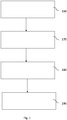
Fig. 1 schematically depicts, by means of a flow chart, an embodiment of a method according to the first aspect of the invention, -
Fig. 2 schematically depicts an FM receiver according to the second aspect of the invention, and -
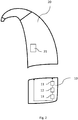
Fig. 3 schematically depicts a hearing device according to the third aspect of the invention. - In the present context, a "hearing device" refers to a device, such as e.g. a hearing aid or an active ear-protection device, which is adapted to improve or augment the hearing capability of an individual by receiving acoustic signals from the individual's surroundings, modifying the acoustic signals electronically and providing audible signals to at least one of the individual's ears. Such audible signals may e.g. be provided in the form of acoustic signals radiated into the individual's outer ears, acoustic signals transferred as mechanical vibrations to the individual's inner ears through the bone structure of the individual's head and/or electric signals transferred directly or indirectly to the cochlear nerve of the individual. The hearing device may be configured to be worn in any known way, e.g. as a unit arranged behind the ear with a tube leading radiated acoustic signals into the ear canal or with a speaker arranged close to or in the ear canal, as a unit entirely or partly arranged in the pinna and/or in the ear canal, as a unit attached to a fixture implanted into the skull bone, etc. More generally, a hearing device comprises an input transducer for receiving an acoustic signal from an individual's surroundings and providing a corresponding electric input signal, a signal processing circuit for processing the electric input signal and an output transducer for providing an audible signal to the individual in dependence on the processed signal.
- A "hearing system" refers to a system comprising one or two hearing devices, and a "binaural hearing system" refers to a system comprising one or two hearing devices and being adapted to provide audible signals to both of the individual's ears. Hearing systems or binaural hearing systems may further comprise "auxiliary devices", which communicate with the hearing devices and affect and/or benefit from the function of the hearing devices. Auxiliary devices may be e.g. remote controls, audio gateway devices, mobile phones, public-address systems, car audio systems or music players. Hearing devices, hearing systems or binaural hearing systems may e.g. be used for compensating for a hearing-impaired person's loss of hearing capability or augmenting a normal-hearing person's hearing capability.
- In a
first step 160 of a method for fitting an FM receiver inFig. 1 an individual user configuration designated for the FM receiver is stored in a memory of a hearing device. - In a
second step 170 it is monitored, preferably by a device detector comprised by the FM receiver and/or an accessory detector comprised by the hearing device, whether the FM receiver is connected, preferably mechanically connected, to the hearing device. - In a
third step 180 the individual user configuration designated for the FM receiver is transferred, preferably via the same connection the hearing device uses to receive auditory signals from the FM receiver, to the FM receiver. The transfer takes place when the FM receiver is connected to the hearing device. - In a
fourth step 190 the FM receiver is configured, preferably by a configurator, to the individual user configuration transferred to the FM receiver. - An
FM receiver 10 inFig. 2 is adapted to be connected to ahearing device 20. TheFM receiver 10 comprises and houses adevice detector 11, aconfigurator 12 and a receiving means 13. Thehearing device 20 comprises and houses amemory 21, thememory 21 storing an individual user configuration designated for theFM receiver 10. - The
device detector 11 is adapted to detect whether theFM receiver 10 is connected to thehearing device 20. Theconfigurator 12 is adapted to automatically configure theFM receiver 10 to an individual user configuration transferred to theconfigurator 12. The receiving means 13 is adapted to transfer an individual user configuration that is stored within thememory 21 to theconfigurator 12 when thedevice detector 11 detects that theFM receiver 10 is connected to thehearing device 20. The receiving means 13 may interact directly with thememory 21 or, alternatively, interact with a sending means 23 (seeFIG. 3 ) in thehearing device 20 for executing the transfer. Preferably thedevice detector 11 is adapted to detect whetherFM receiver 10 is mechanically connected thehearing device 20. - In the depicted embodiment the receiving means 13 is adapted to transfer the individual user configuration using the same connection the
FM receiver 10 uses to send auditory signals to ahearing device 20. To serve that purpose the receiving means 13 is electrically connected to a connection pad of theFM receiver 10, which is designated to connect to a corresponding connection pad of thehearing device 20. - A
hearing device 20 inFig. 3 is adapted to have anFM receiver 10 connected thereto. Thehearing device 20 comprises and houses amemory 21, anaccessory detector 22 and a sending means 23. - The
memory 21 is adapted to store an individual user configuration designated for theFM receiver 10. Theaccessory detector 22 is adapted to detect whether anFM receiver 10 is connected to thehearing device 20. Preferably theaccessory detector 22 is adapted to detect whether theFM receiver 11 is mechanically connected to thehearing device 20. The sending means 23 is adapted to transfer the individual user configuration from thememory 21 to theFM receiver 10 when theaccessory detector 22 detects that theFM receiver 10 is connected to thehearing device 20. - In the depicted embodiment the sending means 23 is adapted to transfer the individual user configuration using the same connection the
FM receiver 10 uses to send auditory signals to ahearing device 20. To serve that purpose the sending means 13 is electrically connected to a connection pad of thehearing device 20, which is designated to connect to a corresponding connection pad of theFM receiver 10.
Claims (15)
- Method for fitting an FM receiver to an individual user configuration, wherein the FM receiver is adapted to be connected to a hearing device and wirelessly to an FM transmitter, the method comprising:- storing (160) an individual user configuration designated for the FM receiver in the hearing device;- monitoring (170) whether the FM receiver is connected to the hearing device;- transferring (180) the individual user configuration designated for the FM receiver to the FM receiver when the FM receiver is connected to the hearing device or enabled; and- configuring (190) the FM receiver to the individual user configuration transferred to the FM receiver.
- Method according to claim 1, wherein the transferring (180) of the individual user configuration to the FM receiver is performed via the same connection the hearing device uses to receive auditory signals from the FM receiver.
- Method according to claim 1 or 2, wherein the transferring (180) of the individual user configuration to the FM receiver is performed when the FM receiver is communicatively and/or mechanically connected to the hearing device.
- Method according to any of the claims 1 to 3, wherein storing (160) the individual user configuration in the user's hearing device is preceded by:- pre-storing an initial individual user configuration designated for an FM receiver in the FM receiver;- setting the FM receiver as master, allowing it to overwrite an individual user configuration present in a user's hearing;- connecting the FM receiver to a user's hearing device;- transferring the initial individual user configuration stored in the FM receiver to the user's hearing device to be an individual user configuration; and- setting the FM receiver as slave, allowing for an individual user configuration present in the user's hearing to overwrite an initial individual user configuration pre-stored in the FM receiver.
- Method according to any of the claims 1 to 4, wherein storing (160) an individual user configuration designated for the FM receiver in the hearing device involves:- storing a designated FM channel as part of the individual user configuration, the method further comprising:- automatically connecting the FM receiver to the FM transmitter on the designated FM channel.
- Method according to any of the claims 1 to 4, wherein configuring (190) the FM receiver to the individual user configuration includes:- the configuration of at least one feature of a first group of configuration features including: name of the receiver, gain of the receiver, ear assigned to the receiver, mode switch functionality of the receiver, indicator LED functionality of the receiver, de-emphasis mode of the receiver, signalling functionality of the receiver, default channel of the receiver, disable/enable manual channel change of the receiver, disable/enable channel seek of the receiver, channel set of the receiver; and/or:- the configuration of at least one feature of a second group of configuration features including: style of the hearing device, model of the hearing device, fitting of the hearing device, age of the user, hearing loss of the user.
- FM receiver (10) adapted to be connected to a hearing device (20), the FM receiver (20) comprising and preferably housing:- a device detector (11) adapted to detect whether the FM receiver (10) is connected to a hearing device (20);- a configurator (12) adapted to automatically configure the FM receiver to an individual user configuration transferred to the configurator; and- a receiving means (13) adapted to transfer an individual user configuration that is stored within a memory (21) of a hearing device (20) and designated for the FM receiver (10) to the configurator (12) when the device detector (11) detects that the FM receiver (10) is connected to a hearing device (20).
- FM receiver according to claim 8, characterized in that the receiving means (13) is adapted to transfer the individual user configuration using the same connection the FM receiver (10) uses to send auditory signals to a hearing device (20).
- FM receiver according to claim 7 or 8, characterized in that the device detector (11) is adapted to detect whether FM receiver (10) is communicatively and/or mechanically connected to a hearing device.
- Hearing device (20) adapted to have an FM receiver (10) connected thereto, the hearing device (20) comprising and preferably housing:- a memory (21) adapted to store an individual user configuration designated for an FM receiver (10);- an accessory detector (22) adapted to detect whether an FM receiver (10) is connected to the hearing device (20); and- a sending means (23) adapted to transfer the individual user configuration from the memory (21) to an FM receiver when the accessory detector (22) detects that an FM receiver (10) is connected to the hearing device (20).
- Hearing device according to claim 10, characterized in that the sending means (23) is adapted to transfer the individual user configuration using the same connection the hearing device (20) uses to receive auditory signals from an FM receiver (10).
- Hearing device according to claim 10 or 11, characterized in that the accessory detector (22) is adapted to detect whether an FM receiver (11) is communicatively and/or mechanically connected to the hearing device (20).
- Hearing device system comprising a hearing device as of any of the claim 10 to 12 and an FM receiver as of any of the claims 7 to 9.
- Computer program for operating an FM receiver, the computer program comprising program code means for causing the FM receiver to carry out the method as defined in any of the claims 1 to 6, when the computer program is run on a computer controlling the FM receiver.
- Computer program for operating a hearing device, the computer program comprising program code means for causing the hearing device to carry out the method as defined in any of the claims 1 to 6, when the computer program is run on a computer controlling the hearing device.
Priority Applications (5)
| Application Number | Priority Date | Filing Date | Title |
|---|---|---|---|
| EP11193269.5A EP2605546A1 (en) | 2011-12-13 | 2011-12-13 | Configurable FM receiver for hearing device |
| EP12195231.1A EP2605548A1 (en) | 2011-12-13 | 2012-12-03 | Configurable fm receiver for hearing device |
| AU2012261521A AU2012261521B2 (en) | 2011-12-13 | 2012-12-05 | Configurable FM Receiver for Hearing Device |
| CN201210537788.0A CN103167382B (en) | 2011-12-13 | 2012-12-12 | Configurable fm receiver for hearing devices |
| US13/712,389 US8879764B2 (en) | 2011-12-13 | 2012-12-12 | Configurable FM receiver for hearing device |
Applications Claiming Priority (1)
| Application Number | Priority Date | Filing Date | Title |
|---|---|---|---|
| EP11193269.5A EP2605546A1 (en) | 2011-12-13 | 2011-12-13 | Configurable FM receiver for hearing device |
Publications (1)
| Publication Number | Publication Date |
|---|---|
| EP2605546A1 true EP2605546A1 (en) | 2013-06-19 |
Family
ID=47226070
Family Applications (2)
| Application Number | Title | Priority Date | Filing Date |
|---|---|---|---|
| EP11193269.5A Withdrawn EP2605546A1 (en) | 2011-12-13 | 2011-12-13 | Configurable FM receiver for hearing device |
| EP12195231.1A Withdrawn EP2605548A1 (en) | 2011-12-13 | 2012-12-03 | Configurable fm receiver for hearing device |
Family Applications After (1)
| Application Number | Title | Priority Date | Filing Date |
|---|---|---|---|
| EP12195231.1A Withdrawn EP2605548A1 (en) | 2011-12-13 | 2012-12-03 | Configurable fm receiver for hearing device |
Country Status (4)
| Country | Link |
|---|---|
| US (1) | US8879764B2 (en) |
| EP (2) | EP2605546A1 (en) |
| CN (1) | CN103167382B (en) |
| AU (1) | AU2012261521B2 (en) |
Cited By (1)
| Publication number | Priority date | Publication date | Assignee | Title |
|---|---|---|---|---|
| EP2874410A1 (en) * | 2013-11-19 | 2015-05-20 | Oticon A/s | Communication system |
Families Citing this family (6)
| Publication number | Priority date | Publication date | Assignee | Title |
|---|---|---|---|---|
| US10477327B2 (en) * | 2013-10-22 | 2019-11-12 | Gn Hearing A/S | Private audio streaming at point of sale |
| US9608807B2 (en) * | 2014-12-12 | 2017-03-28 | Gn Hearing A/S | Hearing device with communication protection and related method |
| US9445204B1 (en) * | 2015-09-16 | 2016-09-13 | Semiconductor Components Industries, Llc | Method of forming a semiconductor device and structure therefor |
| DK3343782T3 (en) | 2016-12-29 | 2019-10-28 | Oticon As | WIRELESS COMMUNICATION DEVICE TO COMMUNICATE WITH MULTIPLE EXTERNAL DEVICES THROUGH A WIRELESS COMMUNICATION DEVICE |
| EP3614694B1 (en) | 2018-08-20 | 2023-12-20 | GN Hearing A/S | Binaural hearing system utilizing near-field wireless communication |
| DK3657818T3 (en) | 2018-11-26 | 2023-07-03 | Gn Hearing As | WIRELESS NEAR-FIELD MAGNETIC INDUCTION COMMUNICATION SYSTEM WITH DYNAMIC CHANGE OF TRANSMISSION POWER |
Citations (9)
| Publication number | Priority date | Publication date | Assignee | Title |
|---|---|---|---|---|
| WO1997021325A1 (en) * | 1995-12-06 | 1997-06-12 | Telex Communications, Inc. | Bte assistive listening receiver with interchangeable crystals |
| WO1998044761A2 (en) * | 1997-03-31 | 1998-10-08 | Resound Corporation | Standard-compatible, power efficient digital audio interface |
| WO1999013699A2 (en) * | 1999-01-11 | 1999-03-25 | Phonak Ag | Digital communication method and digital communication system |
| WO2002023948A1 (en) * | 2000-09-18 | 2002-03-21 | Phonak Ag | Method for controlling a transmission system, use of this method, transmission system, receiving unit and hearing aid |
| WO2002094370A1 (en) * | 2001-05-23 | 2002-11-28 | Cochlear Limited | Transceiver coil for auditory prosthesis |
| WO2007045081A1 (en) * | 2005-10-17 | 2007-04-26 | Gennum Corporation | A flexible wireless air interface system |
| US20070147641A1 (en) * | 2005-12-23 | 2007-06-28 | Phonak Ag | Wireless hearing system and method for monitoring the same |
| WO2007144010A1 (en) * | 2006-06-12 | 2007-12-21 | Phonak Ag | Method for monitoring a hearing device and hearing device with self-monitoring function |
| WO2011104585A1 (en) * | 2010-02-26 | 2011-09-01 | Nokia Corporation | An apparatus for magnetic field induction in portable devices |
Family Cites Families (3)
| Publication number | Priority date | Publication date | Assignee | Title |
|---|---|---|---|---|
| US8077892B2 (en) * | 2006-10-30 | 2011-12-13 | Phonak Ag | Hearing assistance system including data logging capability and method of operating the same |
| US20080254753A1 (en) * | 2007-04-13 | 2008-10-16 | Qualcomm Incorporated | Dynamic volume adjusting and band-shifting to compensate for hearing loss |
| EP2346271B1 (en) * | 2009-12-01 | 2014-05-07 | Oticon A/S | Control of operating parameters in a binaural listening system |
-
2011
- 2011-12-13 EP EP11193269.5A patent/EP2605546A1/en not_active Withdrawn
-
2012
- 2012-12-03 EP EP12195231.1A patent/EP2605548A1/en not_active Withdrawn
- 2012-12-05 AU AU2012261521A patent/AU2012261521B2/en not_active Expired - Fee Related
- 2012-12-12 US US13/712,389 patent/US8879764B2/en not_active Expired - Fee Related
- 2012-12-12 CN CN201210537788.0A patent/CN103167382B/en not_active Expired - Fee Related
Patent Citations (9)
| Publication number | Priority date | Publication date | Assignee | Title |
|---|---|---|---|---|
| WO1997021325A1 (en) * | 1995-12-06 | 1997-06-12 | Telex Communications, Inc. | Bte assistive listening receiver with interchangeable crystals |
| WO1998044761A2 (en) * | 1997-03-31 | 1998-10-08 | Resound Corporation | Standard-compatible, power efficient digital audio interface |
| WO1999013699A2 (en) * | 1999-01-11 | 1999-03-25 | Phonak Ag | Digital communication method and digital communication system |
| WO2002023948A1 (en) * | 2000-09-18 | 2002-03-21 | Phonak Ag | Method for controlling a transmission system, use of this method, transmission system, receiving unit and hearing aid |
| WO2002094370A1 (en) * | 2001-05-23 | 2002-11-28 | Cochlear Limited | Transceiver coil for auditory prosthesis |
| WO2007045081A1 (en) * | 2005-10-17 | 2007-04-26 | Gennum Corporation | A flexible wireless air interface system |
| US20070147641A1 (en) * | 2005-12-23 | 2007-06-28 | Phonak Ag | Wireless hearing system and method for monitoring the same |
| WO2007144010A1 (en) * | 2006-06-12 | 2007-12-21 | Phonak Ag | Method for monitoring a hearing device and hearing device with self-monitoring function |
| WO2011104585A1 (en) * | 2010-02-26 | 2011-09-01 | Nokia Corporation | An apparatus for magnetic field induction in portable devices |
Cited By (2)
| Publication number | Priority date | Publication date | Assignee | Title |
|---|---|---|---|---|
| EP2874410A1 (en) * | 2013-11-19 | 2015-05-20 | Oticon A/s | Communication system |
| US9781524B2 (en) | 2013-11-19 | 2017-10-03 | Oticon A/S | Communication system |
Also Published As
| Publication number | Publication date |
|---|---|
| CN103167382A (en) | 2013-06-19 |
| CN103167382B (en) | 2016-08-31 |
| US8879764B2 (en) | 2014-11-04 |
| AU2012261521A1 (en) | 2013-06-27 |
| AU2012261521B2 (en) | 2016-08-25 |
| US20130148831A1 (en) | 2013-06-13 |
| EP2605548A1 (en) | 2013-06-19 |
Similar Documents
| Publication | Publication Date | Title |
|---|---|---|
| EP2991380B1 (en) | A hearing assistance device comprising a location identification unit | |
| US9781524B2 (en) | Communication system | |
| EP3101917B1 (en) | Hearing aid configuration detection | |
| US9124992B2 (en) | Wireless in-the-ear type hearing aid system having remote control function and control method thereof | |
| US9883294B2 (en) | Configurable hearing system | |
| EP2605546A1 (en) | Configurable FM receiver for hearing device | |
| US8625830B2 (en) | Modular hearing device | |
| US11602632B2 (en) | User interfaces of a hearing device | |
| EP3054706A2 (en) | A binaural hearing system and a hearing device comprising a beamformer unit | |
| EP4507332A2 (en) | A hearing system comprising a hearing aid and a processing device | |
| US9358389B2 (en) | Two-piece sound processor system for use in an auditory prosthesis system | |
| US8923541B2 (en) | Two-piece sound processor system for use in an auditory prosthesis system | |
| CN203708486U (en) | Monitoring device of hearing aid, hearing aid and a hearing aid system | |
| US12108217B2 (en) | CROS unit for a CROS hearing device system | |
| US9570089B2 (en) | Hearing system and transmission method |
Legal Events
| Date | Code | Title | Description |
|---|---|---|---|
| PUAI | Public reference made under article 153(3) epc to a published international application that has entered the european phase |
Free format text: ORIGINAL CODE: 0009012 |
|
| AK | Designated contracting states |
Kind code of ref document: A1 Designated state(s): AL AT BE BG CH CY CZ DE DK EE ES FI FR GB GR HR HU IE IS IT LI LT LU LV MC MK MT NL NO PL PT RO RS SE SI SK SM TR |
|
| AX | Request for extension of the european patent |
Extension state: BA ME |
|
| 17P | Request for examination filed |
Effective date: 20131219 |
|
| RBV | Designated contracting states (corrected) |
Designated state(s): AL AT BE BG CH CY CZ DE DK EE ES FI FR GB GR HR HU IE IS IT LI LT LU LV MC MK MT NL NO PL PT RO RS SE SI SK SM TR |
|
| 17Q | First examination report despatched |
Effective date: 20180618 |
|
| GRAP | Despatch of communication of intention to grant a patent |
Free format text: ORIGINAL CODE: EPIDOSNIGR1 |
|
| INTG | Intention to grant announced |
Effective date: 20191122 |
|
| RIN1 | Information on inventor provided before grant (corrected) |
Inventor name: ANDERSEN, MARINUS |
|
| STAA | Information on the status of an ep patent application or granted ep patent |
Free format text: STATUS: THE APPLICATION IS DEEMED TO BE WITHDRAWN |
|
| 18D | Application deemed to be withdrawn |
Effective date: 20200603 |