EP2603512B1 - Derivatives of 6, 7-dihydro-3h-oxazolo [3, 4-a]pyrazine-5, 8- dione - Google Patents
Derivatives of 6, 7-dihydro-3h-oxazolo [3, 4-a]pyrazine-5, 8- dione Download PDFInfo
- Publication number
- EP2603512B1 EP2603512B1 EP11815927.6A EP11815927A EP2603512B1 EP 2603512 B1 EP2603512 B1 EP 2603512B1 EP 11815927 A EP11815927 A EP 11815927A EP 2603512 B1 EP2603512 B1 EP 2603512B1
- Authority
- EP
- European Patent Office
- Prior art keywords
- compound
- alkyl
- pharmaceutically acceptable
- pharmaceutical composition
- formula
- Prior art date
- Legal status (The legal status is an assumption and is not a legal conclusion. Google has not performed a legal analysis and makes no representation as to the accuracy of the status listed.)
- Active
Links
- 0 CC*(C1)C=CC(C(OC(*2C(C*3C)=O)/C4=*(\C)/CC/C=C5/OCOC5C4)=C2C3=[U])C2=C1C=CCC#C2 Chemical compound CC*(C1)C=CC(C(OC(*2C(C*3C)=O)/C4=*(\C)/CC/C=C5/OCOC5C4)=C2C3=[U])C2=C1C=CCC#C2 0.000 description 1
- MXEOQXYFOPCTIV-UHFFFAOYSA-N CN(CC(N1C2=C(c3c[nH]c4c3cccc4)OC1c1ccc3OCOc3c1)=O)C2=O Chemical compound CN(CC(N1C2=C(c3c[nH]c4c3cccc4)OC1c1ccc3OCOc3c1)=O)C2=O MXEOQXYFOPCTIV-UHFFFAOYSA-N 0.000 description 1
- CRPVMCDIYJTSLS-UHFFFAOYSA-N COC(C1=C(c2c[nH]c3ccccc23)OC(c2ccc3OCOc3c2)N1C(CCl)=O)=O Chemical compound COC(C1=C(c2c[nH]c3ccccc23)OC(c2ccc3OCOc3c2)N1C(CCl)=O)=O CRPVMCDIYJTSLS-UHFFFAOYSA-N 0.000 description 1
Images

Classifications
-
- A—HUMAN NECESSITIES
- A61—MEDICAL OR VETERINARY SCIENCE; HYGIENE
- A61K—PREPARATIONS FOR MEDICAL, DENTAL OR TOILETRY PURPOSES
- A61K31/00—Medicinal preparations containing organic active ingredients
- A61K31/33—Heterocyclic compounds
- A61K31/395—Heterocyclic compounds having nitrogen as a ring hetero atom, e.g. guanethidine or rifamycins
- A61K31/495—Heterocyclic compounds having nitrogen as a ring hetero atom, e.g. guanethidine or rifamycins having six-membered rings with two or more nitrogen atoms as the only ring heteroatoms, e.g. piperazine or tetrazines
- A61K31/4985—Pyrazines or piperazines ortho- or peri-condensed with heterocyclic ring systems
-
- C—CHEMISTRY; METALLURGY
- C07—ORGANIC CHEMISTRY
- C07D—HETEROCYCLIC COMPOUNDS
- C07D498/00—Heterocyclic compounds containing in the condensed system at least one hetero ring having nitrogen and oxygen atoms as the only ring hetero atoms
- C07D498/02—Heterocyclic compounds containing in the condensed system at least one hetero ring having nitrogen and oxygen atoms as the only ring hetero atoms in which the condensed system contains two hetero rings
- C07D498/04—Ortho-condensed systems
-
- A—HUMAN NECESSITIES
- A61—MEDICAL OR VETERINARY SCIENCE; HYGIENE
- A61P—SPECIFIC THERAPEUTIC ACTIVITY OF CHEMICAL COMPOUNDS OR MEDICINAL PREPARATIONS
- A61P11/00—Drugs for disorders of the respiratory system
-
- A—HUMAN NECESSITIES
- A61—MEDICAL OR VETERINARY SCIENCE; HYGIENE
- A61P—SPECIFIC THERAPEUTIC ACTIVITY OF CHEMICAL COMPOUNDS OR MEDICINAL PREPARATIONS
- A61P11/00—Drugs for disorders of the respiratory system
- A61P11/06—Antiasthmatics
-
- A—HUMAN NECESSITIES
- A61—MEDICAL OR VETERINARY SCIENCE; HYGIENE
- A61P—SPECIFIC THERAPEUTIC ACTIVITY OF CHEMICAL COMPOUNDS OR MEDICINAL PREPARATIONS
- A61P13/00—Drugs for disorders of the urinary system
- A61P13/02—Drugs for disorders of the urinary system of urine or of the urinary tract, e.g. urine acidifiers
-
- A—HUMAN NECESSITIES
- A61—MEDICAL OR VETERINARY SCIENCE; HYGIENE
- A61P—SPECIFIC THERAPEUTIC ACTIVITY OF CHEMICAL COMPOUNDS OR MEDICINAL PREPARATIONS
- A61P13/00—Drugs for disorders of the urinary system
- A61P13/04—Drugs for disorders of the urinary system for urolithiasis
-
- A—HUMAN NECESSITIES
- A61—MEDICAL OR VETERINARY SCIENCE; HYGIENE
- A61P—SPECIFIC THERAPEUTIC ACTIVITY OF CHEMICAL COMPOUNDS OR MEDICINAL PREPARATIONS
- A61P13/00—Drugs for disorders of the urinary system
- A61P13/08—Drugs for disorders of the urinary system of the prostate
-
- A—HUMAN NECESSITIES
- A61—MEDICAL OR VETERINARY SCIENCE; HYGIENE
- A61P—SPECIFIC THERAPEUTIC ACTIVITY OF CHEMICAL COMPOUNDS OR MEDICINAL PREPARATIONS
- A61P15/00—Drugs for genital or sexual disorders; Contraceptives
-
- A—HUMAN NECESSITIES
- A61—MEDICAL OR VETERINARY SCIENCE; HYGIENE
- A61P—SPECIFIC THERAPEUTIC ACTIVITY OF CHEMICAL COMPOUNDS OR MEDICINAL PREPARATIONS
- A61P15/00—Drugs for genital or sexual disorders; Contraceptives
- A61P15/10—Drugs for genital or sexual disorders; Contraceptives for impotence
-
- A—HUMAN NECESSITIES
- A61—MEDICAL OR VETERINARY SCIENCE; HYGIENE
- A61P—SPECIFIC THERAPEUTIC ACTIVITY OF CHEMICAL COMPOUNDS OR MEDICINAL PREPARATIONS
- A61P25/00—Drugs for disorders of the nervous system
-
- A—HUMAN NECESSITIES
- A61—MEDICAL OR VETERINARY SCIENCE; HYGIENE
- A61P—SPECIFIC THERAPEUTIC ACTIVITY OF CHEMICAL COMPOUNDS OR MEDICINAL PREPARATIONS
- A61P3/00—Drugs for disorders of the metabolism
-
- A—HUMAN NECESSITIES
- A61—MEDICAL OR VETERINARY SCIENCE; HYGIENE
- A61P—SPECIFIC THERAPEUTIC ACTIVITY OF CHEMICAL COMPOUNDS OR MEDICINAL PREPARATIONS
- A61P35/00—Antineoplastic agents
-
- A—HUMAN NECESSITIES
- A61—MEDICAL OR VETERINARY SCIENCE; HYGIENE
- A61P—SPECIFIC THERAPEUTIC ACTIVITY OF CHEMICAL COMPOUNDS OR MEDICINAL PREPARATIONS
- A61P43/00—Drugs for specific purposes, not provided for in groups A61P1/00-A61P41/00
-
- A—HUMAN NECESSITIES
- A61—MEDICAL OR VETERINARY SCIENCE; HYGIENE
- A61P—SPECIFIC THERAPEUTIC ACTIVITY OF CHEMICAL COMPOUNDS OR MEDICINAL PREPARATIONS
- A61P9/00—Drugs for disorders of the cardiovascular system
-
- A—HUMAN NECESSITIES
- A61—MEDICAL OR VETERINARY SCIENCE; HYGIENE
- A61P—SPECIFIC THERAPEUTIC ACTIVITY OF CHEMICAL COMPOUNDS OR MEDICINAL PREPARATIONS
- A61P9/00—Drugs for disorders of the cardiovascular system
- A61P9/10—Drugs for disorders of the cardiovascular system for treating ischaemic or atherosclerotic diseases, e.g. antianginal drugs, coronary vasodilators, drugs for myocardial infarction, retinopathy, cerebrovascula insufficiency, renal arteriosclerosis
-
- A—HUMAN NECESSITIES
- A61—MEDICAL OR VETERINARY SCIENCE; HYGIENE
- A61P—SPECIFIC THERAPEUTIC ACTIVITY OF CHEMICAL COMPOUNDS OR MEDICINAL PREPARATIONS
- A61P9/00—Drugs for disorders of the cardiovascular system
- A61P9/12—Antihypertensives
-
- C—CHEMISTRY; METALLURGY
- C07—ORGANIC CHEMISTRY
- C07D—HETEROCYCLIC COMPOUNDS
- C07D503/00—Heterocyclic compounds containing 4-oxa-1-azabicyclo [3.2.0] heptane ring systems, i.e. compounds containing a ring system of the formula:, e.g. oxapenicillins, clavulanic acid derivatives; Such ring systems being further condensed, e.g. 2,3-condensed with an oxygen-, nitrogen- or sulfur-containing hetero ring
- C07D503/02—Preparation
- C07D503/04—Preparation by forming the ring or condensed ring systems
Definitions
- the present invention describes a series of derivatives of 6,7-dihydro-3H-oxazolo[3,4- a ]pyrazine-5,8-dione, mixtures thereof, their pharmaceutically acceptable salts, pharmaceutical compositions containing them, processes of their preparation, said compounds for use as an inhibitor of the enzymes phosphodiesterases, and said compounds for use as an inhibitor of the enzyme phosphodiesterase of type 5 (PDE-5).
- the present invention also describes derivatives of 6,7-dihydro-3H-oxazolo[3,4-a]pyrazine-5,8-dione, mixtures thereof (in any ratio) and/or their pharmaceutically acceptable salts for use in treatment of erectile dysfunction, tissue relaxation treatable disorders and/or conditions and PDE-5 inhibitor treatable disorders.
- Oral treatment is most acceptable by man, and it emerged from clinical research using inhibitors of cGMP-PDE, more specifically, PDE-5.
- the precursor of these compounds was 5-[2-ethoxy-5-(4-methylpiperazinylsulfonyl) phenyl]-1-methyl-3-n-propyl-1,6-dihydro-7H-pyrazolo[4,3-d]pyrimidin-7-one, or sildenafil, with vasodilator properties and potentiates the effects of nitric oxide.
- Sildenafil is the active ingredient of the medicine Viagra®.
- the compounds of the present invention are also inhibitors of the enzyme phosphodiesterase type 5 (PDE-5).
- the objective of the present invention to provide new derivative compounds of 6,7-dihydro-3H-oxazolo[3,4-a]pyrazine-5,8-dione, mixtures thereof (in any ratio), their pharmaceutically acceptable salts, pharmaceutical compositions containing them, that are effective for use in the treatment of erectile dysfunction, said compounds being tissue relaxants, and/or inhibitors of the enzymes phosphodiesterases possessing vasodilatador properties and relaxing effects, particularly inhibitors of PDE-5.
- compositions comprising an effective amount of one of the derivatives of 6,7-dihydro-3H-oxazolo[3,4-a]pyrazine-5,8-dione or mixes thereof (in any ratio) or their pharmaceutically acceptable salts, and pharmaceutically acceptable excipients.
- compositions comprising the derivative ( R )-3-(1,3-benzodioxol-5-yl)-1-(1 H -indol-3-yl)-7-methyl-6,7-dihydro[1,3]oxazolo[3,4- a ]pyrazine-5,8-dione, its enantiomer ( S )-3-(1,3-benzodioxol-5-yl)-1-(1 H -indol-3-yl)-7-methyl-6,7-dihydro[1,3]oxazolo[3,4- a ]pyrazine-5,8-dione, and/or mixtures thereof (in any ratio).
- An additional objective of the present invention is to provide a medicament comprising a therapeutically effective amount of one of the derivatives of 6,7-dihydro-3H-oxazolo[3,4- a ]pyrazine-5,8-dione or mixtures thereof (in any ratio) or their pharmaceutically acceptable salts.
- medicaments comprising the derivative ( R )-3-(1,3-benzodioxol-5-yl)-1-(1 H -indol-3-yl)-7-methyl-6,7-dihydro[1,3]oxazolo[3,4-a]pyrazine-5,8-dione, its enantiomer ( S )-3-(1,3-benzodioxol-5-yl)-1-(1 H -indol-3-yl)-7-methyl-6,7-dihydro[1,3]oxazolo[3,4- a ]pyrazine-5,8-dione, and/or mixtures thereof (in any ratio).
- Another objective of the present invention is the derivatives of 6,7-dihydro-3H-oxazolo[3,4-a]pyrazine-5,8-dione, or mixtures thereof (in any ratio), or their pharmaceutically acceptable salts, for use in curative and/or prophylactic treatment of erectile dysfunction, tissue relaxation treatable disorders and/or conditions, and PDE-5 inhibitor treatable disorders in animal.
- the present invention describes derivatives of 6,7-dihydro-3H-oxazolo[3,4-a]pyrazine-5,8-dione with structures represented in formula (I): and pharmaceutically acceptable salts thereof, where:
- C 2-6 alkenylcarbonyl of R 1 represents one or more alkenyl groups, containing from 2 to 6 carbon atoms, conjugated or not with a carbonyl group.
- aryl of R B and R 4 represents a phenyl group or phenyl substituted one or more times (e.g. 1, 2 or 3) by halogen, C 1-6 alkyl, C 1-6 alkoxyl or methylenedioxyl.
- heteroaryl of R B and R 4 e.g., hetroarylC 1-3 alkyl, represents a furil group or pyridyl, optionally substituted one or more times with halogen, C 1-6 alkyl or C 1-6 alkoxyl.
- C 3-8 cycloalkyl of R B and R 4 , e.g., C 3-8 cycloalkylC 1-3 alkyl, represents a monocyclic ring containing from 3 to 8 carbon atoms.
- cycloalkyl rings include C 3-6 cycloalkyl rings: cyclopropyl, cyclobutyl, cyclopentyl and cyclohexyl.
- alkyl can represent an alkyl chain or branched alkyl chain.
- the C 1-4 alkyl group can represent methyl, ethyl, n -propyl, i -propyl, n -butyl, s -butyl and t- butyl.
- alkenyl includes alkenyl groups of straight and branched chains, e.g., vinyl and allyl groups.
- alkynyl includes alkynyl groups of straight and branched chains, e.g., acetylene.
- halogen can represent atoms of fluorine, chlorine, bromine or iodine.
- halo C 1-6 alkyl can represent an alkyl group containing from one to six carbon atoms, substituted with one or more (e.g. 1, 2 or 3) atoms of halogen.
- the compounds of formula (I) can contain one or more asymmetrical centers, thus existing as enantiomers and/or diastereomers.
- a chiral center is indicated with an asterisk.
- the invention includes one or more enantiomers, and mixtures thereof (in any ratio).
- the compounds of formula (I) can exist with different tautomeric forms, and the invention includes one or more tautomeric forms, and mixtures thereof (in any ratio).
- Pharmaceutically acceptable salts of the compounds of formula (I), which possess a basic center are formed by the addition of pharmaceutically acceptable acids.
- Some examples include salts of hydrochloride, hydrobromide, sulfate or bisulfate, phosphate or hydrogen phosphate, acetate, benzoate, succinate, fumarate, maleate, lactate, citrate, tartarate, gluconate, methanesulfonate, benzenesulfonate and p- toluenesulfonate.
- the compounds of formula (I) can be used in pharmaceutically acceptable metal salts, in particular salts of alkaline metals, with bases. For example, salts of sodium and potassium.
- the compounds of this invention have a structure represented in formula (I), where R 1 represents an indol group, R 2 represents an 3,4- methylenedioxyphenyl group, R 3 represents hydrogen and R 4 represents a methyl group.
- the compounds of this invention are ( R )-3-(benzo[d][1,3]dioxol-5-yl)-1-(1H-indol-3-yl)-7-methyl-6,7-dihydro-3H-oxazolo[3,4-a]pyrazine-5,8-dione, and/or its enantiomer ( S )-3-(benzo[d][1,3]dioxol-5-yl)-1-(1H-indol-3-yl)-7-methyl-6,7-dihydro-3H-oxazolo[3,4-a]pyrazine-5,8-dione.
- Compound 4 is treated with acid in isopropanol. After neutralization with sodium bicarbonate, 3,4-(methylendioxy)benzaldehyde is added. The last step of this approach is addition of chloroacetyl chloride.
- compound 5 is treated with acid in ethanol. After neutralization with sodium bicarbonate, chloroacetyl chloride is added.
- compound 6 is treated with acid in dioxane. After neutralization with sodium bicarbonate, an oxidation reaction is made with pyridine chlorochromate (PCC), leading to formation of intermediate 4 , that is treated with acid in isopropanol. After neutralization with sodium bicarbonate, 3,4-(methylendioxy)benzaldehyde is added. The last step of this approach is addition of chloroacetyl chloride.
- PCC pyridine chlorochromate
- intermediate 9 reacts with compound 11, using liquid ammonia as a solvent.
- compound 13 is treated with (2,3)-dichloro-5,6-dicyano-1,4-benzoquinone (DDQ), using a mixture of tetrahydrofuran:water as solvent for the reaction.
- DDQ (2,3)-dichloro-5,6-dicyano-1,4-benzoquinone
- compound 14 is treated with chloride of pyridine chlorochromate (PCC), using methylene chloride as solvent for the reaction.
- PCC pyridine chlorochromate
- intermediate 9 reacts with compound 16 , using liquid ammonia as solvent.
- All compounds containing the carboxymethyl group, particularly 1 , 3 , 5 and 7 can be prepared from (their) derivatives containing the nitrile group, e.g., according to Scheme 15.
- compound 17 is treated with acid in methanol.
- This approach can also be used, individually, with compounds 18 , 19 and 20 in order to prepare intermediates 3 , 5 and 7 respectively.
- the present invention also provides a pharmaceutical composition, e.g. an appropriate dosage form, wherein said composition comprises an effective amount of one or more compounds of formula ( 1 ) or a pharmaceutically acceptable salt thereof, and a pharmaceutically acceptable excipient.
- a pharmaceutical composition e.g. an appropriate dosage form, wherein said composition comprises an effective amount of one or more compounds of formula ( 1 ) or a pharmaceutically acceptable salt thereof, and a pharmaceutically acceptable excipient.
- the pharmaceutical composition further comprises other PDE-5 inhibitors, such as sildenafil, vardenafil and tadalafil; or a pharmaceutically acceptable salt thereof.
- the pharmaceutical composition further comprises one or more compounds that are suitable for use in the treatment of erectile dysfunction or the PDE-5 inhibitor treatable disorder.
- the pharmaceutical composition may be administered with a second pharmaceutical composition comprising other PDE-5 inhibitors, for example sildenafil, vardenafil and tadalafil; or a pharmaceutically acceptable salt thereof.
- said second pharmaceutical composition comprises one or more compounds that are suitable for use in the treatment erectile dysfunction or the PDE-5 inhibitor treatable disorder.
- the administration may be coadministration or sequential administration.
- compositions may be prepared by methods well known in the state of the art. Appropriately, Remington's Pharmaceutical Sciences or similar information sources may be used to prepare a suitable formulation according to the invention.
- compositions for oral administration may be presented as discrete units such as capsules, tablets, effervescent tablets, chewable tablets, pills, powders, granules and gels or similar pharmaceutical forms.
- Other oral formulation forms include suspensions or emulsions in an aqueous or non-aqueous carrier.
- the compounds of formula (I) can be admixed with a pharmaceutically acceptable carrier comprising at least one component selected from the group comprising diluents, binders, disintegrants, lubricants, coloring agents, and flavoring agents.
- Exemplary inert diluents are calcium carbonate, calcium phosphate-dibasic, calcium phosphate-tribasic, calcium sulfate, cellulose-microcrystalline, cellulose powdered, dextrates, dextrins, cyclodextrins, dextrose excipients, fructose, kaolin, lactitol, lactose, mannitol, sorbitol, starch, starch pregelatinized, sucrose, sugar compressible, and sugar confectioners.
- binders may be used one or more substances, e.g., methyl cellulose, hydroxypropyl cellulose, hydroxypropyl methyl cellulose, polyvinylpyrrolidone, gelatin, gum arabic, ethyl cellulose, polyvinyl alcohol, pullulan, pregelatinized starch, agar, tragacanth, sodium alginate, propylene glycol, and alginate.
- substances e.g., methyl cellulose, hydroxypropyl cellulose, hydroxypropyl methyl cellulose, polyvinylpyrrolidone, gelatin, gum arabic, ethyl cellulose, polyvinyl alcohol, pullulan, pregelatinized starch, agar, tragacanth, sodium alginate, propylene glycol, and alginate.
- disintegrant may be used one or more substances selected from low substituted hydroxypropyl cellulose, carboxymethyl cellulose, calcium carboxymethyl cellulose, sodium carboxymethyl cellulose, croscarmellose sodium, starch, crystalline cellulose, hydroxypropyl starch, and partially pregelatinized starch, and croscarmellose sodium.
- exemplary lubricants are stearic acid, magnesium stearate, calcium stearate, talc, hydrogenated castor oil, and sucrose.
- the dosage forms can also comprise buffering agents.
- Soft gelatin capsules can be prepared to contain a mixture of the compounds of formula (I) and vegetable oil.
- Hard gelatin capsules may contain granules of the compounds of formula (I) in combination with a solid, pulverulent carrier such as, lactose, saccharose, sorbitol, mannitol, potato starch, corn starch, amylopectin, cellulose derivatives of gelatin.
- tablets and pills can be prepared with enteric coatings.
- the dosage forms are a controlled/retarded/modulated release type, which are based on carriers or matrices including, but not being limited to, biocompatible polymers, pharmaceutically acceptable polymeric matrices, liposomes, PEG-liposomes, or a cyclodextrin or a cyclodextrin derivative matrix.
- compositions may be administered by a variety of administration routes, including, but not being limited to, oral, intracavernosal injection, topically and transdermally delivered through the skin into various sites or parenteral routes.
- administration routes including, but not being limited to, oral, intracavernosal injection, topically and transdermally delivered through the skin into various sites or parenteral routes.
- the particular mode selected will depend on the compounds present in the composition, the severity of the erectile dysfunction, tissue relaxation treatable disorders and/or conditions, or PDE-5 inhibitor treatable disorder being treated and the dosage required for therapeutic efficacy.
- the compositions of the invention are in oral administration form because of convenience of the patient and the dosing schedule.
- Tissue relaxants have been used to promote relaxation on various tissues to treat or act as adjuvant of the treatment, procedure or surgery related with lithiasis ( Korkes, F. et al, J Bras Nefrol. (2009) 31(1): 55 ), prostate enlargement (e.g., benign prostatic hyperplasia, prostatitis) ( WO 9911279 ) and urether constriction ( Van der wasf et al, BJU International (2002) 90:588 ).
- Other tissue relaxation treatable disorders and/or conditions are known and described in the art.
- PDE-5 inhibitors have been used to block cGMP degradation to prolong the effects of nitric oxide (NO) on various tissues, e.g., to maintain NO-induced relaxation of airways and vessels (Barnes, P. J., et al., (1995), and to maintain NO-induced protection of tissue ( Duffin, R., et. al., Br J Pharmacol. (2008) 153(4): 623 ).
- NO nitric oxide
- PDE-5 inhibitor treatable disorders - including pulmonary hypertension (commercially treated with sildenafil citrate); bronchitis, chronic asthma, hypertension ( EP 758653 , US 7569572 ); Raynaud's phenomenon ( Ghofrani H.A., et. al., Nat Rev Drug Discov. 2006, 5:689 ); commencing right-heart failure ( Ghofrani et al. (2003) AJRCCM 167(8): 1139 ); neurogenesis and functional recovery after stroke ( Zhang et al. (2002) Stroke 33: 2675-2680 ); coronary artery relaxation ( Halcox et al.
- a therapeutically effective amount for use in treatment of erectile dysfunction is one that is sufficient to achieve improvement in erectile function or an alleviation of the symptoms of erectile dysfunction, or even to restore the erectile capacity.
- a therapeutically effective amount for use in treatment of PDE-5 inhibitor treatable disorders is one that is sufficient to achieve improvement in said disorder or an alleviation of the symptoms of said disorder. Effective amounts will depend on the specific condition being treated and the severity thereof; individual patient characteristics, including age, physical condition, size and weight; concurrent treatment; and the mode of administration. These factors are well known to those skilled in the art and can be established without undue experimentation.
- doses of compounds of formula (I) will range from about 0.01 mg/kg body weight per day to 100 mg/kg body weight per day, preferably from 0.1 mg/kg body weight per day to 10 mg/kg body weight per day. Multiple doses per day may be contemplated to achieve appropriate systemic levels of active ingredients present in the composition of the invention.
- Methyl 2-[( E )-(1,3-benzodioxol-5-ylmethylidene)amino]-3-(1 H -indol-3-yl)-3-oxopropanoate was added to a solution of pyridine (10mL) in 50mL of dry methylene chloride. This suspension was mixed under magnetic agitation with a drying tube of CaCO 3 for 30 minutes. Chloroacetyl chloride (2.3mL; 30.0mmol) was dissolved in 2.5mL of dry methylene chloride. This solution was added drop wise to the reaction mixture, over a period of 30 minutes.
- Human corpus cavernosum and urether were obtained from discarded tissues from surgeries, which were placed in ice-cold Krebs solution for rapid transport to the laboratory.
- Cavernosal strips, pulmonary artery, and urether were mounted in 10 ml organ chambers containing Kreb's solution at 37°C, pH 7.4 continuously bubbled with a mixture of 95% O 2 and 5% CO 2 .
- the tissues were stretched to a resting force of 5 mN and allowed to equilibrate for 60 min. Changes in isometric force were recorded using a PowerLab 4/30 data acquisition system (Chart software, version 7.0; ADInstruments, Colorado Springs, CO).
- Cumulative concentration-response curves to compound 2 (named BL 106 in Figures 1, 2 and 3 ) (0.001-10 ⁇ M) were obtained in cavernosal strips, pulmonary artery rings, and urether contracted with noradrenaline (NOR 10 ⁇ M) (Sigma, St. Louis, MO). Concentration response curves to compound 2 (denoted BL 106 in Figures 1, 2 and 3 ) were constructed for each sample. For pulmonary artery, concentration response curves to compound 2 were also constructed in the presence or absence of the soluble guanylate cyclase inhibitor 1H-[1,2,4]Oxadiazolo[4,3-a]quinoxalin-1-one (ODQ 10 ⁇ M) (Sigma, St. Louis, MO). Control rings (treated with 40 mM DMSO) were also ran in parallel with experimental strips and rings.
- Noradrenaline caused a sustained contraction in the human urether tissue.
- Noradrenaline (3 or 10 ⁇ M) caused a sustained contraction in the rabbit pulmonary artery (17.4 mN).
- Noradrenaline caused a sustained contraction in the human corpus cavernosum.
- Noradrenaline (3 or 10 ⁇ M) caused a sustained contraction in rabbit corpus cavernosum (13.8 mN).
Landscapes
- Health & Medical Sciences (AREA)
- Chemical & Material Sciences (AREA)
- Organic Chemistry (AREA)
- Life Sciences & Earth Sciences (AREA)
- Veterinary Medicine (AREA)
- Pharmacology & Pharmacy (AREA)
- Public Health (AREA)
- Medicinal Chemistry (AREA)
- General Health & Medical Sciences (AREA)
- Animal Behavior & Ethology (AREA)
- Bioinformatics & Cheminformatics (AREA)
- Engineering & Computer Science (AREA)
- Chemical Kinetics & Catalysis (AREA)
- Nuclear Medicine, Radiotherapy & Molecular Imaging (AREA)
- General Chemical & Material Sciences (AREA)
- Urology & Nephrology (AREA)
- Endocrinology (AREA)
- Pulmonology (AREA)
- Reproductive Health (AREA)
- Cardiology (AREA)
- Heart & Thoracic Surgery (AREA)
- Gynecology & Obstetrics (AREA)
- Neurology (AREA)
- Neurosurgery (AREA)
- Vascular Medicine (AREA)
- Epidemiology (AREA)
- Biomedical Technology (AREA)
- Molecular Biology (AREA)
- Diabetes (AREA)
- Hematology (AREA)
- Obesity (AREA)
- Pharmaceuticals Containing Other Organic And Inorganic Compounds (AREA)
- Nitrogen And Oxygen Or Sulfur-Condensed Heterocyclic Ring Systems (AREA)
- Plural Heterocyclic Compounds (AREA)
- Indole Compounds (AREA)
- Nitrogen Condensed Heterocyclic Rings (AREA)
Description
- The present invention describes a series of derivatives of 6,7-dihydro-3H-oxazolo[3,4-a]pyrazine-5,8-dione, mixtures thereof, their pharmaceutically acceptable salts, pharmaceutical compositions containing them, processes of their preparation, said compounds for use as an inhibitor of the enzymes phosphodiesterases, and said compounds for use as an inhibitor of the enzyme phosphodiesterase of type 5 (PDE-5). In particular, the derivative (R)-3-(1,3-benzodioxol-5-yl)-1-(1H-indol-3-yl)-7-methyl-6,7-dihydro[1,3]oxazolo[3,4-a]pyrazine-5,8-dione, its enantiomer (S)-3-(1,3-benzodioxol-5-yl)-1-(1H-indol-3-yl)-7-methyl-6,7-dihydro[1,3]oxazolo[3,4-a]pyrazine-5,8-dione, and/or mixtures thereof (in any ratio).
- The present invention also describes derivatives of 6,7-dihydro-3H-oxazolo[3,4-a]pyrazine-5,8-dione, mixtures thereof (in any ratio) and/or their pharmaceutically acceptable salts for use in treatment of erectile dysfunction, tissue relaxation treatable disorders and/or conditions and PDE-5 inhibitor treatable disorders. In particular, the derivative (R)-3-(1,3-benzodioxol-5-yl)-1-(1H-indol-3-yl)-7-methyl-6,7-dihydro[1,3]oxazolo[3,4-a]pyrazine-5,8-dione, its enantiomer (S)-3-(1,3-benzodioxol-5-yl)-1-(1H-indol-3-yl)-7-methyl-6,7-dihydro[1,3]oxazolo[3,4-a]pyrazine-5,8-dione, and/or mixtures thereof (in any ratio).
- Before the appearance of the first oral treatment, male sexual impotence was treated by intracavernous injections and other means, due to, in particular, doubts stemming from adverse reactions that oral administration could cause in humans. Papaverine and pentoxifylline, for example, were used in the treatment of erectile dysfunction by intracavernous injections. Other means of treatment, less efficient, were, for example, psychotherapies and surgical implants.
- Oral treatment is most acceptable by man, and it emerged from clinical research using inhibitors of cGMP-PDE, more specifically, PDE-5. The precursor of these compounds was 5-[2-ethoxy-5-(4-methylpiperazinylsulfonyl) phenyl]-1-methyl-3-n-propyl-1,6-dihydro-7H-pyrazolo[4,3-d]pyrimidin-7-one, or sildenafil, with vasodilator properties and potentiates the effects of nitric oxide. Sildenafil is the active ingredient of the medicine Viagra®.
- Later, other inhibitor compounds of PDE-5 were developed and are cited in numerous publications of technical literature, as well as patent publications, such as vardenafil, the active ingredient of the medicine Levitra®, and tadalafil, the active ingredient of the medicine Cialis®.
- The compounds of the present invention, the derivatives of 6,7-dihydro-3H-oxazolo[3,4-a]pyrazine-5,8-dione, are also inhibitors of the enzyme phosphodiesterase type 5 (PDE-5).
- It is, therefore, the objective of the present invention to provide new derivative compounds of 6,7-dihydro-3H-oxazolo[3,4-a]pyrazine-5,8-dione, mixtures thereof (in any ratio), their pharmaceutically acceptable salts, pharmaceutical compositions containing them, that are effective for use in the treatment of erectile dysfunction, said compounds being tissue relaxants, and/or inhibitors of the enzymes phosphodiesterases possessing vasodilatador properties and relaxing effects, particularly inhibitors of PDE-5. In particular, the derivative (R)-3-(1,3-benzodioxol-5-yl)-1-(1H-indol-3-yl)-7-methyl-6,7-dihydro[1,3]oxazolo[3,4-a]pyrazine-5,8-dione, its enantiomer (S)-3-(1,3-benzodioxol-5-yl)-1-(1H-indol-3-yl)-7-methyl-6,7-dihydro[1,3]oxazolo[3,4-a]pyrazine-5,8-dione, and/or mixtures thereof (in any ratio).
- It is also the objective of the present invention to provide processes preparation of derivative compounds of 6,7-dihydro-3H-oxazolo[3,4-a]pyrazine-5,8-dione, and mixtures thereof. In particular, the derivative (R)-3-(1,3-benzodioxol-5-yl)-1-(1H-indol-3-yl)-7-methyl-6,7-dihydro[1,3]oxazolo[3,4-a]pyrazine-5,8-dione, its enantiomer (S)-3-(1,3-benzodioxol-5-yl)-1-(1H-indol-3-yl)-7-methyl-6,7-dihydro[1,3]oxazolo[3,4-a]pyrazine-5,8-dione, and/or mixtures thereof (in any ratio).
- Furthermore, it is the objective of the present invention to provide pharmaceutical compositions comprising an effective amount of one of the derivatives of 6,7-dihydro-3H-oxazolo[3,4-a]pyrazine-5,8-dione or mixes thereof (in any ratio) or their pharmaceutically acceptable salts, and pharmaceutically acceptable excipients. In particular, pharmaceutical compositions comprising the derivative (R)-3-(1,3-benzodioxol-5-yl)-1-(1H-indol-3-yl)-7-methyl-6,7-dihydro[1,3]oxazolo[3,4-a]pyrazine-5,8-dione, its enantiomer (S)-3-(1,3-benzodioxol-5-yl)-1-(1H-indol-3-yl)-7-methyl-6,7-dihydro[1,3]oxazolo[3,4-a]pyrazine-5,8-dione, and/or mixtures thereof (in any ratio).
- An additional objective of the present invention is to provide a medicament comprising a therapeutically effective amount of one of the derivatives of 6,7-dihydro-3H-oxazolo[3,4-a]pyrazine-5,8-dione or mixtures thereof (in any ratio) or their pharmaceutically acceptable salts. In particular, medicaments comprising the derivative (R)-3-(1,3-benzodioxol-5-yl)-1-(1H-indol-3-yl)-7-methyl-6,7-dihydro[1,3]oxazolo[3,4-a]pyrazine-5,8-dione, its enantiomer (S)-3-(1,3-benzodioxol-5-yl)-1-(1H-indol-3-yl)-7-methyl-6,7-dihydro[1,3]oxazolo[3,4-a]pyrazine-5,8-dione, and/or mixtures thereof (in any ratio).
- Another objective of the present invention is the derivatives of 6,7-dihydro-3H-oxazolo[3,4-a]pyrazine-5,8-dione, or mixtures thereof (in any ratio), or their pharmaceutically acceptable salts, for use in curative and/or prophylactic treatment of erectile dysfunction, tissue relaxation treatable disorders and/or conditions, and PDE-5 inhibitor treatable disorders in animal. In particular, the derivative (R)-3-(1,3-benzodioxol-5-yl)-1-(1H-indol-3-yl)-7-methyl-6,7-dihydro[1,3]oxazolo[3,4-a]pyrazine-5,8-dione, its enantiomer (S)-3-(1,3-benzodioxol-5-yl)-1-(1H-indol-3-yl)-7-methyl-6,7-dihydro[1,3]oxazolo[3,4-a]pyrazine-5,8-dione, and/or mixtures thereof (in any ratio).
-
-
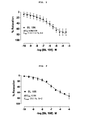
Figure 1 shows the relaxing effects of compound 2 (BL 106) on human isolated urether tissue.Figure 1 represents the concentration response curve toBL 106 in isolated urether from human. Data are the mean ± SEM, n=3 experiments. -
Figure 2 shows the relaxing effects of compound 2 (BL 106) on rabbit isolated pulmonary artery tissue.Figure 2 represents the concentration response curve toBL 106 in isolated pulmonary artery from rabbit. -
Figure 3 shows the relaxing effects of compound 2 (BL 106) on human isolated corpus cavernosum tissue (Figure 3A ) and rabbit isolated corpus cavernosum tissue (Figure 3B). Figure 3 represents concentration response curve toBL 106 in isolated corpus cavernosum from human (A) and rabbit (B). Data are the mean ± SEM, n=3 experiments. - The present invention describes derivatives of 6,7-dihydro-3H-oxazolo[3,4-a]pyrazine-5,8-dione with structures represented in formula (I):

- R1 represents an aromatic group, condensed group or not, (optionally substituted with RB in one or more positions), a heteroaromatic group containing one or more heteroatoms or indole groups (optionally substituted with RB in one or more positions), C2-6 alkenylcarbonyl (optionally substituted with RB in one or more positions), bicyclic aromatic (optionally substituted with RB in one or more positions), or bicyclic heteroaromatic, containing one or more heteroatoms (optionally substituted with RB in one or more positions);
- RB represents halogen, hydroxy, nitrogen, cyano, C1-6 alkyl, C2-6 alkenyl, C2-6 alkynyl, C1-6 haloalkyl, C3-8 cycloalkyl, C3-8 cycloalkylC1-3 alkyl, arylC1-3 alkyl or heteroarylC1-3 alkyl;
- R2 represents an aromatic group containing one or more heteroatoms, or a bicyclic aromatic containing one or more heteroatoms or methylene-3,4-dioxyphenyl groups, or a heteroaromatic containing one or more heteroatoms;
- R3 represents hydrogen, halogen, C1-6 haloalkyl, C1-3 heteroalkyl, or C1-3 alkyl;
- R4 represents hydrogen, C1-6 alkyl, C2-6 alkenyl, C2-6 alkynyl, C1-6 haloalkyl, C3-8 cycloalkyl, C3-8 cycloalkylC1-3 alkyl, arylC1-3 alkyl or heteroarylC1-3 alkyl.
- In one aspect, "C2-6 alkenylcarbonyl" of R1 represents one or more alkenyl groups, containing from 2 to 6 carbon atoms, conjugated or not with a carbonyl group.
- In one aspect, "aryl" of RB and R4, e.g., arylC1-3 alkyl, represents a phenyl group or phenyl substituted one or more times (e.g. 1, 2 or 3) by halogen, C1-6 alkyl, C1-6 alkoxyl or methylenedioxyl. In another aspect, "heteroaryl" of RB and R4, e.g., hetroarylC1-3 alkyl, represents a furil group or pyridyl, optionally substituted one or more times with halogen, C1-6 alkyl or C1-6 alkoxyl. In another aspect, "C3-8 cycloalkyl" of RB and R4, e.g., C3-8 cycloalkylC1-3 alkyl, represents a monocyclic ring containing from 3 to 8 carbon atoms. Examples of cycloalkyl rings include C3-6 cycloalkyl rings: cyclopropyl, cyclobutyl, cyclopentyl and cyclohexyl.
- The term "alkyl" can represent an alkyl chain or branched alkyl chain. For example, the C1-4 alkyl group can represent methyl, ethyl, n-propyl, i-propyl, n-butyl, s-butyl and t-butyl. The term "alkenyl" includes alkenyl groups of straight and branched chains, e.g., vinyl and allyl groups. The term "alkynyl" includes alkynyl groups of straight and branched chains, e.g., acetylene. The term "halogen" can represent atoms of fluorine, chlorine, bromine or iodine. The term "halo C1-6alkyl" can represent an alkyl group containing from one to six carbon atoms, substituted with one or more (e.g. 1, 2 or 3) atoms of halogen.
- The compounds of formula (I) can contain one or more asymmetrical centers, thus existing as enantiomers and/or diastereomers. For example, in formula (I), a chiral center is indicated with an asterisk. Accordingly, the invention includes one or more enantiomers, and mixtures thereof (in any ratio).
- The compounds of formula (I) can exist with different tautomeric forms, and the invention includes one or more tautomeric forms, and mixtures thereof (in any ratio).
- Pharmaceutically acceptable salts of the compounds of formula (I), which possess a basic center, are formed by the addition of pharmaceutically acceptable acids. Some examples include salts of hydrochloride, hydrobromide, sulfate or bisulfate, phosphate or hydrogen phosphate, acetate, benzoate, succinate, fumarate, maleate, lactate, citrate, tartarate, gluconate, methanesulfonate, benzenesulfonate and p-toluenesulfonate. The compounds of formula (I) can be used in pharmaceutically acceptable metal salts, in particular salts of alkaline metals, with bases. For example, salts of sodium and potassium.
- In one embodiment, the compounds of this invention have a structure represented in formula (I), where R1 represents an indol group, R2 represents an 3,4- methylenedioxyphenyl group, R3 represents hydrogen and R4 represents a methyl group. In a preferred embodiment, the compounds of this invention are (R)-3-(benzo[d][1,3]dioxol-5-yl)-1-(1H-indol-3-yl)-7-methyl-6,7-dihydro-3H-oxazolo[3,4-a]pyrazine-5,8-dione, and/or its enantiomer (S)-3-(benzo[d][1,3]dioxol-5-yl)-1-(1H-indol-3-yl)-7-methyl-6,7-dihydro-3H-oxazolo[3,4-a]pyrazine-5,8-dione.
- The compound (R,S)-3-(1,3-benzodioxol-5-yl)-1-(1H-indol-3-yl)-7-methyl-6,7-dihydro[1,3]oxazolo[3,4-a]pyrazine-5,8-dione ( 2 ), according to the present invention, can be prepared from the reaction of
compound 1 in the presence of methylamine, using ethanol as solvent, according to Scheme 1:
- An alternative approach for the preparation of
compound 2 is via the reaction of 3 with acid in ethanol, according to Scheme 2: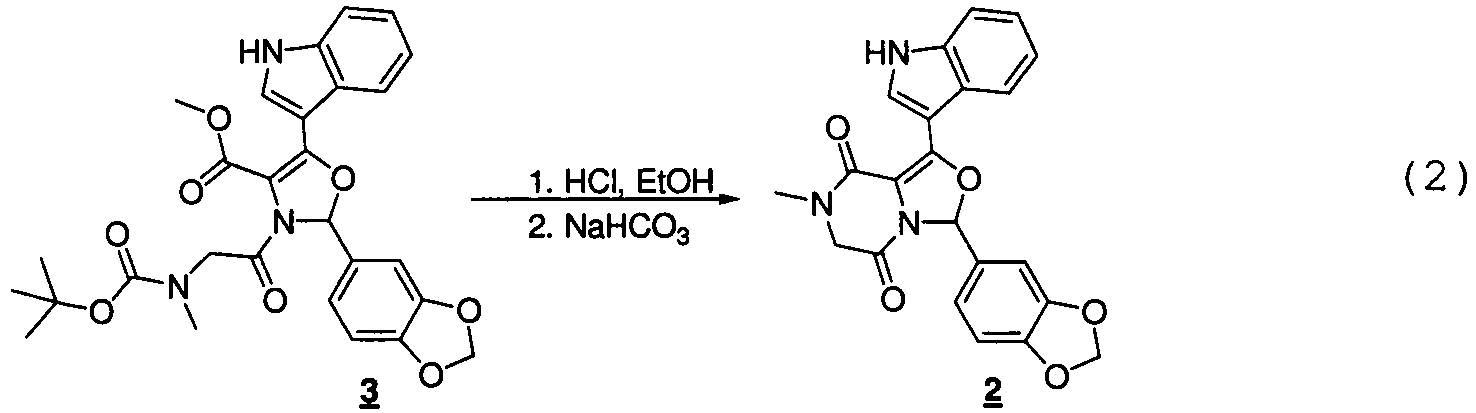
-
Compound 1 can be prepared according to Scheme 3:
-
Compound 4 is treated with acid in isopropanol. After neutralization with sodium bicarbonate, 3,4-(methylendioxy)benzaldehyde is added. The last step of this approach is addition of chloroacetyl chloride. - Alternatively,
compound 1 can be prepared according to Scheme 4:
- In this approach,
compound 5 is treated with acid in ethanol. After neutralization with sodium bicarbonate, chloroacetyl chloride is added. -
Compound 1 also can be prepared according to Scheme 5:
- In this approach,
compound 6 is treated with acid in dioxane. After neutralization with sodium bicarbonate, an oxidation reaction is made with pyridine chlorochromate (PCC), leading to formation of intermediate 4, that is treated with acid in isopropanol. After neutralization with sodium bicarbonate, 3,4-(methylendioxy)benzaldehyde is added. The last step of this approach is addition of chloroacetyl chloride. - Another approach for preparation of
compound 1 is given in Scheme 6:
- In this approach, the reaction of 7 and 8 in presence of aluminum oxide (Al2O3) in dichlorometane leads to the formation of intermediate 9, which reacts with 10 in the presence of calcium oxide (CaO).
-
Compound 3 can be prepared according to Scheme 7:
- In this approach, intermediate 9 reacts with compound 11, using liquid ammonia as a solvent.
- Alternatively,
compound 3 can be prepared according to Scheme 8:
- In this approach, in the presence of calcium oxide (CaO), intermediate 9 reacts with compound 12.
-
Compound 4 can be prepared according to Scheme 9: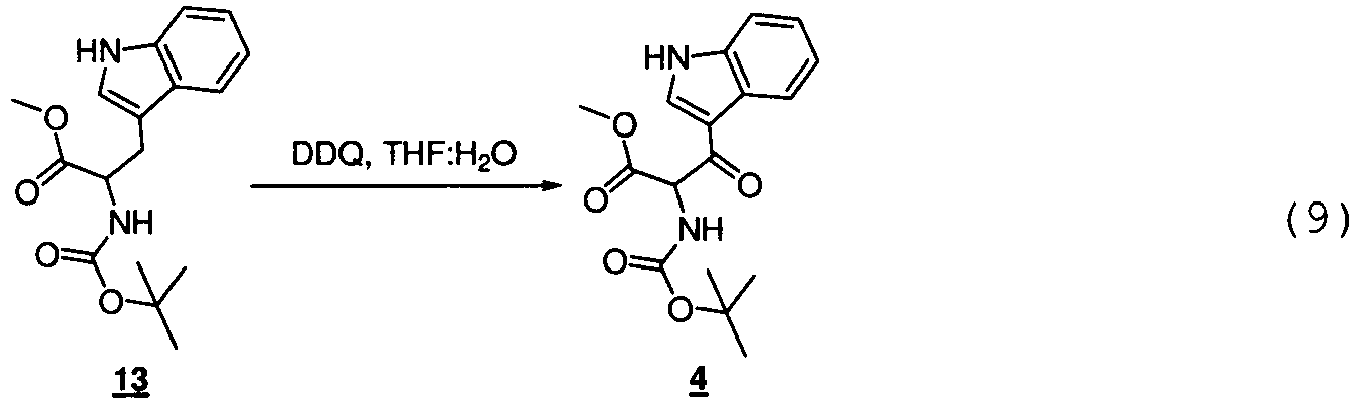
- In this approach, compound 13 is treated with (2,3)-dichloro-5,6-dicyano-1,4-benzoquinone (DDQ), using a mixture of tetrahydrofuran:water as solvent for the reaction.
- Another approach for preparation of
compound 4 is given in Scheme 10:
- In this approach, compound 14 is treated with chloride of pyridine chlorochromate (PCC), using methylene chloride as solvent for the reaction.
-
Compound 5 can be prepared according to Scheme 11:
- In this approach, in the presence of calcium oxide (CaO), intermediate 9 reacts with compound 15 .
- Alternatively,
compound 5 can be prepared according to Scheme 12:
- In this approach, intermediate 9 reacts with compound 16 , using liquid ammonia as solvent.
-
Compound 6 can be prepared according to Scheme 13:
- In this approach, compound 13 is treated with lithium hexamethyldisilazide (LiHDMS). The last step of this approach is iodine addition (I2).
- Compound 14 can be prepared according to Scheme 14:

- In this approach,
compound 6 is treated with acid in dioxane. - All compounds containing the carboxymethyl group, particularly 1, 3, 5 and 7 , can be prepared from (their) derivatives containing the nitrile group, e.g., according to Scheme 15.

- For example, compound 17 is treated with acid in methanol. This approach can also be used, individually, with
compounds 18, 19 and 20 in order to prepareintermediates - The present invention also provides a pharmaceutical composition, e.g. an appropriate dosage form, wherein said composition comprises an effective amount of one or more compounds of formula (1) or a pharmaceutically acceptable salt thereof, and a pharmaceutically acceptable excipient.
- In one embodiment, the pharmaceutical composition further comprises other PDE-5 inhibitors, such as sildenafil, vardenafil and tadalafil; or a pharmaceutically acceptable salt thereof. In another embodiment, the pharmaceutical composition further comprises one or more compounds that are suitable for use in the treatment of erectile dysfunction or the PDE-5 inhibitor treatable disorder.
- In one embodiment, the pharmaceutical composition may be administered with a second pharmaceutical composition comprising other PDE-5 inhibitors, for example sildenafil, vardenafil and tadalafil; or a pharmaceutically acceptable salt thereof. In another, said second pharmaceutical composition comprises one or more compounds that are suitable for use in the treatment erectile dysfunction or the PDE-5 inhibitor treatable disorder. The administration may be coadministration or sequential administration.
- Pharmaceutical compositions may be prepared by methods well known in the state of the art. Appropriately, Remington's Pharmaceutical Sciences or similar information sources may be used to prepare a suitable formulation according to the invention.
- Pharmaceutical compositions for oral administration may be presented as discrete units such as capsules, tablets, effervescent tablets, chewable tablets, pills, powders, granules and gels or similar pharmaceutical forms. Other oral formulation forms include suspensions or emulsions in an aqueous or non-aqueous carrier.
- In solid dosage forms, the compounds of formula (I) can be admixed with a pharmaceutically acceptable carrier comprising at least one component selected from the group comprising diluents, binders, disintegrants, lubricants, coloring agents, and flavoring agents. Exemplary inert diluents are calcium carbonate, calcium phosphate-dibasic, calcium phosphate-tribasic, calcium sulfate, cellulose-microcrystalline, cellulose powdered, dextrates, dextrins, cyclodextrins, dextrose excipients, fructose, kaolin, lactitol, lactose, mannitol, sorbitol, starch, starch pregelatinized, sucrose, sugar compressible, and sugar confectioners. As binders may be used one or more substances, e.g., methyl cellulose, hydroxypropyl cellulose, hydroxypropyl methyl cellulose, polyvinylpyrrolidone, gelatin, gum arabic, ethyl cellulose, polyvinyl alcohol, pullulan, pregelatinized starch, agar, tragacanth, sodium alginate, propylene glycol, and alginate. As disintegrant may be used one or more substances selected from low substituted hydroxypropyl cellulose, carboxymethyl cellulose, calcium carboxymethyl cellulose, sodium carboxymethyl cellulose, croscarmellose sodium, starch, crystalline cellulose, hydroxypropyl starch, and partially pregelatinized starch, and croscarmellose sodium. Exemplary lubricants are stearic acid, magnesium stearate, calcium stearate, talc, hydrogenated castor oil, and sucrose.
- In the case of capsules, tablets, effervescent tablets, and pills, the dosage forms can also comprise buffering agents. Soft gelatin capsules can be prepared to contain a mixture of the compounds of formula (I) and vegetable oil. Hard gelatin capsules may contain granules of the compounds of formula (I) in combination with a solid, pulverulent carrier such as, lactose, saccharose, sorbitol, mannitol, potato starch, corn starch, amylopectin, cellulose derivatives of gelatin. In addition, tablets and pills can be prepared with enteric coatings.
- In one embodiment, the dosage forms are a controlled/retarded/modulated release type, which are based on carriers or matrices including, but not being limited to, biocompatible polymers, pharmaceutically acceptable polymeric matrices, liposomes, PEG-liposomes, or a cyclodextrin or a cyclodextrin derivative matrix.
- Pharmaceutical compositions may be administered by a variety of administration routes, including, but not being limited to, oral, intracavernosal injection, topically and transdermally delivered through the skin into various sites or parenteral routes. The particular mode selected will depend on the compounds present in the composition, the severity of the erectile dysfunction, tissue relaxation treatable disorders and/or conditions, or PDE-5 inhibitor treatable disorder being treated and the dosage required for therapeutic efficacy. Preferably, the compositions of the invention are in oral administration form because of convenience of the patient and the dosing schedule.
- Tissue relaxants have been used to promote relaxation on various tissues to treat or act as adjuvant of the treatment, procedure or surgery related with lithiasis (Korkes, F. et al, J Bras Nefrol. (2009) 31(1): 55), prostate enlargement (e.g., benign prostatic hyperplasia, prostatitis) (
WO 9911279 - PDE-5 inhibitors have been used to block cGMP degradation to prolong the effects of nitric oxide (NO) on various tissues, e.g., to maintain NO-induced relaxation of airways and vessels (Barnes, P. J., et al., (1995), and to maintain NO-induced protection of tissue (Duffin, R., et. al., Br J Pharmacol. (2008) 153(4): 623). Such actions on tissues have been shown beneficial for treatment of several disorders - herein, PDE-5 inhibitor treatable disorders - including pulmonary hypertension (commercially treated with sildenafil citrate); bronchitis, chronic asthma, hypertension (
EP 758653 US 7569572 ); Raynaud's phenomenon (Ghofrani H.A., et. al., Nat Rev Drug Discov. 2006, 5:689); commencing right-heart failure (Ghofrani et al. (2003) AJRCCM 167(8): 1139); neurogenesis and functional recovery after stroke (Zhang et al. (2002) Stroke 33: 2675-2680); coronary artery relaxation (Halcox et al. (2002) J Am Coll Cardiol 40: 1232); female sexual arousal disorders (Nehra et al. (2001) World J Urol. 19(1): 115); angina and congestive heart failure (Reffelmann et al., Circ. (2003) 108(2): 239). Other PDE-5 inhibitor treatable disorders are known and described in the art. - A therapeutically effective amount for use in treatment of erectile dysfunction is one that is sufficient to achieve improvement in erectile function or an alleviation of the symptoms of erectile dysfunction, or even to restore the erectile capacity. A therapeutically effective amount for use in treatment of PDE-5 inhibitor treatable disorders is one that is sufficient to achieve improvement in said disorder or an alleviation of the symptoms of said disorder. Effective amounts will depend on the specific condition being treated and the severity thereof; individual patient characteristics, including age, physical condition, size and weight; concurrent treatment; and the mode of administration. These factors are well known to those skilled in the art and can be established without undue experimentation. Generally, doses of compounds of formula (I) will range from about 0.01 mg/kg body weight per day to 100 mg/kg body weight per day, preferably from 0.1 mg/kg body weight per day to 10 mg/kg body weight per day. Multiple doses per day may be contemplated to achieve appropriate systemic levels of active ingredients present in the composition of the invention.
- The following Examples describe the present invention in more detail. It should be noted that the invention is not limited by the following description.
- To a solution of DDQ (228.0g; 1.0mol) in a mixture 1000mL of THF:H2O (9:1), was added methyl 2-[(tert-butoxycarbonyl)amino]-3-(1H-indol-3-yl)propanoate (80.0g; 0.251mol). The reaction mixture was mixed for 3 hours. Additional aliquots of DDQ were added until all the starting material was consumed (TLC). Afterwards, the reaction mixture was washed with a saturated solution of NaHCO3 and the product was extracted with methylene chloride. The organic phases were combined and dried with MgSO4. The solvent partially was removed and to this mixture was added 3g of activated carbon. This mixture was mixed for 30 minutes and, after equilibrating to ambient temperature, was filtered. The solvent was removed by rotoevaporation until dryness. The resulting oil was heat solubilized in acetone (70.0mL). The solution was cooled and placed in ice bath, leading to the precipitation of methyl 2-[(tert-butoxycarbonyl)amino]-3-(1H-indol-3-yl)-3-oxopropanoate, which was filtered and dried in a heater at 60°C.
- To a suspension of methyl 2-[(tert-butoxycarbonyl)amino]-3-(1H-indol-3-yl)-3-oxopropanoate (6.23g; 19.0mmol) 4 in 200mL of isopropanol, was added 2.0mL of 36% HCl. The reaction mixture was mixed for 3 hours. Additional aliquots of 36% HCl were added until all the starting material was consumed. After completion of the reaction, the reaction mixture was cooled to ambient temperature. Aliquots of NaHCO3 were added to neutralize the solution. 3,4-(Methylendioxy)benzaldehyde (2.86g; 19mmol) was then added to the solution and the resultant reaction mixture was mixed under magnetic agitation for 24 hours, leading to the precipitation of methyl 2-[(E)-(1,3-benzodioxol-5-ylmethylidene)amino]-3-(1H-indol-3-yl)-3-oxopropanoate, which was filtered and dried in a heater at 60°C.
- Methyl 2-[(E)-(1,3-benzodioxol-5-ylmethylidene)amino]-3-(1H-indol-3-yl)-3-oxopropanoate (5.46g; 15.0mmol) was added to a solution of pyridine (10mL) in 50mL of dry methylene chloride. This suspension was mixed under magnetic agitation with a drying tube of CaCO3 for 30 minutes. Chloroacetyl chloride (2.3mL; 30.0mmol) was dissolved in 2.5mL of dry methylene chloride. This solution was added drop wise to the reaction mixture, over a period of 30 minutes. After an additional period of 3 hours, 100mL of a saturated aqueous solution of CuSO4 was added to the reaction mixture. The organic phase was extracted in a separation funnel and isolated. The aqueous phase was washed with 50mL of methylene chloride and organic phase was isolated. The organic phases were combined. This procedure of washing was repeated two more times. The organic phase was washed with a saturated aqueous solution of NaCl. The organic phase was isolated and dried with MgSO4. The solvent was removed by rotoevaporation, leading to the isolation of methyl 3-(chloroacetyl)-5-(1H-indol-3-yl)-2-phenyl-2,3-dihydro-1,3-oxazole-4-
carboxylate 1 . - To a solution of methyl 3-(chloroacetyl)-5-(1H-indol-3-yl)-2-phenyl-2,3-dihydro-1,3-oxazole-4-carboxylate (5.46g; 12.4mmol) 1 in 100 mL of ethanol, was added 10 mL of an aqueous solution of 40% methylamine. This reaction mixture was mixed under magnetic agitation for 24 hours, leading to the precipitation of (R,S)-3-(1,3-benzodioxol-5-yl)-1-(1H-indol-3-yl)-7-methyl-6,7-dihydro[1,3]oxazolo[3,4-a]pyrazine-5,8-
dione 2 . The obtained product presented the following characteristics: M.P. 279-281°C. HRMS (EI): m/z cal. for [C22H18N3O5] 404, 1246; found: 404, 1239. IV (KBr): 3322, 1647, 1613, 1467 cm-1. NMR 1H (300MHz, DMSO-d6): δ = 11.87 (s, 1H); 9.00 (s, 1H); 7.87 (d, 1H, J = 9.0 Hz); 7.48 (d, 1H, J = 9.0 Hz); 7.14 (m, 5H); 7.00 (d, 1H, J = 9.0 Hz); 6.06 (s, 2H); 4.20 (s, 2H); 2.94 (s, 3H). NMR 13C (125MHz, DMSO-d6): δ = 158.3; 156.7; 148.2; 147.5; 147.3; 135.7; 130.9; 130.7; 125.1; 122.0; 121.2; 120.4; 120.2; 112.0; 108.1; 106.4; 104.7; 102.2; 101.3; 90.1; 52.7; 32.2. - Human corpus cavernosum and urether were obtained from discarded tissues from surgeries, which were placed in ice-cold Krebs solution for rapid transport to the laboratory.
- Male New Zealand White rabbits (2-2.5 kg) were used for penis and pulmonary artery tissues, which were excised and transferred to ice-cold Kreb's solution. Two strips and four rings were obtained from each corpus cavernosum (CC) and pulmonary artery, respectively.
- Cavernosal strips, pulmonary artery, and urether were mounted in 10 ml organ chambers containing Kreb's solution at 37°C, pH 7.4 continuously bubbled with a mixture of 95% O2 and 5% CO2. The tissues were stretched to a resting force of 5 mN and allowed to equilibrate for 60 min. Changes in isometric force were recorded using a
PowerLab 4/30 data acquisition system (Chart software, version 7.0; ADInstruments, Colorado Springs, CO). Cumulative concentration-response curves to compound 2 (namedBL 106 inFigures 1, 2 and3 ) (0.001-10 µM) were obtained in cavernosal strips, pulmonary artery rings, and urether contracted with noradrenaline (NOR 10 µM) (Sigma, St. Louis, MO). Concentration response curves to compound 2 (denoted BL 106 inFigures 1, 2 and3 ) were constructed for each sample. For pulmonary artery, concentration response curves to compound 2 were also constructed in the presence or absence of the soluble guanylate cyclase inhibitor 1H-[1,2,4]Oxadiazolo[4,3-a]quinoxalin-1-one (ODQ 10 µM) (Sigma, St. Louis, MO). Control rings (treated with 40 mM DMSO) were also ran in parallel with experimental strips and rings. - Noradrenaline caused a sustained contraction in the human urether tissue. Compound 2 (BL 106) (0.0001-1 µM) produced concentration dependent relaxations in urether tissue (pEC50: 6.29 and Emax 49 %, n=3) (
Figure 1 ). - Noradrenaline (3 or 10 µM) caused a sustained contraction in the rabbit pulmonary artery (17.4 mN). The compound 2 (BL 106) (0.001-10 µM) produced concentration-dependent relaxations in pulmonary artery rings (pEC50: 6.23 [588 nM] and Emax 62 %, n=3) (
Figure 2 ). - Noradrenaline caused a sustained contraction in the human corpus cavernosum. The compound 2 (BL 106) (0.0001-1 µM) produced concentration-dependent relaxations in corpus cavernosum (pEC50: 7.65 and Emax 71 %, n=3) (
Figure 3A ). - Noradrenaline (3 or 10 µM) caused a sustained contraction in rabbit corpus cavernosum (13.8 mN). Compound 2 (BL 106) produced concentration dependent relaxations in corpus cavernousum (pEC50: 5.92 [1.2 µM] and Emax: 91 %, n=3) (
Figure 3B ).
Claims (16)
- A compound of formula (I):
 R1 is an aromatic group, optionally condensed, optionally substituted with RB in one or more positions; a heteroaromatic group containing one or more heteroatoms, optionally substituted with RB or an indole group in one or more positions; a C2-6 alkenylcarbonyl, optionally substituted with RB in one or more positions; a bicyclic aromatic, optionally substituted with RB in one or more positions, or a bicyclic heteroaromatic containing one or more heteroatoms, optionally substituted with RB in one or more positions;RB is a halogen, hydroxy, nitrogen, cyano, C1-6 alkyl, C2-6 alkenyl, C2-6 alkynyl, C1-6 haloalkyl, C3-8 cycloalkyl, C3-8 cyclo-alkylC1-3 alkyl, arylC1-3 alkyl or heteroarylC1-3 alkyl;R2 is an aromatic group containing one or more heteroatoms, a heteroaromatic containing group containing one or more heteroatoms, a bicyclic aromatic containing one or more heteroatoms or methylene-3,4-dioxyphenyl groups;R3 is hydrogen, halogen, C1-6 haloalkyl, C1-3 heteroalkyl, or C1-3 alkyl; andR4 is hydrogen, C1-6 alkyl, C2-6 alkenyl, C2-6 alkynyl, C1-6 haloalkyl, C3-8 cycloalkyl, C3-8 cycloalkylC1-3 alkyl, arylC1-3 alkyl or heteroarylC1-3 alkyl.
 - The compound of claim 1, or pharmaceutically acceptable salts thereof, wherein said compound is represented by formula (II) :

- The compound of claim 2, or pharmaceutically acceptable salts thereof, wherein the compound is an (R)-isomer.
- The compound of claim 2, or pharmaceutically acceptable salts thereof, wherein the compound is an (S)-isomer.
- The compound of claim 1, or pharmaceutically acceptable salts thereof, wherein the compound is an (R)-isomer and represented by formula (Ib):

- The compound of claim 1, or pharmaceutically acceptable salts thereof, wherein the compound is an (S)-isomer and represented by formula (Ic):

- A pharmaceutical composition comprising an effective amount of one or more compounds of claim 1, or pharmaceutically acceptable salts thereof; and pharmaceutically acceptable excipients.
- The pharmaceutical composition of claim 7, wherein the composition comprises a compound of formula (II):

- The pharmaceutical composition of claim 7, wherein the compound is an (R)-isomer and represented by formula (Ib):

- The pharmaceutical composition of claim 7, wherein the compound is an (S)-isomer and represented by formula (Ic):

- The pharmaceutical composition of any one of claims 7-10 for use in inhibiting the enzymes phosphodiesterases in a patient.
- The pharmaceutical composition of any one of claims 7-10 for use in inhibiting the enzyme phosphodiesterase type 5 in a patient.
- The pharmaceutical composition of any one of claims 7-10 for use in treatment or prevention of erectile dysfunction in man.
- The pharmaceutical composition of any one of claims 7-10 for use in treatment or prevention of lithiasis, prostatic hyperplasia, lung hypertension, urether constriction, female sexual dysfunction and/or male sexual dysfunction.
- A method of preparing the compound of claim 2, the method comprising reacting compound 1 , with methylamine in ethanol to provide compound 2 .

- A method of preparing the compound of claim 2, the method comprising reacting compound 3 with hydrochloric acid in ethanol, followed by neutralization with sodium bicarbonate, to provide compound 2 .

Applications Claiming Priority (2)
| Application Number | Priority Date | Filing Date | Title |
|---|---|---|---|
| US37348310P | 2010-08-13 | 2010-08-13 | |
| PCT/BR2011/000255 WO2012019254A1 (en) | 2010-08-13 | 2011-08-02 | Derivatives of 6, 7-dihydro-3h-oxazolo [3, 4-a] pyrazine-5, 8- dione |
Publications (3)
| Publication Number | Publication Date |
|---|---|
| EP2603512A1 EP2603512A1 (en) | 2013-06-19 |
| EP2603512A4 EP2603512A4 (en) | 2014-07-16 |
| EP2603512B1 true EP2603512B1 (en) | 2015-12-30 |
Family
ID=45023415
Family Applications (1)
| Application Number | Title | Priority Date | Filing Date |
|---|---|---|---|
| EP11815927.6A Active EP2603512B1 (en) | 2010-08-13 | 2011-08-02 | Derivatives of 6, 7-dihydro-3h-oxazolo [3, 4-a]pyrazine-5, 8- dione |
Country Status (21)
| Country | Link |
|---|---|
| US (1) | US8338432B2 (en) |
| EP (1) | EP2603512B1 (en) |
| JP (1) | JP5940535B2 (en) |
| KR (1) | KR101871856B1 (en) |
| CN (1) | CN103108878B (en) |
| AR (1) | AR082661A1 (en) |
| BR (1) | BR112013003225B1 (en) |
| CA (1) | CA2807872C (en) |
| CL (1) | CL2013000434A1 (en) |
| CO (1) | CO6680703A2 (en) |
| DK (1) | DK2603512T3 (en) |
| EC (1) | ECSP13012486A (en) |
| ES (1) | ES2565493T3 (en) |
| HU (1) | HUE027903T2 (en) |
| IL (1) | IL224683A (en) |
| MX (1) | MX347632B (en) |
| PL (1) | PL2603512T3 (en) |
| PY (1) | PY1132289A (en) |
| RU (1) | RU2581831C2 (en) |
| UY (1) | UY33535A (en) |
| WO (1) | WO2012019254A1 (en) |
Families Citing this family (4)
| Publication number | Priority date | Publication date | Assignee | Title |
|---|---|---|---|---|
| UY33535A (en) * | 2010-08-13 | 2011-12-01 | Biolab Sanus Farmaceutuca Limitada | DERIVATIVES OF 6,7-DIHIDRO-3H-OXAZOLO [3,4] PIRAZIN-5,8-DIONA |
| AR099523A1 (en) * | 2014-02-24 | 2016-07-27 | Biolab Sanus Farmacêutica Ltda | COMPOUNDS DERIVED FROM 6,7-DIHIDRO-3H-OXAZOLO [3,4-A] PIRAZINA-5,8-DIONA |
| HUE040387T2 (en) * | 2014-09-12 | 2019-03-28 | Biolab Sanus Farmaceutica Ltda | Derivatives of pyridopyrimidines |
| US20220296590A1 (en) * | 2019-07-15 | 2022-09-22 | Biolab Sanus Farmaceutica Ltda | Stereoisomers of the compound 3-(benzo[d][1,3]dioxol-5-yl)-7-(1-hydroxypropan-2-yl)-1-(1h-indol-3-yl)-6,7-dihydro-3h-oxazol[3,4-a]pyrazine-5,8-dione and use thereof as an antitumor agent and phosphodiesterase enzyme inhibitor |
Family Cites Families (9)
| Publication number | Priority date | Publication date | Assignee | Title |
|---|---|---|---|---|
| WO1996026940A1 (en) | 1995-03-01 | 1996-09-06 | Kyowa Hakko Kogyo Co., Ltd. | Imidazoquinazoline derivatives |
| GB9514464D0 (en) * | 1995-07-14 | 1995-09-13 | Glaxo Lab Sa | Medicaments |
| US7098209B2 (en) * | 2001-06-05 | 2006-08-29 | Lilly Icos Llc | Pyrazino [1'2':1,6 ] pyrido [3, 4-b] indole-1,4-dione derivatives |
| ES2269679T3 (en) * | 2001-06-21 | 2007-04-01 | Lilly Icos Llc | CARBOLINE DERIVATIVES AS PDEV INHIBITORS. |
| AR045950A1 (en) * | 2003-10-09 | 2005-11-16 | Speedel Experimenta Ag | COMPOUNDS DERIVED FROM PIPERAZINE, PHARMACEUTICAL COMPOSITIONS THAT CONTAIN THEM AND THEIR USE IN THE MANUFACTURE OF MEDICINES. |
| DK1742950T3 (en) | 2004-04-07 | 2009-03-16 | Pfizer Ltd | The pyrazolo [4,3-d] pyrimidines |
| RU2418590C2 (en) * | 2006-04-04 | 2011-05-20 | Донг-А Фарматех Ко. Лтд. | Medication for treatment and prevention of prostatic hyperplasia, containing pyrazolopyrimidinone derivative |
| BRPI0903803B1 (en) * | 2009-09-30 | 2019-07-09 | Biolab Sanus Farmacêutica Ltda. | COMPOUND, PREPARATION PROCESS, PHARMACEUTICAL COMPOSITION AND USE OF COMPOUNDS |
| UY33535A (en) * | 2010-08-13 | 2011-12-01 | Biolab Sanus Farmaceutuca Limitada | DERIVATIVES OF 6,7-DIHIDRO-3H-OXAZOLO [3,4] PIRAZIN-5,8-DIONA |
-
2011
- 2011-07-27 UY UY0001033535A patent/UY33535A/en active IP Right Grant
- 2011-08-02 US US13/196,363 patent/US8338432B2/en active Active
- 2011-08-02 RU RU2013110795/04A patent/RU2581831C2/en active
- 2011-08-02 MX MX2013001692A patent/MX347632B/en active IP Right Grant
- 2011-08-02 EP EP11815927.6A patent/EP2603512B1/en active Active
- 2011-08-02 HU HUE11815927A patent/HUE027903T2/en unknown
- 2011-08-02 DK DK11815927.6T patent/DK2603512T3/en active
- 2011-08-02 KR KR1020137006343A patent/KR101871856B1/en active Active
- 2011-08-02 CN CN201180039626.8A patent/CN103108878B/en active Active
- 2011-08-02 PL PL11815927.6T patent/PL2603512T3/en unknown
- 2011-08-02 JP JP2013523443A patent/JP5940535B2/en active Active
- 2011-08-02 CA CA2807872A patent/CA2807872C/en active Active
- 2011-08-02 WO PCT/BR2011/000255 patent/WO2012019254A1/en not_active Ceased
- 2011-08-02 ES ES11815927.6T patent/ES2565493T3/en active Active
- 2011-08-02 BR BR112013003225-1A patent/BR112013003225B1/en active IP Right Grant
- 2011-08-03 PY PY201101132289A patent/PY1132289A/en unknown
- 2011-08-09 AR ARP110102892A patent/AR082661A1/en active IP Right Grant
-
2013
- 2013-02-12 IL IL224683A patent/IL224683A/en active IP Right Grant
- 2013-02-12 CL CL2013000434A patent/CL2013000434A1/en unknown
- 2013-03-08 CO CO13046988A patent/CO6680703A2/en active IP Right Grant
- 2013-03-12 EC ECSP13012486 patent/ECSP13012486A/en unknown
Also Published As
| Publication number | Publication date |
|---|---|
| CL2013000434A1 (en) | 2013-06-07 |
| JP5940535B2 (en) | 2016-06-29 |
| UY33535A (en) | 2011-12-01 |
| CA2807872C (en) | 2018-07-24 |
| KR20130109110A (en) | 2013-10-07 |
| BR112013003225A2 (en) | 2016-06-07 |
| MX2013001692A (en) | 2013-03-18 |
| WO2012019254A1 (en) | 2012-02-16 |
| DK2603512T3 (en) | 2016-04-04 |
| ES2565493T3 (en) | 2016-04-05 |
| CN103108878B (en) | 2016-01-27 |
| CN103108878A (en) | 2013-05-15 |
| AR082661A1 (en) | 2012-12-26 |
| EP2603512A4 (en) | 2014-07-16 |
| PY1132289A (en) | 2015-04-01 |
| CO6680703A2 (en) | 2013-05-31 |
| HUE027903T2 (en) | 2016-11-28 |
| CA2807872A1 (en) | 2012-02-16 |
| IL224683A (en) | 2016-03-31 |
| US8338432B2 (en) | 2012-12-25 |
| HK1184786A1 (en) | 2014-01-30 |
| JP2013533290A (en) | 2013-08-22 |
| MX347632B (en) | 2017-05-04 |
| US20120040988A1 (en) | 2012-02-16 |
| KR101871856B1 (en) | 2018-06-28 |
| ECSP13012486A (en) | 2013-04-30 |
| PL2603512T3 (en) | 2016-09-30 |
| RU2581831C2 (en) | 2016-04-20 |
| EP2603512A1 (en) | 2013-06-19 |
| RU2013110795A (en) | 2014-09-20 |
| BR112013003225B1 (en) | 2021-03-30 |
Similar Documents
| Publication | Publication Date | Title |
|---|---|---|
| EP4025568B1 (en) | Rip1 inhibitory compounds and methods for making and using the same | |
| EP4025575B1 (en) | Rip1 inhibitory compounds and methods for making and using the same | |
| EP3925956B1 (en) | 1h-indazole-3-carboxamide derivatives and related compounds as factor d inhibitors for treating diseases characterized by aberrant complement system activity, such as e.g. immunological disorders | |
| EP4055021B1 (en) | Heterocyclic rip1 inhibitory compounds | |
| CN108699055B (en) | Heterocyclic compounds used as anticancer drugs | |
| EP3152214B1 (en) | Imidazo-pyrazine derivatives useful as soluble guanylate cyclase activators | |
| EP3310782B1 (en) | Imidazo-pyrazinyl derivatives useful as soluble guanylate cyclase activators | |
| CA3099037A1 (en) | Rip1 inhibitory compounds and methods for making and using the same | |
| EP3209652B1 (en) | Tricyclic atropisomer compounds | |
| KR20130083389A (en) | Heterocyclic compounds as janus kinase inhibitors | |
| US8338432B2 (en) | Derivatives of 6,7-dihydro-3H-oxazolo[3,4-a]pyrazine-5,9-dione as PDE-5 inhibitors | |
| CN111875614B (en) | Heterocyclyl-substituted thieno[2,3-d]pyrimidine-2,4(1H,3H)-diones and uses thereof | |
| HK1184786B (en) | Derivatives of 6, 7-dihydro-3h-oxazolo [3, 4-a] pyrazine-5, 8- dione | |
| CA3181580A1 (en) | Substituted (phthalazin-1-ylmethyl)ureas, substituted n-(phthalazin-1-ylmethyl)amides, and analogues thereof | |
| EP2578588A1 (en) | Novel 1,4-diazepam pde-5 inhibitor derivatives | |
| CA3149900C (en) | Rip1 inhibitory compounds and methods for making and using the same | |
| HK40070302B (en) | 1h-indazole-3-carboxamide derivatives and related compounds as factor d inhibitors for treating diseases characterized by aberrant complement system activity, such as e.g. immunological disorders | |
| CA2738694A1 (en) | Compounds derived from 2-(3-methylenedioxy)-benzoyl indol |
Legal Events
| Date | Code | Title | Description |
|---|---|---|---|
| PUAI | Public reference made under article 153(3) epc to a published international application that has entered the european phase |
Free format text: ORIGINAL CODE: 0009012 |
|
| 17P | Request for examination filed |
Effective date: 20130311 |
|
| AK | Designated contracting states |
Kind code of ref document: A1 Designated state(s): AL AT BE BG CH CY CZ DE DK EE ES FI FR GB GR HR HU IE IS IT LI LT LU LV MC MK MT NL NO PL PT RO RS SE SI SK SM TR |
|
| DAX | Request for extension of the european patent (deleted) | ||
| A4 | Supplementary search report drawn up and despatched |
Effective date: 20140617 |
|
| RIC1 | Information provided on ipc code assigned before grant |
Ipc: C07D 498/04 20060101AFI20140611BHEP Ipc: A61P 15/00 20060101ALI20140611BHEP Ipc: A61K 31/48 20060101ALI20140611BHEP |
|
| 17Q | First examination report despatched |
Effective date: 20150126 |
|
| GRAP | Despatch of communication of intention to grant a patent |
Free format text: ORIGINAL CODE: EPIDOSNIGR1 |
|
| INTG | Intention to grant announced |
Effective date: 20150618 |
|
| GRAS | Grant fee paid |
Free format text: ORIGINAL CODE: EPIDOSNIGR3 |
|
| GRAA | (expected) grant |
Free format text: ORIGINAL CODE: 0009210 |
|
| AK | Designated contracting states |
Kind code of ref document: B1 Designated state(s): AL AT BE BG CH CY CZ DE DK EE ES FI FR GB GR HR HU IE IS IT LI LT LU LV MC MK MT NL NO PL PT RO RS SE SI SK SM TR |
|
| REG | Reference to a national code |
Ref country code: GB Ref legal event code: FG4D |
|
| REG | Reference to a national code |
Ref country code: CH Ref legal event code: EP |
|
| REG | Reference to a national code |
Ref country code: AT Ref legal event code: REF Ref document number: 767438 Country of ref document: AT Kind code of ref document: T Effective date: 20160115 |
|
| REG | Reference to a national code |
Ref country code: IE Ref legal event code: FG4D |
|
| REG | Reference to a national code |
Ref country code: DE Ref legal event code: R096 Ref document number: 602011022346 Country of ref document: DE |
|
| REG | Reference to a national code |
Ref country code: DK Ref legal event code: T3 Effective date: 20160331 |
|
| REG | Reference to a national code |
Ref country code: ES Ref legal event code: FG2A Ref document number: 2565493 Country of ref document: ES Kind code of ref document: T3 Effective date: 20160405 |
|
| REG | Reference to a national code |
Ref country code: PT Ref legal event code: SC4A Free format text: AVAILABILITY OF NATIONAL TRANSLATION Effective date: 20160324 |
|
| REG | Reference to a national code |
Ref country code: NL Ref legal event code: FP |
|
| REG | Reference to a national code |
Ref country code: LT Ref legal event code: MG4D |
|
| PG25 | Lapsed in a contracting state [announced via postgrant information from national office to epo] |
Ref country code: LT Free format text: LAPSE BECAUSE OF FAILURE TO SUBMIT A TRANSLATION OF THE DESCRIPTION OR TO PAY THE FEE WITHIN THE PRESCRIBED TIME-LIMIT Effective date: 20151230 Ref country code: HR Free format text: LAPSE BECAUSE OF FAILURE TO SUBMIT A TRANSLATION OF THE DESCRIPTION OR TO PAY THE FEE WITHIN THE PRESCRIBED TIME-LIMIT Effective date: 20151230 Ref country code: NO Free format text: LAPSE BECAUSE OF FAILURE TO SUBMIT A TRANSLATION OF THE DESCRIPTION OR TO PAY THE FEE WITHIN THE PRESCRIBED TIME-LIMIT Effective date: 20160330 |
|
| REG | Reference to a national code |
Ref country code: CH Ref legal event code: NV Representative=s name: SCHMAUDER AND PARTNER AG PATENT- UND MARKENANW, CH |
|
| REG | Reference to a national code |
Ref country code: AT Ref legal event code: MK05 Ref document number: 767438 Country of ref document: AT Kind code of ref document: T Effective date: 20151230 |
|
| PG25 | Lapsed in a contracting state [announced via postgrant information from national office to epo] |
Ref country code: RS Free format text: LAPSE BECAUSE OF FAILURE TO SUBMIT A TRANSLATION OF THE DESCRIPTION OR TO PAY THE FEE WITHIN THE PRESCRIBED TIME-LIMIT Effective date: 20151230 Ref country code: GR Free format text: LAPSE BECAUSE OF FAILURE TO SUBMIT A TRANSLATION OF THE DESCRIPTION OR TO PAY THE FEE WITHIN THE PRESCRIBED TIME-LIMIT Effective date: 20160331 Ref country code: SE Free format text: LAPSE BECAUSE OF FAILURE TO SUBMIT A TRANSLATION OF THE DESCRIPTION OR TO PAY THE FEE WITHIN THE PRESCRIBED TIME-LIMIT Effective date: 20151230 Ref country code: LV Free format text: LAPSE BECAUSE OF FAILURE TO SUBMIT A TRANSLATION OF THE DESCRIPTION OR TO PAY THE FEE WITHIN THE PRESCRIBED TIME-LIMIT Effective date: 20151230 Ref country code: FI Free format text: LAPSE BECAUSE OF FAILURE TO SUBMIT A TRANSLATION OF THE DESCRIPTION OR TO PAY THE FEE WITHIN THE PRESCRIBED TIME-LIMIT Effective date: 20151230 |
|
| REG | Reference to a national code |
Ref country code: FR Ref legal event code: PLFP Year of fee payment: 6 |
|
| PG25 | Lapsed in a contracting state [announced via postgrant information from national office to epo] |
Ref country code: SM Free format text: LAPSE BECAUSE OF FAILURE TO SUBMIT A TRANSLATION OF THE DESCRIPTION OR TO PAY THE FEE WITHIN THE PRESCRIBED TIME-LIMIT Effective date: 20151230 Ref country code: AT Free format text: LAPSE BECAUSE OF FAILURE TO SUBMIT A TRANSLATION OF THE DESCRIPTION OR TO PAY THE FEE WITHIN THE PRESCRIBED TIME-LIMIT Effective date: 20151230 Ref country code: SK Free format text: LAPSE BECAUSE OF FAILURE TO SUBMIT A TRANSLATION OF THE DESCRIPTION OR TO PAY THE FEE WITHIN THE PRESCRIBED TIME-LIMIT Effective date: 20151230 Ref country code: IS Free format text: LAPSE BECAUSE OF FAILURE TO SUBMIT A TRANSLATION OF THE DESCRIPTION OR TO PAY THE FEE WITHIN THE PRESCRIBED TIME-LIMIT Effective date: 20160430 Ref country code: RO Free format text: LAPSE BECAUSE OF FAILURE TO SUBMIT A TRANSLATION OF THE DESCRIPTION OR TO PAY THE FEE WITHIN THE PRESCRIBED TIME-LIMIT Effective date: 20151230 Ref country code: EE Free format text: LAPSE BECAUSE OF FAILURE TO SUBMIT A TRANSLATION OF THE DESCRIPTION OR TO PAY THE FEE WITHIN THE PRESCRIBED TIME-LIMIT Effective date: 20151230 |
|
| REG | Reference to a national code |
Ref country code: DE Ref legal event code: R097 Ref document number: 602011022346 Country of ref document: DE |
|
| PLBE | No opposition filed within time limit |
Free format text: ORIGINAL CODE: 0009261 |
|
| STAA | Information on the status of an ep patent application or granted ep patent |
Free format text: STATUS: NO OPPOSITION FILED WITHIN TIME LIMIT |
|
| REG | Reference to a national code |
Ref country code: HU Ref legal event code: AG4A Ref document number: E027903 Country of ref document: HU |
|
| 26N | No opposition filed |
Effective date: 20161003 |
|
| PG25 | Lapsed in a contracting state [announced via postgrant information from national office to epo] |
Ref country code: SI Free format text: LAPSE BECAUSE OF FAILURE TO SUBMIT A TRANSLATION OF THE DESCRIPTION OR TO PAY THE FEE WITHIN THE PRESCRIBED TIME-LIMIT Effective date: 20151230 |
|
| PG25 | Lapsed in a contracting state [announced via postgrant information from national office to epo] |
Ref country code: MC Free format text: LAPSE BECAUSE OF FAILURE TO SUBMIT A TRANSLATION OF THE DESCRIPTION OR TO PAY THE FEE WITHIN THE PRESCRIBED TIME-LIMIT Effective date: 20151230 |
|
| REG | Reference to a national code |
Ref country code: IE Ref legal event code: MM4A |
|
| PG25 | Lapsed in a contracting state [announced via postgrant information from national office to epo] |
Ref country code: IE Free format text: LAPSE BECAUSE OF NON-PAYMENT OF DUE FEES Effective date: 20160802 |
|
| REG | Reference to a national code |
Ref country code: FR Ref legal event code: PLFP Year of fee payment: 7 |
|
| PG25 | Lapsed in a contracting state [announced via postgrant information from national office to epo] |
Ref country code: LU Free format text: LAPSE BECAUSE OF NON-PAYMENT OF DUE FEES Effective date: 20160802 |
|
| PG25 | Lapsed in a contracting state [announced via postgrant information from national office to epo] |
Ref country code: CY Free format text: LAPSE BECAUSE OF FAILURE TO SUBMIT A TRANSLATION OF THE DESCRIPTION OR TO PAY THE FEE WITHIN THE PRESCRIBED TIME-LIMIT Effective date: 20151230 |
|
| PG25 | Lapsed in a contracting state [announced via postgrant information from national office to epo] |
Ref country code: MT Free format text: LAPSE BECAUSE OF NON-PAYMENT OF DUE FEES Effective date: 20160831 Ref country code: MK Free format text: LAPSE BECAUSE OF FAILURE TO SUBMIT A TRANSLATION OF THE DESCRIPTION OR TO PAY THE FEE WITHIN THE PRESCRIBED TIME-LIMIT Effective date: 20151230 |
|
| PG25 | Lapsed in a contracting state [announced via postgrant information from national office to epo] |
Ref country code: BG Free format text: LAPSE BECAUSE OF FAILURE TO SUBMIT A TRANSLATION OF THE DESCRIPTION OR TO PAY THE FEE WITHIN THE PRESCRIBED TIME-LIMIT Effective date: 20151230 |
|
| REG | Reference to a national code |
Ref country code: FR Ref legal event code: PLFP Year of fee payment: 8 |
|
| PG25 | Lapsed in a contracting state [announced via postgrant information from national office to epo] |
Ref country code: AL Free format text: LAPSE BECAUSE OF FAILURE TO SUBMIT A TRANSLATION OF THE DESCRIPTION OR TO PAY THE FEE WITHIN THE PRESCRIBED TIME-LIMIT Effective date: 20151230 |
|
| REG | Reference to a national code |
Ref country code: DE Ref legal event code: R082 Ref document number: 602011022346 Country of ref document: DE Representative=s name: HERZOG IP PATENTANWALTS GMBH, DE |
|
| PGFP | Annual fee paid to national office [announced via postgrant information from national office to epo] |
Ref country code: NL Payment date: 20220824 Year of fee payment: 12 |
|
| PGFP | Annual fee paid to national office [announced via postgrant information from national office to epo] |
Ref country code: TR Payment date: 20220728 Year of fee payment: 12 Ref country code: PT Payment date: 20220726 Year of fee payment: 12 Ref country code: DK Payment date: 20220818 Year of fee payment: 12 |
|
| PGFP | Annual fee paid to national office [announced via postgrant information from national office to epo] |
Ref country code: BE Payment date: 20220824 Year of fee payment: 12 |
|
| PGFP | Annual fee paid to national office [announced via postgrant information from national office to epo] |
Ref country code: CH Payment date: 20230902 Year of fee payment: 13 |
|
| REG | Reference to a national code |
Ref country code: DK Ref legal event code: EBP Effective date: 20230831 |
|
| REG | Reference to a national code |
Ref country code: NL Ref legal event code: MM Effective date: 20230901 |
|
| PG25 | Lapsed in a contracting state [announced via postgrant information from national office to epo] |
Ref country code: PT Free format text: LAPSE BECAUSE OF NON-PAYMENT OF DUE FEES Effective date: 20240202 |
|
| REG | Reference to a national code |
Ref country code: BE Ref legal event code: MM Effective date: 20230831 |
|
| PG25 | Lapsed in a contracting state [announced via postgrant information from national office to epo] |
Ref country code: NL Free format text: LAPSE BECAUSE OF NON-PAYMENT OF DUE FEES Effective date: 20230901 |
|
| PG25 | Lapsed in a contracting state [announced via postgrant information from national office to epo] |
Ref country code: NL Free format text: LAPSE BECAUSE OF NON-PAYMENT OF DUE FEES Effective date: 20230901 |
|
| PG25 | Lapsed in a contracting state [announced via postgrant information from national office to epo] |
Ref country code: DK Free format text: LAPSE BECAUSE OF NON-PAYMENT OF DUE FEES Effective date: 20230831 |
|
| PG25 | Lapsed in a contracting state [announced via postgrant information from national office to epo] |
Ref country code: DK Free format text: LAPSE BECAUSE OF NON-PAYMENT OF DUE FEES Effective date: 20230831 |
|
| PG25 | Lapsed in a contracting state [announced via postgrant information from national office to epo] |
Ref country code: BE Free format text: LAPSE BECAUSE OF NON-PAYMENT OF DUE FEES Effective date: 20230831 |
|
| REG | Reference to a national code |
Ref country code: CH Ref legal event code: PL |
|
| PG25 | Lapsed in a contracting state [announced via postgrant information from national office to epo] |
Ref country code: CH Free format text: LAPSE BECAUSE OF NON-PAYMENT OF DUE FEES Effective date: 20240831 |
|
| PGFP | Annual fee paid to national office [announced via postgrant information from national office to epo] |
Ref country code: HU Payment date: 20250807 Year of fee payment: 15 |
|
| PGFP | Annual fee paid to national office [announced via postgrant information from national office to epo] |
Ref country code: ES Payment date: 20250902 Year of fee payment: 15 |
|
| PGFP | Annual fee paid to national office [announced via postgrant information from national office to epo] |
Ref country code: DE Payment date: 20250828 Year of fee payment: 15 |
|
| PGFP | Annual fee paid to national office [announced via postgrant information from national office to epo] |
Ref country code: IT Payment date: 20250827 Year of fee payment: 15 Ref country code: PL Payment date: 20250728 Year of fee payment: 15 |
|
| PGFP | Annual fee paid to national office [announced via postgrant information from national office to epo] |
Ref country code: GB Payment date: 20250827 Year of fee payment: 15 |
|
| PGFP | Annual fee paid to national office [announced via postgrant information from national office to epo] |
Ref country code: FR Payment date: 20250826 Year of fee payment: 15 |
|
| PGFP | Annual fee paid to national office [announced via postgrant information from national office to epo] |
Ref country code: CZ Payment date: 20250725 Year of fee payment: 15 |