EP2603032A1 - Method of performing Internet Protocol fragmentation and related wireless network system - Google Patents
Method of performing Internet Protocol fragmentation and related wireless network system Download PDFInfo
- Publication number
- EP2603032A1 EP2603032A1 EP12153253.5A EP12153253A EP2603032A1 EP 2603032 A1 EP2603032 A1 EP 2603032A1 EP 12153253 A EP12153253 A EP 12153253A EP 2603032 A1 EP2603032 A1 EP 2603032A1
- Authority
- EP
- European Patent Office
- Prior art keywords
- wireless network
- network system
- data packets
- data packet
- transmission unit
- Prior art date
- Legal status (The legal status is an assumption and is not a legal conclusion. Google has not performed a legal analysis and makes no representation as to the accuracy of the status listed.)
- Withdrawn
Links
- 238000013467 fragmentation Methods 0.000 title claims description 11
- 238000006062 fragmentation reaction Methods 0.000 title claims description 11
- 238000000034 method Methods 0.000 title claims description 9
- 230000005540 biological transmission Effects 0.000 claims abstract description 34
- 238000004891 communication Methods 0.000 claims abstract description 17
- 238000010586 diagram Methods 0.000 description 8
- 230000011218 segmentation Effects 0.000 description 7
- 238000011161 development Methods 0.000 description 2
- 230000018109 developmental process Effects 0.000 description 2
- 230000001419 dependent effect Effects 0.000 description 1
- 238000005516 engineering process Methods 0.000 description 1
- 239000000835 fiber Substances 0.000 description 1
Images

Classifications
-
- H—ELECTRICITY
- H04—ELECTRIC COMMUNICATION TECHNIQUE
- H04W—WIRELESS COMMUNICATION NETWORKS
- H04W28/00—Network traffic management; Network resource management
- H04W28/02—Traffic management, e.g. flow control or congestion control
- H04W28/06—Optimizing the usage of the radio link, e.g. header compression, information sizing, discarding information
- H04W28/065—Optimizing the usage of the radio link, e.g. header compression, information sizing, discarding information using assembly or disassembly of packets
-
- H—ELECTRICITY
- H04—ELECTRIC COMMUNICATION TECHNIQUE
- H04L—TRANSMISSION OF DIGITAL INFORMATION, e.g. TELEGRAPHIC COMMUNICATION
- H04L69/00—Network arrangements, protocols or services independent of the application payload and not provided for in the other groups of this subclass
- H04L69/16—Implementation or adaptation of Internet protocol [IP], of transmission control protocol [TCP] or of user datagram protocol [UDP]
- H04L69/166—IP fragmentation; TCP segmentation
-
- H—ELECTRICITY
- H04—ELECTRIC COMMUNICATION TECHNIQUE
- H04L—TRANSMISSION OF DIGITAL INFORMATION, e.g. TELEGRAPHIC COMMUNICATION
- H04L69/00—Network arrangements, protocols or services independent of the application payload and not provided for in the other groups of this subclass
- H04L69/30—Definitions, standards or architectural aspects of layered protocol stacks
- H04L69/32—Architecture of open systems interconnection [OSI] 7-layer type protocol stacks, e.g. the interfaces between the data link level and the physical level
- H04L69/322—Intralayer communication protocols among peer entities or protocol data unit [PDU] definitions
- H04L69/324—Intralayer communication protocols among peer entities or protocol data unit [PDU] definitions in the data link layer [OSI layer 2], e.g. HDLC
-
- H—ELECTRICITY
- H04—ELECTRIC COMMUNICATION TECHNIQUE
- H04L—TRANSMISSION OF DIGITAL INFORMATION, e.g. TELEGRAPHIC COMMUNICATION
- H04L69/00—Network arrangements, protocols or services independent of the application payload and not provided for in the other groups of this subclass
- H04L69/30—Definitions, standards or architectural aspects of layered protocol stacks
- H04L69/32—Architecture of open systems interconnection [OSI] 7-layer type protocol stacks, e.g. the interfaces between the data link level and the physical level
- H04L69/322—Intralayer communication protocols among peer entities or protocol data unit [PDU] definitions
- H04L69/325—Intralayer communication protocols among peer entities or protocol data unit [PDU] definitions in the network layer [OSI layer 3], e.g. X.25
-
- H—ELECTRICITY
- H04—ELECTRIC COMMUNICATION TECHNIQUE
- H04L—TRANSMISSION OF DIGITAL INFORMATION, e.g. TELEGRAPHIC COMMUNICATION
- H04L47/00—Traffic control in data switching networks
- H04L47/10—Flow control; Congestion control
- H04L47/36—Flow control; Congestion control by determining packet size, e.g. maximum transfer unit [MTU]
- H04L47/365—Dynamic adaptation of the packet size
Definitions
- the present invention is related to a method of performing Internet Protocol (IP) fragmentation and related wireless network system according to the pre-characterizing clause of claim 1 and claim 5.
- IP Internet Protocol
- the present invention aims at providing a method of performing IP fragmentation and related wireless network system without lowering the overall utilization percentage of the transmission unit.
- the claimed method of performing IP fragmentation in a wireless network system includes providing a data packet string by merging a plurality of data packets at a transmitting end of the wireless network system; segmenting the data packet string into a plurality of sub data packets according to a maximum transmission unit of a communication protocol adopted by the wireless network system; and transmitting the plurality of sub data packets from the transmitting end of the wireless network system to a receiving end of the wireless network system.
- the claimed wireless network system which performs IP fragmentation includes a transmitting end and a receiving end.
- the transmitting end includes a merging unit configured to merge a plurality of data packets into a data packet string; and a segmenting unit configured to segment the data packet string into a plurality of sub data packets according to a maximum transmission unit of a communication protocol adopted by the wireless network system.
- the receiving end includes a reassembling unit configured to reassemble the plurality of sub data packets received from the transmitting end.
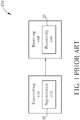
- FIG. 1 is a function diagram of a prior art wireless network system 100.
- FIG. 2 is a diagram illustrating the prior art wireless network system 100 during data transmission using a specific communication protocol.
- the transmitting end of the wireless network system 100 includes a segmentation unit 10.
- the receiving end of the wireless network system 100 includes a reassembly unit 20.
- PK1-PK3 represent data packets of varying sizes.
- the data packet PK1 may be transmitted directly from the transmitting end to the receiving end with 100% utilization percentage of the transmission unit.
- the prior art segmentation unit 10 is configured to perform IP segmentation on the data packet PK2 so that two smaller sub data packets PK21' and PK22' may be transmitted from the transmitting end to the receiving end.
- the data packet PK2 requires two transmissions and the utilization percentage of the transmission unit may not be 100% when transmitting the sub data packet PK22'.
- the data packet PK3 may be transmitted directly from the transmitting end to the receiving end, but the utilization percentage of the transmission unit may not be 100%.
- the reassembly unit 20 of the receiving end needs to spend more resources for reassembling the sub data packets. Meanwhile, the utilization percentage of the transmission unit may not be 100% if the size of the data packet being transmitted is not equal to the maximum transmission unit of the specific communication protocol, thereby wasting network resources.
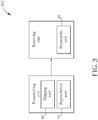
- FIG. 3 is a function diagram of a wireless network system 200 according to the present invention.
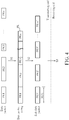
- FIG. 4 is a diagram illustrating the wireless network system 200 during data transmission using a specific communication protocol.
- the wireless network system 200 may operate according to a multi-layered OSI (open system interconnection) structure. From bottom to top, Layer 1-Layer 7 sequentially include physical layer, data link layer, network layer, transport layer, session layer, presentation layer, and application layer.
- the wireless network system 200 includes a transmitting end and a receiving end which may be two different layers of the same user equipment (UE), two different layers of the same base station (BS), or a specific layer of a user equipment and a specific layer of a base station, respectively.
- UE user equipment
- BS base station
- a specific layer of a user equipment and a specific layer of a base station respectively.
- the transmitting end and the receiving end may adopt Ethernet protocol, Token-Ring protocol, fiber distributed data interface (FDDI) protocol, transmission control protocol (TCP), or user datagram protocol (UDP).
- Ethernet protocol Token-Ring protocol
- FDDI fiber distributed data interface
- TCP transmission control protocol
- UDP user datagram protocol
- the transmitting end of the wireless network system 200 includes a segmentation unit 10 and a merging unit 30.
- the receiving end of the wireless network system 200 includes a reassembly unit 20.
- PK1-PKn represent data packets of varying sizes, such as application packets, protocol packets or QoS (quality of service) packets.
- the merging unit 30 is configured to merge the data packets PK1-PKn into a data packet string PK (represented by an arrow S1).
- the segmentation unit 10 is then configured to provide a plurality of sub data packets PK1'-PKm' by performing IP segmentation on the data packet string PK (represented by an arrow S2).
- the reassembly unit 20 may perform data reconstruction at the receiving end (represented by an arrow S3).
- the present invention may increase the utilization percentage of the transmission unit. If the size of the data packet string PK is equal to an integral multiple of the maximum transmission unit MTU, the sub data packets PK1'-PKm' each having a size equal to the maximum transmission unit MTU may be transmitted with 100% utilization percentage of the transmission unit. If the size of the data packet string PK is not equal to an integral multiple of the maximum transmission unit MTU, only the sub data packet PKm' is smaller than the maximum transmission unit MTU. Therefore, other sub data packets may be transmitted with 100% utilization percentage of the transmission unit, thereby increasing the overall utilization percentage of the transmission unit.
- the present invention may perform IP fragmentation without lowering the overall utilization percentage of the transmission unit. Therefore, the wireless network system may transmit data more efficiently.
Landscapes
- Engineering & Computer Science (AREA)
- Computer Networks & Wireless Communication (AREA)
- Signal Processing (AREA)
- Computer Security & Cryptography (AREA)
- Data Exchanges In Wide-Area Networks (AREA)
- Mobile Radio Communication Systems (AREA)
Abstract
Description
- The present invention is related to a method of performing Internet Protocol (IP) fragmentation and related wireless network system according to the pre-characterizing clause of claim 1 and claim 5.
- Various network applications become increasingly more widespread with rapid development in technology. Electronic devices, including desktop computers, notebook computers, personal digital assistants (PDAs) or smart phones, may be used for accessing the Internet. In a wireless network system, various communication protocols may be adopted for data intercommunication between a transmitting end and a receiving end. To ensure the accuracy of data transmission, the maximum size of each transmitted data packet should not exceed the maximum transmission unit (MTU) of the adopted communication protocol.
- This in mind, the present invention aims at providing a method of performing IP fragmentation and related wireless network system without lowering the overall utilization percentage of the transmission unit.
- This is achieved by a method of performing IP fragmentation in a wireless network system according to claim 1 and a wireless network system which performs IP fragmentation according to claim 5. The dependent claims pertain to corresponding further developments and improvements.
- As will be seen more clearly from the detailed description following below, the claimed method of performing IP fragmentation in a wireless network system includes providing a data packet string by merging a plurality of data packets at a transmitting end of the wireless network system; segmenting the data packet string into a plurality of sub data packets according to a maximum transmission unit of a communication protocol adopted by the wireless network system; and transmitting the plurality of sub data packets from the transmitting end of the wireless network system to a receiving end of the wireless network system.
- As will be seen more clearly from the detailed description following below, the claimed wireless network system which performs IP fragmentation includes a transmitting end and a receiving end. The transmitting end includes a merging unit configured to merge a plurality of data packets into a data packet string; and a segmenting unit configured to segment the data packet string into a plurality of sub data packets according to a maximum transmission unit of a communication protocol adopted by the wireless network system. The receiving end includes a reassembling unit configured to reassemble the plurality of sub data packets received from the transmitting end.
- In the following, the invention is further illustrated by way of example, taking reference to the accompanying drawings. Thereof
-
FIG. 1 is a function diagram of a prior art wireless network system; -
FIG. 2 is a diagram illustrating the prior art wireless network system during data transmission using a specific communication protocol; -
FIG. 3 is a function diagram of a wireless network system according to the present invention; and -
FIG. 4 is a diagram illustrating the wireless network system during data transmission using a specific communication protocol. -
FIG. 1 is a function diagram of a prior artwireless network system 100.FIG. 2 is a diagram illustrating the prior artwireless network system 100 during data transmission using a specific communication protocol. The transmitting end of thewireless network system 100 includes asegmentation unit 10. The receiving end of thewireless network system 100 includes areassembly unit 20. PK1-PK3 represent data packets of varying sizes. - If the size of the data packet PK1 is equal to the maximum transmission unit MTU of the specific communication protocol, the data packet PK1 may be transmitted directly from the transmitting end to the receiving end with 100% utilization percentage of the transmission unit.
- If the size of the data packet PK2 is larger than the maximum transmission unit MTU of the specific communication protocol, the prior
art segmentation unit 10 is configured to perform IP segmentation on the data packet PK2 so that two smaller sub data packets PK21' and PK22' may be transmitted from the transmitting end to the receiving end. In other words, the data packet PK2 requires two transmissions and the utilization percentage of the transmission unit may not be 100% when transmitting the sub data packet PK22'. - If the size of the data packet PK3 is smaller than the maximum transmission unit MTU of the specific communication protocol, the data packet PK3 may be transmitted directly from the transmitting end to the receiving end, but the utilization percentage of the transmission unit may not be 100%.
- In the prior art, if the
segmentation unit 10 of the transmitting end performs IP fragmentation too often, thereassembly unit 20 of the receiving end needs to spend more resources for reassembling the sub data packets. Meanwhile, the utilization percentage of the transmission unit may not be 100% if the size of the data packet being transmitted is not equal to the maximum transmission unit of the specific communication protocol, thereby wasting network resources. -
FIG. 3 is a function diagram of a wireless network system 200 according to the present invention.FIG. 4 is a diagram illustrating the wireless network system 200 during data transmission using a specific communication protocol. In an embodiment of the present invention, the wireless network system 200 may operate according to a multi-layered OSI (open system interconnection) structure. From bottom to top, Layer 1-Layer 7 sequentially include physical layer, data link layer, network layer, transport layer, session layer, presentation layer, and application layer. The wireless network system 200 includes a transmitting end and a receiving end which may be two different layers of the same user equipment (UE), two different layers of the same base station (BS), or a specific layer of a user equipment and a specific layer of a base station, respectively. - In the wireless network system 200, the transmitting end and the receiving end may adopt Ethernet protocol, Token-Ring protocol, fiber distributed data interface (FDDI) protocol, transmission control protocol (TCP), or user datagram protocol (UDP).
- In the present invention, the transmitting end of the wireless network system 200 includes a
segmentation unit 10 and a mergingunit 30. The receiving end of the wireless network system 200 includes areassembly unit 20. PK1-PKn represent data packets of varying sizes, such as application packets, protocol packets or QoS (quality of service) packets. - As depicted in
FIG. 4 , even if the sizes of the data packets PK1-PKn may be smaller than, equal to or larger than the maximum transmission unit MTU of the specific communication protocol, the mergingunit 30 is configured to merge the data packets PK1-PKn into a data packet string PK (represented by an arrow S1). Thesegmentation unit 10 is then configured to provide a plurality of sub data packets PK1'-PKm' by performing IP segmentation on the data packet string PK (represented by an arrow S2). Thereassembly unit 20 may perform data reconstruction at the receiving end (represented by an arrow S3). - The present invention may increase the utilization percentage of the transmission unit. If the size of the data packet string PK is equal to an integral multiple of the maximum transmission unit MTU, the sub data packets PK1'-PKm' each having a size equal to the maximum transmission unit MTU may be transmitted with 100% utilization percentage of the transmission unit. If the size of the data packet string PK is not equal to an integral multiple of the maximum transmission unit MTU, only the sub data packet PKm' is smaller than the maximum transmission unit MTU. Therefore, other sub data packets may be transmitted with 100% utilization percentage of the transmission unit, thereby increasing the overall utilization percentage of the transmission unit.
- In conclusion, the present invention may perform IP fragmentation without lowering the overall utilization percentage of the transmission unit. Therefore, the wireless network system may transmit data more efficiently.
Claims (5)
- A method of performing Internet Protocol (IP) fragmentation in a wireless network system, characterized by:providing a data packet string by merging a plurality of data packets at a transmitting end of the wireless network system;segmenting the data packet string into a plurality of sub data packets according to a maximum transmission unit of a communication protocol adopted by the wireless network system; andtransmitting the plurality of sub data packets from the transmitting end of the wireless network system to a receiving end of the wireless network system.
- The method of claim 1, further characterized by:reassembling the plurality of sub data packets at the receiving end of the wireless network system.
- The method of claim 1, further characterized in that a size of each sub data packet does not exceed the maximum transmission unit.
- The method of claim 1, further characterized in that the plurality of sub data packets are equal in size.
- A wireless network system (300) which performs IP fragmentation, characterized by:a transmitting end, comprising:a merging unit (30) configured to merge a plurality of data packets into a data packet string; anda segmenting unit (10) configured to segment the data packet string into a plurality of sub data packets according to a maximum transmission unit of a communication protocol adopted by the wireless network system (300); anda receiving end, comprising:a reassembling unit (20) configured to reassemble the plurality of sub data packets received from the transmitting end.
Applications Claiming Priority (1)
| Application Number | Priority Date | Filing Date | Title |
|---|---|---|---|
| TW100145249A TWI475861B (en) | 2011-12-08 | 2011-12-08 | Internet Protocol Segmentation Method and Related Wireless Network System |
Publications (1)
| Publication Number | Publication Date |
|---|---|
| EP2603032A1 true EP2603032A1 (en) | 2013-06-12 |
Family
ID=45560733
Family Applications (1)
| Application Number | Title | Priority Date | Filing Date |
|---|---|---|---|
| EP12153253.5A Withdrawn EP2603032A1 (en) | 2011-12-08 | 2012-01-31 | Method of performing Internet Protocol fragmentation and related wireless network system |
Country Status (3)
| Country | Link |
|---|---|
| US (1) | US20130148672A1 (en) |
| EP (1) | EP2603032A1 (en) |
| TW (1) | TWI475861B (en) |
Families Citing this family (2)
| Publication number | Priority date | Publication date | Assignee | Title |
|---|---|---|---|---|
| WO2015148844A1 (en) * | 2014-03-26 | 2015-10-01 | Nant Holdings Ip, Llc | Protocols for interacting with content via multiple devices, systems and methods |
| WO2018138410A1 (en) | 2017-01-24 | 2018-08-02 | Nokia Technologies Oy | Sequence numbering on demand for segmentation |
Citations (3)
| Publication number | Priority date | Publication date | Assignee | Title |
|---|---|---|---|---|
| EP1175063A2 (en) * | 2000-07-20 | 2002-01-23 | Nortel Networks Limited | Network layer protocol aware link layer |
| US20050135426A1 (en) * | 2003-11-24 | 2005-06-23 | Interdigital Technology Corporation | Method and apparatus for compiling a protocol data unit |
| WO2008080215A1 (en) * | 2006-12-28 | 2008-07-10 | Research In Motion Limited | Methods and apparatus for increasing data throughput by grouping data packets into maximum transmissible units |
Family Cites Families (8)
| Publication number | Priority date | Publication date | Assignee | Title |
|---|---|---|---|---|
| US5987034A (en) * | 1996-08-30 | 1999-11-16 | Cisco Technology, Inc. | ATM cells within frame relay technology |
| US7336954B2 (en) * | 2001-07-05 | 2008-02-26 | Qualcomm Incorporated | Method and apparatus for soft handoff between base stations using different frame formats |
| US7609702B2 (en) * | 2005-01-18 | 2009-10-27 | Nokia Corporation | Interworking between cell and packet based networks |
| DE602005010252D1 (en) * | 2005-09-20 | 2008-11-20 | Matsushita Electric Industrial Co Ltd | Method and apparatus for packet segmentation and link signaling in a communication system |
| US7738495B2 (en) * | 2006-01-23 | 2010-06-15 | Cisco Technology, Inc. | Method of determining a maximum transmission unit value of a network path using transport layer feedback |
| US20070211682A1 (en) * | 2006-03-09 | 2007-09-13 | Nec Laboratories America, Inc. | On Packet Aggregation and Header Compression Mechanisms for Improving VoIP Quality in Mesh Networks |
| KR20100032111A (en) * | 2008-09-17 | 2010-03-25 | 삼성전자주식회사 | Apparatus and method for processing fragmentation of ip packet in router for using network processor |
| US7936757B2 (en) * | 2009-02-27 | 2011-05-03 | O2Micro International Limited | Packet fragment reassembly |
-
2011
- 2011-12-08 TW TW100145249A patent/TWI475861B/en not_active IP Right Cessation
-
2012
- 2012-01-31 EP EP12153253.5A patent/EP2603032A1/en not_active Withdrawn
- 2012-02-02 US US13/365,231 patent/US20130148672A1/en not_active Abandoned
Patent Citations (3)
| Publication number | Priority date | Publication date | Assignee | Title |
|---|---|---|---|---|
| EP1175063A2 (en) * | 2000-07-20 | 2002-01-23 | Nortel Networks Limited | Network layer protocol aware link layer |
| US20050135426A1 (en) * | 2003-11-24 | 2005-06-23 | Interdigital Technology Corporation | Method and apparatus for compiling a protocol data unit |
| WO2008080215A1 (en) * | 2006-12-28 | 2008-07-10 | Research In Motion Limited | Methods and apparatus for increasing data throughput by grouping data packets into maximum transmissible units |
Also Published As
| Publication number | Publication date |
|---|---|
| TW201325164A (en) | 2013-06-16 |
| TWI475861B (en) | 2015-03-01 |
| US20130148672A1 (en) | 2013-06-13 |
Similar Documents
| Publication | Publication Date | Title |
|---|---|---|
| CN113411313B (en) | Data transmission method, device and system | |
| US9467895B2 (en) | Increasing access point throughput by exceeding A-MPDU buffer size limitation in a 802.11 compliant station | |
| CN104348746B (en) | Method for transmitting data between user equipment and base station in wireless network system | |
| CN108476197B (en) | Method, apparatus and computer program product for PDU formatting according to SDU segmentation | |
| KR102267116B1 (en) | Packet transmission method, proxy server and computer readable storage medium | |
| CN109983740A (en) | The method and device of data transmission enhancing in mobile communication | |
| US20230413108A1 (en) | Pdu rate reduction in mobile communications | |
| CN111788812B (en) | Techniques for Packet Data Transformation | |
| CN111355564A (en) | Method and apparatus for handling compression errors | |
| US20130156039A1 (en) | Method of performing ip fragmentation and related wireless network system | |
| CN108809549B (en) | Data transmission method and equipment | |
| US20120244800A1 (en) | Data Transmitting Method, Data Controlling Module And Mobile Device Using The Same | |
| US20130148672A1 (en) | Method of performing ip fragmentation and related wireless network system | |
| CN115348335B (en) | Common transport architecture for heterogeneous data streams | |
| CN108886766B (en) | Control information transmission method and device | |
| WO2019085920A1 (en) | Information transmission method and communication device | |
| CN103889019A (en) | Method and device for sending data | |
| KR20120014572A (en) | Techniques to Support Multiple Protocols in Wireless Networks | |
| CN115348336A (en) | Universal transmission architecture for heterogeneous data streams | |
| CN102291206A (en) | Test method, device and system of uploading and downloading speed of 3G interface | |
| CN103139836B (en) | Method for transmitting data in wireless network system | |
| CN103179612A (en) | Internet protocol fragmentation method and related wireless network system | |
| CN101360241B (en) | Audio and video data processing method | |
| CN103179149A (en) | Method for internet protocol fragmentation and related wireless network system | |
| CN106506434A (en) | Service data transmission method and device |
Legal Events
| Date | Code | Title | Description |
|---|---|---|---|
| PUAI | Public reference made under article 153(3) epc to a published international application that has entered the european phase |
Free format text: ORIGINAL CODE: 0009012 |
|
| AK | Designated contracting states |
Kind code of ref document: A1 Designated state(s): AL AT BE BG CH CY CZ DE DK EE ES FI FR GB GR HR HU IE IS IT LI LT LU LV MC MK MT NL NO PL PT RO RS SE SI SK SM TR |
|
| AX | Request for extension of the european patent |
Extension state: BA ME |
|
| 17P | Request for examination filed |
Effective date: 20131212 |
|
| RBV | Designated contracting states (corrected) |
Designated state(s): AL AT BE BG CH CY CZ DE DK EE ES FI FR GB GR HR HU IE IS IT LI LT LU LV MC MK MT NL NO PL PT RO RS SE SI SK SM TR |
|
| STAA | Information on the status of an ep patent application or granted ep patent |
Free format text: STATUS: EXAMINATION IS IN PROGRESS |
|
| 17Q | First examination report despatched |
Effective date: 20170802 |
|
| STAA | Information on the status of an ep patent application or granted ep patent |
Free format text: STATUS: THE APPLICATION IS DEEMED TO BE WITHDRAWN |
|
| 18D | Application deemed to be withdrawn |
Effective date: 20171213 |