EP2602249B1 - Synthesis of rosuvastatin by means of co-crystals - Google Patents
Synthesis of rosuvastatin by means of co-crystals Download PDFInfo
- Publication number
- EP2602249B1 EP2602249B1 EP11192188.8A EP11192188A EP2602249B1 EP 2602249 B1 EP2602249 B1 EP 2602249B1 EP 11192188 A EP11192188 A EP 11192188A EP 2602249 B1 EP2602249 B1 EP 2602249B1
- Authority
- EP
- European Patent Office
- Prior art keywords
- rosuvastatin
- crystal
- aminopyrimidine
- preparation
- hemihydrate
- Prior art date
- Legal status (The legal status is an assumption and is not a legal conclusion. Google has not performed a legal analysis and makes no representation as to the accuracy of the status listed.)
- Not-in-force
Links
- BPRHUIZQVSMCRT-UNXVUYOMSA-N CC(C)c1c(/C=C/[C@H](CC(CC(O)=O)O)O)c(-c(cc2)ccc2F)nc(N(C)S(C)(=O)=O)n1 Chemical compound CC(C)c1c(/C=C/[C@H](CC(CC(O)=O)O)O)c(-c(cc2)ccc2F)nc(N(C)S(C)(=O)=O)n1 BPRHUIZQVSMCRT-UNXVUYOMSA-N 0.000 description 1
Images


Classifications
-
- C—CHEMISTRY; METALLURGY
- C07—ORGANIC CHEMISTRY
- C07D—HETEROCYCLIC COMPOUNDS
- C07D241/00—Heterocyclic compounds containing 1,4-diazine or hydrogenated 1,4-diazine rings
- C07D241/36—Heterocyclic compounds containing 1,4-diazine or hydrogenated 1,4-diazine rings condensed with carbocyclic rings or ring systems
- C07D241/38—Heterocyclic compounds containing 1,4-diazine or hydrogenated 1,4-diazine rings condensed with carbocyclic rings or ring systems with only hydrogen or carbon atoms directly attached to the ring nitrogen atoms
- C07D241/40—Benzopyrazines
- C07D241/42—Benzopyrazines with only hydrogen atoms, hydrocarbon or substituted hydrocarbon radicals, directly attached to carbon atoms of the hetero ring
-
- A—HUMAN NECESSITIES
- A61—MEDICAL OR VETERINARY SCIENCE; HYGIENE
- A61P—SPECIFIC THERAPEUTIC ACTIVITY OF CHEMICAL COMPOUNDS OR MEDICINAL PREPARATIONS
- A61P3/00—Drugs for disorders of the metabolism
- A61P3/06—Antihyperlipidemics
-
- C—CHEMISTRY; METALLURGY
- C07—ORGANIC CHEMISTRY
- C07D—HETEROCYCLIC COMPOUNDS
- C07D239/00—Heterocyclic compounds containing 1,3-diazine or hydrogenated 1,3-diazine rings
- C07D239/02—Heterocyclic compounds containing 1,3-diazine or hydrogenated 1,3-diazine rings not condensed with other rings
- C07D239/24—Heterocyclic compounds containing 1,3-diazine or hydrogenated 1,3-diazine rings not condensed with other rings having three or more double bonds between ring members or between ring members and non-ring members
- C07D239/28—Heterocyclic compounds containing 1,3-diazine or hydrogenated 1,3-diazine rings not condensed with other rings having three or more double bonds between ring members or between ring members and non-ring members with hetero atoms or with carbon atoms having three bonds to hetero atoms with at the most one bond to halogen, directly attached to ring carbon atoms
- C07D239/32—One oxygen, sulfur or nitrogen atom
- C07D239/42—One nitrogen atom
-
- C—CHEMISTRY; METALLURGY
- C07—ORGANIC CHEMISTRY
- C07D—HETEROCYCLIC COMPOUNDS
- C07D239/00—Heterocyclic compounds containing 1,3-diazine or hydrogenated 1,3-diazine rings
- C07D239/02—Heterocyclic compounds containing 1,3-diazine or hydrogenated 1,3-diazine rings not condensed with other rings
- C07D239/24—Heterocyclic compounds containing 1,3-diazine or hydrogenated 1,3-diazine rings not condensed with other rings having three or more double bonds between ring members or between ring members and non-ring members
- C07D239/28—Heterocyclic compounds containing 1,3-diazine or hydrogenated 1,3-diazine rings not condensed with other rings having three or more double bonds between ring members or between ring members and non-ring members with hetero atoms or with carbon atoms having three bonds to hetero atoms with at the most one bond to halogen, directly attached to ring carbon atoms
- C07D239/69—Benzenesulfonamido-pyrimidines
-
- C—CHEMISTRY; METALLURGY
- C07—ORGANIC CHEMISTRY
- C07D—HETEROCYCLIC COMPOUNDS
- C07D241/00—Heterocyclic compounds containing 1,4-diazine or hydrogenated 1,4-diazine rings
- C07D241/02—Heterocyclic compounds containing 1,4-diazine or hydrogenated 1,4-diazine rings not condensed with other rings
- C07D241/10—Heterocyclic compounds containing 1,4-diazine or hydrogenated 1,4-diazine rings not condensed with other rings having three double bonds between ring members or between ring members and non-ring members
- C07D241/12—Heterocyclic compounds containing 1,4-diazine or hydrogenated 1,4-diazine rings not condensed with other rings having three double bonds between ring members or between ring members and non-ring members with only hydrogen atoms, hydrocarbon or substituted hydrocarbon radicals, directly attached to ring carbon atoms
Definitions
- Rosuvastatin is an active pharmaceutical ingredient (API) having chemical name (E)-(3R,5S)-7-[4-(4-Fluorophenyl)-6-isopropyl-2-[(methylsulfonyl)(methyl) amino]pyrimidin-5-yl]-3,5-dihydroxyhept-6-enoic acid and having structural formula (I) :
- Rosuvastatin is currently marketed as calcium salt (Rosuvastatin calcium), or better as hemicalcium salt of formula (II): having chemical name 6-Heptenoic acid, 7-[4-(4-fluorophenyl)-6-(1-methylethyl)-2-[methyl (methylsulfonyl)amino]-5-pyrimidinyl]-3,5-dihydroxy-, calcium salt (2:1), (3R, 5S, 6E)-and with commercial name of Crestor, Fortius, Rostar e Rozavel.
- Rosuvastatin is an inhibitor of the 3-Hydroxy-3-Methylglutaryl-Coenzime A (HMG-CoA) reductase, the enzyme that catalyzes the conversion of HMG-CoA to Mevalonate, a limiting agent of the biosynthesis of Cholesterol and it is therefore used against all the forms of hypercholesterolemia, for the regression on the plaque atherosclerotic and for the prevention of cardiovascular events.
- HMG-CoA 3-Hydroxy-3-Methylglutaryl-Coenzime A
- WO2012/069394 describes a composite where Rosuvastatin is combined with D-sorbitol.
- the problem addressed by the present invention is therefore that of providing an alternative process for the preparation of Rosuvastatin and salts thereof which allows to get round to the drawbacks above reported with reference to the known prior art.
- the present invention concerns a process for the preparation of Rosuvastatin or its salts comprising the following steps:
- the co-crystal of Rosuvastatin and pyrazine is a monohydrate form and has molecular formula (IV):
- Rosuvastatin pyrazine hydrate has formula C22H28FN3O6S . C4H4N2 . H2O and molecular weight of 579.63 atomic mass units.
- the molar ratio of the component is 1:1:1.
- the co-crystal of Rosuvastatin and quinoxaline (1:2) is an anhydrous form and has molecular formula (V):
- Such a co-crystal is also named Rosuvastatin quinoxaline (1:2) and presents two molecules of coformer quinoxaline for each molecule of Rosuvastatin. It has formula C 22 H 28 FN 3 O 6 S. 2 C 8 H 6 N 2 and molecular weight of 611.68 atomic mass units.
- the molar ratio between Rosuvastatin and the coformer is 1:2.
- the co-crystal Rosuvastatin 2-aminopyrimidine hemihydrate provides the better results in terms of purity and isolated molar yield, in comparison with the other two co-crystals, for the process of the present invention.
- the preparation of the co-crystals of Rosuvastatin according the present invention can be carried out starting from Rosuvastatin in the free acid form or from a salt, preferably an alkaline or an alkaline-earth salt of Rosuvastatin.
- the formation of such co-crystals can be carried out from a solution of Toluene, MIK or aqueous solution comprising Rosuvastatin and adding the coformer. If necessary, depending on the kind of co-crystal prepared, it is optionally possible to add little quantities of water to the organic solvent.
- the formation of the co-crystal, according to step (a) of the process of the present invention is performed at a temperature below 40°C, preferably between 30 and 35°C.
- Rosuvastatin lactone a well-known impurity of Rosuvastatin being the inner cyclic ester of Rosuvastatin.
- the method of preparation of the co-crystals does not require seeding. If seeding is added the precipitation of the co-crystal is typically faster than if it is not used the seeding. If seeding is not used, in order to help the formation of the co-crystal it is convenient to cool down very slowly the solution until ca. 10°C.
- Pyrimidine is therefore a coformer of a co-crystal and not a contra-ion of a salt.
- Rosuvastatin pyrazine hydrate and Rosuvastatin quinoxaline (1:2) the formation of co-crystals is also confirmed on the basis of the low basicity of these amines (pKa 0.5-0.6): the ⁇ pKa between Rosuvastatin and these amines is lower than zero implying the formation of a co-crystal (See scientific explanation in Example 10).
- the process of the present invention allows the preparation of Rosuvastatin with a surprising higher degree of chemical purity and optical purity in comparison with Rosuvastatin prepared by means of Rosuvastatin salts, such as the Rosuvastatin cyclohexylamine salt. See comparative table below where the co-crystal and the salt are prepared form the same batch of Rosuvastatin sodium salt (RSVNa).
- Rosuvastatin salts such as the Rosuvastatin cyclohexylamine salt.
- An important advantage of the process of the present invention is therefore that it is not required any further step of purification of the co-crystal in order to reach the purity level necessary for the preparation of Rosuvastatin of pharmaceutical grade, as it is instead typically required when preparing Rosuvastatin by means of salts thereof.
- step (a) The typical molar yield of step (a), determined by a mass balance study, is comprised between 76% and 86%. Highest values are reached by isolating the product from 4 volumes of solvent MIK and washing the product with 2x1 volume of MIK pre-cooled at -10°C. Nevertheless, best values of purity, keeping high values of molar yield, are reached washing the product with 2x0.5 volumes of MIK pre-cooled at about 0°C.
- step (b) provides Rosuvastatin or Rosuvastatin salt, preferable Rosuvastatin calcium, from the co-crystal of Rosuvastatin prepared in the step (a).
- the co-crystal Rosuvastatin is disaggregated by an aqueous solution of a base, e.g. NaOH. Then, the aqueous phase is washed with an organic solvent. After striping, the combined aqueous phases are added with a solution of Calcium chloride. After the precipitation of RSVCa, the residual included 2-aminopyrimidine was removed with a water slurrying at 50 °C to result in RSV free from the coformer impurity.
- a base e.g. NaOH
- the RSVCa prepared in step (b) has an impurities profile identical to the co-crystal prepared in step (a) (similar amounts of the same impurities) with an overall yield of 65% (2 steps) .
- the small scale of these experiments and the significant volume of water could explain this moderate yield. Scale-up and optimization will improve the isolated final molar yield. In the optimized process, precipitation of RSVCa with complete elimination of the coformer, will be carried out in a one-pot process.
- RSVCa was obtained with an excellent purity of 99.93%.
- the three co-crystals of Rosuvastatin according to the present invention are useful for use in medicine.
- co-crystals can be used to cure all the forms of hypercholesterolemia.
- Preferred is the co-crystal comprising pyrazine of formula (IV).
- the co-crystal of the present invention can be therefore formulated in proper pharmaceutical compositions comprising the co-crystal of Rosuvastatin and one or more excipients, carriers o diluents pharmaceutically acceptable.
- excipients useful for the pharmaceutical composition comprising the co-crystal of the invention are the following: microcrystalline cellulose, lactose monohydrate, tribasic calcium phosphate, crospovidone, magnesium stearate, hypromellose, triacetin, titanium dioxide, yellow ferric oxide, and red ferric oxide.
- RSVNa can be prepared according EP0521471A1 and RSV can be prepared from RSVNa with acidic treatment and extraction with organic solvent (see example 4).
- XRPD analysis was performed using a Philips X'Pert diffractometer with Cu K ⁇ radiation in Bragg-Brentano geometry. The system is equipped with a monodimensional, real time multiple strip detector. The diffractogram was recorded from 3° to 40° (2 ⁇ ) at a scan rate of 17.6° per minute (see Figure 2 ). List of selected peaks (only peaks with relative intensity greater than or equal to 1 % are indicated): Pos. d-spac. Rel. Int.
- thermogravimetric analyzer Mettler TGA/SDTA851e Thermogravimetric analyses were recorded in a thermogravimetric analyzer Mettler TGA/SDTA851e. A sample of 5.2206 mg was weighed into a 70 ⁇ L alumina crucible with a pinhole lid and was heated at 10 °C/min from 30 to 300 °C, under nitrogen (50 mL/min).
- the crystal structure of co-crystal Rosuvastatin 2-aminopyrimidine hemihydrate was determined from single crystal X-ray diffraction data.
- the colourless prism used (0.36 x 0.27 x 0.07 mm) was obtained from the crystallization from a solution of starting products in toluene.
- the single crystal structural data are the followings: Crystal system Monoclinic Space group C2 a ( ⁇ ) 18.7043(15) b ( ⁇ ) 8.2230(7) c ( ⁇ ) 18.8025(15) ⁇ (°) 91.182(2) Volume ( ⁇ 3) 2891.3(7) z 4 D calc. (Mg/m3) 1.35 N. of refl. 9775 Refl. with I > 2 ⁇ (I) 4059 R (I > 2 ⁇ (I)) 4.71
- the asymmetric unit of the crystal structure is depicted in Figure 5 , viewed nearly down the b axis (i.e., the twofold axis passing through the O of the water molecule is almost perpendicular to the plane of the drawing); intermolecular H bonds are indicated by dashed lines (only hydrogen atoms involved in H bonding have been included; program used: Mercury 2.4, C.F. Macrae, I.J. Bruno, J.A. Chisholm, P.R. Edgington, P. McCabe, E. Pidcock, L. Rodriguez-Monge, R. Taylor, J. van de Streek and P.A. Wood, J. Appl. Cryst., 41, 2008, 466-470 ).
- XRPD analysis was performed using a Philips X'Pert diffractometer with Cu K ⁇ radiation in Bragg-Brentano geometry.
- the system is equipped with a monodimensional, real time multiple strip detector.
- the diffractogram was recorded from 3° to 40° (2 ⁇ ) at a scan rate of 17.6° per minute (See figure 7 ).
- XRPD analysis was performed using a Philips X'Pert diffractometer with Cu K ⁇ radiation in Bragg-Brentano geometry. The system is equipped with a monodimensional, real time multiple strip detector. The diffractogram was recorded from 3° to 40° (2 ⁇ ) at a scan rate of 17.6° per minute (See figure 9 ). List of selected peaks (only peaks with relative intensity greater than or equal to 1 % are indicated): Pos. d-spac. Rel. Int.
- Example 4 Preparation of the co-crystal Rosuvastatin 2-aminopyrimidine hemihydrate of formula (III) from a solution containing Rosuvastatin sodium salt (RSVNa).
- Example 7 Preparation of the co-crystal Rosuvastatin 2-aminopyrimidine hemihydrate of formula (III) from a solution containing Rosuvastatin sodium salt (RSVNa).
- the solid was filtered through a sintered glass funnel (n° 3) and was washed with MIK saturated with water at 0-5 °C (2x11.5 ml, 2x1 vol.) and was dried under vacuum at room temperature to provide 8.20 g of co-crystal Rosuvastatin 2-aminopyrimidine hemihydrate as an off white solid for a molar yield of 77%.
- This product has a purity by HPLC of 99.94% with only trace amounts of 2-aminopyrimidine.
- Karl Fischer analysis indicates a 5.7% water content after drying for 6 h at room temperature under vacuum (4-8 mbar).
- Example 9 Single crystal structure of co-crystal Rosuvastatin 2-aminopyrimidine hemihydrate. The single crystal confirmed the formation of a cocrystal.
- the co-crystal Rosuvastatin 2-aminopyrimidine hemihydrate crystalline phase is a cocrystal, not a salt, as both molecules are non-ionized.
- Example 10 Rule of co-crystal prediction using pKa values.
- ⁇ pKa pKa conjugate acid of the base B - pKa acid AH
- the pKa of pyrazine and quinoxaline are respectively 0.6 and 0.56 whereas the pKa of rosuvastatin (RSV) is 4.6. So, in both cases, we have a ⁇ pKa of -4, a negative value far enough from 0 to assume the formation of a co-crystal. Crystal forms of Rosuvastatin pyrazine hydrate, Rosuvastatin quinoxaline (1:2) according to the equation (a) are thus co-crystals.
- Rosuvastatin in acid form
- co-crystal Rosuvastatin 2-aminopyrimidine hemihydrate of these tests of stability have a lactone impurity content of 17.267% and 0.036% respectively.
- the co-crystal has only 3 impurities at 5.651, 5.948 and 6.674 (lactone) min.
- the stability of co-crystal is higher than the stability of the Rosuvastatin acid (RSV).
- RSV Rosuvastatin acid
Landscapes
- Chemical & Material Sciences (AREA)
- Organic Chemistry (AREA)
- Health & Medical Sciences (AREA)
- Engineering & Computer Science (AREA)
- Bioinformatics & Cheminformatics (AREA)
- Diabetes (AREA)
- Hematology (AREA)
- Obesity (AREA)
- Chemical Kinetics & Catalysis (AREA)
- General Chemical & Material Sciences (AREA)
- Medicinal Chemistry (AREA)
- Nuclear Medicine, Radiotherapy & Molecular Imaging (AREA)
- Pharmacology & Pharmacy (AREA)
- Life Sciences & Earth Sciences (AREA)
- Animal Behavior & Ethology (AREA)
- General Health & Medical Sciences (AREA)
- Public Health (AREA)
- Veterinary Medicine (AREA)
- Pharmaceuticals Containing Other Organic And Inorganic Compounds (AREA)
Description
- It is object of the present invention a process for the preparation of the active pharmaceutical ingredient Rosuvastatin and a particular intermediate of synthesis.
- Rosuvastatin is an active pharmaceutical ingredient (API) having chemical name (E)-(3R,5S)-7-[4-(4-Fluorophenyl)-6-isopropyl-2-[(methylsulfonyl)(methyl) amino]pyrimidin-5-yl]-3,5-dihydroxyhept-6-enoic acid and having structural formula (I) :

- Such a substance, as other APIs belonging to the family of statins, is characterized by the presence of two oxydrilic groups bounded to asymmetric carbon atoms which are part of the side chain linked to the pyrimidinic ring. Rosuvastatin is currently marketed as calcium salt (Rosuvastatin calcium), or better as hemicalcium salt of formula (II):

- The preparation of this API, according to various synthetic methods, is already disclosed in literature. Interesting routes of synthesis are described in
EP0521471A1 and in particular in the example 1 or those more recent ofWO2009/128091 andWO2009/118598 . Many methods nowadays known for the preparation of Rosuvastatin are directed to the improvement of the quality of the product by means of the purification of a relatively early intermediate which is the Rosuvastatin methyl or ethyl ester. However, this intermediate, to be converted to Rosuvastatin, needs to be hydrolized and during this step Rosuvstatin may racemizes, decreasing therefore the optical purity of the final compound. -
WO2012/069394 describes a composite where Rosuvastatin is combined with D-sorbitol. - The problem addressed by the present invention is therefore that of providing an alternative process for the preparation of Rosuvastatin and salts thereof which allows to get round to the drawbacks above reported with reference to the known prior art.
- This problem is solved by a process for the preparation of Rosuvastatin as outlined in the annexed claims, which are integral part of the present description.
- Further features and advantages of the process according to the invention will result by the description hereafter reported of examples of realization of the invention, provided as an indication and not as a limitation of the invention.
-
-
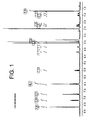
Figure 1 shows the proton Nuclear Magnetic Resonance (1H-NMR) spectrum of the co-crystal Rosuvastatin 2-aminopyrimidine hemihydrate of formula (III); -
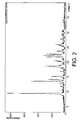
Figure 2 shows the X-Ray Powder Diffraction (XPRD) diffractogram of the co-crystal Rosuvastatin 2-aminopyrimidine hemihydrate of formula (III); -
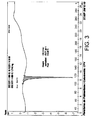
Figure 3 shows the Differential Scanning Calorimetry (DSC) curve of the co-crystal Rosuvastatin 2-aminopyrimidine hemihydrate of formula (III); -
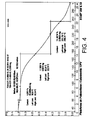
Figure 4 shows the ThermoGravimetric (TG) curve of the co-crystal Rosuvastatin 2-aminopyrimidine hemihydrate of formula (III); -
Figure 5 shows the single crystal structure of the co-crystal Rosuvastatin 2-aminopyrimidine hemihydrate of formula (III); -
Figure 6 shows the 1H-NMR spectrum of the co-crystal Rosuvastatin pyrazine hydrate of formula (IV); -
Figure 7 shows the XPRD diffractogram of the co-crystal Rosuvastatin pyrazine hydrate of formula (IV); -
Figure 8 shows the 1H-NMR spectrum of the co-crystal Rosuvastatin quinoxaline (1:2) of formula (V); -
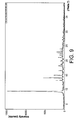
Figure 9 shows the XPRD diffractogram of the co-crystal Rosuvastatin quinoxaline (1:2) of formula (V); - The present invention concerns a process for the preparation of Rosuvastatin or its salts comprising the following steps:
- (a) preparation of a co-crystal of Rosuvastatin selected from the group consisting of:
- 1. Rosuvastatin 2-aminopyrimidine hemihydrate,
- 2. Rosuvastatin pyrazine hydrate,
- 3. Rosuvastatin quinoxaline (1:2);
- (b) conversion of the co-crystal prepared in the step (a) in Rosuvastatin of formula (I) or its salts.
- It has been surprisingly found that it is possible to prepare co-crystals of Rosuvastatin and that they are useful intermediates for the preparation of Rosuvastatin itself or for the preparation of Rosuvastatin salts, such as Rosuvastatin calcium. The newly discovered co-crystals of Rosuvastatin have the following composition:
- a. Rosuvastatin 2-aminopyrimidine hemihydrate,
- b. Rosuvastatin pyrazine hydrate,
- c. Rosuvastatin quinoxaline (1:2).
- In terms of general knowledge, the formation of co-crystals presents a highly unexpected and exceptional character, in contrast with the formation of different crystalline forms of a substance of which is nowadays possible at least to predict the existence by means of proper software. This concept is in fact confirmed by the following actual observation: co-crystals of only 30% of the APIs containing carboxylic groups marketed nowadays in the United States are known.
The three co-crystals of Rosuvastatin, object of the present invention, according to our knowledge, have never been disclosed or exemplified in prior art documents. More in general, until now, there is none co-crystal of Rosuvastatin disclosed or exemplified in literature, i.e., the preparation of Rosuvastatin co-crystal is an exceptional and not expected event, especially when it is considered that Rosuvastatin is known since many years and many studies relating to the preparation process had been carried out in the past years providing a huge related literature.
The co-crystal of Rosuvastatin and aminopyrimidine is a hemihydrate form and has molecular formula (III):
The co-crystal of Rosuvastatin and pyrazine is a monohydrate form and has molecular formula (IV):
The co-crystal of Rosuvastatin and quinoxaline (1:2) is an anhydrous form and has molecular formula (V):
- In a preferred embodiment of the invention, the co-crystal Rosuvastatin 2-aminopyrimidine hemihydrate provides the better results in terms of purity and isolated molar yield, in comparison with the other two co-crystals, for the process of the present invention. The co-crystal of Rosuvastatin 2-aminopyrimidine hemihydrate have crystal structure characterized by a X-Ray Powder Diffractogram (XRPD) with characteristic peaks expressed in 2 Theta value of: 9.40 (vs), 13.50 (s), 14.08 (m), 15.15 (m), 18.59 (m), 21.67 (m), 22.16 (m), 22.21 (m), 22.66 (m), (+/-) 0.10; wherein (vs) = very strong intensity, (s) = strong intensity, (m) = medium intensity. Furthermore, this co-crystal shows a melting point of about 109.4°C.
The preparation of the co-crystals of Rosuvastatin according the present invention can be carried out starting from Rosuvastatin in the free acid form or from a salt, preferably an alkaline or an alkaline-earth salt of Rosuvastatin.
The formation of such co-crystals can be carried out from a solution of Toluene, MIK or aqueous solution comprising Rosuvastatin and adding the coformer. If necessary, depending on the kind of co-crystal prepared, it is optionally possible to add little quantities of water to the organic solvent.
The formation of the co-crystal, according to step (a) of the process of the present invention, is performed at a temperature below 40°C, preferably between 30 and 35°C. In this way it is possible to minimize the formation of the by-product Rosuvastatin lactone, a well-known impurity of Rosuvastatin being the inner cyclic ester of Rosuvastatin.
The method of preparation of the co-crystals does not require seeding. If seeding is added the precipitation of the co-crystal is typically faster than if it is not used the seeding. If seeding is not used, in order to help the formation of the co-crystal it is convenient to cool down very slowly the solution until ca. 10°C. - It is important to highlight that the solid forms of the present invention are co-crystals and not simply salts. In the literature there are described dozens of Rosuvastatin salts, many of them with amines as contra-ion, but none co-crystal of Rosuvastatin.
The preparation of co-crystals is confirmed by the single crystal structure analysis, as clearly discussed in example 9 and by the simple viewing offigure 5 (co-crystal Rosuvastatin 2-aminopyrimidine hemihydrates of formula (III)) which shows that the carboxylic proton is still part of the Rosuvastatin molecule and it is not bonded on the Pyrimidine, as it would be if it was a simple salt. Pyrimidine is therefore a coformer of a co-crystal and not a contra-ion of a salt.
For the other co-crystal forms, Rosuvastatin pyrazine hydrate and Rosuvastatin quinoxaline (1:2), the formation of co-crystals is also confirmed on the basis of the low basicity of these amines (pKa 0.5-0.6): the ΔpKa between Rosuvastatin and these amines is lower than zero implying the formation of a co-crystal (See scientific explanation in Example 10). - The co-crystals of Rosuvastatin above described, according to the process of the invention, are used as synthetic intermediates for the preparation of Rosuvastatin and/or salts thereof.
- In particular, the process of the present invention, based on the co-crystals, allows the preparation of Rosuvastatin with a surprising higher degree of chemical purity and optical purity in comparison with Rosuvastatin prepared by means of Rosuvastatin salts, such as the Rosuvastatin cyclohexylamine salt. See comparative table below where the co-crystal and the salt are prepared form the same batch of Rosuvastatin sodium salt (RSVNa).
Chemical Purity (HPLC A%) RSVNa starting material 98,70 RSV Cyclohexylamine salt 99,20 Co-cristal RSV 2-aminopyrimidine 99,96 - An important advantage of the process of the present invention is therefore that it is not required any further step of purification of the co-crystal in order to reach the purity level necessary for the preparation of Rosuvastatin of pharmaceutical grade, as it is instead typically required when preparing Rosuvastatin by means of salts thereof.
- The crystallization in MIK (Methylisobutylketone) of the co-crystal Rosuvastatin 2-aminopyrimidine hemihydrate from RSVNa (without the isolation of the acid Rosuvastatin) gave an excellent purity (99.96%, without taking account of 2-aminopyrimidine) with a good yield (70%, in the worst case). The impurity profiles of Rosuvastatin is here summarized:
- Purity >99.9% HPLC (without taking account of 2-aminopyrimidine).
- No impurity >0.1%.
- The typical molar yield of step (a), determined by a mass balance study, is comprised between 76% and 86%. Highest values are reached by isolating the product from 4 volumes of solvent MIK and washing the product with 2x1 volume of MIK pre-cooled at -10°C. Nevertheless, best values of purity, keeping high values of molar yield, are reached washing the product with 2x0.5 volumes of MIK pre-cooled at about 0°C.
- The process of preparation of Rosuvastatin, according to step (b), provides Rosuvastatin or Rosuvastatin salt, preferable Rosuvastatin calcium, from the co-crystal of Rosuvastatin prepared in the step (a).
- The co-crystal Rosuvastatin is disaggregated by an aqueous solution of a base, e.g. NaOH. Then, the aqueous phase is washed with an organic solvent. After striping, the combined aqueous phases are added with a solution of Calcium chloride. After the precipitation of RSVCa, the residual included 2-aminopyrimidine was removed with a water slurrying at 50 °C to result in RSV free from the coformer impurity.
- The RSVCa prepared in step (b) has an impurities profile identical to the co-crystal prepared in step (a) (similar amounts of the same impurities) with an overall yield of 65% (2 steps) . The small scale of these experiments and the significant volume of water could explain this moderate yield. Scale-up and optimization will improve the isolated final molar yield. In the optimized process, precipitation of RSVCa with complete elimination of the coformer, will be carried out in a one-pot process.
- From RSVNa aqueous solution, RSVCa was obtained with an excellent purity of 99.93%.
- Other main advantages of the process of the present invention based on the preparation of the synthetic intermediate co-crystals, preferably with the co-crystal Rosuvastatin 2-aminopyrimidine hemihydrates, are that:
- it is possible to crystallize the co-crystal without isolating the Rosuvastatin in acid form and so avoiding the formation of the lactone by-product.
- The conditions of crystallization finds industrial applicability: solvent class III (MIK) and high concentration (4-10 vol.), preferable lower than 5 volumes.
- The filtration of the co-crystal is easy and the solid has good handling properties.
- Stability:
- ∘ Co-crystals in general have a relative lack of polymorphism due to the higher complexity of the crystal structure: polymorphs of co-crystal Rosuvastatin 2-aminopyrimidine hemihydrate were not observed during the screening and the studies of purification of Rosuvastatin. In the case of salts of Rosuvastatin with amines different polymorphs are disclosed in literature.
- ∘ Co-crystal Rosuvastatin 2-aminopyrimidine hemihydrate stored at room temperature in a sealed vial for 3 weeks does not show crystalline transformation (same XRPD) or loss of crystallinity.
- ∘ Humidity: co-crystal stored at room temperature with a RH of 100% for 24 h shows the same XRPD without loss of crystallinity. Moreover, the solid keeps its good handling properties.
- ∘ Co-crystal Rosuvastatin 2-aminopyrimidine hemihydrate has a chemical stability higher than the Rosuvastatin acid (especially avoiding the formation of the lactone by-product) as confirmed by the stabilty study of example 11.
- The 2-aminopyrimidine co-former has low toxicity. Moreover, it is highly soluble in water and so easy to remove during the subsequent formation of the Rosuvastatin Calcium (RSVCa) salt of formula (II).
- The purification obtained is excellent (from HPLC purity of 98.7% of Rosuvastatin Sodium (RSVNa) as starting material to higher than 99.9% of Rosuvastatin co-crystal intermediate) with only one crystallization and the yield is good (>70%).
- ∘ Co-crystals in general have a relative lack of polymorphism due to the higher complexity of the crystal structure: polymorphs of co-crystal Rosuvastatin 2-aminopyrimidine hemihydrate were not observed during the screening and the studies of purification of Rosuvastatin. In the case of salts of Rosuvastatin with amines different polymorphs are disclosed in literature.
- The solubility of co-crystal Rosuvastatin 2-aminopyrimidine hemihydrate in a series of solvents at room temperature is given below:
- ACN: 14 vol.
- MeOH: 3 vol.
- EtOH: 10 vol.
- AcOEt: 20 vol.
- Acetone: 4 vol.
- MIK: 45 vol.
- THF: 2 vol.
- The three co-crystals of Rosuvastatin according to the present invention are useful for use in medicine.
- In particular these co-crystals can be used to cure all the forms of hypercholesterolemia. Preferred is the co-crystal comprising pyrazine of formula (IV).
- The co-crystal of the present invention can be therefore formulated in proper pharmaceutical compositions comprising the co-crystal of Rosuvastatin and one or more excipients, carriers o diluents pharmaceutically acceptable. An example of possible excipients useful for the pharmaceutical composition comprising the co-crystal of the invention are the following: microcrystalline cellulose, lactose monohydrate, tribasic calcium phosphate, crospovidone, magnesium stearate, hypromellose, triacetin, titanium dioxide, yellow ferric oxide, and red ferric oxide.
- Example 1 - Preparation and characterization of the co-crystal Rosuvastatin 2-aminopyrimidine hemihydrate of formula (III) - exemplificative of the invention.

- Note: RSVNa can be prepared according
EP0521471A1 and RSV can be prepared from RSVNa with acidic treatment and extraction with organic solvent (see example 4). - To an assay tube equipped with magnetic stirrer containing Rosuvastatin (as acid form) (RSV) (62 mg, 0.13 mmol) and 2-aminopyrimidine (13 mg, 0.13 mmol) was added toluene (0.75 mL, 10 vol.) before heating to 110 °C. The resulting solution was allowed to cool to room temperature (24-28 °C) resulting in the precipitation of a white solid. The crude was filtered through a sintered glass funnel (n° 4) to provide 38 mg of the co-crystal Rosuvastatin 2-aminopyrimidine hemihydrate with a molar yield of 49%.
- Proton nuclear magnetic resonance analyses were recorded in deuterated dimethyl sulfoxide (DMSO-d6) in a
Varian Mercury 400 spectrometer, equipped with a broadband probe ATB 1H/19F/X of 5 mm. Spectra were acquired dissolving 5-10 mg of sample in 0.6 mL of deuterated solvent.
1H-NMR (DMSO, 400 MHz): δ = 8.20 (d, J = 4.7 Hz, 2H); 7.76-7.69 (m, 2H); 7.32-7.24 (m, 2H); 6.58-6.47 (m, 4H); 5.54 (dd, J = 5.9 Hz, J = 16.0 Hz, 1H); 4.20 (q, J = 6.6 Hz, 1H); 3.89-3.78 (m, 1H); 3.55 (s, 3H); 3.49-3.39 (m, 4H); 2.30 (dd, J = 4.7 Hz, J = 14.5 Hz, 1H); 2.20 (dd, J = 8.2 Hz, J = 14.5 Hz, 1H); 1.60-1.48 (m, 1H); 1.45-1.35 (m, 1H); 1.22 (d, J = 6. 6 Hz, 6H). (SeeFigure 1 - 1H-NMR) - XRPD analysis was performed using a Philips X'Pert diffractometer with Cu Kα radiation in Bragg-Brentano geometry. The system is equipped with a monodimensional, real time multiple strip detector. The diffractogram was recorded from 3° to 40° (2θ) at a scan rate of 17.6° per minute (see
Figure 2 ). List of selected peaks (only peaks with relative intensity greater than or equal to 1 % are indicated):Pos. d-spac. Rel. Int. [°2Th.] [Å] [%] 9.40 9.41 100 10.49 8.43 2 11.81 7.49 6 12.65 7.00 7 13.50 6.56 55 14.08 6.29 29 15.15 5.85 24 16.84 5.26 7 17.92 4.95 7 18.32 4.84 16 18.59 4.77 29 18.82 4.71 9 19.03 4.66 8 19.53 4.55 3 20.10 4.42 11 20.40 4.35 15 20.94 4.24 2 21.67 4.10 33 22.16 4.01 34 22.21 4.00 36 22.66 3.92 32 23.67 3.76 14 24.21 3.68 4 25.24 3.53 4 25.63 3.48 8 25.92 3.44 14 26.32 3.39 4 27.14 3.29 4 27.75 3.22 8 28.68 3.11 4 29.16 3.06 5 29.52 3.03 4 30.12 2.97 6 30.59 2.92 4 32.25 2.78 1 33.12 2.71 1 33.52 2.67 2 34.02 2.64 4 35.99 2.50 2 36.55 2.46 1 37.26 2.41 1 38.58 2.33 2 - DSC analyses were recorded with a Mettler DSC822e. A sample of 1.7540 mg was weighed into a 40 µL aluminium crucible with a pinhole lid and was heated, under nitrogen (50 mL/min), at 10 °C/min from 30 to 300 °C.
The co-crystal Rosuvastatin 2-aminopyrimidine hemihydrate is characterized in that the endothermic sharp peak corresponding to the melting point has an onset at 109.37 °C (fusion enthalpy -70.77 J/g). - Thermogravimetric analyses were recorded in a thermogravimetric analyzer Mettler TGA/SDTA851e. A sample of 5.2206 mg was weighed into a 70 µL alumina crucible with a pinhole lid and was heated at 10 °C/min from 30 to 300 °C, under nitrogen (50 mL/min).
- The TG analysis of the co-crystal shows 1.26% weight loss before the melting point. (See
Figure 4 - TGA). - The crystal structure of co-crystal Rosuvastatin 2-aminopyrimidine hemihydrate was determined from single crystal X-ray diffraction data. The colourless prism used (0.36 x 0.27 x 0.07 mm) was obtained from the crystallization from a solution of starting products in toluene. The single crystal structural data are the followings:
Crystal system Monoclinic Space group C2 a (Å) 18.7043(15) b (Å) 8.2230(7) c (Å) 18.8025(15) β (°) 91.182(2) Volume (Å3) 2891.3(7) z 4 D calc. (Mg/m3) 1.35 N. of refl. 9775 Refl. with I > 2σ(I) 4059 R (I > 2σ(I)) 4.71 - Analysis was performed at room temperature using a Bruker Smart Apex diffractometer with graphite monochromated Mo Kα radiation equipped with a CCD detector. Data were collected using phi and omega scans (program used: SMART 5.6). No significant decay of standard intensities was observed. Data reduction (Lorentz and polarization corrections) and absorption correction were applied (program used: SAINT 5.0).
- The structure was solved with direct methods and least-squares refinement of Fo2 against all measured intensities was carried out (program used: SHELXTL-NT 6.1). All non-hydrogen atoms were refined with anisotropic displacement parameters. The O atom of the water molecule lies in a twofold axis.
- The asymmetric unit of the crystal structure is depicted in
Figure 5 , viewed nearly down the b axis (i.e., the twofold axis passing through the O of the water molecule is almost perpendicular to the plane of the drawing); intermolecular H bonds are indicated by dashed lines (only hydrogen atoms involved in H bonding have been included; program used: Mercury 2.4, C.F. Macrae, I.J. Bruno, J.A. Chisholm, P.R. Edgington, P. McCabe, E. Pidcock, L. Rodriguez-Monge, R. Taylor, J. van de Streek and P.A. Wood, J. Appl. Cryst., 41, 2008, 466-470). - Example 2 - Preparation and characterization of the co-crystal Rosuvastatin pyrazine hydrate of formula (IV) - exemplificative of the invention.

- To an assay tube equipped with magnetic stirrer containing Rosuvastatin (as acid form) (31 mg, 0.06 mmol) and pyrazine (250 mg, 3.1 mmol, 50 eq), was added water (0.3 mL) and the mixture was sonicated for 5 min before stirring for 3 h at room temperature. The resulting white suspension was centrifuged at room temperature (14000 rpm, 10 min), the supernatant liquid was discarded and the resulting solid was dried at vacuum to provide 17 mg of co-crystal Rosuvastatin pyrazine hydrate as a white solid for a molar yield of 50%.
- Proton nuclear magnetic resonance analyses were recorded in deuterated dimethyl sulfoxide (DMSO-d6) in a
Varian Mercury 400 spectrometer, equipped with a broadband probe ATB 1H/19F/X of 5 mm. Spectra were acquired dissolving 5-10 mg of sample in 0.6 mL of deuterated solvent.
1H-NMR (DMSO, 400 MHz) : δ = 8.66 (s, 4H); 7.77-7.67 (m, 2H); 7.33-7.23 (m, 2H); 6.51 (dd, J = 1.2 Hz, J = 16.0 Hz, 1H); 5.54 (dd, J = 5.9 Hz, J = 16.0 Hz, 1H); 4.20 (q, J = 6.3 Hz, 1H); 3.89-3.78 (m, 1H); 3.55 (s, 3H); 3.50-3.39 (m, 4H); 2.31 (dd, J = 4.7 Hz, J = 14.8 Hz, 1H); 2.20 (dd, J = 7.8 Hz, J = 14.8 Hz, 1H); 1.60-1.49 (m, 1H); 1.45-1.34 (m, 1H); 1.22 (d, J = 6.6 Hz, 6H) (seefigure 6 - 1H-NMR). - Karl Fischer analyses were recorded with a Metrohm 787 KF Trinito. Analyses of two samples of 28.1 mg and 36.8 mg were carried out using the following reactants: Hydranal-Composite 5 (Riedel de Haën Ref. 34081), Hydranal Methanol Rapid (Riedel de Haën Ref. 37817) and Hydranal Water Standard 10.0 (Riedel de Haën Ref. 34849 used to calculate the factor).
- The KF analysis of the co-crystal Rosuvastatin pyrazine hydrate shows 3.6% water (average of the two analyses) confirming that such a co-crystal is a monohydrate form (calc. 3.1%).
- XRPD analysis was performed using a Philips X'Pert diffractometer with Cu Kα radiation in Bragg-Brentano geometry. The system is equipped with a monodimensional, real time multiple strip detector. The diffractogram was recorded from 3° to 40° (2θ) at a scan rate of 17.6° per minute (See
figure 7 ). - List of selected peaks (only peaks with relative intensity greater than or equal to 1% are indicated):
Pos. d-spac. Rel. Int. [°2Th.] [Å] [%] 9.36 9.45 100 9.69 9.13 11 11.77 7.52 11 12.52 7.07 7 14.11 6.28 76 14.76 6.00 7 15.33 5.78 24 16.30 5.44 3 18.04 4.92 12 18.74 4.73 10 19.05 4.66 21 19.80 4.48 12 21.03 4.22 16 21.52 4.13 53 21.82 4.07 21 22.10 4.02 46 23.57 3.78 13 24.30 3.66 4 24.64 3.61 5 25.16 3.54 7 25.80 3.45 15 28.07 3.18 5 28.45 3.14 5 29.31 3.05 4 30.26 2.95 3 30.93 2.89 5 31.26 2.86 2 32.95 2.72 1 34.33 2.61 4 35.84 2.51 2 36.57 2.46 2 - Example 3 - Preparation and characterization of the co-crystal Rosuvastatin quinoxaline (1:2) of formula (V) - exemplificative of the invention.

- To an assay tube equipped with magnetic stirrer containing 30 mg of Rosuvastatin (as acid form) (0.06 mmol) and 250 mg of quinoxaline (1.9 mmol, 30 eq) were added 0.3 mL of toluene and the crude was sonicated for 5 min before stirring for 20.5h at room temperature. The resulting brown suspension was centrifuged at room temperature (14000 rpm, 10 min), the supernatant liquid was discarded and the resulting solid was dried under vacuum to provide 25.3 mg of the co-crystal Rosuvastatin quinoxaline (1:2) as a brown solid for a molar yield of about 55%.
- Proton nuclear magnetic resonance analyses were recorded in deuterated chloroform (CDCl3) in a
Varian Mercury 400 spectrometer, equipped with a broadband probe ATB 1H/19F/X of 5 mm. Spectra were acquired dissolving 5-10 mg of sample in 0.6 mL of deuterated solvent.
1H NMR (CDCl3, 400 MHz) : δ = 8.90-8.86 (m, 4H); 8.18-8.09 (m, 4H); 7.86-7.76 (m, 4H); 7.68-7.59 (m, 2H); 7.13-7.04 (m, 2H); 6.63 (d, J = 16.0 Hz, 1H); 5.47 (dd, J = 5.5 Hz, J = 16.0 Hz, 1H); 4.53-4.43 (m, 1H); 4.31-4.20 (m, 1H); 3.56 (s, 3H); 3.51 (s, 3H); 3.34 (q, J = 6.6 Hz, 1H); 2.60-2.49 (m, 1H); 1.67-1.45 (m, 3H); 1.60-1.48 (m, 1H); 1.45-1.35 (m, 1H); 1.26 (d, J = 6.6 Hz, 6H) (seefigure 8 - 1H-NMR). - XRPD analysis was performed using a Philips X'Pert diffractometer with Cu Kα radiation in Bragg-Brentano geometry. The system is equipped with a monodimensional, real time multiple strip detector. The diffractogram was recorded from 3° to 40° (2θ) at a scan rate of 17.6° per minute (See
figure 9 ). List of selected peaks (only peaks with relative intensity greater than or equal to 1 % are indicated):
Pos. d-spac. Rel. Int.[°2Th.] [Å] [%] 9.25 9.56 100 13.04 6.79 12 13.90 6.37 32 14.80 5.98 15 16.40 5.41 8 17.58 5.04 1 18.11 4.90 9 18.56 4.78 5 19.78 4.49 5 20.98 4.23 8 21.32 4.17 3 21.83 4.07 6 22.47 3.96 8 22.90 3.88 12 23.29 3.82 5 23.97 3.71 6 24.69 3.61 1 25.10 3.55 1 25.57 3.48 2 26.07 3.42 2 27.22 3.28 3 28.01 3.19 2 28.66 3.11 1 29.24 3.05 1 29.92 2.99 2 32.64 2.74 2 34.15 2.63 2 - Example 4 - Preparation of the co-crystal Rosuvastatin 2-aminopyrimidine hemihydrate of formula (III) from a solution containing Rosuvastatin sodium salt (RSVNa).
- To a 250 ml round bottomed flask equipped with magnetic stirrer and thermometer containing 60.0 g of an aqueous solution of RSVNa (250 g RSVNa in 1.5 kg of stock solution, 167 mg/g, 10 g of RSVNa, 20 mmol), methyl-isobutylketone (MIK) (23.3 ml, 2.1 vol.) was added before adding aqueous 3M HCl dropwise (13 ml, 39 mmol, 2 eq) at 0-5 °C. After 5 min stirring at 0-5 °C, the phases were separated and the aqueous layer was extracted with MIK (2x11.6 ml, 2x1 vol.). The combined organic phases were washed with water (11.6 ml, 1.2 vol). To the resulting organic phase, 2-aminopyrimidine (4.28 g, 45 mmol, 2.2 eq) were added. The mixture was gently warmed until a clear solution was obtained (30-35 °C). The solution was seeded with Rosuvastatin 2-aminopyrimidine hemihydrate and was allowed to cool to room temperature (if the solution is not seeded it could be necessary to wait longer to obtain the precipitation of the co-crystal). The yellow suspension was stirred for 5 h and was cooled to 0-5 °C for a further 1.5 h. The solid was filtered through a sintered glass funnel (n° 3) and washed with MIK saturated with water at 0-5 °C (2x11.5 ml, 2x1 vol.) and was dried under vacuum at room temperature to provide 8.20 g of co-crystal Rosuvastatin 2-aminopyrimidine hemihydrate as an off white solid for a molar yield of 70%.
Analysis of co-crystal Rosuvastatin 2-aminopyrimidine hemidrate: - XRPD: Crystalline form like the product of Example 1 and some traces of free 2-aminopyrimidine were observed.
- 1H-NMR: A 1:1 ratio of Rosuvastatin : 2-aminopyrimidine coformer was observed.
- HPLC: The purity of the Rosuvastatin from the co-crystal is 99.96% (without taking account of the coformer 2-aminopyrimidine). The analysis of starting product RSVNa by HPLC in the same conditions shows purity of 98.70%.
- To a 25 ml round bottomed flask equipped with magnetic stirrer containing a crude co-crystal Rosuvastatin 2-aminopyrimidine hemihydrate (1.0 g) (containing, by NMR estimation, 860 mg of co-crystal (1.47 mmol) and 140 mg of 2-aminopyrimidine), was added aqueous 2M NaOH (2 ml, 4 mmol, 2.7 eq.). A yellow solution was obtained and water (8 mL) was added. The aqueous solution was washed with MIK (2x3 mL) and the aqueous phase was partially concentrated on a rotatory evaporator to remove traces of MIK (1.7 g of solvent was distilled). To the resulting solution, aqueous 1.8 M CaCl2·2H2O (1 mL, 1.8 mmol, 1.22 eq.) was added dropwise during 10 min, to provide a yellowish suspension. The mixture was filtered through a sintered glass funnel (n°4), washed with water (2x3 mL) and dried under vacuum at 40 °C (5 h) to provide 581 mg of Rosuvastatin Calcium (RSVCa) as an off-white solid for a molar yield of 79%. HPLC purity: 99.64% (and 0.28% of residual 2-aminopirimidine coformer).
- To a 10 mL round bottomed flask equipped with magnetic stirrer containing the previous sample of Rosuvastatin Calcium of example 5 (248 mg, 0.5 mmol), was added water (2.5 mL, 10 vol.). The mixture was stirred at 50 °C for 1 h and then allowed to cool to room temperature before stirring for a further 80 min. The mixture was filtered through a sintered glass funnel (n° 4), washed twice with water (2x0.5 mL, 2x2 vol.) and dried under vacuum at room temperature to provide 204 mg of Rosuvastatin Calcium (RSVCa) as an off-white solid for a molar yield of 82%. This product has a HPLC purity of 99.94%. Karl Fischer analysis indicates a 5.7% water content after drying for 6 h at room temperature under vacuum (4-8 mbar). The analysis by XRPD shows amorphous RSVCa.
- To a 250 ml round bottomed flask equipped with magnetic stirrer and thermometer containing 60.0 g of an aqueous solution of RSVNa (230 g RSVNa in 1.5 kg of stock solution, 153 mg/g, 9,2 g of RSVNa, 18.4 mmol), was added methyl-isobutylketone (MIK) (23.3 ml, 2.1 vol.) before adding aqueous 3 M HCl dropwise (13 ml, 39 mmol, 2.1 eq) at 0-5 °C (a pH of 1.7 was reached). After 5 min stirring at 0-5 °C, the phases were separated and the aqueous layer was extracted with MIK (2x11.6 ml, 2x1 vol.). The combined organic phases were washed with water (11.6 ml, 1.2 vol). To the resulting organic phase, 2-aminopyrimidine (4.28 g, 45 mmol, 2.45 eq) was added. The mixture was gently warmed until a clear solution was obtained (30-35 °C). The solution was seeded with co-crystal Rosuvastatin 2-aminopyrimidine hemihydrate and was allowed to cool to room temperature. The yellow suspension was stirred for 5 h and was cooled to 0-5 °C for a further 1.5 h. The solid was filtered through a sintered glass funnel (n° 3) and was washed with MIK saturated with water at 0-5 °C (2x11.5 ml, 2x1 vol.) and was dried under vacuum at room temperature to provide 8.20 g of co-crystal Rosuvastatin 2-aminopyrimidine hemihydrate as an off white solid for a molar yield of 77%.
- To a 10 mL round bottomed flask equipped with magnetic stirrer containing Rosuvastatin calcium (248 mg, 0.5 mmol), was added water (2.5 mL, 10 vol.). The mixture was stirred at 50 °C for 1 h and then allowed to cool to room temperature before stirring for a further 80 min. The mixture was filtered through a sintered glass funnel (n° 4), washed twice with water (2x0.5 mL, 2x2 vol.) and dried under vacuum at room temperature to provide 204 mg of RSVCa as an off-white solid for a molar yield of 82%.
- This product has a purity by HPLC of 99.94% with only trace amounts of 2-aminopyrimidine. Karl Fischer analysis indicates a 5.7% water content after drying for 6 h at room temperature under vacuum (4-8 mbar).
- In particular, it could be appreciated how the use of the co-crystals of Rosuvastatin object of the present invention as synthetic intermediates allows the preparation of Rosuvastatin Calcium in a form extremely pure and with high molar yields. Example 9 - Single crystal structure of co-crystal Rosuvastatin 2-aminopyrimidine hemihydrate. The single crystal confirmed the formation of a cocrystal.
- View of the asymmetric unit of the crystal structure viewed nearly along the b axis (the twofold axis passes through the oxygen of the water molecule). Only hydrogen atoms involved in H bonding have been included. Intermolecular hydrogen bonds are shown (program used: Mercury 2.4, C.F. Macrae, I.J. Bruno, J.A. Chisholm, P.R. Edgington, P. McCabe, E. Pidcock, L. Rodriguez-Monge, R. Taylor, J. van de Streek and P.A. Wood, J. Appl. Cryst., 2008, 41, 466-470).
- From crystal structure determination by single crystal X ray diffraction it can be inferred that the co-crystal Rosuvastatin 2-aminopyrimidine hemihydrate crystalline phase is a cocrystal, not a salt, as both molecules are non-ionized.
- a) The difference electronic density maps from the structural refinement indicate the presence of one hydrogen atom bonded to one of the oxygen atoms of the carboxy group (thus being a carboxylic group) of the Rosuvastatin molecule.
[If a salt were formed, no H atoms would be bound to any of the O atoms of the carboxy group, thus being a carboxylate group] - b) The electronic density maps from the refinement of the structure indicate the presence of two hydrogen atoms bonded to the nitrogen atom of the primary amino group of the 2-aminopyrimidine molecule.
[If a salt was formed, three H atoms would be bound to this N atom] - c) The two C-O distances of the carboxy group of the Rosuvastatin molecule are 1.215 Å and 1.295 Å. These values are in good agreement with a C=O (carbonyl) group and a C-OH (alcohol) group, respectively.
[If a salt was formed, the two distances of the carboxylate would be more similar, close to an intermediate value between the two aforementioned distances] - d) In the 2-aminopyrimidine molecule, the primary amino N and the three atoms bound to it (two H and the C of the ring) lie approximately in the same plane.
[If a salt was formed, there would be a third H atom bound to this N which would result in a tetrahedral bond arrangement around it]. - The formation of a salt or a co-crystal can be predicted from the pKa values of the components of the crystal form (acid (AH) and base (B)). The transfer of a proton can be determined by the following equation (a):

- It is generally accepted that for ΔpKa greater than 3, salts of the type B+-H...A- are formed. If ΔpKa is less than 0, a cocrystal B...AH will be almost exclusively obtained. In the ΔpKa range of 0 to 3, the prediction is poor and even complexes with partial proton transfer can be observed. (1), (2).
- The pKa of pyrazine and quinoxaline are respectively 0.6 and 0.56 whereas the pKa of rosuvastatin (RSV) is 4.6. So, in both cases, we have a ΔpKa of -4, a negative value far enough from 0 to assume the formation of a co-crystal. Crystal forms of Rosuvastatin pyrazine hydrate, Rosuvastatin quinoxaline (1:2) according to the equation (a) are thus co-crystals.
- Literature references:
- (1) Johnson, S.L., Rumon, K.A. Infrared spectra of solid 1:1 pyridine-benzoic acid complexes; the nature of the hydrogen bond as a function of the acid base levels in the complex. J. Phys. Chem., 1965, 69, 74-86
- (2) Childs, S.L., Stahly, G.P., Park, A. The Salt-Cocrystal Continuum: The Influence of Crystal Structure on Ionization State, Mol. Pharm., 2007, 4(3), 323-338.
- The starting products Rosuvastatin (in acid form) (RSV) and co-crystal Rosuvastatin 2-aminopyrimidine hemihydrate of these tests of stability have a lactone impurity content of 17.267% and 0.036% respectively. The co-crystal has only 3 impurities at 5.651, 5.948 and 6.674 (lactone) min.
- For RSV, only some impurities (impurities in common with the co-crystal or impurities with a significant variation) were studied.
- Result: for the co-crystal, the increases of the impurities 5.651 and 5.948 min were almost insignificant, but the lactone content seems to increase a little (0.036% to 0.091%). No new impurities were observed.
- In the case of RSV, the lactone content increased significantly with time (17.27 to 39.84%), but between 20 h and 40 h the rate of formation seems to decrease. Other impurities in RSV increased with time.
- In conclusion, the stability of co-crystal is higher than the stability of the Rosuvastatin acid (RSV). At 40 °C after 40 h only a very slight increase of the lactone was observed, while for the RSV the amount of lactone and other impurities increased strongly (especially for the lactone impurity).
Claims (14)
- Process for the preparation of Rosuvastatin or its salts comprising the following steps:(a) preparation of a co-crystal of Rosuvastatin selected from the group consisting of:1. Rosuvastatin 2-aminopyrimidine hemihydrate,2. Rosuvastatin pyrazine hydrate,3. Rosuvastatin quinoxaline (1:2);(b) conversion of the co-crystal prepared in the step (a) in Rosuvastatin of formula (I) or its salts.
- Process according to claim 1, in which the Rosuvastatin salt prepared is a calcium salt.
- Process according to claims 1 or 2 comprising in the step (a) the addition of the coformer to a solution of Rosuvastatin in Toluene, MIK or water.
- Process according to any of the claims from 1 to 3 in which the step (a) is performed at temperature below 40°C.
- Co-crystal of Rosuvastatin selected from the group consisting of:a. Rosuvastatin 2-aminopyrimidine hemihydrate,b. Rosuvastatin pyrazine hydrate,c. Rosuvastatin quinoxaline (1:2).
- Co-crystal of Rosuvastatin according to claim 5 being Rosuvastatin 2-aminopyrimidine hemihydrate.
- Co-crystal of Rosuvastatin according to claim 6 having a Powder X-Ray Diffractogram (PXRD) with characteristic peaks expressed in 2 Theta value of: 9.40 (vs), 13.50 (s), 14.08 (m), 15.15 (m), 18.59 (m), 21.67 (m), 22.16 (m), 22.21 (m), 22.66 (m), (+/-) 0.10; wherein (vs) = very strong intensity, (s) = strong intensity, (m) = medium intensity.
- Co-crystal of Rosuvastatin according to claim 6 having a melting point of about 109.4°C.
- Use of a Rosuvastatin co-crystal according to any of the claims from 5 to 8 for the preparation of Rosuvastatin or salts thereof.
- Co-crystal of Rosuvastatin according to any of the claims from 5 to 8 for use in medicine.
- Co-crystal of Rosuvastatin according to any of the claims from 5 to 8 for use in the treatment of all the forms of hypercholesterolemia.
- Co-crystal of Rosuvastatin according to any of the claims from 10 to 11 which is the co-crystal Rosuvastatin pyrazine hydrate.
- Pharmaceutical compositions comprising the co-crystal of Rosuvastatin according to any of the claims from 5 to 8 and one or more pharmaceutically acceptable excipients, carriers or diluents.
- Process for the preparation of a co-crystal of Rosuvastatin according to any of the claims from 5 to 8 comprising the addition of a compound selected from the group consisting of:a. 2-aminopyrimidine,b. pyrazine,c. quinoxaline;to a solution comprising Rosuvastatin.
Priority Applications (3)
| Application Number | Priority Date | Filing Date | Title |
|---|---|---|---|
| EP11192188.8A EP2602249B1 (en) | 2011-12-06 | 2011-12-06 | Synthesis of rosuvastatin by means of co-crystals |
| CA2797350A CA2797350A1 (en) | 2011-12-06 | 2012-11-27 | Co-crystal intermediates of rosuvastatin and methods of using same |
| US13/691,881 US8815862B2 (en) | 2011-12-06 | 2012-12-03 | Co-crystal intermediates of rosuvastatin and methods of using same |
Applications Claiming Priority (1)
| Application Number | Priority Date | Filing Date | Title |
|---|---|---|---|
| EP11192188.8A EP2602249B1 (en) | 2011-12-06 | 2011-12-06 | Synthesis of rosuvastatin by means of co-crystals |
Publications (2)
| Publication Number | Publication Date |
|---|---|
| EP2602249A1 EP2602249A1 (en) | 2013-06-12 |
| EP2602249B1 true EP2602249B1 (en) | 2015-08-12 |
Family
ID=45375215
Family Applications (1)
| Application Number | Title | Priority Date | Filing Date |
|---|---|---|---|
| EP11192188.8A Not-in-force EP2602249B1 (en) | 2011-12-06 | 2011-12-06 | Synthesis of rosuvastatin by means of co-crystals |
Country Status (3)
| Country | Link |
|---|---|
| US (1) | US8815862B2 (en) |
| EP (1) | EP2602249B1 (en) |
| CA (1) | CA2797350A1 (en) |
Families Citing this family (1)
| Publication number | Priority date | Publication date | Assignee | Title |
|---|---|---|---|---|
| BR112020016205A2 (en) * | 2018-02-07 | 2020-12-15 | Reata Pharmaceuticals, Inc. | COCRISTALINE FORMS OF PROLIN AND NOVOBIOCINE ANALOG |
Citations (1)
| Publication number | Priority date | Publication date | Assignee | Title |
|---|---|---|---|---|
| WO2012069394A1 (en) * | 2010-11-22 | 2012-05-31 | Basf Se | Multicomponent system of rosuvastatin calcium salt and sorbitol |
Family Cites Families (11)
| Publication number | Priority date | Publication date | Assignee | Title |
|---|---|---|---|---|
| JP2648897B2 (en) | 1991-07-01 | 1997-09-03 | 塩野義製薬株式会社 | Pyrimidine derivatives |
| GB0003305D0 (en) * | 2000-02-15 | 2000-04-05 | Zeneca Ltd | Pyrimidine derivatives |
| DE10351903A1 (en) * | 2003-11-06 | 2005-06-09 | Bayer Healthcare Ag | New combination |
| FR2896158B1 (en) * | 2006-01-13 | 2008-09-12 | Merck Sante Soc Par Actions Si | COMBINATION OF TRIAZINE DERIVATIVES AND HMG-COA REDUCTASE INHIBITORS. |
| SI2024341T1 (en) * | 2006-05-03 | 2016-04-29 | Msn Laboratories Private Limited | Novel process for statins and its pharmaceutically acceptable salts thereof |
| WO2008119810A2 (en) * | 2007-04-03 | 2008-10-09 | Lek Pharmaceuticals D.D. | Processes for the preparation of statins, particularly rosuvastatin, and intermediates for the preparation thereof |
| US20090054450A1 (en) * | 2007-06-19 | 2009-02-26 | Ironwood Pharmaceuticals, Inc. | Compositions and methods of use for treating or preventing lipid related disorders |
| WO2009128091A2 (en) | 2008-02-20 | 2009-10-22 | Matrix Laboratories Limited | Crystalline form of(7-[4-(4-fluorophenyl)-6-isopropyl-2-(n- methyl-n-methylsulfonylamino)pyrimidin-5-yl]-(3r,5s)- dihydroxy-(e)-6-heptenoic acid intermediate, process for preparing the same and use thereof |
| WO2009118598A1 (en) | 2008-03-24 | 2009-10-01 | Aurobindo Pharma Limited | Process for the manufacture of rosuvastatin calcium with high purity |
| HRP20140723T1 (en) * | 2009-01-14 | 2014-10-24 | Krka, Tovarna Zdravil, D.D., Novo Mesto | Process for the preparation of rosuvastatin |
| US20110275649A1 (en) * | 2010-05-05 | 2011-11-10 | Palmetto Pharmaceuticals Llc | Combination therapy for the prevention of statin induced diabetes |
-
2011
- 2011-12-06 EP EP11192188.8A patent/EP2602249B1/en not_active Not-in-force
-
2012
- 2012-11-27 CA CA2797350A patent/CA2797350A1/en not_active Abandoned
- 2012-12-03 US US13/691,881 patent/US8815862B2/en not_active Expired - Fee Related
Patent Citations (1)
| Publication number | Priority date | Publication date | Assignee | Title |
|---|---|---|---|---|
| WO2012069394A1 (en) * | 2010-11-22 | 2012-05-31 | Basf Se | Multicomponent system of rosuvastatin calcium salt and sorbitol |
Also Published As
| Publication number | Publication date |
|---|---|
| CA2797350A1 (en) | 2013-06-06 |
| US8815862B2 (en) | 2014-08-26 |
| EP2602249A1 (en) | 2013-06-12 |
| US20130143890A1 (en) | 2013-06-06 |
Similar Documents
| Publication | Publication Date | Title |
|---|---|---|
| US20210244729A1 (en) | Novel crystalline forms of selinexor and process for their preparation | |
| EP3190102B1 (en) | CRYSTAL OF (S)-1-(2-HYDROXYETHYL)-4-METHYL-N- [4-(METHYLSULFONYL)PHENYL]-5-[2-(TRIFLUOROMETHYL)& xA;PHENYL]- 1H-PYRROLE-3-CARBOXAMIDE | |
| JP5146965B2 (en) | Method for preparing amorphous rosuvastatin calcium free of impurities | |
| EP3218351B1 (en) | A method for the preparation, isolation and purification of pharmaceutically applicable forms of ahu-377 | |
| US11299477B2 (en) | Process for the preparation of Pazopanib or a pharmaceutically acceptable salt thereof | |
| US20150232457A1 (en) | Crystalline forms of afatinib di-maleate | |
| EP3344607B1 (en) | Solid state forms of selexipag | |
| EP3386945A1 (en) | Solid forms of (2r,4s)-5-(biphenyl-4-yl)-4-[(3-carboxypropionyl)amino]-2- -methylpentanoic acid ethyl ester, its salts and a preparation method | |
| JP2011508767A (en) | Process for the synthesis of bosentan, its polymorphic forms and its salts | |
| US20110275687A1 (en) | Saxagliptin intermediates, saxagliptin polymorphs, and processes for preparation thereof | |
| WO2017108960A1 (en) | Method for producing monomethyl fumarate compounds | |
| AU2016239028A1 (en) | P-toluenesulfonate for MEK kinase inhibitor, and crystal form thereof and preparation method therefor | |
| JP2015522037A (en) | Solid form of Vemurafenib choline salt | |
| US20080167477A1 (en) | Novel polymorphic forms of carvedilol dihydrogen phosphate and process for preparing the same | |
| US8815862B2 (en) | Co-crystal intermediates of rosuvastatin and methods of using same | |
| SK4592000A3 (en) | Novel carboxylic acid derivatives which carry amide side chains, production of said carboxylic acid derivatives and their use as endothelin receptor antagonists | |
| EP2646419B1 (en) | Method for preparing rosuvastatin salts | |
| KR20140017207A (en) | Rosuvastatin isopropyl amine salt, the preparation method thereof and the preparation method of rosuvastatin hemicalcium salt using the same | |
| US7915302B2 (en) | Crystal forms of pyrrolylheptanoic acid derivatives | |
| US20050004215A1 (en) | Amorphous simvastatin calcium and methods for the preparation thereof | |
| US11214547B2 (en) | Crystalline Eltrombopag monoethanolamine salt form D | |
| WO2022177927A1 (en) | Unhydrous crystalline form of omecamtiv mecarbil dihydrobromide salt | |
| US20140275535A1 (en) | Acid addition salts of bosentan | |
| US20110281928A1 (en) | Process for the preparation of zofenopril and its pharmaceutically acceptable salts thereof | |
| CN107438595A (en) | Crystal formation and preparation method thereof |
Legal Events
| Date | Code | Title | Description |
|---|---|---|---|
| PUAI | Public reference made under article 153(3) epc to a published international application that has entered the european phase |
Free format text: ORIGINAL CODE: 0009012 |
|
| AK | Designated contracting states |
Kind code of ref document: A1 Designated state(s): AL AT BE BG CH CY CZ DE DK EE ES FI FR GB GR HR HU IE IS IT LI LT LU LV MC MK MT NL NO PL PT RO RS SE SI SK SM TR |
|
| AX | Request for extension of the european patent |
Extension state: BA ME |
|
| 17P | Request for examination filed |
Effective date: 20130926 |
|
| RBV | Designated contracting states (corrected) |
Designated state(s): AL AT BE BG CH CY CZ DE DK EE ES FI FR GB GR HR HU IE IS IT LI LT LU LV MC MK MT NL NO PL PT RO RS SE SI SK SM TR |
|
| 17Q | First examination report despatched |
Effective date: 20140219 |
|
| GRAP | Despatch of communication of intention to grant a patent |
Free format text: ORIGINAL CODE: EPIDOSNIGR1 |
|
| GRAS | Grant fee paid |
Free format text: ORIGINAL CODE: EPIDOSNIGR3 |
|
| GRAA | (expected) grant |
Free format text: ORIGINAL CODE: 0009210 |
|
| INTG | Intention to grant announced |
Effective date: 20150624 |
|
| AK | Designated contracting states |
Kind code of ref document: B1 Designated state(s): AL AT BE BG CH CY CZ DE DK EE ES FI FR GB GR HR HU IE IS IT LI LT LU LV MC MK MT NL NO PL PT RO RS SE SI SK SM TR |
|
| REG | Reference to a national code |
Ref country code: GB Ref legal event code: FG4D |
|
| REG | Reference to a national code |
Ref country code: CH Ref legal event code: EP |
|
| REG | Reference to a national code |
Ref country code: AT Ref legal event code: REF Ref document number: 742023 Country of ref document: AT Kind code of ref document: T Effective date: 20150815 |
|
| REG | Reference to a national code |
Ref country code: IE Ref legal event code: FG4D |
|
| REG | Reference to a national code |
Ref country code: DE Ref legal event code: R096 Ref document number: 602011018631 Country of ref document: DE |
|
| REG | Reference to a national code |
Ref country code: FR Ref legal event code: PLFP Year of fee payment: 5 |
|
| REG | Reference to a national code |
Ref country code: LT Ref legal event code: MG4D |
|
| REG | Reference to a national code |
Ref country code: AT Ref legal event code: MK05 Ref document number: 742023 Country of ref document: AT Kind code of ref document: T Effective date: 20150812 |
|
| REG | Reference to a national code |
Ref country code: NL Ref legal event code: MP Effective date: 20150812 |
|
| PG25 | Lapsed in a contracting state [announced via postgrant information from national office to epo] |
Ref country code: NO Free format text: LAPSE BECAUSE OF FAILURE TO SUBMIT A TRANSLATION OF THE DESCRIPTION OR TO PAY THE FEE WITHIN THE PRESCRIBED TIME-LIMIT Effective date: 20151112 Ref country code: LT Free format text: LAPSE BECAUSE OF FAILURE TO SUBMIT A TRANSLATION OF THE DESCRIPTION OR TO PAY THE FEE WITHIN THE PRESCRIBED TIME-LIMIT Effective date: 20150812 Ref country code: FI Free format text: LAPSE BECAUSE OF FAILURE TO SUBMIT A TRANSLATION OF THE DESCRIPTION OR TO PAY THE FEE WITHIN THE PRESCRIBED TIME-LIMIT Effective date: 20150812 Ref country code: GR Free format text: LAPSE BECAUSE OF FAILURE TO SUBMIT A TRANSLATION OF THE DESCRIPTION OR TO PAY THE FEE WITHIN THE PRESCRIBED TIME-LIMIT Effective date: 20151113 Ref country code: LV Free format text: LAPSE BECAUSE OF FAILURE TO SUBMIT A TRANSLATION OF THE DESCRIPTION OR TO PAY THE FEE WITHIN THE PRESCRIBED TIME-LIMIT Effective date: 20150812 |
|
| PG25 | Lapsed in a contracting state [announced via postgrant information from national office to epo] |
Ref country code: IS Free format text: LAPSE BECAUSE OF FAILURE TO SUBMIT A TRANSLATION OF THE DESCRIPTION OR TO PAY THE FEE WITHIN THE PRESCRIBED TIME-LIMIT Effective date: 20151212 Ref country code: SE Free format text: LAPSE BECAUSE OF FAILURE TO SUBMIT A TRANSLATION OF THE DESCRIPTION OR TO PAY THE FEE WITHIN THE PRESCRIBED TIME-LIMIT Effective date: 20150812 Ref country code: PT Free format text: LAPSE BECAUSE OF FAILURE TO SUBMIT A TRANSLATION OF THE DESCRIPTION OR TO PAY THE FEE WITHIN THE PRESCRIBED TIME-LIMIT Effective date: 20151214 Ref country code: AT Free format text: LAPSE BECAUSE OF FAILURE TO SUBMIT A TRANSLATION OF THE DESCRIPTION OR TO PAY THE FEE WITHIN THE PRESCRIBED TIME-LIMIT Effective date: 20150812 Ref country code: HR Free format text: LAPSE BECAUSE OF FAILURE TO SUBMIT A TRANSLATION OF THE DESCRIPTION OR TO PAY THE FEE WITHIN THE PRESCRIBED TIME-LIMIT Effective date: 20150812 Ref country code: PL Free format text: LAPSE BECAUSE OF FAILURE TO SUBMIT A TRANSLATION OF THE DESCRIPTION OR TO PAY THE FEE WITHIN THE PRESCRIBED TIME-LIMIT Effective date: 20150812 Ref country code: RS Free format text: LAPSE BECAUSE OF FAILURE TO SUBMIT A TRANSLATION OF THE DESCRIPTION OR TO PAY THE FEE WITHIN THE PRESCRIBED TIME-LIMIT Effective date: 20150812 Ref country code: ES Free format text: LAPSE BECAUSE OF FAILURE TO SUBMIT A TRANSLATION OF THE DESCRIPTION OR TO PAY THE FEE WITHIN THE PRESCRIBED TIME-LIMIT Effective date: 20150812 |
|
| PG25 | Lapsed in a contracting state [announced via postgrant information from national office to epo] |
Ref country code: NL Free format text: LAPSE BECAUSE OF FAILURE TO SUBMIT A TRANSLATION OF THE DESCRIPTION OR TO PAY THE FEE WITHIN THE PRESCRIBED TIME-LIMIT Effective date: 20150812 |
|
| PG25 | Lapsed in a contracting state [announced via postgrant information from national office to epo] |
Ref country code: CZ Free format text: LAPSE BECAUSE OF FAILURE TO SUBMIT A TRANSLATION OF THE DESCRIPTION OR TO PAY THE FEE WITHIN THE PRESCRIBED TIME-LIMIT Effective date: 20150812 Ref country code: EE Free format text: LAPSE BECAUSE OF FAILURE TO SUBMIT A TRANSLATION OF THE DESCRIPTION OR TO PAY THE FEE WITHIN THE PRESCRIBED TIME-LIMIT Effective date: 20150812 Ref country code: SK Free format text: LAPSE BECAUSE OF FAILURE TO SUBMIT A TRANSLATION OF THE DESCRIPTION OR TO PAY THE FEE WITHIN THE PRESCRIBED TIME-LIMIT Effective date: 20150812 Ref country code: DK Free format text: LAPSE BECAUSE OF FAILURE TO SUBMIT A TRANSLATION OF THE DESCRIPTION OR TO PAY THE FEE WITHIN THE PRESCRIBED TIME-LIMIT Effective date: 20150812 |
|
| REG | Reference to a national code |
Ref country code: DE Ref legal event code: R097 Ref document number: 602011018631 Country of ref document: DE |
|
| PG25 | Lapsed in a contracting state [announced via postgrant information from national office to epo] |
Ref country code: RO Free format text: LAPSE BECAUSE OF FAILURE TO SUBMIT A TRANSLATION OF THE DESCRIPTION OR TO PAY THE FEE WITHIN THE PRESCRIBED TIME-LIMIT Effective date: 20150812 Ref country code: BE Free format text: LAPSE BECAUSE OF NON-PAYMENT OF DUE FEES Effective date: 20151231 |
|
| PLBE | No opposition filed within time limit |
Free format text: ORIGINAL CODE: 0009261 |
|
| STAA | Information on the status of an ep patent application or granted ep patent |
Free format text: STATUS: NO OPPOSITION FILED WITHIN TIME LIMIT |
|
| 26N | No opposition filed |
Effective date: 20160513 |
|
| PG25 | Lapsed in a contracting state [announced via postgrant information from national office to epo] |
Ref country code: MC Free format text: LAPSE BECAUSE OF FAILURE TO SUBMIT A TRANSLATION OF THE DESCRIPTION OR TO PAY THE FEE WITHIN THE PRESCRIBED TIME-LIMIT Effective date: 20150812 Ref country code: LU Free format text: LAPSE BECAUSE OF FAILURE TO SUBMIT A TRANSLATION OF THE DESCRIPTION OR TO PAY THE FEE WITHIN THE PRESCRIBED TIME-LIMIT Effective date: 20151206 |
|
| REG | Reference to a national code |
Ref country code: CH Ref legal event code: PL |
|
| PG25 | Lapsed in a contracting state [announced via postgrant information from national office to epo] |
Ref country code: SI Free format text: LAPSE BECAUSE OF FAILURE TO SUBMIT A TRANSLATION OF THE DESCRIPTION OR TO PAY THE FEE WITHIN THE PRESCRIBED TIME-LIMIT Effective date: 20150812 |
|
| REG | Reference to a national code |
Ref country code: IE Ref legal event code: MM4A |
|
| PG25 | Lapsed in a contracting state [announced via postgrant information from national office to epo] |
Ref country code: CH Free format text: LAPSE BECAUSE OF NON-PAYMENT OF DUE FEES Effective date: 20151231 Ref country code: LI Free format text: LAPSE BECAUSE OF NON-PAYMENT OF DUE FEES Effective date: 20151231 Ref country code: IE Free format text: LAPSE BECAUSE OF NON-PAYMENT OF DUE FEES Effective date: 20151206 |
|
| REG | Reference to a national code |
Ref country code: FR Ref legal event code: PLFP Year of fee payment: 6 |
|
| PG25 | Lapsed in a contracting state [announced via postgrant information from national office to epo] |
Ref country code: BE Free format text: LAPSE BECAUSE OF FAILURE TO SUBMIT A TRANSLATION OF THE DESCRIPTION OR TO PAY THE FEE WITHIN THE PRESCRIBED TIME-LIMIT Effective date: 20150812 |
|
| PG25 | Lapsed in a contracting state [announced via postgrant information from national office to epo] |
Ref country code: BG Free format text: LAPSE BECAUSE OF FAILURE TO SUBMIT A TRANSLATION OF THE DESCRIPTION OR TO PAY THE FEE WITHIN THE PRESCRIBED TIME-LIMIT Effective date: 20150812 Ref country code: SM Free format text: LAPSE BECAUSE OF FAILURE TO SUBMIT A TRANSLATION OF THE DESCRIPTION OR TO PAY THE FEE WITHIN THE PRESCRIBED TIME-LIMIT Effective date: 20150812 Ref country code: HU Free format text: LAPSE BECAUSE OF FAILURE TO SUBMIT A TRANSLATION OF THE DESCRIPTION OR TO PAY THE FEE WITHIN THE PRESCRIBED TIME-LIMIT; INVALID AB INITIO Effective date: 20111206 |
|
| PG25 | Lapsed in a contracting state [announced via postgrant information from national office to epo] |
Ref country code: CY Free format text: LAPSE BECAUSE OF FAILURE TO SUBMIT A TRANSLATION OF THE DESCRIPTION OR TO PAY THE FEE WITHIN THE PRESCRIBED TIME-LIMIT Effective date: 20150812 |
|
| PG25 | Lapsed in a contracting state [announced via postgrant information from national office to epo] |
Ref country code: MT Free format text: LAPSE BECAUSE OF FAILURE TO SUBMIT A TRANSLATION OF THE DESCRIPTION OR TO PAY THE FEE WITHIN THE PRESCRIBED TIME-LIMIT Effective date: 20150812 |
|
| REG | Reference to a national code |
Ref country code: FR Ref legal event code: PLFP Year of fee payment: 7 |
|
| PGFP | Annual fee paid to national office [announced via postgrant information from national office to epo] |
Ref country code: FR Payment date: 20171227 Year of fee payment: 7 |
|
| PGFP | Annual fee paid to national office [announced via postgrant information from national office to epo] |
Ref country code: GB Payment date: 20171227 Year of fee payment: 7 |
|
| PGFP | Annual fee paid to national office [announced via postgrant information from national office to epo] |
Ref country code: DE Payment date: 20171229 Year of fee payment: 7 |
|
| PGFP | Annual fee paid to national office [announced via postgrant information from national office to epo] |
Ref country code: IT Payment date: 20171221 Year of fee payment: 7 |
|
| PG25 | Lapsed in a contracting state [announced via postgrant information from national office to epo] |
Ref country code: MK Free format text: LAPSE BECAUSE OF FAILURE TO SUBMIT A TRANSLATION OF THE DESCRIPTION OR TO PAY THE FEE WITHIN THE PRESCRIBED TIME-LIMIT Effective date: 20150812 Ref country code: TR Free format text: LAPSE BECAUSE OF FAILURE TO SUBMIT A TRANSLATION OF THE DESCRIPTION OR TO PAY THE FEE WITHIN THE PRESCRIBED TIME-LIMIT Effective date: 20150812 |
|
| PG25 | Lapsed in a contracting state [announced via postgrant information from national office to epo] |
Ref country code: AL Free format text: LAPSE BECAUSE OF FAILURE TO SUBMIT A TRANSLATION OF THE DESCRIPTION OR TO PAY THE FEE WITHIN THE PRESCRIBED TIME-LIMIT Effective date: 20150812 |
|
| REG | Reference to a national code |
Ref country code: DE Ref legal event code: R119 Ref document number: 602011018631 Country of ref document: DE |
|
| GBPC | Gb: european patent ceased through non-payment of renewal fee |
Effective date: 20181206 |
|
| PG25 | Lapsed in a contracting state [announced via postgrant information from national office to epo] |
Ref country code: DE Free format text: LAPSE BECAUSE OF NON-PAYMENT OF DUE FEES Effective date: 20190702 Ref country code: IT Free format text: LAPSE BECAUSE OF NON-PAYMENT OF DUE FEES Effective date: 20181206 Ref country code: FR Free format text: LAPSE BECAUSE OF NON-PAYMENT OF DUE FEES Effective date: 20181231 |
|
| PG25 | Lapsed in a contracting state [announced via postgrant information from national office to epo] |
Ref country code: GB Free format text: LAPSE BECAUSE OF NON-PAYMENT OF DUE FEES Effective date: 20181206 |