EP2600640A1 - Method for call transfer quick-setting by using base station signal and mobile communication terminal thereof - Google Patents
Method for call transfer quick-setting by using base station signal and mobile communication terminal thereof Download PDFInfo
- Publication number
- EP2600640A1 EP2600640A1 EP11811749.8A EP11811749A EP2600640A1 EP 2600640 A1 EP2600640 A1 EP 2600640A1 EP 11811749 A EP11811749 A EP 11811749A EP 2600640 A1 EP2600640 A1 EP 2600640A1
- Authority
- EP
- European Patent Office
- Prior art keywords
- call forwarding
- base station
- wireless network
- location
- setting
- Prior art date
- Legal status (The legal status is an assumption and is not a legal conclusion. Google has not performed a legal analysis and makes no representation as to the accuracy of the status listed.)
- Withdrawn
Links
- 238000010295 mobile communication Methods 0.000 title claims abstract description 29
- 238000000034 method Methods 0.000 title claims abstract description 18
- 230000008859 change Effects 0.000 claims abstract description 15
- 238000012790 confirmation Methods 0.000 claims abstract description 8
- 230000003213 activating effect Effects 0.000 claims abstract description 7
- 238000004891 communication Methods 0.000 abstract description 3
- 230000008901 benefit Effects 0.000 description 3
- 238000010586 diagram Methods 0.000 description 3
- 230000004075 alteration Effects 0.000 description 2
- 238000012986 modification Methods 0.000 description 2
- 230000004048 modification Effects 0.000 description 2
- 238000011161 development Methods 0.000 description 1
- 230000006872 improvement Effects 0.000 description 1
Images

Classifications
-
- H—ELECTRICITY
- H04—ELECTRIC COMMUNICATION TECHNIQUE
- H04W—WIRELESS COMMUNICATION NETWORKS
- H04W4/00—Services specially adapted for wireless communication networks; Facilities therefor
- H04W4/16—Communication-related supplementary services, e.g. call-transfer or call-hold
-
- H—ELECTRICITY
- H04—ELECTRIC COMMUNICATION TECHNIQUE
- H04M—TELEPHONIC COMMUNICATION
- H04M3/00—Automatic or semi-automatic exchanges
-
- H—ELECTRICITY
- H04—ELECTRIC COMMUNICATION TECHNIQUE
- H04M—TELEPHONIC COMMUNICATION
- H04M3/00—Automatic or semi-automatic exchanges
- H04M3/42—Systems providing special services or facilities to subscribers
- H04M3/54—Arrangements for diverting calls for one subscriber to another predetermined subscriber
-
- H—ELECTRICITY
- H04—ELECTRIC COMMUNICATION TECHNIQUE
- H04M—TELEPHONIC COMMUNICATION
- H04M2201/00—Electronic components, circuits, software, systems or apparatus used in telephone systems
- H04M2201/14—Delay circuits; Timers
-
- H—ELECTRICITY
- H04—ELECTRIC COMMUNICATION TECHNIQUE
- H04M—TELEPHONIC COMMUNICATION
- H04M2207/00—Type of exchange or network, i.e. telephonic medium, in which the telephonic communication takes place
- H04M2207/18—Type of exchange or network, i.e. telephonic medium, in which the telephonic communication takes place wireless networks
Definitions
- the present disclosure generally relates to the technical field of communications, and more particularly, to a method of using a base station signal to quickly set call forwarding and a mobile communication terminal.
- an objective of the present disclosure is to provide a method of using a base station signal to quickly set call forwarding and a mobile communication terminal, which are convenient to operate and flexible in use and, therefore, is convenient for the user.
- the method of using a base station signal to quickly set call forwarding further comprises the following steps of:
- the step A further comprises: saving the base station information of the wireless network where the call forwarding is set into a non-volatile random access memory (NVRAM).
- NVRAM non-volatile random access memory
- the base station information comprises an active cell identification (Active_CELL_ID), an active cell signal strength (Active_RXLev) and a neighbor cell identification (Neighbor_CELL_ID).
- Active_CELL_ID an active cell identification
- Active_RXLev an active cell signal strength
- Neighbor_CELL_ID a neighbor cell identification
- the step D comprises the following steps of:
- the present disclosure further provides a mobile communication terminal, which comprises:
- the mobile communication terminal further comprises:
- the method of using a base station signal to quickly set call forwarding and the mobile communication terminal according to the present disclosure have the following benefits:
- the present disclosure provides a method of using a base station signal to quickly set call forwarding and a mobile communication terminal.
- a method of using a base station signal to quickly set call forwarding comprises the following steps of:
- the step S140 comprises the following steps of:
- a mobile phone is taken as an example.
- the basic framework of this embodiment is as shown in FIG. 2 : S10. pressing a call forwarding key; S20. choosing a call forwarding target phone number, and saving current base station information (CELL_ID, RXLev); and S30. completing setting of call forwarding.
- a specific call forwarding key can be pressed directly to set the call forwarding.
- the specific call forwarding key may be a key that is separately set for this function in the hardware, or a functional shortcut key that can be set.
- Active_CELL_ID represents the active cell identification
- A_ID0 represents the corresponding value of Active_CELL_ID
- Neighbor_CELL_ID0, Neighbor_CELL_ID1, Neighbor_CELL_ID2, Neighbor_CELL_ID3 and Neighbor_CELL_ID4 represent the identifications of five neighbor cells
- N_ID0, N_ID1, N_ID2, N_ID3 and N_ID4 represent the corresponding values of Neighbor_CELL_ID0, Neighbor_CELL_ID1, Neighbor_CELL_ID2, Neighbor_CELL_ID3 and Neighbor_CELL_ID4.
- Active_RXLev represents the active cell signal strength
- A_RXLev represents the corresponding value of Active_RXLev.
- Neighbor_RXLev0, Neighbor_RXLev1, Neighbor_RXLev2, Neighbor_RXLev3 and Neighbor_RXLev4 represent the corresponding signal strengths of the five neighbor cells; and N_RXLev0, N_RXLev1, N_RXLev2, N_RXLev3 and N_RXLev4 represent the corresponding values of Neighbor_RXLev0, Neighbor_RXLev1, Neighbor_RXLev2, Neighbor_RXLev3 and Neighbor_RXLev4.
- a base station information of a wireless network where the call forwarding is set is recorded by the mobile phone.
- the base station information is, for example, the cell identifications (cell IDs) and the corresponding cell signal strengths, which include the active cell identification (A_ID), the active cell signal strength (A_RXLev), and IDs of neighbor cells (i.e., the corresponding value (N_ID0) of the first neighbor cell identification, the corresponding value (N_RXLev0) of the first neighbor cell signal strength, the corresponding value (N_ID1) of the second neighbor cell identification, the corresponding value (N_RXLev1) of the second neighbor cell signal strength, the corresponding value (N_ID2) of the third neighbor cell identification, the corresponding value (N_RXLev2) of the third neighbor cell signal strength, the corresponding value (N_ID3) of the fourth neighbor cell identification, and the corresponding value (N_RXLev3) of the fourth neighbor cell signal strength).
- A_ID active cell identification
- A_RXLev active cell signal
- Second step the aforesaid values are stored into an NVRAM.
- Third step after the setting is completed, the mobile phone reads a call forwarding target phone number from the NVRAM and sends a call forwarding request to the wireless network; and after a confirmation is obtained from the wireless network, the mobile phone activates a check timer to complete the setting of call forwarding.
- the check timer is activated according to a timing, and a call forwarding location check program is started in the mobile phone.
- the location check program is executed to read a base station information of a current wireless network of the mobile phone (i.e., an active cell identification (Active_CELL_ID), an active cell signal strength (Active_RXLev) and neighbor cell information).
- Active_CELL_ID an active cell identification
- Active_RXLev an active cell signal strength
- Neighbor_CELL_ID0, Neighbor_CELL_ID1, Neighbor_CELL_ID2, Neighbor_CELL_ID3 and Neighbor_CELL_ID4 represent identifications of five neighbor cells; and Neighbor_RXLev0, Neighbor_RXLev1, Neighbor_RXLev2, Neighbor_RXLev3 and Neighbor_RXLev4 represent corresponding signal strengths of the five neighbor cells.
- the base station information of the current wireless network is compared with the active cell identification (A_ID), the active cell signal strength (A_RXLev) and the IDs of the neighbor cells that are stored in the NVRAM during the setting of call forwarding.
- the corresponding values of the five neighbor cell identifications are N_ID0, N_ID1, N_ID2, N_ID3 and N_ID4 respectively, and the corresponding values of the five neighbor cell signal strengths are N_RXLev0, N_RXLev1, N_RXLev2, N_RXLev3 and N_RXLev4 respectively.
- the current active cell identification (Active_CELL_ID) is one of A_ID, N_ID0, N_ID1 and N_ID2 or the neighbor cell identification (Neighbor_CELL_ID) is one of A_ID, N_ID0, N_ID1 and N_ID2, then it means that the mobile phone is still located in the original call forwarding area. Otherwise, it means that the mobile phone has moved away from the original call forwarding area, and then the call forwarding that is set is canceled automatically.
- the number of the neighbor cells of the current base station shall be determined according to the current wireless network, and may be 3, 4 or 5, and is usually 5.
- the check timer in the present disclosure is a software function. When the timer is set, a corresponding timer program will be activated and executed after a specified time interval has elapsed.
- an embodiment of the present disclosure further provides a mobile communication terminal.
- the mobile communication terminal comprises:
- the method of using a base station signal to quickly set call forwarding and the mobile communication terminal according to the present disclosure have the following benefits:
Landscapes
- Engineering & Computer Science (AREA)
- Signal Processing (AREA)
- Computer Networks & Wireless Communication (AREA)
- Mobile Radio Communication Systems (AREA)
- Telephonic Communication Services (AREA)
Abstract
Description
- The present disclosure generally relates to the technical field of communications, and more particularly, to a method of using a base station signal to quickly set call forwarding and a mobile communication terminal.
- Nowadays, use of mobile phones has become more and more widespread, and almost every person has a mobile phone. On the other hand, hand-free telephones have also become widely used, so it is often the case that both a hand-free telephone and a mobile phone are available for communication in some places. To meet many people's demands, a call forwarding function is defined in mobile phones. However, a user who has enabled the call forwarding function might forget to cancel the call forwarding function later for some reasons, and this will cause a loss to the user due to missing of the call.
- Accordingly, there is still room for improvement and development of the prior art.
- In view of the aforesaid shortcoming of the prior art, an objective of the present disclosure is to provide a method of using a base station signal to quickly set call forwarding and a mobile communication terminal, which are convenient to operate and flexible in use and, therefore, is convenient for the user.
- A technical solution of the present disclosure to achieve the aforesaid objective is as below:
- a method of using a base station signal to quickly set call forwarding comprises the following steps of:
- A. carrying out setting of call forwarding, and saving a base station information of a wireless network where the call forwarding is set; and
- B. reading a call forwarding target phone number that is set, sending a call forwarding request to the wireless network, and after a confirmation is obtained from the wireless network, activating a check timer to complete the setting of call forwarding.
- Preferably, the method of using a base station signal to quickly set call forwarding further comprises the following steps of:
- C. activating the check timer according to a timing, checking a location of the call forwarding, and reading a base station information of a current wireless network;
- D. comparing the base station information of the current wireless network with the base station information of the wireless network where the call forwarding is set to determine a change in location; and
- E. if a change in location is determined, then canceling the setting of call forwarding automatically.
- Preferably, the step A further comprises: saving the base station information of the wireless network where the call forwarding is set into a non-volatile random access memory (NVRAM).
- Preferably, the base station information comprises an active cell identification (Active_CELL_ID), an active cell signal strength (Active_RXLev) and a neighbor cell identification (Neighbor_CELL_ID).
- Preferably, the step D comprises the following steps of:
- D1. comparing the active cell identification and the neighbor cell identification in the base station information of the current wireless network with the active cell identification and the neighbor cell identification in the base station information of the wireless network where the call forwarding is set respectively;
- D2. if at least one pair of the identifications is found to be identical to each other, then it means that the location has not changed and is still located in an original call forwarding area; and
- D3. if neither pair of the identifications is found to be identical to each other, then it means that the location has changed and moved away from the original call forwarding area.
- The present disclosure further provides a mobile communication terminal, which comprises:
- a call forwarding setting and saving module, being configured to carry out setting of call forwarding, and save a base station information of a wireless network where the call forwarding is set; and
- a call forwarding confirming module, being configured to read a call forwarding target phone number that is set, send a call forwarding request to the wireless network, and after a confirmation is obtained from the wireless network, complete the setting of call forwarding.
- Preferably, the mobile communication terminal further comprises:
- a check timer module, being configured to detect current location information of the mobile communication terminal;
- a location comparing module, being configured to compare the base station information of the current wireless network with the base station information of the wireless network where the call forwarding is set to determine a change in location of the mobile communication terminal; and
- a call forwarding canceling module, being configured to cancel the setting of call forwarding automatically if a change in location of the mobile communication terminal is determined.
- As compared to the prior art, the method of using a base station signal to quickly set call forwarding and the mobile communication terminal according to the present disclosure have the following benefits:
- 1. simple to use: the setting of call forwarding can be completed by the user through one special key; and
- 2. flexible to use (customizability): by means of the function of the mobile communication terminal that it can automatically detect the base station signal and by storing and comparing changes of the base station signal, the present disclosure can determine a change in location of a mobile phone so as to automatically cancel the setting of call forwarding in time when the mobile phone of the user has been away from the location where the call forwarding is set; and the mobile communication terminal can switch between a mobile network and a hand-free telephone network seamlessly.
- To describe the technical solutions of embodiments of the present disclosure more clearly, the attached drawings necessary for description of the embodiments will be introduced briefly hereinbelow. Obviously, these attached drawings only illustrate some of the embodiments of the present disclosure, and those of ordinary skill in the art can further obtain other attached drawings according to these attached drawings without making inventive efforts. In the attached drawings:
-
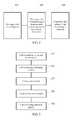
FIG. 1 is a flowchart diagram of a method of using a base station signal to quickly set call forwarding according to an embodiment of the present disclosure; -
FIG. 2 is a basic framework diagram of an application embodiment of the present disclosure; and -
FIG. 3 is a schematic block diagram of a mobile communication terminal according to an embodiment of the present disclosure. - Hereinbelow, the present disclosure will be further described with reference to the attached drawings and embodiments thereof.
- The present disclosure provides a method of using a base station signal to quickly set call forwarding and a mobile communication terminal. To make the objectives, technical solutions and advantages of the present disclosure clearer, the present disclosure will be further detailed hereinbelow with reference to the attached drawings and embodiments thereof. It shall be appreciated that, the embodiments described herein are only intended to illustrate but not to limit the present disclosure.
- As shown in
FIG. 1 , taking the case where call forwarding is set in a mobile phone as an example, a method of using a base station signal to quickly set call forwarding according to an embodiment of the present disclosure comprises the following steps of: - S110. carrying out setting of call forwarding in the mobile phone, and saving a base station information of a wireless network where the call forwarding is set, wherein the base station information comprises an active cell identification, an active cell signal strength, identifications of five neighbor cells and so on, and the base station information of the wireless network where the call forwarding is set is saved into a non-volatile random access memory (NVRAM);
- S120. reading a call forwarding target phone number that is set, sending a call forwarding request to the wireless network, and after a confirmation is obtained from the wireless network, activating a check timer to complete the setting of call forwarding;
-
S 130. activating the check timer according to a timing, checking a location of the call forwarding, and reading a base station information of a current wireless network; - S140. comparing the base station information of the current wireless network with the base station information of the wireless network where the call forwarding is set to determine a change in location; and
- The step S140 comprises the following steps of:
- S 141. comparing an active cell identification and identifications of five neighbor cells in the base station information of the current wireless network with the active cell identification and the identifications of the five neighbor cells in the base station information of the wireless network where the call forwarding is set respectively;
- S 142. if at least one pair of the identifications is found to be identical to each other, then it means that the location has not changed and is still located in an original call forwarding area; and
- S 143. if no pair of the identifications is found to be identical to each other, then it means that the location has changed and moved away from the original call forwarding area; and
- S150. if a change in location is determined, then canceling the setting of call forwarding automatically.
- Hereinbelow, the present disclosure will be further detailed with reference to an application embodiment. In this embodiment, a mobile phone is taken as an example. The basic framework of this embodiment is as shown in
FIG. 2 : S10. pressing a call forwarding key; S20. choosing a call forwarding target phone number, and saving current base station information (CELL_ID, RXLev); and S30. completing setting of call forwarding. - When the user chooses call forwarding, a specific call forwarding key can be pressed directly to set the call forwarding. The specific call forwarding key may be a key that is separately set for this function in the hardware, or a functional shortcut key that can be set.
- Symbols to be used in this application embodiment are respectively explained as follows. Active_CELL_ID represents the active cell identification; A_ID0 represents the corresponding value of Active_CELL_ID; Neighbor_CELL_ID0, Neighbor_CELL_ID1, Neighbor_CELL_ID2, Neighbor_CELL_ID3 and Neighbor_CELL_ID4 represent the identifications of five neighbor cells; and N_ID0, N_ID1, N_ID2, N_ID3 and N_ID4 represent the corresponding values of Neighbor_CELL_ID0, Neighbor_CELL_ID1, Neighbor_CELL_ID2, Neighbor_CELL_ID3 and Neighbor_CELL_ID4.
- Active_RXLev represents the active cell signal strength, and A_RXLev represents the corresponding value of Active_RXLev. Neighbor_RXLev0, Neighbor_RXLev1, Neighbor_RXLev2, Neighbor_RXLev3 and Neighbor_RXLev4 represent the corresponding signal strengths of the five neighbor cells; and N_RXLev0, N_RXLev1, N_RXLev2, N_RXLev3 and N_RXLev4 represent the corresponding values of Neighbor_RXLev0, Neighbor_RXLev1, Neighbor_RXLev2, Neighbor_RXLev3 and Neighbor_RXLev4.
- First step: during setting of call forwarding, a base station information of a wireless network where the call forwarding is set is recorded by the mobile phone. The base station information is, for example, the cell identifications (cell IDs) and the corresponding cell signal strengths, which include the active cell identification (A_ID), the active cell signal strength (A_RXLev), and IDs of neighbor cells (i.e., the corresponding value (N_ID0) of the first neighbor cell identification, the corresponding value (N_RXLev0) of the first neighbor cell signal strength, the corresponding value (N_ID1) of the second neighbor cell identification, the corresponding value (N_RXLev1) of the second neighbor cell signal strength, the corresponding value (N_ID2) of the third neighbor cell identification, the corresponding value (N_RXLev2) of the third neighbor cell signal strength, the corresponding value (N_ID3) of the fourth neighbor cell identification, and the corresponding value (N_RXLev3) of the fourth neighbor cell signal strength).
- Second step: the aforesaid values are stored into an NVRAM.
- Third step: after the setting is completed, the mobile phone reads a call forwarding target phone number from the NVRAM and sends a call forwarding request to the wireless network; and after a confirmation is obtained from the wireless network, the mobile phone activates a check timer to complete the setting of call forwarding.
- Fourth step: the check timer is activated according to a timing, and a call forwarding location check program is started in the mobile phone.
- Fifth step: the location check program is executed to read a base station information of a current wireless network of the mobile phone (i.e., an active cell identification (Active_CELL_ID), an active cell signal strength (Active_RXLev) and neighbor cell information). Neighbor_CELL_ID0, Neighbor_CELL_ID1, Neighbor_CELL_ID2, Neighbor_CELL_ID3 and Neighbor_CELL_ID4 represent identifications of five neighbor cells; and Neighbor_RXLev0, Neighbor_RXLev1, Neighbor_RXLev2, Neighbor_RXLev3 and Neighbor_RXLev4 represent corresponding signal strengths of the five neighbor cells.
- Sixth step: the base station information of the current wireless network is compared with the active cell identification (A_ID), the active cell signal strength (A_RXLev) and the IDs of the neighbor cells that are stored in the NVRAM during the setting of call forwarding. The corresponding values of the five neighbor cell identifications are N_ID0, N_ID1, N_ID2, N_ID3 and N_ID4 respectively, and the corresponding values of the five neighbor cell signal strengths are N_RXLev0, N_RXLev1, N_RXLev2, N_RXLev3 and N_RXLev4 respectively.
- If the current active cell identification (Active_CELL_ID) is one of A_ID, N_ID0, N_ID1 and N_ID2 or the neighbor cell identification (Neighbor_CELL_ID) is one of A_ID, N_ID0, N_ID1 and N_ID2, then it means that the mobile phone is still located in the original call forwarding area. Otherwise, it means that the mobile phone has moved away from the original call forwarding area, and then the call forwarding that is set is canceled automatically.
- In the present disclosure, the number of the neighbor cells of the current base station shall be determined according to the current wireless network, and may be 3, 4 or 5, and is usually 5.
- The check timer in the present disclosure is a software function. When the timer is set, a corresponding timer program will be activated and executed after a specified time interval has elapsed.
- On the basis of the aforesaid method of using a base station signal to quickly set call forwarding, an embodiment of the present disclosure further provides a mobile communication terminal. As shown in
FIG. 3 , the mobile communication terminal comprises: - a call forwarding setting and saving
module 210, being configured to carry out setting of call forwarding, and save a base station information of a wireless network where the call forwarding is set; - a call
forwarding confirming module 220, being configured to read a call forwarding target phone number that is set, send a call forwarding request to the wireless network, and after a confirmation is obtained from the wireless network, complete the setting of call forwarding; - a
check timer module 230, being configured to detect current location information of the mobile communication terminal; - a
location comparing module 240, being configured to compare the base station information of the current wireless network with the base station information of the wireless network where the call forwarding is set to determine a change in location of the mobile communication terminal; and - a call
forwarding canceling module 250, being configured to cancel the setting of call forwarding automatically if a change in location of the mobile communication terminal is determined. - The method of using a base station signal to quickly set call forwarding and the mobile communication terminal according to the present disclosure have the following benefits:
- 1. simple to use: the setting of call forwarding can be completed by the user through one special key; and
- 2. flexible to use (customizability): by means of the function of the mobile communication terminal that it can automatically detect the base station signal and by storing and comparing changes of the base station signal, the present disclosure can determine a change in location of a mobile phone so as to automatically cancel the setting of call forwarding in time when the mobile phone of the user has been away from the location where the call forwarding is set; and the mobile communication terminal can switch between a mobile network and a hand-free telephone network seamlessly.
- It shall be appreciated that, the application of the present disclosure is not limited to the aforesaid examples. Those of ordinary skill in the art may make modifications or alterations according to the above descriptions, and all of these modifications and alterations shall be covered within the scope of the appended claims of the present disclosure.
Claims (7)
- A method of using a base station signal to quickly set call forwarding, comprising the following steps of:A. carrying out setting of call forwarding, and saving a base station information of a wireless network where the call forwarding is set; andB. reading a call forwarding target phone number that is set, sending a call forwarding request to the wireless network, and after a confirmation is obtained from the wireless network, activating a check timer to complete the setting of call forwarding.
- The method of using a base station signal to quickly set call forwarding of claim 1, further comprising the following steps of:C. activating the check timer according to a timing, checking a location of the call forwarding, and reading a base station information of a current wireless network;D. comparing the base station information of the current wireless network with the base station information of the wireless network where the call forwarding is set to determine a change in location; andE. if a change in location is determined, then canceling the setting of call forwarding automatically.
- The method of using a base station signal to quickly set call forwarding of claim 1, wherein the step A further comprises: saving the base station information of the wireless network where the call forwarding is set into a non-volatile random access memory (NVRAM).
- The method of using a base station signal to quickly set call forwarding of claim 2, wherein the base station information comprises an active cell identification (Active_CELL_ID), an active cell signal strength (Active_RXLev) and a neighbor cell identification (Neighbor_CELL_ID).
- The method of using a base station signal to quickly set call forwarding of claim 4, wherein the step D comprises the following steps of:D1. comparing the active cell identification and the neighbor cell identification in the base station information of the current wireless network with the active cell identification and the neighbor cell identification in the base station information of the wireless network where the call forwarding is set respectively;D2. if at least one pair of the identifications is found to be identical to each other, then it means that the location has not changed and is still located in an original call forwarding area; andD3. if neither pair of the identifications is found to be identical to each other, then it means that the location has changed and moved away from the original call forwarding area.
- A mobile communication terminal, comprising:a call forwarding setting and saving module, being configured to carry out setting of call forwarding, and save a base station information of a wireless network where the call forwarding is set; anda call forwarding confirming module, being configured to read a call forwarding target phone number that is set, send a call forwarding request to the wireless network, and after a confirmation is obtained from the wireless network, complete the setting of call forwarding.
- The mobile communication terminal of claim 6, further comprising:a check timer module, being configured to detect current location information of the mobile communication terminal;a location comparing module, being configured to compare the base station information of the current wireless network with the base station information of the wireless network where the call forwarding is set to determine a change in location of the mobile communication terminal; anda call forwarding canceling module, being configured to cancel the setting of call forwarding automatically if a change in location of the mobile communication terminal is determined.
Applications Claiming Priority (2)
| Application Number | Priority Date | Filing Date | Title |
|---|---|---|---|
| CN2010102429583A CN102202276B (en) | 2010-07-30 | 2010-07-30 | Method for setting call transfer by using base station signal and mobile communication terminal |
| PCT/CN2011/072233 WO2012013047A1 (en) | 2010-07-30 | 2011-03-29 | Method for call transfer quick-setting by using base station signal and mobile communication terminal thereof |
Publications (2)
| Publication Number | Publication Date |
|---|---|
| EP2600640A1 true EP2600640A1 (en) | 2013-06-05 |
| EP2600640A4 EP2600640A4 (en) | 2017-01-25 |
Family
ID=44662598
Family Applications (1)
| Application Number | Title | Priority Date | Filing Date |
|---|---|---|---|
| EP11811749.8A Withdrawn EP2600640A4 (en) | 2010-07-30 | 2011-03-29 | Method for call transfer quick-setting by using base station signal and mobile communication terminal thereof |
Country Status (4)
| Country | Link |
|---|---|
| US (1) | US9167400B2 (en) |
| EP (1) | EP2600640A4 (en) |
| CN (1) | CN102202276B (en) |
| WO (1) | WO2012013047A1 (en) |
Family Cites Families (22)
| Publication number | Priority date | Publication date | Assignee | Title |
|---|---|---|---|---|
| US5548816A (en) * | 1993-11-16 | 1996-08-20 | Astronet | Method and system for locating mobile units in a cellular telephone system by use of virtual location areas |
| US5594782A (en) * | 1994-02-24 | 1997-01-14 | Gte Mobile Communications Service Corporation | Multiple mode personal wireless communications system |
| EP1257134A3 (en) * | 1994-02-24 | 2003-02-12 | Gte Mobile Communications Service Corporation | Cellular radiotelephone system with remotely programmed mobile stations |
| US5673308A (en) * | 1994-10-12 | 1997-09-30 | Bell Atlantic Network Services, Inc. | Personal phone number system |
| US5745850A (en) * | 1994-10-24 | 1998-04-28 | Lucent Technologies, Inc. | Apparatus and method for mobile (e.g. cellular or wireless) telephone call handover and impersonation |
| US5649286A (en) * | 1994-11-14 | 1997-07-15 | Bellsouth Corporation | Method for managing the registration of a wireless unit |
| US5675629A (en) * | 1995-09-08 | 1997-10-07 | At&T | Cordless cellular system base station |
| DE19732294A1 (en) * | 1997-07-26 | 1999-01-28 | Alsthom Cge Alcatel | Method for controlling the call line and communication terminal |
| US6359896B1 (en) * | 1998-02-27 | 2002-03-19 | Avaya Technology Corp. | Dynamic selection of interworking functions in a communication system |
| US6195545B1 (en) * | 1998-02-27 | 2001-02-27 | Avaya Technology Corp. | Proximity-based registration in a communication system |
| US6233448B1 (en) * | 1998-07-22 | 2001-05-15 | Ericsson Inc. | System, method and apparatus for automatic feature activation/deactivation based upon positioning |
| US6810259B1 (en) * | 1999-12-16 | 2004-10-26 | Utstarcom Inc. | Location update protocol |
| US7076255B2 (en) * | 2000-04-05 | 2006-07-11 | Microsoft Corporation | Context-aware and location-aware cellular phones and methods |
| ES2656351T3 (en) * | 2000-12-14 | 2018-02-26 | Counterpath Corporation | Method of re-selecting mobile phone between a cellular circuit switching network and a packet switching network |
| US7551920B1 (en) * | 2003-09-18 | 2009-06-23 | Sprint Spectrum L.P. | Signal strength-based call forwarding for wireless phones |
| JP2008507217A (en) * | 2004-07-16 | 2008-03-06 | ブリッジポート ネットワークス, インコーポレイテッド | Presence detection and handoff for cellular and Internet protocol telephony |
| WO2006027772A2 (en) * | 2004-09-07 | 2006-03-16 | Starhome Gmbh | Roaming presence and context management |
| CN101087335A (en) * | 2006-06-08 | 2007-12-12 | 胡乐乐 | A method for realizing automatic call transfer service |
| CN101087466A (en) * | 2006-06-08 | 2007-12-12 | 胡乐乐 | A method for realizing automatic call forward service |
| CN101115306B (en) * | 2007-06-19 | 2010-06-02 | 中兴通讯股份有限公司 | A method and system for realizing user privacy and security in the process of assisting global positioning |
| US8116257B2 (en) * | 2008-05-20 | 2012-02-14 | Telefonaktiebolaget L M Ericsson (Publ) | Method and system for calculating a local time for a user equipment in an intelligent network |
| CN101534472A (en) * | 2009-04-17 | 2009-09-16 | 惠州Tcl移动通信有限公司 | Method for automatically cancelling call forwarding |
-
2010
- 2010-07-30 CN CN2010102429583A patent/CN102202276B/en active Active
-
2011
- 2011-03-29 WO PCT/CN2011/072233 patent/WO2012013047A1/en not_active Ceased
- 2011-03-29 US US13/811,267 patent/US9167400B2/en active Active
- 2011-03-29 EP EP11811749.8A patent/EP2600640A4/en not_active Withdrawn
Also Published As
| Publication number | Publication date |
|---|---|
| CN102202276A (en) | 2011-09-28 |
| US9167400B2 (en) | 2015-10-20 |
| EP2600640A4 (en) | 2017-01-25 |
| WO2012013047A1 (en) | 2012-02-02 |
| CN102202276B (en) | 2013-05-15 |
| US20130122881A1 (en) | 2013-05-16 |
Similar Documents
| Publication | Publication Date | Title |
|---|---|---|
| CN106385675B (en) | Multi-card multi-standby single-pass mobile terminal paging indication receiving method and device | |
| US20090312068A1 (en) | System and method for setting and selecting a communication mode of a communication device | |
| CN102833699B (en) | Method, system and the mobile communication terminal of simulation bilateral function | |
| CN102104686A (en) | Mobile phone and mobile phone incoming call and call processing method | |
| JP3141005B2 (en) | Channel selection method | |
| CN102055842A (en) | Communication terminal and automatic answering method thereof | |
| US20110119510A1 (en) | Apparatus and method for reducing power consumption in portable terminal | |
| KR100605828B1 (en) | Communication connection method between a portable terminal equipped with a Bluetooth module and a Bluetooth access point | |
| CN104581667A (en) | Call forwarding method and device | |
| CN106537983A (en) | Smart power monitor scheduling to improve throughput performance in a msma phone | |
| CN105068651A (en) | Method, device, terminal and server for controlling alarm clock | |
| CN101958972B (en) | Mobile phone Bluetooth-based location recognition method and mobile phone | |
| CN102006359A (en) | Priority management system and method of phone communication mode | |
| CN104683585A (en) | A mobile terminal and its intelligent call transfer method | |
| CN103338313A (en) | Method and device for processing telephone numbers | |
| CN103037371A (en) | Method and system of mobile terminal communication management | |
| US20100144390A1 (en) | Dialing device for mobile phone and method for using the same | |
| CN101977424B (en) | Method for resolving network searching and service conflict and multi-card multi-standby mobile phone | |
| CN103079005A (en) | Method for talking between mobile terminal and mobile terminal | |
| JP2002078014A (en) | Mobile communication network subscriber information storage device and mobile communication terminal equipped with this storage device | |
| CN106788574B (en) | Data service handling method and device | |
| US9167400B2 (en) | Method of using base station signal to quickly set call forwarding and mobile communication terminal | |
| JP2004094577A (en) | Information terminal equipment | |
| US20070201683A1 (en) | Telephone apparatus | |
| CN106899733B (en) | Intelligent terminal and system address book phone number processing method and device |
Legal Events
| Date | Code | Title | Description |
|---|---|---|---|
| PUAI | Public reference made under article 153(3) epc to a published international application that has entered the european phase |
Free format text: ORIGINAL CODE: 0009012 |
|
| 17P | Request for examination filed |
Effective date: 20121221 |
|
| AK | Designated contracting states |
Kind code of ref document: A1 Designated state(s): AL AT BE BG CH CY CZ DE DK EE ES FI FR GB GR HR HU IE IS IT LI LT LU LV MC MK MT NL NO PL PT RO RS SE SI SK SM TR |
|
| DAX | Request for extension of the european patent (deleted) | ||
| RA4 | Supplementary search report drawn up and despatched (corrected) |
Effective date: 20170104 |
|
| RIC1 | Information provided on ipc code assigned before grant |
Ipc: H04W 4/02 20090101AFI20161222BHEP Ipc: H04M 3/54 20060101ALI20161222BHEP Ipc: H04W 4/16 20090101ALI20161222BHEP |
|
| STAA | Information on the status of an ep patent application or granted ep patent |
Free format text: STATUS: THE APPLICATION IS DEEMED TO BE WITHDRAWN |
|
| 18D | Application deemed to be withdrawn |
Effective date: 20170801 |