EP2600480A2 - Power generation apparatus - Google Patents
Power generation apparatus Download PDFInfo
- Publication number
- EP2600480A2 EP2600480A2 EP12007381.2A EP12007381A EP2600480A2 EP 2600480 A2 EP2600480 A2 EP 2600480A2 EP 12007381 A EP12007381 A EP 12007381A EP 2600480 A2 EP2600480 A2 EP 2600480A2
- Authority
- EP
- European Patent Office
- Prior art keywords
- power generation
- information
- voltage
- power
- generation apparatus
- Prior art date
- Legal status (The legal status is an assumption and is not a legal conclusion. Google has not performed a legal analysis and makes no representation as to the accuracy of the status listed.)
- Granted
Links
Images



Classifications
-
- H—ELECTRICITY
- H02—GENERATION; CONVERSION OR DISTRIBUTION OF ELECTRIC POWER
- H02S—GENERATION OF ELECTRIC POWER BY CONVERSION OF INFRARED RADIATION, VISIBLE LIGHT OR ULTRAVIOLET LIGHT, e.g. USING PHOTOVOLTAIC [PV] MODULES
- H02S50/00—Monitoring or testing of PV systems, e.g. load balancing or fault identification
-
- G—PHYSICS
- G01—MEASURING; TESTING
- G01R—MEASURING ELECTRIC VARIABLES; MEASURING MAGNETIC VARIABLES
- G01R21/00—Arrangements for measuring electric power or power factor
-
- G—PHYSICS
- G01—MEASURING; TESTING
- G01R—MEASURING ELECTRIC VARIABLES; MEASURING MAGNETIC VARIABLES
- G01R31/00—Arrangements for testing electric properties; Arrangements for locating electric faults; Arrangements for electrical testing characterised by what is being tested not provided for elsewhere
- G01R31/40—Testing power supplies
-
- G—PHYSICS
- G06—COMPUTING OR CALCULATING; COUNTING
- G06F—ELECTRIC DIGITAL DATA PROCESSING
- G06F17/00—Digital computing or data processing equipment or methods, specially adapted for specific functions
-
- H—ELECTRICITY
- H02—GENERATION; CONVERSION OR DISTRIBUTION OF ELECTRIC POWER
- H02J—ELECTRIC POWER NETWORKS; CIRCUIT ARRANGEMENTS OR SYSTEMS FOR SUPPLYING OR DISTRIBUTING ELECTRIC POWER; SYSTEMS FOR STORING ELECTRIC ENERGY
- H02J13/00—Circuit arrangements for providing remote monitoring or remote control of equipment in a power distribution network
- H02J13/12—Monitoring network conditions, e.g. electrical magnitudes or operational status
-
- H—ELECTRICITY
- H02—GENERATION; CONVERSION OR DISTRIBUTION OF ELECTRIC POWER
- H02J—ELECTRIC POWER NETWORKS; CIRCUIT ARRANGEMENTS OR SYSTEMS FOR SUPPLYING OR DISTRIBUTING ELECTRIC POWER; SYSTEMS FOR STORING ELECTRIC ENERGY
- H02J13/00—Circuit arrangements for providing remote monitoring or remote control of equipment in a power distribution network
- H02J13/13—Circuit arrangements for providing remote monitoring or remote control of equipment in a power distribution network characterised by the transmission of data to equipment in the power network
- H02J13/1331—Circuit arrangements for providing remote monitoring or remote control of equipment in a power distribution network characterised by the transmission of data to equipment in the power network using wireless data transmission
-
- H—ELECTRICITY
- H02—GENERATION; CONVERSION OR DISTRIBUTION OF ELECTRIC POWER
- H02J—ELECTRIC POWER NETWORKS; CIRCUIT ARRANGEMENTS OR SYSTEMS FOR SUPPLYING OR DISTRIBUTING ELECTRIC POWER; SYSTEMS FOR STORING ELECTRIC ENERGY
- H02J7/00—Circuit arrangements for charging or discharging batteries or for supplying loads from batteries
- H02J7/34—Parallel operation in networks using both storage and other DC sources, e.g. providing buffering
- H02J7/35—Parallel operation in networks using both storage and other DC sources, e.g. providing buffering with light sensitive cells
-
- H—ELECTRICITY
- H02—GENERATION; CONVERSION OR DISTRIBUTION OF ELECTRIC POWER
- H02S—GENERATION OF ELECTRIC POWER BY CONVERSION OF INFRARED RADIATION, VISIBLE LIGHT OR ULTRAVIOLET LIGHT, e.g. USING PHOTOVOLTAIC [PV] MODULES
- H02S50/00—Monitoring or testing of PV systems, e.g. load balancing or fault identification
- H02S50/10—Testing of PV devices, e.g. of PV modules or single PV cells
-
- Y—GENERAL TAGGING OF NEW TECHNOLOGICAL DEVELOPMENTS; GENERAL TAGGING OF CROSS-SECTIONAL TECHNOLOGIES SPANNING OVER SEVERAL SECTIONS OF THE IPC; TECHNICAL SUBJECTS COVERED BY FORMER USPC CROSS-REFERENCE ART COLLECTIONS [XRACs] AND DIGESTS
- Y02—TECHNOLOGIES OR APPLICATIONS FOR MITIGATION OR ADAPTATION AGAINST CLIMATE CHANGE
- Y02B—CLIMATE CHANGE MITIGATION TECHNOLOGIES RELATED TO BUILDINGS, e.g. HOUSING, HOUSE APPLIANCES OR RELATED END-USER APPLICATIONS
- Y02B10/00—Integration of renewable energy sources in buildings
- Y02B10/10—Photovoltaic [PV]
-
- Y—GENERAL TAGGING OF NEW TECHNOLOGICAL DEVELOPMENTS; GENERAL TAGGING OF CROSS-SECTIONAL TECHNOLOGIES SPANNING OVER SEVERAL SECTIONS OF THE IPC; TECHNICAL SUBJECTS COVERED BY FORMER USPC CROSS-REFERENCE ART COLLECTIONS [XRACs] AND DIGESTS
- Y02—TECHNOLOGIES OR APPLICATIONS FOR MITIGATION OR ADAPTATION AGAINST CLIMATE CHANGE
- Y02B—CLIMATE CHANGE MITIGATION TECHNOLOGIES RELATED TO BUILDINGS, e.g. HOUSING, HOUSE APPLIANCES OR RELATED END-USER APPLICATIONS
- Y02B90/00—Enabling technologies or technologies with a potential or indirect contribution to GHG emissions mitigation
- Y02B90/20—Smart grids as enabling technology in buildings sector
-
- Y—GENERAL TAGGING OF NEW TECHNOLOGICAL DEVELOPMENTS; GENERAL TAGGING OF CROSS-SECTIONAL TECHNOLOGIES SPANNING OVER SEVERAL SECTIONS OF THE IPC; TECHNICAL SUBJECTS COVERED BY FORMER USPC CROSS-REFERENCE ART COLLECTIONS [XRACs] AND DIGESTS
- Y02—TECHNOLOGIES OR APPLICATIONS FOR MITIGATION OR ADAPTATION AGAINST CLIMATE CHANGE
- Y02E—REDUCTION OF GREENHOUSE GAS [GHG] EMISSIONS, RELATED TO ENERGY GENERATION, TRANSMISSION OR DISTRIBUTION
- Y02E10/00—Energy generation through renewable energy sources
- Y02E10/50—Photovoltaic [PV] energy
-
- Y—GENERAL TAGGING OF NEW TECHNOLOGICAL DEVELOPMENTS; GENERAL TAGGING OF CROSS-SECTIONAL TECHNOLOGIES SPANNING OVER SEVERAL SECTIONS OF THE IPC; TECHNICAL SUBJECTS COVERED BY FORMER USPC CROSS-REFERENCE ART COLLECTIONS [XRACs] AND DIGESTS
- Y02—TECHNOLOGIES OR APPLICATIONS FOR MITIGATION OR ADAPTATION AGAINST CLIMATE CHANGE
- Y02E—REDUCTION OF GREENHOUSE GAS [GHG] EMISSIONS, RELATED TO ENERGY GENERATION, TRANSMISSION OR DISTRIBUTION
- Y02E40/00—Technologies for an efficient electrical power generation, transmission or distribution
- Y02E40/70—Smart grids as climate change mitigation technology in the energy generation sector
-
- Y—GENERAL TAGGING OF NEW TECHNOLOGICAL DEVELOPMENTS; GENERAL TAGGING OF CROSS-SECTIONAL TECHNOLOGIES SPANNING OVER SEVERAL SECTIONS OF THE IPC; TECHNICAL SUBJECTS COVERED BY FORMER USPC CROSS-REFERENCE ART COLLECTIONS [XRACs] AND DIGESTS
- Y02—TECHNOLOGIES OR APPLICATIONS FOR MITIGATION OR ADAPTATION AGAINST CLIMATE CHANGE
- Y02E—REDUCTION OF GREENHOUSE GAS [GHG] EMISSIONS, RELATED TO ENERGY GENERATION, TRANSMISSION OR DISTRIBUTION
- Y02E60/00—Enabling technologies; Technologies with a potential or indirect contribution to GHG emissions mitigation
-
- Y—GENERAL TAGGING OF NEW TECHNOLOGICAL DEVELOPMENTS; GENERAL TAGGING OF CROSS-SECTIONAL TECHNOLOGIES SPANNING OVER SEVERAL SECTIONS OF THE IPC; TECHNICAL SUBJECTS COVERED BY FORMER USPC CROSS-REFERENCE ART COLLECTIONS [XRACs] AND DIGESTS
- Y04—INFORMATION OR COMMUNICATION TECHNOLOGIES HAVING AN IMPACT ON OTHER TECHNOLOGY AREAS
- Y04S—SYSTEMS INTEGRATING TECHNOLOGIES RELATED TO POWER NETWORK OPERATION, COMMUNICATION OR INFORMATION TECHNOLOGIES FOR IMPROVING THE ELECTRICAL POWER GENERATION, TRANSMISSION, DISTRIBUTION, MANAGEMENT OR USAGE, i.e. SMART GRIDS
- Y04S10/00—Systems supporting electrical power generation, transmission or distribution
- Y04S10/12—Monitoring or controlling equipment for energy generation units, e.g. distributed energy generation [DER] or load-side generation
- Y04S10/123—Monitoring or controlling equipment for energy generation units, e.g. distributed energy generation [DER] or load-side generation the energy generation units being or involving renewable energy sources
-
- Y—GENERAL TAGGING OF NEW TECHNOLOGICAL DEVELOPMENTS; GENERAL TAGGING OF CROSS-SECTIONAL TECHNOLOGIES SPANNING OVER SEVERAL SECTIONS OF THE IPC; TECHNICAL SUBJECTS COVERED BY FORMER USPC CROSS-REFERENCE ART COLLECTIONS [XRACs] AND DIGESTS
- Y04—INFORMATION OR COMMUNICATION TECHNOLOGIES HAVING AN IMPACT ON OTHER TECHNOLOGY AREAS
- Y04S—SYSTEMS INTEGRATING TECHNOLOGIES RELATED TO POWER NETWORK OPERATION, COMMUNICATION OR INFORMATION TECHNOLOGIES FOR IMPROVING THE ELECTRICAL POWER GENERATION, TRANSMISSION, DISTRIBUTION, MANAGEMENT OR USAGE, i.e. SMART GRIDS
- Y04S10/00—Systems supporting electrical power generation, transmission or distribution
- Y04S10/30—State monitoring, e.g. fault, temperature monitoring, insulator monitoring, corona discharge
-
- Y—GENERAL TAGGING OF NEW TECHNOLOGICAL DEVELOPMENTS; GENERAL TAGGING OF CROSS-SECTIONAL TECHNOLOGIES SPANNING OVER SEVERAL SECTIONS OF THE IPC; TECHNICAL SUBJECTS COVERED BY FORMER USPC CROSS-REFERENCE ART COLLECTIONS [XRACs] AND DIGESTS
- Y04—INFORMATION OR COMMUNICATION TECHNOLOGIES HAVING AN IMPACT ON OTHER TECHNOLOGY AREAS
- Y04S—SYSTEMS INTEGRATING TECHNOLOGIES RELATED TO POWER NETWORK OPERATION, COMMUNICATION OR INFORMATION TECHNOLOGIES FOR IMPROVING THE ELECTRICAL POWER GENERATION, TRANSMISSION, DISTRIBUTION, MANAGEMENT OR USAGE, i.e. SMART GRIDS
- Y04S40/00—Systems for electrical power generation, transmission, distribution or end-user application management characterised by the use of communication or information technologies, or communication or information technology specific aspects supporting them
- Y04S40/12—Systems for electrical power generation, transmission, distribution or end-user application management characterised by the use of communication or information technologies, or communication or information technology specific aspects supporting them characterised by data transport means between the monitoring, controlling or managing units and monitored, controlled or operated electrical equipment
- Y04S40/126—Systems for electrical power generation, transmission, distribution or end-user application management characterised by the use of communication or information technologies, or communication or information technology specific aspects supporting them characterised by data transport means between the monitoring, controlling or managing units and monitored, controlled or operated electrical equipment using wireless data transmission
Definitions
- the present disclosure relates to a power generation apparatus using a power generation module such as a solar cell module.
- a solar cell module used for solar power generation on the roof of a house are becoming increasing popular.
- a solar cell module includes several tens of connected solar cells. More specifically, a solar cell module is obtained by connecting solar cells via internal wiring lines, disposing the solar cells on a tempered glass sheet so that the light-receiving surfaces of the solar cells face the tempered glass, and covering the opposite surfaces of the solar cells with a resin.
- a voltage output from a single or a plurality of solar cell modules is supplied to a power conditioner, and ac power is extracted from the power conditioner and is then transmitted to a power system.
- An apparatus having the above-described structure is called a solar power generation apparatus.
- the current output power of a solar power generation apparatus in operation can be displayed to be notified to a home user. Furthermore, by monitoring the power generation state of a power generation apparatus, the abnormal state of the power generation apparatus can be detected.
- Japanese Unexamined Patent Application Publication No. 2010-287608 discloses a method of detecting degradation in a solar cell module by measuring the output current and temperature of the solar cell module and comparing a power generation current value with an ideal current value based on the measured temperature.
- Japanese Unexamined Patent Application Publication No. 9-102622 discloses a technique for determining that the failure of a solar cell has occurred when the energized state of a current relay, which uses a bypass diode as a power source and is connected in series to the bypass diode, has continued for a predetermined period.
- a current relay is also disposed on a current path. Accordingly, the rate of component failure caused from the increase in a power loss, a current, and generated heat becomes high. Furthermore, only information about whether a solar cell module can perform power generation is obtained and is not used for power management.
- a power generation apparatus includes a power calculation unit configured to receive voltage information and temperature information from a power generation module, and calculate power generation information of the power generation module based on the received voltage information and temperature information.
- a method of determining an operating state of a power generation apparatus includes receiving voltage information and temperature information from a power generation module, and calculating power generation information of the power generation module based on the received voltage information and temperature information, and determining the operating state of the power generation module based on the power generation information.
- a power generation current is not detected. Accordingly, the rate of component failure caused from the increase in a power loss, a current, and generated heat can be prevented from being increased.
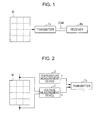
- a solar cell module M and a transmitter Tx are connected. Pieces of information about the voltage and temperature of the solar cell module M are supplied to the transmitter Tx, and are then transmitted to a receiver Rx via a communication path COM.
- the receiver Rx uses the received temperature information and the received voltage information to calculate power on the basis of a model (for example an equivalent circuit) of a solar cell or a solar cell module.
- the receiver Rx includes a display unit and can display the calculated amount of power on the display unit.
- the receiver Rx further includes a determination unit for determining the state of the power generation module M on the basis of the amount of power, and can determine the deterioration and failure of the power generation module M with the determination unit.
- the communication path COM may be a wired or wireless connection.
- Examples of a communication method include a method using a communication interface such as a Universal Asynchronous Receiver-Transceiver (UART), a wireless communication method compliant with Bluetooth, ZigBee, Wi-Fi, or ANT+, and a wired communication method that uses a power transmission path for a solar cell module or another cable compliant with, for example, Ethernet (registered trademark).
- UART Universal Asynchronous Receiver-Transceiver
- a wireless communication method compliant with Bluetooth ZigBee, Wi-Fi, or ANT+
- a wired communication method that uses a power transmission path for a solar cell module or another cable compliant with, for example, Ethernet (registered trademark).
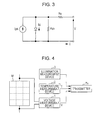
- a voltage measurement device 1 for measuring an output voltage V (power generation voltage) of the solar cell module M and a temperature measurement device 2 for measuring a temperature T of the solar cell module M are provided on a transmission side.
- the measured voltage V and the measured temperature T are transmitted from the transmitter Tx in a wireless or wired communication manner.
- the measurement of a current is not performed. Accordingly, a power loss caused by a current detection resistor is not generated.
- power generated by a solar cell module is calculated with the measured voltage V and the measured temperature T of the solar cell module.
- a model for example an equivalent circuit
- a method of calculating generated power will be described below.
- a solar cell module is modeled in advance.
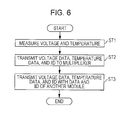
- Fig. 3 is a diagram illustrating an example in which a solar cell module is modeled in the form of an equivalent circuit.
- a current source, a diode, and a resistor are connected in parallel, and another resistor is connected in series to the parallel connection.
- the current source corresponds to an electromotive force
- Iph represents a current source component.
- the sum total of resistances of a substrate, a light-receiving layer, and an electrode portion of a solar cell module is represented by a series resistance component Rs.
- the loss resistance of the solar cell module is represented by a parallel resistance component Rsh.
- the current source component Iph, the series resistance component Rs, the parallel resistance component Rsh, and the characteristic of the diode are calculated in advance.
- the characteristic of the diode can be modeled with a Shockley diode equation (equation (1)).
- Io represents a reverse saturation current (A)
- n represents an ideal diode factor
- q represents an elementary charge (1.60217733x10 ⁇ (-19)(C))
- k represents a Boltzmann constant (1.3806504x10 ⁇ (-23)(JK-1))
- T represents a temperature (K).
- I I ph - I d - V - R s ⁇ I R sh
- the unknown variables Io, n, Rs, and Rsh are constant regardless of environment. Accordingly, by preparing pieces of actual measurement data of the set of I, V, and T, the number of which is equal to or larger than that of unknowns, and solving simultaneous equations, these unknown variables can be determined.
- Iph is a variable dependent on an illumination level. For example, it is assumed that the variable Iph is linearly proportional to an illumination level. Simultaneous equations can be solved by preparing pieces of actual measurement data of the set of I, V, T, and an illumination level, the number of which is equal to or larger than that of unknowns.
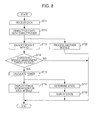
- an illumination measurement device 3 is disposed, and a short circuit current obtained when the terminals of a solar cell module become shorted or an open circuit voltage obtained when the terminals of the solar cell module are opened, which is a parameter substantially proportional to an illumination level, is measured.
- a device for measuring an illumination level has to be disposed.
- MPP Maximum Power Point
- a maximum operating point voltage Vpm of a solar cell is substantially linearly proportional to an open voltage Voc in an environment in which an illumination level is relatively high.
- Vpm is approximately 80% of Voc.
- Iph is determined as follows.
- I ph I o exp q ⁇ V pm cnkT - 1 + V pm c ⁇ R sh
- equation (6) used to derive Ipm from Vpm and T can be obtained.
- I o exp q ⁇ V pm cnkT - exp q ⁇ V pm + R s ⁇ I pm nkT + V pm cR sh - V pm + R s ⁇ I pm R sh - I pm 0
- variables other than Ipm can be calculated in advance as described previously or can be determined with data from a transmitter. Accordingly, Ipm, which is only one unknown variable in equation (6), can be calculated with, for example, a Newton method. Alternatively, Ipm can be calculated by performing a Taylor expansion on an exponent and then solving a polynomial expression.
- FIG. 5 An example of a configuration on a transmission side will be described with reference to Fig. 5 .
- Two solar cell modules M1 and M2 are connected in series.
- a voltage output from the series connection of the solar cell modules M1 and M2 is supplied to a power conditioner PW.
- the power conditioner PW is used to convert a generated dc voltage into an ac voltage and supply generated power to a commercial power supply system.
- the power conditioner PW has the MPP function (the maximum operating point control function) in which control processing is performed to obtain the maximum operating point at which power becomes the maximum in a current-voltage characteristic of a solar cell.
- Voltage and temperature measurement units 10 1 and 10 2 are connected to the solar cell module M1 and M2, respectively. Since the voltage and temperature measurement units 10 1 and 10 2 have the same configuration, only the detailed configuration of the voltage and temperature measurement unit 10 1 is illustrated in Fig. 5 .
- a voltage output from the solar cell module M1 is supplied to a regulator 11, and is divided by resistors 12 and 13.
- the regulator 11 stabilizes the output of the solar cell module M1 and outputs a dc voltage +Vcc1. In a case where the output voltage of the solar cell module M1 is higher than the rated voltage of the regulator 11, the output voltage of the solar cell module M1 is divided and is then supplied to the regulator 11.
- a voltage at a point of connection between the resistors 12 and 13 is input into an overvoltage protection circuit (OVP in Fig. 5 ) 14.
- the overvoltage protection circuit 14 performs control processing so as to prevent the voltage at the point of connection between the resistors 12 and 13 from being equal to or higher than the input rated voltage of an A/D converter (ADC in Fig. 5 ) 15 at the subsequent stage.
- Voltage data V1 is obtained from the A/D converter 15.
- the output voltage of the regulator 11 is supplied to the series connection of a resistor 16 and a thermistor 17.
- the thermistor 17 is, for example, a negative temperature coefficient thermistor, and has a resistance value corresponding to the temperature of the solar cell module M1.
- a temperature detection element is preferably disposed so that it can measure the surface temperature of a solar cell module. An element other than a thermistor may be used as a temperature detection element.
- a plurality of temperature detection elements may be disposed for the solar cell module M1 at different positions, and more accurate temperature detection may be performed with the outputs of these temperature detection elements.
- a voltage at the point of connection between the resistor 16 and the thermistor 17 is supplied to an A/D converter 18.
- Temperature data T1 is obtained from the A/D converter 18.
- the regulator 11 also functions as a power source for the A/D converters 15 and 18, and the output voltage +Vcc1 of the regulator 11 is supplied to the A/D converters 15 and 18.
- An identifier (ID) storage unit 19 is disposed, and an ID ID1 of the solar cell module M1 is output from the ID storage unit 19.
- the voltage data V1, the temperature data T1, and the ID ID1 of the solar cell module M1 are supplied to a multiplexer 20.
- the voltage and temperature measurement unit 10 2 for the solar cell module M2 outputs voltage data V2, temperature data T2, an ID ID2, and a voltage +Vcc2. These pieces of data are supplied to the multiplexer 20.
- a power supply voltage +Vcc for the multiplexer 20 and the transmitter Tx is obtained from one of the voltages +Vcc1 and +Vcc2.
- the multiplexer 20 multiplexes (for example time-division multiplexes) pieces of data pertaining to the solar cell modules M1 and M2 and supplies the multiplexed data to the transmitter Tx.
- the transmitter Tx is a radio transmitter, and includes an antenna. The measurement of a voltage and a temperature is performed at predetermined intervals.
- a multiplexer Since a multiplexer is disposed, pieces of data pertaining to a plurality of solar cell modules are transmitted from a single transmitter. However, a transmitter may be disposed for each solar cell module. In a case where there is a long distance between solar cell modules, it is better to dispose a transmitter for each solar cell module for the sake of simple wiring.
- control unit for controlling the transmission side including a power generator is disposed.
- the control unit is, for example, a microcomputer, and controls each unit on the transmission side by executing a program.
- a process illustrated in Fig. 6 is performed for the transmission side, for example, the solar cell module M1 under the control of the control unit.
- the voltage and temperature measurement unit 10 1 measures the voltage and temperature of the solar cell module M1.
- step ST2 voltage data and temperature data which are results of the measurement are supplied to the multiplexer 20 along with the ID ID1.
- these pieces of data and the ID ID1 are multiplexed with the voltage data, temperature data, and ID2 of another module (the solar cell module M2) and are transmitted from the transmitter Tx.
- the pieces of data of the measured voltage and temperature are transmitted to the receiver Rx along with an ID.
- the receiver Rx receives a signal from the transmitter Tx, performs receiving processing upon the received signal, and supplies the processed data to a demultiplexer 30.
- the demultiplexer 30 demultiplexes the multiplexed data and outputs IDs and pieces of measurement data.
- the ID ID1 output from the demultiplexer 30 is supplied to an authentication unit 32 in a power calculation and state determination section 31 1 .
- the authentication unit 32 compares the received ID with the ID ID1 registered in advance and performs authentication on the basis of a result of the comparison. At that time, a more complex authentication method such as mutual authentication may be performed.
- the voltage data V1 and the temperature data T1 are supplied from the demultiplexer 30 to a power calculation unit 33.
- the power calculation unit 33 calculates the current Iph generated by the solar cell module M1 with equations (1) to (6) acquired from the above-described equivalent circuit model of the solar cell module, and obtains power information P1 about power generated by the solar cell module M1 with the calculated current and the voltage data.
- the power information P1 obtained by the power calculation unit 33 is supplied to a state determination unit 34.
- the state determination unit 34 determines whether the solar cell module M1 is in a good state on the basis of the power information P1.
- the state determination unit 34 determines the failure and deterioration of the power generation module M1, and outputs a determination signal St1 (for example several bits of digital data).
- the state determination unit 34 may use one of or the combination of the following methods.
- the power information P1 and the determination signal St1 output from the power calculation and state determination section 31 1 are supplied to the display unit 40.
- the display unit 40 includes a display element such as a Liquid Crystal Display (LCD) and a display control unit.
- LCD Liquid Crystal Display
- the ID ID2, the voltage data V2, and the temperature data T2 output from the demultiplexer 30 are supplied to a power calculation and state determination section 31 2 .
- the power calculation and state determination section 31 2 has a configuration similar to that of the power calculation and state determination section 31 1 , and outputs power information P2 and a determination signal St2.
- the power information P2 and the determination signal St2 are supplied to the display unit 40.
- the display unit 40 displays power generated by each solar cell module and an information determination result of each solar cell module.
- the display unit 40 may further display total power generated by all solar cell modules.
- a user can know the current power generation state of each solar cell module by seeing the display unit 40.
- the amount of power and the state do not necessarily have to be displayed, and may be used for processing other than display processing and control processing. For example, with output power information, automatic tracking control may be performed so that the panel of each solar cell module points at the sun.
- a control unit for controlling the receiving side is disposed.
- the control unit is, for example, a microcomputer, and controls each unit on the receiving side by executing a program.
- the function of each power calculation and state determination section can be performed by software processing by a Micro Processing Unit (MPU) or a Digital Signal Processor (DSP).
- MPU Micro Processing Unit
- DSP Digital Signal Processor
- a process illustrated in Fig. 8 is performed on the receiving side under the control of the control unit.
- the receiver Rx receives data and outputs the received data to the demultiplexer 30.
- the demultiplexer 30 demultiplexes the data.
- a solar cell module is identified with the ID ID1 demultiplexed from the data.
- step ST16 the display unit 40 displays power information for each solar cell module.
- step ST17 the above-described state determination is performed with power information acquired from the calculation. For example, in a case where there is little generated power, it is determined that the solar cell module has failed. In a case where generated power is equal to or smaller than a predetermined value, the generated power is converted into the degree of deterioration and the degree of deterioration is displayed. The process ends.
- a process (represented by step ST20 in Fig. 8 ) similar to the process from steps ST13 to ST18 is performed on another solar cell module (for example the solar cell module M2).
- another solar cell module for example the solar cell module M2.
- Fig. 9 is a diagram illustrating a configuration on a transmission side according to the second embodiment of the present disclosure. Referring to Fig. 9 , the same reference numerals are used to identify parts already described with reference to Fig. 5 .
- a power calculation unit is disposed for each solar cell module on the transmission side.
- a power calculation unit 25 1 is disposed for the solar cell module M1 on the transmission side, and obtains the power information P1 of the solar cell module M1 by calculation like in the first embodiment.
- the power information P1 output from the power calculation unit 25 1 and the ID ID1 are supplied to the multiplexer 20.
- a power calculation unit 25 2 is disposed for the solar cell module M2.
- the power information P2 output from the power calculation unit 25 2 and the ID ID2 are supplied to the multiplexer 20.
- the multiplexer 20 multiplexes the pieces of power information P1 and P2 and the IDs ID1 and ID2, and supplies the multiplexed data to the transmitter Tx.
- the transmitter Tx transmits the multiplexed data.
- a receiving side can receive power information itself, and therefore include no power calculation unit. Other than this point, the receiving side has the same configuration as that illustrated in Fig. 7 .
- a power calculation unit is disposed on a receiving side.
- a power calculation unit is disposed on a transmission side.
- a power calculation unit is disposed at a position outside a receiving side and a transmission side.
- Fig. 10 is a diagram illustrating a schematic configuration according to the third embodiment.
- the voltage and temperature of a solar cell module M are measured by the voltage measurement device 1 and the temperature measurement device 2, respectively.
- the transmitter Tx transmits these pieces of data.
- a transceiver TRx1 transmits received data to a transceiver TRx2 disposed at another place (for example a server or a cloud computer).
- the transceiver TRx2 supplies received voltage data and received temperature data to a power calculation unit 26.
- the power calculation unit 26 obtains power information P of the solar cell module M by calculation like in the first embodiment.
- the obtained power information P is supplied to the transceiver TRx2 and is transmitted from the transceiver TRx2.
- the transceiver TRx1 receives the power information P from the transceiver TRx2, and displays the received power information P on the display unit 40.
- the power information P is also supplied to a state determination unit 34.
- the failure and deterioration of the solar cell module M are determined, and a result of the determination is supplied to the display unit 40.
- the following effects are obtained. Since power management can be performed for each solar cell module, the occurrence of a failure and a shadow and the amount of generated power in each of the cardinal points can be easily determined. Since the characteristic of each solar cell module, which causes a failure, can be determined, a solar power generation system can be easily subjected to maintenance. A small and low-cost apparatus including a small number of components can be attached to each solar cell module. Since no component is disposed on a power transmission path of each solar cell module, an apparatus seldom produces trouble.
- An embodiment of the present disclosure can be configured as follows.
- Another embodiment of the present disclosure can be configured as follows.
- Another embodiment of the present disclosure can be configured as follows.
- Embodiments of the present disclosure have been described in detail. However, the present disclosure is not limited to the embodiments. For example, in the above-described embodiments, the present disclosure is applied to a solar cell module. However, the present disclosure may be applied to a power generation element other than a solar cell module.
Landscapes
- Engineering & Computer Science (AREA)
- Power Engineering (AREA)
- Physics & Mathematics (AREA)
- General Physics & Mathematics (AREA)
- Theoretical Computer Science (AREA)
- Databases & Information Systems (AREA)
- Mathematical Physics (AREA)
- Software Systems (AREA)
- General Engineering & Computer Science (AREA)
- Data Mining & Analysis (AREA)
- Photovoltaic Devices (AREA)
- Testing Of Individual Semiconductor Devices (AREA)
- Control Of Eletrric Generators (AREA)
- Charge And Discharge Circuits For Batteries Or The Like (AREA)
Abstract
Description
- The present disclosure relates to a power generation apparatus using a power generation module such as a solar cell module.
- New energy systems such as a solar cell and a wind power generator using renewable energy have been recently used. For example, home power generator sets each including a solar cell module used for solar power generation on the roof of a house are becoming increasing popular. Such a solar cell module includes several tens of connected solar cells. More specifically, a solar cell module is obtained by connecting solar cells via internal wiring lines, disposing the solar cells on a tempered glass sheet so that the light-receiving surfaces of the solar cells face the tempered glass, and covering the opposite surfaces of the solar cells with a resin. A voltage output from a single or a plurality of solar cell modules is supplied to a power conditioner, and ac power is extracted from the power conditioner and is then transmitted to a power system. An apparatus having the above-described structure is called a solar power generation apparatus.
- The current output power of a solar power generation apparatus in operation can be displayed to be notified to a home user. Furthermore, by monitoring the power generation state of a power generation apparatus, the abnormal state of the power generation apparatus can be detected.
- For example, Japanese Unexamined Patent Application Publication No.
2010-287608 9-102622 - In the method disclosed in Japanese Unexamined Patent Application Publication No.
2010-287608 - In the technique disclosed in Japanese Unexamined Patent Application Publication No.
9-102622 - It is desirable to provide a power generation apparatus capable of solving these problems.
- In an embodiment, a power generation apparatus includes a power calculation unit configured to receive voltage information and temperature information from a power generation module, and calculate power generation information of the power generation module based on the received voltage information and temperature information. In another embodiment, a method of determining an operating state of a power generation apparatus includes receiving voltage information and temperature information from a power generation module, and calculating power generation information of the power generation module based on the received voltage information and temperature information, and determining the operating state of the power generation module based on the power generation information.
- According to an embodiment of the present disclosure, a power generation current is not detected. Accordingly, the rate of component failure caused from the increase in a power loss, a current, and generated heat can be prevented from being increased.
-
-
Fig. 1 is a schematic block diagram of a power generation apparatus according to an embodiment of the present disclosure; -
Fig. 2 is a schematic block diagram of a power generation apparatus according to a first embodiment of the present disclosure; -
Fig. 3 is a connection diagram of an exemplary equivalent circuit of a solar cell; -
Fig. 4 is a schematic block diagram of a modification of a power generation apparatus according to an embodiment of the present disclosure; -
Fig. 5 is a block diagram illustrating a configuration on a transmission side of a power generation apparatus according to the first embodiment; -
Fig. 6 is a flowchart describing a process performed on a transmission side according to the first embodiment; -
Fig. 7 is a block diagram illustrating a configuration on a receiving side of a power generation apparatus according to the first embodiment; -
Fig. 8 is a flowchart describing a process performed on a receiving side according to the first embodiment; -
Fig. 9 is a block diagram illustrating a configuration on a transmission side of a power generation apparatus according to a second embodiment of the present disclosure; and -
Fig. 10 is a block diagram illustrating a schematic configuration of a power generation apparatus according to a third embodiment of the present disclosure. - Embodiments to be described below are preferred embodiments of the present disclosure and various technically-preferable limitations are given. However, it should be noted that the scope of the present disclosure is not limited to these embodiments unless a description limiting the present disclosure is given in the following description.
- The first embodiment of the present disclosure will be described. As illustrated in
Fig. 1 , in the first embodiment, a solar cell module M and a transmitter Tx are connected. Pieces of information about the voltage and temperature of the solar cell module M are supplied to the transmitter Tx, and are then transmitted to a receiver Rx via a communication path COM. - The receiver Rx uses the received temperature information and the received voltage information to calculate power on the basis of a model (for example an equivalent circuit) of a solar cell or a solar cell module. The receiver Rx includes a display unit and can display the calculated amount of power on the display unit. The receiver Rx further includes a determination unit for determining the state of the power generation module M on the basis of the amount of power, and can determine the deterioration and failure of the power generation module M with the determination unit.
- The communication path COM may be a wired or wireless connection. Examples of a communication method include a method using a communication interface such as a Universal Asynchronous Receiver-Transceiver (UART), a wireless communication method compliant with Bluetooth, ZigBee, Wi-Fi, or ANT+, and a wired communication method that uses a power transmission path for a solar cell module or another cable compliant with, for example, Ethernet (registered trademark).
- As illustrated in
Fig. 2 , on a transmission side, avoltage measurement device 1 for measuring an output voltage V (power generation voltage) of the solar cell module M and atemperature measurement device 2 for measuring a temperature T of the solar cell module M are provided. The measured voltage V and the measured temperature T are transmitted from the transmitter Tx in a wireless or wired communication manner.
On the transmission side, the measurement of a current is not performed. Accordingly, a power loss caused by a current detection resistor is not generated. - On a receiving side, power generated by a solar cell module is calculated with the measured voltage V and the measured temperature T of the solar cell module. In this case, a model (for example an equivalent circuit) of a solar cell module illustrated in
Fig. 3 is used. A method of calculating generated power will be described below. - For example, in order to calculate power with the voltage V and the temperature T, a solar cell module is modeled in advance.
Fig. 3 is a diagram illustrating an example in which a solar cell module is modeled in the form of an equivalent circuit. In an equivalent circuit, a current source, a diode, and a resistor are connected in parallel, and another resistor is connected in series to the parallel connection. Referring toFig. 3 , the current source corresponds to an electromotive force, and Iph represents a current source component. The sum total of resistances of a substrate, a light-receiving layer, and an electrode portion of a solar cell module is represented by a series resistance component Rs. The loss resistance of the solar cell module is represented by a parallel resistance component Rsh. - The current source component Iph, the series resistance component Rs, the parallel resistance component Rsh, and the characteristic of the diode are calculated in advance. The characteristic of the diode can be modeled with a Shockley diode equation (equation (1)).
-

- In equation (1), Io represents a reverse saturation current (A), n represents an ideal diode factor, q represents an elementary charge (1.60217733x10^(-19)(C)), k represents a Boltzmann constant (1.3806504x10^(-23)(JK-1)), and T represents a temperature (K).
- By applying the Kirchhoff's law to the equivalent circuit illustrated in
Fig. 3 , the following equation (2) is obtained. -

- The following equation (3) is obtained from equations (1) and (2).

- The unknown variables Io, n, Rs, and Rsh are constant regardless of environment. Accordingly, by preparing pieces of actual measurement data of the set of I, V, and T, the number of which is equal to or larger than that of unknowns, and solving simultaneous equations, these unknown variables can be determined. Iph is a variable dependent on an illumination level. For example, it is assumed that the variable Iph is linearly proportional to an illumination level. Simultaneous equations can be solved by preparing pieces of actual measurement data of the set of I, V, T, and an illumination level, the number of which is equal to or larger than that of unknowns.
- Thus, unknowns other than I, V, and T in the above-described equation can be determined. Accordingly, when V, T, and Iph (or an illumination level) are obtained, I can be determined and generated power (the voltage V x the current I = generated power) can be calculated.
- In order to determine Iph or an illumination level, the method illustrated in, for example,
Fig. 4 can be considered. In this method, an illumination measurement device 3 is disposed, and a short circuit current obtained when the terminals of a solar cell module become shorted or an open circuit voltage obtained when the terminals of the solar cell module are opened, which is a parameter substantially proportional to an illumination level, is measured. However, in this case, a device for measuring an illumination level has to be disposed. - On the other hand, many power conditioners for solar cells have a Maximum Power Point (MPP) function (a maximum operating point control function) in which control processing is performed to obtain the maximum operating point at which power becomes the maximum in a current-voltage characteristic of a solar cell. With a power conditioner having the MPP function, in a case where T and V are determined, Iph can be determined. As a result, I can be determined. For example, the detailed description is as follows.
- In general, a maximum operating point voltage Vpm of a solar cell is substantially linearly proportional to an open voltage Voc in an environment in which an illumination level is relatively high. For example, in the case of a crystalline silicon solar cell, Vpm is approximately 80% of Voc. In consideration of this, an equation obtained by setting I = 0 and using Voc in the equation (3) is as follows.
-

- In a case where equation (4) is deformed with a coefficient of c = Vpm/Voc (for example 0.8), Iph is determined as follows.
-

- With equations (3) and (5), equation (6) used to derive Ipm from Vpm and T can be obtained.

- In equation (6), variables other than Ipm can be calculated in advance as described previously or can be determined with data from a transmitter. Accordingly, Ipm, which is only one unknown variable in equation (6), can be calculated with, for example, a Newton method. Alternatively, Ipm can be calculated by performing a Taylor expansion on an exponent and then solving a polynomial expression.
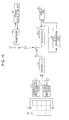
- An example of a configuration on a transmission side will be described with reference to
Fig. 5 . Two solar cell modules M1 and M2 are connected in series. A voltage output from the series connection of the solar cell modules M1 and M2 is supplied to a power conditioner PW. The power conditioner PW is used to convert a generated dc voltage into an ac voltage and supply generated power to a commercial power supply system. The power conditioner PW has the MPP function (the maximum operating point control function) in which control processing is performed to obtain the maximum operating point at which power becomes the maximum in a current-voltage characteristic of a solar cell. - Voltage and temperature measurement units 101 and 102 are connected to the solar cell module M1 and M2, respectively. Since the voltage and temperature measurement units 101 and 102 have the same configuration, only the detailed configuration of the voltage and temperature measurement unit 101 is illustrated in
Fig. 5 . - A voltage output from the solar cell module M1 is supplied to a
regulator 11, and is divided byresistors regulator 11 stabilizes the output of the solar cell module M1 and outputs a dc voltage +Vcc1. In a case where the output voltage of the solar cell module M1 is higher than the rated voltage of theregulator 11, the output voltage of the solar cell module M1 is divided and is then supplied to theregulator 11. - A voltage at a point of connection between the
resistors Fig. 5 ) 14. Theovervoltage protection circuit 14 performs control processing so as to prevent the voltage at the point of connection between theresistors Fig. 5 ) 15 at the subsequent stage. Voltage data V1 is obtained from the A/D converter 15. - The output voltage of the
regulator 11 is supplied to the series connection of aresistor 16 and athermistor 17. Thethermistor 17 is, for example, a negative temperature coefficient thermistor, and has a resistance value corresponding to the temperature of the solar cell module M1. A temperature detection element is preferably disposed so that it can measure the surface temperature of a solar cell module. An element other than a thermistor may be used as a temperature detection element. A plurality of temperature detection elements may be disposed for the solar cell module M1 at different positions, and more accurate temperature detection may be performed with the outputs of these temperature detection elements. A voltage at the point of connection between theresistor 16 and thethermistor 17 is supplied to an A/D converter 18. Temperature data T1 is obtained from the A/D converter 18. Theregulator 11 also functions as a power source for the A/D converters regulator 11 is supplied to the A/D converters - An identifier (ID)
storage unit 19 is disposed, and an ID ID1 of the solar cell module M1 is output from theID storage unit 19. The voltage data V1, the temperature data T1, and the ID ID1 of the solar cell module M1 are supplied to amultiplexer 20. - Like the voltage and temperature measurement unit 101, the voltage and temperature measurement unit 102 for the solar cell module M2 outputs voltage data V2, temperature data T2, an ID ID2, and a voltage +Vcc2. These pieces of data are supplied to the
multiplexer 20. A power supply voltage +Vcc for themultiplexer 20 and the transmitter Tx is obtained from one of the voltages +Vcc1 and +Vcc2. - The
multiplexer 20 multiplexes (for example time-division multiplexes) pieces of data pertaining to the solar cell modules M1 and M2 and supplies the multiplexed data to the transmitter Tx. The transmitter Tx is a radio transmitter, and includes an antenna. The measurement of a voltage and a temperature is performed at predetermined intervals. - Since a multiplexer is disposed, pieces of data pertaining to a plurality of solar cell modules are transmitted from a single transmitter. However, a transmitter may be disposed for each solar cell module. In a case where there is a long distance between solar cell modules, it is better to dispose a transmitter for each solar cell module for the sake of simple wiring.
- Although not illustrated in
Fig. 5 , a control unit for controlling the transmission side including a power generator is disposed. The control unit is, for example, a microcomputer, and controls each unit on the transmission side by executing a program. - A process illustrated in
Fig. 6 is performed for the transmission side, for example, the solar cell module M1 under the control of the control unit. In step ST1, the voltage and temperature measurement unit 101 measures the voltage and temperature of the solar cell module M1. - In step ST2, voltage data and temperature data which are results of the measurement are supplied to the
multiplexer 20 along with the ID ID1. In step ST3, these pieces of data and the ID ID1 are multiplexed with the voltage data, temperature data, and ID2 of another module (the solar cell module M2) and are transmitted from the transmitter Tx. Thus, the pieces of data of the measured voltage and temperature are transmitted to the receiver Rx along with an ID. - An example of the configuration of a receiver will be described with reference to
Fig. 7 . The receiver Rx receives a signal from the transmitter Tx, performs receiving processing upon the received signal, and supplies the processed data to ademultiplexer 30. Thedemultiplexer 30 demultiplexes the multiplexed data and outputs IDs and pieces of measurement data. - The ID ID1 output from the
demultiplexer 30 is supplied to anauthentication unit 32 in a power calculation and state determination section 311. Theauthentication unit 32 compares the received ID with the ID ID1 registered in advance and performs authentication on the basis of a result of the comparison. At that time, a more complex authentication method such as mutual authentication may be performed. - The voltage data V1 and the temperature data T1 are supplied from the
demultiplexer 30 to apower calculation unit 33. Thepower calculation unit 33 calculates the current Iph generated by the solar cell module M1 with equations (1) to (6) acquired from the above-described equivalent circuit model of the solar cell module, and obtains power information P1 about power generated by the solar cell module M1 with the calculated current and the voltage data. - The power information P1 obtained by the
power calculation unit 33 is supplied to astate determination unit 34. Thestate determination unit 34 determines whether the solar cell module M1 is in a good state on the basis of the power information P1. Thestate determination unit 34 determines the failure and deterioration of the power generation module M1, and outputs a determination signal St1 (for example several bits of digital data). - In order to determine a power generation state on the basis of power information, the
state determination unit 34 may use one of or the combination of the following methods. - 1. A method of determining that a power generation abnormal state occurs when generated power equal to or smaller than a predetermined value lasts for a predetermined period.
- 2. A method of determining that a power generation abnormal state occurs when generated power is lower than that of an adjacent module by a predetermined value.
- 3. A method of determining that a power generation abnormal state occurs when total generated power in a predetermined period is lower than the past total generated power by a predetermined value.
- The power information P1 and the determination signal St1 output from the power calculation and state determination section 311 are supplied to the
display unit 40. Thedisplay unit 40 includes a display element such as a Liquid Crystal Display (LCD) and a display control unit. - The ID ID2, the voltage data V2, and the temperature data T2 output from the
demultiplexer 30 are supplied to a power calculation and state determination section 312. The power calculation and state determination section 312 has a configuration similar to that of the power calculation and state determination section 311, and outputs power information P2 and a determination signal St2. The power information P2 and the determination signal St2 are supplied to thedisplay unit 40. - The
display unit 40 displays power generated by each solar cell module and an information determination result of each solar cell module. Thedisplay unit 40 may further display total power generated by all solar cell modules. A user can know the current power generation state of each solar cell module by seeing thedisplay unit 40. The amount of power and the state do not necessarily have to be displayed, and may be used for processing other than display processing and control processing. For example, with output power information, automatic tracking control may be performed so that the panel of each solar cell module points at the sun. - Although not illustrated in
Fig. 7 , a control unit for controlling the receiving side is disposed. The control unit is, for example, a microcomputer, and controls each unit on the receiving side by executing a program. The function of each power calculation and state determination section can be performed by software processing by a Micro Processing Unit (MPU) or a Digital Signal Processor (DSP). - A process illustrated in
Fig. 8 is performed on the receiving side under the control of the control unit. In step ST11, the receiver Rx receives data and outputs the received data to thedemultiplexer 30. In step ST12, thedemultiplexer 30 demultiplexes the data. - In step ST13, a solar cell module is identified with the ID ID1 demultiplexed from the data. In step ST14, it is determined whether the identified solar cell module is a management target solar cell module. In a case where it is determined that the identified solar cell module is not a management target solar cell module, the process ends. On the other hand, in a case where it is determined in step ST14 that the identified solar cell module is a management target solar cell module, the calculation of power is performed with the above-described equivalent circuit model in step ST15.
- In step ST16, the
display unit 40 displays power information for each solar cell module. At the same time, in step ST17, the above-described state determination is performed with power information acquired from the calculation. For example, in a case where there is little generated power, it is determined that the solar cell module has failed. In a case where generated power is equal to or smaller than a predetermined value, the generated power is converted into the degree of deterioration and the degree of deterioration is displayed. The process ends. - A process (represented by step ST20 in
Fig. 8 ) similar to the process from steps ST13 to ST18 is performed on another solar cell module (for example the solar cell module M2). -
Fig. 9 is a diagram illustrating a configuration on a transmission side according to the second embodiment of the present disclosure. Referring toFig. 9 , the same reference numerals are used to identify parts already described with reference toFig. 5 . In the second embodiment, a power calculation unit is disposed for each solar cell module on the transmission side. For example, a power calculation unit 251 is disposed for the solar cell module M1 on the transmission side, and obtains the power information P1 of the solar cell module M1 by calculation like in the first embodiment. - The power information P1 output from the power calculation unit 251 and the ID ID1 are supplied to the
multiplexer 20. A power calculation unit 252 is disposed for the solar cell module M2. The power information P2 output from the power calculation unit 252 and the ID ID2 are supplied to themultiplexer 20. Themultiplexer 20 multiplexes the pieces of power information P1 and P2 and the IDs ID1 and ID2, and supplies the multiplexed data to the transmitter Tx. The transmitter Tx transmits the multiplexed data. - A receiving side, the illustration of which is omitted, can receive power information itself, and therefore include no power calculation unit. Other than this point, the receiving side has the same configuration as that illustrated in
Fig. 7 . - In the first embodiment, a power calculation unit is disposed on a receiving side. In the second embodiment, a power calculation unit is disposed on a transmission side. In the third embodiment of the present disclosure, as illustrated in
Fig. 10 , a power calculation unit is disposed at a position outside a receiving side and a transmission side. -
Fig. 10 is a diagram illustrating a schematic configuration according to the third embodiment. The voltage and temperature of a solar cell module M are measured by thevoltage measurement device 1 and thetemperature measurement device 2, respectively. The transmitter Tx transmits these pieces of data. - A transceiver TRx1 transmits received data to a transceiver TRx2 disposed at another place (for example a server or a cloud computer). The transceiver TRx2 supplies received voltage data and received temperature data to a
power calculation unit 26. Thepower calculation unit 26 obtains power information P of the solar cell module M by calculation like in the first embodiment. The obtained power information P is supplied to the transceiver TRx2 and is transmitted from the transceiver TRx2. - The transceiver TRx1 receives the power information P from the transceiver TRx2, and displays the received power information P on the
display unit 40. The power information P is also supplied to astate determination unit 34. The failure and deterioration of the solar cell module M are determined, and a result of the determination is supplied to thedisplay unit 40. - According to the above-described embodiments, the following effects are obtained. Since power management can be performed for each solar cell module, the occurrence of a failure and a shadow and the amount of generated power in each of the cardinal points can be easily determined. Since the characteristic of each solar cell module, which causes a failure, can be determined, a solar power generation system can be easily subjected to maintenance. A small and low-cost apparatus including a small number of components can be attached to each solar cell module. Since no component is disposed on a power transmission path of each solar cell module, an apparatus seldom produces trouble.
- An embodiment of the present disclosure can be configured as follows.
- (1) A power generation apparatus comprising: a power calculation unit configured to receive voltage information and temperature information from a power generation module, and calculate power generation information of the power generation module based on the received voltage information and temperature information.
- (2) The power generation apparatus according to (1), further comprising a state determination unit configured to determine an operating state of the power generation module based on the power generation information.
- (3) The power generation apparatus according to (2), wherein the state determination unit is configured to detect a deteriorated state or a failed state of the power generation module.
- (4) The power generation apparatus according to (1), further comprising an output unit configured to output the power generation information.
- (5) The power generation apparatus according to (4), wherein the output unit is a display unit configured to display the power generation information.
- (6) The power generation apparatus according to (1), further comprising a transmitter configured to transmit the voltage information and temperature information, and a receiver communicatively coupled to the transmitter and configured to receive the voltage information and temperature information transmitted by the transmitter.
- (7) The power generation apparatus according to (6), wherein a communication path between the receiver and the transmitter is a wireless connection.
- (8) The power generation apparatus according to (6), further comprising a voltage and temperature measurement unit configured to measure the voltage information and temperature information from the power generation module, and configured to transfer said voltage information and temperature information to the transmitter.
- (9) The power generation apparatus according to (8), wherein the voltage and temperature measurement unit comprises: a regulator configured to stabilize a voltage output from the power generation module, and first and second resistors connected to the regulator and configured to divide the voltage output from the power generation module in a case where the voltage output from the power generation module is higher than a rated voltage of the regulator.
- (10) The power generation apparatus according to (8), further comprising: a plurality of voltage and temperature measurement units corresponding to a plurality of power generation modules, the plurality of power generation modules being connected in series; and a multiplexer configured to combine the voltage information and temperature information output from the plurality of voltage and temperature measurement units.
- (11) The power generation apparatus according to (10), further comprising an identifier storage unit configured to supply identification information of the respective power generation modules to the multiplexer, wherein the multiplexer is configured to combine the voltage information, the temperature information, and the identification information of the respective power generation modules.
- (12) The power generation apparatus according to (11), further comprising a demultiplexer connected to the receiver, the demultiplexer configured to demultiplex the data received from the multiplexer and output the voltage information, the temperature information, and the identification information of the respective power generation modules.
- (13) The power generation apparatus according to (12), wherein the power calculation unit further comprises an authentication unit configured to perform an authentication of the respective power generation modules based on received identification information.
- (14) The power generation apparatus according to (10), wherein a voltage output from the series connection of the plurality of power generation modules is supplied to a power conditioner that is configured to convert a generated DC voltage into an AC voltage and supply the generated power to an external power supply system.
- (15) The power generation apparatus according to (10), further comprising a state determination unit configured to determine an operation state of the power generation module by doing at least one of: (a) determining that a power generation abnormal state occurs when generated power of a given power generation module is equal to or smaller than a predetermined value and lasts for a predetermined period; (b) determining that a power generation abnormal state occurs when generated power a given power generation module is lower than that of an adjacent power generation module by a predetermined value; and (c) determining that a power generation abnormal state occurs when total generated power in a predetermined period is lower than a past total generated power by a predetermined value.
- (16) The power generation apparatus according to (1), further comprising: a transmitter; a receiver communicatively coupled to the transmitter; and a state determination unit configured to determine an operating state of the power generation module based on the power generation information received by the receiver.
- (17) The power generation apparatus according to (16), wherein the power calculation unit is positioned on a transmission side of the power generation apparatus, and the state determination unit is positioned on a reception side of the power generation apparatus.
- (18) The power generation apparatus according to (16), wherein the power calculation unit and the state determination unit are positioned on a reception side of the power generation apparatus.
- (19) The power generation apparatus according to (16), wherein the state determination unit is positioned on a reception side of the power generation apparatus, and the power calculation unit is located at a position outside a transmission side and the reception side of the power generation apparatus.
- Another embodiment of the present disclosure can be configured as follows.
- (20) A method of determining an operating state of a power generation apparatus, the method comprising: receiving voltage information and temperature information from a power generation module, and calculating power generation information of the power generation module based on the received voltage information and temperature information; and determining the operating state of the power generation module based on the power generation information.
- (21) The method according to (20), further comprising determining an operating state of the power generation module based on the power generation information.
- (22) The method according to (21), further comprising determining if the operating state of the power generation module is a deteriorated state or a failed state.
- (23) The method according to (20), further comprising outputting the power generation information.
- (24) The method according to (23), wherein outputting the power generation information includes displaying the power generation information on a display device.
- (25) The method according to (20), further comprising transmitting the voltage information and temperature information by a transmitter, and receiving the transmitted voltage information and temperature information by a receiver.
- (26) The method according to (25), wherein a communication path between the transmitter and receiver is a wireless connection.
- (27) The method according to (25), further comprising measuring the voltage information and temperature information from the power generation module by a voltage and temperature measurement unit, and transferring said voltage information and temperature information to the transmitter.
- (28) The method according to (27), wherein the voltage and temperature measurement unit comprises: a regulator configured to stabilize a voltage output from the power generation module, and first and second resistors connected to the regulator and configured to divide the voltage output from the power generation module in a case where the voltage output from the power generation module is higher than a rated voltage of the regulator.
- (27) The method according to (27), wherein the power generation apparatus further includes a plurality of voltage and temperature measurement units corresponding to a plurality of power generation modules, the plurality of power generation modules being connected in series, and the method further comprises: combining the voltage information and temperature information output from the plurality of voltage and temperature measurement units with a multiplexer.
- (30) The method according to (29), wherein the power generation apparatus further includes an identifier storage unit configured to supply identification information of the respective power generation modules to the multiplexer, and the method further comprises: combining the voltage information, the temperature information, and the identification information of the respective power generation modules with the multiplexer.
- (31) The method according to (30), wherein the power generation apparatus further includes a demultiplexer connected to the receiver, the method further comprising: demultiplexing the data received from the multiplexer and outputting the voltage information, the temperature information, and the identification information of the respective power generation modules.
- (32) The method according to (31), further comprising performing an authentication of the respective power generation modules based on received identification information.
- (33) The method according to (29), further comprising supplying a voltage output from the series connection of the plurality of power generation modules to a power conditioner that is configured to convert a generated DC voltage into an AC voltage and supply the generated power to an external power supply system.
- (34) The method according to (29), further comprising determining an operation state of the power generation module by doing at least one of:
- (a) determining that a power generation abnormal state occurs when generated power of a given power generation module is equal to or smaller than a predetermined value and lasts for a predetermined period;
- (b) determining that a power generation abnormal state occurs when generated power a given power generation module is lower than that of an adjacent power generation module by a predetermined value; and
- (c) determining that a power generation abnormal state occurs when total generated power in a predetermined period is lower than a past total generated power by a predetermined value.
- Another embodiment of the present disclosure can be configured as follows.
- (1) A power generation apparatus includes,
a measurement unit configured to measure an output voltage and a temperature of at least one power generation module,
a power calculation unit configured to calculate power on the basis of information about the output voltage and the temperature measured by the measurement unit, and
an output unit configured to output information about the power calculated by the power calculation unit, and
wherein the power calculation unit uses an equivalent circuit model of the power generation module to calculate the power on the basis of the information about the output voltage and the temperature. - (2) The power generation apparatus according to (1), wherein the output unit is a display unit configured to display the information about the power calculated by the power calculation unit.
- (3) The power generation apparatus according to (1) or (2), further including a state determination unit configured to determine a state of the power generation module on the basis of the information about the power calculated by the power calculation unit.
- (4) The power generation apparatus according to any one of (1), (2), and (3), further including an illumination level measurement unit configured to measure an illumination level of light emitted onto the power generation module and supply information about the measured illumination level to the power calculation unit.
- (5) The power generation apparatus according to any one of (1), (2), (3), and (4),
wherein a transmitter transmits the information about the output voltage and the temperature measured by the measurement unit,
wherein a receiver receives the information about the output voltage and the temperature and supplies the received information about the output voltage and the temperature to the power calculation unit, and
wherein the power calculation unit outputs the information about the power to the output unit. - (6) The power generation apparatus according to any one of (1), (2), (3), and (4),
wherein a transmitter transmits the information about the output voltage and the temperature measured by the measurement unit, and
wherein a receiver receives the information about the output voltage and the temperature, transmits the received information about the output voltage and the temperature to the power calculation unit disposed outside the receiver, receives the information about the power from the power calculation unit, and outputs the received information about the power to the output unit. - (7) The power generation apparatus according to any one of (1), (2), (3), and (4),
wherein the information about the output voltage and the temperature measured by the measurement unit is supplied to the power calculation unit,
wherein the information about the power calculated by the power calculation unit is transmitted from a transmitter, and
wherein a receiver receives the information about the power and outputs the received information about the power to the output unit. - Embodiments of the present disclosure have been described in detail. However, the present disclosure is not limited to the embodiments. For example, in the above-described embodiments, the present disclosure is applied to a solar cell module. However, the present disclosure may be applied to a power generation element other than a solar cell module.
- The present disclosure contains subject matter related to that disclosed in Japanese Priority Patent Application
JP 2011-260771 - It should be understood by those skilled in the art that various modifications, combinations, sub-combinations and alterations may occur depending on design requirements and other factors insofar as they are within the scope of the appended claims or the equivalents thereof.
Support for the claims and further embodiments are defined in the following itemized list: - 1. A power generation apparatus comprising:
- a power calculation unit configured to receive voltage information and temperature information from a power generation module, and
- calculate power generation information of the power generation module based on the received voltage information and temperature information.
- 2. The power generation apparatus according to
item 1, further comprising a state determination unit configured to determine an operating state of the power generation module based on the power generation information. - 3. The power generation apparatus according to
item 2, wherein the state determination unit is configured to detect a deteriorated state or a failed state of the power generation module. - 4. The power generation apparatus according to
item 1, further comprising an output unit configured to output the power generation information. - 5. The power generation apparatus according to item 4, wherein the output unit is a display unit configured to display the power generation information.
- 6. The power generation apparatus according to
item 1, further comprising a transmitter configured to transmit the voltage information and temperature information, and a receiver communicatively coupled to the transmitter and configured to receive the voltage information and temperature information transmitted by the transmitter. - 7. The power generation apparatus according to item 6, wherein a communication path between the receiver and the transmitter is a wireless connection.
- 8. The power generation apparatus according to item 6, further comprising a voltage and temperature measurement unit configured to measure the voltage information and temperature information from the power generation module, and configured to transfer said voltage information and temperature information to the transmitter.
- 9. The power generation apparatus according to item 8, wherein the voltage and temperature measurement unit comprises:
- a regulator configured to stabilize a voltage output from the power generation module, and
- first and second resistors connected to the regulator and configured to divide the voltage output from the power generation module in a case where the voltage output from the power generation module is higher than a rated voltage of the regulator.
- 10. The power generation apparatus according to
item 1, further comprising:- a transmitter;
- a receiver communicatively coupled to the transmitter; and
- a state determination unit configured to determine an operating state of the power generation module based on the power generation information received by the receiver.
- 11. The power generation apparatus according to item 10, wherein the power calculation unit is positioned on a transmission side of the power generation apparatus, and the state determination unit is positioned on a reception side of the power generation apparatus.
- 12. A method of determining an operating state of a power generation apparatus, the method comprising:
- receiving voltage information and temperature information from a power generation module, and calculating power generation information of the power generation module based on the received voltage information and temperature information; and
- determining the operating state of the power generation module based on the power generation information.
- 13. The method according to
item 12, further comprising determining an operating state of the power generation module based on the power generation information. - 14. The method according to
item 13, further comprising determining if the operating state of the power generation module is a deteriorated state or a failed state. - 15. The method according to
item 12, further comprising outputting the power generation information. - 16. The method according to
item 15, wherein outputting the power generation information includes displaying the power generation information on a display device. - 17. The method according to
item 12, further comprising transmitting the voltage information and temperature information by a transmitter, and receiving the transmitted voltage information and temperature information by a receiver. - 18. The method according to
item 17, further comprising measuring the voltage information and temperature information from the power generation module by a voltage and temperature measurement unit, and transferring said voltage information and temperature information to the transmitter. - 19. The method according to
item 18, wherein the voltage and temperature measurement unit comprises:- a regulator configured to stabilize a voltage output from the power generation module, and
- first and second resistors connected to the regulator and configured to divide the voltage output from the power generation module in a case where the voltage output from the power generation module is higher than a rated voltage of the regulator.
- 20. The method according to
item 18, wherein the power generation apparatus further includes a plurality of voltage and temperature measurement units corresponding to a plurality of power generation modules, the plurality of power generation modules being connected in series, and the method further comprises:- combining the voltage information and temperature information output from the plurality of voltage and temperature measurement units with a multiplexer.
Claims (15)
- A power generation apparatus comprising:a power calculation unit configured to
receive voltage information and temperature information from a power generation module, and
calculate power generation information of the power generation module based on the received voltage information and temperature information. - The power generation apparatus according to Claim 1, further comprising a state determination unit configured to determine an operating state of the power generation module based on the power generation information.
- The power generation apparatus according to Claim 2, wherein the state determination unit is configured to detect a deteriorated state or a failed state of the power generation module.
- The power generation apparatus according to any one of Claims 1 to 3, further comprising an output unit configured to output the power generation information.
- The power generation apparatus according to Claim 4, wherein the output unit is a display unit configured to display the power generation information.
- The power generation apparatus according to any one of Claims 1 to 5, further comprising a transmitter configured to transmit the voltage information and temperature information, and a receiver communicatively coupled to the transmitter and configured to receive the voltage information and temperature information transmitted by the transmitter.
- The power generation apparatus according to Claim 6, wherein a communication path between the receiver and the transmitter is a wireless connection.
- The power generation apparatus according to any one of Claims 6 or 7, further comprising a voltage and temperature measurement unit configured to measure the voltage information and temperature information from the power generation module, and configured to transfer said voltage information and temperature information to the transmitter.
- The power generation apparatus according to Claim 8, wherein the voltage and temperature measurement unit comprises:a regulator configured to stabilize a voltage output from the power generation module, andfirst and second resistors connected to the regulator and configured to divide the voltage output from the power generation module in a case where the voltage output from the power generation module is higher than a rated voltage of the regulator.
- The power generation apparatus according to Claim 1, further comprising:a transmitter;a receiver communicatively coupled to the transmitter; anda state determination unit configured to determine an operating state of the power generation module based on the power generation information received by the receiver.
- The power generation apparatus according to Claim 10, wherein the power calculation unit is positioned on a transmission side of the power generation apparatus, and the state determination unit is positioned on a reception side of the power generation apparatus.
- A method of determining an operating state of a power generation apparatus, the method comprising:receiving voltage information and temperature information from a power generation module, and calculating power generation information of the power generation module based on the received voltage information and temperature information; anddetermining the operating state of the power generation module based on the power generation information.
- The method according to Claim 12, further comprising determining an operating state of the power generation module based on the power generation information.
- The method according to Claim 13, further comprising determining if the operating state of the power generation module is a deteriorated state or a failed state.
- The method according to any one of Claims 12 to 14, further comprising outputting the power generation information.
Applications Claiming Priority (1)
| Application Number | Priority Date | Filing Date | Title |
|---|---|---|---|
| JP2011260771A JP6003048B2 (en) | 2011-11-29 | 2011-11-29 | Power generator |
Publications (3)
| Publication Number | Publication Date |
|---|---|
| EP2600480A2 true EP2600480A2 (en) | 2013-06-05 |
| EP2600480A3 EP2600480A3 (en) | 2016-03-23 |
| EP2600480B1 EP2600480B1 (en) | 2019-09-18 |
Family
ID=47598543
Family Applications (1)
| Application Number | Title | Priority Date | Filing Date |
|---|---|---|---|
| EP12007381.2A Not-in-force EP2600480B1 (en) | 2011-11-29 | 2012-10-26 | Power generation apparatus |
Country Status (5)
| Country | Link |
|---|---|
| US (1) | US9599646B2 (en) |
| EP (1) | EP2600480B1 (en) |
| JP (1) | JP6003048B2 (en) |
| KR (2) | KR20130060126A (en) |
| CN (1) | CN103135045B (en) |
Families Citing this family (14)
| Publication number | Priority date | Publication date | Assignee | Title |
|---|---|---|---|---|
| US20130009483A1 (en) * | 2011-05-31 | 2013-01-10 | Kawate Keith W | Power generator module connectivity control |
| JP5814775B2 (en) * | 2011-12-22 | 2015-11-17 | 株式会社日立製作所 | Solar cell characteristic calculation method |
| JP5671488B2 (en) | 2012-03-14 | 2015-02-18 | 東京エレクトロン株式会社 | Solar cell module effectiveness monitoring system and monitoring method thereof |
| CN104769691A (en) | 2012-11-02 | 2015-07-08 | 罗姆股份有限公司 | Chip capacitors, circuit components, and electronic equipment |
| US20150212561A1 (en) * | 2013-07-30 | 2015-07-30 | New Concepts Development Corp. | Apparatus and Method for Powering Electronic Devices by a Plurality of Power Sources |
| WO2015072531A1 (en) * | 2013-11-15 | 2015-05-21 | 株式会社エプセル | Solar power generation management device |
| JP6354946B2 (en) * | 2014-07-18 | 2018-07-11 | Jfeエンジニアリング株式会社 | Abnormality diagnosis method for photovoltaic power generation system |
| DE102016004362A1 (en) * | 2016-04-09 | 2017-10-12 | Audi Ag | Motor vehicle and solar converter device |
| US11874449B2 (en) | 2016-04-12 | 2024-01-16 | Jonathan Jacques | Pyramidal wall sections |
| WO2018032471A1 (en) * | 2016-08-18 | 2018-02-22 | 苏州聚晟太阳能科技股份有限公司 | Intelligent tracking system and method |
| CN109783852A (en) * | 2018-12-10 | 2019-05-21 | 北京汉能光伏投资有限公司 | Simulator and its emulation mode, computer readable storage medium |
| JP7299749B2 (en) * | 2019-05-10 | 2023-06-28 | 東北電力株式会社 | Solar power generation output prediction device, solar power generation output prediction method, and program |
| WO2022010865A1 (en) * | 2020-07-06 | 2022-01-13 | Jonathan Jacques | Pyramidal wall sections |
| WO2022261757A1 (en) * | 2021-06-14 | 2022-12-22 | Sistemi Corp. | Circuit topologies for wide dynamic range current measurement |
Citations (2)
| Publication number | Priority date | Publication date | Assignee | Title |
|---|---|---|---|---|
| JPH09102622A (en) | 1995-10-03 | 1997-04-15 | Nissin Electric Co Ltd | Failure detector of solar cell module of solar power generation system |
| JP2010287608A (en) | 2009-06-09 | 2010-12-24 | Kowa Denki Sangyo Kk | Apparatus, system and method for detecting degradation of photovoltaic power generator |
Family Cites Families (34)
| Publication number | Priority date | Publication date | Assignee | Title |
|---|---|---|---|---|
| JP3392506B2 (en) * | 1994-02-24 | 2003-03-31 | 株式会社東芝 | Solar power generation simulator |
| JPH07235685A (en) * | 1994-02-25 | 1995-09-05 | Nissin Electric Co Ltd | Withstand-voltage testing method of solarlight power generation panel |
| JP3403854B2 (en) * | 1995-04-07 | 2003-05-06 | 淳 伊賀 | Solar cell tester |
| CN1161678C (en) * | 1998-03-30 | 2004-08-11 | 三洋电机株式会社 | Solar generating device |
| US6111767A (en) * | 1998-06-22 | 2000-08-29 | Heliotronics, Inc. | Inverter integrated instrumentation having a current-voltage curve tracer |
| WO2004090559A1 (en) * | 2003-04-04 | 2004-10-21 | Bp Corporation North America Inc. | Performance monitor for a photovoltaic supply |
| US7510640B2 (en) * | 2004-02-18 | 2009-03-31 | General Motors Corporation | Method and apparatus for hydrogen generation |
| EP2012363A1 (en) * | 2006-04-24 | 2009-01-07 | Sharp Kabushiki Kaisha | Photovoltaic power generation system and photovoltaic power generation system control method |
| JP5162737B2 (en) * | 2006-05-17 | 2013-03-13 | 英弘精機株式会社 | Solar cell characteristics evaluation system |
| JP2008046751A (en) * | 2006-08-11 | 2008-02-28 | Toyota Motor Corp | SOLAR POWER GENERATION SYSTEM, VEHICLE, SOLAR POWER GENERATION SYSTEM CONTROL METHOD, AND COMPUTER-READABLE RECORDING MEDIUM RECORDING PROGRAM FOR CAUSING COMPUTER TO EXECUTE THE CONTROL METHOD |
| JP2008141918A (en) * | 2006-12-05 | 2008-06-19 | Nippon Telegr & Teleph Corp <Ntt> | Photovoltaic power generation system evaluation apparatus, method, and program |
| US8473250B2 (en) * | 2006-12-06 | 2013-06-25 | Solaredge, Ltd. | Monitoring of distributed power harvesting systems using DC power sources |
| US7772716B2 (en) * | 2007-03-27 | 2010-08-10 | Newdoll Enterprises Llc | Distributed maximum power point tracking system, structure and process |
| US20080257397A1 (en) * | 2007-04-17 | 2008-10-23 | John Stanley Glaser | System, method, and apparatus for extracting power from a photovoltaic source of electrical energy |
| US20080306700A1 (en) * | 2007-06-07 | 2008-12-11 | Ekla-Tek L.L.C | Photvoltaic solar array health monitor |
| KR100933894B1 (en) * | 2007-11-13 | 2009-12-28 | 한국전기연구원 | Solar cell characteristic curve simulation system and method |
| US20090283129A1 (en) * | 2008-05-14 | 2009-11-19 | National Semiconductor Corporation | System and method for an array of intelligent inverters |
| PL2347494T3 (en) * | 2008-10-03 | 2019-08-30 | Philips Ip Ventures B.V. | Power system |
| JP2010123880A (en) * | 2008-11-21 | 2010-06-03 | Ntt Facilities Inc | Fault determination system, fault determination method, and computer program |
| JP2010186795A (en) * | 2009-02-10 | 2010-08-26 | Sony Corp | Photoelectric cell device and method for determining failure |
| CN201383693Y (en) * | 2009-04-08 | 2010-01-13 | 北京远方动力可再生能源科技发展有限公司 | Solar charge/discharge controller |
| JP5597937B2 (en) * | 2009-05-26 | 2014-10-01 | 株式会社日立製作所 | Solar power system |
| US20100321148A1 (en) * | 2009-06-18 | 2010-12-23 | Peter Gevorkian | Wireless intelligent solar power reader (wispr) structure and process |
| CN102474102B (en) * | 2009-07-14 | 2015-06-03 | 恩菲斯能源公司 | Method and apparatus for identifying redeployed distributed power components |
| JP5581965B2 (en) * | 2010-01-19 | 2014-09-03 | オムロン株式会社 | MPPT controller, solar cell control device, photovoltaic power generation system, MPPT control program, and MPPT controller control method |
| JP5569044B2 (en) * | 2010-03-03 | 2014-08-13 | ソニー株式会社 | Power control apparatus, power control method, and power supply system |
| US20110222327A1 (en) * | 2010-03-11 | 2011-09-15 | Christopher Thompson | Photovoltaic Inverter Power System |
| US20110224839A1 (en) * | 2010-03-11 | 2011-09-15 | Christopher Thompson | Power Point Tracking |
| US20120053867A1 (en) * | 2010-08-24 | 2012-03-01 | Atonometrics, Inc. | System and methods for high-precision string-level measurement of photovoltaic array performance |
| KR101026139B1 (en) * | 2010-09-01 | 2011-04-05 | (주)케이디티 | PPU diagnostic device that enables individual diagnosis of PPO module in solar power generation system |
| CN201974514U (en) * | 2010-11-02 | 2011-09-14 | 中山大学 | Photovoltaic array tester based on TMS320F2812 |
| US8531164B2 (en) * | 2011-04-04 | 2013-09-10 | Advanced Analogic Technologies Incorporated | Operational transconductance amplifier feedback mechanism for fixed feedback voltage regulators |
| US20120310427A1 (en) * | 2011-05-31 | 2012-12-06 | Williams B Jeffery | Automatic Monitoring and Adjustment of a Solar Panel Array |
| KR101083818B1 (en) * | 2011-08-10 | 2011-11-18 | (주) 경원 | Solar module monitoring system |
-
2011
- 2011-11-29 JP JP2011260771A patent/JP6003048B2/en not_active Expired - Fee Related
-
2012
- 2012-10-26 EP EP12007381.2A patent/EP2600480B1/en not_active Not-in-force
- 2012-11-21 US US13/683,478 patent/US9599646B2/en not_active Expired - Fee Related
- 2012-11-21 KR KR1020120132405A patent/KR20130060126A/en not_active Ceased
- 2012-11-22 CN CN201210479420.3A patent/CN103135045B/en not_active Expired - Fee Related
-
2020
- 2020-01-08 KR KR1020200002631A patent/KR102175692B1/en not_active Expired - Fee Related
Patent Citations (2)
| Publication number | Priority date | Publication date | Assignee | Title |
|---|---|---|---|---|
| JPH09102622A (en) | 1995-10-03 | 1997-04-15 | Nissin Electric Co Ltd | Failure detector of solar cell module of solar power generation system |
| JP2010287608A (en) | 2009-06-09 | 2010-12-24 | Kowa Denki Sangyo Kk | Apparatus, system and method for detecting degradation of photovoltaic power generator |
Also Published As
| Publication number | Publication date |
|---|---|
| KR102175692B1 (en) | 2020-11-06 |
| EP2600480A3 (en) | 2016-03-23 |
| KR20200011036A (en) | 2020-01-31 |
| CN103135045B (en) | 2017-05-24 |
| JP6003048B2 (en) | 2016-10-05 |
| US9599646B2 (en) | 2017-03-21 |
| EP2600480B1 (en) | 2019-09-18 |
| US20130138259A1 (en) | 2013-05-30 |
| CN103135045A (en) | 2013-06-05 |
| KR20130060126A (en) | 2013-06-07 |
| JP2013113739A (en) | 2013-06-10 |
Similar Documents
| Publication | Publication Date | Title |
|---|---|---|
| EP2600480A2 (en) | Power generation apparatus | |
| US20210313928A1 (en) | Method and apparatus for determining key performance photovoltaic characteristics using sensors from module-level power electronics | |
| US10312858B2 (en) | Solar power generation system and failure diagnosis method therefor | |
| CN102318076B (en) | Apparatus for detecting abnormality of solar cell power generation system and method thereof | |
| EP3428669A1 (en) | Apparatus and method for detecting state of health of battery | |
| US9921270B2 (en) | Battery system with cell voltage detecting units | |
| CN103444050B (en) | Power management system and power management method | |
| US8170817B2 (en) | Method and device for determining the electrical loadability of overhead lines by means of temperature measurement | |
| US10848099B2 (en) | Power generation abnormality detection method and system thereof for photovoltaic panels | |
| JP2015198485A (en) | Anomaly detection device, anomaly detection system, and anomaly detection method | |
| EP2645734A2 (en) | Battery system | |
| KR101669340B1 (en) | Multi channel mornitoring system for evaluating several solar modules | |
| US20130234516A1 (en) | Electricity generation controller, electricity generation control system, and electricity generation control method | |
| JP2014022686A (en) | Abnormality detection device, abnormality detection method, and power generation system | |
| JP2017022879A (en) | Diagnostic device, photovoltaic power generation system, and degradation / fault diagnosis method | |
| JP2014232770A (en) | Photovoltaic power generation system device | |
| US11454094B2 (en) | Downhole power generation system and optimized power control method thereof | |
| JP2020028192A (en) | Photovoltaic power generation device, diagnostic device, and solar cell string diagnostic method | |
| KR101466604B1 (en) | Device and method for detecting trouble of solar cell module | |
| US10224743B2 (en) | Power self-identifying energy harvesters | |
| CN215492129U (en) | Temperature detection circuit and test tool | |
| US20130322492A1 (en) | Device and Method for Measuring an Extremal Temperature | |
| US20120313432A1 (en) | Power distribution system connecting apparatus | |
| US20190067948A1 (en) | System and method for integrally managing electric energy | |
| KR20130049064A (en) | Apparatus and method for measuring desing loss of photovoltaic generation system |
Legal Events
| Date | Code | Title | Description |
|---|---|---|---|
| PUAI | Public reference made under article 153(3) epc to a published international application that has entered the european phase |
Free format text: ORIGINAL CODE: 0009012 |
|
| 17P | Request for examination filed |
Effective date: 20121026 |
|
| AK | Designated contracting states |
Kind code of ref document: A2 Designated state(s): AL AT BE BG CH CY CZ DE DK EE ES FI FR GB GR HR HU IE IS IT LI LT LU LV MC MK MT NL NO PL PT RO RS SE SI SK SM TR |
|
| AX | Request for extension of the european patent |
Extension state: BA ME |
|
| PUAL | Search report despatched |
Free format text: ORIGINAL CODE: 0009013 |
|
| AK | Designated contracting states |
Kind code of ref document: A3 Designated state(s): AL AT BE BG CH CY CZ DE DK EE ES FI FR GB GR HR HU IE IS IT LI LT LU LV MC MK MT NL NO PL PT RO RS SE SI SK SM TR |
|
| AX | Request for extension of the european patent |
Extension state: BA ME |
|
| RIC1 | Information provided on ipc code assigned before grant |
Ipc: H02J 3/38 20060101AFI20160216BHEP Ipc: H01L 31/02 20060101ALI20160216BHEP Ipc: H02M 7/00 20060101ALI20160216BHEP Ipc: H01L 31/042 20060101ALI20160216BHEP |
|
| STAA | Information on the status of an ep patent application or granted ep patent |
Free format text: STATUS: EXAMINATION IS IN PROGRESS |
|
| 17Q | First examination report despatched |
Effective date: 20170324 |
|
| GRAP | Despatch of communication of intention to grant a patent |
Free format text: ORIGINAL CODE: EPIDOSNIGR1 |
|
| STAA | Information on the status of an ep patent application or granted ep patent |
Free format text: STATUS: GRANT OF PATENT IS INTENDED |
|
| INTG | Intention to grant announced |
Effective date: 20190424 |
|
| GRAS | Grant fee paid |
Free format text: ORIGINAL CODE: EPIDOSNIGR3 |
|
| GRAA | (expected) grant |
Free format text: ORIGINAL CODE: 0009210 |
|
| STAA | Information on the status of an ep patent application or granted ep patent |
Free format text: STATUS: THE PATENT HAS BEEN GRANTED |
|
| AK | Designated contracting states |
Kind code of ref document: B1 Designated state(s): AL AT BE BG CH CY CZ DE DK EE ES FI FR GB GR HR HU IE IS IT LI LT LU LV MC MK MT NL NO PL PT RO RS SE SI SK SM TR |
|
| REG | Reference to a national code |
Ref country code: GB Ref legal event code: FG4D |
|
| REG | Reference to a national code |
Ref country code: CH Ref legal event code: EP |
|
| REG | Reference to a national code |
Ref country code: AT Ref legal event code: REF Ref document number: 1182443 Country of ref document: AT Kind code of ref document: T Effective date: 20191015 |
|
| REG | Reference to a national code |
Ref country code: IE Ref legal event code: FG4D |
|
| REG | Reference to a national code |
Ref country code: DE Ref legal event code: R096 Ref document number: 602012064036 Country of ref document: DE |
|
| REG | Reference to a national code |
Ref country code: NL Ref legal event code: MP Effective date: 20190918 |
|
| PG25 | Lapsed in a contracting state [announced via postgrant information from national office to epo] |
Ref country code: FI Free format text: LAPSE BECAUSE OF FAILURE TO SUBMIT A TRANSLATION OF THE DESCRIPTION OR TO PAY THE FEE WITHIN THE PRESCRIBED TIME-LIMIT Effective date: 20190918 Ref country code: LT Free format text: LAPSE BECAUSE OF FAILURE TO SUBMIT A TRANSLATION OF THE DESCRIPTION OR TO PAY THE FEE WITHIN THE PRESCRIBED TIME-LIMIT Effective date: 20190918 Ref country code: HR Free format text: LAPSE BECAUSE OF FAILURE TO SUBMIT A TRANSLATION OF THE DESCRIPTION OR TO PAY THE FEE WITHIN THE PRESCRIBED TIME-LIMIT Effective date: 20190918 Ref country code: BG Free format text: LAPSE BECAUSE OF FAILURE TO SUBMIT A TRANSLATION OF THE DESCRIPTION OR TO PAY THE FEE WITHIN THE PRESCRIBED TIME-LIMIT Effective date: 20191218 Ref country code: SE Free format text: LAPSE BECAUSE OF FAILURE TO SUBMIT A TRANSLATION OF THE DESCRIPTION OR TO PAY THE FEE WITHIN THE PRESCRIBED TIME-LIMIT Effective date: 20190918 Ref country code: NO Free format text: LAPSE BECAUSE OF FAILURE TO SUBMIT A TRANSLATION OF THE DESCRIPTION OR TO PAY THE FEE WITHIN THE PRESCRIBED TIME-LIMIT Effective date: 20191218 |
|
| REG | Reference to a national code |
Ref country code: LT Ref legal event code: MG4D |
|
| PG25 | Lapsed in a contracting state [announced via postgrant information from national office to epo] |
Ref country code: GR Free format text: LAPSE BECAUSE OF FAILURE TO SUBMIT A TRANSLATION OF THE DESCRIPTION OR TO PAY THE FEE WITHIN THE PRESCRIBED TIME-LIMIT Effective date: 20191219 Ref country code: LV Free format text: LAPSE BECAUSE OF FAILURE TO SUBMIT A TRANSLATION OF THE DESCRIPTION OR TO PAY THE FEE WITHIN THE PRESCRIBED TIME-LIMIT Effective date: 20190918 Ref country code: RS Free format text: LAPSE BECAUSE OF FAILURE TO SUBMIT A TRANSLATION OF THE DESCRIPTION OR TO PAY THE FEE WITHIN THE PRESCRIBED TIME-LIMIT Effective date: 20190918 Ref country code: AL Free format text: LAPSE BECAUSE OF FAILURE TO SUBMIT A TRANSLATION OF THE DESCRIPTION OR TO PAY THE FEE WITHIN THE PRESCRIBED TIME-LIMIT Effective date: 20190918 |
|
| REG | Reference to a national code |
Ref country code: AT Ref legal event code: MK05 Ref document number: 1182443 Country of ref document: AT Kind code of ref document: T Effective date: 20190918 |
|
| PG25 | Lapsed in a contracting state [announced via postgrant information from national office to epo] |
Ref country code: PT Free format text: LAPSE BECAUSE OF FAILURE TO SUBMIT A TRANSLATION OF THE DESCRIPTION OR TO PAY THE FEE WITHIN THE PRESCRIBED TIME-LIMIT Effective date: 20200120 Ref country code: AT Free format text: LAPSE BECAUSE OF FAILURE TO SUBMIT A TRANSLATION OF THE DESCRIPTION OR TO PAY THE FEE WITHIN THE PRESCRIBED TIME-LIMIT Effective date: 20190918 Ref country code: IT Free format text: LAPSE BECAUSE OF FAILURE TO SUBMIT A TRANSLATION OF THE DESCRIPTION OR TO PAY THE FEE WITHIN THE PRESCRIBED TIME-LIMIT Effective date: 20190918 Ref country code: RO Free format text: LAPSE BECAUSE OF FAILURE TO SUBMIT A TRANSLATION OF THE DESCRIPTION OR TO PAY THE FEE WITHIN THE PRESCRIBED TIME-LIMIT Effective date: 20190918 Ref country code: NL Free format text: LAPSE BECAUSE OF FAILURE TO SUBMIT A TRANSLATION OF THE DESCRIPTION OR TO PAY THE FEE WITHIN THE PRESCRIBED TIME-LIMIT Effective date: 20190918 Ref country code: EE Free format text: LAPSE BECAUSE OF FAILURE TO SUBMIT A TRANSLATION OF THE DESCRIPTION OR TO PAY THE FEE WITHIN THE PRESCRIBED TIME-LIMIT Effective date: 20190918 Ref country code: ES Free format text: LAPSE BECAUSE OF FAILURE TO SUBMIT A TRANSLATION OF THE DESCRIPTION OR TO PAY THE FEE WITHIN THE PRESCRIBED TIME-LIMIT Effective date: 20190918 Ref country code: PL Free format text: LAPSE BECAUSE OF FAILURE TO SUBMIT A TRANSLATION OF THE DESCRIPTION OR TO PAY THE FEE WITHIN THE PRESCRIBED TIME-LIMIT Effective date: 20190918 |
|
| PG25 | Lapsed in a contracting state [announced via postgrant information from national office to epo] |
Ref country code: SK Free format text: LAPSE BECAUSE OF FAILURE TO SUBMIT A TRANSLATION OF THE DESCRIPTION OR TO PAY THE FEE WITHIN THE PRESCRIBED TIME-LIMIT Effective date: 20190918 Ref country code: SM Free format text: LAPSE BECAUSE OF FAILURE TO SUBMIT A TRANSLATION OF THE DESCRIPTION OR TO PAY THE FEE WITHIN THE PRESCRIBED TIME-LIMIT Effective date: 20190918 Ref country code: IS Free format text: LAPSE BECAUSE OF FAILURE TO SUBMIT A TRANSLATION OF THE DESCRIPTION OR TO PAY THE FEE WITHIN THE PRESCRIBED TIME-LIMIT Effective date: 20200224 Ref country code: CZ Free format text: LAPSE BECAUSE OF FAILURE TO SUBMIT A TRANSLATION OF THE DESCRIPTION OR TO PAY THE FEE WITHIN THE PRESCRIBED TIME-LIMIT Effective date: 20190918 |
|
| REG | Reference to a national code |
Ref country code: CH Ref legal event code: PL |
|
| REG | Reference to a national code |
Ref country code: DE Ref legal event code: R097 Ref document number: 602012064036 Country of ref document: DE |
|
| PLBE | No opposition filed within time limit |
Free format text: ORIGINAL CODE: 0009261 |
|
| STAA | Information on the status of an ep patent application or granted ep patent |
Free format text: STATUS: NO OPPOSITION FILED WITHIN TIME LIMIT |
|
| PG2D | Information on lapse in contracting state deleted |
Ref country code: IS |
|
| PG25 | Lapsed in a contracting state [announced via postgrant information from national office to epo] |
Ref country code: LU Free format text: LAPSE BECAUSE OF NON-PAYMENT OF DUE FEES Effective date: 20191026 Ref country code: CH Free format text: LAPSE BECAUSE OF NON-PAYMENT OF DUE FEES Effective date: 20191031 Ref country code: LI Free format text: LAPSE BECAUSE OF NON-PAYMENT OF DUE FEES Effective date: 20191031 Ref country code: DK Free format text: LAPSE BECAUSE OF FAILURE TO SUBMIT A TRANSLATION OF THE DESCRIPTION OR TO PAY THE FEE WITHIN THE PRESCRIBED TIME-LIMIT Effective date: 20190918 Ref country code: IS Free format text: LAPSE BECAUSE OF FAILURE TO SUBMIT A TRANSLATION OF THE DESCRIPTION OR TO PAY THE FEE WITHIN THE PRESCRIBED TIME-LIMIT Effective date: 20200119 |
|
| REG | Reference to a national code |
Ref country code: BE Ref legal event code: MM Effective date: 20191031 |
|
| 26N | No opposition filed |
Effective date: 20200619 |
|
| PG25 | Lapsed in a contracting state [announced via postgrant information from national office to epo] |
Ref country code: MC Free format text: LAPSE BECAUSE OF FAILURE TO SUBMIT A TRANSLATION OF THE DESCRIPTION OR TO PAY THE FEE WITHIN THE PRESCRIBED TIME-LIMIT Effective date: 20190918 Ref country code: SI Free format text: LAPSE BECAUSE OF FAILURE TO SUBMIT A TRANSLATION OF THE DESCRIPTION OR TO PAY THE FEE WITHIN THE PRESCRIBED TIME-LIMIT Effective date: 20190918 Ref country code: BE Free format text: LAPSE BECAUSE OF NON-PAYMENT OF DUE FEES Effective date: 20191031 |
|
| GBPC | Gb: european patent ceased through non-payment of renewal fee |
Effective date: 20191218 |
|
| PG25 | Lapsed in a contracting state [announced via postgrant information from national office to epo] |
Ref country code: FR Free format text: LAPSE BECAUSE OF NON-PAYMENT OF DUE FEES Effective date: 20191118 Ref country code: IE Free format text: LAPSE BECAUSE OF NON-PAYMENT OF DUE FEES Effective date: 20191026 Ref country code: GB Free format text: LAPSE BECAUSE OF NON-PAYMENT OF DUE FEES Effective date: 20191218 |
|
| PG25 | Lapsed in a contracting state [announced via postgrant information from national office to epo] |
Ref country code: CY Free format text: LAPSE BECAUSE OF FAILURE TO SUBMIT A TRANSLATION OF THE DESCRIPTION OR TO PAY THE FEE WITHIN THE PRESCRIBED TIME-LIMIT Effective date: 20190918 |
|
| PG25 | Lapsed in a contracting state [announced via postgrant information from national office to epo] |
Ref country code: MT Free format text: LAPSE BECAUSE OF FAILURE TO SUBMIT A TRANSLATION OF THE DESCRIPTION OR TO PAY THE FEE WITHIN THE PRESCRIBED TIME-LIMIT Effective date: 20190918 Ref country code: HU Free format text: LAPSE BECAUSE OF FAILURE TO SUBMIT A TRANSLATION OF THE DESCRIPTION OR TO PAY THE FEE WITHIN THE PRESCRIBED TIME-LIMIT; INVALID AB INITIO Effective date: 20121026 |
|
| PG25 | Lapsed in a contracting state [announced via postgrant information from national office to epo] |
Ref country code: TR Free format text: LAPSE BECAUSE OF FAILURE TO SUBMIT A TRANSLATION OF THE DESCRIPTION OR TO PAY THE FEE WITHIN THE PRESCRIBED TIME-LIMIT Effective date: 20190918 |
|
| PG25 | Lapsed in a contracting state [announced via postgrant information from national office to epo] |
Ref country code: MK Free format text: LAPSE BECAUSE OF FAILURE TO SUBMIT A TRANSLATION OF THE DESCRIPTION OR TO PAY THE FEE WITHIN THE PRESCRIBED TIME-LIMIT Effective date: 20190918 |
|
| PGFP | Annual fee paid to national office [announced via postgrant information from national office to epo] |
Ref country code: DE Payment date: 20220616 Year of fee payment: 11 |
|
| P01 | Opt-out of the competence of the unified patent court (upc) registered |
Effective date: 20230527 |
|
| REG | Reference to a national code |
Ref country code: DE Ref legal event code: R119 Ref document number: 602012064036 Country of ref document: DE |
|
| PG25 | Lapsed in a contracting state [announced via postgrant information from national office to epo] |
Ref country code: DE Free format text: LAPSE BECAUSE OF NON-PAYMENT OF DUE FEES Effective date: 20240501 |