EP2598660B1 - Compositions for stabilizing dna, rna and proteins in blood and other biological samples during shipping and storage at ambient temperatures - Google Patents
Compositions for stabilizing dna, rna and proteins in blood and other biological samples during shipping and storage at ambient temperatures Download PDFInfo
- Publication number
- EP2598660B1 EP2598660B1 EP11815081.2A EP11815081A EP2598660B1 EP 2598660 B1 EP2598660 B1 EP 2598660B1 EP 11815081 A EP11815081 A EP 11815081A EP 2598660 B1 EP2598660 B1 EP 2598660B1
- Authority
- EP
- European Patent Office
- Prior art keywords
- optionally substituted
- acid
- composition
- sample
- blood
- Prior art date
- Legal status (The legal status is an assumption and is not a legal conclusion. Google has not performed a legal analysis and makes no representation as to the accuracy of the status listed.)
- Active
Links
- 0 **1C(*)=[N+](*)*1 Chemical compound **1C(*)=[N+](*)*1 0.000 description 1
Images





Classifications
-
- A—HUMAN NECESSITIES
- A01—AGRICULTURE; FORESTRY; ANIMAL HUSBANDRY; HUNTING; TRAPPING; FISHING
- A01N—PRESERVATION OF BODIES OF HUMANS OR ANIMALS OR PLANTS OR PARTS THEREOF; BIOCIDES, e.g. AS DISINFECTANTS, AS PESTICIDES OR AS HERBICIDES; PEST REPELLANTS OR ATTRACTANTS; PLANT GROWTH REGULATORS
- A01N1/00—Preservation of bodies of humans or animals, or parts thereof
- A01N1/10—Preservation of living parts
- A01N1/12—Chemical aspects of preservation
- A01N1/122—Preservation or perfusion media
-
- C—CHEMISTRY; METALLURGY
- C12—BIOCHEMISTRY; BEER; SPIRITS; WINE; VINEGAR; MICROBIOLOGY; ENZYMOLOGY; MUTATION OR GENETIC ENGINEERING
- C12Q—MEASURING OR TESTING PROCESSES INVOLVING ENZYMES, NUCLEIC ACIDS OR MICROORGANISMS; COMPOSITIONS OR TEST PAPERS THEREFOR; PROCESSES OF PREPARING SUCH COMPOSITIONS; CONDITION-RESPONSIVE CONTROL IN MICROBIOLOGICAL OR ENZYMOLOGICAL PROCESSES
- C12Q1/00—Measuring or testing processes involving enzymes, nucleic acids or microorganisms; Compositions therefor; Processes of preparing such compositions
- C12Q1/68—Measuring or testing processes involving enzymes, nucleic acids or microorganisms; Compositions therefor; Processes of preparing such compositions involving nucleic acids
- C12Q1/6806—Preparing nucleic acids for analysis, e.g. for polymerase chain reaction [PCR] assay
Definitions
- the present invention relates generally to compositions, admixtures and methods for biological sample storage.
- Research in the life sciences field is based upon the analysis of biological materials and samples, such as DNA, RNA, blood, blood buffy coat cells, urine, buccal swabs, bacteria, archaebacteria, viruses, phage, plants, algae, yeast, microorganisms, PCR products, cloned DNA, proteins, enzymes, peptides, prions, eukaryotes ( e.g ., protoctisca, fungi, plantae and animalia), prokaryotes, cells and tissues, germ cells (e.g., sperm and oocytes), stem cells, sorted ( e.g.
- samples are typically collected or obtained from appropriate sources and placed into storage and inventory for further processing and analysis. Oftentimes, transportation of samples is required, and attention is given to preserve their integrity, sterility and stability. Biological samples can be transported in a refrigerated environment using ice, dry ice or other freezing facility. However, adequate low temperatures often cannot conveniently be maintained for extended time periods such as those required for transportation between countries or continents, particularly where an energy source for the refrigeration device is lacking.
- Storage containers for such samples include bottles, tubes, vials, bags, boxes, racks, multi-well dishes and multi-well plates which are typically sealed by individual screw caps or snap caps, snap or seal closures, lids, adhesive strips or tape, or multi-cap strips.
- the standard container format for medium to high throughput of sample storage, processing and automation of biological processes is a 96-, 384-, or 1536-well plate or array.
- the containers and the samples contained therein are stored at various temperatures, for example at ambient temperature or at 4°C or at temperatures below 0°C, typically at about -20°C or at -70°C to -80°C.
- samples that are placed and stored in the devices are most frequently contained in liquid medium or a buffer solution, and they require storage at such subzero temperatures (e.g ., -20°C or -70 to -80°C).
- samples are first dried and then stored at ambient temperature (e.g ., WO 2005/113147 , US 2005/0276728 , US 2006/0099567 ), or at 4°C, at -20°C or at -70 to -80°C.
- nucleic acids are stored in liquid form at low temperatures.
- nucleic acids can be stored at 4°C.
- temperature is generally lowered to -20°C to -70°C to prevent degradation of the genetic material, particularly in the case of genomic DNA and RNA.
- Nucleic acids are also stored at room temperature on solid matrices such as cellulose membranes. Both storage systems are associated with disadvantages. Storage under low temperature requires costly equipment such as cold rooms, freezers, electric generator back-up systems; such equipment can be unreliable in cases of unexpected power outage or may be difficult to use in areas without a ready source of electricity or having unreliable electric systems.
- nucleic acid dry storage on cellulose also requires the subsequent separation of the cellulose from the biological material, since the cellulose fibers otherwise contaminate the biological samples.
- separation of the nucleic acids from cellulose filters requires additional handling, including steps of pipetting, transferring of the samples into new tubes or containers, and centrifugation, all of which can result in reduced recovery yields and/or increased opportunity for the introduction of unwanted contaminants and/or exposure to conditions that promote sample degradation, and which are also cost- and labor-intensive.
- Proteins are presently handled primarily in liquid form as solutions (e.g., in a compatible aqueous solution containing a salt and/or buffer) or suspensions (e.g ., in a saturated ammonium sulfate slurry), in cooled or frozen environments typically ranging from -20°C to storage in liquid nitrogen ( Wang et al., 2007 J. Pharm. Sci. 96(1):1-26 ; Wang, 1999 Inter. J. of Pharm. 185: 129-188 ). In some exceptions proteins may be freeze-dried, or dried at room temperature in the presence of trehalose and applied directly to an untreated surface. ( Garcia de Castro et al., 2000 Appl. Environ. Microbiol.
- Proteins often degrade and/or lose activity even when stored cooled (4°C), or frozen (-20°C or -80°C).
- the freeze-thaw stress on proteins reduces bioactivity (e.g ., enzymatic activity, specific binding to a cognate ligand, etc.) especially if repeated freeze-thawing of aliquots of a protein sample is required.
- bioactivity e.g ., enzymatic activity, specific binding to a cognate ligand, etc.
- the consequent loss of protein activity that may be needed for biological assays typically requires the readjustment of the protein concentration in order to obtain comparable assay results in successive assays, and oftentimes results in compromised reliability of experimental data generated from such samples.
- the ability to maintain liquid bacteria cultures under non-selective growth conditions would be particularly desirable during long term transportation, particularly in an environment that retards the growth rate and preserves the survival of the bacteria, but no such ability currently exists.
- the ability to store samples stably and for extended periods in a liquid or semi-liquid environment at ambient or near-ambient temperatures (e.g ., about 23°C to 37°C) thereby avoiding extreme temperatures (e.g ., about 0°C to -80°C) would be highly advantageous in maintaining fully functional and intact biological samples, as these are native conditions for many biomolecules. Such capabilities are not, however, presently known.
- compositions and methods for storing biological samples without dehydration for extended time periods e.g., in excess of two weeks, three weeks, one month, six months, nine months, one year, or longer
- extended time periods e.g., in excess of two weeks, three weeks, one month, six months, nine months, one year, or longer
- samples collected under extreme environmental conditions e.g., conditions including, but not limited to, extreme temperatures (e.g ., sub-zero or tropical), atmospheric conditions such as increased pressure ( e.g., undersea) or low gravity ( e.g ., outer space), UV radiation, humidity, etc., particularly over extended time periods, without complicated preparations and storage conditions.
- extreme environmental conditions e.g., conditions including, but not limited to, extreme temperatures (e.g., sub-zero or tropical), atmospheric conditions such as increased pressure ( e.g., undersea) or low gravity ( e.g ., outer space), UV radiation, humidity, etc., particularly over extended time periods, without complicated
- composition for stable storage of nucleic acid and polypeptide molecules in a biological sample comprising:
- the composition further comprises one or more of (a) a pH buffer, and (b) water.
- the pharmaceutically acceptable anion is selected from bromide, chloride, iodide, C 1 -C 12 alkylsulfonate, hexafluorophosphate, methylsulfate, ethylsulfate, tetrafluoroborate, trifluoromethanesulfonate and bis(trifluoromethylsulfonyl)imide.
- R 1 is C 1 -C 8 alkyl;
- R 2 is hydrogen or C 1 -C 8 alkyl;
- R 3 is C 1 -C 16 alkyl, optionally substituted aryl or optionally substituted aralkyl;
- each R 4 is independently hydrogen, cyano, nitro, -C(O)OR 5 , -C(O)N(R 5 ) 2 , -N(R 5 ) 2 , halo, haloalkyl, hydroxy, alkyl, alkoxy, haloalkoxy, alkoxyalkyl, alkenyl, optionally substituted aryl, optionally substituted aralkyl, optionally substituted cycloalkyl, optionally substituted cycloalkylalkyl, optionally substituted heterocyclyl, optionally substituted heterocyclylalkyl, optionally substituted heteroaryl or optionally substituted hetero
- the compound of formula (I) is selected from: 1-methyl-3-carboxyethyl-imidazolium bromide, 1-hexyl-3-methylimidazolium bromide, 1-decyl-3-methylimidazolium bromide, 1-(2-hydroxyethyl)-3-methylimidazolium bromide, and 1-benzyl-3-hexylimidazolium bromide.
- the precipitating agent is selected from 5-(4-dimethyl)amino benzylidene rhodanine, sulfosalicylic acid, lithium chloride, and lithium hydroxide.
- the lower alcohol is selected from methanol, ethanol, n-propanol, isopropanol, n-butanol, and isobutanol (2-methylpropan-1-ol).
- the chaotrope is selected from guanidine hydrochloride, guanidine thiocyanate, potassium thiocyanate, sodium thiocyanate and urea.
- the chelating agent is selected from diethylenetriaminepentaacetic acid (DTPA), ethylenediaminetetraacetic acid (EDTA), ethylene glycol tetraacetic acid (EGTA), trans-1,2-diaminocyclohexane-N,N,N',N'-tetraacetic acid (CDTA), 1,2-bis(2-aminophenoxy)ethane- N,N,N',N' -tetraacetic acid (BAPTA), 1,4,7,10-tetraazacyclododecane-1,4,7,10-tetraacetic acid (DOTA), N-(2-hydroxyethyl)ethylenediamine-N,N',N'-triacetic acid, and nitrilotriacetic acid (NTA).
- DTPA diethylenetriaminepentaacetic acid
- EDTA ethylenediaminetetraacetic acid
- EGTA ethylene glycol tetraacetic acid
- CDTA trans
- the reducing agent is selected from 2-mercaptoethanol, thiosulfate, TCEP (tris-(2-carboxyethyl) phosphine), dithiothreitol and dithioerythritol.
- the pH buffer is selected from citric acid, tartaric acid, malic acid, sulfosalicylic acid, sulfoisophtalic acid, oxalic acid, borate, CAPS (3-(cyclohexylamino)-1-propanesulfonic acid), CAPSO (3-(cyclohexylamino)-2-hydroxy-1-propanesulfonic acid), EPPS (4-(2-hydroxyethyl)-1-piperazinepropanesulfonic acid), HEPES (4-(2-hydroxyethyl)piperazine-1-ethanesulfonic acid), MES (2-(N-morpholino)ethanesulfonic acid), MOPS (3-(N-morpholino)propanesulfonic acid), MOPSO (3-morpholino-2-hydroxypropanesulfonic acid), PIPES (1,4-piperazinediethanesulfonic acid), TAPS (N-[tris(hydroxymethyl)methyl]-3-amino
- the composition further comprises a surfactant or a detergent, which in certain embodiments is selected from Triton® X-100, Nonidet® P40 and a Brij® detergent.
- the nucleic acid molecules comprise one or more of DNA molecules and RNA molecules.
- the biological sample comprises vertebrate blood, which in certain further embodiments is unfractionated. In certain embodiments the biological sample comprises human blood, which in certain further embodiments is unfractionated.
- the biological sample is selected from DNA, RNA, blood, buffy coat from blood, urine, feces, serum, serosal fluid, plasma, lymph, cerebrospinal fluid, saliva, mucosal secretion, vaginal fluid, ascites fluid, pleural fluid, pericardial fluid, peritoneal fluid, abdominal fluid, cell culture medium, organ culture medium, buccal cells, bacteria, viruses, yeast cells, plasmid DNA, mRNA, tRNA, rRNA, siRNA, micro RNA, hnRNA, cDNA, a protein, a polypeptide, a lipid, a glycolipid, a glycoprotein, an oligosaccharide, a polysaccharide, a vaccine, a cell, a sorted or selected cell, a tissue, a cell lysate, homogenate or extract, a tissue lysate, homogenate or extract, a blood sample, biopsy specimen, tissue explant, organ culture and a biological fluid.
- a substantially stably-stored nucleic acid molecule from a biological sample comprising the biological sample admixed with any of the above described composition.
- a substantially stably-stored nucleic acid molecule from a vertebrate blood sample comprising vertebrate blood admixed with any of the above described compositions.
- a substantially stably-stored polypeptide molecule from a human blood sample comprising human blood admixed with any of the above described compositions.
- the nucleic acid molecule comprises one or more of a DNA molecule and an RNA molecule.
- the above described composition is capable, following admixture with a first sample of unfractionated human blood to obtain a test mixture and storage of the test mixture without refrigeration for a time period of at least 60 days, of substantially preventing degradation of at least 70% of recoverable DNA from the test mixture, relative to DNA recoverable from a second sample of said unfractionated human blood that is stored at -20°C during said time period.
- the above described composition is capable, following admixture with a first sample of unfractionated human blood to obtain a test mixture and storage of the test mixture without refrigeration for a time period of at least 21 days, of substantially preventing degradation of at least 70% of recoverable RNA from the test mixture, relative to RNA recoverable from a second sample of said unfractionated human blood that is stored at -80°C during said time period.
- a method for substantially stabilizing one or a plurality of nucleic acid or polypeptide molecules that are present in a biological sample comprising (a) admixing the biological sample with any of the above described compositions to obtain a mixture; and (b) maintaining the mixture without refrigeration for a time period of at least 7 days, and thereby substantially stabilizing said one or a plurality of nucleic acid or polypeptide molecules that are present in the biological sample, wherein either one, two or all three of: (i) degradation is substantially prevented of at least 70% of recoverable DNA in the mixture, relative to an amount of DNA or polypeptide that is recoverable from the sample when stored for the time period at -20°C without any of the above described compositions, (ii) degradation is substantially prevented of at least 70% of recoverable RNA in the mixture, relative to an amount of RNA that is recoverable from the sample when stored for the time period at -80°C without any of the above described compositions, and (iii) degradation is substantially prevented of at least 70% of
- the biological sample comprises vertebrate blood, which in certain still further embodiments is unfractionated. In certain other embodiments the biological sample comprises human blood, which in certain further embodiments is unfractionated. In certain other embodiments the biological sample is selected from DNA, RNA, blood, blood buffy coat, urine, feces, serum, serosal fluid, plasma, lymph, cerebrospinal fluid, saliva, mucosal secretion, vaginal fluid, ascites fluid, pleural fluid, pericardial fluid, peritoneal fluid, abdominal fluid, cell culture medium, organ culture medium, buccal cells, bacteria, viruses, yeast cells, plasmid DNA, mRNA, tRNA, rRNA, siRNA, micro RNA, hnRNA, cDNA, a protein, a polypeptide, a lipid, a glycolipid, a glycoprotein, an oligosaccharide, a polysaccharide, a vaccine, a cell, a sorted or selected cell, a tissue, a cell
- the present invention is directed in certain embodiments as described herein to compositions, admixtures and methods for stable storage of nucleic acid and polypeptide molecules in a biological sample, based on the unexpected discovery that in the presence of (a) certain compositions of formula (I) as disclosed herein in greater detail below, and (b) two or all three of: (i) at least one precipitating agent, (ii) at least one lower alcohol, wherein the lower alcohol is a straight or branched carbon chain alcohol of no more than 8 carbons, and (iii) at least one chaotrope; and wherein the composition comprises a chelating agent and/or a reducing agent; and, in certain further embodiments as elaborated upon below, (a) a pH buffer, and (b) water; a biological sample can be stored in liquid or semi-liquid form at ambient temperature for extended periods of time, such that nucleic acids and/or polypeptides in the sample are substantially protected from degradation that might otherwise occur and substantially all of the biological activity of the sample can be recovered.
- certain embodiments relate in part to advantages provided by selection of one or more compounds of formula (I) and additional components of the composition for substantially stable storage as provided herein, which are compatible with preserving structure and/or activity of nucleic acid molecules and/or polypeptide molecules in a biological sample.
- Certain non-limiting embodiments also relate in part to surprising advantages provided upon admixture of a composition as defined in the claims for substantially stable storage with particular types of biological samples that contain nucleic acid and/or polypeptide molecules. For instance, upon admixture of whole blood with certain herein described compositions for substantially stable storage, an increase (e.g., in a statistically significant manner relative to an appropriate control, such as an admixture lacking one or more of the composition constituents) in viscosity may be observed which manifests as formation of a viscous liquid, a semiliquid, gel, suspension, colloid or the like.
- Such a change in the fluid state of the sample may afford advantageous ease of handling and/or storage, for example, by reducing the potential for loss or contamination of the sample in the course of transporting or archiving the container in which it is being stored, or as another example, by rendering the viscous mixture more amenable to certain processing steps (including automated or semi-automated processing, such as by robotics equipment) that would otherwise be difficult with freely flowing liquid materials.
- Samples may be stored following admixture of a sample with the herein described composition for substantially stable storage (e.g ., contact of the sample with, and mixing in the presence of, the storage composition to afford coating of the sample with the storage composition, which in the case of a substantially liquid sample such as blood will afford a substantially uniform mixture) at ambient temperature.
- substantially stable storage e.g ., contact of the sample with, and mixing in the presence of, the storage composition to afford coating of the sample with the storage composition, which in the case of a substantially liquid sample such as blood will afford a substantially uniform mixture
- the samples may be processed or analyzed for nucleic acid molecules and/or polypeptides contained therein by isolating such biomolecules from other components of the sample while at the same time separating them from the storage composition, which does not compromise the biological activity of the nucleic acid and/or polypeptide molecules.
- Embodiments provided herein offer advantageously superior recoveries of intact nucleic acid and/or polypeptide molecules from stored biological samples, and may find uses in clinical, healthcare and diagnostic contexts, in biomedical research, biological research and forensic science, and in biological products and other settings where stable sample storage for life sciences may be desired, including in particular situations where refrigeration (including freezing) may be unavailable, unreliable, impractical, expensive, inefficient or otherwise untenable.
- a method for substantially stabilizing one or a plurality of nucleic acid and/or polypeptide molecules that are present in a biological sample comprising admixing the biological sample with the composition as defined in the claims for substantially stable biological sample storage to obtain a mixture; and maintaining the mixture without refrigeration for a time period of at least 7, 8, 9, 10, 11, 12, 13, 14, 15, 16, 17, 18, 19, 20, 21 or more days.
- the time period may in certain contemplated embodiments be at least 3, 4, 5, 6, 7, 8, 9, 10, 11, 12, 13, 14, 15, 16, 17, 18, 19, 20, 21, 22, 23, 24, 25, 26 or more weeks, or at least 6, 7, 8, 9, 10, 11, 12, 13, 14, 15, 16, 17, 18 or more months, or at least 1, 2, 3, 4, 5 or more years.
- Admixture of the biological sample and the herein described composition for substantially stable biological sample storage may typically be performed using a range of volumetric ratios of the sample to the storage composition, such as a ratio of from about 10 parts sample to one part storage composition (10:1, vol/vol) to about 1 part sample to 10 parts storage composition (1:10, vol/vol), or a ratio therebetween, for instance, 6:1, 5:1, 4:1, 3:1, 2:1, 1:1, 1:2, 1:3, 1:4, 1:5, or 1:6, or any other ratio including intermediate ratios between those just exemplified, which may be determined empirically by the skilled artisan from the disclosure herein, and which may vary as a function of the particular sample and the particular storage composition being employed.
- a range of volumetric ratios of the sample to the storage composition such as a ratio of from about 10 parts sample to one part storage composition (10:1, vol/vol) to about 1 part sample to 10 parts storage composition (1:10, vol/vol), or a ratio therebetween, for instance, 6:1, 5:1, 4:1, 3:1, 2:1,
- the mixture of sample and storage composition will have a pH between about pH 3 and about pH 10, which may also vary as a function of the particular sample and the particular storage composition being employed, and which may also be determined empirically by the skilled artisan from the disclosure herein.
- the pH range may be from about pH 3 to about pH 8, preferably in certain embodiments from about pH 3 to about pH 6.5 ( e.g ., about pH 3.2, 3.5, 3.7, 4.0, 4.2, 4.5, 4.7, 5.0, 5.3, 5.5, 5.8, 6.0, 6.3 or 6.5).
- the pH range may be from about pH 5 to about pH 10, preferably in certain embodiments from about pH 6 to about pH 9 (e.g ., about pH 6.3, 6.5, 6.8, 7.0, 7.4, 7.8, 8.0, 8.2, 8.4, 8.6, 8.8 or 9.0).
- the herein composition as defined in the claims for substantially stable biological sample storage substantially prevents degradation of at least 70% of recoverable DNA, RNA and/or polypeptides in the mixture, relative to an amount of DNA, RNA or polypeptide that is recoverable from the sample when stored for the same time period at -20°C without the herein described composition for substantially stable biological sample storage.
- the extended time periods without refrigeration during which the compositions and methods as defined in the claims provide stabilization of DNA, RNA and/or polypeptides against degradative effects such as heat, light and/or enzymes (e.g ., nucleases, proteases) that may be present in the biological sample are unprecedented, unexpected and advantageous.
- storage artifacts may hinder efforts to assess accurately the relative representation in a biological sample of one or more polynucleotides having particular nucleic acid sequences (e.g ., mRNA) within a heterogeneous nucleic acid population (e.g., total RNA or total RNA-plus-DNA), due (according to non-limiting theory) to different degradation rates of particular RNA and/or DNA species over time during storage.
- nucleic acid sequences e.g ., mRNA
- heterogeneous nucleic acid population e.g., total RNA or total RNA-plus-DNA
- the composition as defined in the claims for substantially stable biological sample storage substantially prevents degradation of at least 75%, 80%, 85%, 90%, 95% or more of the recoverable DNA, RNA and/or polypeptides in the mixture, relative to an amount of DNA, RNA or polypeptide that is recoverable from the sample when stored for the same time period at -20°C without the herein described composition for substantially stable biological sample storage.
- the composition as defined in the claims for substantially stable biological sample storage substantially prevents degradation of at least 75%, 80%, 85%, 90%, 95% or more of the recoverable DNA, RNA and/or polypeptides in the mixture, relative to an amount of DNA, RNA or polypeptide that is recoverable from the sample when stored for the same time period at less than -20°C, -30°C, -40°C, -50°C, -60°C, -70°C, or -80°C without the herein described composition for substantially stable biological sample storage.
- Still other embodiments contemplate the storage methods as defined in the claims in which the temperature at which the mixture is maintained may vary significantly over time, including variable portions of the time period that may include refrigeration or freezing, such as may occur in the course of certain shipping itineraries.
- a composition for substantially stable storage of nucleic acid and polypeptide molecules in a biological sample comprises one or more compounds of formula (I) and (b) two or all three of: (i) at least one precipitating agent, (ii) at least one lower alcohol, wherein the lower alcohol is a straight or branched carbon chain alcohol of no more than 8 carbons, and (iii) at least one chaotrope; and wherein the composition comprises a chelating agent and/or a reducing agent , and may comprise a molecular structure that, by forming a matrix (e.g ., a spatially organized support or scaffold), creates a three dimensional space which allows constituent biological material of the biological sample to associate with the matrix.
- a matrix e.g ., a spatially organized support or scaffold
- the composition for substantially stable storage of nucleic acid and polypeptide molecules may also be used in certain contemplated embodiments to spatially organize the introduction of one or more additional agents that may beneficially stabilize, preserve, protect or otherwise contribute to the recovery of nucleic acid and/or protein molecules from the biological sample, such as salts, sugars, inhibitors, buffers and/or other stabilizers.
- the storage composition also allows inclusion of components (e.g ., buffers) for the adjustment of pH and other parameters (e.g ., by one or more chelating agents and/or reducing agents) for optimal storage conditions, and may optionally comprise one or a plurality of detectable indicators as provided herein, such as color-based pH indicators, and/or other chemical indicators.
- the stable storage composition comprises one or more compounds of formula (I): where:
- C 1 -C 8 alkyl describes an alkyl group, as defined below, having a total of 1 to 8 carbon atoms.
- the total number of carbons in the shorthand notation does not include carbons that may exist in substituents of the group described.
- Alkyl refers to a straight or branched hydrocarbon chain radical consisting solely of carbon and hydrogen atoms, containing no unsaturation, having from one to 16 carbon atoms, preferably one to eight carbon atoms for R 1 , R 2 and R 4 in compounds of formula (I) as set forth herein, or preferably four to sixteen carbon atoms for R 3 in compounds of formula (I), and which is attached to the rest of the molecule by a single bond, e.g ., methyl, ethyl, n -propyl, 1-methylethyl ( iso -propyl), n -butyl, n -pentyl, 1,1-dimethylethyl ( t -butyl), 3-methylhexyl, 2-methylhexyl, and the like.
- Alkenyl refers to a straight or branched hydrocarbon chain radical group consisting solely of carbon and hydrogen atoms, containing at least one double bond, having from two to twelve carbon atoms, preferably two to eight carbon atoms and which is attached to the rest of the molecule by a single bond, e.g., ethenyl, prop-1-enyl, but-1-enyl, pent-1-enyl, penta-1,4-dienyl, and the like.
- Alkylene or "alkylene chain” refers to a straight or branched divalent hydrocarbon chain linking the rest of the molecule to a radical group, consisting solely of carbon and hydrogen, containing no unsaturation and having from one to twelve carbon atoms, e.g ., methylene, ethylene, propylene, n -butylene, and the like.
- the alkylene chain is attached to the rest of the molecule through a single bond and to the radical group through a single bond.
- the points of attachment of the alkylene chain to the rest of the molecule and to the radical group can be through one carbon or any two carbons within the chain.
- Alkoxy refers to a radical of the formula -OR a where R a is an alkyl radical as defined above.
- Alkoxyalkyl refers to a radical of the formula -R b -O-R a where R b is an alkylene chain as defined above and R a is an alkyl radical as defined above.
- the oxygen atom may be bonded to any carbon in the alkylene chain and in the alkyl radical.
- Aryl refers to a hydrocarbon ring system radical comprising hydrogen, 6 to 18 carbon atoms and at least one aromatic ring.
- the aryl radical may be a monocyclic, bicyclic, tricyclic or tetracyclic ring system, which may included fused or bridged ring systems.
- Aryl radicals include, but are not limited to, aryl radicals derived from aceanthrylene, acenaphthylene, acephenanthrylene, anthracene, azulene, benzene, chrysene, fluoranthene, fluorene, as -indacene, s -indacene, indane, indene, naphthalene, phenalene, phenanthrene, pleiadene, pyrene, and triphenylene.
- Aralkyl refers to a radical of the formula -R b -R c where R b is an alkylene chain as defined above and R c is one or more aryl radicals as defined above, for example, benzyl, diphenylmethyl and the like.
- the aryl part of the aralkyl radical may be optionally substituted as described above for an aryl group.
- Cycloalkyl refers to a stable non-aromatic monocyclic or polycyclic hydrocarbon radical consisting solely of carbon and hydrogen atoms, which may include fused or bridged ring systems, having from three to fifteen carbon atoms, preferably having from three to ten carbon atoms, and which is saturated or unsaturated and attached to the rest of the molecule by a single bond.
- Monocyclic radicals include, for example, cyclopropyl, cyclobutyl, cyclopentyl, cyclohexyl, cycloheptly, and cyclooctyl.
- Polycyclic radicals include, for example, adamantyl, norbornyl, decalinyl, and the like.
- cycloalkyl is meant to include cycloalkyl radicals which are optionally substituted by one or more substituents independently selected from the group consisting of alkyl, alkenyl, halo, haloalkyl, haloalkenyl, cyano, nitro, oxo, aryl, aralkyl, cycloalkyl, cycloalkylalkyl, heterocyclyl, heterocyclylalkyl, heteroaryl, heteroarylalkyl, -R 15 -OR 14 , -R 15 -OC(O)-R 14 , -R 15 -N(R 14 ) 2 , -R 15 -C(O)R 14 , -R 15 -C(O)OR 14 , -R 15 -C(O)N(R 14 ) 2 , -R 15 -N(R 14 )C(O)OR 16 ,
- Cycloalkylalkyl refers to a radical of the formula -R b R g where R b is an alkylene chain as defined above and Rg is a cycloalkyl radical as defined above.
- Halo refers to bromo, chloro, fluoro or iodo.
- Haloalkyl refers to an alkyl radical, as defined above, that is substituted by one or more halo radicals, as defined above, e.g., trifluoromethyl, difluoromethyl, trichloromethyl, 2,2,2-trifluoroethyl, 1-fluoromethyl-2-fluoroethyl, 3-bromo-2-fluoropropyl, 1-bromomethyl-2-bromoethyl, and the like.
- Haloalkoxy refers to an alkoxy radical, as defined abov, that is substituted by one or more halo radicals, as defined above, e.g ., trifluoromethoxy, difluoromethoxy, trichloromethoxy, 2,2,2-trifluoroethoxy and the like.
- Heterocyclyl refers to a stable 3- to 18-membered non-aromatic ring radical which consists of two to twelve carbon atoms and from one to six heteroatoms selected from the group consisting of nitrogen, oxygen and sulfur.
- the heterocyclyl radical may be a monocyclic, bicyclic, tricyclic or tetracyclic ring system, which may include fused or bridged ring systems; and the nitrogen, carbon or sulfur atoms in the heterocyclyl radical may be optionally oxidized; the nitrogen atom may be optionally quaternized; and the heterocyclyl radical may be partially or fully saturated.
- heterocyclyl radicals include, but are not limited to, dioxolanyl, thienyl[1,3]dithianyl, decahydroisoquinolyl, imidazolinyl, imidazolidinyl, isothiazolidinyl, isoxazolidinyl, morpholinyl, octahydroindolyl, octahydroisoindolyl, 2-oxopiperazinyl, 2-oxopiperidinyl, 2-oxopyrrolidinyl, oxazolidinyl, piperidinyl, piperazinyl, 4-piperidonyl, pyrrolidinyl, pyrazolidinyl, quinuclidinyl, thiazolidinyl, tetrahydrofuryl, trithianyl, tetrahydropyranyl, thiomorpholinyl, thiamorpholinyl, 1-oxo-thio
- heterocyclyl is meant to include heterocyclyl radicals as defined above which are optionally substituted by one or more substituents selected from the group consisting of alkyl, alkenyl, halo, haloalkyl, haloalkenyl, cyano, oxo, thioxo, nitro, aryl, aralkyl, cycloalkyl, cycloalkylalkyl, heterocyclyl, heterocyclylalkyl, heteroaryl, heteroarylalkyl, -R 15 -OR 14 , -R 15 -OC(O)-R 14 , -R 15 -N(R 14 ) 2 , -R 15 -C(O)R 14 , -R 15 -C(O)OR 14 , -R 15 -C(O)N(R 14 ) 2 , -R 15 -N(R 14 )C(O)OR 14 , -R 15 -C(O)N(R
- Heterocyclylalkyl refers to a radical of the formula -R b R h where R b is an alkylene chain as defined above and R h is a heterocyclyl radical as defined above, and if the heterocyclyl is a nitrogen-containing heterocyclyl, the heterocyclyl may be attached to the alkyl radical at the nitrogen atom.
- the heterocyclyl part of the heterocyclylalkyl radical may be optionally substituted as defined above for a heterocyclyl group.
- Heteroaryl refers to a 5- to 14-membered ring system radical comprising hydrogen atoms, one to thirteen carbon atoms, one to six heteroatoms selected from the group consisting of nitrogen, oxygen and sulfur, and at least one aromatic ring.
- the heteroaryl radical may be a monocyclic, bicyclic, tricyclic or tetracyclic ring system, which may include fused or bridged ring systems; and the nitrogen, carbon or sulfur atoms in the heteroaryl radical may be optionally oxidized; the nitrogen atom may be optionally quaternized.
- Examples include, but are not limited to, azepinyl, acridinyl, benzimidazolyl, benzthiazolyl, benzindolyl, benzodioxolyl, benzofuranyl, benzooxazolyl, benzothiazolyl, benzothiadiazolyl, benzo[ b ][1,4]dioxepinyl, 1,4-benzodioxanyl, benzonaphthofuranyl, benzoxazolyl, benzodioxolyl, benzodioxinyl, benzopyranyl, benzopyranonyl, benzofuranyl, benzofuranonyl, benzothienyl ( i.e., benzothiophenyl), benzotriazolyl, benzo[4,6]imidazo[1,2-a]pyridinyl, carbazolyl, cinnolinyl, dibenzofuranyl, dibenzo
- heteroaryl is meant to include heteroaryl radicals as defined above which are optionally substituted by one or more substituents selected from the group consisting of alkyl, alkenyl, alkoxy, halo, haloalkyl, haloalkenyl, cyano, oxo, thioxo, nitro, aryl, aralkyl, cycloalkyl, cycloalkylalkyl, heterocyclyl, heterocyclylalkyl, heteroaryl, heteroarylalkyl, -R 15 -OR 14 , -R 15 -OC(O)-R 14 , -R 15 -N(R 14 ) 2 , -R 15 -C(O)R 14 , -R 15 -C(O)OR 14 , -R 15 -C(O)N(R 14 ) 2 , -R 15 -N(R 14 )C(O)OR 14 , -R 15 -C(O)N
- Heteroarylalkyl refers to a radical of the formula -R b R i where R b is an alkylene chain as defined above and R i is a heteroaryl radical as defined above.
- the heteroaryl part of the heteroarylalkyl radical may be optionally substituted as defined above for a heteroaryl group.
- a composition for substantially stable storage of nucleic acid molecules in a biological sample comprises (a) one or more compounds of formula (I); and (b) two, or all three of (i) at least one precipitating agent, (ii) at least one lower alcohol as defined in the claims, and (iii) at least one chaotrope; and wherein the composition comprises a chelating agent and/or a reducing agent.
- the pharmaceutically acceptable anion may be any anionic complement to the cationic moiety shown in formula (I), including but not limited to halides, C 1 -C 12 alkylsulfonate, hexafluorophosphate, methylsulfate, ethylsulfate, tetrafluoroborate, trifluoromethanesulfonate, bis(trifluoromethylsulfonyl)imide, nitrate, phosphate, aryl sulfonate, tetrafluoroborate, trifluoromethanesulfonate, hexafluoroantimonate, hexafluoroarsenate, hexafluorophosphate, tetraphenylborate, or tetra(perfluorophenyl)borate, or any other biocompatible anion that does not interfere with substantial recovery of nucleic acid and/or polypeptide molecules from the stored biological sample.
- the pharmaceutically acceptable anion or "anionic moiety” thus includes a pharmaceutically acceptable and chemically stable negatively charged species. It is also preferred that the anionic moiety does not exhibit reactivity towards any other agents comprising the composition for stable storage.
- Additional examples of pharmaceutically acceptable anionic moieties include, but are not limited to, halogen ions, such as a fluoride ion, chloride ion, bromide ion and iodide ion; anions of inorganic acid salts such as nitrate, perchlorate, sulfate, phosphate, and carbonate; pharmaceutically acceptable anions of lower alkylsulfonic acid salts such as methanesulfonic acid, and ethanesulfonic acid salts; pharmaceutically acceptable anions of arylsulfonic acid salts such as benzenesulfonic acid, 2-naphthalenesulfonic acid and p-toluenesulfonic acid salts; pharmaceutically acceptable anions of
- the halogen anionic moiety precursor may be exchanged for aryl or alkyl sulphonate anionic moieties.
- aryl or alkyl sulphonate anionic moieties include, but are not limited to, benzene sulfonate, p -toluene sulfonate, 2-napthylene sulphonate, methanesulfonate, ethanesulfonate, and propanesulfonate.
- these and other suitable anions may be exchanged with the anionic complement that may be provided with the cationic moiety to obtain the compound of formula (I) as provided herein, having any particular desired anionic, through routine methodologies.
- a precipitating agent may be included, which refers to compounds that influence the solubility of nucleic acid and/or polypeptide molecules.
- a precipitating agent is one which has been used in the isolation of nucleic acid molecules, such as an agent that promotes nucleic acid precipitation from biological samples or from extracts of biological samples.
- precipitating agents include 5-(4-dimethyl)amino benzylidene rhodanine, sulfosalicylic acid, lithium chloride, and lithium hydroxide.
- certain preferred embodiments may include at least one lower alcohol in the composition for substantially stable storage of nucleic acid and/or polypeptide molecules in a biological sample.
- Such alcohols include those based on relatively small straight and branched carbon chains, typically of no more than 8, 7, 6, 5, 4 or 3 carbons.
- Examples include methanol, ethanol, n-propanol, isopropanol, n-butanol, and isobutanol (2-methylpropan-1-ol), and it will be appreciated that from the present disclosure the skilled person may select other lower alcohols for use in a stable storage composition, as may vary based on the other components of the composition that are employed, the particular biological sample being stored, whether nucleic acid molecules or polypeptide molecules or both are sought to be recovered, and other factors.
- Certain embodiments including but not limited to those presented in Tables 1, 2 and 3, contemplate inclusion of a lower alcohol at a concentration (on a volumetric basis, i.e., vol/vol) of about 5, 6, 7, 8, 9, 10, 11, 12, 13, 14, 15, 16, 17, 18, 19, 20, 21, 22, 23, 24, 25, 26, 27, 28, 29 or 30% (vol/vol), where "about” may be understood to represent quantitative variation that may be more or less than the recited amount by less than 50%, more preferably less than 40%, more preferably less than 30%, and more preferably less than 20%, 15%, 10% or 5%.
- Chaotrope Certain embodiments described herein may include at least one chaotrope in the composition for substantially stable storage of nucleic acid and/or polypeptide molecules in a biological sample.
- a number of chaotropes or chaotropic agents are known in the art that disrupt the secondary, tertiary and/or quartenary structures of biological macromolecules such as polypeptides, proteins and nucleic acids, including DNA and RNA.
- Non-limiting examples of such chaotropes as are contemplated for use in certain of the presently disclosed embodiments include guanidine hydrochloride, guanidine thiocyanate, potassium thiocyanate, sodium thiocyanate and urea.
- Certain contemplated embodiments including those that may relate to specific types of biological samples, expressly exclude the presence of a chaotrope when a chelating agent is also present, and in particular of a chaotrope at a concentration sufficient to denature a protein, polypeptide or nucleic acid molecule, while certain other contemplated embodiments are not so limited.
- Certain embodiments including but not limited to those presented in Tables 1, 2 and 3, contemplate inclusion of a chaotrope at a concentration of about 0.05, 0.1, 0.5, 1.0, 1.2, 1.4, 1.6, 1.8, 2.0, 2.2, 2.4, 2.6, 2.8, 3.0, 3.2, 3.4, 3.4, 3.6, 3.8 or 4.0 M, where "about” may be understood to represent quantitative variation that may be more or less than the recited amount by less than 50%, more preferably less than 40%, more preferably less than 30%, and more preferably less than 20%, 15%, 10% or 5%.
- Chelating agents or chelators may, according to certain embodiments, be included in the presently described composition for substantially stable storage of nucleic acid and/or polypeptide molecules in a biological sample, and are known to those familiar with the art for their ability to complex with and hinder the reactivity of metal cations.
- Exemplary chelating agents include diethylenetriaminepentaacetic acid (DTPA), ethylenediaminetetraacetic acid (EDTA), ethylene glycol tetraacetic acid (EGTA), trans-1,2-diaminocyclohexane-N,N,N',N'-tetraacetic acid (CDTA), 1,2-bis(2-aminophenoxy)ethane- N,N,N',N' -tetraacetic acid (BAPTA), 1,4,7,10-tetraazacyclododecane-1,4,7,10-tetraacetic acid (DOTA), N-(2-hydroxyethyl)ethylenediamine-N,N',N'-triacetic acid, and nitrilotriacetic acid (NTA).
- DTPA diethylenetriaminepentaacetic acid
- EDTA ethylenediaminetetraacetic acid
- EGTA ethylene glycol tetraacetic acid
- CDTA trans-1
- Reducing agents may, according to certain embodiments, be included in the presently described composition for substantially stable storage of nucleic acid and/or polypeptide molecules in a biological sample, and are known to those familiar with the art.
- Exemplary reducing agents include 2-mercaptoethanol, thiosulfate, TCEP (tris-(2-carboxyethyl) phosphine), dithiothreitol and dithioerythritol.
- composition as defined in the claims for substantially stable storage of a nucleic acid and/or polypeptide molecule in a biological sample may include one or more pH buffers, which may be any of a large number of compounds known in the art for their ability to resist changes in the pH of a solution, such as an aqueous solution in which the pH buffer is present.
- Selection of one or more particular pH buffers for inclusion in a stable storage composition may be done based on the present disclosure and according to routine practices in the art, and may be influenced by a variety of factors including the pH that is desirably to be maintained, the nature of the biological sample, the solvent conditions to be employed, the compound(s) of formula (I) to be used, the solubility properties of the compound(s) of formula (I) and of one or more of the precipitating agent, the lower alcohol and/or the chaotrope, the inclusion of other components, and other criteria.
- a pH buffer is employed at a pH that is within about 0.1, 0.2, 0.3, 0.4, 0.5, 0.6, 0.7, 0.8, 0.9 or 1.0 pH unit of a proton dissociation constant (pK a ) that is a characteristic of the buffer.
- pK a proton dissociation constant
- pH buffers include citric acid, tartaric acid, malic acid, sulfosalicylic acid, sulfoisophtalic acid, oxalic acid, borate, CAPS (3-(cyclohexylamino)-1-propanesulfonic acid), CAPSO (3-(cyclohexylamino)-2-hydroxy-1-propanesulfonic acid), EPPS (4-(2-hydroxyethyl)-1-piperazinepropanesulfonic acid), HEPES (4-(2-hydroxyethyl)piperazine-1-ethanesulfonic acid), MES (2-(N-morpholino)ethanesulfonic acid), MOPS (3-(N-morpholino)propanesulfonic acid), MOPSO (3-morpholino-2-hydroxypropanesulfonic acid), PIPES (1,4-piperazinediethanesulfonic acid), TAPS (N-[tris(hydroxymethyl)methyl]-3-aminopropanesulf
- Certain embodiments contemplated herein may feature a formulation having a pH of about 4.0, 4.1, 4.2, 4.3, 4.4, 4.5, 4.6, 4.7, 4.8, 4.9, 5.0, 5.1, 5.2, 5.3, 5.4, 5.5., 5.6, 5.7, 5.8, 5.9., 6.0, 6.1, 6.2, 6.3, 6.4, 6.5, 6.6., 6.7, 6.8, 6.9, 7.0, 7.1, 7.2, 7.3, 7.4, 7.5, 7.6, 7.7., 7.8, 7.9, 8.0, 8.1, 8.2, 8.3, 8.4, 8.5, 8.6, 8.7, 8.8, 8.9 or 9.0, where "about” may be understood to represent quantitative variation that may be more or less than the recited pH value by less than 1, preferably less than 0.5, preferably less than 0.25, and more preferably less than 0.1 pH unit.
- composition as defined in the claims for substantially stable storage of a nucleic acid and/or polypeptide molecule in a biological sample may, in certain embodiments, contain a surfactant or a detergent which may, in certain embodiments, be selected from Triton® X-100, Nonidet® P40, any of the Brij® family of detergents, any of the Tween® family of surfactants, sodium dodecyl sulfate, sodium lauryl sulfate, deoxycholate, octyl-glucopyranoside, betaines, or the like.
- a surfactant or a detergent which may, in certain embodiments, be selected from Triton® X-100, Nonidet® P40, any of the Brij® family of detergents, any of the Tween® family of surfactants, sodium dodecyl sulfate, sodium lauryl sulfate, deoxycholate, octyl-glucopyranoside, betaines, or
- Certain contemplated embodiments including those that may relate to specific types of biological samples, expressly exclude the presence of a denaturing detergent when a chelating agent is also present, and in particular of a detergent of a type and at a concentration sufficient to denature a protein, polypeptide or nucleic acid molecule, while certain other contemplated embodiments are not so limited, where it is to be noted that many detergents and surfactants are non-denaturing for many if not all types of biological samples.
- Tables 1, 2, 3 and 4 show exemplary compositions for substantially stable storage of nucleic acid and/or polypeptide molecules in a biological sample. As described herein and in the Examples, certain preferred embodiments contemplate use of these compositions for blood sample storage, including for recoverable, unrefrigerated storage of DNA, RNA and/or protein from blood samples. Unless otherwise noted herein, formulations are aqueous solutions and "%" refers to weight as a percentage per unit volume (w/v) with the exception of alcohols (e.g., ethanol, 2-mercaptoethanol) for which "%” refers to volume as a percentage per unit volume (v/v). Table 1.
- compositions of Tables 1, 2 and 3 as described herein may be used for storage of liquid or non-liquid samples and for storage at ambient temperature, and also may have use for the storage of diverse biological materials and biological samples, such as but not limited to DNA, RNA, proteins and polypeptides, blood, buffy coat fraction of blood, peripheral blood mononuclear cells (PBMC) or isolated subsets thereof, other cells of hematopoietic origin such as lymphoid, myeloid, erythroid precursor, bone marrow stromal or other hematopoietic cells, urine, other biological fluids (e.g., serum, serosal fluids, plasma, lymph, cerebrospinal fluid, saliva, mucosal secretions of the secretory tissues and organs, vaginal secretions, ascites fluids, fluids of the pleural, pericardial, peritoneal, abdominal and other body cavities, cell and organ culture medium including cell or organ conditioned medium, lavage fluids and the like, etc.) buccal sw
- compositions and methods disclosed herein relate to substantially stable storage of nucleic acid and/or polypeptide molecules in a biological sample that comprises blood, preferably from a vertebrate, more preferably from a mammal, more preferably from a primate and still more preferably from a human.
- the blood may be whole, e.g., unfractionated, or may be blood that has undergone some processing to remove one or more components, for example, the isolated buffy coat fraction of blood which is enriched for white blood cells, or blood from which platelets and/or erythrocytes and/or plasma or serum have been partially or substantially depleted.
- blood that, at the time of or shortly after collection from a subject or biological source (e.g., a human donor or patient or other subject), may have been treated with an anticoagulant or preservative or the like (e.g., heparin, citrate, EDTA, etc.) which, it will be appreciated, is a common practice in the biomedical art.
- an anticoagulant or preservative or the like e.g., heparin, citrate, EDTA, etc.
- Biological samples may therefore also include a blood sample, biopsy specimen, tissue explant, organ culture, biological fluid or any other tissue or cell preparation, or fraction or derivative thereof or isolated therefrom, from a subject or a biological source.
- the subject or biological source may be a human or non-human animal, including mammals and non-mammals, vertebrates and invertebrates, and may also be any other multicellular organism or single-celled organism such as a eukaryotic (including plants and algae) or prokaryotic organism or archaeon, microorganisms (e.g., bacteria, archaea, fungi, protists, viruses), aquatic plankton, soil, biofilms, microbial mats or clusters, a primary cell culture or culture adapted cell line including but not limited to genetically engineered cell lines that may contain chromosomally integrated or episomal recombinant nucleic acid sequences or artificial chromosomes, immortalized or immortalizable cell lines, somatic cell hybrid cell lines, differentiate
- biological sample encompass any substances and compounds substantially of biological origin that have properties that are relevant within the framework of scientific, diagnostic and/or pharmaceutical applications. Encompassed are not only native molecules, such as those that can be isolated from natural sources, but also forms, fragments and derivatives derived therefrom, as well as recombinant forms and artificial molecules, as long as at least one property of the native molecules is present.
- Preferred biological samples are those that can be applied for analytical, diagnostic and/or pharmaceutical purposes, such as, but not limited to, nucleic acids and their derivatives (e.g., oligonucleotides, DNA, cDNA, PCR products, genomic DNA, plasmids, chromosomes, artificial chromosomes, gene transfer vectors, RNA, mRNA, tRNA, siRNA, miRNA, hnRNA, ribozymes, peptide nucleic acid (PNA)), polypeptides and proteins (e.g., enzymes, receptor proteins, protein complexes, peptide hormones, antibodies, lipoproteins, glycoproteins, inteins, prions), as well as biologically active fragments thereof, carbohydrates and their derivatives (e.g., glycolipids, glycosylated proteins, glycosides, oligosaccharides, mono- and polysaccharides, and glycosaminoglycans), and lipids and their derivatives (e.g.,
- compositions and processes according to embodiments encompassed by the present invention can also be applied to cellular tissues and to complete cells, as well as to portions thereof (e.g., organelles, membranes and membrane fragments, homogenates, extracts, subcellular fractions, lysates, etc.) as long as such derived portions are carriers of the above described biomolecules.
- portions thereof e.g., organelles, membranes and membrane fragments, homogenates, extracts, subcellular fractions, lysates, etc.
- biological sample may be regarded in its broadest sense, for instance, to refer to a vertebrate or invertebrate cell or tissue, for example in the case of vertebrate cells, to a fish cell (e.g., a zebrafish cell, or a pufferfish cell, etc.), an amphibian cell (e.g. , a frog cell), an avian cell, a reptilian cell, a mammalian cell, etc.
- fish cell e.g., a zebrafish cell, or a pufferfish cell, etc.
- an amphibian cell e.g. , a frog cell
- an avian cell e.g., a reptilian cell, a mammalian cell, etc.
- mammals examples include humans or non-human mammals, such as a monkey, ape, cow, sheep, goat, buffalo, antelope, oxen, horse, donkey, mule, deer, elk, caribou, water buffalo, camel, llama, alpaca, rabbit, pig, mouse, rat, guinea pig, hamster, dog, cat, etc.
- biological samples may comprise non-mammalian animals or organs derived therefrom, including, for example, annelids, mollusks, sponges, cnidaria, arthropods, amphibians, fish, birds and reptiles.
- a biological sample may refer to microorganisms that are derived from aquatic plankton, animal tissues and organs as described above, microbial mats, clusters, sludge, flocs, or biofilms.
- Microorganisms of the "aquatic" plankton comprises bacterial plankton, archael plankton, viruses and phytoplankton, as well as zooplankton.
- biological sample may include a specimen or culture obtained from any source (animal, plant, bacteria, virus, etc.) such as a subject or biological source, as well as from biological and environmental samples.
- Biological samples may be obtained from any vertebrate or non-vertebrate and may encompass fluids, solids, tissues, and gases.
- Environmental samples include environmental material such as surface matter, soil, water, biofilms, microbial mats, industrial samples, etc.
- soil is the complex product of geological and biological processes acting on inorganic minerals and biomass deposited on the earth's surface. It contains the majority of biodiversity on earth ( Whitman et al., (1998) Proc. Natl. Acad. Sci. USA, 95(12,6578-83 ) acting to recycle and biomineralize organic matter, and serves as a substratum to anchor and nourish higher plants.
- Biofilms are microbial assemblages on the surface in "aqueous environments" in which microbes are embedded in a hydrated polymeric matrix. This matrix acts like a glue, holding the microbes together, attaching them to the surface and protecting them from detrimental external influences. They may contain several taxonomically distinct species (e.g., bacteria, fungi, algae, and protozoa), and may form on solid or liquid surfaces of diverse composition, such as metals, glass, plastics, tissue, minerals, and soil particles. Microbial mats and cluster are microbial assemblage/aggregates similar to biofilms in composition, however, not necessarily as firmly attached as solid surfaces.
- Certain embodiments relate to a biological sample that may comprise an isolated biomolecule, where the term "isolated” means that the material is removed from its original environment (e.g., the natural environment if it is naturally occurring).
- a naturally occurring nucleic acid or polypeptide present in an intact cell or in a living animal is not isolated, but the same nucleic acid or polypeptide, separated from some or all of the co-existing materials in the natural system, is isolated.
- nucleic acids could be part of a vector and/or such nucleic acids or polypeptides could be part of a composition, and still be isolated in that such vector or composition is not part of its natural environment.
- Certain embodiments as defined in the claims relate to stabilization and/or preservation of a biological sample, which involves maintenance, retention or reconstitution of the structural and/or functional integrity of biological samples (including of molecular, multimolecular or oligomeric, organellar, subcellular, cellular, multicellular, or higher organizational levels of biological structure and/or function) and of the biological properties based thereupon.
- the biological activity of a biological sample that comprises, in a particular embodiment, a macromolecule or biopolymer or the like such as a polypeptide or polynucleotide may involve, for example, the extensive maintenance of its primary, secondary and/or tertiary structure.
- the biological activity of a nucleic acid probe comprises, for example, its property of forming in a sequence-specific manner a hybridization complex (e.g. , a duplex) with a nucleic acid target which is complementary to the probe.
- the biological activity of an antibody comprises, for example, a specific binding interaction with its cognate antigen.
- the biological activity of a substance means any activity which can affect any physical or biochemical properties of a biological system, pathway, molecule, or interaction relating to an organism, including for example but not limited to, viruses, bacteria, bacteriophage, prions, insects, fungi, plants, animals, and humans.
- substances with biological activity include, but are not limited to, polynucleotides, peptides, proteins, enzymes, antibodies, small molecules ( e.g ., a bioactive small molecule), pharmaceutical compositions ( e.g. , drugs), vaccines, carbohydrates, lipids, steroids, hormones, chemokines, growth factors, cytokines, liposomes, and toxins, liposomes.
- Hoboken, NJ Hoboken, NJ
- cell toxicity e.g ., cytotoxicity, excitotoxicity
- apoptosis and necrosis Green and Reed, 1998 Science 281(5381):1309-12 ; Green DR, 1998 Nature Dec 17: 629 ; Green DR, 1998 Cell 94(6):695-69 ; Reed, JC (Ed.), 2000 Apoptosis, Methods in Enzymology (vol. 322), Academic Press Ltd., Oxford, UK ).
- the invention relates to the long-term storage of biological, chemical and biochemical material under substantially liquid conditions, and in a manner ready for immediate use.
- embodiments which include (a) the composition for substantially stable storage of nucleic acid and polypeptide molecules in a biological sample as as defined in the claims, and (b) preparation and optimization of the stable storage composition with compositions that increase the durability of the long-term storage conditions, including in certain embodiments, e.g., the use of one or more of a pH buffer, and water.
- Embodiments as defined in the claims additionally provide superior biological sample recoveries by reducing or eliminating factors that can otherwise reduce sample recovery yields, such as undesirable sample degradation, denaturation and/or sample loss due to adsorption of the sample to sample container surfaces.
- hydrogel is not to be considered as limited to gels which contain water, but extend generally to all hydrophilic gels and gel composites, including those containing organic non-polymeric components in the absence of water.
- a gel is a state of matter that is intermediate between solids and liquids, and which consists of a solvent inside a three dimensional network.
- compositions and methods described herein relate to liquid and/or substantially liquid storage of a biological sample, and may include the use of any suitable container. These and related embodiments derive from the observation that stable, long-term liquid storage of biological samples or biological materials may be effected without refrigeration when such samples or materials are stored in a stable storage composition such as those described herein, which include the compound(s) of formula (I).
- biological materials present in a biological sample may interact with one or more of the components of the herein described composition for substantially stable storage, by specific or non-specific binding or other mechanism of attachment, including those involving formation of non-covalent and/or covalent chemical bonds and or intermolecular associative interactions such as hydrophobic and/or hydrophilic interactions, hydrogen bond formation, electrostatic interactions, and the like.
- certain of the present invention embodiments provide devices for stable, long-term liquid or semi-liquid storage of biological samples at common indoor ambient room temperatures (e.g., typically 20-27°C but varying as a function of geography, season and physical plant from about 15-19°C or about 18-23°C to about 22-29°C or about 28-32°C).
- sample storage devices as described herein that comprise a composition for substantially stable storage of nucleic acid and/or polypeptide molecules in a biological sample that comprises one or more compounds of formula (I) and which is capable of liquid or semi-liquid storage of a biological sample or a biological material without refrigeration, for example, at ambient room temperature.
- biocompatible solvent e.g., water
- the samples are preferably stored under liquid or substantially liquid conditions that stabilize the sample, i.e., little or no detectable (e.g.
- one or more of the sample, the compound(s) of formula (I), and the other components of the stable storage composition as defined in the claims will be in fluid contact with one another, e.g., present within a common liquid phase, such as a biocompatible solvent.
- sample storage devices may include, bottles, tubes, vials, bags, boxes, racks, multi-well dishes and multi-well plates, which are typically sealed by individual screw caps or snap caps, snap or seal closures, lids, adhesive strips or tape, or multi-cap strips.
- Other containers and vessels suitable for liquid-storable biological samples as described herein will be known to those familiar with the art, such as for example, specimen collection containers.
- the standard container format for medium to high throughput of sample storage, processing and automation of biological processes is a 96-, 384-, or 1536-well plate or array.
- Other information regarding biological sample storage devices in general may be found, for example, in US/20050276728 and US/20060099567 , including references cited therein.
- compositions and methods for storing biological material e.g. , genomic DNA, plasmid DNA, DNA fragments, RNA, oligonucleotides, proteins, polypeptides, peptides, fluorogenic substances, cells, viruses, bacteria, chemical compounds, vaccines, etc.
- biological material e.g. , genomic DNA, plasmid DNA, DNA fragments, RNA, oligonucleotides, proteins, polypeptides, peptides, fluorogenic substances, cells, viruses, bacteria, chemical compounds, vaccines, etc.
- a stable storage composition may be selected based on the properties of one or more of the compound(s) of formula (I) and the precipitating agent(s), lower alcohol(s) and/or chatrope(s), and/or other components as defined in the claims (e.g., reducing agent, chelator, pH buffer, detergent or surfactant such as a non-denaturing detergent), and/or of the sample, depending on the particular methodology being employed and in a manner that permits recovery of one or more desired structural or functional properties of the sample (e.g., biological activity).
- the precipitating agent(s) e.g., reducing agent, chelator, pH buffer, detergent or surfactant such as a non-denaturing detergent
- the stable storage composition alone or the mixture obtained by admixing the stable storage composition with the biological sample may dissociate in an appropriate solvent and may, but need not, become fully solubilized, such that a dispersion, suspension, colloid, gel, hydrogel, sap, slurry, syrup, or the like may be obtained.
- At least one solvent for use in compositions and methods as defined in the claims will be aqueous, for example, water or a biocompatible solvent such as a biological fluid, a physiological solution or an aqueous biological buffer solution selected to support a biological structure and/or function of a biomolecule by preserving for that biomolecule a favorable chemical milieu that is conducive to the structure and/or function.
- a biocompatible solvent such as a biological fluid, a physiological solution or an aqueous biological buffer solution selected to support a biological structure and/or function of a biomolecule by preserving for that biomolecule a favorable chemical milieu that is conducive to the structure and/or function.
- biocompatible solvents include physiological saline (e.g., approximately 145 mM NaCl), Ringer's solution, Hanks' balanced salt solution, Dulbecco's phosphate buffered saline, Erle's balanced salt solution, and other buffers and solutions and the like as will be known to those familiar with the art, including those containing additives as may be desired for particular biomolecules of interest.
- physiological saline e.g., approximately 145 mM NaCl
- Ringer's solution e.g., approximately 145 mM NaCl
- Hanks' balanced salt solution e.g., approximately 145 mM NaCl
- Dulbecco's phosphate buffered saline e.g., Dulbecco's phosphate buffered saline
- Erle's balanced salt solution e.g., Erle's balanced salt solution
- the invention need not be so limited and other solvents may be selected, for instance, based on the solvent polarity/polarizability (SPP) scale value using the system of Catalan et al. (e.g., 1995 Liebigs Ann. 241 ; see also Catalan, 2001 In: Handbook of Solvents, Wypych (Ed.), Andrew Publ., NY , and references cited therein), according to which, for example, water has a SPP value of 0.962, toluene a SPP value of 0.655, and 2-propanol a SPP value of 0.848.
- SPP solvent polarity/polarizability
- a composition for substantially stable storage of nucleic acid and polypeptide molecules in a biological sample may, according to certain embodiments (e.g ., embodiments as set forth in Tables 1, 2 and 3), be prepared from a solution (e.g., typically an aqueous solution) that comprises from at least about 0.1% to about 10% weight-to-volume of the compound(s) of formula (I), which in certain related embodiments may comprise from at least about 0.5% to about 5%, at least about 1 % to about 5%, at least about 0.5%, 1.5%, 2%, 2.5%, 3%, 3.5%, 4%, 4.5%, 5%, 5.5%, 6%, 6.5%, 7%, 7.5%, 8%, 8.5%, 9%, 9.5% or 10% weight-to-volume of the compound(s) of formula (I), where "about” may be understood to represent quantitative variation that may be more or less than the recited amount by less than 50%, more preferably less than 40%, more preferably less than 30%, and more preferably less than
- the composition for substantially stable storage of nucleic acid and polypeptide molecules in a biological sample will be identified as having the compatible characteristics for storing a particular type of biological sample in a manner that satisfactorily preserves the desired structural and/or functional properties, said characteristics including the ability to substantially protect nucleic acid and/or polypeptide molecules in a biological sample from degradation during unrefrigerated storage following admixture of the sample with the stable storage composition.
- the molecules of the compound(s) of formula (I) may be capable of forming at least one hydrogen bond with a component of the biological sample in a manner that is preferential to hydrogen bond formation between the compound(s) of formula (I), but these invention embodiments are not so limited so long as the compound(s) of formula (I) does not covalently self-assemble.
- stabilizing interactions among the biological sample, the compound(s) of formula (I) and/or other components of the herein described composition for substantially stable storage of nucleic acid and polypeptide molecules in a biological sample result from hydrogen-bonding interactions.
- non-covalent forces may also contribute to the bonding such as, for example, ionic bonds, electrostatic forces, van der Waal's forces, metal coordination, hydrophobic forces and, when the hydrogen-bonding moieties comprise one or more aromatic rings, pi-pi stacking ( Russell, JB. 1999. General Chemistry. Second Edition. McGraw-Hill, Columbus, OH ; Lodish et al. (Eds.) 2000. Molecular Cell Biology. Fourth Edition. W. H. Freeman ).
- the compound of formula (I) in the herein described composition for substantially stable storage of nucleic acid and polypeptide molecules in a biological sample is capable of non-covalent association with one or more additional components of said stable storage composition, and may also be capable of non-covalent association with one or more molecular species present in the liquid-storable biological sample and having origins in the subject or biological source (e.g ., biomolecules such as polypeptides, polynucleotides, naturally occurring oligosaccharides, naturally occurring lipids, and the like).
- a biological inhibitor or a biochemical inhibitor which may be a reducing agent, an alkylating agent, an antimicrobial agent, a kinase inhibitor, a phosphatase inhibitor, a caspase inhibitor, a granzyme inhibitor, a cell adhesion inhibitor, a cell division inhibitor, a cell cycle inhibitor, a small molecule inhibitor, a lipid signaling inhibitor and/or a protease inhibitor.
- Biomaterial provided in or derived from a biological sample may be added to the wells or tubes in combination with the composition for substantially stable storage of nucleic acid and polypeptide molecules in a biological sample in liquid form (e.g., by simultaneously contacting the sample well with the sample and stable storage composition dissolved or dissociated in a solvent, for instance, water).
- a solvent for instance, water
- nucleic acid(s) and/or polypeptide(s) can be isolated from the sample using techniques well known to those in the art, such as extraction, filtration, centrifugation, ion exchange, size exclusion, chromatography, or phase separation, or other purification methods known to those persons trained in the relevant art.
- Detectable indicators include compositions that permit detection (e.g., with statistical significance relative to an appropriate control, as will be know to the skilled artisan) or similar determination of any detectable parameter that directly relates to a condition, process, pathway, induction, activation, inhibition, regulation, dynamic structure, state, contamination, degradation or other activity or functional or structural change in a biological sample, including but not limited to altered enzymatic (including proteolytic and/or nucleolytic), respiratory, metabolic, catabolic, binding, catalytic, allosteric, conformational, or other biochemical or biophysical activity in the biological sample, and also including interactions between intermediates that may be formed as the result of such activities, including metabolites, catabolites, substrates, precursors, cofactors and the like.
- altered enzymatic including proteolytic and/or nucleolytic
- respiratory metabolic, catabolic, binding, catalytic, allosteric, conformational, or other biochemical or biophysical activity in the biological sample, and also including interactions between intermediates that may be formed
- detectable indicators are known to the art and can be selected for inclusion in the presently disclosed compositions and methods depending on the particular parameter or parameters that may be of interest for particular biological samples in particular sample storage applications.
- Non-limiting examples of parameters that may be detected by such detectable indicators include detection of the presence of one or more of an amine, an alcohol, an aldehyde, a thiol, a sulfide, a nitrite, avidin, biotin, an immunoglobulin, an oligosaccharide, a nucleic acid, a polypeptide, an enzyme, a cytoskeletal protein, a reactive oxygen species, a metal ion, pH, Na + , K + , Cl - , a cyanide, a phosphate, selenium, a protease, a nuclease, a kinase, a phosphatase, a glycosidase, and a microbial contaminant, and others.
- a detectable indicator may be a fluorescent indicator, a luminescent indicator, a phosphorescent indicator, a radiometric indicator, a dye, an enzyme, a substrate of an enzyme, an energy transfer molecule, or an affinity label.
- the detectable indicator may be one or more of phenol red, ethidium bromide, a DNA polymerase, a restriction endonuclease ( e.g.
- a restriction enzyme used as a restriction nuclease such as a site- or sequence-specific restriction endonuclease
- cobalt chloride a moisture indicator that changes from blue color when water is present to pink when dry
- Reichardt's dye Aldrich Chemical
- fluorogenic protease substrate a restriction enzyme used as a restriction nuclease such as a site- or sequence-specific restriction endonuclease
- cobalt chloride a moisture indicator that changes from blue color when water is present to pink when dry
- Reichardt's dye Aldrich Chemical
- a detectable indicator in certain embodiments may comprise a polynucleotide polymerase and/or a suitable oligonucleotide, either or both of which may be employed as an indicator or, in certain other embodiments, as components of other nucleic acids-based applications of the compositions and methods as defined in the claims.
- oligonucleotides may be included for use as reference controls having use to adjust the amounts of different samples that are used in downstream processing by standardizing their concentrations, or a range of oligonucleotide amounts may be employed to generate a quantitative calibration curve.
- Polymerases useful in accordance with certain embodiments of the present invention include, but are not limited to, Thermus thermophilus (Tth) DNA polymerase, Thermus aquaticus (Taq) DNA polymerase, Thermologa neopolitana (Tne) DNA polymerase, Thermotoga maritima (Tma) DNA polymerase, Thermococcus litoralis (Tli or VENTTM) DNA polymerase, Pyrococcus furiosus (Pfu) DNA polymerase, DEEPVENTTM DNA polymerase, Pyrococcus woosii (Pwo) DNA polymerase, Bacillus sterothermophilus (Bst) DNA polymerase, Bacillus caldophilus (Bca) DNA polymerase, Sulfolobus acidocaldarius (Sac) DNA polymerase, Thermoplasma acidophilum (Tac) DNA polymerase, Thermus thermophilus (Tth) DNA polymerase, Ther
- Polymerases used in accordance with the invention may be any enzyme that can synthesize a nucleic acid molecule from a nucleic acid template, typically in the 5' to 3' direction.
- the nucleic acid polymerases used in the present invention may be mesophilic or thermophilic, and are preferably thermophilic.
- Preferred mesophilic DNA polymerases include T7 DNA polymerase, T5 DNA polymerase, Klenow fragment DNA polymerase, DNA polymerase III and the like.
- thermostable DNA polymerases that may be used in the methods of the invention include Taq, Tne, Tma, Pfu, Tfl, Tth, Stoffel fragment, VENTTM and DEEPVENTTM DNA polymerases, and mutants, variants and derivatives thereof ( U.S. Pat. No. 5,436,149 ; U.S. Pat. No. 4,889,818 ; U.S. Pat. No. 4,965,188 ; U.S. Pat. No. 5,079,352 ; U.S. Pat. No. 5,614,365 ; U.S. Pat. No. 5,374,553 ; U.S. Pat. No. 5,270,179 ; U.S. Pat. No.
- detectable indicators for use in certain embodiments contemplated herein include affinity reagents such as antibodies, lectins, immunoglobulin Fc receptor proteins (e.g., Staphylococcus aureus protein A, protein G or other Fc receptors), avidin, biotin, other ligands, receptors or counterreceptors or their analogues or mimetics, and the like.
- affinity reagents such as antibodies, lectins, immunoglobulin Fc receptor proteins (e.g., Staphylococcus aureus protein A, protein G or other Fc receptors), avidin, biotin, other ligands, receptors or counterreceptors or their analogues or mimetics, and the like.
- reagents for immunometric measurements such as suitably labeled antibodies or lectins, may be prepared including, for example, those labeled with radionuclides, with fluorophores, with affinity tags, with biotin or biotin mimetic sequences or those prepared as antibody-enzyme conjugates (see, e.g., Weir, D.M., Handbook of Experimental Immunology, 1986, Blackwell Scientific, Bost on; Scouten, W.H., 1987 Methods in Enzymology 135:30-65 ; Harlow and Lane, Antibodies: A Laboratory Manual, 1988 Cold Spring Harbor Laboratory, Cold Spring Harbor, NY ; Haugland, Handbook of Fluorescent Probes and Research Products- Ninth Ed., 2002 Molecular Probes, Eugene , OR; Scopes, R.K., Protein Purification: Principles and Practice, 1987, Springer-Verlag, NY ; Hermanson, G.T. et al., Immobilized Affinity Ligand Techniques, 1992,
- compositions and methods for liquid or semi-liquid storage of a biological sample wherein the mixture obtained by admixing the biological sample and the composition for substantially stable storage of nucleic acid and polypeptide molecules contains at least one, and in certain related embodiments two, three, four, five, six, seven, eight, nine, ten or more detectable indicators, each of which comprises a unique and readily identifiable gas chromatography/mass spectrometry (GCMS) tag molecule.
- GCMS gas chromatography/mass spectrometry
- GCMS tag molecules are known to the art and may be selected for use alone or in combination as detectable identifier moieties, for instance, to encode unique GCMS spectrometric profiles for separate storage mixtures in distinct sample storage containers, such as separate wells of a multi-well storage plate.
- detectable identifier moieties for instance, to encode unique GCMS spectrometric profiles for separate storage mixtures in distinct sample storage containers, such as separate wells of a multi-well storage plate.
- various different combinations of one, two or more such GCMS tags may be added to individual wells in a manner that permits each well to be identified on the basis of the GCMS "signature" of its contents, thereby permitting any sample that is subsequently removed from a storage device well to be traced back to its well of origin for identification purposes.
- GCMS tags include ⁇ , ⁇ , ⁇ -trifluorotoluene, ⁇ -methylstyrene, o-anisidine, any of a number of distinct cocaine analogues or other GCMS tag compounds having readily identifiable GCMS signatures under defined conditions, for instance, as are available from SPEX CertiPrep Inc. (Metuchen, NJ) or from SigmaAldrich (St. Louis, MO), including Supelco® products described in the Supelco® 2005 gas chromatography catalog and available from SigmaAldrich.
- composition for substantially stable storage of nucleic acid and polypeptide molecules in a biological sample may be applied to storage containers for biological samples, for example, by contacting or administering the composition in a solvent to one or a plurality of sample wells of a storage device as described herein.
- Biological material provided in or derived from a biological sample may also be added to the wells or tubes in combination with the storage composition in liquid (including liquid suspensions) form (e.g., by simultaneously contacting the sample well with the sample and the storage composition dissolved or dissociated in a solvent).
- the conditions (e.g ., pH, ionic strength, polarity, solubilization capacity) in the composition for substantially stable storage of nucleic acid and polypeptide molecules in a biological sample may be adjusted such that greater than at least 90 percent, preferably greater than 95 percent, more preferably greater than 96, 97, 98 or 99 percent of the biological activity (e.g., enzymatic or affinity activity, or structural integrity or other biological activity as described herein and known to the art) of the biological sample is maintained following unrefrigerated storage of the mixture obtained by admixing the stable storage composition and the biological sample.
- the biological activity e.g., enzymatic or affinity activity, or structural integrity or other biological activity as described herein and known to the art
- compositions for substantially stable storage of nucleic acid and polypeptide molecules in a biological sample as described herein for the first time may contribute to the stabilization of DNA and RNA (for example, Sambrook, J., Fritsch, E. F. and Maniatis, T.
- Suitable solutes such as salts (e.g., KCI, NaCl, CaCl 2 , MgCl 2 , etc.) for maintaining, preserving, enhancing, protecting or otherwise promoting one or more biological sample components (e.g., biomolecules), or activity buffers that may be selected and optimized for particular activities of specific biomolecules such as nucleic acid hybridization or activities of enzymes, antibodies or other proteins, or other buffers, for instance, Tris buffer (THAM, Trometanol, 2-amino-2-(hydroxymethyl)-1,3-propane diol), Tris-EDTA buffer (TE), sodium chloride/sodium citrate buffer (SSC), MOPS/sodium acetate/EDTA buffer (MOPS), ethylenediamine tetraacetic acid (EDTA), sodium acetate buffer at physiological pH, and the like.)
- salts e.g., KCI, NaCl, CaCl 2 , MgCl 2 , etc.
- activity buffers
- Additional chemical components that may beneficially enhance the recovery of biological activity from a biological sample stored without refrigeration using the herein described stable storage composition may also include but are not limited to solutes that may be included in the biocompatible solvent of which the storage composition is comprised (along with the compound(s) of formula(I) and other components as described herein), where such solutes may provide a desired isotonic, hypertonic or hypotonic environment as may be selected by those familiar with the art, for example an isotonic saline solution to prevent disruption of cellular membranes.
- the stable storage composition with a biocompatible solvent that is isotonic, hypertonic or hypotonic relative to the sample.
- osmotic shock results from exposure of cells to solutions of different osmotic pressures, where osmosis involves the net diffusion of water across a selectively permeable membrane that is permeable in both directions to water, but varyingly permeable to solutes, wherein the water diffuses from one solution into another of lower water potential.
- water potential is the net tendency of any system to give up water to its surroundings.
- water potential of pure water at atmospheric pressure is, by definition, zero pressure units, any addition of solute to pure water reduces its water potential and makes its value negative.
- water movement is from a system with higher ( i.e., less negative) water potential to one with lower ( i.e ., more negative) water potential.
- a biological sample may comprise a suspension of cells in a hypertonic liquid medium, such as one formulated with a biocompatible solvent having a solute concentration that is higher than that inside the cells present in the liquid solution, thus causing water to diffuse out of the cells.
- a hypertonic liquid matrix is provided having a greater relative solute concentration when compared to the solute concentration of a membrane-boundaried liquid compartment such as that within the cell (e.g. , the cytosol is hypotonic relative to the stable storage composition).
- a hypertonic solution has a lower water potential than a solution that is hypotonic to it and has a correspondingly greater osmotic pressure.
- a hypotonic solution has a solute concentration that is lower than the solute concentration inside cells suspended in that solution, and therefore causes water to diffuse into the cells.
- a hypotonic solution has a lower relative solute concentration (i.e. , higher water potential) than another solution.
- Certain other embodiments relate to liquid formulations that may be isotonic solutions that have solute concentrations that are equal to intracellular solute concentrations ( i . e ., as indicated by their osmotic pressure). Separation of isotonic solutions by selectively permeable membranes (e . g ., cell membranes) results in no net passage of water in either direction across the cell membrane, since the solutions have the same water potential.
- ribonuclease inhibitor bovine ribonuclease inhibitor, porcine ribonuclease inhibitor, diethyl pyrocarbonate, formamide, vanadyl-ribonucleoside complexes, macaloid, proteinase K, heparin, hydroxylamine-oxygen-cupric ion, bentonite, ammonium sulfate, or specific inhibiting antibodies.
- certain invention embodiments contemplate a composition for substantially stable storage of nucleic acid and polypeptide molecules in a biological sample, comprising one or more compound(s) of formula (I) and additional components as defined in the claims, and a sample treatment composition.
- the sample treatment composition may comprise an activity buffer as described below, and/or the sample treatment composition may comprise one or more of a cell lysis buffer, a free radical trapping agent, a sample denaturant, and a pathogen-neutralizing agent.
- the stable storage composition may thus comprise a set of components prepared to effect a desired treatment on a biological sample when the sample is admixed with the stable storage composition.
- An activity buffer may comprise a solvent or solution in liquid form, including a concentrate, which is suitable for a desired use of the biological sample, for example following unrefrigerated storage, such as a functional or structural characterization of one or more components of the sample.
- Non-limiting examples of such uses may include determining one or more enzyme activities, determining intermolecular binding interactions, detecting the presence of a specific polynucleotide or amino acid sequence or of an immunologically defined epitope or of a defined oligosaccharide structure, detection of particular viruses or of microbial cells or of human or animal cells, determining particular metabolites or catabolites, etc., all of which can be accomplished using conditions that are defined and known to those skilled in the relevant art, including suitable conditions that can be provided through contacting the sample with an appropriate activity buffer.
- a cell lysis buffer may be any composition that is selected to lyse (i.e. , disrupt a boundary membrane of) a cell or organelle, and many such formulations are known to the art, based on principles of osmotic shock (e . g ., hypotonic shock) and/or disruption of a cell membrane such as a plasma membrane through the use of a surfactant such as a detergent ( e . g ., Triton® X-100, Nonidet® P-40, sodium dodecyl sulfate, deoxycholate, octyl-glucopyranoside, betaines, or the like) and/or solute ( e .
- a detergent e . g ., Triton® X-100, Nonidet® P-40, sodium dodecyl sulfate, deoxycholate, octyl-glucopyranoside, betaines, or the like
- solute e .
- urea guanidine hydrochloride, guanidinium isothiocyanate, high salt concentration
- Numerous cell lysis buffers are known and can be appropriately selected as a function of the nature of the biological sample and of the biomolecule(s), biological activities or biological structures that are desirably recovered, which may also in some embodiments include the selection of appropriate pH buffers, biological or biochemical inhibitors and detectable indicators.
- Sample denaturants similarly may vary as a function of the biological sample and the stable storage composition, but may include an agent that non-covalently alters (e.g. , with statistical significance relative to an appropriate control such as an untreated sample) at least one of the three-dimensional conformation, quarternary, tertiary and/or secondary structure, degree of solvation, surface charge profile, surface hydrophobicity profile, or hydrogen bond-forming capability of a biomolecule of interest in the sample.
- sample denaturants include chaotropes (e.g. , urea, guanidine, thiocyanate salts), detergents (e.g.
- Free radical trapping agents for use in certain embodiments may include any agent that is capable of stably absorbing an unpaired free radical electron from a reactive compound, such as reactive oxygen species (ROS), for example, superoxide, peroxynitrite or hydroxyl radicals, and potentially other reactive species, and antioxidants represent exemplary free radical trapping agents. Accordingly a wide variety of known free radical trapping agents are commercially available and may be selected for inclusion in certain embodiments of the presently disclosed compositions and methods.
- ROS reactive oxygen species
- Examples include ascorbate, beta-carotene, vitamin E, lycopene, tert-nitrosobutane, alpha-phenyl-tert-butylnitrone, 5,5-dimethylpyrroline-N-oxide, and others, as described in, e.g. , Halliwell and Gutteridge (Free Radicals in Biology and Medicine, 1989 Clarendon Press, Oxford, UK, Chapters 5 and 6 ); Vanin (1999 Meth. Enzymol. 301:269 ); Marshall (2001 Stroke 32:190 ); Yang et al. (2000 Exp. Neurol. 163:39 ); Zhao et al. (2001 Brain Res. 909:46 ); and elsewhere.
- a pathogen-neutralizing agent in the presently disclosed compositions and methods, which includes any agent that is capable of completely or partially, but in any event in a manner having statistical significance relative to an appropriate control, neutralizing, impairing, impeding, inhibiting, blocking, preventing, counteracting, reducing, decreasing or otherwise blocking any pathogenic effect of a pathogen such as a bacterium, virus, fungus, parasite, prion, yeast, protozoan, infectious agent or any other microbiological agent that causes a disease or disorder in humans or vertebrate animals.
- a pathogen-neutralizing agent for use according to the present disclosure.
- Exemplary agents include sodium azide, borate, sodium hypochlorite, hydrogen peroxide or other oxidizing agents, sodium dichloroisocyanurate, ethanol, isopropanol, antibiotics, fungicides, nucleoside analogues, antiviral compounds, and other microbicides; these or others may be selected according to the properties of the particular biological sample of interest.
- compositions and methods for the stable unrefrigerated storage for extended time periods of biological samples that contain RNA whereby substantial recovery of RNA can be achieved following storage (e.g. , relative to the recovery that may be achieved following sample storage at -80°C), wherein the composition comprises any one of formulations 3.4, 3.5, 3.6, 3.20, 3.21 or 3.24 (see Table 3), and wherein in certain such embodiments the sample comprises whole blood (e.g. , mammalian blood, for example, primate blood such as human blood) or a fraction or component thereof.
- compositions and methods for the stable unrefrigerated storage for extended time periods of biological samples that contain DNA whereby substantial recovery of DNA can be achieved following storage (e . g ., relative to the recovery that may be achieved following sample storage at -20°C), wherein the composition comprises any one of formulations 3.2, 3.3, 3.4, 3.5, 3.6, 3.20, 3.21 or 3.24 (see Table 3), and wherein in certain such embodiments the sample comprises whole blood (e.g., mammalian blood, for example, primate blood such as human blood) or a fraction or component thereof.
- whole blood e.g., mammalian blood, for example, primate blood such as human blood
- kits that comprise the composition for substantially stable storage of nucleic acid and polypeptide molecules in a biological sample as described herein, along with one or more ancillary reagents that may be selected for desired uses.
- the kit may also include a box, case, jar, drum, drawer, cabinet, carton, carrier, handle, rack, tray, pan, tank, bag, envelope, sleeve, housing or the like, such as any other suitable container.
- Ancillary reagents may include one or more solvents or buffers as described herein and known to the art, and may in certain embodiments include an activity buffer.
- This Example describes the preparation and characterization of a liquid-storable biological sample.
- standard cell and molecular biology techniques were employed, essentially according to known methodologies (e . g ., Sambrook, J., Fritsch, E. F. and Maniatis, T. (1989) Molecular Cloning: A Laboratory Manual, Cold Spring Harbor Laboratory Press, New York ; Current Protocols, Nucleic Acid Chemistry, Molecular Biology, Wiley and Sons, 2003 ; Current Protocols, Protein Sciences, Cell Biology, Wiley and Sons, 2003 ). All reagents in this and the following Examples were from Sigma-Aldrich (St. Louis, MO) unless otherwise specified.
- Fresh whole human blood was collected in K 2 EDTA tubes and mixed with formulations 1.1-1.3 (see Table 1) at various ratios.
- 100 ⁇ L of blood was added to 50 ⁇ L of the respective formulations and mixed by vortexing the samples in a microfuge tube.
- 100 ⁇ L of blood was added to 25 ⁇ L of each the respective formulations and mixed by vortexing.
- 100 ⁇ L of blood was added to 12.5 ⁇ L of each of the respective formulations and mixed by vortexing. Samples were prepared for examination at multiple time points and stored at room temperature until processing.
- Formulations #1.1-1.3 were mixed with blood at different ratios were examined after being stored for 62 days at room temperature. Three different commercially available kits were used to isolate the DNA from the sample. The QiaAmpTM mini kit from Qiagen was used for extraction of the DNA from Formulation #1.1 and the non protected blood samples, while the FlexigeneTM Kit also from Qiagen was used for extraction of the DNA from blood stored in Formulation #1.2 and the -20 °C stored blood samples, and a ChargeSwitchTM kit from Life Technologies was used to extract DNA from blood stored in Formulation #1.3. All samples were isolated in 100 ⁇ L of eluate.
- Formulations 1.1-1.3 (see Table 1) were mixed with blood at different ratios and the DNA extracted after moving the samples through a shipping simulation and then storing the samples for an additional 36 days at room temperature.
- the shipping simulation was conducted using the following protocol:
- the samples were held for an additional 36 days at room temperature and then extracted using three different commercially available kits to determine the quantity of DNA recovered from each of the samples.
- the QiaAmpTM mini kit from Qiagen was used for extraction of the DNA from Formulation #1.1 and the non protected blood samples, while the FlexigeneTM Kit also from Qiagen was used for extraction of the DNA from blood stored in Formulation #1.2 and the -20 °C stored blood samples, and a ChargeSwitchTM kit from Life Technologies was used to extract DNA from Blood stored in Formulation #1.3. All samples were isolated in 100 ⁇ L of eluate.
- the tubes were spun at 14000 g for 5 min to sediment the precipitate and the supernatant removed.
- the pellet was dissolved by mixing with 800 uL of lysis solution and 50 uL of the sodium acetate solution from the Ambion RiboPureTM Blood Kit (Ambion, Austin, TX).
- the samples were processed further according to the RiboPureTM Blood kit protocol to obtain a preparation containing RNA.
- the -80 °C control sample was allowed to warm and then processed with the unprotected control sample by addition of 800 uL of lysis buffer and 50 uL of sodium acetate.
- the gel image ( Fig. 6 ) was visualized on a Kodak Gel-100 system using UV transillumination at 302 nm.
- nucleic acid-stabilizing formulations were prepared and mixed with human whole blood in like manner to that described in Example 4.
- the formulations that were used in this experiment are presented in Table 2.
- the recovered nucleic acid-containing samples were analyzed by agarose gel electrophoresis. Representative results that were obtained using formulation #2.3 (Table 2) are shown in Figure 7 .
- the tube was removed from the bath and mixed vigorously on a vortexing mixer to completely mix the two layers and the was tube replaced into the oil bath at 90 °C.
- the tube was heated for another hour and then mixed vigorously a second time followed by another hour of heating at 90 °C.
- the cycle was repeated once more until the viscous liquid was homogeneous.
- the liquid was extracted with equal volumes of ethyl acetate three times followed by rotary evaporation to remove the residual ethyl acetate to give 18.147 g of the 1-hexyl-3-methylimidazolium bromide as a viscous lightly yellow colored oil.
- Compound is also available from loLiTec (Heilbronn, Germany).
- the tube was removed from the bath and mixed vigorously on a vortexing mixer to completely mix the two layers and the tube replaced into the oil bath at 90 °C and the temperature raised to 90 °C.
- the tube was heated for another hour and then mixed vigorously a second time followed by another hour of heating at 90 °C.
- the cycle was repeated once more until the viscous liquid was homogeneous.
- the liquid was extracted with equal volumes of ethyl acetate three times followed by rotary evaporation to remove the residual ethyl acetate to give 13.239 g of the 1-hexyl-3-methylimidazolium bromide as a viscous lightly yellow colored oil.
- Compound is also available from loLiTec (Heilbronn, Germany).
- the tube was removed from the bath and mixed vigorously on a vortexing mixer to completely mix the two layers and the tube replaced into the oil bath at 90 °C and the temperature raised to 100 °C.
- the tube was heated for another hour and then mixed vigorously a second time followed by another hour of heating at 100 °C.
- the cycle was repeated once more until the viscous liquid was homogeneous.
- the liquid was extracted with equal volumes of ethyl acetate three times followed by rotary evaporation to remove the residual ethyl acetate to give 14.532 g of the 1-hexyl-3-methylimidazolium bromide as a viscous lightly yellow colored oil.
- Compound is also available from loLiTec (Heilbronn, Germany).
- HEK 293T cells (ATCC, Manassas, VA) were cultivated according to standard cell culture procedures and harvested cells were washed and aliquoted cell pellets (5 x 10 5 cells/ sample) were resuspended in 100 ⁇ L of nucleic acid stabilization formulation 3.5 or 3.6 (Table 3) and stored at room temperature for 14 days.
- One control cell pellet was stored without protective additives at -80°C for 14 days, and a second control pellet was stored without additives at room temperature.
- genomic DNA and total RNA were extracted from each sample using the RNAqueousTM Kit (Ambion, Austin, TX) according to the manufacturer's instructions.
- Extracts were then analyzed by agarose gel electrophoresis (1.2% agarose, 1X Tris-acetate EDTA (TAE)).
- RNA from the control cell pellet stored without additives at room temperature was completely degraded and produced no discrete bands in electrophoresis.
- multiple discrete RNA bands (including 18S and 28S rRNA and bands therebetween) were apparent in electrophoresed samples that had been stored in formulation 3.5 or 3.6, and these bands were more clearly resolved than corresponding bands in the -80°C control.
- a well resolved high molecular weight band corresponding to genomic DNA was also visible in the electrophoretograms of samples that had been stored in formulation 3.5 or 3.6, and in the -80°C control sample.
- Fresh murine brain tissue fragments (approximately 25 mg each) were obtained according to established laboratory animal tissue harvesting procedures and were stored in separate microfuge tubes at room temperature for 13 or 20 days either without any protective additive, or in the presence of 100 ⁇ L of nucleic acid stabilization formulation 3.5 or 3.6 (Table 3). Control tissue fragments were stored at -80°C without any protective additive. Following storage, total RNA was extracted from each sample using the RNAqueousTM Kit (Ambion, Austin, TX) according to the manufacturer's instructions, and RNA integrity was assessed using the Agilent RNA 6000 Nano Kit and an Agilent 2100 Bioanalyzer (Agilent Technologies Inc., Santa Clara, CA) according to the supplier's recommendations.
- triplicate samples exhibited average RNA integrity (RIN) scores of approximately 7.5 for samples stored at room temperature in formulation 3.5, 2.5 for samples stored at room temperature with no stabilizer, and 7.8 for samples stored at -80°C.
- RIN RNA integrity
- RNA recovered from the mouse brain samples stored for 13 days at room temperature in formulation 3.5 was also compared to RNA from samples stored for 13 days at -80°C, by quantitative real-time PCR (RT-qPCR) using oligonucleotide primer sets specific for murine GAPDH, p27 and Cdk2 cDNAs.
- RNA aliquots of 250 pg, 2.5 ng or 25 ng were reverse transcribed and the products amplified according to standard qPCR methodologies. Comparable results were obtained using RNA that had been stored for 13 days at room temperature in formulation 3.5 and RNA that had been stored for 13 days without any stabilizer at - 80°C.
- Mouse brain tissue fragments (approximately 25 mg each) prepared as described above were also stored for 14 days at room temperature either in formulation 3.5 (Table 3) or without stabilizers, and control samples were stored without stabilizers at -80°C, after which protein extracts were prepared using the SurePrepTM kit (Fisher Scientific, Pittsburgh, PA) according to the manufacturer's instructions. Protein concentrations in extracts were determined using the Pierce BCA assay (Thermo Fisher Scientific, Rockford, IL) and equivalent amounts of protein from each sample were analyzed electrophoretically on a 4-20% gradient trisglycine polyacrylamide gel (Invitrogen, Carlsbad, CA).
- proteins were electroblot-transferred to nitrocellulose membranes and stained with Ponceau S solution; blots were also probed immunochemically with antibodies specific for murine dynein 1 and murine ⁇ -actin according to standard western blot procedures.
- Mouse brain tissue fragments (approximately 25 mg each) prepared as described in the preceding example, and also human breast cancer tissue fragments (approximately 25 mg each), were stored for three days, either at room temperature in the presence of formulation 3.5 (Table 3) or without stabilizers at -80°C.
- Protein extracts, electrophoretic separation of proteins, and electroblot transfer to nitrocellulose membranes were as described in the preceding example. Resolved proteins were detected by staining with amido-black.
- the electrophoretograms of samples stored at room temperature in formulation 3.5 were comparable to those observed for samples stored without stabilizers at -80°C.
- Blood samples were drawn from healthy human volunteers and collected in tubes containing anti-coagulant according to standard procedures. Unfractionated blood samples were stored for 31 days at room temperature either without additives, or after admixture with one of formulations 3.1, 3.2 or 3.3 (Table 3) at volume:volume ratios of 2:1 and 8:1. A control blood sample was stored at -20°C without additives. At the end of the storage period, genomic DNA was extracted and an aliquot of 100 ng was used as a PCR template for amplification of a 22 kilobase-pair fragment incorporating the PLAT gene, using the Manual PCR Extender System from 5 Prime Inc. (Gaithersburg, MD) according to the supplier's instructions. Amplicons were analyzed by agarose gel electrophoresis (0.5% agarose, 1X TAE) using a lambda DNA HindIII digest ladder (New England Biolabs, Beverly, MA) as a reference standard.
- the simulated shipping cycle was a sequence of five steps as follows: (i) two days at room temperature, (ii) two days at 45°C, (ii) three days at room temperature, (iii) two days at -20°C, (iv) three days at room temperature, (v) two days at 45°C.
- genomic DNA was extracted from each sample and an aliquot of 100 ng was used as a PCR template for amplification of a 22 kilobase-pair fragment incorporating the PLAT gene, as described above.
- Electrophoretic analysis showed a strong, clearly resolved and readily detectable amplicon from the samples that had been stored using formulations 3.1, 3.2 and 3.3, with comparable intensity to the -20°C storage control and greater intensity than the amplicon bands obtained from the samples stored using PAXgeneTM, which were in turn of greater intensity than those obtained from samples stored without any additives or stabilizers.
- RNA integrity (RIN) scores were generated using the methods described above, for RNA recovered from blood samples that were stored at room temperature for seven days following admixture with one of formulations 3.4-3.7 (Table 3). Averaged RIN scores for formulations 3.4-3.7 ranged from approximately 6.47 to 6.83, compared to an average RIN score of 6.37 for samples stored without additives and an average RIN score of 7.7 for control samples stored at -80°C.
- RNA stabilization in a blood sample that was stored at room temperature following admixture with formulation 3.4 was assessed by RT-qPCR analysis of changes in the levels of detectable (i . e ., stabilized) human FOS and IL-1 ⁇ gene transcripts after zero, one, three and seven days, using ⁇ -actin expression as a reference standard.
- One set of control samples containing no stabilizing additive was stored at -80°C, and a second set of control samples (also with no additive) was stored at room temperature.
- RNA from samples stored in formulation 3.4 yielded RT-qPCR results that were substantially similar to those obtained from the -80°C control samples at each time point.
- Table 5 summarizes RT-qPCR analysis of apparent gene expression stability in whole blood samples stored at room temperature, for a larger panel of gene transcripts, compared as described above for human FOS and IL-1 ⁇ gene transcripts.
- Human whole blood was collected from a single donor and stored at room temperature in formulation 3.4 (Table 3) (3:1 ratio of formulation to blood), in PAXgeneTM (Qiagen, Valencia, CA) or in the absence of an added stabilizer (unprotected). Control blood aliquots were stored without stabilizer at -80°C.
- RNA integrity (RIN) scores were determined as described above, for RNA recovered from human blood samples stored at room temperature for 12 days. The results are shown in Figure 9 .
- Total RNA was extracted using the RNAqueousTM Kit (Ambion, Austin, TX) and RNA integrity was analyzed using the Agilent 2100 Bioanalyzer and the RNA 6000 Nano Kit. RIN scores are indicated in Fig. 9 .
- Blood from a single donor was collected and aliquoted for storage at room temperature, either unprotected ( i.e. , without any additives as stabilizers), or in formulations 3.20, 3.21, 3.23, 3.24, 3.25 (see Table 3), or in PAXgeneTM.
- Control blood aliquots were stored frozen at -80°C.
- RT-qPCR analysis was performed essentially as described above, to characterize changes in apparent expression of the genes encoding FOS, IL-1 ⁇ , IL-16 and 18S rRNA in samples following storage, relative to apparent expression levels at time "0". Human ⁇ -actin was used as the reference gene for this analysis. The results are presented in Figure 11 .
- Blood from a single donor was aliquoted into microfuge tubes at 100 ⁇ L per tube. Tubes received 20 ⁇ L of one of the formulations 3.26, 3.27, 3.28, 3.29, 3.30, 3.31 and 3.32 (see Table 3) and were then mixed with the blood by vortexing (i.e. , one part stabilizer to five parts blood, (v/v)). Control blood aliquots (100 ⁇ L) were also stored at room temperature unprotected (i.e. , without added stabilizer) and additional control blood aliquots were stored frozen at -20 °C. The tubes (other than the -20°C control group) were stored on a laboratory benchtop at ambient room temperature for 189 days.
Landscapes
- Chemical & Material Sciences (AREA)
- Life Sciences & Earth Sciences (AREA)
- Organic Chemistry (AREA)
- Zoology (AREA)
- Wood Science & Technology (AREA)
- Health & Medical Sciences (AREA)
- Engineering & Computer Science (AREA)
- Analytical Chemistry (AREA)
- Proteomics, Peptides & Aminoacids (AREA)
- General Health & Medical Sciences (AREA)
- Molecular Biology (AREA)
- Chemical Kinetics & Catalysis (AREA)
- Immunology (AREA)
- Biotechnology (AREA)
- Biophysics (AREA)
- Physics & Mathematics (AREA)
- Biochemistry (AREA)
- Bioinformatics & Cheminformatics (AREA)
- General Engineering & Computer Science (AREA)
- Microbiology (AREA)
- Genetics & Genomics (AREA)
- Dentistry (AREA)
- Environmental Sciences (AREA)
- Measuring Or Testing Involving Enzymes Or Micro-Organisms (AREA)
- Investigating Or Analysing Biological Materials (AREA)
- Medicines Containing Material From Animals Or Micro-Organisms (AREA)
- Medicines That Contain Protein Lipid Enzymes And Other Medicines (AREA)
Description
- The present invention relates generally to compositions, admixtures and methods for biological sample storage.
- Research in the life sciences field is based upon the analysis of biological materials and samples, such as DNA, RNA, blood, blood buffy coat cells, urine, buccal swabs, bacteria, archaebacteria, viruses, phage, plants, algae, yeast, microorganisms, PCR products, cloned DNA, proteins, enzymes, peptides, prions, eukaryotes (e.g., protoctisca, fungi, plantae and animalia), prokaryotes, cells and tissues, germ cells (e.g., sperm and oocytes), stem cells, sorted (e.g., following immunochemical labeling) or selected (e.g., positively selected or negatively selected) cells, and of minerals or chemicals. Such samples are typically collected or obtained from appropriate sources and placed into storage and inventory for further processing and analysis. Oftentimes, transportation of samples is required, and attention is given to preserve their integrity, sterility and stability. Biological samples can be transported in a refrigerated environment using ice, dry ice or other freezing facility. However, adequate low temperatures often cannot conveniently be maintained for extended time periods such as those required for transportation between countries or continents, particularly where an energy source for the refrigeration device is lacking.
- Storage containers for such samples include bottles, tubes, vials, bags, boxes, racks, multi-well dishes and multi-well plates which are typically sealed by individual screw caps or snap caps, snap or seal closures, lids, adhesive strips or tape, or multi-cap strips. The standard container format for medium to high throughput of sample storage, processing and automation of biological processes is a 96-, 384-, or 1536-well plate or array. The containers and the samples contained therein are stored at various temperatures, for example at ambient temperature or at 4°C or at temperatures below 0°C, typically at about -20°C or at -70°C to -80°C. The samples that are placed and stored in the devices are most frequently contained in liquid medium or a buffer solution, and they require storage at such subzero temperatures (e.g., -20°C or -70 to -80°C). In some cases, samples are first dried and then stored at ambient temperature (e.g.,
WO 2005/113147 ,US 2005/0276728 ,US 2006/0099567 ), or at 4°C, at -20°C or at -70 to -80°C. - For example, presently, nucleic acids are stored in liquid form at low temperatures. For short term storage, nucleic acids can be stored at 4°C. For long-term storage the temperature is generally lowered to -20°C to -70°C to prevent degradation of the genetic material, particularly in the case of genomic DNA and RNA. Nucleic acids are also stored at room temperature on solid matrices such as cellulose membranes. Both storage systems are associated with disadvantages. Storage under low temperature requires costly equipment such as cold rooms, freezers, electric generator back-up systems; such equipment can be unreliable in cases of unexpected power outage or may be difficult to use in areas without a ready source of electricity or having unreliable electric systems. The storage of nucleic acids on cellulose fibers also results in a substantial loss of material during the rehydration process, since the nucleic acid remains trapped by, and hence associated with, the cellulose fibers instead of being quantitatively recoverable. Nucleic acid dry storage on cellulose also requires the subsequent separation of the cellulose from the biological material, since the cellulose fibers otherwise contaminate the biological samples. The separation of the nucleic acids from cellulose filters requires additional handling, including steps of pipetting, transferring of the samples into new tubes or containers, and centrifugation, all of which can result in reduced recovery yields and/or increased opportunity for the introduction of unwanted contaminants and/or exposure to conditions that promote sample degradation, and which are also cost- and labor-intensive.
- Proteins are presently handled primarily in liquid form as solutions (e.g., in a compatible aqueous solution containing a salt and/or buffer) or suspensions (e.g., in a saturated ammonium sulfate slurry), in cooled or frozen environments typically ranging from -20°C to storage in liquid nitrogen (Wang et al., 2007 J. Pharm. Sci. 96(1):1-26; Wang, 1999 Inter. J. of Pharm. 185: 129-188). In some exceptions proteins may be freeze-dried, or dried at room temperature in the presence of trehalose and applied directly to an untreated surface. (Garcia de Castro et al., 2000 Appl. Environ. Microbiol. 66:4142; Manzanera et al., 2002 Appl. Environ. Microbiol. 68:4328). Proteins often degrade and/or lose activity even when stored cooled (4°C), or frozen (-20°C or -80°C). The freeze-thaw stress on proteins reduces bioactivity (e.g., enzymatic activity, specific binding to a cognate ligand, etc.) especially if repeated freeze-thawing of aliquots of a protein sample is required. The consequent loss of protein activity that may be needed for biological assays typically requires the readjustment of the protein concentration in order to obtain comparable assay results in successive assays, and oftentimes results in compromised reliability of experimental data generated from such samples.
- Drying of proteins and nucleic acids has yet to be universally adopted by the research scientific, biomedical, biotechnology and other industrial business communities because of the lack of standard established and reliable processes, difficulties with recoveries of quantitative and functional properties, variable buffer and solvent compatibilities and tolerances, and other difficulties arising from the demands of handling nucleic acids and proteins. The same problems apply to the handling, storage, and use of other biological materials, such as viruses, phage, bacteria, cells and multicellular organisms. Dissacharides such as trehalose or lactitol, for example, have been described as additives for dry storage of protein-containing samples (e.g.,
U.S. Patent No. 4,891,319 ;U.S. Patent No. 5,834,254 ;U.S. Patent No. 6,896,894 ;U.S. Patent No. 5,876,992 ;U.S. Patent No. 5,240,843 ;WO 90/05182 WO 91/14773 - The highly labile nature of biological samples makes it extremely difficult to preserve their biological activity over extended time periods. While storing nucleic acids and proteins under freeze-dried conditions (e.g., as lyophilizates) can extend the storage life (shelf-life) of a sample, the subsequent loss of activity upon reconstitution in a liquid makes freeze-drying (e.g., lyophilization) a less than ideal storage technique. Moreover, drying methods cannot be used effectively for other biological materials such as those collected in large volumes, or as swabs of surfaces for biofilm collection, or for some viruses, bacteria, or multicellular organisms. For example, the ability to maintain liquid bacteria cultures under non-selective growth conditions would be particularly desirable during long term transportation, particularly in an environment that retards the growth rate and preserves the survival of the bacteria, but no such ability currently exists. Similarly, the ability to store samples stably and for extended periods in a liquid or semi-liquid environment at ambient or near-ambient temperatures (e.g., about 23°C to 37°C) thereby avoiding extreme temperatures (e.g., about 0°C to -80°C) would be highly advantageous in maintaining fully functional and intact biological samples, as these are native conditions for many biomolecules. Such capabilities are not, however, presently known.
- The degradation of biological samples collected from distant places, be it a foreign country, continent, undersea or outer space, is also currently problematic, as proper analysis and testing of the samples are subsequently compromised and/or delayed. As such, presently available storage technologies for biological samples are not adequate, particularly with regard to preparation or collection of large quantities of proteins or other types of biomolecules that may not be amenable to dry storage, and/or to biological sample modalities for which it is desirable to have a storage capability for long time periods while retaining substantially constant biological activity. For example, in the case of disease outbreak or bioterrorism investigations, such an ability to preserve the integrity of biological samples could be needed, particularly if the sample is collected under extreme environmental conditions and then subjected to variable temperature conditions and/or lengthy transportation to an appropriate facility for analysis. Thus, the ability to store biological samples for extended time periods without the need for time-consuming, impractical, inconvenient and/or costly preservation methods, particularly those that require refrigeration, would be highly advantageous.
- Accordingly, there is clearly a need in the art for compositions and methods for storing biological samples without dehydration for extended time periods (e.g., in excess of two weeks, three weeks, one month, six months, nine months, one year, or longer) while maintaining the biological activity, for instance, for samples collected under extreme environmental conditions (e.g., conditions including, but not limited to, extreme temperatures (e.g., sub-zero or tropical), atmospheric conditions such as increased pressure (e.g., undersea) or low gravity (e.g., outer space), UV radiation, humidity, etc., particularly over extended time periods, without complicated preparations and storage conditions. The presently disclosed embodiments address these needs and offer other related advantages.
- According to certain herein provided embodiments, there is provided a composition for stable storage of nucleic acid and polypeptide molecules in a biological sample, comprising:
- (a) one or more compounds of formula (I):
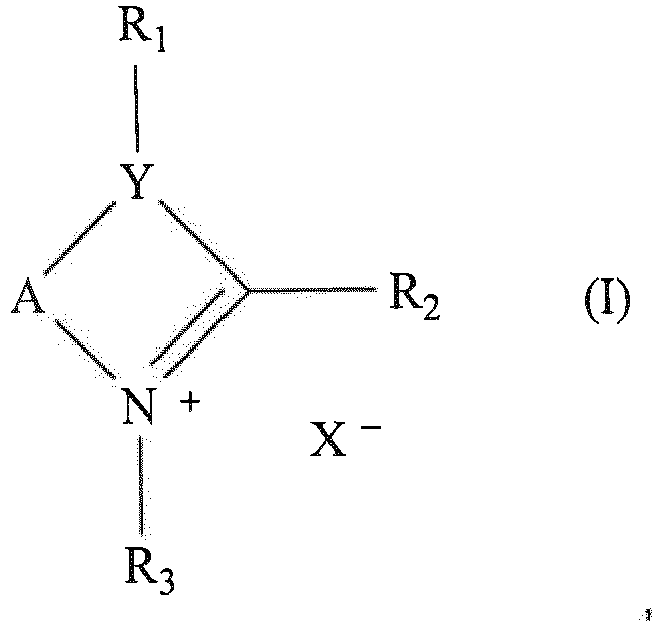
- A is -C(R4)=C(R4)- or -C(R4)=C(R4)-C(R4)2-;
- Y is N, S or O;
- R1 is, when Y is N, C1-C16alkyl, alkenyl, optionally substituted aralkyl, optionally substituted cycloalkyl, optionally substituted cycloalkylalkyl or optionally substituted heterocyclylalkyl, and when Y is S or O, R1 is absent;
- R2 is hydrogen, C1-C16alkyl, alkenyl, optionally substituted aralkyl, optionally substituted cycloalkyl, optionally substituted cycloalkylalkyl or optionally substituted heterocyclylalkyl;
- R3 is C1-C16alkyl, optionally substituted aryl or optionally substituted aralkyl;
- each R4 is independently hydrogen, cyano, nitro, -C(O)OR5, -C(O)N(R5)2, -N(R5)2, halo, haloalkyl, hydroxy, alkyl, alkoxy, haloalkoxy, alkoxyalkyl, alkenyl, optionally substituted aryl, optionally substituted aralkyl, optionally substituted cycloalkyl, optionally substituted cycloalkylalkyl, optionally substituted heterocyclyl, optionally substituted heterocyclylalkyl, optionally substituted heteroaryl or optionally substituted heteroarylalkyl;
- or two adjacent R4's, together with the carbons to which they are attached, may form an optionally substituted cycloalkyl, optionally substituted aryl, optionally substituted heterocyclyl or optionally substituted heteroaryl;
- each R5 is independently hydrogen, alkyl, aryl or aralkyl; and
- X is a pharmaceutically acceptable anion; and
- (b) two or all three of:
- (i) at least one precipitating agent,
- (ii) at least one lower alcohol, wherein the lower alcohol is a straight or branched carbon chain alcohol of no more than 8 carbons, and
- (iii) at least one chaotrope; and wherein
- In certain embodiments the composition further comprises one or more of (a) a pH buffer, and (b) water. In certain embodiments the pharmaceutically acceptable anion is selected from bromide, chloride, iodide, C1-C12alkylsulfonate, hexafluorophosphate, methylsulfate, ethylsulfate, tetrafluoroborate, trifluoromethanesulfonate and bis(trifluoromethylsulfonyl)imide.
- In certain of the above described embodiments A is -C(R4)=C(R4)-; R1 is C1-C8alkyl; R2 is hydrogen or C1-C8alkyl; and R3 is C1-C16alkyl, optionally substituted aryl or optionally substituted aralkyl; each R4 is independently hydrogen, cyano, nitro, -C(O)OR5, -C(O)N(R5)2, -N(R5)2, halo, haloalkyl, hydroxy, alkyl, alkoxy, haloalkoxy, alkoxyalkyl, alkenyl, optionally substituted aryl, optionally substituted aralkyl, optionally substituted cycloalkyl, optionally substituted cycloalkylalkyl, optionally substituted heterocyclyl, optionally substituted heterocyclylalkyl, optionally substituted heteroaryl or optionally substituted heteroarylalkyl; and each R5 is independently hydrogen, alkyl, aryl or aralkyl.
- In certain embodiments the compound of formula (I) is selected from: 1-methyl-3-carboxyethyl-imidazolium bromide, 1-hexyl-3-methylimidazolium bromide, 1-decyl-3-methylimidazolium bromide, 1-(2-hydroxyethyl)-3-methylimidazolium bromide, and 1-benzyl-3-hexylimidazolium bromide.
- In certain embodiments the precipitating agent is selected from 5-(4-dimethyl)amino benzylidene rhodanine, sulfosalicylic acid, lithium chloride, and lithium hydroxide. In certain embodiments the lower alcohol is selected from methanol, ethanol, n-propanol, isopropanol, n-butanol, and isobutanol (2-methylpropan-1-ol). In certain embodiments the chaotrope is selected from guanidine hydrochloride, guanidine thiocyanate, potassium thiocyanate, sodium thiocyanate and urea. In certain embodiments the chelating agent is selected from diethylenetriaminepentaacetic acid (DTPA), ethylenediaminetetraacetic acid (EDTA), ethylene glycol tetraacetic acid (EGTA), trans-1,2-diaminocyclohexane-N,N,N',N'-tetraacetic acid (CDTA), 1,2-bis(2-aminophenoxy)ethane-N,N,N',N'-tetraacetic acid (BAPTA), 1,4,7,10-tetraazacyclododecane-1,4,7,10-tetraacetic acid (DOTA), N-(2-hydroxyethyl)ethylenediamine-N,N',N'-triacetic acid, and nitrilotriacetic acid (NTA). In certain embodiments the reducing agent is selected from 2-mercaptoethanol, thiosulfate, TCEP (tris-(2-carboxyethyl) phosphine), dithiothreitol and dithioerythritol. In certain embodiments the pH buffer is selected from citric acid, tartaric acid, malic acid, sulfosalicylic acid, sulfoisophtalic acid, oxalic acid, borate, CAPS (3-(cyclohexylamino)-1-propanesulfonic acid), CAPSO (3-(cyclohexylamino)-2-hydroxy-1-propanesulfonic acid), EPPS (4-(2-hydroxyethyl)-1-piperazinepropanesulfonic acid), HEPES (4-(2-hydroxyethyl)piperazine-1-ethanesulfonic acid), MES (2-(N-morpholino)ethanesulfonic acid), MOPS (3-(N-morpholino)propanesulfonic acid), MOPSO (3-morpholino-2-hydroxypropanesulfonic acid), PIPES (1,4-piperazinediethanesulfonic acid), TAPS (N-[tris(hydroxymethyl)methyl]-3-aminopropanesulfonic acid), TAPSO (2-hydroxy-3-[tris(hydroxymethyl)methylamino]-1-propanesulfonic acid), TES (N-[tris(hydroxymethyl)methyl]-2-aminoethanesulfonic acid), bicine (N,N-Bis(2-hydroxyethyl)glycine), tricine (N-[Tris(hydroxymethyl)methyl]glycine), tris (tris(hydroxymethyl)aminomethane) and bis-tris (2-[Bis(2-hydroxyethyl)amino]-2-(hydroxymethyl)-1,3-propanediol).
- In certain embodiments the composition further comprises a surfactant or a detergent, which in certain embodiments is selected from Triton® X-100, Nonidet® P40 and a Brij® detergent. In certain embodiments the nucleic acid molecules comprise one or more of DNA molecules and RNA molecules. In certain embodiments the biological sample comprises vertebrate blood, which in certain further embodiments is unfractionated. In certain embodiments the biological sample comprises human blood, which in certain further embodiments is unfractionated. In certain embodiments the biological sample is selected from DNA, RNA, blood, buffy coat from blood, urine, feces, serum, serosal fluid, plasma, lymph, cerebrospinal fluid, saliva, mucosal secretion, vaginal fluid, ascites fluid, pleural fluid, pericardial fluid, peritoneal fluid, abdominal fluid, cell culture medium, organ culture medium, buccal cells, bacteria, viruses, yeast cells, plasmid DNA, mRNA, tRNA, rRNA, siRNA, micro RNA, hnRNA, cDNA, a protein, a polypeptide, a lipid, a glycolipid, a glycoprotein, an oligosaccharide, a polysaccharide, a vaccine, a cell, a sorted or selected cell, a tissue, a cell lysate, homogenate or extract, a tissue lysate, homogenate or extract, a blood sample, biopsy specimen, tissue explant, organ culture and a biological fluid.
- In certain other embodiments there is provided a substantially stably-stored nucleic acid molecule from a biological sample, comprising the biological sample admixed with any of the above described composition. In certain embodiments there is provided a substantially stably-stored nucleic acid molecule from a vertebrate blood sample, comprising vertebrate blood admixed with any of the above described compositions. In certain embodiments there is provided a substantially stably-stored polypeptide molecule from a human blood sample, comprising human blood admixed with any of the above described compositions. In certain further embodiments the nucleic acid molecule comprises one or more of a DNA molecule and an RNA molecule.
- In certain embodiments the above described composition is capable, following admixture with a first sample of unfractionated human blood to obtain a test mixture and storage of the test mixture without refrigeration for a time period of at least 60 days, of substantially preventing degradation of at least 70% of recoverable DNA from the test mixture, relative to DNA recoverable from a second sample of said unfractionated human blood that is stored at -20°C during said time period. In certain embodiments the above described composition is capable, following admixture with a first sample of unfractionated human blood to obtain a test mixture and storage of the test mixture without refrigeration for a time period of at least 21 days, of substantially preventing degradation of at least 70% of recoverable RNA from the test mixture, relative to RNA recoverable from a second sample of said unfractionated human blood that is stored at -80°C during said time period.
- Turning to another embodiment there is provided a method for substantially stabilizing one or a plurality of nucleic acid or polypeptide molecules that are present in a biological sample, comprising (a) admixing the biological sample with any of the above described compositions to obtain a mixture; and (b) maintaining the mixture without refrigeration for a time period of at least 7 days, and thereby substantially stabilizing said one or a plurality of nucleic acid or polypeptide molecules that are present in the biological sample, wherein either one, two or all three of: (i) degradation is substantially prevented of at least 70% of recoverable DNA in the mixture, relative to an amount of DNA or polypeptide that is recoverable from the sample when stored for the time period at -20°C without any of the above described compositions, (ii) degradation is substantially prevented of at least 70% of recoverable RNA in the mixture, relative to an amount of RNA that is recoverable from the sample when stored for the time period at -80°C without any of the above described compositions, and (iii) degradation is substantially prevented of at least 70% of recoverable polypeptide molecules in the mixture, relative to an amount of polypeptide molecules that is recoverable from the sample when stored for the time period at -20°C without any of the above described compositions
- In certain further embodiments the biological sample comprises vertebrate blood, which in certain still further embodiments is unfractionated. In certain other embodiments the biological sample comprises human blood, which in certain further embodiments is unfractionated. In certain other embodiments the biological sample is selected from DNA, RNA, blood, blood buffy coat, urine, feces, serum, serosal fluid, plasma, lymph, cerebrospinal fluid, saliva, mucosal secretion, vaginal fluid, ascites fluid, pleural fluid, pericardial fluid, peritoneal fluid, abdominal fluid, cell culture medium, organ culture medium, buccal cells, bacteria, viruses, yeast cells, plasmid DNA, mRNA, tRNA, rRNA, siRNA, micro RNA, hnRNA, cDNA, a protein, a polypeptide, a lipid, a glycolipid, a glycoprotein, an oligosaccharide, a polysaccharide, a vaccine, a cell, a sorted or selected cell, a tissue, a cell lysate, homogenate or extract, a tissue lysate, homogenate or extract, a blood sample, biopsy specimen, tissue explant, organ culture and a biological fluid. In certain other embodiments the step of maintaining comprises maintaining for a time period of at least 10, 20, 30, 40, 50, 60 or 70 days.
- These and other aspects of the present invention will become apparent upon reference to the following detailed description and attached drawings.
-
-
Figure 1 shows integrity of genomic DNA extracted from whole human blood using a Qia Amp™ mini-column (Qiagen, Valencia, CA) following storage for 31 days at room temperature following admixture at indicated ratios (vol/vol) with one of three different formulations each comprising a composition comprising the compound of formula (I). -
Figure 2 shows integrity of genomic DNA extracted from whole human blood using either a Qia Amp™ mini-column (Qiagen, Valencia, CA), a Flexigene™ kit (Qiagen) or a ChargeSwitch™ kit (Life Technologies, Carlsbad, CA) following storage for 62 days at room temperature following admixture at indicated ratios (vol/vol) with one of three different formulations each comprising a composition comprising the compound of formula (I). -
Figure 3 shows DNA yields as determined by spectrophotometric quantification of DNA extracted from 100 µL of whole human blood with the Flexigene™ kit (Qiagen) following storage for 62 days: (-20°C control), at -20°C; (Formulation), at room temperature following admixture (4:1, vol/vol) with a composition comprising the compound of formula (I); (Unprotected), at room temperature with no additives. -
Figure 4 shows integrity of genomic DNA extracted from whole human blood using either a Qia Amp™ mini-column (Qiagen, Valencia, CA), a Flexigene™ kit (Qiagen) or a ChargeSwitch™ kit (Life Technologies, Carlsbad, CA) following a shipping simulation and storage for 36 days at room temperature following admixture at indicated ratios (vol/vol) with one of three different formulations each comprising a composition comprising the compound of formula (I). -
Figure 5 shows DNA yields as determined by spectrophotometric quantification of DNA extracted from 100 µL of whole human blood with the Flexigene™ kit (Qiagen) following a shipping simulation and storage for 36 days: (-20°C control), at -20°C; (Formulation), shipping simulation followed by 36 days at room temperature following admixture (4:1, vol/vol) with a composition comprising the compound of formula (I). -
Figure 6 shows RNA recovery from whole blood using a RIboPure™ Blood kit (Ambion/ Applied Biosystems, Austin, TX) following storage for 14 days at room temperature after admixture (1:4, vol/vol) with each of three formulations (6-8) that contain a composition comprising the compound of formula (I). M, nucleic acid marker ladder; NP, not protected; -20, storage at -20°C. -
Figure 7 shows RNA recovery from whole blood using a RIboPure™ Blood kit (Ambion/ Applied Biosystems, Austin, TX) following storage for 6 days at room temperature after admixture (1:4, vol/vol) with a formulation (#3) that contains a composition comprising the compound of formula (I). NP, not protected; -80, storage at -80°C. -
Figure 8 shows RT-qPCR analysis of gene expression in a whole blood sample stored at room temperature in the presence of formulation 3.4 (Table 3).Fig. 8A , blood stored at room temperature with no stabilizer for three days;Fig. 8B , blood stored at -80°C with no stabilizer for seven days;Fig. 8C , blood stored at room temperature with formulation 3.4 for three days;Fig. 8D , blood stored at room temperature with formulation 3.4 for seven days. -
Figure 9 shows RNA integrity (RIN) analysis in blood samples stored under various conditions: L, polynucleotide standard ladder; lanes 1-2, blood stored at -80°C with no stabilizer; lanes 3-4, blood stored at room temperature with formulation 3.4 (Table 3); lanes 5-6, blood stored at room temperature with formulation 3.20 (Table 3); lanes 7-8, blood stored at room temperature with formulation 3.22 (Table 3); lanes 9-10, blood stored at room temperature with no additive; lanes 11-12, blood stored at room temperature with PAXgene™. -
Figure 10 shows RT-qPCR analysis of c-fos and IL-1β gene expression in a whole blood sample.Lane 1, blood stored at -80°C with no additive;lane 2, blood stored at room temperature with formulation 3.20 (Table 3);lane 3, blood stored at room temperature with formulation 3.21 (Table 3);lane 4, blood stored at room temperature with formulation 3.23 (Table 3);lane 5, blood stored at room temperature with formulation 3.24 (Table 3);lane 6, blood stored at room temperature with formulation 3.25 (Table 3);lane 7, blood stored at room temperature with PAXgene™;lane 8, blood stored at room temperature with no additive. -
Figure 11 shows RT-qPCR analysis of c-fos, IL-1β, IL-16 and 18S rRNA gene expression in a whole blood sample stored at room temperature for 14 days in the presence of: 1, formulation 3.20 (Table 3); 2, formulation 3.21 (Table 3); 3, formulation 3.23 (Table 3); 4, formulation 3.24 (Table 3); 5, formulation 3.25 (Table 3); 6, PAXgene™. - The present invention is directed in certain embodiments as described herein to compositions, admixtures and methods for stable storage of nucleic acid and polypeptide molecules in a biological sample, based on the unexpected discovery that in the presence of (a) certain compositions of formula (I) as disclosed herein in greater detail below, and (b) two or all three of: (i) at least one precipitating agent, (ii) at least one lower alcohol, wherein the lower alcohol is a straight or branched carbon chain alcohol of no more than 8 carbons, and (iii) at least one chaotrope; and wherein the composition comprises a chelating agent and/or a reducing agent; and, in certain further embodiments as elaborated upon below, (a) a pH buffer, and (b) water; a biological sample can be stored in liquid or semi-liquid form at ambient temperature for extended periods of time, such that nucleic acids and/or polypeptides in the sample are substantially protected from degradation that might otherwise occur and substantially all of the biological activity of the sample can be recovered. Accordingly and as described herein, certain embodiments relate in part to advantages provided by selection of one or more compounds of formula (I) and additional components of the composition for substantially stable storage as provided herein, which are compatible with preserving structure and/or activity of nucleic acid molecules and/or polypeptide molecules in a biological sample.
- Certain non-limiting embodiments also relate in part to surprising advantages provided upon admixture of a composition as defined in the claims for substantially stable storage with particular types of biological samples that contain nucleic acid and/or polypeptide molecules. For instance, upon admixture of whole blood with certain herein described compositions for substantially stable storage, an increase (e.g., in a statistically significant manner relative to an appropriate control, such as an admixture lacking one or more of the composition constituents) in viscosity may be observed which manifests as formation of a viscous liquid, a semiliquid, gel, suspension, colloid or the like. Such a change in the fluid state of the sample may afford advantageous ease of handling and/or storage, for example, by reducing the potential for loss or contamination of the sample in the course of transporting or archiving the container in which it is being stored, or as another example, by rendering the viscous mixture more amenable to certain processing steps (including automated or semi-automated processing, such as by robotics equipment) that would otherwise be difficult with freely flowing liquid materials.
- These and related embodiments permit efficient, convenient and economical storage, transportation, handling and processing of a wide variety of biological samples as provided herein including, but not limited to, polynucleotides, enzymes and other proteins, polypeptides, tissues and cells, without refrigeration or frozen storage. Samples may be stored following admixture of a sample with the herein described composition for substantially stable storage (e.g., contact of the sample with, and mixing in the presence of, the storage composition to afford coating of the sample with the storage composition, which in the case of a substantially liquid sample such as blood will afford a substantially uniform mixture) at ambient temperature.
- Following storage, which in preferred embodiments as defined in the claims pertains to storage without refrigeration (e.g., without the need for subjecting the sample-storage composition mixture to significantly reduced temperatures such as lowered sample temperatures that are commonly introduced through the use of refrigerators, freezers or lodging of the sample container in the presence of a coolant or refrigerant such as ice, dry ice or any naturally or artificially chilled medium), the samples may be processed or analyzed for nucleic acid molecules and/or polypeptides contained therein by isolating such biomolecules from other components of the sample while at the same time separating them from the storage composition, which does not compromise the biological activity of the nucleic acid and/or polypeptide molecules. Embodiments provided herein offer advantageously superior recoveries of intact nucleic acid and/or polypeptide molecules from stored biological samples, and may find uses in clinical, healthcare and diagnostic contexts, in biomedical research, biological research and forensic science, and in biological products and other settings where stable sample storage for life sciences may be desired, including in particular situations where refrigeration (including freezing) may be unavailable, unreliable, impractical, expensive, inefficient or otherwise untenable.
- According to certain contemplated embodiments there is provided a method for substantially stabilizing one or a plurality of nucleic acid and/or polypeptide molecules that are present in a biological sample, comprising admixing the biological sample with the composition as defined in the claims for substantially stable biological sample storage to obtain a mixture; and maintaining the mixture without refrigeration for a time period of at least 7, 8, 9, 10, 11, 12, 13, 14, 15, 16, 17, 18, 19, 20, 21 or more days. Depending on the sample and the type of biomolecule being stabilized, the time period may in certain contemplated embodiments be at least 3, 4, 5, 6, 7, 8, 9, 10, 11, 12, 13, 14, 15, 16, 17, 18, 19, 20, 21, 22, 23, 24, 25, 26 or more weeks, or at least 6, 7, 8, 9, 10, 11, 12, 13, 14, 15, 16, 17, 18 or more months, or at least 1, 2, 3, 4, 5 or more years.
- Admixture of the biological sample and the herein described composition for substantially stable biological sample storage may typically be performed using a range of volumetric ratios of the sample to the storage composition, such as a ratio of from about 10 parts sample to one part storage composition (10:1, vol/vol) to about 1 part sample to 10 parts storage composition (1:10, vol/vol), or a ratio therebetween, for instance, 6:1, 5:1, 4:1, 3:1, 2:1, 1:1, 1:2, 1:3, 1:4, 1:5, or 1:6, or any other ratio including intermediate ratios between those just exemplified, which may be determined empirically by the skilled artisan from the disclosure herein, and which may vary as a function of the particular sample and the particular storage composition being employed. Typically, the mixture of sample and storage composition will have a pH between about
pH 3 and aboutpH 10, which may also vary as a function of the particular sample and the particular storage composition being employed, and which may also be determined empirically by the skilled artisan from the disclosure herein. For example, for substantially stable storage of RNA the pH range may be from aboutpH 3 to aboutpH 8, preferably in certain embodiments from aboutpH 3 to about pH 6.5 (e.g., about pH 3.2, 3.5, 3.7, 4.0, 4.2, 4.5, 4.7, 5.0, 5.3, 5.5, 5.8, 6.0, 6.3 or 6.5). For substantially stable storage of DNA the pH range may be from aboutpH 5 to aboutpH 10, preferably in certain embodiments from aboutpH 6 to about pH 9 (e.g., about pH 6.3, 6.5, 6.8, 7.0, 7.4, 7.8, 8.0, 8.2, 8.4, 8.6, 8.8 or 9.0). - Preferably in certain of these and related embodiments, the herein composition as defined in the claims for substantially stable biological sample storage substantially prevents degradation of at least 70% of recoverable DNA, RNA and/or polypeptides in the mixture, relative to an amount of DNA, RNA or polypeptide that is recoverable from the sample when stored for the same time period at -20°C without the herein described composition for substantially stable biological sample storage. The extended time periods without refrigeration during which the compositions and methods as defined in the claims provide stabilization of DNA, RNA and/or polypeptides against degradative effects such as heat, light and/or enzymes (e.g., nucleases, proteases) that may be present in the biological sample are unprecedented, unexpected and advantageous.
- For example, in certain embodiments as defined in the claims, storage artifacts may hinder efforts to assess accurately the relative representation in a biological sample of one or more polynucleotides having particular nucleic acid sequences (e.g., mRNA) within a heterogeneous nucleic acid population (e.g., total RNA or total RNA-plus-DNA), due (according to non-limiting theory) to different degradation rates of particular RNA and/or DNA species over time during storage. Consequently, "snapshot" efforts to characterize such a sample at different points in time may lead to dramatically different results, such as disparate quantification values for the relative presence of particular RNA/DNA species over time, leading to erroneous calculation of, e.g., gene expression activity at the time the sample was collected. Improved stabilization as is provided by the herein described embodiments as defined in the claims may therefore usefully reduce (e.g., decrease in a statistically significant manner) or substantially eliminate such artifacts, by impairing sample degradation and thus avoiding biases in the composition of the sample that may vary over time.
- In other preferred embodiments, the composition as defined in the claims for substantially stable biological sample storage substantially prevents degradation of at least 75%, 80%, 85%, 90%, 95% or more of the recoverable DNA, RNA and/or polypeptides in the mixture, relative to an amount of DNA, RNA or polypeptide that is recoverable from the sample when stored for the same time period at -20°C without the herein described composition for substantially stable biological sample storage. In other preferred embodiments, the composition as defined in the claims for substantially stable biological sample storage substantially prevents degradation of at least 75%, 80%, 85%, 90%, 95% or more of the recoverable DNA, RNA and/or polypeptides in the mixture, relative to an amount of DNA, RNA or polypeptide that is recoverable from the sample when stored for the same time period at less than -20°C, -30°C, -40°C, -50°C, -60°C, -70°C, or -80°C without the herein described composition for substantially stable biological sample storage. Still other embodiments contemplate the storage methods as defined in the claims in which the temperature at which the mixture is maintained may vary significantly over time, including variable portions of the time period that may include refrigeration or freezing, such as may occur in the course of certain shipping itineraries.
- According to non-limiting theory, a composition for substantially stable storage of nucleic acid and polypeptide molecules in a biological sample, as provided herein, comprises one or more compounds of formula (I) and (b) two or all three of: (i) at least one precipitating agent, (ii) at least one lower alcohol, wherein the lower alcohol is a straight or branched carbon chain alcohol of no more than 8 carbons, and (iii) at least one chaotrope; and wherein the composition comprises a chelating agent and/or a reducing agent
, and may comprise a molecular structure that, by forming a matrix (e.g., a spatially organized support or scaffold), creates a three dimensional space which allows constituent biological material of the biological sample to associate with the matrix. Further according to non-limiting theory, the composition for substantially stable storage of nucleic acid and polypeptide molecules may also be used in certain contemplated embodiments to spatially organize the introduction of one or more additional agents that may beneficially stabilize, preserve, protect or otherwise contribute to the recovery of nucleic acid and/or protein molecules from the biological sample, such as salts, sugars, inhibitors, buffers and/or other stabilizers. The storage composition also allows inclusion of components (e.g., buffers) for the adjustment of pH and other parameters (e.g., by one or more chelating agents and/or reducing agents) for optimal storage conditions, and may optionally comprise one or a plurality of detectable indicators as provided herein, such as color-based pH indicators, and/or other chemical indicators. - The stable storage composition comprises one or more compounds of formula (I):

- A is -C(R4)=C(R4)- or -C(R4)=C(R4)-C(R4)2-;
- Y is N, S or O;
- R1 is, when Y is N, C1-C8alkyl, alkenyl, optionally substituted aralkyl, optionally substituted cycloalkyl, optionally substituted cycloalkylalkyl or optionally substituted heterocyclylalkyl, and when Y is S or O, R1 is absent;
- R2 is hydrogen, C1-C8alkyl, alkenyl, optionally substituted aralkyl, optionally substituted cycloalkyl, optionally substituted cycloalkylalkyl or optionally substituted heterocyclylalkyl;
- R3 is C1-C16alkyl, optionally substituted aryl or optionally substituted aralkyl;
- each R4 is independently hydrogen, cyano, nitro, -C(O)OR5, -C(O)N(R5)2, -N(R5)2, halo, haloalkyl, hydroxy, alkyl, alkoxy, haloalkoxy, alkoxyalkyl, alkenyl, optionally substituted aryl, optionally substituted aralkyl, optionally substituted cycloalkyl, optionally substituted cycloalkylalkyl, optionally substituted heterocyclyl, optionally substituted heterocyclylalkyl, optionally substituted heteroaryl or optionally substituted heteroarylalkyl;
- or two adjacent R4's, together with the carbons to which they are attached, may form an optionally substituted cycloalkyl, optionally substituted aryl, optionally substituted heterocyclyl or optionally substituted heteroaryl;
- each R5 is independently hydrogen, alkyl, aryl or aralkyl; and
- X is a pharmaceutically acceptable anion.
- Certain chemical groups named herein may be preceded by a shorthand notation indicating the total number of carbon atoms that are to be found in the indicated chemical group. For example; C1-C8alkyl describes an alkyl group, as defined below, having a total of 1 to 8 carbon atoms. The total number of carbons in the shorthand notation does not include carbons that may exist in substituents of the group described.
- In addition to the foregoing, as used in the specification and appended claims, unless specified to the contrary, the following terms have the meaning indicated:
- "Alkyl" refers to a straight or branched hydrocarbon chain radical consisting solely of carbon and hydrogen atoms, containing no unsaturation, having from one to 16 carbon atoms, preferably one to eight carbon atoms for R1, R2 and R4 in compounds of formula (I) as set forth herein, or preferably four to sixteen carbon atoms for R3 in compounds of formula (I), and which is attached to the rest of the molecule by a single bond, e.g., methyl, ethyl, n-propyl, 1-methylethyl (iso-propyl), n-butyl, n-pentyl, 1,1-dimethylethyl (t-butyl), 3-methylhexyl, 2-methylhexyl, and the like.
- "Alkenyl" refers to a straight or branched hydrocarbon chain radical group consisting solely of carbon and hydrogen atoms, containing at least one double bond, having from two to twelve carbon atoms, preferably two to eight carbon atoms and which is attached to the rest of the molecule by a single bond, e.g., ethenyl, prop-1-enyl, but-1-enyl, pent-1-enyl, penta-1,4-dienyl, and the like.
- "Alkylene" or "alkylene chain" refers to a straight or branched divalent hydrocarbon chain linking the rest of the molecule to a radical group, consisting solely of carbon and hydrogen, containing no unsaturation and having from one to twelve carbon atoms, e.g., methylene, ethylene, propylene, n-butylene, and the like. The alkylene chain is attached to the rest of the molecule through a single bond and to the radical group through a single bond. The points of attachment of the alkylene chain to the rest of the molecule and to the radical group can be through one carbon or any two carbons within the chain.
- "Alkoxy" refers to a radical of the formula -ORa where Ra is an alkyl radical as defined above.
- "Alkoxyalkyl" refers to a radical of the formula -Rb-O-Ra where Rb is an alkylene chain as defined above and Ra is an alkyl radical as defined above. The oxygen atom may be bonded to any carbon in the alkylene chain and in the alkyl radical.
- "Aryl" refers to a hydrocarbon ring system radical comprising hydrogen, 6 to 18 carbon atoms and at least one aromatic ring. For purposes of this invention, the aryl radical may be a monocyclic, bicyclic, tricyclic or tetracyclic ring system, which may included fused or bridged ring systems. Aryl radicals include, but are not limited to, aryl radicals derived from aceanthrylene, acenaphthylene, acephenanthrylene, anthracene, azulene, benzene, chrysene, fluoranthene, fluorene, as-indacene, s-indacene, indane, indene, naphthalene, phenalene, phenanthrene, pleiadene, pyrene, and triphenylene.
- "Aralkyl" refers to a radical of the formula -Rb-Rc where Rb is an alkylene chain as defined above and Rc is one or more aryl radicals as defined above, for example, benzyl, diphenylmethyl and the like. The aryl part of the aralkyl radical may be optionally substituted as described above for an aryl group.
- "Cycloalkyl" refers to a stable non-aromatic monocyclic or polycyclic hydrocarbon radical consisting solely of carbon and hydrogen atoms, which may include fused or bridged ring systems, having from three to fifteen carbon atoms, preferably having from three to ten carbon atoms, and which is saturated or unsaturated and attached to the rest of the molecule by a single bond. Monocyclic radicals include, for example, cyclopropyl, cyclobutyl, cyclopentyl, cyclohexyl, cycloheptly, and cyclooctyl. Polycyclic radicals include, for example, adamantyl, norbornyl, decalinyl, and the like. Unless otherwise stated specifically in the specification, the term "optionally substituted cycloalkyl" is meant to include cycloalkyl radicals which are optionally substituted by one or more substituents independently selected from the group consisting of alkyl, alkenyl, halo, haloalkyl, haloalkenyl, cyano, nitro, oxo, aryl, aralkyl, cycloalkyl, cycloalkylalkyl, heterocyclyl, heterocyclylalkyl, heteroaryl, heteroarylalkyl, -R15-OR14, -R15-OC(O)-R14, -R15-N(R14)2, -R15-C(O)R14, -R15-C(O)OR14, -R15-C(O)N(R14)2, -R15-N(R14)C(O)OR16, -R15-N(R14)C(O)R16, -R15-N(R14)S(O)tR16 (where t is 1 to 2), -R15-N=C(OR14)R14, -R15-S(O)tOR16 (where t is 1 to 2), -R15-S(O)pR16 (where p is 0 to 2), and -R15-S(O)tN(R14)2 (where t is 1 to 2) where each R14 is independently hydrogen, alkyl, haloalkyl, cycloalkyl, cycloalkylalkyl, aryl, aralkyl, heterocyclyl, heterocyclylalkyl, heteroaryl or heteroarylalkyl; each R15 is independently a direct bond or a straight or branched alkylene or alkenylene chain; and each R16 is alkyl, haloalkyl, cycloalkyl, cycloalkylalkyl, aryl, aralkyl, heterocyclyl, heterocyclylalkyl, heteroaryl or heteroarylalkyl. These optional substituents, including the R14 and R16 substituents, may be optionally substituted as defined herein.
- "Cycloalkylalkyl" refers to a radical of the formula -RbRg where Rb is an alkylene chain as defined above and Rg is a cycloalkyl radical as defined above.
- "Halo" refers to bromo, chloro, fluoro or iodo.
- "Haloalkyl" refers to an alkyl radical, as defined above, that is substituted by one or more halo radicals, as defined above, e.g., trifluoromethyl, difluoromethyl, trichloromethyl, 2,2,2-trifluoroethyl, 1-fluoromethyl-2-fluoroethyl, 3-bromo-2-fluoropropyl, 1-bromomethyl-2-bromoethyl, and the like.
- "Haloalkoxy" refers to an alkoxy radical, as defined abov, that is substituted by one or more halo radicals, as defined above, e.g., trifluoromethoxy, difluoromethoxy, trichloromethoxy, 2,2,2-trifluoroethoxy and the like.
- "Heterocyclyl" refers to a stable 3- to 18-membered non-aromatic ring radical which consists of two to twelve carbon atoms and from one to six heteroatoms selected from the group consisting of nitrogen, oxygen and sulfur. Unless stated otherwise specifically in the specification, the heterocyclyl radical may be a monocyclic, bicyclic, tricyclic or tetracyclic ring system, which may include fused or bridged ring systems; and the nitrogen, carbon or sulfur atoms in the heterocyclyl radical may be optionally oxidized; the nitrogen atom may be optionally quaternized; and the heterocyclyl radical may be partially or fully saturated. Examples of such heterocyclyl radicals include, but are not limited to, dioxolanyl, thienyl[1,3]dithianyl, decahydroisoquinolyl, imidazolinyl, imidazolidinyl, isothiazolidinyl, isoxazolidinyl, morpholinyl, octahydroindolyl, octahydroisoindolyl, 2-oxopiperazinyl, 2-oxopiperidinyl, 2-oxopyrrolidinyl, oxazolidinyl, piperidinyl, piperazinyl, 4-piperidonyl, pyrrolidinyl, pyrazolidinyl, quinuclidinyl, thiazolidinyl, tetrahydrofuryl, trithianyl, tetrahydropyranyl, thiomorpholinyl, thiamorpholinyl, 1-oxo-thiomorpholinyl, and 1,1-dioxo-thiomorpholinyl. Unless stated otherwise specifically in the specification, the term "optionally substituted heterocyclyl" is meant to include heterocyclyl radicals as defined above which are optionally substituted by one or more substituents selected from the group consisting of alkyl, alkenyl, halo, haloalkyl, haloalkenyl, cyano, oxo, thioxo, nitro, aryl, aralkyl, cycloalkyl, cycloalkylalkyl, heterocyclyl, heterocyclylalkyl, heteroaryl, heteroarylalkyl, -R15-OR14, -R15-OC(O)-R14, -R15-N(R14)2, -R15-C(O)R14, -R15-C(O)OR14, -R15-C(O)N(R14)2, -R15-N(R14)C(O)OR16, -R15-N(R14)C(O)R16, -R15-N(R14)S(O)tR16 (where t is 1 to 2), -R15-N=C(OR14)R14, -R15-S(O)tOR16 (where t is 1 to 2), -R15-S(O)pR16 (where p is 0 to 2), and -R15-S(O)tN(R14)2 (where t is 1 to 2) where each R14 is independently hydrogen, alkyl, alkenyl, haloalkyl, cycloalkyl, cycloalkylalkyl, aryl, aralkyl, heterocyclyl, heterocyclylalkyl, heteroaryl or heteroarylalkyl; each R15 is independently a direct bond or a straight or branched alkylene or alkenylene chain; and each R16 is alkyl, alkenyl, haloalkyl, cycloalkyl, cycloalkylalkyl, aryl, aralkyl, heterocyclyl, heterocyclylalkyl, heteroaryl or heteroarylalkyl. These optional substituents, including the R14 and R16 substituents, may be optionally substituted as defined herein.
- "Heterocyclylalkyl" refers to a radical of the formula -RbRh where Rb is an alkylene chain as defined above and Rh is a heterocyclyl radical as defined above, and if the heterocyclyl is a nitrogen-containing heterocyclyl, the heterocyclyl may be attached to the alkyl radical at the nitrogen atom. The heterocyclyl part of the heterocyclylalkyl radical may be optionally substituted as defined above for a heterocyclyl group.
- "Heteroaryl" refers to a 5- to 14-membered ring system radical comprising hydrogen atoms, one to thirteen carbon atoms, one to six heteroatoms selected from the group consisting of nitrogen, oxygen and sulfur, and at least one aromatic ring. For purposes of this invention, the heteroaryl radical may be a monocyclic, bicyclic, tricyclic or tetracyclic ring system, which may include fused or bridged ring systems; and the nitrogen, carbon or sulfur atoms in the heteroaryl radical may be optionally oxidized; the nitrogen atom may be optionally quaternized. Examples include, but are not limited to, azepinyl, acridinyl, benzimidazolyl, benzthiazolyl, benzindolyl, benzodioxolyl, benzofuranyl, benzooxazolyl, benzothiazolyl, benzothiadiazolyl, benzo[b][1,4]dioxepinyl, 1,4-benzodioxanyl, benzonaphthofuranyl, benzoxazolyl, benzodioxolyl, benzodioxinyl, benzopyranyl, benzopyranonyl, benzofuranyl, benzofuranonyl, benzothienyl (i.e., benzothiophenyl), benzotriazolyl, benzo[4,6]imidazo[1,2-a]pyridinyl, carbazolyl, cinnolinyl, dibenzofuranyl, dibenzothiophenyl, furanyl, furanonyl, isothiazolyl, imidazolyl, indazolyl, indolyl, indazolyl, isoindolyl, indolinyl, isoindolinyl, isoquinolyl, indolizinyl, isoxazolyl, naphthyridinyl, oxadiazolyl, 2-oxoazepinyl, oxazolyl, oxiranyl, 1-oxidopyridinyl, 1-oxidopyrimidinyl, 1-oxidopyrazinyl, 1-oxidopyridazinyl, 1-phenyl-1H-pyrrolyl, phenazinyl, phenothiazinyl, phenoxazinyl, phthalazinyl, pteridinyl, purinyl, pyrrolyl, pyrazolyl, pyridinyl, pyrazinyl, pyrimidinyl, pyridazinyl, pyrrolyl, quinazolinyl, quinoxalinyl, quinolinyl, quinuclidinyl, isoquinolinyl, tetrahydroquinolinyl, thiazolyl, thiadiazolyl, triazolyl, tetrazolyl, triazinyl, and thiophenyl (i.e., thienyl). Unless stated otherwise specifically in the specification, the term "optionally substituted heteroaryl" is meant to include heteroaryl radicals as defined above which are optionally substituted by one or more substituents selected from the group consisting of alkyl, alkenyl, alkoxy, halo, haloalkyl, haloalkenyl, cyano, oxo, thioxo, nitro, aryl, aralkyl, cycloalkyl, cycloalkylalkyl, heterocyclyl, heterocyclylalkyl, heteroaryl, heteroarylalkyl, -R15-OR14, -R15-OC(O)-R14, -R15-N(R14)2, -R15-C(O)R14, -R15-C(O)OR14, -R15-C(O)N(R14)2, -R15-N(R14)C(O)OR16, -R15-N(R14)C(O)R16, -R15-N(R14)S(O)tR16 (where t is 1 to 2), -R15-N=C(OR14)R14, -R15-S(O)tOR16 (where t is 1 to 2), -R15-S(O)pR16 (where p is 0 to 2), and -R15-S(O)tN(R14)2 (where t is 1 to 2) where each R14 is independently hydrogen, alkyl, alkenyl, haloalkyl, cycloalkyl, cycloalkylalkyl, aryl, aralkyl, heterocyclyl, heterocyclylalkyl, heteroaryl or heteroarylalkyl; each R15 is independently a direct bond or a straight or branched alkylene or alkenylene chain; and each R16 is alkyl, alkenyl, haloalkyl, cycloalkyl, cycloalkylalkyl, aryl, aralkyl, heterocyclyl, heterocyclylalkyl, heteroaryl or heteroarylalkyl. These optional substituents, including the R14 and R16 substituents, may be optionally substituted as defined herein.
- "Heteroarylalkyl" refers to a radical of the formula -RbRi where Rb is an alkylene chain as defined above and Ri is a heteroaryl radical as defined above. The heteroaryl part of the heteroarylalkyl radical may be optionally substituted as defined above for a heteroaryl group.
- As disclosed herein, a composition for substantially stable storage of nucleic acid molecules in a biological sample, comprises (a) one or more compounds of formula (I); and (b) two, or all three of (i) at least one precipitating agent, (ii) at least one lower alcohol as defined in the claims, and (iii) at least one chaotrope; and wherein the composition comprises a chelating agent and/or a reducing agent.
- The pharmaceutically acceptable anion may be any anionic complement to the cationic moiety shown in formula (I), including but not limited to halides, C1-C12alkylsulfonate, hexafluorophosphate, methylsulfate, ethylsulfate, tetrafluoroborate, trifluoromethanesulfonate, bis(trifluoromethylsulfonyl)imide, nitrate, phosphate, aryl sulfonate, tetrafluoroborate, trifluoromethanesulfonate, hexafluoroantimonate, hexafluoroarsenate, hexafluorophosphate, tetraphenylborate, or tetra(perfluorophenyl)borate, or any other biocompatible anion that does not interfere with substantial recovery of nucleic acid and/or polypeptide molecules from the stored biological sample.
- The pharmaceutically acceptable anion or "anionic moiety" thus includes a pharmaceutically acceptable and chemically stable negatively charged species. It is also preferred that the anionic moiety does not exhibit reactivity towards any other agents comprising the composition for stable storage. Additional examples of pharmaceutically acceptable anionic moieties include, but are not limited to, halogen ions, such as a fluoride ion, chloride ion, bromide ion and iodide ion; anions of inorganic acid salts such as nitrate, perchlorate, sulfate, phosphate, and carbonate; pharmaceutically acceptable anions of lower alkylsulfonic acid salts such as methanesulfonic acid, and ethanesulfonic acid salts; pharmaceutically acceptable anions of arylsulfonic acid salts such as benzenesulfonic acid, 2-naphthalenesulfonic acid and p-toluenesulfonic acid salts; pharmaceutically acceptable anions of organic acid salts such as trichloroacetic acid, trifluoroacetic acid, hydroxyacetic acid, benzoic acid, mandelic acid, butyric acid, propionic acid, formic acid, fumaric acid, succinic acid, citric acid, tartaric acid, oxalic acid, maleic acid, acetic acid, malic acid, lactic acid, and ascorbic acid salts; and pharmaceutically acceptable anions of acidic amino acid salts such as glutamic acid and asparatic acid salts. In the case of certain preferred examples of the compound of formula (I), the halogen anionic moiety precursor may be exchanged for aryl or alkyl sulphonate anionic moieties. Examples include, but are not limited to, benzene sulfonate, p-toluene sulfonate, 2-napthylene sulphonate, methanesulfonate, ethanesulfonate, and propanesulfonate. Those skilled in the art will appreciate that these and other suitable anions may be exchanged with the anionic complement that may be provided with the cationic moiety to obtain the compound of formula (I) as provided herein, having any particular desired anionic, through routine methodologies.
- Precipitating agent. According to certain embodiments of the composition as defined in the claims for substantially stable storage of nucleic acid and/or polypeptide molecules in a biological sample, a precipitating agent may be included, which refers to compounds that influence the solubility of nucleic acid and/or polypeptide molecules. In some embodiments a precipitating agent is one which has been used in the isolation of nucleic acid molecules, such as an agent that promotes nucleic acid precipitation from biological samples or from extracts of biological samples. Non-limiting examples of precipitating agents include 5-(4-dimethyl)amino benzylidene rhodanine, sulfosalicylic acid, lithium chloride, and lithium hydroxide. Other examples include ammonium sulfate, sodium sulfate, sodium chloride, sodium citrate, dextrans, polyethylene glycol, and salts of polyvalent metal cations such as calcium, magnesium, manganese and iron. Certain embodiments, including but not limited to those presented in Tables 1, 2 and 3, contemplate inclusion of a precipitating agent at a concentration of about 0.05, 0.1, 0.5, 1.0, 1.2, 1.4, 1.6, 1.8, 2.0, 2.2, 2.4, 2.6, 2.8, 3.0, 3.2, 3.4, 3.4, 3.6, 3.8 or 4.0 M, where "about" may be understood to represent quantitative variation that may be more or less than the recited amount by less than 50%, more preferably less than 40%, more preferably less than 30%, and more preferably less than 20%, 15%, 10% or 5%.
- Lower alcohol. As described herein, certain preferred embodiments may include at least one lower alcohol in the composition for substantially stable storage of nucleic acid and/or polypeptide molecules in a biological sample. Such alcohols include those based on relatively small straight and branched carbon chains, typically of no more than 8, 7, 6, 5, 4 or 3 carbons. Examples, by way of illustration and not limitation, include methanol, ethanol, n-propanol, isopropanol, n-butanol, and isobutanol (2-methylpropan-1-ol), and it will be appreciated that from the present disclosure the skilled person may select other lower alcohols for use in a stable storage composition, as may vary based on the other components of the composition that are employed, the particular biological sample being stored, whether nucleic acid molecules or polypeptide molecules or both are sought to be recovered, and other factors. Certain embodiments, including but not limited to those presented in Tables 1, 2 and 3, contemplate inclusion of a lower alcohol at a concentration (on a volumetric basis, i.e., vol/vol) of about 5, 6, 7, 8, 9, 10, 11, 12, 13, 14, 15, 16, 17, 18, 19, 20, 21, 22, 23, 24, 25, 26, 27, 28, 29 or 30% (vol/vol), where "about" may be understood to represent quantitative variation that may be more or less than the recited amount by less than 50%, more preferably less than 40%, more preferably less than 30%, and more preferably less than 20%, 15%, 10% or 5%.
- Chaotrope. Certain embodiments described herein may include at least one chaotrope in the composition for substantially stable storage of nucleic acid and/or polypeptide molecules in a biological sample. A number of chaotropes or chaotropic agents are known in the art that disrupt the secondary, tertiary and/or quartenary structures of biological macromolecules such as polypeptides, proteins and nucleic acids, including DNA and RNA. Non-limiting examples of such chaotropes as are contemplated for use in certain of the presently disclosed embodiments include guanidine hydrochloride, guanidine thiocyanate, potassium thiocyanate, sodium thiocyanate and urea. Certain contemplated embodiments, including those that may relate to specific types of biological samples, expressly exclude the presence of a chaotrope when a chelating agent is also present, and in particular of a chaotrope at a concentration sufficient to denature a protein, polypeptide or nucleic acid molecule, while certain other contemplated embodiments are not so limited. Certain embodiments, including but not limited to those presented in Tables 1, 2 and 3, contemplate inclusion of a chaotrope at a concentration of about 0.05, 0.1, 0.5, 1.0, 1.2, 1.4, 1.6, 1.8, 2.0, 2.2, 2.4, 2.6, 2.8, 3.0, 3.2, 3.4, 3.4, 3.6, 3.8 or 4.0 M, where "about" may be understood to represent quantitative variation that may be more or less than the recited amount by less than 50%, more preferably less than 40%, more preferably less than 30%, and more preferably less than 20%, 15%, 10% or 5%.
- Chelating agents or chelators may, according to certain embodiments, be included in the presently described composition for substantially stable storage of nucleic acid and/or polypeptide molecules in a biological sample, and are known to those familiar with the art for their ability to complex with and hinder the reactivity of metal cations. Exemplary chelating agents include diethylenetriaminepentaacetic acid (DTPA), ethylenediaminetetraacetic acid (EDTA), ethylene glycol tetraacetic acid (EGTA), trans-1,2-diaminocyclohexane-N,N,N',N'-tetraacetic acid (CDTA), 1,2-bis(2-aminophenoxy)ethane-N,N,N',N'-tetraacetic acid (BAPTA), 1,4,7,10-tetraazacyclododecane-1,4,7,10-tetraacetic acid (DOTA), N-(2-hydroxyethyl)ethylenediamine-N,N',N'-triacetic acid, and nitrilotriacetic acid (NTA).
- Reducing agents may, according to certain embodiments, be included in the presently described composition for substantially stable storage of nucleic acid and/or polypeptide molecules in a biological sample, and are known to those familiar with the art. Exemplary reducing agents include 2-mercaptoethanol, thiosulfate, TCEP (tris-(2-carboxyethyl) phosphine), dithiothreitol and dithioerythritol.
- According to certain embodiments the composition as defined in the claims for substantially stable storage of a nucleic acid and/or polypeptide molecule in a biological sample may include one or more pH buffers, which may be any of a large number of compounds known in the art for their ability to resist changes in the pH of a solution, such as an aqueous solution in which the pH buffer is present. Selection of one or more particular pH buffers for inclusion in a stable storage composition may be done based on the present disclosure and according to routine practices in the art, and may be influenced by a variety of factors including the pH that is desirably to be maintained, the nature of the biological sample, the solvent conditions to be employed, the compound(s) of formula (I) to be used, the solubility properties of the compound(s) of formula (I) and of one or more of the precipitating agent, the lower alcohol and/or the chaotrope, the inclusion of other components, and other criteria. For example, typically a pH buffer is employed at a pH that is within about 0.1, 0.2, 0.3, 0.4, 0.5, 0.6, 0.7, 0.8, 0.9 or 1.0 pH unit of a proton dissociation constant (pKa) that is a characteristic of the buffer. Non-limiting examples of pH buffers include citric acid, tartaric acid, malic acid, sulfosalicylic acid, sulfoisophtalic acid, oxalic acid, borate, CAPS (3-(cyclohexylamino)-1-propanesulfonic acid), CAPSO (3-(cyclohexylamino)-2-hydroxy-1-propanesulfonic acid), EPPS (4-(2-hydroxyethyl)-1-piperazinepropanesulfonic acid), HEPES (4-(2-hydroxyethyl)piperazine-1-ethanesulfonic acid), MES (2-(N-morpholino)ethanesulfonic acid), MOPS (3-(N-morpholino)propanesulfonic acid), MOPSO (3-morpholino-2-hydroxypropanesulfonic acid), PIPES (1,4-piperazinediethanesulfonic acid), TAPS (N-[tris(hydroxymethyl)methyl]-3-aminopropanesulfonic acid), TAPSO (2-hydroxy-3-[tris(hydroxymethyl)methylamino]-1-propanesulfonic acid), TES (N-[tris(hydroxymethyl)methyl]-2-aminoethanesulfonic acid), bicine (N,N-Bis(2-hydroxyethyl)glycine), tricine (N-[Tris(hydroxymethyl)methyl]glycine), tris (tris(hydroxymethyl)aminomethane) and bis-tris (2-[Bis(2-hydroxyethyl)amino]-2-(hydroxymethyl)-1,3-propanediol). Certain embodiments contemplated herein, including a number of those set forth in Tables 1, 2 and 3, may feature a formulation having a pH of about 4.0, 4.1, 4.2, 4.3, 4.4, 4.5, 4.6, 4.7, 4.8, 4.9, 5.0, 5.1, 5.2, 5.3, 5.4, 5.5., 5.6, 5.7, 5.8, 5.9., 6.0, 6.1, 6.2, 6.3, 6.4, 6.5, 6.6., 6.7, 6.8, 6.9, 7.0, 7.1, 7.2, 7.3, 7.4, 7.5, 7.6, 7.7., 7.8, 7.9, 8.0, 8.1, 8.2, 8.3, 8.4, 8.5, 8.6, 8.7, 8.8, 8.9 or 9.0, where "about" may be understood to represent quantitative variation that may be more or less than the recited pH value by less than 1, preferably less than 0.5, preferably less than 0.25, and more preferably less than 0.1 pH unit.
- The composition as defined in the claims for substantially stable storage of a nucleic acid and/or polypeptide molecule in a biological sample may, in certain embodiments, contain a surfactant or a detergent which may, in certain embodiments, be selected from Triton® X-100, Nonidet® P40, any of the Brij® family of detergents, any of the Tween® family of surfactants, sodium dodecyl sulfate, sodium lauryl sulfate, deoxycholate, octyl-glucopyranoside, betaines, or the like. Certain contemplated embodiments, including those that may relate to specific types of biological samples, expressly exclude the presence of a denaturing detergent when a chelating agent is also present, and in particular of a detergent of a type and at a concentration sufficient to denature a protein, polypeptide or nucleic acid molecule, while certain other contemplated embodiments are not so limited, where it is to be noted that many detergents and surfactants are non-denaturing for many if not all types of biological samples.
- Tables 1, 2, 3 and 4 show exemplary compositions for substantially stable storage of nucleic acid and/or polypeptide molecules in a biological sample. As described herein and in the Examples, certain preferred embodiments contemplate use of these compositions for blood sample storage, including for recoverable, unrefrigerated storage of DNA, RNA and/or protein from blood samples. Unless otherwise noted herein, formulations are aqueous solutions and "%" refers to weight as a percentage per unit volume (w/v) with the exception of alcohols (e.g., ethanol, 2-mercaptoethanol) for which "%" refers to volume as a percentage per unit volume (v/v).
Table 1. EXEMPLARY COMPOSITIONS FOR STABLE STORAGE OF NUCLEIC ACID AND POLYPEPTIDE MOLECULES IN A BIOLOGICAL SAMPLE # Formulation *1.1 3.2 M guanidine hydrochloride, 100 mM citric acid, 50 mM K3-DTPA, 1 mM 5-(4-dimethyl)amino benzylidene rhodanine pH 4.5. 1.2 3.2 M guanidine hydrochloride, 10% 1-methyl-3-carboxyethyl-imidazolium bromide, 100 mM citric acid, 50 mM K3-DTPA, 20% ethanol, 1 mM 5-(4-dimethyl)aminobenzylidene rhodanine pH 4.5. 1.3 3.2 M guanidine hydrochloride, 10% 1-methyl-3-carboxyethyl-imidazolium bromide, 100 mM citric acid, 50 mM K3-DTPA, 1 mM 5-(4-dimethyl)aminobenzylidene rhodanine pH 4.5. *1.4 4 M guanidine hydrochloride, 100 mM sulfosalicylic acid, 50 mM Na3-DTPA, 30% ethanol, pH 4.4. *1.5 3.5 M LiCl, 100 mM citric acid, 15% Brij®-35, pH 4.4 *1.6 3.5 M LiCl, 4% 1-hexyl-3-methylimidazolium bromide, 100 mM citric acid, 10% Triton® X-100, pH 4.4 1.7 3.5 M LiCl, 100 mM citric acid, 4% 1-decyl-3-methylimidazolium bromide, 25 mM Na3-DTPA, 30% ethanol, pH 4.4. 1.8 3.5 M LiCl, 100 mM citric acid, 4% 1-decyl-3-methylimidazolium bromide, 25 mM Na3-DTPA, 30% ethanol, 100 mM TCEP, pH 4.4. *1.9 3.5 M LiCl, 200 mM citric acid, 4% 1-hexyl-3-methylimidazolium bromide, 25 mM Na3-DTPA, pH 4.4. *1.10 3.5 M LiCl, 200 mM citric acid, 4% 1-(2-hydroxyethyl)-3-methylimidazolium bromide, 25 mM Na3- DTPA, pH 4.4. Compositions marked with "*" are not according to the invention. TABLE 2. EXEMPLARY COMPOSITIONS FOR STABLE STORAGE OF NUCLEIC ACID AND POLYPEPTIDE MOLECULES IN A BIOLOGICAL SAMPLE # Formulation 2.1 3.5 M LiCl, 200 mM citric Acid, 50 mM Na3-DTPA, 2% 2-mercaptoethanol, 4% 1-decyl-3-methylimidazolium bromide, 30% ethanol, pH 4.6. *2.2 3.5 M LiCl, 200 mM citric Acid, 50 mM Na3-DTPA, 2% 2-mercaptoethanol, 4% 1-decyl-3-methylimidazolium bromide, pH 4.26. *2.3 3.5 M LiCl, 200 mM citric Acid, 50 mM Na3-DTPA, 10% 2-mercaptoethanol, 4% 1-Decyl-3-methylimidazolium bromide, pH 5.4. 2.4 3.5 M LiCl, 200 mM citric Acid, 50 mM Na3-DTPA, 10% 2-mercaptoethanol, 4% 1-decyl-3-methylimidazolium bromide, 20% ethanol, pH 5.2. 2.5 3.5 M LiCl, 200 mM citric Acid, 25 mM Na3-DTPA, 100 mM sodium thiosulfate, 4% 1-decyl-3-methylimidazolium bromide, 30% ethanol, pH 5.0. 2.6 3.5 M LiCl, 200 mM sulfosalicylic acid, 25 mM Na3-DTPA, 4% 1-decyl-3-methylimidazolium bromide, 10% ethanol, 20% 2-mercaptoethanol, pH 5.2. Compositions marked with "*" are not according to the invention. TABLE 3. EXEMPLARY COMPOSITIONS FOR STABLE STORAGE OF NUCLEIC ACID AND POLYPEPTIDE MOLECULES IN A BIOLOGICAL SAMPLE # Formulation *3.1 3.5 M LiCl, 4% 1-hexyl-3-methylimidazolium bromide, 25 mM Na3-DTPA, pH 7.8. 3.2 1 M guanidine hydrochloride, 1% 1-hexyl-3-methylimidazolium bromide, 200 mM oxalic acid, 200 mM tartaric acid, 50 mM Na3-DTPA, 0.8 M LiOH, pH 8.1. 3.3 4 M guanidine hydrochloride, 1% 1-hexyl-3-methylimidazolium bromide, 200 mM sulfosalicylic acid, 25 mM Na3-DTPA, pH 4.3. 3.4 4 % 1-Decyl-3- methylimidazolium bromide, 200 mM sulfosalicyclic acid, 50 mM citric acid, 2.4 M guanidine hydrochloride 10% 2-mercaptoethanol, pH to 4.0 w/ 3M LiOH. 3.5 3.5 M LiCl, 200 mM Citric acid, 100 mM sulfosalicylic acid, 50 mM Na3-DTPA, 4% 1-decyl-3- methylimidazolium bromide, 10% 2-mercaptoethanol, pH'd to 4.4 with LiOH. 3.6 3.5 M LiCl, 200 mM citric acid, 50 mM Na3-DTPA, 4% 1-decyl-3-methylimidazolium bromide, 10% 2-mercaptoethanol, pH'd to 4.25 with LiOH. 3.7 4 M guanidine hydrochloride, 200 mM citric acid, 100 mM sulfosalicylic acid, 4% 1-decyl-3-methylimidazolium bromide, 50 mM Na3-DTPA, 10% 2-mercaptoethanol, pH 4.0. 3.8 3.5 M LiCl, 200 mM EPPS, 4% 1-octyl-3-methylimidazolium bromide, 30 % ethanol, 25 mM TCEP hydrochloride, pH 8.6. 3.9 3.2 M guanidine hydrochloride, 10% 1-methyl-3-carboxyethyl-imidazolium bromide, 100 mM citric acid, 50 mM K3-DTPA, 20% ethanol, 1 mM 5-(4-dimethyl)aminobenzylidene rhodanine pH 4.5. 3.10 3.2 M guanidine hydrochloride, 10% 1-methyl-3-carboxyethyl-imidazolium bromide, 100 mM citric acid, 50 mM K3-DTPA, 1 mM 5-(4-dimethyl)aminobenzylidene rhodanine pH 4.5. *3.11 3.5 M LiCl, 4% 1-hexyl-3-methylimidazolium bromide, 100 mM citric acid, 10% Triton® X-100, pH 4.4 3.12 3.5 M LiCl, 100 mM citric acid, 4% 1-decyl-3-methylimidazolium bromide, 25 mM Na3-DTPA, 30% ethanol, pH 4.4 3.13 3.5 M LiCl, 100 mM citric acid, 4% 1-decyl-3-methylimidazolium bromide, 25 mM Na3-DTPA, 30% ethanol, 100 mM TCEP, pH 4.4 *3.14 3.5 M LiCl, 200 mM citric acid, 4% 1-Hexyl-3-methylimidazolium bromide, 25 mM Na3-DTPA, pH 4.4. *3.15 3.5 M LiCl, 200 mM citric acid, 4% 1-(2-hydroxyethyl)-3-methylimidazolium bromide, 25 mM Na3-DTPA, pH 4.4. 3.16 2% 1-decyl-3- methylimidazolium bromide, 200 mM sulfosalicyclic acid, 50 mM citric acid, 2.4 M guanidine hydrochloride 10% 2-mercaptoethanol, pH to 4.0 w/ 3M LiOH. 3.17 1% 1-decyl-3- methylimidazolium bromide, 200 mM sulfosalicyclic acid, 50 mM citric acid, 2.4 M guanidine hydrochloride, 10% 2-mercaptoethanol, pH to 4.0 w/ 3M LiOH. 3.18 0.5% 1-decyl-3- methylimidazolium bromide, 200 mM sulfosalicyclic acid, 50 mM citric acid, 2.4 M guanidine hydrochloride, 10% 2-mercaptoethanol, pH to 4.0 w/ 3M LiOH. *3.19 4% 1-dodecyl-3-methylimidazolium bromide, 200 mM sulfosalicylic acid, 200 mM citric acid, 1% 2-mercaptoethanol, pH 4.0 3.20 1% 1-decyl-3- methylimidazolium bromide, 4 M guanidine-HCl, 200 mM MES, 40 mM sulfosalicylic acid, 20 mM TCEP-HCl, pH 3.8 3.21 2% 1-benzyl-3-hexylimidazolium bromide, 4 M guanidine hydrochloride, 40 mM sulfosalicylic acid, 20 mM TCEP hydrochloride, 200 mM MES, pH 3.8 3.22 4% 1-decyl-3- methylimidazolium bromide, 200 mM sulfosalicylic acid, 50 mM citric acid, 2.4 M guanidine hydrochloride, 50 mM tris-(2-carboxyethyl) phosphine (TCEP) hydrochloride, +1 µL/mL polydimethylsiloxane (Antifoam A®, Spectrum Chemical Mfg. Co. Gardena, CA), pH 3.8 3.23 2% 1-octyl-2,3-dimethylimidazolium bromide, 4 M guanidine hydrochloride, 40 mM sulfosalicylic acid, 20 mM TCEP hydrochloride, 200 mM MES, pH 3.8 3.24 2% 1-decyl-3-methylimidazolium bromide, 4 M guanidine hydrochloride, 40 mM sulfosalicylic acid, 20 mM TCEP hydrochloride, 200 mM MES, pH 3.8 3.25 2% 1-dodecyl-3-methylimidazolium bromide, 4 M guanidine hydrochloride, 40 mM sulfosalicylic acid, 20 mM TCEP hydrochloride, 200 mM MES, pH 3.8 3.26 1 M guanidine hydrochloride, 10% 1-methyl-3-carboxyethylimidazolium bromide, 100 mM sulfosalicylic acid, 10 mM Na3-DTPA, 30% ethanol, 0.5 mM Yellow # 5, 0.2 mM Rifamycin SV, pH 4.63.27 1 M guanidine hydrochloride, 10% 1-methyl-3-carboxyethylimidazolium bromide, 100 mM sulfosalicylic acid, 10 mM Na3-DTPA, 0.5 mM Yellow # 5, 0.2 mM Rifamycin SV, pH 4.5.*3.28 10% 1-methyl-3-carboxyethyl imidazole, 1% SDS, 200 mM citric acid, 100 mM boric acid, 0.1 M LiOH, 30% ethanol, pH 4.5 *3.29 10% 1-methyl-3-carboxyethyl imidazole, 100 mM citric acid, 50 mM K3-DTPA, 30% ethanol, 1 mM 5-(4-dimethyl)aminobenzylidene rhodanine, pH 4.5. *3.30 5% 1-methyl-3-carboxyethyl imidazole, 100 mM sulfosalicylic acid, 100 mM citric acid, 50 mM K3-DTPA, 30% ethanol, 0.2 mM Rifamycin SV, pH 4.5. 3.31 3.2 M guanidine hydrochloride, 10% 1-methyl-3-carboxyethyl-imidazolium bromide, 100 mM citric acid, 50 mM K3-DTPA, 20% ethanol, 1 mM 5-(4-dimethyl)aminobenzylidene rhodanine, pH 4.5. 3.32 3.2 M guanidine hydrochloride, 10% 1-methyl-3-carboxyethyl-imidazolium bromide, 100 mM citric acid, 50 mM K3-DTPA, 1 mM 5-(4-dimethyl)aminobenzylidene rhodanine, pH 4.5. Compositions marked with "*" are not according to the invention. - The compositions of Tables 1, 2 and 3 as described herein may be used for storage of liquid or non-liquid samples and for storage at ambient temperature, and also may have use for the storage of diverse biological materials and biological samples, such as but not limited to DNA, RNA, proteins and polypeptides, blood, buffy coat fraction of blood, peripheral blood mononuclear cells (PBMC) or isolated subsets thereof, other cells of hematopoietic origin such as lymphoid, myeloid, erythroid precursor, bone marrow stromal or other hematopoietic cells, urine, other biological fluids (e.g., serum, serosal fluids, plasma, lymph, cerebrospinal fluid, saliva, mucosal secretions of the secretory tissues and organs, vaginal secretions, ascites fluids, fluids of the pleural, pericardial, peritoneal, abdominal and other body cavities, cell and organ culture medium including cell or organ conditioned medium, lavage fluids and the like, etc.) buccal swabs, bacteria, viruses, engineered viral vectors, yeast cells, vaccines (e.g., natural or synthetic, live or attenuated in the case of intact biological particles such as viral or other microbial vaccines, or extracts of natural, synthetic or artificial materials including products of genetic engineering), cells and tissues, sorted or selected cells, cell or tissue lysates, cell or tissue homogenates or extracts, and the like, or other biological samples.
- Certain preferred embodiments of the compositions and methods disclosed herein relate to substantially stable storage of nucleic acid and/or polypeptide molecules in a biological sample that comprises blood, preferably from a vertebrate, more preferably from a mammal, more preferably from a primate and still more preferably from a human. The blood may be whole, e.g., unfractionated, or may be blood that has undergone some processing to remove one or more components, for example, the isolated buffy coat fraction of blood which is enriched for white blood cells, or blood from which platelets and/or erythrocytes and/or plasma or serum have been partially or substantially depleted. Also contemplated is blood that, at the time of or shortly after collection from a subject or biological source (e.g., a human donor or patient or other subject), may have been treated with an anticoagulant or preservative or the like (e.g., heparin, citrate, EDTA, etc.) which, it will be appreciated, is a common practice in the biomedical art.
- Biological samples may therefore also include a blood sample, biopsy specimen, tissue explant, organ culture, biological fluid or any other tissue or cell preparation, or fraction or derivative thereof or isolated therefrom, from a subject or a biological source. The subject or biological source may be a human or non-human animal, including mammals and non-mammals, vertebrates and invertebrates, and may also be any other multicellular organism or single-celled organism such as a eukaryotic (including plants and algae) or prokaryotic organism or archaeon, microorganisms (e.g., bacteria, archaea, fungi, protists, viruses), aquatic plankton, soil, biofilms, microbial mats or clusters, a primary cell culture or culture adapted cell line including but not limited to genetically engineered cell lines that may contain chromosomally integrated or episomal recombinant nucleic acid sequences or artificial chromosomes, immortalized or immortalizable cell lines, somatic cell hybrid cell lines, differentiated or differentiable cell lines, stem cells, germ cells (e.g., sperm, oocytes), transformed cell lines and the like.
- The presently used terms "biological sample", "biological molecule" and "biomolecule" encompass any substances and compounds substantially of biological origin that have properties that are relevant within the framework of scientific, diagnostic and/or pharmaceutical applications. Encompassed are not only native molecules, such as those that can be isolated from natural sources, but also forms, fragments and derivatives derived therefrom, as well as recombinant forms and artificial molecules, as long as at least one property of the native molecules is present. Preferred biological samples are those that can be applied for analytical, diagnostic and/or pharmaceutical purposes, such as, but not limited to, nucleic acids and their derivatives (e.g., oligonucleotides, DNA, cDNA, PCR products, genomic DNA, plasmids, chromosomes, artificial chromosomes, gene transfer vectors, RNA, mRNA, tRNA, siRNA, miRNA, hnRNA, ribozymes, peptide nucleic acid (PNA)), polypeptides and proteins (e.g., enzymes, receptor proteins, protein complexes, peptide hormones, antibodies, lipoproteins, glycoproteins, inteins, prions), as well as biologically active fragments thereof, carbohydrates and their derivatives (e.g., glycolipids, glycosylated proteins, glycosides, oligosaccharides, mono- and polysaccharides, and glycosaminoglycans), and lipids and their derivatives (e.g., fats, fatty acids, glycerides, triglycerides, phospholipids, steroids, prostaglandins, and leukotrienes).
- It will be clear to one of skill in the art, based on the present disclosure, that the compositions and processes according to embodiments encompassed by the present invention can also be applied to cellular tissues and to complete cells, as well as to portions thereof (e.g., organelles, membranes and membrane fragments, homogenates, extracts, subcellular fractions, lysates, etc.) as long as such derived portions are carriers of the above described biomolecules. For this reason, tissues, cells and portions thereof and the like are basically encompassed by the term "biological sample".
- Accordingly, the term "biological sample" may be regarded in its broadest sense, for instance, to refer to a vertebrate or invertebrate cell or tissue, for example in the case of vertebrate cells, to a fish cell (e.g., a zebrafish cell, or a pufferfish cell, etc.), an amphibian cell (e.g., a frog cell), an avian cell, a reptilian cell, a mammalian cell, etc. Examples of mammals include humans or non-human mammals, such as a monkey, ape, cow, sheep, goat, buffalo, antelope, oxen, horse, donkey, mule, deer, elk, caribou, water buffalo, camel, llama, alpaca, rabbit, pig, mouse, rat, guinea pig, hamster, dog, cat, etc. Also envisaged in other embodiments are biological samples that may comprise non-mammalian animals or organs derived therefrom, including, for example, annelids, mollusks, sponges, cnidaria, arthropods, amphibians, fish, birds and reptiles.
- In certain other embodiments a biological sample may refer to microorganisms that are derived from aquatic plankton, animal tissues and organs as described above, microbial mats, clusters, sludge, flocs, or biofilms. Microorganisms of the "aquatic" plankton comprises bacterial plankton, archael plankton, viruses and phytoplankton, as well as zooplankton.
- According to other embodiments, the term "biological sample" may include a specimen or culture obtained from any source (animal, plant, bacteria, virus, etc.) such as a subject or biological source, as well as from biological and environmental samples. Biological samples may be obtained from any vertebrate or non-vertebrate and may encompass fluids, solids, tissues, and gases. Environmental samples include environmental material such as surface matter, soil, water, biofilms, microbial mats, industrial samples, etc.
- As used herein, "soil" is the complex product of geological and biological processes acting on inorganic minerals and biomass deposited on the earth's surface. It contains the majority of biodiversity on earth (Whitman et al., (1998) Proc. Natl. Acad. Sci. USA, 95(12,6578-83) acting to recycle and biomineralize organic matter, and serves as a substratum to anchor and nourish higher plants.
- Biofilms are microbial assemblages on the surface in "aqueous environments" in which microbes are embedded in a hydrated polymeric matrix. This matrix acts like a glue, holding the microbes together, attaching them to the surface and protecting them from detrimental external influences. They may contain several taxonomically distinct species (e.g., bacteria, fungi, algae, and protozoa), and may form on solid or liquid surfaces of diverse composition, such as metals, glass, plastics, tissue, minerals, and soil particles. Microbial mats and cluster are microbial assemblage/aggregates similar to biofilms in composition, however, not necessarily as firmly attached as solid surfaces.
- Certain embodiments relate to a biological sample that may comprise an isolated biomolecule, where the term "isolated" means that the material is removed from its original environment (e.g., the natural environment if it is naturally occurring). For example, a naturally occurring nucleic acid or polypeptide present in an intact cell or in a living animal is not isolated, but the same nucleic acid or polypeptide, separated from some or all of the co-existing materials in the natural system, is isolated. Such nucleic acids could be part of a vector and/or such nucleic acids or polypeptides could be part of a composition, and still be isolated in that such vector or composition is not part of its natural environment.
- Certain embodiments as defined in the claims relate to stabilization and/or preservation of a biological sample, which involves maintenance, retention or reconstitution of the structural and/or functional integrity of biological samples (including of molecular, multimolecular or oligomeric, organellar, subcellular, cellular, multicellular, or higher organizational levels of biological structure and/or function) and of the biological properties based thereupon. The biological activity of a biological sample that comprises, in a particular embodiment, a macromolecule or biopolymer or the like such as a polypeptide or polynucleotide, may involve, for example, the extensive maintenance of its primary, secondary and/or tertiary structure. The biological activity of a nucleic acid probe comprises, for example, its property of forming in a sequence-specific manner a hybridization complex (e.g., a duplex) with a nucleic acid target which is complementary to the probe. The biological activity of an antibody comprises, for example, a specific binding interaction with its cognate antigen.
- As described herein, the biological activity of a substance means any activity which can affect any physical or biochemical properties of a biological system, pathway, molecule, or interaction relating to an organism, including for example but not limited to, viruses, bacteria, bacteriophage, prions, insects, fungi, plants, animals, and humans. Examples of substances with biological activity include, but are not limited to, polynucleotides, peptides, proteins, enzymes, antibodies, small molecules (e.g., a bioactive small molecule), pharmaceutical compositions (e.g., drugs), vaccines, carbohydrates, lipids, steroids, hormones, chemokines, growth factors, cytokines, liposomes, and toxins, liposomes. Persons familiar with the relevant art will recognize appropriate assays and methods for determining the biological activity of substances that affect the physical or biochemical properties of a biological system, for example, one or more biological activities that may include, but are not limited to, gene expression (see, e.g., Asubel, FM et al. (Eds.). 2007. Current Protocols in Molecular Biology, Wiley and Sons, Inc. Hoboken, NJ), receptor-ligand interactions (see for example, Coligan et al. (Eds.). 2007. Current Protocols in Immunology, Wiley and Sons, Inc. Hoboken, NJ), enzymatic activity (see, e.g., Eisenthal and Hanson (Eds.), Enzyme Assays, Second Edition. Practical Approaches series, No. 257. 2002, Oxford University Press, Oxford, UK; Kaplan and Colowick (Eds.), Preparation and Assay of Enzymes, Methods in Enzymology, (vols. 1, 2 and 6). 1955 and 1961, Academic Press, Ltd., Oxford, UK), cytokine, hormone and bioactive peptide activities and other cell proliferation (e.g., mitogenic) and/or differentiation activities (see for example, Coligan et al. (Eds.). 2007 Current Protocols in Immunology, Wiley and Sons, Inc. Hoboken, NJ), signal transduction (see for example, Bonifacino et al. (Eds.) 2007 Current Protocols in Cell Biology, Wiley and Sons, Inc. Hoboken, NJ) and cell toxicity (e.g., cytotoxicity, excitotoxicity) (see for example, Bus JS et al. (Eds) 2007 Current Protocols in Toxicology, Wiley and Sons, Inc. Hoboken, NJ), apoptosis and necrosis (Green and Reed, 1998 Science 281(5381):1309-12; Green DR, 1998 Nature Dec 17: 629; Green DR, 1998 Cell 94(6):695-69; Reed, JC (Ed.), 2000 Apoptosis, Methods in Enzymology (vol. 322), Academic Press Ltd., Oxford, UK).
- In certain embodiments, the invention relates to the long-term storage of biological, chemical and biochemical material under substantially liquid conditions, and in a manner ready for immediate use. As described herein, there are provided embodiments which include (a) the composition for substantially stable storage of nucleic acid and polypeptide molecules in a biological sample as as defined in the claims, and (b) preparation and optimization of the stable storage composition with compositions that increase the durability of the long-term storage conditions, including in certain embodiments, e.g., the use of one or more of a pH buffer, and water.
- These and related embodiments thus provide advantages associated with liquid or semi-liquid storage of biological samples stored without refrigeration, including improved stabilization and preservation of biological activity in biological samples, reduced degradation of biological samples during storage at room temperature in liquid or semi-liquid form (e.g., hydrogel), and simplification of the processes for preparing, shipping and storing biological samples for further use by reducing or eliminating the need for refrigeration. Embodiments as defined in the claims additionally provide superior biological sample recoveries by reducing or eliminating factors that can otherwise reduce sample recovery yields, such as undesirable sample degradation, denaturation and/or sample loss due to adsorption of the sample to sample container surfaces.
- As used herein, "hydrogel" is not to be considered as limited to gels which contain water, but extend generally to all hydrophilic gels and gel composites, including those containing organic non-polymeric components in the absence of water. A gel is a state of matter that is intermediate between solids and liquids, and which consists of a solvent inside a three dimensional network.
- Compositions and methods described herein relate to liquid and/or substantially liquid storage of a biological sample, and may include the use of any suitable container. These and related embodiments derive from the observation that stable, long-term liquid storage of biological samples or biological materials may be effected without refrigeration when such samples or materials are stored in a stable storage composition such as those described herein, which include the compound(s) of formula (I). According to non-limiting theory, biological materials present in a biological sample may interact with one or more of the components of the herein described composition for substantially stable storage, by specific or non-specific binding or other mechanism of attachment, including those involving formation of non-covalent and/or covalent chemical bonds and or intermolecular associative interactions such as hydrophobic and/or hydrophilic interactions, hydrogen bond formation, electrostatic interactions, and the like. Accordingly, certain of the present invention embodiments provide devices for stable, long-term liquid or semi-liquid storage of biological samples at common indoor ambient room temperatures (e.g., typically 20-27°C but varying as a function of geography, season and physical plant from about 15-19°C or about 18-23°C to about 22-29°C or about 28-32°C).
- Preferred embodiments involve the use of sample storage devices as described herein that comprise a composition for substantially stable storage of nucleic acid and/or polypeptide molecules in a biological sample that comprises one or more compounds of formula (I) and which is capable of liquid or semi-liquid storage of a biological sample or a biological material without refrigeration, for example, at ambient room temperature. In certain preferred embodiments, there is little or no evaporation of biocompatible solvent (e.g., water) that is allowed to transpire by conditions under which the liquid-storable biological sample is maintained. The samples are preferably stored under liquid or substantially liquid conditions that stabilize the sample, i.e., little or no detectable (e.g., with statistical significance) degradation or undesirable chemical or physical modification of the sample occurs, according to criteria that will vary as a factor of the nature of the sample being stored and that will in any event be familiar to those having skill in the relevant art. As such, it will be appreciated from the present disclosure that according to certain preferred embodiments one or more of the sample, the compound(s) of formula (I), and the other components of the stable storage composition as defined in the claims will be in fluid contact with one another, e.g., present within a common liquid phase, such as a biocompatible solvent.
- Non-limiting examples of sample storage devices may include, bottles, tubes, vials, bags, boxes, racks, multi-well dishes and multi-well plates, which are typically sealed by individual screw caps or snap caps, snap or seal closures, lids, adhesive strips or tape, or multi-cap strips. Other containers and vessels suitable for liquid-storable biological samples as described herein will be known to those familiar with the art, such as for example, specimen collection containers. In certain embodiments, the standard container format for medium to high throughput of sample storage, processing and automation of biological processes is a 96-, 384-, or 1536-well plate or array. Other information regarding biological sample storage devices in general may be found, for example, in
US/20050276728 andUS/20060099567 , including references cited therein. - Certain preferred embodiments provide compositions and methods for storing biological material (e.g., genomic DNA, plasmid DNA, DNA fragments, RNA, oligonucleotides, proteins, polypeptides, peptides, fluorogenic substances, cells, viruses, bacteria, chemical compounds, vaccines, etc.) or other biological samples as provided herein in a mixture that is obtained by admixing the biological sample and the presently described stable storage composition, and that allows complete recovery or substantial recovery (e.g., recovery of at least 50 percent, preferably at least 60 percent, more preferably at least 70 percent, more preferably at least 80 percent, and typically in more preferred embodiments at least 85 percent, more preferably at least 90, 91, 92, 93 or 94 percent, more preferably at least 95 percent, still more preferably greater than 96, 97, 98 or 99 percent) of the sample material. For example, a stable storage composition may be selected based on the properties of one or more of the compound(s) of formula (I) and the precipitating agent(s), lower alcohol(s) and/or chatrope(s), and/or other components as defined in the claims (e.g., reducing agent, chelator, pH buffer, detergent or surfactant such as a non-denaturing detergent), and/or of the sample, depending on the particular methodology being employed and in a manner that permits recovery of one or more desired structural or functional properties of the sample (e.g., biological activity). Similarly, as another example, the stable storage composition alone or the mixture obtained by admixing the stable storage composition with the biological sample, may dissociate in an appropriate solvent and may, but need not, become fully solubilized, such that a dispersion, suspension, colloid, gel, hydrogel, sap, slurry, syrup, or the like may be obtained.
- In certain preferred embodiments at least one solvent for use in compositions and methods as defined in the claims will be aqueous, for example, water or a biocompatible solvent such as a biological fluid, a physiological solution or an aqueous biological buffer solution selected to support a biological structure and/or function of a biomolecule by preserving for that biomolecule a favorable chemical milieu that is conducive to the structure and/or function. Non-limiting examples of such biocompatible solvents include physiological saline (e.g., approximately 145 mM NaCl), Ringer's solution, Hanks' balanced salt solution, Dulbecco's phosphate buffered saline, Erle's balanced salt solution, and other buffers and solutions and the like as will be known to those familiar with the art, including those containing additives as may be desired for particular biomolecules of interest.
- According to other embodiments, however, the invention need not be so limited and other solvents may be selected, for instance, based on the solvent polarity/polarizability (SPP) scale value using the system of Catalan et al. (e.g., 1995 Liebigs Ann. 241; see also Catalan, 2001 In: Handbook of Solvents, Wypych (Ed.), Andrew Publ., NY, and references cited therein), according to which, for example, water has a SPP value of 0.962, toluene a SPP value of 0.655, and 2-propanol a SPP value of 0.848. Methods for determining the SPP value of a solvent based on ultraviolet measurements of the 2-N,N-dimethyl-7-nitrofluorene/2-fluoro-7-nitrofluorene probe/ homomorph pair have been described (Catalan et al., 1995). Solvents with desired SPP values (whether as pure single-component solvents or as solvent mixtures of two, three, four or more solvents; for solvent miscibility see, e.g., Godfrey 1972, Chem. Technol. 2:359) based on the solubility properties of a particular matrix material can be readily identified by those having familiarity with the art in view of the instant disclosure.
- Based on the present disclosure, the skilled person will appreciate that, depending on the physicochemical properties (e.g., molecular mass, hydrophobicity, surface charge distribution, solubility, etc.) of a particular biomolecule of interest (e.g., a nucleic acid molecule such as DNA or RNA, or a polypeptide) that is present in a biological sample to be stored under liquid or semi-liquid conditions as described herein, one or more specific compounds of formula (I) as defined in the claims can be identified readily and without undue experimentation, for use according to the present invention and methods.
- As described herein, a composition for substantially stable storage of nucleic acid and polypeptide molecules in a biological sample may, according to certain embodiments (e.g., embodiments as set forth in Tables 1, 2 and 3), be prepared from a solution (e.g., typically an aqueous solution) that comprises from at least about 0.1% to about 10% weight-to-volume of the compound(s) of formula (I), which in certain related embodiments may comprise from at least about 0.5% to about 5%, at least about 1 % to about 5%, at least about 0.5%, 1.5%, 2%, 2.5%, 3%, 3.5%, 4%, 4.5%, 5%, 5.5%, 6%, 6.5%, 7%, 7.5%, 8%, 8.5%, 9%, 9.5% or 10% weight-to-volume of the compound(s) of formula (I), where "about" may be understood to represent quantitative variation that may be more or less than the recited amount by less than 50%, more preferably less than 40%, more preferably less than 30%, and more preferably less than 20%, 15%, 10% or 5%. Similar weight-to-volume ratios and tolerances may pertain for other components in at least some distinct embodiments of the compositions for substantially stable storage of nucleic acid and polypeptide molecules in a biological sample as defined in the claims.
- According to certain other embodiments, the composition for substantially stable storage of nucleic acid and polypeptide molecules in a biological sample will be identified as having the compatible characteristics for storing a particular type of biological sample in a manner that satisfactorily preserves the desired structural and/or functional properties, said characteristics including the ability to substantially protect nucleic acid and/or polypeptide molecules in a biological sample from degradation during unrefrigerated storage following admixture of the sample with the stable storage composition.
- According to non-limiting theory the molecules of the compound(s) of formula (I) may be capable of forming at least one hydrogen bond with a component of the biological sample in a manner that is preferential to hydrogen bond formation between the compound(s) of formula (I), but these invention embodiments are not so limited so long as the compound(s) of formula (I) does not covalently self-assemble. According to non-limiting theory, stabilizing interactions among the biological sample, the compound(s) of formula (I) and/or other components of the herein described composition for substantially stable storage of nucleic acid and polypeptide molecules in a biological sample, result from hydrogen-bonding interactions. However, other non-covalent forces may also contribute to the bonding such as, for example, ionic bonds, electrostatic forces, van der Waal's forces, metal coordination, hydrophobic forces and, when the hydrogen-bonding moieties comprise one or more aromatic rings, pi-pi stacking (Russell, JB. 1999. General Chemistry. Second Edition. McGraw-Hill, Columbus, OH; Lodish et al. (Eds.) 2000. Molecular Cell Biology. Fourth Edition. W. H. Freeman).
- Also according to non-limiting theory, the compound of formula (I) in the herein described composition for substantially stable storage of nucleic acid and polypeptide molecules in a biological sample is capable of non-covalent association with one or more additional components of said stable storage composition, and may also be capable of non-covalent association with one or more molecular species present in the liquid-storable biological sample and having origins in the subject or biological source (e.g., biomolecules such as polypeptides, polynucleotides, naturally occurring oligosaccharides, naturally occurring lipids, and the like). Methodologies and instrumentation for the determination of non-covalent associations between such components will be known to those familiar with the art in view of the present disclosure, and may include techniques such as electrospray ionization mass spectrometry (Loo et al., 1989 Anal. Biochem. Jun;179(2):404-412; Di Tullio et al. 2005 J. Mass Spectrom. Jul;40(7):845-865), diffusion NMR spectroscopy (Cohen et al., 2005 Angew Chem Int Ed Engl. Jan 14;44(4):520-554), or other approaches by which non-covalent associations between molecular species of interest can be demonstrated readily and without undue experimentation (for example, circular dichroism spectroscopy, scanning probe microscopy, spectrophotometry and spectrofluorometry, and nuclear magnetic resonance of biological macromolecules; see e.g., Schalley CA et al. (Eds.) Analytical Methods in Supramolecular Chemistry, 2007, Wiley Publishers, Hoboken, NJ; Sauvage and Hosseini (Eds.), Comprehensive Supramolecular Chemistry, 1996 Elsevier Science, Inc., New York, London, Tokyo; Cragg, PJ (Ed.), A Practical Guide to Supramolecular Chemistry, 2005 Wiley & Sons, Ltd., West Sussex, UK; James et al. (Eds.), 2001 and 2005, Nuclear Magnetic Resonance of Macromolecules: Methods in Enzymology (vols. 338, 399 and 394) Academic Press, Ltd., London, UK).
- In certain embodiments and as may be recognized by the skilled artisan in view of the present disclosure, it may be desirable to include in the composition for substantially stable storage of nucleic acid and polypeptide molecules in a biological sample as defined in the claims a biological inhibitor or a biochemical inhibitor, which may be a reducing agent, an alkylating agent, an antimicrobial agent, a kinase inhibitor, a phosphatase inhibitor, a caspase inhibitor, a granzyme inhibitor, a cell adhesion inhibitor, a cell division inhibitor, a cell cycle inhibitor, a small molecule inhibitor, a lipid signaling inhibitor and/or a protease inhibitor. Those familiar with the art will be aware of a wide range of readily available inhibitors that may be selected depending on the nature of the biological sample and the particular bioactivity of interest. See, e.g., Calbiochem® Inhibitor SourceBook™ (2004 (1st Ed.) and 2007 (2nd Ed.), EMD Biosciences, La Jolla, CA). For antimicrobial agents, see, e.g., Pickering, LK, Ed. 2003 Red Book: Report of the Committee on Infectious Diseases, 26th edition. Elk Grove Village, IL, pp. 695-97.; American Academy of Pediatrics, 1998, Pediatrics, 101(1), supplement; Disinfection Sterilization and Preservation, Seymour S. Block (Ed.), 2001 Lippincott Williams & Wilkins, Philadelphia; Antimicrobial Inhibitors, A.I. Laskin and H. A. Lechevalier, (Eds.), 1988 CRC Press, Boca Raton, FL; Principles and Practice of Disinfection, Preservation and Sterilization, A.D. Russell et al., (Eds.), 1999, Blackwell Science, Maiden, MA; Antimicrobial/anti-infective materials, S.P. Sawan et al., (Eds.), 2000 Technomic Pub. Co., Lancaster, PA; Development of novel antimicrobial agents: emerging strategies, K. Lohner, (Ed.), 2001 Wymondham, Norfolk, UK; Conte, J.E. Manual of antibiotics and infectious diseases (9th Ed.), 2001, Lippincott Williams & Wilkins, Philadelphia.
- Biological material provided in or derived from a biological sample may be added to the wells or tubes in combination with the composition for substantially stable storage of nucleic acid and polypeptide molecules in a biological sample in liquid form (e.g., by simultaneously contacting the sample well with the sample and stable storage composition dissolved or dissociated in a solvent, for instance, water). If, following unrefrigerated storage, purification is required of stabilized nucleic acid and/or polypeptide molecules from the mixture obtained by admixing the biological sample and the composition for substantially stable storage of nucleic acid and polypeptide molecules, the nucleic acid(s) and/or polypeptide(s) can be isolated from the sample using techniques well known to those in the art, such as extraction, filtration, centrifugation, ion exchange, size exclusion, chromatography, or phase separation, or other purification methods known to those persons trained in the relevant art.
- Detectable indicators include compositions that permit detection (e.g., with statistical significance relative to an appropriate control, as will be know to the skilled artisan) or similar determination of any detectable parameter that directly relates to a condition, process, pathway, induction, activation, inhibition, regulation, dynamic structure, state, contamination, degradation or other activity or functional or structural change in a biological sample, including but not limited to altered enzymatic (including proteolytic and/or nucleolytic), respiratory, metabolic, catabolic, binding, catalytic, allosteric, conformational, or other biochemical or biophysical activity in the biological sample, and also including interactions between intermediates that may be formed as the result of such activities, including metabolites, catabolites, substrates, precursors, cofactors and the like.
- A wide variety of detectable indicators are known to the art and can be selected for inclusion in the presently disclosed compositions and methods depending on the particular parameter or parameters that may be of interest for particular biological samples in particular sample storage applications. Non-limiting examples of parameters that may be detected by such detectable indicators include detection of the presence of one or more of an amine, an alcohol, an aldehyde, a thiol, a sulfide, a nitrite, avidin, biotin, an immunoglobulin, an oligosaccharide, a nucleic acid, a polypeptide, an enzyme, a cytoskeletal protein, a reactive oxygen species, a metal ion, pH, Na+, K+, Cl-, a cyanide, a phosphate, selenium, a protease, a nuclease, a kinase, a phosphatase, a glycosidase, and a microbial contaminant, and others.
- Examples of a broad range of detectable indicators (including colorimetric indicators) that may be selected for specific purposes are described in Haugland, 2002 Handbook of Fluorescent Probes and Research Products- Ninth Ed., Molecular Probes, Eugene, OR; in Mohr, 1999 J. Mater. Chem., 9: 2259-2264; in Suslick et al., 2004 Tetrahedron 60:11133-11138; and in
U.S. Patent No. 6,323,039 . (See also, e.g., Fluka Laboratory Products Catalog, 2001 Fluka, Milwaukee, WI; and Sigma Life Sciences Research Catalog, 2000, Sigma, St. Louis, MO.) A detectable indicator may be a fluorescent indicator, a luminescent indicator, a phosphorescent indicator, a radiometric indicator, a dye, an enzyme, a substrate of an enzyme, an energy transfer molecule, or an affinity label. In certain preferred embodiments the detectable indicator may be one or more of phenol red, ethidium bromide, a DNA polymerase, a restriction endonuclease (e.g., a restriction enzyme used as a restriction nuclease such as a site- or sequence-specific restriction endonuclease), cobalt chloride (a moisture indicator that changes from blue color when water is present to pink when dry), Reichardt's dye (Aldrich Chemical) and a fluorogenic protease substrate. - A detectable indicator in certain embodiments may comprise a polynucleotide polymerase and/or a suitable oligonucleotide, either or both of which may be employed as an indicator or, in certain other embodiments, as components of other nucleic acids-based applications of the compositions and methods as defined in the claims. For example, one or more oligonucleotides may be included for use as reference controls having use to adjust the amounts of different samples that are used in downstream processing by standardizing their concentrations, or a range of oligonucleotide amounts may be employed to generate a quantitative calibration curve. Polymerases (including DNA polymerases and RNA polymerases) useful in accordance with certain embodiments of the present invention include, but are not limited to, Thermus thermophilus (Tth) DNA polymerase, Thermus aquaticus (Taq) DNA polymerase, Thermologa neopolitana (Tne) DNA polymerase, Thermotoga maritima (Tma) DNA polymerase, Thermococcus litoralis (Tli or VENT™) DNA polymerase, Pyrococcus furiosus (Pfu) DNA polymerase, DEEPVENT™ DNA polymerase, Pyrococcus woosii (Pwo) DNA polymerase, Bacillus sterothermophilus (Bst) DNA polymerase, Bacillus caldophilus (Bca) DNA polymerase, Sulfolobus acidocaldarius (Sac) DNA polymerase, Thermoplasma acidophilum (Tac) DNA polymerase, Thermus flavus (Tfl/Tub) DNA polymerase, Thermus ruber (Tru) DNA polymerase, Thermus brockianus (DYNAZYME™) DNA polymerase, Methanobacterium thermoautotrophicum (Mth) DNA polymerase, mycobacterium DNA polymerase (Mtb, Mlep), and mutants, and variants and derivatives thereof. RNA polymerases such as T3, T5 and SP6 and mutants, variants and derivatives thereof may also be used in accordance with the invention.
- Polymerases used in accordance with the invention may be any enzyme that can synthesize a nucleic acid molecule from a nucleic acid template, typically in the 5' to 3' direction. The nucleic acid polymerases used in the present invention may be mesophilic or thermophilic, and are preferably thermophilic. Preferred mesophilic DNA polymerases include T7 DNA polymerase, T5 DNA polymerase, Klenow fragment DNA polymerase, DNA polymerase III and the like. Preferred thermostable DNA polymerases that may be used in the methods of the invention include Taq, Tne, Tma, Pfu, Tfl, Tth, Stoffel fragment, VENT™ and DEEPVENT™ DNA polymerases, and mutants, variants and derivatives thereof (
U.S. Pat. No. 5,436,149 ;U.S. Pat. No. 4,889,818 ;U.S. Pat. No. 4,965,188 ;U.S. Pat. No. 5,079,352 ;U.S. Pat. No. 5,614,365 ;U.S. Pat. No. 5,374,553 ;U.S. Pat. No. 5,270,179 ;U.S. Pat. No. 5,047,342 ;U.S. Pat. No. 5,512,462 ;WO 92/06188 WO 92/06200 WO 96/10640 - Other detectable indicators for use in certain embodiments contemplated herein include affinity reagents such as antibodies, lectins, immunoglobulin Fc receptor proteins (e.g., Staphylococcus aureus protein A, protein G or other Fc receptors), avidin, biotin, other ligands, receptors or counterreceptors or their analogues or mimetics, and the like. For such affinity methodologies, reagents for immunometric measurements, such as suitably labeled antibodies or lectins, may be prepared including, for example, those labeled with radionuclides, with fluorophores, with affinity tags, with biotin or biotin mimetic sequences or those prepared as antibody-enzyme conjugates (see, e.g., Weir, D.M., Handbook of Experimental Immunology, 1986, Blackwell Scientific, Boston; Scouten, W.H., 1987 Methods in Enzymology 135:30-65; Harlow and Lane, Antibodies: A Laboratory Manual, 1988 Cold Spring Harbor Laboratory, Cold Spring Harbor, NY; Haugland, Handbook of Fluorescent Probes and Research Products- Ninth Ed., 2002 Molecular Probes, Eugene, OR; Scopes, R.K., Protein Purification: Principles and Practice, 1987, Springer-Verlag, NY; Hermanson, G.T. et al., Immobilized Affinity Ligand Techniques, 1992, Academic Press, Inc., NY; Luo et al., 1998 J. Biotechnol. 65:225 and references cited therein).
- Certain other embodiments of the present invention as defined in the claims relate to compositions and methods for liquid or semi-liquid storage of a biological sample wherein the mixture obtained by admixing the biological sample and the composition for substantially stable storage of nucleic acid and polypeptide molecules contains at least one, and in certain related embodiments two, three, four, five, six, seven, eight, nine, ten or more detectable indicators, each of which comprises a unique and readily identifiable gas chromatography/mass spectrometry (GCMS) tag molecule. Numerous such GCMS tag molecules are known to the art and may be selected for use alone or in combination as detectable identifier moieties, for instance, to encode unique GCMS spectrometric profiles for separate storage mixtures in distinct sample storage containers, such as separate wells of a multi-well storage plate. By way of illustration and not limitation, various different combinations of one, two or more such GCMS tags may be added to individual wells in a manner that permits each well to be identified on the basis of the GCMS "signature" of its contents, thereby permitting any sample that is subsequently removed from a storage device well to be traced back to its well of origin for identification purposes. Examples of GCMS tags include α,α,α-trifluorotoluene, α-methylstyrene, o-anisidine, any of a number of distinct cocaine analogues or other GCMS tag compounds having readily identifiable GCMS signatures under defined conditions, for instance, as are available from SPEX CertiPrep Inc. (Metuchen, NJ) or from SigmaAldrich (St. Louis, MO), including Supelco® products described in the Supelco® 2005 gas chromatography catalog and available from SigmaAldrich.
- The composition for substantially stable storage of nucleic acid and polypeptide molecules in a biological sample may be applied to storage containers for biological samples, for example, by contacting or administering the composition in a solvent to one or a plurality of sample wells of a storage device as described herein. Biological material provided in or derived from a biological sample may also be added to the wells or tubes in combination with the storage composition in liquid (including liquid suspensions) form (e.g., by simultaneously contacting the sample well with the sample and the storage composition dissolved or dissociated in a solvent).
- The conditions (e.g., pH, ionic strength, polarity, solubilization capacity) in the composition for substantially stable storage of nucleic acid and polypeptide molecules in a biological sample may be adjusted such that greater than at least 90 percent, preferably greater than 95 percent, more preferably greater than 96, 97, 98 or 99 percent of the biological activity (e.g., enzymatic or affinity activity, or structural integrity or other biological activity as described herein and known to the art) of the biological sample is maintained following unrefrigerated storage of the mixture obtained by admixing the stable storage composition and the biological sample. It will be appreciated, for example, that in addition to the unprecedented advantages provided by the composition for substantially stable storage of nucleic acid and polypeptide molecules in a biological sample as described herein for the first time, buffer conditions and the addition of certain chemicals and enzymes and other reagents may contribute to the stabilization of DNA and RNA (for example, Sambrook, J., Fritsch, E. F. and Maniatis, T. (1989) Molecular Cloning: A Laboratory Manual, Cold Spring Harbor Laboratory Press, New York; Current Protocols, Nucleic Acid Chemistry, Molecular Biology, Wiley and Sons, 2003) and/or proteins, polypeptides, enzymes and/or other biological materials (for example, blood, tissue, bodily fluids) against degradation from enzymes, proteases and environmental factors (see, for example, Current Protocols, Protein Sciences, Cell Biology, Wiley and Sons, 2003). The further inclusion of certain such chemical components to provide beneficial effects on the biological sample are also contemplated and may vary according to particular samples and uses thereof (e.g., Calbiochem® Biochemicals & Immunochemicals Catalog 2004/2005, pp. 68-69 and pages cited therein, EMD Biosciences, La Jolla, CA; and suitable solutes such as salts (e.g., KCI, NaCl, CaCl2, MgCl2, etc.) for maintaining, preserving, enhancing, protecting or otherwise promoting one or more biological sample components (e.g., biomolecules), or activity buffers that may be selected and optimized for particular activities of specific biomolecules such as nucleic acid hybridization or activities of enzymes, antibodies or other proteins, or other buffers, for instance, Tris buffer (THAM, Trometanol, 2-amino-2-(hydroxymethyl)-1,3-propane diol), Tris-EDTA buffer (TE), sodium chloride/sodium citrate buffer (SSC), MOPS/sodium acetate/EDTA buffer (MOPS), ethylenediamine tetraacetic acid (EDTA), sodium acetate buffer at physiological pH, and the like.)
- Additional chemical components that may beneficially enhance the recovery of biological activity from a biological sample stored without refrigeration using the herein described stable storage composition may also include but are not limited to solutes that may be included in the biocompatible solvent of which the storage composition is comprised (along with the compound(s) of formula(I) and other components as described herein), where such solutes may provide a desired isotonic, hypertonic or hypotonic environment as may be selected by those familiar with the art, for example an isotonic saline solution to prevent disruption of cellular membranes. Hence, as will be appreciated by those skilled in the art in view of the present disclosure, depending on the particular biological sample to be stored and on the particular biological activity to be recovered from such sample (e.g., DNA, RNA, polypeptide), it may be desirable to formulate the stable storage composition with a biocompatible solvent that is isotonic, hypertonic or hypotonic relative to the sample.
- By way of background, osmotic shock results from exposure of cells to solutions of different osmotic pressures, where osmosis involves the net diffusion of water across a selectively permeable membrane that is permeable in both directions to water, but varyingly permeable to solutes, wherein the water diffuses from one solution into another of lower water potential. The osmotic pressure of a solution is the pressure which must be exerted upon it to prevent passage of distilled water into it across a semipermeable membrane (i.e., a membrane that is impermeable to all solutes, but is freely permeable to solvent), and is often measured in Pascals (1 Pa=1 Newton/m2). Conversely, water potential is the net tendency of any system to give up water to its surroundings. As the water potential of pure water at atmospheric pressure is, by definition, zero pressure units, any addition of solute to pure water reduces its water potential and makes its value negative. Thus, water movement is from a system with higher (i.e., less negative) water potential to one with lower (i.e., more negative) water potential.
- Hence, according to certain embodiments as defined in the claims, a biological sample may comprise a suspension of cells in a hypertonic liquid medium, such as one formulated with a biocompatible solvent having a solute concentration that is higher than that inside the cells present in the liquid solution, thus causing water to diffuse out of the cells. In these and related embodiments a hypertonic liquid matrix is provided having a greater relative solute concentration when compared to the solute concentration of a membrane-boundaried liquid compartment such as that within the cell (e.g., the cytosol is hypotonic relative to the stable storage composition). Such a hypertonic solution has a lower water potential than a solution that is hypotonic to it and has a correspondingly greater osmotic pressure. Thus, for instance, a hypotonic solution has a solute concentration that is lower than the solute concentration inside cells suspended in that solution, and therefore causes water to diffuse into the cells. A hypotonic solution has a lower relative solute concentration (i.e., higher water potential) than another solution. Certain other embodiments relate to liquid formulations that may be isotonic solutions that have solute concentrations that are equal to intracellular solute concentrations (i.e., as indicated by their osmotic pressure). Separation of isotonic solutions by selectively permeable membranes (e.g., cell membranes) results in no net passage of water in either direction across the cell membrane, since the solutions have the same water potential.
- Other chemical components that may be included in stable storage compositions described herein include human placental ribonuclease inhibitor, bovine ribonuclease inhibitor, porcine ribonuclease inhibitor, diethyl pyrocarbonate, formamide, vanadyl-ribonucleoside complexes, macaloid, proteinase K, heparin, hydroxylamine-oxygen-cupric ion, bentonite, ammonium sulfate, or specific inhibiting antibodies.
- Accordingly, certain invention embodiments contemplate a composition for substantially stable storage of nucleic acid and polypeptide molecules in a biological sample, comprising one or more compound(s) of formula (I) and additional components as defined in the claims, and a sample treatment composition. The sample treatment composition may comprise an activity buffer as described below, and/or the sample treatment composition may comprise one or more of a cell lysis buffer, a free radical trapping agent, a sample denaturant, and a pathogen-neutralizing agent. As provided by these embodiments, the stable storage composition may thus comprise a set of components prepared to effect a desired treatment on a biological sample when the sample is admixed with the stable storage composition.
- An activity buffer may comprise a solvent or solution in liquid form, including a concentrate, which is suitable for a desired use of the biological sample, for example following unrefrigerated storage, such as a functional or structural characterization of one or more components of the sample.
- Non-limiting examples of such uses may include determining one or more enzyme activities, determining intermolecular binding interactions, detecting the presence of a specific polynucleotide or amino acid sequence or of an immunologically defined epitope or of a defined oligosaccharide structure, detection of particular viruses or of microbial cells or of human or animal cells, determining particular metabolites or catabolites, etc., all of which can be accomplished using conditions that are defined and known to those skilled in the relevant art, including suitable conditions that can be provided through contacting the sample with an appropriate activity buffer.
- A cell lysis buffer may be any composition that is selected to lyse (i.e., disrupt a boundary membrane of) a cell or organelle, and many such formulations are known to the art, based on principles of osmotic shock (e.g., hypotonic shock) and/or disruption of a cell membrane such as a plasma membrane through the use of a surfactant such as a detergent (e.g., Triton® X-100, Nonidet® P-40, sodium dodecyl sulfate, deoxycholate, octyl-glucopyranoside, betaines, or the like) and/or solute (e.g., urea, guanidine hydrochloride, guanidinium isothiocyanate, high salt concentration) system. Numerous cell lysis buffers are known and can be appropriately selected as a function of the nature of the biological sample and of the biomolecule(s), biological activities or biological structures that are desirably recovered, which may also in some embodiments include the selection of appropriate pH buffers, biological or biochemical inhibitors and detectable indicators.
- Sample denaturants similarly may vary as a function of the biological sample and the stable storage composition, but may include an agent that non-covalently alters (e.g., with statistical significance relative to an appropriate control such as an untreated sample) at least one of the three-dimensional conformation, quarternary, tertiary and/or secondary structure, degree of solvation, surface charge profile, surface hydrophobicity profile, or hydrogen bond-forming capability of a biomolecule of interest in the sample. Examples of sample denaturants include chaotropes (e.g., urea, guanidine, thiocyanate salts), detergents (e.g., sodium dodecyl sulfate), high-salt conditions or other agents or combinations of agents that promote denaturing conditions. As also noted above, certain embodiments are contemplated that expressly exclude, for certain types of samples, the use of a sample denaturant when a chelator is also present, while certain other embodiments may include such components.
- Free radical trapping agents for use in certain embodiments may include any agent that is capable of stably absorbing an unpaired free radical electron from a reactive compound, such as reactive oxygen species (ROS), for example, superoxide, peroxynitrite or hydroxyl radicals, and potentially other reactive species, and antioxidants represent exemplary free radical trapping agents. Accordingly a wide variety of known free radical trapping agents are commercially available and may be selected for inclusion in certain embodiments of the presently disclosed compositions and methods. Examples include ascorbate, beta-carotene, vitamin E, lycopene, tert-nitrosobutane, alpha-phenyl-tert-butylnitrone, 5,5-dimethylpyrroline-N-oxide, and others, as described in, e.g., Halliwell and Gutteridge (Free Radicals in Biology and Medicine, 1989 Clarendon Press, Oxford, UK, ); Vanin (1999 Meth. Enzymol. 301:269); Marshall (2001 Stroke 32:190); Yang et al. (2000 Exp. Neurol. 163:39); Zhao et al. (2001 Brain Res. 909:46); and elsewhere.
- Certain embodiments contemplate inclusion of a pathogen-neutralizing agent in the presently disclosed compositions and methods, which includes any agent that is capable of completely or partially, but in any event in a manner having statistical significance relative to an appropriate control, neutralizing, impairing, impeding, inhibiting, blocking, preventing, counteracting, reducing, decreasing or otherwise blocking any pathogenic effect of a pathogen such as a bacterium, virus, fungus, parasite, prion, yeast, protozoan, infectious agent or any other microbiological agent that causes a disease or disorder in humans or vertebrate animals. Persons familiar with the relevant art will recognize suitable pathogen-neutralizing agents for use according to the present disclosure. Exemplary agents include sodium azide, borate, sodium hypochlorite, hydrogen peroxide or other oxidizing agents, sodium dichloroisocyanurate, ethanol, isopropanol, antibiotics, fungicides, nucleoside analogues, antiviral compounds, and other microbicides; these or others may be selected according to the properties of the particular biological sample of interest.
- Accordingly and in view of the present disclosure, certain preferred embodiments contemplate compositions and methods for the stable unrefrigerated storage for extended time periods of biological samples that contain RNA, whereby substantial recovery of RNA can be achieved following storage (e.g., relative to the recovery that may be achieved following sample storage at -80°C), wherein the composition comprises any one of formulations 3.4, 3.5, 3.6, 3.20, 3.21 or 3.24 (see Table 3), and wherein in certain such embodiments the sample comprises whole blood (e.g., mammalian blood, for example, primate blood such as human blood) or a fraction or component thereof. Certain other preferred embodiments contemplate compositions and methods for the stable unrefrigerated storage for extended time periods of biological samples that contain DNA, whereby substantial recovery of DNA can be achieved following storage (e.g., relative to the recovery that may be achieved following sample storage at -20°C), wherein the composition comprises any one of formulations 3.2, 3.3, 3.4, 3.5, 3.6, 3.20, 3.21 or 3.24 (see Table 3), and wherein in certain such embodiments the sample comprises whole blood (e.g., mammalian blood, for example, primate blood such as human blood) or a fraction or component thereof.
- Also provided herein are kits that comprise the composition for substantially stable storage of nucleic acid and polypeptide molecules in a biological sample as described herein, along with one or more ancillary reagents that may be selected for desired uses. Optionally the kit may also include a box, case, jar, drum, drawer, cabinet, carton, carrier, handle, rack, tray, pan, tank, bag, envelope, sleeve, housing or the like, such as any other suitable container. Ancillary reagents may include one or more solvents or buffers as described herein and known to the art, and may in certain embodiments include an activity buffer.
- The following Examples are presented by way of illustration and not limitation.
- This Example describes the preparation and characterization of a liquid-storable biological sample. In this and the following Examples, standard cell and molecular biology techniques were employed, essentially according to known methodologies (e.g., Sambrook, J., Fritsch, E. F. and Maniatis, T. (1989) Molecular Cloning: A Laboratory Manual, Cold Spring Harbor Laboratory Press, New York; Current Protocols, Nucleic Acid Chemistry, Molecular Biology, Wiley and Sons, 2003; Current Protocols, Protein Sciences, Cell Biology, Wiley and Sons, 2003). All reagents in this and the following Examples were from Sigma-Aldrich (St. Louis, MO) unless otherwise specified.
- Fresh whole human blood was collected in K2EDTA tubes and mixed with formulations 1.1-1.3 (see Table 1) at various ratios. For the 2:1 ratio, 100 µL of blood was added to 50 µL of the respective formulations and mixed by vortexing the samples in a microfuge tube. For the 4:1 ratio , 100 µL of blood was added to 25 µL of each the respective formulations and mixed by vortexing. For the 8:1 ratio, 100 µL of blood was added to 12.5 µL of each of the respective formulations and mixed by vortexing. Samples were prepared for examination at multiple time points and stored at room temperature until processing. After 31 days at room temperature triplicate sample were processed using a QiaAmp (Qiagen, Valencia, CA) mini column purification kit following the protocol for blood provided by the manufacturer. Each sample was brought to 200 µL total before processing with phosphate buffered saline. Following genomic DNA isolation of the
samples 10 µL of each 100 µL eluate was applied to individual lanes of a 0.8% agarose gel containing ethidium bromide and the gel electrophoresed at 120 V for 40 minutes. The 302 nm UV illuminated gel image was captured on a KODAK 100 gel system and is shown inFigure 1 . - Formulations #1.1-1.3 (see Table 1) were mixed with blood at different ratios were examined after being stored for 62 days at room temperature. Three different commercially available kits were used to isolate the DNA from the sample. The QiaAmp™ mini kit from Qiagen was used for extraction of the DNA from Formulation #1.1 and the non protected blood samples, while the Flexigene™ Kit also from Qiagen was used for extraction of the DNA from blood stored in Formulation #1.2 and the -20 °C stored blood samples, and a ChargeSwitch™ kit from Life Technologies was used to extract DNA from blood stored in Formulation #1.3. All samples were isolated in 100 µL of eluate. Following genomic DNA isolation of the
samples 10 µL of each 100 µL eluate was applied to individual lanes of a 0.8% agarose gel containing ethidium bromide and the gel electrophoresed at 120 V for 40 minutes. The 302 nm UV illuminated gel image was captured on a KODAK 100 gel system and is shown inFigure 2 . The concentration of the DNA in the eluates from the 4:1 ratio of formulation #1.2, the non protected blood and the - 20 °C control were calculated by UV spectroscopy using aBiotek Synergy 2 plate reader and the average total quantity of DNA from the replicates is shown inFigure 3 . - Formulations 1.1-1.3 (see Table 1) were mixed with blood at different ratios and the DNA extracted after moving the samples through a shipping simulation and then storing the samples for an additional 36 days at room temperature. The shipping simulation was conducted using the following protocol:
- a) Room Temp for 2 days
- b) 45°C for 2 days
- c) Room Temp for 3 days
- d) -20 °C for 2 days
- e) Room Temp for 3 days
- f) 45°C for 2 days
- Following completion of the protocol the samples were held for an additional 36 days at room temperature and then extracted using three different commercially available kits to determine the quantity of DNA recovered from each of the samples. The QiaAmp™ mini kit from Qiagen was used for extraction of the DNA from Formulation #1.1 and the non protected blood samples, while the Flexigene™ Kit also from Qiagen was used for extraction of the DNA from blood stored in Formulation #1.2 and the -20 °C stored blood samples, and a ChargeSwitch™ kit from Life Technologies was used to extract DNA from Blood stored in Formulation #1.3. All samples were isolated in 100 µL of eluate. Following genomic DNA isolation of the
samples 10 µL of each 100 µL eluate was applied to individual lanes of a 0.8% agarose gel containing ethidium bromide and the gel electrophoresed at 120 V for 50 minutes. The 302 nm UV illuminated gel image was captured on a KODAK 100 gel system and is shown inFigure 4 . The concentration of the DNA in the eluates from the 4:1 ratio of formulation #1.2, the non protected blood and the -20 °C control were calculated by UV spectroscopy at 260nm using aBiotek Synergy 2 plate reader and the average total quantity of DNA from the replicates is shown inFigure 5 . - Whole blood was collected from a human donor in Vacutainers containing K2-EDTA as the anticoagulant. Tubes were mixed thoroughly, the hemogard closures removed and 300 uL aliquots of the blood transferred to 2 mL eppendorf tubes containing 900 uL of each of the indicated formulations (1.6-1.8, see
Fig. 6 ) found in Table 1. Samples were mixed thoroughly by vortexing and stored at room temperature. Unprotected aliquots were prepared by addition of 300 uL aliquots of blood to Eppendorf tubes. Frozen controls were prepared by addition of 300 uL of blood to Eppendorf tubes and frozen in a -80 °C freezer. After 14 days at room temperature the tubes were spun at 14000 g for 5 min to sediment the precipitate and the supernatant removed. The pellet was dissolved by mixing with 800 uL of lysis solution and 50 uL of the sodium acetate solution from the Ambion RiboPure™ Blood Kit (Ambion, Austin, TX). The samples were processed further according to the RiboPure™ Blood kit protocol to obtain a preparation containing RNA. The -80 °C control sample was allowed to warm and then processed with the unprotected control sample by addition of 800 uL of lysis buffer and 50 uL of sodium acetate. The controls were also processed alongside the protected samples and RNA was analyzed by agarose gel electrophoresis using a 1% non denaturing gel containing ethidium bromide run for 35 min at 150 V. The gel image (Fig. 6 ) was visualized on a Kodak Gel-100 system using UV transillumination at 302 nm. - Several additional nucleic acid-stabilizing formulations were prepared and mixed with human whole blood in like manner to that described in Example 4. The formulations that were used in this experiment are presented in Table 2. Following extraction of the RNA using the RiboPure™ blood kit as described above, the recovered nucleic acid-containing samples were analyzed by agarose gel electrophoresis. Representative results that were obtained using formulation #2.3 (Table 2) are shown in
Figure 7 . - This example describes syntheses of three exemplary compounds of formula (I). All reagents were from Sigma-Aldrich (St. Louis, MO) unless otherwise noted.
- Synthesis of 1-Hexyl-3-methylimidazolium bromide. A 35 mL glass pressure tube (Ace Glass Cat#8648-07) containing a stir bar was charged with 6.158 g (0.075 moles) of 1-methylimdazole followed by 12.380 g (0.075 moles) of 1-bromohexane. The tube was sealed with a threaded Teflon plug and an O-ring and the tubes were placed in an oil bath on a VWR stirring hot plate. The temperature was raised to 90 °C and maintained at this temperature for 16 hours during which time the solution became viscous and the stir bar had stopped. The tube was removed from the bath and mixed vigorously on a vortexing mixer to completely mix the two layers and the was tube replaced into the oil bath at 90 °C. The tube was heated for another hour and then mixed vigorously a second time followed by another hour of heating at 90 °C. The cycle was repeated once more until the viscous liquid was homogeneous. The liquid was extracted with equal volumes of ethyl acetate three times followed by rotary evaporation to remove the residual ethyl acetate to give 18.147 g of the 1-hexyl-3-methylimidazolium bromide as a viscous lightly yellow colored oil. Compound is also available from loLiTec (Heilbronn, Germany).
- Synthesis of 1-Octyl-3-methylimidazolium bromide. A 35 mL glass pressure tube (Ace Glass Cat#8648-07) containing a stir bar was charged with 4.105 g (0.050 moles) of 1-methylimdazole followed by 9.656 g (0.050 moles) of 1-bromooctane. The tube was sealed with a threaded Teflon plug and an O-ring and the tubes were placed in an oil bath on a VWR stirring hot plate. The temperature was raised to 90 °C and maintained at this temperature for 16 hours during which time the solution became viscous and the stir bar had stopped. The tube was removed from the bath and mixed vigorously on a vortexing mixer to completely mix the two layers and the tube replaced into the oil bath at 90 °C and the temperature raised to 90 °C. The tube was heated for another hour and then mixed vigorously a second time followed by another hour of heating at 90 °C. The cycle was repeated once more until the viscous liquid was homogeneous. The liquid was extracted with equal volumes of ethyl acetate three times followed by rotary evaporation to remove the residual ethyl acetate to give 13.239 g of the 1-hexyl-3-methylimidazolium bromide as a viscous lightly yellow colored oil. Compound is also available from loLiTec (Heilbronn, Germany).
- Synthesis of 1-Decyl-3-methylimidazolium bromide. A 35 mL glass pressure tube (Ace Glass Cat#8648-07) containing a stir bar was charged with 4.105 g (0.050 moles) of 1-methylimdazole followed by 11.059 g (0.050 moles) of 1-bromodecane. The tube was sealed with a threaded Teflon plug and an O-ring and the tubes were placed in an oil bath on a VWR stirring hot plate. The temperature was raised to 90 °C and maintained at this temperature for 16 hours during which time the solution became viscous and the stir bar had stopped. The tube was removed from the bath and mixed vigorously on a vortexing mixer to completely mix the two layers and the tube replaced into the oil bath at 90 °C and the temperature raised to 100 °C. The tube was heated for another hour and then mixed vigorously a second time followed by another hour of heating at 100 °C. The cycle was repeated once more until the viscous liquid was homogeneous. The liquid was extracted with equal volumes of ethyl acetate three times followed by rotary evaporation to remove the residual ethyl acetate to give 14.532 g of the 1-hexyl-3-methylimidazolium bromide as a viscous lightly yellow colored oil. Compound is also available from loLiTec (Heilbronn, Germany).
- Human embryonic kidney (HEK) 293T cells (ATCC, Manassas, VA) were cultivated according to standard cell culture procedures and harvested cells were washed and aliquoted cell pellets (5 x 10⁵ cells/ sample) were resuspended in 100 µL of nucleic acid stabilization formulation 3.5 or 3.6 (Table 3) and stored at room temperature for 14 days. One control cell pellet was stored without protective additives at -80°C for 14 days, and a second control pellet was stored without additives at room temperature. Following storage, genomic DNA and total RNA were extracted from each sample using the RNAqueous™ Kit (Ambion, Austin, TX) according to the manufacturer's instructions. Extracts were then analyzed by agarose gel electrophoresis (1.2% agarose, 1X Tris-acetate EDTA (TAE)). RNA from the control cell pellet stored without additives at room temperature was completely degraded and produced no discrete bands in electrophoresis. By contrast, multiple discrete RNA bands (including 18S and 28S rRNA and bands therebetween) were apparent in electrophoresed samples that had been stored in formulation 3.5 or 3.6, and these bands were more clearly resolved than corresponding bands in the -80°C control. A well resolved high molecular weight band corresponding to genomic DNA was also visible in the electrophoretograms of samples that had been stored in formulation 3.5 or 3.6, and in the -80°C control sample.
- Fresh murine brain tissue fragments (approximately 25 mg each) were obtained according to established laboratory animal tissue harvesting procedures and were stored in separate microfuge tubes at room temperature for 13 or 20 days either without any protective additive, or in the presence of 100 µL of nucleic acid stabilization formulation 3.5 or 3.6 (Table 3). Control tissue fragments were stored at -80°C without any protective additive. Following storage, total RNA was extracted from each sample using the RNAqueous™ Kit (Ambion, Austin, TX) according to the manufacturer's instructions, and RNA integrity was assessed using the Agilent RNA 6000 Nano Kit and an Agilent 2100 Bioanalyzer (Agilent Technologies Inc., Santa Clara, CA) according to the supplier's recommendations.
- After 13 days, triplicate samples exhibited average RNA integrity (RIN) scores of approximately 7.5 for samples stored at room temperature in formulation 3.5, 2.5 for samples stored at room temperature with no stabilizer, and 7.8 for samples stored at -80°C. After 20 days, duplicate samples exhibited average RIN scores of approximately 7.1 for samples stored at room temperature in formulation 3.5, 6.7 for samples stored at room temperature in formulation 3.6, and 6.9 for samples stored at -80°C.
- RNA recovered from the mouse brain samples stored for 13 days at room temperature in formulation 3.5 was also compared to RNA from samples stored for 13 days at -80°C, by quantitative real-time PCR (RT-qPCR) using oligonucleotide primer sets specific for murine GAPDH, p27 and Cdk2 cDNAs. RNA aliquots of 250 pg, 2.5 ng or 25 ng were reverse transcribed and the products amplified according to standard qPCR methodologies. Comparable results were obtained using RNA that had been stored for 13 days at room temperature in formulation 3.5 and RNA that had been stored for 13 days without any stabilizer at - 80°C.
- Mouse brain tissue fragments (approximately 25 mg each) prepared as described above were also stored for 14 days at room temperature either in formulation 3.5 (Table 3) or without stabilizers, and control samples were stored without stabilizers at -80°C, after which protein extracts were prepared using the SurePrep™ kit (Fisher Scientific, Pittsburgh, PA) according to the manufacturer's instructions. Protein concentrations in extracts were determined using the Pierce BCA assay (Thermo Fisher Scientific, Rockford, IL) and equivalent amounts of protein from each sample were analyzed electrophoretically on a 4-20% gradient trisglycine polyacrylamide gel (Invitrogen, Carlsbad, CA). Following electrophoretic separation, proteins were electroblot-transferred to nitrocellulose membranes and stained with Ponceau S solution; blots were also probed immunochemically with antibodies specific for
murine dynein 1 and murine β-actin according to standard western blot procedures. - By Ponceau S staining, multiple distinct protein bands were detected in the extract from the sample stored in formulation 3.5, several of which were more abundant or more clearly resolved than in the otherwise comparable electrophoretogram of the extract from the sample stored at -80°C. The abundance and resolution of proteins in the extract from the sample stored at room temperature without a protective additive were poorer by comparison. Immunoblot analysis revealed comparable preservation of
dynein 1 in the extracts from the sample stored in formulation 3.5 and the sample stored at -80°C, but onlyweak dynein 1 bands were detectable in the extract from the sample stored at room temperature without a protective, stabilizing additive. Actin signals were readily detectable in extracts of samples stored under all three storage conditions, with a somewhat less pronounced actin band being detected in the extract from the sample stored at room temperature without a protective, stabilizing additive. - Mouse brain tissue fragments (approximately 25 mg each) prepared as described in the preceding example, and also human breast cancer tissue fragments (approximately 25 mg each), were stored for three days, either at room temperature in the presence of formulation 3.5 (Table 3) or without stabilizers at -80°C. Protein extracts, electrophoretic separation of proteins, and electroblot transfer to nitrocellulose membranes were as described in the preceding example. Resolved proteins were detected by staining with amido-black. The electrophoretograms of samples stored at room temperature in formulation 3.5 were comparable to those observed for samples stored without stabilizers at -80°C.
- Blood samples were drawn from healthy human volunteers and collected in tubes containing anti-coagulant according to standard procedures. Unfractionated blood samples were stored for 31 days at room temperature either without additives, or after admixture with one of formulations 3.1, 3.2 or 3.3 (Table 3) at volume:volume ratios of 2:1 and 8:1. A control blood sample was stored at -20°C without additives. At the end of the storage period, genomic DNA was extracted and an aliquot of 100 ng was used as a PCR template for amplification of a 22 kilobase-pair fragment incorporating the PLAT gene, using the Manual PCR Extender System from 5 Prime Inc. (Gaithersburg, MD) according to the supplier's instructions. Amplicons were analyzed by agarose gel electrophoresis (0.5% agarose, 1X TAE) using a lambda DNA HindIII digest ladder (New England Biolabs, Beverly, MA) as a reference standard.
- From template DNA prepared from the samples that were stored at room temperature in blood admixed with formulations 3.1, 3.2, and 3.3, the 22 kb amplicon was clearly resolved and readily detectable as a band in electrophoretograms with an intensity that was greater than that seen for the corresponding amplicon obtained using template DNA recovered from the -20°C control sample. A dramatically fainter band for this amplicon was observed when template DNA was used from the blood samples that had been stored at room temperature without additive.
- Another similar experiment was performed to simulate storage conditions for unfractionated whole blood samples over the course of a shipping cycle. Blood samples were admixed with one of formulations 3.1, 3.2 or 3.3 (Table 3) at volume:volume ratios of 2:1, 4:1 and 8:1, or with PAXgene™ DNA (Qiagen, Valencia, CA) according to the supplier's instructions. Two sets of control samples received no additives or stabilizers, and one set was processed according to the simulated shipping cycle while the other set was stored at -20°C. The simulated shipping cycle was a sequence of five steps as follows: (i) two days at room temperature, (ii) two days at 45°C, (ii) three days at room temperature, (iii) two days at -20°C, (iv) three days at room temperature, (v) two days at 45°C. At the end of the simulated shipping cycle time period, genomic DNA was extracted from each sample and an aliquot of 100 ng was used as a PCR template for amplification of a 22 kilobase-pair fragment incorporating the PLAT gene, as described above. Electrophoretic analysis showed a strong, clearly resolved and readily detectable amplicon from the samples that had been stored using formulations 3.1, 3.2 and 3.3, with comparable intensity to the -20°C storage control and greater intensity than the amplicon bands obtained from the samples stored using PAXgene™, which were in turn of greater intensity than those obtained from samples stored without any additives or stabilizers.
- In a separate experiment, blood samples were stored for 90 days at room temperature following admixture of the blood with one of formulations 3.1, 3.2 or 3.3 (Table 3) at volume:volume ratios of 2:1, 4:1 and 8:1. Control sample groups were stored without any additives or stabilizers at room temperature or at -20°C. In electrophoretic analyses of DNA recoveries following purification using commercially available kits (QIAamp™ miniDNA kit or FlexiGene™ kit from Qiagen, Valencia, CA, or ChargeSwitch™ kit from Invitrogen, Carlsbad, CA), well resolved bands were observed for samples stored using formulations 3.1, 3.2 and 3.3, having intensities greater than or comparable to those observed for the -20°C control groups, which were in turn of greater intensity than those obtained from samples stored without any additives or stabilizers.
- In another study, RNA integrity (RIN) scores were generated using the methods described above, for RNA recovered from blood samples that were stored at room temperature for seven days following admixture with one of formulations 3.4-3.7 (Table 3). Averaged RIN scores for formulations 3.4-3.7 ranged from approximately 6.47 to 6.83, compared to an average RIN score of 6.37 for samples stored without additives and an average RIN score of 7.7 for control samples stored at -80°C.
- RNA stabilization in a blood sample that was stored at room temperature following admixture with formulation 3.4 (Table 3) was assessed by RT-qPCR analysis of changes in the levels of detectable (i.e., stabilized) human FOS and IL-1β gene transcripts after zero, one, three and seven days, using β-actin expression as a reference standard. One set of control samples containing no stabilizing additive was stored at -80°C, and a second set of control samples (also with no additive) was stored at room temperature. For both FOS and IL-1β gene transcription levels, RNA from samples stored in formulation 3.4 yielded RT-qPCR results that were substantially similar to those obtained from the -80°C control samples at each time point. By contrast, the room temperature control samples yielded qPCR results suggestive of artifactually elevated FOS expression (e.g., by way of non-limiting theory, due to biased degradation of non-FOS-encoding RNA species) and wide fluctuations over time in IL-1β expression.
- Human whole blood from a single donor was stored at room temperature for three or seven days in formulation 3.4 (Table 3, 3:1 ratio of formulation to blood,
Fig. 8C-8D ) or for three days in the absence of stabilizer (unprotected,Fig. 8A ). Control blood aliquots were stored for seven days at -80°C. Changes in the gene expression of a panel of 89 genes were analyzed in triplicate, relative to gene expression levels at the time of blood collection, using the ΔΔCq method and RPL13A and GAPDH as housekeeping genes. Genes with identical expression levels at time zero and at a specified test time point fell on the linear plot (Fig. 8A-D ). Boundaries on the scatter plots were set at two-fold, such that genes that were apparently up-regulated by more than two-fold appeared above the linear plot (Fig. 8A-D ) and genes that were apparently down-regulated by more than two-fold appeared below the linear plot (Fig. 8 ). Gene abbreviations are indicated inFigure 8 . - Table 5 summarizes RT-qPCR analysis of apparent gene expression stability in whole blood samples stored at room temperature, for a larger panel of gene transcripts, compared as described above for human FOS and IL-1β gene transcripts. Human whole blood was collected from a single donor and stored at room temperature in formulation 3.4 (Table 3) (3:1 ratio of formulation to blood), in PAXgene™ (Qiagen, Valencia, CA) or in the absence of an added stabilizer (unprotected). Control blood aliquots were stored without stabilizer at -80°C. Changes in the apparent gene expression of a panel of 89 genes were analyzed relative to gene expression levels at the time of blood collection (time zero), in triplicate samples of each condition, using the ΔΔCq method, and RPL13A and GAPDH as housekeeping genes.
TABLE 5 RT-QPCR SUMMARY SAMPLE # GENES > 2-FOLD UP-REGULATED # GENES > 2-FOLD DOWN-REGULATED % Room Temp. 3 days no additive 12 22 34 -80°C, 7 days No additive 1 5 7 Room Temp. 3 days Formulation 3.4 3 6 10 Room Temp. 7 days Formulation 3.4 2 9 13 Room Temp. 3 days PAXgene™ 10 5 18 Room Temp. 7 days PAXgene™ 9 16 30 - In a separate experiment, RNA integrity (RIN) scores were determined as described above, for RNA recovered from human blood samples stored at room temperature for 12 days. The results are shown in
Figure 9 . The integrity of RNA recovered from blood samples containing the herein described formulations 3.4, 3.20 or 3.22 (see Table 3), or PAXgene™, was compared to the integrity of RNA extracted from blood that had been stored unprotected at room temperature (i.e., without additives) and to RNA from control samples that were stored frozen at -20°C. Total RNA was extracted using the RNAqueous™ Kit (Ambion, Austin, TX) and RNA integrity was analyzed using the Agilent 2100 Bioanalyzer and the RNA 6000 Nano Kit. RIN scores are indicated inFig. 9 . - In another study, blood from a single donor was collected and aliquoted for storage at room temperature, either unprotected (i.e., without any additives as stabilizers), or in formulations 3.20, 3.21, 3.23, 3.24, 3.25 (see Table 3), or in PAXgene™. Control blood aliquots were stored frozen at -80°C. RNA was extracted from samples at the time of collection ("time 0") and after storage for seven days at the indicated temperature. RT-qPCR analysis was performed essentially as described above, to characterize changes in apparent expression of the genes encoding FOS and IL-1β in samples following storage, relative to apparent expression levels at time "0". Human β-actin was used as the reference gene for this analysis. The results are presented in
Figure 10 . - A similar analysis was conducted for samples stored for 14 days instead of seven, and for an expanded set of genes that included IL-16 and 18S rRNA. Blood from a single donor was collected and aliquoted for storage at room temperature, either unprotected (i.e., without any additives as stabilizers), or in formulations 3.20, 3.21, 3.23, 3.24, 3.25 (see Table 3), or in PAXgene™. Control blood aliquots were stored frozen at -80°C. RNA was extracted from samples at the time of collection ("time 0") and after storage for 14 days at the indicated temperature. RT-qPCR analysis was performed essentially as described above, to characterize changes in apparent expression of the genes encoding FOS, IL-1β, IL-16 and 18S rRNA in samples following storage, relative to apparent expression levels at time "0". Human β-actin was used as the reference gene for this analysis. The results are presented in
Figure 11 . - Blood from a single donor was aliquoted into microfuge tubes at 100 µL per tube. Tubes received 20 µL of one of the formulations 3.26, 3.27, 3.28, 3.29, 3.30, 3.31 and 3.32 (see Table 3) and were then mixed with the blood by vortexing (i.e., one part stabilizer to five parts blood, (v/v)). Control blood aliquots (100 µL) were also stored at room temperature unprotected (i.e., without added stabilizer) and additional control blood aliquots were stored frozen at -20 °C. The tubes (other than the -20°C control group) were stored on a laboratory benchtop at ambient room temperature for 189 days. Following the storage period, all tubes were extracted using a QiaAmp™ mini kit from Qiagen (Valencia, CA) according to the manufacturer's instructions. Extracted DNA was analyzed by electrophoresis on a 0.8% agarose gel containing ethidium bromide to examine the integrity of the genomic DNA. Well resolved bands that compared favorably in resolution and intensity with the bands seen in the -20°C control samples were observed for samples that had been stored at room temperature in formulations 3.26, 3.27, 3.31 and 3.32. The unprotected samples stored at room temperature exhibited significant degradation.
- Unless the context requires otherwise, throughout the present specification and claims, the word "comprise" and variations thereof, such as, "comprises" and "comprising" are to be construed in an open, inclusive sense, that is as "including, but not limited to".
- Reference throughout this specification to "one embodiment" or "an embodiment" or "an aspect" means that a particular feature, structure or characteristic described in connection with the embodiment is included in at least one embodiment of the present invention. Thus, the appearances of the phrases "in one embodiment" or "in an embodiment" in various places throughout this specification are not necessarily all referring to the same embodiment. Furthermore, the particular features, structures, or characteristics may be combined in any suitable manner in one or more embodiments.
- The various embodiments described above can be combined to provide further embodiments.
Claims (16)
- A composition for stable storage of nucleic acid and polypeptide molecules in a biological sample, comprising:(a) one or more compounds of formula (I):
 A is -C(R4)=C(R4)- or -C(R4)=C(R4)-C(R4)2-;Y is N, S or O;R1 is, when Y is N, C1-C16alkyl, alkenyl, optionally substituted aralkyl, optionally substituted cycloalkyl, optionally substituted cycloalkylalkyl or optionally substituted heterocyclylalkyl, and when Y is S or O, R1 is absent;R2 is hydrogen, C1-C16alkyl, alkenyl, optionally substituted aralkyl, optionally substituted cycloalkyl, optionally substituted cycloalkylalkyl or optionally substituted heterocyclylalkyl;R3 is C1-C16alkyl, optionally substituted aryl or optionally substituted aralkyl;each R4 is independently hydrogen, cyano, nitro, -C(O)OR5, -C(O)N(R5)2, -N(R5)2, halo, haloalkyl, hydroxy, alkyl, alkoxy, haloalkoxy, alkoxyalkyl, alkenyl, optionally substituted aryl, optionally substituted aralkyl, optionally substituted cycloalkyl, optionally substituted cycloalkylalkyl, optionally substituted heterocyclyl, optionally substituted heterocyclylalkyl, optionally substituted heteroaryl or optionally substituted heteroarylalkyl;or two adjacent R4's, together with the carbons to which they are attached, may form an optionally substituted cycloalkyl, optionally substituted aryl, optionally substituted heterocyclyl or optionally substituted heteroaryl;each R5 is independently hydrogen, alkyl, aryl or aralkyl; andX is a pharmaceutically acceptable anion; and(b) two or all three of:(i) at least one precipitating agent,(ii) at least one lower alcohol, wherein the lower alcohol is a straight or branched carbon chain alcohol of no more than 8 carbons, and(iii) at least one chaotrope; and whereinthe composition comprises a chelating agent and/or a reducing agent.
 - The composition of claim 1 further comprising one or more of:(a) a pH buffer, and(b) water.
- The composition of claim 1 or claim 2 wherein the pharmaceutically acceptable anion is selected from the group consisting of bromide, chloride, iodide, C1-C12alkylsulfonate, hexafluorophosphate, methylsulfate, ethylsulfate, tetrafluoroborate, trifluoromethanesulfonate and bis(trifluoromethylsulfonyl)imide.
- The composition of any one of claims 1-3 wherein:A is -C(R4)=C(R4)-;R1 is C1-C8alkyl;R2 is hydrogen or C1-C8alkyl; andR3 is C1-C16alkyl, optionally substituted aryl or optionally substituted aralkyl;each R4 is independently hydrogen, cyano, nitro, -C(O)OR5, -C(O)N(R5)2, -N(R5)2, halo, haloalkyl, hydroxy, alkyl, alkoxy, haloalkoxy, alkoxyalkyl, alkenyl, optionally substituted aryl, optionally substituted aralkyl, optionally substituted cycloalkyl, optionally substituted cycloalkylalkyl, optionally substituted heterocyclyl, optionally substituted heterocyclylalkyl, optionally substituted heteroaryl or optionally substituted heteroarylalkyl; andeach R5 is independently hydrogen, alkyl, aryl or aralkyl.
- The composition of any one of claims 1-4 wherein the compound of formula (I) is selected from the group consisting of:1-benzyl-3-hexylimidazolium bromide,1-methyl-3-carboxyethyl-imidazolium bromide,1-hexyl-3-methylimidazolium bromide,1-decyl-3-methylimidazolium bromide, and1-(2-hydroxyethyl)-3-methylimidazolium bromide.
- The composition of claim 1 or claim 2 wherein the precipitating agent is selected from the group consisting of:5-(4-dimethyl)amino benzylidene rhodanine,sulfosalicylic acid,lithium chloride, andlithium hydroxide.
- The composition of claim 1 or claim 2 wherein
the lower alcohol is selected from the group consisting of methanol, ethanol, n-propanol, isopropanol, n-butanol, and isobutanol (2-methylpropan-1-ol);
the chaotrope is selected from the group consisting of: guanidine hydrochloride, guanidine thiocyanate, potassium thiocyanate, sodium thiocyanate and urea; the chelating agent is selected from the group consisting of diethylenetriaminepentaacetic acid (DTPA), ethylenediaminetetraacetic acid (EDTA), ethylene glycol tetraacetic acid (EGTA), trans-1,2-diaminocyclohexane-N,N,N',N'-tetraacetic acid (CDTA), 1,2-bis(2-aminophenoxy)ethane-N,N,N',N'-tetraacetic acid (BAPTA), 1,4,7,10-tetraazacyclododecane-1,4,7,10-tetraacetic acid (DOTA), N-(2-hydroxyethyl)ethylenediamine-N,N',N'-triacetic acid, and nitrilotriacetic acid (NTA);
the reducing agent is selected from the group consisting of 2-mercaptoethanol, thiosulfate, TCEP (tris-(2-carboxyethyl) phosphine), dithiothreitol and dithioerythritol; and
the pH buffer is selected from the group consisting of citric acid, tartaric acid, malic acid, sulfosalicylic acid, sulfoisophtalic acid, oxalic acid, borate, CAPS (3-(cyclohexylamino)-1-propanesulfonic acid), CAPSO (3-(cyclohexylamino)-2-hydroxy-1-propanesulfonic acid), EPPS (4-(2-hydroxyethyl)-1-piperazinepropanesulfonic acid), HEPES (4-(2-hydroxyethyl)piperazine-1-ethanesulfonic acid), MES (2-(N-morpholino)ethanesulfonic acid), MOPS (3-(N-morpholino)propanesulfonic acid), MOPSO (3-morpholino-2-hydroxypropanesulfonic acid), PIPES (1,4-piperazinediethanesulfonic acid), TAPS (N-[tris(hydroxymethyl)methyl]-3-aminopropanesulfonic acid), TAPSO (2-hydroxy-3-[tris(hydroxymethyl)methylamino]-1-propanesulfonic acid), TES (N-[tris(hydroxymethyl)methyl]-2-aminoethanesulfonic acid), bicine (N,N-Bis(2-hydroxyethyl)glycine), tricine (N-[Tris(hydroxymethyl)methyl]glycine), tris (tris(hydroxymethyl)aminomethane) and bis-tris (2-[Bis(2-hydroxyethyl)amino]-2-(hydroxymethyl)-1,3-propanediol). - The composition of claim 1 or claim 2 which further comprises a surfactant or a detergent.
- The composition of claim 2, wherein the compound of formula (I) is 1-benzyl-3-hexylimidazolium bromide, the chaotrope is guanidine hydrochloride, the pH buffer is 2-(N-morpholino)ethanesulfonic acid, the precipitating agent is sulfosalicylic acid, and the reducing agent is TCEP (tris-(2-carboxyethyl) phosphine).
- Admixture of a biological sample and a composition of any one of claims 1-9, comprising a stably-stored nucleic acid molecule from said biological sample.
- Admixture of a vertebrate blood sample and a composition of any one of claims 1-9, comprising a stably-stored nucleic acid molecule from said vertebrate blood sample.
- Admixture of a human blood sample and a composition of any one of claims 1-9, comprising a stably-stored protein molecule or polypeptide molecule from said human blood sample.
- The admixture of claim 10, wherein the sample is selected from the group consisting of DNA, RNA, blood, buffy coat from blood, urine, feces, serum, serosal fluid, plasma, lymph, cerebrospinal fluid, saliva, mucosal secretion, vaginal fluid, ascites fluid, pleural fluid, pericardial fluid, peritoneal fluid, abdominal fluid, buccal cells, bacteria, viruses, yeast cells, plasmid DNA, mRNA, tRNA, rRNA, siRNA, micro RNA, hnRNA, cDNA, a vaccine, a cell, a sorted or selected cell, a tissue, a cell lysate, homogenate or extract, a tissue lysate, homogenate or extract, a blood sample, biopsy specimen, tissue explant, organ culture and a biological fluid.
- A method for substantially stabilizing one or a plurality of nucleic acid or polypeptide molecules that are present in a biological sample, comprising:(a) admixing the biological sample with the composition of any one of claims 1-9 to obtain a mixture; and(b) maintaining the mixture without refrigeration for a time period of at least 7 days, and thereby substantially stabilizing said one or a plurality of nucleic acid or polypeptide molecules that are present in the biological sample, wherein either one, two or all three of:(i) degradation is substantially prevented of at least 70% of recoverable DNA in the mixture, relative to an amount of DNA or polypeptide that is recoverable from the sample when stored for the time period at -20°C without the composition of any one of claims 1-9,(ii) degradation is substantially prevented of at least 70% of recoverable RNA in the mixture, relative to an amount of RNA that is recoverable from the sample when stored for the time period at -80°C without the composition of any one of claims 1-9, and(iii) degradation is substantially prevented of at least 70% of recoverable polypeptide molecules in the mixture, relative to an amount of polypeptide molecules that is recoverable from the sample when stored for the time period at -20°C without the composition of any one of claims 1-9.
- The method of claim 14 wherein the biological sample is selected from the group consisting of DNA, RNA, blood, blood buffy coat, urine, feces, serum, serosal fluid, plasma, lymph, cerebrospinal fluid, saliva, mucosal secretion, vaginal fluid, ascites fluid, pleural fluid, pericardial fluid, peritoneal fluid, abdominal fluid, buccal cells, bacteria, viruses, yeast cells, plasmid DNA, mRNA, tRNA, rRNA, siRNA, micro RNA, hnRNA, cDNA, a protein, a polypeptide, a glycoprotein, a vaccine, a cell, a sorted or selected cell, a tissue, a cell lysate, homogenate or extract, a tissue lysate, homogenate or extract, a blood sample, biopsy specimen, tissue explant, organ culture and a biological fluid.
- The method of claim 14 wherein the step of maintaining comprises maintaining for a time period of at least 10, 20, 30, 40, 50, 60 or 70 days.
Applications Claiming Priority (2)
| Application Number | Priority Date | Filing Date | Title |
|---|---|---|---|
| US36778610P | 2010-07-26 | 2010-07-26 | |
| PCT/US2011/045404 WO2012018638A2 (en) | 2010-07-26 | 2011-07-26 | Compositions for stabilizing dna, rna and proteins in blood and other biological samples during shipping and storage at ambient temperatures |
Publications (3)
| Publication Number | Publication Date |
|---|---|
| EP2598660A2 EP2598660A2 (en) | 2013-06-05 |
| EP2598660A4 EP2598660A4 (en) | 2013-12-04 |
| EP2598660B1 true EP2598660B1 (en) | 2017-03-15 |
Family
ID=45559995
Family Applications (1)
| Application Number | Title | Priority Date | Filing Date |
|---|---|---|---|
| EP11815081.2A Active EP2598660B1 (en) | 2010-07-26 | 2011-07-26 | Compositions for stabilizing dna, rna and proteins in blood and other biological samples during shipping and storage at ambient temperatures |
Country Status (5)
| Country | Link |
|---|---|
| US (2) | US9376709B2 (en) |
| EP (1) | EP2598660B1 (en) |
| JP (1) | JP5933544B2 (en) |
| CA (1) | CA2806670A1 (en) |
| WO (1) | WO2012018638A2 (en) |
Families Citing this family (57)
| Publication number | Priority date | Publication date | Assignee | Title |
|---|---|---|---|---|
| US20080176209A1 (en) * | 2004-04-08 | 2008-07-24 | Biomatrica, Inc. | Integration of sample storage and sample management for life science |
| WO2005113147A2 (en) * | 2004-04-08 | 2005-12-01 | Biomatrica, Inc. | Integration of sample storage and sample management for life science |
| US20060099567A1 (en) * | 2004-04-08 | 2006-05-11 | Biomatrica, Inc. | Integration of sample storage and sample management for life science |
| US9683256B2 (en) * | 2007-10-01 | 2017-06-20 | Longhorn Vaccines And Diagnostics, Llc | Biological specimen collection and transport system |
| EP3216874A1 (en) | 2008-09-05 | 2017-09-13 | TOMA Biosciences, Inc. | Methods for stratifying and annotating cancer drug treatment options |
| WO2011034864A1 (en) * | 2009-09-16 | 2011-03-24 | Life Technologies Corporation | Lysis buffers for extracting nucleic acids |
| EP2598661B1 (en) | 2010-07-26 | 2017-09-27 | Biomatrica, INC. | Compositions for stabilizing dna, rna and proteins in saliva and other biological samples during shipping and storage at ambient temperatures |
| US9376709B2 (en) | 2010-07-26 | 2016-06-28 | Biomatrica, Inc. | Compositions for stabilizing DNA and RNA in blood and other biological samples during shipping and storage at ambient temperatures |
| AU2011305445B2 (en) | 2010-09-24 | 2017-03-16 | The Board Of Trustees Of The Leland Stanford Junior University | Direct capture, amplification and sequencing of target DNA using immobilized primers |
| US9442046B2 (en) | 2011-06-19 | 2016-09-13 | Abogen, Inc. | Device for sample collection |
| US10023903B2 (en) * | 2011-08-04 | 2018-07-17 | The Regents Of The University Of California | Saliva collection, processing, stabilization, and storage method |
| US9822356B2 (en) | 2012-04-20 | 2017-11-21 | California Institute Of Technology | Fluidic devices and systems for sample preparation or autonomous analysis |
| WO2013159116A1 (en) | 2012-04-20 | 2013-10-24 | University Of Chicago | Fluidic devices for biospecimen preservation |
| US9040679B2 (en) | 2012-04-30 | 2015-05-26 | General Electric Company | Methods and compositions for extraction and storage of nucleic acids |
| US9044738B2 (en) | 2012-04-30 | 2015-06-02 | General Electric Company | Methods and compositions for extraction and storage of nucleic acids |
| US9480966B2 (en) | 2012-04-30 | 2016-11-01 | General Electric Company | Substrates and methods for collection, stabilization and elution of biomolecules |
| US9040675B2 (en) | 2012-04-30 | 2015-05-26 | General Electric Company | Formulations for nucleic acid stabilization on solid substrates |
| WO2014036433A1 (en) * | 2012-08-31 | 2014-03-06 | The Uab Research Foundation | Anti-complement therapy compositions and methods for preserving stored blood |
| US9725703B2 (en) | 2012-12-20 | 2017-08-08 | Biomatrica, Inc. | Formulations and methods for stabilizing PCR reagents |
| JP6544860B2 (en) * | 2012-12-20 | 2019-07-17 | ゼネラル・エレクトリック・カンパニイ | Formulations for nucleic acid stabilization on solid substrates |
| US20160135446A1 (en) * | 2013-06-13 | 2016-05-19 | Biomatrica, Inc. | Cell stabilization |
| SG11201601114PA (en) * | 2013-08-16 | 2016-03-30 | Gen Electric | Methods and compositions for extraction and storage of nucleic acids |
| KR102392407B1 (en) | 2014-03-07 | 2022-04-29 | 디엔에이 제노텍 인코퍼레이티드 | Composition and method for stabilizing nucleic acids in biological samples |
| JP6478775B2 (en) * | 2014-05-15 | 2019-03-06 | キヤノン株式会社 | Amine compound, ionic conductive agent, conductive resin composition |
| ES2812201T3 (en) | 2014-06-10 | 2021-03-16 | Biomatrica Inc | Stabilization of metabolically active cells in a blood sample at room temperatures |
| WO2015191632A1 (en) | 2014-06-10 | 2015-12-17 | Biomatrica, Inc. | Stabilization of thrombocytes at ambient temperatures |
| ES2884256T3 (en) | 2014-06-10 | 2021-12-10 | Biomatrica Inc | Methods and compositions for the stabilization of nucleic acids in a blood sample at ambient temperatures |
| CN105636937B (en) * | 2015-01-27 | 2018-07-17 | 深圳华大生命科学研究院 | Stabilizers for Preserving Biological Samples |
| US9896682B2 (en) | 2015-03-06 | 2018-02-20 | Bio-Rad Laboratories, Inc. | Stabilized RNA solutions |
| HK1258397A1 (en) | 2015-09-09 | 2019-11-08 | Drawbridge Health, Inc. | Systems, methods, and devices for sample collection, stabilization and preservation |
| US10905113B2 (en) | 2015-11-12 | 2021-02-02 | Regents Of The University Of Minnesota | Compositions and method for storing liquid biospecimens |
| ES2946184T3 (en) | 2015-12-08 | 2023-07-13 | Biomatrica Inc | Reduced erythrocyte sedimentation rate |
| EP3387153A4 (en) * | 2015-12-08 | 2019-05-08 | Biomatrica, INC. | STABILIZATION OF PCR REAGENTS AND ASSAYS |
| WO2018098375A1 (en) | 2016-11-22 | 2018-05-31 | Klotho Therapeutics, Inc. | Novel recombinant klotho proteins and compositions and methods involving the same |
| CN110072989A (en) * | 2016-10-24 | 2019-07-30 | 生物马特里卡公司 | Stabilization of Nucleic Acids on Paper |
| JP6355149B1 (en) | 2016-12-19 | 2018-07-11 | 株式会社ユカシカド | Urine test apparatus and urine test method |
| US10793901B2 (en) | 2016-12-28 | 2020-10-06 | Roche Molecular Systems, Inc. | Reversibly protected nucleotide reagents with high thermal stability |
| SG10201911879UA (en) | 2017-01-10 | 2020-01-30 | Drawbridge Health Inc | Devices, systems, and methods for sample collection |
| PT3568475T (en) | 2017-01-16 | 2023-04-18 | Spectrum Solutions L L C | Nucleic acid preservation solution and methods of manufacture and use |
| JP7233669B2 (en) * | 2017-05-22 | 2023-03-07 | 国立大学法人金沢大学 | Poorly soluble substance solubilizer containing zwitterion |
| JP7290340B2 (en) * | 2017-12-06 | 2023-06-13 | クロトー セラピューティクス インコーポレイテッド | Products and methods for assessing and improving Klotho protein levels |
| US10046322B1 (en) | 2018-03-22 | 2018-08-14 | Talis Biomedical Corporation | Reaction well for assay device |
| JP6854553B2 (en) * | 2018-08-17 | 2021-04-07 | 国立大学法人大阪大学 | Particle distribution method |
| CN109321523A (en) * | 2018-10-16 | 2019-02-12 | 厦门艾德生物医药科技股份有限公司 | A kind of blood additive |
| US11968975B2 (en) | 2019-04-30 | 2024-04-30 | Regents Of The University Of Minnesota | Compositions and methods for storing liquid biospecimens |
| US10820847B1 (en) | 2019-08-15 | 2020-11-03 | Talis Biomedical Corporation | Diagnostic system |
| CN110760567A (en) * | 2019-11-12 | 2020-02-07 | 杭州昱鼎生物科技有限公司 | Urine sample RNA stabilizing solution and preparation method thereof |
| CN112176029B (en) * | 2020-06-12 | 2021-05-14 | 中山大学达安基因股份有限公司 | Swab nucleic acid sample releasing agent and application thereof |
| CN111690640B (en) * | 2020-06-22 | 2023-10-03 | 广州东盛生物科技有限公司 | Virus preservation solution of highly compatible magnetic bead method virus nucleic acid extraction kit |
| CN111778242A (en) * | 2020-07-23 | 2020-10-16 | 德州学院 | A kind of oral fluid virus DNA protective agent and preparation method and application thereof |
| WO2022150283A1 (en) * | 2021-01-05 | 2022-07-14 | Nuclease Probe Technologies, Inc. | Sars-cov-2 detection |
| CA3211971A1 (en) * | 2021-03-02 | 2022-09-09 | Idexx Laboratories, Inc. | Biochemical probes attached to epoxy-based resins |
| CN117157412A (en) * | 2021-04-16 | 2023-12-01 | 盖立复诊断解决方案公司 | Compositions and methods for storing biological samples |
| US20230235275A1 (en) * | 2022-01-25 | 2023-07-27 | Delta Electronics Int'l (Singapore) Pte Ltd | Transport medium for microorganism |
| WO2025262828A1 (en) * | 2024-06-19 | 2025-12-26 | 株式会社メタジェン | Information processing system, information processing method, and article |
| WO2026112657A1 (en) | 2024-11-25 | 2026-05-28 | Exact Sciences Corporation | Foldable stool specimen collecting device |
| WO2026156270A1 (en) | 2025-01-17 | 2026-07-23 | Exact Sciences Corporation | Sample collection device |
Family Cites Families (361)
| Publication number | Priority date | Publication date | Assignee | Title |
|---|---|---|---|---|
| US3673158A (en) | 1970-08-14 | 1972-06-27 | Celanese Corp | Sulfobetaine glycol modified poly(ethylene terephthalate) |
| US3700555A (en) * | 1970-10-12 | 1972-10-24 | Technicon Instr | Method and apparatus for lymphocyte separation from blood |
| IT983328B (en) | 1973-06-12 | 1974-10-31 | Gasbarro L | EQUIPMENT FOR BIOLOGICAL ANALYSIS THAT FOR EXAMPLE ON THE BLOOD SERUM AND OTHER WITH CONTAINERS AND MEANS OF COLLECTION OF MULTI PLI SAMPLE SUITABLE TO ENSURE UNIFORMITY OF SAMPLE |
| US4024548A (en) | 1976-06-07 | 1977-05-17 | International Business Machines Corporation | Liquid absorbing assembly with two porosities |
| US4040785A (en) | 1976-10-18 | 1977-08-09 | Technicon Instruments Corporation | Lysable blood preservative composition |
| US4185964A (en) | 1977-02-08 | 1980-01-29 | Central Laboratories of Associated Maryland Pathologists, Ltd. | Lysing reagent |
| US4127502A (en) | 1977-06-10 | 1978-11-28 | Eastman Kodak Company | Stabilizers for reconstituted, lyophilized samples |
| US4257958A (en) | 1979-05-25 | 1981-03-24 | Texaco Inc. | Stabilized acid anhydrides |
| US4264560A (en) | 1979-12-26 | 1981-04-28 | Samuel Natelson | Clinical analytical system |
| US4342740A (en) | 1980-08-18 | 1982-08-03 | E. R. Squibb & Sons, Inc. | Method and kit for labeling red blood cells with technetium-99m |
| US4473552A (en) | 1981-03-16 | 1984-09-25 | Jost Leonora I | Anaerobic method for preserving whole blood, tissue and components containing living mammalian cells |
| JPS589688A (en) | 1981-07-06 | 1983-01-20 | Toyobo Co Ltd | Stable enzymic composition |
| JPS58189558A (en) | 1982-04-28 | 1983-11-05 | Mochida Pharmaceut Co Ltd | Vessel for immunological measurement |
| US4683195A (en) | 1986-01-30 | 1987-07-28 | Cetus Corporation | Process for amplifying, detecting, and/or-cloning nucleic acid sequences |
| US4683202A (en) | 1985-03-28 | 1987-07-28 | Cetus Corporation | Process for amplifying nucleic acid sequences |
| US4965188A (en) | 1986-08-22 | 1990-10-23 | Cetus Corporation | Process for amplifying, detecting, and/or cloning nucleic acid sequences using a thermostable enzyme |
| JPH0687062B2 (en) | 1985-05-10 | 1994-11-02 | 株式会社京都医科学研究所 | How to prevent glycolysis in blood |
| GB8514288D0 (en) | 1985-06-06 | 1985-07-10 | Amersham Int Plc | Enzyme assay of body fluids |
| JPH0779694B2 (en) | 1985-07-09 | 1995-08-30 | カドラント バイオリソ−シズ リミテツド | Protection of proteins and similar products |
| DE3682502D1 (en) | 1985-08-21 | 1991-12-19 | Biotope Inc | METHOD AND DEVICES FOR SEPARATING, MIXING AND DETERMINING COMPONENTS IN SPECIFIC BINDING TESTS. |
| US5039704A (en) | 1985-09-12 | 1991-08-13 | Brigham And Women's Hospital | Method of treating catabolic dysfunction |
| US5607975A (en) | 1985-09-12 | 1997-03-04 | Brigham And Women's Hospital | Method of treating catabolic, gut-associated pathological processes and impaired host defenses |
| US4800159A (en) | 1986-02-07 | 1989-01-24 | Cetus Corporation | Process for amplifying, detecting, and/or cloning nucleic acid sequences |
| CA1339653C (en) | 1986-02-25 | 1998-02-03 | Larry J. Johnson | Appartus and method for performing automated amplification of nucleic acid sequences and assays using heating and cooling steps |
| US4806343A (en) | 1986-03-13 | 1989-02-21 | University Of Southwestern Louisiana | Cryogenic protectant for proteins |
| US4898813A (en) | 1986-04-04 | 1990-02-06 | Albarella James P | Catalytic test composition intended to produce a range of colors |
| US6127155A (en) | 1986-08-22 | 2000-10-03 | Roche Molecular Systems, Inc. | Stabilized thermostable nucleic acid polymerase compositions containing non-ionic polymeric detergents |
| US4889818A (en) | 1986-08-22 | 1989-12-26 | Cetus Corporation | Purified thermostable enzyme |
| US5079352A (en) | 1986-08-22 | 1992-01-07 | Cetus Corporation | Purified thermostable enzyme |
| US5374553A (en) | 1986-08-22 | 1994-12-20 | Hoffmann-La Roche Inc. | DNA encoding a thermostable nucleic acid polymerase enzyme from thermotoga maritima |
| US4962022A (en) | 1986-09-22 | 1990-10-09 | Becton Dickinson And Company | Storage and use of liposomes |
| US4801428A (en) | 1986-10-27 | 1989-01-31 | Becton, Dickinson And Company | Blood sample sedimentation test kit |
| GR871619B (en) | 1986-10-31 | 1988-03-03 | Genetic Systems Corp | Automated patient sample analysis instrument |
| US4842758A (en) | 1986-10-31 | 1989-06-27 | Colgate-Palmolive Company | Stabilized enzyme system for use in aqueous liquid built detergent compositions |
| GB8715238D0 (en) | 1987-06-29 | 1987-08-05 | Quadrant Bioresources Ltd | Food process |
| US5315505A (en) | 1987-08-12 | 1994-05-24 | Micro Chemical, Inc. | Method and system for providing animal health histories and tracking inventory of drugs |
| GB8816443D0 (en) | 1988-07-11 | 1988-08-17 | Albright & Wilson | Liquid enzymatic detergents |
| US5089407A (en) | 1987-12-11 | 1992-02-18 | Monsanto Company | Encapsulation of biological material in non-ionic polymer beads |
| IL88923A (en) | 1988-01-12 | 1995-07-31 | Hoffmann La Roche | Gene encoding a thermostable dna polymerase from thermus aquaticus said dna polymerase and its purification |
| GB8801338D0 (en) | 1988-01-21 | 1988-02-17 | Quadrant Bioresources Ltd | Preservation of viruses |
| CA1340807C (en) | 1988-02-24 | 1999-11-02 | Lawrence T. Malek | Nucleic acid amplification process |
| WO1992011864A1 (en) | 1991-01-11 | 1992-07-23 | Cryopharm Corporation | Method of detecting circulating antibody types using dried or lyophilized cells or cell-like material |
| US4962020A (en) | 1988-07-12 | 1990-10-09 | President And Fellows Of Harvard College | DNA sequencing |
| US5498523A (en) | 1988-07-12 | 1996-03-12 | President And Fellows Of Harvard College | DNA sequencing with pyrophosphatase |
| US5078997A (en) | 1988-07-13 | 1992-01-07 | Cetus Corporation | Pharmaceutical composition for interleukin-2 containing physiologically compatible stabilizers |
| DE3826055A1 (en) | 1988-07-30 | 1990-02-01 | Boehringer Mannheim Gmbh | REAGENT-RELEASED TRAEGERMATRIX WITH REAGENT |
| US5496562A (en) | 1988-10-05 | 1996-03-05 | Flinders Technologies Pty Ltd | Solid medium and method for DNA storage |
| US20040014068A1 (en) | 1988-10-05 | 2004-01-22 | Whatman, Inc. | Solid medium and method for DNA storage |
| US6447804B1 (en) | 1988-10-05 | 2002-09-10 | Whatman, Plc | Dry solid medium for storage and analysis of genetic material |
| US5756126A (en) | 1991-05-29 | 1998-05-26 | Flinders Technologies Pty. Ltd. | Dry solid medium for storage and analysis of genetic material |
| US5985327A (en) | 1988-10-05 | 1999-11-16 | Flinders Technologies Pty. Ltd. | Solid medium and method for DNA storage |
| US6627226B2 (en) | 1988-10-05 | 2003-09-30 | Whatman, Inc. | Dry solid medium for storage and analysis of genetic material |
| GB8826429D0 (en) | 1988-11-11 | 1988-12-14 | Univ Leeds Ind Service Ltd | Enzyme stabilisation systems |
| USRE39497E1 (en) | 1989-02-16 | 2007-02-27 | Nektar Therapeutics | Storage of materials |
| GB8903593D0 (en) | 1989-02-16 | 1989-04-05 | Pafra Ltd | Storage of materials |
| US4978688A (en) | 1989-03-24 | 1990-12-18 | Louderback Allan Lee | Method of treating white blood cells |
| US5071648A (en) | 1989-04-06 | 1991-12-10 | Merocel Corporation | Polymeric broad-spectrum antimicrobial materials |
| JP3031923B2 (en) | 1989-07-07 | 2000-04-10 | フロイント産業株式会社 | Granulation coating apparatus and granulation coating method using the same |
| US5047342A (en) | 1989-08-10 | 1991-09-10 | Life Technologies, Inc. | Cloning and expression of T5 DNA polymerase |
| US5270179A (en) | 1989-08-10 | 1993-12-14 | Life Technologies, Inc. | Cloning and expression of T5 DNA polymerase reduced in 3'- to-5' exonuclease activity |
| IE64738B1 (en) | 1990-03-20 | 1995-09-06 | Akzo Nv | Stabilized gonadotropin containing preparations |
| GB9006642D0 (en) | 1990-03-24 | 1990-05-23 | Gibson Timothy D | Enzyme stabilisation |
| NZ237570A (en) | 1990-04-13 | 1993-09-27 | Colgate Palmolive Co | Enzyme stabilising composition and stabilised enzyme-containing built detergent compositions |
| US5650489A (en) | 1990-07-02 | 1997-07-22 | The Arizona Board Of Regents | Random bio-oligomer library, a method of synthesis thereof, and a method of use thereof |
| US5200399A (en) | 1990-09-14 | 1993-04-06 | Boyce Thompson Institute For Plant Research, Inc. | Method of protecting biological materials from destructive reactions in the dry state |
| JP2709311B2 (en) | 1990-09-28 | 1998-02-04 | エフ.ホフマン−ラ ロシュ アクチェンゲゼルシャフト | 5 → 3 ′ exonuclease mutation of thermostable DNA polymerase |
| WO1992006188A2 (en) | 1990-10-05 | 1992-04-16 | Barnes Wayne M | Thermostable dna polymerase |
| AU668347B2 (en) | 1990-11-21 | 1996-05-02 | Torrey Pines Institute For Molecular Studies | Synthesis of equimolar multiple oligomer mixtures, especially of oligopeptide mixtures |
| US5455166A (en) | 1991-01-31 | 1995-10-03 | Becton, Dickinson And Company | Strand displacement amplification |
| US5242792A (en) | 1991-02-25 | 1993-09-07 | The United States Of America As Represented By The Secretary Of The Navy | Method for the preservation of red blood cells by lyophilization using glycerol or inositol with disaccharides |
| AU659645B2 (en) | 1991-06-26 | 1995-05-25 | Inhale Therapeutic Systems | Storage of materials |
| CA2074752A1 (en) | 1991-07-29 | 1993-01-30 | Tadakazu Yamauchi | Process and device for specific binding assay |
| IL100810A (en) | 1992-01-30 | 1996-12-05 | Yeda Res & Dev | Pharmaceutical compositions comprising 2-methyl-4-carboxy-5-hydroxy-tetrahydropyrimidine and/or 2-methyl-4-carboxy-tetrahydropyrimidine methods for the isolation and purification of said compounds and substantially pure 2-methyl-4-carboxy-5-hydroxy-3, 4, 5, 6-tetrahydropyrimidine salts 5-ethers and 5-esters thereof |
| US5565324A (en) | 1992-10-01 | 1996-10-15 | The Trustees Of Columbia University In The City Of New York | Complex combinatorial chemical libraries encoded with tags |
| DE4244580A1 (en) | 1992-12-31 | 1994-07-07 | Galinski Erwin A | Process for the in vivo extraction of ingredients from cells |
| AU6230594A (en) | 1993-02-01 | 1994-08-29 | University Of Iowa Research Foundation, The | Quartenary amine surfactants and methods of using same in isolation of rna |
| US5436149A (en) | 1993-02-19 | 1995-07-25 | Barnes; Wayne M. | Thermostable DNA polymerase with enhanced thermostability and enhanced length and efficiency of primer extension |
| US6090925A (en) | 1993-03-09 | 2000-07-18 | Epic Therapeutics, Inc. | Macromolecular microparticles and methods of production and use |
| WO1994022885A1 (en) | 1993-03-29 | 1994-10-13 | Queen's University At Kingston | Anticoagulant compounds |
| DE4311252A1 (en) | 1993-04-06 | 1994-10-13 | Boehringer Mannheim Gmbh | Determination of an analyte in a sample liquid |
| US5351801A (en) | 1993-06-07 | 1994-10-04 | Board Of Regents - Univ. Of Nebraska | Automated laboratory conveyor system |
| US5541290A (en) | 1993-06-24 | 1996-07-30 | Harbeson; Scott L. | Optically pure calpain inhibitor compounds |
| DE59405534D1 (en) | 1993-07-02 | 1998-04-30 | Inst Molekulare Biolog E V | SAMPLE CARRIER AND ITS USE |
| BR9407048A (en) | 1993-07-09 | 1996-08-13 | Novo Nordisk As | Net composition |
| DE4326342A1 (en) | 1993-08-05 | 1995-02-09 | Boehringer Mannheim Gmbh | Method for analyzing sample liquids |
| US5837546A (en) | 1993-08-24 | 1998-11-17 | Metrika, Inc. | Electronic assay device and method |
| GB9320782D0 (en) | 1993-10-08 | 1993-12-01 | Univ Leeds Innovations Ltd | Stabilising of proteins on solution |
| DE4336266A1 (en) | 1993-10-23 | 1995-04-27 | Boehringer Mannheim Gmbh | Stabilized liquid mixtures for labeling nucleic acids |
| GB9325189D0 (en) | 1993-12-08 | 1994-02-09 | Unilever Plc | Methods and apparatus for electrochemical measurements |
| US5695928A (en) | 1993-12-10 | 1997-12-09 | Novartis Corporation | Rapid immunoassay for detection of antibodies or antigens incorporating simultaneous sample extraction and immunogenic reaction |
| US5512462A (en) | 1994-02-25 | 1996-04-30 | Hoffmann-La Roche Inc. | Methods and reagents for the polymerase chain reaction amplification of long DNA sequences |
| US5428063A (en) | 1994-04-11 | 1995-06-27 | Board Of Regents Of The University Of Nebraska | Use of betaine as a hepatic generator of S-adenosylmethionine and as a protective agent against hepatotoxicity |
| US5955448A (en) | 1994-08-19 | 1999-09-21 | Quadrant Holdings Cambridge Limited | Method for stabilization of biological substances during drying and subsequent storage and compositions thereof |
| US5648211A (en) | 1994-04-18 | 1997-07-15 | Becton, Dickinson And Company | Strand displacement amplification using thermophilic enzymes |
| US5418141A (en) | 1994-05-06 | 1995-05-23 | Avocet Medical, Inc. | Test articles for performing dry reagent prothrombin time assays |
| US6586006B2 (en) | 1994-08-04 | 2003-07-01 | Elan Drug Delivery Limited | Solid delivery systems for controlled release of molecules incorporated therein and methods of making same |
| US5593824A (en) | 1994-09-02 | 1997-01-14 | Pharmacia Biotech, Inc. | Biological reagent spheres |
| US5777303A (en) | 1994-09-09 | 1998-07-07 | Gay Freres, Vente Et Exportation S.A. | Device for associating test tube samples with electronic labels for storage of identifying data |
| US5705366A (en) | 1994-09-15 | 1998-01-06 | Johnson & Johnson Clinical Diagnostics, Inc. | Coamplification of target nucleic acids using volume exclusion agent in reaction composition, test kit and test device useful therefor |
| US6015668A (en) | 1994-09-30 | 2000-01-18 | Life Technologies, Inc. | Cloned DNA polymerases from thermotoga and mutants thereof |
| US5912155A (en) | 1994-09-30 | 1999-06-15 | Life Technologies, Inc. | Cloned DNA polymerases from Thermotoga neapolitana |
| DE9416270U1 (en) | 1994-10-10 | 1994-12-08 | Grieb, Reinhard, 63633 Birstein | Laboratory sample container |
| US5614365A (en) | 1994-10-17 | 1997-03-25 | President & Fellow Of Harvard College | DNA polymerase having modified nucleotide binding site for DNA sequencing |
| US5556771A (en) | 1995-02-10 | 1996-09-17 | Gen-Probe Incorporated | Stabilized compositions of reverse transcriptase and RNA polymerase for nucleic acid amplification |
| US5777099A (en) | 1995-02-24 | 1998-07-07 | Biotecx Laboratories, Inc. | RNA separation |
| US5751629A (en) | 1995-04-25 | 1998-05-12 | Irori | Remotely programmable matrices with memories |
| US6416714B1 (en) | 1995-04-25 | 2002-07-09 | Discovery Partners International, Inc. | Remotely programmable matrices with memories |
| US6284459B1 (en) | 1995-04-25 | 2001-09-04 | Discovery Partners International | Solid support matrices with memories and combinatorial libraries therefrom |
| US5741462A (en) | 1995-04-25 | 1998-04-21 | Irori | Remotely programmable matrices with memories |
| US6025129A (en) | 1995-04-25 | 2000-02-15 | Irori | Remotely programmable matrices with memories and uses thereof |
| US6017496A (en) | 1995-06-07 | 2000-01-25 | Irori | Matrices with memories and uses thereof |
| US5874214A (en) | 1995-04-25 | 1999-02-23 | Irori | Remotely programmable matrices with memories |
| CN1181720A (en) | 1995-04-25 | 1998-05-13 | 伊萝莉公司 | Remotely programmable matrices with memories and uses thereof |
| US6352854B1 (en) | 1995-04-25 | 2002-03-05 | Discovery Partners International, Inc. | Remotely programmable matrices with memories |
| US6329139B1 (en) | 1995-04-25 | 2001-12-11 | Discovery Partners International | Automated sorting system for matrices with memory |
| US6331273B1 (en) | 1995-04-25 | 2001-12-18 | Discovery Partners International | Remotely programmable matrices with memories |
| GB9508691D0 (en) | 1995-04-28 | 1995-06-14 | Pafra Ltd | Stable compositions |
| US5827874A (en) | 1995-05-05 | 1998-10-27 | Meyer; Hans | Methods of treating pain and inflammation with proline |
| US6964771B1 (en) | 1995-06-07 | 2005-11-15 | Elan Drug Delivery Limited | Method for stably incorporating substances within dry, foamed glass matrices |
| SE9502244D0 (en) | 1995-06-20 | 1995-06-20 | Bioglan Ab | A composition and a process for the preparation thereof |
| ES2145187T3 (en) | 1995-07-21 | 2000-07-01 | Becton Dickinson Co | TEST TUBE FOR THE DETERMINATION OF THE SEDIMENTATION SPEED OF Erythrocytes AND A SURFACTANT FOR USE IN PRACTICE. |
| US5945515A (en) | 1995-07-31 | 1999-08-31 | Chomczynski; Piotr | Product and process for isolating DNA, RNA and proteins |
| AU7236296A (en) | 1995-09-08 | 1997-03-27 | Life Technologies, Inc. | Cloned dna polymerases from thermotoga and mutants thereof |
| US5888822A (en) | 1995-10-04 | 1999-03-30 | Hycor Biomedical Inc. | Erythrocyte sedimentation rate control |
| CA2187969C (en) | 1995-10-17 | 2006-05-30 | Dale L. Boger | A template for solution phase synthesis of combinatorial libraries |
| GB9521775D0 (en) | 1995-10-24 | 1996-01-03 | Pa Consulting Services | Microwell plates |
| DE19539574A1 (en) | 1995-10-25 | 1997-04-30 | Boehringer Mannheim Gmbh | Preparations and processes for stabilizing biological materials by means of drying processes without freezing |
| JP3647000B2 (en) | 1995-10-27 | 2005-05-11 | アークレイ株式会社 | Liquid sample analysis tool and analysis method |
| US6057117A (en) | 1996-04-04 | 2000-05-02 | Chiron Corporation | Identification and use of selective inhibitors of glycogen synthase kinase 3 |
| US5928916A (en) | 1996-04-25 | 1999-07-27 | Medtronic, Inc. | Ionic attachment of biomolecules with a guanidino moiety to medical device surfaces |
| TW518219B (en) | 1996-04-26 | 2003-01-21 | Chugai Pharmaceutical Co Ltd | Erythropoietin solution preparation |
| US5914272A (en) | 1996-06-19 | 1999-06-22 | Becton Dickinson And Company | Test method for determining the erythrocyte sedimentation rate and a surfactant for use therein |
| US5876992A (en) | 1996-07-03 | 1999-03-02 | Molecular Biology Resources, Inc. | Method and formulation for stabilization of enzymes |
| US5800784A (en) | 1996-07-09 | 1998-09-01 | Horn; Marcus J. | Chemical sample treatment system and cassette, and methods for effecting multistep treatment process |
| US20020039771A1 (en) | 1996-07-16 | 2002-04-04 | Lars-Erik Peters | Method for producing complex multienzymatical, storage resistant reaction mixtures and use thereof |
| US6458556B1 (en) | 1996-07-25 | 2002-10-01 | The Institute Of Physical & Chemical Research | Method for enhancing enzyme activity at elevated temperature |
| US6013488A (en) | 1996-07-25 | 2000-01-11 | The Institute Of Physical And Chemical Research | Method for reverse transcription |
| WO1998006736A1 (en) | 1996-08-14 | 1998-02-19 | Life Technologies, Inc. | Stable compositions for nucleic acid amplification and sequencing |
| US5798035A (en) | 1996-10-03 | 1998-08-25 | Pharmacopeia, Inc. | High throughput solid phase chemical synthesis utilizing thin cylindrical reaction vessels useable for biological assay |
| AU4747197A (en) | 1996-10-10 | 1998-05-05 | Corning Incorporated | Tool for the transport of liquid drops and method for the transfer of drops using such a tool |
| WO1998016528A1 (en) | 1996-10-11 | 1998-04-23 | Chiron Corporation | Purine inhibitors of glycogen synthase kinase 3 (gsk3) |
| US5861251A (en) | 1996-10-15 | 1999-01-19 | Bioneer Corporation | Lyophilized reagent for polymerase chain reaction |
| US6054325A (en) | 1996-12-02 | 2000-04-25 | Glaxo Wellcom Inc. | Method and apparatus for transferring and combining distinct chemical compositions with reagents |
| US20020182258A1 (en) | 1997-01-22 | 2002-12-05 | Zycos Inc., A Delaware Corporation | Microparticles for delivery of nucleic acid |
| US5856102A (en) | 1997-02-26 | 1999-01-05 | Bierke-Nelson; Diane Lynn | Home/self-storage to improve DNA banking |
| JPH10248828A (en) | 1997-03-10 | 1998-09-22 | Nissho Corp | Lysis vessel |
| CN1167791C (en) | 1997-03-12 | 2004-09-22 | 诺沃奇梅兹有限公司 | Shelf-stable liquid formulations comprising laccase |
| US5939259A (en) | 1997-04-09 | 1999-08-17 | Schleicher & Schuell, Inc. | Methods and devices for collecting and storing clinical samples for genetic analysis |
| NL1005914C2 (en) | 1997-04-28 | 1998-10-29 | Sgt Exploitatie Bv | Device for storing and / or treating chemicals. |
| US5985214A (en) | 1997-05-16 | 1999-11-16 | Aurora Biosciences Corporation | Systems and methods for rapidly identifying useful chemicals in liquid samples |
| US6099832A (en) | 1997-05-28 | 2000-08-08 | Genzyme Corporation | Transplants for myocardial scars |
| DE69801547T2 (en) | 1997-06-11 | 2002-04-18 | Kuraray Co., Ltd | Water soluble film |
| US5991729A (en) | 1997-06-28 | 1999-11-23 | Barry; James T. | Methods for generating patient-specific medical reports |
| US6310060B1 (en) | 1998-06-24 | 2001-10-30 | Warner-Lambert Company | 2-(4-bromo or 4-iodo phenylamino) benzoic acid derivatives and their use as MEK inhibitors |
| US6821963B2 (en) | 1997-07-01 | 2004-11-23 | Warner-Lambert Company | 4-Bromo or 4-iodo phenylamino benzhydroxamic acid derivatives and their use as MEK inhibitors |
| US7064193B1 (en) | 1997-09-17 | 2006-06-20 | The Walter And Eliza Hall Institute Of Medical Research | Therapeutic molecules |
| US6197229B1 (en) | 1997-12-12 | 2001-03-06 | Massachusetts Institute Of Technology | Method for high supercoiled DNA content microspheres |
| US6057159A (en) | 1997-12-12 | 2000-05-02 | Vertex Pharmaceuticals Incorporated | Processes for identifying a solvent condition suitable for determining a biophysical property of a protein |
| US6037168A (en) | 1997-12-31 | 2000-03-14 | Cytonix Corporation | Microbiological assembly comprising resealable closure means |
| IL123256A0 (en) | 1998-02-10 | 1998-09-24 | Yeda Res & Dev | Methods for dna amplification and sequencing |
| US6787305B1 (en) | 1998-03-13 | 2004-09-07 | Invitrogen Corporation | Compositions and methods for enhanced synthesis of nucleic acid molecules |
| EP1555033A3 (en) | 1998-03-13 | 2005-08-17 | Wyeth | Polynucleotide composition, method of preparation, and use thereof |
| US6410044B1 (en) | 1998-03-19 | 2002-06-25 | Surmodics, Inc. | Crosslinkable macromers |
| US6007833A (en) | 1998-03-19 | 1999-12-28 | Surmodics, Inc. | Crosslinkable macromers bearing initiator groups |
| US20040228794A1 (en) | 1998-04-10 | 2004-11-18 | Battelle Memorial Institute | Therapeutic agent carrier compositions |
| US6139878A (en) | 1998-04-27 | 2000-10-31 | Aventis Behring, Llc | Method for preparing a diafiltered stabilized blood product |
| KR20010082554A (en) | 1998-05-26 | 2001-08-30 | 추후보정 | System for reproducing and modulating stability and turnover of RNA molecules |
| CA2332986C (en) | 1998-05-26 | 2009-09-08 | Lifecell Corporation | Cryopreservation of human red blood cells |
| EP0969090A1 (en) * | 1998-05-27 | 2000-01-05 | QIAGEN GmbH | Rapid and simple process for isolation of circular nucleic acids |
| US7045519B2 (en) | 1998-06-19 | 2006-05-16 | Chiron Corporation | Inhibitors of glycogen synthase kinase 3 |
| DE69919707T2 (en) | 1998-06-19 | 2005-09-01 | Chiron Corp., Emeryville | GLYCOGEN SYNTHASE KINASE 3 INHIBITORS |
| US20020055118A1 (en) | 1998-06-24 | 2002-05-09 | Yong-Bin Eym | Method of preparing objects containing DNA |
| US6242235B1 (en) | 1998-06-24 | 2001-06-05 | Promega Corp. | Polymerase stabilization by polyethoxylated amine surfactants |
| US6750059B1 (en) | 1998-07-16 | 2004-06-15 | Whatman, Inc. | Archiving of vectors |
| US6204375B1 (en) | 1998-07-31 | 2001-03-20 | Ambion, Inc. | Methods and reagents for preserving RNA in cell and tissue samples |
| DE19834816A1 (en) | 1998-08-01 | 2000-02-03 | Merck Patent Gmbh | Use of ectoin or ectoin derivatives in cosmetic formulations |
| US6447726B1 (en) | 1998-08-10 | 2002-09-10 | Uab Research Foundation | High density protein crystal growth |
| DE19836559A1 (en) | 1998-08-12 | 2000-03-23 | Antigen Gmbh | Blood collection vessel |
| WO2000009086A2 (en) | 1998-08-14 | 2000-02-24 | Valentis, Inc. | Protected one-vial formulation for nucleic acid molecules, methods of making the same by in-line mixing, and related products and methods |
| US20010039010A1 (en) | 1998-09-03 | 2001-11-08 | Leigh Alexander Burgoyne | Sample collection medium incorporating material for sample visualization |
| US6610531B1 (en) | 1998-09-24 | 2003-08-26 | The United States Of America As Represented By The Secretary Of The Navy | Viable dried bacteria produced by drying in the presence of trehalose and divalent cation |
| GB9821573D0 (en) | 1998-10-02 | 1998-11-25 | Central Research Lab Ltd | Method and apparatus for removing a substance from a container |
| US6143817A (en) | 1998-10-07 | 2000-11-07 | National Starch & Chemical Co. | Use of derivatives of polyamino acids as emulsifiers stabilizers in aqueous free radical emulsion polymerization |
| US6746841B1 (en) | 1999-04-14 | 2004-06-08 | Whatman Inc. | FTA- coated media for use as a molecular diagnostic tool |
| US7001770B1 (en) | 1998-10-15 | 2006-02-21 | Canji, Inc. | Calpain inhibitors and their applications |
| US6251599B1 (en) | 1998-11-06 | 2001-06-26 | Selective Genetics, Inc. | Stabilized nucleic acid compositions and methods of preparation and use thereof |
| US6153412A (en) | 1998-12-07 | 2000-11-28 | Bioneer Corporation | Lyophilized reagent for polymerase chain reaction |
| FR2787042B1 (en) | 1998-12-09 | 2001-03-09 | Central Labo Europ | BIOLOGICAL ANALYSIS SYSTEM COMPRISING A MEANS OF CONTROLLING THE MATCHING BETWEEN BIOLOGICAL ANALYSIS EQUIPMENT AND A COMPLEMENTARY CONTAINER. |
| CA2349832A1 (en) | 1999-01-13 | 2000-07-20 | Warner-Lambert Company | Benzenesulfonamide derivatives and their use as mek inhibitors |
| DE59912463D1 (en) | 1999-03-04 | 2005-09-29 | Retsch Gmbh & Co Kg | Method and device for digesting biological material |
| ES2308865T3 (en) | 1999-03-11 | 2008-12-01 | Whatman, Inc. | SOLID ENVIRONMENT AND PROCEDURE FOR STORAGE AND FAST PURIFICATION OF NUCLEIC ACID. |
| EP1177420B1 (en) | 1999-04-14 | 2007-08-15 | Whatman, Inc. | Fta-coated media for use as a molecular diagnostic tool |
| US6124089A (en) | 1999-04-30 | 2000-09-26 | Streck Laboratories, Inc. | Blood control and system for erythrocyte sedimentation measurement |
| AU776982B2 (en) | 1999-05-04 | 2004-09-30 | Anhydro Limited | Method for the preservation of viruses and mycoplasma |
| GB9910580D0 (en) | 1999-05-08 | 1999-07-07 | Zeneca Ltd | Chemical compounds |
| ES2163356B1 (en) | 1999-06-16 | 2003-04-16 | Univ Granada | AUTONOMOUS EQUIPMENT FOR COLLECTION, STORAGE AND SHIPPING OF BIO, HUMAN, ANIMAL AND VEGETABLE LOGIC SAMPLES. |
| US6323039B1 (en) | 1999-06-22 | 2001-11-27 | Mitokor | Compositions and methods for assaying subcellular conditions and processes using energy transfer |
| US6942964B1 (en) | 1999-07-09 | 2005-09-13 | Sigma-Aldrich Co. | Tracer reagents that enhance reaction-product analysis |
| WO2001007661A2 (en) | 1999-07-23 | 2001-02-01 | Gen-Probe Incorporated | Polynucleotide amplification method |
| JP2001050872A (en) | 1999-08-12 | 2001-02-23 | Arkray Inc | Specimen holding tool and specimen collection method using the same |
| DE19953475A1 (en) | 1999-11-05 | 2001-05-10 | Alfa Laval Lkm As Kolding | Assembly tool |
| IL149778A0 (en) | 1999-11-22 | 2002-11-10 | Universal Preservation Technologies Inc | Preservation of sensitive biological material |
| US6649406B1 (en) | 1999-11-23 | 2003-11-18 | 3M Innovative Properties Company | Device for propagation and storage of microorganisms |
| CN1272328C (en) | 1999-12-17 | 2006-08-30 | 希龙公司 | Pyrazine based inhibitors of glycogen synthase kinase 3 |
| ES2246927T3 (en) | 1999-12-17 | 2006-03-01 | Chiron Corporation | BICYCLE INHIBITORS OF GLUCOGENO SINTASA QUINASA 3. |
| CN1302006A (en) | 1999-12-29 | 2001-07-04 | 仁宝电脑工业股份有限公司 | Magnetic open and close device for portable computer |
| US6294999B1 (en) | 1999-12-29 | 2001-09-25 | Becton, Dickinson And Company | Systems and methods for monitoring patient compliance with medication regimens |
| US6746851B1 (en) | 2000-01-14 | 2004-06-08 | Lab Vision Corporation | Method for automated staining of specimen slides |
| US20070048726A1 (en) | 2000-01-14 | 2007-03-01 | Biolife Solutions, Inc. | Methods and Compositions for the Control of Molecular-Based Cell Death During Preservation of Cells, Tissues or Organs in a Gel-Like State |
| DE10006662A1 (en) | 2000-02-15 | 2001-08-23 | Antigen Produktions Gmbh | Sample vessel for stabilizing and isolating nucleic acid, contains a lytic solution that stabilizes nucleic acid and a solid phase that binds it, especially for sampling whole blood |
| WO2001061015A2 (en) | 2000-02-17 | 2001-08-23 | Qiagen Gmbh | Thermostable chimeric nucleic acid polymerases and uses thereof |
| JP3668091B2 (en) * | 2000-03-15 | 2005-07-06 | 独立行政法人食品総合研究所 | Artificial chaperone kit |
| US7001905B2 (en) | 2000-03-15 | 2006-02-21 | Warner-Lambert Company | Substituted diarylamines as MEK inhibitors |
| US20050196824A1 (en) | 2000-03-15 | 2005-09-08 | Fisher Mark T. | Chaperonin and osmolyte protein folding and related screening methods |
| AU2001259817A1 (en) | 2000-05-04 | 2001-11-12 | The Government Of The United States Of America, As Represented By The Secretary, Department Of Health And Human Services, The National Institutes Of Health | Methods of and compounds for inhibiting calpains |
| JP2003535122A (en) | 2000-06-02 | 2003-11-25 | ザイコス インク. | Delivery system for bioactive substances |
| GB0013619D0 (en) | 2000-06-06 | 2000-07-26 | Glaxo Group Ltd | Sample container |
| US6608632B2 (en) | 2000-06-12 | 2003-08-19 | Sharp Laboratories Of America, Inc. | Methods and systems for improving display resolution in images using sub-pixel sampling and visual error filtering |
| DE10031236A1 (en) | 2000-06-27 | 2002-01-10 | Qiagen Gmbh | Use of carboxylic acids and other additives in combination with cationic compounds to stabilize nucleic acids in biological materials |
| US6689353B1 (en) | 2000-06-28 | 2004-02-10 | Bayer Pharmaceuticals Corporation | Stabilized interleukin 2 |
| US6617123B1 (en) | 2000-06-29 | 2003-09-09 | Jack V. Smith | Method for detection of 4-hydroxybutyric acid and its precursor(s) in fluids |
| US6653062B1 (en) | 2000-07-26 | 2003-11-25 | Wisconsin Alumni Research Foundation | Preservation and storage medium for biological materials |
| DE60140707D1 (en) | 2000-07-27 | 2010-01-14 | Novartis Vaccines & Diagnostic | GSK3 polypeptides |
| CA2356123A1 (en) | 2000-08-25 | 2002-02-25 | Riken | Method of preparing normalized and/or subtracted cdna |
| US7144729B2 (en) | 2000-09-01 | 2006-12-05 | Dfb Pharmaceuticals, Inc. | Methods and compositions for tissue regeneration |
| DE10043456A1 (en) | 2000-09-04 | 2002-03-14 | Merck Patent Gmbh | Use of ectoin or ectoin derivatives to stabilize p53 |
| US6858634B2 (en) | 2000-09-15 | 2005-02-22 | Monsanto Technology Llc | Controlled release formulations and methods for their production and use |
| JP4361271B2 (en) | 2000-10-10 | 2009-11-11 | バイオトローブ・インコーポレイテツド | Instruments for assay, synthesis, and storage, and methods of making, using, and operating the same |
| US20020081565A1 (en) | 2000-10-30 | 2002-06-27 | Sigma-Aldrich Co. | Process for producing freeze dried competent cells and use thereof in cloning |
| EP1356302B1 (en) | 2000-11-08 | 2008-01-23 | Becton Dickinson and Company | Method and device for collecting and stabilizing a biological sample |
| US6602718B1 (en) | 2000-11-08 | 2003-08-05 | Becton, Dickinson And Company | Method and device for collecting and stabilizing a biological sample |
| US6535129B1 (en) | 2000-11-17 | 2003-03-18 | Moore North America, Inc. | Chain of custody business form with automated wireless data logging feature |
| US6872357B1 (en) | 2000-11-22 | 2005-03-29 | Quadrant Drug Delivery Limited | Formulation of preservation mixtures containing sensitive biologicals to be stabilized for ambient temperature storage by drying |
| US7129242B2 (en) | 2000-12-06 | 2006-10-31 | Signal Pharmaceuticals, Llc | Anilinopyrimidine derivatives as JNK pathway inhibitors and compositions and methods related thereto |
| CA2431644A1 (en) | 2000-12-12 | 2002-06-20 | Invitrogen Corporation | Compositions and methods for the release of nucleic acid molecules from solid matrices |
| US20020076819A1 (en) | 2000-12-14 | 2002-06-20 | Bowman Danny Charles | Paperless chain of custody evidence for lab samples |
| US20040110267A1 (en) | 2000-12-15 | 2004-06-10 | Stratagene | Room temperature stable competent cells |
| WO2002061111A2 (en) | 2000-12-15 | 2002-08-08 | Stratagene | Room temperature stable competent cells |
| US6475716B1 (en) | 2001-03-06 | 2002-11-05 | Biobank Co., Ltd. | Method for preserving mammalian organs |
| ES2180416B1 (en) | 2001-03-12 | 2004-06-01 | BIOTOOLS BIOTECHNOLOGICAL & MEDICAL LABORATORIES, S.A. | PROCEDURE FOR THE PREPARATION OF STABILIZED REACTION MIXTURES, TOTAL OR PARTIALLY DESIRED, THAT INCLUDE, AT LEAST, ONE ENZYME, REACTION MIXES AND KITS CONTAINING THEM. |
| US6528309B2 (en) | 2001-03-19 | 2003-03-04 | The Regents Of The University Of California | Vacuum-mediated desiccation protection of cells |
| MXPA03008888A (en) | 2001-03-29 | 2005-03-07 | Vertex Pharma | Inhibitors of c-jun n-terminal kinases (jnk) and other protein kinases. |
| DE10117275B4 (en) | 2001-04-06 | 2005-02-24 | Hte Ag The High Throughput Experimentation Company | Device for archiving and analyzing materials |
| US6950757B2 (en) * | 2001-04-11 | 2005-09-27 | Emerald Biostructures, Inc. | Screening methods for identifying ligands |
| US6821479B1 (en) | 2001-06-12 | 2004-11-23 | The University Of Akron | Preservation of biological materials using fiber-forming techniques |
| AU2002365110A1 (en) | 2001-07-10 | 2003-07-15 | Massachusetts Institute Of Technology | Small molecule microarrays |
| RU2206575C2 (en) | 2001-07-25 | 2003-06-20 | Институт молекулярной биологии им. В.А. Энгельгардта РАН | Composition for immobilization of biological macromolecule in hydrogel, method for preparing composition, biochip, method for carrying out polymerase chain reaction (pcr) on biochip |
| WO2003020924A2 (en) | 2001-09-05 | 2003-03-13 | Whatman Plc | Stable storage of proteins |
| WO2003020874A2 (en) | 2001-09-06 | 2003-03-13 | I.M.T Interface Multigrad Technology Ltd. | Improved method for freezing viable cells |
| US7101693B2 (en) | 2001-09-07 | 2006-09-05 | Brigham Young University | Plasticized hydrophilic glasses for improved stabilization of biological agents |
| AU2002331847A1 (en) | 2001-09-14 | 2003-04-01 | Invitrogen Corporation | Composition for stabilizing biological materials |
| US20040058349A1 (en) | 2001-10-01 | 2004-03-25 | Jeffrey Van Ness | Methods for identifying nucleotides at defined positions in target nucleic acids |
| US7148343B2 (en) | 2001-10-12 | 2006-12-12 | Gentra Systems, Inc. | Compositions and methods for using a solid support to purify RNA |
| US6896894B2 (en) | 2001-10-30 | 2005-05-24 | Battelle Memorial Institute | Proteins stabilized with polysaccharide gums |
| CA2465543A1 (en) | 2001-10-30 | 2003-05-08 | Novozymes A/S | High throughput isolation of biological compounds |
| WO2003038404A2 (en) | 2001-11-01 | 2003-05-08 | Rensselaer Polytechnic Institute | In vitro metabolic engineering on microscale devices |
| US20030129755A1 (en) | 2001-11-07 | 2003-07-10 | Genvault Corporation | System and method of storing and retrieving storage elements |
| US7142987B2 (en) | 2001-11-07 | 2006-11-28 | Genvault Corporation | Apparatus, system, and method of archival and retrieval of samples |
| TWI229696B (en) | 2001-11-09 | 2005-03-21 | Yeastern Biotech Co Ltd | A fast method of transforming competent cells |
| WO2003041667A2 (en) | 2001-11-13 | 2003-05-22 | The Procter & Gamble Company | Compositions containing enzymes stabilized with certain osmo-protectants and methods for using such compositions in personal care |
| EP1446096A1 (en) | 2001-11-13 | 2004-08-18 | The Procter & Gamble Company | Topical compositions containing enzymes stabilised with inhibitors |
| EP1451358A2 (en) | 2001-11-20 | 2004-09-01 | Genentech, Inc. | Cell and tissue arrays and microarrays and methods of use |
| US20030163608A1 (en) | 2002-02-21 | 2003-08-28 | Ashutosh Tiwary | Instrumentation and workload recording for a system for performance testing of N-tiered computer systems using recording and playback of workloads |
| JP2006512102A (en) | 2002-04-11 | 2006-04-13 | メディミューン・ヴァクシンズ・インコーポレーテッド | Preservation of bioactive materials by spray drying |
| US20030215369A1 (en) | 2002-05-17 | 2003-11-20 | Eggers Mitchell D. | Sample carrier receiver |
| GB0218800D0 (en) | 2002-08-13 | 2002-09-18 | Celltech R&D Ltd | Chemical compounds |
| CA2503871C (en) | 2002-11-01 | 2012-12-11 | Glaxosmithkline Biologicals S.A. | An immunogenic composition for generating an immune response against polio virus |
| US7718442B2 (en) | 2002-11-22 | 2010-05-18 | Genvault Corporation | Sealed sample storage element system and method |
| EP1608952B1 (en) | 2002-12-20 | 2016-08-10 | Life Technologies Corporation | Assay apparatus and method using microfluidic arrays |
| WO2004094713A2 (en) | 2003-04-16 | 2004-11-04 | Applied Dna Sciences, Inc. | System and method for marking textiles with nucleic acids |
| US20050026181A1 (en) | 2003-04-29 | 2005-02-03 | Genvault Corporation | Bio bar-code |
| AU2004249495A1 (en) | 2003-06-20 | 2004-12-29 | Ucb Pharma S.A. | Thienopyridone derivatives as kinase inhibitors |
| GB0314607D0 (en) | 2003-06-23 | 2003-07-30 | Univ Cambridge Tech | Preservation method |
| AU2004203373A1 (en) | 2003-07-25 | 2005-02-10 | University Of Chicago | Identification of novel factors that block programmed cell death or apoptosis by targeting JNK |
| GB0318182D0 (en) | 2003-08-04 | 2003-09-03 | Univ Liverpool | Porous material and method of production thereof |
| US7083106B2 (en) | 2003-09-05 | 2006-08-01 | Cytyc Corporation | Locally storing biological specimen data to a slide |
| US7314755B2 (en) | 2003-10-15 | 2008-01-01 | Board Of Supervisors Of Louisiana State University And Agricultural And Mechanical College | Preservation of eukaryotic cells using reversible pore formation |
| BRPI0415850A (en) | 2003-10-23 | 2007-01-02 | Alza Corp | stabilized DNA composition for micro projection coating |
| WO2005042540A1 (en) | 2003-10-24 | 2005-05-12 | Celltech R & D Limited | Thieno-pyridinone derivatives as kinase inhibitors |
| JP2007515956A (en) | 2003-12-10 | 2007-06-21 | バイオトローブ, インコーポレイテッド | Improved selective ligation and amplification assay |
| WO2005070968A1 (en) * | 2004-01-21 | 2005-08-04 | Wako Pure Chemical Industries, Ltd. | Protein immobilization method and quantification method |
| US20070196826A1 (en) * | 2004-03-23 | 2007-08-23 | Hiroyuki Ohno | Solvent For Dissolving Nucleic Acid, Nucleic Acid-Containing Solution And Method Of Preserving Nucleic Acid |
| US20060099567A1 (en) | 2004-04-08 | 2006-05-11 | Biomatrica, Inc. | Integration of sample storage and sample management for life science |
| US20080176209A1 (en) | 2004-04-08 | 2008-07-24 | Biomatrica, Inc. | Integration of sample storage and sample management for life science |
| WO2005113147A2 (en) | 2004-04-08 | 2005-12-01 | Biomatrica, Inc. | Integration of sample storage and sample management for life science |
| WO2005102526A1 (en) | 2004-04-09 | 2005-11-03 | Research Think Tank, Inc. | Devices and methods for collection, storage and transportation of biological specimens |
| US20050251501A1 (en) | 2004-05-07 | 2005-11-10 | Mark Phillips | System and method for integrating disparate data sources |
| ES2243131B1 (en) | 2004-05-07 | 2007-02-01 | Consejo Sup. Investig. Cientificas | TIAMIDAS DERIVED FROM BIFENYL AS CALPAINA INHIBITORS. |
| EP2168975A3 (en) | 2004-05-24 | 2012-01-11 | Genvault Corporation | Method of stably storing biomolecules in recoverable form |
| WO2006001499A2 (en) | 2004-06-25 | 2006-01-05 | Takeda Pharmaceutical Company Limited | Metastin derivatives and use thereof |
| MY144232A (en) | 2004-07-26 | 2011-08-15 | Chugai Pharmaceutical Co Ltd | 5-substituted-2-phenylamino benzamides as mek inhibitors |
| CN101072506B (en) | 2004-08-12 | 2010-05-12 | 塞尔菲乐有限公司 | Methods of making freeze-dried platelets, compositions comprising freeze-dried platelets and methods of use |
| AU2005277527A1 (en) | 2004-08-18 | 2006-03-02 | Preanalytix Gmbh | Additive, method, and article for DNA collection, stabilization, and purification |
| US20060198891A1 (en) | 2004-11-29 | 2006-09-07 | Francois Ravenelle | Solid formulations of liquid biologically active agents |
| ES2255848B1 (en) | 2004-12-16 | 2007-07-01 | Consejo Superior Investig. Cientificas | ISOQUINOLINE DERIVATIVES AS CALPAINE INHIBITORS. |
| US7727718B2 (en) | 2005-01-04 | 2010-06-01 | Molecular Research Center, Inc. | Reagents for storage and preparation of samples for DNA analysis |
| US7964380B2 (en) | 2005-01-21 | 2011-06-21 | Argylia Technologies | Nanoparticles for manipulation of biopolymers and methods of thereof |
| US7419832B2 (en) | 2005-03-10 | 2008-09-02 | Streck, Inc. | Blood collection tube with surfactant |
| DE102005015005A1 (en) | 2005-04-01 | 2006-10-05 | Qiagen Gmbh | Process for treating a sample containing biomolecules |
| US20060293212A1 (en) | 2005-05-05 | 2006-12-28 | Ecolab Inc. | Stable solid compositions of spores, bacteria, fungi and/or enzyme |
| AP2007004244A0 (en) | 2005-05-10 | 2007-12-31 | Intermune Inc | Method of modulating stress-activated protein kinase system |
| MY153898A (en) | 2005-06-22 | 2015-04-15 | Plexxikon Inc | Compounds and methods for kinase modulation, and indications therefor |
| WO2008048228A2 (en) | 2005-08-12 | 2008-04-24 | Department Of The Army | Glycine stabilized lyophilized plasma |
| US20070073039A1 (en) | 2005-09-29 | 2007-03-29 | Chisari Francis V | Peptides that inhibit viral infections |
| NZ567140A (en) | 2005-10-07 | 2011-09-30 | Exelixis Inc | Azetidines as MEK inhibitors for the treatment of proliferative diseases |
| GB0601962D0 (en) | 2006-01-31 | 2006-03-15 | Ucb Sa | Therapeutic agents |
| KR100777249B1 (en) | 2006-02-14 | 2007-11-28 | (주)바이오니아 | Dry oligonucleotide composition and preparation method thereof |
| AU2007237901B2 (en) | 2006-04-18 | 2012-07-05 | Ardea Biosciences, Inc. | Pyridone sulfonamides and pyridone sulfamides as MEK inhibitors |
| EP2210955A3 (en) | 2006-05-23 | 2010-09-15 | Molecular Detection, Inc. | Ambient temperature stable kits for molecular diagnostics |
| WO2008007463A1 (en) | 2006-07-12 | 2008-01-17 | Nippon Zenyaku Kogyo Co., Ltd. | Composition for diluting and storing sperm |
| JP5479895B2 (en) | 2006-07-25 | 2014-04-23 | アジレント・テクノロジーズ・インク | Zwitterionic detergent for storage and use of DNA polymerase |
| CA2658725A1 (en) | 2006-08-16 | 2008-02-21 | Exelixis, Inc. | Using pi3k and mek modulators in treatments of cancer |
| US7846703B2 (en) | 2006-10-02 | 2010-12-07 | Takara Bio Inc. | Method for enhancing polymerase activity |
| CA2664696C (en) * | 2006-10-06 | 2018-11-20 | Dna Genotek Inc. | Stabilizing compositions and methods for extraction of ribonucleic acid |
| US7972828B2 (en) | 2006-12-19 | 2011-07-05 | Sigma-Aldrich Co. | Stabilized compositions of thermostable DNA polymerase and anionic or zwitterionic detergent |
| EP2574661A1 (en) | 2007-01-16 | 2013-04-03 | Genvault Corporation | Nanoparticles useful for biomolecule storage |
| WO2008108549A1 (en) | 2007-03-05 | 2008-09-12 | Jootae Kim | Method on long-term structural preservation of hemocyte utilizing cellular lyophilization technique |
| EP1970440A1 (en) | 2007-03-06 | 2008-09-17 | Qiagen GmbH | Polymerase stabilization by ionic detergents |
| BRPI0810516A2 (en) | 2007-04-24 | 2014-10-07 | Biomatrica Inc | LIFE SCIENCE SAMPLE STORAGE |
| CN101679957A (en) | 2007-06-13 | 2010-03-24 | 通用电气医疗集团生物科学公司 | polymerase stabilization |
| WO2009006301A2 (en) | 2007-06-29 | 2009-01-08 | Battelle Memorial Institute | Protein stabilization |
| US20090010858A1 (en) | 2007-07-02 | 2009-01-08 | Hirofumi Asano | Oral cavity disinfectant and oral cavity disinfecting method |
| EP2200436B1 (en) | 2007-09-04 | 2015-01-21 | The Scripps Research Institute | Substituted pyrimidinyl-amines as protein kinase inhibitors |
| AU2008343745B2 (en) * | 2007-10-01 | 2012-05-10 | Longhorn Vaccines & Diagnostics Llc | Biological specimen collection and transport system and methods of use |
| US20100292447A1 (en) * | 2007-10-12 | 2010-11-18 | Merck Patent Gesellschaft | Method and agent for refolding proteins |
| JP4761265B2 (en) | 2007-10-17 | 2011-08-31 | 学校法人甲南学園 | COMPOSITION CONTAINING COMPOUND FOR PROMOTING NUCLEIC ACID SYNTHESIS, USE THEREOF, AND METHOD FOR PRODUCING THE COMPOUND |
| US8871434B2 (en) | 2008-03-21 | 2014-10-28 | Fenwal, Inc. | Red blood cell storage medium for extended storage |
| JP5599778B2 (en) | 2008-04-14 | 2014-10-01 | デピュイ・シンセス・プロダクツ・エルエルシー | Liquid buffered GDF-5 formulation |
| WO2010008843A1 (en) | 2008-06-24 | 2010-01-21 | Takeda Pharmaceutical Company Limited | Apoptosis signal-regulating kinase 1 inhibitors |
| JP5615274B2 (en) | 2008-07-01 | 2014-10-29 | ジェネンテック, インコーポレイテッド | Isoindolone derivatives as MEK kinase inhibitors and methods of use thereof |
| DE102008039734A1 (en) | 2008-08-26 | 2010-03-04 | Universität Rostock | Stabilization of cells by ionic liquids |
| AU2009307161A1 (en) | 2008-10-22 | 2010-04-29 | De Staat Der Nederlanden, Vert. Door De Minister Van Vws | Preservation mixture and use thereof |
| US20120028259A1 (en) | 2008-12-05 | 2012-02-02 | Dna Polymerase Technology Inc. | Compositions for improving gene amplification |
| CA2688174C (en) | 2008-12-19 | 2018-08-07 | F. Hoffmann-La Roche Ag | Dry composition of reaction compounds with stabilized polymerase |
| US20100261252A1 (en) * | 2009-04-10 | 2010-10-14 | Biomarin Pharmaceutical Inc. | Methods of enhancing yield of active iga protease |
| CA2761675A1 (en) | 2009-05-11 | 2010-11-18 | Biomatrica, Inc. | Compositions and methods for biological sample storage |
| SG176253A1 (en) | 2009-05-26 | 2011-12-29 | Advanced Bionutrition Corp | Stable dry powder composition comprising biologically active microorganisms and/or bioactive materials and methods of making |
| AU2010258715B2 (en) | 2009-06-12 | 2015-04-09 | Revvity Health Sciences, Inc. | Rehydratable matrices for dry storage of TAQ polymerase in a microfluidic device |
| WO2011008553A1 (en) | 2009-06-29 | 2011-01-20 | Life Technologies Corporation | Rna sample stabilization in the presence of a transitional metal |
| TWI625121B (en) | 2009-07-13 | 2018-06-01 | 基利科學股份有限公司 | Inhibitor of kinases that regulate apoptosis signaling |
| GB0915796D0 (en) | 2009-09-09 | 2009-10-07 | Fermentas Uab | Polymerase compositions and uses |
| US20110152384A1 (en) * | 2009-12-17 | 2011-06-23 | Gunn Euen T | Mild leave-on skin care compositions |
| EP2345719A1 (en) | 2010-01-18 | 2011-07-20 | Qiagen GmbH | Method for isolating small RNA |
| EP2555918A1 (en) | 2010-04-06 | 2013-02-13 | Genvault Corporation | Stabilized chemical dehydration of biological material |
| US8440665B2 (en) | 2010-07-02 | 2013-05-14 | Gilead Sciences, Inc. | Apoptosis signal-regulating kinase inhibitors |
| US9376709B2 (en) | 2010-07-26 | 2016-06-28 | Biomatrica, Inc. | Compositions for stabilizing DNA and RNA in blood and other biological samples during shipping and storage at ambient temperatures |
| EP2598661B1 (en) | 2010-07-26 | 2017-09-27 | Biomatrica, INC. | Compositions for stabilizing dna, rna and proteins in saliva and other biological samples during shipping and storage at ambient temperatures |
| US20120028933A1 (en) | 2010-07-28 | 2012-02-02 | Baust John M | Cell Culture Media Supplement and Method of Molecular Stress Control |
| US8664244B2 (en) | 2010-09-12 | 2014-03-04 | Advenchen Pharmaceuticals, LLC | Compounds as c-Met kinase inhibitors |
| JP5937612B2 (en) | 2010-12-02 | 2016-06-22 | ベクトン・ディキンソン・アンド・カンパニーBecton, Dickinson And Company | Blood collection device containing blood stabilizer |
| WO2012133452A1 (en) | 2011-03-28 | 2012-10-04 | 三菱化学メディエンス株式会社 | Method and kit for measuring immunity in whole blood sample |
| MX2013011196A (en) | 2011-04-22 | 2013-12-16 | Polymer Technology Systems Inc | Blood separation system and method for a dry test strip. |
| US9567628B2 (en) | 2011-06-08 | 2017-02-14 | Life Technologies Corporation | Polymerization of nucleic acids using proteins having low isoelectric points |
| JP5822683B2 (en) | 2011-11-25 | 2015-11-24 | 株式会社日立国際電気 | Power circuit |
| US9725703B2 (en) | 2012-12-20 | 2017-08-08 | Biomatrica, Inc. | Formulations and methods for stabilizing PCR reagents |
| US20140261474A1 (en) | 2013-03-15 | 2014-09-18 | Aradigm Corporation | Methods for inhalation of smoke-free nicotine |
| US20160135446A1 (en) | 2013-06-13 | 2016-05-19 | Biomatrica, Inc. | Cell stabilization |
| ES2884256T3 (en) | 2014-06-10 | 2021-12-10 | Biomatrica Inc | Methods and compositions for the stabilization of nucleic acids in a blood sample at ambient temperatures |
| WO2015191632A1 (en) | 2014-06-10 | 2015-12-17 | Biomatrica, Inc. | Stabilization of thrombocytes at ambient temperatures |
| ES2812201T3 (en) | 2014-06-10 | 2021-03-16 | Biomatrica Inc | Stabilization of metabolically active cells in a blood sample at room temperatures |
| EP3387153A4 (en) | 2015-12-08 | 2019-05-08 | Biomatrica, INC. | STABILIZATION OF PCR REAGENTS AND ASSAYS |
-
2011
- 2011-07-26 US US13/191,346 patent/US9376709B2/en active Active
- 2011-07-26 CA CA2806670A patent/CA2806670A1/en not_active Abandoned
- 2011-07-26 JP JP2013521912A patent/JP5933544B2/en active Active
- 2011-07-26 WO PCT/US2011/045404 patent/WO2012018638A2/en not_active Ceased
- 2011-07-26 EP EP11815081.2A patent/EP2598660B1/en active Active
-
2016
- 2016-05-25 US US15/164,531 patent/US9999217B2/en active Active
Non-Patent Citations (1)
| Title |
|---|
| None * |
Also Published As
| Publication number | Publication date |
|---|---|
| US20160338342A1 (en) | 2016-11-24 |
| CA2806670A1 (en) | 2012-02-09 |
| JP2013537628A (en) | 2013-10-03 |
| WO2012018638A3 (en) | 2012-08-09 |
| WO2012018638A2 (en) | 2012-02-09 |
| US9376709B2 (en) | 2016-06-28 |
| EP2598660A2 (en) | 2013-06-05 |
| US20120052572A1 (en) | 2012-03-01 |
| EP2598660A4 (en) | 2013-12-04 |
| US9999217B2 (en) | 2018-06-19 |
| JP5933544B2 (en) | 2016-06-08 |
Similar Documents
| Publication | Publication Date | Title |
|---|---|---|
| US9999217B2 (en) | Compositions for stabilizing DNA, RNA, and proteins in blood and other biological samples during shipping and storage at ambient temperatures | |
| EP2598661B1 (en) | Compositions for stabilizing dna, rna and proteins in saliva and other biological samples during shipping and storage at ambient temperatures | |
| EP2430195B1 (en) | Compositions and methods for biological sample storage | |
| US10539488B2 (en) | Sample fixation and stabilisation | |
| US20080268514A1 (en) | Sample storage for life science | |
| ES2535541T3 (en) | Integration of sample storage and sample management for the biological sciences | |
| JP2018511649A (en) | Stabilizer for storing biological samples |
Legal Events
| Date | Code | Title | Description |
|---|---|---|---|
| PUAI | Public reference made under article 153(3) epc to a published international application that has entered the european phase |
Free format text: ORIGINAL CODE: 0009012 |
|
| 17P | Request for examination filed |
Effective date: 20130226 |
|
| AK | Designated contracting states |
Kind code of ref document: A2 Designated state(s): AL AT BE BG CH CY CZ DE DK EE ES FI FR GB GR HR HU IE IS IT LI LT LU LV MC MK MT NL NO PL PT RO RS SE SI SK SM TR |
|
| DAX | Request for extension of the european patent (deleted) | ||
| A4 | Supplementary search report drawn up and despatched |
Effective date: 20131105 |
|
| RIC1 | Information provided on ipc code assigned before grant |
Ipc: A01N 1/02 20060101ALI20131029BHEP Ipc: C12Q 1/68 20060101AFI20131029BHEP Ipc: C07D 269/02 20060101ALI20131029BHEP Ipc: C07D 229/00 20060101ALI20131029BHEP Ipc: C07D 283/02 20060101ALI20131029BHEP Ipc: G01N 33/48 20060101ALI20131029BHEP |
|
| 17Q | First examination report despatched |
Effective date: 20150115 |
|
| GRAP | Despatch of communication of intention to grant a patent |
Free format text: ORIGINAL CODE: EPIDOSNIGR1 |
|
| INTG | Intention to grant announced |
Effective date: 20160930 |
|
| GRAS | Grant fee paid |
Free format text: ORIGINAL CODE: EPIDOSNIGR3 |
|
| STAA | Information on the status of an ep patent application or granted ep patent |
Free format text: STATUS: GRANT OF PATENT IS INTENDED |
|
| GRAA | (expected) grant |
Free format text: ORIGINAL CODE: 0009210 |
|
| STAA | Information on the status of an ep patent application or granted ep patent |
Free format text: STATUS: THE PATENT HAS BEEN GRANTED |
|
| AK | Designated contracting states |
Kind code of ref document: B1 Designated state(s): AL AT BE BG CH CY CZ DE DK EE ES FI FR GB GR HR HU IE IS IT LI LT LU LV MC MK MT NL NO PL PT RO RS SE SI SK SM TR |
|
| REG | Reference to a national code |
Ref country code: CH Ref legal event code: EP Ref country code: GB Ref legal event code: FG4D |
|
| REG | Reference to a national code |
Ref country code: IE Ref legal event code: FG4D |
|
| REG | Reference to a national code |
Ref country code: AT Ref legal event code: REF Ref document number: 875634 Country of ref document: AT Kind code of ref document: T Effective date: 20170415 |
|
| REG | Reference to a national code |
Ref country code: DE Ref legal event code: R096 Ref document number: 602011036046 Country of ref document: DE |
|
| REG | Reference to a national code |
Ref country code: NL Ref legal event code: MP Effective date: 20170315 |
|
| REG | Reference to a national code |
Ref country code: LT Ref legal event code: MG4D |
|
| REG | Reference to a national code |
Ref country code: FR Ref legal event code: PLFP Year of fee payment: 7 |
|
| PG25 | Lapsed in a contracting state [announced via postgrant information from national office to epo] |
Ref country code: LT Free format text: LAPSE BECAUSE OF FAILURE TO SUBMIT A TRANSLATION OF THE DESCRIPTION OR TO PAY THE FEE WITHIN THE PRESCRIBED TIME-LIMIT Effective date: 20170315 Ref country code: NO Free format text: LAPSE BECAUSE OF FAILURE TO SUBMIT A TRANSLATION OF THE DESCRIPTION OR TO PAY THE FEE WITHIN THE PRESCRIBED TIME-LIMIT Effective date: 20170615 Ref country code: HR Free format text: LAPSE BECAUSE OF FAILURE TO SUBMIT A TRANSLATION OF THE DESCRIPTION OR TO PAY THE FEE WITHIN THE PRESCRIBED TIME-LIMIT Effective date: 20170315 Ref country code: FI Free format text: LAPSE BECAUSE OF FAILURE TO SUBMIT A TRANSLATION OF THE DESCRIPTION OR TO PAY THE FEE WITHIN THE PRESCRIBED TIME-LIMIT Effective date: 20170315 Ref country code: GR Free format text: LAPSE BECAUSE OF FAILURE TO SUBMIT A TRANSLATION OF THE DESCRIPTION OR TO PAY THE FEE WITHIN THE PRESCRIBED TIME-LIMIT Effective date: 20170616 |
|
| REG | Reference to a national code |
Ref country code: AT Ref legal event code: MK05 Ref document number: 875634 Country of ref document: AT Kind code of ref document: T Effective date: 20170315 |
|
| PG25 | Lapsed in a contracting state [announced via postgrant information from national office to epo] |
Ref country code: LV Free format text: LAPSE BECAUSE OF FAILURE TO SUBMIT A TRANSLATION OF THE DESCRIPTION OR TO PAY THE FEE WITHIN THE PRESCRIBED TIME-LIMIT Effective date: 20170315 Ref country code: BG Free format text: LAPSE BECAUSE OF FAILURE TO SUBMIT A TRANSLATION OF THE DESCRIPTION OR TO PAY THE FEE WITHIN THE PRESCRIBED TIME-LIMIT Effective date: 20170615 Ref country code: SE Free format text: LAPSE BECAUSE OF FAILURE TO SUBMIT A TRANSLATION OF THE DESCRIPTION OR TO PAY THE FEE WITHIN THE PRESCRIBED TIME-LIMIT Effective date: 20170315 Ref country code: RS Free format text: LAPSE BECAUSE OF FAILURE TO SUBMIT A TRANSLATION OF THE DESCRIPTION OR TO PAY THE FEE WITHIN THE PRESCRIBED TIME-LIMIT Effective date: 20170315 |
|
| PG25 | Lapsed in a contracting state [announced via postgrant information from national office to epo] |
Ref country code: NL Free format text: LAPSE BECAUSE OF FAILURE TO SUBMIT A TRANSLATION OF THE DESCRIPTION OR TO PAY THE FEE WITHIN THE PRESCRIBED TIME-LIMIT Effective date: 20170315 |
|
| PG25 | Lapsed in a contracting state [announced via postgrant information from national office to epo] |
Ref country code: ES Free format text: LAPSE BECAUSE OF FAILURE TO SUBMIT A TRANSLATION OF THE DESCRIPTION OR TO PAY THE FEE WITHIN THE PRESCRIBED TIME-LIMIT Effective date: 20170315 Ref country code: AT Free format text: LAPSE BECAUSE OF FAILURE TO SUBMIT A TRANSLATION OF THE DESCRIPTION OR TO PAY THE FEE WITHIN THE PRESCRIBED TIME-LIMIT Effective date: 20170315 Ref country code: SK Free format text: LAPSE BECAUSE OF FAILURE TO SUBMIT A TRANSLATION OF THE DESCRIPTION OR TO PAY THE FEE WITHIN THE PRESCRIBED TIME-LIMIT Effective date: 20170315 Ref country code: RO Free format text: LAPSE BECAUSE OF FAILURE TO SUBMIT A TRANSLATION OF THE DESCRIPTION OR TO PAY THE FEE WITHIN THE PRESCRIBED TIME-LIMIT Effective date: 20170315 Ref country code: IT Free format text: LAPSE BECAUSE OF FAILURE TO SUBMIT A TRANSLATION OF THE DESCRIPTION OR TO PAY THE FEE WITHIN THE PRESCRIBED TIME-LIMIT Effective date: 20170315 Ref country code: EE Free format text: LAPSE BECAUSE OF FAILURE TO SUBMIT A TRANSLATION OF THE DESCRIPTION OR TO PAY THE FEE WITHIN THE PRESCRIBED TIME-LIMIT Effective date: 20170315 Ref country code: CZ Free format text: LAPSE BECAUSE OF FAILURE TO SUBMIT A TRANSLATION OF THE DESCRIPTION OR TO PAY THE FEE WITHIN THE PRESCRIBED TIME-LIMIT Effective date: 20170315 |
|
| PG25 | Lapsed in a contracting state [announced via postgrant information from national office to epo] |
Ref country code: PT Free format text: LAPSE BECAUSE OF FAILURE TO SUBMIT A TRANSLATION OF THE DESCRIPTION OR TO PAY THE FEE WITHIN THE PRESCRIBED TIME-LIMIT Effective date: 20170717 Ref country code: IS Free format text: LAPSE BECAUSE OF FAILURE TO SUBMIT A TRANSLATION OF THE DESCRIPTION OR TO PAY THE FEE WITHIN THE PRESCRIBED TIME-LIMIT Effective date: 20170715 Ref country code: SM Free format text: LAPSE BECAUSE OF FAILURE TO SUBMIT A TRANSLATION OF THE DESCRIPTION OR TO PAY THE FEE WITHIN THE PRESCRIBED TIME-LIMIT Effective date: 20170315 Ref country code: PL Free format text: LAPSE BECAUSE OF FAILURE TO SUBMIT A TRANSLATION OF THE DESCRIPTION OR TO PAY THE FEE WITHIN THE PRESCRIBED TIME-LIMIT Effective date: 20170315 |
|
| REG | Reference to a national code |
Ref country code: DE Ref legal event code: R097 Ref document number: 602011036046 Country of ref document: DE |
|
| PLBE | No opposition filed within time limit |
Free format text: ORIGINAL CODE: 0009261 |
|
| STAA | Information on the status of an ep patent application or granted ep patent |
Free format text: STATUS: NO OPPOSITION FILED WITHIN TIME LIMIT |
|
| PG25 | Lapsed in a contracting state [announced via postgrant information from national office to epo] |
Ref country code: DK Free format text: LAPSE BECAUSE OF FAILURE TO SUBMIT A TRANSLATION OF THE DESCRIPTION OR TO PAY THE FEE WITHIN THE PRESCRIBED TIME-LIMIT Effective date: 20170315 |
|
| 26N | No opposition filed |
Effective date: 20171218 |
|
| PG25 | Lapsed in a contracting state [announced via postgrant information from national office to epo] |
Ref country code: SI Free format text: LAPSE BECAUSE OF FAILURE TO SUBMIT A TRANSLATION OF THE DESCRIPTION OR TO PAY THE FEE WITHIN THE PRESCRIBED TIME-LIMIT Effective date: 20170315 |
|
| REG | Reference to a national code |
Ref country code: IE Ref legal event code: MM4A |
|
| PG25 | Lapsed in a contracting state [announced via postgrant information from national office to epo] |
Ref country code: IE Free format text: LAPSE BECAUSE OF NON-PAYMENT OF DUE FEES Effective date: 20170726 |
|
| REG | Reference to a national code |
Ref country code: BE Ref legal event code: MM Effective date: 20170731 |
|
| PG25 | Lapsed in a contracting state [announced via postgrant information from national office to epo] |
Ref country code: LU Free format text: LAPSE BECAUSE OF NON-PAYMENT OF DUE FEES Effective date: 20170726 |
|
| REG | Reference to a national code |
Ref country code: FR Ref legal event code: PLFP Year of fee payment: 8 |
|
| PG25 | Lapsed in a contracting state [announced via postgrant information from national office to epo] |
Ref country code: BE Free format text: LAPSE BECAUSE OF NON-PAYMENT OF DUE FEES Effective date: 20170731 |
|
| PG25 | Lapsed in a contracting state [announced via postgrant information from national office to epo] |
Ref country code: MT Free format text: LAPSE BECAUSE OF NON-PAYMENT OF DUE FEES Effective date: 20170726 |
|
| PGFP | Annual fee paid to national office [announced via postgrant information from national office to epo] |
Ref country code: CH Payment date: 20180801 Year of fee payment: 8 |
|
| PG25 | Lapsed in a contracting state [announced via postgrant information from national office to epo] |
Ref country code: HU Free format text: LAPSE BECAUSE OF FAILURE TO SUBMIT A TRANSLATION OF THE DESCRIPTION OR TO PAY THE FEE WITHIN THE PRESCRIBED TIME-LIMIT; INVALID AB INITIO Effective date: 20110726 Ref country code: MC Free format text: LAPSE BECAUSE OF FAILURE TO SUBMIT A TRANSLATION OF THE DESCRIPTION OR TO PAY THE FEE WITHIN THE PRESCRIBED TIME-LIMIT Effective date: 20170315 |
|
| PG25 | Lapsed in a contracting state [announced via postgrant information from national office to epo] |
Ref country code: CY Free format text: LAPSE BECAUSE OF NON-PAYMENT OF DUE FEES Effective date: 20170315 |
|
| PG25 | Lapsed in a contracting state [announced via postgrant information from national office to epo] |
Ref country code: MK Free format text: LAPSE BECAUSE OF FAILURE TO SUBMIT A TRANSLATION OF THE DESCRIPTION OR TO PAY THE FEE WITHIN THE PRESCRIBED TIME-LIMIT Effective date: 20170315 |
|
| REG | Reference to a national code |
Ref country code: CH Ref legal event code: PL |
|
| PG25 | Lapsed in a contracting state [announced via postgrant information from national office to epo] |
Ref country code: TR Free format text: LAPSE BECAUSE OF FAILURE TO SUBMIT A TRANSLATION OF THE DESCRIPTION OR TO PAY THE FEE WITHIN THE PRESCRIBED TIME-LIMIT Effective date: 20170315 |
|
| PG25 | Lapsed in a contracting state [announced via postgrant information from national office to epo] |
Ref country code: LI Free format text: LAPSE BECAUSE OF NON-PAYMENT OF DUE FEES Effective date: 20190731 Ref country code: CH Free format text: LAPSE BECAUSE OF NON-PAYMENT OF DUE FEES Effective date: 20190731 |
|
| PG25 | Lapsed in a contracting state [announced via postgrant information from national office to epo] |
Ref country code: AL Free format text: LAPSE BECAUSE OF FAILURE TO SUBMIT A TRANSLATION OF THE DESCRIPTION OR TO PAY THE FEE WITHIN THE PRESCRIBED TIME-LIMIT Effective date: 20170315 |
|
| REG | Reference to a national code |
Ref country code: DE Ref legal event code: R082 Ref document number: 602011036046 Country of ref document: DE Representative=s name: FORRESTERS IP LLP, DE Ref country code: DE Ref legal event code: R082 Ref document number: 602011036046 Country of ref document: DE Representative=s name: KUEHR, VERA, DIPL.-BIOL., DE |
|
| P01 | Opt-out of the competence of the unified patent court (upc) registered |
Effective date: 20230612 |
|
| P02 | Opt-out of the competence of the unified patent court (upc) changed |
Effective date: 20230612 |
|
| REG | Reference to a national code |
Ref country code: DE Ref legal event code: R082 Ref document number: 602011036046 Country of ref document: DE Representative=s name: FORRESTERS IP LLP, DE |
|
| PGFP | Annual fee paid to national office [announced via postgrant information from national office to epo] |
Ref country code: DE Payment date: 20250729 Year of fee payment: 15 |
|
| PGFP | Annual fee paid to national office [announced via postgrant information from national office to epo] |
Ref country code: FR Payment date: 20250725 Year of fee payment: 15 |
|
| PGFP | Annual fee paid to national office [announced via postgrant information from national office to epo] |
Ref country code: GB Payment date: 20260630 Year of fee payment: 16 |