EP2597871A1 - Method for coding and reconstructing a pixel block using a causal neigborhood of the block for adjusting the transform function of the block residual - Google Patents
Method for coding and reconstructing a pixel block using a causal neigborhood of the block for adjusting the transform function of the block residual Download PDFInfo
- Publication number
- EP2597871A1 EP2597871A1 EP12192812.1A EP12192812A EP2597871A1 EP 2597871 A1 EP2597871 A1 EP 2597871A1 EP 12192812 A EP12192812 A EP 12192812A EP 2597871 A1 EP2597871 A1 EP 2597871A1
- Authority
- EP
- European Patent Office
- Prior art keywords
- block
- basis functions
- horizontal
- residues
- vertical
- Prior art date
- Legal status (The legal status is an assumption and is not a legal conclusion. Google has not performed a legal analysis and makes no representation as to the accuracy of the status listed.)
- Granted
Links
- 238000000034 method Methods 0.000 title claims abstract description 53
- 230000001364 causal effect Effects 0.000 title claims abstract description 27
- 230000006870 function Effects 0.000 claims abstract description 128
- 230000009466 transformation Effects 0.000 claims abstract description 23
- 102100034033 Alpha-adducin Human genes 0.000 claims description 2
- 102100034004 Gamma-adducin Human genes 0.000 claims description 2
- 101000799076 Homo sapiens Alpha-adducin Proteins 0.000 claims description 2
- 101000799011 Homo sapiens Gamma-adducin Proteins 0.000 claims description 2
- 101000629598 Rattus norvegicus Sterol regulatory element-binding protein 1 Proteins 0.000 claims description 2
- 230000001131 transforming effect Effects 0.000 claims 8
- 239000013598 vector Substances 0.000 description 13
- 238000013139 quantization Methods 0.000 description 9
- 230000002123 temporal effect Effects 0.000 description 6
- 238000004364 calculation method Methods 0.000 description 3
- 238000000605 extraction Methods 0.000 description 3
- 230000008901 benefit Effects 0.000 description 2
- 230000006835 compression Effects 0.000 description 2
- 238000007906 compression Methods 0.000 description 2
- 230000000694 effects Effects 0.000 description 2
- 238000005286 illumination Methods 0.000 description 2
- 230000000717 retained effect Effects 0.000 description 2
- 230000002441 reversible effect Effects 0.000 description 2
- 102100024348 Beta-adducin Human genes 0.000 description 1
- 239000008709 Curare Substances 0.000 description 1
- 241001362574 Decodes Species 0.000 description 1
- 208000037170 Delayed Emergence from Anesthesia Diseases 0.000 description 1
- 101000689619 Homo sapiens Beta-adducin Proteins 0.000 description 1
- 238000005314 correlation function Methods 0.000 description 1
- 238000010187 selection method Methods 0.000 description 1
Images



Classifications
-
- H—ELECTRICITY
- H04—ELECTRIC COMMUNICATION TECHNIQUE
- H04N—PICTORIAL COMMUNICATION, e.g. TELEVISION
- H04N19/00—Methods or arrangements for coding, decoding, compressing or decompressing digital video signals
- H04N19/10—Methods or arrangements for coding, decoding, compressing or decompressing digital video signals using adaptive coding
- H04N19/134—Methods or arrangements for coding, decoding, compressing or decompressing digital video signals using adaptive coding characterised by the element, parameter or criterion affecting or controlling the adaptive coding
- H04N19/136—Incoming video signal characteristics or properties
- H04N19/137—Motion inside a coding unit, e.g. average field, frame or block difference
-
- H—ELECTRICITY
- H04—ELECTRIC COMMUNICATION TECHNIQUE
- H04N—PICTORIAL COMMUNICATION, e.g. TELEVISION
- H04N19/00—Methods or arrangements for coding, decoding, compressing or decompressing digital video signals
- H04N19/10—Methods or arrangements for coding, decoding, compressing or decompressing digital video signals using adaptive coding
- H04N19/169—Methods or arrangements for coding, decoding, compressing or decompressing digital video signals using adaptive coding characterised by the coding unit, i.e. the structural portion or semantic portion of the video signal being the object or the subject of the adaptive coding
- H04N19/17—Methods or arrangements for coding, decoding, compressing or decompressing digital video signals using adaptive coding characterised by the coding unit, i.e. the structural portion or semantic portion of the video signal being the object or the subject of the adaptive coding the unit being an image region, e.g. an object
- H04N19/176—Methods or arrangements for coding, decoding, compressing or decompressing digital video signals using adaptive coding characterised by the coding unit, i.e. the structural portion or semantic portion of the video signal being the object or the subject of the adaptive coding the unit being an image region, e.g. an object the region being a block, e.g. a macroblock
-
- H—ELECTRICITY
- H04—ELECTRIC COMMUNICATION TECHNIQUE
- H04N—PICTORIAL COMMUNICATION, e.g. TELEVISION
- H04N19/00—Methods or arrangements for coding, decoding, compressing or decompressing digital video signals
- H04N19/10—Methods or arrangements for coding, decoding, compressing or decompressing digital video signals using adaptive coding
- H04N19/102—Methods or arrangements for coding, decoding, compressing or decompressing digital video signals using adaptive coding characterised by the element, parameter or selection affected or controlled by the adaptive coding
- H04N19/12—Selection from among a plurality of transforms or standards, e.g. selection between discrete cosine transform [DCT] and sub-band transform or selection between H.263 and H.264
- H04N19/122—Selection of transform size, e.g. 8x8 or 2x4x8 DCT; Selection of sub-band transforms of varying structure or type
-
- H—ELECTRICITY
- H04—ELECTRIC COMMUNICATION TECHNIQUE
- H04N—PICTORIAL COMMUNICATION, e.g. TELEVISION
- H04N19/00—Methods or arrangements for coding, decoding, compressing or decompressing digital video signals
- H04N19/10—Methods or arrangements for coding, decoding, compressing or decompressing digital video signals using adaptive coding
- H04N19/134—Methods or arrangements for coding, decoding, compressing or decompressing digital video signals using adaptive coding characterised by the element, parameter or criterion affecting or controlling the adaptive coding
- H04N19/136—Incoming video signal characteristics or properties
-
- H—ELECTRICITY
- H04—ELECTRIC COMMUNICATION TECHNIQUE
- H04N—PICTORIAL COMMUNICATION, e.g. TELEVISION
- H04N19/00—Methods or arrangements for coding, decoding, compressing or decompressing digital video signals
- H04N19/10—Methods or arrangements for coding, decoding, compressing or decompressing digital video signals using adaptive coding
- H04N19/169—Methods or arrangements for coding, decoding, compressing or decompressing digital video signals using adaptive coding characterised by the coding unit, i.e. the structural portion or semantic portion of the video signal being the object or the subject of the adaptive coding
- H04N19/18—Methods or arrangements for coding, decoding, compressing or decompressing digital video signals using adaptive coding characterised by the coding unit, i.e. the structural portion or semantic portion of the video signal being the object or the subject of the adaptive coding the unit being a set of transform coefficients
-
- H—ELECTRICITY
- H04—ELECTRIC COMMUNICATION TECHNIQUE
- H04N—PICTORIAL COMMUNICATION, e.g. TELEVISION
- H04N19/00—Methods or arrangements for coding, decoding, compressing or decompressing digital video signals
- H04N19/50—Methods or arrangements for coding, decoding, compressing or decompressing digital video signals using predictive coding
-
- H—ELECTRICITY
- H04—ELECTRIC COMMUNICATION TECHNIQUE
- H04N—PICTORIAL COMMUNICATION, e.g. TELEVISION
- H04N19/00—Methods or arrangements for coding, decoding, compressing or decompressing digital video signals
- H04N19/60—Methods or arrangements for coding, decoding, compressing or decompressing digital video signals using transform coding
-
- H—ELECTRICITY
- H04—ELECTRIC COMMUNICATION TECHNIQUE
- H04N—PICTORIAL COMMUNICATION, e.g. TELEVISION
- H04N19/00—Methods or arrangements for coding, decoding, compressing or decompressing digital video signals
- H04N19/60—Methods or arrangements for coding, decoding, compressing or decompressing digital video signals using transform coding
- H04N19/61—Methods or arrangements for coding, decoding, compressing or decompressing digital video signals using transform coding in combination with predictive coding
Definitions
- the invention relates to the general domain of image coding. More particularly, the invention relates to a method for coding a pixel block and a method for reconstructing such a block. The invention also relates to a device for coding device and a device for decoding such a block.
- the basis functions of the transform are generally applied identically irrespective of the position of the block in the picture. Therefore, when the basis functions are not correctly phased with the signal observed in the block of residues, a frequency spread is observed. Assume for example, that the block of residues is composed of a pattern corresponding to one of the basis functions of the transform, i.e. of the same frequency as this basis function.
- the transform When the signal of the block on which the transform is applied is in phase with the basis function, the transform will generate a unique coefficient whose energy is representative of the signal in question. However, when the signal of the block is not in phase with the basis function, the transform will generate several coefficients. In this case, the quantization that follows the transformation frequently eliminates certain coefficients contrary to the case where the block is in phase.
- the invention relates to a method for coding a block of pixels comprising the following steps:
- the coding method comprises, before the transformation step, a step for rephasing basis functions from residues calculated in a causal neighbourhood of the pixel block and the transformation step uses the rephased basis functions.
- the coding method according to the invention advantageously enables coefficients to be spread in the transformed domain which increases the coding efficiency by reducing the coding cost.
- the method of coding by rephasing the basis functions of the transform advantageously adapts this transform to the signal to code.
- the transform this rephased is more effective as its capacity to compact the signal, to be specific the residual error, into a reduced number of coefficients increases.
- the transform being separable the set of basis functions comprises horizontal basis functions and vertical basis functions.
- the rephasing step of the horizontal and vertical basis functions comprises the following steps:
- the residues of the residue line and the residue column are calculated according to a prediction mode identical to the prediction mode used to calculate the block of residues.
- the vertical spatial shift and the horizontal spatial shift are determined by phase correlation, the spatial shifts corresponding to a maximum correlation peak, called main peak.
- the coding method comprises between the steps d) and e) a step for determining a horizontal subpixel shift respectively vertical by calculating a barycentre from the main peak and correlation peaks surrounding the main peak.
- the horizontal basis functions are rephased with a shift equal to the sum of the horizontal spatial shift and the horizontal subpixel shift and the vertical basis functions are rephased with a shift equal to the sum of the vertical spatial shift and the vertical subpixel shift.
- the invention also relates to a method for reconstructing a block of pixels comprising the following steps:
- the transform being separable the set of basis functions comprises horizontal basis functions and vertical basis functions.
- the rephasing step of the horizontal and vertical basis functions comprises the following steps:
- the residues of the residue line and the residue column are calculated according to a prediction mode identical to the prediction mode used to calculate the block of residues.
- the vertical spatial shift and the horizontal spatial shift are determined by phase correlation, the spatial shifts corresponding to a maximum correlation peak, called main peak.
- the reconstruction method comprises between the steps d) and e) a step for determining a horizontal subpixel shift respectively vertical by calculating a barycentre from the main peak and correlation peaks surrounding the main peak.
- the horizontal basis functions are rephased with a shift equal to the sum of the horizontal spatial shift and the horizontal subpixel shift and the vertical basis functions are rephased with a shift equal to the sum of the vertical spatial shift and the vertical subpixel shift.
- the invention also relates to a pixel block coding device comprising:
- the coding device further comprises means for rephasing the basis functions from residues calculated in a causal neighbourhood of the pixel block and the transformation means uses the rephased basis functions.
- the invention further relates to a decoding device of a stream representative of a pixel block comprising:
- the decoding device further comprises means for rephasing the basis functions from residues calculated in a causal neighbourhood of the pixel block and the transformation means uses the rephased basis functions.
- the invention relates to a method for reconstructing a block of pixels of a sequence of images and a method for coding such a block.
- a picture sequence is a series of several pictures. Each picture comprises pixels or picture points with each of which at least one item of picture data is associated.
- An item of image data is for example an item of luminance data or an item of chrominance data.
- the coding and reconstruction methods are described with reference to a pixel block. It is clear that these methods can be applied on several blocks of an image and on several images of a sequence with a view to the coding respectively the reconstruction of one or more images.
- motion data is to be understood in the widest sense. It designates the motion vectors and possibly the reference image indexes enabling a reference image to be identified in the image sequence. It can also comprise an item of information indicating the interpolation type used to determine the prediction block. In fact, in the case where the motion vector associated with a block Bc does not have integer coordinates, it is necessary to interpolate the image data in the reference image Ir to determine the prediction block.
- the motion data associated with a block are generally calculated by a motion estimation method, for example by block matching. However, the invention is in no way limited by the method enabling a motion vector to be associated with a block.
- residual data or “residual error” signifies data obtained after extraction of other data.
- the extraction is generally a subtraction pixel by pixel of prediction data from source data. However, the extraction is more general and notably comprises a weighted subtraction in order for example to account for an illumination variation model.
- residual data is synonymous with the term “residue”.
- a residual block is a block of pixels with which residual data is associated.
- transformed residual data designates residual data to which a transform has been applied.
- a DCT Discrete Cosine Transform
- the wavelet transform described in chapter 3.4.2.3 of the book by I. E. Richardson and the Hadamard transform are other examples.
- Such transforms "transform” a block of image data, for example residual luminance and/or chrominance data, into a "block of transformed data” also called a “transformed block", "block of frequency data” or a "block of coefficients”.
- the block of coefficients generally comprises a low frequency coefficient known under the name of continuous coefficient or DC coefficient and high frequency coefficients known as AC coefficients.
- image domain or "spatial domain” designates the domain of pixels with which luminance and/or chrominance values are associated.
- frequency domain or “transformed domain” represents the domain of coefficients.
- prediction data designates data used to predict other data.
- a prediction block is a block of pixels with which prediction data is associated.
- a prediction block is obtained from a block or several blocks of the same image as the image to which belongs the block that it predicts (spatial prediction or intra-image prediction) or from one (mono-directional prediction) or several reference blocks (bi-directional prediction or bi-predicted) of a different image (temporal prediction or inter-image prediction) of the image to which the block that it predicts belongs.
- prediction mode designates the way in which the block is predicted.
- the prediction modes there is the INTRA mode that corresponds to a spatial prediction and the INTER mode that corresponds to a temporal prediction.
- the prediction mode possibly specifies the way in which the block is partitioned to be coded.
- the 8x8 INTER prediction mode associated with a block of size 16x16 signifies that the 16x16 block is partitioned into 4 8x8 blocks and predicted by temporal prediction.
- reconstructed data designates data (e.g. pixels, blocks) obtained after merging residues with prediction data.
- the merging is generally a sum of prediction data with residues. However, the merging is more general and notably comprises a weighted sum in order for example to account for an illumination variation model.
- a reconstructed block is a block of reconstructed pixels.
- the term coding is to be taken in the widest sense.
- the coding can possibly comprise the transformation and/or the quantization of image data. It can also designate only the entropy coding.
- a "causal neighbourhood" of a current block designates a neighbourhood of this block that comprises pixels coded/reconstructed before the current block.
- the invention relates to a method for coding a pixel block b cur of size NxN with N an integer of the type comprising a transformation step with a transform T defined by a set of basis functions.
- the basis functions of the transform T are rephased from a causal neighbourhood of the block b cur .
- An example of such a neighbourhood is represented in figure 2 by the zones ZCx and ZCy. More precisely, the basis functions are rephased from residues calculated in this causal neighbourhood.
- the block of residues b is transformed into a block of coefficients B with the rephased basis functions.
- the block of coefficients B is coded in a stream F.
- the block of coefficients B is possibly quantized then coded by entropy coding of the type VLC (Variable Length Coding), CAVLC (Context-Adaptive Variable Length Coding) or even CABAC (Context-Adaptive Binary Arithmetic Coding).
- VLC Very Length Coding
- CAVLC Context-Adaptive Variable Length Coding
- CABAC Context-Adaptive Binary Arithmetic Coding
- the base functions are defined as follows:
- the block b is transformed into a block B of coefficients in the following manner:
- the step 102 for rephasing basis functions comprises the following steps for:
- the step for rephasing the horizontal basis functions is described in relation to the left-hand part of figure 3 .
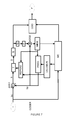
- residues z(x) calculated in the causal neighbourhood ZCx of the block b cur are transformed with the horizontal basis functions into Z(u) coefficients represented in figure 4 .
- ZCx comprises the line of pixels located just above the current block b cur as shown in figure 2 . Each pixel of ZCx is associated with a residue value z(x). ZCx is therefore a residue line.
- ZCx comprises several lines of residue pixels located above the current block b cur .
- the residues z(x) are for example calculated by extending to the neighbourhood ZCx the residual error calculated for the current block.
- u max arg max U Z with u ⁇ 0.
- the horizontal basis functions corresponding to the determined coefficient is identified. For this purpose, one returns to the spatial domain by applying to the intermediate function S(u), defined as follows and represented on figure 4 , the inverse transform of the one applied in the step 1020:
- TH is a threshold value.
- TH is a multiple of a quantization step QP used during the coding of the coefficients. The rephasing of the basis functions is thus only carried out if Z(u max) > TH.
- s(x) corresponds to one of the basis functions of the transform T that is thus identified from s(x).
- a horizontal spatial shift dx between the horizontal basis function identified and the residue line ZCx is determined.
- the horizontal spatial shift dx is determined by phase correlation as illustrated in figure 5 .
- the residue line z(x) is transformed by a Fourier transform into a transformed signal FZ(u).
- s(x) is transformed by the Fourier transform into a transformed signal FS(u).
- corr(x) IFT(Corr(u)
- the horizontal spatial shift dx is determined by spatial correlation. More precisely, for each shift dx in finite set E of possible shifts, the spatial correlation is calculated between the basis function identified rephased with dx and the residue line ZCx.
- the horizontal basis functions are rephased with the horizontal spatial shift dx determined at the step 1026.
- the 1020 to 1028 are applied vertically on the zone ZCy as illustrated in the right-hand part of figure 3 .
- the basic vertical functions are rephased with the vertical spatial shift determined at the step 1026.
- the shifts dx and dy determined during the step 1026 are refined during a step 1027.
- the barycentre of the energy surrounding the correlation peak in the spatial domain is determined on the basis of three energy peaks identified by the letters a, b and c centred on the main peak b as illustrated in figure 5 .
- the barycentre noted b' can determine a horizontal subpixel shift noted ⁇ x and a vertical subpixel shift noted ⁇ y.
- the horizontal and vertical basis functions are shifted respectively by (dx+ ⁇ x) and (dy+ ⁇ y) at the step 1028.
- a known analytic function curve e.g. a parabola, that passes through the three energy peaks centred on the main peak is determined. The maximum of this function corresponds to the shift (dx+ ⁇ x) or (dy+ ⁇ y) according to whether work is done on the horizontal or vertical.
- the invention relates to a method for reconstructing a pixel block b cur of size NxN with N an integer of the type comprising a transformation step with a transform T' defined by a set of basis functions.
- a block of coefficients B representative of the block b rec to reconstruct is decoded from a stream F.
- the block of coefficients B is possibly decoded by entropy decoding of the type VLC (Variable Length Coding), CAVLC (Context-Adaptive Variable Length Coding) or even CABAC (Context-Adaptive Binary Arithmetic Coding) and possibly dequantized.
- VLC Variariable Length Coding
- CAVLC Context-Adaptive Variable Length Coding
- CABAC Context-Adaptive Binary Arithmetic Coding
- the basis functions of the transform T' are rephased from a causal neighbourhood of the block to reconstruct.
- An example of such a neighbourhood is represented in figure 2 by the zones ZCx and ZCy. More precisely, the basis functions are rephased from residues calculated in this causal neighbourhood.
- the block of coefficients B is transformed into a block of residues B with the rephased basis functions.
- the block of residues is determined in the following manner:
- the particular embodiments described with reference to figures 3, 4 and 5 for the coding method apply identically to the reconstruction method and more particularly to the step 202 for rephasing basis functions.
- the invention relates to a coding device CODER of a pixel block and a decoding device DECODER of a stream F representative of such a pixel block.
- the modules shown are functional units that may or may not correspond to physically distinguishable units.
- these modules or some of them can be grouped together in a single component, or constitute functions of the same software.
- some modules may be composed of separate physical entities.
- the coding device CODER receives as input images I belonging to a sequence of images. Each image is divided into pixel blocks b cur with each of which at least one item of image data is associated, e.g. luminance and/or chrominance.
- the coding device CODER notably implements a coding with temporal prediction. Only the modules of the coding device CODER relating to coding by temporal prediction or INTER coding are represented in figure 6 . Other modules not represented and known to those skilled in the art of video coders implement the INTRA coding with or without spatial prediction.
- the coding device CODER notably comprises a calculation module ADD1 able to extract according to the step 100 of the coding method, for example by subtraction pixel by pixel, from the current block b cur a prediction block bp to generate a block of residues b. It further comprises a transformation module T able to transform with a transform T defined by a set of basis functions the block of residues b into a block of coefficients B.
- the transform T is for example a DCT.
- the coding device CODER further comprises a rephasing module REPHAS able to rephase the basis functions of the transform T according to the step 102 of the coding procedure described with reference to figure 1 .
- the transformation module T thus applies, according to the step 104 of the coding method, on the block b a set of rephased basis functions.
- the output of the transformation module T is connected to the input of a quantization module Q able to quantize the block of coefficients B into quantized data.
- the output of the quantization module is connected to the input of the entropy coding module COD able to code the quantized data into a stream F of coded data.
- the step 106 of the coding method is thus implemented by the Q and COD modules. It further comprises a module IQ performing the inverse operation of the quantization module Q connected to a module IT performing the inverse operation of the transformation module T.
- the output of the module IT is connected to a calculation module ADD2 capable of adding pixel by pixel the block of data from the module IT and the prediction block bp to generate a reconstructed block that is stored in a memory MEM.
- the coding device CODER also comprises a motion estimation module ME able to estimate at least one motion vector Vp between the block b cur and a reference image Ir stored in the memory MEM, this image having previously been coded then reconstructed.
- the motion estimation can be made between the current block bc and the source image corresponding to Ir, in which case the memory MEM is not connected to the motion estimation module ME.
- the motion estimation module searches in the reference image Ir, respectively in the corresponding source image, for a motion vector so as to minimise an error calculated between the current block b cur and a block in the reference image Ir, respectively in the corresponding source image, identified using said motion vector.
- the motion vector is determined by phase correlation or overall motion estimation or even by "template matching".
- the motion data is transmitted by the motion estimation module ME to a decision module DECISION able to select a coding mode for the block b cur in a predefined set of coding modes.
- the chosen coding mode is for example the one that minimizes a bitrate-distortion type criterion.
- the invention is not restricted to this selection method and the mode chosen can be selected according to another criterion for example an a priori type criterion.
- the coding mode selected by the decision module DECISION as well as the motion data, for example the motion vector or vectors in the case of the temporal prediction mode or INTER mode are transmitted to a prediction module PRED.
- the motion vector or vectors and the selected coding mode are moreover transmitted to the entropy coding module COD to be coded in the stream F. If a prediction mode INTER is retained by the decision module DECISION the prediction module PRED then determines in the reference image Ir previously reconstructed and stored in the memory MEM, the prediction block bp from the motion vector determined by the motion estimation module ME. If a prediction mode INTRA is retained by the decision module DECISION, the prediction module PRED determines in the current image, among the blocks previously coded and stored in the memory MEM, the prediction block bp.
- the decoding device DECODER receives at input a stream F of coded data representative of a sequence of images or a part of such a sequence such as a block.
- the stream F is for example transmitted by a coding device CODER.
- the decoding device DECODER comprises an entropy decoding module DEC able to generate decoded data, for example coding modes and decoded data relating to the content of the images.
- the decoding device DECODER further comprises a motion data reconstruction module.
- the motion data reconstruction module is the entropic decoding module DEC that decodes a part of the stream F representative of motion vectors.
- the motion data reconstruction module is a motion estimation module.
- This solution for reconstructing motion data by the decoding device DECOD is known as "template matching".
- the decoded data relating to the content of the images is then sent to an inverse quantization module IQ able to perform an inverse quantization of the decoded data to obtain a block of coefficients B.
- the step 200 of the reconstruction method is implemented in the modules DEC and IQ.
- the module IQ is connected to a transformation IT module able to perform an inverse transformation to the one performed by the module T of the coding device CODER.
- the modules IQ and IT are identical to the modules IQ respectively IT of the coding device CODER having generated the coded stream F.
- the decoding device DECODER further comprises a rephasing module REPHAS able to rephase the basis functions of the transform IT according to the step 202 of the reconstruction method described with reference to figure 6 .
- the transformation module IT thus applies, according to the step 204 of the reconstruction method, on the block of coefficients B a set of rephased basis functions.
- the module IT is connected to a calculation module ADD3 able to merge, for example by pixel to pixel addition, the block of residues b from the module IT and a prediction block bp to generate a reconstructed block b rec that is stored in a memory MEM.
- the decoding device DECODER also comprises a prediction module PRED identical to the prediction module PRED of the coding device CODER. If a prediction mode INTER is decoded, the prediction module PRED determines in a reference image Ir previously reconstructed and stored in the memory MEM, the prediction block b cur by the entropy decoding module DEC. If a prediction mode INTRA is decoded, the prediction module PRED determines in the current image among the blocks previously reconstructed and stored in the memory MEM, the prediction block bp.
- the rephasing of basis functions from the causal neighbourhood is applicable to any type of transform irrespective of the size and the dimension 1 D, 2D, etc.
- the shape of the causal neighbourhood according to the invention can vary.
Landscapes
- Engineering & Computer Science (AREA)
- Multimedia (AREA)
- Signal Processing (AREA)
- Physics & Mathematics (AREA)
- Discrete Mathematics (AREA)
- General Physics & Mathematics (AREA)
- Compression Or Coding Systems Of Tv Signals (AREA)
- Compression, Expansion, Code Conversion, And Decoders (AREA)
Abstract
- calculate (100) a block of residues from the pixel block and a prediction block,
- transform (104) the block of residues into a block of coefficients with a transform defined by a set of basis functions,
- code (106) the block of coefficients,
Description
- The invention relates to the general domain of image coding. More particularly, the invention relates to a method for coding a pixel block and a method for reconstructing such a block. The invention also relates to a device for coding device and a device for decoding such a block.
- It is known in order to code a pixel block to predict this block spatially or temporally with a view to calculating a block of residues representative of the prediction error. The block of residues is then transformed into a block of coefficients that is thus quantized then coded into an F stream. Conventionally, the block of residues is transformed with a transform defined by a set of basis functions.
- The basis functions of the transform are generally applied identically irrespective of the position of the block in the picture. Therefore, when the basis functions are not correctly phased with the signal observed in the block of residues, a frequency spread is observed. Assume for example, that the block of residues is composed of a pattern corresponding to one of the basis functions of the transform, i.e. of the same frequency as this basis function. When the signal of the block on which the transform is applied is in phase with the basis function, the transform will generate a unique coefficient whose energy is representative of the signal in question. However, when the signal of the block is not in phase with the basis function, the transform will generate several coefficients. In this case, the quantization that follows the transformation frequently eliminates certain coefficients contrary to the case where the block is in phase. This has the effect of leading to a loss of information. This loss of information is due to the quantization and spreading of the coefficients in the transformed domain. It is thus noted, in the case of an out-of-phase signal, that energy is lost as this energy is distributed over several coefficients but also in accuracy at the phase level, these two disadvantages generating the block effect well known in the domain of picture and video compression.
- The purpose of the invention is to overcome at least one of the disadvantages of the prior art. For this purpose, the invention relates to a method for coding a block of pixels comprising the following steps:
- generate a block of residues from the pixel block and a prediction block,
- transform the block of residues into a block of coefficients with a transform defined by a set of basis functions, and
- code the block of coefficients.
- Advantageously, the coding method comprises, before the transformation step, a step for rephasing basis functions from residues calculated in a causal neighbourhood of the pixel block and the transformation step uses the rephased basis functions.
- The coding method according to the invention advantageously enables coefficients to be spread in the transformed domain which increases the coding efficiency by reducing the coding cost. Indeed, the method of coding by rephasing the basis functions of the transform advantageously adapts this transform to the signal to code. The transform this rephased is more effective as its capacity to compact the signal, to be specific the residual error, into a reduced number of coefficients increases.
- According to another aspect of the invention, the transform being separable, the set of basis functions comprises horizontal basis functions and vertical basis functions. The rephasing step of the horizontal and vertical basis functions comprises the following steps:
- a) transform at least one line of residues of the causal neighbourhood of the pixel block with the horizontal basis functions into coefficients,
- b) determine the larger amplitude coefficient,
- c) identify the horizontal base function corresponding to the determined coefficient,
- d) determine a horizontal spatial shift between the horizontal basis function identified and the residue line, and
- e) rephase the horizontal basis functions with the horizontal spatial shift determined, and
- f) reiterate the steps a) to e) vertically on at least one residue column of the causal neighbourhood of the pixel block to rephase the vertical basis functions
- Advantageously, the residues of the residue line and the residue column are calculated according to a prediction mode identical to the prediction mode used to calculate the block of residues.
- According to a particular characteristic, the vertical spatial shift and the horizontal spatial shift are determined by phase correlation, the spatial shifts corresponding to a maximum correlation peak, called main peak.
- According to a particularly advantageous embodiment, the coding method comprises between the steps d) and e) a step for determining a horizontal subpixel shift respectively vertical by calculating a barycentre from the main peak and correlation peaks surrounding the main peak. According to this embodiment, the horizontal basis functions are rephased with a shift equal to the sum of the horizontal spatial shift and the horizontal subpixel shift and the vertical basis functions are rephased with a shift equal to the sum of the vertical spatial shift and the vertical subpixel shift.
- The invention also relates to a method for reconstructing a block of pixels comprising the following steps:
- decode a block of coefficients,
- transform the block of coefficients into a block of residues with a transform defined by a set of basis functions, and
- reconstruct the pixel block from the block of residues and a prediction block, Advantageously, the reconstruction method comprises, before the transformation step, a step for rephasing basis functions from residues calculated in a causal neighbourhood of the pixel block and the transformation step uses the rephased basis functions.
- According to another aspect of the invention, the transform being separable, the set of basis functions comprises horizontal basis functions and vertical basis functions. The rephasing step of the horizontal and vertical basis functions comprises the following steps:
- a) transform at least one line of residues of the causal neighbourhood of the pixel block with the horizontal basis functions into coefficients,
- b) determine the larger amplitude coefficient,
- c) identify the horizontal base function corresponding to the determined coefficient,
- d) determine a horizontal spatial shift between the horizontal basis function identified and the residue line, and
- e) rephase the horizontal basis functions with the horizontal spatial shift determined, and
- f) reiterate the steps a) to e) vertically on at least one residue column of the causal neighbourhood of the pixel block to rephase the vertical basis functions
- Advantageously, the residues of the residue line and the residue column are calculated according to a prediction mode identical to the prediction mode used to calculate the block of residues.
- According to a particular characteristic of the invention, the vertical spatial shift and the horizontal spatial shift are determined by phase correlation, the spatial shifts corresponding to a maximum correlation peak, called main peak.
- According to another embodiment, the reconstruction method comprises between the steps d) and e) a step for determining a horizontal subpixel shift respectively vertical by calculating a barycentre from the main peak and correlation peaks surrounding the main peak. According to this embodiment, the horizontal basis functions are rephased with a shift equal to the sum of the horizontal spatial shift and the horizontal subpixel shift and the vertical basis functions are rephased with a shift equal to the sum of the vertical spatial shift and the vertical subpixel shift.
- The invention also relates to a pixel block coding device comprising:
- means to calculate a block of residues from the pixel block and a prediction block,
- means to transform the block of residues into a block of coefficients with a transform defined by a set of basis functions, and
- means to code the block of coefficients.
- The coding device further comprises means for rephasing the basis functions from residues calculated in a causal neighbourhood of the pixel block and the transformation means uses the rephased basis functions.
- The invention further relates to a decoding device of a stream representative of a pixel block comprising:
- means to decode a block of coefficients from the stream,
- means to transform the block of coefficients into a block of residues with a transform defined by a set of basis functions, and
- means to reconstruct the pixel block from the block of residues and a prediction block,
- The decoding device further comprises means for rephasing the basis functions from residues calculated in a causal neighbourhood of the pixel block and the transformation means uses the rephased basis functions.
- The rephasing of the basis functions being carried out symmetrically by the coding and reconstruction method no additional information needs to be coded into the stream. Notably the spatial shifts do not have to be transmitted.
- The invention will be better understood and illustrated by means of non-restrictive embodiments and advantageous implementations, with reference to the accompanying drawings, wherein:
-
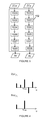
figure 1 shows a method for coding of a pixel block bcur according to the invention, -
figure 2 shows the pixel block bcur and a causal neighbourhood of this block bcur, -
figure 3 shows a detail of the coding method shown infigure 1 , -
figure 4 shows functions Z and S in a transformed domain, -
figure 5 shows correlation functions in a transformed domain and in a spatial domain, -
figure 6 shows a method for reconstructing a pixel block according to the invention, -
figure 7 shows a coding device according to the invention, and -
figure 8 shows a decoding device according to the invention. - The invention relates to a method for reconstructing a block of pixels of a sequence of images and a method for coding such a block. A picture sequence is a series of several pictures. Each picture comprises pixels or picture points with each of which at least one item of picture data is associated. An item of image data is for example an item of luminance data or an item of chrominance data. Hereafter, the coding and reconstruction methods are described with reference to a pixel block. It is clear that these methods can be applied on several blocks of an image and on several images of a sequence with a view to the coding respectively the reconstruction of one or more images.
- The term "motion data" is to be understood in the widest sense. It designates the motion vectors and possibly the reference image indexes enabling a reference image to be identified in the image sequence. It can also comprise an item of information indicating the interpolation type used to determine the prediction block. In fact, in the case where the motion vector associated with a block Bc does not have integer coordinates, it is necessary to interpolate the image data in the reference image Ir to determine the prediction block. The motion data associated with a block are generally calculated by a motion estimation method, for example by block matching. However, the invention is in no way limited by the method enabling a motion vector to be associated with a block.
- The term "residual data" or "residual error" signifies data obtained after extraction of other data. The extraction is generally a subtraction pixel by pixel of prediction data from source data. However, the extraction is more general and notably comprises a weighted subtraction in order for example to account for an illumination variation model. The term "residual data" is synonymous with the term "residue". A residual block is a block of pixels with which residual data is associated.
- The term "transformed residual data" designates residual data to which a transform has been applied. A DCT ("Discrete Cosine Transform) is an example of such a transform described in chapter 3.4.2.2 of the book by I. E. Richardson called "H.264 and MPEG-4 video compression" published by J. Wiley & Sons in September 2003. The wavelet transform described in chapter 3.4.2.3 of the book by I. E. Richardson and the Hadamard transform are other examples. Such transforms "transform" a block of image data, for example residual luminance and/or chrominance data, into a "block of transformed data" also called a "transformed block", "block of frequency data" or a "block of coefficients". The block of coefficients generally comprises a low frequency coefficient known under the name of continuous coefficient or DC coefficient and high frequency coefficients known as AC coefficients. The term "image domain" or "spatial domain" designates the domain of pixels with which luminance and/or chrominance values are associated. The "frequency domain" or "transformed domain" represents the domain of coefficients. One changes from the spatial domain to the transformed domain by applying to the image a transform, for example a DCT and conversely from the transformed domain to the spatial domain by applying a reverse transform of the preceding one, for example an inverse DCT.
- The "prediction data" term designates data used to predict other data. A prediction block is a block of pixels with which prediction data is associated. A prediction block is obtained from a block or several blocks of the same image as the image to which belongs the block that it predicts (spatial prediction or intra-image prediction) or from one (mono-directional prediction) or several reference blocks (bi-directional prediction or bi-predicted) of a different image (temporal prediction or inter-image prediction) of the image to which the block that it predicts belongs.
- The term "prediction mode" designates the way in which the block is predicted. Among the prediction modes, there is the INTRA mode that corresponds to a spatial prediction and the INTER mode that corresponds to a temporal prediction. The prediction mode possibly specifies the way in which the block is partitioned to be coded. Thus, the 8x8 INTER prediction mode associated with a block of size 16x16 signifies that the 16x16 block is partitioned into 4 8x8 blocks and predicted by temporal prediction.
- The term "reconstructed data" designates data (e.g. pixels, blocks) obtained after merging residues with prediction data. The merging is generally a sum of prediction data with residues. However, the merging is more general and notably comprises a weighted sum in order for example to account for an illumination variation model. A reconstructed block is a block of reconstructed pixels.
- In reference to the decoding of images, the terms "reconstruction" and "decoding" are very often used as synonyms. Hence, a "reconstructed block" is also designated under the terminology "decoded block".
- The term coding is to be taken in the widest sense. The coding can possibly comprise the transformation and/or the quantization of image data. It can also designate only the entropy coding.
- A "causal neighbourhood" of a current block designates a neighbourhood of this block that comprises pixels coded/reconstructed before the current block.
- In reference to
figure 1 , the invention relates to a method for coding a pixel block bcur of size NxN with N an integer of the type comprising a transformation step with a transform T defined by a set of basis functions. During astep 100, a block of residues b is calculated from the pixel block bcur and a prediction block bp determined according to a prediction mode. For example, b(i,j)=bcur(i,j)-bp(i,j) where (i,j) are the coordinates of a pixel. - During a
step 102, the basis functions of the transform T are rephased from a causal neighbourhood of the block bcur. An example of such a neighbourhood is represented infigure 2 by the zones ZCx and ZCy. More precisely, the basis functions are rephased from residues calculated in this causal neighbourhood. - During a
step 104, the block of residues b is transformed into a block of coefficients B with the rephased basis functions. The block of coefficients B is determined in the following manner: B = Tphase(b), where Tphase is the transform defined by the rephased basis functions. - During a
step 106, the block of coefficients B is coded in a stream F. For example, the block of coefficients B is possibly quantized then coded by entropy coding of the type VLC (Variable Length Coding), CAVLC (Context-Adaptive Variable Length Coding) or even CABAC (Context-Adaptive Binary Arithmetic Coding). These techniques are well known to those skilled in the art of image coding and are not further described. The invention is in no way limited by the type of entropy coding used. - This particular embodiment is described with reference to
figure 3 for a separable transform. In this case, the set of basis functions is separated into vertical basis functions Cy and horizontal basis functions Cx. This embodiment is described in the particular case of the DCT transform but the invention is in no way limited by this transform. The embodiment described in relation tofigure 3 applies to any separable transform. - In the particular case of the DCT, the base functions are defined as follows:


and
- The block b is transformed into a block B of coefficients in the following manner:
- B = [B(u,v)] N×N = Cx.b.Cy where (u,v) are the coordinates of a coefficient in the frequency domain.
- According to this embodiment, the
step 102 for rephasing basis functions comprises the following steps for: - rephasing the horizontal basis functions, and
- rephasing the vertical basis functions.
- The step for rephasing the horizontal basis functions is described in relation to the left-hand part of
figure 3 . - During a
step 1020, residues z(x) calculated in the causal neighbourhood ZCx of the block bcur are transformed with the horizontal basis functions into Z(u) coefficients represented infigure 4 . According to a particular embodiment, ZCx comprises the line of pixels located just above the current block bcur as shown infigure 2 . Each pixel of ZCx is associated with a residue value z(x). ZCx is therefore a residue line. According to a variant, ZCx comprises several lines of residue pixels located above the current block bcur. The residues z(x) are for example calculated by extending to the neighbourhood ZCx the residual error calculated for the current block. Hence, the values z(x) are obtained by using the prediction mode Mode associated with the current block bcur and possibly the motion data MV used to calculate the block of residues b. More precisely, Mode and possibly MV are used to calculate prediction data zp(x) for the pixels of the neighbourhood ZCx, prediction data zp(x) from which the residues z(x) are calculated. For example, z(x)=zcur(x)-zp(x), where zcur(x) is the luminance or chrominance image data. - During a
step 1022, the coefficient Z(umax) of larger amplitude is determined:
- During a
step 1024, the horizontal basis functions corresponding to the determined coefficient is identified. For this purpose, one returns to the spatial domain by applying to the intermediate function S(u), defined as follows and represented onfigure 4 , the inverse transform of the one applied in the step 1020: - S(u) = Z(u) if u = 0
- S(U) = Z(U) if U = Umax
- Else S(u)=0.
- According to an embodiment, it is further verified if Z(umax) > TH, TH is a threshold value. For example, TH is a multiple of a quantization step QP used during the coding of the coefficients. The rephasing of the basis functions is thus only carried out if Z(umax) > TH.
- The inverse transform of S(u) is noted s(x). s(x) corresponds to one of the basis functions of the transform T that is thus identified from s(x).
- During a
step 1026, a horizontal spatial shift dx between the horizontal basis function identified and the residue line ZCx is determined. According to a simple illustrative example, the horizontal spatial shift dx is determined by phase correlation as illustrated infigure 5 . For this purpose, the residue line z(x) is transformed by a Fourier transform into a transformed signal FZ(u). Likewise, s(x) is transformed by the Fourier transform into a transformed signal FS(u). The correlation is thus calculated according to the following formula:
with FZ *(u)the conjugate complex of FZ(u) - The correlation in the transformed domain is brought to the spatial domain by applying to Corr(u) an inverse Fourier transform IFT. The correlation in the spatial domain is noted corr(x): corr(x)=IFT(Corr(u)).
- The shift or phase dx is obtained by determining the correlation peak in the spatial domain:

- According to an embodiment variation, the horizontal spatial shift dx is determined by spatial correlation. More precisely, for each shift dx in finite set E of possible shifts, the spatial correlation is calculated between the basis function identified rephased with dx and the residue line ZCx. The shift dx chosen is the one for which the spatial correlation is the greatest. For example, E={1,2,3,4}. According to a variant, E={1, 1.5, 2, 2.5, 3, 3.5, 4} which enables a subpixel shift to be determined. Naturally, E can include more precise shifts for example at the ¼ pixel, at the 1/8 pixel, etc.
- During a
step 1028, the horizontal basis functions are rephased with the horizontal spatial shift dx determined at thestep 1026. In the case of the DCT, Cx is rephased as follows:
- Likewise, the 1020 to 1028 are applied vertically on the zone ZCy as illustrated in the right-hand part of
figure 3 . The basic vertical functions are rephased with the vertical spatial shift determined at thestep 1026. In the case of the DCT, Cy is rephased as follows:
- According to an advantageous embodiment, the shifts dx and dy determined during the
step 1026 are refined during a step 1027. For example, the barycentre of the energy surrounding the correlation peak in the spatial domain is determined on the basis of three energy peaks identified by the letters a, b and c centred on the main peak b as illustrated infigure 5 . The barycentre noted b' can determine a horizontal subpixel shift noted δx and a vertical subpixel shift noted δy. According to this embodiment, the horizontal and vertical basis functions are shifted respectively by (dx+ δx) and (dy+ δy) at thestep 1028. According to another variant, a known analytic function curve, e.g. a parabola, that passes through the three energy peaks centred on the main peak is determined. The maximum of this function corresponds to the shift (dx+ δx) or (dy+ δy) according to whether work is done on the horizontal or vertical. - With reference to
figure 6 , the invention relates to a method for reconstructing a pixel block bcur of size NxN with N an integer of the type comprising a transformation step with a transform T' defined by a set of basis functions. - During a
step 200, a block of coefficients B representative of the block brec to reconstruct is decoded from a stream F. For example, the block of coefficients B is possibly decoded by entropy decoding of the type VLC (Variable Length Coding), CAVLC (Context-Adaptive Variable Length Coding) or even CABAC (Context-Adaptive Binary Arithmetic Coding) and possibly dequantized. This step is the reverse of thestep 106 of the coding method. - During a
step 202, the basis functions of the transform T' are rephased from a causal neighbourhood of the block to reconstruct. An example of such a neighbourhood is represented infigure 2 by the zones ZCx and ZCy. More precisely, the basis functions are rephased from residues calculated in this causal neighbourhood. - During a
step 204, the block of coefficients B is transformed into a block of residues B with the rephased basis functions. The block of residues is determined in the following manner: - b = Tphase(B) , where Tphase is the transform defined by the rephased basis functions.
- During a
step 206, a pixel block brec is reconstructed from the block of residues b and a prediction block bp determined according to a prediction mode. For example, b(i,j)=brec(i,j)-bp(i,j) where (i,j) are the coordinates of a pixel. - The particular embodiments described with reference to
figures 3, 4 and5 for the coding method apply identically to the reconstruction method and more particularly to thestep 202 for rephasing basis functions. The block of coefficients B is transformed during thestep 204 into a block of residues according to the following formula: b = Cy.B.Cx where Cx and Cy are the rephased horizontal and vertical basis functions of dx and dy, possibly of (dx+ δx) and (dy+ δy). - With reference to
figures 7 and8 , the invention relates to a coding device CODER of a pixel block and a decoding device DECODER of a stream F representative of such a pixel block. In these figures, the modules shown are functional units that may or may not correspond to physically distinguishable units. For example, these modules or some of them can be grouped together in a single component, or constitute functions of the same software. On the contrary, some modules may be composed of separate physical entities. - With reference to
figure 7 , the coding device CODER receives as input images I belonging to a sequence of images. Each image is divided into pixel blocks bcur with each of which at least one item of image data is associated, e.g. luminance and/or chrominance. The coding device CODER notably implements a coding with temporal prediction. Only the modules of the coding device CODER relating to coding by temporal prediction or INTER coding are represented infigure 6 . Other modules not represented and known to those skilled in the art of video coders implement the INTRA coding with or without spatial prediction. The coding device CODER notably comprises a calculation module ADD1 able to extract according to thestep 100 of the coding method, for example by subtraction pixel by pixel, from the current block bcur a prediction block bp to generate a block of residues b. It further comprises a transformation module T able to transform with a transform T defined by a set of basis functions the block of residues b into a block of coefficients B. The transform T is for example a DCT. The coding device CODER further comprises a rephasing module REPHAS able to rephase the basis functions of the transform T according to thestep 102 of the coding procedure described with reference tofigure 1 . The transformation module T thus applies, according to thestep 104 of the coding method, on the block b a set of rephased basis functions. The output of the transformation module T is connected to the input of a quantization module Q able to quantize the block of coefficients B into quantized data. The output of the quantization module is connected to the input of the entropy coding module COD able to code the quantized data into a stream F of coded data. Thestep 106 of the coding method is thus implemented by the Q and COD modules. It further comprises a module IQ performing the inverse operation of the quantization module Q connected to a module IT performing the inverse operation of the transformation module T. The output of the module IT is connected to a calculation module ADD2 capable of adding pixel by pixel the block of data from the module IT and the prediction block bp to generate a reconstructed block that is stored in a memory MEM. - The coding device CODER also comprises a motion estimation module ME able to estimate at least one motion vector Vp between the block bcur and a reference image Ir stored in the memory MEM, this image having previously been coded then reconstructed. According to one variant, the motion estimation can be made between the current block bc and the source image corresponding to Ir, in which case the memory MEM is not connected to the motion estimation module ME. According to a method well known to those skilled in the art, the motion estimation module searches in the reference image Ir, respectively in the corresponding source image, for a motion vector so as to minimise an error calculated between the current block bcur and a block in the reference image Ir, respectively in the corresponding source image, identified using said motion vector. According to one variant, the motion vector is determined by phase correlation or overall motion estimation or even by "template matching". The motion data is transmitted by the motion estimation module ME to a decision module DECISION able to select a coding mode for the block bcur in a predefined set of coding modes. The chosen coding mode is for example the one that minimizes a bitrate-distortion type criterion. However, the invention is not restricted to this selection method and the mode chosen can be selected according to another criterion for example an a priori type criterion. The coding mode selected by the decision module DECISION as well as the motion data, for example the motion vector or vectors in the case of the temporal prediction mode or INTER mode are transmitted to a prediction module PRED. The motion vector or vectors and the selected coding mode are moreover transmitted to the entropy coding module COD to be coded in the stream F. If a prediction mode INTER is retained by the decision module DECISION the prediction module PRED then determines in the reference image Ir previously reconstructed and stored in the memory MEM, the prediction block bp from the motion vector determined by the motion estimation module ME. If a prediction mode INTRA is retained by the decision module DECISION, the prediction module PRED determines in the current image, among the blocks previously coded and stored in the memory MEM, the prediction block bp.
- With reference to
figure 8 , the decoding device DECODER receives at input a stream F of coded data representative of a sequence of images or a part of such a sequence such as a block. The stream F is for example transmitted by a coding device CODER. The decoding device DECODER comprises an entropy decoding module DEC able to generate decoded data, for example coding modes and decoded data relating to the content of the images. The decoding device DECODER further comprises a motion data reconstruction module. According to a first embodiment, the motion data reconstruction module is the entropic decoding module DEC that decodes a part of the stream F representative of motion vectors. - According to a variant not shown in
figure 8 , the motion data reconstruction module is a motion estimation module. This solution for reconstructing motion data by the decoding device DECOD is known as "template matching". - The decoded data relating to the content of the images is then sent to an inverse quantization module IQ able to perform an inverse quantization of the decoded data to obtain a block of coefficients B. The
step 200 of the reconstruction method is implemented in the modules DEC and IQ. The module IQ is connected to a transformation IT module able to perform an inverse transformation to the one performed by the module T of the coding device CODER. The modules IQ and IT are identical to the modules IQ respectively IT of the coding device CODER having generated the coded stream F. The decoding device DECODER further comprises a rephasing module REPHAS able to rephase the basis functions of the transform IT according to thestep 202 of the reconstruction method described with reference tofigure 6 . The transformation module IT thus applies, according to thestep 204 of the reconstruction method, on the block of coefficients B a set of rephased basis functions. The module IT is connected to a calculation module ADD3 able to merge, for example by pixel to pixel addition, the block of residues b from the module IT and a prediction block bp to generate a reconstructed block brec that is stored in a memory MEM. The decoding device DECODER also comprises a prediction module PRED identical to the prediction module PRED of the coding device CODER. If a prediction mode INTER is decoded, the prediction module PRED determines in a reference image Ir previously reconstructed and stored in the memory MEM, the prediction block bcur by the entropy decoding module DEC. If a prediction mode INTRA is decoded, the prediction module PRED determines in the current image among the blocks previously reconstructed and stored in the memory MEM, the prediction block bp. - Obviously, the invention is not limited to the embodiments mentioned above.
- In particular, those skilled in the art may apply any variant to the stated embodiments and combine them to benefit from their various advantages. Particularly, the rephasing of basis functions from the causal neighbourhood is applicable to any type of transform irrespective of the size and the dimension 1 D, 2D, etc. Likewise, the shape of the causal neighbourhood according to the invention can vary.
Claims (16)
- Video coding method for coding a pixel block comprising the following steps:- calculating (100), a block of residues from said pixel block and from a prediction block determined according to a prediction mode.- transforming (104) said block of residues into a block of coefficients with a transform defined by a set of basis functions, and- coding (106) said block of coefficients,
the method being characterized in that it comprises, before the transformation step (104), a step (102) for rephasing said basis functions from residues calculated according to said prediction mode in a causal neighbourhood of said pixel block and in that the transformation step uses the rephased basis functions. - Coding method according to claim 1, wherein, said transform being separable, said set of basis functions comprises horizontal basis functions and vertical basis functions and wherein the step (102) for rephasing said basis functions comprises the following steps for:- rephasing the horizontal basis functions, and- rephasing the vertical basis functions.
- Coding method according to claim 2, wherein rephasing the horizontal basis functions comprises:a) transforming (1020) at least one line of residues of the causal neighbourhood of said pixel block with the horizontal basis functions into coefficients,b) determining (1022) the larger amplitude coefficient,c) identifying the (1024) horizontal base function corresponding to said determined coefficient,d) determining a (1026) horizontal spatial shift between the horizontal basis function identified and said residue line, ande) rephasing (1028) the horizontal basis functions with said horizontal spatial shift determined, and
wherein rephasing the vertical basis functions comprises the steps a) to e) reiterated vertically on at least one residue column of the causal neighbourhood of said pixel block to rephase the vertical basis functions with a vertical spatial shift determined in step d). - Coding method according to claim 3, wherein the residues of said residue line and of said residue column are calculated according to a prediction mode identical to said prediction mode used to calculate said block of residues.
- Coding method according to claim 3 or 4, wherein the vertical spatial shift and the horizontal spatial shift are determined (1026) by phase correlation, said spatial shifts corresponding to a maximum correlation peak, called main peak.
- Coding method according to claim 5, which comprises between the steps d) and e) a step (1027) of determining a horizontal respectively vertical subpixel shift by calculating a barycentre from said main peak and correlation peaks surrounding said main peak and wherein said horizontal basis functions are rephased (1028) with a shift equal to the sum of said horizontal spatial shift and of said horizontal subpixel shift and said vertical basis functions are rephased (1028) with a shift equal to the sum of said vertical spatial shift and said vertical subpixel shift.
- Video decoding method comprising the following steps:- decoding (200) a block of coefficients and a prediction mode,- transforming (204) said block of coefficients into a block of residues with a transform defined by a set of basis functions, and- reconstructing (206) a pixel block from said block of residues and from a prediction block determined according to said prediction mode,
the method being characterized in that it comprises, before the transformation step, a step (202) for rephasing said basis functions from residues calculated according to said prediction mode in a causal neighbourhood of said pixel block and in that the transformation step uses the rephased basis functions. - Decoding method according to claim 7, wherein, said transform being separable, said set of basis functions comprises horizontal basis functions and vertical basis functions and wherein the step (102) for rephasing said basis functions comprises the following steps for:- rephasing the horizontal basis functions, and- rephasing the vertical basis functions.
- Decoding method according to claim 8, wherein rephasing the horizontal basis functions comprises:a) transforming (1020) at least one line of residues of the causal neighbourhood of said pixel block with the horizontal basis functions into coefficients,b) determining (1022) the larger amplitude coefficient,c) identifying the (1024) horizontal base function corresponding to said determined coefficient,d) determining a (1026) horizontal spatial shift between the horizontal basis function identified and said residue line, ande) rephasing (1028) the horizontal basis functions with said horizontal spatial shift determined, and
wherein rephasing the vertical basis functions comprises the steps a) to e) reiterated vertically on at least one residue column of the causal neighbourhood of said pixel block to rephase the vertical basis functions with a vertical spatial shift determined in step d). - Decoding method according to claim 9, wherein the residues of said residue line and of said residue column are calculated according to a prediction mode identical to said prediction mode used to calculate said block of residues.
- Decoding method according to claim 9 or 10, wherein the vertical spatial shift and the horizontal spatial shift are determined (1026) by phase correlation, said spatial shifts corresponding to a maximum correlation peak, called main peak.
- Decoding method according to claim 11, which comprises between the steps d) and e) a step (1027) of determining a horizontal respectively vertical subpixel shift by calculating a barycentre from said main peak and correlation peaks surrounding said main peak and wherein said horizontal basis functions are rephased (1028) with a shift equal to the sum of said horizontal spatial shift and of said horizontal subpixel shift
and said vertical basis functions are rephased (1028) with a shift equal to the sum of said vertical spatial shift and said vertical subpixel shift. - Video coding device (CODER) for coding a pixel block comprising:- means (ADD1) for calculating a block of residues from said pixel block and from a prediction block determined according to a prediction mode,- means (T) for transforming said block of residues into a block of coefficients with a transform defined by a set of basis functions, and- means (Q, COD) for coding said block of coefficients,
the coding device being characterized in that it further comprises means (REPHAS) for rephasing said basis functions from residues calculated according to said prediction mode in a causal neighbourhood of said pixel block and in that said means (T) for transforming uses the rephased basis functions. - Coding device according to claim 13, the coding device being adapted to execute the steps of the coding method according to one of claims 1 to 6.
- Video decoding device (DECODER) comprising:- means (DEC, IQ) for decoding a block of coefficients and a prediction mode ;- means (IT) for transforming said block of coefficients into a block of residues with a transform defined by a set of basis functions, and- means (ADD3) for reconstructing said pixel block from said block of residues and from a prediction block determined according to a prediction mode,
the decoding device being characterized in that it further comprises means (REPHAS) for rephasing said basis functions from residues calculated according to said prediction mode in a causal neighbourhood of said pixel block and in that said means (T) for transforming uses the rephased basis functions. - Decoding device according to claim 15, the decoding device being adapted to execute the steps of the method for decoding according to one of claims 7 to 12.
Applications Claiming Priority (1)
| Application Number | Priority Date | Filing Date | Title |
|---|---|---|---|
| FR1160614A FR2982983A1 (en) | 2011-11-22 | 2011-11-22 | METHOD FOR ENCODING AND RECONSTRUCTING A BLOCK OF PIXELS AND CORRESPONDING DEVICES |
Publications (2)
| Publication Number | Publication Date |
|---|---|
| EP2597871A1 true EP2597871A1 (en) | 2013-05-29 |
| EP2597871B1 EP2597871B1 (en) | 2014-08-06 |
Family
ID=47143783
Family Applications (1)
| Application Number | Title | Priority Date | Filing Date |
|---|---|---|---|
| EP12192812.1A Not-in-force EP2597871B1 (en) | 2011-11-22 | 2012-11-15 | Method for coding and reconstructing a pixel block using a causal neigborhood of the block for adjusting the transform function of the block residual |
Country Status (7)
| Country | Link |
|---|---|
| US (1) | US20130329786A1 (en) |
| EP (1) | EP2597871B1 (en) |
| JP (1) | JP6309188B2 (en) |
| KR (1) | KR20130056834A (en) |
| CN (1) | CN103139563B (en) |
| FR (1) | FR2982983A1 (en) |
| TW (1) | TWI558214B (en) |
Cited By (2)
| Publication number | Priority date | Publication date | Assignee | Title |
|---|---|---|---|---|
| CN103607588A (en) * | 2013-09-03 | 2014-02-26 | 电子科技大学 | Residual error transformation coefficient significance map coding method based on template |
| EP3471418A1 (en) * | 2017-10-12 | 2019-04-17 | Thomson Licensing | Method and apparatus for adaptive transform in video encoding and decoding |
Families Citing this family (2)
| Publication number | Priority date | Publication date | Assignee | Title |
|---|---|---|---|---|
| US10785478B2 (en) * | 2016-05-12 | 2020-09-22 | Lg Electronics Inc. | Intra prediction method and apparatus for video coding |
| US10869060B2 (en) * | 2018-01-30 | 2020-12-15 | Google Llc | Efficient context model computation design in transform coefficient coding |
Citations (1)
| Publication number | Priority date | Publication date | Assignee | Title |
|---|---|---|---|---|
| EP0933944A2 (en) * | 1998-02-03 | 1999-08-04 | Nds Limited | Digital signal processing |
Family Cites Families (11)
| Publication number | Priority date | Publication date | Assignee | Title |
|---|---|---|---|---|
| JP4373702B2 (en) * | 2003-05-07 | 2009-11-25 | 株式会社エヌ・ティ・ティ・ドコモ | Moving picture encoding apparatus, moving picture decoding apparatus, moving picture encoding method, moving picture decoding method, moving picture encoding program, and moving picture decoding program |
| JP2005130417A (en) * | 2003-10-01 | 2005-05-19 | Matsushita Electric Ind Co Ltd | Transform coding method and transform decoding method |
| US20100232505A1 (en) * | 2006-02-17 | 2010-09-16 | Thomson Licensing | Process for Coding Images Using Intra Prediction Mode |
| TW200922334A (en) * | 2007-11-02 | 2009-05-16 | Univ Nat Chunghsing | Low complexity frequency field motion estimation method adapted to wavelet video coding |
| JP2012516627A (en) * | 2009-01-27 | 2012-07-19 | トムソン ライセンシング | Method and apparatus for selection of transforms in video encoding and video decoding |
| US8891628B2 (en) * | 2009-06-19 | 2014-11-18 | France Telecom | Methods for encoding and decoding a signal of images, corresponding encoding and decoding devices, signal and computer programs |
| WO2010149554A1 (en) * | 2009-06-22 | 2010-12-29 | Thomson Licensing | Process for matching pursuit based coding of video data for a sequence of images |
| KR101302660B1 (en) * | 2009-09-14 | 2013-09-03 | 에스케이텔레콤 주식회사 | High Definition Video Encoding/Decoding Method and Apparatus |
| TW201119407A (en) * | 2009-11-19 | 2011-06-01 | Thomson Licensing | Method for coding and method for reconstruction of a block of an image |
| WO2011083573A1 (en) * | 2010-01-07 | 2011-07-14 | 株式会社 東芝 | Video encoder and video decoder |
| JPWO2012035728A1 (en) * | 2010-09-16 | 2014-01-20 | パナソニック株式会社 | Image decoding apparatus, image encoding apparatus, method thereof, program, integrated circuit, and transcoding apparatus |
-
2011
- 2011-11-22 FR FR1160614A patent/FR2982983A1/en not_active Withdrawn
-
2012
- 2012-11-02 TW TW101140635A patent/TWI558214B/en not_active IP Right Cessation
- 2012-11-15 EP EP12192812.1A patent/EP2597871B1/en not_active Not-in-force
- 2012-11-21 KR KR1020120132664A patent/KR20130056834A/en not_active Withdrawn
- 2012-11-21 US US13/683,267 patent/US20130329786A1/en not_active Abandoned
- 2012-11-22 CN CN201210477789.0A patent/CN103139563B/en not_active Expired - Fee Related
- 2012-11-22 JP JP2012256487A patent/JP6309188B2/en not_active Expired - Fee Related
Patent Citations (1)
| Publication number | Priority date | Publication date | Assignee | Title |
|---|---|---|---|---|
| EP0933944A2 (en) * | 1998-02-03 | 1999-08-04 | Nds Limited | Digital signal processing |
Non-Patent Citations (2)
| Title |
|---|
| AURLIE MARTIN ET AL: "Sparse representations for spatial prediction and texture refinement", JOURNAL OF VISUAL COMMUNICATION AND IMAGE REPRESENTATION, ACADEMIC PRESS, INC, US, vol. 22, no. 8, 18 January 2011 (2011-01-18), pages 712 - 720, XP028310864, ISSN: 1047-3203, [retrieved on 20110126], DOI: 10.1016/J.JVCIR.2011.01.003 * |
| E. RICHARDSON: "H.264 and MPEG-4 video compression", September 2003, J. WILEY & SONS |
Cited By (5)
| Publication number | Priority date | Publication date | Assignee | Title |
|---|---|---|---|---|
| CN103607588A (en) * | 2013-09-03 | 2014-02-26 | 电子科技大学 | Residual error transformation coefficient significance map coding method based on template |
| CN103607588B (en) * | 2013-09-03 | 2016-11-02 | 电子科技大学 | A Template-Based Residual Transform Coefficient Significance Map Coding Method |
| EP3471418A1 (en) * | 2017-10-12 | 2019-04-17 | Thomson Licensing | Method and apparatus for adaptive transform in video encoding and decoding |
| WO2019075336A1 (en) * | 2017-10-12 | 2019-04-18 | Interdigital Vc Holdings, Inc. | Method and apparatus for adaptive transform in video encoding and decoding |
| US11375191B2 (en) | 2017-10-12 | 2022-06-28 | Interdigital Vc Holdings, Inc. | Method and apparatus for adaptive transform in video encoding and decoding |
Also Published As
| Publication number | Publication date |
|---|---|
| KR20130056834A (en) | 2013-05-30 |
| FR2982983A1 (en) | 2013-05-24 |
| TW201334545A (en) | 2013-08-16 |
| CN103139563B (en) | 2017-10-20 |
| CN103139563A (en) | 2013-06-05 |
| US20130329786A1 (en) | 2013-12-12 |
| TWI558214B (en) | 2016-11-11 |
| JP6309188B2 (en) | 2018-04-11 |
| EP2597871B1 (en) | 2014-08-06 |
| JP2013110747A (en) | 2013-06-06 |
Similar Documents
| Publication | Publication Date | Title |
|---|---|---|
| US10455210B2 (en) | Method, medium, and apparatus encoding and/or decoding an image using the same coding mode across components | |
| EP2460355B1 (en) | Method for decoding a stream of coded data representative of a sequence of images and method for coding a sequence of images | |
| KR20120116936A (en) | Method for coding and method for reconstruction of a block of an image | |
| CN101325715A (en) | Method and device for brightness compensation and method and device for encoding and decoding images | |
| KR20060060000A (en) | Video Encoding and Decoding Methods and Apparatuses | |
| KR20060071394A (en) | Video encoding and decoding methods and corresponding devices | |
| EP2597871B1 (en) | Method for coding and reconstructing a pixel block using a causal neigborhood of the block for adjusting the transform function of the block residual | |
| EP2510694B1 (en) | Method and apparatus for coding and decoding an image block | |
| JP2013110747A5 (en) | ||
| US20120269260A1 (en) | Method for coding a sequence of images | |
| EP2571271B1 (en) | Method for coding and reconstructing a pixel block and corresponding devices | |
| KR100728032B1 (en) | Warping-based intra prediction method |
Legal Events
| Date | Code | Title | Description |
|---|---|---|---|
| PUAI | Public reference made under article 153(3) epc to a published international application that has entered the european phase |
Free format text: ORIGINAL CODE: 0009012 |
|
| AK | Designated contracting states |
Kind code of ref document: A1 Designated state(s): AL AT BE BG CH CY CZ DE DK EE ES FI FR GB GR HR HU IE IS IT LI LT LU LV MC MK MT NL NO PL PT RO RS SE SI SK SM TR |
|
| AX | Request for extension of the european patent |
Extension state: BA ME |
|
| 17P | Request for examination filed |
Effective date: 20131113 |
|
| RBV | Designated contracting states (corrected) |
Designated state(s): AL AT BE BG CH CY CZ DE DK EE ES FI FR GB GR HR HU IE IS IT LI LT LU LV MC MK MT NL NO PL PT RO RS SE SI SK SM TR |
|
| REG | Reference to a national code |
Ref country code: DE Ref legal event code: R079 Ref document number: 602012002647 Country of ref document: DE Free format text: PREVIOUS MAIN CLASS: H04N0007260000 Ipc: H04N0019180000 |
|
| GRAP | Despatch of communication of intention to grant a patent |
Free format text: ORIGINAL CODE: EPIDOSNIGR1 |
|
| RIC1 | Information provided on ipc code assigned before grant |
Ipc: H04N 19/176 20140101ALI20140127BHEP Ipc: H04N 19/122 20140101ALI20140127BHEP Ipc: H04N 19/18 20140101AFI20140127BHEP Ipc: H04N 19/60 20140101ALI20140127BHEP Ipc: H04N 19/61 20140101ALI20140127BHEP Ipc: H04N 19/136 20140101ALI20140127BHEP |
|
| INTG | Intention to grant announced |
Effective date: 20140226 |
|
| GRAS | Grant fee paid |
Free format text: ORIGINAL CODE: EPIDOSNIGR3 |
|
| GRAA | (expected) grant |
Free format text: ORIGINAL CODE: 0009210 |
|
| AK | Designated contracting states |
Kind code of ref document: B1 Designated state(s): AL AT BE BG CH CY CZ DE DK EE ES FI FR GB GR HR HU IE IS IT LI LT LU LV MC MK MT NL NO PL PT RO RS SE SI SK SM TR |
|
| REG | Reference to a national code |
Ref country code: GB Ref legal event code: FG4D |
|
| REG | Reference to a national code |
Ref country code: CH Ref legal event code: EP Ref country code: AT Ref legal event code: REF Ref document number: 681502 Country of ref document: AT Kind code of ref document: T Effective date: 20140815 |
|
| REG | Reference to a national code |
Ref country code: DE Ref legal event code: R084 Ref document number: 602012002647 Country of ref document: DE |
|
| REG | Reference to a national code |
Ref country code: IE Ref legal event code: FG4D |
|
| REG | Reference to a national code |
Ref country code: DE Ref legal event code: R096 Ref document number: 602012002647 Country of ref document: DE Effective date: 20140918 |
|
| REG | Reference to a national code |
Ref country code: DE Ref legal event code: R084 Ref document number: 602012002647 Country of ref document: DE Effective date: 20140822 |
|
| REG | Reference to a national code |
Ref country code: AT Ref legal event code: MK05 Ref document number: 681502 Country of ref document: AT Kind code of ref document: T Effective date: 20140806 |
|
| REG | Reference to a national code |
Ref country code: NL Ref legal event code: VDEP Effective date: 20140806 |
|
| REG | Reference to a national code |
Ref country code: LT Ref legal event code: MG4D |
|
| PG25 | Lapsed in a contracting state [announced via postgrant information from national office to epo] |
Ref country code: SE Free format text: LAPSE BECAUSE OF FAILURE TO SUBMIT A TRANSLATION OF THE DESCRIPTION OR TO PAY THE FEE WITHIN THE PRESCRIBED TIME-LIMIT Effective date: 20140806 Ref country code: BG Free format text: LAPSE BECAUSE OF FAILURE TO SUBMIT A TRANSLATION OF THE DESCRIPTION OR TO PAY THE FEE WITHIN THE PRESCRIBED TIME-LIMIT Effective date: 20141106 Ref country code: LT Free format text: LAPSE BECAUSE OF FAILURE TO SUBMIT A TRANSLATION OF THE DESCRIPTION OR TO PAY THE FEE WITHIN THE PRESCRIBED TIME-LIMIT Effective date: 20140806 Ref country code: ES Free format text: LAPSE BECAUSE OF FAILURE TO SUBMIT A TRANSLATION OF THE DESCRIPTION OR TO PAY THE FEE WITHIN THE PRESCRIBED TIME-LIMIT Effective date: 20140806 Ref country code: NO Free format text: LAPSE BECAUSE OF FAILURE TO SUBMIT A TRANSLATION OF THE DESCRIPTION OR TO PAY THE FEE WITHIN THE PRESCRIBED TIME-LIMIT Effective date: 20141106 Ref country code: GR Free format text: LAPSE BECAUSE OF FAILURE TO SUBMIT A TRANSLATION OF THE DESCRIPTION OR TO PAY THE FEE WITHIN THE PRESCRIBED TIME-LIMIT Effective date: 20141107 Ref country code: PT Free format text: LAPSE BECAUSE OF FAILURE TO SUBMIT A TRANSLATION OF THE DESCRIPTION OR TO PAY THE FEE WITHIN THE PRESCRIBED TIME-LIMIT Effective date: 20141209 Ref country code: FI Free format text: LAPSE BECAUSE OF FAILURE TO SUBMIT A TRANSLATION OF THE DESCRIPTION OR TO PAY THE FEE WITHIN THE PRESCRIBED TIME-LIMIT Effective date: 20140806 |
|
| PG25 | Lapsed in a contracting state [announced via postgrant information from national office to epo] |
Ref country code: IS Free format text: LAPSE BECAUSE OF FAILURE TO SUBMIT A TRANSLATION OF THE DESCRIPTION OR TO PAY THE FEE WITHIN THE PRESCRIBED TIME-LIMIT Effective date: 20141206 Ref country code: PL Free format text: LAPSE BECAUSE OF FAILURE TO SUBMIT A TRANSLATION OF THE DESCRIPTION OR TO PAY THE FEE WITHIN THE PRESCRIBED TIME-LIMIT Effective date: 20140806 Ref country code: HR Free format text: LAPSE BECAUSE OF FAILURE TO SUBMIT A TRANSLATION OF THE DESCRIPTION OR TO PAY THE FEE WITHIN THE PRESCRIBED TIME-LIMIT Effective date: 20140806 Ref country code: LV Free format text: LAPSE BECAUSE OF FAILURE TO SUBMIT A TRANSLATION OF THE DESCRIPTION OR TO PAY THE FEE WITHIN THE PRESCRIBED TIME-LIMIT Effective date: 20140806 Ref country code: RS Free format text: LAPSE BECAUSE OF FAILURE TO SUBMIT A TRANSLATION OF THE DESCRIPTION OR TO PAY THE FEE WITHIN THE PRESCRIBED TIME-LIMIT Effective date: 20140806 Ref country code: AT Free format text: LAPSE BECAUSE OF FAILURE TO SUBMIT A TRANSLATION OF THE DESCRIPTION OR TO PAY THE FEE WITHIN THE PRESCRIBED TIME-LIMIT Effective date: 20140806 Ref country code: CY Free format text: LAPSE BECAUSE OF FAILURE TO SUBMIT A TRANSLATION OF THE DESCRIPTION OR TO PAY THE FEE WITHIN THE PRESCRIBED TIME-LIMIT Effective date: 20140806 Ref country code: NL Free format text: LAPSE BECAUSE OF FAILURE TO SUBMIT A TRANSLATION OF THE DESCRIPTION OR TO PAY THE FEE WITHIN THE PRESCRIBED TIME-LIMIT Effective date: 20140806 |
|
| PG25 | Lapsed in a contracting state [announced via postgrant information from national office to epo] |
Ref country code: EE Free format text: LAPSE BECAUSE OF FAILURE TO SUBMIT A TRANSLATION OF THE DESCRIPTION OR TO PAY THE FEE WITHIN THE PRESCRIBED TIME-LIMIT Effective date: 20140806 Ref country code: CZ Free format text: LAPSE BECAUSE OF FAILURE TO SUBMIT A TRANSLATION OF THE DESCRIPTION OR TO PAY THE FEE WITHIN THE PRESCRIBED TIME-LIMIT Effective date: 20140806 Ref country code: IT Free format text: LAPSE BECAUSE OF FAILURE TO SUBMIT A TRANSLATION OF THE DESCRIPTION OR TO PAY THE FEE WITHIN THE PRESCRIBED TIME-LIMIT Effective date: 20140806 Ref country code: DK Free format text: LAPSE BECAUSE OF FAILURE TO SUBMIT A TRANSLATION OF THE DESCRIPTION OR TO PAY THE FEE WITHIN THE PRESCRIBED TIME-LIMIT Effective date: 20140806 Ref country code: RO Free format text: LAPSE BECAUSE OF FAILURE TO SUBMIT A TRANSLATION OF THE DESCRIPTION OR TO PAY THE FEE WITHIN THE PRESCRIBED TIME-LIMIT Effective date: 20140806 Ref country code: SK Free format text: LAPSE BECAUSE OF FAILURE TO SUBMIT A TRANSLATION OF THE DESCRIPTION OR TO PAY THE FEE WITHIN THE PRESCRIBED TIME-LIMIT Effective date: 20140806 |
|
| REG | Reference to a national code |
Ref country code: DE Ref legal event code: R097 Ref document number: 602012002647 Country of ref document: DE |
|
| PLBE | No opposition filed within time limit |
Free format text: ORIGINAL CODE: 0009261 |
|
| STAA | Information on the status of an ep patent application or granted ep patent |
Free format text: STATUS: NO OPPOSITION FILED WITHIN TIME LIMIT |
|
| PG25 | Lapsed in a contracting state [announced via postgrant information from national office to epo] |
Ref country code: BE Free format text: LAPSE BECAUSE OF NON-PAYMENT OF DUE FEES Effective date: 20141130 Ref country code: MC Free format text: LAPSE BECAUSE OF FAILURE TO SUBMIT A TRANSLATION OF THE DESCRIPTION OR TO PAY THE FEE WITHIN THE PRESCRIBED TIME-LIMIT Effective date: 20140806 Ref country code: LU Free format text: LAPSE BECAUSE OF FAILURE TO SUBMIT A TRANSLATION OF THE DESCRIPTION OR TO PAY THE FEE WITHIN THE PRESCRIBED TIME-LIMIT Effective date: 20141115 |
|
| 26N | No opposition filed |
Effective date: 20150507 |
|
| REG | Reference to a national code |
Ref country code: IE Ref legal event code: MM4A |
|
| PG25 | Lapsed in a contracting state [announced via postgrant information from national office to epo] |
Ref country code: IE Free format text: LAPSE BECAUSE OF NON-PAYMENT OF DUE FEES Effective date: 20141115 |
|
| REG | Reference to a national code |
Ref country code: FR Ref legal event code: PLFP Year of fee payment: 4 |
|
| PG25 | Lapsed in a contracting state [announced via postgrant information from national office to epo] |
Ref country code: SI Free format text: LAPSE BECAUSE OF FAILURE TO SUBMIT A TRANSLATION OF THE DESCRIPTION OR TO PAY THE FEE WITHIN THE PRESCRIBED TIME-LIMIT Effective date: 20140806 |
|
| REG | Reference to a national code |
Ref country code: CH Ref legal event code: PL |
|
| PG25 | Lapsed in a contracting state [announced via postgrant information from national office to epo] |
Ref country code: MT Free format text: LAPSE BECAUSE OF FAILURE TO SUBMIT A TRANSLATION OF THE DESCRIPTION OR TO PAY THE FEE WITHIN THE PRESCRIBED TIME-LIMIT Effective date: 20140806 Ref country code: HU Free format text: LAPSE BECAUSE OF FAILURE TO SUBMIT A TRANSLATION OF THE DESCRIPTION OR TO PAY THE FEE WITHIN THE PRESCRIBED TIME-LIMIT; INVALID AB INITIO Effective date: 20121115 Ref country code: TR Free format text: LAPSE BECAUSE OF FAILURE TO SUBMIT A TRANSLATION OF THE DESCRIPTION OR TO PAY THE FEE WITHIN THE PRESCRIBED TIME-LIMIT Effective date: 20140806 Ref country code: CH Free format text: LAPSE BECAUSE OF NON-PAYMENT OF DUE FEES Effective date: 20151130 Ref country code: BE Free format text: LAPSE BECAUSE OF FAILURE TO SUBMIT A TRANSLATION OF THE DESCRIPTION OR TO PAY THE FEE WITHIN THE PRESCRIBED TIME-LIMIT Effective date: 20140806 Ref country code: LI Free format text: LAPSE BECAUSE OF NON-PAYMENT OF DUE FEES Effective date: 20151130 |
|
| REG | Reference to a national code |
Ref country code: FR Ref legal event code: PLFP Year of fee payment: 5 |
|
| PG25 | Lapsed in a contracting state [announced via postgrant information from national office to epo] |
Ref country code: SM Free format text: LAPSE BECAUSE OF FAILURE TO SUBMIT A TRANSLATION OF THE DESCRIPTION OR TO PAY THE FEE WITHIN THE PRESCRIBED TIME-LIMIT Effective date: 20140806 |
|
| GBPC | Gb: european patent ceased through non-payment of renewal fee |
Effective date: 20161115 |
|
| REG | Reference to a national code |
Ref country code: DE Ref legal event code: R082 Ref document number: 602012002647 Country of ref document: DE Representative=s name: DEHNS, DE Ref country code: DE Ref legal event code: R082 Ref document number: 602012002647 Country of ref document: DE Representative=s name: DEHNS PATENT AND TRADEMARK ATTORNEYS, DE Ref country code: DE Ref legal event code: R082 Ref document number: 602012002647 Country of ref document: DE Representative=s name: HOFSTETTER, SCHURACK & PARTNER PATENT- UND REC, DE |
|
| REG | Reference to a national code |
Ref country code: FR Ref legal event code: PLFP Year of fee payment: 6 |
|
| PG25 | Lapsed in a contracting state [announced via postgrant information from national office to epo] |
Ref country code: GB Free format text: LAPSE BECAUSE OF NON-PAYMENT OF DUE FEES Effective date: 20161115 |
|
| PG25 | Lapsed in a contracting state [announced via postgrant information from national office to epo] |
Ref country code: MK Free format text: LAPSE BECAUSE OF FAILURE TO SUBMIT A TRANSLATION OF THE DESCRIPTION OR TO PAY THE FEE WITHIN THE PRESCRIBED TIME-LIMIT Effective date: 20140806 |
|
| REG | Reference to a national code |
Ref country code: FR Ref legal event code: PLFP Year of fee payment: 7 |
|
| PG25 | Lapsed in a contracting state [announced via postgrant information from national office to epo] |
Ref country code: AL Free format text: LAPSE BECAUSE OF FAILURE TO SUBMIT A TRANSLATION OF THE DESCRIPTION OR TO PAY THE FEE WITHIN THE PRESCRIBED TIME-LIMIT Effective date: 20140806 |
|
| REG | Reference to a national code |
Ref country code: DE Ref legal event code: R082 Ref document number: 602012002647 Country of ref document: DE Representative=s name: DEHNS, DE Ref country code: DE Ref legal event code: R081 Ref document number: 602012002647 Country of ref document: DE Owner name: INTERDIGITAL VC HOLDINGS, INC., WILMINGTON, US Free format text: FORMER OWNER: THOMSON LICENSING, ISSY-LES-MOULINEAUX, FR Ref country code: DE Ref legal event code: R082 Ref document number: 602012002647 Country of ref document: DE Representative=s name: DEHNS PATENT AND TRADEMARK ATTORNEYS, DE |
|
| PGFP | Annual fee paid to national office [announced via postgrant information from national office to epo] |
Ref country code: FR Payment date: 20191128 Year of fee payment: 8 |
|
| PGFP | Annual fee paid to national office [announced via postgrant information from national office to epo] |
Ref country code: DE Payment date: 20191230 Year of fee payment: 8 |
|
| REG | Reference to a national code |
Ref country code: DE Ref legal event code: R119 Ref document number: 602012002647 Country of ref document: DE |
|
| PG25 | Lapsed in a contracting state [announced via postgrant information from national office to epo] |
Ref country code: FR Free format text: LAPSE BECAUSE OF NON-PAYMENT OF DUE FEES Effective date: 20201130 |
|
| PG25 | Lapsed in a contracting state [announced via postgrant information from national office to epo] |
Ref country code: DE Free format text: LAPSE BECAUSE OF NON-PAYMENT OF DUE FEES Effective date: 20210601 |