EP2597490A1 - Phoswich thermal neutron detector - Google Patents
Phoswich thermal neutron detector Download PDFInfo
- Publication number
- EP2597490A1 EP2597490A1 EP11809676.7A EP11809676A EP2597490A1 EP 2597490 A1 EP2597490 A1 EP 2597490A1 EP 11809676 A EP11809676 A EP 11809676A EP 2597490 A1 EP2597490 A1 EP 2597490A1
- Authority
- EP
- European Patent Office
- Prior art keywords
- scintillator
- gamma rays
- thermal neutrons
- detecting
- phoswich
- Prior art date
- Legal status (The legal status is an assumption and is not a legal conclusion. Google has not performed a legal analysis and makes no representation as to the accuracy of the status listed.)
- Withdrawn
Links
Images

Classifications
-
- C—CHEMISTRY; METALLURGY
- C09—DYES; PAINTS; POLISHES; NATURAL RESINS; ADHESIVES; COMPOSITIONS NOT OTHERWISE PROVIDED FOR; APPLICATIONS OF MATERIALS NOT OTHERWISE PROVIDED FOR
- C09K—MATERIALS FOR MISCELLANEOUS APPLICATIONS, NOT PROVIDED FOR ELSEWHERE
- C09K11/00—Luminescent materials, e.g. electroluminescent or chemiluminescent
- C09K11/08—Luminescent materials, e.g. electroluminescent or chemiluminescent containing inorganic luminescent materials
- C09K11/77—Luminescent materials, e.g. electroluminescent or chemiluminescent containing inorganic luminescent materials containing rare earth metals
- C09K11/7728—Luminescent materials, e.g. electroluminescent or chemiluminescent containing inorganic luminescent materials containing rare earth metals containing europium
- C09K11/7734—Aluminates
-
- G—PHYSICS
- G01—MEASURING; TESTING
- G01T—MEASUREMENT OF NUCLEAR OR X-RADIATION
- G01T1/00—Measuring X-radiation, gamma radiation, corpuscular radiation, or cosmic radiation
- G01T1/16—Measuring radiation intensity
- G01T1/20—Measuring radiation intensity with scintillation detectors
- G01T1/2008—Measuring radiation intensity with scintillation detectors using a combination of different types of scintillation detectors, e.g. phoswich
-
- G—PHYSICS
- G01—MEASURING; TESTING
- G01T—MEASUREMENT OF NUCLEAR OR X-RADIATION
- G01T3/00—Measuring neutron radiation
- G01T3/06—Measuring neutron radiation with scintillation detectors
-
- G—PHYSICS
- G21—NUCLEAR PHYSICS; NUCLEAR ENGINEERING
- G21K—HANDLING OF PARTICLES OR IONISING RADIATION NOT OTHERWISE PROVIDED FOR; IRRADIATION DEVICES; GAMMA RAY OR X-RAY MICROSCOPES
- G21K4/00—Conversion screens for the conversion of the spatial distribution of X-rays or particle radiation into visible images, e.g. fluoroscopic screens
-
- C—CHEMISTRY; METALLURGY
- C30—CRYSTAL GROWTH
- C30B—SINGLE-CRYSTAL GROWTH; UNIDIRECTIONAL SOLIDIFICATION OF EUTECTIC MATERIAL OR UNIDIRECTIONAL DEMIXING OF EUTECTOID MATERIAL; REFINING BY ZONE-MELTING OF MATERIAL; PRODUCTION OF A HOMOGENEOUS POLYCRYSTALLINE MATERIAL WITH DEFINED STRUCTURE; SINGLE CRYSTALS OR HOMOGENEOUS POLYCRYSTALLINE MATERIAL WITH DEFINED STRUCTURE; AFTER-TREATMENT OF SINGLE CRYSTALS OR A HOMOGENEOUS POLYCRYSTALLINE MATERIAL WITH DEFINED STRUCTURE; APPARATUS THEREFOR
- C30B15/00—Single-crystal growth by pulling from a melt, e.g. Czochralski method
-
- C—CHEMISTRY; METALLURGY
- C30—CRYSTAL GROWTH
- C30B—SINGLE-CRYSTAL GROWTH; UNIDIRECTIONAL SOLIDIFICATION OF EUTECTIC MATERIAL OR UNIDIRECTIONAL DEMIXING OF EUTECTOID MATERIAL; REFINING BY ZONE-MELTING OF MATERIAL; PRODUCTION OF A HOMOGENEOUS POLYCRYSTALLINE MATERIAL WITH DEFINED STRUCTURE; SINGLE CRYSTALS OR HOMOGENEOUS POLYCRYSTALLINE MATERIAL WITH DEFINED STRUCTURE; AFTER-TREATMENT OF SINGLE CRYSTALS OR A HOMOGENEOUS POLYCRYSTALLINE MATERIAL WITH DEFINED STRUCTURE; APPARATUS THEREFOR
- C30B29/00—Single crystals or homogeneous polycrystalline material with defined structure characterised by the material or by their shape
- C30B29/10—Inorganic compounds or compositions
- C30B29/12—Halides
Definitions
- This invention relates to a phoswich thermal neutron detector equipped with a mechanism for discriminating between gamma rays and thermal neutrons.
- Scintillators are substances which, whenhit by radiation such as alpha rays, beta rays, gamma rays, X rays, or neutrons, absorb the radiation to emit light.
- the scintillator is combined with a photodetector, such as a photomultiplier tube, and this combination is used for detection of radiation.
- Radiation detectors have wide varieties of application fields, including medical fields such as tomography, industrial fields such as nondestructive inspection, security fields such as inspection of personal belongings, and academic fields such as high energy physics.
- the predominant method of detecting light emission from a scintillator is the photon counting method.
- the photon counting method is a photometric method with high sensitivity which counts the number of photons by a photodetector to measure the quantity of light. According to this method, an electric signal generatedwhen the photon is received by the photodetector is withdrawn, passed through an amplifier or a shaper, and then counted by a pulse height analyzer. The strength of the electric signal at this time is called a pulse height.
- scintillators are various types of scintillators according to the type of radiation and the purpose of use. They include inorganic crystals such as a Bi 4 Ge 3 O 12 single crystal (will hereinafter be also referred to as BGO) and a Ce-containing Gd 2 SiO 5 single crystal (Gd 2 SiO 5 :Ce), organic crystals such as anthracene, polymers such as polystyrene or polyvinyltoluene incorporating an organic fluorescent substance, liquid scintillator, and gaseous scintillators.
- inorganic crystals such as a Bi 4 Ge 3 O 12 single crystal (will hereinafter be also referred to as BGO) and a Ce-containing Gd 2 SiO 5 single crystal (Gd 2 SiO 5 :Ce)
- organic crystals such as anthracene
- polymers such as polystyrene or polyvinyltoluene incorporating an organic fluorescent substance
- liquid scintillator and gaseous scint
- neutrons have increased in importance in recent years, particularly, for a purpose such as detection of nuclear matter.
- a material which emits light when hit by neutrons is called a scintillatorfor detecting neutrons
- a scintillator for detecting neutrons a material which emits light when hit by neutrons
- a scintillator for detecting neutrons a material which emits light when hit by neutrons
- a scintillator for detecting neutrons While amaterial whichemits light in response to gamma rays is called a scintillator for detecting gamma rays.
- Neutrons are called variously according to energy, and they are classified into thermal neutrons (about 0.025 eV), epithermal neutrons (about 1 eV), slow neutrons (0.03 to 100 eV), intermediate neutrons (0.1 to 500 keV), and fast neutrons (500 keV or more).
- a main object to be detected by neutrons detector is thermal neutrons with low energy.
- a method is adopted in which fast neutrons are slowed down with the use of a moderator, such as polyethylene, to be converted into thermal neutrons, and these neutrons are detected.
- a moderator such as polyethylene
- a rem-counter or a Bonner sphere spectrometer having a thermal neutron detector covered with a spherical polyethylene moderator is used.
- thermal neutron detector using a 3 He gas which utilizes a 3 He (n, p) T reaction between helium 3 ( 3 He) and neutrons. Owing to price hikes of a rare 3 He gas, however, switching to alternative technologies is desired.
- the thermal neutron detector using a solid scintillator, for detecting neutrons is one of promising candidates for the alternative technologies.
- the predominant solid scintillator for detecting thermal neutrons contains lithium 6 ( 6 Li), and utilizes, for detection, scintillation light produced upon the excitation of a luminescent center within the scintillator by the energy of a particle beam generated by a 6 Li (n, ⁇ ) 3 H reaction between 6 Li and neutrons.
- the thermal neutron detector with the solid scintillator Since the probability of occurrence of the 6 Li(n, ⁇ ) 3 H reaction is very low for fast neutrons, the main object to be detected by the thermal neutron detector with the solid scintillator is low energy thermal neutrons, as does the neutrons detector using a 3 He gas. In order to detect fast neutrons, therefore, the thermal neutron detector with the solid scintillator needs to use a moderator concurrently, like the neutrons detector using a 3 He gas. The concurrent use of the moderator enables the thermal neutron detector with the solid scintillator to detect neutrons with a wide range of energy, ranging from thermal neutrons to fast neutrons.
- a high light yield, high stopping power for radiation, a fast decay time of fluorescence, etc. are named.
- a radiative capture reaction occurs between the neutrons and the absorbent material, so that gamma rays are prone to occur in the measuring environment.
- the scintillator for detecting neutrons is excited by both of these gamma rays and thermal neutrons to emit light.
- Aneutrondetector using the scintillator therefore, needs to have the function of selectively acquiring signals of light emission on gamma rays and thermal neutrons, namely, the abilityto discriminate between gamma rays and thermal neutrons.
- the light yield in the present invention refers to a value obtained by dividing the total number of photons, in single light emission by the scintillator upon excitation by radiation, by the energy of radiation from an excitation source. Its units are, for example, photons/MeV for excitation by gamma rays or alpha rays, and photons/neutron for excitation by neutrons.
- One of methods for discriminating between gamma rays and thermal neutrons is the pulse height discrimination method.
- a threshold value is set for the pulse height to eliminate signals having a small pulse height.
- a phoswich detector which comprises a combination of two or more types of scintillators and discriminates the types of irradiated radiations based on the difference between the decay times of light emissions from the respective scintillators.
- the phoswich detector is closely studied particularly in Japan, and is used, for example, for discrimination between alpha rays or beta rays and fast neutrons.
- Patent Document 1 reports a phoswich detector which discriminates between alpha rays or beta rays and thermal neutrons with the use of an optical filter.
- Non-Patent Document 1 proposes a new phoswich detector comprising a Ce-containing LiYF 4 single crystal (also referred to as LiYF 4 :Ce) and BGO, the detector adapted to discriminate between thermal neutrons and gamma rays (Non-Patent Document 1).
- Non-Patent Document 1 also describes the possibility of achieving a phoswich detector having a Ce-containing LiCaAlF 6 single crystal (also referred to as LiCaAlF 6 :Ce) as a scintillator for detecting thermal neutrons, and also having BGO as a scintillator for detecting gamma rays, although the document shows no experimental examples concerned with such a phoswich detector.
- a phoswich detector having a Ce-containing LiCaAlF 6 single crystal (also referred to as LiCaAlF 6 :Ce) as a scintillator for detecting thermal neutrons, and also having BGO as a scintillator for detecting gamma rays, although the document shows no experimental examples concerned with such a phoswich detector.
- Patent Documents
- Non-Patent Document 1 predicts the possibility of discrimination between thermal neutrons and gamma rays in the light of the results of a discrimination test on alpha rays and gamma rays when LiYF 4 :Ce is used.
- a study, actually conducted by the present inventors, of the phoswich detector for discriminating between thermal neutrons and gamma rays obtained the following results: Compared with the energy 5.49 MeV of alpha rays from 241 Am used in excitation, excitation energy obtained by a nuclear reaction between thermal neutrons and 6 Li was low (4.8 MeV), and light emission obtained upon irradiation with thermal neutrons was found to be insufficient for detection of thermal neutron.
- Non-Patent Document 1 also predicted that a phoswich detector having LiCaAlF 6 :Ce as a scintillator for detecting thermal neutrons and also having BGO as a scintillator for detecting gamma rays could be achieved. However, this is erroneous, and the combination of LiCaAlF 6 :Ce and BGO has been found not to act as a phoswich detector, contrary to the expectation.
- Patent Document 1 on the phoswich detector targeted for detection of thermal neutrons which is a conventional technology, investigates the phoswich detector using an optical filter, and studies discrimination between alpha rays and thermal neutrons.
- this document is not designed to discriminate between gamma rays and thermal neutrons. Nor does it carry out the investigation of such discrimination.
- the problems encountered in realizing a phoswich detector, which discriminates between thermal neutrons and gamma rays have not been manifested in the publicly known conventional technologies, and remain unsolved.
- the present inventors conducted diligent studies on phoswich detectors capable of discriminating between gamma rays and thermal neutrons with high efficiency in an attempt to develop a thermal neutron detector minimally influenced by gamma rays. As a result, they have obtained the following three findings, and completed the present invention:
- a phoswich radiation detector having two scintillators and discriminating between thermal neutrons and gamma rays
- the phoswich radiation detector comprising a scintillator for detecting thermal neutrons, which has a light yield of more than 1500 photons/neutron, and a scintillator for detecting gamma rays, which has a permeable end on a shorter wavelength than the light emission wavelength of the thermal neutron scintillator, wherein the scintillator for detecting gamma rays is either an organic solid scintillator which does not contain 10 mol% or more of elements selected from 6 Li, 10 B and Gd, or an inorganic single crystal scintillator which has an effective atomic number Z eff of 30 or larger and which does not contain 10 mol% or more of elements selected from 6 Li, 10 B and Gd.
- the scintillator for detecting gamma rays is either an organic solid scintillator which does
- a phoswich radiation detector with two types of scintillators which can easily discriminate between thermal neutrons and gamma rays and which can obtain a detection peak of thermal neutrons at pulse heights minimally influenced by thermionic noises.
- This detector can be used preferably in industrial fields such as nondestructive inspection, security fields such as inspection of personal belongings, and academic fields such as high energy physics.
- the phoswich detector of the present invention which discriminates between gamma rays and thermal neutrons, is mainly constituted by a photodetector 1, a scintillator 2 for detecting thermal neutrons, and a scintillator 3 for detecting gamma rays, as shown in Fig. 1 .
- a part or all of the periphery of the scintillator 2 for detecting thermal neutrons is covered with the scintillators 3 for detecting gamma rays.
- a reflector 4 and a light shielding material 5 Around the scintillators 3 for detecting gamma rays, it is preferred to form a reflector 4 and a light shielding material 5.
- Electrical signals obtained from the photodetector 1 are inputted to an electrical signal analyzing unit 6 to analyze signal waveforms based on the decay times of the scintillator for detecting thermal neutrons and the scintillator for detecting gamma rays and discriminate between signals on thermal neutrons and those on gamma rays.
- an electrical signal analyzing unit 6 to analyze signal waveforms based on the decay times of the scintillator for detecting thermal neutrons and the scintillator for detecting gamma rays and discriminate between signals on thermal neutrons and those on gamma rays.
- a photodetector such as a photomultiplier tube or a silicon photodiode, which has been known publicly, can be used preferably.
- a photomultiplier tube R7899, R6231, and H7416 produced by HAMAMATSU PHOTONICS K. K. , for example, can be used preferably.
- the quantum efficiency of a typical photomultiplier tube for visible light which is used generally and widely, is of the order of about 25% at a wavelength of about 400 nm.
- the scintillator 2 for detecting thermal neutrons is a scintillator for detecting thermal neutrons which has a light yield of more than 1500 photons/neutron. Its typical examples are lithium glass (containing 6 Li and Ce), a lithium glass fiber (containing 6 Li and Ce), a Eu-containing lithium iodide single crystal (LiI:Eu), a 6 Li-containing elpasolite compound (Cs 2 LiYCl 6 :Ce, Cs 2 LiYBr 6 :Ce, Cs 2 LiYI 6 :Ce, etc.), and a Eu-containing LiCaAlF 6 single crystal (LiCaAlF 6 :Eu).
- the scintillator for detecting thermal neutrons to be used has to be selected in consideration of its combination with the scintillator for detecting gamma rays, and its details will be described later.
- the scintillator for detecting thermal neutrons needs to have a light yield of more than 1500 photons/neutron are as follows: If the light yield is equal to or less than 1500 photons/neutron, when light emitted upon irradiation with thermal neutrons is received by the photomultiplier tube, the most sensitive photodetector, the pulse heights ascribed to the light emission from the scintillator are so low that they are comparable to the pulse heights of thermionic noises derived from the photomultiplier tube, and cannot be fully separated from the latter pulse heights. Normally, thermionic noises have small pulse heights, and are thus removed by setting a threshold value for the pulse height.
- pulse heights of light emission from the scintillator for detecting thermal neutrons are smaller than the pulse heights of the thermionic noises, however, emitted light is removed during removal of the thermionic noises, worsening the efficiency of measurement.
- the size of the scintillator 2 for detecting thermal neutrons is not limited, but the area of the scintillator is rendered smaller than the plane of incidence of light which the photodetector 1 has. By so doing, light emitted from the scintillator can be made incident on the photodetector without being wasted.
- the thickness in a direction in which thermal neutrons are assumed to be incident is preferably determined by the probability of occurrence of a nuclear reaction with thermal neutrons. In the case of LiCaAlF 6 with 6 Li concentrated to 95%, for example, the absorption cross section of 6 Li for 0.025 eV thermal neutrons is 940 barns.
- a nuclear reaction will occur with about 80% of thermal neutrons at a thickness of 2 mm and about 95% of thermal neutrons at a thickness of 4 mm.
- the scintillator 3 for detecting gamma rays needs to have a permeable end on a shorter wavelength than the light emission wavelength of the scintillator for detecting thermal neutrons.
- LiCaAlF 6 : Pr with a light emission wavelength of 260 nm and BGO with a permeable end wavelength of 300 nm cannot be used in the present invention.
- a short wavelength undergoes absorption, and the material is not permeable to the light.
- a limiting wavelength at which the material is permeable to the light is a permeable end.
- the scintillator for detecting gamma rays is either an organic solid scintillator which does not contain a total amount of 10 mol% or more of elements selected from 6 Li, 10 B and Gd, or an inorganic single crystal scintillator which has an effective atomic number Z eff of 30 or larger and which does not contain a total amount of 10 mol% or more of elements selected from 6 Li, 10 B and Gd.
- the former organic solid scintillator are plastic scintillators having organic fluorescent materials incorporated into transparent plastic matrixes such as polyvinyltoluene, polymethyl methacrylate, and polystyrene.
- plastic scintillators commercially available products such as the BC400 Series produced by Saint-Gobain Crystals, and NE102A produced by NE Technology.
- examples of the latter inorganic single crystal scintillator are BGO, a Tl-containing sodium iodide single crystal (NaI:Tl), a cesium iodide single crystal (CsI), a Ce-containing Lu 2 SiO 5 single crystal (Lu 2 SiO 5 :Ce), a Ce-containing Lu 1.8 Y 0.2 SiO 5 single crystal (Lu 1.8 Y 0.2 SiO 5 :Ce), a Ce-containing lanthanum bromide single crystal (LaBr:Ce), and a cerium fluoride single crystal (CeF 3 ).
- 6 Li, 10 B and Gd are restricted.
- these elements cause a nuclear reaction with thermal neutrons to emit light. If 6 Li, 10 B and Gd are contained in a total amount of 10 mol% or more in the scintillator for detecting gamma rays, light may be emitted even responsive to thermal neutrons as well as gamma rays. This tends tomake discrimination between gamma rays and thermal neutrons difficult.
- these elements are not contained in amounts exceeding those inevitably included as impurities during the manufacture of the scintillator; that is, they are not substantially contained.
- the scintillator 3 for detecting gamma rays is the organic solid scintillator such as a plastic scintillator
- the scintillator of a large size can be prepared inexpensively, unlike the inorganic single crystal scintillator.
- a thickness capable of sufficiently inhibiting gamma rays can be easily obtained.
- the inorganic single crystal scintillator it is difficult to prepare a large scintillator at a low cost, because of difficulty in growing a single crystal, as compared with the organic solid scintillator.
- the scintillator needs to be a material which can sufficiently absorb gamma rays, even when its thickness is small.
- an inorganic single crystal having an effective atomic number Z eff of 30 or larger is preferred.
- the effective atomic number refers to an indicator defined by Equation [1] shown below.
- the larger the effective atomic number the more easily the interaction between the material and gamma rays, called photoelectric absorption, takes place. Lightemissionobtained when photoelectric absorption occurs is used in the detection of gamma rays.
- the inorganic single crystal having Z eff of 30 or larger causes photoelectric absorption relatively easily, and can be used preferably for detection of gamma rays.
- Effective atomic number Z eff ⁇ ⁇ W i ⁇ Z i 4 1 / 4
- W i and Z i represent, respectively, the mass fraction and the atomic number of the i -th element of the elements constituting the scintillator.
- Cadmium (Cd), samarium (Sm) and europium (Eu) are elements with large thermal neutron capture cross sections.
- thermal neutrons are absorbed to the scintillator for detecting gamma rays present outside the scintillator for detecting thermal neutrons before these neutrons reach the scintillator for detecting thermal neutrons, with the result that the number of the thermal neutrons is markedly decreased.
- it is preferred for these three elements not tobe contained in a total amount of 10 mol% or more as the elements constituting the matrix crystal.
- the scintillator for detecting thermal neutrons and the scintillator for detecting gamma rays are incapable of discrimination, unless their decay times are different.
- the materials need to be selected such that their decay times are different. It is preferred if their decay times are different by almost an order of magnitude or more, because discrimination will be easier. Concrete examples are a combination of several tens of nanoseconds and several hundred nanoseconds, a combination of several tens of nanoseconds and several microseconds, and a combination of several hundred nanoseconds and several microseconds. It is important that the decay times of both scintillators be different, and it does not matter which of the decay times is the longer.
- the scintillator 2 for detecting thermal neutrons there are no limitations on the structures of the scintillator 2 for detecting thermal neutrons and the scintillator 3 for detecting gamma rays.
- gamma rays should be intensively reacted with the scintillator 3 for detecting gamma rays to emit light, while only thermal neutrons should be intensively reacted with the scintillator 2 for detecting thermal neutrons to emit light.
- the preferred structure is one in which the scintillator 2 for detecting thermal neutrons is sandwiched between the scintillators 3 for detecting gamma rays, as shown in Fig. 2 .
- the reflector 4 polytetrafluoroethylene and barium sulfate, for example, can be used preferably.
- the light shielding material 5 are materials which do not allow passage of visible light, such as commercially available light shielding sheets and an aluminum foil.
- the electrical signal analyzing unit 6 a readout circuit of a publicly known phoswich detector can be used. Use is made of a circuit having the functions of acquiring signals from the photodetector 1 and discriminating between the decay time constants of light emissions. From the resulting signals, the statistical distributions of the pulse heights are grasped, whereby pulse height spectra can be drawn.
- the detector of the present invention achieved as described above, can be constituted as a detector which detects thermal neutrons and gamma rays, selectively separates their respective detection signals, and thereby detects thermal neutrons and gamma rays discriminatively.
- the detector of the present invention it becomes possible to eliminate detection signals on gamma rays and detect only thermal neutrons, or eliminate detection signals on thermal neutrons and detect gamma rays, or detect both of thermal neutrons and gamma rays at the same time in a separated manner.
- LiCaAlF 6 : Eu was used as the scintillator for detecting thermal neutrons
- BGO was used as the scintillator for detecting gamma rays. It is sufficient for the LiCaAlF 6 : Eu to have a light yield of about 20,000 photons/neutron, which is about 3 times that of lithium glass, and its light emission wavelength is 370 nm.
- the permeable end of the BGO is 300 nm, which is a shorter wavelength than the light emission wavelength of the LiCaAlF 6 : Eu.
- the BGO is an inorganic single crystal scintillator having an effective atomic number of 74.
- the LiCaAlF 6 :Eu single crystal was prepared using a crystal preparation apparatus by the Czochralski method.
- 269.7 g of 95% 6 LiF, 784.0 g of CaF 2 , 903.5 g of AlF 3 and 42.8 g of EuF 3 were weighed, and mixed thoroughly. The resulting material mixture was charged into the crucible.
- the crucible charged with the materials was installed on a movable stage, whereafter the heater and the heat insulator were sequentially installed around the crucible. Then, a LiCaAlF 6 single crystal, which had been cut, ground and polished in the form of a rectangular parallelepiped measuring 6 ⁇ 6 ⁇ 30 mm 3 , with the 30 mm side extending along the c-axis direction, was used as a seed crystal, and mounted on the front end of an automatic diameter control device. Then, the interior of a chamber was evacuated under vacuum to 5.0 ⁇ 10 -4 Pa by use of a vacuum evacuation device composed of an oil-sealed rotary vacuum pump and an oil diffusion pump. Then, a tetrafluoromethane-argon mixed gas was introduced into the chamber up to atmospheric pressure for gas exchange.
- a high frequency current was applied to a high frequency coil to heat the materials by induction heating, thereby melting them.
- the seed crystal was moved and brought into contact with the liquid surface of the molten material melt.
- the output of the heater was adjusted such that a portion of the melt in contact with the seed crystal reached a solidification temperature.
- the automatic diameter control device under control by the automatic diameter control device, the resulting crystal was pulled upward, with the pull rate being automatically adjusted so as to achieve a diameter of 55 mm.
- the movable stage was moved, as appropriate, in order to adjust the liquid level to a constant position, and the crystal was continuously pulled up, with the output of the high frequency coil being adjusted where appropriate.
- the crystal When the crystal grew to a length of about 70 mm, the crystal was cut off the liquid surface, and cooled over about 48 hours to obtain a Eu-containing LiCaAlF 6 crystal with a diameter of 55 mm and a length of about 70 mm.
- the BGO used was a commercially available one produced by Saint-Gobain Crystals.
- the photomultiplier tube used was R7899 produced by HAMAMATSU PHOTONICS K.K.
- the electrical signal analyzing unit used was the same as that of Non-Patent Document 1.
- the scintillators were bonded together, and the scintillator and the photomultiplier tube were bonded together, using an optical grease produced by OHYO KOKEN KOGYO CO., LTD.
- the above-described radiation detector was irradiated with gamma rays and thermal neutrons.
- a source of the gamma rays used was 137 Cs and a source of the thermal neutrons used was 252 Cf, each of the 137 Cs and the 252 Cf being placed in a 40 mm polyethylene container.
- Signals obtained from the LiCaAlF 6 :Eu and the BGO are plotted in Fig. 3 in which the ordinate represents the strength and the abscissa represents time.
- a solid line connecting open triangles " ⁇ ” represents a thermal neutron-associated spectrum obtained from the LiCaAlF 6 :Eu, while a solid line connecting filled circles " ⁇ ” represents a gamma ray-associated spectrum obtained from the BGO.
- the resulting waveforms were different in decay time.
- the thermal neutron-associated spectrum obtained from the LiCaAlF 6 :Eu showed little difference between both values.
- the A value was at least twice as high as the B value.
Landscapes
- Physics & Mathematics (AREA)
- High Energy & Nuclear Physics (AREA)
- Chemical & Material Sciences (AREA)
- Health & Medical Sciences (AREA)
- Engineering & Computer Science (AREA)
- Life Sciences & Earth Sciences (AREA)
- General Physics & Mathematics (AREA)
- Molecular Biology (AREA)
- Spectroscopy & Molecular Physics (AREA)
- Organic Chemistry (AREA)
- Materials Engineering (AREA)
- Inorganic Chemistry (AREA)
- General Engineering & Computer Science (AREA)
- Measurement Of Radiation (AREA)
- Luminescent Compositions (AREA)
Abstract
Description
- This invention relates to a phoswich thermal neutron detector equipped with a mechanism for discriminating between gamma rays and thermal neutrons.
- Scintillators are substances which, whenhit by radiation such as alpha rays, beta rays, gamma rays, X rays, or neutrons, absorb the radiation to emit light. The scintillator is combined with a photodetector, such as a photomultiplier tube, and this combination is used for detection of radiation.
Radiation detectors have wide varieties of application fields, including medical fields such as tomography, industrial fields such as nondestructive inspection, security fields such as inspection of personal belongings, and academic fields such as high energy physics.
The predominant method of detecting light emission from a scintillator is the photon counting method. The photon counting method is a photometric method with high sensitivity which counts the number of photons by a photodetector to measure the quantity of light. According to this method, an electric signal generatedwhen the photon is received by the photodetector is withdrawn, passed through an amplifier or a shaper, and then counted by a pulse height analyzer. The strength of the electric signal at this time is called a pulse height. - Among scintillators are various types of scintillators according to the type of radiation and the purpose of use. They include inorganic crystals such as a Bi4Ge3O12 single crystal (will hereinafter be also referred to as BGO) and a Ce-containing Gd2SiO5 single crystal (Gd2SiO5:Ce), organic crystals such as anthracene, polymers such as polystyrene or polyvinyltoluene incorporating an organic fluorescent substance, liquid scintillator, and gaseous scintillators.
- Of radiations to be detected, neutrons have increased in importance in recent years, particularly, for a purpose such as detection of nuclear matter. In the present invention, a material which emits light when hit by neutrons is called a scintillatorfor detecting neutrons,while amaterial whichemits light in response to gamma rays is called a scintillator for detecting gamma rays.
Neutrons are called variously according to energy, and they are classified into thermal neutrons (about 0.025 eV), epithermal neutrons (about 1 eV), slow neutrons (0.03 to 100 eV), intermediate neutrons (0.1 to 500 keV), and fast neutrons (500 keV or more).
A main object to be detected by neutrons detector is thermal neutrons with low energy. In detecting fast neutrons, a method is adopted in which fast neutrons are slowed down with the use of a moderator, such as polyethylene, to be converted into thermal neutrons, and these neutrons are detected. For example, a rem-counter or a Bonner sphere spectrometer having a thermal neutron detector covered with a spherical polyethylene moderator is used. - Conventional neutrons detection has mainly employed a thermal neutron detector using a 3He gas which utilizes a 3He (n, p) T reaction between helium 3 (3He) and neutrons. Owing to price hikes of a rare 3He gas, however, switching to alternative technologies is desired.
The thermal neutron detector using a solid scintillator, for detecting neutrons is one of promising candidates for the alternative technologies. The predominant solid scintillator for detecting thermal neutrons contains lithium 6 (6Li), and utilizes, for detection, scintillation light produced upon the excitation of a luminescent center within the scintillator by the energy of a particle beam generated by a 6Li (n, α) 3H reaction between 6Li and neutrons.
Since the probability of occurrence of the 6Li(n, α)3H reaction is very low for fast neutrons, the main object to be detected by the thermal neutron detector with the solid scintillator is low energy thermal neutrons, as does the neutrons detector using a 3He gas. In order to detect fast neutrons, therefore, the thermal neutron detector with the solid scintillator needs to use a moderator concurrently, like the neutrons detector using a 3He gas. The concurrent use of the moderator enables the thermal neutron detector with the solid scintillator to detect neutrons with a wide range of energy, ranging from thermal neutrons to fast neutrons. - As typical properties demanded of a scintillator, a high light yield, high stopping power for radiation, a fast decay time of fluorescence, etc. are named. Particularly in the scintillator for detecting thermal neutrons, whose object of detection is thermal neutrons, a radiative capture reaction occurs between the neutrons and the absorbent material, so that gamma rays are prone to occur in the measuring environment. The scintillator for detecting neutrons is excited by both of these gamma rays and thermal neutrons to emit light. Aneutrondetector using the scintillator, therefore, needs to have the function of selectively acquiring signals of light emission on gamma rays and thermal neutrons, namely, the abilityto discriminate between gamma rays and thermal neutrons.
The light yield in the present invention refers to a value obtained by dividing the total number of photons, in single light emission by the scintillator upon excitation by radiation, by the energy of radiation from an excitation source. Its units are, for example, photons/MeV for excitation by gamma rays or alpha rays, and photons/neutron for excitation by neutrons. - One of methods for discriminating between gamma rays and thermal neutrons is the pulse height discrimination method. In the measuring environment where gamma rays and thermal neutrons are both existent, when the pulse height of a detection signal upon thermal neutron excitation is greater than the pulse height of a detection signal upon gamma ray excitation, a threshold value is set for the pulse height to eliminate signals having a small pulse height. By so doing, the influence of gamma rays can be reduced.
However, energy produced from a nuclear reaction for detection of thermal neutrons, which is ascribed to 6Li (n, α) 3H reaction [6Li+n→α+3H+4.8 MeV], is constant, whereas the energy of gamma rays may be markedly high depending on the measuring environment. No matter what solid scintillator is used, therefore, there can be a case where the pulse height of a detection signal upon gamma ray excitation is higher than the pulse height of a detection signal upon thermal neutron excitation. Thus, a common challenge facing solid scintillators is how to eliminate detection signals for gamma rays and take out only detection signals for thermal neutrons. - On the other hand, there exists a technology called a phoswich detector which comprises a combination of two or more types of scintillators and discriminates the types of irradiated radiations based on the difference between the decay times of light emissions from the respective scintillators. The phoswich detector is closely studied particularly in Japan, and is used, for example, for discrimination between alpha rays or beta rays and fast neutrons.
There have been few examples of investigations into phoswich detectors intended for detecting thermal neutrons.Patent Document 1, however, reports a phoswich detector which discriminates between alpha rays or beta rays and thermal neutrons with the use of an optical filter.
The inventors of the present invention proposed a new phoswich detector comprising a Ce-containing LiYF4 single crystal (also referred to as LiYF4:Ce) and BGO, the detector adapted to discriminate between thermal neutrons and gamma rays (Non-Patent Document 1). Non-PatentDocument 1 also describes the possibility of achieving a phoswich detector having a Ce-containing LiCaAlF6 single crystal (also referred to as LiCaAlF6:Ce) as a scintillator for detecting thermal neutrons, and also having BGO as a scintillator for detecting gamma rays, although the document shows no experimental examples concerned with such a phoswich detector. -
- Patent Document 1:
JP-A-6-123777 -
- Non-Patent Document 1: H. Takahashi, M. Matsuoka, T. Mizuno, Y. Fukazawa, T. Yanagida, Y. Yokota, A. Yoshikawa, N. Kawaguchi, S. Ishizu, K. Fukuda, "Study on a Phoswich Detector Consisting of Li-Composed Crystal Scintillator and BGO for Neutron Measurement.", IEEE NSS MIC 2009, CR 2105-21071 (2009)
-
Non-Patent Document 1 predicts the possibility of discrimination between thermal neutrons and gamma rays in the light of the results of a discrimination test on alpha rays and gamma rays when LiYF4:Ce is used. However, a study, actually conducted by the present inventors, of the phoswich detector for discriminating between thermal neutrons and gamma rays obtained the following results: Compared with the energy 5.49 MeV of alpha rays from 241Am used in excitation, excitation energy obtained by a nuclear reaction between thermal neutrons and 6Li was low (4.8 MeV), and light emission obtained upon irradiation with thermal neutrons was found to be insufficient for detection of thermal neutron. The reasons were as follows: When a photomultiplier tube is used as a photodetector, a detection signal showing a pulse height enough great to be sufficiently separable from a thermionic noise (a signal due to a background dark current always occurring even when light emission is not detected) of the photomultiplier tube cannot be obtained, since light emission intensity is not sufficient.
Non-Patent Document 1 also predicted that a phoswich detector having LiCaAlF6:Ce as a scintillator for detecting thermal neutrons and also having BGO as a scintillator for detecting gamma rays could be achieved. However, this is erroneous, and the combination of LiCaAlF6:Ce and BGO has been found not to act as a phoswich detector, contrary to the expectation. - The investigations, in which irradiations with thermal neutrons and gamma rays were actually performed, encountered the problems difficult to anticipate from the publicly known technologies, as discussed above.
Patent Document 1 on the phoswich detector targeted for detection of thermal neutrons, which is a conventional technology, investigates the phoswich detector using an optical filter, and studies discrimination between alpha rays and thermal neutrons. However, this document is not designed to discriminate between gamma rays and thermal neutrons. Nor does it carry out the investigation of such discrimination.
After all, the problems encountered in realizing a phoswich detector, which discriminates between thermal neutrons and gamma rays, have not been manifested in the publicly known conventional technologies, and remain unsolved. Thus, there has been the necessity of developing the constitution of a phoswich detector which is suitable for solving the problems newly and discriminating between thermal neutrons and gamma rays.
The present invention has been accomplished in the light of the problems mentioned above. It is an obj ect of the invention to provide a thermal neutron detector for discriminating between detection signals on gamma rays and thermal neutrons, and selectively acquiring signals derived from thermal neutrons. - The present inventors conducted diligent studies on phoswich detectors capable of discriminating between gamma rays and thermal neutrons with high efficiency in an attempt to develop a thermal neutron detector minimally influenced by gamma rays. As a result, they have obtained the following three findings, and completed the present invention:
- (1) When the light yield of a thermal neutron scintillator exceeds 1500 photons/neutron, even a general-purpose photomultiplier tube with a quantum efficiency of about 25% gives a detection peak of thermal neutrons at pulse heights nearly free from influence by thermionic noises in light emission wavelengths.
- (2) When a permeable end of light from a gamma ray detection scintillator is of a shorter wavelength than the light emission wavelength of the thermal neutron scintillator, detection signals on thermal neutrons are obtained.
- (3) The use of an inorganic single crystal scintillator, which has an effective atomic number Zeff of 30 or larger and which does not contain a total amount of 10 mol% or more of elements selected from lithium 6 (6Li) , boron 10 (10B) and gadolinium (Gd), makes gamma rays easily absorbable, and facilitates discrimination between thermal neutrons and gamma rays. On the other hand, the use of an organic solid scintillator, which does not contain a total amount of 10 mol% or more of elements selected from 6Li, 10B and Gd, can provide a sufficient size at a low cost, in comparison with the inorganic single crystal scintillator.
- That is, according to the present invention, there is provided a phoswich radiation detector having two scintillators and discriminating between thermal neutrons and gamma rays, the phoswich radiation detector comprising a scintillator for detecting thermal neutrons, which has a light yield of more than 1500 photons/neutron, and a scintillator for detecting gamma rays, which has a permeable end on a shorter wavelength than the light emission wavelength of the thermal neutron scintillator, wherein the scintillator for detecting gamma rays is either an organic solid scintillator which does not contain 10 mol% or more of elements selected from 6Li, 10B and Gd, or an inorganic single crystal scintillator which has an effective atomic number Zeff of 30 or larger and which does not contain 10 mol% or more of elements selected from 6Li, 10B and Gd.
In the invention of the above phoswich radiation detector, it is preferred that - 1) the scintillator for detecting thermal neutrons be a Eu-containing LiABF6 crystal (where A represents at least one element selected from Ca, Sr, Ba, Mg, Mn, Ni, Zn and Cd, and B represents at least one element selected from Al, Ga, Cr, Co, Fe, Ti and V);
- 2) the scintillator for detecting gamma rays be an inorganic single crystal scintillator which has an effective atomic number Zeff of 30 or larger and which does not contain 10 mol% or more of elements selected from 6Li, 10B and Gd;
- 3) the scintillator for detecting thermal neutrons be structured to be sandwiched between the scintillators for detecting gamma rays; and
- 4) the scintillator for detecting thermal neutrons be structured to have all of its periphery covered with the scintillators for detecting gamma rays.
- According to the present invention, a phoswich radiation detector with two types of scintillators is realized which can easily discriminate between thermal neutrons and gamma rays and which can obtain a detection peak of thermal neutrons at pulse heights minimally influenced by thermionic noises. This detector can be used preferably in industrial fields such as nondestructive inspection, security fields such as inspection of personal belongings, and academic fields such as high energy physics.
-
- [
Fig. 1 ] is a schematic sectional view of a phoswich detector according to the present invention. - [
Fig. 2 ] is a schematic sectional view of a phoswich detector according to an embodiment of the present invention. - [
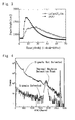
Fig. 3 ] is a view showing the light emission waveforms of LiCaAlF6:Eu and BGO. - [
Fig. 4 ] is a view of pulse height spectra obtained when gamma ray signals were selectively eliminated and when they were not eliminated. - The phoswich detector of the present invention, which discriminates between gamma rays and thermal neutrons, is mainly constituted by a
photodetector 1, a scintillator 2 for detecting thermal neutrons, and ascintillator 3 for detecting gamma rays, as shown inFig. 1 . Preferably, a part or all of the periphery of the scintillator 2 for detecting thermal neutrons is covered with thescintillators 3 for detecting gamma rays. Around thescintillators 3 for detecting gamma rays, it is preferred to form areflector 4 and alight shielding material 5.
Electrical signals obtained from thephotodetector 1 are inputted to an electricalsignal analyzing unit 6 to analyze signal waveforms based on the decay times of the scintillator for detecting thermal neutrons and the scintillator for detecting gamma rays and discriminate between signals on thermal neutrons and those on gamma rays. By grasping the statistical distributions of the pulse heights of the signals, moreover, pulse height spectra can be obtained. - As the
photodetector 1, a photodetector such as a photomultiplier tube or a silicon photodiode, which has been known publicly, can be used preferably. In the case of the photomultiplier tube, R7899, R6231, and H7416 produced by HAMAMATSU PHOTONICS K. K. , for example, can be used preferably. The quantum efficiency of a typical photomultiplier tube for visible light, which is used generally and widely, is of the order of about 25% at a wavelength of about 400 nm. - The scintillator 2 for detecting thermal neutrons is a scintillator for detecting thermal neutrons which has a light yield of more than 1500 photons/neutron. Its typical examples are lithium glass (containing 6Li and Ce), a lithium glass fiber (containing 6Li and Ce), a Eu-containing lithium iodide single crystal (LiI:Eu), a 6Li-containing elpasolite compound (Cs2LiYCl6:Ce, Cs2LiYBr6:Ce, Cs2LiYI6:Ce, etc.), and a Eu-containing LiCaAlF6 single crystal (LiCaAlF6:Eu).
The scintillator for detecting thermal neutrons to be used has to be selected in consideration of its combination with the scintillator for detecting gamma rays, and its details will be described later. - The reasons why the scintillator for detecting thermal neutrons needs to have a light yield of more than 1500 photons/neutron are as follows:
If the light yield is equal to or less than 1500 photons/neutron, when light emitted upon irradiation with thermal neutrons is received by the photomultiplier tube, the most sensitive photodetector, the pulse heights ascribed to the light emission from the scintillator are so low that they are comparable to the pulse heights of thermionic noises derived from the photomultiplier tube, and cannot be fully separated from the latter pulse heights. Normally, thermionic noises have small pulse heights, and are thus removed by setting a threshold value for the pulse height. If the pulse heights of light emission from the scintillator for detecting thermal neutrons are smaller than the pulse heights of the thermionic noises, however, emitted light is removed during removal of the thermionic noises, worsening the efficiency of measurement. - The size of the scintillator 2 for detecting thermal neutrons is not limited, but the area of the scintillator is rendered smaller than the plane of incidence of light which the
photodetector 1 has. By so doing, light emitted from the scintillator can be made incident on the photodetector without being wasted.
The thickness in a direction in which thermal neutrons are assumed to be incident is preferably determined by the probability of occurrence of a nuclear reaction with thermal neutrons. In the case of LiCaAlF6 with 6Li concentrated to 95%, for example, the absorption cross section of 6Li for 0.025 eV thermal neutrons is 940 barns. Thus, it is calculated that a nuclear reaction will occur with about 80% of thermal neutrons at a thickness of 2 mm and about 95% of thermal neutrons at a thickness of 4 mm. Hence, there should preferably be a thickness of about 4 mm or more in order to detect 90% or more of thermal neutrons. - The following facts were found out during the process of investigations for accomplishing the present invention: When the light emission wavelength of the scintillator 2 for detecting thermal neutrons is shorter than the wavelength of the permeable end of the
scintillator 3 for detecting gamma rays, light emission upon irradiation with thermal neutrons attenuates before reaching the photodetector. Thus, detection signals on thermal neutrons are not obtained, so that the detector with these scintillators does not act as a phoswich detector.
Thus, thescintillator 3 for detecting gamma rays needs to have a permeable end on a shorter wavelength than the light emission wavelength of the scintillator for detecting thermal neutrons. For example, a combination of LiCaAlF6: Pr with a light emission wavelength of 260 nm and BGO with a permeable end wavelength of 300 nm cannot be used in the present invention. When the transmission spectrum of light through a material is measured, a short wavelength undergoes absorption, and the material is not permeable to the light. A limiting wavelength at which the material is permeable to the light is a permeable end. - Furthermore, the scintillator for detecting gamma rays is either an organic solid scintillator which does not contain a total amount of 10 mol% or more of elements selected from 6Li, 10B and Gd, or an inorganic single crystal scintillator which has an effective atomic number Zeff of 30 or larger and which does not contain a total amount of 10 mol% or more of elements selected from 6Li, 10B and Gd.
Specific examples of the former organic solid scintillator are plastic scintillators having organic fluorescent materials incorporated into transparent plastic matrixes such as polyvinyltoluene, polymethyl methacrylate, and polystyrene. As the plastic scintillators, commercially available products such as the BC400 Series produced by Saint-Gobain Crystals, and NE102A produced by NE Technology.
Examples of the latter inorganic single crystal scintillator are BGO, a Tl-containing sodium iodide single crystal (NaI:Tl), a cesium iodide single crystal (CsI), a Ce-containing Lu2SiO5 single crystal (Lu2SiO5:Ce), a Ce-containing Lu1.8Y0.2SiO5 single crystal (Lu1.8Y0.2SiO5:Ce), a Ce-containing lanthanum bromide single crystal (LaBr:Ce), and a cerium fluoride single crystal (CeF3). - The reason why the contents of 6Li, 10B and Gd are restricted is that these elements cause a nuclear reaction with thermal neutrons to emit light. If 6Li, 10B and Gd are contained in a total amount of 10 mol% or more in the scintillator for detecting gamma rays, light may be emitted even responsive to thermal neutrons as well as gamma rays. This tends tomake discrimination between gamma rays and thermal neutrons difficult. Preferably, these elements are not contained in amounts exceeding those inevitably included as impurities during the manufacture of the scintillator; that is, they are not substantially contained.
- When the
scintillator 3 for detecting gamma rays is the organic solid scintillator such as a plastic scintillator, the scintillator of a large size can be prepared inexpensively, unlike the inorganic single crystal scintillator. Thus, a thickness capable of sufficiently inhibiting gamma rays can be easily obtained.
With the inorganic single crystal scintillator, it is difficult to prepare a large scintillator at a low cost, because of difficulty in growing a single crystal, as compared with the organic solid scintillator. Hence, the scintillator needs to be a material which can sufficiently absorb gamma rays, even when its thickness is small. Concretely, an inorganic single crystal having an effective atomic number Zeff of 30 or larger is preferred.
In the present invention, the effective atomic number refers to an indicator defined by Equation [1] shown below. The larger the effective atomic number, the more easily the interaction between the material and gamma rays, called photoelectric absorption, takes place. Lightemissionobtained when photoelectric absorption occurs is used in the detection of gamma rays.
According to studies by the present inventors, the inorganic single crystal having Zeff of 30 or larger causes photoelectric absorption relatively easily, and can be used preferably for detection of gamma rays.
where Wi and Zi represent, respectively, the mass fraction and the atomic number of the i-th element of the elements constituting the scintillator. - Cadmium (Cd), samarium (Sm) and europium (Eu) are elements with large thermal neutron capture cross sections. Thus, if these elements are contained as the constituent elements of the matrix crystal of the scintillator for detecting gamma rays, thermal neutrons are absorbed to the scintillator for detecting gamma rays present outside the scintillator for detecting thermal neutrons before these neutrons reach the scintillator for detecting thermal neutrons, with the result that the number of the thermal neutrons is markedly decreased. Hence, it is preferred for these three elements not tobe contained in a total amount of 10 mol% or more as the elements constituting the matrix crystal.
- Upon the principle of the phoswich detector, moreover, the scintillator for detecting thermal neutrons and the scintillator for detecting gamma rays are incapable of discrimination, unless their decay times are different. Thus, the materials need to be selected such that their decay times are different.
It is preferred if their decay times are different by almost an order of magnitude or more, because discrimination will be easier. Concrete examples are a combination of several tens of nanoseconds and several hundred nanoseconds, a combination of several tens of nanoseconds and several microseconds, and a combination of several hundred nanoseconds and several microseconds. It is important that the decay times of both scintillators be different, and it does not matter which of the decay times is the longer. Here, it is necessary to select a combination which fulfills the requirement that the scintillator for detecting gamma rays has a permeable end on a shorter wavelength than the light emission wavelength of the scintillator for detecting thermal neutrons, as stated earlier. - There are no limitations on the structures of the scintillator 2 for detecting thermal neutrons and the
scintillator 3 for detecting gamma rays. However, gamma rays should be intensively reacted with thescintillator 3 for detecting gamma rays to emit light, while only thermal neutrons should be intensively reacted with the scintillator 2 for detecting thermal neutrons to emit light. For this purpose, the preferred structure is one in which the scintillator 2 for detecting thermal neutrons is sandwiched between thescintillators 3 for detecting gamma rays, as shown inFig. 2 . From this point of view, a structure in which all the periphery of the scintillator 2 for detecting thermal neutrons is covered with thescintillators 3 for detecting gamma rays, as shown inFig. 1 , is the most preferred structure. - As the
reflector 4, polytetrafluoroethylene and barium sulfate, for example, can be used preferably. Preferably usable as thelight shielding material 5 are materials which do not allow passage of visible light, such as commercially available light shielding sheets and an aluminum foil.
As the electricalsignal analyzing unit 6, a readout circuit of a publicly known phoswich detector can be used. Use is made of a circuit having the functions of acquiring signals from thephotodetector 1 and discriminating between the decay time constants of light emissions. From the resulting signals, the statistical distributions of the pulse heights are grasped, whereby pulse height spectra can be drawn. - The detector of the present invention, achieved as described above, can be constituted as a detector which detects thermal neutrons and gamma rays, selectively separates their respective detection signals, and thereby detects thermal neutrons and gamma rays discriminatively. By using the detector of the present invention, it becomes possible to eliminate detection signals on gamma rays and detect only thermal neutrons, or eliminate detection signals on thermal neutrons and detect gamma rays, or detect both of thermal neutrons and gamma rays at the same time in a separated manner.
- Hereinbelow, the present invention will be described concretely by reference to its Examples, but the present invention is in no way limited by these Examples. Moreover, not all of combinations of the features described in the Examples are essential to the means for solution to the problems that the present invention adopts.
- For the scintillators of the phoswich detector according to the present invention, LiCaAlF6: Eu was used as the scintillator for detecting thermal neutrons, and BGO was used as the scintillator for detecting gamma rays.
It is sufficient for the LiCaAlF6: Eu to have a light yield of about 20,000 photons/neutron, which is about 3 times that of lithium glass, and its light emission wavelength is 370 nm. The permeable end of the BGO is 300 nm, which is a shorter wavelength than the light emission wavelength of the LiCaAlF6: Eu. The BGO is an inorganic single crystal scintillator having an effective atomic number of 74. - The LiCaAlF6:Eu single crystal was prepared using a crystal preparation apparatus by the Czochralski method. High purity fluoride powders of 95% 6LiF, CaF2, AlF3 and EuF3, each having purity of 99.99% or higher, were used as raw materials. A crucible, a heater, and a heat insulator used were formed of high purity carbon.
First, 269.7 g of 95% 6LiF, 784.0 g of CaF2, 903.5 g of AlF3 and 42.8 g of EuF3 were weighed, and mixed thoroughly. The resulting material mixture was charged into the crucible. The crucible charged with the materials was installed on a movable stage, whereafter the heater and the heat insulator were sequentially installed around the crucible. Then, a LiCaAlF6 single crystal, which had been cut, ground and polished in the form of a rectangular parallelepiped measuring 6×6×30 mm3, with the 30 mm side extending along the c-axis direction, was used as a seed crystal, and mounted on the front end of an automatic diameter control device. Then, the interior of a chamber was evacuated under vacuum to 5.0×10⁻⁴ Pa by use of a vacuum evacuation device composed of an oil-sealed rotary vacuum pump and an oil diffusion pump. Then, a tetrafluoromethane-argon mixed gas was introduced into the chamber up to atmospheric pressure for gas exchange. - A high frequency current was applied to a high frequency coil to heat the materials by induction heating, thereby melting them. The seed crystal was moved and brought into contact with the liquid surface of the molten material melt. The output of the heater was adjusted such that a portion of the melt in contact with the seed crystal reached a solidification temperature. Then, under control by the automatic diameter control device, the resulting crystal was pulled upward, with the pull rate being automatically adjusted so as to achieve a diameter of 55 mm.
During crystal growth, the movable stage was moved, as appropriate, in order to adjust the liquid level to a constant position, and the crystal was continuously pulled up, with the output of the high frequency coil being adjusted where appropriate. When the crystal grew to a length of about 70 mm, the crystal was cut off the liquid surface, and cooled over about 48 hours to obtain a Eu-containing LiCaAlF6 crystal with a diameter of 55 mm and a length of about 70 mm. - The BGO used was a commercially available one produced by Saint-Gobain Crystals. The photomultiplier tube used was R7899 produced by HAMAMATSU PHOTONICS K.K. The electrical signal analyzing unit used was the same as that of
Non-Patent Document 1. - The scintillator for detecting thermal neutrons and the scintillator for detecting gamma rays, mentioned above, were used to produce a phoswich detector of the structure shown in
Fig. 2 . The LiCaAlF6: Eu and the two BGOs were each processed into the shape of a hexagonal prism having a thickness of 10 mm and having a hexagonal plane with each side measuring 15 mm, and the LiCaAlF6: Eu was sandwiched between the two BGOs. The scintillators were bonded together, and the scintillator and the photomultiplier tube were bonded together, using an optical grease produced by OHYO KOKEN KOGYO CO., LTD. - The above-described radiation detector was irradiated with gamma rays and thermal neutrons. A source of the gamma rays used was 137Cs and a source of the thermal neutrons used was 252Cf, each of the 137Cs and the 252Cf being placed in a 40 mm polyethylene container.
Signals obtained from the LiCaAlF6:Eu and the BGO are plotted inFig. 3 in which the ordinate represents the strength and the abscissa represents time. The unit for the horizontal axis was clocks (1 clock = 160 nanoseconds). A solid line connecting open triangles "Δ" represents a thermal neutron-associated spectrum obtained from the LiCaAlF6:Eu, while a solid line connecting filled circles "●" represents a gamma ray-associated spectrum obtained from the BGO. Clearly, the resulting waveforms were different in decay time.
As clearly recognizable fromFig. 3 , when A value = pulse height (pulse height at 10 clocks) was compared with B value = pulse height (pulse height at 20 clocks), the thermal neutron-associated spectrum obtained from the LiCaAlF6:Eu showed little difference between both values. In the gamma ray-associated spectrum obtained from the BGO, the A value was at least twice as high as the B value. Hence, signals with the A value exceeding 1. 5 times the B value were processed as gamma ray signals derived from the BGO.
The resulting BGO-derived signals were selectively eliminated as gamma ray signals from the resulting energy spectrum. Pulse height spectra obtained upon selective signal elimination and without selective signal elimination are shown inFig. 4 . It is seen fromFig. 4 that a detection peak of thermal neutrons canbe clearly separated, and that the phoswich detector constituted in the above-described manner has been able to discriminate between thermal neutrons and gamma rays. -
- 1
- Photodetector
- 2
- Scintillator for detecting thermal neutrons
- 3
- Scintillator for detecting gamma rays
- 4
- Reflector
- 5
- Light shielding material
- 6
- Electrical signal analyzing unit
Claims (4)
- A phoswich radiation detector having two scintillators and discriminating between thermal neutrons and gamma rays,
the phoswich radiation detector comprising:a scintillator for detecting thermal neutrons, which has a light yield of more than 1500 photons/neutron; anda scintillator for detecting gamma rays, which has a permeable end on a shorter wavelength than a light emission wavelength of the thermal neutron scintillator,wherein the scintillator for detecting gamma rays is either an organic solid scintillator which does not contain 10 mol% or more of elements selected from 6Li, 10B and Gd, or an inorganic single crystal scintillator which has an effective atomic number Zeff of 30 or larger and which does not contain 10 mol% or more of elements selected from 6Li, 10B and Gd. - The phoswich radiation detector according to claim 1, wherein the scintillator for detecting thermal neutrons is a Eu-containing LiABF6 single crystal (where A represents at least one element selected from Ca, Sr, Ba, Mg, Mn, Ni, Zn and Cd, and B represents at least one element selected from Al, Ga, Cr, Co, Fe, Ti and V).
- The phoswich radiation detector according to claim 1, wherein the scintillator for detecting gamma rays is an inorganic single crystal scintillator which has an effective atomic number Zeff of 30 or larger and which does not contain 10 mol% or more of elements selected from 6Li, 10B and Gd.
- The phoswich radiation detector according to claim 1, wherein the scintillator for detecting thermal neutrons is structured to have a part or all of a periphery thereof covered with the scintillators for detecting gamma rays.
Applications Claiming Priority (2)
| Application Number | Priority Date | Filing Date | Title |
|---|---|---|---|
| JP2010164392 | 2010-07-21 | ||
| PCT/JP2011/066486 WO2012011506A1 (en) | 2010-07-21 | 2011-07-20 | Phoswich thermal neutron detector |
Publications (2)
| Publication Number | Publication Date |
|---|---|
| EP2597490A1 true EP2597490A1 (en) | 2013-05-29 |
| EP2597490A4 EP2597490A4 (en) | 2014-01-08 |
Family
ID=45496925
Family Applications (1)
| Application Number | Title | Priority Date | Filing Date |
|---|---|---|---|
| EP11809676.7A Withdrawn EP2597490A4 (en) | 2010-07-21 | 2011-07-20 | THERMAL NEUTRON SANDWICH SCINTILLATOR DETECTOR |
Country Status (4)
| Country | Link |
|---|---|
| US (1) | US20130112885A1 (en) |
| EP (1) | EP2597490A4 (en) |
| JP (1) | JP5894916B2 (en) |
| WO (1) | WO2012011506A1 (en) |
Cited By (3)
| Publication number | Priority date | Publication date | Assignee | Title |
|---|---|---|---|---|
| EP2889643A1 (en) * | 2013-12-30 | 2015-07-01 | Nuctech Company Limited | Multiple technologies composite scintillation detector device |
| CN109143318A (en) * | 2017-06-16 | 2019-01-04 | 中国辐射防护研究院 | The neutron detection method and apparatus of gamma-rays interference is reduced using silicon PIN detector |
| WO2020014765A1 (en) * | 2018-07-17 | 2020-01-23 | Polimaster Ltd. | Gamma and neutron radiation detection unit |
Families Citing this family (22)
| Publication number | Priority date | Publication date | Assignee | Title |
|---|---|---|---|---|
| JP5995246B2 (en) * | 2011-03-08 | 2016-09-21 | 株式会社トクヤマ | X-ray or gamma ray detector |
| JP5916421B2 (en) | 2012-02-14 | 2016-05-11 | 株式会社トクヤマ | Neutron detector |
| JP5846960B2 (en) * | 2012-02-24 | 2016-01-20 | 株式会社トクヤマ | Radiation detector |
| FR3000807A1 (en) * | 2013-01-07 | 2014-07-11 | Commissariat Energie Atomique | SCINTILLATOR FOR THE DETECTION OF NEUTRONS AND / OR PHOTONS GAMMA AND DETECTOR |
| CN103336293B (en) * | 2013-05-31 | 2015-09-16 | 四川大学 | A kind of method optimizing liquid scintillation bulk detector examination neutron and gamma ability |
| FR3010534B1 (en) * | 2013-09-06 | 2015-10-09 | Commissariat Energie Atomique | SYSTEM AND METHOD FOR DETECTING NEUTRON, GAMMA AND MUON RADIATION WITH CONTIGUOUS PLASTIC SCINTILLATORS |
| EP3064965A4 (en) * | 2013-10-28 | 2017-06-07 | Tokuyama Corporation | Neutron scintillator and neutron detector |
| US10247847B2 (en) | 2014-01-16 | 2019-04-02 | University Of Florida Research Foundation, Inc. | System and method for analysis of fissionable materials by neutron energy discrimination |
| CN109568812B (en) * | 2015-09-11 | 2020-08-11 | 南京中硼联康医疗科技有限公司 | Beam shapers for neutron capture therapy |
| US9528952B1 (en) * | 2016-05-17 | 2016-12-27 | Westinghouse Electric Company Llc | Pulsed neutron generated prompt gamma emission measurement system for surface defect detection and analysis |
| CN110244339A (en) * | 2016-06-01 | 2019-09-17 | 南京中硼联康医疗科技有限公司 | Radiation dose measurement method |
| CN109143319B (en) * | 2017-06-16 | 2023-04-28 | 中国辐射防护研究院 | Neutron detection method and equipment for reducing γ-ray interference by using CeF3 scintillator |
| JP7057630B2 (en) * | 2017-06-23 | 2022-04-20 | 浜松ホトニクス株式会社 | Radiation detector |
| CN109407133B (en) * | 2017-08-18 | 2023-09-22 | 南京中硼联康医疗科技有限公司 | Biological dosimeter and neutron capture therapy system having the same |
| CN108169781A (en) * | 2017-11-27 | 2018-06-15 | 中核控制系统工程有限公司 | A kind of X- gammas dosage detection device |
| KR102222309B1 (en) * | 2019-03-05 | 2021-03-04 | 한국원자력연구원 | Coincidence-based prompt-gamma activation imaging apparatus and imaging method using the same |
| JP7161973B2 (en) * | 2019-05-27 | 2022-10-27 | 株式会社日立製作所 | Radiation monitoring device |
| CN110806599B (en) * | 2019-12-12 | 2024-07-26 | 中国工程物理研究院激光聚变研究中心 | Pulse-gated neutron detector and detection method thereof |
| CN112526584A (en) * | 2020-10-26 | 2021-03-19 | 南京即衡科技发展有限公司 | Neutron energy spectrum measuring device and measuring method thereof |
| KR102767969B1 (en) * | 2022-05-12 | 2025-02-12 | 중앙대학교 산학협력단 | Scintillation detector and manufacturing method thereof |
| CN114942469B (en) * | 2022-05-23 | 2024-08-16 | 西北核技术研究所 | A neutron detection method and device based on flexible gallium nitride two-dimensional electron gas |
| CN114994742B (en) * | 2022-06-14 | 2024-08-16 | 西北核技术研究所 | A method and device for detecting thermal neutrons or fast neutrons based on MOF |
Family Cites Families (10)
| Publication number | Priority date | Publication date | Assignee | Title |
|---|---|---|---|---|
| JPS61184444A (en) * | 1985-02-12 | 1986-08-18 | Nippon Atom Ind Group Co Ltd | Simultaneous radiography |
| JP3227224B2 (en) * | 1992-10-09 | 2001-11-12 | 日本原子力研究所 | Phoswich detector with controllable pulse height and rise time of scintillator output pulse by optical filter |
| JPH11271453A (en) * | 1998-03-25 | 1999-10-08 | Toshiba Corp | Radiation discrimination measurement method and radiation discrimination measurement device |
| WO2004086089A1 (en) * | 2003-03-24 | 2004-10-07 | Hokushin Corporation | Fluoride single crystal material for thermoluminescence dosimeter and thermoluminescence dosimeter |
| WO2005008287A1 (en) * | 2003-07-18 | 2005-01-27 | Toudai Tlo, Ltd. | Thermal netron flux monitor |
| JP2006329905A (en) * | 2005-05-30 | 2006-12-07 | Toshiba Corp | Line sensor, line sensor unit and radiation nondestructive inspection system |
| US7335891B2 (en) * | 2005-06-27 | 2008-02-26 | General Electric Company | Gamma and neutron radiation detector |
| US7525101B2 (en) * | 2006-05-26 | 2009-04-28 | Thermo Niton Analyzers Llc | Neutron and gamma ray monitor |
| JP2009198365A (en) * | 2008-02-22 | 2009-09-03 | National Agriculture & Food Research Organization | Radiation surveillance system using plastic scintillator as detector |
| EP2256177B1 (en) * | 2008-03-24 | 2016-01-13 | Tokuyama Corporation | Scintillator for neutron detection and neutron detector |
-
2011
- 2011-07-20 US US13/809,493 patent/US20130112885A1/en not_active Abandoned
- 2011-07-20 EP EP11809676.7A patent/EP2597490A4/en not_active Withdrawn
- 2011-07-20 JP JP2012525415A patent/JP5894916B2/en not_active Expired - Fee Related
- 2011-07-20 WO PCT/JP2011/066486 patent/WO2012011506A1/en not_active Ceased
Cited By (6)
| Publication number | Priority date | Publication date | Assignee | Title |
|---|---|---|---|---|
| EP2889643A1 (en) * | 2013-12-30 | 2015-07-01 | Nuctech Company Limited | Multiple technologies composite scintillation detector device |
| US9322933B2 (en) | 2013-12-30 | 2016-04-26 | Nuctech Company Limited | Multiple technologies composite scintillation detector device |
| CN109143318A (en) * | 2017-06-16 | 2019-01-04 | 中国辐射防护研究院 | The neutron detection method and apparatus of gamma-rays interference is reduced using silicon PIN detector |
| CN109143318B (en) * | 2017-06-16 | 2023-09-15 | 中国辐射防护研究院 | Neutron detection method and equipment using silicon PIN detector to reduce gamma ray interference |
| WO2020014765A1 (en) * | 2018-07-17 | 2020-01-23 | Polimaster Ltd. | Gamma and neutron radiation detection unit |
| EA038969B1 (en) * | 2018-07-17 | 2021-11-16 | Общество с ограниченной ответственностью "Полимастер" | Gamma and neutron radiation detection unit |
Also Published As
| Publication number | Publication date |
|---|---|
| EP2597490A4 (en) | 2014-01-08 |
| JP5894916B2 (en) | 2016-03-30 |
| WO2012011506A1 (en) | 2012-01-26 |
| JPWO2012011506A1 (en) | 2013-09-09 |
| US20130112885A1 (en) | 2013-05-09 |
Similar Documents
| Publication | Publication Date | Title |
|---|---|---|
| US20130112885A1 (en) | Phoswich thermal neutron detector | |
| Nagornaya et al. | Tungstate and molybdate scintillators to search for dark matter and double beta decay | |
| RU2494416C2 (en) | Scintillator for detecting neutrons and neutron detector | |
| EP2631676B1 (en) | Neutron scintillation detector | |
| US7525100B2 (en) | Bright and fast neutron scintillators | |
| EP2573590A1 (en) | Neutron beam detector, neutron beam detection scintillator, and method for discrimination between neutron beam and beam | |
| US20130126741A1 (en) | Ce3+ ACTIVATED MIXED HALIDE ELPASOLITES AND HIGH ENERGY RESOLUTION SCINTILLATOR | |
| EP2685286A1 (en) | Neutron beam detection device | |
| EP2695928B1 (en) | Scintillator, radiation detector, and method for detecting radiation | |
| EP2636772B1 (en) | Colquiriite-type crystal, scintillator for neutron detection, and neutron radiation detector | |
| Song et al. | Enhancement of alpha/beta ratio in NaI: Tl, 6Li neutron-gamma scintillators by rare earth co-doping | |
| JP5634285B2 (en) | Korkyrite type crystal, neutron detection scintillator and neutron beam detector | |
| EP2636647B1 (en) | Metal fluoride eutectic body and neutron scintillator | |
| JP6637176B2 (en) | Radiation monitor | |
| EP3760691B1 (en) | Scintillator and preparation method therefor | |
| JP5737974B2 (en) | Neutron detection scintillator and neutron beam detector | |
| JP5737978B2 (en) | Neutron detection scintillator and neutron beam detector | |
| RU2244320C1 (en) | Thermal neutron recording scintillator | |
| MITRA | Simulation based optimization of indigenously developed inorganic scintillators and various light sensors to develop gamma spectrometer systems |
Legal Events
| Date | Code | Title | Description |
|---|---|---|---|
| PUAI | Public reference made under article 153(3) epc to a published international application that has entered the european phase |
Free format text: ORIGINAL CODE: 0009012 |
|
| 17P | Request for examination filed |
Effective date: 20130108 |
|
| AK | Designated contracting states |
Kind code of ref document: A1 Designated state(s): AL AT BE BG CH CY CZ DE DK EE ES FI FR GB GR HR HU IE IS IT LI LT LU LV MC MK MT NL NO PL PT RO RS SE SI SK SM TR |
|
| RIN1 | Information on inventor provided before grant (corrected) |
Inventor name: FUKAZAWA, YASUSHI Inventor name: KAWAGUCHI, NORIAKI Inventor name: TAKAHASHI, HIROMITSU Inventor name: YANAGIDA, TAKAYUKI Inventor name: FUJIMOTO, YUTAKA Inventor name: FUKUDA, KENTARO Inventor name: YONETANI, MITSUO Inventor name: YOSHIKAWA, AKIRA Inventor name: YOKOTA, YUI Inventor name: SUYAMA, TOSHIHISA Inventor name: MATSUOKA, MASAYUKI |
|
| RIN1 | Information on inventor provided before grant (corrected) |
Inventor name: YONETANI, MITSUO Inventor name: FUKUDA, KENTARO Inventor name: TAKAHASHI, HIROMITSU Inventor name: MATSUOKA, MASAYUKI Inventor name: YOKOTA, YUI Inventor name: YOSHIKAWA, AKIRA Inventor name: FUJIMOTO, YUTAKA Inventor name: SUYAMA, TOSHIHISA Inventor name: YANAGIDA, TAKAYUKI Inventor name: FUKAZAWA, YASUSHI Inventor name: KAWAGUCHI, NORIAKI |
|
| DAX | Request for extension of the european patent (deleted) | ||
| RIN1 | Information on inventor provided before grant (corrected) |
Inventor name: SUYAMA, TOSHIHISA Inventor name: KAWAGUCHI, NORIAKI Inventor name: FUJIMOTO, YUTAKA Inventor name: YONETANI, MITSUO Inventor name: FUKUDA, KENTARO Inventor name: MATSUOKA, MASAYUKI Inventor name: TAKAHASHI, HIROMITSU Inventor name: FUKAZAWA, YASUSHI Inventor name: YOKOTA, YUI Inventor name: YOSHIKAWA, AKIRA Inventor name: YANAGIDA, TAKAYUKI |
|
| A4 | Supplementary search report drawn up and despatched |
Effective date: 20131211 |
|
| RIC1 | Information provided on ipc code assigned before grant |
Ipc: G01T 1/202 20060101ALI20131205BHEP Ipc: G01T 3/06 20060101AFI20131205BHEP Ipc: C09K 11/64 20060101ALI20131205BHEP Ipc: C09K 11/00 20060101ALI20131205BHEP |
|
| 17Q | First examination report despatched |
Effective date: 20160414 |
|
| STAA | Information on the status of an ep patent application or granted ep patent |
Free format text: STATUS: THE APPLICATION IS DEEMED TO BE WITHDRAWN |
|
| 18D | Application deemed to be withdrawn |
Effective date: 20160825 |