EP2597152A1 - Genetically engineered strain wsj-ia for producing isovaleryl spiramycin i. - Google Patents
Genetically engineered strain wsj-ia for producing isovaleryl spiramycin i. Download PDFInfo
- Publication number
- EP2597152A1 EP2597152A1 EP11809152.9A EP11809152A EP2597152A1 EP 2597152 A1 EP2597152 A1 EP 2597152A1 EP 11809152 A EP11809152 A EP 11809152A EP 2597152 A1 EP2597152 A1 EP 2597152A1
- Authority
- EP
- European Patent Office
- Prior art keywords
- gene
- strain
- wsj
- ist
- acyb2
- Prior art date
- Legal status (The legal status is an assumption and is not a legal conclusion. Google has not performed a legal analysis and makes no representation as to the accuracy of the status listed.)
- Granted
Links
Images

Classifications
-
- C—CHEMISTRY; METALLURGY
- C12—BIOCHEMISTRY; BEER; SPIRITS; WINE; VINEGAR; MICROBIOLOGY; ENZYMOLOGY; MUTATION OR GENETIC ENGINEERING
- C12P—FERMENTATION OR ENZYME-USING PROCESSES TO SYNTHESISE A DESIRED CHEMICAL COMPOUND OR COMPOSITION OR TO SEPARATE OPTICAL ISOMERS FROM A RACEMIC MIXTURE
- C12P19/00—Preparation of compounds containing saccharide radicals
- C12P19/44—Preparation of O-glycosides, e.g. glucosides
- C12P19/60—Preparation of O-glycosides, e.g. glucosides having an oxygen of the saccharide radical directly bound to a non-saccharide heterocyclic ring or a condensed ring system containing a non-saccharide heterocyclic ring, e.g. coumermycin, novobiocin
- C12P19/62—Preparation of O-glycosides, e.g. glucosides having an oxygen of the saccharide radical directly bound to a non-saccharide heterocyclic ring or a condensed ring system containing a non-saccharide heterocyclic ring, e.g. coumermycin, novobiocin the hetero ring having eight or more ring members and only oxygen as ring hetero atoms, e.g. erythromycin, spiramycin, nystatin
-
- C—CHEMISTRY; METALLURGY
- C12—BIOCHEMISTRY; BEER; SPIRITS; WINE; VINEGAR; MICROBIOLOGY; ENZYMOLOGY; MUTATION OR GENETIC ENGINEERING
- C12N—MICROORGANISMS OR ENZYMES; COMPOSITIONS THEREOF; PROPAGATING, PRESERVING, OR MAINTAINING MICROORGANISMS; MUTATION OR GENETIC ENGINEERING; CULTURE MEDIA
- C12N1/00—Microorganisms; Compositions thereof; Processes of propagating, maintaining or preserving microorganisms or compositions thereof; Processes of preparing or isolating a composition containing a microorganism; Culture media therefor
- C12N1/20—Bacteria; Culture media therefor
-
- C—CHEMISTRY; METALLURGY
- C07—ORGANIC CHEMISTRY
- C07K—PEPTIDES
- C07K14/00—Peptides having more than 20 amino acids; Gastrins; Somatostatins; Melanotropins; Derivatives thereof
- C07K14/195—Peptides having more than 20 amino acids; Gastrins; Somatostatins; Melanotropins; Derivatives thereof from bacteria
- C07K14/36—Peptides having more than 20 amino acids; Gastrins; Somatostatins; Melanotropins; Derivatives thereof from bacteria from Actinomyces; from Streptomyces (G)
-
- C—CHEMISTRY; METALLURGY
- C12—BIOCHEMISTRY; BEER; SPIRITS; WINE; VINEGAR; MICROBIOLOGY; ENZYMOLOGY; MUTATION OR GENETIC ENGINEERING
- C12N—MICROORGANISMS OR ENZYMES; COMPOSITIONS THEREOF; PROPAGATING, PRESERVING, OR MAINTAINING MICROORGANISMS; MUTATION OR GENETIC ENGINEERING; CULTURE MEDIA
- C12N1/00—Microorganisms; Compositions thereof; Processes of propagating, maintaining or preserving microorganisms or compositions thereof; Processes of preparing or isolating a composition containing a microorganism; Culture media therefor
- C12N1/20—Bacteria; Culture media therefor
- C12N1/205—Bacterial isolates
-
- C—CHEMISTRY; METALLURGY
- C12—BIOCHEMISTRY; BEER; SPIRITS; WINE; VINEGAR; MICROBIOLOGY; ENZYMOLOGY; MUTATION OR GENETIC ENGINEERING
- C12N—MICROORGANISMS OR ENZYMES; COMPOSITIONS THEREOF; PROPAGATING, PRESERVING, OR MAINTAINING MICROORGANISMS; MUTATION OR GENETIC ENGINEERING; CULTURE MEDIA
- C12N15/00—Mutation or genetic engineering; DNA or RNA concerning genetic engineering, vectors, e.g. plasmids, or their isolation, preparation or purification; Use of hosts therefor
- C12N15/02—Preparation of hybrid cells by fusion of two or more cells, e.g. protoplast fusion
- C12N15/03—Bacteria
-
- C—CHEMISTRY; METALLURGY
- C12—BIOCHEMISTRY; BEER; SPIRITS; WINE; VINEGAR; MICROBIOLOGY; ENZYMOLOGY; MUTATION OR GENETIC ENGINEERING
- C12N—MICROORGANISMS OR ENZYMES; COMPOSITIONS THEREOF; PROPAGATING, PRESERVING, OR MAINTAINING MICROORGANISMS; MUTATION OR GENETIC ENGINEERING; CULTURE MEDIA
- C12N15/00—Mutation or genetic engineering; DNA or RNA concerning genetic engineering, vectors, e.g. plasmids, or their isolation, preparation or purification; Use of hosts therefor
- C12N15/09—Recombinant DNA-technology
- C12N15/63—Introduction of foreign genetic material using vectors; Vectors; Use of hosts therefor; Regulation of expression
-
- C—CHEMISTRY; METALLURGY
- C12—BIOCHEMISTRY; BEER; SPIRITS; WINE; VINEGAR; MICROBIOLOGY; ENZYMOLOGY; MUTATION OR GENETIC ENGINEERING
- C12N—MICROORGANISMS OR ENZYMES; COMPOSITIONS THEREOF; PROPAGATING, PRESERVING, OR MAINTAINING MICROORGANISMS; MUTATION OR GENETIC ENGINEERING; CULTURE MEDIA
- C12N15/00—Mutation or genetic engineering; DNA or RNA concerning genetic engineering, vectors, e.g. plasmids, or their isolation, preparation or purification; Use of hosts therefor
- C12N15/09—Recombinant DNA-technology
- C12N15/63—Introduction of foreign genetic material using vectors; Vectors; Use of hosts therefor; Regulation of expression
- C12N15/74—Vectors or expression systems specially adapted for prokaryotic hosts other than E. coli, e.g. Lactobacillus, Micromonospora
- C12N15/76—Vectors or expression systems specially adapted for prokaryotic hosts other than E. coli, e.g. Lactobacillus, Micromonospora for Actinomyces; for Streptomyces
-
- C—CHEMISTRY; METALLURGY
- C12—BIOCHEMISTRY; BEER; SPIRITS; WINE; VINEGAR; MICROBIOLOGY; ENZYMOLOGY; MUTATION OR GENETIC ENGINEERING
- C12N—MICROORGANISMS OR ENZYMES; COMPOSITIONS THEREOF; PROPAGATING, PRESERVING, OR MAINTAINING MICROORGANISMS; MUTATION OR GENETIC ENGINEERING; CULTURE MEDIA
- C12N9/00—Enzymes; Proenzymes; Compositions thereof; Processes for preparing, activating, inhibiting, separating or purifying enzymes
- C12N9/10—Transferases (2.)
- C12N9/1025—Acyltransferases (2.3)
- C12N9/1029—Acyltransferases (2.3) transferring groups other than amino-acyl groups (2.3.1)
-
- C—CHEMISTRY; METALLURGY
- C12—BIOCHEMISTRY; BEER; SPIRITS; WINE; VINEGAR; MICROBIOLOGY; ENZYMOLOGY; MUTATION OR GENETIC ENGINEERING
- C12R—INDEXING SCHEME ASSOCIATED WITH SUBCLASSES C12C - C12Q, RELATING TO MICROORGANISMS
- C12R2001/00—Microorganisms ; Processes using microorganisms
- C12R2001/01—Bacteria or Actinomycetales ; using bacteria or Actinomycetales
- C12R2001/465—Streptomyces
-
- Y—GENERAL TAGGING OF NEW TECHNOLOGICAL DEVELOPMENTS; GENERAL TAGGING OF CROSS-SECTIONAL TECHNOLOGIES SPANNING OVER SEVERAL SECTIONS OF THE IPC; TECHNICAL SUBJECTS COVERED BY FORMER USPC CROSS-REFERENCE ART COLLECTIONS [XRACs] AND DIGESTS
- Y02—TECHNOLOGIES OR APPLICATIONS FOR MITIGATION OR ADAPTATION AGAINST CLIMATE CHANGE
- Y02A—TECHNOLOGIES FOR ADAPTATION TO CLIMATE CHANGE
- Y02A50/00—TECHNOLOGIES FOR ADAPTATION TO CLIMATE CHANGE in human health protection, e.g. against extreme weather
- Y02A50/30—Against vector-borne diseases, e.g. mosquito-borne, fly-borne, tick-borne or waterborne diseases whose impact is exacerbated by climate change
Definitions
- This invention comprises acquisition of a bacterial strain producing high content and high yield of a single component antibiotic by constructing with gene regulation technology.
- Bitespiramycin (primitive name: Shengjimycin) [patent no.: ZL97104440.6 ] is a derivative of spiramycin formed by isovalerylation of the 4"-position hydroxyl group of the mycarose moiety in spiramycin molecule. It is produced using genetic engineering technology, to generate bacterial genomic combination between the isovaleryl spiramycin gene ist of heat resistant streptomyces and spiramycin.
- Bitespiramycin has relatively strong activity against Gram-positive bacteria, especially Streptococcus pneumonia, Mycoplasma pneumonia and chlamydia, it exhibits antibacterial activity against erythromycin- and ⁇ -lactam antibiotic-resistant bacteria such as influenza bacillus, Legionella, Clostridium perfringens ; it does not exhibit complete cross-resistance with similar drugs.
- Bitespiramycin has a relatively high lipophicity, its oral absorption is fast with strong permeability into tissues and a wide distribution in the body and a long maintaining time. Therefore it shows a good post-antibiotic effect.
- Phase III clinical trials for Bitespiramycin produced with genetic engineering technology has been finished, the results showed good therapeutic effect and safety. Application for class I new drug certificate has been put forward for this drug.
- Bitespiramycin is a safe and effective antibiotic. Its therapeutic effect is comparative to antibiotic azithromycin, generally accepted to be the best macrolide currently. Nevertheless, due to the fact that Bitespiramycin is a multi-component drug, for all the efforts to establish tablet production process to be able to obtain products with controllable component proportions and a stable quality, yet the demands on the control of extraction as well as purification processes are relatively rigorous, and the quality inspection process is complex. Meanwhile, to enhance its therapeutic effects, it is necessary to development its injection formulation. It is well known that injections bring about therapeutic effects very quickly, is especially applicable to critically ill patients or those who are not suitable to take the drugs orally. It is certain that injections are more demanding in terms of quality control.
- Bitespiramycin Production of multi-component Bitespiramycin by the corresponding bacteria is stemmed from multi-component characteristics of spiramycin. Being a homogeny of Platenomycin, it is a macrolide antibiotic, its main nucleus being a 16-membered lactone ring. It contains three sugar molecules: forosamine, mycaminose and mycarose, whereas the main component of Bitespiramycin is an isovalerylation derivative of the hydroxyl group in 4"-position of the mycarose moiety in spiramycin molecule.
- acyltransferase gene in the bacteria producing spiramycin, 3-position of the lactone ring in spiramycin molecule can be acetylated to form spiramycin component II; propionylated to form spiramycin component III; and when the 3-position of the lactone ring is de-acylated, spiramycin component I is formed. Therefore Bitespiramycin is also a mixture of at least three components: isovaleryl spiramycins I, II, III.
- the contents of isovaleryl spiramycins should be no less than 60%. Therefore, a single component (content higher than 60%) can be used to substitute the multi-component mixture.
- this laboratory constructed bacterium stain WSJ-2 by blocking the 3-O-acyl transferase gene using gene recombination technology in Bitespiramycin generating bacterium WSJ-1. WSJ-2 produced only the isovaleryl spiramycin I [ Chunyan Ma et al. Current Microbiology, 2011, 62:16-20 ]. However, this strain showed very low fermentation unit, it is thus not conducive to large-scale production.
- acyB2 regulatory gene and the transcriptional regulatory protein Srm28c in the spiramycin producing bacterium are homologous [ Fatma Karray et al Microbiology 2007,153,4111-4122 ], their degree of identity is 69%, the degree of identity of acyB2 and regulatory protein ty1R in tylosin producing bacterium ( Streptomyces fradiae ) is 41%, tylR is the positive regulatory protein of the biosynthesis in tylosin producing bacterium, it regulates the expression of a polyketide synthase module (ty1GI) in tylosin producing bacterium, and plays a regulatory role on the tylosin glycosyl synthesis as well as the polyketone ring oxidation.
- ty1GI polyketide synthase module
- the aim of this invention is to obtain bacterial strains yielding high content of Bitespiramycin single component - isovaleryl spiramycin I, as well as high productivity by means of expression of ist gene linked with regulatory gene acyB2 in a strain, which has already been obtained, capable of producing only the component of isovaleryl spiramycin I, using a highly efficient and stable expression system.
- it is necessary to overcome the obstacles of the restriction of the antibiotic producing bacteria of practical value on the gene modification by exogenous gene, thereby improving the conversion rate of the exogenous DNA. Meanwhile, it is necessary to select vector systems for stable express, such that the genetically engineered bacteria can be suitable for large-scale industrial production.
- This invention proposes to adopt an integrated vector for non-autonomous replication in Streptomyces, such a vector contains the Streptomyces phage integrase enzyme as well as the attachment sites, and contains only the E. coli replicon, to facilitate the preparation in E. coli; meanwhile the vector lacks Streptomyces replicon.
- the integration relies on the attachment sites (attP) on the carrier and specific attachment sites of the host bacteria. Therefore, the exogenous gene may be stably expressed in large scale production.
- Example 1 construction of recombinant plasmid pSET52-ia containing dual gene ist-acyB2
- PCR temperature 94°C predenaturation for 2min; 94°C for 30s, 60°C for 30s, 72°C for 1min, 28 cycles; extending at 72°C for 5min, to obtain 1013bp segment of the downstream part of acyB2 gene.
- BamHI-EcoRI enzyme was used to digest the PCR product to obtain 934bp segment, the aforementioned segments digested by SmaI-BamHI(1820bp) and BamHI-EcoRI(934bp) were ligated into in pBluesript II KS(+) vector (E • Merck) by the restriction enzyme sites SmaI-EcoRI, to obtain gene recombinant plasmid pBKS-ia containing ist and complete acyB2.
- pSET152 plasmid were ligated into the integrated E. coli/Streptomyces conjugative transfer plasmid via the restriction sites by XbaI-EcoRI enzyme [ Bierman M.
- Example 2 Recombinant plasmid pSET52-ia convertion of isovaleryl spiramycin I producing bacterium WSJ-2
- Isovaleryl spiramycin I producing bacterium WSJ-2 was constructed by this laboratory [ Chunyan Ma et al. Current Microbiology, 2011,62:16-20 ]. Said strain was cultured on slant medium [Soybean cake flour 2.0%, glucose 1.0%, starch 3.0%, CaCO 3 , 0.5%, NaCl, 0.4%, agar 2.0%] at 28°C for 7-10 days, to prepare protoplast according to the procedures described in the literature [ D.A.Hopwood et al.
- Plasmid DNA from the transformant was extracted, subsequently transferred into protoplast under the mediation of PEG, coated on R2YE solid medium. After culture for at 28°C 24 hours, the culture was covered with solution containing apramycin to attain a final apramycin concentration of 50 ⁇ g/ml in the medium, and cultured for 7-10 days, to pick the resistant transformants.
- transformants are subcultured continuously without dosing, and then test after dosing to obtain the isovaleryl spiramycin I producing bacterium WSJ-IA with stable expression of resistant recombinant plasmid pSET52-ia.
- the primers for upstream of ist gene and downstream of acyB2 gene P3: GAGGTAGAAGGCGAAGGT and P4: CGTCAGATGCCAGTTCAC was designed, PCR was carried out for the total DNA of control bacterium WSJ-2 and transformant (4) of WSJ-IA put forward in the present invention as templates, PCR procedure were: 94°C predenaturation for 2min; 94°C for 30s, 60°C for 30s, 72°C for 2min, 28 cycles; 72°C extension for 5min (Firgue 2).
- Fibrillae of spores were soft and winding, hook-like and spiral; spores cylindrical and oval.
- Tab. 1 Culture morphology of WSJ-IA strain Culture characteristics Aerial mycelium Substrate mycelium Soluble pigment Czapek medium extremely few, white lotus seed white not observed Glucose asparagine medium extremely few, off-white yellow-brown not observed Glycerol asparagine medium no aerial mycelium lotus seed yellow not observed Inorganic salt starch medium no aerial mycelium light khaki not observed ISP-2 medium white earthy brown not observed Oat flour medium white Ivory yellow not observed Gause's No.
- Czapek medium Cane sugar: 30g, NaNO 3 3.0g, MgSO 4 ⁇ 7H 2 O 0.5g, KCl 0.5g, FeSO 4 ⁇ 4H 2 O, K 2 HPO 4 1.0g, agar 15.0g, distilled water1.0L, pH6.0-6.5.
- Glucose asparagine medium Glucose 10g, asparagine 0.5g, K 2 HPO 4 0.5g, agar 15.0g, distilled water1.0L, pH7.2-7.4.
- Glycerol asparagine medium Glycerol 10g, asparagine 0.5g, K 2 HPO 4 0.5g, agar 15.0g, distilled water1.0L, pH7.2-7.4.
- Inorganic salt starch medium Soluble starch 10.0g, MgSO 4 ⁇ 7H 2 O 1.0g, NaCl 1.0g, (NH 4 ) 2 SO 4 2.0g, CaCO 3 2.0g, K 2 HPO 4 1.0g, MnCl 2 ⁇ 4H 2 O 10mg, FeSO 4 10mg, ZnSO 4 ⁇ 7H 2 O 10mg, agar 15.0g, distilled water 1.0L, pH7.2.
- ISP-2 medium Yeast extract 4.0 g, Malt extract 10.0g, glucose 4.0g, agar 20.0g, distilled water 1.0L, pH7.2-7.4.
- Oat flour medium Oat flour 20.0g, Trace salt solution 1mL, agar15g, distilled water 1.0 L, pH7.2, wherein: Trace salt solution: FeSO 4 ⁇ 7H 2 O 0.1g, MnCl 2 ⁇ 4H 2 O 0.1g, ZnSO 4 ⁇ 7H 2 O 0.1g, 100mL distilled water.
- 1 medium Soluble starch 20.0g, KNO 3 1.0g, K 2 HPO 4 0.5g, MgSO 4 ⁇ 7H 2 O 0.5g, NaCl0.5g, FeSO 4 ⁇ 7H 2 O 0.01g agar 15.0g, distilled water 1.0L, pH7.2-7.4.
- Santa's medium KH 2 PO 4 0.5 g, MgSO 4 ⁇ 7H 2 O 0.5 g, citric acid 2.0g, Ferric ammonium citrate 0.05 g, glycerol 60 mL, Asparagine 4.0g, agar 15.0g, distilled water 1.0L, pH7.4.
- 16SrDNA is a part of the bacterial ribosome, it is the DNA sequence in the chromosome of a bacterium, which is responsible for encoding rRNA. Because it is highly conserved in genetics, its sequence has been generally recognized as one of the characteristics of bacterial molecular taxonomy.
- this invention determined sequences of following five housekeeping genes commonly used in molecular taxonomy of Streptomyces, atpD gyrB, rpoB, recA and trpB in WSJ-IA strain. These are single-copied and protein encoding genes. They are structurally stable, there is no gap or stacking in these genes. Therefore, the sequencing results can be directly used to perform interspecific strain comparison on nucleotide- as well as the amino acid level, to further determine taxonomic status of WSJ-IA.
- AtpD gene is a subunit of the ATP synthase. It is highly stable and common in microbial species, hence it is suitable to be a molecular marker for the germline categorization. In this invention following primers are used
- gyrB is a subunit of DNA gyrase tetramer, it belongs to prokaryotes type II DNA topoisomerase. It regulates DNA topology by its effects of cutting and religating DNA, it has some relationship with the resistance of some antibiotic producing bacterium strains, and has high degree of stability and universality in microbial species, as a result it is suitable for molecular mark of phylogenetic classification. Therefore, its sequence has been generally recognized as one of the characteristics of bacterial molecular taxonomy.
- rpoB is a b-subunit of RNA polymerase, it is extensive present in Streptomyces.
- RecA is a recombinase, it plays an important role in the processes of DNA homologous recombination and repair of damaged DNA.
- the presence of RecA is a very important factor to ensure the stability of strain genomic DNA, therefore its sequence has been generally recognized as one of the characteristics of bacterial molecular taxonomy.
- trpB gene encodes tryptophan synthase which is involved in the primary metabolism of Streptomyces, this gene is considered to have strain species specificity, its sequence has been generally recognized as one of the characteristics of bacterial molecular taxonomy.
- Tabs. 3 and 4 show that there is no complete consistency between 16SrDNA and five housekeeping gene sequences of the bacterial strain WSJ-IA, and gene sequences of known strains, so it can be decided that WSJ-IA might be a new species of Streptomyces.
- Tab. 4 Comparisons of the housekeeping gene sequences of WSJ-IA with known bacteria gene Similar strains homology% Gene bank serial number nucleotides Amino acids nucleot ides Amino acids nucleotides Amino acids atpD S.griseus subsp. griseus NBRC13350 S.griseus subsp.
- Example 3 Determination of pilot-scale fermentation titer of WSJ-IA bacteria strain.
- WSJ-IA strain was cultured in the slant medium described in Example 2 at 28°C for 7-10 days, a piece of above culture was scooped to inoculate onto the seed medium (soybean cake flour 1.5%, starch 3.0%, NaCl 0.4%, CaCO 3 0.5%, fish peptone 0.3%, KH 2 PO 4 0.05%), cultured at 28°C for 48 hours in the stage A, subsequently transferred to stage B to culture at 28°C for 24 hours, then transferred to 50L seed tank, cultured for 36 hours, and subsequently transferred into a 2 ton fermentation tank to culture in seed medium (Culture medium: glucose 0.5%, starch 6.0%, yeast powder 0.5%, fishmeal 2.0%, NH 4 NO 3 0.6%, NaCl 1.0%, CaCO 3 0.5%, KH 2 PO 4 0.05%, MgSO 4 0.1%), fermentation was carried out at 28°C to culture for 96 h.
- seed medium serum 0.5%, starch 6.0%, yeast powder 0.5%, fishmeal 2.0
- the supernatant of fermentation broth was sampled, diluted with pH7.8 ⁇ 8.0 phosphate buffer containing 3%NaCl.
- Bacillus[CGMCC(B)63501] was used as test bacterium to determine the fermentation titer using the standard curve method in accordance with the Chinese Pharmacopoeia 2010 ed. II, Appendix XI in following medium: polypeptone 0.6%, beef extract powder 0.15%, yeast extract paste 0.6%, glucose 0.2%, agar 1.5-2.0%, with acetyl spiramycin as control.
- Example 4 Yield determination of the product of isovaleryl spiramycin I component fermenting with WSJ-IA strain
- Example 3 The fermentation broth obtained in Example 3 was sampled, pH of the broth adjusted to 8.5, it was extracted with an equal volume of ethyl acetate, and the ethyl acetate extract concentrated to dryness, dissolved in methanol. The solution was separated using a Kromasil C18 column (4.5 mm ⁇ 150 mm, 5 ⁇ m); mobile phase: methanol: sodium dihydrogen phosphate solution (53:47 v/v) ; detection wavelength: 231 nm; flow rate: 1.0 mL ⁇ min -1 ; column temperature 25°C; sample size: 10-20 ⁇ L. Contents of isovaleryl spiramycin I component in the broth was calculated using the HPLC results ( Figure 3 ).
- This invention provides a strain capable of producing isovaleryl spiramycin I containing ist-acyB2 gene, under a certain fermentation condition, This strain increases the production of isovaleryl spiramycin I by a factor of 1.7, and increases the fermentation titer by a factor of 4.14 in comparison with the strain containing only ist gene.
- Tab. 5 Comparison of the fermentation titer using WSJ-IA and WSJ-2 strains and component contents
- Strains fermentation titer ( ⁇ g/mL) Spiramycin peak area (%) Isovaleryl spiramycin I peak area(%) Isovaleryl spiramycin I /spiramycin(%) WSJ-2 1. 260 1.61.146 1. 6.980 1. 11.42 2. 280 2.
Landscapes
- Chemical & Material Sciences (AREA)
- Health & Medical Sciences (AREA)
- Life Sciences & Earth Sciences (AREA)
- Organic Chemistry (AREA)
- Engineering & Computer Science (AREA)
- Genetics & Genomics (AREA)
- Zoology (AREA)
- Wood Science & Technology (AREA)
- Bioinformatics & Cheminformatics (AREA)
- Biotechnology (AREA)
- General Engineering & Computer Science (AREA)
- Biochemistry (AREA)
- General Health & Medical Sciences (AREA)
- Biomedical Technology (AREA)
- Microbiology (AREA)
- Medicinal Chemistry (AREA)
- Molecular Biology (AREA)
- Biophysics (AREA)
- Virology (AREA)
- Tropical Medicine & Parasitology (AREA)
- Physics & Mathematics (AREA)
- Plant Pathology (AREA)
- Chemical Kinetics & Catalysis (AREA)
- General Chemical & Material Sciences (AREA)
- Gastroenterology & Hepatology (AREA)
- Proteomics, Peptides & Aminoacids (AREA)
- Cell Biology (AREA)
- Micro-Organisms Or Cultivation Processes Thereof (AREA)
- Preparation Of Compounds By Using Micro-Organisms (AREA)
- Measuring Or Testing Involving Enzymes Or Micro-Organisms (AREA)
Abstract
Description
- This invention comprises acquisition of a bacterial strain producing high content and high yield of a single component antibiotic by constructing with gene regulation technology.
- Bitespiramycin (primitive name: Shengjimycin) [patent no.:
ZL97104440.6 - Clinic research shows Bitespiramycin is a safe and effective antibiotic. Its therapeutic effect is comparative to antibiotic azithromycin, generally accepted to be the best macrolide currently. Nevertheless, due to the fact that Bitespiramycin is a multi-component drug, for all the efforts to establish tablet production process to be able to obtain products with controllable component proportions and a stable quality, yet the demands on the control of extraction as well as purification processes are relatively rigorous, and the quality inspection process is complex. Meanwhile, to enhance its therapeutic effects, it is necessary to development its injection formulation. It is well known that injections bring about therapeutic effects very quickly, is especially applicable to critically ill patients or those who are not suitable to take the drugs orally. It is certain that injections are more demanding in terms of quality control.
- Production of multi-component Bitespiramycin by the corresponding bacteria is stemmed from multi-component characteristics of spiramycin. Being a homogeny of Platenomycin, it is a macrolide antibiotic, its main nucleus being a 16-membered lactone ring. It contains three sugar molecules: forosamine, mycaminose and mycarose, whereas the main component of Bitespiramycin is an isovalerylation derivative of the hydroxyl group in 4"-position of the mycarose moiety in spiramycin molecule. Because the existence of acyltransferase gene in the bacteria producing spiramycin, 3-position of the lactone ring in spiramycin molecule can be acetylated to form spiramycin component II; propionylated to form spiramycin component III; and when the 3-position of the lactone ring is de-acylated, spiramycin component I is formed. Therefore Bitespiramycin is also a mixture of at least three components: isovaleryl spiramycins I, II, III. The structures of three main components of Bitespiramycin are as follows:
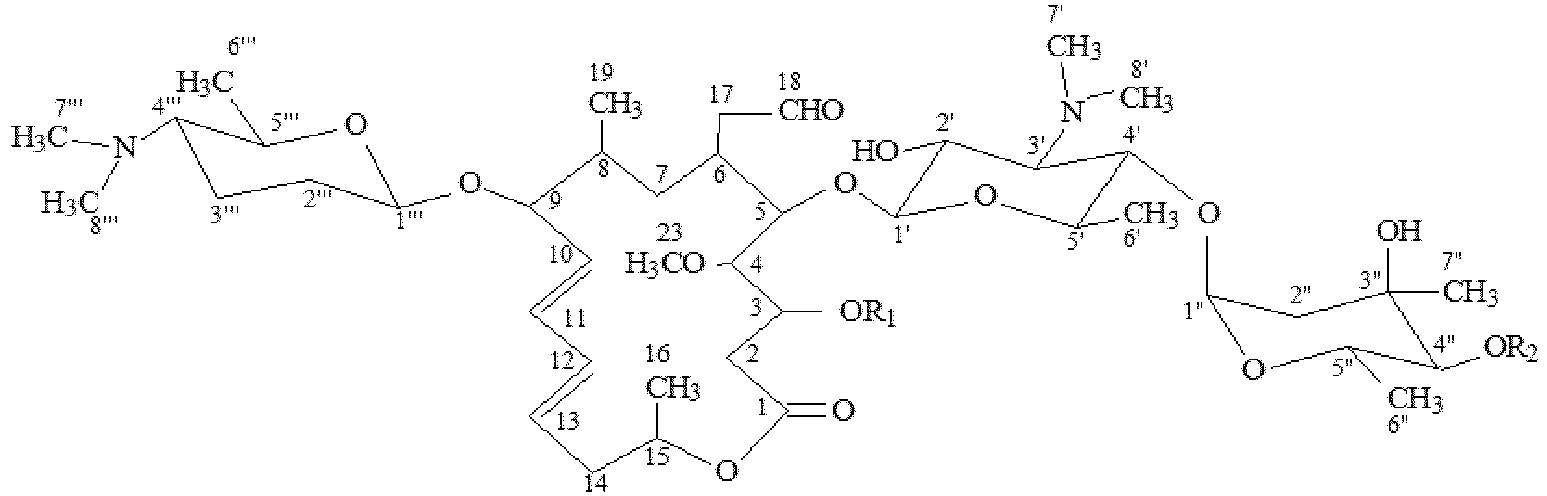
Isovaleryl spiramycin III R1=COCH2CH3 R2=COCH2CH(CH3)2 Isovaleryl spiramycin II R1=COCH3 R2=COCH2CH(CH3)2 Isovaleryl spiramycin I R1=H R2=COCH2CH(CH3)2 201010119745.1 - It is known that the isovaleryltransferase gene ist from heat-resistant streptomyces is linked with regulatory gene acyB2, the presence of the regulatory gene can activate the expression of ist gene. The model streptomyces strain: Variable Lead Green Streptomyces containing complete ist- as well as acyB2-regulatory genes was able to convert 67-79% of the externally added tylosin to 4"-isovaleryl tylosin, whereas the same strain of Streptomyces containing only ist gene, or ist gene with incomplete acyB2 gene, converted only 0-2.4% of the added tylosin [Arisawa A et al: Biosci Biotechnol Biochem 1993, 57(12): 2020-2025]. By transferring recombinant plasmid of autonomous replication form (vectors pIJ702 or pIJ943) containing ist- and acyB2 genes into tylosin producing bacterium (Streptomyces fradiae), under the condition of external addition of a drug (thiopeptin), the transformant mainly produced tylosin in fermentation, besides a minor amount of 4"-isovaleryltylosin (ca. 56 g/mL)[Arisawa A. et al : J Antibiotics 1996,49(4):349-354] could be detected. However, no reports on the increase of 4"-isovaleryltylosin yield or higher content of single component in the mixture by transferring ist- and acyB genes into tylosin producing bacterium have been published up to now.
- acyB2 regulatory gene and the transcriptional regulatory protein Srm28c in the spiramycin producing bacterium (Streptomyces ambofaciens) are homologous [Fatma Karray et al Microbiology 2007,153,4111-4122], their degree of identity is 69%, the degree of identity of acyB2 and regulatory protein ty1R in tylosin producing bacterium (Streptomyces fradiae) is 41%, tylR is the positive regulatory protein of the biosynthesis in tylosin producing bacterium, it regulates the expression of a polyketide synthase module (ty1GI) in tylosin producing bacterium, and plays a regulatory role on the tylosin glycosyl synthesis as well as the polyketone ring oxidation. High expression of ty1R gene in the tylosin producing bacterium can increase the yield of tylosin [George S. et al., Mol. Microbiology 2004,54(5):1326-1334]. However, the method of integration of ist gene into the spiramycin producing bacterium, which is homologous as the acyB2, by means of chromosome-recombinant plasmid homologous DNA recombination technology, only resulted in the production of mixture of isovaleryl spiramycin, with a yield of as high as 800mg/mL[Shang Guangdong et al. Chinese Journal of Biotechnology, 1999,15(2):171]. This demonstrated that only by transferring ist gene into a strain containing regulatory gene similar with acyB2 would not be able to increase significantly the yield and component content of the target product.
- This laboratory demonstrated that by concatenating ist gene using genetic engineering technique, to increase the copy number of ist gene in spiramycin producing bacterium to increase ist gene dosage, the capability of the bacteria to isovalerylate was also increased; it was also demonstrated that by substituting the original ist gene promoter sequence with a promoter with strong activity, such as erythromycin resistance gene ermE promoter sequence, the expression of ist gene could be increased. This increases the production of isovaleryl spiramycin by 62% with the gene engineered bacterium [Patent application No.
200910148767.8 - The aim of this invention is to obtain bacterial strains yielding high content of Bitespiramycin single component - isovaleryl spiramycin I, as well as high productivity by means of expression of ist gene linked with regulatory gene acyB2 in a strain, which has already been obtained, capable of producing only the component of isovaleryl spiramycin I, using a highly efficient and stable expression system. To attain this aim, it is necessary to overcome the obstacles of the restriction of the antibiotic producing bacteria of practical value on the gene modification by exogenous gene, thereby improving the conversion rate of the exogenous DNA. Meanwhile, it is necessary to select vector systems for stable express, such that the genetically engineered bacteria can be suitable for large-scale industrial production. This invention proposes to adopt an integrated vector for non-autonomous replication in Streptomyces, such a vector contains the Streptomyces phage integrase enzyme as well as the attachment sites, and contains only the E. coli replicon, to facilitate the preparation in E. coli; meanwhile the vector lacks Streptomyces replicon. When it enters Streptomyces cells, the integration relies on the attachment sites (attP) on the carrier and specific attachment sites of the host bacteria. Therefore, the exogenous gene may be stably expressed in large scale production. The researches on the co-expression of said isovaleryl acylase gene ist and the regulatory gene acyB2 in isovaleryl spiramycin I producing bacterium to increase the yield and content of isovaleryl spiramycin I, as well as the studies on pilot-scale experimental production, have not been found reported to date at home and abroad.
-
- 1, This invention provides a strain of genetically engineered bacterium producing high yield and high content of isovaleryl spiramycin I component, said engineered bacterium is a clone strain with isovaleryl transferase gene ist linked with acyB2 regulatory gene co-expressed in isovaleryl spiramycin I producing bacterium WSJ-2.
- 2, This invention provides the construction of the strain of gene engineered bacterium producing high yield and high content of isovaleryl spiramycin I component, said construction is to use the total DNA of heat-resistant Streptomyces (Streptomyces thermotolarences CGMCC4.1501) as template, design the primers according to the ist-acyB2 sequences announced by NCBI, and to obtain the linked ist-acyB2 gene fragment by means of PCR, insert appropriate cleavage sites; it is also proposed to ligate ist and acyB2 gene fragments, respectively, with the integrative vector transferrable to the isovaleryl spiramycin I producing bacteriuml strain in appropriate cleavage sites, to construct ist-acyB2 gene recombinant plasmid. The ist-acyB2 gene recombinant plasmid is subsequently inserted into isovaleryl spiramycin I producing bacterium WSJ-2, after which PCR is carried out to verify that ist-acyB2 is integrated in the transformant genome to obtain WSJ-IA.
- 3, This invention proposes to identify the characteristics of the Streptomyces strain WSJ-IA in accordance with the standards of the classification and identification of Streptomyces.
- 4, Using the isovaleryl spiramycin I producing bacterium WSJ-2 that contains ist monogene as control, this invention tested the fermentation performance of the WSJ-IA strain, including measurement of the fermentation titer of the WSJ-IA strain using microbiological method, and the isovaleryl spiramycin I content in the fermentation broth by means of HPLC quantitative analysis. The results showed that introduction of acyB2 regulatory gene can significantly improve the content as well as the yield of isovaleryl spiramycin I component by the strain.
-
-
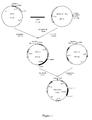
Figure 1 is the construction of ist-acyB2 gene recombinant plasmid pSET52-ia; -
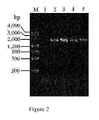
Figure 2 is the PCR result of chromosome of the bacterial strain producing isovaleryl spiramycin and containing ist-acyB2 gene; wherein M: DNA MarkerIII; 1- WSJ-2 control bacterium; 2-5: Transformants WSJ-IA 1-4; -
Figure 3 is the HPLC result of isovaleryl spiramycin component I in the fermentation product by bacterial strain WSJ-IA containing ist-acyB2 gene recombinant plasmid pSET52-ia; wherein A: WSJ-2 control bacterium; B: WSJ-IA, gene engineered bacterium containing ist gene and regulatory gene acyB2; SP-spiramycin; ISO-SP-isovaleryl spiramycin I. - Following examples only serve to help the technicians of this field to better understand this invention, which are by no means any restriction to this invention.
- The recombinant plasmid pSW4 constructed previously in this laboratory [Shang Guangdong et al., Chinese Journal of Biotechnology , 1999,15(2):171] was digested with SmaI-BamHI enzyme to obtain complete ist gene and 1820 segment containing upstream part of acyB2 gene, using total DNA of heat-resistant Streptomyces provided by China General Microbiological Culture Collection Center (Streptomyces thermotolarences CGMCC4.1501) as a template, to design primers according to acyB2 sequence announced by NCBI.
- p1 : CGCTCAGGGACGCAAGACC and P2: CCGGAATTCGCCCCGTGACCTCACCGTC, PCR temperature: 94°C predenaturation for 2min; 94°C for 30s, 60°C for 30s, 72°C for 1min, 28 cycles; extending at 72°C for 5min, to obtain 1013bp segment of the downstream part of acyB2 gene. BamHI-EcoRI enzyme was used to digest the PCR product to obtain 934bp segment, the aforementioned segments digested by SmaI-BamHI(1820bp) and BamHI-EcoRI(934bp) were ligated into in pBluesript II KS(+) vector (E • Merck) by the restriction enzyme sites SmaI-EcoRI, to obtain gene recombinant plasmid pBKS-ia containing ist and complete acyB2. pSET152 plasmid, were ligated into the integrated E. coli/Streptomyces conjugative transfer plasmid via the restriction sites by XbaI-EcoRI enzyme [Bierman M. et al Gene 1992,116,43-49, from shared gene bank, www.genecool.com], to obtain ist-acyB2 gene recombinant plasmid pSET52-ia (The experimental method was according to operation procedures, TAKARA Biotechnology (Dalian) Co., Ltd.). Construction process is shown in
Figure 1 . - Isovaleryl spiramycin I producing bacterium WSJ-2 was constructed by this laboratory [Chunyan Ma et al. Current Microbiology, 2011,62:16-20]. Said strain was cultured on slant medium [Soybean cake flour 2.0%, glucose 1.0%, starch 3.0%, CaCO3, 0.5%, NaCl, 0.4%, agar 2.0%] at 28°C for 7-10 days, to prepare protoplast according to the procedures described in the literature [D.A.Hopwood et al. Genetic manipulation of Streptomyces, A Laboratory Manual, Norwich; John Innes Foundation UK, 1985], Specifically, a piece of strain culture was scooped to inoculate onto R2YE medium containing sucrose, cultured at 28°C for 2-4 days, the same medium was inoculated by transferring 10% of the above culture with addition of 0.5% glycine, cultured for 20 hours. The mycelium was collected by centrifugation, washed 2-3 times with 10.3% sucrose solution, the mycelium was bacteriolyzed at 37°C in the P solution containing 2mg/ml lysozyme for 15-60 min, filter through cotton to obtain protoplasts. To overcome the restriction of the isovaleryl spiramycin I producing bacterium WSJ-2 to exogenous gene modification, first, recombinant plasmids pSET52-ia was transferred to methylation-deficient E. coli 12567 [Mac Neil et al Gene 1992, 111, 61-68, from shared gene bank, www.genecoo1.com]. Plasmid DNA from the transformant was extracted, subsequently transferred into protoplast under the mediation of PEG, coated on R2YE solid medium. After culture for at 28°C 24 hours, the culture was covered with solution containing apramycin to attain a final apramycin concentration of 50 µg/ml in the medium, and cultured for 7-10 days, to pick the resistant transformants. The transformants are subcultured continuously without dosing, and then test after dosing to obtain the isovaleryl spiramycin I producing bacterium WSJ-IA with stable expression of resistant recombinant plasmid pSET52-ia.
- The primers for upstream of ist gene and downstream of acyB2 gene P3: GAGGTAGAAGGCGAAGGT and P4: CGTCAGATGCCAGTTCAC was designed, PCR was carried out for the total DNA of control bacterium WSJ-2 and transformant (4) of WSJ-IA put forward in the present invention as templates, PCR procedure were: 94°C predenaturation for 2min; 94°C for 30s, 60°C for 30s, 72°C for 2min, 28 cycles; 72°C extension for 5min (Firgue 2). The obtained results showed that 1733bp PCR product could be obtained from WSJ-IA genome, whereas no PCR product was obtained from the control strain, this meant that ist-acyB2 gene had been integrated into the genome of the target strain successfully. Said strain has been sent to China General Microbiological Culture Collection Center, No. 1, 3rd Bldg., Beichen West Road, Chaoyang District, Beijing, on June 25, 2010, to be preserved. Accession number: No.CGMCC 3942, category name: Streptomyces spiramyceticus.
- In reference to "classification and identification of actinomycetes"[Yan Xunchu ed., 1992], this invention identified and confirmed the characteristics of the WSJ-IA strain. 1. WSJ-IA Culture morphology and physiological and biochemical characteristics
- Aerial mycelium, substrate mycelium and the color of the soluble pigment of the strain cultured in different medium were observed, the results are shown in Table 1.
- Fibrillae of spores were soft and winding, hook-like and spiral; spores cylindrical and oval.
Tab. 1 Culture morphology of WSJ-IA strain Culture characteristics Aerial mycelium Substrate mycelium Soluble pigment Czapek medium extremely few, white lotus seed white not observed Glucose asparagine medium extremely few, off-white yellow-brown not observed Glycerol asparagine medium no aerial mycelium lotus seed yellow not observed Inorganic salt starch medium no aerial mycelium light khaki not observed ISP-2 medium white earthy brown not observed Oat flour medium white Ivory yellow not observed Gause's No. 1 medium extremely few, ivory-white light khaki not observed Santa's medium no aerial mycelium Chestnut Brown not observed Note: Czapek medium: Cane sugar: 30g, NaNO3 3.0g, MgSO4·7H2O 0.5g, KCl 0.5g, FeSO4·4H2O, K2HPO4 1.0g, agar 15.0g, distilled water1.0L, pH6.0-6.5.
Glucose asparagine medium: Glucose 10g, asparagine 0.5g, K2HPO4 0.5g, agar 15.0g, distilled water1.0L, pH7.2-7.4.
Glycerol asparagine medium: Glycerol 10g, asparagine 0.5g, K2HPO4 0.5g, agar 15.0g, distilled water1.0L, pH7.2-7.4.
Inorganic salt starch medium: Soluble starch 10.0g, MgSO4·7H2O 1.0g, NaCl 1.0g, (NH4)2SO4 2.0g, CaCO3 2.0g, K2HPO4 1.0g, MnCl2·4H2O 10mg, FeSO4 10mg, ZnSO4·7H2O 10mg, agar 15.0g, distilled water 1.0L, pH7.2.
ISP-2 medium: Yeast extract 4.0 g, Malt extract 10.0g, glucose 4.0g, agar 20.0g, distilled water 1.0L, pH7.2-7.4.
Oat flour medium: Oat flour 20.0g, Trace salt solution 1mL, agar15g, distilled water 1.0 L, pH7.2, wherein: Trace salt solution: FeSO4·7H2O 0.1g, MnCl2·4H2O 0.1g, ZnSO4·7H2O 0.1g, 100mL distilled water.
Gause's No. 1 medium: Soluble starch 20.0g, KNO3 1.0g, K2HPO4 0.5g, MgSO4·7H2O 0.5g, NaCl0.5g, FeSO4·7H2O 0.01g agar 15.0g, distilled water 1.0L, pH7.2-7.4.
Santa's medium: KH2PO4 0.5 g, MgSO4·7H2O 0.5 g, citric acid 2.0g, Ferric ammonium citrate 0.05 g, glycerol 60 mL, Asparagine 4.0g, agar 15.0g, distilled water 1.0L, pH7.4. -
- A. Detection the utilization of a carbon source by the WSJ-IA strain in the basal media selected.
Basal medium: (NH4)2SO4 2.0g, MgSO4·7H2O 0.2g, NaH2PO4·H2O 0.5g, CaCl2·2H2O 0.1g, K2HPO4 0.5g, distilled water 1.0L. Add 0.1%-0.5% of the carbon source to be measured into the basal medium. After sterilization, inoculate the medium with bacterial suspension, culture at 28°C, transplant for three generations successively. Determine utilization of the WSJ-IA strain on the carbon source according to the status of cell growth. - B. Basal medium measurement of malonic acid utilization: Basal medium: Yeast extract 1.0g, (NH4)2SO4 2.0g, K2HPO4 0.6g, KH2PO4 0.4g NaCl 2.0g, sodium malonate 3.0g, bromothymol blue 0.025g, distilled water 1.0L, pH7.0-7.4. After sterilization, inoculate the medium with bacterial suspension, culture at 28°C for 1-2 days, malonic acid utilization by the bacteria is indicated when the medium turns its color from green to blue.
- C. Basal medium measurement of tartaric acid utilization: Basal medium: peptone 10.0g, NaCl 5.0g, sodium tartrate 10.0g, bromothymol blue (0.2%) 12.5mL, distilled water 1.0L, sterilize the medium before use. Prepare the saturated solution of lead acetate simultaneously. Inoculate the medium with bacterial suspension, culture at 28°C for 14 days. Add isometric lead acetate solution, utilization of tartaric acid by the bacteria is indicated when the color of the medium turns green yellow with small amount of lead acetate precipitation.
- D. liquefaction of gelatin: Basal medium: peptone 5.0g, gelatin 100-150g, distilled water 1.0L, pH7.2-7.4, and sterilized. After culture of the bacteria for 18-24 hours, puncture inoculate the suspension into gelatin medium, at the same time set the non-inoculated control. Culture the samples at 20°C in an incubator for 2, 7, 10, 14 and 30 days, observe the cell growth and gelatin liquefaction at room temperature low than 20°C. If the results show the growth of bacteria, and that no depression of the gelatin surface is observed and the gelatin clot is stable, these means gelatin liquefaction negative.
- E. Milk reaction: Boil fresh milk and place it in the refrigerator overnight. Take underlying skimmed milk, add 4 ml of a 2.5% litmus aqueous solution (2.5 g litmus immersed in 100 ml distilled water overnight, filtered subsequently), into 100 ml skimmed milk, add the mixture into test tubes to heights of about 4 cm, respectively. Sterilize the test tubes and inoculate with the strain, culture at 28° C for 1, 3, 5, 7, 14 and 30 days. The results show that milk peptonized into cakes.
- F. Reductin of nitrates: Nutrient agar medium 1.0 liters, KNO3 1.0 g, pH7.0-7.6. Dispense 4-5mL above medium into each of the test tubes, then sterilize. Griess reagents: a) dissolve 0.5 g sulfanilic acid in 150 ml dilute acetic acid (10%); b) dissolve 0.1 g-naphthyl amine in 20 ml distilled water and 150 ml dilute acetic acid (10%). Diphenylamine reagent: dissolve 0.5 g diphenylamine in 100 ml concentrated sulfuric acid, dilute with 20 ml distilled water. Inoculate the strain into nitrate medium, culture at 28°C for 1, 3, 5 days, add small amount of the 1-, 3-, 5-day culture in clean tubes, add in a drop of a) and b) reagents, respectively, the color of the solution turns red demonstrated the reduction of nitrate to nitrite; add in a drop of diphenylamine reagent, no blue reaction can be observed.
- G. Tyrosinase test: Inoculate the strain in Gause's No.1 liquid medium at 28°C for 7, 9, 12 days, respectively, sample 2ml culture broth, centrifuged and fetch the supernatant, add in 2mL phosphate buffer (pH5.9) and 1ml 0.04% tyrosine solution, keep the temperature at 37°C, incubated for 5 minutes, no red reaction is observed.
- H. Amylase test: Inoculate the strain into BPA medium,with 0.2% soluble starch agar, culture for 2-5 days at 28°C. After obvious colonies are formed in agar plates, drop iodine solution (iodine 1.0g KI 2.0g, 300mL distilled water) on the plate. Formation of transparent circle around colonies with no change of color indicates hydrolysis of starch.
- The physiological and biochemical characteristics of the strain WSJ-IA is shown in Tab. 2.
- 16SrDNA is a part of the bacterial ribosome, it is the DNA sequence in the chromosome of a bacterium, which is responsible for encoding rRNA. Because it is highly conserved in genetics, its sequence has been generally recognized as one of the characteristics of bacterial molecular taxonomy.
- Following 16SrDNA promers are used: 5'-AGAGTTTGATCMTGGCTCAG-3', 5'-GGTTACCTTGTTACGACTT-3'.
- Use the total DNA of bacterial strain WSJ-IA as template carry out PCR, the procedures are: 96 °C predenaturation for 1 min; in each of the 25 cycles, denature at 96 °C for 30 s, anneal at 50°C for 30s, extend at 72°C for 1.5 min; subsequently, extend at 72°C for 10 min to obtain the 1393 bp sequence, see Tab. 1.
Tab. 2 Physiological and biochemical characteristics of the strain WSJ-IA characteristics Result characteristics Result characteristics Result Utilization of carbon source Utilization of carbon source (cont'd) Utilization of carbon source (cont'd) glucose + trehalose + sodium gluconate + mannose + fructose - sodium malate + mannitol - xylose - sodium succinate + lactose - ribose - sodium malonate +w galactose + synanthrin - Sodium tartarate + sorbose - salicine + sorbierite - amygdalin - maltose + euonymol - biochemical characteristics saccharose - erythritol - Liquefaction of gelatin - melibiose - myoinosito - Milk reaction peptonized melezitose - glycerol + Reduction of nitrate + rhamnose - starch + tyrosinase - raffinose - glycogen + Amylase + Note +:positive;-: negative; +w:weak positive Tab. 3 Comparison of WSJ-IA 16S rDNA gene sequence with known bacteria Order number Similar strain homology% NBRC serial number NCBI serial number 1 Streptomyces flavidovirens 99.353 13039(T) AB184270 2 Streptomyces albidochromogenes 99.353 101003(T) AB249953 3 Streptomyces helvaticus 99.281 13382(T) AB184367 4 Streptomyces chryseus 99.281 NRRL B-12347(T) AY999787 - Furthermore, this invention determined sequences of following five housekeeping genes commonly used in molecular taxonomy of Streptomyces, atpD gyrB, rpoB, recA and trpB in WSJ-IA strain. These are single-copied and protein encoding genes. They are structurally stable, there is no gap or stacking in these genes. Therefore, the sequencing results can be directly used to perform interspecific strain comparison on nucleotide- as well as the amino acid level, to further determine taxonomic status of WSJ-IA.
- atpD gene is a subunit of the ATP synthase. It is highly stable and common in microbial species, hence it is suitable to be a molecular marker for the germline categorization. In this invention following primers are used
- 5'-GTCGGCGACTTCACCAAGGGCAAGGTGTTCAACACC-3'
- 5'-GTGAACTGCTTGGCGACGTGGGTGTTCTGGGACAGGAA -3'
- Use the total DNA of bacterial strain WSJ-IA as template carry out PCR, the procedures are: 96°C predenaturation for 1 min; in each of the 28 cycles, denature at 96°C for 30 s, anneal at 63°C for 30s, extend at 72°C for 1.0 min; subsequently, extend at 72°C for 10 min to obtain the 680 bp sequence, see Tab. 2.
- gyrB is a subunit of DNA gyrase tetramer, it belongs to prokaryotes type II DNA topoisomerase. It regulates DNA topology by its effects of cutting and religating DNA, it has some relationship with the resistance of some antibiotic producing bacterium strains, and has high degree of stability and universality in microbial species, as a result it is suitable for molecular mark of phylogenetic classification. Therefore, its sequence has been generally recognized as one of the characteristics of bacterial molecular taxonomy.
- Following primers are used in this invention:
- Use the total DNA of bacterial strain WSJ-IA as template carry out PCR, the procedures are: 96 °C predenaturation for 1 min; in each of the 28 cycles, denature at 96 °C for 30 s, anneal at 65°C for 30s, extend at 72°C for 1.5 min; subsequently, extend at 72°C for 10 min to obtain the 1177 bp sequence, see Tab. 3.
- rpoB is a b-subunit of RNA polymerase, it is extensive present in Streptomyces.
- Following primers are used in this invention:
- 5'- GAGCGCATGACCACCCAGGACGTCGAGGC-3'
- 5'-CCTCGTAGTTGTGACCCTCCCACGGCATGA -3'
- Use the total DNA of bacterial strain WSJ-IA as template, Carry out PCR, the procedures are: 96°C predenaturation for 1 min; in each of the 28 cycles, denature at 96°C for 30s, anneal at 65°C for 30s, extend at 72°C for 1.3 min; subsequently, extend at 72°C for 10 min to obtain the 870bp sequence, see Tab. 4.
- RecA is a recombinase, it plays an important role in the processes of DNA homologous recombination and repair of damaged DNA. The presence of RecA is a very important factor to ensure the stability of strain genomic DNA, therefore its sequence has been generally recognized as one of the characteristics of bacterial molecular taxonomy.
- Following primers are used in this invention:
- 5'- CCGCRCTCGCACAGATTGAACGSCAATTC -3'
- 5'- GCSAGGTCGGGGTTGTCCTTSAGGAAGTTGCG -3'
- Use the total DNA of bacterial strain WSJ-IA as template, carry out PCR, the procedures are: 96 °C predenaturation for 1 min; in each of the 28 cycles, denature at 96°C for 30s, anneal at 60°C for 30s, extend at 72°C for 1.0 min; subsequently, extend at 72°C for 10 min to obtain the 701bp sequence, see Tab. 5.
- trpB gene encodes tryptophan synthase which is involved in the primary metabolism of Streptomyces, this gene is considered to have strain species specificity, its sequence has been generally recognized as one of the characteristics of bacterial molecular taxonomy.
- Following primers are used in this invention:
- 5'- GCGCGAGGACCTGAACCACACCGGCTCACACAAGATCAACA -3'
- 5'- TCGATGGCCGGGATGATGCCCTCGGTGCGCGACAGCAGGC -3'
- Use the total DNA of bacterial strain WSJ-IA as template, carry out PCR, the procedures are: 96°C predenaturation for 1 min; in each of the 28 cycles, denature at 96°C for 30 s, anneal at 66°C for 30s, extend at 72°C for 1.0 min; subsequently, extend at 72°C for 10 min to obtain the 611bp sequence, see Tab. 6.
- The results in Tabs. 3 and 4 show that there is no complete consistency between 16SrDNA and five housekeeping gene sequences of the bacterial strain WSJ-IA, and gene sequences of known strains, so it can be decided that WSJ-IA might be a new species of Streptomyces.
Tab. 4 Comparisons of the housekeeping gene sequences of WSJ-IA with known bacteria gene Similar strains homology% Gene bank serial number nucleotides Amino acids nucleot ides Amino acids nucleotides Amino acids atpD S.griseus subsp. griseus NBRC13350 S.griseus subsp. griseus NBRC13350 96 99 AP009493 YP0018236 75C13350 gyrB S.spiroverticill atus S.spiroverticil latus 93 94 AB014337 AB072882 rpoB S.avermitilis MA-4680 S.avermitilis MA-4680 94 93 BA000030 NP_826091 recA S.avermitilis MA-4680 S.avermitilis MA-4680 91 95 BA000030 NP_823668 trpB S.griseus subsp.griseus NBRC13350 S.flavogriseus ATCC 33331 92 99 AP009493 ZP_0580630 7 Note: S: Streptomyces - WSJ-IA strain was cultured in the slant medium described in Example 2 at 28°C for 7-10 days, a piece of above culture was scooped to inoculate onto the seed medium (soybean cake flour 1.5%, starch 3.0%, NaCl 0.4%, CaCO3 0.5%, fish peptone 0.3%, KH2PO4 0.05%), cultured at 28°C for 48 hours in the stage A, subsequently transferred to stage B to culture at 28°C for 24 hours, then transferred to 50L seed tank, cultured for 36 hours, and subsequently transferred into a 2 ton fermentation tank to culture in seed medium (Culture medium: glucose 0.5%, starch 6.0%, yeast powder 0.5%, fishmeal 2.0%, NH4NO3 0.6%, NaCl 1.0%, CaCO3 0.5%, KH2PO4 0.05%, MgSO4 0.1%), fermentation was carried out at 28°C to culture for 96 h. The supernatant of fermentation broth was sampled, diluted with pH7.8∼8.0 phosphate buffer containing 3%NaCl. Bacillus[CGMCC(B)63501] was used as test bacterium to determine the fermentation titer using the standard curve method in accordance with the Chinese Pharmacopoeia 2010 ed. II, Appendix XI in following medium: polypeptone 0.6%, beef extract powder 0.15%, yeast extract paste 0.6%, glucose 0.2%, agar 1.5-2.0%, with acetyl spiramycin as control. The experiment was repeated three times to obtain an average WSJ-IA fermentation titer of 1160 µg/ml, in comparison, fermentation with WSJ-2 strain containing ist single gene gave rise to an average titer of 280 µg/ml (Tab. 5).
- The fermentation broth obtained in Example 3 was sampled, pH of the broth adjusted to 8.5, it was extracted with an equal volume of ethyl acetate, and the ethyl acetate extract concentrated to dryness, dissolved in methanol. The solution was separated using a Kromasil C18 column (4.5 mm×150 mm, 5 µm); mobile phase: methanol: sodium dihydrogen phosphate solution (53:47 v/v) ; detection wavelength: 231 nm; flow rate: 1.0 mL·min-1;
column temperature 25°C; sample size: 10-20 µL. Contents of isovaleryl spiramycin I component in the broth was calculated using the HPLC results (Figure 3 ). The results from 3 experiments showed that, fermenting with WSJ-IA strain and WSJ-2 strain containing ist monogene, the average total content of isovaleryl spiramycin I component was 12.061% and 7.088%, respectively. After fermentation in accordance with Example 3, the fermentation titers of the two strains were measured with microbiological assay, and the products were analyzed using HPLC (Fig. 3 ). According to the HPLC peak areas obtained, isovaleryl spiramycin I component produced with the two strains were compared, the ratio of isovaleryl spiramycin I vs. spiramycin produced with the two strains, respectively, calculated. The results showed that introduction of ist-acyB2 gene increased the fermentation titer of the WSJ-IA by 414%, the produced isovaleryl spiramycin I content was increased by 170.2%, meanwhile, the production of spiramycin was decreased accordingly. This increased the ratio between isovaleryl spiramycin I content and spiramycin content by 218% (Tab. 5). - This invention provides a strain capable of producing isovaleryl spiramycin I containing ist-acyB2 gene, under a certain fermentation condition, This strain increases the production of isovaleryl spiramycin I by a factor of 1.7, and increases the fermentation titer by a factor of 4.14 in comparison with the strain containing only ist gene.
Tab. 5 Comparison of the fermentation titer using WSJ-IA and WSJ-2 strains and component contents Strains fermentation titer (µg/mL) Spiramycin peak area (%) Isovaleryl spiramycin I peak area(%) Isovaleryl spiramycin I /spiramycin(%) WSJ-2 1. 260 1.61.146 1. 6.980 1. 11.42 2. 280 2. 63.756 2. 7.150 2. 11.21 3. 300 3. 62.223 3. 7.134 3. 11.47 average 280 average 62.375 average 7.088 average 11.36 WSJ- IA 1. 1040 1. 47.825 1. 10.956 1. 22.91 2. 1250 2. 48.982 2. 13.013 2. 26.57 3. 1190 3. 49.527 3. 12.214 3. 24.66 average 1160 average 48.778 average 12.061 average 24.72 


Claims (4)
- A strain of genetically engineered bacterium producing high content of isovaleryl spiramycin I component with high productivity, wherein said genetically engineered bacterium is a clonal strain with isovaleryl transferase gene ist and the acyB2 regulatory gene linked with it co-expressed in isovaleryl spiramycin I producing bacteriumWSJ-2.
- The method to construct the genetically engineered bacterium in claim 1, wherein:A) Using total DNA of the heat-resistant Streptomyces (Streptomyces thermotolarences CGMCC4.1501) as template, to design primers according to ist-acyB2 sequence announced by NCBI, carrying out PCR to obtain ist-acyB2 linked gene segment, inserting appropriate cleavage sites; or also, ligating ist and acyB2 gene fragments, respectively, with the integrative vector transferrable to the isovaleryl spiramycin I producing bacterium strain, to obtain recombinant plasmid containing ist-acyB2 gene;B) Transferring the recombinant plasmid containing ist-acyB2 into isovaleryl spiramycinI producing bacterium WSJ-2 by means of resistance screening to obtain transformant, after continuous passage under non-dosing conditions and testing with dosing to obtain stable expression of isovaleryl spiramycin I producing bacterium containing recombinant plasmid, constructing a strain being named WSJ-IA, culture Collection No. CGMCC No.3942.
- Said construction method of the genetically engineered bacterium in Claim 2, wherein the WSJ-IA stain obtained is validated to contain ist-acyB2 sequence on gene level by means of PCR.
- Said construction method of the genetically engineered bacterium in Claim 2, wherein the constructed WSJ-IA strain, after culture and fermentation, results in a fermentation titer of not less than 1160 µg/mL, the total production of isovaleryl spiramycin I not lower than 12.061%.
Applications Claiming Priority (2)
| Application Number | Priority Date | Filing Date | Title |
|---|---|---|---|
| CN2010102375954A CN101914482B (en) | 2010-07-23 | 2010-07-23 | Isovalerylspiramycin I component high-content high-yield genetic engineering bacteria |
| PCT/CN2011/001194 WO2012009963A1 (en) | 2010-07-23 | 2011-07-21 | Genetically engineered strain wsj-ia for producing isovaleryl spiramycin i. |
Publications (3)
| Publication Number | Publication Date |
|---|---|
| EP2597152A1 true EP2597152A1 (en) | 2013-05-29 |
| EP2597152A4 EP2597152A4 (en) | 2014-04-16 |
| EP2597152B1 EP2597152B1 (en) | 2023-11-01 |
Family
ID=43322129
Family Applications (1)
| Application Number | Title | Priority Date | Filing Date |
|---|---|---|---|
| EP11809152.9A Active EP2597152B1 (en) | 2010-07-23 | 2011-07-21 | Genetically engineered strain wsj-ia for producing isovaleryl spiramycin i. |
Country Status (12)
| Country | Link |
|---|---|
| US (1) | US8759032B2 (en) |
| EP (1) | EP2597152B1 (en) |
| JP (1) | JP5719437B2 (en) |
| KR (1) | KR101542243B1 (en) |
| CN (1) | CN101914482B (en) |
| BR (1) | BR112013001580A2 (en) |
| CA (1) | CA2800326C (en) |
| MX (1) | MX342493B (en) |
| MY (1) | MY157302A (en) |
| PH (1) | PH12013500066A1 (en) |
| RU (1) | RU2553564C2 (en) |
| WO (1) | WO2012009963A1 (en) |
Cited By (3)
| Publication number | Priority date | Publication date | Assignee | Title |
|---|---|---|---|---|
| CN106172753A (en) * | 2016-08-23 | 2016-12-07 | 山西维尔生物乳制品有限公司 | A kind of liquid fermentation agent classification inoculation apparatus and method |
| EP3385386A4 (en) * | 2015-12-31 | 2018-10-10 | Shenyang Fuyang Pharmaceutical Technology Co., Ltd. | Carrimycin biosynthetic gene cluster |
| WO2024074637A1 (en) * | 2022-10-07 | 2024-04-11 | Syngenta Crop Protection Ag | Means and methods for controlling pathogens and pests in plants |
Families Citing this family (4)
| Publication number | Priority date | Publication date | Assignee | Title |
|---|---|---|---|---|
| CN101914482B (en) * | 2010-07-23 | 2012-07-04 | 中国医学科学院医药生物技术研究所 | Isovalerylspiramycin I component high-content high-yield genetic engineering bacteria |
| CN105062948A (en) * | 2015-07-31 | 2015-11-18 | 天方药业有限公司 | Method for preparing spiramycin base producing strain gray streptomyces ambofaciens spores |
| CN111349595A (en) * | 2018-12-20 | 2020-06-30 | 沈阳福洋医药科技有限公司 | Spiramycin-producing strain, rokitamycin-producing strain, construction method, application and method for improving product yield |
| US20220211735A1 (en) * | 2019-05-16 | 2022-07-07 | Shenyang Fuyang Pharmaceutical Technology Co., Ltd. | Medicament and combination product used for preventing, alleviating and/or treating fibrosis, and use thereof |
Family Cites Families (10)
| Publication number | Priority date | Publication date | Assignee | Title |
|---|---|---|---|---|
| JPS5334788A (en) | 1976-09-11 | 1978-03-31 | Sanraku Inc | Antibiotics spiramycin derivatives |
| JP2749616B2 (en) * | 1988-05-24 | 1998-05-13 | メルシャン株式会社 | Gene encoding 4 "acylase of macrolide antibiotic |
| JPH06121677A (en) * | 1992-01-23 | 1994-05-06 | Mercian Corp | Method for high expression of acylating enzyme gene of macrolide antibiotics |
| US7579167B2 (en) * | 2002-10-08 | 2009-08-25 | Aventis Pharma S. | Polypeptides involved in the biosynthesis of spiramycins, nucleotide sequences encoding these polypeptides and applications thereof |
| EP1905833B1 (en) * | 2002-10-08 | 2015-08-12 | Aventis Pharma S.A. | Polypeptides involved in the biosynthesis of spiramycins, nucleotide sequences coding these polypeptides and their uses |
| CN1169947C (en) * | 2002-11-19 | 2004-10-06 | 中国医学科学院医药生物技术研究所 | Spiramycin Streptomyces WSJ-195 |
| CN101054553A (en) * | 2007-04-09 | 2007-10-17 | 中国医学科学院医药生物技术研究所 | Construction of isovalerylspiramycin I gene engineering strain |
| CN101649325B (en) * | 2009-07-03 | 2011-09-07 | 中国医学科学院医药生物技术研究所 | Gene series technology for increasing main component content of gene engineering isovaleryl selectomycin |
| CN101914481B (en) | 2010-07-23 | 2013-06-05 | 中国医学科学院医药生物技术研究所 | Gene engineering bacteria containing high isovaleryl spiramycin principal component |
| CN101914482B (en) | 2010-07-23 | 2012-07-04 | 中国医学科学院医药生物技术研究所 | Isovalerylspiramycin I component high-content high-yield genetic engineering bacteria |
-
2010
- 2010-07-23 CN CN2010102375954A patent/CN101914482B/en active Active
-
2011
- 2011-07-21 MY MYPI2013000126A patent/MY157302A/en unknown
- 2011-07-21 JP JP2013518935A patent/JP5719437B2/en not_active Expired - Fee Related
- 2011-07-21 RU RU2012158029/10A patent/RU2553564C2/en active
- 2011-07-21 WO PCT/CN2011/001194 patent/WO2012009963A1/en not_active Ceased
- 2011-07-21 EP EP11809152.9A patent/EP2597152B1/en active Active
- 2011-07-21 CA CA2800326A patent/CA2800326C/en active Active
- 2011-07-21 US US13/811,340 patent/US8759032B2/en not_active Expired - Fee Related
- 2011-07-21 PH PH1/2013/500066A patent/PH12013500066A1/en unknown
- 2011-07-21 MX MX2013000944A patent/MX342493B/en active IP Right Grant
- 2011-07-21 KR KR1020137004385A patent/KR101542243B1/en active Active
- 2011-07-21 BR BR112013001580A patent/BR112013001580A2/en not_active Application Discontinuation
Cited By (4)
| Publication number | Priority date | Publication date | Assignee | Title |
|---|---|---|---|---|
| EP3385386A4 (en) * | 2015-12-31 | 2018-10-10 | Shenyang Fuyang Pharmaceutical Technology Co., Ltd. | Carrimycin biosynthetic gene cluster |
| US10858659B2 (en) | 2015-12-31 | 2020-12-08 | Shenyang Fuyang Pharmaceutical Technology Co., Ltd. | Biosynthetic gene cluster of carrimycin |
| CN106172753A (en) * | 2016-08-23 | 2016-12-07 | 山西维尔生物乳制品有限公司 | A kind of liquid fermentation agent classification inoculation apparatus and method |
| WO2024074637A1 (en) * | 2022-10-07 | 2024-04-11 | Syngenta Crop Protection Ag | Means and methods for controlling pathogens and pests in plants |
Also Published As
| Publication number | Publication date |
|---|---|
| RU2012158029A (en) | 2014-08-27 |
| CN101914482B (en) | 2012-07-04 |
| BR112013001580A2 (en) | 2016-05-10 |
| JP2013532981A (en) | 2013-08-22 |
| MX2013000944A (en) | 2013-02-27 |
| US20130130324A1 (en) | 2013-05-23 |
| US8759032B2 (en) | 2014-06-24 |
| KR20130091335A (en) | 2013-08-16 |
| EP2597152A4 (en) | 2014-04-16 |
| JP5719437B2 (en) | 2015-05-20 |
| MY157302A (en) | 2016-05-31 |
| CA2800326C (en) | 2014-09-30 |
| PH12013500066A1 (en) | 2017-02-01 |
| RU2553564C2 (en) | 2015-06-20 |
| MX342493B (en) | 2016-09-29 |
| CN101914482A (en) | 2010-12-15 |
| EP2597152B1 (en) | 2023-11-01 |
| CA2800326A1 (en) | 2012-01-26 |
| WO2012009963A1 (en) | 2012-01-26 |
| KR101542243B1 (en) | 2015-08-05 |
Similar Documents
| Publication | Publication Date | Title |
|---|---|---|
| EP2597152B1 (en) | Genetically engineered strain wsj-ia for producing isovaleryl spiramycin i. | |
| JP2000515390A (en) | Novel polyketide derivative and recombinant method for producing the same | |
| CN100436594C (en) | Method for the production of S-adenosylmethionine by fermentation | |
| CN101649325B (en) | Gene series technology for increasing main component content of gene engineering isovaleryl selectomycin | |
| CN103215281B (en) | Biosynthetic gene cluster of grincamycin and P-1894B and application thereof | |
| CN103183729A (en) | Protein system associated with biosynthesis of gougerotin, and encoding gene cluster and application thereof | |
| CN100487109C (en) | Engineering bacterium of producing ivermectin, its constructing method and application | |
| CN105821053B (en) | Method for constructing recombinant bacteria and improving oxytetracycline production by using oxytetracycline positive regulation gene | |
| CN108841769B (en) | Fidaxomicin genetic engineering bacterium and construction method and application thereof | |
| CN101016533B (en) | A kind of anthracycline antibiotic production engineering bacteria and its application | |
| Tan et al. | Increasing demeclocycline production in Streptomyces aureofaciens by manipulating the expression of a novel SARP family regulator and its genes | |
| CN101892186B (en) | Genetic engineering bacterium of streptomyces coeruleorubidus for producing epidaunorubicin and preparation method thereof | |
| KR101525309B1 (en) | A bacterium Streptomycess overexpressing rapX or rapW and a method to increase rapamycin production using the same | |
| CN101545000B (en) | Method for improving yield of ECO-0501 produced by fermenting Amycolatopsis orientalis | |
| EP1632569B1 (en) | Strain belonging to the genus streptomyces and being capable of producing nemadictin and process for producing nemadictin using the strain | |
| CN103849591A (en) | Tylosin producing bacterium, genetic modification method and application thereof | |
| CN111378610B (en) | High-yield bafilomycin engineering bacterium and construction and application thereof | |
| CN101962647B (en) | Biosynthesis gene cluster of Nocathiacins and application thereof | |
| CN113912658B (en) | 4'-N-demethyl-vicenistatin and its preparation method and application | |
| CN101914481B (en) | Gene engineering bacteria containing high isovaleryl spiramycin principal component | |
| CN112430608A (en) | Method for constructing high-yield engineering bacteria of oritavancin precursor and application | |
| CN103805544A (en) | Engineering bacterium producing gentamicin A and application thereof | |
| CN102241750B (en) | Genetic engineering method for producing avermectin and special bacterial strain for the method | |
| CN111454338B (en) | Mutant of sepamycin precursor peptide, application of mutant and prepared sepamycin analogue | |
| CN108753799A (en) | A kind of mibemycin synthesis positive regulating gene kelR, coding albumen, genetic engineering bacterium and its preparation method and application |
Legal Events
| Date | Code | Title | Description |
|---|---|---|---|
| PUAI | Public reference made under article 153(3) epc to a published international application that has entered the european phase |
Free format text: ORIGINAL CODE: 0009012 |
|
| 17P | Request for examination filed |
Effective date: 20130222 |
|
| AK | Designated contracting states |
Kind code of ref document: A1 Designated state(s): AL AT BE BG CH CY CZ DE DK EE ES FI FR GB GR HR HU IE IS IT LI LT LU LV MC MK MT NL NO PL PT RO RS SE SI SK SM TR |
|
| DAX | Request for extension of the european patent (deleted) | ||
| A4 | Supplementary search report drawn up and despatched |
Effective date: 20140319 |
|
| RIC1 | Information provided on ipc code assigned before grant |
Ipc: C12R 1/465 20060101ALI20140313BHEP Ipc: C12N 15/63 20060101ALI20140313BHEP Ipc: C12P 19/62 20060101ALI20140313BHEP Ipc: C12N 1/21 20060101AFI20140313BHEP Ipc: C12N 15/76 20060101ALI20140313BHEP |
|
| 17Q | First examination report despatched |
Effective date: 20160701 |
|
| STAA | Information on the status of an ep patent application or granted ep patent |
Free format text: STATUS: EXAMINATION IS IN PROGRESS |
|
| RAP1 | Party data changed (applicant data changed or rights of an application transferred) |
Owner name: SHEN YANG FUYANG MEDICINE TECHNOLOGY CO., LTD |
|
| APBK | Appeal reference recorded |
Free format text: ORIGINAL CODE: EPIDOSNREFNE |
|
| APBN | Date of receipt of notice of appeal recorded |
Free format text: ORIGINAL CODE: EPIDOSNNOA2E |
|
| APBR | Date of receipt of statement of grounds of appeal recorded |
Free format text: ORIGINAL CODE: EPIDOSNNOA3E |
|
| APAF | Appeal reference modified |
Free format text: ORIGINAL CODE: EPIDOSCREFNE |
|
| APBT | Appeal procedure closed |
Free format text: ORIGINAL CODE: EPIDOSNNOA9E |
|
| RIC1 | Information provided on ipc code assigned before grant |
Ipc: C07K 14/36 20060101ALI20230405BHEP Ipc: C12P 19/62 20060101ALI20230405BHEP Ipc: C12R 1/465 20060101ALI20230405BHEP Ipc: C12N 15/76 20060101ALI20230405BHEP Ipc: C12N 15/63 20060101ALI20230405BHEP Ipc: C12N 9/10 20060101ALI20230405BHEP Ipc: C12N 1/21 20060101AFI20230405BHEP |
|
| APBD | Information on interlocutory revision deleted |
Free format text: ORIGINAL CODE: EPIDOSDIRAPE |
|
| APBV | Interlocutory revision of appeal recorded |
Free format text: ORIGINAL CODE: EPIDOSNIRAPE |
|
| GRAP | Despatch of communication of intention to grant a patent |
Free format text: ORIGINAL CODE: EPIDOSNIGR1 |
|
| STAA | Information on the status of an ep patent application or granted ep patent |
Free format text: STATUS: GRANT OF PATENT IS INTENDED |
|
| INTG | Intention to grant announced |
Effective date: 20230522 |
|
| GRAS | Grant fee paid |
Free format text: ORIGINAL CODE: EPIDOSNIGR3 |
|
| GRAA | (expected) grant |
Free format text: ORIGINAL CODE: 0009210 |
|
| STAA | Information on the status of an ep patent application or granted ep patent |
Free format text: STATUS: THE PATENT HAS BEEN GRANTED |
|
| P01 | Opt-out of the competence of the unified patent court (upc) registered |
Effective date: 20230919 |
|
| AK | Designated contracting states |
Kind code of ref document: B1 Designated state(s): AL AT BE BG CH CY CZ DE DK EE ES FI FR GB GR HR HU IE IS IT LI LT LU LV MC MK MT NL NO PL PT RO RS SE SI SK SM TR |
|
| REG | Reference to a national code |
Ref country code: GB Ref legal event code: FG4D |
|
| REG | Reference to a national code |
Ref country code: CH Ref legal event code: EP |
|
| REG | Reference to a national code |
Ref country code: DE Ref legal event code: R096 Ref document number: 602011074374 Country of ref document: DE |
|
| REG | Reference to a national code |
Ref country code: IE Ref legal event code: FG4D |
|
| REG | Reference to a national code |
Ref country code: LT Ref legal event code: MG9D |
|
| REG | Reference to a national code |
Ref country code: NL Ref legal event code: MP Effective date: 20231101 |
|
| PG25 | Lapsed in a contracting state [announced via postgrant information from national office to epo] |
Ref country code: GR Free format text: LAPSE BECAUSE OF FAILURE TO SUBMIT A TRANSLATION OF THE DESCRIPTION OR TO PAY THE FEE WITHIN THE PRESCRIBED TIME-LIMIT Effective date: 20240202 |
|
| PG25 | Lapsed in a contracting state [announced via postgrant information from national office to epo] |
Ref country code: IS Free format text: LAPSE BECAUSE OF FAILURE TO SUBMIT A TRANSLATION OF THE DESCRIPTION OR TO PAY THE FEE WITHIN THE PRESCRIBED TIME-LIMIT Effective date: 20240301 |
|
| PG25 | Lapsed in a contracting state [announced via postgrant information from national office to epo] |
Ref country code: LT Free format text: LAPSE BECAUSE OF FAILURE TO SUBMIT A TRANSLATION OF THE DESCRIPTION OR TO PAY THE FEE WITHIN THE PRESCRIBED TIME-LIMIT Effective date: 20231101 |
|
| REG | Reference to a national code |
Ref country code: AT Ref legal event code: MK05 Ref document number: 1627256 Country of ref document: AT Kind code of ref document: T Effective date: 20231101 |
|
| PG25 | Lapsed in a contracting state [announced via postgrant information from national office to epo] |
Ref country code: NL Free format text: LAPSE BECAUSE OF FAILURE TO SUBMIT A TRANSLATION OF THE DESCRIPTION OR TO PAY THE FEE WITHIN THE PRESCRIBED TIME-LIMIT Effective date: 20231101 |
|
| PG25 | Lapsed in a contracting state [announced via postgrant information from national office to epo] |
Ref country code: AT Free format text: LAPSE BECAUSE OF FAILURE TO SUBMIT A TRANSLATION OF THE DESCRIPTION OR TO PAY THE FEE WITHIN THE PRESCRIBED TIME-LIMIT Effective date: 20231101 |
|
| PG25 | Lapsed in a contracting state [announced via postgrant information from national office to epo] |
Ref country code: ES Free format text: LAPSE BECAUSE OF FAILURE TO SUBMIT A TRANSLATION OF THE DESCRIPTION OR TO PAY THE FEE WITHIN THE PRESCRIBED TIME-LIMIT Effective date: 20231101 |
|
| PG25 | Lapsed in a contracting state [announced via postgrant information from national office to epo] |
Ref country code: NL Free format text: LAPSE BECAUSE OF FAILURE TO SUBMIT A TRANSLATION OF THE DESCRIPTION OR TO PAY THE FEE WITHIN THE PRESCRIBED TIME-LIMIT Effective date: 20231101 Ref country code: LT Free format text: LAPSE BECAUSE OF FAILURE TO SUBMIT A TRANSLATION OF THE DESCRIPTION OR TO PAY THE FEE WITHIN THE PRESCRIBED TIME-LIMIT Effective date: 20231101 Ref country code: IS Free format text: LAPSE BECAUSE OF FAILURE TO SUBMIT A TRANSLATION OF THE DESCRIPTION OR TO PAY THE FEE WITHIN THE PRESCRIBED TIME-LIMIT Effective date: 20240301 Ref country code: GR Free format text: LAPSE BECAUSE OF FAILURE TO SUBMIT A TRANSLATION OF THE DESCRIPTION OR TO PAY THE FEE WITHIN THE PRESCRIBED TIME-LIMIT Effective date: 20240202 Ref country code: ES Free format text: LAPSE BECAUSE OF FAILURE TO SUBMIT A TRANSLATION OF THE DESCRIPTION OR TO PAY THE FEE WITHIN THE PRESCRIBED TIME-LIMIT Effective date: 20231101 Ref country code: BG Free format text: LAPSE BECAUSE OF FAILURE TO SUBMIT A TRANSLATION OF THE DESCRIPTION OR TO PAY THE FEE WITHIN THE PRESCRIBED TIME-LIMIT Effective date: 20240201 Ref country code: AT Free format text: LAPSE BECAUSE OF FAILURE TO SUBMIT A TRANSLATION OF THE DESCRIPTION OR TO PAY THE FEE WITHIN THE PRESCRIBED TIME-LIMIT Effective date: 20231101 Ref country code: PT Free format text: LAPSE BECAUSE OF FAILURE TO SUBMIT A TRANSLATION OF THE DESCRIPTION OR TO PAY THE FEE WITHIN THE PRESCRIBED TIME-LIMIT Effective date: 20240301 |
|
| PG25 | Lapsed in a contracting state [announced via postgrant information from national office to epo] |
Ref country code: SE Free format text: LAPSE BECAUSE OF FAILURE TO SUBMIT A TRANSLATION OF THE DESCRIPTION OR TO PAY THE FEE WITHIN THE PRESCRIBED TIME-LIMIT Effective date: 20231101 Ref country code: RS Free format text: LAPSE BECAUSE OF FAILURE TO SUBMIT A TRANSLATION OF THE DESCRIPTION OR TO PAY THE FEE WITHIN THE PRESCRIBED TIME-LIMIT Effective date: 20231101 Ref country code: PL Free format text: LAPSE BECAUSE OF FAILURE TO SUBMIT A TRANSLATION OF THE DESCRIPTION OR TO PAY THE FEE WITHIN THE PRESCRIBED TIME-LIMIT Effective date: 20231101 Ref country code: NO Free format text: LAPSE BECAUSE OF FAILURE TO SUBMIT A TRANSLATION OF THE DESCRIPTION OR TO PAY THE FEE WITHIN THE PRESCRIBED TIME-LIMIT Effective date: 20240201 Ref country code: LV Free format text: LAPSE BECAUSE OF FAILURE TO SUBMIT A TRANSLATION OF THE DESCRIPTION OR TO PAY THE FEE WITHIN THE PRESCRIBED TIME-LIMIT Effective date: 20231101 Ref country code: HR Free format text: LAPSE BECAUSE OF FAILURE TO SUBMIT A TRANSLATION OF THE DESCRIPTION OR TO PAY THE FEE WITHIN THE PRESCRIBED TIME-LIMIT Effective date: 20231101 |
|
| PG25 | Lapsed in a contracting state [announced via postgrant information from national office to epo] |
Ref country code: DK Free format text: LAPSE BECAUSE OF FAILURE TO SUBMIT A TRANSLATION OF THE DESCRIPTION OR TO PAY THE FEE WITHIN THE PRESCRIBED TIME-LIMIT Effective date: 20231101 |
|
| PG25 | Lapsed in a contracting state [announced via postgrant information from national office to epo] |
Ref country code: CZ Free format text: LAPSE BECAUSE OF FAILURE TO SUBMIT A TRANSLATION OF THE DESCRIPTION OR TO PAY THE FEE WITHIN THE PRESCRIBED TIME-LIMIT Effective date: 20231101 |
|
| PG25 | Lapsed in a contracting state [announced via postgrant information from national office to epo] |
Ref country code: SK Free format text: LAPSE BECAUSE OF FAILURE TO SUBMIT A TRANSLATION OF THE DESCRIPTION OR TO PAY THE FEE WITHIN THE PRESCRIBED TIME-LIMIT Effective date: 20231101 |
|
| PG25 | Lapsed in a contracting state [announced via postgrant information from national office to epo] |
Ref country code: SM Free format text: LAPSE BECAUSE OF FAILURE TO SUBMIT A TRANSLATION OF THE DESCRIPTION OR TO PAY THE FEE WITHIN THE PRESCRIBED TIME-LIMIT Effective date: 20231101 Ref country code: SK Free format text: LAPSE BECAUSE OF FAILURE TO SUBMIT A TRANSLATION OF THE DESCRIPTION OR TO PAY THE FEE WITHIN THE PRESCRIBED TIME-LIMIT Effective date: 20231101 Ref country code: RO Free format text: LAPSE BECAUSE OF FAILURE TO SUBMIT A TRANSLATION OF THE DESCRIPTION OR TO PAY THE FEE WITHIN THE PRESCRIBED TIME-LIMIT Effective date: 20231101 Ref country code: IT Free format text: LAPSE BECAUSE OF FAILURE TO SUBMIT A TRANSLATION OF THE DESCRIPTION OR TO PAY THE FEE WITHIN THE PRESCRIBED TIME-LIMIT Effective date: 20231101 Ref country code: EE Free format text: LAPSE BECAUSE OF FAILURE TO SUBMIT A TRANSLATION OF THE DESCRIPTION OR TO PAY THE FEE WITHIN THE PRESCRIBED TIME-LIMIT Effective date: 20231101 Ref country code: DK Free format text: LAPSE BECAUSE OF FAILURE TO SUBMIT A TRANSLATION OF THE DESCRIPTION OR TO PAY THE FEE WITHIN THE PRESCRIBED TIME-LIMIT Effective date: 20231101 Ref country code: CZ Free format text: LAPSE BECAUSE OF FAILURE TO SUBMIT A TRANSLATION OF THE DESCRIPTION OR TO PAY THE FEE WITHIN THE PRESCRIBED TIME-LIMIT Effective date: 20231101 |
|
| REG | Reference to a national code |
Ref country code: DE Ref legal event code: R097 Ref document number: 602011074374 Country of ref document: DE |
|
| PLBE | No opposition filed within time limit |
Free format text: ORIGINAL CODE: 0009261 |
|
| STAA | Information on the status of an ep patent application or granted ep patent |
Free format text: STATUS: NO OPPOSITION FILED WITHIN TIME LIMIT |
|
| 26N | No opposition filed |
Effective date: 20240802 |
|
| PG25 | Lapsed in a contracting state [announced via postgrant information from national office to epo] |
Ref country code: SI Free format text: LAPSE BECAUSE OF FAILURE TO SUBMIT A TRANSLATION OF THE DESCRIPTION OR TO PAY THE FEE WITHIN THE PRESCRIBED TIME-LIMIT Effective date: 20231101 |
|
| PG25 | Lapsed in a contracting state [announced via postgrant information from national office to epo] |
Ref country code: SI Free format text: LAPSE BECAUSE OF FAILURE TO SUBMIT A TRANSLATION OF THE DESCRIPTION OR TO PAY THE FEE WITHIN THE PRESCRIBED TIME-LIMIT Effective date: 20231101 |
|
| PG25 | Lapsed in a contracting state [announced via postgrant information from national office to epo] |
Ref country code: MC Free format text: LAPSE BECAUSE OF FAILURE TO SUBMIT A TRANSLATION OF THE DESCRIPTION OR TO PAY THE FEE WITHIN THE PRESCRIBED TIME-LIMIT Effective date: 20231101 |
|
| REG | Reference to a national code |
Ref country code: CH Ref legal event code: PL |
|
| PG25 | Lapsed in a contracting state [announced via postgrant information from national office to epo] |
Ref country code: LU Free format text: LAPSE BECAUSE OF NON-PAYMENT OF DUE FEES Effective date: 20240721 |
|
| PG25 | Lapsed in a contracting state [announced via postgrant information from national office to epo] |
Ref country code: LU Free format text: LAPSE BECAUSE OF NON-PAYMENT OF DUE FEES Effective date: 20240721 |
|
| PG25 | Lapsed in a contracting state [announced via postgrant information from national office to epo] |
Ref country code: CH Free format text: LAPSE BECAUSE OF NON-PAYMENT OF DUE FEES Effective date: 20240731 Ref country code: BE Free format text: LAPSE BECAUSE OF NON-PAYMENT OF DUE FEES Effective date: 20240731 |
|
| REG | Reference to a national code |
Ref country code: BE Ref legal event code: MM Effective date: 20240731 |
|
| PG25 | Lapsed in a contracting state [announced via postgrant information from national office to epo] |
Ref country code: IE Free format text: LAPSE BECAUSE OF NON-PAYMENT OF DUE FEES Effective date: 20240721 |
|
| PG25 | Lapsed in a contracting state [announced via postgrant information from national office to epo] |
Ref country code: FI Free format text: LAPSE BECAUSE OF FAILURE TO SUBMIT A TRANSLATION OF THE DESCRIPTION OR TO PAY THE FEE WITHIN THE PRESCRIBED TIME-LIMIT Effective date: 20231101 |
|
| PGFP | Annual fee paid to national office [announced via postgrant information from national office to epo] |
Ref country code: DE Payment date: 20251217 Year of fee payment: 15 |
|
| PGFP | Annual fee paid to national office [announced via postgrant information from national office to epo] |
Ref country code: GB Payment date: 20251219 Year of fee payment: 15 |
|
| PGFP | Annual fee paid to national office [announced via postgrant information from national office to epo] |
Ref country code: FR Payment date: 20251219 Year of fee payment: 15 |
|
| PG25 | Lapsed in a contracting state [announced via postgrant information from national office to epo] |
Ref country code: CY Free format text: LAPSE BECAUSE OF FAILURE TO SUBMIT A TRANSLATION OF THE DESCRIPTION OR TO PAY THE FEE WITHIN THE PRESCRIBED TIME-LIMIT; INVALID AB INITIO Effective date: 20110721 |
|
| PG25 | Lapsed in a contracting state [announced via postgrant information from national office to epo] |
Ref country code: HU Free format text: LAPSE BECAUSE OF FAILURE TO SUBMIT A TRANSLATION OF THE DESCRIPTION OR TO PAY THE FEE WITHIN THE PRESCRIBED TIME-LIMIT; INVALID AB INITIO Effective date: 20110721 |
|
| PG25 | Lapsed in a contracting state [announced via postgrant information from national office to epo] |
Ref country code: TR Free format text: LAPSE BECAUSE OF FAILURE TO SUBMIT A TRANSLATION OF THE DESCRIPTION OR TO PAY THE FEE WITHIN THE PRESCRIBED TIME-LIMIT Effective date: 20231101 |