EP2595049A1 - Apparatus to manage efficient data migration between tiers - Google Patents
Apparatus to manage efficient data migration between tiers Download PDFInfo
- Publication number
- EP2595049A1 EP2595049A1 EP12190546.7A EP12190546A EP2595049A1 EP 2595049 A1 EP2595049 A1 EP 2595049A1 EP 12190546 A EP12190546 A EP 12190546A EP 2595049 A1 EP2595049 A1 EP 2595049A1
- Authority
- EP
- European Patent Office
- Prior art keywords
- data storage
- data
- storage device
- tier
- fast
- Prior art date
- Legal status (The legal status is an assumption and is not a legal conclusion. Google has not performed a legal analysis and makes no representation as to the accuracy of the status listed.)
- Ceased
Links
Images




Classifications
-
- G—PHYSICS
- G06—COMPUTING OR CALCULATING; COUNTING
- G06F—ELECTRIC DIGITAL DATA PROCESSING
- G06F3/00—Input arrangements for transferring data to be processed into a form capable of being handled by the computer; Output arrangements for transferring data from processing unit to output unit, e.g. interface arrangements
- G06F3/06—Digital input from, or digital output to, record carriers, e.g. RAID, emulated record carriers or networked record carriers
- G06F3/0601—Interfaces specially adapted for storage systems
- G06F3/0628—Interfaces specially adapted for storage systems making use of a particular technique
- G06F3/0646—Horizontal data movement in storage systems, i.e. moving data in between storage devices or systems
-
- G—PHYSICS
- G06—COMPUTING OR CALCULATING; COUNTING
- G06F—ELECTRIC DIGITAL DATA PROCESSING
- G06F13/00—Interconnection of, or transfer of information or other signals between, memories, input/output devices or central processing units
- G06F13/14—Handling requests for interconnection or transfer
-
- G—PHYSICS
- G06—COMPUTING OR CALCULATING; COUNTING
- G06F—ELECTRIC DIGITAL DATA PROCESSING
- G06F12/00—Accessing, addressing or allocating within memory systems or architectures
-
- G—PHYSICS
- G06—COMPUTING OR CALCULATING; COUNTING
- G06F—ELECTRIC DIGITAL DATA PROCESSING
- G06F13/00—Interconnection of, or transfer of information or other signals between, memories, input/output devices or central processing units
- G06F13/38—Information transfer, e.g. on bus
-
- G—PHYSICS
- G06—COMPUTING OR CALCULATING; COUNTING
- G06F—ELECTRIC DIGITAL DATA PROCESSING
- G06F3/00—Input arrangements for transferring data to be processed into a form capable of being handled by the computer; Output arrangements for transferring data from processing unit to output unit, e.g. interface arrangements
- G06F3/06—Digital input from, or digital output to, record carriers, e.g. RAID, emulated record carriers or networked record carriers
- G06F3/0601—Interfaces specially adapted for storage systems
- G06F3/0602—Interfaces specially adapted for storage systems specifically adapted to achieve a particular effect
- G06F3/061—Improving I/O performance
-
- G—PHYSICS
- G06—COMPUTING OR CALCULATING; COUNTING
- G06F—ELECTRIC DIGITAL DATA PROCESSING
- G06F3/00—Input arrangements for transferring data to be processed into a form capable of being handled by the computer; Output arrangements for transferring data from processing unit to output unit, e.g. interface arrangements
- G06F3/06—Digital input from, or digital output to, record carriers, e.g. RAID, emulated record carriers or networked record carriers
- G06F3/0601—Interfaces specially adapted for storage systems
- G06F3/0628—Interfaces specially adapted for storage systems making use of a particular technique
- G06F3/0638—Organizing or formatting or addressing of data
- G06F3/064—Management of blocks
-
- G—PHYSICS
- G06—COMPUTING OR CALCULATING; COUNTING
- G06F—ELECTRIC DIGITAL DATA PROCESSING
- G06F3/00—Input arrangements for transferring data to be processed into a form capable of being handled by the computer; Output arrangements for transferring data from processing unit to output unit, e.g. interface arrangements
- G06F3/06—Digital input from, or digital output to, record carriers, e.g. RAID, emulated record carriers or networked record carriers
- G06F3/0601—Interfaces specially adapted for storage systems
- G06F3/0628—Interfaces specially adapted for storage systems making use of a particular technique
- G06F3/0646—Horizontal data movement in storage systems, i.e. moving data in between storage devices or systems
- G06F3/0647—Migration mechanisms
-
- G—PHYSICS
- G06—COMPUTING OR CALCULATING; COUNTING
- G06F—ELECTRIC DIGITAL DATA PROCESSING
- G06F3/00—Input arrangements for transferring data to be processed into a form capable of being handled by the computer; Output arrangements for transferring data from processing unit to output unit, e.g. interface arrangements
- G06F3/06—Digital input from, or digital output to, record carriers, e.g. RAID, emulated record carriers or networked record carriers
- G06F3/0601—Interfaces specially adapted for storage systems
- G06F3/0628—Interfaces specially adapted for storage systems making use of a particular technique
- G06F3/0646—Horizontal data movement in storage systems, i.e. moving data in between storage devices or systems
- G06F3/0647—Migration mechanisms
- G06F3/0649—Lifecycle management
-
- G—PHYSICS
- G06—COMPUTING OR CALCULATING; COUNTING
- G06F—ELECTRIC DIGITAL DATA PROCESSING
- G06F3/00—Input arrangements for transferring data to be processed into a form capable of being handled by the computer; Output arrangements for transferring data from processing unit to output unit, e.g. interface arrangements
- G06F3/06—Digital input from, or digital output to, record carriers, e.g. RAID, emulated record carriers or networked record carriers
- G06F3/0601—Interfaces specially adapted for storage systems
- G06F3/0668—Interfaces specially adapted for storage systems adopting a particular infrastructure
- G06F3/0671—In-line storage system
- G06F3/0683—Plurality of storage devices
Definitions
- the present invention is directed generally toward data storage systems, and particularly to data storage systems having tiers.
- Tiering In block based storage systems, overall system performance is improved by moving data that is frequently accessed (hot data) to faster and more capable drives and at the same time moving less frequently accessed data (cold data) to less capable slow storage.
- This solution known as storage tiering, is more cost effective than using high performance storage for all storage needs.
- a typical tiering configuration will utilize a large storage pool of cheaper and less capable drives (e.g. SATA drives) as a "slow tier” and a small pool of expensive and more capable drives (e.g. SSDs) as a "fast tier". Tiering provides superior performance per unit cost than other comparable configuration.
- a tiered data storage system tracks the access frequency of data or blocks of data and moves data between tiers as access frequencies change. The movement of data between tiers is an overhead that takes away bandwidth from actually servicing 10s.
- the present invention is directed to a novel method and apparatus for efficiently migrating data between tiers in a tiered data storage system.
- One embodiment of the present invention is a data storage system having a fast tier and a slow tier where a portion of the fast tier is reserved. As previously cold data becomes hot, the data is transferred from the slow tier to the reserved portion of the fast tier.
- a table initially tracks all of the space in the reserved portion of the fast tier. As data becomes hot and is transferred to the reserved portion of the fast tier, the table is modified to add the previous location of the data on the slow tier to the reserve portion and remove the new location of the data on the fast tier from the reserve portion.
- data migration is predominantly from the slow tier to the fast tier without immediate corresponding migrations from the fast tier to the slow tier, thereby reducing the initial overhead of migration.
- the data storage system performs a mass migration of cold data from the fast tier to the slow tier. The timing of the mass migration may be dependent on available system resources.
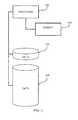
- a data storage system implementing embodiments of the present invention may include a processor 102, memory 104 connected to the processor, and one or more data storage devices 106, 108.
- the present invention relates to data migration in a tiered data storage system; therefore, a data storage system implementing embodiments of the present invention may have a fast data storage tier 106 and a slow data storage tier 108.
- a data storage system implementing embodiments of the present invention may have one or more logical tiered drives 202 comprising one or more virtual drives 204, 206, 208.
- Each virtual drive 204, 206, 208 may be a logical construct to access one or more physical drives.
- a SATA virtual drive 204 may be a logical construct to access a plurality of SATA hard drives
- a SAS virtual drive 206 may be a logical construct to access a plurality of SAS hard drives
- a SSD virtual drive 208 may be a logical construct to access a plurality of solid state drives.
- each tiered drive 202 may appear to outside users and processes to be a single data storage device with a single, consolidated logical block address (LBA) system.
- LBA logical block address
- a tiered data storage system In order to be effective, a tiered data storage system must maintain the most frequently accessed data (hot data) on the fast tier.
- the technology used to implement a fast tier carries a higher cost per unit of data storage as compared to the technology used to implement a slow tier; therefore the fast tier may have a relatively small total storage capacity.
- a tiered data storage system must therefore migrate data from the slow tier to the fast tier as previously cold data becomes hot. Because the fast tier is relatively small, data which has become cold over time may need to be migrated to the slow tier to free capacity on the fast tier.
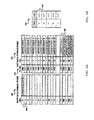
- FIG. 3A shows a block diagram of an initial distribution of data in a tiered data storage device having a fast tier 308 and a slow tier 306.
- the fast tier 308 and the slow tier 306 may be divided into data blocks 314. All data blocks314 may be an equally sized.
- Each data block 314 may be assigned a tiered drive logical block address (TD LBA) 310.
- Each data block may also be assigned a local drive logical block address (LD LBA) particular to a virtual drive such as an SSD VD 208, or particular to a physical drive.
- TD LBA tiered drive logical block address
- LD LBA local drive logical block address
- Reserve space may initially comprise a plurality of unmapped data blocks 312 in the fast tier. All data blocks 314 on the fast tier may be available for data storage except for the unmapped data blocks comprising the reserve space 312. The unmapped data blocks comprising the reserve space 312 may only be available to a controller for data migration. Reserve space 312 may be some percentage of the total capacity of the fast tier 308; for example, five percent (5%).
- FIG. 3B shows a reserve space table 302 of unmapped data blocks. Each record 304 in the reserve space table 302 of unmapped data blocks may identify the location of an unmapped data block in the data storage device. Each record 304 in the tables 302 in FIG.
- each unmapped data block may be identified by TD LBA.
- the reserve space table 302 may be maintained on the fast tier 308.
- FIG. 4A shows a block diagram of a distribution of data in a tiered data storage device having a fast tier 308 and a slow tier 306 where a data block has been migrated from the slow tier 306 to the fast tier 308.
- the data storage system may analyze data access patterns over time and determine that one or more data blocks on the slow tier 306 have been accessed more frequently than data blocks on the fast tier 308, and are therefore hot. For example, data in a first slow tier data block 406 may become hot due to frequent user or process access over time. In order to maximize data storage system efficiency, the data stored in the first slow tier data block 406 must be transferred to the fast tier 308; however, as illustrated in FIG.
- all of the mapped data blocks on the fast tier 308 may be filled.
- the data storage system may migrate the data from the first slow tier data block 406 to a first unmapped fast tier data block 404 on the fast tier 308.
- the reserve space table 302 may then by modified to reflect the migration of data from the first slow tier data block 406 to the first unmapped fast tier data block 404.
- a first migration record 402 may be updated to refer to the first slow tier data block 406, or a first migration record may be added to the reserve space table 302 to refer to the first slow tier data block 406 while a corresponding record referring to the first unmapped fast tier data block 404 is removed.
- the first slow tier data block 406 may then become part of the reserve space.
- Data migration according to the present invention is therefore unidirectional for the first data migration; that is, the data storage system did not migrate data from a data block on the fast tier to make room for data from a data block on the slow tier.
- Data migration according to the present invention incurs a correspondingly lower overhead as compared to data migration in a conventional tiered data storage system.
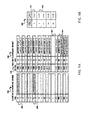
- FIG. 5A shows a block diagram of a distribution of data in a tiered data storage device having a fast tier 308 and a slow tier 306 where two data blocks have been migrated from the slow tier 306 to the fast tier 308.
- the data storage system may migrate the data from a first slow tier data block 406 to a first unmapped fast tier data block 404 on the fast tier 308 and modify the reserve space table 302 as illustrated in FIGS. 4A and 4B .
- the data storage system may then migrate the data from a second slow tier data block 506 to a second unmapped fast tier data block 504 on the fast tier 308.
- the reserve space table 302 may then by modified to reflect the migration of data from the second slow tier data block 506 to the second unmapped fast tier data block 504.
- a second migration record 502 may be updated to refer to the second slow tier data block 506, or a second migration record may be added to the reserve space table 302 to refer to the second slow tier data block 506 while a corresponding record referring to the second unmapped fast tier data block 504 is removed.
- the second slow tier data block 506 may then become part of the reserve space.
- Data migration according to the present invention therefore continues to be unidirectional even for more than one data migration. Data migration according to the present invention incurs a correspondingly lower overhead as compared to data migration in a conventional tiered data storage system.
- FIG. 6A shows a block diagram of a distribution of data in a tiered data storage device having a fast tier 308 and a slow tier 306 where the data storage system has undergone a "cold swap" to return reserve space to the fast tier 308 through a mass migration of data from one or more data blocks on the fast tier 308 to the slow tier 306.
- reserve space initially allocated on the fast tier 308 (see reserve space 312 in FIG. 3A ) eventually migrates to the slow tier 306 as data on the slow tier 306 becomes hot and is migrated to unmapped data blocks in the reserve space on the fast tier 308.
- Each migration of data from a data block on the slow tier 306 is accompanied by a corresponding migration of reserve space from the fast tier 308 to the slow tier 306 through a reserve space table 302 that records the location of each data block of reserve space.
- the data storage system retains sufficient space on the slow tier to periodically migrate cold data from data blocks on the fast tier 308 as hot data is migrated to the fast tier 308 over time.
- the data storage system may include a migration threshold.
- the migration threshold may be some limit on the amount of reserve space that may be transferred from the slow tier 306to the fast tier 308.
- the migration threshold may be a percentage of the initial reserve space such as eighty percent (80%), though those skilled in the art will appreciate that 80% is exemplary and that other thresholds may be employed.
- the data storage system may initiate a "cold swap."
- a cold swap is a process for returning reserve space to the fast tier 308 by migrating cold data from data blocks on the fast tier to data blocks on the slow tier identified in the reserve space table 302.
- a cold swap may be initiated at predetermined intervals, or when system usage is below a threshold such that the cold swap will not reduce end user performance of the data storage system.
- the data storage system determines what data has on the fast tier 308 has become cold. For example, the data storage system may determine that two data blocks 606, 608 on the fast tier 308 have been accessed less frequently than other data blocks on the fast tier 308, and are therefore cold. The data storage system may migrate the data from a first fast tier data block 606 to a first slow tier data block 406identified asreserve space by a migration record in the reserve space table 302 (see the first migration record 402 in FIG. 5A ).
- the migration record 602 identifying the first slow tier data block 406 may be updated to refer to the first fast tier data block 606, or a migration record 602 may be added to the reserve space table 302 to refer to the first fast tier data block 606 while a corresponding record referring to the first slow tier data block 406 is removed.
- the data storage system may then migrate the data from a second fast tier data block 608 to a second slow tier data block 506 identified as reserve space by a migration record in the reserve space table 302 (see the second migration record 502 in FIG. 5A ).
- the migration record 604 identifying the second slow tier data block 506 may be updated to refer to the second fast tier data block 608, or a migration record 604 may be added to the reserve space table 302 to refer to the first second tier data block 608 while a corresponding record referring to the second slow tier data block 506 is removed.
- data from a plurality of data blocks on the fast tier 308 is migrated to the slow tier 306 at one time to predetermined locations on the slow tier 306 identified in the reserve space table.
- a tiered data storage system having at least one slow tier, or slow data storage device, and at least one fast tier, or fast data storage device may maximize availability of the data storage system to handle data requests by reducing overhead of data migration operations during heavy usage periods.
- the data storage system may transfer 702 data from a data block on the slow data storage device to a reserve space data block on the fast data storage device.
- Reserve space data blocks are data blocks identified in a reserve space table. Reserve space data blocks are not allocated for regular usage by the data storage system and are held in reserve specifically for data migration operations.
- the data storage system may add 704 the data block on the slow data storage device, where the data was previously located, to the reserve space table.
- the data block where the data was previously located may then become part of the reserve space and may no longer be available for regular usage by the data storage system; only for data migration operations.
- the data storage system may then remove 706 the data block on the fast data storage device, where the data was transferred, from the reserve space table. The data block on the fast data storage device may then be available for regular usage by the data storage device.
- the data storage system may initiate a cold swap to return reserve space to the fast data storage device.
- the data storage device may transfer 708 cold data from a data block on the fast data storage device to data block on the slow data storage device identified in the reserve space table.
- Cold data on the fat data storage device may refer to the data or data block on the fast data storage device that is least frequently accessed by users or processes.
- the data storage system may add 710 the data block on the fast data storage device, where the data was previously located, to the reserve space table.
- the data block where the data was previously located may then become part of the reserve space and may no longer be available for regular usage by the data storage system; only for data migration operations.
- the data storage system may then remove 712 the data block on the slow data storage device, where the data was transferred, from the reserve space table.
- the data block on the data data storage device may then be available for regular usage by the data storage device.
- a cold swap may transfer a plurality of reserve space data blocks from the slow data storage system to the fast data storage system. Reserve space transfers would generally proceed as set forth herein, transferring data from the fast tier to the slow tier and updating the reserve space table.
Landscapes
- Engineering & Computer Science (AREA)
- Theoretical Computer Science (AREA)
- Physics & Mathematics (AREA)
- General Engineering & Computer Science (AREA)
- General Physics & Mathematics (AREA)
- Human Computer Interaction (AREA)
- Information Retrieval, Db Structures And Fs Structures Therefor (AREA)
- Memory System Of A Hierarchy Structure (AREA)
Abstract
Description
- The present invention is directed generally toward data storage systems, and particularly to data storage systems having tiers.
- In block based storage systems, overall system performance is improved by moving data that is frequently accessed (hot data) to faster and more capable drives and at the same time moving less frequently accessed data (cold data) to less capable slow storage. This solution, known as storage tiering, is more cost effective than using high performance storage for all storage needs. A typical tiering configuration will utilize a large storage pool of cheaper and less capable drives (e.g. SATA drives) as a "slow tier" and a small pool of expensive and more capable drives (e.g. SSDs) as a "fast tier". Tiering provides superior performance per unit cost than other comparable configuration.
- For tiering to be effective, hot data must be maintained on the fast tier and cold data must be maintained on the slow tier even as the access frequency of data changes over time. A tiered data storage system tracks the access frequency of data or blocks of data and moves data between tiers as access frequencies change. The movement of data between tiers is an overhead that takes away bandwidth from actually servicing 10s.
- Consequently, it would be advantageous if an apparatus existed that is suitable for efficiently migrating data between tiers in a tiered data storage system.
- Accordingly, the present invention is directed to a novel method and apparatus for efficiently migrating data between tiers in a tiered data storage system.
- One embodiment of the present invention is a data storage system having a fast tier and a slow tier where a portion of the fast tier is reserved. As previously cold data becomes hot, the data is transferred from the slow tier to the reserved portion of the fast tier. A table initially tracks all of the space in the reserved portion of the fast tier. As data becomes hot and is transferred to the reserved portion of the fast tier, the table is modified to add the previous location of the data on the slow tier to the reserve portion and remove the new location of the data on the fast tier from the reserve portion. By this method, data migration is predominantly from the slow tier to the fast tier without immediate corresponding migrations from the fast tier to the slow tier, thereby reducing the initial overhead of migration. When a certain percentage of the reserve portion has been migrated to the slow tier, the data storage system performs a mass migration of cold data from the fast tier to the slow tier. The timing of the mass migration may be dependent on available system resources.
- It is to be understood that both the foregoing general description and the following detailed description are exemplary and explanatory only and are not restrictive of the invention claimed. The accompanying drawings, which are incorporated in and constitute a part of the specification, illustrate an embodiment of the invention and together with the general description, serve to explain the principles.
- The numerous objects and advantages of the present invention may be better understood by those skilled in the art by reference to the accompanying figures in which:
- FIG. 1
- shows a block diagram of a data storage system useful for implementing the present invention;
- FIG. 2
- shows a block diagram of a tiered drive implemented using virtual drives comprising different data storage technologies;
- FIG. 3 A
- shows a table of an initial layout of data blocks in a data storage system having a slow data storage device and a fast data storage device;
- FIG. 3B
- shows an initial table of logical block addresses associated with reserve space on data storage devices in a data storage system having a fast data storage device and a slow data storage device;
- FIG. 4 A
- shows a table of data blocks in a data storage system having a slow data storage device and a fast data storage device after a block of data has been migrated from the slow data storage device to the fast data storage device;
- FIG. 4B
- shows a table of logical block addresses associated with reserve space on data storage devices in a data storage system having a fast data storage device and a slow data storage device after a block of data has been migrated from the slow data storage device to the fast data storage device;
- FIG. 5 A
- shows a table of data blocks in a data storage system having a slow data storage device and a fast data storage device after two blocks of data have been migrated from the slow data storage device to the fast data storage device;
- FIG. 5B
- shows a table of logical block addresses associated with reserve space on data storage devices in a data storage system having a fast data storage device and a slow data storage device after two blocks of data have been migrated from the slow data storage device to the fast data storage device;
- FIG. 6 A
- shows a table of data blocks in a data storage system having a slow data storage device and a fast data storage device after a cold swap to move reserve space back to the fast data storage device;
- FIG. 6B
- shows a table of logical block addresses associated with reserve space on data storage devices in a data storage system having a fast data storage device and a slow data storage device after a cold swap to move reserve space back to the fast data storage device; and
- FIG. 7
- shows a flowchart of a method for migrating data in a data storage system having a slow data storage device and a fast data storage device.
- Reference will now be made in detail to the subject matter disclosed, which is illustrated in the accompanying drawings. The scope of the invention is limited only by the claims; numerous alternatives, modifications and equivalents are encompassed. For the purpose of clarity, technical material that is known in the technical fields related to the embodiments has not been described in detail to avoid unnecessarily obscuring the description.
- Referring to
FIG. 1 , a block diagram of a data storage system is shown. A data storage system implementing embodiments of the present invention may include aprocessor 102,memory 104 connected to the processor, and one or moredata storage devices data storage tier 106 and a slowdata storage tier 108. Alternatively, referring toFIG. 2 , a data storage system implementing embodiments of the present invention may have one or more logicaltiered drives 202 comprising one or morevirtual drives virtual drive virtual drive 204 may be a logical construct to access a plurality of SATA hard drives; a SASvirtual drive 206 may be a logical construct to access a plurality of SAS hard drives; and a SSDvirtual drive 208 may be a logical construct to access a plurality of solid state drives. In a tiered data storage system having one or moretiered drives 202 such as inFIG. 2 , eachtiered drive 202 may appear to outside users and processes to be a single data storage device with a single, consolidated logical block address (LBA) system. - In order to be effective, a tiered data storage system must maintain the most frequently accessed data (hot data) on the fast tier. The technology used to implement a fast tier carries a higher cost per unit of data storage as compared to the technology used to implement a slow tier; therefore the fast tier may have a relatively small total storage capacity. As different data is accessed over time, data access patterns may change, causing previously cold data to become hot and previously hot data to become cold. A tiered data storage system must therefore migrate data from the slow tier to the fast tier as previously cold data becomes hot. Because the fast tier is relatively small, data which has become cold over time may need to be migrated to the slow tier to free capacity on the fast tier.
- A tiered storage device according to the present invention may retain a portion of capacity on the data storage device as reserve space. Referring to
FIG. 3A and 3B, FIG. 3A shows a block diagram of an initial distribution of data in a tiered data storage device having afast tier 308 and aslow tier 306. Thefast tier 308 and theslow tier 306 may be divided into data blocks 314. All data blocks314 may be an equally sized. Each data block 314 may be assigned a tiered drive logical block address (TD LBA) 310. Each data block may also be assigned a local drive logical block address (LD LBA) particular to a virtual drive such as anSSD VD 208, or particular to a physical drive. Reserve space may initially comprise a plurality of unmapped data blocks 312 in the fast tier. All data blocks 314 on the fast tier may be available for data storage except for the unmapped data blocks comprising thereserve space 312. The unmapped data blocks comprising thereserve space 312 may only be available to a controller for data migration.Reserve space 312 may be some percentage of the total capacity of thefast tier 308; for example, five percent (5%).FIG. 3B shows a reserve space table 302 of unmapped data blocks. Eachrecord 304 in the reserve space table 302 of unmapped data blocks may identify the location of an unmapped data block in the data storage device. Eachrecord 304 in the tables 302 inFIG. 3B identifies each unmapped data block by LD LBA and tier, but one skilled in the art will appreciate that other identification mechanisms may be possible; for example, each unmapped data block may be identified by TD LBA. The reserve space table 302 may be maintained on thefast tier 308. - Referring to
FIG. 4A and 4B, FIG. 4A shows a block diagram of a distribution of data in a tiered data storage device having afast tier 308 and aslow tier 306 where a data block has been migrated from theslow tier 306 to thefast tier 308. The data storage system may analyze data access patterns over time and determine that one or more data blocks on theslow tier 306 have been accessed more frequently than data blocks on thefast tier 308, and are therefore hot. For example, data in a first slow tier data block 406 may become hot due to frequent user or process access over time. In order to maximize data storage system efficiency, the data stored in the first slow tier data block 406 must be transferred to thefast tier 308; however, as illustrated inFIG. 4A , all of the mapped data blocks on thefast tier 308 may be filled. In that case, the data storage system may migrate the data from the first slow tier data block 406 to a first unmapped fast tier data block 404 on thefast tier 308. The reserve space table 302 may then by modified to reflect the migration of data from the first slow tier data block 406 to the first unmapped fast tier data block 404. Afirst migration record 402 may be updated to refer to the first slow tier data block 406, or a first migration record may be added to the reserve space table 302 to refer to the first slow tier data block 406 while a corresponding record referring to the first unmapped fast tier data block 404 is removed. The first slow tier data block 406 may then become part of the reserve space. Data migration according to the present invention is therefore unidirectional for the first data migration; that is, the data storage system did not migrate data from a data block on the fast tier to make room for data from a data block on the slow tier. Data migration according to the present invention incurs a correspondingly lower overhead as compared to data migration in a conventional tiered data storage system. - Referring to
FIG. 5A and 5B, FIG. 5A shows a block diagram of a distribution of data in a tiered data storage device having afast tier 308 and aslow tier 306 where two data blocks have been migrated from theslow tier 306 to thefast tier 308. Where the data storage system determines that two data blocks on theslow tier 306 have been accessed more frequently than data blocks on thefast tier 308, and are therefore hot, the data storage system may migrate the data from a first slow tier data block 406 to a first unmapped fast tier data block 404 on thefast tier 308 and modify the reserve space table 302 as illustrated inFIGS. 4A and 4B . The data storage system may then migrate the data from a second slow tier data block 506 to a second unmapped fast tier data block 504 on thefast tier 308. The reserve space table 302 may then by modified to reflect the migration of data from the second slow tier data block 506 to the second unmapped fast tier data block 504. Asecond migration record 502 may be updated to refer to the second slow tier data block 506, or a second migration record may be added to the reserve space table 302 to refer to the second slow tier data block 506 while a corresponding record referring to the second unmapped fast tier data block 504 is removed. The second slow tier data block 506 may then become part of the reserve space. Data migration according to the present invention therefore continues to be unidirectional even for more than one data migration. Data migration according to the present invention incurs a correspondingly lower overhead as compared to data migration in a conventional tiered data storage system. - Referring to
FIG. 6A and 6B, FIG. 6A shows a block diagram of a distribution of data in a tiered data storage device having afast tier 308 and aslow tier 306 where the data storage system has undergone a "cold swap" to return reserve space to thefast tier 308 through a mass migration of data from one or more data blocks on thefast tier 308 to theslow tier 306. During the operation of a data storage system according to the present invention, reserve space initially allocated on the fast tier 308 (seereserve space 312 inFIG. 3A ) eventually migrates to theslow tier 306 as data on theslow tier 306 becomes hot and is migrated to unmapped data blocks in the reserve space on thefast tier 308. - Each migration of data from a data block on the
slow tier 306 is accompanied by a corresponding migration of reserve space from thefast tier 308 to theslow tier 306 through a reserve space table 302 that records the location of each data block of reserve space. By track data blocks of reserve space on theslow tier 306, the data storage system retains sufficient space on the slow tier to periodically migrate cold data from data blocks on thefast tier 308 as hot data is migrated to thefast tier 308 over time. - The data storage system may include a migration threshold. The migration threshold may be some limit on the amount of reserve space that may be transferred from the slow tier 306to the
fast tier 308. The migration threshold may be a percentage of the initial reserve space such as eighty percent (80%), though those skilled in the art will appreciate that 80% is exemplary and that other thresholds may be employed. When the migration limit is reached, the data storage system may initiate a "cold swap." A cold swap is a process for returning reserve space to thefast tier 308 by migrating cold data from data blocks on the fast tier to data blocks on the slow tier identified in the reserve space table 302. Alternatively, a cold swap may be initiated at predetermined intervals, or when system usage is below a threshold such that the cold swap will not reduce end user performance of the data storage system. - Where the data storage system determines that a cold swap should be initiated, the data storage system determines what data has on the
fast tier 308 has become cold. For example, the data storage system may determine that twodata blocks 606, 608 on thefast tier 308 have been accessed less frequently than other data blocks on thefast tier 308, and are therefore cold. The data storage system may migrate the data from a first fast tier data block 606 to a first slow tier data block 406identified asreserve space by a migration record in the reserve space table 302 (see thefirst migration record 402 inFIG. 5A ). Themigration record 602 identifying the first slow tier data block 406 may be updated to refer to the first fast tier data block 606, or amigration record 602 may be added to the reserve space table 302 to refer to the first fast tier data block 606 while a corresponding record referring to the first slow tier data block 406 is removed. The data storage system may then migrate the data from a second fast tier data block 608 to a second slow tier data block 506 identified as reserve space by a migration record in the reserve space table 302 (see thesecond migration record 502 inFIG. 5A ). The migration record 604 identifying the second slow tier data block 506 may be updated to refer to the second fast tier data block 608, or a migration record 604 may be added to the reserve space table 302 to refer to the first second tier data block 608 while a corresponding record referring to the second slow tier data block 506 is removed. During a cold swap, data from a plurality of data blocks on thefast tier 308 is migrated to theslow tier 306 at one time to predetermined locations on theslow tier 306 identified in the reserve space table. - Referring to
FIG. 7 , a flowchart for an embodiment of the present invention is shown. A tiered data storage system having at least one slow tier, or slow data storage device, and at least one fast tier, or fast data storage device, may maximize availability of the data storage system to handle data requests by reducing overhead of data migration operations during heavy usage periods. Where the data storage system determines that data on the slow data storage system has become hot based on data access patterns, the data storage system may transfer 702 data from a data block on the slow data storage device to a reserve space data block on the fast data storage device. Reserve space data blocks are data blocks identified in a reserve space table. Reserve space data blocks are not allocated for regular usage by the data storage system and are held in reserve specifically for data migration operations. When data has been transferred from a data block on the slow data storage device to a data block on the fast data storage device, the data storage system may add 704 the data block on the slow data storage device, where the data was previously located, to the reserve space table. The data block where the data was previously located may then become part of the reserve space and may no longer be available for regular usage by the data storage system; only for data migration operations. The data storage system may then remove 706 the data block on the fast data storage device, where the data was transferred, from the reserve space table. The data block on the fast data storage device may then be available for regular usage by the data storage device. - When the reserve space table indicates that some threshold amount of the reserve space has been transferred to the slow data storage device, the data storage system may initiate a cold swap to return reserve space to the fast data storage device. The data storage device may transfer 708 cold data from a data block on the fast data storage device to data block on the slow data storage device identified in the reserve space table. Cold data on the fat data storage device may refer to the data or data block on the fast data storage device that is least frequently accessed by users or processes.When data has been transferred from the data block on the fast data storage device to the data block on the slow data storage device, the data storage system may add 710 the data block on the fast data storage device, where the data was previously located, to the reserve space table. The data block where the data was previously located may then become part of the reserve space and may no longer be available for regular usage by the data storage system; only for data migration operations. The data storage system may then remove 712 the data block on the slow data storage device, where the data was transferred, from the reserve space table. The data block on the data data storage device may then be available for regular usage by the data storage device. A cold swap may transfer a plurality of reserve space data blocks from the slow data storage system to the fast data storage system. Reserve space transfers would generally proceed as set forth herein, transferring data from the fast tier to the slow tier and updating the reserve space table.
- It is believed that the present invention and many of its attendant advantages will be understood by the foregoing description, and it will be apparent that various changes may be made in the form, construction, and arrangement of the components thereof without departing from the scope and spirit of the invention or without sacrificing all of its material advantages. The form herein before described being merely an explanatory embodiment thereof, it is the intention of the following claims to encompass and include such changes.
Claims (15)
- A data storage apparatus comprising:a processor;a first data storage device connected to the processor, configured to store a table; anda second data storage device connected to the processor, wherein:the first data storage device has a relatively fast access time than the second data storage device;the table is configured to identify discrete portions of the first data storage device and discrete portions of the second data storage device; andthe processor is configured to:transfer data from a discrete portion of the second data storage device to a discrete portion of the first data storage device identified in the table;add the discrete portion or a location thereof of the second data storage device to the table; andremove the discrete portion or a location thereof of the first data storage device from the table.
- The data storage apparatus of claim 1, wherein the processor is further configured to monitor a distribution of locations in the table between the first data storage device and the second data storage device.
- The data storage apparatus of claim 1 or 2, wherein the processor is further configured to:transfer data from a plurality of discrete portions of the first data storage device to a plurality of discrete portions of the second data storage device;add a plurality of locations, each associated with one of the plurality of discrete portions of the first data storage device to the table; andremove a plurality of locations, each associated with one of the plurality of discrete portions of the second data storage device from the table.
- The data storage apparatus of claim 3, wherein the transfer of data is when the distribution of locations in the table exceeds a threshold.
- The data storage apparatus of claim 1, 2 or 3, wherein the processor is further configured to monitor a system usage metric.
- The data storage apparatus of claim 5, wherein the processor is further configured to
transfer the data when the system usage metric is below a threshold. - The data storage apparatus of any preceding claim, wherein either one or both of the first and second data storage devices comprise(s) one or more solid state drives.
- The data storage apparatus of any preceding claim, wherein the processor is further configured to prohibit data access operations to any location identified in the table.
- The data storage apparatus of any preceding claim wherein, the table is a reserve space table.
- A method for migrating data between tiers in a data storage system, comprising:transferring data from a discrete portion of a slow data storage device to discrete portion of a fast data storage device;adding the discrete portion of the slow data storage device to a reserve space table; andremoving the discrete portion of the fast data storage device from the reserve space table.
- The method of claim 10, further comprising monitoring a distribution of locations in the reserve space table between the slow data storage device and the fast data storage device.
- The method of claim 10 or 11, further comprising:transferring data from a plurality of discrete portions of the fast data storage device to a plurality of discrete portions of the slow data storage device when the distribution of locations in the reserve space table exceeds a threshold;add a plurality of locations, each associated with one of the plurality of discrete portions of the fast data storage device to the reserve space table; andremove a plurality of locations, each associated with one of the plurality of discrete portions of the slow data storage device from the reserve space table.
- The method of claim 12 or apparatus claim 3, wherein the threshold is eighty percent of all locations identified in the reserve space table referencing a location on the slow or second data storage device.
- The method of any preceding claim, wherein the fast data storage device comprises one or more solid state drives.
- The method of any preceding claim, further comprising prohibiting data access operations to any location identified in the reserve space table.
Applications Claiming Priority (1)
| Application Number | Priority Date | Filing Date | Title |
|---|---|---|---|
| US13/296,278 US8782369B2 (en) | 2011-11-15 | 2011-11-15 | Apparatus to manage efficient data migration between tiers |
Publications (1)
| Publication Number | Publication Date |
|---|---|
| EP2595049A1 true EP2595049A1 (en) | 2013-05-22 |
Family
ID=47458638
Family Applications (1)
| Application Number | Title | Priority Date | Filing Date |
|---|---|---|---|
| EP12190546.7A Ceased EP2595049A1 (en) | 2011-11-15 | 2012-10-30 | Apparatus to manage efficient data migration between tiers |
Country Status (6)
| Country | Link |
|---|---|
| US (1) | US8782369B2 (en) |
| EP (1) | EP2595049A1 (en) |
| JP (1) | JP2013105489A (en) |
| KR (1) | KR20130054141A (en) |
| CN (1) | CN103106151A (en) |
| TW (1) | TWI534702B (en) |
Families Citing this family (42)
| Publication number | Priority date | Publication date | Assignee | Title |
|---|---|---|---|---|
| WO2013159068A1 (en) * | 2012-04-20 | 2013-10-24 | Enmotus Inc. | Storage system with data management mechanism and method of operation thereof |
| WO2013160958A1 (en) | 2012-04-26 | 2013-10-31 | Hitachi, Ltd. | Information storage system and method of controlling information storage system |
| US20140310458A1 (en) * | 2013-04-11 | 2014-10-16 | Tencent Technology (Shenzhen) Company Limited | Data transferring method and apparatus and storage system |
| US9092159B1 (en) * | 2013-04-30 | 2015-07-28 | Emc Corporation | Object classification and identification from raw data |
| US9983992B2 (en) * | 2013-04-30 | 2018-05-29 | WMware Inc. | Trim support for a solid-state drive in a virtualized environment |
| US9904706B2 (en) | 2013-09-06 | 2018-02-27 | International Business Machines Corporation | Deferring data record changes using query rewriting |
| CN103530388A (en) * | 2013-10-22 | 2014-01-22 | 浪潮电子信息产业股份有限公司 | Performance improving data processing method in cloud storage system |
| US9298389B2 (en) * | 2013-10-28 | 2016-03-29 | Lenovo Enterprise Solutions (Singapore) Pte. Ltd. | Operating a memory management controller |
| CN104679661B (en) * | 2013-11-27 | 2019-12-10 | 阿里巴巴集团控股有限公司 | hybrid storage control method and hybrid storage system |
| US9298373B2 (en) | 2014-01-13 | 2016-03-29 | International Business Machines Corporation | Placement and movement of sub-units of a storage unit in a tiered storage environment |
| CN105164629B (en) * | 2014-01-15 | 2018-05-22 | 株式会社日立制作所 | Computer system and control method for hierarchical storage thereof |
| US9323471B2 (en) | 2014-01-28 | 2016-04-26 | International Business Machines Corporation | Management of extent migration on tiered storage |
| JP5730446B1 (en) * | 2014-03-18 | 2015-06-10 | 株式会社東芝 | Hierarchical storage system with trial area, storage controller and program |
| CN104951242B (en) * | 2014-03-28 | 2018-05-01 | 伊姆西公司 | Method and apparatus for relocating data automatically between storage array |
| CN104583930B (en) * | 2014-08-15 | 2017-09-08 | 华为技术有限公司 | Data migration method, controller and data migration device |
| US11095715B2 (en) | 2014-09-24 | 2021-08-17 | Ebay Inc. | Assigning storage responsibility in a distributed data storage system with replication |
| US10176212B1 (en) | 2014-10-15 | 2019-01-08 | Seagate Technology Llc | Top level tier management |
| US10768848B2 (en) * | 2015-06-29 | 2020-09-08 | EMC IP Holding Company LLC | Backup performance in storage tiers using data allocation optimization |
| CN105183386A (en) * | 2015-09-14 | 2015-12-23 | 联想(北京)有限公司 | Information processing method and electronic equipment |
| US10140034B2 (en) * | 2015-11-24 | 2018-11-27 | International Business Machines Corporation | Solid-state drive assignment based on solid-state drive write endurance |
| US10705764B2 (en) * | 2016-02-08 | 2020-07-07 | International Business Machines Corporation | Performing nearline storage of a file |
| KR101900569B1 (en) * | 2016-11-22 | 2018-09-19 | 이화여자대학교 산학협력단 | Storage allocation method and apparatus considering the input/output characteristics |
| US10379912B2 (en) * | 2017-04-11 | 2019-08-13 | International Business Machines Corporation | Data storage allocation utilizing virtual machine resource allocation |
| US10353596B2 (en) * | 2017-09-28 | 2019-07-16 | International Business Machines Corporation | Data storage system performance management |
| CN107870981B (en) * | 2017-09-30 | 2021-10-22 | 平安科技(深圳)有限公司 | Electronic device, data sheet filing method and storage medium |
| US11137926B1 (en) * | 2018-03-30 | 2021-10-05 | Veritas Technologies Llc | Systems and methods for automatic storage tiering |
| CN108549525B (en) * | 2018-04-04 | 2022-07-15 | 北京蓝杞数据科技有限公司天津分公司 | Data storage and access method and device, electronic equipment and storage medium |
| US10360155B1 (en) | 2018-04-05 | 2019-07-23 | Western Digital Technologies, Inc. | Multi-tier memory management |
| US10713173B2 (en) * | 2018-09-06 | 2020-07-14 | Intel Corporation | Memory controller with pre-loader |
| US10592125B1 (en) * | 2018-10-22 | 2020-03-17 | International Business Machines Corporation | Enhanced restripe mechanism |
| CN111857556B (en) * | 2019-04-30 | 2024-05-24 | 伊姆西Ip控股有限责任公司 | Method, apparatus and computer program product for managing metadata of storage objects |
| US12353364B2 (en) * | 2019-07-18 | 2025-07-08 | Pure Storage, Inc. | Providing block-based storage |
| CN110673785A (en) * | 2019-08-23 | 2020-01-10 | 上海科技发展有限公司 | Data storage method and system |
| CN110531938A (en) * | 2019-09-02 | 2019-12-03 | 广东紫晶信息存储技术股份有限公司 | A kind of cold and hot data migration method and system based on various dimensions |
| WO2021120140A1 (en) * | 2019-12-20 | 2021-06-24 | Intel Corporation | Managing runtime apparatus for tiered object memory placement |
| DE102020105357B4 (en) | 2020-02-28 | 2026-03-19 | Infineon Technologies Ag | Consumption device and method for authenticating a consumption component |
| US11803446B2 (en) | 2020-07-13 | 2023-10-31 | Samsung Electronics Co., Ltd. | Fault resilient storage device |
| CN113064551B (en) * | 2020-05-15 | 2023-09-01 | 华为技术有限公司 | Data writing, moving, clearing information sending method, device and file system |
| CN113238527B (en) * | 2020-12-19 | 2022-04-08 | 华中科技大学 | Industrial data aggregation method and system |
| US20250077319A1 (en) * | 2023-08-29 | 2025-03-06 | Avago Technologies International Sales Pte. Limited | Workload awareness for controllers |
| US12405752B2 (en) | 2023-09-26 | 2025-09-02 | Smart Modular Technologies, Inc. | Migrating data between byte-addressable and block-addressable storage devices in processor-based devices |
| US12608152B2 (en) * | 2023-12-19 | 2026-04-21 | Smarsh Inc. | Systems and methods for low cost data indexing |
Citations (3)
| Publication number | Priority date | Publication date | Assignee | Title |
|---|---|---|---|---|
| US20090276588A1 (en) * | 2008-04-30 | 2009-11-05 | Atsushi Murase | Free space utilization in tiered storage systems |
| US8006061B1 (en) * | 2007-04-13 | 2011-08-23 | American Megatrends, Inc. | Data migration between multiple tiers in a storage system using pivot tables |
| EP2378410A2 (en) * | 2010-04-19 | 2011-10-19 | Hitachi Ltd. | Method and apparatus to manage tier information |
Family Cites Families (8)
| Publication number | Priority date | Publication date | Assignee | Title |
|---|---|---|---|---|
| US20060143417A1 (en) * | 2004-12-23 | 2006-06-29 | David Poisner | Mechanism for restricting access of critical disk blocks |
| WO2009032776A2 (en) | 2007-08-28 | 2009-03-12 | Commvault Systems, Inc. | Power management of data processing resources, such as power adaptive management of data storage operations |
| US20100199036A1 (en) * | 2009-02-02 | 2010-08-05 | Atrato, Inc. | Systems and methods for block-level management of tiered storage |
| US8321645B2 (en) * | 2009-04-29 | 2012-11-27 | Netapp, Inc. | Mechanisms for moving data in a hybrid aggregate |
| US8880835B2 (en) | 2009-07-07 | 2014-11-04 | International Business Machines Corporation | Adjusting location of tiered storage residence based on usage patterns |
| US20110137889A1 (en) * | 2009-12-09 | 2011-06-09 | Ca, Inc. | System and Method for Prioritizing Data Storage and Distribution |
| WO2011135612A1 (en) * | 2010-04-27 | 2011-11-03 | Hitachi, Ltd. | Storage apparatus and method for controlling storage apparatus |
| US8495318B2 (en) * | 2010-07-26 | 2013-07-23 | International Business Machines Corporation | Memory page management in a tiered memory system |
-
2011
- 2011-11-15 US US13/296,278 patent/US8782369B2/en not_active Expired - Fee Related
-
2012
- 2012-10-05 TW TW101136814A patent/TWI534702B/en not_active IP Right Cessation
- 2012-10-19 KR KR1020120116719A patent/KR20130054141A/en not_active Withdrawn
- 2012-10-23 JP JP2012233509A patent/JP2013105489A/en not_active Withdrawn
- 2012-10-30 EP EP12190546.7A patent/EP2595049A1/en not_active Ceased
- 2012-11-02 CN CN2012104345717A patent/CN103106151A/en active Pending
Patent Citations (3)
| Publication number | Priority date | Publication date | Assignee | Title |
|---|---|---|---|---|
| US8006061B1 (en) * | 2007-04-13 | 2011-08-23 | American Megatrends, Inc. | Data migration between multiple tiers in a storage system using pivot tables |
| US20090276588A1 (en) * | 2008-04-30 | 2009-11-05 | Atsushi Murase | Free space utilization in tiered storage systems |
| EP2378410A2 (en) * | 2010-04-19 | 2011-10-19 | Hitachi Ltd. | Method and apparatus to manage tier information |
Also Published As
| Publication number | Publication date |
|---|---|
| KR20130054141A (en) | 2013-05-24 |
| JP2013105489A (en) | 2013-05-30 |
| US8782369B2 (en) | 2014-07-15 |
| TWI534702B (en) | 2016-05-21 |
| CN103106151A (en) | 2013-05-15 |
| US20130124780A1 (en) | 2013-05-16 |
| TW201319928A (en) | 2013-05-16 |
Similar Documents
| Publication | Publication Date | Title |
|---|---|---|
| US8782369B2 (en) | Apparatus to manage efficient data migration between tiers | |
| JP6564082B6 (en) | Dynamic storage tiering in a virtual environment | |
| US8909887B1 (en) | Selective defragmentation based on IO hot spots | |
| US8775731B2 (en) | Write spike performance enhancement in hybrid storage systems | |
| EP2784683B1 (en) | Storage control program, storage control method, storage system and hierarchy control apparatus thereof | |
| US8949563B2 (en) | Computer system and data management method | |
| US10346081B2 (en) | Handling data block migration to efficiently utilize higher performance tiers in a multi-tier storage environment | |
| US9658796B2 (en) | Storage control device and storage system | |
| CN109800185B (en) | A data caching method in a data storage system | |
| CN104317742A (en) | A Thin Provisioning Method for Optimizing Space Management | |
| US20130138884A1 (en) | Load distribution system | |
| US10235286B1 (en) | Data storage system dynamically re-marking slices for reclamation from internal file system to pool storage | |
| US10198180B2 (en) | Method and apparatus for managing storage device | |
| US10303369B2 (en) | Storage in tiered environment with cache collaboration | |
| US20140223072A1 (en) | Tiered Caching Using Single Level Cell and Multi-Level Cell Flash Technology | |
| US20160179379A1 (en) | System and method for data management across volatile and non-volatile storage technologies | |
| US20210224232A1 (en) | Managing a file system within multiple luns while different lun level policies are applied to the luns | |
| US10853252B2 (en) | Performance of read operations by coordinating read cache management and auto-tiering | |
| CN105808150B (en) | Solid state disk cache system for hybrid storage device | |
| US20250199950A1 (en) | Internal memory reclaiming method and apparatus, device, medium, and product | |
| US20150039825A1 (en) | Federated Tiering Management | |
| JP7764093B2 (en) | Buffer pool maintenance method, system, and computer program | |
| US11144445B1 (en) | Use of compression domains that are more granular than storage allocation units | |
| WO2012117451A1 (en) | Storage controller and method of controlling storage controller | |
| Qian et al. | Thinstore: Out-of-band virtualization with thin provisioning |
Legal Events
| Date | Code | Title | Description |
|---|---|---|---|
| PUAI | Public reference made under article 153(3) epc to a published international application that has entered the european phase |
Free format text: ORIGINAL CODE: 0009012 |
|
| AK | Designated contracting states |
Kind code of ref document: A1 Designated state(s): AL AT BE BG CH CY CZ DE DK EE ES FI FR GB GR HR HU IE IS IT LI LT LU LV MC MK MT NL NO PL PT RO RS SE SI SK SM TR |
|
| AX | Request for extension of the european patent |
Extension state: BA ME |
|
| 17P | Request for examination filed |
Effective date: 20131120 |
|
| RBV | Designated contracting states (corrected) |
Designated state(s): AL AT BE BG CH CY CZ DE DK EE ES FI FR GB GR HR HU IE IS IT LI LT LU LV MC MK MT NL NO PL PT RO RS SE SI SK SM TR |
|
| 17Q | First examination report despatched |
Effective date: 20150723 |
|
| STAA | Information on the status of an ep patent application or granted ep patent |
Free format text: STATUS: THE APPLICATION HAS BEEN REFUSED |
|
| 18R | Application refused |
Effective date: 20160923 |