EP2594664A1 - Device for immobilizing carbon dioxide - Google Patents
Device for immobilizing carbon dioxide Download PDFInfo
- Publication number
- EP2594664A1 EP2594664A1 EP11806706.5A EP11806706A EP2594664A1 EP 2594664 A1 EP2594664 A1 EP 2594664A1 EP 11806706 A EP11806706 A EP 11806706A EP 2594664 A1 EP2594664 A1 EP 2594664A1
- Authority
- EP
- European Patent Office
- Prior art keywords
- carbon dioxide
- electrode
- cathode
- produced
- immobilization unit
- Prior art date
- Legal status (The legal status is an assumption and is not a legal conclusion. Google has not performed a legal analysis and makes no representation as to the accuracy of the status listed.)
- Withdrawn
Links
Images




Classifications
-
- C—CHEMISTRY; METALLURGY
- C25—ELECTROLYTIC OR ELECTROPHORETIC PROCESSES; APPARATUS THEREFOR
- C25B—ELECTROLYTIC OR ELECTROPHORETIC PROCESSES FOR THE PRODUCTION OF COMPOUNDS OR NON-METALS; APPARATUS THEREFOR
- C25B1/00—Electrolytic production of inorganic compounds or non-metals
- C25B1/01—Products
- C25B1/02—Hydrogen or oxygen
-
- C—CHEMISTRY; METALLURGY
- C25—ELECTROLYTIC OR ELECTROPHORETIC PROCESSES; APPARATUS THEREFOR
- C25B—ELECTROLYTIC OR ELECTROPHORETIC PROCESSES FOR THE PRODUCTION OF COMPOUNDS OR NON-METALS; APPARATUS THEREFOR
- C25B11/00—Electrodes; Manufacture thereof not otherwise provided for
-
- C—CHEMISTRY; METALLURGY
- C25—ELECTROLYTIC OR ELECTROPHORETIC PROCESSES; APPARATUS THEREFOR
- C25B—ELECTROLYTIC OR ELECTROPHORETIC PROCESSES FOR THE PRODUCTION OF COMPOUNDS OR NON-METALS; APPARATUS THEREFOR
- C25B11/00—Electrodes; Manufacture thereof not otherwise provided for
- C25B11/02—Electrodes; Manufacture thereof not otherwise provided for characterised by shape or form
-
- C—CHEMISTRY; METALLURGY
- C25—ELECTROLYTIC OR ELECTROPHORETIC PROCESSES; APPARATUS THEREFOR
- C25B—ELECTROLYTIC OR ELECTROPHORETIC PROCESSES FOR THE PRODUCTION OF COMPOUNDS OR NON-METALS; APPARATUS THEREFOR
- C25B3/00—Electrolytic production of organic compounds
- C25B3/01—Products
-
- C—CHEMISTRY; METALLURGY
- C25—ELECTROLYTIC OR ELECTROPHORETIC PROCESSES; APPARATUS THEREFOR
- C25B—ELECTROLYTIC OR ELECTROPHORETIC PROCESSES FOR THE PRODUCTION OF COMPOUNDS OR NON-METALS; APPARATUS THEREFOR
- C25B3/00—Electrolytic production of organic compounds
- C25B3/20—Processes
- C25B3/25—Reduction
-
- C—CHEMISTRY; METALLURGY
- C25—ELECTROLYTIC OR ELECTROPHORETIC PROCESSES; APPARATUS THEREFOR
- C25B—ELECTROLYTIC OR ELECTROPHORETIC PROCESSES FOR THE PRODUCTION OF COMPOUNDS OR NON-METALS; APPARATUS THEREFOR
- C25B9/00—Cells or assemblies of cells; Constructional parts of cells; Assemblies of constructional parts, e.g. electrode-diaphragm assemblies; Process-related cell features
- C25B9/30—Cells comprising movable electrodes, e.g. rotary electrodes; Assemblies of constructional parts thereof
Definitions
- the present invention relates to a carbon dioxide immobilization unit using an oxidoreductase. More specifically, the invention relates to a carbon dioxide immobilization unit producing an organic acid or a carbohydrate from carbon dioxide.
- Biofuel cells using an oxidoreductase as a reaction catalyst have been attracting an attention as next-generation fuel cells with high capacity and high safety, since the biofuel cells effectively extract electrons from glucose, ethanol, and the like which are not usable in fuel cells using a typical industrial catalyst.
- FIG. 5 is a diagram schematically illustrating an electric power generation principle of a biofuel cell using an enzyme.
- glucose in an anode 101, glucose is decomposed by an enzyme immobilized on a surface thereof to extract electrons (e - ) and to produce protons (H + ).
- a cathode 102 water (H 2 O) is produced from the protons (H + ) transported from the anode 101 through a proton conductor 103, the electrons (e - ) transmitted through an external circuit, and oxygen (O 2 ) in, for example, air.
- oxygen oxygen
- FIG. 6 is a diagram schematically illustrating an electric power generation principle of a methanol type biofuel cell.
- a biofuel cell using methanol as a fuel to generate electric power has been proposed in related art (for example, refer to PTL 1).
- alcohol dehydrogenase (ADH) alcohol dehydrogenase
- FalDH formaldehyde genase
- FateDH formate dehydrogenase
- the formic acid produced in the formic acid production section is decomposed into hydrogen and carbon dioxide by a catalyst for formic acid decomposition.
- Hydrogen produced by this decomposition reaction is used for an arbitrary purpose such as a fuel cell.
- carbon dioxide as a by-product is transmitted to the formic acid production section to be used for formic acid production.
- a carbon dioxide immobilization unit includes at least: a first electrode decomposing water to produce protons; a second electrode producing an organic acid or a carbohydrate from the protons produced in the first electrode and carbon dioxide; and a proton conductor transferring the protons produced in the first electrode to the second electrode, in which an oxidoreductase is present on a surface of the first electrode or a surface of the second electrode, or both.
- a surface of an electrode includes an outer surface of the electrode and an inner surface of a gap in an inside of the electrode.
- the carbon dioxide immobilization unit may further include a carbon dioxide supply section supplying carbon dioxide to the second electrode.
- the carbon dioxide supply section may supply a gas containing carbon dioxide in concentration of 0.028 to 100 vol% both inclusive.
- the carbon dioxide immobilization unit may include an oxygen removal section removing oxygen produced in the first electrode; and a product recovery section extracting the organic acid or the carbohydrate produced in the second electrode.
- the first electrode may be a dipping type electrode which is directly in contact with a liquid phase or is in contact with the liquid phase with a separator in between
- the second electrode may be a semi-dipping type electrode which is directly in contact with the liquid phase or is in contact with the liquid phase with a separator in between, as well as is in contact with a vapor phase with a gas-liquid separator film in between.
- the first electrode or the second electrode, or both may be formed of, for example, a conductive porous material.
- carbon dioxide is allowed to be easily immobilized in the form of an organic acid or a carbohydrate through only inputting electric power to the carbon dioxide immobilization unit without using hydrogen.
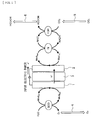
- FIG. 1 is a diagram schematically illustrating a carbon dioxide immobilization unit according to an embodiment of the invention.
- FIG. 2 is a diagram schematically illustrating an electrode configuration of an anode 1 (a first electrode) which is of a dipping type
- FIG. 3 is a diagram schematically illustrating an electrode configuration of a cathode 2 (a second electrode) which is of a semi-dipping type.
- the carbon dioxide immobilization unit according to the embodiment includes the anode 1 and the cathode 2 which are disposed to face each other with a proton conductor 3 in between.
- an oxidoreductase is present on a surface of the anode 1 or a surface of the cathode 2, or both, and an organic acid such as formic acid or a carbohydrate such as glucose is produced from carbon dioxide (CO 2 ) by reaction opposite to reaction in a biofuel cell in related art.
- a surface of an electrode includes an outer surface of the electrode and an inner surface of a gap in an inside of the electrode.
- the anode 1 In the anode 1, water (H 2 O) is oxidatively decomposed to produce oxygen (O 2 ) and to extract protons (H + ) and electrons (e - ). Therefore, the anode 1 adopts a dipping type electrode configuration in which the anode 1 is directly in contact with a liquid phase such as an electrolytic solution 13 including a buffer substance or is in contact with the liquid phase with a separator 14 made of nonwoven or the like in between as illustrated in FIG. 2 . It is to be noted that, in the electrode configuration illustrated in FIG. 2 , the electrolytic solution 13 serves as the proton conductor 3.
- An electrode configuring the anode 1 is not specifically limited; however, for example, an electrode including, on a surface of an electrode 11 made of a conductive porous material, an enzyme immobilization layer 12 where an oxidoreductase or the like is immobilized may be used.
- a conductive porous material used in this case, a known material may be used, and in particular, a carbon-based material such as porous carbon, carbon pellets, carbon felt, carbon paper, or a laminate of carbon fiber or carbon microparticles is suitable.
- examples of the oxidoreductase immobilized on the surface of the anode 1 include bilirubin oxidase (BOD), laccases, and ascorbate oxidase.
- an electron mediator may be immobilized, together with the above-described enzyme, on the surface of the anode 1 to decompose water by reaction of the enzyme and the electron mediator.
- the electron mediator a compound having a quinone skeleton is preferably used, and in particular, a compound having a naphthoquinone skeleton is suitable.
- 2-amino-1,4-naphthoquinone ANQ
- 2-amino-3-methyl-1,4-naphthoquinone AMNQ
- 2-methyl-1,4-naphthoquinone VK3
- 2-amino-3-carboxy-1,4-naphthoquinone ACNQ
- the compound having the quinone skeleton in addition to the compound having the naphthoquinone skeleton, for example, anthraquinone or a derivative thereof may be used. Moreover, if necessary, one kind or two or more kinds of other compounds functioning as electron mediators may be immobilized together with the compound having the quinone skeleton.
- the anode 1 is not limited to an electrode having a surface on which an oxidoreductase is immobilized, and, for example, an electrode to which a microorganism including an oxidoreductase and functioning as a reaction catalyst is attached may be used, as long as the oxidoreductase is present on a surface of the electrode.
- the cathode 2 adopts an air-exposure type electrode configuration in which an electrode is directly in contact with a vapor phase to allow carbon dioxide to be sufficiently supplied thereto, or a semi-dipping type electrode configuration, as illustrated in FIG. 3 , in which an electrode is in contact with the vapor phase with a gas-liquid separation film 25 in between.
- the cathode 2 is the semi-dipping type electrode
- the cathode 2 is also directly in contact with the liquid phase such as the electrolytic solution 13 including the buffer substance, or is also in contact with the separator 24 made of nonwoven in between, as illustrated in FIG. 3 .
- an electrode including an enzyme immobilization layer 22 on a surface of an electrode 21 made of a conductive porous material may be used.
- a conductive porous material forming the cathode 2 a known material may be also used, and in particular, a carbon-based material such as porous carbon, carbon pellets, carbon felt, carbon paper, or a laminate of carbon fiber or carbon microparticles is suitable.
- the enzyme immobilized on the surface of the cathode 2 is allowed to be appropriately selected depending on a product, and, for example, when formic acid is produced, formate dehydrogenase (FDH) may be used. Moreover, when glucose is produced, glucose dehydrogenase (GDH) may be used.
- FDH formate dehydrogenase
- GDH glucose dehydrogenase
- electron transfer enzymes such as hexokinase, glucose phosphate isomerase, phosphofructokinase, fructose bisphosphate aldolase, triosephosphate isomerase, glyceraldehydephosphate dehydrogenase, phosphoglyceromutase, phosphopyruvate hydratase, pyruvate kinase, L-lactate dehydrogenase, D-lactate dehydrogenase, pyruvate dehydrogenase, citrate synthase, aconitase, isocitrate dehydrogenase, 2-oxoglutarate dehydrogenase, succinyl-CoA synthetase, succinate dehydrogenase, fumarase, and malonate dehydrogenase may be usable.
- known enzymes such as hexokinase, glucose phosphate isomerase, phosphofructokina
- coenzyme oxidase or an electron mediator is preferably immobilized, together with the enzyme such as FDH, on the surface of the cathode 2.
- the enzyme such as FDH
- coenzyme used in this case include NADH and NADPH, and diaphorase reducing an oxidant thereof (such as NAD + or NADP + ).
- the electron mediator immobilized together with these enzymes include potassium hexacyanoferrate, potassium ferricyanide, and potassium octacyanotungstate.
- the cathode 2 is also not limited to an electrode having a surface on which an oxidoreductase is immobilized, and, for example, an electrode to which a microorganism including an oxidoreductase and functioning as a reaction catalyst is attached may be used, as long as the oxidoreductase is present on a surface of the electrode.
- a vapor-liquid coexistence layer 23 in which a vapor phase and a liquid phase coexist may be further formed on an outer side of the enzyme immobilization layer 22 where the enzyme or the like is immobilized.
- the proton conductor 3 may be a material not having electronic conductivity and capable of transporting protons (H + ), and an electrolytic solution including a buffer substance is typically used.
- an electrolytic solution including a buffer substance is typically used.
- a separator for example, cellophane, nonwoven, or the like
- a separator having proton conductivity such as an ion-exchange resin film having a fluorine-containing carbon sulfonic acid group may be used as the proton conductor 3.
- the carbon dioxide immobilization unit include a carbon dioxide supply section 5 supplying carbon dioxide or a gas containing carbon dioxide to the cathode 2. Moreover, it is more preferable that the carbon dioxide immobilization unit further include an oxygen removal section 4 removing oxygen produced in the anode 1, and a product recovery section 6 extracting the organic acid or the carbohydrate produced in the cathode 2.
- the configuration of the oxygen removal section 4 is not specifically limited; however, for example, the oxygen removal section 4 may have a configuration in which a solution around the anode 1 is allowed to flow, and deoxidized water is supplied to emit a solution including oxygen.
- the oxygen concentration in the solution around the anode 1 is allowed to be reduced; therefore, a decline in anode reaction is preventable.
- carbon dioxide or a gas containing carbon dioxide is supplied from the carbon dioxide supply section 5 to the cathode 2 or its surrounding.
- the gas supplied from the carbon dioxide supply section 5 may be a gas containing carbon dioxide in concentration equivalent to or higher than the concentration of carbon dioxide in air, and, for example, in the case where the concentration of carbon dioxide in air is 0.028 vol%, a gas containing carbon dioxide in concentration of 0.028 to 100 vol% both inclusive may be supplied to the cathode 2.
- the concentration of carbon dioxide around the cathode 2 is allowed to be maintained at a high level, and reaction efficiency is allowed to be enhanced.
- gas supplied from the carbon dioxide supply section 5 to the cathode 2 for example, exhaust from a thermal power station or a vehicle may be used, and dry ice, exhalation, and the like may be also used.
- a gas containing a high concentration of carbon dioxide is easily obtainable through using such a gas, and the organic acid or the carbohydrate is efficiently obtainable.
- the configuration of the product recovery section 6 is not specifically limited; however, for example, a method of recovering a product contained in a solution around the cathode 2 through allowing the solution to flow and converting the product into a salt to precipitate the salt, or a method of recovering the product through allowing an absorbent such as activated carbon to absorb the product is applicable.
- the concentration of the product in the solution around the cathode 2 is allowed to be reduced, thereby preventing a decline in cathode reaction. It is to be noted that, in the case where such a product recovery section 6 is included, it is preferable that the cathode 2 be a semi-dipping type electrode. Therefore, as the solution around the cathode 2 flows, the product is allowed to be immediately removed from the cathode 2 and recovered.
- water (H 2 O) is oxidized by the oxidoreductase in the enzyme immobilization layer 12 disposed on the surface to extract protons (H + ) and electrons (e - ).
- the oxygen removal section 4 allows oxygen (O 2 ) produced by this reaction to exit from the carbon dioxide immobilization unit.
- the protons (H + ) are transferred to the cathode 2 through the proton conductor 3, and the electrons (e - ) are transmitted to the cathode 2 through an external circuit.
- an organic acid or a carbohydrate is produced from the protons (H + ) and the electrons (e - ) produced in the anode 1, and carbon dioxide (CO 2 ) which is supplied from, for example, the carbon dioxide supply section 5 and is present in a vapor phase or a liquid phase in contact with the cathode 2.
- CO 2 carbon dioxide
- the organic acid or the carbohydrate is allowed to be easily produced through only inputting electric power to the carbon dioxide immobilization unit without using hydrogen.
- the carbon dioxide immobilization unit is allowed to immobilize carbon dioxide more efficiently, and a useful carbon compound is obtainable.
- the carbon dioxide immobilization unit is allowed to immobilize carbon dioxide as a useful compound while using energy (electric power), and has a small and simple configuration; therefore, the carbon dioxide immobilization unit is applicable to a wide range of fields.
- the carbon dioxide immobilization unit producing formic acid from carbon dioxide is described; however, the present invention is not limited thereto, and the carbon dioxide immobilization unit is allowed to produce a carbohydrate such as methanol or glucose in addition to the organic acid such as formic acid.
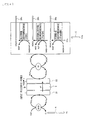
- FIG. 4 is a diagram schematically illustrating a principle of a carbon dioxide immobilization unit according to a modification example of the above-described embodiment. It is to be noted that, in FIG. 4 , like components are denoted by like numerals as of the carbon dioxide immobilization unit according to the first embodiment illustrated in FIG. 1 and will not be further described. As illustrated in FIG. 4 , the carbon dioxide immobilization unit according to the modification example also includes an anode 31 and a cathode 32 which are disposed to face each other with the proton conductor 3 in between.
- methanol CH 3 OH
- formic acid is produced from carbon dioxide by formate dehydrogenase (FateDH). Then, the formic acid is converted into formaldehyde by formaldehyde genase (FalDH), and then methanol is produced by alcohol dehydrogenase (ADH).
- the following reaction proceeds. More specifically, in the anode 31, water (H 2 O) is oxidized by the oxidoreductase existing on the enzyme immobilization layer 12 disposed on the surface to extract protons (H + ) and electrons (e - ).
- the oxygen removal section 4 allows oxygen (O 2 ) produced by this reaction to exit from the carbon dioxide immobilization unit.
- the protons (H + ) are transferred to the cathode 32 through the proton conductor 3, and the electrons (e - ) are transmitted to the cathode 2 through an external circuit.
- formic acid, formaldehyde, and methanol are produced from the protons (H + ) and the electrons (e - ) produced in the anode 31, and carbon dioxide (CO 2 ) which is supplied from, for example, the carbon dioxide supply section 5 and is present in a vapor phase or a liquid phase in contact with the cathode 32.
- product recovery sections 36a to 36c allow formic acid, formaldehyde, and methanol produced in such a manner, respectively, to exit from the carbon dioxide immobilization unit.
Landscapes
- Chemical & Material Sciences (AREA)
- Organic Chemistry (AREA)
- Engineering & Computer Science (AREA)
- Chemical Kinetics & Catalysis (AREA)
- Electrochemistry (AREA)
- Materials Engineering (AREA)
- Metallurgy (AREA)
- Inorganic Chemistry (AREA)
- Electrolytic Production Of Non-Metals, Compounds, Apparatuses Therefor (AREA)
- Apparatus Associated With Microorganisms And Enzymes (AREA)
- Carbon And Carbon Compounds (AREA)
- Electrodes For Compound Or Non-Metal Manufacture (AREA)
Abstract
Description
- The present invention relates to a carbon dioxide immobilization unit using an oxidoreductase. More specifically, the invention relates to a carbon dioxide immobilization unit producing an organic acid or a carbohydrate from carbon dioxide.
- Biofuel cells using an oxidoreductase as a reaction catalyst have been attracting an attention as next-generation fuel cells with high capacity and high safety, since the biofuel cells effectively extract electrons from glucose, ethanol, and the like which are not usable in fuel cells using a typical industrial catalyst.
-
FIG. 5 is a diagram schematically illustrating an electric power generation principle of a biofuel cell using an enzyme. For example, in the case of a biofuel cell using glucose as a fuel as illustrated inFIG. 5 , in ananode 101, glucose is decomposed by an enzyme immobilized on a surface thereof to extract electrons (e-) and to produce protons (H+). On the other hand, in acathode 102, water (H2O) is produced from the protons (H+) transported from theanode 101 through aproton conductor 103, the electrons (e-) transmitted through an external circuit, and oxygen (O2) in, for example, air. -
FIG. 6 is a diagram schematically illustrating an electric power generation principle of a methanol type biofuel cell. Moreover, as illustrated inFIG. 6 , a biofuel cell using methanol as a fuel to generate electric power has been proposed in related art (for example, refer to PTL 1). In this biofuel cell, alcohol dehydrogenase (ADH), formaldehyde genase (FalDH), and formate dehydrogenase (FateDH) are immobilized on the surface of theanode 101. - Then, in the
anode 101, methanol (CH3OH) is decomposed by these enzymes to extract electrons (e-) and to produce protons (H+), and then to produce carbon dioxide (CO2). On the other hand, in thecathode 102, water (H2O) is produced from the protons (H+) transported from theanode 101 through theproton conductor 103, the electrons (e-) transmitted through the external circuit, and oxygen (O2) in, for example, air. - On the other hand, in related art, there are proposed methods of storing and producing hydrogen with use of a unit including a formic acid decomposition section and a formic acid production section (refer to
PTLs 2 and 3). In this unit for formic acid production and decomposition, the formic acid production section produces formic acid through allowing hydrogen and carbon dioxide to react with each other by a catalyst for formic acid production, and then stores hydrogen in the form of formic acid. - Moreover, in the formic acid decomposition section, the formic acid produced in the formic acid production section is decomposed into hydrogen and carbon dioxide by a catalyst for formic acid decomposition. Hydrogen produced by this decomposition reaction is used for an arbitrary purpose such as a fuel cell. On the other hand, carbon dioxide as a by-product is transmitted to the formic acid production section to be used for formic acid production.
-
- [PTL 1] Japanese Unexamined Patent Application Publication No.
2004-71559 - [PTL 2] Japanese Unexamined Patent Application Publication No.
2009-78200 - [PTL 3] Japanese Unexamined Patent Application Publication No.
2010-83730 - However, in the techniques described in the
above PTLs - Therefore, it is a main object of the present invention to provide a carbon dioxide immobilization unit capable of easily immobilizing carbon dioxide in the form of an organic acid or a carbohydrate under a normal environment.
- A carbon dioxide immobilization unit according to the invention includes at least: a first electrode decomposing water to produce protons; a second electrode producing an organic acid or a carbohydrate from the protons produced in the first electrode and carbon dioxide; and a proton conductor transferring the protons produced in the first electrode to the second electrode, in which an oxidoreductase is present on a surface of the first electrode or a surface of the second electrode, or both.
Here and in the following description, a surface of an electrode includes an outer surface of the electrode and an inner surface of a gap in an inside of the electrode.
The carbon dioxide immobilization unit may further include a carbon dioxide supply section supplying carbon dioxide to the second electrode. In this case, the carbon dioxide supply section may supply a gas containing carbon dioxide in concentration of 0.028 to 100 vol% both inclusive.
Moreover, the carbon dioxide immobilization unit may include an oxygen removal section removing oxygen produced in the first electrode; and a product recovery section extracting the organic acid or the carbohydrate produced in the second electrode.
Further, the first electrode may be a dipping type electrode which is directly in contact with a liquid phase or is in contact with the liquid phase with a separator in between, and the second electrode may be a semi-dipping type electrode which is directly in contact with the liquid phase or is in contact with the liquid phase with a separator in between, as well as is in contact with a vapor phase with a gas-liquid separator film in between.
Furthermore, the first electrode or the second electrode, or both may be formed of, for example, a conductive porous material. - According to the present invention, as the oxidoreductase is used, carbon dioxide is allowed to be easily immobilized in the form of an organic acid or a carbohydrate through only inputting electric power to the carbon dioxide immobilization unit without using hydrogen.
-
- [
FIG. 1] FIG. 1 is a diagram schematically illustrating a principle of a carbon dioxide immobilization unit according to an embodiment of the invention. - [
FIG. 2] FIG. 2 is a diagram schematically illustrating an electrode configuration of ananode 1 illustrated inFIG. 1 which is of a dipping type. - [
FIG. 3] FIG. 3 is a diagram schematically illustrating an electrode configuration of acathode 2 illustrated inFIG. 1 which is of a semi-dipping type. - [
FIG. 4] FIG. 4 is a diagram schematically illustrating a principle of a carbon dioxide immobilization unit according to a modification example of the above-described embodiment of the invention. - [
FIG. 5] FIG. 5 is a diagram schematically illustrating an electric power generation principle of a biofuel cell using an enzyme. - [
FIG. 6] FIG. 6 is a diagram schematically illustrating an electric power generation principle of a methanol type biofuel cell. - An embodiment of the present invention will be described in detail below referring to the accompanying drawings.
It is to be noted that the present invention is not limited to the following embodiment. Moreover, description will be given in the following order. - (An example of a carbon dioxide immobilization unit producing formic acid from carbon dioxide)
- (An example of a carbon dioxide immobilization unit producing methanol from carbon dioxide)
-
FIG. 1 is a diagram schematically illustrating a carbon dioxide immobilization unit according to an embodiment of the invention. Moreover,FIG. 2 is a diagram schematically illustrating an electrode configuration of an anode 1 (a first electrode) which is of a dipping type, andFIG. 3 is a diagram schematically illustrating an electrode configuration of a cathode 2 (a second electrode) which is of a semi-dipping type. As illustrated inFIG. 1 , the carbon dioxide immobilization unit according to the embodiment includes theanode 1 and thecathode 2 which are disposed to face each other with aproton conductor 3 in between. - In the carbon dioxide immobilization unit, an oxidoreductase is present on a surface of the
anode 1 or a surface of thecathode 2, or both, and an organic acid such as formic acid or a carbohydrate such as glucose is produced from carbon dioxide (CO2) by reaction opposite to reaction in a biofuel cell in related art. Here and in the following description, a surface of an electrode includes an outer surface of the electrode and an inner surface of a gap in an inside of the electrode. - In the
anode 1, water (H2O) is oxidatively decomposed to produce oxygen (O2) and to extract protons (H+) and electrons (e-). Therefore, theanode 1 adopts a dipping type electrode configuration in which theanode 1 is directly in contact with a liquid phase such as anelectrolytic solution 13 including a buffer substance or is in contact with the liquid phase with aseparator 14 made of nonwoven or the like in between as illustrated inFIG. 2 . It is to be noted that, in the electrode configuration illustrated inFIG. 2 , theelectrolytic solution 13 serves as theproton conductor 3. - An electrode configuring the
anode 1 is not specifically limited; however, for example, an electrode including, on a surface of anelectrode 11 made of a conductive porous material, anenzyme immobilization layer 12 where an oxidoreductase or the like is immobilized may be used. As the conductive porous material used in this case, a known material may be used, and in particular, a carbon-based material such as porous carbon, carbon pellets, carbon felt, carbon paper, or a laminate of carbon fiber or carbon microparticles is suitable. - Moreover, examples of the oxidoreductase immobilized on the surface of the
anode 1 include bilirubin oxidase (BOD), laccases, and ascorbate oxidase. Moreover, an electron mediator may be immobilized, together with the above-described enzyme, on the surface of theanode 1 to decompose water by reaction of the enzyme and the electron mediator. In this case, as the electron mediator, a compound having a quinone skeleton is preferably used, and in particular, a compound having a naphthoquinone skeleton is suitable. More specifically, 2-amino-1,4-naphthoquinone (ANQ), 2-amino-3-methyl-1,4-naphthoquinone (AMNQ), 2-methyl-1,4-naphthoquinone (VK3), 2-amino-3-carboxy-1,4-naphthoquinone (ACNQ) or the like may be used. - It is to be noted that, as the compound having the quinone skeleton, in addition to the compound having the naphthoquinone skeleton, for example, anthraquinone or a derivative thereof may be used. Moreover, if necessary, one kind or two or more kinds of other compounds functioning as electron mediators may be immobilized together with the compound having the quinone skeleton. Further, the
anode 1 is not limited to an electrode having a surface on which an oxidoreductase is immobilized, and, for example, an electrode to which a microorganism including an oxidoreductase and functioning as a reaction catalyst is attached may be used, as long as the oxidoreductase is present on a surface of the electrode. - On the other hand, in the
cathode 2, an organic acid such as formic acid or a carbohydrate such as glucose is produced from carbon dioxide (CO2), and the protons (H+) and the electrons (e-) produced in theanode 1. Therefore, thecathode 2 adopts an air-exposure type electrode configuration in which an electrode is directly in contact with a vapor phase to allow carbon dioxide to be sufficiently supplied thereto, or a semi-dipping type electrode configuration, as illustrated inFIG. 3 , in which an electrode is in contact with the vapor phase with a gas-liquid separation film 25 in between. In the case where thecathode 2 is the semi-dipping type electrode, thecathode 2 is also directly in contact with the liquid phase such as theelectrolytic solution 13 including the buffer substance, or is also in contact with theseparator 24 made of nonwoven in between, as illustrated inFIG. 3 . - Moreover, as the
cathode 2, for example, an electrode including anenzyme immobilization layer 22 on a surface of anelectrode 21 made of a conductive porous material may be used. As the conductive porous material forming thecathode 2, a known material may be also used, and in particular, a carbon-based material such as porous carbon, carbon pellets, carbon felt, carbon paper, or a laminate of carbon fiber or carbon microparticles is suitable. - On the other hand, the enzyme immobilized on the surface of the
cathode 2 is allowed to be appropriately selected depending on a product, and, for example, when formic acid is produced, formate dehydrogenase (FDH) may be used. Moreover, when glucose is produced, glucose dehydrogenase (GDH) may be used. - In addition, electron transfer enzymes, ATP synthases, enzymes relating to saccharometabolism, for example, known enzymes such as hexokinase, glucose phosphate isomerase, phosphofructokinase, fructose bisphosphate aldolase, triosephosphate isomerase, glyceraldehydephosphate dehydrogenase, phosphoglyceromutase, phosphopyruvate hydratase, pyruvate kinase, L-lactate dehydrogenase, D-lactate dehydrogenase, pyruvate dehydrogenase, citrate synthase, aconitase, isocitrate dehydrogenase, 2-oxoglutarate dehydrogenase, succinyl-CoA synthetase, succinate dehydrogenase, fumarase, and malonate dehydrogenase may be usable.
- Moreover, coenzyme oxidase or an electron mediator is preferably immobilized, together with the enzyme such as FDH, on the surface of the
cathode 2. Examples of a coenzyme used in this case include NADH and NADPH, and diaphorase reducing an oxidant thereof (such as NAD+ or NADP+). Moreover, examples of the electron mediator immobilized together with these enzymes include potassium hexacyanoferrate, potassium ferricyanide, and potassium octacyanotungstate. - It is to be noted that the
cathode 2 is also not limited to an electrode having a surface on which an oxidoreductase is immobilized, and, for example, an electrode to which a microorganism including an oxidoreductase and functioning as a reaction catalyst is attached may be used, as long as the oxidoreductase is present on a surface of the electrode. Moreover, as illustrated inFIG. 3 , in theelectrode 21 configuring thecathode 2, a vapor-liquid coexistence layer 23 in which a vapor phase and a liquid phase coexist may be further formed on an outer side of theenzyme immobilization layer 22 where the enzyme or the like is immobilized. - The
proton conductor 3 may be a material not having electronic conductivity and capable of transporting protons (H+), and an electrolytic solution including a buffer substance is typically used. In this case, for example, when a separator (for example, cellophane, nonwoven, or the like) impregnated with an electrolytic solution is sandwiched between electrodes, a short circuit is preventable while protons are conducted. Moreover, as theproton conductor 3, a separator having proton conductivity such as an ion-exchange resin film having a fluorine-containing carbon sulfonic acid group may be used. - On the other hand, it is preferable that the carbon dioxide immobilization unit according to the embodiment include a carbon
dioxide supply section 5 supplying carbon dioxide or a gas containing carbon dioxide to thecathode 2. Moreover, it is more preferable that the carbon dioxide immobilization unit further include an oxygen removal section 4 removing oxygen produced in theanode 1, and aproduct recovery section 6 extracting the organic acid or the carbohydrate produced in thecathode 2. - To accelerate the above-described anode reaction, it is preferable to remove oxygen (O2) existing around the
anode 1. A method of doing so, that is, the configuration of the oxygen removal section 4 is not specifically limited; however, for example, the oxygen removal section 4 may have a configuration in which a solution around theanode 1 is allowed to flow, and deoxidized water is supplied to emit a solution including oxygen. Thus, the oxygen concentration in the solution around theanode 1 is allowed to be reduced; therefore, a decline in anode reaction is preventable. - To accelerate cathode reaction, it is preferable to supply a sufficient amount of carbon dioxide (CO2) to the
cathode 2. Therefore, in the carbon dioxide immobilization unit according to the embodiment, carbon dioxide or a gas containing carbon dioxide is supplied from the carbondioxide supply section 5 to thecathode 2 or its surrounding. The gas supplied from the carbondioxide supply section 5 may be a gas containing carbon dioxide in concentration equivalent to or higher than the concentration of carbon dioxide in air, and, for example, in the case where the concentration of carbon dioxide in air is 0.028 vol%, a gas containing carbon dioxide in concentration of 0.028 to 100 vol% both inclusive may be supplied to thecathode 2. Thus, the concentration of carbon dioxide around thecathode 2 is allowed to be maintained at a high level, and reaction efficiency is allowed to be enhanced. - As the gas supplied from the carbon
dioxide supply section 5 to thecathode 2, for example, exhaust from a thermal power station or a vehicle may be used, and dry ice, exhalation, and the like may be also used. A gas containing a high concentration of carbon dioxide is easily obtainable through using such a gas, and the organic acid or the carbohydrate is efficiently obtainable. - To accelerate the above-described cathode reaction, it is preferable to remove a product (the organic acid or the carbohydrate) existing around the
cathode 2. A method of doing so, that is, the configuration of theproduct recovery section 6 is not specifically limited; however, for example, a method of recovering a product contained in a solution around thecathode 2 through allowing the solution to flow and converting the product into a salt to precipitate the salt, or a method of recovering the product through allowing an absorbent such as activated carbon to absorb the product is applicable. - Thus, the concentration of the product in the solution around the
cathode 2 is allowed to be reduced, thereby preventing a decline in cathode reaction. It is to be noted that, in the case where such aproduct recovery section 6 is included, it is preferable that thecathode 2 be a semi-dipping type electrode. Therefore, as the solution around thecathode 2 flows, the product is allowed to be immediately removed from thecathode 2 and recovered. - Next, the operation of the carbon dioxide immobilization unit according to the embodiment will be described below. As illustrated in
FIG. 1 , when input electric power is externally supplied to the carbon dioxide immobilization unit according to the embodiment, the following reaction proceeds. - More specifically, in the
anode 1, water (H2O) is oxidized by the oxidoreductase in theenzyme immobilization layer 12 disposed on the surface to extract protons (H+) and electrons (e-). For example, the oxygen removal section 4 allows oxygen (O2) produced by this reaction to exit from the carbon dioxide immobilization unit. On the other hand, the protons (H+) are transferred to thecathode 2 through theproton conductor 3, and the electrons (e-) are transmitted to thecathode 2 through an external circuit. - Moreover, in the
cathode 2, an organic acid or a carbohydrate is produced from the protons (H+) and the electrons (e-) produced in theanode 1, and carbon dioxide (CO2) which is supplied from, for example, the carbondioxide supply section 5 and is present in a vapor phase or a liquid phase in contact with thecathode 2. It is to be noted that, for example, theproduct recovery section 6 allows the organic acid or the carbohydrate produced by this reaction to exit from the carbon dioxide immobilization unit. - Thus, in the carbon dioxide immobilization unit according to the embodiment, as the oxidoreductase is used, the organic acid or the carbohydrate is allowed to be easily produced through only inputting electric power to the carbon dioxide immobilization unit without using hydrogen. Moreover, in a field where carbon dioxide is emitted, the carbon dioxide immobilization unit is allowed to immobilize carbon dioxide more efficiently, and a useful carbon compound is obtainable.
- For example, to immobilize carbon dioxide, a method of trapping carbon dioxide deep in the ground, or the like is considered in related art; however, an enormous amount of energy is necessary in the method or the like, and downsizing is difficult. On the other hand, the carbon dioxide immobilization unit according to the embodiment is allowed to immobilize carbon dioxide as a useful compound while using energy (electric power), and has a small and simple configuration; therefore, the carbon dioxide immobilization unit is applicable to a wide range of fields.
- In the above-described embodiment, the carbon dioxide immobilization unit producing formic acid from carbon dioxide is described; however, the present invention is not limited thereto, and the carbon dioxide immobilization unit is allowed to produce a carbohydrate such as methanol or glucose in addition to the organic acid such as formic acid.
-
FIG. 4 is a diagram schematically illustrating a principle of a carbon dioxide immobilization unit according to a modification example of the above-described embodiment. It is to be noted that, inFIG. 4 , like components are denoted by like numerals as of the carbon dioxide immobilization unit according to the first embodiment illustrated inFIG. 1 and will not be further described. As illustrated inFIG. 4 , the carbon dioxide immobilization unit according to the modification example also includes ananode 31 and acathode 32 which are disposed to face each other with theproton conductor 3 in between. - In the carbon dioxide immobilization unit according to the modification example, three kinds of NAD+-dependent dehydrogenases as dehydrogenase groups are immobilized in the
cathode 32, and methanol (CH3OH) is produced from CO2 through a plurality of steps. More specifically, formic acid is produced from carbon dioxide by formate dehydrogenase (FateDH). Then, the formic acid is converted into formaldehyde by formaldehyde genase (FalDH), and then methanol is produced by alcohol dehydrogenase (ADH). - When input electric power is supplied to the carbon dioxide immobilization unit according to the modification example, the following reaction proceeds. More specifically, in the
anode 31, water (H2O) is oxidized by the oxidoreductase existing on theenzyme immobilization layer 12 disposed on the surface to extract protons (H+) and electrons (e-). For example, the oxygen removal section 4 allows oxygen (O2) produced by this reaction to exit from the carbon dioxide immobilization unit. On the other hand, the protons (H+) are transferred to thecathode 32 through theproton conductor 3, and the electrons (e-) are transmitted to thecathode 2 through an external circuit. - Moreover, in the
cathode 32, formic acid, formaldehyde, and methanol are produced from the protons (H+) and the electrons (e-) produced in theanode 31, and carbon dioxide (CO2) which is supplied from, for example, the carbondioxide supply section 5 and is present in a vapor phase or a liquid phase in contact with thecathode 32. Then, if necessary,product recovery sections 36a to 36c allow formic acid, formaldehyde, and methanol produced in such a manner, respectively, to exit from the carbon dioxide immobilization unit. - In the carbon dioxide immobilization unit according to the modification example, as carbon dioxide is allowed to be reduced by multiple-step reaction, production of methanol which is commercially more beneficial than formic acid and has not been proposed in carbon dioxide immobilization units in related art is achievable. Moreover, in the carbon dioxide immobilization unit according to the modification example, three kinds of intermediate products including formic acid are allowed to be recovered, if necessary. It is to be noted that configurations and effects of the carbon dioxide immobilization unit according to the modification example other than those described above are similar to those in the above-described embodiment.
Claims (6)
- A carbon dioxide immobilization unit comprising at least:a first electrode decomposing water to produce protons;a second electrode producing an organic acid or a carbohydrate from the protons produced in the first electrode and carbon dioxide; anda proton conductor transferring the protons produced in the first electrode to the second electrode,wherein an oxidoreductase is present on a surface of the first electrode or a surface of the second electrode, or both.
- The carbon dioxide immobilization unit according to claim 1, further comprising a carbon dioxide supply section supplying carbon dioxide to the second electrode.
- The carbon dioxide immobilization unit according to claim 2, wherein
the carbon dioxide supply section supplies a gas containing carbon dioxide in concentration of 0.028 to 100 vol% both inclusive. - The carbon dioxide immobilization unit according to claim 3, comprising:an oxygen removal section removing oxygen produced in the first electrode; anda product recovery section extracting the organic acid or the carbohydrate produced in the second electrode.
- The carbon dioxide immobilization unit according to claim 1, wherein
the first electrode is a dipping type electrode which is directly in contact with a liquid phase or is in contact with the liquid phase with a separator in between, and
the second electrode is a semi-dipping type electrode which is directly in contact with the liquid phase or is in contact with the liquid phase with a separator in between, as well as is in contact with a vapor phase with a gas-liquid separator film in between. - The carbon dioxide immobilization unit according to claim 1, wherein
the first electrode or the second electrode, or both are formed of a conductive porous material.
Applications Claiming Priority (2)
| Application Number | Priority Date | Filing Date | Title |
|---|---|---|---|
| JP2010162130A JP2012021216A (en) | 2010-07-16 | 2010-07-16 | Device for immobilizing carbon dioxide |
| PCT/JP2011/065681 WO2012008376A1 (en) | 2010-07-16 | 2011-07-08 | Device for immobilizing carbon dioxide |
Publications (2)
| Publication Number | Publication Date |
|---|---|
| EP2594664A1 true EP2594664A1 (en) | 2013-05-22 |
| EP2594664A4 EP2594664A4 (en) | 2014-02-26 |
Family
ID=45469377
Family Applications (1)
| Application Number | Title | Priority Date | Filing Date |
|---|---|---|---|
| EP11806706.5A Withdrawn EP2594664A4 (en) | 2010-07-16 | 2011-07-08 | DEVICE FOR IMMOBILIZING CARBON DIOXIDE |
Country Status (5)
| Country | Link |
|---|---|
| US (1) | US20130126336A1 (en) |
| EP (1) | EP2594664A4 (en) |
| JP (1) | JP2012021216A (en) |
| CN (1) | CN102985598A (en) |
| WO (1) | WO2012008376A1 (en) |
Families Citing this family (9)
| Publication number | Priority date | Publication date | Assignee | Title |
|---|---|---|---|---|
| US11459663B2 (en) * | 2014-11-02 | 2022-10-04 | Biocheminsights, Inc. | Electrochemical bioreactor module and use thereof |
| DE102014016894A1 (en) * | 2014-11-17 | 2016-05-19 | Gensoric Gmbh | Process and apparatus for converting gaseous carbon compounds |
| EP3075884A1 (en) * | 2015-03-31 | 2016-10-05 | Wageningen Universiteit | System and method for bio-electrochemical water oxidation |
| JP6672193B2 (en) | 2017-02-02 | 2020-03-25 | 株式会社東芝 | Carbon dioxide electrolysis cell and electrolyzer |
| US20180265899A1 (en) * | 2017-03-16 | 2018-09-20 | Kabushiki Kaisha Toshiba | Carbon dioxide fixation device and fuel production system |
| JP7355559B2 (en) | 2019-08-28 | 2023-10-03 | 住友理工株式会社 | Radical curable sealing material for fuel cells |
| CN113265670B (en) * | 2021-04-20 | 2022-11-18 | 复旦大学 | Electrolytic cell and electrochemical system containing a support membrane |
| WO2023137278A1 (en) * | 2022-01-11 | 2023-07-20 | University Of Maryland, Baltimore | Applications of o2-insensitive formate dehydrogenase |
| JP7207672B1 (en) | 2022-01-18 | 2023-01-18 | 飯田グループホールディングス株式会社 | formic acid generator |
Family Cites Families (10)
| Publication number | Priority date | Publication date | Assignee | Title |
|---|---|---|---|---|
| JPH06158374A (en) * | 1992-11-20 | 1994-06-07 | Choichi Furuya | Method for producing formic acid |
| JP2700052B2 (en) * | 1995-03-08 | 1998-01-19 | 工業技術院長 | Hydride production method |
| JP5207576B2 (en) | 2002-07-26 | 2013-06-12 | ソニー株式会社 | Fuel cells, portable power supplies and electronic equipment |
| AU2003303104A1 (en) * | 2002-08-21 | 2004-10-18 | Battelle Memorial Institute | Photolytic oxygenator with carbon dioxide and/or hydrogen separation and fixation |
| JP4097485B2 (en) * | 2002-08-28 | 2008-06-11 | 独立行政法人科学技術振興機構 | Method for capturing a reaction intermediate between an oxidoreductase and a substrate |
| EP1982381A2 (en) * | 2006-02-07 | 2008-10-22 | Battelle Memorial Institute | Breathing air maintenance and recycle |
| EP2158627A2 (en) * | 2007-05-04 | 2010-03-03 | Akermin, Inc. | Immobilized enzymes and uses thereof |
| JP4875576B2 (en) | 2007-09-25 | 2012-02-15 | 独立行政法人科学技術振興機構 | Catalyst for formic acid decomposition, formic acid decomposition method, hydrogen production method, formic acid production and decomposition apparatus, hydrogen storage and generation method |
| JP2009245920A (en) * | 2008-03-11 | 2009-10-22 | Sony Corp | Fuel cell, electronic apparatus, and buffering liquid for fuel cell |
| JP2010083730A (en) | 2008-10-01 | 2010-04-15 | Osaka Univ | Method for producing at least either deuterium (d2) or hydrogen deuteride (hd) and catalyst for formic acid decomposition used therefor |
-
2010
- 2010-07-16 JP JP2010162130A patent/JP2012021216A/en active Pending
-
2011
- 2011-07-08 CN CN2011800341068A patent/CN102985598A/en active Pending
- 2011-07-08 EP EP11806706.5A patent/EP2594664A4/en not_active Withdrawn
- 2011-07-08 US US13/805,865 patent/US20130126336A1/en not_active Abandoned
- 2011-07-08 WO PCT/JP2011/065681 patent/WO2012008376A1/en not_active Ceased
Also Published As
| Publication number | Publication date |
|---|---|
| WO2012008376A1 (en) | 2012-01-19 |
| JP2012021216A (en) | 2012-02-02 |
| CN102985598A (en) | 2013-03-20 |
| US20130126336A1 (en) | 2013-05-23 |
| EP2594664A4 (en) | 2014-02-26 |
Similar Documents
| Publication | Publication Date | Title |
|---|---|---|
| EP2594664A1 (en) | Device for immobilizing carbon dioxide | |
| JP5207576B2 (en) | Fuel cells, portable power supplies and electronic equipment | |
| JP5044900B2 (en) | Fuel cells, electronic devices, mobile objects, power generation systems, and cogeneration systems | |
| JP5601346B2 (en) | Fuel cell | |
| JP5233176B2 (en) | Fuel cells and electronics | |
| JP5298479B2 (en) | Fuel cells and electronics | |
| ES2190229T3 (en) | ELECTROCHEMICAL METHODS OF GENERATION OF A PROTONIC MOTOR FORCE OF BILOGICAL NATURE AND REGENERATION OF A PYRIDINE NUCLEOTIDE COFACTOR. | |
| EA200971014A1 (en) | IMPROVEMENT IN THE FIELD OF FUEL CELLS | |
| JP5526841B2 (en) | Fuel cell | |
| Choi et al. | Communication—CO2 reduction to formate: an electro-enzymatic approach using a formate dehydrogenase from Rhodobacter capsulatus | |
| US20130065139A1 (en) | Fuel cell | |
| JP2005310613A (en) | Electronic apparatus | |
| JP5786534B2 (en) | Enzyme-modified electrode, electrochemical reaction device using the same, and method for producing chemical substance using the same | |
| JP2007012281A (en) | Fuel cell, electronic device, mobile object, power generation system, and enzyme reaction utilization device | |
| JP2007103307A (en) | Fuel cell manufacturing method, fuel cell, fuel cell negative electrode manufacturing method, fuel cell negative electrode, electronic device, mobile body, power generation system, cogeneration system, enzyme reaction utilization device production method, enzyme reaction utilization device, enzyme reaction Method for producing electrode for utilization device, electrode for enzyme reaction utilization device, and immobilization method | |
| US7410709B2 (en) | Bio-battery | |
| JP2006049215A (en) | Fuel cell | |
| JP5011691B2 (en) | Fuel cells, electronic devices, mobile objects, power generation systems, and cogeneration systems | |
| WO2011126062A1 (en) | Fuel cell | |
| CN1993855A (en) | Fuel cells, electronic devices, movable bodies, power generation systems, and combined heat and power systems | |
| Kano et al. | Applications to biofuel cells and bioreactors | |
| JP2011108528A (en) | Fuel cell | |
| FI126388B (en) | Hydrogen production process and system | |
| Ahmad et al. | Recent Advances in Biofuel Cell and Emerging Hybrid System | |
| CN101494296A (en) | Biofuel cell, method for producing the same, electronic apparatus, enzyme-immobilized electrode, and method for producing the same |
Legal Events
| Date | Code | Title | Description |
|---|---|---|---|
| PUAI | Public reference made under article 153(3) epc to a published international application that has entered the european phase |
Free format text: ORIGINAL CODE: 0009012 |
|
| 17P | Request for examination filed |
Effective date: 20121217 |
|
| AK | Designated contracting states |
Kind code of ref document: A1 Designated state(s): AL AT BE BG CH CY CZ DE DK EE ES FI FR GB GR HR HU IE IS IT LI LT LU LV MC MK MT NL NO PL PT RO RS SE SI SK SM TR |
|
| DAX | Request for extension of the european patent (deleted) | ||
| A4 | Supplementary search report drawn up and despatched |
Effective date: 20140129 |
|
| RIC1 | Information provided on ipc code assigned before grant |
Ipc: C25B 11/03 20060101ALI20140123BHEP Ipc: H01M 8/16 20060101ALI20140123BHEP Ipc: C01B 31/20 20060101ALI20140123BHEP Ipc: C25B 3/04 20060101AFI20140123BHEP Ipc: C25B 11/06 20060101ALI20140123BHEP |
|
| STAA | Information on the status of an ep patent application or granted ep patent |
Free format text: STATUS: THE APPLICATION HAS BEEN WITHDRAWN |
|
| 18W | Application withdrawn |
Effective date: 20140820 |