EP2594567A1 - Heterocyclic alkynyl benzene compounds and medical compositions and uses thereof - Google Patents
Heterocyclic alkynyl benzene compounds and medical compositions and uses thereof Download PDFInfo
- Publication number
- EP2594567A1 EP2594567A1 EP11800049.6A EP11800049A EP2594567A1 EP 2594567 A1 EP2594567 A1 EP 2594567A1 EP 11800049 A EP11800049 A EP 11800049A EP 2594567 A1 EP2594567 A1 EP 2594567A1
- Authority
- EP
- European Patent Office
- Prior art keywords
- methyl
- phenyl
- ethynyl
- benzamide
- imidazol
- Prior art date
- Legal status (The legal status is an assumption and is not a legal conclusion. Google has not performed a legal analysis and makes no representation as to the accuracy of the status listed.)
- Granted
Links
- ILLUUYCRRPSCTH-UHFFFAOYSA-N Brc1cnc(NC2CC2)nc1 Chemical compound Brc1cnc(NC2CC2)nc1 ILLUUYCRRPSCTH-UHFFFAOYSA-N 0.000 description 2
- 0 CCc1*(*C)cc(C)cn1 Chemical compound CCc1*(*C)cc(C)cn1 0.000 description 2
- LDDHMKANNXWUAK-UHFFFAOYSA-N Cc(ccc(C(O)=O)c1)c1I Chemical compound Cc(ccc(C(O)=O)c1)c1I LDDHMKANNXWUAK-UHFFFAOYSA-N 0.000 description 2
- WWTGXYAJVXKEKL-UHFFFAOYSA-N Cc(nc1)c[n]1-c1cc(C(F)(F)F)cc(N)c1 Chemical compound Cc(nc1)c[n]1-c1cc(C(F)(F)F)cc(N)c1 WWTGXYAJVXKEKL-UHFFFAOYSA-N 0.000 description 2
- WDDHGZLDAZNYLH-UHFFFAOYSA-N Cc(nc1)c[n]1-c1cc(C(F)(F)F)cc(NC(c2cc(I)c(C)cc2)=O)c1 Chemical compound Cc(nc1)c[n]1-c1cc(C(F)(F)F)cc(NC(c2cc(I)c(C)cc2)=O)c1 WDDHGZLDAZNYLH-UHFFFAOYSA-N 0.000 description 2
- XLSZMDLNRCVEIJ-UHFFFAOYSA-N Cc1c[nH]cn1 Chemical compound Cc1c[nH]cn1 XLSZMDLNRCVEIJ-UHFFFAOYSA-N 0.000 description 2
- HJTLKVYOWNTDPF-UHFFFAOYSA-N Nc1cc(Br)cc(C(F)(F)F)c1 Chemical compound Nc1cc(Br)cc(C(F)(F)F)c1 HJTLKVYOWNTDPF-UHFFFAOYSA-N 0.000 description 2
- IZPYRHJDUKTQPR-UHFFFAOYSA-N Cc(nc1)c[n]1-c1cc(C(F)(F)F)cc(NC(c2cc(C#Cc3cnc(NC4CC4)nc3)c(C)cc2)=O)c1 Chemical compound Cc(nc1)c[n]1-c1cc(C(F)(F)F)cc(NC(c2cc(C#Cc3cnc(NC4CC4)nc3)c(C)cc2)=O)c1 IZPYRHJDUKTQPR-UHFFFAOYSA-N 0.000 description 1
- ISIUEODOGLNHNI-UHFFFAOYSA-N Cc(nc1)c[n]1-c1cc(C(F)(F)F)cc(NC(c2ccc(C)c(C#Cc3ccc(N)nc3)c2)=O)c1 Chemical compound Cc(nc1)c[n]1-c1cc(C(F)(F)F)cc(NC(c2ccc(C)c(C#Cc3ccc(N)nc3)c2)=O)c1 ISIUEODOGLNHNI-UHFFFAOYSA-N 0.000 description 1
- LMWVAUFNYHNITO-UHFFFAOYSA-N Cc(nc1)c[n]1-c1cc(F)cc(NC(c2ccc(C)c(C#Cc3cc(cn[nH]4)c4nc3)c2)=O)c1 Chemical compound Cc(nc1)c[n]1-c1cc(F)cc(NC(c2ccc(C)c(C#Cc3cc(cn[nH]4)c4nc3)c2)=O)c1 LMWVAUFNYHNITO-UHFFFAOYSA-N 0.000 description 1
- PJGIZSKNZNTQMF-UHFFFAOYSA-N Cc(nc1)c[n]1-c1cc(NC(c2ccc(C)c(C#Cc3cnc(N)nc3)c2)=O)cc(C(F)(F)F)c1 Chemical compound Cc(nc1)c[n]1-c1cc(NC(c2ccc(C)c(C#Cc3cnc(N)nc3)c2)=O)cc(C(F)(F)F)c1 PJGIZSKNZNTQMF-UHFFFAOYSA-N 0.000 description 1
- VDUWMMPCBBWFNP-UHFFFAOYSA-N Cc(nc1)c[n]1C(C1)=CC(NC(c2cc(C#C)c(C)cc2)=O)=CC1C(F)(F)F Chemical compound Cc(nc1)c[n]1C(C1)=CC(NC(c2cc(C#C)c(C)cc2)=O)=CC1C(F)(F)F VDUWMMPCBBWFNP-UHFFFAOYSA-N 0.000 description 1
Images


Classifications
-
- C—CHEMISTRY; METALLURGY
- C07—ORGANIC CHEMISTRY
- C07D—HETEROCYCLIC COMPOUNDS
- C07D401/00—Heterocyclic compounds containing two or more hetero rings, having nitrogen atoms as the only ring hetero atoms, at least one ring being a six-membered ring with only one nitrogen atom
- C07D401/02—Heterocyclic compounds containing two or more hetero rings, having nitrogen atoms as the only ring hetero atoms, at least one ring being a six-membered ring with only one nitrogen atom containing two hetero rings
- C07D401/12—Heterocyclic compounds containing two or more hetero rings, having nitrogen atoms as the only ring hetero atoms, at least one ring being a six-membered ring with only one nitrogen atom containing two hetero rings linked by a chain containing hetero atoms as chain links
-
- A—HUMAN NECESSITIES
- A61—MEDICAL OR VETERINARY SCIENCE; HYGIENE
- A61K—PREPARATIONS FOR MEDICAL, DENTAL OR TOILETRY PURPOSES
- A61K31/00—Medicinal preparations containing organic active ingredients
- A61K31/33—Heterocyclic compounds
- A61K31/395—Heterocyclic compounds having nitrogen as a ring hetero atom, e.g. guanethidine or rifamycins
- A61K31/495—Heterocyclic compounds having nitrogen as a ring hetero atom, e.g. guanethidine or rifamycins having six-membered rings with two or more nitrogen atoms as the only ring heteroatoms, e.g. piperazine or tetrazines
- A61K31/505—Pyrimidines; Hydrogenated pyrimidines, e.g. trimethoprim
- A61K31/506—Pyrimidines; Hydrogenated pyrimidines, e.g. trimethoprim not condensed and containing further heterocyclic rings
-
- A—HUMAN NECESSITIES
- A61—MEDICAL OR VETERINARY SCIENCE; HYGIENE
- A61P—SPECIFIC THERAPEUTIC ACTIVITY OF CHEMICAL COMPOUNDS OR MEDICINAL PREPARATIONS
- A61P35/00—Antineoplastic agents
-
- A—HUMAN NECESSITIES
- A61—MEDICAL OR VETERINARY SCIENCE; HYGIENE
- A61P—SPECIFIC THERAPEUTIC ACTIVITY OF CHEMICAL COMPOUNDS OR MEDICINAL PREPARATIONS
- A61P35/00—Antineoplastic agents
- A61P35/02—Antineoplastic agents specific for leukemia
-
- A—HUMAN NECESSITIES
- A61—MEDICAL OR VETERINARY SCIENCE; HYGIENE
- A61P—SPECIFIC THERAPEUTIC ACTIVITY OF CHEMICAL COMPOUNDS OR MEDICINAL PREPARATIONS
- A61P43/00—Drugs for specific purposes, not provided for in groups A61P1/00-A61P41/00
-
- C—CHEMISTRY; METALLURGY
- C07—ORGANIC CHEMISTRY
- C07D—HETEROCYCLIC COMPOUNDS
- C07D239/00—Heterocyclic compounds containing 1,3-diazine or hydrogenated 1,3-diazine rings
- C07D239/02—Heterocyclic compounds containing 1,3-diazine or hydrogenated 1,3-diazine rings not condensed with other rings
- C07D239/24—Heterocyclic compounds containing 1,3-diazine or hydrogenated 1,3-diazine rings not condensed with other rings having three or more double bonds between ring members or between ring members and non-ring members
- C07D239/28—Heterocyclic compounds containing 1,3-diazine or hydrogenated 1,3-diazine rings not condensed with other rings having three or more double bonds between ring members or between ring members and non-ring members with hetero atoms or with carbon atoms having three bonds to hetero atoms with at the most one bond to halogen, directly attached to ring carbon atoms
- C07D239/32—One oxygen, sulfur or nitrogen atom
- C07D239/42—One nitrogen atom
-
- C—CHEMISTRY; METALLURGY
- C07—ORGANIC CHEMISTRY
- C07D—HETEROCYCLIC COMPOUNDS
- C07D403/00—Heterocyclic compounds containing two or more hetero rings, having nitrogen atoms as the only ring hetero atoms, not provided for by group C07D401/00
- C07D403/02—Heterocyclic compounds containing two or more hetero rings, having nitrogen atoms as the only ring hetero atoms, not provided for by group C07D401/00 containing two hetero rings
- C07D403/12—Heterocyclic compounds containing two or more hetero rings, having nitrogen atoms as the only ring hetero atoms, not provided for by group C07D401/00 containing two hetero rings linked by a chain containing hetero atoms as chain links
-
- C—CHEMISTRY; METALLURGY
- C07—ORGANIC CHEMISTRY
- C07D—HETEROCYCLIC COMPOUNDS
- C07D471/00—Heterocyclic compounds containing nitrogen atoms as the only ring hetero atoms in the condensed system, at least one ring being a six-membered ring with one nitrogen atom, not provided for by groups C07D451/00 - C07D463/00
- C07D471/02—Heterocyclic compounds containing nitrogen atoms as the only ring hetero atoms in the condensed system, at least one ring being a six-membered ring with one nitrogen atom, not provided for by groups C07D451/00 - C07D463/00 in which the condensed system contains two hetero rings
- C07D471/04—Ortho-condensed systems
-
- C—CHEMISTRY; METALLURGY
- C07—ORGANIC CHEMISTRY
- C07D—HETEROCYCLIC COMPOUNDS
- C07D487/00—Heterocyclic compounds containing nitrogen atoms as the only ring hetero atoms in the condensed system, not provided for by groups C07D451/00 - C07D477/00
- C07D487/02—Heterocyclic compounds containing nitrogen atoms as the only ring hetero atoms in the condensed system, not provided for by groups C07D451/00 - C07D477/00 in which the condensed system contains two hetero rings
- C07D487/04—Ortho-condensed systems
Definitions
- the present invention relates to heterocyclic alkynyl benzene compounds of formula (I), their pharmaceutically acceptable salts and stereoisomers and prodrugs of formula (I), and their applications as the active ingredients for preparing drugs for preventing or treating tumors, particularly, to overcome the clinically induced resistance against Gleevec.
- Cancer is the 2 nd leading cause after cardiovascular diseases responsible for human death. Because of the environment pollution and other factors, the incidence of malignant tumor is increasing rapidly. Based on WHO's published data of 2003, there are over 100 million patients with malignant tumor in the world. About 6.2 millions patients with malignant tumor die for cancer which accounts for 12% ⁇ 25% of the total death. It is estimated that the global new cases will reach 15 million per year in 2020. Recently, some novel anticancer drugs of protein tyrosine inhibitors have been developed and achieved great clinical benefits, however, it is still far away from meeting the growing clinical needs of cancer patients. Anticancer drug is still one of the most active areas in the worldwide drug development.
- Molecular targeted cancer therapy is a strategy selectively killing tumor cells through chemical or biological approaches by interfering the key regulators of tumor cell growth. Comparing with the traditional cytotoxic drugs, molecular targeted therapy can selectively modulate key molecules which are closely related to tumor growth and treat patients with high specificity and selectivity, low toxicity and less side effects. It can also enhance the potency by combination with traditional chemotherapy and radiotherapy, and reduce the recurrence after surgery.
- Gleevec STI571
- the molecular targeted therapy has rapidly developed within these years. The emergence of molecular targeted therapy for cancer has impacted the traditional drug administration concepts and models.
- targeted drugs because of its low toxicity and less side effects, targeted drugs usually do not reach dose-limited toxicity and maximum tolerated dose in the clinic trial phase I; satisfactory efficacy can be achieved without need for applying maximum tolerated dose for molecular targeted therapy drugs.
- Targeted cancer therapy is one of the hot issues and developmental tendency of cancer therapy.
- Protein tyrosine kinases can phosphorylate the phenolic hydroxyl groups of tyrosine residues of many important proteins and further activate functions of functional proteins.
- PTKs protein tyrosine kinases
- These proteins play very important roles in the signal transduction pathways inside of cells and modulate a wide range of biological processes of cells including growth, differentiation, death, etc. Disfunction of protein tyrosine kinase will cause a series of diseases. The studies show that half of protooncogenes and activation of oncogenes are related to protein tyrosine kinases.
- Abnormal expression of protein tyrosine kinase can cause disorder of cell proliferation regulation, and further cause tumors.
- abnormal expression of protein tyrosine kinase also closely relates to the tumor invasion and metastasis, the formation of new blood vessels, and resistance against chemotherapy drug.
- Novel protein tyrosine kinase inhibitor development has been one of the hotest issues in the world, and is also a focal point of all R&D institutions in all countries.
- Gleevec for treating Philadelphia chromosome positive chronic myeloid leukemia and gastrointestinal stromal tumor; EGFR inhibitor Iressa and Tarceva for treating non-small-cell carcinoma etc.
- Gleevec is the first tumor drug with significant effect which was designed after knowing the pathogenesis of cancer. This drug is a milestone in molecular targeted cancer therapy. The greatness of Gleevec has been incorporated as one of the top ten science and technology news by SCIENCE magazine of USA in 2001.
- protein tyrosine kinases encoded by mutant genes has direct relationship with the occurrence of tumor, such as BCR-ABL with chronic myeloid leukemia, c-Kit with GIST, SCCL and systemic mastocytosis, PDGFR with chronic myelomonocytic leukemia, dermatofibrosarcoma protuberan and hypereosinophilic dyndrome, Flt3 with parts of acute granulocytic leukemia, B-Raf with melanoma, RET with thyroid carcinoma.
- c-KIT is also closely related to small cell lung cancer.
- the first targeted therapy drug STI571 (Gleevec, Imatinib mesylate, Chinese name"Geliewei", Novartis Pharmaceuticals), a protein tyrosine kinase inhibitor, was approved by USA FDA in 2001 for treating chronic granulocytic leukemia (CML).
- This drug mainly targets Bcr-Ab1, cKit, PDGFR etc.
- single drug treatment with STI571 can make 98% of CML patients get relieved in clinical hematology, and 53% of these get relieved in cytogenetics.
- STI571 With the widely application of STI571 in clinic, drug resistance has become a serious problem: part of cancer patients show primary resistance to STI571; some patients show effect at beginning of administration, but gradually show secondary resistance in the process of drug therapy. Resistance means after STI571 treatment, chronic-phase patients do not have complete hematologic response or patients at blast-phase and accelerated phase cannot recover back to chronic phase. In clinic, CML patients in blast-phase and ALL patients with positive BCR-ABL more generally develop resistance. About 70% of the two kinds of patients will develop STI571 resistance after 3 ⁇ 6 month drug administration. And once the resistance happens, the situation gets worse.
- Resistance is considered one defense by tumor cells to avoid being killed, and has many mechanisms which include: 1target gene (BCR-ABL, c-KIT, PDGFR) amplification; 2target gene mutation; 3 formation of the tumor clone independent of the target genes; 4Production of ⁇ -1 acidic glycoprotein and over-expression of multiple drug resistance gene MDR1.
- 1target gene BCR-ABL, c-KIT, PDGFR
- 2target gene mutation 3 formation of the tumor clone independent of the target genes
- MDR1 multiple drug resistance gene
- STI571 How to overcome the resistance of STI571 is a major important topic of today's Oncological medical study. Development of new small molecule inhibitors of tyrosine kinase is an important approach to overcome the resistance of STI571.
- small molecule tyrosine kinase inhibitors Nilotinib (AMN107), Dasatinib(BMS-354825) which launched to market recently, show effect on part (not all) of patient carrying STI571-resistant BCR-ABL point mutations (exclude T315 mutation). Same as that STI571 does, AMN107 competitively binds to non-active type of Abl kinase. It shows stronger affinity than STI571, and is 10 ⁇ 50 times more patent than STI571.
- AMN107 displays significant inhibition on cells harboring 15 point mutation except T315I with IC 50 values in 10 ⁇ 1000 nM.
- BMS-354825 can bind and inhibit both the non-activated and the activated BCR-ABL.
- BMS-354825 displays significant inhibition on cells harboring 15 point mutation except T315I, with IC 50 values ranging from 10 nM to 125 nM.
- neither AMN107 nor BMS-354825 have effect on BCR-ABL T315I mutant.
- AMN107 and STI571 have no effect cells have c-KIT D816V point mutation.
- This invention relates to compounds with formula (I). These compounds can effectively inhibit different kinds of tumor cells, and display inhibitory potency targeting Gleevec- resistant mutants both in vitro and in vivo. These inhibitors represent a new generation of protein tyrosine kinase inhibitors.
- Z is N
- L 1 is NH
- R 2 is selected from:
- C ring is selected from:
- R 3 , R 6 , R 7 have the same definition as above mentioned;
- Het 1 has the same definition as above mentioned,
- Het 2 is selected from substituted imidazole, substituted pyrazole, substituted oxazole, substituted triazole, substituted oxazolidine, substituted thiazole.
- compound having formula (I) and their pharmaceutical acceptable salts, prodrugs, or stereoisomers is more preferably selected from: wherein
- the invention also relates to that the above mentioned compounds in effective dose can be used for the treatment of over-proliferative diseases, such as gastrointestinal stromal tumors (GIST), histiocytic lymphoma, non-small cell lung cancer, small cell lung cancer, lung adenocarcinoma, squamous cell lung carcinoma, pancreatic cancer, breast cancer, prostate cancer, liver cancer, skin cancer, squamous cell carcinoma, nasopharyngeal carcinoma, leukemia, and so on.
- GIST gastrointestinal stromal tumors
- the compounds mentioned above and their pharmaceutical acceptable salts of the present invention can inhibit the proliferation of numerous cancers effectively, and inhibit protein kinases including BCR-ABL, c-Kit, PDGF, and can be used as anti-tumor drugs, and overcome the clinically induced resistance against Gleevec.
- the compounds and their pharmaceutical acceptable salts of the present invention can be used for the therapeutic application of over proliferative diseases including human cancers or mammalian cancers.
- any variables such as R1, R, etc.
- the definitions every time they occur are independent from the definitions they appear other times.
- allow substituent and variable combination as long as the combination makes stable compounds.
- the line crossing from the substituent to ring system means the bond indicated can link to any atom of the ring which can be substituted. If the ring system is multiple ring system, it means the bond only connects to any appropriate carbon atom of the adjacent ring.
- the person with common techniques in the art can choose the compounds substituent and replacement type in order to provide the synthetic compounds that are chemically stable and can be synthesized from easily available materials by the techniques in the field and the methods mentioned below. If the substituent itself is replaced by more than one group, these groups can be in the same carbon atom or different carbon atoms, as long as the structure is stable.
- alkyl and “sub-alkyl” means a branched-chain or straight chain alkyl group with the certain number of carbon atoms.
- C 1 -C 5 in “C 1 -C 5 alkyl” means straight-chain or branched-chain alkyl group with 1, 2, 3, 4 or 5 carbon atoms.
- C 1 -C 5 alkyl includes methyl, ethyl, n-propyl, isopropyl, n-butyl, tert-butyl, isobutyl, pentyl, etc.
- cycloalkyl refers to a specific single saturated ring alkyl with the certain number of carbon atoms.
- cycloalkyl includes cyclopropyl-, methyl-cyclopropyl-, 2, 2-dimethyl-cyclobutyl, 2-ethyl-cyclopentyl-, cyclohexyl etc.
- hetero aryl group is a stable monocyclic ring with up to six atoms or a stable bicyclic ring in which each ring contains up to six atoms. At least one of the rings is an aromatic ring containing 1 ⁇ 4 atoms selected from O, N or S.
- Hetero aryl groups include but not limit to: imidazolyl, triazolyl, pyrazolyl, furanyl, thienyl, oxazolyl , isoxazolyl, pyrazinyl, pyridazinyl, pyridyl, pyrimidinyl, pyrrolyl.
- hetero aryl substituted group is a bicyclic ring and one of the two rings is non-aromatic or non- hetero-atomcontaining ring, this bicyclic ring is fused through the aromatic ring or hetero atoms.
- Heterocycle refers to an aromatic or nonaromatic ring containing 5 ⁇ 6 atoms, in which contains 1 ⁇ 4 hetero atoms such as O, N, S.
- Heterocycle includes hetero aromatic ring as mentioned above; it also includes dihydro and tetrahydro analogs.
- Heterocycles further include but not limit to: imidazolyl, indolyl, isothiazolyl, isoxazolyl, oxadiazolyl, oxazolyl, oxetanyl, pyranyl, pyrazinyl, pyrazolyl, pyridazinyl, pyridyl, pyrimidinyl, pyrrolyl, quinazolinyl, tetrazolyl, thiadiazolyl, thiazolyl, thienyl, triazolyl, 1, 4- alkyl-dioxinyl, alkyl pyrrolidinyl, dihydro-imidazolyl, dihydro-isoxazolyl, dihydro-iso thiazolyl, dihydro-oxadiazolyl, dihydro-oxazolyl, dihydro-pyrazinyl, dihydro-pyrazolyl, dihydro-pyridyl
- heterocycle is selected from imidazolyl" pyridyl, 1-pyrrolidone, 2-piperidone, 2- pyrimidone, 2-pyrrolidone, thienyl, oxazolyl, triazolyl, isoxazolyl, etc.
- halo or halogen in the present specification means chlorine, fluorine, bromine and iodine.
- alkyl, cycloalkyl, aryl, hetero aryl, heterocyclic groups can be substituted or not be substituted.
- C 1 - C 6 alkyl group can be substituted by one, two, or three substitutents selected from OH, halogens, alkoxyl, dialkylamino, or heterocyclic ring such as morpholinyl, piperidinyl groups.
- Het may form a single ring containing 4 ⁇ 7 atoms or a bicyclic ring in which each ring comprises 4 ⁇ 7 atoms through the N atom which connects the Het, the single ring or bicyclic ring may further comprises 1 ⁇ 2 hetero atoms selected from N, O, S, and said heterocyclecan also be substituted by one or more substituents selected from R 2 .
- the hetero cyclic rings formed include but not limit to the following heterocycles, and it shall be remembered said heterocycle selectively substituted by one or more(preferably one, two or three) substituents selected from R 2:
- the invention relates to the free forms of compounds with formula (I) ⁇ (II), and it also relates to their pharmaceutical acceptable salts or steroisomers.
- the specifc examples in the invention are the protonated salts of amines.
- pharmaceutically acceptable salts in the invention mean the normal nontoxic salts formed by the basic compounds in the invention with organic acids and inorganic acids.
- the normal nontoxic salts are from inorganic acids that include hydrochloric acid, hydrobromic acid, sulfuric acid, sulfamic acid, phosphoric acid, nitric acid, and from organic acids that include acetic acid, propionic acid, succinic acid, glycolic acid, stearic acid, lactic acid, malic acid, tartaric acid, lemon acid, ascorbic acid, bashing acid, maleic acid, hydroxy-maleic acid, phenylacetic acid, glutamic acid, benzoic acid, salicylic acid, sulfanilic acid, 2-acetoxy-benzoic acid , p-toluenesulfonic acid, methanesulfonic acid, ethane disulfonic, oxalic acid, hydroxyethyl sulfonic acid, trifluoroacetic
- the compounds of the present invention can be prepared by using the following method besides the method which is well validated in the experimental procedures or has been published in articles. Therefore the synthetic scheme below only outlines the examples and does not limit the compounds or any specific substituent. The number of the substituents in the scheme does not need to comply with the number specified in the Claims. And for clear explanation, the formula (I) showing only single substitution can allow compounds with multiple substituents.
- this present invention provides a method of using compounds in formula (I) and their pharmaceutical acceptable salts for treatment of over proliferative diseases including human cancers or mammalian cancers.
- the invention also relates to the compounds designed in the present invention and their pharmaceutically acceptable salts which are used for the treatment or the prevention of over proliferative diseases, such as gastrointestinal stromal tumors (GIST), histiocytic lymphoma, non-small cell lung cancer, small cell lung cancer, lung adenocarcinoma, squamous cell lung carcinoma, pancreatic cancer, breast cancer, prostate cancer, liver cancer, skin cancer, squamous cell carcinoma, nasopharyngeal carcinoma, leukemia, and so on.
- GIST gastrointestinal stromal tumors
- histiocytic lymphoma non-small cell lung cancer
- small cell lung cancer small cell lung cancer
- lung adenocarcinoma squamous cell lung carcinoma
- pancreatic cancer breast cancer, prostate cancer, liver cancer, skin cancer, squamous cell carcinoma, nasopharyngeal carcinoma, leukemia, and so on.
- the compounds designed in the present invention and their pharmaceutically acceptable salts can be used in combination with other modulators in clinic or under investigation to strengthen their clinical potency, such as estrogen receptor modulator, androgen receptor modulator, retinoid receptor modulator, cell toxin/cell inhibitor, antiproliferative agent, protein transferase inhibitor, HMG-CoA reductase inhibitor, HIV protein kinase inhibitor, reverse transcriptase inhibitor, angiogenesis inhibitor, cell proliferation and survival signaling inhibitor, interference with the cell cycle checkpoint drug and apoptosis inducing agent, cytotoxic drug, protein tyrosine inhibitor, EGFR, VEGFR inhibitor, serine / threonine protein inhibitor, Bcr-Abl inhibitor, c-Kit inhibitor, Met inhibitor, Raf inhibitor, MEK inhibitor, MMP inhibitor, topoisomerase inhibitor, histidine deacetylase inhibitor, proteasome inhibitor, CDK inhibitor, Bcl-2 family protein inhibitor, MDM2 family protein inhibitor, inhibitors of IAP family
- the compounds of the present invention and their pharmaceutically acceptable salts can be used to treat the following diseases according to the following methods, as well as other diseases not listed below:
- the compound of the present invention can be used alone or in the pharmaceutical combination with pharmaceutical acceptable acceptors, accessories or diluents to a mammal, preferabbly a human.
- a mammal preferabbly a human.
- oral, rectal, topical, parenteral, ocular, pulmonary, nasal, and intestines and stomach may be employed.
- oral daily dosage of the compounds of the present invention administered is from about 0.1 ⁇ 500mg/day/kg body weight.
- the proper administration is as a single daily dose or as divided doses two to four times a day, or in sustained release form.
- the total daily dosage is from about 0.1 ⁇ 1500 mg/day/kg body weight, preferably from about 0.5 ⁇ 100 milligrams/day/kg body weight.
- the total daily dose will generally be 0.5 ⁇ 100 mg/day/kg body weight.
- the total daily dose will generally be from about 1 milligram to about 500 milligrams.
- the dosage for an adult human may be as low as 0.1 mg/day.
- Compounds of Formula I ⁇ II may be used in combination with other drugs that are known to be useful in the treatment or amelioration of the diseases or similar diseases.
- such other drugs may be administered, by a route administration and in an amount commonly used, and contemporaneously or sequentially with a compound of Formula I ⁇ II.
- a pharmaceutical composition containing one or more other known drugs and the compound of Formula I ⁇ II is preferred.
- the combination therapy also comprises therapies in which the compound of Formula I ⁇ II and one or more other known drugs are administered on overlapping schedules.
- Drugs or active ingredients used in combination with compounds of Formula I ⁇ II comprises but are not limited to: estrogen receptor modulator, androgen receptor modulator, retinoid receptor modulator, cell toxin/cell inhibitor, antiproliferative agents, protein transferase inhibitors, HMG-CoA reductase inhibitors, HIV protein kinase inhibitors, reverse transcriptase inhibitors, angiogenesis inhibitors, cell proliferation and survival signaling inhibitors, interference with the cell cycle checkpoint drugs and apoptosis inducing agent, cytotoxic drugs, protein tyrosine inhibitor, EGFR, VEGFR inhibitors, inhibitors of serine /threonine protein inhibitors, inhibitors of Bcr-Abl, c-Kit inhibitor, Met inhibitors, inhibitors of Raf, MEK inhibitor, MMP inhibitors, inhibitors of topoisomerase, his
- drugs or active ingredients used in combination with compounds of Formula I ⁇ II comprises but are not limited to: Aldesleukin, Alendronate, interferon, Alitretinoin, allopurinol, allopurinol sodium, palonosetron hydrochloride, Hemel, amino glutethimide, amifostine, amrubicin, Ann acridine, anastrozole, dolasetron, Aranesp, arglabin, arsenic trioxide, Aromasin, 5 - N cytidine, azathioprine, BCG or BCG, Bestatin hydrochloride, betamethasone acetate, betamethasone sodium phosphate, Bexarotene, bleomycin sulfate, broxuridine, bortezomib, busulfan, calcitonin, Alemtuzumab Campath, capecitabine, carboplatin, Casodex, cefesone, Seamus IL
- Step 2 3-iodo-4-methyl- N- (3-(4-methyl-1 H -imidazol-1-yl)-5-(trifluoromethyl)phenyl)benzamide.
- Step 3 3-ethynyl-4-methyl- N- (3-(4-methyl-1 H -imidazol-1-yl)-5-(trifluoromethyl) phenyl)benzamide.
- step 3 product 3-ethynyl-4-methyl- N -(3-(4-methyl-1 H -imidazol-1-yl)-5-(trifluoromethyl) phenyl)benzamide (0.5 mmol), 107 mg Step 4 product, 5-bromo-N-cyclopropylpyrimidin-2-amine (0.5 mmol), 19 mg CuI (0.1 mmol), 2.2 mg Pd(OAc) 2 (0.01 mmol), 2.8 mg PCy 3 (0.01 mmol) 3.0 mL DMF, 193 mg DIPEA (1.5 mmol), after nitrogen replacement, the solution is heated to 60 °C for 12 h. After cooling to room temperature, the solid is filtered off by 2 cm silical gel column and washed by ethyl acetate for three times, and the solution was concentrated by vacuum evaporation for 193 mg desired product (75%).
- the compound was synthesized by using theprocedure similar to that of Example 1.
- Example 8 The compound was synthesized in a similar procedure of Example 8.
- the compound was synthesized by using the procedure similar to that of Example 41.
- the compound was synthesized by using the procedure similar to that of Example 41.
- the compound was synthesized by using the procedure similar to that of Example 41.
- the compound was synthesized by using the procedure similar to that of Example 41.
- the compound was synthesized by using the procedure similar to that of Example 41.
- the compound was synthesized by using the procedure similar to that of Example 41.
- heterocyclic alkynyl benzene compounds at different concentrations (1 ⁇ 10 -10 ⁇ 1 ⁇ 10 -5 M) were incubated for 72 hours individually applied to 6 cell lines K562 (human CML cell line), MOLT-4 (human ALL cell line), U937 (human CML cell line), MEG-01(human CML cell line), L78 (human lung cancer cell line), Ba/F3-T315I (mice Pro-B cells transformed with Bcr-Ab1T315I and STI571-resistant cell line).
- IC 50 values were calculated and summarized in the Table 1 and Table 2 (The compounds used were synthesized by Examples 1-40, and the compounds are marked with Drug No. series in Table 1). Table 1. IC 50 values of part of the compounds on the tumor cell proliferation. (The unit is ⁇ M if no indication). Drug No.
- K562 human chronic myelogenous leukemia cell line
- MOLT-4 Human acute lymphoblastic leukemia cell line U937 Cell line MEG-01 1 (Human megakaryoblastic leukaemia cell line)
- K562R cells BAF3-T315I cells
- L78 Long cancer cell line
- D729 2.09 nM 5.75 6.58 0.07269 0.04968 D747 2.6 nM >10 11.54 7.537 0.096 0.09973 10.57 D752 0.003477 12.67 8.988 22.6 0.84
- D768 2.597nM >100nM >100nM >100nM 0.16 5.993 >100nM
- K562R imatinib-resistant cell line, and was obtained by the patent applicants themselves through induction, and this cell line can be guaranteed to be released within 20 years since the date of the application.
- Ba/F3-T315 Ba/F3 cell line stably expressing BCR/ABL (mutation of T315I). This cell line was obtained by the patent applicants themselves and can be guaranteed to be released within 20 years since the date of the application.
- K562 cells human CML cell line expressing native Bcr-Abl
- mice were grouped and administrated orally.
- the doses for each compound varied within the range of 0, 2, 5, 25 and 50mg/kg/, po, qd, and each group had 8 ⁇ 10 mice.
- Tumor volume and body weight were monitored once every 2 days (In each group, the tumor volume and body weight at beginning of the day were recorded). Tumor volume was calculated as ⁇ /6*a*b*b.L ⁇ W2/2 (a and b are the length and width of the tumor, respectively).
- Ba/F3-Bcr/ABL-T315Icells were inoculated into the right flank of each SCID nude mouse (2 ⁇ 106 cells/ mouse).
- mice were grouped and administered orally. Different dosage group and administration intervals were set, 50mg/kg, 20mg/kg, and 10mg/kg po, q2d or qd, and each group had 8 ⁇ 10 mice.
- Tumor volume and body weight were monitored once every 2 days (In each group, the tumor volume and body weight at beginning of the day were recorded). Tumor volume was calculated as ⁇ /6*a*b*b.L ⁇ W2/2 (a and b are the length and width of the tumor, respectively).
Landscapes
- Chemical & Material Sciences (AREA)
- Organic Chemistry (AREA)
- Health & Medical Sciences (AREA)
- Life Sciences & Earth Sciences (AREA)
- Medicinal Chemistry (AREA)
- Pharmacology & Pharmacy (AREA)
- Animal Behavior & Ethology (AREA)
- General Health & Medical Sciences (AREA)
- Public Health (AREA)
- Veterinary Medicine (AREA)
- General Chemical & Material Sciences (AREA)
- Chemical Kinetics & Catalysis (AREA)
- Nuclear Medicine, Radiotherapy & Molecular Imaging (AREA)
- Epidemiology (AREA)
- Engineering & Computer Science (AREA)
- Bioinformatics & Cheminformatics (AREA)
- Hematology (AREA)
- Oncology (AREA)
- Pharmaceuticals Containing Other Organic And Inorganic Compounds (AREA)
- Nitrogen Condensed Heterocyclic Rings (AREA)
- Plural Heterocyclic Compounds (AREA)
Abstract
Description
- The present invention relates to heterocyclic alkynyl benzene compounds of formula (I), their pharmaceutically acceptable salts and stereoisomers and prodrugs of formula (I), and their applications as the active ingredients for preparing drugs for preventing or treating tumors, particularly, to overcome the clinically induced resistance against Gleevec.
- Cancer is the 2nd leading cause after cardiovascular diseases responsible for human death. Because of the environment pollution and other factors, the incidence of malignant tumor is increasing rapidly. Based on WHO's published data of 2003, there are over 100 million patients with malignant tumor in the world. About 6.2 millions patients with malignant tumor die for cancer which accounts for 12%~25% of the total death. It is estimated that the global new cases will reach 15 million per year in 2020. Recently, some novel anticancer drugs of protein tyrosine inhibitors have been developed and achieved great clinical benefits, however, it is still far away from meeting the growing clinical needs of cancer patients. Anticancer drug is still one of the most active areas in the worldwide drug development.
- Molecular targeted cancer therapy is a strategy selectively killing tumor cells through chemical or biological approaches by interfering the key regulators of tumor cell growth. Comparing with the traditional cytotoxic drugs, molecular targeted therapy can selectively modulate key molecules which are closely related to tumor growth and treat patients with high specificity and selectivity, low toxicity and less side effects. It can also enhance the potency by combination with traditional chemotherapy and radiotherapy, and reduce the recurrence after surgery. Gleevec (STI571), the protein tyrosine kinase inhibitor, created a new era of molecular targeted therapy for cancer. The molecular targeted therapy has rapidly developed within these years. The emergence of molecular targeted therapy for cancer has impacted the traditional drug administration concepts and models. For example, because of its low toxicity and less side effects, targeted drugs usually do not reach dose-limited toxicity and maximum tolerated dose in the clinic trial phase I; satisfactory efficacy can be achieved without need for applying maximum tolerated dose for molecular targeted therapy drugs. Targeted cancer therapy is one of the hot issues and developmental tendency of cancer therapy.
- Protein tyrosine kinases (PTKs) can phosphorylate the phenolic hydroxyl groups of tyrosine residues of many important proteins and further activate functions of functional proteins. There are over 520 protein kinases in human body, about half of which are protein tyrosine kinases (PTKs). These proteins play very important roles in the signal transduction pathways inside of cells and modulate a wide range of biological processes of cells including growth, differentiation, death, etc. Disfunction of protein tyrosine kinase will cause a series of diseases. The studies show that half of protooncogenes and activation of oncogenes are related to protein tyrosine kinases. Abnormal expression of protein tyrosine kinase can cause disorder of cell proliferation regulation, and further cause tumors. In addition, abnormal expression of protein tyrosine kinase also closely relates to the tumor invasion and metastasis, the formation of new blood vessels, and resistance against chemotherapy drug. Novel protein tyrosine kinase inhibitor development has been one of the hotest issues in the world, and is also a focal point of all R&D institutions in all countries.
- So far, over tens of small molecular inhibitors and antibodies of protein tyrosine kinase haven advanced into clinical trial, and some of them have been approved for clinical use and achieved excellent therapeutic effect. i.e. BCR-ABL inhibitor Gleevec for treating Philadelphia chromosome positive chronic myeloid leukemia and gastrointestinal stromal tumor; EGFR inhibitor Iressa and Tarceva for treating non-small-cell carcinoma etc. Gleevec is the first tumor drug with significant effect which was designed after knowing the pathogenesis of cancer. This drug is a milestone in molecular targeted cancer therapy. The greatness of Gleevec has been incorporated as one of the top ten science and technology news by SCIENCE magazine of USA in 2001.
- Great success of the approved protein tyrosine kinase inhibitors further validates protein tyrosine kinases as promising molecular targets for clinic cancer therapy, and meanwhile validates its importance in tumor developing. Collective evidences show that protein tyrosine kinases encoded by mutant genes has direct relationship with the occurrence of tumor, such as BCR-ABL with chronic myeloid leukemia, c-Kit with GIST, SCCL and systemic mastocytosis, PDGFR with chronic myelomonocytic leukemia, dermatofibrosarcoma protuberan and hypereosinophilic dyndrome, Flt3 with parts of acute granulocytic leukemia, B-Raf with melanoma, RET with thyroid carcinoma. In addition, c-KIT is also closely related to small cell lung cancer.
- The first targeted therapy drug STI571 (Gleevec, Imatinib mesylate, Chinese name"Geliewei", Novartis Pharmaceuticals), a protein tyrosine kinase inhibitor, was approved by USA FDA in 2001 for treating chronic granulocytic leukemia (CML). This drug mainly targets Bcr-Ab1, cKit, PDGFR etc. In clinic, single drug treatment with STI571 can make 98% of CML patients get relieved in clinical hematology, and 53% of these get relieved in cytogenetics.
- However, emerging acquired resistance has become a major challenge for clinical management of CML
- With the widely application of STI571 in clinic, drug resistance has become a serious problem: part of cancer patients show primary resistance to STI571; some patients show effect at beginning of administration, but gradually show secondary resistance in the process of drug therapy. Resistance means after STI571 treatment, chronic-phase patients do not have complete hematologic response or patients at blast-phase and accelerated phase cannot recover back to chronic phase. In clinic, CML patients in blast-phase and ALL patients with positive BCR-ABL more generally develop resistance. About 70% of the two kinds of patients will develop STI571 resistance after 3~6 month drug administration. And once the resistance happens, the situation gets worse. Resistance is considered one defense by tumor cells to avoid being killed, and has many mechanisms which include: ①target gene (BCR-ABL, c-KIT, PDGFR) amplification; ②target gene mutation; ③ formation of the tumor clone independent of the target genes; ④Production of α-1 acidic glycoprotein and over-expression of multiple drug resistance gene MDR1. However, the major mechanism publically accepted is secondary mutation in the kinase domains of kinase (BCR-ABL, c-KIT, PDGFR). Studies have demonstrated that that the common point mutations closely related to resistance include E255K, E255V, T315I and D276G of BCR-ABL, and D816V of c-KIT, etc. Patients with these mutations can easily have recurrence with bad prognosis. Some reports show that only 50% of patients of metastatic gastrointestinal stromal tumor (GIST), who carry V560G mutation in c-KIT transmembrane domain, respond to STI571 and achieve good efficacy. However, another 50% of patients of metastatic gastrointestinal stromal tumor do not respond to STI571. Point mutation of c-KIT tyrosine kinase (for example D816V, T315I) shows super resistance to STI571. In vitro experiments show that STI571 cannot inhibit proliferation of cells carrying c-KIT D816V and T315I mutants; patients of systemic mastocytosis carrying D816V c-KIT do not respond to STI571.
- How to overcome the resistance of STI571 is a major important topic of today's Oncological medical study. Development of new small molecule inhibitors of tyrosine kinase is an important approach to overcome the resistance of STI571. For example, small molecule tyrosine kinase inhibitors, Nilotinib (AMN107), Dasatinib(BMS-354825) which launched to market recently, show effect on part (not all) of patient carrying STI571-resistant BCR-ABL point mutations (exclude T315 mutation). Same as that STI571 does, AMN107 competitively binds to non-active type of Abl kinase. It shows stronger affinity than STI571, and is 10~50 times more patent than STI571. AMN107 displays significant inhibition on cells harboring 15 point mutation except T315I with IC50 values in 10~1000 nM. Different from STI571 and AMN107, BMS-354825 can bind and inhibit both the non-activated and the activated BCR-ABL. BMS-354825 displays significant inhibition on cells harboring 15 point mutation except T315I, with IC50 values ranging from 10 nM to 125 nM. However, neither AMN107 nor BMS-354825 have effect on BCR-ABL T315I mutant. AMN107 and STI571 have no effect cells have c-KIT D816V point mutation. Therefore, It is urgently needed to develop new small molecule compounds which can efficiently kill the cells with STI571-resistant c-KIT point mutation (D816V) and/or BCR-ABL point mutation (including T315I) for both academia and industry of cancer therapy in the world.
- In fact, most of today's protein tyrosine kinase inhibitor antitumor drugs can induce resistance related gene mutation, and face the problems of narrow clinic application scope. Therefore, development of the second generation of protein tyrosine kinase inhibitor and improvement of the clinic effect are super meaningful.
- This invention relates to compounds with formula (I). These compounds can effectively inhibit different kinds of tumor cells, and display inhibitory potency targeting Gleevec- resistant mutants both in vitro and in vivo. These inhibitors represent a new generation of protein tyrosine kinase inhibitors.
- It is an object of the present invention to provide a new type of heterocyclic alkynyl benzene compounds.
- The technical solutions for solving the problem mentioned above are as followings:
- compounds having formula (I) and their pharmaceutical acceptable salts, prodrugs, or stereoisomers:

- wherein Z is independently selected as CH or N;
- L1 is independently selected from NH, -N=, CH;
- L2 is independently selected as -CONH- or -NHCO-;
- R1 is independently selected from:
- 1. H;
- 2. C1-C6 alkyl;
- 3. C3~C6 cycloalkyl;
- 4. C1~C5 alkyl substituted by one or two hydroxyl group(s);
- 5. Phenyl;
- 6. Groups which can fuse A ring through L1 in Z atom site to form fused
penta-heterocycles containing 1~3 N atoms like
- R2 is independently selected from
- 1. H;
- 2. Halogen (F, Cl, Br);
- 3. C1~C5 alkyl;
- 4. C3~C6 cycloalkyl;
- 5. C1~C5 alkyl containing F;
- R3 is independently selected from
- 1. H;
- 2. Halogen (F, Cl, Br);
- 3. C1~C4 alkyl;
- 4. C3~C6 cycloalkyl;
- 5. C1~C4 alkyl containing F;
- when R5 is H, R4 is independently selected from
- 1. H;
- 2. (CH2)nNR6R7;
- 3. (CH2)n-Het1;
- Or, when R4 is H, R5 is independently selected from
- 1. H;
- 2. Het2;
- n is independently selected from 0 or 1;
- Het1 is defined as nonaromatic heterocycle containing 1~3 N atoms; Het2 is defined as aromatic five-menmber heterocycle containing 1~3 hetero atoms like N, O, S; alkyl, cycloalkyl or NR6R7 will be incorporated into any C or N position in Het1 and Het2 which can be substituted;
- R6 or R7 is independently selected from:
- 1. H;
- 2. C1~C3 alkyl;
- 3. C1~C3 alkyl containing F;
- 4. C3~C6 cycloalkyl;
- R6 and R7 can further form penta-, hexa-, hepta- or octatomic ring structure through C, O, N, S atoms.
- Preferably, Z is N, L1 is NH,
- R1 is preferably selected from:
- 1. methyl, ethyl, isopropyl, tert-butyl;
- 2. cyclopropyl, cyclobutyl, cyclopentyl, cyclohexyl; Preferably R1 and A form fused ring through as


- R2 is selected from:
- 1. H
- 2. methyl, ethyl, isopropyl, tert-butyl;
- 3. cyclopropyl;
- 4. F, Cl, Br;
- 5. CF3
- Preferably C ring is selected from:

- R3, R6, R7 have the same definition as above mentioned; Het1 has the same definition as above mentioned, Het2 is selected from substituted imidazole, substituted pyrazole, substituted oxazole, substituted triazole, substituted oxazolidine, substituted thiazole.
Preferably, in another embodiment, compound having formula (I) and their pharmaceutical acceptable salts, prodrugs, or stereoisomers is more preferably selected from:

- X, Y, Z are independently selected from N, CH; D heterocycle contains 1~3 N atoms; the fused ring of D with A ring is selected from:


- R1, R2, R3, R6, R7, n, L1, L2, Het1, Het2 have the same definition as above mentioned.
- It is a further object for the present invention to provide the application of above mentioned compounds.
- The compounds mentioned above or their pharmaceutically acceptable salts, stereoisomers or pro-drugs thereof can be used as new therapeutic agents for the treatment or the prevention of cancer.
- The invention also relates to that the above mentioned compounds in effective dose can be used for the treatment of over-proliferative diseases, such as gastrointestinal stromal tumors (GIST), histiocytic lymphoma, non-small cell lung cancer, small cell lung cancer, lung adenocarcinoma, squamous cell lung carcinoma, pancreatic cancer, breast cancer, prostate cancer, liver cancer, skin cancer, squamous cell carcinoma, nasopharyngeal carcinoma, leukemia, and so on.
- The compounds mentioned above and their pharmaceutical acceptable salts of the present invention can inhibit the proliferation of numerous cancers effectively, and inhibit protein kinases including BCR-ABL, c-Kit, PDGF, and can be used as anti-tumor drugs, and overcome the clinically induced resistance against Gleevec. As can be understood by the technical person in the field, the compounds and their pharmaceutical acceptable salts of the present invention can be used for the therapeutic application of over proliferative diseases including human cancers or mammalian cancers.
-
-
Fig.1 is the schematic diagram of effect of compound D747 Hydrochloride (po,qd) on body weight in Xenograft model of K562 in Example 1; -
Fig.2 is the schematic diagram of effect of compound D747 Hydrochloride (po,qd) on tumor volume in Xenograft model of K562 in Example 1; -
Fig.3 is the schematic diagram of effect of compound D822 Mesylate (po,qd) on body weight in Xenograft model of K562 in Example 21; -
Fig.4 is the schematic diagram of effect of compound D822 Mesylate (po,qd) on tumor volume in Xenograft model of K5 62 in Example 21; -
Fig.5 is the schematic diagram of effect of compound D767 Mesylate (po,qd) and compound D800 Mesylate (po,qd) on body weight in Xenograft model of K562 in Example 17; -
Fig.6 is the schematic diagram of effect of compound D767 Mesylate (po,qd) and compound D800 Mesylate (po,qd) on tumor volume in Xenograft model of K562 in Example 17; -
Fig.7 is the schematic diagram of effect of compound D824 Mesylate (po,qd) on body weight in Xenograft model of K5 62 in Example 41; -
Fig.8 is the schematic diagram of effect of compound D824 Mesylate (po,qd) on tumor volume in Xenograft model of K5 62 in Example 41; -
Fig.9 is the schematic diagram of effect of compound D824 Mesylate (po,qd) on body weight in Xenograft model of BAF3-T315I in Example 41; -
Fig.10 is the schematic diagram of effect of compound D824 Mesylate (po,qd) on tumor volume in Xenograft model of BAF3-T315I in Example 41; -
Fig.11 is the schematic diagram of effect of compound D824 Mesylate (po,q2d) on body weight in Xenograft model of BAF3-T315I in Example 41; -
Fig.12 is the schematic diagram of effect of compound D824 Mesylate (po,q2d) on tumor volume in Xenograft model of BAF3-T315I in Example 41; -
Fig. 13 is the schematic diagram of effect of compound D856 Mesylate (po,qd) on body weight in Xenograft model of K562 in Example 48; -
Fig.14 is the schematic diagram of effect of compound D856 Mesylate (po,qd) on tumor volume in Xenograft model of K562 in Example 48; -
Fig.15 is the schematic diagram of effect of compound D968 Mesylate (po,qd) on body weight in Xenograft model of K5 62 in Example 34; -
Fig. 16 is the schematic diagram of effect of compound D968 Mesylate (po,qd) on tumor volume in Xenograft model of K562 in Example 34. - In the compounds mentioned in the present invention, when any variables (such as R1, R, etc.) appear more than once in any component, the definitions every time they occur are independent from the definitions they appear other times. Also, allow substituent and variable combination, as long as the combination makes stable compounds. The line crossing from the substituent to ring system means the bond indicated can link to any atom of the ring which can be substituted. If the ring system is multiple ring system, it means the bond only connects to any appropriate carbon atom of the adjacent ring. The person with common techniques in the art can choose the compounds substituent and replacement type in order to provide the synthetic compounds that are chemically stable and can be synthesized from easily available materials by the techniques in the field and the methods mentioned below. If the substituent itself is replaced by more than one group, these groups can be in the same carbon atom or different carbon atoms, as long as the structure is stable.
- In this invention, the term "alkyl" and "sub-alkyl" means a branched-chain or straight chain alkyl group with the certain number of carbon atoms. For example, the definition of "C1-C5" in "C1-C5 alkyl" means straight-chain or branched-chain alkyl group with 1, 2, 3, 4 or 5 carbon atoms. For example, "C1-C5 alkyl" includes methyl, ethyl, n-propyl, isopropyl, n-butyl, tert-butyl, isobutyl, pentyl, etc. The term "cycloalkyl" refers to a specific single saturated ring alkyl with the certain number of carbon atoms. For examples, "cycloalkyl" includes cyclopropyl-, methyl-cyclopropyl-, 2, 2-dimethyl-cyclobutyl, 2-ethyl-cyclopentyl-, cyclohexyl etc.
- In this invention, the term of "hetero aryl group" is a stable monocyclic ring with up to six atoms or a stable bicyclic ring in which each ring contains up to six atoms. At least one of the rings is an aromatic ring containing 1~4 atoms selected from O, N or S. Hetero aryl groups include but not limit to: imidazolyl, triazolyl, pyrazolyl, furanyl, thienyl, oxazolyl , isoxazolyl, pyrazinyl, pyridazinyl, pyridyl, pyrimidinyl, pyrrolyl. About the definition of hetero aryl, any hetero aryl N-oxidation derivatives containing N atom should also be added. When hetero aryl substituted group is a bicyclic ring and one of the two rings is non-aromatic or non- hetero-atomcontaining ring, this bicyclic ring is fused through the aromatic ring or hetero atoms.
- The term of "Heterocycle" refers to an aromatic or nonaromatic ring containing 5~6 atoms, in which contains 1~4 hetero atoms such as O, N, S. "Heterocycle" includes hetero aromatic ring as mentioned above; it also includes dihydro and tetrahydro analogs. "Heterocycles" further include but not limit to: imidazolyl, indolyl, isothiazolyl, isoxazolyl, oxadiazolyl, oxazolyl, oxetanyl, pyranyl, pyrazinyl, pyrazolyl, pyridazinyl, pyridyl, pyrimidinyl, pyrrolyl, quinazolinyl, tetrazolyl, thiadiazolyl, thiazolyl, thienyl, triazolyl, 1, 4- alkyl-dioxinyl, alkyl pyrrolidinyl, dihydro-imidazolyl, dihydro-isoxazolyl, dihydro-iso thiazolyl, dihydro-oxadiazolyl, dihydro-oxazolyl, dihydro-pyrazinyl, dihydro-pyrazolyl, dihydro-pyridyl, dihydro-pyrimidinyl, dihydro-pyrrolyl, dihydro-tetrazolyl, dihydro-thiadiazolyl, dihydro-thiazolyl, dihydro-thienyl, dihydro-triazolyl, methylene dioxy-benzophenone acyl , tetrahydrofuranyl, tetrahydrothiopheneyl, and their N-oxides etc. The linkage of heterocycle substituent can be achieved through C atom or heteroatom.In one embodiment, heterocycle is selected from imidazolyl" pyridyl, 1-pyrrolidone, 2-piperidone, 2- pyrimidone, 2-pyrrolidone, thienyl, oxazolyl, triazolyl, isoxazolyl, etc.
- As understood by the person skilled in the prior art, "halo" or "halogen" in the present specification means chlorine, fluorine, bromine and iodine.
- Unless specially mentioned, alkyl, cycloalkyl, aryl, hetero aryl, heterocyclic groups can be substituted or not be substituted. For example, C1 - C6 alkyl group can be substituted by one, two, or three substitutents selected from OH, halogens, alkoxyl, dialkylamino, or heterocyclic ring such as morpholinyl, piperidinyl groups.
- In an embodiment, Het may form a single ring containing 4~7 atoms or a bicyclic ring in which each ring comprises 4~7 atoms through the N atom which connects the Het, the single ring or bicyclic ring may further comprises 1~2 hetero atoms selected from N, O, S, and said heterocyclecan also be substituted by one or more substituents selected from R2. The hetero cyclic rings formed include but not limit to the following heterocycles, and it shall be remembered said heterocycle selectively substituted by one or more(preferably one, two or three) substituents selected from R2:


- The invention relates to the free forms of compounds with formula (I)~(II), and it also relates to their pharmaceutical acceptable salts or steroisomers. The specifc examples in the invention are the protonated salts of amines.
- Therefore, "pharmaceutical acceptable salts" in the invention mean the normal nontoxic salts formed by the basic compounds in the invention with organic acids and inorganic acids. For example, the normal nontoxic salts are from inorganic acids that include hydrochloric acid, hydrobromic acid, sulfuric acid, sulfamic acid, phosphoric acid, nitric acid, and from organic acids that include acetic acid, propionic acid, succinic acid, glycolic acid, stearic acid, lactic acid, malic acid, tartaric acid, lemon acid, ascorbic acid, bashing acid, maleic acid, hydroxy-maleic acid, phenylacetic acid, glutamic acid, benzoic acid, salicylic acid, sulfanilic acid, 2-acetoxy-benzoic acid , p-toluenesulfonic acid, methanesulfonic acid, ethane disulfonic, oxalic acid, hydroxyethyl sulfonic acid, trifluoroacetic acid etc.
- Berg et al described the preparation of pharmaceutical acceptable salts as above mentioned or other typical pharmaceutical acceptable salts in Pharmaceutical Salts, J. Pharm. Sci. 1977, 66: 1-19 in more details.
- The compounds of the present invention can be prepared by using the following method besides the method which is well validated in the experimental procedures or has been published in articles. Therefore the synthetic scheme below only outlines the examples and does not limit the compounds or any specific substituent. The number of the substituents in the scheme does not need to comply with the number specified in the Claims. And for clear explanation, the formula (I) showing only single substitution can allow compounds with multiple substituents.
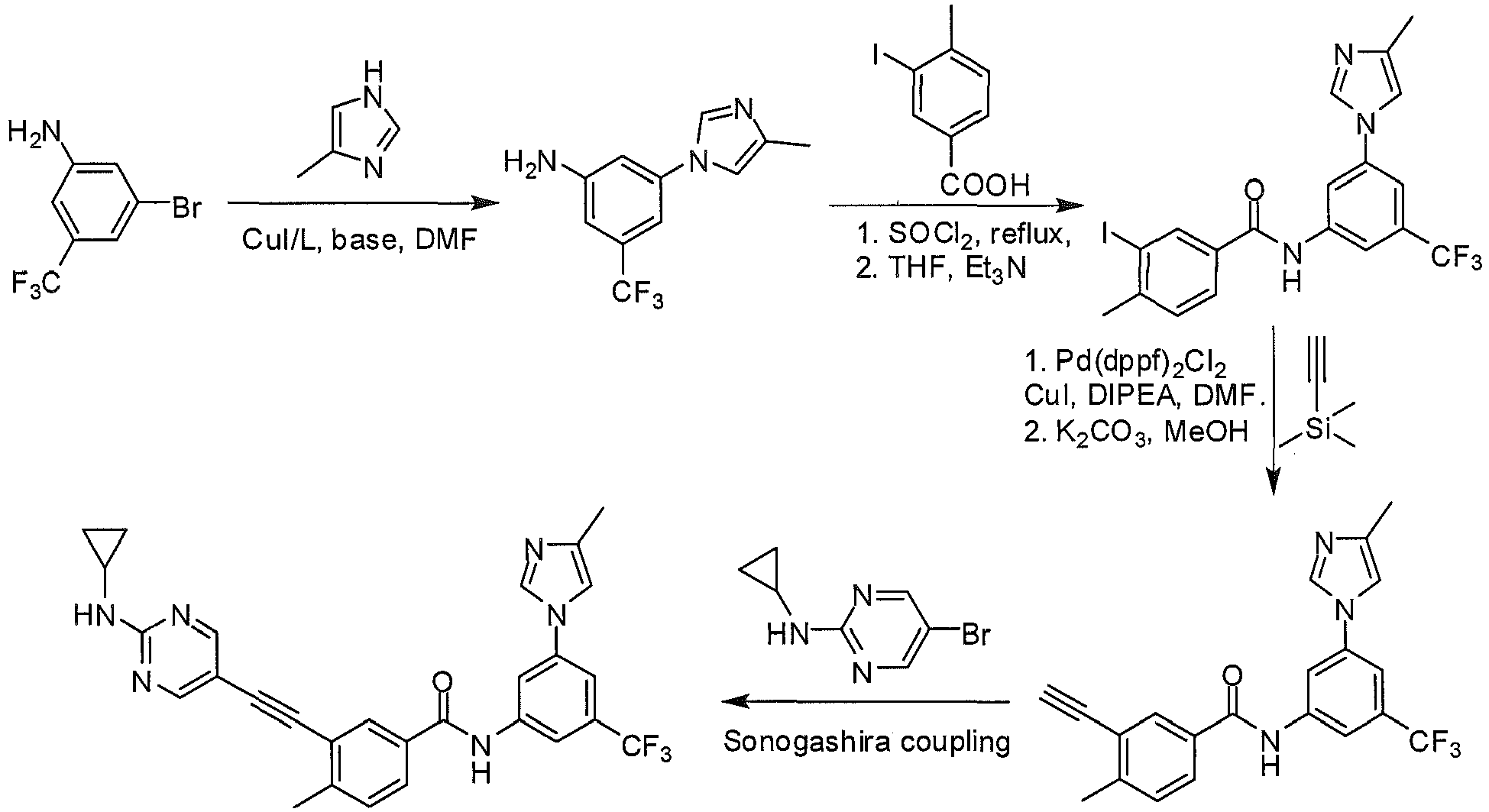
- As shown in the scheme A, compounds in formula (I) was synthesized through five steps by using 3-bromo-5-(trifluoromethyl)benzenamine as the starting material.


- In one embodiment, this present invention provides a method of using compounds in formula (I) and their pharmaceutical acceptable salts for treatment of over proliferative diseases including human cancers or mammalian cancers.
- In one embodiment, the invention also relates to the compounds designed in the present invention and their pharmaceutically acceptable salts which are used for the treatment or the prevention of over proliferative diseases, such as gastrointestinal stromal tumors (GIST), histiocytic lymphoma, non-small cell lung cancer, small cell lung cancer, lung adenocarcinoma, squamous cell lung carcinoma, pancreatic cancer, breast cancer, prostate cancer, liver cancer, skin cancer, squamous cell carcinoma, nasopharyngeal carcinoma, leukemia, and so on.
- In one embodiment, the compounds designed in the present invention and their pharmaceutically acceptable salts can be used in combination with other modulators in clinic or under investigation to strengthen their clinical potency, such as estrogen receptor modulator, androgen receptor modulator, retinoid receptor modulator, cell toxin/cell inhibitor, antiproliferative agent, protein transferase inhibitor, HMG-CoA reductase inhibitor, HIV protein kinase inhibitor, reverse transcriptase inhibitor, angiogenesis inhibitor, cell proliferation and survival signaling inhibitor, interference with the cell cycle checkpoint drug and apoptosis inducing agent, cytotoxic drug, protein tyrosine inhibitor, EGFR, VEGFR inhibitor, serine / threonine protein inhibitor, Bcr-Abl inhibitor, c-Kit inhibitor, Met inhibitor, Raf inhibitor, MEK inhibitor, MMP inhibitor, topoisomerase inhibitor, histidine deacetylase inhibitor, proteasome inhibitor, CDK inhibitor, Bcl-2 family protein inhibitor, MDM2 family protein inhibitor, inhibitors of IAP family proteins, inhibitors of STAT family proteins, PI3K inhibitor, AKT inhibitor, integrin blockade inhibitor, IFN-α, interleukin-12, COX-2 inhibitors, p53, p53 activators, VEGF antibody, EGF antibody, etc.
- The compounds of the present invention and their pharmaceutically acceptable salts can be used to treat the following diseases according to the following methods, as well as other diseases not listed below:
- (1) A method for treating breast cancer in a human or other mammalian patient in need of such treatment which comprises administering to the patient a pharmaceutical composition comprising a compound of Formula (I) in present invention and its pharmaceutically acceptable salt. The breast cancers include but are not limited to invasive ductal carcinoma, invasive lobular carcinoma, ductal carcinoma in situ and lobular carcinoma in situ.
- (2) A method for treating respiratory tract cancer in a human or other mammalian patient in need of such treatment which comprises administering to the patient a pharmaceutical composition comprising a compound of Formula (I) in present invention and its pharmaceutically acceptable salt. The respiratory tract cancer includes but not limited to small-cell lung cacer, non-small cell lung cancer, bronchial adenoma and pleuropulmonary blastoma.
- (3) A method for treating brain cancer in a human or other mammalian patient in need of such treatment which comprises administering to the patient a pharmaceutical composition comprising compound of Formula (I) in the present invention and its pharmaceutically acceptable salt. The brain cancers includes but are not limited to brainstem and subocular glioma, the cerebellum and cerebral astrocytoma, ependymal cell tumor, neuroectodermal and pineal tumor.
- (4) A method for treating cancers in the male/female reproductive organism in a human or other mammalian patient in need of such treatment which comprises administering to the patient a pharmaceutical composition comprising a compound of Formula (I) in the present invention and its pharmaceutically acceptable salt. Cancers in the male reproductive organism include but are not limited to prostate cancer and testicular cancer. Cancers in the female reproductive organism include but not limit to endometrial cancer, cervical cancer, ovarian cancer, cancer of the vagina and vulva and uterine tumor;
- (5) A method for treating cancers in the alimentary canals in a human or other mammalian patient in need of such treatment which comprises administering to the patient a pharmaceutical composition comprising a compound of Formula (I) in the present invention and its pharmaceutically acceptable salt. Cancers in the alimentary canals include but are not limited to anal cancer, colon cancer, colon cancer, esophageal cancer straight, gastric cancer, pancreatic cancer, small bowel or salivary gland cancer;
- (6) A method for treating cancers in the urethra in a human or other mammalian patient in need of such treatment which comprises administering to the patient a pharmaceutical composition comprisinga compound of Formula (I) in the present invention and its pharmaceutically acceptable salt. Cancers in the urethra include but are not limited to bladder cancer, penile cancer, renal cell carcinoma, carcinoma of renal pelvis, ureter cancer or carcinoma of urethra;
- (7) A method for treating cancers in the eyes in a human or other mammalian patient in need of such treatment which comprises administering to the patient a pharmaceutical composition comprising a compound of Formula (I) in the present invention and its pharmaceutically acceptable salt. Cancers in the eyes include but are not limited to intraocular melanoma and retinoblastoma;
- (8) A method for treating cancers in the liver in a human or other mammalian patient in need of such treatment which comprises administering to the patient a pharmaceutical composition comprising a compound of Formula (I) in the present invention and its pharmaceutically acceptable salt. Cancers in the liver include but are not limited to liver cell tumor (with or without fiber board variations of stem cell carcinoma), bile duct carcinoma (Intrahepatic bile duct carcinoma) and mixed hepatocellular carcinoma of bile duct;
- (9) A method for treating cancers in the skin in a human or other mammalian patient in need of such treatment which comprises administering to the patient a pharmaceutical composition comprising a compound of Formula (I) in the present invention and its pharmaceutically acceptable salt. Cancers in the skin include but are not limited to squamous cell carcinomas, Kaposi's sarcoma, malignant melanoma, Merck's cells in skin cancer and melanoma cells cancer;
- (10) A method for treating cancers in the head and neck in a human or other mammalian patient in need of such treatment which comprises administering to the patient a pharmaceutical composition comprising a compound of Formula (I) in the present invention and its pharmaceutically acceptable salt. Cancers in the head and neck include but are not limited to the larynx, hypopharynx, nasopharynx, oropharynx cancer and cancer of the mouth and lips;
- (11) A method for treating lymphoma cancers in a human or other mammalian patient in need of such treatment which comprises administering to the patient a pharmaceutical composition comprising a compound of Formula (I) in the present invention and its pharmaceutically acceptable salt. Lymphoma cancers include but are not limited to AIDS related lymphoma, non Hochkin lymphoma, cutaneous T cell lymphoma, Hochkin's disease and central nervous system lymphoma;
- (12) A method for treating sarcoma cancers in a human or other mammalian patient in need of such treatment which comprises administering to the patient a pharmaceutical composition comprising a compound of Formula (I) in the present invention and its pharmaceutically acceptable salt. Cancers in the eyes include but are not limited to soft tissue sarcomas, osteosarcoma, malignant fibrous histiocytoma, lymphatic sarcoma and rhabdomyosarcoma;
- (13) A method for treating leukemia in a human or other mammalian patient in need of such treatment which comprises administering to the patient a pharmaceutical composition comprising a compound of Formula (I) in the present invention and its pharmaceutically acceptable salt. Leukemia include but are not limited to acute myeloid leukemia, acute leukemia, chronic lymphocytic leukemia and forest cell leukemia, chronic myelogenous leukemia and hairy cell leukemia;
- Based on the standard pharmacutical technology, the compound of the present invention can be used alone or in the pharmaceutical combination with pharmaceutical acceptable acceptors, accessories or diluents to a mammal, preferabbly a human. For example, oral, rectal, topical, parenteral, ocular, pulmonary, nasal, and intestines and stomach may be employed.
- In one embodiment, when treating or controlling cancer of the patient with which compounds of Formula (I) are used, oral daily dosage of the compounds of the present invention administered is from about 0.1~500mg/day/kg body weight. The proper administration is as a single daily dose or as divided doses two to four times a day, or in sustained release form. For most large mammals, the total daily dosage is from about 0.1 ~ 1500 mg/day/kg body weight, preferably from about 0.5 ~ 100 milligrams/day/kg body weight. In the case of a 70 kg adult human, the total daily dose will generally be 0.5 ~ 100 mg/day/kg body weight. In the case of a 70 kg adult human, the total daily dose will generally be from about 1 milligram to about 500 milligrams. For a particularly potent compound, the dosage for an adult human may be as low as 0.1 mg/day.
- The metabolites of the compounds and their pharmaceutical salts in the present invention, and prodrugs that are converted to the compounds and their pharmaceutical salts in the present invention are comprised in the claims of the present application.
- Compounds of Formula I~II may be used in combination with other drugs that are known to be useful in the treatment or amelioration of the diseases or similar diseases. In the combination administration, such other drugs may be administered, by a route administration and in an amount commonly used, and contemporaneously or sequentially with a compound of Formula I~II. When a compound of Formula I~II is used contemporaneously with one or more other drugs, a pharmaceutical composition containing one or more other known drugs and the compound of Formula I~II is preferred. The combination therapy also comprises therapies in which the compound of Formula I~II and one or more other known drugs are administered on overlapping schedules. When used in combination with one or more other drugs, the compound of Formua I~II and the other known drugs may be used in lower dosage than when they are used alone. Drugs or active ingredients used in combination with compounds of Formula I~II comprises but are not limited to: estrogen receptor modulator, androgen receptor modulator, retinoid receptor modulator, cell toxin/cell inhibitor, antiproliferative agents, protein transferase inhibitors, HMG-CoA reductase inhibitors, HIV protein kinase inhibitors, reverse transcriptase inhibitors, angiogenesis inhibitors, cell proliferation and survival signaling inhibitors, interference with the cell cycle checkpoint drugs and apoptosis inducing agent, cytotoxic drugs, protein tyrosine inhibitor, EGFR, VEGFR inhibitors, inhibitors of serine /threonine protein inhibitors, inhibitors of Bcr-Abl, c-Kit inhibitor, Met inhibitors, inhibitors of Raf, MEK inhibitor, MMP inhibitors, inhibitors of topoisomerase, histidine deacetylase inhibitors, proteasome inhibitors, inhibitors of CDK, Bcl-2 family protein inhibitor, MDM2 family protein inhibitors, inhibitors of IAP family proteins, inhibitor of STAT family proteins, PI3K, AKT inhibitors, inhibitors of integrin blockade, IFN-α, interleukin-12, COX-2 inhibitor, p53, p53 activator inhibitor, VEGF antibody, EGF antibody, etc.
- In one embodiment, drugs or active ingredients used in combination with compounds of Formula I~II comprises but are not limited to: Aldesleukin, Alendronate, interferon, Alitretinoin, allopurinol, allopurinol sodium, palonosetron hydrochloride, Hemel, amino glutethimide, amifostine, amrubicin, Ann acridine, anastrozole, dolasetron, Aranesp, arglabin, arsenic trioxide, Aromasin, 5 - N cytidine, azathioprine, BCG or BCG, Bestatin hydrochloride, betamethasone acetate, betamethasone sodium phosphate, Bexarotene, bleomycin sulfate, broxuridine, bortezomib, busulfan, calcitonin, Alemtuzumab Campath, capecitabine, carboplatin, Casodex, cefesone, Seamus IL, DNR, chlorambucil, cisplatin, cladribine, cladribine, chloride phosphoric acid, Cytarabine, cyclophosphamide, Dacarbazine, Actinomycin D, DNX, dexamethasone, dexamethasone phosphate, estradiol valerate, cefdinir interleukin 2, Methylprednisolone acetate, deslorelin, dexrazoxane, diethylstilbestrol, Diflucan, docetaxel, doxorubicin, doxifluridine, dronabinol, chin -166- chitosan complexes, eligard, rasburicase, epirubicin hydrochloride, aprepitant, epirubicin, alfa-epoetin, erythropoietin, Eptaplatin, levamisole, estradiol formulation, 17- β - estradiol, estramustine phosphate sodium, ethinylestradiol, Amifostine, hydroxyl phosphate, Etopophos, etoposide, Fadrozole, tamoxifen, filgrastim, finasteride, floxuridine, fluconazole, fludarabine, 5- fluorine BrdU a phosphate, 5- fluorouracil, fluoxymesterone, flutamide, formestane, Cytarabine hydrochloride, Fotemustine, fulvestrant, immunoglobulin, gemcitabine, gemtuzumab ozogamicin, imatinib mesylate, carmustine capsules, goserelin, hydrocortisone, erythro-hydroxy nonyl adenine, hydroxyurea, Ibritumomab Tiuxetan. Idarubicin, ifosfamide, interferon α, IFN-α2, interferon α-2A,interferon α-2B, interferon α-nl, IFN α-n3, interferon β, interferon γ-la, IL-2, intron A, Iressa, Irinotecan, Kytril, mushroom polysaccharide sulfate, letrozole, leucovorin, leuprolide, leuprorelin acetate, Levamisole, levorotation folinic acid calcium salt, levothyroxine sodium, levothyroxine sodium, lomustine, lonidamine, dronabinol, nitrogen mustard, Mecobalamin, medroxyprogesterone acetate, megestrol acetate, melphalan, esterified estrogens, 6-Mercaptopurine, mesna, methotrexate, aminolevulinic acid methyl ester, miltefosine, minocycline, mitomycin C, mitotane, mitoxantrone anthraquinone, Trilostane, citric acid adriamycin liposome, Nedaplatin, Pegfilgrastim, oprelvekin, neupogen, nilutamide, tamoxifen, NSC-631570, recombinant human interleukin 1- β, octreotide, Ondansetron hydrochloride, hydroprednisone oral solution, oxaliplatin, paclitaxel, prednisone, L-asparaginase enzyme sodium phosphate preparation, Pegasys, pentostatin, Picibanil, pilocarpine hydrochloride, adjoin THP, mithramycin, porfimer sodium, prednimustine, Prednisolone Steaglate, prednisolone, Premarin, C kappa umbilical, recombinant human erythropoietin, raltitrexed, Libby, etidronate rhenium-186, rituximab, Redoxon-A, Romo peptide, pilocarpine hydrochloride tablets, octreotide, Sargramostim, semustine, Schizophyllan, sobuzoxane, Methylprednisolone, Paphos acid, stem cell therapy, streptozocin, strontium chloride -89, levothyroxine sodium, tamoxifen, tamsulosin, TNF-alfa, tastolactone, docetaxel, teceleukin, temozolomide, teniposide, propionic acid testosterone, testosterone propionate, thioguanine, thiotepa, thyroid stimulating hormone, Tiludronic acid, topotecan, toremifene, tositumomab, trastuzumab, Treosulfan, Victoria A acid, methotrexate tablets, three methyl melamine, trimetrexate, triptorelin, double hydroxy acetic acidNaphthalene of triptorelin, UFT, uridine, valrubicin, vesnarinone, alkali, vincristine, Vindesine Vinorelbine, virulizin, dextral razoxane, Zinostatin ester, ondansetron, paclitaxel, acolbifene, Interferon r-lb, affinitak, aminopterin, Arzoxifene, Asoprisnil, atamestane, atrasentan, BAY 43-9006, Avastin, CCI-779, CDC-501, Celebrex, cetuximab, crisnatol, cyproterone acetate, decitabine, DN-101, Doxorubicin -MTC, dSLIM, dutasteride, edotecarin, eflornithine, Exatecan, Fenretinide, histamine hydrochloride, holmium -166 DOTMP, ibandronate, IFN -γ, intron -PEG, ixabepilone, intron keyhole shaped hemocyanin, L-651582, Lanreotide, lasofoxifene, Libra, lonafamib, Miproxifene, MS-209, liposome MTP-PE, MX-6, Nafarelin, Nemorubicin, Neovastat, Nolatrexed, Aolimosen, onco-TCS, osidem, paclitaxel poly glutamic acid ester, pamidronate disodium injection, PN-401, QS-21, R -1549, raloxifene, ranpirnase, 13-cis-Victoria A acid, satraplatin, seocalcitol, T-138067, Tarceva, DHA-PTX, thymosin αl, Pirazofurin, tipifarnib, tirapazamine, TLK-286, toremifene, trans MID-lo7R, valspodar, vapreotide, vatalanib, verteporfin, Vinflunine, Z-100 and Zoledronic acid or their combination.
- Further explanations are made as followings, but those embodiments cannot be used to limit the protection scope of the invention.
-
-

- In a pressure tube with one end sealed, add 190mg CuI (1mmol), 1.64g 4-methyl-1H-imidazole (20mmol), 3.25g Cs2CO3(10mmol), and after Nitrogen replacement, add 2.40g 3-bromo-5-(trifluoromethyl)aniline (10 mmol), 350mg 1-(5,6,7,8-tetrahydroquinolin-8-yl)ethanone (2mmol) and 30mL DMF was added into a flask. The mixture was stirred at 110°C for 18 h under sealing. After cooling to room temperature, the solvent was removed under vacuum and the residue was purified by column chromatography to afford 2.19 g desired product (91 %).
- 1H NMR (400 MHz, d-DMSO), δ 8.06 (s, 1H), 7.35 (s, 1 H), 6.97 (s, 1 H), 6.93 (s, 1 H), 6.81 (s, 1H), 5.87 (br, 2H), 2.15 (s, 3H). MS (ESI), m/z: 242 (M+ + H+).
-

- Add 2 drops of DMF into 628 mg 3-iodo-4-methylbenzoic acid (2.2 mmol) in 20 mL SOCl2 and reflux for 2 h. After vacuum evaporation of SOCl2, add 6.0 mL anhydrous THF and get the pale yellow solution. Dissolve the product from
step 1, 524 mg 5-(4-methyl-1H-imidazol-1-yl)-3-(trifluoromethyl)-benzenamine (2.0 mmol) in 6.0 mL anhydrous THF and add 10 mmol Et3N, and the pale yellow solution prepared previously is added drop wise till it is all added. The reaction mixture rises to room temperature for 1 hr. The reaction was quenched with addition of brine and extracted with EtOAc. The combined extraction organic layers was dried and concentrated under vacuum, the residue was purified through column chromatography to afford 873 mg desired product. (90%)
MS (ESI), m/z: 486 (M+ + H+). -

- In a pressure tube with one end sealed, add 485 mg 3-iodo-4-methyl-N-(3-(4-methyl-1H-imidazol-1-yl)-5-(trifluoromethyl)phenyl)benzamide (1.0 mmol) from
Step
MS (ESI), m/z: 384 (M+ + H+), -

- In a pressure tube with one end sealed, add 193 mg 5-bromo-2-chloropyrimidine (1.0 mmol) and 285 mg cyclopropylamine (5.0 mmol) in 3.0 mL ethanol, and the mixture is heated to 80 °Cand stirred for 3 h. The reaction mixture was cooled to room temperature, and 203 mg solid product was collected by filitration for direct useyield: 95%).
MS (ESI), m/z: 215 (M+ + H+). -
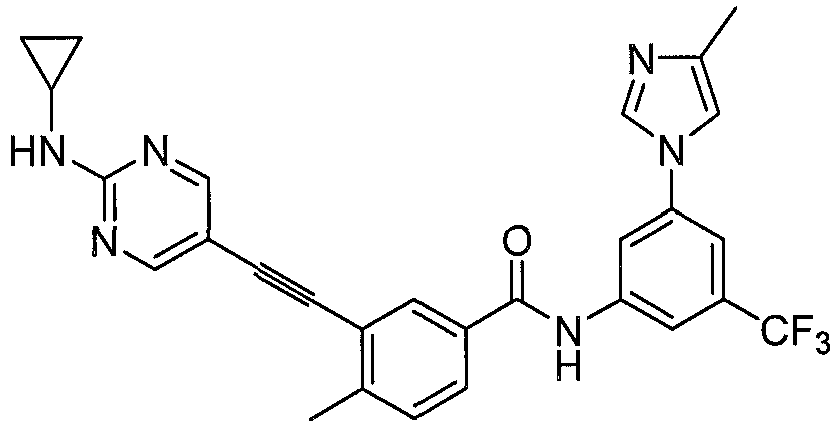
- In a pressure tube with one end sealed, add 192
mg step 3 product, 3-ethynyl-4-methyl-N-(3-(4-methyl-1H-imidazol-1-yl)-5-(trifluoromethyl) phenyl)benzamide (0.5 mmol), 107mg Step 4 product, 5-bromo-N-cyclopropylpyrimidin-2-amine (0.5 mmol), 19 mg CuI (0.1 mmol), 2.2 mg Pd(OAc)2 (0.01 mmol), 2.8 mg PCy3 (0.01 mmol) 3.0 mL DMF, 193 mg DIPEA (1.5 mmol), after nitrogen replacement, the solution is heated to 60 °C for 12 h. After cooling to room temperature, the solid is filtered off by 2 cm silical gel column and washed by ethyl acetate for three times, and the solution was concentrated by vacuum evaporation for 193 mg desired product (75%). - 1HNMR (400 MHz, d-DMSO), δ ppm 10.69 (s, 1H), 8.54 (br, 2H), 8.29 (s, 1H), 8.21 (s, 1H), 8.16 (m, 2 H), 7.93 (m, 2H), 7.73 (s, 1H), 7.52 (m, 2H), 2.77 (m, 1H), 2.53 (s, 3H), 2.18 (s, 3H), 0.71 (m, 2H), 0.53 (m, 2H). MS (ESI), m/z: 517 (M++ H+).
-

- The compound was synthesized by using the procedure similar to that of Example 1.
- 1HNMR (400 MHz, d-DMSO), δ ppm 10.73 (s, 1H), 8.55 (br, 2H), 8.33 (d, J= 2.4 Hz, 2H), 8.21 (s, 1H), 8.14 (d, J= 1.2 Hz, 1 H), 7.94-7.89 (m, 2H), 7.80-7.76 (m, 2H), 7.53 (d, J= 8.4 Hz, 1H), 7.17 (s, 1H), 2.78-2.73 (m, 1H), 2.53 (s, 3H), 2.18 (s, 3H), 0.73-0.68 (m, 2H), 0.53-0.49 (m, 2H). MS (ESI), m/z: 503 (M+ + H+).
-

- The compound was synthesized by using the procedure similar to that of Example 1.
- 1HNMR (400 MHz, d-DMSO), δ ppm 10.69 (s, 1H), 8.29 (m, 2H), 8.20-8.13 (m, 5H), 7.91 (d, J= 4.8 Hz, 1H), 7.73-7.66 (m, 2 H), 7.52 (m, 2H), 2.85 (d, J= 4.4 Hz, 1H), 2.53 (s, 3H), 2.18 (s, 3H). MS (ESI), m/z: 491 (M+ + H+).
-
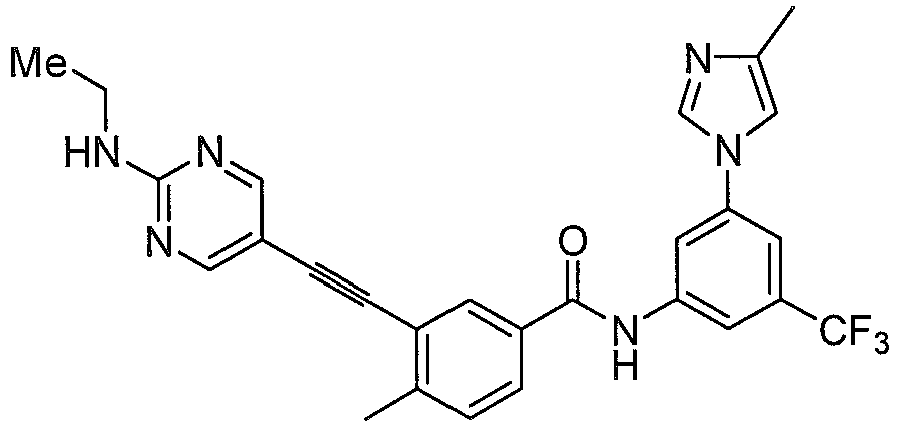
- The compound was synthesized by using the procedure similar to that of Example 1.
- 1HNMR (400 MHz, d-DMSO), δ ppm 10.69 (s, 1H), 8.52 (br, 2H), 8.29 (s, 1H), 8.21 (d, J= 1.6 Hz, 1H), 8.16 (s, 1 H), 8.13 (d, J= 1.6 Hz, 1H), 7.91 (m, 1H), 7.75-7.73 (m, 2H), 7.52-7.49 (m, 2H), 3.35-3.29 (m, 2H), 2.52 (s, 3H), 2.18 (s, 3H), 1.15 (t, J= 7.2 Hz, 3H). MS (ESI), m/z: 505 (M+ + H+).
-

- The compound was synthesized by using theprocedure similar to that of Example 1.
- 1HNMR (400 MHz, d-DMSO), δ 1.51 (4H, s), 1.62 (2H, s), 2.16 (3H, s), 3.77 (4H, s), 7.47 (2H, s), 7.70 (1H, s), 7.88 (1H, d, J=6.4 Hz), 8.15 (3H, m), 8.28 (1H, s), 8.53 (2H, s), 10.66 (1H, s). MS(ESI), m/z: 545 (M+ + H+).
-
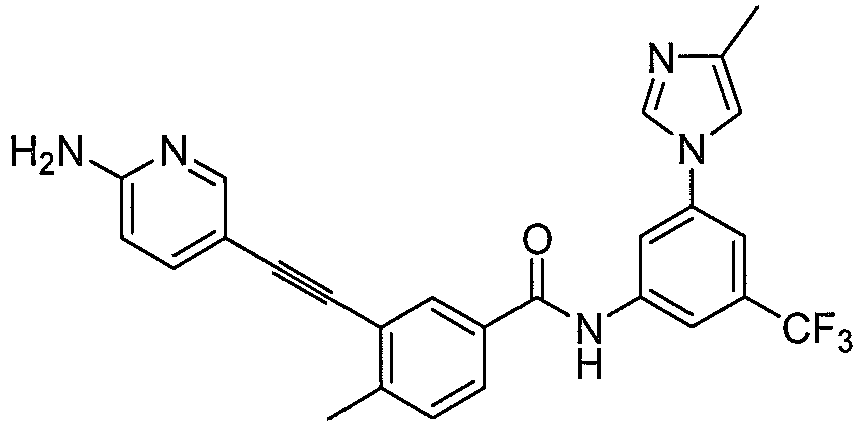
- The compound was synthesized by using the procedure similar to that of Example 1.
- 1HNMR (400 MHz, d-DMSO), δ 2.53 (3H, s), 6.48 (2H, s), 7.54 (2H, m), 7.74 (1H, s), 7.89 (1H, dd, J=8.0, 3.2 Hz), 8.13 (1H, d, J=1.6 Hz), 8.18 (2H, s), 8.31 (1.0H, s), 10.68 (1H, s). MS(ESI), m/z: 476 (M+ + H+).
-
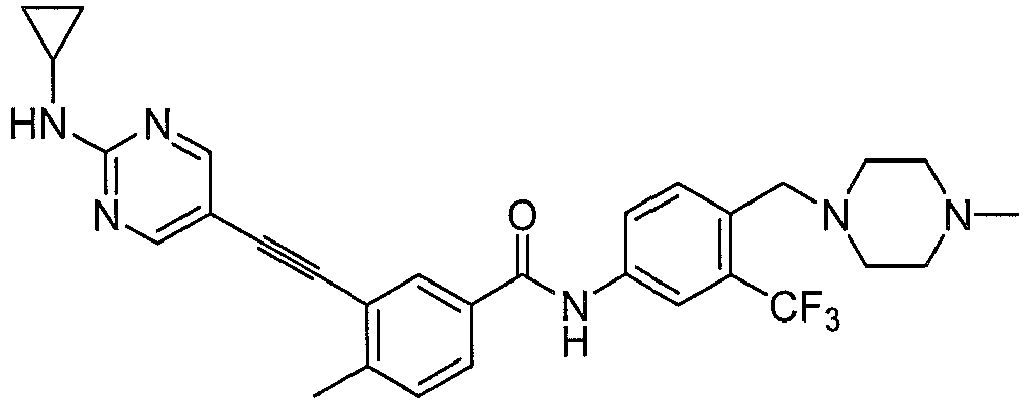
- The compound was synthesized by using the procedure similar to that of Example 1.
- 1HNMR (400 MHz, d-DMSO), δ 0.51 (2H, s), 0.70 (2H, d, J=5.6 Hz), 2.42 (3H, s), 2.72 (3H, s), 2.75 (2H, m), 3.60 (6H, br), 7.48 (1H, d, J=7.8 Hz), 7.69 (1H, d, J=8.2 Hz), 7.89 (2H, m), 8.09 (2H,m), 8.21 (1H, s), 8.54 (2H, s), 10.51 (1H, s). MS(ESI), m/z: 549 (M+ + H+).
-

- The compound was synthesized by using the procedure similar to that of Example 1.
- 1HNMR (400 MHz, d-DMSO), δ 2.18 (3H, s), 2.60 (3H, s), 7.49 (1H, s), 7.55 (1H, d, J=8.0 Hz), 7.74 (1H, s), 7.94 (1 H, d, J=7.8 Hz), 8.20 (4H, mHz), 8.30 (1H, s), 8.59 (1H, s), 10.72 (1H, s). MS(ESI), m/z: 501 (M+ + H+).
-

- The compound was synthesized by using the procedure similar to that of Example 1.
- 1HNMR (400 MHz, d-DMSO), δ 2.17 (3H, s), 2.37 (8H, m), 2.60 (3H, s), 3.57 (2H, s), 6.85 (1H, d, J=2.0 Hz), 7.54 (1H, d, J=8.0 Hz), 7.71 (1H, d, J=8.4 Hz), 7.96 (1H, dd, J= 8.0, 3.29 Hz), 8.06 (1H, d, J=2.00 Hz), 8.21 (2H, dd, J=4.2, 2.0 Hz), 8.34 (1H, d, J=2.0 Hz), 8.72 (1H, d, J=2.0 Hz), 9.58 (1H, d, J=2.00 Hz), 10.56 (1H, s). MS(ESI), m/z: 533 (M+ + H+).
-

- The compound was synthesized by using the procedure similar to that of Example 1.
- 1HNMR (400 MHz, d-DMSO), δ 1.23 (4H, m), 1.71 (3H, m), 2.17 (2H, s), 2.54 (3H, s), 4.40 (1 H, q, J=7.0 Hz), 7.51 (2H,m), 7.64 (1H, d, J=8.0 Hz), 7.72 (1H, s), 7.94 (1H, d, J=7.48 Hz), 8.14 (2H, m), 8.29 (1H, s), 8.49 (1H, s), 8.84 (1H, s), 10.68 (1H, s). MS(ESI), m/z: 559 (M+ + H+).
-

- The compound was synthesized by using the procedure similar to that of Example 1.
- 1HNMR (400 MHz, d-DMSO), δ 2.18 (3H, s), 2.56 (3H, s), 7.02 (1H, t, J=7.2 Hz), 7.32 (2.0H, t, J=8.0 Hz), 7.49 (1H, s), 7.54 (1H, d, J=8.0 Hz), 7.75 (3H, m), 7.93 (1H, dd, J= 8.0, 3.2 Hz), 8.17 (2H, s), 8.21 (1H, s), 8.30 (1H, s), 8.72 (2H, s), 10.06 (1H, s), 10.71 (1H, s). MS(ESI), m/z: 553 (M+ + H+).
-
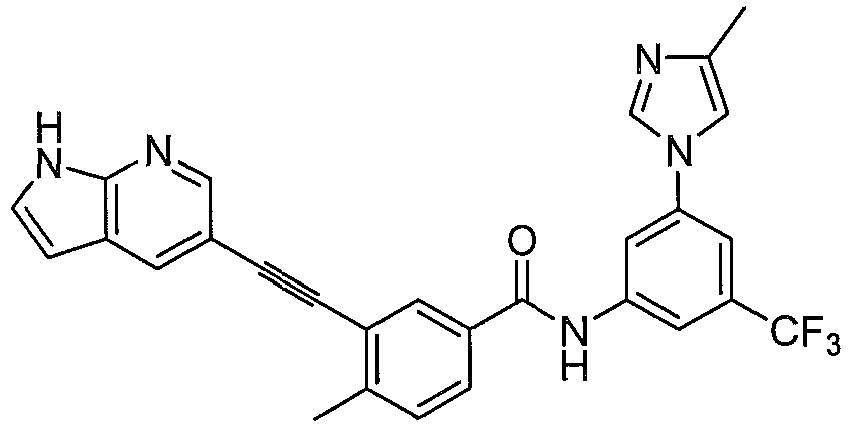
- The compound was synthesized in a similar procedure of Example 8.
- 1HNMR (400 MHz, d-DMSO), δ 2.18 (3H, s), 2.58 (3H, s), 6.53 (1H, q, J=1.71 Hz), 7.53 (3H, m), 7.73 (1H, s), 7.92 (1H, dd, J= 8.0, 3.2 Hz), 8.20 (3H, m), 8.31 (1H, s), 8.46 (1H, s), 10.70 (1H, s), 11.95 (1H, s). MS(ESI), m/z: 500 (M++ H+).
-

- The compound was synthesized by using the procedure similar to that of Example 1.
- 1HNMR (400 MHz, d-DMSO), δ 2.19 (3H, s), 2.53 (3H, s), 3.15 (1H, m), 3.41 (2H, m), 3.53 (2H, m), 4.73 (1H, t, J=5.2 Hz), 7.52 (1H, d, J=8.0 Hz), 7.63 (1H, s), 7.74 1H, s), 7.91 (1H, m), 8.00 (1H, s), 8.16 (2H, m), 8.31 (1H, s), 8.52 (1H, s), 10.71 (1H, s). MS(ESI), m/z: 521 (M++ H+).
-

- The compound was synthesized by using the procedure similar to that of Example 1.
- 1HNMR (400 MHz, d-DMSO), δ 2.61 (3H, s), 6.85 (1.0H, d, J=2.0 Hz), 7.21 (1H, s), 7.57 (1H, d, J=8.4 Hz), 7.82 (2H, m), 7.98 (1H, dd, J=8.0, 3.2 Hz), 8.23 (2H, m), 8.35 (3H, d, J=2.4 Hz), 8.73 (1H, d, J=2.00 Hz), 9.59 (1H, d, J=2.0 Hz), 10.77 (1H, s). MS(ESI), m/z: 487 (M++ H+).
-

- The compound was synthesized by using the procedure similar to that of Example 1.
- 1HNMR (400 MHz, d-DMSO), δ 2.40 (3H, s), 2.60 (3H, s), 6.85 (1H, d, J=1.6 Hz), 7.56 (1H, d, J=8.2 Hz), 7.99 (2H, m), 8.26 (2H, m), 8.35 (1H, d, J=2.0 Hz), 8.64 (1H, s), 8.73 (1H, d, J=2.0 Hz), 9.32 (1H, s), 9.58 (1H, d, J=1.2 Hz), 10.80 (1H, s). MS(ESI), m/z: 502 (M+ + H+).
-

- The compound was synthesized by using the procedure similar to that of Example 1.
- 1HNMR (400 MHz, d-DMSO), δ 2.19 (3H, s), 2.59 (3H, s), 7.50 (1H, s), 7.57 (1H, d, J=8.2 Hz), 7.74 (1H, s), 7.82 (1H, s), 7.97 (2H, m), 8.17 (1H, s), 8.22 (2H, d, J=2.0 Hz), 8.31 (1H, s), 8.71 (1H, d, J=2.4 Hz), 9.40 (1H, d, J=2.4 Hz), 10.73 (1H, s). MS(ESI), m/z: 501 (M+ + H+)
-

- The compound was synthesized by using the procedure similar to that of Example 1.
- 1HNMR (400 MHz, d-DMSO), δ 13.95 (s, 1H), 10.72 (s, 1H), 8.75 (s, 1H), 8.54 (s, 1H), 8.31 (s, 1 H), 8.23 (s, 3H), 8.18 (s, 1 H), 7.97 (d, J= 8.0 Hz, 1H), 7.75 (s, 1H), 7.57 (d, J= 8.0 Hz, 1H), 7.49 (s, 1 H), 2.60 (s, 3H), 2.19 (s, 3H). MS(ESI), m/z: 501 (M+ + H+).
-

- The compound was synthesized by using the procedure similar to that of Example 1.
- 1HNMR (400 MHz, d-DMSO), δ 13.92 (s, 1H), 10.72 (s, 1H), 8.72 (d, J=2.0 Hz, 1H), 8.51 (d, J=2.0 Hz, 1H), 8.32 (s, 2 H), 8.21 (s, 3H), 7.95 (d, J= 8.0 Hz, 1 H), 7.79 (d, J= 4.0 Hz, 2H), 7.54 (d, J= 8.0 Hz, 1H), 7.16 (s, 1H), 2.58 (s, 3H). MS(ESI), m/z: 487 (M+ + H+).
-
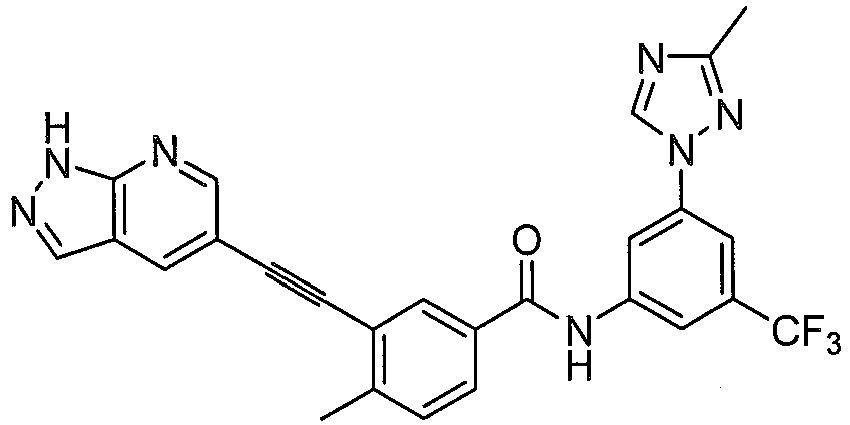
- The compound was synthesized by using the procedure similar to that of Example 1.
- 1HNMR (400 MHz, d-DMSO), δ 13.92 (s, 1H), 10.76 (s, 1H), 9.30 (s, 1H), 8.73 (d, J=2.0 Hz, 1H), 8.63 (s, 1H), 8.52 (d, J=2.0 Hz, 1H), 8.26 (m, 3 H), 7.97 (m, 2H), 7.55 (d, J= 8.0 Hz, 1 H), 2.58 (s, 3H), 2.38 (s, 3H). MS(ESI), m/z: 502 (M+ + H+).
-

- The compound was synthesized by using the procedure similar to that of Example 1.
- 1HNMR (400 MHz, d-DMSO), δ 2.17 (3H, s), 2.60 (3H, s), 7.48 (1H, s), 7.58 (1H, d, J=8.4 Hz), 7.74 (1H, s), 7.98 (1H, d, J= 8.0 Hz), 8.15 (1H, s), 8.22 (2H, m), 8.29 (1H, s), 8.78 (1H, s), 9.09 (1H, d, J=2.4 Hz), 9.88 (1H, d, J=2.4 Hz), 10.74 (1H, s). MS(ESI), m/z: 502 (M++ H+).
-

- The compound was synthesized by using the procedure similar to that of Example 1.
- 1HNMR (400 MHz, d-DMSO), δ 2.18 (3H, s), 2.59 (3H, s), 6.84 (1H, m), 7.49 (1H, s), 7.57 (1H, d, J=8.4 Hz), 7.73 (1H, s), 7.98 (1H, dd, J= 8.0, 1.6 Hz), 8.16 (1H, s), 8.21 (2H, d, J= 2.0 Hz), 8.28 (1H, s), 8.34 (1H, d, J= 2.4 Hz), 8.71 (1H, d, J= 2.4 Hz), 9.57 (1H, d, J=2.0 Hz), 10.74 (1H, s). Ms(ESI), m/z: 502 (M+ + H+).
-

- The compound was synthesized by using the procedure similar to that of Example 1.
- 1HNMR (400 MHz, d-DMSO), δ 13.94 (s, 1H), 10.59 (s, 1H), 8.75 (d, J=2.0 Hz, 1H), 8.54 (d, J=2.0 Hz, 1H), 8.26 (m, 3 H), 8.10 (d, J= 8.0 Hz, 1H), 7.95 (dd, J= 8.0,2.0 Hz, 1 H), 7.64 (m, 3H), 2.59 (s, 3H). MS(ESI), m/z: 421 (M+ + H+).
-

- The compound was synthesized by using the procedure similar to that of Example 1.
- 1HNMR (400 MHz, d-DMSO), δ 13.92 (s, 1H), 10.55 (s, 1H), 8.72 (d, J=2.0 Hz, 1H), 8.52 (d, J=2.0 Hz, 1H), 8.17 (m, 3 H), 8.10 (d, J= 8.0 Hz, 1H), 7.92 (dd, J= 8.0,2.0 Hz, 1 H), 7.70 (d, J= 8.8 Hz, 1H), 7.53 (d, J= 8.0 Hz, 1H), 3.80 (s, 2H), 3.10 (brs, 8H), 2.71 (s, 3H), 2.57 (s, 3H). MS(ESI), m/z: 533, (M++H+).
-
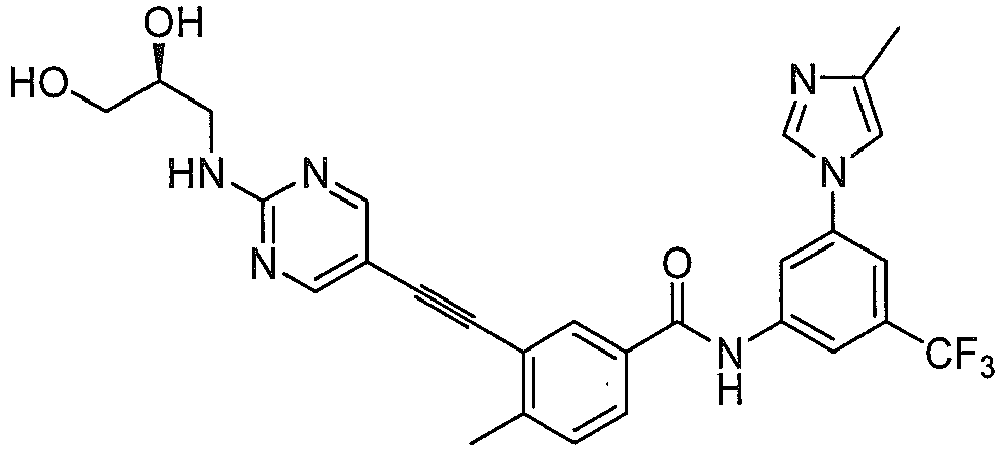
- The compound was synthesized by using the procedure similar to that of Example 1.
- 1HNMR (400 MHz, d-DMSO), δ 2.31 (3H, s), 2.98 (1H, s), 3.65 (2H, br), 4.57 (1H, s), 4.78 (1H, s), 7.49 (4H, br), 7.70 (1H, br), 7.99 (2H, m), 8.22 (4H, s), 8.50 (2H, s), 10.67 (1H, s). MS(ESI), m/z: 551 (M++ H+).
-

- The compound was synthesized by using the procedure similar to that of Example 1.
- 1HNMR (400 MHz, d-DMSO), δ ppm 10.65 (s, 1H), 8.54 (br, 2H), 8.29 (s, 1H), 8.18 (m, 3H), 7.88 (d, J= 7.2 Hz, 1 H), 7.70 (s, 1H), 7.48 (m, 2H), 3.62 (m, 4H), 2.52 (s, 3H), 2.17 (s, 3H), 1.17 (t, J= 7.2 Hz, 6H). MS (ESI), m/z: 533 (M+ + H+).
-

- The compound was synthesized by using the procedure similar to that of Example 1.
- 1HNMR (400 MHz, d-DMSO), δ 10.69 (s, 1H), 8.51 (s, 2H), 8.29 (s, 1H), 8.20 (s, 1H), 8.16 (s, 1 H), 8.12 (s, 1H), 7.91 (dd, J= 6.8, 1.6 Hz, 1H), 7.73 (s, 1H), 7.52 (m, 2H), 7.38 (s, 1H), 2.55 (s, 3H), 2.18 (s, 3H), 1.39 (s, 9H). MS(ESI), m/z: 533, (M++H+).
-

- The compound was synthesized by using the procedure similar to that of Example 1.
- 1HNMR (400 MHz, d-DMSO), δ 10.69 (s, 1H), 8.51 (s, 2H), 8.29 (s, 1H), 8.20 (s, 1H), 8.16 (s, 1 H), 8.12 (s, 1H), 7.91 (dd, J= 6.8, 1.6 Hz, 1H), 7.73 (s, 1H), 7.52 (d, J= 8.0 Hz, 1H), 7.50 (m, 2H), 4.08 (m, 1H), 2.51 (s, 3H), 2.18 (s, 3H), 1.17 (d, J= 6.4 Hz, 6H). MS(ESI), m/z: 519, (M++H+).
-

- The compound was synthesized by using the similar procedure similar to that of Example 1.
- 1HNMR (400 MHz, d-DMSO), δ 10.69 (s, 1H), 8.48 (s, 2H), 8.31 (m, 2H), 8.16 (s, 1H), 8.13 (s, 1 H), 7.91 (d, J= 7.2 Hz, 1H), 7.74 (s, 1H), 7.51 (s, 2H), 7.20 (m, 2H), 2.52 (s, 3H), 2.19 (s, 3H). MS(ESI), m/z: 477, (M+ + H+).
-

- The compound was synthesized by using the procedure similar to that of Example 1.
- 1HNMR (400 MHz, d-DMSO), δ 2.39 (4H, brs), 2.59 (3H, s), 3.61 (6H, m), 6.85 (1H, s), 7.55 (1H, d, J=8.4 Hz), 7.72 (1H, d, J=8.4 Hz), 7.94 (1H, dd, J= 8.0, 1.6 Hz), 8.06 (1H, d, J=8.4 Hz), 8.21 (2H, dd, J=4.2, 1.6 Hz), 8.34 (1H, d, J=6.0 Hz), 8.72 (1H, d, J=2.0 Hz), 9.58 (1H, d, J=1.2 Hz), 10.56 (1H, s). MS(ESI), m/z: 520 (M++H+).
-

- The compound was synthesized by using the procedure similar to that of Example 1.
- 1HNMR (400 MHz, d-DMSO), δ 2.39 (10H, m), 2.59 (3H, s), 3.49 (2H, m), 3.56 (2H, s), 4.36 (1H, br), 6.85 (1H, s), 7.55 (1H, d, J=8.0 Hz), 7.72 (1H, d, J=8.8 Hz), 7.94 (1H, dd, J= 8.0, 1.6 Hz), 8.05 (1H, d, J=8.4 Hz), 8.21 (2H, dd, J=4. 8, 1.6 Hz), 8.34 (1H, d, J=2.0 Hz), 8.72 (1H, d, J=2.0 Hz), 9.58 (1H, d, J=1.2 Hz), 10.55 (1H, s). MS(ESI), m/z: 563 (M+ +H+).
-

- The compound was synthesized by using the procedure similar to that of Example 1.
- 1HNMR (400 MHz, d-DMSO), δ 1.62 (1H, m), 1.85 (1H, m), 2.12 (6H, s), 2.38 (1H, m), 2.59 (4H, m), 2.61 (1H, m), 2.83 (1H, m), 3.36 (2H, m), 3.56 (2H, s), 6.84 (1H, s), 7.55 (1H, d, J=8.0 Hz), 7.72 (1H, d, J=8.8Hz), 7.94 (1H, dd, J= 8.0, 1.6 Hz), 8.05 (1H, d, J=8.4 Hz), 8.19 (2H, s), 8.34 (1H, d, J=2.4 Hz), 8.72 (1H, d, J=2.0 Hz), 9.56 (1H, d, J=1.2 Hz), 10.55 (1H, s). MS(ESI), m/z: 547 (M+ + H+).
-

- The compound was synthesized by using the procedure similar to that of Example 1.
- 1HNMR (400 MHz, d-DMSO), δ 1.34 (9H, s), 2.18 (3H, s), 2.59 (3H, m), 6.84 (1H, s), 7.30 (1H, s), 7.40 (1H, br), 7.55 (1H, d, J=8.0 Hz), 7.38 (1H, s), 7.97 (2H, m), 8.08 (1H, br), 8.21 (1H, d, J=1.6 Hz), 8.34 (1H, d, J=2.4 Hz), 8.72 (1H, d, J=2.0 Hz), 9.57 (1H, d, J=1.2 Hz), 10.42 (1H, s). MS(ESI), m/z: 489 (M+ + H+).
-

- The compound was synthesized by using the procedure similar to that of Example 1.
- 1HNMR (400 MHz, d-DMSO), 13.95 (s, 1H), 10.47 (s, 1H), 8.74 (s, 1H), 8.52 (s, 1H), 8.22 (m, 2 H), 8.06 (m, 2H), 7.94 (d, J= 7.6 Hz, 1 H), 7.76 (d, J= 8.0 Hz, 1H), 7.53 (m, 2H), 7.35 (m, 2H), 2.59 (s, 3H), 2.18 (s, 3H). MS(ESI), m/z: 433 (M+ + H+).
-

- The compound was synthesized by using the procedure similar to that of Example 1.
- 1HNMR (400 MHz, d-DMSO), δ 13.95 (s, 1H), 10.42 (s, 1H), 8.75 (s, 1H), 8.54 (s, 1H), 8.23 (m, 2H), 8.07 (s, 1H), 7.96 (m, 2H), 7.75 (s, 1H), 7.54 (d, J= 8.0 Hz, 1 H), 7.31 (s, 2H), 7.30 (d, J= 4.2 Hz, 1 H), 2.59 (s, 3H), 2.18 (s, 3H), 1.34 ( s, 9H). MS(ESI), m/z: 489 (M++ H+).
-

- The compound was synthesized by using the procedure similar to that of Example 1.
- 1HNMR (400 MHz, d-DMSO), δ 13.94 (s, 1H), 10.58 (s, 1H), 8.74 (s, 1H), 8.51 (s, 1H), 8.22 (d, J=8.0 Hz, 2H), 8.11 (s, 1H), 7.93 (d, J= 7.6Hz, 1H), 7.83 (s, 1 H), 7.71 (d, J= 7.2 Hz, 1H), 7.54 (d, J= 8.0 Hz, 1 H), 7.39 (s, 1H), 7.33 (d, J= 10 Hz, 1H), 2.58 (s, 3H), 2.17 (s, 3H). MS(ESI), m/z: 451 (M+ + H+).
-

- The compound was synthesized by using the procedure similar to that of Example 1.
- 1HNMR (400 MHz, d-DMSO), δ 13.94 (s, 1H), 10.52 (s, 1H), 8.78 (s, 1H), 8.48 (s, 1H), 8.21 (s, 1H), 8.16 (s, 1H), 8.11 (s, 1H), 7.95 (s, 1H), 7.88 (s, 2 H), 7.49 (s, 2H), 7.36 (s, 1H), 2.57 (s, 3H), 2.15 (s, 3H). MS(ESI), m/z: 468 (M+ + H+).
-

- The compound was synthesized by using the procedure similar to that of Example 1.
- 1HNMR (400 MHz, d-DMSO), δ 1.62 (1H, m), 1.85 (1H, m), 2.12 (6H, s), 2.37 (1H, m), 2.59 (4H, m), 2.61 (1H, m), 2.83 (1H, m), 3.36 (2H, m), 3.56 (2H, s), 6.84 (1H, s), 7.55 (1H, d, J=8.0 Hz), 7.73 (1H, d, J=8.8 Hz), 7.95 (1H, dd, J= 8.0, 1.6 Hz), 8.05 (1H, d, J=8.4 Hz), 8.19 (2H, s), 8.34 (1H, d, J=2.4 Hz), 8.72 (1H, d, J=2.0 Hz), 9.56 (1H, d, J=1.2 Hz), 10.55 (1H, s). MS (ESI), m/z: 547 (M+ + H+).
-

- The compound was synthesized by using the procedure similar to that of Example 1.
- 1HNMR (400 MHz, d-DMSO), δ 13.95 (s, 1H), 10.55 (s, 1H), 8.75 (s, 1H), 8.54 (s, 1H), 8.24 (m, 3H), 8.09 (d, J=8.4 Hz, 1H), 7.95 (d, J= 8.4 Hz, 1H), 7.72 (d, J=8.4 Hz, 1 H), 7.55 (d, J= 8.0 Hz, 1H), 3.74 (m, 2H), 3.52 (m, 1H), 3.17 (s, 1H), 2.88 (br, 1H), 2.68 (m, 1H), 2.59 (s, 3H), 2.43 (m, 1H), 2.17 (s, 6H), 1.91 (s, 4H), 1.70 (m, 2H). MS(ESI), m/z: 547 (M+ + H+).
-
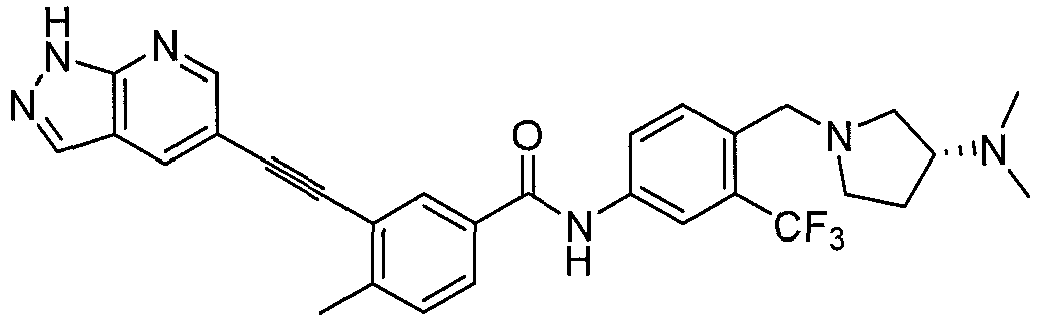
- The compound was synthesized by using the procedure similar to that of Example 1.
- 1HNMR (400 MHz, d-DMSO), δ 13.95 (s, 1H), 10.55 (s, 1H), 8.76 (s, 1H), 8.54 (s, 1H), 8.24 (m, 3H), 8.09 (d, J=8.4 Hz, 1H), 7.94 (d, J= 8.4 Hz, 1H), 7.72 (d, J=8.4 Hz, 1 H), 7.54 (d, J= 8.0 Hz, 1H), 3.74 (m, 2H), 3.51 (m, 1H), 3.17 (s, 1H), 2.88 (br, 1H), 2.68 (m, 1H), 2.59 (s, 3H), 2.43 (m, 1H), 2.17 (s, 6H), 1.91 (s, 4H), 1.71 (m, 2H). MS(ESI), m/z: 547 + H+).
-

- The compound was synthesized by using the procedure similar to that of Example 1.
- 1HNMR (400 MHz, d-DMSO), δ 10.62 (s, 1H), 8.73 (d, J=2.0 Hz, 1H), 8.52 (d, J=2.0 Hz, 1H), 8.21-8.23 (m, 3H), 8.07 (d, J=8.4 Hz, 1H), 8.01 (d, J=7.6 Hz, 1H), 7.83 (d, J=7.6 Hz, 1H), 7.72 (d, J=7.6 Hz, 1H), 7.64 (t, J=8.0 Hz, 1H), 3.57 (s, 2H), 2.39 (br, 8H), 2.16 (s, 3H). MS (ESI), m/z:.519 + H+).
-

- Add 2.24 g methanesulfonic acid (23.31 mmol) dropwise into 3.1 g D824 (5.83 mmol) in 150 mL ethanol into in a 500 mL round flask. The reaction mixture turns clear when heated to boiling. After refluxing for 4 h, the reaction is cooled to room temperature, And white solid is collected and washed three times with ethanol after filtration. Then 3.86 g product was obtained as pale yellow solid after further dryness in vacuum (90%)
- 1HNMR (400 MHz, d-DMSO), δ10.66 (s, 1H), 8.73 (d, J=2.0 Hz, 1H), 8.52 (d, J=1.6Hz, 1H), 8.28 (d, J=1.6 Hz, 1H), 8.23 (s, 1H), 8.19 (s, 1H), 8.16 (d, J=7.6 Hz, 1H), 7.92 (dd, J=8.0,1.6 Hz, 1H), 7.78 (d, J=8.4 Hz, 1H), 7.53 (d, J=8.4 Hz, 1H), 4.00 (s, 2H), 3.19 (br, 6H), 2.85 (s, 3H), 2.77 (br, 2H), 2.58 (s, 3H), 2.41 (s, 6H). MS (ESI), m/z:.533 , 627
-

- Add 3.0 g D824 (5.64 mmol) in 100 mL ethanol in a 250 mL round flask , and into hydrochloride gas is pumped into the mixture. The mixture turns clear and after stirring for 16 h, yellow solid is precipitated. The solid was collected and washed three times with ethanol and is dried in vacuum to afford 2.63 g desired product (82%).
- 1HNMR (400 MHz, d-DMSO), δ11.36 (br, 1H), 10.74 (s, 1H), 8.74 (d, J=2.0 Hz, 1H), 8.53 (d, J=2.0 Hz, 1H), 8.33 (d, J=1.6 Hz, 1H), 8.18-8.23 (m, 3H), 8.04 (br, 1H), 7.96 (dd, J=8.0, 1.6 Hz, 1H), 7.54 (d, J=8.4 Hz, 1H), 4.15 (br, 2H), 3.55 (m, 6H), 3.08 (br, 2H), 2.80 (s, 3H), 2.59 (s, 3H). MS (ESI), m/z:.533
-

- The compound was synthesized by using the procedure similar to that of Example 41.
- 1HNMR (400 MHz, d-DMSO), δppm 10.80 (s, 1H), 9.57 (s, 1H), 9.34 (s, 1H), 8.72 (s, 1H), 8.64 (s, 1H), 8.34 (s, 1H), 8.25 (d, J=7.6 Hz, 1H), 7.98 (s, 1H), 7.55 (d, J=7.6 Hz, 1H), 6.84 (s, 1H), 2.60 (s, 3H), 2.39 (s, 3H), 2.38 (s, 3H). MS (ESI), m/z: 502
-
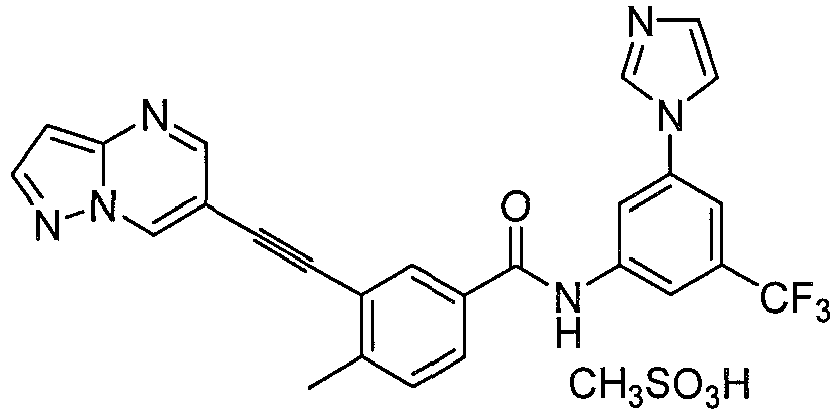
- The compound was synthesized by using the procedure similar to that of Example 41.
- 1HNMR (400 MHz, d-DMSO), δ10.93 (s, 1H), 9.65 (s, 1H), 9.58 (s, 1H), 8.72 (d, J=2.0 Hz, 1H), 8.57 (s, 1H), 8.34 (d, J=2.0 Hz, 1H), 8.30 (s, 1H), 8.24 (s, 1H), 8.00 (s, 1H), 7.98 (s, 1H), 7.89 (s, 1H), 7.58 (d, J=8.0 Hz, 1H), 6.85 (s, 1H), 2.61 (s, 3H), 2.33 (s, 3H). MS (ESI), m/z: 487
-

- The compound was synthesized by using the procedure similar to that of Example 41.
- 1HNMR (400 MHz, D20), δ ppm 8.23 (s, 1H), 7.89 (s, 1H), 7.71 (d, J=8.8 Hz, 1H), 7.64 (s, 1H), 7.57 (d, J=8.8 Hz, 1H), 7.52 (d, J=8.0 Hz, 1H), 7.14 (s, 1H), 4.32 (s, 2H), 3.54 (br, 8H), 2.92 (s, 3H), 2.70 (s, 9H), 2.45 (br, 1H), 2.24 (s, 3H), 1.08 (t, J=6.8 Hz, 1H), 0.78 (d, J=6.8 Hz, 2H), 0.49 (s, 2H). MS (ESI), m/z: 549, 644
-

- The compound was synthesized by using the procedure similar to that of Example 41.
- 1HNMR (400 MHz, d-DMSO), δ ppm 10.78 (s, 1H), 9.37 (s, 1H), 8.73 (d, J=2.0 Hz, 1H), 8.64 (s, 1H), 8.52 (d, J=1.6 Hz, 1H), 8.22-8.27 (m, 3H), 7.97 (s, 1H), 7.94 (s, 1H), 7.52 (d, J=8.0 Hz, 1H), 2.55 (s, 3H), 2.43 (s, 3H), 2.39 (s, 3H). MS (ESI), m/z: 502
-

- The compound was synthesized by using the procedure similar to that of Example 41.
- 1HNMR (400 MHz, d-DMSO), δ ppm 13.96 (s, 1H), 10.60 (s, 1H), 9.58 (d, J=1.2 Hz, 1H), 8.74 (d, J=2.0 Hz, 1H), 8.54 (d, J=2.0 Hz, 1H), 8.22-8.24 (m, 3H), 8.01 (s, 1H), 7.94 (d, J=8.0 Hz, 1H), 7.85 (s, 1H), 7.55 (d, J=8.0 Hz, 1H), 7.49 (s, 1H), 2.60 (s, 3H), 2.36 (s, 3H), 2.31 (s, 3H), 1.36 (s, 9H). MS (ESI), m/z: 489
-

- The compound was synthesized by using the procedure similar to that of Example 41.
- 1HNMR (400 MHz, d-DMSO), δ ppm 10.63 (S,1H) 9.58 (s,1H), 8.72 (d,J=2.0Hz,1H),8.34 (d,J=2.0Hz,1H), 8.25 (d, J=2.0 Hz, 1H), 8.20 (d, J=2.0 Hz, 1H), 8.14 (d, J=8.8 Hz, 1H),7.97 (d, J=8.0 Hz, 1H), 7.75 (d, J=8.4 Hz, 1H), 7.55 (d, J=8.0 Hz, 1H), 6.85 (d, J=1.6 Hz, 1H), 3.82 (s, 2H), 3.41-3.47 (m, 4H), 3.07-3.23 (m, 4H), 2.83 (s, 3H), 2.60 (s, 3H),2.36 (s,6H). MS (ESI), m/z: 533, 627
- The heterocyclic alkynyl benzene compounds at different concentrations (1 × 10⁻¹⁰ ~ 1 × 10⁻⁵M) were incubated for 72 hours individually applied to 6 cell lines K562 (human CML cell line), MOLT-4 (human ALL cell line), U937 (human CML cell line), MEG-01(human CML cell line), L78 (human lung cancer cell line), Ba/F3-T315I (mice Pro-B cells transformed with Bcr-Ab1T315I and STI571-resistant cell line). After incubation for 72 hrs, cell proliferation was then determined by MTT assay or CCK8 assay, and 4 hr incubation is further conducted, the absorbance at 570 nm (CCK8, 450nm, 650 nm) was measured using enzyme Microplate Reader. The results showed that treatment of the heterocyclic alkynyl benzene compounds could obviously decrease absorption of MTT by all different cells and significantly inhibit the proliferation of the cells mentioned above, especially K562 cells (human CML line) and Ba/F3T315I (mice Pro-B cells transformed with Bcr-AblT315I and STI571-resistant ), and the inhibition was dose-dependent. Based on the inhibition potency of the heterocyclic alkynyl benzene compounds on the cell proliferation, IC50 values were calculated and summarized in the Table 1 and Table 2 (The compounds used were synthesized by Examples 1-40, and the compounds are marked with Drug No. series in Table 1).
Table 1. IC50 values of part of the compounds on the tumor cell proliferation. (The unit is µM if no indication). Drug No. K562 (human chronic myelogenous leukemia cell line) MOLT-4 (Human acute lymphoblastic leukemia cell line U937 Cell line MEG-01 1 (Human megakaryoblastic leukaemia cell line) K562R cells BAF3-T315I cells L78 (Lung cancer cell line) D729 2.09 nM 5.75 6.58 0.07269 0.04968 D747 2.6 nM >10 11.54 7.537 0.096 0.09973 10.57 D752 0.003477 12.67 8.988 22.6 0.84 1.027 >10 D755 7.595nM >10 >10 >10 0.22 0.06097 11.76 D767 0.2081nM >100nM >100nM >100nM 0.089 0.00424 11.77nM D768 2.597nM >100nM >100nM >100nM 0.16 5.993 >100nM D770 99.51nM >100nM >100nM 3684nM 0.16 5.993 >100nM D771 128.6nM 1735 >10 >100nM D797 >100nM >10nM >100nM >100nM 3.366 12.95 D798 33.99nM >10nM >100nM >100nM 1.222 1.864 D799 36.2nM >100nM >100nM >100nM 0.6118 >10 D800 1.097nM >100nM >100nM >100nM 0.08966 0.09979 D801 141.3nM >100nM >100nM 563806nM 0.9063 10.45 D803 1.517nM 132nM 147.1nM >100nM 0.06333 0.1245/0.08580 D806 >100nM >100nM 147.3nM 131.3 nM 1.894 D807 128.5 nM >100nM 126.3nM >100nM 14.14 13.45 D809 >100nM >100nM >100nM 114.9 nM 0.1769 0.1022/0.07115 D818 1.383 nM >100 nM >100nM 210.1 nM 0.1423 0.3936 D819 1.504 nM 145.8 nM 2208 nM 122 nM 0.1456 3.12 D820 1.374 nM 134.3 nM >100nM >100 nM 0.03518 0.2763 D821 0.7241nM >100nM 0.058 0.01948 D822 4.343nM >100nM 0.58 1.104 D823 >100nM >100nM 9.63 >10 D824 0.4941nM >100nM 0.014 0.001645 D825 1.882nM 92.89nM 0.05 0.0157 D827 2.683nM 1851nM 0.059 0.0298 D828 30.93nM >100nM 3.07 2.477 D831 0.4661 nM 7134 nM 0.054 0.0368 D832 7.273 nM >100nM 0.2 0.02184 D834 8.703 nM >100nM 0.19 0.2151 D835 0.4018 nM >100nM 0.026 0.008578 D855 0.03455 >10 7.167 1.02 1.84 D856 0.00224 0.4994 2.001 0.067 0.0108 D931 >10 7.429 4.596 0.51 2.754 D940 0.0657 0.9548 0.7154 0.032 0.2447 D941 0.002341 0.3397 0.6959 0.41 0.1022 D942 0.003542 0.6737 1.298 0.04404 0.1016 D943 0.008305 1.626 2.121 0.3197 0.6183 D963 0.0009975 >1 0.07505 0.2426 D964 0.0009378 >1 0.032 0.02423 D965 0.0005879 0.8171 0.0057 0.006867 D966 0.0003239 0.01854 0.01381 D967 0.000314 5.832 0.2066 0.7981 D968 0.0007014 >1 0.032 0.006362 - Note: K562R: imatinib-resistant cell line, and was obtained by the patent applicants themselves through induction, and this cell line can be guaranteed to be released within 20 years since the date of the application. Ba/F3-T315: Ba/F3 cell line stably expressing BCR/ABL (mutation of T315I). This cell line was obtained by the patent applicants themselves and can be guaranteed to be released within 20 years since the date of the application.
Table 2. IC50 (µM) value of part of the compound on the cell proliferation of Ba/F3 cells (carrying mutation of T315I Bcr-Abl and STI571- resistant). Drug No. Ba/F3 (T3151) D729 <0.1 - K562 cells (human CML cell line expressing native Bcr-Abl) were inoculated into the right flank of each BALB/C-nu nude mouse (5×10⁶ cells/ mouse), and when the mean tumor volume reached 100-200 mm3, mice were grouped and administrated orally. The doses for each compound varied within the range of 0, 2, 5, 25 and 50mg/kg/, po, qd, and each group had 8~10 mice. Tumor volume and body weight were monitored once every 2 days (In each group, the tumor volume and body weight at beginning of the day were recorded). Tumor volume was calculated as π/6*a*b*b.L×W2/2 (a and b are the length and width of the tumor, respectively). The data showed that the hydrochloride form of D747, mesylate form of D822, D767, D800 and dimethylate form of D824 did not cause the body weight loss. These compounds showed good anti-tumor activities and the body weight gain could be observed at the effective doses of these compounds. The hydrochloride form of D747, mesylate forms of D822, D767, D800 and dimethylate form of D824 could completely inhibit the tumor growth at the dose of 25, 25, 25, 25 and 5mg/kg, respectively, and they could eradicate the tumor cells and heal the tumor. The hydrochloride form of D747 and mysylate form of D822 showed better anti-tumor effect than imatinib. The results were shown in Drawings as
Figure 1, 2 ,3, 4 ,5, 6 ,7 and 8 . - Ba/F3-Bcr/ABL-T315Icells were inoculated into the right flank of each SCID nude mouse (2×10⁶ cells/ mouse). When the mean tumor volume reached 300-500 mm3, mice were grouped and administered orally. Different dosage group and administration intervals were set, 50mg/kg, 20mg/kg, and 10mg/kg po, q2d or qd, and each group had 8~10 mice. Tumor volume and body weight were monitored once every 2 days (In each group, the tumor volume and body weight at beginning of the day were recorded). Tumor volume was calculated as π/6*a*b*b.L×W2/2 (a and b are the length and width of the tumor, respectively). The data showed that the dimesylate form of D824 at the dose of 25 mg/kg, po, q2d or qd could help the body weight gain and almost completely suppressed the tumor growth. The dimesylate forms of D856 and methylate form of D968 could inhibit the tumor growth at the dose of 20mg/kg, , po, q2d or qd . The results were shown in Drawings as
Figure 9, 10 ,11, 12 ,13, 14 ,15, 16 . - Pharmacokinetics and bioavailability in rats. SD rats (2 males and 2 females) were administrated once through oral gavage (25 mg/kg) or through intravenous injection (2.5~10 mg/kg), respectively. The blood samples were collected at the proper time points after administration, add heparin-anticoagulant, and the supernatants of the blood samples were colleted (3000rpm, 10min) and stored at -20°C for HPLC-MS analysis. After protein-precipitation procedure with acetonitrile, supernatants were collected after 3000rpm, 10min for analysis with HPLC-MS. The data were analyzed with software DAS2.0 to separately acquire the parameters of compartment models and non-compartment models. The bioavailability was calculated according to AUCdata. The corresponding pharmaceutical acceptable salt forms of the compounds D747, D752, D755, D767, D800, D822, D824, D831, D856 and D825 had adequate pharmacokinetics parameters and they are suitable for further in vivo pharmacodynamic study. The results are summarized in Table 3.
Table 3 Pharmacokinetics data of some of the compounds. Administration route Animal Number Dose level mg/kg AUC(0-∞) ug/L*h Cmax ug/1 T1/2 (Hr) Tmax (Hr) BA(% Oral bioavailability) D747 hydrochloride salt PO ♀2 ♂2 25 251684.381 6205 48.701 4.5 35.3 IV ♀2 ♂2 10 285187.275 49750 71.753 0.033 D822 mesylate salt PO ♀2 ♂2 25 10736.39 814 8.04 3 31.2 IV ♀2 ♂2 10 13754.54 23056.25 3.15 0.033 D752 mesylate salt PO ♀2 ♂2 20 70411.149 1900 7.548 20 11.54 IV ♀2 ♂2 10 304881.256 19606.25 43.854 0.033 D800 hydrochloride salt PO ♀2 ♂2 5 35809.5 10975 7.5 0.033 27.1 IV ♀2 ♂2 25 48574.3 3090 7.8 2 D767 hydrochloride salt PO ♀2 ♂2 25 62208 3615 7.179 7.75 19 IV ♀2 ♂2 5 65534 15319 5.596 0.033 D755 hydrochloride salt PO ♀2 ♂2 25 23700 1255 8.298 6.25 63.3 IV ♀2 ♂2 2.5 3745 510 26.181 0.033 D648 hydrochloride salt PO ♂4 25 1471.701 509.25 1.117 1 10.9 IV ♂4 5 2694.862 2602.5 3.01 0.183 D856 dimesylate salt PO ♂4 25 31829.108 899.5 22.199 6.5 78 IV ♂4 5 8165.792 934.375 19.97 0.033 D753 mesylate salt PO ♂4 25 1080.493 147.05 18.275 4 1.6 IV ♂4 5 13128.922 7418.75 58.193 0.083 D680 mesylate salt PO ♀2 ♂2 50 4847.264 862 2.728 2 8.7 IV ♀2 ♂2 10 11175.59 14168.75 3.699 0.033 D824 hydrochloride salt PO ♂4 25 7108.253 390.5 10.55 6 48.7 IV ♂4 5 2922.411 1375.625 5.557 0.067 D767 mesylate salt PO ♂4 25 27850.615 2322.5 5.949 2.75 9.4 IV ♂4 5 59222.45 14093.75 4.471 0.033 D835 hydrochloride salt PO ♂4 25 3467.961 233 8.813 4 8.1 IV ♂4 5 8536.548 975.625 16.863 0.033 D831 mesylate salt PO ♂4 25 73862.101 9515 4.665 2.25 13.8 IV ♂3 5 107229.516 64250 5.237 0.033 D824 dimesylate salt PO ♂4 25 12628.23 774.75 8.72 4.25 58.7 IV ♂4 5 4304.444 2235.625 6.098 0.033 D825 mesylate salt PO ♂4 25 34561.045 1700 11.492 4.75 58.5 IV ♂4 5 11819.424 2331.25 11.693 0.033 - The above description is the detail and specific explanation for embodiments of the present invention, but it cannot be understood as the restrictions on the scope of the present invention. It should be noted that one having ordinary skill in the art would make many equivalent modification and improvement within spirit of the present invention, which should be included in the protection scope of the present invention.
Claims (10)
- Heterocyclic alkynyl benzene compounds having formula (I) and their pharmaceutical acceptable salts, prodrugs, or stereoisomers,
 wherein Z is independently selected as CH or N;L1 is independently selected from NH, -N=, CH;L2 is independently selected as -CONH- or NHCO-;R1 is independently selected from:1) H;2) C1~C6 alkyl;3) C3~C6 cycloalkyl;4) C1~C5 alkyl substituted by one or two hydroxyl group(s);5) Phenyl;6) Groups which can fuse A ring through L1 in Z atom site to form fusedpenta-heterocycles containing 1~3 N atoms like
 R2 is independently selected from1) H;2) Halogen;3) C1~C5 alkyl;4) C3~C6 cycloalkyl;5) C1~C5 alkyl containing F;R3 is independently selected from:1) H;2) Halogen;3) C1~C4 alkyl;4) C3~C6 cycloalkyl;5) C1~C4 alkyl containing F;when R5 is H, R4 is independently selected from1) H;2) (CH2)nNR6R7;3) (CH2)n-Het1;Or, when R4 is H, R5 is independently selected as1) H;2) Het2 ;wherein, n is independently selected as 0 or 1;Het1 is defined as nonaromatic heterocycles containing 1~3 N atoms; Het2 is defined as aromatic five-menmber heterocycles containing 1~3 hetero atoms like N, O, or S; alkyl, cycloalkyl or NR6R7 will be incorporated into any C or N position which can be substituted in Het1 and Het2;R6 or R7 is independently selected from:1) H;2) C1~C3 alkyl;3) C1~C3 alkyl containing F;4) C3~C6 cycloalkyl;Or, R6 and R7 can further form penta-, hexa-, hepta- or octatomic ring through C, O, N, S atoms.
 - Heterocyclic alkynyl benzene compounds and their pharmaceutical acceptable salts, prodrugs, or stereoisomers according to Claim 1,
wherein Z is N, L1 is NH,
R1is selected from:1) methyl, ethyl, isopropyl, tert-butyl;2) cyclopropyl, cyclobutyl, cyclopentyl, cyclohexyl. - Heterocyclic alkynyl benzene compounds and their pharmaceutical acceptable salts, prodrugs, or stereoisomers according to claim 1, wherein R1forms fused ring with A ring as

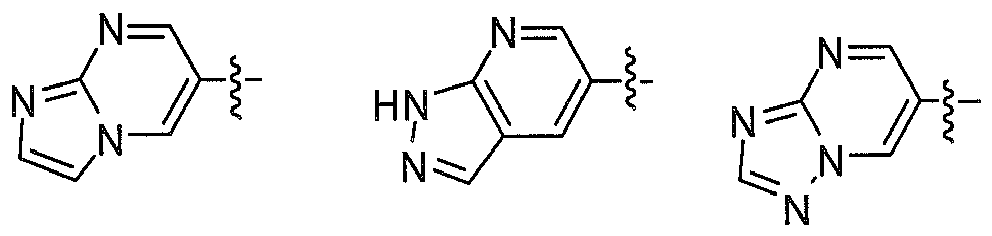

- Heterocyclic alkynyl benzene compounds and their pharmaceutical acceptable salts, prodrugs,or stereoisomers according to claim 1, wherein,
R2 is selected from:1)H2)methyl, ethyl, isopropyl, tert-butyl;3)cyclopropyl;4)F, Cl, Br;5)CF3. - Heterocyclic alkynyl benzene compounds and their pharmaceutical acceptable salts, prodrugs, or stereoisomers according to claims 1-4, wherein,
C ring
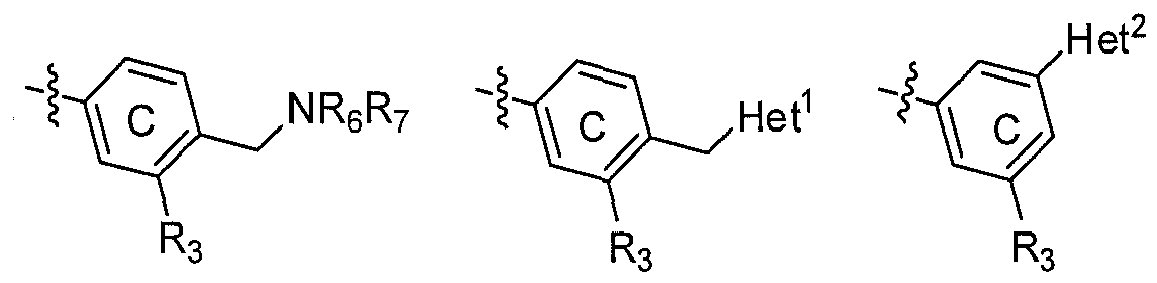
- Heterocyclic alkynyl benzene compounds and pharmaceutical acceptable salts, prodrugs, or stereoisomers according to claim1, wherein the compounds with formula (I) structure is specially selected from:

 X, Y, Z are independently selected from N, CH; D ring is a heterocycle contains 1~3 N atoms; the fused ring of D ring with A ring is selected from:
 R1, R2, R3, R6, R7, n, L1, L2, Het1, Het2 have the same definition as claim 1.
 - Heterocyclic alkynyl benzene compounds and pharmaceutical acceptable salts, prodrugs, or stereoisomers according to claim 6, wherein the Heterocyclic alkynyl benzene compound is specially selected from:3-(2-(2-(cyclopropylamino)pyrimidin-5-yl)ethynyl)-4-methyl-N-(3-(4-methyl-1H-imidazol-1-yl)-5-(tri fluoromethyl)phenyl)benzamide;N-(3-(1H-imidazol-1-yl)-5-(trifluoromethyl)phenyl)-3-(2-(2-(cyclopropylamino)pyrimidin-5-yl)ethyn yl)-4-methylbenzamide;4-methyl-N-(3-(4-methyl-1H-imidazol-1-yl)-5-(trifluoromethyl)phenyl)-3-(2-(2-(methylamino)pyrimi din-5-yl)ethynyl)benzamide;3-(2-(2-(ethylamino)pyrimidin-5-yl)ethynyl)-4-methyl-N-(3-(4-methyl-1H-imidazol-1-yl)-5-(trifluoro methyl)phenyl)benzamide;4-methyl-N-(3-(4-methyl-1H-imidazol-1-yl)-5-(trifluoromethyl)phenyl)-3-(2-(2-(piperidin-1-yl)pyrimi din-5-yl)ethynyl)benzamide;3-(2-(6-aminopyridin-3-yl)ethynyl)-4-methyl-N-(3-(4-methyl-1H-imidazol-1-yl)-5-(trifluoromethyl)ph enyl)benzamide;3-(2-(2-(cyclopropylamino)pyrimidin-5-yl)ethynyl)-4-methyl-N-(4-((4-methylpiperazin-1-yl)methyl)-3-(trifluoromethyl)phenyl)benzamide;3-(2-(3H-imidazo[4,5-b]pyridin-6-yl)ethynyl)-4-methyl-N-(3-(4-methyl-1H-imidazol-1-yl)-5-(trifluor omethyl)phenyl)benzamide;4-methyl-N-(4-((4-methylpiperazin-1-yl)methyl)-3-(trifluoromethyl)phenyl)-3-(2-(pyrazolo[1,5-a]pyri midin-6-yl)ethynyl)benzamide;3-(2-(2-(cyclohexylamino)pyrimidin-5-yl)ethynyl)-4-methyl-N-(3-(4-methyl-1H-imidazol-1-yl)-5-(trif luoromethyl)phenyl)benzamide;4-methyl-N-(3-(4-methyl-1H-imidazol-1-yl)-5-(trifluoromethyl)phenyl)-3 -(2-(2-(phenylamino)pyrimi din-5-yl)ethynyl)benzamide;3-(2-(1H-pyrrolo[2,3-b]pyridin-5-yl)ethynyl)-4-methyl-N-(3-(4-methyl-1H-imidazol-1-yl)-5-(trifluoro methyl)phenyl)benzamide;3-(2-(2-(2-hydroxyethylamino)pyrimidin-5-yl)ethynyl)-4-methyl-N-(3-(4-methyl-1H-imidazol-1-yl)-5 -(trifluoromethyl)phenyl)benzamide;N-(3-(1H-imidazol-1-yl)-5-(trifluoromethyl)phenyl)-4-methyl-3-(2-(pyrazolo[1,5-a]pyrimidin-6-yl)eth ynyl)benzamide;4-methyl-N-(3-(3-methyl-1H-1,2,4-triazol-1-yl)-5-(trifluoromethyl)phenyl)-3-(2-(pyrazolo[1,5-a]pyri midin-6-yl)ethynyl)benzamide;3-(2-(imidazo[1,2-a]pyrimidin-6-yl)ethynyl)-4-methyl-N-(3-(4-methyl-1H-imidazol-1-yl)-5-(trifluoro methyl)phenyl)benzamide;3-(2-(1H-pyrazolo[3,4-b]pyridin-5-yl)ethynyl)-4-methyl-N-(3-(4-methyl-1H-imidazol-1-yl)-5-(trifluor omethyl)phenyl)benzamide;N-(3-(1H-imidazol-1-yl)-5-(trifluoromethyl)phenyl)-3-(2-(1H-pyrazolo[3,4-b]pyridin-5-yl)ethynyl)-4-methylbenzamide;3-(2-(1H-pyrazolo[3,4-b]pyridin-5-yl)ethynyl)-4-methyl-N-(3-(3-methyl-1H-1,2,4-triazol-1-yl)-5-(trifl uoromethyl)phenyl)benzamide;3-(2-([1,2,4]triazolo[1,5-a]pyrimidin-6-yl)ethynyl)-4-methyl-N-(3-(4-methyl-1H-imidazol-1-yl)-5-(trif luoromethyl)phenyl)benzamide;4-methyl-N-(3-(4-methyl-1H-imidazol-1-yl)-5-(trifluoromethyl)phenyl)-3-(2-(pyrazolo[1,5-a]pyrimidi n-6-yl)ethynyl)benzamide;3-(2-(1H-pyrazolo[3,4-b]pyridin-5-yl)ethynyl)-4-methyl-N-(3-(trifluoromethyl)phenyl)benzamide;3-(2-(1H-pyrazolo[3,4-b]pyridin-5-yl)ethynyl)-4-methyl-N-(4-((4-methylpiperazin-1-yl)methyl)-3-(tri fluoromethyl)phenyl)benzamide;3-(2-(2-((S)-2,3-dihydroxypropylamino)pyrimidin-5-yl)ethynyl)-4-methyl-N-(3-(4-methyl-1H-imidaz ol-1-yl)-5-(trifluoromethyl)phenyl)benzamide;3-(2-(2-(diethylamino)pyrimidin-5-yl)ethynyl)-4-methyl-N-(3-(4-methyl-1H-imidazol-1-yl)-5-(trifluor omethyl)phenyl)benzamide;3-(2-(2-(tert-butylamino)pyrimidin-5-yl)ethynyl)-4-methyl-N-(3-(4-methyl-1H-imidazol-1-yl)-5-(triflu oromethyl)phenyl)benzamide;3-(2-(2-(isopropylamino)pyrimidin-5-yl)ethynyl)-4-methyl-N-(3-(4-methyl-1H-imidazol-1-yl)-5-(trifl uoromethyl)phenyl)benzamide;3-(2-(2-aminopyrimidin-5-yl)ethynyl)-4-methyl-N-(3-(4-methyl-1H-imidazol-1-yl)-5-(trifluoromethyl )phenyl)benzamide;4-methyl-N-(4-(morpholinomethyl)-3-(trifluoromethyl)phenyl)-3-(2-(pyrazolo[1,5-a]pyrimidin-6-yl)et hynyl)benzamide;N-(4-((4-(2-hydroxyethyl)piperazin-1-yl)methyl)-3-(trifluoromethyl)phenyl)-4-methyl-3-(2-(pyrazolo[ 1,5-a]pyrimidin-6-yl)ethynyl)benzamide;(S)-N-(4-((3-(dimethylamino)pyrrolidin-1-yl)methyl)-3-(trifluoromethyl)phenyl)-4-methyl-3-(2-(pyraz olo[1,5-a]pyrimidin-6-yl)ethynyl)benzamide;N-(3-tert-butyl-5-(4-methyl-1H-imidazol-1-yl)phenyl)-4-methyl-3-(2-(pyrazolo[1,5-a]pyrimidin-6-yl) ethynyl)benzamide;3-(2-(1H-pyrazolo [3,4-b]pyridin-5-yl)ethynyl)-4-methyl-N-(3-(4-methyl-1H-imidazol-1-yl)phenyl)be nzamide;3-(2-(1H-pyrazolo[3,4-b]pyridin-5-yl)ethynyl)-N-(3-tert-butyl-5-(4-methyl-1H-imidazol-1-yl)phenyl)-4-methylbenzamide;3-(2-(1H-pyrazolo[3,4-b]pyridin-5-yl)ethynyl)-N-(3-fluoro-5-(4-methyl-1H-imidazol-1-yl)phenyl)-4-methylbenzamide;3-(2-(1H-pyrazolo[3,4-b]pyridin-5-yl)ethynyl)-N-(3-chloro-5-(4-methyl-1H-imidazol-1-yl)phenyl)-4-methylbenzamide;(R)-N-(4-((3-(dimethylamino)pyrrolidin-1-yl)methyl)-3-(trifluoromethyl)phenyl)-4-methyl-3-(2-(pyra zolo[1,5-a]pyrimidin-6-yl)ethynyl)benzamide;(S)-3-(2-(1H-pyrazolo[3,4-b]pyridin-5-yl)ethynyl)-N-(4-((3-(dimethylamino)pyrrolidin-1-yl)methyl)-3 -(trifluoromethyl)phenyl)-4-methylbenzamide;(R)-3-(2-(1H-pyrazolo[3,4-b]pyridin-5-yl)ethynyl)-N-(4-((3-(dimethylamino)pyrrolidin-1-yl)methyl)-3-(trifluoromethyl)phenyl)-4-methylbenzamide;3-(2-(1H-pyrazolo[3,4-b]pyridin-5-yl)ethynyl)-N-(4-((4-methylpiperazin-1-yl)methyl)-3-(trifluoromet hyl)phenyl)benzamide;3-(2-(1H-pyrazolo[3,4-b]pyridin-5-yl)ethynyl)-4-methyl-N-(4-((4-methylpiperazin-1-yl)methyl)-3-(tri fluoromethyl)phenyl)benzamide bimesylate;3-(2-(1H-pyrazolo[3,4-b]pyridin-5-yl)ethynyl)-4-methyl-N-(4-((4-methylpiperazin-1-yl)methyl)-3-(trif luoromethyl)phenyl)benzamide dihydrochloride;methyl-N-(3-(3-methyl-1H-1,2,4-triazol-1-yl)-5-(trifluoromethyl)phenyl)-3-(2-(pyrazolo[1,5-a]pyrimi din-6-yl)ethynyl)benzamide mesylate;N-(3-(1H-imidazol-1-yl)-5-(trifluoromethyl)phenyl)-4-methyl-3-(2-(pyrazolo[1,5-a]pyrimidin-6-yl)eth ynyl)benzamide mesylate;3-(2-(2-(cyclopropylamino)pyrimidin-5-yl)ethynyl)-4-methyl-N-(4-((4-methylpiperazin-1-yl)methyl)-3-(trifluoromethyl)phenyl)benzamide trimesylate;3-(2-(1H-pyrazolo[3,4-b]pyridin-5-yl)ethynyl)-4-methyl-N-(3-(3-methyl-1H-1,2,4-triazol-1-yl)-5-(trifl uoromethyl)phenyl)benzamide mesylate;3-(2-(1H-pyrazolo[3,4-b]pyridin-5-yl)ethynyl)-N-(3-tert-butyl-5-(4-methyl-1H-imidazol-1-yl)phenyl)-4-methylbenzamide mesylate;4-methyl-N-(4-((4-methylpiperazin-1-yl)methyl)-3-(trifluoromethyl)phenyl)-3-(2-(pyrazolo[1,5-a]pyri midin-6-yl)ethynyl)benzamide dimesylate.
- A pharmaceutical composition for treating tumors comprising the heterocyclic alkynyl benzene compounds of any one of claims 1-7 or their pharmaceutically acceptable salts, stereoisomers or prodrugs thereof with pharmaceutically acceptable carriers.
- Use of the heterocyclic alkynyl benzene compound of any one of claims 1-7 or their pharmaceutically acceptable salts, stereoisomers or pro-drugs and the use for preparing drugs for prevention or treatment of cancer.
- The use according to claim 9, wherein, the cancer type anyone of Leukemia, Gastrointestinal stromal tumors (GIST), Histiocytic lymphoma, Non-small cell lung cancer, Small cell lung cancer, Lung adenocarcinoma, , squamous cell lung carcinoma, pancreatic cancer, breast cancer, prostate cancer, liver cancer, skin cancer, squamous cell carcinoma, nasopharyngeal carcinoma.
Priority Applications (3)
| Application Number | Priority Date | Filing Date | Title |
|---|---|---|---|
| PL11800049T PL2594567T3 (en) | 2010-07-01 | 2011-06-03 | Heterocyclic alkynyl benzene compounds and medical compositions and uses thereof |
| SI201131916T SI2594567T1 (en) | 2010-07-01 | 2011-06-03 | Heterocyclic alkynyl benzene compounds and medical compositions and uses thereof |
| EP20184072.5A EP3741751A1 (en) | 2010-07-01 | 2011-06-03 | Heterocyclic alkynyl benzene compounds and medical compositions and uses thereof |
Applications Claiming Priority (2)
| Application Number | Priority Date | Filing Date | Title |
|---|---|---|---|
| CN2010102166037A CN101885722B (en) | 2010-07-01 | 2010-07-01 | Heterocycle alkyne and benzene compound, medicinal composition and application thereof |
| PCT/CN2011/000935 WO2012000304A1 (en) | 2010-07-01 | 2011-06-03 | Heterocyclic alkynyl benzene compounds and medical compositions and uses thereof |
Related Child Applications (1)
| Application Number | Title | Priority Date | Filing Date |
|---|---|---|---|
| EP20184072.5A Division EP3741751A1 (en) | 2010-07-01 | 2011-06-03 | Heterocyclic alkynyl benzene compounds and medical compositions and uses thereof |
Publications (3)
| Publication Number | Publication Date |
|---|---|
| EP2594567A1 true EP2594567A1 (en) | 2013-05-22 |
| EP2594567A4 EP2594567A4 (en) | 2015-03-11 |
| EP2594567B1 EP2594567B1 (en) | 2020-07-29 |
Family
ID=43071837
Family Applications (2)
| Application Number | Title | Priority Date | Filing Date |
|---|---|---|---|
| EP11800049.6A Active EP2594567B1 (en) | 2010-07-01 | 2011-06-03 | Heterocyclic alkynyl benzene compounds and medical compositions and uses thereof |
| EP20184072.5A Pending EP3741751A1 (en) | 2010-07-01 | 2011-06-03 | Heterocyclic alkynyl benzene compounds and medical compositions and uses thereof |
Family Applications After (1)
| Application Number | Title | Priority Date | Filing Date |
|---|---|---|---|
| EP20184072.5A Pending EP3741751A1 (en) | 2010-07-01 | 2011-06-03 | Heterocyclic alkynyl benzene compounds and medical compositions and uses thereof |
Country Status (16)
| Country | Link |
|---|---|
| EP (2) | EP2594567B1 (en) |
| JP (1) | JP5756518B2 (en) |
| KR (1) | KR101570456B1 (en) |
| CN (2) | CN101885722B (en) |
| AU (1) | AU2011274192B2 (en) |
| CA (1) | CA2804347C (en) |
| CY (1) | CY1124117T1 (en) |
| DK (1) | DK2594567T3 (en) |
| ES (1) | ES2816382T3 (en) |
| HU (1) | HUE051346T2 (en) |
| IL (1) | IL223983A (en) |
| LT (1) | LT2594567T (en) |
| PL (1) | PL2594567T3 (en) |
| PT (1) | PT2594567T (en) |
| SI (1) | SI2594567T1 (en) |
| WO (1) | WO2012000304A1 (en) |
Cited By (9)
| Publication number | Priority date | Publication date | Assignee | Title |
|---|---|---|---|---|
| EP2927232A4 (en) * | 2012-11-28 | 2016-08-10 | Nanjing Sanhome Pharmaceutical Co Ltd | Heteroaryl alkyne compound and application thereof |
| CN106580993A (en) * | 2016-07-25 | 2017-04-26 | 广州顺健生物医药科技有限公司 | Novel application of icotinib and salt acceptable pharmaceutically in disease treatment |
| RU2652992C2 (en) * | 2016-04-18 | 2018-05-04 | Общество С Ограниченной Ответственностью "Фьюжн Фарма" | Novel crystalline salt form 3-(1,2,4-triazolo[4,3-a]pyridin-3-ylethynyl)-4-methyl-n-(4-((4-methylpiperazin-1-yl)methyl)-3-trifluoromethylphenyl) benzamide for medical application |
| EP3741751A1 (en) * | 2010-07-01 | 2020-11-25 | Guangzhou Healthquest Pharma Co., Ltd. | Heterocyclic alkynyl benzene compounds and medical compositions and uses thereof |
| EP3713576A4 (en) * | 2018-12-03 | 2021-01-13 | Ascentage Pharma (Suzhou) Co., Ltd. | CANCER TREATMENT METHODS |
| WO2021013028A1 (en) | 2019-07-19 | 2021-01-28 | Ascentage Pharma (Suzhou) Co., Ltd. | Pharmaceutical combination and use thereof |
| EP3904342A1 (en) * | 2020-04-28 | 2021-11-03 | Grindeks, A Joint Stock Company | Process for the preparation of 3-(trifluoromethyl)-5-(4-methyl-1h-imidazole-1-yl)-benzeneamine hydrochloride |
| RU2829609C1 (en) * | 2020-07-02 | 2024-11-01 | Гуанчжоу Хэлсквест Фармасьютикалс Ко., Лтд. | Crystals of alkynyl-containing compound, salt and solvate thereof, method of production and ways of application thereof |
| US12152025B2 (en) | 2020-02-21 | 2024-11-26 | Ascentage Pharma (Suzhou) Co., Ltd. | Process for preparing alkynyl-containing compound and intermediate thereof |
Families Citing this family (29)
| Publication number | Priority date | Publication date | Assignee | Title |
|---|---|---|---|---|
| US8846671B2 (en) | 2010-07-01 | 2014-09-30 | Guangzhou Institute Of Biomedicine And Health, Chinese Academy Of Sciences | Heterocyclic alkynyl benzene compounds and medical compositions and uses thereof |
| CN103214480B (en) * | 2012-01-19 | 2015-12-16 | 中国科学院广州生物医药与健康研究院 | Pyrazolopyridine alkynes benzene-like compounds and medicinal compositions thereof and application |
| US8859553B2 (en) * | 2012-07-30 | 2014-10-14 | Astar Biotech Llc | Protein kinase inhibitors |
| CN103965195B (en) * | 2013-02-01 | 2016-09-28 | 中国科学院广州生物医药与健康研究院 | Compound and application thereof for discoidin domain receptor micromolecular inhibitor |
| CN104211639A (en) * | 2013-06-05 | 2014-12-17 | 中国科学院上海药物研究所 | Alkynyl heterocyclic compounds and application thereof |
| WO2015100322A1 (en) | 2013-12-24 | 2015-07-02 | Oncotartis, Inc. | Benzamide and nicotinamide compounds and methods of using same |
| CN104490889B (en) * | 2014-12-30 | 2016-04-20 | 中国人民解放军第四军医大学 | The application of a kind of DDR2 micromolecular inhibitor pulmonary fibrosis resistant |
| CA2991697A1 (en) | 2015-08-31 | 2017-03-09 | Toray Industries, Inc. | Urea derivative and use therefor |
| WO2017038871A1 (en) | 2015-08-31 | 2017-03-09 | 東レ株式会社 | Urea derivative and use therefor |
| CN106699729A (en) * | 2015-11-12 | 2017-05-24 | 浙江大德药业集团有限公司 | Benzamide compounds containing acetenyl group |
| EP3496717A4 (en) * | 2016-08-15 | 2020-01-15 | Purdue Research Foundation | 4-SUBSTITUTED AMINOISOCHINOLINE DERIVATIVES |
| WO2018068739A1 (en) * | 2016-10-13 | 2018-04-19 | 深圳市塔吉瑞生物医药有限公司 | Alkynyl heterocyclic compound for inhibiting protein kinase activity |
| KR20190043437A (en) | 2017-10-18 | 2019-04-26 | 씨제이헬스케어 주식회사 | Heterocylic compound as a protein kinase inhibitor |
| CN111035641B (en) * | 2018-10-11 | 2022-04-12 | 暨南大学 | Novel application of GZD824 and pharmaceutically acceptable salts thereof in treatment of diseases |
| KR102195348B1 (en) | 2018-11-15 | 2020-12-24 | 에이치케이이노엔 주식회사 | Novel compound as a protein kinase inhibitor, and the pharmaceutical composition comprising thereof |
| EP3986559A1 (en) * | 2019-06-24 | 2022-04-27 | BenevolentAI Bio Limited | New compounds and methods |
| CN110372705A (en) * | 2019-08-05 | 2019-10-25 | 辽宁大学 | New substituted benzamide compound and its pharmaceutically acceptable salt and preparation method and application |
| TWI777321B (en) | 2019-12-04 | 2022-09-11 | 大陸商蘇州亞盛藥業有限公司 | Pharmaceutical combination and use thereof |
| EP3861990A4 (en) * | 2019-12-09 | 2022-02-23 | Ascentage Pharma (Suzhou) Co., Ltd. | PHARMACEUTICAL COMPOSITION OF AN ALKYNYL-CONTAINING COMPOUND, ITS PREPARATION METHOD AND ITS APPLICATION |
| CN110917157B (en) * | 2020-01-21 | 2020-06-16 | 上海亚盛医药科技有限公司 | Pharmaceutical composition containing alkynyl compound, its preparation method and application |
| EP3960742A4 (en) * | 2020-07-02 | 2023-08-09 | Guangzhou Healthquest Pharmaceuticals Co., Ltd. | Crystals of alkynyl-containing compound, salt and solvate thereof, preparation method, and applications |
| CN111732586B (en) * | 2020-07-02 | 2021-03-12 | 广州顺健生物医药科技有限公司 | Crystal form, preparation method and application of alkynyl-containing compound salt |
| CN111499632B (en) * | 2020-07-02 | 2020-11-10 | 上海亚盛医药科技有限公司 | Crystal form I of alkynyl-containing compound, its preparation method and application |
| CN114163434B (en) * | 2020-09-10 | 2023-05-23 | 苏州亚盛药业有限公司 | Preparation method of alkynyl-containing compound and intermediate thereof |
| WO2022105836A1 (en) * | 2020-11-19 | 2022-05-27 | Guangzhou Healthquest Pharma Co., Ltd. | Combination therapies for treating cancer |
| KR20220099503A (en) * | 2021-01-05 | 2022-07-13 | 주식회사 비투에스바이오 | Heteroaryl-ethynyl derivative compounds, and uses thereof |
| US20240316051A1 (en) * | 2021-04-19 | 2024-09-26 | Ascentage Pharma (Suzhou) Co., Ltd. | A pharmaceutical combination and use thereof |
| CN115947693B (en) * | 2022-12-18 | 2024-11-05 | 重庆医科大学 | A FGFR4 inhibitor and its preparation and application |
| WO2025153072A1 (en) * | 2024-01-19 | 2025-07-24 | Guangzhou Healthquest Pharma Co., Ltd. | Therapy for fgfr1 rearrangement-related cancer |
Family Cites Families (4)
| Publication number | Priority date | Publication date | Assignee | Title |
|---|---|---|---|---|
| US7776869B2 (en) * | 2004-10-18 | 2010-08-17 | Amgen Inc. | Heteroaryl-substituted alkyne compounds and method of use |
| SI1973545T1 (en) * | 2005-12-23 | 2013-04-30 | Ariad Pharmaceuticals, Inc. | Bicyclic heteroaryl compounds |
| DK1973545T3 (en) * | 2005-12-23 | 2013-02-25 | Ariad Pharma Inc | Bicyclic heteroaryl compounds |
| CN101885722B (en) * | 2010-07-01 | 2013-07-24 | 中国科学院广州生物医药与健康研究院 | Heterocycle alkyne and benzene compound, medicinal composition and application thereof |
-
2010
- 2010-07-01 CN CN2010102166037A patent/CN101885722B/en active Active
-
2011
- 2011-06-03 WO PCT/CN2011/000935 patent/WO2012000304A1/en not_active Ceased
- 2011-06-03 EP EP11800049.6A patent/EP2594567B1/en active Active
- 2011-06-03 SI SI201131916T patent/SI2594567T1/en unknown
- 2011-06-03 JP JP2013516964A patent/JP5756518B2/en active Active
- 2011-06-03 DK DK11800049.6T patent/DK2594567T3/en active
- 2011-06-03 LT LTEP11800049.6T patent/LT2594567T/en unknown
- 2011-06-03 PL PL11800049T patent/PL2594567T3/en unknown
- 2011-06-03 CN CN201180040373.6A patent/CN103124730B/en active Active
- 2011-06-03 CA CA2804347A patent/CA2804347C/en active Active
- 2011-06-03 AU AU2011274192A patent/AU2011274192B2/en active Active
- 2011-06-03 ES ES11800049T patent/ES2816382T3/en active Active
- 2011-06-03 EP EP20184072.5A patent/EP3741751A1/en active Pending
- 2011-06-03 HU HUE11800049A patent/HUE051346T2/en unknown
- 2011-06-03 PT PT118000496T patent/PT2594567T/en unknown
- 2011-06-03 KR KR1020137002726A patent/KR101570456B1/en active Active
-
2012
- 2012-12-27 IL IL223983A patent/IL223983A/en active IP Right Grant
-
2020
- 2020-09-23 CY CY20201100897T patent/CY1124117T1/en unknown
Non-Patent Citations (2)
| Title |
|---|
| No further relevant documents disclosed * |
| See also references of WO2012000304A1 * |
Cited By (13)
| Publication number | Priority date | Publication date | Assignee | Title |
|---|---|---|---|---|
| EP3741751A1 (en) * | 2010-07-01 | 2020-11-25 | Guangzhou Healthquest Pharma Co., Ltd. | Heterocyclic alkynyl benzene compounds and medical compositions and uses thereof |
| EP2927232A4 (en) * | 2012-11-28 | 2016-08-10 | Nanjing Sanhome Pharmaceutical Co Ltd | Heteroaryl alkyne compound and application thereof |
| EA032865B1 (en) * | 2016-04-18 | 2019-07-31 | Общество С Ограниченной Ответственностью "Фьюжн Фарма" | NOVEL CRYSTALLINE SALT FORM OF 3-(1,2,4-TRIAZOLO[4,3-a]PYRIDINE-3-YLETHYNYL)-4-METHYL-N-(4-((4-METHYLPIPERAZIN-1-YL)METHYL)-3-TRIFLUOROMETHYLPHENYL)BENZAMIDE FOR MEDICAL APPLICATION |
| RU2652992C2 (en) * | 2016-04-18 | 2018-05-04 | Общество С Ограниченной Ответственностью "Фьюжн Фарма" | Novel crystalline salt form 3-(1,2,4-triazolo[4,3-a]pyridin-3-ylethynyl)-4-methyl-n-(4-((4-methylpiperazin-1-yl)methyl)-3-trifluoromethylphenyl) benzamide for medical application |
| CN106580993B (en) * | 2016-07-25 | 2018-11-30 | 广州顺健生物医药科技有限公司 | New application of the Nike for Buddhist nun and its pharmaceutically acceptable salt in treatment disease |
| EP3488850A4 (en) * | 2016-07-25 | 2020-08-26 | Healthquest Pharma Inc. | INNOVATIVE USE OF GZD824 AND PHARMACEUTICAL ACCEPTABLE SALTS THEREOF FOR THE TREATMENT OF DISEASES |
| CN106580993A (en) * | 2016-07-25 | 2017-04-26 | 广州顺健生物医药科技有限公司 | Novel application of icotinib and salt acceptable pharmaceutically in disease treatment |
| EP3713576A4 (en) * | 2018-12-03 | 2021-01-13 | Ascentage Pharma (Suzhou) Co., Ltd. | CANCER TREATMENT METHODS |
| EP4585269A3 (en) * | 2018-12-03 | 2025-09-17 | Ascentage Pharma (Suzhou) Co., Ltd. | Methods for cancer therapy |
| WO2021013028A1 (en) | 2019-07-19 | 2021-01-28 | Ascentage Pharma (Suzhou) Co., Ltd. | Pharmaceutical combination and use thereof |
| US12152025B2 (en) | 2020-02-21 | 2024-11-26 | Ascentage Pharma (Suzhou) Co., Ltd. | Process for preparing alkynyl-containing compound and intermediate thereof |
| EP3904342A1 (en) * | 2020-04-28 | 2021-11-03 | Grindeks, A Joint Stock Company | Process for the preparation of 3-(trifluoromethyl)-5-(4-methyl-1h-imidazole-1-yl)-benzeneamine hydrochloride |
| RU2829609C1 (en) * | 2020-07-02 | 2024-11-01 | Гуанчжоу Хэлсквест Фармасьютикалс Ко., Лтд. | Crystals of alkynyl-containing compound, salt and solvate thereof, method of production and ways of application thereof |
Also Published As
| Publication number | Publication date |
|---|---|
| HUE051346T2 (en) | 2021-03-01 |
| DK2594567T3 (en) | 2020-09-28 |
| PL2594567T3 (en) | 2021-04-06 |
| CN103124730B (en) | 2014-12-10 |
| LT2594567T (en) | 2020-12-28 |
| EP2594567B1 (en) | 2020-07-29 |
| AU2011274192B2 (en) | 2014-11-06 |
| KR101570456B1 (en) | 2015-12-01 |
| CA2804347A1 (en) | 2012-01-05 |
| ES2816382T3 (en) | 2021-04-05 |
| CN101885722B (en) | 2013-07-24 |
| CY1124117T1 (en) | 2022-03-24 |
| WO2012000304A1 (en) | 2012-01-05 |
| CN103124730A (en) | 2013-05-29 |
| KR20130043175A (en) | 2013-04-29 |
| EP2594567A4 (en) | 2015-03-11 |
| CA2804347C (en) | 2016-07-05 |
| CN101885722A (en) | 2010-11-17 |
| JP5756518B2 (en) | 2015-07-29 |
| JP2013529652A (en) | 2013-07-22 |
| AU2011274192A1 (en) | 2013-02-07 |
| EP3741751A1 (en) | 2020-11-25 |
| PT2594567T (en) | 2020-09-07 |
| AU2011274192A8 (en) | 2013-03-07 |
| SI2594567T1 (en) | 2021-01-29 |
| IL223983A (en) | 2017-11-30 |
Similar Documents
| Publication | Publication Date | Title |
|---|---|---|
| EP2594567B1 (en) | Heterocyclic alkynyl benzene compounds and medical compositions and uses thereof | |
| US8846671B2 (en) | Heterocyclic alkynyl benzene compounds and medical compositions and uses thereof | |
| AU2015353210B2 (en) | 2-aminopyrimidine compound and pharmaceutical composition and use thereof | |
| US10683278B2 (en) | Substituted quinolone derivatives, or pharmaceutically acceptable salts or stereoisomers thereof, and pharmaceutical compositions and use thereof | |
| US20240270759A1 (en) | Preparation of SHP2 phosphatase inhibitors and its applications | |
| TW201217380A (en) | New aminopyrazoloquinazolines | |
| CN103539784A (en) | Heterocyclic benzamide compounds, pharmaceutical compositions as well as application thereof | |
| CN101747330A (en) | Pyridyl thiazole amine compound and medicinal composition and application thereof | |
| CN112851667B (en) | Nitrogen-containing heterocyclic compounds and pharmaceutical compositions and applications thereof | |
| CN112313213A (en) | 3-amino pyrazole compound and application thereof | |
| AU2019241374B2 (en) | Quinoline or quinazoline compound and application thereof | |
| CN118084902B (en) | 2-Aminothiazole pyrimidopyridone compound or pharmaceutically acceptable salt or stereoisomer, preparation method and application | |
| CN114539263A (en) | Nitrogen-containing heterocyclic ring compound and medicinal composition and application thereof | |
| HK1182377A (en) | Heterocyclic alkynyl benzene compounds and medical compositions and uses thereof | |
| HK1182377B (en) | Heterocyclic alkynyl benzene compounds and medical compositions and uses thereof | |
| HK40051951B (en) | Heterocyclic compound |
Legal Events
| Date | Code | Title | Description |
|---|---|---|---|
| PUAI | Public reference made under article 153(3) epc to a published international application that has entered the european phase |
Free format text: ORIGINAL CODE: 0009012 |
|
| 17P | Request for examination filed |
Effective date: 20130201 |
|
| AK | Designated contracting states |
Kind code of ref document: A1 Designated state(s): AL AT BE BG CH CY CZ DE DK EE ES FI FR GB GR HR HU IE IS IT LI LT LU LV MC MK MT NL NO PL PT RO RS SE SI SK SM TR |
|
| DAX | Request for extension of the european patent (deleted) | ||
| REG | Reference to a national code |
Ref country code: HK Ref legal event code: DE Ref document number: 1182377 Country of ref document: HK |
|
| A4 | Supplementary search report drawn up and despatched |
Effective date: 20150210 |
|
| RIC1 | Information provided on ipc code assigned before grant |
Ipc: C07D 403/12 20060101AFI20150204BHEP Ipc: A61P 35/00 20060101ALI20150204BHEP Ipc: A61K 31/4439 20060101ALI20150204BHEP Ipc: C07D 487/04 20060101ALI20150204BHEP Ipc: A61K 31/496 20060101ALI20150204BHEP Ipc: C07D 471/04 20060101ALI20150204BHEP Ipc: C07D 401/12 20060101ALI20150204BHEP Ipc: A61P 35/02 20060101ALI20150204BHEP Ipc: A61K 31/519 20060101ALI20150204BHEP Ipc: C07D 239/42 20060101ALI20150204BHEP Ipc: A61K 31/506 20060101ALI20150204BHEP Ipc: A61K 31/437 20060101ALI20150204BHEP |
|
| RAP1 | Party data changed (applicant data changed or rights of an application transferred) |
Owner name: GUANGZHOU HEALTHQUEST PHARMA CO., LTD. |
|
| STAA | Information on the status of an ep patent application or granted ep patent |
Free format text: STATUS: EXAMINATION IS IN PROGRESS |
|
| 17Q | First examination report despatched |
Effective date: 20180612 |
|
| GRAP | Despatch of communication of intention to grant a patent |
Free format text: ORIGINAL CODE: EPIDOSNIGR1 |
|
| STAA | Information on the status of an ep patent application or granted ep patent |
Free format text: STATUS: GRANT OF PATENT IS INTENDED |
|
| INTG | Intention to grant announced |
Effective date: 20200318 |
|
| GRAS | Grant fee paid |
Free format text: ORIGINAL CODE: EPIDOSNIGR3 |
|
| GRAA | (expected) grant |
Free format text: ORIGINAL CODE: 0009210 |
|
| STAA | Information on the status of an ep patent application or granted ep patent |
Free format text: STATUS: THE PATENT HAS BEEN GRANTED |
|
| AK | Designated contracting states |
Kind code of ref document: B1 Designated state(s): AL AT BE BG CH CY CZ DE DK EE ES FI FR GB GR HR HU IE IS IT LI LT LU LV MC MK MT NL NO PL PT RO RS SE SI SK SM TR |
|
| REG | Reference to a national code |
Ref country code: GB Ref legal event code: FG4D |
|
| REG | Reference to a national code |
Ref country code: CH Ref legal event code: EP |
|
| REG | Reference to a national code |
Ref country code: AT Ref legal event code: REF Ref document number: 1295636 Country of ref document: AT Kind code of ref document: T Effective date: 20200815 |
|
| REG | Reference to a national code |
Ref country code: IE Ref legal event code: FG4D |
|
| REG | Reference to a national code |
Ref country code: DE Ref legal event code: R096 Ref document number: 602011067996 Country of ref document: DE |
|
| REG | Reference to a national code |
Ref country code: FI Ref legal event code: FGE |
|
| REG | Reference to a national code |
Ref country code: PT Ref legal event code: SC4A Ref document number: 2594567 Country of ref document: PT Date of ref document: 20200907 Kind code of ref document: T Free format text: AVAILABILITY OF NATIONAL TRANSLATION Effective date: 20200831 |
|
| REG | Reference to a national code |
Ref country code: DK Ref legal event code: T3 Effective date: 20200923 |
|
| REG | Reference to a national code |
Ref country code: NL Ref legal event code: FP |
|
| REG | Reference to a national code |
Ref country code: SE Ref legal event code: TRGR |
|
| REG | Reference to a national code |
Ref country code: GR Ref legal event code: EP Ref document number: 20200402634 Country of ref document: GR Effective date: 20201116 |
|
| PG25 | Lapsed in a contracting state [announced via postgrant information from national office to epo] |
Ref country code: BG Free format text: LAPSE BECAUSE OF FAILURE TO SUBMIT A TRANSLATION OF THE DESCRIPTION OR TO PAY THE FEE WITHIN THE PRESCRIBED TIME-LIMIT Effective date: 20201029 Ref country code: HR Free format text: LAPSE BECAUSE OF FAILURE TO SUBMIT A TRANSLATION OF THE DESCRIPTION OR TO PAY THE FEE WITHIN THE PRESCRIBED TIME-LIMIT Effective date: 20200729 Ref country code: NO Free format text: LAPSE BECAUSE OF FAILURE TO SUBMIT A TRANSLATION OF THE DESCRIPTION OR TO PAY THE FEE WITHIN THE PRESCRIBED TIME-LIMIT Effective date: 20201029 |
|
| PG25 | Lapsed in a contracting state [announced via postgrant information from national office to epo] |
Ref country code: RS Free format text: LAPSE BECAUSE OF FAILURE TO SUBMIT A TRANSLATION OF THE DESCRIPTION OR TO PAY THE FEE WITHIN THE PRESCRIBED TIME-LIMIT Effective date: 20200729 Ref country code: LV Free format text: LAPSE BECAUSE OF FAILURE TO SUBMIT A TRANSLATION OF THE DESCRIPTION OR TO PAY THE FEE WITHIN THE PRESCRIBED TIME-LIMIT Effective date: 20200729 Ref country code: IS Free format text: LAPSE BECAUSE OF FAILURE TO SUBMIT A TRANSLATION OF THE DESCRIPTION OR TO PAY THE FEE WITHIN THE PRESCRIBED TIME-LIMIT Effective date: 20201129 |
|
| REG | Reference to a national code |
Ref country code: HU Ref legal event code: AG4A Ref document number: E051346 Country of ref document: HU |
|
| REG | Reference to a national code |
Ref country code: AT Ref legal event code: UEP Ref document number: 1295636 Country of ref document: AT Kind code of ref document: T Effective date: 20200729 |
|
| REG | Reference to a national code |
Ref country code: ES Ref legal event code: FG2A Ref document number: 2816382 Country of ref document: ES Kind code of ref document: T3 Effective date: 20210405 |
|
| PG25 | Lapsed in a contracting state [announced via postgrant information from national office to epo] |
Ref country code: RO Free format text: LAPSE BECAUSE OF FAILURE TO SUBMIT A TRANSLATION OF THE DESCRIPTION OR TO PAY THE FEE WITHIN THE PRESCRIBED TIME-LIMIT Effective date: 20200729 Ref country code: SM Free format text: LAPSE BECAUSE OF FAILURE TO SUBMIT A TRANSLATION OF THE DESCRIPTION OR TO PAY THE FEE WITHIN THE PRESCRIBED TIME-LIMIT Effective date: 20200729 Ref country code: CZ Free format text: LAPSE BECAUSE OF FAILURE TO SUBMIT A TRANSLATION OF THE DESCRIPTION OR TO PAY THE FEE WITHIN THE PRESCRIBED TIME-LIMIT Effective date: 20200729 Ref country code: EE Free format text: LAPSE BECAUSE OF FAILURE TO SUBMIT A TRANSLATION OF THE DESCRIPTION OR TO PAY THE FEE WITHIN THE PRESCRIBED TIME-LIMIT Effective date: 20200729 |
|
| REG | Reference to a national code |
Ref country code: DE Ref legal event code: R097 Ref document number: 602011067996 Country of ref document: DE |
|
| PG25 | Lapsed in a contracting state [announced via postgrant information from national office to epo] |
Ref country code: AL Free format text: LAPSE BECAUSE OF FAILURE TO SUBMIT A TRANSLATION OF THE DESCRIPTION OR TO PAY THE FEE WITHIN THE PRESCRIBED TIME-LIMIT Effective date: 20200729 |
|
| PLBE | No opposition filed within time limit |
Free format text: ORIGINAL CODE: 0009261 |
|
| STAA | Information on the status of an ep patent application or granted ep patent |
Free format text: STATUS: NO OPPOSITION FILED WITHIN TIME LIMIT |
|
| PG25 | Lapsed in a contracting state [announced via postgrant information from national office to epo] |
Ref country code: SK Free format text: LAPSE BECAUSE OF FAILURE TO SUBMIT A TRANSLATION OF THE DESCRIPTION OR TO PAY THE FEE WITHIN THE PRESCRIBED TIME-LIMIT Effective date: 20200729 |
|
| 26N | No opposition filed |
Effective date: 20210430 |
|
| PG25 | Lapsed in a contracting state [announced via postgrant information from national office to epo] |
Ref country code: MC Free format text: LAPSE BECAUSE OF FAILURE TO SUBMIT A TRANSLATION OF THE DESCRIPTION OR TO PAY THE FEE WITHIN THE PRESCRIBED TIME-LIMIT Effective date: 20200729 |
|
| P01 | Opt-out of the competence of the unified patent court (upc) registered |
Effective date: 20230327 |
|
| PG25 | Lapsed in a contracting state [announced via postgrant information from national office to epo] |
Ref country code: MK Free format text: LAPSE BECAUSE OF FAILURE TO SUBMIT A TRANSLATION OF THE DESCRIPTION OR TO PAY THE FEE WITHIN THE PRESCRIBED TIME-LIMIT Effective date: 20200729 |
|
| PG25 | Lapsed in a contracting state [announced via postgrant information from national office to epo] |
Ref country code: MT Free format text: LAPSE BECAUSE OF FAILURE TO SUBMIT A TRANSLATION OF THE DESCRIPTION OR TO PAY THE FEE WITHIN THE PRESCRIBED TIME-LIMIT Effective date: 20200729 |
|
| PGFP | Annual fee paid to national office [announced via postgrant information from national office to epo] |
Ref country code: FI Payment date: 20250627 Year of fee payment: 15 |
|
| PGFP | Annual fee paid to national office [announced via postgrant information from national office to epo] |
Ref country code: PL Payment date: 20250523 Year of fee payment: 15 Ref country code: DE Payment date: 20250618 Year of fee payment: 15 |
|
| PGFP | Annual fee paid to national office [announced via postgrant information from national office to epo] |
Ref country code: GB Payment date: 20250618 Year of fee payment: 15 Ref country code: DK Payment date: 20250625 Year of fee payment: 15 |
|
| PGFP | Annual fee paid to national office [announced via postgrant information from national office to epo] |
Ref country code: LT Payment date: 20250523 Year of fee payment: 15 |
|
| PGFP | Annual fee paid to national office [announced via postgrant information from national office to epo] |
Ref country code: LU Payment date: 20250627 Year of fee payment: 15 Ref country code: NL Payment date: 20250618 Year of fee payment: 15 Ref country code: BE Payment date: 20250618 Year of fee payment: 15 |
|
| PGFP | Annual fee paid to national office [announced via postgrant information from national office to epo] |
Ref country code: PT Payment date: 20250522 Year of fee payment: 15 |
|
| PGFP | Annual fee paid to national office [announced via postgrant information from national office to epo] |
Ref country code: HU Payment date: 20250620 Year of fee payment: 15 Ref country code: FR Payment date: 20250624 Year of fee payment: 15 |
|
| PGFP | Annual fee paid to national office [announced via postgrant information from national office to epo] |
Ref country code: GR Payment date: 20250620 Year of fee payment: 15 |
|
| PGFP | Annual fee paid to national office [announced via postgrant information from national office to epo] |
Ref country code: AT Payment date: 20250620 Year of fee payment: 15 |
|
| PGFP | Annual fee paid to national office [announced via postgrant information from national office to epo] |
Ref country code: TR Payment date: 20250527 Year of fee payment: 15 |
|
| PGFP | Annual fee paid to national office [announced via postgrant information from national office to epo] |
Ref country code: IE Payment date: 20250618 Year of fee payment: 15 |
|
| PGFP | Annual fee paid to national office [announced via postgrant information from national office to epo] |
Ref country code: SI Payment date: 20250522 Year of fee payment: 15 Ref country code: SE Payment date: 20250618 Year of fee payment: 15 |
|
| PGFP | Annual fee paid to national office [announced via postgrant information from national office to epo] |
Ref country code: ES Payment date: 20250728 Year of fee payment: 15 |
|
| PGFP | Annual fee paid to national office [announced via postgrant information from national office to epo] |
Ref country code: IT Payment date: 20250624 Year of fee payment: 15 |
|
| PGFP | Annual fee paid to national office [announced via postgrant information from national office to epo] |
Ref country code: CH Payment date: 20250701 Year of fee payment: 15 |
|
| PGFP | Annual fee paid to national office [announced via postgrant information from national office to epo] |
Ref country code: CY Payment date: 20250527 Year of fee payment: 15 |