EP2594554A1 - Biaryl amide derivative or pharmaceutically acceptable salt thereof - Google Patents
Biaryl amide derivative or pharmaceutically acceptable salt thereof Download PDFInfo
- Publication number
- EP2594554A1 EP2594554A1 EP11806765.1A EP11806765A EP2594554A1 EP 2594554 A1 EP2594554 A1 EP 2594554A1 EP 11806765 A EP11806765 A EP 11806765A EP 2594554 A1 EP2594554 A1 EP 2594554A1
- Authority
- EP
- European Patent Office
- Prior art keywords
- group
- optionally substituted
- compound
- amino
- alkyl
- Prior art date
- Legal status (The legal status is an assumption and is not a legal conclusion. Google has not performed a legal analysis and makes no representation as to the accuracy of the status listed.)
- Withdrawn
Links
- 0 CCC(C1)C(*)*(C*)=C[C@]1(C)[N+]([O-])=O Chemical compound CCC(C1)C(*)*(C*)=C[C@]1(C)[N+]([O-])=O 0.000 description 11
- CQKCLEUTJZSAJJ-UHFFFAOYSA-N CC(C)(C)NS(c(ccc(NC(c(cc1)cc(N)c1-c1ccccc1OC(F)(F)F)=O)c1)c1OC)(=O)=O Chemical compound CC(C)(C)NS(c(ccc(NC(c(cc1)cc(N)c1-c1ccccc1OC(F)(F)F)=O)c1)c1OC)(=O)=O CQKCLEUTJZSAJJ-UHFFFAOYSA-N 0.000 description 1
- RVJCEFJTWLVITI-UHFFFAOYSA-N CC(C)(C)NS(c(ccc(NC(c(cc1)cc(Nc2ccccn2)c1-c1ccccc1OC(F)(F)F)=O)c1)c1OC)(=O)=O Chemical compound CC(C)(C)NS(c(ccc(NC(c(cc1)cc(Nc2ccccn2)c1-c1ccccc1OC(F)(F)F)=O)c1)c1OC)(=O)=O RVJCEFJTWLVITI-UHFFFAOYSA-N 0.000 description 1
- HEQGKEOPLKONAH-UHFFFAOYSA-N CC(C)(N1)[O](C)=S1(c(ccc(C(Nc(cc1)cc(CC(N2)=NOC2=O)c1-c1c(C(F)(F)F)cccc1)=O)c1)c1OC)=O Chemical compound CC(C)(N1)[O](C)=S1(c(ccc(C(Nc(cc1)cc(CC(N2)=NOC2=O)c1-c1c(C(F)(F)F)cccc1)=O)c1)c1OC)=O HEQGKEOPLKONAH-UHFFFAOYSA-N 0.000 description 1
- UNYFDZHCAHPBFW-UHFFFAOYSA-N CC(C)(N1)[O](C)=S1(c(ccc(C(Nc(cc1C/C(/N)=N\O)ccc1-c1c(C(F)(F)F)cccc1)=O)c1)c1OC)=O Chemical compound CC(C)(N1)[O](C)=S1(c(ccc(C(Nc(cc1C/C(/N)=N\O)ccc1-c1c(C(F)(F)F)cccc1)=O)c1)c1OC)=O UNYFDZHCAHPBFW-UHFFFAOYSA-N 0.000 description 1
- IABPHSSCENGGDA-UHFFFAOYSA-N CC(C)(N1)[O](C)=S1(c(ccc(C(Nc(cc1CC#N)ccc1-c1c(C(F)(F)F)cccc1)=O)c1)c1OC)=O Chemical compound CC(C)(N1)[O](C)=S1(c(ccc(C(Nc(cc1CC#N)ccc1-c1c(C(F)(F)F)cccc1)=O)c1)c1OC)=O IABPHSSCENGGDA-UHFFFAOYSA-N 0.000 description 1
- OPKIYJAHJUFXGO-UHFFFAOYSA-N CC(C)(N1)[O](C)=S1(c(ccc(C(Nc(cc1CCl)ccc1-c1c(C(F)(F)F)cccc1)=O)c1)c1OC)=O Chemical compound CC(C)(N1)[O](C)=S1(c(ccc(C(Nc(cc1CCl)ccc1-c1c(C(F)(F)F)cccc1)=O)c1)c1OC)=O OPKIYJAHJUFXGO-UHFFFAOYSA-N 0.000 description 1
- VOGSNCGBNJAYCG-UHFFFAOYSA-N CC(C)(N1)[O](C)=S1(c(ccc(N)c1)c1OC)=O Chemical compound CC(C)(N1)[O](C)=S1(c(ccc(N)c1)c1OC)=O VOGSNCGBNJAYCG-UHFFFAOYSA-N 0.000 description 1
- CIMUEXGBNTYCSO-UHFFFAOYSA-N CC(C)(N1)[O](C)=S1(c(ccc(NC(c1cc(C)c(B2OC(C)(C)C(C)(C)O2)cc1)=O)c1)c1OC)=O Chemical compound CC(C)(N1)[O](C)=S1(c(ccc(NC(c1cc(C)c(B2OC(C)(C)C(C)(C)O2)cc1)=O)c1)c1OC)=O CIMUEXGBNTYCSO-UHFFFAOYSA-N 0.000 description 1
- WWRCMNKATXZARA-UHFFFAOYSA-N CC(C)c1c(C)cccc1 Chemical compound CC(C)c1c(C)cccc1 WWRCMNKATXZARA-UHFFFAOYSA-N 0.000 description 1
- OAVDTRCBGZNDIN-UHFFFAOYSA-N CC1N(C)C(C)CC1 Chemical compound CC1N(C)C(C)CC1 OAVDTRCBGZNDIN-UHFFFAOYSA-N 0.000 description 1
- APOJIILNJVLCQE-UHFFFAOYSA-N CC1OC(C)CN(C)C1 Chemical compound CC1OC(C)CN(C)C1 APOJIILNJVLCQE-UHFFFAOYSA-N 0.000 description 1
- BBDGYADAMYMJNO-UHFFFAOYSA-N CCCCN(CC)CCCC Chemical compound CCCCN(CC)CCCC BBDGYADAMYMJNO-UHFFFAOYSA-N 0.000 description 1
- QHCCDDQKNUYGNC-UHFFFAOYSA-N CCCCNCC Chemical compound CCCCNCC QHCCDDQKNUYGNC-UHFFFAOYSA-N 0.000 description 1
- AHOJTPZHHMJMCW-UHFFFAOYSA-N CCN(CC1)CCC1O Chemical compound CCN(CC1)CCC1O AHOJTPZHHMJMCW-UHFFFAOYSA-N 0.000 description 1
- PXWAYWHGQRWNII-UHFFFAOYSA-N CCN(CCC1)CC1OC Chemical compound CCN(CCC1)CC1OC PXWAYWHGQRWNII-UHFFFAOYSA-N 0.000 description 1
- WCYADKSFESWERV-RGZIWBNTSA-N CCNCC(/C=C\NC)=N Chemical compound CCNCC(/C=C\NC)=N WCYADKSFESWERV-RGZIWBNTSA-N 0.000 description 1
- JOPASECFKWQSNQ-UHFFFAOYSA-N CCNCCOc1ccccc1 Chemical compound CCNCCOc1ccccc1 JOPASECFKWQSNQ-UHFFFAOYSA-N 0.000 description 1
- CFGFMQBVFXMHDR-UHFFFAOYSA-N CCNCCc(cc1)ccc1F Chemical compound CCNCCc(cc1)ccc1F CFGFMQBVFXMHDR-UHFFFAOYSA-N 0.000 description 1
- XSGSTHQZHRLSHO-UHFFFAOYSA-N CCNCCc(cc1)ccc1OC Chemical compound CCNCCc(cc1)ccc1OC XSGSTHQZHRLSHO-UHFFFAOYSA-N 0.000 description 1
- HLSDMLXXPIEJFI-ZETCQYMHSA-N CCNC[C@H]1OCCC1 Chemical compound CCNC[C@H]1OCCC1 HLSDMLXXPIEJFI-ZETCQYMHSA-N 0.000 description 1
- SGROJTFSHJVVSF-UHFFFAOYSA-N CCNCc1cnccc1 Chemical compound CCNCc1cnccc1 SGROJTFSHJVVSF-UHFFFAOYSA-N 0.000 description 1
- YBZZOLVIHMQPDY-UHFFFAOYSA-N CCNCc1ncc[nH]1 Chemical compound CCNCc1ncc[nH]1 YBZZOLVIHMQPDY-UHFFFAOYSA-N 0.000 description 1
- PFKKWXNROXPYJP-UHFFFAOYSA-N CCNc(cc(cc1)C(Nc(cc2)cc(OC)c2S(N)(=O)=O)=O)c1-c1ccccc1C(F)(F)F Chemical compound CCNc(cc(cc1)C(Nc(cc2)cc(OC)c2S(N)(=O)=O)=O)c1-c1ccccc1C(F)(F)F PFKKWXNROXPYJP-UHFFFAOYSA-N 0.000 description 1
- OTIDWUALRXXVIM-UHFFFAOYSA-N CCNc1ccncc1 Chemical compound CCNc1ccncc1 OTIDWUALRXXVIM-UHFFFAOYSA-N 0.000 description 1
- DWXYGOWQGIURDH-UHFFFAOYSA-N CC[O](C)c(cc1)cc(C)c1OC(F)(F)F Chemical compound CC[O](C)c(cc1)cc(C)c1OC(F)(F)F DWXYGOWQGIURDH-UHFFFAOYSA-N 0.000 description 1
- RFZDKVJBSQGZPD-UHFFFAOYSA-N CCc1ccccc1-c(cc1)ccc1C(Nc(cc1)cc(OC)c1S(N)(=O)=O)=O Chemical compound CCc1ccccc1-c(cc1)ccc1C(Nc(cc1)cc(OC)c1S(N)(=O)=O)=O RFZDKVJBSQGZPD-UHFFFAOYSA-N 0.000 description 1
- WVJHEUUJSXZAAV-UHFFFAOYSA-N CN(C)CCNCc(cc(cc1)C(Nc(cc2)cc(OC)c2S(N)(=O)=O)=O)c1-c1ccccc1C(F)(F)F Chemical compound CN(C)CCNCc(cc(cc1)C(Nc(cc2)cc(OC)c2S(N)(=O)=O)=O)c1-c1ccccc1C(F)(F)F WVJHEUUJSXZAAV-UHFFFAOYSA-N 0.000 description 1
- LXYHXIQXIHBXPZ-UHFFFAOYSA-N CN(C)c1ccccc1-c(cc1)ccc1C(Nc(cc1)cc(OC)c1S(N)(=O)=O)=O Chemical compound CN(C)c1ccccc1-c(cc1)ccc1C(Nc(cc1)cc(OC)c1S(N)(=O)=O)=O LXYHXIQXIHBXPZ-UHFFFAOYSA-N 0.000 description 1
- YLPBUMOJYDPQJB-UHFFFAOYSA-N CN(CC1)CCC11OCCO1 Chemical compound CN(CC1)CCC11OCCO1 YLPBUMOJYDPQJB-UHFFFAOYSA-N 0.000 description 1
- BAUWRHPMUVYFOD-UHFFFAOYSA-N CN(CC1)CCC1O Chemical compound CN(CC1)CCC1O BAUWRHPMUVYFOD-UHFFFAOYSA-N 0.000 description 1
- DSRWBPDMEPWZPG-UHFFFAOYSA-N CN(CCC1)CC1(F)F Chemical compound CN(CCC1)CC1(F)F DSRWBPDMEPWZPG-UHFFFAOYSA-N 0.000 description 1
- NYOZCDTULQDYDI-UHFFFAOYSA-N CN(CCC1)CC1OC Chemical compound CN(CCC1)CC1OC NYOZCDTULQDYDI-UHFFFAOYSA-N 0.000 description 1
- RXYPXQSKLGGKOL-UHFFFAOYSA-N CN1CCN(C)CC1 Chemical compound CN1CCN(C)CC1 RXYPXQSKLGGKOL-UHFFFAOYSA-N 0.000 description 1
- BHNCZRFXNHVDDT-UHFFFAOYSA-N COC1CCOCC1 Chemical compound COC1CCOCC1 BHNCZRFXNHVDDT-UHFFFAOYSA-N 0.000 description 1
- JJVPGSVKAHLLIH-UHFFFAOYSA-N COCCOc(cc(cc1)C(Nc(cc2)cc(CO)c2-c2ccccc2C(F)(F)F)=O)c1S(N)(=O)=O Chemical compound COCCOc(cc(cc1)C(Nc(cc2)cc(CO)c2-c2ccccc2C(F)(F)F)=O)c1S(N)(=O)=O JJVPGSVKAHLLIH-UHFFFAOYSA-N 0.000 description 1
- SLYRDGFSFDPKEY-UHFFFAOYSA-N COc(cc(cc1)NC(c(cc2)cc(Nc3ccccn3)c2-c(cccc2)c2OC(F)(F)F)=O)c1S(N)(=O)=O Chemical compound COc(cc(cc1)NC(c(cc2)cc(Nc3ccccn3)c2-c(cccc2)c2OC(F)(F)F)=O)c1S(N)(=O)=O SLYRDGFSFDPKEY-UHFFFAOYSA-N 0.000 description 1
- NRRRNVWTRGQHHJ-UHFFFAOYSA-N COc(cc(cc1)NC(c(cc2)cc(OCCN3CCOCC3)c2-c2ccccc2C(F)(F)F)=O)c1S(N)(=O)=O Chemical compound COc(cc(cc1)NC(c(cc2)cc(OCCN3CCOCC3)c2-c2ccccc2C(F)(F)F)=O)c1S(N)(=O)=O NRRRNVWTRGQHHJ-UHFFFAOYSA-N 0.000 description 1
- WEYRVXQTCUVVRI-UHFFFAOYSA-N COc(cc(cc1)NC(c(cc2)ccc2-c2ccccc2OC(F)(F)F)=O)c1S(N)(=O)=O Chemical compound COc(cc(cc1)NC(c(cc2)ccc2-c2ccccc2OC(F)(F)F)=O)c1S(N)(=O)=O WEYRVXQTCUVVRI-UHFFFAOYSA-N 0.000 description 1
- BFWXFLZICUEMRE-UHFFFAOYSA-N COc(cc(cc1)NC(c(cc2)ccc2Br)=O)c1S(N)(=O)=O Chemical compound COc(cc(cc1)NC(c(cc2)ccc2Br)=O)c1S(N)(=O)=O BFWXFLZICUEMRE-UHFFFAOYSA-N 0.000 description 1
- ZMZVVVASCILFJL-UHFFFAOYSA-N Cc(c(Cl)c1)ccc1OC Chemical compound Cc(c(Cl)c1)ccc1OC ZMZVVVASCILFJL-UHFFFAOYSA-N 0.000 description 1
- BDEUBOJWIKLFSM-UHFFFAOYSA-N Cc(c(OC)n1)ccc1OC Chemical compound Cc(c(OC)n1)ccc1OC BDEUBOJWIKLFSM-UHFFFAOYSA-N 0.000 description 1
- KWVXDZLVCISXIB-UHFFFAOYSA-N Cc(cc(cc1)C(O)=O)c1Br Chemical compound Cc(cc(cc1)C(O)=O)c1Br KWVXDZLVCISXIB-UHFFFAOYSA-N 0.000 description 1
- YSNVKDGEALPJGC-UHFFFAOYSA-N Cc(cc(cc1)F)c1F Chemical compound Cc(cc(cc1)F)c1F YSNVKDGEALPJGC-UHFFFAOYSA-N 0.000 description 1
- ZQWBCGBMUFLFPC-UHFFFAOYSA-N Cc(cc(cc1F)F)c1F Chemical compound Cc(cc(cc1F)F)c1F ZQWBCGBMUFLFPC-UHFFFAOYSA-N 0.000 description 1
- OHXFFMAUQJFAAF-UHFFFAOYSA-N Cc(cccc1)c1OC(C(F)F)(F)F Chemical compound Cc(cccc1)c1OC(C(F)F)(F)F OHXFFMAUQJFAAF-UHFFFAOYSA-N 0.000 description 1
- RPTCXXNCRRHAFB-UHFFFAOYSA-N Cc1cc(C(OC)=O)ccc1-c(cc1)ccc1C(Nc(cc1)cc(OC)c1S(N)(=O)=O)=O Chemical compound Cc1cc(C(OC)=O)ccc1-c(cc1)ccc1C(Nc(cc1)cc(OC)c1S(N)(=O)=O)=O RPTCXXNCRRHAFB-UHFFFAOYSA-N 0.000 description 1
Classifications
-
- C—CHEMISTRY; METALLURGY
- C07—ORGANIC CHEMISTRY
- C07C—ACYCLIC OR CARBOCYCLIC COMPOUNDS
- C07C311/00—Amides of sulfonic acids, i.e. compounds having singly-bound oxygen atoms of sulfo groups replaced by nitrogen atoms, not being part of nitro or nitroso groups
- C07C311/30—Sulfonamides, the carbon skeleton of the acid part being further substituted by singly-bound nitrogen atoms, not being part of nitro or nitroso groups
- C07C311/45—Sulfonamides, the carbon skeleton of the acid part being further substituted by singly-bound nitrogen atoms, not being part of nitro or nitroso groups at least one of the singly-bound nitrogen atoms being part of any of the groups, X being a hetero atom, Y being any atom, e.g. N-acylaminosulfonamides
- C07C311/46—Y being a hydrogen or a carbon atom
-
- A—HUMAN NECESSITIES
- A61—MEDICAL OR VETERINARY SCIENCE; HYGIENE
- A61P—SPECIFIC THERAPEUTIC ACTIVITY OF CHEMICAL COMPOUNDS OR MEDICINAL PREPARATIONS
- A61P1/00—Drugs for disorders of the alimentary tract or the digestive system
- A61P1/16—Drugs for disorders of the alimentary tract or the digestive system for liver or gallbladder disorders, e.g. hepatoprotective agents, cholagogues, litholytics
-
- A—HUMAN NECESSITIES
- A61—MEDICAL OR VETERINARY SCIENCE; HYGIENE
- A61P—SPECIFIC THERAPEUTIC ACTIVITY OF CHEMICAL COMPOUNDS OR MEDICINAL PREPARATIONS
- A61P11/00—Drugs for disorders of the respiratory system
-
- A—HUMAN NECESSITIES
- A61—MEDICAL OR VETERINARY SCIENCE; HYGIENE
- A61P—SPECIFIC THERAPEUTIC ACTIVITY OF CHEMICAL COMPOUNDS OR MEDICINAL PREPARATIONS
- A61P11/00—Drugs for disorders of the respiratory system
- A61P11/16—Central respiratory analeptics
-
- A—HUMAN NECESSITIES
- A61—MEDICAL OR VETERINARY SCIENCE; HYGIENE
- A61P—SPECIFIC THERAPEUTIC ACTIVITY OF CHEMICAL COMPOUNDS OR MEDICINAL PREPARATIONS
- A61P13/00—Drugs for disorders of the urinary system
- A61P13/12—Drugs for disorders of the urinary system of the kidneys
-
- A—HUMAN NECESSITIES
- A61—MEDICAL OR VETERINARY SCIENCE; HYGIENE
- A61P—SPECIFIC THERAPEUTIC ACTIVITY OF CHEMICAL COMPOUNDS OR MEDICINAL PREPARATIONS
- A61P29/00—Non-central analgesic, antipyretic or antiinflammatory agents, e.g. antirheumatic agents; Non-steroidal antiinflammatory drugs [NSAID]
-
- A—HUMAN NECESSITIES
- A61—MEDICAL OR VETERINARY SCIENCE; HYGIENE
- A61P—SPECIFIC THERAPEUTIC ACTIVITY OF CHEMICAL COMPOUNDS OR MEDICINAL PREPARATIONS
- A61P3/00—Drugs for disorders of the metabolism
- A61P3/08—Drugs for disorders of the metabolism for glucose homeostasis
- A61P3/10—Drugs for disorders of the metabolism for glucose homeostasis for hyperglycaemia, e.g. antidiabetics
-
- A—HUMAN NECESSITIES
- A61—MEDICAL OR VETERINARY SCIENCE; HYGIENE
- A61P—SPECIFIC THERAPEUTIC ACTIVITY OF CHEMICAL COMPOUNDS OR MEDICINAL PREPARATIONS
- A61P43/00—Drugs for specific purposes, not provided for in groups A61P1/00-A61P41/00
-
- A—HUMAN NECESSITIES
- A61—MEDICAL OR VETERINARY SCIENCE; HYGIENE
- A61P—SPECIFIC THERAPEUTIC ACTIVITY OF CHEMICAL COMPOUNDS OR MEDICINAL PREPARATIONS
- A61P5/00—Drugs for disorders of the endocrine system
- A61P5/38—Drugs for disorders of the endocrine system of the suprarenal hormones
-
- A—HUMAN NECESSITIES
- A61—MEDICAL OR VETERINARY SCIENCE; HYGIENE
- A61P—SPECIFIC THERAPEUTIC ACTIVITY OF CHEMICAL COMPOUNDS OR MEDICINAL PREPARATIONS
- A61P5/00—Drugs for disorders of the endocrine system
- A61P5/38—Drugs for disorders of the endocrine system of the suprarenal hormones
- A61P5/42—Drugs for disorders of the endocrine system of the suprarenal hormones for decreasing, blocking or antagonising the activity of mineralocorticosteroids
-
- A—HUMAN NECESSITIES
- A61—MEDICAL OR VETERINARY SCIENCE; HYGIENE
- A61P—SPECIFIC THERAPEUTIC ACTIVITY OF CHEMICAL COMPOUNDS OR MEDICINAL PREPARATIONS
- A61P7/00—Drugs for disorders of the blood or the extracellular fluid
- A61P7/10—Antioedematous agents; Diuretics
-
- A—HUMAN NECESSITIES
- A61—MEDICAL OR VETERINARY SCIENCE; HYGIENE
- A61P—SPECIFIC THERAPEUTIC ACTIVITY OF CHEMICAL COMPOUNDS OR MEDICINAL PREPARATIONS
- A61P9/00—Drugs for disorders of the cardiovascular system
-
- A—HUMAN NECESSITIES
- A61—MEDICAL OR VETERINARY SCIENCE; HYGIENE
- A61P—SPECIFIC THERAPEUTIC ACTIVITY OF CHEMICAL COMPOUNDS OR MEDICINAL PREPARATIONS
- A61P9/00—Drugs for disorders of the cardiovascular system
- A61P9/04—Inotropic agents, i.e. stimulants of cardiac contraction; Drugs for heart failure
-
- A—HUMAN NECESSITIES
- A61—MEDICAL OR VETERINARY SCIENCE; HYGIENE
- A61P—SPECIFIC THERAPEUTIC ACTIVITY OF CHEMICAL COMPOUNDS OR MEDICINAL PREPARATIONS
- A61P9/00—Drugs for disorders of the cardiovascular system
- A61P9/06—Antiarrhythmics
-
- A—HUMAN NECESSITIES
- A61—MEDICAL OR VETERINARY SCIENCE; HYGIENE
- A61P—SPECIFIC THERAPEUTIC ACTIVITY OF CHEMICAL COMPOUNDS OR MEDICINAL PREPARATIONS
- A61P9/00—Drugs for disorders of the cardiovascular system
- A61P9/10—Drugs for disorders of the cardiovascular system for treating ischaemic or atherosclerotic diseases, e.g. antianginal drugs, coronary vasodilators, drugs for myocardial infarction, retinopathy, cerebrovascula insufficiency, renal arteriosclerosis
-
- A—HUMAN NECESSITIES
- A61—MEDICAL OR VETERINARY SCIENCE; HYGIENE
- A61P—SPECIFIC THERAPEUTIC ACTIVITY OF CHEMICAL COMPOUNDS OR MEDICINAL PREPARATIONS
- A61P9/00—Drugs for disorders of the cardiovascular system
- A61P9/12—Antihypertensives
-
- C—CHEMISTRY; METALLURGY
- C07—ORGANIC CHEMISTRY
- C07C—ACYCLIC OR CARBOCYCLIC COMPOUNDS
- C07C311/00—Amides of sulfonic acids, i.e. compounds having singly-bound oxygen atoms of sulfo groups replaced by nitrogen atoms, not being part of nitro or nitroso groups
- C07C311/15—Sulfonamides having sulfur atoms of sulfonamide groups bound to carbon atoms of six-membered aromatic rings
- C07C311/16—Sulfonamides having sulfur atoms of sulfonamide groups bound to carbon atoms of six-membered aromatic rings having the nitrogen atom of at least one of the sulfonamide groups bound to hydrogen atoms or to an acyclic carbon atom
-
- C—CHEMISTRY; METALLURGY
- C07—ORGANIC CHEMISTRY
- C07C—ACYCLIC OR CARBOCYCLIC COMPOUNDS
- C07C311/00—Amides of sulfonic acids, i.e. compounds having singly-bound oxygen atoms of sulfo groups replaced by nitrogen atoms, not being part of nitro or nitroso groups
- C07C311/22—Sulfonamides, the carbon skeleton of the acid part being further substituted by singly-bound oxygen atoms
- C07C311/29—Sulfonamides, the carbon skeleton of the acid part being further substituted by singly-bound oxygen atoms having the sulfur atom of at least one of the sulfonamide groups bound to a carbon atom of a six-membered aromatic ring
-
- C—CHEMISTRY; METALLURGY
- C07—ORGANIC CHEMISTRY
- C07C—ACYCLIC OR CARBOCYCLIC COMPOUNDS
- C07C311/00—Amides of sulfonic acids, i.e. compounds having singly-bound oxygen atoms of sulfo groups replaced by nitrogen atoms, not being part of nitro or nitroso groups
- C07C311/50—Compounds containing any of the groups, X being a hetero atom, Y being any atom
- C07C311/52—Y being a hetero atom
- C07C311/54—Y being a hetero atom either X or Y, but not both, being nitrogen atoms, e.g. N-sulfonylurea
- C07C311/57—Y being a hetero atom either X or Y, but not both, being nitrogen atoms, e.g. N-sulfonylurea having sulfur atoms of the sulfonylurea groups bound to carbon atoms of six-membered aromatic rings
- C07C311/58—Y being a hetero atom either X or Y, but not both, being nitrogen atoms, e.g. N-sulfonylurea having sulfur atoms of the sulfonylurea groups bound to carbon atoms of six-membered aromatic rings having nitrogen atoms of the sulfonylurea groups bound to hydrogen atoms or to acyclic carbon atoms
-
- C—CHEMISTRY; METALLURGY
- C07—ORGANIC CHEMISTRY
- C07C—ACYCLIC OR CARBOCYCLIC COMPOUNDS
- C07C311/00—Amides of sulfonic acids, i.e. compounds having singly-bound oxygen atoms of sulfo groups replaced by nitrogen atoms, not being part of nitro or nitroso groups
- C07C311/50—Compounds containing any of the groups, X being a hetero atom, Y being any atom
- C07C311/52—Y being a hetero atom
- C07C311/64—X and Y being nitrogen atoms, e.g. N-sulfonylguanidine
-
- C—CHEMISTRY; METALLURGY
- C07—ORGANIC CHEMISTRY
- C07C—ACYCLIC OR CARBOCYCLIC COMPOUNDS
- C07C317/00—Sulfones; Sulfoxides
- C07C317/26—Sulfones; Sulfoxides having sulfone or sulfoxide groups and nitrogen atoms, not being part of nitro or nitroso groups, bound to the same carbon skeleton
- C07C317/32—Sulfones; Sulfoxides having sulfone or sulfoxide groups and nitrogen atoms, not being part of nitro or nitroso groups, bound to the same carbon skeleton with sulfone or sulfoxide groups bound to carbon atoms of six-membered aromatic rings of the carbon skeleton
- C07C317/34—Sulfones; Sulfoxides having sulfone or sulfoxide groups and nitrogen atoms, not being part of nitro or nitroso groups, bound to the same carbon skeleton with sulfone or sulfoxide groups bound to carbon atoms of six-membered aromatic rings of the carbon skeleton having sulfone or sulfoxide groups and amino groups bound to carbon atoms of six-membered aromatic rings being part of the same non-condensed ring or of a condensed ring system containing that ring
- C07C317/38—Sulfones; Sulfoxides having sulfone or sulfoxide groups and nitrogen atoms, not being part of nitro or nitroso groups, bound to the same carbon skeleton with sulfone or sulfoxide groups bound to carbon atoms of six-membered aromatic rings of the carbon skeleton having sulfone or sulfoxide groups and amino groups bound to carbon atoms of six-membered aromatic rings being part of the same non-condensed ring or of a condensed ring system containing that ring with the nitrogen atom of at least one amino group being part of any of the groups, X being a hetero atom, Y being any atom, e.g. N-acylaminosulfones
- C07C317/40—Y being a hydrogen or a carbon atom
-
- C—CHEMISTRY; METALLURGY
- C07—ORGANIC CHEMISTRY
- C07C—ACYCLIC OR CARBOCYCLIC COMPOUNDS
- C07C323/00—Thiols, sulfides, hydropolysulfides or polysulfides substituted by halogen, oxygen or nitrogen atoms, or by sulfur atoms not being part of thio groups
- C07C323/50—Thiols, sulfides, hydropolysulfides or polysulfides substituted by halogen, oxygen or nitrogen atoms, or by sulfur atoms not being part of thio groups containing thio groups and carboxyl groups bound to the same carbon skeleton
- C07C323/62—Thiols, sulfides, hydropolysulfides or polysulfides substituted by halogen, oxygen or nitrogen atoms, or by sulfur atoms not being part of thio groups containing thio groups and carboxyl groups bound to the same carbon skeleton having the sulfur atom of at least one of the thio groups bound to a carbon atom of a six-membered aromatic ring of the carbon skeleton
-
- C—CHEMISTRY; METALLURGY
- C07—ORGANIC CHEMISTRY
- C07D—HETEROCYCLIC COMPOUNDS
- C07D205/00—Heterocyclic compounds containing four-membered rings with one nitrogen atom as the only ring hetero atom
- C07D205/02—Heterocyclic compounds containing four-membered rings with one nitrogen atom as the only ring hetero atom not condensed with other rings
- C07D205/04—Heterocyclic compounds containing four-membered rings with one nitrogen atom as the only ring hetero atom not condensed with other rings having no double bonds between ring members or between ring members and non-ring members
-
- C—CHEMISTRY; METALLURGY
- C07—ORGANIC CHEMISTRY
- C07D—HETEROCYCLIC COMPOUNDS
- C07D207/00—Heterocyclic compounds containing five-membered rings not condensed with other rings, with one nitrogen atom as the only ring hetero atom
- C07D207/02—Heterocyclic compounds containing five-membered rings not condensed with other rings, with one nitrogen atom as the only ring hetero atom with only hydrogen or carbon atoms directly attached to the ring nitrogen atom
- C07D207/04—Heterocyclic compounds containing five-membered rings not condensed with other rings, with one nitrogen atom as the only ring hetero atom with only hydrogen or carbon atoms directly attached to the ring nitrogen atom having no double bonds between ring members or between ring members and non-ring members
- C07D207/08—Heterocyclic compounds containing five-membered rings not condensed with other rings, with one nitrogen atom as the only ring hetero atom with only hydrogen or carbon atoms directly attached to the ring nitrogen atom having no double bonds between ring members or between ring members and non-ring members with hydrocarbon radicals, substituted by hetero atoms, attached to ring carbon atoms
-
- C—CHEMISTRY; METALLURGY
- C07—ORGANIC CHEMISTRY
- C07D—HETEROCYCLIC COMPOUNDS
- C07D207/00—Heterocyclic compounds containing five-membered rings not condensed with other rings, with one nitrogen atom as the only ring hetero atom
- C07D207/02—Heterocyclic compounds containing five-membered rings not condensed with other rings, with one nitrogen atom as the only ring hetero atom with only hydrogen or carbon atoms directly attached to the ring nitrogen atom
- C07D207/04—Heterocyclic compounds containing five-membered rings not condensed with other rings, with one nitrogen atom as the only ring hetero atom with only hydrogen or carbon atoms directly attached to the ring nitrogen atom having no double bonds between ring members or between ring members and non-ring members
- C07D207/10—Heterocyclic compounds containing five-membered rings not condensed with other rings, with one nitrogen atom as the only ring hetero atom with only hydrogen or carbon atoms directly attached to the ring nitrogen atom having no double bonds between ring members or between ring members and non-ring members with hetero atoms or with carbon atoms having three bonds to hetero atoms with at the most one bond to halogen, e.g. ester or nitrile radicals, directly attached to ring carbon atoms
-
- C—CHEMISTRY; METALLURGY
- C07—ORGANIC CHEMISTRY
- C07D—HETEROCYCLIC COMPOUNDS
- C07D207/00—Heterocyclic compounds containing five-membered rings not condensed with other rings, with one nitrogen atom as the only ring hetero atom
- C07D207/02—Heterocyclic compounds containing five-membered rings not condensed with other rings, with one nitrogen atom as the only ring hetero atom with only hydrogen or carbon atoms directly attached to the ring nitrogen atom
- C07D207/04—Heterocyclic compounds containing five-membered rings not condensed with other rings, with one nitrogen atom as the only ring hetero atom with only hydrogen or carbon atoms directly attached to the ring nitrogen atom having no double bonds between ring members or between ring members and non-ring members
- C07D207/10—Heterocyclic compounds containing five-membered rings not condensed with other rings, with one nitrogen atom as the only ring hetero atom with only hydrogen or carbon atoms directly attached to the ring nitrogen atom having no double bonds between ring members or between ring members and non-ring members with hetero atoms or with carbon atoms having three bonds to hetero atoms with at the most one bond to halogen, e.g. ester or nitrile radicals, directly attached to ring carbon atoms
- C07D207/12—Oxygen or sulfur atoms
-
- C—CHEMISTRY; METALLURGY
- C07—ORGANIC CHEMISTRY
- C07D—HETEROCYCLIC COMPOUNDS
- C07D207/00—Heterocyclic compounds containing five-membered rings not condensed with other rings, with one nitrogen atom as the only ring hetero atom
- C07D207/02—Heterocyclic compounds containing five-membered rings not condensed with other rings, with one nitrogen atom as the only ring hetero atom with only hydrogen or carbon atoms directly attached to the ring nitrogen atom
- C07D207/04—Heterocyclic compounds containing five-membered rings not condensed with other rings, with one nitrogen atom as the only ring hetero atom with only hydrogen or carbon atoms directly attached to the ring nitrogen atom having no double bonds between ring members or between ring members and non-ring members
- C07D207/10—Heterocyclic compounds containing five-membered rings not condensed with other rings, with one nitrogen atom as the only ring hetero atom with only hydrogen or carbon atoms directly attached to the ring nitrogen atom having no double bonds between ring members or between ring members and non-ring members with hetero atoms or with carbon atoms having three bonds to hetero atoms with at the most one bond to halogen, e.g. ester or nitrile radicals, directly attached to ring carbon atoms
- C07D207/14—Nitrogen atoms not forming part of a nitro radical
-
- C—CHEMISTRY; METALLURGY
- C07—ORGANIC CHEMISTRY
- C07D—HETEROCYCLIC COMPOUNDS
- C07D207/00—Heterocyclic compounds containing five-membered rings not condensed with other rings, with one nitrogen atom as the only ring hetero atom
- C07D207/02—Heterocyclic compounds containing five-membered rings not condensed with other rings, with one nitrogen atom as the only ring hetero atom with only hydrogen or carbon atoms directly attached to the ring nitrogen atom
- C07D207/18—Heterocyclic compounds containing five-membered rings not condensed with other rings, with one nitrogen atom as the only ring hetero atom with only hydrogen or carbon atoms directly attached to the ring nitrogen atom having one double bond between ring members or between a ring member and a non-ring member
- C07D207/22—Heterocyclic compounds containing five-membered rings not condensed with other rings, with one nitrogen atom as the only ring hetero atom with only hydrogen or carbon atoms directly attached to the ring nitrogen atom having one double bond between ring members or between a ring member and a non-ring member with hetero atoms or with carbon atoms having three bonds to hetero atoms with at the most one bond to halogen, e.g. ester or nitrile radicals, directly attached to ring carbon atoms
- C07D207/24—Oxygen or sulfur atoms
- C07D207/26—2-Pyrrolidones
- C07D207/263—2-Pyrrolidones with only hydrogen atoms or radicals containing only hydrogen and carbon atoms directly attached to other ring carbon atoms
- C07D207/27—2-Pyrrolidones with only hydrogen atoms or radicals containing only hydrogen and carbon atoms directly attached to other ring carbon atoms with substituted hydrocarbon radicals directly attached to the ring nitrogen atom
-
- C—CHEMISTRY; METALLURGY
- C07—ORGANIC CHEMISTRY
- C07D—HETEROCYCLIC COMPOUNDS
- C07D207/00—Heterocyclic compounds containing five-membered rings not condensed with other rings, with one nitrogen atom as the only ring hetero atom
- C07D207/02—Heterocyclic compounds containing five-membered rings not condensed with other rings, with one nitrogen atom as the only ring hetero atom with only hydrogen or carbon atoms directly attached to the ring nitrogen atom
- C07D207/30—Heterocyclic compounds containing five-membered rings not condensed with other rings, with one nitrogen atom as the only ring hetero atom with only hydrogen or carbon atoms directly attached to the ring nitrogen atom having two double bonds between ring members or between ring members and non-ring members
- C07D207/32—Heterocyclic compounds containing five-membered rings not condensed with other rings, with one nitrogen atom as the only ring hetero atom with only hydrogen or carbon atoms directly attached to the ring nitrogen atom having two double bonds between ring members or between ring members and non-ring members with only hydrogen atoms, hydrocarbon or substituted hydrocarbon radicals, directly attached to ring carbon atoms
- C07D207/325—Heterocyclic compounds containing five-membered rings not condensed with other rings, with one nitrogen atom as the only ring hetero atom with only hydrogen or carbon atoms directly attached to the ring nitrogen atom having two double bonds between ring members or between ring members and non-ring members with only hydrogen atoms, hydrocarbon or substituted hydrocarbon radicals, directly attached to ring carbon atoms with substituted hydrocarbon radicals directly attached to the ring nitrogen atom
- C07D207/327—Radicals substituted by carbon atoms having three bonds to hetero atoms with at the most one bond to halogen, e.g. ester or nitrile radicals
-
- C—CHEMISTRY; METALLURGY
- C07—ORGANIC CHEMISTRY
- C07D—HETEROCYCLIC COMPOUNDS
- C07D209/00—Heterocyclic compounds containing five-membered rings, condensed with other rings, with one nitrogen atom as the only ring hetero atom
- C07D209/56—Ring systems containing three or more rings
- C07D209/80—[b, c]- or [b, d]-condensed
- C07D209/94—[b, c]- or [b, d]-condensed containing carbocyclic rings other than six-membered
-
- C—CHEMISTRY; METALLURGY
- C07—ORGANIC CHEMISTRY
- C07D—HETEROCYCLIC COMPOUNDS
- C07D211/00—Heterocyclic compounds containing hydrogenated pyridine rings, not condensed with other rings
- C07D211/04—Heterocyclic compounds containing hydrogenated pyridine rings, not condensed with other rings with only hydrogen or carbon atoms directly attached to the ring nitrogen atom
- C07D211/06—Heterocyclic compounds containing hydrogenated pyridine rings, not condensed with other rings with only hydrogen or carbon atoms directly attached to the ring nitrogen atom having no double bonds between ring members or between ring members and non-ring members
- C07D211/08—Heterocyclic compounds containing hydrogenated pyridine rings, not condensed with other rings with only hydrogen or carbon atoms directly attached to the ring nitrogen atom having no double bonds between ring members or between ring members and non-ring members with hydrocarbon or substituted hydrocarbon radicals directly attached to ring carbon atoms
- C07D211/18—Heterocyclic compounds containing hydrogenated pyridine rings, not condensed with other rings with only hydrogen or carbon atoms directly attached to the ring nitrogen atom having no double bonds between ring members or between ring members and non-ring members with hydrocarbon or substituted hydrocarbon radicals directly attached to ring carbon atoms with substituted hydrocarbon radicals attached to ring carbon atoms
- C07D211/20—Heterocyclic compounds containing hydrogenated pyridine rings, not condensed with other rings with only hydrogen or carbon atoms directly attached to the ring nitrogen atom having no double bonds between ring members or between ring members and non-ring members with hydrocarbon or substituted hydrocarbon radicals directly attached to ring carbon atoms with substituted hydrocarbon radicals attached to ring carbon atoms with hydrocarbon radicals, substituted by singly bound oxygen or sulphur atoms
- C07D211/22—Heterocyclic compounds containing hydrogenated pyridine rings, not condensed with other rings with only hydrogen or carbon atoms directly attached to the ring nitrogen atom having no double bonds between ring members or between ring members and non-ring members with hydrocarbon or substituted hydrocarbon radicals directly attached to ring carbon atoms with substituted hydrocarbon radicals attached to ring carbon atoms with hydrocarbon radicals, substituted by singly bound oxygen or sulphur atoms by oxygen atoms
-
- C—CHEMISTRY; METALLURGY
- C07—ORGANIC CHEMISTRY
- C07D—HETEROCYCLIC COMPOUNDS
- C07D211/00—Heterocyclic compounds containing hydrogenated pyridine rings, not condensed with other rings
- C07D211/04—Heterocyclic compounds containing hydrogenated pyridine rings, not condensed with other rings with only hydrogen or carbon atoms directly attached to the ring nitrogen atom
- C07D211/06—Heterocyclic compounds containing hydrogenated pyridine rings, not condensed with other rings with only hydrogen or carbon atoms directly attached to the ring nitrogen atom having no double bonds between ring members or between ring members and non-ring members
- C07D211/36—Heterocyclic compounds containing hydrogenated pyridine rings, not condensed with other rings with only hydrogen or carbon atoms directly attached to the ring nitrogen atom having no double bonds between ring members or between ring members and non-ring members with hetero atoms or with carbon atoms having three bonds to hetero atoms with at the most one bond to halogen, e.g. ester or nitrile radicals, directly attached to ring carbon atoms
- C07D211/38—Halogen atoms or nitro radicals
-
- C—CHEMISTRY; METALLURGY
- C07—ORGANIC CHEMISTRY
- C07D—HETEROCYCLIC COMPOUNDS
- C07D211/00—Heterocyclic compounds containing hydrogenated pyridine rings, not condensed with other rings
- C07D211/04—Heterocyclic compounds containing hydrogenated pyridine rings, not condensed with other rings with only hydrogen or carbon atoms directly attached to the ring nitrogen atom
- C07D211/06—Heterocyclic compounds containing hydrogenated pyridine rings, not condensed with other rings with only hydrogen or carbon atoms directly attached to the ring nitrogen atom having no double bonds between ring members or between ring members and non-ring members
- C07D211/36—Heterocyclic compounds containing hydrogenated pyridine rings, not condensed with other rings with only hydrogen or carbon atoms directly attached to the ring nitrogen atom having no double bonds between ring members or between ring members and non-ring members with hetero atoms or with carbon atoms having three bonds to hetero atoms with at the most one bond to halogen, e.g. ester or nitrile radicals, directly attached to ring carbon atoms
- C07D211/40—Oxygen atoms
- C07D211/42—Oxygen atoms attached in position 3 or 5
-
- C—CHEMISTRY; METALLURGY
- C07—ORGANIC CHEMISTRY
- C07D—HETEROCYCLIC COMPOUNDS
- C07D211/00—Heterocyclic compounds containing hydrogenated pyridine rings, not condensed with other rings
- C07D211/04—Heterocyclic compounds containing hydrogenated pyridine rings, not condensed with other rings with only hydrogen or carbon atoms directly attached to the ring nitrogen atom
- C07D211/06—Heterocyclic compounds containing hydrogenated pyridine rings, not condensed with other rings with only hydrogen or carbon atoms directly attached to the ring nitrogen atom having no double bonds between ring members or between ring members and non-ring members
- C07D211/36—Heterocyclic compounds containing hydrogenated pyridine rings, not condensed with other rings with only hydrogen or carbon atoms directly attached to the ring nitrogen atom having no double bonds between ring members or between ring members and non-ring members with hetero atoms or with carbon atoms having three bonds to hetero atoms with at the most one bond to halogen, e.g. ester or nitrile radicals, directly attached to ring carbon atoms
- C07D211/40—Oxygen atoms
- C07D211/44—Oxygen atoms attached in position 4
- C07D211/46—Oxygen atoms attached in position 4 having a hydrogen atom as the second substituent in position 4
-
- C—CHEMISTRY; METALLURGY
- C07—ORGANIC CHEMISTRY
- C07D—HETEROCYCLIC COMPOUNDS
- C07D211/00—Heterocyclic compounds containing hydrogenated pyridine rings, not condensed with other rings
- C07D211/04—Heterocyclic compounds containing hydrogenated pyridine rings, not condensed with other rings with only hydrogen or carbon atoms directly attached to the ring nitrogen atom
- C07D211/06—Heterocyclic compounds containing hydrogenated pyridine rings, not condensed with other rings with only hydrogen or carbon atoms directly attached to the ring nitrogen atom having no double bonds between ring members or between ring members and non-ring members
- C07D211/36—Heterocyclic compounds containing hydrogenated pyridine rings, not condensed with other rings with only hydrogen or carbon atoms directly attached to the ring nitrogen atom having no double bonds between ring members or between ring members and non-ring members with hetero atoms or with carbon atoms having three bonds to hetero atoms with at the most one bond to halogen, e.g. ester or nitrile radicals, directly attached to ring carbon atoms
- C07D211/56—Nitrogen atoms
- C07D211/58—Nitrogen atoms attached in position 4
-
- C—CHEMISTRY; METALLURGY
- C07—ORGANIC CHEMISTRY
- C07D—HETEROCYCLIC COMPOUNDS
- C07D211/00—Heterocyclic compounds containing hydrogenated pyridine rings, not condensed with other rings
- C07D211/04—Heterocyclic compounds containing hydrogenated pyridine rings, not condensed with other rings with only hydrogen or carbon atoms directly attached to the ring nitrogen atom
- C07D211/68—Heterocyclic compounds containing hydrogenated pyridine rings, not condensed with other rings with only hydrogen or carbon atoms directly attached to the ring nitrogen atom having one double bond between ring members or between a ring member and a non-ring member
- C07D211/72—Heterocyclic compounds containing hydrogenated pyridine rings, not condensed with other rings with only hydrogen or carbon atoms directly attached to the ring nitrogen atom having one double bond between ring members or between a ring member and a non-ring member with hetero atoms or with carbon atoms having three bonds to hetero atoms, with at the most one bond to halogen, directly attached to ring carbon atoms
- C07D211/74—Oxygen atoms
-
- C—CHEMISTRY; METALLURGY
- C07—ORGANIC CHEMISTRY
- C07D—HETEROCYCLIC COMPOUNDS
- C07D213/00—Heterocyclic compounds containing six-membered rings, not condensed with other rings, with one nitrogen atom as the only ring hetero atom and three or more double bonds between ring members or between ring members and non-ring members
- C07D213/02—Heterocyclic compounds containing six-membered rings, not condensed with other rings, with one nitrogen atom as the only ring hetero atom and three or more double bonds between ring members or between ring members and non-ring members having three double bonds between ring members or between ring members and non-ring members
- C07D213/04—Heterocyclic compounds containing six-membered rings, not condensed with other rings, with one nitrogen atom as the only ring hetero atom and three or more double bonds between ring members or between ring members and non-ring members having three double bonds between ring members or between ring members and non-ring members having no bond between the ring nitrogen atom and a non-ring member or having only hydrogen or carbon atoms directly attached to the ring nitrogen atom
- C07D213/24—Heterocyclic compounds containing six-membered rings, not condensed with other rings, with one nitrogen atom as the only ring hetero atom and three or more double bonds between ring members or between ring members and non-ring members having three double bonds between ring members or between ring members and non-ring members having no bond between the ring nitrogen atom and a non-ring member or having only hydrogen or carbon atoms directly attached to the ring nitrogen atom with substituted hydrocarbon radicals attached to ring carbon atoms
- C07D213/36—Radicals substituted by singly-bound nitrogen atoms
- C07D213/38—Radicals substituted by singly-bound nitrogen atoms having only hydrogen or hydrocarbon radicals attached to the substituent nitrogen atom
-
- C—CHEMISTRY; METALLURGY
- C07—ORGANIC CHEMISTRY
- C07D—HETEROCYCLIC COMPOUNDS
- C07D213/00—Heterocyclic compounds containing six-membered rings, not condensed with other rings, with one nitrogen atom as the only ring hetero atom and three or more double bonds between ring members or between ring members and non-ring members
- C07D213/02—Heterocyclic compounds containing six-membered rings, not condensed with other rings, with one nitrogen atom as the only ring hetero atom and three or more double bonds between ring members or between ring members and non-ring members having three double bonds between ring members or between ring members and non-ring members
- C07D213/04—Heterocyclic compounds containing six-membered rings, not condensed with other rings, with one nitrogen atom as the only ring hetero atom and three or more double bonds between ring members or between ring members and non-ring members having three double bonds between ring members or between ring members and non-ring members having no bond between the ring nitrogen atom and a non-ring member or having only hydrogen or carbon atoms directly attached to the ring nitrogen atom
- C07D213/24—Heterocyclic compounds containing six-membered rings, not condensed with other rings, with one nitrogen atom as the only ring hetero atom and three or more double bonds between ring members or between ring members and non-ring members having three double bonds between ring members or between ring members and non-ring members having no bond between the ring nitrogen atom and a non-ring member or having only hydrogen or carbon atoms directly attached to the ring nitrogen atom with substituted hydrocarbon radicals attached to ring carbon atoms
- C07D213/36—Radicals substituted by singly-bound nitrogen atoms
- C07D213/40—Acylated substituent nitrogen atom
-
- C—CHEMISTRY; METALLURGY
- C07—ORGANIC CHEMISTRY
- C07D—HETEROCYCLIC COMPOUNDS
- C07D213/00—Heterocyclic compounds containing six-membered rings, not condensed with other rings, with one nitrogen atom as the only ring hetero atom and three or more double bonds between ring members or between ring members and non-ring members
- C07D213/02—Heterocyclic compounds containing six-membered rings, not condensed with other rings, with one nitrogen atom as the only ring hetero atom and three or more double bonds between ring members or between ring members and non-ring members having three double bonds between ring members or between ring members and non-ring members
- C07D213/04—Heterocyclic compounds containing six-membered rings, not condensed with other rings, with one nitrogen atom as the only ring hetero atom and three or more double bonds between ring members or between ring members and non-ring members having three double bonds between ring members or between ring members and non-ring members having no bond between the ring nitrogen atom and a non-ring member or having only hydrogen or carbon atoms directly attached to the ring nitrogen atom
- C07D213/24—Heterocyclic compounds containing six-membered rings, not condensed with other rings, with one nitrogen atom as the only ring hetero atom and three or more double bonds between ring members or between ring members and non-ring members having three double bonds between ring members or between ring members and non-ring members having no bond between the ring nitrogen atom and a non-ring member or having only hydrogen or carbon atoms directly attached to the ring nitrogen atom with substituted hydrocarbon radicals attached to ring carbon atoms
- C07D213/54—Radicals substituted by carbon atoms having three bonds to hetero atoms with at the most one bond to halogen, e.g. ester or nitrile radicals
- C07D213/56—Amides
-
- C—CHEMISTRY; METALLURGY
- C07—ORGANIC CHEMISTRY
- C07D—HETEROCYCLIC COMPOUNDS
- C07D213/00—Heterocyclic compounds containing six-membered rings, not condensed with other rings, with one nitrogen atom as the only ring hetero atom and three or more double bonds between ring members or between ring members and non-ring members
- C07D213/02—Heterocyclic compounds containing six-membered rings, not condensed with other rings, with one nitrogen atom as the only ring hetero atom and three or more double bonds between ring members or between ring members and non-ring members having three double bonds between ring members or between ring members and non-ring members
- C07D213/04—Heterocyclic compounds containing six-membered rings, not condensed with other rings, with one nitrogen atom as the only ring hetero atom and three or more double bonds between ring members or between ring members and non-ring members having three double bonds between ring members or between ring members and non-ring members having no bond between the ring nitrogen atom and a non-ring member or having only hydrogen or carbon atoms directly attached to the ring nitrogen atom
- C07D213/60—Heterocyclic compounds containing six-membered rings, not condensed with other rings, with one nitrogen atom as the only ring hetero atom and three or more double bonds between ring members or between ring members and non-ring members having three double bonds between ring members or between ring members and non-ring members having no bond between the ring nitrogen atom and a non-ring member or having only hydrogen or carbon atoms directly attached to the ring nitrogen atom with hetero atoms or with carbon atoms having three bonds to hetero atoms with at the most one bond to halogen, e.g. ester or nitrile radicals, directly attached to ring carbon atoms
- C07D213/61—Halogen atoms or nitro radicals
-
- C—CHEMISTRY; METALLURGY
- C07—ORGANIC CHEMISTRY
- C07D—HETEROCYCLIC COMPOUNDS
- C07D213/00—Heterocyclic compounds containing six-membered rings, not condensed with other rings, with one nitrogen atom as the only ring hetero atom and three or more double bonds between ring members or between ring members and non-ring members
- C07D213/02—Heterocyclic compounds containing six-membered rings, not condensed with other rings, with one nitrogen atom as the only ring hetero atom and three or more double bonds between ring members or between ring members and non-ring members having three double bonds between ring members or between ring members and non-ring members
- C07D213/04—Heterocyclic compounds containing six-membered rings, not condensed with other rings, with one nitrogen atom as the only ring hetero atom and three or more double bonds between ring members or between ring members and non-ring members having three double bonds between ring members or between ring members and non-ring members having no bond between the ring nitrogen atom and a non-ring member or having only hydrogen or carbon atoms directly attached to the ring nitrogen atom
- C07D213/60—Heterocyclic compounds containing six-membered rings, not condensed with other rings, with one nitrogen atom as the only ring hetero atom and three or more double bonds between ring members or between ring members and non-ring members having three double bonds between ring members or between ring members and non-ring members having no bond between the ring nitrogen atom and a non-ring member or having only hydrogen or carbon atoms directly attached to the ring nitrogen atom with hetero atoms or with carbon atoms having three bonds to hetero atoms with at the most one bond to halogen, e.g. ester or nitrile radicals, directly attached to ring carbon atoms
- C07D213/62—Oxygen or sulfur atoms
- C07D213/63—One oxygen atom
- C07D213/64—One oxygen atom attached in position 2 or 6
-
- C—CHEMISTRY; METALLURGY
- C07—ORGANIC CHEMISTRY
- C07D—HETEROCYCLIC COMPOUNDS
- C07D213/00—Heterocyclic compounds containing six-membered rings, not condensed with other rings, with one nitrogen atom as the only ring hetero atom and three or more double bonds between ring members or between ring members and non-ring members
- C07D213/02—Heterocyclic compounds containing six-membered rings, not condensed with other rings, with one nitrogen atom as the only ring hetero atom and three or more double bonds between ring members or between ring members and non-ring members having three double bonds between ring members or between ring members and non-ring members
- C07D213/04—Heterocyclic compounds containing six-membered rings, not condensed with other rings, with one nitrogen atom as the only ring hetero atom and three or more double bonds between ring members or between ring members and non-ring members having three double bonds between ring members or between ring members and non-ring members having no bond between the ring nitrogen atom and a non-ring member or having only hydrogen or carbon atoms directly attached to the ring nitrogen atom
- C07D213/60—Heterocyclic compounds containing six-membered rings, not condensed with other rings, with one nitrogen atom as the only ring hetero atom and three or more double bonds between ring members or between ring members and non-ring members having three double bonds between ring members or between ring members and non-ring members having no bond between the ring nitrogen atom and a non-ring member or having only hydrogen or carbon atoms directly attached to the ring nitrogen atom with hetero atoms or with carbon atoms having three bonds to hetero atoms with at the most one bond to halogen, e.g. ester or nitrile radicals, directly attached to ring carbon atoms
- C07D213/72—Nitrogen atoms
- C07D213/74—Amino or imino radicals substituted by hydrocarbon or substituted hydrocarbon radicals
-
- C—CHEMISTRY; METALLURGY
- C07—ORGANIC CHEMISTRY
- C07D—HETEROCYCLIC COMPOUNDS
- C07D215/00—Heterocyclic compounds containing quinoline or hydrogenated quinoline ring systems
- C07D215/02—Heterocyclic compounds containing quinoline or hydrogenated quinoline ring systems having no bond between the ring nitrogen atom and a non-ring member or having only hydrogen atoms or carbon atoms directly attached to the ring nitrogen atom
- C07D215/12—Heterocyclic compounds containing quinoline or hydrogenated quinoline ring systems having no bond between the ring nitrogen atom and a non-ring member or having only hydrogen atoms or carbon atoms directly attached to the ring nitrogen atom with substituted hydrocarbon radicals attached to ring carbon atoms
-
- C—CHEMISTRY; METALLURGY
- C07—ORGANIC CHEMISTRY
- C07D—HETEROCYCLIC COMPOUNDS
- C07D223/00—Heterocyclic compounds containing seven-membered rings having one nitrogen atom as the only ring hetero atom
- C07D223/02—Heterocyclic compounds containing seven-membered rings having one nitrogen atom as the only ring hetero atom not condensed with other rings
- C07D223/04—Heterocyclic compounds containing seven-membered rings having one nitrogen atom as the only ring hetero atom not condensed with other rings with only hydrogen atoms, halogen atoms, hydrocarbon or substituted hydrocarbon radicals, directly attached to ring carbon atoms
-
- C—CHEMISTRY; METALLURGY
- C07—ORGANIC CHEMISTRY
- C07D—HETEROCYCLIC COMPOUNDS
- C07D231/00—Heterocyclic compounds containing 1,2-diazole or hydrogenated 1,2-diazole rings
- C07D231/02—Heterocyclic compounds containing 1,2-diazole or hydrogenated 1,2-diazole rings not condensed with other rings
- C07D231/10—Heterocyclic compounds containing 1,2-diazole or hydrogenated 1,2-diazole rings not condensed with other rings having two or three double bonds between ring members or between ring members and non-ring members
- C07D231/12—Heterocyclic compounds containing 1,2-diazole or hydrogenated 1,2-diazole rings not condensed with other rings having two or three double bonds between ring members or between ring members and non-ring members with only hydrogen atoms, hydrocarbon or substituted hydrocarbon radicals, directly attached to ring carbon atoms
-
- C—CHEMISTRY; METALLURGY
- C07—ORGANIC CHEMISTRY
- C07D—HETEROCYCLIC COMPOUNDS
- C07D233/00—Heterocyclic compounds containing 1,3-diazole or hydrogenated 1,3-diazole rings, not condensed with other rings
- C07D233/04—Heterocyclic compounds containing 1,3-diazole or hydrogenated 1,3-diazole rings, not condensed with other rings having one double bond between ring members or between a ring member and a non-ring member
- C07D233/28—Heterocyclic compounds containing 1,3-diazole or hydrogenated 1,3-diazole rings, not condensed with other rings having one double bond between ring members or between a ring member and a non-ring member with hetero atoms or with carbon atoms having three bonds to hetero atoms with at the most one bond to halogen, e.g. ester or nitrile radicals, directly attached to ring carbon atoms
- C07D233/44—Nitrogen atoms not forming part of a nitro radical
- C07D233/48—Nitrogen atoms not forming part of a nitro radical with acyclic hydrocarbon or substituted acyclic hydrocarbon radicals, attached to said nitrogen atoms
-
- C—CHEMISTRY; METALLURGY
- C07—ORGANIC CHEMISTRY
- C07D—HETEROCYCLIC COMPOUNDS
- C07D233/00—Heterocyclic compounds containing 1,3-diazole or hydrogenated 1,3-diazole rings, not condensed with other rings
- C07D233/54—Heterocyclic compounds containing 1,3-diazole or hydrogenated 1,3-diazole rings, not condensed with other rings having two double bonds between ring members or between ring members and non-ring members
- C07D233/56—Heterocyclic compounds containing 1,3-diazole or hydrogenated 1,3-diazole rings, not condensed with other rings having two double bonds between ring members or between ring members and non-ring members with only hydrogen atoms or radicals containing only hydrogen and carbon atoms, attached to ring carbon atoms
- C07D233/61—Heterocyclic compounds containing 1,3-diazole or hydrogenated 1,3-diazole rings, not condensed with other rings having two double bonds between ring members or between ring members and non-ring members with only hydrogen atoms or radicals containing only hydrogen and carbon atoms, attached to ring carbon atoms with hydrocarbon radicals, substituted by nitrogen atoms not forming part of a nitro radical, attached to ring nitrogen atoms
-
- C—CHEMISTRY; METALLURGY
- C07—ORGANIC CHEMISTRY
- C07D—HETEROCYCLIC COMPOUNDS
- C07D233/00—Heterocyclic compounds containing 1,3-diazole or hydrogenated 1,3-diazole rings, not condensed with other rings
- C07D233/54—Heterocyclic compounds containing 1,3-diazole or hydrogenated 1,3-diazole rings, not condensed with other rings having two double bonds between ring members or between ring members and non-ring members
- C07D233/64—Heterocyclic compounds containing 1,3-diazole or hydrogenated 1,3-diazole rings, not condensed with other rings having two double bonds between ring members or between ring members and non-ring members with substituted hydrocarbon radicals attached to ring carbon atoms, e.g. histidine
-
- C—CHEMISTRY; METALLURGY
- C07—ORGANIC CHEMISTRY
- C07D—HETEROCYCLIC COMPOUNDS
- C07D233/00—Heterocyclic compounds containing 1,3-diazole or hydrogenated 1,3-diazole rings, not condensed with other rings
- C07D233/54—Heterocyclic compounds containing 1,3-diazole or hydrogenated 1,3-diazole rings, not condensed with other rings having two double bonds between ring members or between ring members and non-ring members
- C07D233/66—Heterocyclic compounds containing 1,3-diazole or hydrogenated 1,3-diazole rings, not condensed with other rings having two double bonds between ring members or between ring members and non-ring members with hetero atoms or with carbon atoms having three bonds to hetero atoms with at the most one bond to halogen, e.g. ester or nitrile radicals, directly attached to ring carbon atoms
- C07D233/90—Carbon atoms having three bonds to hetero atoms with at the most one bond to halogen, e.g. ester or nitrile radicals
-
- C—CHEMISTRY; METALLURGY
- C07—ORGANIC CHEMISTRY
- C07D—HETEROCYCLIC COMPOUNDS
- C07D239/00—Heterocyclic compounds containing 1,3-diazine or hydrogenated 1,3-diazine rings
- C07D239/02—Heterocyclic compounds containing 1,3-diazine or hydrogenated 1,3-diazine rings not condensed with other rings
- C07D239/24—Heterocyclic compounds containing 1,3-diazine or hydrogenated 1,3-diazine rings not condensed with other rings having three or more double bonds between ring members or between ring members and non-ring members
- C07D239/26—Heterocyclic compounds containing 1,3-diazine or hydrogenated 1,3-diazine rings not condensed with other rings having three or more double bonds between ring members or between ring members and non-ring members with only hydrogen atoms, hydrocarbon or substituted hydrocarbon radicals, directly attached to ring carbon atoms
-
- C—CHEMISTRY; METALLURGY
- C07—ORGANIC CHEMISTRY
- C07D—HETEROCYCLIC COMPOUNDS
- C07D249/00—Heterocyclic compounds containing five-membered rings having three nitrogen atoms as the only ring hetero atoms
- C07D249/02—Heterocyclic compounds containing five-membered rings having three nitrogen atoms as the only ring hetero atoms not condensed with other rings
- C07D249/08—1,2,4-Triazoles; Hydrogenated 1,2,4-triazoles
-
- C—CHEMISTRY; METALLURGY
- C07—ORGANIC CHEMISTRY
- C07D—HETEROCYCLIC COMPOUNDS
- C07D257/00—Heterocyclic compounds containing rings having four nitrogen atoms as the only ring hetero atoms
- C07D257/02—Heterocyclic compounds containing rings having four nitrogen atoms as the only ring hetero atoms not condensed with other rings
- C07D257/04—Five-membered rings
-
- C—CHEMISTRY; METALLURGY
- C07—ORGANIC CHEMISTRY
- C07D—HETEROCYCLIC COMPOUNDS
- C07D257/00—Heterocyclic compounds containing rings having four nitrogen atoms as the only ring hetero atoms
- C07D257/02—Heterocyclic compounds containing rings having four nitrogen atoms as the only ring hetero atoms not condensed with other rings
- C07D257/04—Five-membered rings
- C07D257/06—Five-membered rings with nitrogen atoms directly attached to the ring carbon atom
-
- C—CHEMISTRY; METALLURGY
- C07—ORGANIC CHEMISTRY
- C07D—HETEROCYCLIC COMPOUNDS
- C07D263/00—Heterocyclic compounds containing 1,3-oxazole or hydrogenated 1,3-oxazole rings
- C07D263/02—Heterocyclic compounds containing 1,3-oxazole or hydrogenated 1,3-oxazole rings not condensed with other rings
- C07D263/08—Heterocyclic compounds containing 1,3-oxazole or hydrogenated 1,3-oxazole rings not condensed with other rings having one double bond between ring members or between a ring member and a non-ring member
- C07D263/16—Heterocyclic compounds containing 1,3-oxazole or hydrogenated 1,3-oxazole rings not condensed with other rings having one double bond between ring members or between a ring member and a non-ring member with hetero atoms or with carbon atoms having three bonds to hetero atoms with at the most one bond to halogen, e.g. ester or nitrile radicals, directly attached to ring carbon atoms
- C07D263/28—Nitrogen atoms not forming part of a nitro radical
-
- C—CHEMISTRY; METALLURGY
- C07—ORGANIC CHEMISTRY
- C07D—HETEROCYCLIC COMPOUNDS
- C07D263/00—Heterocyclic compounds containing 1,3-oxazole or hydrogenated 1,3-oxazole rings
- C07D263/02—Heterocyclic compounds containing 1,3-oxazole or hydrogenated 1,3-oxazole rings not condensed with other rings
- C07D263/30—Heterocyclic compounds containing 1,3-oxazole or hydrogenated 1,3-oxazole rings not condensed with other rings having two or three double bonds between ring members or between ring members and non-ring members
- C07D263/32—Heterocyclic compounds containing 1,3-oxazole or hydrogenated 1,3-oxazole rings not condensed with other rings having two or three double bonds between ring members or between ring members and non-ring members with only hydrogen atoms, hydrocarbon or substituted hydrocarbon radicals, directly attached to ring carbon atoms
-
- C—CHEMISTRY; METALLURGY
- C07—ORGANIC CHEMISTRY
- C07D—HETEROCYCLIC COMPOUNDS
- C07D267/00—Heterocyclic compounds containing rings of more than six members having one nitrogen atom and one oxygen atom as the only ring hetero atoms
- C07D267/02—Seven-membered rings
- C07D267/08—Seven-membered rings having the hetero atoms in positions 1 and 4
- C07D267/10—Seven-membered rings having the hetero atoms in positions 1 and 4 not condensed with other rings
-
- C—CHEMISTRY; METALLURGY
- C07—ORGANIC CHEMISTRY
- C07D—HETEROCYCLIC COMPOUNDS
- C07D271/00—Heterocyclic compounds containing five-membered rings having two nitrogen atoms and one oxygen atom as the only ring hetero atoms
- C07D271/02—Heterocyclic compounds containing five-membered rings having two nitrogen atoms and one oxygen atom as the only ring hetero atoms not condensed with other rings
- C07D271/06—1,2,4-Oxadiazoles; Hydrogenated 1,2,4-oxadiazoles
-
- C—CHEMISTRY; METALLURGY
- C07—ORGANIC CHEMISTRY
- C07D—HETEROCYCLIC COMPOUNDS
- C07D271/00—Heterocyclic compounds containing five-membered rings having two nitrogen atoms and one oxygen atom as the only ring hetero atoms
- C07D271/02—Heterocyclic compounds containing five-membered rings having two nitrogen atoms and one oxygen atom as the only ring hetero atoms not condensed with other rings
- C07D271/06—1,2,4-Oxadiazoles; Hydrogenated 1,2,4-oxadiazoles
- C07D271/07—1,2,4-Oxadiazoles; Hydrogenated 1,2,4-oxadiazoles with oxygen, sulfur or nitrogen atoms, directly attached to ring carbon atoms, the nitrogen atoms not forming part of a nitro radical
-
- C—CHEMISTRY; METALLURGY
- C07—ORGANIC CHEMISTRY
- C07D—HETEROCYCLIC COMPOUNDS
- C07D271/00—Heterocyclic compounds containing five-membered rings having two nitrogen atoms and one oxygen atom as the only ring hetero atoms
- C07D271/02—Heterocyclic compounds containing five-membered rings having two nitrogen atoms and one oxygen atom as the only ring hetero atoms not condensed with other rings
- C07D271/10—1,3,4-Oxadiazoles; Hydrogenated 1,3,4-oxadiazoles
-
- C—CHEMISTRY; METALLURGY
- C07—ORGANIC CHEMISTRY
- C07D—HETEROCYCLIC COMPOUNDS
- C07D273/00—Heterocyclic compounds containing rings having nitrogen and oxygen atoms as the only ring hetero atoms, not provided for by groups C07D261/00 - C07D271/00
- C07D273/02—Heterocyclic compounds containing rings having nitrogen and oxygen atoms as the only ring hetero atoms, not provided for by groups C07D261/00 - C07D271/00 having two nitrogen atoms and only one oxygen atom
- C07D273/06—Seven-membered rings
-
- C—CHEMISTRY; METALLURGY
- C07—ORGANIC CHEMISTRY
- C07D—HETEROCYCLIC COMPOUNDS
- C07D277/00—Heterocyclic compounds containing 1,3-thiazole or hydrogenated 1,3-thiazole rings
- C07D277/02—Heterocyclic compounds containing 1,3-thiazole or hydrogenated 1,3-thiazole rings not condensed with other rings
- C07D277/20—Heterocyclic compounds containing 1,3-thiazole or hydrogenated 1,3-thiazole rings not condensed with other rings having two or three double bonds between ring members or between ring members and non-ring members
- C07D277/22—Heterocyclic compounds containing 1,3-thiazole or hydrogenated 1,3-thiazole rings not condensed with other rings having two or three double bonds between ring members or between ring members and non-ring members with only hydrogen atoms, hydrocarbon or substituted hydrocarbon radicals, directly attached to ring carbon atoms
- C07D277/28—Radicals substituted by nitrogen atoms
-
- C—CHEMISTRY; METALLURGY
- C07—ORGANIC CHEMISTRY
- C07D—HETEROCYCLIC COMPOUNDS
- C07D277/00—Heterocyclic compounds containing 1,3-thiazole or hydrogenated 1,3-thiazole rings
- C07D277/02—Heterocyclic compounds containing 1,3-thiazole or hydrogenated 1,3-thiazole rings not condensed with other rings
- C07D277/20—Heterocyclic compounds containing 1,3-thiazole or hydrogenated 1,3-thiazole rings not condensed with other rings having two or three double bonds between ring members or between ring members and non-ring members
- C07D277/32—Heterocyclic compounds containing 1,3-thiazole or hydrogenated 1,3-thiazole rings not condensed with other rings having two or three double bonds between ring members or between ring members and non-ring members with hetero atoms or with carbon atoms having three bonds to hetero atoms with at the most one bond to halogen, e.g. ester or nitrile radicals, directly attached to ring carbon atoms
- C07D277/38—Nitrogen atoms
- C07D277/42—Amino or imino radicals substituted by hydrocarbon or substituted hydrocarbon radicals
-
- C—CHEMISTRY; METALLURGY
- C07—ORGANIC CHEMISTRY
- C07D—HETEROCYCLIC COMPOUNDS
- C07D279/00—Heterocyclic compounds containing six-membered rings having one nitrogen atom and one sulfur atom as the only ring hetero atoms
- C07D279/10—1,4-Thiazines; Hydrogenated 1,4-thiazines
- C07D279/12—1,4-Thiazines; Hydrogenated 1,4-thiazines not condensed with other rings
-
- C—CHEMISTRY; METALLURGY
- C07—ORGANIC CHEMISTRY
- C07D—HETEROCYCLIC COMPOUNDS
- C07D295/00—Heterocyclic compounds containing polymethylene-imine rings with at least five ring members, 3-azabicyclo [3.2.2] nonane, piperazine, morpholine or thiomorpholine rings, having only hydrogen atoms directly attached to the ring carbon atoms
- C07D295/04—Heterocyclic compounds containing polymethylene-imine rings with at least five ring members, 3-azabicyclo [3.2.2] nonane, piperazine, morpholine or thiomorpholine rings, having only hydrogen atoms directly attached to the ring carbon atoms with substituted hydrocarbon radicals attached to ring nitrogen atoms
- C07D295/08—Heterocyclic compounds containing polymethylene-imine rings with at least five ring members, 3-azabicyclo [3.2.2] nonane, piperazine, morpholine or thiomorpholine rings, having only hydrogen atoms directly attached to the ring carbon atoms with substituted hydrocarbon radicals attached to ring nitrogen atoms substituted by singly bound oxygen or sulfur atoms
- C07D295/084—Heterocyclic compounds containing polymethylene-imine rings with at least five ring members, 3-azabicyclo [3.2.2] nonane, piperazine, morpholine or thiomorpholine rings, having only hydrogen atoms directly attached to the ring carbon atoms with substituted hydrocarbon radicals attached to ring nitrogen atoms substituted by singly bound oxygen or sulfur atoms with the ring nitrogen atoms and the oxygen or sulfur atoms attached to the same carbon chain, which is not interrupted by carbocyclic rings
- C07D295/088—Heterocyclic compounds containing polymethylene-imine rings with at least five ring members, 3-azabicyclo [3.2.2] nonane, piperazine, morpholine or thiomorpholine rings, having only hydrogen atoms directly attached to the ring carbon atoms with substituted hydrocarbon radicals attached to ring nitrogen atoms substituted by singly bound oxygen or sulfur atoms with the ring nitrogen atoms and the oxygen or sulfur atoms attached to the same carbon chain, which is not interrupted by carbocyclic rings to an acyclic saturated chain
-
- C—CHEMISTRY; METALLURGY
- C07—ORGANIC CHEMISTRY
- C07D—HETEROCYCLIC COMPOUNDS
- C07D295/00—Heterocyclic compounds containing polymethylene-imine rings with at least five ring members, 3-azabicyclo [3.2.2] nonane, piperazine, morpholine or thiomorpholine rings, having only hydrogen atoms directly attached to the ring carbon atoms
- C07D295/04—Heterocyclic compounds containing polymethylene-imine rings with at least five ring members, 3-azabicyclo [3.2.2] nonane, piperazine, morpholine or thiomorpholine rings, having only hydrogen atoms directly attached to the ring carbon atoms with substituted hydrocarbon radicals attached to ring nitrogen atoms
- C07D295/12—Heterocyclic compounds containing polymethylene-imine rings with at least five ring members, 3-azabicyclo [3.2.2] nonane, piperazine, morpholine or thiomorpholine rings, having only hydrogen atoms directly attached to the ring carbon atoms with substituted hydrocarbon radicals attached to ring nitrogen atoms substituted by singly or doubly bound nitrogen atoms
- C07D295/125—Heterocyclic compounds containing polymethylene-imine rings with at least five ring members, 3-azabicyclo [3.2.2] nonane, piperazine, morpholine or thiomorpholine rings, having only hydrogen atoms directly attached to the ring carbon atoms with substituted hydrocarbon radicals attached to ring nitrogen atoms substituted by singly or doubly bound nitrogen atoms with the ring nitrogen atoms and the substituent nitrogen atoms attached to the same carbon chain, which is not interrupted by carbocyclic rings
- C07D295/13—Heterocyclic compounds containing polymethylene-imine rings with at least five ring members, 3-azabicyclo [3.2.2] nonane, piperazine, morpholine or thiomorpholine rings, having only hydrogen atoms directly attached to the ring carbon atoms with substituted hydrocarbon radicals attached to ring nitrogen atoms substituted by singly or doubly bound nitrogen atoms with the ring nitrogen atoms and the substituent nitrogen atoms attached to the same carbon chain, which is not interrupted by carbocyclic rings to an acyclic saturated chain
-
- C—CHEMISTRY; METALLURGY
- C07—ORGANIC CHEMISTRY
- C07D—HETEROCYCLIC COMPOUNDS
- C07D295/00—Heterocyclic compounds containing polymethylene-imine rings with at least five ring members, 3-azabicyclo [3.2.2] nonane, piperazine, morpholine or thiomorpholine rings, having only hydrogen atoms directly attached to the ring carbon atoms
- C07D295/04—Heterocyclic compounds containing polymethylene-imine rings with at least five ring members, 3-azabicyclo [3.2.2] nonane, piperazine, morpholine or thiomorpholine rings, having only hydrogen atoms directly attached to the ring carbon atoms with substituted hydrocarbon radicals attached to ring nitrogen atoms
- C07D295/12—Heterocyclic compounds containing polymethylene-imine rings with at least five ring members, 3-azabicyclo [3.2.2] nonane, piperazine, morpholine or thiomorpholine rings, having only hydrogen atoms directly attached to the ring carbon atoms with substituted hydrocarbon radicals attached to ring nitrogen atoms substituted by singly or doubly bound nitrogen atoms
- C07D295/135—Heterocyclic compounds containing polymethylene-imine rings with at least five ring members, 3-azabicyclo [3.2.2] nonane, piperazine, morpholine or thiomorpholine rings, having only hydrogen atoms directly attached to the ring carbon atoms with substituted hydrocarbon radicals attached to ring nitrogen atoms substituted by singly or doubly bound nitrogen atoms with the ring nitrogen atoms and the substituent nitrogen atoms separated by carbocyclic rings or by carbon chains interrupted by carbocyclic rings
-
- C—CHEMISTRY; METALLURGY
- C07—ORGANIC CHEMISTRY
- C07D—HETEROCYCLIC COMPOUNDS
- C07D295/00—Heterocyclic compounds containing polymethylene-imine rings with at least five ring members, 3-azabicyclo [3.2.2] nonane, piperazine, morpholine or thiomorpholine rings, having only hydrogen atoms directly attached to the ring carbon atoms
- C07D295/04—Heterocyclic compounds containing polymethylene-imine rings with at least five ring members, 3-azabicyclo [3.2.2] nonane, piperazine, morpholine or thiomorpholine rings, having only hydrogen atoms directly attached to the ring carbon atoms with substituted hydrocarbon radicals attached to ring nitrogen atoms
- C07D295/14—Heterocyclic compounds containing polymethylene-imine rings with at least five ring members, 3-azabicyclo [3.2.2] nonane, piperazine, morpholine or thiomorpholine rings, having only hydrogen atoms directly attached to the ring carbon atoms with substituted hydrocarbon radicals attached to ring nitrogen atoms substituted by carbon atoms having three bonds to hetero atoms with at the most one bond to halogen, e.g. ester or nitrile radicals
- C07D295/155—Heterocyclic compounds containing polymethylene-imine rings with at least five ring members, 3-azabicyclo [3.2.2] nonane, piperazine, morpholine or thiomorpholine rings, having only hydrogen atoms directly attached to the ring carbon atoms with substituted hydrocarbon radicals attached to ring nitrogen atoms substituted by carbon atoms having three bonds to hetero atoms with at the most one bond to halogen, e.g. ester or nitrile radicals with the ring nitrogen atoms and the carbon atoms with three bonds to hetero atoms separated by carbocyclic rings or by carbon chains interrupted by carbocyclic rings
-
- C—CHEMISTRY; METALLURGY
- C07—ORGANIC CHEMISTRY
- C07D—HETEROCYCLIC COMPOUNDS
- C07D295/00—Heterocyclic compounds containing polymethylene-imine rings with at least five ring members, 3-azabicyclo [3.2.2] nonane, piperazine, morpholine or thiomorpholine rings, having only hydrogen atoms directly attached to the ring carbon atoms
- C07D295/16—Heterocyclic compounds containing polymethylene-imine rings with at least five ring members, 3-azabicyclo [3.2.2] nonane, piperazine, morpholine or thiomorpholine rings, having only hydrogen atoms directly attached to the ring carbon atoms acylated on ring nitrogen atoms
- C07D295/18—Heterocyclic compounds containing polymethylene-imine rings with at least five ring members, 3-azabicyclo [3.2.2] nonane, piperazine, morpholine or thiomorpholine rings, having only hydrogen atoms directly attached to the ring carbon atoms acylated on ring nitrogen atoms by radicals derived from carboxylic acids, or sulfur or nitrogen analogues thereof
- C07D295/182—Radicals derived from carboxylic acids
- C07D295/192—Radicals derived from carboxylic acids from aromatic carboxylic acids
-
- C—CHEMISTRY; METALLURGY
- C07—ORGANIC CHEMISTRY
- C07D—HETEROCYCLIC COMPOUNDS
- C07D307/00—Heterocyclic compounds containing five-membered rings having one oxygen atom as the only ring hetero atom
- C07D307/02—Heterocyclic compounds containing five-membered rings having one oxygen atom as the only ring hetero atom not condensed with other rings
- C07D307/04—Heterocyclic compounds containing five-membered rings having one oxygen atom as the only ring hetero atom not condensed with other rings having no double bonds between ring members or between ring members and non-ring members
- C07D307/10—Heterocyclic compounds containing five-membered rings having one oxygen atom as the only ring hetero atom not condensed with other rings having no double bonds between ring members or between ring members and non-ring members with substituted hydrocarbon radicals attached to ring carbon atoms
- C07D307/14—Radicals substituted by nitrogen atoms not forming part of a nitro radical
-
- C—CHEMISTRY; METALLURGY
- C07—ORGANIC CHEMISTRY
- C07D—HETEROCYCLIC COMPOUNDS
- C07D307/00—Heterocyclic compounds containing five-membered rings having one oxygen atom as the only ring hetero atom
- C07D307/02—Heterocyclic compounds containing five-membered rings having one oxygen atom as the only ring hetero atom not condensed with other rings
- C07D307/34—Heterocyclic compounds containing five-membered rings having one oxygen atom as the only ring hetero atom not condensed with other rings having two or three double bonds between ring members or between ring members and non-ring members
- C07D307/38—Heterocyclic compounds containing five-membered rings having one oxygen atom as the only ring hetero atom not condensed with other rings having two or three double bonds between ring members or between ring members and non-ring members with substituted hydrocarbon radicals attached to ring carbon atoms
- C07D307/40—Radicals substituted by oxygen atoms
- C07D307/42—Singly bound oxygen atoms
-
- C—CHEMISTRY; METALLURGY
- C07—ORGANIC CHEMISTRY
- C07D—HETEROCYCLIC COMPOUNDS
- C07D307/00—Heterocyclic compounds containing five-membered rings having one oxygen atom as the only ring hetero atom
- C07D307/02—Heterocyclic compounds containing five-membered rings having one oxygen atom as the only ring hetero atom not condensed with other rings
- C07D307/34—Heterocyclic compounds containing five-membered rings having one oxygen atom as the only ring hetero atom not condensed with other rings having two or three double bonds between ring members or between ring members and non-ring members
- C07D307/38—Heterocyclic compounds containing five-membered rings having one oxygen atom as the only ring hetero atom not condensed with other rings having two or three double bonds between ring members or between ring members and non-ring members with substituted hydrocarbon radicals attached to ring carbon atoms
- C07D307/52—Radicals substituted by nitrogen atoms not forming part of a nitro radical
-
- C—CHEMISTRY; METALLURGY
- C07—ORGANIC CHEMISTRY
- C07D—HETEROCYCLIC COMPOUNDS
- C07D307/00—Heterocyclic compounds containing five-membered rings having one oxygen atom as the only ring hetero atom
- C07D307/02—Heterocyclic compounds containing five-membered rings having one oxygen atom as the only ring hetero atom not condensed with other rings
- C07D307/34—Heterocyclic compounds containing five-membered rings having one oxygen atom as the only ring hetero atom not condensed with other rings having two or three double bonds between ring members or between ring members and non-ring members
- C07D307/38—Heterocyclic compounds containing five-membered rings having one oxygen atom as the only ring hetero atom not condensed with other rings having two or three double bonds between ring members or between ring members and non-ring members with substituted hydrocarbon radicals attached to ring carbon atoms
- C07D307/54—Radicals substituted by carbon atoms having three bonds to hetero atoms with at the most one bond to halogen, e.g. ester or nitrile radicals
-
- C—CHEMISTRY; METALLURGY
- C07—ORGANIC CHEMISTRY
- C07D—HETEROCYCLIC COMPOUNDS
- C07D309/00—Heterocyclic compounds containing six-membered rings having one oxygen atom as the only ring hetero atom, not condensed with other rings
- C07D309/02—Heterocyclic compounds containing six-membered rings having one oxygen atom as the only ring hetero atom, not condensed with other rings having no double bonds between ring members or between ring members and non-ring members
- C07D309/08—Heterocyclic compounds containing six-membered rings having one oxygen atom as the only ring hetero atom, not condensed with other rings having no double bonds between ring members or between ring members and non-ring members with hetero atoms or with carbon atoms having three bonds to hetero atoms with at the most one bond to halogen, e.g. ester or nitrile radicals, directly attached to ring carbon atoms
- C07D309/10—Oxygen atoms
- C07D309/12—Oxygen atoms only hydrogen atoms and one oxygen atom directly attached to ring carbon atoms, e.g. tetrahydropyranyl ethers
-
- C—CHEMISTRY; METALLURGY
- C07—ORGANIC CHEMISTRY
- C07D—HETEROCYCLIC COMPOUNDS
- C07D309/00—Heterocyclic compounds containing six-membered rings having one oxygen atom as the only ring hetero atom, not condensed with other rings
- C07D309/02—Heterocyclic compounds containing six-membered rings having one oxygen atom as the only ring hetero atom, not condensed with other rings having no double bonds between ring members or between ring members and non-ring members
- C07D309/08—Heterocyclic compounds containing six-membered rings having one oxygen atom as the only ring hetero atom, not condensed with other rings having no double bonds between ring members or between ring members and non-ring members with hetero atoms or with carbon atoms having three bonds to hetero atoms with at the most one bond to halogen, e.g. ester or nitrile radicals, directly attached to ring carbon atoms
- C07D309/14—Nitrogen atoms not forming part of a nitro radical
-
- C—CHEMISTRY; METALLURGY
- C07—ORGANIC CHEMISTRY
- C07D—HETEROCYCLIC COMPOUNDS
- C07D333/00—Heterocyclic compounds containing five-membered rings having one sulfur atom as the only ring hetero atom
- C07D333/02—Heterocyclic compounds containing five-membered rings having one sulfur atom as the only ring hetero atom not condensed with other rings
- C07D333/04—Heterocyclic compounds containing five-membered rings having one sulfur atom as the only ring hetero atom not condensed with other rings not substituted on the ring sulphur atom
- C07D333/06—Heterocyclic compounds containing five-membered rings having one sulfur atom as the only ring hetero atom not condensed with other rings not substituted on the ring sulphur atom with only hydrogen atoms, hydrocarbon or substituted hydrocarbon radicals, directly attached to the ring carbon atoms
- C07D333/14—Radicals substituted by singly bound hetero atoms other than halogen
- C07D333/20—Radicals substituted by singly bound hetero atoms other than halogen by nitrogen atoms
-
- C—CHEMISTRY; METALLURGY
- C07—ORGANIC CHEMISTRY
- C07D—HETEROCYCLIC COMPOUNDS
- C07D333/00—Heterocyclic compounds containing five-membered rings having one sulfur atom as the only ring hetero atom
- C07D333/02—Heterocyclic compounds containing five-membered rings having one sulfur atom as the only ring hetero atom not condensed with other rings
- C07D333/04—Heterocyclic compounds containing five-membered rings having one sulfur atom as the only ring hetero atom not condensed with other rings not substituted on the ring sulphur atom
- C07D333/06—Heterocyclic compounds containing five-membered rings having one sulfur atom as the only ring hetero atom not condensed with other rings not substituted on the ring sulphur atom with only hydrogen atoms, hydrocarbon or substituted hydrocarbon radicals, directly attached to the ring carbon atoms
- C07D333/24—Radicals substituted by carbon atoms having three bonds to hetero atoms with at the most one bond to halogen, e.g. ester or nitrile radicals
-
- C—CHEMISTRY; METALLURGY
- C07—ORGANIC CHEMISTRY
- C07D—HETEROCYCLIC COMPOUNDS
- C07D453/00—Heterocyclic compounds containing quinuclidine or iso-quinuclidine ring systems, e.g. quinine alkaloids
- C07D453/02—Heterocyclic compounds containing quinuclidine or iso-quinuclidine ring systems, e.g. quinine alkaloids containing not further condensed quinuclidine ring systems
-
- C—CHEMISTRY; METALLURGY
- C07—ORGANIC CHEMISTRY
- C07D—HETEROCYCLIC COMPOUNDS
- C07D491/00—Heterocyclic compounds containing in the condensed ring system both one or more rings having oxygen atoms as the only ring hetero atoms and one or more rings having nitrogen atoms as the only ring hetero atoms, not provided for by groups C07D451/00 - C07D459/00, C07D463/00, C07D477/00 or C07D489/00
- C07D491/02—Heterocyclic compounds containing in the condensed ring system both one or more rings having oxygen atoms as the only ring hetero atoms and one or more rings having nitrogen atoms as the only ring hetero atoms, not provided for by groups C07D451/00 - C07D459/00, C07D463/00, C07D477/00 or C07D489/00 in which the condensed system contains two hetero rings
- C07D491/10—Spiro-condensed systems
- C07D491/113—Spiro-condensed systems with two or more oxygen atoms as ring hetero atoms in the oxygen-containing ring
-
- C—CHEMISTRY; METALLURGY
- C07—ORGANIC CHEMISTRY
- C07C—ACYCLIC OR CARBOCYCLIC COMPOUNDS
- C07C2601/00—Systems containing only non-condensed rings
- C07C2601/02—Systems containing only non-condensed rings with a three-membered ring
-
- C—CHEMISTRY; METALLURGY
- C07—ORGANIC CHEMISTRY
- C07C—ACYCLIC OR CARBOCYCLIC COMPOUNDS
- C07C2601/00—Systems containing only non-condensed rings
- C07C2601/04—Systems containing only non-condensed rings with a four-membered ring
-
- C—CHEMISTRY; METALLURGY
- C07—ORGANIC CHEMISTRY
- C07C—ACYCLIC OR CARBOCYCLIC COMPOUNDS
- C07C2601/00—Systems containing only non-condensed rings
- C07C2601/06—Systems containing only non-condensed rings with a five-membered ring
- C07C2601/08—Systems containing only non-condensed rings with a five-membered ring the ring being saturated
-
- C—CHEMISTRY; METALLURGY
- C07—ORGANIC CHEMISTRY
- C07C—ACYCLIC OR CARBOCYCLIC COMPOUNDS
- C07C2601/00—Systems containing only non-condensed rings
- C07C2601/12—Systems containing only non-condensed rings with a six-membered ring
- C07C2601/14—The ring being saturated
-
- C—CHEMISTRY; METALLURGY
- C07—ORGANIC CHEMISTRY
- C07C—ACYCLIC OR CARBOCYCLIC COMPOUNDS
- C07C2601/00—Systems containing only non-condensed rings
- C07C2601/18—Systems containing only non-condensed rings with a ring being at least seven-membered
-
- C—CHEMISTRY; METALLURGY
- C07—ORGANIC CHEMISTRY
- C07C—ACYCLIC OR CARBOCYCLIC COMPOUNDS
- C07C2602/00—Systems containing two condensed rings
- C07C2602/02—Systems containing two condensed rings the rings having only two atoms in common
- C07C2602/04—One of the condensed rings being a six-membered aromatic ring
- C07C2602/08—One of the condensed rings being a six-membered aromatic ring the other ring being five-membered, e.g. indane
-
- C—CHEMISTRY; METALLURGY
- C07—ORGANIC CHEMISTRY
- C07C—ACYCLIC OR CARBOCYCLIC COMPOUNDS
- C07C2602/00—Systems containing two condensed rings
- C07C2602/02—Systems containing two condensed rings the rings having only two atoms in common
- C07C2602/04—One of the condensed rings being a six-membered aromatic ring
- C07C2602/10—One of the condensed rings being a six-membered aromatic ring the other ring being six-membered, e.g. tetraline
Definitions
- the present invention relates to novel biaryl amide derivatives with affinity for an aldosterone receptor, or pharmaceutically acceptable salts thereof. It also relates to a therapeutic or preventive agent for various diseases involving the receptor, comprising biaryl amide derivatives, or pharmaceutically acceptable salts thereof.
- Nuclear receptors are a transcriptional regulator where low-molecular physiologically active substances are a ligand starting with steroid hormones, and forms a gene superfamily.
- Mineralcorticoid receptors, glucocorticoid receptors, androgen receptors, progesterone receptors as well as estrogen receptors are known as receptors where steroid hormones are a ligand.
- the receptors play an important role in the adjustment of physiological functions via the expression control of various genes.
- Aldosterone is a physiological ligand of mineralcorticoid receptors.
- the receptor is also referred to as an aldosterone receptor.
- Aldosterone controls egestion of electrolyte via aldosterone receptors in kidney, while it is known that an excess activation of aldosterone receptors causes various diseases such as hypertension and heart failure.
- compounds i.e., an antagonist and a partial agonist which suppress the excess activation of aldosterone receptors are expected to be a preventive or therapeutic agent for the above diseases.
- steroid compounds such as spironolactone and eplerenone are known as an aldosterone receptor antagonist. These compounds are broadly demonstrated to be useful as a medicament. However, they are known to be associated with serious by-effects such as gynecomastia, sex dysfunction, etc. derived from effects on other steroidal hormone receptors such as androgen receptors or progesterone receptors or hyperpotassemia derived from excess antagonism against aldosterone receptors, and are restricted to be used. Hence, development of high safety non-steroidal compounds which reduce these by-effects is desired.
- Patent documents 1 to 5 compounds characterized by various monocyclic / fused heterocycle structures have been reported.
- Patent documents 1 to 5 compounds characterized by various monocyclic / fused heterocycle structures have been reported.
- Patent documents 1 to 5 compounds characterized by various monocyclic / fused heterocycle structures have been reported.
- Patent documents 1 to 5 For example, pyrrole derivatives in Patent document 1 or Patent document 5, 2H-benzo[b][1,4]oxazin-3(4H)-one derivatives, etc. in Patent document 2, tricyclic fused pyrazoline derivatives in Patent document 3, diphenylmethylimidazole derivatives, etc. in Patent document 4 are disclosed.
- A is a group of the above formula (1) or (2); L is lower alkylene; Ring D and Ring E are the same or different and monocyclic or bicyclic hydrocarbon ring, or monocyclic or bicyclic heteroaromatic ring; Ring G is monocyclic or bicyclic heterocycle; R 1 to R 9 are the same or different and hydrogen atom, halogen atom, lower alkyl, halogen-substituted lower alkyl, -O-lower alkyl, -SO 2 -lower alkyl, -SO 2 NH 2 , etc.; R 10 is hydrogen atom, or lower alkyl; R 11 to R 15 are the same or different and hydrogen atom, halogen atom, lower alkyl, halogen-substituted lower alkyl, etc.] is known (Patent document 6).
- Patent document 6 does not disclose or indicate any compounds such as a compound of the present invention wherein Ring D is monocyclic phenyl ring, and Ring D and Ring E are a specific combination having any substituents.
- biaryl amide derivatives such as a compound of the present invention have not known so far. Further, it has not known so far that a compound group of the present invention has a high binding affinity for an aldosterone receptor.
- Patent document 1 WO 06/012642 pamphlet
- Patent document 2 WO 07/077961 pamphlet
- Patent document 3 WO 08/053300 pamphlet
- Patent document 4 WO 08/118319 pamphlet
- Patent document 5 WO 08/126831 pamphlet
- Patent document 6 WO 04/110986 pamphlet
- the problem to be solved by the present invention is to provide compounds with high affinity for an aldosterone receptor. Further, it is to provide non-steroidal compounds with reduced by-effects (e.g., hormonal-like by-effects, hyperpotassemia, etc.) compared to the conventional steroidal aldosterone receptor antagonists.
- non-steroidal compounds with reduced by-effects e.g., hormonal-like by-effects, hyperpotassemia, etc.
- a compound of the following formula (1) or a pharmaceutically acceptable salt thereof (also referred to as “the compound of the present invention” hereinafter) has a high affinity for and antagonistic activity or partial agonistic activity against an aldosterone receptor. Additionally, the inventors have found that the compound may reduce much by-effects compared to the conventional aldosterone receptor antagonists, and have achieved the present invention.
- Item 1 A compound of formula (1), or a pharmaceutically acceptable salt thereof.
- L is -CONH-, or -NHCO-;
- R 1 is optionally substituted aminosulfonyl group, optionally substituted C 1-6 alkylsulfonyl group, or optionally substituted C 1-6 alkylsulfonylamino group;
- R 2 is hydrogen atom, halogen atom, hydroxy group, optionally substituted C 1-6 alkyl group, optionally substituted C 1-6 alkoxy group, or optionally substituted 5- or 6-membered monocyclic heteroaryl group;
- R 3 is hydrogen atom, or halogen atom;
- R 4 is hydrogen atom, halogen atom, hydroxy group, cyano group, nitro group, formyl group, carboxyl group, optionally substituted C 1-6 alkyl group, optionally substituted amino group, optionally substituted C 1-6 alkoxy group, optionally substituted C 1-6 alkoxycarbonyl group, optionally substituted 4-to 7-membered heterocyclic group, optionally substituted
- Item 2 The compound of Item 1, wherein A is a group of formula (a), or a pharmaceutically acceptable salt thereof.
- Item3 The compound of Item 2, or a pharmaceutically acceptable salt thereof, wherein a group of formula (a) is a group of the following formula (a1) or (a2):
- Item 4 The compound of Item 3, or a pharmaceutically acceptable salt thereof, wherein a group of formula (a) is a group of the following formula (a1):
- Item 5 The compound of Item 3, or a pharmaceutically acceptable salt thereof, wherein a group of formula (a) is a group of the following formula (a2):
- Item 6 The compound of any one of Items 1 to 5, or a pharmaceutically acceptable salt thereof, wherein L is -NHCO-.
- Item 7 The compound of any one of Items 1 to 5, or a pharmaceutically acceptable salt thereof, wherein L is -CONH-.
- Item 8 The compound of any one of Items 1 to 7, or a pharmaceutically acceptable salt thereof, wherein R 1 is
- Item 9 The compound of Item 8, or a pharmaceutically acceptable salt thereof, wherein R 1 is aminosulfonyl group.
- Item 10 The compound of Item 8, or a pharmaceutically acceptable salt thereof, wherein R 1 is C 1-6 alkylsulfonyl group.
- Item 11 The compound of any one of Items 1 to 10, or a pharmaceutically acceptable salt thereof, wherein R 2 is hydrogen atom, halogen atom, hydroxy group, C 1-6 alkyl group, or optionally substituted C 1-6 alkoxy group.
- Item 12 The compound of Item 11, or a pharmaceutically acceptable salt thereof, wherein R 2 is hydrogen atom, hydroxy group, or C 1-6 alkoxy group.
- Item 13 The compound of Item 12, or a pharmaceutically acceptable salt thereof, wherein R 2 is C 1-6 alkoxy group.
- Item 14 The compound of any one of Items 1 to 13, or a pharmaceutically acceptable salt thereof, wherein R 3 is hydrogen atom.
- Item 15 The compound of any one of Items 1 to 14, or a pharmaceutically acceptable salt thereof, wherein R 4 is
- Item 16 The compound of Item 15, or a pharmaceutically acceptable salt thereof, wherein R 4 is
- Item 17 The compound of Item 16, or a pharmaceutically acceptable salt thereof, wherein R 4 is amino group (in which the amino is substituted with C 1-6 alkyl which is substituted with 1 to 3 fluorine atoms).
- Item 18 The compound of Item 17, or a pharmaceutically acceptable salt thereof, wherein R 4 is 2,2-difluoroethylamino.
- Item 19 The compound of any one of Items 1 to 18, or a pharmaceutically acceptable salt thereof, wherein R 5a , R 5b , and R 5c are each independently
- Item 20 The compound of Item 19, or a pharmaceutically acceptable salt thereof, wherein R 5a , R 5b , and R 5c are each independently
- Item 21 The compound of Item 20, or a pharmaceutically acceptable salt thereof, wherein all of R 5a , R 5b , and R 5c are hydrogen atom.
- Item 22 The compound of any one of Items 1 to 21, or a pharmaceutically acceptable salt thereof, wherein R 6 is
- Item 23 The compound of Item 22, or a pharmaceutically acceptable salt thereof, wherein R 6 is
- Item 24 The compound of Item 23, or a pharmaceutically acceptable salt thereof, wherein R 6 is halogen atom.
- Item 25 The compound of any one of Items 1 to 24, or a pharmaceutically acceptable salt thereof, wherein R 7 is
- Item 26 The compound of Item 25, or a pharmaceutically acceptable salt thereof, wherein R 7 is
- Item 28 The compound of Item 26, or a pharmaceutically acceptable salt thereof, wherein R 7 is
- Item 29 The compound of Item 28, or a pharmaceutically acceptable salt thereof, wherein R 7 is
- Item 30 The compound of Item 29, or a pharmaceutically acceptable salt thereof, wherein R 7 is hydrogen atom.
- Item 31 The compound of any one of Items 1 to 30, or a pharmaceutically acceptable salt thereof, wherein R 8 is
- Item 32 The compound of Item 31, or a pharmaceutically acceptable salt thereof, wherein R 8 is hydrogen atom.
- Item 33 The compound of any one of Items 1 to 32, or a pharmaceutically acceptable salt thereof, wherein m is 0 or 1.
- Item 34 The compound of Item 33, or a pharmaceutically acceptable salt thereof, wherein m is 0.
- Item 35 The compound of Item 33, or a pharmaceutically acceptable salt thereof, wherein m is 1.
- Item 36 The compound of Item 1, or a pharmaceutically acceptable salt thereof, which is any one selected from the following group:
- Item 37 The compound of Item 36, or a pharmaceutically acceptable salt thereof, which is any one selected from the following group:
- Item 38 The compound of Item 36, or a pharmaceutically acceptable salt thereof, which is any one selected from the following group:
- Item 39 A pharmaceutical composition, comprising the compound of any one of Items 1 to 38 or a pharmaceutically acceptable salt thereof.
- Item 40 A medicament, comprising the compound of any one of Items 1 to 38 or a pharmaceutically acceptable salt thereof as the active ingredient.
- Item 41 A preventive or therapeutic agent for hypertension, stroke, arrhythmia, heart failure, cardiomegaly, arteriosclerosis, vascular restenosis, renal fibrosis, cardiac infarction, diabetes complication, renal disease, edema, primary aldosteronism, inflammation, insulin resistance, sleep apnea syndrome, non-alcoholic steatohepatitis, or Cushing's syndrome, which comprises the compound of any one of Items 1 to 38, or a pharmaceutically acceptable salt thereof.
- Item 42 A method for preventing or treating hypertension, stroke, arrhythmia, heart failure, cardiomegaly, arteriosclerosis, vascular restenosis, renal fibrosis, cardiac infarction, diabetes complication, renal disease, edema, primary aldosteronism, inflammation, insulin resistance, sleep apnea syndrome, non-alcoholic steatohepatitis, or Cushing's syndrome, which comprises administering an effective amount of the compound of any one of Items 1 to 38, or a pharmaceutically acceptable salt thereof to a patient in need.
- Item 43 Use of the compound of any one of Items 1 to 38 or a pharmaceutically acceptable salt thereof in the manufacture of a medicament for preventing or treating hypertension, stroke, arrhythmia, heart failure, cardiomegaly, arteriosclerosis, vascular restenosis, renal fibrosis, cardiac infarction, diabetes complication, renal disease, edema, primary aldosteronism, inflammation, insulin resistance, sleep apnea syndrome, non-alcoholic steatohepatitis, or Cushing's syndrome.
- the compound of the present invention has a high binding affinity for and antagonistic activity against an aldosterone receptor.
- the compound is useful for prevention and/or treatment for various diseases involving a mineralcorticoid receptor (MR) including hypertension, stroke, arrhythmia, heart failure, cardiomegaly, arteriosclerosis, vascular restenosis, renal fibrosis, cardiac infarction, diabetes complication, renal disease, edema, primary aldosteronism, inflammation, insulin resistance, sleep apnea syndrome, non-alcoholic steatohepatitis, Cushing's syndrome, etc.
- MR mineralcorticoid receptor
- the compound of the present invention may also reduce side effects (e.g., hormonal-like side effects, hyperpotassemia, etc.) compared to the conventional aldosterone receptor antagonist (e.g., spironolactone and eplerenone, etc.).
- side effects e.g., hormonal-like side effects, hyperpotassemia, etc.
- conventional aldosterone receptor antagonist e.g., spironolactone and eplerenone, etc.
- halogen atom includes, for example, fluorine atom, chlorine atom, bromine atom, or iodine atom, etc. Preferable one is fluorine atom, or chlorine atom.
- C 1-6 alkyl group is straight- or branched-chain saturated hydrocarbon group with 1 to 6 carbon atoms. Preferable one includes C 1-4 alkyl group, etc.
- a concrete example of "C 1-6 alkyl group” includes, for example, methyl, ethyl, propyl, 1-methylethyl, butyl, 2-methylpropyl, 1-methylpropyl, 1,1-dimethylethyl, pentyl, 3-methylbutyl, 2-methylbutyl, 2,2-dimethylpropyl, 1-ethylpropyl, 1,1-dimethylpropyl, hexyl, 4-methylpentyl, 3-methylpentyl, 2-methylpentyl or 1-methylpentyl, etc.
- C 1-6 alkyl moiety of "C 1-6 alkylthio group” is the same as defined in the above “C 1-6 alkyl”.
- C 1-6 alkylthio group preferably includes “C 1-4 alkylthio group”, etc.
- C 1-6 alkylthio group includes, for example, methylthio, ethylthio, propylthio, 1-methylethylthio, butylthio, 2-methylpropylthio, 1-methylpropylthio, 1,1-dimethylethylthio, pentylthio, 3-methylbutylthio, 2-methylbutylthio, 2,2-dimethylpropylthio, 1-ethylpropylthio, 1,1-dimethylpropylthio, hexylthio, 4-methylpentylthio, 3-methylpentylthio, 2-methylpentylthio or 1-methylpentylthio, etc.
- C 3-10 cycloalkyl group is cyclic saturated hydrocarbon group with 3 to 10 carbon atoms. Preferable one is “C 3-7 cycloalkyl group", and more preferable one includes “C 3-6 cycloalkyl group”, etc.
- a concrete example of “C 3-10 cycloalkyl group” includes, for example, cyclopropyl, cyclobutyl, cyclopentyl, cyclohexyl or cycloheptyl, etc.
- the "C 3-10 cycloalkyl group” includes fused ring compounds with aromatic ring. As a concrete example, the following groups, etc. are included, for example.
- C 1-6 alkyl moiety of "C 1-6 alkoxy group” is the same as defined in the above "C 1-6 alkyl".
- “C 1-6 alkoxy group” preferably includes “C 1-4 alkoxy group”, etc.
- a concrete example of "C 1-6 alkoxy group” includes, for example, methoxy, ethoxy, propoxy, 1-methylethoxy, butoxy, 2-methylpropoxy, 1-methylpropoxy, 1,1-dimethylethoxy, pentyloxy, 3-methylbutoxy, 2-methylbutoxy, 2,2-dimethylpropoxy, 1-ethylpropoxy, 1,1-dimethylpropoxy, hexyloxy, 4-methylpentyloxy, 3-methylpentyloxy, 2-methylpentyloxy, 1-methylpentyloxy, 3,3-dimethylbutoxy, 2,2-dimethylbutoxy, 1,1-dimethylbutoxy or 1,2-dimethylbutoxy, etc.
- C 3-10 cycloalkyl moiety of "C 3-10 cycloalkoxy group” is the same as defined in the above “C 3-10 cycloalkyl”.
- Preferable one is “C 3-7 cycloalkoxy group”, and more preferable one is “C 3-6 cycloalkoxy group”, etc.
- a concrete example of "C 3-10 cycloalkoxy group” includes, for example, cyclopropoxy, cyclobutoxy, cyclopentyloxy, cyclohexyloxy or cycloheptyloxy, etc.
- C 1-6 alkoxy moiety of "C 1-6 alkoxycarbonyl group” is the same as defined in the above "C 1-6 alkoxy”.
- a concrete example of "C 1-6 alkoxycarbonyl group” includes, for example, straight- or branched-chain alkoxycarbonyl group with 2 to 7 carbon atoms.
- a concrete example includes, for example, methoxycarbonyl, ethoxycarbonyl, propoxycarbonyl, 2-methylethoxycarbonyl, butoxycarbonyl, 2-methylpropoxycarbonyl, 1-methylpropoxycarbonyl or 1,1-dimethylethoxycarbonyl, etc..
- C 1-6 alkyl moiety of "C 1-6 alkylcarbonyl group” is the same as defined in the above "C 1-6 alkyl”.
- a concrete example of "C 1-6 alkylcarbonyl group” includes, for example, methylcarbonyl, ethylcarbonyl, propylcarbonyl, 1-methylethylcarbonyl, butylcarbonyl, 2-methylpropylcarbonyl, 1-methylpropylcarbonyl or 1,1-dimethylethylcarbonyl, etc.
- C 1-6 alkylcarbonyl moiety of "C 1-6 alkylcarbonyloxy group” is the same as defined in the above “C 1-6 alkylcarbonyl”.
- C 1-6 alkylcarbonyloxy group preferably includes “C 1-4 alkylcarbonyloxy group”, etc.
- C 1-6 alkylcarbonyloxy group includes, for example, methylcarbonyloxy, ethylcarbonyloxy, propylcarbonyloxy, 1-methylethylcarbonyloxy, butylcarbonyloxy, 2-methylpropylcarbonyloxy, 1-methylpropylcarbonyloxy, 1,1-dimethylethylcarbonyloxy, pentylcarbonyloxy, 3-methylbutylcarbonyloxy, 2-methylbutylcarbonyloxy, 2,2-dimethylpropylcarbonyloxy, 1-ethylpropylcarbonyloxy, 1,1-dimethylpropylcarbonyloxy, hexylcarbonyloxy, 4-methylpentylcarbonyloxy, 3-methylpentylcarbonyloxy, 2-methylpentylcarbonyloxy or 1-methylpentylcarbonyloxy, etc.
- C 1-6 alkyl moiety of "C 1-6 alkylsulfonyl group” is the same as defined in the above “C 1-6 alkyl”.
- a concrete example of "C 1-6 alkylsulfonyl group” includes, for example, methanesulfonyl, ethanesulfonyl, propylsulfonyl, 1-methylethylsulfonyl, 2-methylethylsulfonyl, 1-methylpropylsulfonyl, 2-methylpropylsulfonyl, 1,1-dimethylethylsulfonyl or butylsulfonyl, etc.
- C 1-6 alkylsulfonyl moiety of "C 1-6 alkylsulfonylamino group” is the same as defined in the above “C 1-6 alkylsulfonyl”.
- a concrete example of "C 1-6 alkylsulfonylamino group” includes, for example, methanesulfonylamino, ethanesulfonylamino, propylsulfonylamino, 1-methylethylsulfonylamino, 2-methylethylsulfonylamino, 1-methylpropylsulfonylamino, 2-methylpropylsulfonylamino, 1,1-dimethylethylsulfonylamino or butylsulfonylamino, etc.
- C 1-6 alkylsulfonyl moiety of "C 1-6 alkylsulfonyloxy group” is the same as defined in the above “C 1-6 alkylsulfonyl”.
- a concrete example of "C 1-6 alkylsulfonyloxy group” includes, for example, methanesulfonyloxy, ethanesulfonyloxy, propylsulfonyloxy, 1-methylethylsulfonyloxy, 2-methylethylsulfonyloxy, 1-methylpropylsulfonyloxy, 2-methylpropylsulfonyloxy, 1,1-dimethylethylsulfonyloxy or butylsulfonyloxy, etc.
- C 3-10 cycloalkyl-C 1-4 alkyl group is a group wherein the above “C 3-10 cycloalkyl” is substituted on “C 1-4 alkyl”.
- a concrete example of "C 3-10 cycloalkyl-C 1-4 alkyl group” includes, for example, cyclopropylmethyl, cyclobutylmethyl, cyclopentylmethyl, cyclohexylmethyl, cycloheptylmethyl, cyclohexylethyl, cyclohexylpropyl or cyclohexylbutyl, etc.
- Preferable one includes (cycloalkyl with 3 to 6 carbon atoms)-C 1-4 alkyl group (C 3 - 6 cycloalkyl-C 1-4 alkyl group).
- C 6-10 aryl group is aromatic hydrocarbon group with 6 to 10 carbon atoms.
- a concrete example of “C 6-10 aryl group” includes, for example, phenyl, 1-naphthyl or 2-naphthyl, etc.
- Heteroaryl group includes, for example, 5- to 10-membered monocyclic or polycyclic group, etc., and the group contains the same or different one or more (e.g. 1 to 4) heteroatoms selected from nitrogen atom, sulfur atom or oxygen atom. Preferable one includes, for example, 5- or 6-membered monocyclic group, etc.
- heteroaryl group includes pyrrolyl, thienyl, benzothienyl, benzofuranyl, benzoxazolyl, benzthiazolyl, furyl, oxazolyl, thiazolyl, isoxazolyl, isothiazolyl, benzisoxazolyl, benzisothiazolyl, imidazolyl, pyrazolyl, pyridyl, pyrazyl, pyrimidyl, pyridazyl, quinolyl, isoquinolyl, triazolyl, triazinyl, tetrazolyl, indolyl, imidazo[1,2-a]pyridyl, pyrazolo[1,5-a]pyridyl, [1,2,4]triazolo[1,5-a]pyridyl, benzimidazolyl, quinoxalyl, cinnolyl, quinazolyl
- Heterocyclic group includes, for example, 3- to 7-membered heterocyclic group with the same or different 1 to 3 atoms selected from nitrogen atom, oxygen atom or sulfur atom, etc. Preferable one is 4- to 7-membered group, and more preferable one is 5- or 6-membered group. All of the above nitrogen atom, oxygen atom and sulfur atom are ring-constituent atom.
- the heterocyclic group may be either saturated or partially unsaturated heterocyclic group, more preferably saturated heterocyclic group.
- heterocyclic group includes pyranyl, tetrahydrofuryl, pyrrolidinyl, imidazolidinyl, piperidinyl, morpholinyl, thiomorpholinyl, dioxothiomorpholinyl, hexamethyleneiminyl, oxazolidinyl, thiazolidinyl, imidazolidinyl, oxoimidazolidinyl, dioxoimidazolidinyl, oxooxazolidinyl, dioxooxazolidinyl, dioxothiazolidinyl, tetrahydrofuranyl or tetrahydropyridinyl, etc.
- the group includes heterocyclic group with a bridged structure.
- ring-constituent nitrogen atom may not be a binding point of the "group".
- the group does not include, for example, a concept such as pyrrolidino group.
- heterocyclic group may form a fused ring with 6-membered aromatic hydrocarbon or 6-membered heteroaryl.
- bicyclic "heterocycle” with 11 or 12 ring-constituent atoms wherein the above 5- or 6-membered "heterocyclic group” is fused with 6-membered aromatic hydrocarbon or 6-membered heteroaryl is included.
- the 6-membered aromatic hydrocarbon includes benzene, etc.
- the 6-membered unsaturated heterocycle includes pyridine, pyrimidine or pyridazine, etc.
- a concrete example of the fused ring includes dihydroindolyl, dihydroisoindolyl, dihydropurinyl, dihydrothiazolopyrimidinyl, dihydrobenzodioxanyl, isoindolinyl, indazolyl, pyrrolidinyl, tetrahydroquinolinyl, decahydroquinolinyl, tetrahydroisoquinolinyl, decahydroisoquinolinyl, tetrahydronaphthylidinyl or tetrahydropyridoazepinyl, etc.
- C 7-14 aralkyl group is a group wherein the above “C 6-10 aryl group” is substituted on the above “C 1-4 alkyl group”. Preferable one includes “C 7-10 aralkyl group” (C 6 aryl-C 1-4 alkyl group).
- C 7-14 aralkyl group includes, for example, benzyl, phenethyl, phenylpropyl or naphthylmethyl, etc.
- “Saturated heterocyclic” moiety of “saturated heterocyclic carbonyl group” is the same as defined in the above “saturated heterocycle”.
- the “saturated heterocyclic” preferably includes 4- to 7-membered saturated heterocyclic group, etc.
- saturated heterocyclic carbonyl group includes, for example, azetidinecarbonyl, oxetanecarbonyl, tetrahydropyranecarbonyl, tetrahydropyridinecarbonyl, pyrrolidinecarbonyl, oxopyrrolidinecarbonyl, tetrahydrofuranecarbonyl, piperidinecarbonyl, piperazinecarbonyl, morpholinecarbonyl, thiomorpholinecarbonyl, dioxoimidazolidinecarbonyl, azepanecarbonyl or oxoazepanecarbonyl, etc.
- Heteroaryl moiety of “heteroarylcarbonyl group” is the same as defined in the above “heteroaryl”.
- the “heteroaryl” preferably includes 5- or 6-membered monocyclic group, etc.
- a concrete example of “heteroarylcarbonyl group” includes, for example, pyrrolecarbonyl, thiophenecarbonyl, furanecarbonyl, oxazolecarbonyl, thiazolecarbonyl, isoxazolecarbonyl, isothiazolecarbonyl, imidazolecarbonyl, pyrazolecarbonyl, pyridinecarbonyl, pyrazinecarbonyl, pyrimidinecarbonyl, pyridazinecarbonyl, triazolecarbonyl, triazinecarbonyl or tetrazolecarbonyl, etc.
- Heteroaryloxy group is a group wherein the above “heteroaryl group” is substituted on oxygen atom.
- the “heteroaryl” moiety preferably includes 5- or 6-membered monocyclic group, etc.
- a concrete example of “heteroaryloxy group” includes, for example, pyrrolyloxy, thienyloxy, benzothienyloxy, benzofuranyloxy, benzoxazolyloxy, benzthiazolyloxy, furyloxy, oxazolyloxy, thiazolyloxy, isoxazolyloxy, isothiazolyloxy, imidazolyloxy, pyrazolyloxy, pyridyloxy, pyrazyloxy, pyrimidyloxy, pyridazyloxy, quinolyloxy, isoquinolyloxy, triazolyloxy, triazinyloxy, tetrazolyloxy, indolyloxy, imidazo[1,2-a
- “Saturated heterocyclic oxy group” is a group wherein the above “saturated heterocycle” is substituted on oxygen atom. Preferable one is “4- to 7-membered saturated heterocyclic oxy group”.
- a concrete example of "saturated heterocyclic oxy group” includes, for example, azetidinyloxy, oxetanyloxy, tetrahydropyranyloxy, tetrahydropyridinyloxy, pyrrolidinyloxy, oxopyrrolidinyloxy, tetrahydrofuranyloxy, piperidinyloxy, azepanyloxy or oxoazepanyloxy, etc.
- C 7-14 aralkyloxy group is a group wherein the above “C 7-14 aralkyl group” is substituted on oxygen atom. Preferable one includes C 7-10 aralkyloxy group, etc.
- a concrete example of "C 7-14 aralkyloxy group” includes, for example, benzyloxy, phenethyloxy, phenylpropyloxy or naphthylmethyloxy, etc.
- "5- or 6-Membered monocyclic heteroaryl-C 1-4 alkyl group” is a group wherein the above “5- or 6-membered monocyclic heteroaryl” is substituted on the above “C 1-4 alkyl”.
- a concrete example of "5-or 6-membered monocyclic heteroaryl-C 1-4 alkyl group” includes, for example, pyrrolylmethyl, thienylmethyl, furylmethyl, etc.
- “5- or 6-Membered saturated heterocyclic-C 1-4 alkyl group” is a group wherein the above “5- or 6-membered saturated heterocycle” is substituted on the above “C 1-4 alkyl".
- a concrete example of "5- or 6-membered saturated heterocyclic-C 1-4 alkyl group” includes, for example, tetrahydropyranylmethyl, pyrrolidinylmethyl, etc.
- Optionally substituted amino group includes, for example, amino, mono- or di-substituted amino, 4- to 8-membered cyclic amino, etc.
- a substituent of "mono- or di-substituted amino” includes, for example, “C 1-6 alkyl”, “C 3-10 cycloalkyl”, “C 3-10 cycloalkyl-C 1-4 alkyl", “5- or 6-membered saturated heterocycle”, “5- or 6-membered saturated heterocyclic-C 1-4 alkyl", “5- or 6-membered monocyclic heteroaryl”, “5- or 6-membered monocyclic heteroaryl-C 1-4 alkyl", etc.
- a concrete example of "mono-substituted amino” includes, for example,”mono-C 1-6 alkylamino” (e.g., methylamino, ethylamino, propylamino, 1-methylethylamino, butylamino, 2-methylpropylamino, 1-methylpropylamino, 1,1-dimethylethylamino, etc.), "C 3-10 cycloalkylamino” (e.g., cyclopropylamino, cyclobutylamino, cyclopentylamino, cyclohexylamino, cycloheptylamino, etc.), "(C 3-10 cycloalkyl-C 1-4 alkyl)amino” (e.g., cyclopropylmethylamino, cyclobutylmethylamino, cyclopentylmethylamino, cyclohexylmethylamino, cyclohepty
- di-substituted amino includes , for example, "di-C 1-6 alkylamino” (e.g., dimethylamino, diethylamino, dipropylamino, di-1-methylethylamino, dibutylamino, di-2-methylpropylamino, di-1-methylpropylamino, di-1,1-dimethylethylamino, etc.), "N-(C 1-6 alkyl)-N-(C 3-10 cycloalkyl)amino” (e.g., methylcyclopropylamino, methylcyclobutylamino, methylcyclopentylamino, methylcyclohexylamino, methylcycloheptylamino, etc.), "N-(C 1-6 alkyl)-N-(5- or 6-membered saturated heterocyclic)amino” (e.g., methyltetrahydropyranylamino
- “4- to 8-Membered cyclic amino group” includes, for example, 4- to 8-membered monocyclic cyclic amino group with the same or different 1 to 3 heteroatoms selected from nitrogen atom, oxygen atom or sulfur atom. Preferable one is 4- to 7-membered monocyclic cyclic amino group. In “4- to 8-membered cyclic amino group”, a nitrogen atom in the ring is directly a bonding site of the "group”.
- a concrete example of "4- to 8-membered cyclic amino group” includes, for example, azetidino, pyrrolidino, imidazolidino, oxazolidino, thiazolidino, piperazino, piperidino, morpholino, thiomorpholino, azepano or oxoazepano, etc.
- the group also includes a cyclic amino group wherein a ring contains partially unsaturated bonds.
- "4- to 8-Membered cyclic amino group” or “4- to 7-membered cyclic amino group” may form a fused ring with C 3-6 cycloalkyl, 6-membered aromatic hydrocarbon or 5- or 6-membered heterocycle.
- a concrete example of the fused ring includes the following "group”, etc.
- "4- to 7-Membered cyclic amino" moiety of "4- to 7-membered cyclic aminocarbonyl group” is the same as defined in the above "4- to 7-membered cyclic amino”.
- "4- to 7-Membered cyclic aminocarbonyl group” includes, for example, 4- to 7-membered monocyclic cyclic aminocarbonyl group with the same or different 1 to 3 heteroatoms selected from nitrogen atom, oxygen atom or sulfur atom.
- a concrete example includes, for example, azetidinocarbonyl, pyrrolidinocarbonyl, imidazolidinocarbonyl, oxazolidinocarbonyl, thiazolidinocarbonyl, piperazinocarbonyl, piperidinocarbonyl, morpholinocarbonyl, thiomorpholinocarbonyl, azepanocarbonylor oxoazepanocarbonyl, etc..
- C 1-6 alkylcarbonyl moiety of "C 1-6 alkylcarbonylamino group” is the same as defined in the above “C 1-6 alkylcarbonyl”.
- C 1-6 alkylcarbonylamino group preferably includes “C 1-4 alkylcarbonylamino group”.
- C 1-6 alkylcarbonylamino group includes, for example, methylcarbonylamino, ethylcarbonylamino, propylcarbonylamino, 1-methylethylcarbonylamino, butylcarbonylamino, 2-methylpropylcarbonylamino, 1-methylpropylcarbonylamino, 1,1-dimethylethylcarbonylamino, pentylcarbonylamino, 3-methylbutylcarbonylamino, 2-methylbutylcarbonylamino, 2,2-dimethylpropylcarbonylamino, 1-ethylpropylcarbonylamino, 1,1-dimethylpropylcarbonylamino, hexylcarbonylamino, 4-methylpentylcarbonylamino, 3-methylpentylcarbonylamino, 2-methylpentylcarbonylamino or 1-methylpentylcarbonylamino, etc.
- C 3-10 cycloalkyl moiety of "C 3-10 cycloalkylcarbonylamino group” is the same as defined in the above “C 3-10 cycloalkyl”. Preferable one includes “C 3-7 cycloalkylcarbonylamino group", and more preferable one includes “C 3-6 cycloalkylcarbonylamino group”.
- a concrete example of "C 3-10 cycloalkylcarbonylamino group” includes, for example, cyclopropylcarbonylamino, cyclobutylcarbonylamino, cyclopentylcarbonylamino, cyclohexylcarbonylamino or cycloheptylcarbonylamino, etc.
- “Saturated heterocyclic” moiety of “saturated heterocyclic carbonylamino group” is the same as defined in the above “saturated heterocycle”. Preferable one includes “4- to 7-membered saturated heterocyclic carbonylamino group", etc.
- saturated heterocyclic carbonylamino group includes, for example, azetidinecarbonylamino, oxetanecarbonylamino, tetrahydropyranecarbonylamino, tetrahydropyridinecarbonylamino, pyrrolidinecarbonylamino, oxopyrrolidinecarbonylamino, tetrahydrofuranecarbonylamino, piperidinecarbonylamino, piperazinecarbonylamino, morpholinecarbonylamino, thiomorpholinecarbonylamino, dioxoimidazolidinecarbonylamino, azepanecarbonylamino or oxoazepanecarbonylamino, etc.
- C 1-6 alkoxy moiety of "C 1-6 alkoxycarbonylamino group” is the same as defined in the above “C 1-6 alkoxy”.
- a concrete example of "C 1-6 alkoxycarbonylamino group” includes, for example, methoxycarbonylamino, ethoxycarbonylamino, propoxycarbonylamino, 2-methylethoxycarbonylamino, butoxycarbonylamino, 2-methylpropoxycarbonylamino, 1-methylpropoxycarbonylamino or 1,1-dimethylethoxycarbonylamino, etc.
- Heteroaryl moiety of “heteroarylcarbonylamino group” is the same as defined in the above “heteroaryl”. Preferable one is “5- or 6-membered monocyclic heteroarylcarbonylamino group”.
- heteroarylcarbonylamino group includes, for example, pyrrolecarbonylamino, thiophenecarbonylamino, furanecarbonylamino, oxazolecarbonylamino, thiazolecarbonylamino, isoxazolecarbonylamino, isothiazolecarbonylamino, imidazolecarbonylamino, pyrazolecarbonylamino, pyridylcarbonylamino, pyrazinecarbonylamino, pyrimidinecarbonylamino, pyridazinecarbonylamino, triazolecarbonylamino, triazinecarbonylamino or tetrazolecarbonylamino, etc.
- a substituent in "optionally substituted C 1-6 alkyl group” includes, for example,
- Optionally substituted amino moiety in “optionally substituted aminocarbonyl group”, “optionally substituted aminosulfonyl group”, “optionally substituted aminocarbonylamino group”, and “optionally substituted aminocarbonyloxy group” is mono-substituted amino group, or di-substituted amino group. Substituents of mono- or di-substituted amino are the same as defined in the above substituents (h1) to (h9). A concrete example of "optionally substituted amino" moiety is the same as defined in the above “mono-substituted amino" and "di-substituted amino".
- Substituents in “optionally substituted C 1-6 alkylcarbonyl group”, “optionally substituted C 1-6 alkylsulfonyl group”, “optionally substituted C 1-6 alkylthio group”, “optionally substituted C 1-6 alkylcarbonyloxy group”, “optionally substituted C 1-6 alkylsulfonylamino group”, “optionally substituted C 1-6 alkoxy group”, “optionally substituted C 1-6 alkoxycarbonyl group”, “optionally substituted C 1-6 alkylcarbonylamino group” and “optionally substituted C 1-6 alkoxycarbonylamino group” include, for example, one group selected from the group consisting of the above (a) to (ab) which are an exemplification of substituents in "optionally substituted C 1-6 alkyl group", etc.
- Substituents in "optionally substituted C 3-10 cycloalkyl group”, “optionally substituted C 3-10 cycloalkoxy group”, “optionally substituted 4- to 8-membered cyclic amino group”, “optionally substituted 4- to 7-membered cyclic aminocarbonyl group”, “optionally substituted 4- to 7-membered saturated heterocyclic group”, “optionally substituted 4- to 7-membered saturated heterocyclic oxy group”, “optionally substituted 4- to 7-membered saturated heterocyclic carbonylamino group”, and “optionally substituted C 3-10 cycloalkylcarbonylamino group” includes, for example, 1 group selected from the group consisting of the above (a) to (ab) which are an exemplification of substituents in the above "optionally substituted C 1-6 alkyl group", and C 1-4 alkyl, etc.
- a ring in the substituents e.g. cycloalkyl, cyclic amino, etc.
- Any one of R 6 , R 7 and R 8 is hydrogen atom, and the remaining two groups are adjacent each other and may combine each other together with the ring atoms to which they bind to form C 3-7 cycloalkyl ring, 5- or 6-membered saturated heterocycle, or 5- or 6-membered heteroaryl ring” means that aromatic ring of "A” in formula (1) combine together with any two of the adjacent R 6 , R 7 and R 8 to form a bicyclic group.
- C 3-7 cycloalkyl ring is cyclic alkyl ring with 3 to 7 carbon atoms.
- “5- or 6-Membered saturated heterocycle” is 5- or 6-membered heterocycle with the same or different 1 to 3 atoms selected from nitrogen atom, oxygen atom or sulfur atom.
- “5- or 6-Membered heteroaryl ring” is heteroaromatic ring containing the same or different one or more (e.g. 1 to 4) heteroatoms selected from nitrogen atom, sulfur atom or oxygen atom.
- a concrete example of "C 3-7 cycloalkyl ring", “5- or 6-membered saturated heterocycle” and “5- or 6-membered heteroaryl ring” in the definition includes, for example, the following groups:
- Said C 3-7 cycloalkyl ring, or 5- or 6-membered saturated heterocycle may be optionally substituted with oxo group.
- a compound wherein 4- to 7-membered cyclic amino group is substituted with oxo group includes a compound wherein oxo is protected by substituion of ethylene glycol, etc.
- a compound of formula (1) includes a compound wherein hydrogen atom is replaced with hydroxy in "-(CH 2 ) m -R 4 ".
- a preferable embodiment of the present invention is further illustrated.
- A is preferably a group of formula (a) or formula (b): more preferably a group of formula (a).
- R 1 is preferably
- R 1 is more preferably aminosulfonyl group.
- R 2 is preferably hydrogen atom, hydroxy group, or C 1-6 alkoxy group, more preferably C 1-6 alkoxy group.
- R 3 is preferably hydrogen atom.
- R 4 is preferably
- R 4 is more preferably amino group (in which the amino is substituted with C 1-6 alkyl which is substituted with 1 to 3 fluorine atoms), particularly preferably 2,2-difluoroethylamino.
- R 5a ", "R 5b “ and “R 5c” are each independently and preferably
- R 6 is preferably
- R 7 is preferably
- R 7 is preferably
- R 8 is preferably hydrogen atom.
- m is preferably 0 or 1, more preferably 1.
- More preferable embodiment of the compound of the present invention includes compounds of the following formulae (1a) to (1d).
- a “pharmaceutically acceptable salt” includes an acid addition salt and a base addition salt.
- the acid addition salt includes an inorganic acid salt such as hydrochloride, hydrobromide, sulfate, hydroiodide, nitrate, phosphate, or an organic acid salt such as citrate, oxalate, acetate, formate, propionate, benzoate, trifluoroacetate, maleate, tartrate, methanesulfonate, benzenesulfonate, paratoluenesulfonate, and the base addition salt includes an inorganic base salt such as sodium salt, potassium salt, calcium salt, magnesium salt, ammonium salt, or an organic base salt such as triethyl ammonium salt, triethanol ammonium salt, pyridinium salt, diisopropyl ammonium salt, and further, an amino acid salt including a basic or acidic amino acid such as arginine, aspartic acid, or glutamic acid.
- the present invention encompasses a compound of formula (1) or a prodrug thereof, or a pharmaceutically acceptable salt thereof. It also encompasses a solvate thereof such as a hydrate or an ethanolate, etc. Further, the present invention encompasses every tautomer, every existing stereoisomer and every crystalline form of the compound of the present invention (1).
- prodrug of a cmpound of formula (1) herein means a compound which is converted to a compound of formula (1) by reaction(s) by enzyme or gastric acid, etc. under the physiological condition in vivo, e.g. a compound which is converted to a compound of formula (1) by enzymatic oxidization, reduction, hydrolysis, etc.; a compound which is converted to a compound of formula (1) by hydrolysis by gastric acid, etc.
- the compound of the present invention may have at least one asymmetric carbon atom.
- the present invention encompasses not only racemates of the compound of the present invention, but also optically-active compounds thereof.
- the compound of the present invention may have stereoisomers thereof when the compound has two or more asymmetric carbon atoms.
- the present invention encompasses the stereoisomers and a mixture thereof.
- a compound of formula (1) may be synthesized by a combination of known synthetic methods from known compounds. For example, it may be synthesized by the following methods.
- a compound of formula (1) or a salt thereof may be prepared, for example, by any of the following methods of Step 1 to Step 6.
- X 1 is hydroxy group or a leaving group (e.g. halogen atom such as chlorine atom, bromine atom or iodine atom, etc.).
- X is a leaving group (e.g. halogen atom such as bromine atom or iodine atom, or sulfonyloxy group such as trifluoromethanesulfonyloxy, etc.).
- M is boronic acid (B(OH) 2 ) or boronic acid ester, or organotin (e.g. Sn(n-Bu) 4 , etc.), or other alkaline-earth metals which form appropriate organometal compounds (e.g. magnesium, zinc, etc.).
- organotin e.g. Sn(n-Bu) 4 , etc.
- organometal compounds e.g. magnesium, zinc, etc.
- a method for activating a compound of formula (A-2) or a salt thereof includes, for example, a method for converting its carboxy group to an acid halide, a mixed acid anhydride, etc., or a method using a condensing agent, etc.
- Compound (A-2) When Compound (A-2) is activated into an acyl halide (acyl-halide method), Compound (A-2) wherein X 1 is hydroxy group is reacted with a halogenating agent such as oxalyl chloride, thionyl chloride, phosphorous oxychloride, phosphorous pentachloride etc., in the presence or absence of an additive in an inactive solvent, if necessary, to give Compound (A-2) wherein X 1 is halogen such as chlorine as an acyl halide.
- the additive includes N,N-dimethylformamide, N,N-diethylformamide etc.
- the inactive solvent includes a halogenated hydrocarbon solvent such as dichloromethane, dichloroethane, or chloroform, an aromatic hydrocarbon solvent such as toluene, xylene etc., esters such as ethyl acetate etc.
- the reaction temperature is in the range from -80°C to heating to reflux, usually in the range from -10°C to 80°C.
- the reaction time is usually in the range from 10 minutes to 48 hours.
- the reaction mixture may be concentrated under reduced pressure in the presence of a hydrocarbon solvent such as benzene or toluene, if necessary, and then the resulted acyl halide may be reacted with Compound (A-1) or a salt thereof in an inactive solvent in the presence of a base, if necessary, to give a compound of formula (1).
- a hydrocarbon solvent such as benzene or toluene
- the base includes, for example, organic bases such as triethylamine, diisopropylethylamine, tributylamine, 1,5-diazabicyclo[4.3.0]non-5-ene (DBN), 1,4-diazabicyclo[2.2.2]octane (DABCO), 1,8-diazabicyclo[5.4.0]undec-7-ene (DBU), pyridine, dimethylaminopyridine, picoline or N-methylmorpholine (NMM), etc., or inorganic bases such as sodium bicarbonate, potassium hydrogen carbonate, sodium carbonate, potassium carbonate, sodium hydroxide, potassium hydroxide, etc.
- organic bases such as triethylamine, diisopropylethylamine, tributylamine, 1,5-diazabicyclo[4.3.0]non-5-ene (DBN), 1,4-diazabicyclo[2.2.2]octane (DABCO), 1,8-di
- the base is usually used in an amount of 1 to 20 equivalents to Compound (A-2) wherein X 1 is halogen.
- Any inactive solvents may be used if they may not react under the reaction condition of the present step, and include, for example, a halogenated hydrocarbon solvent such as dichloromethane, chloroform, 1,2-dichloroethane, carbon tetrachloride, an ether solvent such as diethyl ether, diisopropylether, tetrahydrofurane, 1,4-dioxane, etc., an aromatic hydrocarbon solvent such as benzene, toluene, xylene, etc., esters such as ethyl acetate, methyl acetate, etc., or a mixed solvent thereof.
- the reaction temperature is in the range from -80°C to heating to reflux, usually in the range from -10°C to 60°C.
- the reaction time is usually in the range from 30 minutes to 48 hours.
- Compound (A-2) When Compound (A-2) is activated into a mixed acid anhydride (mixed acid-anhydride method), Compound (A-2) wherein X 1 is hydroxy group may be reacted with an acyl halide in the presence of a base to give a mixed acid anhydride, followed by reacting with Compound (A-1) or a salt thereof to give a compound of formula (1).
- the reaction temperature is in the range from -80°C to heating to reflux, usually in the range from -10°C to room temperature.
- the reaction time is usually in the range from 30 minutes to 48 hours.
- the acyl halide includes, for example, methoxycarbonyl chloride, ethoxycarbonyl chloride, isopropyloxycarbonyl chloride, isobutyloxycarbonyl chloride, para-nitrophenoxycarbonyl chloride or t-butylcarbonyl chloride, etc.
- the base includes, for example, organic bases such as triethylamine, diisopropylethylamine, tributylamine, 1,5-diazabicyclo[4.3.0]non-5-ene (DBN), 1,4-diazabicyclo[2.2.2]octane (DABCO), 1,8-diazabicyclo[5.4.0]undec-7-ene (DBU), pyridine, dimethylaminopyridine, picoline or N-methylmorpholine (NMM), etc., or inorganic bases such as sodium bicarbonate, potassium hydrogen carbonate, sodium carbonateor potassium carbonate, etc.
- organic bases such as triethylamine, diisopropylethylamine, tributylamine, 1,5-diazabicyclo[4.3.0]non-5-ene (DBN), 1,4-diazabicyclo[2.2.2]octane (DABCO), 1,8-diazabicyclo[5.4.0]unde
- any inactive solvents may be used if they may not react under the reaction condition of the present step, and include, for example, a halogenated hydrocarbon solvent such as dichloromethane, chloroform, 1,2-dichloroethane, carbon tetrachloride, etc., an ether solvent such as diethyl ether, diisopropylether, tetrahydrofurane, 1,4-dioxane, etc., an aromatic hydrocarbon solvent such as benzene, toluene, or xylene, etc., esters such as ethyl acetate, methyl acetate, etc., or a mixed solvent thereof.
- a halogenated hydrocarbon solvent such as dichloromethane, chloroform, 1,2-dichloroethane, carbon tetrachloride, etc.
- an ether solvent such as diethyl ether, diisopropylether, tetrahydrofurane, 1,4-di
- Compound (A-2) when Compound (A-2) is activated by using various condensing agents, Compound (A-2) wherein X 1 is hydroxy group may be reacted with Compound (A-1) or a salt thereof in an inactive solvent in the presence of a base, if necessary, to give a compound of formula (1).
- Phase transfer catalysts or other additives may be also optionally used.
- the condensing agent includes substances described in The Experimental Chemistry (editted by The Chemical Society of Japan, Maruzen) vol. 22 .
- phosphate esters such as diethyl cyanophosphonate, diphenylphosphoryl azide, etc.
- carbodiimides such as 1-ethyl-3-(3-dimethylaminopropyl)-carbodiimide hydrochloride (WSC•HCl), dicyclohexylcarbodiimide (DCC), etc.
- a combination of disulfides such as 2,2'-dipyridyldisulfide, etc.
- phosphines such as triphenylphosphine, etc., phosphorus halides such as N,N'-bis(2-oxo-3-oxazolidinyl)phosphinic chloride (BOPC1), etc., a combination of azodicarboxylic acid diester such as diethyl azodicarboxylate, etc.
- 2-halo-1-lower alkylpyridinium halides such as 2-chloro-1-methylpyridinium iodide, 1,1'-carbonyldiimidazole (CDI), diphenylphosphoryl azide (DPPA), diethylphosphorylcyanide (DEPC), 2-(1H-benzotriazol-1-yl)-1,1,3,3-tetramethyluronium tetrafluoroborate (TBTU), 2-(1H-benzotriazol-1-yl)-1,1,3,3-tetramethyluronium hexafluorophosphate (HBTU), benzotriazol-1-yloxytris(dimethylamino)phosphonium hexafluorophosphate (BOP), benzotriazol-1-yloxytris(pyrrolidino)phosphonium hexafluorophosphate (PYBOP), 2-(7-
- any inactive solvents may be used, but not limited to, if they may not react under the reaction condition of the present step, and include, for example, the same solvent as described in the above acylhalide method as well as an aprotic polar solvent such as N,N-dimethylformamide, N,N-dimethylacetamide, N-methyl-2-pyrrolidinone, 1,3-dimethyl-2-imidazolidinone, dimethyl sulfoxide, etc., water, or a mixed solvent thereof.
- an aprotic polar solvent such as N,N-dimethylformamide, N,N-dimethylacetamide, N-methyl-2-pyrrolidinone, 1,3-dimethyl-2-imidazolidinone, dimethyl sulfoxide, etc., water, or a mixed solvent thereof.
- the base includes, but not limited to, organic bases such as triethylamine, diisopropylethylamine, tributylamine, 1,5-diazabicyclo[4.3.0]non-5-ene (DBN), 1,4-diazabicyclo[2.2.2]octane (DABCO), 1,8-diazabicyclo[5.4.0]undec-7-ene (DBU), pyridine, dimethylaminopyridine, picolineor N-methylmorpholine (NMM), etc., or inorganic bases such as sodium bicarbonate, potassium hydrogen carbonate, sodium carbonate, potassium carbonate, cesium carbonate, sodium hydroxide, or sodium hydride, etc.
- organic bases such as triethylamine, diisopropylethylamine, tributylamine, 1,5-diazabicyclo[4.3.0]non-5-ene (DBN), 1,4-diazabicyclo[2.2.2]octane (DA
- the phase transfer catalyst includes, for example, a quaternary ammonium salt such as tetrabutylammonium bromide or benzyltriethylammonium bromide, etc., or a crown ether such as 18-crown-6-ether, etc., and is used when the base is an inorganic base.
- the other additives include, for example, 1-hydroxybenzotriazole (HOBt), 1-hydroxy-7-azabenzotriazole (HOAt), etc., and are used when the condensing agent is carbodiimides such as 1-ethyl-3-(3-dimethylaminopropyl)-carbodiimide hydrochloride (WSC•HCl), etc.
- the reaction temperature is in the range from -80°C to heating to reflux, usually in the range from -10°C to about 60°C.
- the reaction time depends on the condition such as reaction temperature, starting materials and solvent to be used, but is usually in the range from 30 minutes to 48 hours.
- Compound (A-3) or a salt thereof may be treated in a coupling reaction with organometal compound (A-4) such as boronic acid or boronic acid ester, or organotin, magnesium or zinc to give a compound of formula (1).
- organometal compound (A-4) such as boronic acid or boronic acid ester, or organotin, magnesium or zinc.
- the reaction may be carried out in the presence of a transition metal catalyst and in the presence of a ligand, a base, an additive, if necessary, in the appropriate inactive solvent.
- the reaction temperature is usually in the range from -10°C to a boiling temperature of a solvent to be used.
- the reaction time depends on the condition such as reaction temperature, catalysts, starting materials and solvent to be used, but is usually in the range from 10 minutes to 48 hours.
- the transition metal catalyst includes, for example, palladium (II) acetate, palladium (II) chloride, tris(dibenzylideneacetone)dipalladium (0), tetrakis(triphenylphosphine)palladium (0), bis(triphenylphosphine)palladium (II) chloride, bis(tri-O-tolylphosphine) dichloropalladium (II), bis(tri-tert-butylphosphine)palladium (0), or [1,1'-bis(diphenylphosphino)ferrocene]dichloropalladium (II), etc.
- the ligand includes, for example, triphenylphosphine, tri-O-tolylphosphine, tri-tert-butylphosphine, tri-2-furylphosphine, tri-cyclohexylphosphine, triphenylarsine, 1,1'-bis(diphenylphosphino)ferrocene (dppf), 2-dicyclohexylphosphino-2',6'-dimethoxybiphenyl (SPhos), 2-dicyclohexylphosphino-2',4',6'-triisopropylbiphenyl (XPhos), etc.
- triphenylphosphine tri-O-tolylphosphine
- tri-tert-butylphosphine tri-2-furylphosphine
- tri-cyclohexylphosphine trihenylarsine
- the base includes, for example, an organic base such as triethylamine, diisopropylethylamine, etc., an inorganic base such as sodium carbonate, sodium bicarbonate, potassium carbonate, cesium carbonate, potassium phosphate, etc.
- the additive includes, for example, an inorganic salt such as lithium chloride, cesium fluoride, copper (I) iodide, copper (I) bromide, etc.
- the inactive solvent includes, for example, water, acetonitrile, a halogenated hydrocarbon solvent such as chloroform, dichloromethane, etc., an alcohol solvent such as methanol, ethanol, 2-propanol, etc., an ether solvent such as 1,2-dimethoxyethane, tetrahydrofurane, 1,4-dioxane, etc., an aromatic hydrocarbon solvent such as benzene, toluene, xylene, etc., an aprotic polar solvent such as N,N-dimethylformamide, N,N-dimethylacetamide, N-methylpyrrolidone, etc., or a mixed solvent thereof.
- a halogenated hydrocarbon solvent such as chloroform, dichloromethane, etc.
- an alcohol solvent such as methanol, ethanol, 2-propanol, etc.
- an ether solvent such as 1,2-dimethoxyethane, tetrahydrofurane, 1,
- Organometal compound (A-5) and Compound (A-6) or a salt thereof may be treated in the similar manner to the method of Step 2 to give a compound of formula (1).
- Compound (A-7) or a salt thereof and Compound (A-8) or a salt thereof may be treated in the similar manner to the mehod of Step 1 to give a compound of formula (1).
- Organometal compound (A-4) and Compound (A-9) or a salt thereof may be treated in the similar manner to the method of Step 2 to give a compound of formula (1).
- Organometal compound (A-10) and Compound (A-6) or a salt thereof may be treated in the similar manner to the method of Step 2 to give a compound of formula (1).
- Compound (A-2) or a salt thereof may be prepared, for example, according to the following mehod.
- R 1' is hydrogen atom, methyl group, ethyl group, tert-butyl group or benzyl group, etc., and other symbols are the same as defined above.
- Organometal compound (A-4) and Compound (A-11) or a salt thereof may be treated in the similar manner to the method of Step 2 in Preparation 1 to give Compound (A-12).
- R 1' is hydrogen
- Compound (A-12) is the same as Compound (A-2) wherein X 1 is hydroxy group, and in that case, Step 2 is abbreviated.
- the present step is a step for converting Compound (A-12) wherein R 1' is not hydrogen atom to a carboxylic compound of Compound (A-2) wherein X 1 is hydroxy group by deprotecting an ester group.
- Compound (A-2) wherein X 1 is hydroxy group may be also treated in the similar manner to the method of Step 1 in Preparation 1 to give an acid halide of formula (A-2) wherein X 1 is halogen such as chlorine.
- the present step may be carried out according to the general method of a literature (e.g., Protective Groups in Organic Synthesis, 3rd ed., T. W. Greene, John Wiley & Sons Inc. (1999 ), etc.). Specifically, the following method is carried out, for example.
- Compound (A-12) or a salt thereof may be prepared according to the following method, for example.
- Organometal compound (A-13) and Compound (A-6) or a salt thereof may be treated in the similar manner to the method of Step 2 in Preparation 1 to give Compound (A-12).
- Compound (A-3) or a salt thereof may be prepared, for example, according to the following method.
- Compound (A-1) or a salt thereof and Compound (A-14) or a salt thereof may be prepared in the similar manner to the method of Step 1 in Preparation 1 to give Compound (A-3).
- Compound (A-5) or a salt thereof may be prepared, for example, according to the following method.
- Compound (A-1) or a salt thereof and Compound (A-15) or a salt thereof may be treated in the similar manner to the method of Step 1 in Preparation 1 to give Compound (A-5).
- Compound (A-8) or a salt thereof may be prepared, for example, according to the following method.
- Organometal compound (A-4) and Compound (A-16) or a salt thereof may be treated in the similar manner to the method of Step 2 in Preparation 1 to give Compound (A-17).
- the present step is a step for converting Compound (A-17) to Compound (A-8) by reducing nitro group to amino group.
- the present step may be carried out according to the general method of a literature (e.g., Comprehensive Organic Transformations, R. C. Larock, VCH publisher Inc. (1989 ), etc.), for example.
- Compound (A-17) may be treated by hydrogenation in the similar manner to the above method (Step 2, (C) in Preparation 2), or treated in the presence of a metal reducing agent in an appropriate inactive solvent in the range from about 0°C to a boiling point of a solvent to be used for 10 minutes to 48 hours, usually, to give Compound (A-8).
- the metal reducing agent includes, for example, tin (II) chloride, reduced iron or titanium (III) trichloride, etc.
- the inactive solvent includes, for example, water, diluted hydrochloric acid, acetic acid, acetone, acetonitrile, an alcohol solvent such as methanol, ethanol, 2-propanol, etc., an ether solvent such as tetrahydrofurane, 1,2-dimethoxyethane, etc., esters solvent such as ethyl acetate, etc., an aprotic polar solvent such as N,N-dimethylformamide, etc., or a mixed solvent thereof.
- Compound (A-17) or a salt thereof may be prepared according to the following method, for example.
- Organometal compound (A-18) and Compound (A-6) or a salt thereof may be treated in the similar manner to the method of Step 2 in Preparation 1 to give Compound (A-17).
- Compound (A-9) or a salt thereof may be prepared, for example, according to the following method.
- Compound (A-7) or a salt thereof and Compound (A-19) or a salt thereof may be treated in the similar manner to the method of Step 1 in Preparation 1 to give Compound (A-9).
- Compound (A-10) or a salt thereof may be also prepared, for example, according to the following method.
- Compound (A-7) or a salt thereof and Compound (A-20) or a salt thereof may be treated in the similar manner to the method of Step 1 in Preparation 1 to give Compound (A-10).
- Compound (A-1) wherein a moiety corresponding to R 1 is alkyl sulfone or sulfonamide may be prepared according to the method of a literature ( WO 06/012642 pamphlet) or an equivalent method thereof, for example.
- Compound (A-23) may be prepared, for example, according to the following method.
- Compound (A-21) wherein X is halogen atom such as bromine atom or iodine atom, or a salt thereof may be treated in halogen-metal exchange reaction by an organometallic reagent, followed by treatment by carbon dioxide (gas or dry ice), and optionally, treatment in the presence of a chelate reagent in an appropriate inactive solvent in the range from about -100°C to a boiling point of solvent to be used for 10 minutes to 48 hours to give Compound (A-23).
- the organometallic reagent includes, for example, an organolithium reagent such as methyllithium, n-butyllithium, sec-butyllithium or tert-butyllithium, etc.
- the chelate reagent includes, for example, N,N,N',N'-tetramethylethylenediamine, etc.
- the inactive solvent includes, for example, an aromatic hydrocarbon solvent such as benzene or toluene, etc., an aliphatic hydrocarbon solvent such as pentane or hexane, etc., an ether solvent such as diethyl ether or tetrahydrofurane, etc., or a mixed solvent thereof.
- the present step is a step for converting Compound (A-21) or a salt thereof to Compound (A-22) by cyanation.
- the combination of the present step and Step 3 is an alternative step to Step 1.
- the present step may be carried out, for example, according to the method of a literature (e.g., the above mentioned Comprehensive Organic Transformations, etc.).
- Compound (A-21) may be reacted with metal cyanide in the presence of a transition metal catalyst, a ligand, an additive, etc., if necessary, optionally in the presence of a base, in an appropriate inactive solvent in the present step.
- the reaction temperature is usually in the range from room temperature to a boiling point of a solvent to be used.
- the reaction time depends on the condition such as reaction temperature, catalysts, starting materials, and solvents to be used, and is usually in the range from 10 minutes to 48 hours.
- the transition metal catalyst, ligand, additive, base, and inactive solvent include, for example, those described in Step 2 in Preparation 1.
- the additive also includes, for example, zinc, zinc chloride, diethylzinc, norbornene, tri-n-butyltin chloride.
- the metal cyanide includes, for example, sodium cyanide, potassium cyanide, copper (I) cyanide, zinc cyanide, trimethylsilyl cyanide, and potassium ferrocyanide (II), etc.
- the present step is a step for converting Compound (A-22) to a carboxylic acid of Compound (A-23) by hydrolysis of cyano group.
- the present step may be carried out, for example, according to the method of a literature (e.g., the above mentioned Comprehensive Organic Transformations, etc.).
- Compound (A-22) may be reacted with inorganic strong acid or strong base and water, in an appropriate inactive solvent, if necessary, in the present step.
- the reaction temperature is usually in the range from room temperature to a boling point of a solvent to be used.
- the reaction time depends on the condition such as reaction temperature, starting materials, and solvents, and is usually in the range from 10 minutes to 48 hours.
- the inorganic strong acid includes hydrochloric acid, bromic acid, sulfuric acid, etc.
- the inorganic strong base includes sodium hydroxide, potassium hydroxide, etc.
- the inactive solvent includes an alcohol solvent such as methanol, ethanol, 1-propanol, ethylene glycol, etc., an ether solvent such as 1,4-dioxane, etc., acetic acid.
- Compound (A-26) may be prepared, for example, according to the following method.
- the present step is a step for converting Compound (A-24) to Compound (A-25) by reduction of nitro group to amino group.
- the present step may be carried out according to the general method of a literature (e.g., Comprehensive Organic Transformations, R. C. Larock, VCH publisher Inc. (1989), etc.), for example, and specifically, include the similar method to the above mentioned process (i.e. Step 2 in Preparation 6).
- the present step is a step for converting Compound (A-25) to Compound (A-26) by selective bromination of amino group in para position.
- Compound (A-25) may be treated in the presence of a brominating agent in the presence of an additive, if necessary, in an appropriate inactive solvent in the range from about 0°C to a boiling point of a solvent to be used for 10 minutes to 48 hours, usually, to give Compound (A-26), for example.
- the brominating agent includes, for example, N-bromosuccinimide, bromine, pyridinium bromide perbromide, etc.
- the additive includes, for example, sodium acetate, sodium chloride, hydrogen peroxide, etc.
- the inactive solvent includes, for example, water, diluted hydrochloric acid, acetic acid, acetonitrile, an alcohol solvent such as methanol or 2-propanol, etc., an ether solvent such as tetrahydrofurane, etc., or an aprotic polar solvent such as N,N-dimethylformamide, dimethyl sulfoxide, etc., a halogenated hydrocarbon solvent such as carbon tetrachloride, or chloroform, etc., or a mixed solvent thereof.
- the organometal compounds (A-4), (A-5), (A-10), (A-13), (A-15), (A-18) and (A-20) may be prepared , if necessary, by protection or deprotection of the corresponding halide such as bromide or iodide (e.g., Compound (A-6), (A-3), (A-9), (A-11), (A-14), (A-16) and (A-19), respectively) in their metal moieties (referred to as "M" in the scheme), for example, followed by the following method.
- the corresponding halide such as bromide or iodide
- M metal moieties
- the corresponding halide may be treated in halogen-metal exchange reaction with an organometallic reagent, followed by treatment with boronic acid trialkyl ester, and optionally reaction in the presence of a chelate reagent, in an appropriate inactive solvent in the range from about -100°C to a boiling point of a solvent to be used for 10 minutes to 48 hours, followed by hydrolysis by diluted hydrochloric acid to give the organometal compound.
- the organometallic reagent, chelate reagent, and inactive solvent include, for example, those described in Step 1 in Preparation 10.
- the boronic acid trialkyl ester includes, for example, trimethyl borate, triethyl borate, tributyl borate or triisopropyl borate, etc.
- the organometal compound is boronic acid ester (e.g., 4,4,5,5-tetramethyl-1,3,2-dioxaborolane derivatives, etc.)
- the corresponding halide may be reacted with 4,4,5,5-tetramethyl-1,3,2-dioxaborolane or bis(pinacolato)diborane in the presence of a transition metal catalyst, optionally in the presence of a ligand, a base, etc., in an appropriate inactive solvent in the range from about 20°C to a boiling point of a solvent to be used, usually, for 10 minutes to 48 hours to give the organometal compound.
- the transition metal catalyst includes, for example, palladium (II) acetate, [1,1'-bis(diphenylphosphino)ferrocene]dichloropalladium (II), bis(triphenylphosphine)palladium (II) chloride, etc.
- the ligand includes, for example, 1,1'-bis(diphenylphosphino)ferrocene (dppf), etc.
- the base includes, for example, an organic base such as triethylamine, etc., an inorganic base such as potassium acetate, etc.
- the inactive solvent includes, for example, an ether solvent such as 1,4-dioxane, etc., or an aprotic polar solvent such as N,N-dimethylformamide or dimethyl sulfoxide, etc., or a mixed solvent thereof.
- an ether solvent such as 1,4-dioxane, etc.
- an aprotic polar solvent such as N,N-dimethylformamide or dimethyl sulfoxide, etc., or a mixed solvent thereof.
- the corresponding halide may be treated in halogen-metal exchange reaction with an organometallic reagent under the similar condition to the above case of boronic acid, followed by a coupling reaction with an organotin reagent to give the organometal compound.
- the organotin reagent includes, for example, tri-n-butyltin chloride or trimethyltin chloride.
- the organotin derivatives may be also prepared by reacting the corresponding halide with an organotin reagent in the presence of a transition metal catalyst, optionally in the presence of a ligand, a base, etc., in an appropriate inactive solvent in the range from about 20°C to a boiling point of a solven to be used for 10 minutes to 48 hours.
- the organotin reagent in this case includes hexa-n-butylditin or hexamethylditin.
- the transition metal catalyst includes, for example, tetrakis(triphenylphosphine)palladium (0), bis(triphenylphosphine)palladium (II) chloride, etc.
- the base includes, for example, an organic base such as triethylamine, etc., an inorganic base such as potassium acetate, etc.
- the inactive solvent includes an aromatic hydrocarbon solvent such as toluene, etc., or an aprotic polar solvent such as N,N-dimethylformamide or N-methylpyrrolidone, etc., or a mixed solvent thereof.
- the protective groups, condensing agents, etc. may be referred to as abbreviations by conventional IUPAC-IUB (biochemical nomenclature committiee) in the technical field throughout the description.
- Preferable salts and pharmaceutically acceptable salts of the starting compounds and the desired compounds are conventional non-toxic salts, and include an acid addition salt such as an organic acid salt (e.g. acetate, trifluoroacetate, maleate, fumarate, citrate, tartrate, methanesulfonate, benzenesulfonate, formate or toluenesulfonate, etc.) and an inorganic acid salt (e.g.
- an organic acid salt e.g. acetate, trifluoroacetate, maleate, fumarate, citrate, tartrate, methanesulfonate, benzenesulfonate, formate or toluenesulfonate, etc.
- an inorganic acid salt e.g.
- a salt with amino acid e.g. arginine, aspartic acid or glutamic acid, etc.
- a metal salt such as an alkali metal salt (e.g. sodium salt or potassium salt, etc.) and an alkaline-
- any sites other than reaction sites may be optionally protected and then deprotected after the reaction or a sequence of reactions to give the desired compound when any functional groups other than reaction sites may be changed under the reaction condition or may be inappropriate for carrying out the reaction.
- the protective group includes the conventional groups described in a literature (e.g.
- the protective group for amino group includes benzyloxycarbonyl, tert-butoxycarbonyl, acetyl or benzyl
- the protective group for hydroxy group includes trialkylsilyl group such as trimethylsilyl or tert-butyldimethylsilyl, acetyl or benzyl.
- An introduction and deprotection of the protective group may be carried out according to the conventional method in the organic synthetic chemistry (e.g. the above mentioned Protective Groups in Organic Synthesis) or equivalent methods thereof.
- the intermediates or final products in the above preparations may be also optionally reacted by conversion of their functional groups, particularly extension of various side chains in view of amino group, hydroxy group, carbonyl group, halogen group, etc., as well as the above protection and deprotection, if necessary, to give other compounds encompassed in the present invention (e.g. conversion of R 4 , etc.).
- the conversion of functional group and the extension of side chains may be carried out according to the conventional method (e.g., the above mentioned Comprehensive Organic Transformations, etc.).
- the intermediates and the desired compound in the above each Preparation may be isolated and purified by the conventional purification in the organic synthetic chemistry, for example, neutralization, filtration, extraction, washing, drying, concentration, recrystalization, various kinds of chromatography, etc.
- the intermediates may be also used in the next reaction without purification.
- Some compounds in the present invention (1) may have optical isomers based on the optically active center, atropisomers based on axial or planar chirality caused by restriction of intramolecular rotation, other stereoisomers, tautomers, and geometric isomers, etc., and the present invention encompasses all possible isomers and a mixture thereof including these isomers.
- optical isomers and atropisomers may be obtained as a racemate, or an optically-active compound when optically active starting materials or intermediates are used, respectively.
- the corresponding racemates of the starting materials, intermediates or final products may be physically or chemically resolved into their optical enantiomers thereof by known separation method such as a method using optically active column, fractional crystallization in an appropriate stage of the above Preparations.
- two kinds of diastereomers are obtained from racemates by reaction using optically active resolving agents in the diastereomer method.
- the different diastereomers may be generally resolved by known methods such as fractional crystallization due to the difference of physical properties.
- a pharmaceutically acceptable salt of a compound of formula (1) may be directly purified when Compound (1) is obtained in the form of the pharmaceutically acceptable salt, and a free form of Compound (1) may be dissolved or suspended in an appropriate organic solvent, followed by addition of acid or base to form a salt in the conventional manner when the free form of Compound (1) is obtained.
- Compound (1) and a pharmaceutically acceptable salt thereof may also exist in the form of adduct with water or various solvents, and the present invention also encompasses the adduct.
- the compound of the present invention has high binding affinity for aldosterone receptors, and shows pharmacological effects such as antagonistic activities or partial agonistic activities as an aldosterone receptor regulator.
- diseases such as hypertension (including essential hypertension, secondary hypertension, resistant hypertension), stroke, arrhythmia, heart failure, cardiomegaly, arteriosclerosis, vascular restenosis, renal fibrosis, cardiac infarction, diabetes complication, renal disease, edema, primary aldosteronism, inflammation, insulin resistance, sleep apnea syndrome, non-alcoholic steatohepatitis, Cushing's syndrome.
- the compound of the present invention may be used in the form of a pharmaceutical formulation in combination with pharmaceutically acceptable carriers such as solid or liquid organic or inorganic excipients which is appropriate for oral, parenteral administration or external application, including local, enteral, intravenous, intramuscular, inhalation, nasal, intra-articular, intrathecal, transtracheal or ocular administration.
- the pharmaceutical formulation includes solid, semisolid or liquid such as capsule, tablet, pellet, sugar-coated tablet, powder, granule, suppository, ointment, cream, lotion, inhalation, injection, cataplasm, gel, tape, eye drop, liquid, syrup, aerozol, suspension, emulsion.
- These formulations may be prepared by the conventional method.
- adjuvant, stabilizer, wetting agent or emulsifying agent, buffering agent and other conventional additives may be added to these formulations.
- Dosage amounts of the compound of the present invention vary depending on ages and conditions of patients, and about 0.1 mg, 1 mg, 10 mg, 50 mg, 100 mg, 250 mg, 500 mg and 1,000 mg for average single dose of Compound (1) are effective on circulatory disease such as hypertension, stroke, arrhythmia, heart failure, cardiomegaly, arteriosclerosis, vascular restenosis, renal fibrosis, cardiac infarction, diabetes complication, renal disease, edema, primary aldosteronism, inflammation.
- 0.1 mg/person to about 1,000 mg/person per day, preferably 1 mg/person to about 100 mg/person per day may be adminstered for human.
- the compound of the present invention may be used in combination with a drug such as therapeutic agent for diabetes, therapeutic agent for diabetic complication, antihyperlipidemic agent, antihypertensive drug, anti-obesity agent, diuretic (referred to as "concomitant drug” hereinafter) for the purpose of enhancement of its effect.
- a drug such as therapeutic agent for diabetes, therapeutic agent for diabetic complication, antihyperlipidemic agent, antihypertensive drug, anti-obesity agent, diuretic (referred to as "concomitant drug” hereinafter) for the purpose of enhancement of its effect.
- the timings of administration of the compound of the present invention and the concomitant drug to subjects are not limited, and may be simultaneous administration or administration at an interval.
- a combination drug of the compound of the present invention and the concomitant drug may be administered. Dosage amounts of the concomitant drug may be optionally adjusted based on the clinically-used dose.
- the ratios of combination of the compound of the present invention and the concomitant drug may be optionally adjusted depending on administration subjects, administration routes, target diseases, conditions, combinations, etc.
- 0.01 to 100 parts by weight of the concomitant drug may be used to 1 part by weight of the compound of the present invention for human administration subjects.
- the therapeutic agent for diabetes includes insulin preparations (e.g., animal insulin preparation extracted from pancreas of bovine, swine, etc.; human insulin preparation genetically-engineered using Escherichia coli, yeast, etc.), insulin resistance-improving drugs (e.g., pioglitazone or a hydrochloride thereof, troglitazone, rosiglitazone or a maleate thereof, GI-262570, JTT-501, MCC-555, YM-440, KRP-297, CS-011, etc.), ⁇ -glucosidase inhibitors (e.g., voglibose, acarbose, miglitol, emiglitate, etc.), biguanides (e.g., metformin, etc.), insulin secretagogues (e.g., sulfonylurea such as tolbutamide, glibenclamide, gliclazide, chlorpropamide, tolazamide, ace
- the therapeutic agent for diabetic complication includes aldose reductase inhibitors (e.g., tolrestat, epalrestat, zenarestat, zopolrestat, minarestat, fidarestat, SK-860, AS-3201, etc.), neurotrophic factors (e.g., NGF, NT-3, BDNF, etc.), PKC inhibitors (e.g., LY-333531, etc.), AGE inhibitors (e.g., ALT946, pimagedine, pyratoxatin, N-phenacylthiazolium bromide (ALT766), etc.), active oxygen scavengers (e.g., thioctic acid, etc.), cerebral vasodilators (e.g., tiapride, mexiletine, etc.).
- aldose reductase inhibitors e.g., tolrestat, epalrestat, zenarestat, zopolrestat, minare
- the antihyperlipidemic agent includes HMG-CoA reductase inhibitors (e.g., pravastatin, simvastatin, lovastatin, atorvastatin, fluvastatin, itavastatin or sodium salts thereof, etc.), squalene synthetase inhibitors, ACAT inhibitors.
- HMG-CoA reductase inhibitors e.g., pravastatin, simvastatin, lovastatin, atorvastatin, fluvastatin, itavastatin or sodium salts thereof, etc.
- squalene synthetase inhibitors e.g., pravastatin, simvastatin, lovastatin, atorvastatin, fluvastatin, itavastatin or sodium salts thereof, etc.
- squalene synthetase inhibitors e.g., pravastatin, simvastatin, lovastatin, atorvastat
- the antihypertensive drug includes angiotensin-converting enzyme inhibitors (e.g., captopril, enalapril, alacepril, delapril, lisinopril, imidapril, benazepril, cilazapril, temocapril, trandolapril, etc.), angiotensin II antagonists (e.g., olmesartan medoxomil, candesartan, cilexetil, losartan, eprosartan, valsartan, telmisartan, irbesartan, tasosartan, etc.), calcium antagonists (e.g., nicardipine hydrochloride, manidipine hydrochloride, nisoldipine, nitrendipine, nilvadipine, amlodipine, etc.), renin inhibitor (e.g., aliskiren, etc.),
- the anti-obesity agent includes central anti-obesity agents (e.g., phentermine, sibutramine, amfepramone, dexamphetamine, mazindol, SR-141716A, etc.), pancreatic lipase inhibitors (e.g., orlistat, etc.), peptidic appetite suppressors (e.g., leptin, CNTF (ciliary neurotrophic factors), etc.), cholecystokinin agonists (e.g., lintitript, FPL-15849, etc.).
- the diuretic includes xanthine derivatives (e.g., theobromine sodium salicylate, theobromine calcium salicylate.
- thiazide preparations e.g., ethiazide, cyclopenthiazide, trichloromethiazide, hydrochlorotiazide, hydroflumethiazide, bentylhydrochlorothiazide, penflutizide, polythiazide, methychlothiazide, etc.
- antialdosterone preparations e.g., spironolactone, triamterene, etc.
- carbonate dehydratase inhibitors e.g., acetazolamide, etc.
- chlorbenzenesulfonamide preparations e.g., chlorthalidone, mefruside, indapamide, etc.
- azosemide isosorbide, ethacrynic acid, piretanide, bumetanide, furosemide.
- the above two or more concomitant drugs may be combined in optional ratios.
- dosage amounts of these drugs may be lessened within the safe range in view of by-effects of the drugs. Accordingly, any possible by-effects caused by these drugs may be safely suppressed.
- the aqueous layer was acidified by addition of aqueous solution of hydrochloric acid and then extracted with a mixture of ethyl acetate-tetrahydrofuran (2:1). The organic layer was dried over anhydrous magnesium sulfate, filtered, and then concentrated under reduced pressure. The resulting residue was purified with silica gel column chromatography (hexane/ethyl acetate) to give Compound 1-2 (1.72 g).
- Compound 2-2 was prepared from 4-bromobenzoic acid (Compound 2-1) in the same manner as Reference Example 1.
- Compound 10-1 (2.6 g) was prepared from methyl 3-(benzyloxy)-4-bromobenzoate (4.6 g) and 2-(trifluoromethyl)phenylboronic acid (3.0 g) in the same manner as the first step of Reference Example 8.
- Compound 10-1 (1.3 g) was dissolved in a mixed solvent of tetrahydrofuran-methanol (1:1) (20 mL), 1N aqueous solution of sodium hydroxide (5 mL) was added dropwise thereto, and the mixture was stirred at 80°C for 16 hours. The reaction solution was cooled to 0°C, and then acidified by addition of 2N aqueous solution of hydrochloric acid and concentrated under reduced pressure.
- reaction solution was acidified by addition of 2N aqueous solution of hydrochloric acid, concentrated under reduced pressure and ethyl acetate and 1N aqueous solution of hydrochloric acid were added.
- the organic layer was extracted, washed with saturated brine, dried over anhydrous magnesium sulfate, filtered and concentrated under reduced pressure to give a residue, which was azeotropically distilled with toluene to give compound 11-4 (1.69 g).
- Compound 11-5 (89 mg) was prepared from compound 11-4 (94 mg) in the same manner as the second step of Reference Example 9.
- Compound 12-4 (1.00 g) was prepared from methyl 4-bromo-3-methylbenzoate (2.29 g) via compound 12-1, compound 12-2 and compound 12-3 in the same manner as the second step to the fifth step in Reference Example 11.
- Thionyl chloride (648 ⁇ L) and DMF (23 ⁇ L) were added dropwise to a suspension of compound 12-4 (1.00 g) in toluene (12 mL) and the mixture was stirred at 95°C for 2 hours. After cooling to room temperature, the reaction solution was concentrated under reduced pressure, azeotropically distilled with toluene and dissolved in tetrahydrofuran (30 mL).
- reaction mixture was acidified with 2N aqueous solution of hydrochloric acid (1.2 mL), the solvent was evaporated under reduced pressure, water (8 mL) was added thereto with stirring and the precipitate was filtered. The precipitate was washed with water and dried under reduced pressure to give compound 12-6 (560 mg).
- 2-(3-Furanyl)chlorobenzene 15 (329 mg) was prepared from 2-chlorophenylboronic acid (625 mg) and 3-bromofuran (293 mg) in the same manner as the first step of Reference Example 11.
- Compound 16 (24 g) was prepared from 2-methoxy-4-nitrobenzenesulfonyl chloride (25 g) in the same manner as Reference Example 3, wherein tert-butylamine was used in place of aqueous solution of ammonia.
- N-Bromosuccinimide (1.78 g) was added to 3,5-dimethylaniline (1.21 g) in acetonitrile (50 mL) and the mixture was stirred at room temperature for 8 hours. The reaction solution was concentrated under reduced pressure to give a residue, which was purified with silica gel column chromatography (hexane/ethyl acetate) to give compound 19-1 (1.78 g).
- Compound 20-1 (26.7 g) was prepared from methyl 2-bromo-5-nitrobenzoate (26.0 g) in the same manner as the first step of Reference Example 11.
- Compound 20-1 (10.8 g) was dissolved in diethylether (220 mL), methanol (2.69 mL) was added thereto, and the mixture was cooled to 0°C.
- To the reaction mixture was added 2M solution of lithium borohydride in tetrahydrofuran (33.2 mL), and the reaction mixture was warmed up to room temperature and stirred for 3 hours. After finishing the reaction, to the reaction mixture were added ice water and an aqueous solution of ammonium chrolide successively at 0°C, and the mixture was extracted with ethyl acetate.
- Compound 21-1 (3.14 g) was prepared from methyl 2-bromo-5-nitro-benzoate (4.94 g) in the same manner as the second step of Reference Example 20.
- Compound 21-2 (3.66 g) was prepared from compound 21-1 (3.14 g) in the same manner as the second step of Reference Example 9.
- Compound 21-3 (2.99 g) was prepared from compound 21-2 (3.46 g) in the same manner as the fourth step of Reference Example 20.
- Compound 23-1 (299 mg) was prepared from compound 21-1 (232 mg), which was an intermediate of Reference Example 21, in the same manner as the first step of Reference Example 8.
- Compound 23-2 (331 mg) was prepared from compound 23-1 (297 mg) in the same manner as the second step of Reference Example 9.
- Compound 23-2 (330 mg) was suspended in dichloromethane (9 mL), and 1M solution of boron tribromide in dichloromethane (3.57 mL) was added thereto at -78°C. The mixture was warmed up to room temperature and stirred for 6 hours. After finishing the reaction, ice-water was added to the reaction mixture at 0°C and the mixture was extracted with ethyl acetate.
- Compound 24-1 (62 mg) was prepared from compound 23-4 (67 mg), which was a by-product of Reference Example 23, in the same manner as the second step of Reference Example 9.
- Compound 24-2 (20 mg) was prepared from compound 24-1 (59 mg) in the same manner as the fourth step of Reference Example 20.
- 3-Nitrophenethyl alcohol (4.76 g) was dissolved in tetrahydrofuran (62 mL), acetic anhydride (4.03 mL) and 4-dimethylaminopyridine (5.21 g) were added thereto, and the mixture was stirred for 2 hours.
- the reaction mixture was acidified by addition of 2N aqueous solution of hydrochloric acid and extracted with ethyl acetate. The organic layer was washed with saturated brine, dried over anhydrous sodium sulfate, filtered and concentrated under reduced pressure to give compound 25-1 (5.95 g) as a crude product.
- N-methyl imidazole (160 ⁇ L) in THF (4 mL) was cooled to -78°C, n-butyl lithium (0.74 mL) was added and the mixture was stirred at - 78°C for 15 minutes.
- Compound 39-3 (120 mg) in THF (3 mL) was added dropwise therein and the mixture was stirred under -50°C for 30 minutes.
- a saturated aqueous solution of ammonium chloride was added, the reaction mixture was warmed up to room temperature and extracted with ethyl acetate. The organic layer was washed with brine, dried over anhydrous sodium sulfate, filtered and concentrated under reduced pressure.
- Compound 39-1 Analyzing method SC2, t R 1.20 min, obs MS[M+1] 579.1
- Compound 39-2 Analyzing method SC2, t R 1.13 min, obs MS[M+1] 537.1
- Compound 39-4 Analyzing method SC2, t R 0.86 min, obs MS[M+1] 617.0
- Compound 39-5 Analyzing method SC2, t R 0.98 min, obs MS[M+1] 659.4
- Compound 39-6 Analyzing method SC2, t R 0.87 min, obs MS[M+1] 601.7
- Triethylamine (3.3 mL) and tert-butyldimethylsilyl chloride (TBSCl) (2.34 g) were added to 3-nitrophenethyl alcohol (2 g) in DMF (25 mL) and the mixture was stirred at room temperature for 17 hours. Water and saturated brine were added to the reaction mixture, which was extracted with ethyl acetate. The organic layer was washed with brine, dried over anhydrous sodium sulfate, filtered and concentrated under reduced pressure to give compound 40-1 (3.49 g).
- WSC monohydrochloride 700 mg
- HOBt 490 mg
- triethylamine 0.5 mL
- DMF 6 mL
- compound 40-3 1.00 g
- Water and a saturated aquesous solution of sodium biocarbonate were added successively to the reaction solution, which was extracted with ethyl acetate.
- the organic layer was washed with a saturated aquesous solution of sodium biocarbonate and saturated brine successively, dried over anhydrous sodium sulfate, filtered and concentrated under reduced pressure.
- Compound 44-2 was prepared in the same manner as the second step of Reference Example 42 from compound 44-1 which was prepared in the same manner as the first and second steps of Reference Example 41, and compound 22-2 of Reference Example 22.
- Compound 44-2 (480 mg) was dissolved in a mixed solvent of 1,4-dioxane and water (8 mL/1 mL), 2-trifluoromethylphenylboronic acid (274 mg), 2M aqueous solution of sodium hydroxide (4.8 mL) and [1,1'-bis(diphenylphosphino)ferrocene]dichloropalladium (II) (70 mg) were added therein and the mixture was stirred at 100°C for 4 hours.
- Example 7 Using the compound prepared in Reference Example 1 and treating it in the same manner as Example 1, the compounds of the following Examples 2-7 were prepared. The compound prepared in Reference Example 3 was also used in Example 7.
- Example 61 The compound (366 mg) of Example 61 was dissolved in a mixed solvent of tetrahydrofuran-methanol (1:1) (8 mL), a 1N aqueous solution of sodium hydroxide (1.1 mL) was added dropwise thereto, and then the mixture was stirred for 3 hours at room temperature.
- the reaction mixture was acidified by adding 2N aqueous solution of hydrochloric acid, the solvent was concentrated under reduced pressure, and then the residue was extracted with ethyl acetate and 1N aqueous solution of hydrochloric acid. After washing the organic layer with saturated brine, it was dried over anhydrous sodium sulfate, filtered, and concentrated under reduced pressure to give the titled compound (331 mg) as a white solid.
- Example 69 To a mixture of the compound (3.12 g) of Example 69 and diisopropylethylamine (3.39 mL) in a mixed solvent of dichloromethane (28 mL)-dimethylsulfoxide (14 mL) was added sulfur trioxide-pyridine complex (3.10g) under ice-cooling, and the mixture was stirred for 35 minutes at 0°C-5°C. Iced water was added to the reaction mixture, which was extracted with ethyl acetate. After washing the organic layer three times with saturated brine, it was dried over anhydrous sodium sulfate, filtered, and then concentrated under reduced pressure.
- Example 81 To a suspention of the compound of Example 81 (30 mg) in ethanol (1 mL) were added potassium carbonate (42 mg) and N,N-dimethylethylenediamine (66 ⁇ L), and then the mixture was heated for 5 minutes at 150°C in a sealed tube by using a microwave synthesizer (Initiator 60 EXP (400W), Biotage). After cooling, water was added thereto, and the mixture was extracted with chloroform. The organic layer was washed with water , and then cecncentrated under reduced pressure.
- a microwave synthesizer Initiator 60 EXP (400W), Biotage
- Example 108-Example 120
- Example 129 Using the compound of Example 129 (137 mg), the titled compound (122 mg) was prepared as a white solid according to the same hydrogenation reaction as those used in the second step in Reference Example 3.
- Example 130 To a solution of the compound (43 mg) of Example 130 in tetrahydrofuran (1 mL) were added acetic acid (9.2 ⁇ L) and acetaldehyde (5.2 ⁇ L), the mixture was stirred for 1 hour at room temperature. Then, sodium acetate (13 mg) and sodium triacetoxyborohydride (57 mg) were added to the reaction mixture, which was stirred for 22 hours at room temperature. After adding an aqueous solution of ammonia to the reaction solution under ice-cooling, the solution was diluted with water and extracted with ethyl acetate. After washing the organic layer with saturated brine, it was dried over anhydrous magnesium sulfate, filtered, and then concentrated under reduced pressure.
- Example 130 To a solution of the compound of Example 130 (43 mg) in tetrahydrofuran (1 mL) were added acetic acid (9.2 ⁇ L) and acetaldehyde (16 ⁇ L), the mixture was stirred for 1 hour at room temperature. Then, sodium acetate (13 mg) and sodium triacetoxyborohydride (57 mg) were added to the reaction mixture, which was stirred for 19 hours at room temperature. After adding further acetaldehyde (68 ⁇ L) and sodium triacetoxyborohydride (220 mg) to the solution, the mixture was stirred for 48 hours at room temperature.
- Example 122 Using the compound (200 mg) obtained in Example 122 and treating it in the same manner as Example 81, the titled compound (189 mg) was prepared.
- Example CH 2 R 4 1 H-NMR(DMSO-d 6 ) ⁇ 246 1.58-1.70(m, 4H), 2.20-2.40(m, 4H), 3.40(s, 2H), 4.01(s, 3H), 7.13-7.95(m, 15H), 10.5(s, 1 H).
- Example 122 Using the compound prepared in Example 122 and treating it in the same manner as Example 70, the titled compound (1.27 g) was prepared.
- 1 H-NMR (DMSO-d 6 ) ⁇ 3.91 (s, 3H), 7.01 (s, 2H), 7.53-7.74 (m, 9H), 8.32-8.54 (m, 2H), 9.83 (s, 1H), 10.8 (s, 1H).
- the titled compound was prepared from the compound 14 prepared in Reference Example 14 and the compound 15 prepared in Reference Example 15 in the same manner as the first step in Reference Example 11 and the sixth step in Reference Example 12. Analyzing method SB3, t R 1.021 min, obs MS [M+1] 479.4
- Example 263 Using the compound prepared in Example 263 and treating it in the same manner as Example 131, the titled compound was prepared. Analyzing method SB3, t R 4.82min, obs MS ⁇ M+1 ⁇ 494.6
- Example A 1 H-NMR(DMSO-d 6 ) ⁇ 272 2.06(s, 3H), 3.89(s, 3H), 6.99(s, 2H), 7.11-7.25(m, 3H), 7.52(d, J 8.0 Hz, 1H), 7.68-7.85(m, 4H), 10.2(s, 1H), 10.5(s, 1H).
- Example 312 The compound of Example 312 (29 mg) was dissolved in a mixture of tetrahydrofuran-methanol (1:1) (1 mL), a 1N aqueous solution of sodium hydroxide (0.2 mL) was added dropwise into the mixture, and the mixture was stirred for 2 hours at room temperature.
- the reaction mixture was acidified by adding 2N aqueous solution of hydrochloric acid, and the solvent was concentrated under reduced pressure, and then the resulting residue was extracted with ethyl acetate and water. After washing the organic layer with saturated brine, it was dried over anhydrous sodium sulfate, filtered, and concentrated under reduced pressure.
- Example 314 Using the compound (10 mg) prepared in Example 314 and treating it in the same manner as Example 313, the titled compound (6.1 mg) was prepared as a white solid. Analyzing method SA3, t R 3.80 min, obs MS [M+1] 497.5
- Example CH 2 R 4 R 7 1 H-NMR(DMSO-d 6 ) ⁇ 318 CH 2 OAc O(CH 2 ) 2 OAc 1.97(s, 3H), 2.05(s, 3H), 4.00(s, 3H), 4.34-4.36(m, 4H),4.73(m,2H), 7.17(d, J 8.4 Hz, 1H), 7.25-7.34(m, 5H), 7.61-7.64(m, 1H), 7.68(s, 1H), 7.78-7.81 (m, 1H), 7.85-7.88(m, 2H), 10.53(s, 1H).
- Example 319 The compound of Example 319 (33 mg) was dissolved in dichloromethane (0.5 mL), trifluoroacetic acid (33 ⁇ L) was added to the obtained solution, and then the mixture was stirred for 3 days at room temperature. The reaction mixture was concentrated under reduced pressure and the resulting residue was purified with silica gel column chromatography (chloroform/methanol) to give the titled compound (26 mg) as a white solid.
- the compound 323-1 was prepared in the same manner as Example 311 from the compound 20-4 prepared in Reference Example 20 and the compound 22-2 prepared in Reference Example 22.
- An aqueous solution of hydrochloric acid (3N, 20 mL) was added thereto, and the resulting suspension was filtered, dried under reduced pressure to give the compound 323-2 (65 mg) as a white powder.
- the titled compound (0.51 g) was prepared from the compound 323-2 prepared in Example 323 (1 g) in the same manner as Example 81.
- the titled compound (106 mg) was prepared from the compound (123 mg) prepared in Example 325 in the same manner as Example 81.
- Example CH 2 R 4 1 H-NMR(DMSO-d 6 ) ⁇ 328 1.63(bs, 4H), 2.32(bs, 4H), 3.20-3.30(m, 5H), 4.01 (s, 3H), 7.09(d, J 8.0 Hz, 1H), 7.24-7.34(m, 3H), 7.60-7.90(m, 8H), 10.4(s, 1H).
- Example 326 Using pyrrolidine and the compound prepared in Example 326, and treating them in the same manner as Example 82, the titled compound was prepared.
- Example 332 Using the compound prepared in Example 332 (20 mg) and treating it in the same manner as the second step in Example 323, the titled compound was prepared. Analyzing method SA2, t R 3.21 min, obs MS [M+1] 495.3
- Example R 6 R 7 R 8 1 H-NMR(DMSO-d 6 ) ⁇ 340 H H 2.15(s, 3H), 2.50-2.77(m, 4H), 3.42(br, 4H), 4.01(s, 3H), 7.06-7.34(m, 7H), 7.61-7.69(m, 5H), 7.85(d, J 8.0 Hz, 1H), 10.3(s, 1H).
- Examples 405-410 The compounds of the following Examples 405-410 were prepared in the same manner as Example 404.
- Example 530 Using the compound of Example 254 and 2,2,2-trifluoroethylamine, and treating them in the same manner as Example 71, the compound of Example 530 was prepared. Analyzing method SC2, t R 1.427 min, obs MS [M+1] 578.4
- Example 539-541 Using the compound 38-1 prepared in Reference Example 38 and treating it in the same manner as Example 414, the compounds of Examples 539-541 were prepared. Using the compound 38-2 prepared in Reference Example 38 and treating it in the same manner as Example 438, the compounds of Examples 542-544 were prepared.
- Trifluoroacetic acid (TFA) (1.5 mL) was added to the compound 553-I (38 mg), the mixture was stirred for 4 hours at room temperature. The reaction mixture was concentrated under reduced pressure, and methanol (1 mL) and 4M aqueous solution of sodium hydroxide (1 mL) were added thereto, and then, the mixture was stirred for 40 minutes at room temperature. 1M aqueous solution of hydrochloric acid was added to the mixture which was extracted with ethyl acetate. The organic layer was washed with saturated brine, dried over sodium sulfate, filtered, and concentrated under reduced pressure. The residue was purified with silica gel column chromatography (chloroform/methanol) to give the titled compound 553 (16 mg). Analyzing method SC2, t R 1.00 min, obs MS [M-1] 507.1
- the titled compound was prepared in the same manner as Example 130
- the compound 101 Analyzing method SC1, t R 1.25 min, obs MS [M+1] 482.0
- Examples 561-577 The following derivatives were prepared in the same manner as Example 131 and Example 132.
- Example R 4 R 6 obs MS [M+1] + t R (min) Analytical Condition 561 OCF 3 538.1 1.20 SC2 570 OCF 3 510.3 1.09 SC2 562 OCF 3 566.4 1.32 SC2 571 OCF 3 536.2 1.18 SC2 563 OCF 3 524.4 1.14 SC2 572 OCF 3 496.3 1.02 SC2 564 OCF 3 538.4 1.20 SC2 573 OCF 3 510.3 1.13 SC2 565 OCF 3 538.4 1.20 SC2 574 Et 496.3 1.20 SC2 566 OCF 3 552.5 1.24 SC2 575 Et 510.3 1.15 SC2 567 OCF 3 552.5 1.25 SC2 576 /Pr 510.3 1.20 SC2 568 OCF 3 540.4 1.04 SC2 577 OCF 3 576.1 0.71 SC2 569 OCF 3 560.4 1.11 SC2
- Example 560 To the compound (40 mg) of Example 560 in THF (1 mL) were added diisopropylethylamine (21 ⁇ L) and methyl chloroformate (8 ⁇ L), and the mixture was stirred for 50 hours at room temperature. The reaction mixture was concentrated under reduced pressure and the resulting residue was purified with silica gel column chromatography (chloroform/methanol) to give the titled compound (48 mg). Analyzing method SC2, t R 0.97 min, obs MS [M-1] 538.3
- Examples 579-581 The compounds of the following Examples were prepared in the same manner as Example 578.
- the compound 584-II Analyzing method SC2, t R 1.05 min, obs MS [M+1] 615.1
- the compound 584 Analyzing method SC2, t R 0.77 min, obs MS [M+1] 559.3
- Example 591 The compound of the following Example 591 was prepared in the same manner as Example 487-496.
- Test example 1 Binding inhibition test for aldosterone receptor
- a rat was layed open in flank regions (on both sides) to remove both adrenal glands. After stitching up the incision, the rat was returnd to a breeding cage again. After removing the kidney from the rat reared for about 3 to 5 days, the kidney was homogenized in 0.1 M Tris-HCl, 0.25M sucrose, 0.1M Na 2 MoO 4 and 2 mM DTT buffer solution (pH7.4). The resultant was centrifuged at 105,000 g for 30 minutes, and then a supernatant was collected as a renal soluble fraction.
- rat renal soluble fraction 0.5 to 1.5 mg
- a labeled ligand [ 3 H] aldosterone (2 nM) and a test article were reacted in the presence of 2 ⁇ M RU-486 (glucocorticoid receptor antagonist) in 100 ⁇ L of total amounts at 4°C for about 18 hours.
- 2 ⁇ M RU-486 glucocorticoid receptor antagonist
- to the reaction solution was added 50 ⁇ L of 5% dextran-coated activated charcoal, and the mixture was immingled, and then centrifuged at 3,000 g for 5 minutes.
- Binding inhibition rate % 100 - B - N / B 0 - N ⁇ x 100
- IC 50 value (MR IC 50 value; ⁇ M) corresponding to a concentration of a test article which inhibits 50% was calculated from a concentration-response curve.
- Test example 1 was carried out for compounds obtained in the Examples. Results of binding inhibition test for aldosterone receptor are shown in Table 1 to Table 3.
- Example MR IC 50 ( ⁇ M) Example MR IC 50 ( ⁇ M)
- Example MR IC 50 ( ⁇ M) 7 0.35 75 0.88 163 ⁇ 10 10 0.50 79 0.32 171 ⁇ 10 12 0.61 81 0.12 174 0.94 14 4.7 85 0.54 176 0.39 17 1.7 88 0.41 180 0.28 19 3.3 91 0.26 182 0.35 20 0.55 92 0.41 189 ⁇ 10 22 1.6 94 0.82 190 ⁇ 10 24 2.4 99 2.0 195 ⁇ 10 26 0.49 101 0.29 198 0.17 28 3.0 103 0.13 202 0.76 31 0.25 104 0.082 206 ⁇ 10 35 0.35 109 0.19 207 ⁇ 10 36 1.4 120 3.6 210 0.16 39 1.2 121 0.52 211 0.91 40 0.39 122 0.06 218 0.37 42 ⁇ 1 126 0.31 221 ⁇ 10 46 3.0 127 0.22 226 ⁇ 10 50 0.70 128 0.14 229 ⁇ 0.1 51 0.20 131 0.17
- Example MR IC 50 ( ⁇ M) Example MR IC 50 ( ⁇ M)
- Example MR IC 50 ( ⁇ M) 268 0.99 346 1.1 440 ⁇ 10 270 0.65 351 1.2 443 ⁇ 10 271 0.37 355 1.0 448 ⁇ 10 272 0.40 357 0.13 451 0.55 279 4.1 363 0.75 454 ⁇ 10 282 0.73 364 0.54 457 ⁇ 10 286 0.18 365 0.46 460 ⁇ 10 287 0.25 371 0.45 463 ⁇ 10 288 0.12 373 0.10 469 ⁇ 10 289 0.36 376 0.38 470 ⁇ 10 293 0.27 380 1.0 474 ⁇ 10 294 0.022 385 0.63 478 ⁇ 10 295 0.10 387 0.36 481 ⁇ 10 297 0.19 389 0.56 486 ⁇ 10 299 0.14 392 0.45 488 ⁇ 10 302 0.061 393 0.52 493 0.52 303 0.15 395 0.19 494 0.23
- Example MR IC 50 ( ⁇ M) Example MR IC 50 ( ⁇ M)
- Example MR IC 50 ( ⁇ M) 537 5.4 560 0.24 581 ⁇ 10 543 ⁇ 10 561 0.10 583 1.3 545 ⁇ 10 562 0.23 590 ⁇ 10 547 ⁇ 10 577 ⁇ 10 592 ⁇ 10 550 0.62 578 ⁇ 10 593 ⁇ 10
- Both comparative examples 1 and 2 showed very few binding affinities for aldosterone receptor.
- the compound of the present invention showed strong binding affinities for aldosterone receptor.
- Test example 2 Antagonism (in vivo antagonist activity) against reduction of Na/K ratios in deoxycorticosterone acetate (DOCA) induced urine of normal rat
- a rat was encaged in a metabolism cage and was collected urine for 8 hours.
- a test article was orally administered, it was administered in 5 ml/kg of dosage solution amounts using 0.5% methylcellulose as a solvent.
- DOCA was dissolved in corn oil in 0.3 mg/ml, and was subcutaneously administered in 1 ml/kg (0.3 mg/kg).
- Administration timing for a test article was 30 minutes before DOCA administration.
- 20 ml/kg of Solution amounts of saline was orally administered when administering DOCA in order to stabilize urine amounts and to secure enough amounts.
- Test example 2 was carried out for Example compounds and aldosterone receptor antagonist eplerenone, and Example compounds and eplerenone suppressed reduction of Na/K ratios in DOCA-induced urine in a dose-dependent manner.
- the compounds of the present invention have high binding affinities for aldosterone receptors.
- the compounds of the present invention also show pharmacological effects caused by antagonistic activities or partial agonistic activities as an aldosterone receptor regulator.
- the compounds of the present invention are usuful for preventing and/or treating diseases such as hypertension, stroke, arrhythmia, heart failure, cardiomegaly, arteriosclerosis, vascular restenosis, renal fibrosis, cardiac infarction, diabetes complication, renal disease, edema, primary aldosteronism, inflammation, insulin resistance, sleep apnea syndrome, non-alcoholic steatohepatitis, Cushing's syndrome.
Landscapes
- Chemical & Material Sciences (AREA)
- Organic Chemistry (AREA)
- Health & Medical Sciences (AREA)
- Engineering & Computer Science (AREA)
- Bioinformatics & Cheminformatics (AREA)
- General Health & Medical Sciences (AREA)
- Animal Behavior & Ethology (AREA)
- Chemical Kinetics & Catalysis (AREA)
- General Chemical & Material Sciences (AREA)
- Medicinal Chemistry (AREA)
- Nuclear Medicine, Radiotherapy & Molecular Imaging (AREA)
- Veterinary Medicine (AREA)
- Pharmacology & Pharmacy (AREA)
- Life Sciences & Earth Sciences (AREA)
- Public Health (AREA)
- Diabetes (AREA)
- Cardiology (AREA)
- Heart & Thoracic Surgery (AREA)
- Endocrinology (AREA)
- Urology & Nephrology (AREA)
- Pulmonology (AREA)
- Hematology (AREA)
- Emergency Medicine (AREA)
- Obesity (AREA)
- Vascular Medicine (AREA)
- Pain & Pain Management (AREA)
- Rheumatology (AREA)
- Hospice & Palliative Care (AREA)
- Gastroenterology & Hepatology (AREA)
- Pharmaceuticals Containing Other Organic And Inorganic Compounds (AREA)
- Nitrogen Condensed Heterocyclic Rings (AREA)
- Heterocyclic Compounds Containing Sulfur Atoms (AREA)
- Quinoline Compounds (AREA)
- Indole Compounds (AREA)
- Hydrogenated Pyridines (AREA)
- Thiazole And Isothizaole Compounds (AREA)
- Furan Compounds (AREA)
- Pyrrole Compounds (AREA)
- Organic Low-Molecular-Weight Compounds And Preparation Thereof (AREA)
- Acyclic And Carbocyclic Compounds In Medicinal Compositions (AREA)
Abstract
Description
- The present invention relates to novel biaryl amide derivatives with affinity for an aldosterone receptor, or pharmaceutically acceptable salts thereof. It also relates to a therapeutic or preventive agent for various diseases involving the receptor, comprising biaryl amide derivatives, or pharmaceutically acceptable salts thereof.
- Nuclear receptors are a transcriptional regulator where low-molecular physiologically active substances are a ligand starting with steroid hormones, and forms a gene superfamily. Mineralcorticoid receptors, glucocorticoid receptors, androgen receptors, progesterone receptors as well as estrogen receptors are known as receptors where steroid hormones are a ligand. The receptors play an important role in the adjustment of physiological functions via the expression control of various genes.
- Aldosterone is a physiological ligand of mineralcorticoid receptors. The receptor is also referred to as an aldosterone receptor. Aldosterone controls egestion of electrolyte via aldosterone receptors in kidney, while it is known that an excess activation of aldosterone receptors causes various diseases such as hypertension and heart failure. Hence, compounds (i.e., an antagonist and a partial agonist) which suppress the excess activation of aldosterone receptors are expected to be a preventive or therapeutic agent for the above diseases.
- So far, steroid compounds such as spironolactone and eplerenone are known as an aldosterone receptor antagonist. These compounds are broadly demonstrated to be useful as a medicament. However, they are known to be associated with serious by-effects such as gynecomastia, sex dysfunction, etc. derived from effects on other steroidal hormone receptors such as androgen receptors or progesterone receptors or hyperpotassemia derived from excess antagonism against aldosterone receptors, and are restricted to be used. Hence, development of high safety non-steroidal compounds which reduce these by-effects is desired.
- Recently, non-steroidal compounds having an affinity for or an antagonistic activity on aldosterone receptors have been studied. So far, compounds characterized by various monocyclic / fused heterocycle structures have been reported (Patent documents 1 to 5). For example, pyrrole derivatives in Patent document 1 or Patent document 5, 2H-benzo[b][1,4]oxazin-3(4H)-one derivatives, etc. in Patent document 2, tricyclic fused pyrazoline derivatives in Patent document 3, diphenylmethylimidazole derivatives, etc. in Patent document 4 are disclosed.
- As a biaryl amide derivative, a compound of the following formula (I):
-

L is lower alkylene;
Ring D and Ring E are the same or different and monocyclic or bicyclic hydrocarbon ring, or monocyclic or bicyclic heteroaromatic ring;
Ring G is monocyclic or bicyclic heterocycle;
R1 to R9 are the same or different and hydrogen atom, halogen atom, lower alkyl, halogen-substituted lower alkyl, -O-lower alkyl, -SO2-lower alkyl, -SO2NH2, etc.;
R10 is hydrogen atom, or lower alkyl;
R11 to R15 are the same or different and hydrogen atom, halogen atom, lower alkyl, halogen-substituted lower alkyl, etc.] is known (Patent document 6). - However, Patent document 6 does not disclose or indicate any compounds such as a compound of the present invention wherein Ring D is monocyclic phenyl ring, and Ring D and Ring E are a specific combination having any substituents. Hence, biaryl amide derivatives such as a compound of the present invention have not known so far. Further, it has not known so far that a compound group of the present invention has a high binding affinity for an aldosterone receptor.
- [Patent document 1]
WO 06/012642
[Patent document 2]WO 07/077961
[Patent document 3]WO 08/053300
[Patent document 4]WO 08/118319
[Patent document 5]WO 08/126831
[Patent document 6]WO 04/110986 - The problem to be solved by the present invention is to provide compounds with high affinity for an aldosterone receptor. Further, it is to provide non-steroidal compounds with reduced by-effects (e.g., hormonal-like by-effects, hyperpotassemia, etc.) compared to the conventional steroidal aldosterone receptor antagonists.
- As a result of extensive studies, the inventors of the present invention have found that a compound of the following formula (1) or a pharmaceutically acceptable salt thereof (also referred to as "the compound of the present invention" hereinafter) has a high affinity for and antagonistic activity or partial agonistic activity against an aldosterone receptor. Additionally, the inventors have found that the compound may reduce much by-effects compared to the conventional aldosterone receptor antagonists, and have achieved the present invention.
- Specifically, the present invention is as follows. Item 1: A compound of formula (1), or a pharmaceutically acceptable salt thereof.
-
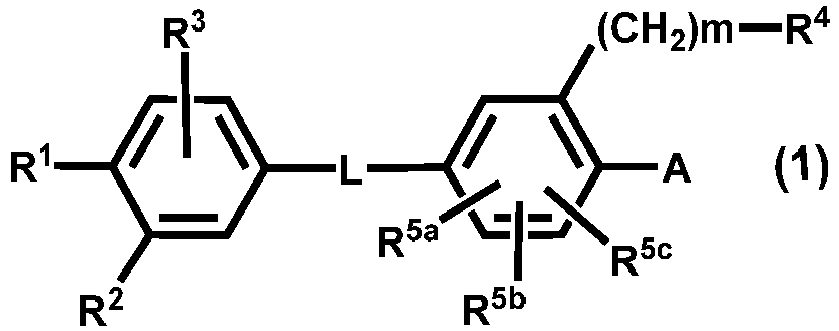
- [wherein A is any one of groups of the following formulae (a) to (e):
-

R1 is optionally substituted aminosulfonyl group, optionally substituted C1-6 alkylsulfonyl group, or optionally substituted C1-6 alkylsulfonylamino group;
R2 is hydrogen atom, halogen atom, hydroxy group, optionally substituted C1-6 alkyl group, optionally substituted C1-6 alkoxy group, or optionally substituted 5- or 6-membered monocyclic heteroaryl group;
R3 is hydrogen atom, or halogen atom;
R4 is hydrogen atom, halogen atom, hydroxy group, cyano group, nitro group, formyl group, carboxyl group, optionally substituted C1-6 alkyl group, optionally substituted amino group, optionally substituted C1-6 alkoxy group, optionally substituted C1-6 alkoxycarbonyl group, optionally substituted 4-to 7-membered heterocyclic group, optionally substituted 5- or 6-membered monocyclic heteroaryl group, optionally substituted C7-14 aralkyloxy group, optionally substituted C1-6 alkylcarbonyloxy group, optionally substituted C1-6 alkylsulfonyloxy group, optionally substituted 4- to 8-membered cyclic amino group, optionally substituted 4- to 7-membered saturated heterocyclic oxy group, optionally substituted C1-6 alkylcarbonylamino group, optionally substituted C3-10 cycloalkylcarbonylamino group, optionally substituted C1-6 alkoxycarbonylamino group, optionally substituted 5- or 6-membered monocyclic heteroarylcarbonylamino group, optionally substituted 4- to 7-membered saturated heterocyclic carbonylamino group, or optionally substituted aminocarbonylamino group;
R5a, R5b and R5c are each independently hydrogen atom, halogen atom, optionally substituted amino group, or optionally substituted C1-6 alkyl group;
R6 is halogen atom, cyano group, optionally substituted C1-6 alkyl group, amino group (in which the amino may be optionally substituted with the same or different 1 to 2 groups selected from the group consisting of C1-6 alkyl, C3-10 cycloalkyl, C3-10 cycloalkyl-C1-4 alkyl, saturated heterocycle which may be optionally substituted with C1-6 alkyl, 5- or 6-membered saturated heterocyclic-C1-4 alkyl, 5- or 6-membered monocyclic heteroaryl, and 5- or 6-membered monocyclic heteroaryl-C1-4 alkyl), hydroxy group, optionally substituted C1-6 alkoxy group, optionally substituted C3-10 cycloalkyl group, optionally substituted C3-10 cycloalkoxy group, optionally substituted C1-6alkylthio group, optionally substituted C1-6 alkoxycarbonyl group, optionally substituted 4- to 7-membered cyclic amino group, optionally substituted 4- to 7-membered cyclic aminocarbonyl group, optionally substituted C6-10 aryl group, optionally substituted 5- to 10-membered monocyclic or polycyclic heteroaryl group, optionally substituted 5- or 6-membered monocyclic heteroaryloxy group, optionally substituted 4- to 7-membered saturated heterocyclic group, or optionally substituted 4- to 7-membered saturated heterocyclic oxy group;
R7 and R8 are each independently hydrogen atom, halogen atom, hydroxy group, cyano group, nitro group, amino group (in which the amino may be optionally substituted with the same or different 1 to 2 groups selected from the group consisting of C1-6 alkyl, C3-10 cycloalkyl, C3-10cycloalkyl-C1-4 alkyl, 5-or 6-membered saturated heterocycle, 5- or 6-membered saturated heterocyclic-C1-4 alkyl, 5- or 6-membered monocyclic heteroaryl, and 5- or 6-membered monocyclic heteroaryl-C1-4 alkyl), optionally substituted C1-6 alkyl group, optionally substituted C1-6 alkoxy group, optionally substituted C1-6 alkylthio group, optionally substituted C1-6 alkoxycarbonyl group, or optionally substituted C1-6 alkylcarbonyloxy group, or;
any one of R6, R7 and R8 is hydrogen atom, and the remaining two groups are adjacent each other and may combine each other together with the ring atoms to which they bind to form C3-7cycloalkyl ring, 5- or 6-membered saturated heterocycle, or 5- or 6-membered heteroaryl ring;
m is an integer of 0 to 6;
provided that 4-(methylsulfonyl)-N-[3'-(trifluoromethyl)biphenyl-4-yl]benzamide, and 2'-methyl-5'-(5-methyl-1,3,4-oxadiazol-2-yl)-N-[4-[(methylsulfonyl)amino]phenyl]biphenyl-4-carboxamide are excluded.] - Item 2: The compound of Item 1, wherein A is a group of formula (a), or a pharmaceutically acceptable salt thereof.
- Item3: The compound of Item 2, or a pharmaceutically acceptable salt thereof, wherein a group of formula (a) is a group of the following formula (a1) or (a2):
-

- Item 4: The compound of Item 3, or a pharmaceutically acceptable salt thereof, wherein a group of formula (a) is a group of the following formula (a1):
-

- Item 5: The compound of Item 3, or a pharmaceutically acceptable salt thereof, wherein a group of formula (a) is a group of the following formula (a2):
-

- Item 6: The compound of any one of Items 1 to 5, or a pharmaceutically acceptable salt thereof, wherein L is -NHCO-.
- Item 7: The compound of any one of Items 1 to 5, or a pharmaceutically acceptable salt thereof, wherein L is -CONH-.
- Item 8: The compound of any one of Items 1 to 7, or a pharmaceutically acceptable salt thereof, wherein R1 is
- 1: aminosulfonyl group (in which the amino may be optionally substituted with the same or different 1 to
- 2 groups selected from the group consisting of
- (a) C1-6 alkyl (in which the group may be optionally substituted with
- (i) amino (in which the amino may be optionally substituted with the same or different 1 to 2 C1-6alkyl),
- (ii) C1-6alkoxy, or
- (iii) 4- to 7-membered cyclic amino),
- (b) C1-6alkylcarbonyl,
- (c) aminocarbonyl, and
- (d) -C(=NH)-NH2),
- (a) C1-6 alkyl (in which the group may be optionally substituted with
- 2: C1-6 alkylsulfonyl group, or
- 3: C1-6 alkylsulfonylamino group.
- Item 9: The compound of Item 8, or a pharmaceutically acceptable salt thereof, wherein R1 is aminosulfonyl group.
- Item 10: The compound of Item 8, or a pharmaceutically acceptable salt thereof, wherein R1 is C1-6 alkylsulfonyl group.
- Item 11: The compound of any one of Items 1 to 10, or a pharmaceutically acceptable salt thereof, wherein R2 is hydrogen atom, halogen atom, hydroxy group, C1-6 alkyl group, or optionally substituted C1-6 alkoxy group.
- Item 12: The compound of Item 11, or a pharmaceutically acceptable salt thereof, wherein R2 is hydrogen atom, hydroxy group, or C1-6alkoxy group.
- Item 13: The compound of Item 12, or a pharmaceutically acceptable salt thereof, wherein R2 is C1-6alkoxy group.
- Item 14: The compound of any one of Items 1 to 13, or a pharmaceutically acceptable salt thereof, wherein R3 is hydrogen atom.
- Item 15: The compound of any one of Items 1 to 14, or a pharmaceutically acceptable salt thereof, wherein R4 is
- 1: hydrogen atom,
- 2: halogen atom,
- 3: hydroxy group,
- 4: cyano group,
- 5: nitro group,
- 6: formyl group,
- 7: carboxyl group,
- 8: amino group (in which the amino may be optionally substituted with the same or different 1 to 2 groups selected from the group consisting of
- (a) C1-6 alkyl (in which the group may be optionally substituted with
- (i) 1 to 3 fluorine atoms,
- (ii) cyano,
- (iii) hydroxy,
- (iv) amino (in which the amino may be optionally substituted with the same or different 1 to 2 C1-6 alkyl),
- (v) C1-6alkoxy,
- (vi) C6-10aryloxy,
- (vii) C7-14aralkyl (in which the group may be optionally substituted with C1-4alkoxy), or
- (viii) aminocarbonyl),
- (b) C3-10cycloalkyl (in which the group may be optionally substituted with cyano, or C1-4 alkyl),
- (c) C3-10cycloalkyl-C1-4 alkyl,
- (d) C6-10 aryl (in which the group may be optionally substituted with C1-6alkyl),
- (e) C7-14aralkyl (in which the group may be optionally substituted with halogen atom, or C1-4alkoxy),
- (f) 4- to 7-membered saturated heterocycle (in which the heterocycle may be optionally substituted with C1-6alkyl),
- (g) 4- to 7-membered saturated heterocycfic-C1-4 alkyl (in which the heterocycle may be optionally substituted with C1-4alkyl),
- (h) 5- or 6-membered monocyclic heteroaryl (in which the group may be optionally substituted with the same or different 1 to 2 groups selected from the group consisting of cyano and C1-4alkyl), and
- (i) 5- or 6-membered monocyclic heteroaryl-C1-4 alkyl (in which the heteroaryl may be optionally substituted with C1-4alkyl)),
- (a) C1-6 alkyl (in which the group may be optionally substituted with
- 9: C1-6alkoxy group (in which the group may be optionally substituted with
- (a) 1 to 2 hydroxy,
- (b) 1 to 3 fluorine atoms,
- (c) amino (in which the amino may be optionally substituted with the same or different 1 to 2 groups selected from the group consisting of
- (i) C1-6alkyl (in which the group may be optionally substituted with hydroxy, C1-4alkoxy, or 5- or 6-membered monocyclic heteroaryl),
- (ii) C3-6cycloalkyl, and
- (iii) 4- to 7-membered saturated heterocycfic-C1-4 alkyl),
- (d) 1 to 2 C1-6alkoxy,
- (e) 4- to 7-membered cyclic amino (in which the ring may be optionally substituted with the same or different 1 to 2 groups selected from the group consisting of
- (i) hydroxy,
- (ii) cyano,
- (iii) 1 to 4 fluorine atoms,
- (iv) C1-6alkyl (in which the group may be optionally substituted with 1 to 3 fluorine atoms, or C1-6 alkoxy),
- (v) C1-6alkoxy,
- (vi) formyl,
- (vii) C1-6 alkylcarbonyl,
- (viii) C1-6 alkylsulfonyl, and
- (ix) oxo),
- (f) 4- to 7-membered saturated heterocycle (in which the ring may be optionally substituted with the same or different group(s) selected from the group consisting of (i) to (ix) in the above (e)),
- (g) 5- or 6-membered monocyclic heteroaryl (in which the ring may be optionally substituted with C1-6alkyl), or
- (h) C7-14aralkyloxy),
- 10: C1-6alkoxycarbonyl group,
- 11: 4- to 7-membered heterocyclic group (in which the ring may be optionally substituted with the same or different group(s) selected from the group consisting of (i) to (ix) in the above (e)),
- 12: 5- or 6-membered monocyclic heteroaryl group (in which the ring may be optionally substituted with cyano, or C1-6 alkyl),
- 13: C7-14aralkyloxy group,
- 14: C1-6 alkylcarbonyloxy group,
- 15: C1-6alkylsulfonyloxy group,
- 16: 4- to 8-membered cyclic amino group (in which the ring may be optionally substituted with the same or different group(s) selected from the group consisting of (i) to (ix) in the above (e)),
- 17: saturated heterocyclic oxy group (in which the ring may be optionally substituted with the same or different 1 to 2 groups selected from the group consisting of C1-6 alkyl which may be optionally substituted with 1 to 3 fluorine atoms, and oxo),
- 18: C1-6alkylcarbonylamino group (in which the alkyl may be optionally substituted with
- (a) hydroxy,
- (b) 1 to 3 fluorine atoms,
- (c) C1-6alkoxy, or
- (d) C1-6alkylcarbonyloxy),
- 19: C3-10cycloalkylcarbonylamino group,
- 20: C1-6alkoxycarbonylamino group,
- 21: 5- or 6-membered monocyclic heteroarylcarbonylamino group (in which the ring may be optionally substituted with C1-6alkyl),
- 22: 4- to 7-membered saturated heterocyclic carbonylamino group (in which the ring may be optionally substituted with C1-6alkyl which may be optionally substituted with 1 to 3 fluorine atoms),
- 23: mono- or di-C1-6 alkylaminocarbonylamino group, or
- 24: C1-6alkyl group (in which the group may be optionally substituted with group(s) selected from 1 to 3 fluorine atoms, and hydroxy).
- Item 16: The compound of Item 15, or a pharmaceutically acceptable salt thereof, wherein R4 is
- 1: hydrogen atom,
- 2: halogen atom,
- 3: hydroxy group,
- 4: cyano group,
- 5: nitro group,
- 6: formyl group,
- 7: carboxyl group,
- 8: amino group (in which the amino may be optionally substituted with the same or different 1 to 2 groups selected from the group consisting of
- (a) C1-6alkyl (in which the group may be optionally substituted with
- (i) 1 to 3 fluorine atoms,
- (ii) cyano,
- (iii) hydroxy,
- (iv) amino (in which the amino may be optionally substituted with the same or different 1 to 2 C1-6 alkyl),
- (v) C1-6alkoxy,
- (vi) C6-10aryloxy, or
- (vii) aminocarbonyl),
- (b) C3-10 cycloalkyl (in which the group may be optionally substituted with C1-4alkyl),
- (c) C3-10cycloalkyl-C1-4 alkyl,
- (d) C6-10 aryl,
- (e) C7-14aralkyl (in which the group may be optionally substituted with halogen atom, or C1-4alkoxy),
- (f) 4- to 7-membered saturated heterocycle (in which the heterocycle may be optionally substituted with C1-6alkyl),
- (g) 4- to 7-membered saturated heterocyclic-C1-4alkyl (in which the heterocycle may be optionally substituted with C1-4alkyl),
- (h) 5- or 6-membered monocyclic heteroaryl (in which the group may be optionally substituted with the same or different 1 to 2 groups selected from the group consisting of cyano and C1-4alkyl), and
- (i) 5- or 6-membered monocyclic heteroaryl-C1-4 alkyl (in which the heteroaryl may be optionally substituted with C1-4alkyl)),
- (a) C1-6alkyl (in which the group may be optionally substituted with
- 9: C1-6alkoxy group (in which the group may be optionally substituted with
- (a) 1 to 2 hydroxy,
- (b) amino (in which the amino may be optionally substituted with 1 or 2 C1-6alkyl (in which the group may be optionally substituted with hydroxy)),
- (c) 1 to 2 C1-6alkoxy,
- (d) 4- to 7-membered cyclic amino (in which the ring may be optionally substituted with C1-6alkyl or oxo),
- (e) 4- to 7-membered saturated heterocycle (in which the group may be optionally substituted with C1-4alkyl),
- (f) 5- or 6-membered monocyclic heteroaryl (in which the ring may be optionally substituted with C1-6alkyl), or
- (g) C7-14aralkyloxy),
- 10: C1-6alkoxycarbonyl group,
- 11: 4- to 7-membered heterocyclic group (in which the ring may be optionally substituted with C1-4alkyl, or oxo),
- 12: 5- or 6-membered monocyclic heteroaryl group (in which the ring may be optionally substituted with C1-6alkyl),
- 13: C7-14aralkyloxy group,
- 14: C1-6alkylcarbonyloxy group,
- 15: 4- to 8-membered cyclic amino group (in which the ring may be optionally substituted with the same or different 1 to 2 groups selected from the group consisting of
- (a) hydroxy,
- (b) C1-4alkyl (in which the group may be optionally substituted with C1-6 alkoxy),
- (c) cyano,
- (d) 1 to 4 fluorine atoms,
- (e) C1-6alkoxy,
- (f) formyl,
- (g) C1-6alkylcarbonyl,
- (h) C1-6alkylsulfonyl, and
- (i) oxo),
- 16: saturated heterocyclic oxy group (in which the ring may be optionally substituted with the same or different 1 to 2 groups selected from the group consisting of C1-6 alkyl and oxo), or 17: C1-6alkoxycarbonylamino group.
- Item 17: The compound of Item 16, or a pharmaceutically acceptable salt thereof, wherein R4 is amino group (in which the amino is substituted with C1-6 alkyl which is substituted with 1 to 3 fluorine atoms).
- Item 18: The compound of Item 17, or a pharmaceutically acceptable salt thereof, wherein R4 is 2,2-difluoroethylamino.
- Item 19: The compound of any one of Items 1 to 18, or a pharmaceutically acceptable salt thereof, wherein R5a, R5b, and R5c are each independently
- 1: hydrogen atom,
- 2: halogen atom,
- 3: amino group (in which the amino may be optionally substituted with the same or different 1 to 2 groups selected from the group consisting of
- (a) C1-6alkyl,
- (b) C3-10cycloalkyl, and
- (c) C3-10cycloalkyl-C1-4 alkyl), or
- 4: C1-6alkyl group.
- Item 20: The compound of Item 19, or a pharmaceutically acceptable salt thereof, wherein R5a, R5b, and R5c are each independently
- 1: hydrogen atom, or
- 2: C1-6alkyl group.
- Item 21: The compound of Item 20, or a pharmaceutically acceptable salt thereof, wherein all of R5a, R5b, and R5c are hydrogen atom.
- Item 22: The compound of any one of Items 1 to 21, or a pharmaceutically acceptable salt thereof, wherein R6 is
- 1: halogen atom,
- 2: cyano group,
- 3: C1-6alkyl group (in which the group may be optionally substituted with
- (a) hydroxy,
- (b) cyano,
- (c) oxo,
- (d) 1 to 4 fluorine atoms (provided that if R6 is C1 alkyl, it is 1 to 3 fluorine atoms),
- (e) amino (in which the amino may be optionally substituted with the same or different 1 to 2 groups selected from the group consisting of
- (i) C1-6 alkyl (in which the group may be optionally substituted with 1 to 3 fluorine atoms, or C1-6 alkoxy),
- (ii) C3-10cycloalkyl, and
- (iii) C3-10cycloalkyl-C1-4 alkyl),
- (f) 4- to 7-membered cyclic amino (in which the ring may be optionally substituted with
- (i) 1 to 3 fluorine atoms,
- (ii) C1-6alkyl, or
- (iii) C1-6alkoxy),
- (g) C1-6 alkoxy (in which the group may be optionally substituted with 1 to 3 fluorine atoms),
- (h) C3-10cycloalkoxy,
- (i) 5- or 6-membered monocyclic heteroaryl,
- (j) 5- or 6-membered monocyclic heteroaryloxy,
- (k) 4- to 7-membered saturated heterocyclic oxy,
- (l) C1-6alkylcarbonyl, or
- (m) C1-6alkoxycarbonyl),
- 4: amino group (in which the amino may be optionally substituted with the same or different 1 to 2 groups selected from the group consisting of
- (a) C1-6alkyl,
- (b) C3-10cycloalkyl,
- (c) C3-10cycloalkyl-C1-4 alkyl, and
- (d) 4- to 7-membered saturated heterocycle (in which the ring may be optionally substituted with C1-6 alkyl)),
- 5: hydroxy group,
- 6: C1-6alkoxy group (in which the group may be optionally substituted with
- (a) hydroxy,
- (b) cyano,
- (c) 1 to 6 fluorine atoms (provided that if R6 is C1 alkoxy, it is 1 to 3 fluorine atoms, and if R6 is C2 alkoxy, it is 1 to 5 fluorine atoms),
- (d) amino (in which the amino may be optionally substituted with the same or different 1 to 2 groups selected from the group consisting of
- (i) C1-6alkyl,
- (ii) C3-10cycloalkyl, and
- (iii) C3-10cycloalkyl-C1-4 alkyl),
- (e) 4- to 7-membered cyclic amino (in which the ring may be optionally substituted with
- (i) 1 to 3 fluorine atoms,
- (ii) C1-6alkyl, or
- (iii) C1-6alkoxy),
- (f) C1-6 alkoxy (in which the group may be optionally substituted with 1 to 3 fluorine atoms),
- (g) C3-10cycloalkyl, or
- (h) 5- or 6-membered monocyclic heteroaryl),
- 7: C3-10cycloalkyl group (in which the group may be optionally substituted with C1-6 alkyl, or cyano),
- 8: C3-10cycloalkoxy group,
- 9: C1-6alkylthio group,
- 10: C1-6alkoxycarbonyl group,
- 11: 4- to 7-membered cyclic amino group (in which the ring may be optionally substituted with
- (a) 1 to 3 fluorine atoms,
- (b) C1-6alkyl, or
- (c) C1-6alkoxy),
- 12: 4- to 7-membered cyclic aminocarbonyl group,
- 13: C6-10aryl group,
- 14: 5- or 6-membered monocyclic heteroaryl group (in which the ring may be optionally substituted with C1-6alkyl),
- 15: 5- or 6-membered monocyclic heteroaryloxy group,
- 16: 4- to 7-membered saturated heterocyclic group, or
- 17: 4- to 7-membered saturated heterocyclic oxy group.
- Item 23: The compound of Item 22, or a pharmaceutically acceptable salt thereof, wherein R6 is
- 1: halogen atom,
- 2: cyano group,
- 3: C1-6alkyl group (in which the group may be optionally substituted with
- (a) hydroxy,
- (b) cyano,
- (c) 1 to 4 fluorine atoms,
- (d) amino (in which the amino may be optionally substituted with 1 to 2 C1-6 alkyl),
- (e) 4- to 7-membered cyclic amino (in which the ring may be optionally substituted with C1-6 alkyl),
- (f) C1-6 alkoxy (in which the group may be optionally substituted with 1 to 3 fluorine atoms),
- (g) 5- or 6-membered monocyclic heteroaryl,
- (h) C1-6alkylcarbonyl, or
- (i) C1-6alkoxycarbonyl),
- 4: amino group (in which the amino may be optionally substituted with the same or different 1 to 2 groups selected from the group consisting of
- (a) C1-6alkyl,
- (b) C3-10cycloalkyl,
- (c) C3-10cycloalkyl-C1-4 alkyl, and
- (d) 4- to 7-membered saturated heterocycle (in which the ring may be optionally substituted with C1-6 alkyl)),
- 5: C1-6 alkoxy group (in which the group may be optionally substituted with 1 to 6 fluorine atoms, or 4- to 7-membered cyclic amino),
- 6: C3-10cycloalkyl group,
- 7: C3-10cycloalkoxy group,
- 8: C1-6alkylthio group,
- 9: C1-6alkoxycarbonyl group,
- 10: 4- to 7-membered cyclic amino group (in which the ring may be optionally substituted with C1-6 alkyl),
- 11: 4- to 7-membered cyclic aminocarbonyl group,
- 12: C6-10aryl group, or
- 13: 5- or 6-membered monocyclic heteroaryl group (in which the ring may be optionally substituted with C1-6alkyl).
- Item 24: The compound of Item 23, or a pharmaceutically acceptable salt thereof, wherein R6 is halogen atom.
- Item 25: The compound of any one of Items 1 to 24, or a pharmaceutically acceptable salt thereof, wherein R7 is
- 1: hydrogen atom,
- 2: halogen atom,
- 3: hydroxy group,
- 4: cyano group,
- 5: nitro group,
- 6: amino group (in which the amino may be optionally substituted with the same or different 1 to 2 groups selected from the group consisting of
- (a) C1-6alkyl,
- (b) C3-10cycloalkyl, and
- (c) C3-10cycloalkyl-C1-4 alkyl),
- 7: C1-6alkyl group (in which the group may be optionally substituted with 1 to 3 fluorine atoms),
- 8: C1-6alkoxy group (in which the group may be optionally substituted with
- (a) hydroxy,
- (b) carboxyl,
- (c) 1 to 3 fluorine atoms,
- (d) amino (in which the amino may be optionally substituted with the same or different 1 to 2 C1-6 alkyl),
- (e) C1-6alkoxycarbonyl, or
- (f) C1-6alkylcarbonyloxy),
- 9: C1-6alkylthio group,
- 10: C1-6alkoxycarbonyl group, or
- 11: C1-6alkylcarbonyloxy group.
- Item 26: The compound of Item 25, or a pharmaceutically acceptable salt thereof, wherein R7 is
- 1: hydrogen atom,
- 2: halogen atom,
- 3: hydroxy group,
- 4: nitro group,
- 5: amino group,
- 6: C1-6alkyl group,
- 7: C1-6alkoxy group (in which the group may be optionally substituted with
- (a) hydroxy,
- (b) carboxyl,
- (c) 1 to 3 fluorine atoms,
- (d) amino (in which the amino may be optionally substituted with the same or different 1 to 2 C1-6 alkyl),
- (e) C1-6alkoxycarbonyl, or
- (f) C1-6alkylcarbonyloxy),
- 8: C1-6alkylthio group,
- 9: C1-6 alkoxycarbonyl group, or
- 10: C1-6alkylcarbonyloxy group.
- Item 28: The compound of Item 26, or a pharmaceutically acceptable salt thereof, wherein R7 is
- 1: hydrogen atom,
- 2: halogen atom,
- 3: hydroxy group,
- 4: C1-6alkyl group, or
- 5: C1-6alkoxy group.
- Item 29: The compound of Item 28, or a pharmaceutically acceptable salt thereof, wherein R7 is
- 1: hydrogen atom,
- 2: halogen atom, or 3: C1-6alkyl group.
- Item 30: The compound of Item 29, or a pharmaceutically acceptable salt thereof, wherein R7 is hydrogen atom.
- Item 31: The compound of any one of Items 1 to 30, or a pharmaceutically acceptable salt thereof, wherein R8 is
- 1: hydrogen atom,
- 2: halogen atom, or
- 3: C1-6alkoxy group.
- Item 32: The compound of Item 31, or a pharmaceutically acceptable salt thereof, wherein R8 is hydrogen atom.
- Item 33: The compound of any one of Items 1 to 32, or a pharmaceutically acceptable salt thereof, wherein m is 0 or 1.
- Item 34: The compound of Item 33, or a pharmaceutically acceptable salt thereof, wherein m is 0.
- Item 35: The compound of Item 33, or a pharmaceutically acceptable salt thereof, wherein m is 1.
- Item 36: The compound of Item 1, or a pharmaceutically acceptable salt thereof, which is any one selected from the following group:
- 2-(hydroxymethyl)-N-[4-(methylsulfonyl)phenyl]-2'-(trifluorophenyl)biphenyl-4-carboxamide,
- 2-(hydroxymethyl)-N-(3-methoxy-4-sulfamoylphenyl)-2'-(trifluorophenyl)biphenyl-4-carboxamide,
- 2-(hydroxymethyl)-N-(3-methoxy-4-sulfamoylphenyl)-2'-(trifluoromethoxy)biphenyl-4-carboxamide,
- 2'-ethyl-2-(hydroxymethyl)-N-(3-methoxy-4-sulfamoylphenyl)biphenyl-4-carboxamide,
- 4'-fluoro-2-(hydroxymethyl)-N-(3-methoxy-4-sulfamoylphenyl)-2'-(trifluorophenyl)biphenyl-4-carboxamide,
- 2-(hydroxymethyl)-4'-methoxy-N-(3-methoxy-4-sulfamoylphenyl)-2'-(trifluorophenyl)biphenyl-4-carboxamide,
- 2-(hydroxymethyl)-N-[4-(methylsulfonyl)phenyl]-2'-(trifluoromethoxy)biphenyl-4-carboxamide,
- 2-[(3,3-difluoropyrrolidin-1-yl)methyl]-N-[4-(methylsulfonyl)phenyl]-2'-(trifluoromethoxy)biphenyl-4-carboxamide,
- 2-[(3,3-difluoropiperidin-l-yl)methyl]-N-[4-(methylsulfonyl)phenyl]-2'-(trifluoromethoxy)biphenyl-4-carboxamide,
- 2-{[(2-methoxyethyl)amino]methyl{-N-[4-(methylsulfonyl)phenyl]-2'-(trifluoromethoxy)biphenyl-4-carboxamide,
- 2-[(diethylamino)methyl]-N-[4-(methylsulfonyl)phenyl]-2'-(trifluoromethoxy)biphenyl-4-carboxamide, 2-{[(3S)-3-fluoropyrrolidin-1-yl]methyl{-N-[4-(methylsulfonyl)phenyl]-2'-(trifluoromethoxy)biphenyl-4-carboxamide,
- 2-{[(2,2-difluoroethyl)amino]methyl{-N-[4-(methylsulfonyl)phenyl]-2'-(trifluoromethoxy)biphenyl-4-carboxamide,
- 2-{[bis(2-methoxyethyl)amino]methyl{-N-[4-(methylsulfonyl)phenyl]-2'-(trifluoromethoxy)biphenyl-4-carboxamide,
- N-[4-(methylsulfonyl)phenyl]-2-{[(2,2,2-trifluoroethyl)amino]methyl}-2'-(trifluoromethoxy)biphenyl-4-carboxamide,
- 2-{[(2,2-difluoroethyl)amino]methyl{-N-(3-methoxy-4-sulfamoylphenyl)-2'-(trifluoromethoxy)biphenyl-4-carboxamide,
- 2-(hydroxymethyl)-N-(3-methoxy-4-sulfamoylphenyl)-2'-(1,1,2,2-tetrafluoroethoxy)biphenyl-4-carboxamide,
- 2-{[(2,2-difluoroethyl)amino]methyl}-N-(3-methoxy-4-sulfamoylphenyl)-2'-(trifluorophenyl)biphenyl-4-carboxamide,
- 2-{[(2,2-difluoroethyl)amino]methyl{-4'-methoxy-N-(3-methoxy-4-sulfamoylphenyl)-2'-(trifluorophenyl)biphenyl-4-carboxamide,
- N-[2-(hydroxymethyl)-2'-(trifluorophenyl)biphenyl-4-yl]-3-methoxy-4-sulfamoylbenzamide,
- N-[2-(hydroxymethyl)-2'-(trifluoromethoxy)biphenyl-4-yl]-3-methoxy-4-sulfamoylbenzamide,
- N-[2-{[(2,2-difluoroethyl)amino]methyl{-2'-(trifluorophenyl)biphenyl-4-yl]-3-methoxy-4-sulfamoylbenzamide,
- 2-{[(2,2-difluoroethyl)amino]methyl}-2',4'-difluoro-N-(3-methoxy-4-sulfamoylphenyl)biphenyl-4-carboxamide,
- 2-{[(2,2-difluoroethyl)amino]methyl}-N-(3-methoxy-4-sulfamoylphenyl)-2'-methylbiphenyl-4-carboxamide,
- 2-{[(2,2-difluoroethyl)amino]methyl}-2'-fluoro-N-(3-methoxy-4-sulfamoylphenyl)biphenyl-4-carboxamide,
- 2- {[(2,2-difluoroethyl)amino]methyl}-2',5'-difluoro-N-(3-methoxy-4-sulfamoylphenyl)biphenyl-4-carboxamide,
- 5'-chloro-2- {[(2,2-difluoroethyl)amino]methyl}-2'-fluoro-N-(3-methoxy-4-sulfamoylphenyl)biphenyl-4-carboxamide,
- 2'-chloro-2-{[(2,2-difluoroethyl)amino]methyl}-4'-fluoro-N-(3-methoxy-4-sulfamoylphenyl)biphenyl-4-carboxamide,
- 2- {[(2,2-difluoroethyl)amino]methyl}-N-(3-methoxy-4-sulfamoylphenyl)-4'-methyl-2'-(trifluorophenyl)biphenyl-4-carboxamide,
- 2'-chloro-2- {[(2,2-difluoroethyl)amino]methyl}-N-(3-methoxy-4-sulfamoylphenyl)biphenyl-4-carboxamide,
- 2',4'-dichloro-2- {[(2,2-difluoroethyl)amino]methyl}-N-(3-methoxy-4-sulfamoylphenyl)biphenyl-4-carboxamide,
- 2', 5'-dichloro-2- {[(2,2-difluoroethyl)amino]methyl}-N-(3-methoxy-4-sulfamoylphenyl)biphenyl-4-carboxamide,
- 2'-cyclopropyl-2- {[(2,2-difluoroethyl)amino]methyl}-4'-fluoro-N-(3-methoxy-4-sulfamoylphenyl)biphenyl-4-carboxamide,
- 4'-chloro-2- {[(2,2-difluoroethyl)amino]methyl}-N-(3-methoxy-4-sulfamoylphenyl)-2'-(trifluorophenyl)-biphenyl-4-carboxamide,
- 2- {[(2,2-difluoroethyl)amino]methyl}-4'-fluoro-N-(3-methoxy-4-sulfamoylphenyl)-2'-(trifluorophenyl)biphenyl-4-carboxamide,
- N-(2'-chloro-2- {[(2,2-difluoroethyl)amino]methyl}-4'-fluorobiphenyl-4-yl)-3-methoxy-4-sulfamoylbenzamide,
- N-[2-{[(2,2-difluoroethyl)amino]methyl{-4'-fluoro-2'-(trifluorophenyl)biphenyl-4-yl]-3-methoxy-4-sulfamoylbenzamide,
- 2-{[(3R)-3-fluoropyrrolidin-1-yl]methyl}-N-[4-(methylsulfonyl)phenyl]-2'-(trifluoromethoxy)biphenyl-4-carboxamide,
- 2-{[(2-fluoroethyl)amino]methyl}-N-[4-(methylsulfonyl)phenyl]-2'-(trifluoromethoxy)biphenyl-4-carboxamide,
- 2-[(cyclopropylamino)methyl]-N-[4-(methylsulfonyl)phenyl] -2'-(trifluoromethoxy)biphenyl-4-carboxamide,
- 3-methoxy-4-sulfamoyl-N-[2-{[(2,2,2-trifluoroethyl)amino]methyl}-2'-(trifluorophenyl)biphenyl-4-yl]benzamide,
- 3-methoxy-4-sulfamoyl-N-[2-{[(2,2,2-trifluoroethyl)amino]methyl}-2'-(trifluoromethoxy)biphenyl-4-yl]benzamide,
- 2'-chloro-2-(hydroxymethyl)-N-(3-methoxy-4-sulfamoylphenyl)biphenyl-4-carboxamide,
- 2-(hydroxymethyl)-N-(3-methoxy-4-sulfamoylphenyl)-2'-methylbiphenyl-4-carboxamide,
- 2'-cyclopropyl-2-(hydroxymethyl)-N-(3-methoxy-4-sulfamoylphenyl)biphenyl-4-carboxamide,
- 2-(hydroxymethyl)-4'-methoxy-N-(3-methoxy-4-sulfamoylphenyl)-2'-(trifluoromethoxy)biphenyl-4-carboxamide,
- 2'-(cyclopropyloxy)-2-(hydroxymethyl)-N-(3-methoxy-4-sulfamoylphenyl)biphenyl-4-carboxamide,
- N-[2- {[(2,2-difluoroethyl)amino]methyl}-4'-methoxy-2'-(trifluorophenyl)biphenyl-4-yl]-3-methoxy-4-sulfamoylbenzamide,
- 2- {[(2,2-difluoroethyl)amino]methyl}-4'-methoxy-N-(3-methoxy-4-sulfamoylphenyl)-2'-methylbiphenyl-4-carboxamide,
- 2- {[(2,2-difluoroethyl)amino]methyl}-4'-fluoro-2'-methoxy-N-(3-methoxy-4-sulfamoylphenyl)biphenyl-4-carboxamide, and
- 2-{[(2,2-difluoroethyl)amino]methyl{-4'-methoxy-N-(3-methoxy-4-sulfamoylphenyl)-2'-(trifluoromethoxy)biphenyl-4-carboxamide.
- Item 37: The compound of Item 36, or a pharmaceutically acceptable salt thereof, which is any one selected from the following group:
- 2-(hydroxymethyl)-N-(3-methoxy-4-sulfamoylphenyl)-2'-(trifluorophenyl)biphenyl-4-carboxamide,
- 2-{[(2,2-difluoroethyl)amino]methyl}-N-(3-methoxy-4-sulfamoylphenyl)-2'-(trifluoromethoxy)biphenyl-4-carboxamide,
- N-[2-(hydroxymethyl)-2'-(trifluoromethoxy)biphenyl-4-yl]-3-methoxy-4-sulfamoylbenzamide,
- 2-{[(2,2-difluoroethyl)amino]methyl{-N-(3-methoxy-4-sulfamoylphenyl)-2'-methylbiphenyl-4-carboxamide,
- 2-{[(2,2-difluoroethyl)amino]methyl}-2'-fluoro-N-(3-methoxy-4-sulfamoylphenyl)biphenyl-4-carboxamide,
- 2'-chloro-2-{[(2,2-difluoroethyl)amino]methyl}-4'-fluoro-N-(3-methoxy-4-sulfamoylphenyl)biphenyl-4-carboxamide,
- 2'-chloro-2-{[(2,2-difluoroethyl)amino]methyl}-N-(3-methoxy-4-sulfamoylphenyl)biphenyl-4-carboxamide,
- 4'-chloro-2-{[(2,2-difluoroethyl)amino]methyl{-N-(3-methoxy-4-sulfamoylphenyl)-2'-(trifluorophenyl)biphenyl-4-carboxamide, and
- 2-{[(2,2-difluoroethyl)amino]methyl}-4'-fluoro-N-(3-methoxy-4-sulfamoylphenyl)-2'-(trifluorophenyl)-biphenyl-4-carboxamide.
- Item 38: The compound of Item 36, or a pharmaceutically acceptable salt thereof, which is any one selected from the following group:
- 2-(hydroxymethyl)-N-[4-(methylsulfonyl)phenyl]-2'-(trifluorophenyl)biphenyl-4-carboxamide,
- 2-(hydroxymethyl)-N-[4-(methylsulfonyl)phenyl]-2'-(trifluoromethoxy)biphenyl-4-carboxamide,
- 2-{[(2,2-difluoroethyl)amino]methyl}-N-[4-(methylsulfonyl)phenyl]-2'-(trifluoromethoxy)biphenyl-4-carboxamide, and
- 2-{[(2-fluoroethyl)amino]methyl}-N-[4-(methylsulfonyl)phenyl]-2'-(trifluoromethoxy)biphenyl-4-carboxamide.
- Item 39: A pharmaceutical composition, comprising the compound of any one of Items 1 to 38 or a pharmaceutically acceptable salt thereof.
- Item 40: A medicament, comprising the compound of any one of Items 1 to 38 or a pharmaceutically acceptable salt thereof as the active ingredient.
- Item 41: A preventive or therapeutic agent for hypertension, stroke, arrhythmia, heart failure, cardiomegaly, arteriosclerosis, vascular restenosis, renal fibrosis, cardiac infarction, diabetes complication, renal disease, edema, primary aldosteronism, inflammation, insulin resistance, sleep apnea syndrome, non-alcoholic steatohepatitis, or Cushing's syndrome, which comprises the compound of any one of Items 1 to 38, or a pharmaceutically acceptable salt thereof.
- Item 42: A method for preventing or treating hypertension, stroke, arrhythmia, heart failure, cardiomegaly, arteriosclerosis, vascular restenosis, renal fibrosis, cardiac infarction, diabetes complication, renal disease, edema, primary aldosteronism, inflammation, insulin resistance, sleep apnea syndrome, non-alcoholic steatohepatitis, or Cushing's syndrome, which comprises administering an effective amount of the compound of any one of Items 1 to 38, or a pharmaceutically acceptable salt thereof to a patient in need.
- Item 43: Use of the compound of any one of Items 1 to 38 or a pharmaceutically acceptable salt thereof in the manufacture of a medicament for preventing or treating hypertension, stroke, arrhythmia, heart failure, cardiomegaly, arteriosclerosis, vascular restenosis, renal fibrosis, cardiac infarction, diabetes complication, renal disease, edema, primary aldosteronism, inflammation, insulin resistance, sleep apnea syndrome, non-alcoholic steatohepatitis, or Cushing's syndrome.
- The compound of the present invention has a high binding affinity for and antagonistic activity against an aldosterone receptor. Thus, the compound is useful for prevention and/or treatment for various diseases involving a mineralcorticoid receptor (MR) including hypertension, stroke, arrhythmia, heart failure, cardiomegaly, arteriosclerosis, vascular restenosis, renal fibrosis, cardiac infarction, diabetes complication, renal disease, edema, primary aldosteronism, inflammation, insulin resistance, sleep apnea syndrome, non-alcoholic steatohepatitis, Cushing's syndrome, etc. The compound of the present invention may also reduce side effects (e.g., hormonal-like side effects, hyperpotassemia, etc.) compared to the conventional aldosterone receptor antagonist (e.g., spironolactone and eplerenone, etc.).
- The present invention is explained in more detail as follows.
The number of substituents in groups defined by using "optionally substituted" or "substituted" herein is not limited as long as the substituents may bind, and is 1 or multiple. Unless otherwise specified, each explanation of each group is applicable to a group which is a part of or a substituent of other group. - Herein, "halogen atom" includes, for example, fluorine atom, chlorine atom, bromine atom, or iodine atom, etc. Preferable one is fluorine atom, or chlorine atom.
- "C1-6 alkyl group" is straight- or branched-chain saturated hydrocarbon group with 1 to 6 carbon atoms. Preferable one includes C1-4alkyl group, etc. A concrete example of "C1-6alkyl group" includes, for example, methyl, ethyl, propyl, 1-methylethyl, butyl, 2-methylpropyl, 1-methylpropyl, 1,1-dimethylethyl, pentyl, 3-methylbutyl, 2-methylbutyl, 2,2-dimethylpropyl, 1-ethylpropyl, 1,1-dimethylpropyl, hexyl, 4-methylpentyl, 3-methylpentyl, 2-methylpentyl or 1-methylpentyl, etc.
- "C1-6alkyl" moiety of "C1-6alkylthio group" is the same as defined in the above "C1-6alkyl". "C1-6 alkylthio group" preferably includes "C1-4 alkylthio group", etc. A concrete example of "C1-6alkylthio group" includes, for example, methylthio, ethylthio, propylthio, 1-methylethylthio, butylthio, 2-methylpropylthio, 1-methylpropylthio, 1,1-dimethylethylthio, pentylthio, 3-methylbutylthio, 2-methylbutylthio, 2,2-dimethylpropylthio, 1-ethylpropylthio, 1,1-dimethylpropylthio, hexylthio, 4-methylpentylthio, 3-methylpentylthio, 2-methylpentylthio or 1-methylpentylthio, etc.
- "C3-10 cycloalkyl group" is cyclic saturated hydrocarbon group with 3 to 10 carbon atoms. Preferable one is "C3-7 cycloalkyl group", and more preferable one includes "C3-6 cycloalkyl group", etc. A concrete example of "C3-10 cycloalkyl group" includes, for example, cyclopropyl, cyclobutyl, cyclopentyl, cyclohexyl or cycloheptyl, etc. The "C3-10 cycloalkyl group" includes fused ring compounds with aromatic ring. As a concrete example, the following groups, etc. are included, for example.
-

- "C1-6alkyl" moiety of "C1-6alkoxy group" is the same as defined in the above "C1-6alkyl". "C1-6 alkoxy group" preferably includes "C1-4alkoxy group", etc. A concrete example of "C1-6alkoxy group" includes, for example, methoxy, ethoxy, propoxy, 1-methylethoxy, butoxy, 2-methylpropoxy, 1-methylpropoxy, 1,1-dimethylethoxy, pentyloxy, 3-methylbutoxy, 2-methylbutoxy, 2,2-dimethylpropoxy, 1-ethylpropoxy, 1,1-dimethylpropoxy, hexyloxy, 4-methylpentyloxy, 3-methylpentyloxy, 2-methylpentyloxy, 1-methylpentyloxy, 3,3-dimethylbutoxy, 2,2-dimethylbutoxy, 1,1-dimethylbutoxy or 1,2-dimethylbutoxy, etc.
- "C3-10cycloalkyl" moiety of "C3-10 cycloalkoxy group" is the same as defined in the above "C3-10 cycloalkyl". Preferable one is "C3-7 cycloalkoxy group", and more preferable one is "C3-6 cycloalkoxy group", etc. A concrete example of "C3-10 cycloalkoxy group" includes, for example, cyclopropoxy, cyclobutoxy, cyclopentyloxy, cyclohexyloxy or cycloheptyloxy, etc.
- "C1-6alkoxy" moiety of "C1-6alkoxycarbonyl group" is the same as defined in the above "C1-6 alkoxy". A concrete example of "C1-6 alkoxycarbonyl group" includes, for example, straight- or branched-chain alkoxycarbonyl group with 2 to 7 carbon atoms. A concrete example includes, for example, methoxycarbonyl, ethoxycarbonyl, propoxycarbonyl, 2-methylethoxycarbonyl, butoxycarbonyl, 2-methylpropoxycarbonyl, 1-methylpropoxycarbonyl or 1,1-dimethylethoxycarbonyl, etc..
- "C1-6alkyl" moiety of "C1-6alkylcarbonyl group" is the same as defined in the above "C1-6alkyl". A concrete example of "C1-6alkylcarbonyl group" includes, for example, methylcarbonyl, ethylcarbonyl, propylcarbonyl, 1-methylethylcarbonyl, butylcarbonyl, 2-methylpropylcarbonyl, 1-methylpropylcarbonyl or 1,1-dimethylethylcarbonyl, etc.
- "C1-6alkylcarbonyl" moiety of "C1-6alkylcarbonyloxy group" is the same as defined in the above "C1-6alkylcarbonyl". "C1-6alkylcarbonyloxy group" preferably includes "C1-4 alkylcarbonyloxy group", etc. A concrete example of "C1-6alkylcarbonyloxy group" includes, for example, methylcarbonyloxy, ethylcarbonyloxy, propylcarbonyloxy, 1-methylethylcarbonyloxy, butylcarbonyloxy, 2-methylpropylcarbonyloxy, 1-methylpropylcarbonyloxy, 1,1-dimethylethylcarbonyloxy, pentylcarbonyloxy, 3-methylbutylcarbonyloxy, 2-methylbutylcarbonyloxy, 2,2-dimethylpropylcarbonyloxy, 1-ethylpropylcarbonyloxy, 1,1-dimethylpropylcarbonyloxy, hexylcarbonyloxy, 4-methylpentylcarbonyloxy, 3-methylpentylcarbonyloxy, 2-methylpentylcarbonyloxy or 1-methylpentylcarbonyloxy, etc.
- "C1-6alkyl" moiety of "C1-6alkylsulfonyl group" is the same as defined in the above "C1-6alkyl". A concrete example of "C1-6alkylsulfonyl group" includes, for example, methanesulfonyl, ethanesulfonyl, propylsulfonyl, 1-methylethylsulfonyl, 2-methylethylsulfonyl, 1-methylpropylsulfonyl, 2-methylpropylsulfonyl, 1,1-dimethylethylsulfonyl or butylsulfonyl, etc.
- "C1-6alkylsulfonyl" moiety of "C1-6alkylsulfonylamino group" is the same as defined in the above "C1-6alkylsulfonyl". A concrete example of "C1-6alkylsulfonylamino group" includes, for example, methanesulfonylamino, ethanesulfonylamino, propylsulfonylamino, 1-methylethylsulfonylamino, 2-methylethylsulfonylamino, 1-methylpropylsulfonylamino, 2-methylpropylsulfonylamino, 1,1-dimethylethylsulfonylamino or butylsulfonylamino, etc.
- "C1-6alkylsulfonyl" moiety of "C1-6alkylsulfonyloxy group" is the same as defined in the above "C1-6alkylsulfonyl". A concrete example of "C1-6alkylsulfonyloxy group" includes, for example, methanesulfonyloxy, ethanesulfonyloxy, propylsulfonyloxy, 1-methylethylsulfonyloxy, 2-methylethylsulfonyloxy, 1-methylpropylsulfonyloxy, 2-methylpropylsulfonyloxy, 1,1-dimethylethylsulfonyloxy or butylsulfonyloxy, etc.
- "C3-10 cycloalkyl-C1-4 alkyl group" is a group wherein the above "C3-10 cycloalkyl" is substituted on "C1-4 alkyl". A concrete example of "C3-10 cycloalkyl-C1-4 alkyl group" includes, for example, cyclopropylmethyl, cyclobutylmethyl, cyclopentylmethyl, cyclohexylmethyl, cycloheptylmethyl, cyclohexylethyl, cyclohexylpropyl or cyclohexylbutyl, etc. Preferable one includes (cycloalkyl with 3 to 6 carbon atoms)-C1-4alkyl group (C3-6cycloalkyl-C1-4 alkyl group).
- "C6-10 aryl group" is aromatic hydrocarbon group with 6 to 10 carbon atoms. A concrete example of "C6-10 aryl group" includes, for example, phenyl, 1-naphthyl or 2-naphthyl, etc.
- "Heteroaryl group" includes, for example, 5- to 10-membered monocyclic or polycyclic group, etc., and the group contains the same or different one or more (e.g. 1 to 4) heteroatoms selected from nitrogen atom, sulfur atom or oxygen atom. Preferable one includes, for example, 5- or 6-membered monocyclic group, etc. A concrete example of "heteroaryl group" includes pyrrolyl, thienyl, benzothienyl, benzofuranyl, benzoxazolyl, benzthiazolyl, furyl, oxazolyl, thiazolyl, isoxazolyl, isothiazolyl, benzisoxazolyl, benzisothiazolyl, imidazolyl, pyrazolyl, pyridyl, pyrazyl, pyrimidyl, pyridazyl, quinolyl, isoquinolyl, triazolyl, triazinyl, tetrazolyl, indolyl, imidazo[1,2-a]pyridyl, pyrazolo[1,5-a]pyridyl, [1,2,4]triazolo[1,5-a]pyridyl, benzimidazolyl, quinoxalyl, cinnolyl, quinazolyl, indazolyl, naphthylidyl, quinolinolyl or isoquinolinolyl, etc.
- "Heterocyclic group" includes, for example, 3- to 7-membered heterocyclic group with the same or different 1 to 3 atoms selected from nitrogen atom, oxygen atom or sulfur atom, etc. Preferable one is 4- to 7-membered group, and more preferable one is 5- or 6-membered group. All of the above nitrogen atom, oxygen atom and sulfur atom are ring-constituent atom. The heterocyclic group may be either saturated or partially unsaturated heterocyclic group, more preferably saturated heterocyclic group. A concrete example of "heterocyclic group" includes pyranyl, tetrahydrofuryl, pyrrolidinyl, imidazolidinyl, piperidinyl, morpholinyl, thiomorpholinyl, dioxothiomorpholinyl, hexamethyleneiminyl, oxazolidinyl, thiazolidinyl, imidazolidinyl, oxoimidazolidinyl, dioxoimidazolidinyl, oxooxazolidinyl, dioxooxazolidinyl, dioxothiazolidinyl, tetrahydrofuranyl or tetrahydropyridinyl, etc. The group includes heterocyclic group with a bridged structure. In the group, ring-constituent nitrogen atom may not be a binding point of the "group". In other words, the group does not include, for example, a concept such as pyrrolidino group.
- The above "heterocyclic group" may form a fused ring with 6-membered aromatic hydrocarbon or 6-membered heteroaryl. For example, bicyclic "heterocycle" with 11 or 12 ring-constituent atoms wherein the above 5- or 6-membered "heterocyclic group" is fused with 6-membered aromatic hydrocarbon or 6-membered heteroaryl is included. The 6-membered aromatic hydrocarbon includes benzene, etc. The 6-membered unsaturated heterocycle includes pyridine, pyrimidine or pyridazine, etc. A concrete example of the fused ring includes dihydroindolyl, dihydroisoindolyl, dihydropurinyl, dihydrothiazolopyrimidinyl, dihydrobenzodioxanyl, isoindolinyl, indazolyl, pyrrolidinyl, tetrahydroquinolinyl, decahydroquinolinyl, tetrahydroisoquinolinyl, decahydroisoquinolinyl, tetrahydronaphthylidinyl or tetrahydropyridoazepinyl, etc.
- "C7-14 aralkyl group" is a group wherein the above "C6-10 aryl group" is substituted on the above "C1-4alkyl group". Preferable one includes "C7-10 aralkyl group" (C6 aryl-C1-4 alkyl group). A concrete example of "C7-14 aralkyl group" includes, for example, benzyl, phenethyl, phenylpropyl or naphthylmethyl, etc.
- "Saturated heterocyclic" moiety of "saturated heterocyclic carbonyl group" is the same as defined in the above "saturated heterocycle". The "saturated heterocyclic" preferably includes 4- to 7-membered saturated heterocyclic group, etc. A concrete example of "saturated heterocyclic carbonyl group" includes, for example, azetidinecarbonyl, oxetanecarbonyl, tetrahydropyranecarbonyl, tetrahydropyridinecarbonyl, pyrrolidinecarbonyl, oxopyrrolidinecarbonyl, tetrahydrofuranecarbonyl, piperidinecarbonyl, piperazinecarbonyl, morpholinecarbonyl, thiomorpholinecarbonyl, dioxoimidazolidinecarbonyl, azepanecarbonyl or oxoazepanecarbonyl, etc.
- "Heteroaryl" moiety of "heteroarylcarbonyl group" is the same as defined in the above "heteroaryl". The "heteroaryl" preferably includes 5- or 6-membered monocyclic group, etc. A concrete example of "heteroarylcarbonyl group" includes, for example, pyrrolecarbonyl, thiophenecarbonyl, furanecarbonyl, oxazolecarbonyl, thiazolecarbonyl, isoxazolecarbonyl, isothiazolecarbonyl, imidazolecarbonyl, pyrazolecarbonyl, pyridinecarbonyl, pyrazinecarbonyl, pyrimidinecarbonyl, pyridazinecarbonyl, triazolecarbonyl, triazinecarbonyl or tetrazolecarbonyl, etc.
- "Heteroaryloxy group" is a group wherein the above "heteroaryl group" is substituted on oxygen atom. The "heteroaryl" moiety preferably includes 5- or 6-membered monocyclic group, etc. A concrete example of "heteroaryloxy group" includes, for example, pyrrolyloxy, thienyloxy, benzothienyloxy, benzofuranyloxy, benzoxazolyloxy, benzthiazolyloxy, furyloxy, oxazolyloxy, thiazolyloxy, isoxazolyloxy, isothiazolyloxy, imidazolyloxy, pyrazolyloxy, pyridyloxy, pyrazyloxy, pyrimidyloxy, pyridazyloxy, quinolyloxy, isoquinolyloxy, triazolyloxy, triazinyloxy, tetrazolyloxy, indolyloxy, imidazo[1,2-a]pyridyloxy, dibenzofuranyloxy, benzimidazolyloxy, quinoxalyloxy, cinnolyloxy, quinazolyloxy, indazolyloxy, naphthylidyloxy, quinolinolyloxy or isoquinolinolyloxy, etc.
- "Saturated heterocyclic oxy group" is a group wherein the above "saturated heterocycle" is substituted on oxygen atom. Preferable one is "4- to 7-membered saturated heterocyclic oxy group". A concrete example of "saturated heterocyclic oxy group" includes, for example, azetidinyloxy, oxetanyloxy, tetrahydropyranyloxy, tetrahydropyridinyloxy, pyrrolidinyloxy, oxopyrrolidinyloxy, tetrahydrofuranyloxy, piperidinyloxy, azepanyloxy or oxoazepanyloxy, etc.
- "C7-14 aralkyloxy group" is a group wherein the above "C7-14 aralkyl group" is substituted on oxygen atom. Preferable one includes C7-10 aralkyloxy group, etc. A concrete example of "C7-14 aralkyloxy group" includes, for example, benzyloxy, phenethyloxy, phenylpropyloxy or naphthylmethyloxy, etc.
- "5- or 6-Membered monocyclic heteroaryl-C1-4 alkyl group" is a group wherein the above "5- or 6-membered monocyclic heteroaryl" is substituted on the above "C1-4alkyl". A concrete example of "5-or 6-membered monocyclic heteroaryl-C1-4 alkyl group" includes, for example, pyrrolylmethyl, thienylmethyl, furylmethyl, etc.
- "5- or 6-Membered saturated heterocyclic-C1-4 alkyl group" is a group wherein the above "5- or 6-membered saturated heterocycle" is substituted on the above "C1-4 alkyl". A concrete example of "5- or 6-membered saturated heterocyclic-C1-4 alkyl group" includes, for example, tetrahydropyranylmethyl, pyrrolidinylmethyl, etc.
- "Optionally substituted amino group" includes, for example, amino, mono- or di-substituted amino, 4- to 8-membered cyclic amino, etc.
- A substituent of "mono- or di-substituted amino" includes, for example, "C1-6alkyl", "C3-10 cycloalkyl", "C3-10 cycloalkyl-C1-4 alkyl", "5- or 6-membered saturated heterocycle", "5- or 6-membered saturated heterocyclic-C1-4 alkyl", "5- or 6-membered monocyclic heteroaryl", "5- or 6-membered monocyclic heteroaryl-C1-4 alkyl", etc.
- A concrete example of "mono-substituted amino" includes, for example,"mono-C1-6 alkylamino" (e.g., methylamino, ethylamino, propylamino, 1-methylethylamino, butylamino, 2-methylpropylamino, 1-methylpropylamino, 1,1-dimethylethylamino, etc.),
"C3-10 cycloalkylamino" (e.g., cyclopropylamino, cyclobutylamino, cyclopentylamino, cyclohexylamino, cycloheptylamino, etc.),
"(C3-10 cycloalkyl-C1-4 alkyl)amino" (e.g., cyclopropylmethylamino, cyclobutylmethylamino, cyclopentylmethylamino, cyclohexylmethylamino, cycloheptylmethylamino, etc.),
"5- or 6-membered saturated heterocyclic-amino" (e.g., tetrahydropyranylamino, tetrahydropyridinylamino, pyrrolidinylamino, oxopyrrolidinylamino, tetrahydrofuranylamino, piperidinylamino, etc.),
"(5- or 6-membered saturated heterocyclic-C1-4 alkyl)amino" (e.g., tetrahydropyranylmethylamino, tetrahydropyridinylmethylamino, pyrrolidinylmethylamino, oxopyrrolidinylmethylamino, tetrahydrofuranylmethylamino, piperidinylmethylamino, piperazinylmethylamino, morpholinylmethylamino, etc.),
"(5- or 6-membered monocyclic heteroaryl)amino" (e.g., pyrrolylamino, thienylamino, furylamino, oxazolylamino, thiazolylamino, isoxazolylamino, isothiazolylamino, imidazolylamino, pyrazolylamino, triazolylamino, oxadiazolylamino, thiadiazolylamino, tetrazolylamino, pyridylamino, pyrazylamino, pyrimidylamino, pyridazylamino, triazylamino, etc.),
"(5- or 6-membered monocyclic heteroaryl-C1-4 alkyl)amino" (e.g., pyrrolylmethylamino, thienylmethylamino, furylmethylamino, oxazolylmethylamino, thiazolylmethylamino, isoxazolylmethylamino, isothiazolylmethylamino, imidazolylmethylamino, pyrazolylmethylamino, triazolylmethylamino, oxadiazolylmethylamino, thiadiazolylmethylamino, tetrazolylmethylamino, pyridylmethylamino, pyrazylmethylamino, pyrimidylmethylamino, pyridazylmethylamino, triazylmethylamino, etc.), etc. - A concrete example of "di-substituted amino" includes , for example,
"di-C1-6 alkylamino" (e.g., dimethylamino, diethylamino, dipropylamino, di-1-methylethylamino, dibutylamino, di-2-methylpropylamino, di-1-methylpropylamino, di-1,1-dimethylethylamino, etc.),
"N-(C1-6 alkyl)-N-(C3-10 cycloalkyl)amino" (e.g., methylcyclopropylamino, methylcyclobutylamino, methylcyclopentylamino, methylcyclohexylamino, methylcycloheptylamino, etc.),
"N-(C1-6alkyl)-N-(5- or 6-membered saturated heterocyclic)amino" (e.g., methyltetrahydropyranylamino, methyltetrahydropyridinylamino, methylpyrrolidinylamino, methyloxopyrrolidinylamino, methyltetrahydrofuranylamino, methylpiperidinylamino, etc.), etc. - "4- to 8-Membered cyclic amino group" includes, for example, 4- to 8-membered monocyclic cyclic amino group with the same or different 1 to 3 heteroatoms selected from nitrogen atom, oxygen atom or sulfur atom. Preferable one is 4- to 7-membered monocyclic cyclic amino group. In "4- to 8-membered cyclic amino group", a nitrogen atom in the ring is directly a bonding site of the "group". A concrete example of "4- to 8-membered cyclic amino group" includes, for example, azetidino, pyrrolidino, imidazolidino, oxazolidino, thiazolidino, piperazino, piperidino, morpholino, thiomorpholino, azepano or oxoazepano, etc. The group also includes a cyclic amino group wherein a ring contains partially unsaturated bonds.
- "4- to 8-Membered cyclic amino group" or "4- to 7-membered cyclic amino group" may form a fused ring with C3-6 cycloalkyl, 6-membered aromatic hydrocarbon or 5- or 6-membered heterocycle. A concrete example of the fused ring includes the following "group", etc.
-


- "4- to 7-Membered cyclic amino" moiety of "4- to 7-membered cyclic aminocarbonyl group" is the same as defined in the above "4- to 7-membered cyclic amino". "4- to 7-Membered cyclic aminocarbonyl group" includes, for example, 4- to 7-membered monocyclic cyclic aminocarbonyl group with the same or different 1 to 3 heteroatoms selected from nitrogen atom, oxygen atom or sulfur atom. A concrete example includes, for example, azetidinocarbonyl, pyrrolidinocarbonyl, imidazolidinocarbonyl, oxazolidinocarbonyl, thiazolidinocarbonyl, piperazinocarbonyl, piperidinocarbonyl, morpholinocarbonyl, thiomorpholinocarbonyl, azepanocarbonylor oxoazepanocarbonyl, etc..
- "C1-6alkylcarbonyl" moiety of "C1-6alkylcarbonylamino group" is the same as defined in the above "C1-6alkylcarbonyl". "C1-6 alkylcarbonylamino group" preferably includes "C1-4 alkylcarbonylamino group". A concrete example of "C1-6alkylcarbonylamino group" includes, for example, methylcarbonylamino, ethylcarbonylamino, propylcarbonylamino, 1-methylethylcarbonylamino, butylcarbonylamino, 2-methylpropylcarbonylamino, 1-methylpropylcarbonylamino, 1,1-dimethylethylcarbonylamino, pentylcarbonylamino, 3-methylbutylcarbonylamino, 2-methylbutylcarbonylamino, 2,2-dimethylpropylcarbonylamino, 1-ethylpropylcarbonylamino, 1,1-dimethylpropylcarbonylamino, hexylcarbonylamino, 4-methylpentylcarbonylamino, 3-methylpentylcarbonylamino, 2-methylpentylcarbonylamino or 1-methylpentylcarbonylamino, etc.
- "C3-10 cycloalkyl" moiety of "C3-10 cycloalkylcarbonylamino group" is the same as defined in the above "C3-10 cycloalkyl". Preferable one includes "C3-7 cycloalkylcarbonylamino group", and more preferable one includes "C3-6 cycloalkylcarbonylamino group". A concrete example of "C3-10 cycloalkylcarbonylamino group" includes, for example, cyclopropylcarbonylamino, cyclobutylcarbonylamino, cyclopentylcarbonylamino, cyclohexylcarbonylamino or cycloheptylcarbonylamino, etc.
- "Saturated heterocyclic" moiety of "saturated heterocyclic carbonylamino group" is the same as defined in the above "saturated heterocycle". Preferable one includes "4- to 7-membered saturated heterocyclic carbonylamino group", etc. A concrete example of "saturated heterocyclic carbonylamino group" includes, for example, azetidinecarbonylamino, oxetanecarbonylamino, tetrahydropyranecarbonylamino, tetrahydropyridinecarbonylamino, pyrrolidinecarbonylamino, oxopyrrolidinecarbonylamino, tetrahydrofuranecarbonylamino, piperidinecarbonylamino, piperazinecarbonylamino, morpholinecarbonylamino, thiomorpholinecarbonylamino, dioxoimidazolidinecarbonylamino, azepanecarbonylamino or oxoazepanecarbonylamino, etc.
- "C1-6alkoxy" moiety of "C1-6alkoxycarbonylamino group" is the same as defined in the above "C1-6 alkoxy". A concrete example of "C1-6alkoxycarbonylamino group" includes, for example, methoxycarbonylamino, ethoxycarbonylamino, propoxycarbonylamino, 2-methylethoxycarbonylamino, butoxycarbonylamino, 2-methylpropoxycarbonylamino, 1-methylpropoxycarbonylamino or 1,1-dimethylethoxycarbonylamino, etc.
- "Heteroaryl" moiety of "heteroarylcarbonylamino group" is the same as defined in the above "heteroaryl". Preferable one is "5- or 6-membered monocyclic heteroarylcarbonylamino group". A concrete example of "heteroarylcarbonylamino group" includes, for example, pyrrolecarbonylamino, thiophenecarbonylamino, furanecarbonylamino, oxazolecarbonylamino, thiazolecarbonylamino, isoxazolecarbonylamino, isothiazolecarbonylamino, imidazolecarbonylamino, pyrazolecarbonylamino, pyridylcarbonylamino, pyrazinecarbonylamino, pyrimidinecarbonylamino, pyridazinecarbonylamino, triazolecarbonylamino, triazinecarbonylamino or tetrazolecarbonylamino, etc.
- A substituent in "optionally substituted C1-6alkyl group" includes, for example,
- (a) halogen atom,
- (b) cyano group,
- (c) hydroxy group,
- (d) formyl group,
- (e) C1-6alkylcarbonyl group,
- (f) C1-6alkylcarbonyloxy group,
- (g) carboxyl group,
- (h) amino (in which the amino may be optionally substituted with the same or different 1 to 2 groups selected from the group consisting of
- (h1) C1-6alkyl (in which the alkyl may be optionally substituted with
- (h11) hydroxy,
- (h12) cyano,
- (h13) halogen atom,
- (h14) amino (in which the amino may be optionally substituted with the same or different 1 to 2 C1-6alkyl groups),
- (h15) C1-6alkoxy,
- (h16) 5- or 6-membered monocyclic heteroaryl, or
- (h17) 4- to 7-membered saturated heterocycle),
- (h2) C3-10cycloalkyl (in which the ring may be optionally substituted with C1-6alkyl),
- (h3) C3-10cycloalkyl-C1-4 alkyl,
- (h4) 4- to 7-membered saturated heterocycle (in which the ring may be optionally substituted with halogen atom, or C1-6 alkyl),
- (h5) 4- to 7-membered saturated heterocyclic-C1-4 alkyl,
- (h6) C6-10 aryl (in which the ring may be optionally substituted with halogen atom, C1-6 alkyl or C1-6 alkoxy),
- (h7) C7-14aralkyl (in which the ring may be optionally substituted with halogen atom, C1-6 alkyl or C1-6 alkoxy),
- (h8) 5- or 6-membered monocyclic heteroaryl (in which the ring may be optionally substituted with halogen atom, or C1-6 alkyl), and
- (h9) 5- or 6-membered monocyclic heteroaryl-C1-4 alkyl),
- (h1) C1-6alkyl (in which the alkyl may be optionally substituted with
- (i) C1-6 alkoxy (in which the group may be optionally substituted with
- (i1) hydroxy,
- (i2) C1-6 alkoxy (in which the group may be optionally substituted with 1 to 3 fluorine atoms),
- (i3) C3-10cycloalkyl,
- (i4) 4- to 7-membered cyclic amino (in which the ring may be optionally substituted with
- (i41) hydroxy,
- (i42) cyano,
- (i43) 1 to 4 fluorine atoms,
- (i44) C1-6 alkyl (in which the alkyl may be optionally substituted with 1 to 3 fluorine atoms, or C1-6alkoxy),
- (i45) C1-6alkoxy,
- (i46) formyl,
- (i47) C1-6alkylcarbonyl,
- (i48) C1-6alkylsulfonyl, or
- (i49) oxo),
- (i5) 4- to 7-membered saturated heterocycle (in which the heterocycle may be optionally substituted with group(s) selected from the above (i41) to (i49)),
- (i6) 5- or 6-membered monocyclic heteroaryl (in which the ring may be optionally substituted with halogen atom, or C1-6 alkyl),
- (i7) C6-10aryl (in which the group may be optionally substituted with halogen atom, C1-4 alkyl, or C1-4 alkoxy),
- (i8) C1-6alkylcarbonylamino,
- (i9) amino (in which the amino may be optionally substituted with the same or different 1 to 2 groups selected from the group consisting of C1-6 alkyl (in which the group may be optionally substituted with hydroxy), C3-10cycloalkyl, and C3-10cycloalkyl-C1-4 alkyl),
- (i10) mono- or di-C1-6alkylaminocarbonyl,
- (i11) halogen atom, or
- (i12) C7-14aralkyloxy),
- (j) C3-7cycloalkoxy group (in which the ring may be optionally substituted with C1-6 alkyl),
- (k) oxo group,
- (l) 5- or 6-membered monocyclic heteroarylgroup (in which the ring may be optionally substituted with halogen atom, or C1-6 alkyl),
- (m) 4- to 7-membered saturated heterocyclic group (in which the heterocycle may be optionally substituted with group(s) selected from the above (i41) to (i49)),
- (n) optionally substituted aminocarbonyl group,
- (o) optionally substituted aminosulfonyl group,
- (p) optionally substituted aminocarbonyloxy group,
- (q) C7-14 aralkyloxy group
- (r) 5- or 6-membered monocyclic heteroaryloxy group (in which the ring may be optionally substituted with halogen atom, or C1-6 alkyl),
- (s) 4- to 7-membered saturated heterocyclic oxy group (in which the ring may be optionally substituted with C1-6 alkyl which may be optionally substituted with 1 to 3 halogen atoms),
- (t) C1-6alkylsulfonyl group,
- (v) C1-6alkoxycarbonyl group,
- (u) C1-6alkylsulfonyloxy group,
- (v) C1-6alkoxycarbonylamino group,
- (x) C1-6 alkylcarbonylamino group (in which the group may be optionally substituted with
- (x1) hydroxy,
- (x2) halogen atom,
- (x3) C1-6alkoxy, or
- (x4) C1-6alkylcarbonyloxy),
- (y) 5- or 6-membered monocyclic heteroarylcarbonylamino group (in which the group may be optionally substituted with C1-6 alkyl),
- (z) 4- to 7-membered saturated heterocyclic carbonylamino group (in which the group may be optionally substituted with C1-6 alkyl which may be optionally substituted with 1 to 3 fluorine atoms. ), (aa) mono- or di-C1-6alkylaminocarbonylamino group, or
- (ab) 4- to 7-membered cyclic amino group (in which the ring may be optionally substituted with group(s) selected from the above (i41) to (i49)), etc.
- "Optionally substituted amino" moiety in "optionally substituted aminocarbonyl group", "optionally substituted aminosulfonyl group", "optionally substituted aminocarbonylamino group", and "optionally substituted aminocarbonyloxy group" is mono-substituted amino group, or di-substituted amino group. Substituents of mono- or di-substituted amino are the same as defined in the above substituents (h1) to (h9). A concrete example of "optionally substituted amino" moiety is the same as defined in the above "mono-substituted amino" and "di-substituted amino".
- Substituents in "optionally substituted C1-6 alkylcarbonyl group", "optionally substituted C1-6 alkylsulfonyl group", "optionally substituted C1-6 alkylthio group", "optionally substituted C1-6 alkylcarbonyloxy group", "optionally substituted C1-6 alkylsulfonylamino group", "optionally substituted C1-6 alkoxy group", "optionally substituted C1-6 alkoxycarbonyl group", "optionally substituted C1-6 alkylcarbonylamino group" and "optionally substituted C1-6 alkoxycarbonylamino group" include, for example, one group selected from the group consisting of the above (a) to (ab) which are an exemplification of substituents in "optionally substituted C1-6alkyl group", etc.
- Substituents in "optionally substituted C3-10 cycloalkyl group", "optionally substituted C3-10 cycloalkoxy group", "optionally substituted 4- to 8-membered cyclic amino group", "optionally substituted 4- to 7-membered cyclic aminocarbonyl group", "optionally substituted 4- to 7-membered saturated heterocyclic group", "optionally substituted 4- to 7-membered saturated heterocyclic oxy group", "optionally substituted 4- to 7-membered saturated heterocyclic carbonylamino group", and "optionally substituted C3-10 cycloalkylcarbonylamino group" includes, for example, 1 group selected from the group consisting of the above (a) to (ab) which are an exemplification of substituents in the above "optionally substituted C1-6 alkyl group", and C1-4 alkyl, etc. A ring in the substituents (e.g. cycloalkyl, cyclic amino, etc.) may be optionally substituted with oxo or thioxo.
- Substituents in "optionally substituted C6-10 aryl group", "optionally substituted 5- or 6-membered monocyclic heteroaryl group", "optionally substituted 5- or 6-membered monocyclic heteroaryloxy group", "optionally substituted 5- or 6-membered monocyclic heteroarylcarbonylamino group", "optionally substituted C7-14aralkyl group" and "optionally substituted C7-14aralkyloxy group" include, for example,
- (a2) halogen atom,
- (b2) cyano group,
- (c2) optionally substituted C1-6 alkyl group,
- (d2) C1-6 alkylsulfonyl group (in which the group may be optionally substituted with
- (d21) halogen atom,
- (d22) hydroxy,
- (d23) C1-6alkoxy,
- (d24) C3-10cycloalkyl,
- (d25) C3-10cycloalkoxy,
- (d26) di-C1-6alkylamino,
- (d27) 4- to 7-membered cyclic amino, or
- (d28) 4- to 7-membered saturated heterocycle),
- (e2) amino group (in which the amino may be optionally substituted with the same or different 1 to 2 groups selected from the group consisting of the above (h1) to (h9)),
- (f2) aminosulfonyl group (in which the amino may be optionally substituted with the same or different 1 to 2 C1-6 alkyl groups (in which the alkyl may be optionally substituted with halogen atom, hydroxy, C1-4alkoxy, or di-C1-6 alkylamino)),
- (g2) 4- to 7-membered cyclic amino group (in which the ring may be optionally substituted with the above (i1) to (i12)),
- (h2) aminocarbonyl group (in which the amino may be optionally substituted with the same or different 1 to 2 groups selected from the above (h1) to (h9)),
- (i2) 4- to 7-membered saturated heterocycle (in which the ring may be optionally substituted with group(s) selected from the above (i1) to (i12)),
- (j2) carboxyl group,
- (k2) C1-6alkoxy group (in which the group may be optionally substituted with group(s) selected from the above (i1) to (i12)),
- (12) C3-10cycloalkoxy group,
- (m2) 4- to 7-membered saturated heterocyclic oxy group (in which the ring may be optionally substituted with group(s) selected from the above (i1) to (i12)),
- (n2) C7-14aralkyloxy group,
- (o2) C1-6 alkoxycarbonyl group (in which the group may be optionally substituted with group(s) selected from the above (i1) to (i12)),
- (p2) C1-6 alkylcarbonylamino group (in which the amino may be optionally substituted with C1-6 alkyl, and the alkyl may be optionally substituted with group(s) selected from the above (d21) to (d28)),
- (q2) C3-10cycloalkylcarbonylamino group (in which the amino may be optionally substituted with C1-6 alkyl),
- (r2) 5- or 6-membered monocyclic heteroarylcarbonylamino group (in which the amino may be optionally substituted with C1-6 alkyl),
- (s2) 4- to 7-membered saturated heterocyclic carbonylamino group (in which the amino may be optionally substituted with C1-6 alkyl, and the ring may be optionally substituted with group(s) selected from the above (i1) to (i12)),
- (t2) mono- or di-C1-6 alkylaminocarbonylamino group (in which the amino may be optionally substituted with C1-6alkyl),
- (u2) C1-6 alkoxycarbonylamino group (in which the amino may be optionally substituted with C1-6 alkyl, and the alkoxy may be optionally substituted with group(s) selected from the above (i1) to (i12)), (v2) C6-10aryl group, or
- (w2) 5- or 6-membered monocyclic heteroaryl group, etc.
- "Any one of R6, R7 and R8 is hydrogen atom, and the remaining two groups are adjacent each other and may combine each other together with the ring atoms to which they bind to form C3-7cycloalkyl ring, 5- or 6-membered saturated heterocycle, or 5- or 6-membered heteroaryl ring" means that aromatic ring of "A" in formula (1) combine together with any two of the adjacent R6, R7 and R8 to form a bicyclic group. Herein, "C3-7 cycloalkyl ring" is cyclic alkyl ring with 3 to 7 carbon atoms. "5- or 6-Membered saturated heterocycle" is 5- or 6-membered heterocycle with the same or different 1 to 3 atoms selected from nitrogen atom, oxygen atom or sulfur atom. "5- or 6-Membered heteroaryl ring" is heteroaromatic ring containing the same or different one or more (e.g. 1 to 4) heteroatoms selected from nitrogen atom, sulfur atom or oxygen atom. A concrete example of "C3-7 cycloalkyl ring", "5- or 6-membered saturated heterocycle" and "5- or 6-membered heteroaryl ring" in the definition includes, for example, the following groups:
-


- A compound wherein 4- to 7-membered cyclic amino group is substituted with oxo group includes a compound wherein oxo is protected by substituion of ethylene glycol, etc.
- A compound of formula (1) includes a compound wherein hydrogen atom is replaced with hydroxy in "-(CH2)m-R4".
- A preferable embodiment of the present invention is further illustrated.
- "A" is preferably a group of formula (a) or formula (b):

- "R1" is preferably
- 1: aminosulfonyl group (in which the amino may be optionally substituted with the same or different 1 to 2 groups selected from the group consisting of
- (a) C1-6alkyl,
- (b) C1-6alkylcarbonyl,
- (c) aminocarbonyl, and
- (d) -C(=NH)-NH2),
- 2: C1-6 alkylsulfonyl group, or
- 3: C1-6alkylsulfonylamino group.
- More preferable one is
- 1: aminosulfonyl group (in which the amino may be optionally substituted with the same or different 1 to 2 groups selected from the group consisting of
- (a) C1-6alkyl,
- (b) C1-6alkylcarbonyl,
- (c) aminocarbonyl, and
- (d) -C(=NH)-NH2), or
- 2: C1-6alkylsulfonyl group.
- "R1" is more preferably aminosulfonyl group.
- "R2" is preferably hydrogen atom, hydroxy group, or C1-6alkoxy group, more preferably C1-6 alkoxy group.
- "R3" is preferably hydrogen atom.
- "R4" is preferably
- 1: hydrogen atom,
- 2: halogen atom,
- 3: hydroxy group,
- 4: cyano group,
- 5: nitro group,
- 6: formyl group,
- 7: carboxyl group,
- 8: amino group (in which the amino may be optionally substituted with the same or different 1 to 2 groups selected from the group consisting of
- (a) C1-6 alkyl (in which the group may be optionally substituted with
- (i) 1 to 3 fluorine atoms,
- (ii) cyano,
- (iii) hydroxy,
- (iv) amino (in which the amino may be optionally substituted with the same or different 1 to 2 C1-6 alkyl),
- (v) C1-6alkoxy,
- (vi) C6-10aryloxy, or
- (vii) aminocarbonyl),
- (b) C3-10cycloalkyl (in which the group may be optionally substituted with C1-4alkyl),
- (c) C3-10cycloalkyl-C1-4 alkyl,
- (d) C6-10aryl,
- (e) C7-14aralkyl (in which the group may be optionally substituted with halogen atom, or C1-4alkoxy),
- (f) 4- to 7-membered saturated heterocycle (in which the heterocycle may be optionally substituted with C1-6alkyl),
- (g) 4- to 7-membered saturated heterocycfic-C1-4alkyl (in which the heterocycle may be optionally substituted with C1-6alkyl),
- (h) 5- or 6-membered monocyclic heteroaryl (in which the group may be optionally substituted with the same or different 1 to 2 groups selected from the group consisting of cyano and C1-4alkyl), and
- (i) 5- or 6-membered monocyclic heteroaryl-C1-4 alkyl (in which the heteroaryl may be optionally substituted with C1-4alkyl)),
- (a) C1-6 alkyl (in which the group may be optionally substituted with
- 9: C1-6alkoxy group (in which the group may be optionally substituted with
- (a) 1 to 2 hydroxy,
- (b) amino (in which the amino may be optionally substituted with 1 or 2 C1-6alkyl (in which the group may be optionally substituted with hydroxy)),
- (c) 1 to 2 C1-6alkoxy,
- (d) 4- to 7-membered cyclic amino (in which the ring may be optionally substituted with C1-6alkyl or oxo),
- (e) 4- to 7-membered saturated heterocycle (in which the group may be optionally substituted with C1-4alkyl),
- (f) 5- or 6-membered monocyclic heteroaryl (in which the group may be optionally substituted with C1-6alkyl), or
- (g) C7-14aralkyloxy),
- 10: C1-6alkoxycarbonyl group,
- 11: 4- to 7-membered heterocyclic group (in which the ring may be optionally substituted with C1-4alkyl or oxo),
- 12: 5- or 6-membered monocyclic heteroaryl group (in which the ring may be optionally substituted with C1-6alkyl),
- 13: C7-14aralkyloxy group,
- 14: C1-6alkylcarbonyloxy group,
- 15: 4- to 8-membered cyclic amino group (in which the ring may be optionally substituted with the same or different 1 to 2 groups selected from the group consisting of
- (a) hydroxy,
- (b) C1-4alkyl (in which the group may be optionally substituted with C1-6alkoxy),
- (c) cyano,
- (d) 1 to 4 fluorine atoms,
- (e) C1-6alkoxy,
- (f) formyl,
- (g) C1-6alkylcarbonyl,
- (h) C1-6alkylsulfonyl, and
- (i) oxo),
- 16: saturated heterocyclic oxy group (in which the ring may be optionally substituted with the same or different 1 to 2 groups selected from C1-6 alkyl or oxo), or
- 17: C1-6alkoxycarbonylamino group.
- "R4" is more preferably amino group (in which the amino is substituted with C1-6alkyl which is substituted with 1 to 3 fluorine atoms), particularly preferably 2,2-difluoroethylamino.
- "R5a", "R5b" and "R5c" are each independently and preferably
- 1: hydrogen atom, or
- 2: C1-6 alkyl group, and more preferably, all of them are hydrogen atom.
- "R6" is preferably
- 1: halogen atom,
- 2: cyano group,
- 3: C1-6alkyl group (in which the group may be optionally substituted with
- (a) hydroxy,
- (b) cyano,
- (c) 1 to 4 fluorine atoms,
- (d) amino (in which the amino may be optionally substituted with 1 to 2 C1-6 alkyl),
- (e) 4- to 7-membered cyclic amino (in which the ring may be optionally substituted with C1-6 alkyl),
- (f) C1-6 alkoxy (in which the group may be optionally substituted with 1 to 3 fluorine atoms),
- (g) 5- or 6-membered monocyclic heteroaryl,
- (h) C1-6alkylcarbonyl, or
- (i) C1-6alkoxycarbonyl),
- 4: amino group (in which the amino may be optionally substituted with the same or different 1 to 2 groups selected from the group consisting of
- (a) C1-6alkyl,
- (b) C3-10cycloalkyl,
- (c) C3-10cycloalkyl-C1-4 alkyl, and
- (d) 4- to 7-membered saturated heterocycle (in which the ring may be optionally substituted with C1-6 alkyl)),
- 5: C1-6 alkoxy group (in which the group may be optionally substituted with 1 to 6 fluorine atoms, or 4- to 7-membered cyclic amino),
- 6: C3-10cycloalkyl group,
- 7: C3-10 cyloalkoxy group,
- 8: C1-6 alkylthio group,
- 9: C1-6 alkoxycarbonyl group,
- 10: 4- to 7-membered cyclic amino group (in which the ring may be optionally substituted with C1-6 alkyl),
- 11: 4- to 7-membered cyclic aminocarbonyl group,
- 12: C610 aryl group, or
- 13: 5- or 6-membered monocyclic heteroaryl group (in which the ring may be optionally substituted with C1-6 alkyl). More preferable one is halogen atom, particularly preferably fluorine atom.
- "R7" is preferably
- 1: hydrogen atom,
- 2: halogen atom,
- 3: hydroxy group,
- 4: nitro group,
- 5: amino group,
- 6: C1-6 alkyl group,
- 7: C1-6 alkoxy group (in which the group may be optionally substituted with
- (a) hydroxy,
- (b) carboxyl,
- (c) 1 to 3 fluorine atoms,
- (d) amino (in which the amino may be optionally substituted with the same or different 1 to 2 C1-6 alkyl),
- (e) C1-6 alkoxycarbonyl, or
- (f) C1-6 alkylcarbonyloxy),
- 8: C1-6 alkylthio group,
- 9: C1-6 alkoxycarbonyl group, or
- 10: C1-6 alkylcarbonyloxy group.
- "R7" is preferably
- 1: hydrogen atom,
- 2: halogen atom,
- 3: hydroxy group,
- 4: C1-6 alkyl group, or
- 5: C1-6 alkoxy group. More preferable one is hydrogen atom, halogen atom, or C1-6 alkyl group, particularly preferably hydrogen atom.
- "R8" is preferably hydrogen atom.
- "m" is preferably 0 or 1, more preferably 1.
- More preferable embodiment of the compound of the present invention includes compounds of the following formulae (1a) to (1d).
-

-

-

-

- Each preferable embodiment of each symbol in compounds of the above formulae (1a) to (1d) is the same as a preferable embodiment in a compound of formula (1).
- A "pharmaceutically acceptable salt" includes an acid addition salt and a base addition salt. For example, the acid addition salt includes an inorganic acid salt such as hydrochloride, hydrobromide, sulfate, hydroiodide, nitrate, phosphate, or an organic acid salt such as citrate, oxalate, acetate, formate, propionate, benzoate, trifluoroacetate, maleate, tartrate, methanesulfonate, benzenesulfonate, paratoluenesulfonate, and the base addition salt includes an inorganic base salt such as sodium salt, potassium salt, calcium salt, magnesium salt, ammonium salt, or an organic base salt such as triethyl ammonium salt, triethanol ammonium salt, pyridinium salt, diisopropyl ammonium salt, and further, an amino acid salt including a basic or acidic amino acid such as arginine, aspartic acid, or glutamic acid.
- The present invention encompasses a compound of formula (1) or a prodrug thereof, or a pharmaceutically acceptable salt thereof. It also encompasses a solvate thereof such as a hydrate or an ethanolate, etc. Further, the present invention encompasses every tautomer, every existing stereoisomer and every crystalline form of the compound of the present invention (1).
- The term "prodrug of a cmpound of formula (1)" herein means a compound which is converted to a compound of formula (1) by reaction(s) by enzyme or gastric acid, etc. under the physiological condition in vivo, e.g. a compound which is converted to a compound of formula (1) by enzymatic oxidization, reduction, hydrolysis, etc.; a compound which is converted to a compound of formula (1) by hydrolysis by gastric acid, etc.
- The compound of the present invention may have at least one asymmetric carbon atom. Hence, the present invention encompasses not only racemates of the compound of the present invention, but also optically-active compounds thereof. The compound of the present invention may have stereoisomers thereof when the compound has two or more asymmetric carbon atoms. Hence, the present invention encompasses the stereoisomers and a mixture thereof.
- Preparation methods for a compound of formula (1) in the present invention are illustrated as below, but the present invention is not intended to be limited thereto.
- A compound of formula (1) may be synthesized by a combination of known synthetic methods from known compounds. For example, it may be synthesized by the following methods.
- A compound of formula (1) or a salt thereof may be prepared, for example, by any of the following methods of Step 1 to Step 6.
-

- It may be synthesized, if necessary, by activating a compound of formula (A-2) wherein X1 is hydroxy group or a salt thereof in an inactive solvent to react with a compound of formula (A-1) or a salt thereof in the presence of a base, if necessary. A method for activating a compound of formula (A-2) or a salt thereof includes, for example, a method for converting its carboxy group to an acid halide, a mixed acid anhydride, etc., or a method using a condensing agent, etc.
- When Compound (A-2) is activated into an acyl halide (acyl-halide method), Compound (A-2) wherein X1 is hydroxy group is reacted with a halogenating agent such as oxalyl chloride, thionyl chloride, phosphorous oxychloride, phosphorous pentachloride etc., in the presence or absence of an additive in an inactive solvent, if necessary, to give Compound (A-2) wherein X1 is halogen such as chlorine as an acyl halide.
The additive includes N,N-dimethylformamide, N,N-diethylformamide etc. The inactive solvent includes a halogenated hydrocarbon solvent such as dichloromethane, dichloroethane, or chloroform, an aromatic hydrocarbon solvent such as toluene, xylene etc., esters such as ethyl acetate etc. The reaction temperature is in the range from -80°C to heating to reflux, usually in the range from -10°C to 80°C. The reaction time is usually in the range from 10 minutes to 48 hours.
After finishing the reaction, the reaction mixture may be concentrated under reduced pressure in the presence of a hydrocarbon solvent such as benzene or toluene, if necessary, and then the resulted acyl halide may be reacted with Compound (A-1) or a salt thereof in an inactive solvent in the presence of a base, if necessary, to give a compound of formula (1).
The base includes, for example, organic bases such as triethylamine, diisopropylethylamine, tributylamine, 1,5-diazabicyclo[4.3.0]non-5-ene (DBN), 1,4-diazabicyclo[2.2.2]octane (DABCO), 1,8-diazabicyclo[5.4.0]undec-7-ene (DBU), pyridine, dimethylaminopyridine, picoline or N-methylmorpholine (NMM), etc., or inorganic bases such as sodium bicarbonate, potassium hydrogen carbonate, sodium carbonate, potassium carbonate, sodium hydroxide, potassium hydroxide, etc. The base is usually used in an amount of 1 to 20 equivalents to Compound (A-2) wherein X1 is halogen. Any inactive solvents may be used if they may not react under the reaction condition of the present step, and include, for example, a halogenated hydrocarbon solvent such as dichloromethane, chloroform, 1,2-dichloroethane, carbon tetrachloride, an ether solvent such as diethyl ether, diisopropylether, tetrahydrofurane, 1,4-dioxane, etc., an aromatic hydrocarbon solvent such as benzene, toluene, xylene, etc., esters such as ethyl acetate, methyl acetate, etc., or a mixed solvent thereof. The reaction temperature is in the range from -80°C to heating to reflux, usually in the range from -10°C to 60°C. The reaction time is usually in the range from 30 minutes to 48 hours. - When Compound (A-2) is activated into a mixed acid anhydride (mixed acid-anhydride method), Compound (A-2) wherein X1 is hydroxy group may be reacted with an acyl halide in the presence of a base to give a mixed acid anhydride, followed by reacting with Compound (A-1) or a salt thereof to give a compound of formula (1).
The reaction temperature is in the range from -80°C to heating to reflux, usually in the range from -10°C to room temperature. The reaction time is usually in the range from 30 minutes to 48 hours. The acyl halide includes, for example, methoxycarbonyl chloride, ethoxycarbonyl chloride, isopropyloxycarbonyl chloride, isobutyloxycarbonyl chloride, para-nitrophenoxycarbonyl chloride or t-butylcarbonyl chloride, etc. The base includes, for example, organic bases such as triethylamine, diisopropylethylamine, tributylamine, 1,5-diazabicyclo[4.3.0]non-5-ene (DBN), 1,4-diazabicyclo[2.2.2]octane (DABCO), 1,8-diazabicyclo[5.4.0]undec-7-ene (DBU), pyridine, dimethylaminopyridine, picoline or N-methylmorpholine (NMM), etc., or inorganic bases such as sodium bicarbonate, potassium hydrogen carbonate, sodium carbonateor potassium carbonate, etc. Any inactive solvents may be used if they may not react under the reaction condition of the present step, and include, for example, a halogenated hydrocarbon solvent such as dichloromethane, chloroform, 1,2-dichloroethane, carbon tetrachloride, etc., an ether solvent such as diethyl ether, diisopropylether, tetrahydrofurane, 1,4-dioxane, etc., an aromatic hydrocarbon solvent such as benzene, toluene, or xylene, etc., esters such as ethyl acetate, methyl acetate, etc., or a mixed solvent thereof. - Alternatively, when Compound (A-2) is activated by using various condensing agents, Compound (A-2) wherein X1 is hydroxy group may be reacted with Compound (A-1) or a salt thereof in an inactive solvent in the presence of a base, if necessary, to give a compound of formula (1). Phase transfer catalysts or other additives may be also optionally used.
The condensing agent includes substances described in The Experimental Chemistry (editted by The Chemical Society of Japan, Maruzen) vol. 22. For example, it includes , for example, phosphate esters such as diethyl cyanophosphonate, diphenylphosphoryl azide, etc., carbodiimides such as 1-ethyl-3-(3-dimethylaminopropyl)-carbodiimide hydrochloride (WSC•HCl), dicyclohexylcarbodiimide (DCC), etc., a combination of disulfides such as 2,2'-dipyridyldisulfide, etc. and phosphines such as triphenylphosphine, etc., phosphorus halides such as N,N'-bis(2-oxo-3-oxazolidinyl)phosphinic chloride (BOPC1), etc., a combination of azodicarboxylic acid diester such as diethyl azodicarboxylate, etc. and phosphine such as triphenylphosphine, etc., 2-halo-1-lower alkylpyridinium halides such as 2-chloro-1-methylpyridinium iodide, 1,1'-carbonyldiimidazole (CDI), diphenylphosphoryl azide (DPPA), diethylphosphorylcyanide (DEPC), 2-(1H-benzotriazol-1-yl)-1,1,3,3-tetramethyluronium tetrafluoroborate (TBTU), 2-(1H-benzotriazol-1-yl)-1,1,3,3-tetramethyluronium hexafluorophosphate (HBTU), benzotriazol-1-yloxytris(dimethylamino)phosphonium hexafluorophosphate (BOP), benzotriazol-1-yloxytris(pyrrolidino)phosphonium hexafluorophosphate (PYBOP), 2-(7-aza-1H-benzotriazol-1-yl)-1,1,3,3-tetramethyluronium hexafluorophosphate (HATU), or 2-chloro-1,3-dimethylimidazolidinium tetrafluoroborate (CIB), etc.
Any inactive solvents may be used, but not limited to, if they may not react under the reaction condition of the present step, and include, for example, the same solvent as described in the above acylhalide method as well as an aprotic polar solvent such as N,N-dimethylformamide, N,N-dimethylacetamide, N-methyl-2-pyrrolidinone, 1,3-dimethyl-2-imidazolidinone, dimethyl sulfoxide, etc., water, or a mixed solvent thereof.
The base includes, but not limited to, organic bases such as triethylamine, diisopropylethylamine, tributylamine, 1,5-diazabicyclo[4.3.0]non-5-ene (DBN), 1,4-diazabicyclo[2.2.2]octane (DABCO), 1,8-diazabicyclo[5.4.0]undec-7-ene (DBU), pyridine, dimethylaminopyridine, picolineor N-methylmorpholine (NMM), etc., or inorganic bases such as sodium bicarbonate, potassium hydrogen carbonate, sodium carbonate, potassium carbonate, cesium carbonate, sodium hydroxide, or sodium hydride, etc.
The phase transfer catalyst includes, for example, a quaternary ammonium salt such as tetrabutylammonium bromide or benzyltriethylammonium bromide, etc., or a crown ether such as 18-crown-6-ether, etc., and is used when the base is an inorganic base.
The other additives include, for example, 1-hydroxybenzotriazole (HOBt), 1-hydroxy-7-azabenzotriazole (HOAt), etc., and are used when the condensing agent is carbodiimides such as 1-ethyl-3-(3-dimethylaminopropyl)-carbodiimide hydrochloride (WSC•HCl), etc.
The reaction temperature is in the range from -80°C to heating to reflux, usually in the range from -10°C to about 60°C. The reaction time depends on the condition such as reaction temperature, starting materials and solvent to be used, but is usually in the range from 30 minutes to 48 hours. - Compound (A-3) or a salt thereof may be treated in a coupling reaction with organometal compound (A-4) such as boronic acid or boronic acid ester, or organotin, magnesium or zinc to give a compound of formula (1). The reaction may be carried out in the presence of a transition metal catalyst and in the presence of a ligand, a base, an additive, if necessary, in the appropriate inactive solvent. The reaction temperature is usually in the range from -10°C to a boiling temperature of a solvent to be used. The reaction time depends on the condition such as reaction temperature, catalysts, starting materials and solvent to be used, but is usually in the range from 10 minutes to 48 hours.
- The transition metal catalyst includes, for example, palladium (II) acetate, palladium (II) chloride, tris(dibenzylideneacetone)dipalladium (0), tetrakis(triphenylphosphine)palladium (0), bis(triphenylphosphine)palladium (II) chloride, bis(tri-O-tolylphosphine) dichloropalladium (II), bis(tri-tert-butylphosphine)palladium (0), or [1,1'-bis(diphenylphosphino)ferrocene]dichloropalladium (II), etc.
The ligand includes, for example, triphenylphosphine, tri-O-tolylphosphine, tri-tert-butylphosphine, tri-2-furylphosphine, tri-cyclohexylphosphine, triphenylarsine, 1,1'-bis(diphenylphosphino)ferrocene (dppf), 2-dicyclohexylphosphino-2',6'-dimethoxybiphenyl (SPhos), 2-dicyclohexylphosphino-2',4',6'-triisopropylbiphenyl (XPhos), etc.
The base includes, for example, an organic base such as triethylamine, diisopropylethylamine, etc., an inorganic base such as sodium carbonate, sodium bicarbonate, potassium carbonate, cesium carbonate, potassium phosphate, etc.
The additive includes, for example, an inorganic salt such as lithium chloride, cesium fluoride, copper (I) iodide, copper (I) bromide, etc.
The inactive solvent includes, for example, water, acetonitrile, a halogenated hydrocarbon solvent such as chloroform, dichloromethane, etc., an alcohol solvent such as methanol, ethanol, 2-propanol, etc., an ether solvent such as 1,2-dimethoxyethane, tetrahydrofurane, 1,4-dioxane, etc., an aromatic hydrocarbon solvent such as benzene, toluene, xylene, etc., an aprotic polar solvent such as N,N-dimethylformamide, N,N-dimethylacetamide, N-methylpyrrolidone, etc., or a mixed solvent thereof. - Organometal compound (A-5) and Compound (A-6) or a salt thereof may be treated in the similar manner to the method of Step 2 to give a compound of formula (1).
- Compound (A-7) or a salt thereof and Compound (A-8) or a salt thereof may be treated in the similar manner to the mehod of Step 1 to give a compound of formula (1).
- Organometal compound (A-4) and Compound (A-9) or a salt thereof may be treated in the similar manner to the method of Step 2 to give a compound of formula (1).
- Organometal compound (A-10) and Compound (A-6) or a salt thereof may be treated in the similar manner to the method of Step 2 to give a compound of formula (1).
- Compound (A-2) or a salt thereof may be prepared, for example, according to the following mehod.
-

- Organometal compound (A-4) and Compound (A-11) or a salt thereof may be treated in the similar manner to the method of Step 2 in Preparation 1 to give Compound (A-12). When R1' is hydrogen, Compound (A-12) is the same as Compound (A-2) wherein X1 is hydroxy group, and in that case, Step 2 is abbreviated.
- The present step is a step for converting Compound (A-12) wherein R1' is not hydrogen atom to a carboxylic compound of Compound (A-2) wherein X1 is hydroxy group by deprotecting an ester group. Compound (A-2) wherein X1 is hydroxy group may be also treated in the similar manner to the method of Step 1 in Preparation 1 to give an acid halide of formula (A-2) wherein X1 is halogen such as chlorine.
The present step may be carried out according to the general method of a literature (e.g., Protective Groups in Organic Synthesis, 3rd ed., T. W. Greene, John Wiley & Sons Inc. (1999), etc.).
Specifically, the following method is carried out, for example. -
- (A) When R1' is methyl group, ethyl group, etc., Compound (A-12) may be converted to a carboxylic acid by alkali hydrolysis, or acidic hydrolysis. That is, in case of alkali hydrolysis, for example, Compound (A-12) may be treated with water in the presence of a hydroxide of alkali metal or alkaline-earth metal such as sodium hydroxide, potassium hydroxide, lithium hydroxide, magnesium hydroxide and in the presence or absence of an alcohol solvent such as methanol, ethanol, 2-propanol, butanol, an ether solvent such as diethyl ether, diisopropylether, tetrahydrofurane, 1,4-dioxane, an aromatic hydrocarbon solvent such as benzene, toluene, xylene in the range from room temperature to heating to reflux, usually for 30 minutes to 48 hours to give Compound (A-2) wherein X1 is hydroxy group.
In case of acidic hydrolysis, for example, Compound (A-12) may be treated with inorganic strong acid and water in an appropriate inactive solvent, if necessary, to give Compound (A-2) wherein X1 is hydroxy group. The reaction temperature is usually in the range from room temperature to a boiling point of solvent. The reaction time depends on conditions such as reaction temperature, starting materials, and solvents, and is usually in the range from 10 minutes to 48 hours. The inorganic strong acid includes, for example, hydrochloric acid, bromic acid, sulfuric acid, etc. The inactive solvent includes, for example, an alcohol solvent such as methanol, ethanol, 1-propanol, ethylene glycol, etc., an ether solvent such as 1,4-dioxane, acetic acid, etc.. -
- (B) When R1' is tert-butyl group, Compound (A-12) may be converted to a carboxylic acid by acidic hydrolysis. That is, for example, Compound (A-12) may be usually treated with Bronsted acid such as hydrochloric acid, sulfuric acid, nitric acid, phosphoric acid, formic acid, trifluoroacetic acid, toluenesulfonic acid, etc., or Lewis acid such as aluminum chloride, zinc bromide, boron trifluoride, etc. in the range from -20°C to room temperature, usually, in an inactive solvent or without any solvent to give Compound (A-2) wherein X1 is hydroxy group. The inactive solvent includes, for example, an ether solvent such as tetrahydrofurane, diethyl ether, dioxane, 1,2-dimethoxyethane, etc., hydrocarbons such as toluene, benzene, etc., a halogenated hydrocarbon solvent such as dichloromethane, chloroform, 1,2-dichloroethane, etc., a mixed solvent thereof. When Bronsted acid is used, water may be used as a solvent alone or in combination with the above inactive solvents. The reaction time is usually in the range from 30 minutes to 48 hours.
-
- (C) When R1' is benzyl group, Compound (A-12) may be converted to a carboxylic acid by hydrogenation. That is, for example, Compound (A-12) may be treated in an inactive solvent in the presence of a metal catalyst such as palladium/carbon, palladium oxide, nickel, etc. in the range from - 20°C to room temperature, usually, under hydrogen gas atmosphere at normal pressure to 10 atm to give Compound (A-2) wherein X1 is hydroxy group. The inactive solvent includes an alcohol solvent such as methanol, ethanol, 2-propanol, butanol, etc., an ether solvent such as diethyl ether, diisopropylether, tetrahydrofurane, 1,4-dioxane, etc., an aromatic hydrocarbon solvent such as benzene, toluene, xylene, etc., esters such as ethyl acetate, methyl acetate, etc., an organic acid such as acetic acid, etc., water, or a mixed solvent thereof. The reaction time is usually in the range from 30 minutes to 48 hours.
- Compound (A-12) or a salt thereof may be prepared according to the following method, for example.
-

- Organometal compound (A-13) and Compound (A-6) or a salt thereof may be treated in the similar manner to the method of Step 2 in Preparation 1 to give Compound (A-12).
- Compound (A-3) or a salt thereof may be prepared, for example, according to the following method.
-

- Compound (A-1) or a salt thereof and Compound (A-14) or a salt thereof may be prepared in the similar manner to the method of Step 1 in Preparation 1 to give Compound (A-3).
- Compound (A-5) or a salt thereof may be prepared, for example, according to the following method.
-

- Compound (A-1) or a salt thereof and Compound (A-15) or a salt thereof may be treated in the similar manner to the method of Step 1 in Preparation 1 to give Compound (A-5).
- Compound (A-8) or a salt thereof may be prepared, for example, according to the following method.
-

- Organometal compound (A-4) and Compound (A-16) or a salt thereof may be treated in the similar manner to the method of Step 2 in Preparation 1 to give Compound (A-17).
- The present step is a step for converting Compound (A-17) to Compound (A-8) by reducing nitro group to amino group.
The present step may be carried out according to the general method of a literature (e.g., Comprehensive Organic Transformations, R. C. Larock, VCH publisher Inc. (1989), etc.), for example.
Specifically, for example, Compound (A-17) may be treated by hydrogenation in the similar manner to the above method (Step 2, (C) in Preparation 2), or treated in the presence of a metal reducing agent in an appropriate inactive solvent in the range from about 0°C to a boiling point of a solvent to be used for 10 minutes to 48 hours, usually, to give Compound (A-8). The metal reducing agent includes, for example, tin (II) chloride, reduced iron or titanium (III) trichloride, etc. The inactive solvent includes, for example, water, diluted hydrochloric acid, acetic acid, acetone, acetonitrile, an alcohol solvent such as methanol, ethanol, 2-propanol, etc., an ether solvent such as tetrahydrofurane, 1,2-dimethoxyethane, etc., esters solvent such as ethyl acetate, etc., an aprotic polar solvent such as N,N-dimethylformamide, etc., or a mixed solvent thereof. - Compound (A-17) or a salt thereof may be prepared according to the following method, for example.
-

- Organometal compound (A-18) and Compound (A-6) or a salt thereof may be treated in the similar manner to the method of Step 2 in Preparation 1 to give Compound (A-17).
- Compound (A-9) or a salt thereof may be prepared, for example, according to the following method.
-

- Compound (A-7) or a salt thereof and Compound (A-19) or a salt thereof may be treated in the similar manner to the method of Step 1 in Preparation 1 to give Compound (A-9).
- Compound (A-10) or a salt thereof may be also prepared, for example, according to the following method.
-

- Compound (A-7) or a salt thereof and Compound (A-20) or a salt thereof may be treated in the similar manner to the method of Step 1 in Preparation 1 to give Compound (A-10).
- Among starting materials and intermediates in each preparation illustrated above, compounds of which preparations are not specifically described are commercially available, or may be prepared from commercially available compounds according to known methods for a skilled person or equivalent methods thereof. A part of useful preparation is illustrated as below.
- Compound (A-1) wherein a moiety corresponding to R1 is alkyl sulfone or sulfonamide may be prepared according to the method of a literature (
WO 06/012642 - Among Compound (A-7), Compound (A-23) may be prepared, for example, according to the following method.
-

- Compound (A-21) wherein X is halogen atom such as bromine atom or iodine atom, or a salt thereof may be treated in halogen-metal exchange reaction by an organometallic reagent, followed by treatment by carbon dioxide (gas or dry ice), and optionally, treatment in the presence of a chelate reagent in an appropriate inactive solvent in the range from about -100°C to a boiling point of solvent to be used for 10 minutes to 48 hours to give Compound (A-23).
The organometallic reagent includes, for example, an organolithium reagent such as methyllithium, n-butyllithium, sec-butyllithium or tert-butyllithium, etc.
The chelate reagent includes, for example, N,N,N',N'-tetramethylethylenediamine, etc.
The inactive solvent includes, for example, an aromatic hydrocarbon solvent such as benzene or toluene, etc., an aliphatic hydrocarbon solvent such as pentane or hexane, etc., an ether solvent such as diethyl ether or tetrahydrofurane, etc., or a mixed solvent thereof. - The present step is a step for converting Compound (A-21) or a salt thereof to Compound (A-22) by cyanation. The combination of the present step and Step 3 is an alternative step to Step 1.
The present step may be carried out, for example, according to the method of a literature (e.g., the above mentioned Comprehensive Organic Transformations, etc.).
Specifically, Compound (A-21) may be reacted with metal cyanide in the presence of a transition metal catalyst, a ligand, an additive, etc., if necessary, optionally in the presence of a base, in an appropriate inactive solvent in the present step. The reaction temperature is usually in the range from room temperature to a boiling point of a solvent to be used. The reaction time depends on the condition such as reaction temperature, catalysts, starting materials, and solvents to be used, and is usually in the range from 10 minutes to 48 hours.
The transition metal catalyst, ligand, additive, base, and inactive solvent include, for example, those described in Step 2 in Preparation 1. The additive also includes, for example, zinc, zinc chloride, diethylzinc, norbornene, tri-n-butyltin chloride.
The metal cyanide includes, for example, sodium cyanide, potassium cyanide, copper (I) cyanide, zinc cyanide, trimethylsilyl cyanide, and potassium ferrocyanide (II), etc. - The present step is a step for converting Compound (A-22) to a carboxylic acid of Compound (A-23) by hydrolysis of cyano group.
The present step may be carried out, for example, according to the method of a literature (e.g., the above mentioned Comprehensive Organic Transformations, etc.).
Specifically, Compound (A-22) may be reacted with inorganic strong acid or strong base and water, in an appropriate inactive solvent, if necessary, in the present step. The reaction temperature is usually in the range from room temperature to a boling point of a solvent to be used. The reaction time depends on the condition such as reaction temperature, starting materials, and solvents, and is usually in the range from 10 minutes to 48 hours.
The inorganic strong acid includes hydrochloric acid, bromic acid, sulfuric acid, etc., and the inorganic strong base includes sodium hydroxide, potassium hydroxide, etc.
The inactive solvent includes an alcohol solvent such as methanol, ethanol, 1-propanol, ethylene glycol, etc., an ether solvent such as 1,4-dioxane, etc., acetic acid. - Among Compound (A-19), Compound (A-26) may be prepared, for example, according to the following method.
-

- The present step is a step for converting Compound (A-24) to Compound (A-25) by reduction of nitro group to amino group.
The present step may be carried out according to the general method of a literature (e.g., Comprehensive Organic Transformations, R. C. Larock, VCH publisher Inc. (1989), etc.), for example, and specifically, include the similar method to the above mentioned process (i.e. Step 2 in Preparation 6). - The present step is a step for converting Compound (A-25) to Compound (A-26) by selective bromination of amino group in para position.
Specifically, Compound (A-25) may be treated in the presence of a brominating agent in the presence of an additive, if necessary, in an appropriate inactive solvent in the range from about 0°C to a boiling point of a solvent to be used for 10 minutes to 48 hours, usually, to give Compound (A-26), for example. The brominating agent includes, for example, N-bromosuccinimide, bromine, pyridinium bromide perbromide, etc.
The additive includes, for example, sodium acetate, sodium chloride, hydrogen peroxide, etc.
The inactive solvent includes, for example, water, diluted hydrochloric acid, acetic acid, acetonitrile, an alcohol solvent such as methanol or 2-propanol, etc., an ether solvent such as tetrahydrofurane, etc., or an aprotic polar solvent such as N,N-dimethylformamide, dimethyl sulfoxide, etc., a halogenated hydrocarbon solvent such as carbon tetrachloride, or chloroform, etc., or a mixed solvent thereof. - The organometal compounds (A-4), (A-5), (A-10), (A-13), (A-15), (A-18) and (A-20) may be prepared , if necessary, by protection or deprotection of the corresponding halide such as bromide or iodide (e.g., Compound (A-6), (A-3), (A-9), (A-11), (A-14), (A-16) and (A-19), respectively) in their metal moieties (referred to as "M" in the scheme), for example, followed by the following method.
- When the organometal compound is boronic acid, the corresponding halide may be treated in halogen-metal exchange reaction with an organometallic reagent, followed by treatment with boronic acid trialkyl ester, and optionally reaction in the presence of a chelate reagent, in an appropriate inactive solvent in the range from about -100°C to a boiling point of a solvent to be used for 10 minutes to 48 hours, followed by hydrolysis by diluted hydrochloric acid to give the organometal compound.
The organometallic reagent, chelate reagent, and inactive solvent include, for example, those described in Step 1 in Preparation 10.
The boronic acid trialkyl ester includes, for example, trimethyl borate, triethyl borate, tributyl borate or triisopropyl borate, etc. - When the organometal compound is boronic acid ester (e.g., 4,4,5,5-tetramethyl-1,3,2-dioxaborolane derivatives, etc.), for example, the corresponding halide may be reacted with 4,4,5,5-tetramethyl-1,3,2-dioxaborolane or bis(pinacolato)diborane in the presence of a transition metal catalyst, optionally in the presence of a ligand, a base, etc., in an appropriate inactive solvent in the range from about 20°C to a boiling point of a solvent to be used, usually, for 10 minutes to 48 hours to give the organometal compound.
The transition metal catalyst includes, for example, palladium (II) acetate, [1,1'-bis(diphenylphosphino)ferrocene]dichloropalladium (II), bis(triphenylphosphine)palladium (II) chloride, etc.
The ligand includes, for example, 1,1'-bis(diphenylphosphino)ferrocene (dppf), etc.
The base includes, for example, an organic base such as triethylamine, etc., an inorganic base such as potassium acetate, etc.
The inactive solvent includes, for example, an ether solvent such as 1,4-dioxane, etc., or an aprotic polar solvent such as N,N-dimethylformamide or dimethyl sulfoxide, etc., or a mixed solvent thereof. - When the organometal compound is organotin derivatives, the corresponding halide may be treated in halogen-metal exchange reaction with an organometallic reagent under the similar condition to the above case of boronic acid, followed by a coupling reaction with an organotin reagent to give the organometal compound. The organotin reagent includes, for example, tri-n-butyltin chloride or trimethyltin chloride.
- The organotin derivatives may be also prepared by reacting the corresponding halide with an organotin reagent in the presence of a transition metal catalyst, optionally in the presence of a ligand, a base, etc., in an appropriate inactive solvent in the range from about 20°C to a boiling point of a solven to be used for 10 minutes to 48 hours. The organotin reagent in this case includes hexa-n-butylditin or hexamethylditin.
The transition metal catalyst includes, for example, tetrakis(triphenylphosphine)palladium (0), bis(triphenylphosphine)palladium (II) chloride, etc. The base includes, for example, an organic base such as triethylamine, etc., an inorganic base such as potassium acetate, etc. The inactive solvent includes an aromatic hydrocarbon solvent such as toluene, etc., or an aprotic polar solvent such as N,N-dimethylformamide or N-methylpyrrolidone, etc., or a mixed solvent thereof. - The protective groups, condensing agents, etc. may be referred to as abbreviations by conventional IUPAC-IUB (biochemical nomenclature committiee) in the technical field throughout the description.
Preferable salts and pharmaceutically acceptable salts of the starting compounds and the desired compounds are conventional non-toxic salts, and include an acid addition salt such as an organic acid salt (e.g. acetate, trifluoroacetate, maleate, fumarate, citrate, tartrate, methanesulfonate, benzenesulfonate, formate or toluenesulfonate, etc.) and an inorganic acid salt (e.g. hydrochloride, hydrobromide, hydroiodide, sulfate, nitrate or phosphate, etc.), a salt with amino acid (e.g. arginine, aspartic acid or glutamic acid, etc.), a metal salt such as an alkali metal salt (e.g. sodium salt or potassium salt, etc.) and an alkaline-earth metal salt (e.g. calcium salt or magnesium salt, etc.), ammonium salt, or an organic base salt (e.g. trimethylamine salt, triethylamine salt, pyridine salt, picoline salt, dicyclohexylamine salt or N,N'-dibenzylethylenediamine salt, etc.), and a skilled person may optionally select them. - In each reaction of the above described Preparations, in addition to the case where the use of protective groups are specified, any sites other than reaction sites may be optionally protected and then deprotected after the reaction or a sequence of reactions to give the desired compound when any functional groups other than reaction sites may be changed under the reaction condition or may be inappropriate for carrying out the reaction. The protective group includes the conventional groups described in a literature (e.g. the above mentioned Protective Groups in Organic Synthesis, etc.), and specifically the protective group for amino group includes benzyloxycarbonyl, tert-butoxycarbonyl, acetyl or benzyl, and the protective group for hydroxy group includes trialkylsilyl group such as trimethylsilyl or tert-butyldimethylsilyl, acetyl or benzyl.
An introduction and deprotection of the protective group may be carried out according to the conventional method in the organic synthetic chemistry (e.g. the above mentioned Protective Groups in Organic Synthesis) or equivalent methods thereof. - The intermediates or final products in the above preparations may be also optionally reacted by conversion of their functional groups, particularly extension of various side chains in view of amino group, hydroxy group, carbonyl group, halogen group, etc., as well as the above protection and deprotection, if necessary, to give other compounds encompassed in the present invention (e.g. conversion of R4, etc.). The conversion of functional group and the extension of side chains may be carried out according to the conventional method (e.g., the above mentioned Comprehensive Organic Transformations, etc.).
- The intermediates and the desired compound in the above each Preparation may be isolated and purified by the conventional purification in the organic synthetic chemistry, for example, neutralization, filtration, extraction, washing, drying, concentration, recrystalization, various kinds of chromatography, etc. The intermediates may be also used in the next reaction without purification.
- Some compounds in the present invention (1) may have optical isomers based on the optically active center, atropisomers based on axial or planar chirality caused by restriction of intramolecular rotation, other stereoisomers, tautomers, and geometric isomers, etc., and the present invention encompasses all possible isomers and a mixture thereof including these isomers.
- Particularly, optical isomers and atropisomers may be obtained as a racemate, or an optically-active compound when optically active starting materials or intermediates are used, respectively. If necessary, the corresponding racemates of the starting materials, intermediates or final products may be physically or chemically resolved into their optical enantiomers thereof by known separation method such as a method using optically active column, fractional crystallization in an appropriate stage of the above Preparations. Specifically, two kinds of diastereomers are obtained from racemates by reaction using optically active resolving agents in the diastereomer method. The different diastereomers may be generally resolved by known methods such as fractional crystallization due to the difference of physical properties.
- When a pharmaceutically acceptable salt of a compound of formula (1) is desired, a pharmaceutically acceptable salt of Compound (1) may be directly purified when Compound (1) is obtained in the form of the pharmaceutically acceptable salt, and a free form of Compound (1) may be dissolved or suspended in an appropriate organic solvent, followed by addition of acid or base to form a salt in the conventional manner when the free form of Compound (1) is obtained. Compound (1) and a pharmaceutically acceptable salt thereof may also exist in the form of adduct with water or various solvents, and the present invention also encompasses the adduct.
- The compound of the present invention has high binding affinity for aldosterone receptors, and shows pharmacological effects such as antagonistic activities or partial agonistic activities as an aldosterone receptor regulator. Thus, it is usuful for preventing and/or treating diseases such as hypertension (including essential hypertension, secondary hypertension, resistant hypertension), stroke, arrhythmia, heart failure, cardiomegaly, arteriosclerosis, vascular restenosis, renal fibrosis, cardiac infarction, diabetes complication, renal disease, edema, primary aldosteronism, inflammation, insulin resistance, sleep apnea syndrome, non-alcoholic steatohepatitis, Cushing's syndrome.
- For the purpose of medical care, the compound of the present invention may be used in the form of a pharmaceutical formulation in combination with pharmaceutically acceptable carriers such as solid or liquid organic or inorganic excipients which is appropriate for oral, parenteral administration or external application, including local, enteral, intravenous, intramuscular, inhalation, nasal, intra-articular, intrathecal, transtracheal or ocular administration. The pharmaceutical formulation includes solid, semisolid or liquid such as capsule, tablet, pellet, sugar-coated tablet, powder, granule, suppository, ointment, cream, lotion, inhalation, injection, cataplasm, gel, tape, eye drop, liquid, syrup, aerozol, suspension, emulsion. These formulations may be prepared by the conventional method. Optionally, adjuvant, stabilizer, wetting agent or emulsifying agent, buffering agent and other conventional additives may be added to these formulations.
- Dosage amounts of the compound of the present invention vary depending on ages and conditions of patients, and about 0.1 mg, 1 mg, 10 mg, 50 mg, 100 mg, 250 mg, 500 mg and 1,000 mg for average single dose of Compound (1) are effective on circulatory disease such as hypertension, stroke, arrhythmia, heart failure, cardiomegaly, arteriosclerosis, vascular restenosis, renal fibrosis, cardiac infarction, diabetes complication, renal disease, edema, primary aldosteronism, inflammation. Generally, 0.1 mg/person to about 1,000 mg/person per day, preferably 1 mg/person to about 100 mg/person per day may be adminstered for human.
The compound of the present invention may be used in combination with a drug such as therapeutic agent for diabetes, therapeutic agent for diabetic complication, antihyperlipidemic agent, antihypertensive drug, anti-obesity agent, diuretic (referred to as "concomitant drug" hereinafter) for the purpose of enhancement of its effect. The timings of administration of the compound of the present invention and the concomitant drug to subjects are not limited, and may be simultaneous administration or administration at an interval. A combination drug of the compound of the present invention and the concomitant drug may be administered. Dosage amounts of the concomitant drug may be optionally adjusted based on the clinically-used dose. The ratios of combination of the compound of the present invention and the concomitant drug may be optionally adjusted depending on administration subjects, administration routes, target diseases, conditions, combinations, etc. For example, 0.01 to 100 parts by weight of the concomitant drug may be used to 1 part by weight of the compound of the present invention for human administration subjects. - The therapeutic agent for diabetes includes insulin preparations (e.g., animal insulin preparation extracted from pancreas of bovine, swine, etc.; human insulin preparation genetically-engineered using Escherichia coli, yeast, etc.), insulin resistance-improving drugs (e.g., pioglitazone or a hydrochloride thereof, troglitazone, rosiglitazone or a maleate thereof, GI-262570, JTT-501, MCC-555, YM-440, KRP-297, CS-011, etc.), α-glucosidase inhibitors (e.g., voglibose, acarbose, miglitol, emiglitate, etc.), biguanides (e.g., metformin, etc.), insulin secretagogues (e.g., sulfonylurea such as tolbutamide, glibenclamide, gliclazide, chlorpropamide, tolazamide, acetohexamide, glyclopyramide, glimepiride; repaglinide, senaglinide, nateglinide, mitiglinide, etc.), GLP-1, GLP-1 analogs (e.g., exenatide, liraglutide, SUN-E7001, AVE010, BIM-51077, CJC1131, etc.), protein tyrosine phosphatase inhibitors (e.g., vanadic acid, etc.), β3 agonists (e.g., GW-427353B, N-5984, etc.), DPPIV inhibitors (e.g., sitagliptin, vildagliptin, saxagliptin, SYR-322, etc.).
- The therapeutic agent for diabetic complication includes aldose reductase inhibitors (e.g., tolrestat, epalrestat, zenarestat, zopolrestat, minarestat, fidarestat, SK-860, AS-3201, etc.), neurotrophic factors (e.g., NGF, NT-3, BDNF, etc.), PKC inhibitors (e.g., LY-333531, etc.), AGE inhibitors (e.g., ALT946, pimagedine, pyratoxatin, N-phenacylthiazolium bromide (ALT766), etc.), active oxygen scavengers (e.g., thioctic acid, etc.), cerebral vasodilators (e.g., tiapride, mexiletine, etc.).
The antihyperlipidemic agent includes HMG-CoA reductase inhibitors (e.g., pravastatin, simvastatin, lovastatin, atorvastatin, fluvastatin, itavastatin or sodium salts thereof, etc.), squalene synthetase inhibitors, ACAT inhibitors.
The antihypertensive drug includes angiotensin-converting enzyme inhibitors (e.g., captopril, enalapril, alacepril, delapril, lisinopril, imidapril, benazepril, cilazapril, temocapril, trandolapril, etc.), angiotensin II antagonists (e.g., olmesartan medoxomil, candesartan, cilexetil, losartan, eprosartan, valsartan, telmisartan, irbesartan, tasosartan, etc.), calcium antagonists (e.g., nicardipine hydrochloride, manidipine hydrochloride, nisoldipine, nitrendipine, nilvadipine, amlodipine, etc.), renin inhibitor (e.g., aliskiren, etc.), ACE/NEP inhibitor (e.g., omapatrilat, fasidotril, etc.), P blockers (e.g., atenolol, bisoprolol, betaxolol, metoprolol, etc.), α blockers (e.g., urapidil, terazosin, doxazosin, bunazosin, etc.), αβblockers (e.g., amosulalol, arotinolol, labetalol, carvedilol, etc.). - The anti-obesity agent includes central anti-obesity agents (e.g., phentermine, sibutramine, amfepramone, dexamphetamine, mazindol, SR-141716A, etc.), pancreatic lipase inhibitors (e.g., orlistat, etc.), peptidic appetite suppressors (e.g., leptin, CNTF (ciliary neurotrophic factors), etc.), cholecystokinin agonists (e.g., lintitript, FPL-15849, etc.).
The diuretic includes xanthine derivatives (e.g., theobromine sodium salicylate, theobromine calcium salicylate. etc.), thiazide preparations (e.g., ethiazide, cyclopenthiazide, trichloromethiazide, hydrochlorotiazide, hydroflumethiazide, bentylhydrochlorothiazide, penflutizide, polythiazide, methychlothiazide, etc.), antialdosterone preparations (e.g., spironolactone, triamterene, etc.), carbonate dehydratase inhibitors (e.g., acetazolamide, etc.), chlorbenzenesulfonamide preparations (e.g., chlorthalidone, mefruside, indapamide, etc.), azosemide, isosorbide, ethacrynic acid, piretanide, bumetanide, furosemide. - The above two or more concomitant drugs may be combined in optional ratios.
- When the compound of the present invention is used in combination with a concomitant drug, dosage amounts of these drugs may be lessened within the safe range in view of by-effects of the drugs. Accordingly, any possible by-effects caused by these drugs may be safely suppressed.
- The present invention is illustrated in more detail by the following Reference Examples, Examples and Test Examples but should not be construed to be limited thereto.
- In Reference Examples and examples, the following abbreviations may be used.
- TLC:
- thin layer chromatography
- THF:
- tetrahydrofuran
- NaBH(OAc)3:
- sodium triacetoxyborohydride
- (Boc)2O:
- di-tert-butyl dicarbonate
- Pd(OH)2:
- palladium hydroxide
- DMF:
- N,N-dimethylformamide
- DIEA:
- N-ethyldiisopropylamine
- WSCI:
- 1-(3-dimethylaminopropyl)-3-ethyl carbodiimide
- WSCI•HCl:
- 1-(3-dimethylaminopropyl)-3-ethyl carbodiimide hydrochloride
- HOBt:
- 1-hydroxybenzotriazole
- HOBt•H2O:
- 1-hydroxybenzotriazole monohydrate
- Me:
- methyl
- Et:
- ethyl
- DMF
- N,N-dimethylformamide
- NMP:
- 1-methyl-2-pyrrolidinone
- Boc:
- tert-butoxycarbonyl
- Cbz or Z:
- benzyloxycarbonyl
- N:
- normal (e.g., 2N HCl means 2 normal concentration of aqueous solution of hydrochloric acid)
- M:
- mole concentration (mol/L) (e.g., 2M methyl amine means 2 mol/L of methyl amine solution)
- tR:
- retention time
- Purification using preparative reversed phase HPLC was carried out as follows:
- Purification was carried out by using Gilson HPLC System. Column was YMC CombiPrep ODS-A column (5µm, 50×20 minI.D.), and a solvent was a mixture of CH3CN containing 0.035% TFA and water containing 0.05% TFA. Samples were detected by UV absorption at each of 210nm, 220nm and 254nm.
- Fractionation system: Gilson HPLC System
- Column: YMC CombiPrep ODS-A 50×20 minI.D.
- Solvent: CH3CN containing 0.035% TFA and water containing 0.05% TFA
- Flow rate: 35 mL/min
- Gradient: linear gradient from 1:99 (v/v) CH3CN/water to 95:5 (v/v) CH3CN/water, within 13 minutes at 35 mL/min
- Condition for LC/MS analysis for identification of a compound is as follows:
- Analysing method SB 1:
- Detector: API 150EX LC/MS mass spectrometer (Applied Biosystems)
- HPLC: Shimadzu LC 10ATVP
- Column: Shiseido CAPCELL PAK C18 ACR (S-5um, 4.6 x 50mm)
- Solvent: solution A: 0.035% TFA/CH3CN, solution B: 0.05% TFA/H2O
- Gradient 0.0-0.5 min: A 10%, 0.5-4.8 min: linear gradient, A 10% to 99%, 4.8-5.0 min: A 99%
- Flow Rate: 3.5 mL/min
- Detection: UV absorption at 220nm and 254nm
- Analysing method SB2:
- Gradient: 0.0-0.5 min: A 25%, 0.5-4.8 min: linear gradient, A 25% to 99%, 4.8-5.0 min: A 99%
- Other conditions are the same as SB 1.
- Analysing method SB3:
- Gradient: 0.0-0.5 min: A 40%, 0.5-4.8 min: linear gradient, A 40% to 99%, 4.8-5.0 min: A 99% Other conditions are the same as SB 1.
- Analysing method SA1:
- Detector: API 150EX LC/MS mass spectrometer (Applied Biosystems)
- HPLC: Agilent 1100 for API Series
- Column: YMC CombiScreen ODS-A (S-5 µm, 12 nm, 4.6x50mm)
- Solvent: solution A: 0.05% TFA/H2O, solution B: 0.035% TFA/MeCN
- Gradient: 0.0-1.0 min: A 99%, 1.0-4.7 min: linear gradient, A 99% to 1%, 4.7-5.7 min: A 1%, 5.7-6.1 min: linear gradient, A 1% to 99%, 6.1-7.1 min: linear gradient, A 99% to 100%, 7.1-7.2 min: A 100%
- Flow Rate: 3.5 mL/min
- Detection: UV absorption at 220nm
- Analysing method SA2:
- Gradient: 0.0-1.0 min: A 90%, 1.0-4.7 min: linear gradient, A 90% to 1%, 4.7-5.7 min: A 1%, 5.7-6.1 min: linear gradient, A 1% to 90%, 6.1-7.1 min: linear gradient, A 90% to 100%, 7.1-7.2 min: A 100%
- Other conditions are the same as SA1.
- Analysing method SA3:
- Solvent: solution A: 0.05% TFA/H2O, solution B: 0.035% TFA/MeOH
- Gradient: 0.0-1.0 min: A 75%, 1.0-4.7 min: linear gradient, A 75% to 1%, 4.7-5.7 min: A 1%, 5.7-6.1 min: linear gradient, A 1% to 75%, 6.1-7.1 min: linear gradient, A 75% to 100%, 7.1-7.2 min: A 100%
- Other conditions are the same as SA1.
- Analysing method SA4:
- Gradient: 0.0-1.0 min: A 60%, 1.0-4.7 min: linear gradient, A 60% to 1%, 4.7-5.7 min: A 1%, 5.7-6.1 min: linear gradient, A 1% to 60%, 6.1-7.1 min: linear gradient, A 60% to 100%, 7.1-7.2 min: A 100%
- Other conditions are the same as SA3.
- Analysing method SC1:
- Detector: ACQUITY SQ Detector (Waters)
- HPLC: ACQUITY UPLC system
- Column: Waters ACQUITY UPLC BEH C18 (1.7um, 2.1mm X 50mm)
- Solvent: solvent A: 0.05% HCO2H/H2O, solvent B: 0.05% HCO2H/MeCN
- Gradient: 0.0-1.3 min: linear gradient A 95% to 5%
- Flow Rate: 0.75 mL/min
- Detection: UV absorption at 220 nm and 254 nm
- Analysing method SC2:
- Solvent: solvent A: 0.05% HCO2H/H2O, solvent B: 0.05% HCO2H/MeOH
- Gradient: 0.0-1.3 min: linear gradient A 75% to 1%
- Other conditions are the same as SC1.
- Analysing method SC3:
- Detector: ACQUITY SQ Detector (Waters)
- HPLC: ACQUITY UPLC system
- Column: Waters ACQUITY UPLC BEH C18 (1.7um, 2.1mm X 50mm)
- Solvent: solvent A: 0.05% HCO2H/H2O, solvent B: 0.05% HCO2H/MeCN
- Gradient: 0.0-1.3 min: linear gradient A 90% to 1%
- Analysing method SD1:
- Detector: API 2000, Q-TRAP (Applied Biosystems) and 3100 (Waters) etc. were used.
- HPLC: Shimadzu LC 10ATVP, LC2010, Agilent 1100, 1200 and Waters ACQUITY etc. were used.
- Column: Phenomenex GEMINI 5µm C18 110A (50 x 4.6 mm)
- Solvent: solution A: 0.05%TFA/H2O, solution B: MeCN
- Gradient: 0.00-0.01 min: B 10%, 0.01-1.5 min: linear gradient 10% to 30%, 1.5-3.0 min: linear gradient B 30% to 90%, 3.0-4.0 min: B 90%, 4.0-5.0 min: linear gradient B 90% to 10%
- Flow rate: 1.2 mL/min
- Detection: UV absorption at 220nm and 260 nm
- Analysing method SD2:
- Solvent: solution A: 0.05% HCO2H/H2O, solution B: MeCN
- Other conditions are the same as SD 1.
- Analysing method SD2:
- Solvent: solution A: 10mM NH4OAc/H2O, solution B: MeCN
- Other conditions are the same as SD 1.
- Reference Example 1
-

1H-NMR(DMSO-d6) δ 2.01(s, 3H), 7.22(d, J = 7.9 Hz, 1H), 7.33(d, J = 7.5 Hz, 1H), 7.64(t-like, J = 7.6 Hz, 1H), 7.73(d, J = 7.5 Hz, 1H), 7.77-7.80(m, 2H), 9.49(bs, 1H). - Reference Example 2
-

1H-NMR(DMSO-d6) δ 7.42-7.45(m, 2H), 7.65(t-like, J = 7.8 Hz, 1H), 7.74(t-like, J = 7.2 Hz, 1H), 7.86(d, J = 7.3 Hz, 1H), 7.98-8.01(m, 2H), 13.06(bs, 1H). - Reference Example 3
-

Compound 3-2: 1H-NMR(DMSO-d6) δ 4.03(s, 3H), 7.47(s, 2H), 7.68-7.93(m, 2H), 7.97(d, J = 8.3 Hz, 1H).
Compound 3-3: 1H-NMR(DMSO-d6) δ 3.76(s, 3H), 5.81(s, 2H), 6.11(d, J = 8.4 Hz, 1H), 6.23(s, 1H), 6.57(s, 2H), 7.32(d, J = 8.4 Hz, 1H). - Reference Example 4
-

1H-NMR(DMSO-d6) δ 3.88(s, 3H), 7.00(s, 2H), 7.47(dd, J = 8.6, 1.7 Hz, 1H), 7.67-7.70(m, 2H), 7.75-7.78(m, 2H), 7.90-7.93(m, 2H), 10.56(s, 1H). - Reference Example 5
-

- Reference Example 6
-
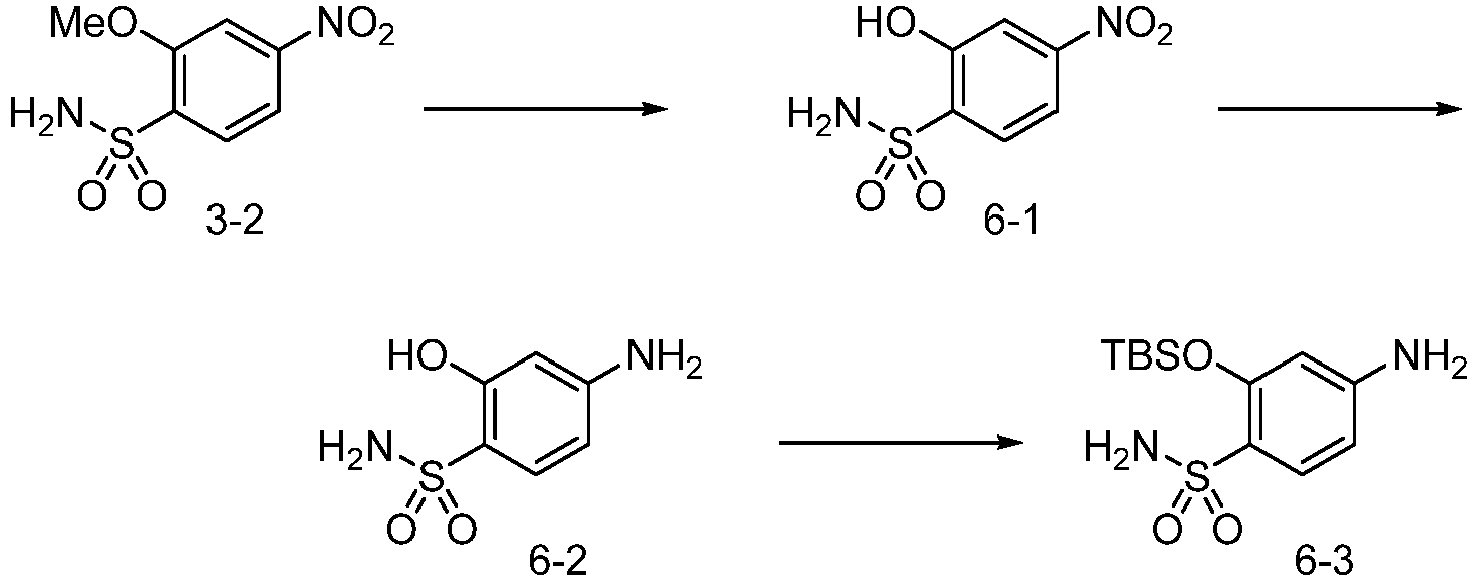
- Compound 6-1: 1H-NMR(DMSO-d6) δ 7.31(s, 2H), 7.72-7.75(m, 2H), 7.88-7.90(m, 1H).
Compound 6-2: 1H-NMR(DMSO-d6) δ 5.67(bs, 2H), 6.02(dd, J = 8.5, 2.0 Hz, 1H), 6.09(d, J = 2.2 Hz, 1H), 7.24(d, J = 8.5 Hz, 1H), 7.94(s, 2H).
Compound 6-3: 1H-NMR(DMSO-d6) δ 0.25(s, 6H), 0.97(s, 9H), 5.78(s, 2H), 6.14(d, J = 8.5 Hz, 1H), 6.20(s, 1H), 6.32(s, 2H), 7.33(d, J = 8.3 Hz, 1H). - Reference Example 7
-

- Compound 7-1: 1H-NMR(DMSO-d6) δ 1.40(t, J = 7.0 Hz, 3H), 4.35(q, J = 7.0 Hz, 2H), 7.34(s, 2H), 7.89(dd, J = 8.5, 2.1 Hz, 1H), 7.91(d, J = 2.2 Hz, 1H), 7.98(d, J = 8.5 Hz, 1H).
Compound 7-2: 1H-NMR(DMSO-d6) δ 1.35(t, J = 7.0 Hz, 3H), 4.04(q, J = 7.0 Hz, 2H), 5.78(s, 2H), 6.10(dd, J = 8.5, 2.0 Hz, 1H), 6.23(d, J = 2.0 Hz, 1H), 6.42(s, 2H), 7.33(d, J = 8.5 Hz, 1H). -

- Compound 8-2: 1H-NMR(DMSO-d6) δ 3.84(s, 3H), 7.17(d, J = 7.8 Hz, 1H), 7.32(d, J = 7.6 Hz, 1H), 7.43(dd, J = 7.9, 1.4 Hz, 1H), 7.51(d, J = 1.5 Hz, 1H), 7.59(t-like, J = 7.6 Hz, 1H), 7.68(t-like, J = 7.6 Hz, 1H), 7.80(d, J = 7.8 Hz, 1H), 9.95(s, 1H).
Compound 8-3: 1H-NMR(DMSO-d6) δ 3.74(s, 3H), 3.88(s, 3H), 7.27(d, J = 8.0 Hz, 1H), 7.33(d, J = 7.6 Hz, 1H), 7.47(dd, J = 8.0, 2.0 Hz, 1H), 7.53-7.62(m, 2H), 7.68-7.72(m, 1H), 7.81(d, J = 7.6 Hz, 1H). Compound 8-4: 1H-NMR(DMSO-d6) δ 3.72(s, 3H), 7.24(d, J = 7.8 Hz, 1H), 7.33(d, J = 8.0 Hz, 1H), 7.43-7.45(m, 1H), 7.53-7.62(m, 2H), 7.68-7.72(m, 1H), 7.80(d, J = 7.8 Hz, 1H), 13.05(bs, 1H). - Reference Example 9
-

- Compound 9-2: 1H-NMR(DMSO-d6) δ 1.92(s, 3H), 7.25(d, J = 7.3 Hz, 1H), 7.44(d, J = 7.9 Hz, 1H), 7.63-7.79(m, 3H), 7.83-7.89(m, 2H), 13.3(bs, 1H).
- Reference Example 10
-

- Compound 10-1: 1H-NMR(DMSO-d6) δ 3.87(s, 3H), 5.14(AB q, JAB = 32.2 Hz, 2H), 7.16(d, J = 7.6 Hz, 2H), 7.23-7.32(m, 4H), 7.39(d, J = 7.6 Hz, 1H), 7.60-7.66(m, 3H), 7.71(t-like, J = 7.4 Hz, 1H), 7.83(d, J = 7.6 Hz, 1H).
Compound 10-2: 1H-NMR(DMSO-d6) δ 5.13(AB q, JAB = 26.1 Hz, 2H), 7.15-7.50(m, 7H), 7.58-7.74(m, 4H), 7.82(d, J = 7.7 Hz, 1H), 13.12(bs, 1H). - Reference Example 11
-

- A mixture of methyl 4-bromo-3-methylbenzoate (4.58 g), [1,1'-bis(diphenylphosphino)-ferrocene]dichloropalladium (II) (1.46 g), potassium carbonate (11.0 g) and 2-(trifluoromethyl)phenylboronic acid (7.60 g) was stirred in DMF (100 mL) at 80°C for 24 hours. After cooling to room temperature, the reaction mixture was diluted with a mixed solvent of ethyl acetate-toluene (1:1) and filtered. Water was added to the filtrate and the mixture was extracted with ethyl acetate. The organic layer was washed with water and saturated brine successively, dried over anhydrous sodium sulfate, filtered and concentrated under reduced pressure to give a residue, which was purified with silica gel column chromatography (hexane/ethyl acetate) to give compound 11-1 (5.61 g). N-Bromosuccinimide (2.06 g) and benzoyl peroxide (133 mg) were added to a solution of compound 11-1 (3.07 g) in carbon tetrachloride (47 mL) and the mixture was heated to reflux for 6 hours. After cooling to room temperature, the reaction mixture was filtered. The filtrate was concentrated under reduced pressure and the resulting residue was purified with silica gel column chromatography (hexane/ethyl acetate) to give compound 11-2 (4.05 g) as a crude product. The crude product (3.78 g) of compound 11-2 was dissolved in acetic acid (73 mL), sodium acetate (4.17 g) was added thereto, and the mixture was heated to reflux for 16 hours. After cooling to room temperature, the reaction solution was concentrated under reduced pressure to give a residue, to which water was added and the mixture was extracted with ethyl acetate. The organic layer was washed with water and saturated brine successively, dried over anhydrous magnesium sulfate, filtered and concentrated under reduced pressure to give a residue, which was purified with silica gel column chromatography (hexane/ethyl acetate) to give compound 11-3 (2.39 g). Compound 11-3 (2.04 g) was dissolved in a mixed solvent of tetrahydrofuran-methanol (1:1) (40 mL), 1N aqueous solution of sodium hydroxide (23 mL) was added dropwise thereto, and the mixture was stirred at room temperature for 25 hours. The reaction solution was acidified by addition of 2N aqueous solution of hydrochloric acid, concentrated under reduced pressure and ethyl acetate and 1N aqueous solution of hydrochloric acid were added. The organic layer was extracted, washed with saturated brine, dried over anhydrous magnesium sulfate, filtered and concentrated under reduced pressure to give a residue, which was azeotropically distilled with toluene to give compound 11-4 (1.69 g). Compound 11-5 (89 mg) was prepared from compound 11-4 (94 mg) in the same manner as the second step of Reference Example 9.
- Compound 11-1: 1H-NMR(CDCl3) δ 2.08(s, 3H), 3.94(s, 3H), 7.22(d, J = 8.1 Hz, 2H), 7.50(t-like, J = 7.6 Hz, 1H), 7.59(t-like, J = 7.1 Hz, 1H), 7.77(d, J = 7.7 Hz, 1H), 7.88(md, J = 7.9 Hz, 1H), 7.94(m, 1H).
- Compound 11-2: 1H-NMR(CDCl3) δ 3.96(s, 3H), 4.04(d, J = 10.4 Hz, 1H), 4.40(d, J = 10.4 Hz, 1H), 7.27(d, J = 8.1 Hz, 2H), 7.43(d, J = 7.3 Hz, 1H), 7.52-7.64(m, 2H), 7.79(d, J = 7.3 Hz, 1H), 7.99(dd, J = 8.0, 1.7 Hz, 1H), 8.21 (d, J = 1.7 Hz, 1H).
- Compound 11-3: 1H-NMR(CDCl3) δ 2.00(s, 3H), 3.94(s, 3H), 4.81(AB q, JAB = 22.8 Hz, 2H), 7.28(d, J = 7.9 Hz, 2H), 7.48-7.59(m, 2H), 7.76(d, J = 7.2 Hz, 1H), 8.00(dd, J = 8.0, 1.7 Hz, 1H), 8.14(d, J = 1.3 Hz, 1H).
- Compound 11-4: 1H-NMR(CDCl3) δ 4.42(AB q, JAB = 23.0 Hz, 2H), 7.29(d, J = 8.1 Hz, 2H), 7.50-7.61(m, 2H), 7.78(d, J = 7.5 Hz, 1H), 8.05(dd, J = 8.0, 1.6 Hz, 1H), 8.34(s, 1H).
- Compound 11-5: 1H-NMR(CDCl3) δ 4.83(AB q, JAB = 20.4 Hz, 2H), 7.27(d, J = 7.5 Hz, 1H), 7.32(d, J = 8.0 Hz, 1H), 7.50-7.61(m, 2H), 7.77(d, J = 7.2 Hz, 1H), 8.08(dd, J = 7.9, 1.8 Hz, 1H), 8.21(d, J = 1.7 Hz, 1H).
- Reference Example 12
-

- Compound 12-4 (1.00 g) was prepared from methyl 4-bromo-3-methylbenzoate (2.29 g) via compound 12-1, compound 12-2 and compound 12-3 in the same manner as the second step to the fifth step in Reference Example 11. Thionyl chloride (648 µL) and DMF (23 µL) were added dropwise to a suspension of compound 12-4 (1.00 g) in toluene (12 mL) and the mixture was stirred at 95°C for 2 hours. After cooling to room temperature, the reaction solution was concentrated under reduced pressure, azeotropically distilled with toluene and dissolved in tetrahydrofuran (30 mL). Compound of Reference Example 3 (658 mg) and diisopropylethylamine (773 µL) were added thereto and the mixture was stirred at room temperature for 20 hours. 2N Aqueous solution of hydrochloric acid (150 mL) was added to the reaction mixture with stirring and the resulting precipitate was filtered. The precipitate was washed with water and dried under reduced pressure to give compound 12-5 (1.40 g). Compound 12-5 (700 mg) was dissolved in a mixed solution (15 mL) of tetrahydrofuran-methanol (1:1), 1N aqueous solution of sodium hydroxide (2.3 mL) was added dropwise thereto, and the mixture was stirred at room temperature for 30 minutes. The reaction mixture was acidified with 2N aqueous solution of hydrochloric acid (1.2 mL), the solvent was evaporated under reduced pressure, water (8 mL) was added thereto with stirring and the precipitate was filtered. The precipitate was washed with water and dried under reduced pressure to give compound 12-6 (560 mg).
- Compound 12-1: 1H-NMR(CDCl3) δ 3.91(s, 3H), 4.60(s, 2H), 7.64(d, J = 8.3 Hz, 1H), 7.79(dd, J = 8.3, 2.1 Hz, 1H), 8.09(d, J = 2.0 Hz, 1H).
- Compound 12-2: 1H-NMR(CDCl3) δ 2.15(s, 3H), 3.91(s, 3H), 5.20(s, 2H), 7.64(d, J = 8.3 Hz, 1H), 7.83(dd, J = 8.3, 2.1 Hz, 1H), 8.04(d, J = 2.2 Hz, 1H).
- Compound 12-3: 1H-NMR(DMSO-d6) δ 4.54(s, 2H), 5.60(br, 1H), 7.70(d, J = 7.7 Hz, 1H), 7.74(dd, J = 8.2, 2.0 Hz, 1H), 8.11(m, 1H), 13.14(br, 1H).
- Compound 12-4: 1H-NMR(DMSO-d6) δ 2.11(s, 3H), 5.17(s, 2H), 7.79-7.84(m, 2H), 8.01(m, 1H), 13.30(br, 1H).
- Compound 12-5: 1H-NMR(DMSO-d6) δ 2.12(s, 3H), 3.89(s, 3H), 5.19(s, 2H), 7.01(s, 2H), 7.46(dd, J = 8.6, 1.7 Hz, 1H), 7.68-7.71(m, 2H), 7.84-7.91(m, 2H), 8.03(m, 1H), 10.62(s, 1H).
- Compound 12-6: 1H-NMR(DMSO-d6) δ 3.88(s, 3H), 4.58(d, J = 4.8 Hz, 2H), 5.63(t, J = 5.2 Hz, 1H), 7.01(br, 1H), 7.50(dd, J = 8.6, 1.8 Hz, 1H), 7.67-7.82(m, 6H), 8.12(m, 1H).
- Reference Example 13
-

- Compound 13 (407 mg) was prepared from 4-bromo-3-nitrobenzoic acid (246 mg) and compound 3-3 (222 mg) of Reference Example 3 in the same manner as the fifth step of Reference Example 12.
Compound 13: 1H-NMR(DMSO-d6) δ 3.89(s, 3H), 7.03(s, 2H), 7.47(dd, J = 8.6, 1.7 Hz, 1H), 7.66(d, J = 1.7 Hz, 1H), 7.72(d, J = 8.4 Hz, 1H), 8.11-8.18(m, 2H), 8.58(d, J = 1.7 Hz, 1H), 10.76(s, 1H). - Reference Example 14
-

- Compound 12-5 (4.0 g), which was an intermediate of Reference Example 12, was dissolved in dimethylsulfoxide (40 mL), [1,1'-bis(diphenylphosphino)ferrocene]dichloropalladium (II) (1.92 g), potassium acetate (3.1 g) and bispinacolato diboron (6.04 g) were added thereto, and the mixture was stirred at 85°C overnight. After cooling to room temperature, ice water was added to the reaction mixture and the mixture was extracted with ethyl acetate. The organic layer was washed with saturated brine, dried over anhydrous sodium sulfate, filtered and concentrated under reduced pressure to give a residue, which was recrystallized from chloroform, filtered and dried under reduced pressure to give compound 14 (2.96 g).
Compound 14: 1H-NMR(DMSO-d6) δ 1.31(s, 12H), 2.05(s, 3H), 3.89(s, 3H), 5.30(s, 2H), 7.00(s, 2H), 7.50(d, J = 8.0 Hz, 1H), 7.69(d, J = 8.0 Hz, 1H), 7.84(d, J = 8.0 Hz, 1H), 7.94(d, J = 8.0 Hz, 1H), 10.6(s, 1H). - Reference Example 15
-

- 2-(3-Furanyl)chlorobenzene 15 (329 mg) was prepared from 2-chlorophenylboronic acid (625 mg) and 3-bromofuran (293 mg) in the same manner as the first step of Reference Example 11. Compound 15: 1H-NMR(DMSO-d6) δ 6.90(d, J = 4.0 Hz, 1H), 7.29-7.41(m, 2H), 7.51-7.60(m, 2H), 7.78(t, J = 4.0 Hz, 1H), 8.11-8.12(m, 1H).
- Reference Example 16
-

- Compound 16 (24 g) was prepared from 2-methoxy-4-nitrobenzenesulfonyl chloride (25 g) in the same manner as Reference Example 3, wherein tert-butylamine was used in place of aqueous solution of ammonia.
Compound 16: 1H-NMR(DMSO-d6) δ 1.01(s, 9H), 3.76(s, 3H), 5.85(s, 2H), 6.12(d, J = 8.0 Hz, 1H), 6.21(s, 1H), 6.35(s, 1H), 7.31(d, J = 8.0 Hz, 1H). -

- Compound 17 (411 mg) was prepared from the compound obtained in Reference Example 16 (1.0 g) and 4-bromo-3-methylbenzoic acid (0.69 g) through the same reactions as the fifth step of Reference Example 12 and Reference Example 14.
Compound 17: 1H-NMR(DMSO-d6) δ 1.05(s, 9H), 1.32(s, 12H), 3.89(s, 3H), 6.87(s, 1H), 7.51(d, J = 12.0 Hz, 1H), 7.68-7.76(m, 5H), 10.5(s, 1H). - Reference Example 18
-

- Sodium hydride (440 mg) was added to 2-bromo-4-nitro-phenol (2.0 g) in tetrahydrofuran (50 mL) and the mixture was stirred at room temperature for 1 hour. To the reaction mixture was added chloromethylmethylether (1.38 mL) and the mixture was further stirred at room temperature for 24 hours. A saturated aqueous solution of ammonium chloride was added to the reaction mixture and the mixture was extracted with diethylether. The organic layer was dried over anhydrous magnesium sulfate, filtered and concentrated under reduced pressure to give compound 18-1 (1.82 g). Compound 18-1 (1.0 g) was dissolved in a mixed solution of toluene (19.7 mL) and N,N-dimethylformamide (1.97 mL), morpholine (493 µL), palladium (II) acetate (85.7 mg), 2-dicyclohexylphosphino-2',4',6'-triisopropylbiphenyl (363 mg) and sodium tert-butoxide (550 mg) were added thereto, and the mixture was heated at 100°C for 1 hour using a microwave reaction device [Initiator 60 EXP (400W), Biotage]. Water was added to the reaction mixture which was extracted with ethyl acetate. The organic layer was dried over anhydrous magnesium sulfate, filtered and concentrated under reduced pressure to give a residue, which was purified with silica gel column chromatography (hexane/ethyl acetate) to give compound 18-2 (502 mg). 4N Aqueous solution of hydrochloric acid/dioxane (4 mL) was added to compound 18-2 (206 mg) in methanol (5 mL) and the mixture was stirred at room temperature for 24 hours. The reaction mixture was concentrated under reduced pressure, dichloromethane (10.5 mL) was added thereto, and the mixture was cooled to 0°C. 2,6-Lutidine (183 µL) and trifluorometanesulfonic acid anhydride (207 µL) were added thereto, and the mixture was stirred for 1 hour. The reaction mixture was furter stirred at room temperature for 18 hours, an aqueous solution of potassium hydrogensulfate (2N) was added thereto, and the mixture was extracted with ethyl acetate. The organic layer was dried over anhydrous magnesium sulfate, filtered and concentrated under reduced pressure to give compound 18-3 (355 mg).
- Compound 18-1: Analyzing method SC2, tR 1.021 min, obs MS[M+1] 262.3
Compound 18-2: Analyzing method SA3, tR 4.17 min, obs MS[M+1] 269.2
Compound 18-3: Analyzing method SC2, tR 1.117 min, obs MS[M+1] 357.2 - Reference Example 19
-

- N-Bromosuccinimide (1.78 g) was added to 3,5-dimethylaniline (1.21 g) in acetonitrile (50 mL) and the mixture was stirred at room temperature for 8 hours. The reaction solution was concentrated under reduced pressure to give a residue, which was purified with silica gel column chromatography (hexane/ethyl acetate) to give compound 19-1 (1.78 g). A mixture of compound 19-1 (100 mg), tris(dibenzylideneacetone)dipalladium (0) (23 mg), 2-dicyclohexylphosphino-2',6-dimethoxybiphenyl (41 mg), potassium phosphate (424 mg) and 2-(trifluoromethyl)phenylboronic acid (190 mg) was stirred in toluene (1.0 mL) at 100°C for 32 hours. After cooling to room temperature, the reaction solution was diluted with ethyl acetate and filtered. The filtrate was concentrated under reduced pressure to give a residue, which was purified with silica gel column chromatography (hexane/ethyl acetate) to give compound 19-2 (51 mg).
- Compound 19-1: 1H-NMR(CDCl3) δ 2.31(d, J = 0.5 Hz, 6H), 3.53(bs, 2H), 6.44(d, J = 0.5 Hz, 2H).
Compound 19-2: 1H-NMR(CDCl3) δ 1.85(s, 6H), 3.59(bs, 2H), 6.45(s, 2H), 7.17(d, J = 7.5 Hz, 1H), 7.44(t-like, J = 7.5 Hz, 1H), 7.56(t-like, J = 7.2 Hz, 1H), 7.75(d, J = 8.1 Hz, 1H). - Reference Example 20
-

- Compound 20-1 (26.7 g) was prepared from methyl 2-bromo-5-nitrobenzoate (26.0 g) in the same manner as the first step of Reference Example 11. Compound 20-1 (10.8 g) was dissolved in diethylether (220 mL), methanol (2.69 mL) was added thereto, and the mixture was cooled to 0°C. To the reaction mixture was added 2M solution of lithium borohydride in tetrahydrofuran (33.2 mL), and the reaction mixture was warmed up to room temperature and stirred for 3 hours. After finishing the reaction, to the reaction mixture were added ice water and an aqueous solution of ammonium chrolide successively at 0°C, and the mixture was extracted with ethyl acetate. The organic layer was washed with saturated brine, dried over anhydrous sodium sulfate, filtered and concentrated under reduced pressure to give a residue, which was purified with silica gel column chromatography (hexane/ethyl acetate) to give compound 20-2 (9.67 g). Compound 20-3 (10.2 g) was prepared from compound 20-2 (9.67 g) in the same manner as the second step of Reference Example 9. Compound 20-3 (10.2g) was dissolved in a mixed solvent of tetrahydrofuran (190 mL) and ethanol (114 mL), an aqueous solution (38 mL) of ammonium chloride (7.34 g) and reduced iron (15.3 g) were added successively thereto, and the mixture was stirred at 75°C for 2.5 hours. After cooling, the reaction mixture was filtered through Celite, and Celite cake was washed with a mixture of tetrahydrofuran-ethanol (1:1). The filtrate was concentrated under reduced pressure and water and a mixture of ethyl acetate-tetrahydrofuran (1:1) were added thereto. The mixture was extracted, the aqueous layer was extracted with ethyl acetate, and the combined organic layers were washed with saturated brine, dried over anhydrous sodium sulfate, filtered and concentrated under reduced pressure to give a residue, which was purified with silica gel column chromatography (hexane/ethyl acetate) to give compound 20-4 (9.32 g).
- Compound 20-1: 1H-NMR(CDCl3) δ 3.68(s, 3H), 7.19-7.20(m, 1H), 7.57(d, J = 8.5 Hz, 1H), 7.51-7.61(m, 2H), 7.74-7.76(m, 1H), 8.37(dd, J = 8.5, 2.4 Hz, 1H), 8.89(d, J = 2.2 Hz, 1H).
Compound 20-2: 1H-NMR(CDCl3) δ 1.75(bs, 1H), 4.42(s, 2H), 7.21(m, 1H), 7.33(d, J = 8.3 Hz, 1H), 7.53-7.63(m, 2H), 7.78-7.80(m, 1H), 8.15(dd, J = 8.4, 2.4 Hz, 1H), 8.50(d, J = 2.2 Hz, 1H).
Compound 20-3: 1H-NMR(CDCl3) δ 2.06(s, 3H), 4.83(t-like, J = 14.0 Hz, 2H), 7.26(m, 1H), 7.38(d, J = 8.3 Hz, 1H), 7.54-7.64(m, 2H), 7.78-7.81(m, 1H), 8.19(dd, J = 8.4, 2.4 Hz, 1H), 8.35(d, J = 2.4 Hz, 1H). Compound 20-4: 1H-NMR(CDCl3) δ 1.97(s, 3H), 4.71(AB q, JAB = 29.8 Hz, 2H), 6.67(dd, J = 8.2, 2.5 Hz, 1H), 6.79(d, J = 2.6 Hz, 1H), 6.97(d, J = 8.1 Hz, 1H), 7.24-7.27(m, 1H), 7.41-7.53(m, 2H), 7.69-7.72(m, 1H). - Reference Example 21
-

- Compound 21-1 (3.14 g) was prepared from methyl 2-bromo-5-nitro-benzoate (4.94 g) in the same manner as the second step of Reference Example 20. Compound 21-2 (3.66 g) was prepared from compound 21-1 (3.14 g) in the same manner as the second step of Reference Example 9. Compound 21-3 (2.99 g) was prepared from compound 21-2 (3.46 g) in the same manner as the fourth step of Reference Example 20.
- Compound 21-1: 1H-NMR(CDCl3) δ 2.12(br, 1H), 4.82(bs, 2H), 7.70(d, J = 8.8 Hz, 1H), 8.02(dd, J = 8.6, 2.8 Hz, 1H), 8.42(d, J = 2.8 Hz, 1H).
Compound 21-2: 1H-NMR(CDCl3) δ 2.20(s, 3H), 5.22(s, 2H), 7.75(d, J = 8.6 Hz, 1H), 8.03(dd, J = 8.7, 2.7 Hz, 1H), 8.25(d, J = 2.8 Hz, 1H).
Compound 21-3: 1H-NMR(CDCl3) δ 2.12(s, 3H), 5.08(s, 2H), 6.52(dd, J = 8.4, 2.9 Hz, 1H), 6.73(d, J = 2.8 Hz, 1H), 7.29(d, J = 8.4 Hz, 1H). - Reference Example 22
-

- The compound obtained in Reference Example 3 (1.66 g) was dissolved in 2N aqueous solution of HCl (13.3 mL), an aqueous solution (6.6 mL) of sodium nitrite (0.6 g) was added dropwise thereto under ice-cooling over 30 minutes, and the mixture was stirred for 3 hours. Separately, an aqueous solution (10 mL) of potassium cyanide (2.45 g) was added to an aqueous solution (10 mL) of copper sulfate pentahydrate (2.0 g) at 70°C with stirring, and the mixture was cooled to room temperature. The resulting mixture was added to the above described aqueous solution of HCl at once under ice-cooling, and the mixture was heated to stirr at 50°C for 30 minutes and then cooled to room temperature. Ethyl acetate (40 mL) was added thereto, and the mixture was filtered through Celite, an aqueous solution of sodium bicarbonate was added thereto, and the mixture was extracted with ethyl acetate. The organic layer was dried over anhydrous sodium sulfate, filtered and concentrated under reduced pressure to give a residue, which was purified with silica gel column chromatography (hexane/ethyl acetate) to give compound 22-1 (577 mg). Compound 22-1 (577 mg) was suspended in conc. aqueous solution of hydrochloric acid (19 mL) and the mixture was stirred at 120°C for 3 hours. The reaction solution was cooled to room temperature, concentrated under reduced pressure and the resulting residue was suspended in an aqueous solution of sodium hydrogencarbonate, filtered and dried under reduced pressure to give compound 22-2 (514 mg).
- Compound 22-1: 1H-NMR(DMSO-d6) δ 3.92(s, 3H), 7.38(s, 2H), 7.53(d, J = 8.0 Hz, 1H), 7.73(s, 1H), 7.86(d, J = 8.0 Hz, 1H).
Compound 22-2: 1H-NMR(DMSO-d6) δ 3.95(s, 3H), 7.25(s, 2H), 7.60-7.62(m, 2H), 7.80-7.82(m, 1H). - Reference Example 23
-

- Compound 23-1 (299 mg) was prepared from compound 21-1 (232 mg), which was an intermediate of Reference Example 21, in the same manner as the first step of Reference Example 8. Compound 23-2 (331 mg) was prepared from compound 23-1 (297 mg) in the same manner as the second step of Reference Example 9. Compound 23-2 (330 mg) was suspended in dichloromethane (9 mL), and 1M solution of boron tribromide in dichloromethane (3.57 mL) was added thereto at -78°C. The mixture was warmed up to room temperature and stirred for 6 hours. After finishing the reaction, ice-water was added to the reaction mixture at 0°C and the mixture was extracted with ethyl acetate. The organic layer was washed with saturated brine, dried over anhydrous magnesium sulfate, filtered and concentrated under reduced pressure to give a residue, which was purified with silica gel column chromatography (hexane/ethyl acetate) to give compound 23-3 (186 mg) and compound 23-4 (69 mg). Sodium acetate (410 mg) was added to a solution of compound 23-3 (184 mg) in acetic acid (5 mL) and the mixture was heated to reflux for 6 hours. The reaction solution was cooled to room temperature, and then concentrated under reduced pressure, water was added to the residue, which was extracted with ethyl acetate. The organic layer was washed with water and saturated brine successively, dried over anhydrous magnesium sulfate, filtered and concentrated under reduced pressure to give compound 23-5 (158 mg). Potassium carbonate (41 mg) and n-propyl bromide (20 µL) were added to compound 23-5 (53 mg) in DMF (1.5 mL), and the mixture was stirred at room temperature for 4 hours. Potassium iodide (25 mg) was further added thereto, and the reaction solution was filtered, water was added to the filtrate and the mixture was extracted with ethyl acetate. The organic layer was washed with saturated brine, dried over anhydrous sodium sulfate, filtered and concentrated under reduced pressure to give a residue, which was purified with silica gel column chromatography (hexane/ethyl acetate) to give compound 23-6 (50 mg). Compound 23-7 (30 mg) was prepared from compound 23-6 (48 mg) in the same manner as the forth step of Reference Example 20.
- Compound 23-1: 1H-NMR(CDCl3) δ 1.73(br, 1H), 3.89(s, 3H), 4.43(s, 2H), 7.09(dd, J = 8.6, 2.4 Hz, 1H), 7.13(d, J = 8.4 Hz, 1H), 7.28(d, J = 2.2 Hz, 1H), 7.31(d, J = 8.4 Hz, 1H), 8.13(dd, J = 8.3, 2.5 Hz, 1H), 8.48(d, J = 2.2 Hz, 1H).
- Compound 23-2: 1H-NMR(CDCl3) δ 2.07(s, 3H), 3.89(s, 3H), 4.83(AB q, JAB = 21.9 Hz, 2H), 7.10(dd, J = 8.6, 2.4 Hz, 1H), 7.15(d, J = 8.6 Hz, 1H), 7.27(d, J = 2.4 Hz, 1H), 7.36(d, J = 8.4 Hz, 1H), 8.17(dd, J = 8.4, 2.4 Hz, 1H), 8.33(d, J = 2.0 Hz, 1H).
- Compound 23-3: 1H-NMR(CDCl3) δ 4.21(AB q, JAB = 97.1 Hz, 2H), 5.45(s, 1H), 7.08(dd, J = 8.3, 2.3 Hz, 1H), 7.24-7.27(m, 2H), 7.34(d, J = 8.4 Hz, 1H), 8.14(dd, J = 8.4, 2.4 Hz, 1H), 8.38(d, J = 2.4 Hz, 1H).
- Compound 23-4: 1H-NMR(DMSO-d6) δ 4.08-4.30(m, 2H), 5.55(t, J = 5.3 Hz, 1H), 7.07-7.19(m, 3H), 7.37(d, J = 8.4 Hz, 1H), 8.12(dd, J = 8.2, 2.6 Hz, 1H), 8.37(d, J = 2.4 Hz, 1H), 10.36(s, 1H).
- Compound 23-5: 1H-NMR(CDCl3) δ 2.08(s, 3H), 4.85(AB q, JAB = 22.6 Hz, 2H), 5.63(s, 1H), 7.04(dd, J = 8.4, 2.5 Hz, 1H), 7.11(d, J = 8.4 Hz, 1H), 7.23(d, J = 2.4 Hz, 1H), 7.36(d, J = 8.4 Hz, 1H), 8.17(dd, J = 8.4, 2.4 Hz, 1H), 8.38(d, J = 2.2 Hz, 1H).
- Compound 23-6: 1H-NMR(CDCl3) δ 1.06(t, J = 7.3 Hz, 3H), 1.79-1.91(m, 2H), 2.07(s, 3H), 3.99(t, J = 6.4 Hz, 2H), 3.99(AB q, JAB = 22.1 Hz, 2H), 7.08(dd, J = 8.6, 2.4 Hz, 1H), 7.13(d, J = 8.4 Hz, 1H), 7.27(d, J = 2.4 Hz, 1H), 7.36(d, J = 8.3 Hz, 1H), 8.17(dd, J = 6.4, 2.4 Hz, 1H), 8.33(d, J = 2.0 Hz, 1H).
- Compound 23-7: Analyzing method SA4, tR 3.49 min, obs MS[M+1] 368.1
- Reference Example 24
-

- Compound 24-1 (62 mg) was prepared from compound 23-4 (67 mg), which was a by-product of Reference Example 23, in the same manner as the second step of Reference Example 9. Compound 24-2 (20 mg) was prepared from compound 24-1 (59 mg) in the same manner as the fourth step of Reference Example 20.
Compound 24-1: 1H-NMR(CDCl3) δ 2.06(s, 3H), 2.35(s, 3H), 4.85(s, 2H), 7.28(d, J = 8.4 Hz, 1H), 7.37-7.39(m, 2H), 7.54(d, J = 2.2 Hz, 1H), 8.19(dd, J = 8.4, 2.4 Hz, 1H), 8.34(d, J = 2.4 Hz, 1H). - Compound 24-2: Analyzing method SA4, tR 2.40 min, obs MS[M+1] 368.1
- Reference Example 25
-

- 3-Nitrophenethyl alcohol (4.76 g) was dissolved in tetrahydrofuran (62 mL), acetic anhydride (4.03 mL) and 4-dimethylaminopyridine (5.21 g) were added thereto, and the mixture was stirred for 2 hours. The reaction mixture was acidified by addition of 2N aqueous solution of hydrochloric acid and extracted with ethyl acetate. The organic layer was washed with saturated brine, dried over anhydrous sodium sulfate, filtered and concentrated under reduced pressure to give compound 25-1 (5.95 g) as a crude product. Compound 25-1 (4.0 g) was dissolved in methanol (16 mL) and ethyl acetate (8 mL), 10% palladium-carbon (2.0 g) was added thereto, and the mixture was stirred under hydrogen atmosphere (3 atoms) overnight. The mixture was filtered through Celite and concentrated under reduced pressure to give compound 25-2 (0.77 g) as a crude product. Compound 25-2 (0.53 g) was dissolved in tetrahydrofuran (30 mL) and 2N aqueous solution of hydrochloric acid (1.5 mL), pyridinium bromide perbromide (946 mg) in tetrahydrofuran (45 mL) was added dropwise thereto under ice-cooling, and the mixture was stirred for 2 hours. The reaction mixture was poured into a saturated aqueous solution of sodium bicarbonate and extracted with ethyl acetate. The organic layer was washed with saturated brine, dried over anhydrous sodium sulfate, filtered and concentrated under reduced pressure to give a residue, which was purified with silica gel column chromatography (hexane/ethyl acetate) to give compound 25-3 (638 mg).
- Compound 25-1: 1H-NMR(CDCl3) δ 2.08(s, 3H), 3.03(t, J = 8.0 Hz, 2H), 4.30(t, J = 8.0 Hz, 2H), 7.44-7.55(m, 2H), 8.09(bs, 1H).
Compound 25-2: 1H-NMR(CDCl3) δ 2.02(s, 3H), 2.83(t, J = 8.0 Hz, 2H), 4.24(t, J = 8.0 Hz, 2H), 6.58-6.65(m, 3H), 7.08(bs, 1H).
Compound 25-3: 1H-NMR(DMSO-d6) δ 2.50(s, 3H), 2.67-2.79(m, 2H), 4.10-4.16(m, 2H), 5.23(s, 2H), 6.34-6.40(m, 2H), 6.53(d, J = 4.0 Hz, 1H), 7.15(d, J = 9.0 Hz, 1H). - Reference Example 26
-

- Palladium (II) acetate (300 mg), 2-dicyclophosphinebiphenyl (1.87 g), triethylamine (15.0 mL) and pinacolborane (11.6 mL) were added to 4-bromo-3-methylaniline (5.0 g) in dioxane (75 mL) and the mixture was stirred at 80°C for 24 hours. After adding water to the reaction mixture, the mixture was extracted with ethyl acetate. The organic layer was dried over anhydrous magnesium sulfate, filtered and concentrated under reduced pressure to give a residue, which was purified with silica gel column chromatography (hexane/ethyl acetate) to give compound 26 (4.85 g).
Compound 26: 1H-NMR(CDCl3) δ 1.31(s, 12H), 2.45(s, 3H), 3.74(br, 2H), 6.47-6.48(m, 2H), 7.59(d, J = 8.0 Hz, 1H). - Reference Example 27
-

- tert-Butylamine (58.0 mL) was added to 4-bromo-2-fluorobenzenesulfonyl chloride (50.0 g) in dichloromethane (180 mL) at 0°C and the mixture was stirred at room temperature for 2 hours. To the reaction mixture was added 2N aqueous solution of hydrochloric acid, and then chloroform and water were added thereto, and the mixture was separated. The organic layer was dried over anhydrous magnesium sulfate, filtered and concentrated under reduced pressure to give compound 27-1 (53.0 g). Sodium methoxide (27.7 g) was added to compound 27-1 (53.0 g) in N,N-dimethylacetamide (175 mL) and the mixture was stirred at room temperature for 4 hours. To the reaction mixture was added 2N aqueous solution of hydrochloric acid, and the mixture was stirred, filtered and dried under reduced pressure to give compound 27-2 (50.9 g). To compound 27-2 (10.0 g) in tetrahydrofuran (87.0 mL) was added 1M solution of methyl lithium in ether (34.1 mL) at -78°C and the mixture was stirred for 30 minutes. 2.7M n-Butyl lithium/hexane solution (12.7 mL) was added to the mixture above at -78°C and stirred for 1 hour, and dry ice was added thereto. The reaction solution was gradually warmed up to room temperature and stirred for 3 hours. Water, 1N aqueous solution of sodium hydroxide and ethyl acetate were added to the reaction mixture, and the mixture was extracted. The aqueous layer was acidified by addition of 6N aqueous solution of hydrochloric acid and extracted with ethyl acetate. The organic layer was dried over anhydrous magnesium sulfate, filtered and concentrated under reduced pressure to give compound 27-3 (7.80 g). To a solution of compound 27-3 (10.0 g) in dichloroethane (19.7 mL) were added oxalyl chloride (3.53 mL) and N,N-dimethylformamide (270 µL) at 0°C and the mixture was stirred at room temperature for 5 hours. The reaction mixture was concentrated under reduced pressure and the residue was azeotropically distilled with dichloroethane to give compound 27-4 (9.51 g).
- Compound 27-2: Analyzing method SC2: tR 1.460 min, obs MS[M+1] 322.2
Compound 27-3: Analyzing method SC2: tR 0.741 min, obs MS[M+1] 288.3 - Reference Example 28
-

- Compound 27-4 (5.33 g) prepared in Reference Example 27 and N-ethyl diisopropylamine (3.84 mL) were added to compound prepared in Reference Example 26 (4.84 g) in tetrahydrofuran (33 mL), and the mixture was stirred at room temperature for 24 hours. A saturated aqueous solution of ammonium chloride was added to the reaction mixture, and the mixture was extracted with ethyl acetate. The organic layer was washed with a saturated aqueous solution of sodium bicarbonate, then dried over anhydrous magnesium sulfate, filtered and concentrated under reduced pressure to give compound 28 (6.23 g).
Compound 28: Analyzing method SC2, tR 1.246 min, obs MS[M+1] 503.5
1H-NMR(DMSO-d6) δ 1.05(s, 9H), 1.35(s, 12H), 4.03(s, 3H), 7.19(s, 1H), 7.57-7.64(m, 5H), 7.86(d, J = 8.0 Hz, 1H), 10.4(s, 1H). - Reference Example 29
-

- To toluene (70.6 mL) were added 1,2-dibromobenzene (3 g), palladium acetate (158 mg), 2,2'-diphenylphosphino-1,1'-binaphthyl (879 mg), sodium tert-butoxide (1.63 g) and morpholine (1.15 mL), and the mixture was stirred at 90°C overnight. The reaction mixture was cooled to room tempareture, filtered through Celite and concentrated under reduced pressure to give a residue, which was purified with silica gel column chromatography (hexane/ethyl acetate) to give compound 29 (500 mg).
1H-NMR(DMSO-d6) δ 4.95(s, 4H), 3.74(s, 4H), 6.99(t, J = 8.0 Hz, 1H), 7.17(d, J = 8.0 Hz, 1H), 7.35(t, J = 8.0 Hz, 1H), 7.59(d, J = 8.0 Hz, 1H). - Reference Example 30
-

- Compound prepared in Reference Example 28 (5.0 g), 2-bromoaniline (1.46 g), potassium carbonate (4.66 g) and [1,1'-bis(diphenylphosphino)ferrocene]palladium chloride (620 mg) were added to a mixed solvent of N,N-dimethylformamide (85 mL) and water (8.5 mL), and the mixture was stirred at 100°C for 20 hours. Water and ethyl acetate were added to the reaction mixture, the organic layer was extracted, dried over anhydrous magnesium sulfate, filtered and concentrated under reduced pressure to give a residue, which was purified with silica gel column chromatography(hexane/ethyl acetate) to give compound 30 (2.93 g).
Compound 30: Analyzing method SC2, tR 1.071 min, obs MS[M+1] 468.8 - Reference Example 31
-

- 4-Bromo-3-methylaniline (2.76 g) and N-ethyl diisopropylamine (3.6 mL) were added to compound 27-4 (5.0 g) prepared in Reference Example 27 in tetrahydrofuran (31 mL) and the mixture was stirred at room temperature for 4 hours. A saturated aqueous solution of ammonium chloride was added to the reaction mixture which was extracted with ethyl acetate. The organic layer was washed with a saturated aqueous solution of sodium bicarbonate, dried over anhydrous magnesium sulfate, filtered and concentrated under reduced pressure to give compound 31 (7.8 g).
Compound 31: 1H-NMR(DMSO-d6) δ 1.07(s, 9H), 2.34(s, 3H), 4.00(s, 3H), 7.19(s, 1H), 7.56-7.64(m, 4H), 7.75(m, 1H), 7.87(d, J = 8.0Hz, 1H), 10.42(s, 1H). - Reference Example 32
-

- KCN (122 mg), potassium iodide (60 mg), 18-crown-6 (33 mg), MeCN (10 mL) and water (0.80 mL) was added to compound 32-1 (690 mg), which was prepared from compounds of Reference Example 27 and 20 in the same manner as examples 323 and 324, and the mixture was heated under reflux with stirring overnight. After finishing the reaction, water was added to the reaction mixture and extracted with ethyl acetate. The ethyl acetate layer was washed with water and brine, dried over anhydrous magnesium sulfate, filtered and concentrated under reduced pressure. The resulting residue was purified with silica gel column chromatography (hexane/ethyl acetate=1/1) to give compound 32-2 (510 mg). An aqueous solution of hydoxylamine (150 mg), sodium carbonate (245 mg), methanol (10 mL) and water (1 mL) were added to compound 32-2 (350 mg), and the mixture was heated under reflux with stirring for 5 hours. After finishing the reaction, water was added to the reaction mixture which was extracted with ethyl acetate. The ehtyl acetate-layer was washed with water and brine, dried over anhydrous magnesium sulfate, filtered and concentrated under reduced pressure to give crude compound 32-3 (330 mg). CDI (93 mg), DBU (0.090 mL) and methanol (7 mL) were added to the crude compound 32-3 (330 mg) and the mixture was stirred at room temperature for 4 hours. After finishing the reaction, water was added to the reaction mixture which was extracted with ethyl acetate. The ethyl acetate-layer was washed with water and brine, dried over anhydrous magnesium sulfate, filtered and concentrated to give a residue, which was purified with silica gel column chromatography (MeOH/CHCl3= 5/95) to give compound 32-4 (130 mg).
- Compound 32-2: Analyzing method SA2, tR 4.72 min, obs MS[M+1] 546.2
Compound 32-3: Analyzing method SA2, tR 4.62 min, obs MS[M+1] 579.1
Compound 32-4: Analyzing method SA2, tR 4.73 min, obs MS[M+1] 605.3 - Reference Example 33
-

- 2-Methoxyethanol (2.3 ml), NaH (1.16 g) and DMA (50 ml) were added to compound 27-1 (30. g), which was an intermediate of Reference Example 27, and the mixture was stirred at room temperature overnight. After finishing the reaction, water was added to the reaction mixture which was extracted with ethyl acetate. The ethyl acetate layer was washed with water and brine, dried over anhydrous magnesium sulfate, filtered and concentrated to give a residue, which was purified with silica gel column chromatography (hexane/ethyl acetate = 3/1) to give compound 33-1 (3.52 g). Compound 33-2 (2.32 g) was prepared from compound 33-1 (3.0 g) as a crude product in the same manner as the third step in Reference Example 27, and it was used in the next step without further purification. Oxalyl chloride (0.11 mL) and DMF (three drops) were added to the crude compound 33-2 (200 mg) and the mixture was stirred at room temperature for 1 hour. After finishing the reaction, solvent was evaporated, toluene (5 mL) was added to the residue, and the solvent was evaporated again. To the resulting residue, were added compound prepared in Reference Example 20 (185 mg), TEA (0.17 mL) and THF (5 mL) and the mixture was stirred at room temperature for 1 hour. After finishing the reaction, solvent was evaporated and the resulting residue was purified with silica gel column chromatography (hexane/ethyl acetate = 1/1) to give compound 33-3 (210 mg). 2N Aqueous solution of sodium hydroxide (3 mL), methanol (3 mL) and THF (3 mL) were added to compound 33-3 (210 mg) and the mixture was stirred at room temperature for 2 hour. After finishing the reaction, solvent was evaporated, 2N aqueous solution of hydrochloric acid (3 mL) was added to the residue which was extracted with ethyl acetate. The ethyl acetate layer was washed with water and brine, dried over anhydrous magnesium sulfate, filtered and concentrated to give compound 33-4 (150 mg).
- Compound 33-1: Analyzing method SA2, tR 4.93 min, obs MS[M+1] 366.1
Compound 33-2: Analyzing method SA2, tR 4.92 min, obs MS[M+1] 332.1
Compound 33-3: Analyzing method SA2, tR 4.78 min, obs MS[M+1] 623.2
Compound 33-4: Analyzing method SA2, tR 4.68 min, obs MS[M+1] 581.2 - Reference Example 34
-

- To 2,2-Difluoroethylamine (20.1 g) in 2-propanol (825 mL) were added di-tert-butyldicarbonate (Boc2O) (86.6 g) and diiropropylethylamine (57.6 mL) successively at room temperature. The reaction mixture was warmed up to 50°C and stirred for 15 hours. The reaction mixture was cooled to room temperature and concentrated under reduced pressure. The resulting residue was dissolved in methanol (80 mL) and tetrahydrofuran (80 mL), 2N aqueous solution of sodium hydroxide (268 mL) was added dropwise and the mixture was stirred at room temperature for 2 hours. Chloroform was added to the reaction mixture which was extracted with chloroform. Chloroform layer was washed with water, dried over anhydrous sodium sulfate and concentrated under reduced pressure to give comopund 34 (42.7 g).
1H-NMR(DMSO-d6) δ 1.38(s, 9H), 3.22-3.36(m, 2H), 5.73-6.13(m, 1H), 7.24(brt, 1H). - Reference Example 35
-

- To a suspension of compound 12-6 (10 g) prepared in Reference Example 12 in ethyl acetate (200 mL) was added thionyl chloride (100 mL) at room temperature. The mixture was heated at 70°C for 3 hours. The reaction mixture was cooled to room temperature, concentrated under reduced pressure and azeotropically distilled together with ethyl acetate three times. The resulting residue was suspended in ethyl acetate (33 mL) and hexane (26 mL), triturated by ultrasonic irradiation for 15 minutes, stirred at room temperature for 5 hours and the solid was filtrated. The collected solid was washed with a mixed solvent of ethyl acetate (80 mL) and hexane (100 mL), and hexane (60 mL) successively dried under reduced pressure to give compound 35-1 (9.97 g). Sodium hydride (60%; 7.04 g) was added to a suspension of a compound prepared in Reference Example 34 (7.97 g) in N-methyl pyrrolidone (80 mL), and the mixture was stirred at room temperature for 30 minutes. Compound 35-1 (9.97 g) was added to the resulting suspension and the mixture was stirred at room temperature for 1 hour. The reaction mixture was poured into a mixture of 1.2N aqueous solution of hydrochloric acid (360 mL) and ice (360 g) with vigorous stirring and the mixture was stirred at room temperature for 30 minutes. The resulting white solid was filtered, washed with water (400 mL) and hexane (60 mL) successively and dried under reduced pressure. The obtained solid was azeotropically distilled with toluene until it was dissolved in chloroform to give a homogenious solution, and then purified with silica gel column chromatography (hexane/ethyl acetate) to give compound 35-2 (9.78 g). Compound 35-2 (1.16 g) was treated in the same manner as Reference Example 14 to give a crude product, which was purified with silica gel column chromatography (hexane/ethyl acetate) to give compound 35-3 (846 mg).
- Compound 35-1: 1H-NMR(DMSO-d6) δ 3.89(s, 3H), 4.90(s, 2H), 7.00(s, 2H), 7.48(dd, J = 8.6, 2.0 Hz, 1H), 7.67-7.71(m, 2H), 7.88(s, 2H), 8.18(s, 1H), 10.62(s, 1H).
Compound 35-2: 1H-NMR(DMSO-d6) δ 1.17(brd, J = 6.6 Hz, 9H), 3.68-3.74(m, 2H), 3.88(s, 3H), 4.55(s, 2H), 5.99-6.36(m, 1H), 7.00(s, 2H), 7.46(dd, J = 8.6, 1.5 Hz, 1H), 7.68-7.74(m, 3H), 7.81-7.87(m, 2H), 10.58(s, 1H).
Compound 35-3: 1H-NMR(DMSO-d6) δ 1.32-1.43(brm, 21H), 3.55-3.64(m, 2H), 3.88(s, 3H), 4.77(s, 2H), 5.99-6.27(m, 1H), 6.99(s, 2H), 7.49(d, J= 8.8 Hz, 1H), 7.67-7.93(m, 5H), 10.57(s, 1H). - Reference Example 36
-

- 2,3-Dichloropyridine (300 mg), 3-pyridineboronic acid (298.7 mg), potassium carbonate (840 mg) and [1,1'-bis(diphenylphosphino)ferrocene]palladium chloride (148 mg) were added to a mixed solvent of toluene (2.6 mL) and ethanol (2.6 mL), and the mixture was heated in a sealed tube to 130°C for 1 hour by using a microwave synthesizer [Initiator 60 EXP (400W), Biotage]. Water and ethyl acetate were added to the reaction mixture, whichwas extracted, dried over anhydrous magnesium sulfate, filtered , and concentrated under reduced pressure to give a residue, which was purified with silica gel column chromatography (hexane/ethyl acetate) to give compound 36 (296 mg).
1H-NMR(CDCl3) δ 7.29(dd, J=4.8, 8.0 Hz, 1H), 7.42(dd, J=4.8, 8.0 Hz, 1H), 7.84(dd, J=1.6, 8.0 Hz, 1H), 8.08(ddd, J=1.6, 9.6 Hz, 1H), 8.64(dd, J=1.2, 4.8 Hz, 1H), 8.68(dd, J=1.6, 4.8 Hz, 1H), 9.01(d, J=2.0 Hz, 1H). - Reference Example 37
-

- 2-Bromo-3-formylpyridine (500 mg), morpholine (464 µL) and acetic acid (356 µL) were added to tetrahydrofuran (13 mL) and the mixture was stirred at room temperature for 1 hour. Sodium acetate (440 mg) and sodium triacetoxyborohydride (1.87 g) were added to the reaction mixture which was stirred at room temperature for 6 hours. The reaction mixture was neutralized by addition of a saturated aqueous solution of sodium bicarbonate, and water and ethyl acetate were added and extracted. The separated organic layer was dried over anhydrous magnesium sulfate, filtered, and concentrated under reduced pressure to give a residue, which was purified with silica gel column chromatography (hexane/ethyl acetate) to give compound 37 (660 mg).
1H-NMR(CDCl3) δ 2.60(t-like, J=6.4 Hz, 4H), 3.66(s, 2H), 3.76(t-like, J=6.4 Hz, 4H), 7.29(dd, J=6.0, 10.4 Hz, 1H), 7.85(dd, J=2.8, 10.4 Hz, 1H), 8.31(dd, J=2.8, 6.4 Hz, 1H). - Reference Example 38
-

- Compound 35-1 (500 mg), which was prepared in the first step of Reference Example 35, and sodium methoxide (498 mg) were dissolved in N-methyl-2-pyrrolidone (3.0 mL), and the mixture was stirred at room temperature for 4 hours. 2N Aqueous solution of hydrochloric acid and an excess amount of water were added to the reaction mixture, and the product was precipitated as a solid by using ultrasonic irradiation. The product was filtered, washed with water and dried to give compound 38-1 (471 mg). Compound 38-1 (420 mg), bis(pinacolato)diboran (696 mg), potassium acetate (346 mg) and 1,1'-bis(diphenylphosphino)ferrocene]dichloropalladium (215 mg) were added to dimethylsulfoxide (4.5 mL) and the mixture was stirred at 85°C for 6 hours. The reaction mixture was cooled to room temperature, water and ethyl acetate were added, and the extracted organic layer was dried over anhydrous magnesium sulfate and filtered. The filtrate was concentrated, chloroform (4 mL) and hexane (5 mL) were added and the product was precipitated as a solid by using ultrasonic irradiation. The product was filtered, washed with water and dried to give compound 38-2 (296 mg).
Compound 38-1: Analyzing method SC2, tR 1.229min, obs MS[M+1] 430.2
Compound 38-2: Analyzing method SA2, tR 5.35min, obs MS[M+1] 477.3 - Reference Example 39
-

- Compound 20-4 of Reference Example 20 (1.86 g), THF (10 mL). N,N-diisopropylethylamine (1.2 mL) and 2-chloro-1,3-dimethylimidazolidinium tetrafluoroborate (1.59 g) were added to compound 27-3 of Reference Example 27 (2.07 g) and the mixture was stirred at room temperature for 4 hours. Then, N,N-diisopropylethylamine (0.3 mL) and 2-chloro-1,3-dimethylimidazolidinium tetrafluoroborate (0.4 g) were added and the mixture was further stirred at room temperature for 15 hours. Water and a saturated aqueous solution of sodium bicarbonate were added to the reaction mixture and extracted with ethyl acetate. The organic layer was washed with brine, dried over anhydrous sodium sulfate, filtered and concentrated under reduced pressure. The resulting residue was purified with silica gel column chromatography (hexane/ethyl acetate) to give compound 39-1 (1.53 g). To compound 39-1 (1.53 g) in a mixed solvent of THF/MeOH (3 mL/3 mL) was added 2N aqueous solution of sodium hydroxide (2.6 mL) and the mixture was stirred at room temperature for 1 hour. 2N Aqueous solution of hydrochloric acid (3 mL) and water (100 mL) were added and the mixture was further stirred at room temperature for 30 minutes. The precipitated solid was filtered to give compound 39-2 (1.43 g). Manganese (IV) dioxide (400 mg) was added to compound 39-2 (100 mg) in dichloromethane (2 ml) and the mixture was stirred at room temperature for 17 hours. The reaction mixture was filtered through Celite and the filtrate was concentrated under reduced pressure to give compound 39-3 (120 mg). N-methyl imidazole (160 µL) in THF (4 mL) was cooled to -78°C, n-butyl lithium (0.74 mL) was added and the mixture was stirred at - 78°C for 15 minutes. Compound 39-3 (120 mg) in THF (3 mL) was added dropwise therein and the mixture was stirred under -50°C for 30 minutes. A saturated aqueous solution of ammonium chloride was added, the reaction mixture was warmed up to room temperature and extracted with ethyl acetate. The organic layer was washed with brine, dried over anhydrous sodium sulfate, filtered and concentrated under reduced pressure. The resulting residue was purified with silica gel column chromatography (chloroform/methanol) to give compound 39-4 (57 mg). Acetic anhydride (110 µL) and 4-dimethylaminopyridine (2 mg) were added to a THF-solution (1 mL) of compound 39-4 (36 mg) in THF (1 mL) and the mixture was stirred at room temperature for 5 hours. The reaction mixture was concentrated under reduced pressure to give compound 39-5 (38 mg). 10% Palladium-carbon (140 mg) was added to a methanol-solution (2 mL) of compound 39-5 (38 mg) in methanol (2 mL) and the mixture was stirred under hydrogen atmosphere (0.4 MPa) at room temperature for 16 hours. The reaction mixture was filtered through Celite, the filtrate was concentrated under reduced pressure and the residue was purified with silica gel column chromatography (chloroform/methanol) to give compound 39-6 (11 mg).
- Compound 39-1: Analyzing method SC2, tR 1.20 min, obs MS[M+1] 579.1
Compound 39-2: Analyzing method SC2, tR 1.13 min, obs MS[M+1] 537.1
Compound 39-4: Analyzing method SC2, tR 0.86 min, obs MS[M+1] 617.0
Compound 39-5: Analyzing method SC2, tR 0.98 min, obs MS[M+1] 659.4
Compound 39-6: Analyzing method SC2, tR 0.87 min, obs MS[M+1] 601.7 - Reference Example 40
-

- Triethylamine (3.3 mL) and tert-butyldimethylsilyl chloride (TBSCl) (2.34 g) were added to 3-nitrophenethyl alcohol (2 g) in DMF (25 mL) and the mixture was stirred at room temperature for 17 hours. Water and saturated brine were added to the reaction mixture, which was extracted with ethyl acetate. The organic layer was washed with brine, dried over anhydrous sodium sulfate, filtered and concentrated under reduced pressure to give compound 40-1 (3.49 g). 10% Palladium-carbon (2 g) and ammonium formate (3.7 g) were added to compound 40-1 (3.49 g) in ethanol (15 mL) and the mixture was stirred at 80°C for 2 hours. The reaction mixture was cooled to room tempearture, filtered through Celite and the filtrate was concentrated under reduced pressure. To the resulting residue, were added ethyl acetate, water and a saturated aqueous solution of sodium bicarbonate, the organic layer was separated and the aqueous layer was extracted with ethyl acetate. The combined organic layer was washed with brine, dried over anhydrous sodium sulfate, filtered and concentrated under reduced pressure to give compound 40-2 (2.77 g). Pyridinium bromide perbromide (2.88 g) was added to compound 40-2 (2.77 g) in THF (90 mL) at 0°C, and the reaction mixture was stirred at 0°C for 1 hour. A saturated aquesous solution of sodium biocarbonate and water were added successively to the reaction mixture, which was extracted with ethyl acetate. The organic layer was washed with saturated brine, dried over anhydrous sodium sulfate, filtered and concentrated under reduced pressure to give compound 40-3 (2.41 g). WSC monohydrochloride (700 mg), HOBt (490 mg) and triethylamine (0.5 mL) were added to compound 27-3 of Reference Example 27 (1.04 g) in DMF (6 mL) and compound 40-3 (1.00 g), and the mixture was stirred at room temperature for 15 hours. Water and a saturated aquesous solution of sodium biocarbonate were added successively to the reaction solution, which was extracted with ethyl acetate. The organic layer was washed with a saturated aquesous solution of sodium biocarbonate and saturated brine successively, dried over anhydrous sodium sulfate, filtered and concentrated under reduced pressure. The resulting residue was purified with silica gel column chromatography (hexane/ethyl acetate) to give compound 40-4 (1.24 g). Compound 40-4 (900 mg) was dissolved in a mixed solvent of 1,4-dioxane and water (8 mL/1 mL), 2-trifluoromethylphenylboronic acid (570 mg), cesium carbonarte (1.47 g) and PdCl2(dppf) (110 mg) were added therein and the mixture was stirred at 100°C for 16 hours. The reaction mixture was cooled to room temperature, silicagel for removing a metal (SH silica, FUJI SILYSIA CHEMICAL Ltd) was added and the mixture was stirred at room temperature for 1 hour. The reaction mixture was filtered, the filtrate was concentrated under reduced pressure and the resulting residue was purified with silica gel column chromatography (hexane/ethyl acetate) to give compound 40-5 (934 mg). TBAF (1M solution in THF; 2.75 mL) was added to compound 40-5 (913 mg) in THF (6.5 mL) and the mixture was stirred at room temperature for 18 hours. 1M Aqueous solution of citric acid was added to the reaction mixture, which was extracted with ethyl acetate. The organic layer was washed with saturated brine, dried over anhydrous sodium sulfate, filtered and concentrated under reduced pressure. The resulting residue was purified with silica gel column chromatography (hexane/ethyl acetate) to give compound 40-6 (586 mg). Dichloromethane (4 mL), triethylamine (200 µL), p-toluenesulfonyl chloride (200 mg) and 4-dimethylaminopyridine (9 mg) were added to compound 40-6 (386 mg) and the mixture was stirred at room temperature for 5 hours. Water and saturated brine were added to the reaction solution, which was extraceted with ethyl acetate. The organic layer was washed with saturated brine, dried over anhydrous sodium sulfate, filtered and concentrated under reduced pressure. The resulting residue was purified with silica gel column chromatography (hexane/ethyl acetate) to give compound 40-7 (386 mg).
- Compound 40-3: Analyzing method SC1; tR 1.47 min, obs MS[M+1] 330.1
Compound 40-6: Analyzing method SC1; tR 1.16 min, obs MS[M+1] 551.3
Compound 40-7: Analyzing method SC2; tR 1.28 min, obs MS[M-1] 703.9 - Reference Example 41
-

- Bis(tri-tert-butylphosphine)palladium (85 mg) and (1,3-dioxolan-2-ylethyl)zinc bromide (0.5 M tetrahydrofuran-solution) (9.9 mL) were added to 3-bromoaniline (0.181 mL) in tetrahydrofuran (3.6 mL), and the mixture was stirred at room temperature for 20 minutes. The reaction mixture was poured into ice-water, the mixture was adjusted to basic condition by addition of a saturated aqueous solution of sodium carbonate and extracted with ethyl acetate. The organic layer was washed with saturated brine, dried over anhydrous magnesium sulfate, filtered and concentrated under reduced pressure. The resulting residue was purified with silica gel column chromatography (hexane/ethyl acetate) to give compound 41-1 (237 mg). Compound 41-1 (237 mg) was treated in the same manner as the third step of Reference Example 40 to give compound 41-2 (219 mg). Compound 41-2 (0.75 g), THF (6 mL), N,N-diisopropylethylamine (0.68 mL) and 2-chloro-1,3-dimethylimidazolinium tetrafluoroborate (0.9 g) were added to compound 27-3 of Reference Example 27 (1.2 g) and the mixture was stirred at room temperature for 2 hours. A saturated aqueous solution of sodium carbonate was added to the reaction mixture, which was extracted with ethyl acetate. The organic layer was washed with a saturated aqueous solution of sodium carbonate, water and saturated brine, dried over anhydrous sodium sulfate, filtered and concentrated under reduced pressure. Chloroform was added to the resulting residue, concentrated under reduced pressure and diethyl ether was added. The precipitated solid was filtered to give compound 41-3 (0.94 g). Compound 41-3 (600 mg) was dissolved in a mixed solvent of 1,4-dioxane and water (8 mL/1 mL), 2-trifluoromethylphenylboronic acid (316 mg), cesium carbonarte (1.08 g) and [1,1'-bis(diphenylphosphino)ferrocene]dichloropalladium (II) (81 mg) were added therein and the mixture was stirred at 100°C for 16 hours. The reaction mixture was cooled to room temperature, silica gel for removing a metal (SH silica, FUJI SILYSIA CHEMICAL Ltd) was added and the mixture was stirred at room temperature for 1 hour. The reaction mixture was filtered, the filtrate was concentrated under reduced pressure and the resulting residue was purified with silica gel column chromatography (hexane/ethyl acetate) to give compound 41-4 (326 mg). Acetone (3 mL), water (0.3 mL) and p-toluenesulfonic acid monohydrate (10 mg) were added to compound 41-4 (157 mg) and the mixture was heated to reflux for 5 hours. The reaction mixture was cooled to room temperature, a saturated aqueous solution of sodium bicarbonate was added thereto, and the mixture was extracted with ethyl acetate. The organic layer was washed with saturated brine, dried over anhydrous sodium sulfate, filtered and concentrated under reduced pressure to give compound 41-5 (146 mg).
- Compound 41-4: Analyzing method SC2, tR 1.23 min, obs MS[M+1] 607.2
Compound 41-5: Analyzing method SC2, tR 1.16 min, obs MS[M+1] 563.2 - Reference Example 42
-

- 3-Aminobenzonitrile (2 g) was treated in the same manner as the third step of Reference Example 40 to give compound 42-1 (1.26 g). Compound 42-1 (630 mg) and compound 22-2 prepared in Reference Example 22 (961 mg) were dissolved in DMF (15 mL), WSC monohydrochloride (797 mg), HOBt (558 mg) and triethylamine (0.58 mL) were added thereto and the mixture was stirred at room temperature for 22 hours. Water and 1M aqueous solution of hydrochloric acid were added and extracted with ethyl acetate. The oragnic layer was washed with 1M aqueous solution of hydrochloric acid, a saturated aqueous solution of sodium bicarbonate, and saturated brine successively, dried over anhydrous sodium sulfate, filtered and concentrated under reduced pressure. The resulting residue was purified with silica gel column chromatography (chloroform/methanol) to give compound 42-2 (175 mg).
- Compound 42-1: Analyzing method SC2, tR 0.67 min, obs MS[M+1] 198.1
Compound 42-2: Analyzing method SC2, tR 0.81 min, obs MS[M-1] 408.0 - Reference Example 43

- Compound 42-1 (311 mg) prepared in Reference Example 42 was treated in the same manner as the third step of Reference Example 41 to give compound 43-1 (0.94 g). Compound 43-1 (547 mg) was treated in the same manner as the forth step of Reference Example 41 to give compound 43-2 (233 mg). Sodium azide (61 mg), ammonium chloride (50 mg) and DMF (1 mL) were added to compound 43-2 (50 mg), and the mixture was stirred at 120°C for 22 hours. A saturated aqueous solution of ammonium chloride was added and extracted with ethyl acetate. The oragnic layer was washed with saturated brine, dried over anhydrous sodium sulfate, filtered and concentrated under reduced pressure. The resulting residue was purified with silica gel column chromatography (chloroform/methanol) to give compound 43-3 (35 mg).
- Compound 43-1: Analyzing method SC2, tR 1.10 min, obs MS[M-1] 464.1
Compound 43-2: Analyzing method SC2, tR 1.16 min, obs MS[M+1] 532.3
Compound 43-3: Analyzing method SC2, tR 1.09 min, obs MS[M-1] 573.9 - Reference Example 44
-

- Compound 44-2 was prepared in the same manner as the second step of Reference Example 42 from compound 44-1 which was prepared in the same manner as the first and second steps of Reference Example 41, and compound 22-2 of Reference Example 22. Compound 44-2 (480 mg) was dissolved in a mixed solvent of 1,4-dioxane and water (8 mL/1 mL), 2-trifluoromethylphenylboronic acid (274 mg), 2M aqueous solution of sodium hydroxide (4.8 mL) and [1,1'-bis(diphenylphosphino)ferrocene]dichloropalladium (II) (70 mg) were added therein and the mixture was stirred at 100°C for 4 hours. The reaction mixture was cooled to room temperature, silica gel for removing a metal (SH silica, FUJI SILYSIA CHEMICAL Ltd) was added and the mixture was stirred at room temperature for 1 hour. The reaction mixture was filtered, the filtrate was concentrated under reduced pressure and the resulting residue was purified with silica gel column chromatography (chloroform/methanol) to give compound 44-3 (213 mg).
Compound 44-3: Analyzing method SC2, tR 1.04 min, obs MS[M-1] 521.3 - Reference Example 45
-

- Reduced iron (3.2 g), ammonium chloride (3.1 g) and THF/EtOH/H2O (40 mL/40 mL/ 16 mL) were added to compound I (6.2 g) of Reference Example 13 and the mixture was stirred under nitrogen atmosphere at 65°C for 3 hours. The reaction mixture was cooled to room temperature, DMF (50 mL) was added thereto and the mixture was stirred at room temperature for 20 minutes. The reaction mixture was filtered through Celite, and the filtrate was extracted with ethyl acetate. The organic layer was washed with a saturated aqueous solution of sodium bicarbonate and saturated brine successively, dried over anhydrous sodium sulfate, filtered and concentrated under reduced pressure. Chloroform, diethyl ether and hexane were added to the precipitated solid, which was filtered and dried to give compound 45-1 (7.6 g). Compound 45-1 (5 g) was suspended in a mixed solvent of diiropropylethylamine/THF (8 mL/30 mL), ethyl chloroformate (4 mL) was added thereto and the mixture was stirred at room temperature for 20 hours. Water was added to the reaction mixture and extracted with ehtyl acetate. The organic layer was washed with saturated brine, dried over anhydrous sodium sulfate, filtered and concentrated under reduced pressure. Diethyl ether, ethyl acetate and hexane were added to the resulting solid, which was filtered and dried to give compound 45-2. Compound 45-2 (3 g) was dissolved in 1,4-dioxane/DMSO (50 mL/5 mL), potassium acetate (1.8 g), and [1,1'-bis(diphenylphosphino)ferrocene]-dichloropalladium (II) (1.4 g) were added therein and the mixture was stirred at 80°C for 2 hours. The reaction mixture was cooled to room temperature, water, a saturated aqueous solution of ammonium chloride and saturated brine were added thereto and the product was extracted with ethyl acetate. The organic layer was washed with saturated brine twice, dried over anhydrous sodium sulfate, filtered and concentrated under reduced pressure. Ethyl acetate, chloroform/methanol (8/1) and silica gel for removing a metal (SH silica, FUJI SILYSIA CHEMICAL Ltd) were added to the residue and the mixture was stirred at room temperature for 30 minutes. The reaction mixture was filtered, the filtrate was concentrated under reduced pressure and the residue was crystalized by adding chloroform, diethyl ether and hexane. The precipitated solid was filtered to give compound 45-3 (3.2 g).
- Compound 45-1: Analyzing method SC1, tR 1.06 min, obs MS[M+1] 400.2
Compound 45-2: Analyzing method SC1, tR 1.22 min, obs MS[M-1] 471.4
Compound 45-3: 1H-NMR(DMSO-d6) δ 0.73(s, 3H), 0.97(s, 3H), 1.25(t, J = 7.1 Hz, 3H), 3.13(s, 2H), 3.74(s, 2H), 3.88(s, 3H), 4.17(q, J = 7.1 Hz, 1H), 6.99(s, 2H), 7.48-7.71(m, 6H), 8.18(s, 1H), 10.53(s, 1H). - Example 1:
-

1H-NMR (DMSO-d6) δ2.06 (s, 3H), 3.18 (s, 3H), 7.29 (d, J = 7.9 Hz, 1H), 7.35 (d, J = 7.5 Hz, 1H), 7.66 (t-like, J = 7.5 Hz, 1H), 7.73-7.93 (m, 6H), 8.05-8.08 (m, 2H), 10.72 (s, 1H). - Using the compound prepared in Reference Example 1 and treating it in the same manner as Example 1, the compounds of the following Examples 2-7 were prepared. The compound prepared in Reference Example 3 was also used in Example 7.
-
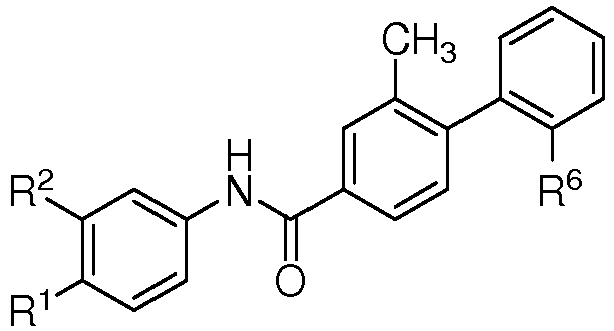
Example R1 R2 R6 2 NHSO2Me H CF3 3 SO2NH(C=NH)NH2 H CF3 4 SO2NH(CO)NH2 H CF3 5 SO2NH2 H CF3 6 SO2NHAc H CF3 7 SO2NH2 OMe CF3 - Example 2:
1H-NMR (DMSO-d6) δ2.05 (s, 3H), 2.95 (s, 3H), 7.18-7.21 (m, 2H), 7.26 (d, J = 7.9 Hz, 1H), 7.34 (d, J = 7.7 Hz, 1H), 7.65 (t-like, J = 7.7 Hz, 1H), 7.73-7.80 (m, 4H), 7.86-7.89 (m, 2H), 9.60 (s, 1H), 10.30 (s, 1H). - Example 3:
Analyzing method SA1, tR 3.65 min, obs MS [M+1] 477.3 - Example 4:
1H-NMR (DMSO-d6) δ2.06 (s, 3H), 6.36 (br, 2H), 7.29 (d, J = 8.1 Hz, 1H), 7.35 (d, J = 7.5 Hz, 1H), 7.65 (t-like, J = 7.8 Hz, 1H), 7.76 (t-like, J = 7.3 Hz, 1H), 7.81 (dd, J = 7.9, 1.5 Hz, 4H), 7.86-7.89 (m, 4H), 7.99-8.02 (m, 2H), 10.50 (s, 1H), 10.69 (s, 1H). - Example 5:
1H-NMR (DMSO-d6) δ2.06 (s, 3H), 7.20-7.30 (m, 3H), 7.35 (d, J = 7.2 Hz, 1H), 7.65 (t-like, J = 7.8 Hz, 1H), 7.73-7.82 (m, 4H), 7.87-7.89 (m, 2H), 7.95-7.98 (m, 2H), 10.61 (bs, 1H). - Example 6:
1H-NMR (DMSO-d6) δ1.91 (s, 3H), 2.06 (s, 3H), 7.29 (d, J = 8.1 Hz, 1H), 7.34 (d, J = 7.5 Hz, 1H), 7.65 (t-like, J = 7.5 Hz, 1H), 7.76 (t-like, J = 8.1 Hz, 1H), 7.81 (d, J = 8.1 Hz, 1H), 7.87-7.91 (m, 4H), 8.00-8.03 (m, 2H), 10.71 (s, 1H), 12.01 (s, 1H). - Example 7:
1H-NMR (DMSO-d6) δ2.06 (s, 3H), 3.89 (s, 3H), 6.99 (s, 2H), 7.29 (d, J = 8.1 Hz, 1H), 7.35 (d, J = 7.3 Hz, 1H), 7.53 (dd, J= 8,4, 1.8 Hz, 1H), 7.63-7.89 (m, 7H), 10.56 (s, 1H). - Example 8:
-

Analyzing method SA1, tR 3.90 min, obs MS [M+1] 507.3 - Example 9:
-

Analyzing method SA1, tR 3.76 min, obs MS [M+1] 451.3 - Example 10:
-

1H-NMR (DMSO-d6) δ3.89 (s, 3H), 6.99 (s, 2H), 7.44-7.54 (m, 4H), 7.63-7.79 (m, 4H), 7.87 (d, J = 7.7 Hz, 1H), 8.01-8.04 (m, 2H), 10.60 (s, 1H). - Example 11:
-

Analyzing method SA3, tR 4.40 min, obs MS [M+1] 465.0 - Example 12:
-

Analyzing method SA2, tR 3.67 min, obs MS [M+1] 467.3 - Using the compound prepared in Reference Example 4 and treating it in the same manner as Example 12, the compounds of the following Examples 13-16 were prepared.
-

Example R6 obs MS [M+1] tR (min) Analytical Condition 13 OMe 413.2 3.40 SA2 14 CH3 397.2 3.55 SA2 15 F 401.4 3.51 SA2 - Example 16:
-

- Example 17:
-

Analyzing method SA2, tR 3.65 min, obs MS [M+1] 469.2 - Example 18:
-

Analyzing method SA2, tR 3.51 min, obs MS [M+1] 455.2 - Example 19:
-

Analyzing method SB 1, tR 3.70 min, obs MS [M+1] 441.5 - Using the compound of Reference Example 5 and treating it in the same manner as Example 19, the compounds of the following Examples 20-22 were prepared.
-

Example R6 obs MS [M+1] tR (min) Analytical Condition 20 CO2Et 455.5 3.85 SB1 21 CN 408.3 3.61 SB1 22 
482.5 2.70 SB1 - Example 23:
-

Analyzing method SB 1, tR 2.84 min, obs MS [M+1] 426.5 - Using the compound of Reference Example 5 and treating it in the same manner as Example 23, the compounds of the following Examples 24-47 were prepared.
-

Example R6 R7 obs MS [M+1] tR (min) Analytical Condition 24 CO2Me OMe 471.4 3.76 SB1 25 CF3 Me 465.4 4.34 SB1 26 CF3 OH 467.3 3.65 SB1 -

Example R6 obs MS [M+1] tR (min) Analytical Condition 27 CH2CN 422.5 3.67 SB1 28 CH2OMe 427.3 3.82 SB1 29 CH2CO2Me 455.4 3.77 SB1 30 CHF2 433.2 3.98 SB1 31 CO2t-Bu 483.6 4.18 SB1 32 
480.1 2.90 SB1 33 
495.5 2.78 SB1 34 
512.5 2.97 SB1 35 
465.5 4.73 SB1 36 i-Pr 425.3 4.34 SB1 37 CH2NMe2 440.5 2.80 SB1 38 OCHF2 449.3 3.93 SB1 39 Oi-Pr 441.5 4.17 SB1 40 OCF2CF2H 499.2 4.15 SB1 41 
439.4 3.63 SB1 42 
465.3 4.30 SB1 43 
448.4 4.10 SB1 -

Example R6 obs MS [M+1] tR (min) Analytical Condition 44 
450.2 3.69 SB1 45 
465.4 3.67 SB1 46 
465.5 3.71 SB1 47 
480.4 3.36 SB1 - Example 48:
-

Analyzing method SA2, tR 3.53 min, obs MS [M+1] 437.3 - Example 49:
-

Analyzing method SA2, tR 3.74 min, obs MS [M+1] 465.3 - Example 50:
-

Analyzing method SA2, tR 3.90 min, obs MS [M+1] 479.3 - Using corresponding various primary amines instead of ammonia and treatingt them in the same manner as Reference Example 3 and Example 49, the compounds of the following Examples 51-55 were prepared.
-

Example R1 obs MS [M+1] tR (min) Analytical Condition Example No. R1 51 SO2NHMe 465.4 3.81 SB2 54 SO2NH(CH2)2OMe 52 SO2NHi-Pr 493.4 4.20 SB2 55 
53 SO2NH(CH2)3NMe2 536.2 3.01 SA2 - Example 54:
1H-NMR (DMSO-d6) δ2.91 (q, J = 6.0 Hz, 2H), 3.14 (s, 3H), 3.27 (t, J = 6.0 Hz, 2H), 3.89 (s, 3H), 7.08 (t, J = 6.0 Hz, 1H), 7.45 (d, J = 7.8 Hz, 1H), 7.50 (d, J = 8.0 Hz, 2H), 7.54 (dd, J = 8.8, 1.7 Hz, 1H), 7.65 (d, J = 7.6 Hz, 1H), 7.69 (d, J = 8.8 Hz, 1H), 7.75 (d, J = 8.5 Hz, 1H), 7.77 (d, J = 5.4 Hz, 1H), 7.87 (d, J = 7.6 Hz, 1H), 8.02 (d, J = 8.3 Hz, 2H), 10.64 (s, 1H). - Example 55:
1H-NMR (DMSO-d6) δ1.75-1.82 (m, 2H), 2.80 (q, J = 6.5 Hz, 2H), 3.01-3.10 (m, 4H), 3.37 (d, J = 12.0 Hz, 2H), 3.60 (t, J = 11.7 Hz, 2H), 3.91 (s, 3H), 3.96 (d, J = 10.7 Hz, 2H), 7.33 (t, J = 6.0 Hz, 1H), 7.45 (d, J = 7.6 Hz, 1H), 7.51 (d, J = 8.1 Hz, 2H), 7.55 (dd, J = 8.7, 1.6 Hz, 1H), 7.66 (t-like, J = 7.7 Hz, 1H), 7.71 (d, J = 8.8 Hz, 1H), 7.76 (d, J = 7.3 Hz, 1H), 7.79 (d, J = 1.7 Hz, 1H), 7.88 (d, J = 7.8 Hz, 1H), 8.02 (d, J = 8.3 Hz, 2H), 10.67 (s, 1H). - Example 56:
-

Analyzing method SB 1, tR 4.30 min, obs MS [M+1] 411.5 - Using the corresponding various organic zinc reagents instead of 2-ethylphenylzinc iodide and treating them in the same manner as Example 56, the compounds of the following Examples 57-58 were prepared.
-

Example R6 obs MS [M+1] tR (min) Analytical Condition 57 SMe 429.4 4.09 SB1 58 Cl 417.4 4.11 SB1 - Example 59:
-

Analyzing method SA2, tR 3.55 min, obs MS [M+1] 481.3 - Example 60:
-

Analyzing method SA2, tR 3.67 min, obs MS [M+1] 495.3 - Example 61:
-

Analyzing method SA2, tR 3.44 min, obs MS [M+1] 509.3 - Example 62:
-

1H-NMR (DMSO-d6) δ3.90 (s, 3H), 5.17 (AB q, JAB = 26.7 Hz, 2H), 7.00 (s, 2H), 7.17-7.35 (m, 6H), 7.40 (d, J = 7.5 Hz, 1H), 7.49 (dd, J = 8.7, 1.7 Hz, 2H), 7.59-7.74 (m, 6H), 7.83 (d, J = 7.7 Hz, 1H), 10.57 (s, 1H). - Example 63:
-

Analyzing method SA2, tR 3.30 min, obs MS [M+1] 467.3 - Example 64:
-

1H-NMR (DMSO-d6) δ1.93 (s, 3H), 3.19 (s, 3H), 4.82 (AB q, JAB = 29.5 Hz, 2H), 7.40 (d, J = 8.0 Hz, 2H), 7.67 (t-like, J = 7.8 Hz, 1H), 7.76 (t-like, J = 7.0 Hz, 1H), 7.88-7.93 (m, 3H), 7.99-8.00 (m, 1H), 8.05-8.07 (m, 3H), 10.82 (s, 1H). - Example 65:
-

Analyzing method SA2, tR 3.34 min, obs MS [M+1] 450.2
1H-NMR (DMSO-d6) δ3.18 (s, 3H), 4.13-4.25 (m, 2H), 5.31 (t, J = 5.4 Hz, 1H), 7.28 (d, J = 7.8 Hz, 1H), 7.36 (d, J = 7.3 Hz, 1H), 7.66 (t-like, J = 7.7 Hz, 1H), 7.74 (t-like, J = 7.4 Hz, 1H), 7.86-7.92 (m, 4H), 8.06-8.08 (m, 2H), 8.17 (s, 1H), 10.79 (s, 1H). - Example 66-Example 69:
- Using corresponding various anilines instead of 4-(methylsulfonyl)anilin and treating it in the same manner as Example 64-65, the compounds of the following Examples 66-69 were prepared.
-

Example R2 CH2R4 66 H CH2OAc 67 H CH2OH 68 OMe CH2OAc 69 OMe CH2OH - Example 66:
1H-NMR (DMSO-d6) δ1.93 (s, 3H), 4.82 (AB q, JAB = 30.4 Hz, 2H), 7.29 (s, 2H), 7.39 (d, J = 3.9 Hz, 1H), 7.41 (d, J = 3.2 Hz, 1H), 7.67 (t-like, J = 7.7 Hz, 1H), 7.75 (t-like, J = 7.3 Hz, 1H), 7. 81 (d, J = 8.8 Hz, 2H), 7. 89 (d, J = 8.0 Hz, 1H), 7. 95-8.00 (m, 3H), 8.07 (d, J = 1.7 Hz, 1H), 10.71 (s, 1H). - Example 67:
1H-NMR (DMSO-d6) δ4.12-4.26 (m, 2H), 5.30 (t, J = 5.3 Hz, 1H), 7.26-7.28 (m, 2H), 7.36 (d, J = 7.3 Hz, 1H), 7.63-7.89 (m, 6H), 7.98 (d, J = 8.8 Hz, 2H), 8.16 (s, 1H), 10.69 (s, 1H). - Example 68:
1H-NMR (DMSO-d6) δ1.93 (s, 3H), 3.90 (s, 3H), 4.82 (AB q, JAB = 25.9 Hz, 2H), 7.01 (s, 2H), 7.38-7.41 (m, 2H), 7.50-7.53 (m, 1H), 7.65-7.78 (m, 4H), 7.89 (d, J = 7.5 Hz, 1H), 7.98-8.00 (m, 1H), 8.06 (s, 1H), 10.66 (s, 1H). - Example 69:
1H-NMR (DMSO-d6) δ3.89 (s, 3H), 4.12-4.26 (m, 2H), 5.30 (t, J = 5.2 Hz, 1H), 7.00 (s, 2H), 7.28 (d, J = 7.9 Hz, 1H), 7.37 (d, J = 7.5 Hz, 1H), 7.55 (dd, J = 8.6, 1.7 Hz, 1H), 7.63-7.77 (m, 4H), 7.87 (d, J = 7.9 Hz, 2H), 8.16 (s, 1H), 10.64 (s, 1H). - Example 70:
-

1H-NMR (CDCl3) δ4.00 (s, 3H), 5.16 (s, 2H), 7.07 (dd, J = 8.5, 1.9 Hz, 1H), 7.32-7.34 (md, J = 6.4 Hz, 1H), 7.52 (d, J = 8.1 Hz, 1H), 7.61-7.65 (m, 2H), 7.79-7.83 (m, 3H), 8.24 (dd, J = 8.1, 1.8 Hz, 1H), 8.50 (m, 2H), 9.69 (s, 1H). - Example 71:
-

Analyzing method SB 1, tR 3.29 min, obs MS [M+1] 548.7 - Examples 72-80:
- Using the corresponding various amines instead of cyclopentylamine, and treating them in the same manner as Example 71, the compounds of the following Examples 72-80 were prepared.
-

Example CH2R4 obs MS [M+1] tR (min) Analytical Condition 72 CH2NMe2 508.1 2.90 SA1 73 CH2NEt2 536.5 3.17 SB1 74 CH2N(CH2CH2OH)2 568.4 2.97 SB1 75 
534.6 3.15 SB1 76 
550.4 3.04 SB1 77 
550.2 3.06 SB1 78 
536.4 3.03 SB1 79 
550.5 3.09 SB1 80 
563.5 3.18 SB1 - Example 81:
-

1H-NMR (DMSO-d6) δ3.90 (s, 3H), 4.32 (d, J = 12 Hz, 1H),4.65 (d, J = 12 Hz, 1H), 7.00 (s, 2H), 7.38-8.18 (m, 10H), 10.6 (s, 1H). - Example 82:
-

Analyzing method SB 1, tR 2.84 min, obs MS [M+1] 551.7 - Example 83-Example 94:
- Using the corresponding various amines instead of N,N-dimethylethylenediamine and treating it in the same manner as Example 82, the compounds of the following Examples 83-94 were prepared.
-

Example CH2R4 obs MS [M+1] tR (min) Analytical Condition 83 CH2NHMe 494.5 3.06 SB1 84 CH2NHEt 508.4 3.12 SB1 85 CH2NHi-Pr 522.3 3.18 SB1 86 CH2NHt-Bu 536.5 3.26 SB1 87 CH2NHCHEt2 550.4 3.36 SB1 88 CH2NH(CH2)2OMe 538.6 3.14 SB1 89 CH2NH(CH2)2OH 524.4 3.01 SB1 90 
564.5 3.20 SB1 91 
564.4 3.22 SB1 92 
534.7 3.25 SB1 93 
564.4 3.12 SB1 94 
520.7 3.10 SB1 - Example 95:
-

Analyzing method SB 1, tR 3.02 min, obs MS [M+1] 564.4 - Example 96-Example 106:
- Using corresponding various amines instead of (R)-(-)-1-methyl-3-hydroxypyrrolidine and treating it in the same manner as Example 95, the compounds of the following Examples 96-106 were prepared.
-

Example CH2R4 obs MS [M+1] tR (min) Analytical Condition 96 
564.4 3.03 SB1 97 
578.5 3.05 SB1 98 
578.4 3.02 SB1 99 
592.4 3.31 SB1 100 CH2O(CH2)2NMe2 552.4 3.00 SB1 101 
594.4 3.22 SB1 102 CH2O(CH2)2OH 525.5 3.74 SB1 103 CH2O(CH2)3OH 539.5 3.83 SB1 104 CH2OCH2CH(OMe)2 569.1 4.10 SB1 105 CH2OCH2CH(CH2OH)2 569.2 3.58 SB1 106 CH2O(CH2)2NMe(CH2)2OH 582.3 3.18 SB1 - Example 107:
-

Analyzing method SB 1, tR 3.18 min, obs MS [M+1] 580.3 - Example 108-Example 120:
- Using the corresponding various alcohols instead of N-(2-hydroxyethyl)morpholine and treating it in the same manner as Example 107, the compounds of the following Examples 108-120 were prepared.
-

Example R4 obs MS [M+1] tR (min) Analytical Condition 108 O(CH2)2NMe2 538.4 2.96 SA1 109 O(CH2)2OBn 601.1 4.18 SA1 110 O(CH2)3OH 525.6 3.72 SB1 111 
550.5 3.19 SB1 112 
550.4 3.19 SB1 113 
564.4 3.23 SB1 114 
564.4 3.24 SB1 115 
576.5 3.39 SB1 116 
578.3 3.28 SB1 117 
578.3 3.29 SB1 118 
564.4 3.25 SB1 119 
578.4 3.31 SB1 120 
578.2 3.77 SB1 - Example 121:
-

- Example 122:
-

Analyzing method SA1, tR 3.57 min, obs MS [M+1] 497.2
1H-NMR (DMSO-d6) δ3.89 (s, 3H), 4.30-4.31 (m, 2H), 5.32 (t, J = 5.3 Hz, 1H), 6.99 (s, 2H), 7.33 (d, J = 7.9 Hz, 1H), 7.42-7.61 (m, 5H), 7.70 (d, J = 8.6 Hz, 1H), 7.73 (d, J = 1.7 Hz, 1H), 7.91 (dd, J = 7.9, 1.7 Hz, 1H), 8.19 (s, 1H), 10.64 (s, 1H). - Example 123-Example 128:
- Using corresponding various substituted phenylboronic acids instead of 2-(trifluoromethoxy)phenylboronic acid and treating it in the same manner as Example 122, the compounds of the following Examples 123-128 were prepared.
-

Example R6 R7 obs MS [M+1] tR (min) Analytical Condition 123 i-Pr H 455.5 3.67 SA1 124 
H 512.4 2.63 SA1 125 SMe H 459.1 3.42 SA1 126 Et H 441.5 3.53 SA1 127 CF3 F 499.2 3.51 SA1 128 CF3 OMe 511.2 3.51 SA1 - Example 129:
-

1H-NMR (DMSO-d6) δ3.91 (s, 3H), 7.04 (s, 2H), 7.47-7.54 (m, 2H), 7.69-7.90 (m, 6H), 8.36 (dd, J = 8.1, 1.8 Hz, 1H), 8.75 (d, J = 1.7 Hz, 1H), 10.88 (s, 1H). - Example 130:
-

1H-NMR (DMSO-d6) δ3.88 (s, 3H), 4.84 (s, 2H), 6.96-6.98 (m, 3H), 7.13 (dd, J = 7.9, 1.7 Hz, 1H), 7.25 (d, J = 1.5 Hz, 1H), 7.34 (d, J = 7.5 Hz, 1H), 7.52 (dd, J = 8.6, 1.8 Hz, 1H), 7.60-7.76 (m, 4H), 7.86 (d, J = 7.7 Hz, 1H), 10.44 (s, 1H). - Example 131:
-

Analyzing method SA1, tR 3.90 min, obs MS [M+1] 494.1 - Example 132:
-

Analyzing method SA1, tR 3.38 min, obs MS [M+1] 522.2 - Examples 133-134:
- The compounds of the following Examples 133 and Example 134 were prepared in the same manner as Example 64-65.
-

-

- Example 135-Example 241:
- Using the comound prepared from the compound of Example 133 in the same manner as Example 81 and various amines, as well as using N,N-diisopropylethylamine or sodium hydroxide as a base under the condition of Example 82, and in DMF as a solvent or in the absence of a solvent, by appropriately heating at 70-100°C without using a microwave, the compounds of the following Examples 135-241 were prepared according to the same procesures as those used in Example 82.
-

Example CH2R4 obs MS [M+1]+ tR (min) Analytical Condition Example CH2R4 obs MS [M+1]+ tR (min) Analytical Condition 135 
546.8 2.81 SD1 149 
535.0 2.82 SD1 136 
551.0 2.82 SD1 150 
533.4 3.55 SD2 137 
548.4 3.18 SD2 151 
556.2 3.38 SD2 138 
563.5 3.83 SD2 152 
559.0 2.12 SD3 139 
563.5 3.75 SD2 153 
559.4 3.34 SD2 140 
547.5 4.04 SD2 154 
523.0 2.77 SD1 141 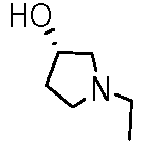
535.4 3.35 SD2 155 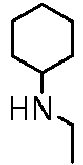
547.0 3.00 SD1 142 
555.4 3.80 SD2 156 
521.0 2.87 SD1 143 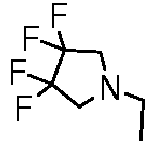
591.0 3.69 SD1 157 
521.2 2.92 SD1 144 
569.6 3.84 SD2 158 
507.4 3.33 SD2 145 
521.2 2.81 SD1 159 
521.4 3.80 SD2 146 
537.4 3.50 SD2 160 
519.4 3.55 SD2 147 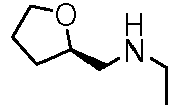
549.2 3.51 SD2 161 
533.5 3.97 SD2 148 
549.4 3.53 SD2 162 
535.4 3.67 SD2 -

Example CH2R4 obs MS [M+1] tR (min) Analytical Condition Example CH2R4 obs MS [M+1]+ tR (min) Analytical Condition 163 
549.4 3.71 SD2 177 
519.6 3.35 SD2 164 
583.4 3.49 SD2 178 
519.6 3.51 SD2 165 
576.4 3.41 SD2 179 
549.5 3.42 SD2 166 
549.2 3.73 SD2 180 
555.4 3.77 SD2 167 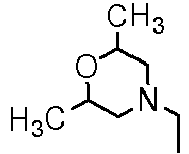
563.4 3.84 SD2 181 
556.2 3.46 SD2 168 
535.2 3.37 SD2 182 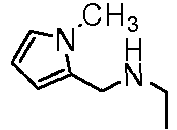
558.6 3.66 SD2 169 
549.4 3.55 SD2 183 
493.5 3.63 SD2 170 
549.6 3.37 SD2 184 
537.5 3.28 SD2 171 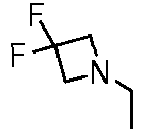
541.5 3.70 SD2 185 
479.4 3.06 SD2 172 
537.2 3.77 SD2 186 
493.3 3.17 SD2 173 
551.2 3.84 SD2 187 
561.6 3.78 SD2 174 
569.6 3.84 SD2 188 
549.6 4.19 SD2 175 
509.6 3.12 SD2 189 
583.6 4.18 SD2 176 
529.4 3.63 SD2 190 
585.6 3.79 SD2 -

Example CH2R4 obs MS [M+1]+ tR (min) Analytical Condition Example CH2R4 obs MS [M+1]+ tR (min) Analytical Condition 191 
548.0 2.99 SD2 205 
537.0 3.57 SD2 192 
532.0 2.99 SD2 206 
535.0 3.61 SD2 193 
546.0 3.29 SD2 207 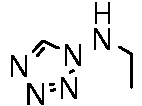
518.6 3.35 SD2 194 
517.0 3.28 SD2 208 
547.6 3.44 SD2 195 
517.0 3.31 SD2 209 
516.0 3.31 SD2 196 
551.0 3.14 SD1 210 
514.0 3.55 SD2 197 
559.0 3.73 SD2 211 
595.6 4.08 SD2 198 
581.0 3.79 SD2 212 
549.0 3.76 SD2 199 
583.0 3.96 SD2 213 
547.0 3.68 SD2 200 
569.0 3.85 SD2 214 
587.0 3.75 SD2 201 
507.0 3.71 SD2 215 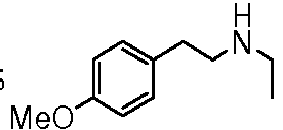
599.6 3.71 SD2 202 
561.0 4.19 SD2 216 
595.6 4.07 SD2 203 
535.0 4.08 SD2 217 
577.6 2.80 SD2 204 
521.0 3.86 SD2 218 
559.6 3.30 SD2 -

Example CH2R4 obs MS [M+1]+ tR (min) Analytical Condition Example CH2R4 obs MS [M+1]+ tR (min) Analytical Condition 219 
569.0 2.30 SD2 231 
587.5 4.05 SD2 220 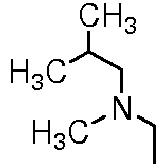
535.0 2.34 SD2 232 
551.0 3.64 SD2 221 
561.0 2.14 SD2 233 
577.0 2.98 SD1 222 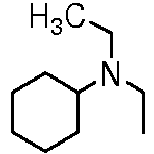
575.0 2.58 SD2 234 
536.6 3.02 SD2 223 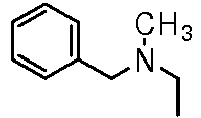
569.0 2.27 SD2 235 
575.5 3.77 SD2 224 
535.0 2.17 SD2 236 
535.0 9.39 SD2 225 
583.0 4.08 SD2 237 
561.6 3.75 SD2 226 
535.0 3.58 SD2 238 
561.6 3.92 SD2 227 
585.0 3.66 SD2 239 
569.6 3.75 SD2 22 
565.0 3.53 SD2 240 
547.6 3.56 SD2 229 
595.0 4.11 SD2 241 
550.6 3.02 SD2 230 
551.5 3.37 SD2 - Examples 242-243:
- Using methylamine instead of ammonia and treating it in the same manner as Reference Example 3 as well as Examples 68 and 69, the compounds of the following Examples 242-243 were prepared.
-

Example CH2R4 obs MS [M+1] tR (min) Analytical Condition 242 CH2OH 481.4 3.21 SA2 243 CH2OAc 523.4 3.60 SA2 - Example 244:
-

1H-NMR (DMSO-d6) δ3.90 (s, 3H), 4.60 (m, 1H), 7.02-8.32 (m, 13H), 10.7 (s, 1H). - Example 245:
-

1H-NMR (DMSO-d6) δ4.01 (s, 3H), 4.38 (d, J = 16 Hz, 1H),4.61 (d, J = 16 Hz, 1H), 7.24-7.26 (m, 3H), 7.44-7.70 (m, 6H), 7.82 (m, 2H), 8.03 (s, 1H), 10.5 (s, 1H). - Examples 246-250:
- Using various amines and the compound prepared in Example 245, and treating them in the same manner as Example 82, the compounds of the following Example 246-Example 250 were prepared.
-

Example CH2R4 1H-NMR(DMSO-d6) δ 246 
1.58-1.70(m, 4H), 2.20-2.40(m, 4H), 3.40(s, 2H), 4.01(s, 3H), 7.13-7.95(m, 15H), 10.5(s, 1 H). Example CH2R4 obs MS [M+1] tR (min) Analytical Condition 247 
568.5 2.96 SA2 248 
568.4 2.99 SA2 249 CH2NHCH2CHF2 561.0 0.87 SC1 250 CH2NHCH2CH2F 542.9 0.69 SC1 - Example 251:
-

1H-NMR (DMSO-d6) δ3.90 (s, 3H), 4.35 (d, J = 16 Hz, 1H),4.65 (d, J = 16 Hz, 1H), 7.70 (s, 1H), 7.35-7.38 (m, 4H), 7.53 (d, J=12 Hz, 1H), 7.69-7.22 (m, 2H), 7.97 (dd, J = 12Hz,, 4 Hz), 8.15 (d, J = 4Hz, 1H), 10.6(s, 1H). - Example 252-Example 253:
- The compound 12-4, which was an intermediate in Reference Example 12, and 2-(trifluoromethoxy)phenylboronic acid or 2-(trifluoromethyl)-4-methoxyphenylboronic acid were treated in the same manner as the first step in Reference Example 11, and the resulting compound and 4-sulfamidoaniline were treated in the same manner as the fifth step in Reference Example 12. The resulting compound was treated in the same manner as the sixth step in Reference Example 12 and Example 81 to prepare the compounds of the following Examples 252-253.
-

Example R6 R7 1H-NMR(DMSO-d6) δ 252 OCF3 H 4.45(d, J = 12 Hz, 1H),4.71(d, J = 12 Hz, 1H), 7.29(s, 2H), 7.42-7.65(m, 5H), 7.82(d, J = 12Hz, 2H), 8.03(d, J = 8 Hz, H), 8.19(s, 1H), 10.7(s, 1H). 253 CF3 OMe 3.90(s, 3H), 4.33(d, J = 12 Hz, 1 H),4.65(d, J = 12 Hz, 1 H), 7.28-7.37(m, 5H), 7.95-7.98(m, 3H), 8.16(s, 1 H), 10.7(s, 1 H). - Example 254:
-

1H-NMR (DMSO-d6) δ3.91 (s, 3H), 7.01 (s, 2H), 7.53-7.74 (m, 9H), 8.32-8.54 (m, 2H), 9.83 (s, 1H), 10.8 (s, 1H). - Example 255:
-

Analyzing method SB3, tR 1.021 min, obs MS [M+1] 479.4 - Examples 256-260:
- The compounds of the following Examples 256-260 were prepared from the compound 14 prepared in Reference Example 14 in the same manner as Example 255.
-

Example A obs MS [M+1] tR (min) Analytical Condition 256 
441.6 4.16 SB3 257 
495.4 4.54 SB3 258 495.0 2.15 SB3 259 
495.1 2.20 SB3 260 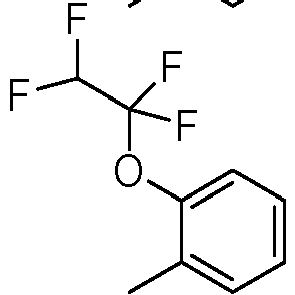
529.4 5.52 SB1 - Examples 261-263:
- 4-Sulfamidoaniline was prepared in the same manner as Reference Example 13, and the resulting compound and 2-(trifluoromethyl)-4-methoxyphenylboronic acid, 2-(trifluoromethoxy)phenylboronic acid or 2-trifluoromethylphenylboronic acid were treated in the same manner as Example 129-130 to prepare the compounds of the following Examples 261-263.
-

Example R6 R7 obs MS [M+1] tR (min) Analytical Condition 261 CF3 H 436.5 3.63 SB3 262 OCF3 H 452.0 4.22 SB3 263 CF3 OMe 466.5 4.14 SB3 - Examples 264-265:
- Using the compound prepared in Example 262 and treating it in the same manner as Example 131-132, the compounds of the following Examples 264-265 were prepared.
-

Example R4 obs MS [M+1] tR (min) Analytical Condition 264 NH(Et) 480.5 4.68 SB3 265 NEt2 508.6 3.92 SB3 - Example 266:
-

Analyzing method SB3, tR 4.82min, obs MS {M+1} 494.6 - Examples 267-270:
- Using the compound prepared in Examples 81, 245, 251-253 and 2,2-difluoroethylamine, and treating them in the same manner as Example 82, the compounds of the following Examples 267-270 were prepared.
-

Example R6 R7 R2 obs MS [M+1] tR (min) Analytical Condition 267 OCF3 H H 530.4 5.05 SB1 268 CF3 H OMe 544.5 4.86 SB1 269 CF3 OMe H 544.4 5.02 SB1 270 CF3 OMe OMe 574.5 5.03 SB1 - Examples 271-273:
- Using the compound 17 (80 mg) prepared in Reference Example 17, 2-trifluoromethyl-4-aminobromobenzene and 2-trifluoromethyl-4-hydroxybromobenzene or 3-(2-bromophenyl)-5-methyl-1,2,4-oxadiazole, were treated in the same manner as the first step in Reference Example 11, the resulting product was reacted with trifluoroacetic acid (4 mL) at room temperature, and the reaction solution was concentrated under reduced pressure, suspended in a saturated aqueous solution of sodium bicarbonate, filtered, and dried under reduced pressure to give the compounds of the following the compound of Examples 271-273.
-

Example A obs MS [M+1] tR (min) Analytical Condition 271 
480.4 5.19 SB1 Example A 1H-NMR(DMSO-d6) δ 272 
2.06(s, 3H), 3.89(s, 3H), 6.99(s, 2H), 7.11-7.25(m, 3H), 7.52(d, J = 8.0 Hz, 1H), 7.68-7.85(m, 4H), 10.2(s, 1H), 10.5(s, 1H). 273 
2.03(s, 3H), 2.43(s, 3H), 3.89(s, 3H), 7.00(s, 2H), 7.26(d, J = 8.0 Hz, 1 H), 7.41 (d, J = 8.0 Hz, 1H), 7.53(d, J = 8.0 Hz, 1H),7.65-7.87(m, 6H), 8.13(d, J = 8.0 Hz, 1H),10.5(s, 1H). - Examples 274-283:
- Using the compound 17 prepared in Reference Example 17 (100 mg) and 5-(2-chlorophenyl)pyrimidine (75.8 mg) were treated in the same manner as the first step in Reference Example 11, the resulting product was reacted with trifluoroacetic acid (4 mL) at room temperature, and the reaction mixture was concentrated under reduced pressure, suspended in saturated aqueous solution of sodium bicarbonate, filtered, and dried under reduced pressure to give the compound of Example 274 (45.7 mg). According to the same proccedures above, the compounds of the following Examples 275-283 were prepared.
-

Example A obs MS [M+1] tR (min) Analytical Condition Example A obs MS [M+1] tR (min) Analytical Condition 274 
475.3 0.908 SC2 279 
466.3 0.874 SC2 275 
493.5 1.10 SC2 280 
483.4 0.784 SC2 276 
474.7 0.818 SC2 281 
512.5 1.04 SC2 277 
464.4 0.997 SC2 282 
452.7 0.748 SC2 278 
504.1 0.920 SC2 283 
488.7 0.846 SC2 - Example 284:
-

- Example 285:
-

Analyzing method SC2, tR 0.643 min, obs MS [M+1] 497.8 - Examples 286-287:
- Using the compound prepared in Example 245 and treating it in the same manner as Example 82, the compounds of the following Examples 286-287 were prepared.
-

Example R4 obs MS [M+1]+ tR (min) Analytical Condition 286 
600.0 1.042 SC2 287 
572.4 1.093 SC2 - Examples 288-310:
- Using various amines and the compound obtained in Example 245, and treating them in the same manner as Example 82 provided that using N,N-diisopropylethylamine as a base and DMF as a solvent under heating condition at 100°C, the compounds of the following Examples 288-310 were prepared.
-

Example CH2R4 obs MS [M+1]+ tR (min) Analytical Condition Example CH2R4 obs MS [M+1]+ tR (min) Analytical Condition 288 
536.2 3.71 SA2 299 
592.5 3.79 SA2 289 
550.2 3.76 SA2 300 
562.2 3.64 SA2 290 
564.5 3.81 SA2 301 
566.1 3.70 SA2 291 
580.1 3.71 SA2 302 
594.1 3.79 SA2 303 
580.1 3.62 SA2 292 
616.3 4.04 SA2 304 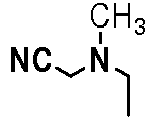
549.3 4.46 SA2 293 
564.2 4.27 SA2 305 
622.2 4.77 SA2 294 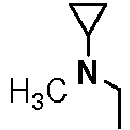
550.2 3.65 SA2 306 
615.2 4.68 SA2 295 
552.1 3.54 SA2 307 
612.1 4.38 SA2 296 
538.4 3.61 SA2 308 
534.1 4.39 SA2 297 
564.5 3.66 SA2 309 
565.3 4.46 SA2 298 
549.8 3.71 SA2 310 
562.2 3.74 SA2 - Example 311:
-

1H-NMR (DMSO-d6) δ1.87 (s, 6H), 3.32 (s, 3H), 7.25 (d, J = 7.5 Hz, 1H), 7.55 (s, 2H), 7.62 (t-like, J = 7.8 Hz, 1H), 7.77 (t-like, J = 7.5 Hz, 1H), 7.87 (d, J = 7.7 Hz, 1H), 8.08 (d, J = 8.4 Hz, 2H), 8.18 (d, J = 8.4 Hz, 2H), 10.43 (s, 1H). - Example 312:
-
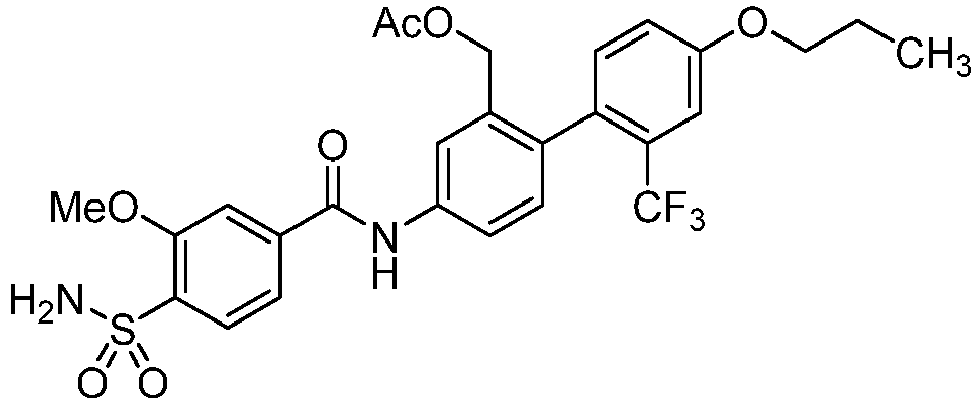
Analyzing method SA3, tR 4.78 min, obs MS [M+1] 581.0 - Example 313:
-

Analyzing method SA3, tR 4.57 min, obs MS [M+1] 539.2 - Example 314:
-

Analyzing method SA3, tR 4.18 min, obs MS [M+1] 581.3 - Example 315:
-

Analyzing method SA3, tR 3.80 min, obs MS [M+1] 497.5 - Examples 316-321:
- The compounds of the following Examples 316-321 were prepared in the same manner as Examples 312-315.
-

Example CH2R4 R7 obs MS [M+1] tR (min) Analytical Condition 316 CH2OAc O(CH2)2NMe2 610.1 3.13 SA3 317 CH2OH O(CH2)2NMe2 568.4 2.92 SA3 Example CH2R4 R7 1H-NMR(DMSO-d6) δ 318 CH2OAc O(CH2)2OAc 1.97(s, 3H), 2.05(s, 3H), 4.00(s, 3H), 4.34-4.36(m, 4H),4.73(m,2H), 7.17(d, J = 8.4 Hz, 1H), 7.25-7.34(m, 5H), 7.61-7.64(m, 1H), 7.68(s, 1H), 7.78-7.81 (m, 1H), 7.85-7.88(m, 2H), 10.53(s, 1H). 319 CH2OAc OCH2CO2t-Bu 1.42(s, 9H), 1.96(s, 3H), 4.00(s, 3H), 4.73(AB q, JAB = 21.0 Hz, 2H), 4.84(s, 2H), 7.18(d, J = 8.4 Hz, 1 H), 7.23-7.31 (m, 5H), 7.61-7.64(m, 1H), 7.68(s, 1 H), 7.79(dd, J = 8.2, 2.0 Hz, 1 H), 7.85-7.87(m, 2H), 1 0.53(s, 1H). 320 CH2OH O(CH2)2OH 3.75(m, 2H), 4.01 (s, 3H), 4.05-4.17(m, 2H), 4.93(t-like, J = 5.5 Hz, 1H), 5.17(t-like, J = 5.2 Hz, 1H), 7.05(d, J = 8.1 Hz, 1H), 7.25-7.29(m, 5H), 7.62-7.65(m, 1 H), 7.70(s, 1H), 7.73-7.76(m, 1 H), 7.86(d, J = 8.1 Hz, 1H), 7.91 (m, 1H), 10.46(s, 1H). 321 CH2OH OCH2CO2H 4.01 (s, 3H), 4.06-4.20(m, 2H), 4.34(bs, 1 H), 4.82(s, 2H), 5.18(br, 1H), 7.06(d, J = 8.3 Hz, 1H), 7.24-7.27(m, 5H), 7.62-7.64(m, 1H), 7.70(s, 1H), 7.72-7.76(m, 1H), 7.85(d, J = 8.1 Hz, 1H), 7.91 (m, 1H), 1 0.46(s, 1H). - Example 322:
-

1H-NMR (DMSO-d6) δ1.96 (s, 3H), 4.00 (s, 3H), 4.73 (m, 2H), 4.85 (s, 2H), 7.18 (d, J = 8.4 Hz, 1H), 7.26-7.30 (m, 5H), 7.61-7.64 (m, 1H), 7.68 (s, 1H), 7.78-7.81 (m, 1H), 7.85-7.88 (m, 2H), 10.53 (s, 1H), 13.15 (bs, 1H). - Example 323:
-
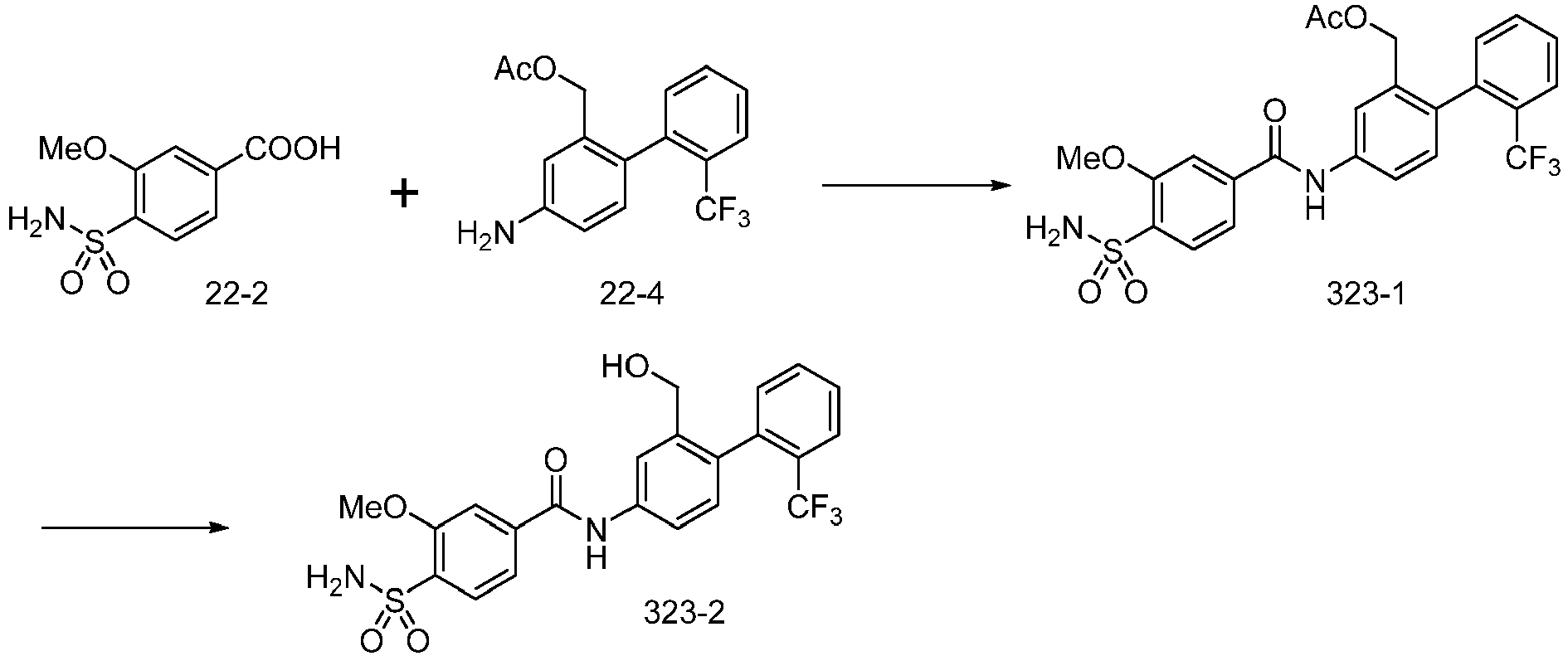
- The compound 323-1:1H-NMR (DMSO-d6) δ1.94 (s, 3H), 4.01 (s, 3H), 4.68-4.78 (m, 1H), 7.18 (m, 3H), 7.38 (d, J = 8.0Hz, 1H), 7.60-7.84 (m, 8H), 10.5 (s, 1H).
- The compound 323-2:1H-NMR (DMSO-d6) δ4.01-4.20 (m, 5H), 5.18 (bs, 1H), 7.07 (d, J = 12Hz, 1H), 7.24 (s, 1H), 7.34 (d, J = 12Hz, 1H), 7.58-7.94 (m, 8H), 10.4 (s, 1H).
- Example 324:
-

1H-NMR (DMSO-d6) δ4.01 (s, 3H), 4.23 (d, J = 16 Hz, 1H), 4.55 (d, J = 16 Hz, 1H), 7.19-7.42 (m, 4H), 7.41 (d, J = 8.0 Hz, 1H), 7.62-7.88 (m, 7H), 8.01 (s, 1H), 10.5 (s, 1H). - Example 325:
-

1H-NMR (DMSO-d6) δ4.03 (s, 3H), 4.25 (d, J = 4.0 Hz, d), 3.21 (t, J =4.0 Hz , 1H), 7.13-7.87 (m 11H), 7.96 (s, 1H), 10.4 (s, 1H). - Example 326:
-

1H-NMR (DMSO-d6) δ4.01 (s, 3H), 4.39 (d, J = 12 Hz, 1H), 4.61 (d, J = 12 Hz, 1H), 7.24-7.88 (m, 11H), 8.03 (s, 1H), 10.5 (s, 1H). - Example 327:
-

1H-NMR (DMSO-d6) δ3.89 (s, 3H), 7.00 (s, 2H), 7.40-8.26 (m, 11H), 10.6 (s, 1H). - Examples 328-330:
- Using corresponding various amines and the compound prepared in Example 324, the compounds of the following Examples 328-330 were prepared in the same manner as Example 82.
-

Example CH2R4 1H-NMR(DMSO-d6) δ 328 
1.63(bs, 4H), 2.32(bs, 4H), 3.20-3.30(m, 5H), 4.01 (s, 3H), 7.09(d, J =8.0 Hz, 1H), 7.24-7.34(m, 3H), 7.60-7.90(m, 8H), 10.4(s, 1H). 329 
3.55(s, 2H), 4.01 (s, 3H), 6.10(d, J = 4.0 Hz, 1H9, 6.30(d, J = 4.0 Hz, 1H), 7.09(d, J = 8.0 Hz, 1H), 7.25-7.36(m, 3H), 7.47-7.94(m, 10H), 10.4(s, 1H). 330 
2.95-3.10(m, 6H), 3.99(s, 3H), 7.02-7.83(m, 10H). - Example 331:
-

1H-NMR (DMSO-d6) δ1.63 (bs, 4H), 2.31 (bs, 4H), 3.31 (s, 2H), 4.01 (s, 3H), 7.15 (d, J = 8.0 Hz, 1H), 7.24 (s, 2H), 7.41-7.92 (m, 9H), 10.4 (s, 1H). - Example 332:
-

1H-NMR (DMSO-d6) δ3.55 (s, 3H), 4.01 (s, 3H), 7.26-7.31 (m, 4H), 7.56-7.88 (m, 5H), 8.08 (d, J = 12 Hz, 1H), 8.41 (s, 1H), 10.6 (s, 1H). - Example 333:
-

Analyzing method SA2, tR 3.30 min, obs MS [M+1] 539.2 - Example 334:
-

Analyzing method SA2, tR 3.21 min, obs MS [M+1] 495.3 - Example 335:
-

1H-NMR (DMSO-d6) δ2.49-2.56 (m, 2H), 3.41-3.46 (m, 2H), 4.00 (s, 3H), 4.62 (t, J = 4.0 Hz, 1H), 7.13 (d, J = 8.0 Hz, d), 7.25 (s, 2H), 7.39-7.87 (m, 9H), 10.4 (s, 1H). - Examples 336-338:
- Using each of three compounds, 3-ethyl-4-bromoaniline, 3-methyl-4-bromoaniline or 3-methoxy-4-bromoaniline, obtained by brominating 3-ethylaniline, 3-methylaniline or 3-methoxyaniline, respectively, in the same manner as the third step in Reference Example 25, a condensation reaction with the compound 22-2 obtained in Reference Example 22 was conducted in the same manner as Example 311. Each of the resulting three compounds and 2-(N-morpholinomethyl)phenylboronic acid were treated in the same addition reaction as those in Example 12 to give the compounds of the following Examples 336-338.
-

Example (CH2)mR4 1H-NMR(DMSO-d6) δ 336 Et 1.00(t, J =8.0 Hz, 3H), 2.18-2.40(m, 6H), 3.18(bs, 2H), 3.49(bs, 4H), 4.01(s, 3H), 7.02-7.90(m, 12H), 10.4(s, 1H). 337 Me 1.99(s, 3H), 2.17(bs, 4H), 3.10-3.25(m, 2H), 3.48(bs, 4H), 4.00(s, 3H), 7.08(t, J = 8.0 Hz, 2H), 7.25(m, 10H), 10.3(s, 1H). 338 OMe 2.17(bs, 4H), 3.10-3.30(m, 2H), 3.33(bs, 2H), 3.69(s, 3H), 4.01(s, 3H), 7.09(d, J = 8.0 Hz, 1H), 7.26-7.68(m, 9H), 7.87(d, J = 8.0 Hz, 1H), 10.4(s, 1H). - Example 339:
-

- Examples 340-347:
- The compound 28 prepared in Reference Example 28 and the compound 29 prepared in Reference Example 29 were treated in the same manner as the first step in Reference Example 8. After the crude product was reacted with trifluoroacetic acid at room temperature, the reaction mixture was concentrated under reduced pressure, suspended in an aqueous solution of saturated sodium bicarbonate filtered, and dried under reduced pressure to give the following Examples 340. Using pyrrolidine or piperazine instead of morpholine in Reference Example 29, 5-fluoro-1,2-dibromobenzene or 4,5-difluoro-1,2-dibromobenzene instead of 1,2-dibromobenzene in Reference Example 29 and 2,6-dimethylmorpholine or cyclopentylamine instead of morpholine in Reference Example 29, each of the compounds of the following Examples 341-346 was prepared in the same manner as Example 340. In addition, using 2-trifluoromethyl-4-amino-bromobenzene instead of the compound of Reference Example 29, the compounds of the following Example 347 was prepared in the same manner as Example 340.
-

Example R6 R7 R8 1H-NMR(DMSO-d6) δ 340 
H H 2.15(s, 3H), 2.50-2.77(m, 4H), 3.42(br, 4H), 4.01(s, 3H), 7.06-7.34(m, 7H), 7.61-7.69(m, 5H), 7.85(d, J = 8.0 Hz, 1H), 10.3(s, 1H). 341 
H H 342 
H H 1.15-1.33(m, 6H), 2.13(s, 3H), 2.49-2.76(m, 4H), 4.01 (s, 3H), 7.03-7.30(m, 7H), 7.03-7.30(m, 4H), 7.85(d, J = 8.0 Hz, 1H), 10.3(s, 1H). 343 
H F 1.98(s, 3H), 2.62-2.73(m, 4H), 3.38(br, 4H), 4.00(s, 3H), 6.94(dd, J = 12 Hz, 4.0 Hz, 5H), 7.05-7.24(m, 5H), 7.61-7.68(m, 4H), 7.85(d, J = 8.0 Hz, 1H), 10.3(s, 1H). 344 
F F 2.15(s, 3H), 2.63-2.73(m, 4H), 3.38(br, 4H), 4.00(s, 3H), 7.11-7.24(m, 5H), 7.60-7.68(m, 4H), 7.85(d, J = 8.0 Hz, 1H), 10.3(s, 1H). 345 
H H 0.83(d, J = 8.0 Hz, 1H), 1.00(d, J = 8.0 Hz, 1H), 2.02-2.48(m, 5H), 2.70-2.90(m, 2H), 3.10-3.48(m, 2H), 4.00(s, 3H), 7.03-7.33(m, 7H), 7.57-7.86(m, 5H), 10.3(s, 1H). 346 
H H 1.20-1.30(m, 2H), 1.50(br, 4H), 1.80-2.10(m, 5H), 3.38(br, 1H), 3.75(br, 1H), 4.00(s, 3H), 6.64-7.24(m, 7H), 7.60-7.87(m, 5H), 10.3(s, 1H). 347 CF3 NH2 H 1.98(s, 3H), 4.00(s, 3H), 5.58(s, 2H), 6.76-7.05(m, 4H), 7.24(s, 2H), 7.55-7.65(m, 4H), 7.85(d, J =8.0 Hz, 1H), 10.3(s, 1H). - Example 341:
Analyzing method SC2, tR 1.096min, obs MS [M+1] 466.4 - Example 348:
-

Analyzing method SC2, tR 0.835 min, obs MS [M+1] 412.7 - Example 349:
-

Analyzing method SC2, tR 0.695 min, obs MS [M+1] 523.1 - Examples 350-351:
- Using the compound prepared in Example 348, tetrahydro-4H-pyran-4-one, and acetone or acetaldehyde, each of the compounds of the following Examples 350-352 was prepared in the same manner as Example 349.
-

Example R6 obs MS [M+1] tR (min) Analytical Condition 350 
496.4 1.072 SC2 351 
454.7 1.116 SC2 352 
469.3 0.661 SC2 - Example 353:
-

Analyzing method SC2, tR 1.189 min, obs MS [M+1] 480.4 - Examples 354-403:
- Using the compounds prepared in Example 324 and Example 326 as well as corresponding various amines, and treating them in the same manner as Example 82, the compounds of the following Examples 354-403 were prepared, provided that under the same conditions as those used in Example 82 wherein N,N-diisopropylethylamine was used as a base, DMF or DMSO was used as a solvent, and the mixture was appropriately headed at 100°C without using a microwave, In addition, the compound of Example 373 was obtained as a byproduct in the preparation of the compound of Example 372.
-

Example R4 R6 obs MS [M+1]+ tR (min) Analytical Condition Example R4 R6 obs MS [M+1]+ tR (min) Analytical Condition 354 
CF3 547.9 0.834 SC1 379 
CF3 564.3 0.708 SC2 355 
CF3 550.0 0.864 SC1 380 
CF3 585.3 1.140 SC2 356 i-PrNH CF3 521.8 0.792 SC1 381 
CF3 590.7 0.688 SC2 357 
CF3 537.9 0.783 SC1 382 
CF3 584.6 0.959 SC2 358 
CF3 549.8 0.783 SC1 383 
CF3 578.3 0.715 SC2 359 
CF3 552.4 0.815 SC1 384 
CF3 591.9 0.722 SC2 360 
CF3 533.9 0.763 SC1 385 
CF3 555.6 1.070 SC2 361 Me2N CF3 507.8 0.761 SC1 386 
CF3 577.5 0.741 SC2 362 
CF3 530.8 0.763 SC1 387 
CF3 566.6 0.764 SC2 363 CN CF3 490.2 1.065 SC1 388 
CF3 598.3 0.966 SC2 364 
OCF3 553.9 0.795 SC1 389 
CF3 544.3 0.789 SC2 365 
OCF3 566.4 1.169 SC3 390 
CF3 573.6 0.690 SC2 366 n-BuNH CF3 535.9 0.818 SC1 391 
CF3 578.4 0.808, 0.914 SC2 367 
CF3 551.9 0.804 SC1 368 
CF3 551.9 0.718 SC2 392 
CF3 565.9 0.687 SC2 369 
CF3 547.9 0.725 SC2 393 
CF3 606.0 0.726 SC2 370 NH2 CF3 479.9 0.700 SC2 394 
CF3 564.0 0.658 SC2 371 
CF3 578.4 0.839 SC2 395 
CF3 592.7 0.707 SC2 372 
CF3 570.3 3.77 SA2 396 
CF3 612.1 0.765 SC2 373 EtO CF3 509.3 4.38 SA2 397 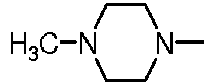
CF3 562.9 0.701 SC2 374 
CF3 562.5 0.708 SC2 398 
CF3 591.7 0.765 SC2 375 
CF3 537.6 0.651 SC2 399 
CF3 564.1 0.664 SC2 376 
CF3 552.0 0.691 SC2 400 CF3 578.4 0.654 SC2 401 
CF3 562.3 0.657 SC2 377 
CF3 551.9 0.681 SC2 402 
CF3 577.4 0.788 SC2 378 
CF3 556.2 1.185 SC2 403 
CF3 520.7 0.683 SC2 - Example 404:
-

Analyzing method SC2, tR 1.168 min, obs MS [M+1] 530.3 - Examples 405-410
The compounds of the following Examples 405-410 were prepared in the same manner as Example 404. -

Example R4 obs MS [M+1]+ tR (min) Analytical Condition 405 
531.1 1.040 SC2 406 
532.2 0.917 SC2 407 
532.2 1.033 SC2 408 
532.2 0.943 SC2 409 
562.3 1.005 SC2 410 
563.0 [M-H]- 1.113 SC2 - Examples 411-412:
- Using the compound 32-4 prepared in Reference Example 32 and treating it with trifluoroacetic acid at room temperature in the same manner as Example 348, the compound of the following Example 411 was prepared. In addition, the compound 32-4 prepared in Reference Example 32 was firstly methylated in the same manner as the second step in Reference Example 8, and then it was also treated with trifluoroacetic acid to give the compound of the following Example 412.
-

Example R obs MS [M+1] tR (min) Analytical Condition 411 H 549.3 4.3 SA2 412 CH3 563.3 4.32 SA2 - Example 413:
-

Analyzing method SC2, tR 0.951 min, obs MS [M+1] 525.4 - Example 414:
-

- To the compound 35-2 (1 g) prepared in Reference Example 35 were added 2,4-difluorophenylboronic acid (546 mg), potassium phosphate (1.1 g), palladium acetate (70 mg), 2-dicyclohexylphosphino-2',6'-dimethoxybiphenyl (SPhos) (142 mg) and THF (13 mL), the mixture was stirred for 10 minutes at room temperature. Water (0.8 mL) was added thereto and the mixture was stirred for 1 hour at 90°C under microwave irradiation using a microwave reaction apparatus (Initiator 60 EXP (400W), Biotage). After cooling to room temperature, the mixture was filtered through Celite and concentrated under reduced pressure. The resulting residue was purified with silica gel column chromatography (chloroform/methanol) to give Boc-protected compound 414-1 (1.06 g). 4N-HCl/dioxane was added to the compound 414-I (1.06 g), and the mixture was stirred for 2 hours at room temperature. Hexane (20 mL) was added thereto, and the mixture was further stirred for 1 hours, and then the precipitated solid was collected by filtration, dried under reduced pressure to give the titled compound (840 mg).
Analyzing method SB 1, tR 2.96 min, obs MS [M+1] 512.2 - Examples 415-437:
- The compounds of Examples 415-437 were prepared in the same manner as Example 414.
-

Example A obs MS [M+1]+ tR (min) Analytical Condition Example A obs MS [M+1]+ tR (min) Analytical Condition 415 
490.4 2.98 SB1 426 
528.3 3.65 SB1 416 
506.3 2.90 SB1 427 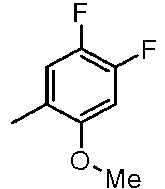
542.2 3.07 SB1 417 
506.2 2.74 SB1 428 
538.3 3.17 SB1 418 
501.3 2.77 SB1 429 
476.2 3.03 SB1 419 
494.5 2.87 SB1 430 
494.5 3.12 SB1 420 
506.2 2.74 SB1 431 
494.5 3.11 SB1 421 
530.2 3.07 SB1 432 
510.4 3.24 SB1 433 
510.4 3.26 SB1 422 
530.2 3.03 SB1 434 
562.9 0.701 SB1 423 
528.3 3.08 SB1 435 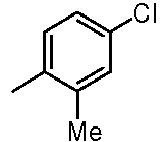
524.3 3.25 SB1 424 
524.3 2.97 SB1 436 
504.3 3.18 SB1 425 
590.1 3.31 SB1 437 
508.4 3.08 SB1 - Example 438:
-

Analyzing method SB 1, tR 3.18 min, obs MS [M+1] 558.2 - Examples 439-444:
- The compounds of Examples 439-444 were prepared in the same manner as Example 438.
-

Example A obs MS [M+1]+ tR (min) Analytical Condition 439 
558.2 3.10 SB1 440 
558.2 3.35 SB1 441 
531.2 3.09 SB1 442 
477.3 2.85 SB1 443 
558.3 3.41 SB1 444 
504.3 3.24 SB1 - Examples 445-466:
- The compounds of the following Examples 445-466 were prepared in the same manner as Example 414.
-

Example A obs MS [M+1] tR (min) Analytical Condition Example A obs MS [M+1] tR (min) Analytical Condition 445 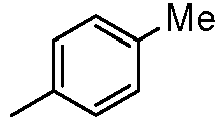
490.4 3.19 SB1 456 
544.1 3.32 SB1 446 
490.4 3.18 SB1 457 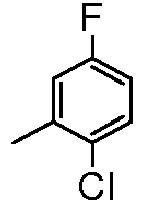
528.3 3.08 SB1 447 
518.4 1.21 SC2 458 
524.3 3.18 SB1 448 
516.4 3.30 SB1 459 
578.0 3.47 SB1 449 
562.1 3.15 SB1 460 
578.1 3.38 SB1 450 
612.2 3.42 SB1 461 
540.4 3.24 SB1 451 
510.4 1.063 SC2 462 
545.4 2.89 SB1 452 
524.3 3.19 SB1 463 
521.6 2.82 SB1 453 
524.3 3.21 SB1 464 
537.2 2.99 SB1 454 
544.1 3.34 SB1 465 
544.3 3.23 SB1 455 
544.2 3.26 SB1 466 
560.3 3.28 SB1 - Examples 467-486:
- The compounds of the following Examples 467-486 were prepared in the same manner as Example 438.
-
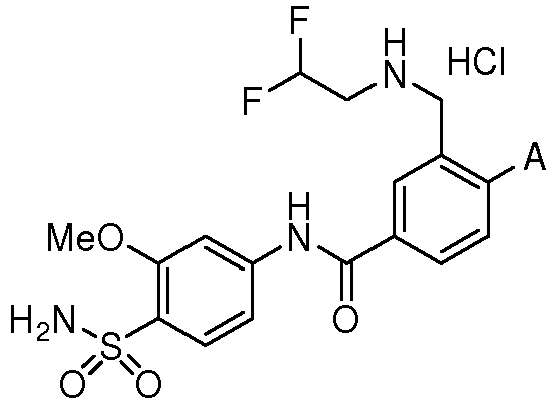
Example A obs MS [M+1] tR (min) Analytical Condition Example A obs MS [M+1] tR (min) Analytical Condition 467 
528.3 3.10 SB1 477 
556.2 3.04 SB1 468 
540.3 3.24 SB1 478 
592.3 1.179 SC2 469 
540.3 1.096 SC2 479 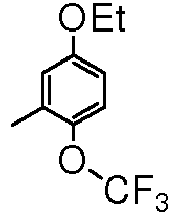
604.1 3.40 SB1 470 
534.2 3.39 SB1 480 
618.2 3.49 SB1 471 
530.3 3.16 SB1 481 
535.3 2.98 SB1 472 
573.4 2.95 SB1 482 
491.2 2.54 SB1 473 
558.2 2.94 SB1 483 
505.3 2.54 SB1 474 
578.1 3.34 SB1 484 
521.4 2.65 SB1 475 
588.2 3.22 SB1 485 
517.5 2.78 SB1 476 
542.0 3.00 SB1 486 
562.2 3.88 SA3 - Examples 487-496:
- Using the compound 21-3 of Reference Example 21 and the compound 22-2 of Reference Example 22, and treating them in the same manner as the fifth and sixth steps in Reference Example 12 or as Example 323, and then treating them in the same manner as the first and second steps in Reference Example 35, and further treating the resulting compound in the same mannner as Example 414, the compounds of the following Examples were prepared.
-

Example A obs MS [M+1] tR (min) Analytical Condition Example A obs MS [M+1] tR (min) Analytical Condition 487 
490.4 3.07 SB1 492 
578.3 3.37 SB1 488 
510.3 3.08 SB1 493 
562.2 3.26 SB1 489 
494.4 2.98 SB1 494 
561.3 1.108 SC2 490 
528.3 3.16 SB1 495 
544.3 3.26 SB1 491 
512.3 3.06 SB1 496 
560.3 3.31 SB1 - Example 497:
-

Analyzing method SC2, tR 0.811 min, obs MS [M+1] 465.3 - Examples 498-499:
- Using the compound 31 (60 mg) prepared in Reference Example 31 and 2-trifluoromethylphenylboronic acid (75 mg) or 2-trifluoromethoxyphenylboronic acid (82 mg), treating them in the same manner as the first step of Reference Example 8, the compounds of the following Example 498 (47.6 mg) and Example 499 (60.8 mg) were prepared, respectively.
-

Example R6 obs MS [M+1] tR (min) Analytical Condition 498 CF3 465.4 1.086 SC2 499 OCF3 481.3 1.117 SC2 - Example 500-Example 527:
- Using the compound of Example 133 prepared in the same manner as Example 81 and various amines, treating them in the same manner as Example 82 wherein N,N-diisopropylethylamine or sodium hydroxide was used as a base and DMF was used as a solvent or in the absence of a solvent, by appropriately heating at 70-100°C without microwave irradiation, the compounds of the following Examples 500-527 were prepared.
-

Example CH2R4 obs MS [M+1]+ tR (min) Analytical Condition Example CH2R4 obs MS [M+1]+ tR (min) Analytical Condition 500 
561.6 4.24 SD2 514 
556.0 3.40 SD2 501 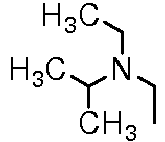
535.4 4.00 SD2 515 
545.0 3.64 SD2 502 
521.4 3.90 SD2 516 
561.0 3.77 SD2 503 
583.6 3.72 SD2 517 
562.0 3.50 SD2 504 
597.4 2.43 SD2 518 
545.0 3.20 SD2 505 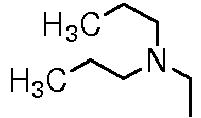
549.4 4.34 SD2 519 
559.6 3.10 SD2 506 
573.3 1.96 SD2 520 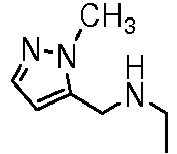
559.0 3.38 SD2 507 
558.0 2.78 SD1 521 
559.6 3.14 SD2 508 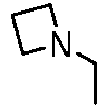
505.0 3.36 SD2 522 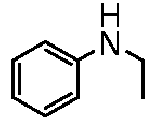
541.0 3.82 SD2 509 
577.0 3.97 SD2 523 
542.0 2.98 SD2 510 
537.0 3.75 SD2 524 
542.0 2.97 SD2 511 
511.0 3.50 SD2 525 
542.0 2.96 SD2 512 
507.0 3.30 SD2 526 
543.0 3.50 SD2 513 
505.0 3.65 SD2 527 
543.0 2.95 SD2 - Example 528-Example 529:
- Using 2,2,2-trifluoroethylamine and treating it in the same manner as Example 354-403, the compounds of the following Examples 528-529 were prepared.
-

Example A obs MS [M+1] tR (min) Analytical Condition Example A obs MS [M+1] tR (min) Analytical Condition 528 
562.3 1.477 SC2 529 
578.3 1.575 SC2 - Example 530:
-

Analyzing method SC2, tR 1.427 min, obs MS [M+1] 578.4 - Examples 531-537:
- Using the compound 17 (100 mg) prepared in Reference Example 17 and the compound 36 (75.9 mg) prepared in Reference Example 36, and treating them in the same manner as Examples 271-273, the compound of Example 531 (59.4 mg) was prepared. Using the compound 17 (100 mg) prepared in Reference Example 17 and the compound 37 (102.3 mg) prepared in Reference Example 37, the compound of Example 532 (25.5 mg) was prepared. In the same manner, the compounds of Examples 533-537 were prepared.
-

Example A obs MS [M+1] tR (min) Analytical Condition Example A obs MS [M+1] tR (min) Analytical Condition 531 
475.1 3.16 SA2 535 
474.3 1.178 SC2 532 
497.4 0.588 SC2 536 
497.7 0.562 SC2 533 
438.5 4.08 SB1 537 
448.7 1.179 SC2 534 
474.7 0.915 SC2 - Example 538:
-

- Using the compound 28 (100 mg) prepared in Reference Example 28 and treating it in the same manner as Examples 271-273, the titled compound (45.7 mg) was prepared.
Analyzing method SC2, tR 0.938 min, obs MS [M+1] 438.0 - Examples 539-544:
- Using the compound 38-1 prepared in Reference Example 38 and treating it in the same manner as Example 414, the compounds of Examples 539-541 were prepared.
Using the compound 38-2 prepared in Reference Example 38 and treating it in the same manner as Example 438, the compounds of Examples 542-544 were prepared. -

Example A obs MS [M+1] tR (min) Analytical Condition Example A obs MS [M+1] tR (min) Analytical Condition 539 
472.4 3.63 SB1 542 
468.3 4.03 SB1 540 
496.1 3.85 SB1 543 
504.3 4.44 SB1 541 
462.1 1.136 SC2 544 
504.3 4.56 SB1 - Examples 545-546:
- Using the compound 21-3 of Reference Example 21 and the compound 22-2 of Reference Example 22, and treating them in the same manner as the fifth and sixth steps in Reference Example 12 or Example 323, and then treating in the same manner in Reference Example 38 and Examples 542-544, the compounds of Examples 545-546 were prepared.
-

Example A obs MS [M+1] tR (min) Analytical Condition Example A obs MS [M+1] tR (min) Analytical Condition 545 
468.3 3.90 SB1 546 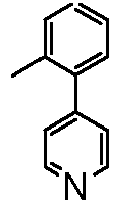
504.3 4.53 SB1 - Example 547:
-

- Using sodium ethoxide instead of sodium methoxide and treating it in the same manner as Reference Example 38, and then using 2-ethoxypyridine-3-phenylboronic acid and treating it in the same manner as Example 414, the titled compound was prepared.
- Examples 548-549:
- Using 4-bromo-3-methoxybenzoic acid and the compound 3-3 of Reference Example 3, and treating them in the same manner as the fifth step in Reference Example 12, and then treating in the same manner as the second step in Reference Example 38 as well as the same manner as Examples 542-544, the compounds of Examples 548-549 were prepared.
-

Example A obs MS [M+1] tR (min) Analytical Condition Example A obs MS [M+1] tR (min) Analytical Condition 548 
490.4 4.78 SB1 549 
490.3 1.025 SC2 - Example 550
-

- The compound 39-6 (11 mg) prepared in Reference Example 39 was stirred in TFA (1 mL) for 3 hours at room temperature. After finishing the reaction, the reaction mixture was concentrated under reduced pressure, and then ethyl acetate (1 mL) and triethylamine (1 mL) were added thereto, and the mixture was concentrated under reduced pressure. The resulting residue was purified with silica gel column chromatography (chloroform/methanol) to give the titled compound (2.2 mg).
Analyzing method SC2, tR 0.665 min, obs MS [M+1] 545.3 - Example 551
-

- To the compound 40-7 (210 mg) prepared in Reference Example 40 in ethanol (2.5 mL) were added potassium carbonate (412 mg) and 2-methoxyethylamine (260 µL), and the mixture was stirred for 30 minutes at 150°C under microwave irradiation. The reaction mixture was filtered and concentrated under reduced pressure. The resulting residue was purified with silica gel column chromatography (chloroform/methanol) to give the compound 551-I (149 mg). Trifluoroacetic acid (TFA) (3 mL) was added to the compound 551-I (100 mg) and the mixture was stirred for 4 hours at room temperature. The reaction mixture was concentrated under reduced pressure, and then chloroform was added thereto, and the mixture was concentrated under reduced pressure. Chloroform was added to the residue, and the mixture was again concentrated under reduced pressure, a solid crystallized by adding diethylether was collected by filtration to give the titled compound 551 (87 mg).
The compound 551-I: Analyzing method SC2, tR 0.93 min, obs MS [M+1] 608.7
The compound 551: Analyzing method SC2, tR 0.73 min, obs MS [M+1] 552.6 - Example 552
-

- The titled compound was prepared in the same manner as Example 61.
Analyzing method SC2, tR 0.71 min, obs MS [M+1] 548.7 - Example 553
-

- To the compound 41-5 (46 mg) prepared in Reference Example 41 in methanol (2 mL) was added sodium borohydride (16 mg) at 0°C and the mixture was stirred for 30 minutes at 0°C. Water and a saturated aqueous solution of ammonium chloride were added thereto, and the mixture was extracted with ethyl acetate. The organic layer was washed with saturated brine, dried over sodium sulfate, filtered, and concentrated under reduced pressure. The residue was purified with silica gel column chromatography (hexane/ethyl acetate) to give the compound 553-I (38 mg). Trifluoroacetic acid (TFA) (1.5 mL) was added to the compound 553-I (38 mg), the mixture was stirred for 4 hours at room temperature. The reaction mixture was concentrated under reduced pressure, and methanol (1 mL) and 4M aqueous solution of sodium hydroxide (1 mL) were added thereto, and then, the mixture was stirred for 40 minutes at room temperature. 1M aqueous solution of hydrochloric acid was added to the mixture which was extracted with ethyl acetate. The organic layer was washed with saturated brine, dried over sodium sulfate, filtered, and concentrated under reduced pressure. The residue was purified with silica gel column chromatography (chloroform/methanol) to give the titled compound 553 (16 mg).
Analyzing method SC2, tR 1.00 min, obs MS [M-1] 507.1 - Example 554
-

- To the compound 41-5 (73 mg) prepared in Reference Example 41 were added methanol (2 mL), acetic acid (0.2 mL) and 2-methoxyethylamine (112 µL), and the mixture was stirred for 5 minutes at room temperature. Picoline borane (69 mg) was added thereto, and the mixture was stirred for 1.5 hours, and then 1M aqueous solution of hydrochloric acid was added thereto, and further stirred for 30 minutes at room temperature. A saturated aqueous solution of sodium bicarbonate was added thereto, and the mixture was extracted with ethyl acetate. The organic layer was washed with saturated brine, dried over sodium sulfate, filtered, and concentrated under reduced pressure. The residue was purified with silica gel column chromatography (chloroform/methanol) to give the compound 554-I (43 mg). Trifluoroacetic acid (TFA) (1.5 mL) was added to the compound 554-I (43 mg), and the mixture was stirred for 3 hours at room temperature. The reaction mixture was concentrated under reduced pressure, and chloroform was added thereto, and then the mixture was again concentrated under reduced pressure. Diethylether/hexane was added to the resulting residue, and the precipitated solid was collected by filtration to give the titled compound 554 (39 mg).
The compound 554-I: Analyzing method SC2, tR 0.93 min, obs MS [M+1] 622.1
The compound 554: Analyzing method SC2, tR 0.76 min, obs MS [M+1] 566.3 - Example 555
-

- The titled compound was obtained in the same manner as Example 554.
Analyzing method SC2, tR 0.73 min, obs MS [M+1] 561.9 - Example 556
-

- To the compound 42-2 (170 mg) preparedin Reference Example 42 in a mixture of 1,4-dioxane/water (5 mL/0.5 mL), 2-trifluoromethylphenylboronic acid (157 mg), cesium carbonate (405 mg) and [1,1'-bis(diphenylphosphino)ferrocene]dichloropalladium (II) (30 mg) were added, and the mixture was stirred for 22 hours at 100°C. The reaction mixture was cooled to room temperature, 1M aqueous solution of citric acid was added thereto, and the mixture was extracted with ethyl acetate. After washing the organic layer with saturated brine, it was dried over sodium sulfate, filtered, and concentrated under reduced pressure. The resulting residue was purified with silica gel column chromatography (hexane/ethyl acetate) to give the titled compound (60 mg).
Analyzing method SC2, tR 0.97 min, obs MS [M-1] 474.4 - Example 557
-

- To the compound 43-3 (30 mg) prepared in Reference Example 43 was added trifluoroacetic acid (TFA) (1 mL), and the mixture was stirred for 5 hours at room temperature. The reaction mixture was concentrated under reduced pressure, and purified with silica gel column chromatography (chloroform/methanol) to give the titled compound (15 mg).
Analyzing method SC2, tR 0.88 min, obs MS [M-1] 517.0 - Example 558
-

- To the compound 44-3 (30 mg) prepared in Reference Example 44 were added carbon tetrachloride (1.5 mL) and phosphorus tribromide (54 µL), and the mixture was heated to reflux for 1.5 hours. After cooling to room temperature, water was added thereto, and the mixture was extracted with chloroform. The organic layer was washed with saturated brine, dried over sodium sulfate, filtered, and concentrated under reduced pressure to give the compound 558-I (34 mg). To the compound 558-I (34 mg) were added pyrrolidine (48 µL), potassium carbonate (79 mg) and ethanol (1.5 mL), the mixture was stirred for 30 minutes at 150°C under microwave irradiation. After cooling to room temperature, 1M aqueous solution of citric acid was added thereto, and the mixture was extracted with ethyl acetate. The organic layer was washed with saturated brine, dried over sodium sulfate, filtered, and concentrated under reduced pressure. The residue was purified with amino silica gel column chromatography (chloroform/methanol) to give the titled compound (10 mg).
Analyzing method SC2, tR 0.79 min, obs MS [M-1] 576.3 - Example 559
-
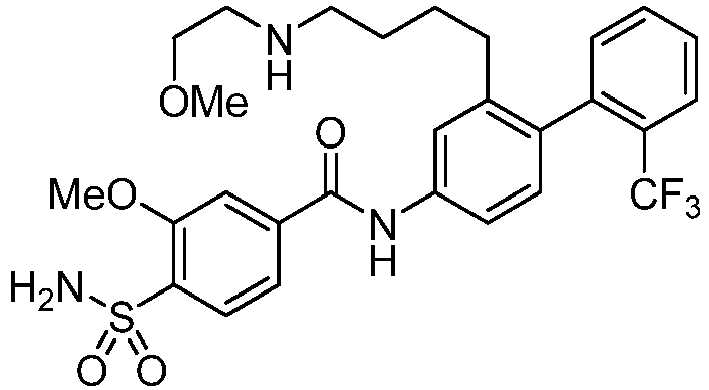
- The titled compound was prepared in the same manner as Example 558.
Analyzing method SC2, tR 0.82 min, obs MS [M-1] 580.2 - Example 560
-

- The titled compound was prepared in the same manner as Example 130
The compound 101: Analyzing method SC1, tR 1.25 min, obs MS [M+1] 482.0 - Examples 561-577
The following derivatives were prepared in the same manner as Example 131 and Example 132. -

Example R4 R6 obs MS [M+1]+ tR (min) Analytical Condition Example R4 R6 obs MS [M+1]+ tR (min) Analytical Condition 561 
OCF3 538.1 1.20 SC2 570 
OCF3 510.3 1.09 SC2 562 
OCF3 566.4 1.32 SC2 571 
OCF3 536.2 1.18 SC2 563 
OCF3 524.4 1.14 SC2 572 
OCF3 496.3 1.02 SC2 564 
OCF3 538.4 1.20 SC2 573 
OCF3 510.3 1.13 SC2 565 
OCF3 538.4 1.20 SC2 574 
Et 496.3 1.20 SC2 566 
OCF3 552.5 1.24 SC2 575 
Et 510.3 1.15 SC2 567 
OCF3 552.5 1.25 SC2 576 
/Pr 510.3 1.20 SC2 568 
OCF3 540.4 1.04 SC2 577 
OCF3 576.1 0.71 SC2 569 
OCF3 560.4 1.11 SC2 - Example 578
-

- To the compound (40 mg) of Example 560 in THF (1 mL) were added diisopropylethylamine (21 µL) and methyl chloroformate (8 µL), and the mixture was stirred for 50 hours at room temperature. The reaction mixture was concentrated under reduced pressure and the resulting residue was purified with silica gel column chromatography (chloroform/methanol) to give the titled compound (48 mg).
Analyzing method SC2, tR 0.97 min, obs MS [M-1] 538.3 - Examples 579-581
The compounds of the following Examples were prepared in the same manner as Example 578. -

Example R4 R6 obs MS [M-1]- tR (min) Analytical Condition 579 
OcF3 566.1 1.40 SC1 580 
OCF3 524.4 1.44 SC1 581 
Et 496.2 1.46 SC1 - Example 582
-

- To the compound 45-3 (80 mg) prepared in Reference Example 45 in a mixture of 1,4-dioxane/wate (1 mL/0.1 mL) were added 2-cyclopropoxyphenyl iodide (82 mg), potassium carbonate (66 mg) and [1,1'-bis(diphenylphosphino)ferrocene]dichloropalladium (II) (12 mg), and the mixture was stirred for 3 hours at 80°C. The reaction mixture was cooled to room temperature, ethyl acetate and metal scavenger silica gel (SH silica, FUJI SILYSIA CHEMICAL Ltd.) were added thereto, and the mixture was stirred for 1 hour at room temperature. The reaction mixture was filtered and concentrated under reduced pressure. The resulting residue was purified with silica gel column chromatography (chloroform/methanol) to give the titled compound (25 mg).
Analyzing method SC1, tR 1.41 min, obs MS [M+1] 526.3 - Example 583
-

- Using the compound 45-3 prepared in Reference Example 45 and treating it in the same manner as Example 582, the titled compound was prepared.
Analyzing method SC1, tR 1.46 min, obs MS [M+1] 536.0 - Example 584
-

- To a suspension of the compound 584-I (80 mg) prepared in the same manner as Reference Example 17 and Example 130 in toluene (1.5 mL) were added 2-chloropyridine (34 mg), palladium acetate (7 mg), 2-dicyclohexylphosphino-2',4',6'-triisopropylbiphenyl (XPhos) (28 mg) and sodium tert-butoxide (57 mg), and the mixture was stirred for 18 hours at 110°C. After cooling to room temperature, a saturated aqueous solution of ammonium chloride was added thereto, and the mixture was extracted with ethyl acetate. The organic layer was washed with saturated brine, dried over sodium sulfate, filtered, and then concentrated under reduced pressure. The resulting residue was purified with silica gel column chromatography (chloroform/methanol) to give the compound 584-II (39 mg). To the compound 584-II (39 mg) was added trifluoroacetic acid (TFA) (1.5 mL), and the mixture was stirred for 2 hours at room temperature. The reaction mixture was concentrated under reduced pressure, and purified with reverse phase column chromatography (methanol/water/TFA) to give the titled compound 584.
- The compound 584-II: Analyzing method SC2, tR 1.05 min, obs MS [M+1] 615.1
The compound 584: Analyzing method SC2, tR 0.77 min, obs MS [M+1] 559.3 - Example 585-Example 587:
- Using corresponding phenylboronic acids with various substituents instead of 2-(trifluoromethoxy)phenylboronic acid, the compounds of the following Examples 585-587 were prepared in the same manner as Example 122.
-

Example R6 obs MS [M+1] tR (min) Analytical Condition 585 F 431.4 4.28 SA3 586 Cl 447.1 4.38 SA3 587 CH3 427.2 4.45 SA3 - Examples 588-590:
- The compounds of the following Examples 588-590 were prepared in the same manner as Example 122 or Example 255.
-

Example A obs MS [M+1] tR (min) Analytical Condition 588 
453.5 5.66 SB1 589 
527.5 3.84 SB1 590 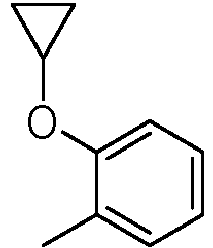
469.5 3.65 SB1 - Example 591:
The compound of the following Example 591 was prepared in the same manner as Example 487-496. -

- Examples 592-594:
- The compounds of the following Examples 592-594 were prepared in the same manner as Example 414.
-

Example A obs MS [M+1]+ tR (min) Analytical Condition 592 
520.5 3.05 SB1 593 
524.3 3.02 SB1 594 
590.5 3.32 SB1 - A rat was layed open in flank regions (on both sides) to remove both adrenal glands. After stitching up the incision, the rat was returnd to a breeding cage again. After removing the kidney from the rat reared for about 3 to 5 days, the kidney was homogenized in 0.1 M Tris-HCl, 0.25M sucrose, 0.1M Na2MoO4 and 2 mM DTT buffer solution (pH7.4). The resultant was centrifuged at 105,000 g for 30 minutes, and then a supernatant was collected as a renal soluble fraction.
The rat renal soluble fraction (0.5 to 1.5 mg), a labeled ligand [3H] aldosterone (2 nM) and a test article were reacted in the presence of 2 µM RU-486 (glucocorticoid receptor antagonist) in 100 µL of total amounts at 4°C for about 18 hours. Afterwards, to the reaction solution was added 50 µL of 5% dextran-coated activated charcoal, and the mixture was immingled, and then centrifuged at 3,000 g for 5 minutes. Then, a supernatant (100 µL) was collected and mixed with a liquid scintillator ACS-II (Amersham) (3.5 mL), and then analyzed its radioactivity by a liquid scintillation counter (manufactured by Packard, Tri Carb 2700TR). A non-specific binding was obtained by addition of 2 µM aldosterone to a reaction solution. A binding inhibition rate (%) to the labeled ligand was calculated as a test result in the test article concentration in the range from 0.1 nM to 10000 nM according to the following equation. -

- B: labeled ligand binding amounts in the presence of a test article and a labeled ligand
- B0: labeled ligand binding amounts in the absence of a test article
- N: labeled ligand binding amounts in the presence of excess aldosterone (2 µM)
- IC50 value (MR IC50 value; µM) corresponding to a concentration of a test article which inhibits 50% was calculated from a concentration-response curve.
Test example 1 was carried out for compounds obtained in the Examples. Results of binding inhibition test for aldosterone receptor are shown in Table 1 to Table 3. -
[Table 1] Example MR IC50 (µM) Example MR IC50 (µM) Example MR IC50 (µM) 7 0.35 75 0.88 163 <10 10 0.50 79 0.32 171 <10 12 0.61 81 0.12 174 0.94 14 4.7 85 0.54 176 0.39 17 1.7 88 0.41 180 0.28 19 3.3 91 0.26 182 0.35 20 0.55 92 0.41 189 <10 22 1.6 94 0.82 190 <10 24 2.4 99 2.0 195 <10 26 0.49 101 0.29 198 0.17 28 3.0 103 0.13 202 0.76 31 0.25 104 0.082 206 <10 35 0.35 109 0.19 207 <10 36 1.4 120 3.6 210 0.16 39 1.2 121 0.52 211 0.91 40 0.39 122 0.06 218 0.37 42 <1 126 0.31 221 <10 46 3.0 127 0.22 226 <10 50 0.70 128 0.14 229 <0.1 51 0.20 131 0.17 231 <10 56 0.52 132 0.29 235 <10 57 0.65 136 0.40 243 0.031 59 0.26 142 0.42 244 0.68 60 0.20 144 0.50 247 0.21 62 1.9 147 <10 249 0.26 64 0.40 153 0.47 250 0.33 65 0.25 154 1.3 257 0.084 68 0.21 159 0.29 259 0.45 69 0.22 160 2.0 260 0.44 72 0.53 162 0.66 265 0.36 -
[Table 2] Example MR IC50 (µM) Example MR IC50 (µM) Example MR IC50 (µM) 268 0.99 346 1.1 440 <10 270 0.65 351 1.2 443 <10 271 0.37 355 1.0 448 <10 272 0.40 357 0.13 451 0.55 279 4.1 363 0.75 454 <10 282 0.73 364 0.54 457 <10 286 0.18 365 0.46 460 <10 287 0.25 371 0.45 463 <10 288 0.12 373 0.10 469 <10 289 0.36 376 0.38 470 <10 293 0.27 380 1.0 474 <10 294 0.022 385 0.63 478 <10 295 0.10 387 0.36 481 <10 297 0.19 389 0.56 486 <10 299 0.14 392 0.45 488 <10 302 0.061 393 0.52 493 0.52 303 0.15 395 0.19 494 0.23 305 0.15 403 0.63 499 1.2 309 0.23 405 0.21 500 0.19 313 2.2 407 0.26 505 0.29 315 0.42 410 0.52 508 <10 320 2.5 414 1.7 510 0.28 323-2 0.25 415 0.63 513 0.70 324 0.19 419 1.2 515 0.87 329 0.22 424 <10 517 0.39 333 0.28 426 0.58 520 2.9 335 0.35 429 <10 526 2.2 337 1.1 431 <10 528 <10 342 0.47 432 <10 531 <10 345 0.14 438 <10 533 1.6 -
[Table 3] Example MR IC50 (µM) Example MR IC50 (µM) Example MR IC50 (µM) 537 5.4 560 0.24 581 <10 543 <10 561 0.10 583 1.3 545 <10 562 0.23 590 <10 547 <10 577 <10 592 <10 550 0.62 578 <10 593 <10 - Results of the above Test example 1 for Example compounds 1 and 66 which were described in the prior art (the above mentioned Patent document 6) are shown in Table 4.
-
[Table 4] Comparative example Compound MR IC50 (µM) Inhibition rates (%) in 100 µM 1 
>10 7 2 
>10 11 - Both comparative examples 1 and 2 showed very few binding affinities for aldosterone receptor. On the other hand, the compound of the present invention showed strong binding affinities for aldosterone receptor.
- Test example 2: Antagonism (in vivo antagonist activity) against reduction of Na/K ratios in deoxycorticosterone acetate (DOCA) induced urine of normal rat
- A rat was encaged in a metabolism cage and was collected urine for 8 hours. When a test article was orally administered, it was administered in 5 ml/kg of dosage solution amounts using 0.5% methylcellulose as a solvent. DOCA was dissolved in corn oil in 0.3 mg/ml, and was subcutaneously administered in 1 ml/kg (0.3 mg/kg). Administration timing for a test article was 30 minutes before DOCA administration. 20 ml/kg of Solution amounts of saline was orally administered when administering DOCA in order to stabilize urine amounts and to secure enough amounts. Collected urine was analyzed its amounts, and then electrolyte (sodium: Na+ and potassium: K+) concentrations in urine were analyzed by an automatic biochemical analyzer (manufactured by JEOL Ltd., JCA-BM1650) to calculate ratios of Na+ and K+.
- Test example 2 was carried out for Example compounds and aldosterone receptor antagonist eplerenone, and Example compounds and eplerenone suppressed reduction of Na/K ratios in DOCA-induced urine in a dose-dependent manner.
- The compounds of the present invention have high binding affinities for aldosterone receptors. The compounds of the present invention also show pharmacological effects caused by antagonistic activities or partial agonistic activities as an aldosterone receptor regulator. Thus, the compounds of the present invention are usuful for preventing and/or treating diseases such as hypertension, stroke, arrhythmia, heart failure, cardiomegaly, arteriosclerosis, vascular restenosis, renal fibrosis, cardiac infarction, diabetes complication, renal disease, edema, primary aldosteronism, inflammation, insulin resistance, sleep apnea syndrome, non-alcoholic steatohepatitis, Cushing's syndrome.
Claims (32)
- A compound of formula (1), or a pharmaceutically acceptable salt thereof.


R1 is optionally substituted aminosulfonyl group, optionally substituted C1-6 alkylsulfonyl group, or optionally substituted C1-6 alkylsulfonylamino group;
R2 is hydrogen atom, halogen atom, hydroxy group, optionally substituted C1-6 alkyl group, optionally substituted C1-6 alkoxy group, or optionally substituted 5- or 6-membered monocyclic heteroaryl group;
R3 is hydrogen atom, or halogen atom;
R4 is hydrogen atom, halogen atom, hydroxy group, cyano group, nitro group, formyl group, carboxyl group, optionally substituted C1-6 alkyl group, optionally substituted amino group, optionally substituted C1-6 alkoxy group, optionally substituted C1-6 alkoxycarbonyl group, optionally substituted 4-to 7-membered heterocyclic group, optionally substituted 5- or 6-membered monocyclic heteroaryl group, optionally substituted C7-14 aralkyloxy group, optionally substituted C1-6 alkylcarbonyloxy group, optionally substituted C1-6 alkylsulfonyloxy group, optionally substituted 4- to 8-membered cyclic amino group, optionally substituted 4- to 7-membered saturated heterocyclic oxy group, optionally substituted C1-6 alkylcarbonylamino group, optionally substituted C3-10 cycloalkylcarbonylamino group, optionally substituted C1-6 alkoxycarbonylamino group, optionally substituted 5- or 6-membered monocyclic heteroarylcarbonylamino group, optionally substituted 4- to 7-membered saturated heterocyclic carbonylamino group, or optionally substituted aminocarbonylamino group;
R5a, R5b and R5c are each independently hydrogen atom, halogen atom, optionally substituted amino group, or optionally substituted C1-6 alkyl group;
R6 is halogen atom, cyano group, optionally substituted C1-6 alkyl group, amino group (in which the amino may be optionally substituted with the same or different 1 to 2 groups selected from the group consisting of C1-6 alkyl, C3-10 cycloalkyl, C3-10 cycloalkyl-C1-4 alkyl, saturated heterocycle which may be optionally substituted with C1-6 alkyl, 5- or 6-membered saturated heterocyclic-C1-4 alkyl, 5- or 6-membered monocyclic heteroaryl, and 5- or 6-membered monocyclic heteroaryl-C1-4 alkyl), hydroxy group, optionally substituted C1-6 alkoxy group, optionally substituted C3-10 cycloalkyl group, optionally substituted C3-10 cycloalkoxy group, optionally substituted C1-6 alkylthio group, optionally substituted C1-6 alkoxycarbonyl group, optionally substituted 4- to 7-membered cyclic amino group, optionally substituted 4- to 7-membered cyclic aminocarbonyl group, optionally substituted C6-10 aryl group, optionally substituted 5- to 10-membered monocyclic or polycyclic heteroaryl group, optionally substituted 5- or 6-membered monocyclic heteroaryloxy group, optionally substituted 4- to 7-membered saturated heterocyclic group, or optionally substituted 4- to 7-membered saturated heterocyclic oxy group;
R7 and R8 are each independently hydrogen atom, halogen atom, hydroxy group, cyano group, nitro group, amino group (in which the amino may be optionally substituted with the same or different 1 to 2 groups selected from the group consisting of C1-6 alkyl, C3-10 cycloalkyl, C3-10 cycloalkyl-C1-4 alkyl, 5-or 6-membered saturated heterocycle, 5- or 6-membered saturated heterocyclic-C1-4 alkyl, 5- or 6-membered monocyclic heteroaryl, and 5- or 6-membered monocyclic heteroaryl-C1-4 alkyl), optionally substituted C1-6 alkyl group, optionally substituted C1-6 alkoxy group, optionally substituted C1-6 alkylthio group, optionally substituted C1-6 alkoxycarbonyl group, or optionally substituted C1-6 alkylcarbonyloxy group, or
any one of R6, R7 and R8 is hydrogen atom, and the remaining two groups are adjacent each other and may combine each other together with the ring atoms to which they bind to form C3-7 cycloalkyl ring, 5- or 6-membered saturated heterocycle, or 5- or 6-membered heteroaryl ring;
m is an integer of 0 to 6;
provided that 4-(methylsulfonyl)-N-[3'-(trifluoromethyl)biphenyl-4-yl]benzamide, and 2'-methyl-5'-(5-methyl-1,3,4-oxadiazol-2-yl)-N-[4-[(methylsulfonyl)amino]phenyl]biphenyl-4-carboxamide are excluded. ] - The compound of claim 1, or a pharmaceutically acceptable salt thereof, wherein A is a group of formula (a).
- The compound of either claim 1 or 2, or a pharmaceutically acceptable salt thereof, wherein L is - NHCO-.
- The compound of either claim 1 or 2, or a pharmaceutically acceptable salt thereof, wherein L is - CONH-.
- The compound of any one of claims 1 to 4, or a pharmaceutically acceptable salt thereof, wherein R1 is1: aminosulfonyl group (in which the amino may be optionally substituted with the same or different 1 to 2 groups selected from the group consisting of(a) C1-6 alkyl (in which the group may be optionally substituted with(i) amino (in which the amino may be optionally substituted with the same or different 1 to 2 C1-6 alkyl),(ii) C1-6 alkoxy, or(iii) 4- to 7-membered cyclic amino),(b) C1-6 alkylcarbonyl,(c) aminocarbonyl, and(d) -C(=NH)-NH2),2: C1-6 alkylsulfonyl group, or3: C1-6 alkylsulfonylamino group, or a pharmaceutically acceptable salt thereof.
- The compound of claim 5, wherein R1 is aminosulfonyl group, or a pharmaceutically acceptable salt thereof.
- The compound of claim 5, wherein R1 is C1-6 alkylsulfonyl group, or a pharmaceutically acceptable salt thereof.
- The compound of any one of claims 1 to 7, wherein R2 is hydrogen atom, halogen atom, hydroxy group, C1-6 alkyl group, or optionally substituted C1-6 alkoxy group.
- The compound of claim 8, or a pharmaceutically acceptable salt thereof, wherein R2 is C1-6 alkoxy group.
- The compound of any one of claims 1 to 9, or a pharmaceutically acceptable salt thereof, wherein R3 is hydrogen atom.
- The compound of any one of claims 1 to 10, or a pharmaceutically acceptable salt thereof, wherein R4 is1: hydrogen atom,2: halogen atom,3: hydroxy group,4: cyano group,5: nitro group,6: formyl group,7: carboxyl group,8: amino group (in which the amino may be optionally substituted with the same or different 1 to 2 groups selected from the group consisting of(a) C1-6 alkyl (in which the group may be optionally substituted with(i) 1 to 3 fluorine atoms,(ii) cyano,(iii) hydroxy,(iv) amino (in which the amino may be optionally substituted with the same or different 1 to 2 C1-6 alkyl),(v) C1-6 alkoxy,(vi) C6-10 aryloxy,(vii) C7-14 aralkyl (in which the group may be optionally substituted with C1-4 alkoxy), or(viii) aminocarbonyl),(b) C3-10 cycloalkyl (in which the group may be optionally substituted with cyano, or C1-4 alkyl),(c) C3-10 cycloalkyl-C1-4 alkyl,(d) C6-10 aryl (in which the group may be optionally substituted with C1-6 alkyl),(e) C7-14 aralkyl (in which the group may be optionally substituted with halogen atom, or C1-4 alkoxy),(f) 4- to 7-membered saturated heterocycle (in which the heterocycle may be optionally substituted with C1-6 alkyl),(g) 4- to 7-membered saturated heterocyclic-C1-4 alkyl (in which the heterocycle may be optionally substituted with C1-4 alkyl),(h) 5- or 6-membered monocyclic heteroaryl (in which the group may be optionally substituted with the same or different 1 to 2 groups selected from the group consisting of cyano and C1-4 alkyl), and(i) 5- or 6-membered monocyclic heteroaryl-C1-4 alkyl (in which the heteroaryl may be optionally substituted with C1-4 alkyl)),9: C1-6 alkoxy group (in which the group may be optionally substituted with(a) 1 to 2 hydroxy,(b) 1 to 3 fluorine atoms,(c) amino (in which the amino may be optionally substituted with the same or different 1 to 2 groups selected from the group consisting of(i) C1-6 alkyl (in which the group may be optionally substituted with hydroxy, C1-4 alkoxy, or 5- or 6-membered monocyclic heteroaryl),(ii) C3-6 cycloalkyl, and(iii) 4- to 7-membered saturated heterocyclic-C1-4 alkyl),(d) 1 to 2 C1-6 alkoxy,(e) 4- to 7-membered cyclic amino (in which the ring may be optionally substituted with the same or different 1 to 2 groups selected from the group consisting of(i) hydroxy,(ii) cyano,(iii) 1 to 4 fluorine atoms,(iv) C1-6 alkyl (in which the group may be optionally substituted with 1 to 3 fluorine atoms, or C1-6 alkoxy),(v) C1-6 alkoxy,(vi) formyl,(vii) C1-6 alkylcarbonyl,(viii) C1-6 alkylsulfonyl, and(ix) oxo),(f) 4- to 7-membered saturated heterocycle (in which the ring may be optionally substituted with the same or different group(s) selected from the group consisting of (i) to (ix) in the above (e)),(g) 5- or 6-membered monocyclic heteroaryl (in which the ring may be optionally substituted with C1-6 alkyl), or(h) C7-14 aralkyloxy),10: C1-6 alkoxycarbonyl group,11: 4- to 7-membered heterocyclic group (in which the ring may be optionally substituted with the same or different group(s) selected from the group consisting of (i) to (ix) in the above (e)),12: 5- or 6-membered monocyclic heteroaryl group (in which the ring may be optionally substituted with cyano, or C1-6 alkyl),13: C7-14 aralkyloxy group,14: C1-6 alkylcarbonyloxy group,15: C1-6 alkylsulfonyloxy group,16: 4- to 8-membered cyclic amino group (in which the ring may be optionally substituted with the same or different group(s) selected from the group consisting of (i) to (ix) in the above (e)),17: saturated heterocyclic oxy group (in which the ring may be optionally substituted with the same or different 1 to 2 groups selected from the group consisting of C1-6 alkyl which may be optionally substituted with 1 to 3 fluorine atoms, and oxo), or18: C1-6 alkylcarbonylamino group (in which the alkyl may be optionally substituted with(a) hydroxy,(b) 1 to 3 fluorine atoms,(c) C1-6 alkoxy, or(d) C1-6 alkylcarbonyloxy),19: C3-10cycloalkylcarbonylamino group,20: C1-6 alkoxycarbonylamino group,21: 5- or 6-membered monocyclic heteroarylcarbonylamino group (in which the ring may be optionally substituted with C1-6 alkyl),22: 4- to 7-membered saturated heterocyclic carbonylamino group (in which the ring may be optionally substituted with C1-6 alkyl which may be optionally substituted with 1 to 3 fluorine atoms),23: mono- or di-C1-6 alkylaminocarbonylamino group, or24: C1-6 alkyl group (in which the group may be optionally substituted with group(s) selected from 1 to 3 fluorine atoms, and hydroxy).
- The compound of claim 11, or a pharmaceutically acceptable salt thereof, wherein R4 is amino group (in which the amino is substituted with C1-6 alkyl which is substituted with 1 to 3 fluorine atoms).
- The compound of claim 12, or a pharmaceutically acceptable salt thereof, wherein R4 is 2,2-difluoroethylamino.
- The compound of any one of claims 1 to 13, or a pharmaceutically acceptable salt thereof, wherein R5a, R5b, and R5c are each independently1: hydrogen atom,2: halogen atom,3: amino group (in which the amino may be optionally substituted with the same or different 1 to 2 groups selected from the group consisting of(a) C1-6 alkyl,(b) C3-10 cycloalkyl, and(c) C3-10cycloalkyl-C1-4alkyl), or4: C1-6 alkyl group.
- The compound of claim 14, or a pharmaceutically acceptable salt thereof, wherein all of R5a, R5b, and R5c are hydrogen atom.
- The compound of any one of claims 1 to 15, or a pharmaceutically acceptable salt thereof, wherein R6 is1: halogen atom,2: cyano group,3: C1-6 alkyl group (in which the group may be optionally substituted with(a) hydroxy,(b) cyano,(c) oxo,(d) 1 to 4 fluorine atoms,(e) amino (in which the amino may be optionally substituted with the same or different 1 to 2 groups selected from the group consisting of(i) C1-6 alkyl (in which the group may be optionally substituted with 1 to 3 fluorine atoms, or C1-6 alkoxy),(ii) C3-10 cycloalkyl, and(iii) C3-10 cycloalkyl-C1-4 alkyl),(f) 4- to 7-membered cyclic amino (in which the ring may be optionally substituted with(i) 1 to 3 fluorine atoms,(ii) C1-6 alkyl, or(iii) C1-6 alkoxy),(g) C1-6 alkoxy (in which the group may be optionally substituted with 1 to 3 fluorine atoms),(h) C3-10 cycloalkoxy,(i) 5- or 6-membered monocyclic heteroaryl,(j) 5- or 6-membered monocyclic heteroaryloxy,(k) 4- to 7-membered saturated heterocyclic oxy,(l) C1-6 alkylcarbonyl, or(m) C1-6 alkoxycarbonyl),4: amino group (in which the amino may be optionally substituted with the same or different 1 to 2 groups selected from the group consisting of(a) C1-6 alkyl,(b) C3-10 cycloalkyl,(c) C3-10cycloalkyl-C1-4alkyl, and(d) 4- to 7-membered saturated heterocycle (in which the ring may be optionally substituted with C1-6 alkyl)),5: hydroxy group,6: C1-6 alkoxy group (in which the group may be optionally substituted with(a) hydroxy,(b) cyano,(c) 1 to 6 fluorine atoms,(d) amino (in which the amino may be optionally substituted with the same or different 1 to 2 groups selected from the group consisting of(i) C1-6 alkyl,(ii) C3-10cycloalkyl, and(iii) C3-10 cycloalkyl-C1-4 alkyl),(e) 4- to 7-membered cyclic amino (in which the ring may be optionally substituted with(i) 1 to 3 fluorine atoms,(ii) C1-6 alkyl, or(iii) C1-6 alkoxy),(f) C1-6 alkoxy (in which the group may be optionally substituted with 1 to 3 fluorine atoms),(g) C3-10cycloalkyl, or(h) 5- or 6-membered monocyclic heteroaryl),7: C3-10cycloalkyl group (in which the group may be optionally substituted with C1-6 alkyl, or cyano),8: C3-10cycloalkoxy group,9: C1-6 alkylthio group,10: C1-6 alkoxycarbonyl group,11: 4- to 7-membered cyclic amino group (in which the ring may be optionally substituted with(a) 1 to 3 fluorine atoms,(b) C1-6 alkyl, or(c) C1-6 alkoxy),12: 4- to 7-membered cyclic aminocarbonyl group,13: C6-10aryl group,14: 5- or 6-membered monocyclic heteroaryl group (in which the ring may be optionally substituted with C1-6 alkyl),15: 5- or 6-membered monocyclic heteroaryloxy group,16: 4- to 7-membered saturated heterocyclic group, or17: 4- to 7-membered saturated heterocyclic oxy group.
- The compound of claim 16, or a pharmaceutically acceptable salt thereof, wherein R6 is halogen atom.
- The compound of any one of claims 1 to 17, or a pharmaceutically acceptable salt thereof, wherein R7 is1: hydrogen atom,2: halogen atom,3: hydroxy group,4: cyano group,5: nitro group,6: amino group (in which the amino may be optionally substituted with the same or different 1 to 2 groups selected from the group consisting of(a) C1-6 alkyl,(b) C3-10 cycloalkyl, and(c) C3-10 cycloalkyl-C1-4 alkyl),7: C1-6 alkyl group (in which the group may be optionally substituted with 1 to 3 fluorine atoms),8: C1-6 alkoxy group (in which the group may be optionally substituted with(a) hydroxy,(b) carboxyl,(c) 1 to 3 fluorine atoms,(d) amino (in which the amino may be optionally substituted with the same or different 1 to 2 C1-6 alkyl),(e) C1-6 alkoxycarbonyl, or(f) C1-6 alkylcarbonyloxy),9: C1-6 alkylthio group,10: C1-6 alkoxycarbonyl group, or11: C1-6 alkylcarbonyloxy group.
- The compound of claim 18, or a pharmaceutically acceptable salt thereof, wherein R7 is hydrogen atom.
- The compound of any one of claims 1 to 19, or a pharmaceutically acceptable salt thereof, wherein R8 is1: hydrogen atom,2: halogen atom, or3: C1-6 alkoxy group.
- The compound of claim 20, or a pharmaceutically acceptable salt thereof, wherein R8 is hydrogen atom.
- The compound of any one of claims 1 to 21, or a pharmaceutically acceptable salt thereof, wherein m is 0 or 1.
- The compound of claim 22, or a pharmaceutically acceptable salt thereof, wherein m is 0.
- The compound of claim 22, or a pharmaceutically acceptable salt thereof, wherein m is 1.
- The compound of claim 1, or a pharmaceutically acceptable salt thereof, which is any one selected from the following group:2-(hydroxymethyl)-N-[4-(methylsulfonyl)phenyl]-2'-(trifluorophenyl)biphenyl-4-carboxamide,2-(hydroxymethyl)-N-(3-methoxy-4-sulfamoylphenyl)-2'-(trifluorophenyl)biphenyl-4-carboxamide,2-(hydroxymethyl)-N-(3-methoxy-4-sulfamoylphenyl)-2'-(trifluoromethoxy)biphenyl-4-carboxamide,2'-ethyl-2-(hydroxymethyl)-N-(3-methoxy-4-sulfamoylphenyl)biphenyl-4-carboxamide,4'-fluoro-2-(hydroxymethyl)-N-(3-methoxy-4-sulfamoylphenyl)-2'-(trifluorophenyl)biphenyl-4-carboxamide,2-(hydroxymethyl)-4'-methoxy-N-(3-methoxy-4-sulfamoylphenyl)-2'-(trifluorophenyl)biphenyl-4-carboxamide,2-(hydroxymethyl)-N-[4-(methylsulfonyl)phenyl]-2'-(trifluoromethoxy)biphenyl-4-carboxamide,2-[(3,3-difluoropyrrolidin-1-yl)methyl]-N-[4-(methylsulfonyl)phenyl]-2'-(trifluoromethoxy)biphenyl-4-carboxamide,2-[(3,3-difluoropiperidin-1-yl)methyl]-N-[4-(methylsulfonyl)phenyl]-2'-(trifluoromethoxy)biphenyl-4-carboxamide,2-{[(2-methoxyethyl)amino]methyl}-N-[4-(methylsulfonyl)phenyl]-2'-(trifluoromethoxy)biphenyl-4-carboxamide,2-[(diethylamino)methyl]-N-[4-(methylsulfonyl)phenyl]-2'-(trifluoromethoxy)biphenyl-4-carboxamide,2-{[(3S)-3-fluoropyrrolidin-1-yl]methyl}-N-[4-(methylsulfonyl)phenyl]-2'-(trifluoromethoxy)biphenyl-4-carboxamide,2-{[(2,2-difluoroethyl)amino]methyl}-N-[4-(methylsulfonyl)phenyl]-2'-(trifluoromethoxy)biphenyl-4-carboxamide,2-{[bis(2-methoxyethyl)amino]methyl}-N-[4-(methylsulfonyl)phenyl]-2'-(trifluoromethoxy)biphenyl-4-carboxamide,N-[4-(methylsulfonyl)phenyl]-2-{[(2,2,2-trifluoroethyl)amino]methyl}-2'-(trifluoromethoxy)biphenyl-4-carboxamide,2-{[(2,2-difluoroethyl)amino]methyl}-N-(3-methoxy-4-sulfamoylphenyl)-2'-(trifluoromethoxy)biphenyl-4-carboxamide,2-(hydroxymethyl)-N-(3-methoxy-4-sulfamoylphenyl)-2'-(1,1,2,2-tetrafluoroethoxy)biphenyl-4-carboxamide,2- {[(2,2-difluoroethyl)amino]methyl}-N-(3-methoxy-4-sulfamoylphenyl)-2'-(trifluorophenyl)biphenyl-4-carboxamide,2-{[(2,2-difluoroethyl)amino]methyl}-4'-methoxy-N-(3-methoxy-4-sulfamoylphenyl)-2'-(trifluorophenyl)biphenyl-4-carboxamide,N-[2-(hydroxymethyl)-2'-(trifluorophenyl)biphenyl-4-yl]-3-methoxy-4-sulfamoylbenzamide,N-[2-(hydroxymethyl)-2'-(trifluoromethoxy)biphenyl-4-yl]-3-methoxy-4-sulfamoylbenzamide,N-[2-{[(2,2-difluoroethyl)amino]methyl}-2'-(trifluorophenyl)biphenyl-4-yl]-3-methoxy-4-sulfamoylbenzamide,2- {[(2,2-difluoroethyl)amino]methyl}-2',4'-difluoro-N-(3-methoxy-4-sulfamoylphenyl)biphenyl-4-carboxamide,2- {[(2,2-difluoroethyl)amino]methyl}-N-(3-methoxy-4-sulfamoylphenyl)-2'-methylbiphenyl-4-carboxamide,2- {[(2,2-difluoroethyl)amino]methyl}-2'-fluoro-N-(3-methoxy-4-sulfamoylphenyl)biphenyl-4-carboxamide,2- {[(2,2-difluoroethyl)amino]methyl}-2',5'-difluoro-N-(3-methoxy-4-sulfamoylphenyl)biphenyl-4-carboxamide,5'-chloro-2- {[(2,2-difluoroethyl)amino]methyl}-2'-fluoro-N-(3-methoxy-4-sulfamoylphenyl)biphenyl-4-carboxamide,2'-chloro-2-{[(2,2-difluoroethyl)amino]methyl}-4'-fluoro-N-(3-methoxy-4-sulfamoylphenyl)biphenyl-4-carboxamide,2- {[(2,2-difluoroethyl)amino]methyl}-N-(3-methoxy-4-sulfamoylphenyl)-4'-methyl-2'-(trifluorophenyl)biphenyl-4-carboxamide,2'-chloro-2- {[(2,2-difluoroethyl)amino]methyl}-N-(3-methoxy-4-sulfamoylphenyl)biphenyl-4-carboxamide,2',4'-dichloro-2- {[(2,2-difluoroethyl)amino]methyl}-N-(3-methoxy-4-sulfamoylphenyl)biphenyl-4-carboxamide,2', 5'-dichloro-2- {[(2,2-difluoroethyl)amino]methyl}-N-(3-methoxy-4-sulfamoylphenyl)biphenyl-4-carboxamide,2'-cyclopropyl-2- {[(2,2-difluoroethyl)amino]methyl}-4'-fluoro-N-(3-methoxy-4-sulfamoylphenyl)-biphenyl-4-carboxamide,4'-chloro-2- {[(2,2-difluoroethyl)amino]methyl}-N-(3-methoxy-4-sulfamoylphenyl)-2'-(trifluorophenyl)biphenyl-4-carboxamide,2- {[(2,2-difluoroethyl)amino]methyl}-4'-fluoro-N-(3-methoxy-4-sulfamoylphenyl)-2'-(trifluorophenyl)biphenyl-4-carboxamide,N-(2'-chloro-2- {[(2,2-difluoroethyl)amino]methyl}-4'-fluorobiphenyl-4-yl)-3-methoxy-4-sulfamoylbenzamide,N-[2- {[(2,2-difluoroethyl)amino]methyl}-4'-fluoro-2'-(trifluorophenyl)biphenyl-4-yl]-3-methoxy-4-sulfamoylbenzamide,2-{[(3R)-3-fluoropyrrolidin-1-yl]methyl}-N-[4-(methylsulfonyl)phenyl]-2'-(trifluoromethoxy)biphenyl-4-carboxamide,2-{[(2-fluoroethyl)amino]methyl}-N-[4-(methylsulfonyl)phenyl]-2'-(trifluoromethoxy)biphenyl-4-carboxamide,2-[(cyclopropylamino)methyl]-N-[4-(methylsulfonyl)phenyl] -2'-(trifluoromethoxy)biphenyl-4-carboxamide,3-methoxy-4-sulfamoyl-N-[2-{[(2,2,2-trifluoroethyl)amino]methyl}-2'-(trifluorophenyl)biphenyl-4-yl]benzamide,3-methoxy-4-sulfamoyl-N-[2-{[(2,2,2-trifluoroethyl)amino]methyl}-2'-(trifluoromethoxy)biphenyl-4-yl]benzamide,2'-chloro-2-(hydroxymethyl)-N-(3-methoxy-4-sulfamoylphenyl)biphenyl-4-carboxamide,2-(hydroxymethyl)-N-(3-methoxy-4-sulfamoylphenyl)-2'-methylbiphenyl-4-carboxamide,2'-cyclopropyl-2-(hydroxymethyl)-N-(3-methoxy-4-sulfamoylphenyl)biphenyl-4-carboxamide,2-(hydroxymethyl)-4'-methoxy-N-(3-methoxy-4-sulfamoylphenyl)-2'-(trifluoromethoxy)biphenyl-4-carboxamide,2'-(cyclopropyloxy)-2-(hydroxymethyl)-N-(3-methoxy-4-sulfamoylphenyl)biphenyl-4-carboxamide,N-[2- {[(2,2-difluoroethyl)amino]methyl}-4'-methoxy-2'-(trifluorophenyl)biphenyl-4-yl]-3-methoxy-4-sulfamoylbenzamide,2-{[(2,2-difluoroethyl)amino]methyl}-4'-methoxy-N-(3-methoxy-4-sulfamoylphenyl)-2'-methylbiphenyl-4-carboxamide,2- {[(2,2-difluoroethyl)amino]methyl}-4'-fluoro-2'-methoxy-N-(3-methoxy-4-sulfamoylphenyl)biphenyl-4-carboxamide, and2-{[(2,2-difluoroethyl)amino]methyl}-4'-methoxy-N-(3-methoxy-4-sulfamoylphenyl)-2'-(trifluoromethoxy)biphenyl-4-carboxamide.
- The compound of claim 25, which is any one selected from the following group, or a pharmaceutically acceptable salt thereof:2-(hydroxymethyl)-N-(3-methoxy-4-sulfamoylphenyl)-2'-(trifluorophenyl)biphenyl-4-carboxamide,2-{[(2,2-difluoroethyl)amino]methyl}-N-(3-methoxy-4-sulfamoylphenyl)-2'-(trifluoromethoxy)biphenyl-4-carboxamide,N-[2-(hydroxymethyl)-2'-(trifluoromethoxy)biphenyl-4-yl]-3-methoxy-4-sulfamoylbenzamide,2-{[(2,2-difluoroethyl)amino]methyl}-N-(3-methoxy-4-sulfamoylphenyl)-2'-methylbiphenyl-4-carboxamide,2-{[(2,2-difluoroethyl)amino]methyl}-2'-fluoro-N-(3-methoxy-4-sulfamoylphenyl)biphenyl-4-carboxamide,2'-chloro-2-{[(2,2-difluoroethyl)amino]methyl}-4'-fluoro-N-(3-methoxy-4-sulfamoylphenyl)biphenyl-4-carboxamide,2'-chloro-2-{[(2,2-difluoroethyl)amino]methyl}-N-(3-methoxy-4-sulfamoylphenyl)biphenyl-4-carboxamide,4'-chloro-2-{[(2,2-difluoroethyl)amino]methyl}-N-(3-methoxy-4-sulfamoylphenyl)-2'-(trifluorophenyl)-biphenyl-4-carboxamide, and2-{[(2,2-difluoroethyl)amino]methyl}-4'-fluoro-N-(3-methoxy-4-sulfamoylphenyl)-2'-(trifluorophenyl)-biphenyl-4-carboxamide.
- The compound of claim 25, or a pharmaceutically acceptable salt thereof, which is any one selected from the following group:2-(hydroxymethyl)-N-[4-(methylsulfonyl)phenyl]-2'-(trifluorophenyl)biphenyl-4-carboxamide,2-(hydroxymethyl)-N-[4-(methylsulfonyl)phenyl]-2'-(trifluoromethoxy)biphenyl-4-carboxamide,2-{[(2,2-difluoroethyl)amino]methyl}-N-[4-(methylsulfonyl)phenyl]-2'-(trifluoromethoxy)biphenyl-4-carboxamide, and2-{[(2-fluoroethyl)amino]methyl}-N-[4-(methylsulfonyl)phenyl]-2'-(trifluoromethoxy)biphenyl-4-carboxamide.
- A pharmaceutical composition, comprising the compound of any one of claims 1 to 27 or a pharmaceutically acceptable salt thereof.
- A medicament, comprising the compound of any one of claims 1 to 27 or a pharmaceutically acceptable salt thereof as the active ingredient.
- A preventive or therapeutic agent for hypertension, stroke, arrhythmia, heart failure, cardiomegaly, arteriosclerosis, vascular restenosis, renal fibrosis, cardiac infarction, diabetes complication, renal disease, edema, primary aldosteronism, inflammation, insulin resistance, sleep apnea syndrome, non-alcoholic steatohepatitis, or Cushing's syndrome, which comprises the compound of any one of claims 1 to 27 or a pharmaceutically acceptable salt thereof.
- A method for preventing or treating hypertension, stroke, arrhythmia, heart failure, cardiomegaly, arteriosclerosis, vascular restenosis, renal fibrosis, cardiac infarction, diabetes complication, renal disease, edema, primary aldosteronism, inflammation, insulin resistance, sleep apnea syndrome, non-alcoholic steatohepatitis, or Cushing's syndrome, which comprises administering an effective amount of the compound of any one of claims 1 to 27 or a pharmaceutically acceptable salt thereof to a patient in need.
- Use of the compound of any one of claims 1 to 27 or a pharmaceutically acceptable salt thereof in the manufacture of a medicament for preventing or treating hypertension, stroke, arrhythmia, heart failure, cardiomegaly, arteriosclerosis, vascular restenosis, renal fibrosis, cardiac infarction, diabetes complication, renal disease, edema, primary aldosteronism, inflammation, insulin resistance, sleep apnea syndrome, non-alcoholic steatohepatitis, or Cushing's syndrome.
Applications Claiming Priority (2)
| Application Number | Priority Date | Filing Date | Title |
|---|---|---|---|
| JP2010159036 | 2010-07-13 | ||
| PCT/JP2011/065857 WO2012008435A1 (en) | 2010-07-13 | 2011-07-12 | Biaryl amide derivative or pharmaceutically acceptable salt thereof |
Publications (2)
| Publication Number | Publication Date |
|---|---|
| EP2594554A1 true EP2594554A1 (en) | 2013-05-22 |
| EP2594554A4 EP2594554A4 (en) | 2014-01-15 |
Family
ID=45469433
Family Applications (1)
| Application Number | Title | Priority Date | Filing Date |
|---|---|---|---|
| EP11806765.1A Withdrawn EP2594554A4 (en) | 2010-07-13 | 2011-07-12 | BIARYLIC AMIDE DERIVATIVE OR A PHARMACEUTICALLY ACCEPTABLE SALT THEREOF |
Country Status (5)
| Country | Link |
|---|---|
| US (1) | US20130116227A1 (en) |
| EP (1) | EP2594554A4 (en) |
| JP (1) | JPWO2012008435A1 (en) |
| TW (1) | TW201216957A (en) |
| WO (1) | WO2012008435A1 (en) |
Cited By (1)
| Publication number | Priority date | Publication date | Assignee | Title |
|---|---|---|---|---|
| CN113801153A (en) * | 2021-10-12 | 2021-12-17 | 山东大学 | A kind of benzenesulfonamide HBV capsid protein inhibitor containing boronic acid and boronic acid pinacol ester group and preparation method and application thereof |
Families Citing this family (10)
| Publication number | Priority date | Publication date | Assignee | Title |
|---|---|---|---|---|
| NZ629778A (en) | 2012-02-09 | 2016-03-31 | Univ Kansas | C-terminal hsp90 inhibitors |
| EP3066072B1 (en) * | 2013-11-07 | 2021-11-03 | The University of Kansas | Biphenylamide derivative hsp90 inhibitors |
| CN106536498A (en) | 2014-06-24 | 2017-03-22 | 堪萨斯大学 | Biphenylamides with modified ether groups as HSP90 inhibitors and HSP70 inducers |
| SI3160948T1 (en) | 2014-06-30 | 2020-06-30 | Astrazeneca Ab | Benzoxazinone amides as modulators of the mineralocorticoid receptor |
| US20180280414A1 (en) | 2015-10-13 | 2018-10-04 | Inserm (Institut National De La Sante Et De La Recherche Medicale) | Methods and pharmaceutical compositions for the treatment of choroidal neovascularisation |
| EP3490606B8 (en) | 2016-07-26 | 2024-04-10 | INSERM (Institut National de la Santé et de la Recherche Médicale) | Antagonist of mineralocorticoid receptor for the treatment of osteoarthritis |
| KR20210021457A (en) | 2018-05-14 | 2021-02-26 | 리아타 파마슈티컬즈, 아이엔씨. | Biarylamides with modified sugars for the treatment of diseases associated with the heat shock protein pathway |
| WO2021180818A1 (en) | 2020-03-11 | 2021-09-16 | INSERM (Institut National de la Santé et de la Recherche Médicale) | Methods of determining whether a subject has or is at risk of having a central serous chorioretinopathy |
| WO2023031277A1 (en) | 2021-08-31 | 2023-03-09 | INSERM (Institut National de la Santé et de la Recherche Médicale) | Methods for the treatment of ocular rosacea |
| CN114605459A (en) * | 2022-05-10 | 2022-06-10 | 江苏恒力化纤股份有限公司 | Boron-containing char-forming flame retardant, preparation thereof and application thereof in durable flame-retardant polyester fabric |
Family Cites Families (3)
| Publication number | Priority date | Publication date | Assignee | Title |
|---|---|---|---|---|
| GB0124936D0 (en) * | 2001-10-17 | 2001-12-05 | Glaxo Group Ltd | Chemical compounds |
| EP1632477B1 (en) * | 2003-06-12 | 2017-03-01 | Astellas Pharma Inc. | Benzamide derivative or salt thereof |
| AU2006290442B2 (en) * | 2005-09-16 | 2010-07-29 | Arrow Therapeutics Limited | Biphenyl derivatives and their use in treating hepatitis C |
-
2011
- 2011-07-12 TW TW100124658A patent/TW201216957A/en unknown
- 2011-07-12 EP EP11806765.1A patent/EP2594554A4/en not_active Withdrawn
- 2011-07-12 US US13/809,471 patent/US20130116227A1/en not_active Abandoned
- 2011-07-12 WO PCT/JP2011/065857 patent/WO2012008435A1/en not_active Ceased
- 2011-07-12 JP JP2012524552A patent/JPWO2012008435A1/en not_active Withdrawn
Cited By (1)
| Publication number | Priority date | Publication date | Assignee | Title |
|---|---|---|---|---|
| CN113801153A (en) * | 2021-10-12 | 2021-12-17 | 山东大学 | A kind of benzenesulfonamide HBV capsid protein inhibitor containing boronic acid and boronic acid pinacol ester group and preparation method and application thereof |
Also Published As
| Publication number | Publication date |
|---|---|
| WO2012008435A1 (en) | 2012-01-19 |
| EP2594554A4 (en) | 2014-01-15 |
| JPWO2012008435A1 (en) | 2013-09-09 |
| TW201216957A (en) | 2012-05-01 |
| US20130116227A1 (en) | 2013-05-09 |
Similar Documents
| Publication | Publication Date | Title |
|---|---|---|
| US20130116227A1 (en) | Biaryl amide derivative or pharmaceutically acceptable salt thereof | |
| CA2852355C (en) | (hetero)aryl cyclopropylamine compounds as lsd1 inhibitors | |
| CA2781660C (en) | Indole compound and pharmaceutical use thereof | |
| AU2004281215B2 (en) | Derivatives of N-[heteroaryl(piperidine-2-yl)methyl]benzamide, preparation method thereof and application of same in therapeutics | |
| US9783573B2 (en) | IAP antagonists | |
| KR102772801B1 (en) | Piperidinone formyl peptide 2 receptor and formyl peptide 1 receptor agonist | |
| JP7183193B2 (en) | Piperidinone formylpeptide 2 and formylpeptide 1 receptor agonists | |
| JP6623270B2 (en) | Trifluoromethyl alcohol as a modulator of Rorγt | |
| TW201040186A (en) | Phthalazine-containing antidiabetic compounds | |
| CA3136223C (en) | 1,3,4-oxadiazole homophthalimide derivative compounds as histone deacetylase 6 inhibitor, and the pharmaceutical composition comprising the same | |
| CA3105681A1 (en) | Pyridazinone derivative | |
| CN109810041A (en) | Halogenated allyl amine SSAO/VAP-1 inhibitor and its application | |
| CN105517549B (en) | CaMKII inhibitors and uses thereof | |
| WO2014134776A1 (en) | Compounds inhibiting leucine-rich repeat kinase enzyme activity | |
| CA3103932A1 (en) | Pyridinyl pyrazoles as modulators of roryt | |
| CA3135454A1 (en) | Benzopyrane and imidazole derivatives useful for the stabilization of amyloidogenic immunoglobulin light chains | |
| CN107074856A (en) | CaMKII inhibitor and application thereof | |
| JP2013166750A (en) | Pharmaceutical made of biaryl amide derivative or its pharmacologically acceptable salt | |
| WO2021201036A1 (en) | Hydroxypyrrolidine derivative and medicinal application thereof | |
| EP3259256B1 (en) | Compounds and methods for inducing browning of white adipose tissue | |
| JP2011037712A (en) | 4-arylphenyl derivative | |
| EP4448508A1 (en) | Benzothiophene derivatives as rxfp1 agonists | |
| CN111471037A (en) | Allylamine compound and application thereof | |
| JP2010180178A (en) | Bicyclic aminopyrazole amide derivative | |
| WO2025160220A2 (en) | Tead inhibitors and methods of use |
Legal Events
| Date | Code | Title | Description |
|---|---|---|---|
| PUAI | Public reference made under article 153(3) epc to a published international application that has entered the european phase |
Free format text: ORIGINAL CODE: 0009012 |
|
| 17P | Request for examination filed |
Effective date: 20130201 |
|
| AK | Designated contracting states |
Kind code of ref document: A1 Designated state(s): AL AT BE BG CH CY CZ DE DK EE ES FI FR GB GR HR HU IE IS IT LI LT LU LV MC MK MT NL NO PL PT RO RS SE SI SK SM TR |
|
| DAX | Request for extension of the european patent (deleted) | ||
| A4 | Supplementary search report drawn up and despatched |
Effective date: 20131217 |
|
| RIC1 | Information provided on ipc code assigned before grant |
Ipc: A61K 31/381 20060101ALI20131211BHEP Ipc: A61K 31/277 20060101ALI20131211BHEP Ipc: A61K 31/167 20060101ALI20131211BHEP Ipc: A61K 31/18 20060101ALI20131211BHEP Ipc: A61K 31/341 20060101ALI20131211BHEP Ipc: A61K 31/41 20060101ALI20131211BHEP Ipc: A61K 31/351 20060101ALI20131211BHEP Ipc: A61K 31/4245 20060101ALI20131211BHEP Ipc: A61K 31/4196 20060101ALI20131211BHEP Ipc: A61K 31/4015 20060101ALI20131211BHEP Ipc: A61K 31/4164 20060101ALI20131211BHEP Ipc: A61K 31/426 20060101ALI20131211BHEP Ipc: A61K 31/40 20060101ALI20131211BHEP Ipc: A61K 31/403 20060101ALI20131211BHEP Ipc: A61K 31/397 20060101ALI20131211BHEP Ipc: C07C 311/08 20060101AFI20131211BHEP Ipc: A61K 31/216 20060101ALI20131211BHEP Ipc: A61K 31/235 20060101ALI20131211BHEP Ipc: A61K 31/415 20060101ALI20131211BHEP Ipc: A61K 31/421 20060101ALI20131211BHEP Ipc: A61K 31/407 20060101ALI20131211BHEP |
|
| STAA | Information on the status of an ep patent application or granted ep patent |
Free format text: STATUS: THE APPLICATION IS DEEMED TO BE WITHDRAWN |
|
| 18D | Application deemed to be withdrawn |
Effective date: 20140722 |