EP2592947B1 - Food product - Google Patents
Food product Download PDFInfo
- Publication number
- EP2592947B1 EP2592947B1 EP11736045.3A EP11736045A EP2592947B1 EP 2592947 B1 EP2592947 B1 EP 2592947B1 EP 11736045 A EP11736045 A EP 11736045A EP 2592947 B1 EP2592947 B1 EP 2592947B1
- Authority
- EP
- European Patent Office
- Prior art keywords
- food product
- carbohydrate
- cats
- intake
- diet
- Prior art date
- Legal status (The legal status is an assumption and is not a legal conclusion. Google has not performed a legal analysis and makes no representation as to the accuracy of the status listed.)
- Active
Links
- 235000013305 food Nutrition 0.000 title claims description 100
- 150000001720 carbohydrates Chemical class 0.000 claims description 59
- 241001465754 Metazoa Species 0.000 claims description 44
- 241000282324 Felis Species 0.000 claims description 27
- 235000019577 caloric intake Nutrition 0.000 claims description 24
- 238000000034 method Methods 0.000 claims description 13
- 238000012423 maintenance Methods 0.000 claims description 8
- 230000000694 effects Effects 0.000 claims description 5
- 238000001356 surgical procedure Methods 0.000 claims description 5
- 230000007774 longterm Effects 0.000 claims description 4
- 239000004067 bulking agent Substances 0.000 claims description 3
- 241000282326 Felis catus Species 0.000 description 82
- 235000005911 diet Nutrition 0.000 description 76
- 230000037213 diet Effects 0.000 description 75
- 235000014633 carbohydrates Nutrition 0.000 description 56
- 235000019197 fats Nutrition 0.000 description 29
- 108090000623 proteins and genes Proteins 0.000 description 27
- 102000004169 proteins and genes Human genes 0.000 description 27
- 235000018102 proteins Nutrition 0.000 description 25
- 238000002474 experimental method Methods 0.000 description 21
- 239000000203 mixture Substances 0.000 description 17
- 235000016709 nutrition Nutrition 0.000 description 10
- 235000015097 nutrients Nutrition 0.000 description 9
- 230000001276 controlling effect Effects 0.000 description 7
- 230000003050 macronutrient Effects 0.000 description 7
- 235000021073 macronutrients Nutrition 0.000 description 7
- 238000013461 design Methods 0.000 description 6
- 235000005686 eating Nutrition 0.000 description 6
- 230000037396 body weight Effects 0.000 description 5
- 235000012631 food intake Nutrition 0.000 description 5
- 230000037406 food intake Effects 0.000 description 5
- 235000006286 nutrient intake Nutrition 0.000 description 5
- 238000011282 treatment Methods 0.000 description 5
- 235000021074 carbohydrate intake Nutrition 0.000 description 4
- 239000010432 diamond Substances 0.000 description 4
- 239000000835 fiber Substances 0.000 description 4
- 238000004806 packaging method and process Methods 0.000 description 4
- 244000062645 predators Species 0.000 description 4
- 230000001105 regulatory effect Effects 0.000 description 4
- 235000011888 snacks Nutrition 0.000 description 4
- 230000004580 weight loss Effects 0.000 description 4
- 108010068370 Glutens Proteins 0.000 description 3
- 244000068988 Glycine max Species 0.000 description 3
- 235000010469 Glycine max Nutrition 0.000 description 3
- 240000008042 Zea mays Species 0.000 description 3
- 235000002017 Zea mays subsp mays Nutrition 0.000 description 3
- 229910003460 diamond Inorganic materials 0.000 description 3
- 235000012041 food component Nutrition 0.000 description 3
- 230000036541 health Effects 0.000 description 3
- 235000021075 protein intake Nutrition 0.000 description 3
- IJGRMHOSHXDMSA-UHFFFAOYSA-N Atomic nitrogen Chemical compound N#N IJGRMHOSHXDMSA-UHFFFAOYSA-N 0.000 description 2
- 244000298479 Cichorium intybus Species 0.000 description 2
- 235000007542 Cichorium intybus Nutrition 0.000 description 2
- 240000007594 Oryza sativa Species 0.000 description 2
- 235000007164 Oryza sativa Nutrition 0.000 description 2
- 229920002472 Starch Polymers 0.000 description 2
- 241000209140 Triticum Species 0.000 description 2
- 235000021307 Triticum Nutrition 0.000 description 2
- 235000016383 Zea mays subsp huehuetenangensis Nutrition 0.000 description 2
- 238000000540 analysis of variance Methods 0.000 description 2
- 235000015278 beef Nutrition 0.000 description 2
- 238000013401 experimental design Methods 0.000 description 2
- 235000021312 gluten Nutrition 0.000 description 2
- 244000038280 herbivores Species 0.000 description 2
- 235000009200 high fat diet Nutrition 0.000 description 2
- 235000008085 high protein diet Nutrition 0.000 description 2
- 235000003642 hunger Nutrition 0.000 description 2
- 239000004615 ingredient Substances 0.000 description 2
- 230000003993 interaction Effects 0.000 description 2
- 235000008528 macronutrient intake Nutrition 0.000 description 2
- 235000009973 maize Nutrition 0.000 description 2
- 235000013372 meat Nutrition 0.000 description 2
- 239000002184 metal Substances 0.000 description 2
- 230000035764 nutrition Effects 0.000 description 2
- 235000020912 omnivore Nutrition 0.000 description 2
- 244000054334 omnivore Species 0.000 description 2
- 238000012545 processing Methods 0.000 description 2
- 238000011160 research Methods 0.000 description 2
- 235000009566 rice Nutrition 0.000 description 2
- 239000007787 solid Substances 0.000 description 2
- 235000019698 starch Nutrition 0.000 description 2
- 239000008107 starch Substances 0.000 description 2
- 230000037351 starvation Effects 0.000 description 2
- 235000021076 total caloric intake Nutrition 0.000 description 2
- 230000003442 weekly effect Effects 0.000 description 2
- 238000005303 weighing Methods 0.000 description 2
- 235000007319 Avena orientalis Nutrition 0.000 description 1
- 244000075850 Avena orientalis Species 0.000 description 1
- 241000219310 Beta vulgaris subsp. vulgaris Species 0.000 description 1
- 101100074187 Caenorhabditis elegans lag-1 gene Proteins 0.000 description 1
- 241000824799 Canis lupus dingo Species 0.000 description 1
- 235000013162 Cocos nucifera Nutrition 0.000 description 1
- 244000060011 Cocos nucifera Species 0.000 description 1
- 241000287828 Gallus gallus Species 0.000 description 1
- 240000005979 Hordeum vulgare Species 0.000 description 1
- 235000007340 Hordeum vulgare Nutrition 0.000 description 1
- 206010020710 Hyperphagia Diseases 0.000 description 1
- FFEARJCKVFRZRR-BYPYZUCNSA-N L-methionine Chemical compound CSCC[C@H](N)C(O)=O FFEARJCKVFRZRR-BYPYZUCNSA-N 0.000 description 1
- 235000019687 Lamb Nutrition 0.000 description 1
- 235000021536 Sugar beet Nutrition 0.000 description 1
- ATJFFYVFTNAWJD-UHFFFAOYSA-N Tin Chemical class [Sn] ATJFFYVFTNAWJD-UHFFFAOYSA-N 0.000 description 1
- 240000000359 Triticum dicoccon Species 0.000 description 1
- 235000005824 Zea mays ssp. parviglumis Nutrition 0.000 description 1
- 238000010171 animal model Methods 0.000 description 1
- 235000019728 animal nutrition Nutrition 0.000 description 1
- 235000021053 average weight gain Nutrition 0.000 description 1
- 235000015895 biscuits Nutrition 0.000 description 1
- 238000004364 calculation method Methods 0.000 description 1
- 125000000837 carbohydrate group Chemical group 0.000 description 1
- 235000012182 cereal bars Nutrition 0.000 description 1
- 235000013339 cereals Nutrition 0.000 description 1
- 235000013351 cheese Nutrition 0.000 description 1
- 239000012141 concentrate Substances 0.000 description 1
- 235000008504 concentrate Nutrition 0.000 description 1
- 230000003750 conditioning effect Effects 0.000 description 1
- 235000009508 confectionery Nutrition 0.000 description 1
- 235000005822 corn Nutrition 0.000 description 1
- 230000002596 correlated effect Effects 0.000 description 1
- 239000006071 cream Substances 0.000 description 1
- 235000021316 daily nutritional intake Nutrition 0.000 description 1
- 235000013365 dairy product Nutrition 0.000 description 1
- 230000001419 dependent effect Effects 0.000 description 1
- 206010012601 diabetes mellitus Diseases 0.000 description 1
- 230000000378 dietary effect Effects 0.000 description 1
- 235000001434 dietary modification Nutrition 0.000 description 1
- 208000037265 diseases, disorders, signs and symptoms Diseases 0.000 description 1
- 239000003651 drinking water Substances 0.000 description 1
- 235000020188 drinking water Nutrition 0.000 description 1
- 238000001125 extrusion Methods 0.000 description 1
- 235000019625 fat content Nutrition 0.000 description 1
- 235000013312 flour Nutrition 0.000 description 1
- 239000005428 food component Substances 0.000 description 1
- 230000002431 foraging effect Effects 0.000 description 1
- 235000011868 grain product Nutrition 0.000 description 1
- 206010021654 increased appetite Diseases 0.000 description 1
- 239000000463 material Substances 0.000 description 1
- 239000011159 matrix material Substances 0.000 description 1
- 235000012054 meals Nutrition 0.000 description 1
- 230000007246 mechanism Effects 0.000 description 1
- 230000037323 metabolic rate Effects 0.000 description 1
- 229930182817 methionine Natural products 0.000 description 1
- 239000011785 micronutrient Substances 0.000 description 1
- 235000013369 micronutrients Nutrition 0.000 description 1
- 235000013336 milk Nutrition 0.000 description 1
- 239000008267 milk Substances 0.000 description 1
- 210000004080 milk Anatomy 0.000 description 1
- 238000000491 multivariate analysis Methods 0.000 description 1
- 229910052757 nitrogen Inorganic materials 0.000 description 1
- 235000021590 normal diet Nutrition 0.000 description 1
- 235000020830 overeating Nutrition 0.000 description 1
- 238000010419 pet care Methods 0.000 description 1
- 210000002381 plasma Anatomy 0.000 description 1
- 230000001923 postingestive effect Effects 0.000 description 1
- 244000144977 poultry Species 0.000 description 1
- 238000002360 preparation method Methods 0.000 description 1
- 230000009467 reduction Effects 0.000 description 1
- 238000012552 review Methods 0.000 description 1
- 239000004576 sand Substances 0.000 description 1
- 235000015067 sauces Nutrition 0.000 description 1
- 230000000276 sedentary effect Effects 0.000 description 1
- 238000009394 selective breeding Methods 0.000 description 1
- 235000009561 snack bars Nutrition 0.000 description 1
- 238000007619 statistical method Methods 0.000 description 1
- 230000001502 supplementing effect Effects 0.000 description 1
- 239000003760 tallow Substances 0.000 description 1
- 239000003053 toxin Substances 0.000 description 1
- 231100000765 toxin Toxicity 0.000 description 1
- 108700012359 toxins Proteins 0.000 description 1
- -1 usually energy Substances 0.000 description 1
- 235000019786 weight gain Nutrition 0.000 description 1
- 230000004584 weight gain Effects 0.000 description 1
Images




Classifications
-
- A—HUMAN NECESSITIES
- A23—FOODS OR FOODSTUFFS; TREATMENT THEREOF, NOT COVERED BY OTHER CLASSES
- A23K—FODDER
- A23K50/00—Feeding-stuffs specially adapted for particular animals
- A23K50/40—Feeding-stuffs specially adapted for particular animals for carnivorous animals, e.g. cats or dogs
- A23K50/42—Dry feed
-
- A—HUMAN NECESSITIES
- A23—FOODS OR FOODSTUFFS; TREATMENT THEREOF, NOT COVERED BY OTHER CLASSES
- A23K—FODDER
- A23K40/00—Shaping or working-up of animal feeding-stuffs
- A23K40/25—Shaping or working-up of animal feeding-stuffs by extrusion
-
- A—HUMAN NECESSITIES
- A23—FOODS OR FOODSTUFFS; TREATMENT THEREOF, NOT COVERED BY OTHER CLASSES
- A23K—FODDER
- A23K20/00—Accessory food factors for animal feeding-stuffs
- A23K20/10—Organic substances
- A23K20/163—Sugars; Polysaccharides
-
- A—HUMAN NECESSITIES
- A23—FOODS OR FOODSTUFFS; TREATMENT THEREOF, NOT COVERED BY OTHER CLASSES
- A23K—FODDER
- A23K40/00—Shaping or working-up of animal feeding-stuffs
- A23K40/20—Shaping or working-up of animal feeding-stuffs by moulding, e.g. making cakes or briquettes
Definitions
- the present invention relates to a nutritionally complete dry pet food product comprising at least 45% carbohydrate on an energy ratio basis for use in a method of controlling calorie intake in a feline companion animal.
- the invention specifically relates to such a food product for weight maintenance after surgical procedure to neuter a feline companion animal, according to claim 1, and also to the food product for use in a weight loss regime. It also relates to a pet food for use in a method of controlling calorie intake in a feline companion animal, the method comprising feeding to the feline companion animal a pet food product comprising at least 45% carbohydrate on an energy ratio basis.
- the inventors have surprisingly found that through an extensive series of dietary studies on the domestic cat, based upon geometric multivariate analysis of the interactions between protein, fat and carbohydrate, animals show strong nutritional regulation. This reinforces the fact that macronutrient regulation is common across tropic levels and providing important information for the design of domestic cat nutritional regimes.
- the present invention is useful in preventing a companion animal from overeating since the inventors have surprisingly discovered that a companion animal will sacrifice calorie intake in order to avoid ingesting more than a certain level of carbohydrate, i.e. the animal will stop eating once it reaches a "carbohydrate ceiling". Accordingly, the present invention provides a nutritionally complete dry pet food product comprising at least 45% carbohydrate on an energy ratio basis for use in a method of controlling calorie intake for weight maintenance after a surgical procedure for neutering a feline companion animal, preferably the pet food product comprises at least 50% carbohydrate on an energy ratio basis.
- the food product of the invention allows the feline animal to "self select" the amount of food it consumes.
- the inventors have unexpectedly found that cats will stop eating once a certain level of carbohydrate has been consumed.
- the pet food product may be fed to a companion animal for a limited period of time, or in the case of a particularly sedentary animal, may be used as a permanent diet.
- the inventors have unexpectedly found that a feline companion animal reduces its calorie intake by up to 40% when fed a food product according to the present invention. Over a period of time this would be likely to lead to weight loss.
- a cat that is not active for example an older cat, or a house cat
- such diet may be used as a permanent diet.
- the pet food product may be fed to a feline companion animal for up to 6 months or for 8 to 20 weeks.
- the food product of the present invention is used for weight maintenance after a surgical procedure for neutering a feline companion animal.
- the food product of the present invention may be used in conjunction with an additional calorie intake controlling method or ingredient, such as the use of a bulking agent, such as a non-digestable fibre or carbohydrate.
- a bulking agent such as a non-digestable fibre or carbohydrate.
- the bulking agent or the like may be included in the food product of the invention or may be provided to the feline animal separately.
- the pet food product is nutritionally complete and therefore contains fat and protein as well as the carbohydrate. All necessary micronutrients are also included in the food product at the correct concentrations.
- the fat and protein may be present in any level provided the carbohydrate remains at at least 50% on an energy ratio basis.
- the fat content may be from 1% to 50% on an energy ratio basis, and the protein content may be from 1% to 50% on an energy ratio basis.
- Dry food includes food having 5% to 15% moisture, often presented as small biscuit-like kibbles.
- the food product encompasses any product that an animal consumes in its diet.
- the food product may include the standard food products as well as food products for companion animals, such as food snacks (for example snack bars, cereal bars, snacks, treats, biscuits and sweet products).
- the food product may be a cooked product. It may incorporate meat or animal-derived material (such as beef, chicken, turkey, lamb, fist, blood plasma, marrowbone, etc or one or more thereof).
- the food product may be meat-free (preferably including a meat substitute such as soya, maize gluten or a soya product) in order to provide protein.
- the food product may contain additional protein sources such as soya protein concentrate, milk, protein, gluten, etc.
- the food product may also contain starch, such as one or more grains (e.g. wheat, corn, rice, oats, barley, etc) or may be starch-free.
- the food product may incorporate or be a gelatinised starch matrix.
- the food product may incorporate one or more types of fibre such as sugar beet pulp, chicory pulp, chicory, coconut endosperm fibre, wheat fibre etc. Dairy products, such as those incorporating a cream or a cheese sauce, may be suitable.
- the food product can also be newly designed products currently not available.
- the most suitable food product may be a pet food product as described herein which is sold as a pet food, in particular a pet food for a domestic dog or a domestic cat.
- a dry format includes dried ready-to-eat cereal products (often referred to as kibbles).
- the food product is preferably packaged. In this way the consumer is able to identify, from the packaging, the ingredients of the product and confirm that it is suitable for the particular animal in question.
- the packaging may be metal (usually in the form of a tin or flexifoil), plastic (usually in the form of a pouch or bottle), paper or card. The amount of moisture in any product may influence the type of packaging, which can be used or is required.
- the food product may be available as a "kit” or "pack” wherein the different food products are individually packaged and these packages are somehow joined together, for example in a box and/or with overarching packaging for the two or more packages of food product.
- the “kit” may include snacks or treats as part of the controlling of calorie intake.
- the “kit” may comprise a "weekly" diet for a feline animal. By weekly it is meant enough food product or products to provide the animal with 7 days of meals, snacks and/or treats.
- the pet food product of the invention may be fed to a companion animal as its normal diet on a permanent basis.
- the pet food product may be used in a weight loss regime for overweight cats.
- weight loss regime it is meant a period of time wherein the feline companion animal is fed the food product of the invention in order to reduce its calorie intake with the aim of reducing its weight from an overweight level to a normal level.
- normal level it is meant a weight that is suitable and recommended for that animal.
- the feline companion animal is Felis catus .
- Controlling calorie intake may be a reduction of calorie intake.
- the level of carbohydrate in the food product may be manipulated to accurately control the calorie intake of the feline animal. The higher the carbohydrate content relative to the calorie content of the food, the lower the calorie intake of the feline animal.
- the level of carbohydrate may be reduced (provided it is still at least 45% on an energy ratio basis) to ensure a feline animal consumes enough calories to maintain its weight, but does not consume excess calories.
- Such a maintenance diet would be fed to a feline animal on a permanent or long term basis. By long term it is meant more than 6 months, for example 12 months, 2 years, 5 years, 10 years, or for the rest of the life of the feline animal.
- the level of carbohydrate could be increased such that the feline animal consumes fewer calories in order to reduce its weight.
- a second aspect of the present invention also includes a method of controlling calorie intake in a feline companion animal, the method comprising the steps of feeding to the companion animal a nutritionally complete dry pet food product, comprising at least 45% carbohydrate on an energy ratio basis.
- the method may involve feeding the feline animal the food product for up to 6 months, or for 8 to 20 weeks. All features of the first aspect apply to the second aspect mutates mutandis .
- each bowl contained 150 g of the allocated diet and the food was available to the cats for 22 h, from 10:30 h to 08:30 h the following morning, at which time any uneaten food was weighed to allow calculation of the amount of each diet eaten.
- Example 1 Variable protein, carbohydrate and fat
- Phase 2 (monadic diets, sequential self selection): cats were cycled through eight, three-day periods in which they were confined to a different food (pFc, pfC or Pfc) on each of the three days. To reduce sequence effects, cats were randomly assigned to one of six orders of diet presentation. They were therefore unable to self-select a diet within each day, but could regulate their intake on successive days so as to compensate for imbalances accrued over previous days. This was, therefore, a sequential self-selection design in which the switching interval was experimentally regulated at one day.
- Phase 2 also served as a conditioning phase in which the cats gained experience of each of the foods separately.
- Phase 3 experienced simultaneous self-selection: In this phase the regime of Phase 1 was repeated (simultaneous self-selection), on the now “experienced” cats. In this experimental design, the cats in all three phases of the experiment could theoretically achieve any diet composition that fell within the region of composition space delineated by the triangle in Fig. 1A .
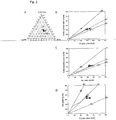
- Fig. 1 the proportional compositions of diets self-selected by cats from all three treatments clustered to the right and midway down the region of the accessible composition space ( Fig. 1A ). This shows that the cats regulated a macronutrient balance low in carbohydrate and with intermediate protein:fat balance. The clustering of self-selected intakes can also be seen in intake space ( Fig. 1B - D ). Comparison of nutrient intakes further reveals that the experienced simultaneous self-selectors (Phase 3, triangles) selected a diet with a higher protein:carbohydrate balance ( Fig. 1B ) and protein:fat balance (Fig. ID) than the naive cats (squares).
- the intake points selected by naive (squares) and experienced (triangles) simultaneous self-selectors differed ( Fig. 3 ).
- the experienced cats selected a lower proportion of carbohydrate in the diet than the naive cats.
- the sequential self-selectors compiled a diet intermediate between the diets of naive and experienced simultaneous self-selectors (diamonds).
- Plots of nutrient intakes again show evidence of a ceiling effect on carbohydrate intake ( Fig. 3B and C ), although unlike in Experiments 1 and 2 in this case the cats on the pf C monadic diet treatment did not ingest carbohydrate to this level.
- Fig. 4A shows that the naive and experienced simultaneous self-selecting cats mixed a diet with similar macronutrient balance, and that this balance was very close to the maximal P:C possible given the available diets.
- the diet selected by sequential self-selectors was similar, but had marginally higher carbohydrate content.
- Fig. 4B - D show, as in previous experiments, that there was a distinct upper limit to carbohydrate intake.
- both the Pfc and pfc monadic diet treatments and the self-selected intake means also aligned tightly on a value for fat intake of approximately 240 kJ. A possible interpretation of this is that the cats encountered a daily fat intake limit of approximately 240 kJ.
- Example 5 Long-term (3 weeks) intake of 3 dry diets with differing macronutrient profiles in cats.
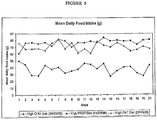
- the daily intake (g) of the high carbohydrate diet was lower than that of the other two diets over the 3 week study period.
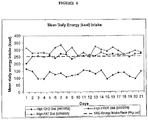
- This lower food intake also results in lower energy intake (kcal) of the high carbohydrate diet compared to the other two diets over the 3 week study period ( Figure 6 ).
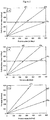
- carbohydrate provided a ceiling to intake (i.e. a limit at which the cat 'voluntarily' stopped eating) at c. 300 kJ d -1 (e.g., see the horizontal alignment of intakes at this value in Fig. 1B and C and Fig. 7A and B ).
- Table 1
- the output shows the results of fitting a linear model to describe the relationship between Intake (kJ) and CER.
- the R-Squared statistic indicates that the model as fitted explains 57.3342% of the variability in Intake (kJ).
- the correlation coefficient equals -0.757194, indicating a moderately strong relationship between the variables.
- Results are shown in Figure 8 .
Landscapes
- Life Sciences & Earth Sciences (AREA)
- Chemical & Material Sciences (AREA)
- Polymers & Plastics (AREA)
- Zoology (AREA)
- Engineering & Computer Science (AREA)
- Food Science & Technology (AREA)
- Animal Husbandry (AREA)
- Birds (AREA)
- Fodder In General (AREA)
- Feed For Specific Animals (AREA)
Description
- The present invention, according to
claims 1 to 9, relates to a nutritionally complete dry pet food product comprising at least 45% carbohydrate on an energy ratio basis for use in a method of controlling calorie intake in a feline companion animal. The invention specifically relates to such a food product for weight maintenance after surgical procedure to neuter a feline companion animal, according toclaim 1, and also to the food product for use in a weight loss regime. It also relates to a pet food for use in a method of controlling calorie intake in a feline companion animal, the method comprising feeding to the feline companion animal a pet food product comprising at least 45% carbohydrate on an energy ratio basis. - Establishing the nutritional priorities that govern foraging behaviour, diet selection and postingestive processing is fundamental to predicting an animal's interactions within its nutritional environment, with consequences that extend from the health and evolutionary fitness of the individual to the structuring of populations and communities. Conventional models have assumed that animals typically prioritize a single food component, usually energy, nitrogen or toxins. However, experimental studies on herbivores and omnivores across a wide range of taxa have shown that animal nutrition can better be understood in terms of balancing multiple nutritional and non-nutritional components of foods. This is predictable in theory since such animals experience a range of food types and qualities, in which nutritional components need not be tightly correlated, necessitating separate regulation of key nutrient dimensions. In contrast, the prevailing view until recently was that predators have no need to regulate intake of multiple nutrients, but are mainly limited by food availability. This assumption is founded on the premise that predators feed on relatively rare, high-quality foods that are less variable in composition than the foods of herbivores and omnivores. In recent years, however, this view of predator nutritional ecology has been called into question.
- Establishing whether predators can regulate their intake of multiple nutrients is a fundamental issue for nutritional ecology, but it is especially important to understand the regulatory capacities of domestic pets such as cats, since the diet of the animal is largely determined by the carer. Providing inappropriate diet compositions has implication for animal health and welfare, and potentially also for urban ecology through pets supplementing their diet from nature. There are additional implications for understanding the evolution of nutritional biology under artificial selection.
- Results from earlier studies on the domestic cat, Felis catus, have been ambiguous. A lack of regulation of protein intake in cats offered pairwise combinations of foods differing in protein content has been claimed. On the other hand, cats were reported to distinguish between foods based on the concentration of methionine. It has also been concluded that cats are unlikely to show nutrient-specific food selection, but instead to use general mechanisms, such as neophilia and xenophobia, to avoid nutritional imbalances.
- The inventors have surprisingly found that through an extensive series of dietary studies on the domestic cat, based upon geometric multivariate analysis of the interactions between protein, fat and carbohydrate, animals show strong nutritional regulation. This reinforces the fact that macronutrient regulation is common across tropic levels and providing important information for the design of domestic cat nutritional regimes.
- The number of overweight companion animals has become a greater problem in recent years. Being overweight, as in humans, has serious implications for the health of animals and also places a greater burden on veterinary services. Disorders related to an animal being overweight includes diabetes, joint problems and other direct and indirect discomfort for an animal. Many pet owners unintentionally overfeed their animals and many animals will overeat since their instinct is to eat as much as possible when food is available in preparation for times of starvation. However, as domestic animals, those times of starvation do not occur, often causing the animal to gain weight.
- Additionally, it is known that after neutering, cats often have increased appetite and a reduced metabolic rate, which also contribute to weight gain.
- The present invention is useful in preventing a companion animal from overeating since the inventors have surprisingly discovered that a companion animal will sacrifice calorie intake in order to avoid ingesting more than a certain level of carbohydrate, i.e. the animal will stop eating once it reaches a "carbohydrate ceiling". Accordingly, the present invention provides a nutritionally complete dry pet food product comprising at least 45% carbohydrate on an energy ratio basis for use in a method of controlling calorie intake for weight maintenance after a surgical procedure for neutering a feline companion animal, preferably the pet food product comprises at least 50% carbohydrate on an energy ratio basis.
- The food product of the invention allows the feline animal to "self select" the amount of food it consumes. The inventors have unexpectedly found that cats will stop eating once a certain level of carbohydrate has been consumed.
- The pet food product may be fed to a companion animal for a limited period of time, or in the case of a particularly sedentary animal, may be used as a permanent diet. The inventors have unexpectedly found that a feline companion animal reduces its calorie intake by up to 40% when fed a food product according to the present invention. Over a period of time this would be likely to lead to weight loss. However, for a cat that is not active, for example an older cat, or a house cat, such diet may be used as a permanent diet. The pet food product may be fed to a feline companion animal for up to 6 months or for 8 to 20 weeks. The food product of the present invention is used for weight maintenance after a surgical procedure for neutering a feline companion animal.
- The food product of the present invention may be used in conjunction with an additional calorie intake controlling method or ingredient, such as the use of a bulking agent, such as a non-digestable fibre or carbohydrate. The bulking agent or the like may be included in the food product of the invention or may be provided to the feline animal separately.
- The pet food product is nutritionally complete and therefore contains fat and protein as well as the carbohydrate. All necessary micronutrients are also included in the food product at the correct concentrations. The fat and protein may be present in any level provided the carbohydrate remains at at least 50% on an energy ratio basis.
- The fat content may be from 1% to 50% on an energy ratio basis, and the protein content may be from 1% to 50% on an energy ratio basis.
- Dry food includes food having 5% to 15% moisture, often presented as small biscuit-like kibbles.
- The food product encompasses any product that an animal consumes in its diet. Thus, the food product may include the standard food products as well as food products for companion animals, such as food snacks (for example snack bars, cereal bars, snacks, treats, biscuits and sweet products). The food product may be a cooked product. It may incorporate meat or animal-derived material (such as beef, chicken, turkey, lamb, fist, blood plasma, marrowbone, etc or one or more thereof). Alternatively the food product may be meat-free (preferably including a meat substitute such as soya, maize gluten or a soya product) in order to provide protein. The food product may contain additional protein sources such as soya protein concentrate, milk, protein, gluten, etc. The food product may also contain starch, such as one or more grains (e.g. wheat, corn, rice, oats, barley, etc) or may be starch-free. The food product may incorporate or be a gelatinised starch matrix. The food product may incorporate one or more types of fibre such as sugar beet pulp, chicory pulp, chicory, coconut endosperm fibre, wheat fibre etc. Dairy products, such as those incorporating a cream or a cheese sauce, may be suitable. The food product can also be newly designed products currently not available. The most suitable food product may be a pet food product as described herein which is sold as a pet food, in particular a pet food for a domestic dog or a domestic cat. A dry format includes dried ready-to-eat cereal products (often referred to as kibbles). The food product is preferably packaged. In this way the consumer is able to identify, from the packaging, the ingredients of the product and confirm that it is suitable for the particular animal in question. The packaging may be metal (usually in the form of a tin or flexifoil), plastic (usually in the form of a pouch or bottle), paper or card. The amount of moisture in any product may influence the type of packaging, which can be used or is required. The food product may be available as a "kit" or "pack" wherein the different food products are individually packaged and these packages are somehow joined together, for example in a box and/or with overarching packaging for the two or more packages of food product. The "kit" may include snacks or treats as part of the controlling of calorie intake. The "kit" may comprise a "weekly" diet for a feline animal. By weekly it is meant enough food product or products to provide the animal with 7 days of meals, snacks and/or treats.
- The pet food product of the invention may be fed to a companion animal as its normal diet on a permanent basis. Alternatively, the pet food product may be used in a weight loss regime for overweight cats. By weight loss regime it is meant a period of time wherein the feline companion animal is fed the food product of the invention in order to reduce its calorie intake with the aim of reducing its weight from an overweight level to a normal level. By normal level it is meant a weight that is suitable and recommended for that animal.
- Preferably, the feline companion animal is Felis catus.
- Controlling calorie intake may be a reduction of calorie intake. The level of carbohydrate in the food product may be manipulated to accurately control the calorie intake of the feline animal. The higher the carbohydrate content relative to the calorie content of the food, the lower the calorie intake of the feline animal. The level of carbohydrate may be reduced (provided it is still at least 45% on an energy ratio basis) to ensure a feline animal consumes enough calories to maintain its weight, but does not consume excess calories. Such a maintenance diet would be fed to a feline animal on a permanent or long term basis. By long term it is meant more than 6 months, for example 12 months, 2 years, 5 years, 10 years, or for the rest of the life of the feline animal. Alternatively the level of carbohydrate could be increased such that the feline animal consumes fewer calories in order to reduce its weight.
- A second aspect of the present invention also includes a method of controlling calorie intake in a feline companion animal, the method comprising the steps of feeding to the companion animal a nutritionally complete dry pet food product, comprising at least 45% carbohydrate on an energy ratio basis. The method may involve feeding the feline animal the food product for up to 6 months, or for 8 to 20 weeks. All features of the first aspect apply to the second aspect mutates mutandis.
- The invention will now be described with reference to the following non-limiting examples and figures in which:
-
Figure 1 shows results from Example 1, dry diets with variable protein, carbohydrate and fat content. The square shows the mean diet composition (A) and nutrient intakes (B - D) of naive simultaneous self-selecting cats (Phase 1), while the triange shows the same results for experienced self-selection (Phase 3). Mean diet composition and intakes for sequential self-selection (Phase 2) are shown by the diamond. The solid black lines in B - D represent the two-dimensional nutrient balance of the experimental foods, and hence the trajectory to which the cats were confined when eating the respective foods (i.e. nutrient rails). The small black dots show the average daily intakes of cats confined to the respective foods during the sequential self-selecting stage of the experiment (Phase 2). The intake of each diet was averaged for individual cats across all eight cycles of the phase, and the means of these averages are plotted in the Figure. Therefore, each cat is represented only once for a given diet, and each appears in the means for all three diets. The dashed line shows the intake trajectory compounded over all eight 3-day cycles and all experimental replicates in the sequential self-selection phase (Phase 2) of the experiment. The aim of including this is to show the average relative step size and the contribution it makes to the overall nutrient intake by sequential self-selecting cats (diamond). By convention we have represented the food with the steepest, shallowest and intermediate nutrient rails, respectively, as the sequence of intakes, but in reality the sequence differed among cats. Means and SE are plotted in B - D, with n = 10 cats; -
Figure 2 shows the results from Example 2, The symbols and conventions are as indicated in the caption toFig. 1 , Means and SE are plotted in B - D, with n = 11 cats; -
Figure 3 shows the results from Example 3. The symbols and conventions are as indicated in the caption toFig. 1 . Means and SE are plotted in B - D, with n = 11 cats; -
Figure 4 shows the results from Example 4, dry diets with fixed fat. The symbols and conventions are as forFig. 1 . Means and SE are plotted in B - D, with n = 12 cats; -
Figure 5 shows mean daily food intake (g) for three groups of 7 cats fed either a high carbohydrate (CHO) diet, high protein (PROT) or high fat (FAT) diet for 3 weeks. That the daily intake (g) of the high carbohydrate diet was lower than the other two diets over the 3 week study period can be seen; -
Figure 6 shows the mean daily energy intake (kcal) for three groups of seven cats fed either a high carbohydrate (CHO) diet, high protein (PROT) or high fat (FAT) diet for 3 weeks. That the daily energy intake (kcal) of the high carbohydrate diet was lower than the other two diets over the 3 week study period can be seen. The mean daily energy intake for cats fed the high carbohydrate diet is also lower than the maintenance energy requirement for adult cats recommended by the National Research Council (NRC 2006) - the dashed line inFigure 6 shows the energy requirement for a 4kg cat (253 kcal) based on the NRC equation: energy requirement = 100 kcal/kg Bwt0.67; and -
Figure 7 shows the daily macronutrient intake of cats fed one of three dry diets - high carbohydrate (pfC), high protein (Pfc) or high fat (pFc) for 21 days. The solid black lines represent the two-dimensional nutrient balance of the diets and hence the trajectory (nutrient rail) the cats were confined to when eating the respective foods. The dashed line in A and B illustrates the 'carbohydrate ceiling' which limits further food intake; and -
Figure 8 shows the results of statistical analysis. - Adult, neutered domestic short hair cats (Felis catus) of both sexes bred and housed at the WALTHAM Centre for Pet Nutrition, Melton Mowbray, UK participated in the these studies. Throughout each study, the cats were housed individually in purpose-built, behaviorally-enriched lodges (w x d x h: 1.1m x 2.5m x 2.1m) and were socialized as a group for approximately 1 h each day and had access to drinking water at all times. The studies were approved by the WALTHAM Centre for Pet Nutrition Ethical Review Committee.
- Six dry-format diets were manufactured using standard processing (extrusion) conditions at Mars Petcare, Germany. These diets were formulated based on Mars Inc. commercial recipes with the inclusion level of poultry metal, maize gluten, ground rice, wheat flour and beef tallow altered to achieve differences in the macronutrient energy ratios of the diets (Table 1).
- Detailed experimental designs are given below but in general, each bowl contained 150 g of the allocated diet and the food was available to the cats for 22 h, from 10:30 h to 08:30 h the following morning, at which time any uneaten food was weighed to allow calculation of the amount of each diet eaten.
- Twelve neutered adult cats (11 female, 1 male) were allocated to this study although two female cats were removed due to low food intake and loss of body weight and the data were excluded from analysis. Cats (n=10) were aged 3,1 to 6.1 years (mean ± SEM: 3.6 ± 0.3 y) and weighed 4.49 ± 0.26 kg at the start of the study. The experiment had three phases. Phase 1 (naïve cats, simultaneous self-selection): For seven days cats were given three foods simultaneously in three separate bowls from which to self-select a diet: high fat (pFc), high carbohydrate (pfC) and high protein (Pfc). To avoid positional bias, the position of each diet was rotated daily. The proportional protein:carbohydrate:fat compositions of the foods are shown in
Fig. 1A as the black points at the corners of the grey triangle. Phase 2 (monadic diets, sequential self selection): cats were cycled through eight, three-day periods in which they were confined to a different food (pFc, pfC or Pfc) on each of the three days. To reduce sequence effects, cats were randomly assigned to one of six orders of diet presentation. They were therefore unable to self-select a diet within each day, but could regulate their intake on successive days so as to compensate for imbalances accrued over previous days. This was, therefore, a sequential self-selection design in which the switching interval was experimentally regulated at one day.Phase 2 also served as a conditioning phase in which the cats gained experience of each of the foods separately. Phase 3 (experienced simultaneous self-selection): In this phase the regime ofPhase 1 was repeated (simultaneous self-selection), on the now "experienced" cats. In this experimental design, the cats in all three phases of the experiment could theoretically achieve any diet composition that fell within the region of composition space delineated by the triangle inFig. 1A . - As can be seen in
Fig. 1 , the proportional compositions of diets self-selected by cats from all three treatments clustered to the right and midway down the region of the accessible composition space (Fig. 1A ). This shows that the cats regulated a macronutrient balance low in carbohydrate and with intermediate protein:fat balance. The clustering of self-selected intakes can also be seen in intake space (Fig. 1B - D ). Comparison of nutrient intakes further reveals that the experienced simultaneous self-selectors (Phase 3, triangles) selected a diet with a higher protein:carbohydrate balance (Fig. 1B ) and protein:fat balance (Fig. ID) than the naive cats (squares). A striking feature of these plots is that all carbohydrate intake points aligned tightly along a value of approximately 300 kJ d-1 (Fig. 1B and C ). This suggests that approximately 300 kJ of carbohydrate is either a target level or a maximum tolerable (ceiling) level for the experimental cats. The latter explanation is supported by data presented below. - From
Figure 1 (B-D) it can be determined that when cats were confined to the high carbohydrate diet (black dots on the black lines labelled pfC) their total daily energy intake was ∼550kJ (132kcal) whilst on the days the cats were fed the high protein (Pfc) and high fat (pFc)diets their energy intakes were ∼945kg (226kcal) and 1170kJ (280kcal) respectively. - Twelve neutered adult female cats aged 2.0 to 4.1 years (mean ± SEM: 3.5 ± 0.2 y) and weighing 5.04 ± 0.16 kg participated in this study. The design and feeding regimen of this experiment were the same as
Experiment 1, except here the high carbohydrate food (pfC) was replaced by food pfc, which had the same level of carbohydrate as Pfc and pFc, but a protein:fat ratio intermediate between these foods. The point representing this food in mixture space lies immediately to the left of the label pfc but is obscured by the diamond inFig. 2A . In this design the diets self-selected in all three phases were constrained to lie within the narrow grey region delineated by the lines joining the food composition points, rather than the larger triangle ofExperiment 1. - The proportional compositions of diets self-selected by cats from all three treatments clustered slightly to the high-protein side of the accessible strip in composition space (
Fig. 2A ). This suggests that when the food carbohydrate content is fixed at approximately 25% the cats regulated a macronutrient intake roughly intermediate in protein:fat balance. Note the similarity in the point selected in this experiment and inExperiment 1. Also similar toExperiment 1 is the tight alignment of intake points on the carbohydrate axis of intake space (Fig. 2B and C ). The fact that the cats reached this ceiling even on foods with fixed, relatively low (compared with food pfC) carbohydrate levels of c. 25% demonstrates that 25% exceeds the carbohydrate target proportion for cats (see further below). UnlikeExperiment 1, however, there was in this experiment no marked difference between the self-selected point of the naive sand experienced simultaneous self-selecting treatment. - Twelve neutered adult female cats were used, although one was removed due to low food intake and loss of body weight and the data were excluded from analysis. Cats (n=11) were aged 2.3 to 4.4 years (mean ± SEM: 3.7 ± 0.2 y) and weighed 5.03 ± 0.19 kg at the start of the study. The design of this experiment was the same as
Experiment 2, except that the three experimental foods had equal protein density but differed in the fat:carbohydrate ratio. Food compositions are shown by the black dots inFig. 3A . - As in
Experiment 1, the intake points selected by naive (squares) and experienced (triangles) simultaneous self-selectors differed (Fig. 3 ). In both cases the experienced cats selected a lower proportion of carbohydrate in the diet than the naive cats. The sequential self-selectors compiled a diet intermediate between the diets of naive and experienced simultaneous self-selectors (diamonds). Plots of nutrient intakes again show evidence of a ceiling effect on carbohydrate intake (Fig. 3B and C ), although unlike inExperiments Fig. 3B and C ). As a consequence of the putative ceiling on carbohydrate intake, this increase in protein intake could only be achieved by avoiding the high carbohydrate food - i.e. by increasing the proportion of the intermediate- and high fat foods (pfc and pFc) in the diet. In so doing, experienced cats also had increased intake of fat (Fig. 3C and D ) and an increase in the fat:protein ratio of the diet (Fig. 3A and D ) relative to naive simultaneous self-selecting and sequential self-selecting cats. - Twelve neutered adult female cats aged 2.4 to 4.5 years (mean ± SEM: 3.9 ± 0.2 y) and weighing 4.86 ± 0.20 kg participated in this study. This experiment had the same design as
Experiments Fig. 4A . -
Fig. 4A shows that the naive and experienced simultaneous self-selecting cats mixed a diet with similar macronutrient balance, and that this balance was very close to the maximal P:C possible given the available diets. The diet selected by sequential self-selectors was similar, but had marginally higher carbohydrate content.Fig. 4B - D show, as in previous experiments, that there was a distinct upper limit to carbohydrate intake. In this case both the Pfc and pfc monadic diet treatments and the self-selected intake means also aligned tightly on a value for fat intake of approximately 240 kJ. A possible interpretation of this is that the cats encountered a daily fat intake limit of approximately 240 kJ. This is, however, not true, becauseExperiments - This study was carried out with three groups of 7 adult cats (aged >12 months). Group 1 (4.26 ± 0.33kg) was fed diet pfC Each group was fed one of the diets shown in Table 1 for a period of 21 days with 90g of food offered to each cat each day.
- As can be seen in
Figure 5 , the daily intake (g) of the high carbohydrate diet was lower than that of the other two diets over the 3 week study period. This lower food intake also results in lower energy intake (kcal) of the high carbohydrate diet compared to the other two diets over the 3 week study period (Figure 6 ). The mean daily energy intake for cats fed the high carbohydrate diet is also lower than the maintenance energy requirement for adult cats recommended by the National Research Council (NRC 2006) - the dashed line inFigure 6 shows the energy requirement for a 4kg cat (253 kcal) based on the NRC equation: energy requirement = 100 kcal/kg Bwt0.67. - Plotting these data in geometric plots (
Figure 7 ) demonstrates the 'carbohydrate ceiling' effect - a daily limit on food intake when ∼300kJ (∼72kcal) of carbohydrate has been eaten. Whilst the 'carbohydrate ceiling' of 300kJ was reached on all 3 diets the total calorie intake was very different on each of the diets. Thus, average daily total calorie intake was ∼549kJ (130 kcal) for the high carbohydrate diet, 1083kJ (259kcal) for the high protein diet and 1194kJ (285kcal) for the high fat diet. These data are entirely consistent with those from short-term studies with the same diets described in example 1 and shown inFigure 1 . - Cats fed the high carbohydrate diet for 3 weeks had an average bodyweight loss of 5.7% compared to their start bodyweight while cats fed the high protein diet had an average gain of 1% and cats fed the high fat diet had an average weight gain of 2.6%.
- It is clear that carbohydrate provided a ceiling to intake (i.e. a limit at which the cat 'voluntarily' stopped eating) at c. 300 kJ d-1 (e.g., see the horizontal alignment of intakes at this value in
Fig. 1B and C andFig. 7A and B ).Table 1. Macronutrient compositions of the diets used in the dry diet experiments Study Diet PME1 (MJ/kg) PER % FER % CER % 1 and 5 pfC 2 14.39 26 22 52 Pfc 14.07 51 23 26 pFc 16.91 27 45 28 2 Pfc 14.46 48 26 26 pFc 16.35 22 53 25 pfc 17.86 34 42 24 3 pfC 2 14.43 21 23 56 pfc 16.34 18 39 43 pFc 18.21 17 52 31 4 pfC 14.55 24 25 51 Pfc 13.92 49 23 28 pfc 14.06 39 24 37 PER = protein energy ratio, FER = fat energy ratio and CER = carbohydrate energy ratio. 1Proximate analysis and modified Atwater factors (protein 14.64 kJ/g, fat 35.56 kJ/g, digestible CHO 14.64 kcal/g) were used to calculate the predicted metabolizable energy (PME) of each diet. 2 Where diets with the same letter descriptors have different energy content and macronutrient profiles this is due to analytical differences between batches of diet made to the same recipe. -
- Dependent variable: Intake (kJ)
- Independent variable: CER
- Linear model:

- Correlation Coefficient = -0.757194
- R-squared = 57.3342 percent
- R-squared (adjusted for d.f.) = 53.0677 percent
- Standard Error of Est. = 173.16
- Mean absolute error = 134.598
- Durbin-Watson statistic = 2.35813 (P=0.6637)
-
Lag 1 residual autocorrelation = -0.239826 - The output shows the results of fitting a linear model to describe the relationship between Intake (kJ) and CER. The equation of the fitted model is

- Since the P-value in the ANOVA table is less than 0.05, there is a statistically significant relationship between Intake (kJ) and CER at the 95.0% confidence level.
- The R-Squared statistic indicates that the model as fitted explains 57.3342% of the variability in Intake (kJ). The correlation coefficient equals -0.757194, indicating a moderately strong relationship between the variables.
- Results are shown in
Figure 8 .
| Least Squares | Standard | T | ||
| Parameter | Estimate | Error | Statistic | P-Value |
| Intercept | 1442.11 | 164.443 | 8.76969 | 0.0000 |
| Slope | -16.1392 | 4.40265 | 3.66579 | 0.0043 |
| Source | Sum of Square | Df | Mean Squire | F-Ratio |
P- |
| Model | |||||
| 402931, | 1 | 402931. | 13.44 | 0.0043 | |
| Residual | 299844. | 10 | 29984.4 | ||
| Total (Corr.) | 702775. | 11 |
Claims (9)
- A nutritionally complete dry food product comprising at least 45% carbohydrate on an energy ratio basis for use in controlling calorie intake for weight maintenance after a surgical procedure for neutering a feline companion animal.
- A pet food product for use according to claim 1, wherein the food product comprises at least 50% carbohydrate on an energy ratio basis.
- A pet food product for use according to claim 1, wherein the feline animal self selects the amount of food product consumed.
- A pet food product for use according to claim 1, wherein the pet food product is fed to a companion animal for up to six months.
- A pet food product for use according to claim 1, wherein the feline companion animal is a low-activity animal and the food product is fed on a long term or permanent basis.
- A food product for use according to any one of claims 1 to 5 wherein the food product is used in conjunction with an additional method for controlling or reducing calorie intake.
- A food product for use according to claim 6, wherein the additional method for controlling or reducing calorie intake is the use of a bulking agent.
- A pet food for use in a method of controlling calorie intake for weight maintenance after a surgical procedure for neutering in a feline companion animal, the method comprising feeding to the feline companion animal a pet food product comprising at least 45% carbohydrate on an energy ratio basis, and allowing the feline animal to self select the amount of food product consumed.
- The pet food for use according to claim 8, wherein the method is carried out for up to 6 months.
Applications Claiming Priority (2)
| Application Number | Priority Date | Filing Date | Title |
|---|---|---|---|
| GBGB1011983.2A GB201011983D0 (en) | 2010-07-16 | 2010-07-16 | Food product |
| PCT/EP2011/062121 WO2012007566A1 (en) | 2010-07-16 | 2011-07-15 | Food product |
Publications (2)
| Publication Number | Publication Date |
|---|---|
| EP2592947A1 EP2592947A1 (en) | 2013-05-22 |
| EP2592947B1 true EP2592947B1 (en) | 2017-06-28 |
Family
ID=42735047
Family Applications (1)
| Application Number | Title | Priority Date | Filing Date |
|---|---|---|---|
| EP11736045.3A Active EP2592947B1 (en) | 2010-07-16 | 2011-07-15 | Food product |
Country Status (3)
| Country | Link |
|---|---|
| EP (1) | EP2592947B1 (en) |
| GB (1) | GB201011983D0 (en) |
| WO (1) | WO2012007566A1 (en) |
Families Citing this family (1)
| Publication number | Priority date | Publication date | Assignee | Title |
|---|---|---|---|---|
| GB201522300D0 (en) * | 2015-12-17 | 2016-02-03 | Mars Inc | Puppy growth food product |
Family Cites Families (3)
| Publication number | Priority date | Publication date | Assignee | Title |
|---|---|---|---|---|
| EP1250052A1 (en) * | 2000-01-25 | 2002-10-23 | Juvenon, Inc. | Nutritional supplements for aged pets |
| US20030138547A1 (en) * | 2002-01-22 | 2003-07-24 | Mars, Incorporated | Weight management system for animals |
| GB0229839D0 (en) * | 2002-12-20 | 2003-01-29 | Mars Uk Ltd | Method for optimising diets |
-
2010
- 2010-07-16 GB GBGB1011983.2A patent/GB201011983D0/en not_active Ceased
-
2011
- 2011-07-15 WO PCT/EP2011/062121 patent/WO2012007566A1/en not_active Ceased
- 2011-07-15 EP EP11736045.3A patent/EP2592947B1/en active Active
Non-Patent Citations (1)
| Title |
|---|
| None * |
Also Published As
| Publication number | Publication date |
|---|---|
| GB201011983D0 (en) | 2010-09-01 |
| EP2592947A1 (en) | 2013-05-22 |
| WO2012007566A1 (en) | 2012-01-19 |
Similar Documents
| Publication | Publication Date | Title |
|---|---|---|
| US6156355A (en) | Breed-specific canine food formulations | |
| AU2011201203B2 (en) | Methods for promoting health or wellness in adult animals | |
| US7731996B2 (en) | Dietary regime for companion animals | |
| US20160366912A1 (en) | Method of reducing calorie intake in a pet | |
| GB2552122A (en) | Weight control method, apparatus, system | |
| AU2001266148A1 (en) | Dietary regime for companion animals | |
| EP1578210B1 (en) | Multi-component meal for felines | |
| EP1578207B1 (en) | Multi-component feed for animals for weight maintenance | |
| CA2510729C (en) | Foodstuff profile for cats | |
| US8088420B2 (en) | Method for optimising diets for companion animals | |
| WO2012007566A1 (en) | Food product | |
| US20180368448A1 (en) | Puppy growth product and methods thereof |
Legal Events
| Date | Code | Title | Description |
|---|---|---|---|
| PUAI | Public reference made under article 153(3) epc to a published international application that has entered the european phase |
Free format text: ORIGINAL CODE: 0009012 |
|
| 17P | Request for examination filed |
Effective date: 20130214 |
|
| AK | Designated contracting states |
Kind code of ref document: A1 Designated state(s): AL AT BE BG CH CY CZ DE DK EE ES FI FR GB GR HR HU IE IS IT LI LT LU LV MC MK MT NL NO PL PT RO RS SE SI SK SM TR |
|
| DAX | Request for extension of the european patent (deleted) | ||
| REG | Reference to a national code |
Ref country code: DE Ref legal event code: R079 Ref document number: 602011039124 Country of ref document: DE Free format text: PREVIOUS MAIN CLASS: A23K0001180000 Ipc: A23K0040200000 |
|
| GRAP | Despatch of communication of intention to grant a patent |
Free format text: ORIGINAL CODE: EPIDOSNIGR1 |
|
| INTG | Intention to grant announced |
Effective date: 20161223 |
|
| RIC1 | Information provided on ipc code assigned before grant |
Ipc: A23K 40/20 20160101AFI20161209BHEP Ipc: A23K 50/42 20160101ALI20161209BHEP Ipc: A23K 20/163 20160101ALI20161209BHEP |
|
| GRAS | Grant fee paid |
Free format text: ORIGINAL CODE: EPIDOSNIGR3 |
|
| GRAJ | Information related to disapproval of communication of intention to grant by the applicant or resumption of examination proceedings by the epo deleted |
Free format text: ORIGINAL CODE: EPIDOSDIGR1 |
|
| GRAL | Information related to payment of fee for publishing/printing deleted |
Free format text: ORIGINAL CODE: EPIDOSDIGR3 |
|
| GRAR | Information related to intention to grant a patent recorded |
Free format text: ORIGINAL CODE: EPIDOSNIGR71 |
|
| GRAA | (expected) grant |
Free format text: ORIGINAL CODE: 0009210 |
|
| INTC | Intention to grant announced (deleted) | ||
| REG | Reference to a national code |
Ref country code: FR Ref legal event code: PLFP Year of fee payment: 7 |
|
| INTG | Intention to grant announced |
Effective date: 20170518 |
|
| AK | Designated contracting states |
Kind code of ref document: B1 Designated state(s): AL AT BE BG CH CY CZ DE DK EE ES FI FR GB GR HR HU IE IS IT LI LT LU LV MC MK MT NL NO PL PT RO RS SE SI SK SM TR |
|
| REG | Reference to a national code |
Ref country code: GB Ref legal event code: FG4D |
|
| REG | Reference to a national code |
Ref country code: CH Ref legal event code: EP |
|
| REG | Reference to a national code |
Ref country code: AT Ref legal event code: REF Ref document number: 904034 Country of ref document: AT Kind code of ref document: T Effective date: 20170715 |
|
| REG | Reference to a national code |
Ref country code: IE Ref legal event code: FG4D |
|
| REG | Reference to a national code |
Ref country code: DE Ref legal event code: R096 Ref document number: 602011039124 Country of ref document: DE |
|
| REG | Reference to a national code |
Ref country code: CH Ref legal event code: NV Representative=s name: FIAMMENGHI-FIAMMENGHI, CH |
|
| PG25 | Lapsed in a contracting state [announced via postgrant information from national office to epo] |
Ref country code: HR Free format text: LAPSE BECAUSE OF FAILURE TO SUBMIT A TRANSLATION OF THE DESCRIPTION OR TO PAY THE FEE WITHIN THE PRESCRIBED TIME-LIMIT Effective date: 20170628 Ref country code: LT Free format text: LAPSE BECAUSE OF FAILURE TO SUBMIT A TRANSLATION OF THE DESCRIPTION OR TO PAY THE FEE WITHIN THE PRESCRIBED TIME-LIMIT Effective date: 20170628 Ref country code: NO Free format text: LAPSE BECAUSE OF FAILURE TO SUBMIT A TRANSLATION OF THE DESCRIPTION OR TO PAY THE FEE WITHIN THE PRESCRIBED TIME-LIMIT Effective date: 20170928 Ref country code: GR Free format text: LAPSE BECAUSE OF FAILURE TO SUBMIT A TRANSLATION OF THE DESCRIPTION OR TO PAY THE FEE WITHIN THE PRESCRIBED TIME-LIMIT Effective date: 20170929 Ref country code: FI Free format text: LAPSE BECAUSE OF FAILURE TO SUBMIT A TRANSLATION OF THE DESCRIPTION OR TO PAY THE FEE WITHIN THE PRESCRIBED TIME-LIMIT Effective date: 20170628 |
|
| REG | Reference to a national code |
Ref country code: NL Ref legal event code: MP Effective date: 20170628 |
|
| REG | Reference to a national code |
Ref country code: LT Ref legal event code: MG4D |
|
| REG | Reference to a national code |
Ref country code: AT Ref legal event code: MK05 Ref document number: 904034 Country of ref document: AT Kind code of ref document: T Effective date: 20170628 |
|
| PG25 | Lapsed in a contracting state [announced via postgrant information from national office to epo] |
Ref country code: BG Free format text: LAPSE BECAUSE OF FAILURE TO SUBMIT A TRANSLATION OF THE DESCRIPTION OR TO PAY THE FEE WITHIN THE PRESCRIBED TIME-LIMIT Effective date: 20170928 Ref country code: LV Free format text: LAPSE BECAUSE OF FAILURE TO SUBMIT A TRANSLATION OF THE DESCRIPTION OR TO PAY THE FEE WITHIN THE PRESCRIBED TIME-LIMIT Effective date: 20170628 Ref country code: SE Free format text: LAPSE BECAUSE OF FAILURE TO SUBMIT A TRANSLATION OF THE DESCRIPTION OR TO PAY THE FEE WITHIN THE PRESCRIBED TIME-LIMIT Effective date: 20170628 Ref country code: RS Free format text: LAPSE BECAUSE OF FAILURE TO SUBMIT A TRANSLATION OF THE DESCRIPTION OR TO PAY THE FEE WITHIN THE PRESCRIBED TIME-LIMIT Effective date: 20170628 Ref country code: NL Free format text: LAPSE BECAUSE OF FAILURE TO SUBMIT A TRANSLATION OF THE DESCRIPTION OR TO PAY THE FEE WITHIN THE PRESCRIBED TIME-LIMIT Effective date: 20170628 |
|
| PG25 | Lapsed in a contracting state [announced via postgrant information from national office to epo] |
Ref country code: RO Free format text: LAPSE BECAUSE OF FAILURE TO SUBMIT A TRANSLATION OF THE DESCRIPTION OR TO PAY THE FEE WITHIN THE PRESCRIBED TIME-LIMIT Effective date: 20170628 Ref country code: CZ Free format text: LAPSE BECAUSE OF FAILURE TO SUBMIT A TRANSLATION OF THE DESCRIPTION OR TO PAY THE FEE WITHIN THE PRESCRIBED TIME-LIMIT Effective date: 20170628 Ref country code: EE Free format text: LAPSE BECAUSE OF FAILURE TO SUBMIT A TRANSLATION OF THE DESCRIPTION OR TO PAY THE FEE WITHIN THE PRESCRIBED TIME-LIMIT Effective date: 20170628 Ref country code: AT Free format text: LAPSE BECAUSE OF FAILURE TO SUBMIT A TRANSLATION OF THE DESCRIPTION OR TO PAY THE FEE WITHIN THE PRESCRIBED TIME-LIMIT Effective date: 20170628 Ref country code: SK Free format text: LAPSE BECAUSE OF FAILURE TO SUBMIT A TRANSLATION OF THE DESCRIPTION OR TO PAY THE FEE WITHIN THE PRESCRIBED TIME-LIMIT Effective date: 20170628 |
|
| PG25 | Lapsed in a contracting state [announced via postgrant information from national office to epo] |
Ref country code: ES Free format text: LAPSE BECAUSE OF FAILURE TO SUBMIT A TRANSLATION OF THE DESCRIPTION OR TO PAY THE FEE WITHIN THE PRESCRIBED TIME-LIMIT Effective date: 20170628 Ref country code: SM Free format text: LAPSE BECAUSE OF FAILURE TO SUBMIT A TRANSLATION OF THE DESCRIPTION OR TO PAY THE FEE WITHIN THE PRESCRIBED TIME-LIMIT Effective date: 20170628 Ref country code: IS Free format text: LAPSE BECAUSE OF FAILURE TO SUBMIT A TRANSLATION OF THE DESCRIPTION OR TO PAY THE FEE WITHIN THE PRESCRIBED TIME-LIMIT Effective date: 20171028 Ref country code: IT Free format text: LAPSE BECAUSE OF FAILURE TO SUBMIT A TRANSLATION OF THE DESCRIPTION OR TO PAY THE FEE WITHIN THE PRESCRIBED TIME-LIMIT Effective date: 20170628 Ref country code: PL Free format text: LAPSE BECAUSE OF FAILURE TO SUBMIT A TRANSLATION OF THE DESCRIPTION OR TO PAY THE FEE WITHIN THE PRESCRIBED TIME-LIMIT Effective date: 20170628 |
|
| REG | Reference to a national code |
Ref country code: DE Ref legal event code: R097 Ref document number: 602011039124 Country of ref document: DE |
|
| PG25 | Lapsed in a contracting state [announced via postgrant information from national office to epo] |
Ref country code: MC Free format text: LAPSE BECAUSE OF FAILURE TO SUBMIT A TRANSLATION OF THE DESCRIPTION OR TO PAY THE FEE WITHIN THE PRESCRIBED TIME-LIMIT Effective date: 20170628 |
|
| REG | Reference to a national code |
Ref country code: IE Ref legal event code: MM4A |
|
| PG25 | Lapsed in a contracting state [announced via postgrant information from national office to epo] |
Ref country code: IE Free format text: LAPSE BECAUSE OF NON-PAYMENT OF DUE FEES Effective date: 20170715 Ref country code: DK Free format text: LAPSE BECAUSE OF FAILURE TO SUBMIT A TRANSLATION OF THE DESCRIPTION OR TO PAY THE FEE WITHIN THE PRESCRIBED TIME-LIMIT Effective date: 20170628 |
|
| PLBE | No opposition filed within time limit |
Free format text: ORIGINAL CODE: 0009261 |
|
| STAA | Information on the status of an ep patent application or granted ep patent |
Free format text: STATUS: NO OPPOSITION FILED WITHIN TIME LIMIT |
|
| REG | Reference to a national code |
Ref country code: BE Ref legal event code: MM Effective date: 20170731 |
|
| 26N | No opposition filed |
Effective date: 20180329 |
|
| REG | Reference to a national code |
Ref country code: FR Ref legal event code: PLFP Year of fee payment: 8 |
|
| PG25 | Lapsed in a contracting state [announced via postgrant information from national office to epo] |
Ref country code: LU Free format text: LAPSE BECAUSE OF NON-PAYMENT OF DUE FEES Effective date: 20170715 |
|
| PG25 | Lapsed in a contracting state [announced via postgrant information from national office to epo] |
Ref country code: SI Free format text: LAPSE BECAUSE OF FAILURE TO SUBMIT A TRANSLATION OF THE DESCRIPTION OR TO PAY THE FEE WITHIN THE PRESCRIBED TIME-LIMIT Effective date: 20170628 Ref country code: BE Free format text: LAPSE BECAUSE OF NON-PAYMENT OF DUE FEES Effective date: 20170731 |
|
| PG25 | Lapsed in a contracting state [announced via postgrant information from national office to epo] |
Ref country code: MT Free format text: LAPSE BECAUSE OF NON-PAYMENT OF DUE FEES Effective date: 20170715 |
|
| PG25 | Lapsed in a contracting state [announced via postgrant information from national office to epo] |
Ref country code: HU Free format text: LAPSE BECAUSE OF FAILURE TO SUBMIT A TRANSLATION OF THE DESCRIPTION OR TO PAY THE FEE WITHIN THE PRESCRIBED TIME-LIMIT; INVALID AB INITIO Effective date: 20110715 |
|
| PG25 | Lapsed in a contracting state [announced via postgrant information from national office to epo] |
Ref country code: CY Free format text: LAPSE BECAUSE OF NON-PAYMENT OF DUE FEES Effective date: 20170628 |
|
| PG25 | Lapsed in a contracting state [announced via postgrant information from national office to epo] |
Ref country code: MK Free format text: LAPSE BECAUSE OF FAILURE TO SUBMIT A TRANSLATION OF THE DESCRIPTION OR TO PAY THE FEE WITHIN THE PRESCRIBED TIME-LIMIT Effective date: 20170628 |
|
| PG25 | Lapsed in a contracting state [announced via postgrant information from national office to epo] |
Ref country code: TR Free format text: LAPSE BECAUSE OF FAILURE TO SUBMIT A TRANSLATION OF THE DESCRIPTION OR TO PAY THE FEE WITHIN THE PRESCRIBED TIME-LIMIT Effective date: 20170628 |
|
| PG25 | Lapsed in a contracting state [announced via postgrant information from national office to epo] |
Ref country code: PT Free format text: LAPSE BECAUSE OF FAILURE TO SUBMIT A TRANSLATION OF THE DESCRIPTION OR TO PAY THE FEE WITHIN THE PRESCRIBED TIME-LIMIT Effective date: 20170628 |
|
| PG25 | Lapsed in a contracting state [announced via postgrant information from national office to epo] |
Ref country code: AL Free format text: LAPSE BECAUSE OF FAILURE TO SUBMIT A TRANSLATION OF THE DESCRIPTION OR TO PAY THE FEE WITHIN THE PRESCRIBED TIME-LIMIT Effective date: 20170628 |
|
| P01 | Opt-out of the competence of the unified patent court (upc) registered |
Effective date: 20230516 |
|
| PGFP | Annual fee paid to national office [announced via postgrant information from national office to epo] |
Ref country code: GB Payment date: 20230727 Year of fee payment: 13 Ref country code: CH Payment date: 20230802 Year of fee payment: 13 |
|
| PGFP | Annual fee paid to national office [announced via postgrant information from national office to epo] |
Ref country code: FR Payment date: 20230725 Year of fee payment: 13 Ref country code: DE Payment date: 20230727 Year of fee payment: 13 |
|
| REG | Reference to a national code |
Ref country code: DE Ref legal event code: R119 Ref document number: 602011039124 Country of ref document: DE |
|
| REG | Reference to a national code |
Ref country code: CH Ref legal event code: PL |
|
| GBPC | Gb: european patent ceased through non-payment of renewal fee |
Effective date: 20240715 |
|
| PG25 | Lapsed in a contracting state [announced via postgrant information from national office to epo] |
Ref country code: DE Free format text: LAPSE BECAUSE OF NON-PAYMENT OF DUE FEES Effective date: 20250201 |
|
| PG25 | Lapsed in a contracting state [announced via postgrant information from national office to epo] |
Ref country code: CH Free format text: LAPSE BECAUSE OF NON-PAYMENT OF DUE FEES Effective date: 20240731 |
|
| PG25 | Lapsed in a contracting state [announced via postgrant information from national office to epo] |
Ref country code: FR Free format text: LAPSE BECAUSE OF NON-PAYMENT OF DUE FEES Effective date: 20240731 |
|
| PG25 | Lapsed in a contracting state [announced via postgrant information from national office to epo] |
Ref country code: GB Free format text: LAPSE BECAUSE OF NON-PAYMENT OF DUE FEES Effective date: 20240715 |