EP2592153A2 - Analytical instrument and analytical method - Google Patents
Analytical instrument and analytical method Download PDFInfo
- Publication number
- EP2592153A2 EP2592153A2 EP12190371.0A EP12190371A EP2592153A2 EP 2592153 A2 EP2592153 A2 EP 2592153A2 EP 12190371 A EP12190371 A EP 12190371A EP 2592153 A2 EP2592153 A2 EP 2592153A2
- Authority
- EP
- European Patent Office
- Prior art keywords
- specimen
- analytical instrument
- oxidative
- lower substrate
- upper substrate
- Prior art date
- Legal status (The legal status is an assumption and is not a legal conclusion. Google has not performed a legal analysis and makes no representation as to the accuracy of the status listed.)
- Granted
Links
Images




Classifications
-
- C—CHEMISTRY; METALLURGY
- C12—BIOCHEMISTRY; BEER; SPIRITS; WINE; VINEGAR; MICROBIOLOGY; ENZYMOLOGY; MUTATION OR GENETIC ENGINEERING
- C12Q—MEASURING OR TESTING PROCESSES INVOLVING ENZYMES, NUCLEIC ACIDS OR MICROORGANISMS; COMPOSITIONS OR TEST PAPERS THEREFOR; PROCESSES OF PREPARING SUCH COMPOSITIONS; CONDITION-RESPONSIVE CONTROL IN MICROBIOLOGICAL OR ENZYMOLOGICAL PROCESSES
- C12Q1/00—Measuring or testing processes involving enzymes, nucleic acids or microorganisms; Compositions therefor; Processes of preparing such compositions
- C12Q1/26—Measuring or testing processes involving enzymes, nucleic acids or microorganisms; Compositions therefor; Processes of preparing such compositions involving oxidoreductase
Definitions
- An analytical method is an analytical method using the analytical instrument according to the first aspect of the invention and includes a step of flowing the specimen in the cell container to keep the cell container tightly closed and a step of dissolving the dry reagent layer that is adapted to be dissolved by the specimen and includes an oxidative enzyme into the specimen in the cell container to photometrically measure color development of pigment of the oxidative color-developing agent according to a reaction with the target substance.
- oxygen transmission rate oxygen transmission properties of the substrate(s)
- a preferable oxygen transmission rate is 200 cc/m 2 /hr/atm or more.
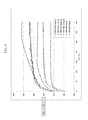
- FIG. 3 is a graph showing reaction time courses of absorbance obtained by transmission photometry according o Example 1 (OPS) and Comparative Example 1 (PET).
- OPS o Example 1
- PET Comparative Example 1
- UA 18.1 mg/dL, UA 11.0 mg/dL, or UA 0 mg/dL is the concentration of uric acid (UA) contained in the flown-in solution.
- the horizontal axis represents time and the vertical axis represents absorbance at a wavelength of 570 nm. As shown in FIG.
- the analytical instrument 1 formed by using each of the upper substrates 2 was flown a solution prepared by appropriately mixing the specimen, the oxidative color-developing agent and/or the like described above.
- a control Example there was prepared a solution by appropriately mixing a specimen containing no uric acid (UA), the oxidative color-developing agent, and/or the like to perform the same experiment.
- UUA no uric acid
- the dry reagent layer 4 was dissolved and the uric acid measurement-based reaction scheme occurred as mentioned above. After that, color development of pigment according to the reaction was analyzed by transmission photometry.
- the present Example 4 also produced the analytical instrument 1 shown in FIG. 2 .
- the lower substrate 3, the dry reagent layer 4, the specimen, the oxidative color-developing agent, and the reaction scheme were the same as those in Example 1 as above.
- OPS oriented polystyrene
- each of the endpoint arrival times at the cell optical path lengths of 0.388 mm and 0.538 mm refers to a time calculated by doubling an endpoint arrival time obtained upon measurement by the inflow of a solution with UA 18.1 mg/dL.
- Endpoint Arrival Time (unit: sec)
- Cell substrate thickness [mm]
- Cell optical path length [mm] 0.05 0.13 0.21 0.3 0.1 180 180 220 240 0.2 230 240 390 450 0.275 320 360 560 690 0.388 590 700 1200 1540 0.538 930 1260 1720 1980
Landscapes
- Chemical & Material Sciences (AREA)
- Organic Chemistry (AREA)
- Life Sciences & Earth Sciences (AREA)
- Health & Medical Sciences (AREA)
- Wood Science & Technology (AREA)
- Proteomics, Peptides & Aminoacids (AREA)
- Zoology (AREA)
- Engineering & Computer Science (AREA)
- Immunology (AREA)
- General Engineering & Computer Science (AREA)
- Microbiology (AREA)
- Molecular Biology (AREA)
- Analytical Chemistry (AREA)
- Biotechnology (AREA)
- Physics & Mathematics (AREA)
- Biochemistry (AREA)
- Bioinformatics & Cheminformatics (AREA)
- Biophysics (AREA)
- General Health & Medical Sciences (AREA)
- Genetics & Genomics (AREA)
- Investigating Or Analysing Materials By The Use Of Chemical Reactions (AREA)
- Measuring Or Testing Involving Enzymes Or Micro-Organisms (AREA)
- Investigating Or Analysing Biological Materials (AREA)
- Apparatus Associated With Microorganisms And Enzymes (AREA)
- Investigating Or Analyzing Non-Biological Materials By The Use Of Chemical Means (AREA)
Abstract
Description
- The present invention relates to a technique for analyzing a target substance in a specimen using oxidative enzyme reaction.
- Oxygen is dissolved in solution. To take an example of blood, blood contains oxygen bound to hemoglobin, as well as oxygen as dissolved oxygen. For example, detection and analysis of a target substance in blood (particularly in serum or plasma) employs a measurement system using an oxidative enzyme. The measurement system utilizes oxygen in a reaction solution to allow enzyme reaction to proceed. In this case, in a tightly closed space not in contact with air, oxygen that can be utilized for the reaction is only oxygen already present in the specimen and the reaction solution, and there seems to be almost no additional supply of oxygen.
- However, in such a state without any oxygen supply, problem can occur when a reagent for analyzing the target substance is a dry reagent, reaction space is the tightly closed space, and then, specimen is flown in without being diluted. Specifically, it is very unlikely that an intended concentration range of the target substance can be obtained by using only the dissolved oxygen. For example, the amount of dissolved oxygen in blood is approximately from 0.6 to 0.7 mmol/L. However, when considering an example of uric acid or creatinine as a target substance to be measured in a blood specimen, the concentration of uric acid or creatinine, respectively, is approximately 10 mg/dL or 7 mg/dL. That is, since a generally required measurement range for both uric acid and creatinine is 0 to 20 mg/dL, the measurement system as described above cannot satisfy specifications required by the market. Thus, in such a case, instead of using the specimen in its undiluted state, the specimen may be diluted up to an oxygen concentration capable to utilize an oxidative enzyme to supplement oxygen supply before reaction for analysis of a target substance.
- Meanwhile, Examined Japanese Patent Application Publication No.
H4-76679 - However, the aforementioned technique for supplementing oxygen supply by diluting a specimen with a sample or the like up to an oxygen concentration capable of utilizing an oxidative enzyme needs a dilution solution (such as water or physiological saline). Additionally, in a case of dilution performed by manual operation, complicated operations increase and precision of dispensing is required, so that quantitative errors may occur. Furthermore, even if dilution is automatically operated, a dilution solution is still necessary. In addition, an expensive apparatus (such as an automatic analyzer) having appropriate function is needed.
- On the other hand, in the case of the analytical instrument with the open system disclosed in the above Patent Literature, which utilizes an oxidative enzyme and includes the oxygen supply layer having the porous hydrophobic structure, the analysis of a specimen cannot be done in a tightly closed space and thus precision can be lost.
- The present invention has been accomplished in view of the above circumstances. It is an object of the present invention to provide an analytical instrument and an analytical method that allow for the direct analysis of a target substance in an undiluted specimen by transmission photometry in a tightly closed cell container space.
- The present inventor has devised an analytical system utilizing solution sending by capillary force inside the cell container in the tightly closed space and a substrate(s) transmitting light used for analysis and having oxygen transmission properties, thereby resulting in the completion of the present invention.
- An analytical instrument according to a first aspect of the present invention is an analytical instrument for analyzing a target substance contained in a specimen flown in a tightly closed cell container by utilizing an oxidative color-developing agent and an oxidative enzyme reaction. The analytical instrument includes an upper substrate and a lower substrate arranged facing each other, at least a part of the upper substrate and/or at least a part of the lower substrate being made of a material that transmits light used for the analysis and has oxygen transmission properties.
- Preferably, the analytical instrument further includes a dry reagent layer applied and dried on at least a part of a facing surface(s) of the upper substrate and/or the lower substrate, the dry reagent layer being adapted to be dissolved by the flown-in specimen and including an oxidative enzyme; a liquid sealing member provided between the upper substrate and the lower substrate to keep the cell container tightly closed; and an air hole for allowing the specimen to flow.
- More preferably, the material transmitting light used for the analysis and having oxygen transmission properties is oriented polystyrene, polyethylene, or polypropylene.
- More preferably, the oxidative color-developing agent is included in the dry reagent layer.
- In addition, preferably, the material having oxygen transmission properties has an oxygen transmission rate of 100 cc/m2/hr/atm or more.
- More preferably, an entire surface(s) of the upper substrate and/or the lower substrate are/is made of the material transmitting light used for the analysis and having oxygen transmission properties.
- More preferably, the at least a part of the upper substrate and/or the at least a part of the lower substrate made of the material transmitting light used for the analysis and having oxygen transmission properties have/has a thickness of 0.05 to 0.30 mm.
- An analytical method according to a second aspect of the present invention is an analytical method using the analytical instrument according to the first aspect of the invention and includes a step of flowing the specimen in the cell container to keep the cell container tightly closed and a step of dissolving the dry reagent layer that is adapted to be dissolved by the specimen and includes an oxidative enzyme into the specimen in the cell container to photometrically measure color development of pigment of the oxidative color-developing agent according to a reaction with the target substance.
- The analytical instrument and the analytical method according to the present invention allow for the direct analysis of a target substance in an undiluted specimen by transmission photometry.
- A more complete understanding of this application can be obtained when the following detailed description is considered in conjunction with the following drawings, in which:
-
FIG. 1 is a cross-sectional view of an analytical instrument according toEmbodiment 1 of the present invention; -
FIG. 2 is a cross-sectional view of an analytical instrument according to Example 1 and Comparative Example 1; -
FIG. 3 is a graph showing reaction time courses of absorbance monitored by transmission photometry according to Example 1 (OPS) and Comparative Example 1 (PET); -
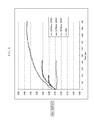
FIG. 4 is a graph showing reaction time courses of absorbance obtained by transmission photometry according to Example 2; -
FIG. 5 is a graph showing reaction time courses of absorbance obtained by transmission photometry according to Example 3; -
FIG. 6 is a graph showing the results of endpoint arrival time in relation to substrate thickness and cell optical path length according to Example 4; and -
FIG. 7 is a graph showing reaction time courses of absorbance obtained by transmission photometry according to Example 5. - In the present invention, the words "include", "contain", and "have" shall encompass also the meanings of the word "comprise".
-
Embodiment 1 of the present invention relates to an analytical instrument that utilizes an oxidative color-developing agent, an oxidative enzyme reaction, and a substrate(s) made of a material transmitting light used for analysis and having oxygen transmission properties. Specifically, the analytical instrument ofEmbodiment 1 is an instrument for analysis (such as detection and measurement of concentration or amount) of a target substance contained in a specimen by supplying oxygen in a cell container.FIG. 1 shows a cross-sectional view of the analytical instrument according toEmbodiment 1. As shown inFIG. 1 , ananalytical instrument 1 includes anupper substrate 2 and alower substrate 3 arranged facing each other, adry reagent layer 4 applied and dried on facing sides of theupper substrate 2 and thelower substrate 3 and including an oxidative enzyme, aliquid sealing member 5 provided between theupper substrate 2 and thelower substrate 3 to keep the container tightly closed upon flow of the specimen and an oxidative color-developing agent in the cell container, and anair hole 6 for allowing the specimen and the oxidative color-developing agent to flow. - In the
present Embodiment 1, the entireties of theupper substrate 2 and thelower substrate 3 are made of a material transmitting light used for the analysis and having oxygen transmission properties to efficiently supply oxygen in the closed cell, namely in the flown-in specimen and oxidative color-developing agent. In addition, from the results of Examples described below, theupper substrate 2 and thelower substrate 3 may have a thickness of, for example, approximately 0.05 to 0.30 mm. Examples of the material transmitting light used for the analysis and having oxygen transmission properties, particularly having high oxygen transmission properties, include oriented polystyrene, polyethylene, and polypropylene. In addition, as a modification ofEmbodiment 1, at least a part of theupper substrate 2 and/or at least a part of thelower substrate 3 may be made of the material transmitting light used for the analysis and having oxygen transmission properties. Additionally, the specimen alone may be flown in the cell container and the oxidative color-developing agent may be previously applied and dried as thedry reagent layer 4, like an oxidative enzyme. Such a modification structure of theanalytical instrument 1 can easily be apparent to those skilled in the art. - The light used for the analysis is not particularly limited as long as the specimen and the oxidative color-developing agent flown in the cell container dissolve the
dry reagent layer 4 and photometry can be performed on the color development of pigment of the oxidative color-developing agent according to a chemical reaction of a target substance by an oxidative enzyme. Specifically, it is only necessary that only a part of a surface of either theupper substrate 2 or thelower substrate 3 be made of the material transmitting light used for the analysis. Alternatively, only a part of both substrates may be made of the material transmitting light used for the analysis. Furthermore, from the results of Examples described below, there may be mentioned a cell optical path length (an optical path length inside the cell container upon photometric measurement) of approximately 100 to 300 µm, for example. - In terms of oxygen transmission properties, as in transmission photometry, it is still most preferable to use the
analytical instrument 1 in which the entireties of theupper substrate 2 and thelower substrate 3 are made of a material having high oxygen transmission properties. However, as long as oxidative enzyme reaction can be performed such that a target substance contained in a specimen can be acquired, only a part of theupper substrate 2 and/or only a part of thelower substrate 3 may be made of a material having oxygen transmission properties. Having oxygen transmission properties means that oxygen can be efficiently supplied in the cell container, as in Examples described below. As the degree of oxygen transmission properties (oxygen transmission rate) of the substrate(s), there may be selected one preferable to the flown specimen and oxidative color-developing agent and to the target substance, such as an oxygen transmission rate of 100 cc/m2/hr/atm or more. A preferable oxygen transmission rate is 200 cc/m2/hr/atm or more. - As the
dry reagent layer 4, there may also be selected one preferable to the respective specimen and oxidative color-developing agent and the target substance. Alternatively, as mentioned above, the oxidative color-developing agent itself may be included as a part of thedry regent layer 4. Those skilled in the art would be able to easily imagine a component such as an oxidative enzyme in thedry reagent layer 4 in consideration of the oxidative enzyme reaction by those components. In addition, in thepresent Embodiment 1, thedry reagent layer 4 is applied and dried on both facing surfaces of theupper substrate 2 and thelower substrate 3. However, thedry reagent layer 4 may be applied and dried only on the facing surface of either one of the substrates. Alternatively, thedry reagent layer 4 may be applied only on a part of theupper substrate 2 and/or a part of thelower substrate 3 made of the material transmitting light used for the analysis and having oxygen transmission properties. - The
liquid sealing member 5 can be formed using any material in any manner as long as the member can prevent any liquid or the like dissolved in the cell from flowing out. Theair hole 6 is necessary to send a fluid specimen or sample by capillary force, which is a known method that allows fluid to be sent not by attraction through a mechanical action such as valve operation but by a natural way of sending fluid. - In the present invention, the term "specimen" means an arbitrary one in a form of solution that can include a target substance to be analyzed. Examples of the specimen include arbitrary and biologically derived or derivable ones such as blood, eye-lens fluid, cerebrospinal fluid, milk, ascitic fluid, bone fluid, peritoneal fluid, amniotic fluid, and cell culture fluid. The specimen can be used directly without being diluted in a state thereof obtained from any one of those examples. In the present invention, the term "target substance" means an arbitrary one that is contained in the specimen to become a target substance of an oxidative enzyme reaction. In other words, the target substance may be any substance as long as the substance undergoes a chemical reaction by an oxidative enzyme contained in the
dry reagent layer 4 dissolved and then allows for the detection and analysis of the amount or concentration thereof by photometric measurement on the color development of the oxidative color-developing agent. Examples of the target substance include uric acid (UA) and creatinine (CRE), as mentioned above. -
Embodiment 2 of the present invention relates to an analytical method using theanalytical instrument 1 according to the invention formed as described above. Specifically, the analytical method includes a step of flowing a specimen in the cell container of theanalytical instrument 1 to keep the cell container tightly closed and a step of dissolving, in thecell container 4, thedry reagent layer 4 applied and dried on at least a part of a facing surface(s) of theupper substrate 2 and/or thelower substrate 3 to detect color development of pigment of an oxidative color-developing agent according to the reaction of a target substance by an oxidative enzyme though transmission photometry. - As described above, at least a part of the
upper substrate 2 and/or at least a part of thelower substrate 3 of theanalytical instrument 1 used in the analytical method of thepresent Embodiment 2 are/is made of a material having oxygen transmission properties, and preferably a material having high oxygen transmission properties. Accordingly, oxygen is efficiently supplied in the specimen and the dissolveddry reagent layer 4 in the tightly closed cell. The supplied oxygen reacts with the target substance in the specimen by the oxidative enzyme, resulting in that the reaction product causes color development of pigment of the oxidative color-developing agent. Furthermore, as described above, the at least a part of theupper substrate 2 and/or the at least a part of thelower substrate 3 of theanalytical instrument 1 are/is made of the material transmitting light used for the analysis. This allows for the transmission photometric analysis (such as detection and measurement of concentration or amount) of the target substance contained in the specimen using color development of the pigment. In addition, since oxygen is efficiently supplied in the tightly closed cell, it is unnecessary to set a limit to a concentration range of the target substance. In brief, the analysis of specimen can be performed without being undiluted. - Next, Examples of the present invention will be described, although the invention is not limited thereto.
- The present Examples and Comparative Examples produced the
analytical instrument 1 shown inFIG. 1 or 2 to perform experiments regarding oxygen supply in various situations. -
FIG. 2 is a cross-sectional view of an analytical instrument according to Example 1 and Comparative Example 1. In Example 1 and Comparative Example 1, theupper substrate 2 ofFIG. 2 was formed using each of two kinds of base materials having different oxygen transmission rates to verify the reaction velocity of oxidative enzyme reaction. - First, a brief description will be given of portions common between the Example and the Comparative Examples. In both Examples, the
lower substrate 3 is made of polyethylene terephthalate (PET), which is one of polyesters. The cell optical path length (the optical path length inside the cell container upon photometric measurement) was set to 0.288 mm. The cell container had a photometry portion diameter (a diameter inside the cell container upon photometry) of 0.25 mm. Thedry reagent layer 4 was applied and dried only on thelower substrate 3. A main reaction component of thedry reagent layer 4 is a mixture of 3-(N-morpholino) propanesulfonic acid: MOPS (pH 7.5) buffer, uricase, and 4-aminoantipyrine. The target substance of the specimen used was uric acid, which was mixed with peroxidase and N-(2-hydroxy-3-sulfopropyl)-3,5-dimethoxyaniline (HDAOS) as an oxidative color-developing agent to be flown in the cell container. That is, the oxidative enzyme reaction utilized was a uric acid measurement-based reaction scheme. In the reaction scheme, first, uric acid+O2+H2O turned into allantoin+H2O2+CO2 by uricase. Then, the oxidative color-developing agent+H2O2 turned into an oxidative chromogen by peroxidase, where changes over time in the concentration of uric acid were measured based on absorbance according to the color development. - The
upper substrate 2 used in Example 1 was made of oriented polystyrene (OPS manufactured by Asahi Kasei Chemicals Corporation) having a thickness of 0.05 mm. The oriented polystyrene has a high oxygen transmission rate of approximately 200 cc/m2/hr/atm. Theupper substrate 2 used in Comparative Example 1 was made of the same polyethylene terephthalate (PET) as that of thelower substrate 3 and had a thickness of 0.15 mm. The polyethylene terephthalate had a low oxygen transmission rate of approximately 3 cc/m2/hr/atm. - In the
analytical instrument 1 ofFIG. 2 produced using each of theupper substrates 2 thus formed was flown a solution prepared by appropriately mixing the specimen, the oxidative color-developing agent or the like described above. Thereby, inside the cell of theanalytical instrument 1, thedry reagent layer 4 was dissolved and thus the uric acid measurement-based reaction scheme as mentioned above occurred. Then, pigment color development according to the reaction was analyzed by transmission photometry. -
FIG. 3 is a graph showing reaction time courses of absorbance obtained by transmission photometry according o Example 1 (OPS) and Comparative Example 1 (PET). InFIG. 3 , UA 18.1 mg/dL, UA 11.0 mg/dL, orUA 0 mg/dL is the concentration of uric acid (UA) contained in the flown-in solution. In addition, the horizontal axis represents time and the vertical axis represents absorbance at a wavelength of 570 nm. As shown inFIG. 3 , in the case of polyethylene terephthalate (PET) in Comparative Example 1, after consumption of dissolved oxygen in the solution prepared by appropriately mixing the specimen and the like, oxygen was hardly supplied and reaction by uricase leveled off, which is, in other words, not necessarily the results of reaction of the entire uric acid (UA) contained in the flown-in solution. On the other hand, in the oriented polystyrene (OPS) of Example 1, oxygen was supplied in the solution in the cell of theanalytical instrument 1 at a constant velocity from outside, thus resulting in an arrival at an endpoint in a reaction state of the entire uric acid (UA) in the flown-in solution. Accordingly, oxygen supply is dependent on the oxygen transmission rate of substrate material. Therefore, it was confirmed that the use of a substrate made of a material having oxygen transmission properties, particularly having higher oxygen transmission rate allows for the accurate analysis of a target substance contained in a specimen. - In Example 2, as in Example 1 described above, the
upper substrate 2 ofFIG. 2 was made of oriented polystyrene (OPS manufactured by Asahi Kasei Chemicals Corporation), whereas the substrate thickness and the cell optical path length were changed to perform the same experiment and compare endpoint arrival times. - The present Example 2 also produced the
analytical instrument 1 ofFIG. 2 . Thelower substrate 3, thedry reagent layer 4, the specimen, the oxidative color-developing agent, the reaction scheme were the same as those in Example 1 described above. The thicknesses of the oriented polystyrene (OPS) ofupper substrates 2 used were 0.21 mm and 0.05 mm as in Example 1, and the respective cell optical path lengths were 0.463 mm and 0.288 mm. - In the
analytical instrument 1 formed by using each of theupper substrates 2 was flown a solution prepared by appropriately mixing the specimen, the oxidative color-developing agent and/or the like described above. In addition, as a control Example, there was prepared a solution by appropriately mixing a specimen containing no uric acid (UA), the oxidative color-developing agent, and/or the like to perform the same experiment. Thereby, inside the cell of theanalytical instrument 1, thedry reagent layer 4 was dissolved and the uric acid measurement-based reaction scheme occurred as mentioned above. After that, color development of pigment according to the reaction was analyzed by transmission photometry. -
FIG. 4 is a graph showing reaction time courses of absorbance obtained by transmission photometry according to Example 2. The horizontal axis represents time and the vertical axis represents absorbance at a wavelength of 583 nm. As shown inFIG. 4 , theupper substrate 2 made of the oriented polystyrene with the thickness of 0.05 mm arrived at an endpoint faster than that made of the oriented polystyrene with the thickness of 0.21 mm. Therefore, the smaller the thickness of the substrate made of a material having oxygen transmission properties, the shorter the endpoint arrival time. - Example 3 produced the
analytical instrument 1 shown inFIG. 1 , in which both of theupper substrate 2 and thelower substrate 3 were made of oriented polystyrene (OPS manufactured by Asahi Kasei Chemicals Corporation) having a thickness of 0.13 mm. Thedry reagent layer 4 applied and dried on thelower substrate 3 was the same as that inEmbodiment 1, whereas on theupper substrate 2 were applied HDAOS as the oxidative color developing agent and peroxidase to form thedry regent layer 4. In brief, only uric acid as the target substance in the specimen was flown in the cell container. - Although other elements such as the reaction scheme were the same as those in Example 1 described above, the same experiment was performed at different cell optical path lengths (0.200 mm, 0.275 mm, and 0.536 mm) to verify endpoint arrival times.
-
FIG. 5 is a graph showing reaction time courses of absorbance obtained by transmission photometry according to Example 3. The horizontal axis represents time and the vertical axis represents absorbance at a wavelength of 583 nm. As shown inFIG. 5 , as the cell optical path length (a depth inside the cell) became shorter, the endpoint arrival time became shorter. This seems to be due to that as the cell optical path length is shorter, the amount of oxygen supplied and the concentration of dissolved oxygen become larger, thus accelerating the oxidative enzyme reaction. - In Example 4, as in Example 1 described above, the
upper substrate 2 ofFIG. 2 was made of oriented polystyrene (OPS manufactured by Asahi Kasei Chemicals Corporation), whereas different substrate thickness and different cell optical path lengths were set to perform the same experiment so as to verify a relationship between the substrate thickness, the cell optical path length, and endpoint arrival time. - The present Example 4 also produced the
analytical instrument 1 shown inFIG. 2 . Thelower substrate 3, thedry reagent layer 4, the specimen, the oxidative color-developing agent, and the reaction scheme were the same as those in Example 1 as above. As theupper substrate 2 made of oriented polystyrene (OPS), there were used those having respective thicknesses of 0.05, 0.13, 0.21, and 0.30 mm for verification. In addition, the photometry portion diameters of cells used were all 0.25 mm, whereas the cell optical path lengths thereof were 0.10 mm (capacity inside the cell: 0.49 µL), 0.20 mm (capacity inside the cell: 0.98 µL), 0.275 mm (capacity inside the cell: 1.35µL), 0.388 mm (capacity inside the cell: 1.90 µL), and 0.538 mm(capacity inside the cell: 2.64 µL), respectively. - In the cell containers of the
analytical instruments 1 thus formed was flown a solution prepared by appropriately mixing the specimen and the oxidative color-developing agent, as in Example 1, to measure absorbance at the wavelength of 583 nm. Herein, to compare oxygen supply effectiveness depending on the differences in the thicknesses of the respectiveupper substrates 2 and in the respective cell optical path lengths, respective endpoint arrival times were measured using a solution with a uric acid (UA) concentration of 36.2 mg/dL. The table below shows the results of the measured endpoint arrival times (sec). In the table, each of the endpoint arrival times at the cell optical path lengths of 0.388 mm and 0.538 mm refers to a time calculated by doubling an endpoint arrival time obtained upon measurement by the inflow of a solution with UA 18.1 mg/dL.[Table 1] Endpoint Arrival Time (unit: sec) Cell substrate thickness [mm] Cell optical path length [mm] 0.05 0.13 0.21 0.3 0.1 180 180 220 240 0.2 230 240 390 450 0.275 320 360 560 690 0.388 590 700 1200 1540 0.538 930 1260 1720 1980 -
FIG. 6 shows the results of endpoint arrival times regarding the substrate thicknesses and the cell optical path lengths according to Example 4, which is namely a graph of Table 1. As shown in the graph, it is still expected that as the substrate thickness becomes larger, oxygen supply efficiency becomes worse, leading to prolonged endpoint arrival time. In addition, it is also expected that as the cell optical path length increases, oxygen circulation efficiency in the solution inside the cell is reduced, thus resulting in the prolongation of endpoint arrival time. - It is considered that those results can be utilized, for example, when a specific measurement range of a target substance is known and an
analytical instrument 1 allowing measurement within a specific measurement time will be produced. In the example of a target substance such as uric acid (UA) or creatinine (CRE), when an upper limit of the measurement range of the substance is set to 20 mg/dL, to produce ananalytical instrument 1 designed with a measurement time up to 5 minutes, it is desirable to selectanalytical instruments 1 designed with patterns as in Table 2 (uric acid (UA)) and Table 3 (creatinine (CRE)) below. In the Tables, the circle marks represent combinations that can be measured within the measurement range upper limit and the measurement time. In addition, those patterns may be selected depending on the design, and those skilled in the art also would be able to easily select an appropriate pattern for another target substance or the like.[Table 2] Cell substrate thickness [mm] Cell optical path length [mm] 0.05 0.13 0.21 0.3 0.1 ○ ○ ○ ○ 0.2 ○ ○ ○ ○ 0.275 ○ ○ ○ 0.388 0.538 [Table 3] Cell substrate thickness [mm] Cell optical path length [mm] 0.05 0.13 0.21 0.3 0.1 ○ ○ ○ ○ 0.2 ○ ○ 0.275 ○ ○ 0.388 0.538 - In Example 5, there were produced two pieces of the
analytical instrument 1 shown inFIG. 1 , in which theupper substrates 2 of bothanalytical instruments 1 were made of oriented polystyrene (OPS) with the thickness of 0.13 mm. However, the oriented polystyrene (OPS) of one of theanalytical instruments 1 was manufactured by Asahi Kasei Chemicals Corporation, and the oriented polystyrene (OPS) of the other one thereof was manufactured by Mitsubishi Plastics, Inc., to confirm oxygen supply capabilities depending on the difference between the manufacturers of oriented polystyrene (OPS). - Other structures and components thereof in the two
analytical instruments 1 were the same. Thelower substrate 3 was made of polyethylene terephthalate (PET) with the thickness of 0.15 mm; the cell optical path length was 0.288 mm; and the photometry portion diameter was 0.25 mm. The main component of thedry reagent layer 4 applied and dried on theupper substrate 2 was a mixture of MOPS (pH 7.5) buffer, uricase, and peroxidase. The main component of thedry reagent layer 4 applied and dried on thelower substrate 3 was an oxidative color-developing agent DA-67. - The same reaction scheme as that of Example 1 was used to perform absorbance measurement at a wavelength of 610 nm according to color development in a uric acid concentration of 24.2 mg/dL of a target substance contained in a specimen (serum sample).
FIG. 7 is a graph showing reaction time courses of absorbance obtained by transmission photometry according to Example 5. Based on the endpoint arrival times inFIG. 7 , comparison was made regarding oxygen supply effectiveness using the respective analytical instruments 1 (No. 1 from Asahi Kasei Chemicals Corporation; No. 2 from Mitsubishi Plastics, Inc.). The results showed that even if the manufacturer of oriented polystyrene (OPS) is different, there is no difference in the oxygen supply capabilities. Accordingly, it was found that the oxygen supply capabilities according to theanalytical instruments 1 were basically dependent on the thickness of oriented polystyrene (OPS) and also dependent on oxygen transmission properties associated with the thickness thereof. - The present invention is not limited to the Embodiments of the invention and the Examples thereof at all. Numerous variations and modifications are also included in the invention in a range without departing from the appended claims and easily determined by those skilled in the art.
- The entire content of the Examined Japanese Patent Application Publication stated in the present specification is incorporated herein by reference.
- Having described and illustrated the principles of this application by reference to one or more preferred embodiments, it should be apparent that the preferred embodiments may be modified in arrangement and detail without departing from the principles disclosed herein and that it is intended that the application be construed as including all such modifications and variations insofar as they come within the spirit and scope of the subject matter disclosed herein.
Claims (8)
- An analytical instrument (1) for analyzing a target substance contained in a specimen flown in a tightly closed cell container by utilizing an oxidative color-developing agent and an oxidative enzyme reaction, the analytical instrument (1) characterized by comprising:an upper substrate (2) and a lower substrate (3) arranged facing each other; at least a part of the upper substrate (2) and/or at least a part of the lower substrate (3) being made of a material that transmits light used for the analysis and has oxygen transmission properties.
- The analytical instrument (1) according to claim 1 further characterized by comprising a dry reagent layer (4) applied and dried on at least a part of a facing surface(s) of the upper substrate (2) and/or the lower substrate (3), the dry reagent layer (4) being adapted to be dissolved by the flown-in specimen and including an oxidative enzyme; a liquid sealing member (5) provided between the upper substrate (2) and the lower substrate (3) to keep the cell container tightly closed; and an air hole (6) for allowing the specimen to flow.
- The analytical instrument (1) according to claim 1 or 2 , wherein the material transmitting light used for the analysis and having oxygen transmission properties is oriented polystyrene, polyethylene, or polypropylene.
- The analytical instrument (1) according to claim 2 or 3, wherein the oxidative color-developing agent is included in the dry reagent layer (4).
- The analytical instrument (1) according to any one of claims 1 to 4, wherein the material having oxygen transmission properties has an oxygen transmission rate of 100 cc/m2/hr/atm or more.
- The analytical instrument (1) according to any one of claims 1 to 5, wherein an entire surface(s) of the upper substrate (2) and/or the lower substrate (3) are/is made of the material transmitting light used for the analysis and having oxygen transmission properties.
- The analytical instrument (1) according to any one of claims 1 to 6, wherein the at least a part of the upper substrate (2) and/or the at least a part of the lower substrate (3) made of the material transmitting light used for the analysis and having oxygen transmission properties have/has a thickness of 0.05 to 0.30 mm.
- An analytical method using the analytical instrument (1) according to any one of claims 2 to 7, the analytical method characterized by comprising:a step of flowing the specimen in the cell container to keep the cell container tightly closed; anda step of dissolving the dry reagent layer (4) that is adapted to be dissolved by the specimen and includes an oxidative enzyme into the specimen in the cell container to photometrically measure color development of pigment of the oxidative color-developing agent according to a reaction with the target substance.
Applications Claiming Priority (2)
| Application Number | Priority Date | Filing Date | Title |
|---|---|---|---|
| JP2011239659 | 2011-10-31 | ||
| JP2012153787A JP6059457B2 (en) | 2011-10-31 | 2012-07-09 | Analysis tool and analysis method |
Publications (3)
| Publication Number | Publication Date |
|---|---|
| EP2592153A2 true EP2592153A2 (en) | 2013-05-15 |
| EP2592153A3 EP2592153A3 (en) | 2013-06-12 |
| EP2592153B1 EP2592153B1 (en) | 2016-05-04 |
Family
ID=47623785
Family Applications (1)
| Application Number | Title | Priority Date | Filing Date |
|---|---|---|---|
| EP12190371.0A Active EP2592153B1 (en) | 2011-10-31 | 2012-10-29 | Analytical instrument and analytical method |
Country Status (4)
| Country | Link |
|---|---|
| US (1) | US8993313B2 (en) |
| EP (1) | EP2592153B1 (en) |
| JP (1) | JP6059457B2 (en) |
| CN (1) | CN103091264B (en) |
Families Citing this family (1)
| Publication number | Priority date | Publication date | Assignee | Title |
|---|---|---|---|---|
| CN107271500A (en) * | 2016-04-08 | 2017-10-20 | 北京德鲁伊医疗器材有限公司 | A kind of uric acid biochemical analysis dry plate and preparation method thereof and reagent disc |
Citations (1)
| Publication number | Priority date | Publication date | Assignee | Title |
|---|---|---|---|---|
| JPH0476679B2 (en) | 1984-03-30 | 1992-12-04 | Kyoto Daiichi Kagaku Kk |
Family Cites Families (12)
| Publication number | Priority date | Publication date | Assignee | Title |
|---|---|---|---|---|
| US4287995A (en) * | 1978-11-30 | 1981-09-08 | Mitsubishi Gas Chemical Company, Inc. | Container sealing member with oxygen absorbent |
| JPS6375655A (en) * | 1986-09-19 | 1988-04-06 | Olympus Optical Co Ltd | Enzyme electrode apparatus |
| US5654164A (en) * | 1995-01-09 | 1997-08-05 | Board Of Trustees Operating Michigan State University | Method and device for reducing oxygen with a reduced oxidase with color formation |
| JP3213566B2 (en) * | 1996-04-26 | 2001-10-02 | アークレイ株式会社 | Sample analysis tool, sample analysis method and sample analyzer using the same |
| US6107083A (en) | 1998-08-21 | 2000-08-22 | Bayer Corporation | Optical oxidative enzyme-based sensors |
| US20040058437A1 (en) * | 2001-04-10 | 2004-03-25 | Rodgers Seth T. | Materials and reactor systems having humidity and gas control |
| AU2003289373A1 (en) * | 2002-12-20 | 2004-07-29 | Arkray, Inc. | Thin analyzing device |
| CN1456892A (en) * | 2003-06-06 | 2003-11-19 | 浙江大学 | Whole blood uric acid concentration detecting paper strip |
| EP1712919B1 (en) | 2004-01-07 | 2012-08-15 | ARKRAY, Inc. | Analytical instrument having improved arrangement of reagent section and analytical method |
| JP4888055B2 (en) * | 2006-10-30 | 2012-02-29 | 凸版印刷株式会社 | Oxidation prevention method for film containing easily oxidizable substance |
| JP2008209130A (en) * | 2007-02-23 | 2008-09-11 | Yamatake Corp | Color reaction test kit and color reaction test method |
| JP2009243965A (en) * | 2008-03-28 | 2009-10-22 | Sumitomo Bakelite Co Ltd | Flow path device, flow path device with exterior case, method for using flow path device |
-
2012
- 2012-07-09 JP JP2012153787A patent/JP6059457B2/en active Active
- 2012-10-12 US US13/650,157 patent/US8993313B2/en active Active
- 2012-10-29 EP EP12190371.0A patent/EP2592153B1/en active Active
- 2012-10-31 CN CN201210437691.2A patent/CN103091264B/en active Active
Patent Citations (1)
| Publication number | Priority date | Publication date | Assignee | Title |
|---|---|---|---|---|
| JPH0476679B2 (en) | 1984-03-30 | 1992-12-04 | Kyoto Daiichi Kagaku Kk |
Also Published As
| Publication number | Publication date |
|---|---|
| CN103091264B (en) | 2015-09-23 |
| US20130109038A1 (en) | 2013-05-02 |
| US8993313B2 (en) | 2015-03-31 |
| CN103091264A (en) | 2013-05-08 |
| JP2013117516A (en) | 2013-06-13 |
| EP2592153A3 (en) | 2013-06-12 |
| JP6059457B2 (en) | 2017-01-11 |
| EP2592153B1 (en) | 2016-05-04 |
Similar Documents
| Publication | Publication Date | Title |
|---|---|---|
| US8821814B2 (en) | Cartridge containing reagent, microfluidic device including the cartridge, method of manufacturing the microfluidic device, and biochemical analysis method using the microfluidic device | |
| US6511814B1 (en) | Method and device for detecting analytes in fluids | |
| AU689614B2 (en) | Biological fluid analyzing device and method | |
| EP3197602B1 (en) | Microfabricated device with micro-environment sensors for assaying coagulation in fluid samples | |
| CN1662659A (en) | Test strip for detection of analyte and methods of use | |
| KR100662021B1 (en) | Bio cartridge | |
| EP1621887A1 (en) | Analytical test strip with control zone | |
| US8999662B2 (en) | Method for producing dry reagent, dry reagent, and analysis tool using same | |
| US20230118308A1 (en) | Biometric system | |
| Bialkower et al. | Rapid paper diagnostic for plasma fibrinogen concentration | |
| EP2592153B1 (en) | Analytical instrument and analytical method | |
| US20150147769A1 (en) | Method of testing sample and microfluidic device | |
| EP3848708A1 (en) | Reagent formulation for leukocyte test strip | |
| EP2108703B1 (en) | Method for bilirubin determination and analytical instrument used for bilirubin determination | |
| EP3317422B1 (en) | Diagnostic kit for viscoelastic analysis and its uses | |
| EP3578634B1 (en) | Blood sugar level measurement chip and blood sugar level measurement device set | |
| Suzuki et al. | Microfabricated flow system for ammonia and creatinine with an air-gap structure | |
| JP2009106182A (en) | Analytical device, analytical device, and analytical device for analyte | |
| EP3442708B1 (en) | Pipette tip and uses and methods thereof | |
| EP1717582B1 (en) | Multilayer analysis element | |
| WO2006035874A1 (en) | Multilayered analytical element | |
| JPWO2006035875A1 (en) | Multi-layer analytical element manufacturing method | |
| KR20160075121A (en) | Bio measurement system | |
| KR20160075386A (en) | Bio measurement system | |
| Hamid | +++ |
Legal Events
| Date | Code | Title | Description |
|---|---|---|---|
| PUAL | Search report despatched |
Free format text: ORIGINAL CODE: 0009013 |
|
| PUAI | Public reference made under article 153(3) epc to a published international application that has entered the european phase |
Free format text: ORIGINAL CODE: 0009012 |
|
| AK | Designated contracting states |
Kind code of ref document: A2 Designated state(s): AL AT BE BG CH CY CZ DE DK EE ES FI FR GB GR HR HU IE IS IT LI LT LU LV MC MK MT NL NO PL PT RO RS SE SI SK SM TR |
|
| AX | Request for extension of the european patent |
Extension state: BA ME |
|
| AK | Designated contracting states |
Kind code of ref document: A3 Designated state(s): AL AT BE BG CH CY CZ DE DK EE ES FI FR GB GR HR HU IE IS IT LI LT LU LV MC MK MT NL NO PL PT RO RS SE SI SK SM TR |
|
| AX | Request for extension of the european patent |
Extension state: BA ME |
|
| RIC1 | Information provided on ipc code assigned before grant |
Ipc: C12Q 1/26 20060101AFI20130507BHEP |
|
| 17P | Request for examination filed |
Effective date: 20131212 |
|
| RBV | Designated contracting states (corrected) |
Designated state(s): AL AT BE BG CH CY CZ DE DK EE ES FI FR GB GR HR HU IE IS IT LI LT LU LV MC MK MT NL NO PL PT RO RS SE SI SK SM TR |
|
| 17Q | First examination report despatched |
Effective date: 20140123 |
|
| RAP1 | Party data changed (applicant data changed or rights of an application transferred) |
Owner name: ARKRAY, INC. |
|
| GRAP | Despatch of communication of intention to grant a patent |
Free format text: ORIGINAL CODE: EPIDOSNIGR1 |
|
| INTG | Intention to grant announced |
Effective date: 20151124 |
|
| GRAS | Grant fee paid |
Free format text: ORIGINAL CODE: EPIDOSNIGR3 |
|
| GRAA | (expected) grant |
Free format text: ORIGINAL CODE: 0009210 |
|
| AK | Designated contracting states |
Kind code of ref document: B1 Designated state(s): AL AT BE BG CH CY CZ DE DK EE ES FI FR GB GR HR HU IE IS IT LI LT LU LV MC MK MT NL NO PL PT RO RS SE SI SK SM TR |
|
| REG | Reference to a national code |
Ref country code: GB Ref legal event code: FG4D |
|
| REG | Reference to a national code |
Ref country code: CH Ref legal event code: EP |
|
| REG | Reference to a national code |
Ref country code: AT Ref legal event code: REF Ref document number: 796963 Country of ref document: AT Kind code of ref document: T Effective date: 20160515 |
|
| REG | Reference to a national code |
Ref country code: IE Ref legal event code: FG4D |
|
| REG | Reference to a national code |
Ref country code: DE Ref legal event code: R096 Ref document number: 602012018012 Country of ref document: DE |
|
| REG | Reference to a national code |
Ref country code: NL Ref legal event code: MP Effective date: 20160504 |
|
| REG | Reference to a national code |
Ref country code: LT Ref legal event code: MG4D |
|
| REG | Reference to a national code |
Ref country code: FR Ref legal event code: PLFP Year of fee payment: 5 |
|
| PG25 | Lapsed in a contracting state [announced via postgrant information from national office to epo] |
Ref country code: NL Free format text: LAPSE BECAUSE OF FAILURE TO SUBMIT A TRANSLATION OF THE DESCRIPTION OR TO PAY THE FEE WITHIN THE PRESCRIBED TIME-LIMIT Effective date: 20160504 Ref country code: LT Free format text: LAPSE BECAUSE OF FAILURE TO SUBMIT A TRANSLATION OF THE DESCRIPTION OR TO PAY THE FEE WITHIN THE PRESCRIBED TIME-LIMIT Effective date: 20160504 Ref country code: NO Free format text: LAPSE BECAUSE OF FAILURE TO SUBMIT A TRANSLATION OF THE DESCRIPTION OR TO PAY THE FEE WITHIN THE PRESCRIBED TIME-LIMIT Effective date: 20160804 Ref country code: FI Free format text: LAPSE BECAUSE OF FAILURE TO SUBMIT A TRANSLATION OF THE DESCRIPTION OR TO PAY THE FEE WITHIN THE PRESCRIBED TIME-LIMIT Effective date: 20160504 |
|
| REG | Reference to a national code |
Ref country code: AT Ref legal event code: MK05 Ref document number: 796963 Country of ref document: AT Kind code of ref document: T Effective date: 20160504 |
|
| PG25 | Lapsed in a contracting state [announced via postgrant information from national office to epo] |
Ref country code: PT Free format text: LAPSE BECAUSE OF FAILURE TO SUBMIT A TRANSLATION OF THE DESCRIPTION OR TO PAY THE FEE WITHIN THE PRESCRIBED TIME-LIMIT Effective date: 20160905 Ref country code: LV Free format text: LAPSE BECAUSE OF FAILURE TO SUBMIT A TRANSLATION OF THE DESCRIPTION OR TO PAY THE FEE WITHIN THE PRESCRIBED TIME-LIMIT Effective date: 20160504 Ref country code: GR Free format text: LAPSE BECAUSE OF FAILURE TO SUBMIT A TRANSLATION OF THE DESCRIPTION OR TO PAY THE FEE WITHIN THE PRESCRIBED TIME-LIMIT Effective date: 20160805 Ref country code: HR Free format text: LAPSE BECAUSE OF FAILURE TO SUBMIT A TRANSLATION OF THE DESCRIPTION OR TO PAY THE FEE WITHIN THE PRESCRIBED TIME-LIMIT Effective date: 20160504 Ref country code: SE Free format text: LAPSE BECAUSE OF FAILURE TO SUBMIT A TRANSLATION OF THE DESCRIPTION OR TO PAY THE FEE WITHIN THE PRESCRIBED TIME-LIMIT Effective date: 20160504 Ref country code: ES Free format text: LAPSE BECAUSE OF FAILURE TO SUBMIT A TRANSLATION OF THE DESCRIPTION OR TO PAY THE FEE WITHIN THE PRESCRIBED TIME-LIMIT Effective date: 20160504 Ref country code: RS Free format text: LAPSE BECAUSE OF FAILURE TO SUBMIT A TRANSLATION OF THE DESCRIPTION OR TO PAY THE FEE WITHIN THE PRESCRIBED TIME-LIMIT Effective date: 20160504 |
|
| PG25 | Lapsed in a contracting state [announced via postgrant information from national office to epo] |
Ref country code: CZ Free format text: LAPSE BECAUSE OF FAILURE TO SUBMIT A TRANSLATION OF THE DESCRIPTION OR TO PAY THE FEE WITHIN THE PRESCRIBED TIME-LIMIT Effective date: 20160504 Ref country code: SK Free format text: LAPSE BECAUSE OF FAILURE TO SUBMIT A TRANSLATION OF THE DESCRIPTION OR TO PAY THE FEE WITHIN THE PRESCRIBED TIME-LIMIT Effective date: 20160504 Ref country code: EE Free format text: LAPSE BECAUSE OF FAILURE TO SUBMIT A TRANSLATION OF THE DESCRIPTION OR TO PAY THE FEE WITHIN THE PRESCRIBED TIME-LIMIT Effective date: 20160504 Ref country code: RO Free format text: LAPSE BECAUSE OF FAILURE TO SUBMIT A TRANSLATION OF THE DESCRIPTION OR TO PAY THE FEE WITHIN THE PRESCRIBED TIME-LIMIT Effective date: 20160504 Ref country code: DK Free format text: LAPSE BECAUSE OF FAILURE TO SUBMIT A TRANSLATION OF THE DESCRIPTION OR TO PAY THE FEE WITHIN THE PRESCRIBED TIME-LIMIT Effective date: 20160504 |
|
| REG | Reference to a national code |
Ref country code: DE Ref legal event code: R097 Ref document number: 602012018012 Country of ref document: DE |
|
| PG25 | Lapsed in a contracting state [announced via postgrant information from national office to epo] |
Ref country code: SM Free format text: LAPSE BECAUSE OF FAILURE TO SUBMIT A TRANSLATION OF THE DESCRIPTION OR TO PAY THE FEE WITHIN THE PRESCRIBED TIME-LIMIT Effective date: 20160504 Ref country code: BE Free format text: LAPSE BECAUSE OF FAILURE TO SUBMIT A TRANSLATION OF THE DESCRIPTION OR TO PAY THE FEE WITHIN THE PRESCRIBED TIME-LIMIT Effective date: 20160504 Ref country code: PL Free format text: LAPSE BECAUSE OF FAILURE TO SUBMIT A TRANSLATION OF THE DESCRIPTION OR TO PAY THE FEE WITHIN THE PRESCRIBED TIME-LIMIT Effective date: 20160504 Ref country code: AT Free format text: LAPSE BECAUSE OF FAILURE TO SUBMIT A TRANSLATION OF THE DESCRIPTION OR TO PAY THE FEE WITHIN THE PRESCRIBED TIME-LIMIT Effective date: 20160504 |
|
| PLBE | No opposition filed within time limit |
Free format text: ORIGINAL CODE: 0009261 |
|
| STAA | Information on the status of an ep patent application or granted ep patent |
Free format text: STATUS: NO OPPOSITION FILED WITHIN TIME LIMIT |
|
| 26N | No opposition filed |
Effective date: 20170207 |
|
| PG25 | Lapsed in a contracting state [announced via postgrant information from national office to epo] |
Ref country code: SI Free format text: LAPSE BECAUSE OF FAILURE TO SUBMIT A TRANSLATION OF THE DESCRIPTION OR TO PAY THE FEE WITHIN THE PRESCRIBED TIME-LIMIT Effective date: 20160504 |
|
| REG | Reference to a national code |
Ref country code: CH Ref legal event code: PL |
|
| PG25 | Lapsed in a contracting state [announced via postgrant information from national office to epo] |
Ref country code: MC Free format text: LAPSE BECAUSE OF FAILURE TO SUBMIT A TRANSLATION OF THE DESCRIPTION OR TO PAY THE FEE WITHIN THE PRESCRIBED TIME-LIMIT Effective date: 20160504 |
|
| REG | Reference to a national code |
Ref country code: IE Ref legal event code: MM4A |
|
| PG25 | Lapsed in a contracting state [announced via postgrant information from national office to epo] |
Ref country code: LI Free format text: LAPSE BECAUSE OF NON-PAYMENT OF DUE FEES Effective date: 20161031 Ref country code: CH Free format text: LAPSE BECAUSE OF NON-PAYMENT OF DUE FEES Effective date: 20161031 |
|
| PG25 | Lapsed in a contracting state [announced via postgrant information from national office to epo] |
Ref country code: LU Free format text: LAPSE BECAUSE OF NON-PAYMENT OF DUE FEES Effective date: 20161029 |
|
| REG | Reference to a national code |
Ref country code: FR Ref legal event code: PLFP Year of fee payment: 6 |
|
| PG25 | Lapsed in a contracting state [announced via postgrant information from national office to epo] |
Ref country code: IE Free format text: LAPSE BECAUSE OF NON-PAYMENT OF DUE FEES Effective date: 20161029 |
|
| PG25 | Lapsed in a contracting state [announced via postgrant information from national office to epo] |
Ref country code: CY Free format text: LAPSE BECAUSE OF FAILURE TO SUBMIT A TRANSLATION OF THE DESCRIPTION OR TO PAY THE FEE WITHIN THE PRESCRIBED TIME-LIMIT Effective date: 20160504 Ref country code: HU Free format text: LAPSE BECAUSE OF FAILURE TO SUBMIT A TRANSLATION OF THE DESCRIPTION OR TO PAY THE FEE WITHIN THE PRESCRIBED TIME-LIMIT; INVALID AB INITIO Effective date: 20121029 |
|
| PG25 | Lapsed in a contracting state [announced via postgrant information from national office to epo] |
Ref country code: TR Free format text: LAPSE BECAUSE OF FAILURE TO SUBMIT A TRANSLATION OF THE DESCRIPTION OR TO PAY THE FEE WITHIN THE PRESCRIBED TIME-LIMIT Effective date: 20160504 Ref country code: IS Free format text: LAPSE BECAUSE OF FAILURE TO SUBMIT A TRANSLATION OF THE DESCRIPTION OR TO PAY THE FEE WITHIN THE PRESCRIBED TIME-LIMIT Effective date: 20160504 Ref country code: MK Free format text: LAPSE BECAUSE OF FAILURE TO SUBMIT A TRANSLATION OF THE DESCRIPTION OR TO PAY THE FEE WITHIN THE PRESCRIBED TIME-LIMIT Effective date: 20160504 Ref country code: MT Free format text: LAPSE BECAUSE OF NON-PAYMENT OF DUE FEES Effective date: 20161031 |
|
| PG25 | Lapsed in a contracting state [announced via postgrant information from national office to epo] |
Ref country code: BG Free format text: LAPSE BECAUSE OF FAILURE TO SUBMIT A TRANSLATION OF THE DESCRIPTION OR TO PAY THE FEE WITHIN THE PRESCRIBED TIME-LIMIT Effective date: 20160504 |
|
| REG | Reference to a national code |
Ref country code: FR Ref legal event code: PLFP Year of fee payment: 7 |
|
| PG25 | Lapsed in a contracting state [announced via postgrant information from national office to epo] |
Ref country code: AL Free format text: LAPSE BECAUSE OF FAILURE TO SUBMIT A TRANSLATION OF THE DESCRIPTION OR TO PAY THE FEE WITHIN THE PRESCRIBED TIME-LIMIT Effective date: 20160504 |
|
| PGFP | Annual fee paid to national office [announced via postgrant information from national office to epo] |
Ref country code: DE Payment date: 20251021 Year of fee payment: 14 |
|
| PGFP | Annual fee paid to national office [announced via postgrant information from national office to epo] |
Ref country code: GB Payment date: 20251022 Year of fee payment: 14 |
|
| PGFP | Annual fee paid to national office [announced via postgrant information from national office to epo] |
Ref country code: IT Payment date: 20251024 Year of fee payment: 14 |
|
| PGFP | Annual fee paid to national office [announced via postgrant information from national office to epo] |
Ref country code: FR Payment date: 20251030 Year of fee payment: 14 |