EP2591077B1 - Process for upgrading heavy hydrocarbonaceous feedstocks - Google Patents
Process for upgrading heavy hydrocarbonaceous feedstocks Download PDFInfo
- Publication number
- EP2591077B1 EP2591077B1 EP11741539.8A EP11741539A EP2591077B1 EP 2591077 B1 EP2591077 B1 EP 2591077B1 EP 11741539 A EP11741539 A EP 11741539A EP 2591077 B1 EP2591077 B1 EP 2591077B1
- Authority
- EP
- European Patent Office
- Prior art keywords
- catalyst
- reactor
- hydroconversion
- feedstock
- hydrotreatment
- Prior art date
- Legal status (The legal status is an assumption and is not a legal conclusion. Google has not performed a legal analysis and makes no representation as to the accuracy of the status listed.)
- Not-in-force
Links
- 238000000034 method Methods 0.000 title claims description 27
- 230000008569 process Effects 0.000 title claims description 25
- 239000003054 catalyst Substances 0.000 claims description 56
- 238000002360 preparation method Methods 0.000 claims description 34
- 239000012018 catalyst precursor Substances 0.000 claims description 22
- 229910052750 molybdenum Inorganic materials 0.000 claims description 20
- 229910052739 hydrogen Inorganic materials 0.000 claims description 18
- 239000001257 hydrogen Substances 0.000 claims description 17
- 229910052723 transition metal Inorganic materials 0.000 claims description 16
- 150000003624 transition metals Chemical group 0.000 claims description 16
- UFHFLCQGNIYNRP-UHFFFAOYSA-N Hydrogen Chemical compound [H][H] UFHFLCQGNIYNRP-UHFFFAOYSA-N 0.000 claims description 15
- 229910052742 iron Inorganic materials 0.000 claims description 15
- 229910052759 nickel Inorganic materials 0.000 claims description 11
- 239000003795 chemical substances by application Substances 0.000 claims description 10
- 229910052720 vanadium Inorganic materials 0.000 claims description 6
- 229910015224 MoCl2 Inorganic materials 0.000 claims description 4
- 230000000737 periodic effect Effects 0.000 claims description 4
- 239000002270 dispersing agent Substances 0.000 claims description 2
- 239000002243 precursor Substances 0.000 description 22
- 238000012360 testing method Methods 0.000 description 22
- PXHVJJICTQNCMI-UHFFFAOYSA-N Nickel Chemical compound [Ni] PXHVJJICTQNCMI-UHFFFAOYSA-N 0.000 description 21
- XEEYBQQBJWHFJM-UHFFFAOYSA-N Iron Chemical compound [Fe] XEEYBQQBJWHFJM-UHFFFAOYSA-N 0.000 description 20
- 239000000571 coke Substances 0.000 description 20
- 229910052751 metal Inorganic materials 0.000 description 20
- 239000002184 metal Substances 0.000 description 19
- 238000006243 chemical reaction Methods 0.000 description 18
- 239000000203 mixture Substances 0.000 description 17
- NINIDFKCEFEMDL-UHFFFAOYSA-N Sulfur Chemical compound [S] NINIDFKCEFEMDL-UHFFFAOYSA-N 0.000 description 15
- 238000004821 distillation Methods 0.000 description 15
- WQOXQRCZOLPYPM-UHFFFAOYSA-N dimethyl disulfide Chemical compound CSSC WQOXQRCZOLPYPM-UHFFFAOYSA-N 0.000 description 14
- 230000015572 biosynthetic process Effects 0.000 description 13
- 239000011733 molybdenum Substances 0.000 description 13
- 230000003197 catalytic effect Effects 0.000 description 11
- 229930195733 hydrocarbon Natural products 0.000 description 11
- 229910052717 sulfur Inorganic materials 0.000 description 11
- 150000002430 hydrocarbons Chemical class 0.000 description 10
- 239000003446 ligand Substances 0.000 description 10
- 239000011593 sulfur Substances 0.000 description 10
- 150000002739 metals Chemical class 0.000 description 9
- ZOKXTWBITQBERF-UHFFFAOYSA-N Molybdenum Chemical compound [Mo] ZOKXTWBITQBERF-UHFFFAOYSA-N 0.000 description 8
- 239000007788 liquid Substances 0.000 description 8
- 239000002002 slurry Substances 0.000 description 8
- 239000007787 solid Substances 0.000 description 8
- 239000004215 Carbon black (E152) Substances 0.000 description 7
- 239000003921 oil Substances 0.000 description 7
- IJGRMHOSHXDMSA-UHFFFAOYSA-N Atomic nitrogen Chemical compound N#N IJGRMHOSHXDMSA-UHFFFAOYSA-N 0.000 description 6
- OKTJSMMVPCPJKN-UHFFFAOYSA-N Carbon Chemical group [C] OKTJSMMVPCPJKN-UHFFFAOYSA-N 0.000 description 6
- 239000000654 additive Substances 0.000 description 6
- RBFQJDQYXXHULB-UHFFFAOYSA-N arsane Chemical compound [AsH3] RBFQJDQYXXHULB-UHFFFAOYSA-N 0.000 description 6
- -1 carboxylate anions Chemical class 0.000 description 6
- KTWOOEGAPBSYNW-UHFFFAOYSA-N ferrocene Chemical compound [Fe+2].C=1C=C[CH-]C=1.C=1C=C[CH-]C=1 KTWOOEGAPBSYNW-UHFFFAOYSA-N 0.000 description 6
- 239000007789 gas Substances 0.000 description 6
- 239000008186 active pharmaceutical agent Substances 0.000 description 5
- 229910052799 carbon Inorganic materials 0.000 description 5
- 150000001875 compounds Chemical class 0.000 description 5
- 230000005484 gravity Effects 0.000 description 5
- 239000000047 product Substances 0.000 description 5
- 239000003079 shale oil Substances 0.000 description 5
- 125000001424 substituent group Chemical group 0.000 description 5
- 230000004913 activation Effects 0.000 description 4
- ZSWFCLXCOIISFI-UHFFFAOYSA-N cyclopentadiene Chemical class C1C=CC=C1 ZSWFCLXCOIISFI-UHFFFAOYSA-N 0.000 description 4
- 230000000694 effects Effects 0.000 description 4
- 238000010438 heat treatment Methods 0.000 description 4
- 125000005474 octanoate group Chemical group 0.000 description 4
- 230000035484 reaction time Effects 0.000 description 4
- 238000011144 upstream manufacturing Methods 0.000 description 4
- 239000005864 Sulphur Substances 0.000 description 3
- 239000012075 bio-oil Substances 0.000 description 3
- YQZUTDPJTAZPQJ-UHFFFAOYSA-L cyclopentane;dichloromolybdenum Chemical compound Cl[Mo]Cl.[CH]1[CH][CH][CH][CH]1.[CH]1[CH][CH][CH][CH]1 YQZUTDPJTAZPQJ-UHFFFAOYSA-L 0.000 description 3
- 238000004817 gas chromatography Methods 0.000 description 3
- 150000002431 hydrogen Chemical class 0.000 description 3
- 125000002950 monocyclic group Chemical group 0.000 description 3
- 229910052757 nitrogen Inorganic materials 0.000 description 3
- 239000002574 poison Substances 0.000 description 3
- 231100000614 poison Toxicity 0.000 description 3
- 238000000197 pyrolysis Methods 0.000 description 3
- 238000000926 separation method Methods 0.000 description 3
- 239000002904 solvent Substances 0.000 description 3
- UVPKUTPZWFHAHY-UHFFFAOYSA-L 2-ethylhexanoate;nickel(2+) Chemical compound [Ni+2].CCCCC(CC)C([O-])=O.CCCCC(CC)C([O-])=O UVPKUTPZWFHAHY-UHFFFAOYSA-L 0.000 description 2
- VTYYLEPIZMXCLO-UHFFFAOYSA-L Calcium carbonate Chemical compound [Ca+2].[O-]C([O-])=O VTYYLEPIZMXCLO-UHFFFAOYSA-L 0.000 description 2
- XFXPMWWXUTWYJX-UHFFFAOYSA-N Cyanide Chemical compound N#[C-] XFXPMWWXUTWYJX-UHFFFAOYSA-N 0.000 description 2
- 230000000996 additive effect Effects 0.000 description 2
- 125000003342 alkenyl group Chemical group 0.000 description 2
- 125000000217 alkyl group Chemical group 0.000 description 2
- 125000003118 aryl group Chemical group 0.000 description 2
- 238000004517 catalytic hydrocracking Methods 0.000 description 2
- 239000006185 dispersion Substances 0.000 description 2
- 238000005194 fractionation Methods 0.000 description 2
- 238000001033 granulometry Methods 0.000 description 2
- 239000012535 impurity Substances 0.000 description 2
- 238000004519 manufacturing process Methods 0.000 description 2
- 238000012986 modification Methods 0.000 description 2
- 230000004048 modification Effects 0.000 description 2
- 125000002524 organometallic group Chemical group 0.000 description 2
- 229910052760 oxygen Inorganic materials 0.000 description 2
- 239000002006 petroleum coke Substances 0.000 description 2
- 229920000642 polymer Polymers 0.000 description 2
- 238000005486 sulfidation Methods 0.000 description 2
- 238000004227 thermal cracking Methods 0.000 description 2
- XLYOFNOQVPJJNP-UHFFFAOYSA-N water Substances O XLYOFNOQVPJJNP-UHFFFAOYSA-N 0.000 description 2
- 229910018861 (C5H5)2Fe Inorganic materials 0.000 description 1
- POILWHVDKZOXJZ-ARJAWSKDSA-M (z)-4-oxopent-2-en-2-olate Chemical compound C\C([O-])=C\C(C)=O POILWHVDKZOXJZ-ARJAWSKDSA-M 0.000 description 1
- OBETXYAYXDNJHR-UHFFFAOYSA-M 2-ethylhexanoate Chemical compound CCCCC(CC)C([O-])=O OBETXYAYXDNJHR-UHFFFAOYSA-M 0.000 description 1
- 239000002028 Biomass Substances 0.000 description 1
- WKBOTKDWSSQWDR-UHFFFAOYSA-N Bromine atom Chemical compound [Br] WKBOTKDWSSQWDR-UHFFFAOYSA-N 0.000 description 1
- RWSOTUBLDIXVET-UHFFFAOYSA-N Dihydrogen sulfide Chemical compound S RWSOTUBLDIXVET-UHFFFAOYSA-N 0.000 description 1
- IAZDPXIOMUYVGZ-UHFFFAOYSA-N Dimethylsulphoxide Chemical compound CS(C)=O IAZDPXIOMUYVGZ-UHFFFAOYSA-N 0.000 description 1
- 229910001030 Iron–nickel alloy Inorganic materials 0.000 description 1
- 229910003294 NiMo Inorganic materials 0.000 description 1
- MWUXSHHQAYIFBG-UHFFFAOYSA-N Nitric oxide Chemical group O=[N] MWUXSHHQAYIFBG-UHFFFAOYSA-N 0.000 description 1
- 230000003213 activating effect Effects 0.000 description 1
- 125000002252 acyl group Chemical group 0.000 description 1
- 125000002723 alicyclic group Chemical group 0.000 description 1
- 150000001336 alkenes Chemical class 0.000 description 1
- 150000004703 alkoxides Chemical class 0.000 description 1
- 125000000304 alkynyl group Chemical group 0.000 description 1
- PNEYBMLMFCGWSK-UHFFFAOYSA-N aluminium oxide Inorganic materials [O-2].[O-2].[O-2].[Al+3].[Al+3] PNEYBMLMFCGWSK-UHFFFAOYSA-N 0.000 description 1
- 150000001408 amides Chemical class 0.000 description 1
- 150000001412 amines Chemical class 0.000 description 1
- 238000004458 analytical method Methods 0.000 description 1
- 229910052787 antimony Inorganic materials 0.000 description 1
- WATWJIUSRGPENY-UHFFFAOYSA-N antimony atom Chemical compound [Sb] WATWJIUSRGPENY-UHFFFAOYSA-N 0.000 description 1
- 229910000070 arsenic hydride Inorganic materials 0.000 description 1
- 239000010426 asphalt Substances 0.000 description 1
- QVGXLLKOCUKJST-UHFFFAOYSA-N atomic oxygen Chemical compound [O] QVGXLLKOCUKJST-UHFFFAOYSA-N 0.000 description 1
- GDTBXPJZTBHREO-UHFFFAOYSA-N bromine Substances BrBr GDTBXPJZTBHREO-UHFFFAOYSA-N 0.000 description 1
- 229910052794 bromium Inorganic materials 0.000 description 1
- 229910000019 calcium carbonate Inorganic materials 0.000 description 1
- SHZIWNPUGXLXDT-UHFFFAOYSA-N caproic acid ethyl ester Natural products CCCCCC(=O)OCC SHZIWNPUGXLXDT-UHFFFAOYSA-N 0.000 description 1
- 125000004432 carbon atom Chemical group C* 0.000 description 1
- 239000007795 chemical reaction product Substances 0.000 description 1
- 229910052804 chromium Inorganic materials 0.000 description 1
- 239000003245 coal Substances 0.000 description 1
- 229910017052 cobalt Inorganic materials 0.000 description 1
- 239000010941 cobalt Substances 0.000 description 1
- GUTLYIVDDKVIGB-UHFFFAOYSA-N cobalt atom Chemical compound [Co] GUTLYIVDDKVIGB-UHFFFAOYSA-N 0.000 description 1
- 238000004939 coking Methods 0.000 description 1
- 239000000356 contaminant Substances 0.000 description 1
- 239000012084 conversion product Substances 0.000 description 1
- 239000010779 crude oil Substances 0.000 description 1
- 125000000058 cyclopentadienyl group Chemical group C1(=CC=CC1)* 0.000 description 1
- 230000003111 delayed effect Effects 0.000 description 1
- 238000005187 foaming Methods 0.000 description 1
- 239000000446 fuel Substances 0.000 description 1
- 238000002309 gasification Methods 0.000 description 1
- 229910052732 germanium Inorganic materials 0.000 description 1
- 150000004820 halides Chemical class 0.000 description 1
- 125000005843 halogen group Chemical group 0.000 description 1
- 150000004678 hydrides Chemical class 0.000 description 1
- 238000005984 hydrogenation reaction Methods 0.000 description 1
- 238000010335 hydrothermal treatment Methods 0.000 description 1
- 150000003949 imides Chemical class 0.000 description 1
- 238000010348 incorporation Methods 0.000 description 1
- DDTIGTPWGISMKL-UHFFFAOYSA-N molybdenum nickel Chemical compound [Ni].[Mo] DDTIGTPWGISMKL-UHFFFAOYSA-N 0.000 description 1
- 150000002891 organic anions Chemical class 0.000 description 1
- 150000002902 organometallic compounds Chemical class 0.000 description 1
- 239000001301 oxygen Substances 0.000 description 1
- 239000002245 particle Substances 0.000 description 1
- 239000003209 petroleum derivative Substances 0.000 description 1
- 231100000572 poisoning Toxicity 0.000 description 1
- 230000000607 poisoning effect Effects 0.000 description 1
- 125000003367 polycyclic group Chemical group 0.000 description 1
- 238000012545 processing Methods 0.000 description 1
- 125000002577 pseudohalo group Chemical group 0.000 description 1
- 238000007670 refining Methods 0.000 description 1
- 229910052711 selenium Inorganic materials 0.000 description 1
- 229910052710 silicon Inorganic materials 0.000 description 1
- 238000003756 stirring Methods 0.000 description 1
- 150000003871 sulfonates Chemical class 0.000 description 1
- 230000001629 suppression Effects 0.000 description 1
- 229910052714 tellurium Inorganic materials 0.000 description 1
- 150000007944 thiolates Chemical class 0.000 description 1
- 229910052718 tin Inorganic materials 0.000 description 1
- 238000012546 transfer Methods 0.000 description 1
- 150000003623 transition metal compounds Chemical class 0.000 description 1
- 229910052721 tungsten Inorganic materials 0.000 description 1
Images
Classifications
-
- B—PERFORMING OPERATIONS; TRANSPORTING
- B01—PHYSICAL OR CHEMICAL PROCESSES OR APPARATUS IN GENERAL
- B01J—CHEMICAL OR PHYSICAL PROCESSES, e.g. CATALYSIS OR COLLOID CHEMISTRY; THEIR RELEVANT APPARATUS
- B01J31/00—Catalysts comprising hydrides, coordination complexes or organic compounds
- B01J31/16—Catalysts comprising hydrides, coordination complexes or organic compounds containing coordination complexes
- B01J31/22—Organic complexes
- B01J31/2282—Unsaturated compounds used as ligands
- B01J31/2295—Cyclic compounds, e.g. cyclopentadienyls
-
- B—PERFORMING OPERATIONS; TRANSPORTING
- B01—PHYSICAL OR CHEMICAL PROCESSES OR APPARATUS IN GENERAL
- B01J—CHEMICAL OR PHYSICAL PROCESSES, e.g. CATALYSIS OR COLLOID CHEMISTRY; THEIR RELEVANT APPARATUS
- B01J31/00—Catalysts comprising hydrides, coordination complexes or organic compounds
- B01J31/16—Catalysts comprising hydrides, coordination complexes or organic compounds containing coordination complexes
- B01J31/22—Organic complexes
- B01J31/2204—Organic complexes the ligands containing oxygen or sulfur as complexing atoms
- B01J31/2208—Oxygen, e.g. acetylacetonates
-
- B—PERFORMING OPERATIONS; TRANSPORTING
- B01—PHYSICAL OR CHEMICAL PROCESSES OR APPARATUS IN GENERAL
- B01J—CHEMICAL OR PHYSICAL PROCESSES, e.g. CATALYSIS OR COLLOID CHEMISTRY; THEIR RELEVANT APPARATUS
- B01J37/00—Processes, in general, for preparing catalysts; Processes, in general, for activation of catalysts
- B01J37/16—Reducing
- B01J37/18—Reducing with gases containing free hydrogen
-
- B—PERFORMING OPERATIONS; TRANSPORTING
- B01—PHYSICAL OR CHEMICAL PROCESSES OR APPARATUS IN GENERAL
- B01J—CHEMICAL OR PHYSICAL PROCESSES, e.g. CATALYSIS OR COLLOID CHEMISTRY; THEIR RELEVANT APPARATUS
- B01J37/00—Processes, in general, for preparing catalysts; Processes, in general, for activation of catalysts
- B01J37/20—Sulfiding
-
- C—CHEMISTRY; METALLURGY
- C10—PETROLEUM, GAS OR COKE INDUSTRIES; TECHNICAL GASES CONTAINING CARBON MONOXIDE; FUELS; LUBRICANTS; PEAT
- C10G—CRACKING HYDROCARBON OILS; PRODUCTION OF LIQUID HYDROCARBON MIXTURES, e.g. BY DESTRUCTIVE HYDROGENATION, OLIGOMERISATION, POLYMERISATION; RECOVERY OF HYDROCARBON OILS FROM OIL-SHALE, OIL-SAND, OR GASES; REFINING MIXTURES MAINLY CONSISTING OF HYDROCARBONS; REFORMING OF NAPHTHA; MINERAL WAXES
- C10G49/00—Treatment of hydrocarbon oils, in the presence of hydrogen or hydrogen-generating compounds, not provided for in a single one of groups C10G45/02, C10G45/32, C10G45/44, C10G45/58 or C10G47/00
-
- C—CHEMISTRY; METALLURGY
- C10—PETROLEUM, GAS OR COKE INDUSTRIES; TECHNICAL GASES CONTAINING CARBON MONOXIDE; FUELS; LUBRICANTS; PEAT
- C10G—CRACKING HYDROCARBON OILS; PRODUCTION OF LIQUID HYDROCARBON MIXTURES, e.g. BY DESTRUCTIVE HYDROGENATION, OLIGOMERISATION, POLYMERISATION; RECOVERY OF HYDROCARBON OILS FROM OIL-SHALE, OIL-SAND, OR GASES; REFINING MIXTURES MAINLY CONSISTING OF HYDROCARBONS; REFORMING OF NAPHTHA; MINERAL WAXES
- C10G49/00—Treatment of hydrocarbon oils, in the presence of hydrogen or hydrogen-generating compounds, not provided for in a single one of groups C10G45/02, C10G45/32, C10G45/44, C10G45/58 or C10G47/00
- C10G49/02—Treatment of hydrocarbon oils, in the presence of hydrogen or hydrogen-generating compounds, not provided for in a single one of groups C10G45/02, C10G45/32, C10G45/44, C10G45/58 or C10G47/00 characterised by the catalyst used
- C10G49/04—Treatment of hydrocarbon oils, in the presence of hydrogen or hydrogen-generating compounds, not provided for in a single one of groups C10G45/02, C10G45/32, C10G45/44, C10G45/58 or C10G47/00 characterised by the catalyst used containing nickel, cobalt, chromium, molybdenum, or tungsten metals, or compounds thereof
-
- C—CHEMISTRY; METALLURGY
- C10—PETROLEUM, GAS OR COKE INDUSTRIES; TECHNICAL GASES CONTAINING CARBON MONOXIDE; FUELS; LUBRICANTS; PEAT
- C10G—CRACKING HYDROCARBON OILS; PRODUCTION OF LIQUID HYDROCARBON MIXTURES, e.g. BY DESTRUCTIVE HYDROGENATION, OLIGOMERISATION, POLYMERISATION; RECOVERY OF HYDROCARBON OILS FROM OIL-SHALE, OIL-SAND, OR GASES; REFINING MIXTURES MAINLY CONSISTING OF HYDROCARBONS; REFORMING OF NAPHTHA; MINERAL WAXES
- C10G49/00—Treatment of hydrocarbon oils, in the presence of hydrogen or hydrogen-generating compounds, not provided for in a single one of groups C10G45/02, C10G45/32, C10G45/44, C10G45/58 or C10G47/00
- C10G49/10—Treatment of hydrocarbon oils, in the presence of hydrogen or hydrogen-generating compounds, not provided for in a single one of groups C10G45/02, C10G45/32, C10G45/44, C10G45/58 or C10G47/00 with moving solid particles
- C10G49/12—Treatment of hydrocarbon oils, in the presence of hydrogen or hydrogen-generating compounds, not provided for in a single one of groups C10G45/02, C10G45/32, C10G45/44, C10G45/58 or C10G47/00 with moving solid particles suspended in the oil, e.g. slurries
-
- C—CHEMISTRY; METALLURGY
- C10—PETROLEUM, GAS OR COKE INDUSTRIES; TECHNICAL GASES CONTAINING CARBON MONOXIDE; FUELS; LUBRICANTS; PEAT
- C10G—CRACKING HYDROCARBON OILS; PRODUCTION OF LIQUID HYDROCARBON MIXTURES, e.g. BY DESTRUCTIVE HYDROGENATION, OLIGOMERISATION, POLYMERISATION; RECOVERY OF HYDROCARBON OILS FROM OIL-SHALE, OIL-SAND, OR GASES; REFINING MIXTURES MAINLY CONSISTING OF HYDROCARBONS; REFORMING OF NAPHTHA; MINERAL WAXES
- C10G65/00—Treatment of hydrocarbon oils by two or more hydrotreatment processes only
-
- C—CHEMISTRY; METALLURGY
- C10—PETROLEUM, GAS OR COKE INDUSTRIES; TECHNICAL GASES CONTAINING CARBON MONOXIDE; FUELS; LUBRICANTS; PEAT
- C10G—CRACKING HYDROCARBON OILS; PRODUCTION OF LIQUID HYDROCARBON MIXTURES, e.g. BY DESTRUCTIVE HYDROGENATION, OLIGOMERISATION, POLYMERISATION; RECOVERY OF HYDROCARBON OILS FROM OIL-SHALE, OIL-SAND, OR GASES; REFINING MIXTURES MAINLY CONSISTING OF HYDROCARBONS; REFORMING OF NAPHTHA; MINERAL WAXES
- C10G65/00—Treatment of hydrocarbon oils by two or more hydrotreatment processes only
- C10G65/02—Treatment of hydrocarbon oils by two or more hydrotreatment processes only plural serial stages only
-
- C—CHEMISTRY; METALLURGY
- C10—PETROLEUM, GAS OR COKE INDUSTRIES; TECHNICAL GASES CONTAINING CARBON MONOXIDE; FUELS; LUBRICANTS; PEAT
- C10G—CRACKING HYDROCARBON OILS; PRODUCTION OF LIQUID HYDROCARBON MIXTURES, e.g. BY DESTRUCTIVE HYDROGENATION, OLIGOMERISATION, POLYMERISATION; RECOVERY OF HYDROCARBON OILS FROM OIL-SHALE, OIL-SAND, OR GASES; REFINING MIXTURES MAINLY CONSISTING OF HYDROCARBONS; REFORMING OF NAPHTHA; MINERAL WAXES
- C10G65/00—Treatment of hydrocarbon oils by two or more hydrotreatment processes only
- C10G65/02—Treatment of hydrocarbon oils by two or more hydrotreatment processes only plural serial stages only
- C10G65/12—Treatment of hydrocarbon oils by two or more hydrotreatment processes only plural serial stages only including cracking steps and other hydrotreatment steps
-
- B—PERFORMING OPERATIONS; TRANSPORTING
- B01—PHYSICAL OR CHEMICAL PROCESSES OR APPARATUS IN GENERAL
- B01J—CHEMICAL OR PHYSICAL PROCESSES, e.g. CATALYSIS OR COLLOID CHEMISTRY; THEIR RELEVANT APPARATUS
- B01J2231/00—Catalytic reactions performed with catalysts classified in B01J31/00
- B01J2231/60—Reduction reactions, e.g. hydrogenation
- B01J2231/64—Reductions in general of organic substrates, e.g. hydride reductions or hydrogenations
- B01J2231/641—Hydrogenation of organic substrates, i.e. H2 or H-transfer hydrogenations, e.g. Fischer-Tropsch processes
- B01J2231/645—Hydrogenation of organic substrates, i.e. H2 or H-transfer hydrogenations, e.g. Fischer-Tropsch processes of C=C or C-C triple bonds
-
- B—PERFORMING OPERATIONS; TRANSPORTING
- B01—PHYSICAL OR CHEMICAL PROCESSES OR APPARATUS IN GENERAL
- B01J—CHEMICAL OR PHYSICAL PROCESSES, e.g. CATALYSIS OR COLLOID CHEMISTRY; THEIR RELEVANT APPARATUS
- B01J2231/00—Catalytic reactions performed with catalysts classified in B01J31/00
- B01J2231/60—Reduction reactions, e.g. hydrogenation
- B01J2231/64—Reductions in general of organic substrates, e.g. hydride reductions or hydrogenations
- B01J2231/641—Hydrogenation of organic substrates, i.e. H2 or H-transfer hydrogenations, e.g. Fischer-Tropsch processes
- B01J2231/646—Hydrogenation of organic substrates, i.e. H2 or H-transfer hydrogenations, e.g. Fischer-Tropsch processes of aromatic or heteroaromatic rings
-
- B—PERFORMING OPERATIONS; TRANSPORTING
- B01—PHYSICAL OR CHEMICAL PROCESSES OR APPARATUS IN GENERAL
- B01J—CHEMICAL OR PHYSICAL PROCESSES, e.g. CATALYSIS OR COLLOID CHEMISTRY; THEIR RELEVANT APPARATUS
- B01J23/00—Catalysts comprising metals or metal oxides or hydroxides, not provided for in group B01J21/00
- B01J23/16—Catalysts comprising metals or metal oxides or hydroxides, not provided for in group B01J21/00 of arsenic, antimony, bismuth, vanadium, niobium, tantalum, polonium, chromium, molybdenum, tungsten, manganese, technetium or rhenium
- B01J23/20—Vanadium, niobium or tantalum
- B01J23/22—Vanadium
-
- B—PERFORMING OPERATIONS; TRANSPORTING
- B01—PHYSICAL OR CHEMICAL PROCESSES OR APPARATUS IN GENERAL
- B01J—CHEMICAL OR PHYSICAL PROCESSES, e.g. CATALYSIS OR COLLOID CHEMISTRY; THEIR RELEVANT APPARATUS
- B01J23/00—Catalysts comprising metals or metal oxides or hydroxides, not provided for in group B01J21/00
- B01J23/16—Catalysts comprising metals or metal oxides or hydroxides, not provided for in group B01J21/00 of arsenic, antimony, bismuth, vanadium, niobium, tantalum, polonium, chromium, molybdenum, tungsten, manganese, technetium or rhenium
- B01J23/24—Chromium, molybdenum or tungsten
- B01J23/28—Molybdenum
-
- B—PERFORMING OPERATIONS; TRANSPORTING
- B01—PHYSICAL OR CHEMICAL PROCESSES OR APPARATUS IN GENERAL
- B01J—CHEMICAL OR PHYSICAL PROCESSES, e.g. CATALYSIS OR COLLOID CHEMISTRY; THEIR RELEVANT APPARATUS
- B01J23/00—Catalysts comprising metals or metal oxides or hydroxides, not provided for in group B01J21/00
- B01J23/70—Catalysts comprising metals or metal oxides or hydroxides, not provided for in group B01J21/00 of the iron group metals or copper
-
- B—PERFORMING OPERATIONS; TRANSPORTING
- B01—PHYSICAL OR CHEMICAL PROCESSES OR APPARATUS IN GENERAL
- B01J—CHEMICAL OR PHYSICAL PROCESSES, e.g. CATALYSIS OR COLLOID CHEMISTRY; THEIR RELEVANT APPARATUS
- B01J23/00—Catalysts comprising metals or metal oxides or hydroxides, not provided for in group B01J21/00
- B01J23/70—Catalysts comprising metals or metal oxides or hydroxides, not provided for in group B01J21/00 of the iron group metals or copper
- B01J23/76—Catalysts comprising metals or metal oxides or hydroxides, not provided for in group B01J21/00 of the iron group metals or copper combined with metals, oxides or hydroxides provided for in groups B01J23/02 - B01J23/36
- B01J23/84—Catalysts comprising metals or metal oxides or hydroxides, not provided for in group B01J21/00 of the iron group metals or copper combined with metals, oxides or hydroxides provided for in groups B01J23/02 - B01J23/36 with arsenic, antimony, bismuth, vanadium, niobium, tantalum, polonium, chromium, molybdenum, tungsten, manganese, technetium or rhenium
- B01J23/85—Chromium, molybdenum or tungsten
- B01J23/88—Molybdenum
-
- B—PERFORMING OPERATIONS; TRANSPORTING
- B01—PHYSICAL OR CHEMICAL PROCESSES OR APPARATUS IN GENERAL
- B01J—CHEMICAL OR PHYSICAL PROCESSES, e.g. CATALYSIS OR COLLOID CHEMISTRY; THEIR RELEVANT APPARATUS
- B01J2531/00—Additional information regarding catalytic systems classified in B01J31/00
- B01J2531/50—Complexes comprising metals of Group V (VA or VB) as the central metal
- B01J2531/56—Vanadium
-
- B—PERFORMING OPERATIONS; TRANSPORTING
- B01—PHYSICAL OR CHEMICAL PROCESSES OR APPARATUS IN GENERAL
- B01J—CHEMICAL OR PHYSICAL PROCESSES, e.g. CATALYSIS OR COLLOID CHEMISTRY; THEIR RELEVANT APPARATUS
- B01J2531/00—Additional information regarding catalytic systems classified in B01J31/00
- B01J2531/60—Complexes comprising metals of Group VI (VIA or VIB) as the central metal
- B01J2531/64—Molybdenum
-
- B—PERFORMING OPERATIONS; TRANSPORTING
- B01—PHYSICAL OR CHEMICAL PROCESSES OR APPARATUS IN GENERAL
- B01J—CHEMICAL OR PHYSICAL PROCESSES, e.g. CATALYSIS OR COLLOID CHEMISTRY; THEIR RELEVANT APPARATUS
- B01J2531/00—Additional information regarding catalytic systems classified in B01J31/00
- B01J2531/80—Complexes comprising metals of Group VIII as the central metal
- B01J2531/84—Metals of the iron group
- B01J2531/842—Iron
-
- B—PERFORMING OPERATIONS; TRANSPORTING
- B01—PHYSICAL OR CHEMICAL PROCESSES OR APPARATUS IN GENERAL
- B01J—CHEMICAL OR PHYSICAL PROCESSES, e.g. CATALYSIS OR COLLOID CHEMISTRY; THEIR RELEVANT APPARATUS
- B01J35/00—Catalysts, in general, characterised by their form or physical properties
- B01J35/20—Catalysts, in general, characterised by their form or physical properties characterised by their non-solid state
- B01J35/27—Catalysts, in general, characterised by their form or physical properties characterised by their non-solid state in a liquid or molten state
-
- C—CHEMISTRY; METALLURGY
- C10—PETROLEUM, GAS OR COKE INDUSTRIES; TECHNICAL GASES CONTAINING CARBON MONOXIDE; FUELS; LUBRICANTS; PEAT
- C10G—CRACKING HYDROCARBON OILS; PRODUCTION OF LIQUID HYDROCARBON MIXTURES, e.g. BY DESTRUCTIVE HYDROGENATION, OLIGOMERISATION, POLYMERISATION; RECOVERY OF HYDROCARBON OILS FROM OIL-SHALE, OIL-SAND, OR GASES; REFINING MIXTURES MAINLY CONSISTING OF HYDROCARBONS; REFORMING OF NAPHTHA; MINERAL WAXES
- C10G2300/00—Aspects relating to hydrocarbon processing covered by groups C10G1/00 - C10G99/00
- C10G2300/10—Feedstock materials
- C10G2300/1011—Biomass
-
- C—CHEMISTRY; METALLURGY
- C10—PETROLEUM, GAS OR COKE INDUSTRIES; TECHNICAL GASES CONTAINING CARBON MONOXIDE; FUELS; LUBRICANTS; PEAT
- C10G—CRACKING HYDROCARBON OILS; PRODUCTION OF LIQUID HYDROCARBON MIXTURES, e.g. BY DESTRUCTIVE HYDROGENATION, OLIGOMERISATION, POLYMERISATION; RECOVERY OF HYDROCARBON OILS FROM OIL-SHALE, OIL-SAND, OR GASES; REFINING MIXTURES MAINLY CONSISTING OF HYDROCARBONS; REFORMING OF NAPHTHA; MINERAL WAXES
- C10G2300/00—Aspects relating to hydrocarbon processing covered by groups C10G1/00 - C10G99/00
- C10G2300/10—Feedstock materials
- C10G2300/107—Atmospheric residues having a boiling point of at least about 538 °C
-
- C—CHEMISTRY; METALLURGY
- C10—PETROLEUM, GAS OR COKE INDUSTRIES; TECHNICAL GASES CONTAINING CARBON MONOXIDE; FUELS; LUBRICANTS; PEAT
- C10G—CRACKING HYDROCARBON OILS; PRODUCTION OF LIQUID HYDROCARBON MIXTURES, e.g. BY DESTRUCTIVE HYDROGENATION, OLIGOMERISATION, POLYMERISATION; RECOVERY OF HYDROCARBON OILS FROM OIL-SHALE, OIL-SAND, OR GASES; REFINING MIXTURES MAINLY CONSISTING OF HYDROCARBONS; REFORMING OF NAPHTHA; MINERAL WAXES
- C10G2300/00—Aspects relating to hydrocarbon processing covered by groups C10G1/00 - C10G99/00
- C10G2300/10—Feedstock materials
- C10G2300/1077—Vacuum residues
-
- C—CHEMISTRY; METALLURGY
- C10—PETROLEUM, GAS OR COKE INDUSTRIES; TECHNICAL GASES CONTAINING CARBON MONOXIDE; FUELS; LUBRICANTS; PEAT
- C10G—CRACKING HYDROCARBON OILS; PRODUCTION OF LIQUID HYDROCARBON MIXTURES, e.g. BY DESTRUCTIVE HYDROGENATION, OLIGOMERISATION, POLYMERISATION; RECOVERY OF HYDROCARBON OILS FROM OIL-SHALE, OIL-SAND, OR GASES; REFINING MIXTURES MAINLY CONSISTING OF HYDROCARBONS; REFORMING OF NAPHTHA; MINERAL WAXES
- C10G2300/00—Aspects relating to hydrocarbon processing covered by groups C10G1/00 - C10G99/00
- C10G2300/70—Catalyst aspects
- C10G2300/703—Activation
-
- C—CHEMISTRY; METALLURGY
- C10—PETROLEUM, GAS OR COKE INDUSTRIES; TECHNICAL GASES CONTAINING CARBON MONOXIDE; FUELS; LUBRICANTS; PEAT
- C10G—CRACKING HYDROCARBON OILS; PRODUCTION OF LIQUID HYDROCARBON MIXTURES, e.g. BY DESTRUCTIVE HYDROGENATION, OLIGOMERISATION, POLYMERISATION; RECOVERY OF HYDROCARBON OILS FROM OIL-SHALE, OIL-SAND, OR GASES; REFINING MIXTURES MAINLY CONSISTING OF HYDROCARBONS; REFORMING OF NAPHTHA; MINERAL WAXES
- C10G2300/00—Aspects relating to hydrocarbon processing covered by groups C10G1/00 - C10G99/00
- C10G2300/70—Catalyst aspects
- C10G2300/708—Coking aspect, coke content and composition of deposits
-
- Y—GENERAL TAGGING OF NEW TECHNOLOGICAL DEVELOPMENTS; GENERAL TAGGING OF CROSS-SECTIONAL TECHNOLOGIES SPANNING OVER SEVERAL SECTIONS OF THE IPC; TECHNICAL SUBJECTS COVERED BY FORMER USPC CROSS-REFERENCE ART COLLECTIONS [XRACs] AND DIGESTS
- Y02—TECHNOLOGIES OR APPLICATIONS FOR MITIGATION OR ADAPTATION AGAINST CLIMATE CHANGE
- Y02P—CLIMATE CHANGE MITIGATION TECHNOLOGIES IN THE PRODUCTION OR PROCESSING OF GOODS
- Y02P30/00—Technologies relating to oil refining and petrochemical industry
- Y02P30/20—Technologies relating to oil refining and petrochemical industry using bio-feedstock
Definitions
- the invention concerns a process for upgrading heavy hydrocarbonaceous feedstocks, and particularly the catalysts feeding of the reactors used in the process.
- US4770764 discloses a process for converting a heavy hydrocarbon into a lighter and more valuable product through the conversion by thermal cracking of said heavy hydrocarbon in the presence of hydrogen gas and of a transition metal compound selected from a group comprising pi-complexes of Mo and containing for example cyclopendadieznyl group as the ligand.
- US 4770764 further discloses a hydrotreatment step using a catalyst containing nickelmolybdenum.
- WO/2007/082117 discloses a hydrocracking catalyst precursor comprising molybdenum and another transition metal such as nickel, iron or cobalt combined with organic anions selected from C2-C14 carboxylate anions.
- US4839326 discloses a molybdenum catalyst, suitable for hydroprocessing, which is promoted with an organometallic compound selected from the group of Co, Fe, Ni.
- a first object of the invention concerns a process for upgrading heavy hydrocarbonaceous feedstocks in at least one hydroconversion reactor for hydroconversion of said heavy hydrocarbonaceous feedstocks and in at least one hydrotreatment reactor for hydrotreatment of said heavy hydrocarbonaceous feedstocks, said process comprising the preparation of two or more catalysts, each catalyst being prepared from one or more catalyst precursor in at least one specific preparation reactor, said catalyst precursor containing at least one transition metal selected from group IIA, IIIB, IVB, VB, VIB, VIIB, VIII, IB or IIB of the periodic table of elements, and each preparation reactor feeding one or more hydroconversion or hydrotreatment reactor, each catalyst contained in preparation reactors being dedicated to hydroconversion or hydrotreatment of said feedstocks.
- Such a process permits to obtain, under continuous operating conditions, products of better quality.
- Preparation reactors dedicated to catalytic precursor activation allow more flexibility.
- continuous feed to a reactor of the reaction section can be achieved and, what is more, the catalyst preparation reactors can feed different catalytic systems to the hydroconversion reactor and to the hydrotreatment reactor.
- hydroconversion is meant the breakage of bonds in the molecules of hydrocarbons under hydrogen atmosphere in order to decrease or suppress coke and gas (C1-C4) formation.
- the breakage of bonds itself is mainly driven by temperature, the catalyst being used to promote hydrogen incorporation into the products.
- hydroconversion is used to differentiate from "hydrocracking" where the breakage of bonds is promoted by the catalyst.
- Catalysts for hydroconversion processes are based on metals from Group IIA, IIIB, IVB, VB, VIB, VIIB, VIII, IB and IIB.
- hydrotreatment is meant the removal of contaminants like sulfur, nitrogen, oxygen, metals, CCR (Conradson Carbon Residue), ..., from a hydrocarbon stream under hydrogen atmosphere.
- Catalysts for hydrotreatment are the same as for hydroconversion, however with a preference, thanks to their higher activity, for metals of groups VB and VIB promoted or not with metals from group VIII.
- Hydroconversion will preferably be performed before hydrotreatment, althought hydrotreatment may precede hydroconversion.
- each preparation reactor may be fed with a part of the feedstock to treat.
- a liquid hydrocarbon may be fed to the preparation reactor for obtaining a less viscous mixture, in addition to the feedstock to treat or in replacement of this feedstock.
- Preparation reactors may also be fed with a sulfiding agent for activating the catalyst precursor.
- Sulfiding agent may be for example DMSO (dimethylsulfoxide), DMDS (dimethyldisulfide), elemental sulfur or H 2 S, pure or in mixtures coming from refinery sources, or any appropriate sulfur containing compound.
- DMSO dimethylsulfoxide
- DMDS dimethyldisulfide
- elemental sulfur or H 2 S pure or in mixtures coming from refinery sources, or any appropriate sulfur containing compound.
- sulfidation of the catalyst precursor is then performed by the sulfur contained in the feedstock.
- Catalytic precursor activation conversion of precursor to active sulfur species of the metal contained in the precursor may be achieved in dedicated vessels.
- the mixture is heated under programmable operating conditions (temperature, pressure, concentration of sulfidation agent, residence time).
- crushed solids or other additives can be added (example crushed coke, 2%wt, granulometry 300 to 500 microns; alumina; thiosilicates; sulfonates of calcium carbonate; as well as any other suitable additive as those described in US 5, 594, 945 ) .
- Hydrogen may also be added to preparation reactors. Such addition helps to control activity of the very active sulfur species of the activated catalyst such that coking of the catalyst is reduced or avoided.
- each dedicated catalyst is prepared in at least two preparation reactors.
- the hydroconversion reactors or the hydrotreatment reactors can then be continuously fed with the catalyst.
- Reaction temperature for hydroconversion may range from 360°C to 480°C, preferably from 400 to 440°C, under a pressure of 50 to 300 bars, preferably from 100 to 200 bars.
- Reaction temperature for hydrotreatment may range from 360°C to 480°C, preferably from 380 to 440°C, under a pressure of 50 to 300 bars, preferably from 100 to 200 bars.
- Hydrotreatment and hydroconversion reactors can operate in upflow or downflow reactor. These reactors are preferably perfectly stirred reactors (C S T R).
- Each reactor is fed with at least one slurry issued from a catalyst preparation reactor.
- the slurry consisting of feedstock containing activated catalyst, hydrogen and possibly other additives, and additional hydrogen if needed, is pressurized and enters the hydroconversion reactor and the hydrotreatment reactor.
- the slurry is preheated before pressurization.
- catalyst(s) dedicated to hydroconversion contain one transition metal selected from group VB, VIB, VIII, in an active state
- catalyst(s) dedicated to hydrotreatement contain two transition metals in an active state, one transition metal being selected from group VB, VIB, VIII and another transition metal being selected from group VIII.
- Metals active for hydroconversion are preferably: Mo, Ni, Co, W, Cr, V, Fe.
- Catalyst(s) dedicated to hydroconversion contain(s) V, Mo or Fe and catalyst(s) dedicated to hydrotreatment contain(s) the following combination : Mo- Ni, or Mo - V, or Fe-Ni.
- catalyst(s) dedicated to hydroconversion contain from 20 ppm to 700 ppm of transition metal (weight ratio of transition metal to the feedstock), preferably from 250 to 650 ppm, most preferably from 300 to 600 ppm.
- the whole content of transition metals in catalyst(s) dedicated to hydrotreatment ranges from 200 to 1000 ppm (weight ratio of transition metal to the feedstock), preferably from 250 to 900ppm, most preferably from 300 to 500ppm.
- Catalysts precursors may be selected from naphtenates, octoates, and oxides.
- precursors containing Mo will be naphtenates
- precursors containing Ni will be octoate, such as 2-ethyl hexanoate
- precursors containing V will be acetylacetonate or acetoacetonate.
- Catalysts precursors of monometallic catalysts are an organometallic coordination compound of formula C 1 C 2 ML n (I), where
- a fused ring is a ring having two carbon atoms and one bond in common with another ring.
- each of C 1 or C 2 may be substituted or unsubstituted cyclopentadiene.
- the substituents may be the same as substituents R described above.
- the organometallic coordination compound is a metallocene compound presenting the general formula (II) below Where the R substituted or unsubstituted cyclopentadienyl ligands are pi-bonded to M, and L ligands are sigma-bonded to M, and where M, L, R and n are defined as in formula (I).
- metallocene compounds consist of two cyclopentadienyl anions (substituted or not) bound to a metal center in a "sandwich" structure.
- M is selected from Group IIA, IIB, IIIB ,IVB, VB, VIB, VIIB or VIII of the periodic table of the elements, preferably M is selected from Fe, V or Mo.
- the ligand -L is selected from :
- the catalytic precursor is added under different concentration, depending on the type (octoate, naphtenate, metallocene, oxide%) and under several forms: water soluble, oil soluble or finely powdered solid.
- the oil-soluble metal precursors are available either as pure solids (metallocenes) or as solutions in hydrocarbons.
- the metal content is known from the atomic weight of the metal and the molecular weight of the precursor molecule.
- the amount of precursor to add to the feedstock in order to obtain a given metal concentration in the feedstock can thus be calculated.
- the solutions of oil-soluble precursors in hydrocarbons are analyzed on their metal content.
- the amount of solution to be added to the feedstock in order to obtain a given metal concentration in the feedstock can thus be calculated.
- Process according to the invention may be used to upgrade carbonaceous feedstocks comprising an atomic H/C ratio of at least 0.25.
- feedstocks can be upgraded through this process: atmospheric and vacuum residues, pitch coming from deasphalting, deasphalted oil, visbroken effluents (thermal cracking), shale oils, biomass ex-pyrolysis and ex-hydrothermal treatment, coal and, at least theoretically, petcoke from delayed coker.
- feedstocks can also be coprocessed together with petroleum residue: tires, polymers, road bitumen.
- As calibration mixture the following may be used:
- IP Initial Point distillation: temperature corresponding to a curve area of 0.5% of total chromatogram area.
- FP means Final Point distillation: temperature corresponding to a curve area of 99.5% of total chromatogram area.
- Table 1a Shale oil typical characteristics Characteristic Value observed Unit gravity 900-1076 kg/m 3 °API 7.9-25 C 78-86 %wt H 7,5-12 %wt H/C 1.2-1.7 Atomic ratio O 0.7-7,5 %wt S 0.5-7.5 N 0.1-2.5 %wt Arsine 5.6-50 ppm Antimony Sb Olefins (Bromine number) 20-1260 gBr 2 /100g
- Table 1b Shale oil typical Simulated Distillation Example of typical Simulated Distillation: IP 80 °C 10%wt 200 °C 20%wt 250 °C 50%wt 400 °C 70%wt 450 °C 90%wt 560 °C
- Shale oil are impurities rich, some impurities being catalysts poisons, such as Arsine (AsH 3 ).
- Arsine is the worst poison of hydroprocessing catalyst (NiMo, CoMo).
- Alternative processes for shale oil refining are hampered by the presence of arsine, which poisons their catalytic functions.
- arsine is deposed on the catalyst and trapped as nickel arsenide.
- Table 2a typical characteristics of Atmospheric and Vacuum residues Characteristic Value observed Unit gravity 995-1030 kg/m 3 °API 10.7; 5.8 C 82-85 %wt H 9-14 %wt H/C 1.3-2 Atomic ratio S 0.3-4 %wt Ni 1-94 ppm V 5-448 ppm Asphaltenes C 7 (ASTM D6560) 2-20 %wt
- Table 2b typical simulated distillation of Atmospheric and Vacuum residues Example of typical Simulated Distillation: IP 433 °C 10%wt 544 °C 20%wt 576 °C 50%wt 636 °C 70%wt 688 °C FP 88%wt 748 °C
- Table 3a typical characteristics of Pitch Characteristic Value observed Unit Deasphalting solvent C 3 to C 5 - Gravity 1.1-1.2 to solid t
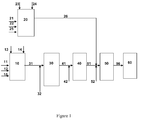
- the represented unit comprises two preparation reactors 10, 20 for catalyst preparation from catalyst precursor.
- Each preparation reactor 10, 20 is dedicated to the preparation of a specific catalyst, intended for hydroconversion (reactor 10) or for hydrotreatment (reactor 20).
- Each preparation reactor 10, 20 is fed with a catalyst precursor 13, 23 respectively which can be in several forms : water soluble, oil soluble or finely powdered solid.
- a sulfiding agent 15, 25 may be added (DMDS, H 2 S, elemental sulfur) as represented on the figure.
- Hydrogen H 2 12, 22, may also be added in the preparation reactors 10, 20, respectively.
- Each preparation reactor 10, 20 may also be fed with the feedstock 11, 21 to treat.
- the sulfur contained in the feedstock may be used for activation of the catalyst.
- a liquid hydrocarbon may be used, for example as solvent, and fed to the preparation reactors 10, 20.
- crushed solids or other additives 14, 24 can be added (such as crushed coke, 2%wt, granulometry 300 to 500 microns).
- the unit also comprises a hydroconversion reactor 40, a hydrotreatment reactor 50 and a separation section 60.
- a pre-heater 30 is placed upstream of the hydroconversion reactor 40 for heating the feedstock to treat.
- the feedstock to treat may also be fed partly or totally to the pre-heater via line 32.
- the heated slurry 41 is then fed to the hydroconversion reactor 40.
- Supplementary hydrogen 42 may also be added upstream from reactor 40.
- hydrotreatment catalyst 26 prepared in preparation reactor 20, upstream from hydrotreatment reactor 50.
- Hydrogen 52 may also be added , upstream from hydrotreatment reactor 50.
- This separation section 60 may for example comprise a flash vessel for gas removing, an atmospheric fractionation and a vacuum fractionation.
- the vacuum residue is pre-heated to reduce its viscosity and allow its transfer to the reactor.
- Catalyst precursors molybdenum octoate, nickel octoate, iron octoate, ferrocene and/or molybdenocene
- liquid DMDS are added to the pre-heated vacuum residue in the reactor which is then closed.
- Hydrogen is then added and temperature increased with two stages at 250°C and 320°C for 10 minutes each. Then the reactor temperature is raised rapidly to the operating value.
- the reactor is cooled down and depressurized. All gaseous and liquid effluents are collected, weighed and analysed.
- the gases are analysed on-line by gas chromatography (Agilent G2891 micro Gas Chromatograph) and the reaction products are analysed by high temperature gas chromatography (ASTM D7169) for determining the yields.
- Molybdenum octoate has supposedly the following formula: C 32 H 60 MoO 8 .
- Nickel octoate has the following formula C 16 H 30 NiO 4 .
- 300 mL of feedstock and the appropriate amount of molybdenum and nickel based catalyst precursors are fed into the reactor (see Table 12).
- 260 mol% of sulphur (compared to the amount of catalytic metals, molybdenum and nickel) as DMDS is also fed into the reactor as sulphiding agent.
- the reactor is pressurized with hydrogen and heated to the desired temperature 430oC at a heating rate of 5°C/min.
- compositions of the products obtained are presented in table 13. For all the tests, no coke formation was observed.
- Test series have been performed to compare ferrocene and iron octoate as precursors of an active catalytic phase for the hydroconversion of a vacuum residue.
- Ferrocene has the following formula: Cp 2 Fe (or (C 5 H 5 ) 2 Fe).
- Iron octoate has the following formula: C 24 H 45 FeO 6
- feedstock and iron based catalyst precursor 300mL of feedstock and iron based catalyst precursor are fed into the reactor.
- feedstock 300mL of feedstock and iron based catalyst precursor are fed into the reactor.
- 5000 wppm of Fe as Cp 2 Fe or as Fe-octoate is added to the feedstock (wppm : based on the
- This example series shows the potential of metallocenes as precursors for obtaining high hydrogenation activity catalysts for heavy feedstocks hydroconversion.
- Tests have been performed to compare bis(cyclopentadienyl)molybdenum dichloride and Mo-octoate as precursors of an active catalytic phase for the hydroconversion of a vacuum residue.
- 300mL of feedstock and molybdenum based catalyst precursor are fed into the reactor.
- 500 wppm of Mo as Cp 2 MoCl 2 or as Mo-octoate is added to the feedstock (wppm : based on the weight of the feedstock).
- 260mol% of sulphur (compared to molybdenum) as DMDS is also fed into the reactor as sulphiding agent.
- the reactor is pressurized with hydrogen and heated to the desired temperature at a heating rate of 5°C/min.
- Table 14 characteristics of vacuum residue tested (Arab Heavy Vacuum residue) Characteristic Value API Density at 15°C (g/ml) 0.9671 Sulfur (w%) 3.13 Nitrogen (w%) 0.25 MCRT ASTM D4530 (w%) 8.3 Asphalthenes (C7 insol.), w% 2.9 Ni, ppm 20 V, ppm 50 Cut points from ASTM D7169 IBP - 200°C fraction (w%) 0.0 200-350°C fraction (w%) 5.1 350-500°C fraction (w%) 40.9 500-FBP fraction (w%) 54.0 MCRT : Micro Carbon Residue Test
Landscapes
- Chemical & Material Sciences (AREA)
- Oil, Petroleum & Natural Gas (AREA)
- Engineering & Computer Science (AREA)
- Chemical Kinetics & Catalysis (AREA)
- Organic Chemistry (AREA)
- General Chemical & Material Sciences (AREA)
- Materials Engineering (AREA)
- Inorganic Chemistry (AREA)
- Catalysts (AREA)
- Production Of Liquid Hydrocarbon Mixture For Refining Petroleum (AREA)
Description
- The invention concerns a process for upgrading heavy hydrocarbonaceous feedstocks, and particularly the catalysts feeding of the reactors used in the process.
- As the price or shortage of crude oil increases, there is an increasing demand to find ways to better exploit these lower quality feedstocks and extract fuel values there from.
- Methods known to improve upgrading of hydrocarbonaceous feedstocks use particular operating conditions (T°, P°, H2, ...).
-
US4770764 discloses a process for converting a heavy hydrocarbon into a lighter and more valuable product through the conversion by thermal cracking of said heavy hydrocarbon in the presence of hydrogen gas and of a transition metal compound selected from a group comprising pi-complexes of Mo and containing for example cyclopendadieznyl group as the ligand.US 4770764 further discloses a hydrotreatment step using a catalyst containing nickelmolybdenum.WO/2007/082117 discloses a hydrocracking catalyst precursor comprising molybdenum and another transition metal such as nickel, iron or cobalt combined with organic anions selected from C2-C14 carboxylate anions.US4839326 discloses a molybdenum catalyst, suitable for hydroprocessing, which is promoted with an organometallic compound selected from the group of Co, Fe, Ni. - However, there is still a need for improved process for upgrading hydrocarbonaceous feedstocks.
- A first object of the invention concerns a process for upgrading heavy hydrocarbonaceous feedstocks in at least one hydroconversion reactor for hydroconversion of said heavy hydrocarbonaceous feedstocks and in at least one hydrotreatment reactor for hydrotreatment of said heavy hydrocarbonaceous feedstocks, said process comprising the preparation of two or more catalysts, each catalyst being prepared from one or more catalyst precursor in at least one specific preparation reactor, said catalyst precursor containing at least one transition metal selected from group IIA, IIIB, IVB, VB, VIB, VIIB, VIII, IB or IIB of the periodic table of elements, and each preparation reactor feeding one or more hydroconversion or hydrotreatment reactor, each catalyst contained in preparation reactors being dedicated to hydroconversion or hydrotreatment of said feedstocks.
- Such a process permits to obtain, under continuous operating conditions, products of better quality.
- Preparation reactors dedicated to catalytic precursor activation allow more flexibility. Thus, advantageously, continuous feed to a reactor of the reaction section can be achieved and, what is more, the catalyst preparation reactors can feed different catalytic systems to the hydroconversion reactor and to the hydrotreatment reactor.
- By hydroconversion is meant the breakage of bonds in the molecules of hydrocarbons under hydrogen atmosphere in order to decrease or suppress coke and gas (C1-C4) formation. The breakage of bonds itself is mainly driven by temperature, the catalyst being used to promote hydrogen incorporation into the products. The term hydroconversion is used to differentiate from "hydrocracking" where the breakage of bonds is promoted by the catalyst.
- Catalysts for hydroconversion processes are based on metals from Group IIA, IIIB, IVB, VB, VIB, VIIB, VIII, IB and IIB.
- By hydrotreatment is meant the removal of contaminants like sulfur, nitrogen, oxygen, metals, CCR (Conradson Carbon Residue), ..., from a hydrocarbon stream under hydrogen atmosphere. Catalysts for hydrotreatment are the same as for hydroconversion, however with a preference, thanks to their higher activity, for metals of groups VB and VIB promoted or not with metals from group VIII.
- Hydroconversion will preferably be performed before hydrotreatment, althought hydrotreatment may precede hydroconversion.
- Advantageously, each preparation reactor may be fed with a part of the feedstock to treat. Eventually, a liquid hydrocarbon may be fed to the preparation reactor for obtaining a less viscous mixture, in addition to the feedstock to treat or in replacement of this feedstock.
- Preparation reactors may also be fed with a sulfiding agent for activating the catalyst precursor. Sulfiding agent may be for example DMSO (dimethylsulfoxide), DMDS (dimethyldisulfide), elemental sulfur or H2S, pure or in mixtures coming from refinery sources, or any appropriate sulfur containing compound. Depending on the composition of the feedstock added to the catalyst precursor in the preparation reactor, such addition of sulfiding agent may be avoided: sulfidation of the catalyst precursor is then performed by the sulfur contained in the feedstock.
- Catalytic precursor activation (conversion of precursor to active sulfur species of the metal contained in the precursor) may be achieved in dedicated vessels.
- The mixture is heated under programmable operating conditions (temperature, pressure, concentration of sulfidation agent, residence time).
- In order to improve additive dispersion and to limit foaming, crushed solids or other additives (dispersing agents...) can be added (example crushed coke, 2%wt, granulometry 300 to 500 microns; alumina; thiosilicates; sulfonates of calcium carbonate; as well as any other suitable additive as those described in
US 5, 594, 945 ) . - Hydrogen may also be added to preparation reactors. Such addition helps to control activity of the very active sulfur species of the activated catalyst such that coking of the catalyst is reduced or avoided.
- Advantageously, each dedicated catalyst is prepared in at least two preparation reactors. The hydroconversion reactors or the hydrotreatment reactors can then be continuously fed with the catalyst.
- Temperature and Pressure conditions for hydrotreatment and hydroconversion will advantageously be very similar or the same.
- Reaction temperature for hydroconversion may range from 360°C to 480°C, preferably from 400 to 440°C, under a pressure of 50 to 300 bars, preferably from 100 to 200 bars.
- Reaction temperature for hydrotreatment may range from 360°C to 480°C, preferably from 380 to 440°C, under a pressure of 50 to 300 bars, preferably from 100 to 200 bars.
- Hydrotreatment and hydroconversion reactors can operate in upflow or downflow reactor. These reactors are preferably perfectly stirred reactors (C S T R).
- Each reactor is fed with at least one slurry issued from a catalyst preparation reactor.
- The slurry, consisting of feedstock containing activated catalyst, hydrogen and possibly other additives, and additional hydrogen if needed, is pressurized and enters the hydroconversion reactor and the hydrotreatment reactor.
- Preferably, the slurry is preheated before pressurization.
- Advantageously, catalyst(s) dedicated to hydroconversion contain one transition metal selected from group VB, VIB, VIII, in an active state, and catalyst(s) dedicated to hydrotreatement contain two transition metals in an active state, one transition metal being selected from group VB, VIB, VIII and another transition metal being selected from group VIII.
- Metals active for hydroconversion are preferably: Mo, Ni, Co, W, Cr, V, Fe.
- Catalyst(s) dedicated to hydroconversion contain(s) V, Mo or Fe and catalyst(s) dedicated to hydrotreatment contain(s) the following combination : Mo- Ni, or Mo - V, or Fe-Ni.
- Advantageously, catalyst(s) dedicated to hydroconversion contain from 20 ppm to 700 ppm of transition metal (weight ratio of transition metal to the feedstock), preferably from 250 to 650 ppm, most preferably from 300 to 600 ppm.
- Advantageously, the whole content of transition metals in catalyst(s) dedicated to hydrotreatment ranges from 200 to 1000 ppm (weight ratio of transition metal to the feedstock), preferably from 250 to 900ppm, most preferably from 300 to 500ppm.
- Different catalyst precursors may be used for each catalyst. Catalysts precursors may be selected from naphtenates, octoates, and oxides.
- For example, precursors containing Mo will be naphtenates, precursors containing Ni will be octoate, such as 2-ethyl hexanoate, and precursors containing V will be acetylacetonate or acetoacetonate.
- Catalysts precursors of monometallic catalysts are an organometallic coordination compound of formula C1C2MLn (I), where
- M is a transition metal selected from group IIA, IIIB, IVB, VB, VIB, VIIB, VIII, IB or IIB of the periodic table of elements,
- -C1 and -C2 are monocyclic or polycyclic aryl hydrocarbon ligands that are pi-bonded to M, or monocyclic or polycyclic polyenes ligand pi-bonded to M, -C1 and -C2 being the same or different, each of
- C1 or -C2 comprising from 0 to 5 substituents R, each substituent R being the same or different, R being selected from :
- a C3-C8 substituted or unsubstituted, monocyclic or polycyclic ring structure that is partially unsaturated, unsaturated or aromatic, fused or not fused to the ligand -C1 or -C2,
- a C3-C8 substituted or unsubstituted, partially unsaturated or unsaturated, linear or branched, alicyclic hydrocarbyl radical,
- a C1-C8, substituted or unsubstituted, linear or branched, saturated hydrocarbyl radical,
- C1 and -C2 being independent or connected via at least one substituent R,
- -L is a ligand that is sigma-bonded to M, n is an integer equal to 0 to 3, each -L is, independently, a univalent ligand.
- A fused ring is a ring having two carbon atoms and one bond in common with another ring.
- For example, each of C1 or C2 may be substituted or unsubstituted cyclopentadiene. The substituents may be the same as substituents R described above.
- The organometallic coordination compound is a metallocene compound presenting the general formula (II) below

- Thus, metallocene compounds consist of two cyclopentadienyl anions (substituted or not) bound to a metal center in a "sandwich" structure.
- Advantageously, in the formulas (I) or (II), M is selected from Group IIA, IIB, IIIB ,IVB, VB, VIB, VIIB or VIII of the periodic table of the elements, preferably M is selected from Fe, V or Mo.
- In the formulas (I) or (II), the ligand -L is selected from :
- Hydrides (-L = -H)
- Halides (-L = -F, -Cl, -Br, -I) "Pseudo-halides" (-L = -CN (cyanide))
- Alkoxide (-L = -OR) Thiolate (-L = -SR)
- Amide (-L = -NR2) Phosphide (-L = -PR2)
- -L = -ER3 or -EX3 (with E = Si, Ge, Sn;)
- Alkyl (-L = -CH2R or other) Alkenyl (-L = -CHCHR) Alkynyl (-L = -CCR)
- Acyl (-L = -COR)
- Isocyanide (-L = -CNR) Nitrosyl (-L = -NO) Diazenide (-L = -NNR) Imide (-L = =NR)
- -L = -PR3, -PX3, -AsR3, -SbR3 and amines
- L = ER2 (with E = O, S, Se, Te)
- The catalytic precursor is added under different concentration, depending on the type (octoate, naphtenate, metallocene, oxide...) and under several forms: water soluble, oil soluble or finely powdered solid.
- The oil-soluble metal precursors are available either as pure solids (metallocenes) or as solutions in hydrocarbons.
- In the pure oil-soluble solid precursors, the metal content is known from the atomic weight of the metal and the molecular weight of the precursor molecule. The amount of precursor to add to the feedstock in order to obtain a given metal concentration in the feedstock can thus be calculated.
- The solutions of oil-soluble precursors in hydrocarbons are analyzed on their metal content. The amount of solution to be added to the feedstock in order to obtain a given metal concentration in the feedstock can thus be calculated.
- Process according to the invention may be used to upgrade carbonaceous feedstocks comprising an atomic H/C ratio of at least 0.25.
- Thus, various feedstocks can be upgraded through this process: atmospheric and vacuum residues, pitch coming from deasphalting, deasphalted oil, visbroken effluents (thermal cracking), shale oils, biomass ex-pyrolysis and ex-hydrothermal treatment, coal and, at least theoretically, petcoke from delayed coker.
- Other feedstocks can also be coprocessed together with petroleum residue: tires, polymers, road bitumen.
- General characteristics of feedstocks mentioned above are given hereafter in tables 1 to 10 (the data on the feedstocks are indicative as the origin of the crude and the processing conditions may lead to substantial differences in their analyses).
- For some feedstocks, results of a typical simulated distillation are given.
- Such a simulated distillation method is performed as follows:
- Hydrocarbons are introduced in the column of a gas chromatography column and are separated with the increasing ebullating point. Temperature column is increased. Ebullating points are deducted from a calibrating curve, obtained in the same operating conditions with a known hydrocarbon mixture.
- The column used is a Simdis HT 750 from Analytical Controls ; length = 5 m ; Film = 0.09 µm ; Internal Diameter = 0.53 mm (AC partno.: 24001.065). As calibration mixture the following may be used:
- 1. A C5-C28 mixture from Analytical Controls (AC partno.: 59.50.101A),
- 2. A C30-C120 mixture from Analytical Controls (Ac partno.: 59.50.100B).
- IP means Initial Point distillation: temperature corresponding to a curve area of 0.5% of total chromatogram area.
- FP means Final Point distillation: temperature corresponding to a curve area of 99.5% of total chromatogram area.
Table 1a : Shale oil typical characteristics Characteristic Value observed Unit gravity 900-1076 kg/m3 °API 7.9-25 C 78-86 %wt H 7,5-12 %wt H/C 1.2-1.7 Atomic ratio O 0.7-7,5 %wt S 0.5-7.5 N 0.1-2.5 %wt Arsine 5.6-50 ppm Antimony Sb Olefins (Bromine number) 20-1260 gBr2/100g Table 1b : Shale oil typical Simulated Distillation Example of typical Simulated Distillation: IP 80 ° C 10%wt 200 ° C 20%wt 250 ° C 50%wt 400 °C 70 %wt 450 °C 90%wt 560 °C - Shale oil are impurities rich, some impurities being catalysts poisons, such as Arsine (AsH3). Arsine is the worst poison of hydroprocessing catalyst (NiMo, CoMo). Alternative processes for shale oil refining are hampered by the presence of arsine, which poisons their catalytic functions. During hydrotreatment, arsine is deposed on the catalyst and trapped as nickel arsenide.
- In the described process, fresh catalyst is continuously added, so that catalyst poisoning does not impact their process performances or the effluent qualities.
Table 2a : typical characteristics of Atmospheric and Vacuum residues Characteristic Value observed Unit gravity 995-1030 kg/m3 °API 10.7; 5.8 C 82-85 %wt H 9-14 %wt H/C 1.3-2 Atomic ratio S 0.3-4 %wt Ni 1-94 ppm V 5-448 ppm Asphaltenes C7 (ASTM D6560) 2-20 %wt Table 2b : typical simulated distillation of Atmospheric and Vacuum residues Example of typical Simulated Distillation: IP 433 °C 10%wt 544 °C 20%wt 576 °C 50%wt 636 °C 70%wt 688 °C FP 88%wt 748 °C Table 3a : typical characteristics of Pitch Characteristic Value observed Unit Deasphalting solvent C3 to C5 - Gravity 1.1-1.2 to solid t/m3 Conradson Carbon 50 %wt Sulfur 6.5 %wt Table 3b : typical Simulated Distillation of Pitch Example of typical Simulated Distillation: 1%wt 222 °C 10%wt 310 °C 30%wt 590 °C 50%wt 682 °C FP 57%wt 740 °C Table 4a : typical characteristics of Deasphalted oil Characteristic Value observed Unit Deasphalting solvent C3 to C5 - Gravity 0.970-1.025 t/m3 Conradson Carbon 7-22 %wt Sulfur 1-5 %wt Asphaltenes C7 <0.05 -3 %wt Table 4b : typical Simulated Distillation of Deasphalted oil Example of typical Simulated Distillation: IP 371 °C 10%wt 513 °C 20%wt 543 °C 50%wt 603 °C 70%wt 643 °C FP 95%wt 741 °C Table 5a : typical characteristics of Visbroken residue: Characteristic Value observed Unit Gravity 995-1080 kg/m3 Conradson Carbon 22-33 %wt Table 5b : typical Simulated Distillation of Visbroken residue: Example of typical Simulated Distillation: IP 384 °C 10%wt 496 °C 20%wt 536 °C 50%wt 613 °C 70%wt 680 °C FP 82%wt 748 °C Table 6 : typical characteristics of Polymers : Elemental composition (dry basis) Value observed unit C 40-96 %wt H 3-4 %wt H/C 0.38-1.20 Atomic ratio O 0-50 %wt Table 7 : typical characteristics of Petcoke : Elemental composition (dry basis) Value observed unit C 86-88 %wt H 3-4 %wt H/C 0.41-0.56 Atomic ratio N 1 %wt S 7.5 %wt Ni+V 750 ppm Table 8 : typical characteristics of Pyrolysis Bio-oil Characteristic Value observed Unit Moisture content 15-30 %wt Elemental com position (dry basis) : C 54-58 %wt H 5-8 %wt H/C 1.03-1.78 Atomic ratio N 0-0.2 %wt O 35-40 %wt Solids 0.2-1 %wt Table 9 : typical characteristics of Slurry from pyrolysis bio-oil, usually sent to gasification Characteristic Value observed Unit Moisture content 9-18 %wt Elemental com position (dry basis) : C 72-75 %wt H 3-5 %wt H/C 0.48-0.83 Atomic ratio O 20-25 %wt Coke particles 40 %wt Table 10 : typical characteristics of Bio-oil ex hydrothermal conversion: Characteristic Value observed Unit Moisture content 9 %wt Elemental composition (dry basis) : C 73.7 %wt H 7.6 %wt H/C 1.24 Atomic ratio O 15.3 %wt N 3.3 %wt - The following figure and example will illustrate the invention.
-
Figure 1 represents schematically an embodiment of the process according to the invention. -
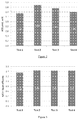
Figure 2 represents H2S yields (wt%) for the different tests of example 1 (reaction time: 1h; temperature : 430°C). -
Figure 3 represents the atomic H/C ratio in liquid in the 500+ fraction for the different tests of example 1 (reaction time: 1h; temperature: 430°C). -
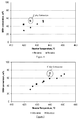
Figure 4 represents the conversion of the 500+ fraction as a function of the reactor temperature with two oil-soluble iron catalyst precursors: ferrocene (Fe-cene) and iron octoate (Fe-octo). Conditions tested (example 2): reaction time = 1h; catalyst concentration = 5000 wppm metal. Crosses (x) indicate runs where coke formation occurred. -
Figure 5 represents the conversion of the 500+ fraction as a function of the reactor temperature with two oil-soluble molybdenum catalyst precursors: molybdenocene (Mo-cene) and molybdenum octoate (Mo-octo). Conditions tested (example 3): reaction time = 1h; catalyst concentration = 5000 wppm metal. Crosses (x) indicate runs where coke formation occurred. - The represented unit comprises two
preparation reactors - Each
preparation reactor - Each
preparation reactor catalyst precursor 13, 23 respectively which can be in several forms : water soluble, oil soluble or finely powdered solid. - For activation of the
catalyst precursor 13, 23 in each of preparation reactor, a sulfiding agent 15, 25 may be added (DMDS, H2S, elemental sulfur) as represented on the figure. -
Hydrogen H 2 12, 22, may also be added in thepreparation reactors - Each
preparation reactor - Alternatively, instead of the feedstock to treat, a liquid hydrocarbon may be used, for example as solvent, and fed to the
preparation reactors - In order to improve catalyst precursor dispersion inside each preparation reactor, crushed solids or
other additives - The unit also comprises a
hydroconversion reactor 40, ahydrotreatment reactor 50 and aseparation section 60. - A pre-heater 30 is placed upstream of the
hydroconversion reactor 40 for heating the feedstock to treat. - A
slurry 31, issued frompreparation reactor 10 and consisting of the activated hydroconversion catalyst, along with feedstock to treat and/or other hydrocarbonaceous feedstock and eventually other additives, is conducted to the pre-heater 30. - The feedstock to treat may also be fed partly or totally to the pre-heater via
line 32. Theheated slurry 41 is then fed to thehydroconversion reactor 40.Supplementary hydrogen 42 may also be added upstream fromreactor 40. - To the
effluents 51 exitinghydroconversion reactor 40, is added thehydrotreatment catalyst 26 prepared inpreparation reactor 20, upstream fromhydrotreatment reactor 50.Hydrogen 52 may also be added , upstream fromhydrotreatment reactor 50. - The
effluents 56 exitinghydrotreatement reactor 50 are separated inseparation section 60. This separation section may for example comprise a flash vessel for gas removing, an atmospheric fractionation and a vacuum fractionation. - Hydroconversion and hydrotreatment of a vacuum residue have been performed. The tested vacuum residue presents the following characteristics:
Table 11: characteristics of vacuum residue tested (Arab Heavy Vacuum residue) Characteristic Value API 3 Density at 15°C (g/ml) 1.0581 Sulfur (w%) 5.58 Nitrogen (w%) 0.54 MCRT ASTM D4530 (w%) 25.0 Asphalthenes (C7 insol.), w% 19.7 C, w% 84.2 H, w% 9.9 H/C, atomic ratio 1.41 Ni, ppm 70 V, ppm 215 Cut points from ASTM D7169 IBP - 200°C fraction (w%) 0.0 200-350°C fraction (w%) 0.0 350-500°C fraction (w%) 3.10 500-FBP fraction (w%) 96.9 MCRT : Micro Carbon Residue Test - All tests have been performed in a 500 ml stirred batch reactor with continuous hydrogen feeding at constant pressure. The operating conditions are total pressure at 15 MPa, temperature between 420 and 450°C, H2 flow set at 100 NL/h and stirring speed of 900 rpm.
- The vacuum residue is pre-heated to reduce its viscosity and allow its transfer to the reactor. Catalyst precursors (molybdenum octoate, nickel octoate, iron octoate, ferrocene and/or molybdenocene) and liquid DMDS are added to the pre-heated vacuum residue in the reactor which is then closed. Hydrogen is then added and temperature increased with two stages at 250°C and 320°C for 10 minutes each. Then the reactor temperature is raised rapidly to the operating value.
- At the end of the test, the reactor is cooled down and depressurized. All gaseous and liquid effluents are collected, weighed and analysed.
- The gases are analysed on-line by gas chromatography (Agilent G2891 micro Gas Chromatograph) and the reaction products are analysed by high temperature gas chromatography (ASTM D7169) for determining the yields.
- In this test series, the total catalytic metal (molar) content is kept constant but the Ni / Mo ratio is varied between 0 and 0.5. For this test series, the operating temperature is fixed to 430°C during one hour.
Table 12: concentration of catalytic metals in the different tests (wppm, based on the weight of the feedstock) Test 01 02 03 04 ratio Ni/Mo (mol/mol) 0 0,1 0,3 0,5 Catalyst Mo (wppm) 500 454 384 333 Catalyst Ni (wppm) 0 28 71 102 - For this test series, both molybdenum and nickel are added separately to the feedstock as octoate, which are both in the liquid state at ambient conditions.
- Molybdenum octoate has supposedly the following formula: C32H60MoO8. Nickel octoate has the following formula C16H30NiO4. 300 mL of feedstock and the appropriate amount of molybdenum and nickel based catalyst precursors are fed into the reactor (see Table 12). 260 mol% of sulphur (compared to the amount of catalytic metals, molybdenum and nickel) as DMDS is also fed into the reactor as sulphiding agent. The reactor is pressurized with hydrogen and heated to the desired temperature 430ºC at a heating rate of 5°C/min.
- Compositions of the products obtained are presented in table 13. For all the tests, no coke formation was observed.
- These results show that the appropriate choice of catalysts permits to enhance the quality of hydroconversion products (more hydrodesulfurisation particularly and higher hydrogen content in the bottom fraction) without modification of the operating conditions or conversion rate and without important modification in the ratios of the conversion products.
- The results also show that due the conversion of 500+ cut, the concentration of metals (Mo, Ni, V) in the remaining 500+ increases compared to the original mixture of feed and catalytic metals.
Table 13 : tests results Test 1 2 3 4 Conversion (+/-3%) 42.1 41.6 42.1 43.3 Density (15°C) 1.009 0.992 1.007 1.006 API 9 10 9 9 Liquid effluents Naphtha (C5-200 °C) (wt %) (*) 6.56 6.30 6.55 6.59 Gas oil (200-350°C) (wt %) (*) 14.51 14.34 14.21 14.59 Vacuum Gas oil (350-500°C) (wt %) (*) 21.37 20.84 21.61 21.62 Residue (500+ °C) (wt %) (*) 56.30 56.12 56.64 55.68 S (weight %) 4.90 4.00 3.90 4.00 N (weight %) 0.60 0.59 0.57 0.58 H/C 1.35 1.44 1.43 1.43 Gaseous effluents C1-C2 (wt %) 1.45 1.50 1.38 1.32 C3-C4 (wt %) 1.07 1.37 1.11 1.03 H2 consumption wt% -2.60 -2.15 -3.07 -2.23 H2S yield (wt%) 1.35 1.69 1.56 1.40 500+ fraction of liquid effluents (*) Ni+V+Mo (ppm) 1356 1313 1278 1270 (*) the range corresponds to the distillation range. - Test series have been performed to compare ferrocene and iron octoate as precursors of an active catalytic phase for the hydroconversion of a vacuum residue.
- Ferrocene has the following formula: Cp2Fe (or (C5H5)2Fe).
- Iron octoate has the following formula: C24H45FeO6
- The same vacuum residue as in the previous examples was used as feed. Its composition is presented in table 11.
- The different tests of a series have been performed at increasing temperature in the 420-450°C range.
- 300mL of feedstock and iron based catalyst precursor are fed into the reactor. For each catalyst precursor, 5000 wppm of Fe as Cp2Fe or as Fe-octoate, is added to the feedstock (wppm : based on the
- weight of the feedstock). 130mol% of sulphur (compared to iron) as DMDS is also fed into the reactor as sulphiding agent. The reactor is pressurized with hydrogen and heated to the desired temperature at a heating rate of 5°C/min.
- Several tests have been performed with increasing temperature, until coke production appears. This temperature is considered as the maximum allowable temperature for hydroconversion using the particular slurry phase catalyst.
- The results are presented in
figure 4 . In this graph conversions are plotted against temperature. The runs in which coke formation occurred are represented by crosses. - With iron octoate as precursor, coke formation occurred at 425°C. The maximum 500+ conversion without coke formation was observed at 420°C, and was of 45w%.
- With ferrocene as precursor, temperature could be raised to 435°C without coke formation. The 500+ conversion observed at this temperature was of 57w%.
- This example series shows the potential of metallocenes as precursors for obtaining high hydrogenation activity catalysts for heavy feedstocks hydroconversion.
- Tests have been performed to compare bis(cyclopentadienyl)molybdenum dichloride and Mo-octoate as precursors of an active catalytic phase for the hydroconversion of a vacuum residue.
- bis (cyclopentadienyl) molybdenum dichloride has the following formula: Cp2MoCl2 (or (C5H5)2 MoCl2).
- Molybdenum octoate has supposedly the following formula: C32H60MoO8
- The same vacuum residue as in the previous examples was used as feed. Its composition is presented in table 11.
- The different tests of a series have been performed at increasing temperature in the 420-450°C range.
- 300mL of feedstock and molybdenum based catalyst precursor are fed into the reactor. For each catalyst precursor, 500 wppm of Mo as Cp2MoCl2 or as Mo-octoate, is added to the feedstock (wppm : based on the weight of the feedstock). 260mol% of sulphur (compared to molybdenum) as DMDS is also fed into the reactor as sulphiding agent. The reactor is pressurized with hydrogen and heated to the desired temperature at a heating rate of 5°C/min.
- Several tests have been performed with increasing temperature, until coke production appears. This temperature is considered as the maximum allowable temperature for hydroconversion using the particular slurry phase catalyst.
- The results are presented in
figure 5 . In this graph conversions are plotted against temperature. The runs in which coke formation occurred are represented by crosses. - With molybdenum octoate as precursor, coke formation occurred at 440°C. The maximum 500+ conversion without coke formation was observed at 435°C, and was of 52w%.
- With bis (cyclopentadienyl) molybdenum dichloride as precursor, temperature could be raised to 450°C without coke formation. The 500+ conversion observed at this temperature was of 70w%.
- The use of a molybdenocene allows applying higher temperatures than the use of Mo-octoate, thus leading to deeper conversions together with the absence of coke formation.
- The same test has been performed without any catalyst and with a blend of atmospheric residue. The composition of this feedstock is given in table 14. The hydrogen flow was set at 0 Nl/h. The feedstock was processed during 30 min at a temperature of 420.5°C. An important amount of coke was produced, which illustrates the effect of catalyst for suppression of coke.
Table 14: characteristics of vacuum residue tested (Arab Heavy Vacuum residue) Characteristic Value API Density at 15°C (g/ml) 0.9671 Sulfur (w%) 3.13 Nitrogen (w%) 0.25 MCRT ASTM D4530 (w%) 8.3 Asphalthenes (C7 insol.), w% 2.9 Ni, ppm 20 V, ppm 50 Cut points from ASTM D7169 IBP - 200°C fraction (w%) 0.0 200-350°C fraction (w%) 5.1 350-500°C fraction (w%) 40.9 500-FBP fraction (w%) 54.0 MCRT : Micro Carbon Residue Test
According to the invention, in the formulas (I) or (II), M is Mo, the ligand -L is Cl and n is equal to 2.
Claims (9)
- Process for upgrading a heavy hydrocarbonaceous feedstock in at least one hydroconversion reactor for hydroconversion of said heavy hydrocarbonaceous feedstock and in at least one hydrotreatment reactor for hydrotreatment of said heavy hydrocarbonaceous feedstock, said process comprising the preparation of two or more catalysts, each catalyst being prepared from one or more catalyst precursors in at least one specific preparation reactor, said catalyst precursors containing at least one transition metal selected from group IIA, IIIB, IVB, VB, VIB, VIIB, VIII, IB or IIB of the periodic table of elements, and each preparation reactor feeding one or more hydroconversion or hydrotreatment reactors, each catalyst contained in a preparation reactor being dedicated to hydroconversion or hydrotreatment of said feedstock
and wherein the catalyst dedicated to hydroconversion contains Mo, in an active state, and catalyst(s) dedicated to hydrotreatment contain(s) two transition metals in an active state, Mo and Ni or Mo and V, or Fe and Ni,
and the catalyst precursor of said catalyst dedicated to hydroconversion is (C5H5)2 MoCl2. - Process according to claim 1, wherein each preparation reactor is fed with a part of the feedstock to upgrade.
- Process according to claim 1 or 2, wherein each preparation reactor is fed with a sulfiding agent.
- Process according to any of claims 1 to 3, wherein each preparation reactor is fed with hydrogen.
- Process according to any of claims 1 to 4, wherein each preparation reactor is fed with a dispersant agent.
- Process according to any of claims 1 to 5, wherein each dedicated catalyst is prepared in at least two preparation reactors.
- Process according to any of claims 1 to 6, wherein the catalyst dedicated to hydroconversion contains from 20 ppm to 700 ppm of
transition metal, preferably from 250 to 650 ppm, most preferably from 300 to 600 ppm (weight ratio of the transition metal to the feedstock). - Process according to any of claims 1 to 7, wherein the whole content of transition metals in catalyst(s) dedicated to hydrotreatment ranges from 200 to 1000 ppm, preferably from 250 to 900, most preferably from 300 to 500.
- Process according to any of claims 1 to 8, wherein the carbonaceous feedstock comprises an atomic H/C ratio of at least 0.25.
Priority Applications (1)
| Application Number | Priority Date | Filing Date | Title |
|---|---|---|---|
| EP11741539.8A EP2591077B1 (en) | 2010-07-06 | 2011-07-05 | Process for upgrading heavy hydrocarbonaceous feedstocks |
Applications Claiming Priority (3)
| Application Number | Priority Date | Filing Date | Title |
|---|---|---|---|
| EP10305744A EP2404982A1 (en) | 2010-07-06 | 2010-07-06 | Catalyst preparation reactors from catalyst precursor used for feeding reactors to upgrade heavy hydrocarbonaceous feedstocks |
| PCT/EP2011/061284 WO2012004246A2 (en) | 2010-07-06 | 2011-07-05 | Catalyst preparation reactors from catalyst precursor used for feeding reactors to upgrade heavy hydrocarbonaceous feedstocks. |
| EP11741539.8A EP2591077B1 (en) | 2010-07-06 | 2011-07-05 | Process for upgrading heavy hydrocarbonaceous feedstocks |
Publications (2)
| Publication Number | Publication Date |
|---|---|
| EP2591077A2 EP2591077A2 (en) | 2013-05-15 |
| EP2591077B1 true EP2591077B1 (en) | 2016-08-31 |
Family
ID=43415352
Family Applications (2)
| Application Number | Title | Priority Date | Filing Date |
|---|---|---|---|
| EP10305744A Withdrawn EP2404982A1 (en) | 2010-07-06 | 2010-07-06 | Catalyst preparation reactors from catalyst precursor used for feeding reactors to upgrade heavy hydrocarbonaceous feedstocks |
| EP11741539.8A Not-in-force EP2591077B1 (en) | 2010-07-06 | 2011-07-05 | Process for upgrading heavy hydrocarbonaceous feedstocks |
Family Applications Before (1)
| Application Number | Title | Priority Date | Filing Date |
|---|---|---|---|
| EP10305744A Withdrawn EP2404982A1 (en) | 2010-07-06 | 2010-07-06 | Catalyst preparation reactors from catalyst precursor used for feeding reactors to upgrade heavy hydrocarbonaceous feedstocks |
Country Status (7)
| Country | Link |
|---|---|
| US (1) | US9233363B2 (en) |
| EP (2) | EP2404982A1 (en) |
| JP (1) | JP5896536B2 (en) |
| KR (1) | KR101893424B1 (en) |
| CN (1) | CN103080278B (en) |
| AU (1) | AU2011275813B2 (en) |
| WO (1) | WO2012004246A2 (en) |
Families Citing this family (5)
| Publication number | Priority date | Publication date | Assignee | Title |
|---|---|---|---|---|
| FR3015514B1 (en) | 2013-12-23 | 2016-10-28 | Total Marketing Services | IMPROVED PROCESS FOR DESAROMATIZATION OF PETROLEUM CUTTERS |
| EP3215268A1 (en) * | 2014-11-06 | 2017-09-13 | Shell Internationale Research Maatschappij B.V. | A self-activating hydroprocessing catalyst having enhanced activity and self-activation characteristics and its use for treating resid feedstocks |
| IT201600080528A1 (en) * | 2016-08-01 | 2018-02-01 | Luigi Patron | Hydroconversion system of heavy oils free from coking in a single reaction stage with recycling by means of a dispersed catalyst reactor comprising molybdenum, and relative hydroconversion method |
| CN111841630A (en) * | 2020-06-24 | 2020-10-30 | 中国石油大学(华东) | Fatty acid nickel oil-soluble catalyst for coal/heavy oil hydrotreating and its application |
| WO2023156742A1 (en) | 2022-02-17 | 2023-08-24 | Totalenergies Onetech | Method for producing a stabilised biomass oil |
Family Cites Families (19)
| Publication number | Priority date | Publication date | Assignee | Title |
|---|---|---|---|---|
| JPS5665636A (en) | 1979-10-31 | 1981-06-03 | Chiyoda Chem Eng & Constr Co Ltd | Metal-carrying fine particles catalyst and preparation thereof |
| US4430442A (en) * | 1982-07-20 | 1984-02-07 | Exxon Research And Engineering Co. | Catalysts from molybdenum polysulfide precursors and their preparation |
| US4592827A (en) * | 1983-01-28 | 1986-06-03 | Intevep, S.A. | Hydroconversion of heavy crudes with high metal and asphaltene content in the presence of soluble metallic compounds and water |
| JPS59172587A (en) | 1983-05-16 | 1984-09-29 | Asahi Chem Ind Co Ltd | Conversion of heavy hydrocarbon oil into light hydrocarbon oil |
| GB2142930B (en) * | 1983-03-19 | 1987-07-01 | Asahi Chemical Ind | A process for cracking a heavy hydrocarbon |
| US4824821A (en) * | 1983-08-29 | 1989-04-25 | Chevron Research Company | Dispersed group VIB metal sulfide catalyst promoted with Group VIII metal |
| US4839326A (en) * | 1985-04-22 | 1989-06-13 | Exxon Research And Engineering Company | Promoted molybdenum and tungsten sulfide catalysts, their preparation and use |
| US5578197A (en) * | 1989-05-09 | 1996-11-26 | Alberta Oil Sands Technology & Research Authority | Hydrocracking process involving colloidal catalyst formed in situ |
| US5372705A (en) * | 1992-03-02 | 1994-12-13 | Texaco Inc. | Hydroprocessing of heavy hydrocarbonaceous feeds |
| JPH0790282A (en) * | 1993-09-27 | 1995-04-04 | Asahi Chem Ind Co Ltd | Cracking and hydrogenation treatment of heavy oil |
| US5620591A (en) * | 1994-12-22 | 1997-04-15 | Exxon Research & Engineering Company | Hydroconversion process with plug-flow molybdenum catalyst concentrate preparation |
| US5594945A (en) | 1995-02-14 | 1997-01-14 | Bellsouth Corporation | Method of providing registration reminder message to a roaming pager upon entry into a new service area |
| CN1121274C (en) * | 2001-02-28 | 2003-09-17 | 北京燕山石油化工公司研究院 | Metallocene catalyst and its preparing process, application and selective hydrogenation process |
| ES2585891T3 (en) | 2004-04-28 | 2016-10-10 | Headwaters Heavy Oil, Llc | Boiling bed hydroprocessing methods and systems |
| US20060058175A1 (en) * | 2004-09-10 | 2006-03-16 | Chevron U.S.A. Inc. | Highly active slurry catalyst composition |
| WO2007008097A1 (en) * | 2005-07-11 | 2007-01-18 | Institut Kataliza Imeni G.K. Boreskova Sibirskogo Otdeleniya Rosiiskoi Akademii Nauk | Catalyst, method for the production thereof and a hydrocarbon isomerisation method using said catalyst |
| US7842635B2 (en) * | 2006-01-06 | 2010-11-30 | Headwaters Technology Innovation, Llc | Hydrocarbon-soluble, bimetallic catalyst precursors and methods for making same |
| US8034232B2 (en) * | 2007-10-31 | 2011-10-11 | Headwaters Technology Innovation, Llc | Methods for increasing catalyst concentration in heavy oil and/or coal resid hydrocracker |
| US7931797B2 (en) * | 2009-07-21 | 2011-04-26 | Chevron U.S.A. Inc. | Systems and methods for producing a crude product |
-
2010
- 2010-07-06 EP EP10305744A patent/EP2404982A1/en not_active Withdrawn
-
2011
- 2011-07-05 EP EP11741539.8A patent/EP2591077B1/en not_active Not-in-force
- 2011-07-05 AU AU2011275813A patent/AU2011275813B2/en not_active Ceased
- 2011-07-05 KR KR1020137003198A patent/KR101893424B1/en not_active Expired - Fee Related
- 2011-07-05 US US13/808,469 patent/US9233363B2/en not_active Expired - Fee Related
- 2011-07-05 WO PCT/EP2011/061284 patent/WO2012004246A2/en not_active Ceased
- 2011-07-05 CN CN201180039143.8A patent/CN103080278B/en not_active Expired - Fee Related
- 2011-07-05 JP JP2013517353A patent/JP5896536B2/en not_active Expired - Fee Related
Non-Patent Citations (1)
| Title |
|---|
| OELERT H H ET AL: "LABORVERSUCHE ZUM EINFLUSS VON KATALYSATOR, WASSERGEHALT UND REAKTIONSGASANGEBOT BEI DER HYDRIERENDEN KOHLVERFLOSSIGUNG = Laboratory study on the effect of catalysts, water content and reaction gas yield in coal hydroliquefaction", COMMISSION OF THE EUROPEAN COMMUNITIES,, vol. EUR-9118, 31 December 1984 (1984-12-31), pages 107 - 115, XP002613675 * |
Also Published As
| Publication number | Publication date |
|---|---|
| JP5896536B2 (en) | 2016-03-30 |
| EP2404982A1 (en) | 2012-01-11 |
| KR20130091326A (en) | 2013-08-16 |
| AU2011275813A1 (en) | 2013-01-31 |
| JP2013535517A (en) | 2013-09-12 |
| CN103080278B (en) | 2016-03-16 |
| US9233363B2 (en) | 2016-01-12 |
| EP2591077A2 (en) | 2013-05-15 |
| US20130193035A1 (en) | 2013-08-01 |
| KR101893424B1 (en) | 2018-08-31 |
| CN103080278A (en) | 2013-05-01 |
| WO2012004246A3 (en) | 2012-04-12 |
| WO2012004246A2 (en) | 2012-01-12 |
| AU2011275813B2 (en) | 2015-08-13 |
Similar Documents
| Publication | Publication Date | Title |
|---|---|---|
| EP2591075B1 (en) | Hydroconversion process for heavy hydrocarbonaceous feedstock | |
| EP2590741B1 (en) | Process for the hydroconversion of a low quality hydrocarbonaceous feedstock | |
| US7238273B2 (en) | Process for upgrading heavy oil using a highly active slurry catalyst composition | |
| US4134825A (en) | Hydroconversion of heavy hydrocarbons | |
| CA2579838C (en) | Process for upgrading heavy oil using a highly active slurry catalyst composition | |
| EP1814662B1 (en) | Process for the preparation of an active slurry catalyst | |
| US4226742A (en) | Catalyst for the hydroconversion of heavy hydrocarbons | |
| US4298454A (en) | Hydroconversion of an oil-coal mixture | |
| GB1576039A (en) | Hydroconversion of an oil-coal mixture | |
| US9233363B2 (en) | Catalyst preparation reactors from catalyst precursor used for feeding reactors to upgrade heavy hydrocarbonaceous feedstocks | |
| CA1195639A (en) | Upgrading of heavy hydrocarbonaceous oil using carbon monoxide and steam |
Legal Events
| Date | Code | Title | Description |
|---|---|---|---|
| PUAI | Public reference made under article 153(3) epc to a published international application that has entered the european phase |
Free format text: ORIGINAL CODE: 0009012 |
|
| 17P | Request for examination filed |
Effective date: 20130205 |
|
| AK | Designated contracting states |
Kind code of ref document: A2 Designated state(s): AL AT BE BG CH CY CZ DE DK EE ES FI FR GB GR HR HU IE IS IT LI LT LU LV MC MK MT NL NO PL PT RO RS SE SI SK SM TR |
|
| DAX | Request for extension of the european patent (deleted) | ||
| 17Q | First examination report despatched |
Effective date: 20140109 |
|
| RAP1 | Party data changed (applicant data changed or rights of an application transferred) |
Owner name: TOTAL RAFFINAGE FRANCE |
|
| RIC1 | Information provided on ipc code assigned before grant |
Ipc: C10G 49/12 20060101ALI20150908BHEP Ipc: C10G 49/04 20060101ALI20150908BHEP Ipc: B01J 31/22 20060101AFI20150908BHEP Ipc: C10G 65/02 20060101ALI20150908BHEP Ipc: B01J 23/28 20060101ALI20150908BHEP Ipc: C10G 65/12 20060101ALI20150908BHEP Ipc: B01J 27/10 20060101ALI20150908BHEP |
|
| GRAP | Despatch of communication of intention to grant a patent |
Free format text: ORIGINAL CODE: EPIDOSNIGR1 |
|
| RIC1 | Information provided on ipc code assigned before grant |
Ipc: C10G 49/12 20060101ALI20150918BHEP Ipc: B01J 31/22 20060101ALN20150918BHEP Ipc: B01J 23/28 20060101ALN20150918BHEP Ipc: C10G 65/12 20060101ALI20150918BHEP Ipc: C10G 49/04 20060101ALI20150918BHEP Ipc: C10G 65/02 20060101AFI20150918BHEP |
|
| INTG | Intention to grant announced |
Effective date: 20151023 |
|
| GRAP | Despatch of communication of intention to grant a patent |
Free format text: ORIGINAL CODE: EPIDOSNIGR1 |
|
| RIC1 | Information provided on ipc code assigned before grant |
Ipc: B01J 31/22 20060101ALN20160318BHEP Ipc: C10G 49/12 20060101ALI20160318BHEP Ipc: C10G 49/04 20060101ALI20160318BHEP Ipc: B01J 23/28 20060101ALN20160318BHEP Ipc: C10G 65/12 20060101ALI20160318BHEP Ipc: C10G 65/02 20060101AFI20160318BHEP |
|
| INTG | Intention to grant announced |
Effective date: 20160406 |
|
| GRAS | Grant fee paid |
Free format text: ORIGINAL CODE: EPIDOSNIGR3 |
|
| GRAJ | Information related to disapproval of communication of intention to grant by the applicant or resumption of examination proceedings by the epo deleted |
Free format text: ORIGINAL CODE: EPIDOSDIGR1 |
|
| GRAL | Information related to payment of fee for publishing/printing deleted |
Free format text: ORIGINAL CODE: EPIDOSDIGR3 |
|
| REG | Reference to a national code |
Ref country code: DE Ref legal event code: R079 Ref document number: 602011029843 Country of ref document: DE Free format text: PREVIOUS MAIN CLASS: C10G0049000000 Ipc: C10G0065020000 |
|
| GRAR | Information related to intention to grant a patent recorded |
Free format text: ORIGINAL CODE: EPIDOSNIGR71 |
|
| GRAA | (expected) grant |
Free format text: ORIGINAL CODE: 0009210 |
|
| INTG | Intention to grant announced |
Effective date: 20160707 |
|
| RIC1 | Information provided on ipc code assigned before grant |
Ipc: C10G 49/04 20060101ALI20160707BHEP Ipc: C10G 65/12 20060101ALI20160707BHEP Ipc: B01J 23/28 20060101ALN20160707BHEP Ipc: B01J 31/22 20060101ALN20160707BHEP Ipc: C10G 65/02 20060101AFI20160707BHEP Ipc: C10G 49/12 20060101ALI20160707BHEP |
|
| AK | Designated contracting states |
Kind code of ref document: B1 Designated state(s): AL AT BE BG CH CY CZ DE DK EE ES FI FR GB GR HR HU IE IS IT LI LT LU LV MC MK MT NL NO PL PT RO RS SE SI SK SM TR |
|
| REG | Reference to a national code |
Ref country code: CH Ref legal event code: EP Ref country code: GB Ref legal event code: FG4D |
|
| REG | Reference to a national code |
Ref country code: IE Ref legal event code: FG4D |
|
| REG | Reference to a national code |
Ref country code: DE Ref legal event code: R096 Ref document number: 602011029843 Country of ref document: DE |
|
| REG | Reference to a national code |
Ref country code: AT Ref legal event code: REF Ref document number: 824992 Country of ref document: AT Kind code of ref document: T Effective date: 20161015 |
|
| REG | Reference to a national code |
Ref country code: NL Ref legal event code: FP |
|
| REG | Reference to a national code |
Ref country code: LT Ref legal event code: MG4D |
|
| REG | Reference to a national code |
Ref country code: AT Ref legal event code: MK05 Ref document number: 824992 Country of ref document: AT Kind code of ref document: T Effective date: 20160831 |
|
| PG25 | Lapsed in a contracting state [announced via postgrant information from national office to epo] |
Ref country code: RS Free format text: LAPSE BECAUSE OF FAILURE TO SUBMIT A TRANSLATION OF THE DESCRIPTION OR TO PAY THE FEE WITHIN THE PRESCRIBED TIME-LIMIT Effective date: 20160831 Ref country code: HR Free format text: LAPSE BECAUSE OF FAILURE TO SUBMIT A TRANSLATION OF THE DESCRIPTION OR TO PAY THE FEE WITHIN THE PRESCRIBED TIME-LIMIT Effective date: 20160831 Ref country code: FI Free format text: LAPSE BECAUSE OF FAILURE TO SUBMIT A TRANSLATION OF THE DESCRIPTION OR TO PAY THE FEE WITHIN THE PRESCRIBED TIME-LIMIT Effective date: 20160831 Ref country code: LT Free format text: LAPSE BECAUSE OF FAILURE TO SUBMIT A TRANSLATION OF THE DESCRIPTION OR TO PAY THE FEE WITHIN THE PRESCRIBED TIME-LIMIT Effective date: 20160831 Ref country code: NO Free format text: LAPSE BECAUSE OF FAILURE TO SUBMIT A TRANSLATION OF THE DESCRIPTION OR TO PAY THE FEE WITHIN THE PRESCRIBED TIME-LIMIT Effective date: 20161130 |
|
| PG25 | Lapsed in a contracting state [announced via postgrant information from national office to epo] |
Ref country code: GR Free format text: LAPSE BECAUSE OF FAILURE TO SUBMIT A TRANSLATION OF THE DESCRIPTION OR TO PAY THE FEE WITHIN THE PRESCRIBED TIME-LIMIT Effective date: 20161201 Ref country code: ES Free format text: LAPSE BECAUSE OF FAILURE TO SUBMIT A TRANSLATION OF THE DESCRIPTION OR TO PAY THE FEE WITHIN THE PRESCRIBED TIME-LIMIT Effective date: 20160831 Ref country code: LV Free format text: LAPSE BECAUSE OF FAILURE TO SUBMIT A TRANSLATION OF THE DESCRIPTION OR TO PAY THE FEE WITHIN THE PRESCRIBED TIME-LIMIT Effective date: 20160831 Ref country code: AT Free format text: LAPSE BECAUSE OF FAILURE TO SUBMIT A TRANSLATION OF THE DESCRIPTION OR TO PAY THE FEE WITHIN THE PRESCRIBED TIME-LIMIT Effective date: 20160831 Ref country code: SE Free format text: LAPSE BECAUSE OF FAILURE TO SUBMIT A TRANSLATION OF THE DESCRIPTION OR TO PAY THE FEE WITHIN THE PRESCRIBED TIME-LIMIT Effective date: 20160831 |
|
| PG25 | Lapsed in a contracting state [announced via postgrant information from national office to epo] |
Ref country code: RO Free format text: LAPSE BECAUSE OF FAILURE TO SUBMIT A TRANSLATION OF THE DESCRIPTION OR TO PAY THE FEE WITHIN THE PRESCRIBED TIME-LIMIT Effective date: 20160831 Ref country code: EE Free format text: LAPSE BECAUSE OF FAILURE TO SUBMIT A TRANSLATION OF THE DESCRIPTION OR TO PAY THE FEE WITHIN THE PRESCRIBED TIME-LIMIT Effective date: 20160831 |
|
| PG25 | Lapsed in a contracting state [announced via postgrant information from national office to epo] |
Ref country code: SM Free format text: LAPSE BECAUSE OF FAILURE TO SUBMIT A TRANSLATION OF THE DESCRIPTION OR TO PAY THE FEE WITHIN THE PRESCRIBED TIME-LIMIT Effective date: 20160831 Ref country code: PT Free format text: LAPSE BECAUSE OF FAILURE TO SUBMIT A TRANSLATION OF THE DESCRIPTION OR TO PAY THE FEE WITHIN THE PRESCRIBED TIME-LIMIT Effective date: 20170102 Ref country code: SK Free format text: LAPSE BECAUSE OF FAILURE TO SUBMIT A TRANSLATION OF THE DESCRIPTION OR TO PAY THE FEE WITHIN THE PRESCRIBED TIME-LIMIT Effective date: 20160831 Ref country code: BG Free format text: LAPSE BECAUSE OF FAILURE TO SUBMIT A TRANSLATION OF THE DESCRIPTION OR TO PAY THE FEE WITHIN THE PRESCRIBED TIME-LIMIT Effective date: 20161130 Ref country code: PL Free format text: LAPSE BECAUSE OF FAILURE TO SUBMIT A TRANSLATION OF THE DESCRIPTION OR TO PAY THE FEE WITHIN THE PRESCRIBED TIME-LIMIT Effective date: 20160831 Ref country code: CZ Free format text: LAPSE BECAUSE OF FAILURE TO SUBMIT A TRANSLATION OF THE DESCRIPTION OR TO PAY THE FEE WITHIN THE PRESCRIBED TIME-LIMIT Effective date: 20160831 Ref country code: DK Free format text: LAPSE BECAUSE OF FAILURE TO SUBMIT A TRANSLATION OF THE DESCRIPTION OR TO PAY THE FEE WITHIN THE PRESCRIBED TIME-LIMIT Effective date: 20160831 |
|
| REG | Reference to a national code |
Ref country code: DE Ref legal event code: R097 Ref document number: 602011029843 Country of ref document: DE |
|
| REG | Reference to a national code |
Ref country code: FR Ref legal event code: PLFP Year of fee payment: 7 |
|
| PLBE | No opposition filed within time limit |
Free format text: ORIGINAL CODE: 0009261 |
|
| STAA | Information on the status of an ep patent application or granted ep patent |
Free format text: STATUS: NO OPPOSITION FILED WITHIN TIME LIMIT |
|
| 26N | No opposition filed |
Effective date: 20170601 |
|
| PG25 | Lapsed in a contracting state [announced via postgrant information from national office to epo] |
Ref country code: SI Free format text: LAPSE BECAUSE OF FAILURE TO SUBMIT A TRANSLATION OF THE DESCRIPTION OR TO PAY THE FEE WITHIN THE PRESCRIBED TIME-LIMIT Effective date: 20160831 |
|
| REG | Reference to a national code |
Ref country code: CH Ref legal event code: PL |
|
| GBPC | Gb: european patent ceased through non-payment of renewal fee |
Effective date: 20170705 |
|
| REG | Reference to a national code |
Ref country code: IE Ref legal event code: MM4A |
|
| PG25 | Lapsed in a contracting state [announced via postgrant information from national office to epo] |
Ref country code: CH Free format text: LAPSE BECAUSE OF NON-PAYMENT OF DUE FEES Effective date: 20170731 Ref country code: GB Free format text: LAPSE BECAUSE OF NON-PAYMENT OF DUE FEES Effective date: 20170705 Ref country code: IE Free format text: LAPSE BECAUSE OF NON-PAYMENT OF DUE FEES Effective date: 20170705 Ref country code: LI Free format text: LAPSE BECAUSE OF NON-PAYMENT OF DUE FEES Effective date: 20170731 |
|
| REG | Reference to a national code |
Ref country code: FR Ref legal event code: PLFP Year of fee payment: 8 |
|
| PG25 | Lapsed in a contracting state [announced via postgrant information from national office to epo] |
Ref country code: LU Free format text: LAPSE BECAUSE OF NON-PAYMENT OF DUE FEES Effective date: 20170705 |
|
| PGFP | Annual fee paid to national office [announced via postgrant information from national office to epo] |
Ref country code: NL Payment date: 20180627 Year of fee payment: 8 |
|
| PGFP | Annual fee paid to national office [announced via postgrant information from national office to epo] |
Ref country code: FR Payment date: 20180621 Year of fee payment: 8 Ref country code: BE Payment date: 20180622 Year of fee payment: 8 Ref country code: IT Payment date: 20180620 Year of fee payment: 8 |
|
| PG25 | Lapsed in a contracting state [announced via postgrant information from national office to epo] |
Ref country code: MT Free format text: LAPSE BECAUSE OF NON-PAYMENT OF DUE FEES Effective date: 20170705 |
|
| PG25 | Lapsed in a contracting state [announced via postgrant information from national office to epo] |
Ref country code: AL Free format text: LAPSE BECAUSE OF FAILURE TO SUBMIT A TRANSLATION OF THE DESCRIPTION OR TO PAY THE FEE WITHIN THE PRESCRIBED TIME-LIMIT Effective date: 20160831 |
|
| PGFP | Annual fee paid to national office [announced via postgrant information from national office to epo] |
Ref country code: DE Payment date: 20180620 Year of fee payment: 8 |
|
| PG25 | Lapsed in a contracting state [announced via postgrant information from national office to epo] |
Ref country code: HU Free format text: LAPSE BECAUSE OF FAILURE TO SUBMIT A TRANSLATION OF THE DESCRIPTION OR TO PAY THE FEE WITHIN THE PRESCRIBED TIME-LIMIT; INVALID AB INITIO Effective date: 20110705 Ref country code: MC Free format text: LAPSE BECAUSE OF FAILURE TO SUBMIT A TRANSLATION OF THE DESCRIPTION OR TO PAY THE FEE WITHIN THE PRESCRIBED TIME-LIMIT Effective date: 20160831 |
|
| PG25 | Lapsed in a contracting state [announced via postgrant information from national office to epo] |
Ref country code: CY Free format text: LAPSE BECAUSE OF NON-PAYMENT OF DUE FEES Effective date: 20160831 |
|
| PG25 | Lapsed in a contracting state [announced via postgrant information from national office to epo] |
Ref country code: MK Free format text: LAPSE BECAUSE OF FAILURE TO SUBMIT A TRANSLATION OF THE DESCRIPTION OR TO PAY THE FEE WITHIN THE PRESCRIBED TIME-LIMIT Effective date: 20160831 |
|
| REG | Reference to a national code |
Ref country code: DE Ref legal event code: R119 Ref document number: 602011029843 Country of ref document: DE |
|
| PG25 | Lapsed in a contracting state [announced via postgrant information from national office to epo] |
Ref country code: TR Free format text: LAPSE BECAUSE OF FAILURE TO SUBMIT A TRANSLATION OF THE DESCRIPTION OR TO PAY THE FEE WITHIN THE PRESCRIBED TIME-LIMIT Effective date: 20160831 |
|
| REG | Reference to a national code |
Ref country code: BE Ref legal event code: MM Effective date: 20190731 |
|
| PG25 | Lapsed in a contracting state [announced via postgrant information from national office to epo] |
Ref country code: DE Free format text: LAPSE BECAUSE OF NON-PAYMENT OF DUE FEES Effective date: 20200201 Ref country code: NL Free format text: LAPSE BECAUSE OF NON-PAYMENT OF DUE FEES Effective date: 20190801 |
|
| REG | Reference to a national code |
Ref country code: NL Ref legal event code: MM Effective date: 20190801 |
|
| PG25 | Lapsed in a contracting state [announced via postgrant information from national office to epo] |
Ref country code: BE Free format text: LAPSE BECAUSE OF NON-PAYMENT OF DUE FEES Effective date: 20190731 |
|
| PG25 | Lapsed in a contracting state [announced via postgrant information from national office to epo] |
Ref country code: FR Free format text: LAPSE BECAUSE OF NON-PAYMENT OF DUE FEES Effective date: 20190731 |
|
| PG25 | Lapsed in a contracting state [announced via postgrant information from national office to epo] |
Ref country code: IS Free format text: LAPSE BECAUSE OF FAILURE TO SUBMIT A TRANSLATION OF THE DESCRIPTION OR TO PAY THE FEE WITHIN THE PRESCRIBED TIME-LIMIT Effective date: 20161231 |
|
| PG25 | Lapsed in a contracting state [announced via postgrant information from national office to epo] |
Ref country code: IT Free format text: LAPSE BECAUSE OF NON-PAYMENT OF DUE FEES Effective date: 20190705 |