EP2590089A1 - Rule type columns in database - Google Patents
Rule type columns in database Download PDFInfo
- Publication number
- EP2590089A1 EP2590089A1 EP12007378.8A EP12007378A EP2590089A1 EP 2590089 A1 EP2590089 A1 EP 2590089A1 EP 12007378 A EP12007378 A EP 12007378A EP 2590089 A1 EP2590089 A1 EP 2590089A1
- Authority
- EP
- European Patent Office
- Prior art keywords
- rule
- database
- column
- type column
- computer
- Prior art date
- Legal status (The legal status is an assumption and is not a legal conclusion. Google has not performed a legal analysis and makes no representation as to the accuracy of the status listed.)
- Granted
Links
Images




Classifications
-
- G—PHYSICS
- G06—COMPUTING OR CALCULATING; COUNTING
- G06F—ELECTRIC DIGITAL DATA PROCESSING
- G06F16/00—Information retrieval; Database structures therefor; File system structures therefor
- G06F16/20—Information retrieval; Database structures therefor; File system structures therefor of structured data, e.g. relational data
- G06F16/24—Querying
- G06F16/245—Query processing
- G06F16/2455—Query execution
- G06F16/24564—Applying rules; Deductive queries
-
- G—PHYSICS
- G06—COMPUTING OR CALCULATING; COUNTING
- G06F—ELECTRIC DIGITAL DATA PROCESSING
- G06F16/00—Information retrieval; Database structures therefor; File system structures therefor
- G06F16/20—Information retrieval; Database structures therefor; File system structures therefor of structured data, e.g. relational data
- G06F16/24—Querying
- G06F16/245—Query processing
- G06F16/2458—Special types of queries, e.g. statistical queries, fuzzy queries or distributed queries
- G06F16/2465—Query processing support for facilitating data mining operations in structured databases
Definitions
- the present invention relates to storage of data in databases, and in particular, to extension of a data definition language (DDL) to introduce a new column type: a rule type column.
- DDL data definition language
- Databases comprising are highly useful tools allowing users to manage complex relationships between different types of data.
- a business rule is a composition of single or multiple logical or computational expressions. Such rules may find expression within database structures comprising rows and columns.
- databases may allow simple calculations to be encapsulated in column definitions.
- a virtual column may be defined by evaluating an expression, the result of which becomes the metadata of the column.
- a virtual column is defined only during table creation or modification. Specifically, a virtual column is derived using the logic contained in the expression and other column values.
- the expressions deriving the value of a virtual column are statically defined during the table creation and are not reused from a repository. The expressions are limited to computations or condition evaluation, rather than complex business logic. In this manner, virtual columns are static and cannot be modeled based on complex business rules.
- Certain conventional approaches may provide the use of a CREATE RULE SQL statement. This feature allows creation of rules, which when bound to a database column will restrict the values that can be inserted into that column. Once a rule is created using a CREATE RULE statement, it can be bound to a column of a table. However, binding a rule does not affect the current data in the database table.
- Certain database applications may also rely on stored procedures or functions to encapsulate many of rules.
- reliance upon stored rules permits less reusability of the database.
- semantics of such stored rules are less transparent, again reducing flexibility of the database for the business users.
- the present disclosure addresses these and other issues with systems and methods for extending a data definition language (DDL) to introduce a new column type known as the rule type column, which can be readily accessed by a database user.
- DDL data definition language
- a data definition language may be extended by introducing a new column type: a rule type column.
- Rules in a database are modeled using patterns such as a decision table or a decision tree, by specifying rule content through accessible user interfaces instead of programming constructs.
- a rule type column can be created using the DDL statements to define its storage type (transient or permanent), and/or whether it is generic or non-generic.
- a transient rule column will be populated only when a query is performed.
- a non-transient rule column will be populated when an insert is performed, and may be re-triggered during an update.
- a generic rule type column allows a user to define a specific rule each time an insert is performed (e.g. each row might trigger a different rule).
- a non-generic rule type column allows definition of one rule statically during the initial creation, with this rule being the same for all rows.
- the system of rules evaluation can be integrated with the language processor. Rule processing can be triggered whenever a query is fired or during an insert/update operation, depending on whether the rule type column is transient or persistent.
- An embodiment of a computer-implemented method comprises, providing in a non-transitory computer readable storage medium, a database created in an application level language and comprising data organized in rows and columns; expressing a rule modeled from data patterns, in a statement in a data design language; posing a query to the database; causing the statement in the data design language to communicate with the database to create a rule type column; deriving a value based on the query and a row intersecting the rule type column; and displaying the value for the rule type column in response to the query.
- An embodiment of a non-transitory computer readable storage medium embodies a computer program for performing a method, said method comprising providing a database created in an application level language and comprising data organized in rows and columns; expressing a rule modeled from data patterns, in a statement in a data design language; posing a query to the database; causing the statement in the data design language to communicate with the database to create a rule type column; deriving a value based on the query and a row intersecting the rule type column; and displaying the value for the rule type column in response to the query.
- An embodiment of a computer system comprises one or more processors; a software program, executable on said computer system, the software program configured to access in a non-transitory computer readable storage medium, a database created in an application level language and comprising data organized in rows and columns; express a rule modeled from data patterns, in a statement in a data design language; pose a query to the database; cause the statement in the data design language to communicate with the database to create a rule type column; derive a value based on the query and a row intersecting the rule type column; and display the value for the rule type column in response to the query.
- the value may be persisted in the database. In other embodiments, the value is not persisted in the database.
- the rule type column is the same for all of the rows.
- the rule is expressed at a time of creation of the database. In certain embodiments, the rule is expressed at a time of an insert or update operation.
- Figure 1 shows a simplified view of a decision table.
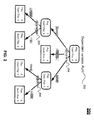
- Figure 2 shows a simplified view of a decision tree.
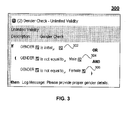
- Figure 3 shows a simplified view of a formula expression.
- Figure 4 shows a highly simplified view of an approach utilizing a rule type column according to an embodiment.
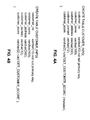
- Figure 4A shows one example of creation of a transitory rule type column using DDL statements.
- Figure 4B shows one example of creation of a non-transitory rule type column using DDL statements.
- Figure 4C shows one example of creation of a non-generic rule type column using DDL statements.
- Figure 4D shows one example of creation of a generic rule type column using DDL statements.
- Figure 4E shows a simplified example of a process flow according to an embodiment.
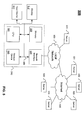
- Figure 5 shows an example of a computer system.
- Described herein are techniques for providing a new column type, a rule type column, in a database structure.
- Rules in a database are modeled using patterns such as a decision table, decision tree, or formula, by specifying rule content through accessible user interfaces instead of programming constructs.
- a rule type column can be created using statements in a data definition language (DDL) to define characteristics such as storage type, for example whether the rule type column is transient or permanent.
- DDL data definition language
- transient rule column will be populated only when a query is performed.
- a non-transient rule column will be populated when an insert is performed, and may be re-triggered during an update.
- Statements in the data definition language may also determine whether the rule type column is generic or non-generic.
- a generic rule column allows a user to define a specific rule each time an insert is performed (e.g. each row might trigger a different rule).
- a non-generic rule column allows definition of one rule statically during the initial creation, with this rule being the same for all rows.
- the system of rules evaluation can be integrated with the language processor. Rule processing can be triggered whenever a query is fired or during an insert/update operation, depending on whether the rule type column is transient or persistent.
- a business rule is a composition of single or multiple logical or computational expressions.
- the logic of a business rule can be modeled using various types of rule based constructs.
- FIG. 1 shows a simplified view of such a decision table 100.
- Decision table 100 comprises of a set of condition columns 102 and a result column 104.
- the condition columns Number of Products 102a and Number of Delayed Payments 102b
- the value in the result column 104 here an Intermediate Value
- the rows are processed in order from top to bottom and left to right. Once a match is detected, the corresponding result columns are returned.
- FIG. 2 shows a simplified view of such a decision tree in the form of a generic search tree 200.
- a dependent variable 202 (here PLAY) is determined on the basis of the values for a combination of multiple factors such as OUTLOOK 204, HUMIDITY 206, and WIND 208.
- FIG. 3 shows a simplified view of such a formula expression 300, here in the form of an IF-THEN rule.
- this particular rule governs the input of gender information into a form, where factors such as initial gender input 302 and available gender types 304 and 306, are used to determine a result 308 in the form of a message communicated to the user.
- Embodiments of the present invention allow rules to be modeled and stored in the database, in the form of DDL statements rather than in the application layer. This renders the rules accessible to the user, for easy reference, reuse, and updating.
- Figure 4 shows a highly simplified view of an approach according to embodiments of the present invention.
- Human user 402 is in communication with computer system 400 comprising database 404 comprising data in rows 404a and columns 404b and stored on non-transitory computer readable storage medium 408.
- the user is configured to pose a query 405 to the database through a processor 406 that is linked to the computer readable storage medium.
- Code stored on the non-transitory computer-readable storage medium provides instructions to the processor to perform one or more functions.
- certain code defines a graphic user interface (GUI) 407 allowing the user to formulate and communicate the query to the database via the data design level 410.
- GUI graphic user interface
- Figure 4 shows a particular embodiment wherein the code forming the GUI is present on the same non-transitory computer readable storage medium as the code for the database, this is not required.
- the code for the GUI could be stored on a different non-transitory computer readable storage medium, for example one located at a remote site and in communication with the database through a computer network in which the database is centrally stored.
- statements 411 in the data design language of the level 410 may reflect the logic of a business rule.
- Such rules may be modeled from patterns in the database using a decision table, decision tree, or formula.
- this rule can be expressed in the higher level DDL, rather than as a construct of a lower level programming language.
- rule type column in 404c.
- this rule type column may or may not be persisted in the database.
- Figure 4A shows one example of creation of a rule type column using DDL statements.
- the customer_score field is a rule type column which is transient. That is, the rule type column signifies the value for that column will be derived only during a query (or view), but will not be persisted in the database.
- a rule type column may be non-transient.
- Figure 4B shows an example of creation of such a rule type column using DDL statements.
- the value for that column will be derived during an insert or update operation and will be persisted. The persisted value can be changed when a rule is modified.
- a rule type column may be generic.
- Figure 4C shows an example of creation of such a rule type column using DDL statements.
- the rule is not defined during the table creation, but can be specified during an insert or update operation.
- a rule type column may alternatively be non-generic.
- Figure 4D shows an example of creation of such a rule type column using DDL statements.
- the rule is defined during the table creation and is the same for all the rows.
- process 480 comprises a first step 482 of providing a database created in an application level language (e.g. SQL) and comprising rows and columns.
- application level language e.g. SQL
- a second step 484 comprises modeling a business rule from patterns in the data of the database. This modeling can be done utilizing structures such as decision trees, decision tables, or formulas.
- a third step 486 comprises expressing the rule in a statement of a data design language.
- a fourth step 488 comprises posing a query to the database.
- a fifth step 490 comprises causing the DDL statement to create a rule type column.
- a sixth step 492 comprises deriving a value from the database based upon the query and the rule type column.
- a seventh step 494 of the process comprises displaying the value to a database user in response to the query.
- Embodiments of the present invention may offer certain advantages over conventional approaches.
- One possible benefit is to facilitate creation of rule type columns as part of data definition language. This allows complex rules to be modeled inside the database, and used as part of the column type definition.
- rule type columns created a part of the data definition language can reduce the complexity of the database, and also the time consumed during operation (TCO). For example application code logic is minimized, and instances of the processor having to reference the application code are reduced. Moreover, stored procedures and triggers associated with conventional database approaches can be eliminated.
- the rule based approach offered by embodiments of the present invention can facilitate data migration. For example, during data migration columns may have to be migrated from a source to a target based on certain rules. Usually such rules are modeled using a design workbench available with standard tools. One example is the SAP Business Objects Data Services tool. However, utilizing a rule type column expressed by DDL statements, this process can be integrated into the target database itself.
- the apparatuses, methods, and techniques described herein may be implemented as a computer program (software) executing on one or more computers.
- the computer program may further be stored on a non-transitory computer readable medium.
- the non-transitory computer readable medium may include instructions for performing the processes described.
- the computer system may comprise a software server.
- a number of software servers together may form a cluster, or logical network of computer systems programmed with software programs that communicate with each other and work together to process requests.
- Computer system 510 includes a bus 505 or other communication mechanism for communicating information, and a processor 501 coupled with bus 505 for processing information.
- Computer system 510 also includes a memory 502 coupled to bus 505 for storing information and instructions to be executed by processor 501, including information and instructions for performing the techniques described above, for example.
- This memory may also be used for storing variables or other intermediate information during execution of instructions to be executed by processor 501. Possible implementations of this memory may be, but are not limited to, random access memory (RAM), read only memory (ROM), or both.
- a storage device 503 is also provided for storing information and instructions.
- Common forms of storage devices include, for example, a hard drive, a magnetic disk, an optical disk, a CD-ROM, a DVD, a flash memory, a USB memory card, or any other medium from which a computer can read.
- Storage device 503 may include source code, binary code, or software files for performing the techniques above, for example.
- Storage device and memory are both examples of computer readable media.
- Computer system 510 may be coupled via bus 505 to a display 512, such as a cathode ray tube (CRT) or liquid crystal display (LCD), for displaying information to a computer user.
- a display 512 such as a cathode ray tube (CRT) or liquid crystal display (LCD)
- An input device 511 such as a keyboard and/or mouse is coupled to bus 505 for communicating information and command selections from the user to processor 501.
- bus 505 may be divided into multiple specialized buses.
- Computer system 510 also includes a network interface 504 coupled with bus 505.
- Network interface 504 may provide two-way data communication between computer system 510 and the local network 520.
- the network interface 504 may be a digital subscriber line (DSL) or a modem to provide data communication connection over a telephone line, for example.
- DSL digital subscriber line
- Another example of the network interface is a local area network (LAN) card to provide a data communication connection to a compatible LAN.
- LAN local area network
- Wireless links are another example.
- network interface 504 sends and receives electrical, electromagnetic, or optical signals that carry digital data streams representing various types of information.
- Computer system 510 can send and receive information, including messages or other interface actions, through the network interface 504 across a local network 520, an Intranet, or the Internet 530.
- computer system 510 may communicate with a plurality of other computer machines, such as server 515.
- server 515 may form a cloud computing network, which may be programmed with processes described herein.
- software components or services may reside on multiple different computer systems 510 or servers 531-535 across the network.
- the processes described above may be implemented on one or more servers, for example.
- a server 531 may transmit actions or messages from one component, through Internet 530, local network 520, and network interface 504 to a component on computer system 510.
- the software components and processes described above may be implemented on any computer system and send and/or receive information across a network, for example.
- a non-transitory computer readable storage medium particularly embodying a computer program product for performing a method, said method comprising: providing a database created in an application level language and comprising data organized in rows and columns; expressing a rule modeled from data patterns, in a statement in a data design language; posing a query to the database; causing the statement in the data design language to communicate with the database to create a rule type column; deriving a value based on the query and a row intersecting the rule type column; and displaying the value for the rule type column in response to the query
- the method comprises persisting the value in the database. Further particularly, the method comprises not persisting the value in the database. Further particularly, the method comprises having the rule type column be the same for all of the row. Further particularly, the method comprises expressing the rule at a time of creation of the database. Further particularly, the method comprises expressing the rule at a time of an insert or update operation.
Landscapes
- Engineering & Computer Science (AREA)
- Theoretical Computer Science (AREA)
- Physics & Mathematics (AREA)
- Databases & Information Systems (AREA)
- General Physics & Mathematics (AREA)
- General Engineering & Computer Science (AREA)
- Data Mining & Analysis (AREA)
- Computational Linguistics (AREA)
- Fuzzy Systems (AREA)
- Mathematical Physics (AREA)
- Probability & Statistics with Applications (AREA)
- Software Systems (AREA)
- Information Retrieval, Db Structures And Fs Structures Therefor (AREA)
Abstract
Description
- The present invention relates to storage of data in databases, and in particular, to extension of a data definition language (DDL) to introduce a new column type: a rule type column.
- Unless otherwise indicated herein, the approaches described in this section are not prior art to the claims in this application and are not admitted to be prior art by inclusion in this section.
- Databases comprising are highly useful tools allowing users to manage complex relationships between different types of data. For example, a business rule is a composition of single or multiple logical or computational expressions. Such rules may find expression within database structures comprising rows and columns.
- Existing database systems, however, generally do not provide the capability of defining derived columns based on certain complex rule evaluation. Rather, in many cases derived or transient columns need to be defined at the application layer. As the database user may not be fluent in the language of the application layer, this can reduce flexibility of the database.
- In certain cases, databases may allow simple calculations to be encapsulated in column definitions. For example, a virtual column may be defined by evaluating an expression, the result of which becomes the metadata of the column. However, a virtual column is defined only during table creation or modification. Specifically, a virtual column is derived using the logic contained in the expression and other column values. The expressions deriving the value of a virtual column are statically defined during the table creation and are not reused from a repository. The expressions are limited to computations or condition evaluation, rather than complex business logic. In this manner, virtual columns are static and cannot be modeled based on complex business rules.
- Certain conventional approaches may provide the use of a CREATE RULE SQL statement. This feature allows creation of rules, which when bound to a database column will restrict the values that can be inserted into that column. Once a rule is created using a CREATE RULE statement, it can be bound to a column of a table. However, binding a rule does not affect the current data in the database table.
- Certain database applications may also rely on stored procedures or functions to encapsulate many of rules. However, such reliance upon stored rules permits less reusability of the database. Moreover the semantics of such stored rules are less transparent, again reducing flexibility of the database for the business users.
- Finally, placing the rules remote from a user in storage and/or within the application layer, can interfere with the ongoing relevance of the database to the user. In particular, maintaining the accuracy of such rules is cumbersome, and changing them is difficult and typically requires intervention by one fluent in the language of the database application layer.
- Instead, it is desirable that users should be able to maintain rules in a separate repository. This will permit reusability of rules.
- The present disclosure addresses these and other issues with systems and methods for extending a data definition language (DDL) to introduce a new column type known as the rule type column, which can be readily accessed by a database user.
- A data definition language (DDL) may be extended by introducing a new column type: a rule type column. Rules in a database are modeled using patterns such as a decision table or a decision tree, by specifying rule content through accessible user interfaces instead of programming constructs. A rule type column can be created using the DDL statements to define its storage type (transient or permanent), and/or whether it is generic or non-generic. A transient rule column will be populated only when a query is performed. A non-transient rule column will be populated when an insert is performed, and may be re-triggered during an update. A generic rule type column allows a user to define a specific rule each time an insert is performed (e.g. each row might trigger a different rule). A non-generic rule type column allows definition of one rule statically during the initial creation, with this rule being the same for all rows. The system of rules evaluation can be integrated with the language processor. Rule processing can be triggered whenever a query is fired or during an insert/update operation, depending on whether the rule type column is transient or persistent.
- An embodiment of a computer-implemented method, comprises, providing in a non-transitory computer readable storage medium, a database created in an application level language and comprising data organized in rows and columns; expressing a rule modeled from data patterns, in a statement in a data design language; posing a query to the database; causing the statement in the data design language to communicate with the database to create a rule type column; deriving a value based on the query and a row intersecting the rule type column; and displaying the value for the rule type column in response to the query.
- An embodiment of a non-transitory computer readable storage medium embodies a computer program for performing a method, said method comprising providing a database created in an application level language and comprising data organized in rows and columns; expressing a rule modeled from data patterns, in a statement in a data design language; posing a query to the database; causing the statement in the data design language to communicate with the database to create a rule type column; deriving a value based on the query and a row intersecting the rule type column; and displaying the value for the rule type column in response to the query.
- An embodiment of a computer system comprises one or more processors; a software program, executable on said computer system, the software program configured to access in a non-transitory computer readable storage medium, a database created in an application level language and comprising data organized in rows and columns; express a rule modeled from data patterns, in a statement in a data design language; pose a query to the database; cause the statement in the data design language to communicate with the database to create a rule type column; derive a value based on the query and a row intersecting the rule type column; and display the value for the rule type column in response to the query.
- According to certain embodiments, the value may be persisted in the database. In other embodiments, the value is not persisted in the database.
- According to some embodiments, the rule type column is the same for all of the rows.
- In some embodiments, the rule is expressed at a time of creation of the database. In certain embodiments, the rule is expressed at a time of an insert or update operation.
- The following detailed description and accompanying drawings provide a better understanding of the nature and advantages of the present invention.
-
Figure 1 shows a simplified view of a decision table. -
Figure 2 shows a simplified view of a decision tree. -
Figure 3 shows a simplified view of a formula expression. -
Figure 4 shows a highly simplified view of an approach utilizing a rule type column according to an embodiment. -
Figure 4A shows one example of creation of a transitory rule type column using DDL statements. -
Figure 4B shows one example of creation of a non-transitory rule type column using DDL statements. -
Figure 4C shows one example of creation of a non-generic rule type column using DDL statements. -
Figure 4D shows one example of creation of a generic rule type column using DDL statements. -
Figure 4E shows a simplified example of a process flow according to an embodiment. -
Figure 5 shows an example of a computer system. - Described herein are techniques for providing a new column type, a rule type column, in a database structure. Rules in a database are modeled using patterns such as a decision table, decision tree, or formula, by specifying rule content through accessible user interfaces instead of programming constructs.
- A rule type column can be created using statements in a data definition language (DDL) to define characteristics such as storage type, for example whether the rule type column is transient or permanent.
- In particular, a transient rule column will be populated only when a query is performed. A non-transient rule column will be populated when an insert is performed, and may be re-triggered during an update.
- Statements in the data definition language may also determine whether the rule type column is generic or non-generic. A generic rule column allows a user to define a specific rule each time an insert is performed (e.g. each row might trigger a different rule). A non-generic rule column allows definition of one rule statically during the initial creation, with this rule being the same for all rows.
- The system of rules evaluation can be integrated with the language processor. Rule processing can be triggered whenever a query is fired or during an insert/update operation, depending on whether the rule type column is transient or persistent.
- As mentioned above, a business rule is a composition of single or multiple logical or computational expressions. The logic of a business rule can be modeled using various types of rule based constructs.
- One example of a rule based construct is a decision table.
FIG. 1 shows a simplified view of such a decision table 100. - Decision table 100 comprises of a set of
condition columns 102 and aresult column 104. In this particular decision table, the condition columns (Number ofProducts 102a and Number ofDelayed Payments 102b) are used to determine the value in the result column 104 (here an Intermediate Value). - The rows are processed in order from top to bottom and left to right. Once a match is detected, the corresponding result columns are returned.
- Another example of a rule based construct is a decision tree.
FIG. 2 shows a simplified view of such a decision tree in the form of ageneric search tree 200. According to the rule expressed by this search tree, a dependent variable 202 (here PLAY), is determined on the basis of the values for a combination of multiple factors such asOUTLOOK 204,HUMIDITY 206, andWIND 208. - Still another example of a rule based construct is a formula expression.
FIG. 3 shows a simplified view of such aformula expression 300, here in the form of an IF-THEN rule. In particular, this particular rule governs the input of gender information into a form, where factors such asinitial gender input 302 andavailable gender types - Embodiments of the present invention allow rules to be modeled and stored in the database, in the form of DDL statements rather than in the application layer. This renders the rules accessible to the user, for easy reference, reuse, and updating.
-
Figure 4 shows a highly simplified view of an approach according to embodiments of the present invention. Human user 402 is in communication with computer system 400 comprisingdatabase 404 comprising data inrows 404a andcolumns 404b and stored on non-transitory computerreadable storage medium 408. The user is configured to pose aquery 405 to the database through aprocessor 406 that is linked to the computer readable storage medium. - Code stored on the non-transitory computer-readable storage medium provides instructions to the processor to perform one or more functions. For example, certain code defines a graphic user interface (GUI) 407 allowing the user to formulate and communicate the query to the database via the
data design level 410. - While
Figure 4 shows a particular embodiment wherein the code forming the GUI is present on the same non-transitory computer readable storage medium as the code for the database, this is not required. According to certain embodiments, the code for the GUI could be stored on a different non-transitory computer readable storage medium, for example one located at a remote site and in communication with the database through a computer network in which the database is centrally stored. - As described below,
statements 411 in the data design language of thelevel 410, may reflect the logic of a business rule. Such rules may be modeled from patterns in the database using a decision table, decision tree, or formula. Beneficially, according to embodiments of the present invention, this rule can be expressed in the higher level DDL, rather than as a construct of a lower level programming language. - Expression of the rule in the DDL, allows for the creation of a corresponding rule type column in 404c. As discussed below, this rule type column may or may not be persisted in the database.
-
Figure 4A shows one example of creation of a rule type column using DDL statements. In this example, the customer_score field is a rule type column which is transient. That is, the rule type column signifies the value for that column will be derived only during a query (or view), but will not be persisted in the database. - Alternatively, a rule type column may be non-transient.
Figure 4B shows an example of creation of such a rule type column using DDL statements. In a non-transient type rule column, the value for that column will be derived during an insert or update operation and will be persisted. The persisted value can be changed when a rule is modified. - According to certain embodiments, a rule type column may be generic.
Figure 4C shows an example of creation of such a rule type column using DDL statements. In such a generic type rule column, the rule is not defined during the table creation, but can be specified during an insert or update operation. - A rule type column may alternatively be non-generic.
Figure 4D shows an example of creation of such a rule type column using DDL statements. In such a non-generic type rule column, the rule is defined during the table creation and is the same for all the rows. - Processes according to certain embodiments of the present invention may be summarized in the highly simplified flow chart shown in
Figure 4E . In particular,process 480 comprises afirst step 482 of providing a database created in an application level language (e.g. SQL) and comprising rows and columns. - A
second step 484 comprises modeling a business rule from patterns in the data of the database. This modeling can be done utilizing structures such as decision trees, decision tables, or formulas. - A
third step 486 comprises expressing the rule in a statement of a data design language. Afourth step 488 comprises posing a query to the database. - A
fifth step 490 comprises causing the DDL statement to create a rule type column. Asixth step 492 comprises deriving a value from the database based upon the query and the rule type column. Aseventh step 494 of the process comprises displaying the value to a database user in response to the query. - Embodiments of the present invention may offer certain advantages over conventional approaches. One possible benefit is to facilitate creation of rule type columns as part of data definition language. This allows complex rules to be modeled inside the database, and used as part of the column type definition.
- Moreover, the rule type columns created a part of the data definition language can reduce the complexity of the database, and also the time consumed during operation (TCO). For example application code logic is minimized, and instances of the processor having to reference the application code are reduced. Moreover, stored procedures and triggers associated with conventional database approaches can be eliminated.
- Implementation of the rule type columns in the database also allows more transparency to business users. This is because the rules are now accessible in the higher level DDL, rather than deep within the application code. Because managing complex logic in the form of business rules is much easier than writing code, this accessibility enables users to design and model the rules in an intuitive and non-programmable way.
- Furthermore, the rule based approach offered by embodiments of the present invention can facilitate data migration. For example, during data migration columns may have to be migrated from a source to a target based on certain rules. Usually such rules are modeled using a design workbench available with standard tools. One example is the SAP Business Objects Data Services tool. However, utilizing a rule type column expressed by DDL statements, this process can be integrated into the target database itself.
- The apparatuses, methods, and techniques described herein may be implemented as a computer program (software) executing on one or more computers. The computer program may further be stored on a non-transitory computer readable medium. The non-transitory computer readable medium may include instructions for performing the processes described.
- In the following description, for purposes of explanation, examples and specific details are set forth in order to provide a thorough understanding of various embodiments. It will be evident, however, to one skilled in the art that the present invention as defined by the claims may include some or all of the features in these examples alone or in combination with other features described below, and may further include modifications and equivalents of the features and concepts described herein.
- The computer system may comprise a software server. A number of software servers together may form a cluster, or logical network of computer systems programmed with software programs that communicate with each other and work together to process requests.
- An
example computer system 510 is illustrated inFig. 5 .Computer system 510 includes abus 505 or other communication mechanism for communicating information, and aprocessor 501 coupled withbus 505 for processing information. -
Computer system 510 also includes amemory 502 coupled tobus 505 for storing information and instructions to be executed byprocessor 501, including information and instructions for performing the techniques described above, for example. This memory may also be used for storing variables or other intermediate information during execution of instructions to be executed byprocessor 501. Possible implementations of this memory may be, but are not limited to, random access memory (RAM), read only memory (ROM), or both. - A
storage device 503 is also provided for storing information and instructions. Common forms of storage devices include, for example, a hard drive, a magnetic disk, an optical disk, a CD-ROM, a DVD, a flash memory, a USB memory card, or any other medium from which a computer can read. -
Storage device 503 may include source code, binary code, or software files for performing the techniques above, for example. Storage device and memory are both examples of computer readable media. -
Computer system 510 may be coupled viabus 505 to adisplay 512, such as a cathode ray tube (CRT) or liquid crystal display (LCD), for displaying information to a computer user. Aninput device 511 such as a keyboard and/or mouse is coupled tobus 505 for communicating information and command selections from the user toprocessor 501. The combination of these components allows the user to communicate with the system. In some systems,bus 505 may be divided into multiple specialized buses. -
Computer system 510 also includes anetwork interface 504 coupled withbus 505.Network interface 504 may provide two-way data communication betweencomputer system 510 and thelocal network 520. Thenetwork interface 504 may be a digital subscriber line (DSL) or a modem to provide data communication connection over a telephone line, for example. Another example of the network interface is a local area network (LAN) card to provide a data communication connection to a compatible LAN. Wireless links are another example. In any such implementation,network interface 504 sends and receives electrical, electromagnetic, or optical signals that carry digital data streams representing various types of information. -
Computer system 510 can send and receive information, including messages or other interface actions, through thenetwork interface 504 across alocal network 520, an Intranet, or theInternet 530. For a local network,computer system 510 may communicate with a plurality of other computer machines, such asserver 515. Accordingly,computer system 510 and server computer systems represented byserver 515 may form a cloud computing network, which may be programmed with processes described herein. - In an example involving the Internet, software components or services may reside on multiple
different computer systems 510 or servers 531-535 across the network. The processes described above may be implemented on one or more servers, for example. Aserver 531 may transmit actions or messages from one component, throughInternet 530,local network 520, andnetwork interface 504 to a component oncomputer system 510. The software components and processes described above may be implemented on any computer system and send and/or receive information across a network, for example.
Particularly, there is provided a non-transitory computer readable storage medium particularly embodying a computer program product for performing a method, said method comprising: providing a database created in an application level language and comprising data organized in rows and columns; expressing a rule modeled from data patterns, in a statement in a data design language; posing a query to the database; causing the statement in the data design language to communicate with the database to create a rule type column; deriving a value based on the query and a row intersecting the rule type column; and displaying the value for the rule type column in response to the query
Particularly, the method comprises persisting the value in the database. Further particularly, the method comprises not persisting the value in the database. Further particularly, the method comprises having the rule type column be the same for all of the row. Further particularly, the method comprises expressing the rule at a time of creation of the database. Further particularly, the method comprises expressing the rule at a time of an insert or update operation. - The above description illustrates various embodiments of the present invention along with examples of how aspects of the present invention may be implemented. The above examples and embodiments should not be deemed to be the only embodiments, and are presented to illustrate the flexibility and advantages of the present invention as defined by the following claims. Based on the above disclosure and the following claims, other arrangements, embodiments, implementations and equivalents will be evident to those skilled in the art and may be employed without departing from the spirit and scope of the invention as defined by the claims.
Claims (13)
- A computer-implemented method comprising:providing in a non-transitory computer readable storage medium, a database created in an application level language and comprising data organized in rows and columns;expressing a rule modeled from data patterns, in a statement in a data design language;posing a query to the database;causing the statement in the data design language to communicate with the database to create a rule type column;deriving a value based on the query and a row intersecting the rule type column; anddisplaying the value for the rule type column in response to the query.
- The computer-implemented method of claim 1 wherein the value is persisted in the database.
- The computer-implemented method of any one of the preceding claims wherein the value is not persisted in the database.
- The computer-implemented method of any one of the preceding claims wherein the rule type column is the same for all of the rows.
- The computer-implemented method of any one of the preceding claims wherein the rule is expressed at a time of creation of the database.
- The computer-implemented method of any one of the preceding claims wherein the rule is expressed at a time of an insert or update operation.
- A computer program product comprising computer-readable instructions which, when loaded and executed on a suitable system, perform the steps of a method according to any one of the preceding claims.
- A computer system comprising:one or more processors;a software program, executable on said computer system, the software program configured to:access in a non-transitory computer readable storage medium, a database created in an application level language and comprising data organized in rows and columns;express a rule modeled from data patterns, in a statement in a data design language;pose a query to the database;cause the statement in the data design language to communicate with the database to create a rule type column;derive a value based on the query and a row intersecting the rule type column; anddisplay the value for the rule type column in response to the query.
- The computer system of claim 8 wherein the software program is configured to persist the value in the database.
- The computer system of claim 8 or 9 wherein the software program is configured to not persist the value in the database.
- The computer system of any one of the preceding claims 8 to 10 wherein the software program is configured to make the rule type column be the same for all of the rows.
- The computer system of any one of the preceding claims 8 to 11 wherein the software program is configured to express the rule at a time of creation of the database.
- The computer system of any one of the preceding claims 8 to 12 wherein the software program is configured to express the rule at a time of an insert or update operation.
Applications Claiming Priority (1)
| Application Number | Priority Date | Filing Date | Title |
|---|---|---|---|
| US13/288,807 US20130117318A1 (en) | 2011-11-03 | 2011-11-03 | Rule Type Column in Database |
Publications (2)
| Publication Number | Publication Date |
|---|---|
| EP2590089A1 true EP2590089A1 (en) | 2013-05-08 |
| EP2590089B1 EP2590089B1 (en) | 2015-10-14 |
Family
ID=47115183
Family Applications (1)
| Application Number | Title | Priority Date | Filing Date |
|---|---|---|---|
| EP12007378.8A Active EP2590089B1 (en) | 2011-11-03 | 2012-10-26 | Rule type columns in database |
Country Status (2)
| Country | Link |
|---|---|
| US (1) | US20130117318A1 (en) |
| EP (1) | EP2590089B1 (en) |
Families Citing this family (4)
| Publication number | Priority date | Publication date | Assignee | Title |
|---|---|---|---|---|
| US8977610B2 (en) * | 2012-12-03 | 2015-03-10 | Sap Se | Automatic detection of patterns and inference in a dataset |
| US10043140B2 (en) | 2014-04-14 | 2018-08-07 | Sap Se | In-memory based database view for a business rule management application |
| US10885064B2 (en) | 2015-12-14 | 2021-01-05 | Pivotal Software, Inc. | Performing global computation in distributed database systems |
| US12437035B2 (en) * | 2023-07-27 | 2025-10-07 | Jpmorgan Chase Bank, N.A. | System and method for automating conversion of policy rules to spreadsheets while maintaining data security |
Citations (1)
| Publication number | Priority date | Publication date | Assignee | Title |
|---|---|---|---|---|
| US20060224542A1 (en) * | 2005-03-16 | 2006-10-05 | Aravind Yalamanchi | Incremental evaluation of complex event-condition-action rules in a database system |
Family Cites Families (2)
| Publication number | Priority date | Publication date | Assignee | Title |
|---|---|---|---|---|
| US8712990B2 (en) * | 2009-10-09 | 2014-04-29 | Sap Ag | Methods and systems for providing a business repository |
| US9424365B2 (en) * | 2009-10-30 | 2016-08-23 | Oracle International Corporation | XPath-based creation of relational indexes and constraints over XML data stored in relational tables |
-
2011
- 2011-11-03 US US13/288,807 patent/US20130117318A1/en not_active Abandoned
-
2012
- 2012-10-26 EP EP12007378.8A patent/EP2590089B1/en active Active
Patent Citations (1)
| Publication number | Priority date | Publication date | Assignee | Title |
|---|---|---|---|---|
| US20060224542A1 (en) * | 2005-03-16 | 2006-10-05 | Aravind Yalamanchi | Incremental evaluation of complex event-condition-action rules in a database system |
Non-Patent Citations (3)
| Title |
|---|
| ADELBERG B ET AL: "THE STRIP RULE SYSTEM FOR EFFICIENTLY MAINTAINING DERIVED DATA", SIGMOD RECORD, ACM, NEW YORK, NY, US, vol. 26, no. 2, 1 June 1997 (1997-06-01), pages 147 - 158, XP000730505, ISSN: 0163-5808, DOI: 10.1145/253260.253287 * |
| STONEBRAKER M ET AL: "THE POSTGRES NEXT-GENERATION DATABASE MANAGEMENT SYSTEM", COMMUNICATIONS OF THE ACM, ASSOCIATION FOR COMPUTING MACHINERY, INC, UNITED STATES, vol. 34, no. 10, 1 October 1991 (1991-10-01), pages 78 - 92, XP000266968, ISSN: 0001-0782, DOI: 10.1145/125223.125262 * |
| WIDOM J: "The Starburst active database rule system", IEEE TRANSACTIONS ON KNOWLEDGE AND DATA ENGINEERING, IEEE SERVICE CENTER, LOS ALAMITOS, CA, US, vol. 8, no. 4, 1 August 1996 (1996-08-01), pages 583 - 595, XP002493830, ISSN: 1041-4347, DOI: 10.1109/69.536251 * |
Also Published As
| Publication number | Publication date |
|---|---|
| EP2590089B1 (en) | 2015-10-14 |
| US20130117318A1 (en) | 2013-05-09 |
Similar Documents
| Publication | Publication Date | Title |
|---|---|---|
| US11797558B2 (en) | Generating data transformation workflows | |
| US10114859B2 (en) | Extensions of structured query language for database-native support of graph data | |
| EP2590088A1 (en) | Database queries enriched in rules | |
| US9892207B2 (en) | Automatic migration for on-premise data objects to on-demand data objects | |
| US11023468B2 (en) | First/last aggregation operator on multiple keyfigures with a single table scan | |
| US20200193037A1 (en) | Semi-rule based high performance permission management | |
| CN106611037A (en) | Method and device for distributed diagram calculation | |
| US20130086547A1 (en) | Real-time operational reporting and analytics on development entities | |
| US10339040B2 (en) | Core data services test double framework automation tool | |
| US20140279836A1 (en) | Configurable Rule for Monitoring Data of In Memory Database | |
| US20160267147A1 (en) | Tag Cloud Visualization and/or Filter for Large Data Volumes | |
| EP2590089B1 (en) | Rule type columns in database | |
| KR101769848B1 (en) | A data processing system using scripts by using commercial interpreter | |
| US9280361B2 (en) | Methods and systems for a real time transformation of declarative model and layout into interactive, digital, multi device forms | |
| US20130262417A1 (en) | Graphical Representation and Automatic Generation of Iteration Rule | |
| US11455308B2 (en) | Partition aware partial query processing | |
| US20200192936A1 (en) | Application runtime for cloud-based analytics engine | |
| US10255316B2 (en) | Processing of data chunks using a database calculation engine | |
| US20140100840A1 (en) | Systems and Methods for Creating Context Sensitive Graph Topologies Based on Multidimensional Context Information | |
| US10203952B2 (en) | Transparently splitting and rewriting data-base object bundles to database entities | |
| US10169410B2 (en) | Merge of stacked calculation views with higher level programming language logic | |
| US20140149360A1 (en) | Usage of Filters for Database-Level Implementation of Constraints | |
| JP6400191B2 (en) | Instruction set generation that implements rules designed to update specified objects according to the application data model | |
| US9116933B2 (en) | Interface optimizing model based upon database information | |
| US11947541B1 (en) | Table user-defined function for graph data processing |
Legal Events
| Date | Code | Title | Description |
|---|---|---|---|
| PUAI | Public reference made under article 153(3) epc to a published international application that has entered the european phase |
Free format text: ORIGINAL CODE: 0009012 |
|
| AK | Designated contracting states |
Kind code of ref document: A1 Designated state(s): AL AT BE BG CH CY CZ DE DK EE ES FI FR GB GR HR HU IE IS IT LI LT LU LV MC MK MT NL NO PL PT RO RS SE SI SK SM TR |
|
| AX | Request for extension of the european patent |
Extension state: BA ME |
|
| 17P | Request for examination filed |
Effective date: 20131017 |
|
| RBV | Designated contracting states (corrected) |
Designated state(s): AL AT BE BG CH CY CZ DE DK EE ES FI FR GB GR HR HU IE IS IT LI LT LU LV MC MK MT NL NO PL PT RO RS SE SI SK SM TR |
|
| 17Q | First examination report despatched |
Effective date: 20140317 |
|
| RAP1 | Party data changed (applicant data changed or rights of an application transferred) |
Owner name: SAP SE |
|
| GRAP | Despatch of communication of intention to grant a patent |
Free format text: ORIGINAL CODE: EPIDOSNIGR1 |
|
| INTG | Intention to grant announced |
Effective date: 20150409 |
|
| GRAP | Despatch of communication of intention to grant a patent |
Free format text: ORIGINAL CODE: EPIDOSNIGR1 |
|
| INTG | Intention to grant announced |
Free format text: DECISION TO REFUSE A EUROPEAN PATENT APPLICATION (EPO FORM 1088 DATED 16/06/2014) Effective date: 20150624 |
|
| GRAS | Grant fee paid |
Free format text: ORIGINAL CODE: EPIDOSNIGR3 |
|
| GRAA | (expected) grant |
Free format text: ORIGINAL CODE: 0009210 |
|
| AK | Designated contracting states |
Kind code of ref document: B1 Designated state(s): AL AT BE BG CH CY CZ DE DK EE ES FI FR GB GR HR HU IE IS IT LI LT LU LV MC MK MT NL NO PL PT RO RS SE SI SK SM TR |
|
| REG | Reference to a national code |
Ref country code: GB Ref legal event code: FG4D |
|
| REG | Reference to a national code |
Ref country code: AT Ref legal event code: REF Ref document number: 755611 Country of ref document: AT Kind code of ref document: T Effective date: 20151015 Ref country code: CH Ref legal event code: EP |
|
| REG | Reference to a national code |
Ref country code: FR Ref legal event code: PLFP Year of fee payment: 4 |
|
| REG | Reference to a national code |
Ref country code: IE Ref legal event code: FG4D |
|
| REG | Reference to a national code |
Ref country code: DE Ref legal event code: R096 Ref document number: 602012011453 Country of ref document: DE |
|
| REG | Reference to a national code |
Ref country code: NL Ref legal event code: MP Effective date: 20151014 |
|
| REG | Reference to a national code |
Ref country code: LT Ref legal event code: MG4D |
|
| REG | Reference to a national code |
Ref country code: AT Ref legal event code: MK05 Ref document number: 755611 Country of ref document: AT Kind code of ref document: T Effective date: 20151014 |
|
| PG25 | Lapsed in a contracting state [announced via postgrant information from national office to epo] |
Ref country code: NL Free format text: LAPSE BECAUSE OF FAILURE TO SUBMIT A TRANSLATION OF THE DESCRIPTION OR TO PAY THE FEE WITHIN THE PRESCRIBED TIME-LIMIT Effective date: 20151014 Ref country code: IT Free format text: LAPSE BECAUSE OF FAILURE TO SUBMIT A TRANSLATION OF THE DESCRIPTION OR TO PAY THE FEE WITHIN THE PRESCRIBED TIME-LIMIT Effective date: 20151014 Ref country code: IS Free format text: LAPSE BECAUSE OF FAILURE TO SUBMIT A TRANSLATION OF THE DESCRIPTION OR TO PAY THE FEE WITHIN THE PRESCRIBED TIME-LIMIT Effective date: 20160214 Ref country code: NO Free format text: LAPSE BECAUSE OF FAILURE TO SUBMIT A TRANSLATION OF THE DESCRIPTION OR TO PAY THE FEE WITHIN THE PRESCRIBED TIME-LIMIT Effective date: 20160114 Ref country code: HR Free format text: LAPSE BECAUSE OF FAILURE TO SUBMIT A TRANSLATION OF THE DESCRIPTION OR TO PAY THE FEE WITHIN THE PRESCRIBED TIME-LIMIT Effective date: 20151014 Ref country code: LT Free format text: LAPSE BECAUSE OF FAILURE TO SUBMIT A TRANSLATION OF THE DESCRIPTION OR TO PAY THE FEE WITHIN THE PRESCRIBED TIME-LIMIT Effective date: 20151014 Ref country code: ES Free format text: LAPSE BECAUSE OF FAILURE TO SUBMIT A TRANSLATION OF THE DESCRIPTION OR TO PAY THE FEE WITHIN THE PRESCRIBED TIME-LIMIT Effective date: 20151014 |
|
| PG25 | Lapsed in a contracting state [announced via postgrant information from national office to epo] |
Ref country code: FI Free format text: LAPSE BECAUSE OF FAILURE TO SUBMIT A TRANSLATION OF THE DESCRIPTION OR TO PAY THE FEE WITHIN THE PRESCRIBED TIME-LIMIT Effective date: 20151014 Ref country code: RS Free format text: LAPSE BECAUSE OF FAILURE TO SUBMIT A TRANSLATION OF THE DESCRIPTION OR TO PAY THE FEE WITHIN THE PRESCRIBED TIME-LIMIT Effective date: 20151014 Ref country code: AT Free format text: LAPSE BECAUSE OF FAILURE TO SUBMIT A TRANSLATION OF THE DESCRIPTION OR TO PAY THE FEE WITHIN THE PRESCRIBED TIME-LIMIT Effective date: 20151014 Ref country code: PL Free format text: LAPSE BECAUSE OF FAILURE TO SUBMIT A TRANSLATION OF THE DESCRIPTION OR TO PAY THE FEE WITHIN THE PRESCRIBED TIME-LIMIT Effective date: 20151014 Ref country code: PT Free format text: LAPSE BECAUSE OF FAILURE TO SUBMIT A TRANSLATION OF THE DESCRIPTION OR TO PAY THE FEE WITHIN THE PRESCRIBED TIME-LIMIT Effective date: 20160215 Ref country code: GR Free format text: LAPSE BECAUSE OF FAILURE TO SUBMIT A TRANSLATION OF THE DESCRIPTION OR TO PAY THE FEE WITHIN THE PRESCRIBED TIME-LIMIT Effective date: 20160115 Ref country code: SE Free format text: LAPSE BECAUSE OF FAILURE TO SUBMIT A TRANSLATION OF THE DESCRIPTION OR TO PAY THE FEE WITHIN THE PRESCRIBED TIME-LIMIT Effective date: 20151014 Ref country code: LV Free format text: LAPSE BECAUSE OF FAILURE TO SUBMIT A TRANSLATION OF THE DESCRIPTION OR TO PAY THE FEE WITHIN THE PRESCRIBED TIME-LIMIT Effective date: 20151014 |
|
| REG | Reference to a national code |
Ref country code: CH Ref legal event code: PL |
|
| REG | Reference to a national code |
Ref country code: DE Ref legal event code: R097 Ref document number: 602012011453 Country of ref document: DE |
|
| REG | Reference to a national code |
Ref country code: IE Ref legal event code: MM4A |
|
| PG25 | Lapsed in a contracting state [announced via postgrant information from national office to epo] |
Ref country code: MC Free format text: LAPSE BECAUSE OF FAILURE TO SUBMIT A TRANSLATION OF THE DESCRIPTION OR TO PAY THE FEE WITHIN THE PRESCRIBED TIME-LIMIT Effective date: 20151014 Ref country code: LI Free format text: LAPSE BECAUSE OF NON-PAYMENT OF DUE FEES Effective date: 20151031 Ref country code: CH Free format text: LAPSE BECAUSE OF NON-PAYMENT OF DUE FEES Effective date: 20151031 Ref country code: CZ Free format text: LAPSE BECAUSE OF FAILURE TO SUBMIT A TRANSLATION OF THE DESCRIPTION OR TO PAY THE FEE WITHIN THE PRESCRIBED TIME-LIMIT Effective date: 20151014 |
|
| PLBE | No opposition filed within time limit |
Free format text: ORIGINAL CODE: 0009261 |
|
| STAA | Information on the status of an ep patent application or granted ep patent |
Free format text: STATUS: NO OPPOSITION FILED WITHIN TIME LIMIT |
|
| PG25 | Lapsed in a contracting state [announced via postgrant information from national office to epo] |
Ref country code: SM Free format text: LAPSE BECAUSE OF FAILURE TO SUBMIT A TRANSLATION OF THE DESCRIPTION OR TO PAY THE FEE WITHIN THE PRESCRIBED TIME-LIMIT Effective date: 20151014 Ref country code: RO Free format text: LAPSE BECAUSE OF FAILURE TO SUBMIT A TRANSLATION OF THE DESCRIPTION OR TO PAY THE FEE WITHIN THE PRESCRIBED TIME-LIMIT Effective date: 20151014 Ref country code: DK Free format text: LAPSE BECAUSE OF FAILURE TO SUBMIT A TRANSLATION OF THE DESCRIPTION OR TO PAY THE FEE WITHIN THE PRESCRIBED TIME-LIMIT Effective date: 20151014 Ref country code: EE Free format text: LAPSE BECAUSE OF FAILURE TO SUBMIT A TRANSLATION OF THE DESCRIPTION OR TO PAY THE FEE WITHIN THE PRESCRIBED TIME-LIMIT Effective date: 20151014 Ref country code: SK Free format text: LAPSE BECAUSE OF FAILURE TO SUBMIT A TRANSLATION OF THE DESCRIPTION OR TO PAY THE FEE WITHIN THE PRESCRIBED TIME-LIMIT Effective date: 20151014 |
|
| 26N | No opposition filed |
Effective date: 20160715 |
|
| REG | Reference to a national code |
Ref country code: FR Ref legal event code: PLFP Year of fee payment: 5 |
|
| PG25 | Lapsed in a contracting state [announced via postgrant information from national office to epo] |
Ref country code: IE Free format text: LAPSE BECAUSE OF NON-PAYMENT OF DUE FEES Effective date: 20151026 |
|
| PG25 | Lapsed in a contracting state [announced via postgrant information from national office to epo] |
Ref country code: SI Free format text: LAPSE BECAUSE OF FAILURE TO SUBMIT A TRANSLATION OF THE DESCRIPTION OR TO PAY THE FEE WITHIN THE PRESCRIBED TIME-LIMIT Effective date: 20151014 |
|
| PG25 | Lapsed in a contracting state [announced via postgrant information from national office to epo] |
Ref country code: BE Free format text: LAPSE BECAUSE OF FAILURE TO SUBMIT A TRANSLATION OF THE DESCRIPTION OR TO PAY THE FEE WITHIN THE PRESCRIBED TIME-LIMIT Effective date: 20151014 |
|
| PG25 | Lapsed in a contracting state [announced via postgrant information from national office to epo] |
Ref country code: HU Free format text: LAPSE BECAUSE OF FAILURE TO SUBMIT A TRANSLATION OF THE DESCRIPTION OR TO PAY THE FEE WITHIN THE PRESCRIBED TIME-LIMIT; INVALID AB INITIO Effective date: 20121026 Ref country code: BG Free format text: LAPSE BECAUSE OF FAILURE TO SUBMIT A TRANSLATION OF THE DESCRIPTION OR TO PAY THE FEE WITHIN THE PRESCRIBED TIME-LIMIT Effective date: 20151014 |
|
| PG25 | Lapsed in a contracting state [announced via postgrant information from national office to epo] |
Ref country code: CY Free format text: LAPSE BECAUSE OF FAILURE TO SUBMIT A TRANSLATION OF THE DESCRIPTION OR TO PAY THE FEE WITHIN THE PRESCRIBED TIME-LIMIT Effective date: 20151014 |
|
| PG25 | Lapsed in a contracting state [announced via postgrant information from national office to epo] |
Ref country code: MT Free format text: LAPSE BECAUSE OF FAILURE TO SUBMIT A TRANSLATION OF THE DESCRIPTION OR TO PAY THE FEE WITHIN THE PRESCRIBED TIME-LIMIT Effective date: 20151014 |
|
| REG | Reference to a national code |
Ref country code: FR Ref legal event code: PLFP Year of fee payment: 6 |
|
| PG25 | Lapsed in a contracting state [announced via postgrant information from national office to epo] |
Ref country code: LU Free format text: LAPSE BECAUSE OF NON-PAYMENT OF DUE FEES Effective date: 20151026 |
|
| PG25 | Lapsed in a contracting state [announced via postgrant information from national office to epo] |
Ref country code: MK Free format text: LAPSE BECAUSE OF FAILURE TO SUBMIT A TRANSLATION OF THE DESCRIPTION OR TO PAY THE FEE WITHIN THE PRESCRIBED TIME-LIMIT Effective date: 20151014 Ref country code: TR Free format text: LAPSE BECAUSE OF FAILURE TO SUBMIT A TRANSLATION OF THE DESCRIPTION OR TO PAY THE FEE WITHIN THE PRESCRIBED TIME-LIMIT Effective date: 20151014 |
|
| REG | Reference to a national code |
Ref country code: FR Ref legal event code: PLFP Year of fee payment: 7 |
|
| PG25 | Lapsed in a contracting state [announced via postgrant information from national office to epo] |
Ref country code: AL Free format text: LAPSE BECAUSE OF FAILURE TO SUBMIT A TRANSLATION OF THE DESCRIPTION OR TO PAY THE FEE WITHIN THE PRESCRIBED TIME-LIMIT Effective date: 20151014 |
|
| REG | Reference to a national code |
Ref country code: DE Ref legal event code: R079 Ref document number: 602012011453 Country of ref document: DE Free format text: PREVIOUS MAIN CLASS: G06F0017300000 Ipc: G06F0016000000 |
|
| PGFP | Annual fee paid to national office [announced via postgrant information from national office to epo] |
Ref country code: DE Payment date: 20251021 Year of fee payment: 14 |
|
| PGFP | Annual fee paid to national office [announced via postgrant information from national office to epo] |
Ref country code: GB Payment date: 20251022 Year of fee payment: 14 |
|
| PGFP | Annual fee paid to national office [announced via postgrant information from national office to epo] |
Ref country code: FR Payment date: 20251030 Year of fee payment: 14 |