EP2589492A1 - Supporting film for tape material and tape material - Google Patents
Supporting film for tape material and tape material Download PDFInfo
- Publication number
- EP2589492A1 EP2589492A1 EP11812178.9A EP11812178A EP2589492A1 EP 2589492 A1 EP2589492 A1 EP 2589492A1 EP 11812178 A EP11812178 A EP 11812178A EP 2589492 A1 EP2589492 A1 EP 2589492A1
- Authority
- EP
- European Patent Office
- Prior art keywords
- support
- tape
- barrier layer
- film
- elongation
- Prior art date
- Legal status (The legal status is an assumption and is not a legal conclusion. Google has not performed a legal analysis and makes no representation as to the accuracy of the status listed.)
- Granted
Links
Images




Classifications
-
- B—PERFORMING OPERATIONS; TRANSPORTING
- B32—LAYERED PRODUCTS
- B32B—LAYERED PRODUCTS, i.e. PRODUCTS BUILT-UP OF STRATA OF FLAT OR NON-FLAT, e.g. CELLULAR OR HONEYCOMB, FORM
- B32B27/00—Layered products comprising a layer of synthetic resin
- B32B27/06—Layered products comprising a layer of synthetic resin as the main or only constituent of a layer, which is next to another layer of the same or of a different material
- B32B27/08—Layered products comprising a layer of synthetic resin as the main or only constituent of a layer, which is next to another layer of the same or of a different material of synthetic resin
-
- A—HUMAN NECESSITIES
- A61—MEDICAL OR VETERINARY SCIENCE; HYGIENE
- A61F—FILTERS IMPLANTABLE INTO BLOOD VESSELS; PROSTHESES; DEVICES PROVIDING PATENCY TO, OR PREVENTING COLLAPSING OF, TUBULAR STRUCTURES OF THE BODY, e.g. STENTS; ORTHOPAEDIC, NURSING OR CONTRACEPTIVE DEVICES; FOMENTATION; TREATMENT OR PROTECTION OF EYES OR EARS; BANDAGES, DRESSINGS OR ABSORBENT PADS; FIRST-AID KITS
- A61F13/00—Bandages or dressings; Absorbent pads
- A61F13/02—Adhesive bandages or dressings
- A61F13/0246—Adhesive bandages or dressings characterised by the skin-adhering layer
- A61F13/0253—Adhesive bandages or dressings characterised by the skin-adhering layer characterized by the adhesive material
-
- A—HUMAN NECESSITIES
- A61—MEDICAL OR VETERINARY SCIENCE; HYGIENE
- A61L—METHODS OR APPARATUS FOR STERILISING MATERIALS OR OBJECTS IN GENERAL; DISINFECTION, STERILISATION OR DEODORISATION OF AIR; CHEMICAL ASPECTS OF BANDAGES, DRESSINGS, ABSORBENT PADS OR SURGICAL ARTICLES; MATERIALS FOR BANDAGES, DRESSINGS, ABSORBENT PADS OR SURGICAL ARTICLES
- A61L15/00—Chemical aspects of, or use of materials for, bandages, dressings or absorbent pads
- A61L15/16—Bandages, dressings or absorbent pads for physiological fluids such as urine or blood, e.g. sanitary towels, tampons
- A61L15/42—Use of materials characterised by their function or physical properties
- A61L15/58—Adhesives
-
- B—PERFORMING OPERATIONS; TRANSPORTING
- B32—LAYERED PRODUCTS
- B32B—LAYERED PRODUCTS, i.e. PRODUCTS BUILT-UP OF STRATA OF FLAT OR NON-FLAT, e.g. CELLULAR OR HONEYCOMB, FORM
- B32B27/00—Layered products comprising a layer of synthetic resin
- B32B27/30—Layered products comprising a layer of synthetic resin comprising vinyl (co)polymers; comprising acrylic (co)polymers
- B32B27/306—Layered products comprising a layer of synthetic resin comprising vinyl (co)polymers; comprising acrylic (co)polymers comprising vinyl acetate or vinyl alcohol (co)polymers
-
- B—PERFORMING OPERATIONS; TRANSPORTING
- B32—LAYERED PRODUCTS
- B32B—LAYERED PRODUCTS, i.e. PRODUCTS BUILT-UP OF STRATA OF FLAT OR NON-FLAT, e.g. CELLULAR OR HONEYCOMB, FORM
- B32B27/00—Layered products comprising a layer of synthetic resin
- B32B27/40—Layered products comprising a layer of synthetic resin comprising polyurethanes
-
- C—CHEMISTRY; METALLURGY
- C09—DYES; PAINTS; POLISHES; NATURAL RESINS; ADHESIVES; COMPOSITIONS NOT OTHERWISE PROVIDED FOR; APPLICATIONS OF MATERIALS NOT OTHERWISE PROVIDED FOR
- C09J—ADHESIVES; NON-MECHANICAL ASPECTS OF ADHESIVE PROCESSES IN GENERAL; ADHESIVE PROCESSES NOT PROVIDED FOR ELSEWHERE; USE OF MATERIALS AS ADHESIVES
- C09J7/00—Adhesives in the form of films or foils
- C09J7/20—Adhesives in the form of films or foils characterised by their carriers
- C09J7/22—Plastics; Metallised plastics
- C09J7/25—Plastics; Metallised plastics based on macromolecular compounds obtained otherwise than by reactions involving only carbon-to-carbon unsaturated bonds
-
- C—CHEMISTRY; METALLURGY
- C09—DYES; PAINTS; POLISHES; NATURAL RESINS; ADHESIVES; COMPOSITIONS NOT OTHERWISE PROVIDED FOR; APPLICATIONS OF MATERIALS NOT OTHERWISE PROVIDED FOR
- C09J—ADHESIVES; NON-MECHANICAL ASPECTS OF ADHESIVE PROCESSES IN GENERAL; ADHESIVE PROCESSES NOT PROVIDED FOR ELSEWHERE; USE OF MATERIALS AS ADHESIVES
- C09J2429/00—Presence of polyvinyl alcohol
- C09J2429/001—Presence of polyvinyl alcohol in the barrier layer
-
- C—CHEMISTRY; METALLURGY
- C09—DYES; PAINTS; POLISHES; NATURAL RESINS; ADHESIVES; COMPOSITIONS NOT OTHERWISE PROVIDED FOR; APPLICATIONS OF MATERIALS NOT OTHERWISE PROVIDED FOR
- C09J—ADHESIVES; NON-MECHANICAL ASPECTS OF ADHESIVE PROCESSES IN GENERAL; ADHESIVE PROCESSES NOT PROVIDED FOR ELSEWHERE; USE OF MATERIALS AS ADHESIVES
- C09J2475/00—Presence of polyurethane
- C09J2475/006—Presence of polyurethane in the substrate
-
- Y—GENERAL TAGGING OF NEW TECHNOLOGICAL DEVELOPMENTS; GENERAL TAGGING OF CROSS-SECTIONAL TECHNOLOGIES SPANNING OVER SEVERAL SECTIONS OF THE IPC; TECHNICAL SUBJECTS COVERED BY FORMER USPC CROSS-REFERENCE ART COLLECTIONS [XRACs] AND DIGESTS
- Y10—TECHNICAL SUBJECTS COVERED BY FORMER USPC
- Y10T—TECHNICAL SUBJECTS COVERED BY FORMER US CLASSIFICATION
- Y10T428/00—Stock material or miscellaneous articles
- Y10T428/28—Web or sheet containing structurally defined element or component and having an adhesive outermost layer
- Y10T428/2848—Three or more layers
-
- Y—GENERAL TAGGING OF NEW TECHNOLOGICAL DEVELOPMENTS; GENERAL TAGGING OF CROSS-SECTIONAL TECHNOLOGIES SPANNING OVER SEVERAL SECTIONS OF THE IPC; TECHNICAL SUBJECTS COVERED BY FORMER USPC CROSS-REFERENCE ART COLLECTIONS [XRACs] AND DIGESTS
- Y10—TECHNICAL SUBJECTS COVERED BY FORMER USPC
- Y10T—TECHNICAL SUBJECTS COVERED BY FORMER US CLASSIFICATION
- Y10T428/00—Stock material or miscellaneous articles
- Y10T428/31504—Composite [nonstructural laminate]
- Y10T428/31551—Of polyamidoester [polyurethane, polyisocyanate, polycarbamate, etc.]
- Y10T428/31573—Next to addition polymer of ethylenically unsaturated monomer
- Y10T428/31576—Ester monomer type [polyvinylacetate, etc.]
Definitions
- the present invention relates to a support film for tape, and particularly a support film for tape having barrier properties, and a tape using the same.
- a tape on which an adhesive layer is formed on one surface of a sheet-shaped or film-shaped support has been widely used for various purposes such as for medical use or industrial use.
- a plasticizer and the like are combined with the adhesive layer of the tape. Since there is a concern of a negative effect due to adsorption of the plasticizer depending on materials of a support, it is preferable that at least a surface of the support which comes into contact with the adhesive layer has barrier properties.
- a gas barrier film disclosed in Patent Document 1 Japanese Unexamined Patent Application, First Publication No. 2003-136645 ) has been used as a film material having barrier properties.
- a barrier coating film is formed by applying a barrier coating material which is obtained by mixing montmorillonite, which is a layered inorganic compound, and a water-soluble polymer compound on one surface of a plastic base film.
- a tape is used in a severe environment to come in contact with or be dipped into liquid in a state of being attached to an object, in some cases.
- the present invention has been made to address the aforementioned problems and aims at providing a support film for tape and a tape which can be used while maintaining an excellent barrier property even under a severe environment.
- a first aspect of the present invention provides a support film for tape which is used for a tape, including a film-shaped support formed of polyurethane; and a barrier layer which includes polyvinyl alcohol and a layered inorganic compound, and which is formed on one surface of the support, in which a degree of saponification of the polyvinyl alcohol is equal to or more than 70 percent and equal to or less than 95.5%.
- the layered inorganic compound be montmorillonite.
- a tape of a second aspect of the present invention includes: the support film for tape of the present invention; and an adhesive layer which is formed on the barrier layer opposite to the support.
- a support film for tape and a tape of the present invention having an excellent barrier property under a severe environment can be maintained during use.
- the tape of the embodiment is configured to include a support film for tape (hereinafter, simply referred to as "support film”) of the present invention, and the tape can be used as an adhesive tape or the like in various fields such as for industrial use, packaging, protecting, labeling, masking, hygienic materials such as a diaper, medical use such as an adhesive patch or percutaneously administered medicine, make-up, and household use.
- support film for tape
- the tape can be used as an adhesive tape or the like in various fields such as for industrial use, packaging, protecting, labeling, masking, hygienic materials such as a diaper, medical use such as an adhesive patch or percutaneously administered medicine, make-up, and household use.
- An adhesive tape for locking a packaging material is used as a packaging.
- the adhesive tape is capable of being elongated, even in a case of applying a force due to shipping or the like in a state of being packaged, the tape is not cut or the packaging material is not damaged.
- an exterior portion is not contaminated when shipping or the like.
- For medical use in a case of attaching to a human body or an animal, it is possible to respond to according to elongation associated with movement of a human body or the like, and unexpected peel-off is hardly generated.
- it is possible to maintain excellent barrier properties in a state of being elongated it is possible to obtain excellent performances for medical use without leakage of an active ingredient such as a plasticizer or the like, to the external portion.
- FIG 1 is a cross-sectional view of a tape 1 of the embodiment in a thickness direction.
- the tape 1 includes a support film 10, an adhesive layer 20 formed on one surface of the support film 10, and a peel-off member 30 which covers the adhesive layer.
- the support film 10 includes a support 11 which includes polyurethane and is formed in a film shape, and a barrier layer 12 which is formed on one surface of the support 11.
- the support 11 has flexibility and can be elongated by a predetermined maximum elongation rate increasing equal to or more than 10 percent (%) dimensionally. A detailed value of the maximum elongation rate may be suitably set based on the purpose of the tape 1.
- the polyurethane which forms the support 11 is not particularly limited, polyurethane used in a polyurethane film of the related art can be used, and the polyurethane can be suitably selected depending on the purpose.
- polyether-based polyurethane, polyester-based polyurethane, polycarbonate-based polyurethane or the like may be used. To provide necessary water resistance, polyether-based polyurethane or polycarbonate-based polyurethane is preferable.
- a type of isocyanate forming a urethane bond it is not particularly limited to a type of isocyanate forming a urethane bond, a yellowing type, or a non-yellowing type, and it is suitably selected according to the purpose, storing period or method in usage, types of used plasticizer and the like.
- a thickness of the support 11 is 10 micrometers ( ⁇ m) to 200 ⁇ m, and is preferably equal to or more than 15 ⁇ m and equal to or less than 100 ⁇ m.
- the thickness is less than 10 ⁇ m, it is difficult to handle as it is too thin, and when the thickness is more than 200 ⁇ m, flexibility is reduced such that original flexibility is not sufficiently exhibited.
- the support 11 can include a film called a release film having a peel-off property.
- a film called a release film having a peel-off property When the thickness of the support 11 is thin, since the support is elongated in a step of applying the barrier layer 12, if manufacturing in a state where the release film and the support (for example, polyurethane as the support) are laminated, it is possible to easily process while suppressing the elongation.
- rigidity of the tape is reinforced by the release film after processing the support 11 on the tape, handleability of the tape is improved.
- the release film can be adhered to the tape to an object and peeled from the support, such that the support 11 after the peel-off exhibits original flexibility.
- the material of the release film is not particularly limited; however, generally, a material which can be peeled off without performing elongation or contraction, such as a silicon-treated PET film, a polyolefin film having an excellent peel-off property, an aggregate such as paper or polyethylene, or the like can be used.
- the barrier layer 12 is formed to include montmorillonite, which is a layered inorganic compound, and polyvinyl alcohol (PVA), which is a water-soluble polymer compound.
- montmorillonite which is a layered inorganic compound
- PVA polyvinyl alcohol
- the montmorillonite is a dioctahedral type water-bearing layered silicate mineral and is ideally expressed by the following equation. Al 2 - y ⁇ Mg y ⁇ Si 4 ⁇ O 10 ⁇ OH 2 ⁇ M + M 1 / 2 2 + ⁇ y ⁇ nH 2 ⁇ O
- y 0.2 to 0.6
- M exchangeable cation such as Na, K, Ca, Mg, or H
- n amount of interlayer water.
- a crystal structure of montmorillonite forms a layered structure which includes three layers formed of two tetrahedral sheets and one octahedral sheet as a base.
- a cation of the tetrahedral sheets is only Si, and a cation, Al, of the octahedral sheet is substituted for a part of Mg.
- a unit crystal layer takes on a negative electric charge, and cations such as Na + , K + , Ca 2+ , Mg 2+ , H + , and the like enter and compensate between crystal layers so as to balance with the negative electric charge.
- types of the cation can be used with no particular limitations.
- the barrier layer 12 can be formed by applying a barrier coating material obtained by adding and adjusting lower alcohol with a gravure coating method or a roll coating method, after the montmorillonite is added to and dispersed in a water solution obtained by melting PVA in water. If necessary, an anchor coating layer may be formed on the support 11 and the barrier layer 12 may be formed on the anchor coating layer. In the same manner, the barrier layer 12 may be formed after being subjected to a surface treatment on the support 11. As the surface treatment, a corona discharge treatment or a plasma discharge treatment is preferable. From the above, the corona discharge treatment is more preferable from the viewpoint of general versatility or handleability.
- a percentage content of the montmorillonite of the barrier layer 12 is in a range of equal to or more than 2 weight percent (wt%) and equal to or less than 22 wt%. A detailed description will be described later; however, if the percentage content is less than 2 wt%, it is difficult to secure a sufficient barrier property. On the other hand, if the percentage content exceeds 22 wt%, an effect caused by the montmorillonite on the physical property of the barrier layer 12 becomes too much, and as a result, sufficient responding to shape change of the support due to the elongation cannot be performed, and cracks or the like are easily generated.
- the support 11 is peeled off from the barrier layer 12 and separated from the adhesive layer 20, in some cases.
- the PVA is a polymer compound which is obtained by saponification of polyvinyl acetate (alkaline hydrolysis treatment) and includes a hydroxyl group; however, in the support film 10 of the embodiment, in order to maintain excellent adhesiveness of the barrier layer 12 and the support 11 to prevent the situation described above, a degree of saponification of PVA is in a range equal to or more than 70% and equal to or less than 95.5%.
- the adhesive layer 20 is configured by mixing plasticizer with a base material having an adhesive property and is formed by applying or the like on the barrier layer 12 and a surface opposite to the support 11.
- An adhesive used in the adhesive layer 20 is not particularly limited, and a rubber-based polymer such as natural rubber, synthetic isoprene rubber, reclaimed rubber, styrene-butadiene rubber (SBR), styrene-isoprene-styrene block copolymer (SIS), styrene-butadiene-styrene block copolymer (SBS), polyisobutylene, SEBS, SEPS, or the like, acrylic polymers such as a copolymer of (meth) acrylic acid ester containing (meth) acrylic acid ester as a main monomer, silicon-based polymers such as silicon rubber, silicon resin, dimethyl siloxane, diphenyl siloxane, and the like, and various polyvinyl ether-based, polyvinyl ester-based, EVA-based, polyester-based materials can be used.
- a rubber-based polymer such as natural rubber, synthetic isoprene rubber, reclaimed rubber,
- the plasticizer is not particularly limited, and various plasticizers such as petroleum-based oil (paraffinic process oil, naphthenic process oil, or aromatic process oil), dibasic acid esters (dibutyl phthalate, or dioctyl phthalate), liquid rubbers (polybutene, liquid isoprene, or liquid polyisobutylene), vegetable-based oils (castor oil or tall oil) liquid fatty acid esters (isopropyl myristate, hexyl laurate, diethyl sebacate, or diisopropyl sebacate), triacetin, sorbitan fatty acid esters, sucrose fatty acid esters, glycerin fatty acid esters, and surfactants can be used.
- various plasticizers such as petroleum-based oil (paraffinic process oil, naphthenic process oil, or aromatic process oil), dibasic acid esters (dibutyl phthalate, or dioctyl phthalate), liquid rubbers (poly
- rosin resins such as rosin, modified rosin, or rosin ester
- terpene resins such as terpene resin, aromatic modified terpene resin, hydrogenated terpene resin, or terpene phenol resin
- petroleum resin such as aliphatic petroleum resins, aromatic petroleum resins, copolymer petroleum resin, hydrogenated petroleum resin, or DCPD-based petroleum resin
- styrene resins styrene resins substituted, xylene resin, phenol resin, chroman-indene resin or the like
- rosin resins such as rosin, modified rosin, or rosin ester
- terpene resins such as terpene resin, aromatic modified terpene resin, hydrogenated terpene resin, or terpene phenol resin
- petroleum resin such as aliphatic petroleum resins, aromatic petroleum resins, copolymer petroleum resin, hydrogenated petroleum resin, or DCPD-based petroleum resin
- styrene resins
- antioxidants may be added depending on the purpose of the tape.
- fillers may be added.
- cross-linking agents ultraviolet absorbers, colorants, flame retardants, conductive agents, foaming agents, or the like.
- the tape 1 of the embodiment by suitably setting the percentage content of montmorillonite of the barrier layer 12 in the range described above while considering the types of plasticizers, transition of the plasticizer to the support 11 from the barrier layer 12 is suitably suppressed.
- polyurethane configuring the support 11 is easily adsorbed onto the plasticizer, and in this case, transformation or the like of the support 11 due to the transition of the plasticizer to the support 11 becomes a problem; however, in the tape 1, not only at the time of non-elongation of the support 11, but even at the time of elongation with the elongation rate of 20% (which indicates an increase of length by 20% after the elongation), the barrier property of the barrier layer 12 is suitably maintained. As a result, not only at the time of storage before the use, but also at the time of being used by being attached to an object, it is possible to suitably prevent the problem due to the plasticizer.
- the percentage content of the montmorillonite can be easily set in detail by a preliminary experiment or the like using the plasticizer to be used. A relationship between the barrier property with respect to a part of the plasticizer and the percentage content of montmorillonite will be described later.
- the peel-off member 30 is a member to protect an adhesive surface of the adhesive layer 20 until the adhesion to an object, and various types of well-known release paper can be suitably used. In addition, when the tape 1 is rolled up on a core, the peel-off member 30 may not be prepared.
- a material prepared by polyether-based polyurethane having a thickness of 20 ⁇ m was used as a support.
- a barrier layer was formed by uniformly applying 1.0 g/m 2 of a barrier coating material which was obtained by mixing MN and PVA (with a degree of saponification of 80%) on one surface of the support.
- 8 stages of the percentage content of MN of the barrier layer were 1 wt%, 2 wt%, 10 wt%, 18 wt%, 22 wt%, 25 wt%, 30 wt%, and 37 wt%, and 8 types of samples of support films were prepared.
- the prepared 8 types of samples 100 were cut to be a size of 25 millimeters (mm) ⁇ 120 mm as shown in FIG. 2 , and in order to perform easy operation with a tensile tester, a sheet 101 prepared by polyethylene terephthalate (PET) having a thickness of 50 ⁇ m was attached to both surfaces of both ends in a longitudinal direction with double-sided tape and an evaluation piece 100A was prepared.
- a dimension of the evaluation piece 100A of the sheet 101 in the longitudinal direction was 10 mm, and in each evaluation piece 100A, a length of a portion which was not covered with the sheet 101 in the longitudinal direction was 100 mm.
- Both ends of the evaluation piece 100A reinforced by the sheet 101 were fixed to the chuck unit of the tensile tester, and as shown in FIG. 3 , the portion not covered with the sheet 101 was elongated to reach a predetermined elongation rate with an elongation speed of 300 mm per minute (mm/min). Five stages of elongation rate were 0%, 5%, 10%, 20%, and 30%.
- the evaluation piece 100A was taken off from the tensile tester, and as shown in FIG. 4 , each evaluation piece 100A was fixed onto a black acrylic plate 110 obtained by attaching a PET sheet 111 obtained by applying silicon on the surface thereof, with a barrier layer to be on the upper side. At that time, the preparation was performed so that as little air as possible entered between the evaluation piece 100A and the PET sheet 111.
- plasticizers After attaching to the acrylic plate 110, as shown in FIG. 5 , two drops (about 0.08 grams) of plasticizers were put on each evaluation piece 100 by a dropper, and the evaluation piece was expanded to have a length of 50 mm by using a cotton swab 112.
- plasticizers four types of isopropyl myristate (IPM), triacetin (TA), glyceryl monoisostearate (MGIS), and sorbitan monooleate (SMO) were used.
- IPM isopropyl myristate
- TA triacetin
- MGIS glyceryl monoisostearate
- SMO sorbitan monooleate
- the IPM, the TA, and the SMO were reviewed using the evaluation pieces 100A having a percentage content of MN of 1 wt%, 10 wt%, 18 wt%, 22 wt%, 25 wt%, 30 wt%, and 37 wt%, and MGIS was reviewed using the evaluation pieces 100A having a percentage content of MN of 2 wt%, 10 wt%, and 22 wt%.
- Solubility parameters (SP value based on Fedors method) of each plasticizer used in the experiment were 8.5 for IPM, 10.2 for TA, 10.76 for MGIS, and 11.76 for SMO, and it was assumed that the plasticizer having a low SP value tended to be preferable.
- FIGS. 6 to 9 are optical micrographs of the support film after performing the elongation operations with an elongation rate of 20% with respect to the evaluated pieces with a percentage content of MN of 10 wt%, 18 wt%, 25 wt%, and 30 wt%.
- 10 wt% and 18 wt% of the MN significant changes on the external portion were not recognized; however, in a case of 25 wt% and 30 wt% of the MN, wrinkles due to the swelling were recognized.
- the modulus was equal to or less than 8 Megapascals (MPa) for all samples, and excellent flexibility was shown. Accordingly, it was determined that the barrier layer did not negatively affect the flexibility of the support film.
- a barrier layer was formed by uniformly applying 1.0 g/m 2 of a barrier coating material which was obtained by mixing MN and PVA (with a degree of saponification of 80%) on one surface of the support.
- MN and PVA with a degree of saponification of 80%
- Nine stages of the pe rcentage content of MN of the barrier layer were 1 wt%, 2 wt%, 4 wt%, 10 wt%, 18 wt%, 22 wt%, 25 wt%, 30 wt%, and 37 wt%, and 9 types of samples of support films were prepared.
- an adhesive layer (applied amount of adhesive layer: 100 g/m 2 ) including a base material and a plasticizer was formed on the barrier layer.
- Two types of rubber base material and an acrylic base material were used as the base material, and a total of 5 types of adhesive layer materials were prepared by combining each base material with a plurality of types of plasticizers.
- the adhesive layer was formed on each sample using each adhesive layer material, and samples of tapes were prepared by covering the adhesive layer with a peel-off member.
- the combinations of the base material and the plasticizer for each adhesive layer material were as follows (% of the plasticizer indicates the percentage content). Rubber base material (IPM 20%, MGIS 10%, SMO 10%, and SMO 20%) And the acrylic base material (IPM 20%, TA 10%, MGIS 10%, and SMO10%)
- a tape sample obtained by cutting to be 10 square centimeters was stored at 60°C for 1 week without performing an elongation operation.
- a tape sample obtained by cutting to have a width of 30 mm and a length of 50 mm was stored at 60°C for three days after removing the peel-off member and performing the elongation operation with an elongation rate of 20% in a length direction once.
- a support was prepared in the same manner as Experiment 1, and a degree of saponification of PVA to be used for a barrier layer was four stages of 80%, 90%, 95.5% and 98.5% (complete saponification).
- a barrier coating material was prepared by mixing the PVA of each degree of saponification and the MN, and was applied to form a barrier layer with the same amount and method as Experiment 1, and a sample 120 of the support film was prepared.
- the percentage content of the MN of the barrier layer was 10 wt%.
- the percentage content of MN of the barrier layer is set to be equal to or more than 2 wt% and equal to or less than 22 wt%, it is possible to suitably maintain the barrier property even with elongation to an elongation rate of 20%.
- the non-elongation time and the elongation to an elongation rate of 20% it is possible to suitably maintain a barrier property and to form a tape which suitably prevents transition of plasticizers of an adhesive layer to a support.
- a degree of saponification of PVA of the barrier layer is equal to or more than 70% and equal to or less than 95.5%, it is possible to obtain excellent adhesiveness of the support and the barrier layer, and to configure a support film and a tape which can resist under more varied use conditions.
- a percentage content of a layered inorganic compound of the barrier layer may be beyond the range described above.
- the present invention can be widely used for a tape for various purposes such as for medicine, for industrial use and the like.
Landscapes
- Health & Medical Sciences (AREA)
- Chemical & Material Sciences (AREA)
- General Health & Medical Sciences (AREA)
- Veterinary Medicine (AREA)
- Engineering & Computer Science (AREA)
- Public Health (AREA)
- Life Sciences & Earth Sciences (AREA)
- Animal Behavior & Ethology (AREA)
- Epidemiology (AREA)
- Heart & Thoracic Surgery (AREA)
- Hematology (AREA)
- Chemical Kinetics & Catalysis (AREA)
- Organic Chemistry (AREA)
- Dermatology (AREA)
- Biomedical Technology (AREA)
- Materials Engineering (AREA)
- Vascular Medicine (AREA)
- Laminated Bodies (AREA)
- Adhesive Tapes (AREA)
- Adhesives Or Adhesive Processes (AREA)
- Medicinal Preparation (AREA)
- Materials For Medical Uses (AREA)
- Compositions Of Macromolecular Compounds (AREA)
Abstract
Description
- The present invention relates to a support film for tape, and particularly a support film for tape having barrier properties, and a tape using the same.
- Priority is claimed on Japanese Patent Application No.
2010-171209, filed July 29, 2010 - A tape on which an adhesive layer is formed on one surface of a sheet-shaped or film-shaped support has been widely used for various purposes such as for medical use or industrial use. In addition to adhesive materials, in some cases, a plasticizer and the like are combined with the adhesive layer of the tape. Since there is a concern of a negative effect due to adsorption of the plasticizer depending on materials of a support, it is preferable that at least a surface of the support which comes into contact with the adhesive layer has barrier properties.
- A gas barrier film disclosed in Patent Document 1 (Japanese Unexamined Patent Application, First Publication No.
2003-136645 - A tape is used in a severe environment to come in contact with or be dipped into liquid in a state of being attached to an object, in some cases.
- However, since a gas barrier film disclosed in Patent Document 1 is not initially obtained by assuming uses under such environments, an adhesive property of a support and a barrier coating layer is regarded as being insufficient. Accordingly, when trying to apply the gas barrier film disclosed in Patent Document 1 to a tape as it is, there are problems in that peeling is generated between the support and the barrier coating layer, and the gas barrier film does not sufficiently resist a severe usage environment.
- The present invention has been made to address the aforementioned problems and aims at providing a support film for tape and a tape which can be used while maintaining an excellent barrier property even under a severe environment.
- A first aspect of the present invention provides a support film for tape which is used for a tape, including a film-shaped support formed of polyurethane; and a barrier layer which includes polyvinyl alcohol and a layered inorganic compound, and which is formed on one surface of the support, in which a degree of saponification of the polyvinyl alcohol is equal to or more than 70 percent and equal to or less than 95.5%.
- In the support film for tape of the present invention, it is desirable that the layered inorganic compound be montmorillonite.
- In addition, a tape of a second aspect of the present invention includes: the support film for tape of the present invention; and an adhesive layer which is formed on the barrier layer opposite to the support.
- A support film for tape and a tape of the present invention having an excellent barrier property under a severe environment can be maintained during use.
-
-
FIG. 1 is a cross-sectional view of a tape of an embodiment of the present invention in a thickness direction. -
FIG. 2 is a view showing a procedure of an experiment for checking for a suitable range of a percentage content of montmorillonite in a barrier layer. -
FIG. 3 is a view showing a procedure of the same experiment. -
FIG. 4 is a view showing a procedure of the same experiment. -
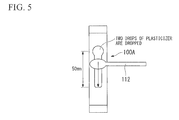
FIG. 5 is a view showing a procedure of the same experiment. -
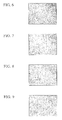
FIG. 6 is an optical micrograph of a barrier layer after performing an elongation operation with an elongation rate of 20% with respect to an evaluated piece with a percentage content of montmorillonite in a barrier layer of 10 wt%. -
FIG. 7 is an optical micrograph of a barrier layer after performing an elongation operation with an elongation rate of 20% with respect to an evaluated piece with a percentage content of montmorillonite in a barrier layer of 18 wt%. -
FIG. 8 is an optical micrograph of a barrier layer after performing an elongation operation with an elongation rate of 20% with respect to an evaluated piece with a percentage content of montmorillonite in a barrier layer of 25 wt%. -
FIG. 9 is an optical micrograph of a barrier layer after performing an elongation operation with an elongation rate of 20% with respect to an evaluated piece with a percentage content of montmorillonite in a barrier layer of 30 wt%. -
FIG. 10 is a graph showing a relationship between a percentage content of montmorillonite and a modulus value of a support film for tape. -
FIG. 11 is a view showing a procedure of an experiment for checking for a relationship between a degree of saponification of a water-soluble polymer compound and an adhesiveness of a support-barrier layer. -
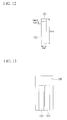
FIG. 12 is a view showing a procedure of the same experiment. -
FIG. 13 is a view showing a procedure of the same experiment. -
FIG. 14 is a view showing a procedure of the same experiment. -
FIG. 15 is a view showing a procedure of the same experiment. - Hereinafter, a tape of an embodiment of the present invention will be described referring to
FIGS. 1 to 15 . The tape of the embodiment is configured to include a support film for tape (hereinafter, simply referred to as "support film") of the present invention, and the tape can be used as an adhesive tape or the like in various fields such as for industrial use, packaging, protecting, labeling, masking, hygienic materials such as a diaper, medical use such as an adhesive patch or percutaneously administered medicine, make-up, and household use. - In addition, the following are exemplified as representative detailed examples. An adhesive tape for locking a packaging material is used as a packaging. As the adhesive tape is capable of being elongated, even in a case of applying a force due to shipping or the like in a state of being packaged, the tape is not cut or the packaging material is not damaged. In addition, since it is possible to maintain excellent barrier properties in a state of being elongated, an exterior portion is not contaminated when shipping or the like. For medical use, in a case of attaching to a human body or an animal, it is possible to respond to according to elongation associated with movement of a human body or the like, and unexpected peel-off is hardly generated. In addition, since it is possible to maintain excellent barrier properties in a state of being elongated, it is possible to obtain excellent performances for medical use without leakage of an active ingredient such as a plasticizer or the like, to the external portion.
-
FIG 1 is a cross-sectional view of a tape 1 of the embodiment in a thickness direction. The tape 1 includes asupport film 10, anadhesive layer 20 formed on one surface of thesupport film 10, and a peel-offmember 30 which covers the adhesive layer. - The
support film 10 includes asupport 11 which includes polyurethane and is formed in a film shape, and abarrier layer 12 which is formed on one surface of thesupport 11. - The
support 11 has flexibility and can be elongated by a predetermined maximum elongation rate increasing equal to or more than 10 percent (%) dimensionally. A detailed value of the maximum elongation rate may be suitably set based on the purpose of the tape 1. In the embodiment, the polyurethane which forms thesupport 11 is not particularly limited, polyurethane used in a polyurethane film of the related art can be used, and the polyurethane can be suitably selected depending on the purpose. For example, polyether-based polyurethane, polyester-based polyurethane, polycarbonate-based polyurethane or the like may be used. To provide necessary water resistance, polyether-based polyurethane or polycarbonate-based polyurethane is preferable. - In addition, it is not particularly limited to a type of isocyanate forming a urethane bond, a yellowing type, or a non-yellowing type, and it is suitably selected according to the purpose, storing period or method in usage, types of used plasticizer and the like.
- A thickness of the
support 11 is 10 micrometers (µm) to 200 µm, and is preferably equal to or more than 15 µm and equal to or less than 100 µm. When the thickness is less than 10 µm, it is difficult to handle as it is too thin, and when the thickness is more than 200 µm, flexibility is reduced such that original flexibility is not sufficiently exhibited. - The
support 11 can include a film called a release film having a peel-off property. When the thickness of thesupport 11 is thin, since the support is elongated in a step of applying thebarrier layer 12, if manufacturing in a state where the release film and the support (for example, polyurethane as the support) are laminated, it is possible to easily process while suppressing the elongation. In addition, since rigidity of the tape is reinforced by the release film after processing thesupport 11 on the tape, handleability of the tape is improved. The release film can be adhered to the tape to an object and peeled from the support, such that thesupport 11 after the peel-off exhibits original flexibility. - The material of the release film is not particularly limited; however, generally, a material which can be peeled off without performing elongation or contraction, such as a silicon-treated PET film, a polyolefin film having an excellent peel-off property, an aggregate such as paper or polyethylene, or the like can be used.
- The
barrier layer 12 is formed to include montmorillonite, which is a layered inorganic compound, and polyvinyl alcohol (PVA), which is a water-soluble polymer compound. - Mineralogically, the montmorillonite is a dioctahedral type water-bearing layered silicate mineral and is ideally expressed by the following equation.

- Herein, y = 0.2 to 0.6, M: exchangeable cation such as Na, K, Ca, Mg, or H, n: amount of interlayer water.
- A crystal structure of montmorillonite forms a layered structure which includes three layers formed of two tetrahedral sheets and one octahedral sheet as a base. A cation of the tetrahedral sheets is only Si, and a cation, Al, of the octahedral sheet is substituted for a part of Mg. Accordingly, a unit crystal layer takes on a negative electric charge, and cations such as Na+, K+, Ca2+, Mg2+, H+, and the like enter and compensate between crystal layers so as to balance with the negative electric charge. In the present invention, types of the cation can be used with no particular limitations.
- The
barrier layer 12 can be formed by applying a barrier coating material obtained by adding and adjusting lower alcohol with a gravure coating method or a roll coating method, after the montmorillonite is added to and dispersed in a water solution obtained by melting PVA in water. If necessary, an anchor coating layer may be formed on thesupport 11 and thebarrier layer 12 may be formed on the anchor coating layer. In the same manner, thebarrier layer 12 may be formed after being subjected to a surface treatment on thesupport 11. As the surface treatment, a corona discharge treatment or a plasma discharge treatment is preferable. From the above, the corona discharge treatment is more preferable from the viewpoint of general versatility or handleability. - A percentage content of the montmorillonite of the
barrier layer 12 is in a range of equal to or more than 2 weight percent (wt%) and equal to or less than 22 wt%. A detailed description will be described later; however, if the percentage content is less than 2 wt%, it is difficult to secure a sufficient barrier property. On the other hand, if the percentage content exceeds 22 wt%, an effect caused by the montmorillonite on the physical property of thebarrier layer 12 becomes too much, and as a result, sufficient responding to shape change of the support due to the elongation cannot be performed, and cracks or the like are easily generated. - In addition, when the tape 1 is used in an environment to be placed in water for long time in a state of being attached to an object, for example, if adhesiveness of the
support 11 and thebarrier layer 12 is not sufficient, thesupport 11 is peeled off from thebarrier layer 12 and separated from theadhesive layer 20, in some cases. The PVA is a polymer compound which is obtained by saponification of polyvinyl acetate (alkaline hydrolysis treatment) and includes a hydroxyl group; however, in thesupport film 10 of the embodiment, in order to maintain excellent adhesiveness of thebarrier layer 12 and thesupport 11 to prevent the situation described above, a degree of saponification of PVA is in a range equal to or more than 70% and equal to or less than 95.5%. A detailed description thereof will be also described later; however, if the degree of saponification exceeds 95.5%, the adhesiveness with thesupport 11 is degraded, and if the degree of saponification is less than 70%, thebarrier layer 12 becomes easily melted in water, and as a result, water resistance of thesupport film 10 and the tape 1 is degraded. Accordingly, when used for industrials, packaging, or protecting, it is assumed to be affected by rain outside, and when used for hygienic materials such as a diaper, medical use such as an adhesive patch or percutaneously administered medicine, make-up, or household use, it is assumed to be affected by sweat or water when using water in daily life. - The
adhesive layer 20 is configured by mixing plasticizer with a base material having an adhesive property and is formed by applying or the like on thebarrier layer 12 and a surface opposite to thesupport 11. - An adhesive used in the
adhesive layer 20 is not particularly limited, and a rubber-based polymer such as natural rubber, synthetic isoprene rubber, reclaimed rubber, styrene-butadiene rubber (SBR), styrene-isoprene-styrene block copolymer (SIS), styrene-butadiene-styrene block copolymer (SBS), polyisobutylene, SEBS, SEPS, or the like, acrylic polymers such as a copolymer of (meth) acrylic acid ester containing (meth) acrylic acid ester as a main monomer, silicon-based polymers such as silicon rubber, silicon resin, dimethyl siloxane, diphenyl siloxane, and the like, and various polyvinyl ether-based, polyvinyl ester-based, EVA-based, polyester-based materials can be used. - The plasticizer is not particularly limited, and various plasticizers such as petroleum-based oil (paraffinic process oil, naphthenic process oil, or aromatic process oil), dibasic acid esters (dibutyl phthalate, or dioctyl phthalate), liquid rubbers (polybutene, liquid isoprene, or liquid polyisobutylene), vegetable-based oils (castor oil or tall oil) liquid fatty acid esters (isopropyl myristate, hexyl laurate, diethyl sebacate, or diisopropyl sebacate), triacetin, sorbitan fatty acid esters, sucrose fatty acid esters, glycerin fatty acid esters, and surfactants can be used.
- Further, for improving adhesiveness, various tackifiers can be mixed. For example, rosin resins such as rosin, modified rosin, or rosin ester, terpene resins such as terpene resin, aromatic modified terpene resin, hydrogenated terpene resin, or terpene phenol resin, petroleum resin such as aliphatic petroleum resins, aromatic petroleum resins, copolymer petroleum resin, hydrogenated petroleum resin, or DCPD-based petroleum resin, styrene resins, styrene resins substituted, xylene resin, phenol resin, chroman-indene resin or the like can be used.
- In addition, depending on the purpose of the tape, antioxidants, fillers, cross-linking agents, ultraviolet absorbers, colorants, flame retardants, conductive agents, foaming agents, or the like may be added.
- In the tape 1 of the embodiment, by suitably setting the percentage content of montmorillonite of the
barrier layer 12 in the range described above while considering the types of plasticizers, transition of the plasticizer to thesupport 11 from thebarrier layer 12 is suitably suppressed. - In general, polyurethane configuring the
support 11 is easily adsorbed onto the plasticizer, and in this case, transformation or the like of thesupport 11 due to the transition of the plasticizer to thesupport 11 becomes a problem; however, in the tape 1, not only at the time of non-elongation of thesupport 11, but even at the time of elongation with the elongation rate of 20% (which indicates an increase of length by 20% after the elongation), the barrier property of thebarrier layer 12 is suitably maintained. As a result, not only at the time of storage before the use, but also at the time of being used by being attached to an object, it is possible to suitably prevent the problem due to the plasticizer. In addition, the percentage content of the montmorillonite can be easily set in detail by a preliminary experiment or the like using the plasticizer to be used. A relationship between the barrier property with respect to a part of the plasticizer and the percentage content of montmorillonite will be described later. - The peel-
off member 30 is a member to protect an adhesive surface of theadhesive layer 20 until the adhesion to an object, and various types of well-known release paper can be suitably used. In addition, when the tape 1 is rolled up on a core, the peel-off member 30 may not be prepared. - Next, a test and a result thereof which is performed for evaluating a suitable range of the percentage content of the montmorillonite (hereinafter, referred to as "MN", in some cases) of the
barrier layer 12 and a suitable range of the degree of saponification of the PVA will be described. - As a support, a material prepared by polyether-based polyurethane having a thickness of 20 µm was used. A barrier layer was formed by uniformly applying 1.0 g/m2 of a barrier coating material which was obtained by mixing MN and PVA (with a degree of saponification of 80%) on one surface of the support. By setting this as a basic configuration, 8 stages of the percentage content of MN of the barrier layer were 1 wt%, 2 wt%, 10 wt%, 18 wt%, 22 wt%, 25 wt%, 30 wt%, and 37 wt%, and 8 types of samples of support films were prepared.
- The prepared 8 types of
samples 100 were cut to be a size of 25 millimeters (mm) × 120 mm as shown inFIG. 2 , and in order to perform easy operation with a tensile tester, asheet 101 prepared by polyethylene terephthalate (PET) having a thickness of 50 µm was attached to both surfaces of both ends in a longitudinal direction with double-sided tape and anevaluation piece 100A was prepared. A dimension of theevaluation piece 100A of thesheet 101 in the longitudinal direction was 10 mm, and in eachevaluation piece 100A, a length of a portion which was not covered with thesheet 101 in the longitudinal direction was 100 mm. - Both ends of the
evaluation piece 100A reinforced by thesheet 101 were fixed to the chuck unit of the tensile tester, and as shown inFIG. 3 , the portion not covered with thesheet 101 was elongated to reach a predetermined elongation rate with an elongation speed of 300 mm per minute (mm/min). Five stages of elongation rate were 0%, 5%, 10%, 20%, and 30%. - After completing the elongation operation, the
evaluation piece 100A was taken off from the tensile tester, and as shown inFIG. 4 , eachevaluation piece 100A was fixed onto a blackacrylic plate 110 obtained by attaching aPET sheet 111 obtained by applying silicon on the surface thereof, with a barrier layer to be on the upper side. At that time, the preparation was performed so that as little air as possible entered between theevaluation piece 100A and thePET sheet 111. - After attaching to the
acrylic plate 110, as shown inFIG. 5 , two drops (about 0.08 grams) of plasticizers were put on eachevaluation piece 100 by a dropper, and the evaluation piece was expanded to have a length of 50 mm by using acotton swab 112. As plasticizers, four types of isopropyl myristate (IPM), triacetin (TA), glyceryl monoisostearate (MGIS), and sorbitan monooleate (SMO) were used. After being left for 30 minutes at room temperature, the plasticizers were wiped off and a degree of swelling of the support was visually evaluated. As an index, wrinkles of the support generated due to the swelling were used (two stages of wrinkles due to swelling were not recognized: ○, and wrinkles due to swelling were recognized: ). - The IPM, the TA, and the SMO were reviewed using the
evaluation pieces 100A having a percentage content of MN of 1 wt%, 10 wt%, 18 wt%, 22 wt%, 25 wt%, 30 wt%, and 37 wt%, and MGIS was reviewed using theevaluation pieces 100A having a percentage content of MN of 2 wt%, 10 wt%, and 22 wt%. - The result is shown in Table 1. When the percentage content of MN was equal to or less than 22 wt% with the IPM, TA, and MGIS, the swelling of the support with all elongation rates was not recognized, and transition of the plasticizers was suppressed. On the other hand, with the SMO, the swelling was recognized on the support regardless of the percentage content of MN and the elongation rates, and it was considered that the SMO was not preferable as the plasticizer to be used for a film material of the present invention, in some cases. Solubility parameters (SP value based on Fedors method) of each plasticizer used in the experiment were 8.5 for IPM, 10.2 for TA, 10.76 for MGIS, and 11.76 for SMO, and it was assumed that the plasticizer having a low SP value tended to be preferable.
-
FIGS. 6 to 9 are optical micrographs of the support film after performing the elongation operations with an elongation rate of 20% with respect to the evaluated pieces with a percentage content of MN of 10 wt%, 18 wt%, 25 wt%, and 30 wt%. In a case of 10 wt% and 18 wt% of the MN, significant changes on the external portion were not recognized; however, in a case of 25 wt% and 30 wt% of the MN, wrinkles due to the swelling were recognized.
- In addition, in each sample, when evaluating modulus after the elongation operation based on a test method of a polyurethane-based thermoplastic elastomer (JIS K 7311), as shown in
FIG. 10 , the modulus was equal to or less than 8 Megapascals (MPa) for all samples, and excellent flexibility was shown. Accordingly, it was determined that the barrier layer did not negatively affect the flexibility of the support film. - The same material as Experiment 1 was used as a support, and a barrier layer was formed by uniformly applying 1.0 g/m2 of a barrier coating material which was obtained by mixing MN and PVA (with a degree of saponification of 80%) on one surface of the support. Nine stages of the pe rcentage content of MN of the barrier layer were 1 wt%, 2 wt%, 4 wt%, 10 wt%, 18 wt%, 22 wt%, 25 wt%, 30 wt%, and 37 wt%, and 9 types of samples of support films were prepared.
- In addition, an adhesive layer (applied amount of adhesive layer: 100 g/m2) including a base material and a plasticizer was formed on the barrier layer. Two types of rubber base material and an acrylic base material were used as the base material, and a total of 5 types of adhesive layer materials were prepared by combining each base material with a plurality of types of plasticizers. The adhesive layer was formed on each sample using each adhesive layer material, and samples of tapes were prepared by covering the adhesive layer with a peel-off member. The combinations of the base material and the plasticizer for each adhesive layer material were as follows (% of the plasticizer indicates the percentage content). Rubber base material (
IPM 20%,MGIS 10%,SMO 10%, andSMO 20%) And the acrylic base material (IPM 20%,TA 10%,MGIS 10%, and SMO10%) - A tape sample obtained by cutting to be 10 square centimeters was stored at 60°C for 1 week without performing an elongation operation.
- A tape sample obtained by cutting to have a width of 30 mm and a length of 50 mm was stored at 60°C for three days after removing the peel-off member and performing the elongation operation with an elongation rate of 20% in a length direction once.
- In all cases, in each tape sample after storing, in the same manner as Experiment 1, the barrier property was evaluated by the generation of wrinkles of the support. The evaluation of Experiment 2 was set as three stages. Wrinkles due to the swelling were not recognized: ⊚, slight wrinkles due to the swelling were recognized, but did not affect the quality: ○, and wrinkles due to the swelling were recognized and the support cannot be used: ×.
- The result is shown in Table 2. It is shown that when the percentage content of the MN is 2 wt%, 10 wt%, and 18 wt%, in any of the non-elongation time and the 20% elongation time, wrinkles were not recognized in the support and the barrier property was excellently maintained.
- In addition, for the SMO, which was considered to be not preferable some times in Experiment 1, it was determined that the transition of the plasticizers to the support can be sufficiently suppressed by suitably setting the percentage content of MN of the barrier layer or the percentage content of the plasticizers of the adhesive layer.

- The results of Experiments 1 and 2 show that if the percentage content of the MN of the
barrier layer 12 is set in a range equal to or more than 2 wt% and equal to or less than 22 wt%, a barrier property for sufficiently suppressing the transition of the plasticizer to the support can be secured in any of the non-elongation time and the 20% elongation time. - A support was prepared in the same manner as Experiment 1, and a degree of saponification of PVA to be used for a barrier layer was four stages of 80%, 90%, 95.5% and 98.5% (complete saponification). A barrier coating material was prepared by mixing the PVA of each degree of saponification and the MN, and was applied to form a barrier layer with the same amount and method as Experiment 1, and a
sample 120 of the support film was prepared. The percentage content of the MN of the barrier layer was 10 wt%. -
- a. After cutting an
adhesive tape 122 to be 30 mm × 100 mm and attaching aPET sheet 121 on which silicon was applied to one end in the longitudinal direction, the adhesive tape was attached to the barrier layer of thesample 120 as shown inFIG. 11 . - b. The
adhesive tape 122, thePET sheet 121 and the sample 120were cut to have a size of 25 mm × 90 mm as shown inFIG. 12 . - c. As shown in
FIG. 13 , two double-sided tapes 131 having a size of 25 mm × 90 mm were attached to be in parallel to each other to anacrylic plate 130, and the support side of the cutadhesive tape 122 and the double-sided tapes 131 were adhered so as to cover two double-sided tapes 131. A part of double-sided tapes 131 which protruded in a width direction of theadhesive tape 122 was cut off to remove from theacrylic plate 130. - d. A
reinforcement tape 132 having a size of 50 mm × 100 mm was prepared, and as shown inFIG. 14 , thereinforcement tape 132 was attached to the end of theadhesive tape 122 which was not adhered to thesample 120 so as to interpose thePET sheet 121 in the thickness direction, to prepare anevaluation piece 140. - e. The
evaluation piece 140 was dipped in water at 40°C and left for 30 minutes. At that time, the entireadhesive tape 122 was positioned in the water. - f. The
evaluation piece 140 was picked up from the water after 30 minutes had passed, and was set in the tensile tester after wiping off the moisture. At that time, as shown inFIG. 15 , theacrylic plate 130 was fixed to one chuck, and an end of a side which was not adhered to the PET sheet of thereinforcement tape 132 was fixed to another chuck. - g. The evaluation piece was pulled with a tension rate of 300 mm/min, and the measurement ended at the point of complete peel-off of the
adhesive tape 122 from the support. An average value of tension values N of the tensile tester with a range of tension amount from 10 mm to 30 mm was set as a water resistance adhesion. Three evaluation pieces were prepared for a sample and the water resistance adhesion was evaluated. - The result is shown in Table 3. With the evaluation piece having the degree of saponification of PVA of equal to or less than 95.5%, the average value of the tension values N was equal to or more than 10 Newtons (N) and excellent water resistance adhesion was shown. With the evaluation piece having the degree of saponification of 98.5%, the water resistance adhesion was significantly degraded. Accordingly, in order to obtain excellent adhesiveness of the support and the barrier layer, it was considered that the degree of saponification of the water-soluble polymer was preferable to be equal to or less than 95.5%.
[Table 3] Degree of saponification of PVA Amount of MN (wt%) Water resistance adhesion [N / 25 mm width] n=1 n=2 n=3 80 10 13.5 13.1 17.2 90 10.6 10.2 10.6 95.5 14.1 13 13.5 98.5 1.9 2.6 2.1 - As described above, in the support film of the present invention, by setting the percentage content of MN of the barrier layer to be equal to or more than 2 wt% and equal to or less than 22 wt%, it is possible to suitably maintain the barrier property even with elongation to an elongation rate of 20%. As a result, in any case of the non-elongation time and the elongation to an elongation rate of 20%, it is possible to suitably maintain a barrier property and to form a tape which suitably prevents transition of plasticizers of an adhesive layer to a support.
- In addition, by setting a degree of saponification of PVA of the barrier layer to be equal to or more than 70% and equal to or less than 95.5%, it is possible to obtain excellent adhesiveness of the support and the barrier layer, and to configure a support film and a tape which can resist under more varied use conditions.
- In addition, as shown in the following Table 4, when the percentage content of MN of the barrier layer was fixed to 10 wt% and several patterns of the degree of saponification of PVA were reviewed, it was determined that there was no significant effect to the barrier property in a range of the degree of saponification equal to or more than 90%.
[Table 4] Sample configuration Evaluation Support Barrier layer formula IPM TA MGIS SMO Degree of saponification of PVA Amount of MN Elongation rate (%) Elongation rate (%) Elongation rate (%) Elongation rate (%) % wt% 0 5 10 20 30 0 5 10 20 30 0 5 10 20 30 0 5 10 20 30 Ethers 20 µm90 10 ○ ○ ○ ○ ○ ○ ○ ○ ○ ○ ○ ○ ○ ○ ○ × × × × × 95.5 10 ○ ○ ○ ○ ○ ○ ○ ○ ○ ○ ○ ○ ○ ○ ○ × × × × × 98.5 10 ○ ○ ○ ○ ○ ○ ○ ○ ○ ○ ○ ○ ○ ○ ○ ○ ○ × × × - As described above, the embodiment of the present invention has been described; however, the technique range of the present invention is not limited to the embodiment described above, and it is possible to change combinations of constituent elements of each embodiment, to add and remove various modifications to and from each constituent element in a range not departing from the purpose of the present invention.
- For example, in the support film of the present invention, it is not essential to set a percentage content of a layered inorganic compound to the range described above. Accordingly, when the support film or the tape is used almost with no elongation, for example, a percentage content of a layered inorganic compound of the barrier layer may be beyond the range described above.
- The present invention can be widely used for a tape for various purposes such as for medicine, for industrial use and the like.
Claims (3)
- A support film for tape which is used for a tape, comprising:a film-shaped support formed of polyurethane; anda barrier layer which includes polyvinyl alcohol and a layered inorganic compound, and which is formed on one surface of the support,wherein a degree of saponification of the polyvinyl alcohol is equal to or more than 70% and equal to or less than 95.5%.
- The support film for tape according to Claim 1, wherein the layered inorganic compound is montmorillonite.
- A tape comprising:the support film for tape according to Claim 1 or 2; andan adhesive layer which is formed on the barrier layer opposite to the support.
Applications Claiming Priority (2)
| Application Number | Priority Date | Filing Date | Title |
|---|---|---|---|
| JP2010171209 | 2010-07-29 | ||
| PCT/JP2011/063656 WO2012014585A1 (en) | 2010-07-29 | 2011-06-15 | Supporting film for tape material and tape material |
Publications (3)
| Publication Number | Publication Date |
|---|---|
| EP2589492A1 true EP2589492A1 (en) | 2013-05-08 |
| EP2589492A4 EP2589492A4 (en) | 2013-05-15 |
| EP2589492B1 EP2589492B1 (en) | 2015-12-16 |
Family
ID=45529806
Family Applications (1)
| Application Number | Title | Priority Date | Filing Date |
|---|---|---|---|
| EP11812178.9A Active EP2589492B1 (en) | 2010-07-29 | 2011-06-15 | Supporting film for tape material and tape material |
Country Status (8)
| Country | Link |
|---|---|
| US (1) | US20130183522A1 (en) |
| EP (1) | EP2589492B1 (en) |
| JP (1) | JP5770187B2 (en) |
| KR (1) | KR102028210B1 (en) |
| CN (1) | CN103097130B (en) |
| ES (1) | ES2564953T3 (en) |
| TW (1) | TWI523761B (en) |
| WO (1) | WO2012014585A1 (en) |
Families Citing this family (8)
| Publication number | Priority date | Publication date | Assignee | Title |
|---|---|---|---|---|
| KR20130093594A (en) | 2010-07-29 | 2013-08-22 | 히사미쓰 세이야꾸 가부시키가이샤 | Supporting film for tape material and tape material |
| TWI541131B (en) * | 2012-01-27 | 2016-07-11 | 久光製藥股份有限公司 | Film for tape material and tape material |
| CN103758329B (en) * | 2013-12-19 | 2016-07-13 | 江苏贝尔装饰材料有限公司 | There is the PVC self-adhesion floor of marine glue |
| KR102383649B1 (en) | 2014-08-19 | 2022-04-08 | 삼성전자주식회사 | CMOS image sensor |
| TWI729178B (en) | 2016-08-04 | 2021-06-01 | 日商凸版印刷股份有限公司 | Support film for tape material and tape material |
| WO2018025895A1 (en) * | 2016-08-04 | 2018-02-08 | 凸版印刷株式会社 | Support film for tape material, tape material, and method for producing support film for tape material |
| JP6807195B2 (en) * | 2016-09-15 | 2021-01-06 | 日東電工株式会社 | Laminated body for biological attachment |
| EP3517296B1 (en) * | 2016-09-20 | 2020-04-22 | Unitika Ltd. | Release film and method for manufacturing same |
Family Cites Families (11)
| Publication number | Priority date | Publication date | Assignee | Title |
|---|---|---|---|---|
| US3549452A (en) * | 1967-07-06 | 1970-12-22 | Morgan Adhesives Co | Method of making a laminate having a barrier layer therein |
| CA1245145A (en) * | 1984-05-14 | 1988-11-22 | Kenji Satoh | Heat-laminating composite film and laminated material using the same |
| US5059426A (en) * | 1989-03-22 | 1991-10-22 | Cygnus Therapeutic Systems | Skin permeation enhancer compositions, and methods and transdermal systems associated therewith |
| JP3773983B2 (en) * | 1996-03-29 | 2006-05-10 | 日本原子力研究所 | Hydrogel wound dressing |
| EP1135447A2 (en) * | 1998-11-26 | 2001-09-26 | Speciality Coatings Group Limited | Wall coverings |
| US7063859B1 (en) * | 1999-04-28 | 2006-06-20 | Noven Pharmaceuticals, Inc. | Barrier film lined backing layer composition and method for topical administration of active agents |
| EP1176155B1 (en) * | 2000-07-28 | 2003-10-29 | Kuraray Co., Ltd. | Process for producing vinyl alcohol polymer compositions |
| JP2003136645A (en) | 2001-10-30 | 2003-05-14 | Toppan Printing Co Ltd | Gas barrier coat film having printability and method for producing the same |
| US20090148640A1 (en) * | 2005-08-24 | 2009-06-11 | Sakata Inx Corp. | Gas barrier composite film for hydrothermally processable package and packaging bag obtained by using same |
| US20070231571A1 (en) * | 2006-04-04 | 2007-10-04 | Richard Lane | Pressure sensitive adhesive (PSA) laminates |
| GB2452086A (en) * | 2007-08-24 | 2009-02-25 | Sun Chemical Ltd | Gas barrier materials containing PVA and/or EVOH with clay |
-
2011
- 2011-06-15 ES ES11812178.9T patent/ES2564953T3/en active Active
- 2011-06-15 KR KR1020137002542A patent/KR102028210B1/en active Active
- 2011-06-15 US US13/812,797 patent/US20130183522A1/en not_active Abandoned
- 2011-06-15 EP EP11812178.9A patent/EP2589492B1/en active Active
- 2011-06-15 WO PCT/JP2011/063656 patent/WO2012014585A1/en not_active Ceased
- 2011-06-15 JP JP2012526365A patent/JP5770187B2/en active Active
- 2011-06-15 TW TW100120865A patent/TWI523761B/en active
- 2011-06-15 CN CN201180036478.4A patent/CN103097130B/en active Active
Also Published As
| Publication number | Publication date |
|---|---|
| JP5770187B2 (en) | 2015-08-26 |
| EP2589492B1 (en) | 2015-12-16 |
| JPWO2012014585A1 (en) | 2013-09-12 |
| ES2564953T3 (en) | 2016-03-30 |
| KR20130140612A (en) | 2013-12-24 |
| TWI523761B (en) | 2016-03-01 |
| TW201210822A (en) | 2012-03-16 |
| CN103097130B (en) | 2016-08-31 |
| EP2589492A4 (en) | 2013-05-15 |
| KR102028210B1 (en) | 2019-10-02 |
| CN103097130A (en) | 2013-05-08 |
| WO2012014585A1 (en) | 2012-02-02 |
| US20130183522A1 (en) | 2013-07-18 |
Similar Documents
| Publication | Publication Date | Title |
|---|---|---|
| EP2599630B1 (en) | Supporting film for tape material and tape material | |
| EP2589492B1 (en) | Supporting film for tape material and tape material | |
| EP2535387A1 (en) | Pressure-sensitive adhesive sheet with antistatic properties | |
| EP2535388B1 (en) | Pressure-sensitive adhesive sheet | |
| US9163164B2 (en) | Support film for tape and tape | |
| EP2537904A1 (en) | Pressure-sensitive adhesive sheet | |
| TW201402317A (en) | Surface-protecting sheet | |
| WO2014050490A1 (en) | Surface protective sheet | |
| WO2013121888A1 (en) | Surface-protecting sheet |
Legal Events
| Date | Code | Title | Description |
|---|---|---|---|
| PUAI | Public reference made under article 153(3) epc to a published international application that has entered the european phase |
Free format text: ORIGINAL CODE: 0009012 |
|
| 17P | Request for examination filed |
Effective date: 20130131 |
|
| AK | Designated contracting states |
Kind code of ref document: A1 Designated state(s): AL AT BE BG CH CY CZ DE DK EE ES FI FR GB GR HR HU IE IS IT LI LT LU LV MC MK MT NL NO PL PT RO RS SE SI SK SM TR |
|
| A4 | Supplementary search report drawn up and despatched |
Effective date: 20130417 |
|
| RIC1 | Information provided on ipc code assigned before grant |
Ipc: B32B 27/40 20060101ALI20130411BHEP Ipc: B32B 27/30 20060101AFI20130411BHEP Ipc: C09J 7/02 20060101ALI20130411BHEP Ipc: C09J 7/04 20060101ALI20130411BHEP |
|
| DAX | Request for extension of the european patent (deleted) | ||
| 17Q | First examination report despatched |
Effective date: 20140228 |
|
| REG | Reference to a national code |
Ref country code: DE Ref legal event code: R079 Ref document number: 602011022125 Country of ref document: DE Free format text: PREVIOUS MAIN CLASS: B32B0027300000 Ipc: C09J0007040000 |
|
| GRAP | Despatch of communication of intention to grant a patent |
Free format text: ORIGINAL CODE: EPIDOSNIGR1 |
|
| RIC1 | Information provided on ipc code assigned before grant |
Ipc: A61F 13/02 20060101ALI20150603BHEP Ipc: A61L 15/58 20060101ALI20150603BHEP Ipc: C09J 7/04 20060101AFI20150603BHEP Ipc: C09J 7/02 20060101ALI20150603BHEP |
|
| INTG | Intention to grant announced |
Effective date: 20150623 |
|
| GRAS | Grant fee paid |
Free format text: ORIGINAL CODE: EPIDOSNIGR3 |
|
| GRAA | (expected) grant |
Free format text: ORIGINAL CODE: 0009210 |
|
| AK | Designated contracting states |
Kind code of ref document: B1 Designated state(s): AL AT BE BG CH CY CZ DE DK EE ES FI FR GB GR HR HU IE IS IT LI LT LU LV MC MK MT NL NO PL PT RO RS SE SI SK SM TR |
|
| REG | Reference to a national code |
Ref country code: GB Ref legal event code: FG4D |
|
| REG | Reference to a national code |
Ref country code: CH Ref legal event code: EP |
|
| REG | Reference to a national code |
Ref country code: IE Ref legal event code: FG4D |
|
| REG | Reference to a national code |
Ref country code: AT Ref legal event code: REF Ref document number: 765562 Country of ref document: AT Kind code of ref document: T Effective date: 20160115 |
|
| REG | Reference to a national code |
Ref country code: DE Ref legal event code: R096 Ref document number: 602011022125 Country of ref document: DE |
|
| REG | Reference to a national code |
Ref country code: ES Ref legal event code: FG2A Ref document number: 2564953 Country of ref document: ES Kind code of ref document: T3 Effective date: 20160330 |
|
| REG | Reference to a national code |
Ref country code: NL Ref legal event code: MP Effective date: 20151216 |
|
| REG | Reference to a national code |
Ref country code: LT Ref legal event code: MG4D |
|
| PG25 | Lapsed in a contracting state [announced via postgrant information from national office to epo] |
Ref country code: NO Free format text: LAPSE BECAUSE OF FAILURE TO SUBMIT A TRANSLATION OF THE DESCRIPTION OR TO PAY THE FEE WITHIN THE PRESCRIBED TIME-LIMIT Effective date: 20160316 Ref country code: LT Free format text: LAPSE BECAUSE OF FAILURE TO SUBMIT A TRANSLATION OF THE DESCRIPTION OR TO PAY THE FEE WITHIN THE PRESCRIBED TIME-LIMIT Effective date: 20151216 Ref country code: HR Free format text: LAPSE BECAUSE OF FAILURE TO SUBMIT A TRANSLATION OF THE DESCRIPTION OR TO PAY THE FEE WITHIN THE PRESCRIBED TIME-LIMIT Effective date: 20151216 |
|
| REG | Reference to a national code |
Ref country code: AT Ref legal event code: MK05 Ref document number: 765562 Country of ref document: AT Kind code of ref document: T Effective date: 20151216 |
|
| PG25 | Lapsed in a contracting state [announced via postgrant information from national office to epo] |
Ref country code: FI Free format text: LAPSE BECAUSE OF FAILURE TO SUBMIT A TRANSLATION OF THE DESCRIPTION OR TO PAY THE FEE WITHIN THE PRESCRIBED TIME-LIMIT Effective date: 20151216 Ref country code: RS Free format text: LAPSE BECAUSE OF FAILURE TO SUBMIT A TRANSLATION OF THE DESCRIPTION OR TO PAY THE FEE WITHIN THE PRESCRIBED TIME-LIMIT Effective date: 20151216 Ref country code: LV Free format text: LAPSE BECAUSE OF FAILURE TO SUBMIT A TRANSLATION OF THE DESCRIPTION OR TO PAY THE FEE WITHIN THE PRESCRIBED TIME-LIMIT Effective date: 20151216 Ref country code: SE Free format text: LAPSE BECAUSE OF FAILURE TO SUBMIT A TRANSLATION OF THE DESCRIPTION OR TO PAY THE FEE WITHIN THE PRESCRIBED TIME-LIMIT Effective date: 20151216 Ref country code: GR Free format text: LAPSE BECAUSE OF FAILURE TO SUBMIT A TRANSLATION OF THE DESCRIPTION OR TO PAY THE FEE WITHIN THE PRESCRIBED TIME-LIMIT Effective date: 20160317 Ref country code: NL Free format text: LAPSE BECAUSE OF FAILURE TO SUBMIT A TRANSLATION OF THE DESCRIPTION OR TO PAY THE FEE WITHIN THE PRESCRIBED TIME-LIMIT Effective date: 20151216 |
|
| REG | Reference to a national code |
Ref country code: FR Ref legal event code: PLFP Year of fee payment: 6 |
|
| PG25 | Lapsed in a contracting state [announced via postgrant information from national office to epo] |
Ref country code: CZ Free format text: LAPSE BECAUSE OF FAILURE TO SUBMIT A TRANSLATION OF THE DESCRIPTION OR TO PAY THE FEE WITHIN THE PRESCRIBED TIME-LIMIT Effective date: 20151216 |
|
| PG25 | Lapsed in a contracting state [announced via postgrant information from national office to epo] |
Ref country code: IS Free format text: LAPSE BECAUSE OF FAILURE TO SUBMIT A TRANSLATION OF THE DESCRIPTION OR TO PAY THE FEE WITHIN THE PRESCRIBED TIME-LIMIT Effective date: 20160416 Ref country code: SM Free format text: LAPSE BECAUSE OF FAILURE TO SUBMIT A TRANSLATION OF THE DESCRIPTION OR TO PAY THE FEE WITHIN THE PRESCRIBED TIME-LIMIT Effective date: 20151216 Ref country code: AT Free format text: LAPSE BECAUSE OF FAILURE TO SUBMIT A TRANSLATION OF THE DESCRIPTION OR TO PAY THE FEE WITHIN THE PRESCRIBED TIME-LIMIT Effective date: 20151216 Ref country code: SK Free format text: LAPSE BECAUSE OF FAILURE TO SUBMIT A TRANSLATION OF THE DESCRIPTION OR TO PAY THE FEE WITHIN THE PRESCRIBED TIME-LIMIT Effective date: 20151216 Ref country code: RO Free format text: LAPSE BECAUSE OF FAILURE TO SUBMIT A TRANSLATION OF THE DESCRIPTION OR TO PAY THE FEE WITHIN THE PRESCRIBED TIME-LIMIT Effective date: 20151216 Ref country code: PT Free format text: LAPSE BECAUSE OF FAILURE TO SUBMIT A TRANSLATION OF THE DESCRIPTION OR TO PAY THE FEE WITHIN THE PRESCRIBED TIME-LIMIT Effective date: 20160418 Ref country code: EE Free format text: LAPSE BECAUSE OF FAILURE TO SUBMIT A TRANSLATION OF THE DESCRIPTION OR TO PAY THE FEE WITHIN THE PRESCRIBED TIME-LIMIT Effective date: 20151216 |
|
| REG | Reference to a national code |
Ref country code: DE Ref legal event code: R097 Ref document number: 602011022125 Country of ref document: DE |
|
| PLBE | No opposition filed within time limit |
Free format text: ORIGINAL CODE: 0009261 |
|
| STAA | Information on the status of an ep patent application or granted ep patent |
Free format text: STATUS: NO OPPOSITION FILED WITHIN TIME LIMIT |
|
| PG25 | Lapsed in a contracting state [announced via postgrant information from national office to epo] |
Ref country code: PL Free format text: LAPSE BECAUSE OF FAILURE TO SUBMIT A TRANSLATION OF THE DESCRIPTION OR TO PAY THE FEE WITHIN THE PRESCRIBED TIME-LIMIT Effective date: 20151216 Ref country code: DK Free format text: LAPSE BECAUSE OF FAILURE TO SUBMIT A TRANSLATION OF THE DESCRIPTION OR TO PAY THE FEE WITHIN THE PRESCRIBED TIME-LIMIT Effective date: 20151216 |
|
| 26N | No opposition filed |
Effective date: 20160919 |
|
| PG25 | Lapsed in a contracting state [announced via postgrant information from national office to epo] |
Ref country code: BE Free format text: LAPSE BECAUSE OF FAILURE TO SUBMIT A TRANSLATION OF THE DESCRIPTION OR TO PAY THE FEE WITHIN THE PRESCRIBED TIME-LIMIT Effective date: 20151216 |
|
| PG25 | Lapsed in a contracting state [announced via postgrant information from national office to epo] |
Ref country code: MC Free format text: LAPSE BECAUSE OF FAILURE TO SUBMIT A TRANSLATION OF THE DESCRIPTION OR TO PAY THE FEE WITHIN THE PRESCRIBED TIME-LIMIT Effective date: 20151216 |
|
| REG | Reference to a national code |
Ref country code: CH Ref legal event code: PL |
|
| PG25 | Lapsed in a contracting state [announced via postgrant information from national office to epo] |
Ref country code: SI Free format text: LAPSE BECAUSE OF FAILURE TO SUBMIT A TRANSLATION OF THE DESCRIPTION OR TO PAY THE FEE WITHIN THE PRESCRIBED TIME-LIMIT Effective date: 20151216 |
|
| REG | Reference to a national code |
Ref country code: IE Ref legal event code: MM4A |
|
| PG25 | Lapsed in a contracting state [announced via postgrant information from national office to epo] |
Ref country code: CH Free format text: LAPSE BECAUSE OF NON-PAYMENT OF DUE FEES Effective date: 20160630 Ref country code: LI Free format text: LAPSE BECAUSE OF NON-PAYMENT OF DUE FEES Effective date: 20160630 |
|
| PG25 | Lapsed in a contracting state [announced via postgrant information from national office to epo] |
Ref country code: IE Free format text: LAPSE BECAUSE OF NON-PAYMENT OF DUE FEES Effective date: 20160615 |
|
| REG | Reference to a national code |
Ref country code: FR Ref legal event code: PLFP Year of fee payment: 7 |
|
| REG | Reference to a national code |
Ref country code: DE Ref legal event code: R079 Ref document number: 602011022125 Country of ref document: DE Free format text: PREVIOUS MAIN CLASS: C09J0007040000 Ipc: C09J0007210000 |
|
| PG25 | Lapsed in a contracting state [announced via postgrant information from national office to epo] |
Ref country code: HU Free format text: LAPSE BECAUSE OF FAILURE TO SUBMIT A TRANSLATION OF THE DESCRIPTION OR TO PAY THE FEE WITHIN THE PRESCRIBED TIME-LIMIT; INVALID AB INITIO Effective date: 20110615 Ref country code: CY Free format text: LAPSE BECAUSE OF FAILURE TO SUBMIT A TRANSLATION OF THE DESCRIPTION OR TO PAY THE FEE WITHIN THE PRESCRIBED TIME-LIMIT Effective date: 20151216 |
|
| REG | Reference to a national code |
Ref country code: FR Ref legal event code: PLFP Year of fee payment: 8 |
|
| PG25 | Lapsed in a contracting state [announced via postgrant information from national office to epo] |
Ref country code: LU Free format text: LAPSE BECAUSE OF NON-PAYMENT OF DUE FEES Effective date: 20160615 Ref country code: TR Free format text: LAPSE BECAUSE OF FAILURE TO SUBMIT A TRANSLATION OF THE DESCRIPTION OR TO PAY THE FEE WITHIN THE PRESCRIBED TIME-LIMIT Effective date: 20151216 Ref country code: MK Free format text: LAPSE BECAUSE OF FAILURE TO SUBMIT A TRANSLATION OF THE DESCRIPTION OR TO PAY THE FEE WITHIN THE PRESCRIBED TIME-LIMIT Effective date: 20151216 Ref country code: MT Free format text: LAPSE BECAUSE OF NON-PAYMENT OF DUE FEES Effective date: 20160630 |
|
| PG25 | Lapsed in a contracting state [announced via postgrant information from national office to epo] |
Ref country code: BG Free format text: LAPSE BECAUSE OF FAILURE TO SUBMIT A TRANSLATION OF THE DESCRIPTION OR TO PAY THE FEE WITHIN THE PRESCRIBED TIME-LIMIT Effective date: 20151216 |
|
| PG25 | Lapsed in a contracting state [announced via postgrant information from national office to epo] |
Ref country code: AL Free format text: LAPSE BECAUSE OF FAILURE TO SUBMIT A TRANSLATION OF THE DESCRIPTION OR TO PAY THE FEE WITHIN THE PRESCRIBED TIME-LIMIT Effective date: 20151216 |
|
| P01 | Opt-out of the competence of the unified patent court (upc) registered |
Effective date: 20230510 |
|
| PGFP | Annual fee paid to national office [announced via postgrant information from national office to epo] |
Ref country code: GB Payment date: 20250612 Year of fee payment: 15 |
|
| PGFP | Annual fee paid to national office [announced via postgrant information from national office to epo] |
Ref country code: FR Payment date: 20250613 Year of fee payment: 15 |
|
| PGFP | Annual fee paid to national office [announced via postgrant information from national office to epo] |
Ref country code: ES Payment date: 20250708 Year of fee payment: 15 |
|
| PGFP | Annual fee paid to national office [announced via postgrant information from national office to epo] |
Ref country code: DE Payment date: 20250626 Year of fee payment: 15 |
|
| PGFP | Annual fee paid to national office [announced via postgrant information from national office to epo] |
Ref country code: IT Payment date: 20250612 Year of fee payment: 15 |