EP2588451B1 - Piperidine derivatives and their use for the treatment of metabolic disorders - Google Patents
Piperidine derivatives and their use for the treatment of metabolic disorders Download PDFInfo
- Publication number
- EP2588451B1 EP2588451B1 EP11730270.3A EP11730270A EP2588451B1 EP 2588451 B1 EP2588451 B1 EP 2588451B1 EP 11730270 A EP11730270 A EP 11730270A EP 2588451 B1 EP2588451 B1 EP 2588451B1
- Authority
- EP
- European Patent Office
- Prior art keywords
- alkyl
- group
- cycloalkyl
- optionally substituted
- heterocyclyl
- Prior art date
- Legal status (The legal status is an assumption and is not a legal conclusion. Google has not performed a legal analysis and makes no representation as to the accuracy of the status listed.)
- Not-in-force
Links
- 0 *c1cnc(N)nc1 Chemical compound *c1cnc(N)nc1 0.000 description 30
- WSWPHHNIHLTAHB-UHFFFAOYSA-N CCOc1ccc(C)cc1 Chemical compound CCOc1ccc(C)cc1 WSWPHHNIHLTAHB-UHFFFAOYSA-N 0.000 description 3
- OMXAGUVERXNCSZ-UHFFFAOYSA-N BrCC1OCC1 Chemical compound BrCC1OCC1 OMXAGUVERXNCSZ-UHFFFAOYSA-N 0.000 description 1
- UYSFQHGZDYGZPG-UHFFFAOYSA-N Brc(cc1)ccc1OC1CCC1 Chemical compound Brc(cc1)ccc1OC1CCC1 UYSFQHGZDYGZPG-UHFFFAOYSA-N 0.000 description 1
- FRKVIISCCFRFDA-UHFFFAOYSA-N Brc1cc(Oc2ccccc2)ncc1 Chemical compound Brc1cc(Oc2ccccc2)ncc1 FRKVIISCCFRFDA-UHFFFAOYSA-N 0.000 description 1
- PKZGCKVQXZWKRV-UHFFFAOYSA-N Brc1cccc(OC2CCC2)c1 Chemical compound Brc1cccc(OC2CCC2)c1 PKZGCKVQXZWKRV-UHFFFAOYSA-N 0.000 description 1
- GYLMCBOAXJVARF-UHFFFAOYSA-N C(C1)C2CNC1C2 Chemical compound C(C1)C2CNC1C2 GYLMCBOAXJVARF-UHFFFAOYSA-N 0.000 description 1
- KPUSZZFAYGWAHZ-UHFFFAOYSA-N C(C1)C2CNC1CC2 Chemical compound C(C1)C2CNC1CC2 KPUSZZFAYGWAHZ-UHFFFAOYSA-N 0.000 description 1
- LKDJYZBKCVSODK-UHFFFAOYSA-N C(C1)C2NC1CNC2 Chemical compound C(C1)C2NC1CNC2 LKDJYZBKCVSODK-UHFFFAOYSA-N 0.000 description 1
- MNILDQSRDHCFJG-UHFFFAOYSA-N C(C1)C2NC1COC2 Chemical compound C(C1)C2NC1COC2 MNILDQSRDHCFJG-UHFFFAOYSA-N 0.000 description 1
- DJWDAKFSDBOQJK-UHFFFAOYSA-N C(C1)C2NCC1NC2 Chemical compound C(C1)C2NCC1NC2 DJWDAKFSDBOQJK-UHFFFAOYSA-N 0.000 description 1
- IMNIMPAHZVJRPE-UHFFFAOYSA-N C(C1)N2CCN1CC2 Chemical compound C(C1)N2CCN1CC2 IMNIMPAHZVJRPE-UHFFFAOYSA-N 0.000 description 1
- UWYZHKAOTLEWKK-UHFFFAOYSA-N C(CNC1)c2c1cccc2 Chemical compound C(CNC1)c2c1cccc2 UWYZHKAOTLEWKK-UHFFFAOYSA-N 0.000 description 1
- WYVFAIDIZFAWMI-UHFFFAOYSA-N C1C2NC1CC2 Chemical compound C1C2NC1CC2 WYVFAIDIZFAWMI-UHFFFAOYSA-N 0.000 description 1
- HAHYXYKFMHJMIE-UHFFFAOYSA-N C1C2NCC1C2 Chemical compound C1C2NCC1C2 HAHYXYKFMHJMIE-UHFFFAOYSA-N 0.000 description 1
- DIQOUXNTSMWQSA-UHFFFAOYSA-N C1C2OCC1NC2 Chemical compound C1C2OCC1NC2 DIQOUXNTSMWQSA-UHFFFAOYSA-N 0.000 description 1
- VSWICNJIUPRZIK-UHFFFAOYSA-N C1CNC=CC1 Chemical compound C1CNC=CC1 VSWICNJIUPRZIK-UHFFFAOYSA-N 0.000 description 1
- LBUJPTNKIBCYBY-UHFFFAOYSA-N C1CNc2ccccc2C1 Chemical compound C1CNc2ccccc2C1 LBUJPTNKIBCYBY-UHFFFAOYSA-N 0.000 description 1
- FBTSUTGMWBDAAC-UHFFFAOYSA-N C=Cc(cc1)cc(O)c1O Chemical compound C=Cc(cc1)cc(O)c1O FBTSUTGMWBDAAC-UHFFFAOYSA-N 0.000 description 1
- TVOWWMLCPVEHLQ-UHFFFAOYSA-N CC(C)CCOc1cccc(C(CC2)CCC2c2ccc(C(C)NC(C)=O)cc2)c1 Chemical compound CC(C)CCOc1cccc(C(CC2)CCC2c2ccc(C(C)NC(C)=O)cc2)c1 TVOWWMLCPVEHLQ-UHFFFAOYSA-N 0.000 description 1
- FMAIALVMJJUXSB-UHFFFAOYSA-N CC(C)COc(cc1)ccc1Br Chemical compound CC(C)COc(cc1)ccc1Br FMAIALVMJJUXSB-UHFFFAOYSA-N 0.000 description 1
- NDHJFACYRWUMHT-UHFFFAOYSA-N CC(C)COc(cc1)ccc1N Chemical compound CC(C)COc(cc1)ccc1N NDHJFACYRWUMHT-UHFFFAOYSA-N 0.000 description 1
- OHKSWILVIOGZMI-UHFFFAOYSA-N CC(C)COc(cn1)ccc1Br Chemical compound CC(C)COc(cn1)ccc1Br OHKSWILVIOGZMI-UHFFFAOYSA-N 0.000 description 1
- YLFWVHIBONWQJI-UHFFFAOYSA-N CC(C)COc1ccc(N)nc1 Chemical compound CC(C)COc1ccc(N)nc1 YLFWVHIBONWQJI-UHFFFAOYSA-N 0.000 description 1
- TWMTXXYHGVSWLG-UHFFFAOYSA-N CC(C)OC1=CC(N)=CCC1 Chemical compound CC(C)OC1=CC(N)=CCC1 TWMTXXYHGVSWLG-UHFFFAOYSA-N 0.000 description 1
- XPAFJCSFLJOHMA-UHFFFAOYSA-N CC(C)Oc1c(C)cc(C)cc1 Chemical compound CC(C)Oc1c(C)cc(C)cc1 XPAFJCSFLJOHMA-UHFFFAOYSA-N 0.000 description 1
- OUOOGVZVRSLMSL-UHFFFAOYSA-N CC(CCCN(C)N)=C Chemical compound CC(CCCN(C)N)=C OUOOGVZVRSLMSL-UHFFFAOYSA-N 0.000 description 1
- JQVLBMFRGYMVTC-UHFFFAOYSA-N CC(CCNNCCCN)N Chemical compound CC(CCNNCCCN)N JQVLBMFRGYMVTC-UHFFFAOYSA-N 0.000 description 1
- CRRUGYDDEMGVDY-UHFFFAOYSA-N CC(c1ccccc1)Br Chemical compound CC(c1ccccc1)Br CRRUGYDDEMGVDY-UHFFFAOYSA-N 0.000 description 1
- YAWDPPBNMZMMHG-UHFFFAOYSA-N CC1C(OCCO)=CC=C(C)C1 Chemical compound CC1C(OCCO)=CC=C(C)C1 YAWDPPBNMZMMHG-UHFFFAOYSA-N 0.000 description 1
- UYFNWWWJMCFJLO-UHFFFAOYSA-N CCC(C)Oc(cc1)cc(OC)c1Br Chemical compound CCC(C)Oc(cc1)cc(OC)c1Br UYFNWWWJMCFJLO-UHFFFAOYSA-N 0.000 description 1
- MKMNCGKKULINJW-UHFFFAOYSA-N CCCCOc(cn1)ccc1Cl Chemical compound CCCCOc(cn1)ccc1Cl MKMNCGKKULINJW-UHFFFAOYSA-N 0.000 description 1
- NYLKPNKATQZZSA-UHFFFAOYSA-N CCCN(C=CC(I)=C1)C1=O Chemical compound CCCN(C=CC(I)=C1)C1=O NYLKPNKATQZZSA-UHFFFAOYSA-N 0.000 description 1
- NEABRFGQGLTGCP-UHFFFAOYSA-N CCCOc(cc1)cc(C#N)c1N Chemical compound CCCOc(cc1)cc(C#N)c1N NEABRFGQGLTGCP-UHFFFAOYSA-N 0.000 description 1
- SHKVZHDSIGGZDX-UHFFFAOYSA-N CCCOc(cc1)cc(OC)c1N Chemical compound CCCOc(cc1)cc(OC)c1N SHKVZHDSIGGZDX-UHFFFAOYSA-N 0.000 description 1
- RWWZRQKOWKZQBM-UHFFFAOYSA-N CCCOc1ccc(C)c(OC)c1 Chemical compound CCCOc1ccc(C)c(OC)c1 RWWZRQKOWKZQBM-UHFFFAOYSA-N 0.000 description 1
- SDMOPNLYJHUMBB-OYKVQYDMSA-N CCCOc1ccc(CC(CC2)CC=C2c2ccc([C@H](C)NC(C(F)(F)F)=O)cc2)c(OC)c1 Chemical compound CCCOc1ccc(CC(CC2)CC=C2c2ccc([C@H](C)NC(C(F)(F)F)=O)cc2)c(OC)c1 SDMOPNLYJHUMBB-OYKVQYDMSA-N 0.000 description 1
- WKKMRHMESGPFBK-UHFFFAOYSA-N CCOC1=CC(N)=CCC=C1 Chemical compound CCOC1=CC(N)=CCC=C1 WKKMRHMESGPFBK-UHFFFAOYSA-N 0.000 description 1
- ZFOAUNHXKBYZSW-UHFFFAOYSA-N CCOCCOc1cccc(I)c1 Chemical compound CCOCCOc1cccc(I)c1 ZFOAUNHXKBYZSW-UHFFFAOYSA-N 0.000 description 1
- AQTLEGYFKJSAIT-UHFFFAOYSA-N CCOc(cc1)cc(OC)c1Br Chemical compound CCOc(cc1)cc(OC)c1Br AQTLEGYFKJSAIT-UHFFFAOYSA-N 0.000 description 1
- KZHQFONIYRGLLC-MFMCRYCZSA-N CCOc1ccc(CC(CC2)CCC2c2ccc([C@H](C)NC(CC(C)=O)=O)cc2)cc1 Chemical compound CCOc1ccc(CC(CC2)CCC2c2ccc([C@H](C)NC(CC(C)=O)=O)cc2)cc1 KZHQFONIYRGLLC-MFMCRYCZSA-N 0.000 description 1
- XHPRAYURZWKYAV-UHFFFAOYSA-N CCOc1nccc(Br)c1 Chemical compound CCOc1nccc(Br)c1 XHPRAYURZWKYAV-UHFFFAOYSA-N 0.000 description 1
- LSLPTRVEGYILKG-UUBYJMPYSA-N CC[C@@H](C)C(N[C@@H](C)c1ccc(C(CC2)CCC2c2nccc(Cl)c2)cc1)=O Chemical compound CC[C@@H](C)C(N[C@@H](C)c1ccc(C(CC2)CCC2c2nccc(Cl)c2)cc1)=O LSLPTRVEGYILKG-UUBYJMPYSA-N 0.000 description 1
- AFBPFSWMIHJQDM-UHFFFAOYSA-N CNc1ccccc1 Chemical compound CNc1ccccc1 AFBPFSWMIHJQDM-UHFFFAOYSA-N 0.000 description 1
- RMEDXVIWDFLGES-UHFFFAOYSA-N COC(c(cn1)ccc1Cl)=O Chemical compound COC(c(cn1)ccc1Cl)=O RMEDXVIWDFLGES-UHFFFAOYSA-N 0.000 description 1
- DJQGAVLOQVYFRR-UHFFFAOYSA-N COCCCOc(cc1F)ccc1Br Chemical compound COCCCOc(cc1F)ccc1Br DJQGAVLOQVYFRR-UHFFFAOYSA-N 0.000 description 1
- MXRMHVXYULMTFM-UHFFFAOYSA-N COCCOc1cc(N)ncn1 Chemical compound COCCOc1cc(N)ncn1 MXRMHVXYULMTFM-UHFFFAOYSA-N 0.000 description 1
- SXQIKEPOEZWMQC-UHFFFAOYSA-N COc(cc(cc1)OC2CC2)c1Br Chemical compound COc(cc(cc1)OC2CC2)c1Br SXQIKEPOEZWMQC-UHFFFAOYSA-N 0.000 description 1
- QJIKKGSFRORQBA-UHFFFAOYSA-N COc(cc1)c(C2CC2)cc1I Chemical compound COc(cc1)c(C2CC2)cc1I QJIKKGSFRORQBA-UHFFFAOYSA-N 0.000 description 1
- ISDFOFZTZUILPE-UHFFFAOYSA-N COc1cc(B(O)O)cnc1 Chemical compound COc1cc(B(O)O)cnc1 ISDFOFZTZUILPE-UHFFFAOYSA-N 0.000 description 1
- PMTPFBWHUOWTNN-UHFFFAOYSA-N COc1ccnc(Cl)c1 Chemical compound COc1ccnc(Cl)c1 PMTPFBWHUOWTNN-UHFFFAOYSA-N 0.000 description 1
- FETZRAKOWIXRRL-LBPRGKRZSA-N C[C@@H](c(cc1)ccc1-c1ccncc1)NC(N(C)C)=O Chemical compound C[C@@H](c(cc1)ccc1-c1ccncc1)NC(N(C)C)=O FETZRAKOWIXRRL-LBPRGKRZSA-N 0.000 description 1
- VNXYUXPHBNEERH-ATIQYGATSA-N C[C@@H](c1ccc(C(CC2)CCC2c(cc2)cc(C)c2O)cc1)NC(C)=O Chemical compound C[C@@H](c1ccc(C(CC2)CCC2c(cc2)cc(C)c2O)cc1)NC(C)=O VNXYUXPHBNEERH-ATIQYGATSA-N 0.000 description 1
- DPMUUUFZUSAVNK-NNGSBXSVSA-N C[C@@H](c1ccc(C(CC2)CCC2c(nc2)ncc2I)cc1)NC(C1CC1)=O Chemical compound C[C@@H](c1ccc(C(CC2)CCC2c(nc2)ncc2I)cc1)NC(C1CC1)=O DPMUUUFZUSAVNK-NNGSBXSVSA-N 0.000 description 1
- BDGARBWLZORWBH-ATIQYGATSA-N C[C@@H](c1ccc(C(CC2)CCC2c2cnc(-c3ncccc3)[s]2)cc1)NC(C)=O Chemical compound C[C@@H](c1ccc(C(CC2)CCC2c2cnc(-c3ncccc3)[s]2)cc1)NC(C)=O BDGARBWLZORWBH-ATIQYGATSA-N 0.000 description 1
- AMXZFVHYWIAEQZ-LBPRGKRZSA-N C[C@@H](c1ccc(C(CC2)CCN2C#N)cc1)NC(C)=O Chemical compound C[C@@H](c1ccc(C(CC2)CCN2C#N)cc1)NC(C)=O AMXZFVHYWIAEQZ-LBPRGKRZSA-N 0.000 description 1
- CSKRTYIEPJUOKP-KRWDZBQOSA-N C[C@@H](c1ccc(C(CC2)CCN2c(cc2)ccc2OC2CC2)cc1)NC(C)=O Chemical compound C[C@@H](c1ccc(C(CC2)CCN2c(cc2)ccc2OC2CC2)cc1)NC(C)=O CSKRTYIEPJUOKP-KRWDZBQOSA-N 0.000 description 1
- VKCTXLPPBKBETA-BJQOMGFOSA-N C[C@@H](c1ccc(C(CC2)CCN2c(ccc(OCC(C2)C2(F)F)c2)c2F)cc1)NC(C)=O Chemical compound C[C@@H](c1ccc(C(CC2)CCN2c(ccc(OCC(C2)C2(F)F)c2)c2F)cc1)NC(C)=O VKCTXLPPBKBETA-BJQOMGFOSA-N 0.000 description 1
- TWQXDCFVWNTQLA-HNNXBMFYSA-N C[C@@H](c1ccc(C(CC2)CCN2c2cc(C(O)=O)ccc2)cc1)NC(C)=O Chemical compound C[C@@H](c1ccc(C(CC2)CCN2c2cc(C(O)=O)ccc2)cc1)NC(C)=O TWQXDCFVWNTQLA-HNNXBMFYSA-N 0.000 description 1
- PHSNFPCODKCXOF-KRWDZBQOSA-N C[C@@H](c1ccc(C(CC2)CCN2c2ccc3OCCOc3c2)cc1)NC(N(C)C)=O Chemical compound C[C@@H](c1ccc(C(CC2)CCN2c2ccc3OCCOc3c2)cc1)NC(N(C)C)=O PHSNFPCODKCXOF-KRWDZBQOSA-N 0.000 description 1
- KMJMDIYGNFGEEO-UHFFFAOYSA-N C[n]1c(ccc(Br)c2)c2nc1 Chemical compound C[n]1c(ccc(Br)c2)c2nc1 KMJMDIYGNFGEEO-UHFFFAOYSA-N 0.000 description 1
- UGZZCQWSMXGZNM-UHFFFAOYSA-N Cc(c(F)c1)ncc1-c(cc1)ccc1F Chemical compound Cc(c(F)c1)ncc1-c(cc1)ccc1F UGZZCQWSMXGZNM-UHFFFAOYSA-N 0.000 description 1
- WXWCDTXEKCVRRO-UHFFFAOYSA-N Cc(cc1)cc(N)c1OC Chemical compound Cc(cc1)cc(N)c1OC WXWCDTXEKCVRRO-UHFFFAOYSA-N 0.000 description 1
- NXXPJYIEZAQGHX-UHFFFAOYSA-N Cc(cc1)cc2c1[n](C)cn2 Chemical compound Cc(cc1)cc2c1[n](C)cn2 NXXPJYIEZAQGHX-UHFFFAOYSA-N 0.000 description 1
- NQRCSYFJBZMAGY-UHFFFAOYSA-N Cc(cc1)ccc1OC1CCOCC1 Chemical compound Cc(cc1)ccc1OC1CCOCC1 NQRCSYFJBZMAGY-UHFFFAOYSA-N 0.000 description 1
- OCCIBGIEIBQGAJ-UHFFFAOYSA-N Cc(cc1)nc(cc2)c1cc2Cl Chemical compound Cc(cc1)nc(cc2)c1cc2Cl OCCIBGIEIBQGAJ-UHFFFAOYSA-N 0.000 description 1
- OSNMRWURXNWCGA-UHFFFAOYSA-N Cc(ccc(OC)c1)c1OC Chemical compound Cc(ccc(OC)c1)c1OC OSNMRWURXNWCGA-UHFFFAOYSA-N 0.000 description 1
- RNVCVTLRINQCPJ-UHFFFAOYSA-N Cc(cccc1)c1N Chemical compound Cc(cccc1)c1N RNVCVTLRINQCPJ-UHFFFAOYSA-N 0.000 description 1
- LVPFZXKLROORIK-UHFFFAOYSA-N Cc1c[s]cc1B(O)O Chemical compound Cc1c[s]cc1B(O)O LVPFZXKLROORIK-UHFFFAOYSA-N 0.000 description 1
- TYONHSPZXLFWKI-UHFFFAOYSA-N Cc1cc(C)c(B(O)O)cc1 Chemical compound Cc1cc(C)c(B(O)O)cc1 TYONHSPZXLFWKI-UHFFFAOYSA-N 0.000 description 1
- JFBMFWHEXBLFCR-UHFFFAOYSA-N Cc1nccc(Br)c1 Chemical compound Cc1nccc(Br)c1 JFBMFWHEXBLFCR-UHFFFAOYSA-N 0.000 description 1
- IIDNPKMLRFCLKV-UHFFFAOYSA-N FC(CCOc(cc1)ccc1Br)(F)F Chemical compound FC(CCOc(cc1)ccc1Br)(F)F IIDNPKMLRFCLKV-UHFFFAOYSA-N 0.000 description 1
- ZTANPUSLCWIGCA-UHFFFAOYSA-N FC(c(cc1)ccc1OCCC1CC1)(F)F Chemical compound FC(c(cc1)ccc1OCCC1CC1)(F)F ZTANPUSLCWIGCA-UHFFFAOYSA-N 0.000 description 1
- TUDJNSKRXIUOAJ-UHFFFAOYSA-N FC1(C(CBr)C1)F Chemical compound FC1(C(CBr)C1)F TUDJNSKRXIUOAJ-UHFFFAOYSA-N 0.000 description 1
- QLWKQETUZKBOJK-UHFFFAOYSA-N Fc(c(Br)c1)cc2c1OCCCO2 Chemical compound Fc(c(Br)c1)cc2c1OCCCO2 QLWKQETUZKBOJK-UHFFFAOYSA-N 0.000 description 1
- OWKYCEXJWCVTMS-UHFFFAOYSA-N Ic1nc(I)ncc1 Chemical compound Ic1nc(I)ncc1 OWKYCEXJWCVTMS-UHFFFAOYSA-N 0.000 description 1
- WYOMLUMUVAPMKE-UHFFFAOYSA-N N#CCC1(CO)CC1 Chemical compound N#CCC1(CO)CC1 WYOMLUMUVAPMKE-UHFFFAOYSA-N 0.000 description 1
- HYKQYVSNFPWGKQ-UHFFFAOYSA-N NC(c1ncccc1)=S Chemical compound NC(c1ncccc1)=S HYKQYVSNFPWGKQ-UHFFFAOYSA-N 0.000 description 1
- VIQPSHPJGFFPRB-UHFFFAOYSA-N NC1(CC2)CNC2C1 Chemical compound NC1(CC2)CNC2C1 VIQPSHPJGFFPRB-UHFFFAOYSA-N 0.000 description 1
- FJYWNYLUZBMVKI-UHFFFAOYSA-N NN1CC(CCC2)C2C1 Chemical compound NN1CC(CCC2)C2C1 FJYWNYLUZBMVKI-UHFFFAOYSA-N 0.000 description 1
- ABRMUUJHSVTQTJ-UHFFFAOYSA-N NN1CC2(CCC2)CC1 Chemical compound NN1CC2(CCC2)CC1 ABRMUUJHSVTQTJ-UHFFFAOYSA-N 0.000 description 1
- IKOUNHFXBLUOMN-UHFFFAOYSA-N NNCC1OCCCC1 Chemical compound NNCC1OCCCC1 IKOUNHFXBLUOMN-UHFFFAOYSA-N 0.000 description 1
- CMRMZQRMIDGDSL-UHFFFAOYSA-N NNCc1c[o]cn1 Chemical compound NNCc1c[o]cn1 CMRMZQRMIDGDSL-UHFFFAOYSA-N 0.000 description 1
- JRBXTNBZQGKGBX-UHFFFAOYSA-N Nc(cn1)ccc1OC1CCC1 Chemical compound Nc(cn1)ccc1OC1CCC1 JRBXTNBZQGKGBX-UHFFFAOYSA-N 0.000 description 1
- HRPXQWIBWJPBPF-UHFFFAOYSA-N Nc1cc(Cl)nc(N2CCCC2)n1 Chemical compound Nc1cc(Cl)nc(N2CCCC2)n1 HRPXQWIBWJPBPF-UHFFFAOYSA-N 0.000 description 1
- STINERUSUISSOO-UHFFFAOYSA-N Nc1cc(OCCc2ccccc2)ccn1 Chemical compound Nc1cc(OCCc2ccccc2)ccn1 STINERUSUISSOO-UHFFFAOYSA-N 0.000 description 1
- IHWDSEPNZDYMNF-UHFFFAOYSA-N Nc1cc(cccc2)c2[nH]1 Chemical compound Nc1cc(cccc2)c2[nH]1 IHWDSEPNZDYMNF-UHFFFAOYSA-N 0.000 description 1
- BZKOZYWGZKRTIB-UHFFFAOYSA-N Nc1ccc2OCCOc2c1 Chemical compound Nc1ccc2OCCOc2c1 BZKOZYWGZKRTIB-UHFFFAOYSA-N 0.000 description 1
- KSQSBNSABUZDMI-UHFFFAOYSA-N Nc1cccc(C#N)n1 Chemical compound Nc1cccc(C#N)n1 KSQSBNSABUZDMI-UHFFFAOYSA-N 0.000 description 1
- QSIJKHYLSAFWMM-UHFFFAOYSA-N Nc1ncnc(OC2CCC2)c1 Chemical compound Nc1ncnc(OC2CCC2)c1 QSIJKHYLSAFWMM-UHFFFAOYSA-N 0.000 description 1
- DFFRJEHSYRUIAU-UHFFFAOYSA-N O=C(c(cc1)cnc1Cl)Nc1ccccc1 Chemical compound O=C(c(cc1)cnc1Cl)Nc1ccccc1 DFFRJEHSYRUIAU-UHFFFAOYSA-N 0.000 description 1
- QJZUKDFHGGYHMC-UHFFFAOYSA-N O=Cc1cccnc1 Chemical compound O=Cc1cccnc1 QJZUKDFHGGYHMC-UHFFFAOYSA-N 0.000 description 1
- MFCHPVAHSLFZLO-UHFFFAOYSA-N O=S1(C=CNC1)=O Chemical compound O=S1(C=CNC1)=O MFCHPVAHSLFZLO-UHFFFAOYSA-N 0.000 description 1
- WUXNQNXSTVVMSU-UHFFFAOYSA-N O=S1(C=COC1)=O Chemical compound O=S1(C=COC1)=O WUXNQNXSTVVMSU-UHFFFAOYSA-N 0.000 description 1
- BCAFVEKQMGZIDA-UHFFFAOYSA-N O=S1(C=NCC1)=O Chemical compound O=S1(C=NCC1)=O BCAFVEKQMGZIDA-UHFFFAOYSA-N 0.000 description 1
- GIYPVETYBWNKIP-UHFFFAOYSA-N O=S1(CC=CC1)=[O][O]=S1(C=CCC1)=O Chemical compound O=S1(CC=CC1)=[O][O]=S1(C=CCC1)=O GIYPVETYBWNKIP-UHFFFAOYSA-N 0.000 description 1
- VORVHWJDEJFDAZ-UHFFFAOYSA-N O=S1(CN=CC1)=O Chemical compound O=S1(CN=CC1)=O VORVHWJDEJFDAZ-UHFFFAOYSA-N 0.000 description 1
- LWMWHALFZXYGIE-UHFFFAOYSA-N O=S1C=CCC1 Chemical compound O=S1C=CCC1 LWMWHALFZXYGIE-UHFFFAOYSA-N 0.000 description 1
- HRUNFDXWPIPLPS-UHFFFAOYSA-N O=S1C=CNC1 Chemical compound O=S1C=CNC1 HRUNFDXWPIPLPS-UHFFFAOYSA-N 0.000 description 1
- MBVUVOZGHXIZSC-UHFFFAOYSA-N O=S1C=COC1 Chemical compound O=S1C=COC1 MBVUVOZGHXIZSC-UHFFFAOYSA-N 0.000 description 1
- FMDGKBRWIYENSX-UHFFFAOYSA-N O=S1C=NCC1 Chemical compound O=S1C=NCC1 FMDGKBRWIYENSX-UHFFFAOYSA-N 0.000 description 1
- AUKPMQUAYVMURI-UHFFFAOYSA-N O=S1CC=CC1 Chemical compound O=S1CC=CC1 AUKPMQUAYVMURI-UHFFFAOYSA-N 0.000 description 1
- JUYAMZBWGRADBA-UHFFFAOYSA-N O=S1CN=CC1 Chemical compound O=S1CN=CC1 JUYAMZBWGRADBA-UHFFFAOYSA-N 0.000 description 1
- ZVMHOIWRCCZGPZ-UHFFFAOYSA-N OB(c1cc([nH]cc2)c2cc1)O Chemical compound OB(c1cc([nH]cc2)c2cc1)O ZVMHOIWRCCZGPZ-UHFFFAOYSA-N 0.000 description 1
- SNOPMLMMYSBDMU-UHFFFAOYSA-N OCC1=CC(F)=CCC1 Chemical compound OCC1=CC(F)=CCC1 SNOPMLMMYSBDMU-UHFFFAOYSA-N 0.000 description 1
- WANIKDIRZJEJGF-UHFFFAOYSA-N Oc(cc(c(Br)c1)F)c1O Chemical compound Oc(cc(c(Br)c1)F)c1O WANIKDIRZJEJGF-UHFFFAOYSA-N 0.000 description 1
- MPCCNXGZCOXPMG-UHFFFAOYSA-N Oc(cc1)cc(O)c1Br Chemical compound Oc(cc1)cc(O)c1Br MPCCNXGZCOXPMG-UHFFFAOYSA-N 0.000 description 1
- VIBJPUXLAKVICD-UHFFFAOYSA-N Oc(ccc(Br)c1)c1Cl Chemical compound Oc(ccc(Br)c1)c1Cl VIBJPUXLAKVICD-UHFFFAOYSA-N 0.000 description 1
- HFHFGHLXUCOHLN-UHFFFAOYSA-N Oc(cccc1)c1F Chemical compound Oc(cccc1)c1F HFHFGHLXUCOHLN-UHFFFAOYSA-N 0.000 description 1
- SJTBRFHBXDZMPS-UHFFFAOYSA-N Oc1cccc(F)c1 Chemical compound Oc1cccc(F)c1 SJTBRFHBXDZMPS-UHFFFAOYSA-N 0.000 description 1
Classifications
-
- C—CHEMISTRY; METALLURGY
- C07—ORGANIC CHEMISTRY
- C07D—HETEROCYCLIC COMPOUNDS
- C07D211/00—Heterocyclic compounds containing hydrogenated pyridine rings, not condensed with other rings
- C07D211/04—Heterocyclic compounds containing hydrogenated pyridine rings, not condensed with other rings with only hydrogen or carbon atoms directly attached to the ring nitrogen atom
- C07D211/06—Heterocyclic compounds containing hydrogenated pyridine rings, not condensed with other rings with only hydrogen or carbon atoms directly attached to the ring nitrogen atom having no double bonds between ring members or between ring members and non-ring members
- C07D211/08—Heterocyclic compounds containing hydrogenated pyridine rings, not condensed with other rings with only hydrogen or carbon atoms directly attached to the ring nitrogen atom having no double bonds between ring members or between ring members and non-ring members with hydrocarbon or substituted hydrocarbon radicals directly attached to ring carbon atoms
- C07D211/18—Heterocyclic compounds containing hydrogenated pyridine rings, not condensed with other rings with only hydrogen or carbon atoms directly attached to the ring nitrogen atom having no double bonds between ring members or between ring members and non-ring members with hydrocarbon or substituted hydrocarbon radicals directly attached to ring carbon atoms with substituted hydrocarbon radicals attached to ring carbon atoms
- C07D211/34—Heterocyclic compounds containing hydrogenated pyridine rings, not condensed with other rings with only hydrogen or carbon atoms directly attached to the ring nitrogen atom having no double bonds between ring members or between ring members and non-ring members with hydrocarbon or substituted hydrocarbon radicals directly attached to ring carbon atoms with substituted hydrocarbon radicals attached to ring carbon atoms with hydrocarbon radicals, substituted by carbon atoms having three bonds to hetero atoms with at the most one bond to halogen, e.g. ester or nitrile radicals
-
- A—HUMAN NECESSITIES
- A61—MEDICAL OR VETERINARY SCIENCE; HYGIENE
- A61K—PREPARATIONS FOR MEDICAL, DENTAL OR TOILETRY PURPOSES
- A61K31/00—Medicinal preparations containing organic active ingredients
- A61K31/33—Heterocyclic compounds
- A61K31/395—Heterocyclic compounds having nitrogen as a ring hetero atom, e.g. guanethidine or rifamycins
- A61K31/435—Heterocyclic compounds having nitrogen as a ring hetero atom, e.g. guanethidine or rifamycins having six-membered rings with one nitrogen as the only ring hetero atom
- A61K31/44—Non condensed pyridines; Hydrogenated derivatives thereof
- A61K31/445—Non condensed piperidines, e.g. piperocaine
- A61K31/4465—Non condensed piperidines, e.g. piperocaine only substituted in position 4
-
- A—HUMAN NECESSITIES
- A61—MEDICAL OR VETERINARY SCIENCE; HYGIENE
- A61K—PREPARATIONS FOR MEDICAL, DENTAL OR TOILETRY PURPOSES
- A61K45/00—Medicinal preparations containing active ingredients not provided for in groups A61K31/00 - A61K41/00
- A61K45/06—Mixtures of active ingredients without chemical characterisation, e.g. antiphlogistics and cardiaca
-
- A—HUMAN NECESSITIES
- A61—MEDICAL OR VETERINARY SCIENCE; HYGIENE
- A61P—SPECIFIC THERAPEUTIC ACTIVITY OF CHEMICAL COMPOUNDS OR MEDICINAL PREPARATIONS
- A61P3/00—Drugs for disorders of the metabolism
-
- A—HUMAN NECESSITIES
- A61—MEDICAL OR VETERINARY SCIENCE; HYGIENE
- A61P—SPECIFIC THERAPEUTIC ACTIVITY OF CHEMICAL COMPOUNDS OR MEDICINAL PREPARATIONS
- A61P3/00—Drugs for disorders of the metabolism
- A61P3/04—Anorexiants; Antiobesity agents
-
- A—HUMAN NECESSITIES
- A61—MEDICAL OR VETERINARY SCIENCE; HYGIENE
- A61P—SPECIFIC THERAPEUTIC ACTIVITY OF CHEMICAL COMPOUNDS OR MEDICINAL PREPARATIONS
- A61P3/00—Drugs for disorders of the metabolism
- A61P3/08—Drugs for disorders of the metabolism for glucose homeostasis
- A61P3/10—Drugs for disorders of the metabolism for glucose homeostasis for hyperglycaemia, e.g. antidiabetics
-
- C—CHEMISTRY; METALLURGY
- C07—ORGANIC CHEMISTRY
- C07D—HETEROCYCLIC COMPOUNDS
- C07D401/00—Heterocyclic compounds containing two or more hetero rings, having nitrogen atoms as the only ring hetero atoms, at least one ring being a six-membered ring with only one nitrogen atom
- C07D401/02—Heterocyclic compounds containing two or more hetero rings, having nitrogen atoms as the only ring hetero atoms, at least one ring being a six-membered ring with only one nitrogen atom containing two hetero rings
- C07D401/04—Heterocyclic compounds containing two or more hetero rings, having nitrogen atoms as the only ring hetero atoms, at least one ring being a six-membered ring with only one nitrogen atom containing two hetero rings directly linked by a ring-member-to-ring-member bond
-
- C—CHEMISTRY; METALLURGY
- C07—ORGANIC CHEMISTRY
- C07D—HETEROCYCLIC COMPOUNDS
- C07D401/00—Heterocyclic compounds containing two or more hetero rings, having nitrogen atoms as the only ring hetero atoms, at least one ring being a six-membered ring with only one nitrogen atom
- C07D401/02—Heterocyclic compounds containing two or more hetero rings, having nitrogen atoms as the only ring hetero atoms, at least one ring being a six-membered ring with only one nitrogen atom containing two hetero rings
- C07D401/12—Heterocyclic compounds containing two or more hetero rings, having nitrogen atoms as the only ring hetero atoms, at least one ring being a six-membered ring with only one nitrogen atom containing two hetero rings linked by a chain containing hetero atoms as chain links
-
- C—CHEMISTRY; METALLURGY
- C07—ORGANIC CHEMISTRY
- C07D—HETEROCYCLIC COMPOUNDS
- C07D401/00—Heterocyclic compounds containing two or more hetero rings, having nitrogen atoms as the only ring hetero atoms, at least one ring being a six-membered ring with only one nitrogen atom
- C07D401/14—Heterocyclic compounds containing two or more hetero rings, having nitrogen atoms as the only ring hetero atoms, at least one ring being a six-membered ring with only one nitrogen atom containing three or more hetero rings
-
- C—CHEMISTRY; METALLURGY
- C07—ORGANIC CHEMISTRY
- C07D—HETEROCYCLIC COMPOUNDS
- C07D405/00—Heterocyclic compounds containing both one or more hetero rings having oxygen atoms as the only ring hetero atoms, and one or more rings having nitrogen as the only ring hetero atom
- C07D405/02—Heterocyclic compounds containing both one or more hetero rings having oxygen atoms as the only ring hetero atoms, and one or more rings having nitrogen as the only ring hetero atom containing two hetero rings
- C07D405/04—Heterocyclic compounds containing both one or more hetero rings having oxygen atoms as the only ring hetero atoms, and one or more rings having nitrogen as the only ring hetero atom containing two hetero rings directly linked by a ring-member-to-ring-member bond
-
- C—CHEMISTRY; METALLURGY
- C07—ORGANIC CHEMISTRY
- C07D—HETEROCYCLIC COMPOUNDS
- C07D405/00—Heterocyclic compounds containing both one or more hetero rings having oxygen atoms as the only ring hetero atoms, and one or more rings having nitrogen as the only ring hetero atom
- C07D405/02—Heterocyclic compounds containing both one or more hetero rings having oxygen atoms as the only ring hetero atoms, and one or more rings having nitrogen as the only ring hetero atom containing two hetero rings
- C07D405/12—Heterocyclic compounds containing both one or more hetero rings having oxygen atoms as the only ring hetero atoms, and one or more rings having nitrogen as the only ring hetero atom containing two hetero rings linked by a chain containing hetero atoms as chain links
-
- C—CHEMISTRY; METALLURGY
- C07—ORGANIC CHEMISTRY
- C07D—HETEROCYCLIC COMPOUNDS
- C07D405/00—Heterocyclic compounds containing both one or more hetero rings having oxygen atoms as the only ring hetero atoms, and one or more rings having nitrogen as the only ring hetero atom
- C07D405/14—Heterocyclic compounds containing both one or more hetero rings having oxygen atoms as the only ring hetero atoms, and one or more rings having nitrogen as the only ring hetero atom containing three or more hetero rings
-
- C—CHEMISTRY; METALLURGY
- C07—ORGANIC CHEMISTRY
- C07D—HETEROCYCLIC COMPOUNDS
- C07D409/00—Heterocyclic compounds containing two or more hetero rings, at least one ring having sulfur atoms as the only ring hetero atoms
- C07D409/02—Heterocyclic compounds containing two or more hetero rings, at least one ring having sulfur atoms as the only ring hetero atoms containing two hetero rings
- C07D409/04—Heterocyclic compounds containing two or more hetero rings, at least one ring having sulfur atoms as the only ring hetero atoms containing two hetero rings directly linked by a ring-member-to-ring-member bond
-
- C—CHEMISTRY; METALLURGY
- C07—ORGANIC CHEMISTRY
- C07D—HETEROCYCLIC COMPOUNDS
- C07D411/00—Heterocyclic compounds containing two or more hetero rings, at least one ring having oxygen and sulfur atoms as the only ring hetero atoms
- C07D411/02—Heterocyclic compounds containing two or more hetero rings, at least one ring having oxygen and sulfur atoms as the only ring hetero atoms containing two hetero rings
- C07D411/04—Heterocyclic compounds containing two or more hetero rings, at least one ring having oxygen and sulfur atoms as the only ring hetero atoms containing two hetero rings directly linked by a ring-member-to-ring-member bond
-
- C—CHEMISTRY; METALLURGY
- C07—ORGANIC CHEMISTRY
- C07D—HETEROCYCLIC COMPOUNDS
- C07D411/00—Heterocyclic compounds containing two or more hetero rings, at least one ring having oxygen and sulfur atoms as the only ring hetero atoms
- C07D411/14—Heterocyclic compounds containing two or more hetero rings, at least one ring having oxygen and sulfur atoms as the only ring hetero atoms containing three or more hetero rings
-
- C—CHEMISTRY; METALLURGY
- C07—ORGANIC CHEMISTRY
- C07D—HETEROCYCLIC COMPOUNDS
- C07D413/00—Heterocyclic compounds containing two or more hetero rings, at least one ring having nitrogen and oxygen atoms as the only ring hetero atoms
- C07D413/02—Heterocyclic compounds containing two or more hetero rings, at least one ring having nitrogen and oxygen atoms as the only ring hetero atoms containing two hetero rings
- C07D413/04—Heterocyclic compounds containing two or more hetero rings, at least one ring having nitrogen and oxygen atoms as the only ring hetero atoms containing two hetero rings directly linked by a ring-member-to-ring-member bond
-
- C—CHEMISTRY; METALLURGY
- C07—ORGANIC CHEMISTRY
- C07D—HETEROCYCLIC COMPOUNDS
- C07D413/00—Heterocyclic compounds containing two or more hetero rings, at least one ring having nitrogen and oxygen atoms as the only ring hetero atoms
- C07D413/14—Heterocyclic compounds containing two or more hetero rings, at least one ring having nitrogen and oxygen atoms as the only ring hetero atoms containing three or more hetero rings
-
- C—CHEMISTRY; METALLURGY
- C07—ORGANIC CHEMISTRY
- C07D—HETEROCYCLIC COMPOUNDS
- C07D417/00—Heterocyclic compounds containing two or more hetero rings, at least one ring having nitrogen and sulfur atoms as the only ring hetero atoms, not provided for by group C07D415/00
- C07D417/02—Heterocyclic compounds containing two or more hetero rings, at least one ring having nitrogen and sulfur atoms as the only ring hetero atoms, not provided for by group C07D415/00 containing two hetero rings
- C07D417/04—Heterocyclic compounds containing two or more hetero rings, at least one ring having nitrogen and sulfur atoms as the only ring hetero atoms, not provided for by group C07D415/00 containing two hetero rings directly linked by a ring-member-to-ring-member bond
-
- C—CHEMISTRY; METALLURGY
- C07—ORGANIC CHEMISTRY
- C07D—HETEROCYCLIC COMPOUNDS
- C07D487/00—Heterocyclic compounds containing nitrogen atoms as the only ring hetero atoms in the condensed system, not provided for by groups C07D451/00 - C07D477/00
- C07D487/02—Heterocyclic compounds containing nitrogen atoms as the only ring hetero atoms in the condensed system, not provided for by groups C07D451/00 - C07D477/00 in which the condensed system contains two hetero rings
- C07D487/04—Ortho-condensed systems
-
- C—CHEMISTRY; METALLURGY
- C07—ORGANIC CHEMISTRY
- C07D—HETEROCYCLIC COMPOUNDS
- C07D495/00—Heterocyclic compounds containing in the condensed system at least one hetero ring having sulfur atoms as the only ring hetero atoms
- C07D495/02—Heterocyclic compounds containing in the condensed system at least one hetero ring having sulfur atoms as the only ring hetero atoms in which the condensed system contains two hetero rings
- C07D495/04—Ortho-condensed systems
-
- C—CHEMISTRY; METALLURGY
- C07—ORGANIC CHEMISTRY
- C07D—HETEROCYCLIC COMPOUNDS
- C07D498/00—Heterocyclic compounds containing in the condensed system at least one hetero ring having nitrogen and oxygen atoms as the only ring hetero atoms
- C07D498/02—Heterocyclic compounds containing in the condensed system at least one hetero ring having nitrogen and oxygen atoms as the only ring hetero atoms in which the condensed system contains two hetero rings
- C07D498/04—Ortho-condensed systems
Definitions
- This invention relates to piperidine derivatives, to processes for preparing such compounds, to their use as inhibitors of acetyl-CoA carboxylases, to their use in therapeutic methods, in particular in the treatment of diseases and conditions mediated by the inhibition of acetyl-CoA carboxylase enzyme(s), and to pharmaceutical compositions comprising them.
- Obesity is major public health issues not only for the EU, USA, Japan but also for the world in general. It is associated with a number of serious diseases including diabetes, dyslipidemia, hypertension, cardiovascular and cerebrovascular diseases.
- a central event in lipid metabolism is the generation of malonyl-CoA via carboxylation of acetyl-CoA by the two mammalian ACC isoforms ACC1 (ACC-alpha, also termed ACCA) and ACC2 (ACC-beta, also designated ACCB) ( D Saggerson, Annu Rev Nutr. 2008;28:253-72 ).
- the malonyl-CoA generated is used for de novo fatty acid synthesis and acts as inhibitor of CPT-1, thereby regulating mitochondrial fatty acid oxidation.
- malonyl-CoA is also described to act centrally to control food intake, and may play an important role in controlling insulin secretion from the pancreas ( GD Lopaschuk, JR Ussher, JS Jaswal. Pharmacol Rev. 2010;62:237-64 ; D Saggerson Annu Rev Nutr. 2008;28:253-72 ), further coordinating the regulation of intermediary metabolism.
- ACC1 and ACC2 have been shown to be major regulators of fatty acid metabolism and are presently considered as an attractive target to regulate the human diseases of obesity, diabetes and cardiovascular complications ( SJ Wakil and LA Abu-Elheiga, J. Lipid Res. 2009. 50: S138-S143 ; L. Tong, HJ Harwood Jr. Journal of Cellular Biochemistry 99:1476-1488, 2006 ).
- inhibition of ACC offers the ability to inhibit de novo fatty acid production in lipogenic tissues (liver and adipose) while at the same time stimulating fatty acid oxidation in oxidative tissues (liver, heart, and skeletal muscle) and therefore offers an attractive modality for favorably affecting, in a concerted manner, a multitude of cardiovascular risk factors associated with obesity, diabetes, insulin resistance, nonalcoholic steatohepatitis (NASH) and the metabolic syndrome ( L. Tong, HJ Harwood Jr. Journal of Cellular Biochemistry 99:1476-1488, 2006 ; JW Corbett, JH Jr.Harwood, Recent Pat Cardiovasc Drug Discov. 2007 Nov;2(3):162-80 ).
- NASH nonalcoholic steatohepatitis
- ACC inhibitors are also considered as interesting drugs for the treatment of type 1 diabetes.
- ACC inhibitors also have the potential to intervene in the progression of diseases that result from the rapid growth of malignant cells or invading organisms that are dependent on endogenous lipid synthesis to sustain their rapid proliferation.
- ketone bodies can provide neuroprotective effects in models of Parkinson's disease, AD, hypoxia, ischemia, amyotrophic lateral sclerosis and glioma ( LC Costantini, LJ Barr, JL Vogel, ST Henderson BMC Neurosci. 2008, 9 Suppl 2:S16 ) and improved cognitive scores in Alzheimers Diseases patients ( MA Reger, ST Henderson, C Hale, B Cholerton, LD Baker, GS Watson, K Hydea, D Chapmana, S Craft Neurobiology of Aging 25 (2004) 311-314 ).
- ACC inhibitors can be used to combat viral infections. It was discovered recently that viruses rely on the metabolic network of their cellular hosts to provide energy and building blocks for viral replication ( Munger J, BD Bennett, A Parikh, XJ Feng, J McArdle, HA Rabitz, T Shenk, JD Rabinowitz. Nat Biotechnol. 2008;26:1179-86 ).
- WO 2008/110611 and OA 13 029 disclose structurally related compounds useful in pharmaceutical fields other than the treatment of metabolic diseases.
- WO 2004/037809 discloses a structurally related compound as an intermediate.
- the aim of the present invention is to provide new compounds, in particular new piperidine derivatives, which are active with regard to acetyl-CoA carboxylase enzyme(s).
- Another aim of the present invention is to provide new compounds, in particular new piperidine derivatives, which are active with regard to ACC2.
- a further aim of the present invention is to provide new compounds, in particular new piperidine derivatives, which have an inhibitory effect on the enzyme acetyl-CoA carboxylase enzyme(s) in vitro and/or in vivo and possess suitable pharmacological and pharmacokinetic properties to use them as medicaments.
- a further aim of the present invention is to provide new compounds, in particular new piperidine derivatives, which have an inhibitory effect on the enzyme ACC2 in vitro and/or in vivo and possess suitable pharmacological and pharmacokinetic properties to use them as medicaments.
- a further aim of the present invention is to provide effective ACC inhibitors, in particular for use in methods of treating metabolic disorders, for example obesity and/or diabetes.
- a further aim of the present invention is to provide a pharmaceutical composition comprising at least one compound according to the invention.
- a further aim of the present invention is to provide a combination of at least one compound according to the invention with one or more additional therapeutic agents.
- a further aim of the present invention is to provide methods for the synthesis of the new compounds, in particular piperidine derivatives.
- a further aim of the present invention is to provide starting and/or intermediate compounds suitable in methods for the synthesis of the new compounds.
- the present invention provides a compound of general formula (I) wherein
- the present invention relates to processes for preparing a compound of general formula (I) and to new intermediate compounds in these processes.
- a further aspect of the invention relates to a salt of the compounds of general formula (I) according to this invention, in particular to a pharmaceutically acceptable salt thereof.
- this invention relates to a pharmaceutical composition, comprising one or more compounds of general formula (I) or one or more pharmaceutically acceptable salts thereof according to the invention, optionally together with one or more inert carriers and/or diluents.
- a compound of general formula (I) or a pharmaceutically acceptable salt thereof for use in a method for treating obesity or diabetes there is provided a compound of general formula (I) or a pharmaceutically acceptable salt thereof for use in a method for treating obesity or diabetes.
- this invention relates to a pharmaceutical composition which comprises a compound according to general formula (I) or a pharmaceutically acceptable salt thereof and one or more additional therapeutic agents, optionally together with one or more inert carriers and/or diluents.
- the group Ar 1 is preferably selected from the group Ar 1 -G1 as defined hereinbefore and hereinafter.
- the group Ar 1 is selected from the group Ar 1 -G1a consisting of phenyl, naphthyl, pyridyl, 2H-pyridin-2-onyl, pyrimidinyl, pyridazinyl, pyrazinyl, furanyl, thienyl, pyrrolyl, imidazolyl, triazolyl, oxazolyl, isoxazolyl, pyrazolyl, thiazolyl, quinolinyl, isoquinolinyl, indolyl, benzofuranyl, benzoimidazolyl, benzooxazolyl, benzotriazolyl, 2,3-dihydrobenzofuranyl, benzo[1,3]dioxolyl and 2,3-dihydrobenzo[1,4]dioxinyl, wherein the before mentioned bicyclic groups preferably are linked to the piperidine ring of the core structure of the formula (I) via
- the group Ar 1 is selected from the group Ar 1 -G2 consisting of phenyl, naphthyl, pyridyl, 2H-pyridin-2-onyl, pyrimidinyl, pyridazinyl, pyrazinyl, furanyl, oxazolyl, isoxazolyl, pyrazolyl, thiazolyl, quinolinyl, indolyl, benzofuranyl, 2,3-dihydrobenzofuranyl, benzo[1,3]dioxolyl and 2,3-dihydro-benzo[1,4]dioxinyl, wherein the before mentioned bicyclic groups preferably are linked to the piperidine ring ring of the core structure of the formula (I) via an aromatic or heteroaromatic ring of the bicyclic group, and wherein all of the before mentioned mono- and bicyclic groups may be optionally substituted with one or more substituents R A , particularly wherein all of the
- the group Ar 1 is selected from the group Ar 1 -G3 consisting of: wherein the asterisk to the right side of each cyclic group indicates the bond which is connected to the piperidine ring of the core structure of the formula (I), and if existing the asterisk to the left side of each cyclic group indicates the bond which is connected to a substituent R A or H, and in addition each of the before mentioned cyclic groups is optionally substituted with one or more further substituents R A , in particular one or more substituents L, and the substituent R N is defined as hereinbefore and hereinafter.
- the group Ar 1 is selected from the group Ar 1 -G4 consisting of: wherein the asterisk to the right side of the cyclic group indicates the bond which is connected to the piperidine ring of the core structure of the formula (I), and the asterisk to the left side of the cyclic group indicates the bond which is connected to a substituent R A or H, and in addition the before mentioned cyclic group is optionally substituted with one or more further substituents R A , in particular one or more substituents L.
- the group Ar 1 is selected from the group Ar 1 -G5 consisting of 6-membered aromatic rings containing 1 or 2 N-atoms, wherein said rings may be optionally substituted with one or more substituents R A , particularly wherein said rings may be optionally substituted with a substituent R A and optionally one or more substituents L.
- Examples of members of the group Ar 1 -G5 are: wherein the asterisk to the right side of each cyclic group indicates the bond which is connected to the piperidine ring of the core structure of the formula (I), and the asterisk to the left side of each cyclic group indicates the bond which is connected to a substituent R A , and in addition each of the before mentioned cyclic groups is optionally substituted with one or more further substituents R A , in particular one or more substituents L.
- Preferred examples of members of the group Ar 1 -G5 are without being limited to it:
- the group R A is preferably selected from the group R A -G1 as defined hereinbefore and hereinafter,
- the group R A is selected from the group R A -G2a consisting of C 1-6 -alkyl-O-, C 3-6 -alkenyl-O-, C 3-6 -alkynyl-O-, C 3-10 -carbocyclyl-O-, C 3-10 -carbocyclyl-C 1-3 -alkyl-O-, C 1-6 -alkyl-S-, C 3-10 -carbocyclyl-S-, C 3-10 -carbocyclyl-C 1-3 -alkyl-S-, heterocyclyl-O- and heterocyclyl-C 1-3 -alkyl-O-; wherein each heterocyclyl is selected from the group consisting of azetidinyl, pyrrolidinyl, piperidinyl, piperazinyl, N-C 1-4 -alkyl-piperazin-1-yl, N-C 1-4 -alkylsulfonyl
- the group R A is selected from the group R A -G2b consisting of C 1-6 -alkyl, C 3-10 -carbocyclyl, C 3-10 -carbocyclyl-C 1-3 -alkyl, heterocyclyl, heterocyclyl-C 1-3 -alkyl, phenyl, phenyl-C 1-3 -alkyl, heteroaryl and heteroaryl-C 1-3 -alkyl; wherein each heterocyclyl is selected from the group consisting of azetidinyl, pyrrolidinyl, piperidinyl, piperazinyl, N-C 1-4 -alkyl-piperazin-1-yl, N-C 1-4 -alkylsulfonylpiperazin-1-yl, morpholinyl, dihydroquinolinyl, dihydroisoquinolinyl, dihydroindolyl, dihydroisoindolyl, ox
- the group R A is selected from the group R A -G5 consisting of F, Cl, Br, I, CN, C 1-5 -alkyl, C 3-6 -cycloalkyl, C 1-5 -alkyl-O-, C 3-5 -alkenyl-O-, C 3-5 -alkynyl-O-, C 3-6 -cycloalkyl-O-, C 3-6 -cycloalkyl-C 1-3 -alkyl-O-, R N1 R N2 N-, phenyl, phenyl-O-, phenyl-C 1-3 -alkyl-O-, heteroaryl, heteroaryl-O- and heteroaryl-C 1-3 -alkyl-O-; and wherein each cycloalkyl is optionally substituted with one or more C 1-3 -alkyl, which may be substituted as defined hereinafter; and wherein each alkyl and cycloalkyl are optionally substituted with one or
- the group R A is selected from the group R A -G5a consisting of C 1-5 -alkyl-O-, C 3-5 -alkenyl-O-, C 3-5 -alkynyl-O-, C 3-6 -cycloalkyl-O- and C 3-6 -cycloalkyl-C 1-3 -alkyl-O-; wherein each cycloalkyl is optionally substituted with one or more C 1-3 -alkyl, which may be substituted as defined hereinafter; and wherein each alkyl and cycloalkyl are optionally substituted with one or more substituents selected from F; and wherein in each cycloalkyl group, a CH 2 -group is optionally replaced by -O-; and wherein each alkyl and cycloalkyl are optionally substituted with one or two substituents R C , wherein R C is defined as hereinbefore and hereinafter; preferably R C is selected from the group consisting of Cl,
- the group R A is selected from the group R A -G5b consisting of C 1-5 -alkyl, C 3-6 -cycloalkyl, phenyl and heteroaryl; wherein each cycloalkyl is optionally substituted with one or more C 1-3 -alkyl, which may be substituted as defined hereinafter; and wherein each alkyl and cycloalkyl are optionally substituted with one or more substituents selected from F; and wherein in each cycloalkyl group, a CH 2 -group is optionally replaced by -O-; and wherein each alkyl and cycloalkyl are optionally substituted with one or two substituents R C , wherein R C is defined as hereinbefore and hereinafter; preferably R C is selected from the group consisting of Cl, Br, CN, OH, C 1-3 -alkyl-O-, C 3-6 -cycloalkyl-O-, HO-C 1-3 -alkyl-O
- the group R A is selected from the group R A -G6 consisting of F, Cl, Br, I, CN, methyl, ethyl, n-propyl, isopropyl, n-butyl, sec-butyl, tert-butyl, F 3 C-, HO-CH 2 CH 2 -, cyclopropyl, wherein each alkyl group and each cycloalkyl and heterocyclyl ring may be optionally substituted with one or more F atoms; and wherein each phenyl and heteroaryl ring may be optionally substituted with one or more substituents L.
- the group R A is selected from the group R A -G7 consisting of F, Cl, Br, CN, F 3 C-,
- the group R C is preferably selected from the group R C -G1 as defined hereinbefore and hereinafter.
- the group R N1 is preferably selected from the group R N1 -G1 as defined hereinbefore and hereinafter.
- the group R N1 is selected from the group R N1 -G1a consisting of H, C 1-6 -alkyl, C 3-10 -carbocyclyl, C 3-10 -carbocyclyl-C 1-3 -alkyl, C 3-6 -alkynyl, heterocyclyl, heterocyclyl-C 1-3 -alkyl, phenyl, phenyl-C 1-3 -alkyl, pyridyl, pyridyl-C 1-3 -alkyl and oxazolyl-C 1-3 -alkyl; wherein each carbocyclyl is selected from the group consisting of C 3-7 -cycloalkyl, indanyl and tetrahydrofuranyl; and wherein each heterocyclyl is selected from tetrahydrofuranyl, tetrahydropyranyl, pyrrolidinyl, piperidinyl, piperazinyl and morpholinyl;
- R N1 attached to the N-atom of an amino-group it is to be understood that the double or triple bond is preferably not conjugated with the N-atom.
- the group R N1 is selected from the group R N1 -G2 consisting of H, C 1-6 -alkyl, C 3-6 -cycloalkyl, C 3-6 -cycloalkyl-CH 2 -, heterocyclyl, heterocyclyl-CH 2 -, phenyl, phenyl-CH 2 -, pyridyl, pyridyl-CH 2 -and oxazolyl-C 1-3 -alkyl; wherein each heterocyclyl is selected from tetrahydrofuranyl, tetrahydropyranyl, pyrrolidinyl and piperidinyl; and wherein each cycloalkyl and heterocyclyl is optionally substituted with one or more C 1-4 -alkyl; and wherein each alkyl, cycloalkyl and heterocyclyl are optionally substituted with one or more substituents selected from F; and wherein each alkyl, cycloalkyl and heterocyclyl
- R N1 attached to the N-atom of an amino-group it is to be understood that the double or triple bond is preferably not conjugated with the N-atom.
- the group R N2 is preferably selected from the group R N2 -G1 as defined hereinbefore and hereinafter.
- the group R N2 is selected from the group R N2 -G2 consisting of H and C 1-4 -alkyl.
- the group R Alk is preferably selected from the group R Alk -G1 as defined hereinbefore and hereinafter.
- the group R Alk is selected from the group R Alk -G2 consisting of H and C 1-3 -alkyl which may be substituted with one or more F atoms.
- the group Ar 2 is preferably selected from the group Ar 2 -G1 consisting of: wherein the before mentioned group may be optionally substituted with one or more substituents L.
- the group L is preferably selected from the group L-G1 as defined hereinbefore and hereinafter.
- the group L is selected from the group L-G2 consisting of F, Cl, CN, OH, C 1-3 -alkyl-, C 1-3 -alkyl-O-, C 1-3 -alkyl-S-, H 2 N-, (C 1-3 -alkyl)NH-, (C 1-3 -alkyl) 2 N- and heterocyclyl; wherein each alkyl is optionally substituted with one or more F-atoms and/or a substituent selected from OH, CH 3 -O- and CN; and wherein heterocyclyl denotes a C 3-6 -cycloalkyl ring wherein one or two -CH 2 -groups are replaced by a group selected from -O-, -NH-, -N(C 1-3 -alkyl)-; and wherein two substituents L attached to adjacent C-atoms of an aryl or heteroaryl group may be linked to each other and form a -CH 2 -CH 2 -
- the group X is preferably selected from the group X-G1 as defined hereinbefore and hereinafter, in particular from a group consisting of a straight chain C 1-3 -alkylene group which is optionally substituted with 1, 2 or 3 groups selected from C 1-3 -alkyl and C 1-3 -alkyl-O-C 1-3 -alkyl; even more preferably optionally substituted with 1 or 2 groups independently selected from methyl, ethyl or methoxymethyl; and wherein two alkyl substituents may be connected with each other and together form a C 1-5 -alkylene bridging group in which 1 or 2 CH 2 -groups may be replaced by O, S, NH or N(C 1-4 -alkyl)-, wherein the C 1-5 -alkylene bridging group is optionally substituted by one or two C 1-3 -alkyl groups.
- group X is selected from the group X-G2 consisting of: even more preferably selected from the group X-G3 consisting of:
- the group X is -CH 2 - which is optionally substituted with one or two C 1-3 -alkyl groups, preferably with one or two groups independently selected from methyl and ethyl, and wherein two alkyl substituents may be connected with each other and together form a C 2-5 -alkylene bridging group in which 1 or 2 CH 2 -groups may be replaced by O, S, NH or N(C 1-4 -alkyl)-, wherein the C 1-5 -alkylene bridging group is optionally substituted by one or two C 1-3 -alkyl groups.
- the group X is embracing and A preferred example of the group X-GC1 is wherein the asterisk to the right hand side indicates the bond which is connected to the N atom of the core structure of the formula (I) and the asterisk to the left hand side indicates the bond which is connected to Ar 2 .
- the group X is -CH 2 -CH 2 - which is optionally substituted with one or more C 1-3 -alkyl groups, preferably with one or two groups independently selected from methyl and ethyl, and wherein two alkyl substituents may be connected with each other and together form a C 1-5 -alkylene bridging group in which 1 or 2 CH 2 -groups may be replaced by O, S, NH or N(C 1-4 -alkyl)-, wherein the C 1-5 -alkylene bridging group is optionally substituted by one or two C 1-3 -alkyl groups.
- the group X is -CH 2 -CH 2 -CH 2 - which is optionally substituted with one or more C 1-3 -alkyl groups, preferably with one or two groups independently selected from methyl and ethyl, and wherein two alkyl substituents may be connected with each other and together form a C 1-5 -alkylene bridging group in which 1 or 2 CH 2 -groups may be replaced by O, S, NH or N(C 1-4 -alkyl)-, wherein the C 1-5 -alkylene bridging group is optionally substituted by one or two C 1-3 -alkyl groups.
- the group Y is preferably selected from the group Y-G1 as defined hereinbefore and hereinafter.
- the group R N is preferably selected from the group R N -G1 as defined hereinbefore and hereinafter.
- the group R N is selected from the group R N -G2 consisting of H and methyl.
- the group R N is selected from the group R N -G3 consisting of H.
- the group T is preferably selected from the group T-G1 as defined hereinbefore and hereinafter.
- the group T is selected from the group T-G3 consisting of C 1-3 -alkyl, C 3-5 -cycloalkyl, C 1-3 -alkyl-O- and R T1 R T2 -N-; wherein each cycloalkyl is optionally substituted with one or more C 1-3 -alkyl; and wherein R T1 and R T2 are independently of each other selected from H and C 1-3 -alkyl.
- Preferred examples of the group T-G3 are H 3 C-, H 3 C-O-, (H 3 C) 2 N-, and
- the group T is selected from the group T-G4 consisting of H 3 C-, H 2 FC-, HF 2 C-, F 3 C-, NC-CH 2 -, F 3 C-CH 2 -, (H 3 C) 2 CF-, H 5 C 2 -, n-propyl, i-propyl, n-butyl, i-butyl, H 3 C-(H 3 CO)CH-, H 3 C-(HO)CH-, NC-CH 2 -, NC-CH 2 -CH 2 -, cyclopropyl, cyclobutyl, cyclopropyl-CH 2 -, HO-CH 2 -, HO-CH 2 -CH 2 -, (CH 3 ) 2 CH-(HO)CH-, H 3 C-(HO)CH-, H 3 C-O-CH 2 -, H 3 C-O-CH 2 -CH 2 -, H 3 C-O-, H 2 N-*,
- the group T is selected from the group T-G5 consisting of H 3 C-, F 3 C-, H 3 C-CH 2 -, H 3 C-O-, (H 3 C) 2 N-,
- the group T is selected from the group T-G6 consisting of H 3 C-, (H 3 C) 2 N- and cyclopropyl.
- the groups T and R N are connected with each other and together form a group which is preferably selected from the group (T-R N )-G1 as defined hereinbefore and hereinafter.
- the groups T and R N are connected with each other such that the group is selected from the group (T-R N )-G2 consisting of: all of which may be substituted with one or more F atoms and/or C 1-3 -alkyl.
- the group R T1 is selected from the group R T1 -G2 consisting of methyl, ethyl, n-propyl, isopropyl, HOOC-CH 2 -, H 3 C-CO-, phenyl, pyridinyl, wherein the groups phenyl and pyridyl may be substituted with one or more substituents L.
- the group R T2 is preferably selected from the group R T2 -G1 consisting of H and C 1-4 -alkyl.
- the group R T2 is selected from the group R T2 -G2 consisting of H, methyl, ethyl, n-propyl and isopropyl.
- Particularly preferred compounds are: and or a pharmaceutically acceptable salt thereof.
- the compounds according to the invention may be obtained using methods of synthesis which are known to the one skilled in the art and described in the literature of organic synthesis. Preferably the compounds are obtained analogously to the methods of preparation explained more fully hereinafter, in particular as described in the experimental section.
- Compounds of general formula (I) may be prepared by palladium-mediated Buchwald reactions or copper-mediated Ullmann reactions of aryl halogenides or aryl triflates (II) with piperidines (III) wherein Z is a leaving group which for example denotes Cl, Br, I or OTf (triflate).
- Compounds of general formula (Ia) may be prepared by amide coupling reactions of amines (IV) with carboxylic acids (V) mediated by coupling reagents such as eg TBTU, HOBt or HATU.
- coupling reagents such as eg TBTU, HOBt or HATU.
- ketenes such as diketene can be used as carboxylic acid equivalent.
- Compounds of general formula (Ib) may be prepared by sulfonylation of amines (IV) with sulfonyl chlorides (VI).
- Compounds of general formula (Ic) may be prepared by urea forming reactions such as reaction of amines (IV) with carbamoyl chlorides (VII) or isocyanates (VIII).
- compounds of general formula (Ic) may be prepared by reaction of amines (IV) with amines (XX) after reaction with reagents such as CDI or CDT.
- Compounds of general formula (Id) may be prepared by urethane forming reactions such as reaction of amines (IV) with chloro formates (IX).
- Compounds of general formula (X) may be prepared by Mitsunobu reactions of aromatic alcohols (XI) with alcohols (XII) mediated by coupling reagents such as azodicarboxylates (e.g. DEAD, DIAT etc.) and phosphines (e.g. triphenylphosphine).
- reagents such as azodicarboxylates (e.g. DEAD, DIAT etc.) and phosphines (e.g. triphenylphosphine).
- Compounds of general formula (XIV) may be prepared by palladium-catalyzed Suzuki coupling reactions of aryl/heteroaryl halogenides or aryl/heteroaryl triflates (XV) with boronic acids (XVI) or trimethylboroxine wherein Z is a leaving group which for example denotes Cl, Br, I or triflate.
- Compounds of general formula (XXII) may be prepared by amide coupling reactions of amines (XX) with carboxylic acids (XXI) mediated by coupling reagents such as eg TBTU, HOBt or HATU.
- Compounds of general formula (XXV) may be prepared by reductive amination of aromatic amines (XXIII) with aldehydes (XXIV) using reducing agents such as sodium borohydride, NaB(OAc) 3 H or NaBH 3 (CN).
- Compounds of general formula (XXVIII) may be prepared by condensation reactions of nitriles (XXVI) with hydroxyamidines (XXVII) using a catalyst such as zinc(II)chloride.
- XXIX Compounds of general formula (XXIX) may be prepared by condensation reactions of hydroxyamidines (XXIX) with carbonyl chlorides (XXX).
- XXXIV Compounds of general formula (XXXIV) may be prepared by condensation reactions of acetyl bromides (XXXII) with thioamides (XXXIII).
- XXXVI Compounds of general formula (XXXVI) may be prepared by reaction of amides (XXXV) with reagents such as Lawessons's reagent or P 2 S 5 .
- compound(s) according to this invention denote the compounds of the formula (I) according to the present invention including their tautomers, stereoisomers and mixtures thereof and the salts thereof, in particular the pharmaceutically acceptable salts thereof, and the solvates and hydrates of such compounds, including the solvates and hydrates of such tautomers, stereoisomers and salts thereof.
- treatment embraces both preventative, i.e. prophylactic, or therapeutic, i.e. curative and/or palliative, treatment.
- treatment and “treating” comprise therapeutic treatment of patients having already developed said condition, in particular in manifest form.
- Therapeutic treatment may be symptomatic treatment in order to relieve the symptoms of the specific indication or causal treatment in order to reverse or partially reverse the conditions of the indication or to stop or slow down progression of the disease.
- compositions and methods of the present invention may be used for instance as therapeutic treatment over a period of time as well as for chronic therapy.
- treatment and “treating” comprise prophylactic treatment, i.e. a treatment of patients at risk to develop a condition mentioned hereinbefore, thus reducing said risk.
- this invention refers to patients requiring treatment, it relates primarily to treatment in mammals, in particular humans.
- terapéuticaally effective amount means an amount of a compound of the present invention that (i) treats or prevents the particular disease or condition, (ii) attenuates, ameliorates, or eliminates one or more symptoms of the particular disease or condition, or (iii) prevents or delays the onset of one or more symptoms of the particular disease or condition described herein.
- modulated refers to the inhibition of the Acetyl-CoA carboxylases (ACC) enzyme(s) with one or more compounds of the present invention.
- ACC Acetyl-CoA carboxylases
- mediated refers to the (i) treatment, including prevention the particular disease or condition, (ii) attenuation, amelioration, or elimination of one or more symptoms of the particular disease or condition, or (iii) prevention or delay of the onset of one or more symptoms of the particular disease or condition described herein.
- substituted means that any one or more hydrogens on the designated atom, radical or moiety is replaced with a selection from the indicated group, provided that the atom's normal valence is not exceeded, and that the substitution results in an acceptably stable compound.
- C 1-6 -alkyl means an alkyl group or radical having 1 to 6 carbon atoms.
- the last named subgroup is the radical attachment point, for example, the substituent "aryl-C 1-3 -alkyl-" means an aryl group which is bound to a C 1-3 -alkyl-group, the latter of which is bound to the core or to the group to which the substituent is attached.
- An asterisk is may be used in sub-formulas to indicate the bond which is connected to the core molecule as defined.
- the numeration of the atoms of a substituent starts with the atom which is closest to the core or to the group to which the substituent is attached.
- 3-carboxypropyl-group represents the following substituent: wherein the carboxy group is attached to the third carbon atom of the propyl group.
- the terms "1-methylpropyl-", “2,2-dimethylpropyl-” or “cyclopropylmethyl-” group represent the following groups:
- the asterisk may be used in sub-formulas to indicate the bond which is connected to the core molecule as defined.
- each X, Y and Z group is optionally substituted with
- each group X, each group Y and each group Z either each as a separate group or each as part of a composed group may be substituted as defined.
- R ex denotes H, C 1-3 -alkyl, C 3-6 -cycloalkyl, C 3-6 -cycloalkyl-C 1-3 -alkyl or C 1-3 -alkyl-O-, wherein each alkyl group is optionally substituted with one or more L ex .” or the like means that in each of the beforementioned groups which comprise the term alkyl, i.e. in each of the groups C 1-3 -alkyl, C 3-6 -cycloalkyl-C 1-3 -alkyl and C 1-3 -alkyl-O-, the alkyl moiety may be substituted with L ex as defined.
- bicyclic includes spirocyclic.
- a given chemical formula or name shall encompass tautomers and all stereo, optical and geometrical isomers (e.g. enantiomers, diastereomers, E/Z isomers etc%) and racemates thereof as well as mixtures in different proportions of the separate enantiomers, mixtures of diastereomers, or mixtures of any of the foregoing forms where such isomers and enantiomers exist, as well as salts, including pharmaceutically acceptable salts thereof and solvates thereof such as for instance hydrates including solvates of the free compounds or solvates of a salt of the compound.
- phrases "pharmaceutically acceptable” is employed herein to refer to those compounds, materials, compositions, and/or dosage forms which are, within the scope of sound medical judgment, suitable for use in contact with the tissues of human beings and animals without excessive toxicity, irritation, allergic response, or other problem or complication, and commensurate with a reasonable benefit/risk ratio.
- pharmaceutically acceptable salts refer to derivatives of the disclosed compounds wherein the parent compound is modified by making acid or base salts thereof.
- examples of pharmaceutically acceptable salts include, but are not limited to, mineral or organic acid salts of basic residues such as amines; alkali or organic salts of acidic residues such as carboxylic acids; and the like.
- such salts include acetates, ascorbates, benzenesulfonates, benzoates, besylates, bicarbonates, bitartrates, bromides/hydrobromides, Ca-edetates/edetates, camsylates, carbonates, chlorides/hydrochlorides, citrates, edisylates, ethane disulfonates, estolates esylates, fumarates, gluceptates, gluconates, glutamates, glycolates, glycollylarsnilates, hexylresorcinates, hydrabamines, hydroxymaleates, hydroxynaphthoates, iodides, isothionates, lactates, lactobionates, malates, maleates, mandelates, methanesulfonates, mesylates, methylbromides, methylnitrates, methylsulfates, mucates
- salts can be formed with cations from metals like aluminum, calcium, lithium, magnesium, potassium, sodium, zinc and the like. (also see Pharmaceutical salts, Birge, S.M. et al., J. Pharm. Sci., (1977), 66, 1-19 ).
- the pharmaceutically acceptable salts of the present invention can be synthesized from the parent compound which contains a basic or acidic moiety by conventional chemical methods. Generally, such salts can be prepared by reacting the free acid or base forms of these compounds with a sufficient amount of the appropriate base or acid in water or in an organic diluent like ether, ethyl acetate, ethanol, isopropanol, or acetonitrile, or a mixture thereof.
- Salts of other acids than those mentioned above which for example are useful for purifying or isolating the compounds of the present invention e.g. trifluoro acetate salts
- Salts of other acids than those mentioned above which for example are useful for purifying or isolating the compounds of the present invention also comprise a part of the invention.
- halogen generally denotes fluorine, chlorine, bromine and iodine.
- C 1-n -alkyl wherein n is an integer from 1 to n, either alone or in combination with another radical denotes an acyclic, saturated, branched or linear hydrocarbon radical with 1 to n C atoms.
- C 1-5 -alkyl embraces the radicals H 3 C-, H 3 C-CH 2 -, H 3 C-CH 2 -CH 2 -, H 3 C-CH(CH 3 )-, H 3 C-CH 2 -CH 2 -CH 2 -, H 3 C-CH 2 -CH(CH 3 )-, H 3 C-CH(CH 3 )-CH 2 -, H 3 C-C(CH 3 ) 2 -, H 3 C-CH 2 -CH 2 -CH 2 -CH 2 -, H 3 C-CH 2 -CH 2 -CH(CH 3 )-, H 3 C-CH 2 -CH(CH 3 )-CH 2 -, H 3 C-CH(CH 3 )-CH 2 -, H 3
- C 1-n -alkylene wherein n is an integer 1 to n, either alone or in combination with another radical, denotes an acyclic, straight or branched chain divalent alkyl radical containing from 1 to n carbon atoms.
- C 1-4 -alkylene includes -(CH 2 )-, -(CH 2 -CH 2 )-, -(CH(CH 3 ))-, -(CH 2 -CH 2 -CH 2 )-, -(C(CH 3 ) 2 )-, -(CH(CH 2 CH 3 ))-, -(CH(CH 3 )-CH 2 )-, -(CH 2 -CH(CH 3 ))-, -(CH 2 -CH 2 -CH 2 -CH 2 )-, -(CH 2 -CH 2 -CH(CH 3 ))-, -(CH(CH 3 )-CH 2 -CH 2 )-, -(CH 2 -CH(CH 3 )-CH 2 )-, -(CH 2 -CH(CH 3 )-CH 2 )-, -(CH 2 -CH(CH 3 )-CH 2 )-, -(CH 2 -C(CH 3 )
- C 2-n -alkenyl is used for a group as defined in the definition for "C 1-n -alkyl” with at least two carbon atoms, if at least two of those carbon atoms of said group are bonded to each other by a double bond.
- C 2-n -alkenylene is used for a group as defined in the definition for "C 1-n -alkylene” with at least two carbon atoms, if at least two of those carbon atoms of said group are bonded to each other by a double bond.
- C 2-n -alkynyl is used for a group as defined in the definition for "C 1-n -alkyl” with at least two carbon atoms, if at least two of those carbon atoms of said group are bonded to each other by a triple bond.
- C 2-3 -alkynyl includes -C ⁇ CH, -C ⁇ C-CH 3 , -CH 2 -C ⁇ CH.
- C 2-n -alkynylene is used for a group as defined in the definition for "C 1-n -alkylene” with at least two carbon atoms, if at least two of those carbon atoms of said group are bonded to each other by a triple bond.
- C 2-3 -alkynylene includes -C ⁇ C-, -C ⁇ C-CH 2 -, -CH 2 -C ⁇ C-.
- C 3-n -carbocyclyl denotes a monocyclic, bicyclic or tricyclic, saturated or unsaturated hydrocarbon radical with 3 to n C atoms.
- the hydrocarbon radical is preferably nonaromatic.
- the 3 to n C atoms form one or two rings.
- the rings may be attached to each other via a single bond or may be fused or may form a spirocyclic or bridged ring system.
- C 3-10 -carbocyclyl includes C 3-10 -cylcoalkyl, C 3-10 -cycloalkenyl, octahydropentalenyl, octahydroindenyl, decahydronaphthyl, indanyl, tetrahydronaphthyl.
- C 3-n -carbocyclyl denotes C 3-n -cylcoalkyl, in particular C 3-7 -cycloalkyl.
- C 3-n -cycloalkyl wherein n is an integer 4 to n, either alone or in combination with another radical denotes a cyclic, saturated, unbranched hydrocarbon radical with 3 to n C atoms.
- the cyclic group may be mono-, bi-, tri- or spirocyclic, most preferably monocyclic.
- cycloalkyl groups include cyclopropyl, cyclobutyl, cyclopentyl, cyclohexyl, cycloheptyl, cyclooctyl, cyclononyl, cyclododecyl, bicyclo[3.2.1.]octyl, spiro[4.5]decyl, norpinyl, norbonyl, norcaryl, adamantyl, etc.
- C 3-n -cycloalkenyl wherein n is an integer 3 to n, either alone or in combination with another radical, denotes a cyclic, unsaturated but nonaromatic, unbranched hydrocarbon radical with 3 to n C atoms, at least two of which are bonded to each other by a double bond.
- C 3-7 -cycloalkenyl includes cyclopropenyl, cyclobutenyl, cyclopentenyl, cyclopentadienyl, cyclohexenyl, cyclohexadienyl, cycloheptenyl, cycloheptadienyl and cycloheptatrienyl.
- aryl denotes a carbocyclic aromatic monocyclic group containing 6 carbon atoms which may be further fused to a second 5- or 6-membered carbocyclic group which may be aromatic, saturated or unsaturated.
- Aryl includes, but is not limited to, phenyl, indanyl, indenyl, naphthyl, anthracenyl, phenanthrenyl, tetrahydronaphthyl and dihydronaphthyl. More preferably the term "aryl” as used herein, either alone or in combination with another radical, denotes phenyl or naphthyl, most preferably phenyl.
- heterocyclyl is intended to include all the possible isomeric forms. Examples of such groups include aziridinyl, oxiranyl, azetidinyl, oxetanyl, pyrrolidinyl, tetrahydrofuranyl, piperidinyl, tetrahydropyranyl, azepanyl, piperazinyl, morpholinyl, tetrahydrofuranonyl, tetrahydropyranonyl, pyrrolidinonyl, piperidinonyl, piperazinonyl, morpholinonyl.
- heterocyclyl includes the following exemplary structures which are not depicted as radicals as each form may be attached through a covalent bond to any atom so long as appropriate valences are maintained:
- heteroaryl is intended to include all the possible isomeric forms.
- heteroaryl includes the following exemplary structures which are not depicted as radicals as each form may be attached through a covalent bond to any atom so long as appropriate valences are maintained:
- Malonyl CoA formation by acetyl CoA carboxylases is stoichometrically linked to the consumption of ATP.
- ACC2 activity is measured in a NADH-linked kinetic method measuring ADP generated during the ACC reaction using a coupled lactate dehydrogenase / pyruvate kinase reaction.
- a human ACC2 construct which lacks the 128 amino acids at the N-terminus for increased solubility (nt 385-6966 in Genbank entry AJ575592) is cloned.
- the protein is then expressed in insect cells using a baculoviral expression system. Protein purification is performed by anion exchange.
- DMSO dimethyl sulfoxide
- Assay reactions are then carried out in 384-well plates, with hACC2 in an appropriate dilution and at final assay concentrations (f.c.) of 100 mM Tris (pH 7.5), 10 mM trisodium citrate, 25 mM KHCO 3 , 10 mM MgCl 2 , 0.5 mg/mL BSA, 3.75 mM reduced L-glutathione, 15 U/mL lactate dehydrogenase, 0.5 mM phosphoenolpyruvate, 15 U/mL pyruvate kinase, compounds at different concentrations at final DMSO concentrations of 1 %.
- the enzymatic reaction is then started by addition of a mixture of NADH, acetyl Coenzyme A (both 200 ⁇ M f.c.) and ATP (500 uM f.c.).
- the decrease of the optical density (slope S) is then determined at 25°C at a wavelength of 340 nm over 15 minutes in a spectrophotometric reader.
- Each assay microtiter plate contains wells with vehicle instead of compound as controls for the non-inhibited enzyme (100% CTL; 'HIGH') and wells without acetyl-CoA as controls for non-specific NADH degradation (0% CTL; 'LOW').
- %CTL (S(compound)-S('LOW'))/(S('HIGH')-S('LOW'))*100.
- Compounds will give values between 100%CTL (no inhibition) and 0%CTL (complete inhibition).
- the compounds of general formula (I) according to the invention for example have IC 50 values below 30000 nM, particularly below 1000 nM, preferably below 300 nM.
- the compounds of general formula (I) according to the invention and the corresponding salts thereof are theoretically suitable for the treatment, including preventative treatment of all those diseases or conditions which may be affected or which are mediated by the inhibition of the enzyme(s) acetyl-CoA carboxylase, in particular ACC2, activity.
- the present invention relates to a compound of general formula (I) as a medicament.
- the present invention relates to the use of a compound of general formula (I) for the treatment and/or prevention of diseases or conditions which are mediated by the inhibition of acetyl-CoA carboxylase enzyme(s), in particular ACC2, in a patient, preferably in a human.
- the present invention relates a method for treating, including preventing a disease or condition mediated by the inhibition of acetyl-CoA carboxylase enzyme(s) in a mammal that includes the step of administering to a patient, preferably a human, in need of such treatment a therapeutically effective amount of a compound of the present invention, or a pharmaceutical composition thereof.
- acetyl-CoA carboxylases embrace metabolic and/or cardiovascular and/or neurodegenerative diseases or conditions.
- the compounds of the present invention are particularly suitable for treating diabetes mellitus, in particular Type 2 diabetes, Type 1 diabetes, and diabetes-related diseases, such as is hyperglycemia, metabolic syndrome, impaired glucose tolerance, diabetic neuropathy, diabetic nephropathy, diabetic retinopathy, dyslipidemia, hypertension, hyperinsulinemia, and insulin resistance syndrome, hepatic insulin resistance, including complications such as macro- and microvascular disorders, including thromboses, hypercoagulable and prothrombotic states (arterial and venous), high blood pressure, coronary artery disease and heart failure, increased abdominal girth, hypercoagulability, hyperuricemia, micro-albuminemia.
- diabetes-related diseases such as is hyperglycemia, metabolic syndrome, impaired glucose tolerance, diabetic neuropathy, diabetic nephropathy, diabetic retinopathy, dyslipidemia, hypertension, hyperinsulinemia, and insulin resistance syndrome, hepatic insulin resistance, including complications such as macro- and microvascular disorders, including thromboses, hypercoagulable and prothrombotic states
- the compounds of the present invention are particularly suitable for treating overweight, obesity, including visceral (abdominal) obesity, nonalcoholic fatty liver disease (NAFLD) and obesity related disorders, such as for example weight gain or weight maintenance
- BMI body mass index
- Overweight is typically defined as a BMI of 25-29.9 kg/m 2
- obesity is typically defined as a BMI of 30 kg/m 2 or greater.
- the compounds of the present invention are particularly suitable for treating, inclduing preventing, or delaying the progression or onset of diabetes or diabetes-related disorders including Type 1 (insulin-dependent diabetes mellitus, also referred to as "IDDM”) and Type 2 (noninsulin-dependent diabetes mellitus, also referred to as “NIDDM”) diabetes, impaired glucose tolerance, insulin resistance, hyperglycemia,pancreatic beta cell degeneration and diabetic complications (such as macro- and microvascular disorders, atherosclerosis, coronary heart disease, stroke, peripheral vascular disease, nephropathy, hypertension, neuropathy, and retinopathy).
- IDDM insulin-dependent diabetes mellitus
- NIDDM noninsulin-dependent diabetes mellitus
- the compounds of the present invention are suitable for treating dyslipidemias in general and more specifically elevated lipid concentrations in the blood and in tissues, dysregulation of LDL, HDL and VLDL, in particular high plasma triglyceride concentrations, high postprandial plasma triglyceride concentrations, low HDL cholesterol concentration, low apoA lipoprotein concentrations, high LDL cholesterol concentrations, high apoB lipoprotein concentrations, including atherosclerosis, coronary heart disease, cerebrovascular disorders, diabetes mellitus, metabolic syndrome, obesity, insulin resistance and/or cardiovascular disorders.
- ACC inhibition may lead to a centrally stimulating effect on food intake. Therefore compounds of the present invention may be suitable for treating eating disorders such as anorexia nervosa.
- the compounds of the present invention may provide neuroprotective effects in patients with Parkinson's disease, Alzheimer's disease, hypoxia, ischemia, amyotrophic lateral sclerosis or glioma and may improve cognitive scores in Alzheimer's diseases patients.
- inhibitors of acetyl-CoA carboxylases embrace but are not limited to:
- the dose range of the compounds of general formula (I) applicable per day is usually from 0.001 to 10 mg, for example from 0.01 to 8 mg per kg body weight of the patient.
- Each dosage unit may conveniently contain from 0.1 to 1000 mg, for example 0.5 to 500 mg.
- the actual therapeutically effective amount or therapeutic dosage will of course depend on factors known by those skilled in the art such as age and weight of the patient, route of administration and severity of disease. In any case the combination will be administered at dosages and in a manner which allows a therapeutically effective amount to be delivered based upon patient's unique condition.
- Suitable preparations for administering the compounds of formula (I) will be apparent to those with ordinary skill in the art and include for example tablets, pills, capsules, suppositories, lozenges, troches, solutions, syrups, elixirs, sachets, injectables, inhalatives and powders etc.
- the content of the pharmaceutically active compound(s) is advantageously in the range from 0.1 to 90 wt.-%, for example from 1 to 70 wt.-% of the composition as a whole.
- Suitable tablets may be obtained, for example, by mixing one or more compounds according to formula (I) with known excipients, for example inert diluents, carriers, disintegrants, adjuvants, surfactants, binders and/or lubricants.
- excipients for example inert diluents, carriers, disintegrants, adjuvants, surfactants, binders and/or lubricants.
- the tablets may also consist of several layers.
- the compounds of the invention may further be combined with one or more, preferably one additional therapeutic agent.
- the additional therapeutic agent is selected from the group of therapeutic agents useful in the treatment of diseases or conditions associated with metabolic diseases or conditions such as for example diabetes mellitus, obesity, diabetic complications, hypertension, hyperlipidemia.
- a compound of the invention may be combined with one or more additional therapeutic agents selected from the group consisting of anti-obesity agents (including appetite suppressants), agents which lower blood glucose, anti-diabetic agents, agents for treating dyslipidemias, such as lipid lowering agents, antihypertensive agents, antiatherosclerotic agents, anti-inflammatory active ingredients, agents for the treatment of malignant tumors, antithrombotic agents, agents for the treatment of heart failure and agents for the treatment of complications caused by diabetes or associated with diabetes.
- anti-obesity agents including appetite suppressants
- agents which lower blood glucose such as lipid lowering agents, antihypertensive agents, antiatherosclerotic agents, anti-inflammatory active ingredients, agents for the treatment of malignant tumors, antithrombotic agents, agents for the treatment of heart failure and agents for the treatment of complications caused by diabetes or associated with diabetes.
- Suitable anti-obesity agents include 11 beta-hydroxy steroid dehydrogenase-1 (11beta-HSD type 1) inhibitors, stearoyl-CoA desaturase-1 (SCD-1) inhibitors, MCR-4 agonists, cholecystokinin-A (CCK-A) agonists, monoamine reuptake inhibitors, sympathomimetic agents, beta3 adrenergic agonists, dopamine agonists, melanocyte-stimulating hormone analogs, 5HT2c agonists, melanin concentrating hormone antagonists, leptin (the OB protein), leptin analogs, leptin agonists, galanin antagonists, lipase inhibitors, anorectic agents, neuropeptide-Y antagonists (e.g., NPY Y5 antagonists), PY Y3-36 (including analogs thereof), thyromimetic agents, dehydroepiandrosterone or an analog thereof, glucocor
- Preferred anti-obesity agents for use in the combination aspects of the present invention include gut-selective MTP inhibitors CCKa agonists, 5HT2c agonists, MCR4 agonists, lipase inhibitors, opioid antagonists, oleoyl-estrone, obinepitide, pramlintide (Symlin®), tesofensine (NS2330), leptin, liraglutide, bromocriptine, orlistat, exenatide (Byetta®), and AOD-9604 (CAS No. 221231-10-3).
- Suitable anti-diabetic agents include sodium-glucose co-transporter (SGLT) inhibitors, 11 beta-hydroxy steroid dehydrogenase-1 (11 beta-HSD type 1) inhibitors, phosphodiesterase (PDE) 10 inhibitors, diacylglycerol acyltransferase (DGAT) 1 or 2 inhibitors, sulfonylureas (e.g., acetohexamide, chiorpropamide, diabinese, glibenclamide, glipizide, glyburide, glimepiride, gliclazide, glipentide, gliquidone, glisolamide, tolazamide, and tolbutamide), meglitinide, alpha-amylase inhibitors (e.g., tendamistat, trestatin and AL-3688), alpha-glucoside hydrolase inhibitors (e.g., acarbose), alpha-glucosidase inhibitors (
- DPP-IV dipeptidyl peptidease IV
- GPR119 agonists GPR40 agonists
- TGR5 agonists MNK2 inhibitors
- GOAT Ghrelin O-Acyltransferase
- fatty acid oxidation inhibitors A2 antagonists
- JNK c-jun amino-terminal kinase
- Preferred anti-diabetic agents are metformin, glucagon-like peptide 1 (GLP-1) agonists (e.g., ByettaTM), GLP-1 receptor and glucagon receptor co-agonists, sodium-glucose co-transporter (SGLT) inhibitors, 11 beta-hydroxy steroid dehydrogenase-1 (11beta-HSD type 1) inhibitors and DPP-IV inhibitors (e.g. sitagliptin, vildagliptin, alogliptin, linagliptin and saxagliptin).
- GLP-1 glucagon-like peptide 1
- SGLT sodium-glucose co-transporter
- 11beta-HSD type 1 11 beta-hydroxy steroid dehydrogenase-1
- DPP-IV inhibitors e.g. sitagliptin, vildagliptin, alogliptin, linagliptin and saxa
- compounds of the present invention and/or pharmaceutical compositions comprising a compound of the present invention optionally in combination with one or more additional therapeutic agents are administered in conjunction with exercise and/or a diet.
- this invention relates to the use of a compound according to the invention in combination with one or more additional therapeutic agents described hereinbefore and hereinafter for the treatment or prevention of diseases or conditions which may be affected or which are mediated by the inhibition of the enzyme(s) acetyl-CoA carboxylase, in particular ACC2, in particular diseases or conditions as described hereinbefore and hereinafter.
- the present invention relates a method for treating, including preventing a disease or condition mediated by the inhibition of acetyl-CoA carboxylase enzyme(s) in a patient that includes the step of administering to the patient, preferably a human, in need of such treatment a therapeutically effective amount of a compound of the present invention in combination with a therapeutically effective amount of one or more additional therapeutic agents described in hereinbefore and hereinafter,
- the compound according to the invention and the one or more additional therapeutic agents may both be present together in one formulation, for example a tablet or capsule, or separately in two identical or different formulations, for example as a so-called kit-of-parts.
- this invention relates to a pharmaceutical composition which comprises a compound according to the invention and one or more additional therapeutic agents described hereinbefore and hereinafter, optionally together with one or more inert carriers and/or diluents.
- aspects of the invention include the use of a compound according to the invention or a salt thereof as a crop protection agent to combat and/or prevent fungal infestations, or to control other pests such as weeds, insects, or acarids that are harmful to crops.
- Another aspect of the invention relates to the use of a compound according to the invention or a salt thereof for controlling and/or preventing plant pathogenic microorganisms, for example plant pathogenic fungi. Therefore one aspect of the invention is a compound according to the formula (I) or a salt thereof for use as a fungicide, insecticide, acaricide and/or herbicide.
- Another aspect of the invention relates to an agricultural composition comprising a compound of the present invention together with one or more suitable carriers.
- Another aspect of the invention relates to an agricultural composition comprising a compound of the present invention in combination with at least one additional fungicide and/or systemically acquired resistance inducer together with one or more suitable carriers.
- ambient temperature and “room temperature” are used interchangeably and designate a temperature of about 20 °C.
- N -[2-(4-iodo-phenyl)-1-methyl-ethyl]-acetamide (III.2) are added to a mixture of 309 mg (1.00 mmol) 4-(4,4,5,5-tetramethyl-[1,3,2]dioxaborolan-2-yl)-3,6-dihydro-2H-pyridine-1-carboxylic acid tert- butyl ester, 49 mg (0.060 mmol) PdCl 2 (dppf)xCH 2 Cl 2 and 415 mg (3.00 mol) K 2 CO 3 in 5 mL DMF. The mixture is stirred for 48 h at rt.
- the corresponding free base is synthesized by addition of NaOH (10% in water) and immediate extraction with dichloromethane. The organic layer is washed with water (2x), dried over magnesium sulphate and the solvent is evaporated to yield the desired product.
- the phenolate in step a) is preformed by reacting the appropriate phenol with NaOH in a MeOH/water (1/1) mixture at rt for 1 h. Then the solvent is removed in vacuo and the resulting sodium salt is reacted with dibromoethane (5 eq.) at 100°C for 24 h. The reaction mixture is quenched by the addition of water and extracted with DCM.
- XVI.4 step a To the diphenol and dibromoethane (8 eq.) in acetone is added Cs 2 CO 3 (5 eq.) and the reaction mixture is stirred at 90°C for 45 h. The reaction mixture is quenched by the addition of water and extracted with EtOAc.
- the reaction mixture is stirred at 95 °C for 3 h. Water and DCM are added and the layers are separated. The org. layer is dried with MgSO 4 ans the solvent is removed in vacuo.
- reaction temperatures of up to 120 °C or heating in a microwave oven at up to 120 °C are used as reaction conditions in the examples below.
- the piperidine building block is added to a mixture of the appropriate aryl bromide (1 eq), sodium tert -butyrat (4 eq), 2-(di-tert-butylphosphino)biphenyl (0.4 eq) and tris-(dibenzylidenaceton)-dipalladium(0) (0.1 eq) in 1,4-dioxane.
- the reaction mixture is stirred at 45 °C over night and afterwards purified by HPLC.
- Example 5 The following compounds of general formula (5-2) are prepared analogously to Example 5.200, the educts used being shown in the column headed "E 1" and "E 2".
- Example 7-1 The following compounds of general formula (7-1) are prepared analogously to Example 7.1, the educts used being shown in the column headed "E 1" and "E 2":
- Example 14-1 The following compounds of general formula (14-1) are prepared analogously to Example 14.1.
- CDT is used instead of CDI.
- the educts used are shown in the column headed "E 1" and "E 2": Ex. Ar 1 T E 1 E 2 ESI-MS [m/z] R t (HPLC) [min] (method) 14.1 XIII.1 methylamine 382 [M+H] + 2.10 (A) 14.2 XIII.1 ethylamine 396 [M+H] + 2.14 (A) 14.3 XIII.1 cyclopropylamine 408 [M+H] + 2.19 (A) 14.4 XIII.1 aniline 444 [M+H] + 1.94 (A) 14.5 *-NH 2 XIII.1 ammonia 368 [M+H] + 1.13 (G)
- Example 15-2 The following compounds of general formula (15-2) are prepared analogously to Example 15.1, the educts used being shown in the column headed "Educts”:
- Example 15-3 The following compounds of general formula (15-3) are prepared analogously to Example 15.1, the educts used being shown in the column headed "Educts”:
- Example 17-1 The following compounds of general formula (17-1) are prepared analogously to Example 17.1, the educts used being shown in the column headed "Educts":
- Example R A T Educt 1 Educt 2 ESI-MS [m/z] R t (HPLC) [min] (method) 19.1 *-CH 3 XIX.1 396 [M+H] + 1.35 (L) 19.2 *-CH 3 XIX.1 394 [M+H] + 1.08 (AB) 19.3 *-CH 3 XIX.1 398 [M+H] + 1.54 (X) 19.4 *-CH 3 XIX.1 408 [M+H] + 1.85 (X) 19.5 *-CH 3 XIX.1 410 [M+H] + 1.90 (X) 19.6 *-CH 3 XIX.1 422 [M+H] + 1.92 (X) 19.7 *-CH 3 XIX.1 444 [M+H] + 1.84 (X) 19.8 *-CH 3 XIX.1
- Example 28.1 To 73.3 mg (0.20 mmol) of Example 28.1 in 2 mL DMF are added 64.2 mg (0.20 mmol) TBTU and 41.8 ⁇ L (0.20 mmol) TEA and the mixture is stirred at rt for 15 min. Then 26.6 mg (0.20 mmol)1,2,3,4-tetrahydroisoquinoline are added and stirring is continued for 1 h.
Landscapes
- Chemical & Material Sciences (AREA)
- Organic Chemistry (AREA)
- Health & Medical Sciences (AREA)
- Veterinary Medicine (AREA)
- Public Health (AREA)
- General Health & Medical Sciences (AREA)
- Animal Behavior & Ethology (AREA)
- Life Sciences & Earth Sciences (AREA)
- Pharmacology & Pharmacy (AREA)
- Medicinal Chemistry (AREA)
- Diabetes (AREA)
- Epidemiology (AREA)
- Obesity (AREA)
- Nuclear Medicine, Radiotherapy & Molecular Imaging (AREA)
- General Chemical & Material Sciences (AREA)
- Chemical Kinetics & Catalysis (AREA)
- Hematology (AREA)
- Bioinformatics & Cheminformatics (AREA)
- Engineering & Computer Science (AREA)
- Child & Adolescent Psychology (AREA)
- Emergency Medicine (AREA)
- Endocrinology (AREA)
- Pharmaceuticals Containing Other Organic And Inorganic Compounds (AREA)
- Plural Heterocyclic Compounds (AREA)
- Hydrogenated Pyridines (AREA)
- Nitrogen Condensed Heterocyclic Rings (AREA)
- Nitrogen And Oxygen Or Sulfur-Condensed Heterocyclic Ring Systems (AREA)
- Pyridine Compounds (AREA)
- Heterocyclic Carbon Compounds Containing A Hetero Ring Having Oxygen Or Sulfur (AREA)
Description
- This invention relates to piperidine derivatives, to processes for preparing such compounds, to their use as inhibitors of acetyl-CoA carboxylases, to their use in therapeutic methods, in particular in the treatment of diseases and conditions mediated by the inhibition of acetyl-CoA carboxylase enzyme(s), and to pharmaceutical compositions comprising them.
- Obesity is major public health issues not only for the EU, USA, Japan but also for the world in general. It is associated with a number of serious diseases including diabetes, dyslipidemia, hypertension, cardiovascular and cerebrovascular diseases.
- Although the underlying mechanisms are not yet fully understood, the impairement of insulin action in target tissues by accumulation of excess lipids is generally regarded as a key mechanism linking obesity to secondary pathologies (G. Wolf, Nutrition Reviews Vol. 66(10):597-600; DB Savage, KF Petersen, GI Shulman, Physiol Rev. 2007;87:507-520). Therefore, understanding of cellular lipid metabolism in insulin target tissues is crucial in order to elucidate the development of diseases associated with obesity.
- A central event in lipid metabolism is the generation of malonyl-CoA via carboxylation of acetyl-CoA by the two mammalian ACC isoforms ACC1 (ACC-alpha, also termed ACCA) and ACC2 (ACC-beta, also designated ACCB) (D Saggerson, Annu Rev Nutr. 2008;28:253-72). The malonyl-CoA generated is used for de novo fatty acid synthesis and acts as inhibitor of CPT-1, thereby regulating mitochondrial fatty acid oxidation. Furthermore, malonyl-CoA is also described to act centrally to control food intake, and may play an important role in controlling insulin secretion from the pancreas (GD Lopaschuk, JR Ussher, JS Jaswal. Pharmacol Rev. 2010;62:237-64; D Saggerson Annu Rev Nutr. 2008;28:253-72), further coordinating the regulation of intermediary metabolism.
- Therefore ACC1 and ACC2 have been shown to be major regulators of fatty acid metabolism and are presently considered as an attractive target to regulate the human diseases of obesity, diabetes and cardiovascular complications (SJ Wakil and LA Abu-Elheiga, J. Lipid Res. 2009. 50: S138-S143; L. Tong, HJ Harwood Jr. Journal of Cellular Biochemistry 99:1476-1488, 2006).
- As a result of its unique position in intermediary metabolism, inhibition of ACC offers the ability to inhibit de novo fatty acid production in lipogenic tissues (liver and adipose) while at the same time stimulating fatty acid oxidation in oxidative tissues (liver, heart, and skeletal muscle) and therefore offers an attractive modality for favorably affecting, in a concerted manner, a multitude of cardiovascular risk factors associated with obesity, diabetes, insulin resistance, nonalcoholic steatohepatitis (NASH) and the metabolic syndrome (L. Tong, HJ Harwood Jr. Journal of Cellular Biochemistry 99:1476-1488, 2006; JW Corbett, JH Jr.Harwood, Recent Pat Cardiovasc Drug Discov. 2007 Nov;2(3):162-80).
- Furthermore recent data show that cellular toxicity mediated by lipids (lipotoxicity) is implicated in the susceptibitlity to diabetes associated nephropathy (for review see M Murea, BI Freedmann, JS Parks, PA Antinozzi, SC Elbein, LM Ma; Clin J Am Soc Nephrol. 2010; 5:2373-9). A large-scale genome-wide association study in japanese patients identified single nucleotide polymorphism in the ACC2 gene (ACACB) associated with diabetic nephropathy risk which was replicated in nine independent cohorts. In the kidney, dysregulation of fatty acid metabolism leading to increased fatty acid levels is believed to lead to glomerular and tubular dysfunction (M Murea, BI Freedmann, JS Parks, PA Antinozzi, SC Elbein, LM Ma; Clin J Am Soc Nephrol. 2010; 5:2373-9). Therefore inhibitors targeting ACC as key molecule involved in lipid oxidation have the potential to be beneficial for favorably affecting diabetic nephropathy.
- Additionally, insulin resistance, deregulated lipid metabolism, lipotoxicity and increased intramuscular lipids have also been described to play a role in type 1 diabetes (IE Schauer, JK Snell-Bergeon, BC Bergman, DM Maahs, A Kretowski, RH Eckel, M Rewers Diabetes 2011;60:306-14; P Ebeling, B Essen-Gustavsson, JA Tuominen and VA Koivisto Diabetologia 41: 111-115; KJ Nadeau, JG Regensteiner, TA Bauer, MS Brown, JL Dorosz, A Hull, P Zeitler, B Draznin, JEB. Reusch J Clin Endocrinol Metab, 2010, 95:513-521). Therefore ACC inhibitors are also considered as interesting drugs for the treatment of type 1 diabetes.
- In addition ACC inhibitors also have the potential to intervene in the progression of diseases that result from the rapid growth of malignant cells or invading organisms that are dependent on endogenous lipid synthesis to sustain their rapid proliferation.
- De novo lipogenesis is known to be required for growth of many tumor cells and ACC up-regulation has been recognized in multiple human cancers, promoting lipogenesis to meet the need of cancer cells for rapid growth and proliferation (C Wang, S Rajput, K Watabe, DF Liao, D Cao Front Biosci 2010; 2:515-26). This is further demonstrated in studies using ACC inhibitors which induced growth arrest and selective cytotoxicity in cancer cells and by RNA interference-mediated knock-down of ACC which inhibited growth and induced apoptosis in different types of cancer cells. Furthermore, ACC1 associates with and is regulated by the breast cancer susceptibility gene 1 (BRCA1). Commonly occurring BRCA1 mutations lead to ACC1 activation and breast cancer susceptibility (C Wang, S Rajput, K Watabe, DF Liao, D Cao Front Biosci 2010; 2:515-26)
- Furthermore in central nervous system disorders including but not limited to Alzheimer's disease, Parkinson disease and epilepsy, impairements in neuronal energy metabolism have been described (Ogawa M, Fukuyama H, Ouchi Y, Yamauchi H, Kimura J, J Neurol Sci. 1996;139(1):78-82). Interventions targeting this metabolic defect may prove beneficial to the patients. One promising intervention is therefore to provide the glucose-compromised neuronscerebral brain neurons with ketone bodies as an alternative substrate (ST Henderson Neurotherapeutics, 2008, 5:470-480; LC Costantini, LJ Barr, JL Vogel, ST Henderson BMC Neurosci. 2008, 9 Suppl 2:S16; KW Barañano, AL Hartman. Curr Treat Options Neurol. 2008;10:410-9). ACC inhibition leading to increased fatty acid oxidation may thereby result in increases in the blood levels of ketone bodies thereby providing an alternative energy substrate for the brain.
- Preclinical and clinical evidence indicates that ketone bodies can provide neuroprotective effects in models of Parkinson's disease, AD, hypoxia, ischemia, amyotrophic lateral sclerosis and glioma (LC Costantini, LJ Barr, JL Vogel, ST Henderson BMC Neurosci. 2008, 9 Suppl 2:S16) and improved cognitive scores in Alzheimers Diseases patients (MA Reger, ST Henderson, C Hale, B Cholerton, LD Baker, GS Watson, K Hydea, D Chapmana, S Craft Neurobiology of Aging 25 (2004) 311-314). The end result of increased ketone levels is an improvement in mitochondrial efficiency and reduction in the generation of reactive oxygen species (for reviews see LC Costantini, LJ Barr, JL Vogel, ST Henderson BMC Neurosci. 2008, 9 Suppl 2:S16; KW Barañano, AL Hartman. Curr Treat Options Neurol. 2008;10:410-9).
- Furthermore, the potential of ACC inhibitors as antifungal agents and as antibacterial agents is well documented (L. Tong, HJ Harwood Jr. Journal of Cellular Biochemistry 99:1476-1488, 2006). In addition, ACC inhibitors can be used to combat viral infections. It was discovered recently that viruses rely on the metabolic network of their cellular hosts to provide energy and building blocks for viral replication (Munger J, BD Bennett, A Parikh, XJ Feng, J McArdle, HA Rabitz, T Shenk, JD Rabinowitz. Nat Biotechnol. 2008;26:1179-86). A flux measurement approach to quantify changes in metabolic activity induced by human cytomegalovirus (HCMV) elucidated that infection with HCMV markedly changed fluxes through much of the central carbon metabolism, including glycolysis, tricarboxylic acid cycle and fatty acid biosynthesis. Pharmacological inhibition of fatty acid biosynthesis suppressed the replication of two divergent enveloped viruses (HCMV and influenza A) indicating that fatty acid synthesis is essential for the replication. These examples show that acetyl-CoA fluxes and de novo fatty acid biosynthesis are critical to viral survival and propagation as the newly synthesized fatty acids and phospholipids are important for formation of viral envelopes. Changing the metabolic flux influences the absolute quantity of phospholipid available, the chemical composition and physical properties of the envelope negatively affect viral growth and replication. Hence, ACC inhibitors acting on key enzymes in the fatty acid metabolism, have the potential to be antiviral drugs.
-
WO 2008/110611 andOA 13 029 -
WO 2004/037809 discloses a structurally related compound as an intermediate. - The aim of the present invention is to provide new compounds, in particular new piperidine derivatives, which are active with regard to acetyl-CoA carboxylase enzyme(s).
- Another aim of the present invention is to provide new compounds, in particular new piperidine derivatives, which are active with regard to ACC2.
- A further aim of the present invention is to provide new compounds, in particular new piperidine derivatives, which have an inhibitory effect on the enzyme acetyl-CoA carboxylase enzyme(s) in vitro and/or in vivo and possess suitable pharmacological and pharmacokinetic properties to use them as medicaments.
- A further aim of the present invention is to provide new compounds, in particular new piperidine derivatives, which have an inhibitory effect on the enzyme ACC2 in vitro and/or in vivo and possess suitable pharmacological and pharmacokinetic properties to use them as medicaments.
- A further aim of the present invention is to provide effective ACC inhibitors, in particular for use in methods of treating metabolic disorders, for example obesity and/or diabetes.
- A further aim of the present invention is to provide a pharmaceutical composition comprising at least one compound according to the invention.
- A further aim of the present invention is to provide a combination of at least one compound according to the invention with one or more additional therapeutic agents.
- A further aim of the present invention is to provide methods for the synthesis of the new compounds, in particular piperidine derivatives.
- A further aim of the present invention is to provide starting and/or intermediate compounds suitable in methods for the synthesis of the new compounds.
- Further aims of the present invention become apparent to the one skilled in the art by the description hereinbefore and in the following and by the examples.
- Within the scope of the present invention it has now surprisingly been found that the new compounds of general formula (I) as described hereinafter exhibit an inhibiting activity with regard to enzyme(s) of acetyl-CoA carboxylases.
- According to another aspect of the present invention it has been found that the new compounds of general formula (I) as described hereinafter exhibit an inhibiting activity with regard to ACC2.
- Therefore, in a first aspect, the present invention provides a compound of general formula (I)

- Ar1
- is selected from the group Ar1-G1 consisting of:
- phenyl, naphthyl, pyridyl, 2H-pyridin-2-onyl, pyrimidinyl, pyridazinyl, pyrazinyl, furanyl, thienyl, pyrrolyl, imidazolyl, triazolyl, oxazolyl, isoxazolyl, pyrazolyl, thiazolyl, quinolinyl, isoquinolinyl, indolyl, benzofuranyl, benzoimidazolyl, benzooxazolyl, benzotriazolyl, 2,3-dihydrobenzofuranyl, benzo[1,3]dioxolyl and 2,3-dihydro-benzo[1,4]dioxinyl,
wherein all of the before mentioned mono- and bicyclic groups are optionally substituted with one or more substituents RA; and
- phenyl, naphthyl, pyridyl, 2H-pyridin-2-onyl, pyrimidinyl, pyridazinyl, pyrazinyl, furanyl, thienyl, pyrrolyl, imidazolyl, triazolyl, oxazolyl, isoxazolyl, pyrazolyl, thiazolyl, quinolinyl, isoquinolinyl, indolyl, benzofuranyl, benzoimidazolyl, benzooxazolyl, benzotriazolyl, 2,3-dihydrobenzofuranyl, benzo[1,3]dioxolyl and 2,3-dihydro-benzo[1,4]dioxinyl,
- RA
- is selected from the group RA-G1 consisting of:
- H, F, Cl, Br, I, CN, OH, NO2, C1-6-alkyl, C3-10-carbocyclyl, C3-10-carbocyclyl-C1-3-alkyl, C1-6-alkyl-O-, C3-6-alkenyl-O-, C3-6-alkynyl-O-, C3-10-carbocyclyl-O-, C3-10-carbocyclyl-C1-3-alkyl-O-, C1-6-alkyl-S-, C3-10-carbocyclyl-S-, C3-10-carbocyclyl-C1-3-alkyl-S-, C1-4-alkyl-C(=O)-, RN1RN2N-, RN1RN2N-C2-3-alkyl-O-, RN1RN2N-C(=O)-, HO-C(=O)-, C1-6-alkyl-O-C(=O)-, heterocyclyl, heterocyclyl-O-, heterocyclyl-C1-3-alkyl, heterocyclyl-C1-3-alkyl-O-, heterocyclyl-C(=O)-, phenyl, phenyl-C1-3-alkyl, phenyl-O-, phenyl-C1-3-alkyl-O-, heteroaryl, heteroaryl-C1-3-alkyl, heteroaryl-O- and heteroaryl-C1-3-alkyl-O-;
wherein each heterocyclyl is selected from the group consisting of azetidinyl, pyrrolidinyl, piperidinyl, piperazinyl, N-C1-4-alkyl-piperazin-1-yl, N-C1-4-alkyl-sulfonyl-piperazin-1-yl, morpholinyl, dihydroquinolinyl, dihydroisoquinolinyl, dihydroindolyl, dihydroisoindolyl, oxetanyl, tetrahydrofuranyl and tetrahydro-pyranyl, or from the group consisting of
wherein each carbocyclyl is selected from the group consising of C3-7-cycloalkyl, indanyl and tetrahydronaphthyl; and
wherein each heteroaryl is selected from the group consisting of pyrrolyl, pyridyl, pyrimidinyl, pyridazinyl, pyrazinyl, furanyl, oxazolyl, isoxazolyl, pyrazolyl, thiazolyl, triazolyl, tetrazolyl, benzofuranyl, indolyl, quinolinyl and indazolyl; and
wherein in each heterocyclyl and carbocyclyl, a -CH2-group is optionally replaced by -C(=O)- or -C(=CRAlk 2)-; and
wherein each carbocyclyl and heterocyclyl are optionally substituted with one or more C1-3-alkyl, which may be substituted as defined hereinafter, and
wherein each alkyl, carbocyclyl and heterocyclyl are optionally substituted with one or more substituents selected from F; and
wherein each alkyl, carbocyclyl and heterocyclyl are optionally substituted with 1, 2 or 3 substituents RC; and
wherein each carbocyclyl or heterocyclyl are optionally substituted with phenyl or pyridyl; and wherein each aryl and heteroaryl group are optionally substituted with one or more substituents L;
- H, F, Cl, Br, I, CN, OH, NO2, C1-6-alkyl, C3-10-carbocyclyl, C3-10-carbocyclyl-C1-3-alkyl, C1-6-alkyl-O-, C3-6-alkenyl-O-, C3-6-alkynyl-O-, C3-10-carbocyclyl-O-, C3-10-carbocyclyl-C1-3-alkyl-O-, C1-6-alkyl-S-, C3-10-carbocyclyl-S-, C3-10-carbocyclyl-C1-3-alkyl-S-, C1-4-alkyl-C(=O)-, RN1RN2N-, RN1RN2N-C2-3-alkyl-O-, RN1RN2N-C(=O)-, HO-C(=O)-, C1-6-alkyl-O-C(=O)-, heterocyclyl, heterocyclyl-O-, heterocyclyl-C1-3-alkyl, heterocyclyl-C1-3-alkyl-O-, heterocyclyl-C(=O)-, phenyl, phenyl-C1-3-alkyl, phenyl-O-, phenyl-C1-3-alkyl-O-, heteroaryl, heteroaryl-C1-3-alkyl, heteroaryl-O- and heteroaryl-C1-3-alkyl-O-;
- RC
- is selected from the group RC-G1 consisting of F, Cl, Br, CN, OH, C1-4-alkyl-O-, C3-7-cycloalkyl-O-, C3-7-cycloalkyl-C1-3-alkyl-O-, H2N-, (C1-4-alkyl)NH-, (C1-4-alkyl)2N-, H2N-C(=O)-, (C1-4-alkyl)NH-C(=O)-, (C1-4-alkyl)2N-C(=O)-, C1-4-alkyl-C(=O)-, C1-4-alkyl-S(=O)2-, HO-C(=O)- and C1-4-alkyl-O-C(=O)-, wherein each alkyl or cycloalkyl are optionally substituted with one or more substituents selected from F and OH, and
- RN1
- is selected from the group RN1-G1 consisting of: H, C1-6-alkyl, C3-10-carbocyclyl, C3-10-carbocyclyl-C1-3-alkyl, C3-6-alkynyl, heterocyclyl, heterocyclyl-C1-3-alkyl, phenyl, phenyl-C1-3-alkyl, pyridyl, pyridyl-C1-3-alkyl and oxazolyl-C1-3-alkyl;
wherein each carbocyclyl is selected from the group consisting of C3-7-cycloalkyl, indanyl and tetrahydrofuranyl; and
wherein each heterocyclyl is selected from tetrahydrofuranyl, tetrahydropyranyl, pyrrolidinyl, piperidinyl, piperazinyl and morpholinyl; and
wherein each carbocyclyl and heterocyclyl are optionally substituted with one or more C1-4-alkyl; and
wherein each alkyl, carbocyclyl and heterocyclyl are optionally substituted with one or more substituents selected from F; and
wherein each alkyl, carbocyclyl and heterocyclyl are optionally substituted with a substituent selected from the group consisting of OH, C1-3-alkyl-O-, H2N-, HO-C(=O)- and C1-4-alkyl-O-C(=O)-; and
wherein each phenyl and heteroaryl are optionally substituted with one or more substituents L; and - RN2
- is selected from the group RN2-G1 consisting of H and C1-6-alkyl, and
- RAlk
- is selected from the group RAlk-G1 consisting of H and C1-6-alkyl which may be substituted with one or more F atoms, and
- Ar2
- is selected from the group Ar2-G1 consisting of:

- L
- is selected from the group L-G1 consisting of:
- F, Cl, Br, CN, OH, C1-3-alkyl-, C1-3-alkyl-O-, C1-3-alkyl-S-, H2N-, (C1-3-alkyl)NH-, (C1-3-alkyl)2N- and heterocyclyl;
wherein each alkyl is optionally substituted with one or more F-atoms and/or a substituent selected from the group consisting of OH, C1-3-alkyl-O- and CN; and
wherein heterocyclyl denotes a C3-6-cycloalkyl ring wherein one or two - CH2-groups are replaced by a group selected from -O-, -NH- and -N(C1-3-alkyl)-; and
- F, Cl, Br, CN, OH, C1-3-alkyl-, C1-3-alkyl-O-, C1-3-alkyl-S-, H2N-, (C1-3-alkyl)NH-, (C1-3-alkyl)2N- and heterocyclyl;
- X
- is selected from the group X-G1 consisting of a straight chain C1-3-alkylene group which is optionally substituted with one or more C1-3-alkyl and C1-3-alkyl-O-C1-3-alkyl, and wherein two alkyl substituents may be connected with each other and together form a C1-5-alkylene bridging group in which 1 or 2 - CH2-groups may be replaced by a group independently of each other selected from O, S, NH or N(C1-4-alkyl)-, wherein the C1-5-alkylene bridging group is optionally substituted by 1 or 2 C1-3-alkyl groups; and
- Y
- is selected from the group Y-G1 consisting of -C(=O)-, -C(=S)- and -S(=O)2-;
- RN
- is selected from the group RN-G1 consisting of H and C1-3-alkyl,
- T
- is selected from the group T-G1 consisting of:
- C1-6-alkyl, C2-6-alkenyl, C2-6-alkynyl, C3-7-cycloalkyl, C3-7-cycloalkyl-C1-3-alkyl, C1-6-alkyl-O-, C3-7-cycloalkyl-O-, C3-7-cycloalkyl-C1-3-alkyl-O-, C1-6-alkyl-S-, C3-7-cycloalkyl-S-, C3-7-cycloalkyl-C1-3-alkyl-S-, C1-4-alkyl-C(=O)-, C1-4-alkyl-S(=O)2-, RT1RT2-N-, RT1RT2-N-C1-3-alkyl-, RT1RT2-N-CO-, C1-4-alkyl-C(=O)-RT2N-C1-3-alkyl, heterocyclyl, phenyl and heteroaryl;
wherein in each cycloalkyl and heterocyclyl, a CH2-group is optionally replaced by -C(=O)-; and
wherein each cycloalkyl and heterocyclyl are optionally substituted with one or more C1-4-alkyl, which is optionally substituted with one or more substituents RC: and
wherein each alkyl, cycloalkyl and heterocyclyl are optionally substituted with one or more substituents RC; and
wherein RT1 is selected from the group RT1-G1 consisting of H, C1-6-alkyl, C3-6-cycloalkyl, C3-6-cycloalkyl-C1-3-alkyl, phenyl and pyridyl,
wherein each cycloalkyl is optionally substituted with one or more C1-4-alkyl, and
wherein each alkyl and cycloalkyl are optionally substituted with one or more substituents selected from F, and wherein each alkyl and cycloalkyl are optionally substituted with a substituent selected from OH, C1-3-alkyl-O-, C1-3-alkyl-C(=O)-, HO-C(=O)- and C1-4-alkyl-O-C(=O)-, and wherein each phenyl and pyridyl group is optionally substituted with one or more substituents L; and
wherein RT2 is selected from the group RT2-G1 consisting of H and C1-4-alkyl; and
wherein heterocyclyl is azetidinyl, pyrrolidinyl, piperidinyl, oxetanyl, tetrahydrofuranyl or tetrahydropyranyl; and
wherein heteroaryl is selected from the group consisting of phenyl, pyridyl, pyrimidinyl, pyridazinyl, pyrazinyl, furanyl, thienyl, pyrrolyl, imidazolyl, pyrazolyl, triazolyl, oxazolyl, isoxazolyl, thiazolyl and isothiazolyl; and
wherein each aryl and heteroaryl group is optionally substituted with one or more substituents L;
- C1-6-alkyl, C2-6-alkenyl, C2-6-alkynyl, C3-7-cycloalkyl, C3-7-cycloalkyl-C1-3-alkyl, C1-6-alkyl-O-, C3-7-cycloalkyl-O-, C3-7-cycloalkyl-C1-3-alkyl-O-, C1-6-alkyl-S-, C3-7-cycloalkyl-S-, C3-7-cycloalkyl-C1-3-alkyl-S-, C1-4-alkyl-C(=O)-, C1-4-alkyl-S(=O)2-, RT1RT2-N-, RT1RT2-N-C1-3-alkyl-, RT1RT2-N-CO-, C1-4-alkyl-C(=O)-RT2N-C1-3-alkyl, heterocyclyl, phenyl and heteroaryl;
- In a further aspect the present invention relates to processes for preparing a compound of general formula (I) and to new intermediate compounds in these processes.
- A further aspect of the invention relates to a salt of the compounds of general formula (I) according to this invention, in particular to a pharmaceutically acceptable salt thereof.
- In a further aspect this invention relates to a pharmaceutical composition, comprising one or more compounds of general formula (I) or one or more pharmaceutically acceptable salts thereof according to the invention, optionally together with one or more inert carriers and/or diluents.
- According to another aspect of the invention, there is provided a compound of general formula (I) or a pharmaceutically acceptable salt thereof for use in a method for treating obesity or diabetes.
- According to another aspect of the invention, there is provided a compound of the general formula (I) or a physiologically acceptable salt thereof for use in a therapeutic method as described hereinbefore and hereinafter.
- In a further aspect this invention relates to a pharmaceutical composition which comprises a compound according to general formula (I) or a pharmaceutically acceptable salt thereof and one or more additional therapeutic agents, optionally together with one or more inert carriers and/or diluents.
- Other aspects of the invention become apparent to the one skilled in the art from the specification and the experimental part as described hereinbefore and hereinafter.
- Unless otherwise stated, the groups, residues, and substituents, particularly Ar1, Ar2, X, Y, RN, T, RA, RC, RN1, RN2, RAlk, L, T, are defined as above and hereinafter. If residues, substituents, or groups occur several times in a compound, as for example RC, RN1, RN2 or L, they may have the same or different meanings. Some preferred meanings of individual groups and substituents of the compounds according to the invention will be given hereinafter. Any and each of these definitions may be combined with each other.
- The group Ar1 is preferably selected from the group Ar1-G1 as defined hereinbefore and hereinafter.
- In another embodiment the group Ar1 is selected from the group Ar1-G1a consisting of phenyl, naphthyl, pyridyl, 2H-pyridin-2-onyl, pyrimidinyl, pyridazinyl, pyrazinyl, furanyl, thienyl, pyrrolyl, imidazolyl, triazolyl, oxazolyl, isoxazolyl, pyrazolyl, thiazolyl, quinolinyl, isoquinolinyl, indolyl, benzofuranyl, benzoimidazolyl, benzooxazolyl, benzotriazolyl, 2,3-dihydrobenzofuranyl, benzo[1,3]dioxolyl and 2,3-dihydrobenzo[1,4]dioxinyl, wherein the before mentioned bicyclic groups preferably are linked to the piperidine ring of the core structure of the formula (I) via an aromatic or heteroaromatic ring of the bicyclic group, and wherein all of the before mentioned mono- and bicyclic groups may be optionally substituted with one or more substituents RA, particularly wherein all of the before mentioned mono- or bicyclic groups may be optionally substituted with a substituent RA and optionally one or more substituents L.
- In another embodiment the group Ar1 is selected from the group Ar1-G2 consisting of phenyl, naphthyl, pyridyl, 2H-pyridin-2-onyl, pyrimidinyl, pyridazinyl, pyrazinyl, furanyl, oxazolyl, isoxazolyl, pyrazolyl, thiazolyl, quinolinyl, indolyl, benzofuranyl, 2,3-dihydrobenzofuranyl, benzo[1,3]dioxolyl and 2,3-dihydro-benzo[1,4]dioxinyl, wherein the before mentioned bicyclic groups preferably are linked to the piperidine ring ring of the core structure of the formula (I) via an aromatic or heteroaromatic ring of the bicyclic group, and wherein all of the before mentioned mono- and bicyclic groups may be optionally substituted with one or more substituents RA, particularly wherein all of the before mentioned mono- or bicyclic groups may be optionally substituted with a substituent RA and optionally one or more substituents L.
- In another embodiment the group Ar1 is selected from the group Ar1-G3 consisting of:


- In another embodiment the group Ar1 is selected from the group Ar1-G4 consisting of:

- Examples of members of the group Ar1-G4 are without being limited to it:

- In another embodiment the group Ar1 is selected from the group Ar1-G5 consisting of 6-membered aromatic rings containing 1 or 2 N-atoms, wherein said rings may be optionally substituted with one or more substituents RA, particularly wherein said rings may be optionally substituted with a substituent RA and optionally one or more substituents L.
- Examples of members of the group Ar1-G5 are:


- Preferred examples of members of the group Ar1-G5 are without being limited to it:

- The group RA is preferably selected from the group RA-G1 as defined hereinbefore and hereinafter,
- In another embodiment the group RA is selected from the group RA-G1a consisting of H, F, Cl, Br, I, CN, OH, NO2, C1-6-alkyl, C3-10-carbocyclyl, C3-10-carbocyclyl-C1-3-alkyl, C1-6-alkyl-O-, C3-6-alkenyl-O-, C3-6-alkynyl-O-, C3-10-carbocyclyl-O-, C3-10-carbocyclyl-C1-3-alkyl-O-, C1-6-alkyl-S-, C3-10-carbocyclyl-S-, C3-10-carbocyclyl-C1-3-alkyl-S-, C1-4-alkyl-C(=O)-, RN1RN2N-, RN1RN2N-C2-3-alkyl-O-, RN1RN2N-C(=O)-, HO-C(=O)-, C1-6-alkyl-O-C(=O)-, heterocyclyl, heterocyclyl-O-, heterocyclyl-C1-3-alkyl, heterocyclyl-C1-3-alkyl-O-, heterocyclyl-C(=O)-, phenyl, phenyl-C1-3-alkyl, phenyl-O-, phenyl-C1-3-alkyl-O-, heteroaryl, heteroaryl-C1-3-alkyl, heteroaryl-O- and heteroaryl-C1-3-alkyl-O-;
wherein each heterocyclyl is selected from the group consisting of azetidinyl, pyrrolidinyl, piperidinyl, piperazinyl, N-C1-4-alkyl-piperazin-1-yl, N-C1-4-alkylsulfonyl-piperazin-1-yl, morpholinyl, dihydroquinolinyl, dihydroisoquinolinyl, dihydroindolyl, dihydroisoindolyl, oxetanyl, tetrahydrofuranyl and tetrahydropyranyl, or from the group consisting of
wherein each carbocyclyl is selected from the group consisting of C3-7-cycloalkyl, indanyl and tetrahydronaphthyl; and
wherein each heteroaryl is selected from the group consisting of pyrrolyl, pyridyl, pyrimidinyl, pyridazinyl, pyrazinyl, furanyl, oxazolyl, isoxazolyl, pyrazolyl, thiazolyl, triazolyl, tetrazolyl, benzofuranyl, indolyl, quinolinyl and indazolyl; and
wherein in each heterocyclyl and carbocyclyl, a -CH2-group is optionally replaced by -C(=O)- or -C(=CRAlk 2)-; and
wherein each carbocyclyl and heterocyclyl are optionally substituted with one or more C1-3-alkyl, which may be substituted as defined hereinafter, and
wherein each alkyl, carbocyclyl and heterocyclyl are optionally substituted with one or more substituents selected from F; and
wherein each alkyl, carbocyclyl and heterocyclyl are optionally substituted with 1, 2 or 3 substituents RC, which are selected from the group RC-G1, RC-G2 or RC-G3 as defined hereinbefore and hereinafter; even more preferably RC is selected from Cl, Br, CN, OH, C1-3-alkyl-O-, C3-6-cycloalkyl-O-, HO-C1-3-alkyl-O-, H2N-, (C1-3-alkyl)NH-and (C1-3-alkyl)2N-, HO-C(=O)- and C1-4-alkyl-O-C(=O)-; and
wherein each RN1 is selected from the group RN1-G1, RN1-G2 or RN1-G3 as defined hereinbefore and hereinafter; and each RN2 is selected from the group RN2-G1 or RN2-G2 as defined hereinbefore and hereinafter; and
wherein each carbocyclyl or heterocyclyl may be optionally substituted with phenyl or pyridyl, and
wherein each aryl and heteroaryl group are optionally substituted with one or more substituents L, wherein L is selected from the groups L-G1, L-G2 or L-G3 as defined hereinbefore and hereinafter. - In another embodiment the group RA is selected from the group RA-G2a consisting of C1-6-alkyl-O-, C3-6-alkenyl-O-, C3-6-alkynyl-O-, C3-10-carbocyclyl-O-, C3-10-carbocyclyl-C1-3-alkyl-O-, C1-6-alkyl-S-, C3-10-carbocyclyl-S-, C3-10-carbocyclyl-C1-3-alkyl-S-, heterocyclyl-O- and heterocyclyl-C1-3-alkyl-O-;
wherein each heterocyclyl is selected from the group consisting of azetidinyl, pyrrolidinyl, piperidinyl, piperazinyl, N-C1-4-alkyl-piperazin-1-yl, N-C1-4-alkylsulfonylpiperazin-1-yl, morpholinyl, dihydroquinolinyl, dihydroisoquinolinyl, dihydroindolyl, dihydroisoindolyl, oxetanyl, tetrahydrofuranyl and tetrahydropyranyl, or from the group consisting of
wherein each carbocyclyl is selected from the group consisting of C3-7-cycloalkyl, indanyl and tetrahydronaphthyl; and
wherein in each heterocyclyl and carbocyclyl, a CH2-group is optionally replaced by - C(=O)- or -C(=CRAlk 2)-; and
wherein each carbocyclyl and heterocyclyl are optionally substituted with one or more C1-3-alkyl, which may be substituted as defined hereinafter; and
wherein each alkyl, carbocyclyl and heterocyclyl are optionally substituted with one or more substituents selected from F; and
wherein each alkyl, carbocyclyl and heterocyclyl are optionally substituted with 1, 2 or 3 substituents RC, which are selected from the group RC-G1, RC-G2 or RC-G3 as defined hereinbefore and hereinafter; even more preferably RC is selected from Cl, Br, CN, OH, C1-3-alkyl-O-, C3-6-cycloalkyl-O-, HO-C1-3-alkyl-O-, H2N-, (C1-3-alkyl)NH-and (C1-3-alkyl)2N-, HO-C(=O)- and C1-4-alkyl-O-C(=O)-. - In another embodiment the group RA is selected from the group RA-G2b consisting of C1-6-alkyl, C3-10-carbocyclyl, C3-10-carbocyclyl-C1-3-alkyl, heterocyclyl, heterocyclyl-C1-3-alkyl, phenyl, phenyl-C1-3-alkyl, heteroaryl and heteroaryl-C1-3-alkyl;
wherein each heterocyclyl is selected from the group consisting of azetidinyl, pyrrolidinyl, piperidinyl, piperazinyl, N-C1-4-alkyl-piperazin-1-yl, N-C1-4-alkylsulfonylpiperazin-1-yl, morpholinyl, dihydroquinolinyl, dihydroisoquinolinyl, dihydroindolyl, dihydroisoindolyl, oxetanyl, tetrahydrofuranyl and tetrahydropyranyl, or from the group consisting of
wherein each carbocyclyl is selected from the group consisting of C3-7-cycloalkyl, indanyl and tetrahydronaphthyl; and
wherein heteroaryl is selected from the group consisting of pyrrolyl, pyridyl, pyrimidinyl, pyridazinyl, pyrazinyl, furanyl, oxazolyl, isoxazolyl, pyrazolyl, thiazolyl, triazolyl, tetrazolyl, benzofuranyl, indolyl, quinolinyl and indazolyl; and
wherein in each heterocyclyl and carbocyclyl, a CH2-group is optionally replaced by - C(=O)- or -C(=CRAlk 2)-; and
wherein each carbocyclyl and heterocyclyl areoptionally substituted with one or more C1-3-alkyl, which may be substituted as defined hereinafter; and
wherein each alkyl, carbocyclyl and heterocyclyl are optionally substituted with one or more substituents selected from F; and
wherein each alkyl, carbocyclyl and heterocyclyl are optionally substituted with 1, 2 or 3 substituents RC, which are selected from the group RC-G1, RC-G2 or RC-G3 as defined hereinbefore and hereinafter; even more preferably RC is selected from Cl, Br, CN, OH, C1-3-alkyl-O-, C3-6-cycloalkyl-O-, HO-C1-3-alkyl-O-, H2N-, (C1-3-alkyl)NH-and (C1-3-alkyl)2N-, HO-C(=O)- and C1-4-alkyl-O-C(=O)-; and
wherein each carbocyclyl or heterocyclyl are optionally substituted with phenyl or pyridyl; and
wherein each aryl and heteroaryl group are optionally substituted with one or more substituents L, wherein L is selected from the groups L-G1, L-G2 or L-G3 as defined hereinbefore and hereinafter. - In another embodiment the group RA is selected from the group RA-G3 consisting of F, Cl, Br, I, CN, NO2, C1-6-alkyl, C3-10-carbocyclyl-, C3-10-carbocyclyl-C1-3-alkyl, C1-6-alkyl-O-, C3-6-alkenyl-O-, C3-6-alkynyl-O-, C1-4-alkyl-S-, C3-10-carbocyclyl-O-, C3-10-carbocyclyl-C1-3-alkyl-O-, C1-4-alkyl-C(=O)-, RN1RN2N-, RN1RN2N-C2-3-alkyl-O-, RN1RN2N-C(=O)-, HO-C(=O)-, C1-4-alkyl-O-C(=O)-, heterocyclyl, heterocyclyl-C1-3-alkyl, heterocyclyl-O-, heterocyclyl-C1-3-alkyl-O-, heterocyclyl-C(=O)-, phenyl, phenyl-O-, phenyl-C1-3-alkyl-, phenyl-C1-3-alkyl-O-, heteroaryl, heteroaryl-C1-3-alkyl, heteroaryl-O- and heteroaryl-C1-3-alkyl-O-;
wherein each heterocyclyl is selected from the group consisting of azetidinyl, pyrrolidinyl, piperidinyl, piperazinyl, N-C1-4-alkyl-piperazin-1-yl, N-C1-4-alkylsulfonylpiperazin-1-yl, morpholinyl, dihydroisoindolyl, oxetanyl, tetrahydrofuranyl and tetrahydropyranyl, or from the group consisting of
wherein each carbocyclyl is selected from the group consisting of C3-6-cycloalkyl, indanyl and tetrahydronaphthyl; most preferably carbocyclyl denotes C3-6-cycloalkyl; and
wherein in each carbocyclyl, pyrrolidinyl and piperidinyl, a CH2-group is optionally replaced by -C(=O)- or -C(=CRAlk 2)-; and
wherein each heteroaryl is selected from the group consisting of pyrrolyl, pyridyl, pyrimidinyl, pyridazinyl, pyrazinyl, furanyl, oxazolyl, isoxazolyl, pyrazolyl, thiazolyl, triazolyl, tetrazolyl, indazolyl, benzofuranyl, indolyl and quinolinyl; and
wherein each carbocyclyl or heterocyclyl is optionally substituted with one or more C1-3-alkyl, which may be substituted as defined hereinafter; and
wherein each alkyl, carbocyclyl and heterocyclyl are optionally substituted with one or more substituents selected from F; and
wherein each alkyl, carbocyclyl and heterocyclyl are optionally substituted with one or two substituents RC, which are selected from the group RC-G1, RC-G2 or RC-G3 as defined hereinbefore and hereinafter; even more preferably RC is selected from Cl, Br, CN, OH, C1-3-alkyl-O-, C3-6-cycloalkyl-O-, HO-C1-3-alkyl-O-, H2N-, (C1-3-alkyl)NH-, (C1-3-alkyl)2N-, HO-C(=O)- and C1-4-alkyl-O-C(=O)-; and
wherein each RN1 is selected from the group RN1-G1, RN1-G2 or RN1-G3; and each RN2 is selected from the group RN2-G1 or RN2-G2 as defined hereinbefore and hereinafter; and wherein each carbocyclyl and heterocyclyl may be optionally substituted with phenyl or pyridyl; and
wherein each phenyl and heteroaryl group are optionally substituted with one or more substituents L, wherein L is selected from the groups L-G1, L-G2 or L-G3 as defined hereinbefore and hereinafter. - In another embodiment the group RA is selected from the group RA-G4 consisting of F, Cl, Br, I, CN, NO2, C1-6-alkyl, C3-10-carbocyclyl-, C3-10-carbocyclyl-C1-3-alkyl, C1-5-alkyl-O-, C3-5-alkenyl-O-, C3-5-alkynyl-O-, C3-10-carbocyclyl-O-, C3-10-carbocyclyl-C1-3-alkyl-O-, RN1RN2N-, RN1RN2N-C(=O)-, heterocyclyl, heterocyclyl-C1-3-alkyl, heterocyclyl-O-, heterocyclyl-C1-3-alkyl-O-, heterocyclyl-C(=O)-, phenyl, phenyl-O-, phenyl-C1-3-alkyl-, phenyl-C1-3-alkyl-O-, heteroaryl, heteroaryl-C1-3-alkyl, heteroaryl-O- and heteroaryl-C1-3-alkyl-O-;
wherein each carbocyclyl is selected from the group consisting of C3-6-cycloalkyl, indanyl and tetrahydronaphthyl; most preferably carbocyclyl denotes C3-6-cycloalkyl; and
wherein each heterocyclyl is selected from the group consisting of azetidinyl, pyrrolidinyl, piperidinyl, piperazinyl, N-C1-4-alkyl-piperazin-1-yl, N-C1-4-alkylsulfonylpiperazin-1-yl, morpholinyl, dihydroisoindolyl, oxetanyl, tetrahydrofuranyl and tetrahydropyranyl, or from the group consisting of
wherein in each carbocyclyl and heterocyclyl, a CH2-group is optionally replaced by - C(=O)- or -C(=CRAlk 2)-; and
wherein each heteroaryl is selected from the group consisting of pyrrolyl, pyridyl, pyrimidinyl, pyridazinyl, pyrazinyl, furanyl, oxazolyl, isoxazolyl, pyrazolyl, thiazolyl, triazolyl, tetrazolyl, indazolyl, benzofuranyl, indolyl, and quinolinyl; and
wherein each carbocyclyl and heterocyclyl are optionally substituted with one or more C1-3-alkyl, which may be substituted as defined hereinafter; and
wherein each alkyl, carbocyclyl and heterocyclyl are optionally substituted with one or more substituents selected from F; and
wherein each alkyl, carbocyclyl and heterocyclyl are optionally substituted with one or two substituents RC, which are selected from the group RC-G1, RC-G2 or RC-G3 as defined hereinbefore and hereinafter; even more preferably RC is selected from Cl, Br, CN, OH, C1-3-alkyl-O-, C3-6-cycloalkyl-O-, HO-C1-3-alkyl-O-, H2N-, (C1-3-alkyl)NH-, (C1-3-alkyl)2N-, HO-C(=O)- and C1-4-alkyl-O-C(=O)-; and
wherein each RN1 is selected from the group RN1-G1, RN1-G2 or RN1-G3; and each RN2 is selected from the group RN2-G1 or RN2-G2 as defined hereinbefore and hereinafter; and
wherein each carbocyclyl and heterocyclyl are optionally substituted with phenyl or pyridyl; and
wherein each phenyl and heteroaryl group is optionally substituted with one or more substituents L, wherein L is selected from the groups L-G1, L-G2 or L-G3 as defined hereinbefore and hereinafter. - In another embodiment the group RA is selected from the group RA-G5 consisting of F, Cl, Br, I, CN, C1-5-alkyl, C3-6-cycloalkyl, C1-5-alkyl-O-, C3-5-alkenyl-O-, C3-5-alkynyl-O-, C3-6-cycloalkyl-O-, C3-6-cycloalkyl-C1-3-alkyl-O-, RN1RN2N-, phenyl, phenyl-O-, phenyl-C1-3-alkyl-O-, heteroaryl, heteroaryl-O- and heteroaryl-C1-3-alkyl-O-; and
wherein each cycloalkyl is optionally substituted with one or more C1-3-alkyl, which may be substituted as defined hereinafter; and
wherein each alkyl and cycloalkyl are optionally substituted with one or more substituents selected from F; and
wherein in each cycloalkyl group, a CH2-group is optionally replaced by -O-; and
wherein each alkyl and cycloalkyl are optionally substituted with one or two substituents RC, wherein RC is defined as hereinbefore and hereinafter; preferably RC is selected from the group consisting of Cl, Br, CN, OH, C1-3-alkyl-O-, C3-6-cycloalkyl-O-, HO-C1-3-alkyl-O-, H2N-, (C1-3-alkyl)NH-, (C1-3-alkyl)2N-, HO-C(=O)- and C1-3-alkyl-O-C(=O)-; and
wherein each RN1 is selected from the group RN1-G1, RN1-G2 or RN1-G3 as defined hereinbefore and hereinafter; preferably RN1 is selected from the group consisting of H, C1-6-alkyl, C3-6-cycloalkyl, C3-6-cycloalkyl-CH2-, wherein each cycloalkyl is optionally substituted with one or more C1-4-alkyl, and wherein each alkyl and cycloalkyl areoptionally substituted with one or more substituents selected from F, and wherein each alkyl and cycloalkyl are optionally substituted with a substituent selected from OH, C1-3-alkyl-O- and H2N-; and
wherein each RN2 is selected from the group RN2-G1 or RN2-G2 as defined hereinbefore and hereinafter; and
wherein heteroaryl is selected from the group consisting of pyrrolyl, pyridyl, pyrimidinyl, pyridazinyl, pyrazinyl, furanyl, oxazolyl, isoxazolyl, pyrazolyl, thiazolyl, benzofuranyl, indolyl and quinolinyl; and
wherein each phenyl and heteroaryl group are optionally substituted with one or more substituents L, wherein L is selected from the groups L-G1, L-G2 or L-G3 as defined hereinbefore and hereinafter. - In another embodiment the group RA is selected from the group RA-G5a consisting of C1-5-alkyl-O-, C3-5-alkenyl-O-, C3-5-alkynyl-O-, C3-6-cycloalkyl-O- and C3-6-cycloalkyl-C1-3-alkyl-O-;
wherein each cycloalkyl is optionally substituted with one or more C1-3-alkyl, which may be substituted as defined hereinafter; and
wherein each alkyl and cycloalkyl are optionally substituted with one or more substituents selected from F; and
wherein in each cycloalkyl group, a CH2-group is optionally replaced by -O-; and
wherein each alkyl and cycloalkyl are optionally substituted with one or two substituents RC, wherein RC is defined as hereinbefore and hereinafter; preferably RC is selected from the group consisting of Cl, Br, CN, OH, C1-3-alkyl-O-, C3-6-cycloalkyl-O-, HO-C1-3-alkyl-O-, H2N-, (C1-3-alkyl)NH-, (C1-3-alkyl)2N-, HO-C(=O)- and C1-3-alkyl-O-C(=O)-. - In another embodiment the group RA is selected from the group RA-G5b consisting of C1-5-alkyl, C3-6-cycloalkyl, phenyl and heteroaryl;
wherein each cycloalkyl is optionally substituted with one or more C1-3-alkyl, which may be substituted as defined hereinafter; and
wherein each alkyl and cycloalkyl are optionally substituted with one or more substituents selected from F; and
wherein in each cycloalkyl group, a CH2-group is optionally replaced by -O-; and
wherein each alkyl and cycloalkyl are optionally substituted with one or two substituents RC, wherein RC is defined as hereinbefore and hereinafter; preferably RC is selected from the group consisting of Cl, Br, CN, OH, C1-3-alkyl-O-, C3-6-cycloalkyl-O-, HO-C1-3-alkyl-O-, H2N-, (C1-3-alkyl)NH-, (C1-3-alkyl)2N-, HO-C(=O)- and C1-3-alkyl-O-C(=O)-; and
wherein heteroaryl is selected from the group consisting of pyrrolyl, pyridyl, pyrimidinyl, pyridazinyl, pyrazinyl, furanyl, oxazolyl, isoxazolyl, pyrazolyl, thiazolyl, benzofuranyl, indolyl and quinolinyl; and
wherein each phenyl and heteroaryl group are optionally substituted with one or more substituents L, wherein L is selected from the groups L-G1, L-G2 or L-G3 as defined hereinbefore and hereinafter. - In the embodiments with regard to RA as described hereinbefore and hereinafter it is to be understood that the double or triple bond in the groups C3-n-alkenyl-O- and C3-n-alkynyl-O- (with n being an integer) is preferably not conjugated with the O-atom of that group.
- In another embodiment the group RA is selected from the group RA-G6 consisting of F, Cl, Br, I, CN, methyl, ethyl, n-propyl, isopropyl, n-butyl, sec-butyl, tert-butyl, F3C-, HO-CH2CH2-, cyclopropyl,


wherein each phenyl and heteroaryl ring may be optionally substituted with one or more substituents L. - In another embodiment the group RA is selected from the group RA-G7 consisting of F, Cl, Br, CN, F3C-,


- The group RC is preferably selected from the group RC-G1 as defined hereinbefore and hereinafter.
- In another embodiment the group RC is selected from the group RC-G2 consisting of F, Cl, Br, CN, OH, C1-4-alkyl-O-, C3-6-cycloalkyl-O-, C3-6-cycloalkyl-CH2-O-, H2N-, (C1-3-alkyl)NH-, (C1-3-alkyl)2N-, C1-3-alkyl-C(=O)-, C1-3-alkyl-S(=O)2-, HO-C(=O)- and C1-4-alkyl-O-C(=O)-, wherein each alkyl or cycloalkyl are optionally substituted with one or more substituents selected from F and OH.
- In another embodiment the group RC is selected from the group RC-G3 consisting of F, Cl, Br, CN, OH, C1-3-alkyl-O-, C3-6-cycloalkyl-O-, H2N-, (C1-3-alkyl)NH-, (C1-3-alkyl)2N-, C1-3-alkyl-C(=O)-, C1-3-alkyl-S(=O)2-, HO-C(=O)- and C1-3-alkyl-O-C(=O)-, wherein each alkyl is optionally substituted with one or more F-atoms and/or may be substituted with OH.
- The group RN1 is preferably selected from the group RN1-G1 as defined hereinbefore and hereinafter.
- In another embodiment the group RN1 is selected from the group RN1-G1a consisting of H, C1-6-alkyl, C3-10-carbocyclyl, C3-10-carbocyclyl-C1-3-alkyl, C3-6-alkynyl, heterocyclyl, heterocyclyl-C1-3-alkyl, phenyl, phenyl-C1-3-alkyl, pyridyl, pyridyl-C1-3-alkyl and oxazolyl-C1-3-alkyl;
wherein each carbocyclyl is selected from the group consisting of C3-7-cycloalkyl, indanyl and tetrahydrofuranyl; and
wherein each heterocyclyl is selected from tetrahydrofuranyl, tetrahydropyranyl, pyrrolidinyl, piperidinyl, piperazinyl and morpholinyl; and
wherein each carbocyclyl and heterocyclyl is optionally substituted with one or more C1-4-alkyl; and
wherein each alkyl, carbocyclyl and heterocyclyl, including piperazinyl and morpholinyl, are optionally substituted with one or more substituents selected from F; and
wherein each alkyl, carbocyclyl and heterocyclyl, including piperazinyl and morpholinyl, are optionally substituted with a substituent selected from OH, C1-3-alkyl-O-, H2N-, HO-C(=O)- and C1-4-alkyl-O-C(=O)-; and
wherein each phenyl and heteroaryl are optionally substituted with one or more substituents L. - With regard to an alkenyl or alkynyl group, for example RN1, attached to the N-atom of an amino-group it is to be understood that the double or triple bond is preferably not conjugated with the N-atom.
- In another embodiment the group RN1 is selected from the group RN1-G2 consisting of H, C1-6-alkyl, C3-6-cycloalkyl, C3-6-cycloalkyl-CH2-, heterocyclyl, heterocyclyl-CH2-, phenyl, phenyl-CH2-, pyridyl, pyridyl-CH2-and oxazolyl-C1-3-alkyl;
wherein each heterocyclyl is selected from tetrahydrofuranyl, tetrahydropyranyl, pyrrolidinyl and piperidinyl; and
wherein each cycloalkyl and heterocyclyl is optionally substituted with one or more C1-4-alkyl; and
wherein each alkyl, cycloalkyl and heterocyclyl are optionally substituted with one or more substituents selected from F; and
wherein each alkyl, cycloalkyl and heterocyclyl are optionally substituted with a substituent selected from OH, C1-3-alkyl-O-, H2N-, HO-C(=O)- and C1-4-alkyl-O-C(=O)-; and
wherein each phenyl and heteroaryl, including pyridyl and oxazolyl, are optionally substituted with one or more substituents L. - With regard to an alkenyl or alkynyl group, for example RN1, attached to the N-atom of an amino-group it is to be understood that the double or triple bond is preferably not conjugated with the N-atom.
- The group RN2 is preferably selected from the group RN2-G1 as defined hereinbefore and hereinafter.
- In another embodiment the group RN2 is selected from the group RN2-G2 consisting of H and C1-4-alkyl.
- The group RAlk is preferably selected from the group RAlk-G1 as defined hereinbefore and hereinafter.
- In another embodiment the group RAlk is selected from the group RAlk-G2 consisting of H and C1-3-alkyl which may be substituted with one or more F atoms.
- The group Ar2 is preferably selected from the group Ar2-G1
consisting of:
- The group L is preferably selected from the group L-G1 as defined hereinbefore and hereinafter.
- In another embodiment the group L is selected from the group L-G2 consisting of F, Cl, CN, OH, C1-3-alkyl-, C1-3-alkyl-O-, C1-3-alkyl-S-, H2N-, (C1-3-alkyl)NH-, (C1-3-alkyl)2N- and heterocyclyl;
wherein each alkyl is optionally substituted with one or more F-atoms and/or a substituent selected from OH, CH3-O- and CN; and
wherein heterocyclyl denotes a C3-6-cycloalkyl ring wherein one or two -CH2-groups are replaced by a group selected from -O-, -NH-, -N(C1-3-alkyl)-; and
wherein two substituents L attached to adjacent C-atoms of an aryl or heteroaryl group may be linked to each other and form a -CH2-CH2-O-, -O-CH2-CH2-O- or -O-CH2-O- bridging group which is optionally substituted by 1 or 2 CH3- groups. - The group X is preferably selected from the group X-G1 as defined hereinbefore and hereinafter, in particular from a group consisting of a straight chain C1-3-alkylene group which is optionally substituted with 1, 2 or 3 groups selected from C1-3-alkyl and C1-3-alkyl-O-C1-3-alkyl; even more preferably optionally substituted with 1 or 2 groups independently selected from methyl, ethyl or methoxymethyl; and wherein two alkyl substituents may be connected with each other and together form a C1-5-alkylene bridging group in which 1 or 2 CH2-groups may be replaced by O, S, NH or N(C1-4-alkyl)-, wherein the C1-5-alkylene bridging group is optionally substituted by one or two C1-3-alkyl groups.
- In another embodiment the group X is selected from the group X-G2 consisting of:


- According an embodiment X-GC1 the group X is -CH2- which is optionally substituted with one or two C1-3-alkyl groups, preferably with one or two groups independently selected from methyl and ethyl, and wherein two alkyl substituents may be connected with each other and together form a C2-5-alkylene bridging group in which 1 or 2 CH2-groups may be replaced by O, S, NH or N(C1-4-alkyl)-, wherein the C1-5-alkylene bridging group is optionally substituted by one or two C1-3-alkyl groups.
- Examples of this embodiment are:

- According an embodiment X-GC1a the group X is
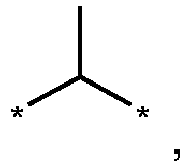


- According to another embodiment X-GC2 the group X is -CH2-CH2- which is optionally substituted with one or more C1-3-alkyl groups, preferably with one or two groups independently selected from methyl and ethyl, and wherein two alkyl substituents may be connected with each other and together form a C1-5-alkylene bridging group in which 1 or 2 CH2-groups may be replaced by O, S, NH or N(C1-4-alkyl)-, wherein the C1-5-alkylene bridging group is optionally substituted by one or two C1-3-alkyl groups.
- Examples of this embodiment are:

- According another embodiment X-GC3 the group X is -CH2-CH2-CH2- which is optionally substituted with one or more C1-3-alkyl groups, preferably with one or two groups independently selected from methyl and ethyl, and wherein two alkyl substituents may be connected with each other and together form a C1-5-alkylene bridging group in which 1 or 2 CH2-groups may be replaced by O, S, NH or N(C1-4-alkyl)-, wherein the C1-5-alkylene bridging group is optionally substituted by one or two C1-3-alkyl groups.
- Examples of this embodiment are:

- The group Y is preferably selected from the group Y-G1 as defined hereinbefore and hereinafter.
- In another embodiment the group Y is selected from the group Y-G2 consisting of -C(=O)- and -S(=O)2-.
- In another embodiment the group Y is selected from the group Y-G3 consisting of -S(=O)2-.
- In another embodiment the group Y is selected from the group Y-G4 consisting of -C(=O)-.
- The group RN is preferably selected from the group RN-G1 as defined hereinbefore and hereinafter.
- In another embodiment the group RN is selected from the group RN-G2 consisting of H and methyl.
- In another embodiment the group RN is selected from the group RN-G3 consisting of H.
- The group T is preferably selected from the group T-G1 as defined hereinbefore and hereinafter.
- In another embodiment the group T is selected from the group T-G1a consisting of C1-6-alkyl, C2-6-alkenyl, C2-6-alkynyl, C3-7-cycloalkyl, C3-7-cycloalkyl-C1-3-alkyl, C1-6-alkyl-O-, C3-7-cycloalkyl-O-, C3-7-cycloalkyl-C1-3-alkyl-O-, C1-6-alkyl-S-, C3-7-cycloalkyl-S-, C3-7-cycloalkyl-C1-3-alkyl-S-, C1-4-alkyl-C(=O)-, C1-4-alkyl-S(=O)2-, RT1RT2-N-, RT1RT2-N-C1-3-alkyl-, RT1RT2-N-CO-, C1-4-alkyl-C(=O)-RT2N-C1-3-alkyl, heterocyclyl, phenyl and heteroaryl;
wherein in each cycloalkyl and heterocyclyl, a CH2-group is optionally replaced by - C(=O)-; and
wherein each cycloalkyl and heterocyclyl are optionally substituted with one or more C1-4-alkyl, which is optionally substituted with one or more substituents RC: and
wherein each alkyl, cycloalkyl and heterocyclyl are optionally substituted with one or more substituents RC; and
wherein RC is selected from the group consisting of RC-G1, RC-G2 or RC-G3 as defined hereinbefore and hereinafter,
wherein RT1 is selected from the group RT1-G1 or RT1-G2 as defined as hereinbefore and hereinafter; and
wherein RT2 is selected from the group RT2-G1 or RT2-G2 as defined as hereinbefore and hereinafter; and
wherein heterocyclyl is azetidinyl, pyrrolidinyl, piperidinyl, oxetanyl, tetrahydrofuranyl or tetrahydropyranyl; and
wherein heteroaryl is selected from the group consisting of pyridyl, pyrimidinyl, pyridazinyl, pyrazinyl, furanyl, thienyl, pyrrolyl, imidazolyl, pyrazolyl, triazolyl, oxazolyl, isoxazolyl, thiazolyl and isothiazolyl; and
wherein each aryl and heteroaryl group is optionally substituted with one or more substituents L. - In another embodiment the group T is selected from the group T-G2 consisting of C1-4-alkyl, C3-6-cycloalkyl, C1-4-alkyl-O-, RT1RT2-N-, heterocyclyl, phenyl and heteroaryl,
wherein in each cycloalkyl and heterocyclyl a CH2-group is optionally replaced by - C(=O)-; and
wherein each cycloalkyl and heterocyclyl are optionally substituted with one or more C1-4-alkyl, which is optionally substituted with one or more substituents RC; and
wherein each alkyl, cycloalkyl and heterocyclyl are optionally substituted with one or more substituents RC; and
wherein RC is selected from the group consisting of RC-G1, RC-G2 or RC-G3 as defined hereinbefore and hereinafter; and
wherein RT1 is selected from the group RT1-G1 or RT1-G2 as defined as hereinbefore and hereinafter; preferably RT1 denotes H, C1-4-alkyl, C3-6-cycloalkyl or C3-6-cycloalkyl-C1-3-alkyl; and
wherein RT2 is selected from the group RT2-G1 or RT2-G2 as defined as hereinbefore and hereinafter; preferably RT2 denotes H or C1-4-alkyl; and
wherein heterocyclyl is defined as hereinbefore and hereinafter, preferably heterocyclyl is selected from the group consisting of

wherein heteroaryl is selected from the group consisting of pyridyl, pyrimidinyl, pyridazinyl, pyrazinyl, furanyl, thienyl, pyrrolyl, imidazolyl, pyrazolyl, triazolyl, oxazolyl, isoxazolyl and thiazolyl; and
wherein each heteroaryl group is optionally substituted with one or more substituents L. - In another embodiment the group T is selected from the group T-G3 consisting of C1-3-alkyl, C3-5-cycloalkyl, C1-3-alkyl-O- and RT1RT2-N-;
wherein each cycloalkyl is optionally substituted with one or more C1-3-alkyl; and
wherein RT1 and RT2 are independently of each other selected from H and C1-3-alkyl. - Preferred examples of the group T-G3 are H3C-, H3C-O-, (H3C)2N-,


- In another embodiment the group T is selected from the group T-G4 consisting of H3C-, H2FC-, HF2C-, F3C-, NC-CH2-, F3C-CH2-, (H3C)2CF-, H5C2-, n-propyl, i-propyl, n-butyl, i-butyl, H3C-(H3CO)CH-, H3C-(HO)CH-, NC-CH2-, NC-CH2-CH2-, cyclopropyl, cyclobutyl, cyclopropyl-CH2-,


- In another embodiment the group T is selected from the group T-G5 consisting of H3C-, F3C-, H3C-CH2-, H3C-O-, (H3C)2N-,

- In another embodiment the group T is selected from the group T-G6 consisting of H3C-, (H3C)2N- and cyclopropyl.
- In an embodiment the groups T and RN are connected with each other and together form a group which is preferably selected from the group (T-RN)-G1 as defined hereinbefore and hereinafter.
- In another embodiment the groups T and RN are connected with each other such that the group
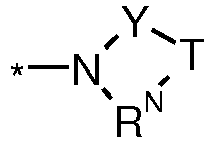

- The group RT1 is preferably selected from the group RT1-G1 consisting of H, C1-6-alkyl, C3-6-cycloalkyl, C3-6-cycloalkyl-C1-3-alkyl, phenyl and pyridyl,
wherein each cycloalkyl is optionally substituted with one or more C1-4-alkyl, and wherein each alkyl and cycloalkyl are optionally substituted with one or more substituents selected from F, and
wherein each alkyl and cycloalkyl are optionally substituted with a substituent selected from OH, C1-3-alkyl-O-, C1-3-alkyl-C(=O)-, HO-C(=O)- and C1-4-alkyl-O-C(=O)-; and
wherein each phenyl and pyridyl group is optionally substituted with one or more substituents L. - In another embodiment the group RT1 is selected from the group RT1-G2 consisting of methyl, ethyl, n-propyl, isopropyl, HOOC-CH2-, H3C-CO-, phenyl, pyridinyl, wherein the groups phenyl and pyridyl may be substituted with one or more substituents L.
- The group RT2 is preferably selected from the group RT2-G1 consisting of H and C1-4-alkyl.
- In another embodiment the group RT2 is selected from the group RT2-G2 consisting of H, methyl, ethyl, n-propyl and isopropyl.
- Examples of preferred subgeneric embodiments according to the present invention are set forth in the following table, wherein each substituent group of each embodiment is defined according to the definitions as set forth hereinbefore and wherein all other substituents of the formula (I) are defined according to the definitions as set forth hereinbefore:
Embodi ment Ar1 RA Ar2 X Y RN and T E-1 Ar1-G4 RA-G5 Ar2-G1 X-G1 Y-G1 RN-G1, T-G2 or (T-RN)-G3 E-2 Ar1-G5 RA-G5 Ar2-G1 X-G1 Y-G1 RN-G1, T-G2 or (T-RN)-G3 - The following preferred embodiments of compounds of the formula (I) are described using generic formulas (I.1) to (I.7a), wherein any tautomers and stereoisomers, solvates, hydrates and salts thereof, in particular the pharmaceutically acceptable salts thereof, are encompassed.
(I.1) 
(I.1a) 
(I.1b) 
(I.1c) 
(I.2) 
(I.2a) 
(I.3) 
(I.3a) 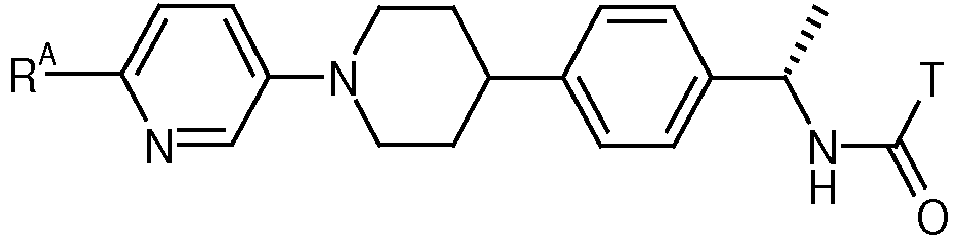
(I.3b) 
(I.4) 
(I.4a) 
(I.5) 
(I.5a) 
(I.5b) 
(I.5c) 
(I.6) 
(I.6a) 
(I.7) 
(I.7a) 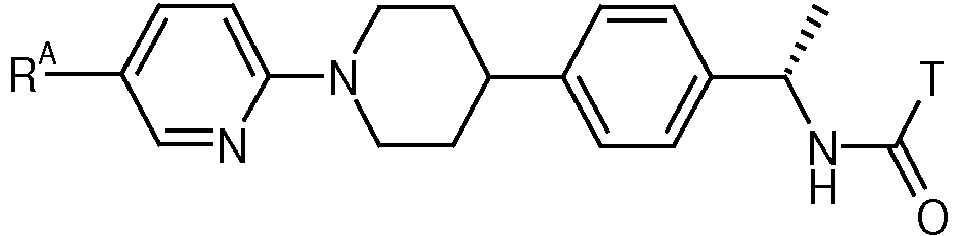
- r
- is 0, 1 or 2; and
- s
- is 0, 1 or 2.
- Preferred embodiments of the above formulas (I.1) to (I.7a) according to the present invention are set forth in the following table, wherein each group RA, X, T, L of each embodiment is defined according to the definitions set forth hereinbefore and wherein all other substituents of the formula (I) are defined according to the definitions set forth hereinbefore and r is 0, 1 or 2 and s is 0, 1 or 2:
Embodiment Formula RA X T L E-A (I.1) RA-G1 X-G1 T-G1 L-G1 E-B (I.1) RA-G2a X-GC1 T-G2 L-G2 E-C (I.1) RA-G5a X-GC1 T-G3 L-G2 E-D (I.1a) RA-G5a - T-G3 - E-E (I.1b) RA-G5a - T-G3 - E-Ea (I-1c) RA-G5a - T-G3 - E-F (I.2) RA-G1 X-G1 T-G1 L-G1 E-G (I.2) RA-G2a X-GC1 T-G2 L-G2 E-H (I.2) RA-G5a X-GC1 T-G3 L-G2 E-I (I.2a) RA-G5a - T-G3 - E-J (I.3) RA-G1 X-G1 T-G1 L-G1 E-K (I.3) RA-G2a X-GC1 T-G2 L-G2 E-L (I.3) RA-G5a X-GC1 T-G3 L-G2 E-M (I.3a) RA-G5a - T-G3 - E-Ma (I.3b RA-G5a - T-G3 - E-N (I.4) RA-G1 X-G1 T-G1 L-G1 E-O (I.4) RA-G2a X-GC1 T-G2 L-G2 E-P (I.4) RA-G5a X-GC1 T-G3 L-G2 E-Q (I.4a) RA-G5a - T-G3 - E-R (I.5) RA-G1 X-G1 T-G1 L-G1 E-S (I.5) RA-G2a X-GC1 T-G2 L-G2 E-T (I.5) RA-G5a X-GC1 T-G3 L-G2 E-U (I.5a) RA-G5a - T-G3 - E-Ua (I.15b) RA-G5a - T-G3 L-G2 E-Ub (I-5c) RA-G5a - T-G3 - E-V (I.6) RA-G1 X-G1 T-G1 L-G1 E-W (I.6) RA-G2b X-GC1 T-G2 L-G2 E-X (I.6) RA-G5b X-GC1 T-G3 L-G2 E-Y (I.6a) RA-G5b - T-G3 - E-Za (I.7) RA-G2a X-GC1 T-G2 L-G2 E-Zb (I.7) RA-G5a X-GC1 T-G3 L-G2 E-Zc (I.7a) RA-G5a - T-G3 - - One preferred embodiment concerns compounds of formula (I), wherein
Ar1 is selected from the group consisting of
RA is selected from the group RA-G7 consisting of F, Cl, Br, CN, F3C-,

RN is H or CH3,
Y is -C(=O)- and
T is selected from the group consisting of H3C-, F3C-, H3C-CH2-, H3C-O-, (H3C)2N-,
- Particularly preferred compounds are:
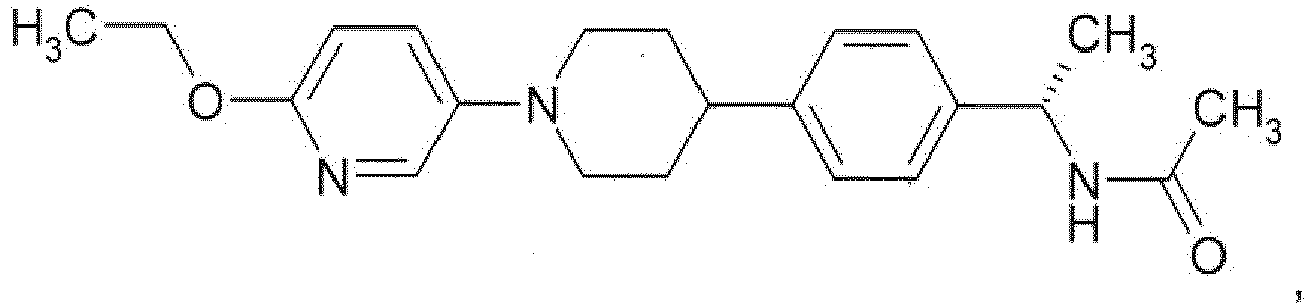


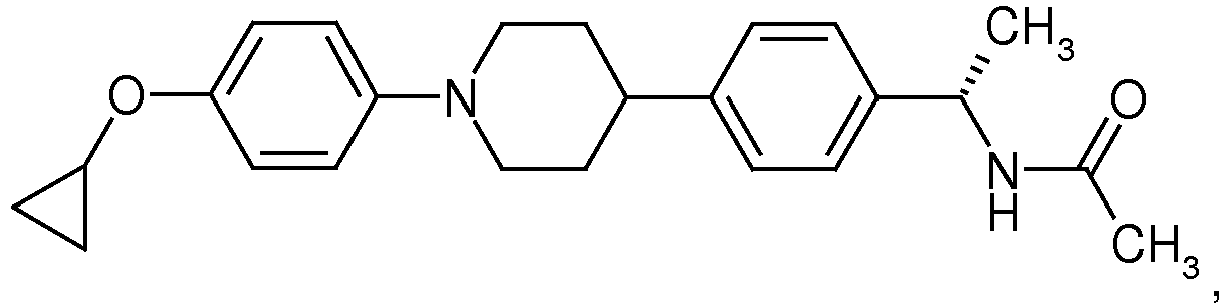


- Particularly preferred compounds, including their tautomers and stereoisomers, the salts thereof, or any solvates or hydrates thereof, are also described in the experimental section hereinafter.
- The compounds according to the invention may be obtained using methods of synthesis which are known to the one skilled in the art and described in the literature of organic synthesis. Preferably the compounds are obtained analogously to the methods of preparation explained more fully hereinafter, in particular as described in the experimental section.
- Compounds of the general formula (I) can be prepared by the following methods:

- Compounds of general formula (I) may be prepared by palladium-mediated Buchwald reactions or copper-mediated Ullmann reactions of aryl halogenides or aryl triflates (II) with piperidines (III) wherein Z is a leaving group which for example denotes Cl, Br, I or OTf (triflate).

- Compounds of general formula (I) may alternatively be prepared by nucleophilic aromatic substitution reactions (SNAr) of aryl/heteroaryl halogenides or aryl/heteroaryl triflates (II) with piperidines (III), wherein Z is a leaving group which for example denotes Cl, Br, I, S(=O)CH3 or triflate.

- Compounds of general formula (Ia) may be prepared by amide coupling reactions of amines (IV) with carboxylic acids (V) mediated by coupling reagents such as eg TBTU, HOBt or HATU. Alternatively, ketenes such as diketene can be used as carboxylic acid equivalent.

- Compounds of general formula (Ib) may be prepared by sulfonylation of amines (IV) with sulfonyl chlorides (VI).

- Compounds of general formula (Ic) may be prepared by urea forming reactions such as reaction of amines (IV) with carbamoyl chlorides (VII) or isocyanates (VIII).

- Alternatively, compounds of general formula (Ic) may be prepared by reaction of amines (IV) with amines (XX) after reaction with reagents such as CDI or CDT.

- Compounds of general formula (Id) may be prepared by urethane forming reactions such as reaction of amines (IV) with chloro formates (IX).

- Compounds of general formula (X) may be prepared by Mitsunobu reactions of aromatic alcohols (XI) with alcohols (XII) mediated by coupling reagents such as azodicarboxylates (e.g. DEAD, DIAT etc.) and phosphines (e.g. triphenylphosphine).

- Compounds of general formula (X) may be alternatively prepared by alkylation reactions of aromatic alcohols (XI) with electrophiles (XIII) wherein Z is a leaving group which for example denotes Cl, Br, I, S(=O)CH3 or triflate.

- Compounds of general formula (XIV) may be prepared by palladium-catalyzed Suzuki coupling reactions of aryl/heteroaryl halogenides or aryl/heteroaryl triflates (XV) with boronic acids (XVI) or trimethylboroxine wherein Z is a leaving group which for example denotes Cl, Br, I or triflate.

- Compounds of general formula (XVII) may be prepared by nucleophilic aromatic substitution reactions (SNAr) of pyrimidines (XVIII) with nucleophiles R (XIX), wherein Z is a leaving group which for example denotes Cl, Br, I, S(=O)CH3 or triflate and wherein R is a nucleophile, such as for example an alcohol or an amine and wherein the reaction may be performed with other regioisomers of pyrimidine or other heteroaryls also. Alcohols may be deprotonated by an appropriate base before used as nucleophiles.

- Compounds of general formula (XXII) may be prepared by amide coupling reactions of amines (XX) with carboxylic acids (XXI) mediated by coupling reagents such as eg TBTU, HOBt or HATU.

- Compounds of general formula (XXV) may be prepared by reductive amination of aromatic amines (XXIII) with aldehydes (XXIV) using reducing agents such as sodium borohydride, NaB(OAc)3H or NaBH3(CN).

- Compounds of general formula (XXVIII) may be prepared by condensation reactions of nitriles (XXVI) with hydroxyamidines (XXVII) using a catalyst such as zinc(II)chloride.

- Compounds of general formula (XXIX) may be prepared by condensation reactions of hydroxyamidines (XXIX) with carbonyl chlorides (XXX).

- Compounds of general formula (XXXIV) may be prepared by condensation reactions of acetyl bromides (XXXII) with thioamides (XXXIII).

- Compounds of general formula (XXXVI) may be prepared by reaction of amides (XXXV) with reagents such as Lawessons's reagent or P2S5.

- Compounds of general formula (XXXIX) may be prepared by reaction of amides (XXXVII) with alkylating reagents RNZ after deprotonation with bases such as sodium hydride wherein Z is a leaving group which for example denotes Cl, Br, I, S(=O)CH3 or triflate.
- Terms not specifically defined herein should be given the meanings that would be given to them by one of skill in the art in light of the disclosure and the context. As used in the specification, however, unless specified to the contrary, the following terms have the meaning indicated and the following conventions are adhered to.
- The terms "compound(s) according to this invention", "compound(s) of formula (I)", "compound(s) of the invention" and the like denote the compounds of the formula (I) according to the present invention including their tautomers, stereoisomers and mixtures thereof and the salts thereof, in particular the pharmaceutically acceptable salts thereof, and the solvates and hydrates of such compounds, including the solvates and hydrates of such tautomers, stereoisomers and salts thereof.
- The terms "treatment" and "treating" embraces both preventative, i.e. prophylactic, or therapeutic, i.e. curative and/or palliative, treatment. Thus the terms "treatment" and "treating" comprise therapeutic treatment of patients having already developed said condition, in particular in manifest form. Therapeutic treatment may be symptomatic treatment in order to relieve the symptoms of the specific indication or causal treatment in order to reverse or partially reverse the conditions of the indication or to stop or slow down progression of the disease. Thus the compositions and methods of the present invention may be used for instance as therapeutic treatment over a period of time as well as for chronic therapy. In addition the terms "treatment" and "treating" comprise prophylactic treatment, i.e. a treatment of patients at risk to develop a condition mentioned hereinbefore, thus reducing said risk.
- When this invention refers to patients requiring treatment, it relates primarily to treatment in mammals, in particular humans.
- The term "therapeutically effective amount" means an amount of a compound of the present invention that (i) treats or prevents the particular disease or condition, (ii) attenuates, ameliorates, or eliminates one or more symptoms of the particular disease or condition, or (iii) prevents or delays the onset of one or more symptoms of the particular disease or condition described herein.
- The terms "modulated" or "modulating", or "modulate(s)", as used herein, unless otherwise indicated, refers to the inhibition of the Acetyl-CoA carboxylases (ACC) enzyme(s) with one or more compounds of the present invention.
- The terms "mediated" or "mediating" or "mediate", as used herein, unless otherwise indicated, refers to the (i) treatment, including prevention the particular disease or condition, (ii) attenuation, amelioration, or elimination of one or more symptoms of the particular disease or condition, or (iii) prevention or delay of the onset of one or more symptoms of the particular disease or condition described herein.
- The term "substituted" as used herein, means that any one or more hydrogens on the designated atom, radical or moiety is replaced with a selection from the indicated group, provided that the atom's normal valence is not exceeded, and that the substitution results in an acceptably stable compound.
- In the groups, radicals, or moieties defined below, the number of carbon atoms is often specified preceding the group, for example, C1-6-alkyl means an alkyl group or radical having 1 to 6 carbon atoms. In general, for groups comprising two or more subgroups, the last named subgroup is the radical attachment point, for example, the substituent "aryl-C1-3-alkyl-" means an aryl group which is bound to a C1-3-alkyl-group, the latter of which is bound to the core or to the group to which the substituent is attached.
- In case a compound of the present invention is depicted in form of a chemical name and as a formula in case of any discrepancy the formula shall prevail.
- An asterisk is may be used in sub-formulas to indicate the bond which is connected to the core molecule as defined.
- The numeration of the atoms of a substituent starts with the atom which is closest to the core or to the group to which the substituent is attached.
- For example, the term "3-carboxypropyl-group" represents the following substituent:


- The asterisk may be used in sub-formulas to indicate the bond which is connected to the core molecule as defined.
- In a definition of a group the term "wherein each X, Y and Z group is optionally substituted with" and the like denotes that each group X, each group Y and each group Z either each as a separate group or each as part of a composed group may be substituted as defined. For example a definition "Rex denotes H, C1-3-alkyl, C3-6-cycloalkyl, C3-6-cycloalkyl-C1-3-alkyl or C1-3-alkyl-O-, wherein each alkyl group is optionally substituted with one or more Lex." or the like means that in each of the beforementioned groups which comprise the term alkyl, i.e. in each of the groups C1-3-alkyl, C3-6-cycloalkyl-C1-3-alkyl and C1-3-alkyl-O-, the alkyl moiety may be substituted with Lex as defined.
- In the following the term bicyclic includes spirocyclic.
- Unless specifically indicated, throughout the specification and the appended claims, a given chemical formula or name shall encompass tautomers and all stereo, optical and geometrical isomers (e.g. enantiomers, diastereomers, E/Z isomers etc...) and racemates thereof as well as mixtures in different proportions of the separate enantiomers, mixtures of diastereomers, or mixtures of any of the foregoing forms where such isomers and enantiomers exist, as well as salts, including pharmaceutically acceptable salts thereof and solvates thereof such as for instance hydrates including solvates of the free compounds or solvates of a salt of the compound.
- The phrase "pharmaceutically acceptable" is employed herein to refer to those compounds, materials, compositions, and/or dosage forms which are, within the scope of sound medical judgment, suitable for use in contact with the tissues of human beings and animals without excessive toxicity, irritation, allergic response, or other problem or complication, and commensurate with a reasonable benefit/risk ratio.
- As used herein, "pharmaceutically acceptable salts" refer to derivatives of the disclosed compounds wherein the parent compound is modified by making acid or base salts thereof. Examples of pharmaceutically acceptable salts include, but are not limited to, mineral or organic acid salts of basic residues such as amines; alkali or organic salts of acidic residues such as carboxylic acids; and the like. For example, such salts include acetates, ascorbates, benzenesulfonates, benzoates, besylates, bicarbonates, bitartrates, bromides/hydrobromides, Ca-edetates/edetates, camsylates, carbonates, chlorides/hydrochlorides, citrates, edisylates, ethane disulfonates, estolates esylates, fumarates, gluceptates, gluconates, glutamates, glycolates, glycollylarsnilates, hexylresorcinates, hydrabamines, hydroxymaleates, hydroxynaphthoates, iodides, isothionates, lactates, lactobionates, malates, maleates, mandelates, methanesulfonates, mesylates, methylbromides, methylnitrates, methylsulfates, mucates, napsylates, nitrates, oxalates, pamoates, pantothenates, phenylacetates, phosphates/diphosphates, polygalacturonates, propionates, salicylates, stearates subacetates, succinates, sulfamides, sulfates, tannates, tartrates, teoclates, toluenesulfonates, triethiodides, ammonium, benzathines, chloroprocaines, cholines, diethanolamines, ethylenediamines, meglumines and procaines. Further pharmaceutically acceptable salts can be formed with cations from metals like aluminum, calcium, lithium, magnesium, potassium, sodium, zinc and the like. (also see Pharmaceutical salts, Birge, S.M. et al., J. Pharm. Sci., (1977), 66, 1-19).
- The pharmaceutically acceptable salts of the present invention can be synthesized from the parent compound which contains a basic or acidic moiety by conventional chemical methods. Generally, such salts can be prepared by reacting the free acid or base forms of these compounds with a sufficient amount of the appropriate base or acid in water or in an organic diluent like ether, ethyl acetate, ethanol, isopropanol, or acetonitrile, or a mixture thereof.
- Salts of other acids than those mentioned above which for example are useful for purifying or isolating the compounds of the present invention (e.g. trifluoro acetate salts) also comprise a part of the invention.
- The term halogen generally denotes fluorine, chlorine, bromine and iodine.
- The term "C1-n-alkyl", wherein n is an integer from 1 to n, either alone or in combination with another radical denotes an acyclic, saturated, branched or linear hydrocarbon radical with 1 to n C atoms. For example the term C1-5-alkyl embraces the radicals H3C-, H3C-CH2-, H3C-CH2-CH2-, H3C-CH(CH3)-, H3C-CH2-CH2-CH2-, H3C-CH2-CH(CH3)-, H3C-CH(CH3)-CH2-, H3C-C(CH3)2-, H3C-CH2-CH2-CH2-CH2-, H3C-CH2-CH2-CH(CH3)-, H3C-CH2-CH(CH3)-CH2-, H3C-CH(CH3)-CH2-CH2-, H3C-CH2-C(CH3)2-, H3C-C(CH3)2-CH2-, H3C-CH(CH3)-CH(CH3)- and H3C-CH2-CH(CH2CH3)-.
- The term "C1-n-alkylene" wherein n is an integer 1 to n, either alone or in combination with another radical, denotes an acyclic, straight or branched chain divalent alkyl radical containing from 1 to n carbon atoms. For example the term C1-4-alkylene includes -(CH2)-, -(CH2-CH2)-, -(CH(CH3))-, -(CH2-CH2-CH2)-, -(C(CH3)2)-, -(CH(CH2CH3))-, -(CH(CH3)-CH2)-, -(CH2-CH(CH3))-, -(CH2-CH2-CH2-CH2)-, -(CH2-CH2-CH(CH3))-, -(CH(CH3)-CH2-CH2)-, -(CH2-CH(CH3)-CH2)-, -(CH2-C(CH3)2)-, -(C (CH3)2-CH2)-, -(CH(CH3)-CH(CH3))-, -(CH2-CH(CH2CH3))-, -(CH(CH2CH3)-CH2)-, -(CH(CH2CH2CH3))-, -(CHCH(CH3)2)- and -C(CH3)(CH2CH3)-.
- The term "C2-n-alkenyl", is used for a group as defined in the definition for "C1-n-alkyl" with at least two carbon atoms, if at least two of those carbon atoms of said group are bonded to each other by a double bond. For example the term C2-3-alkenyl includes -CH=CH2, -CH=CH-CH3, -CH2-CH=CH2.
- The term "C2-n-alkenylene" is used for a group as defined in the definition for "C1-n-alkylene" with at least two carbon atoms, if at least two of those carbon atoms of said group are bonded to each other by a double bond. For example the term C2-3-alkenylene includes -CH=CH-, -CH=CH-CH2-, -CH2-CH=CH-.
- The term "C2-n-alkynyl", is used for a group as defined in the definition for "C1-n-alkyl" with at least two carbon atoms, if at least two of those carbon atoms of said group are bonded to each other by a triple bond. For example the term C2-3-alkynyl includes -C≡CH, -C≡C-CH3, -CH2-C≡CH.
- The term "C2-n-alkynylene" is used for a group as defined in the definition for "C1-n-alkylene" with at least two carbon atoms, if at least two of those carbon atoms of said group are bonded to each other by a triple bond. For example the term C2-3-alkynylene includes -C≡C-, -C≡C-CH2-, -CH2-C≡C-.
- The term "C3-n-carbocyclyl" as used either alone or in combination with another radical, denotes a monocyclic, bicyclic or tricyclic, saturated or unsaturated hydrocarbon radical with 3 to n C atoms. The hydrocarbon radical is preferably nonaromatic. Preferably the 3 to n C atoms form one or two rings. In case of a bicyclic or tricyclic ring system the rings may be attached to each other via a single bond or may be fused or may form a spirocyclic or bridged ring system. For example the term C3-10-carbocyclyl includes C3-10-cylcoalkyl, C3-10-cycloalkenyl, octahydropentalenyl, octahydroindenyl, decahydronaphthyl, indanyl, tetrahydronaphthyl. Most preferably the term C3-n-carbocyclyl denotes C3-n-cylcoalkyl, in particular C3-7-cycloalkyl.
- The term "C3-n-cycloalkyl", wherein n is an integer 4 to n, either alone or in combination with another radical denotes a cyclic, saturated, unbranched hydrocarbon radical with 3 to n C atoms. The cyclic group may be mono-, bi-, tri- or spirocyclic, most preferably monocyclic. Examples of such cycloalkyl groups include cyclopropyl, cyclobutyl, cyclopentyl, cyclohexyl, cycloheptyl, cyclooctyl, cyclononyl, cyclododecyl, bicyclo[3.2.1.]octyl, spiro[4.5]decyl, norpinyl, norbonyl, norcaryl, adamantyl, etc.
- The term "C3-n-cycloalkenyl", wherein n is an integer 3 to n, either alone or in combination with another radical, denotes a cyclic, unsaturated but nonaromatic, unbranched hydrocarbon radical with 3 to n C atoms, at least two of which are bonded to each other by a double bond. For example the term C3-7-cycloalkenyl includes cyclopropenyl, cyclobutenyl, cyclopentenyl, cyclopentadienyl, cyclohexenyl, cyclohexadienyl, cycloheptenyl, cycloheptadienyl and cycloheptatrienyl.
- The term "aryl" as used herein, either alone or in combination with another radical, denotes a carbocyclic aromatic monocyclic group containing 6 carbon atoms which may be further fused to a second 5- or 6-membered carbocyclic group which may be aromatic, saturated or unsaturated. Aryl includes, but is not limited to, phenyl, indanyl, indenyl, naphthyl, anthracenyl, phenanthrenyl, tetrahydronaphthyl and dihydronaphthyl. More preferably the term "aryl" as used herein, either alone or in combination with another radical, denotes phenyl or naphthyl, most preferably phenyl.
- The term "heterocyclyl" means a saturated or unsaturated mono-, bi-, tri- or spirocarbocyclic, perferably mono- or bicycyclic-ring system. containing one or more heteroatoms selected from N, O or S(O)r with r = 0, 1 or 2, which in addition may have a carbonyl group. More preferably the term "heterocyclyl" as used herein, either alone or in combination with another radical, means a saturated or unsaturated, even more preferably a saturated mono- or bicycyclic-ring system containing 1, 2, 3 or 4 heteroatoms selected from N, O or S(O)r with r = 0, 1 or 2 which in addition may have a carbonyl group. The term "heterocyclyl is intended to include all the possible isomeric forms. Examples of such groups include aziridinyl, oxiranyl, azetidinyl, oxetanyl, pyrrolidinyl, tetrahydrofuranyl, piperidinyl, tetrahydropyranyl, azepanyl, piperazinyl, morpholinyl, tetrahydrofuranonyl, tetrahydropyranonyl, pyrrolidinonyl, piperidinonyl, piperazinonyl, morpholinonyl.
- Thus, the term "heterocyclyl" includes the following exemplary structures which are not depicted as radicals as each form may be attached through a covalent bond to any atom so long as appropriate valences are maintained:


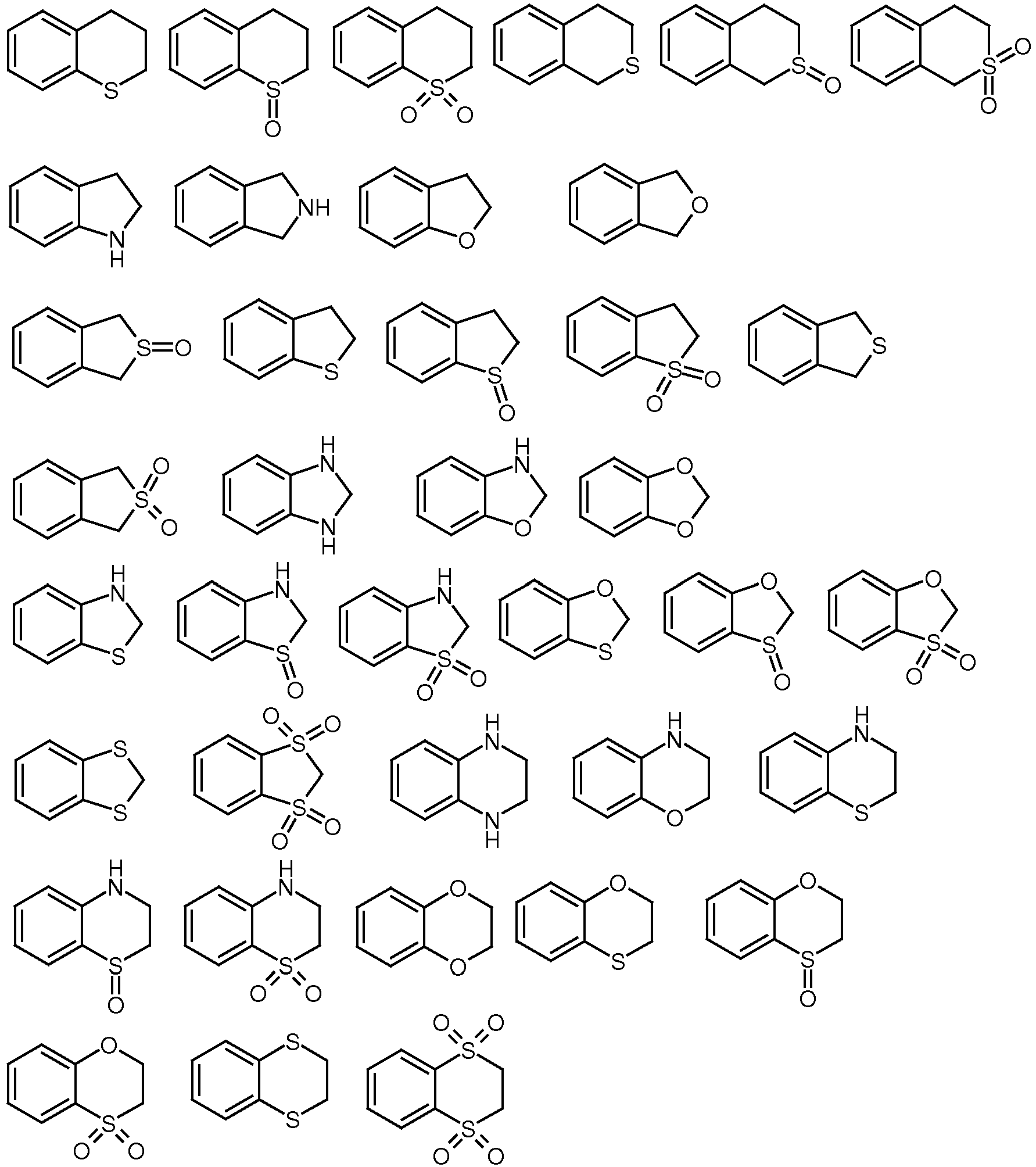
- The term "heteroaryl" means a mono- or polycyclic, preferably mono- or bicyclic-ring system containing one or more heteroatoms selected from N, O or S(O)r with r=0, 1 or 2 wherein at least one of the heteroatoms is part of an aromatic ring, and wherein said ring system may have a carbonyl group. More preferably the term "heteroaryl" as used herein, either alone or in combination with another radical, means a mono- or bicyclic-ring system containing 1, 2, 3 or 4 heteroatoms selected from N, O or S(O)r with r=0, 1 or 2 wherein at least one of the heteroatoms is part of an aromatic ring, and wherein said ring system may have a carbonyl group. The term "heteroaryl" is intended to include all the possible isomeric forms.
- Thus, the term "heteroaryl" includes the following exemplary structures which are not depicted as radicals as each form may be attached through a covalent bond to any atom so long as appropriate valences are maintained:

- Many of the terms given above may be used repeatedly in the definition of a formula or group and in each case have one of the meanings given above, independently of one another.
- The activity of the compounds of the invention may be demonstrated using the following ACC2 assay:
- Malonyl CoA formation by acetyl CoA carboxylases is stoichometrically linked to the consumption of ATP. ACC2 activity is measured in a NADH-linked kinetic method measuring ADP generated during the ACC reaction using a coupled lactate dehydrogenase / pyruvate kinase reaction.
- For biological testing, a human ACC2 construct which lacks the 128 amino acids at the N-terminus for increased solubility (nt 385-6966 in Genbank entry AJ575592) is cloned. The protein is then expressed in insect cells using a baculoviral expression system. Protein purification is performed by anion exchange.
- All compounds are dissolved in dimethyl sulfoxide (DMSO) to a concentration of 10 mM.
- Assay reactions are then carried out in 384-well plates, with hACC2 in an appropriate dilution and at final assay concentrations (f.c.) of 100 mM Tris (pH 7.5), 10 mM trisodium citrate, 25 mM KHCO3, 10 mM MgCl2, 0.5 mg/mL BSA, 3.75 mM reduced L-glutathione, 15 U/mL lactate dehydrogenase, 0.5 mM phosphoenolpyruvate, 15 U/mL pyruvate kinase, compounds at different concentrations at final DMSO concentrations of 1 %.
- The enzymatic reaction is then started by addition of a mixture of NADH, acetyl Coenzyme A (both 200µM f.c.) and ATP (500 uM f.c.). The decrease of the optical density (slope S) is then determined at 25°C at a wavelength of 340 nm over 15 minutes in a spectrophotometric reader.
- Each assay microtiter plate contains wells with vehicle instead of compound as controls for the non-inhibited enzyme (100% CTL; 'HIGH') and wells without acetyl-CoA as controls for non-specific NADH degradation (0% CTL; 'LOW').
- The slope S is used for calculation of %CTL= (S(compound)-S('LOW'))/(S('HIGH')-S('LOW'))*100. Compounds will give values between 100%CTL (no inhibition) and 0%CTL (complete inhibition).
- For IC50 value determination, the sample slope in the presence of the test compound after subtraction of the low controls (S(compound)-S('LOW')) are used.
- An IC50 value is derived from the compound slopes at different dosages after subtraction of the low controls (S(compound)-S('LOW')) by non-linear regression curve fitting (equation y = (A+((B-A)/(1+((C/x)^D))))).
- The compounds of general formula (I) according to the invention for example have IC50 values below 30000 nM, particularly below 1000 nM, preferably below 300 nM.
- In the following table the activity expressed as IC50 (µM) of compounds according to the invention is presented wherein the IC50 values are determined in the ACC2 assay as described hereinbefore. The term "Ex." refers to the example numbers according to the following experimental section.
Ex. IC50 [µM] Ex. IC50 [µM] Ex. IC50 [µM] Ex. IC50 [µM] 1.1 0.13 1.13 0.10 1.25 0.15 1.37 0.11 1.2 0.05 1.14 0.10 1.26 0.09 1.38 0.35 1.3 0.09 1.15 0.24 1.27 5.8 1.39 0.13 1.4 0.32 1.16 0.09 1.28 0.05 1.40 0.14 1.5 0.35 1.17 0.45 1.29 0.08 1.41 0.32 1.6 0.14 1.18 0.35 1.30 0.23 1.42 0.63 1.7 0.14 1.19 0.26 1.31 0.18 1.43 4.1 1.8 0.12 1.20 0.29 1.32 0.09 1.9 0.05 1.21 0.08 1.33 0.12 1.45 0.37 1.10 0.22 1.22 0.14 1.34 0.26 1.46 0.70 1.11 0.30 1.23 0.05 1.35 0.32 1.47 2.9 1.12 0.08 1.24 0.21 1.36 0.41 1.48 11.3 1.49 1.82 0.16 1.115 0.11 1.148 0.70 1.50 0.12 1.83 0.10 1.116 0.77 1.149 0.14 1.51 0.09 1.84 0.18 1.117 0.06 1.150 0.13 1.52 0.11 1.85 0.14 1.118 0.12 1.151 0.11 1.53 0.82 1.86 0.21 1.119 0.26 1.152 0.08 1.54 0.13 1.120 0.25 1.153 0.52 1.55 0.24 1.88 0.54 1.121 8.1 1.154 0.30 1.56 0.72 1.89 0.39 1.122 0.12 1.155 0.41 1.57 0.10 1.90 0.23 1.123 0.07 1.156 0.60 1.91 0.60 1.124 0.18 1.157 0.58 1.59 0.14 1.92 0.12 1.125 0.10 1.158 1.3 1.60 0.18 1.93 0.58 1.126 0.23 1.159 2.7 1.94 0.21 1.127 0.33 1.160 2.1 1.62 0.20 1.95 1.2 1.128 0.12 1.161 0.64 1.63 1.3 1.96 0.36 1.129 3.5 1.162 3.1 1.64 0.07 1.97 0.53 1.130 0.08 1.163 0.67 1.65 20.0 1.98 0.47 1.131 0.19 1.164 0.77 1.99 0.33 1.132 0.84 1.165 0.10 1.67 0.36 1.100 0.52 1.133 0.13 1.166 4.0 1.68 23.9 1.101 0.05 1.134 0.28 1.167 0.91 1.102 0.16 1.135 0.34 1.168 0.50 1.70 7.4 1.103 0.09 1.136 0.50 1.169 1.7 1.71 0.08 1.104 0.20 1.137 16.0 1.170 0.40 1.72 23.7 1.105 0.24 1.138 0.16 1.171 16.3 1.73 3.4 1.106 0.17 1.139 0.07 1.172 0.25 1.74 0.10 1.107 0.52 1.140 0.09 1.173 0.82 1.75 2.2 1.108 0.93 1.141 0.32 1.174 7.5 1.76 1.9 1.109 3.1 1.142 0.06 1.175 1.1 1.77 0.90 1.110 4.5 1.143 0.12 1.176 0.03 1.78 3.4 1.111 0.17 1.144 0.06 1.177 0.04 1.79 0.18 1.112 0.21 1.145 0.14 1.178 0.17 1.80 0.53 1.113 0.14 1.146 1.1 1.179 0.31 1.81 0.28 1.114 0.13 1.147 0.49 1.180 0.53 1.181 0.09 3.1 0.36 4.19 0.10 4.52 0.53 1.182 0.21 3.2 0.33 4.53 0.16 1.183 0.15 3.3 0.11 4.21 0.52 4.54 1.8 3.4 0.11 4.22 1.1 4.101 2.7 3.5 0.59 4.102 0.47 1.186 0.17 3.6 0.24 4.201 0.06 1.187 0.03 3.7 0.74 4.25 0.23 4.202 0.15 1.188 0.08 3.8 0.34 4.26 0.29 1.189 0.06 3.9 13.3 4.27 0.33 1.190 1.4 3.10 1.6 4.303 15.6 1.191 0.39 3.11 3.0 4.29 1.7 4.304 0.24 1.192 0.12 3.12 0.06 4.305 1.4 1.200 0.45 3.13 0.47 4.31 2.0 4.306 0.12 1.201 4.6 3.14 0.42 5.1 0.20 1.202 1.9 3.20 7.4 4.33 0.51 5.2 0.33 1.203 0.62 4.1 2.5 4.34 9.5 5.3 0.13 1.204 0.45 4.35 0.51 5.4 0.09 1.205 0.66 4.3 0.45 4.36 1.2 1.206 4.7 4.4 1.8 4.37 0.30 1.207 5.1 4.5 2.6 4.38 0.44 1.300 23.3 4.6 1.6 4.39 1.9 5.8 19.2 2.1 2.1 4.40 0.93 5.9 25.4 2.3 0.99 4.8 0.97 4.41 0.10 2.4 1.8 4.9 1.9 4.42 0.53 5.11 0.15 2.5 0.83 4.10 0.67 4.43 0.41 5.12 0.22 2.6 0.92 4.11 0.85 4.44 0.65 5.13 3.0 2.7 1.6 4.12 11.6 4.45 1.5 5.14 2.8 0.96 4.13 3.2 5.15 4.9 2.9 0.46 5.16 0.26 2.10 1.6 4.15 0.22 5.17 1.2 2.11 1.3 4.16 1.1 4.49 0.21 5.18 2.12 0.53 4.17 0.44 4.50 0.46 5.19 1.0 2.13 1.9 4.18 0.32 4.51 0.31 5.20 1.2 5.21 0.86 5.54 9.3 6.27 4.8 8.9 0.60 5.22 2.3 5.55 7.6 8.10 0.10 5.23 0.42 6.29 3.6 8.11 1.8 5.24 0.99 5.57 0.23 6.30 1.1 8.12 2.3 5.25 2.4 5.58 0.86 6.31 2.8 8.13 0.11 5.26 9.0 5.200 7.5 8.14 0.13 5.201 0.79 6.33 3.1 8.15 0.83 5.28 8.0 6.1 0.46 6.34 0.25 8.16 5.6 5.29 0.17 6.2 2.8 6.35 7.1 8.17 0.29 5.30 0.18 6.3 2.6 8.18 2.7 5.31 1.0 6.4 2.1 6.37 0.76 8.19 6.0 5.32 3.8 6.5 0.38 6.38 0.09 8.20 12.0 6.6 0.99 6.39 1.3 8.21 1.5 5.34 3.2 6.7 0.77 6.40 1.2 8.22 14.6 5.35 2.8 6.8 0.19 6.41 4.1 8.23 0.57 5.36 3.1 6.9 0.15 6.42 2.8 8.24 12.4 5.37 2.9 6.10 0.25 8.25 0.71 5.38 0.57 6.11 0.34 6.44 25.0 8.26 0.84 5.39 0.34 6.12 1.3 6.45 2.6 8.27 2.6 5.40 0.41 6.13 1.1 6.46 10.4 8.28 0.15 5.41 5.0 6.14 0.19 6.47 0.73 8.29 0.89 5.42 0.21 6.15 1.0 6.48 3.7 8.30 0.16 5.43 0.63 6.16 0.57 8.31 1.2 5.44 0.07 6.17 1.9 7.1 0.58 8.32 3.2 5.45 6.18 1.1 7.2 0.19 8.33 3.5 5.46 1.6 6.19 1.5 8.1 0.44 8.34 0.26 5.47 0.80 6.20 0.67 8.2 0.30 8.35 0.49 5.48 0.42 8.3 0.20 8.36 2.2 5.49 2.6 6.22 0.67 8.4 0.40 8.37 0.66 5.50 0.09 6.23 0.42 8.5 0.22 8.38 1.2 5.51 4.8 6.24 3.9 8.6 0.33 8.39 0.11 5.52 19.6 6.25 0.34 8.7 0.16 8.40 1.4 5.53 7.7 6.26 0.28 8.8 0.29 8.41 4.2 8.42 0.09 9.8 0.20 9.42 0.16 10.29 0.13 8.43 2.1 9.9 0.21 9.43 0.43 10.30 0.13 8.44 0.29 9.10 0.53 9.44 0.48 10.31 0.18 8.45 7.0 9.11 0.17 9.45 0.38 10.32 0.41 8.46 1.0 9.12 0.25 9.46 0.56 10.33 0.64 8.47 2.6 9.13 0.57 10.1 0.05 10.34 0.21 8.48 1.6 9.14 0.27 10.2 0.20 10.35 1.1 8.49 26.6 9.15 0.37 10.3 0.13 10.36 0.21 8.50 1.1 9.16 0.69 10.4 2.0 10.37 0.19 8.51 0.76 9.17 0.55 10.5 0.54 10.38 3.0 8.52 3.0 9.18 0.15 10.6 0.10 10.39 8.53 0.30 9.19 0.14 10.7 0.04 10.40 6.9 8.54 1.5 9.20 0.09 10.8 0.20 10.41 1.9 8.55 0.30 9.21 0.10 10.9 0.02 10.42 8.56 1.0 9.22 0.16 10.10 0.07 10.43 0.03 8.57 3.2 9.23 0.20 10.11 5.8 10.44 0.10 8.58 0.37 9.24 0.47 10.12 0.36 10.45 1.1 8.59 0.84 9.25 1.1 10.13 0.09 10.46 0.14 8.60 0.18 9.26 0.22 10.14 0.10 10.47 0.27 8.61 0.30 9.27 0.07 10.15 0.55 10.48 1.2 8.62 0.20 9.28 0.78 10.16 0.71 10.49 0.26 8.63 0.10 9.29 0.06 10.17 0.02 10.50 0.05 8.64 0.12 9.30 2.3 10.18 0.18 10.51 1.5 9.31 4.8 10.19 10.52 0.07 8.66 0.06 9.32 0.99 10.20 2.7 10.53 0.08 8.67 27.7 9.33 0.12 10.21 0.07 10.54 0.42 9.1 0.37 9.34 0.15 10.22 1.1 10.55 0.64 9.2 0.30 9.35 0.21 10.23 0.29 10.56 0.32 9.3 1.4 9.36 3.3 10.24 0.07 10.57 0.24 9.4 0.04 9.37 0.69 10.25 0.32 10.58 0.76 9.5 0.26 9.38 0.41 10.59 9.6 0.13 9.40 2.9 10.27 0.97 10.60 0.39 9.7 0.56 9.41 0.22 10.28 10.61 0.53 10.62 0.05 10.95 2.0 10.128 0.14 11.12 0.30 10.63 0.03 10.96 0.60 10.129 0.34 11.13 4.6 10.64 7.0 10.97 8.2 10.130 0.04 11.14 3.5 10.65 0.33 10.98 0.90 10.201 0.34 11.15 0.23 10.66 0.16 10.99 0.38 10.202 0.57 11.16 0.43 10.67 0.09 10.100 0.09 10.203 0.16 11.17 1.2 10.68 0.32 10.101 0.08 10.204 0.35 11.18 6.2 10.69 0.27 10.102 0.24 10.301 0.32 11.19 0.88 10.70 0.23 10.103 0.56 10.302 0.43 11.20 1.3 10.104 0.17 10.303 0.16 11.21 0.89 10.72 1.2 10.105 0.10 10.304 0.75 11.22 0.82 1.0106 0.38 10.305 0.46 11.23 1.5 10.74 1.2 10.107 0.11 10.306 0.31 11.24 0.37 10.108 0.09 10.307 0.31 11.25 0.24 10.76 0.11 10.109 0.09 11.26 0.38 10.77 1.6 10.110 0.43 11.27 0.30 10.78 0.20 10.111 0.17 10.310 0.04 11.28 0.35 10.79 1.1 10.112 0.12 10.311 0.18 11.29 3.8 10.80 0.14 10.113 0.53 10.312 0.16 11.30 8.4 10.81 10.4 10.114 0.41 11.31 0.69 10.82 0.15 10.115 0.41 10.314 0.28 11.32 1.1 10.83 1.9 10.116 0.46 10.315 0.12 11.33 0.59 10.117 0.68 11.1 0.18 11.34 23.2 10.85 2.6 10.118 0.15 11.2 0.08 11.35 0.71 10.119 0.31 11.3 0.25 11.36 0.58 10.87 0.07 10.120 0.74 11.4 0.45 11.37 0.93 10.88 0.03 10.121 0.11 11.5 0.20 11.38 0.56 1.089 0.79 10.122 0.15 11.6 0.18 11.39 6.6 10.123 0.42 11.7 0.17 11.40 8.1 10.91 0.17 10.124 0.09 11.8 0.49 11.41 3.1 10.92 0.37 10.125 0.64 11.9 0.38 11.42 7.1 10.126 1.3 11.10 0.27 11.43 3.3 10.94 2.3 10.127 1.6 11.11 0.82 11.44 5.0 11.45 1.5 11.78 0.61 11.111 0.64 14.52 11.46 2.8 11.79 4.0 11.112 1.1 14.53 4.9 11.47 0.54 11.80 2.3 11.113 0.20 14.54 1.1 11.48 0.58 11.81 2.3 11.114 0.18 14.55 1.7 11.49 0.35 11.82 0.87 11.115 1.5 11.50 4.2 11.83 0.41 11.116 14.5 11.51 7.8 11.84 6.5 11.85 13.9 11.118 0.29 11.53 6.0 11.86 0.77 11.119 0.24 11.54 3.7 11.87 0.79 11.120 0.28 11.55 3.7 11.88 1.6 11.121 0.47 11.56 2.3 11.89 0.76 11.122 1.4 11.57 0.42 11.90 0.23 11.123 0.20 11.58 0.26 11.91 0.44 11.124 0.88 14.65 3.7 11.92 0.32 11.125 0.34 14.66 2.2 11.93 0.55 11.126 0.81 14.67 1.9 11.61 1.3 11.94 1.7 11.127 3.5 14.68 7.8 11.62 3.3 11.95 2.0 11.128 0.41 14.69 12.1 11.63 2.0 11.96 0.35 11.129 1.3 11.64 17.9 11.97 0.33 11.130 0.37 15.1 2.8 11.65 4.7 11.98 0.66 11.131 1.1 15.2 0.35 11.66 2.2 11.99 2.5 11.132 3.0 15.3 0.20 11.67 26.4 12.1 0.61 15.4 11.68 0.61 13.1 0.09 15.5 17.7 11.69 0.20 11.102 3.2 13.2 0.13 15.6 0.26 11.70 4.5 11.103 2.6 13.3 0.17 15.7 1.5 11.71 2.3 11.104 0.60 14.1 0.47 15.8 8.4 11.72 10.5 11.105 1.7 14.2 2.7 15.9 19.9 11.73 15.6 11.106 1.6 14.3 1.4 15.10 3.2 11.74 8.3 11.107 2.4 14.4 11.75 3.8 11.108 0.11 14.5 1.7 15.12 2.2 11.76 6.0 11.109 0.08 14.50 3.8 15.13 0.97 11.77 0.28 11.110 0.23 14.51 0.61 15.14 0.88 15.15 0.99 18.43 16.8 18.76 4.0 15.16 18.11 0.74 18.44 18.3 18.77 1.7 15.17 0.30 18.12 0.42 15.18 0.33 18.13 6.1 18.79 16.7 15.19 3.9 18.14 10.2 18.47 29.1 18.80 27.2 15.20 3.9 18.15 7.2 18.48 3.6 18.81 16.5 15.21 1.2 18.16 5.1 18.49 1.3 15.22 13.2 18.17 7.9 15.23 6.4 18.18 1.1 18.51 13.8 18.84 18.1 16.1 1.4 18.19 20.5 18.52 13.6 16.2 4.8 18.20 0.53 18.53 15.1 16.3 18.54 2.1 18.87 16.4 0.62 18.55 8.8 16.5 2.5 18.23 3.1 18.56 14.9 18.89 1.2 16.6 0.45 18.24 5.2 18.57 22.4 18.90 1.2 16.7 1.4 18.25 7.1 18.91 0.91 16.8 3.9 18.26 2.5 18.59 18.5 18.92 2.2 16.9 6.7 18.27 10.4 18.60 15.5 18.93 0.80 16.10 0.93 18.61 18.9 18.94 2.2 16.11 1.3 18.29 6.5 18.95 0.19 17.1 2.9 18.30 5.2 18.63 23.1 19.1 0.11 17.2 4.2 18.31 9.3 19.2 0.04 17.3 7.5 18.65 10.2 19.3 0.70 17.4 11.3 18.33 1.5 19.4 0.07 18.1 9.8 19.5 0.08 18.2 1.4 18.35 7.3 18.68 19.0 19.6 0.08 18.3 0.18 19.7 0.59 18.4 1.8 18.37 6.4 19.8 1.5 18.5 1.9 18.71 14.8 19.9 1.3 18.6 0.26 18.39 15.2 19.10 0.10 18.7 3.6 19.11 0.14 18.8 0.26 18.41 21.4 18.74 24.5 19.12 0.18 18.9 1.6 18.42 14.0 18.75 17.8 19.13 0.09 19.14 0.40 19.35 27.4 29.3 6.7 19.15 0.08 19.36 22.12 3.3 29.4 19.16 0.27 19.37 1.2 22.13 0.44 30.1 2.7 19.17 0.33 19.38 1.2 31.1 1.6 19.18 0.34 20.1 0.60 24.1 1.0 32.1 7.2 19.19 0.11 20.2 0.22 24.2 1.9 33.1 1.7 19.20 0.13 20.3 0.18 24.3 1.1 33.2 8.9 19.21 0.22 20.4 0.19 24.4 1.3 34.1 0.42 21.1 0.26 34.2 0.04 19.23 0.12 21.2 0.15 35.1 5.4 19.24 0.24 21.3 0.32 36.1 1.6 22.1 1.1 37.1 23.1 19.26 0.15 22.2 2.5 38.1 0.43 19.27 0.41 22.3 1.0 38.2 0.29 19.28 0.23 22.4 0.39 39.1 12.0 19.29 0.92 27.1 0.15 39.2 1.5 19.30 0.54 22.6 1.2 27.2 2.7 40.1 0.29 19.31 0.75 22.7 4.1 27.3 0.86 40.2 0.08 19.32 0.27 28.1 9.3 19.33 0.40 22.9 3.1 19.34 0.52 22.10 0.24 29.2 1.7 - In view of their ability to inhibit the enzyme(s) acetyl-CoA carboxylase, the compounds of general formula (I) according to the invention and the corresponding salts thereof are theoretically suitable for the treatment, including preventative treatment of all those diseases or conditions which may be affected or which are mediated by the inhibition of the enzyme(s) acetyl-CoA carboxylase, in particular ACC2, activity.
- Accordingly, the present invention relates to a compound of general formula (I) as a medicament.
- Furthermore, the present invention relates to the use of a compound of general formula (I) for the treatment and/or prevention of diseases or conditions which are mediated by the inhibition of acetyl-CoA carboxylase enzyme(s), in particular ACC2, in a patient, preferably in a human.
- In yet another aspect the present invention relates a method for treating, including preventing a disease or condition mediated by the inhibition of acetyl-CoA carboxylase enzyme(s) in a mammal that includes the step of administering to a patient, preferably a human, in need of such treatment a therapeutically effective amount of a compound of the present invention, or a pharmaceutical composition thereof.
- Diseases and conditions mediated by inhibitors of acetyl-CoA carboxylases embrace metabolic and/or cardiovascular and/or neurodegenerative diseases or conditions.
- According to one aspect the compounds of the present invention are particularly suitable for treating diabetes mellitus, in particular Type 2 diabetes, Type 1 diabetes, and diabetes-related diseases, such as is hyperglycemia, metabolic syndrome, impaired glucose tolerance, diabetic neuropathy, diabetic nephropathy, diabetic retinopathy, dyslipidemia, hypertension, hyperinsulinemia, and insulin resistance syndrome, hepatic insulin resistance, including complications such as macro- and microvascular disorders, including thromboses, hypercoagulable and prothrombotic states (arterial and venous), high blood pressure, coronary artery disease and heart failure, increased abdominal girth, hypercoagulability, hyperuricemia, micro-albuminemia.
- According to another aspect the compounds of the present invention are particularly suitable for treating overweight, obesity, including visceral (abdominal) obesity, nonalcoholic fatty liver disease (NAFLD) and obesity related disorders, such as for example weight gain or weight maintenance
- Obesity and overweight are generally defined by body mass index (BMI), which is correlated with total body fat and estimates the relative risk of disease. BMI is calculated by weight in kilograms divided by height in meters squared (kg/m2). Overweight is typically defined as a BMI of 25-29.9 kg/m2, and obesity is typically defined as a BMI of 30 kg/m2 or greater.
- According to another aspect the compounds of the present invention are particularly suitable for treating, inclduing preventing, or delaying the progression or onset of diabetes or diabetes-related disorders including Type 1 (insulin-dependent diabetes mellitus, also referred to as "IDDM") and Type 2 (noninsulin-dependent diabetes mellitus, also referred to as "NIDDM") diabetes, impaired glucose tolerance, insulin resistance, hyperglycemia,pancreatic beta cell degeneration and diabetic complications (such as macro- and microvascular disorders, atherosclerosis, coronary heart disease, stroke, peripheral vascular disease, nephropathy, hypertension, neuropathy, and retinopathy).
- In addition the compounds of the present invention are suitable for treating dyslipidemias in general and more specifically elevated lipid concentrations in the blood and in tissues, dysregulation of LDL, HDL and VLDL, in particular high plasma triglyceride concentrations, high postprandial plasma triglyceride concentrations, low HDL cholesterol concentration, low apoA lipoprotein concentrations, high LDL cholesterol concentrations, high apoB lipoprotein concentrations, including atherosclerosis, coronary heart disease, cerebrovascular disorders, diabetes mellitus, metabolic syndrome, obesity, insulin resistance and/or cardiovascular disorders.
- ACC inhibition may lead to a centrally stimulating effect on food intake. Therefore compounds of the present invention may be suitable for treating eating disorders such as anorexia nervosa.
- In addition the compounds of the present invention may provide neuroprotective effects in patients with Parkinson's disease, Alzheimer's disease, hypoxia, ischemia, amyotrophic lateral sclerosis or glioma and may improve cognitive scores in Alzheimer's diseases patients.
- Further diseases and conditions mediated by inhibitors of acetyl-CoA carboxylases embrace but are not limited to:
- A. disorders of fatty acid metabolism and glucose utilization disorders; disorders in which insulin resistance is involved;
- B. hepatic disorders and conditions related thereto, including:
- fatty liver, hepatic steatosis, non-alcoholic hepatitis, non-alcoholic steatohepatitis (NASH), alcoholic hepatitis, acute fatty liver, fatty liver of pregnancy, drug-induced hepatitis, iron storage diseases, hepatic fibrosis, hepatic cirrhosis, hepatoma, viral hepatitis;
- C. skin disorders and conditions and those associated with polyunsaturated fatty acids, such as
- eczema, acne, sebaceous gland diseases, psoriasis, keloid scar formation or prevention, other diseases releated to mucous membrane fatty acid composition;
- D. primary hypertriglyceridemia or secondary hypertriglyceridemias following familial histiocytic reticulosis, lipoprotein lipase deficiency, hyperlipo-proteinemias, apolipoprotein deficiency (e.g. apoCII or apoE deficiency);
- E. diseases or conditions related to neoplastic cellular proliferation, for example benign or malignant tumors, cancer, neoplasias, metastases, carcinogenesis;
- F. diseases or conditions related to neurological, psychiatric or immune disorders or conditions;
- G. other diseases or conditions in which inflammatory reactions, cell differentiation and/or other ACC-mediated aspects may for example be involved are:
- atherosclerosis such as, for example (but not restricted thereto), coronary sclerosis including angina pectoris or myocardial infarction, stroke, ischemic, stroke and transient ischemic attack (TIA),
- peripheral occlusive disease,
- vascular restenosis or reocclusion,
- chronic inflammatory bowel diseases such as, for example, Crohn's disease and ulcerative colitis,
- pancreatitis,
- sinusitis,
- retinopathy, ischemic retinopathy,
- adipose cell tumors,
- lipomatous carcinomas such as, for example, liposarcomas,
- solid tumors and neoplasms such as, for example (but not restricted thereto), carcinomas of the gastrointestinal tract, of the liver, of the biliary tract and of the pancreas, endocrine tumors, carcinomas of the lungs, of the kidneys and the urinary tract, of the genital tract, prostate carcinomas, breast cancer (in particular breast cancer with BRCA1 mutations), etc.,
- tumors in which ACC is up regulated,
- acute and chronic myeloproliferative disorders and lymphomas, angiogenesis
- neurodegenerative disorders including Alzheimer's disease, multiple sclerosis, Parkinson's disease, epilepsy,
- erythemato-squamous dermatoses such as, for example, psoriasis,
- acne vulgaris,
- other skin disorders and dermatological conditions which are modulated by PPAR,
- eczemas and neurodermatitis,
- dermatitis such as, for example, seborrheic dermatitis or photodermatitis,
- keratitis and keratoses such as, for example, seborrheic keratoses, senile keratoses, actinic keratoses, photo-induced keratoses or keratosis follicularis,
- keloids and keloid prophylaxis,
- bacterial infections,
- fungal infections,
- warts, including condylomata or condylomata acuminata
- viral infections such as, for example, human hepatitis B virus (HBV), hepatitis C virus (HCV), West Nile virus (WNV) or Dengue virus, human Immunodeficiency virus (HIV), poxvirus and Vaccinia virus (VV), HCMV, influenza A, human papilloma viral (HPV), venereal papillomata, viral warts such as, for example, molluscum contagiosum, leukoplakia,
- papular dermatoses such as, for example, lichen planus,
- skin cancer such as, for example, basal-cell carcinomas, melanomas or cutaneous T-cell lymphomas,
- localized benign epidermal tumors such as, for example, keratoderma, epidermal naevi,
- chilblains;
- high blood pressure,
- polycystic ovary syndrome (PCOS),
- asthma,
- cystic fibrosis,
- osteoarthritis,
- lupus erythematosus (LE) or inflammatory rheumatic disorders such as, for example rheumatoid arthritis,
- vasculitis,
- wasting (cachexia),
- gout,
- ischemia/reperfusion syndrome,
- acute respiratory distress syndrome (ARDS)
- viral diseases and infections
- lipodystrophy and lipodystrophic conditions, also for treating adverse drug effect;
- myophathies and lipid myopathis (such as carnitine palmitoyltransferase I or II deficiency);
- H. formation of muscles and a lean body or muscle mass formation.
- The dose range of the compounds of general formula (I) applicable per day is usually from 0.001 to 10 mg, for example from 0.01 to 8 mg per kg body weight of the patient. Each dosage unit may conveniently contain from 0.1 to 1000 mg, for example 0.5 to 500 mg.
- The actual therapeutically effective amount or therapeutic dosage will of course depend on factors known by those skilled in the art such as age and weight of the patient, route of administration and severity of disease. In any case the combination will be administered at dosages and in a manner which allows a therapeutically effective amount to be delivered based upon patient's unique condition.
- Suitable preparations for administering the compounds of formula (I) will be apparent to those with ordinary skill in the art and include for example tablets, pills, capsules, suppositories, lozenges, troches, solutions, syrups, elixirs, sachets, injectables, inhalatives and powders etc. The content of the pharmaceutically active compound(s) is advantageously in the range from 0.1 to 90 wt.-%, for example from 1 to 70 wt.-% of the composition as a whole.
- Suitable tablets may be obtained, for example, by mixing one or more compounds according to formula (I) with known excipients, for example inert diluents, carriers, disintegrants, adjuvants, surfactants, binders and/or lubricants. The tablets may also consist of several layers.
- The compounds of the invention may further be combined with one or more, preferably one additional therapeutic agent. According to one embodiment the additional therapeutic agent is selected from the group of therapeutic agents useful in the treatment of diseases or conditions associated with metabolic diseases or conditions such as for example diabetes mellitus, obesity, diabetic complications, hypertension, hyperlipidemia.
- Therefore a compound of the invention may be combined with one or more additional therapeutic agents selected from the group consisting of anti-obesity agents (including appetite suppressants), agents which lower blood glucose, anti-diabetic agents, agents for treating dyslipidemias, such as lipid lowering agents, antihypertensive agents, antiatherosclerotic agents, anti-inflammatory active ingredients, agents for the treatment of malignant tumors, antithrombotic agents, agents for the treatment of heart failure and agents for the treatment of complications caused by diabetes or associated with diabetes.
- Suitable anti-obesity agents include 11 beta-hydroxy steroid dehydrogenase-1 (11beta-HSD type 1) inhibitors, stearoyl-CoA desaturase-1 (SCD-1) inhibitors, MCR-4 agonists, cholecystokinin-A (CCK-A) agonists, monoamine reuptake inhibitors, sympathomimetic agents, beta3 adrenergic agonists, dopamine agonists, melanocyte-stimulating hormone analogs, 5HT2c agonists, melanin concentrating hormone antagonists, leptin (the OB protein), leptin analogs, leptin agonists, galanin antagonists, lipase inhibitors, anorectic agents, neuropeptide-Y antagonists (e.g., NPY Y5 antagonists), PYY3-36 (including analogs thereof), thyromimetic agents, dehydroepiandrosterone or an analog thereof, glucocorticoid agonists or antagonists, orexin antagonists, glucagon-like peptide-1 agonists, ciliary neurotrophic factors, human agouti-related protein (AGRP) inhibitors, ghrelin antagonists, GOAT (Ghrelin O-Acyltransferase) inhibitors, histamine 3 antagonists or inverse agonists, neuromedin U agonists, MTP/ApoB inhibitors (e.g., gut-selective MTP inhibitors), opioid antagonists, orexin antagonists, and the like.
- Preferred anti-obesity agents for use in the combination aspects of the present invention include gut-selective MTP inhibitors CCKa agonists, 5HT2c agonists, MCR4 agonists, lipase inhibitors, opioid antagonists, oleoyl-estrone, obinepitide, pramlintide (Symlin®), tesofensine (NS2330), leptin, liraglutide, bromocriptine, orlistat, exenatide (Byetta®), and AOD-9604 (CAS No. 221231-10-3).
- Suitable anti-diabetic agents include sodium-glucose co-transporter (SGLT) inhibitors, 11 beta-hydroxy steroid dehydrogenase-1 (11 beta-HSD type 1) inhibitors, phosphodiesterase (PDE) 10 inhibitors, diacylglycerol acyltransferase (DGAT) 1 or 2 inhibitors, sulfonylureas (e.g., acetohexamide, chiorpropamide, diabinese, glibenclamide, glipizide, glyburide, glimepiride, gliclazide, glipentide, gliquidone, glisolamide, tolazamide, and tolbutamide), meglitinide, alpha-amylase inhibitors (e.g., tendamistat, trestatin and AL-3688), alpha-glucoside hydrolase inhibitors (e.g., acarbose), alpha-glucosidase inhibitors (e.g., adiposine, camiglibose, emiglitate, miglitol, voglibose, pradimicin-Q, and salbostatin), PPAR gamma agonists (e.g.,balaglitazone, ciglitazone, darglitazone, englitazone, isaglitazone, pioglitazone, rosiglitazone and troglitazone), PPAR alpha/ gamma agonists (e.g., CLX-0940, GW-1536, GW-20 1929, GW-2433, KRP-297, L-796449, LR-90, MK-0767 and SB-219994), biguanides (e.g., metformin), GLP-1 derivatives, glucagon-like peptide 1 (GLP-1) agonists (e.g., Byetta™, exendin-3 and exendin-4), GLP-1 receptor and glucagon receptor co-agonists, Glucagon receptor antagonists, GIP receptor antagonists, protein tyrosine phosphatase-1 B (PTP-1 B) inhibitors (e.g., trodusquemine, hyrtiosal extract), SIRT-1 activators (e.g. reservatrol), dipeptidyl peptidease IV (DPP-IV) inhibitors (e.g., sitagliptin, vildagliptin, alogliptin, linagliptin and saxagliptin), insulin secretagogues, GPR119 agonists, GPR40 agonists, TGR5 agonists, MNK2 inhibitors, GOAT (Ghrelin O-Acyltransferase) inhibitors, fatty acid oxidation inhibitors, A2 antagonists, c-jun amino-terminal kinase (JNK) inhibitors, insulins, insulin derivatives, fast acting insulins, inhalable insulins, oral insulins, insulin mimetics, glycogen phosphorylase inhibitors, VPAC2 receptor agonists and glucokinase activators.
- Preferred anti-diabetic agents are metformin, glucagon-like peptide 1 (GLP-1) agonists (e.g., ByettaTM), GLP-1 receptor and glucagon receptor co-agonists, sodium-glucose co-transporter (SGLT) inhibitors, 11 beta-hydroxy steroid dehydrogenase-1 (11beta-HSD type 1) inhibitors and DPP-IV inhibitors (e.g. sitagliptin, vildagliptin, alogliptin, linagliptin and saxagliptin).
- Preferably, compounds of the present invention and/or pharmaceutical compositions comprising a compound of the present invention optionally in combination with one or more additional therapeutic agents are administered in conjunction with exercise and/or a diet.
- Therefore, in another aspect, this invention relates to the use of a compound according to the invention in combination with one or more additional therapeutic agents described hereinbefore and hereinafter for the treatment or prevention of diseases or conditions which may be affected or which are mediated by the inhibition of the enzyme(s) acetyl-CoA carboxylase, in particular ACC2, in particular diseases or conditions as described hereinbefore and hereinafter.
- In yet another aspect the present invention relates a method for treating, including preventing a disease or condition mediated by the inhibition of acetyl-CoA carboxylase enzyme(s) in a patient that includes the step of administering to the patient, preferably a human, in need of such treatment a therapeutically effective amount of a compound of the present invention in combination with a therapeutically effective amount of one or more additional therapeutic agents described in hereinbefore and hereinafter,
- The use of the compound according to the invention in combination with the additional therapeutic agent may take place simultaneously or at staggered times.
- The compound according to the invention and the one or more additional therapeutic agents may both be present together in one formulation, for example a tablet or capsule, or separately in two identical or different formulations, for example as a so-called kit-of-parts.
- Consequently, in another aspect, this invention relates to a pharmaceutical composition which comprises a compound according to the invention and one or more additional therapeutic agents described hereinbefore and hereinafter, optionally together with one or more inert carriers and/or diluents.
- Further aspects of the invention include the use of a compound according to the invention or a salt thereof as a crop protection agent to combat and/or prevent fungal infestations, or to control other pests such as weeds, insects, or acarids that are harmful to crops. Another aspect of the invention relates to the use of a compound according to the invention or a salt thereof for controlling and/or preventing plant pathogenic microorganisms, for example plant pathogenic fungi. Therefore one aspect of the invention is a compound according to the formula (I) or a salt thereof for use as a fungicide, insecticide, acaricide and/or herbicide. Another aspect of the invention relates to an agricultural composition comprising a compound of the present invention together with one or more suitable carriers. Another aspect of the invention relates to an agricultural composition comprising a compound of the present invention in combination with at least one additional fungicide and/or systemically acquired resistance inducer together with one or more suitable carriers.
- The Examples that follow are intended to illustrate the present invention without restricting it. The terms "ambient temperature" and "room temperature" are used interchangeably and designate a temperature of about 20 °C.
- As a rule, 1 H-NMR and/or mass spectra have been obtained for the compounds prepared. The Rf values are determined using Merck silica gel 60 F254 plates and UV light at 254 nm.
- The following abbreviations are used above and hereinafter:
ACN acetonitrile aq. aqueous BINAP 2,2'-bis(diphenylphosphino)-1,1'-binaphthalene Boc tert-butoxycarbonyl CDI 1,1'-carbonyldiimidazole CDT 1,1'-carbonylditriazole CyH cyclohexane DCM dichloromethane DIPEA N,N-diisopropylethylamine DMA N,N-dimethylacetamide DMF N,N-dimethylformamide dppf 1,1'-bis(diphenylphosphino)ferrocene EI-MS electron induced mass spectrometry ESI electrospray ionisation EtOAc ethyl acetate FA formic acid HATU 2-(7-aza-1H-benzotriazole-1-yl)-1,1,3,3-tetramethyluronium hexafluorophosphate HCl hydrochloric acid HPLC high performance liquid chromatography KOH potassium hydroxide mCPBA meta-chloroperoxobenzoic acid MeOH methanol MS mass spectrum NaOH soda lye n.d. not determined NMP N-methyl-2-pyrrolidone PE petroleum ether Rf retention factor Rt retention time rt room temperature (about 20°C) sat. saturated TBME tert-butyl methyl ether TBTU 2-(1H-benzotriazol-1-yl)-1,1,3,3-tetramethyluronium tetrafluoroborat TEA triethylamine TFA trifluoroacetic acid THF tetrahydrofuran TLC thin layer chromatography X-Phos 2-dicyclohexylphosphino-2',4',6'-triisopropylbiphenyl -
time (min) Vol% water (incl. 0.2% NH4OH) Vol% methanol (incl. 3% water) 0.0 95 5 0.2 95 5 2.2 5 95 2.3 5 95 2.4 0 100 2.6 0 100 -
time (min) Vol% water (incl. 0.1% TFA) Vol% methanol 0.0 80 20 1.7 0 100 2.5 0 100 2.6 80 20 -
time (min) Vol% water (incl. 0.1% FA) Vol% acetonitrile (incl.0.1%FA) 0.0 95 5 0.1 95 5 3.1 2 98 4.5 2 98 5.0 95 5 -
time (min) Vol% water (incl. 0.2% FA) Vol% methanol (incl. 3% water) 0.0 95 5 0.2 95 5 2.2 5 95 2.3 5 95 2.4 0 100 2.6 0 100 -
time (min) Vol% water (incl. 0.1% TFA) Vol% ACN (incl. 0.08% TFA) 0.0 95 5 2.0 0 100 2.5 0 100 2.6 95 5 -
time (min) Vol% water (incl. 0.2% NH4OH) Vol% methanol (incl. 3% water) 0.0 95 5 0.2 95 5 2.2 5 95 2.3 5 95 2.4 0 100 2.6 0 100 -
Analytical Column: XBridge C18, 3 x 30 mm, 2.5 µm (Waters) time [min] Vol% [H2O,0.2%NH4OH] Vol% [methanol] Flow [mL/min] Temperature [°C] 0.0 95 5 2.2 60 0.05 95 5 2.2 60 1.40 0 100 2.2 60 1.80 0 100 2.2 60 -
Analytical Column: XBridge C18, 3 x 30 mm, 2.5 µm (Waters) time [min] Vol% [H2O,0.2%TFA] Vol% [methanol] Flow [mL/min] Temperature [°C] 0.0 95 5 2.2 60 0.05 95 5 2.2 60 1.40 0 100 2.2 60 1.80 0 100 2.2 60 -
time (min) Vol% water (incl. 0.1% TFA) Vol% ACN (incl. 0.1% TFA) 0.0 95 5 2.0 0 100 2.49 0 100 2.50 95 5 -
time (min) Vol% water (incl. 0.01 M NH4OAc) Vol% ACN 0.0 50 50 6 10 90 15 10 90 15.1 40 60 -
time (min) Vol% water (incl. 0.01 M NH4OAc) Vol% ACN 0.0 70 30 8 10 90 15 10 90 15.1 70 30 -
Analytical Column: XBridge C18, 3 x 30 mm, 2.5 µm (Waters) time [min] Vol% [H2O,0.1%NH4OH] Vol% [methanol] Flow [mL/min] Temperature [°C] 0.0 95 5 2.2 60 0.30 95 5 2.2 60 1.50 0 100 2.2 60 1.55 0 100 2.9 60 1.70 0 100 2.9 60 -
Analytical Column: Sunfire C18, 3 x 30 mm, 2.5 µm (Waters) time [min] Vol% [H2O,0.1%TFA] Vol% [methanol] Flow [mL/min] Temperature [°C] 0.0 95 5 2.2 60 0.30 95 5 2.2 60 1.50 0 100 2.2 60 1.55 0 100 2.9 60 1.65 0 100 2.9 60 -
Analytical Column: Sunfire C18, 4,6 x 30 mm, 3.5 µm (Waters) time [min] Vol% [H2O,0.1%TFA] Vol% [methanol,0.1%TFA] Flow [mL/min] Temperature [°C] 0.0 95 5 4 60 0.15 95 5 4 60 1.7 0 100 4 60 2.25 0 100 4 60 -
Analytical Column: XBridge C18, 4,6 x 30 mm, 3.5 µm (Waters) time [min] Vol% [H2O,0.1%TFA] Vol% [methanol,0.1%TFA] Flow [m L/m in] Temperature [°C] 0.0 95 5 4 60 0.15 95 5 4 60 1.7 0 100 4 60 2.25 0 100 4 60 -
Analytical Column: Sunfire C18_4.6x50mm, 3.5µm (Waters) time [min] Vol% [H2O,0.1%TFA] Vol% [methanol] Flow [mL/min] Temperature [°C] 0.0 80.0 20.0 2.0 60 1.7 0.0 100.0 2.0 60 2.5 0.0 100.0 2.0 60 2.6 80.0 20.0 2.0 60 -
Analytical Column: StableBond C18_3.0x30mm, 1.8µm (Agilent) time [min] Vol% [H2O,0.1%HCOOH] Vol% [acetonitrile, 0.1% HCOOH] Flow [mUmin] Temperature [°C] 0.0 95.0 5.0 1.6 -1.0 0.1 95.0 5.0 1.6 -1.0 1.75 5.0 95.0 1.6 -1.0 1.9 5.0 95.0 1.6 -1.0 1.95 95.0 5.0 1.6 -1.0 2.0 95.0 0.0 1.6 -1.0 -
Analytical Column: XBridge C18_4.6x50mm, 3.5µm (Waters) time [min] Vol% [H2O, 0.032% NH4OH] Vol% [methanol] Flow [mL/min] Temperature [°C] 0.0 95.0 5.0 1.5 40 2.0 0.0 100.0 1.5 40 -
Analytical Column: XBridge C18_4.6x50mm, 3.5µm (Waters) time [min] Vol% [H2O, 0.1% NH4OH] Vol% [methanol] Flow [m L/m in] Temperature [°C] 0.0 95.0 5.0 1.5 40 2.0 0.0 100.0 1.5 40 -
Analytical Column: Sunfire C18_4.6x30mm, 2.5µm (Waters) time [min] Vol% [H2O, 0.1% TFA] Vol% [methanol] Flow [mL/min] Temperature [°C] 0.0 95.0 5.0 4 60 0.05 95.0 5.0 3 60 2.05 0 100 3 60 2.10 0 100 4.5 60 2.40 0 100 4.5 60 -
Analytical Column: Sunfire C18_4.6x30mm, 2.5µm (Waters) time [min] Vol% [H2O, 0.1% TFA] Vol% [me thanol, 0.1% TFA] Flow [mL/min] Temperature [°C] 0.0 95.0 5.0 4.0 60 0.05 95.0 5.0 3.0 60 2.05 0.0 100.0 3.0 60 2.1 0.0 100.0 4.0 60 2.35 0.0 100.0 4.0 60 -
Analtical Column: Ascentis Express C18_2.1x50mm, 2.7µm (Supelco) time [min] Vol% [H2O, 0.1% TFA] Vol% [acetonitrile, 0.08% TFA] Flow [mL/min] Temperature [°C] 0.0 95.0 5.0 1.5 60.0 0.7 1.0 99.0 1.5 60.0 0.8 1.0 99.0 1.5 60.0 0.81 95.0 5.0 1.5 60.0 -
Analytical Column: XBridge C18_4.6x50mm, 3.5µm (Waters) time [min] Vol% [H2O, 0.1% NH4OH] Vol% [methanol] Flow [mL/min] Temperature [°C] 0.0 80.0 20.0 2.0 60 1.7 0.0 100.0 2.0 60 2.5 0.0 100.0 2.0 60 2.6 80.0 20.0 2.0 60 -
Analytical Column: XBridge C18_4.6x50mm, 3.5µm (Waters) time [min] Vol% [H2O, 0.1% NH4OH] Vol% [methanol] Flow [mL/min] Temperature [°C] 0.0 80.0 20.0 2.0 60 1.7 0.0 100.0 2.0 60 2.5 0.0 100.0 2.0 60 -
Analytical Column: XBridge C18_2.1x50mm, 1.7µm (Waters) time [min] Vol% [H2O, 0.1% NH4OH] Flow [mL/min] Temperature [°C] 0.0 95.0 1.5 60 0.7 0.0 1.5 60 0.8 0.0 1.5 60 0.81 95.0 1.5 60 1.9 95.0 0.2 60 2.0 0.0 0.2 60 3.0 0.0 0.2 60 -
Analytical Column: Sunfire C18_4.6x50mm, 3.5µm (Waters) time [min] Vol% [H2O, 0.1% TFA] Vol% [methanol] Flow [mL/min] Temp [°C] 0.0 95.0 5.0 1.5 40 1.3 0.0 100.0 1.5 40 2.5 0.0 100.0 1.5 40 2.6 95.0 5.0 1.5 40 -
Analytical Column: XBridge C18, 4,6 x 30 mm, 3.5 µm (Waters) time [min] Vol% [H2O,0.1%NH4OH] Vol% [ACN] Flow [mL/min] Temperature [°C] 0.0 95 5 4 60 0.15 95 5 4 60 1.7 0 100 4 60 2.1 0 100 4 60 -
Analytical Column: Sunfire C18, 3x30mm, 2.5µm (Waters) time [min] Vol% [H2O, 0.1% TFA] Vol% [methanol] Flow [mL/min] Temperature [°C] 0.0 95 5 1.8 60 0.05 95 5 1.8 60 2.05 0 100 1.8 60 2.1 0 100 2.5 60 2.35 0 100 2.5 60 -
Analytical Column: Viridis Ethylpyridin 5µm 3x100mm Rate Vol% [CO2] Vol% [methanol] Flow [mL/min] Temperature [°C] 0 95 5 4 40 14 65 35 4 40 99 95 5 4 40 -
Analytical Column Sunfire C18, 3 x 30 mm, 2.5 µm time [min] Vol% [H2O,0.2%TFA] Vol% [methanol] Flow [mL/min] Temperature [°C] 0.0 95 5 2.2 60 0.05 95 5 2.2 60 1.40 0 100 2.2 60 1.80 0 100 2.2 60 -
time (min) Vol% water (incl. 0.1 % FA) Vol% methanol (incl. 3% water) 0.0 95 5 0.2 95 5 2.2 5 95 2.3 5 95 2.4 0 100 2.6 0 100 -
time (min) Vol% water (incl. 0.05% TFA) Vol% ACN 0.0 40 60 6 10 90 15 10 90 15.1 40 60 -

- 23.6 mL (250 mmol) acetic anhydride are added to 50.0 g (250 mmol) (S)-1-(4-bromophenyl)-ethylamine in 200 mL dichloromethane while keeping the reaction temperature below 30°C. Stirring is continued for 12 h at rt. After that time, saturated NaHCO3-solution is added. The organic layer is separated, washed with water, dried over magnesium sulphate and the solvent is removed by evaporation.
C10H12BrNO (M = 242.1 g/mol), ESI-MS: 240/242 [M+H]+
Rt (HPLC): 1.03 min (method L) - The following compounds are prepared analogously to Example I.1:
-

C11H14BrNO (M = 256.1 g/mol), ESI-MS: 256 [M+H]+
Rt (HPLC): 2.60 min (method C) -

Rt (HPLC): 2.76 min (method C) -

Rt (HPLC): 1.05 min (method G) -

Rt (HPLC): 1.08 min (method G) -

C10H12BrNO (M = 242.1 g/mol), ESI-MS: 242 [M+H]+
Rt (HPLC): 1.63 min (method A) -

Rt (HPLC): 1.58 min (method A) -
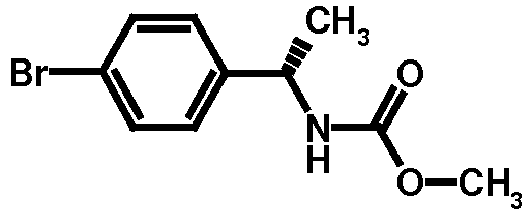
- 17.2 g (105 mmol) CDT are added to a mixture of 20.0 g (100 mmol) (S)-1-(4-bromophenyl)-ethylamine and 17.6 mL (125 mmol) TEA in 300 mL dichloromethane at 0°C. Stirring is continued for 15 min at 5°C. After that time, the solvent is removed in vacuo and taken up in 50 mL methanol. 33.4 mL (180 mmol) sodium methoxide in methanol (30%) are added and stirring is continued for 48 h at rt. After that time, the solvent is removed in vacuo, the residue is taken up in ethyl acetate and washed with sat. KHSO4-solution (2x) and water. The organic layer is dried over magnesium sulphate and the solvent is removed by evaporation.
C10H12BrNO2 (M = 258.1 g/mol), ESI-MS: 258 [M+H]+
Rt (HPLC): 2.60 min (method A) -

C11H15BrN2O (M = 271.2 g/mol), ESI-MS: 271 [M+H]+
Rt (HPLC): 1.68 min (method A) -

- 9.01 g (47.3 mmol) Copper(I) iodide are added to a mixture of 114.6 g (473.3 mmol) (S)-N-[1-(4-bromo-phenyl)-ethyl]-acetamide (I.1), 283.8 g (1.893 mmol) sodium iodide and 10.43 g (118.3 mmol) N,N'-dimethylethylendiamine in 1.3 L 1,4-dioxane. The mixture is stirred for 60 h at 120°C. After that time, the solvent is evaporated, the residue is suspended in 2 L dichloromethane and poured into a mixture of ice (1 kg), ammonia (1 L) and water (2 L). The organic layer is separated, the aq. layer is washed with dichloromethane (2x) and the combined organic layers are washed with water (2x) and dried over sodium sulphate. The solvent is evaporated and the residue is washed with diethyl ether.
C10H12INO (M = 289.1 g/mol), ESI-MS: 290 [M+H]+
Rf (TLC):0.57 (silica gel, dichloromethane:methanol 9:1) - The following compounds are prepared analogously to Example III.1:
-
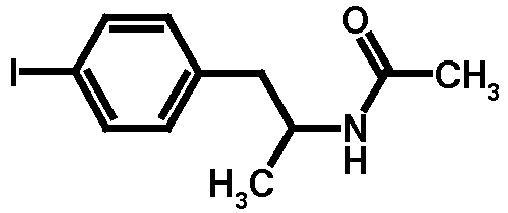
Rt (HPLC): 2.85 min (method C) -

- Under inert gas atmosphere 181 mg (0.248 mmol) PdCl2(dppf)xCH2Cl2 are added to a mixture of 30.0 g (124 mmol) (S)-N-[1-(4-bromo-phenyl)-ethyl]-acetamide (I.1), 139 mL (279 mmol) 2N sodium carbonate solution and 16.8 g (136 mmol) pyridine-4-boronic acid in 300 mL 1,4-dioxane and 100 mL methanol. The mixture is stirred for 5 d at reflux. After that time, the residue is poured into water (3 L) and extracted with dichloromethane (3x). The combined organic layers are washed with water and dried over magnesium sulphate. The solvent is evaporated and the residue is triturated with acetone and tert-butyl methyl ether.
C15H16N2O (M = 240.3 g/mol), ESI-MS: 241 [M+H]+
Rt (HPLC): 1.44 min (method A) - The following compounds are prepared analogously to Example IV.1:
-

Rt (HPLC): 1.60 min (method A) -

Rt (HPLC): 1.49 min (method A) -

Rt (HPLC): 1.56 min (method A) -

C18H22N2O2 (M = 298.4 g/mol), ESI-MS: 299 [M+H]+
Rt (HPLC): 1.92 min (method A) -

Rt (HPLC): 0.94 min (method G) -

Rt (HPLC): 0.84 min (method G) -

Rt (HPLC): 1.40 min (method A) -

Rt (HPLC): 1.41 min (method A) -

- 195 mL 1 N HCl are added to 21.9 g (91.1 mmol) (S)- N-[1-(4-pyridin-4-yl-phenyl)-ethyl]-acetamide (IV.1) in 500 mL ethanol. The mixture is hydrogenated (3 bar) for 6.5 h at rt using 2.00 g platinum(IV) oxide. After that time, the catalyst is filtered off and the solvent is evaporated. The residue is taken up in water, neutralized with 1 N NaOH and extracted with ethyl acetate/methanol. The organic layer is dried over magnesium sulphate and the solvent is evaporated. The aq. layer is saturated with sodium chloride and extracted with THF. The organic layer is washed with saturated NaCl-solution and the solvent is evaporated. The combined residues are purified by column chromatography (silica gel; eluent A: THF, eluent B: THF/methanol/ammonia 2:1:0.1) to yield the desired product.
C15H22N2O (M = 246.3 g/mol), ESI-MS: 247 [M+H]+
Rt (HPLC): 1.42 min (method A) - The following compounds are prepared analogously to Example V.1:
-

Rt (HPLC): 1.60 min (method A) -

Rt (HPLC): 1.48 min (method A) -

Rt (HPLC): 1.12 min (method A) -

Rt (HPLC): 1.12 min (method A) -

Rt (HPLC): 1.10 min (method A) -

Rt (HPLC): 1.40 min (method A) -

- Under inert gas atmosphere 303 mg (1.00 mmol) N-[2-(4-iodo-phenyl)-1-methyl-ethyl]-acetamide (III.2) are added to a mixture of 309 mg (1.00 mmol) 4-(4,4,5,5-tetramethyl-[1,3,2]dioxaborolan-2-yl)-3,6-dihydro-2H-pyridine-1-carboxylic acid tert-butyl ester, 49 mg (0.060 mmol) PdCl2(dppf)xCH2Cl2 and 415 mg (3.00 mol) K2CO3 in 5 mL DMF. The mixture is stirred for 48 h at rt. After that time, the solvent is evaporated, the residue taken up in ethyl acetate and washed with water. After drying over sodium sulphate, the solvent is removed in vacuo and the residue is purified by column chromatography (silica gel; ethyl acetate) to yield the desired product.
C21H30N2O3 (M = 358.5 g/mol), ESI-MS: 376 [M+NH4]+
Rf (TLC):0.20 (silica gel, DCM/ethyl acetate 1:1) -

- 2.20 g (6.14 mmol) 4-[4-(2-Acetylamino-propyl)-phenyl]-3,6-dihydro-2H-pyridine-1-carboxylic acid tert-butyl ester (VI.1) in 100 mL methanol are hydrogenated (50 psi) for 7.0 h at rt using 250 mg palladium on charcoal(10%). After that time, the catalyst is filtered off and the solvent is evaporated to yield the desired product.
C21H32N2O3 (M = 360.5 g/mol), ESI-MS: 361 [M+H]+
Rf (TLC):0.40 (silica gel, DCM/methanol 9:1) -

- To 2.10 g (5.83 mmol) 4-[4-(2-acetylamino-propyl)-phenyl]-piperidine-1-carboxylic acid tert-butyl ester (VII.1) in 50 mL dichloromethane are added 4.4 mL (58.3 mmol) trifluoroacetic acid. The mixture is stirred for 3 h at rt. After that time, the solvent is evaporated, the residue taken up in ethyl acetate and washed with sat. NaHCO3-solution. After drying over sodium sulphate, the solvent is removed in vacuo and the residue is recrystallized from diethyl ether.
C16H24N2O (M = 260.4 g/mol), ESI-MS: 261 [M+H]+
Rf (TLC):0.20 (silica gel, DCM/methanol/NH4OH 5:1:0.02) -

- To 259 mg (26.9 mmol) pyrimidin-5-ol (J. Chem. Soc. 1956, 2033) in 200 mL DMF are added 108 mg (26.9 mmol) sodium hydride (60% dispersion in mineral oil). The mixture is stirred for 20 min at rt. After that time, 500 mg (22.4 mmol) 2-fluoro-4-iodopyridine are added and the mixture is stirred for 12 h at 80°C. Subsequently the mixture is poured into water and extracted with ethyl acetate (3x). The combined organic layers are washed with brine. After drying over sodium sulphate, the solvent is removed in vacuo and the residue is purified by column chromatography (silica gel; heptane/ethyl acetate, gradient 0-60%) to yield the desired product.
C9H6IN3O (M = 299.1 g/mol), ESI-MS: 300 [M+H]+ - The following compounds are prepared analogously to Example IX.1:
-

-

C8H9BrN2O (M = 229.1 g/mol), ESI-MS: 229 [M+H]+
Rt (HPLC): 0.98 min (method H) -

C7H9BrN2O2 (M = 233.1 g/mol), EI-MS: 232 [M]+
Rt (HPLC): 0.97 min (method F) -

C9H11BrN2O2 (M = 259.1 g/mol), EI-MS: 258 [M]+
Rt (HPLC): 1.09 min (method F) -

using cesium carbonate as base and DMA as solvent
C9H6BrN3O (M = 252.1 g/mol), EI-MS: 252 [M]+
Rt (HPLC): 1.16 min (method M) -

C11H8BrNO (M = 250.1 g/mol), ESI-MS: 250 [M+H]+
Rt (HPLC): 1.12 min (method G) -

- To a mixture of 2.0 g (9.05 mmol) 4-iodo-1H-pyridin-2-one and 3.13 g (22.6 mmol) potassium carbonate in 10 mL DMF are added 1.05 mL (10.9 mmol) 1-iodopropane. The mixture is stirred for 2 h at rt. Subsequently the mixture is poured into water and extracted with ethyl acetate (2x). The combined organic layers are washed with sat. NaHCO3-solution. After drying over sodium sulphate, the solvent is removed in vacuo and and the residue is purified by HPLC (column: Agilent Stablebond C18, 7µM; eluent A: water + 0.15% HCOOH, eluent B: MeOH) to yield the desired product.
C8H10INO (M = 263.1 g/mol), ESI-MS: 264 [M+H]+
Rt (HPLC): 1.51 min (method A) - The following compounds are prepared analogously to Example X.1:
-
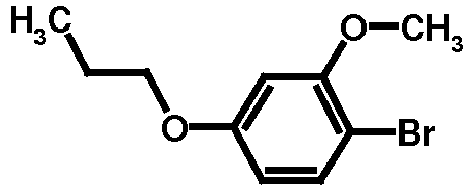
C10H13BrO2 (M = 245.1 g/mol), ESI-MS: 245 [M+H]+
Rt (HPLC): 2.12 min (method A) -

C10H13BrO (M = 229.1 g/mol)
Rt (HPLC): 2.31 min (method A)
Rf (TLC):0.79 (silica gel, cyclohexane/ethyl acetate 9:1) -

C9H10BrClO (M = 249.5 g/mol)
Rt (HPLC): 2.37 min (method A)
Rf (TLC): 0.78 (silica gel, cyclohexane/ethyl acetate 9:1) -

C11H13BrO2 (M = 257.1 g/mol), ESI-MS: 257 [M+H]+
Rt (HPLC): 2.11 min (method A) -

C11H13BrO2 (M = 257.1 g/mol)
ESI-MS: 257 [M+H]+
Rt (HPLC): 2.18 min (method A) -

C9H11BrO2 (M = 231.1 g/mol)
ESI-MS: 231 [M+H]+
Rt (HPLC): 2.00 min (method A) -

C11H15BrO2 (M = 259.1 g/mol)
ESI-MS: 259 [M+H]+
Rt (HPLC): 2.21 min (method A) -

C10H10BrNO (M = 240.1 g/mol)
EI-MS: 239 [M]+
Rt (HPLC): 1.98 min (method A) -

C11H10BrNO (M = 252.1 g/mol)
EI-MS: 251 [M]+
Rt (HPLC): 2.07 min (method A) -

C10H10BrNO (M = 240.1 g/mol)
ESI-MS: 257 [M+NH4]+
Rt (HPLC): 2.27 min (method A) -

C11H10BrNO (M = 252.1 g/mol)
ESI-MS: 252 [M+H]+
Rt (HPLC): 2.00 min (method A) -
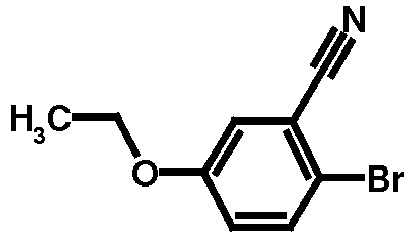
C9H8BrNO (M = 226.1 g/mol)
ESI-MS: 226 [M+H]+
Rt (HPLC): 1.82 min (method A) -

C11H12FNO (M = 193.2 g/mol)
Rt (HPLC): 2.02 min (method A)
Rf (TLC):0.64 (silica; cyclohexane/ethyl acetate 8:2) -

C9H10BrFO (M = 233.1 g/mol)
EI-MS: 232 [M]+
Rt (HPLC): 2.12 min (method F) -

C11H12FNO (M = 193.2 g/mol)
Rt (HPLC): 1.86 min (method F)
Rf (TLC):0.60 (silica; cyclohexane/ethyl acetate 8:2) -

C9H10BrFO (M = 233.1 g/mol)
Rt (HPLC): 2.25 min (method F)
Rf (TLC):0.27 (silica; cyclohexane) -

C10H10BrFO (M = 245.1 g/mol)
EI-MS: 244 [M]+
Rt (HPLC): 2.08 min (method F) -

C8H8BrFO (M = 219.1 g/mol)
Rf (TLC):0.57 min (silica gel, CyH)
Rt (HPLC): 2.16 min (method F) -

C10H11BrO (M = 227.1 g/mol)
Rf (TLC):0.58 (silica gel, CyH)
Rt (HPLC): 1.40min (method L) -

C10H12BrFO2 (M = 263.1 g/mol),
Rf (TLC):0.49 (silica gel, CyH/EtOAc 9/1)
Rt (HPLC): 0.72 min (method H) -

C7H7ClFNO (M = 175.6 g/mol), ESI-MS: 176 [M+H]+
Rt (HPLC): 1.07 min (method L) -

C11H12BrFO (M = 259.1 g/mol),
Rf (TLC):0.71 (silica gel, CyH/EtOAc9/1)Rt (HPLC): 1.43 min (method L) -

C9H9ClFNO (M = 201.6 g/mol), ESI-MS: 202 [M+H]+
Rt (HPLC): 1.20 min (method L) -

C8H9ClFNO (M = 189.6 g/mol), ESI-MS: 190 [M+H]+
Rt (HPLC): 1.19 min (method L) -

C7H9ClN2O (M = 172.6 g/mol), ESI-MS: 173 [M+H]+
Rt (HPLC): 1.53 min (method A) -

C10H9BrF2O (M = 263.1 g/mol), EI-MS: 262 [M]+
Rt (HPLC): 1.15 min (method G) -

C11H13BrO (M = 241.1 g/mol), EI-MS: 240 [M]+
Rt (HPLC): 1.30 min (method G) -

C8H9ClN2O (M = 184.6 g/mol), ESI-MS: 185 [M+H]+
Rt (HPLC): 1.23 min (method N) -

C8H7ClF2N2O (M = 220.6 g/mol), ESI-MS: 221 [M+H]+
Rt (HPLC): 1.21 min (method N) -

C10H8BrF3O (M = 281.1 g/mol), EI-MS: 282 [M+H]+
Rt (HPLC): 1.31 min (method L) -
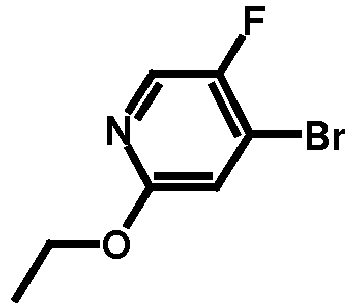
C7H7BrFNO (M = 220.0 g/mol), EI-MS: 220 [M+H]+
Rt (HPLC): 1.27 min (method M) -

- 78 µL (0.83 mmol) acetic anhydride are added to 100 mg (0.77 mmol) 2-chloro-pyrimidin-5-ylamine in 20 mL dichloromethane at 0°C. Subsequently 115 µL TEA are added and stirring is continued for 12 h at rt. After that time, the solvent is removed by evaporation and the residue is washed with water.
C6H6ClN3O (M = 171.6 g/mol)
ESI-MS: 172 [M+H]+
Rt (HPLC): 0.86 min (method A) -

- 6.21 g (19.1 mmol) cesium carbonate are added to a mixture of 5.80 mg (19.1 mmol) (S)-[1-(4-piperidin-4-yl-phenyl)-ethyl]-carbamic acid tert-butyl ester (V.5), 4.21 g (21.0 mmol) 1-bromo-4-ethoxy-benzene, 454 mg (0.953 mmol) X-Phos and 214 mg (0.953 mmol) palladium(II) acetate in 50 mL toluene/10 mL tert-butanol. The mixture is stirred for 3 h at 120°C under inert gas atmosphere. After that time, the mixture is poured into water and extracted with ethyl acetate. The organic layer is washed with water and dried over magnesium sulphate. The solvent is removed in vacuo and the residue is recrystallized from acetonitrile.
C26H36N2O3 (M = 424.6 g/mol)
ESI-MS: 425 [M+H]+
Rt (HPLC): 2.10 min (method A) -

- 11.3 mL (14.1 mmol) 1.25 N HCl in methanol are added to 900 mg (2.12 mmol) (S)-(1-{4-[1-(4-ethoxy-phenyl)-piperidin-4-yl]-phenyl}-ethyl)-carbamic acid tert-butyl ester (XII.1) in 25 mL dichloromethane. The mixture is stirred for 14 h at rt and for 1 h at 50°C. After that time, the solvent is removed in vacuo to yield the desired product.
C21H28N2O·2HCl (M = 397.4 g/mol)
ESI-MS: 325 [M+H]+
Rt (HPLC): 1.11 min (method D) - The corresponding free base is synthesized by addition of NaOH (10% in water) and immediate extraction with dichloromethane. The organic layer is washed with water (2x), dried over magnesium sulphate and the solvent is evaporated to yield the desired product.
-

- 0.34 mL (2.43 mmol) TEA are added to a mixture of 181 mg (1.22 mmol) 4,6-dichloropyrimidine and 300 mg (1.22 mmol) (S)-N-[1-(4-piperidin-4-yl-phenyl)-ethyl]-acetamide (V.1) in 3 mL THF. The mixture is stirred for 5 min at 80°C and for 2 h at rt. After that time, water is added and the mixture is extracted with dichloromethane (2x). The combined organic layers are dried over sodium sulphate. The solvent is evaporated and the residue is purified by column chromatography (silica gel; dichloromethane/methanol, gradient 98:2 - 95:5) to yield the desired product.
C19H23ClN4O (M = 358.9 g/mol)
ESI-MS: 359 [M+H]+
Rt (HPLC): 2.00 min (method B) - The following compounds are prepared analogously to Example XIV.1:
-

(using K2CO3 as base and acetone as solvent)
C20H25ClN4O (M = 372.9 g/mol)
ESI-MS: 373 [M+H]+ -

C19H23ClN4O (M = 358.9 g/mol); ESI-MS: 359 [M+H]+
Rt (HPLC): 2.00 min (method P) -

(using K2CO3 as base and acetone as solvent)
C22H24ClN5O (M = 409.9 g/mol); ESI-MS: 410 [M+H]+
Rt (HPLC): 1.97 min (method T) -
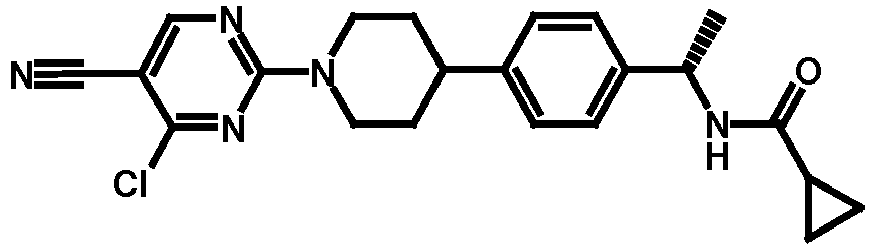
(using K2CO3 as base and acetone as solvent)
C22H24ClN5O (M = 409.9 g/mol); ESI-MS: 410 [M+H]+
Rt (HPLC): 2.07 min (method T) -

C21H25ClN4O (M = 384.9 g/mol); ESI-MS: 385 [M+H]+
Rt (HPLC): 1.19 min (method L) -

C20H26ClN5O (M = 387.9 g/mol); ESI-MS: 388 [M+H]+
Rt (HPLC): 1.17 min (method L) -

C19H23ClN4O (M = 358.9 g/mol); ESI-MS: 359 [M+H]+
Rt (HPLC): 1.34 min (method L) -

- 7.82 g (64.0 mmol) Benzoic acid and 20 mL POCl3 are stirred together at 100 °C for 30 min. Within 45 min 7.00 g (42.7 mmol) 2,6-dichloro-5-aminopyrimidine are added in several portions. The rection mixture is stirred for additional 2h at the same temperature. After that time, the mixture is carefully added to an ice cold aq. NaOH solution. The resulting precipitate is filtered off, washed with water and dried.
C11H6ClN3O (M = 231.6 g/mol); ESI-MS: 232 [M+H]+
Rt (HPLC): 2.22 (method I) - The following compounds are prepared analogously to example XV. 1:
Ex. Starting material Product structure Mass spec result Rt (HPLC) [min] (method) XV.1 

232 [M+H]+ 2.22 (I) XV.2 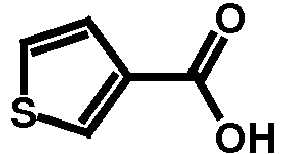

238 [M+H]+ 1.43 (I) XV.3 

252 [M+H]+ n.d. XV.4 

238 [M+H]+ n.d. -

- a) 25 g (126 mmol) 2-chloro-5-nitro-pyrimidin-4-ol, 2.0 g PtO2 and 2.5 L MeOH are hydrogenated (50 psi) for 1 h. The mixture is filtered and concentrated and dried to yield 5-amino-2-chloro-pyrimidin-4-ol.
- b) 5.88 g (47.7 mmol) isonicotinic acid and 7.74 g (47.7 mmol) 1,1'-carbonyldiimidazole in 30 mL DMF are stirred for 30 min at 45 °C prior to addition of 8.0 g (47.7 mmol) of 5-amino-2-chloro-pyrimidin-4-ol. The mixture is stirred for 12 h at rt, concentrated and purified by HPLC (reversed phase, water (+0.1 %TFA)/MeOH) to yield N-(2-chloro-4-hydroxy-pyrimidin-5-yl)-isonicotinamide.
- c) 12.0 g (35.9 mmol) polymer bound triphenylphosphine and 5.03 mL (35.9 mmol) triethylamine are added to 4.77 g (20.0 mmol) hexachloroethane in 40 mL 1,2-dichloroethane. The mixture is stirred for 5 min at rt. 1.00 g (4.0 mmol) N-(2-chloro-4-hydroxy-pyrimidin-5-yl)-isonicotinamide in 20 mL 1,2-dichloroethane are added and the mixture is stirred for 12 h at rt. Subsequently the mixture is concentrated in vacuo, treated with diethyl ether, filtered, and concentrated again.The residue is purified by HPLC (reversed phase; water (+ 0.1% TFA)/MeOH) to yield the desired product.
-

- a) 55.0 g (318 mmol) 4-bromophenol and 14.1 g (352 mmol) NaOH are added to 110 mL water. 41.1 mL (477 mmol) dibromoethane are added slowly and the reaction mixture is stirred for 16 h under reflux. Afterwards the reaction mixture is extracted with dichloromethane and the solvent is removed in vacuo. The crude product is purified by column chromatography (silica gel, cyclohexane/EtOAc 4/1).
- b) 52.0 g (186 mmol) 1-bromo-4-(2-bromoethoxy)benzene are added to 300 mL THF and cooled to 0°C. Within 30 min 25.0 g (223 mmol) KOtBu are added to this mixture in several portions. Cooling is removed and the reaction mixture is stirred at rt over night. The reaction is quenched by the addition of water. The resulting mixture is extracted with EtOAc (2x). The organic phases are combined, washed with brine, dried over MgSO4 and the solvent is removed in vacuo. The resulting product is used without further purification.
- c) 39.0 g (176 mmol) 1-bromo-4-vinyloxybenzene and 32.4 mL (441 mmol) chloroiodomethane are added to 500 mL dichloroethane and cooled to 0°C. During 1 h 200 mL (200 mmol) diethylzinc solution (c = 1 mol/l in hexane) are added and stirring is continued for 2 h at 0°C. The reaction is quenched by the addition of 200 mL of a sat. aq. NH4Cl solution and extracted with TBME (2x). The organic phases are combined, washed with brine, dried over MgSO4 and the solvent is removed in vacuo. The crude product is purified by column chromatography (silica gel, PE)
- The following compounds are prepared analogously to example XVI.1.
- For the examples XVI.2/XVI.3 the phenolate in step a) is preformed by reacting the appropriate phenol with NaOH in a MeOH/water (1/1) mixture at rt for 1 h. Then the solvent is removed in vacuo and the resulting sodium salt is reacted with dibromoethane (5 eq.) at 100°C for 24 h. The reaction mixture is quenched by the addition of water and extracted with DCM.
- For example XVI.4 step a: To the diphenol and dibromoethane (8 eq.) in acetone is added Cs2CO3 (5 eq.) and the reaction mixture is stirred at 90°C for 45 h. The reaction mixture is quenched by the addition of water and extracted with EtOAc.
Example Starting material Product structure Mass spec result Rt (HPLC) [min] (method) XV1.1 

212/214 [M]+ n.d. XVI.2 

n.d. 5.89 (AF) XVI.3 

n.d. 5.30 (J) XVI.4 

n.d. 8.50 (K) XVI.5 

230/232 [M]+ n.d. -

- To 1.52 g (8.5 mmol) 2-chloropyrimidine-5-carboxylic acid methyl ester in 80 mL NMP are added 2.1 g (8.5 mmol (S)-N-[1-(4-piperidin-4-yl-phenyl)-ethyl]-acetamide (V.1) and 2.9 mL (17.1 mmol) DIPEA and the mixture is stirred for 4 h at 100 °C. The solvent is removed in vacuo. The residue is treated with 100 mL MeOH and 10 mL 4N sodium hydroxide solution is added. The mixture is stirred for 1 h at 60 °C. After cooling to rt 4N HCl solution is added until the pH is acidic. The precipitate is collected and dried to yield the desired product.
C20H24N4O3 (M = 368.4 g/mol); ESI-MS: 369 [M+H]+
Rt (HPLC): 2.04 min (method P) -

- 633 mg (2.5 mmol) 2-Chloro-5-iodopyrimidine, 757 mg (2.5 mmol) (S)-cyclopropanecarboxylic acid [1-(4-piperidin-4-yl-phenyl)-ethyl]-amide (V.4) and 0.855 mL (5.0 mmol) DIPEA in 10 mL NMP are stirred for 2 h at 130 °C. After cooling to rt the mixture is treated with water and the precipitate is collected by filtration and triturated with ether to yield the desired compound.
C21H25IN4O (M = 476.4 g/mol); ESI-MS: 477 [M+H]+
Rt (HPLC): 2.25 min (method P) - The following compound is prepared analogously to Example XVIII.1:
-

C20H26IN5O (M = 479.4 g/mol); ESI-MS: 480 [M+H]+
Rt (HPLC): 2.22 min (method P) -

- To 1.41 g (5.74 mmol) (S)-N-[1-(piperidin-4-yl-phenyl)-ethyl]-acetamide (V.1) in 10 mL THF and 10 mL DMF is added 0.80 mL (5.74 mmol) triethylamine and 0.60 g (5.21 mmol) 2,4-difluoropyridine. The mixture is stirred for 12 h at 0 °C. Subsequently the mixture is concentrated in vacuo and the residue is purified by HPLC (C18 RP Sunfire; water (+0.1 % TFA)/MeOH) to yield the desired product.
C20H24FN3O (M = 341.4 g/mol); ESI-MS: 342 [M+H]+
Rt (HPLC): 1.59 min (method T) -
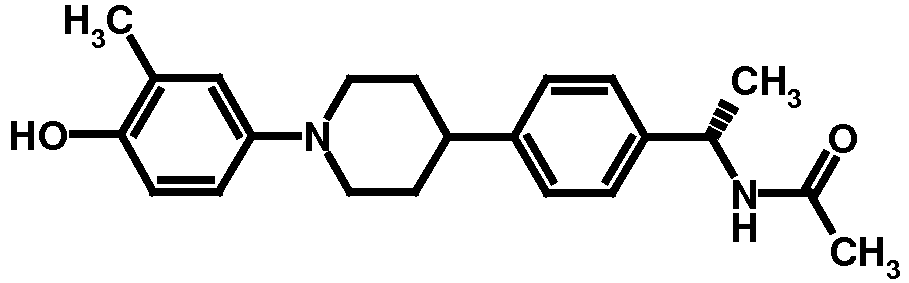
- To a mixture of 760 mg (4.06 mmol) 4-bromo-2-methylphenol, 1.7 g (16.24 mmol) sodium-tert-butylat and 484 mg (1.62 mmol) 2-(di-tert-butylphosphino)biphenyl in 40 mL dioxane is added 1.0 g (4.06 mmol) (S)-N-[1-(piperidin-4-yl-phenyl)-ethyl]-acetamide (V.1). Subsequently 371.7 mg (0.41 mmol) tris-(dibenzylidenaceton)-palladium(0) is added under an argon atmosphere and the mixture is stirred for 12 h at 45 °C. The mixture is then poured on water, acidified using 1 N HCl solution and extracted with dichloromethane. The DCM solution is subsequently extracted twice with 1 N HCl solution and the combined aq. layers are brought to neutral pH using solid Na2HPO4. The precipitate is then treated with DCM/MeOH and the solvents are removed in vacuo. The residue is purified by HPLC (column: C18 RP Sunfire; eluent A: water + 0.1 % TFA, eluent B: MeOH) to yield the desired product.
C20H28N2O2 (M = 352.5 g/mol); ESI-MS: 353 [M+H]+
Rt (HPLC): 1.14 min (method P) - The following compounds are prepared analogously to example XX.1, the educts used being shown in the column headed "E 1" and "E 2".
- For the example XX.6 at the end of the reaction the solvent is removed in vacuo and to the residue is added 2N HCl. The aq. layer is extracted with EtOAc, filtered and then basified with 4N NaOH. The resulting precipitate is filtered and dried in vacuo.
Ex. Product E 1 E 2 ESI-MS [m/z] Rt (HPLC) [min] (method) XX.1 

V.1 353 [M+H]+ 1.14 (P) XX.2 

V.1 364 [M+H]+ 1.20 (P) XX.3 

V.1 357 [M+H]+ 1.12 (P) XX.4 
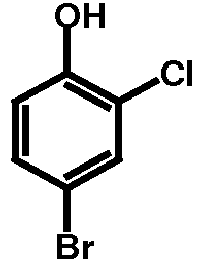
V.1 373 [M+H]+ 1.21 (P) XX.5 

V.1 369 [M+H]+ 1.09 (P) XX.6 

V.1 338 [M+H]+ 0.81 (N) -

- To 9.60 g (37.7 mmol) (S)-N-[1-(4-pyridin-4-yl-phenyl)-ethyl]-propionamide (IV.6) in 120 mL acetone are added 4.91 mL (41.5 mmol) benzyl bromide. The mixture is refluxed for 12 h. After that time, the precipitate is filtered off, washed with acetone and dried at 50 °C to yield the desired product.
C23H25N2O*Br (M = 425.4 g/mol), EI-MS: 345 [M]+
Rt (HPLC): 1.03 min (method O) - The following compounds are prepared analogously to Example XXI.1
-

Rt (HPLC): 0.93 min (method N) -

- To 13.60 g (32.0 mmol) (S)-1-benzyl-4-[4-(1-propionylamino-ethyl)-phenyl]-pyridinium bromide (XXI.1) in 270 mL ethanol are slowly added 2.42 g (64.1 mmol) sodium borohydride at 0 °C. The mixture is stirred for 48 h at rt. After that time, the solvent is removed in vacuo and ethyl acetate is added. The mixture is extracted with 1 N HCl. The aq. phase is neutralized with 4N NaOH, the precipitate is filtered off and dried at 45 °C to yield the desired product.
C23H28N2O (M = 348.5 g/mol), ESI-MS: 349 [M+H]+
Rt (HPLC): 0.91 min (method N) - The following compounds are prepared analogously to Example XXII.1
-

Rt (HPLC): 0.93 min (method N) -

- 9.58 g (27.5 mmol) ((S)-N{1-[4-(1-Benzyl-1,2,3,6-tetrahydro-pyridin-4-yl)-phenyl]-ethyl}-propionamide (XXII.1) in 130 mL ethanol are hydrogenated (3 bar) for 7 h at 50°C using 0.80 g Pd/C (10%). After that time, the catalyst is filtered off and the solvent is evaporated. The residue is purified by HPLC (column: Gemini Phenomenex, 10µM; eluent A: water + 0.30% NH4OH, eluent B: acetone) to yield the desired product.
C16H24N2O (M = 260.4 g/mol), ESI-MS: 261 [M+H]+
Rt (HPLC): 0.69 min (method N) - The following compounds are prepared analogously to Example XXIII.1
-

Rt (HPLC): 0.72 min (method N) -

- 9 mL NaOH solution (50% in water) and 9 mL dichloromethane are mixted at rt and 137 mg (0.42 mmol) tetrabutylammonium bromide and 0.87 g (4.25 mmol) 2-chloro-5-[(methylsulfonyl)methyl]pyridine are added followed by 1.83 mL (21.2 mmol) dibromomethane. The mixture is stirred for 12 h at 35 °C. The mixture is subsequently extracted with dichloromethane and the combined organic phases are washed with water and brine. The solvent is removed in vacuo and the residue is purified by HPLC (silica gel, cyclohexane/ethylacetate) to yield the desired product. C9H10ClNO2S (M = 231.7 g/mol), ESI-MS: 232 [M+H]+
-

- To 445 mg (2.44 mmol) 2-chloro-thiazole-4-carbonyl chloride in 8.0 mL dichloromethane is added a mixture of 0.38 mL (2.69 mmol) triethylamine and 1.35 mL (2.69 mmol) 2 molare solution of methylamine in THF. The mixture is stirred over night, concentrated and the residue is treated with water and NaHCO3 solution. After extraction with ethylacetate the organic phases are combined, dried (Na2SO4) and concentrated to yield the desired product
C5H5ClN2OS (M = 176.6 g/mol), ESI-MS: 177 [M+H]+
Rf (cyclohexane/ethylacetate = 1:1) = 0.3 -

- a) 0.50 g (2.31 mmol) 4-Bromo-2-methoxy-6-methyl-phenylamine in 5 mL dichloromethane is cooled with ice/ethanol and 0.24 mL (2.49 mmol) boron tribromide in 5 mL dichloromethane is added slowly. Stirring is continued for 30 under cooling and 2 h at rt. The mixture is poured onto ice, allowed to stand for 30 min and the aq. layer is extracted with dichloromethane. The aq. phase is treated with NaHCO3 until the mixture shows basic pH, followed by extraction with dichloromethane. The combined organic phases are dried and concentrated to yield the desired product which is used without further purification.
- b) To 1.5 g (7.42 mmol) 2-amino-5-bromo-3-methyl-phenol in 30 mL xylene is added 1.15 mL (8.19 mmol) triethylamine, 0.68 g (2.70 mmol pyridinium p-toluenesulfonate and 0.55 mL (7.74 mmol) acetyl chloride. The mixture is refluxed for 3 d.
- Subsequently the solvent is removed in vacuo, and the residue is treated with 50 mL ethylacetate. The mixture is extracted twice with water. The combined aq. layers are extracted with ethylacetate. The combines organic layers are dried and concentrated to yield the desired product.
C9H8BrNO (M = 226.1 g/mol), ESI-MS: 226 [M+H]+
Rt (HPLC): 1.55 min (method Q) -

- 1.37 g (13.0 mmol) Cyanogen bromide are added to a mixture of 2.0 g (8.12 mmol) (S)-N-[1-(4-piperidin-4-yl-phenyl)-ethyl]-acetamide (V.1) and 4.86 mL (28.4 mmol) DIPEA in 15 mL THF and 15 mL dichloromethane. The mixture is stirred for 4 h at rt. After that time, the solvents are removed in vacuo. The residue is taken up in ethylacetate, the mixture is washed with water and the organic layer is concentrated. After addition of diethyl ether the precipitate is collected by filtration, followed by washing with diethylether to yield the desired product.
C16H21N3O (M = 271.4 g/mol); ESI-MS: 272 [M+H]+
Rt (HPLC): 2.10 min (method R) -

- 256.4 mg (3.69 mmol) Hydroxylamine hydrochloride are added to a mixture of 1.0 g (3.69 mmol) (S)-N-{1-[4-(1-cyano-piperidin-4-yl)-phenyl]-ethyl}-acetamide (XXVII.1) and 0.63 mL (3.69 mmol) DIPEA in 20 mL ethanol. The mixture is refluxed for 4 h, an additional amount of 50 mg hydroxylamine hydrochloride is added and refluxing is continued for 2 h. The solvent is removed in vacuo and water is added. The mixture is then purified by HPLC (RP C18 Xbridge, water(+0.1 % ammonia)/MeOH) to yield the desired product.
C16H24N4O2 (M = 304.4 g/mol); ESI-MS: 305 [M+H]+
Rt (HPLC): 1.89 min (method S) -

- a) To 1.00 g (7.57 mmol) 4-fluorocatechol in 50 mL DCM are added 0.58 mL (11.4 mmol) bromine in 10 mL DCM. The reaction mixture is stirred at rt for 3 h. Then the solvent is removed in vacuo and the crude product is purified by column chromatography (silica gel, DCM/MeOH 9/1).b)
- To 1.50 g (7.25 mmol) of 4-bromo-5-fluorobenzene-1,2-diol in 25 mL DMF are added 5.90 g (18.1 mmol) Cs2CO3 and 0.89 mL (8.70 mmol) 1,3-dibromopropane. The reaction mixture is stirred at 120 °C over night. The solvent is removed in vacuo and to the residue is added water. After extracting several times with EtOAc the org. phases are combined, washed with sat. aq. NaCl solution and dried with MgSO4. The solvent is removed in vacuo and the resulting residue is purified by column chromatography (silica gel, PE/EtOAc 9/1 → 7/3).
C9H8BrFO2 (M = 247.1 g/mol), EI-MS: 246/248 [M]+
Rf (TLC): 0.50 (silica gel, PE/EtOAc 4/1) - The following compounds are prepared analogously to Example XXVIII.1:
-
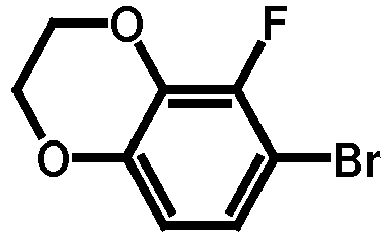
C8H6BrFO2 (M = 233.0 g/mol), EI-MS: 232 [M]+ -

- 530 µl (6.09 mmol) Bromoacetylbromide are added dropwise to an icecold mixture of 1.50 g (6.09 mmol) (S)-N-[1-(4-piperidin-4-yl-phenyl)-ethyl]-acetamide (V.1) and 1.03 mL (7.31 mmol) TEA in 20 mL dichloromethane. Then the cooling is removed and the mixture is allowed to warm to rt and then quenched by the addition of water. The mixture is extracted with DCM, the org. layers are combined, washed with water and dried with MgSO4. The solvent is removed in vacuo and the crude product is used without further purification.
C17H23BrN2O2 (M = 367.3 g/mol); ESI-MS: 367 [M+H]+
Rt (HPLC): 0.83 min (method G) -

- To 1.00 g (11.6 mmol) 1-cyclopropylethanol at 0 °C are carefully added 364 µL (3.83 mmol) PBr3 and the mixture is allowed to warm to rt. Then 1 drop of water is added and the mixture is filtered through basic aluminum oxide.
C5H9Br (M = 149.0 g/mol); EI-MS: 148 [M]+ -

- a) To 1.80 g (10.5 mmol) 4-fluoro-2-methoxy-1-nitro-benzene and 0.87 mL (11.6 mmol) 1-propanol in 23 mL DMF at 0 °C are added 278 mg (11.6 mmol) NaH. The reaction mixture is stirred for 30 min at 0 °C and then allowed to warm to rt. The reaction is quenched by the addition of water. The resulting mixture is extracted with EtOAc. The org. layer is washed with water (2x) and dried with MgSO4. The solvent is removed in vacuo and the residue is purified by HPLC (RP C18 Xbridge, water(+0.3% ammonia)/MeOH).
- b) 1.40 g (6.63 mmol) 2-Methoxy-1-nitro-4-propoxybenzene in 20 mL EtOAc is charged with 100 mg Pd/C (5%) and hydrogenated at rt with a hydrogen pressure of 50 psi. The mixture is filtered and the solvent is removed in vacuo. The crude product is used without further purification.
-

- 1.20 g (6.62 mmol) 2-methoxy-4-propoxyaniline (Example XXXI) in 8.5 mL EtOH and 1.8 mL water are stirred under reflux. During 30 min 2.19 g (6.62 mmol) N-methyl-N-benzyl-4-oxopiperidinium iodide (Org. Lett. 1999, 1, 1261-1262) are added by several portions. Stirring under reflux is continued for 1 h. Then the reaction mixture is cooled down to rt before water and DCM are added. The layers are separated and the org. layer is dried with MgSO4, filtered and the solvent is removed in vacuo. The resulting residue is purified by column chromatography (silica gel, PE/EtOAc 8/2).
C15H21NO3 (M = 263.3 g/mol), ESI-MS: 264 [M+H]+
Rt (HPLC): 1.80 (method F) - The following compounds are prepared analogously to example XXXII.1.
Example Starting material Product structure Mass spec result Rt (HPLC) [min] (method) XXXII.1 

264 [M+H]+ 1.80 (F) XXXII.2 

220 [M+H]+ 1.63 (A) -

- To 0.60 g (2.28 mmol) of Example XXXII.1 and 0.85 g (2.39 mmol) N,N-bis-(trifluoromethanesulfonyl)-aniline in 6 mL THF at -70 °C are added 2.51 mL (2.51 mmol) sodium bis(trimethylsilyl)amide (c= 1.0 mol/l) over a period of 1 h. Cooling is removed and the mixture is allowed to warm to rt. An aq. half-saturated NaHCO3 solution is added and the resulting mixture is extracted with DCM (2x). The org. layers are combined, dried with MgSO4 and the solvent is removed in vacuo. The resulting residue is purified by column chromatography (silica gel, PE/EtOAc 8/2).
C16H20F3NO5S (M = 395.4 g/mol), ESI-MS: 396 [M+H]+
Rt (HPLC): 1.68 (method F) - The following compounds are prepared analogously to example XXXIII.1.
Example Starting material Product structure Mass spec result Rt (HPLC) [min] (method) XXXIII.1 XXXII.1 
396 [M+H]+ 1.68 (F) XXXIII.2 XXXII.2 
352 [M+H]+ 2.20 (A) -
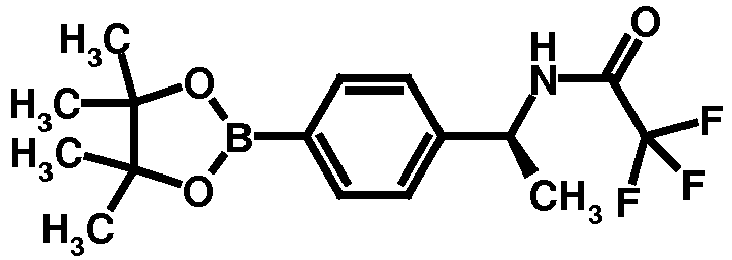
- 13.0 g (43.9 mmol) of (S)-N-(1-(4-bromophenyl)ethyl)-2,2,2-trifluoroacetamide and 14.5 g (148 mmol) KOAc are added to 130 mL DMSO. After degassing the mixture 13.7 g (52.9 mmol) bis(pinakolato)diboron and 1.10 mg (1.35 mmol) PdCl2(dppf)*CH2Cl2 are added and the mixture is stirred at 90 °C for 3 h. 350 mL EtOAc and 100 mL water are added and the resulting mixture is filtered over celite.
- The org. layer is separated, washed with water (2x) and sat aq. NaCl solution (2x). The org. phase is dried with MgSO4 and the solvent is removed in vacuo. The crude product is purified by column chromatography (silica gel, CyH/EtOAc 95/5 → 1/1). C16H21BF3NO3 (M = 343.2 g/mol), ESI-MS: 361 [M+NH4]+
-

- To 0.30 g (0.76 mmol) of Example XXXIII.1 and 260 mg (0.76 mmol) of Example XXXIV in 6 mL dioxane and 6 mL MeOH are added 0.76 mL (1.52 mmol) of an aq. Na2CO3 solution (c = 2 mol/L) and 21.3 mg (0.03 mmol) Pd(PPh3)Cl2. The reaction mixture is stirred at 95 °C for 3 h. Water and DCM are added and the layers are separated. The org. layer is dried with MgSO4 ans the solvent is removed in vacuo. The resulting residue is purified by HPLC (RP C18 Xbridge, water(+0.3% ammonia)/ MeOH).
C25H29F3N2O3 (M = 462.5 g/mol), ESI-MS: 463 [M+H]+
Rt (HPLC): 2.20 (method F) - The following compounds are prepared analogously to example XXXV.1.
Example Starting material Product structure Mass spec result Rt (HPLC) [min] (method) XXXV.1 XXXIII.1 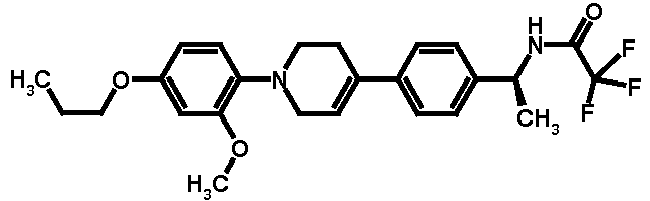
463 [M+H]+ 2.20 (F) XXXV.2 XXXIII.2 
419 [M+H]+ 2.16 (A) -

- 3.81 g (22.0 mmol) 4-bromophenol, 2.76 g (24.2 mmol) 3,3,3-trifluoro-1-propanol and 5.77 g (22.0 mmol) triphenylphosphine are added to 50 mL DCM and cooled down to 0 °C. Then 4.55 mL (22.0 mmol) di-iso-propyl azodicarboxylate are added and the mixture is allowed to warm to rt ad stirring is continued over night. Then the reaction mixture is poured on water and extracted with DCM. The org. layers are combined, dried with Na2SO4, filtered and the solvent is removed in vacuo. The residue is purified using flash chromatography (silica gel, PE/EtOAc 8/2).
C9H8BrF3O (M = 269.1 g/mol), ESI-MS: 301 [M+MeOH+H]+
Rt (HPLC): 1.90 min (method A) -

- a) To 4.50 g (22.3 mmol) of 3-bromo-6-ethoxy-pyridine in 100 mL DCM are added 20.5 g (89.1 mmol) mCPBA by several portions. The reaction mixture is stirred at rt over night, charged with MgSO4 and filtered over 100 g of basic aluminum oxide. The solvent is removed in vacuo before DCM and an aq. NaHCO3 solution are added and the layers are separated. The aq. layer is saturated with NaCl and extracted several times with DCM. The org. layers are combined and the solvent is removed in vacuo. The residue is filtered through a plug of silica gel.
- b) 1.00 g (4.59 mmol) 5-bromo-2-ethoxy-pyridine-1-oxide, 2.46 mL (18.3 mmol) trimethylsilyl cyanide and 1.92 mL (13.8 mmol) TEA in 10 mL ACN are stirred together at 100 °C for 24 h. Then the volatile components are removed in vacuo and the residue is dissolved in DCM, washed with aq. NaHCO3 solution, dried with MgSO4 and filtered through a plug of silica gel. Then the solvent is removed in vacuo.
- The following compounds are prepared analogously to example XXXVII.1.
- For the examples XXXVII.2 and XXXVII.3 the intermediates from step a are purified by HPLC after the filtration over basic alumnum oxide.
Example Starting material Product structure Mass spec result Rt (HPLC) [min] (method) XXXVII.1 

227 [M+H]+ n.d. XXXVII.2 

241 [M+H]+ 1.09 (G) XXXVII.3 

253 [M+H]+ 1.08 (G) -
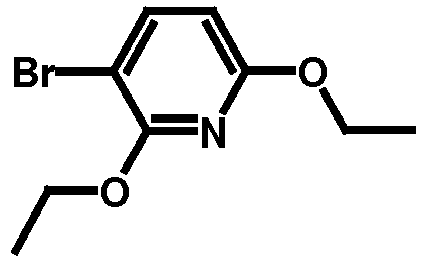
- To 59.1 µL (1.00 mmol) ethanol in 1 mL DMF are added 25.3 mg (1.00 mmol) NaH and afterwards 109 mg (0.50 mmol) 3-bromo-6-chloro-pyridine-2-carbonitrile. The resulting mixture is stirred at 50 °C for 1 h. Then the reaction mixture is poured onto water and extracted with TBME. The org. layers are combined, dried with MgSO4, filtered and the solvent is removed in vacuo.
C9H12BrNO2 (M = 246.1 g/mol), ESI-MS: 246 [M+H]+ -

- 147 mg (0.60 mmol) (S)-N-[1-(Piperidin-4-yl-phenyl)-ethyl]-acetamide (V.1) are added to a mixture of 100 mg (0.50 mmol) 1-bromo-4-ethoxy-benzene, 197 mg (2.00 mmol) sodium tert-butyrat, 59 mg (0.20 mmol) 2-(di-tert-butylphosphino)biphenyl and 46 mg (0.05 mmol) tris-(dibenzylidenaceton)-dipalladium(0) in 2.0 mL 1,4-dioxane. The mixture is stirred for 4 h at 45 °C. After that time, the mixture is filtered over celite. The solvent is removed in vacuo from the filtrate. The residue is purified by HPLC (column: Waters XBridge 5µM; eluent A: water + 0.3% NH4OH, eluent B: MeOH) to yield the desired product.
C23H30N2O2 (M = 366.5 g/mol)
ESI-MS: 367 [M+H]+
Rt (HPLC): 2.11 min (method A) - The following compounds of general formula (1-1) are prepared analogously to Example 1.1, the educts used being shown in the column headed "E 1" and "E 2": Alternatively reaction temperatures of up to 120 °C or heating in a microwave oven at up to 120 °C are used as reaction conditions in the examples below.
- Eg., for the example 1.177 the reaction temperature is 110 °C; for the examples 1.184 and 1.185 the reaction conditions are 45 min at 80 °C in a microwave oven.

Example Ar1 T E 1 E 2 ESI-MS [m/z] Rt (HPLC) [min] (method) 1.1 
*-CH3 
V.1 367 [M+H]+ 2.11 (A) 1.2 
*-CH3 
V.1 407 [M+H]+ 2.30 (A) 1.3 
*-CH3 
V.1 395 [M+H]+ 2.30 (A) 1.4 
*-CH3 
V.1 368 [M+H]+ 2.03 (A) 1.5 


V.2 383 [M+H]+ 2.18 (A) 1.6 


V.3 396 [M+H]+ 2.13 (A) 1.7 


V.3 424 [M+H]+ 2.26 (A) 1.8 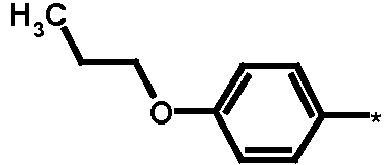


V.3 410 [M+H]+ 2.22 (A) 1.9 
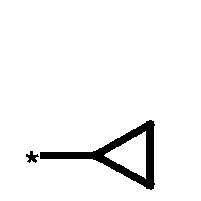
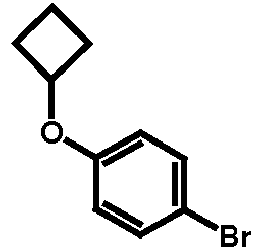
V.4 419 [M+H]+ 2.26 (A) 1.10 


V.4 421 [M+H]+ 2.27 (A) 1.11 


V.2 384 [M+H]+ 2.06 (A) 1.12 


V.2 409 [M+H]+ 2.27 (A) 1.13 


V.2 397 [M+H]+ 2.26 (A) 1.14 


V.4 405 [M+H]+ 2.18 (A) 1.15 


V.2 411 [M+H]+ 2.29 (A) 1.16 


V.4 419 [M+H]+ 2.22 (A) 1.17 


V.2 397 [M+H]+ 2.07 (A) 1.18 


V.3 410 [M+H]+ 2.01 (A) 1.19 


V.4 407 [M+H]+ 2.04 (A) 1.20 


V.4 394 [M+H]+ 2.04 (A) 1.21 


V.3 422 [M+H]+ 2.24 (A) 1.22 


V.2 409 [M+H]+ 2.24 (A) 1.23 


V.4 407 [M+H]+ 2.25 (A) 1.24 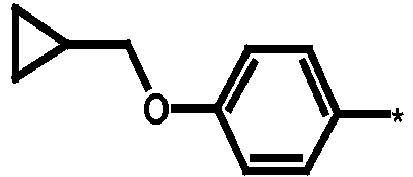

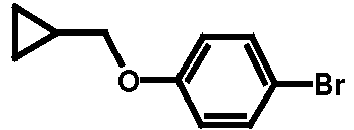
V.3 422 [M+H]+ 2.20 (A) 1.25 


V.4 393 [M+H]+ 2.16 (A) 1.26 
*-CH3 
V.1 393 [M+H]+ 2.16 (A) 1.27 
*-CH3 
V.1 339 [M+H]+ 1.79 (A) 1.28 
*-CH3 
V.1 379 [M+H]+ 2.19 (A) 1.29 
*-CH3 
V.1 395 [M+H]+ 2.25 (A) 1.30 
*-CH3 
V.1 353 [M+H]+ 2.03 (A) 1.31 
*-CH3 
V.1 411 [M+H]+ 2.21 (A) 1.32 
*-CH3 
V.1 395 [M+H]+ 2.46 (A) 1.33 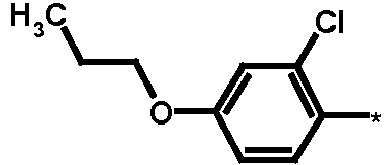
*-CH3 
V.1 415 [M+H]+ 2.39 (A) 1.34 
*-CH3 
V.1 378 [M+H]+ 2.10 (A) 1.35 
*-CH3 
V.1 411 [M+H]+ 2.20 (A) 1.36 
*-CH3 
V.1 423 [M+H]+ 2.22 (A) 1.37 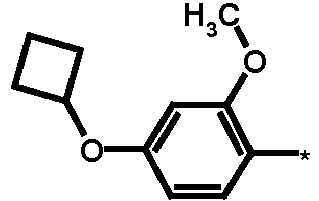
*-CH3 
V.1 423 [M+H]+ 2.26 (A) 1.38 
*-CH3 
V.1 397 [M+H]+ 2.15 (A) 1.39 
*-CH3 
V.1 425 [M+H]+ 2.28 (A) 1.40 
*-CH3 
V.1 381 [M+H]+ 1.99 (A) 1.41 
*-CH3 
V.1 383 [M+H]+ 2.06 (A) 1.42 
*-CH3 
V.1 411 [M+H]+ 2.23 (A) 1.43 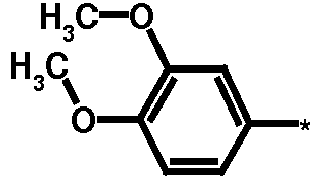
*-CH3 
V.1 383 [M+H]+ 1.85 (A) 1.45 
*-CH3 
V.1 323 [M+H]+ 2.08 (A) 1.46 
*-CH3 
V.1 357 [M+H]+ 2.21 (A) 1.47 
*-CH3 
V.1 411 [M+H]+ 2.14 (A) 1.48 
*-CH3 
V.1 339 [M+H]+ 1.70 (A) 1.49 
*-CH3 
V.1 341 [M+H]+ 1.15 (A) 1.50 
*-CH3 
V.1 406 [M+H]+ 2.18 (A) 1.51 
*-CH3 
V.1 418 [M+H]+ 2.25 (A) 1.52 
*-CH3 
V.1 365 [M+H]+ 2.32 (A) 1.53 
*-CH3 
V.1 354 [M+H]+ 1.90 (A) 1.54 
*-CH3 
V.1 430 [M+H]+ 2.21 (A) 1.55 
*-CH3 
V.1 382 [M+H]+ 2.11 (A) 1.56 
*-CH3 
V.1 368 [M+H]+ 2.09 (A) 1.57 
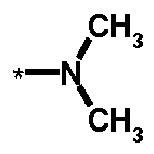

V.3 422 [M+H]+ 2.30 (A) 1.59 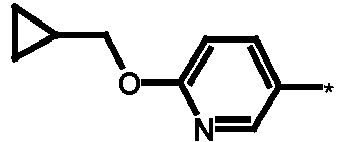
*-CH3 
V.1 394 [M+H]+ 2.08 (A) 1.60 
*-CH3 
V.1 382 [M+H]+ 2.06 (A) 1.62 
*-CH3 
V.1 394 [M+H]+ 2.03 (F) 1.63 
*-CH3 
V.1 427 [M+H]+ 1.90 (F) 1.64 
*-CH3 
V.1 399 [M+H]+ 2.18 (F) 1.65 
*-CH3 
V.1 357 [M+H]+ 1.02 (F) 1.67 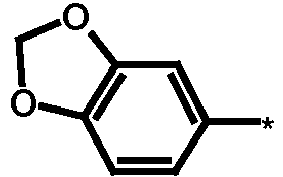
*-CH3 
V.1 367 [M+H]+ 1.90 (F) 1.70 
*-CH3 
V.1 391 [M+H]+ 1.70 (F) 1.71 
*-CH3 
V.1 440 [M+H]+ 2.21 (F) 1.72 
*-CH3 
V.1 377 [M+H]+ 1.65 (F) 1.73 
*-CH3 
V.1 392 [M+H]+ 1.88 (F) 1.74 
*-CH3 
V.1 399 [M+H]+ 2.14 (A) 1.75 
*-CH3 
V.1 376 [M+H]+ 1.23 (G) 1.76 
*-CH3 
V.1 376 [M+H]+ 1.23 (G) 1.77 


V.4 419 [M+H]+ 1.28 (G) 1.78 


V.4 407 [M+H]+ 1.26 (G) 1.79 


V.4 437 [M+H]+ 1.30 (G) 1.80 


V.3 422 [M+H]+ 1.27 (G) 1.81 


V.3 410 [M+H]+ 1.26 (G) 1.82 


V.4 411 [M+H]+ 1.25 (G) 1.83 

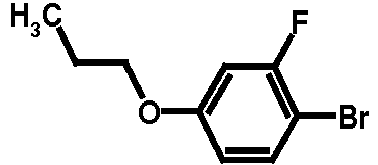
V.4 425 [M+H]+ 1.31 (G) 1.84 


V.3 440 [M+H]+ 1.28 (G) 1.85 


V.3 414 [M+H]+ 1.24 (G) 1.86 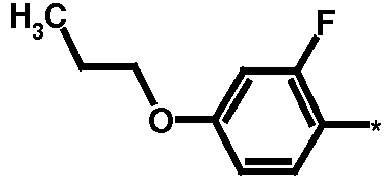


V.3 428 [M+H]+ 1.33 (G) 1.88 
*-CH3 
V.1 393 [M+H]+ 1.29 (G) 1.89 
*-CH3 
V.1 381 [M+H]+ 1.30 (G) 1.90 
*-CH3 
V.1 395 [M+H]+ 1.29 (G) 1.91 


V.4 419 [M+H]+ 1.36 (G) 1.92 
*-CH3 
V.1 393 [M+H]+ 1.29 (G) 1.93 


V.4 435 [M+H]+ 1.26 (G) 1.94 
*-CH3 
V.1 435 [M+H]+ 1.01 (G) 1.95 
*-CH3 
V.1 385 [M+H]+ 1.03 (G) 1.96 
*-CH3 
V.1 371 [M+H]+ 1.99 (A) 1.97 
*-CH3 
V.1 415 [M+H]+ 2.10 (F) 1.98 
*-CH3 
V.1 381 [M+H]+ 2.13 (F) 1.99 
*-CH3 
V.1 429 [M+H]+ 1.30 (L) 1.100 
*-CH3 
V.1 386 [M+H]+ 1.31 (L) 1.101 
*-CH3 
V.1 425 [M+H]+ 1.45 (L) 1.102 
*-CH3 
V.1 409 [M+H]+ 2.06 (F) 1.103 
*-CH3 
V.1 385 [M+H]+ 2.17 (F) 1.104 
*-CH3 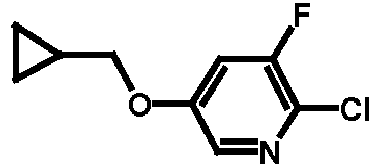
V.1 412 [M+H]+ 1.36 (L) 1.105 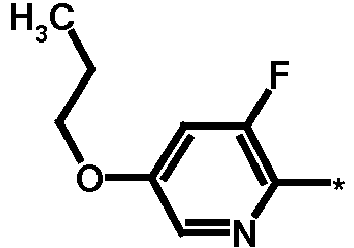
*-CH3 
V.1 400 [M+H]+ 1.37 (L) 1.106 


V.3 438 [M+H]+ 1.37 (L) 1.107 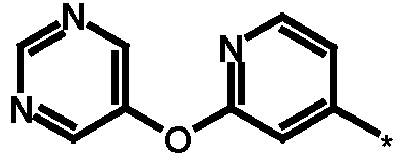
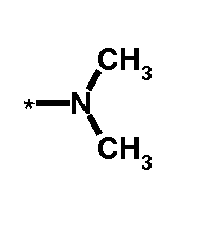

V.3 447 [M+H]+ 1.18 (L) 1.108 


V.4 444 [M+H]+ 1.19 (L) 1.109 
*-CH3 
V.1 433 [M+H]+ 1.17 (L) 1.110 
*-CH3 
V.1 418 [M+H]+ 1.16 (L) 1.111 

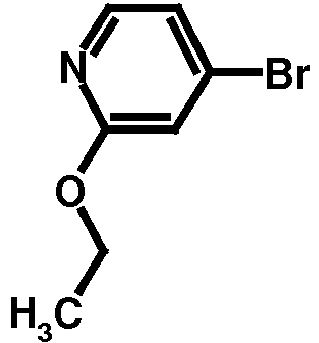
V.3 397 [M+H]+ 1.99 (A) 1.112 


V.3 408 [M+H]+ 2.14 (A) 1.113 


V.2 395 [M+H]+ 2.20 (A) 1.114 


V.4 421 [M+H]+ 2.30 (L) 1.115 


V.4 432 [M+H]+ 2.15 (F) 1.116 


V.4 437 [M+H]+ 2.17 (F) 1.117 


V.4 433 [M+H]+ 1.33 (G) 1.118 


V.4 422 [M+H]+ 2.22 (A) 1.119 


V.4 407 [M+H]+ 2.18 (A) 1.120 
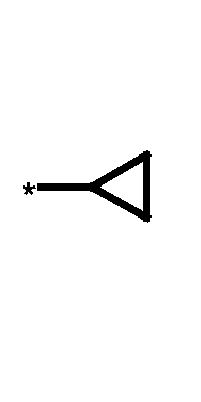
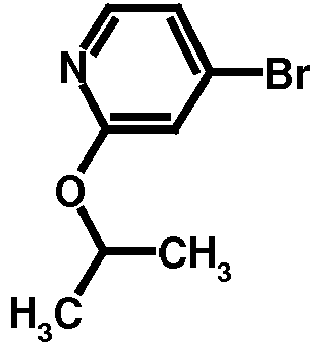
V.4 408 [M+H]+ 2.09 (A) 1.121 


V.4 437 [M+H]+ 2.12 (A) 1.122 


V.3 424 [M+H]+ 2.28 (A) 1.123 


V.3 435 [M+H]+ 2.15 (F) 1.124 


V.3 440 [M+H]+ 2.15 (F) 1.125 


V.3 436 [M+H]+ 1.82 (G) 1.126 


V.3 425 [M+H]+ 2.20 (A) 1.127 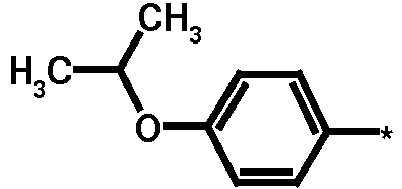


V.3 410 [M+H]+ 2.15 (A) 1.128 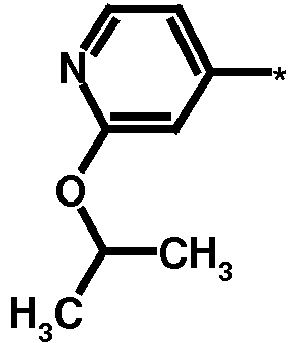


V.3 411 [M+H]+ 2.06 (A) 1.129 


V.3 440 [M+H]+ 2.09 (A) 1.130 

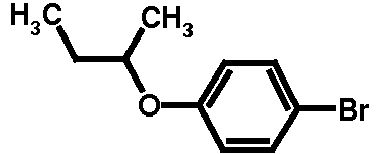
V.2 411 [M+H]+ 2.31 (A) 1.131 


V.2 422 [M+H]+ 2.16 (F) 1.132 


V.2 427 [M+H]+ 2.22 (F) 1.133 


V.2 423 [M+H]+ 2.31 (A) 1.134 


V.2 412 [M+H]+ 2.23 (A) 1.135 


V.2 397 [M+H]+ 2.19 (A) 1.136 


V.2 398 [M+H]+ 2.11 (A) 1.137 


V.2 427 [M+H]+ 2.07 (F) 1.138 


V.3 445 [M+H]+ 1.30 (G) 1.139 


V.4 455 [M+H]+ 1.23 (G) 1.140 


V.3 458 [M+H]+ 1.21 (G) 1.141 


V.4 433 [M+H]+ 1.35 (G) 1.142 
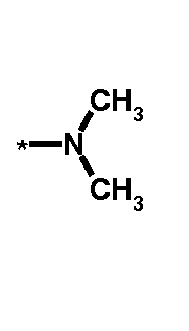

V.3 436 [M+H]+ 1.34 (G) 1.143 


V.4 433 [M+H]+ 1.34 (G) 1.144 


V.3 436 [M+H]+ 1.32 (G) 1.145 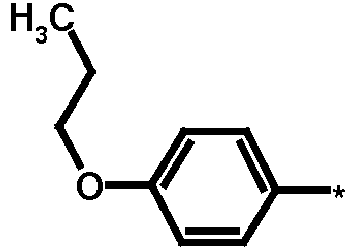


XXII I.1 395 [M+H]+ 1.18 (N) 1.146 


XXII I.1 395 [M+H]+ 1.04 (N) 1.147 


XXII I.1 425 [M+H]+ 1.19 (N) 1.148 


XXII I.1 425 [M+H]+ 1.40 (O) 1.149 


XXII I.1 409 [M+H]+ 1.29 (O) 1.150 
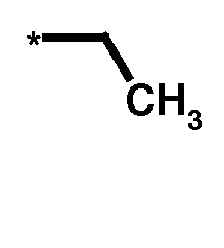

XXII I.1 407 [M+H]+ 1.16 (N) 1.151 


XXII I.1 393 [M+H]+ 1.12 (N) 1.152 


XXII I.1 443 [M+H]+ 1.16 (N) 1.153 


XXII I.1 430 [M+H]+ 1.18 (N) 1.154 

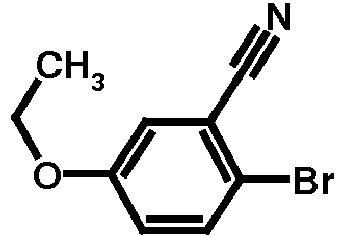
XXII I.1 406 [M+H]+ 1.64 (N) 1.155 
*-CH3 
V.1 355 [M+H]+ 1.43 (AA) 1.156 
*-CH3 
V.1 371 [M+H]+ 1.51 (AA) 1.157 
*-CH3 
V.1 371 [M+H]+ 1.31 (AA) 1.158 
*-CH3 
V.1 841 [2M+H ]+ 1.41 (AA) 1.159 
*-CH3 
V.1 366 [M+H]+ 1.31 (AA) 1.160 
*-CH3 
V.1 367 [M+H]+ 1.36 (AA) 1.161 
*-CH3 
V.1 375 [M+H]+ 1.45 (AA) 1.162 
*-CH3 
V.1 387 [M+H]+ 1.39 (AA) 1.163 
*-CH3 
V.1 359 [M+H]+ 1.38 (AA) 1.164 
*-CH3 
V.1 403 [M+H]+ 1.33 (AA) 1.165 
*-CH3 
V.1 435 [M+H]+ 1.40 (AA) 1.166 
*-CH3 
V.1 393 [M+H]+ 1.13 (N) 1.167 
*-CH3 
V.1 423 [M+H]+ 1.05 (N) 1.168 


XXII I.1 399 [M+H]+ 1.32 (N) 1.169 


XXII I.1 432 [M+H]+ 1.10 (N) 1.170 


V.2 401 [M+H]+ 1.36 (N) 1.171 
*-CH3 
V.1 382 [M+H]+ 1.20 (G) 1.172 
*-CH3 
V.1 422 [M+H]+ 1.35 (G) 1.173 
*-CH3 
V.1 365 [M+H]+ 1.51 (N) 1.174 
*-CH3 
V.1 365 [M+H]+ 0.99 (N) 1.175 
*-CH3 
V.1 364 [M+H]+ 1.06 (N) 1.176 
*-CH3 
V.1 393 [M+H]+ 1.65 (D) 1.177 
*-CH3 
V.1 411 [M+H]+ 1.28 (G) 1.178 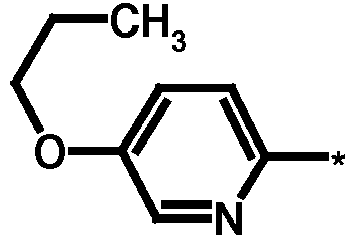


V.3 411 [M+H]+ 1.19 (G) 1.179 

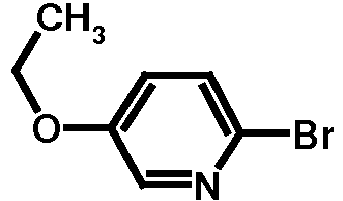
V.3 397 [M+H]+ 1.12 (G) 1.180 
*-CH3 
V.1 412 [M+H]+ 1.25 (G) 1.181 
*-CH3 
V.1 407 [M+H]+ 1.24 (G) 1.182 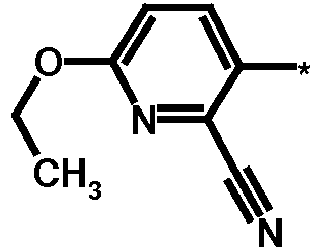
*-CH3 
V.1 393 [M+H]+ 1.16 (G) 1.183 
*-CH3 
V.1 419 [M+H]+ 1.21 (G) 1.186 
*-CH3 
V.1 419 [M+H]+ 1.40 (AE) 1.187 
*-CH3 
V.1 447 [M+H]+ 1.43 (L) 1.188 
*-CH3 
V.1 391 [M+H]+ 1.39 (L) 1.189 
*-CH3 
V.1 397 [M+H]+ 1.37 (L) 1.190 
*-CH3 
V.1 386 [M+H]+ 1.32 (L) 1.191 
*-CH3 
V.1 368 [M+H]+ 1.05 (N) 1.192 
*-CH3 
V.1 399 [M+H]+ 1.10 (G) - The following compounds of general formula (1-2) are prepared analogously to Example 1.1, the educts used being shown in the column headed "Educts":

Example Ar1 T Educt 1 Educt 2 ESI-MS [m/z] Rt (HPLC) [min] (method ) 1.200 
*-CH3 
XXIII. 2 395 [M+H]+ 1.19 (N) 1.201 
*-CH3 
XXIII. 2 395 [M+H]+ 0.94 (N) 1.202 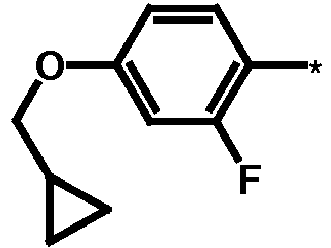
*-CH3 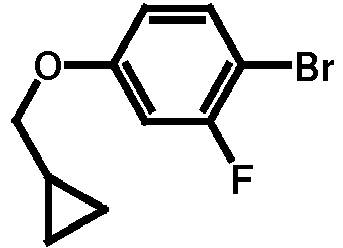
XXIII. 2 425 [M+H]+ 1.46 (N) 1.203 
*-CH3 
XXIII. 2 407 [M+H]+ 1.18 (N) 1.204 
*-CH3 
XXIII. 2 393 [M+H]+ 1.14 (N) 1.205 
*-CH3 
XXIII. 2 443 [M+H]+ 1.18 (N) 1.206 
*-CH3 
XXIII. 2 381 [M+H]+ 1.11 (N) 1.207 
*-CH3 
XXIII. 2 399 [M+H]+ 1.34 (N) - The following compound of general formula (1-3) is prepared analogously to Example 1.1, the educts used being shown in the column headed "E 1" and "E 2":
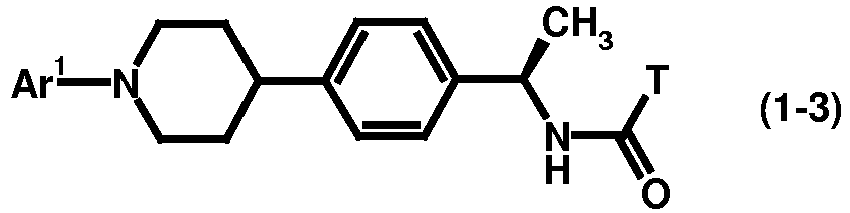
Example Ar1 T E 1 E 2 ESI-MS [m/z] Rt (HPLC) [min] (method) 1.300 
*-CH3 
V.6 385 [M+H]+ 1.21 (G) -

- 3.0 mL Toluene/tert-butanol (5:1) are added to a mixture of 130 mg (0.50 mmol) N-[1-methyl-2-(4-piperidin-4-yl-phenyl)-ethyl]-acetamide (VIII.1), 100 mg (0.50 mmol) 1-bromo-4-ethoxy-benzene, 80 mg (0.83 mmol) sodium tert-butyrat, 20 mg (0.040 mmol) X-Phos and 10 mg (0.040 mmol) palladium(II) acetate. The mixture is stirred for 10 min at 150°C under microwave irradiation in a sealed tube. After that time, the mixture is poured into 1 mL 0.1 N HCl. 1 mL conc. ammonia is added and the mixture is extracted with ethyl acetate (3x). The combined organic layers are dried over sodium sulphate and the solvent is removed in vacuo. The residue is purified by column chromatography (silica gel; DCM/MeOH 19:1) to yield the desired product.
C24H32N2O2 (M = 380.5 g/mol), ESI-MS: 381 [M+H]+
Rt (HPLC): 2.15 min (method C) - The following compounds of general formula (2-1) are prepared analogously to Example 2.1, the educts used being shown in the column headed "Educts":
- For the examples 2.3-2.12 the piperidine building block is added to a mixture of the appropriate aryl bromide (1 eq), sodium tert-butyrat (4 eq), 2-(di-tert-butylphosphino)biphenyl (0.4 eq) and tris-(dibenzylidenaceton)-dipalladium(0) (0.1 eq) in 1,4-dioxane. The reaction mixture is stirred at 45 °C over night and afterwards purified by HPLC.

Example Ar1 T Educt 1 Educt 2 ESI-MS [m/z] Rt (HPLC) [min] (method) 2.1 
*-CH3 
VIII.1 381 [M+H]+ 2.15 (C) 2.3 
*-CH3 
VIII.1 395 [M+H]+ 1.28 (G) 2.4 
*-CH3 
VIII.1 395 [M+H]+ 1.16 (G) 2.5 
*-CH3 
VIII.1 425 [M+H]+ 1.31 (G) 2.6 
*-CH3 
VIII.1 425 [M+H]+ 1.30 (G) 2.7 
*-CH3 
VIII.1 409 [M+H]+ 1.34 (G) 2.8 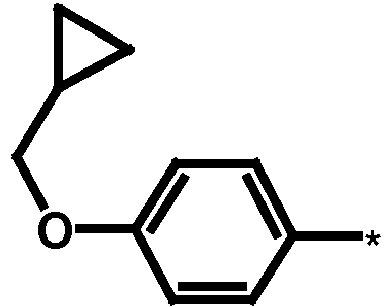
*-CH3 
VIII.1 407 [M+H]+ 1.27 (G) 2.9 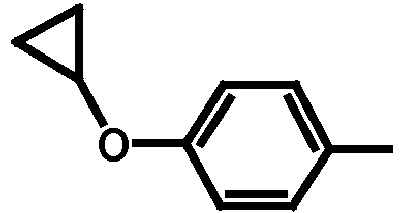
*-CH3 
VIII.1 393 [M+H]+ 1.03 (N) 2.10 
*-CH3 
VIII.1 393 [M+H]+ 1.03 (N) 2.11 
*-CH3 
VIII.1 406 [M+H]+ 1.64 (N) 2.12 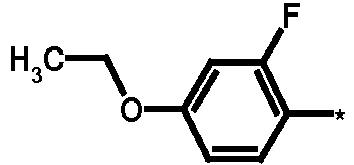
*-CH3 
VIII.1 399 [M+H]+ 1.33 (N) - The following compound of general formula (2-2) is prepared analogously to Example 2.1, the educts used being shown in the column headed "Educts":

Example Ar1 T Educt 1 Educt 2 ESI-MS [m/z] Rt (HPLC) [min] (method) 2.13 
*-CH3 
V.1 403 [M+H]+ 1.91 (A) -

- Under inert gas atmosphere 123 mg (0.50 mmol) (S)-N-[1-(piperidin-4-yl-phenyl)-ethyl]-acetamide (V.1) is added to a mixture of 149 mg (0.50 mmol) 5-iodo-2-phenoxy-pyridine (J. Organomet. Chem. 2003, 677, 57), 212 mg (1.00 mmol) K3PO4, 62 mg (1.00 mmol) ethylenglycol and 5 mg (0.025 mmol) copper(I) iodide in 5.0 mL 2-propanol. The mixture is stirred for 12 h at 80 °C in a sealed tube. After cooling, the precipitate is filtered off and washed with acetonitrile. The precipitate is purified by HPLC (column: Agilent Zorbax Stablebond C18, 8µM; eluent A: water + 0.3% NH4OH, eluent B: MeOH) to yield the desired product.
C26H29N3O2 (M = 415.5 g/mol), ESI-MS: 416 [M+H]+
Rt (HPLC): 2.08 min (method A) - The following compounds of general formula (3-1) are prepared analogously to Example 3.1, the educts used being shown in the column headed "E 1" and "E 2":

Ex. Ar1 T E 1 E 2 ESI-MS [m/z] Rt (HPLC) [min] (method) 3.1 
*-CH3 
V.1 416 [M+H]+ 2.08 (A) 3.2 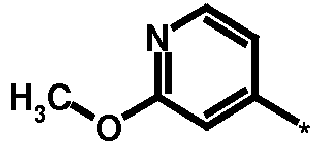
*-CH3 
V.1 354 [M+H]+ 1.90 (A) 3.3 
*-CH3 
V.1 382 [M+H]+ 2.06 (A) 3.4 
*-CH3 
V.1 396 [M+H]+ 2.18 (A) 3.5 
*-CH3 
V.1 418 [M+H]+ 1.82 (A) 3.6 
*-CH3 
V.1 381 [M+H]+ 2.15 (A) 3.7 
*-CH3 
V.1 395 [M+H]+ 2.29 (A) 3.8 
*-CH3 
V.1 381 [M+H]+ 2.21 (A) 3.9 
*-CH3 
V.1 382 [M+H]+ 1.74 (A) 3.10 
*-CH3 
V.1 417 [M+H]+ 1.91 (A) 3.11 
*-CH3 
V.1 369 [M+H]+ 1.88 (A) 3.12 
*-CH3 
V.1 416 [M+H]+ 2.06 (A) 3.13 
*-CH3 
V.1 397 [M+H]+ 2.09 (A) 3.14 

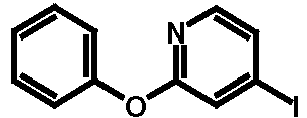
V.4 442 [M+H]+ 1.32 (G) - The following compound of general formula (3-2) is prepared analogously to Example 3.1, the educts used being shown in the column headed "E 1" and "E 2":

Ex. Ar1 T E 1 E 2 ESI-MS [m/z] Rt (HPLC) [min] (method) 3.20 
*-CH3 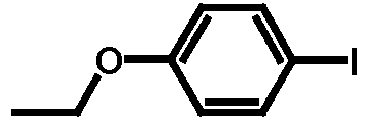
V.7 379 [M+H]+ 2.01 (F) -

- 50 µL (0.29 mmol) DIPEA are added to a mixture of 14 mg (0.10 mmol) 2-chloronicotinnitrile and 29 mg (0.11 mmol) (S)-N-[1-(4-piperidin-4-yl-phenyl)-ethyl]-acetamide (V.1) in 1.45 mL NMP. The mixture is stirred at 130°C overnight. Subsequently the solvent is removed in vacuo, the residue is taken up in DMF and the mixture is purified using reversed phase HPLC (water/MeOH, 0.1 % TFA) to yield the desired product.
C10H11NO (M = 348.4 g/mol), ESI-MS: 349 [M+H]+
Rt (HPLC): 1.89 min (method B) - The following compounds of general formula (4-1) are prepared analogously to Example 4.1, the educts used being shown in the column headed "E 1" and "E 2". For the examples 4.52 and 4.53 the reaction mixture is stirred at 130 °C for 2 h in a microwave oven.

Example Ar1 T E 1 E 2 ESI-MS [m/z] Rt (HPLC) [min] (method) 4.1 
*-CH3 
V.1 349 [M+H]+ 1.89 (B) 4.3 
*-CH3 
V.1 374 [M+H]+ 1.24 (B) 4.4 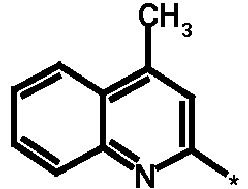
*-CH3 
V.1 388 [M+H]+ 1.32 (B) 4.5 
*-CH3 
V.1 349 [M+H]+ 1.86 (B) 4.6 
*-CH3 
V.1 393 [M+H]+ 1.93 (B) 4.8 
*-CH3 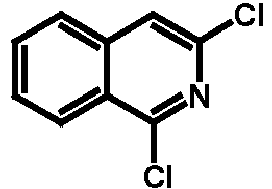
V.1 408 [M+H]+ 2.29 (B) 4.9 
*-CH3 
V.1 364 [M+H]+ 1.91 (B) 4.10 
*-CH3 
V.1 408 [M+H]+ 1.39 (B) 4.11 
*-CH3 
V.1 393 [M+H]+ 2.17 (B) 4.12 
*-CH3 
V.1 377 [M+H]+ 1.22 (B) 4.13 
*-CH3 
V.1 366 [M+H]+ 1.37 (B) 4.15 
*-CH3 
V.1 400 [M+H]+ 1.43 (B) 4.16 
*-CH3 
V.1 354 [M+H]+ 1.16 (B) 4.17 
*-CH3 
V.1 392 [M+H]+ 2.07 (B) 4.18 
*-CH3 
V.1 392 [M+H]+ 2.03 (B) 4.19 
*-CH3 
V.1 392 [M+H]+ 2.15 (B) 4.21 
*-CH3 
V.1 401 [M+H]+ 2.04 (B) 4.22 
*-CH3 
V.1 401 [M+H]+ 1.33 (B) 4.25 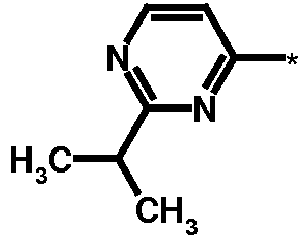
*-CH3 
V.1 367 [M+H]+ 1.36 (B) 4.26 
*-CH3 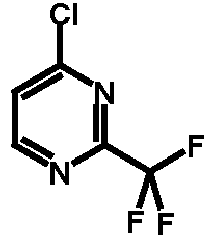
V.1 393 [M+H]+ 1.95 (B) 4.27 
*-CH3 
V.1 368 [M+H]+ 2.04 (B) 4.29 
*-CH3 
V.1 359 [M+H]+ 2.18 (B) 4.31 
*-CH3 
V.1 434 [M+H]+ 1.76 (B) 4.33 
*-CH3 
V.1 355 [M+H]+ 2.05 (B) 4.34 
*-CH3 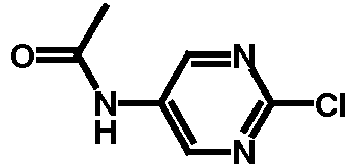
V.1 382 [M+H]+ 1.67 (A) 4.35 
*-CH3 
V.1 367 [M+H]+ 2.15 (A) 4.36 
*-CH3 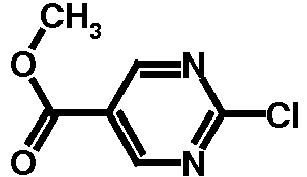
V.1 383 [M+H]+ 1.99 (A) 4.37 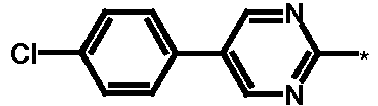
*-CH3 
V.1 435 [M+H]+ 2.32 (A) 4.38 
*-CH3 
V.1 381 [M+H]+ 2.20 (A) 4.39 
*-CH3 
V.1 370 [M+H]+ 1.98 (A) 4.40 
*-CH3 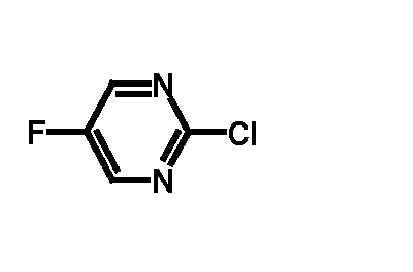
V.1 343 [M+H]+ 2.01 (A) 4.41 
*-CH3 
V.1 431 [M+H]+ 2.20 (A) 4.42 
*-CH3 
V.1 353 [M+H]+ 2.05 (A) 4.43 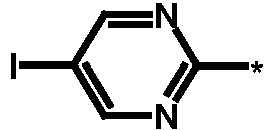
*-CH3 
V.1 451 [M+H]+ 2.21 (A) 4.44 
*-CH3 
V.1 403 [M+H]+ 2.19 (A) 4.45 
*-CH3 
V.1 325 [M+H]+ 1.83 (A) 4.49 
*-CH3 
V.1 383 [M+H]+ 2.04 (F) 4.50 
*-CH3 
V.1 369 [M+H]+ 1.92 (F) 4.51 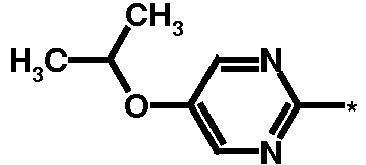
*-CH3 
V.1 383 [M+H]+ 1.99 (F) 4.52 
*-CH3 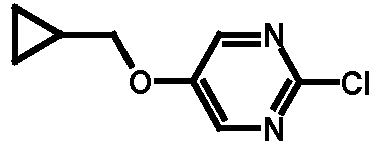
V.1 395 [M+H]+ 1.56 (N) 4.53 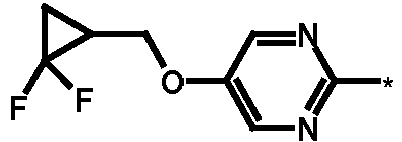
*-CH3 
V.1 431 [M+H]+ 1.53 (N) 4.54 


XXII I.1 379 [M+H]+ 1.46 (N) - The following compounds of general formula (4-1) are prepared analogously to Example 4.1 using refluxing ethanol as a solvent, the educts used being shown in the column headed "E 1" and "E 2":

Ex. Ar1 T E 1 E 2 ESI-MS [m/z] Rt(HPLC) [min] (method) 4.101 
*-CH3 
V.1 388 [M+H]+ 1.87 (A) 4.102 
*-CH3 
V.1 386 [M+H]+ 2.02 (A) - The following compounds of general formula (4-1) are prepared analogously to Example 4.1 using refluxing DMA under microwave irradiation as a solvent and potassium carbonate as base, the educts used being shown in the column headed "E 1" and "E 2":

Ex. Ar1 T E 1 E 2 ESI-MS [m/z] Rt(HPLC) [min] (method) 4.201 
*-CH3 
V.1 420 [M+H]+ 2.21 (F) 4.202 
*-CH3 
V.1 420 [M+H]+ 2.15 (F) - The following compounds of general formula (4-1) are prepared analogously to Example 4.1 using refluxing DMSO as a solvent and N,N-diisopropylethylamine as base, the educts used being shown in the column headed "E 1" and "E 2":

Ex. Ar1 T E 1 E 2 ESI-MS [m/z] Rt(HPLC) [min] (method) 4.303 


V.4 391 [M+H]+ 1.33 (G) 4.304 


V.3 394 [M+H]+ 1.31 (G) 4.305 
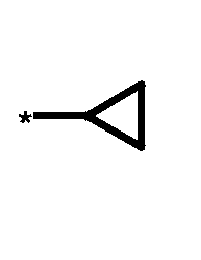

V.4 409 [M+H]+ 1.36 (G) 4.306 


V.3 412 [M+H]+ 1.34 (G) -

- 250 mg (1.24 mmol) 2-Bromo-5-ethoxy-pyridine are added to 250 mg (1.02 mmol) (S)-N-[1-(4-piperidin-4-yl-phenyl)-ethyl]-acetamide (V.1). The mixture is heated at 180°C for 1 h. Subsequently the residue is taken up in DMF/methanol and the mixture is purified using reversed phase HPLC (column: Waters XBridge 5µM; eluent A: water + 0.3% NH4OH, eluent B: MeOH + 0.3% NH4OH) to yield the desired product.
C22H29N3O2 (M = 367.5 g/mol), ESI-MS: 368 [M+H]+
Rt (HPLC): 2.20 min (method A) - The following compounds of general formula (5-1) are prepared analogously to Example 5.1, the educts used being shown in the column headed "E 1" and "E 2". For the preparation of compounds 5.5 to 5.35 and 5.38 to 5.56 DIPEA (3.0 equiv.) is added and NMP is used as solvent and the reaction mixture is stirred at 130°C over night. For the preparation of compound 5.36 and 5.37 potassium cabonate (2.0 equiv.) is used as a base and acetone is used as solvent and the reaction mixture is stirred for 2 h at 0 °C.

Example Ar1 T E 1 E 2 ESI-MS [m/z] Rt (HPLC) [min] method 5.1 
*-CH3 
V.1 368 [M+H]+ 2.20 (A) 5.2 
*-CH3 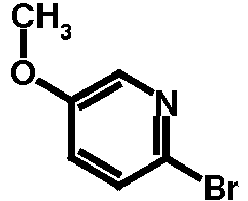
V.1 354 [M+H]+ 2.10 (A) 5.3 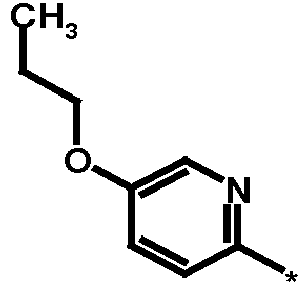
*-CH3 
V.1 382 [M+H]+ 2.30 (A) 5.4 
*-CH3 
V.1 396 [M+H]+ 2.40 (A) 5.8 
*-CH3 
V.1 442 [M+H]+ 0.32 (V) 5.9 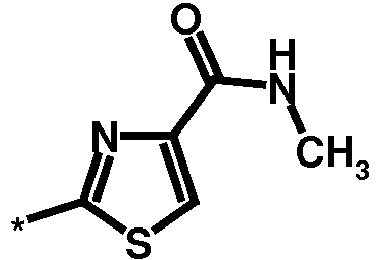
*-CH3 
V.1 387 [M+H]+ 0.41 (V) 5.11 
*-CH3 
V.1 410 [M+H]+ 0.61 (V) 5.12 
*-CH3 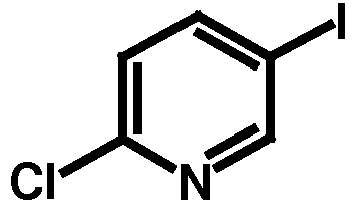
V.1 450 [M+H]+ 0.4 (V) 5.13 
*-CH3 
V.1 358 [M+H]+ 1.7 (W) 5.14 
*-CH3 
V.1 350 [M+H]+ 0.52 (V) 5.15 
*-CH3 
V.1 489 [M+H]+ 0.61 (V) 5.16 
*-CH3 
V.1 426 [M+H]+ 2.14 (W) 5.17 
*-CH3 
V.1 450 [M+H]+ 1.99 (W) 5.18 
*-CH3 
V.1 402 [M+H]+ 0.36 (V) 5.19 
*-CH3 
V.1 349 [M+H]+ 0.52 (V) 5.20 
*-CH3 
V.1 406 [M+H]+ 1.88 (W) 5.21 
*-CH3 
V.1 392 [M+H]+ 0.36 (V) 5.22 
*-CH3 
V.1 344 [M+H]+ 0.32 (V) 5.23 
*-CH3 
V.1 416 [M+H]+ 0.42 (V) 5.24 
*-CH3 
V.1 404 [M+H]+ 0.37 (V) 5.25 
*-CH3 
V.1 440 [M+H]+ 0.37 (V) 5.26 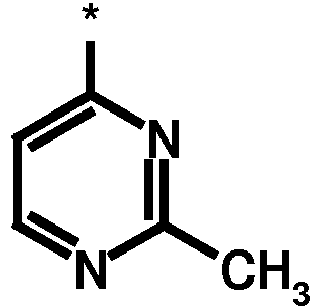
*-CH3 
V.1 339 [M+H]+ 1.64 (W) 5.28 
*-CH3 
V.1 349 [M+H]+ 0.41 (V) 5.29 
*-CH3 
V.1 410 [M+H]+ 1.93 (W) 5.30 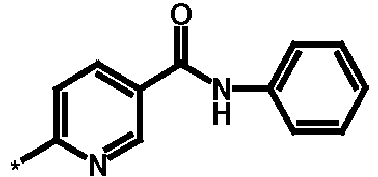
*-CH3 
V.1 443 [M+H]+ 1.73 (W) 5.31 
*-CH3 
V.1 408 [M+H]+ 2.07 (W) 5.32 
*-CH3 
V.1 408 [M+H]+ 2.12 (W) 5.34 
*-CH3 
V.1 388 [M+H]+ 1.91 (W) 5.35 
*-CH3 
V.1 389 [M+H]+ 0.33 (V) 5.36 


V.4 403 [M+H]+ 2.42 (S) 5.37 


V.4 403 [M+H]+ 2.65 (S) 5.38 
*-CH3 
V.1 420 [M+H]+ 2.20 (B) 5.39 
*-CH3 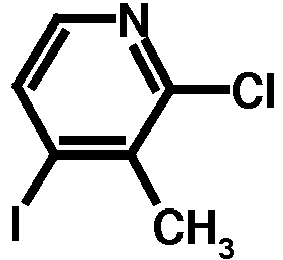
V.1 464 [M+H]+ 2.28 (R) 5.40 
*-CH3 
V.1 372 [M+H]+ 2.61 (R) 5.41 
*-CH3 
V.1 338 [M+H]+ 1.40 (P) 5.42 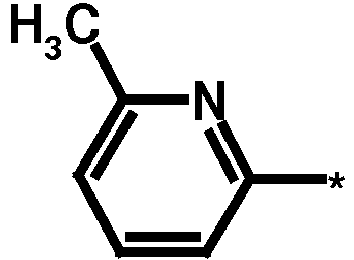
*-CH3 
V.1 338 [M+H]+ 1.35 (P) 5.43 
*-CH3 
V.1 354 [M+H]+ 2.10 (P) 5.44 
*-CH3 
V.1 434 [M+H]+ 1.79 (P) 5.45 
*-CH3 
V.1 435 [M+H]+ 1.26 (P) 5.46 
*-CH3 
V.1 338 [M+H]+ 1.39 (P) 5.47 
*-CH3 
V.1 368 [M+H]+ 1.50 (P) 5.48 
*-CH3 
V.1 382 [M+H]+ 1.60 (P) 5.49 
*-CH3 
V.1 338 [M+H]+ 1.42 (P) 5.50 
*-CH3 
V.1 435 [M+H]+ 2.49 (P) 5.51 
*-CH3 
V.1 356 [M+H]+ 2.53 (R) 5.52 
*-CH3 
V.1 325 [M+H]+ 1.86 (U) 5.53 
*-CH3 
V.1 383 [M+H]+ 1.84 (U) 5.54 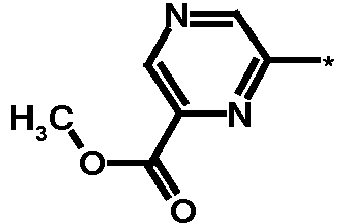
*-CH3 
V.1 383 [M+H]+ 1.83 (U) 5.55 
*-CH3 
V.1 397 [M+H]+ 1.51 (U) 5.57 


V.4 408 [M+H]+ 1.21 (G) 5.58 


V.4 394 [M+H]+ 1.14 (G) -

- To 22 mg (0.1 mmol) 4,6-dichloro-2-pyrrolidin-1-yl-pyrimidine in 1 mL THF are added 17 µL (0.1 mol) DIPEA and 25 mg (0.1 mmol) (S)-N-[1-(4-piperidin-4-yl-phenyl)-ethyl]-acetamide (V.1). The mixture is stirred at rt over night. The solvent is removed in vacuo and the residue is purified using reversed phase HPLC (eluent A: water + 0.1 % TFA, eluent B: MeOH) to yield the desired product.
C23H30ClN5O (M = 427.97 g/mol), ESI-MS: 428 [M+H]+
Rt (HPLC): 1.91 min (method T) - The following compounds of general formula (5-2) are prepared analogously to Example 5.200, the educts used being shown in the column headed "E 1" and "E 2".

Example Ar1 T E 1 E 2 ESI-MS [m/z] Rt (HPLC) [min] (method) 5.200 
*-CH3 
V.1 428 [M+H]+ 1.91 (T) 5.201 
*-CH3 
V.1 476 [M+H]+ 1.91 (T) -

- To 7.0 mg (0.08 mmol) cyanoacetic acid in 1 mL DMF 35 µL (0.20 mmol) DIPEA and 29 mg (0.08 mmol) TBTU are added and the mixture is stirred for 10 min at rt. Subsequently 29 mg (0.09 mmol) (S)-1-{4-[1-(4-ethoxy-phenyl)-piperidin-4-yl]-phenyl}-ethylamine (XIII.1) in 1 mL DMF are added and stirring is continued over night. The mixture is filtered through basic aluminum oxide, followed by washing with DMF/MeOH (9:1) and concentration in vacuo. The residue is purified using reversed phase column chromatography (water/MeOH, 0.1 % TFA) and the corresponding fractions are concentrated to yield the desired product.
C10H11NO (M = 391.5 g/mol), ESI-MS: 392 [M+H]+
Rt (HPLC): 1.18 min (method B) - The following compounds of general formula (6-1) are prepared analogously to Example 6.1, the educts used being shown in the column headed "E 1" and "E 2":

Ex. Ar1 T E 1 E 2 ESI-MS [m/z] Rt (HPLC) [min] method 6.1 

XIII.1 
392 [M+H]+ 1.18 (B) 6.2 

XIII.1 
354 [M+H]+ 2.10 (B) 6.3 

XIII.1 
423 [M+H]+ 1.23 (B) 6.4 
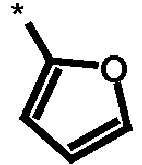
XIII.1 
419 [M+H]+ 1.28 (B) 6.5 

XIII.1 
495 [M+H]+ 1.30 (B) 6.6 
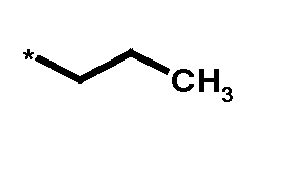
XIII.1 
495 [M+H]+ 1.30 (B) 6.7 
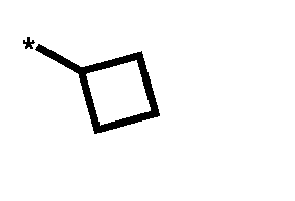
XIII.1 
407 [M+H]+ 1.33 (B) 6.8 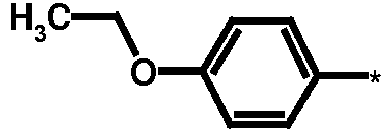

XIII.1 
381 [M+H]+ 1.25 (B) 6.9 

XIII.1 
407 [M+H]+ 1.33 (B) 6.10 

XIII.1 
419 [M+H]+ 1.20 (B) 6.11 

XIII.1 
436 [M+H]+ 1.27 (B) 6.12 

XIII.1 
420 [M+H]+ 0.39 (V) 6.13 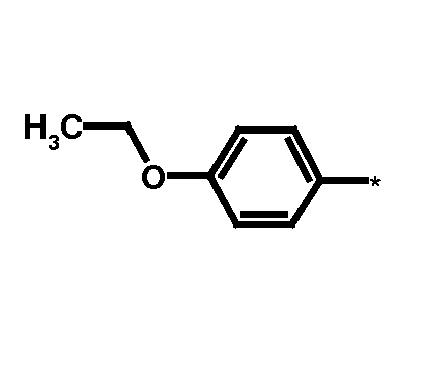

XIII.1 
407 [M+H]+ 0.58 (Y) 6.14 

XIII.1 
385 [M+H]+ 0.55 (Y) 6.15 

XIII.1 
397 [M+H]+ 0.55 (Y) 6.16 

XIII.1 
393 [M+H]+ 0.57 (Y) 6.17 

XIII.1 
411 [M+H]+ 0.58 (Y) 6.18 

XIII.1 
407 [M+H]+ 0.59 (Y) 6.19 

XIII.1 
431 [M+H]+ 0.52 (Y) 6.20 
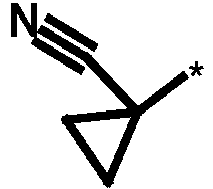
XIII.1 
418 [M+H]+ 0.59 (Y) 6.22 

XIII.1 
418 [M+H]+ 0.57 (Y) 6.23 

XIII.1 
429 [M+H]+ 0.58 (Y) 6.24 

XIII.1 
419 [M+H]+ 0.5 (Y) 6.25 
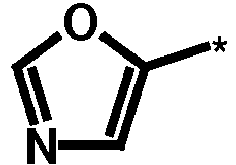
XIII.1 
420 [M+H]+ 0.53 (Y) 6.26 

XIII.1 
436 [M+H]+ 0.58 (Y) 6.27 

XIII.1 
423 [M+H]+ 0.54 (Y) 6.29 

XIII.1 
419 [M+H]+ 0.52 (Y) 6.30 
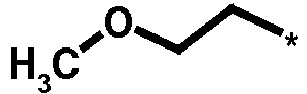
XIII.1 
411 [M+H]+ 0.54 (Y) 6.31 

XIII.1 
430 [M+H]+ 0.54 (Y) 6.33 

XIII.1 
436 [M+H]+ 0.61 (Y) 6.34 

XIII.1 
461 [M+H]+ 0.63 (Y) 6.35 

XIII.1 
419 [M+H]+ 0.54 (Y) 6.37 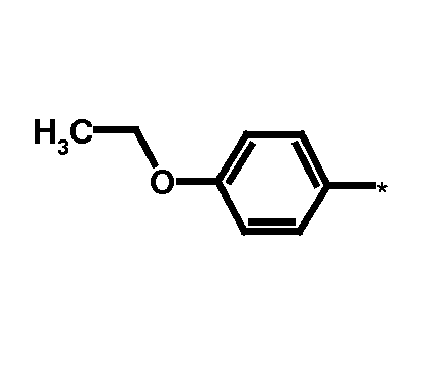

XIII.1 
437 [M+H]+ 0.56 (Y) 6.38 

XIII.1 
425 [M+H]+ 0.58 (Y) 6.39 

XIII.1 
406 [M+H]+ 0.53 (Y) 6.40 

XIII.1 
430 [M+H]+ 0.54 (Y) 6.41 

XIII.1 
420 [M+H]+ 0.33 (Y) 6.42 

XIII.1 
431 [M+H]+ 0.53 (Y) 6.44 

XIII.1 
425 [M+H]+ 0.61 (Y) 6.45 

XIII.1 
421 [M+H]+ 0.61 (Y) 6.46 
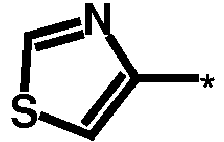
XIII.1 
436 [M+H]+ 1.30 (B) 6.47 

XIII.1 
420 [M+H]+ 1.57 (P) 6.48 

XIII.1 
383 [M+H]+ 1.15 (G) -

- 34 mg (0.10 mmol) (S)-N-{1-(4-[1-(4-Hydroxyphenyl)-piperidin-4-yl]-phenyl}-ethyl)-acetamide (compound 1.48), 15 mg (0.15 mmol) tetrahydro-4H-pyran-4-ol and 39 mg (0.15 mmol) triphenylphosphine on solid support are suspended in 2 mL anhydrous THF at 0°C. 35 mg (0.15 mmol) di-tert-Butyl azodicarboxylate are added and the mixture is allowed to warm to rt. Stirring is continued over night followed by addition of 0.5 equivalents of triphenylphosphine on solid support and 0.5 equivalents of di-tert-butyl azodicarboxylate. After stirring for 2 h at rt, the mixture is filtered over basic aluminum oxide and washed with DMF/MeOH (9:1). After evaporation the residue is purified using reversed phase HPLC (water/MeOH, 0.1%TFA) to yield the desired product.
C26H34N2O3 (M = 422.5 g/mol), ESI-MS: 423 [M+H]+
Rt (HPLC): 1.26 min (method B) - The following compounds of general formula (7-1) are prepared analogously to Example 7.1, the educts used being shown in the column headed "E 1" and "E 2":

Example Ar1 T E 1 E 2 ESI-MS [m/z] Rt(HPLC) [min] (method) 7.1 
*-CH3 
1.48 423 [M+H]+ 1.26 (B) 7.2 
*-CH3 
1.27 423 [M+H]+ 1.56 (B) -

- 17 µL (0.15 mmol) 1-Bromo-2-ethoxy-ethane and 35 mg (0.25 mmol) K2CO3 are added to 34 mg (0.10 mmol) (S)-N-{1-(4-[1-(4-hydroxyphenyl)-piperidin-4-yl]-phenyl}-ethyl)-acetamide (compound 1.48) in 2 mL ACN. The mixture is stirred at 90°C for 4 h followed by addition of 11 µL (0.10 mmol) 1-bromo-2-ethoxy-ethane. Stirring is continued at 90°C over night. The solvent is removed in vacuo and the residue is purified using reversed phase HPLC (water/MeOH, 0.1%TFA) to yield the desired product.
C10H11NO (M = 410.5 g/mol), ESI-MS: 411 [M+H]+
Rt (HPLC): 1.40 min (method B) - The following compounds of general formula (8-1) are prepared analogously to Example 8.1. For the examples 8.63 - 8.67 DMF is used as solvent and the reaction mixture is stirred at 60 °C over night. For example 8.67 the Boc protection group is afterwards removed by reaction with HCl (1.25 mol/L in MeOH). For Example 8.68 DMSO is used as solvent and the reaction mixture is stirred at 100 °C for 5 h.The educts used are shown in the column headed "E 1" and "E 2":

Ex. Ar1 T E 1 E 2 ESI-MS [m/z] Rt (HPLC) [min] method 8.1 
*-CH3 
1.48 411 [M+H]+ 1.40 (B) 8.2 
*-CH3 
1.27 411 [M+H]+ 1.51 (B) 8.3 
*-CH3 
1.27 393 [M+H]+ 1.74 (B) 8.4 
*-CH3 
1.27 395 [M+H]+ 1.81 (B) 8.5 
*-CH3 
1.27 407 [M+H]+ 1.79 (B) 8.6 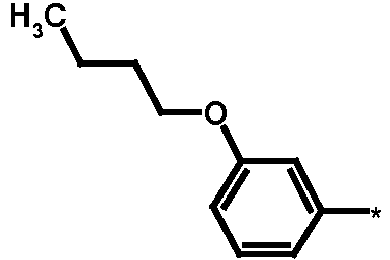
*-CH3 
1.27 395 [M+H]+ 1.68 (B) 8.7 
*-CH3 
1.27 381 [M+H]+ 2.30 (B) 8.8 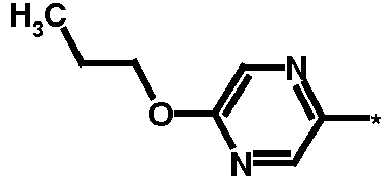
*-CH3 
1.49 383 [M+H]+ 2.18 (A) 8.9 
*-CH3 
1.49 395 [M+H]+ 1.94 (A) 8.10 
*-CH3 
1.49 465 [M+H]+ 2.20 (A) 8.11 
*-CH3 
XX.1 407 [M+H]+ 1.31 (B) 8.12 
*-CH3 
XX.2 418 [M+H]+ 1.54 (B) 8.13 
*-CH3 
XX.3 411 [M+H]+ 1.37 (B) 8.14 
*-CH3 
XX.4 427 [M+H]+ 1.46 (B) 8.15 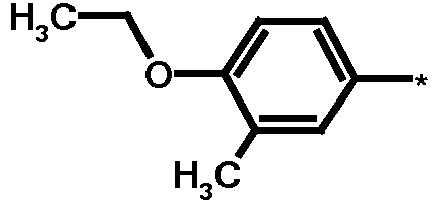
*-CH3 
XX.1 381 [M+H]+ 1.2 (B) 8.16 
*-CH3 
XX.2 392 [M+H]+ 1.35 (B) 8.17 
*-CH3 
XX.3 385 [M+H]+ 1.21 (B) 8.18 
*-CH3 
XX.5 397 [M+H]+ 1.06 (B) 8.19 
*-CH3 
XX.1 411 [M+H]+ 1.1 (B) 8.20 
*-CH3 
XX.2 422 [M+H]+ 1.26 (B) 8.21 
*-CH3 
XX.3 415 [M+H]+ 1.11 (B) 8.22 
*-CH3 
XX.5 427 [M+H]+ 1.01 (B) 8.23 
*-CH3 
XX.1 395 [M+H]+ 1.26 (B) 8.24 
*-CH3 
XX.2 406 [M+H]+ 1.44 (B) 8.25 
*-CH3 
XX.4 415 [M+H]+ 2.07 (W) 8.26 
*-CH3 
XX.1 409 [M+H]+ 1.37 (B) 8.27 
*-CH3 
XX.2 420 [M+H]+ 1.61 (B) 8.28 
*-CH3 
XX.3 413 [M+H]+ 1.46 (B) 8.29 
*-CH3 
XX.5 425 [M+H]+ 1.27 (B) 8.30 
*-CH3 
XX.4 429 [M+H]+ 1.55 (B) 8.31 
*-CH3 
XX.1 395 [M+H]+ 1.29 (B) 8.32 
*-CH3 
XX.2 406 [M+H]+ 1.48 (B) 8.33 
*-CH3 
XX.5 411 [M+H]+ 1.17 (B) 8.34 
*-CH3 
XX.4 415 [M+H]+ 1.44 (B) 8.35 
*-CH3 
XX.1 421 [M+H]+ 1.38 (B) 8.36 
*-CH3 
XX.2 432 [M+H]+ 1.6 (B) 8.37 
*-CH3 
XX.3 425 [M+H]+ 1.46 (B) 8.38 
*-CH3 
XX.5 437 [M+H]+ 1.26 (B) 8.39 
*-CH3 
XX.4 441 [M+H]+ 1.55 (B) 8.40 
*-CH3 
XX.1 409 [M+H]+ 1.38 (B) 8.41 
*-CH3 
XX.2 420 [M+H]+ 1.61 (B) 8.42 
*-CH3 
XX.3 413 [M+H]+ 1.46 (B) 8.43 
*-CH3 
XX.5 425 [M+H]+ 1.27 (B) 8.44 
*-CH3 
XX.4 429 [M+H]+ 1.55 (B) 8.45 
*-CH3 
XX.2 378 [M+H]+ 1.23 (B) 8.46 
*-CH3 
XX.4 387 [M+H]+ 1.19 (B) 8.47 
*-CH3 
XX.1 423 [M+H]+ 1.08 (B) 8.48 
*-CH3 
XX.3 427 [M+H]+ 1.11 (B) 8.49 
*-CH3 
XX.5 439 [M+H]+ 1.01 (B) 8.50 
*-CH3 
XX.4 443 [M+H]+ 1.2 (B) 8.51 
*-CH3 
XX.1 409 [M+H]+ 1.34 (B) 8.52 
*-CH3 
XX.2 420 [M+H]+ 1.55 (B) 8.53 
*-CH3 
XX.3 413 [M+H]+ 1.44 (B) 8.54 
*-CH3 
XX.5 425 [M+H]+ 1.23 (B) 8.55 
*-CH3 
XX.4 429 [M+H]+ 1.51 (B) 8.56 
*-CH3 
XX.1 423 [M+H]+ 1.42 (B) 8.57 
*-CH3 
XX.2 434 [M+H]+ 1.67 (B) 8.58 
*-CH3 
XX.3 427 [M+H]+ 1.55 (B) 8.59 
*-CH3 
XX.5 439 [M+H]+ 1.32 (B) 8.60 
*-CH3 
XX.4 443 [M+H]+ 1.61 (B) 8.61 
*-CH3 
XX.4 401 [M+H]+ 1.31 (B) 8.62 
*-CH3 
XX.3 399 [M+H]+ 1.59 (B) 8.63 
*-CH3 
1.48 407 [M+H]+ 1.62 (A) 8.64 
*-CH3 
1.48 407 [M+H]+ 2.23 (A) 8.66 
*-CH3 
1.48 429 [M+H]+ 2.02 (A) 8.67 
*-CH3 
1.48 445 [M+H]+ 1.79 (A) -

- 8 mg (0.2 mmol) NaH (60% in mineral oil) are added to a mixture of 34 mg (0.10 mmol) (S)-N-{1-(4-[1-(3-hydroxyphenyl)-piperidin-4-yl]-phenyl}-ethyl)-acetamide (compound 1.27) and 23 mg (0.15 mmol) 1-bomo-3-methylbutane in 2 mL DMF at 0°C. The mixture is stirred at 70°C for 3 d. The reaction mixture is quenched with water, filtered and the solvent is evaporated. The residue is purified using reversed phase HPLC (water/MeOH, 0.1%TFA) to yield the desired product.
C10H11NO (M = 408.6 g/mol), ESI-MS: 409 [M+H]+
Rt (HPLC): 1.60 min (method B) - The following compounds of general formula (9-1) are prepared analogously to Example 9.1, the educts used being shown in the column headed "E 1" and "E 2":
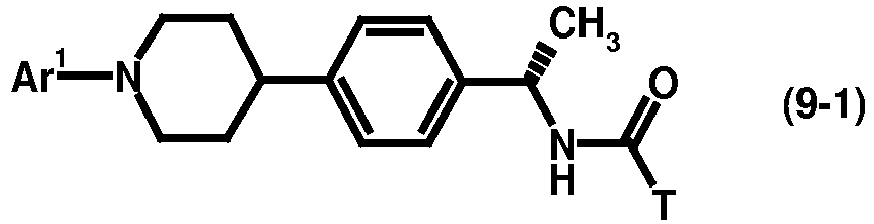
Ex. Ar1 T E 1 E 2 ESI-MS [m/z] Rt (HPLC) [min] method 9.1 
*-CH3 
1.27 409 [M+H]+ 1.60 (B) 9.2 
*-CH3 
1.27 409 [M+H]+ 1.55 (B) 9.3 
*-CH3 
1.27 423 [M+H]+ 1.37 (E) 9.4 
*-CH3 
1.27 409 [M+H]+ 1.60 (B) 9.5 
*-CH3 
1.27 379 [M+H]+ 1.32 (B) 9.6 
*-CH3 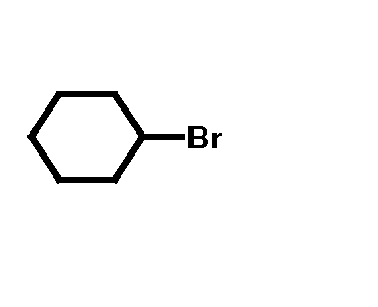
1.27 421 [M+H]+ 1.57 (B) 9.7 
*-CH3 
1.27 397 [M+H]+ 1.13 (B) 9.8 
*-CH3 
1.27 391 [M+H]+ 1.33 (B) 9.9 
*-CH3 
1.27 411 [M+H]+ 1.26 (B) 9.10 
*-CH3 
1.27 393 [M+H]+ 1.51 (E) 9.11 
*-CH3 
1.27 434 [M+H]+ 1.29 (B) 9.12 
*-CH3 
1.27 407 [M+H]+ 1.54 (B) 9.13 
*-CH3 
1.27 437 [M+H]+ 1.32 (B) 9.14 
*-CH3 
1.27 423 [M+H]+ 1.30 (B) 9.15 
*-CH3 
1.27 437 [M+H]+ 1.35 (B) 9.16 
*-CH3 
1.27 409 [M+H]+ 1.54 (B) 9.17 
*-CH3 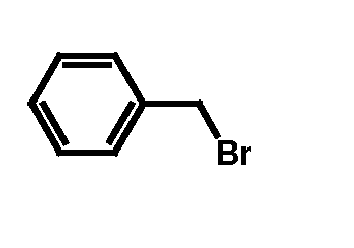
1.27 429 [M+H]+ 1.49 (B) 9.18 
*-CH3 
1.27 443 [M+H]+ 1.89 (B) 9.19 
*-CH3 
1.48 409 [M+H]+ 1.40 (B) 9.20 
*-CH3 
1.48 409 [M+H]+ 1.43 (B) 9.21 
*-CH3 
1.48 409 [M+H]+ 1.44 (B) 9.22 
*-CH3 
1.48 379 [M+H]+ 1.19 (B) 9.23 
*-CH3 
1.48 421 [M+H]+ 1.54 (E) 9.24 
*-CH3 
1.48 397 [M+H]+ 1.05 (B) 9.25 
*-CH3 
1.48 391 [M+H]+ 1.18 (B) 9.26 
*-CH3 
1.48 411 [M+H]+ 1.16 (B) 9.27 
*-CH3 
1.48 393 [M+H]+ 1.28 (B) 9.28 
*-CH3 
1.48 434 [M+H]+ 1.15 (B) 9.29 
*-CH3 
1.48 407 [M+H]+ 1.38 (B) 9.30 
*-CH3 
1.48 437 [M+H]+ 1.19 (B) 9.31 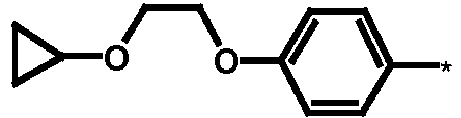
*-CH3 
1.48 423 [M+H]+ 1.18 (B) 9.32 
*-CH3 
1.48 437 [M+H]+ 1.23 (B) 9.33 
*-CH3 
1.48 409 [M+H]+ 1.39 (B) 9.34 
*-CH3 
1.48 429 [M+H]+ 1.34 (B) 9.35 
*-CH3 
1.48 443 [M+H]+ 1.38 (B) 9.36 
*-CH3 
XX.2 432 [M+H]+ 1.43 (AB) 9.37 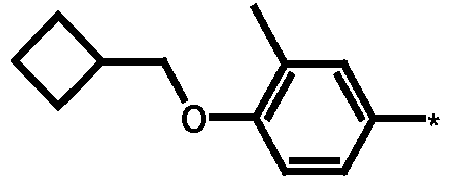
*-CH3 
XX.1 421 [M+H]+ 1.63 (P) 9.38 
*-CH3 
XX.1 407 [M+H]+ 1.52 (P) 9.40 
*-CH3 
XX.2 418 [M+H]+ 1.74 (P) 9.41 
*-CH3 
XX.3 411 [M+H]+ 1.58 (P) 9.42 
*-CH3 
XX.3 425 [M+H]+ 1.78 (P) 9.43 
*-CH3 
XX.5 437 [M+H]+ 1.52 (P) 9.44 
*-CH3 
XX.5 423 [M+H]+ 1.38 (P) 9.45 
*-CH3 
XX.4 441 [M+H]+ 1.87 (P) 9.46 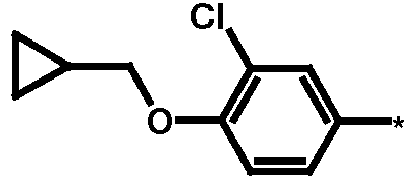
*-CH3 
XX.4 427 [M+H]+ 1.69 (P) -

- Under argon atmosphere 0.1 mL sat. Na2CO3-solution and 3 mg (0.004 mmol) bis(triphenylphosphine)-palladium(II) chloride are added to a mixture of 16 mg (0.10 mmol) 4-cyano-3-fluorophenylboronic acid and 45 mg (0.10 mmol) (S)-N-(1-{4-[1-(5-iodopyrimidin-2-yl)-piperidin-4-yl]-phenyl}-ethyl)-acetamide (compound 4.43) in 2 mL dioxane/1 mL MeOH. The mixture was stirred at 70°C for 6 h. After that time, the mixture was diluted with DMF and filtered. The filtrate was purified using reversed phase HPLC (water/MeOH, 0.1 % TFA) to yield the desired product.
C10H11NO (M = 443.5 g/mol), ESI-MS: 444 [M+H]+
Rt (HPLC): 2.28 min (method B) - The following compounds of general formula (10-1) are prepared analogously to Example 10.1, the educts used being shown in the column headed "E 1" and "E 2". In case that Boc-protected amino boronic acids are used, the Boc group is finally removed using TFA/CH2Cl2 = 1:1 (5% H2O) :

Ex. RA T E 1 E 2 ESI-MS [m/z] Rt (HPLC) [min] method 10.1 
*-CH3 
4.43 432 [M+H]+ 2.28 (B) 10.2 
*-CH3 
4.43 432 [M+H]+ 2.28 (B) 10.3 
*-CH3 
4.43 431 [M+H]+ 2.35 (B) 10.4 
*-CH3 
4.43 431 [M+H]+ 2.29 (B) 10.5 
*-CH3 
4.43 445 [M+H]+ 2.28 (B) 10.6 
*-CH3 
4.43 429 [M+H]+ 2.17 (B) 10.7 
*-CH3 
4.43 415 [M+H]+ 2.12 (B) 10.8 
*-CH3 
4.43 415 [M+H]+ 2.09 (B) 10.9 
*-CH3 
4.43 419 [M+H]+ 2.05 (B) 10.10 
*-CH3 
4.43 426 [M+H]+ 1.92 (B) 10.11 
*-CH3 
4.43 443 [M+H]+ 2.21 (B) 10.12 
*-CH3 
4.43 402 [M+H]+ 1.34 (B) 10.13 
*-CH3 
4.43 419 [M+H]+ 2.07 (B) 10.14 
*-CH3 
4.43 441 [M+H]+ 2.20 (B) 10.15 
*-CH3 
4.43 485 [M+H]+ 2.13 (B) 10.16 
*-CH3 
4.43 402 [M+H]+ 1.24 (B) 10.17 
*-CH3 
4.43 390 [M+H]+ 1.90 (B) 10.18 
*-CH3 
4.43 440 [M+H]+ 1.84 (B) 10.19 
*-CH3 
4.43 479 [M+H]+ 1.74 (B) 10.20 
*-CH3 
4.43 420 [M+H]+ 1.84 (B) 10.21 
*-CH3 
4.43 452 [M+H]+ 1.77 (B) 10.22 
*-CH3 
4.43 433 [M+H]+ 1.81 (B) 10.23 
*-CH3 
4.43 459 [M+H]+ 2.01 (B) 10.24 
*-CH3 
4.43 443 [M+H]+ 2.01 (B) 10.25 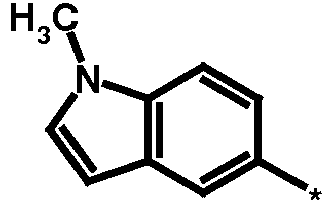
*-CH3 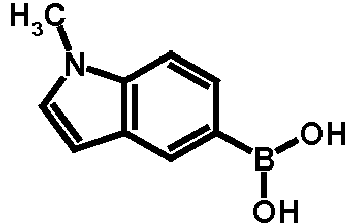
4.43 454 [M+H]+ 2.01 (B) 10.27 
*-CH3 
4.43 459 [M+H]+ 2.10 (B) 10.28 
*-CH3 
4.43 486 [M+H]+ 1.92 (B) 10.29 
*-CH3 
4.43 432 [M+H]+ 1.91 (B) 10.30 
*-CH3 
4.43 445 [M+H]+ 2.10 (B) 10.31 
*-CH3 
4.43 447 [M+H]+ 2.12 (B) 10.32 
*-CH3 
4.43 445 [M+H]+ 1.99 (B) 10.33 
*-CH3 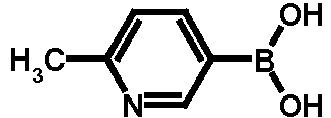
4.43 416 [M+H]+ 1.28 (B) 10.34 
*-CH3 
4.43 461 [M+H]+ 2.06 (B) 10.35 
*-CH3 
4.43 461 [M+H]+ 1.90 (B) 10.36 
*-CH3 
4.43 499 [M+H]+ 2.08 (B) 10.37 
*-CH3 
4.43 449 [M+H]+ 2.07 (B) 10.38 
*-CH3 
4.43 446 [M+H]+ 2.02 (B) 10.39 
*-CH3 
4.43 494 [M+H]+ 1.75 (B) 10.40 
*-CH3 
4.43 481 [M+H]+ 2.16 (B) 10.41 
*-CH3 
4.43 441 [M+H]+ 2.17 (B) 10.42 
*-CH3 
4.43 459 [M+H]+ 2.14 (B) 10.43 
*-CH3 
4.43 401 [M+H]+ 2.05 (B) 10.44 
*-CH3 
4.43 415 [M+H]+ 2.12 (B) 10.45 
*-CH3 
4.43 469 [M+H]+ 2.13 (B) 10.46 
*-CH3 
4.43 440 [M+H]+ 1.96 (W) 10.47 
*-CH3 
4.43 429 [M+H]+ 2.28 (W) 10.48 
*-CH3 
4.43 429 [M+H]+ 2.25 (W) 10.49 
*-CH3 
4.43 433 [M+H]+ 2.21 (W) 10.50 
*-CH3 
4.43 444 [M+H]+ 1.97 (W) 10.51 
*-CH3 
4.43 472 [M+H]+ 2.16 (W) 10.52 
*-CH3 
4.43 437 [M+H]+ 2.12 (W) 10.53 
*-CH3 
4.43 437 [M+H]+ 2.13 (W) 10.54 
*-CH3 
4.43 429 [M+H]+ 2.25 (W) 10.55 
*-CH3 
4.43 426 [M+H]+ 1.92 (W) 10.56 
*-CH3 
4.43 421 [M+H]+ 2.13 (W) 10.57 
*-CH3 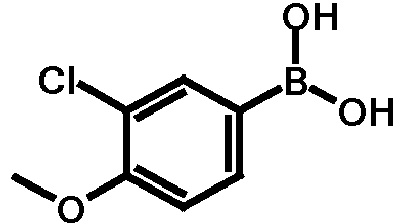
4.43 465 [M+H]+ 2.15 (W) 10.58 
*-CH3 
4.43 432 [M+H]+ 2.01 (W) 10.59 
*-CH3 
4.43 432 [M+H]+ 2.01 (W) 10.60 
*-CH3 
4.43 433 [M+H]+ 2.16 (W) 10.61 
*-CH3 
4.43 440 [M+H]+ 2.01 (W) 10.62 
*-CH3 
4.43 407 [M+H]+ 2.07 (W) 10.63 
*-CH3 
4.43 432 [M+H]+ 2.01 (W) 10.64 
*-CH3 
4.43 461 [M+H]+ 2.25 (W) 10.65 
*-CH3 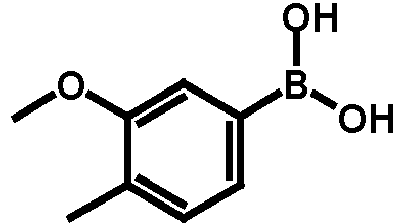
4.43 445 [M+H]+ 2.22 (W) 10.66 
*-CH3 
4.43 449 [M+H]+ 2.26 (W) 10.67 
*-CH3 
4.43 449 [M+H]+ 2.35 (W) 10.68 
*-CH3 
4.43 432 [M+H]+ 1.88 (W) 10.69 
*-CH3 
4.43 420 [M+H]+ 1.9 (W) 10.70 
*-CH3 
4.43 452 [M+H]+ 1.99 (W) 10.72 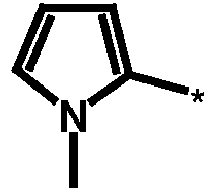
*-CH3 
4.43 404 [M+H]+ 1.99 (W) 10.74 
*-CH3 
4.43 483 [M+H]+ 1.82 (W) 10.76 
*-CH3 
4.43 449 [M+H]+ 2.31 (W) 10.77 
*-CH3 
4.43 515 [M+H]+ 2.21 (W) 10.78 
*-CH3 
4.43 451 [M+H]+ 1.5 (W) 10.79 
*-CH3 
4.43 427 [M+H]+ 1.8 (W) 10.80 
*-CH3 
4.43 426 [M+H]+ 1.94 (W) 10.81 
*-CH3 
4.43 445 [M+H]+ 2 (W) 10.82 
*-CH3 
4.43 427 [M+H]+ 1.79 (W) 10.83 
*-CH3 
4.43 428 [M+H]+ 0.51 (V) 10.85 
*-CH3 
4.43 470 [M+H]+ 1.98 (W) 10.87 
*-CH3 
4.43 445 [M+H]+ 2.09 (W) 10.88 
*-CH3 
4.43 441 [M+H]+ 2.14 (W) 10.89 
*-CH3 
4.43 405 [M+H]+ 2.08 (W) 10.91 
*-CH3 
4.43 441 [M+H]+ 2.21 (W) 10.92 
*-CH3 
4.43 443 [M+H]+ 2.15 (W) 10.94 
*-CH3 
4.43 416 [M+H]+ 1.87 (W) 10.95 
*-CH3 
4.43 416 [M+H]+ 1.87 (W) 10.96 
*-CH3 
4.43 391 [M+H]+ 0.54 (V) 10.97 
*-CH3 
4.43 440 [M+H]+ 1.9 (W) 10.98 


XVII I.1 469 [M+H]+ 2.13 (Z) 10.99 


XVII 1.2 472 [M+H]+ 2.08 (Z) 10.100 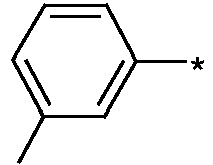


XVII I.1 441 [M+H]+ 2.20 (Z) 10.101 


XVII I.1 445 [M+H]+ 2.14 (Z) 10.102 


XVII I.1 452 [M+H]+ 2.05 (Z) 10.103 


XVII I.1 445 [M+H]+ 2.19 (Z) 10.104 


XVII I.1 417 [M+H]+ 2.02 (Z) 10.105 


XVII I.1 427 [M+H]+ 2.17 (Z) 10.106 


XVII I.1 441 [M+H]+ 2.21 (Z) 10.107 

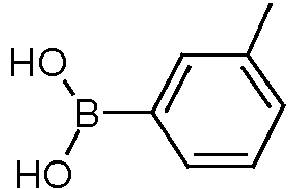
XVII 1.2 444 [M+H]+ 2.21 (Z) 10.108 


XVII I.1 448 [M+H]+ 2.14 (Z) 10.109 


XVII 1.2 455 [M+H]+ 2.01 (Z) 10.110 


XVII 1.2 448 [M+H]+ 2.14 (Z) 10.111 


XVII 1.2 430 [M+H]+ 2.15 (Z) 10.112 


XVII I.1 444 [M+H]+ 2.27 (Z) 10.113 


XVII I.2 420 [M+H]+ 1.98 (Z) 10.114 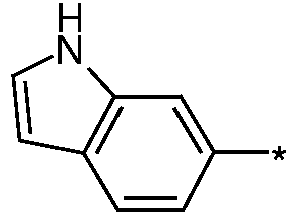
*-CH3 
4.43 440 [M+H]+ 2.69 (R) 10.115 
*-CH3 
4.43 470 [M+H]+ 2.70 (R) 10.116 
*-CH3 
4.43 454 [M+H]+ 2.81 (R) 10.117 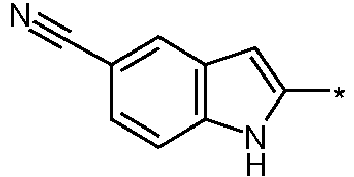
*-CH3 
4.43 465 [M+H]+ 2.66 (R) 10.118 
*-CH3 
4.43 440 [M+H]+ 2.74 (R) 10.119 
*-CH3 
4.43 440 [M+H]+ 2.75 (R) 10.120 
*-CH3 
4.43 440 [M+H]+ 2.64 (R) 10.121 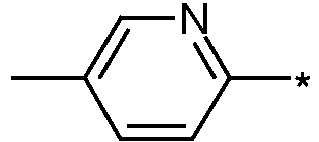
*-CH3 
4.43 416 [M+H]+ 2.64 (R) 10.122 
*-CH3 
4.43 416 [M+H]+ 2.64 (R) 10.123 
*-CH3 
4.43 440 [M+H]+ 2.17 (P) 10.124 
*-CH3 
4.43 443 [M+H]+ 2.46 (P) 10.125 
*-CH3 
4.43 459 [M+H]+ 2.47 (P) 10.126 
*-CH3 
4.43 473 [M+H]+ 2.49 (P) 10.127 
*-CH3 
4.43 459 [M+H]+ 2.43 (P) 10.128 
*-CH3 
4.43 456 [M+H]+ 2.24 (P) 10.129 
*-CH3 
4.43 433 [M+H]+ 2.45 (P) 10.130 
*-CH3 
4.43 407 [M+H]+ 2.39 (P) - The following compounds of general formula (10-2) are prepared analogously to Example 10.1 using palladium(II) acetate/tricyclohexylphosphine/tripotassium phosphate hydrate in toluene/water instead of bis(triphenylphosphine)-palladium(II) chloride/Na2CO3. The educts used are shown in the column headed "E 1" and "E 2":

Ex. RA T E 1 E 2 ESI-MS [m/z] Rt (HPLC) [min] method 10.201 
*-CH3 
4.43 381 [M+H]+ 2.19 (B) 10.202 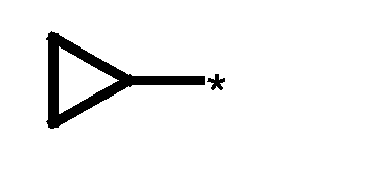
*-CH3 
4.43 365 [M+H]+ 2.09 (A) 10.203 
*-CH3 
4.43 402 [M+H]+ 2.56 (R) 10.204 
*-CH3 
4.43 459 [M+H]+ 2.82 (R) - The following compounds of general formula (10-3) are prepared analogously to Example 10.1, the educts used being shown in the column headed "E 1" and "E 2":

Ex. Ar1 T E 1 E 2 ESI-MS [m/z] Rt (HPLC) [min] method 10.301 
*-CH3 
5.12 439 [M+H]+ 1.74 (W) 10.302 
*-CH3 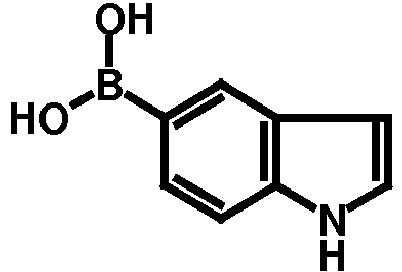
5.38 457 [M+H]+ 1.84 (W) 10.303 
*-CH3 
5.39 378 [M+H]+ 1.87 (W) 10.304 
*-CH3 
5.12 364 [M+H]+ 1.1 (B) 10.305 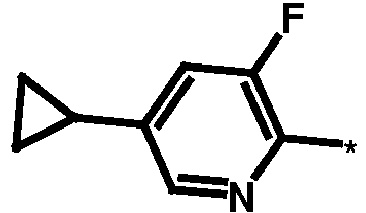
*-CH3 
5.38 382 [M+H]+ 1.89 (W) 10.306 
*-CH3 
5.12 444 [M+H]+ 1.94 (W) 10.307 
*-CH3 
5.38 462 [M+H]+ 2.04 (W) 10.310 
*-CH3 
5.12 418 [M+H]+ 1.89 (W) 10.311 
*-CH3 
5.38 436 [M+H]+ 1.98 (W) 10.312 
*-CH3 
5.12 444 [M+H]+ 1.87 (W) 10.314 
*-CH3 
5.12 414 [M+H]+ 1.98 (W) 10.315 
*-CH3 
5.38 432 [M+H]+ 2.08 (W) -

- 1.33 mL (2.79 mmol) Sodium n-propoxide (20% in n-propanol) are added to 200 mg (0.56 mmol) (S)-N-(1-{4-[1-(6-chloro-pyrimidin-4-yl)-piperidin-4-yl]-phenyl}-ethyl)-acetamide (XIV.1) in 0.5 mL acetonitrile. The mixture is heated at 140°C for 1 min under microwave irradiation. After that time, water is added and the mixture is extracted with dichloromethane. The solvent is evaporated and the residue is purified using reversed phase HPLC (column: Waters XBridge 5µM; eluent A: water + 0.3% NH4OH, eluent B: MeOH) to yield the desired product.
C22H30N4O2 (M = 382.5 g/mol), ESI-MS: 383 [M+H]+
Rt (HPLC): 2.04 min (method A) - The following compounds of general formula (11-1) are prepared analogously to Example 11.1. In case the free alcohol is used the corresponding alcohol (5.0 equiv.) is dissolved in NMP, XIV.1 or XIV.3, respectively, and potassium tert-butoxide (2.5 equiv.) are added and the mixture is stirred over night at 130°C. In case an amine is used as a nucleophile the corresponding amine (5.0 equiv.) is dissolved in DMSO. DIPEA (5.0-10.0 equiv.) and XIV.1 or XIV.3, respectively, are added and the mixture is stirred over night at 130 °C. Compound 11.116 is obtained as a second product. The educts used are shown in the column headed "E 1" and "E 2":

Ex. Ar1 T E 1 E 2 ESI-MS [m/z] Rt (HPLC) [min] (method) 11.1 
*-CH3 sodium n-propoxide XIV.1 383 [M+H]+ 2.04 (A) 11.2 
*-CH3 sodium sec-propoxide XIV.1 383 [M+H]+ 2.01 (A) 11.3 
*-CH3 
XIV.1 409 [M+H]+ 2.01 (W) 11.4 
*-CH3 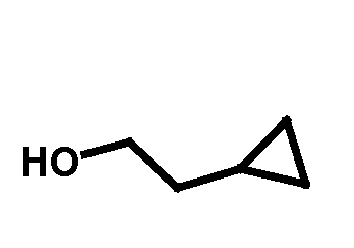
XIV.3 409 [M+H]+ 1.98 (W) 11.5 
*-CH3 
XIV.1 435 [M+H]+ 1.9 (W) 11.6 
*-CH3 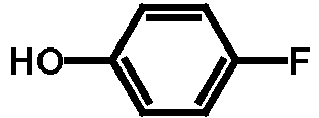
XIV.3 435 [M+H]+ 1.88 (W) 11.7 
*-CH3 
XIV.1 409 [M+H]+ 2.01 (W) 11.8 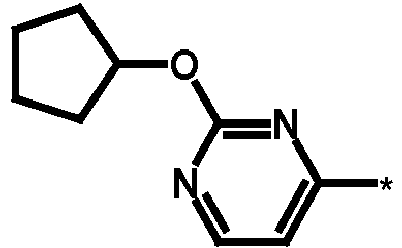
*-CH3 
XIV.3 409 [M+H]+ 1.99 (W) 11.9 
*-CH3 
XIV.3 423 [M+H]+ 2.07 (W) 11.10 
*-CH3 
XIV.1 423 [M+H]+ 2.13 (W) 11.11 
*-CH3 
XIV.3 425 [M+H]+ 2.09 (W) 11.12 
*-CH3 
XIV.1 425 [M+H]+ 2.16 (W) 11.13 
*-CH3 
XIV.3 445 [M+H]+ 2.01 (W) 11.14 
*-CH3 
XIV.1 445 [M+H]+ 2.06 (W) 11.15 
*-CH3 
XIV.1 397 [M+H]+ 2.00 (W) 11.16 
*-CH3 
XIV.3 397 [M+H]+ 1.97 (W) 11.17 
*-CH3 
XIV.1 411 [M+H]+ 1.76 (W) 11.18 
*-CH3 
XIV.3 411 [M+H]+ 1.7 (W) 11.19 
*-CH3 
XIV.1 393 [M+H]+ 1.86 (W) 11.20 
*-CH3 
XIV.3 393 [M+H]+ 1.82 (W) 11.21 
*-CH3 
XIV.3 411 [M+H]+ 2.01 (W) 11.22 
*-CH3 
XIV.1 411 [M+H]+ 0.43 (V) 11.23 
*-CH3 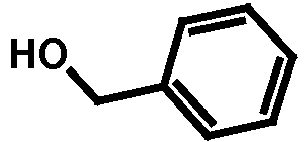
XIV.3 431 [M+H]+ 1.95 (W) 11.24 
*-CH3 
XIV.1 431 [M+H]+ 2.02 (W) 11.25 
*-CH3 
XIV.1 435 [M+H]+ 1.9 (W) 11.26 
*-CH3 
XIV.3 435 [M+H]+ 1.84 (W) 11.27 
*-CH3 
XIV.1 435 [M+H]+ 1.92 (W) 11.28 
*-CH3 
XIV.3 435 [M+H]+ 1.89 (W) 11.29 
*-CH3 
XIV.1 399 [M+H]+ 1.74 (W) 11.30 
*-CH3 
XIV.3 399 [M+H]+ 1.7 (W) 11.31 
*-CH3 
XIV.1 447 [M+H]+ 1.9 (W) 11.32 
*-CH3 
XIV.3 447 [M+H]+ 1.87 (W) 11.33 
*-CH3 
XIV.1 432 [M+H]+ 1.77 (W) 11.34 
*-CH3 
XIV.3 432 [M+H]+ 1.7 (W) 11.35 
*-CH3 
XIV.1 420 [M+H]+ 1.74 (W) 11.36 
*-CH3 
XIV.1 369 [M+H]+ 1.83 (W) 11.37 
*-CH3 
XIV.3 369 [M+H]+ 1.81 (W) 11.38 
*-CH3 
XIV.3 383 [M+H]+ 1.88 (W) 11.39 
*-CH3 
XIV.3 444 [M+H]+ 1.92 (W) 11.40 
*-CH3 
XIV.1 444 [M+H]+ 1.8 (W) 11.41 
*-CH3 
XIV.3 382 [M+H]+ 1.81 (W) 11.42 
*-CH3 
XIV.1 382 [M+H]+ 1.68 (W) 11.43 
*-CH3 
XIV.3 382 [M+H]+ 1.82 (W) 11.44 
*-CH3 
XIV.1 382 [M+H]+ 1.68 (W) 11.45 
*-CH3 
XIV.3 394 [M+H]+ 1.85 (W) 11.46 
*-CH3 
XIV.1 394 [M+H]+ 1.73 (W) 11.47 
*-CH3 
XIV.3 396 [M+H]+ 1.94 (W) 11.48 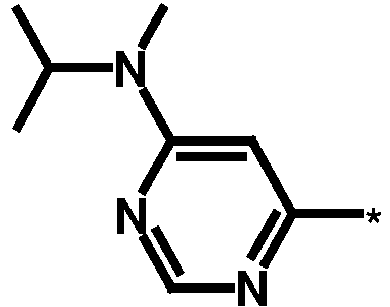
*-CH3 
XIV.1 396 [M+H]+ 1.79 (W) 11.49 
*-CH3 
XIV.3 442 [M+H]+ 2.07 (W) 11.50 
*-CH3 
XIV.3 368 [M+H]+ 1.73 (W) 11.51 
*-CH3 
XIV.1 368 [M+H]+ 1.6 (W) 11.53 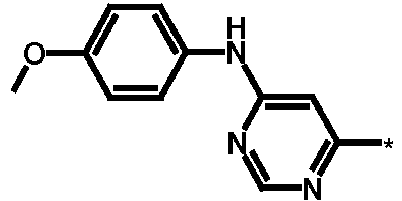
*-CH3 
XIV.1 446 [M+H]+ 1.74 (W) 11.54 
*-CH3 
XIV.3 446 [M+H]+ 1.81 (W) 11.55 
*-CH3 
XIV.1 430 [M+H]+ 1.75 (W) 11.56 
*-CH3 
XIV.3 430 [M+H]+ 1.87 (W) 11.57 
*-CH3 
XIV.1 408 [M+H]+ 1.83 (W) 11.58 
*-CH3 
XIV.3 408 [M+H]+ 1.97 (W) 11.61 
*-CH3 
XIV.3 408 [M+H]+ 1.92 (W) 11.62 
*-CH3 
XIV.1 396 [M+H]+ 1.78 (W) 11.63 
*-CH3 
XIV.3 396 [M+H]+ 1.9 (W) 11.64 
*-CH3 
XIV.3 398 [M+H]+ 1.66 (W) 11.65 
*-CH3 
XIV.1 396 [M+H]+ 1.76 (W) 11.66 
*-CH3 
XIV.3 396 [M+H]+ 1.89 (W) 11.67 
*-CH3 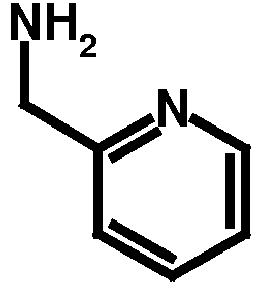
XIV.1 431 [M+H]+ 1.55 (W) 11.68 
*-CH3 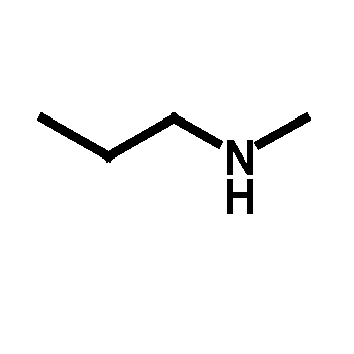
XIV.1 396 [M+H]+ 1.8 (W) 11.69 
*-CH3 
XIV.3 396 [M+H]+ 1.95 (W) 11.70 
*-CH3 
XIV.1 410 [M+H]+ 1.86 (W) 11.71 
*-CH3 
XIV.3 410 [M+H]+ 1.97 (W) 11.72 
*-CH3 
XIV.1 444 [M+H]+ 1.82 (W) 11.73 
*-CH3 
XIV.3 424 [M+H]+ 1.68 (W) 11.74 
*-CH3 
XIV.1 424 [M+H]+ 1.56 (W) 11.75 
*-CH3 
XIV.3 410 [M+H]+ 1.96 (W) 11.76 
*-CH3 
XIV.1 410 [M+H]+ 1.82 (W) 11.77 
*-CH3 
XIV.1 434 [M+H]+ 1.93 (W) 11.78 
*-CH3 
XIV.3 434 [M+H]+ 2.07 (W) 11.79 
*-CH3 
XIV.1 410 [M+H]+ 1.6 (W) 11.80 
*-CH3 
XIV.3 410 [M+H]+ 1.7 (W) 11.81 
*-CH3 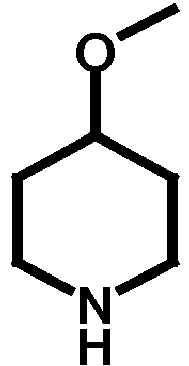
XIV.1 438 [M+H]+ 1.69 (W) 11.82 
*-CH3 
XIV.1 444 [M+H]+ 1.88 (W) 11.83 
*-CH3 
XIV.3 444 [M+H]+ 2.00 (W) 11.84 
*-CH3 H2N- XIV.3 354 [M+H]+ 1.63 (W) 11.85 
*-CH3 H2N- XIV.1 354 [M+H]+ 1.51 (W) 11.86 
*-CH3 
XIV.3 394 [M+H]+ 1.90 (W) 11.87 
*-CH3 
XIV.1 394 [M+H]+ 1.75 (W) 11.88 
*-CH3 
XIV.3 442 [M+H]+ 2.06 (W) 11.89 
*-CH3 
XIV.1 442 [M+H]+ 1.91 (W) 11.90 
*-CH3 
XIV.3 408 [M+H]+ 1.96 (W) 11.91 
*-CH3 
XIV.1 408 [M+H]+ 1.82 (W) 11.92 
*-CH3 
XIV.1 420 [M+H]+ 1.84 (W) 11.93 
*-CH3 
XIV.3 420 [M+H]+ 1.99 (W) 11.94 
*-CH3 
XIV.3 408 [M+H]+ 1.93 (W) 11.95 
*-CH3 
XIV.1 408 [M+H]+ 1.80 (W) 11.96 
*-CH3 
XIV.3 422 [M+H]+ 2.05 (W) 11.97 
*-CH3 
XIV.1 422 [M+H]+ 1.92 (W) 11.98 
*-CH3 
XIV.3 380 [M+H]+ 1.77 (W) 11.99 
*-CH3 
XIV.1 380 [M+H]+ 1.65 (W) 11.102 
*-CH3 
XIV.3 386 [M+H]+ 1.65 (W) 11.103 
*-CH3 
XIV.1 408 [M+H]+ 1.79 (W) 11.104 
*-CH3 
XIV.3 368 [M+H]+ 1.80 (W) 11.105 
*-CH3 
XIV.1 368 [M+H]+ 1.63 (W) 11.106 
*-CH3 
XIV.3 408 [M+H]+ 1.91 (W) 11.107 
*-CH3 
XIV.1 408 [M+H]+ 1.78 (W) 11.108 
*-CH3 
XIV.1 395 [M+H]+ 1.79 (P) 11.109 
*-CH3 
XIV.1 395 [M+H]+ 1.81 (P) 11.110 
*-CH3 
XIV.3 395 [M+H]+ 1.63 (P) 11.111 
*-CH3 
XIV.3 394 [M+H]+ 1.40 (P) 11.112 
*-CH3 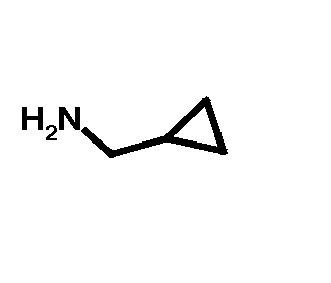
XIV.1 394 [M+H]+ 1.65 (P) 11.113 
*-CH3 
XIV.1 394 [M+H]+ 1.54 (P) 11.114 
*-CH3 
XIV.3 394 [M+H]+ 1.68 (P) 11.115 
*-CH3 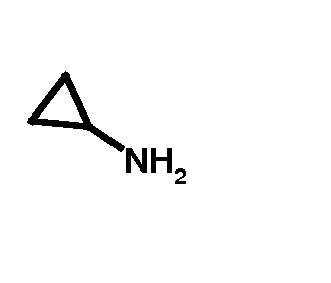
XIV.3 380 [M+H]+ 1.32 (P) 11.116 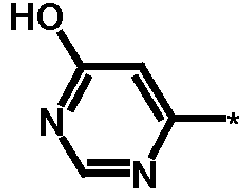
*-CH3 
XIV.1 341 [M+H]+ 1.40 (P) 11.118 
*-CH3 
XIV.1 417 [M+H]+ 2.09 (P) 11.119 
*-CH3 
XIV.3 417 [M+H]+ 1.65 (P) 11.120 


5.36 479 [M+H]+ 1.11 (AC) 11.121 


5.36 438 [M+H]+ 1.11 (AC) 11.122 


XIV.4 445 [M+H]+ 1.23 (AC) 11.123 


5.37 438 [M+H]+ 1.15 (AC) 11.124 


5.36 439 [M+H]+ 1.12 (AC) 11.125 


5.36 452 [M+H]+ 1.07 (AC) 11.126 


XIV.4 459 [M+H]+ 1.16 (AC) 11.127 


XIV.5 459 [M+H]+ 1.18 (AC) 11.128 


5.37 452 [M+H]+ 1.08 (AC) 11.129 


5.36 427 [M+H]+ 0.99 (AC) 11.130 


5.37 427 [M+H]+ 0.97 (AC) 11.131 
*-CH3 
XIV.3 395 [M+H]+ 1.60 (P) 11.132 
*-CH3 
XIV.I 380 [M+H]+ 1.54 (P) -

- 181 µL (1.61 mmol) N-Methyl-cyclopentylamine are added to 120 mg (0.32 mmol) N-(2-{4-[1-(2-chloro-pyrimidin-4-yl)-piperidin-4-yl]-phenyl}-1-methyl-ethyl)-acetamide (XIV.2) in 3 mL acetonitrile. The mixture is heated at 150°C for 30 min under microwave irradiation. After that time, the solvent is evaporated and the residue is purified using reversed phase HPLC (eluent A: water + 0.1 % TFA, eluent B: acetonitrile + 0.1 % TFA) to yield the desired product.
C26H37N5O (M = 435.6 g/mol), ESI-MS: 436 [M+H]+ -

- 100 mg (0.41 mmol) (S)-N-[1-(Piperidin-4-yl-phenyl)-ethyl]-acetamide (V.1) in 2 mL DMSO are added to a mixture of 97 mg (0.41 mmol) 2-bromo-5-propoxy-benzonitrile, 112 mg (0.82 mmol) potassium carbonate, 7.7 mg (0.041 mmol) copper(I) iodide and 9 mg (0.08 mmol) (L)-proline under inert gas atmosphere. The mixture is stirred for 7 d at 90°C. After that time, water is added and the mixture is extracted with ethyl acetate. The organic layer is dried over sodium sulphate and the solvent is removed in vacuo. The residue is purified by HPLC (column: Waters XBridge 5µM; eluent A: water + 0.3% NH4OH, eluent B: MeOH) to yield the desired product.
C25H31N3O2 (M = 405.5 g/mol), ESI-MS: 406 [M+H]+
Rt (HPLC): 2.23 min (method A) - The following compounds of general formula (13-1) are prepared analogously to Example 13.1, the educts used being shown in the column headed "E 1" and "E 2":

Ex. Ar1 T E 1 E 2 ESI-MS [m/z] Rt (HPLC) [min] (method) 13.1 
*-CH3 
V.1 406 [M+H]+ 2.23 (A) 13.2 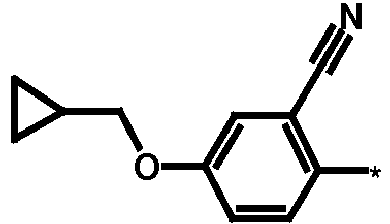
*-CH3 
V.1 418 [M+H]+ 2.21 (A) 13.3 
*-CH3 
V.1 392 [M+H]+ 2.13 (A) -

- To 100 mg (0.31 mmol) (S)-1-{4-[1-(4-ethoxy-phenyl)-piperidin-4-yl]-phenyl}-ethylamine (XIII.1) in 2 mL DMF, 87 µL (0.62 mmol) TEA and 52 mg (0.32 mmol) CDI are added at 0°C and the mixture is stirred for 30 min at 0°C. Subsequently 48 mg (1.54 mmol) methylamine are added and stirring is continued for 1 h at 50°C. The mixture is filtered through basic aluminum oxide and concentrated in vacuo. The residue is purified using reversed phase column chromatography (water+0.15% NH4OH;acetone) and the corresponding fractions are concentrated to yield the desired product.
C23H31N3O2 (M = 381.5 g/mol), ESI-MS: 382 [M+H]+
Rt (HPLC): 2.10 min (method A) - The following compounds of general formula (14-1) are prepared analogously to Example 14.1. In case of Example 14.5 CDT is used instead of CDI.The educts used are shown in the column headed "E 1" and "E 2":

Ex. Ar1 T E 1 E 2 ESI-MS [m/z] Rt (HPLC) [min] (method) 14.1 
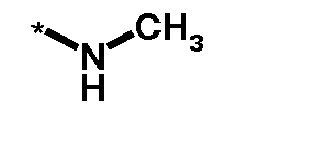
XIII.1 methylamine 382 [M+H]+ 2.10 (A) 14.2 

XIII.1 ethylamine 396 [M+H]+ 2.14 (A) 14.3 

XIII.1 cyclopropylamine 408 [M+H]+ 2.19 (A) 14.4 

XIII.1 aniline 444 [M+H]+ 1.94 (A) 14.5 
*-NH2 XIII.1 ammonia 368 [M+H]+ 1.13 (G) -

- To 32.5 mg (0.10 mmol) (S)-1-{4-[1-(4-ethoxy-phenyl)-piperidin-4-yl]-phenyl}-ethylamine (XIII.1) in 1.5 mL dioxane, 30 µL (0.20 mmol) DBU and 33 mg (0.20 mmol) CDT are added at rt and the mixture is stirred for 5 min. Subsequently 8.5 mg (0.15 mmol cyclopropyl-methyl-amine are added and stirring is continued over night. The mixture is concentrated in vacuo. The residue is purified using reversed phase column chromatography (water+0.1 % TFA:MeOH) and the corresponding fractions are concentrated to yield the desired product.
C26H35N3O2 (M = 421.6 g/mol), ESI-MS: 422 [M+H]+
Rt (HPLC): 1.24 min (method B) - The following compounds of general formula (14-1) are prepared analogously to Example 14.50. In case that aromatic amines are used as reagents the activation step was inverted and the aromatic amines are first treated with CDT prior to addition to XIII.1. The educts used are shown in the column headed "E 1" and "E 2":

Ex. Ar1 T E 1 E 2 ESI-MS [m/z] Rt (HPLC) [min] (method) 14.5 0 

XIII.1 
422 [M+H]+ 2.13 (W) 14.5 1 

XIII.1 
410 [M+H]+ 2.06 (W) 14.5 2 

XIII.1 
422 [M+H]+ 2.1 (W) 14.5 3 

XIII.1 
424 [M+H]+ 2.1 (W) 14.5 4 

XIII.1 
424 [M+H]+ 2.12 (W) 14.5 5 

XIII.1 
445 [M+H]+ 2.07 (W) 14.6 5 

XIII.1 
436 [M+H]+ 2.12 (W) 14.6 6 

XIII.1 
408 [M+H]+ 2.04 (W) 14.6 7 

XIII.1 
424 [M+H]+ 2.14 (W) 14.6 8 

XIII.1 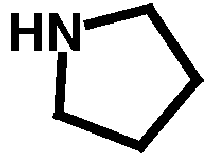
422 [M+H]+ 2.09 (W) 14.6 9 
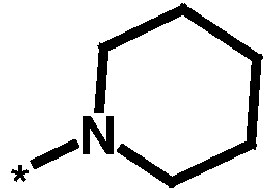
XIII.1 
436 [M+H]+ 2.12 (W) -

- 1.2 mL Toluene/tert-butanol (5:1) are added to a mixture of 100 mg (0.41 mmol) (S)-N-[1-(piperidin-4-yl-phenyl)-ethyl]-acetamide (V.1), 93 mg (0.41 mmol) 4-bromo-phenyl-acetic acid methyl ester, 10 mg (0.020 mmol) X-Phos and 4.5 mg (0.020 mmol) palladium(II) acetate. Finally 132 mg (0.41 mmol) cesium carbonate are added under inert gas atmosphere. The mixture is stirred for 12 h at 90°C in a sealed tube under inert gas atmosphere. After that time, the mixture is diluted with 1 mL methanol and the residue is purified by HPLC (column: Waters XBridge 5µM; eluent A: water + 0.10% NH4OH, eluent B: MeOH) to yield the desired product.
C24H30N2O3 (M = 394.5 g/mol), ESI-MS: 395 [M+H]+
Rt (HPLC): 1.10 min (method F) - The following compounds of general formula (15-1) are prepared analogously to Example 15.1, the educts used being shown in the column headed "Educts":

Example Ar1 T Educt 1 Educt 2 ESI-MS [m/z] Rt (HPLC) [min] (method ) 15.1 
*-CH3 
V.1 395 [M+H]+ 1.10 (G) 15.2 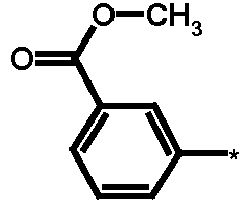
*-CH3 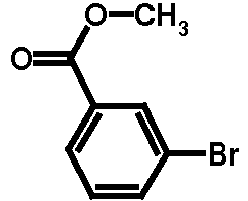
V.1 381 [M+H]+ 1.15 (G) 15.3 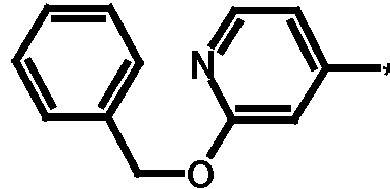
*-CH3 
V.1 430 [M+H]+ 1.12 (AB) 15.4 
*-CH3 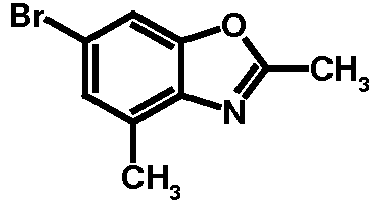
V.1 392 [M+H]+ 1.19 (B) 15.5 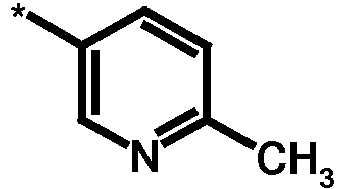
*-CH3 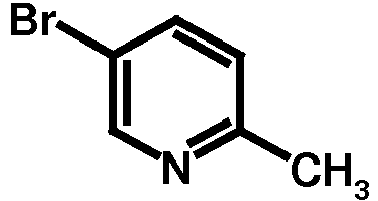
V.1 338 [M+H]+ 1.02 (B) 15.6 
*-CH3 
V.1 406 [M+H]+ 1.26 (B) 15.7 
*-CH3 
V.1 408 [M+H]+ 1.07 (B) 15.8 
*-CH3 
V.1 392 [M+H]+ 1.76 (B) 15.9 
*-CH3 
V.1 354 [M+H]+ 1.07 (B) 15.10 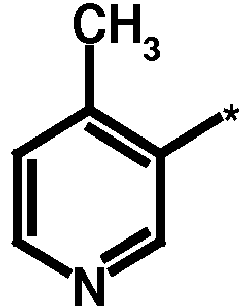
*-CH3 
V.1 338 [M+H]+ 1.05 (B) 15.12 
*-CH3 
V.1 380 [M+H]+ 1.18 (B) 15.13 
*-CH3 
V.1 378 [M+H]+ 1.05 (B) 15.14 
*-CH3 
V.1 404 [M+H]+ 1.20 (B) 15.15 
*-CH3 
V.1 378 [M+H]+ 1.05 (B) 15.16 
*-CH3 
V.1 338 [M+H]+ 0.98 (B) 15.17 
*-CH3 
V.1 435 [M+H]+ 1.27 (B) 15.18 


V.2 408 [M+H]+ 1.65 (N) - The following compounds of general formula (15-2) are prepared analogously to Example 15.1, the educts used being shown in the column headed "Educts":

Example Ar1 T Educt 1 Educt 2 ESI-MS [m/z] Rt (HPLC) [min] (method ) 15.19 
*-CH3 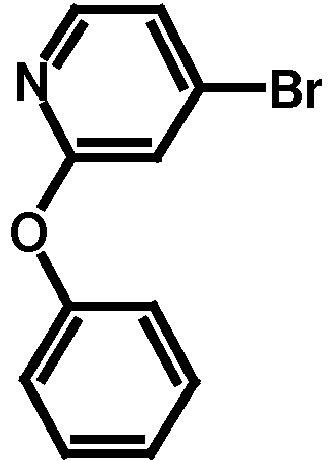
XXIII. 2 430 [M+H]+ 1.20 (N) 15.20 
*-CH3 
XXIII. 2 425 [M+H]+ 1.20 (N) 15.21 
*-CH3 
XXIII. 2 409 [M+H]+ 1.26 (N) - The following compounds of general formula (15-3) are prepared analogously to Example 15.1, the educts used being shown in the column headed "Educts":

Example Ar1 T Educt 1 Educt 2 ESI-MS [m/z] Rt (HPLC) [min] (method ) 15.22 
*-CH3 
V.6 393 [M+H]+ 2.10 (A) 15.23 
*-CH3 
V.6 411 [M+H]+ 2.21 (A) -

- 3.0 mL Toluene are added to a mixture of 100 mg (0.41 mmol) (S)-N-[1-(piperidin-4-yl-phenyl)-ethyl]-acetamide (V.1), 82 mg (0.41 mmol) 5-bromo-2-ethoxy-pyrimidine, 24 mg (0.082 mmol) BINAP and 9.1 mg (0.041 mmol) palladium(II) acetate. Finally 200 mg (0.61 mmol) cesium carbonate are added under inert gas atmosphere. The mixture is stirred for 12 h at 120°C in a sealed tube under inert gas atmosphere. After that time, 1 mL water is added, the mixture is extracted with ethyl acetate and the organic layer is separated and washed with water. The organic layer is dried over sodium sulphate and the solvent is removed in vacuo. The residue is purified by HPLC (column: Waters XBridge 5µM; eluent A: water + 0.30% NH4OH, eluent B: MeOH) to yield the desired product.
C21H28N4O2 (M = 368.5 g/mol), ESI-MS: 369 [M+H]+
Rt (HPLC): 1.02 min (method G) - The following compounds of general formula (16-1) are prepared analogously to Example 16.1, the educts used being shown in the column headed "Educts":

Example Ar1 T Educt 1 Educt 2 ESI-MS [m/z] Rt (HPLC) [min] (method) 16.1 
*-CH3 
V.1 369 [M+H]+ 1.02 (G) 16.2 
*-CH3 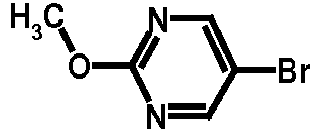
V.1 355 [M+H]+ 0.87 (H) 16.3 
*-CH3 
V.1 354 [M+H]+ 0.91 (G) 16.4 
*-CH3 
V.1 368 [M+H]+ 0.97 (G) 16.5 
*-CH3 
V.1 395 [M+H]+ 1.12 (H) 16.6 


V.3 424 [M+H]+ 1.13 (G) 16.7 


V.3 398 [M+H]+ 1.07 (G) 16.8 


V.4 395 [M+H]+ 1.09 (G) 16.9 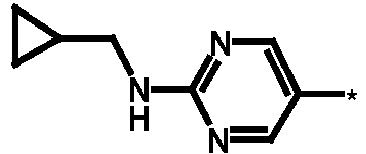


V.4 420 [M+H]+ 1.12 (G) 16.10 
*-CH3 
V.1 399 [M+H]+ 1.25 (L) 16.11 
*-CH3 
V.1 425 [M+H]+ 2.16 (F) -

- To 17 mg (0.15 mmol) methanesulfonyl chloride is added a solution of 32 mg (0.1 mmol) (S)-1-{4-[1-(4-ethoxy-phenyl)-piperidin-4-yl]-phenyl}-ethylamine (XIII.1) and 42 µL triethyl amine in 2 mL dichloromethane. The mixture is stirred for 2 d at rt. The solvent is removed under reduced pressure and the residue is purified using reversed phase column chromatography (water/MeOH, 0.1 % TFA) and the corresponding fractions are concentrated to yield the desired product.
C22H30N2O3S (M = 402.6 g/mol), ESI-MS: 403 [M+H]+
Rt (HPLC): 0.37 min (method B) - The following compounds of general formula (17-1) are prepared analogously to Example 17.1, the educts used being shown in the column headed "Educts":

Example Ar1 T Educt 1 Educt 2 ESI-MS [m/z] Rt (HPLC) [min] (method) 17.1 
*-CH3 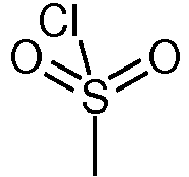
XIII.1 403 [M+H]+ 0.37 (B) 17.2 


XIII.1 417 [M+H]+ 0.39 (B) 17.3 


XIII.1 443 [M+H]+ 0.42 (B) 17.4 


XIII.1 457 [M+H]+ 0.46 (B) -

- To 36.8 mg (0.1 mmol) (S)-2-{4-[4-(1-acetylamino-ethyl)-phenyl]-piperidin-1-yl}-pyrimidine-5-carboxylic acid (XVII.1) and 51 µL (0.3 mmol) DIPEA in 2 mL DMF is added 38.0 mg (0.1 mmol) HATU and the mixture is stirred for 15 min at rt. Subsequent the mixture is added to 12.2 mg (0.1 mmol) methylpyridin-4-ylmethylamine and stirring is continued for 12 h. The solvent is removed in vacuo and the residue is purified using reversed phase column chromatography (water+0.1 % NH4OH/MeOH) and the corresponding fractions are concentrated to yield the desired product.
C27H32N6O2 (M = 472.6 g/mol), ESI-MS: 473 [M+H]+
Rt (HPLC): 1.56 (method W) - The following compounds 18.1 - 18.40 of general formula (18-1) are prepared analogously to Example 18.1, compounds 18.41 - 18.89 are prepared analogously to Example 18.1, but the batch size is reduced to 0.01 mmol acid XVII.1. These compounds are purified by filtration through basic aluminum oxide, followed by washing with DMF/MeOH (9:1) and concentration in vacuo to yield the desired product. In case that Boc-protected diamines are used, the Boc protecting group is finally removed using DCM/TFA = 1/1 (5% H2O). The educts used are shown in the column headed "Educts":

Example RA1 T Educt 1 Educt 2 ESI-MS [m/z] Rt (HPLC) [min] (method) 18.1 
*-CH3 
XVII.1 473 [M+H]+ 1.56 (W) 18.2 
*-CH3 
XVII.1 462 [M+H]+ 1.82 (B) 18.3 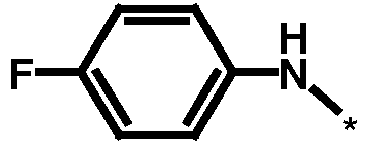
*-CH3 
XVII.1 462 [M+H]+ 1.81 (W) 18.4 
*-CH3 
XVII.1 472 [M+H]+ 1.87 (W) 18.5 
*-CH3 
XVII.1 408 [M+H]+ 1.57 (B) 18.6 
*-CH3 
XVII.1 462 [M+H]+ 1.72 (B) 18.7 
*-CH3 
XVII.1 458 [M+H]+ 1.76 (W) 18.8 
*-CH3 
XVII.1 458 [M+H]+ 1.86 (W) 18.9 
*-CH3 
XVII.1 470 [M+H]+ 1.88 (W) 18.11 
*-CH3 
XVII.1 436 [M+H]+ 1.77 (W) 18.12 
*-CH3 
XVII.1 474 [M+H]+ 1.80(W) 18.13 
*-CH3 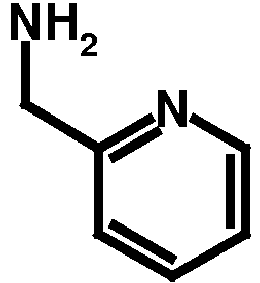
XVII.1 459 [M+H]+ 1.59 (W) 18.14 
*-CH3 
XVII.1 488 [M+H]+ 1.78 (W) 18.15 
*-CH3 
XVII.1 445 [M+H]+ 1.43 (B) 18.16 
*-CH3 
XVII.1 474 [M+H]+ 1.82 (W) 18.17 
*-CH3 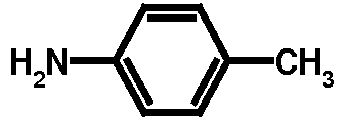
XVII.1 458 [M+H]+ 1.82 (B) 18.18 
*-CH3 
XVII.1 488 [M+H]+ 1.76 (W) 18.19 
*-CH3 
XVII.1 488 [M+H]+ 1.7 (W) 18.20 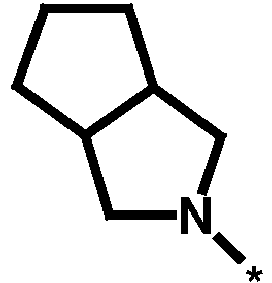
*-CH3 
XVII.1 462 [M+H]+ 1.88 (W) 18.23 
*-CH3 
XVII.1 438 [M+H]+ 1.56 (B) 18.24 
*-CH3 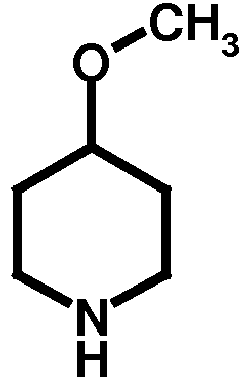
XVII.1 466 [M+H]+ 1.65 (W) 18.25 
*-CH3 
XVII.1 440 [M+H]+ 1.60 (W) 18.26 
*-CH3 
XVII.1 422 [M+H]+ 1.60 (B) 18.27 
*-CH3 
XVII.1 466 [M+H]+ 1.71 (W) 18.29 
*-CH3 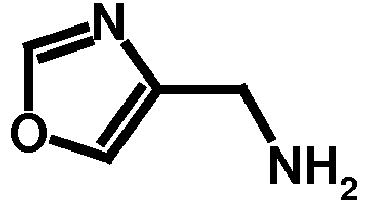
XVII.1 449 [M+H]+ 1.49 (B) 18.30 
*-CH3 
XVII.1 444 [M+H]+ 1.46 (W) 18.31 
*-CH3 
XVII.1 473 [M+H]+ 1.58 (W) 18.33 
*-CH3 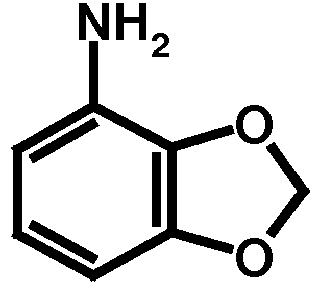
XVII.1 488 [M+H]+ 1.72 (W) 18.35 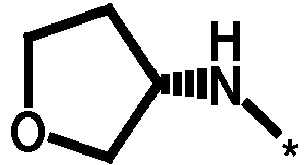
*-CH3 
XVII.1 438 [M+H]+ 1.55 (W) 18.37 
*-CH3 
XVII.1 473 [M+H]+ 1.62 (W) 18.39 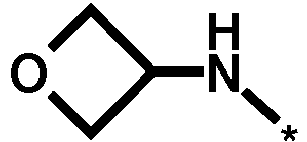
*-CH3 
XVII.1 424 [M+H]+ 1.49 (B) 18.41 
*-CH3 
XVII.1 466 [M+H]+ 1.58 (B) 18.42 
*-CH3 
XVII.1 421 [M+H]+ 1.46 (B) 18.43 
*-CH3 
XVII.1 453 [M+H]+ 1.13 (B) 18.44 
*-CH3 
XVII.1 479 [M+H]+ 1.2 (B) 18.47 
*-CH3 
XVII.1 426 [M+H]+ 1.44 (B) 18.48 
*-CH3 
XVII.1 410 [M+H]+ 1.61 (B) 18.49 
*-CH3 
XVII.1 422 [M+H]+ 1.66 (B) 18.51 
*-CH3 
XVII.1 465 [M+H]+ 1.17 (B) 18.52 
*-CH3 
XVII.1 451 [M+H]+ 1.10 (B) 18.53 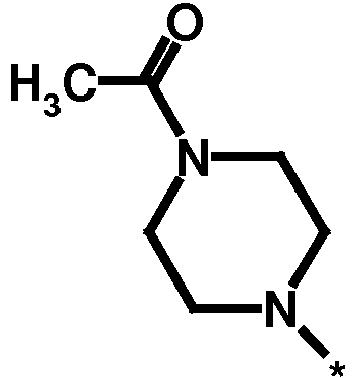
*-CH3 
XVII.1 479 [M+H]+ 1.42 (B) 18.54 
*-CH3 
XVII.1 422 [M+H]+ 1.6 (B) 18.55 
*-CH3 
XVII.1 426 [M+H]+ 1.51 (B) 18.56 
*-CH3 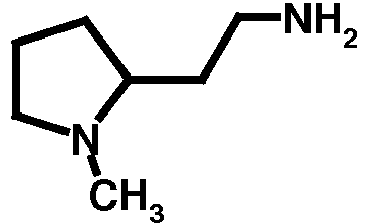
XVII.1 479 [M+H]+ 1.19 (B) 18.57 
*-CH3 
XVII.1 452 [M+H]+ 1.57 (B) 18.59 
*-CH3 
XVII.1 479 [M+H]+ 1.20 (B) 18.60 
*-CH3 
XVII.1 465 [M+H]+ 1.18 (B) 18.61 
*-CH3 
XVII.1 479 [M+H]+ 1.39 (B) 18.63 
*-CH3 
XVII.1 480 [M+H]+ 1.57 (B) 18.65 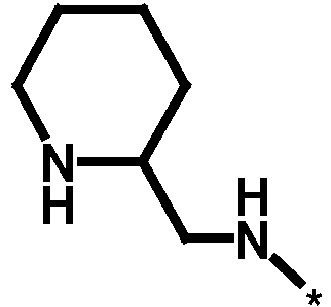
*-CH3 
XVII.1 465 [M+H]+ 1.19 (B) 18.68 
*-CH3 
XVII.1 466 [M+H]+ 1.53 (B) 18.71 
*-CH3 
XVII.1 461 [M+H]+ 1.50 (B) 18.74 
*-CH3 
XVII.1 437 [M+H]+ 1.17 (B) 18.75 
*-CH3 
XVII.1 440 [M+H]+ 1.50 (B) 18.76 
*-CH3 
XVII.1 408 [M+H]+ 1.55 (B) 18.77 
*-CH3 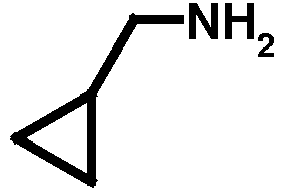
XVII.1 422 [M+H]+ 1.64 (B) 18.79 
*-CH3 
XVII.1 451 [M+H]+ 1.17 (B) 18.80 
*-CH3 
XVII.1 421 [M+H]+ 1.45 (B) 18.81 
*-CH3 
XVII.1 451 [M+H]+ 1.16 (B) 18.84 
*-CH3 
XVII.1 465 [M+H]+ 1.13 (B) 18.87 
*-CH3 
XVII.1 465 [M+H]+ 1.17 (B) 18.89 
*-CH3 
XVII.1 458 [M+H]+ 2.14 (P) 18.90 
*-CH3 
XVII.1 396 [M+H]+ 1.98 (P) 18.91 
*-CH3 
XVII.1 424 [M+H]+ 2.08 (P) 18.92 
*-CH3 
XVII.1 458 [M+H]+ 2.14 (P) 18.93 
*-CH3 
XVII.1 472 [M+H]+ 2.19 (P) 18.94 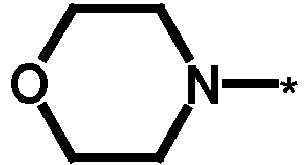
*-CH3 
XVII.1 438 [M+H]+ 1.90 (P) 18.95 
*-CH3 
XVII.1 444 [M+H]+ 2.18 (P) -

- To a mixture of 34 mg (0.10 mmol) (S)-N-{1-[4-(2'-fluoro-3,4,5,6-tetrahydro-2H-[1,4']bipyridinyl-4-yl)-phenyl]-ethyl}-acetamide (XIX.1) and 74 mg (1.0 mmol) isobutyl alcohol in 2 mL dioxane is added 20 mg (0.50 mmol) NaH (60% in mineral oil). The mixture is stirred at 130 °C for 12 h. The solvent is removed in vacuo and the residue is purified by HPLC (RP X-Bridge; water (+0.1% TFA)/MeOH) to yield the desired product.
C24H33N3O2 (M = 395.5 g/mol), ESI-MS: 396 [M+H]+
Rt (HPLC): 1.35 min (method L) - The following compounds of general formula (19-1) are prepared analogously to Example 19.1, the educts used being shown in the column headed "Educts":

Example RA T Educt 1 Educt 2 ESI-MS [m/z] Rt (HPLC) [min] (method) 19.1 
*-CH3 
XIX.1 396 [M+H]+ 1.35 (L) 19.2 
*-CH3 
XIX.1 394 [M+H]+ 1.08 (AB) 19.3 
*-CH3 
XIX.1 398 [M+H]+ 1.54 (X) 19.4 
*-CH3 
XIX.1 408 [M+H]+ 1.85 (X) 19.5 
*-CH3 
XIX.1 410 [M+H]+ 1.90 (X) 19.6 
*-CH3 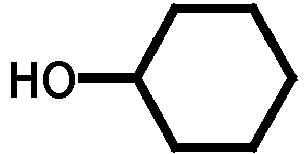
XIX.1 422 [M+H]+ 1.92 (X) 19.7 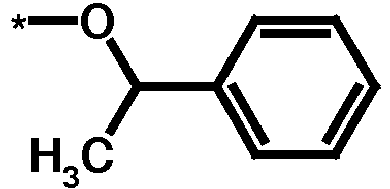
*-CH3 
XIX.1 444 [M+H]+ 1.84 (X) 19.8 
*-CH3 
XIX.1 460 [M+H]+ 1.81 (X) 19.9 
*-CH3 
XIX.1 444 [M+H]+ 1.87 (X) 19.10 
*-CH3 
XIX.1 394 [M+H]+ 1.76 (X) 19.11 
*-CH3 
XIX.1 408 [M+H]+ 1.87 (X) 19.12 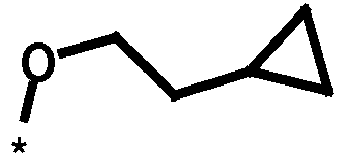
*-CH3 
XIX.1 408 [M+H]+ 1.85 (X) 19.13 
*-CH3 
XIX.1 396 [M+H]+ 1.82 (X) 19.14 
*-CH3 
XIX.1 412 [M+H]+ 1.65 (X) 19.15 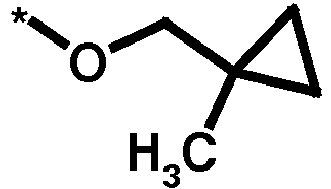
*-CH3 
XIX.1 408 [M+H]+ 1.84 (X) 19.16 
*-CH3 
XIX.1 410 [M+H]+ 1.58 (X) 19.17 
*-CH3 
XIX.1 424 [M+H]+ 1.64 (X) 19.18 
*-CH3 
XIX.1 424 [M+H]+ 1.62 (X) 19.19 
*-CH3 
XIX.1 404 [M+H]+ 1.67 (X) 19.20 
*-CH3 
XIX.1 410 [M+H]+ 1.58 (X) 19.21 
*-CH3 
XIX.1 410 [M+H]+ 1.91 (X) 19.23 
*-CH3 
XIX.1 382 [M+H]+ 1.77 (X) 19.24 
*-CH3 
XIX.1 410 [M+H]+ 1.90 (X) 19.26 
*-CH3 
XIX.1 430 [M+H]+ 1.72 (X) 19.27 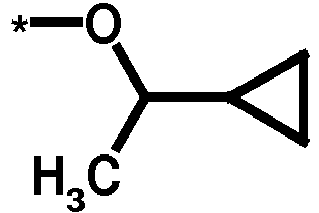
*-CH3 
XIX.1 408 [M+H]+ 1.81 (X) 19.28 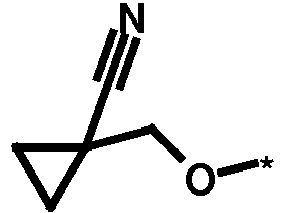
*-CH3 
XIX.1 419 [M+H]+ 1.57 (X) 19.29 
*-CH3 
XIX.1 421 [M+H]+ 1.49 (X) 19.30 
*-CH3 
XIX.1 456 [M+H]+ 1.91 (X) 19.31 
*-CH3 
XIX.1 448 [M+H]+ 1.84 (X) 19.32 
*-CH3 
XIX.1 448 [M+H]+ 1.85 (X) 19.33 
*-CH3 
XIX.1 448 [M+H]+ 1.84 (X) 19.34 
*-CH3 
XIX.1 431 [M+H]+ 1.60 (X) 19.35 
*-CH3 
XIX.1 460 [M+H]+ 1.8 (X) 19.36 
*-CH3 
XIX.1 411 [M+H]+ 1.61 (X) 19.37 
*-CH3 
XIX.1 431 [M+H]+ 1.61 (X) 19.38 
*-CH3 
XIX.1 431 [M+H]+ 1.61 (X) -

- 25 mg (1.04 mmol) Sodium hydride are added to 2 mL 2-propanol and heated at 80°C for 10 min. After that time, 80 mg (0.21 mmol) (S)-cyclopropanecarboxylic acid (1-{4-[1-(6-chloro-pyrimidin-4-yl)-piperidin-4-yl]-phenyl}-ethyl)-amide (XIV.6) are added. The mixture is heated at 80°C for 12 h. After that time, water is added and the mixture is extracted with dichloromethane. The solvent is evaporated and the residue is purified using reversed phase HPLC (column: Waters XBridge 5µM; eluent A: water + 0.3% NH4OH, eluent B: MeOH) to yield the desired product.
C22H32N4O2 (M = 408.5 g/mol), ESI-MS: 409 [M+H]+
Rt (HPLC): 1.31 min (method L) - The following compounds of general formula (20-1) are prepared analogously to Example 20.1, the educts used being shown in the column headed "E 1" and "E 2":

Ex. Ar1 T E 1 E 2 ESI-MS [m/z] Rt (HPLC) [min] (method) 20.1 

2-propanol XIV.6 409 [M+H]+ 1.31 (L) 20.2 

cyclobutanol XIV.6 421 [M+H]+ 1.32 (L) 20.3 

2-propanol XIV.7 412 [M+H]+ 1.32 (L) 20.4 

2-propanol XIV.7 424 [M+H]+ 1.30 (L) -

- To 43.5 mg (0.10 mmol) (S)-N-(1-{4-[1-(4-chloro-5-phenyl-pyrimidin-2-yl)-piperidin-4-yl]-phenyl}-ethyl)-acetamide (5.50 mmol) in 4 mL MeOH is added 0.074 mL (0.40 mmol) sodium methoxide and the mixture is stirred for 3 h at 80 °C. After cooling the crude mixture is purified by HPLC (C18 RP Sunfire; water (+0.1% TFA)/MeOH) to yield the desired product.
C26H30N4O2 (M = 430.5 g/mol), ESI-MS: 431 [M+H]+
Rt (HPLC): 1.88 min (method P) -

- To 43.5 mg (0.10 mmol) (S)-N-(1-{4-[1-(4-chloro-5-phenyl-pyrimidin-2-yl)-piperidin-4-yl]-phenyl}-ethyl)-acetamide (5.50 mmol) in 1 mL MeOH and 2 mL dioxane is added under an argon atmosphere 0.042 mL (0.30 mmol) trimethylboroxine, 0.1 mL NaHCO3 solution (2 mmol/mL) and 2.9 mg (0.0042 mmol) bis(triphenylphosphin)-palladium(II)chloride and the mixture is stirred for 3 h at 80 °C. After that time, another 100 µL (0.7 mmol) trimethylboroxine and 2.9 mg (0.0042 mmol) bis(triphenylphosphin)-palladium(II)chloride are added and stirring is continued for 12 h at 80 °C. The mixture is diluted with DMF, filtered and purified by HPLC (C18 RP Sunfire; water (+0.1 % TFA)/MeOH) to yield the desired product.
C26H30N4O (M = 414.5 g/mol), ESI-MS: 415 [M+H]+
Rt (HPLC): 2.28 min (method P) -

- To 34.0 mg (0.078 mmol) (S)-N-(1-{4-[1-(4-chloro-5-phenyl-pyrimidin-2-yl)-piperidin-4-yl]-phenyl}-ethyl)-acetamide (5.50 mmol) in 2 mL dimethylacetamide is added 0.027 mL (0.16 mmol) DIPEA and 1.15 mL (2.3 mmol) methylamine. The mixture is stirred for 16 h at 100 °C. Subsequently the crude mixture is purified by HPLC (C18 RP Sunfire; water (+0.1 % TFA)/MeOH) to yield the desired product.
C26H31N5O (M = 429.6 g/mol), ESI-MS: 430 [M+H]+
Rt (HPLC): 1.66 min (method P) -

- Under argon atmosphere 0.2 mL Na2CO3-solution (2 mol/L) and 3 mg (0.004 mmol) bis(triphenylphosphine)-palladium(II) chloride are added to a mixture of 50 mg (0.30 mmol) 3,4-(methylenedioxy)phenylboronic acid and 36 mg (0.10 mmol) (S)-N-(1-{4-[1-(2-chloro-pyrimidin-4-yl)-piperidin-4-yl]-phenyl}-ethyl)-acetamide (compound XIV.3) in 2 mL dioxane/1 mL MeOH. The mixture is stirred at 90°C for 3 h. After that time, the mixture is diluted with DMF/water and is filtered. The filtrate is purified using reversed phase HPLC (water (+0.1 % TFA)/MeOH) to yield the desired product.
C26H28N4O3 (M = 444.5 g/mol), ESI-MS: 445 [M+H]+
Rt (HPLC): 1.38 min (method E) - The following compounds of general formula (22-1) are prepared analogously to Example 10.1, the educts used being shown in the column headed "E 1" and "E 2".

Ex. Ar1 T E 1 E 2 ESI-MS [m/z] Rt (HPLC) [min] method 22.1 
*-CH3 
XIV.3 445 [M+H]+ 1.38 (E) 22.2 
*-CH3 
XIV.1 445 [M+H]+ 1.39 (E) 22.3 
*-CH3 
XIV.8 445 [M+H]+ 1.54 (E) 22.4 
*-CH3 
XIV.3 445 [M+H]+ 2.71 (S) 22.6 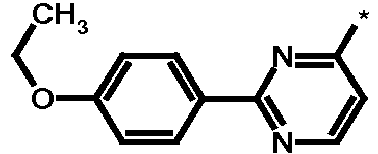
*-CH3 
XIV.3 445 [M+H]+ 2.72 (S) 22.7 
*-CH3 
XIV.1 445 [M+H]+ 2.67 (S) 22.9 
*-CH3 
XIV.1 445 [M+H]+ 2.65 (S) 22.10 
*-CH3 
XIV.8 445 [M+H]+ 1.74 (E) 22.12 
*-CH3 
XIV.8 445 [M+H]+ 1.61 (E) 22.13 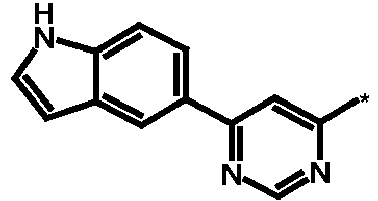
*-CH3 
XIV.1 440 [M+H]+ 1.39 (E) -

- To 75.0 mg (0.22 mmol) of the aniline XX.6 in 1 mL DCM are added 16.2 µl (0.22 mmol) propionaldehyde and the resulting mixture is stirred at rt for 30 min. Then 51.8 mg (0.24 mmol) NaB(OAc)3H are added and the mixture is stirred at rt over night. Afterwards the mixture is directly purified by HPLC (water/MeOH/TFA).
C24H33N3O (M = 379.5 g/mol), ESI-MS: 380 [M+H]+
Rt (HPLC): 1.08 min (method N) - The following compounds of general formula (24-1) are prepared analogously to Example 24.1, the educts used being shown in the column headed "E 1" and "E 2".

Ex. Ar1 T E 1 E 2 ESI-MS [m/z] Rt (HPLC) [min] method 24.1 
*-CH3 
XX.6 380 [M+H]+ 1.08 (N) 24.2 
*-CH3 
XX.6 366 [M+H]+ 0.98 (N) 24.3 
*-CH3 
XX.6 394 [M+H]+ 1.16 (N) 24.4 
*-CH3 
XX.6 392 [M+H]+ 1.16 (N) -

- 50 mg (0.15 mmol) (S)-N-{1-(4-[1-(4-Hydroxyphenyl)-piperidin-4-yl]-phenyl}-ethyl)-acetamide (compound 1.48), 14 mg (0.16 mmol) 2-methylcyclopropanemethanol and 38.8 mg (0.15 mmol) triphenylphosphine are added to 2 mL 2-methyl-tetrahydro-furane at 0°C. 30.5 µl (0.15 mmol) di-iso-propyl azodicarboxylate are added and the mixture is allowed to warm to rt. Stirring is continued over night followed by addition of 0.5 equivalents of triphenylphosphine and 0.5 equivalents of di-iso-propyl azodicarboxylate. Stirring is continued for one day and again additional triphenylphosphine and di-iso-propyl azodicarboxylate are added and stirring is continued for 16 h at 50 °C. Then the mixture is filtered and purified using reversed phase HPLC (water/MeOH, 0.1 %FA) to yield the desired product.
C26H34N2O2 (M = 406.6 g/mol), ESI-MS: 407 [M+H]+
Rt (HPLC): 1.58 min (method A) - The following compounds of general formula (27-1) are prepared analogously to Example 27.1, the educts used being shown in the column headed "E 1" and "E 2":

Example Ar1 T E 1 E 2 ESI-MS [m/z] Rt(HPLC) [min] (method) 27.1 
*-CH3 
1.48 407 [M+H]+ 1.58 (A) 27.2 
*-CH3 
1.48 417 [M+H]+ 2.04 (A) 27.3 
*-CH3 
1.48 432 [M+H]+ 2.11 (A) -

- 2.90 g (7.62 mmol) of the ester 15.02 are added to 50 mL MeOH and 8 mL of an 1N aq. NaOH solution. The reaction mixture is stirred at 70 °C for 1 h. After cooling down to rt the solution acidified with diluted aq. HCl solution and the resulting precipitate is filtered, washed with water and dried in vacuo at 50 °C.
C22H26N2O3 (M = 366.5 g/mol), ESI-MS: 367 [M+H]+
Rt (HPLC): 1.11 min (method H) -

- To 73.3 mg (0.20 mmol) of Example 28.1 in 2 mL DMF are added 64.2 mg (0.20 mmol) TBTU and 41.8 µL (0.20 mmol) TEA and the mixture is stirred at rt for 15 min. Then 26.6 mg (0.20 mmol)1,2,3,4-tetrahydroisoquinoline are added and stirring is continued for 1 h. The reaction mixture is purified directly by HPLC (water+0.1 % NH4OH/MeOH).
C31H35N3O2 (M = 481.6 g/mol), ESI-MS: 482 [M+H]+
Rt (HPLC): 1.39 min (method O) - The following compounds are prepared analogously to Example 29.1. The educts used are shown in the column headed "Educts":

Example Ar1 T Educt 1 Educt 2 ESI-MS [m/z] Rt (HPLC) [min] (method) 29.2 
*-CH3 
28.1 468 [M+H]+ 1.35 (O) 29.3 
*-CH3 
28.1 394 [M+H]+ 1.02 (W) 29.4 
*-CH3 
28.1 394 [M+H]+ 1.00 (W) -

- 150 mg (0.46 mmol) of the amine XIII.1 are added to 1.5 mL THF and 5.65 mg (0.05 mmol) DMAP and cooled down to 0 °C. Then 42.8 mg (0.51 mmol) diketene are added and the resulting mixture is stirred at 0 °C for 1 h. The solvent is removed in vacuo and the residue is purified by column chromatography (silica gel; PE/ethyl acetate, gradient 80:20 - 50:50).
C25H32N2O3 (M = 408.5 g/mol), ESI-MS: 409 [M+H]+
Rt (HPLC): 0.88 min (method AD) -

- 324 mg (1.00 mmol) of the amine XIII.1 are added to 10 mL THF and 154 µL (1.10 mmol) TEA. While cooling the mixture 108 µL (1.00 mmol) methyl malonyl chloride are added dropwise. The resulting mixture is stirred at rt over night. The mixture is filtered, the solvent is removed in vacuo and the residue is purified by HPLC (water+0.15% FA/acetone).
C25H32N2O4 (M = 424.5 g/mol), ESI-MS: 425 [M+H]+
Rt (HPLC): 0.73 min (method AD) -

- 250 mg (0.59 mmol) of the ester 31.1 are added to 5 mL EtOH and 0.6 mL of an 1 N aq. NaOH solution and stirred at rt. The solvent is removed in vacuo and the residue is partioned between DCM and an aq. pH7-buffer solution. The org. layer is separated, washed with water, dried with MgSO4 and the solvent is removed in vacuo.
C24H30N2O4 (M = 410.5 g/mol), ESI-MS: 411 [M+H]+
Rt (HPLC): 0.90 min (method G) -

- To 50.0 mg (0.12 mmol) of the carboxylic acid 32.1 in 1 mL DMF are added 25.3 µL (0.18 mmol) TEA, 41.1 mg (0.13 mmol) TBTU and 200 µL of an aq. ammonia solution (32%). Then the mixture is filtered purified by HPLC (water/MeOH, 0.15% NH4OH).
C24H31N3O3 (M = 409.5 g/mol), ESI-MS: 410 [M+H]+
Rt (HPLC): 1.10 min (method G) - The following compounds of general formula (33-1) are prepared analogously to Example 33.1, the educts used being shown in the column headed "E 1" and "E 2":

Ex. Ar1 T E 1 E 2 ESI-MS [m/z] Rt (HPLC) [min] method 33.1 

32.1 ammonia 410 [M+H]+ 1.10 (G) 33.2 

32.1 methylamine 424 [M+H]+ 1.15 (G) -

- 90.0 mg (0.25 mmol) of the acetylbromide XXIX.1 and 33.9 mg (0.25 mmol) pyridine-2-carbothioic acid amide are added to 2 mL ethanol and stirred at 80 °C for 4 h. Then the reaction mixture is purified directly by HPLC (water+0.3% NH4OH/MeOH).
C23H26N4OS (M = 406.5 g/mol), ESI-MS: 407 [M+H]+
Rt (HPLC): 1.16 min (method G) - The following compounds are prepared analogously to Example 34.1. The educts used are shown in the column headed "Educts":
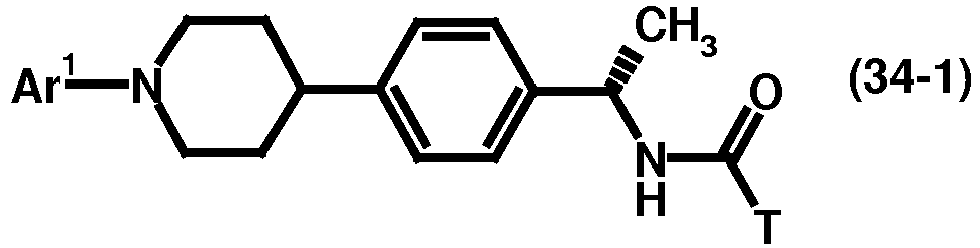
Example Ar1 T Educt 1 Educt 2 ESI-MS [m/z] Rt (HPLC) [min] (method) 34.1 
*-CH3 
XXIX.1 407 [M+H]+ 1.16 (G) 34.2 
*-CH3 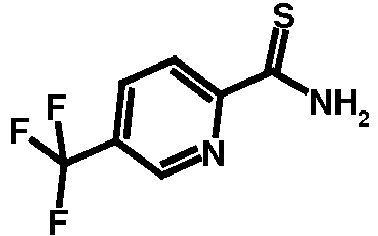
XXIX.1 475 [M+H]+ 1.32 (G) -

- 250 mg (0.50 mmol) of Example 6.49 in dichloromethane are charged with 2.02 mL methanolic HCl solution (c = 1.25 mol/l). The mixture is refluxed over night, the solvent is removed in vacuo and to the residue is added water. Then the mixture is basified with a diluted aq. NaOH solution and the resulting precipitate is collected, dissolved in DCM, washed with water and dried with MgSO4. The solvent is removed in vacuo.
C24H33N3O2 (M = 395.5 g/mol), ESI-MS: 396 [M+H]+
Rt (HPLC): 1.16 min (method G) -

- To 59.3 mg (0.15 mmol) of Example 35.1 in 5 mL THF are added 36.5 µL (0.45 mmol) formalin, 1 mL of an aq. pH-5 buffer solution and 95.4 mg sodium triacetoxy-borohydride. The resulting mixture is stirred at rt for 2 h and purified directly by HPLC (water+0.15% NH4OH/MeOH).
C26H37N3O2 (M = 423.6 g/mol), ESI-MS: 424 [M+H]+
Rt (HPLC): 1.22 min (method G) -

- 50.0 mg (0.13 mmol) of Example 13.3 in 2 mL DMSO are cooled down to 0 °C and charged with 19.5 mg (0.14 mmol) K2CO3. Then 113 µL H2O2 (30% in water) are added and the mixture is allowed to warm to rt and stirred over night. Additional 113 µL H2O2 (30% in water) are added and stirring is continued for 2 h at 45 °C. The reaction mixture is filtered and directly purified by HPLC (water+0.15% FA/MeOH).
C23H29N3O3 (M = 409.5 g/mol), ESI-MS: 410 [M+H]+
Rt (HPLC): 1.09 min (method G) -

- 50.0 mg (0.14 mmol) of Example 1.1 and 55.1 mg (0.14 mmol) of Lawesson's reagent in 3 mL toluene are refluxed for 2 h. Then the solvent is removed in vacuo and the residue is purified by HPLC (water+0.3% NH4OH/MeOH).
C23H30N2OS (M = 382.6 g/mol), ESI-MS:383 [M+H]+
Rt (HPLC): 1.22 min (method G) - The following compounds are prepared analogously to Example 38.1. The educt used is shown in the column headed "Educt":

Example Ar1 T Educt ESI-MS [m/z] Rt (HPLC) [min] (method) 38.1 
*-CH3 1.1 383 [M+H]+ 1.22 (G) 38.2 
*-CH3 1.103 401 [M+H]+ 1.26 (G) -

- To 32.2 mg (1.27 mmol) NaH in 2.5 mL THF at 0 °C are added 50.0 mg (0.13 mmol) of Example 1.26. The mixture is stirred for 10 min at 0°C before 15.9 µL (0.26 mmol) methyl iodide are added and the mixture is stirred at rt for 2 h. The reaction is quenched by the addition of water and a sat. aq. NH4Cl solution. The resulting mixture is extracted with DCM, the org. layers are combined and dried with MgSO4. The solvent is removed in vacuo and the residue is resolved in ACN and some water and freeze-dried.
C26H34N2O2 (M = 406.6 g/mol), ESI-MS: 407 [M+H]+
Rt (HPLC): 2.36 min (method F) - The following compounds are prepared analogously to Example 39.1. The educt used is shown in the column headed "Educt":

Example Ar1 RN Educt ESI-MS [m/z] Rt (HPLC) [min] (method) 39.1 
*-CH3 1.26 407 [M+H]+ 2.36 (F) 39.2 

1.26 421 [M+H]+ 2.41 (F) -

- 100 mg (0.22 mmol) of Example XXXV.1 in 5 mL MeOH are charged with 10 mg Pd/C and stirred in an atmosphere of hydrogen (50 psi) at rt over night. Then the reaction mixture is filtered, the solvent is removed in vacuo and the resulting residue is purified by HPLC (RP C18 Xbridge, water(+0.3% ammonia)/MeOH).
C25H31F3N2O3 (M = 464.5 g/mol), EI-MS: 465 [M+H]+
Rt (HPLC): 2.40 min (method F) - The following compounds are prepared analogously to example XXXIII.1.
Example Starting material Product structure Mass spec result Rt (HPLC) [min] (method) 40.1 XXXV.1 
465 [M+H]+ 2.40 (F) 40.2 XXXV.2 
421 [M+H]+ 2.11 (F) - The following examples of formulations, which may be obtained analogously to methods known in the art, serve to illustrate the present invention more fully without restricting it to the contents of these examples. The term "active substance" denotes one or more compounds according to the invention, including the salts thereof.
-
(1) Active substance 50.0 mg (2) Lactose 98.0 mg (3) Maize starch 50.0 mg (4) Polyvinylpyrrolidone 15.0 mg (5) Magnesium stearate 2.0 mg 215.0 mg - (1), (2) and (3) are mixed together and granulated with an aq. solution of (4). (5) is added to the dried granulated material. From this mixture tablets are pressed, biplanar, faceted on both sides and with a dividing notch on one side.
Diameter of the tablets: 9 mm. -
(1) Active substance 350.0 mg (2) Lactose 136.0 mg (3) Maize starch 80.0 mg (4) Polyvinylpyrrolidone 30.0 mg (5) Magnesium stearate 4.0 mg 600.0 mg - (1), (2) and (3) are mixed together and granulated with an aq. solution of (4). (5) is added to the dried granulated material. From this mixture tablets are pressed, biplanar, faceted on both sides and with a dividing notch on one side.
Diameter of the tablets: 12 mm. -
(1) Active substance 50.0 mg (2) Dried maize starch 58.0 mg (3) Powdered lactose 50.0 mg (4) Magnesium stearate 2.0 mg 160.0 mg - (1) is triturated with (3). This trituration is added to the mixture of (2) and (4) with vigorous mixing. This powder mixture is packed into size 3 hard gelatin capsules in a capsule filling machine.
-
(1) Active substance 350.0 mg (2) Dried maize starch 46.0 mg (3) Powdered lactose 30.0 mg (4) Magnesium stearate 4.0 mg 430.0 mg - (1) is triturated with (3). This trituration is added to the mixture of (2) and (4) with vigorous mixing. This powder mixture is packed into size 0 hard gelatin capsules in a capsule filling machine.
-
Active substance 35.0 mg Mannitol 100.0 mg water for injections ad 2.0 mL - The active substance and mannitol are dissolved in water. After packaging, the solution is freeze-dried. To produce the solution ready for use, the product is dissolved in water for injections.


including any tautomers and stereoisomers thereof,
or a salt thereof
or a solvate or hydrate thereof.
| C9H9BrO | (M = 213.1 g/mol) |
| EI-MS: | 212/214 [M]+ |
| Rf (TLC): | 0.4 (silica gel, PE) |
Rt (HPLC): 1.50 (method F)
Rf (TLC): 0.85 (silica gel, PE/EtOAc 7/3)
Claims (17)
- A compound of general formula I
 Ar1 is selected from the group consisting of:phenyl, naphthyl, pyridyl, 2H-pyridin-2-onyl, pyrimidinyl, pyridazinyl, pyrazinyl, furanyl, thienyl, pyrrolyl, imidazolyl, triazolyl, oxazolyl, isoxazolyl, pyrazolyl, thiazolyl, quinolinyl, isoquinolinyl, indolyl, benzofuranyl, benzoimidazolyl, benzooxazolyl, benzotriazolyl, 2,3-dihydrobenzofuranyl, benzo[1,3]dioxolyl and 2,3-dihydro-benzo[1,4]dioxinyl,
wherein all of the before mentioned mono- and bicyclic groups are optionally substituted with one or more substituents RA; andRA is selected from the group consisting of:H, F, Cl, Br, I, CN, OH, NO2, C1-6-alkyl, C3-10-carbocyclyl, C3-10-carbocyclyl-C-1-3-alkyl, C1-6-alkyl-O-, C3-6-alkenyl-O-, C3-6-alkynyl-O-, C3-10-carbocyclyl-O-, C3-10-carbocyclyl-C1-3-alkyl-O-, C1-6-alkyl-S-, C3-10-carbocyclyl-S-, C3-10-carbocyclyl-C1-3-alkyl-S-, C1-4-alkyl-C(=O)-, RN1RN2N-, RN1RN2N-C2-3-alkyl-O-, RN1RN2N-C(=O)-, HO-C(=O)-, C1-6-alkyl-O-C(=O)-, heterocyclyl, heterocyclyl-O-, heterocyclyl-C1-3-alkyl, heterocyclyl-C1-3-alkyl-O-, heterocyclyl-C(=O)-, phenyl, phenyl-C1-3-alkyl, phenyl-O-, phenyl-C1-3-alkyl-O-, heteroaryl, heteroaryl-C1-3-alkyl, heteroaryl-O- and heteroaryl-C1-3-alkyl-O-;
wherein each heterocyclyl is selected from the group consisting of azetidinyl, pyrrolidinyl, piperidinyl, piperazinyl, N-C1-4-alkyl-piperazin-1-yl, N-C1-4-alkyl-sulfonyl-piperazin-1-yl, morpholinyl, dihydroquinolinyl, dihydroisoquinolinyl, dihydroindolyl, dihydroisoindolyl, oxetanyl, tetrahydrofuranyl and tetrahydro-pyranyl, or from the group consisting of
wherein each carbocyclyl is selected from C3-7-cycloalkyl, indanyl and tetrahydronaphthyl; and
wherein each heteroaryl is selected from the group consisting of pyrrolyl, pyridyl, pyrimidinyl, pyridazinyl, pyrazinyl, furanyl, oxazolyl, isoxazolyl, pyrazolyl, thiazolyl, triazolyl, tetrazolyl, benzofuranyl, indolyl, quinolinyl and indazolyl; and
wherein in each heterocyclyl and carbocyclyl, a -CH2-group is optionally replaced by -C(=O)- or -C(=CRAlk 2)-; and
wherein each carbocyclyl and heterocyclyl is optionally substituted with one or more C1-3-alkyl, which may be substituted as defined hereinafter, and
wherein each alkyl, carbocyclyl and heterocyclyl are optionally substituted with one or more substituents selected from F; and
wherein each alkyl, carbocyclyl and heterocyclyl are optionally substituted with 1, 2 or 3 substituents RC; and
wherein each carbocyclyl or heterocyclyl is optionally substituted with phenyl or pyridyl; and
wherein each aryl and heteroaryl group is optionally substituted with one or more substituents L;RC is selected from the group consisting of:F, Cl, Br, CN, OH, C1-4-alkyl-O-, C3-7-cycloalkyl-O-, C3-7-cycloalkyl-C1-3-alkyl-O-, H2N-, (C1-4-alkyl)NH-, (C1-4-alkyl)2N-, H2N-C(=O)-, (C1-4-alkyl)NH-C(=O)-, (C1-4-alkyl)2N-C(=O)-, C1-4-alkyl-C(=O)-, C1-4-alkyl-S(=O)2-, HO-C(=O)- and C1-4-alkyl-O-C(=O)-, wherein each alkyl or cycloalkyl is optionally substituted with one or more substituents selected from F and OH, andRN1 is selected from the group consisting of:H, C1-6-alkyl, C3-10-carbocyclyl, C3-10-carbocyclyl-C1-3-alkyl, C3-6-alkynyl, heterocyclyl, heterocyclyl-C1-3-alkyl, phenyl, phenyl-C1-3-alkyl, pyridyl, pyridyl-C1-3-alkyl and oxazolyl-C1-3-alkyl;
wherein each carbocyclyl is selected from C3-7-cycloalkyl, indanyl and tetrahydrofuranyl; and
wherein each heterocyclyl is selected from tetrahydrofuranyl, tetrahydro-pyranyl, pyrrolidinyl, piperidinyl, piperazinyl and morpholinyl; and
wherein each carbocyclyl and heterocyclyl is optionally substituted with one or more C1-4-alkyl; and
wherein each alkyl, carbocyclyl and heterocyclyl are optionally substituted with one or more substituents selected from F; and
wherein each alkyl, carbocyclyl and heterocyclyl are optionally substituted with a substituent selected from OH, C1-3-alkyl-O-, H2N-, HO-C(=O)- and C1-4-alkyl-O-C(=O)-; and
wherein each phenyl and heteroaryl are optionally substituted with one or more substituents L; andRN2 is H or C1-6-alkyl, andRAlk is H or C1-6-alkyl, which may be substituted with one or more F atoms, andAr2 is selected from the group consisting of L is selected from the group consisting of:F, Cl, Br, CN, OH, C1-3-alkyl-, C1-3-alkyl-O-, C1-3-alkyl-S-, H2N-, (C1-3-alkyl)NH-, (C1-3-alkyl)2N- and heterocyclyl;
wherein each alkyl is optionally substituted with one or more F-atoms and/or a substituent selected from OH, C1-3-alkyl-O- and CN; and
wherein heterocyclyl denotes a C3-6-cycloalkyl ring wherein one or two -CH2-groups are replaced by a group selected from -O-, -NH- and -N(C1-3-alkyl)-; and
wherein two substituents L attached to an aryl or heteroaryl group may be linked to each other and form a C2-5-alkylene bridging group in which 1 or 2 -CH2-groups may be replaced by a group independently of each other selected from O, NH and N(C1-4-alkyl)-, wherein the C2-5-alkylene bridging group is optionally substituted by 1 or 2 C1-3-alkyl groups;X is selected from the group consisting of:a straight chain C1-3-alkylene group which is optionally substituted with one or more C1-3-alkyl and C1-3-alkyl-O-C1-3-alkyl, and wherein two alkyl substituents may be connected with each other and together form a C1-5-alkylene bridging group in which 1 or 2 -CH2-groups may be replaced by a group independently of each other selected from O, S, NH or N(C1-4-alkyl)-, wherein the C1-5-alkylene bridging group is optionally substituted by 1 or 2 C1-3-alkyl groups; andY is -C(=O)-, -C(=S)- or -S(=O)2-;RN is H or C1-3-alkyl,T is selected from the group consisting of:or the groups T and RN may be connected with each other and together form a groupC1-6-alkyl, C2-6-alkenyl, C2-6-alkynyl, C3-7-cycloalkyl, C3-7-cycloalkyl-C1-3-alkyl, C1-6-alkyl-O-, C3-7-cycloalkyl-O-, C3-7-cycloalkyl-C1-3-alkyl-O-, C1-6-alkyl-S-, C3-7-cycloalkyl-S-, C3-7-cycloalkyl-C1-3-alkyl-S-, C1-4-alkyl-C(=O)-, C1-4-alkylS(=O)2-, RT1RT2-N-, RT1RT2-N-C1-3-alkyl-, RT1RT2-N-CO-, C1-4-alkyl-C(=O)-RT2N-C1-3-alkyl, heterocyclyl, phenyl and heteroaryl;
wherein in each cycloalkyl and heterocyclyl, a CH2-group is optionally replaced by -C(=O)-; and
wherein each cycloalkyl and heterocyclyl are optionally substituted with one or more C1-4-alkyl, which is optionally substituted with one or more substituents RC: and
wherein each alkyl, cycloalkyl and heterocyclyl are optionally substituted with one or more substituents RC; and
wherein RT1 is selected from the group consisting of H, C1-6-alkyl, C3-6-cycloalkyl, C3-6-cycloalkyl-C1-3-alkyl, phenyl and pyridyl,
wherein each cycloalkyl is optionally substituted with one or more C1-4-alkyl, and
wherein each alkyl and cycloalkyl is optionally substituted with one or more substituents selected from F, and wherein each alkyl and cycloalkyl are optionally substituted with a substituent selected from OH, C1-3-alkyl-O-, C1-3-alkyl-C(=O)-, HO-C(=O)- and C1-4-alkyl-O-C(=O)-, and
wherein each phenyl and pyridyl group are optionally substituted with one or more substituents L; and
wherein RT2 is H or C1-4-alkyl; and
wherein heterocyclyl is azetidinyl, pyrrolidinyl, piperidinyl, oxetanyl, tetrahydrofuranyl or tetrahydropyranyl; and
wherein heteroaryl is selected from the group consisting of pyridyl, pyrimidinyl, pyridazinyl, pyrazinyl, furanyl, thienyl, pyrrolyl, imidazolyl, pyrazolyl, triazolyl, oxazolyl, isoxazolyl, thiazolyl and isothiazolyl; and
wherein each aryl and heteroaryl group is optionally substituted with one or more substituents L;

including any tautomers and stereoisomers thereof,
or a salt thereof. - A compound according to claim 1 wherein Y is -C(=O)- and RN is H.
- A compound according to claim 1 or 2, wherein L is selected from the group consisting of F, Cl, CN, OH, C1-3-alkyl-, C1-3-alkyl-O-, C1-3-alkyl-S-, H2N-, (C1-3-alkyl)NH-, (C1-3-alkyl)2N- and heterocyclyl;
wherein each alkyl is optionally substituted with one or more F-atoms and/or a substituent selected from OH, CH3-O- and CN; and
wherein heterocyclyl denotes a C3-6-cycloalkyl ring wherein one or two -CH2-groups are replaced by a group selected from -O-, -NH-, -N(C1-3-alkyl)-; and
wherein two substituents L attached to adjacent C-atoms of an aryl or heteroaryl group may be linked to each other and form a -CH2-CH2-O-, -O-CH2-CH2-O- or -O-CH2-O- bridging group which is optionally substituted by 1 or 2 CH3- groups. - A compound according to any one of claims 1 to 3 wherein RA is selected from the group consisting of F, Cl, Br, I, CN, C1-5-alkyl, C3-6-cycloalkyl, C1-5-alkyl-O-, C3-5-alkenyl-O-, C3-5-alkynyl-O-, C3-6-cycloalkyl-O-, C3-6-cycloalkyl-C1-3-alkyl-O-, RN1RN2N-, phenyl, phenyl-O-, phenyl-C1-3-alkyl-O-, heteroaryl, heteroaryl-O- and heteroaryl-C1-3-alkyl-O-;
wherein each cycloalkyl is optionally substituted with one or more C1-3-alkyl, which may be substituted as defined hereinafter; and
wherein each alkyl and cycloalkyl are optionally substituted with one or more substituents selected from F; and
wherein in each cycloalkyl group, a CH2-group is optionally replaced by -O-; and
wherein each alkyl and cycloalkyl are optionally substituted with one or two substituents RC; and
wherein each RN1 is selected from the group consisting of H, C1-6-alkyl, C3-6-cycloalkyl, C3-6-cycloalkyl-CH2-, wherein each cycloalkyl is optionally substituted with one or more C1-4-alkyl, and wherein each alkyl and cycloalkyl are optionally substituted with one or more substituents selected from F, and wherein each alkyl and cycloalkyl are optionally substituted with a substituent selected from OH, C1-3-alkyl-O- and H2N-; and
wherein heteroaryl is selected from the group consisting of pyrrolyl, pyridyl, pyrimidinyl, pyridazinyl, pyrazinyl, furanyl, oxazolyl, isoxazolyl, pyrazolyl, thiazolyl, benzofuranyl, indolyl and quinolinyl; and
wherein each phenyl and heteroaryl group are optionally substituted with one or more substituents L;
wherein each L, RC and RN2 are defined according to claim 1. - A compound according to any one of claims 1 to 3 wherein RA is selected from the group consisting of F, Cl, Br, I, CN, methyl, ethyl, n-propyl, isopropyl, n-butyl, sec-butyl, tert-butyl, F3C-, HO-CH2CH2-, cyclopropyl,


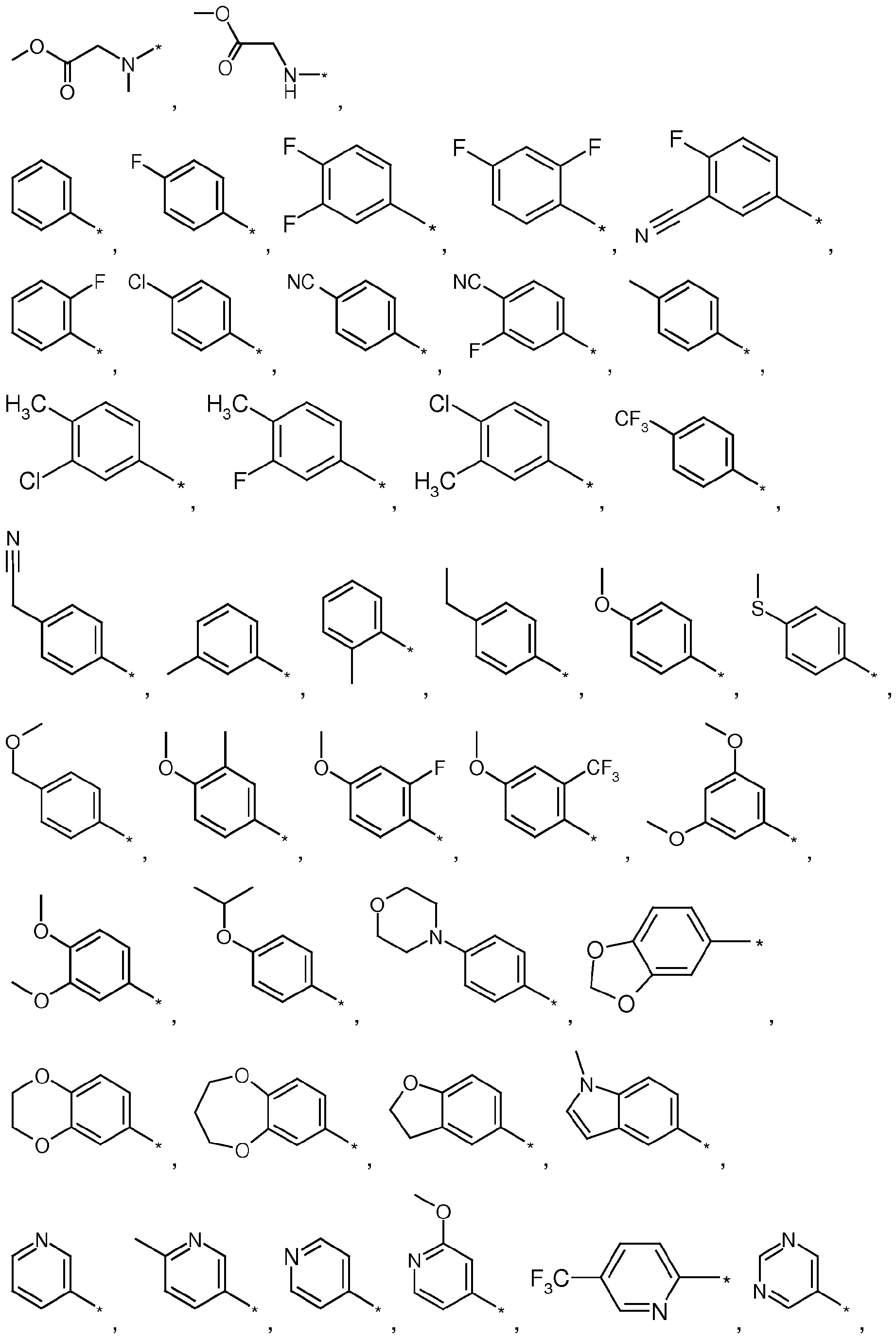

wherein each phenyl and heteroaryl ring are optionally substituted with one or more substituents L,
wherein L is defined as in claim 3. - A compound according to one or more of the previous claims wherein X is a straight chain C1-3-alkylene group which is optionally substituted with with 1, 2 or 3 groups selected from C1-3-alkyl, and wherein two alkyl substituents may be connected with each other and together form a C1-5-alkylene bridging group, wherein the C1-5-alkylene bridging group is optionally substituted by one or two C1-3-alkyl groups.
- A compound according to one or more of the previous claims wherein X is
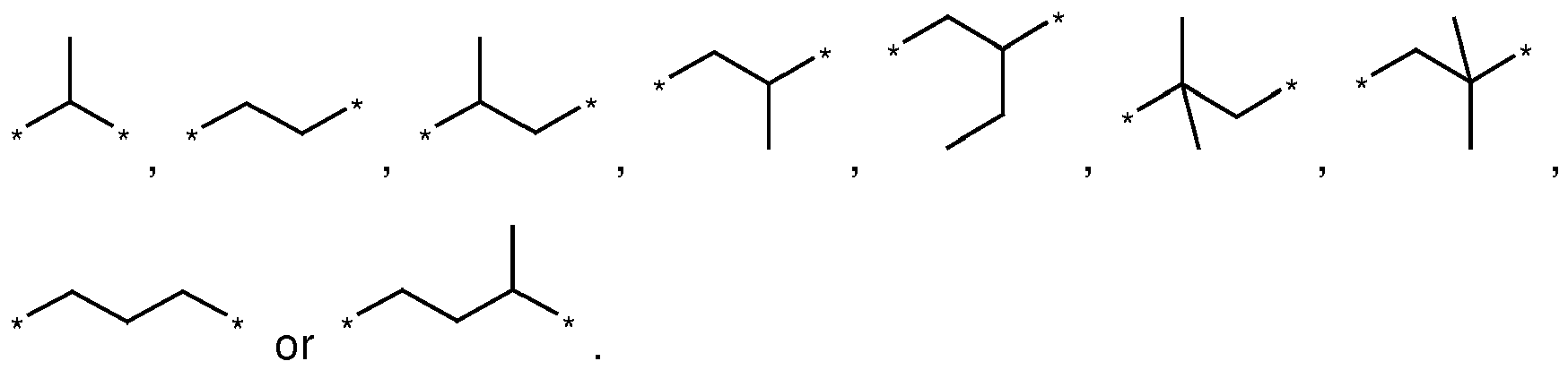
- A compound according to one or more of the previous claims wherein T is selected from the group consisting of:H3C-, H2FC-, HF2C-, F3C-, NC-CH2-, F3C-CH2-, (H3C)2CF-, H5C2-, n-propyl, i-propyl, n-butyl, i-butyl, H3C-(H3CO)CH-, H3C-(HO)CH-, NC-CH2-, NC-CH2-CH2-, cyclopropyl, cyclobutyl, cyclopropyl-CH2-,


- A compound according to any one of claims 1 to 7, wherein T is selected from the group consisting of C1-3-alkyl, C3-5-cycloalkyl, C1-3-alkyl-O- and RT1RT2-N-;
wherein each cycloalkyl is optionally substituted with one or more C1-3-alkyl; and
wherein RT1 and RT2 are independently of each other selected from H and C1-3-alkyl. - A compound according to claim 1 or 4, wherein RC is selected from Cl, Br, CN, OH, C1-3-alkyl-O-, C3-6-cycloalkyl-O-, HO-C1-3-alkyl-O-, H2N-, (C1-3-alkyl)NH- and (C1-3-alkyl)2N-, HO-C(=O)- and C1-4-alkyl-O-C(=O)-.
- A compound according to claim 1, wherein
Ar1 is selected from the group consisting of

RA is selected from the group consisting of F, Cl, Br, CN, F3C-,

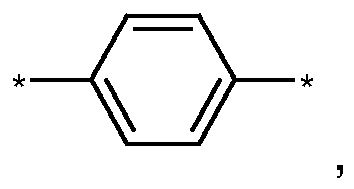
RN is H or CH3,
Y is -C(=O)- and
T is selected from the group consisting of H3C-, F3C-, H3C-CH2-, H3C-O-, (H3C)2N-,
- The following compounds according to claim 1:


- A pharmaceutically acceptable salt of a compound according to any one of claims 1 to 12.
- A compound according to any one of claims 1 to 12, or a pharmaceutically acceptable salt thereof, as a medicament.
- A compound according to any one of claims 1 to 12, or a pharmaceutically acceptable salt thereof, for use in a method of treating obesity or diabetes.
- A pharmaceutical composition comprising one or more compounds according to any one of claims 1 to 12, or one or more pharmaceutically acceptable salts thereof, optionally together with one or more inert carriers and/or diluents.
- A pharmaceutical composition comprising one or more compounds according to any one of claims 1 to 12 or one or more pharmaceutically acceptable salts thereof and one or more additional therapeutic agents, optionally together with one or more inert carriers and/or diluents.
Priority Applications (1)
| Application Number | Priority Date | Filing Date | Title |
|---|---|---|---|
| EP11730270.3A EP2588451B1 (en) | 2010-07-01 | 2011-06-30 | Piperidine derivatives and their use for the treatment of metabolic disorders |
Applications Claiming Priority (3)
| Application Number | Priority Date | Filing Date | Title |
|---|---|---|---|
| EP10168113 | 2010-07-01 | ||
| PCT/EP2011/061012 WO2012001107A1 (en) | 2010-07-01 | 2011-06-30 | Piperidine derivatives and their use for the treatment of metabolic disorders |
| EP11730270.3A EP2588451B1 (en) | 2010-07-01 | 2011-06-30 | Piperidine derivatives and their use for the treatment of metabolic disorders |
Publications (2)
| Publication Number | Publication Date |
|---|---|
| EP2588451A1 EP2588451A1 (en) | 2013-05-08 |
| EP2588451B1 true EP2588451B1 (en) | 2015-12-30 |
Family
ID=44532768
Family Applications (1)
| Application Number | Title | Priority Date | Filing Date |
|---|---|---|---|
| EP11730270.3A Not-in-force EP2588451B1 (en) | 2010-07-01 | 2011-06-30 | Piperidine derivatives and their use for the treatment of metabolic disorders |
Country Status (17)
| Country | Link |
|---|---|
| US (1) | US9006450B2 (en) |
| EP (1) | EP2588451B1 (en) |
| JP (1) | JP5654675B2 (en) |
| KR (1) | KR20130113352A (en) |
| CN (1) | CN103080087A (en) |
| AR (1) | AR082844A1 (en) |
| AU (1) | AU2011273455B2 (en) |
| BR (1) | BR112013000059A2 (en) |
| CA (1) | CA2803996A1 (en) |
| CL (1) | CL2012003681A1 (en) |
| EA (1) | EA201201658A1 (en) |
| IL (1) | IL223286A0 (en) |
| MX (1) | MX2013000018A (en) |
| NZ (1) | NZ603724A (en) |
| PH (1) | PH12013500007A1 (en) |
| TW (1) | TW201215390A (en) |
| WO (1) | WO2012001107A1 (en) |
Families Citing this family (17)
| Publication number | Priority date | Publication date | Assignee | Title |
|---|---|---|---|---|
| JP6129199B2 (en) | 2011-12-02 | 2017-05-17 | ベーリンガー インゲルハイム インターナショナル ゲゼルシャフト ミット ベシュレンクテル ハフツング | Piperidine derivatives, pharmaceutical compositions and uses thereof |
| US8765959B2 (en) * | 2011-12-23 | 2014-07-01 | Boehringer Ingelheim International Gmbh | Piperidine derivatives |
| WO2014019609A1 (en) | 2012-07-31 | 2014-02-06 | Syngenta Participations Ag | Methods of pest control in soybean |
| US9169205B2 (en) | 2012-10-08 | 2015-10-27 | Boehringer Ingelheim International Gmbh | Pyrrolidine derivatives, pharmaceutical compositions and uses thereof |
| WO2014061693A1 (en) * | 2012-10-17 | 2014-04-24 | 塩野義製薬株式会社 | Novel non-aromatic carbocyclic or non-aromatic heterocyclic derivative |
| JP6378752B2 (en) * | 2013-05-17 | 2018-08-22 | ベーリンガー インゲルハイム インターナショナル ゲゼルシャフト ミット ベシュレンクテル ハフツング | Pyrrolidine derivatives, pharmaceutical compositions and uses thereof |
| BR112016004118A2 (en) | 2013-09-12 | 2017-10-17 | Pfizer | use of acetyl-coa carboxylase inhibitors for acne vulgaris treatment |
| EP3194367B1 (en) | 2014-09-17 | 2021-08-18 | Boehringer Ingelheim International GmbH | Tetrahydroisoquinoline derivatives and pharmaceutical compositions useful for the treatment of obesity and diabetes |
| BR112019005258A2 (en) * | 2016-11-09 | 2019-06-04 | Dow Agrosciences Llc | molecules having certain pesticidal uses, and intermediates, compositions, and processes related thereto |
| WO2019089422A1 (en) * | 2017-10-30 | 2019-05-09 | Synblia Therapeutics, Inc. | Irak4 inhibitors and uses thereof |
| EP3709986B1 (en) * | 2017-11-14 | 2023-11-01 | Merck Sharp & Dohme LLC | Novel substituted biaryl compounds as indoleamine 2,3-dioxygenase (ido) inhibitors |
| US11548882B2 (en) | 2018-04-27 | 2023-01-10 | Osaka University | Benzisoxazole compound |
| CN109507430B (en) * | 2018-09-06 | 2022-03-11 | 重庆医科大学 | Function and application of SIRT7 |
| US11548874B2 (en) * | 2020-05-19 | 2023-01-10 | Florida State University Research Foundation, Inc. | Antifibrotic compounds and related methods |
| CN118678955A (en) * | 2022-01-07 | 2024-09-20 | 国立大学法人大阪大学 | Pharmaceutical composition for preventing and/or treating heart failure |
| US20250170116A1 (en) * | 2022-02-28 | 2025-05-29 | Osaka University | Pharmaceutical composition for preventing and/or treating renal disease |
| WO2025231261A1 (en) * | 2024-05-01 | 2025-11-06 | Protego Biopharma, Inc. | Bicyclic and heterocyclic amide compounds |
Family Cites Families (7)
| Publication number | Priority date | Publication date | Assignee | Title |
|---|---|---|---|---|
| GB0224919D0 (en) | 2002-10-25 | 2002-12-04 | Pfizer Ltd | Triazole compounds useful in therapy |
| RS20050638A (en) | 2003-02-19 | 2007-12-31 | Pfizer Inc., | Triazole compounds useful in therapy |
| GB0303852D0 (en) * | 2003-02-19 | 2003-03-26 | Pfizer Ltd | Triazole compounds useful in therapy |
| EP2137162B1 (en) | 2007-03-15 | 2018-08-01 | Novartis AG | Organic compounds and their uses |
| BRPI0821676A2 (en) | 2007-12-21 | 2015-06-16 | Astrazeneca Ab | Compound, pharmaceutical composition, and process for preparing the compounds. |
| CA2724603A1 (en) | 2008-05-28 | 2009-12-03 | Pfizer Inc. | Pyrazolospiroketone acetyl-coa carboxylase inhibitors |
| US8492424B2 (en) | 2010-07-01 | 2013-07-23 | Allergan, Inc. | Compounds act at multiple prostaglandin receptors giving a general anti-inflammatory response |
-
2011
- 2011-06-21 US US13/165,159 patent/US9006450B2/en active Active
- 2011-06-30 CN CN2011800423212A patent/CN103080087A/en active Pending
- 2011-06-30 EP EP11730270.3A patent/EP2588451B1/en not_active Not-in-force
- 2011-06-30 KR KR1020127034365A patent/KR20130113352A/en not_active Withdrawn
- 2011-06-30 AU AU2011273455A patent/AU2011273455B2/en not_active Expired - Fee Related
- 2011-06-30 AR ARP110102362A patent/AR082844A1/en unknown
- 2011-06-30 WO PCT/EP2011/061012 patent/WO2012001107A1/en not_active Ceased
- 2011-06-30 BR BR112013000059A patent/BR112013000059A2/en not_active IP Right Cessation
- 2011-06-30 PH PH1/2013/500007A patent/PH12013500007A1/en unknown
- 2011-06-30 MX MX2013000018A patent/MX2013000018A/en not_active Application Discontinuation
- 2011-06-30 CA CA2803996A patent/CA2803996A1/en not_active Abandoned
- 2011-06-30 EA EA201201658A patent/EA201201658A1/en unknown
- 2011-06-30 TW TW100123238A patent/TW201215390A/en unknown
- 2011-06-30 JP JP2013517296A patent/JP5654675B2/en not_active Expired - Fee Related
- 2011-06-30 NZ NZ603724A patent/NZ603724A/en not_active IP Right Cessation
-
2012
- 2012-11-27 IL IL223286A patent/IL223286A0/en unknown
- 2012-12-26 CL CL2012003681A patent/CL2012003681A1/en unknown
Also Published As
| Publication number | Publication date |
|---|---|
| NZ603724A (en) | 2014-06-27 |
| PH12013500007A1 (en) | 2017-05-19 |
| CA2803996A1 (en) | 2012-01-05 |
| IL223286A0 (en) | 2013-02-03 |
| JP2013533249A (en) | 2013-08-22 |
| KR20130113352A (en) | 2013-10-15 |
| CN103080087A (en) | 2013-05-01 |
| AU2011273455A1 (en) | 2012-12-13 |
| CL2012003681A1 (en) | 2013-04-19 |
| TW201215390A (en) | 2012-04-16 |
| EA201201658A1 (en) | 2013-06-28 |
| JP5654675B2 (en) | 2015-01-14 |
| AU2011273455B2 (en) | 2015-05-14 |
| EP2588451A1 (en) | 2013-05-08 |
| AR082844A1 (en) | 2013-01-16 |
| WO2012001107A1 (en) | 2012-01-05 |
| US9006450B2 (en) | 2015-04-14 |
| US20120157425A1 (en) | 2012-06-21 |
| BR112013000059A2 (en) | 2015-09-08 |
| MX2013000018A (en) | 2013-02-01 |
Similar Documents
| Publication | Publication Date | Title |
|---|---|---|
| US9006450B2 (en) | Compounds, pharmaceutical compositions and uses thereof | |
| EP2797885B1 (en) | New azetidine derivatives, pharmaceutical compositions and uses thereof | |
| EP2797884B1 (en) | New azetidine derivatives, pharmaceutical compositions and uses thereof | |
| EP2611771B1 (en) | Substituted heteroaryl- and arylalkynyl benzene derivatives as acc-inhibitors for the treatment of metabolic diseases | |
| EP2794586B1 (en) | New aziridine compounds, pharmaceutical compositions and their use as acetyl-coa carboxylase inhibitors | |
| EP2948442B1 (en) | Pyrrolidine derivatives, pharmaceutical compositions and uses thereof | |
| EP2614054B1 (en) | Ethyne derivatives, pharmaceutical compositions and uses thereof | |
| EP2986604B1 (en) | Pyrimidine-substituted pyrrolidine derivatives, pharmaceutical compositions and uses thereof | |
| EP2903982B1 (en) | New pyrrolidine derivatives and their use as acetyl-coa carboxylase inhibitors | |
| EP2997024B1 (en) | Pyrrolidine derivatives, pharmaceutical compositions and uses thereof | |
| EP3194367B1 (en) | Tetrahydroisoquinoline derivatives and pharmaceutical compositions useful for the treatment of obesity and diabetes | |
| EP2794587B1 (en) | New piperidine derivatives, pharmaceutical compositions and uses thereof | |
| EP2785690B1 (en) | Piperidine derivatives, pharmaceutical compositions and uses thereof |
Legal Events
| Date | Code | Title | Description |
|---|---|---|---|
| PUAI | Public reference made under article 153(3) epc to a published international application that has entered the european phase |
Free format text: ORIGINAL CODE: 0009012 |
|
| 17P | Request for examination filed |
Effective date: 20130201 |
|
| AK | Designated contracting states |
Kind code of ref document: A1 Designated state(s): AL AT BE BG CH CY CZ DE DK EE ES FI FR GB GR HR HU IE IS IT LI LT LU LV MC MK MT NL NO PL PT RO RS SE SI SK SM TR |
|
| DAX | Request for extension of the european patent (deleted) | ||
| 17Q | First examination report despatched |
Effective date: 20140226 |
|
| GRAP | Despatch of communication of intention to grant a patent |
Free format text: ORIGINAL CODE: EPIDOSNIGR1 |
|
| INTG | Intention to grant announced |
Effective date: 20150324 |
|
| RIN1 | Information on inventor provided before grant (corrected) |
Inventor name: ROTH, GERALD JUERGEN Inventor name: LEHMANN-LINTZ, THORSTEN Inventor name: FLECK, MARTIN Inventor name: NEUBAUER, HEIKE Inventor name: NOSSE, BERND |
|
| GRAP | Despatch of communication of intention to grant a patent |
Free format text: ORIGINAL CODE: EPIDOSNIGR1 |
|
| INTG | Intention to grant announced |
Effective date: 20150807 |
|
| GRAS | Grant fee paid |
Free format text: ORIGINAL CODE: EPIDOSNIGR3 |
|
| GRAA | (expected) grant |
Free format text: ORIGINAL CODE: 0009210 |
|
| AK | Designated contracting states |
Kind code of ref document: B1 Designated state(s): AL AT BE BG CH CY CZ DE DK EE ES FI FR GB GR HR HU IE IS IT LI LT LU LV MC MK MT NL NO PL PT RO RS SE SI SK SM TR |
|
| REG | Reference to a national code |
Ref country code: GB Ref legal event code: FG4D |
|
| REG | Reference to a national code |
Ref country code: CH Ref legal event code: EP |
|
| REG | Reference to a national code |
Ref country code: AT Ref legal event code: REF Ref document number: 767406 Country of ref document: AT Kind code of ref document: T Effective date: 20160115 |
|
| REG | Reference to a national code |
Ref country code: IE Ref legal event code: FG4D |
|
| REG | Reference to a national code |
Ref country code: DE Ref legal event code: R096 Ref document number: 602011022262 Country of ref document: DE |
|
| REG | Reference to a national code |
Ref country code: LT Ref legal event code: MG4D |
|
| PG25 | Lapsed in a contracting state [announced via postgrant information from national office to epo] |
Ref country code: LT Free format text: LAPSE BECAUSE OF FAILURE TO SUBMIT A TRANSLATION OF THE DESCRIPTION OR TO PAY THE FEE WITHIN THE PRESCRIBED TIME-LIMIT Effective date: 20151230 Ref country code: HR Free format text: LAPSE BECAUSE OF FAILURE TO SUBMIT A TRANSLATION OF THE DESCRIPTION OR TO PAY THE FEE WITHIN THE PRESCRIBED TIME-LIMIT Effective date: 20151230 Ref country code: NO Free format text: LAPSE BECAUSE OF FAILURE TO SUBMIT A TRANSLATION OF THE DESCRIPTION OR TO PAY THE FEE WITHIN THE PRESCRIBED TIME-LIMIT Effective date: 20160330 |
|
| REG | Reference to a national code |
Ref country code: NL Ref legal event code: MP Effective date: 20151230 |
|
| REG | Reference to a national code |
Ref country code: AT Ref legal event code: MK05 Ref document number: 767406 Country of ref document: AT Kind code of ref document: T Effective date: 20151230 |
|
| PG25 | Lapsed in a contracting state [announced via postgrant information from national office to epo] |
Ref country code: FI Free format text: LAPSE BECAUSE OF FAILURE TO SUBMIT A TRANSLATION OF THE DESCRIPTION OR TO PAY THE FEE WITHIN THE PRESCRIBED TIME-LIMIT Effective date: 20151230 Ref country code: LV Free format text: LAPSE BECAUSE OF FAILURE TO SUBMIT A TRANSLATION OF THE DESCRIPTION OR TO PAY THE FEE WITHIN THE PRESCRIBED TIME-LIMIT Effective date: 20151230 Ref country code: GR Free format text: LAPSE BECAUSE OF FAILURE TO SUBMIT A TRANSLATION OF THE DESCRIPTION OR TO PAY THE FEE WITHIN THE PRESCRIBED TIME-LIMIT Effective date: 20160331 Ref country code: SE Free format text: LAPSE BECAUSE OF FAILURE TO SUBMIT A TRANSLATION OF THE DESCRIPTION OR TO PAY THE FEE WITHIN THE PRESCRIBED TIME-LIMIT Effective date: 20151230 Ref country code: RS Free format text: LAPSE BECAUSE OF FAILURE TO SUBMIT A TRANSLATION OF THE DESCRIPTION OR TO PAY THE FEE WITHIN THE PRESCRIBED TIME-LIMIT Effective date: 20151230 |
|
| REG | Reference to a national code |
Ref country code: FR Ref legal event code: PLFP Year of fee payment: 6 |
|
| PG25 | Lapsed in a contracting state [announced via postgrant information from national office to epo] |
Ref country code: NL Free format text: LAPSE BECAUSE OF FAILURE TO SUBMIT A TRANSLATION OF THE DESCRIPTION OR TO PAY THE FEE WITHIN THE PRESCRIBED TIME-LIMIT Effective date: 20151230 |
|
| PG25 | Lapsed in a contracting state [announced via postgrant information from national office to epo] |
Ref country code: IT Free format text: LAPSE BECAUSE OF FAILURE TO SUBMIT A TRANSLATION OF THE DESCRIPTION OR TO PAY THE FEE WITHIN THE PRESCRIBED TIME-LIMIT Effective date: 20151230 Ref country code: ES Free format text: LAPSE BECAUSE OF FAILURE TO SUBMIT A TRANSLATION OF THE DESCRIPTION OR TO PAY THE FEE WITHIN THE PRESCRIBED TIME-LIMIT Effective date: 20151230 Ref country code: CZ Free format text: LAPSE BECAUSE OF FAILURE TO SUBMIT A TRANSLATION OF THE DESCRIPTION OR TO PAY THE FEE WITHIN THE PRESCRIBED TIME-LIMIT Effective date: 20151230 |
|
| PG25 | Lapsed in a contracting state [announced via postgrant information from national office to epo] |
Ref country code: RO Free format text: LAPSE BECAUSE OF FAILURE TO SUBMIT A TRANSLATION OF THE DESCRIPTION OR TO PAY THE FEE WITHIN THE PRESCRIBED TIME-LIMIT Effective date: 20151230 Ref country code: IS Free format text: LAPSE BECAUSE OF FAILURE TO SUBMIT A TRANSLATION OF THE DESCRIPTION OR TO PAY THE FEE WITHIN THE PRESCRIBED TIME-LIMIT Effective date: 20160430 Ref country code: PT Free format text: LAPSE BECAUSE OF FAILURE TO SUBMIT A TRANSLATION OF THE DESCRIPTION OR TO PAY THE FEE WITHIN THE PRESCRIBED TIME-LIMIT Effective date: 20160502 Ref country code: EE Free format text: LAPSE BECAUSE OF FAILURE TO SUBMIT A TRANSLATION OF THE DESCRIPTION OR TO PAY THE FEE WITHIN THE PRESCRIBED TIME-LIMIT Effective date: 20151230 Ref country code: SM Free format text: LAPSE BECAUSE OF FAILURE TO SUBMIT A TRANSLATION OF THE DESCRIPTION OR TO PAY THE FEE WITHIN THE PRESCRIBED TIME-LIMIT Effective date: 20151230 Ref country code: SK Free format text: LAPSE BECAUSE OF FAILURE TO SUBMIT A TRANSLATION OF THE DESCRIPTION OR TO PAY THE FEE WITHIN THE PRESCRIBED TIME-LIMIT Effective date: 20151230 Ref country code: AT Free format text: LAPSE BECAUSE OF FAILURE TO SUBMIT A TRANSLATION OF THE DESCRIPTION OR TO PAY THE FEE WITHIN THE PRESCRIBED TIME-LIMIT Effective date: 20151230 Ref country code: PL Free format text: LAPSE BECAUSE OF FAILURE TO SUBMIT A TRANSLATION OF THE DESCRIPTION OR TO PAY THE FEE WITHIN THE PRESCRIBED TIME-LIMIT Effective date: 20151230 |
|
| REG | Reference to a national code |
Ref country code: DE Ref legal event code: R097 Ref document number: 602011022262 Country of ref document: DE |
|
| PG25 | Lapsed in a contracting state [announced via postgrant information from national office to epo] |
Ref country code: DK Free format text: LAPSE BECAUSE OF FAILURE TO SUBMIT A TRANSLATION OF THE DESCRIPTION OR TO PAY THE FEE WITHIN THE PRESCRIBED TIME-LIMIT Effective date: 20151230 |
|
| PLBE | No opposition filed within time limit |
Free format text: ORIGINAL CODE: 0009261 |
|
| STAA | Information on the status of an ep patent application or granted ep patent |
Free format text: STATUS: NO OPPOSITION FILED WITHIN TIME LIMIT |
|
| 26N | No opposition filed |
Effective date: 20161003 |
|
| PG25 | Lapsed in a contracting state [announced via postgrant information from national office to epo] |
Ref country code: BE Free format text: LAPSE BECAUSE OF FAILURE TO SUBMIT A TRANSLATION OF THE DESCRIPTION OR TO PAY THE FEE WITHIN THE PRESCRIBED TIME-LIMIT Effective date: 20151230 |
|
| PG25 | Lapsed in a contracting state [announced via postgrant information from national office to epo] |
Ref country code: MC Free format text: LAPSE BECAUSE OF FAILURE TO SUBMIT A TRANSLATION OF THE DESCRIPTION OR TO PAY THE FEE WITHIN THE PRESCRIBED TIME-LIMIT Effective date: 20151230 |
|
| REG | Reference to a national code |
Ref country code: CH Ref legal event code: PL |
|
| PG25 | Lapsed in a contracting state [announced via postgrant information from national office to epo] |
Ref country code: SI Free format text: LAPSE BECAUSE OF FAILURE TO SUBMIT A TRANSLATION OF THE DESCRIPTION OR TO PAY THE FEE WITHIN THE PRESCRIBED TIME-LIMIT Effective date: 20151230 |
|
| REG | Reference to a national code |
Ref country code: IE Ref legal event code: MM4A |
|
| PG25 | Lapsed in a contracting state [announced via postgrant information from national office to epo] |
Ref country code: CH Free format text: LAPSE BECAUSE OF NON-PAYMENT OF DUE FEES Effective date: 20160630 Ref country code: LI Free format text: LAPSE BECAUSE OF NON-PAYMENT OF DUE FEES Effective date: 20160630 |
|
| PG25 | Lapsed in a contracting state [announced via postgrant information from national office to epo] |
Ref country code: IE Free format text: LAPSE BECAUSE OF NON-PAYMENT OF DUE FEES Effective date: 20160630 |
|
| REG | Reference to a national code |
Ref country code: FR Ref legal event code: PLFP Year of fee payment: 7 |
|
| PG25 | Lapsed in a contracting state [announced via postgrant information from national office to epo] |
Ref country code: CY Free format text: LAPSE BECAUSE OF FAILURE TO SUBMIT A TRANSLATION OF THE DESCRIPTION OR TO PAY THE FEE WITHIN THE PRESCRIBED TIME-LIMIT Effective date: 20151230 Ref country code: HU Free format text: LAPSE BECAUSE OF FAILURE TO SUBMIT A TRANSLATION OF THE DESCRIPTION OR TO PAY THE FEE WITHIN THE PRESCRIBED TIME-LIMIT; INVALID AB INITIO Effective date: 20110630 |
|
| REG | Reference to a national code |
Ref country code: FR Ref legal event code: PLFP Year of fee payment: 8 |
|
| PG25 | Lapsed in a contracting state [announced via postgrant information from national office to epo] |
Ref country code: MK Free format text: LAPSE BECAUSE OF FAILURE TO SUBMIT A TRANSLATION OF THE DESCRIPTION OR TO PAY THE FEE WITHIN THE PRESCRIBED TIME-LIMIT Effective date: 20151230 Ref country code: LU Free format text: LAPSE BECAUSE OF NON-PAYMENT OF DUE FEES Effective date: 20160630 Ref country code: TR Free format text: LAPSE BECAUSE OF FAILURE TO SUBMIT A TRANSLATION OF THE DESCRIPTION OR TO PAY THE FEE WITHIN THE PRESCRIBED TIME-LIMIT Effective date: 20151230 Ref country code: MT Free format text: LAPSE BECAUSE OF NON-PAYMENT OF DUE FEES Effective date: 20160630 |
|
| PG25 | Lapsed in a contracting state [announced via postgrant information from national office to epo] |
Ref country code: BG Free format text: LAPSE BECAUSE OF FAILURE TO SUBMIT A TRANSLATION OF THE DESCRIPTION OR TO PAY THE FEE WITHIN THE PRESCRIBED TIME-LIMIT Effective date: 20151230 |
|
| PG25 | Lapsed in a contracting state [announced via postgrant information from national office to epo] |
Ref country code: AL Free format text: LAPSE BECAUSE OF FAILURE TO SUBMIT A TRANSLATION OF THE DESCRIPTION OR TO PAY THE FEE WITHIN THE PRESCRIBED TIME-LIMIT Effective date: 20151230 |
|
| PGFP | Annual fee paid to national office [announced via postgrant information from national office to epo] |
Ref country code: GB Payment date: 20240620 Year of fee payment: 14 |
|
| PGFP | Annual fee paid to national office [announced via postgrant information from national office to epo] |
Ref country code: DE Payment date: 20240619 Year of fee payment: 14 |
|
| PGFP | Annual fee paid to national office [announced via postgrant information from national office to epo] |
Ref country code: FR Payment date: 20240628 Year of fee payment: 14 |
|
| REG | Reference to a national code |
Ref country code: DE Ref legal event code: R119 Ref document number: 602011022262 Country of ref document: DE |
|
| GBPC | Gb: european patent ceased through non-payment of renewal fee |
Effective date: 20250630 |
|
| PG25 | Lapsed in a contracting state [announced via postgrant information from national office to epo] |
Ref country code: GB Free format text: LAPSE BECAUSE OF NON-PAYMENT OF DUE FEES Effective date: 20250630 |
|
| PG25 | Lapsed in a contracting state [announced via postgrant information from national office to epo] |
Ref country code: DE Free format text: LAPSE BECAUSE OF NON-PAYMENT OF DUE FEES Effective date: 20260101 |
|
| PG25 | Lapsed in a contracting state [announced via postgrant information from national office to epo] |
Ref country code: FR Free format text: LAPSE BECAUSE OF NON-PAYMENT OF DUE FEES Effective date: 20250630 |