EP2587372A1 - Sharing of first class objects across multiple interpreted programming languages - Google Patents
Sharing of first class objects across multiple interpreted programming languages Download PDFInfo
- Publication number
- EP2587372A1 EP2587372A1 EP12189820.9A EP12189820A EP2587372A1 EP 2587372 A1 EP2587372 A1 EP 2587372A1 EP 12189820 A EP12189820 A EP 12189820A EP 2587372 A1 EP2587372 A1 EP 2587372A1
- Authority
- EP
- European Patent Office
- Prior art keywords
- language
- instance
- core
- scripting
- adapter
- Prior art date
- Legal status (The legal status is an assumption and is not a legal conclusion. Google has not performed a legal analysis and makes no representation as to the accuracy of the status listed.)
- Granted
Links
Images
Classifications
-
- G—PHYSICS
- G06—COMPUTING OR CALCULATING; COUNTING
- G06F—ELECTRIC DIGITAL DATA PROCESSING
- G06F8/00—Arrangements for software engineering
- G06F8/30—Creation or generation of source code
- G06F8/31—Programming languages or programming paradigms
-
- G—PHYSICS
- G06—COMPUTING OR CALCULATING; COUNTING
- G06F—ELECTRIC DIGITAL DATA PROCESSING
- G06F9/00—Arrangements for program control, e.g. control units
- G06F9/06—Arrangements for program control, e.g. control units using stored programs, i.e. using an internal store of processing equipment to receive or retain programs
- G06F9/44—Arrangements for executing specific programs
- G06F9/445—Program loading or initiating
- G06F9/44521—Dynamic linking or loading; Link editing at or after load time, e.g. Java class loading
-
- G—PHYSICS
- G06—COMPUTING OR CALCULATING; COUNTING
- G06F—ELECTRIC DIGITAL DATA PROCESSING
- G06F9/00—Arrangements for program control, e.g. control units
- G06F9/06—Arrangements for program control, e.g. control units using stored programs, i.e. using an internal store of processing equipment to receive or retain programs
- G06F9/46—Multiprogramming arrangements
- G06F9/54—Interprogram communication
- G06F9/541—Interprogram communication via adapters, e.g. between incompatible applications
Definitions
- the present disclosure relates generally to interfaces which allow the use in one interpreted programming language of language constructs written in a different interpreted programming language.
- this disclosure relates to interfaces which would allow a user of a high-level script to integrate lower-level scripts written in different scripting languages.
- Interpreted languages can be used interactively. An engineer can have a "prompt" where he/she types code and the code is interpreted and then executed while the underlying application is running. Examples of interpreted languages include Python, Ruby, etc.
- Scripting languages are added to applications to allow a user to drive the application from a command prompt or text file.
- Interpreted languages can be used as scripting languages and hereinafter this disclosure will refer to interpreted languages that are used for scripting as "scripting languages”.
- Python is an interpreted language. It has several implementations, including CPython and Jython. CPython is written in C language and is commonly called Python. Jython is written in Java.
- Java is a compiled language that runs on a Virtual Machine. There are several scripting languages that are built on top of the Java Virtual Machine. These are commonly referred to as J-Based scripting languages. (Examples include Jython, JRuby, Groovy and Rhino.)
- a proprietary J-based scripting language is known that is a domain-specific language designed for geometry manipulation and meshing (creating discrete representations).
- an application written in Java for geometric construction, analysis and manipulation which is designed to be scripted.
- the underlying Java code defines many geometry operations. Engineers can then use these scripts to make use of specific geometry operations to solve their engineering problem.
- These scripts represent knowledge capture of the engineering process. There is a strong need to reuse these scripts. There is a need to be able to drive the aforementioned geometric construction application using these preexisting proprietary language scripts.
- the solution will also include domain-specific languages.
- Systems and methods are disclosed for enabling users to write scripting code in a first Java-based scripting language, such as Jython, JRuby, and Matlab, and then use a second Java-based scripting language to call language constructs written in that first scripting language.
- Language constructs include, for example, Lists, Sets, Maps, Functions, Class Definitions, Class Instances and Modules of code.
- the disclosed methodology enables an engineer to write a function in one scripting language and call it from another scripting language.
- the techniques disclosed herein are also applicable to domain-specific languages.
- first-class objects are an entity that can be constructed at run-time, passed as a parameter or argument, returned from a subroutine, or assigned into a variable.
- a respective underlying representation of each of these object types is designed as a Java interface and then that interface is implemented in each scripting language.
- code is written in each scripting language implementation to allow the latter to use the Java interface to represent a Function, Class, or other language construct.
- the methodology disclosed herein allows different scripting languages to interact with each other in a way that is natural for the given language so that the engineer using that scripting language need not consider or have any expertise in or knowledge of other scripting languages when they write their scripts.
- one aspect of the invention is a method of sharing language constructs among different scripting languages comprising: (a) defining a core application programming interface which is language-neutral relative to a plurality of scripting languages, the core application programming interface comprising a respective core interface for each of a plurality of types of language constructs; (b) calling a language construct of a type written in a first scripting language, the call being made by a language construct of the type written in a second scripting language; (c) creating an instance of a core interface that handles language constructs of the type; (d) redirecting the call to the instance of the core interface; and (e) redirecting the call received by the instance of the core interface to the language construct of the type written in the first scripting language.
- Another aspect of the invention is a system that enables language constructs to be shared among different scripting languages, the system comprising a core application programming interface which is language-neutral relative to a plurality of scripting languages, the core application programming interface comprising a respective core interface for each of a plurality of types of language constructs, and a processor programmed to execute operations (b) through (e) set forth in the preceding paragraph in response to a user command.
- a further aspect of the invention is a method of making a call to a language construct, wherein the call is written in a first scripting language while the language construct is written in a second scripting language, comprising: (a) defining a core application programming interface which is language-neutral relative to the first and second scripting languages, the core application programming interface comprising a respective core interface for each of a plurality of types of language constructs; (b) creating first and second core interface objects; (c) creating a first language adapter object that redirects the call to the first core interface object; (d) creating a language construct object written in the second scripting language; (e) creating a first core adapter object that redirects the call received by the first core interface object to the language construct object; (f) creating a second language adapter object that returns to the second core interface object a result produced by the language construct object; and (g) creating a second core adapter object that redirects the returned results received by the second core interface object to a language construct object written in the first scripting language.
- Yet another aspect of the invention is a system for making a call to a language construct, wherein the call is written in a first scripting language while the language construct is written in a second scripting language, the system comprising a core application programming interface which is language-neutral relative to the first and second scripting languages, the core application programming interface comprising a respective core interface for each of a plurality of types of language constructs, and a processor programmed to execute operations (b) through (g) set forth in the preceding paragraph in response to a user command.
- the invention involves a method of sharing language constructs among different scripting languages comprising: defining a core application programming interface which is language-neutral relative to a plurality of scripting languages, said core application programming interface comprising a respective core interface for each of a plurality of types of language constructs; calling a language construct of a first type written in a first scripting language, the call being made by a language construct of said first type written in a second scripting language; creating a first instance of a first core interface that handles language constructs of said first type; redirecting the call to said first instance of said first core interface; and redirecting the call received by said first instance of said first core interface to said language construct of said first type written in said first scripting language.
- the method may include creating an instance of a first language adapter; and creating an instance of a first core adapter, wherein operation (d) is implemented by said instance of said first language adapter and operation (e) is implemented by said instance of said first core adapter.
- the method may also include creating an instance of said language construct of said first type written in said first scripting language in response to the call; returning a result of said instance of said language construct of said first type written in said first scripting language; creating a second instance of said first core interface; redirecting the returned result to said second instance of said first core interface; and redirecting the returned result received by said second instance of said first core interface to said language construct of said first type written in said second scripting language.
- the method can comprise creating an instance of a second language adapter; and creating an instance of a second core adapter, wherein operation (i) is implemented by said instance of said second language adapter and operation (j) is implemented by said instance of said second core adapter.
- the first type of language construct may be selected from the following set of types: primitives, strings, lists, dictionaries, sets, tuples, arrays, functions, class definitions, class instances, methods and modules.
- the first and second scripting languages may be are J-based.
- the method may comprise calling a language construct of a second type written in a third scripting language, the call being made by a language construct of said second type written in said second scripting language; creating a first instance of a second core interface that handles language constructs of said second type; redirecting the call to said first instance of said second core interface; and redirecting the call received by said first instance of said second core interface to said language construct of said second type written in said third scripting language.
- the method can include creating an instance of a third language adapter; and creating an instance of a third core adapter, wherein operation (m) is implemented by said instance of said third language adapter and operation (n) is implemented by said instance of said third core adapter.
- the method may further comprise creating an instance of said language construct of said second type written in said third scripting language in response to the call; returning a result of said instance of said language construct of said second type written in said third scripting language; creating a second instance of said second core interface; redirecting the returned result to said second instance of said second core interface; and redirecting the returned result received by said second instance of said second core interface to said language construct of said second type written in said second scripting language. It may also involve creating an instance of a fourth language adapter; and creating an instance of a fourth core adapter, wherein operation (r) is implemented by said instance of said fourth language adapter and operation (s) is implemented by said instance of said fourth core adapter.
- a system may enable language constructs to be shared among different scripting languages, said system comprising a core application programming interface which is language-neutral relative to a plurality of scripting languages, said core application programming interface comprising a respective core interface for each of a plurality of types of language constructs, and a processor programmed to execute the following operations in response to a user command: calling a language construct of a first type written in a first scripting language, the call being made by a language construct of said first type written in a second scripting language; creating a first instance of a first core interface that handles language constructs of said first type; redirecting the call to said first instance of said first core interface; and redirecting the call received by said first instance of said first core interface to said language construct of said first type written in said first scripting language.
- the system may include a processor that is programmed to execute the following operations: creating an instance of a first language adapter; and creating an instance of a first core adapter, wherein operation (c) is implemented by said instance of said first language adapter and operation (d) is implemented by said instance of said first core adapter.
- the system wherein said processor is further programmed to execute the following operations: creating an instance of said language construct of said first type written in said first scripting language in response to the call; returning a result of said instance of said language construct of said first type written in said first scripting language; creating a second instance of said first core interface; redirecting the returned result to said second instance of said first core interface; and redirecting the returned result received by said second instance of said first core interface to said language construct of said first type written in said second scripting language.
- processor is further programmed to execute the following operations: creating an instance of a second language adapter; and creating an instance of a second core adapter, wherein operation (h) is implemented by said instance of said second language adapter and operation (i) is implemented by said instance of said second core adapter.
- the system may include a processor that is programmed to execute the following operations: calling a language construct of a second type written in a third scripting language, the call being made by a language construct of said second type written in said second scripting language; creating a first instance of a second core interface that handles language constructs of said second type; redirecting the call to said first instance of said second core interface; and redirecting the call received by said first instance of said second core interface to said language construct of said second type written in said third scripting language.
- the system processor may be programmed to execute the following operations: creating an instance of a third language adapter; and creating an instance of a third core adapter, wherein operation (I) is implemented by said instance of said third language adapter and operation (m) is implemented by said instance of said third core adapter.
- the system processor may be further programmed to execute the following operations: creating an instance of said language construct of said second type written in said third scripting language in response to the call; returning a result of said instance of said language construct of said second type written in said third scripting language; creating a second instance of said second core interface; redirecting the returned result to said second instance of said second core interface; and redirecting the returned result received by said second instance of said second core interface to said language construct of said second type written in said second scripting language.
- the system processor may also be programmed to execute the following operations: creating an instance of a fourth language adapter; and creating an instance of a fourth core adapter, wherein operation (r) is implemented by said instance of said fourth language adapter and operation (s) is implemented by said instance of said fourth core adapter.
- the invention involves a method of making a call to a language construct, wherein the call is written in a first scripting language while the language construct is written in a second scripting language, comprising: defining a core application programming interface which is language-neutral relative to said first and second scripting languages, said core application programming interface comprising a respective core interface for each of a plurality of types of language constructs; creating first and second core interface objects; creating a first language adapter object that redirects the call to said first core interface object; creating a language construct object written in the second scripting language; creating a first core adapter object that redirects the call received by said first core interface object to said language construct object; creating a second language adapter object that returns to said second core interface object a result produced by said language construct object; and creating a second core adapter object that redirects the returned results received by said second core interface object to a language construct object written in said first scripting language.
- a system for making a call to a language construct is written in a first scripting language while the language construct is written in a second scripting language, said system comprising a core application programming interface which is language-neutral relative to said first and second scripting languages, said core application programming interface comprising a respective core interface for each of a plurality of types of language constructs, and a processor programmed to execute the following operations in response to a user command: creating first and second core interface objects; creating a first language adapter object that redirects the call to said first core interface object; creating a language construct object written in the second scripting language; creating a first core adapter object that redirects the call received by said first core interface object to said language construct object; creating a second language adapter object that returns to said second core interface object a result produced by said language construct object; and creating a second core adapter object that redirects the returned results received by said second core interface object to a language construct object written in said first scripting language.
- interface In the detailed disclosure that follows, the terms interface, Class definition, Class Instance, application programming interface and adapter will have the following meanings:
- Python's import statement allows one module to access a function written in another module. So, in this case, the useExample.py module imports the example.py module, and gets the function called "add" from that module. It then makes use of that function by adding the numbers 3 and 4.
- the import statement is searching for "add” which is in “example” and to do that, it searches the directories in the Python path for files that have the name “example.py” (and pyo, .pyc, etc.), it runs “example.py”, which results in the creation of a module object, and then it looks in the module for something called "add”.
- the methodology disclosed herein enables a user to share each of these types of constructs across different languages.
- an API written in Java
- This API consists of one interface for each Data Type and each Language Type (i.e., for each type of language construct).
- These language construct interfaces will be referred to herein as the Core interfaces and they will be named such that word "Core” is prepended to the type (e.g., CorePrimitive, CoreString, CoreFunction, CoreClassDefinition, etc.).
- CoreObject all of the interfaces making up the Core will inherit from a common interface called CoreObject.
- An exemplary interface for CoreFunction is the following:
- the methodology disclosed herein makes extensive use of the adapter pattern to implement and use the Core interfaces. For each language, two adapters need to be implemented for each type of language construct.
- a Core Adapter For each type of language construct, one takes an existing language class definition and the corresponding existing Core interface and then writes a new class definition that implements that Core interface (hereinafter called a Core Adapter) and the other adapter allows the Core interface for that language construct type to be used within the API of the language implementation (hereinafter called a Language Adapter).
- the API for the implementation of the Jython language implementation has a class definition called PyFunction.
- a user would need to write a Core Adapter that implements the CoreFunction interface and redirects method calls made upon it to method calls in PyFunction.
- the user also needs to write a Language Adapter that emulates a Python Function and redirects all calls to the CoreFunction that is being wrapped.
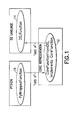
- FIG. 1 shows an adapter pattern for use when a Python user calls a function 14 (named DSLFunction) written in a domain-specific language.
- the Python interpreter determines that a call should be made. It executes the call in PyWrappedFunction 10, which is a Language Adapter, and redirects the call to the CoreFunction interface 12, which in this case happens to be a CoreFunctionFromDSL implementation.
- This CoreFunctionFromDSL implementation 12 is a Core Adapter that redirects the call to the DSLFunction.
- DSLFunction is part of the domain-specific language implementation and knows how to internally resolve the method.
- the DSL interpreter will interpret that text and create a DSL function instance.
- the DSL function can normally be called from the DSL language like this:
- the DSL interpreter will interpret the above text by looking up the existing DSL Function instance called "add”. It will pass into that DSL Function instance, two inputs (1.0 and 2.0). The DSL Function instance knows internally how to "resolve the function”. It will execute the "a + b", which in this case is "1.0 + 2.0" and it will return the output, 3.0.
- An exemplary Language Adapter for converting a Python function to a Core function may take the following form:
- the Language Adaptor lets a Python function masquerade as a Core function.
- An exemplary Core Adapter for converting a Core function to a Python function has the following form:
- each adapter To implement each adapter, the user needs to be able to create adapters for one API based on existing objects from another API.
- each scripting language must implement an AdapterFactory class with two methods. One method converts objects for the Core API to the Language API and the other method converts objects from the Language API to the Core API.
- the factory may create new instances of adapters or may make use of caching so that it can reuse adapters. Note the case where a Python function is wrapped into a Core function and then needs to be converted back into the Python language API. In this case, one does not want to create an adapter, but instead should retrieve the underlying Python function and return it.
- the DSL function takes DSL objects as input and returns a DSL object as output.
- the Core function takes Core objects as input and returns a Core object as output.
- the Python function takes Py objects as input and returns a Py object as output.
- Python For Python to call the DSL function, we need a Python function that adapts a Core function that adapts a DSL function. So the Python function takes Py objects as input. These Py objects are converted into Core objects and the Core function is called with those Core object inputs. This Core function takes the Core object inputs and converts them into DSL object inputs and calls the "real" DSL function. A DSL object is returned as the result. The Core function that is adapting the DSL function converts that returned DSL object into a Core object and returns the Core object. Finally, the Python function takes the returned Core object and converts it into a Python object.
- converting means that the AdapterFactory is called so that the correct adapters can be created or retrieved.
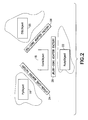
- FIG. 2 is a diagram which shows a class CoreObject which can be extended to facilitate the sharing of language constructs written in three different scripting languages: Jython, JRuby and a domain-specific language.
- the Core API (class CoreObject and extensions) enables a Jython user to access a language construct written in either JRuby or a DSL; enables a JRuby user to access a language construct written in either Jython or a DSL; and enables a DSL user to access a language construct written in either Jython or JRuby.
- a first instance of a Jython Language Adaptor (created or retrieved by the Jython-Core AdapterFactory 24) converts a first instance of a PyObject 16 into a first instance of a CoreObject 18; and then a first instance of a DSL-Core Adaptor (created or retrieved by the DSL-Core AdapterFactory 26) converts that first instance of a CoreObject 18 into a first instance of a DSLObject 20.
- a first instance of a DSL Language Adaptor (created or retrieved by the DSL-Core AdapterFactory 26) converts a second instance of a DSLObject 20 into a second instance of a CoreObject 18; and then a first instance of a Jython-Core Adaptor (created or retrieved by the Jython-Core AdapterFactory 24) converts that second instance of a CoreObject 18 into a second instance of a PyObject 16.
- a first instance of a JRuby Language Adaptor (created or retrieved by the JRuby-Core AdapterFactory 28) converts a first instance of a RubyObject 22 into a third instance of a CoreObject 18; and then a second instance of a DSL-Core Adaptor (created or retrieved by the DSL-Core AdapterFactory 26) converts that third instance of a CoreObject 18 into a third instance of a DSLObject 20.
- a second instance of a DSL Language Adaptor (created or retrieved by the DSL-Core AdapterFactory 26) converts a fourth instance of a DSLObject 20 into a fourth instance of a CoreObject 18; and then a first instance of JRuby-Core Adaptor (created or retrieved by the JRuby-Core AdapterFactory 28) converts that fourth instance of a CoreObject 18 into a second instance of a RubyObject 22.
- a DSL user can import language constructs written in either the Jython or JRuby scripting language; a JRuby user can import language constructs written in the Jython scripting language; and a Jython user can import language constructs written in the JRuby scripting language using the Core API.
- the Core API includes a respective Core interface for each language construct, which Core interfaces inherit from a common interface called CoreObject.
- Some languages are case sensitive and other languages are not. Therefore the interfaces for Dictionary and Class Instances do not do lookup by String. Instead, a separate interface is implemented that defines a key called a CoreKey.
- the embodiment includes implementations of CoreKey that are case sensitive and others that are case insensitive.
- each language must support the concept of an import hook.
- import hook comes from the Python community and is a mechanism for redefining the function that gets called when an import is performed.
- the import function needs to be enhanced so that it can handle modules that were written in other languages.
- the common convention is to use the extension of the filename to determine the language that should be used to interpret the file. Once the file is interpreted, it should produce some Module or Dictionary representation of the contents of the file. That representation can then be used to create a CoreModuleAdapter that can be wrapped into a module.
- the above-described methodology provides cost savings by allowing engineers to share their analysis codes easily. Different applications written in different languages can be quickly integrated. There is another cost savings when engineers are able to write code in languages with which they are comfortable. They do not need to spend time training in a new language. There is also a cost avoidance. By making it easier to share code, there is a much better chance of getting code reuse.
Landscapes
- Engineering & Computer Science (AREA)
- Software Systems (AREA)
- Theoretical Computer Science (AREA)
- General Engineering & Computer Science (AREA)
- Physics & Mathematics (AREA)
- General Physics & Mathematics (AREA)
- Computing Systems (AREA)
- Devices For Executing Special Programs (AREA)
- Stored Programmes (AREA)
Abstract
Description
- The present disclosure relates generally to interfaces which allow the use in one interpreted programming language of language constructs written in a different interpreted programming language. In particular, this disclosure relates to interfaces which would allow a user of a high-level script to integrate lower-level scripts written in different scripting languages.
- Compiled languages cannot be used interactively. The standard use case is to write the code, compile the code, and then run the code. This is a good paradigm for a software developer who is writing an application, but it is not as useful for an engineer or mathematician who needs to explore and solve a problem.
- Interpreted languages can be used interactively. An engineer can have a "prompt" where he/she types code and the code is interpreted and then executed while the underlying application is running. Examples of interpreted languages include Python, Ruby, etc.
- Scripting languages are added to applications to allow a user to drive the application from a command prompt or text file. Interpreted languages can be used as scripting languages and hereinafter this disclosure will refer to interpreted languages that are used for scripting as "scripting languages".
- Python is an interpreted language. It has several implementations, including CPython and Jython. CPython is written in C language and is commonly called Python. Jython is written in Java.
- Java is a compiled language that runs on a Virtual Machine. There are several scripting languages that are built on top of the Java Virtual Machine. These are commonly referred to as J-Based scripting languages. (Examples include Jython, JRuby, Groovy and Rhino.)
- A proprietary J-based scripting language is known that is a domain-specific language designed for geometry manipulation and meshing (creating discrete representations). Also known is an application written in Java for geometric construction, analysis and manipulation, which is designed to be scripted. The underlying Java code defines many geometry operations. Engineers can then use these scripts to make use of specific geometry operations to solve their engineering problem. These scripts represent knowledge capture of the engineering process. There is a strong need to reuse these scripts. There is a need to be able to drive the aforementioned geometric construction application using these preexisting proprietary language scripts.
- Consider a high-level engineering process that consists of several lower-level engineering processes. Each lower-level process may have already been written. An engineer needs to be able to write a high-level script that integrates the lower-level scripts. Since these scripts may be written in more than one scripting language, a way is needed to easily share the functions, classes, instances and objects that were created in the different scripting languages.
- It is currently possible in existing scripting environments to share data between scripting languages, but to do so takes programming skill as well as knowledge of the underlying Java language. A solution to this problem should be designed for engineers, not for application developers, so the solution should not require additional programming/software development on the engineer's part.
- Thus there is a need for a methodology that allows different engineers to program in different scripting languages and then share the code they write across these scripting languages without considering issues of the underlying language implementations. Preferably the solution will also include domain-specific languages.
- Systems and methods are disclosed for enabling users to write scripting code in a first Java-based scripting language, such as Jython, JRuby, and Matlab, and then use a second Java-based scripting language to call language constructs written in that first scripting language. Language constructs include, for example, Lists, Sets, Maps, Functions, Class Definitions, Class Instances and Modules of code. For example, the disclosed methodology enables an engineer to write a function in one scripting language and call it from another scripting language. The techniques disclosed herein are also applicable to domain-specific languages.
- In accordance with the embodiments disclosed hereinafter, Functions, Class Definitions, Class Instances, Modules and other language constructs are treated as first-class objects that can be shared across the different scripting languages. In computing, a first-class object is an entity that can be constructed at run-time, passed as a parameter or argument, returned from a subroutine, or assigned into a variable. As part of the methodology disclosed herein, a respective underlying representation of each of these object types is designed as a Java interface and then that interface is implemented in each scripting language. In addition, code is written in each scripting language implementation to allow the latter to use the Java interface to represent a Function, Class, or other language construct.
- The methodology disclosed herein allows different scripting languages to interact with each other in a way that is natural for the given language so that the engineer using that scripting language need not consider or have any expertise in or knowledge of other scripting languages when they write their scripts.
- More specifically, one aspect of the invention is a method of sharing language constructs among different scripting languages comprising: (a) defining a core application programming interface which is language-neutral relative to a plurality of scripting languages, the core application programming interface comprising a respective core interface for each of a plurality of types of language constructs; (b) calling a language construct of a type written in a first scripting language, the call being made by a language construct of the type written in a second scripting language; (c) creating an instance of a core interface that handles language constructs of the type; (d) redirecting the call to the instance of the core interface; and (e) redirecting the call received by the instance of the core interface to the language construct of the type written in the first scripting language.
- Another aspect of the invention is a system that enables language constructs to be shared among different scripting languages, the system comprising a core application programming interface which is language-neutral relative to a plurality of scripting languages, the core application programming interface comprising a respective core interface for each of a plurality of types of language constructs, and a processor programmed to execute operations (b) through (e) set forth in the preceding paragraph in response to a user command.
- A further aspect of the invention is a method of making a call to a language construct, wherein the call is written in a first scripting language while the language construct is written in a second scripting language, comprising: (a) defining a core application programming interface which is language-neutral relative to the first and second scripting languages, the core application programming interface comprising a respective core interface for each of a plurality of types of language constructs; (b) creating first and second core interface objects; (c) creating a first language adapter object that redirects the call to the first core interface object; (d) creating a language construct object written in the second scripting language; (e) creating a first core adapter object that redirects the call received by the first core interface object to the language construct object; (f) creating a second language adapter object that returns to the second core interface object a result produced by the language construct object; and (g) creating a second core adapter object that redirects the returned results received by the second core interface object to a language construct object written in the first scripting language.
- Yet another aspect of the invention is a system for making a call to a language construct, wherein the call is written in a first scripting language while the language construct is written in a second scripting language, the system comprising a core application programming interface which is language-neutral relative to the first and second scripting languages, the core application programming interface comprising a respective core interface for each of a plurality of types of language constructs, and a processor programmed to execute operations (b) through (g) set forth in the preceding paragraph in response to a user command.
- The invention involves a method of sharing language constructs among different scripting languages comprising: defining a core application programming interface which is language-neutral relative to a plurality of scripting languages, said core application programming interface comprising a respective core interface for each of a plurality of types of language constructs; calling a language construct of a first type written in a first scripting language, the call being made by a language construct of said first type written in a second scripting language; creating a first instance of a first core interface that handles language constructs of said first type; redirecting the call to said first instance of said first core interface; and redirecting the call received by said first instance of said first core interface to said language construct of said first type written in said first scripting language. The method may include creating an instance of a first language adapter; and creating an instance of a first core adapter, wherein operation (d) is implemented by said instance of said first language adapter and operation (e) is implemented by said instance of said first core adapter.
- The method may also include creating an instance of said language construct of said first type written in said first scripting language in response to the call; returning a result of said instance of said language construct of said first type written in said first scripting language; creating a second instance of said first core interface; redirecting the returned result to said second instance of said first core interface; and redirecting the returned result received by said second instance of said first core interface to said language construct of said first type written in said second scripting language. The method can comprise creating an instance of a second language adapter; and creating an instance of a second core adapter, wherein operation (i) is implemented by said instance of said second language adapter and operation (j) is implemented by said instance of said second core adapter.
- The first type of language construct may be selected from the following set of types: primitives, strings, lists, dictionaries, sets, tuples, arrays, functions, class definitions, class instances, methods and modules. The first and second scripting languages may be are J-based. The method may comprise calling a language construct of a second type written in a third scripting language, the call being made by a language construct of said second type written in said second scripting language; creating a first instance of a second core interface that handles language constructs of said second type; redirecting the call to said first instance of said second core interface; and redirecting the call received by said first instance of said second core interface to said language construct of said second type written in said third scripting language.
- The method can include creating an instance of a third language adapter; and creating an instance of a third core adapter, wherein operation (m) is implemented by said instance of said third language adapter and operation (n) is implemented by said instance of said third core adapter. In addition, the method may further comprise creating an instance of said language construct of said second type written in said third scripting language in response to the call; returning a result of said instance of said language construct of said second type written in said third scripting language; creating a second instance of said second core interface; redirecting the returned result to said second instance of said second core interface; and redirecting the returned result received by said second instance of said second core interface to said language construct of said second type written in said second scripting language. It may also involve creating an instance of a fourth language adapter; and creating an instance of a fourth core adapter, wherein operation (r) is implemented by said instance of said fourth language adapter and operation (s) is implemented by said instance of said fourth core adapter.
- A system may enable language constructs to be shared among different scripting languages, said system comprising a core application programming interface which is language-neutral relative to a plurality of scripting languages, said core application programming interface comprising a respective core interface for each of a plurality of types of language constructs, and a processor programmed to execute the following operations in response to a user command: calling a language construct of a first type written in a first scripting language, the call being made by a language construct of said first type written in a second scripting language; creating a first instance of a first core interface that handles language constructs of said first type; redirecting the call to said first instance of said first core interface; and redirecting the call received by said first instance of said first core interface to said language construct of said first type written in said first scripting language. The system may include a processor that is programmed to execute the following operations: creating an instance of a first language adapter; and creating an instance of a first core adapter, wherein operation (c) is implemented by said instance of said first language adapter and operation (d) is implemented by said instance of said first core adapter. Optionally, the system wherein said processor is further programmed to execute the following operations: creating an instance of said language construct of said first type written in said first scripting language in response to the call; returning a result of said instance of said language construct of said first type written in said first scripting language; creating a second instance of said first core interface; redirecting the returned result to said second instance of said first core interface; and redirecting the returned result received by said second instance of said first core interface to said language construct of said first type written in said second scripting language.
- The system wherein said processor is further programmed to execute the following operations: creating an instance of a second language adapter; and creating an instance of a second core adapter, wherein operation (h) is implemented by said instance of said second language adapter and operation (i) is implemented by said instance of said second core adapter. The system may include a processor that is programmed to execute the following operations: calling a language construct of a second type written in a third scripting language, the call being made by a language construct of said second type written in said second scripting language; creating a first instance of a second core interface that handles language constructs of said second type; redirecting the call to said first instance of said second core interface; and redirecting the call received by said first instance of said second core interface to said language construct of said second type written in said third scripting language. The system processor may be programmed to execute the following operations: creating an instance of a third language adapter; and creating an instance of a third core adapter, wherein operation (I) is implemented by said instance of said third language adapter and operation (m) is implemented by said instance of said third core adapter.
- The system processor may be further programmed to execute the following operations: creating an instance of said language construct of said second type written in said third scripting language in response to the call; returning a result of said instance of said language construct of said second type written in said third scripting language; creating a second instance of said second core interface; redirecting the returned result to said second instance of said second core interface; and redirecting the returned result received by said second instance of said second core interface to said language construct of said second type written in said second scripting language. The system processor may also be programmed to execute the following operations: creating an instance of a fourth language adapter; and creating an instance of a fourth core adapter, wherein operation (r) is implemented by said instance of said fourth language adapter and operation (s) is implemented by said instance of said fourth core adapter.
- The invention involves a method of making a call to a language construct, wherein the call is written in a first scripting language while the language construct is written in a second scripting language, comprising: defining a core application programming interface which is language-neutral relative to said first and second scripting languages, said core application programming interface comprising a respective core interface for each of a plurality of types of language constructs; creating first and second core interface objects; creating a first language adapter object that redirects the call to said first core interface object; creating a language construct object written in the second scripting language; creating a first core adapter object that redirects the call received by said first core interface object to said language construct object; creating a second language adapter object that returns to said second core interface object a result produced by said language construct object; and creating a second core adapter object that redirects the returned results received by said second core interface object to a language construct object written in said first scripting language.
- A system for making a call to a language construct is written in a first scripting language while the language construct is written in a second scripting language, said system comprising a core application programming interface which is language-neutral relative to said first and second scripting languages, said core application programming interface comprising a respective core interface for each of a plurality of types of language constructs, and a processor programmed to execute the following operations in response to a user command: creating first and second core interface objects; creating a first language adapter object that redirects the call to said first core interface object; creating a language construct object written in the second scripting language; creating a first core adapter object that redirects the call received by said first core interface object to said language construct object; creating a second language adapter object that returns to said second core interface object a result produced by said language construct object; and creating a second core adapter object that redirects the returned results received by said second core interface object to a language construct object written in said first scripting language.
- Other aspects of the invention are disclosed and claimed below.
-
-
FIG. 1 is a diagram showing an adapter pattern for use when a Python user calls a function (named DSLFunction) written in a domain-specific language by means of a Core API. -
FIG. 2 is a diagram representing object-oriented code for facilitating the sharing of language constructs between a plurality of scripting languages in accordance with one embodiment. - Reference will hereinafter be made to the drawings in which similar elements in different drawings bear the same reference numerals.
- In the detailed disclosure that follows, the terms interface, Class definition, Class Instance, application programming interface and adapter will have the following meanings:
- Interface: A set of related methods (just the signatures of the methods, not the implementations).
- Class Definition: A set of methods implemented together. A class definition may implement one or more interfaces. The implementation often defines some data that is encapsulated and acted on by the implemented methods.
- Class Instance: A class definition can be instantiated multiple times. Each instantiation of the class definition is called a class instance.
- Application Programming Interface (API): A set of interfaces and class definitions with a set of behaviors associated with those interfaces and those classes.
- Adapter. A design pattern that allows an existing API to use an existing class definition that is not part of the API. This is commonly done when the class definition it notionally the same as some interface or class that is in the API. The adapter is a new class definition that conforms to the existing API. The existing class definition (which is not in the API) is called the adaptee. The adapter contains the adaptee and implements an interface in the existing API (or extends a class in the existing API) by making use of the adaptee.
- To understand the methodology disclosed hereinafter, it is useful to look at how two scripts interact with each other when they are written in the same language. First consider a simple script written in the Python language that defines a function which adds two numbers and returns the result. Then consider a second script that uses the first script to perform the addition operation.
- Here is the code for the first script; it is written in a file called pyExample.py:
 --------------- start example.py ---------------
 def add(a, b):
    return a + b
 end function
 --------------- end example.py ---------------
 --------------- start useExample.py ---------------
 from example import add
 print '3 + 4 = ', add(3, 4)
 --------------- end useExample.py ---------------
 --------------- start example.DSL ---------------
 function add(a as double, b as double)
    return a + b
 end function
 --------------- end example.DSL ---------------
- Primitives (including int, double, char, short, float, byte, and language specific constructs)
- Strings
- Lists
- Dictionaries (sometimes called maps)
- Sets (commonly implemented as the keys of a dictionary, only available in some languages)
- Tuples (a fixed list, only some languages)
- Arrays
- Functions
- Class Definitions
- Class Instances
- Methods (i.e., methods of a class instance)
- Modules

 ---------------------------------------------------
 function add(a as double, b as double)
    return a + b
 end function
 ----------------------------------------------------
 --------------------------
 c = add(1.0, 2.0)
 --------------------------


Claims (15)
- A method of sharing language constructs among different scripting languages comprising:(a) defining a core application programming interface which is language-neutral relative to a plurality of scripting languages, said core application programming interface comprising a respective core interface for each of a plurality of types of language constructs;(b) calling a language construct of a first type written in a first scripting language, the call being made by a language construct of said first type written in a second scripting language;(c) creating a first instance of a first core interface that handles language constructs of said first type;(d) redirecting the call to said first instance of said first core interface; and(e) redirecting the call received by said first instance of said first core interface to said language construct of said first type written in said first scripting language.
- The method as recited in claim 1, further comprising:creating an instance of a first language adapter; andcreating an instance of a first core adapter,wherein operation (d) is implemented by said instance of said first language adapter and operation (e) is implemented by said instance of said first core adapter.
- The method as recited in claim 2, further comprising:(f) creating an instance of said language construct of said first type written in said first scripting language in response to the call;(g) returning a result of said instance of said language construct of said first type written in said first scripting language;(h) creating a second instance of said first core interface;(i) redirecting the returned result to said second instance of said first core interface; and(j) redirecting the returned result received by said second instance of said first core interface to said language construct of said first type written in said second scripting language.
- The method as recited in claim 3, further comprising:creating an instance of a second language adapter; andcreating an instance of a second core adapter,wherein operation (i) is implemented by said instance of said second language adapter and operation (j) is implemented by said instance of said second core adapter.
- The method as recited in claim 1, 2, 3, or 4 wherein said first type of language construct is selected from the following set of types: primitives, strings, lists, dictionaries, sets, tuples, arrays, functions, class definitions, class instances, methods and modules.
- The method as recited in claim 1, 2, 3, or 4, wherein said first and second scripting languages are J-based.
- The method as recited in claim 4, 5 or 6 further comprising:(k) calling a language construct of a second type written in a third scripting language, the call being made by a language construct of said second type written in said second scripting language;(I) creating a first instance of a second core interface that handles language constructs of said second type;(m) redirecting the call to said first instance of said second core interface; and(n) redirecting the call received by said first instance of said second core interface to said language construct of said second type written in said third scripting language.
- The method as recited in claim 4, 5, 6 or 7, further comprising:creating an instance of a third language adapter; andcreating an instance of a third core adapter,wherein operation (m) is implemented by said instance of said third language adapter and operation (n) is implemented by said instance of said third core adapter.
- The method as recited in claim 4, 5, 6, 7 or 8, further comprising:(o) creating an instance of said language construct of said second type written in said third scripting language in response to the call;(p) returning a result of said instance of said language construct of said second type written in said third scripting language;(q) creating a second instance of said second core interface;(r) redirecting the returned result to said second instance of said second core interface; and(s) redirecting the returned result received by said second instance of said second core interface to said language construct of said second type written in said second scripting language.
- The method as recited in claim 9, further comprising:creating an instance of a fourth language adapter; andcreating an instance of a fourth core adapter,wherein operation (r) is implemented by said instance of said fourth language adapter and operation (s) is implemented by said instance of said fourth core adapter.
- A system that enables language constructs to be shared among different scripting languages, said system comprising a core application programming interface which is language-neutral relative to a plurality of scripting languages, said core application programming interface comprising a respective core interface for each of a plurality of types of language constructs, and a processor programmed to execute the following operations:(a) calling a language construct of a first type written in a first scripting language, the call being made by a language construct of said first type written in a second scripting language;(b) creating a first instance of a first core interface that handles language constructs of said first type;(c) redirecting the call to said first instance of said first core interface; and(d) redirecting the call received by said first instance of said first core interface to said language construct of said first type written in said first scripting language.
- The system as recited in claim 11, wherein said processor is further programmed to execute the following operations:creating an instance of a first language adapter; andcreating an instance of a first core adapter,wherein operation (c) is implemented by said instance of said first language adapter and operation (d) is implemented by said instance of said first core adapter.
- The system as recited in claim 12, wherein said processor is further programmed to execute the following operations:(e) creating an instance of said language construct of said first type written in said first scripting language in response to the call;(f) returning a result of said instance of said language construct of said first type written in said first scripting language;(g) creating a second instance of said first core interface;(h) redirecting the returned result to said second instance of said first core interface; and(i) redirecting the returned result received by said second instance of said first core interface to said language construct of said first type written in said second scripting language.
- The system as recited in claim 13, wherein said processor is further programmed to execute the following operations:creating an instance of a second language adapter; andcreating an instance of a second core adapter,wherein operation (h) is implemented by said instance of said second language adapter and operation (i) is implemented by said instance of said second core adapter.
- The system as recited in claim 14, wherein said processor is further programmed to execute the following operations:(j) calling a language construct of a second type written in a third scripting language, the call being made by a language construct of said second type written in said second scripting language;(k) creating a first instance of a second core interface that handles language constructs of said second type;(I) redirecting the call to said first instance of said second core interface; and(m) redirecting the call received by said first instance of said second core interface to said language construct of said second type written in said third scripting language.
Applications Claiming Priority (1)
| Application Number | Priority Date | Filing Date | Title |
|---|---|---|---|
| US13/279,748 US8782673B2 (en) | 2011-10-24 | 2011-10-24 | Sharing of first class objects across multiple interpreted programming languages |
Publications (2)
| Publication Number | Publication Date |
|---|---|
| EP2587372A1 true EP2587372A1 (en) | 2013-05-01 |
| EP2587372B1 EP2587372B1 (en) | 2020-04-29 |
Family
ID=47562961
Family Applications (1)
| Application Number | Title | Priority Date | Filing Date |
|---|---|---|---|
| EP12189820.9A Active EP2587372B1 (en) | 2011-10-24 | 2012-10-24 | Sharing of first class objects across multiple interpreted programming languages |
Country Status (5)
| Country | Link |
|---|---|
| US (2) | US8782673B2 (en) |
| EP (1) | EP2587372B1 (en) |
| CN (1) | CN103064721B (en) |
| CA (1) | CA2792552C (en) |
| ES (1) | ES2804506T3 (en) |
Families Citing this family (16)
| Publication number | Priority date | Publication date | Assignee | Title |
|---|---|---|---|---|
| US9183113B2 (en) | 2011-09-29 | 2015-11-10 | Oracle International Corporation | Debugging analysis in running multi-user systems |
| US9122794B2 (en) * | 2012-10-30 | 2015-09-01 | Oracle International Corporation | System and method for debugging domain specific languages |
| US9146834B2 (en) | 2013-08-22 | 2015-09-29 | Oracle International Corporation | Targeted cloud-based debugging |
| US10795935B2 (en) | 2016-02-05 | 2020-10-06 | Sas Institute Inc. | Automated generation of job flow definitions |
| US10642896B2 (en) | 2016-02-05 | 2020-05-05 | Sas Institute Inc. | Handling of data sets during execution of task routines of multiple languages |
| US10650046B2 (en) | 2016-02-05 | 2020-05-12 | Sas Institute Inc. | Many task computing with distributed file system |
| US9733999B1 (en) | 2016-03-24 | 2017-08-15 | Wells Fargo Bank, N.A. | Dynamic optimization of application workflows |
| US11671533B1 (en) * | 2016-06-23 | 2023-06-06 | 8X8, Inc. | Programming/data sets via a data-communications server |
| USD898059S1 (en) | 2017-02-06 | 2020-10-06 | Sas Institute Inc. | Display screen or portion thereof with graphical user interface |
| USD898060S1 (en) | 2017-06-05 | 2020-10-06 | Sas Institute Inc. | Display screen or portion thereof with graphical user interface |
| US10503498B2 (en) | 2017-11-16 | 2019-12-10 | Sas Institute Inc. | Scalable cloud-based time series analysis |
| CN108549559A (en) * | 2018-05-02 | 2018-09-18 | 山东浪潮通软信息科技有限公司 | A kind of method and apparatus for calling Python algorithms |
| CN109200581B (en) * | 2018-07-25 | 2021-05-25 | 深圳点猫科技有限公司 | Method and electronic device for controlling game role through python code |
| CN110689931A (en) * | 2019-09-30 | 2020-01-14 | 安徽理工大学 | Python-based hydrological geochemical Schacaroff classification method |
| CN116069977A (en) * | 2021-11-03 | 2023-05-05 | 中移(上海)信息通信科技有限公司 | An information sharing method, device and electronic equipment |
| CN116185495B (en) * | 2022-12-13 | 2023-10-13 | 易保网络技术(上海)有限公司 | Calculation function construction method, calculation engine, electronic device and readable storage medium |
Family Cites Families (8)
| Publication number | Priority date | Publication date | Assignee | Title |
|---|---|---|---|---|
| CA2077273C (en) * | 1991-12-12 | 1996-12-03 | Mike H. Conner | Language neutral objects |
| US6256772B1 (en) * | 1997-11-24 | 2001-07-03 | International Business Machines Corporation | Multilingual hierarchial scripting environment |
| US6253772B1 (en) * | 1999-05-10 | 2001-07-03 | Synneve Chambers | Hair sculpting apparatus and methods |
| EP1117033A1 (en) * | 2000-01-14 | 2001-07-18 | Sun Microsystems, Inc. | Dynamic dispatch function |
| US20020178141A1 (en) * | 2001-05-25 | 2002-11-28 | Kushnirskiy Igor Davidovich | Method and apparatus for remote inter-language method calling |
| US7269833B2 (en) * | 2001-12-12 | 2007-09-11 | Sun Microsystems, Inc. | Scriptable plug-in application programming interface |
| US7069562B2 (en) * | 2001-12-12 | 2006-06-27 | Sun Microsystems, Inc. | Application programming interface for connecting a platform independent plug-in to a web browser |
| US8798092B2 (en) * | 2011-05-27 | 2014-08-05 | Microsoft Corporation | Cross language object sharing |
-
2011
- 2011-10-24 US US13/279,748 patent/US8782673B2/en not_active Expired - Fee Related
-
2012
- 2012-10-15 CA CA2792552A patent/CA2792552C/en not_active Expired - Fee Related
- 2012-10-23 CN CN201210406297.2A patent/CN103064721B/en not_active Expired - Fee Related
- 2012-10-24 EP EP12189820.9A patent/EP2587372B1/en active Active
- 2012-10-24 ES ES12189820T patent/ES2804506T3/en active Active
-
2014
- 2014-04-22 US US14/258,975 patent/US9600243B2/en not_active Expired - Fee Related
Non-Patent Citations (3)
| Title |
|---|
| EMMERICH W: "An overview of OMG/CORBA", 19971022, 22 October 1997 (1997-10-22), pages 1/1 - 1/6, XP006506019 * |
| ORFALI R; HARKEY D; EDWARDS J: "INSTANT CORBA, PASSAGE", 1 January 1997, WILEY COMPUTER PUBLISHER, Canada, ISBN: 0-471-18333-4, pages: 2 - 28, XP002693185 * |
| PYARALI I ET AL: "AN OVERVIEW OF THE CORBA PORTABLE OBJECT ADAPTER", STANDARD VIEW, ASSOCIATION FOR COMPUTING MACHINERY, NEW YORK, US, vol. 6, no. 1, 1 March 1998 (1998-03-01), pages 30 - 43, XP000956083, ISSN: 1067-9936, DOI: 10.1145/293376.293402 * |
Also Published As
| Publication number | Publication date |
|---|---|
| CN103064721B (en) | 2017-12-01 |
| US8782673B2 (en) | 2014-07-15 |
| CN103064721A (en) | 2013-04-24 |
| CA2792552C (en) | 2018-01-16 |
| CA2792552A1 (en) | 2013-04-24 |
| EP2587372B1 (en) | 2020-04-29 |
| ES2804506T3 (en) | 2021-02-08 |
| US20140317642A1 (en) | 2014-10-23 |
| US9600243B2 (en) | 2017-03-21 |
| US20130104103A1 (en) | 2013-04-25 |
Similar Documents
| Publication | Publication Date | Title |
|---|---|---|
| EP2587372B1 (en) | Sharing of first class objects across multiple interpreted programming languages | |
| Ossher et al. | Multi-dimensional separation of concerns and the hyperspace approach | |
| Beazley | Automated scientific software scripting with SWIG | |
| US9886268B1 (en) | Dual programming interface | |
| KR102194163B1 (en) | Compilation of transformation in recalculation user interface | |
| US8869098B2 (en) | Computer method and apparatus for providing model to model transformation using an MDA approach | |
| US6854123B1 (en) | Method, system, and program for mapping standard application program interfaces (APIs) to user interface APIs | |
| US10896029B2 (en) | Method for constructing a graph data structure | |
| Fichera et al. | A Python framework for programming autonomous robots using a declarative approach | |
| EP1459175A2 (en) | Method and apparatus for creating software objects | |
| US6799320B1 (en) | Providing binding options for component interfaces | |
| EP2181387A1 (en) | A programming environment with support for handle and non-handle user-created classes | |
| WO2023128793A1 (en) | System and method for dynamically visualizing software elements | |
| Jeffery | Build Your Own Programming Language: A programmer's guide to designing compilers, interpreters, and DSLs for solving modern computing problems | |
| O’Mullane et al. | Java coding standard and guidelines for dpac | |
| Parl | C++ and Objective C | |
| Gabbrielli et al. | Short Historical Perspective | |
| Erickson | C++ and Objective C | |
| Dong | Transforming Visual Programs into Java and Vice Versa | |
| CN120476397A (en) | Declarative interception of member calls | |
| Cimato | A Methodology for the Specification of Java Components and Architectures | |
| Fujiwara et al. | An implementation of a statistical language based on Java | |
| Gunnerson et al. | A Programmer's Guide to C# 5.0 | |
| Patry et al. | GIPSE, a Model Based System for CAD Software | |
| WO1994004988A1 (en) | Extensible framework for constructing graphical applications |
Legal Events
| Date | Code | Title | Description |
|---|---|---|---|
| PUAI | Public reference made under article 153(3) epc to a published international application that has entered the european phase |
Free format text: ORIGINAL CODE: 0009012 |
|
| 17P | Request for examination filed |
Effective date: 20121024 |
|
| AK | Designated contracting states |
Kind code of ref document: A1 Designated state(s): AL AT BE BG CH CY CZ DE DK EE ES FI FR GB GR HR HU IE IS IT LI LT LU LV MC MK MT NL NO PL PT RO RS SE SI SK SM TR |
|
| AX | Request for extension of the european patent |
Extension state: BA ME |
|
| 17Q | First examination report despatched |
Effective date: 20160705 |
|
| STAA | Information on the status of an ep patent application or granted ep patent |
Free format text: STATUS: EXAMINATION IS IN PROGRESS |
|
| GRAP | Despatch of communication of intention to grant a patent |
Free format text: ORIGINAL CODE: EPIDOSNIGR1 |
|
| STAA | Information on the status of an ep patent application or granted ep patent |
Free format text: STATUS: GRANT OF PATENT IS INTENDED |
|
| INTG | Intention to grant announced |
Effective date: 20191202 |
|
| GRAS | Grant fee paid |
Free format text: ORIGINAL CODE: EPIDOSNIGR3 |
|
| GRAA | (expected) grant |
Free format text: ORIGINAL CODE: 0009210 |
|
| STAA | Information on the status of an ep patent application or granted ep patent |
Free format text: STATUS: THE PATENT HAS BEEN GRANTED |
|
| AK | Designated contracting states |
Kind code of ref document: B1 Designated state(s): AL AT BE BG CH CY CZ DE DK EE ES FI FR GB GR HR HU IE IS IT LI LT LU LV MC MK MT NL NO PL PT RO RS SE SI SK SM TR |
|
| REG | Reference to a national code |
Ref country code: GB Ref legal event code: FG4D |
|
| REG | Reference to a national code |
Ref country code: CH Ref legal event code: EP |
|
| REG | Reference to a national code |
Ref country code: AT Ref legal event code: REF Ref document number: 1264349 Country of ref document: AT Kind code of ref document: T Effective date: 20200515 |
|
| REG | Reference to a national code |
Ref country code: DE Ref legal event code: R096 Ref document number: 602012069641 Country of ref document: DE |
|
| REG | Reference to a national code |
Ref country code: IE Ref legal event code: FG4D |
|
| REG | Reference to a national code |
Ref country code: NL Ref legal event code: MP Effective date: 20200429 |
|
| REG | Reference to a national code |
Ref country code: LT Ref legal event code: MG4D |
|
| PG25 | Lapsed in a contracting state [announced via postgrant information from national office to epo] |
Ref country code: LT Free format text: LAPSE BECAUSE OF FAILURE TO SUBMIT A TRANSLATION OF THE DESCRIPTION OR TO PAY THE FEE WITHIN THE PRESCRIBED TIME-LIMIT Effective date: 20200429 Ref country code: NO Free format text: LAPSE BECAUSE OF FAILURE TO SUBMIT A TRANSLATION OF THE DESCRIPTION OR TO PAY THE FEE WITHIN THE PRESCRIBED TIME-LIMIT Effective date: 20200729 Ref country code: PT Free format text: LAPSE BECAUSE OF FAILURE TO SUBMIT A TRANSLATION OF THE DESCRIPTION OR TO PAY THE FEE WITHIN THE PRESCRIBED TIME-LIMIT Effective date: 20200831 Ref country code: IS Free format text: LAPSE BECAUSE OF FAILURE TO SUBMIT A TRANSLATION OF THE DESCRIPTION OR TO PAY THE FEE WITHIN THE PRESCRIBED TIME-LIMIT Effective date: 20200829 Ref country code: FI Free format text: LAPSE BECAUSE OF FAILURE TO SUBMIT A TRANSLATION OF THE DESCRIPTION OR TO PAY THE FEE WITHIN THE PRESCRIBED TIME-LIMIT Effective date: 20200429 Ref country code: GR Free format text: LAPSE BECAUSE OF FAILURE TO SUBMIT A TRANSLATION OF THE DESCRIPTION OR TO PAY THE FEE WITHIN THE PRESCRIBED TIME-LIMIT Effective date: 20200730 Ref country code: SE Free format text: LAPSE BECAUSE OF FAILURE TO SUBMIT A TRANSLATION OF THE DESCRIPTION OR TO PAY THE FEE WITHIN THE PRESCRIBED TIME-LIMIT Effective date: 20200429 |
|
| REG | Reference to a national code |
Ref country code: AT Ref legal event code: MK05 Ref document number: 1264349 Country of ref document: AT Kind code of ref document: T Effective date: 20200429 |
|
| PG25 | Lapsed in a contracting state [announced via postgrant information from national office to epo] |
Ref country code: HR Free format text: LAPSE BECAUSE OF FAILURE TO SUBMIT A TRANSLATION OF THE DESCRIPTION OR TO PAY THE FEE WITHIN THE PRESCRIBED TIME-LIMIT Effective date: 20200429 Ref country code: BG Free format text: LAPSE BECAUSE OF FAILURE TO SUBMIT A TRANSLATION OF THE DESCRIPTION OR TO PAY THE FEE WITHIN THE PRESCRIBED TIME-LIMIT Effective date: 20200729 Ref country code: RS Free format text: LAPSE BECAUSE OF FAILURE TO SUBMIT A TRANSLATION OF THE DESCRIPTION OR TO PAY THE FEE WITHIN THE PRESCRIBED TIME-LIMIT Effective date: 20200429 Ref country code: LV Free format text: LAPSE BECAUSE OF FAILURE TO SUBMIT A TRANSLATION OF THE DESCRIPTION OR TO PAY THE FEE WITHIN THE PRESCRIBED TIME-LIMIT Effective date: 20200429 |
|
| PG25 | Lapsed in a contracting state [announced via postgrant information from national office to epo] |
Ref country code: AL Free format text: LAPSE BECAUSE OF FAILURE TO SUBMIT A TRANSLATION OF THE DESCRIPTION OR TO PAY THE FEE WITHIN THE PRESCRIBED TIME-LIMIT Effective date: 20200429 Ref country code: NL Free format text: LAPSE BECAUSE OF FAILURE TO SUBMIT A TRANSLATION OF THE DESCRIPTION OR TO PAY THE FEE WITHIN THE PRESCRIBED TIME-LIMIT Effective date: 20200429 |
|
| PG25 | Lapsed in a contracting state [announced via postgrant information from national office to epo] |
Ref country code: AT Free format text: LAPSE BECAUSE OF FAILURE TO SUBMIT A TRANSLATION OF THE DESCRIPTION OR TO PAY THE FEE WITHIN THE PRESCRIBED TIME-LIMIT Effective date: 20200429 Ref country code: DK Free format text: LAPSE BECAUSE OF FAILURE TO SUBMIT A TRANSLATION OF THE DESCRIPTION OR TO PAY THE FEE WITHIN THE PRESCRIBED TIME-LIMIT Effective date: 20200429 Ref country code: EE Free format text: LAPSE BECAUSE OF FAILURE TO SUBMIT A TRANSLATION OF THE DESCRIPTION OR TO PAY THE FEE WITHIN THE PRESCRIBED TIME-LIMIT Effective date: 20200429 Ref country code: SM Free format text: LAPSE BECAUSE OF FAILURE TO SUBMIT A TRANSLATION OF THE DESCRIPTION OR TO PAY THE FEE WITHIN THE PRESCRIBED TIME-LIMIT Effective date: 20200429 Ref country code: CZ Free format text: LAPSE BECAUSE OF FAILURE TO SUBMIT A TRANSLATION OF THE DESCRIPTION OR TO PAY THE FEE WITHIN THE PRESCRIBED TIME-LIMIT Effective date: 20200429 Ref country code: RO Free format text: LAPSE BECAUSE OF FAILURE TO SUBMIT A TRANSLATION OF THE DESCRIPTION OR TO PAY THE FEE WITHIN THE PRESCRIBED TIME-LIMIT Effective date: 20200429 |
|
| PGFP | Annual fee paid to national office [announced via postgrant information from national office to epo] |
Ref country code: ES Payment date: 20201103 Year of fee payment: 9 Ref country code: GB Payment date: 20201027 Year of fee payment: 9 |
|
| REG | Reference to a national code |
Ref country code: DE Ref legal event code: R097 Ref document number: 602012069641 Country of ref document: DE |
|
| REG | Reference to a national code |
Ref country code: ES Ref legal event code: FG2A Ref document number: 2804506 Country of ref document: ES Kind code of ref document: T3 Effective date: 20210208 |
|
| PG25 | Lapsed in a contracting state [announced via postgrant information from national office to epo] |
Ref country code: PL Free format text: LAPSE BECAUSE OF FAILURE TO SUBMIT A TRANSLATION OF THE DESCRIPTION OR TO PAY THE FEE WITHIN THE PRESCRIBED TIME-LIMIT Effective date: 20200429 Ref country code: SK Free format text: LAPSE BECAUSE OF FAILURE TO SUBMIT A TRANSLATION OF THE DESCRIPTION OR TO PAY THE FEE WITHIN THE PRESCRIBED TIME-LIMIT Effective date: 20200429 |
|
| PLBE | No opposition filed within time limit |
Free format text: ORIGINAL CODE: 0009261 |
|
| STAA | Information on the status of an ep patent application or granted ep patent |
Free format text: STATUS: NO OPPOSITION FILED WITHIN TIME LIMIT |
|
| 26N | No opposition filed |
Effective date: 20210201 |
|
| PG25 | Lapsed in a contracting state [announced via postgrant information from national office to epo] |
Ref country code: SI Free format text: LAPSE BECAUSE OF FAILURE TO SUBMIT A TRANSLATION OF THE DESCRIPTION OR TO PAY THE FEE WITHIN THE PRESCRIBED TIME-LIMIT Effective date: 20200429 |
|
| REG | Reference to a national code |
Ref country code: CH Ref legal event code: PL |
|
| PG25 | Lapsed in a contracting state [announced via postgrant information from national office to epo] |
Ref country code: LU Free format text: LAPSE BECAUSE OF NON-PAYMENT OF DUE FEES Effective date: 20201024 Ref country code: MC Free format text: LAPSE BECAUSE OF FAILURE TO SUBMIT A TRANSLATION OF THE DESCRIPTION OR TO PAY THE FEE WITHIN THE PRESCRIBED TIME-LIMIT Effective date: 20200429 |
|
| REG | Reference to a national code |
Ref country code: BE Ref legal event code: MM Effective date: 20201031 |
|
| PG25 | Lapsed in a contracting state [announced via postgrant information from national office to epo] |
Ref country code: CH Free format text: LAPSE BECAUSE OF NON-PAYMENT OF DUE FEES Effective date: 20201031 Ref country code: BE Free format text: LAPSE BECAUSE OF NON-PAYMENT OF DUE FEES Effective date: 20201031 Ref country code: LI Free format text: LAPSE BECAUSE OF NON-PAYMENT OF DUE FEES Effective date: 20201031 |
|
| PG25 | Lapsed in a contracting state [announced via postgrant information from national office to epo] |
Ref country code: IE Free format text: LAPSE BECAUSE OF NON-PAYMENT OF DUE FEES Effective date: 20201024 |
|
| PGFP | Annual fee paid to national office [announced via postgrant information from national office to epo] |
Ref country code: DE Payment date: 20211027 Year of fee payment: 10 |
|
| PGFP | Annual fee paid to national office [announced via postgrant information from national office to epo] |
Ref country code: IT Payment date: 20211021 Year of fee payment: 10 Ref country code: FR Payment date: 20211025 Year of fee payment: 10 |
|
| PG25 | Lapsed in a contracting state [announced via postgrant information from national office to epo] |
Ref country code: TR Free format text: LAPSE BECAUSE OF FAILURE TO SUBMIT A TRANSLATION OF THE DESCRIPTION OR TO PAY THE FEE WITHIN THE PRESCRIBED TIME-LIMIT Effective date: 20200429 Ref country code: MT Free format text: LAPSE BECAUSE OF FAILURE TO SUBMIT A TRANSLATION OF THE DESCRIPTION OR TO PAY THE FEE WITHIN THE PRESCRIBED TIME-LIMIT Effective date: 20200429 Ref country code: CY Free format text: LAPSE BECAUSE OF FAILURE TO SUBMIT A TRANSLATION OF THE DESCRIPTION OR TO PAY THE FEE WITHIN THE PRESCRIBED TIME-LIMIT Effective date: 20200429 |
|
| GBPC | Gb: european patent ceased through non-payment of renewal fee |
Effective date: 20211024 |
|
| PG25 | Lapsed in a contracting state [announced via postgrant information from national office to epo] |
Ref country code: MK Free format text: LAPSE BECAUSE OF FAILURE TO SUBMIT A TRANSLATION OF THE DESCRIPTION OR TO PAY THE FEE WITHIN THE PRESCRIBED TIME-LIMIT Effective date: 20200429 |
|
| PG25 | Lapsed in a contracting state [announced via postgrant information from national office to epo] |
Ref country code: GB Free format text: LAPSE BECAUSE OF NON-PAYMENT OF DUE FEES Effective date: 20211024 |
|
| REG | Reference to a national code |
Ref country code: ES Ref legal event code: FD2A Effective date: 20230217 |
|
| PG25 | Lapsed in a contracting state [announced via postgrant information from national office to epo] |
Ref country code: ES Free format text: LAPSE BECAUSE OF NON-PAYMENT OF DUE FEES Effective date: 20211025 |
|
| REG | Reference to a national code |
Ref country code: DE Ref legal event code: R119 Ref document number: 602012069641 Country of ref document: DE |
|
| PG25 | Lapsed in a contracting state [announced via postgrant information from national office to epo] |
Ref country code: FR Free format text: LAPSE BECAUSE OF NON-PAYMENT OF DUE FEES Effective date: 20221031 Ref country code: DE Free format text: LAPSE BECAUSE OF NON-PAYMENT OF DUE FEES Effective date: 20230503 |
|
| PG25 | Lapsed in a contracting state [announced via postgrant information from national office to epo] |
Ref country code: IT Free format text: LAPSE BECAUSE OF NON-PAYMENT OF DUE FEES Effective date: 20221024 |