EP2587022A2 - Combustor fuel supply assembly and related method - Google Patents
Combustor fuel supply assembly and related method Download PDFInfo
- Publication number
- EP2587022A2 EP2587022A2 EP12189163.4A EP12189163A EP2587022A2 EP 2587022 A2 EP2587022 A2 EP 2587022A2 EP 12189163 A EP12189163 A EP 12189163A EP 2587022 A2 EP2587022 A2 EP 2587022A2
- Authority
- EP
- European Patent Office
- Prior art keywords
- fuel
- deaerated water
- liquid fuel
- mixer
- mixture
- Prior art date
- Legal status (The legal status is an assumption and is not a legal conclusion. Google has not performed a legal analysis and makes no representation as to the accuracy of the status listed.)
- Granted
Links
Images


Classifications
-
- F—MECHANICAL ENGINEERING; LIGHTING; HEATING; WEAPONS; BLASTING
- F02—COMBUSTION ENGINES; HOT-GAS OR COMBUSTION-PRODUCT ENGINE PLANTS
- F02C—GAS-TURBINE PLANTS; AIR INTAKES FOR JET-PROPULSION PLANTS; CONTROLLING FUEL SUPPLY IN AIR-BREATHING JET-PROPULSION PLANTS
- F02C3/00—Gas-turbine plants characterised by the use of combustion products as the working fluid
- F02C3/20—Gas-turbine plants characterised by the use of combustion products as the working fluid using a special fuel, oxidant, or dilution fluid to generate the combustion products
- F02C3/30—Adding water, steam or other fluids for influencing combustion, e.g. to obtain cleaner exhaust gases
- F02C3/305—Increasing the power, speed, torque or efficiency of a gas turbine or the thrust of a turbojet engine by injecting or adding water, steam or other fluids
-
- Y—GENERAL TAGGING OF NEW TECHNOLOGICAL DEVELOPMENTS; GENERAL TAGGING OF CROSS-SECTIONAL TECHNOLOGIES SPANNING OVER SEVERAL SECTIONS OF THE IPC; TECHNICAL SUBJECTS COVERED BY FORMER USPC CROSS-REFERENCE ART COLLECTIONS [XRACs] AND DIGESTS
- Y02—TECHNOLOGIES OR APPLICATIONS FOR MITIGATION OR ADAPTATION AGAINST CLIMATE CHANGE
- Y02E—REDUCTION OF GREENHOUSE GAS [GHG] EMISSIONS, RELATED TO ENERGY GENERATION, TRANSMISSION OR DISTRIBUTION
- Y02E20/00—Combustion technologies with mitigation potential
- Y02E20/16—Combined cycle power plant [CCPP], or combined cycle gas turbine [CCGT]
-
- Y—GENERAL TAGGING OF NEW TECHNOLOGICAL DEVELOPMENTS; GENERAL TAGGING OF CROSS-SECTIONAL TECHNOLOGIES SPANNING OVER SEVERAL SECTIONS OF THE IPC; TECHNICAL SUBJECTS COVERED BY FORMER USPC CROSS-REFERENCE ART COLLECTIONS [XRACs] AND DIGESTS
- Y02—TECHNOLOGIES OR APPLICATIONS FOR MITIGATION OR ADAPTATION AGAINST CLIMATE CHANGE
- Y02T—CLIMATE CHANGE MITIGATION TECHNOLOGIES RELATED TO TRANSPORTATION
- Y02T50/00—Aeronautics or air transport
- Y02T50/60—Efficient propulsion technologies, e.g. for aircraft
Definitions
- the subject matter disclosed herein relates to combustion systems, and, more particularly, to supplying liquid fuel to gas turbine engines.
- Various combustion systems include combustion chambers in which fuel and air combust to generate hot gases.
- a gas turbine engine may include one or more combustion chambers that receive compressed air from a compressor, inject fuel into the compressed air, and generate hot combustion gases to drive the turbine engine.
- Each combustion chamber may be supplied with one or more different fuels, such as gaseous fuels and liquid fuels.
- Certain materials may be mixed with the fuel to affect combustion efficiency and/or production of by-products, for example. Unfortunately, some materials may not mix readily with the fuel, thereby decreasing performance of the gas turbine engine.
- the invention resides in a system including a turbine fuel supply system.
- the turbine fuel supply system includes a first turbine fuel mixer configured to mix a first liquid fuel and a first deaerated water to generate a first fuel mixture.
- the first fuel mixture is configured to combust in a combustor of a gas turbine engine.
- the turbine fuel supply system also includes a deaerated water flow path configured to route the first deaerated water to the first turbine fuel mixer and a liquid fuel flow path configured to route the first liquid fuel to the first turbine fuel mixer.
- the invention resides in a system including a byproduct sensor configured to transmit an input signal indicative of a sensed byproduct concentration in an exhaust from a gas turbine engine.
- the system also includes a byproduct controller configured to receive the input signal from the byproduct sensor and transmit an output signal to at least one control element to adjust a fuel-water ratio in a mixture of a liquid fuel and a deaerated water if the sensed byproduct concentration is above a threshold level.
- the control element is responsive to the output signal.
- the mixture of the liquid fuel and the deaerated water is configured to combust in a combustor of a gas turbine engine.
- the invention resides in a method including supplying a liquid fuel to a mixer, supplying a deaerated water to the mixer, mixing the liquid fuel with the deaerated water using the mixer to generate a mixture of the liquid fuel and the deaerated water, and supplying the mixture of the liquid fuel and the deaerated water to a combustor of a gas turbine engine.
- the turbine combustor may be a gas turbine combustor disposed in a gas turbine engine.
- the gas turbine combustor may also combust a liquid fuel, such as diesel fuel.
- the gas turbine combustor may primarily combust a gaseous fuel, such as natural gas, and combust the liquid fuel when the gaseous fuel is unavailable. Thus, even if a supply of gaseous fuel is interrupted, operation of the turbine combustor may continue.
- gaseous fuel may be preferable, as combustion of the liquid fuel may be less efficient than combustion of the gaseous fuel and combustion of the liquid fuel may generate more byproducts (such as nitrogen oxides [NO x ], sulfur oxides [SO x ], carbon monoxide [CO], particulate matter, and so forth) in an exhaust from the gas turbine engine than combustion of the gaseous fuel.
- the liquid fuel may be in the form of a slurry.
- water may be mixed with the liquid fuel prior to introduction into the gas turbine combustor to help improve the combustion efficiency and/or to reduce byproduct (e.g., NO x , SO x , CO, or particulate matter) production.
- the added water may aid in cooling the reaction zone in the gas turbine combustor, which reduces byproduct production.
- the water turns into steam in the reaction zone, which helps to reduce the temperature of the reaction zone.
- a mixer may mix the water and liquid fuel together.
- the water may be deaerated water, which may be defined as water from which air and/or other dissolved gases have been removed.
- mixtures of deaerated water and liquid fuel may produce longer-lasting emulsions compared to mixtures of non-deaerated water and liquid fuel.
- a mixture of deaerated water and liquid fuel may remain mixed for a longer period of time before separating compared to a mixture of non-deaerated water and liquid fuel.
- the temperature of the deaerated water may be greater than the temperature of the liquid fuel.
- the temperature of the mixture of deaerated water and liquid fuel may be greater than the temperature of the liquid fuel alone.
- the deaerated water may be between approximately 100 degrees Celsius to 175 degrees Celsius, or 125 degrees Celsius to 150 degrees Celsius.
- the liquid fuel may be at an ambient temperature, which may be less than approximately 60 degrees Celsius.
- the temperature of the resulting mixture may be between approximately 75 degrees Celsius to 150 degrees Celsius, or 100 degrees Celsius to 125 degrees Celsius.
- the liquid fuel e.g., mixture
- the liquid fuel may be heated to improve combustion without a separate fuel heater.
- increasing the temperature of the mixture of deaerated water and liquid fuel may cause a decrease in the viscosity of the mixture.
- Decreasing the viscosity and increasing the temperature of the feed to the gas turbine combustor may help improve combustion efficiency. For example, at lower viscosities and higher temperatures, the feed in the gas turbine combustor may atomize better, thereby improving combustion efficiency and reducing byproduct (e.g., NO x , SO x , CO, or particulate matter) production.
- byproduct e.g., NO x , SO x , CO, or particulate matter
- a byproduct (e.g., NO x , SO x , CO, or particulate matter) sensor may be located in the gas turbine engine and may sense a byproduct concentration of the exhaust from the gas turbine engine.
- the byproduct sensor may send signals indicative of the sensed byproduct concentration to a byproduct controller, which may then send signals to one or more control elements to adjust a ratio of the liquid fuel to deaerated water if the sensed level of the byproduct concentration of the exhaust is above a threshold level of the byproduct concentration.
- the byproduct controller may send a signal to the control elements to decrease the ratio of liquid fuel to deaerated water.
- One of the control elements may be a control valve that decreases a flow rate of the liquid fuel and another control element may be a control valve that increases a flow rate of the deaerated water.
- the byproduct controller may send a signal to the control elements to increase the ratio of liquid fuel to deaerated water.
- FIG. 1 a block diagram of an embodiment of a turbine system 10 having a gas turbine engine 11 is illustrated.
- the turbine system 10 may use liquid or gaseous fuel, such as natural gas and/or a synthetic gas, to drive the turbine system 10.
- one or more fuel nozzles 12 intake a fuel supply 14.
- one or more fuel nozzles 12 may be used to intake liquid fuel and one or more other fuel nozzles 12 may be used to intake gaseous fuel.
- the fuel nozzles 12 may intake a deaerated water supply 15 when the turbine system 10 uses liquid fuel.
- the disclosed turbine system 10 mixes the liquid fuel with the deaerated water supply 15 upstream from and/or within the fuel nozzles 12.
- Mixing the liquid fuel with the deaerated water 15 may improve the combustion efficiency of the gas turbine engine 11 and/or reduce production of byproducts (e.g., NO x , SO x , CO, or particulate matter) from the gas turbine engine 11.
- the fuel nozzles 12 then partially mix the fuel, or the fuel-water mixture, with air, and distribute the fuel, water (when used), and air mixture into a combustor 16 where further mixing occurs between the fuel, water (when used), and air.
- the fuel nozzles 12 may be disposed inside the combustor 16.
- the fuel, water (when used), and air mixture combusts in a chamber within the combustor 16, thereby creating hot pressurized exhaust gases.
- the combustor 16 directs the exhaust gases through a turbine 18 toward an exhaust outlet 20.
- a plurality of combustors 16 may be arranged circumferentially about the gas turbine engine 11.
- Each of the plurality of combustors 16 may include separate fuel nozzles 12.
- the gases force turbine blades to rotate a shaft 22 along an axis of the turbine system 10.
- the shaft 22 is connected to various components of the turbine system 10, including a compressor 24.
- the compressor 24 also includes blades coupled to the shaft 22.
- the shaft 22 may also be connected to a load 28, which may be a vehicle or a stationary load, such as an electrical generator in a power plant or a propeller on an aircraft, for example.
- the load 28 may include any suitable device capable of being powered by the rotational output of turbine system 10.
- FIG. 2 illustrates a block diagram of a turbine fuel supply system 40 of the combustor 16 of the gas turbine engine 11, as illustrated in FIG. 1 .
- valve is used to refer to any device capable of operating as a flow control.
- a liquid fuel 42 may be supplied to the combustor 16.
- the liquid fuel 42 include, but are not limited to, hydrocarbon based liquid fuels, such as diesel fuel, jet fuel, gasoline, naphtha, fuel oil, and so forth.
- the liquid fuel 42 is routed to the combustor 16 via a liquid fuel flow path 44, which may include a liquid fuel supply valve 46.
- the liquid fuel flow path 44 may also include a liquid fuel manifold 48, which may be used to supply the liquid fuel 42 to a plurality of mixing assemblies 49 (as indicated by ellipses), which may be, for example, arranged circumferentially about the liquid fuel manifold 48.
- the liquid fuel manifold 48 may be configured as a ring with a circular or polygonal shape.
- Each of the plurality of mixing assemblies 49 may be coupled to one of the plurality of combustors 16 arranged circumferentially about the gas turbine engine 11.
- the liquid fuel supply valve 46 may be used to adjust and/or isolate flow of the liquid fuel 42 to the liquid fuel manifold 48.
- each mixing assembly 49 may include a liquid fuel mixing valve 50, which may be used to adjust a flow rate of the liquid fuel 42 to a liquid fuel mixer 52 disposed in each mixing assembly 49.
- a portion of the liquid fuel 42 may be routed to a pilot fuel flow path 54, which may include a pilot fuel supply valve 56.
- the pilot fuel flow path 54 may be used when first starting the combustor 16 with the liquid fuel 42.
- the pilot fuel flow path 54 may flow a lower flow rate of the liquid fuel 42 than the liquid fuel flow path 44.
- the flow rate of the liquid fuel 42 through the pilot fuel flow path 54 may be between approximately 5 percent to 50 percent, 10 percent to 35 percent, or 15 percent to 25 percent of a normal, or regular, flow rate.
- a low flow rate of the liquid fuel 42 which may be referred to as pilot fuel, may be used to first start the combustor 16.
- the liquid fuel flow path 44 may be used to supply the normal, or regular, flow rate of the liquid fuel 42 to the combustor 16.
- the liquid fuel 42 from the pilot fuel supply valve 56 may be routed to a pilot fuel manifold 60, which may be used to supply the pilot fuel to the plurality of mixing assemblies 49 (as indicated by ellipses).
- the pilot fuel manifold 60 may be configured as a ring with a circular or polygonal shape.
- the pilot fuel supply valve 56 may be used to adjust and/or isolate flow of the liquid fuel 42 to the pilot fuel manifold 60.
- the mixing assembly 49 may include a pilot fuel mixing valve 62, which may be used to adjust a flow rate of the liquid fuel 42 to a pilot fuel mixer 64 disposed in the mixing assembly 49.
- the pilot fuel flow path 54 may no longer be used to supply the liquid fuel 42 to the combustor 16.
- a gaseous fuel 66 may be supplied to the pilot fuel manifold 60 via a gaseous fuel flow path 67, thereby purging the liquid fuel 42 from the pilot fuel manifold 60 with the gaseous fuel 66.
- the gaseous fuel 66 include, but are not limited to, methane, natural gas, syngas, and so forth.
- the gaseous fuel flow path 67 may include a gaseous fuel supply valve 68, which may be used to adjust and/or isolate flow of the gaseous fuel 66. Purging the pilot fuel flow path 54 with the gaseous fuel 66 may help prevent the liquid fuel 42 from coking or oxidizing in the pilot fuel flow path 54 when not in use.
- other gases such as nitrogen, carbon dioxide, steam, and so forth, may be used to purge the pilot fuel flow path 54 when not in use.
- the deaerated water 15 may be supplied to the combustor 16 via a deaerated water flow path 70, which may include a deaerated water supply valve 72.
- Deaerated water may be generated by contacting water with steam to strip, or remove, dissolved gases from the water.
- the solubility of dissolved gases generally decreases at higher temperatures, so the high temperature of the steam helps to drive off the dissolved gases.
- a tray-type, or cascade-type, deaerator water flows downward through perforations formed one or more perforated trays and steam flows upward through the perforations.
- a spray-type deaerator water is sprayed downward into rising steam.
- the steam carries away the dissolved gases from the water to generate the deaerated water.
- Another method of generating the deaerated water 15 is vacuum degasification, in which water is placed under a reduced pressure (e.g., a vacuum) to reduce the solubility of the dissolved gases.
- Other methods of deaeration, such as membrane degasification, may also be used to generate the deaerated water 14.
- the deaerated water may include between approximately 5 parts per billion (ppb) by weight to 10 ppb by weight, 3 ppb by weight to 25 ppb by weight, or 1 ppb by weight to 50 ppb by weight of dissolved gases (e.g., oxygen or carbon dioxide).
- deaerated water 15 is boiler feedwater, which may be supplied by a water treatment system and used to supply a boiler to generate steam or hot water.
- the boiler feedwater may be treated by the water treatment system to help prevent corrosion and fouling in the boiler.
- Another source of the deaerated water 15 is a heat recovery steam generator, as discussed in detail below.
- the deaerated water supply valve 72 in the deaerated water flow path 70 may be used to adjust and/or isolate a flow of the deaerated water 15 to a deaerated water manifold 74, which may be used to supply the deaerated water 15 to the plurality of mixing assemblies 49 (as indicated by ellipses).
- the deaerated water manifold 74 may be configured as a ring with a circular or polygonal shape. As shown in FIG. 2 , the deaerated water 15 is supplied to the liquid fuel mixer 52 and the pilot fuel mixer 64 of each of the plurality of mixing assemblies 49.
- the mixing assembly 49 may include a deaerated water liquid fuel mixing valve 76 and a deaerated water pilot fuel mixing valve 78.
- the deaerated water liquid fuel mixing valve 76 and the deaerated water pilot fuel mixing valve 78 may adjust a flow of the deaerated water 15 to the liquid fuel mixer 52 and the pilot fuel mixer 64, respectively.
- the liquid fuel and pilot fuel mixers 52 and 64 may mix the liquid fuel 42 with the deaerated water 15 to form an emulsion, which may be defined as a mixture of two of more immiscible liquids.
- liquid fuel and pilot fuel mixers 52 and 64 examples include, but are not limited to, mixing tees, in-line mixers, static mixers, paddle mixers, blenders, ribbon blenders, and so forth.
- a mixing tee may include two pipes, or lines, coming together at a tee.
- Mixtures of the deaerated water 15 and the liquid fuel 42 form improved emulsions compared to mixtures of non-deaerated water and the liquid fuel 42 for several reasons.
- droplets of one liquid will be dispersed throughout the other liquid.
- droplets of the hydrocarbon liquid will initially be dispersed throughout the water.
- the droplets of the hydrocarbon are hydrophobic and will eventually coalesce to form a hydrocarbon phase separate from a water phase. Removal of dissolved gases from water to form deaerated water may enhance the ability of the hydrocarbon droplets to break away, or detach, from the hydrocarbon phase when mechanically disturbed.
- the liquid fuel mixer 52 or the pilot fuel mixer 64 may be used to mechanically disturb the mixture of the deaerated water 15 and the liquid fuel 42, e.g., a hydrocarbon based liquid fuel, to form a stable emulsion. Additionally, removal of dissolved gases from water may aid in the detachment of hydrocarbon droplets that would otherwise coalesce to form the hydrocarbon phase. In other words, the hydrophobic attraction of droplets of the liquid fuel 42 to one another in the deaerated water 15 may be reduced, thereby enhancing detachment of the droplets of the liquid fuel 42 and emulsion formation. Such emulsions of the deaerated water 15 and the liquid fuel 42 may be stable for extended periods, for example, up to several days or longer.
- the liquid fuel 42 e.g., a hydrocarbon based liquid fuel
- the mixture of the deaerated water 15 and the liquid fuel 42 may be expected to remain an emulsion, without separation, downstream of the liquid fuel mixer 52 and the pilot fuel mixer 64. Additionally, the mixture of the deaerated water 15 and the liquid fuel 42 may be stored for certain periods without separation. Further, emulsions of the deaerated water 15 and the liquid fuel 42 may be formed using only simple mechanical mixing, as with the liquid fuel mixer 52 or the pilot fuel mixer 64, without use of any additional additives, such as surfactants or polymer stabilizers. In such emulsions, the liquid fuel 42 may be more uniformly distributed in the deaerated water 15 compared to mixtures of the liquid fuel and water that is not deaerated. For example, sizes of the droplets of the liquid fuel 42 may be less than approximately 20 micrometers, 15 micrometers, 10 micrometers, 5 micrometers, or 1 micrometer.
- the emulsion of the liquid fuel 42 and the deaerated water 15 from the liquid fuel mixer 52 is supplied to main nozzles 80 of the combustor 16.
- the main nozzles 80 may constitute a portion of the fuel nozzles 12 and may discharge the emulsion at high, or normal, flow rates.
- the emulsion of the liquid fuel 42 and the deaerated water 15 from the pilot fuel mixer 64 is supplied to pilot nozzles 82 of the combustor 16.
- the pilot nozzles 82 may constitute another portion of the fuel nozzles 12 and may discharge the emulsion at low, or startup, flow rates.
- the pilot nozzles 82 may be used during startup of the combustor 16, after which the main nozzles 80 are used.
- the pilot nozzles 82 may be smaller than the main nozzles 80.
- the pilot nozzles 82 may be limited to passing lower flow rates of the emulsion compared to the main nozzles 80.
- the flow rate of the emulsion through the pilot nozzles 82 may be between approximately 5 percent to 50 percent, 10 percent to 35 percent, or 15 percent to 25 percent of a flow rate through the main nozzles 80.
- the pilot nozzles 82 may be used together with, or at the same time as, the main nozzles 80.
- the combustor 16 may include additional fuel nozzles 12 to supply the gaseous fuel 66.
- the turbine fuel supply system 40 may include a controller 84, which may send and/or receive various signals along signal paths 86.
- the signals sent or received along the signal paths 86 will also be referred to by the reference numeral 86.
- the controller 84 may send signals 86 to one or more of the liquid fuel supply valve 46, the liquid fuel mixing valve 50, the pilot fuel supply valve 56, the pilot fuel mixing valve 62, the gaseous fuel supply valve 68, the liquid fuel water mixing valve 76, and the pilot fuel water mixing valve 78 to direct the valves to adjust, open, or close.
- the controller 84 may receive a signal 86 from a NO x sensor 88 that senses a NO x concentration of the exhaust 20.
- the senor 88 may be configured to sense other parameters of the exhaust 20, such as, but not limited to, SO x concentration, CO concentration, particulate concentration, temperature, pressure, flow rate, and so forth.
- the controller 84 may adjust a ratio of the liquid fuel 42 to the deaerated water 15 if a sensed level of the NO x concentration from the NO x sensor 88 is above a threshold level of the NO x concentration.
- the controller 84 may send a signal 86 to the liquid fuel water mixing valve 76 and/or deaerated water pilot fuel mixing valve 78 to open more to enable additional deaerated water 15 to flow to the liquid fuel mixer 52 and/or the pilot fuel mixer 64, respectively.
- the ratio of the liquid fuel 42 to the deaerated water 15 decreases, thereby decreasing the NO x concentration of the exhaust 20.
- the ratio of the liquid fuel 42 to the deaerated water 15 may be, for example, between approximately 0.5:1 to 0.7:1, 0.4:1 to 0.8:1, or 0.3:1 to 1:1.
- the controller 84 may send a signal 86 to the liquid fuel water mixing valve 76 and/or deaerated water pilot fuel mixing valve 78 to close partially to reduce the flow of the deaerated water 15 to the liquid fuel mixer 52 and/or the pilot fuel mixer 64, respectively.
- the controller 84 may receive signals 86 from a deaerated water temperature sensor 90 and/or a deaerated water pressure sensor 92.
- the controller 84 may send signals 86 to the liquid fuel water mixing valve 76 or the pilot fuel water mixing valve 78 in response to signals 86 received from the deaerated water temperature sensor 90 and/or deaerated water pressure sensor 92. For example, if the temperature of the deaerated water 15 increases, the controller 84 may direct the liquid fuel water mixing valve 76 or the pilot fuel water mixing valve 78 to reduce the flow rate of deaerated water 15 to the combustor 16.
- the controller 84 may direct the liquid fuel water mixing valve 76 or the pilot fuel water mixing valve 78 to increase the flow rate of deaerated water 15 to the combustor 16.
- the controller 84 may adjust the temperature and/or pressure of the deaerated water 15 in response to signals 86 from the deaerated water temperature sensor 90 and/or deaerated water pressure sensor 92.
- the controller 84 may send a signal 86 to the source of the deaerated water 15 to maintain the deaerated water 15 at a temperature between approximately 100 degrees Celsius to 175 degrees Celsius, or 125 degrees Celsius to 150 degrees Celsius.
- the controller 84 may adjust the flow rate of deaerated water 15 to maintain a temperature of the emulsion by sending signals 86 to the deaerated water mixing valves 76 or 78.
- the controller 84 may adjust the flow rate of deaerated water 15 to maintain the emulsion at a temperature between approximately 75 degrees Celsius to 150 degrees Celsius, or 100 degrees Celsius to 125 degrees Celsius.
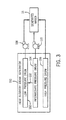
- FIG. 3 is a block diagram of a heat recovery steam generator (HRSG) 100 that may be used to supply the deaerated water 15.
- HRSG heat recovery steam generator
- GTCC gas turbine combined cycle
- heated exhaust gas from the gas turbine engine may be transported into the HRSG 100 and used to heat water to produce steam.
- other sources of heat may be used by the HRSG 100 to produce steam.
- the HRSG 100 may include one or more sections arranged in different configurations.
- the HRSG 100 may include a low-pressure steam section, an intermediate-pressure steam section, and a high-pressure steam section. Accordingly, each section of the HRSG 100 may include a steam drum.
- the HRSG 100 may include a low-pressure drum 102, an intermediate-pressure drum 104, and a high-pressure drum 106.
- Each of the drums 102, 104, and 106 may be used to separate steam from condensate in the respective sections of the HRSG 100.
- condensate may flow from the bottom of the steam drum and steam may flow from the top of the steam drum.
- other types of heat exchangers may be used to supply the deaerated water 15. Such exchangers may be found in a variety of plants other than the GTCC power plant.
- the HRSG 100 is supplied with deaerated water from a deaerating condenser to help prevent corrosion inside the HRSG 100.
- deaerating condensers include, but are not limited to, tray-type deaerators and spray-type deaerators.
- heat from the heated exhaust gas, or any other source of heat converts the deaerated water into steam, which forms deaerated water again when condensed and collected in the drums 102, 104, and 106.
- a portion of the condensate from the drums 102, 104 and 106 may be supplied to the turbine fuel supply system 40 as deaerated water 15.
- the HRSG 100 already include the deaerating condenser, no additional deaerator is used to supply the deaerated water 15 to the turbine fuel supply system 40. Instead, a portion of deaerated water already produced by the HRSG 100 is used to supply the deaerated water 15 to the turbine fuel supply system 40. Thus, additional equipment, costs, and complexity associated with a separate deaerator for the turbine fuel supply system 40 may be avoided by using a portion of the deaerated water from the HRSG 100 as the deaerated water 15 to the turbine fuel supply system 40. In plants other than the GTCC power plant, other heat exchangers, or similar equipment, may be available to produce the deaerated water 15 supplied to the turbine fuel supply system 40. In further embodiments, deaerators using tray-type condensers, spray-type condensers, or other techniques may be used to supply the deaerated water 15.
- the liquid fuel 42 may be supplied to the combustor 16 at a high pressure to provide for efficient combustion.
- the pressure of the liquid fuel 42 may be between approximately 8000 kilopascals (kPa) to 10000 kPa, 8400 kPa to 9600 kPa, or 8800 kPa to 9200 kPa.
- the deaerated water 15 may be supplied to the liquid fuel and pilot fuel mixers 52 and 64 at similar or higher pressures to enable the deaerated water 15 to mix properly with the liquid fuel 42.
- a pressure of the deaerated water 15 from the high-pressure drum 106 may be between approximately 11000 kPa to 20000 kPa, 14000 kPa to 18000 kPa, or 16000 kPa to 17000 kPa.
- the deaerated water 15 from the high-pressure drum 106 may be supplied directly to the deaerated water manifold 74.
- a pressure of the deaerated water 15 from the low-pressure drum 102 or the intermediate pressure drum 104 which may be limited by the configuration of the HRSG 100, may be less than that of the liquid fuel 42.
- a pressure of the deaerated water 15 from the intermediate-pressure drum 104 may be between approximately 4700 kPa to 8000 kPa, 5500 kPa to 7500 kPa, or 6000 kPa to 7000 kPa.
- a pressure of the deaerated water 15 from the low-pressure drum 102 may be between approximately 2000 kPa to 2760 kPa, 1400 kPa to 4120 kPa, or 680 kPa to 5600 kPa.
- a first booster pump 108 may be used to increase the pressure of the deaerated water 15 from the low-pressure drum 102 to a pressure closer to that of the liquid fuel 42.
- a second booster pump 110 may be used to increase the pressure of the deaerated water 15 from the intermediate pressure drum 104 to a pressure closer to that of the liquid fuel 42.
- the pressure of the deaerated water 15 from the intermediate pressure drum 104 may be close enough to the pressure of the liquid fuel 42 to omit the second booster pump 110.
- a portion 112 of the intermediate pressure condensate may be routed from the intermediate pressure drum 104 to the low-pressure drum 102, thereby omitting the second booster pump 110.
Landscapes
- Engineering & Computer Science (AREA)
- Chemical & Material Sciences (AREA)
- Combustion & Propulsion (AREA)
- Mechanical Engineering (AREA)
- General Engineering & Computer Science (AREA)
- Feeding And Controlling Fuel (AREA)
- Engine Equipment That Uses Special Cycles (AREA)
Abstract
Description
- The subject matter disclosed herein relates to combustion systems, and, more particularly, to supplying liquid fuel to gas turbine engines.
- Various combustion systems include combustion chambers in which fuel and air combust to generate hot gases. For example, a gas turbine engine may include one or more combustion chambers that receive compressed air from a compressor, inject fuel into the compressed air, and generate hot combustion gases to drive the turbine engine. Each combustion chamber may be supplied with one or more different fuels, such as gaseous fuels and liquid fuels. Certain materials may be mixed with the fuel to affect combustion efficiency and/or production of by-products, for example. Unfortunately, some materials may not mix readily with the fuel, thereby decreasing performance of the gas turbine engine.
- Certain embodiments commensurate in scope with the originally claimed invention are summarized below. These embodiments are not intended to limit the scope of the claimed invention, but rather these embodiments are intended only to provide a brief summary of possible forms of the invention. Indeed, the invention may encompass a variety of forms that may be similar to or different from the embodiments set forth below.
- In a first aspect, the invention resides in a system including a turbine fuel supply system. The turbine fuel supply system includes a first turbine fuel mixer configured to mix a first liquid fuel and a first deaerated water to generate a first fuel mixture. The first fuel mixture is configured to combust in a combustor of a gas turbine engine. The turbine fuel supply system also includes a deaerated water flow path configured to route the first deaerated water to the first turbine fuel mixer and a liquid fuel flow path configured to route the first liquid fuel to the first turbine fuel mixer.
- In a second aspect, the invention resides in a system including a byproduct sensor configured to transmit an input signal indicative of a sensed byproduct concentration in an exhaust from a gas turbine engine. The system also includes a byproduct controller configured to receive the input signal from the byproduct sensor and transmit an output signal to at least one control element to adjust a fuel-water ratio in a mixture of a liquid fuel and a deaerated water if the sensed byproduct concentration is above a threshold level. The control element is responsive to the output signal. The mixture of the liquid fuel and the deaerated water is configured to combust in a combustor of a gas turbine engine.
- In a third aspect, the invention resides in a method including supplying a liquid fuel to a mixer, supplying a deaerated water to the mixer, mixing the liquid fuel with the deaerated water using the mixer to generate a mixture of the liquid fuel and the deaerated water, and supplying the mixture of the liquid fuel and the deaerated water to a combustor of a gas turbine engine.
- Embodiments of the present invention will now be described, by way of example only, with reference to the accompanying drawings, in which:
-
FIG. 1 is a block diagram of an embodiment of a turbine system having a combustor; -
FIG. 2 is a block diagram of an embodiment of a fuel supply system for a turbine combustor; and -
FIG. 3 is a block diagram of an embodiment of a heat recovery steam generator that supplies deaerated water. - One or more specific embodiments of the present invention will be described below. In an effort to provide a concise description of these embodiments, all features of an actual implementation may not be described in the specification. It should be appreciated that in the development of any such actual implementation, as in any engineering or design project, numerous implementation-specific decisions must be made to achieve the developers' specific goals, such as compliance with system-related and business-related constraints, which may vary from one implementation to another. Moreover, it should be appreciated that such a development effort might be complex and time consuming, but would nevertheless be a routine undertaking of design, fabrication, and manufacture for those of ordinary skill having the benefit of this disclosure.
- When introducing elements of various embodiments of the present invention, the articles "a," "an," "the," and "said" are intended to mean that there are one or more of the elements. The terms "comprising," "including," and "having" are intended to be inclusive and mean that there may be additional elements other than the listed elements.
- As discussed in detail below, certain embodiments provide systems and methods for supplying a fuel to a turbine combustor. For example, the turbine combustor may be a gas turbine combustor disposed in a gas turbine engine. The gas turbine combustor may also combust a liquid fuel, such as diesel fuel. For example, the gas turbine combustor may primarily combust a gaseous fuel, such as natural gas, and combust the liquid fuel when the gaseous fuel is unavailable. Thus, even if a supply of gaseous fuel is interrupted, operation of the turbine combustor may continue. However, use of gaseous fuel may be preferable, as combustion of the liquid fuel may be less efficient than combustion of the gaseous fuel and combustion of the liquid fuel may generate more byproducts (such as nitrogen oxides [NOx], sulfur oxides [SOx], carbon monoxide [CO], particulate matter, and so forth) in an exhaust from the gas turbine engine than combustion of the gaseous fuel. In further embodiments, the liquid fuel may be in the form of a slurry.
- When liquid fuel is used in the gas turbine combustor, water may be mixed with the liquid fuel prior to introduction into the gas turbine combustor to help improve the combustion efficiency and/or to reduce byproduct (e.g., NOx, SOx, CO, or particulate matter) production. The added water may aid in cooling the reaction zone in the gas turbine combustor, which reduces byproduct production. Specifically, the water turns into steam in the reaction zone, which helps to reduce the temperature of the reaction zone. In certain embodiments, a mixer may mix the water and liquid fuel together. In addition, in various embodiments, the water may be deaerated water, which may be defined as water from which air and/or other dissolved gases have been removed. As described in detail below, mixtures of deaerated water and liquid fuel may produce longer-lasting emulsions compared to mixtures of non-deaerated water and liquid fuel. In other words, a mixture of deaerated water and liquid fuel may remain mixed for a longer period of time before separating compared to a mixture of non-deaerated water and liquid fuel.
- Further, mixing deaerated water with the liquid fuel prior to introduction to the gas turbine combustor may offer other advantages, such as improving combustion efficiency or reducing byproduct production, for example. In certain embodiments, the temperature of the deaerated water may be greater than the temperature of the liquid fuel. Thus, the temperature of the mixture of deaerated water and liquid fuel may be greater than the temperature of the liquid fuel alone. For example, the deaerated water may be between approximately 100 degrees Celsius to 175 degrees Celsius, or 125 degrees Celsius to 150 degrees Celsius. The liquid fuel may be at an ambient temperature, which may be less than approximately 60 degrees Celsius. When the deaerated water is mixed with the liquid fuel, the temperature of the resulting mixture may be between approximately 75 degrees Celsius to 150 degrees Celsius, or 100 degrees Celsius to 125 degrees Celsius. Thus, by mixing the liquid fuel with the deaerated water, the liquid fuel (e.g., mixture) may be heated to improve combustion without a separate fuel heater. In addition, increasing the temperature of the mixture of deaerated water and liquid fuel may cause a decrease in the viscosity of the mixture. Decreasing the viscosity and increasing the temperature of the feed to the gas turbine combustor may help improve combustion efficiency. For example, at lower viscosities and higher temperatures, the feed in the gas turbine combustor may atomize better, thereby improving combustion efficiency and reducing byproduct (e.g., NOx, SOx, CO, or particulate matter) production.
- In certain embodiments, a byproduct (e.g., NOx, SOx, CO, or particulate matter) sensor may be located in the gas turbine engine and may sense a byproduct concentration of the exhaust from the gas turbine engine. In further embodiments, the byproduct sensor may send signals indicative of the sensed byproduct concentration to a byproduct controller, which may then send signals to one or more control elements to adjust a ratio of the liquid fuel to deaerated water if the sensed level of the byproduct concentration of the exhaust is above a threshold level of the byproduct concentration. For example, if the sensed level of the byproduct concentration of the exhaust is above the threshold level of the byproduct concentration, the byproduct controller may send a signal to the control elements to decrease the ratio of liquid fuel to deaerated water. One of the control elements may be a control valve that decreases a flow rate of the liquid fuel and another control element may be a control valve that increases a flow rate of the deaerated water. Similarly, if the sensed level of the byproduct concentration of the exhaust is below the threshold level of the byproduct concentration, the byproduct controller may send a signal to the control elements to increase the ratio of liquid fuel to deaerated water.
- Turning now to the drawings and referring first to
FIG. 1 , a block diagram of an embodiment of aturbine system 10 having agas turbine engine 11 is illustrated. Theturbine system 10 may use liquid or gaseous fuel, such as natural gas and/or a synthetic gas, to drive theturbine system 10. As depicted, one ormore fuel nozzles 12 intake afuel supply 14. For example, one ormore fuel nozzles 12 may be used to intake liquid fuel and one or moreother fuel nozzles 12 may be used to intake gaseous fuel. In addition, thefuel nozzles 12 may intake adeaerated water supply 15 when theturbine system 10 uses liquid fuel. As described in detail below, the disclosedturbine system 10 mixes the liquid fuel with thedeaerated water supply 15 upstream from and/or within thefuel nozzles 12. Mixing the liquid fuel with thedeaerated water 15 may improve the combustion efficiency of thegas turbine engine 11 and/or reduce production of byproducts (e.g., NOx, SOx, CO, or particulate matter) from thegas turbine engine 11. The fuel nozzles 12 then partially mix the fuel, or the fuel-water mixture, with air, and distribute the fuel, water (when used), and air mixture into acombustor 16 where further mixing occurs between the fuel, water (when used), and air. Although shown schematically as being outside or separate from thecombustor 16, thefuel nozzles 12 may be disposed inside thecombustor 16. The fuel, water (when used), and air mixture combusts in a chamber within thecombustor 16, thereby creating hot pressurized exhaust gases. Thecombustor 16 directs the exhaust gases through aturbine 18 toward anexhaust outlet 20. Although only onecombustor 16 is shown inFIG. 1 , in certain embodiments, a plurality ofcombustors 16 may be arranged circumferentially about thegas turbine engine 11. Each of the plurality ofcombustors 16 may includeseparate fuel nozzles 12. As the exhaust gases pass through theturbine 18, the gases force turbine blades to rotate ashaft 22 along an axis of theturbine system 10. As illustrated, theshaft 22 is connected to various components of theturbine system 10, including acompressor 24. Thecompressor 24 also includes blades coupled to theshaft 22. As theshaft 22 rotates, the blades within thecompressor 24 also rotate, thereby compressing air from anair intake 26 through thecompressor 24 and into thefuel nozzles 12 and/orcombustor 16. Theshaft 22 may also be connected to aload 28, which may be a vehicle or a stationary load, such as an electrical generator in a power plant or a propeller on an aircraft, for example. Theload 28 may include any suitable device capable of being powered by the rotational output ofturbine system 10. -
FIG. 2 illustrates a block diagram of a turbinefuel supply system 40 of thecombustor 16 of thegas turbine engine 11, as illustrated inFIG. 1 . In the following discussion, the term "valve" is used to refer to any device capable of operating as a flow control. As illustrated, aliquid fuel 42 may be supplied to thecombustor 16. Examples of theliquid fuel 42 include, but are not limited to, hydrocarbon based liquid fuels, such as diesel fuel, jet fuel, gasoline, naphtha, fuel oil, and so forth. Theliquid fuel 42 is routed to thecombustor 16 via a liquidfuel flow path 44, which may include a liquidfuel supply valve 46. The liquidfuel flow path 44 may also include aliquid fuel manifold 48, which may be used to supply theliquid fuel 42 to a plurality of mixing assemblies 49 (as indicated by ellipses), which may be, for example, arranged circumferentially about theliquid fuel manifold 48. In certain embodiments, theliquid fuel manifold 48 may be configured as a ring with a circular or polygonal shape. Each of the plurality of mixingassemblies 49 may be coupled to one of the plurality ofcombustors 16 arranged circumferentially about thegas turbine engine 11. The liquidfuel supply valve 46 may be used to adjust and/or isolate flow of theliquid fuel 42 to theliquid fuel manifold 48. In certain embodiments, each mixingassembly 49 may include a liquidfuel mixing valve 50, which may be used to adjust a flow rate of theliquid fuel 42 to aliquid fuel mixer 52 disposed in each mixingassembly 49. - In certain embodiments, a portion of the
liquid fuel 42 may be routed to a pilotfuel flow path 54, which may include a pilotfuel supply valve 56. The pilotfuel flow path 54 may be used when first starting thecombustor 16 with theliquid fuel 42. For example, the pilotfuel flow path 54 may flow a lower flow rate of theliquid fuel 42 than the liquidfuel flow path 44. In certain embodiments, the flow rate of theliquid fuel 42 through the pilotfuel flow path 54 may be between approximately 5 percent to 50 percent, 10 percent to 35 percent, or 15 percent to 25 percent of a normal, or regular, flow rate. A low flow rate of theliquid fuel 42, which may be referred to as pilot fuel, may be used to first start thecombustor 16. Afterwards, the liquidfuel flow path 44 may be used to supply the normal, or regular, flow rate of theliquid fuel 42 to thecombustor 16. During startup of thecombustor 16, theliquid fuel 42 from the pilotfuel supply valve 56 may be routed to apilot fuel manifold 60, which may be used to supply the pilot fuel to the plurality of mixing assemblies 49 (as indicated by ellipses). In certain embodiments, thepilot fuel manifold 60 may be configured as a ring with a circular or polygonal shape. The pilotfuel supply valve 56 may be used to adjust and/or isolate flow of theliquid fuel 42 to thepilot fuel manifold 60. In certain embodiments, the mixingassembly 49 may include a pilotfuel mixing valve 62, which may be used to adjust a flow rate of theliquid fuel 42 to a pilot fuel mixer 64 disposed in the mixingassembly 49. After startup of thecombustor 16, the pilotfuel flow path 54 may no longer be used to supply theliquid fuel 42 to thecombustor 16. Instead, agaseous fuel 66 may be supplied to thepilot fuel manifold 60 via a gaseousfuel flow path 67, thereby purging theliquid fuel 42 from thepilot fuel manifold 60 with thegaseous fuel 66. Examples of thegaseous fuel 66 include, but are not limited to, methane, natural gas, syngas, and so forth. The gaseousfuel flow path 67 may include a gaseousfuel supply valve 68, which may be used to adjust and/or isolate flow of thegaseous fuel 66. Purging the pilotfuel flow path 54 with thegaseous fuel 66 may help prevent theliquid fuel 42 from coking or oxidizing in the pilotfuel flow path 54 when not in use. In other embodiments, other gases, such as nitrogen, carbon dioxide, steam, and so forth, may be used to purge the pilotfuel flow path 54 when not in use. - The
deaerated water 15 may be supplied to thecombustor 16 via a deaeratedwater flow path 70, which may include a deaeratedwater supply valve 72. Deaerated water may be generated by contacting water with steam to strip, or remove, dissolved gases from the water. The solubility of dissolved gases generally decreases at higher temperatures, so the high temperature of the steam helps to drive off the dissolved gases. For example, in a tray-type, or cascade-type, deaerator, water flows downward through perforations formed one or more perforated trays and steam flows upward through the perforations. In a spray-type deaerator, water is sprayed downward into rising steam. In both types of deaerators, the steam carries away the dissolved gases from the water to generate the deaerated water. Another method of generating thedeaerated water 15 is vacuum degasification, in which water is placed under a reduced pressure (e.g., a vacuum) to reduce the solubility of the dissolved gases. Other methods of deaeration, such as membrane degasification, may also be used to generate thedeaerated water 14. The deaerated water may include between approximately 5 parts per billion (ppb) by weight to 10 ppb by weight, 3 ppb by weight to 25 ppb by weight, or 1 ppb by weight to 50 ppb by weight of dissolved gases (e.g., oxygen or carbon dioxide). One example ofdeaerated water 15 is boiler feedwater, which may be supplied by a water treatment system and used to supply a boiler to generate steam or hot water. The boiler feedwater may be treated by the water treatment system to help prevent corrosion and fouling in the boiler. Another source of thedeaerated water 15 is a heat recovery steam generator, as discussed in detail below. - The deaerated
water supply valve 72 in the deaeratedwater flow path 70 may be used to adjust and/or isolate a flow of thedeaerated water 15 to adeaerated water manifold 74, which may be used to supply thedeaerated water 15 to the plurality of mixing assemblies 49 (as indicated by ellipses). In certain embodiments, thedeaerated water manifold 74 may be configured as a ring with a circular or polygonal shape. As shown inFIG. 2 , thedeaerated water 15 is supplied to theliquid fuel mixer 52 and the pilot fuel mixer 64 of each of the plurality of mixingassemblies 49. In addition, the mixingassembly 49 may include a deaerated water liquidfuel mixing valve 76 and a deaerated water pilotfuel mixing valve 78. The deaerated water liquidfuel mixing valve 76 and the deaerated water pilotfuel mixing valve 78 may adjust a flow of thedeaerated water 15 to theliquid fuel mixer 52 and the pilot fuel mixer 64, respectively. The liquid fuel andpilot fuel mixers 52 and 64 may mix theliquid fuel 42 with thedeaerated water 15 to form an emulsion, which may be defined as a mixture of two of more immiscible liquids. Examples of the liquid fuel andpilot fuel mixers 52 and 64 include, but are not limited to, mixing tees, in-line mixers, static mixers, paddle mixers, blenders, ribbon blenders, and so forth. For example, a mixing tee may include two pipes, or lines, coming together at a tee. - Mixtures of the
deaerated water 15 and theliquid fuel 42 form improved emulsions compared to mixtures of non-deaerated water and theliquid fuel 42 for several reasons. When two immiscible liquids are mixed, droplets of one liquid will be dispersed throughout the other liquid. For example, when a hydrocarbon liquid is mixed with water, droplets of the hydrocarbon liquid will initially be dispersed throughout the water. However, the droplets of the hydrocarbon are hydrophobic and will eventually coalesce to form a hydrocarbon phase separate from a water phase. Removal of dissolved gases from water to form deaerated water may enhance the ability of the hydrocarbon droplets to break away, or detach, from the hydrocarbon phase when mechanically disturbed. For example, theliquid fuel mixer 52 or the pilot fuel mixer 64 may be used to mechanically disturb the mixture of thedeaerated water 15 and theliquid fuel 42, e.g., a hydrocarbon based liquid fuel, to form a stable emulsion. Additionally, removal of dissolved gases from water may aid in the detachment of hydrocarbon droplets that would otherwise coalesce to form the hydrocarbon phase. In other words, the hydrophobic attraction of droplets of theliquid fuel 42 to one another in thedeaerated water 15 may be reduced, thereby enhancing detachment of the droplets of theliquid fuel 42 and emulsion formation. Such emulsions of thedeaerated water 15 and theliquid fuel 42 may be stable for extended periods, for example, up to several days or longer. Thus, the mixture of thedeaerated water 15 and theliquid fuel 42 may be expected to remain an emulsion, without separation, downstream of theliquid fuel mixer 52 and the pilot fuel mixer 64. Additionally, the mixture of thedeaerated water 15 and theliquid fuel 42 may be stored for certain periods without separation. Further, emulsions of thedeaerated water 15 and theliquid fuel 42 may be formed using only simple mechanical mixing, as with theliquid fuel mixer 52 or the pilot fuel mixer 64, without use of any additional additives, such as surfactants or polymer stabilizers. In such emulsions, theliquid fuel 42 may be more uniformly distributed in thedeaerated water 15 compared to mixtures of the liquid fuel and water that is not deaerated. For example, sizes of the droplets of theliquid fuel 42 may be less than approximately 20 micrometers, 15 micrometers, 10 micrometers, 5 micrometers, or 1 micrometer. - Returning to
FIG. 2 , the emulsion of theliquid fuel 42 and thedeaerated water 15 from theliquid fuel mixer 52 is supplied tomain nozzles 80 of thecombustor 16. Themain nozzles 80 may constitute a portion of thefuel nozzles 12 and may discharge the emulsion at high, or normal, flow rates. The emulsion of theliquid fuel 42 and thedeaerated water 15 from the pilot fuel mixer 64 is supplied to pilotnozzles 82 of thecombustor 16. The pilot nozzles 82 may constitute another portion of thefuel nozzles 12 and may discharge the emulsion at low, or startup, flow rates. For example, thepilot nozzles 82 may be used during startup of thecombustor 16, after which themain nozzles 80 are used. Accordingly, thepilot nozzles 82 may be smaller than themain nozzles 80. Thus, thepilot nozzles 82 may be limited to passing lower flow rates of the emulsion compared to themain nozzles 80. For example, the flow rate of the emulsion through thepilot nozzles 82 may be between approximately 5 percent to 50 percent, 10 percent to 35 percent, or 15 percent to 25 percent of a flow rate through themain nozzles 80. In some embodiments, thepilot nozzles 82 may be used together with, or at the same time as, themain nozzles 80. In addition, thecombustor 16 may includeadditional fuel nozzles 12 to supply thegaseous fuel 66. - In certain embodiments, the turbine
fuel supply system 40 may include acontroller 84, which may send and/or receive various signals alongsignal paths 86. In the following discussion, the signals sent or received along thesignal paths 86 will also be referred to by thereference numeral 86. For example, thecontroller 84 may sendsignals 86 to one or more of the liquidfuel supply valve 46, the liquidfuel mixing valve 50, the pilotfuel supply valve 56, the pilotfuel mixing valve 62, the gaseousfuel supply valve 68, the liquid fuelwater mixing valve 76, and the pilot fuelwater mixing valve 78 to direct the valves to adjust, open, or close. In addition, thecontroller 84 may receive asignal 86 from a NOx sensor 88 that senses a NOx concentration of theexhaust 20. In other embodiments, the sensor 88 may be configured to sense other parameters of theexhaust 20, such as, but not limited to, SOx concentration, CO concentration, particulate concentration, temperature, pressure, flow rate, and so forth. In certain embodiments, thecontroller 84 may adjust a ratio of theliquid fuel 42 to thedeaerated water 15 if a sensed level of the NOx concentration from the NOx sensor 88 is above a threshold level of the NOx concentration. For example, if the NOx sensor 88 senses a NOx concentration above the threshold level of the NOx concentration, thecontroller 84 may send asignal 86 to the liquid fuelwater mixing valve 76 and/or deaerated water pilotfuel mixing valve 78 to open more to enable additionaldeaerated water 15 to flow to theliquid fuel mixer 52 and/or the pilot fuel mixer 64, respectively. By increasing the flow of thedeaerated water 15 to theliquid fuel mixer 52, the ratio of theliquid fuel 42 to thedeaerated water 15 decreases, thereby decreasing the NOx concentration of theexhaust 20. In certain embodiments, the ratio of theliquid fuel 42 to thedeaerated water 15 may be, for example, between approximately 0.5:1 to 0.7:1, 0.4:1 to 0.8:1, or 0.3:1 to 1:1. Similarly, if the NOx sensor 88 senses a NOx concentration below the threshold level of the NOx concentration, thecontroller 84 may send asignal 86 to the liquid fuelwater mixing valve 76 and/or deaerated water pilotfuel mixing valve 78 to close partially to reduce the flow of thedeaerated water 15 to theliquid fuel mixer 52 and/or the pilot fuel mixer 64, respectively. - Similarly, in other embodiments, the
controller 84 may receivesignals 86 from a deaeratedwater temperature sensor 90 and/or a deaeratedwater pressure sensor 92. Thecontroller 84 may sendsignals 86 to the liquid fuelwater mixing valve 76 or the pilot fuelwater mixing valve 78 in response tosignals 86 received from the deaeratedwater temperature sensor 90 and/or deaeratedwater pressure sensor 92. For example, if the temperature of thedeaerated water 15 increases, thecontroller 84 may direct the liquid fuelwater mixing valve 76 or the pilot fuelwater mixing valve 78 to reduce the flow rate ofdeaerated water 15 to thecombustor 16. Similarly, if the temperature of thedeaerated water 15 decreases, thecontroller 84 may direct the liquid fuelwater mixing valve 76 or the pilot fuelwater mixing valve 78 to increase the flow rate ofdeaerated water 15 to thecombustor 16. In certain embodiments, thecontroller 84 may adjust the temperature and/or pressure of thedeaerated water 15 in response tosignals 86 from the deaeratedwater temperature sensor 90 and/or deaeratedwater pressure sensor 92. For example, thecontroller 84 may send asignal 86 to the source of thedeaerated water 15 to maintain thedeaerated water 15 at a temperature between approximately 100 degrees Celsius to 175 degrees Celsius, or 125 degrees Celsius to 150 degrees Celsius. In other embodiments, thecontroller 84 may adjust the flow rate ofdeaerated water 15 to maintain a temperature of the emulsion by sendingsignals 86 to the deaeratedwater mixing valves controller 84 may adjust the flow rate ofdeaerated water 15 to maintain the emulsion at a temperature between approximately 75 degrees Celsius to 150 degrees Celsius, or 100 degrees Celsius to 125 degrees Celsius. -
FIG. 3 is a block diagram of a heat recovery steam generator (HRSG) 100 that may be used to supply thedeaerated water 15. In a gas turbine combined cycle (GTCC) power plant, for example, heated exhaust gas from the gas turbine engine may be transported into theHRSG 100 and used to heat water to produce steam. In other embodiments, other sources of heat may be used by theHRSG 100 to produce steam. TheHRSG 100 may include one or more sections arranged in different configurations. For example, in one embodiment, theHRSG 100 may include a low-pressure steam section, an intermediate-pressure steam section, and a high-pressure steam section. Accordingly, each section of theHRSG 100 may include a steam drum. In the illustrated embodiment, theHRSG 100 may include a low-pressure drum 102, an intermediate-pressure drum 104, and a high-pressure drum 106. Each of thedrums HRSG 100. In other words, condensate may flow from the bottom of the steam drum and steam may flow from the top of the steam drum. In further embodiments, other types of heat exchangers may be used to supply thedeaerated water 15. Such exchangers may be found in a variety of plants other than the GTCC power plant. - In certain embodiments, the
HRSG 100 is supplied with deaerated water from a deaerating condenser to help prevent corrosion inside theHRSG 100. Examples of deaerating condensers include, but are not limited to, tray-type deaerators and spray-type deaerators. In theHRSG 100, heat from the heated exhaust gas, or any other source of heat, converts the deaerated water into steam, which forms deaerated water again when condensed and collected in thedrums drums fuel supply system 40 asdeaerated water 15. As certain embodiments of theHRSG 100 already include the deaerating condenser, no additional deaerator is used to supply thedeaerated water 15 to the turbinefuel supply system 40. Instead, a portion of deaerated water already produced by theHRSG 100 is used to supply thedeaerated water 15 to the turbinefuel supply system 40. Thus, additional equipment, costs, and complexity associated with a separate deaerator for the turbinefuel supply system 40 may be avoided by using a portion of the deaerated water from theHRSG 100 as thedeaerated water 15 to the turbinefuel supply system 40. In plants other than the GTCC power plant, other heat exchangers, or similar equipment, may be available to produce thedeaerated water 15 supplied to the turbinefuel supply system 40. In further embodiments, deaerators using tray-type condensers, spray-type condensers, or other techniques may be used to supply thedeaerated water 15. - In certain embodiments, the
liquid fuel 42 may be supplied to thecombustor 16 at a high pressure to provide for efficient combustion. For example, the pressure of theliquid fuel 42 may be between approximately 8000 kilopascals (kPa) to 10000 kPa, 8400 kPa to 9600 kPa, or 8800 kPa to 9200 kPa. Accordingly, thedeaerated water 15 may be supplied to the liquid fuel andpilot fuel mixers 52 and 64 at similar or higher pressures to enable thedeaerated water 15 to mix properly with theliquid fuel 42. For example, a pressure of thedeaerated water 15 from the high-pressure drum 106 may be between approximately 11000 kPa to 20000 kPa, 14000 kPa to 18000 kPa, or 16000 kPa to 17000 kPa. Thus, thedeaerated water 15 from the high-pressure drum 106 may be supplied directly to thedeaerated water manifold 74. In contrast, a pressure of thedeaerated water 15 from the low-pressure drum 102 or theintermediate pressure drum 104, which may be limited by the configuration of theHRSG 100, may be less than that of theliquid fuel 42. For example, a pressure of thedeaerated water 15 from the intermediate-pressure drum 104 may be between approximately 4700 kPa to 8000 kPa, 5500 kPa to 7500 kPa, or 6000 kPa to 7000 kPa. Additionally, a pressure of thedeaerated water 15 from the low-pressure drum 102 may be between approximately 2000 kPa to 2760 kPa, 1400 kPa to 4120 kPa, or 680 kPa to 5600 kPa. Thus, afirst booster pump 108 may be used to increase the pressure of thedeaerated water 15 from the low-pressure drum 102 to a pressure closer to that of theliquid fuel 42. Similarly, a second booster pump 110 may be used to increase the pressure of thedeaerated water 15 from theintermediate pressure drum 104 to a pressure closer to that of theliquid fuel 42. In certain embodiments, the pressure of thedeaerated water 15 from theintermediate pressure drum 104 may be close enough to the pressure of theliquid fuel 42 to omit the second booster pump 110. In addition, in certain embodiments, if the amount ofdeaerated water 15 supplied by thelow pressure drum 102 is insufficient or to provide additional operational flexibility, aportion 112 of the intermediate pressure condensate may be routed from theintermediate pressure drum 104 to the low-pressure drum 102, thereby omitting the second booster pump 110. - This written description uses examples to disclose the invention, including the best mode, and also to enable any person skilled in the art to practice the invention, including making and using any devices or systems and performing any incorporated methods. The patentable scope of the invention is defined by the claims, and may include other examples that occur to those skilled in the art. Such other examples are intended to be within the scope of the claims if they have structural elements that do not differ from the literal language of the claims, or if they include equivalent structural elements with insubstantial differences from the literal language of the claims.
Claims (15)
- A system, comprising:a turbine fuel supply system (40), comprising:a first turbine fuel mixer (52) configured to mix a first liquid fuel (42) and a first deaerated water (15) to generate a first fuel mixture, wherein the first fuel mixture is configured to combust in a combustor (16) of a gas turbine engine (10);a deaerated water flow path (70) configured to route the first deaerated water (15) to the first turbine fuel mixer (52); anda liquid fuel flow path (44) configured to route the first liquid fuel (42) to the first turbine fuel mixer (52).
- The system of claim 1, wherein the first turbine fuel mixer (52) comprises at least one of a mixing tee, an in-line mixer, a static mixer, a paddle mixer, a blender, or a ribbon blender, or a combination thereof.
- The system of claim 1 or claim 2, comprising a water treatment system (72, 74) configured to supply the first deaerated water (15) to the first turbine fuel mixer (52) along the deaerated water flow path (70).
- The system of any of claims 1 to 3, comprising a heat recovery steam generator configured to supply the first deaerated water (15) to the first turbine fuel mixer (52) along the deaerated water flow path (70).
- The system of claim 4, wherein the heat recovery steam generator (100) is configured to generate the first deaerated water (15).
- The system of claim 4 or claim 5, comprising a booster pump (108) configured to increase a pressure of the first deaerated water (15) from a low-pressure section (102) or an intermediate-pressure section (104) of the heat recovery steam generator (100).
- The system of any preceding claim, wherein the first turbine fuel mixer (52) is configured to mix the first liquid fuel (42) and the first deaerated water (15) to generate a first emulsion of the first liquid fuel (42) and the first deaerated water (15) as the first fuel mixture.
- The system of any preceding claim, comprising:a second turbine fuel mixer (64) configured to mix a second liquid fuel (66) and a second deaerated water to generate a second fuel mixture, wherein the second fuel mixture is configured to combust in the combustor (16) of the gas turbine engine (10), the first fuel mixture is a pilot fuel mixture, and the second fuel mixture is a main fuel mixture.
- The system of any preceding claim, wherein the deaerated water flow path (70) comprises a deaerated water manifold (74) configured to route the first deaerated water to a plurality of mixing assemblies (49) of the gas turbine engine.
- The system of claim 9, wherein each of the plurality of mixing assemblies (49) comprises one of a plurality of the first turbine fuel mixers (52), one of a plurality of deaerated water mixing valves (72), and one of a plurality of liquid fuel mixing valves (50).
- The system of any preceding claim, further comprising:a byproduct sensor (88) configured to transmit an input signal (86) indicative of a sensed byproduct concentration in an exhaust from a gas turbine engine (10); anda byproduct controller (84) configured to receive the input signal (86) from the byproduct sensor (88) and transmit an output signal (86) to the turbine fuel supply system (40), the turbine fuel supply system (40) is responsive to the output signal (86), to adjust a fuel-water ratio in the mixture of the liquid fuel (42) and a deaerated water (15) if the sensed byproduct concentration is above a threshold level.
- The system of claim 11, wherein the byproduct comprises at least one of nitrogen oxide (NOx), sulfur oxide (SOx), carbon monoxide, or particulate matter, or a combination thereof.
- A method, comprising:supplying a liquid fuel (42) to a mixer (52);supplying a deaerated water (15) to the mixer (52);mixing the liquid fuel (42) with the deaerated water (15) using the mixer (52) to generate a mixture of the liquid fuel (42) and the deaerated water (15); andsupplying the mixture of the liquid fuel (42) and the deaerated water (15) to a combustor of a gas turbine engine (10).
- The method of claim 13, comprising adjusting a ratio of the liquid fuel (42) to the deaerated water (15) in the mixture or adjusting a temperature or a pressure of the deaerated water (15) to control a byproduct concentration in products resulting from combustion of the mixture.
- The method of claim 13 or 14, wherein mixing the liquid fuel (42) with the deaerated water (15) comprises using the mixer (52) to generate an emulsion of the liquid fuel (42) and the deaerated water (15).
Applications Claiming Priority (1)
| Application Number | Priority Date | Filing Date | Title |
|---|---|---|---|
| US13/280,237 US9267433B2 (en) | 2011-10-24 | 2011-10-24 | System and method for turbine combustor fuel assembly |
Publications (3)
| Publication Number | Publication Date |
|---|---|
| EP2587022A2 true EP2587022A2 (en) | 2013-05-01 |
| EP2587022A3 EP2587022A3 (en) | 2017-11-01 |
| EP2587022B1 EP2587022B1 (en) | 2021-02-24 |
Family
ID=47142932
Family Applications (1)
| Application Number | Title | Priority Date | Filing Date |
|---|---|---|---|
| EP12189163.4A Active EP2587022B1 (en) | 2011-10-24 | 2012-10-19 | System comprising a turbine fuel supply assembly and related method |
Country Status (3)
| Country | Link |
|---|---|
| US (1) | US9267433B2 (en) |
| EP (1) | EP2587022B1 (en) |
| CN (1) | CN103062801B (en) |
Cited By (1)
| Publication number | Priority date | Publication date | Assignee | Title |
|---|---|---|---|---|
| EP4134531A1 (en) * | 2021-08-12 | 2023-02-15 | General Electric Company | Water fuel emulsion system and method for gas turbine |
Families Citing this family (18)
| Publication number | Priority date | Publication date | Assignee | Title |
|---|---|---|---|---|
| US9243804B2 (en) | 2011-10-24 | 2016-01-26 | General Electric Company | System for turbine combustor fuel mixing |
| US9650955B2 (en) * | 2011-11-10 | 2017-05-16 | General Electric Company | System for purging gas fuel circuit for a gas turbine engine |
| US20150020529A1 (en) * | 2013-07-18 | 2015-01-22 | General Electric Company | Gas turbine emissions control system and method |
| US20150020530A1 (en) * | 2013-07-18 | 2015-01-22 | General Electric Company | Gas turbine emissions control system and method |
| US20150075450A1 (en) * | 2013-09-13 | 2015-03-19 | Uop Llc | Heat recovery from a high pressure stream |
| US9863322B2 (en) * | 2014-01-23 | 2018-01-09 | United Technologies Corporation | Selectively deoxygenated stored fuel system |
| WO2017002076A1 (en) * | 2015-06-30 | 2017-01-05 | Ansaldo Energia Ip Uk Limited | Gas turbine control system |
| US10035609B2 (en) * | 2016-03-08 | 2018-07-31 | Harris Corporation | Wireless engine monitoring system for environmental emission control and aircraft networking |
| US10378447B2 (en) | 2016-09-30 | 2019-08-13 | General Electric Company | System and method for purging fuel or coolant from turbomachine |
| US10634358B2 (en) * | 2017-06-16 | 2020-04-28 | General Electric Company | System and method for igniting liquid fuel in a gas turbine combustor |
| EP3421761B1 (en) * | 2017-06-30 | 2020-11-25 | Ansaldo Energia IP UK Limited | Second-stage combustor for a sequential combustor of a gas turbine |
| EP3963191B8 (en) * | 2019-05-30 | 2025-06-18 | Siemens Energy Global GmbH & Co. KG | Gas turbine water injection for emissions reduction |
| EP3875741A1 (en) * | 2020-03-04 | 2021-09-08 | Rolls-Royce plc | Gas turbine engine with water injection |
| US11326521B2 (en) | 2020-06-30 | 2022-05-10 | General Electric Company | Methods of igniting liquid fuel in a turbomachine |
| US11306661B1 (en) | 2020-12-04 | 2022-04-19 | General Electric Company | Methods and apparatus to operate a gas turbine engine with hydrogen gas |
| US11933217B2 (en) | 2022-07-21 | 2024-03-19 | Rtx Corporation | Water condition monitoring for hydrogen steam injected and inter-cooled turbine engine |
| US11898491B1 (en) * | 2022-07-21 | 2024-02-13 | Rtx Corporation | Water pressure and quantity monitoring for hydrogen steam injected and inter-cooled turbine engine |
| WO2024054836A1 (en) * | 2022-09-06 | 2024-03-14 | Vericor Power Systems Llc | Purge system for a dual-fuel turbine engine |
Family Cites Families (46)
| Publication number | Priority date | Publication date | Assignee | Title |
|---|---|---|---|---|
| US4110973A (en) * | 1977-01-24 | 1978-09-05 | Energy Services Inc. | Water injection system for industrial gas turbine engine |
| US4418543A (en) | 1980-12-02 | 1983-12-06 | United Technologies Corporation | Fuel nozzle for gas turbine engine |
| US4798330A (en) | 1986-02-14 | 1989-01-17 | Fuel Systems Textron Inc. | Reduced coking of fuel nozzles |
| US4993918A (en) | 1989-05-19 | 1991-02-19 | United Technologies Corporation | Replaceable fairing for a turbine exhaust case |
| US5175994A (en) * | 1991-05-03 | 1993-01-05 | United Technologies Corporation | Combustion section supply system having fuel and water injection for a rotary machine |
| US5240741A (en) | 1991-12-20 | 1993-08-31 | United Technologies Corporation | Inhibiting coke formation by coating gas turbine elements with tungsten disulfide |
| US5298091A (en) | 1991-12-20 | 1994-03-29 | United Technologies Corporation | Inhibiting coke formation by heat treating in nitrogen atmosphere |
| US5324544A (en) | 1991-12-20 | 1994-06-28 | United Technologies Corporation | Inhibiting coke formation by coating gas turbine elements with alumina-silica sol gel |
| US5307619A (en) * | 1992-09-15 | 1994-05-03 | Westinghouse Electric Corp. | Automatic NOx control for a gas turbine |
| US6289666B1 (en) | 1992-10-27 | 2001-09-18 | Ginter Vast Corporation | High efficiency low pollution hybrid Brayton cycle combustor |
| US6564556B2 (en) * | 1992-10-27 | 2003-05-20 | J. Lyell Ginter | High efficiency low pollution hybrid brayton cycle combustor |
| US5448890A (en) | 1994-03-24 | 1995-09-12 | United Technologies Corporation | Fuel supply apparatus with cooled check valve |
| US5809771A (en) | 1996-01-19 | 1998-09-22 | Woodward Governor Company | Aircraft engine fuel system |
| US6145294A (en) | 1998-04-09 | 2000-11-14 | General Electric Co. | Liquid fuel and water injection purge system for a gas turbine |
| US6125624A (en) | 1998-04-17 | 2000-10-03 | Pratt & Whitney Canada Corp. | Anti-coking fuel injector purging device |
| EP0952317A3 (en) | 1998-04-21 | 2002-04-17 | Mitsubishi Heavy Industries, Ltd. | Purging system for a gas turbine fuel supply |
| US6092363A (en) * | 1998-06-19 | 2000-07-25 | Siemens Westinghouse Power Corporation | Low Nox combustor having dual fuel injection system |
| US6125627A (en) | 1998-08-11 | 2000-10-03 | Allison Advanced Development Company | Method and apparatus for spraying fuel within a gas turbine engine |
| US6367239B1 (en) * | 1998-12-09 | 2002-04-09 | General Electric Company | Fuel delivery systems and method |
| US6598383B1 (en) | 1999-12-08 | 2003-07-29 | General Electric Co. | Fuel system configuration and method for staging fuel for gas turbines utilizing both gaseous and liquid fuels |
| US6315815B1 (en) | 1999-12-16 | 2001-11-13 | United Technologies Corporation | Membrane based fuel deoxygenator |
| US6457316B1 (en) | 2000-10-05 | 2002-10-01 | General Electric Company | Methods and apparatus for swirling fuel within fuel nozzles |
| US6438938B1 (en) | 2000-11-28 | 2002-08-27 | Rolls-Royce Corporation | Bearing compartment self cooling vent system |
| US6427447B1 (en) | 2001-02-06 | 2002-08-06 | United Technologies Corporation | Bulkhead for dual fuel industrial and aeroengine gas turbines |
| US20020144664A1 (en) * | 2001-04-09 | 2002-10-10 | Supercritical Combustion Corporation | Heating of fuels |
| US6886324B1 (en) | 2002-02-15 | 2005-05-03 | The United States Of America As Represented By The Secretary Of The Army | Apparatus for reducing coking in gas turbine bearings |
| US6712080B1 (en) | 2002-02-15 | 2004-03-30 | The United States Of America As Represented By The Secretary Of The Army | Flushing system for removing lubricant coking in gas turbine bearings |
| US6915638B2 (en) | 2002-03-28 | 2005-07-12 | Parker-Hannifin Corporation | Nozzle with fluted tube |
| US6848260B2 (en) | 2002-09-23 | 2005-02-01 | Siemens Westinghouse Power Corporation | Premixed pilot burner for a combustion turbine engine |
| US6931853B2 (en) | 2002-11-19 | 2005-08-23 | Siemens Westinghouse Power Corporation | Gas turbine combustor having staged burners with dissimilar mixing passage geometries |
| US6918255B2 (en) | 2002-12-03 | 2005-07-19 | General Electric Company | Cooling of liquid fuel components to eliminate coking |
| US7117675B2 (en) | 2002-12-03 | 2006-10-10 | General Electric Company | Cooling of liquid fuel components to eliminate coking |
| US7416137B2 (en) * | 2003-01-22 | 2008-08-26 | Vast Power Systems, Inc. | Thermodynamic cycles using thermal diluent |
| US7007476B2 (en) | 2003-04-11 | 2006-03-07 | Parker-Hannifin Corporation | Gas turbine fuel system staging valves |
| US6935116B2 (en) | 2003-04-28 | 2005-08-30 | Power Systems Mfg., Llc | Flamesheet combustor |
| US6986254B2 (en) | 2003-05-14 | 2006-01-17 | Power Systems Mfg, Llc | Method of operating a flamesheet combustor |
| GB0329626D0 (en) | 2003-12-23 | 2004-01-28 | Goodrich Control Sys Ltd | Fuel system |
| US7104070B2 (en) | 2004-03-04 | 2006-09-12 | General Electric Company | Liquid fuel nozzle apparatus with passive water injection purge |
| US7137256B1 (en) | 2005-02-28 | 2006-11-21 | Peter Stuttaford | Method of operating a combustion system for increased turndown capability |
| US7640724B2 (en) | 2006-01-25 | 2010-01-05 | Siemens Energy, Inc. | System and method for improving the heat rate of a turbine |
| FR2903450B1 (en) | 2006-07-07 | 2013-03-01 | Snecma | PROCESS FOR TREATING OIL DISCHARGES IN A GAS TURBINE ENGINE |
| US20080115500A1 (en) * | 2006-11-15 | 2008-05-22 | Scott Macadam | Combustion of water borne fuels in an oxy-combustion gas generator |
| US8397509B2 (en) * | 2007-06-06 | 2013-03-19 | Herng Shinn Hwang | Catalytic engine |
| CN201103885Y (en) | 2007-07-13 | 2008-08-20 | 济南钢铁股份有限公司 | Steam generation device for sintered waste heat power generation deaerator |
| US20090165435A1 (en) | 2008-01-02 | 2009-07-02 | Michal Koranek | Dual fuel can combustor with automatic liquid fuel purge |
| US8820087B2 (en) | 2008-09-08 | 2014-09-02 | Siemens Energy, Inc. | Method and system for controlling fuel to a dual stage nozzle |
-
2011
- 2011-10-24 US US13/280,237 patent/US9267433B2/en active Active
-
2012
- 2012-10-19 EP EP12189163.4A patent/EP2587022B1/en active Active
- 2012-10-24 CN CN201210410484.8A patent/CN103062801B/en active Active
Non-Patent Citations (1)
| Title |
|---|
| None |
Cited By (2)
| Publication number | Priority date | Publication date | Assignee | Title |
|---|---|---|---|---|
| EP4134531A1 (en) * | 2021-08-12 | 2023-02-15 | General Electric Company | Water fuel emulsion system and method for gas turbine |
| US11939912B2 (en) | 2021-08-12 | 2024-03-26 | Ge Infrastructure Technology Llc | Water fuel emulsion system and method for gas turbine |
Also Published As
| Publication number | Publication date |
|---|---|
| US9267433B2 (en) | 2016-02-23 |
| EP2587022B1 (en) | 2021-02-24 |
| CN103062801A (en) | 2013-04-24 |
| US20130098056A1 (en) | 2013-04-25 |
| CN103062801B (en) | 2017-03-01 |
| EP2587022A3 (en) | 2017-11-01 |
Similar Documents
| Publication | Publication Date | Title |
|---|---|---|
| US9267433B2 (en) | System and method for turbine combustor fuel assembly | |
| EP2587151B1 (en) | System for Turbine Combustor Fuel Mixing | |
| US9243804B2 (en) | System for turbine combustor fuel mixing | |
| JP6309964B2 (en) | System and method for load control using diffusion combustion in a stoichiometric exhaust gas recirculation gas turbine system | |
| CN104769255B (en) | System and method for stoichiometry exhaust gas recirculatioon gas turbine system | |
| EP2587023B1 (en) | System for turbine combustor fuel assembly | |
| JP6315713B2 (en) | System and method for diffusion combustion using fuel-diluent mixing in a stoichiometric exhaust gas recirculation gas turbine system | |
| CN106062340B (en) | System and method for gas-turbine unit | |
| CN105637206A (en) | System and method for exhausting combustion gases from a gas turbine engine | |
| US10267270B2 (en) | Systems and methods for carbon black production with a gas turbine engine having exhaust gas recirculation | |
| US10920155B2 (en) | Fuel cleaning system |
Legal Events
| Date | Code | Title | Description |
|---|---|---|---|
| PUAI | Public reference made under article 153(3) epc to a published international application that has entered the european phase |
Free format text: ORIGINAL CODE: 0009012 |
|
| AK | Designated contracting states |
Kind code of ref document: A2 Designated state(s): AL AT BE BG CH CY CZ DE DK EE ES FI FR GB GR HR HU IE IS IT LI LT LU LV MC MK MT NL NO PL PT RO RS SE SI SK SM TR |
|
| AX | Request for extension of the european patent |
Extension state: BA ME |
|
| PUAL | Search report despatched |
Free format text: ORIGINAL CODE: 0009013 |
|
| AK | Designated contracting states |
Kind code of ref document: A3 Designated state(s): AL AT BE BG CH CY CZ DE DK EE ES FI FR GB GR HR HU IE IS IT LI LT LU LV MC MK MT NL NO PL PT RO RS SE SI SK SM TR |
|
| AX | Request for extension of the european patent |
Extension state: BA ME |
|
| RIC1 | Information provided on ipc code assigned before grant |
Ipc: F02C 3/30 20060101AFI20170926BHEP |
|
| STAA | Information on the status of an ep patent application or granted ep patent |
Free format text: STATUS: REQUEST FOR EXAMINATION WAS MADE |
|
| 17P | Request for examination filed |
Effective date: 20180502 |
|
| RBV | Designated contracting states (corrected) |
Designated state(s): AL AT BE BG CH CY CZ DE DK EE ES FI FR GB GR HR HU IE IS IT LI LT LU LV MC MK MT NL NO PL PT RO RS SE SI SK SM TR |
|
| STAA | Information on the status of an ep patent application or granted ep patent |
Free format text: STATUS: EXAMINATION IS IN PROGRESS |
|
| 17Q | First examination report despatched |
Effective date: 20190212 |
|
| GRAP | Despatch of communication of intention to grant a patent |
Free format text: ORIGINAL CODE: EPIDOSNIGR1 |
|
| STAA | Information on the status of an ep patent application or granted ep patent |
Free format text: STATUS: GRANT OF PATENT IS INTENDED |
|
| INTG | Intention to grant announced |
Effective date: 20200428 |
|
| GRAJ | Information related to disapproval of communication of intention to grant by the applicant or resumption of examination proceedings by the epo deleted |
Free format text: ORIGINAL CODE: EPIDOSDIGR1 |
|
| STAA | Information on the status of an ep patent application or granted ep patent |
Free format text: STATUS: EXAMINATION IS IN PROGRESS |
|
| GRAP | Despatch of communication of intention to grant a patent |
Free format text: ORIGINAL CODE: EPIDOSNIGR1 |
|
| STAA | Information on the status of an ep patent application or granted ep patent |
Free format text: STATUS: GRANT OF PATENT IS INTENDED |
|
| INTC | Intention to grant announced (deleted) | ||
| INTG | Intention to grant announced |
Effective date: 20201002 |
|
| GRAS | Grant fee paid |
Free format text: ORIGINAL CODE: EPIDOSNIGR3 |
|
| GRAA | (expected) grant |
Free format text: ORIGINAL CODE: 0009210 |
|
| STAA | Information on the status of an ep patent application or granted ep patent |
Free format text: STATUS: THE PATENT HAS BEEN GRANTED |
|
| AK | Designated contracting states |
Kind code of ref document: B1 Designated state(s): AL AT BE BG CH CY CZ DE DK EE ES FI FR GB GR HR HU IE IS IT LI LT LU LV MC MK MT NL NO PL PT RO RS SE SI SK SM TR |
|
| REG | Reference to a national code |
Ref country code: GB Ref legal event code: FG4D |
|
| REG | Reference to a national code |
Ref country code: CH Ref legal event code: EP |
|
| REG | Reference to a national code |
Ref country code: AT Ref legal event code: REF Ref document number: 1364711 Country of ref document: AT Kind code of ref document: T Effective date: 20210315 |
|
| REG | Reference to a national code |
Ref country code: IE Ref legal event code: FG4D |
|
| REG | Reference to a national code |
Ref country code: DE Ref legal event code: R096 Ref document number: 602012074479 Country of ref document: DE |
|
| REG | Reference to a national code |
Ref country code: LT Ref legal event code: MG9D |
|
| REG | Reference to a national code |
Ref country code: NL Ref legal event code: MP Effective date: 20210224 |
|
| PG25 | Lapsed in a contracting state [announced via postgrant information from national office to epo] |
Ref country code: LT Free format text: LAPSE BECAUSE OF FAILURE TO SUBMIT A TRANSLATION OF THE DESCRIPTION OR TO PAY THE FEE WITHIN THE PRESCRIBED TIME-LIMIT Effective date: 20210224 Ref country code: PT Free format text: LAPSE BECAUSE OF FAILURE TO SUBMIT A TRANSLATION OF THE DESCRIPTION OR TO PAY THE FEE WITHIN THE PRESCRIBED TIME-LIMIT Effective date: 20210624 Ref country code: HR Free format text: LAPSE BECAUSE OF FAILURE TO SUBMIT A TRANSLATION OF THE DESCRIPTION OR TO PAY THE FEE WITHIN THE PRESCRIBED TIME-LIMIT Effective date: 20210224 Ref country code: FI Free format text: LAPSE BECAUSE OF FAILURE TO SUBMIT A TRANSLATION OF THE DESCRIPTION OR TO PAY THE FEE WITHIN THE PRESCRIBED TIME-LIMIT Effective date: 20210224 Ref country code: GR Free format text: LAPSE BECAUSE OF FAILURE TO SUBMIT A TRANSLATION OF THE DESCRIPTION OR TO PAY THE FEE WITHIN THE PRESCRIBED TIME-LIMIT Effective date: 20210525 Ref country code: BG Free format text: LAPSE BECAUSE OF FAILURE TO SUBMIT A TRANSLATION OF THE DESCRIPTION OR TO PAY THE FEE WITHIN THE PRESCRIBED TIME-LIMIT Effective date: 20210524 Ref country code: NO Free format text: LAPSE BECAUSE OF FAILURE TO SUBMIT A TRANSLATION OF THE DESCRIPTION OR TO PAY THE FEE WITHIN THE PRESCRIBED TIME-LIMIT Effective date: 20210524 |
|
| REG | Reference to a national code |
Ref country code: AT Ref legal event code: MK05 Ref document number: 1364711 Country of ref document: AT Kind code of ref document: T Effective date: 20210224 |
|
| PG25 | Lapsed in a contracting state [announced via postgrant information from national office to epo] |
Ref country code: SE Free format text: LAPSE BECAUSE OF FAILURE TO SUBMIT A TRANSLATION OF THE DESCRIPTION OR TO PAY THE FEE WITHIN THE PRESCRIBED TIME-LIMIT Effective date: 20210224 Ref country code: LV Free format text: LAPSE BECAUSE OF FAILURE TO SUBMIT A TRANSLATION OF THE DESCRIPTION OR TO PAY THE FEE WITHIN THE PRESCRIBED TIME-LIMIT Effective date: 20210224 Ref country code: NL Free format text: LAPSE BECAUSE OF FAILURE TO SUBMIT A TRANSLATION OF THE DESCRIPTION OR TO PAY THE FEE WITHIN THE PRESCRIBED TIME-LIMIT Effective date: 20210224 Ref country code: RS Free format text: LAPSE BECAUSE OF FAILURE TO SUBMIT A TRANSLATION OF THE DESCRIPTION OR TO PAY THE FEE WITHIN THE PRESCRIBED TIME-LIMIT Effective date: 20210224 Ref country code: PL Free format text: LAPSE BECAUSE OF FAILURE TO SUBMIT A TRANSLATION OF THE DESCRIPTION OR TO PAY THE FEE WITHIN THE PRESCRIBED TIME-LIMIT Effective date: 20210224 |
|
| PG25 | Lapsed in a contracting state [announced via postgrant information from national office to epo] |
Ref country code: IS Free format text: LAPSE BECAUSE OF FAILURE TO SUBMIT A TRANSLATION OF THE DESCRIPTION OR TO PAY THE FEE WITHIN THE PRESCRIBED TIME-LIMIT Effective date: 20210624 |
|
| PG25 | Lapsed in a contracting state [announced via postgrant information from national office to epo] |
Ref country code: AT Free format text: LAPSE BECAUSE OF FAILURE TO SUBMIT A TRANSLATION OF THE DESCRIPTION OR TO PAY THE FEE WITHIN THE PRESCRIBED TIME-LIMIT Effective date: 20210224 Ref country code: SM Free format text: LAPSE BECAUSE OF FAILURE TO SUBMIT A TRANSLATION OF THE DESCRIPTION OR TO PAY THE FEE WITHIN THE PRESCRIBED TIME-LIMIT Effective date: 20210224 Ref country code: EE Free format text: LAPSE BECAUSE OF FAILURE TO SUBMIT A TRANSLATION OF THE DESCRIPTION OR TO PAY THE FEE WITHIN THE PRESCRIBED TIME-LIMIT Effective date: 20210224 Ref country code: CZ Free format text: LAPSE BECAUSE OF FAILURE TO SUBMIT A TRANSLATION OF THE DESCRIPTION OR TO PAY THE FEE WITHIN THE PRESCRIBED TIME-LIMIT Effective date: 20210224 |
|
| REG | Reference to a national code |
Ref country code: DE Ref legal event code: R097 Ref document number: 602012074479 Country of ref document: DE |
|
| PG25 | Lapsed in a contracting state [announced via postgrant information from national office to epo] |
Ref country code: ES Free format text: LAPSE BECAUSE OF FAILURE TO SUBMIT A TRANSLATION OF THE DESCRIPTION OR TO PAY THE FEE WITHIN THE PRESCRIBED TIME-LIMIT Effective date: 20210224 Ref country code: DK Free format text: LAPSE BECAUSE OF FAILURE TO SUBMIT A TRANSLATION OF THE DESCRIPTION OR TO PAY THE FEE WITHIN THE PRESCRIBED TIME-LIMIT Effective date: 20210224 Ref country code: SK Free format text: LAPSE BECAUSE OF FAILURE TO SUBMIT A TRANSLATION OF THE DESCRIPTION OR TO PAY THE FEE WITHIN THE PRESCRIBED TIME-LIMIT Effective date: 20210224 Ref country code: RO Free format text: LAPSE BECAUSE OF FAILURE TO SUBMIT A TRANSLATION OF THE DESCRIPTION OR TO PAY THE FEE WITHIN THE PRESCRIBED TIME-LIMIT Effective date: 20210224 |
|
| PLBE | No opposition filed within time limit |
Free format text: ORIGINAL CODE: 0009261 |
|
| STAA | Information on the status of an ep patent application or granted ep patent |
Free format text: STATUS: NO OPPOSITION FILED WITHIN TIME LIMIT |
|
| PG25 | Lapsed in a contracting state [announced via postgrant information from national office to epo] |
Ref country code: AL Free format text: LAPSE BECAUSE OF FAILURE TO SUBMIT A TRANSLATION OF THE DESCRIPTION OR TO PAY THE FEE WITHIN THE PRESCRIBED TIME-LIMIT Effective date: 20210224 |
|
| 26N | No opposition filed |
Effective date: 20211125 |
|
| PG25 | Lapsed in a contracting state [announced via postgrant information from national office to epo] |
Ref country code: SI Free format text: LAPSE BECAUSE OF FAILURE TO SUBMIT A TRANSLATION OF THE DESCRIPTION OR TO PAY THE FEE WITHIN THE PRESCRIBED TIME-LIMIT Effective date: 20210224 |
|
| REG | Reference to a national code |
Ref country code: CH Ref legal event code: PL |
|
| PG25 | Lapsed in a contracting state [announced via postgrant information from national office to epo] |
Ref country code: IS Free format text: LAPSE BECAUSE OF FAILURE TO SUBMIT A TRANSLATION OF THE DESCRIPTION OR TO PAY THE FEE WITHIN THE PRESCRIBED TIME-LIMIT Effective date: 20210624 |
|
| REG | Reference to a national code |
Ref country code: BE Ref legal event code: MM Effective date: 20211031 |
|
| GBPC | Gb: european patent ceased through non-payment of renewal fee |
Effective date: 20211019 |
|
| PG25 | Lapsed in a contracting state [announced via postgrant information from national office to epo] |
Ref country code: MC Free format text: LAPSE BECAUSE OF FAILURE TO SUBMIT A TRANSLATION OF THE DESCRIPTION OR TO PAY THE FEE WITHIN THE PRESCRIBED TIME-LIMIT Effective date: 20210224 |
|
| PG25 | Lapsed in a contracting state [announced via postgrant information from national office to epo] |
Ref country code: LU Free format text: LAPSE BECAUSE OF NON-PAYMENT OF DUE FEES Effective date: 20211019 Ref country code: GB Free format text: LAPSE BECAUSE OF NON-PAYMENT OF DUE FEES Effective date: 20211019 Ref country code: BE Free format text: LAPSE BECAUSE OF NON-PAYMENT OF DUE FEES Effective date: 20211031 |
|
| PG25 | Lapsed in a contracting state [announced via postgrant information from national office to epo] |
Ref country code: LI Free format text: LAPSE BECAUSE OF NON-PAYMENT OF DUE FEES Effective date: 20211031 Ref country code: CH Free format text: LAPSE BECAUSE OF NON-PAYMENT OF DUE FEES Effective date: 20211031 |
|
| PG25 | Lapsed in a contracting state [announced via postgrant information from national office to epo] |
Ref country code: FR Free format text: LAPSE BECAUSE OF NON-PAYMENT OF DUE FEES Effective date: 20211031 |
|
| PG25 | Lapsed in a contracting state [announced via postgrant information from national office to epo] |
Ref country code: IE Free format text: LAPSE BECAUSE OF NON-PAYMENT OF DUE FEES Effective date: 20211019 |
|
| PG25 | Lapsed in a contracting state [announced via postgrant information from national office to epo] |
Ref country code: HU Free format text: LAPSE BECAUSE OF FAILURE TO SUBMIT A TRANSLATION OF THE DESCRIPTION OR TO PAY THE FEE WITHIN THE PRESCRIBED TIME-LIMIT; INVALID AB INITIO Effective date: 20121019 Ref country code: CY Free format text: LAPSE BECAUSE OF FAILURE TO SUBMIT A TRANSLATION OF THE DESCRIPTION OR TO PAY THE FEE WITHIN THE PRESCRIBED TIME-LIMIT Effective date: 20210224 |
|
| REG | Reference to a national code |
Ref country code: DE Ref legal event code: R081 Ref document number: 602012074479 Country of ref document: DE Owner name: GENERAL ELECTRIC TECHNOLOGY GMBH, CH Free format text: FORMER OWNER: GENERAL ELECTRIC COMPANY, SCHENECTADY, NY, US |
|
| PG25 | Lapsed in a contracting state [announced via postgrant information from national office to epo] |
Ref country code: MK Free format text: LAPSE BECAUSE OF FAILURE TO SUBMIT A TRANSLATION OF THE DESCRIPTION OR TO PAY THE FEE WITHIN THE PRESCRIBED TIME-LIMIT Effective date: 20210224 |
|
| PG25 | Lapsed in a contracting state [announced via postgrant information from national office to epo] |
Ref country code: TR Free format text: LAPSE BECAUSE OF FAILURE TO SUBMIT A TRANSLATION OF THE DESCRIPTION OR TO PAY THE FEE WITHIN THE PRESCRIBED TIME-LIMIT Effective date: 20210224 |
|
| PG25 | Lapsed in a contracting state [announced via postgrant information from national office to epo] |
Ref country code: MT Free format text: LAPSE BECAUSE OF FAILURE TO SUBMIT A TRANSLATION OF THE DESCRIPTION OR TO PAY THE FEE WITHIN THE PRESCRIBED TIME-LIMIT Effective date: 20210224 |
|
| PGFP | Annual fee paid to national office [announced via postgrant information from national office to epo] |
Ref country code: IT Payment date: 20250923 Year of fee payment: 14 |
|
| PGFP | Annual fee paid to national office [announced via postgrant information from national office to epo] |
Ref country code: DE Payment date: 20250923 Year of fee payment: 14 |