EP2585073B1 - Antiviral compounds - Google Patents
Antiviral compounds Download PDFInfo
- Publication number
- EP2585073B1 EP2585073B1 EP11775709.6A EP11775709A EP2585073B1 EP 2585073 B1 EP2585073 B1 EP 2585073B1 EP 11775709 A EP11775709 A EP 11775709A EP 2585073 B1 EP2585073 B1 EP 2585073B1
- Authority
- EP
- European Patent Office
- Prior art keywords
- cycloheteroalkyl
- cycloalkyl
- mmol
- alkyloxycarbonyl
- alkylcarbonyl
- Prior art date
- Legal status (The legal status is an assumption and is not a legal conclusion. Google has not performed a legal analysis and makes no representation as to the accuracy of the status listed.)
- Not-in-force
Links
- 150000001875 compounds Chemical class 0.000 title claims description 202
- 230000000840 anti-viral effect Effects 0.000 title description 7
- 125000000753 cycloalkyl group Chemical group 0.000 claims description 161
- -1 cyano, nitro, thio, amino, carboxyl Chemical group 0.000 claims description 115
- 125000004453 alkoxycarbonyl group Chemical group 0.000 claims description 97
- 125000004448 alkyl carbonyl group Chemical group 0.000 claims description 93
- 125000003806 alkyl carbonyl amino group Chemical group 0.000 claims description 77
- 125000005196 alkyl carbonyloxy group Chemical group 0.000 claims description 63
- 239000001257 hydrogen Substances 0.000 claims description 58
- 229910052739 hydrogen Inorganic materials 0.000 claims description 58
- 125000000547 substituted alkyl group Chemical group 0.000 claims description 45
- 150000002431 hydrogen Chemical class 0.000 claims description 41
- 125000004390 alkyl sulfonyl group Chemical group 0.000 claims description 38
- 125000000217 alkyl group Chemical group 0.000 claims description 37
- 208000037265 diseases, disorders, signs and symptoms Diseases 0.000 claims description 36
- 125000005144 cycloalkylsulfonyl group Chemical group 0.000 claims description 35
- 201000010099 disease Diseases 0.000 claims description 34
- 125000005129 aryl carbonyl group Chemical group 0.000 claims description 32
- 125000005223 heteroarylcarbonyl group Chemical group 0.000 claims description 32
- 125000005125 aryl alkyl amino carbonyl group Chemical group 0.000 claims description 31
- 125000005100 aryl amino carbonyl group Chemical group 0.000 claims description 31
- 125000005161 aryl oxy carbonyl group Chemical group 0.000 claims description 31
- 125000005170 cycloalkyloxycarbonyl group Chemical group 0.000 claims description 31
- 125000005222 heteroarylaminocarbonyl group Chemical group 0.000 claims description 31
- 125000005226 heteroaryloxycarbonyl group Chemical group 0.000 claims description 31
- 125000004457 alkyl amino carbonyl group Chemical group 0.000 claims description 30
- 125000005130 alkyl carbonyl thio group Chemical group 0.000 claims description 24
- 125000001691 aryl alkyl amino group Chemical group 0.000 claims description 23
- 125000001769 aryl amino group Chemical group 0.000 claims description 23
- 125000005126 aryl alkyl carbonyl amino group Chemical group 0.000 claims description 22
- 125000004658 aryl carbonyl amino group Chemical group 0.000 claims description 22
- 125000005199 aryl carbonyloxy group Chemical group 0.000 claims description 22
- 125000005169 cycloalkylcarbonylamino group Chemical group 0.000 claims description 22
- 125000005201 cycloalkylcarbonyloxy group Chemical group 0.000 claims description 22
- 125000005241 heteroarylamino group Chemical group 0.000 claims description 22
- 125000005224 heteroarylcarbonylamino group Chemical group 0.000 claims description 22
- 125000005204 heteroarylcarbonyloxy group Chemical group 0.000 claims description 22
- 125000000000 cycloalkoxy group Chemical group 0.000 claims description 21
- 125000004663 dialkyl amino group Chemical group 0.000 claims description 21
- 125000004986 diarylamino group Chemical group 0.000 claims description 21
- 125000005240 diheteroarylamino group Chemical group 0.000 claims description 21
- 230000003612 virological effect Effects 0.000 claims description 18
- 125000004391 aryl sulfonyl group Chemical group 0.000 claims description 15
- 125000004435 hydrogen atom Chemical group [H]* 0.000 claims description 11
- 125000005099 aryl alkyl carbonyl group Chemical group 0.000 claims description 9
- 125000006254 cycloalkyl carbonyl group Chemical group 0.000 claims description 9
- 125000002485 formyl group Chemical group [H]C(*)=O 0.000 claims description 8
- 229910052717 sulfur Inorganic materials 0.000 claims description 8
- UFHFLCQGNIYNRP-UHFFFAOYSA-N Hydrogen Chemical compound [H][H] UFHFLCQGNIYNRP-UHFFFAOYSA-N 0.000 claims description 7
- 125000005143 heteroarylsulfonyl group Chemical group 0.000 claims description 5
- 150000003839 salts Chemical class 0.000 claims description 5
- 241000124008 Mammalia Species 0.000 claims description 4
- 125000004183 alkoxy alkyl group Chemical group 0.000 claims description 4
- 125000004471 alkyl aminosulfonyl group Chemical group 0.000 claims description 4
- 125000000325 methylidene group Chemical group [H]C([H])=* 0.000 claims description 4
- 229910052760 oxygen Inorganic materials 0.000 claims description 4
- 125000001495 ethyl group Chemical group [H]C([H])([H])C([H])([H])* 0.000 claims description 3
- 150000004677 hydrates Chemical class 0.000 claims description 3
- 125000002496 methyl group Chemical group [H]C([H])([H])* 0.000 claims description 3
- 125000001475 halogen functional group Chemical group 0.000 claims 8
- HEDRZPFGACZZDS-UHFFFAOYSA-N Chloroform Chemical compound ClC(Cl)Cl HEDRZPFGACZZDS-UHFFFAOYSA-N 0.000 description 182
- OKKJLVBELUTLKV-UHFFFAOYSA-N Methanol Chemical compound OC OKKJLVBELUTLKV-UHFFFAOYSA-N 0.000 description 150
- 239000000203 mixture Substances 0.000 description 148
- 239000000243 solution Substances 0.000 description 128
- 239000000047 product Substances 0.000 description 82
- ZMANZCXQSJIPKH-UHFFFAOYSA-N Triethylamine Chemical compound CCN(CC)CC ZMANZCXQSJIPKH-UHFFFAOYSA-N 0.000 description 81
- XEKOWRVHYACXOJ-UHFFFAOYSA-N Ethyl acetate Chemical compound CCOC(C)=O XEKOWRVHYACXOJ-UHFFFAOYSA-N 0.000 description 65
- YMWUJEATGCHHMB-UHFFFAOYSA-N Dichloromethane Chemical compound ClCCl YMWUJEATGCHHMB-UHFFFAOYSA-N 0.000 description 61
- VLKZOEOYAKHREP-UHFFFAOYSA-N n-Hexane Chemical compound CCCCCC VLKZOEOYAKHREP-UHFFFAOYSA-N 0.000 description 61
- QTBSBXVTEAMEQO-UHFFFAOYSA-N Acetic acid Chemical compound CC(O)=O QTBSBXVTEAMEQO-UHFFFAOYSA-N 0.000 description 58
- 239000002904 solvent Substances 0.000 description 58
- ROSDSFDQCJNGOL-UHFFFAOYSA-N Dimethylamine Chemical compound CNC ROSDSFDQCJNGOL-UHFFFAOYSA-N 0.000 description 52
- 241000700605 Viruses Species 0.000 description 51
- IAZDPXIOMUYVGZ-UHFFFAOYSA-N Dimethylsulphoxide Chemical compound CS(C)=O IAZDPXIOMUYVGZ-UHFFFAOYSA-N 0.000 description 46
- XLYOFNOQVPJJNP-UHFFFAOYSA-N water Substances O XLYOFNOQVPJJNP-UHFFFAOYSA-N 0.000 description 46
- 238000006243 chemical reaction Methods 0.000 description 45
- 238000002360 preparation method Methods 0.000 description 40
- 239000011541 reaction mixture Substances 0.000 description 39
- 238000003818 flash chromatography Methods 0.000 description 38
- 230000007935 neutral effect Effects 0.000 description 38
- 229910001868 water Inorganic materials 0.000 description 36
- 210000004027 cell Anatomy 0.000 description 35
- 238000000034 method Methods 0.000 description 33
- 238000000746 purification Methods 0.000 description 33
- 239000007787 solid Substances 0.000 description 33
- DTQVDTLACAAQTR-UHFFFAOYSA-N Trifluoroacetic acid Chemical compound OC(=O)C(F)(F)F DTQVDTLACAAQTR-UHFFFAOYSA-N 0.000 description 32
- RTZKZFJDLAIYFH-UHFFFAOYSA-N Diethyl ether Chemical compound CCOCC RTZKZFJDLAIYFH-UHFFFAOYSA-N 0.000 description 31
- 238000003756 stirring Methods 0.000 description 29
- WEVYAHXRMPXWCK-UHFFFAOYSA-N Acetonitrile Chemical compound CC#N WEVYAHXRMPXWCK-UHFFFAOYSA-N 0.000 description 28
- XKRFYHLGVUSROY-UHFFFAOYSA-N Argon Chemical compound [Ar] XKRFYHLGVUSROY-UHFFFAOYSA-N 0.000 description 28
- 125000003118 aryl group Chemical group 0.000 description 27
- 239000002244 precipitate Substances 0.000 description 27
- 125000005843 halogen group Chemical group 0.000 description 26
- 238000004809 thin layer chromatography Methods 0.000 description 26
- PVOAHINGSUIXLS-UHFFFAOYSA-N 1-Methylpiperazine Chemical compound CN1CCNCC1 PVOAHINGSUIXLS-UHFFFAOYSA-N 0.000 description 25
- WORJEOGGNQDSOE-UHFFFAOYSA-N chloroform;methanol Chemical compound OC.ClC(Cl)Cl WORJEOGGNQDSOE-UHFFFAOYSA-N 0.000 description 25
- KWYUFKZDYYNOTN-UHFFFAOYSA-M Potassium hydroxide Chemical compound [OH-].[K+] KWYUFKZDYYNOTN-UHFFFAOYSA-M 0.000 description 24
- YXFVVABEGXRONW-UHFFFAOYSA-N Toluene Chemical compound CC1=CC=CC=C1 YXFVVABEGXRONW-UHFFFAOYSA-N 0.000 description 24
- 238000011282 treatment Methods 0.000 description 23
- 235000019439 ethyl acetate Nutrition 0.000 description 22
- BWHMMNNQKKPAPP-UHFFFAOYSA-L potassium carbonate Chemical compound [K+].[K+].[O-]C([O-])=O BWHMMNNQKKPAPP-UHFFFAOYSA-L 0.000 description 22
- 241000710959 Venezuelan equine encephalitis virus Species 0.000 description 21
- 125000003710 aryl alkyl group Chemical group 0.000 description 21
- 229940093499 ethyl acetate Drugs 0.000 description 21
- LFQSCWFLJHTTHZ-UHFFFAOYSA-N Ethanol Chemical compound CCO LFQSCWFLJHTTHZ-UHFFFAOYSA-N 0.000 description 20
- CWXPZXBSDSIRCS-UHFFFAOYSA-N tert-butyl piperazine-1-carboxylate Chemical compound CC(C)(C)OC(=O)N1CCNCC1 CWXPZXBSDSIRCS-UHFFFAOYSA-N 0.000 description 19
- 229950000688 phenothiazine Drugs 0.000 description 18
- FJDQFPXHSGXQBY-UHFFFAOYSA-L caesium carbonate Chemical compound [Cs+].[Cs+].[O-]C([O-])=O FJDQFPXHSGXQBY-UHFFFAOYSA-L 0.000 description 17
- KFZMGEQAYNKOFK-UHFFFAOYSA-N Isopropanol Chemical compound CC(C)O KFZMGEQAYNKOFK-UHFFFAOYSA-N 0.000 description 16
- 229960000583 acetic acid Drugs 0.000 description 16
- 239000012267 brine Substances 0.000 description 16
- 238000010898 silica gel chromatography Methods 0.000 description 16
- HPALAKNZSZLMCH-UHFFFAOYSA-M sodium;chloride;hydrate Chemical compound O.[Na+].[Cl-] HPALAKNZSZLMCH-UHFFFAOYSA-M 0.000 description 16
- ZCYVEMRRCGMTRW-UHFFFAOYSA-N 7553-56-2 Chemical compound [I] ZCYVEMRRCGMTRW-UHFFFAOYSA-N 0.000 description 15
- RWRDLPDLKQPQOW-UHFFFAOYSA-N Pyrrolidine Chemical compound C1CCNC1 RWRDLPDLKQPQOW-UHFFFAOYSA-N 0.000 description 15
- 238000010790 dilution Methods 0.000 description 15
- 239000012895 dilution Substances 0.000 description 15
- 125000004475 heteroaralkyl group Chemical group 0.000 description 15
- 125000001072 heteroaryl group Chemical group 0.000 description 15
- 239000011630 iodine Substances 0.000 description 15
- 229910052740 iodine Inorganic materials 0.000 description 15
- AGHOVWRPVSMZKQ-UHFFFAOYSA-N 1,9-diethylphenothiazin-5-ium Chemical compound C1=CC(CC)=C2N=C3C(CC)=CC=CC3=[S+]C2=C1 AGHOVWRPVSMZKQ-UHFFFAOYSA-N 0.000 description 14
- 229910052786 argon Inorganic materials 0.000 description 14
- GDTBXPJZTBHREO-UHFFFAOYSA-N bromine Substances BrBr GDTBXPJZTBHREO-UHFFFAOYSA-N 0.000 description 14
- 239000012044 organic layer Substances 0.000 description 14
- 239000000126 substance Substances 0.000 description 14
- PMZURENOXWZQFD-UHFFFAOYSA-L Sodium Sulfate Chemical compound [Na+].[Na+].[O-]S([O-])(=O)=O PMZURENOXWZQFD-UHFFFAOYSA-L 0.000 description 13
- 229910052938 sodium sulfate Inorganic materials 0.000 description 13
- 239000007858 starting material Substances 0.000 description 13
- 125000001424 substituent group Chemical group 0.000 description 13
- WDPWEXWMQDRXAL-UHFFFAOYSA-N tert-butyl 1,4-diazepane-1-carboxylate Chemical compound CC(C)(C)OC(=O)N1CCCNCC1 WDPWEXWMQDRXAL-UHFFFAOYSA-N 0.000 description 13
- WFDIJRYMOXRFFG-UHFFFAOYSA-N Acetic anhydride Chemical compound CC(=O)OC(C)=O WFDIJRYMOXRFFG-UHFFFAOYSA-N 0.000 description 12
- CSCPPACGZOOCGX-UHFFFAOYSA-N Acetone Chemical compound CC(C)=O CSCPPACGZOOCGX-UHFFFAOYSA-N 0.000 description 12
- OFBQJSOFQDEBGM-UHFFFAOYSA-N Pentane Chemical compound CCCCC OFBQJSOFQDEBGM-UHFFFAOYSA-N 0.000 description 12
- 241000710886 West Nile virus Species 0.000 description 12
- 239000003480 eluent Substances 0.000 description 12
- 208000015181 infectious disease Diseases 0.000 description 12
- MFRIHAYPQRLWNB-UHFFFAOYSA-N sodium tert-butoxide Chemical compound [Na+].CC(C)(C)[O-] MFRIHAYPQRLWNB-UHFFFAOYSA-N 0.000 description 12
- SCYULBFZEHDVBN-UHFFFAOYSA-N 1,1-Dichloroethane Chemical compound CC(Cl)Cl SCYULBFZEHDVBN-UHFFFAOYSA-N 0.000 description 11
- 241000283073 Equus caballus Species 0.000 description 11
- ZMXDDKWLCZADIW-UHFFFAOYSA-N N,N-Dimethylformamide Chemical compound CN(C)C=O ZMXDDKWLCZADIW-UHFFFAOYSA-N 0.000 description 11
- 239000007832 Na2SO4 Substances 0.000 description 11
- 238000005576 amination reaction Methods 0.000 description 11
- MUALRAIOVNYAIW-UHFFFAOYSA-N binap Chemical compound C1=CC=CC=C1P(C=1C(=C2C=CC=CC2=CC=1)C=1C2=CC=CC=C2C=CC=1P(C=1C=CC=CC=1)C=1C=CC=CC=1)C1=CC=CC=C1 MUALRAIOVNYAIW-UHFFFAOYSA-N 0.000 description 11
- PGSADBUBUOPOJS-UHFFFAOYSA-N neutral red Chemical compound Cl.C1=C(C)C(N)=CC2=NC3=CC(N(C)C)=CC=C3N=C21 PGSADBUBUOPOJS-UHFFFAOYSA-N 0.000 description 11
- 239000003960 organic solvent Substances 0.000 description 11
- 229910000027 potassium carbonate Inorganic materials 0.000 description 11
- 229920000936 Agarose Polymers 0.000 description 10
- 239000003814 drug Substances 0.000 description 10
- 239000000284 extract Substances 0.000 description 10
- 238000000605 extraction Methods 0.000 description 10
- 238000004895 liquid chromatography mass spectrometry Methods 0.000 description 10
- 239000000463 material Substances 0.000 description 10
- PCTUFUANGGOZAG-UHFFFAOYSA-M phenothiazin-5-ium;iodide Chemical compound [I-].C1=CC=CC2=NC3=CC=CC=C3[S+]=C21 PCTUFUANGGOZAG-UHFFFAOYSA-M 0.000 description 10
- 239000008096 xylene Substances 0.000 description 10
- 150000003738 xylenes Chemical class 0.000 description 10
- WJFKNYWRSNBZNX-UHFFFAOYSA-N 10H-phenothiazine Chemical compound C1=CC=C2NC3=CC=CC=C3SC2=C1 WJFKNYWRSNBZNX-UHFFFAOYSA-N 0.000 description 9
- WKBOTKDWSSQWDR-UHFFFAOYSA-N Bromine atom Chemical compound [Br] WKBOTKDWSSQWDR-UHFFFAOYSA-N 0.000 description 9
- NINIDFKCEFEMDL-UHFFFAOYSA-N Sulfur Chemical compound [S] NINIDFKCEFEMDL-UHFFFAOYSA-N 0.000 description 9
- 229910052794 bromium Inorganic materials 0.000 description 9
- 229910000024 caesium carbonate Inorganic materials 0.000 description 9
- 238000001816 cooling Methods 0.000 description 9
- 239000008367 deionised water Substances 0.000 description 9
- 229910021641 deionized water Inorganic materials 0.000 description 9
- 230000000694 effects Effects 0.000 description 9
- OAYLNYINCPYISS-UHFFFAOYSA-N ethyl acetate;hexane Chemical compound CCCCCC.CCOC(C)=O OAYLNYINCPYISS-UHFFFAOYSA-N 0.000 description 9
- GUDJPPDMLBOYAD-UHFFFAOYSA-J 1-ethyl-9-methylphenothiazin-5-ium;tetraiodide;hydrate Chemical compound O.[I-].[I-].[I-].[I-].C1=CC(C)=C2N=C3C(CC)=CC=CC3=[S+]C2=C1.C1=CC(C)=C2N=C3C(CC)=CC=CC3=[S+]C2=C1.C1=CC(C)=C2N=C3C(CC)=CC=CC3=[S+]C2=C1.C1=CC(C)=C2N=C3C(CC)=CC=CC3=[S+]C2=C1 GUDJPPDMLBOYAD-UHFFFAOYSA-J 0.000 description 8
- VHYFNPMBLIVWCW-UHFFFAOYSA-N 4-Dimethylaminopyridine Chemical compound CN(C)C1=CC=NC=C1 VHYFNPMBLIVWCW-UHFFFAOYSA-N 0.000 description 8
- IJGRMHOSHXDMSA-UHFFFAOYSA-N Atomic nitrogen Chemical compound N#N IJGRMHOSHXDMSA-UHFFFAOYSA-N 0.000 description 8
- YNAVUWVOSKDBBP-UHFFFAOYSA-N Morpholine Chemical compound C1COCCN1 YNAVUWVOSKDBBP-UHFFFAOYSA-N 0.000 description 8
- RJEJTYOIYQLCOK-UHFFFAOYSA-N O.I.I.I Chemical compound O.I.I.I RJEJTYOIYQLCOK-UHFFFAOYSA-N 0.000 description 8
- UIIMBOGNXHQVGW-UHFFFAOYSA-M Sodium bicarbonate Chemical compound [Na+].OC([O-])=O UIIMBOGNXHQVGW-UHFFFAOYSA-M 0.000 description 8
- 208000036142 Viral infection Diseases 0.000 description 8
- 230000015572 biosynthetic process Effects 0.000 description 8
- 229910052799 carbon Inorganic materials 0.000 description 8
- 125000004432 carbon atom Chemical group C* 0.000 description 8
- 238000004440 column chromatography Methods 0.000 description 8
- 239000013058 crude material Substances 0.000 description 8
- 239000013078 crystal Substances 0.000 description 8
- 239000000706 filtrate Substances 0.000 description 8
- 239000002798 polar solvent Substances 0.000 description 8
- 230000009385 viral infection Effects 0.000 description 8
- IBZKBSXREAQDTO-UHFFFAOYSA-N 2-methoxy-n-(2-methoxyethyl)ethanamine Chemical compound COCCNCCOC IBZKBSXREAQDTO-UHFFFAOYSA-N 0.000 description 7
- 241001115402 Ebolavirus Species 0.000 description 7
- 208000000832 Equine Encephalomyelitis Diseases 0.000 description 7
- ZRALSGWEFCBTJO-UHFFFAOYSA-N Guanidine Chemical compound NC(N)=N ZRALSGWEFCBTJO-UHFFFAOYSA-N 0.000 description 7
- VEXZGXHMUGYJMC-UHFFFAOYSA-N Hydrochloric acid Chemical compound Cl VEXZGXHMUGYJMC-UHFFFAOYSA-N 0.000 description 7
- 241001465754 Metazoa Species 0.000 description 7
- JGFZNNIVVJXRND-UHFFFAOYSA-N N,N-Diisopropylethylamine (DIPEA) Chemical compound CCN(C(C)C)C(C)C JGFZNNIVVJXRND-UHFFFAOYSA-N 0.000 description 7
- 150000001721 carbon Chemical class 0.000 description 7
- 206010022000 influenza Diseases 0.000 description 7
- 230000000241 respiratory effect Effects 0.000 description 7
- GEHJYWRUCIMESM-UHFFFAOYSA-L sodium sulfite Chemical compound [Na+].[Na+].[O-]S([O-])=O GEHJYWRUCIMESM-UHFFFAOYSA-L 0.000 description 7
- 239000000725 suspension Substances 0.000 description 7
- 208000011580 syndromic disease Diseases 0.000 description 7
- AZSIPSZDDPHYPD-UHFFFAOYSA-N 1-(trifluoromethyl)-10h-phenothiazine Chemical compound S1C2=CC=CC=C2NC2=C1C=CC=C2C(F)(F)F AZSIPSZDDPHYPD-UHFFFAOYSA-N 0.000 description 6
- QSSXJPIWXQTSIX-UHFFFAOYSA-N 1-bromo-2-methylbenzene Chemical compound CC1=CC=CC=C1Br QSSXJPIWXQTSIX-UHFFFAOYSA-N 0.000 description 6
- WHKWMTXTYKVFLK-UHFFFAOYSA-N 1-propan-2-ylpiperazine Chemical compound CC(C)N1CCNCC1 WHKWMTXTYKVFLK-UHFFFAOYSA-N 0.000 description 6
- QCQCHGYLTSGIGX-GHXANHINSA-N 4-[[(3ar,5ar,5br,7ar,9s,11ar,11br,13as)-5a,5b,8,8,11a-pentamethyl-3a-[(5-methylpyridine-3-carbonyl)amino]-2-oxo-1-propan-2-yl-4,5,6,7,7a,9,10,11,11b,12,13,13a-dodecahydro-3h-cyclopenta[a]chrysen-9-yl]oxy]-2,2-dimethyl-4-oxobutanoic acid Chemical compound N([C@@]12CC[C@@]3(C)[C@]4(C)CC[C@H]5C(C)(C)[C@@H](OC(=O)CC(C)(C)C(O)=O)CC[C@]5(C)[C@H]4CC[C@@H]3C1=C(C(C2)=O)C(C)C)C(=O)C1=CN=CC(C)=C1 QCQCHGYLTSGIGX-GHXANHINSA-N 0.000 description 6
- 241001502567 Chikungunya virus Species 0.000 description 6
- CPELXLSAUQHCOX-UHFFFAOYSA-N Hydrogen bromide Chemical compound Br CPELXLSAUQHCOX-UHFFFAOYSA-N 0.000 description 6
- CSNNHWWHGAXBCP-UHFFFAOYSA-L Magnesium sulfate Chemical compound [Mg+2].[O-][S+2]([O-])([O-])[O-] CSNNHWWHGAXBCP-UHFFFAOYSA-L 0.000 description 6
- 241001115401 Marburgvirus Species 0.000 description 6
- HEMHJVSKTPXQMS-UHFFFAOYSA-M Sodium hydroxide Chemical compound [OH-].[Na+] HEMHJVSKTPXQMS-UHFFFAOYSA-M 0.000 description 6
- 239000006227 byproduct Substances 0.000 description 6
- 239000012043 crude product Substances 0.000 description 6
- 229940079593 drug Drugs 0.000 description 6
- 238000004128 high performance liquid chromatography Methods 0.000 description 6
- IXCSERBJSXMMFS-UHFFFAOYSA-N hydrogen chloride Substances Cl.Cl IXCSERBJSXMMFS-UHFFFAOYSA-N 0.000 description 6
- XMBWDFGMSWQBCA-UHFFFAOYSA-N hydrogen iodide Chemical compound I XMBWDFGMSWQBCA-UHFFFAOYSA-N 0.000 description 6
- 239000005457 ice water Substances 0.000 description 6
- 239000002502 liposome Substances 0.000 description 6
- 229910052757 nitrogen Inorganic materials 0.000 description 6
- 239000003921 oil Substances 0.000 description 6
- 235000019198 oils Nutrition 0.000 description 6
- 239000011343 solid material Substances 0.000 description 6
- 239000012258 stirred mixture Substances 0.000 description 6
- 238000006467 substitution reaction Methods 0.000 description 6
- 239000006228 supernatant Substances 0.000 description 6
- 238000003786 synthesis reaction Methods 0.000 description 6
- WSLDOOZREJYCGB-UHFFFAOYSA-N 1,2-Dichloroethane Chemical compound ClCCCl WSLDOOZREJYCGB-UHFFFAOYSA-N 0.000 description 5
- HWWVVBCNCGABMQ-UHFFFAOYSA-N 1,2-dimethyl-10h-phenothiazine Chemical compound C1=CC=C2NC3=C(C)C(C)=CC=C3SC2=C1 HWWVVBCNCGABMQ-UHFFFAOYSA-N 0.000 description 5
- WONYVCKUEUULQN-UHFFFAOYSA-N 2-methyl-n-(2-methylphenyl)aniline Chemical compound CC1=CC=CC=C1NC1=CC=CC=C1C WONYVCKUEUULQN-UHFFFAOYSA-N 0.000 description 5
- 241000700627 Monkeypox virus Species 0.000 description 5
- QCOGKXLOEWLIDC-UHFFFAOYSA-N N-methylbutylamine Chemical compound CCCCNC QCOGKXLOEWLIDC-UHFFFAOYSA-N 0.000 description 5
- VYPSYNLAJGMNEJ-UHFFFAOYSA-N Silicium dioxide Chemical compound O=[Si]=O VYPSYNLAJGMNEJ-UHFFFAOYSA-N 0.000 description 5
- 241000710951 Western equine encephalitis virus Species 0.000 description 5
- QARVLSVVCXYDNA-UHFFFAOYSA-N bromobenzene Chemical compound BrC1=CC=CC=C1 QARVLSVVCXYDNA-UHFFFAOYSA-N 0.000 description 5
- 238000010511 deprotection reaction Methods 0.000 description 5
- 238000010438 heat treatment Methods 0.000 description 5
- 239000002609 medium Substances 0.000 description 5
- 239000000546 pharmaceutical excipient Substances 0.000 description 5
- 150000003254 radicals Chemical class 0.000 description 5
- 238000010992 reflux Methods 0.000 description 5
- 239000011593 sulfur Substances 0.000 description 5
- 210000003501 vero cell Anatomy 0.000 description 5
- RYHBNJHYFVUHQT-UHFFFAOYSA-N 1,4-Dioxane Chemical compound C1COCCO1 RYHBNJHYFVUHQT-UHFFFAOYSA-N 0.000 description 4
- TXKZJZMFWNAISQ-UHFFFAOYSA-N 1,9-dimethyl-10h-phenothiazine Chemical compound S1C2=CC=CC(C)=C2NC2=C1C=CC=C2C TXKZJZMFWNAISQ-UHFFFAOYSA-N 0.000 description 4
- IBSQPLPBRSHTTG-UHFFFAOYSA-N 1-chloro-2-methylbenzene Chemical compound CC1=CC=CC=C1Cl IBSQPLPBRSHTTG-UHFFFAOYSA-N 0.000 description 4
- ZZAKLGGGMWORRT-UHFFFAOYSA-N 1-methylsulfonylpiperazine Chemical compound CS(=O)(=O)N1CCNCC1 ZZAKLGGGMWORRT-UHFFFAOYSA-N 0.000 description 4
- IROHXUWSUOCLQI-UHFFFAOYSA-N 10h-phenothiazine-1-carbonitrile Chemical compound S1C2=CC=CC=C2NC2=C1C=CC=C2C#N IROHXUWSUOCLQI-UHFFFAOYSA-N 0.000 description 4
- KFZGLJSYQXZIGP-UHFFFAOYSA-N 2-chloro-10h-phenothiazine Chemical compound C1=CC=C2NC3=CC(Cl)=CC=C3SC2=C1 KFZGLJSYQXZIGP-UHFFFAOYSA-N 0.000 description 4
- WWJOWIQLMQTLCE-UHFFFAOYSA-N 3,7-dibromo-1-(trifluoromethyl)-10h-phenothiazine Chemical compound S1C2=CC(Br)=CC=C2NC2=C1C=C(Br)C=C2C(F)(F)F WWJOWIQLMQTLCE-UHFFFAOYSA-N 0.000 description 4
- 229960000549 4-dimethylaminophenol Drugs 0.000 description 4
- 206010006448 Bronchiolitis Diseases 0.000 description 4
- 206010011416 Croup infectious Diseases 0.000 description 4
- 241000725619 Dengue virus Species 0.000 description 4
- RWSOTUBLDIXVET-UHFFFAOYSA-N Dihydrogen sulfide Chemical compound S RWSOTUBLDIXVET-UHFFFAOYSA-N 0.000 description 4
- 241000255925 Diptera Species 0.000 description 4
- 241000725303 Human immunodeficiency virus Species 0.000 description 4
- CTQNGGLPUBDAKN-UHFFFAOYSA-N O-Xylene Chemical group CC1=CC=CC=C1C CTQNGGLPUBDAKN-UHFFFAOYSA-N 0.000 description 4
- NBIIXXVUZAFLBC-UHFFFAOYSA-N Phosphoric acid Chemical compound OP(O)(O)=O NBIIXXVUZAFLBC-UHFFFAOYSA-N 0.000 description 4
- GLUUGHFHXGJENI-UHFFFAOYSA-N Piperazine Chemical compound C1CNCCN1 GLUUGHFHXGJENI-UHFFFAOYSA-N 0.000 description 4
- 206010035664 Pneumonia Diseases 0.000 description 4
- 206010037660 Pyrexia Diseases 0.000 description 4
- DTQVDTLACAAQTR-UHFFFAOYSA-M Trifluoroacetate Chemical compound [O-]C(=O)C(F)(F)F DTQVDTLACAAQTR-UHFFFAOYSA-M 0.000 description 4
- 150000001412 amines Chemical class 0.000 description 4
- 239000008346 aqueous phase Substances 0.000 description 4
- 239000007844 bleaching agent Substances 0.000 description 4
- 239000013553 cell monolayer Substances 0.000 description 4
- 239000003795 chemical substances by application Substances 0.000 description 4
- 201000010549 croup Diseases 0.000 description 4
- 238000002425 crystallisation Methods 0.000 description 4
- 230000008025 crystallization Effects 0.000 description 4
- 125000004122 cyclic group Chemical group 0.000 description 4
- HPNMFZURTQLUMO-UHFFFAOYSA-N diethylamine Chemical compound CCNCC HPNMFZURTQLUMO-UHFFFAOYSA-N 0.000 description 4
- 230000008034 disappearance Effects 0.000 description 4
- 239000002552 dosage form Substances 0.000 description 4
- 239000012259 ether extract Substances 0.000 description 4
- 229910000037 hydrogen sulfide Inorganic materials 0.000 description 4
- 239000002054 inoculum Substances 0.000 description 4
- 239000010410 layer Substances 0.000 description 4
- 239000007788 liquid Substances 0.000 description 4
- IVSZLXZYQVIEFR-UHFFFAOYSA-N m-xylene Chemical group CC1=CC=CC(C)=C1 IVSZLXZYQVIEFR-UHFFFAOYSA-N 0.000 description 4
- HQKMJHAJHXVSDF-UHFFFAOYSA-L magnesium stearate Chemical compound [Mg+2].CCCCCCCCCCCCCCCCCC([O-])=O.CCCCCCCCCCCCCCCCCC([O-])=O HQKMJHAJHXVSDF-UHFFFAOYSA-L 0.000 description 4
- 229920000609 methyl cellulose Polymers 0.000 description 4
- 239000001923 methylcellulose Substances 0.000 description 4
- 235000010981 methylcellulose Nutrition 0.000 description 4
- ZXOVAGUQXNXKHF-UHFFFAOYSA-N n-(2-ethylphenyl)acetamide Chemical compound CCC1=CC=CC=C1NC(C)=O ZXOVAGUQXNXKHF-UHFFFAOYSA-N 0.000 description 4
- MZRVEZGGRBJDDB-UHFFFAOYSA-N n-Butyllithium Substances [Li]CCCC MZRVEZGGRBJDDB-UHFFFAOYSA-N 0.000 description 4
- OXDTZGRSCDEKGO-UHFFFAOYSA-N n-[2-(trifluoromethyl)phenyl]acetamide Chemical compound CC(=O)NC1=CC=CC=C1C(F)(F)F OXDTZGRSCDEKGO-UHFFFAOYSA-N 0.000 description 4
- 201000009240 nasopharyngitis Diseases 0.000 description 4
- 239000012074 organic phase Substances 0.000 description 4
- 229910000030 sodium bicarbonate Inorganic materials 0.000 description 4
- 238000010561 standard procedure Methods 0.000 description 4
- DYHSDKLCOJIUFX-UHFFFAOYSA-N tert-butoxycarbonyl anhydride Chemical compound CC(C)(C)OC(=O)OC(=O)OC(C)(C)C DYHSDKLCOJIUFX-UHFFFAOYSA-N 0.000 description 4
- 238000012360 testing method Methods 0.000 description 4
- 241000701161 unidentified adenovirus Species 0.000 description 4
- 238000010626 work up procedure Methods 0.000 description 4
- VYCLXSLVLCBRHA-UHFFFAOYSA-N 1-(2,2,2-trifluoroethylsulfonyl)piperazine;hydrochloride Chemical compound Cl.FC(F)(F)CS(=O)(=O)N1CCNCC1 VYCLXSLVLCBRHA-UHFFFAOYSA-N 0.000 description 3
- HGACKTXJNHWQRL-UHFFFAOYSA-N 1-(2h-tetrazol-5-yl)-10h-phenothiazine Chemical compound C=12NC3=CC=CC=C3SC2=CC=CC=1C1=NN=NN1 HGACKTXJNHWQRL-UHFFFAOYSA-N 0.000 description 3
- XMQSYWUXRAPUHP-UHFFFAOYSA-N 1-cyclopropylsulfonylpiperazine;hydrochloride Chemical compound Cl.C1CNCCN1S(=O)(=O)C1CC1 XMQSYWUXRAPUHP-UHFFFAOYSA-N 0.000 description 3
- NBSUQIWIIGWEQL-UHFFFAOYSA-M 1-ethylphenothiazin-5-ium;iodide Chemical compound [I-].C1=CC=C2N=C3C(CC)=CC=CC3=[S+]C2=C1 NBSUQIWIIGWEQL-UHFFFAOYSA-M 0.000 description 3
- BMZQPXBCXQLACV-UHFFFAOYSA-M 1-methyl-7-(4-methylpiperazin-1-ium-1-ylidene)-3-(4-methylpiperazin-1-yl)phenothiazine;bromide Chemical compound [Br-].C1CN(C)CCN1C1=CC=C(N=C2C(C=C(C=C2C)N2CCN(C)CC2)=[S+]2)C2=C1 BMZQPXBCXQLACV-UHFFFAOYSA-M 0.000 description 3
- GHDZKBUEDABELG-UHFFFAOYSA-N 1-propan-2-ylsulfonylpiperazine;hydrochloride Chemical compound Cl.CC(C)S(=O)(=O)N1CCNCC1 GHDZKBUEDABELG-UHFFFAOYSA-N 0.000 description 3
- UAAGVZFITICERL-UHFFFAOYSA-N 3,7-dibromo-1,9-dimethyl-10h-phenothiazine Chemical compound S1C2=CC(Br)=CC(C)=C2NC2=C1C=C(Br)C=C2C UAAGVZFITICERL-UHFFFAOYSA-N 0.000 description 3
- 206010014614 Encephalitis western equine Diseases 0.000 description 3
- 241000709661 Enterovirus Species 0.000 description 3
- 241000283086 Equidae Species 0.000 description 3
- 241000711549 Hepacivirus C Species 0.000 description 3
- 241000282412 Homo Species 0.000 description 3
- CHJJGSNFBQVOTG-UHFFFAOYSA-N N-methyl-guanidine Natural products CNC(N)=N CHJJGSNFBQVOTG-UHFFFAOYSA-N 0.000 description 3
- 208000002687 Venezuelan Equine Encephalomyelitis Diseases 0.000 description 3
- 208000005466 Western Equine Encephalomyelitis Diseases 0.000 description 3
- 201000005806 Western equine encephalitis Diseases 0.000 description 3
- ARHSATZLYPWLFX-UHFFFAOYSA-N [I-](I)I.C(C)C1=CC(=CC2=[S+]C3=CC=CC(=C3N=C12)C)N1CCN(CCC1)C(=O)OC(C)(C)C Chemical compound [I-](I)I.C(C)C1=CC(=CC2=[S+]C3=CC=CC(=C3N=C12)C)N1CCN(CCC1)C(=O)OC(C)(C)C ARHSATZLYPWLFX-UHFFFAOYSA-N 0.000 description 3
- HDHCDJGRCDYZHF-UHFFFAOYSA-N [I-](I)I.N1(CCCC1)C=1C=C(C2=NC3=C(C=CC=C3[S+]=C2C1)C)CC Chemical compound [I-](I)I.N1(CCCC1)C=1C=C(C2=NC3=C(C=CC=C3[S+]=C2C1)C)CC HDHCDJGRCDYZHF-UHFFFAOYSA-N 0.000 description 3
- 230000002378 acidificating effect Effects 0.000 description 3
- 125000003342 alkenyl group Chemical group 0.000 description 3
- 125000004414 alkyl thio group Chemical group 0.000 description 3
- 125000005466 alkylenyl group Chemical group 0.000 description 3
- 238000003556 assay Methods 0.000 description 3
- 125000004429 atom Chemical group 0.000 description 3
- 238000004113 cell culture Methods 0.000 description 3
- SWSQBOPZIKWTGO-UHFFFAOYSA-N dimethylaminoamidine Natural products CN(C)C(N)=N SWSQBOPZIKWTGO-UHFFFAOYSA-N 0.000 description 3
- 239000000839 emulsion Substances 0.000 description 3
- 230000036541 health Effects 0.000 description 3
- 125000005842 heteroatom Chemical group 0.000 description 3
- 238000009396 hybridization Methods 0.000 description 3
- 150000003840 hydrochlorides Chemical class 0.000 description 3
- 125000002887 hydroxy group Chemical group [H]O* 0.000 description 3
- 125000001841 imino group Chemical group [H]N=* 0.000 description 3
- 239000003701 inert diluent Substances 0.000 description 3
- XMBWDFGMSWQBCA-UHFFFAOYSA-M iodide Chemical compound [I-] XMBWDFGMSWQBCA-UHFFFAOYSA-M 0.000 description 3
- 150000002632 lipids Chemical class 0.000 description 3
- UBJFKNSINUCEAL-UHFFFAOYSA-N lithium;2-methylpropane Chemical compound [Li+].C[C-](C)C UBJFKNSINUCEAL-UHFFFAOYSA-N 0.000 description 3
- 229910052943 magnesium sulfate Inorganic materials 0.000 description 3
- VAQCOZOHDGSUFR-UHFFFAOYSA-N n,n-bis(2-ethylphenyl)acetamide Chemical compound CCC1=CC=CC=C1N(C(C)=O)C1=CC=CC=C1CC VAQCOZOHDGSUFR-UHFFFAOYSA-N 0.000 description 3
- 231100000252 nontoxic Toxicity 0.000 description 3
- 230000003000 nontoxic effect Effects 0.000 description 3
- 230000001717 pathogenic effect Effects 0.000 description 3
- 150000002990 phenothiazines Chemical class 0.000 description 3
- 239000006187 pill Substances 0.000 description 3
- NYTDLUUDHUJBJW-UHFFFAOYSA-N piperazine-1-sulfonamide;hydrochloride Chemical compound Cl.NS(=O)(=O)N1CCNCC1 NYTDLUUDHUJBJW-UHFFFAOYSA-N 0.000 description 3
- 125000003367 polycyclic group Chemical group 0.000 description 3
- 239000000843 powder Substances 0.000 description 3
- 230000002265 prevention Effects 0.000 description 3
- DRINJBFRTLBHNF-UHFFFAOYSA-N propane-2-sulfonyl chloride Chemical compound CC(C)S(Cl)(=O)=O DRINJBFRTLBHNF-UHFFFAOYSA-N 0.000 description 3
- 230000010076 replication Effects 0.000 description 3
- 238000013207 serial dilution Methods 0.000 description 3
- 238000010186 staining Methods 0.000 description 3
- 239000000375 suspending agent Substances 0.000 description 3
- 208000024891 symptom Diseases 0.000 description 3
- 239000003826 tablet Substances 0.000 description 3
- PFBLHGRMEKSIFE-UHFFFAOYSA-N tert-butyl 3,7-dibromo-1,9-dichlorophenothiazine-10-carboxylate Chemical compound BrC1=CC(Cl)=C2N(C(=O)OC(C)(C)C)C3=C(Cl)C=C(Br)C=C3SC2=C1 PFBLHGRMEKSIFE-UHFFFAOYSA-N 0.000 description 3
- GANASCZHOABPGN-UHFFFAOYSA-N tert-butyl 3,7-dibromo-1,9-dimethylphenothiazine-10-carboxylate Chemical compound S1C2=CC(Br)=CC(C)=C2N(C(=O)OC(C)(C)C)C2=C1C=C(Br)C=C2C GANASCZHOABPGN-UHFFFAOYSA-N 0.000 description 3
- USVSVNFUTMLPHK-UHFFFAOYSA-M tert-butyl 4-(1-ethyl-9-methyl-7-pyrrolidin-1-ylphenothiazin-3-ylidene)-1,4-diazepan-4-ium-1-carboxylate;iodide Chemical compound [I-].C=1C(C)=C2N=C3C(CC)=CC(N4CCN(CCC4)C(=O)OC(C)(C)C)=CC3=[S+]C2=CC=1N1CCCC1 USVSVNFUTMLPHK-UHFFFAOYSA-M 0.000 description 3
- OHYQIKRWVYTEAK-UHFFFAOYSA-M tert-butyl 4-[9-ethyl-1-methyl-7-[4-[(2-methylpropan-2-yl)oxycarbonyl]-1,4-diazepan-1-ium-1-ylidene]phenothiazin-3-yl]-1,4-diazepane-1-carboxylate;iodide Chemical compound [I-].C=1C(C)=C2N=C3C(CC)=CC(N4CCN(CCC4)C(=O)OC(C)(C)C)=CC3=[S+]C2=CC=1N1CCCN(C(=O)OC(C)(C)C)CC1 OHYQIKRWVYTEAK-UHFFFAOYSA-M 0.000 description 3
- 238000004448 titration Methods 0.000 description 3
- WRTMQOHKMFDUKX-UHFFFAOYSA-N triiodide Chemical compound I[I-]I WRTMQOHKMFDUKX-UHFFFAOYSA-N 0.000 description 3
- WHWFDIKFVVJMRW-UHFFFAOYSA-M (3,7-dibromo-9-methoxyphenothiazin-1-ylidene)-methyloxidanium;bromide Chemical compound [Br-].BrC1=CC(OC)=C2N=C3C(OC)=CC(Br)=CC3=[S+]C2=C1 WHWFDIKFVVJMRW-UHFFFAOYSA-M 0.000 description 2
- RFFLAFLAYFXFSW-UHFFFAOYSA-N 1,2-dichlorobenzene Chemical compound ClC1=CC=CC=C1Cl RFFLAFLAYFXFSW-UHFFFAOYSA-N 0.000 description 2
- HLZWZILLYUNBGG-UHFFFAOYSA-N 1,9-diethyl-10h-phenothiazine Chemical compound S1C2=CC=CC(CC)=C2NC2=C1C=CC=C2CC HLZWZILLYUNBGG-UHFFFAOYSA-N 0.000 description 2
- ILCDLGSTLNDCRQ-UHFFFAOYSA-J 1,9-diethylphenothiazin-5-ium;tetraiodide;hydrate Chemical compound O.[I-].[I-].[I-].[I-].C1=CC(CC)=C2N=C3C(CC)=CC=CC3=[S+]C2=C1.C1=CC(CC)=C2N=C3C(CC)=CC=CC3=[S+]C2=C1.C1=CC(CC)=C2N=C3C(CC)=CC=CC3=[S+]C2=C1.C1=CC(CC)=C2N=C3C(CC)=CC=CC3=[S+]C2=C1 ILCDLGSTLNDCRQ-UHFFFAOYSA-J 0.000 description 2
- BMEMBBFDTYHTLH-UHFFFAOYSA-N 1-(2-methoxyethyl)piperazine Chemical compound COCCN1CCNCC1 BMEMBBFDTYHTLH-UHFFFAOYSA-N 0.000 description 2
- KPIYFSRVSFXUHF-UHFFFAOYSA-J 1-(trifluoromethyl)phenothiazin-5-ium;tetraiodide;hydrate Chemical compound O.[I-].[I-].[I-].[I-].C1=CC=C2N=C3C(C(F)(F)F)=CC=CC3=[S+]C2=C1.C1=CC=C2N=C3C(C(F)(F)F)=CC=CC3=[S+]C2=C1.C1=CC=C2N=C3C(C(F)(F)F)=CC=CC3=[S+]C2=C1.C1=CC=C2N=C3C(C(F)(F)F)=CC=CC3=[S+]C2=C1 KPIYFSRVSFXUHF-UHFFFAOYSA-J 0.000 description 2
- BIJYIDREOWGURF-UHFFFAOYSA-N 1-(trifluoromethylsulfonyl)piperazine;hydrochloride Chemical compound Cl.FC(F)(F)S(=O)(=O)N1CCNCC1 BIJYIDREOWGURF-UHFFFAOYSA-N 0.000 description 2
- HVRUGFJYCAFAAN-UHFFFAOYSA-N 1-bromo-2-ethylbenzene Chemical compound CCC1=CC=CC=C1Br HVRUGFJYCAFAAN-UHFFFAOYSA-N 0.000 description 2
- RBZIZRCOJINOMA-UHFFFAOYSA-N 1-butyl-10h-phenothiazine Chemical compound S1C2=CC=CC=C2NC2=C1C=CC=C2CCCC RBZIZRCOJINOMA-UHFFFAOYSA-N 0.000 description 2
- YDDQZPQHURKOTN-UHFFFAOYSA-M 1-butyl-7-(4-methylpiperazin-1-ium-1-ylidene)-3-(4-methylpiperazin-1-yl)phenothiazine;bromide Chemical compound [Br-].C=1C=C2N=C3C(CCCC)=CC(N4CCN(C)CC4)=CC3=[S+]C2=CC=1N1CCN(C)CC1 YDDQZPQHURKOTN-UHFFFAOYSA-M 0.000 description 2
- TUZVTRCMDIUEBE-UHFFFAOYSA-N 1-chloro-10h-phenothiazine Chemical compound S1C2=CC=CC=C2NC2=C1C=CC=C2Cl TUZVTRCMDIUEBE-UHFFFAOYSA-N 0.000 description 2
- MMYBWDZCCLNOTP-UHFFFAOYSA-M 1-chlorophenothiazin-5-ium;iodide Chemical compound [I-].C1=CC=C2N=C3C(Cl)=CC=CC3=[S+]C2=C1 MMYBWDZCCLNOTP-UHFFFAOYSA-M 0.000 description 2
- VTRJBCXAWFGCBV-UHFFFAOYSA-N 1-ethyl-10h-phenothiazine Chemical compound S1C2=CC=CC=C2NC2=C1C=CC=C2CC VTRJBCXAWFGCBV-UHFFFAOYSA-N 0.000 description 2
- NJIRSEJYZYAWFP-UHFFFAOYSA-N 1-ethyl-9-methyl-10h-phenothiazine Chemical compound S1C2=CC=CC(C)=C2NC2=C1C=CC=C2CC NJIRSEJYZYAWFP-UHFFFAOYSA-N 0.000 description 2
- SZXOHSKMKSRDDQ-UHFFFAOYSA-M 1-ethyl-n,n-bis(2-methoxyethyl)-9-methyl-7-(4-methylpiperazin-1-ium-1-ylidene)phenothiazin-3-amine;iodide Chemical compound [I-].C=1C(C)=C2N=C3C(CC)=CC(N(CCOC)CCOC)=CC3=[S+]C2=CC=1N1CCN(C)CC1 SZXOHSKMKSRDDQ-UHFFFAOYSA-M 0.000 description 2
- DGYYJSHANXEPSK-UHFFFAOYSA-N 1-methyl-10h-phenothiazine Chemical compound S1C2=CC=CC=C2NC2=C1C=CC=C2C DGYYJSHANXEPSK-UHFFFAOYSA-N 0.000 description 2
- GHIUUQNSPNRPTP-UHFFFAOYSA-N 1-methylsulfonyl-1,4-diazepane;hydrochloride Chemical compound Cl.CS(=O)(=O)N1CCCNCC1 GHIUUQNSPNRPTP-UHFFFAOYSA-N 0.000 description 2
- GFQLUVZOBVGUCM-UHFFFAOYSA-N 1-propan-2-yl-10h-phenothiazine Chemical compound S1C2=CC=CC=C2NC2=C1C=CC=C2C(C)C GFQLUVZOBVGUCM-UHFFFAOYSA-N 0.000 description 2
- UYEJEVRDIDCORC-UHFFFAOYSA-N 1-tert-butyl-10h-phenothiazine Chemical compound S1C2=CC=CC=C2NC2=C1C=CC=C2C(C)(C)C UYEJEVRDIDCORC-UHFFFAOYSA-N 0.000 description 2
- IMSPIFFPZSWNGQ-UHFFFAOYSA-M 1-tert-butyl-7-(4-methylpiperazin-1-ium-1-ylidene)-3-(4-methylpiperazin-1-yl)phenothiazine;bromide Chemical compound [Br-].C1CN(C)CCN1C1=CC=C(N=C2C(C=C(C=C2C(C)(C)C)N2CCN(C)CC2)=[S+]2)C2=C1 IMSPIFFPZSWNGQ-UHFFFAOYSA-M 0.000 description 2
- 238000001644 13C nuclear magnetic resonance spectroscopy Methods 0.000 description 2
- RKGYJVASTMCSHZ-UHFFFAOYSA-N 2-(trifluoromethyl)-10H-phenothiazine Chemical compound C1=CC=C2NC3=CC(C(F)(F)F)=CC=C3SC2=C1 RKGYJVASTMCSHZ-UHFFFAOYSA-N 0.000 description 2
- VBLXCTYLWZJBKA-UHFFFAOYSA-N 2-(trifluoromethyl)aniline Chemical compound NC1=CC=CC=C1C(F)(F)F VBLXCTYLWZJBKA-UHFFFAOYSA-N 0.000 description 2
- RZFNPHWOOGJMQE-UHFFFAOYSA-N 2-ethyl-n-(2-ethylphenyl)aniline Chemical compound CCC1=CC=CC=C1NC1=CC=CC=C1CC RZFNPHWOOGJMQE-UHFFFAOYSA-N 0.000 description 2
- MLPVBIWIRCKMJV-UHFFFAOYSA-N 2-ethylaniline Chemical compound CCC1=CC=CC=C1N MLPVBIWIRCKMJV-UHFFFAOYSA-N 0.000 description 2
- PNDWJMMAJNSUBI-UHFFFAOYSA-N 3,7-dibromo-1,9-dichloro-10h-phenothiazine Chemical compound S1C2=CC(Br)=CC(Cl)=C2NC2=C1C=C(Br)C=C2Cl PNDWJMMAJNSUBI-UHFFFAOYSA-N 0.000 description 2
- FFXLTQPQQCQEJS-UHFFFAOYSA-N 3,7-dibromo-1-(2h-tetrazol-5-yl)-10h-phenothiazine Chemical compound S1C2=CC(Br)=CC=C2NC2=C1C=C(Br)C=C2C1=NN=NN1 FFXLTQPQQCQEJS-UHFFFAOYSA-N 0.000 description 2
- QCGHDNMIWYBWDM-UHFFFAOYSA-M 3,7-dibromo-1-(trifluoromethyl)phenothiazin-5-ium;bromide Chemical compound [Br-].BrC1=CC=C2N=C3C(C(F)(F)F)=CC(Br)=CC3=[S+]C2=C1 QCGHDNMIWYBWDM-UHFFFAOYSA-M 0.000 description 2
- ZHSXINQUFVSIQM-UHFFFAOYSA-M 3,7-dibromo-1-butylphenothiazin-5-ium;bromide Chemical compound [Br-].BrC1=CC=C2N=C3C(CCCC)=CC(Br)=CC3=[S+]C2=C1 ZHSXINQUFVSIQM-UHFFFAOYSA-M 0.000 description 2
- TUAHXYAKACXDTR-UHFFFAOYSA-N 3,7-dibromo-1-methyl-10h-phenothiazin-10-ium;bromide Chemical compound [Br-].S1C2=CC(Br)=CC=C2[NH2+]C2=C1C=C(Br)C=C2C TUAHXYAKACXDTR-UHFFFAOYSA-N 0.000 description 2
- JSKPFOOBWKADKF-UHFFFAOYSA-N 3,7-dibromo-1-tert-butyl-10h-phenothiazin-10-ium;bromide Chemical compound [Br-].S1C2=CC(Br)=CC=C2[NH2+]C2=C1C=C(Br)C=C2C(C)(C)C JSKPFOOBWKADKF-UHFFFAOYSA-N 0.000 description 2
- NVORBAXCWWFMSA-UHFFFAOYSA-N 3,7-dibromo-10h-phenothiazine Chemical compound C1=C(Br)C=C2SC3=CC(Br)=CC=C3NC2=C1 NVORBAXCWWFMSA-UHFFFAOYSA-N 0.000 description 2
- UZQUOQBRLNQDNB-UHFFFAOYSA-M 3-(1,4-diazepan-1-ium-1-ylidene)-7-(1,4-diazepan-1-yl)-1,9-diethylphenothiazine;2,2,2-trifluoroacetate Chemical compound [O-]C(=O)C(F)(F)F.C=1C(CC)=C2N=C3C(CC)=CC(N4CCNCCC4)=CC3=[S+]C2=CC=1N1CCCNCC1 UZQUOQBRLNQDNB-UHFFFAOYSA-M 0.000 description 2
- SPRMNJVHLPGDIO-UHFFFAOYSA-M 3-(4-methylpiperazin-1-yl)-7-pyrrolidin-1-ium-1-ylidene-1-(trifluoromethyl)phenothiazine;2,2,2-trifluoroacetate Chemical compound [O-]C(=O)C(F)(F)F.C1CN(C)CCN1C1=CC(C(F)(F)F)=C(N=C2C(C=C(C=C2)N2CCCC2)=[S+]2)C2=C1 SPRMNJVHLPGDIO-UHFFFAOYSA-M 0.000 description 2
- OWJRXFSPCCJPFJ-UHFFFAOYSA-M 4-(9-ethyl-1-methyl-7-piperazin-1-ium-1-ylidenephenothiazin-3-yl)morpholine;2,2,2-trifluoroacetate Chemical compound [O-]C(=O)C(F)(F)F.C=1C(C)=C2N=C3C(CC)=CC(N4CCNCC4)=CC3=[S+]C2=CC=1N1CCOCC1 OWJRXFSPCCJPFJ-UHFFFAOYSA-M 0.000 description 2
- HQZSMYIVJGRQCG-UHFFFAOYSA-M 7-(4-methylpiperazin-1-ium-1-ylidene)-3-(4-methylpiperazin-1-yl)-1-(trifluoromethyl)phenothiazine;bromide Chemical compound [Br-].C1CN(C)CCN1C1=CC=C(N=C2C(C=C(C=C2C(F)(F)F)N2CCN(C)CC2)=[S+]2)C2=C1 HQZSMYIVJGRQCG-UHFFFAOYSA-M 0.000 description 2
- LQIKZXBPKFKZPY-UHFFFAOYSA-N 7-piperazin-1-ium-1-ylidene-3-piperazin-1-yl-1-(trifluoromethyl)phenothiazine Chemical compound C=1C=C2N=C3C(C(F)(F)F)=CC(N4CCNCC4)=CC3=[S+]C2=CC=1N1CCNCC1 LQIKZXBPKFKZPY-UHFFFAOYSA-N 0.000 description 2
- NLXLAEXVIDQMFP-UHFFFAOYSA-N Ammonia chloride Chemical compound [NH4+].[Cl-] NLXLAEXVIDQMFP-UHFFFAOYSA-N 0.000 description 2
- PAYRUJLWNCNPSJ-UHFFFAOYSA-N Aniline Chemical compound NC1=CC=CC=C1 PAYRUJLWNCNPSJ-UHFFFAOYSA-N 0.000 description 2
- 241001061225 Arcos Species 0.000 description 2
- 208000006820 Arthralgia Diseases 0.000 description 2
- CPELXLSAUQHCOX-UHFFFAOYSA-M Bromide Chemical compound [Br-] CPELXLSAUQHCOX-UHFFFAOYSA-M 0.000 description 2
- OKTJSMMVPCPJKN-UHFFFAOYSA-N Carbon Chemical compound [C] OKTJSMMVPCPJKN-UHFFFAOYSA-N 0.000 description 2
- OKTJSMMVPCPJKN-OUBTZVSYSA-N Carbon-13 Chemical compound [13C] OKTJSMMVPCPJKN-OUBTZVSYSA-N 0.000 description 2
- 206010010904 Convulsion Diseases 0.000 description 2
- 229910021589 Copper(I) bromide Inorganic materials 0.000 description 2
- 208000001490 Dengue Diseases 0.000 description 2
- 206010012310 Dengue fever Diseases 0.000 description 2
- 206010014611 Encephalitis venezuelan equine Diseases 0.000 description 2
- 208000005176 Hepatitis C Diseases 0.000 description 2
- 244000309467 Human Coronavirus Species 0.000 description 2
- 238000004566 IR spectroscopy Methods 0.000 description 2
- 206010022004 Influenza like illness Diseases 0.000 description 2
- OJGMBLNIHDZDGS-UHFFFAOYSA-N N-Ethylaniline Chemical compound CCNC1=CC=CC=C1 OJGMBLNIHDZDGS-UHFFFAOYSA-N 0.000 description 2
- 238000005481 NMR spectroscopy Methods 0.000 description 2
- 241000713126 Punta Toro virus Species 0.000 description 2
- JUJWROOIHBZHMG-UHFFFAOYSA-N Pyridine Chemical compound C1=CC=NC=C1 JUJWROOIHBZHMG-UHFFFAOYSA-N 0.000 description 2
- 241000711798 Rabies lyssavirus Species 0.000 description 2
- 241000713124 Rift Valley fever virus Species 0.000 description 2
- 241000700584 Simplexvirus Species 0.000 description 2
- PXIPVTKHYLBLMZ-UHFFFAOYSA-N Sodium azide Chemical compound [Na+].[N-]=[N+]=[N-] PXIPVTKHYLBLMZ-UHFFFAOYSA-N 0.000 description 2
- FAPWRFPIFSIZLT-UHFFFAOYSA-M Sodium chloride Chemical compound [Na+].[Cl-] FAPWRFPIFSIZLT-UHFFFAOYSA-M 0.000 description 2
- 229920002472 Starch Polymers 0.000 description 2
- 201000009145 Venezuelan equine encephalitis Diseases 0.000 description 2
- JCQUCNCPXQAWNY-UHFFFAOYSA-N [I-](I)I.CN(C=1C=C2[S+]=C3C=CC=C(C3=NC2=CC1)C(F)(F)F)C Chemical compound [I-](I)I.CN(C=1C=C2[S+]=C3C=CC=C(C3=NC2=CC1)C(F)(F)F)C JCQUCNCPXQAWNY-UHFFFAOYSA-N 0.000 description 2
- 125000004036 acetal group Chemical group 0.000 description 2
- 239000002253 acid Substances 0.000 description 2
- 239000013543 active substance Substances 0.000 description 2
- 239000002671 adjuvant Substances 0.000 description 2
- 125000004691 alkyl thio carbonyl group Chemical group 0.000 description 2
- 229910000147 aluminium phosphate Inorganic materials 0.000 description 2
- 239000003443 antiviral agent Substances 0.000 description 2
- 239000012300 argon atmosphere Substances 0.000 description 2
- SDCJWTXDURIJJI-UHFFFAOYSA-M bis(2-methoxyethyl)-[7-piperazin-1-yl-9-(trifluoromethyl)phenothiazin-3-ylidene]azanium;2,2,2-trifluoroacetate Chemical compound [O-]C(=O)C(F)(F)F.C=1C2=[S+]C3=CC(N(CCOC)CCOC)=CC=C3N=C2C(C(F)(F)F)=CC=1N1CCNCC1 SDCJWTXDURIJJI-UHFFFAOYSA-M 0.000 description 2
- 239000002775 capsule Substances 0.000 description 2
- 125000003739 carbamimidoyl group Chemical group C(N)(=N)* 0.000 description 2
- 125000003917 carbamoyl group Chemical group [H]N([H])C(*)=O 0.000 description 2
- 125000006297 carbonyl amino group Chemical group [H]N([*:2])C([*:1])=O 0.000 description 2
- 125000002915 carbonyl group Chemical group [*:2]C([*:1])=O 0.000 description 2
- 125000003178 carboxy group Chemical group [H]OC(*)=O 0.000 description 2
- 239000000969 carrier Substances 0.000 description 2
- 239000001913 cellulose Substances 0.000 description 2
- 229920002678 cellulose Polymers 0.000 description 2
- 235000010980 cellulose Nutrition 0.000 description 2
- 239000007795 chemical reaction product Substances 0.000 description 2
- 239000012141 concentrate Substances 0.000 description 2
- 235000008504 concentrate Nutrition 0.000 description 2
- 230000036461 convulsion Effects 0.000 description 2
- 239000012228 culture supernatant Substances 0.000 description 2
- 208000025729 dengue disease Diseases 0.000 description 2
- 238000010586 diagram Methods 0.000 description 2
- WGLUMOCWFMKWIL-UHFFFAOYSA-N dichloromethane;methanol Chemical compound OC.ClCCl WGLUMOCWFMKWIL-UHFFFAOYSA-N 0.000 description 2
- 235000005911 diet Nutrition 0.000 description 2
- 230000037213 diet Effects 0.000 description 2
- VCVHNAFXWIDMHD-UHFFFAOYSA-M dimethyl-[7-(4-methylpiperazin-1-yl)-9-(trifluoromethyl)phenothiazin-3-ylidene]azanium;iodide Chemical compound [I-].C=1C2=[S+]C3=CC(N(C)C)=CC=C3N=C2C(C(F)(F)F)=CC=1N1CCN(C)CC1 VCVHNAFXWIDMHD-UHFFFAOYSA-M 0.000 description 2
- KAGXMLXTYMGQBI-UHFFFAOYSA-M dimethyl-[7-[4-[(2-methylpropan-2-yl)oxycarbonyl]piperazin-1-yl]-9-(trifluoromethyl)phenothiazin-3-ylidene]azanium;iodide Chemical compound [I-].C=1C2=[S+]C3=CC(N(C)C)=CC=C3N=C2C(C(F)(F)F)=CC=1N1CCN(C(=O)OC(C)(C)C)CC1 KAGXMLXTYMGQBI-UHFFFAOYSA-M 0.000 description 2
- 125000002147 dimethylamino group Chemical group [H]C([H])([H])N(*)C([H])([H])[H] 0.000 description 2
- 208000035475 disorder Diseases 0.000 description 2
- 238000004821 distillation Methods 0.000 description 2
- CNXMDTWQWLGCPE-UHFFFAOYSA-N ditert-butyl-(2-phenylphenyl)phosphane Chemical group CC(C)(C)P(C(C)(C)C)C1=CC=CC=C1C1=CC=CC=C1 CNXMDTWQWLGCPE-UHFFFAOYSA-N 0.000 description 2
- 239000003937 drug carrier Substances 0.000 description 2
- 238000001035 drying Methods 0.000 description 2
- 238000000921 elemental analysis Methods 0.000 description 2
- 239000003995 emulsifying agent Substances 0.000 description 2
- 239000007789 gas Substances 0.000 description 2
- 239000012362 glacial acetic acid Substances 0.000 description 2
- 229910052736 halogen Inorganic materials 0.000 description 2
- 208000021760 high fever Diseases 0.000 description 2
- 238000011534 incubation Methods 0.000 description 2
- 230000005764 inhibitory process Effects 0.000 description 2
- 238000007918 intramuscular administration Methods 0.000 description 2
- 238000001990 intravenous administration Methods 0.000 description 2
- AFRJJFRNGGLMDW-UHFFFAOYSA-N lithium amide Chemical compound [Li+].[NH2-] AFRJJFRNGGLMDW-UHFFFAOYSA-N 0.000 description 2
- DLEDOFVPSDKWEF-UHFFFAOYSA-N lithium butane Chemical compound [Li+].CCC[CH2-] DLEDOFVPSDKWEF-UHFFFAOYSA-N 0.000 description 2
- 230000033001 locomotion Effects 0.000 description 2
- 235000019359 magnesium stearate Nutrition 0.000 description 2
- 238000004949 mass spectrometry Methods 0.000 description 2
- 125000002950 monocyclic group Chemical group 0.000 description 2
- LAABRDQUKFKTFO-UHFFFAOYSA-N n,n-diethylethanamine;1-propan-2-ylpiperazine Chemical compound CCN(CC)CC.CC(C)N1CCNCC1 LAABRDQUKFKTFO-UHFFFAOYSA-N 0.000 description 2
- 125000001624 naphthyl group Chemical group 0.000 description 2
- 125000004433 nitrogen atom Chemical group N* 0.000 description 2
- 239000000346 nonvolatile oil Substances 0.000 description 2
- 229940078552 o-xylene Drugs 0.000 description 2
- 125000005646 oximino group Chemical group 0.000 description 2
- 150000003904 phospholipids Chemical class 0.000 description 2
- 125000004194 piperazin-1-yl group Chemical group [H]N1C([H])([H])C([H])([H])N(*)C([H])([H])C1([H])[H] 0.000 description 2
- 239000002243 precursor Substances 0.000 description 2
- 239000003755 preservative agent Substances 0.000 description 2
- 230000008569 process Effects 0.000 description 2
- 125000006239 protecting group Chemical group 0.000 description 2
- 238000005086 pumping Methods 0.000 description 2
- 238000011002 quantification Methods 0.000 description 2
- 230000005855 radiation Effects 0.000 description 2
- 238000001953 recrystallisation Methods 0.000 description 2
- 208000023504 respiratory system disease Diseases 0.000 description 2
- 125000006413 ring segment Chemical group 0.000 description 2
- 229920006395 saturated elastomer Polymers 0.000 description 2
- 235000011152 sodium sulphate Nutrition 0.000 description 2
- 235000010265 sodium sulphite Nutrition 0.000 description 2
- 239000007909 solid dosage form Substances 0.000 description 2
- 239000003381 stabilizer Substances 0.000 description 2
- 239000008107 starch Substances 0.000 description 2
- 235000019698 starch Nutrition 0.000 description 2
- 125000000472 sulfonyl group Chemical group *S(*)(=O)=O 0.000 description 2
- 238000001356 surgical procedure Methods 0.000 description 2
- 230000002194 synthesizing effect Effects 0.000 description 2
- RQOCZMHWSOPWLL-UHFFFAOYSA-N tert-butyl 3,7-bis[4-[(2-methylpropan-2-yl)oxycarbonyl]azepan-1-yl]-1-(trifluoromethyl)phenothiazine-10-carboxylate Chemical compound C1CC(C(=O)OC(C)(C)C)CCCN1C1=CC=C(N(C(=O)OC(C)(C)C)C=2C(=CC(=CC=2S2)N3CCC(CCC3)C(=O)OC(C)(C)C)C(F)(F)F)C2=C1 RQOCZMHWSOPWLL-UHFFFAOYSA-N 0.000 description 2
- KYUBYCPUDNDOPT-UHFFFAOYSA-N tert-butyl 3,7-bis[4-[(2-methylpropan-2-yl)oxycarbonyl]piperazin-1-yl]-1-(trifluoromethyl)phenothiazine-10-carboxylate Chemical compound C1CN(C(=O)OC(C)(C)C)CCN1C1=CC=C(N(C(=O)OC(C)(C)C)C=2C(=CC(=CC=2S2)N3CCN(CC3)C(=O)OC(C)(C)C)C(F)(F)F)C2=C1 KYUBYCPUDNDOPT-UHFFFAOYSA-N 0.000 description 2
- MHLVMOCTWHFKEG-UHFFFAOYSA-N tert-butyl 3-(4-methylpiperazin-1-yl)-7-pyrrolidin-1-yl-1-(trifluoromethyl)phenothiazine-10-carboxylate Chemical compound C1CN(C)CCN1C(C=C1C(F)(F)F)=CC2=C1N(C(=O)OC(C)(C)C)C1=CC=C(N3CCCC3)C=C1S2 MHLVMOCTWHFKEG-UHFFFAOYSA-N 0.000 description 2
- HJZCKFWMDRLZAG-UHFFFAOYSA-M tert-butyl 4-(1-ethyl-9-methyl-7-morpholin-4-ylphenothiazin-3-ylidene)piperazin-4-ium-1-carboxylate;iodide Chemical compound [I-].C=1C(C)=C2N=C3C(CC)=CC(N4CCN(CC4)C(=O)OC(C)(C)C)=CC3=[S+]C2=CC=1N1CCOCC1 HJZCKFWMDRLZAG-UHFFFAOYSA-M 0.000 description 2
- KQMHJLKOLLTWSS-UHFFFAOYSA-M tert-butyl 4-[7-[bis(2-methoxyethyl)amino]phenothiazin-3-ylidene]piperazin-4-ium-1-carboxylate;iodide Chemical compound [I-].C=1C2=[S+]C3=CC(N(CCOC)CCOC)=CC=C3N=C2C=CC=1N1CCN(C(=O)OC(C)(C)C)CC1 KQMHJLKOLLTWSS-UHFFFAOYSA-M 0.000 description 2
- XYMKXGHLGLJART-UHFFFAOYSA-M tert-butyl 4-[7-[butyl(methyl)amino]-1,9-dimethylphenothiazin-3-ylidene]piperazin-4-ium-1-carboxylate;iodide Chemical compound [I-].C=1C2=[S+]C3=CC(N(C)CCCC)=CC(C)=C3N=C2C(C)=CC=1N1CCN(C(=O)OC(C)(C)C)CC1 XYMKXGHLGLJART-UHFFFAOYSA-M 0.000 description 2
- FFVMSHYKYOUXDZ-UHFFFAOYSA-M tert-butyl 4-[9-chloro-7-(diethylamino)phenothiazin-3-ylidene]piperazin-4-ium-1-carboxylate;iodide Chemical compound [I-].C=1C2=[S+]C3=CC(N(CC)CC)=CC(Cl)=C3N=C2C=CC=1N1CCN(C(=O)OC(C)(C)C)CC1 FFVMSHYKYOUXDZ-UHFFFAOYSA-M 0.000 description 2
- 229940124597 therapeutic agent Drugs 0.000 description 2
- 230000001225 therapeutic effect Effects 0.000 description 2
- 231100000331 toxic Toxicity 0.000 description 2
- 230000002588 toxic effect Effects 0.000 description 2
- 238000013518 transcription Methods 0.000 description 2
- 230000035897 transcription Effects 0.000 description 2
- BWHDROKFUHTORW-UHFFFAOYSA-N tritert-butylphosphane Chemical compound CC(C)(C)P(C(C)(C)C)C(C)(C)C BWHDROKFUHTORW-UHFFFAOYSA-N 0.000 description 2
- 238000001665 trituration Methods 0.000 description 2
- 238000000870 ultraviolet spectroscopy Methods 0.000 description 2
- 241000712461 unidentified influenza virus Species 0.000 description 2
- 239000003981 vehicle Substances 0.000 description 2
- 230000029812 viral genome replication Effects 0.000 description 2
- 238000005406 washing Methods 0.000 description 2
- 239000000080 wetting agent Substances 0.000 description 2
- 238000002424 x-ray crystallography Methods 0.000 description 2
- DTGKSKDOIYIVQL-WEDXCCLWSA-N (+)-borneol Chemical group C1C[C@@]2(C)[C@@H](O)C[C@@H]1C2(C)C DTGKSKDOIYIVQL-WEDXCCLWSA-N 0.000 description 1
- DNIAPMSPPWPWGF-VKHMYHEASA-N (+)-propylene glycol Chemical compound C[C@H](O)CO DNIAPMSPPWPWGF-VKHMYHEASA-N 0.000 description 1
- DQSLTFSZRQUDBP-UHFFFAOYSA-M (1,9-dimethyl-7-piperazin-1-ylphenothiazin-3-ylidene)-dimethylazanium;2,2,2-trifluoroacetate Chemical compound [O-]C(=O)C(F)(F)F.C=1C2=[S+]C3=CC(N(C)C)=CC(C)=C3N=C2C(C)=CC=1N1CCNCC1 DQSLTFSZRQUDBP-UHFFFAOYSA-M 0.000 description 1
- CYPYTURSJDMMMP-WVCUSYJESA-N (1e,4e)-1,5-diphenylpenta-1,4-dien-3-one;palladium Chemical compound [Pd].[Pd].C=1C=CC=CC=1\C=C\C(=O)\C=C\C1=CC=CC=C1.C=1C=CC=CC=1\C=C\C(=O)\C=C\C1=CC=CC=C1.C=1C=CC=CC=1\C=C\C(=O)\C=C\C1=CC=CC=C1 CYPYTURSJDMMMP-WVCUSYJESA-N 0.000 description 1
- LNAZSHAWQACDHT-XIYTZBAFSA-N (2r,3r,4s,5r,6s)-4,5-dimethoxy-2-(methoxymethyl)-3-[(2s,3r,4s,5r,6r)-3,4,5-trimethoxy-6-(methoxymethyl)oxan-2-yl]oxy-6-[(2r,3r,4s,5r,6r)-4,5,6-trimethoxy-2-(methoxymethyl)oxan-3-yl]oxyoxane Chemical compound CO[C@@H]1[C@@H](OC)[C@H](OC)[C@@H](COC)O[C@H]1O[C@H]1[C@H](OC)[C@@H](OC)[C@H](O[C@H]2[C@@H]([C@@H](OC)[C@H](OC)O[C@@H]2COC)OC)O[C@@H]1COC LNAZSHAWQACDHT-XIYTZBAFSA-N 0.000 description 1
- WRIDQFICGBMAFQ-UHFFFAOYSA-N (E)-8-Octadecenoic acid Natural products CCCCCCCCCC=CCCCCCCC(O)=O WRIDQFICGBMAFQ-UHFFFAOYSA-N 0.000 description 1
- IBSAVEZBRWOIEV-UHFFFAOYSA-N 1,2-diethylphenothiazin-5-ium Chemical compound C1=CC=CC2=NC3=C(CC)C(CC)=CC=C3[S+]=C21 IBSAVEZBRWOIEV-UHFFFAOYSA-N 0.000 description 1
- YPFDHNVEDLHUCE-UHFFFAOYSA-N 1,3-propanediol Substances OCCCO YPFDHNVEDLHUCE-UHFFFAOYSA-N 0.000 description 1
- FFEMTHCBGLDEAT-UHFFFAOYSA-N 1,4-diazepane-1-sulfonamide;hydrochloride Chemical compound Cl.NS(=O)(=O)N1CCCNCC1 FFEMTHCBGLDEAT-UHFFFAOYSA-N 0.000 description 1
- WPKZFSOCXPHRKU-UHFFFAOYSA-M 1,9-dichloro-3-piperazin-1-ium-1-ylidene-7-piperazin-1-ylphenothiazine;2,2,2-trifluoroacetate Chemical compound [O-]C(=O)C(F)(F)F.C=1C(Cl)=C2N=C3C(Cl)=CC(N4CCNCC4)=CC3=[S+]C2=CC=1N1CCNCC1 WPKZFSOCXPHRKU-UHFFFAOYSA-M 0.000 description 1
- VEZCLEBTWMUWFB-UHFFFAOYSA-M 1,9-dichloro-n,n-bis(2-methoxyethyl)-7-piperazin-1-ium-1-ylidenephenothiazin-3-amine;2,2,2-trifluoroacetate Chemical compound [O-]C(=O)C(F)(F)F.C=1C2=[S+]C3=CC(N(CCOC)CCOC)=CC(Cl)=C3N=C2C(Cl)=CC=1N1CCNCC1 VEZCLEBTWMUWFB-UHFFFAOYSA-M 0.000 description 1
- CKMZHTZZHWQXCO-UHFFFAOYSA-N 1,9-diethyl-n,n-dimethyl-7-(4-propan-2-ylpiperazin-1-yl)-10h-phenothiazin-10-ium-3-amine;iodide Chemical compound [I-].C=1C(CC)=C2[NH2+]C=3C(CC)=CC(N(C)C)=CC=3SC2=CC=1N1CCN(C(C)C)CC1 CKMZHTZZHWQXCO-UHFFFAOYSA-N 0.000 description 1
- KIUDQDNLKUBGEC-UHFFFAOYSA-M 1,9-diethylphenothiazin-5-ium;iodide Chemical compound [I-].C1=CC(CC)=C2N=C3C(CC)=CC=CC3=[S+]C2=C1 KIUDQDNLKUBGEC-UHFFFAOYSA-M 0.000 description 1
- USGPRZBVSZPIMW-UHFFFAOYSA-N 1,9-dimethoxy-10h-phenothiazine Chemical compound S1C2=CC=CC(OC)=C2NC2=C1C=CC=C2OC USGPRZBVSZPIMW-UHFFFAOYSA-N 0.000 description 1
- OCBOTCSODIOWTI-UHFFFAOYSA-M 1,9-dimethoxy-3-(4-methylpiperazin-1-ium-1-ylidene)-7-(4-methylpiperazin-1-yl)phenothiazine;bromide Chemical compound [Br-].C=1C(OC)=C2N=C3C(OC)=CC(N4CCN(C)CC4)=CC3=[S+]C2=CC=1N1CCN(C)CC1 OCBOTCSODIOWTI-UHFFFAOYSA-M 0.000 description 1
- JPFSLUJULOEWIZ-UHFFFAOYSA-N 1,9-dimethyl-10h-phenothiazine-4-carboxylic acid Chemical compound S1C(C(=CC=C2C)C(O)=O)=C2NC2=C1C=CC=C2C JPFSLUJULOEWIZ-UHFFFAOYSA-N 0.000 description 1
- AJJILEVAOUCAKE-UHFFFAOYSA-M 1,9-dimethyl-3-(4-methylpiperazin-1-ium-1-ylidene)-7-(4-methylpiperazin-1-yl)phenothiazine;iodide Chemical compound [I-].C1CN(C)CCN1C1=CC(C)=C(N=C2C(C=C(C=C2C)N2CCN(C)CC2)=[S+]2)C2=C1 AJJILEVAOUCAKE-UHFFFAOYSA-M 0.000 description 1
- BDOHLTGRQISQOL-UHFFFAOYSA-M 1,9-dimethyl-3-(4-propan-2-ylpiperazin-1-ium-1-ylidene)-7-(4-propan-2-ylpiperazin-1-yl)phenothiazine;bromide Chemical compound [Br-].C1CN(C(C)C)CCN1C1=CC(C)=C(N=C2C(C=C(C=C2C)N2CCN(CC2)C(C)C)=[S+]2)C2=C1 BDOHLTGRQISQOL-UHFFFAOYSA-M 0.000 description 1
- FRARESFKTUKIGF-UHFFFAOYSA-M 1,9-dimethyl-3-pyrrolidin-1-ium-1-ylidene-7-[4-(2,2,2-trifluoroethylsulfonyl)piperazin-1-yl]phenothiazine;iodide Chemical compound [I-].C=1C(C)=C2N=C3C(C)=CC(N4CCCC4)=CC3=[S+]C2=CC=1N1CCN(S(=O)(=O)CC(F)(F)F)CC1 FRARESFKTUKIGF-UHFFFAOYSA-M 0.000 description 1
- OCUHVTAKIUSOHB-UHFFFAOYSA-N 1,9-dimethylphenothiazin-5-ium Chemical compound C1=CC(C)=C2N=C3C(C)=CC=CC3=[S+]C2=C1 OCUHVTAKIUSOHB-UHFFFAOYSA-N 0.000 description 1
- WURKJKXSTLKMAI-UHFFFAOYSA-N 1-(2,2,2-trifluoroethylsulfonyl)piperazine Chemical compound FC(F)(F)CS(=O)(=O)N1CCNCC1 WURKJKXSTLKMAI-UHFFFAOYSA-N 0.000 description 1
- YXXFTTRPNZUJPU-UHFFFAOYSA-N 1-(3-methylbut-2-enyl)-1,4-diazepane;hydrochloride Chemical compound Cl.CC(C)=CCN1CCCNCC1 YXXFTTRPNZUJPU-UHFFFAOYSA-N 0.000 description 1
- FDIYXSGIEAPQKO-UHFFFAOYSA-M 1-[4-[7-(4-acetylpiperazin-1-ium-1-ylidene)-1,9-dimethylphenothiazin-3-yl]piperazin-1-yl]ethanone;iodide Chemical compound [I-].C1CN(C(=O)C)CCN1C1=CC(C)=C(N=C2C(C=C(C=C2C)N2CCN(CC2)C(C)=O)=[S+]2)C2=C1 FDIYXSGIEAPQKO-UHFFFAOYSA-M 0.000 description 1
- OIINGILWSPTQQE-UHFFFAOYSA-M 1-[4-[7-[butyl(methyl)amino]-1,9-dimethylphenothiazin-3-ylidene]piperazin-4-ium-1-yl]ethanone;iodide Chemical compound [I-].C=1C2=[S+]C3=CC(N(C)CCCC)=CC(C)=C3N=C2C(C)=CC=1N1CCN(C(C)=O)CC1 OIINGILWSPTQQE-UHFFFAOYSA-M 0.000 description 1
- LECYCYNAEJDSIL-UHFFFAOYSA-N 1-bromo-2-propan-2-ylbenzene Chemical compound CC(C)C1=CC=CC=C1Br LECYCYNAEJDSIL-UHFFFAOYSA-N 0.000 description 1
- LOYZVRIHVZEDMW-UHFFFAOYSA-N 1-bromo-3-methylbut-2-ene Chemical compound CC(C)=CCBr LOYZVRIHVZEDMW-UHFFFAOYSA-N 0.000 description 1
- YKSVXVKIYYQWBB-UHFFFAOYSA-N 1-butylpiperazine Chemical compound CCCCN1CCNCC1 YKSVXVKIYYQWBB-UHFFFAOYSA-N 0.000 description 1
- QGRPVMLBTFGQDQ-UHFFFAOYSA-N 1-chloro-2-methoxybenzene Chemical compound COC1=CC=CC=C1Cl QGRPVMLBTFGQDQ-UHFFFAOYSA-N 0.000 description 1
- VEYWYEHLNMAZJT-UHFFFAOYSA-M 1-chloro-n,n-diethyl-7-piperazin-1-ium-1-ylidenephenothiazin-3-amine;2,2,2-trifluoroacetate Chemical compound [O-]C(=O)C(F)(F)F.C=1C2=[S+]C3=CC(N(CC)CC)=CC(Cl)=C3N=C2C=CC=1N1CCNCC1 VEYWYEHLNMAZJT-UHFFFAOYSA-M 0.000 description 1
- PVMCQBPJKPMOKM-UHFFFAOYSA-N 1-cyclopentylpiperazine Chemical compound C1CCCC1N1CCNCC1 PVMCQBPJKPMOKM-UHFFFAOYSA-N 0.000 description 1
- ZFBMMFUPYXQVCI-UHFFFAOYSA-N 1-cyclopentylsulfonylpiperazine;hydrochloride Chemical compound Cl.C1CNCCN1S(=O)(=O)C1CCCC1 ZFBMMFUPYXQVCI-UHFFFAOYSA-N 0.000 description 1
- ZVBTUBNHLMCHQX-UHFFFAOYSA-N 1-cyclopropylsulfonylpiperazine;n,n-diethylethanamine;hydrochloride Chemical compound Cl.CCN(CC)CC.C1CNCCN1S(=O)(=O)C1CC1 ZVBTUBNHLMCHQX-UHFFFAOYSA-N 0.000 description 1
- CLFSFOGKGJJAND-UHFFFAOYSA-N 1-cyclopropylsulfonylsulfonyl-1,4-diazepane;hydrochloride Chemical compound Cl.C1CCNCCN1S(=O)(=O)S(=O)(=O)C1CC1 CLFSFOGKGJJAND-UHFFFAOYSA-N 0.000 description 1
- BNTNAPXWBDHVEV-UHFFFAOYSA-N 1-ethyl-9-propan-2-ylphenothiazin-5-ium Chemical compound C1=CC(C(C)C)=C2N=C3C(CC)=CC=CC3=[S+]C2=C1 BNTNAPXWBDHVEV-UHFFFAOYSA-N 0.000 description 1
- IKGFCODSLOVOOO-UHFFFAOYSA-N 1-ethylsulfonyl-1,4-diazepane;hydrochloride Chemical compound Cl.CCS(=O)(=O)N1CCCNCC1 IKGFCODSLOVOOO-UHFFFAOYSA-N 0.000 description 1
- UGSPLSYLJVFQBY-UHFFFAOYSA-N 1-methyl-9-propan-2-yl-10h-phenothiazine Chemical compound S1C2=CC=CC(C)=C2NC2=C1C=CC=C2C(C)C UGSPLSYLJVFQBY-UHFFFAOYSA-N 0.000 description 1
- FATJFMVNKJMXAO-UHFFFAOYSA-N 1-methyl-9-propan-2-ylphenothiazin-5-ium Chemical class C1=CC(C)=C2N=C3C(C(C)C)=CC=CC3=[S+]C2=C1 FATJFMVNKJMXAO-UHFFFAOYSA-N 0.000 description 1
- YEMGIQDKPDNLOU-UHFFFAOYSA-M 1-o-tert-butyl 2-o-methyl 4-(1,9-diethyl-7-morpholin-4-ylphenothiazin-3-ylidene)piperazin-4-ium-1,2-dicarboxylate;iodide Chemical compound [I-].C=1C(CC)=C2N=C3C(CC)=CC(N4CCOCC4)=CC3=[S+]C2=CC=1N1CCN(C(=O)OC(C)(C)C)C(C(=O)OC)C1 YEMGIQDKPDNLOU-UHFFFAOYSA-M 0.000 description 1
- PKDPUENCROCRCH-UHFFFAOYSA-N 1-piperazin-1-ylethanone Chemical compound CC(=O)N1CCNCC1 PKDPUENCROCRCH-UHFFFAOYSA-N 0.000 description 1
- XIGBSXNTTKPVJD-UHFFFAOYSA-N 1-propan-2-ylsulfonyl-1,4-diazepane;hydrochloride Chemical compound Cl.CC(C)S(=O)(=O)N1CCCNCC1 XIGBSXNTTKPVJD-UHFFFAOYSA-N 0.000 description 1
- LCXAFSYDJOFYKE-UHFFFAOYSA-N 1-propan-2-ylsulfonylpiperazine Chemical compound CC(C)S(=O)(=O)N1CCNCC1 LCXAFSYDJOFYKE-UHFFFAOYSA-N 0.000 description 1
- CXCHEKCRJQRVNG-UHFFFAOYSA-N 2,2,2-trifluoroethanesulfonyl chloride Chemical compound FC(F)(F)CS(Cl)(=O)=O CXCHEKCRJQRVNG-UHFFFAOYSA-N 0.000 description 1
- HNVIQLPOGUDBSU-UHFFFAOYSA-N 2,6-dimethylmorpholine Chemical compound CC1CNCC(C)O1 HNVIQLPOGUDBSU-UHFFFAOYSA-N 0.000 description 1
- ZZLPGMFVTYSWSN-UHFFFAOYSA-M 2-(trifluoromethyl)phenothiazin-5-ium;iodide Chemical compound [I-].C1=CC=CC2=NC3=CC(C(F)(F)F)=CC=C3[S+]=C21 ZZLPGMFVTYSWSN-UHFFFAOYSA-M 0.000 description 1
- JKMHFZQWWAIEOD-UHFFFAOYSA-N 2-[4-(2-hydroxyethyl)piperazin-1-yl]ethanesulfonic acid Chemical compound OCC[NH+]1CCN(CCS([O-])(=O)=O)CC1 JKMHFZQWWAIEOD-UHFFFAOYSA-N 0.000 description 1
- SCVJRXQHFJXZFZ-KVQBGUIXSA-N 2-amino-9-[(2r,4s,5r)-4-hydroxy-5-(hydroxymethyl)oxolan-2-yl]-3h-purine-6-thione Chemical compound C1=2NC(N)=NC(=S)C=2N=CN1[C@H]1C[C@H](O)[C@@H](CO)O1 SCVJRXQHFJXZFZ-KVQBGUIXSA-N 0.000 description 1
- VRVRGVPWCUEOGV-UHFFFAOYSA-N 2-aminothiophenol Chemical compound NC1=CC=CC=C1S VRVRGVPWCUEOGV-UHFFFAOYSA-N 0.000 description 1
- 125000000954 2-hydroxyethyl group Chemical group [H]C([*])([H])C([H])([H])O[H] 0.000 description 1
- MGOLNIXAPIAKFM-UHFFFAOYSA-N 2-isocyanato-2-methylpropane Chemical compound CC(C)(C)N=C=O MGOLNIXAPIAKFM-UHFFFAOYSA-N 0.000 description 1
- RGHPCLZJAFCTIK-UHFFFAOYSA-N 2-methylpyrrolidine Chemical compound CC1CCCN1 RGHPCLZJAFCTIK-UHFFFAOYSA-N 0.000 description 1
- LQJBNNIYVWPHFW-UHFFFAOYSA-N 20:1omega9c fatty acid Natural products CCCCCCCCCCC=CCCCCCCCC(O)=O LQJBNNIYVWPHFW-UHFFFAOYSA-N 0.000 description 1
- BKCFBXMHLHRZKW-UHFFFAOYSA-N 3,7-dibromo-1-propyl-10h-phenothiazin-10-ium;bromide Chemical compound [Br-].S1C2=CC(Br)=CC=C2[NH2+]C2=C1C=C(Br)C=C2CCC BKCFBXMHLHRZKW-UHFFFAOYSA-N 0.000 description 1
- GZCQBWPKNZFNPF-UHFFFAOYSA-M 3,7-dibromophenothiazin-5-ium;bromide Chemical compound [Br-].C1=CC(Br)=CC2=[S+]C3=CC(Br)=CC=C3N=C21 GZCQBWPKNZFNPF-UHFFFAOYSA-M 0.000 description 1
- CKYABURHYZGNFN-UHFFFAOYSA-M 3-(1,4-diazepan-1-ium-1-ylidene)-1,9-diethyl-7-(2-methylpyrrolidin-1-yl)phenothiazine;2,2,2-trifluoroacetate Chemical compound [O-]C(=O)C(F)(F)F.C=1C(CC)=C2N=C3C(CC)=CC(N4C(CCC4)C)=CC3=[S+]C2=CC=1N1CCCNCC1 CKYABURHYZGNFN-UHFFFAOYSA-M 0.000 description 1
- SOZKIZRCCYEGJW-UHFFFAOYSA-M 3-(1,4-diazepan-1-ium-1-ylidene)-1-ethyl-9-methyl-7-pyrrolidin-1-ylphenothiazine;2,2,2-trifluoroacetate Chemical compound [O-]C(=O)C(F)(F)F.C=1C(C)=C2N=C3C(CC)=CC(N4CCNCCC4)=CC3=[S+]C2=CC=1N1CCCC1 SOZKIZRCCYEGJW-UHFFFAOYSA-M 0.000 description 1
- AILMSAAQLVLUPO-UHFFFAOYSA-M 3-(1,4-diazepan-1-ium-1-ylidene)-1-ethyl-9-methyl-7-pyrrolidin-1-ylphenothiazine;iodide Chemical compound [I-].C=1C(C)=C2N=C3C(CC)=CC(N4CCNCCC4)=CC3=[S+]C2=CC=1N1CCCC1 AILMSAAQLVLUPO-UHFFFAOYSA-M 0.000 description 1
- OBSLAYUSRCLEHG-UHFFFAOYSA-M 3-(1,4-diazepan-1-ium-1-ylidene)-7-(1,4-diazepan-1-yl)-1,9-dimethylphenothiazine;iodide Chemical compound [I-].C=1C(C)=C2N=C3C(C)=CC(N4CCNCCC4)=CC3=[S+]C2=CC=1N1CCCNCC1 OBSLAYUSRCLEHG-UHFFFAOYSA-M 0.000 description 1
- CZFMCCBWMLWWAD-UHFFFAOYSA-M 3-(1,4-diazepan-1-ium-1-ylidene)-7-(1,4-diazepan-1-yl)-1-ethyl-9-methylphenothiazine;2,2,2-trifluoroacetate Chemical compound [O-]C(=O)C(F)(F)F.C=1C(C)=C2N=C3C(CC)=CC(N4CCNCCC4)=CC3=[S+]C2=CC=1N1CCCNCC1 CZFMCCBWMLWWAD-UHFFFAOYSA-M 0.000 description 1
- NLLRKEHEYBYQCG-UHFFFAOYSA-M 3-(1,4-diazepan-1-ium-1-ylidene)-7-(1,4-diazepan-1-yl)-1-ethyl-9-methylphenothiazine;iodide Chemical compound [I-].C=1C(C)=C2N=C3C(CC)=CC(N4CCNCCC4)=CC3=[S+]C2=CC=1N1CCCNCC1 NLLRKEHEYBYQCG-UHFFFAOYSA-M 0.000 description 1
- UWUKKYJDSYBWEY-UHFFFAOYSA-M 3-(4-cyclopropylsulfonylpiperazin-1-ium-1-ylidene)-7-(4-cyclopropylsulfonylpiperazin-1-yl)-1,9-diethylphenothiazine;iodide Chemical compound [I-].C=1C(CC)=C2N=C3C(CC)=CC(N4CCN(CC4)S(=O)(=O)C4CC4)=CC3=[S+]C2=CC=1N(CC1)CCN1S(=O)(=O)C1CC1 UWUKKYJDSYBWEY-UHFFFAOYSA-M 0.000 description 1
- MEEGQBUANUQPFP-UHFFFAOYSA-M 3-(azetidin-1-ium-1-ylidene)-1,9-dimethyl-7-(4-propan-2-ylsulfonylpiperazin-1-yl)phenothiazine;iodide Chemical compound [I-].C1CN(S(=O)(=O)C(C)C)CCN1C1=CC(C)=C(N=C2C(C=C(C=C2C)N2CCC2)=[S+]2)C2=C1 MEEGQBUANUQPFP-UHFFFAOYSA-M 0.000 description 1
- CJZRAEHHYOCJLP-UHFFFAOYSA-M 3-[4-(2-methoxyethyl)piperazin-1-ium-1-ylidene]-7-[4-(2-methoxyethyl)piperazin-1-yl]-1,9-dimethylphenothiazine;iodide Chemical compound [I-].C1CN(CCOC)CCN1C1=CC(C)=C(N=C2C(C=C(C=C2C)N2CCN(CCOC)CC2)=[S+]2)C2=C1 CJZRAEHHYOCJLP-UHFFFAOYSA-M 0.000 description 1
- HKRDANNEFCBHDW-UHFFFAOYSA-M 4-(1,9-diethyl-7-morpholin-4-ylphenothiazin-3-ylidene)piperazin-4-ium-1-sulfonamide;iodide Chemical compound [I-].C=1C(CC)=C2N=C3C(CC)=CC(N4CCOCC4)=CC3=[S+]C2=CC=1N1CCN(S(N)(=O)=O)CC1 HKRDANNEFCBHDW-UHFFFAOYSA-M 0.000 description 1
- VVUAANCZXAHZNJ-UHFFFAOYSA-M 4-(1,9-dimethyl-7-morpholin-4-ylphenothiazin-3-ylidene)piperazin-4-ium-1-sulfonamide;iodide Chemical compound [I-].C=1C(C)=C2N=C3C(C)=CC(N4CCOCC4)=CC3=[S+]C2=CC=1N1CCN(S(N)(=O)=O)CC1 VVUAANCZXAHZNJ-UHFFFAOYSA-M 0.000 description 1
- WEMXCZJMILQCKS-UHFFFAOYSA-N 4-[1,9-dimethyl-7-(4-sulfamoylpiperazin-1-ium-1-ylidene)phenothiazin-3-yl]piperazine-1-sulfonamide Chemical compound C=1C(C)=C2N=C3C(C)=CC(N4CCN(CC4)S(N)(=O)=O)=CC3=[S+]C2=CC=1N1CCN(S(N)(=O)=O)CC1 WEMXCZJMILQCKS-UHFFFAOYSA-N 0.000 description 1
- PSYCRAKRBXAUBC-JAXOOIEVSA-M 4-[7-[(2r,6r)-2,6-dimethylmorpholin-4-ium-4-ylidene]-1,9-dimethylphenothiazin-3-yl]piperazine-1-sulfonamide;iodide Chemical compound [I-].C1[C@@H](C)O[C@H](C)CN1C1=CC(C)=C(N=C2C(C=C(C=C2C)N2CCN(CC2)S(N)(=O)=O)=[S+]2)C2=C1 PSYCRAKRBXAUBC-JAXOOIEVSA-M 0.000 description 1
- PSYCRAKRBXAUBC-GNXQHMNLSA-M 4-[7-[(2s,6r)-2,6-dimethylmorpholin-4-ium-4-ylidene]-1,9-dimethylphenothiazin-3-yl]piperazine-1-sulfonamide;iodide Chemical compound [I-].C1[C@@H](C)O[C@@H](C)CN1C1=CC(C)=C(N=C2C(C=C(C=C2C)N2CCN(CC2)S(N)(=O)=O)=[S+]2)C2=C1 PSYCRAKRBXAUBC-GNXQHMNLSA-M 0.000 description 1
- HIQIXEFWDLTDED-UHFFFAOYSA-N 4-hydroxy-1-piperidin-4-ylpyrrolidin-2-one Chemical compound O=C1CC(O)CN1C1CCNCC1 HIQIXEFWDLTDED-UHFFFAOYSA-N 0.000 description 1
- NSRVNMAQKMFJHC-UHFFFAOYSA-N 7-(1,4-diazepan-1-ium-1-ylidene)-3-(1,4-diazepan-1-yl)-1-(trifluoromethyl)phenothiazine Chemical compound C=1C=C2N=C3C(C(F)(F)F)=CC(N4CCNCCC4)=CC3=[S+]C2=CC=1N1CCCNCC1 NSRVNMAQKMFJHC-UHFFFAOYSA-N 0.000 description 1
- ILEWTMQHLWANIR-UHFFFAOYSA-M 7-(1,4-diazepan-1-ium-1-ylidene)-3-(1,4-diazepan-1-yl)-1-(trifluoromethyl)phenothiazine;2,2,2-trifluoroacetate Chemical compound [O-]C(=O)C(F)(F)F.C=1C=C2N=C3C(C(F)(F)F)=CC(N4CCNCCC4)=CC3=[S+]C2=CC=1N1CCCNCC1 ILEWTMQHLWANIR-UHFFFAOYSA-M 0.000 description 1
- LSZBIYPHQVUKTE-UHFFFAOYSA-N 7-(1,4-diazepan-1-yl)-1,9-diethyl-n,n-dimethyl-10h-phenothiazin-3-amine;2,2,2-trifluoroacetic acid Chemical compound OC(=O)C(F)(F)F.C=1C(CC)=C2NC=3C(CC)=CC(N(C)C)=CC=3SC2=CC=1N1CCCNCC1 LSZBIYPHQVUKTE-UHFFFAOYSA-N 0.000 description 1
- DLOLOYAVNJGQTN-UHFFFAOYSA-M 7-(4-cyclopropylsulfonylpiperazin-1-yl)-1-ethyl-9-methyl-3-pyrrolidin-1-ium-1-ylidenephenothiazine;iodide Chemical compound [I-].C=1C(C)=C2N=C3C(CC)=CC(N4CCCC4)=CC3=[S+]C2=CC=1N(CC1)CCN1S(=O)(=O)C1CC1 DLOLOYAVNJGQTN-UHFFFAOYSA-M 0.000 description 1
- OCTKYJATDXAOJP-UHFFFAOYSA-M 7-(4-methylpiperazin-1-ium-1-ylidene)-3-(4-methylpiperazin-1-yl)-1-propan-2-ylphenothiazine;bromide Chemical compound [Br-].C1=CC2=NC=3C(C(C)C)=CC(N4CCN(C)CC4)=CC=3SC2=CC1=[N+]1CCN(C)CC1 OCTKYJATDXAOJP-UHFFFAOYSA-M 0.000 description 1
- QSBYPNXLFMSGKH-UHFFFAOYSA-N 9-Heptadecensaeure Natural products CCCCCCCC=CCCCCCCCC(O)=O QSBYPNXLFMSGKH-UHFFFAOYSA-N 0.000 description 1
- 208000003857 African horse sickness Diseases 0.000 description 1
- 241000712891 Arenavirus Species 0.000 description 1
- 206010003591 Ataxia Diseases 0.000 description 1
- 241000283690 Bos taurus Species 0.000 description 1
- 0 CCCc1c(*C(C2=I3)=C(*)C(N(C)*(C)C)=C(C)C2N=C)c3c(*CC)c([F+]C)c1CC Chemical compound CCCc1c(*C(C2=I3)=C(*)C(N(C)*(C)C)=C(C)C2N=C)c3c(*CC)c([F+]C)c1CC 0.000 description 1
- RFKGOUPKHSWHHX-UHFFFAOYSA-N COCCN(CCOC)c1cc(C)c2N(C(=O)OC(C)(C)C)c3c(C)cc(cc3Sc2c1)N1CCN(CC1)C(C)C Chemical compound COCCN(CCOC)c1cc(C)c2N(C(=O)OC(C)(C)C)c3c(C)cc(cc3Sc2c1)N1CCN(CC1)C(C)C RFKGOUPKHSWHHX-UHFFFAOYSA-N 0.000 description 1
- 241000282465 Canis Species 0.000 description 1
- 241000282472 Canis lupus familiaris Species 0.000 description 1
- ZAMOUSCENKQFHK-UHFFFAOYSA-N Chlorine atom Chemical compound [Cl] ZAMOUSCENKQFHK-UHFFFAOYSA-N 0.000 description 1
- 101150065749 Churc1 gene Proteins 0.000 description 1
- 206010010071 Coma Diseases 0.000 description 1
- 206010010947 Coordination abnormal Diseases 0.000 description 1
- 241000711573 Coronaviridae Species 0.000 description 1
- 229920000858 Cyclodextrin Polymers 0.000 description 1
- 102000004163 DNA-directed RNA polymerases Human genes 0.000 description 1
- 108090000626 DNA-directed RNA polymerases Proteins 0.000 description 1
- 239000006145 Eagle's minimal essential medium Substances 0.000 description 1
- 208000006825 Eastern Equine Encephalomyelitis Diseases 0.000 description 1
- 201000005804 Eastern equine encephalitis Diseases 0.000 description 1
- LVGKNOAMLMIIKO-UHFFFAOYSA-N Elaidinsaeure-aethylester Natural products CCCCCCCCC=CCCCCCCCC(=O)OCC LVGKNOAMLMIIKO-UHFFFAOYSA-N 0.000 description 1
- 206010014587 Encephalitis eastern equine Diseases 0.000 description 1
- 208000010201 Exanthema Diseases 0.000 description 1
- SRJDLNYLENSTNF-UHFFFAOYSA-M FC(C(=O)[O-])(F)F.ClC1=CC(=CC2=[S+]C3=CC(=CC(=C3N=C12)Cl)N1CCCC1)N1CCNCC1 Chemical compound FC(C(=O)[O-])(F)F.ClC1=CC(=CC2=[S+]C3=CC(=CC(=C3N=C12)Cl)N1CCCC1)N1CCNCC1 SRJDLNYLENSTNF-UHFFFAOYSA-M 0.000 description 1
- 241000711950 Filoviridae Species 0.000 description 1
- 241000710781 Flaviviridae Species 0.000 description 1
- 241000710831 Flavivirus Species 0.000 description 1
- PXGOKWXKJXAPGV-UHFFFAOYSA-N Fluorine Chemical compound FF PXGOKWXKJXAPGV-UHFFFAOYSA-N 0.000 description 1
- 108010010803 Gelatin Proteins 0.000 description 1
- CEAZRRDELHUEMR-URQXQFDESA-N Gentamicin Chemical compound O1[C@H](C(C)NC)CC[C@@H](N)[C@H]1O[C@H]1[C@H](O)[C@@H](O[C@@H]2[C@@H]([C@@H](NC)[C@@](C)(O)CO2)O)[C@H](N)C[C@@H]1N CEAZRRDELHUEMR-URQXQFDESA-N 0.000 description 1
- 229930182566 Gentamicin Natural products 0.000 description 1
- WQZGKKKJIJFFOK-GASJEMHNSA-N Glucose Natural products OC[C@H]1OC(O)[C@H](O)[C@@H](O)[C@@H]1O WQZGKKKJIJFFOK-GASJEMHNSA-N 0.000 description 1
- 239000007995 HEPES buffer Substances 0.000 description 1
- 239000012981 Hank's balanced salt solution Substances 0.000 description 1
- 206010019233 Headaches Diseases 0.000 description 1
- 241000238631 Hexapoda Species 0.000 description 1
- 101001018064 Homo sapiens Lysosomal-trafficking regulator Proteins 0.000 description 1
- 241000700588 Human alphaherpesvirus 1 Species 0.000 description 1
- 241000430519 Human rhinovirus sp. Species 0.000 description 1
- 241001500351 Influenzavirus A Species 0.000 description 1
- GUBGYTABKSRVRQ-QKKXKWKRSA-N Lactose Natural products OC[C@H]1O[C@@H](O[C@H]2[C@H](O)[C@@H](O)C(O)O[C@@H]2CO)[C@H](O)[C@@H](O)[C@H]1O GUBGYTABKSRVRQ-QKKXKWKRSA-N 0.000 description 1
- 102100033472 Lysosomal-trafficking regulator Human genes 0.000 description 1
- 201000009906 Meningitis Diseases 0.000 description 1
- 206010027202 Meningitis bacterial Diseases 0.000 description 1
- 244000038561 Modiola caroliniana Species 0.000 description 1
- 235000010703 Modiola caroliniana Nutrition 0.000 description 1
- 206010052904 Musculoskeletal stiffness Diseases 0.000 description 1
- 208000000112 Myalgia Diseases 0.000 description 1
- 206010028980 Neoplasm Diseases 0.000 description 1
- PNUQHGZJDOFMCS-UHFFFAOYSA-N O.[I-].[I-].[I-].[I-].C(=O)(O)C1=CC=C(C2=NC3=C(C=CC=C3[S+]=C12)C)C.C(=O)(O)C1=CC=C(C2=NC3=C(C=CC=C3[S+]=C12)C)C.C(=O)(O)C1=CC=C(C2=NC3=C(C=CC=C3[S+]=C12)C)C.C(=O)(O)C1=CC=C(C2=NC3=C(C=CC=C3[S+]=C12)C)C Chemical compound O.[I-].[I-].[I-].[I-].C(=O)(O)C1=CC=C(C2=NC3=C(C=CC=C3[S+]=C12)C)C.C(=O)(O)C1=CC=C(C2=NC3=C(C=CC=C3[S+]=C12)C)C.C(=O)(O)C1=CC=C(C2=NC3=C(C=CC=C3[S+]=C12)C)C.C(=O)(O)C1=CC=C(C2=NC3=C(C=CC=C3[S+]=C12)C)C PNUQHGZJDOFMCS-UHFFFAOYSA-N 0.000 description 1
- 239000005642 Oleic acid Substances 0.000 description 1
- ZQPPMHVWECSIRJ-UHFFFAOYSA-N Oleic acid Natural products CCCCCCCCC=CCCCCCCCC(O)=O ZQPPMHVWECSIRJ-UHFFFAOYSA-N 0.000 description 1
- 241000713112 Orthobunyavirus Species 0.000 description 1
- 208000002193 Pain Diseases 0.000 description 1
- 206010033799 Paralysis Diseases 0.000 description 1
- 206010037742 Rabies Diseases 0.000 description 1
- 241000725643 Respiratory syncytial virus Species 0.000 description 1
- 241000283984 Rodentia Species 0.000 description 1
- 229910006024 SO2Cl2 Inorganic materials 0.000 description 1
- 229910006069 SO3H Inorganic materials 0.000 description 1
- 235000019485 Safflower oil Nutrition 0.000 description 1
- KEAYESYHFKHZAL-UHFFFAOYSA-N Sodium Chemical compound [Na] KEAYESYHFKHZAL-UHFFFAOYSA-N 0.000 description 1
- 229930006000 Sucrose Natural products 0.000 description 1
- CZMRCDWAGMRECN-UGDNZRGBSA-N Sucrose Chemical compound O[C@H]1[C@H](O)[C@@H](CO)O[C@@]1(CO)O[C@@H]1[C@H](O)[C@@H](O)[C@H](O)[C@@H](CO)O1 CZMRCDWAGMRECN-UGDNZRGBSA-N 0.000 description 1
- 241000282898 Sus scrofa Species 0.000 description 1
- 206010043376 Tetanus Diseases 0.000 description 1
- NBHYZRGLMDEYMZ-UHFFFAOYSA-M [1,9-diethyl-7-(4-ethylsulfonyl-1,4-diazepan-1-yl)phenothiazin-3-ylidene]-dimethylazanium;iodide Chemical compound [I-].C=1C(CC)=C2N=C3C(CC)=CC(N(C)C)=CC3=[S+]C2=CC=1N1CCCN(S(=O)(=O)CC)CC1 NBHYZRGLMDEYMZ-UHFFFAOYSA-M 0.000 description 1
- IICLCXDETFVXQR-UHFFFAOYSA-M [1,9-diethyl-7-(4-propan-2-ylsulfonyl-1,4-diazepan-1-yl)phenothiazin-3-ylidene]-dimethylazanium;iodide Chemical compound [I-].C=1C(CC)=C2N=C3C(CC)=CC(N(C)C)=CC3=[S+]C2=CC=1N1CCCN(S(=O)(=O)C(C)C)CC1 IICLCXDETFVXQR-UHFFFAOYSA-M 0.000 description 1
- OOEDTIHXRJQENN-UHFFFAOYSA-M [1,9-diethyl-7-(4-sulfamoyl-1,4-diazepan-1-yl)phenothiazin-3-ylidene]-dimethylazanium;iodide Chemical compound [I-].C=1C(CC)=C2N=C3C(CC)=CC(N(C)C)=CC3=[S+]C2=CC=1N1CCCN(S(N)(=O)=O)CC1 OOEDTIHXRJQENN-UHFFFAOYSA-M 0.000 description 1
- PQGSDPBVKTZMAP-UHFFFAOYSA-M [1,9-diethyl-7-[4-(2-methoxyethyl)piperazin-1-yl]phenothiazin-3-ylidene]-dimethylazanium;iodide Chemical compound [I-].C=1C(CC)=C2N=C3C(CC)=CC(N(C)C)=CC3=[S+]C2=CC=1N1CCN(CCOC)CC1 PQGSDPBVKTZMAP-UHFFFAOYSA-M 0.000 description 1
- ULDRNWGINUYYPP-UHFFFAOYSA-M [1,9-dimethyl-7-(4-methylpiperazin-1-yl)phenothiazin-3-ylidene]-dimethylazanium;iodide Chemical compound [I-].C=1C2=[S+]C3=CC(N(C)C)=CC(C)=C3N=C2C(C)=CC=1N1CCN(C)CC1 ULDRNWGINUYYPP-UHFFFAOYSA-M 0.000 description 1
- AWQKURIWUUFGLW-UHFFFAOYSA-M [1,9-dimethyl-7-[4-(2,2,2-trifluoroethylsulfonyl)piperazin-1-yl]phenothiazin-3-ylidene]-dimethylazanium;iodide Chemical compound [I-].C=1C2=[S+]C3=CC(N(C)C)=CC(C)=C3N=C2C(C)=CC=1N1CCN(S(=O)(=O)CC(F)(F)F)CC1 AWQKURIWUUFGLW-UHFFFAOYSA-M 0.000 description 1
- SZECAXMMNCSAJZ-UHFFFAOYSA-N [1-[7-(1,4-diazepan-1-yl)-1,9-diethylphenothiazin-3-ylidene]piperidin-1-ium-4-yl]urea;2,2,2-trifluoroacetate Chemical compound [O-]C(=O)C(F)(F)F.C=1C(CC)=C2N=C3C(CC)=CC(N4CCC(CC4)NC(N)=O)=CC3=[S+]C2=CC=1N1CCCNCC1 SZECAXMMNCSAJZ-UHFFFAOYSA-N 0.000 description 1
- IIUFTVJDWBVEOS-UHFFFAOYSA-M [1-ethyl-9-methyl-7-(4-methylpiperazin-1-yl)phenothiazin-3-ylidene]-dimethylazanium;iodide Chemical compound [I-].C=1C(C)=C2N=C3C(CC)=CC(N(C)C)=CC3=[S+]C2=CC=1N1CCN(C)CC1 IIUFTVJDWBVEOS-UHFFFAOYSA-M 0.000 description 1
- KQFYJPVOCQYOLJ-UHFFFAOYSA-M [1-ethyl-9-methyl-7-[4-(trifluoromethylsulfonyl)piperazin-1-yl]phenothiazin-3-ylidene]-dimethylazanium;iodide Chemical compound [I-].C=1C(C)=C2N=C3C(CC)=CC(N(C)C)=CC3=[S+]C2=CC=1N1CCN(S(=O)(=O)C(F)(F)F)CC1 KQFYJPVOCQYOLJ-UHFFFAOYSA-M 0.000 description 1
- JLVVLKOVVDJKAU-UHFFFAOYSA-N [4-carboxy-1,9-dimethyl-7-(4-methylpiperazin-1-yl)phenothiazin-3-ylidene]-dimethylazanium;iodide Chemical compound [I-].C=1C2=[S+]C3=C(C(O)=O)C(N(C)C)=CC(C)=C3N=C2C(C)=CC=1N1CCN(C)CC1 JLVVLKOVVDJKAU-UHFFFAOYSA-N 0.000 description 1
- CEPAIOTWNJLYLH-UHFFFAOYSA-M [7-(4-butylpiperazin-1-yl)-1,9-diethylphenothiazin-3-ylidene]-dimethylazanium;iodide Chemical compound [I-].C1CN(CCCC)CCN1C1=CC(CC)=C(N=C2C(C=C(C=C2CC)N(C)C)=[S+]2)C2=C1 CEPAIOTWNJLYLH-UHFFFAOYSA-M 0.000 description 1
- PDOMUZSMUKKOGZ-UHFFFAOYSA-M [7-(4-cyclopentylpiperazin-1-yl)-1,9-diethylphenothiazin-3-ylidene]-dimethylazanium;iodide Chemical compound [I-].C=1C(CC)=C2N=C3C(CC)=CC(N(C)C)=CC3=[S+]C2=CC=1N(CC1)CCN1C1CCCC1 PDOMUZSMUKKOGZ-UHFFFAOYSA-M 0.000 description 1
- XYCGVHFAFWNFOU-UHFFFAOYSA-M [7-(4-cyclopentylsulfonylpiperazin-1-yl)-1,9-diethylphenothiazin-3-ylidene]-dimethylazanium;iodide Chemical compound [I-].C=1C(CC)=C2N=C3C(CC)=CC(N(C)C)=CC3=[S+]C2=CC=1N(CC1)CCN1S(=O)(=O)C1CCCC1 XYCGVHFAFWNFOU-UHFFFAOYSA-M 0.000 description 1
- SNEHQHYLTHNRBN-UHFFFAOYSA-M [7-(4-cyclopropylsulfonylpiperazin-1-yl)-1,9-diethylphenothiazin-3-ylidene]-dimethylazanium;iodide Chemical compound [I-].C=1C(CC)=C2N=C3C(CC)=CC(N(C)C)=CC3=[S+]C2=CC=1N(CC1)CCN1S(=O)(=O)C1CC1 SNEHQHYLTHNRBN-UHFFFAOYSA-M 0.000 description 1
- SBACPROSFPPSLL-UHFFFAOYSA-M [7-(4-cyclopropylsulfonylpiperazin-1-yl)-1-ethyl-9-methylphenothiazin-3-ylidene]-dimethylazanium;iodide Chemical compound [I-].C=1C(C)=C2N=C3C(CC)=CC(N(C)C)=CC3=[S+]C2=CC=1N(CC1)CCN1S(=O)(=O)C1CC1 SBACPROSFPPSLL-UHFFFAOYSA-M 0.000 description 1
- LVJLCNOQTSKZDR-UHFFFAOYSA-M [7-(4-cyclopropylsulfonylpiperazin-1-yl)-1-methyl-9-propan-2-ylphenothiazin-3-ylidene]-dimethylazanium;iodide Chemical compound [I-].C=1C2=[S+]C3=CC(N(C)C)=CC(C)=C3N=C2C(C(C)C)=CC=1N(CC1)CCN1S(=O)(=O)C1CC1 LVJLCNOQTSKZDR-UHFFFAOYSA-M 0.000 description 1
- ITHUOPCCRBVQFQ-UHFFFAOYSA-M [7-(4-cyclopropylsulfonylpiperazin-1-yl)-9-ethyl-1-propan-2-ylphenothiazin-3-ylidene]-dimethylazanium;iodide Chemical compound [I-].C=1C2=[S+]C3=CC(N(C)C)=CC(C(C)C)=C3N=C2C(CC)=CC=1N(CC1)CCN1S(=O)(=O)C1CC1 ITHUOPCCRBVQFQ-UHFFFAOYSA-M 0.000 description 1
- XQAXGZLFSSPBMK-UHFFFAOYSA-M [7-(dimethylamino)phenothiazin-3-ylidene]-dimethylazanium;chloride;trihydrate Chemical class O.O.O.[Cl-].C1=CC(=[N+](C)C)C=C2SC3=CC(N(C)C)=CC=C3N=C21 XQAXGZLFSSPBMK-UHFFFAOYSA-M 0.000 description 1
- VJXKERPCPCNASS-UHFFFAOYSA-N [7-[4-(tert-butylcarbamoyl)-1,4-diazepan-1-yl]-1,9-diethylphenothiazin-3-ylidene]-dimethylazanium;iodide Chemical compound [I-].C=1C(CC)=C2N=C3C(CC)=CC(N(C)C)=CC3=[S+]C2=CC=1N1CCCN(C(=O)NC(C)(C)C)CC1 VJXKERPCPCNASS-UHFFFAOYSA-N 0.000 description 1
- SAMBKGBOYBJYDF-UHFFFAOYSA-M [9-ethyl-1-propan-2-yl-7-(4-propan-2-ylpiperazin-1-yl)phenothiazin-3-ylidene]-dimethylazanium;iodide Chemical compound [I-].C=1C2=[S+]C3=CC(N(C)C)=CC(C(C)C)=C3N=C2C(CC)=CC=1N1CCN(C(C)C)CC1 SAMBKGBOYBJYDF-UHFFFAOYSA-M 0.000 description 1
- BPPAUWGXWMPSHV-UHFFFAOYSA-M [9-ethyl-7-[4-[(2-methylpropan-2-yl)oxycarbonyl]piperazin-1-yl]phenothiazin-3-ylidene]-bis(2-methoxyethyl)azanium;iodide Chemical compound [I-].C=1C2=[S+]C3=CC(N(CCOC)CCOC)=CC=C3N=C2C(CC)=CC=1N1CCN(C(=O)OC(C)(C)C)CC1 BPPAUWGXWMPSHV-UHFFFAOYSA-M 0.000 description 1
- WGHCOECJHQUHIE-UHFFFAOYSA-N [I-](I)I.COCCN(C=1C=C(C2=NC3=C(C=CC=C3[S+]=C2C1)C)CC)CCOC Chemical compound [I-](I)I.COCCN(C=1C=C(C2=NC3=C(C=CC=C3[S+]=C2C1)C)CC)CCOC WGHCOECJHQUHIE-UHFFFAOYSA-N 0.000 description 1
- LNQYPJRSYYWSHH-UHFFFAOYSA-N [I-](I)I.COCCN(C=1C=C(C2=NC3=C(C=CC=C3[S+]=C2C1)CC)C)CCOC Chemical compound [I-](I)I.COCCN(C=1C=C(C2=NC3=C(C=CC=C3[S+]=C2C1)CC)C)CCOC LNQYPJRSYYWSHH-UHFFFAOYSA-N 0.000 description 1
- OCIPHECPDZOKMX-UHFFFAOYSA-M [I-].C1CN(C(C)C)CCN1C1=CC(C)=C(N=C2C(C=C(N)C=C2C)=[S+]2)C2=C1 Chemical compound [I-].C1CN(C(C)C)CCN1C1=CC(C)=C(N=C2C(C=C(N)C=C2C)=[S+]2)C2=C1 OCIPHECPDZOKMX-UHFFFAOYSA-M 0.000 description 1
- DBWZWPWQFJVURG-UHFFFAOYSA-M [I-].C1CN(S(=O)(=O)C(C)C)CCN1C1=CC(C)=C(N=C2C(C=C(N)C=C2C)=[S+]2)C2=C1 Chemical compound [I-].C1CN(S(=O)(=O)C(C)C)CCN1C1=CC(C)=C(N=C2C(C=C(N)C=C2C)=[S+]2)C2=C1 DBWZWPWQFJVURG-UHFFFAOYSA-M 0.000 description 1
- RHCGXGONPYRWOZ-UHFFFAOYSA-M [I-].C=1C(C)=C2N=C3C(C)=CC(N)=CC3=[S+]C2=CC=1N1CCN(S(C)(=O)=O)CC1 Chemical compound [I-].C=1C(C)=C2N=C3C(C)=CC(N)=CC3=[S+]C2=CC=1N1CCN(S(C)(=O)=O)CC1 RHCGXGONPYRWOZ-UHFFFAOYSA-M 0.000 description 1
- HDIJWDCFVSALMY-UHFFFAOYSA-M [I-].CCc1cc(cc2[s+]c3cc(cc(CC)c3nc12)N1CCCN(CC1)C(C)C=CC)N(C)C Chemical compound [I-].CCc1cc(cc2[s+]c3cc(cc(CC)c3nc12)N1CCCN(CC1)C(C)C=CC)N(C)C HDIJWDCFVSALMY-UHFFFAOYSA-M 0.000 description 1
- PRFQXQWBQDIJOM-UHFFFAOYSA-M [O-]C(=O)C(F)(F)F.C=12N=C3C(C(C)(C)C)=CC(N4CCNCCC4)=CC3=[S+]C2=CC(N2CCNCCC2)=CC=1C1=NN=NN1 Chemical compound [O-]C(=O)C(F)(F)F.C=12N=C3C(C(C)(C)C)=CC(N4CCNCCC4)=CC3=[S+]C2=CC(N2CCNCCC2)=CC=1C1=NN=NN1 PRFQXQWBQDIJOM-UHFFFAOYSA-M 0.000 description 1
- DPXJVFZANSGRMM-UHFFFAOYSA-N acetic acid;2,3,4,5,6-pentahydroxyhexanal;sodium Chemical compound [Na].CC(O)=O.OCC(O)C(O)C(O)C(O)C=O DPXJVFZANSGRMM-UHFFFAOYSA-N 0.000 description 1
- 239000004480 active ingredient Substances 0.000 description 1
- 239000008186 active pharmaceutical agent Substances 0.000 description 1
- 230000001154 acute effect Effects 0.000 description 1
- 125000005073 adamantyl group Chemical group C12(CC3CC(CC(C1)C3)C2)* 0.000 description 1
- 239000000654 additive Substances 0.000 description 1
- 150000001298 alcohols Chemical class 0.000 description 1
- 125000004644 alkyl sulfinyl group Chemical group 0.000 description 1
- 125000000304 alkynyl group Chemical group 0.000 description 1
- 125000004103 aminoalkyl group Chemical group 0.000 description 1
- 235000019270 ammonium chloride Nutrition 0.000 description 1
- 239000004599 antimicrobial Substances 0.000 description 1
- 229940121357 antivirals Drugs 0.000 description 1
- 230000004596 appetite loss Effects 0.000 description 1
- 238000013459 approach Methods 0.000 description 1
- 239000012736 aqueous medium Substances 0.000 description 1
- 125000005140 aralkylsulfonyl group Chemical group 0.000 description 1
- DVDAZNBVXCAMOC-UHFFFAOYSA-N argon;1-methylpiperazine Chemical compound [Ar].CN1CCNCC1 DVDAZNBVXCAMOC-UHFFFAOYSA-N 0.000 description 1
- 125000004659 aryl alkyl thio group Chemical group 0.000 description 1
- 125000005160 aryl oxy alkyl group Chemical group 0.000 description 1
- 125000005135 aryl sulfinyl group Chemical group 0.000 description 1
- 125000005110 aryl thio group Chemical group 0.000 description 1
- 239000012298 atmosphere Substances 0.000 description 1
- QVGXLLKOCUKJST-UHFFFAOYSA-N atomic oxygen Chemical compound [O] QVGXLLKOCUKJST-UHFFFAOYSA-N 0.000 description 1
- HGQULGDOROIPJN-UHFFFAOYSA-N azetidin-1-ium;chloride Chemical compound Cl.C1CNC1 HGQULGDOROIPJN-UHFFFAOYSA-N 0.000 description 1
- 201000009904 bacterial meningitis Diseases 0.000 description 1
- 125000003785 benzimidazolyl group Chemical group N1=C(NC2=C1C=CC=C2)* 0.000 description 1
- 125000001164 benzothiazolyl group Chemical group S1C(=NC2=C1C=CC=C2)* 0.000 description 1
- 125000001797 benzyl group Chemical group [H]C1=C([H])C([H])=C(C([H])=C1[H])C([H])([H])* 0.000 description 1
- WQZGKKKJIJFFOK-VFUOTHLCSA-N beta-D-glucose Chemical compound OC[C@H]1O[C@@H](O)[C@H](O)[C@@H](O)[C@@H]1O WQZGKKKJIJFFOK-VFUOTHLCSA-N 0.000 description 1
- 230000004071 biological effect Effects 0.000 description 1
- 230000033228 biological regulation Effects 0.000 description 1
- 230000005540 biological transmission Effects 0.000 description 1
- 239000008280 blood Substances 0.000 description 1
- 210000004369 blood Anatomy 0.000 description 1
- 230000037396 body weight Effects 0.000 description 1
- 238000009395 breeding Methods 0.000 description 1
- 230000031709 bromination Effects 0.000 description 1
- 238000005893 bromination reaction Methods 0.000 description 1
- 239000000872 buffer Substances 0.000 description 1
- 239000006172 buffering agent Substances 0.000 description 1
- 239000001506 calcium phosphate Substances 0.000 description 1
- 229910000389 calcium phosphate Inorganic materials 0.000 description 1
- 235000011010 calcium phosphates Nutrition 0.000 description 1
- 125000005708 carbonyloxy group Chemical group [*:2]OC([*:1])=O 0.000 description 1
- 239000001768 carboxy methyl cellulose Substances 0.000 description 1
- 239000012876 carrier material Substances 0.000 description 1
- 239000006143 cell culture medium Substances 0.000 description 1
- 210000003169 central nervous system Anatomy 0.000 description 1
- 208000015114 central nervous system disease Diseases 0.000 description 1
- 230000001055 chewing effect Effects 0.000 description 1
- 239000000460 chlorine Substances 0.000 description 1
- 229910052801 chlorine Inorganic materials 0.000 description 1
- 238000004587 chromatography analysis Methods 0.000 description 1
- 230000001684 chronic effect Effects 0.000 description 1
- 229940110456 cocoa butter Drugs 0.000 description 1
- 235000019868 cocoa butter Nutrition 0.000 description 1
- 239000003240 coconut oil Substances 0.000 description 1
- 235000019864 coconut oil Nutrition 0.000 description 1
- 208000004209 confusion Diseases 0.000 description 1
- NKNDPYCGAZPOFS-UHFFFAOYSA-M copper(i) bromide Chemical compound Br[Cu] NKNDPYCGAZPOFS-UHFFFAOYSA-M 0.000 description 1
- 235000012343 cottonseed oil Nutrition 0.000 description 1
- 239000002385 cottonseed oil Substances 0.000 description 1
- 125000004093 cyano group Chemical group *C#N 0.000 description 1
- 125000004966 cyanoalkyl group Chemical group 0.000 description 1
- 125000005149 cycloalkylsulfinyl group Chemical group 0.000 description 1
- 125000005366 cycloalkylthio group Chemical group 0.000 description 1
- 125000001995 cyclobutyl group Chemical group [H]C1([H])C([H])([H])C([H])(*)C1([H])[H] 0.000 description 1
- 229940097362 cyclodextrins Drugs 0.000 description 1
- 125000000113 cyclohexyl group Chemical group [H]C1([H])C([H])([H])C([H])([H])C([H])(*)C([H])([H])C1([H])[H] 0.000 description 1
- HZVKYZHPDGEECE-UHFFFAOYSA-N cyclopentanesulfonyl chloride Chemical compound ClS(=O)(=O)C1CCCC1 HZVKYZHPDGEECE-UHFFFAOYSA-N 0.000 description 1
- 125000001511 cyclopentyl group Chemical group [H]C1([H])C([H])([H])C([H])([H])C([H])(*)C1([H])[H] 0.000 description 1
- ZOOSILUVXHVRJE-UHFFFAOYSA-N cyclopropanecarbonyl chloride Chemical compound ClC(=O)C1CC1 ZOOSILUVXHVRJE-UHFFFAOYSA-N 0.000 description 1
- PFWWSGFPICCWGU-UHFFFAOYSA-N cyclopropanesulfonyl chloride Chemical compound ClS(=O)(=O)C1CC1 PFWWSGFPICCWGU-UHFFFAOYSA-N 0.000 description 1
- 125000001559 cyclopropyl group Chemical group [H]C1([H])C([H])([H])C1([H])* 0.000 description 1
- WIHDAPMHNYYTOA-UHFFFAOYSA-N cyclopropyl(piperazin-1-yl)methanone;hydrochloride Chemical compound Cl.C1CNCCN1C(=O)C1CC1 WIHDAPMHNYYTOA-UHFFFAOYSA-N 0.000 description 1
- 230000034994 death Effects 0.000 description 1
- 230000005595 deprotonation Effects 0.000 description 1
- 238000010537 deprotonation reaction Methods 0.000 description 1
- 239000000645 desinfectant Substances 0.000 description 1
- 239000008121 dextrose Substances 0.000 description 1
- 238000003745 diagnosis Methods 0.000 description 1
- 229940117389 dichlorobenzene Drugs 0.000 description 1
- FHHZOYXKOICLGH-UHFFFAOYSA-N dichloromethane;ethanol Chemical compound CCO.ClCCl FHHZOYXKOICLGH-UHFFFAOYSA-N 0.000 description 1
- 235000014113 dietary fatty acids Nutrition 0.000 description 1
- 235000021004 dietary regimen Nutrition 0.000 description 1
- RRDJZYYTRFCYCR-UHFFFAOYSA-M diethyl-(9-ethyl-7-piperazin-1-ylphenothiazin-3-ylidene)azanium;2,2,2-trifluoroacetate Chemical compound [O-]C(=O)C(F)(F)F.C=1C2=[S+]C3=CC(N(CC)CC)=CC=C3N=C2C(CC)=CC=1N1CCNCC1 RRDJZYYTRFCYCR-UHFFFAOYSA-M 0.000 description 1
- 238000007865 diluting Methods 0.000 description 1
- 239000003085 diluting agent Substances 0.000 description 1
- GOPJJTDEMUPXKV-UHFFFAOYSA-M dimethyl-[7-piperazin-1-yl-9-(trifluoromethyl)phenothiazin-3-ylidene]azanium;2,2,2-trifluoroacetate Chemical compound [O-]C(=O)C(F)(F)F.C=1C2=[S+]C3=CC(N(C)C)=CC=C3N=C2C(C(F)(F)F)=CC=1N1CCNCC1 GOPJJTDEMUPXKV-UHFFFAOYSA-M 0.000 description 1
- 150000002016 disaccharides Chemical class 0.000 description 1
- 206010013395 disorientation Diseases 0.000 description 1
- 239000002270 dispersing agent Substances 0.000 description 1
- 239000012154 double-distilled water Substances 0.000 description 1
- 239000000890 drug combination Substances 0.000 description 1
- 238000012377 drug delivery Methods 0.000 description 1
- 238000001962 electrophoresis Methods 0.000 description 1
- 230000001804 emulsifying effect Effects 0.000 description 1
- 206010014599 encephalitis Diseases 0.000 description 1
- 239000003623 enhancer Substances 0.000 description 1
- 239000002702 enteric coating Substances 0.000 description 1
- 238000009505 enteric coating Methods 0.000 description 1
- 150000002148 esters Chemical class 0.000 description 1
- FRYHCSODNHYDPU-UHFFFAOYSA-N ethanesulfonyl chloride Chemical compound CCS(Cl)(=O)=O FRYHCSODNHYDPU-UHFFFAOYSA-N 0.000 description 1
- LVGKNOAMLMIIKO-QXMHVHEDSA-N ethyl oleate Chemical compound CCCCCCCC\C=C/CCCCCCCC(=O)OCC LVGKNOAMLMIIKO-QXMHVHEDSA-N 0.000 description 1
- 229940093471 ethyl oleate Drugs 0.000 description 1
- 238000001704 evaporation Methods 0.000 description 1
- 230000008020 evaporation Effects 0.000 description 1
- 201000005884 exanthem Diseases 0.000 description 1
- 230000029142 excretion Effects 0.000 description 1
- 238000002474 experimental method Methods 0.000 description 1
- 239000003925 fat Substances 0.000 description 1
- 206010016256 fatigue Diseases 0.000 description 1
- 235000019197 fats Nutrition 0.000 description 1
- 239000000194 fatty acid Substances 0.000 description 1
- 229930195729 fatty acid Natural products 0.000 description 1
- 150000004665 fatty acids Chemical class 0.000 description 1
- 239000012467 final product Substances 0.000 description 1
- 239000000796 flavoring agent Substances 0.000 description 1
- 239000011737 fluorine Substances 0.000 description 1
- 229910052731 fluorine Inorganic materials 0.000 description 1
- 238000009472 formulation Methods 0.000 description 1
- 125000002541 furyl group Chemical group 0.000 description 1
- 239000008273 gelatin Substances 0.000 description 1
- 229920000159 gelatin Polymers 0.000 description 1
- 235000019322 gelatine Nutrition 0.000 description 1
- 235000011852 gelatine desserts Nutrition 0.000 description 1
- 150000002334 glycols Chemical class 0.000 description 1
- 239000008187 granular material Substances 0.000 description 1
- 125000002795 guanidino group Chemical group C(N)(=N)N* 0.000 description 1
- 125000004438 haloalkoxy group Chemical group 0.000 description 1
- 150000002367 halogens Chemical class 0.000 description 1
- 208000010727 head pressing Diseases 0.000 description 1
- 231100000869 headache Toxicity 0.000 description 1
- 125000005150 heteroarylsulfinyl group Chemical group 0.000 description 1
- 125000005368 heteroarylthio group Chemical group 0.000 description 1
- 125000000592 heterocycloalkyl group Chemical group 0.000 description 1
- VHHHONWQHHHLTI-UHFFFAOYSA-N hexachloroethane Chemical compound ClC(Cl)(Cl)C(Cl)(Cl)Cl VHHHONWQHHHLTI-UHFFFAOYSA-N 0.000 description 1
- 229940088597 hormone Drugs 0.000 description 1
- 239000005556 hormone Substances 0.000 description 1
- 229940071870 hydroiodic acid Drugs 0.000 description 1
- 125000002883 imidazolyl group Chemical group 0.000 description 1
- 210000000987 immune system Anatomy 0.000 description 1
- 230000003053 immunization Effects 0.000 description 1
- 125000001041 indolyl group Chemical group 0.000 description 1
- 230000002458 infectious effect Effects 0.000 description 1
- 208000037797 influenza A Diseases 0.000 description 1
- 238000001802 infusion Methods 0.000 description 1
- 230000002401 inhibitory effect Effects 0.000 description 1
- 229940102223 injectable solution Drugs 0.000 description 1
- 229940102213 injectable suspension Drugs 0.000 description 1
- 239000007924 injection Substances 0.000 description 1
- 238000002347 injection Methods 0.000 description 1
- 238000007912 intraperitoneal administration Methods 0.000 description 1
- HVTICUPFWKNHNG-UHFFFAOYSA-N iodoethane Chemical compound CCI HVTICUPFWKNHNG-UHFFFAOYSA-N 0.000 description 1
- 239000003456 ion exchange resin Substances 0.000 description 1
- 229920003303 ion-exchange polymer Polymers 0.000 description 1
- 238000002955 isolation Methods 0.000 description 1
- QXJSBBXBKPUZAA-UHFFFAOYSA-N isooleic acid Natural products CCCCCCCC=CCCCCCCCCC(O)=O QXJSBBXBKPUZAA-UHFFFAOYSA-N 0.000 description 1
- 125000001449 isopropyl group Chemical group [H]C([H])([H])C([H])(*)C([H])([H])[H] 0.000 description 1
- 210000003734 kidney Anatomy 0.000 description 1
- 208000028756 lack of coordination Diseases 0.000 description 1
- 239000008101 lactose Substances 0.000 description 1
- 239000000787 lecithin Substances 0.000 description 1
- 235000010445 lecithin Nutrition 0.000 description 1
- 239000003446 ligand Substances 0.000 description 1
- 239000004973 liquid crystal related substance Substances 0.000 description 1
- 239000008297 liquid dosage form Substances 0.000 description 1
- 235000021266 loss of appetite Nutrition 0.000 description 1
- 208000019017 loss of appetite Diseases 0.000 description 1
- 239000000314 lubricant Substances 0.000 description 1
- 230000007246 mechanism Effects 0.000 description 1
- 238000002844 melting Methods 0.000 description 1
- 230000008018 melting Effects 0.000 description 1
- IZDROVVXIHRYMH-UHFFFAOYSA-N methanesulfonic anhydride Chemical compound CS(=O)(=O)OS(C)(=O)=O IZDROVVXIHRYMH-UHFFFAOYSA-N 0.000 description 1
- 125000001434 methanylylidene group Chemical group [H]C#[*] 0.000 description 1
- DVSDBMFJEQPWNO-UHFFFAOYSA-N methyllithium Chemical compound C[Li] DVSDBMFJEQPWNO-UHFFFAOYSA-N 0.000 description 1
- 239000003094 microcapsule Substances 0.000 description 1
- 239000011859 microparticle Substances 0.000 description 1
- 239000007758 minimum essential medium Substances 0.000 description 1
- 238000002156 mixing Methods 0.000 description 1
- 239000003607 modifier Substances 0.000 description 1
- 150000002772 monosaccharides Chemical class 0.000 description 1
- 210000003205 muscle Anatomy 0.000 description 1
- 208000013465 muscle pain Diseases 0.000 description 1
- 230000035772 mutation Effects 0.000 description 1
- UNSWDUJXUZEBBX-UHFFFAOYSA-M n,n,1-triethyl-7-piperazin-1-ium-1-ylidenephenothiazin-3-amine;2,2,2-trifluoroacetate Chemical compound [O-]C(=O)C(F)(F)F.C=1C2=[S+]C3=CC(N(CC)CC)=CC(CC)=C3N=C2C=CC=1N1CCNCC1 UNSWDUJXUZEBBX-UHFFFAOYSA-M 0.000 description 1
- YLLWAUXCNRKPHQ-UHFFFAOYSA-M n,n-bis(2-methoxyethyl)-7-piperazin-1-ium-1-ylidenephenothiazin-3-amine;2,2,2-trifluoroacetate Chemical compound [O-]C(=O)C(F)(F)F.C=1C2=[S+]C3=CC(N(CCOC)CCOC)=CC=C3N=C2C=CC=1N1CCNCC1 YLLWAUXCNRKPHQ-UHFFFAOYSA-M 0.000 description 1
- OAYZGVBXQZSIKA-UHFFFAOYSA-M n,n-diethyl-1,9-dimethyl-7-(4-methylsulfonylpiperazin-1-ium-1-ylidene)phenothiazin-3-amine;bromide Chemical compound [Br-].C=1C2=[S+]C3=CC(N(CC)CC)=CC(C)=C3N=C2C(C)=CC=1N1CCN(S(C)(=O)=O)CC1 OAYZGVBXQZSIKA-UHFFFAOYSA-M 0.000 description 1
- WXALKFGAYONVFQ-UHFFFAOYSA-M n,n-diethyl-1,9-dimethyl-7-(4-propan-2-ylpiperazin-1-ium-1-ylidene)phenothiazin-3-amine;2,2,2-trifluoroacetate Chemical compound [O-]C(=O)C(F)(F)F.C=1C2=[S+]C3=CC(N(CC)CC)=CC(C)=C3N=C2C(C)=CC=1N1CCN(C(C)C)CC1 WXALKFGAYONVFQ-UHFFFAOYSA-M 0.000 description 1
- GXKDVZKHAJCMBH-UHFFFAOYSA-M n,n-diethyl-1,9-dimethyl-7-(4-propan-2-ylpiperazin-1-ium-1-ylidene)phenothiazin-3-amine;bromide Chemical compound [Br-].C=1C2=[S+]C3=CC(N(CC)CC)=CC(C)=C3N=C2C(C)=CC=1N1CCN(C(C)C)CC1 GXKDVZKHAJCMBH-UHFFFAOYSA-M 0.000 description 1
- DEGBMMAXQGOIDR-UHFFFAOYSA-M n,n-diethyl-1,9-dimethyl-7-piperazin-1-ium-1-ylidenephenothiazin-3-amine;bromide Chemical compound [Br-].C=1C2=[S+]C3=CC(N(CC)CC)=CC(C)=C3N=C2C(C)=CC=1N1CCNCC1 DEGBMMAXQGOIDR-UHFFFAOYSA-M 0.000 description 1
- NQZDGTYTTVHKPE-UHFFFAOYSA-N n,n-dimethylpiperazine-1-sulfonamide Chemical compound CN(C)S(=O)(=O)N1CCNCC1 NQZDGTYTTVHKPE-UHFFFAOYSA-N 0.000 description 1
- 125000004108 n-butyl group Chemical group [H]C([H])([H])C([H])([H])C([H])([H])C([H])([H])* 0.000 description 1
- UVVGTOHRODEWDV-UHFFFAOYSA-M n-butyl-n,1,9-trimethyl-7-piperazin-1-ium-1-ylidenephenothiazin-3-amine;2,2,2-trifluoroacetate Chemical compound [O-]C(=O)C(F)(F)F.C=1C2=[S+]C3=CC(N(C)CCCC)=CC(C)=C3N=C2C(C)=CC=1N1CCNCC1 UVVGTOHRODEWDV-UHFFFAOYSA-M 0.000 description 1
- 125000001280 n-hexyl group Chemical group C(CCCCC)* 0.000 description 1
- RYHFMTCFZWLQGQ-UHFFFAOYSA-N n-tert-butyl-1,4-diazepane-1-carboxamide;hydrochloride Chemical compound Cl.CC(C)(C)NC(=O)N1CCCNCC1 RYHFMTCFZWLQGQ-UHFFFAOYSA-N 0.000 description 1
- OVMNBDHYRNVLEM-UHFFFAOYSA-N n-tert-butylpiperazine-1-carboxamide;hydrochloride Chemical compound Cl.CC(C)(C)NC(=O)N1CCNCC1 OVMNBDHYRNVLEM-UHFFFAOYSA-N 0.000 description 1
- 125000001971 neopentyl group Chemical group [H]C([*])([H])C(C([H])([H])[H])(C([H])([H])[H])C([H])([H])[H] 0.000 description 1
- 230000001537 neural effect Effects 0.000 description 1
- 150000002825 nitriles Chemical class 0.000 description 1
- 231100000344 non-irritating Toxicity 0.000 description 1
- 125000002868 norbornyl group Chemical group C12(CCC(CC1)C2)* 0.000 description 1
- 235000015097 nutrients Nutrition 0.000 description 1
- ZQPPMHVWECSIRJ-KTKRTIGZSA-N oleic acid Chemical compound CCCCCCCC\C=C/CCCCCCCC(O)=O ZQPPMHVWECSIRJ-KTKRTIGZSA-N 0.000 description 1
- 239000004006 olive oil Substances 0.000 description 1
- 235000008390 olive oil Nutrition 0.000 description 1
- 230000008520 organization Effects 0.000 description 1
- 125000001715 oxadiazolyl group Chemical group 0.000 description 1
- 125000005740 oxycarbonyl group Chemical group [*:1]OC([*:2])=O 0.000 description 1
- 239000001301 oxygen Substances 0.000 description 1
- 238000007911 parenteral administration Methods 0.000 description 1
- 244000052769 pathogen Species 0.000 description 1
- 239000002304 perfume Substances 0.000 description 1
- 239000000575 pesticide Substances 0.000 description 1
- 239000008194 pharmaceutical composition Substances 0.000 description 1
- 125000001484 phenothiazinyl group Chemical group C1(=CC=CC=2SC3=CC=CC=C3NC12)* 0.000 description 1
- 125000001997 phenyl group Chemical group [H]C1=C([H])C([H])=C(*)C([H])=C1[H] 0.000 description 1
- 150000008105 phosphatidylcholines Chemical class 0.000 description 1
- LPYNYZVTRRIOSI-UHFFFAOYSA-N piperazine 1,2-xylene Chemical group C1CNCCN1.C1CNCCN1.Cc1ccccc1C LPYNYZVTRRIOSI-UHFFFAOYSA-N 0.000 description 1
- QRTZJALNMZMDSM-UHFFFAOYSA-N piperidin-4-ylurea;hydrochloride Chemical compound Cl.NC(=O)NC1CCNCC1 QRTZJALNMZMDSM-UHFFFAOYSA-N 0.000 description 1
- 125000003386 piperidinyl group Chemical group 0.000 description 1
- 238000007747 plating Methods 0.000 description 1
- 231100000572 poisoning Toxicity 0.000 description 1
- 230000000607 poisoning effect Effects 0.000 description 1
- 229920001223 polyethylene glycol Polymers 0.000 description 1
- 229920000166 polytrimethylene carbonate Polymers 0.000 description 1
- 239000013641 positive control Substances 0.000 description 1
- 230000000063 preceeding effect Effects 0.000 description 1
- 125000002924 primary amino group Chemical group [H]N([H])* 0.000 description 1
- 238000012545 processing Methods 0.000 description 1
- 125000001436 propyl group Chemical group [H]C([*])([H])C([H])([H])C([H])([H])[H] 0.000 description 1
- 108090000623 proteins and genes Proteins 0.000 description 1
- 102000004169 proteins and genes Human genes 0.000 description 1
- 230000005180 public health Effects 0.000 description 1
- 125000000561 purinyl group Chemical group N1=C(N=C2N=CNC2=C1)* 0.000 description 1
- 125000003373 pyrazinyl group Chemical group 0.000 description 1
- UMJSCPRVCHMLSP-UHFFFAOYSA-N pyridine Natural products COC1=CC=CN=C1 UMJSCPRVCHMLSP-UHFFFAOYSA-N 0.000 description 1
- 125000004076 pyridyl group Chemical group 0.000 description 1
- 125000000714 pyrimidinyl group Chemical group 0.000 description 1
- 125000000719 pyrrolidinyl group Chemical group 0.000 description 1
- 125000002943 quinolinyl group Chemical group N1=C(C=CC2=CC=CC=C12)* 0.000 description 1
- 206010037844 rash Diseases 0.000 description 1
- 210000000664 rectum Anatomy 0.000 description 1
- 230000000306 recurrent effect Effects 0.000 description 1
- 230000004044 response Effects 0.000 description 1
- 235000005713 safflower oil Nutrition 0.000 description 1
- 239000003813 safflower oil Substances 0.000 description 1
- 239000000741 silica gel Substances 0.000 description 1
- 229910002027 silica gel Inorganic materials 0.000 description 1
- 239000000377 silicon dioxide Substances 0.000 description 1
- 239000002356 single layer Substances 0.000 description 1
- 150000003384 small molecules Chemical class 0.000 description 1
- 235000017557 sodium bicarbonate Nutrition 0.000 description 1
- 235000019812 sodium carboxymethyl cellulose Nutrition 0.000 description 1
- 229920001027 sodium carboxymethylcellulose Polymers 0.000 description 1
- 239000011780 sodium chloride Substances 0.000 description 1
- 239000012312 sodium hydride Substances 0.000 description 1
- 229910000104 sodium hydride Inorganic materials 0.000 description 1
- 239000003549 soybean oil Substances 0.000 description 1
- 235000012424 soybean oil Nutrition 0.000 description 1
- 239000007921 spray Substances 0.000 description 1
- 208000026843 stiff neck Diseases 0.000 description 1
- 238000007920 subcutaneous administration Methods 0.000 description 1
- 238000010254 subcutaneous injection Methods 0.000 description 1
- 239000007929 subcutaneous injection Substances 0.000 description 1
- 239000005720 sucrose Substances 0.000 description 1
- 150000005846 sugar alcohols Polymers 0.000 description 1
- QAHVHSLSRLSVGS-UHFFFAOYSA-N sulfamoyl chloride Chemical compound NS(Cl)(=O)=O QAHVHSLSRLSVGS-UHFFFAOYSA-N 0.000 description 1
- 125000000446 sulfanediyl group Chemical group *S* 0.000 description 1
- 125000000475 sulfinyl group Chemical group [*:2]S([*:1])=O 0.000 description 1
- YBBRCQOCSYXUOC-UHFFFAOYSA-N sulfuryl dichloride Chemical compound ClS(Cl)(=O)=O YBBRCQOCSYXUOC-UHFFFAOYSA-N 0.000 description 1
- 230000009469 supplementation Effects 0.000 description 1
- 239000000829 suppository Substances 0.000 description 1
- 239000003765 sweetening agent Substances 0.000 description 1
- 239000006188 syrup Substances 0.000 description 1
- 235000020357 syrup Nutrition 0.000 description 1
- 239000000454 talc Substances 0.000 description 1
- 229910052623 talc Inorganic materials 0.000 description 1
- 235000012222 talc Nutrition 0.000 description 1
- VMFXRKDDDZTRFZ-UHFFFAOYSA-N tert-butyl 1,9-dichloro-3-[4-[(2-methylpropan-2-yl)oxycarbonyl]piperazin-1-yl]-7-pyrrolidin-1-yl-4a,10a-dihydrophenothiazine-10-carboxylate Chemical compound C(C)(C)(C)OC(=O)N1CCN(CC1)C=1C=C(C2N(C3=C(C=C(C=C3SC2C=1)N1CCCC1)Cl)C(=O)OC(C)(C)C)Cl VMFXRKDDDZTRFZ-UHFFFAOYSA-N 0.000 description 1
- PLFPNWSOHRKZQO-UHFFFAOYSA-N tert-butyl 1,9-dimethyl-3,7-bis(4-methylsulfonylpiperazin-1-yl)phenothiazine-10-carboxylate Chemical compound C=1C(C)=C2N(C(=O)OC(C)(C)C)C=3C(C)=CC(N4CCN(CC4)S(C)(=O)=O)=CC=3SC2=CC=1N1CCN(S(C)(=O)=O)CC1 PLFPNWSOHRKZQO-UHFFFAOYSA-N 0.000 description 1
- GBQICJZHSSEXSS-UHFFFAOYSA-N tert-butyl 1,9-dimethyl-3,7-bis(4-propan-2-ylpiperazin-1-yl)phenothiazine-10-carboxylate Chemical compound C1CN(C(C)C)CCN1C1=CC(C)=C(N(C(=O)OC(C)(C)C)C=2C(=CC(=CC=2C)N2CCN(CC2)C(C)C)S2)C2=C1 GBQICJZHSSEXSS-UHFFFAOYSA-N 0.000 description 1
- HMBLNNICUQKLLC-UHFFFAOYSA-N tert-butyl 3,7-dibromo-1-(2h-tetrazol-5-yl)phenothiazine-10-carboxylate Chemical compound C=12N(C(=O)OC(C)(C)C)C3=CC=C(Br)C=C3SC2=CC(Br)=CC=1C=1N=NNN=1 HMBLNNICUQKLLC-UHFFFAOYSA-N 0.000 description 1
- RWBOOAZWFUKYGN-UHFFFAOYSA-N tert-butyl 3-[bis(2-methoxyethyl)amino]-1,9-dimethyl-7-(4-methylsulfonylpiperazin-1-yl)phenothiazine-10-carboxylate Chemical compound COCCN(CCOC)c1cc(C)c2N(C(=O)OC(C)(C)C)c3c(C)cc(cc3Sc2c1)N1CCN(CC1)S(C)(=O)=O RWBOOAZWFUKYGN-UHFFFAOYSA-N 0.000 description 1
- KKISGUINIAYKGE-UHFFFAOYSA-K tert-butyl 4-(1-ethyl-9-methylphenothiazin-3-ylidene)piperazin-4-ium-1-carboxylate;triiodide Chemical compound [I-].[I-].[I-].C1=C2SC3=CC=CC(C)=C3N=C2C(CC)=CC1=[N+]1CCN(C(=O)OC(C)(C)C)CC1.C1=C2SC3=CC=CC(C)=C3N=C2C(CC)=CC1=[N+]1CCN(C(=O)OC(C)(C)C)CC1.C1=C2SC3=CC=CC(C)=C3N=C2C(CC)=CC1=[N+]1CCN(C(=O)OC(C)(C)C)CC1 KKISGUINIAYKGE-UHFFFAOYSA-K 0.000 description 1
- QBHLPSGUVPFMHD-UHFFFAOYSA-M tert-butyl 4-[1,9-diethyl-7-(2-methylpyrrolidin-1-yl)phenothiazin-3-ylidene]-1,4-diazepan-4-ium-1-carboxylate;iodide Chemical compound [I-].C=1C(CC)=C2N=C3C(CC)=CC(N4C(CCC4)C)=CC3=[S+]C2=CC=1N1CCCN(C(=O)OC(C)(C)C)CC1 QBHLPSGUVPFMHD-UHFFFAOYSA-M 0.000 description 1
- JXUGKCDTWKNAPW-UHFFFAOYSA-M tert-butyl 4-[1,9-diethyl-7-[4-[(2-methylpropan-2-yl)oxycarbonyl]-1,4-diazepan-1-ium-1-ylidene]phenothiazin-3-yl]-1,4-diazepane-1-carboxylate;iodide Chemical compound [I-].C=1C(CC)=C2N=C3C(CC)=CC(N4CCN(CCC4)C(=O)OC(C)(C)C)=CC3=[S+]C2=CC=1N1CCCN(C(=O)OC(C)(C)C)CC1 JXUGKCDTWKNAPW-UHFFFAOYSA-M 0.000 description 1
- IBTAYJKFMKQHSF-UHFFFAOYSA-M tert-butyl 4-[1,9-dimethyl-7-[4-[(2-methylpropan-2-yl)oxycarbonyl]piperazin-1-ium-1-ylidene]phenothiazin-3-yl]piperazine-1-carboxylate;iodide Chemical compound [I-].C=1C(C)=C2N=C3C(C)=CC(N4CCN(CC4)C(=O)OC(C)(C)C)=CC3=[S+]C2=CC=1N1CCN(C(=O)OC(C)(C)C)CC1 IBTAYJKFMKQHSF-UHFFFAOYSA-M 0.000 description 1
- YDQKKPYPGWMSEM-UHFFFAOYSA-M tert-butyl 4-[7-(diethylamino)-2-methoxyphenothiazin-3-ylidene]piperazin-4-ium-1-carboxylate;bromide Chemical compound [Br-].C=1C2=[S+]C3=CC(N(CC)CC)=CC=C3N=C2C=C(OC)C=1N1CCN(C(=O)OC(C)(C)C)CC1 YDQKKPYPGWMSEM-UHFFFAOYSA-M 0.000 description 1
- FLVJUENSIGHRJO-UHFFFAOYSA-M tert-butyl 4-[7-(diethylamino)-9-ethylphenothiazin-3-ylidene]piperazin-4-ium-1-carboxylate;iodide Chemical compound [I-].C=1C2=[S+]C3=CC(N(CC)CC)=CC(CC)=C3N=C2C=CC=1N1CCN(C(=O)OC(C)(C)C)CC1 FLVJUENSIGHRJO-UHFFFAOYSA-M 0.000 description 1
- XGKOOURDNQZBRJ-UHFFFAOYSA-M tert-butyl 4-[7-[bis(2-methoxyethyl)amino]-9-ethylphenothiazin-3-ylidene]piperazin-4-ium-1-carboxylate;iodide Chemical compound [I-].C=1C=C2N=C3C(CC)=CC(N(CCOC)CCOC)=CC3=[S+]C2=CC=1N1CCN(C(=O)OC(C)(C)C)CC1 XGKOOURDNQZBRJ-UHFFFAOYSA-M 0.000 description 1
- PCTATDSLHHGYJI-UHFFFAOYSA-M tert-butyl 4-[8-methoxy-7-[4-[(2-methylpropan-2-yl)oxycarbonyl]piperazin-1-ium-1-ylidene]phenothiazin-3-yl]piperazine-1-carboxylate;bromide Chemical compound [Br-].COC1=CC2=NC3=CC=C(N4CCN(CC4)C(=O)OC(C)(C)C)C=C3[S+]=C2C=C1N1CCN(C(=O)OC(C)(C)C)CC1 PCTATDSLHHGYJI-UHFFFAOYSA-M 0.000 description 1
- MLMWWANWQTUGIT-UHFFFAOYSA-N tert-butyl 7-[bis(2-methoxyethyl)amino]-3-[4-[(2-methylpropan-2-yl)oxycarbonyl]piperazin-1-yl]-1-(trifluoromethyl)phenothiazine-10-carboxylate Chemical compound S1C2=CC(N(CCOC)CCOC)=CC=C2N(C(=O)OC(C)(C)C)C(C(=C2)C(F)(F)F)=C1C=C2N1CCN(C(=O)OC(C)(C)C)CC1 MLMWWANWQTUGIT-UHFFFAOYSA-N 0.000 description 1
- QUGIVSHRZHKLNW-UHFFFAOYSA-N tert-butyl 7-[bis(2-methoxyethyl)amino]-3-bromo-1,9-dichloro-4a,10a-dihydrophenothiazine-10-carboxylate Chemical compound C1=C(Br)C=C(Cl)C2C1SC1=CC(N(CCOC)CCOC)=CC(Cl)=C1N2C(=O)OC(C)(C)C QUGIVSHRZHKLNW-UHFFFAOYSA-N 0.000 description 1
- GWIOSNTVOKSLKL-UHFFFAOYSA-N tert-butyl 7-[bis(2-methoxyethyl)amino]-3-bromo-1-(trifluoromethyl)phenothiazine-10-carboxylate Chemical compound C1=C(Br)C=C(C(F)(F)F)C2=C1SC1=CC(N(CCOC)CCOC)=CC=C1N2C(=O)OC(C)(C)C GWIOSNTVOKSLKL-UHFFFAOYSA-N 0.000 description 1
- 125000000999 tert-butyl group Chemical group [H]C([H])([H])C(*)(C([H])([H])[H])C([H])([H])[H] 0.000 description 1
- 125000001712 tetrahydronaphthyl group Chemical group C1(CCCC2=CC=CC=C12)* 0.000 description 1
- 125000003831 tetrazolyl group Chemical group 0.000 description 1
- WROMPOXWARCANT-UHFFFAOYSA-N tfa trifluoroacetic acid Chemical compound OC(=O)C(F)(F)F.OC(=O)C(F)(F)F WROMPOXWARCANT-UHFFFAOYSA-N 0.000 description 1
- 238000002560 therapeutic procedure Methods 0.000 description 1
- 230000004797 therapeutic response Effects 0.000 description 1
- 125000000335 thiazolyl group Chemical group 0.000 description 1
- 239000002562 thickening agent Substances 0.000 description 1
- 125000001544 thienyl group Chemical group 0.000 description 1
- 125000002813 thiocarbonyl group Chemical group *C(*)=S 0.000 description 1
- 238000011200 topical administration Methods 0.000 description 1
- 230000000699 topical effect Effects 0.000 description 1
- 231100000419 toxicity Toxicity 0.000 description 1
- 230000001988 toxicity Effects 0.000 description 1
- 238000012546 transfer Methods 0.000 description 1
- ODLHGICHYURWBS-LKONHMLTSA-N trappsol cyclo Chemical compound CC(O)COC[C@H]([C@H]([C@@H]([C@H]1O)O)O[C@H]2O[C@@H]([C@@H](O[C@H]3O[C@H](COCC(C)O)[C@H]([C@@H]([C@H]3O)O)O[C@H]3O[C@H](COCC(C)O)[C@H]([C@@H]([C@H]3O)O)O[C@H]3O[C@H](COCC(C)O)[C@H]([C@@H]([C@H]3O)O)O[C@H]3O[C@H](COCC(C)O)[C@H]([C@@H]([C@H]3O)O)O3)[C@H](O)[C@H]2O)COCC(O)C)O[C@@H]1O[C@H]1[C@H](O)[C@@H](O)[C@@H]3O[C@@H]1COCC(C)O ODLHGICHYURWBS-LKONHMLTSA-N 0.000 description 1
- 238000011277 treatment modality Methods 0.000 description 1
- 125000001425 triazolyl group Chemical group 0.000 description 1
- QORWJWZARLRLPR-UHFFFAOYSA-H tricalcium bis(phosphate) Chemical compound [Ca+2].[Ca+2].[Ca+2].[O-]P([O-])([O-])=O.[O-]P([O-])([O-])=O QORWJWZARLRLPR-UHFFFAOYSA-H 0.000 description 1
- GRGCWBWNLSTIEN-UHFFFAOYSA-N trifluoromethanesulfonyl chloride Chemical compound FC(F)(F)S(Cl)(=O)=O GRGCWBWNLSTIEN-UHFFFAOYSA-N 0.000 description 1
- 125000000876 trifluoromethoxy group Chemical group FC(F)(F)O* 0.000 description 1
- 239000013598 vector Substances 0.000 description 1
- 238000010792 warming Methods 0.000 description 1
- 239000001993 wax Substances 0.000 description 1
Images


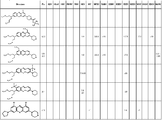
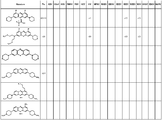


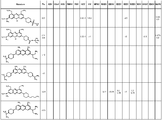

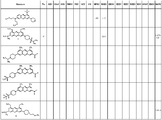




Classifications
-
- A—HUMAN NECESSITIES
- A61—MEDICAL OR VETERINARY SCIENCE; HYGIENE
- A61K—PREPARATIONS FOR MEDICAL, DENTAL OR TOILETRY PURPOSES
- A61K31/00—Medicinal preparations containing organic active ingredients
- A61K31/33—Heterocyclic compounds
- A61K31/395—Heterocyclic compounds having nitrogen as a ring hetero atom, e.g. guanethidine or rifamycins
- A61K31/54—Heterocyclic compounds having nitrogen as a ring hetero atom, e.g. guanethidine or rifamycins having six-membered rings with at least one nitrogen and one sulfur as the ring hetero atoms, e.g. sulthiame
- A61K31/5415—Heterocyclic compounds having nitrogen as a ring hetero atom, e.g. guanethidine or rifamycins having six-membered rings with at least one nitrogen and one sulfur as the ring hetero atoms, e.g. sulthiame ortho- or peri-condensed with carbocyclic ring systems, e.g. phenothiazine, chlorpromazine, piroxicam
-
- A—HUMAN NECESSITIES
- A61—MEDICAL OR VETERINARY SCIENCE; HYGIENE
- A61P—SPECIFIC THERAPEUTIC ACTIVITY OF CHEMICAL COMPOUNDS OR MEDICINAL PREPARATIONS
- A61P31/00—Antiinfectives, i.e. antibiotics, antiseptics, chemotherapeutics
- A61P31/12—Antivirals
-
- A—HUMAN NECESSITIES
- A61—MEDICAL OR VETERINARY SCIENCE; HYGIENE
- A61P—SPECIFIC THERAPEUTIC ACTIVITY OF CHEMICAL COMPOUNDS OR MEDICINAL PREPARATIONS
- A61P31/00—Antiinfectives, i.e. antibiotics, antiseptics, chemotherapeutics
- A61P31/12—Antivirals
- A61P31/14—Antivirals for RNA viruses
-
- A—HUMAN NECESSITIES
- A61—MEDICAL OR VETERINARY SCIENCE; HYGIENE
- A61P—SPECIFIC THERAPEUTIC ACTIVITY OF CHEMICAL COMPOUNDS OR MEDICINAL PREPARATIONS
- A61P31/00—Antiinfectives, i.e. antibiotics, antiseptics, chemotherapeutics
- A61P31/12—Antivirals
- A61P31/14—Antivirals for RNA viruses
- A61P31/16—Antivirals for RNA viruses for influenza or rhinoviruses
-
- A—HUMAN NECESSITIES
- A61—MEDICAL OR VETERINARY SCIENCE; HYGIENE
- A61P—SPECIFIC THERAPEUTIC ACTIVITY OF CHEMICAL COMPOUNDS OR MEDICINAL PREPARATIONS
- A61P31/00—Antiinfectives, i.e. antibiotics, antiseptics, chemotherapeutics
- A61P31/12—Antivirals
- A61P31/14—Antivirals for RNA viruses
- A61P31/18—Antivirals for RNA viruses for HIV
-
- A—HUMAN NECESSITIES
- A61—MEDICAL OR VETERINARY SCIENCE; HYGIENE
- A61P—SPECIFIC THERAPEUTIC ACTIVITY OF CHEMICAL COMPOUNDS OR MEDICINAL PREPARATIONS
- A61P31/00—Antiinfectives, i.e. antibiotics, antiseptics, chemotherapeutics
- A61P31/12—Antivirals
- A61P31/20—Antivirals for DNA viruses
- A61P31/22—Antivirals for DNA viruses for herpes viruses
-
- C—CHEMISTRY; METALLURGY
- C07—ORGANIC CHEMISTRY
- C07D—HETEROCYCLIC COMPOUNDS
- C07D417/00—Heterocyclic compounds containing two or more hetero rings, at least one ring having nitrogen and sulfur atoms as the only ring hetero atoms, not provided for by group C07D415/00
- C07D417/02—Heterocyclic compounds containing two or more hetero rings, at least one ring having nitrogen and sulfur atoms as the only ring hetero atoms, not provided for by group C07D415/00 containing two hetero rings
- C07D417/12—Heterocyclic compounds containing two or more hetero rings, at least one ring having nitrogen and sulfur atoms as the only ring hetero atoms, not provided for by group C07D415/00 containing two hetero rings linked by a chain containing hetero atoms as chain links
-
- C—CHEMISTRY; METALLURGY
- C07—ORGANIC CHEMISTRY
- C07D—HETEROCYCLIC COMPOUNDS
- C07D417/00—Heterocyclic compounds containing two or more hetero rings, at least one ring having nitrogen and sulfur atoms as the only ring hetero atoms, not provided for by group C07D415/00
- C07D417/14—Heterocyclic compounds containing two or more hetero rings, at least one ring having nitrogen and sulfur atoms as the only ring hetero atoms, not provided for by group C07D415/00 containing three or more hetero rings
-
- Y—GENERAL TAGGING OF NEW TECHNOLOGICAL DEVELOPMENTS; GENERAL TAGGING OF CROSS-SECTIONAL TECHNOLOGIES SPANNING OVER SEVERAL SECTIONS OF THE IPC; TECHNICAL SUBJECTS COVERED BY FORMER USPC CROSS-REFERENCE ART COLLECTIONS [XRACs] AND DIGESTS
- Y02—TECHNOLOGIES OR APPLICATIONS FOR MITIGATION OR ADAPTATION AGAINST CLIMATE CHANGE
- Y02A—TECHNOLOGIES FOR ADAPTATION TO CLIMATE CHANGE
- Y02A50/00—TECHNOLOGIES FOR ADAPTATION TO CLIMATE CHANGE in human health protection, e.g. against extreme weather
- Y02A50/30—Against vector-borne diseases, e.g. mosquito-borne, fly-borne, tick-borne or waterborne diseases whose impact is exacerbated by climate change
Definitions
- the present invention provides compositions and compounds for use in preventing and treating viral infections.
- the present invention thus has applications in the areas of medicine, pharmacology, virology, and medicinal chemistry.
- antiviral drugs interfere with viral replication through the inhibition of transcription of the viral genome. Commonly these drugs inhibit a specific protein involved in viral genomic transcription, such as a polymerase or transcriptase; which often produces unwanted toxicity, since viruses depend largely on host factors for viral genomic replication. Moreover, given the highly specific nature of the target, small mutations in the viral genome are often sufficient to create viral strains that are resistant to chemotherapeutics. In addition, since the drugs inhibit active viral replication, they cannot eliminate virus that is latent or sequestered in the host; thus, patients are forced to take antivirals and endure their toxic effects for long periods if not indefinitely. Not surprisingly, patients on such regimens cannot continue treatment, and remain infected as well as providing a potentially continuing source of additional infections.
- HIV human immunodeficiency virus
- HCV hepatitis C
- VEEV Venezuelan Equine Encephalitis virus
- VEEV Venezuelan equine encephalomyelitis
- Equines infected with VEEV may show one or more of the following signs: fever, depression, loss of appetite weakness, and central nervous system disorders (lack of coordination, chewing movements, head pressing, "sawhorse” stance, circling, paddling motion of the limbs, and convulsions).
- horses infected with VEEV may show no clinical signs before dying.
- VEEV vascular endothelial swine swine swine swine swine swine swine swine swine swine swine swine swine swine swine swine swine swine swine swine swine swine swine swine swine s, and bacterial meningitis. VEE might also be mistaken for toxic poisoning. Definitive diagnosis can be made by isolating the virus in a laboratory or by testing blood for the presence of antibodies to the virus.
- the virus that causes VEEV is transmitted primarily by mosquitoes that bite an infected animal and then bite and feed on another animal or human.
- the speed with which the disease spreads depends on the subtype of the VEEV virus and the density of mosquito populations.
- Enzootic subtypes of VEEV are diseases endemic to certain areas. Generally these serotypes do not spread to other localities. Enzootic subtypes are associated with the rodent-mosquito transmission cycle. These forms of the virus can cause human illness but generally do not affect equine health.
- Epizootic subtypes can spread rapidly through large populations. These forms of the virus are highly pathogenic to equines and can also affect human health.
- Equines rather than rodents, are the primary animal species that carry and spread the disease. Infected equines develop an enormous quantity of virus in their circulatory system. When a blood-feeding insect feeds on such animals, it picks up this virus and transmits it to other animals or humans. Although other animals, such as cattle, swine, and dogs, can become infected, they generally do not show signs of the disease or contribute to its spread.
- VEEV Naturally occurring outbreaks of VEEV are rare. In 1936, VEEV was first recognized as a disease of concern in Venezuela following a major outbreak of equine encephalomyelitis. From 1936 to 1968, equines in several South American countries suffered devastating outbreaks. In 1969, the disease moved north throughout Central America, finally reaching Mexico and Texas in 1971. The highly pathogenic form of VEEV has not occurred in the United States since 1971. However, in 1993 an outbreak of VEEV in the State of Chiapas, Mexico, prompted the U.S. Department of Agriculture to temporarily increase its surveillance activities and tighten its quarantine requirements for equine species entering the United States from Mexico. During outbreaks, the most effective way to prevent further spread of disease is to quarantine infected equines.
- West Nile virus Similar to VEE is West Nile virus (WNV), which was mentioned above.
- West Nile virus is named for a district in Kenya where the virus was first identified in humans in 1937. Outbreaks of the virus have occurred in a number of countries throughout Europe, the Middle East, Africa, Central Asia, and Australia, since that time. WNV was first detected in the Western Hemisphere in 1999, and since then the disease has spread across North America, Mexico, Puerto Rico, the Dominican Republic, Jamaica, Guadeloupe, and El Salvador. Symptoms range from a mild, flu-like illness (fever, headache, muscle and joint pain) and a red, bumpy rash, to meningitis. In rare cases those infected will develop encephalitis, which can include high fever, a stiff neck, disorientation, paralysis, convulsions, coma, and death in about ten percent of cases.
- Wilson et al discloses compounds with phenothiazine ringes covalently bonded to a bis-piperazine-xylene chain for treatment of tumours.
- WO 2005/054217 discloses compounds for use as antimicrobial agents.
- WO 02/096896 discloses compounds as photodiagnostic agents.
- PCT Publication WO 2008/124550 discloses small molecule therapeutics having "broad spectrum" antiviral properties.
- WO 2010/097626 discloses compounds for use in detecting and/or combating a pathogen.
- WO 2012/145567 discloses compounds for treating viral infections including Kunststoffuealan Equine Encephalitis, West Nile Virus and Hepatitis C. Nevertheless, there remains an acute need to provide medicinal treatments for viral diseases. The present invention meets these and other needs.
- the present invention provides a variety of compounds, compounds for use and compostions for treating viral infections, especially those described above.
- Various embodiments of the invention include, but are not limited to, the following:
- Y is optionally present; and when Y is present, Y is NR 12 , O, S, SO, or SO 2 , or a single or double bond between X 2 and X 3 ;
- R 12 is hydrogen or optionally substituted alkyl, alkylcarbonyl, arylcarbonyl, heteroarylcarbonyl, cycloalkycarbonyl, cycloheteroalkycarbonyl, aralkycarbonyl, heteroaralkylcarbonyl, (cycloalkyl)alkylcarbonyl, (cycloheteroalkyl)alkylcarbonyl, alkylaminocarbonyl, arylaminocarbonyl, aralkylaminocarbonyl, heteroarylaminocarbonyl, heteroaralkylaminocarbonyl, alkylsulfonyl, arylsulfonyl, heteroarylsufonyl, cycloalkylsulfonyl, alkyloxycarbonyl
- R 13' , R 14 and R 14' is selected independently from the group consisting of: hydrogen, halo, cyano, nitro, thio, amino, carboxy, formyl, and optionally substituted alkyl, alkylcarbonyloxy, arylcarbonyloxy, heteroarylcarbonyloxy, cycloalkylcarbonyloxy, cycloheteroalkylcarbonyloxy, aralkycarbonyloxy, heteroaralkylcarbonyloxy, (cycloalkyl)alkylcarbonyloxy, (cycloheteroalkyl)alkylcarbonyloxy, alkylcarbonyl, arylcarbonyl, heteroarylcarbonyl, cycloalkycarbonyl, cycloheteroalkycarbonyl, aralkycarbonyl, heteroaralkylcarbonyl, (cycloalkyl)alkylcarbonyl, (cycloheteroalkyl)alkylcarbonyl, alkylaminocarbony
- R 15 and R 16 are selected independently from the group consisting of: hydrogen and optionally substituted alkyl, alkylcarbonyl, arylcarbonyl, heteroarylcarbonyl, cycloalkycarbonyl, cycloheteroalkycarbonyl, aralkycarbonyl, heteroaralkylcarbonyl, (cycloalkyl)alkylcarbonyl, (cycloheteroalkyl)alkylcarbonyl, alkylaminocarbonyl, arylaminocarbonyl, aralkylaminocarbonyl, heteroarylaminocarbonyl, heteroaralkylaminocarbonyl, alkylsulfonyl, arylsulfonyl, heteroarylsufonyl, cycloalkylsulfonyl, alkyloxycarbonyl, aryloxycarbonyl, heteroaryloxycarbonyl, cycloalkylsulfonyl, alkyloxycarbonyl, ary
- the present invention provides a compound from the family of compounds just described wherein m is 1, such that X 1 is (CR 11 R 11' ), thereby defining X 1 as (CR 11a R 11b) , said compound having the structure:
- R 11a and R 11b are selected independently from the group consisting of: hydrogen, halo, cyano, nitro, thio, amino, carboxy, formyl, and optionally substituted alkyl, alkylcarbonyloxy, arylcarbonyloxy, heteroarylcarbonyloxy, cycloalkylcarbonyloxy, cycloheteroalkylcarbonyloxy, aralkycarbonyloxy, heteroaralkylcarbonyloxy, (cycloalkyl)alkylcarbonyloxy, (cycloheteroalkyl)alkylcarbonyloxy, alkylcarbonyl, arylcarbonyl, heteroarylcarbonyl, cycloalkycarbonyl, cycloheteroalkycarbonyl, aralkycarbonyl, heteroaralkylcarbonyl, (cycloalkyl)alkylcarbonyl, (cycloheteroalkyl)alkylcarbonyl, alkylaminocarbonyl, ary
- Y is not present; such compounds have the structure:
- Y is present; such compound have the structure:
- Yet other embodiments include those compounds in which each of n and o is 2, such that X 1 and X 2 have the form (CR 13 R 13' ) 2 and (CR 14 R 14' ) 2 respectively, defining thereby X 1 as (CR 13a R 13b )(CR 13c R 13d) and X 2 as (CR 14a R 14b )(CR 14c R 14d ), such compounds having the structure: wherein R 13a -R 14d are selected independently from the group consisting of: hydrogen, halo, cyano, nitro, thio, amino, carboxy, formyl, and optionally substituted alkyl, alkylcarbonyloxy, aryl-carbonyloxy, heteroarylcarbonyloxy, cycloalkylcarbonyloxy, cycloheteroalkylcarbonyloxy, aralkycarbonyloxy, heteroaralkylcarbonyloxy, (cycloalkyl)alkylcarbonyloxy, (cycloheteroalkyl)
- m is 2, such that X 1 is (CR 11 R 11' ) 2 , defining X 1 thereby defining X 1 as (CR 11a R 11b )(CR 11c R 11d ); such compounds having the structure: wherein R 11a -R 11d are selected independently from the group consisting of: hydrogen, halo, cyano, nitro, thio, amino, carboxy, formyl, and optionally substituted alkyl, alkylcarbonyloxy, arylcarbonyloxy, heteroarylcarbonyloxy, cycloalkylcarbonyloxy, cycloheteroalkylcarbonyloxy, aralkycarbonyloxy, heteroaralkylcarbonyloxy, (cycloalkyl)alkylcarbonyloxy, (cycloheteroalkyl)alkylcarbonyloxy, alkylcarbonyl, arylcarbonyl, heteroarylcarbonyl, cycloalkycarbonyl, cycloheteroalkycarbony
- R 11a -R 11d are selected independently from the group consisting of: hydrogen, halo, cyano, nitro, thio, amino, carboxy, formyl, and optionally substituted alkyl, alkylcarbonyloxy, arylcarbonyloxy, heteroarylcarbonyloxy, cycloalkylcarbonyloxy, cycloheteroalkylcarbonyloxy, aralkycarbonyloxy, heteroaralkylcarbonyloxy, (cycloalkyl)alkylcarbonyloxy, (cycloheteroalkyl)-alkylcarbonyloxy, alkylcarbonyl, arylcarbonyl, heteroarylcarbonyl, cycloalkycarbonyl, cycloheteroalkycarbonyl, aralkycarbonyl, heteroaralkylcarbonyl, (cycloalkyl)alkylcarbonyl, (cycloheteroalkycarbonyl, (cycloalkyl)alkylcarbonyl,
- R 11a -R 11d are selected independently from the group consisting of: hydrogen, halo, cyano, nitro, thio, amino, carboxy, formyl, and optionally substituted alkyl, alkylcarbonyloxy, arylcarbonyloxy, heteroarylcarbonyloxy, cycloalkylcarbonyloxy, cycloheteroalkylcarbonyloxy, aralkycarbonyloxy, heteroaralkylcarbonyloxy, (cycloalkyl)alkylcarbonyloxy, (cycloheteroalkyl)alkylcarbonyloxy, alkylcarbonyl, arylcarbonyl, heteroarylcarbonyl, cycloalkycarbonyl, cycloheteroalkycarbonyl, aralkycarbonyl, heteroaralkylcarbonyl, (cycloalkyl)alkylcarbonyl, (cycloalkyl)alkylcarbonyl, (cycloheteroalkycarbonyl,
- the present invention provides a compound as described herein for use in treating a viral disease in a mammal afflicted with such a disease.
- the viral disease is an etiological component of a respiratory syndrome selected from the group consisting of: bronchiolitis, the common cold, croup, influenza, and pneumonia.
- the Figure is a table showing the anti-viral activies of some compounds of the invention as determined by the methods described herein.
- the present invention provides novel compounds having the having structure: and its pharmaceutically acceptable salts, hydrates, and coordination compounds.
- R 1 -R 6 and R 7a -R 9b are selected independently from the group consisting of: hydrogen, halo, cyano, nitro, thio, amino, carboxyl, formyl, and optionally substituted alkyl, alkylcarbonyloxy, arylcarbonyloxy, heteroarylcarbonyloxy, cycloalkylcarbonyloxy, cycloheteroalkylcarbonyloxy, aralkycarbonyloxy, heteroaralkylcarbonyloxy, (cycloalkyl)alkylcarbonyloxy, (cycloheteroalkyl)alkylcarbonyloxy, alkylcarbonyl, arylcarbonyl, heteroarylcarbonyl, cycloalkycarbonyl, cycloheteroalkycarbonyl, aralkycarbonyl, heteroaralkylcarbonyl, (cycloalkyl)alkylcarbonyl, (cycloheteroalkycarbonyl, alkyla
- R 10 is hydrogen or optionally substituted alkyl, alkylcarbonyl, arylcarbonyl, heteroarylcarbonyl, cycloalkycarbonyl, cycloheteroalkycarbonyl, aralkycarbonyl, heteroaralkylcarbonyl, (cycloalkyl)alkylcarbonyl, (cycloheteroalkyl)alkylcarbonyl, alkylaminocarbonyl, arylaminocarbonyl, aralkylaminocarbonyl, heteroarylaminocarbonyl, heteroaralkylaminocarbonyl, alkylsulfonyl, arylsulfonyl, heteroarylsufonyl, cycloalkylsulfonyl, alkyloxycarbonyl, aryloxycarbonyl, heteroaryloxycarbonyl, cycloalkyloxycarbonyl, cycloheteroalkyloxycarbonyl, aralkyloxycarbonyloxy
- X 1 is (CR 11 R 11' ) m , wherein m is either 1 or 2 such that each of R 11 and R 11' independently for each value of m, is selected independently from the group consisting of: hydrogen, halo, cyano, nitro, thio, amino, carboxyl, formyl, and optionally substituted alkyl, alkylcarbonyloxy, arylcarbonyloxy, heteroarylcarbonyloxy, cycloalkylcarbonyloxy, cycloheteroalkylcarbonyloxy, aralkycarbonyloxy, heteroaralkylcarbonyloxy, (cycloalkyl)alkylcarbonyloxy, (cyclohetero-alkyl)alkylcarbonyloxy, alkylcarbonyl, arylcarbonyl, heteroarylcarbonyl, cycloalkycarbonyl, cycloheteroalkycarbonyl, aralkycarbonyl, heteroaralkylcarbonyl, (cycloal
- each value of m can yield as many as 2 x m different substituents, which will be denoted herein by the lower case letters a, b, c, ..., etc.
- the substitutent will define an unsaturated carbon, i.e., an sp or sp 2 carbon, such as in the case of nitriles or carbonyls, in which case the two substituents on a carbon atom are treated as a single unitary substituent.
- Y is optionally present. When Y is present, Y is NR 12 , O, S, SO, or SO 2 , or a single or double bond between X 2 and X 3 ;
- R 12 is hydrogen or optionally substituted alkyl, alkylcarbonyl, arylcarbonyl, heteroarylcarbonyl, cycloalkycarbonyl, cycloheteroalkycarbonyl, aralkycarbonyl, heteroaralkylcarbonyl, (cycloalkyl)alkylcarbonyl, (cycloheteroalkyl)alkylcarbonyl, alkylaminocarbonyl, arylaminocarbonyl, aralkylaminocarbonyl, heteroarylaminocarbonyl, heteroaralkylaminocarbonyl, alkylsulfonyl, arylsulfonyl, heteroarylsufonyl, cycloalkylsulfonyl, alkyloxycarbonyl,
- R 15 and R 16 are selected independently from the group consisting of: hydrogen and optionally substituted alkyl, alkylcarbonyl, arylcarbonyl, heteroarylcarbonyl, cycloalkycarbonyl, cycloheteroalkycarbonyl, aralkycarbonyl, heteroaralkylcarbonyl, (cycloalkyl)alkylcarbonyl, (cycloheteroalkyl)alkylcarbonyl, alkylaminocarbonyl, arylaminocarbonyl, aralkylaminocarbonyl, heteroarylaminocarbonyl, heteroaralkylaminocarbonyl, alkylsulfonyl, arylsulfonyl, heteroarylsufonyl, cycloalkylsulfonyl, alkyloxycarbonyl, aryloxycarbonyl, heteroaryloxycarbonyl, cycloalkylsulfonyl, alkyloxycarbonyl, ary
- the present invention provide compounds defined above in which m is 1, such that X 1 is (CR 11 R 11 ); thereby defining X 1 as (CR 11a R 11b) , said compounds having the structure: wherein R 11a and R 11b are selected independently from the group consisting of: hydrogen, halo, cyano, nitro, thio, amino, carboxy, formyl, and optionally substituted alkyl, alkylcarbonyloxy, arylcarbonyloxy, heteroarylcarbonyloxy, cycloalkylcarbonyloxy, cycloheteroalkylcarbonyloxy, aralkycarbonyloxy, heteroaralkylcarbonyloxy, (cycloalkyl)alkylcarbonyloxy, (cycloheteroalkyl)-alkylcarbonyloxy, alkylcarbonyl, arylcarbonyl, heteroarylcarbonyl, cycloalkycarbonyl, cycloheteroalkycarbonyl, aral
- Particular embodiments of these compounds include those in which each of R 15 and R 16 is hydrogen. More particular embodiments are those in which each of R 15 and R 16 is hydrogen, and each of R 2 -R 5 , R 7a -R 9b , R 11a and R 11b is hydrogen, each of R 1 and R 6 independently is optionally substituted alkyl, and R 10 is optionally substituted alkyl or alkylsulfonyl. Still more specific embodiments have the substituents just described and further each of R 15 and R 16 independently is alkyl or alkyloxyalkyl. More specific among these embodiments are those wherein each of R 15 and R 16 independently is alkyl, still more specifically methyl or ethyl.
- each of R 2 -R 5 , R 7a -R 9b , R 11 a, and R 11b is hydrogen
- each of R 1 and R 6 is selected independently from the group consisting of hydrogen, halo, and optionally substituted alkyl
- RIO is hydrogen, or optionally substituted alkyl, alkyloxycarbonyl, alkylsulfonyl, cycloalkylsulfonyl, and alkylaminosulfonyl.
- each of n and o is 2 for these compounds, such that X 1 and X 2 have the form (CR 13 R 13' ) 2 and (CR 14 R 14' ) 2 respectively, defining thereby X 1 as (CR 13a R 13b )(CR 13c R 13d ) and X 2 as (CR 14a R 14b )(CR 14c R 14d ), said compound having the structure: wherein R 13a -R 14d are selected independently from the group consisting of: hydrogen, halo, cyano, nitro, thio, amino, carboxy, formyl, and optionally substituted alkyl, alkylcarbonyloxy, arylcarbonyloxy, heteroarylcarbonyloxy, cycloalkylcarbonyloxy, cycloheteroalkylcarbonyloxy, aralkycarbonyloxy, heteroaralkylcarbonyloxy, (cycloalkyl)alkylcarbonyloxy, (cycloheteroalkyl)al
- each of R 2 -R 5 , R 7a -R 9b , R 11a , R 11b , and R 13a -R 14d is hydrogen
- each of R 1 and R 6 is selected independently from the group consisting of hydrogen, halo, and optionally substituted alkyl.
- Y is NR 12 or O.
- Y is NR 12, and R 10 and R 12 are selected independently from the group consisting of: hydrogen, or optionally substituted alkyl, alkyloxycarbonyl, alkylsulfonyl, cycloalkylsulfonyl, and alkylaminosulfonyl. In other more specific embodiments, Y is O.
- R 11a -R 11d are selected independently from the group consisting of: hydrogen, halo, cyano, nitro, thio, amino, carboxy, formyl, and optionally substituted alkyl, alkylcarbonyloxy, arylcarbonyloxy, heteroarylcarbonyloxy, cycloalkylcarbonyloxy, cycloheteroalkylcarbonyloxy, aralkycarbonyloxy, heteroaralkylcarbonyloxy, (cycloalkyl)alkylcarbonyloxy, (cycloheteroalkyl)alkylcarbonyloxy, alkylcarbonyl, arylcarbonyl, heteroarylcarbonyl, cycloalkycarbonyloxy,
- R 11a -R 11d are selected independently from the group consisting of: hydrogen, halo, cyano, nitro, thio, amino, carboxy, formyl, and optionally substituted alkyl, alkylcarbonyloxy, arylcarbonyloxy, heteroarylcarbonyloxy, cycloalkylcarbonyloxy, cycloheteroalkylcarbonyloxy, aralkycarbonyloxy, heteroaralkylcarbonyloxy, (cycloalkyl)alkylcarbonyloxy, (cycloheteroalkyl)alkylcarbonyloxy, alkylcarbonyl, arylcarbonyl, heteroarylcarbonyl, cycloalkycarbonyl, cycloheteroalkycarbonyl, aralkycarbonyl, heteroaralkylcarbonyl, (cycloalkyl)alkylcarbonyloxy, alkylcarbonyl, arylcarbonyl, heteroarylcarbonyl, cycloalky
- compounds of the invention have the description provided above ( Figure 3) but wherein Y is present; these compound have the structure: wherein R 11a -R 11d are selected independently from the group consisting of: hydrogen, halo, cyano, nitro, thio, amino, carboxy, formyl, and optionally substituted alkyl, alkylcarbonyloxy, arylcarbonyloxy, heteroarylcarbonyloxy, cycloalkylcarbonyloxy, cycloheteroalkylcarbonyloxy, aralkycarbonyloxy, heteroaralkylcarbonyloxy, (cycloalkyl)alkylcarbonyloxy, (cycloheteroalkyl)alkylcarbonyloxy, alkylcarbonyl, arylcarbonyl, heteroarylcarbonyl, cycloalkycarbonyl, cycloheteroalkycarbonyl, aralkycarbonyl, heteroaralkylcarbonyl, (cycloalkyl)alkyloxy,
- the present invention provides compounds as decribed herein for use in the treatment of a a viral disease in a mammal afflicted with such disease, , i.e., a compound encompassed with the compounds illustrated in Figure 1 above.
- the viral disease is an etiological component of a respiratory syndrome selected from the group consisting of: bronchiolitis, the common cold, croup, influenza, and pneumonia.
- Influenza is associated with the first three syndromes listed above; adenovirus with the first two and the third; and rhinovirus with the last syndrome.
- the present invention provides compounds and compositions for use in the treatment of a viral disease in a mammal afflicted with such disease.
- the viral disease is Influenza (Flu), Adenovirus (ADV), Human Corona Virus (HCoV), Herpes Simplex Virus (HSV), Rhinovirus (RHNV), Respiratory Syntactical Virus (RSV), Hepatitis C Virus (HCV), Human Immunodeficiency Virus (HIV), Monkey Pox Virus (MPXV), Rabies Virus (RABV), Dengue Virus (DENV), Easter Equine Encephalitis Virus (EEEV), Venezuelan Equine Encephalitis Virus (VEEV), Wester Equine Encephalitis Virus (WEEV), West Nile Virus (WNV), Chikungunya Virus (CKGV), Ebola Virus (EBOV), Marburg Virus (MARV).
- ADV Adenovirus
- HCV Herpes Simplex Virus
- RHNV Rhinovirus
- the compounds of the present invention can be synthesized using techniques and materials known to those of skill in the art.
- Starting materials for the compounds of the invention may be obtained using standard techniques and commercially available precursor materials, such as those available from Aldrich Chemical Co. (Milwaukee, Wis.), Sigma Chemical Co. (St. Louis, Mo.), Lancaster Synthesis (Windham, N.H.), Aspin Chemicals, Ltd. (New Brunswick, N.J.), Ryan Scientific (Columbia, S.C.), Maybridge (Cornwall, England), Arcos (Pittsburgh, Pa.), and Trans World Chemicals (Rockville, Md.)
- the procedures described herein for synthesizing the compounds of the invention may include one or more steps of protection and deprotection (e.g., the formation and removal of acetal groups).
- the synthetic procedures disclosed below can include various purification, such as column chromatography, flash chromatography, thin-layer chromatography (“TLC”), recrystallization, distillation, high-pressure liquid chromatography (“HPLC”) and the like.
- various techniques well known in the chemical arts for the identification and quantification of chemical reaction products such as proton and carbon-13 nuclear magnetic resonance ( 1 H and 13 C NMR), infrared and ultraviolet spectroscopy (“IR” and “UV”), X-ray crystallography, elemental analysis (“EA”).
- HPLC and mass spectroscopy can be used for identification, quantitation and purification as well.
- Compounds of the present invention can be administered in a variety of ways including enteral, parenteral and topical routes of administration.
- suitable modes of administration include oral, subcutaneous, transdermal, transmucosal, iontophoretic, intravenous, intramuscular, intraperitoneal, intranasal, subdural, rectal, vaginal, and the like.
- a composition comprising a compound described here, together with a pharmaceutically acceptable carrier or excipient.
- suitable pharmaceutically acceptable excipients include processing agents and drug delivery modifiers and enhancers, such as, for example, calcium phosphate, magnesium stearate, talc, monosaccharides, disaccharides, starch, gelatin, cellulose, methyl cellulose, sodium carboxymethyl cellulose, dextrose, hydroxypropyl- ⁇ -cyclodextrin, polyvinylpyrrolidinone, low melting waxes, ion exchange resins, and the like, as well as combinations of any two or more thereof.
- Other suitable pharmaceutically acceptable excipients are described in REMINGTON'S PHARMACEUTICAL SCIENCES, Mack Pub. Co., New Jersey (1991 ), which is incorporated herein by reference.
- compositions of the present invention may be in any form suitable for the intended method of administration, including, for example, a solution, a suspension, or an emulsion.
- Liquid carriers are typically used in preparing solutions, suspensions, and emulsions.
- Liquid carriers contemplated for use in the practice of the present invention include, for example, water, saline, pharmaceutically acceptable organic solvent(s), pharmaceutically acceptable oils or fats, and the like, as well as mixtures of two or more thereof.
- the liquid carrier may contain other suitable pharmaceutically acceptable additives such as solubilizers, emulsifiers, nutrients, buffers, preservatives, suspending agents, thickening agents, viscosity regulators, stabilizers, and the like.
- Suitable organic solvents include, for example, monohydric alcohols, such as ethanol, and polyhydric alcohols, such as glycols.
- Suitable oils include, for example, soybean oil, coconut oil, olive oil, safflower oil, cottonseed oil, and the like.
- the carrier can also be an oily ester such as ethyl oleate, isopropyl myristate, and the like.
- Compositions of the present invention may also be in the form of microparticles, microcapsules, liposomal encapsulates, and the like, as well as combinations of any two or more thereof.
- the compounds of the present invention may be administered orally, parenterally, sublingually, by inhalation spray, rectally, vaginally, or topically in dosage unit formulations containing conventional nontoxic pharmaceutically acceptable carriers, adjuvants, and vehicles as desired. Topical administration may also involve the use of transdermal administration such as transdermal patches or ionophoresis devices.
- parenteral as used herein includes subcutaneous injections, intravenous, intramuscular, intrasternal injection, or infusion techniques.
- sterile injectable aqueous or oleaginous suspensions may be formulated according to the known art using suitable dispersing or wetting agents and suspending agents.
- the sterile injectable preparation may also be a sterile injectable solution or suspension in a nontoxic parenterally acceptable diluent or solvent, for example, as a solution in 1,3-propanediol.
- acceptable vehicles and solvents that may be employed are water, Ringer's solution, and isotonic sodium chloride solution.
- sterile, fixed oils are conventionally employed as a solvent or suspending medium.
- any bland fixed oil may be employed including synthetic mono- or diglycerides.
- fatty acids such as oleic acid can be useful in the preparation of injectables.
- Suppositories for rectal or vaginal administration of the drug can be prepared by mixing the drug with a suitable nonirritating excipient such as cocoa butter and polyethylene glycols that are solid at ordinary temperatures but liquid at the rectal temperature and will therefore melt in the rectum and release the drug.
- a suitable nonirritating excipient such as cocoa butter and polyethylene glycols that are solid at ordinary temperatures but liquid at the rectal temperature and will therefore melt in the rectum and release the drug.
- Solid dosage forms for oral administration may include capsules, tablets, pills, powders, and granules.
- the active compound may be admixed with at least one inert diluent such as sucrose lactose or starch.
- Such dosage forms may also comprise, as is normal practice, additional substances other than inert diluents, e.g., lubricating agents such as magnesium stearate.
- the dosage forms may also comprise buffering agents. Tablets and pills can additionally be prepared with enteric coatings.
- Liquid dosage forms for oral administration may include pharmaceutically acceptable emulsions, solutions, suspensions, syrups, and elixirs containing inert diluents commonly used in the art, such as water.
- Such compositions may also comprise adjuvants, such as wetting agents, emulsifying and suspending agents, cyclodextrins, and sweetening, flavoring, and perfuming agents.
- the compounds of the present invention can also be administered in the form of liposomes.
- liposomes are generally derived from phospholipids or other lipid substances. Liposomes are formed by mono- or multilamellar hydrated liquid crystals that are dispersed in an aqueous medium. Any non-toxic, physiologically acceptable and metabolizable lipid capable of forming liposomes can be used.
- the present compositions in liposome form can contain, in addition to a compound of the present invention, stabilizers, preservatives, excipients, and the like.
- the preferred lipids are the phospholipids and phosphatidyl cholines (lecithins), both natural and synthetic. Methods to form liposomes are known in the art.
- While the compounds of the invention can be administered as the sole active pharmaceutical agent, they can also be used in combination with one or more other compound as described herein, or in combination with other agents used in the treatment or prevention of AD and related diseases, or both.
- the compounds of the present invention can be used, either singly or in combination as described above, in combination with other modalities for preventing or treating AD and related diseases or disorders.
- Such other treatment modalities include without limitation, surgery, radiation, hormone supplementation, and diet regulation. These can be performed sequentially (e.g., treatment with a compound of the invention following surgery or radiation) or in combination (e.g., in addition to a diet regimen).
- the additional active agents may generally be employed in therapeutic amounts as indicated by sources well known to those having ordinary skill in the art, e.g., the PHYSICIAN'S DESK REFERENCE (PDR) 53rd Edition (1999 ), which is incorporated herein by reference, or such therapeutically useful amounts as would be known to one of ordinary skill in the art.
- the compounds of the invention and the other therapeutically active agents can be administered at the recommended maximum clinical dosage or at lower doses. Dosage levels of the active compounds in the compositions of the invention may be varied to obtain a desired therapeutic response depending on the route of administration, severity of the disease and the response of the patient.
- the combination can be administered as separate compositions or as a single dosage form containing both agents.
- the therapeutic agents can be formulated as separate compositions that are given at the same time or different times, or the therapeutic agents can be given as a single composition.
- the present invention provides compounds for use in treating or preventing AD or similar disorder in a human or animal subject in which an amount of a compound of the invention that is effective to at least ameliorate disease symptoms.
- Effective amounts of the compounds of the invention generally include any amount sufficient to detectably modulate AD using standard measures, by other methods known to those having ordinary skill in the art, or by detecting prevention or alleviation of symptoms in a subject afflicted with AD.
- the amount of active ingredient that may be combined with the carrier materials to produce a single dosage form will vary depending upon the host treated and the particular mode of administration. It will be understood, however, that the specific dose level for any particular patient will depend upon a variety of factors including the activity of the specific compound employed, the age, body weight, general health, sex, diet, time of administration, route of administration, rate of excretion, drug combination, and the severity of the particular disease undergoing therapy.
- the prophylactically or therapeutically effective amount for a given situation can be readily determined by routine experimentation and is within the skill and judgment of the ordinary clinician.
- a prophylactically or therapeutically effective dose will generally be from about 0.1 mg kg -1 d -1 to about 100 mg kg -1 d -1 , preferably from about 1 mg kg -1 d -1 to about 20 mg kg -1 d -1 , and most preferably from about 10 mg kg -1 d -1 to about 10 mg kg -1 d -1 of a compound of the present invention, which may be administered in one or multiple doses.
- the compounds of the present invention can be synthesized using techniques and materials known to those of skill in the art.
- Starting materials for the compounds of the invention may be obtained using standard techniques and commercially available precursor materials, such as those available from Aldrich Chemical Co. (Milwaukee, Wis.), Sigma Chemical Co. (St. Louis, Mo.), Lancaster Synthesis (Windham, N.H.), Aspin Chemicals, Ltd. (New Brunswick, N.J.), Ryan Scientific (Columbia, S.C.), Maybridge (Cornwall, England), Arcos (Pittsburgh, Pa.), and Trans World Chemicals (Rockville, Md.)
- the procedures described herein for synthesizing the compounds of the invention may include one or more steps of protection and deprotection (e.g., the formation and removal of acetal groups).
- the synthetic procedures disclosed below can include various purifications, such as column chromatography, flash chromatography, thin-layer chromatography (“TLC”), recrystallization, distillation, high-pressure liquid chromatography (“HPLC”) and the like.
- various techniques well known in the chemical arts for the identification and quantification of chemical reaction products such as proton and carbon-13 nuclear magnetic resonance ( 1 H and 13 C NMR), infrared and ultraviolet spectroscopy (“IR” and “UV”), X-ray crystallography, elemental analysis (“EA”).
- HPLC and mass spectroscopy can be used for identification, quantitation and purification as well.
- 1-cyanophenothiazine as described in the literature starting from 2-aminobenzenethiol (2.1 mL, 2.46g, 20 mmol), 2,3-difiuorobenzonitrile (1.9mL, 2.83g, 20 mmol), and sodium hydride (1.09g, 27.3 mmol) in 10 mL of DMF. After crystallizing from dichloromethane-ethanol, obtained 1-cyanophenothiazine as a dark yellow powder (1.342g, 6 mmol, 30% yield).
- acetonitrile was used as the solvent instead of methanol and the addition of the amine was alternated with the addition of the solvent. Progress was monitored via LC/MS and TLC. Used flash silica gel chromatography to obtain unsymmetrical product as a blue solid (1.04g, 2.10 mmol, 50% yield) and the symmetrical dipiperazine as by-product.
- the 2 nd amination was performed with or without purification and isolation after the first amination. Progress of the reaction is monitored by TLC and LC/MS. The final product(s) were purified using flash silica gel chromatography. The asymmetrical adduct was obtained as the main product (139 mg, 0.224 mmol, 31 % yield) and the symmetrical dipiperazine adduct (83 mg, 0.127 mmol, 18% yield) was obtained as a minor by-product.
- phenothiazine (2.00g, 10.00 mmol) was dissolved in AcOH (120 mL) and a solution of Br 2 (10.0 mL) in AcOH (100 mL, 10% v/v, 195 mmol) was added all at once with vigorous stirring for 1.0 min. To this solution was added 400 mL of H 2 O and the red precipitate was filtered, washed with Et 2 O, and dried under vacuum to give 4.09g of a dark solid for a 94% yield.
- This compound was prepared according to a procedure by A. R. Katritzky et al., Synthesis, 1988, 215-217 .
- phenothiazine (10.0g, 50.18 mmol) in anhydrous THF (200 mL) and cooled to -78°C was added a solution of n -BuLi (24.1 mL, 60.2 mmol, 2.5 M in hexanes) dropwise.
- the mixture was stirred until a yellow precipitate formed, and then allowed to warm to room temperature, until a clear yellow solution resulted.
- the solution was again cooled to -78°C and CO 2 gas was bubbled through the mixture for 5 min.
- reaction mixture was quenched with ice cold 1 N HCL and extracted with EtOAC. The combined organic layers were washed with brine, dried over MgSO 4 , filtered and evaporated to give a residue. The residue was purified by flash silica gel chromatography to give of an beige solid.
- This compound was prepared according to a procedure by A. R. Katritzky et al., Synthesis, 1988, 215-217 .
- phenothiazine (10.0g, 50.18 mmol) in anhydrous THF (200 mL) and cooled to -78°C was added a solution of n -BuLi (24.1 mL, 60.2 mmol, 2.5 M in hexanes) dropwise.
- the mixture is stirred until a yellow precipitate forms and then allowed to warm to room temperature, until a clear yellow solution results.
- the solution is again cooled to -78°C and CO 2 gas is bubbled through the mixture for 5 min.
- reaction mixture was quenched with ice cold IN HCl and extracted with EtOAc. The combined organic layers were washed with brine, dried over MgSO 4 , filtered and evaporated to give a residue. The residue was purified by flash silica gel chromatography to give the dsired product.
- Phenothiazine (5.0g, 25 mmol) was suspended in 200 mL of glacial AcOH Then, 3.3 mL Br 2 (0.63 mol) in 200 mL of glacial was slowly added to the reaction mixture and stirred for 6h at room temperature. The reaction was cooled with an ice bath and 6.30 grams (50 mmol) of Na 2 SO 3 was added to the reaction mixture. By adding a little water (3.0 mL), a deep-violet color formed within three hours. After the addition of a solution of 4.10g (62 mmol) of KOH dissolved in water (1.01) a greenish solid formed, which was washed with a little cold 2-propanol. The solid was recrystallized with 2-propanol to give 7.90 g (88 %) as a green powder.
- 1,9-Dimethylphenothiazine (4.203g, 18.49 mmol) was dissolved in 130 mL of chloroform and crushed iodine (14.1g, 55.55 mmol, 3 eqs.) in 520 mL of chloroform was added over a period of 1.5h to 2h. Stirred for 1h to 4h. Once newly formed precipitate was filtered off or the solvent removed under vacuum, the resulting iodide salt was stirred with ether or hexane (sometimes overnight) to remove excess iodine then refiltered. After pumping down under vacuum, a brown precipitate was obtained as product (12.6 g)
- the bis(2-ethylphenyl)amine, sulfur and iodine in vial were combined and stirred in a preheated (150 °C) heating block for 15 min. The temperature was increased to 210°C, stirred and heated for an additional 45 min, and cooled. The dark mixture obtained was dissolved with 10% MeOH/CH 2 Cl 2 silica gel added, concentrated and purified by flash silica gel chromatography using ethyl acetate-hexane gradient to afford the desired product (40 %).
- Phenothiazin-5-ium iodide 400 mg, 0.567 mmol was dissolved in CHCl 3 (20 mL) and bis(2-methoxyethyl)amine (0.17mL, 1.13 mmol) was added dropwise. The mixture was stirred at RT overnight. The solvent was removed and the material was used without purification. The salt (200 mg, 0.281 mol) was dissolved in MeOH (20 mL) and a solution of N-Boc piperazine (105 mg, 0.562 mmol) was added. The mixture was stirred for 24 hrs and the solvent was removed by evaporation. The crude material was purified by flash silica gel chromatography to give a dark blue solid of the the desired product.
- each of the isomers was dissolved in CH 2 Cl 2 (4 mL) and trifluoroactic acid (4 mL) and heated at 70°C overnight. Each of the mixtures were allowed to cool to RT and the solvent was evaporated to give a residue for each isomer. The residue was purified by Prep TLC to give the two regioisomers. Alternatively, each regioisomer can be purified separately.
- tert-Butyl 3,7-dibromo-1,9-dichloro-10H-phenothiazine-10-carboxylate (540 mg, 1.03 mmol) was combined with Pd 2 (dba) 3 (27mg, 0.046 mmol), BINAP (40mg, 0.063 mmol), sodium tert-butoxide (312 mg, 3 mmol), N-Boc-piperazine (200 mg, 1.1 mmol), and xylenes (10 mL). The resulting mixture was heated at 140°C for 16h.
- tert-Butyl-7-bromo-3-(4-(tert-butoxycarbonyl)piperazin-1-yl)-1,9-dichloro-4aH-phenothiazine-10(0aH)-carboxylate 225 mg, 0.356 mmol
- Pd 2 (dba) 3 13 mg, 0.023 mmol
- BINAP (19 mg, 0.031 mmol
- sodium tert-butoxide 145 mg, 1.4 mmol
- pyrrolidine 45 ⁇ L, 0.53 mmol
- xylenes 10 mL
- tert-Butyl 3,7-dibromo-1,9-dichloro-10H-phenothiazine-10-carboxylate (1.0g, 1.89 mmol) was combined with Pd 2 (dba) 3 (50 mg, 0.085 mmol), BINAP (40 mg, 0.063 mmol), sodium tert-butoxide (577 mg, 5.54 mmol), bis(2-methoxyethyl)amine (0.28 mL, 1.9 mmol), and xylenes (10 mL). The resulting mixture was heated at 140°C for 16h.
- the obtained crude material was purified by flash chromatography (using ethyl acetate-hexane as an eluent) to afford the N-acetyl-2-trifluoromethyldiphenylamine (5.4g, 64 %).
- 1-i-Propyl-10H-phenothiazine (700 mg, 2.9 mmol) was dissolved in oxygen-free acetic acid (30 mL) and a solution of bromine also in acetic acid (3 mL Br 2 in 30 mL AcOH) was added to it all at once with vigorous stirring. Stirring was continued for about 1-2 min., after that water (100 mL) was added to mixture, dark red precipitate was filtered off, washed with ether, dried under vacuum (90% yield).
- the obtained crude material was purified by flash chromatography (using ethyl acetate hexane as an eluent) to afford the N-acetyl-2-ethyl-2'-methyldiphenylamine (35.4g, 65%).
- Virus was grown in the presence of four dilutions (10 ⁇ M, 2 ⁇ M, 0.4 ⁇ M and 0.08 ⁇ M) of the chemical compound tested with two controls using standard methods and materials for the relevant virus.
- the infected cell extract was collected using known methods, and the infectious virus concentration was determined using standard techniques.
- Each well was titrated by TCID 50 .
- Four serial dilutions in quadruplicate required to determine the titer of each well.
- To assay 36 replicates as directed, one hundred eight (108) 96-well plates will be required.
- Each drug was tested at four dilutions against one virus will require TCID 50 titers of 18 sample wells.
- DMSO Dimethylsulfoxide
- the compounds of the invention display surprisingly strong anti-viral properties across a startlingly wide range of viruses, especially viruses associated respiratory diseases including, but not limited to, bronchiolitis, the common cold, croup, influenza, and pneumonia.
- viruses associated respiratory diseases including, but not limited to, bronchiolitis, the common cold, croup, influenza, and pneumonia.
- the compound 3-(dimethylamino)-1,9-dimethyl-7-(4-methylpiperazin-1-yl)phenothiazin-5-ium iodide displayed smprisingly strong activity across all of the respiratory viruses tested, demonstrating unprecedented pan-respiratory anti-viral activity.
- a virus or multiple viruses
- a respiratory syndrome selected from the group consisting of: bronchiolitis, the common cold, croup, influenza, and pneumonia.
Landscapes
- Health & Medical Sciences (AREA)
- Chemical & Material Sciences (AREA)
- Life Sciences & Earth Sciences (AREA)
- Organic Chemistry (AREA)
- Virology (AREA)
- Medicinal Chemistry (AREA)
- Veterinary Medicine (AREA)
- Public Health (AREA)
- General Health & Medical Sciences (AREA)
- Animal Behavior & Ethology (AREA)
- Pharmacology & Pharmacy (AREA)
- Communicable Diseases (AREA)
- Nuclear Medicine, Radiotherapy & Molecular Imaging (AREA)
- General Chemical & Material Sciences (AREA)
- Chemical Kinetics & Catalysis (AREA)
- Oncology (AREA)
- Molecular Biology (AREA)
- Epidemiology (AREA)
- AIDS & HIV (AREA)
- Pulmonology (AREA)
- Tropical Medicine & Parasitology (AREA)
- Engineering & Computer Science (AREA)
- Biotechnology (AREA)
- Pharmaceuticals Containing Other Organic And Inorganic Compounds (AREA)
- Nitrogen- Or Sulfur-Containing Heterocyclic Ring Compounds With Rings Of Six Or More Members (AREA)
- Plural Heterocyclic Compounds (AREA)
Description
- The present invention provides compositions and compounds for use in preventing and treating viral infections. The present invention thus has applications in the areas of medicine, pharmacology, virology, and medicinal chemistry.
- Few good options are available for preventing or treating viral infections. The vast majority of antiviral drugs interfere with viral replication through the inhibition of transcription of the viral genome. Commonly these drugs inhibit a specific protein involved in viral genomic transcription, such as a polymerase or transcriptase; which often produces unwanted toxicity, since viruses depend largely on host factors for viral genomic replication. Moreover, given the highly specific nature of the target, small mutations in the viral genome are often sufficient to create viral strains that are resistant to chemotherapeutics. In addition, since the drugs inhibit active viral replication, they cannot eliminate virus that is latent or sequestered in the host; thus, patients are forced to take antivirals and endure their toxic effects for long periods if not indefinitely. Not surprisingly, patients on such regimens cannot continue treatment, and remain infected as well as providing a potentially continuing source of additional infections.
- Thus there is a need for better antiviral chemotherapeutics and more effective strategies for identifying such chemotherapeutics. The need is especially urgent for those suffering from chronic and debilitating viral infections, such as human immunodeficiency virus (HIV) and hepatitis C (HCV), for which no good treatment exists for the reasons noted above.
- But new viral threats are also on the horizon. The steady encroachment of civilization into the most remote regions of the globe has introduced the risk of exotic viral infections to the population at large. Each passing year brings an increasing number of reports of infections by hemorragic fevers, such as Ebola virus (EBOV), Marburg virus (Marburg), and Rift Valley Fever virus (RVFV). Still other viral infections can cause potentially debilitating effects, such as recurrent fevers, joint pain, and fatigue; these include: Punta Toro Virus (PTV), West Nile virus (WNV), chikungunya virus (CHK), Easter Equine Encephalitis virus (EEEV), Western Equine Encephalitis virus (WEEV), Lhasa virus (LASV), and Dengue virus (DENV).
- By way of example, one of the additional "new" viruses (that is, new with respect to the industrialized world) is Venezuelan Equine Encephalitis virus (also called Venezuelan equine encephalomyelitis, VEEV). VEEV is a mosquito-borne viral disease of all equine species, including horses, asses (wild and domestic), and zebras. Equines infected with VEEV may show one or more of the following signs: fever, depression, loss of appetite weakness, and central nervous system disorders (lack of coordination, chewing movements, head pressing, "sawhorse" stance, circling, paddling motion of the limbs, and convulsions). In some cases, horses infected with VEEV may show no clinical signs before dying. The clinical signs of VEEV can be confused with those of other diseases that affect the central nervous system. These include eastern equine encephalitis, western equine encephalitis, African horse sickness, rabies, tetanus, and bacterial meningitis. VEE might also be mistaken for toxic poisoning. Definitive diagnosis can be made by isolating the virus in a laboratory or by testing blood for the presence of antibodies to the virus.
- Humans also can contract this disease. Healthy adults who become infected by the virus may experience flu-like symptoms, such as high fevers and aches; and those having weakened immune systems, as well as the young and elderly, can become more severely ill or even die.
- The virus that causes VEEV is transmitted primarily by mosquitoes that bite an infected animal and then bite and feed on another animal or human. The speed with which the disease spreads depends on the subtype of the VEEV virus and the density of mosquito populations. Enzootic subtypes of VEEV are diseases endemic to certain areas. Generally these serotypes do not spread to other localities. Enzootic subtypes are associated with the rodent-mosquito transmission cycle. These forms of the virus can cause human illness but generally do not affect equine health. Epizootic subtypes, on the other hand, can spread rapidly through large populations. These forms of the virus are highly pathogenic to equines and can also affect human health. Equines, rather than rodents, are the primary animal species that carry and spread the disease. Infected equines develop an enormous quantity of virus in their circulatory system. When a blood-feeding insect feeds on such animals, it picks up this virus and transmits it to other animals or humans. Although other animals, such as cattle, swine, and dogs, can become infected, they generally do not show signs of the disease or contribute to its spread.
- Naturally occurring outbreaks of VEEV are rare. In 1936, VEEV was first recognized as a disease of concern in Venezuela following a major outbreak of equine encephalomyelitis. From 1936 to 1968, equines in several South American countries suffered devastating outbreaks. In 1969, the disease moved north throughout Central America, finally reaching Mexico and Texas in 1971. The highly pathogenic form of VEEV has not occurred in the United States since 1971. However, in 1993 an outbreak of VEEV in the State of Chiapas, Mexico, prompted the U.S. Department of Agriculture to temporarily increase its surveillance activities and tighten its quarantine requirements for equine species entering the United States from Mexico. During outbreaks, the most effective way to prevent further spread of disease is to quarantine infected equines. Controlling mosquito populations through pesticide treatments and eliminating insect-breeding sites will also enhance disease control. These measures should be accompanied by a large-scale equine immunization program. Equines in the United States should be vaccinated for VEE only when there is a serious threat that the disease could spread to this country.
- Similar to VEE is West Nile virus (WNV), which was mentioned above. West Nile virus is named for a district in Uganda where the virus was first identified in humans in 1937. Outbreaks of the virus have occurred in a number of countries throughout Europe, the Middle East, Africa, Central Asia, and Australia, since that time. WNV was first detected in the Western Hemisphere in 1999, and since then the disease has spread across North America, Mexico, Puerto Rico, the Dominican Republic, Jamaica, Guadeloupe, and El Salvador. Symptoms range from a mild, flu-like illness (fever, headache, muscle and joint pain) and a red, bumpy rash, to meningitis. In rare cases those infected will develop encephalitis, which can include high fever, a stiff neck, disorientation, paralysis, convulsions, coma, and death in about ten percent of cases.
- No cure or treatment is available for either VEEV or WNV, or the other viruses listed above; so public health experts emphasize prevention by avoiding areas where the disease has been detected or where disease vectors (usually mosquitoes) have been identified. However, that approach is becoming less reasonable as the world population grows. Moreover, some officials fear that one or both of these diseases, or other similar viruses in the toga- and flaviviridae, could be "weaponized" by a hostile government or terrorist organization to immobilize military personnel or important segments of the population in an attack.
- To make matters still more complicated, the above-mentioned viral threats span almost all of the recognized viral families, including the bunyaviruses, flaviviruses, filoviruses, arenaviruses, and togaviruses. Since viral families are defined in significant part by their differences in mechanism for genomic replication, therapeutic strategies that are focused on inhibiting genomic replication will be inadequate for large outbreaks of new, and especially weaponized, viruses.
- Wilson et al (Tetrahedron 64; 2008 p3429-36) discloses compounds with phenothiazine ringes covalently bonded to a bis-piperazine-xylene chain for treatment of tumours.
WO 2005/054217 discloses compounds for use as antimicrobial agents.WO 02/096896 PCT Publication WO 2008/124550 discloses small molecule therapeutics having "broad spectrum" antiviral properties.WO 2010/097626 discloses discloses compounds for use in detecting and/or combating a pathogen.WO 2012/145567 discloses compounds for treating viral infections including Venezuealan Equine Encephalitis, West Nile Virus and Hepatitis C. Nevertheless, there remains an acute need to provide medicinal treatments for viral diseases. The present invention meets these and other needs. - The present invention provides a variety of compounds, compounds for use and compostions for treating viral infections, especially those described above. Various embodiments of the invention include, but are not limited to, the following:
- In a first aspect, the invention provides novel compounds having useful anti-viral activity. In one embodiment, the present invention provides compounds having the structure:

- Y is optionally present; and when Y is present, Y is NR12, O, S, SO, or SO2, or a single or double bond between X2 and X3; R12 is hydrogen or optionally substituted alkyl, alkylcarbonyl, arylcarbonyl, heteroarylcarbonyl, cycloalkycarbonyl, cycloheteroalkycarbonyl, aralkycarbonyl, heteroaralkylcarbonyl, (cycloalkyl)alkylcarbonyl, (cycloheteroalkyl)alkylcarbonyl, alkylaminocarbonyl, arylaminocarbonyl, aralkylaminocarbonyl, heteroarylaminocarbonyl, heteroaralkylaminocarbonyl, alkylsulfonyl, arylsulfonyl, heteroarylsufonyl, cycloalkylsulfonyl, alkyloxycarbonyl, aryloxycarbonyl, heteroaryloxycarbonyl, cycloalkyloxycarbonyl, cycloheteroalkyloxycarbonyl, aralkyloxycarbonyloxycarbonyl, heteroaralkyloxycarbonyl, (cycloalkyl)alkyloxycarbonyl, and (cycloheteroalkyl)alkyloxycarbonyl; and X2 and X3 are (CR13R13')n and (CR14R14')o respectively, wherein each of n and o independently either 1, 2, or 3 such that the sum n + o is either 3, 4, or 5, and independently for each value of the n and o methylene units of X2 and X3, each of R13. R13', R14 and R14' is selected independently from the group consisting of: hydrogen, halo, cyano, nitro, thio, amino, carboxy, formyl, and optionally substituted alkyl, alkylcarbonyloxy, arylcarbonyloxy, heteroarylcarbonyloxy, cycloalkylcarbonyloxy, cycloheteroalkylcarbonyloxy, aralkycarbonyloxy, heteroaralkylcarbonyloxy, (cycloalkyl)alkylcarbonyloxy, (cycloheteroalkyl)alkylcarbonyloxy, alkylcarbonyl, arylcarbonyl, heteroarylcarbonyl, cycloalkycarbonyl, cycloheteroalkycarbonyl, aralkycarbonyl, heteroaralkylcarbonyl, (cycloalkyl)alkylcarbonyl, (cycloheteroalkyl)alkylcarbonyl, alkylaminocarbonyl, arylaminocarbonyl, aralkylaminocarbonyl, heteroarylaminocarbonyl, heteroaralkylaminocarbonyl, alkylcarbonylamino, arylcarbonylamino, heteroarylcarbonylamino, cycloalkylcarbonylamino, cycloheteroalkylcarbonylamino, aralkylcarbonylamino, heteroar alkylcarbonylamino, (cycloalkyl)alkylcarbonylamino, (cycloheteroalkyl)alkylcarbonylamino, dialkylamino, arylamino, diarylamino, aralkylamino, diaralkylamino, heteroarylamino, diheteroarylamino, heteroaralkylamino, diheteroaralkylamino, alkylsulfonyl, arylsulonyl, heteroarylsuony, cycloalkylsulfonyl, aralkycarbonylthiooxy, carbonylythio, heteroaralkylcarbonylthio, (cycloalkyloxy)carbonylthio, (cycloheteroalkyl)alkylcarbonylthio, alkyloxycarbonyl, aryloxycarbonyl, heteroaryloxycarbonyl, cycloalkyloxycarbonyl, cycloheteroalkyloxycarbonyl, aralyoxycarbonyloxloxycarbonyl, heteroaralkyloxycarbonyl, (cycloalkyl)alkyloxycarbonyl, (cycloheteroalkyl)alkyloxycarbonyl, iminoalkyl, iminocycloalkyl, iminocycloheteroalkyl, iminoaralkyl, iminoheteroaralkyl, (cycloalkyl)iminoalkyl, and (cycloheteroalkyl)iminoalkyl. When Y is not present X2 is R15 and X3 is R16, where R15 and R16 are selected independently from the group consisting of: hydrogen and optionally substituted alkyl, alkylcarbonyl, arylcarbonyl, heteroarylcarbonyl, cycloalkycarbonyl, cycloheteroalkycarbonyl, aralkycarbonyl, heteroaralkylcarbonyl, (cycloalkyl)alkylcarbonyl, (cycloheteroalkyl)alkylcarbonyl, alkylaminocarbonyl, arylaminocarbonyl, aralkylaminocarbonyl, heteroarylaminocarbonyl, heteroaralkylaminocarbonyl, alkylsulfonyl, arylsulfonyl, heteroarylsufonyl, cycloalkylsulfonyl, alkyloxycarbonyl, aryloxycarbonyl, heteroaryloxycarbonyl, cycloalkyloxycarbonyl, cycloheteroalkyloxycarbonyl, aralkyloxycarbonyloxycarbonyl, heteroaralkyloxycarbonyl, (cycloalkyl)alkyloxycarbonyl, and (cycloheteroalkyl)alkyloxycarbonyl.
- In a more specific embodiment, the present invention provides a compound from the family of compounds just described wherein m is 1, such that X1 is (CR11R11'), thereby defining X1 as (CR11aR11b), said compound having the structure:

- R11a and R11b are selected independently from the group consisting of: hydrogen, halo, cyano, nitro, thio, amino, carboxy, formyl, and optionally substituted alkyl, alkylcarbonyloxy, arylcarbonyloxy, heteroarylcarbonyloxy, cycloalkylcarbonyloxy, cycloheteroalkylcarbonyloxy, aralkycarbonyloxy, heteroaralkylcarbonyloxy, (cycloalkyl)alkylcarbonyloxy, (cycloheteroalkyl)alkylcarbonyloxy, alkylcarbonyl, arylcarbonyl, heteroarylcarbonyl, cycloalkycarbonyl, cycloheteroalkycarbonyl, aralkycarbonyl, heteroaralkylcarbonyl, (cycloalkyl)alkylcarbonyl, (cycloheteroalkyl)alkylcarbonyl, alkylaminocarbonyl, arylaminocarbonyl, aralkylaminocarbonyl, heteroarylaminocarbonyl, heteroaralkylaminocarbonyl, alkylcarbonylamino, arylcarbonylamino, heteroarylcarbonylamino, cycloalkylcarbonylamino, cycloheteroalkylcarbonylamino, aralkylcarbonylamino, heteroar alkylcarbonylamino, (cycloalkyl)alkylcarbonylamino, (cycloheteroalkyl)alkylcarbonylamino, dialkylamino, arylamino, diarylamino, aralkylamino, diaralkylamino, heteroarylamino, diheteroarylamino, heteroaralkylamino, diheteroaralkylamino, alkylsulfonyl, arylsulonyl, heteroarylsuony, cycloalkylsulfonyl, aralkycarbonylthiooxy, carbonylythio, heteroaralkylcarbonylthio, (cycloalkyloxy)carbonylthio, (cycloheteroalkyl)alkylcarbonylthio, alkyloxycarbonyl, aryloxycarbonyl, heteroaryloxycarbonyl, cycloalkyloxycarbonyl, cycloheteroalkyloxycarbonyl, aralyoxycarbonyloxloxycarbonyl, heteroaralkyloxycarbonyl, (cycloalkyl)alkyloxycarbonyl, (cycloheteroalkyl)alkyloxycarbonyl, iminoalkyl, iminocycloalkyl, iminocycloheteroalkyl, iminoaralkyl, iminoheteroaralkyl, (cycloalkyl)iminoalkyl, and (cycloheteroalkyl)iminoalkyl.
- In other embodiments Y is not present; such compounds have the structure:

- In still other embodiments Y is present; such compound have the structure:

- Yet other embodiments include those compounds in which each of n and o is 2, such that X1 and X2 have the form (CR13R13')2 and (CR14R14')2 respectively, defining thereby X1 as (CR13aR13b)(CR13cR13d) and X2 as (CR14aR14b)(CR14cR14d), such compounds having the structure:

- In still other embodiments, m is 2, such that X1 is (CR11R11')2, defining X1 thereby defining X1 as (CR11aR11b)(CR11cR11d); such compounds having the structure:

- Other embodiments include those, wherein Y above is not present, these compounds having the structure:

- Other embodiments of the compounds just described include those, wherein Y is present; these compounds having the structure:

- In another aspect, the present invention provides a compound as described herein for use in treating a viral disease in a mammal afflicted with such a disease. In more specific embodiments, the viral disease is an etiological component of a respiratory syndrome selected from the group consisting of: bronchiolitis, the common cold, croup, influenza, and pneumonia.
- The Figure is a table showing the anti-viral activies of some compounds of the invention as determined by the methods described herein.
- The following terms are used herein as defined below unless specifically stated otherwise:
- Optionally substituted refers to the replacement of hydrogen with a univalent or divalent radical. Suitable substitution groups include, for example, hydroxyl, nitro, amino, imino, cyano, halo, thio, thioamido, amidino, oxo, oxamidino, methoxamidino, imidino, guanidino, sulfonamido, carboxyl, formyl, loweralkyl, haloloweralkyl, loweralkoxy, haloloweralkoxy, loweralkoxyalkyl, alkylcarbonyl, arylcarbonyl, aralkylcarbonyl, heteroarylcarbonyl, heteroaralkylcarbonyl, alkylthio, aminoalkyl, cyanoalkyl, and the like as defined herein. The substitution group can itself be substituted. The group substituted onto the substitution group can be, for example, carboxyl, halo; nitro, amino, cyano, hydroxyl, loweralkyl, loweralkoxy, aminocarbonyl, -SR, thioamido, -SO3H, -SO2R or cycloalkyl, where R is typically hydrogen, hydroxyl or loweralkyl. When the substituted substituent includes a straight chain group, the substitution can occur either within the chain (e.g., 2-hydroxypropyl, 2-aminobutyl, and the like) or at the chain terminus (e.g., 2-hydroxyethyl, 3-cyanopropyl, and the like). Substituted substitutents can be straight chain, branched or cyclic arrangements of covalently bonded carbon or heteroatoms.
- Loweralkyl as used herein refers to branched or straight chain alkyl groups comprising one to ten carbon atoms that independently are unsubstituted or substituted, e.g., with one or more halogen, hydroxyl or other groups. Examples of loweralkyl groups include, but are not limited to, methyl, ethyl, propyl, isopropyl, n-butyl, t-butyl, n-hexyl, neopentyl, trifiuoromethyl, pentafiuoroethyl, and the like.
- Alkylenyl refers to a divalent straight chain or branched chain saturated aliphatic radical having from 1 to 20 carbon atoms. Typical alkylenyl groups employed in compounds of the present invention are loweralkylenyl groups that have from 1 to about 6 carbon atoms in their backbone.
- Alkenyl refers herein to straight chain, branched, or cyclic radicals having one or more double bonds and from 2 to 20 carbon atoms.
- Alkynyl refers herein to straight chain, branched, or cyclic radicals having one or more triple bonds and from 2 to 20 carbon atoms.
- Haloloweralkyl refers to a loweralkyl radical substituted with one or more halogen atoms.
- Loweralkoxy as used herein refers to RO- wherein R is loweralkyl. Representative examples of loweralkoxy groups include methoxy, ethoxy, t-butoxy, trifluoromethoxy and the like.
- Loweralkythio as used herein refers to RS- wherein R is loweralkyl.
- Alkoxyalkyl refers to the group -alk1-O-alk2, where alk1 is alkylenyl or alkenyl, and alk2 is alkyl or alkenyl.
- Loweralkoxyalkyl refers to an alkoxyalkyl as defined above, where alk1 is loweralkylenyl or loweralkenyl, and alk2 is loweralkyl or loweralkenyl.
- Aryloxyalkyl refers to the group alkylenyl-O-aryl. The term
- Aralkoxyalkyl refers to the group alkylenyl-O-aralkyl, where aralkyl is a lower-aralkyl.
- Cycloalkyl refers to a mono- or polycyclic, loweralkyl substituent. Typical cycloalkyl substituents have from 3 to 8 backbone (i.e., ring) atoms in which each backbone atom is optionally substituted carbon. When used in context with cycloalkyl substituents, the term polycyclic refers herein to fused, nonfused cyclic carbon structures and spirocycles. Examples of cycloalkyl groups include, but are not limited to, cyclopropyl, cyclobutyl, cyclopentyl, cyclohexyl, adamantyl, bornyl, norbornyl, and the like.
- Cycloheteroalkyl refers herein to cycloalkyl substituents that have from 1 to 5, and more typically from 1 to 4 heteroatoms (i.e., non-carbon atoms such as nitrogen, sulfur, and oxygen) in the ring structure, with the balance of atoms in the ring being optionally substituted carbon. Representative heterocycloalkyl moieties include, for example, morpholino, piperazinyl, piperidinyl, pyrrolidinyl, methylpryolidinyl, pyrrolidinone-yl, and the like.
- (Cycloalkyl)alkyl and (Cycloheteroalkyl)alkyl refer to alkyl chains substituted with cycloalkyl and cycloheteroalkyl groups respectively.
- Haloalkoxy refers to an alkoxy radical substituted with one or more halogen atoms. The term haloloweralkoxy refers to a loweralkoxy radical substituted with one or more halogen atoms.
- Halo refers herein to a halogen radical, such as fluorine, chlorine, bromine, or iodine.
- Aryl refers to monocyclic and polycyclic aromatic groups, or fused ring systems having at least one aromatic ring, having from 3 to 14 backbone carbon atoms. Examples of aryl groups include without limitation phenyl, naphthyl, dihydronaphtyl, tetrahydronaphthyl, and the like.
- Aralkyl refers to an alkyl group substituted with an aryl group. Typically, aralkyl groups employed in compounds of the present invention have from 1 to 6 carbon atoms incorporated within the alkyl portion of the aralkyl group. Suitable aralkyl groups employed in compounds of the present invention include, for example, benzyl, picolyl, and the like.
- Heteroaryl refers herein to aryl groups having from one to four heteroatoms as ring atoms in an aromatic ring with the remainder of the ring atoms being aromatic or non-aromatic carbon atoms. When used in connection with aryl substituents, the term polycyclic refers herein to fused and non-fused cyclic structures in which at least one cyclic structure is aromatic, such as, for example, benzodioxozolo, naphthyl, and the like. Exemplary heteroaryl moieties employed as substituents in compounds of the present invention include pyridyl, pyrimidinyl, thiazolyl, indolyl, imidazolyl, oxadiazolyl, tetrazolyl, pyrazinyl, triazolyl, thiophenyl, furanyl, quinolinyl, purinyl, benzothiazolyl, benzopyridyl, and benzimidazolyl, and the like.
- Amino refers herein to the group -NH2. The term loweralkylamino refers herein to the group -NRR' where R and R' are each independently selected from hydrogen or loweralkyl. The term arylamino refers herein to the group -NRR' where R is aryl and R' is hydrogen, loweralkyl, aryl, or aralkyl. The term aralkylamino refers herein to the group -NRR' where R is aralkyl and R' is hydrogen, loweralkyl, aryl, or aralkyl. The terms heteroarylamino and heteroaralkylamino are defined by analogy to arylamino and aralkylamino.
- Aminocarbonyl refers herein to the group -C(O)-NH2. The terms loweralkylaminocarbonyl, arylaminocarbonyl, aralkylaminocarbonyl, heteroarylaminocarbonyl, and heteroaralkylaminocarbonyl refer to -C(O)NRR' where R and R' independently are hydrogen and optionally substituted loweralkyl, aryl, aralkyl, heteroaryl, and heteroaralkyl respectively by analogy to the corresponding terms above.
- Thio refers to -SH. The terms loweralkylthio, arylthio, heteroarylthio, cycloalkylthio, cycloheteroalkylthio, aralkylthio, heteroaralkylthio, (cycloalkyl)alkylthio, and (cycloheteroalkyl)alkylthio refer to -SR, where R is optionally substituted loweralkyl, aryl, heteroaryl, cycloalkyl, cycloheteroalkyl, aralkyl, heteroaralkyl, (cycloalkyl)alkyl, and (cycloheteroalkyl)alkyl respectively.
- Sulfonyl refers herein to the group -SO2-. The terms loweralkylsulfonyl, arylsulfonyl, heteroarylsulfonyl, cycloalkylsulfonyl, cycloheteroalkylsulfonyl, aralkylsulfonyl, heteroaralkylsulfonyl, (cycloalkyl)alkylsulfonyl, and (cycloheteroalkyl)alkylsulfonyl refer to -SO2R where R is optionally substituted loweralkyl, aryl, heteroaryl, cycloalkyl, cycloheteroalkyl, aralkyl, heteroaralkyl, (cycloalkyl)alkyl, and (cycloheteroalkyl)alkyl respectively.
- Sulfinyl refers herein to the group -SO-. The terms loweralkylsulfinyl, arylsulfinyl, heteroarylsulfinyl, cycloalkylsulfinyl, cycloheteroalkylsulfinyl, aralkylsulfinyl, heteroaralkylsulfinyl, (cycloalkyl)alkylsarlfinyl, and (cycloheteroalkyl)alkylsulfinyl refer to - SOR where R is optionally substituted loweralkyl, aryl, heteroaryl, cycloalkyl, cycloheteroalkyl, aralkyl, heteroaralkyl, (cycloalkyl)alkyl, and (cycloheteroalkyl)alkyl respectively.
- Formyl refers to -C(O)H.
- Carboxyl refers to -C(O)OH.
- Carbonyl refers to the divalent group -C(O)-. The terms loweralkylcarbonyl, arylcarbonyl, heteroarylcarbonyl, cycloalkylcarbonyl, cycloheteroalkylcarbonyl, aralkycarbonyl, heteroaralkylcarbonyl, (cycloalkyl)alkylcarbonyl, and (cycloheteroalkyl)alkylcarbonyl refer to -C(O)R, where R is optionally substituted loweralkyl, aryl, heteroaryl, cycloalkyl, cycloheteroalkyl, aralkyl, heteroaralkyl, (cycloalkyl)alkyl, and (cycloheteroalkyl)alkyl respectively.
- Thiocarbonyl refers to the group -C(S)-. The terms loweralkylthiocarbonyl, arylthiocarbonyl, heteroarylthiocarbonyl, cycloalkylthiocarbonyl, cycloheteroalkylthiocarbonyl, aralkylthiocarbonyloxlthiocarbonyl, heteroaralkylthiocarbonyl, (cycloalkyl)alkylthio carbonyl, and (cycloheteroalkyl) alkylthiocarbonyl refer to -C(S)R, where R is optionally substituted loweralkyl, aryl, heteroaryl, cycloalkyl, cycloheteroalkyl, aralkyl, heteroaralkyl, (cycloalkyl)alkyl, and (cycloheteroalkyl)alkyl respectively.
- Carbonyloxy refers generally to the group -C(O)-O-. The terms loweralkylcarbonyloxy, arylcarbonyloxy, heteroarylcarbonyloxy, cycloalkylcarbonyloxy, cycloheteroalkylcarbonyloxy, aralkylcarbonyloxy, heteroaralkylcarbonyloxy, (cycloalkyl)alkylcarbonyloxy, (cycloheteroalkyl)alkylcarbonyloxy refer to -C(O)OR, where R is optionally substituted loweralkyl, aryl, heteroaryl, cycloalkyl, cycloheteroalkyl, aralkyl, heteroaralkyl, (cycloalkyl)alkyl, and (cycloheteroalkyl)alkyl respectively.
- Oxycarbonyl refers to the group -O-C(O)-. The terms loweralkyloxycarbonyl, aryloxycarbonyl, heteroaryloxycarbonyl, cycloalkyloxycarbonyl, cycloheteroalkyloxycarbonyl, aralkyloxycarbonyloxycarbonyl, heteroaralkyloxycarbonyl, (cycloalkyl)alkyloxycarbonyl, (cycloheteroalkyl)alkyloxycarbonyl refer to -O-C(O)-R, where R is optionally substituted loweralkyl, aryl, heteroaryl, cycloalkyl, cycloheteroalkyl, aralkyl, heteroaralkyl, (cycloalkyl)alkyl, and (cycloheteroalkyl)alkyl respectively.
- Carbonylamino refers to the group -NH-C(O)-. The terms loweralkylcarbonylamino, arylcarbonylamino, heteroarylcarbonylamino, cycloalkylcarbonylamino, cycloheteroalkylcarbonylamino, aralkylcarbonylamino, heteroaralkylcarbonylamino, (cycloalkyl)alkylcarbonylamino, and (cycloheteroalkyl)alkylcarbonylamino refer to -NH-C(O)R-, where R is optionally substituted loweralkyl, aryl, heteroaryl, cycloalkyl, cycloheteroalkyl, aralkyl, heteroaralkyl, (cycloalkyl)alkyl, or (cycloheteroalkyl)alkyl respectively. In addition, the present invention includes n-substituted carbonylamino (-NR'C(O)R), where R' is optionally substituted loweralkyl, aryl, heteroaryl, aralkyl, or heteroaralkyl and R retains the previous defintion.
- Carbonylthio refers to the group -C(O)-S-. The terms loweralkylcarbonylthio, arylcarbonylthio, heteroarylcarbonylthio, cycloalkylcarbonylthio, cycloheteroalkylcarbonylthio, aralkylcarbonylthio, heteroaralkylcarbonylthio, (cycloalkyl)alkylcarbonylthio, (cycloheteroalkyl)alkylcarbonylthio refer to -C(O)SR, where R is optionally substituted loweralkyl, aryl, heteroaryl, cycloalkyl, cycloheteroalkyl, aralkyl, heteroaralkyl, (cycloalkyl)alkyl, and (cycloheteroalkyl)alkyl respectively.
- Guanidino or Guanidyl refers to moieties derived from guanidine, H2N-C(=NH)-NH2. Such moieties include those bonded at the nitrogen atom currying the formal double bond (the 2-position of the guanidine, e.g., diaminomethyleneamino, ((H2-N)2-C=NH-) and those bonded at either of the nitrogen atoms currying a formal single bond (the 1- or 3-positions of the guanidine, e.g., H2N-C(=NH)-NH-). The hydrogen atoms at either nitrogen can be replaced with a suitable substituent, such as loweralkyl, aryl, or loweraralkyl.
- Amidino refers to the moieties R-C(=N)-NR' (the radical being at the N 1 nitrogen) and R(NR')C=N- (the radical being at the N 2 nitrogen), where R and R' can be hydrogen, loweralkyl, aryl, or loweraralkyl.
- Imino refers to the group -C(=NR)-, where R can be hydrogen or optionally substituted loweralkyl, aryl, heteroaryl, or heteroaralkyl respectively. The terms iminoloweralkyl, iminocycloalkyl, iminocycloheteroalkyl, iminoaralkyl, iminoheteroaralkyl, (cycloalkyl)iminoalkyl, (cycloiminoalkyl)alkyl, (cycloiminoheteroalkyl)alkyl, and (cycloheteroalkyl)iminoalkyl refer to optionally substituted loweralkyl, cycloalkyl, cycloheteroalkyl, aralkyl, heteroaralkyl, (cycloalkyl)alkyl, and (cycloheteroalkyl)alkyl groups that include an imino group, respectively.
- Oximino refers to the group -C(=NOR)-, where R can be hydrogen (hydroximino) or optionally substituted loweralkyl, aryl, heteroaryl, or heteroaralkyl respectively. The terms oximinoloweralkyl, oximinocycloalkyl, oximinocycloheteroalkyl, oximinoaralkyl, oximinoheteroaralkyl, (cycloalkyl)oximinoalkyl, (cyclooximinoalkyl)alkyl, (cyclooximinoheteroalkyl)alkyl, and (cycloheteroalkyl)oximinoalkyl refer to optionally substituted loweralkyl, cycloalkyl, cycloheteroalkyl, aralkyl, heteroaralkyl, (cycloalkyl)alkyl, and (cycloheteroalkyl)alkyl groups that include an oximino group, respectively.
- Methylene as used herein refers to an unsubstituted, monosubstituted, or disubstituted carbon atom having a formal sp 3 hybridization (i.e., -CRR'-, where R and R' are hydrogen or independent substituents).
- Methine as used herein refers to an unsubstituted or substituted carbon atom having a formal sp 2 hybridization (i.e., CR= or =CR-, where R is hydrogen or a substituent).
- In a first aspect, the present invention provides novel compounds having the having structure:

- Those having ordinary skill in the art will appreciate that compounds having the structure shown above (Figure 1) can exist in a variety of formal hybridization structures that may or may not include a formal charge; thus, the structural formula for shown above (and all similar formulas herein) implicitly includes all equivalent resonance structures including any charges. Similarly, the illustration of any specific resonance structure herein is defined to include all equivalent resonance structures implicitly unless specifically noted otherwise. The identification of such resonance structures and their equivalents is well known to persons having ordinary skill in the art.
- R1-R6 and R7a-R9b are selected independently from the group consisting of: hydrogen, halo, cyano, nitro, thio, amino, carboxyl, formyl, and optionally substituted alkyl, alkylcarbonyloxy, arylcarbonyloxy, heteroarylcarbonyloxy, cycloalkylcarbonyloxy, cycloheteroalkylcarbonyloxy, aralkycarbonyloxy, heteroaralkylcarbonyloxy, (cycloalkyl)alkylcarbonyloxy, (cycloheteroalkyl)alkylcarbonyloxy, alkylcarbonyl, arylcarbonyl, heteroarylcarbonyl, cycloalkycarbonyl, cycloheteroalkycarbonyl, aralkycarbonyl, heteroaralkylcarbonyl, (cycloalkyl)alkylcarbonyl, (cycloheteroalkyl)alkylcarbonyl, alkylaminocarbonyl, arylaminocarbonyl, aralkylaminocarbonyl, heteroarylaminocarbonyl, heteroaralkylaminocarbonyl, alkylcarbonylamino, arylcarbonylamino, heteroarylcarbonylamino, cycloalkylcarbonylamino, cycloheteroalkylcarbonylamino, aralkylcarbonylamino, heteroaralkylcarbonylamino, (cycloalkyl)alkylcarbonylamino, (cycloheteroalkyl)alkylcarbonylamino, dialkylamino, arylamino, diarylamino, aralkylamino, diaralkylamino, heteroarylamino, diheteroarylamino, heteroaralkylamino, diheteroaralkylamino, alkylsulfonyl, arylsulonyl, heteroarylsuonyl, cycloalkylsulfonyl, aralkycarbonylthiooxy, carbonylthio, heteroar alkylcarbonylthio, (cycloalkyloxy)carbonylthio, (cycloheteroalkyl)alkylcarbonylthio, alkyloxycarbonyl, aryloxycarbonyl, heteroaryloxycarbonyl, cycloalkyloxycarbonyl, cycloheteroalkyloxycarbonyl, ar alkyloxycarbonyloxloxycarbonyl, heteroaralkyloxycarbonyl, (cycloalkyl)alkyloxycarbonyl, (cycloheteroalkyl)alkyloxycarbonyl, iminoalkyl, iminocycloalkyl, iminocycloheteroalkyl, iminoaralkyl, iminoheteroaralkyl, (cycloalkyl)iminoalkyl, and (cycloheteroalkyl)iminoalkyl. R6 is halo or optionally substituted alkyl.
- R10 is hydrogen or optionally substituted alkyl, alkylcarbonyl, arylcarbonyl, heteroarylcarbonyl, cycloalkycarbonyl, cycloheteroalkycarbonyl, aralkycarbonyl, heteroaralkylcarbonyl, (cycloalkyl)alkylcarbonyl, (cycloheteroalkyl)alkylcarbonyl, alkylaminocarbonyl, arylaminocarbonyl, aralkylaminocarbonyl, heteroarylaminocarbonyl, heteroaralkylaminocarbonyl, alkylsulfonyl, arylsulfonyl, heteroarylsufonyl, cycloalkylsulfonyl, alkyloxycarbonyl, aryloxycarbonyl, heteroaryloxycarbonyl, cycloalkyloxycarbonyl, cycloheteroalkyloxycarbonyl, aralkyloxycarbonyloxycarbonyl, heteroaralkyloxycarbonyl, (cycloalkyl)alkyloxycarbonyl, and (cycloheteroalkyl)alkyloxycarbonyl.
- X1 is (CR11R11') m , wherein m is either 1 or 2 such that each of R11 and R11' independently for each value of m, is selected independently from the group consisting of: hydrogen, halo, cyano, nitro, thio, amino, carboxyl, formyl, and optionally substituted alkyl, alkylcarbonyloxy, arylcarbonyloxy, heteroarylcarbonyloxy, cycloalkylcarbonyloxy, cycloheteroalkylcarbonyloxy, aralkycarbonyloxy, heteroaralkylcarbonyloxy, (cycloalkyl)alkylcarbonyloxy, (cyclohetero-alkyl)alkylcarbonyloxy, alkylcarbonyl, arylcarbonyl, heteroarylcarbonyl, cycloalkycarbonyl, cycloheteroalkycarbonyl, aralkycarbonyl, heteroaralkylcarbonyl, (cycloalkyl)alkylcarbonyl, (cycloheteroalkyl)alkylcarbonyl, alkylaminocarbonyl, arylaminocarbonyl, aralkylaminocarbonyl, heteroarylaminocarbonyl, heteroaralkylaminocarbonyl, alkylcarbonylamino, arylcarbonylamino, heteroarylcarbonylamino, cycloalkylcarbonylamino, cycloheteroalkylcarbonylamino, aralkylcarbonylamino, heteroaralkylcarbonylamino, (cycloalkyl)alkylcarbonylamino, (cycloheteroalkyl)alkylcarbonylamino, dialkylamino, arylamino, diarylamino, aralkylamino, diaralkylamino, heteroarylamino, diheteroarylamino, heteroaralkylamino, diheteroaralkylamino, alkylsulfonyl, arylsulonyl, heteroarylsuonyl, cycloalkylsulfonyl, aralkycarbonylthiooxy, carbonylythio, heteroaralkylcarbonylthio, (cycloalkyloxy)carbonylthio, (cycloheteroalkyl)alkylcarbonylthio, alkyloxycarbonyl, aryloxycarbonyl, heteroaryloxycarbonyl, cycloalkyloxycarbonyl, cycloheteroalkyloxycarbonyl, aralyoxycarbonyloxloxycarbonyl, heteroaralkyloxycarbonyl, (cycloalkyl)alkyloxycarbonyl, (cycloheteroalkyl)alkyloxycarbonyl, iminoalkyl, iminocycloalkyl, iminocycloheteroalkyl, iminoaralkyl, iminoheteroaralkyl, (cycloalkyl)iminoalkyl, and (cycloheteroalkyl)iminoalkyl.
- As used herein, the phrase "independently for each value of m, is selected independently" refers to the fact that each methylene unit can include two different substituents (when the carbon atom is fully saturated). In other words, each value of m can yield as many as 2 x m different substituents, which will be denoted herein by the lower case letters a, b, c, ..., etc. Thus, as used herein the group denoted (CR11R11')m" will yield (CR11aR11b) for m = 1, (CR11aR11b)(CR11cR11d) for m = 2, etc. In some cases, as will be obvious to those having ordinary skill in the art, the substitutent will define an unsaturated carbon, i.e., an sp or sp 2 carbon, such as in the case of nitriles or carbonyls, in which case the two substituents on a carbon atom are treated as a single unitary substituent.
- Y is optionally present. When Y is present, Y is NR12, O, S, SO, or SO2, or a single or double bond between X2 and X3 ; R12 is hydrogen or optionally substituted alkyl, alkylcarbonyl, arylcarbonyl, heteroarylcarbonyl, cycloalkycarbonyl, cycloheteroalkycarbonyl, aralkycarbonyl, heteroaralkylcarbonyl, (cycloalkyl)alkylcarbonyl, (cycloheteroalkyl)alkylcarbonyl, alkylaminocarbonyl, arylaminocarbonyl, aralkylaminocarbonyl, heteroarylaminocarbonyl, heteroaralkylaminocarbonyl, alkylsulfonyl, arylsulfonyl, heteroarylsufonyl, cycloalkylsulfonyl, alkyloxycarbonyl, aryloxycarbonyl, heteroaryloxycarbonyl, cycloalkyloxycarbonyl, cycloheteroalkyloxycarbonyl, aralkyloxycarbonyloxycarbonyl, heteroaralkyloxycarbonyl, (cycloalkyl)alkyloxycarbonyl, and (cycloheteroalkyl)alkyloxycarbonyl; and X2 and X3 are (CR13R13') n and (CR14R14') o respectively, wherein each of n and o independently either 1, 2, or 3 such that the sum n + o is either 3, 4, or 5, and for each of the n and o methtylene units of X2 and X3, each of R13a -R14b is selected independently from the group consisting of: hydrogen, halo, cyano, nitro, thio, amino, carboxy, formyl, and optionally substituted alkyl, alkylcarbonyloxy, arylcarbonyloxy, heteroarylcarbonyloxy, cycloalkylcarbonyloxy, cycloheteroalkylcarbonyloxy, aralkycarbonyloxy, heteroaralkylcarbonyloxy, (cycloalkyl)alkylcarbonyloxy, (cycloheteroalkyl)alkylcarbonyloxy, alkylcarbonyl, arylcarbonyl, heteroarylcarbonyl, cycloalkycarbonyl, cycloheteroalkycarbonyl, aralkycarbonyl, heteroaralkylcarbonyl, (cycloalkyl)alkylcarbonyl, (cycloheteroalkyl)alkylcarbonyl, alkylaminocarbonyl, arylaminocarbonyl, aralkylaminocarbonyl, heteroarylaminocarbonyl, heteroaralkylaminocarbonyl, alkylcarbonylamino, arylcarbonylamino, heteroarylcarbonylamino, cycloalkylcarbonylamino, cycloheteroalkylcarbonylamino, aralkylcarbonylamino, heteroaralkylcarbonylamino, (cycloalkyl)alkylcarbonylamino, (cycloheteroalkyl)alkylcarbonylamino, dialkylamino, arylamino, diarylamino, aralkylamino, diaralkylammo, heteroarylamino, diheteroarylamino, heteroaralkylamino, diheteroaralkylammo, alkylsulfonyl, arylsulonyl, heteroarylsuony, cycloalkylsulfonyl, aralkycarbonylthiooxy, carbonylythio, heteroaralkylcarbonylthio, (cycloalkyloxy)carbonylthio, (cycloheteroalkyl)alkylcarbonylthio, alkyloxycarbonyl, aryloxycarbonyl, heteroaryloxycarbonyl, cycloalkyloxycarbonyl, cycloheteroalkyloxycarbonyl, aralyoxycarbonyloxloxycarbonyl, heteroaralkyloxycarbonyl, (cycloalkyl)alkyloxycarbonyl, (cycloheteroalkyl)alkyloxycarbonyl, iminoalkyl, iminocycloalkyl, iminocycloheteroalkyl, iminoaralkyl, iminoheteroaralkyl, (cycloalkyl)iminoalkyl, and (cycloheteroalkyl)iminoalkyl.
- When Y is not present X2 is R15 and X3 is R16, where R15 and R16 are selected independently from the group consisting of: hydrogen and optionally substituted alkyl, alkylcarbonyl, arylcarbonyl, heteroarylcarbonyl, cycloalkycarbonyl, cycloheteroalkycarbonyl, aralkycarbonyl, heteroaralkylcarbonyl, (cycloalkyl)alkylcarbonyl, (cycloheteroalkyl)alkylcarbonyl, alkylaminocarbonyl, arylaminocarbonyl, aralkylaminocarbonyl, heteroarylaminocarbonyl, heteroaralkylaminocarbonyl, alkylsulfonyl, arylsulfonyl, heteroarylsufonyl, cycloalkylsulfonyl, alkyloxycarbonyl, aryloxycarbonyl, heteroaryloxycarbonyl, cycloalkyloxycarbonyl, cycloheteroalkyloxycarbonyl, ar alkyloxycarbonyloxycarbonyl, heteroar alkyloxycarbonyl, (cycloalkyl)alkyloxycarbonyl, and (cycloheteroalkyl)alkyloxycarbonyl.
- In one embodiment, the present invention provide compounds defined above in which m is 1, such that X1 is (CR11R11); thereby defining X1 as (CR11aR11b), said compounds having the structure:
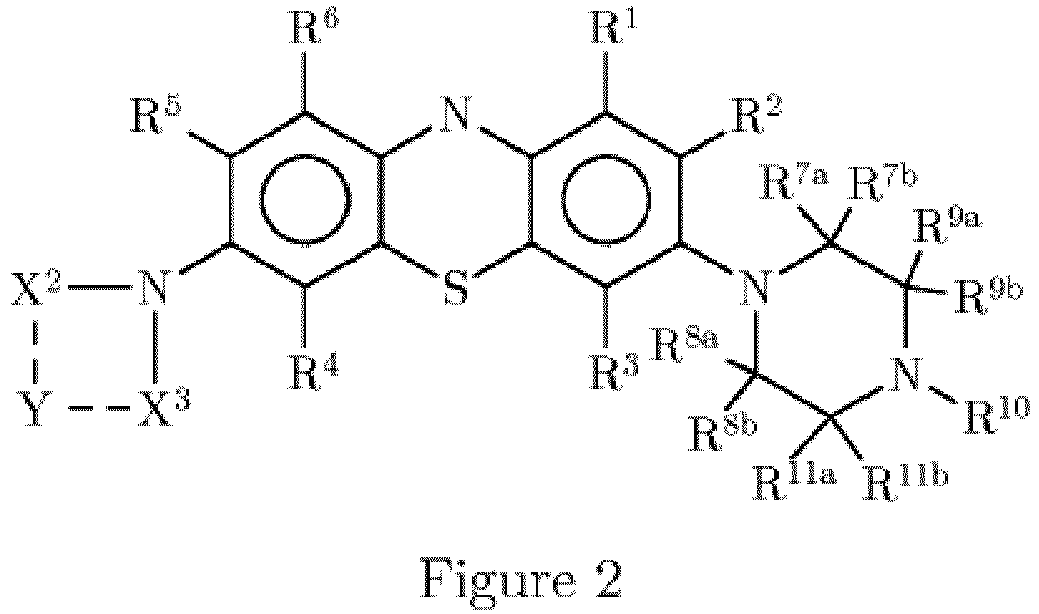
- Among the compounds just described (Figure 2) are embodiments in which Y is not present, such compound having the structure:

- Particular embodiments of these compounds include those in which each of R15 and R16 is hydrogen. More particular embodiments are those in which each of R15 and R16 is hydrogen, and each of R2-R5, R7a-R9b, R11a and R11b is hydrogen, each of R1 and R6 independently is optionally substituted alkyl, and R10 is optionally substituted alkyl or alkylsulfonyl. Still more specific embodiments have the substituents just described and further each of R15 and R16 independently is alkyl or alkyloxyalkyl. More specific among these embodiments are those wherein each of R15 and R16 independently is alkyl, still more specifically methyl or ethyl. Yet more specific embodiments include these substituents and further each of R2-R5, R7a -R9b, R11a, and R11b is hydrogen, each of R1 and R6 is selected independently from the group consisting of hydrogen, halo, and optionally substituted alkyl, and RIO is hydrogen, or optionally substituted alkyl, alkyloxycarbonyl, alkylsulfonyl, cycloalkylsulfonyl, and alkylaminosulfonyl.
- In other embodiments of Figure 2 Y is present, said compound having the structure:

- In some embodiments, each of n and o is 2 for these compounds, such that X1 and X2 have the form (CR13R13')2 and (CR14R14')2 respectively, defining thereby X1 as (CR13aR13b)(CR13cR13d) and X2 as (CR14aR14b)(CR14cR14d), said compound having the structure:

- In more particular embodiments, when Y is present, in addition to the substituents described above each of R2-R5, R7a-R9b, R11a, R11b, and R13a-R14d is hydrogen, each of R1 and R6 is selected independently from the group consisting of hydrogen, halo, and optionally substituted alkyl. Among these compounds are further embodiments defined by the additional specification that Y is NR12 or O. In more specific embodiments, Y is NR12, and R10 and R12 are selected independently from the group consisting of: hydrogen, or optionally substituted alkyl, alkyloxycarbonyl, alkylsulfonyl, cycloalkylsulfonyl, and alkylaminosulfonyl. In other more specific embodiments, Y is O.
- Other embodiments are defined by the compound shown in Figure 1, wherein m is 2, such that X1 is (CR11R11')2, defining X1 thereby defining X1 as (CR11aR11b)(CR11cR11d), said compound having the structure:

- Some embodiments of the invention include those just described above (Figure 3) and further wherein Y is not present, such compounds having the structure:

- In other embodiments, compounds of the invention have the description provided above (Figure 3) but wherein Y is present; these compound have the structure:

- In another aspect, the present invention provides compounds as decribed herein for use in the treatment of a a viral disease in a mammal afflicted with such disease, , i.e., a compound encompassed with the compounds illustrated in Figure 1 above. In more specific embodiments, the viral disease is an etiological component of a respiratory syndrome selected from the group consisting of: bronchiolitis, the common cold, croup, influenza, and pneumonia. For example and not limitation, Influenza is associated with the first three syndromes listed above; adenovirus with the first two and the third; and rhinovirus with the last syndrome.
- In another aspect, the present invention provides compounds and compositions for use in the treatment of a viral disease in a mammal afflicted with such disease. In more particular embodiments the viral disease is Influenza (Flu), Adenovirus (ADV), Human Corona Virus (HCoV), Herpes Simplex Virus (HSV), Rhinovirus (RHNV), Respiratory Syntactical Virus (RSV), Hepatitis C Virus (HCV), Human Immunodeficiency Virus (HIV), Monkey Pox Virus (MPXV), Rabies Virus (RABV), Dengue Virus (DENV), Easter Equine Encephalitis Virus (EEEV), Venezuelan Equine Encephalitis Virus (VEEV), Wester Equine Encephalitis Virus (WEEV), West Nile Virus (WNV), Chikungunya Virus (CKGV), Ebola Virus (EBOV), Marburg Virus (MARV). Particular, non limiting, exemplary compounds and their activities against these viruses are provided in the Appendix.
- The compounds of the present invention can be synthesized using techniques and materials known to those of skill in the art. Starting materials for the compounds of the invention may be obtained using standard techniques and commercially available precursor materials, such as those available from Aldrich Chemical Co. (Milwaukee, Wis.), Sigma Chemical Co. (St. Louis, Mo.), Lancaster Synthesis (Windham, N.H.), Aspin Chemicals, Ltd. (New Brunswick, N.J.), Ryan Scientific (Columbia, S.C.), Maybridge (Cornwall, England), Arcos (Pittsburgh, Pa.), and Trans World Chemicals (Rockville, Md.)
- The procedures described herein for synthesizing the compounds of the invention may include one or more steps of protection and deprotection (e.g., the formation and removal of acetal groups). In addition, the synthetic procedures disclosed below can include various purification, such as column chromatography, flash chromatography, thin-layer chromatography ("TLC"), recrystallization, distillation, high-pressure liquid chromatography ("HPLC") and the like. Also, various techniques well known in the chemical arts for the identification and quantification of chemical reaction products, such as proton and carbon-13 nuclear magnetic resonance (1H and 13C NMR), infrared and ultraviolet spectroscopy ("IR" and "UV"), X-ray crystallography, elemental analysis ("EA"). HPLC and mass spectroscopy ("MS") can be used for identification, quantitation and purification as well.
- Although the schemes below illustrate specific starting materials and products, those having ordinary skill in the art will understand that many substitution patterns can be made using known methods and materials in combination with the teachings herein.
- Compounds of the present invention can be administered in a variety of ways including enteral, parenteral and topical routes of administration. For example, suitable modes of administration include oral, subcutaneous, transdermal, transmucosal, iontophoretic, intravenous, intramuscular, intraperitoneal, intranasal, subdural, rectal, vaginal, and the like.
- In accordance with other embodiments of the present invention, there is provided a composition comprising a compound described here, together with a pharmaceutically acceptable carrier or excipient. Suitable pharmaceutically acceptable excipients include processing agents and drug delivery modifiers and enhancers, such as, for example, calcium phosphate, magnesium stearate, talc, monosaccharides, disaccharides, starch, gelatin, cellulose, methyl cellulose, sodium carboxymethyl cellulose, dextrose, hydroxypropyl-β-cyclodextrin, polyvinylpyrrolidinone, low melting waxes, ion exchange resins, and the like, as well as combinations of any two or more thereof. Other suitable pharmaceutically acceptable excipients are described in REMINGTON'S PHARMACEUTICAL SCIENCES, Mack Pub. Co., New Jersey (1991), which is incorporated herein by reference.
- Pharmaceutical compositions of the present invention may be in any form suitable for the intended method of administration, including, for example, a solution, a suspension, or an emulsion. Liquid carriers are typically used in preparing solutions, suspensions, and emulsions. Liquid carriers contemplated for use in the practice of the present invention include, for example, water, saline, pharmaceutically acceptable organic solvent(s), pharmaceutically acceptable oils or fats, and the like, as well as mixtures of two or more thereof. The liquid carrier may contain other suitable pharmaceutically acceptable additives such as solubilizers, emulsifiers, nutrients, buffers, preservatives, suspending agents, thickening agents, viscosity regulators, stabilizers, and the like. Suitable organic solvents include, for example, monohydric alcohols, such as ethanol, and polyhydric alcohols, such as glycols. Suitable oils include, for example, soybean oil, coconut oil, olive oil, safflower oil, cottonseed oil, and the like. For parenteral administration, the carrier can also be an oily ester such as ethyl oleate, isopropyl myristate, and the like. Compositions of the present invention may also be in the form of microparticles, microcapsules, liposomal encapsulates, and the like, as well as combinations of any two or more thereof.
- The compounds of the present invention may be administered orally, parenterally, sublingually, by inhalation spray, rectally, vaginally, or topically in dosage unit formulations containing conventional nontoxic pharmaceutically acceptable carriers, adjuvants, and vehicles as desired. Topical administration may also involve the use of transdermal administration such as transdermal patches or ionophoresis devices. The term parenteral as used herein includes subcutaneous injections, intravenous, intramuscular, intrasternal injection, or infusion techniques.
- Injectable preparations, for example, sterile injectable aqueous or oleaginous suspensions may be formulated according to the known art using suitable dispersing or wetting agents and suspending agents. The sterile injectable preparation may also be a sterile injectable solution or suspension in a nontoxic parenterally acceptable diluent or solvent, for example, as a solution in 1,3-propanediol. Among the acceptable vehicles and solvents that may be employed are water, Ringer's solution, and isotonic sodium chloride solution. In addition, sterile, fixed oils are conventionally employed as a solvent or suspending medium. For this purpose, any bland fixed oil may be employed including synthetic mono- or diglycerides. In addition, fatty acids such as oleic acid can be useful in the preparation of injectables.
- Suppositories for rectal or vaginal administration of the drug can be prepared by mixing the drug with a suitable nonirritating excipient such as cocoa butter and polyethylene glycols that are solid at ordinary temperatures but liquid at the rectal temperature and will therefore melt in the rectum and release the drug.
- Solid dosage forms for oral administration may include capsules, tablets, pills, powders, and granules. In such solid dosage forms, the active compound may be admixed with at least one inert diluent such as sucrose lactose or starch. Such dosage forms may also comprise, as is normal practice, additional substances other than inert diluents, e.g., lubricating agents such as magnesium stearate. In the case of capsules, tablets, and pills, the dosage forms may also comprise buffering agents. Tablets and pills can additionally be prepared with enteric coatings.
- Liquid dosage forms for oral administration may include pharmaceutically acceptable emulsions, solutions, suspensions, syrups, and elixirs containing inert diluents commonly used in the art, such as water. Such compositions may also comprise adjuvants, such as wetting agents, emulsifying and suspending agents, cyclodextrins, and sweetening, flavoring, and perfuming agents.
- The compounds of the present invention can also be administered in the form of liposomes. As is known in the art, liposomes are generally derived from phospholipids or other lipid substances. Liposomes are formed by mono- or multilamellar hydrated liquid crystals that are dispersed in an aqueous medium. Any non-toxic, physiologically acceptable and metabolizable lipid capable of forming liposomes can be used. The present compositions in liposome form can contain, in addition to a compound of the present invention, stabilizers, preservatives, excipients, and the like. The preferred lipids are the phospholipids and phosphatidyl cholines (lecithins), both natural and synthetic. Methods to form liposomes are known in the art.
- While the compounds of the invention can be administered as the sole active pharmaceutical agent, they can also be used in combination with one or more other compound as described herein, or in combination with other agents used in the treatment or prevention of AD and related diseases, or both.
- In addition, the compounds of the present invention can be used, either singly or in combination as described above, in combination with other modalities for preventing or treating AD and related diseases or disorders. Such other treatment modalities include without limitation, surgery, radiation, hormone supplementation, and diet regulation. These can be performed sequentially (e.g., treatment with a compound of the invention following surgery or radiation) or in combination (e.g., in addition to a diet regimen).
- The additional active agents may generally be employed in therapeutic amounts as indicated by sources well known to those having ordinary skill in the art, e.g., the PHYSICIAN'S DESK REFERENCE (PDR) 53rd Edition (1999), which is incorporated herein by reference, or such therapeutically useful amounts as would be known to one of ordinary skill in the art. The compounds of the invention and the other therapeutically active agents can be administered at the recommended maximum clinical dosage or at lower doses. Dosage levels of the active compounds in the compositions of the invention may be varied to obtain a desired therapeutic response depending on the route of administration, severity of the disease and the response of the patient. The combination can be administered as separate compositions or as a single dosage form containing both agents. When administered as a combination, the therapeutic agents can be formulated as separate compositions that are given at the same time or different times, or the therapeutic agents can be given as a single composition.
- In accordance with yet other embodiments, the present invention provides compounds for use in treating or preventing AD or similar disorder in a human or animal subject in which an amount of a compound of the invention that is effective to at least ameliorate disease symptoms. Effective amounts of the compounds of the invention generally include any amount sufficient to detectably modulate AD using standard measures, by other methods known to those having ordinary skill in the art, or by detecting prevention or alleviation of symptoms in a subject afflicted with AD.
- The amount of active ingredient that may be combined with the carrier materials to produce a single dosage form will vary depending upon the host treated and the particular mode of administration. It will be understood, however, that the specific dose level for any particular patient will depend upon a variety of factors including the activity of the specific compound employed, the age, body weight, general health, sex, diet, time of administration, route of administration, rate of excretion, drug combination, and the severity of the particular disease undergoing therapy. The prophylactically or therapeutically effective amount for a given situation can be readily determined by routine experimentation and is within the skill and judgment of the ordinary clinician.
- For exemplary purposes of the present invention, a prophylactically or therapeutically effective dose will generally be from about 0.1 mg kg-1d-1 to about 100 mg kg-1d-1, preferably from about 1 mg kg-1d-1 to about 20 mg kg-1d-1, and most preferably from about 10 mg kg-1d-1 to about 10 mg kg-1d-1 of a compound of the present invention, which may be administered in one or multiple doses.
- The following Examples are provided to illustrate certain aspects of the present invention and to aid those of skill in the art in the art in practicing the invention. These Examples are in no way to be considered to limit the scope of the invention in any manner.
- The compounds of the present invention can be synthesized using techniques and materials known to those of skill in the art. Starting materials for the compounds of the invention may be obtained using standard techniques and commercially available precursor materials, such as those available from Aldrich Chemical Co. (Milwaukee, Wis.), Sigma Chemical Co. (St. Louis, Mo.), Lancaster Synthesis (Windham, N.H.), Aspin Chemicals, Ltd. (New Brunswick, N.J.), Ryan Scientific (Columbia, S.C.), Maybridge (Cornwall, England), Arcos (Pittsburgh, Pa.), and Trans World Chemicals (Rockville, Md.)
- The procedures described herein for synthesizing the compounds of the invention may include one or more steps of protection and deprotection (e.g., the formation and removal of acetal groups). In addition, the synthetic procedures disclosed below can include various purifications, such as column chromatography, flash chromatography, thin-layer chromatography ("TLC"), recrystallization, distillation, high-pressure liquid chromatography ("HPLC") and the like. Also, various techniques well known in the chemical arts for the identification and quantification of chemical reaction products, such as proton and carbon-13 nuclear magnetic resonance (1H and 13C NMR), infrared and ultraviolet spectroscopy ("IR" and "UV"), X-ray crystallography, elemental analysis ("EA"). HPLC and mass spectroscopy ("MS") can be used for identification, quantitation and purification as well.
- Although the schemes below illustrate specific starting materials and products, those having ordinary skill in the art will understand that many substitution patterns can be made using known methods and materials in combination with the teachings herein.
- Heated glassware then allowed to cool to room temperature under argon. Added Pd2(dba)3 (1.39g, 1.52 mmol, 1.0 mol%) or Pd(dba)2 (1.38g, 2.4 mmol, 1.4 mol%), 2-(di-tert-butylphosphino)biphenyl (1.09g, 3.65 mmol, 2.4 mol%), 2-bromotoluene (40mL, 332.1 mmol) or 2-chlorotoluene (39 mL, 332.1 mmol), lithiumamide (3.47g, 151.1 mmol, 45 mol%), sodium t-butoxide 29.5g, 297.7 mmol, 90 mol%), then toluene (150mL). Heated at 80°C under argon 4.5 h to overnight; let cool to room temperature. Diluted with diethyl ether, then filtered through a pad of celite. Concentrated the resulting filtrate in vacuo. Used in the next reaction without purification. Alternatively, purify the resulting residue by Isco column chromatography in hexane to give the product as white crystals with a yellow tint (23.4g,118.6 mmol, 72% yield). Alternatively, for purification, perform repeated crystallizations of the residue from hot isopropanol or acetone/isopropanol to obtain product. For another alternative purification, dissolve residue indichloromethane and put through silica plug with hexane rinses followed by hexane containing about 1% dichloromethane. Collected the filtrates and concentrated them to obtain yellow-white solids as product.
- Put di(2-tolyl)amine (11.7g, 59.3 mmol) in a 3-neck 100 mL round-bottom flask. Added elemental sulfur (3.9 g, 121.65 mmol, 2 eq.), crushed iodine (0.44g, 1.73 mmol, 3 mol%), then o-dichlorobenzene (22 mL). Added an outlet to a dilute bleach solution (for hydrogen sulfide evolution) then put under argon. Refluxed at 180°c for 4h. Remove solvent under reduced pressure. Purified with Isco column chromatography using 2% ethyl acetate/98% hexane. Obtained product as white crystals (2g, 8.8 mmol, 15% yield). Alternatively, put di(2-tolyl)amine (either purified or impure from the aforementioned reaction; 8.9525 g, 45.3 mmol) in a round bottom flask. Added elemental sulfur (2.98 g, 92.9 mmol, 2 eq.) then crushed iodine (3.28 g, 12.9 mmol, 28%mol). Added an outlet to a dilute bleach solution (for hydrogen sulfide) then put under argon. Stirred at 210°C for 30 min or until no starting material was present by LC /MS. Allowed the reaction cool to about 60°C then add hexane for extraction. Repeat hot hexane extractions (at least one overnight; minimum time of half an hour for each extraction) of reaction until product was no longer seen in residue (about 4 times). Combined hexane extractions and concentrate in vacuo. Purified resulting residue either through repeated repeated hot hexane/ethanol or isoproponal crystallizations, hot acetone/isopropanol crystallizations (or triturations) or Isco column chromatography using 2% ethyl acetate/98% hexane to obtain product as white crystals (2.92 g, 12.8 mmol, 28% yield).
- Procedures the same as above, but used 2-chloroanisole instead of 2-bromotoluene or 2-chlorotoluene in the initial step.
- Procedures the same as Examples above, but used 2-bromocumene and 2-bromotoluene instead of just 2-bromotoluene or just 2-chlorotoluene in the initial step.
- Prepared 1-cyanophenothiazine as described in the literature starting from 2-aminobenzenethiol (2.1 mL, 2.46g, 20 mmol), 2,3-difiuorobenzonitrile (1.9mL, 2.83g, 20 mmol), and sodium hydride (1.09g, 27.3 mmol) in 10 mL of DMF. After crystallizing from dichloromethane-ethanol, obtained 1-cyanophenothiazine as a dark yellow powder (1.342g, 6 mmol, 30% yield).
- Prepared 1-(1H-tetrazol-5-yl)-phenothiazine as described in the literature starting from 1-cyanophenothiazine (200 mg, 0.891 mmol), sodium azide (308 mg, 4.74 mmol, 5.3 eqs.), then ammonium chloride (254mg,4.75 mmol, 5.3 eqs.) in DMF (0mL) at 120°C overnight. Added dilute aqueous phosphoric acid (pH 1) until fluffy white or yellow precipitate stopped appearing. Rinsed with deionized water until neutral then dried the resulting yellow precipitate overnight under vacuum to obtain product (162.8 mg, 0.609 mmol, 68% yield). Used in the next reactions without further purification.
- Procedure the same as above, but used 1,9-dimethylphenothiazine-4-carboxylic acid, instead of 1,9-dimethyl phenothiazine.
- Bromination performed as described in the literature starting from dimethylphenothiazine (instead of phenothiazine) (1.008g, 4.4 mmol), acetic acid (36 mL), and bromine (0.57mL, 1.77g, 11.1 mmol, 2.5 eqs.) in acetic acid (4mL). Performed workup as described in the literature using sodium sulfite (1.12g, 8.9 mmol, 2 eqs.) then after 20 min, deionized water (1 mL). Dissolved potassium hydroxide (680 mg, 12.11 mmol, 2.75 eqs.) in 50 mL of deionized water and brought the volume up to 100 mL with ice. Added the above reaction mixture to get a gray precipitate and stirred for 2h to overnight. Filtered off the gray precipitate, rinse with more deionized water, then dried overnight under vacuum to obtain product as a dark gray solid without further purification (1.6g, 4.15 mmol, 94% yield).
- Procedure the same as above, but used 1-(1H-tetrazol-5-yl)-10H-phenothiazine instead of 1,9-dimethylphenothiazine.
- Performed as described in the literature. Alternatively, added crushed DMAP (316 mg, 2.59 mmol) followed by acetonitrile (8 mL) to 3,7-dibromo-1,9-dimethyl-10H-phenothiazine (1.6g, 4.15 mmol). The suspension was heated to 85°C then crushed Boc2O was added (1.9g, 8.5 mmol, 2 eqs.) dissolved in acetonitrile (2mL). Refluxed overnight. Filtered off precipitate, dissolved in dichloromethane, extract with diluted 2 N phosphoric acid (pH = 2) once, then with deionized water until neutral (4x). Simultaneously, added water to the remaining filtrate and repeated the same extraction sequence. Alternatively, removed solvents under vacuum from the filtrate and performed the above extraction sequence on the resulting residue. Dry organic layers over sodium sulfate then remove solvent under vacuum. Dissolved in acetone then add isopropanol until precipitate appeared. Alternatively, purified using flash silica gel chromatography. Obtained product as mauve or pale green precipitate (1.25g, 2.58 mmol, 62% yield).
- Procedure the same as above, but used 3,7-dibromo-1-(1H-tetrazol-5-yl)-10H-phenothiazine instead of 3,7-dibromo-1,9-dimethyl-10H-phenothiazine.
- At 0°C to -10°C, mixed Boc-piperazine (7.3541g, 38.695 mmol) with DIPEA (12.58 mL, 71.86 mmol) in dichloroethane (DCE) for deprotonation. Mixed propane-2-sulfonyl chloride (5 mL, 42.3 mmol) with DCE(40mL) and added dropwise to the iced piperazine mixture. Once addition was complete, removed the ice bath and stirred at room temperature, checking reaction by TLC and LC/MS. Once the reaction was completed, added ethyl acetate and filtered off the resulting white crystals (the DIPEA-HC1 salt). Took the remaining ethyl acetate solution and extract with 1M aqueous HCl (once), then saturated aqueous sodium bicarbonate (once), then brine until neutral (twice). Dried the resulting ethyl acetate layer over sodium sulfate then removed solvent. Dried under vacuum overnight to obtain the Boc-protected sulfonylpiperazine as an orange white solid (10.4g, 35.57 mmol, 92% yield). Without further purification, added the above Boc-protected sulfonylpiperazine (10.4g, 35.57 mmol) to DCE (40mL) followed by an equal volume of 4M in dioxane (40 mL). Stirred overnight. Once the reaction appeared complete by TLC and LC /MS, filtered off the resulting precipitate and rinse with cold dichloromethane until it was less acidic. Dried under vacuum overnight to obtain product as an off-white precipitate (as the HCl salt,7.85g, 34.32 mmol, 96% yield). Used in subsequent reactions without further purification.
- Procedure the same as above, but used 2,2,2-trifluoroethanesulfonyl chloride instead of propane-2-sulfonyl chloride.
- performed the reaction as described in the literature starting with 3,7-dibromo-1,9-dimethoxyphenothiazin-5-ium bromide (750 mg, 1.54 mmol), N-methylpiperazine (0.848mL, 7.7 mmol) and chloroform(35mL). Purified using flash silica gel chromatography to obtain product as a dark blue residue (35 mg, 0.65 mmol, 4% yield).
- Procedure the same as above, but used 3,7-dibromo-2-dimethoxyphenothiazin-5-ium bromide, instead of 3,7-dibromo-1,9-dimethoxyphenothiazin-5-ium bromide and diethylamine and N-Boc-piperazine simultaneously, instead of N-methylpiperazine.
- Performed the reaction as described in the literature starting with the dimethylphenothiazinium salt (3.18g, 4.22 mmol) in chloroform (152 mL) and N-methylpiperazine (0.95mL, 8.63 mmol). Reaction progress was monitored via LC/MS and TLC. Once newly formed precipitate was filtered off or the solvent removed under vacuum, the resulting iodide salt was stirred with ether or hexane overnight to remove excess amine then refiltered. After pumping down under vacuum, a dark precipitate was obtained as an intermediate. Without further purification, performed the 2nd amine addition with dimethylamine (2M in THF; 2.11 mL, 4.22 mmol) and methanol (115 mL), as described in the. Alternatively, acetonitrile was used as the solvent instead of methanol and the addition of the amine was alternated with the addition of the solvent. Progress was monitored via LC/MS and TLC. Used flash silica gel chromatography to obtain unsymmetrical product as a blue solid (1.04g, 2.10 mmol, 50% yield) and the symmetrical dipiperazine as by-product.
- Performed the reaction as described above, but used tert-butyl piperazine-1-carboxylate (instead of N-methylpiperazine) in the 1st step with chloroform and dimethylamine (2 M in THF) for the 2nd step in the more polar solvent. Dissolved some of the asymmetrical adduct (37 mg, 0.063 mmol) in dichloromethane (1-1.5 mL). Added TFA (0.5-1 mL, up to 13.5 mmol). Stirred for 24h to 72h. Removed solvent under vacuum. Purified via flash silica gel chromatography. Obtained product as a dark blue-green residue (10 mg, 0.021 mmol; 34% yield).
- Performed the reaction as described above, but used 1-(2-methoxyethyl)piperazine (instead of N-methylpiperazine) in the 1st step with chloroform and N-methylbutan-1-amine, (instead of dimethylamine), for the 2nd step in the more polar solvent.
- Performed the reaction as described above, but used 1-(cyclopropylsulfonyl)piperazine hydrochloride salt and excess triethylamine (instead of N-methylpiperazine) in the 1st step with chloroform.
- Performed the reaction as described above, but used 1-(isopropylsulfonyl)piperazine hydrochloride salt and excess triethylamine (instead of N-methylpiperazine) in the 1st step with chloroform. Product precipitates out of the reaction.
- Performed the reaction as described above, but used 1-(isopropylsulfonyl)piperazine hydrochloride salt and excess triethylamine (instead of N-methylpiperazine) in the 1st step with chloroform and azetidine hydrochloride salt with excess triethylamine (instead of dimethylamine) for the 2nd step in the more polar solvent.
- Performed the reaction as described above, but used 1-(2,2,2-trifluoroethylsulfonyl)piperazine hydrochloride salt and excess triethylamine (instead of N-methylpiperazine) in the 1st step with chloroform.
- Performed the reaction as described above, but used 1-(2,2,2-trifluoroethylsulfonyl)piperazine hydrochloride salt and excess triethylamine (instead of N-methylpiperazine) in the 1st step with chloroform and pyrrolidine (instead of dimethylamine) for the 2nd step in the more polar solvent.
- performed the reaction as described above, but used piperazine-1-sulfonamide hydrochloride salt and excess triethylamine (instead of N-methylpiperazine) in the 1st step with chloroform and morpholine (instead of dimethylamine) for the 2nd step in the more polar solvent (50:50 methanol:acetonitrile).
- Performed the reaction as described above, but used piperazine-1-sulfonamide hydrochloride salt and excess triethylamine (instead of N-methylpiperazine) in the 1st step with chloroform and 2, 6-dimethylmorpholine (cis and trans isomers), instead of dimethylamine, for the 2nd step in the more polar solvent (50:50 methanol:acetonitrile). The symmetrical dipiperazine adduct precipitated out. The asymmetrical adducts were isolated via preparatory TLC plates.
- Performed the reaction as described above, but used tert-
butyl 1,4-diazepane-1-carboxylate (instead of N-methylpiperazine) in the 1st step with chloroform and more tert-butyl 1,4-diazepane-1-carboxylate (instead of dimethylamine) for the 2nd step in the more polar solvent. Dissolved the isolated Boc protected adduct in dichloromethane. Added 2 % hydroiodic acid. Stirred until complete by TLC and LC/MS. Removed solvent under vacuum. Obtained product as a dark blue residue. - Performed the reaction as described above, but used the 4-carboxy-1,9-dimethylpheno-thiazin-5-ium salt instead of the dimethylphenothiazinium salt.
- Performed the reaction as described above, but added dimethylamine (2 M in THF) in the 1st step with chloroform (instead of N-methylpiperazine) and added N-methylpiperazine (instead of dimethylamine) for the 2nd step in the more polar solvent.
- Performed the reaction as described above, but used the 1-isopropyl-9-methylphenothiazin-5-ium salt instead of the dimethylphenothiazinium salt.
- Performed the reaction as described in the literature starting with the dimethylphenothiazinium salt (0.1017g, 0.135 mmol) in chloroform (5 mL) and N-isopropylpiperazine (0.039 mL, 0.267 mmol). Reaction progress was monitored via LC/MS and TLC. Once newly formed precipitate was filtered off or the solvent removed under vacuum, the resulting iodide salt was stirred with ether or hexane overnight to remove excess amine then refiltered. Without further purification, added dioxane to the intermediate (2 mL) followed by an equal volume of 8 N KOH then a few more drop of deionized water. Heated reaction to 70°C and stirred for 1.5h, until the intermediate was consumed as monitored by TLC. Removed the bottom aqueous layer, then removed the remaining organic solvent under vacuum. Dissolved in dichloromethane and extracted with deionized water until neutral. If there was only one layer, removed the solvent under vacuum. Purified using flash silica gel chromatography and isolated this by-product as a dark blue-purple solid (4 mg, 0.008 mmol, 3% yield).
- Performed the reaction as described above, but used 1-(methylsulfonyl)piperazine (instead of N-isopropylpiperazine).
- Performed the reaction as described above, but used 1-(2,2,2-trifluoroethylsulfonyl)piperazine hydrochloride salt and excess triethylamine N-isopropylpiperazine).
- Performed the reaction as described above, but used 1-(isopropylsulfonyl)piperazine hydrochloride salt and excess triethylamine N-isopropylpiperazine).
- performed the reaction as described in the literature except used tert-butyl-3,7-dibromo-1,9-dimethyl-10H-phenothiazine-10-carboxylate (instead of the phenothiazine derivative; 350 mg, 0.722 mmol), 1-(methylsulfonyl)piperazine (instead of phenothiazine; 118.6 mg, 0.722 mmol) for the 1st amination, bis(2-methoxyethyl)amine (instead of phenothiazine; 0.106 mL, 0.724 mmol) for the 2nd amination, cesium carbonate (instead of sodium t-butoxide; 823 mg, 2.5 mmol), BINAP as the ligand (instead of tri-t-butylphosphine; 19 mg, 0.0305 mmol), either toluene or m-xylene (instead of o-xylene; 5 mL) at 90°C to -100°C for 2h during the 1st amination, and m-xylene (instead of o-xylene; 5 mL) for the 2nd amination. The 2nd amination was performed with or without purification and isolation after the first amination. Progress of the reaction is monitored by TLC and LC/MS. The final product(s) were purified using flash silica gel chromatography. The asymmetrical adduct was obtained as the main product (139 mg, 0.224 mmol, 31 % yield) and the symmetrical dipiperazine adduct (83 mg, 0.127 mmol, 18% yield) was obtained as a minor by-product.
- Performed the reaction as described above, but used N-isopropylpiperazine (instead of 1-(methylsulfonyl)piperazine) for the first amination.
- Performed the amination reactions as described above, but used diethylamine (instead of bis(2-methoxyethyl)amine) for the 2nd amination. To remove the Boc protecting group, put the resulting asymmetrical adduct (105.3 mg, 0.225 mmol) in dichloromethane (1.5 mL), followed by an equal volume of 48% aqueous HBr (1.5 mL). Monitored by TLC and LC /MS. Removed solvent under vacuum. Dissolved in chloroform:methanol (3:1) or dichloromethane then extracted with deionized water until neutral. Extracted the first aqueous layer with chloroform:methanol (3:1). Combined the resulting organic layers, extract with deionized water until neutral, then removed the resulting organic solvents under vacuum again. Purified using flash silica gel chromatography. Obtained product as a blue solid (26.4 mg, 0.048 mmol, 22% yield) and an adduct without the sulfonyl group on the piperazine (3.0 mg, 0.006 mmol, 3% yield) as a blue solid by-product.
- Performed the reactions as described above, but used N-isopropylpiperazine (instead of 1-(methylsulfonyl)piperazine) for the first amination. Obtained both the expected asymmetrical adduct and the symmetrical dipiperazine by-product in near equal proportions. Boc removal was performed on both adducts.
- Performed the reactions as described above, but used trifiuoroacetic acid (TFA) (instead of 48% aqueous HBr). Obtained both the expected asymmetrical adduct and the symmetrical dipiperazine by-product in near equal proportions.
- Performed the reactions as described above, but used tert-butyl-3,7-dibromo-1(1H-tetrazol-5-yl)-10H-phenothiazine-10-carboxylate (instead of tert-butyl-3,7-dibromo-1,9-dimethyl-10H-phenothiazine-10-carboxylate), tert-butyl-1,4-diazepane-1-carboxylate for both amination steps, TFA (instead of 48% aqueous HBr) for the removal of the Boc protecting groups. The expected product was not obtained but thet-butylated adduct was isolated.
- This compound was prepared according the procedure by B. Wilson et. al, Tetrahedron 64 (2008), 3429-3436. To the solution of 10H-phenothiazine in anhydrous chloroform (22 mL), at 5°C, surmounted with an addition funnel was added the solution of iodine (2.4g,9.40 mmol) in CHCl3 (55 mL) over a 1h period. The resulting dark solution was stirred for an additional 1h at 5°C monitored by TLC. After the disappearance of the starting material, the cooling bath was removed, solid precipitate was filtered, washed several times with chloroform, dried, to afford a very dark solid.
- Commercially available phenothiazine (2.00g, 10.00 mmol) was dissolved in AcOH (120 mL) and a solution of Br2 (10.0 mL) in AcOH (100 mL, 10% v/v, 195 mmol) was added all at once with vigorous stirring for 1.0 min. To this solution was added 400 mL of H2O and the red precipitate was filtered, washed with Et2O, and dried under vacuum to give 4.09g of a dark solid for a 94% yield.
- This compound was prepared according to a procedure by A. R. Katritzky et al., Synthesis, 1988, 215-217. To a solution of phenothiazine (10.0g, 50.18 mmol) in anhydrous THF (200 mL) and cooled to -78°C was added a solution of n-BuLi (24.1 mL, 60.2 mmol, 2.5 M in hexanes) dropwise. The mixture was stirred until a yellow precipitate formed, and then allowed to warm to room temperature, until a clear yellow solution resulted. The solution was again cooled to -78°C and CO2 gas was bubbled through the mixture for 5 min. The resulting solution was allowed to warm to RT and the solvent was evaporated to give a residue. The residue was again dissolved in anhydrous THF (200 mL) and cooled to -78°C, before t-BuLi (50 mL, 85 mmol, 1.7 M in pentane) was added dropwise. The resulting mixture was allowed to warm to -20°C and was stirred at this temperature for 2h. The reaction mixture was again cooled to -78°C and a solution of hexachloroethane (100 mmol) in THF (50 mL) was added dropwise. The mixture was stirred at this temperature for 1 hour then allowed to warm to -20°C and stirred for 2h. The reaction mixture was quenched with ice cold 1 N HCL and extracted with EtOAC. The combined organic layers were washed with brine, dried over MgSO4, filtered and evaporated to give a residue. The residue was purified by flash silica gel chromatography to give of an beige solid.
- 1-Chlorophenothiazine (664 mg, 2.84 mmol) was dissolved in CHCl3 (50 mL) and cooled to 5°C. The solution was stirred as a solution of I2 (2.16g,8.51 mmol) dissolved in CHCl3 (10 mL) was added dropwise . The mixture was stirred at 5°C overnight and allowed to warm to RT. The solvent was evaporated to dryness. The residue was stirred in Et2O and was filtered off and washed with Et2O until the filtrate was colorless. The dark solid was dried under vacuum and used without purification.
- This compound was prepared according to a procedure by A. R. Katritzky et al., Synthesis, 1988, 215-217. To a solution of phenothiazine (10.0g, 50.18 mmol) in anhydrous THF (200 mL) and cooled to -78°C was added a solution of n-BuLi (24.1 mL, 60.2 mmol, 2.5 M in hexanes) dropwise. The mixture is stirred until a yellow precipitate forms and then allowed to warm to room temperature, until a clear yellow solution results. The solution is again cooled to -78°C and CO2 gas is bubbled through the mixture for 5 min. The resulting solution is allowed to warm to RT and the solvent was evaporated to give a residue. The residue was again dissolved in anhydrous THF (200 mL) and cooled to -78°C, before t-BuLi (50 mL, 85 mmol, 1.7 M in pentane) was added dropwise. The resulting mixture was allowed to warm to -20°C and was stirred at this temperature for 2h. The reaction mixture was again cooled to -78°C and a solution of ethyl iodide (100.0 mmol) in THF (50 mL) was added dropwise. The mixture was stirred at this temperature for 1 hour then allowed to warm to -20°C and stirred for 2h. The reaction mixture was quenched with ice cold IN HCl and extracted with EtOAc. The combined organic layers were washed with brine, dried over MgSO4, filtered and evaporated to give a residue. The residue was purified by flash silica gel chromatography to give the dsired product.
- 1-Ethylphenothiazine (664 mg, 2.84 mmol) was dissolved in CHCl3 (50 mL) and cooled to 5°C. The solution was stirred as a solution of I2 (2.16g, 8.51 mmol) dissolved in CHCl3 (10 mL) was added dropwise. The mixture was stirred at 5°C overnight and allowed to warm to RT. The solvent was evaporated to dryness. The residue was stirred in Et2O and was filtered off and washeded with Et2O until the filtrate was colorless. The dark solid was dried under vacuum and used without purification.
- Commercially available 2-Trifluoromethylphenothiazine (1.14g, 4.28 mmol) was dissolved in CHCl3 (20 mL) and a solution of I2 (3.25g, 12.84 mmol) in CHCl3 (120 mL) was added. The mixture was warmed at 55°C to 60°C until the SM was consumed (by TLC). The reaction mixture was allowed to cool to RT and the solvent was evaporated. The residue was stirred in Et2O, filtered off and washed with Et2O until the filtrate was colorless. The intermediate was used without further purificaion.
- Phenothiazine (5.0g, 25 mmol) was suspended in 200 mL of glacial AcOH Then, 3.3 mL Br2 (0.63 mol) in 200 mL of glacial was slowly added to the reaction mixture and stirred for 6h at room temperature. The reaction was cooled with an ice bath and 6.30 grams (50 mmol) of Na2SO3 was added to the reaction mixture. By adding a little water (3.0 mL), a deep-violet color formed within three hours. After the addition of a solution of 4.10g (62 mmol) of KOH dissolved in water (1.01) a greenish solid formed, which was washed with a little cold 2-propanol. The solid was recrystallized with 2-propanol to give 7.90 g (88 %) as a green powder.
- The 3,7-dibromophenothiazine (6.25g, 17.5 mmol) was dissolved in CHCl3 (200 mL) and SO2Cl2 (3.13 mL, 38.5 mmol) was added dropwise over 15 min. The dark mixture was stirred at RT for 26h. The mixture was then filtered and the solid washed with CHCl3. The solid was collected and stirred in Et2O and the resulting green solid was filtered off and dried under vacuum to give a quantitative yield of the desired product.
- The 3,7-dibromo-1,9-dichloro-10H-phenothiazine (10.00g, 23.47 mmol) was suspended in CH3CN (200 mL) and DMAP (2.87g, 23.47 mmol) was added. The mixture was heated at reflux (near 85°C) and Boc2O (15.16g, 70.41 mmol) dissolved in CH3CN (50 mL) was added dropwise over 1h. The reaction mixture became homogeneous and turned brown. The reaction was allowed to cool to RT and the solvent was evaporated. The residue was purified by flash silica gel chromatography to give a 95% yield.
- The roundbottom flask was heated then allow to cool to room temperature under argon. Add Pd2(dba)3 (1.39g, 1.52 mmoles, 1.0mol%) or Pd(dba)2 (1.38g, 2.4 mmol, 1.4 mol%), 2-(di-tert-butylphosphino)biphenyl (1.09g, 3.65 mmol, 2.4 mol%), 2-bromotoluene (40 mL, 332.1 mmoles) or 2-chlorotoluene (39 mL, 332.1 mmoles), lithium amide (3.47g, 151.1 mmol, 45 mol%), sodium t-butoxide 29.5g, 297.7 mmoles, 90 mol%), then toluene (150 mL). Heat at 80°C under argon overnight. Let cool to room temperature. Diluted with diethyl ether then filtered through a pad of celite. Concentrated the resulting filtrate in vacuo. Used in the next reaction without purification. Purified the resulting residue by column chromatography with hexane to give the product as white crystals with a yellow tint (23.4g, 118.6 mmol, 72% yield).
- Put di(2-tolyl)amine (11.7g, 59.3 mmol) in a 3-neck 100 mL round-bottom flask and added elemental sulfur (3.9g, 121.65 mmoles, 2 eq.), crushed iodine (0.44g, 1.73 mmoles, 3 mole%), then a-dichlorobenzene (22 mL). Added an outlet to a dilute bleach solution (for hydrogen sulfide evolution) then put under argon. Refluxed at 180°C for 4h. Removed solvent under reduced pressure. Purified with column chromatography using 2% ethyl acetate/98% hexane to obtain product as white crystals (2g, 8.8 mmoles, 15% yield). (Alternatively, put di(2-tolyl)amine (either purified or impure from the aforementioned reaction; 8.9525g, 45.3 mmoles) in a round bottom flask. Added elemental sulfur (2.98g, 92.9 mmoles, 2 eq.) then crushed iodine (3.28g, 12.9 mmoles, 28% mole). Added an outlet to a dilute bleach solution (for hydrogen sulfide) then put under argon. Stirred at 210°C for 30 min or until no starting material was present by LC /MS. Let the reaction cool to about 60°C then added hexane for extraction. Repeated hot hexane extractions (at least one overnight; minimum time of half an hour for each extraction) of reaction until product was no longer seen in residue (about 4 times). Combined hexane extractions and concentrate in vacuo. Purified resulting residue either through repeated hot acetone/isopropanol crystallizations (or triturations) or Isco column chromatography using 2% ethyl acetate/98% hexane to obtain product as white crystals (2.92g, 12.8 mmoles, 28% yield).)
- 1,9-Dimethylphenothiazine (4.203g, 18.49 mmol) was dissolved in 130 mL of chloroform and crushed iodine (14.1g, 55.55 mmol, 3 eqs.) in 520 mL of chloroform was added over a period of 1.5h to 2h. Stirred for 1h to 4h. Once newly formed precipitate was filtered off or the solvent removed under vacuum, the resulting iodide salt was stirred with ether or hexane (sometimes overnight) to remove excess iodine then refiltered. After pumping down under vacuum, a brown precipitate was obtained as product (12.6 g)
- To the stirred solution of commercially available ethyl aniline (20.3g, 167.5 mmol, 1 eq.) in anhydrous pyridine (90mL), 0°C, under argon was added acetic anhydride (32 mL, 335.04 mmol, 2eq). After the addition, the resulting solution was stirred with warming to room temperature overnight. The reaction solution was cooled (zero degree), pH adjusted between 4 to 5 with 10% HCl, and extracted with ethyl acetate (2x500mL). The combined organics were washed with brine, dried (Na2SO4), filtered and concentrated to provide the title compound as a white solid.
- The mixture of the N-(2-ethylphenyl)acetamide (7.35g, 45.03 mmol), anhydrous K2CO3 (6.22g, 45.03 mmol), copper(I)bromide (452.2 mg, 3.15 mmol) in 1-bromo-2-ethylbenzene was stirred and heated to 200°C under argon for 48h. After cooling the reaction mixture was poured into ice-H2O and extracted with ethyl acetate (2x500 mL), the combined organics were washed with brine, dried over anhydrous K2CO3), filtered and concentrated to dryness. The crude obtained was purified on the ISCO machine using the ethyl acetate-hexane gradient to afford the N,N-bis(2-ethylphenyl)acetamide (8.1g, 67 %).
- The N,N-bis(2-ethylphenyl)acetamide (8.1g, 30.30 mmol) and KOH (5g), in EtOH (50 mL), was stirred and heated to reflux overnight. After 20h additional KOH (10g) was added, with stirring to reflux continued for an additional 6h. It was cooled, poured into H2O (125 mL) and extracted with ethyl acetate (2x 350 mL). The combined organics were washed with brine, dried (MgSO4), filtered and concentrated to dryness, affording a dark red oil (5.8g,85%).
- The bis(2-ethylphenyl)amine, sulfur and iodine in vial (containing an outlet for gaseous expulsion) were combined and stirred in a preheated (150 °C) heating block for 15 min. The temperature was increased to 210°C, stirred and heated for an additional 45 min, and cooled. The dark mixture obtained was dissolved with 10% MeOH/CH2Cl2 silica gel added, concentrated and purified by flash silica gel chromatography using ethyl acetate-hexane gradient to afford the desired product (40 %).
- This compound was prepared according the procedure by B. Wilson et. al., Tetrahedron 64 (2008), 3429-3436. To the solution of 1,9-diethyl-10H-phenothiazine (0.8g, 3.13 mmol) in anhydrous chloroform (22 mL), at 5°C, surmounted with an addition funnel was added the solution of iodine (2.4g,9.40 mmol) in CHCl3(55 mL) over a 1h period. The resulting dark solution was stirred for an additional 1h at 5°C as monitored by TLC. After the disappearance of the starting material,the cooling bath was removed, solid precipitate was filtered, washed several times with chloroform, dried, to afford a very dark solid (1.02g, 50 %).
- Commercial o-trifluoromethylaniline (13.5g, 83.9 mmol) was dissolved in acetic anhydride (55 mL, 580.0 mmol) and stirred at room temperature for 1h. Then the reaction mixture was poured into H2O, the whole was extracted with ethyl acetate (2x300 mL). The combined organic extracts were washed with 5% aqueous NaHCO3, brine, dried (K2CO3), filtered and concentrated to provide the title compound as a white solid (15.7g, 92%).
- A mixture of the N-acetyl-O-trifluoromethyl-aniline (6.1g, 30.0 mmol), anhydrous K2CO3 (4.1g, 30.0 mmol), Cul (210mg, 1.1 mmol) and bromobenzene (3) (16 mL, 160 mmol) was stirred and heated at 175°C to 180°C under an Ar atmosphere for 48h. After cooling the reaction mixture was poured into ice-H2O and extracted with ethyl acetate (2 x 200 mL), the combined organic extracts were washed with brine, dried over anhydrous K2CO3, filtered and concentrated to dryness. The obtained crude material was purified by flash chromatography (using ethyl acetatehexane as an eluent) to afford the N-acetyl-2-trifluoromethyldiphenylamine (5.4g, 64%).
- A solution of the N-acetyl-2-trifluoromethyldiphenyl-amine (3.5g, 12.5 mmol) in 10% KOH (2g, 36 mmol)/EtOH (20mL) was stirred and reflux for 6h, then poured into
H2 0. The mixture was extracted with ethyl acetate (2 x 100 mL). The combined organic layers were washed with brine, dried (Na2SO4), filtered and concentrated to dryness, gave dark red oil (2.5g, 85 %). - 2-Trifluoromethyldiphenylamine (1.1g, 4.6 mmol), sulfur (295 mg, 9.2 mmol) and iodine (328 mg, 1.29 mmol) were added in a vial, which was fitted with a balloon for discharge. A hot block was preheated (150°C), the vial was heated on the hot block, and after 15 min the temperature was increased to 210°C; the reaction mixture was stirred and heated for an additional 45 min and cooled. The dark solid material was dissolved in mixture methanol/chloroform and purified by flash chromatography (ethyl acetate-hexane as an eluent) to afford the desired product (450 mg, 36%).
- 1-Trifluoromethyl-10H-phenothiazine (6) (2.10g, 7.85 mmol) was dissolved in acetic acid (40 mL) and stirred at room temperature as a solution of bromine (2.52g, 0.81 mL, 15.7 mmol) in acetic acid (10 mL) was added. The mixture was allowed to stir overnight at this condition. To this mixture sodium sulfite Na2SO3 (1.98g, 15.7 mmol) and water (2 mL) were added. The mixture was stirred at room temperature for 3h. After that reaction mixture was poured into 100 mL of ice-water contained NaOH (1.28g, 32 mmol). The mixture was stirred overnight and filtered, gave light green solid (2.84g, 84%).
- 3,7-Dibromo-1-trifluoromethyl-10H-phenothiazine (2.0g, 4.7 mmol) was suspended in CH3CN (20 mL) and (Boc)2O (3.1g, 14.2 mmol) and DMAP (0.57g, 4.7 mmol) were added. The mixture was warmed to 50°C. After 5 min starting material was dissolved in solvent, CO2 was eliminated and solid material formed. After 2h the reaction mixture was cooled to room temperature. The solid was filtered off and dried on air (1.83g, 74 %).
- Phenothiazin-5-ium iodide (400 mg, 0.567 mmol) was dissolved in CHCl3 (20 mL) and bis(2-methoxyethyl)amine (0.17mL, 1.13 mmol) was added dropwise. The mixture was stirred at RT overnight. The solvent was removed and the material was used without purification. The salt (200 mg, 0.281 mol) was dissolved in MeOH (20 mL) and a solution of N-Boc piperazine (105 mg, 0.562 mmol) was added. The mixture was stirred for 24 hrs and the solvent was removed by evaporation. The crude material was purified by flash silica gel chromatography to give a dark blue solid of the the desired product.
- 3-(Bis (2-methoxyethyl)amino)-7-(4-(tert-butoxycarbonyl)piperazin-1-yl)phenothiazin-5-ium iodide was dissolved in CH2Cl2 and trifluoroacetic acid (1:1 mixture) and heated at 50°C for 2 to 4h. The mixture was allowed to cool to RT and the solvent was evaporated to give a residue, which was purified by flash silica gel chromatography. Isolated 15 mg of a dark blue solid as the desired product.
- 1-Chlorophenothiazin-5-ium Iodide (350 mg, 0.473 mmol) was dissolved in CHCl3 (5mL) and diethylamine (0.1mL, 1.04 mmol) was added. The resulting mixture was allowed to stir at RT for 24h. The solvent was removed and the crude material was used without purification. The crude material was dissolved in MeOH (5 mL) and 1-Boc-piperazine (177mg, 0.95 mmol) was added as a solution in MeOH (2 mL) and the mixture was stirred for 24h. The solvent was evaporated and a portion of the material was purified by prep TLC to give 5.2 mg of a product.
- The 7-(4-(tert-butoxycarbonyl)piperazin-1-yl)-1-chloro-3-(diethylamino)phenothiazin-5-ium iodide was dissolved in CH2Cl2 (4 mL) and trifluoroactic acid (4 mL) and heated at70°C overnight. The mixture was allowed to cool to RT and the solvent was evaporated to give a residue. The residue was purified by Prep TLC to give 2.2 mg of the desired product.
- 1-Ethylphenothiazin-5-ium Iodide (350 mg, 0.473 mmol) was dissolved in CHCl3 (5 mL) and diethylamine (0.1 mL, 1.05 mmol) was added. The resulting mixture was allowed to stir at RT for 24h. The solvent was removed and the crude material was used without purification. The crude material was dissolved in MeOH (5 mL) and 1-Boc-piperazine (177mg, 0.95 mmol) was added as a solution in MeOH (2 mL) and the mixture was stirred for 24h. The solvent was evaporated and a portion of the material was purified by prep TLC to give 4.5 mg of the first isomer and 10 mg of the second isomer.
- Each of the isomers was dissolved in CH2Cl2 (4 mL) and trifluoroactic acid (4 mL) and heated at 70°C overnight. Each of the mixtures were allowed to cool to RT and the solvent was evaporated to give a residue for each isomer. The residue was purified by Prep TLC to give the two regioisomers. Alternatively, each regioisomer can be purified separately.
- 1-Ethylphenothiazin-5-ium iodide was dissolved in CHCl3 (5 mL) and bis-(2-methoxyethyl)amine (0.22 mL, 1.5 mmol) was added. The resulting mixture was stirred at RT for 24h. The solvent was evaporated and the residue was dissolved in DMF (10 mL), followed by N-Boc-piperazine (250 mg, 1.36 mmol) and Cs2 CO3 (665 mg, 2.04 mmol). The mixture was stirred for 48h at RT. The solvent was evaporated and the residue was purified by flash chromatography to give two regioisomer products (665 mg, 2.04 mmol). The mixture was stirred for 48h at RT. The solvent was evaporated and the residue was purified by flash chromatography to give the desired product (7mg of the first product and 10mg of the second).
- tert-Butyl 3,7-dibromo-1,9-dichloro-10H-phenothiazine-10-carboxylate (540 mg, 1.03 mmol) was combined with Pd2(dba)3 (27mg, 0.046 mmol), BINAP (40mg, 0.063 mmol), sodium tert-butoxide (312 mg, 3 mmol), N-Boc-piperazine (200 mg, 1.1 mmol), and xylenes (10 mL). The resulting mixture was heated at 140°C for 16h. The mixture was allowed to cool to RT and the organic solvent was evaporated to give a residue which was purified by flash silica gel chromatography to give the 3-N-Boc piperazine and bis 3,7-N,N,-Boc-piperazine products. The bis-Boc-piperazine compound (20 mg, 0.027 mmol) was dissolved in CH2Cl2 (5 mL) and trifluoroacetic acid (5 mL) and heated to 70°C or 16h. The mixture was allowed to cool to RT and the organic solvent was evaporated to give a residue. The residue was purified by Prep TLC to give 4.2 mg of the desired product.
- tert-Butyl-7-bromo-3-(4-(tert-butoxycarbonyl)piperazin-1-yl)-1,9-dichloro-4aH-phenothiazine-10(0aH)-carboxylate (225 mg, 0.356 mmol) was combined with Pd2 (dba)3 (13 mg, 0.023 mmol), BINAP (19 mg, 0.031 mmol), sodium tert-butoxide (145 mg, 1.4 mmol), pyrrolidine (45 µL, 0.53 mmol), and xylenes (10 mL). The resulting mixture was heated at 140°C for 16h. The mixture was allowed to cool to RT and the organic solvent was evaporated to give a residue which was purified by falsh silica gel chromatography to give 28 mg of a dark powde. The tert-butyl 3-(4-(tert-butoxycarbonyl)piperazin-1-yl)-1,9-dichloro-7-(pyrrolidin-1-yl)-4aH-phenothiazine-10(10aH)-carboxylate was dissolved in CH2Cl2 (5 mL) and trifluoroacetic acid (5 mL) and heated to 70°C or 16h. The mixture was allowed to cool to RT and the organic solvent was evaporated to give a residue. The residue was purified by Prep TLC to give 10 mg of the desired product.
- tert-Butyl 3,7-dibromo-1,9-dichloro-10H-phenothiazine-10-carboxylate (1.0g, 1.89 mmol) was combined with Pd2(dba)3 (50 mg, 0.085 mmol), BINAP (40 mg, 0.063 mmol), sodium tert-butoxide (577 mg, 5.54 mmol), bis(2-methoxyethyl)amine (0.28 mL, 1.9 mmol), and xylenes (10 mL). The resulting mixture was heated at 140°C for 16h. The mixture was allowed to cool to RT and the organic solvent was evaporated to give a residue which was purified by flash silica gel chromatography to give 350 mg of the monobromo compound tert-butyl 7-(bis (2-methoxyethyl) amino)-3-bromo-1,9-dichloro-4aHphenothiazine-10(10aH)-carboxylate. Tert-butyl 7-(bis (2-methoxyethyl)amino)-3-bromo-1,9-dichloro-4aH-phenothiazine-10(10aH)-carboxylate (125 mg, 0.22 mmol) was combined with Pd2(dba)3 (10 mg, 0.0168 mmol), BINAP (15 mg, 0.0195 mmol), Cs2CO3 (80 mg, 0.25 mmol), N-Boc-piperazine 60 mg, 0.32 mmol), and xylenes (10 mL). The mixture was heated at reflux for 16h. The mixture was allowed to cool to RT and the organic solvent was evaporated under vacuum. The residue was dissolved in CH2Cl2 (5 mL) and trifluoroacetic acid (5 mL) and heated to 70°C or 16h. The mixture was allowed to cool to RT and the organic solvent was evaporated to give a residue. The residue was purified by Prep TLC to give 7.9 mg of the desired product.
- To the solution of 1,9-diethylphenothiazin-5-ium tetraiodide hydrate (0.203g, 0.31 mmol) in
chloroform 10 mL, was added dimethylamine solution in THF(0.31 mL, 0.62 mmol). The resulting mixture was stirred at room temperature for 3h and concentrated to dryness. To the crude residue obtained was added anhydrous methanol 12 mL and 1-methylpiperazine (35 µL, 0.31 mmol), and stirred vigorously overnight and monitored by LCMS. The crude product was purified by chromatography on the Teledyne Isco combi flash using chloroform-methanol as the eluant to afford the title compound. MS (m/z):[M+H]+ = 397 (neutral product). - This compound was prepared as described above, except that isopropylpiperazine was used in the secondamination step. The crude was purified on the Teledyne Isco combi-flash using chloroform-methanol as the eluant to provide the title compound. MS (m/z):[M+H]+ = 425 (neutral product).
- To the solution of 1,9-dimethyl-7-(methylpiperazin-1-yl)phenothiazin-5-ium triiodide (150 mgs, 0.21 mmol) in
anhydrous methanol 10 mL was added N-methylbutylamine (200 µL, 1.7 mmol). The resulting mixture was stirred vigorously at room temperature overnight, monitored by LCMS. The crude was purified as usual using chloroform-methanol as eluant to provide the title compound. MS (m/z):[M+H]+= 411 (neutral product). - To the solution of the 1,9-diethylphenothiazin-5-ium tetraiodide hydrate (0.20 mg, 0.31 mmol) in
chloroform 5 mL, was added the mixture of 1-(trifluoromethylsulfonyl)piperazine hydrochloride (158 mg, 0.62 mmol), triethylamine in chloroform was prepared by the treatment of boc-piperazine with diisopropylethylamine and trifluoromethanesulfonyl chloride inanhydrous 1,2-dichloroethane (DCE), after extractive workup was concentrated. The resulting product was treated with 4 M HCl in Dioxane and 1,2- dichloroethane at room temperature to furnish the aniline. The resulting mixture was stirred vigorously at room temperature monitored by LCMS; 0.3h later, it was concentrated to dryness, treated with dimethylamine-in-THF and anhydrous methanol and stirred at room temperature for 18h. The crude was purified as usual using chloroform-methanol as the eluant to provide the title compound. MS (m/z):[M+H]+ = 515 (neutral product). - To the solution of the triiodide hydrate (0.255g, 0.39 mmol) in chloroform 6mL, was added the mixture of piperidin-4-yl-urea hydrochloride (0.14g, 0.78 mmol) and triethylamine in
chloroform 6 mL. Theresulting mixture was stirred at room temperature for 3h and concentrated to dryness. To the crude obtained was added anhydrous methanol 12 mL and boc-homopiperazine (0.5g, 2.5 mmol) and stirred at room temperature for 18h, and purified as usual using chloroform-methanol as eluant to provide the title compound. MS (m/z):[M+H]+ = 595 (neutral product). - To the solution of the above compound in 1,2-
dichloroethane 5 mL was added trifluoroacetic acid (TFA) 0.5 mL. The resulting solution was stirred at room temperature, monitored by LCMS. MS(m/z):[M+H]+ =495 (neutral product). - To the solution of the triiodide hydrate (28g, 0.43 mmol) in chloroform 12 mL was added the solution of boc-homopiperazine (0.43g, 2.15 mmol), stirred at room temperature for 18 h and purified as usual using chloroform-methanol as eluant to provide the intermediate. Treatment of with TFA in 1,2-dichloroethane (DCE) provided the title compound. MS (m/z):[M+H]+ =452 (neutral product).
- To the solution of the triiodide hydrate (0.28g, 0.43 mmol) in chloroform 6mL, was added the solution of boc-homopiperazine (17g, 0.87 mmol) in
chloroform 6 mL. The resulting mixture was stirred at room temperature for 3h and concentrated to dryness. To the residue obtained was addedanhydrous methanol 10 mL and a solution of 2-methylpyrrolidine (0.23g, 2.68 mmol) inmethanol 2 mL, stirred at room temperature for 18h and purified as usual using chloroform-methanol to provide the title compound. MS (m/z): [M+H]+=537(neutral product). - This compound was prepared by analogy to 3,7-di(1,4-diazepan-1-yl)-1,9-di-ethyl phenothiazin-5-
ium - To the solution of the triiodide hydrate (0.22g, 0.34 mmol) in
chloroform 5 mL, was added the mixture of 1-(cyclopentylsulfonyl)piperazine hydrochloride (0.15g, 0.58 mmol), triethylamine inchloroform 5 mL (was prepared by treating boc-piperazine with cyclopentylsulfonyl chloride and Hunig's base inanhydrous 1,2-dichloroethane. The product was isolated by extractive workup, and treated with 4 M HCl-in-Dioxane and DCE at room temperature to afford the hydrochloride salt). The resulting mixture was stirred at room temperature for 3h and concentrated to dryness. The crude obtained was treated with dimethylamine and methanol, stirred at room temperature for 18h, purified as usual to provide the title compound. MS (m/z):[M+H]+ =515(neutral product). - See above. MS(m/z):[M+H]+ =652 (neutral compound).
- To the solution of the triiodide hydrate (0.34g, 0.53 mmol) in
chloroform 6 mL was added the mixture of cyclopropyl(piperazin-1-yl)methanone hydrochloride (0.2g, 1.05 mmol), triethylamine inchloroform 6 mL was prepared by treating Bocpiperazine with cyclopropanecarbonyl chloride, Hunig's base in DCE. The product obtained was Boc-deprotected with 4 M HCl-in Dioxane and DCE to afford the hydrochloride salt.). The reaction mixture was stirred at room temperature overnight and purified as usual to provide the title compound. MS (m/z):[M+H]+ =560(neutral compound). - To the solution of the triiodide hydrate (0.23g, 0.35 mmol) in chloroform was added the mixture of piperazine-1-sulfonamide hydrochloride (0.14g, 0.70 mmol), triethylamine in chloroform, (was prepared by reacting sulfamoyl chloride with three equivalents of Boc-piperazine in ethyl acetate at room temperature overnight. On completion, the reaction mixture was diluted with ethyl acetate washed sequentially with 0.5 M HCl, water, brine, dried, filtered and concentrated to dryness. The product obtained was Boc-deprotected as usual to afford the hydrochloride salt). The reaction mixture was stirred for 3h, concentrated to dryness, treated with morpholine, methanol and stirred at room temperature overnight, as usual to provide the title compound. MS(m/z):[M+H]+ =504(neutral compound).
- The mixture of the triiodide hydrate (0.28g, 0.42 mmol) and N-I-boc-2-piperazinecarboxylic acid methyl ester (0.21g, 0.84 mmol) in chloroform 12 mL for 3h and concentrated to dryness. The residue obtained was treated with morpholine in methanol as usual. After the usual purification, the title compound was obtained. MS (m/z):[M+H]+ =583.(neutral product).
- To the solution of 1-ethyl-9-isopropylphenothiazin-5-ium (0.23g, 0.35 mmol) prepared analogously to that shown above in
chloroform 10 mL, was added isopropylpiperazine (101 µL, 0.71 mmol). The resulting mixture was stirred at room temperature for 3h and concentrated to dryness, crude obtained treated with methanol, dimethylamine for 18h. Purification as usual provided the title compound. MS (m/z):[M+H]· =439.(neutral product). - To the solution of the triiodide hydrate in chloroform was added the mixture of 1-(cyclopropylsulfonyl)piperazine hydrochloride triethylamine in chloroform (prepared analogously as using cyclopropanesulfonyl chloride). Boc-Deprotection with 4 M HCl afforded the hydrochloride salt, a mixture of triethylamine in chloroform was stirred at room temperature for 18h and purified as usual to provide the title compound. MS(m/z):[M+H]+ =633(neutral product).
- The mixture of 1,9-diethylphenothiazin-5-ium iodide (4g, 0.63 mmol),(0.29g, 1.27 mmol) and triethylamine in
chloroform 20 mL was stirred at room temperature for 3h and concentrated to dryness. To the residue obtained was added methanol and N-methylbutylamine, stirred at room temperature for 18h, purified as usual to provide the title compound. MS (m/z):[M+H]+ =529(neutral product). - To the solution of 1,9-diethylphenothiazin-5-ium (0.35g, 0.54 mmol) in
chloroform 5 mL, was added the mixture of 1-(cyclopropylsulfonyl)sulfonyl-1,4-diazepane hydrochloride (0.26g,1.08 mmol) and, triethylamine in chloroform was prepared analogously using Boc-homopiperazine). After stirring for 3h, it was concentrated to dryness, methanol and dimethylamine added, stirred for 18h, purified to provide the title compound. MS (m/z):[M+H]+ =501 (neutral product). - The mixture of 1,9-diethylphenothiazin-5-ium (0.27g, 0.42 mmol), and 1-cyclopentylpiperazine (0.13g, 0.84 mmol) in
chloroform 10 mL was stirred at room temperature for 3h, concentrated to dryness and treated with dimethylamine as usual. Purification provided the title compound. MS (m/z):[M+H]+ =451 (neural product). - The mixture of 1-(methylsulfonyl)-1,4-diazepane hydrochloride (0.14g, 0.66 mmol) and triethylamine in
chloroform 5 mL was added to the solution of 1,9-diethylphenothiazin-5-ium (0.22g, 0.33 mmol) inchloroform 5 mL prepared analogously as using methanesulfonic anhydride and Boc-homopiperazine). After 3h of stirring, it was concentrated to dryness, treated with dimethylamine as usual, and purified to provide the title compound. MS(m/z):[M+H]+ =475.(neutral product). - The preparation was analogous to that shown above, except that the 1-(ethylsulfonyl)-1,4-diazepane hydrochloride prepared by employing ethanesulfonyl chloride was used. MS(m/z):[M+H]+ =489(neutral product).
- The mixture of 1,9-diethylphenothiazin-5-ium (0.20g, 0.31 mmol), 1-(2-methoxyethyl)piperazine (92 µL, 0.62 mmol) in
chloroform 10 mL, was stirred at room temperature as usual, then treated with dimethylamine in methanol. Purification as usual provided the title compound. MS (m/z):[M+H]+ =457(neutral compound). - The preparation was analogous to that shown above, except that 1-(cyclopropylsulfonyl)piperazine hydrochloride was employed. MS(m/z):[M+H]+= 500(neutral compound).
- The procedure was analogous to that shown above, except that the 1-methyl-9-isopropylphenothiazine triiodide hydrate was used in place of the diethylphenothiazin-5-ium. MS(m/z):[M+H] += 528 (neutral compound).
- The mixture of 1,9-diethylphenothiazin-5-ium (0.21g, 0.32 mmol), triethylamine and N-tert-butyl-1,4-diazepane-1-carboxamide hydrochloride (0.15g, 0.65 mmol) in
chloroform 10 mL was prepared by reacting Boc-homopiperazine with tert-butyl isocyanate and Hunig's base in DCE, followed by the usual Boc-deprotection to afford the hydrochloride salt) was stirred at room temperature for 3h, concentrated, treated with dimethylamine in methanol, purified to provide the title compound. MS (m/z):[M+H]+ =496 (neutral compound). - The mixture of (0.18g, 0.28 mmol), triethylamine and 1,4-diazepane-1-sulfonamide hydrochloride (0.082g, 0.38 mmol) in
chloroform 10 mL, was stirred at room for 3h and concentrated to dryness (analogously to that described above, except that Boc-homopiperazine was used). The crude obtained was treated with dimethylamino in methanol for 18h, purified to provide the title compound. MS(m/z):[M+H]+ =476 (neutral product). - The mixture of 1,9-diethylphenothiazin-5-ium (0.22g, 0.33 mmol), triethylamine and 1-(isopropylsulfonyl)-1,4-diazepane hydrochloride (0.16g, 0.66 mmol) in
chloroform 10 mL, was stirred at room temperature for 3h and concentrated to dryness (analogously to using isopropylsulfonyl chloride). The crude obtained was treated with dimethylamine and methanol, purified to provide the title compound. MS (m/z):[M+H]+ =503(neutral compound). - The mixture of 1,9-diethylphenothiazin-5-ium (0.22g, 0.33 mmol), triethylamine and 1-(3-methylbut-2-enyl)-1,4-diazepane hydrochloride (0.14g, 0.66 mmol) in
chloroform 10 mL, was stirred at room temperature for 3h and concentrated to dryness (was prepared by treating Boc-homopiperazine with prenyl bromide and potassium carbonate in N,N-dimethylformamide (DMF). After extractive workup,the product obtained was Boc-deprotected as usual to furnish the hydrochloride salt). The crude obtained was treated with dimethylamino in methanol, purified to provide the title compound. MS (m/z):[M+H]+ = 465(neutral compound). - The mixture of 1,9-diethylphenothiazin-5-ium (0.21g, 0.32 mmol) and piperazine-1-sulfonic acid dimethylamide (0.12g, 0.64 mmol) in chloroform10 mL, was stirred at room for 3h, concentrated, treated with dimethylamine in methanol. Purification provided the title compound. MS (m/z):[M+H]+=490(neutral product).
- The mixture of 1,9-diethylphenothiazin-5-ium (0.20g, 0.30 mmol), triethylamine and (0.14g, 0.60 mmol) in chloroform 10mL, was stirred for 3h and concentrated to dryness. Then treated with dimethylamine in methanol, purified to provide the title compound. MS(m/z):[M+H]+ =487 (neutral compound).
- The mixture of 1,9-diethylphenothiazin-5-ium (0.21g, 0.32 mmol), triethylamine and N-tert-butylpiperazine 1-carboxamide hydrochloride (0.15g, 0.68 mmol) in chloroform and stirred for 3h and concentrated to dryness (analogously as described above, except Boc-piperazine was used). The usual treatment with dimethylamine in methanol followed by purification provided the title compound. MS (m/z):[M+H]+ =482.
- 1,9-Diethylphenothiazin-5-ium (0.24g, 0.37 mmol) and Boc-homopiperazine (0.2g, 0.99 mmol) in chloroform were stirred for 3h, concentrated to dryness, and the residue treated with dimethylamine in methanol. The crude was purified to provide the title compound. MS (m/z):[M+H]+ =497(neutral product).
- This compound was obtained by the Boc-deprotection of the preceeding compound using TFA in DCE. MS (m/z):[M+H]+=397 (neutral product).
- The mixture of (0.21g, 0.32 mmol) and 1-butylpiperazine (0.10g, 0.70 mmol) in chloroform was stirred for 3h and concentrated to dryness. Treatment of the crude with dimethylamine in methanol, followed by purification provided the title compound. MS (m/z): [M+H]+ =439(neutral compound).
- Commercial 2-trifluoromethylaniline (13.5g, 83.9 mmol) was dissolved in acetic anhydride (55 mL, 580.0 mmol) and stirred at room temperature for 1h. Then the reaction mixture was poured into H2O, the whole was extracted with ethyl acetate (2 x 300 mL). The combined organic extracts were washed with 5% aqueous NaHCO3, brine, dried (K2CO3), filtered and concentrated to provide the title compound as a white solid (15.7g, 92%).
- A mixture of the N-acetyl-2-trifluoromethylaniline (6.1g, 30.0 mmol), anhydrous K2CO3 (4.1g, 30.0 mmol), CuI (210 mg, 1.1 mmol) and bromobenzene (16 mL, 160 mmol) was stirred and heated at 175°C to 180°C under an argon atmosphere for 48h. After cooling the reaction mixture was poured into ice-H2O and extracted with ethyl acetate (2x 200 mL), the combined organic extracts were washed with brine, dried over anhydrous K2CO3, filtered and concentrated to dryness. The obtained crude material was purified by flash chromatography (using ethyl acetate-hexane as an eluent) to afford the N-acetyl-2-trifluoromethyldiphenylamine (5.4g, 64 %).
- A solution of the N-acetyl-2-trifluoromethyldiphenyl-amine (3.5g, 12.5 mmol) in 10% KOH (2g, 36 mmol)/EtOH (20 mL) was stirred and refluxed for 6h, then poured into H2O. The mixture was extracted with ethyl acetate (2x 100 mL). The combined organic layers were washed with brine, dried (Na2SO4), filtered and concentrated to dryness, gave dark red oil (2.5g, 85%).
- To 2-trifluoromethyldiphenylamine (1.1g, 4.6 mmol), sulfur (295 mg, 9.2 mmol) and iodine (328 mg, 1.29 mmol) were combined. Vial was charged with balloon for discharge. The heating block was preheated (150°C). The vial was heated on the heating block and after 15 min. Temperature was increased to 210°C, reaction mixture was stirred and heated for an additional 45 min and cooled. The dark solid material was dissolved in mixture methanol/chloroform and purified by flash chromatography (ethyl acetate-hexane as an eluent) to afford the desired product (450 mg, 36%).
- 1-Trifluoromethyl-10H-phenothiazine (725 mg, 2.72 mmol) was dissolved in glacial acetic acid (20 mL) and a solution of bromine (2.8 mL, 54.3 mmol) also in acetic acid (30 mL) was added to it all at once with vigorous stirring; stirring was continued for about 1- 2 min, then water (150 mL) was added to the mixture, the red precipitate was filtered, washed with Et2O, dried under vacuum to afford product (0.27g, 20%).
- To the stirred solution of 1-trifluoromethyl-3,7-dibromophenothiazin-5-ium bromide (300 mg, 0.6 mmol) in chloroform (10 mL) 1-methylpiperazine (350 mg, 3.5 mmol) in chloroform (10 mL) was added all at once with vigorous stirring at room temperature. The resulting mixture was stirred at room temperature 3h, concentrated to dryness. The crude product was purified by flash chromatography methanol-chloroform as an eluent) to provide the title compound.
- A solution of 1-trifluoromethyl-10H-phenothiazine (1.55g, 5.81 mmol) in anhydrous chloroform (50 mL) was stirred at 5°C and the solution of iodine (4.42g, 17.41 mmol) in CHCh (250mL) was added drop wise (addition funnel) over 1h. The resulting dark solution was stirred for an additional 3h at 5°C, monitored by TLC. After the disappearance of the starting material, the resulting precipitate was filtered, washed with a copious amount of chloroform, dried overnight in vacuum to afford a dark solid (3.50g, 76 %).
- To the stirred mixture of 1-trifluorophenothiazin-5-ium tetraiodide hydrate (920 mg, 1.1 mmol) in anhydrous CHCl3 (20 mL) dimethylamine (1.1 mL, 2.2 mmol, 2M solution in THF) was added drop wise over 4h. The resulting mixture was stirred at room temperature overnight, concentrated to dryness.
- A solution of 7-(dimethylamino)-1-trifluoromethylphenothiazin-5-ium triiodide (100 mg, 0.15 mmol) in methanol (10 mL) and 4-methylpiperazine (0.02 mL, 0.15 mmol) was stirred for 4h at room temperature. The resulting mixture was concentrated to dryness and purified by flash chromatography using the methanol-chloroform gradient to provide the title compound.
- A solution of 7-(dimethylamino)-1-trifiuoromethylphenothiazin-5-ium triiodide (100 mg, 0.15 mmol) in methanol (10 mL) and 1-Boc-piperazine (28 mg, 0.15 mmol) was stirred for 4h at room temperature. The resulting mixture was concentrated to dryness and purified by flash chromatography using the methanol-chloroform gradient to provide the title compound.
- A solution of 1-trifluoromethylphenothiazin-5-ium tetraiodide hydrate (150 mg, 0.19 mmol) in methanol (10 mL) and 1-Boc-piperazine (93 mg, 0.5 mmol) was stirred for 4h at room temperature. The resulting mixture was concentrated to dryness and purified by flash chromatography using the methanol-chloroform gradient to provide the title compound.
- A solution of 7-(dimethylamino)-1-trifluoromethyl-3-(4-Boc-piperazin-1-yl)phenothiazin-5-ium iodide (50 mg) in dichloromethane (5 mL) and trifluoroacetic acid (0.5 mL) was stirred for 2h at room temperature. The resulting mixture was concentrated to dryness, rinsed out by toluene (
3x 10 mL) and dried under vacuum to provide the title compound. - 1-Trifluoromethyl-10H-phenothiazine (2.10g, 7.85 mmol) was dissolved in acetic acid (40 mL) and stirred at room temperature as a solution of bromine (2.52g, 0.81mL, 15.7 mmol) in acetic acid (0mL) was added. The mixture was allowed to stir overnight at this condition. To this mixture Na2SO3 (1.98g, 15.7 mmol) and water (2 mL) were added. The mixture was stirred at room temperature for 3h. After that reaction mixture was poured into 100 mL of ice-water contained NaOH (1.28g, 32 mmol). The mixture was stirred overnight and filtered, gave light green solid (2.84g, 84%).
- 3,7-Dibromo-1-trifluoromethyl-10H-phenothiazine (2.0g, 4.7 mmol) was suspended in CH3CN (20 mL) and (Boc)2O (3.1g, 14.2 mmol) and DMAP (0.57g, 4.7 mmol) were added. The mixture was warmed to 50°C . After 5 min starting material was dissolved in solvent, CO2 was eliminated and solid material formed. After 2h the reaction mixture was cooled to room temperature. The solid was filtered off and dried on air (1.83g, 74%).
- To a stirred solution of 3,7-dibromo-1-trifluromethyl-10-Boc-phenothiazine (18) (104 mg, 0.2 mmol) in xylenes (5 mL) Pd(dba)2 (5.8 mg, 0.01 mmol), BINAP (4.4mg, 0.007 mmol), Cs2CO3 (325mg, 1.0 mmol) and pyrrolidine (0.017mL, 14.2mg, 0.2 mmol) were added. The mixture was refluxed for 48h. After that reaction mixture was filtered, solvent was removed under vacuum. Product was used without additional purification.
- To a stirred solution of 7-(pyrrolidin-1-yl)-3-bromo-1-trifluromethyl-10-Boc-phenothiazine (30 mg, 0.058 mmol) in xylenes (5 mL) Pd(dba)2 (1.7 mg, 0.003 mmol), BINAP (1.3 mg, 0.002 mmol), Cs2CO3 (94.5 mg, 0.29 mmol) and 1-methylpiperazine (8.7mg, 0.01 mL, 0.087 mmol) were added. The mixture was refluxed for 48h. After that reaction mixture was filtered, solvent was removed under vacuum. Product was used without additional purification.
- To a solution 3-(4-methylpiperazin-1-yl)-7-(pyrrolidin-1-yl)-1-trifluoromethyl-10-Boc-phenothiazine (20 mg) in CH2Cl2 (2 mL) trifluoroacetic acid (0.5 mL) was added. The reaction mixture was stirred at 50°C for 10h. Solvent was removed under vacuum; product was purified by flash chromatography (solvent system-dichloromethane-methanol as an eluent).
- To a stirred solution of 3,7-dibromo-1-trifluromethyl-10-Boc-phenothiazine (373 mg, 0.71 mmol) in xylenes (10 mL) Pd(dba)2 (21 mg, 0.36 mmol), BINAP (15.6 mg, 0.025 mmol), Cs2CO3 (1.16g, 3.6 mmol) and 1-Boc-piperazine (335 mg, 1.8 mmol) were added. The mixture was refluxed for 24h. After that reaction mixture was cooled, filtered, solvent was removed under vacuum. Product was used without additional purification.
- To a solution 3,7-di(4-Boc-piperazin-1-yl)-1-trifluoromethyl-10-Boc-phenothiazine (50 mg) in CH2Cl2 (5 mL) trifluoroacetic acid (0.5 mL) was added. The reaction mixture was stirred at 50°C for 10h. Solvent was removed under vacuum; product was purified by flash chromatography (solvent system-dichloromethane-methanol as an eluent).
- To a stirred solution of 3,7-dibromo-1-trifluromethyl-10-Boc-phenothiazine (208 mg, 0.4 mmol) in xylenes (5 mL) Pd(dba)2 (11.5 mg, 0.02 mmol), BINAP (9 mg, 0.014 mmol), Cs2CO3 (652 mg, 2 mmol) and 1-Boc-1,4-homopiperazine (100 mg, 0.5 mmol) were added. The mixture was heated at 100°C for 48h with vigorous stirring. After cooling reaction mixture was filtered, solvent was removed under vacuum. Product was used without additional purification.
- To a solution 3,7-di(4-Boc-azepan-1-yl)-1-trifluoromethyl-10-Boc-phenothiazine (50 mg) in CH2Cl2 (5 mL) trifluoroacetic acid (0.5 mL) was added. The reaction mixture was stirred at 50°C for 3h. Solvent was removed under vacuum; product was purified by flash chromatography (solvent system-dichloromethane-methanol as an eluent).
- To a stirred solution of 3,7-dibromo-1-trifluromethyl-10-Boc-phenothiazine (525 mg, 1.0 mmol) in xylenes (15 mL) Pd(dba)2 (28.8 mg, 0.05 mmol), BINAP (21.8 mg, 0.035 mmol), Cs2CO3 (1.63g, 5.0 mmol) and di(2-methoxyethyl)amine (120 mg, 0.9 mmol) were added. The mixture was refiuxed with stirring for 24h. After cooling solid material was filtered off and solvent was removed under vacuum. Product was used without additional purification.
- To a stirred solution of 7-(bis(2-methoxyethyl)amino)-3-bromo-1-tufiuromethyl-10-Boc-phenothiazine (57mg, 0.1 mmol) in xylenes (5 mL) Pd(dba)2 (2.9 mg, 0.005 mmol), BINAP (2.1 mg, 0.003 mmol), Cs2CO3 (225 mg, 0.69 mmol) and 4-Boc-piperazine (37.2 mg, 0.2 mmol) were added. The mixture was refiuxed for 48h. After cooling reaction mixture was filtered, solvent was removed under vacuum. Product was used without additional purification.
- To a solution of 7-(bis(2-methoxyethyl)amino)-3-(4-Boc-piperazin-1-yl)-1-trifluoromethyl-10-Boc-phenothiazine (20 mg) in CH2Cl2 (5 mL) trifluoroacetic acid (2 mL) was added. The reaction mixture was stirred at 50°C for 4h. Solvent was removed under vacuum; product was purified by flash chromatography (solvent system-dichloromethane-methanol as an eluent).
- To a solution of 2-chloro-10H-phenothiazine (1.17g, 5.0 mmol) in anhydrous ether (50mL) n-butyllithium (10mL, 25 mmol, 2.5M solution in hexane) was added drop wise for 1h at room temperature. After that mixture had been stirred for 6h, ice-water was added and the stirring was continued for 30 min. The organic layer was separated and combined with ether extracts of the aqueous phase. The combined organic phases were washed with water, dried (Na2SO4) and concentrated to give the product (0.9g, 71 %).
- 1-n-Butyl-10H-phenothiazine (400 mg, 1.6 mmol) was dissolved in glacial acetic acid (20 mL) and a solution of bromine (1.7mL, 33.2 mmol) also in acetic acid (17mL) was added to it all at once with vigorous stirring; stirring was continued for about 1 min to 2 min, then water (50 mL) was added to the mixture; the red precipitate was filtered, washed with Et2O, dried under vacuum to afford product (0.75g, 96 %).
- To the stirred solution of 3,7-dibromo-1-n-butylphenothiazin-5-ium bromide (200 mg, 0.41 mmol) in chloroform (10 mL) kept under argon 1-methylpiperazine (205 mg, 2.1 mmol) in chloroform (10 mL) was added all at once with vigorous stirring at room temperature. The resulting mixture was stirred at room temperature for 3h and concentrated to dryness. The crude product was purified by flash chromatography (methanol-chloroform as an eluent) to provide the title compound.
- To a solution of 2-chlorophenothiazine (4.67g, 20 mmol) in anhydrous ethyl ether (60mL) methyllithium (1.6M solution, 62.5mL, 0.1 mole) was added at room temperature (1h). After that the mixture had been stirred (6h), ice-water was added slowly, the stirring was continued for 30 min. The organic layer was separated and combined with ether extracts of the aqueous phase. The combined organic phase was washed with water, dried (Na2SO4) and concentrated to give the crude product (37% yield). Compound was purified by flash chromatography.
- 1-Methyl-10H-phenothiazine (0.9g, 0.004 mole) was dissolved in oxygen-free acetic acid (40 mL) and a solution of bromine also in acetic acid (4.3 mL Br2 in 40 mL AcOH) was added to it all at once with vigorous stirring. Stirring was continued for about 1 min to 2 min., after that water (100 mL) was added to mixture, dark red precipitate was filtered off, washed with ether, dried under vacuum (95% yield).
- To a solution of 1-methyl-3,7-dibromophenothiazinium bromide (300 mg, 0.7 mmol) in chloroform (15 mL) kept under argon, 1-methylpiperazine (350 mg, 3.5 mmol) was added (30 min) with vigorous stirring. The mixture was stirred for 3h and after that extracted once with aqueous HBr (10 mL, 1% v/v) and twice with water. The organic layer was dried (Na2SO4), concentrated and dried under vacuum. Compound was purified by flash chromatography (solvent system-dichloromethane-methanol).
- To a solution of 2-chlorophenothiazine (7.9g, 34 mmol) in anhydrous THF (100mL) t-butyllithium (1.7 M solution, 100mL, 170 mmol) was added at -70°C (1h). The reaction mixture had been stirred (2h), ice-water was added slowly (30 min.) and after that the stirring was continued for 30 min. The organic layer was separated and combined with ether extracts of the aqueous phase. The combined organic phase was washed with water, dried (Na2SO4) and concentrated to give the crude product (68% yield). Compound was purified by flash chromatography (solvent system-hexane-ethylacetate).
- 1-t-Butyl-10H-phenothiazine (1.2g, 4. 7 mmol) was dissolved m oxygen-free acetic acid (40 mL) and a solution of bromine also in acetic acid (4.9 mL Br2 in 40 mL AcOH) was added to it all at once with vigorous stirring. Stirring was continued for about 1 min to 2 min, after that water (100 mL) was added to mixture, dark red precipitate was filtered off, washed with ether, dried under vacuum (90% yield).
- To a solution of 1-t-butyl-3,7-dibromophenothiazinium bromide (400 mg, 0.8 mmol) in chloroform (15 mL) kept under argon, 1-methylpiperazine (400 mg, 4.0 mmol) was added (30 min) with vigorous stirring. The mixture was stirred for 3h and after that extracted once with aqueous HBr (10 mL, 1% v/v) and twice with water. The organic layer was dried (Na2SO4), concentrated and dried under vacuum. Compound was purified by flash chromatography (solvent system: dichloromethane-methanol).
- To a solution of 2-chlorophenothiazine (4.67g, 20 mmol) in anhydrous THF (40mL) i-propyllithium (0.7 M solution in pentane, 100mL, 70 mmol) was added at -75°C (1h). The reaction mixture had been stirred (2h), ice-water was added slowly (30 min.) and after that the stirring was continued for 30 min. The organic layer was separated and combined with ether extracts of the aqueous phase. The combined organic phase was washed with water, dried (Na2SO4) and concentrated to give the crude product (52% yield). Compound was purified by flash chromatography (solvent system: hexane-ethyl acetate).
- 1-i-Propyl-10H-phenothiazine (700 mg, 2.9 mmol) was dissolved in oxygen-free acetic acid (30 mL) and a solution of bromine also in acetic acid (3 mL Br2 in 30 mL AcOH) was added to it all at once with vigorous stirring. Stirring was continued for about 1-2 min., after that water (100 mL) was added to mixture, dark red precipitate was filtered off, washed with ether, dried under vacuum (90% yield).
- To a solution of 1-i-propyl-3,7-dibromophenothiazinium bromide (200 mg, 0.42 mmol) in chloroform (10 mL) kept under argon, 1-methylpiperazine (290 mg, 2.9 mmol) was added (30 min) with vigorous stirring. The mixture was stirred for 3h and after that extracted once with aqueous HBr (10 mL, 1% v/v) and twice with water. The organic layer was dried (Na2SO4), concentrated and dried under vacuum. Compound was purified by flash chromatography (solvent system: dichloromethane-methanol).
- To a solution of 3-(4-acetylpiperazin-1-yl)-1,9-dimethylphenothiazin-5-ium triiodide (73 mg, 0.1 mmol) in methanol (5 mL) methyl(n-butyl)amine (0.034 mL, 25.2 mg, 0.3 mmol) was added. Reaction mixture was stirred for 24h at room temperature. The resulting mixture was concentrated to dryness and purified by flash chromatography using the methanol-chloroform gradient to provide the title compound.
- A solution of 3-(,4-acetylpiperazin-1-yl)-1,9-dimethylphenothiazin-5-ium triiodide (73 mg, 0.1 mmol) in methanol (5 mL) and 1-acetylpiperazine (38.5 mg, 0.3 mmol) was stirred for 24h at room temperature. The resulting mixture was concentrated to dryness and purified by flash chromatography using the methanol-chloroform gradient to provide the title compound.
- To a solution of 3-(4-Boc-piperazin-1-yl)-1,9-dimethylphenothiazin-5-ium triiodide (158 mg, 0.2 mmol) in methanol (5 mL) methyl(n-butyl)amine (0.065 mL, 25.2 mg, 0.6 mmol) was added. Reaction mixture was stirred for 24h at room temperature. The resulting mixture was concentrated to dryness and purified by flash chromatography using the methanol-chloroform gradient to provide the title compound.
- A solution of 3-(4-Boc-piperazin-1-yl)-7-(methyl(n-butyl)amino)-1,9-dimethylphenothiazin-5-ium iodide (25 mg) in dichloromethane (5 mL) and trifluoroacetic acid (2 mL) was stirred for 4 h at room temperature. The resulting mixture was concentrated to dryness, rinsed out by toluene (
3x 10 mL) and dried under vacuum to provide the title compound. - Commercial 2-ethylaniline (50 mL, 0.40 mol) was dissolved in acetic anhydride (160 mL, 1.70 mol) and stirred at room temperature for 2h. Then the reaction mixture was poured into H2O, the whole was extracted with ethyl acetate (2x200mL). The combined organic extracts were washed with 5% aqueous NaHCO3, brine, dried (K2CO3), filtered and concentrated to provide the title compound as a white solid (60.0g, 92%).
- A mixture of the N-acetyl-2-ethylaniline (35.0g, 215 mmol), anhydrous Cs2CO3 (70.Og, 215 mmol), CuBr (2.86g, 20 mmol), KI (3.33g, 20 mmol) and 2-bromotoluene (78 mL, 640 mmol) was stirred and heated at 175°C to 180°C under an argon atmosphere for 48h. After cooling the reaction mixture was poured into ice-H2O and extracted with ethyl acetate (2x200 mL), the combined organic extracts were washed with brine, dried over anhydrous K2CO3, filtered and concentrated to dryness. The obtained crude material was purified by flash chromatography (using ethyl acetate hexane as an eluent) to afford the N-acetyl-2-ethyl-2'-methyldiphenylamine (35.4g, 65%).
- a solution of the N-acetyl-2-ethyl-2'-methyldiphenyl-amine (32.5g, 128 mmol) in 10% KOH (72g, 1.28 mol)/EtOH (120mL) was stirred and refiuxed for 6h, then poured into H2O. The mixture was extracted with ethyl acetate (2×100mL). The combined organic layers were washed with brine, dried (Na2SO4), filtered and concentrated to dryness, gave dark red oil (21.1g, 78%).
- to a 2-ethyl-2'-methyldiphenylamine (3.0g, 14.2 mmol), sulfur (909 mg, 28.4 mmol) and iodine (601 mg, 4.7 mmol) were added. Vial was charged with balloon for discharge. The heating block was preheated (150°C). The vial was heated on the heating block and after 15 min. Temperature was increased to 210°C, reaction mixture was stirred and heated for an additional 1h. The mixture was allowed to cool to 90°C . The dark solid material was dissolved in mixture methanol/chloroform and purified by flash chromatography (ethyl acetate hexane as an eluent) to afford the desired product (790mg, 23%).
- a solution of 1-ethyl-9-methyl-10H-phenothiazine (4.83g, 20 mmol) in anhydrous chloroform (50 mL) was stirred at 5°C and the solution of iodine (15.25g, 60 mmol) in CHCl3 (300 mL) was added drop wise over 3h. The resulting dark solution was stirred for an additional 3h at 5°C, monitored by TLC. After the disappearance of the starting material, the resulting precipitate was filtered, washed with a copious amount of chloroform, dried overnight in vacuum to afford a dark solid (9.18g, 60%).
- A solution of 1-ethyl-9-methylphenothiazin-5-ium tetraiodide hydrate (50 mg, 0.07 mmol) in methanol (10 mL) and 1-methylpiperazine (30 mg, 0.3 mmol) was stirred for 2h at room temperature. The resulting mixture was concentrated to dryness and purified by flash chromatography using the methanol-chloroform gradient to provide the title compound.
- To the stirred mixture of 9-ethyl-1-methylphenothiazin-5-ium tetraiodide hydrate (383 mg, 0.5 mmol) in anhydrous CHCl3 (20 mL) dimethylamine (0.5 mL, 1.0 mmol, 2 M solution in THF) was added drop wise over 4h. The resulting mixture was stirred at room temperature overnight, concentrated to dryness.
- a solution of 3-(dimethylamino)-1-ethyl-9-methylphenothiazin-5-ium triiodide (137mg, 0.21 mmol) in methanol (10 mL) and 1-methylpiperazine (30 mg, 0.3 mmol) was stirred for 2h at room temperature. The resulting mixture was concentrated to dryness and purified by flash chromatography using the methanol-chloroform gradient to provide the title compound.
- To a solution of 3-(dimethylamino)-1-ethyl-9-methylphenothiazin-5-ium triiodide (100 mg, 0.15 mmol) in methanol (10 mL), 4-(trifluoromethylsulfonyl)piperazin-1-ium hydrochloride (115 mg, 0.45 mmol) and triethylamine (0.15 mL, 1 mmol) was stirred for 2h at room temperature. The resulting mixture was concentrated to dryness and purified by flash chromatography using the methanol-chloroform gradient to provide the title compound.
- To a solution of 3-(dimethylamino)-1-ethyl-9-methylphenothiazin-5-ium triiodide (200 mg, 0.30 mmol) in acetonitrile (10 mL), 4-(cyclopropylsulfonyl)piperazin-1-ium hydrochloride (114 mg, 0.5 mmol) and triethylamine (0.15 mL, 1 mmol) was stirred for 4h at room temperature. The resulting mixture was concentrated to dryness and purified by flash chromatography using the methanol-chloroform gradient to provide the title compound.
- To the stirred mixture of 9-ethyl-1-methylphenothiazin-5-ium tetraiodide hydrate (383 mg, 0.5 mmol) in anhydrous CHCl3 (20 mL) bis(2-methoxyethyl)amine (133 mg, 1.0 mmol was added drop wise over 4h. The resulting mixture was stirred at room temperature overnight and concentrated to dryness.
- A solution of 3-(bis(2-methoxyethyl)amino)-9-ethyl-1-methylphenothiazin-5-ium triiodide (150 mg, 0.2 mmol) in methanol (10 mL) and 1-methylpiperazine (30 mg, 0.3 mmol) was stirred for 2 h at room temperature. The resulting mixture was concentrated to dryness and purified by flash chromatography using the methanol-chloroform gradient to provide the title compound.
- To the stirred mixture of 9-ethyl-1-methylphenothiazin-5-ium tetraiodide hydrate (383 mg, 0.5 mmol) in anhydrous CHCl3 (20 mL) pyrrolidine (71 mg, 1.0 mmol) was added drop wise over 4h. The resulting mixture was stirred at room temperature overnight and concentrated to dryness.
- A solution of 3-(pyrrolidin-1-yl)-1-ethyl-9-methylphenothiazin-5-ium triiodide (160 mg, 0.23 mmol) in methanol (10 mL), 4-(methylsulfonyl)-1,4-diazepan-1-ium hydrochloride (150 mg, 0.7 mmol) and triethylamine (0.15 mL, 1 mmol) was stirred for 4h at roomtemperature. The resulting mixture was concentrated to dryness and purified by flash chromatography using the methanol-chloroform gradient to provide the title compound.
- To a solution of 3-(pyrrolidin-1-yl)-1-ethyl-9-methylphenothiazin-5-ium triiodide (150 mg, 0.20 mmol) in acetonitrile (10 mL), 4-(cyclopropylsulfonyl)piperazin-lium hydrochloride (91 mg, 0.4 mmol) and triethylamine (40 mg, 0.4 mmol) was stirred for 4h at room temperature. The resulting mixture was concentrated to dryness and purified by flash chromatography using the methanol-chloroform gradient to provide the title compound.
- to the stirred mixture of 9-ethyl-1-methylphenothiazin-5-ium tetraiodide hydrate (153 mg, 0.2 mmol) in anhydrous CHCl3 (10 mL) 1-Boc-1,4-homopiperazine (60 mg, 0.3 mmol) was added drop wise over 2h. The resulting mixture was stirred at room temperature overnight, concentrated to dryness.
- A solution of 3-(4-Boc-1,4-diazepan-1-yl)-1-ethyl-9-methyl-phenothiazin-5-ium triiodide (100 mg, 0.12 mmol) in methanol (10 mL) and 4-Boc-1,4-diazepane (100 mg, 0.5 mmol) was stirred for 4 h at room temperature. The resulting mixture was concentrated to dryness and purified by flash chromatography using the methanol-chloroform gradient to provide the title compound.
- a solution of 3-(4-Boc-1,4-diazepan-1-yl)-1-ethyl-9-methyl-phenothiazin-5-ium triiodide (100 mg, 0.12 mmol) in methanol (10 mL) and pyrrolidine (71 mg, 1.0 mmol) was stirred for 4h at room temperature. The resulting mixture was concentrated to dryness and purified by flash chromatography using the methanol-chloroform gradient to provide the title compound.
- a solution of 3,7-bis(4-Boc-1,4-diazepan-1-yl)-1-ethyl-9-methyl-phenothiazin-5-ium iodide (75 mg, 0.01 mmol) in dichloromethane (10 mL) and trifluoroacetic acid (1.0 mL) was stirred for 3h at 50°C. The resulting mixture was washed by toluene (2x5mL), pentane (2x5 mL) and concentrated to dryness.
- A solution of 3-(4-Boc-1,4-diazepan-1-yl)-1-ethyl-9-methyl-7-(pyrrolidin-1-yl)-phenothiazin-5-ium iodide (65 mg, 0.01 mmol) in dichloromethane (10 mL) and trifluoroacetic acid (1.0 mL) was stirred for 3 hat 50°C . The resulting mixture was washed by toluene (2x5 mL), pentane (2x5 mL) and concentrated to dryness.
- to the stirred mixture of 9-ethyl-1-methylphenothiazin-5-ium tetraiodide hydrate (383 mg, 0.5 mmol) in anhydrous CHCl3 (20 mL) 1-Boc-piperazine (93 mg, 0.5 mmol) was added drop wise over 4h. The resulting mixture was stirred at room temperature overnight, concentrated to dryness.
- a solution of 3(4Bocpiperazinlyl) 1ethyl9methylphenothiazin5ium triiodide (403 mg, 0.5 mmol) in acetonitrile (10 mL) and morpholine (70 mg, 0.8 mmol) was stirred for 4h at 50°C. The resulting mixture was concentrated to dryness and purified by flash chromatography using the methanol-chloroform gradient to provide the title compound.
- a solution of 3-(4-Boc-piperazin-1-yl)-1-ethyl-9-methyl-7-moipholino-phenothiazin-5-ium iodide (65 mg, 0.01 mmol) in dichloromethane (10 mL) and trifiuoroacetic acid (1.0 mL) was stirred for 1 hat 50 °C. The resulting mixture was washed by toluene (2x5 mL), pentane (2x5 mL) and concentrated to dryness.
- The activities of compounds of the invention were determined for the following viruses using the protocol below:
- Corona Virus on MRC5 Cells
- Influenza Virus A on MDCK Cells
- Respiratory Syncytial Virus on HEp2 cells
-
Adenovirus serotype 5 on A549 cells - Human Rhinovirus on H1Hela Cells
-
Herpes Simplex Virus 1 on Vero cells - Virus was grown in the presence of four dilutions (10 µM, 2 µM, 0.4 µM and 0.08 µM) of the chemical compound tested with two controls using standard methods and materials for the relevant virus. The infected cell extract was collected using known methods, and the infectious virus concentration was determined using standard techniques.
- Each well was titrated by TCID50. Four serial dilutions in quadruplicate required to determine the titer of each well. To assay 36 replicates as directed, one hundred eight (108) 96-well plates will be required. Each drug was tested at four dilutions against one virus will require TCID50 titers of 18 sample wells.
- Compounds of the invention were tested for actvitiy against monkey pox virus using the following protocol:
- 1. Infected cells with target dose of 100 PFU /well MPXV.
- 2. One hour later, removed the virus solution and wash cells with media and aspirated.
- 3. Added serial half-log dilutions of compounds in methyl cellulose to triplicate wells; methyl cellulose is semisolid media which contains virus in one location, so only the adjacent cells are infected. Each plate included a positive control of virus only wells (triplicate), with methyl cellulose overlay.
- 4. Four days later, removed the media from wells and added crystal violet to stain the cells.
- 5. After 20 min to 30 min later, washed the cells with ddH2O and dried.
- 6. Counted the plaques.
- 7. Compared plaque numbers of compound wells with the plaque numbers in virus only wells and determined the difference (percentage) of inhibition vs. protection.
- Compounds of the invention were tested against Marburg virus using the following protcol:
- Dimethylsulfoxide (DMSO) in 5 mM concentration was used as a solvent for the compounds and as a control. The compounds tested were stored under argon. Each compound was provided in a vial. The experiments were performed on 24-well plate.
-
- Day 0: Plated Vero cells at 1 x 10⁵ cells/well in a 1 mL volume of medium (24-well plate), and incubated overnight.
- Day 1:
- 1. Following sterile procedure, diluted each of the four compound stocks in DMSO to concentrations 100-fold greater than will be used in the treatment wells.
- 2. Further diluted the DMSO stocks 1:100 in EMEM with 10% FBS/Pen/Strep to generate treatments containing 1% DMSO. To generate DMSO control media, diluted DMSO (no compound) to 1% in EMEM with 10% FBS/Pen/Strep.
- 3. Aspirated the media in cell plates and added 1 mL of compound or control to the appropriate wells.
- 4. Incubated plate overnight.
- Day 2:
- 1. Dilute virus: Diluted MARV to a concentration of 1 × 10⁶ pfu/mL EMEM with 10% FBS/Pen/Strep.
- 2. Infection: Removed media from wells and applied 100µL diluted virus to each well, except mock-infected well. Applied 100µL EMEM with 10 %FBS to the mock-infected well. Incubated the plate for 1h at 37°C, rocking the plate gently every 15 min to prevent the cell monolayer from drying out.
- 3. Wash cells and add compound: After the one-hour infection period, aspirated the virus from the wells and add 1 mL PBS to each well. Aspirated the PBS and immediately added 1mL diluted compound to the appropriate wells. The DMSO control and mock-infected wells received 1mL of the DMSO control media.
- 4. Critical Treatments:
- (a) Compound Treatment Wells
- (b) DMSO control media + virus
- (c) DMSO control media no virus (Mock)
- 5. Incubated the plates at 37°C under 5 % CO2 for 72h.
- Day 3: Removed as much media as possible from each well and stored at -80 °C.
-
- Day 0: Seeded 6-well plates with 2.5 x 10⁵ Vero cells/well in 2 mL volumes of medium. Incubated overnight.
- Day 1:
- 1. In deep-well 96-well plates prepared six 1:10 serial dilutions of supernatants from each well beginning with 1:10 and ending with 1:6 in500 µL volumes EMEM with 2%FBS:
- (a) Diluted 60 µL undiluted supe into 540 µL EMEM with 2% FBS = 1:1.
- (b) Diluted 60 µL of the 1:1 supe into 540 µL EMEM with 2% FBS = 1:2.
- (c) Diluted 60 µL of the 1:2 supe into 540 µL EMEM with 2% FBS = 1:3.
- (d) Diluted 60 µL of the 1:3 supe into 540 µL EMEM with 2% FBS = 1:4
- (e) Diluted 60 µL of the 1:4 supe into 540 µL EMEM with 2% FBS = 1:5
- (f) Diluted 60 µL of the 1:5 supe into 540 µL EMEM with 2% FBS = 1:6
- 2. Prepared 2% agarose and place in a 37°C water bath to prevent the solution from solidifying.
Prewarm 2 × EMEM in a 37°C water bath.- (a) Volume of agarose needed = 12 mL per undiluted supe sample + extra.
- (b) Volume of 2xEMEM needed is the same.
- 3. Removed culture supernatant from plated cells and add 200 µL of diluted culture supernantant in duplicate to appropriate wells, according to plate diagram.
- 4. Incubated each plate for 1h at 37°C under 5% CO2, rocking the plate gently every 15 minute.
- 5. After plates had incubated for 1h, combined the 2% agarose with the 2xEMEM and mixed well. Gently applied 2 mL overlay to each well without removing the inoculum and swirled the plate gently to mix the inoculum in with the overlay. Repeated this process to apply overlays to each plate.
- 6. Allowed the overlays to solidify at room temperature for 1h.
- 7. Incubated the plates for 5 d at 37°C under 5% CO2.
- 8. Stained the cells using a secondary overlay containing neutral red and incubate for 24h.
- 9. Quantified the plaques in each well.
- 1. In deep-well 96-well plates prepared six 1:10 serial dilutions of supernatants from each well beginning with 1:10 and ending with 1:6 in500 µL volumes EMEM with 2%FBS:
- Compounds of the invention were tested for activity against Influenza virus using the following protocol:
- 1. MDCK (Madin-Darby canine kidney) cells were plated in three 96-well plates (6 x 10⁴ per well) and cultured overnight. The next day the cells were inspected with a microscope to document the confluence. The required amount of wells were infected with the fowl plaque virus (Influenza A/H7N7/Bratislava/1979) with an MOl of 1 (assuming duplication of cells over night to generate 1.2 × 10⁵ PFU /well). Infection was performed with 200 µL of virus suspension. All three plates were treated identically and served as triplicates. On each plate was one well with one concentration of substance, three wells with the highest concentration of DMSO that is used on the plate, and three wells with the lowest concentration of DMSO that is on the plate. In addition there were three infected wells that were cultured with cell culture medium without additional substance. There also were 12 wells on every plate that were not infected and served as controls for the cpe determination and for the neutral red staining.
- 2. Substances were diluted before cells were infected and plates in 96-well plates so that they could easily be plated on the infected cells.
- 3. Infection was performed for 30 min at 37°C in a cell culture incubator.
- 4. After infection the cells were washed once with infection-PBS. During washing the cell monolayer was inspected with a microscope, and damaged monolayers were excluded from testing. Uninfected wells were mock infected with infectionPBS and also inspected visually.
- 5. The pattern of substances on every individual plate was marked on the top of the plate and on a scheme.
- 6. An aliquote of 250 µL of diluted substance was used and cells were incubated for 16h. After incubation time the cell monolayer was again inspected and cpe was monitored and recorded.
- 7. Supernatants of the first plate were transferred to a 96-well ELISA-plate and kept cool for titration, which was performed later the same day.
- 8. Cells of this plate were washed carefully with PBS again inspected at the microscope and then stained with neutral red (which is staining the living cells) for 3 hours at 37°C (neutral red is used at the
concentration 1 mg/20 mL MEM; 200 µL/well. - 9. In the meantime the dilutions for the titration were generated in a 96-well plate by diluting the supernatants 1:10. A 100 µL aliquot of undiluted supernatant and five dilutions (from 10-1 to 10-5 were used to infect 24-wells of MDCK monolayers of cells. This means that at this time point we only titrate one unique copy of every tested substance. The other three plates were immediately frozen at -70°C and stored until titration.
- 10. The neutral red staining was stopped by washing the monolayer three times very carefully with PBS and the plate was dried on cellulose to eliminate residual PBS.
- 11. The neutral red was dissolved from the cells by using Ethanol/acidic acid for 15 min on a plate rocking platform.
- 12. The Ethanol/acidic acid was transferred to an Elisa-plate and measured at 570 nm in an Elisa-reader.
- 13. The percentage of live cells was calculated setting the non-infected cells to 100%.
- Compounds of the invention were tested for activity against Ebola virus using the following protocol:
-
- Day 0:
- Vero cells were plated at 1 x 10⁵ cells/well in a 1 mL volume of medium (24-well plate), and incubate overnight.
- Day 1: Compound Dilutions
- 1. Following sterile procedure, diluted each of the four compound stocks in DMSO to concentrations 100-fold greater than will be used in the treatment wells.
- 2. Further diluted the DMSO stocks 1:100 in EMEM with 10% FBS/Pen/Strep to generate treatments containing 1% DMSO. To generate DMSO control media, diluted DMSO (no compound) to 1% in EMEM with 10% FBS/Pen/Strep.
- 3. Aspirated the media in cell plates and add 1 mL of compound or control to the appropriate wells.
- 4. Incubated plate overnight.
- Day 2:
- 1. Diluted virus: Diluted EBOV to a concentration of 1 x 10⁶ PFU/mL Eagle's Minimum Essential Medium (EMEM) with 10% FBS/Pen/Strep.
- 2. Infection: Removed media from wells and applied 100 ]1L diluted virus to each well, except mock-infected well. Applied 100 µL) EMEM with 10%FBS to the mock-infected well. Incubated the plate 1h at 37 °C, rocking the plate gently every 15 min to prevent the cell monolayer from drying out.
- 3. Washed cells and added compound. After the 1h infection period, aspirated the virus from the wells and added 1 mL PBS to each well. Aspirated the PBS and immediately added 1 mL diluted compound to the appropriate wells. The DMSO control and mock-infected wells received 1 mL of the DMSO control media.
- 4. Critical Treatments:
- (a) Compound Treatment Wells
- (b) DMSO control media + virus
- (c) DMSO control media no virus (Mock)
- 5. Incubated the plates: Incubated the plates at 37°C under 5 % CO2 for 72h.
- Day 3:
- Removed the supernatant from infected plates: Removed as much media as possible from each well and stored at -80°C.
-
- Day 0:
- 1. Seeded 6-well plates with 2.5 x 10⁵ Vero cells/well in 2 mL volumes of medium. Incubated overnight.
- Day 1:
- 1. In deep-well 96-well plates prepared six 1:10 serial dilutions of supernatants from each well beginning with 1:10 and ending with 1:106 in 500 µL volumes of EMEM with 2% FBS:
- (a) Diluted 60µl undiluted supe into 540µl EMEM with 2 %FBS = 1:101.
- (b) Diluted 60µl of the 1:101 supe into 540µl EMEM with 2%FBS = 1:102.
- (c) Diluted 60µl of the 1:102 supe into 540µl EMEM with 2%FBS = 1:103.
- (d) Diluted 60µl of the 1:103 supe into 540µl EMEM with 2%FBS = 1:104.
- (e) Diluted 60µl of the 1:104 supe into 540µl EMEM with 2%FBS = 1:105.
- (f) Diluted 60µl of the 1:105 supe into 540µl EMEM with 2 %FBS = 1:106.
- 2. Prepared 2% agarose and placed in a 37°C water bath to prevent the solution from solidifying.
Prewarmed 2 × EMEM in a 37°C water bath.- (a) Volume of agarose needed = 12 mL per undiluted supe sample + extra.
- (b) Volume of 2xEMEM needed is the same.
- 3. Removed culture supernatant from plated cells and added 200µL of diluted culture supernantant in duplicate to appropriate wells, according to plate diagram.
- 4. Incubated each plate for 1h at 37°C under 5% CO2, rocking the plate gently every 15 min.
- 5. After plates had incubated for 1h, combined the 2% agarose with the 2xEMEM and mixed well. Gently applied 2 mL overlay to each well without removing the inoculum and swirled the plate gently to mix the inoculum in with the overlay. Repeated this process to apply overlays to each plate.
- 6. Allowed the overlays to solidify at room temperature for 1h.
- 7. Incubated the plates for 5 d at 37°C under 5% CO2.
- 8. Stained the cells using a secondary overlay containing neutral red and incubated for 24h.
- 9. Quantified the plaques in each well.
- 1. In deep-well 96-well plates prepared six 1:10 serial dilutions of supernatants from each well beginning with 1:10 and ending with 1:106 in 500 µL volumes of EMEM with 2% FBS:
- Compounds of the invention were tested for activity against Dengue, Easter Equine Encephalitis, Venezuelan Equine Encephalitis, Western Equine Encephalitis, West Nile, and Chikungunya Viruses using the following protocol:
- 1. The Set test sample was set up in ten-fold dilutions across a 96-well plate. A mixture of 270µL HBSS with HEPES and 2% FBS with Pen/Strep or
complete media 2% FBS was added to each well. To the first well in each row 30µL of test sample was introduced (i.e, a 1:10 dilution) and mixed. A 30µL aliquot was tranferred from the first well to next well, and so on. Dilutions out to well #9 were made to proivde a range of dilutions from 10-1 to 10-9. Be sure to discard tips between transfers. - 2. Once dilutions were ready the plates were labeled with sample number and dilutions (plates can be labeled at any time prior to infection). Each dilution was plated on two wells. If plating dilutions 10-1 to 10-9, requires three plates per sample.
- 3. The media was removed from six-well plates by inverting over a dispo pan containing microchem disinfectant. Then 100µL was added to each well of virus dilution. A duplicate was done to obtain an average. The plates were incubated at 37 °C, 5% CO2 for 1h with occasional rocking (approximately every 15 min).
- 4. Preparation of media and agarose for overlay.
Final concentration 1 × EMEM, 10% FBS, 1% Pen/Strep, 0.1% gentamycin, in a 0.6% agarose solution (see cell culture overlay without neutral red chart). Added about 2 mL of overlay to each well and returned to the incubator. (It is not necessary to allow to solidify prior to placing in the incubator.) Incubated overnight at 37°C, 5% CO2. - 5. Next day: The resulting plaques were visualized with Neutral Red. A media/agarose overlay was prepared as above with 4% neutral red solution added to the media/agarose overlay as prepared in Step 4 (see cell culture overlay with neutral red overlay chart). Added about 2 mL ml per well.
- 6. Incubated the plates overnight at 37°C, 5% CO2.
- 7. Counted plaques.
- The results of the above-described assays for some compounds of the invention are provided in the Figure. As will be appreciated by those having ordinary skill in the art, the compounds of the invention display surprisingly strong anti-viral properties across a startlingly wide range of viruses, especially viruses associated respiratory diseases including, but not limited to, bronchiolitis, the common cold, croup, influenza, and pneumonia. In particular, the compound 3-(dimethylamino)-1,9-dimethyl-7-(4-methylpiperazin-1-yl)phenothiazin-5-ium iodide displayed smprisingly strong activity across all of the respiratory viruses tested, demonstrating unprecedented pan-respiratory anti-viral activity. Given that many respiratory diseases are in fact syndromes caused by multiple factors, especially multiple viruses, these results demonstrate that compounds of the invention can be treatments for diseases in which a virus (or multiple viruses) is an etiological component of a respiratory syndrome, in particular a respiratory syndrome selected from the group consisting of: bronchiolitis, the common cold, croup, influenza, and pneumonia.
Claims (15)
- A compound having the structure:
 R6 is halo or optionally substituted alkyl.R1-R5 and R7a-R9b are selected independently from the group consisting of: hydrogen, halo, cyano, nitro, thio, amino, carboxyl, formyl, and optionally substituted alkyl, alkylcarbonyloxy, arylcarbonyloxy, heteroarylcarbonyloxy, cycloalkylcarbonyloxy, cycloheteroalkylcarbonyloxy, aralkylcarbonyloxy, heteroaralkylcarbonyloxy, (cycloalkyl)alkylcarbonyloxy, (cycloheteroalkyl)alkylcarbonyloxy, alkylcarbonyl, arylcarbonyl, heteroarylcarbonyl, cycloalkylcarbonyl, cycloheteroalkylcarbonyl, aralkylcarbonyl, heteroaralkylcarbonyl, (cycloalkyl)alkylcarbonyl, (cycloheteroalkyl)alkylcarbonyl, alkylaminocarbonyl, arylaminocarbonyl, aralkylaminocarbonyl, heteroarylaminocarbonyl, heteroaralkylaminocarbonyl, alkylcarbonylamino, arylcarbonylamino, heteroarylcarbonylamino, cycloalkylcarbonylamino, cycloheteroalkylcarbonylamino, aralkylcarbonylamino, heteroaralkylcarbonylamino, (cycloalkyl)alkylcarbonylamino, (cycloheteroalkyl)alkylcarbonylamino, dialkylamino, arylamino, diarylamino, aralkylamino, diaralkylamino, heteroarylamino, diheteroarylamino, heteroaralkylamino, diheteroaralkylamino, alkylsulfonyl, arylsulfonyl, heteroarylsuonyl, cycloalkylsulfonyl, aralkylcarbonylthiooxy, carbonylthio, heteroaralkylcarbonylthio, (cycloalkyloxy)carbonylthio, (cycloheteroalkyl)alkylcarbonylthio, alkyloxycarbonyl, aryloxycarbonyl, heteroaryloxycarbonyl, cycloalkyloxycarbonyl, cycloheteroalkyloxycarbonyl, aralkyloxycarbonyloxloxycarbonyl, heteroaralkyloxycarbonyl, (cycloalkyl)alkyloxycarbonyl, (cycloheteroalkyl)alkyloxycarbonyl, iminoalkyl, iminocycloalkyl, iminocycloheteroalkyl, iminoaralkyl, iminoheteroaralkyl, (cycloalkyl)iminoalkyl, and (cycloheteroalkyl)iminoalkyl;R10 is hydrogen or optionally substituted alkyl, alkylcarbonyl, arylcarbonyl, heteroarylcarbonyl, cycloalkylcarbonyl, cycloheteroalkylcarbonyl, aralkylcarbonyl, heteroaralkylcarbonyl, (cycloalkyl)alkylcarbonyl, (cycloheteroalkyl)alkylcarbonyl, alkylaminocarbonyl, arylaminocarbonyl, aralkylaminocarbonyl, heteroarylaminocarbonyl, heteroaralkylaminocarbonyl, alkylsulfonyl, arylsulfonyl, heteroarylsufonyl, cycloalkylsulfonyl, alkyloxycarbonyl, aryloxycarbonyl, heteroaryloxycarbonyl, cycloalkyloxycarbonyl, cycloheteroalkyloxycarbonyl, aralkyloxycarbonyloxycarbonyl, heteroaralkyloxycarbonyl, (cycloalkyl)alkyloxycarbonyl, and (cycloheteroalkyl)alkyloxycarbonyl;X1 is (CR11R11')m, wherein m is either 1 or 2 such that each of R11 and R11', independently for each value of m, is selected independently from the group consisting of: hydrogen, halo, cyano, nitro, thio, amino, carboxyl, formyl, and optionally substituted alkyl, alkylcarbonyloxy, arylcarbonyloxy, heteroarylcarbonyloxy, cycloalkylcarbonyloxy, cycloheteroalkylcarbonyloxy, aralkylcarbonyloxy, heteroaralkylcarbonyloxy, (cycloalkyl)alkylcarbonyloxy, (cycloheteroalkyl)alkylcarbonyloxy, alkylcarbonyl, arylcarbonyl, heteroarylcarbonyl, cycloalkylcarbonyl, cycloheteroalkylcarbonyl, aralkylcarbonyl, heteroaralkylcarbonyl, (cycloalkyl)alkylcarbonyl, (cycloheteroalkyl)alkylcarbonyl, alkylaminocarbonyl, arylaminocarbonyl, aralkylaminocarbonyl, heteroarylaminocarbonyl, heteroaralkylaminocarbonyl, alkylcarbonylamino, arylcarbonylamino, heteroarylcarbonylamino, cycloalkylcarbonylamino, cycloheteroalkylcarbonylamino, aralkylcarbonylamino, heteroaralkylcarbonylamino, (cycloalkyl)alkylcarbonylamino, (cycloheteroalkyl)alkylcarbonylamino, dialkylamino, arylamino, diarylamino, aralkylamino, diaralkylamino, heteroarylamino, diheteroarylamino, heteroaralkylamino, diheteroaralkylamino, alkylsulfonyl, arylsulfonyl, heteroarylsulfonyl, cycloalkylsulfonyl, aralkylcarbonylthiooxy, carbonylthio, heteroaralkylcarbonylthio, (cycloalkyloxy)carbonylthio, (cycloheteroalkyl)alkylcarbonylthio, alkyloxycarbonyl, aryloxycarbonyl, heteroaryloxycarbonyl, cycloalkyloxycarbonyl, cycloheteroalkyloxycarbonyl, aralyoxycarbonyloxloxycarbonyl, heteroaralkyloxycarbonyl, (cycloalkyl)alkyloxycarbonyl, (cycloheteroalkyl)alkyloxycarbonyl, iminoalkyl, iminocycloalkyl, iminocycloheteroalkyl, iminoaralkyl, iminoheteroaralkyl, (cycloalkyl)iminoalkyl, and (cycloheteroalkyl)iminoalkylY is optionally present; and
when Y is present, Y is NR12, O, S, SO, or SO2, or a single or double bond between X2 and X3;
R12 is hydrogen or optionally substituted alkyl, alkylcarbonyl, arylcarbonyl, heteroarylcarbonyl, cycloalkylcarbonyl, cycloheteroalkylcarbonyl, aralkylcarbonyl, heteroaralkylcarbonyl, (cycloalkyl)alkylcarbonyl, (cycloheteroalkyl)alkylcarbonyl, alkylaminocarbonyl, arylaminocarbonyl, aralkylaminocarbonyl, heteroarylaminocarbonyl, heteroaralkylaminocarbonyl, alkylsulfonyl, arylsulfonyl, heteroarylsufonyl, cycloalkylsulfonyl, alkyloxycarbonyl, aryloxycarbonyl, heteroaryloxycarbonyl, cycloalkyloxycarbonyl, cycloheteroalkyloxycarbonyl, aralkyloxycarbonyloxycarbonyl, heteroaralkyloxycarbonyl, (cycloalkyl)alkyloxycarbonyl, and (cycloheteroalkyl)alkyloxycarbonyl; and
X2 and X3 are (CR13R13')n and (CR14R14')o respectively, wherein each of n and o is independently either 1, 2, or 3 such that the sum n + o is either 3, 4, or 5, and independently for each value of the n and o methylene units of X2 and X3, each of R13, R13', R14 and R14' is selected independently from the group consisting of: hydrogen, halo, cyano, nitro, thio, amino, carboxy, formyl, and optionally substituted alkyl, alkylcarbonyloxy, arylcarbonyloxy, heteroarylcarbonyloxy, cycloalkylcarbonyloxy, cycloheteroalkylcarbonyloxy, aralkylcarbonyloxy, heteroaralkylcarbonyloxy, (cycloalkyl)alkylcarbonyloxy, (cycloheteroalkyl)alkylcarbonyloxy, alkylcarbonyl, arylcarbonyl, heteroarylcarbonyl, cycloalkylcarbonyl, cycloheteroalkylcarbonyl, aralkylcarbonyl, heteroaralkylcarbonyl, (cycloalkyl)alkylcarbonyl, (cycloheteroalkyl)alkylcarbonyl, alkylaminocarbonyl, arylaminocarbonyl, aralkylaminocarbonyl, heteroarylaminocarbonyl, heteroaralkylaminocarbonyl, alkylcarbonylamino, arylcarbonylamino, heteroarylcarbonylamino, cycloalkylcarbonylamino, cycloheteroalkylcarbonylamino, aralkylcarbonylamino, heteroaralkylcarbonylamino, (cycloalkyl)alkylcarbonylamino, (cycloheteroalkyl)alkylcarbonylamino, dialkylamino, arylamino, diarylamino, aralkylamino, diaralkylamino, heteroarylamino, diheteroarylamino, heteroaralkylamino, diheteroaralkylamino, alkylsulfonyl, arylsulfonyl, heteroarylsulfonyl, cycloalkylsulfonyl, aralkylcarbonylthiooxy, carbonylthio, heteroaralkylcarbonylthio, (cycloalkyloxy)carbonylthio, (cycloheteroalkyl)alkylcarbonylthio, alkyloxycarbonyl, aryloxycarbonyl, heteroaryloxycarbonyl, cycloalkyloxycarbonyl, cycloheteroalkyloxycarbonyl, aralyoxycarbonyloxloxycarbonyl, heteroaralkyloxycarbonyl, (cycloalkyl)alkyloxycarbonyl, (cycloheteroalkyl)alkyloxycarbonyl, iminoalkyl, iminocycloalkyl, iminocycloheteroalkyl, iminoaralkyl, iminoheteroaralkyl, (cycloalkyl)iminoalkyl, and (cycloheteroalkyl)iminoalkyl; andwhen Y is not present X2 is R15 and X3 is R16, wherein
R15 and R16 are selected independently from the group consisting of: hydrogen and optionally substituted alkyl, alkylcarbonyl, arylcarbonyl, heteroarylcarbonyl, cycloalkylcarbonyl, cycloheteroalkylcarbonyl, aralkylcarbonyl, heteroaralkylcarbonyl, (cycloalkyl)alkylcarbonyl, (cycloheteroalkyl)alkylcarbonyl, alkylaminocarbonyl, arylaminocarbonyl, aralkylaminocarbonyl, heteroarylaminocarbonyl, heteroaralkylaminocarbonyl, alkylsulfonyl, arylsulfonyl, heteroarylsufonyl, cycloalkylsulfonyl, alkyloxycarbonyl, aryloxycarbonyl, heteroaryloxycarbonyl, cycloalkyloxycarbonyl, cycloheteralkyloxycarbonyl, aralkyloxycarbonyloxycarbonyl, heteroaralkyloxycarbonyl, (cycloalkyl)alkyloxycarbonyl, and (cycloheteroalkyl)alkyloxycarbonyl. - A compound of claim 1, wherein m is 1, such that X1 is (CR11R11'), thereby defining X1 as (CR11aR11b), said compound having the structure:

- A compound of claim 2, wherein Y is not present, said compound having the structure:

- A compound of claim 3, wherein each of R15 and R16 is hydrogen.
- A compound of claim 4, wherein each of R2-R5, R7a-R9b, R11a, and R11b is hydrogen, each of R1 and R6 independently is optionally substituted alkyl, and R10 is optionally substituted alkyl or alkylsulfonyl.
- A compound of claim 3, wherein each of R15 and R16 independently is alkyl or alkyloxyalkyl.
- A compound of claim 6, wherein each of R15 and R16 independently is alkyl.
- A compound of claim 7, wherein each of R15 and R16 independently is methyl or ethyl.
- A compound of claim 8, wherein each of R2-R5, R7a-R9b, R11a, and R11b is hydrogen, R1 is selected from the group consisting of hydrogen, halo, and optionally substituted alkyl, and R10 is hydrogen, or optionally substituted alkyl, alkyloxycarbonyl, alkylsulfonyl, cycloalkylsulfonyl, and alkylaminosulfonyl.
- A compound of claim 1 or claim 2, wherein each of n and o is 2, such that X2 and X3 have the form (CR13R13')2 and (CR14R14')2 respectively, defining thereby X2 as (CR13aR13b) (CR13cR13d) and X3 as (CR14aR14b) (CR14cR14d), said compound having the structure:

- A compound of claim 10, wherein each of R2-R5, R7a-R9b, R11a, R11b, and R13a-R14d is hydrogen, each of R1 and R6 is selected independently from the group consisting of hydrogen, halo, and optionally substituted alkyl.
- A compound of claim 11, wherein Y is NR12 or O.
- A compound of claim 12, wherein Y is NR12, and R10 and R12 are selected independently from the group consisting of: hydrogen, or optionally substituted alkyl, alkyloxycarbonyl, alkylsulfonyl, cycloalkylsulfonyl, and alkylaminosulfonyl.
- A compound of claim 12, wherein Y is O.
- A compound of claim 1 for use in treating a viral disease in a mammal afflicted with such disease.
Applications Claiming Priority (2)
| Application Number | Priority Date | Filing Date | Title |
|---|---|---|---|
| US32968310P | 2010-04-30 | 2010-04-30 | |
| PCT/US2011/034818 WO2011137447A1 (en) | 2010-04-30 | 2011-05-02 | Antiviral compounds |
Publications (3)
| Publication Number | Publication Date |
|---|---|
| EP2585073A1 EP2585073A1 (en) | 2013-05-01 |
| EP2585073A4 EP2585073A4 (en) | 2014-07-02 |
| EP2585073B1 true EP2585073B1 (en) | 2016-04-27 |
Family
ID=49552011
Family Applications (1)
| Application Number | Title | Priority Date | Filing Date |
|---|---|---|---|
| EP11775709.6A Not-in-force EP2585073B1 (en) | 2010-04-30 | 2011-05-02 | Antiviral compounds |
Country Status (6)
| Country | Link |
|---|---|
| US (1) | US8785434B2 (en) |
| EP (1) | EP2585073B1 (en) |
| JP (1) | JP5868955B2 (en) |
| CN (1) | CN102958525B (en) |
| SG (1) | SG185094A1 (en) |
| WO (1) | WO2011137447A1 (en) |
Families Citing this family (9)
| Publication number | Priority date | Publication date | Assignee | Title |
|---|---|---|---|---|
| EP2699241B1 (en) * | 2011-04-20 | 2016-07-27 | Prosetta Antiviral Inc. | Antiviral compounds |
| CN103204826B (en) * | 2013-04-12 | 2016-02-10 | 陕西科技大学 | One prepares the method for 3,7-dibromo thiodiphenylamine |
| WO2015153813A1 (en) * | 2014-04-01 | 2015-10-08 | Howard Hughes Medical Institute | Azetidine-substituted fluorescent compounds |
| US10153510B2 (en) | 2014-06-23 | 2018-12-11 | University Of Kentucky Research Foundation | Non-aqueous redox flow batteries including 3,7-perfluoroalkylated phenothiazine derivatives |
| WO2016100391A1 (en) * | 2014-12-15 | 2016-06-23 | Prosetta Antiviral, Inc. | 2-phenethenyltetrahydro isoquinolines useful as anti-hiv compounds |
| DK3258938T3 (en) * | 2015-02-17 | 2021-02-01 | Univ Arizona State | PHENOTHIAZINE ANALOGES AS MITOCONDRIES THERAPEUTIC MEDICINES |
| US11130741B2 (en) * | 2016-06-23 | 2021-09-28 | Bioimics Ab | Anti-infective heterocyclic compounds and uses thereof |
| JP7315564B2 (en) * | 2018-02-02 | 2023-07-26 | アジレント・テクノロジーズ・インク | Methods and kits for using blocked 2-AA for glycan analysis |
| EP4103283A4 (en) * | 2020-03-26 | 2024-02-28 | Provectus Pharmatech, Inc. | Novel uses of halogenated xanthenes in oncology and virology |
Family Cites Families (55)
| Publication number | Priority date | Publication date | Assignee | Title |
|---|---|---|---|---|
| US4141668A (en) | 1977-05-13 | 1979-02-27 | Raymond International, Inc. | Method and apparatus for erecting a bridge structure |
| US4141688A (en) | 1977-08-11 | 1979-02-27 | Miles Laboratories, Inc. | Composition, device and method for determining reducing agents |
| GB2083488A (en) * | 1980-08-28 | 1982-03-24 | Shell Int Research | Light-sensitive dyestuffs |
| US4561001A (en) | 1984-07-31 | 1985-12-24 | The Hilton-Davis Chemical Co. | Electrochromic marking systems |
| US4604458A (en) | 1984-07-31 | 1986-08-05 | The Hilton-Davis Chemical Co. | 3-substituted carbonyloxy-7-disubstituted amino-10-substituted carbonylphenothiazines |
| JPS61275228A (en) | 1985-03-14 | 1986-12-05 | バクスタ−、トラベノ−ル、ラボラトリ−ズ、インコ−ポレイテツド | Photodynamic inactivity of virus in therapeutical protein composition |
| US4714763A (en) | 1985-07-11 | 1987-12-22 | Viomedics Inc. | Novel oxazine-ureas and thiazine urea chromophors as fluorescent labels |
| ATE143596T1 (en) | 1989-05-11 | 1996-10-15 | Oklahoma Med Res Found | ANTIVIRAL THERAPY USING THIAZINE AND XANTHENE DYES |
| US5344928A (en) | 1991-04-26 | 1994-09-06 | Takeda Chemical Industries, Ltd. | Phenothiazine derivatives, their production and use |
| US5843641A (en) | 1993-02-26 | 1998-12-01 | Massachusetts Institute Of Technology | Methods for the daignosis, of familial amyotrophic lateral sclerosis |
| DE19640758C2 (en) | 1996-10-02 | 1999-11-04 | Rafael Lachky | Means for the treatment of discus fish |
| US5922278A (en) | 1996-11-19 | 1999-07-13 | Baxter International Inc. | Method and apparatus for inactivating contaminants in biological fluid |
| US5866074A (en) | 1996-12-20 | 1999-02-02 | Baxter International Inc. | Systems for quantifying the illumination characteristics of vessels such as blood processing containers with respect to light energy |
| US20030104577A1 (en) | 1997-02-07 | 2003-06-05 | Uc Regents | HIV capsid assembly-associated compositions and method |
| EP0861900A1 (en) | 1997-02-21 | 1998-09-02 | Erziehungsdirektion Of The Canton Zurich | Immunological detection of prions |
| US6194573B1 (en) | 1997-11-13 | 2001-02-27 | Zila, Inc. | Process for manufacture of in vivo stain composition |
| WO1999025388A1 (en) | 1997-11-13 | 1999-05-27 | Zila, Inc. | In vivo stain composition, process of manufacture, and methods of use to identify dysplastic tissue |
| CA2408332C (en) | 2000-05-08 | 2011-02-15 | The University Of British Columbia | Supports for photosensitizer formulations |
| FR2810318B1 (en) | 2000-06-15 | 2005-09-23 | Laurent Galey | DIAMANO-PHENOTHIAZINE DERIVATIVES |
| CA2420984A1 (en) | 2000-08-29 | 2002-03-28 | Yaeta Endo | Methods of synthesizing cell-free protein |
| GB0023367D0 (en) | 2000-09-23 | 2000-11-08 | Univ Leeds | Photosensitisers |
| GB0101049D0 (en) | 2001-01-15 | 2001-02-28 | Univ Aberdeen | Materials and methods relating to protein aggregation in neurodegenerative disease |
| GB2373787A (en) | 2001-03-08 | 2002-10-02 | Univ Central Lancashire | Phenothiazinium derivatives and their use to reduce pathogenic contaminants |
| GB0106953D0 (en) | 2001-03-20 | 2001-05-09 | Univ Aberdeen | Neufofibrillary labels |
| GB0113121D0 (en) | 2001-05-30 | 2001-07-18 | Univ Leeds | Biologically active photosensitisers |
| US20030022243A1 (en) | 2001-06-20 | 2003-01-30 | Les Kondejewski | Protein aggregation assays and uses thereof |
| DE03799419T1 (en) | 2002-10-10 | 2005-04-07 | The Regents Of The University Of California, Oakland | USE OF MONOCLONAL ANTIBODIES FOR THE DISTINCTION OF PROTEIN INFORMATION FORMS |
| EP1668369B1 (en) | 2003-08-20 | 2016-01-06 | ProMIS Neurosciences Inc. | Epitope protection assay and method for detecting protein conformations |
| EP1669759A4 (en) | 2003-09-08 | 2007-03-21 | Cellfree Sciences Co Ltd | Novel high throughput screening method of drug for physiologically active protein |
| AU2004295148A1 (en) * | 2003-11-28 | 2005-06-16 | Photopharmica Limited | Developments in biologically active methylene blue derivatives (2) |
| US20080166304A1 (en) | 2004-09-17 | 2008-07-10 | The General Hospital Corpoartion | Inactivation of Microorganisms With Multidrug Resistance Inhibitors and Phenothiaziniums |
| GB0420893D0 (en) * | 2004-09-20 | 2004-10-20 | Photopharmica Ltd | Photosensitisers and their uses |
| GB0420888D0 (en) | 2004-09-20 | 2004-10-20 | Photopharmica Ltd | Compounds and uses |
| ES2409683T3 (en) | 2004-09-23 | 2013-06-27 | Wista Laboratories Ltd. | Chemical synthesis and purification procedures of diaminophenothiazinium compounds including methylthioninium chloride (CMT) |
| US20060264423A1 (en) | 2005-05-20 | 2006-11-23 | Bioenvision, Inc. | Methylene Blue Therapy of Viral Disease |
| US20070015211A1 (en) | 2005-06-22 | 2007-01-18 | Prosetta Corporation | Conformer-specific antibodies and method of use, thereof |
| WO2007038201A1 (en) | 2005-09-23 | 2007-04-05 | Bioenvision, Inc. | Methylene blue therapy of parasitic infections |
| US20070128633A1 (en) | 2005-10-11 | 2007-06-07 | Chembridge Research Laboratories, Inc. | Cell-free protein expression systems and methods of use thereof |
| WO2007086995A2 (en) | 2005-11-16 | 2007-08-02 | Bioenvision, Inc. | Methylene blue therapy of avian influenza |
| WO2007067900A2 (en) | 2005-12-05 | 2007-06-14 | Prosetta Corporation | Biomarkers for amyotrophic lateral sclerosis |
| DK2001556T3 (en) | 2006-03-29 | 2014-11-10 | Wista Lab Ltd | Thioninium compounds and their use |
| DK2004155T3 (en) | 2006-03-29 | 2018-04-30 | Wista Lab Ltd | PROTEIN AGGREGATION INHIBITORS |
| CN104606199B (en) | 2006-03-29 | 2022-09-13 | 维斯塔实验室有限公司 | 3, 7-diamino-10H-phenothiazine compound salt and use thereof |
| CN101511803B (en) | 2006-07-11 | 2012-10-31 | 维斯塔实验室有限公司 | Synthesis and/or purification of diaminophenothiazine* compounds |
| WO2008124550A1 (en) | 2007-04-03 | 2008-10-16 | Prosetta Corporation | Phenothiazin derivatives for antiviral treatments |
| PL2167095T3 (en) | 2007-06-19 | 2019-11-29 | Wista Lab Ltd | Phenothiazine compounds for treating mild cognitive impairment |
| FR2920775B1 (en) | 2007-09-07 | 2009-11-06 | Pharma Hydro Dev P H D Soc Par | NOVEL DIAMINOPHENOTHIAZINE COMPOUNDS, PROCESS FOR PREPARING THEM AND USES THEREOF. |
| DK2205245T3 (en) | 2007-10-03 | 2015-09-28 | Wista Lab Ltd | Therapeutic use of diaminophenothiaziner |
| US20090155761A1 (en) | 2007-12-12 | 2009-06-18 | Prosetta Corporation | Method for Producing Reticulocyte Lysate and Uses Thereof |
| SI2373660T1 (en) | 2008-12-10 | 2016-12-30 | Wista Laboratories Ltd. | 3,6-disubstituted xanthylium salts as medicaments |
| US20100211327A1 (en) | 2009-02-03 | 2010-08-19 | Prosetta Bioconformatics, Inc. | Methods and Systems for Viral Diagnosis |
| GB0903348D0 (en) * | 2009-02-27 | 2009-04-08 | Pharmalucia Ltd | Compounds and methods relating thereto |
| GB201004450D0 (en) | 2010-03-17 | 2010-05-05 | Pharmalucia Ltd | Compounds and methods relating thereto |
| CA2827027C (en) | 2011-02-11 | 2019-06-04 | Wista Laboratories Ltd. | Phenothiazine diaminium salts and their use |
| EP2699241B1 (en) * | 2011-04-20 | 2016-07-27 | Prosetta Antiviral Inc. | Antiviral compounds |
-
2011
- 2011-05-02 JP JP2013508089A patent/JP5868955B2/en active Active
- 2011-05-02 EP EP11775709.6A patent/EP2585073B1/en not_active Not-in-force
- 2011-05-02 US US13/099,006 patent/US8785434B2/en not_active Expired - Fee Related
- 2011-05-02 SG SG2012080149A patent/SG185094A1/en unknown
- 2011-05-02 WO PCT/US2011/034818 patent/WO2011137447A1/en not_active Ceased
- 2011-05-02 CN CN201180032201.4A patent/CN102958525B/en not_active Expired - Fee Related
Also Published As
| Publication number | Publication date |
|---|---|
| EP2585073A4 (en) | 2014-07-02 |
| SG185094A1 (en) | 2012-12-28 |
| EP2585073A1 (en) | 2013-05-01 |
| JP2013525437A (en) | 2013-06-20 |
| JP5868955B2 (en) | 2016-02-24 |
| CN102958525B (en) | 2017-05-24 |
| CN102958525A (en) | 2013-03-06 |
| US8785434B2 (en) | 2014-07-22 |
| WO2011137447A1 (en) | 2011-11-03 |
| US20120157435A1 (en) | 2012-06-21 |
Similar Documents
| Publication | Publication Date | Title |
|---|---|---|
| US8785434B2 (en) | Antiviral compounds | |
| US8759336B2 (en) | Antiviral compounds | |
| US8227459B2 (en) | Diamino-phenothiazinyl derivatives as antiviral treatments | |
| EP1569919B1 (en) | Non-nucleoside reverse transcriptase inhibitors | |
| AU2018331172B2 (en) | Influenza virus replication inhibitor and use thereof | |
| US8809317B2 (en) | Antiviral compounds | |
| BRPI0815057B1 (en) | compound, pharmaceutical composition, and, use of a compound | |
| Conti et al. | Synthesis and anti-rhinovirus activity of novel 3-[2-(pyridinyl) vinyl] substituted-2H-chromenes and-4H-chromen-4-ones | |
| EP2699241B1 (en) | Antiviral compounds | |
| JP2851913B2 (en) | Novel 5,11-dihydro-6H-dipyrido [3,2-b: 2 ', 3'-e] [1,4] diazepin-6-one and pharmaceutical composition containing AIDS for the prevention and treatment of AIDS Stuff | |
| KR20130045912A (en) | Substituted indoles, antiviral active component, method for producing and using same | |
| CN103827094B (en) | Hiv replication inhibitors | |
| BR112021010909A2 (en) | Compounds for the treatment of arenavirus infection | |
| JP2000501433A (en) | Methods for preventing and treating pestivirus infection and related diseases | |
| WO2004078115A2 (en) | Benzothiazole compounds, compositions and methods for treatment and prophylaxis of rotavirus infections and associated diseases | |
| KR20070100833A (en) | Prevention or treatment of diseases involving herpes virus | |
| CN117865993B (en) | AAK1 inhibitor and its preparation and application | |
| CN120208918A (en) | Aromatic ring carboxamide compounds and pharmaceutical compositions and applications thereof | |
| US20170151253A1 (en) | Compounds, Compositions, and Methods for Treating Alzheimer's Disease | |
| NZ622558B2 (en) | Hiv replication inhibitors |
Legal Events
| Date | Code | Title | Description |
|---|---|---|---|
| PUAI | Public reference made under article 153(3) epc to a published international application that has entered the european phase |
Free format text: ORIGINAL CODE: 0009012 |
|
| 17P | Request for examination filed |
Effective date: 20130214 |
|
| AK | Designated contracting states |
Kind code of ref document: A1 Designated state(s): AL AT BE BG CH CY CZ DE DK EE ES FI FR GB GR HR HU IE IS IT LI LT LU LV MC MK MT NL NO PL PT RO RS SE SI SK SM TR |
|
| DAX | Request for extension of the european patent (deleted) | ||
| REG | Reference to a national code |
Ref country code: DE Ref legal event code: R079 Ref document number: 602011025976 Country of ref document: DE Free format text: PREVIOUS MAIN CLASS: A61K0031540000 Ipc: C07D0417120000 |
|
| RAP1 | Party data changed (applicant data changed or rights of an application transferred) |
Owner name: PROSETTA ANTIVIRAL INC. |
|
| A4 | Supplementary search report drawn up and despatched |
Effective date: 20140530 |
|
| RIC1 | Information provided on ipc code assigned before grant |
Ipc: A61P 31/22 20060101ALI20140523BHEP Ipc: C07D 417/12 20060101AFI20140523BHEP Ipc: A61P 31/12 20060101ALI20140523BHEP Ipc: A61K 31/5415 20060101ALI20140523BHEP Ipc: C07D 417/14 20060101ALI20140523BHEP Ipc: A61P 31/18 20060101ALI20140523BHEP |
|
| 17Q | First examination report despatched |
Effective date: 20150413 |
|
| GRAP | Despatch of communication of intention to grant a patent |
Free format text: ORIGINAL CODE: EPIDOSNIGR1 |
|
| INTG | Intention to grant announced |
Effective date: 20151112 |
|
| GRAS | Grant fee paid |
Free format text: ORIGINAL CODE: EPIDOSNIGR3 |
|
| GRAA | (expected) grant |
Free format text: ORIGINAL CODE: 0009210 |
|
| REG | Reference to a national code |
Ref country code: FR Ref legal event code: PLFP Year of fee payment: 6 |
|
| AK | Designated contracting states |
Kind code of ref document: B1 Designated state(s): AL AT BE BG CH CY CZ DE DK EE ES FI FR GB GR HR HU IE IS IT LI LT LU LV MC MK MT NL NO PL PT RO RS SE SI SK SM TR |
|
| REG | Reference to a national code |
Ref country code: GB Ref legal event code: FG4D |
|
| REG | Reference to a national code |
Ref country code: CH Ref legal event code: EP |
|
| REG | Reference to a national code |
Ref country code: AT Ref legal event code: REF Ref document number: 794674 Country of ref document: AT Kind code of ref document: T Effective date: 20160515 |
|
| REG | Reference to a national code |
Ref country code: IE Ref legal event code: FG4D |
|
| REG | Reference to a national code |
Ref country code: DE Ref legal event code: R096 Ref document number: 602011025976 Country of ref document: DE |
|
| REG | Reference to a national code |
Ref country code: CH Ref legal event code: NV Representative=s name: MICHELI AND CIE SA, CH |
|
| RAP2 | Party data changed (patent owner data changed or rights of a patent transferred) |
Owner name: PROSETTA ANTIVIRAL INC. |
|
| REG | Reference to a national code |
Ref country code: GB Ref legal event code: S117 Free format text: REQUEST FILED; REQUEST FOR CORRECTION UNDER SECTION 117 FILED ON 09 JUNE 2016. |
|
| REG | Reference to a national code |
Ref country code: GB Ref legal event code: S117 Free format text: CORRECTIONS ALLOWED; REQUEST FOR CORRECTION UNDER SECTION 117 FILED ON 09 JUNE 2016, ALLOWED ON 25 JULY 2016. |
|
| REG | Reference to a national code |
Ref country code: LT Ref legal event code: MG4D |
|
| PG25 | Lapsed in a contracting state [announced via postgrant information from national office to epo] |
Ref country code: BE Free format text: LAPSE BECAUSE OF NON-PAYMENT OF DUE FEES Effective date: 20160531 |
|
| REG | Reference to a national code |
Ref country code: NL Ref legal event code: MP Effective date: 20160427 |
|
| REG | Reference to a national code |
Ref country code: AT Ref legal event code: MK05 Ref document number: 794674 Country of ref document: AT Kind code of ref document: T Effective date: 20160427 |
|
| PG25 | Lapsed in a contracting state [announced via postgrant information from national office to epo] |
Ref country code: NL Free format text: LAPSE BECAUSE OF FAILURE TO SUBMIT A TRANSLATION OF THE DESCRIPTION OR TO PAY THE FEE WITHIN THE PRESCRIBED TIME-LIMIT Effective date: 20160427 |
|
| PG25 | Lapsed in a contracting state [announced via postgrant information from national office to epo] |
Ref country code: LT Free format text: LAPSE BECAUSE OF FAILURE TO SUBMIT A TRANSLATION OF THE DESCRIPTION OR TO PAY THE FEE WITHIN THE PRESCRIBED TIME-LIMIT Effective date: 20160427 Ref country code: NO Free format text: LAPSE BECAUSE OF FAILURE TO SUBMIT A TRANSLATION OF THE DESCRIPTION OR TO PAY THE FEE WITHIN THE PRESCRIBED TIME-LIMIT Effective date: 20160727 Ref country code: FI Free format text: LAPSE BECAUSE OF FAILURE TO SUBMIT A TRANSLATION OF THE DESCRIPTION OR TO PAY THE FEE WITHIN THE PRESCRIBED TIME-LIMIT Effective date: 20160427 Ref country code: PL Free format text: LAPSE BECAUSE OF FAILURE TO SUBMIT A TRANSLATION OF THE DESCRIPTION OR TO PAY THE FEE WITHIN THE PRESCRIBED TIME-LIMIT Effective date: 20160427 |
|
| PG25 | Lapsed in a contracting state [announced via postgrant information from national office to epo] |
Ref country code: LV Free format text: LAPSE BECAUSE OF FAILURE TO SUBMIT A TRANSLATION OF THE DESCRIPTION OR TO PAY THE FEE WITHIN THE PRESCRIBED TIME-LIMIT Effective date: 20160427 Ref country code: PT Free format text: LAPSE BECAUSE OF FAILURE TO SUBMIT A TRANSLATION OF THE DESCRIPTION OR TO PAY THE FEE WITHIN THE PRESCRIBED TIME-LIMIT Effective date: 20160829 Ref country code: GR Free format text: LAPSE BECAUSE OF FAILURE TO SUBMIT A TRANSLATION OF THE DESCRIPTION OR TO PAY THE FEE WITHIN THE PRESCRIBED TIME-LIMIT Effective date: 20160728 Ref country code: SE Free format text: LAPSE BECAUSE OF FAILURE TO SUBMIT A TRANSLATION OF THE DESCRIPTION OR TO PAY THE FEE WITHIN THE PRESCRIBED TIME-LIMIT Effective date: 20160427 Ref country code: RS Free format text: LAPSE BECAUSE OF FAILURE TO SUBMIT A TRANSLATION OF THE DESCRIPTION OR TO PAY THE FEE WITHIN THE PRESCRIBED TIME-LIMIT Effective date: 20160427 Ref country code: HR Free format text: LAPSE BECAUSE OF FAILURE TO SUBMIT A TRANSLATION OF THE DESCRIPTION OR TO PAY THE FEE WITHIN THE PRESCRIBED TIME-LIMIT Effective date: 20160427 Ref country code: ES Free format text: LAPSE BECAUSE OF FAILURE TO SUBMIT A TRANSLATION OF THE DESCRIPTION OR TO PAY THE FEE WITHIN THE PRESCRIBED TIME-LIMIT Effective date: 20160427 Ref country code: AT Free format text: LAPSE BECAUSE OF FAILURE TO SUBMIT A TRANSLATION OF THE DESCRIPTION OR TO PAY THE FEE WITHIN THE PRESCRIBED TIME-LIMIT Effective date: 20160427 |
|
| PG25 | Lapsed in a contracting state [announced via postgrant information from national office to epo] |
Ref country code: BE Free format text: LAPSE BECAUSE OF FAILURE TO SUBMIT A TRANSLATION OF THE DESCRIPTION OR TO PAY THE FEE WITHIN THE PRESCRIBED TIME-LIMIT Effective date: 20160427 Ref country code: IT Free format text: LAPSE BECAUSE OF FAILURE TO SUBMIT A TRANSLATION OF THE DESCRIPTION OR TO PAY THE FEE WITHIN THE PRESCRIBED TIME-LIMIT Effective date: 20160427 |
|
| REG | Reference to a national code |
Ref country code: DE Ref legal event code: R097 Ref document number: 602011025976 Country of ref document: DE |
|
| PG25 | Lapsed in a contracting state [announced via postgrant information from national office to epo] |
Ref country code: SK Free format text: LAPSE BECAUSE OF FAILURE TO SUBMIT A TRANSLATION OF THE DESCRIPTION OR TO PAY THE FEE WITHIN THE PRESCRIBED TIME-LIMIT Effective date: 20160427 Ref country code: EE Free format text: LAPSE BECAUSE OF FAILURE TO SUBMIT A TRANSLATION OF THE DESCRIPTION OR TO PAY THE FEE WITHIN THE PRESCRIBED TIME-LIMIT Effective date: 20160427 Ref country code: DK Free format text: LAPSE BECAUSE OF FAILURE TO SUBMIT A TRANSLATION OF THE DESCRIPTION OR TO PAY THE FEE WITHIN THE PRESCRIBED TIME-LIMIT Effective date: 20160427 Ref country code: RO Free format text: LAPSE BECAUSE OF FAILURE TO SUBMIT A TRANSLATION OF THE DESCRIPTION OR TO PAY THE FEE WITHIN THE PRESCRIBED TIME-LIMIT Effective date: 20160427 Ref country code: CZ Free format text: LAPSE BECAUSE OF FAILURE TO SUBMIT A TRANSLATION OF THE DESCRIPTION OR TO PAY THE FEE WITHIN THE PRESCRIBED TIME-LIMIT Effective date: 20160427 Ref country code: MC Free format text: LAPSE BECAUSE OF FAILURE TO SUBMIT A TRANSLATION OF THE DESCRIPTION OR TO PAY THE FEE WITHIN THE PRESCRIBED TIME-LIMIT Effective date: 20160427 |
|
| PG25 | Lapsed in a contracting state [announced via postgrant information from national office to epo] |
Ref country code: SM Free format text: LAPSE BECAUSE OF FAILURE TO SUBMIT A TRANSLATION OF THE DESCRIPTION OR TO PAY THE FEE WITHIN THE PRESCRIBED TIME-LIMIT Effective date: 20160427 |
|
| PLBE | No opposition filed within time limit |
Free format text: ORIGINAL CODE: 0009261 |
|
| STAA | Information on the status of an ep patent application or granted ep patent |
Free format text: STATUS: NO OPPOSITION FILED WITHIN TIME LIMIT |
|
| 26N | No opposition filed |
Effective date: 20170130 |
|
| REG | Reference to a national code |
Ref country code: FR Ref legal event code: PLFP Year of fee payment: 7 |
|
| PG25 | Lapsed in a contracting state [announced via postgrant information from national office to epo] |
Ref country code: SI Free format text: LAPSE BECAUSE OF FAILURE TO SUBMIT A TRANSLATION OF THE DESCRIPTION OR TO PAY THE FEE WITHIN THE PRESCRIBED TIME-LIMIT Effective date: 20160427 |
|
| PGFP | Annual fee paid to national office [announced via postgrant information from national office to epo] |
Ref country code: CH Payment date: 20170512 Year of fee payment: 7 Ref country code: DE Payment date: 20170426 Year of fee payment: 7 Ref country code: GB Payment date: 20170426 Year of fee payment: 7 Ref country code: FR Payment date: 20170413 Year of fee payment: 7 Ref country code: IE Payment date: 20170510 Year of fee payment: 7 |
|
| PG25 | Lapsed in a contracting state [announced via postgrant information from national office to epo] |
Ref country code: CY Free format text: LAPSE BECAUSE OF FAILURE TO SUBMIT A TRANSLATION OF THE DESCRIPTION OR TO PAY THE FEE WITHIN THE PRESCRIBED TIME-LIMIT Effective date: 20160427 Ref country code: HU Free format text: LAPSE BECAUSE OF FAILURE TO SUBMIT A TRANSLATION OF THE DESCRIPTION OR TO PAY THE FEE WITHIN THE PRESCRIBED TIME-LIMIT; INVALID AB INITIO Effective date: 20110502 |
|
| PG25 | Lapsed in a contracting state [announced via postgrant information from national office to epo] |
Ref country code: TR Free format text: LAPSE BECAUSE OF FAILURE TO SUBMIT A TRANSLATION OF THE DESCRIPTION OR TO PAY THE FEE WITHIN THE PRESCRIBED TIME-LIMIT Effective date: 20160427 Ref country code: MT Free format text: LAPSE BECAUSE OF NON-PAYMENT OF DUE FEES Effective date: 20160531 Ref country code: LU Free format text: LAPSE BECAUSE OF NON-PAYMENT OF DUE FEES Effective date: 20160502 Ref country code: MK Free format text: LAPSE BECAUSE OF FAILURE TO SUBMIT A TRANSLATION OF THE DESCRIPTION OR TO PAY THE FEE WITHIN THE PRESCRIBED TIME-LIMIT Effective date: 20160427 Ref country code: IS Free format text: LAPSE BECAUSE OF FAILURE TO SUBMIT A TRANSLATION OF THE DESCRIPTION OR TO PAY THE FEE WITHIN THE PRESCRIBED TIME-LIMIT Effective date: 20160427 |
|
| PG25 | Lapsed in a contracting state [announced via postgrant information from national office to epo] |
Ref country code: BG Free format text: LAPSE BECAUSE OF FAILURE TO SUBMIT A TRANSLATION OF THE DESCRIPTION OR TO PAY THE FEE WITHIN THE PRESCRIBED TIME-LIMIT Effective date: 20160427 |
|
| PG25 | Lapsed in a contracting state [announced via postgrant information from national office to epo] |
Ref country code: AL Free format text: LAPSE BECAUSE OF FAILURE TO SUBMIT A TRANSLATION OF THE DESCRIPTION OR TO PAY THE FEE WITHIN THE PRESCRIBED TIME-LIMIT Effective date: 20160427 |
|
| REG | Reference to a national code |
Ref country code: DE Ref legal event code: R119 Ref document number: 602011025976 Country of ref document: DE |
|
| REG | Reference to a national code |
Ref country code: CH Ref legal event code: PL |
|
| GBPC | Gb: european patent ceased through non-payment of renewal fee |
Effective date: 20180502 |
|
| REG | Reference to a national code |
Ref country code: IE Ref legal event code: MM4A |
|
| PG25 | Lapsed in a contracting state [announced via postgrant information from national office to epo] |
Ref country code: LI Free format text: LAPSE BECAUSE OF NON-PAYMENT OF DUE FEES Effective date: 20180531 Ref country code: CH Free format text: LAPSE BECAUSE OF NON-PAYMENT OF DUE FEES Effective date: 20180531 |
|
| PG25 | Lapsed in a contracting state [announced via postgrant information from national office to epo] |
Ref country code: DE Free format text: LAPSE BECAUSE OF NON-PAYMENT OF DUE FEES Effective date: 20181201 Ref country code: FR Free format text: LAPSE BECAUSE OF NON-PAYMENT OF DUE FEES Effective date: 20180531 Ref country code: GB Free format text: LAPSE BECAUSE OF NON-PAYMENT OF DUE FEES Effective date: 20180502 Ref country code: IE Free format text: LAPSE BECAUSE OF NON-PAYMENT OF DUE FEES Effective date: 20180502 |