EP2584860A1 - Mobile communication method - Google Patents
Mobile communication method Download PDFInfo
- Publication number
- EP2584860A1 EP2584860A1 EP11795677.1A EP11795677A EP2584860A1 EP 2584860 A1 EP2584860 A1 EP 2584860A1 EP 11795677 A EP11795677 A EP 11795677A EP 2584860 A1 EP2584860 A1 EP 2584860A1
- Authority
- EP
- European Patent Office
- Prior art keywords
- mme
- bearer
- gateway device
- mobile station
- causing
- Prior art date
- Legal status (The legal status is an assumption and is not a legal conclusion. Google has not performed a legal analysis and makes no representation as to the accuracy of the status listed.)
- Granted
Links
Images


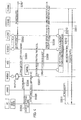

Classifications
-
- H—ELECTRICITY
- H04—ELECTRIC COMMUNICATION TECHNIQUE
- H04W—WIRELESS COMMUNICATION NETWORKS
- H04W68/00—User notification, e.g. alerting and paging, for incoming communication, change of service or the like
- H04W68/02—Arrangements for increasing efficiency of notification or paging channel
-
- H—ELECTRICITY
- H04—ELECTRIC COMMUNICATION TECHNIQUE
- H04W—WIRELESS COMMUNICATION NETWORKS
- H04W76/00—Connection management
- H04W76/10—Connection setup
-
- H—ELECTRICITY
- H04—ELECTRIC COMMUNICATION TECHNIQUE
- H04L—TRANSMISSION OF DIGITAL INFORMATION, e.g. TELEGRAPHIC COMMUNICATION
- H04L65/00—Network arrangements, protocols or services for supporting real-time applications in data packet communication
- H04L65/10—Architectures or entities
- H04L65/1016—IP multimedia subsystem [IMS]
-
- H—ELECTRICITY
- H04—ELECTRIC COMMUNICATION TECHNIQUE
- H04W—WIRELESS COMMUNICATION NETWORKS
- H04W76/00—Connection management
- H04W76/10—Connection setup
- H04W76/19—Connection re-establishment
-
- H—ELECTRICITY
- H04—ELECTRIC COMMUNICATION TECHNIQUE
- H04W—WIRELESS COMMUNICATION NETWORKS
- H04W88/00—Devices specially adapted for wireless communication networks, e.g. terminals, base stations or access point devices
- H04W88/16—Gateway arrangements
-
- H—ELECTRICITY
- H04—ELECTRIC COMMUNICATION TECHNIQUE
- H04W—WIRELESS COMMUNICATION NETWORKS
- H04W76/00—Connection management
- H04W76/30—Connection release
Definitions
- the present invention relates to a mobile communication method.
- Non-Patent Document 1 proposes operations when there is an incoming call addressed to a UE (a User Equipment) in Idle state in which registration with an IMS (an IP Multimedia Subsystem) is complete after restart of an MIME (a Mobility Management Entity) which once stops due to a failure and the like.
- Non-Patent Document 1 3GPP TSG CT4 Meeting #49, C4-101116
- Non-Patent Document 1 the problems of the operations as described in Non-Patent Document 1 will be described with reference to Fig. 5 .
- the P-GW#L receives a packet addressed to the UE in Step S5001 and transmits such a packet to the S-GW#1 in Step S5002. It is assumed that such a packet contains "INVITE" addressed to the UE.
- Step S5003 the S-GW#1 transmits "Downlink Data Notification" containing IMS (International Mobile Subscriber Identity) of the UE to an MME#1.
- IMS International Mobile Subscriber Identity
- Step S5004 the MME#1 transmits "Paging" to the UE.
- Step S5005 when receiving such "Paging", the UE releases the above-mentioned bearer for the UE.
- Step S5006 the UE transmits "attach Request" to the MME1.
- Non-Patent Document 1 there is a problem that it does not specify how to operate if the UE transmits "Attach Request" to an MME#2 and not to the MME#1.
- an objective of the present invention is to provide a mobile communication method for enabling a termination process to a UE to be performed without wasting a resource, if there is an incoming call addressed to such a UE in Idle state in which registration with an IMS is complete, after restart of an MME which once stops due to a failure and the like.
- a first characteristic of the present invention is a mobile communication method, and is summarized in that the method includes the steps of: causing a first mobility management node to restart while a bearer for a mobile station is established between a first serving gateway device and a first packet data network gateway device; causing the first mobility management node not only to transmit a paging signal to the mobile station but also to transmit to the first serving gateway device a delete session request signal containing identification information of the mobile station and information indicating that the first mobility management node has restarted, when receiving a notification signal containing the identification information of the mobile station from the first serving gateway device; causing the first serving gateway device not only to release the bearer for the mobile station, but also to transmit to the first packet data network gateway device the delete session request signal containing the information indicating that the first mobility management node has restarted, upon receipt of the delete session request signal; causing the first packet data network gateway device to release the bearer for the mobile station, upon receipt of the delete session request signal; causing the mobile station to transmit an attach request signal to
- a second characteristic of the present invention is a mobile communication method, and is summarized in that the method includes the steps of: causing a first mobility management node to restart while a bearer for a mobile station is established between a first serving gateway device and a first packet data network gateway device; causing the first mobility management node to transmit a paging signal to the mobile station, when receiving a notification signal containing identification information of the mobile station from the first serving gateway device; causing the mobile station to transmit an attach request signal to a second mobility management node, upon receipt of the paging signal; causing the second mobility management node to transmit a create session request signal to the first serving gateway device, upon receipt of the attach request signal; causing the first serving gateway device not only to release the bearer for the mobile station, but also to transmit the create session request signal to the first packet data network gateway device, upon receipt of the create session request signal; causing the first packet data network gateway device to release the bearer for the mobile station, upon receipt of the create session request signal; and resetting the bearer for the mobile station
- a third characteristic of the present invention is a mobile communication method, and is summarized in that the method includes the steps of: causing a first mobility management node to restart while a bearer for a mobile station is established between a first serving gateway device and a first packet data network gateway device; causing the first mobility management node to transmit a paging signal to the mobile station, when receiving a notification signal containing identification information of the mobile station from the first serving gateway device; causing the mobile station to transmit an attach request signal to a second mobility management node, upon receipt of the paging signal; causing the second mobility management node to transmit a create session request signal to the first serving gateway device, upon receipt of the attach request signal; causing the first serving gateway device to transmit a modify bearer request signal to the first packet data network gateway device, without releasing the bearer for the mobile station, upon receipt of the create session request signal; and resetting the bearer for the mobile station between the first serving gateway device and the first packet data network gateway device.
- a fourth characteristic of the present invention is a mobile communication method, and is summarized in that the method includes the steps of: causing a first mobility management node to restart while a bearer for a mobile station is established between a first serving gateway device and a first packet data network gateway device; causing the first mobility management node to transmit a paging signal to the mobile station, when receiving a notification signal containing identification information of the mobile station from the first serving gateway device; causing the mobile station to transmit an attach request signal to the first mobility management node, upon receipt of the paging signal; causing the first mobility management node to transmit a create session request signal to the first serving gateway device, upon receipt of the attach request signal; causing the first serving gateway device not only to release the bearer for the mobile station but also to transmit the create session request signal to the first packet data network gateway device, upon receipt of the create session request signal; causing the first packet data network gateway device to release the bearer for the mobile station, upon receipt of the create session request signal; and resetting the bearer for the mobile station between the
- a fifth characteristic of the present invention is a mobile communication method, and is summarized in that it includes the steps of: causing a first mobility management node to restart while a bearer for a mobile station is established between a first serving gateway device and a first packet data network gateway device; causing the first mobility management node to transmit a paging signal to the mobile station, when receiving a notification signal containing identification information of the mobile station from the first serving gateway device; causing the mobile station to transmit an attach request signal to the first mobility management node, upon receipt of the paging signal; causing the first mobility management node to transmit a create session request signal to the first serving gateway device, upon receipt of the attach request signal; causing the first serving gateway device to transmit a modify bearer request signal to the first packet data network gateway device, without releasing the bearer for the mobile station, upon receipt of the create session request signal; and resetting the bearer for the mobile station between the first serving gateway device and the first packet data network gateway device.
- a mobile communication method which enables a termination process addressed to a UE to be performed without wasting a resource, when there is an incoming call addressed to such a UE in Idle state in which registration with an IMS is complete, after restart of an MME which once stops due to a failure and the like.
- a mobile communication system according to a first embodiment of the present invention will be described with reference to Fig. 1 and Fig. 2 .
- the mobile communication system includes a P/S-CSCF (Proxy/Serving-Call Session Control Function), PCRF (Policy and Charger Rule Function), P-GM#1, P-GW#2, S-GW#1, S-GW#2, MME#1, MME#2, eNB#1, eNB#2, and HSS (Home Subscriber Server) .
- P/S-CSCF Proxy/Serving-Call Session Control Function
- PCRF Policy and Charger Rule Function
- P-GM#1, P-GW#2, S-GW#1, S-GW#2, MME#1, MME#2, eNB#1, eNB#2, and HSS (Home Subscriber Server) Home Subscriber Server
- the P-GW#1 receives a packet addressed to the UE in Step S1001 and transmits such a packet to the S-GW#1 in Step S1002. It is assumed that such a packet contains "INVITE" addressed to the UE.
- Step S1003 the S-GW#1 transmits "Downlink Data Notification" containing IMSI of the UE to the MME#1.
- the S-GW#1 when receiving the packet in Step 1002, the S-GW#1 does not release context information on the bearer for the UE which it has retained, even if the S-GW#1 has learned that the MME#1 restarted, from a GTP signal (restart information) and the like which it received before Step S1002.
- the S-GW#1 may not contain the IMSI of the IE in the "Downlink Data Notification".
- the MME#1 upon receipt of such "Downlink Data Notification", the MME#1 performs a usual operation. If the MME#1 detects that corresponding context information is not managed, the MME#1 transmits "Downlink Data Notification Ack (error response)" to the S-GW#1.
- the MME#1 judges whether or not the context information identified by such IMSI is managed.
- the MME#1 continues a usual Paging process.
- Step S1005 the MME#1 may transmit "Downlink Data Notification Ack (IMSI)" before transmitting "Delete Session Request".
- IMSI Downlink Data Notification Ack
- the S-GW#1 can learn whether or not the Paging process is complete correctly. If the Paging process fails, the S-GW#1 can perform a process such as a bearer release process and the like.
- Step S1006A upon receipt of such "Delete Session Request" the P-GW#1 not only releases the above-mentioned bearer for the UE but also transmits "IP-CAN Session Release” containing the "MME restart (the information indicating that the MME#1 has restarted)" to the PCRF.
- the PCRF which receives the "IP-CAN Session Release" releases the above-mentioned bearer for the UE.
- Step S1006A is omitted.
- the UE upon receipt of the "Paging" addressed to the UE, the UE not only releases the above-mentioned bearer for the UE in Step S1004A, but also transmits the "Attach Request" to the MME#2 in Step S1007.
- Step S1008 in response to such "Attach Request" , a process for establishing a bearer for the UE is performed among the Me#2, HSS, S-GW#2, and P-GW#2.
- Step S1009 the MME#2 transmits "Attach Accept" to the UE.
- Step S1010 "IMS Registration process" of the UE is performed.
- Step S1011 upon receipt of a packet addressed to the UE, the P-GW#2 transmits such a packet to the UE by way of the S-GW#2.
- the MME#1 since the MME#1 is configured to release the bearer for the UE between the S-GW#1 and the P-GW#1 if the MME#1 judges that the context information of the UE identified by the IMSI contained in the "Downlink Data Notification" received from the S-GW#1 is managed, a termination process addressed to such a UE can be performed without wasting a resource, when there is an incoming call addressed to the UE in Idle state in which registration with the IMS is complete, after restart of the MME which once stops due to a failure and the like.
- the P-GW#1 receives a packet addressed to the UE in Step S2001 and transmits such a packet to the S-GW#1 in Step S2002. It is assumed that such a packet contains "INVITE" addressed to the UE.
- Step S2003 the S-GW#1 transmits "Downlink Data Notification" containing IMSI of the UE to the MME#1.
- the MME#1 judges whether or not the context information of a UE identified by such IMSI is managed.
- the MME#1 judges that the context information of the UE identified by such IMSI is not managed, the MME#1 transmits "Paging" to the UE in Step S2004.
- the UE Upon receipt of the "Paging" addressed to the UE, the UE not only releases the above-mentioned bearer for the UE in Step S2005 but also transmits "Attach Request" to an MME#2 in Step S2006.
- Step S2007 the MME#1 transmits "Update Location" containing identification information of the UE to an HSS.
- the HSS Upon receipt of such "Update Location", the HSS transmits "Cancel Location” to the MME#1 in Step S2008.
- the MME#1 Upon receipt of such "Cancel Location", the MME#1 transmits "Cancel Location Ack" containing identification information of the S-GW#1 to the HSS in Step S2009.
- the HSS Upon receipt of the "Cancel Location Ack", the HSS changes location registration information for the UE and transmits "Update Location Ack" containing the identification information of the S-GW#1 to the MME#2 in Step S2010.
- Step S2011 the MME#2 transmits "Create Session Request" containing a restart counter (information indicating that the MME#1 has restarted) to the S-GM#1. Note that the restart counter may not be set.
- the S-GW#1 Upon receipt of such "Create Session Request", the S-GW#1 detects that it is a response from the UE for which the S-GW#1 has transmitted the "Downlink Data Notification" in Step S2003. The S-GW#1 not only releases the above-mentioned bearer for the UE, but also transmits "Create Session Request" containing an MME restart flag (information indicating that the MME#1 has restarted) to the P-GW#1.
- the P-GM#1 Upon receipt of such "Create Session Request", the P-GM#1 releases the above-mentioned bearer for the UE and newly allocates a resource to be used in such a bearer for the UE.
- Step S2013 a process for establishing a bearer for the UE is performed among the MME#2, HSS, S-GW#1, and P-GW#1.
- Step S2014 the MME#2 transmits "Attach Accept" to the UE.
- Step S2015 "IMS Registration process" of the UE is performed.
- Step S2016 upon receipt of a packet addressed to the UE, the P-GW#1 transmits such a packet to the UE by way of the S-GW#1.
- the S-GW#1 may transmit "Modify Bearer Request" containing the MME restart flag (information showing that the MME#1 has restarted) to the P-GW#1 in Step S2012, without releasing the above-mentioned bearer for the UE.
- the P-GW#1 reuses such a bearer for the UE again without releasing the above-mentioned bearer for the UE.
- the MME#2 since the MME#2 is configured to release the bearer for the UE established between the S-GW#1 and the P-GW#1, triggered by transmitting the "Create Session Request" containing the restart counter to the S-GW#1, a termination process to such a UE can be performed without wasting a resource when there is an incoming call addressed to the UE in Idle state in which registration with the IMS is complete after restart of the MME which once stops due to a failure and the like.
- the P-GW#1 receives a packet addressed to the UE in Step S3001 and transmits such a packet to the S-GW#1 in Step S3002. It is assumed that such a packet contains "INVITE" addressed to the UE.
- Step S3003 the S-GW#1 transmits "Downlink Data Notification" containing IMSI of the UE to the MME#1.
- the MME#1 judges whether or not the context information of the UE identified by such IMSI is managed.
- the MME#1 judges that the context information of the UE identified by such IMSI is not managed, the MME#1 transmits "Paging" to the UE in Step S3004.
- the UE Upon receipt of the "Paging" addressed to the UE, the UE not only releases the above-mentioned bearer for the UE in Step S3005 but also transmits "Attach Request" containing a temporary ID of the UE to the MME#1 in Step S3006.
- a temporary ID of the UE is a GUTI (Globally Unique Temporary Identifier), for example.
- An eNB#1 identifies the MME#1 as a transmission destination of such "Attach Request" by utilizing the temporary ID.
- Step S3007 upon receipt of such "Attach Request", the MME#1 not only performs a location registration process of the UE on the HSS but also downloads profile information on the UE from the HSS.
- step S3008 the MME#1 transmits "Create Session Request" containing a restart counter to the S-GW#1. Note that the restart counter may not be set.
- the S-GW#1 Upon receipt of such "Create Session Request", the S-GW#1 detects that it is a response from the UE for which the S-GW#1 has transmitted the "Downlink Data Notification" in Step S3003. The S-GW#1 not only releases the above-mentioned bearer for the UE, but also transmits "Create Session Request" containing the MME restart flag to the P-GW#1.
- the P-GW#1 Upon receipt of such "Create Session Request", the P-GW#1 releases the above-mentioned bearer for the UE and newly allocates a resource to be used in such a bearer for the UE.
- Step S3010 a process for establishing a bearer for the UE is performed among the MME#2, HSS, S-GW#1, and P-GW#1.
- Step S3011 the MME#2 transmits "Attach Accept" to the UE.
- Step S3012 "IMS Registration process" of the UE is performed.
- Step S3013 upon receipt of a packet addressed to the UE, the P-GW#1 transmits such a packet to the UE by way of the S-GW#1.
- the S-GW#1 may transmit "Modify Bearer Request" containing the MME restart flag to the P-GW#1 in Step S3009, without releasing the above-mentioned bearer for the UE.
- the P-GW#1 reuses such a bearer for the UE again without releasing the above-mentioned bearer for the UE.
- the MME#1 since the MME#1 is configured to release the bearer for the UE established between the S-GW#1 and the P-GW#1, triggered by transmitting the "Create Session Request" containing the restart counter to the S-GW#1, a termination process to such a UE can be performed without wasting a resource when there is an incoming call addressed to the UE in Idle state in which registration with the IMS is complete after restart of the MME which once stops due to a failure and the like.
- a second characteristic of the embodiment is a mobile communication method, and is summarized in that the method includes the steps of : causing an MME#1 to restart while a bearer for a UE is established between an S-GW#1 and a P-GW#1; causing the MME#1 to transmit "Paging" to the UE, when receiving "Downlink Data Notification” containing IMSI of the UE from the S-GW#1; causing the UE to transmit "Attach Request" to an MME#2, upon receipt of the "Paging”; causing the MME#2 to transmit "Create Session Request (a create session request signal)" to the S-GW#1, upon receipt of the "Attach Request”; causing the S-GW#1 not only to release the bearer for the UE but also to transmit the "Create Session Request" to the P-GW#1, upon receipt of the "Create Session Request”; causing the P-GW#1 to release the bearer for the UE,
- a third characteristic of the embodiment is a mobile communication method, and is summarized in that the method includes the steps of: causing an MME#1 to restart while a bearer for a UE is established between an S-GW#1 and a P-GW#1 causing the MME#1 to transmit "Paging" to the UE, when receiving "Downlink Data Notification” containing IMSI of the UE from the S-GW#1; causing the UE to transmit "Attach Request” to an MME#2, upon receipt of the "Paging”; causing the MME#2 to transmit "Create Session Request" to the S-GW#1, upon receipt of the "Attach Request”; causing the S-GW#1 to transmit "Modify Bearer Request (a modify bearer request signal)" to the P-GW#1, without releasing the bearer for the UE, upon receipt of the create Session Request”; and resetting the bearer for the UE between the S-GW#1 and the P-GW#1.
- a fourth characteristic of the embodiment is a mobile communication method, and is summarized in that the method includes the steps of : causing an MME#1 to restart while a bearer for a UE is established between an S-GW#1 and a P-GW#1; causing the MME#1 to transmit "Paging" to the UE, when receiving "Downlink Data Notification” containing IMSI of the UE from the S-GW#1; causing the UE to transmit "Attach Request” to the MME#1, upon receipt of the "Paging”; causing the MME#1 to transmit "Create Session Request" to the P-GW#1, upon receipt of the "Attach Request”; causing the S-GW#1 not only to release the bearer for the UE but also to transmit the "Create Session Request" to the P-GW#1, upon receipt of the "Create Session Request”; causing the P-GW#1 to release the bearer for the UE, upon receipt of the "Cre
- a fifth characteristic of the present invention is mobile communication method, and is summarized in that the method includes the steps of : causing an MME#1 to restart while a bearer for a UE is established between an S-GW#1 and a P-GM#1; causing the MME#1 to transmit "Paging" to the UE, when receiving "Downlink Data Notification” containing IMSI of the UE from the S-GW#1; causing the UE to transmit "Attach Request” to the MME#1, upon receipt of the "Paging”; causing the MME#1 to transmit "Create Session Request" to the P-GW#1, upon receipt of the "Attach Request”; causing the S-GW#1 to transmit "Modify Bearer Request” to the P-GW#1, without releasing the bearer for the UE, upon receipt of the "Create Session Request”; and resetting the bearer for the UE between the S-GW#1 and the P-GW#1.
- operations of the MME#1, MME#2, S-GW#1, S-GW#2, P-GW#1, P-GW#2, PCRF, P/S-CSCF, eNB#1, eNB#2, and UE described above may be performed by hardware, may be performed by a software module executed by a processor, or may be performed by a combination of both.
- the software module may be provided in any type of storage medium such as a RAM (Random Access Memory), flash memory, ROM (Read Only Memory), EPROM (Erasable Programmable ROM), EEPROM (Electronically Erasable and Programmable ROM), register, hard disk, removal disk, or CD-ROM.
- RAM Random Access Memory
- flash memory ROM (Read Only Memory)
- EPROM Erasable Programmable ROM
- EEPROM Electrical Erasable and Programmable ROM
- register hard disk, removal disk, or CD-ROM.
- Such a storage medium is connected to a processor so that the processor can read and write information from and to the storage medium.
- a storage medium may be integrated in a processor.
- such a storage medium and processor may be provided in an ASIC.
- Such an ASIC may be provided in an MME#1, MME#2, S-GW#1, S-GW#2, P-GW#1, P-GW#2, PCRF, P/S-CSCF, eNB#1, eNB#2, or UE.
- such a storage medium and processor may be provided in an MIME#1, MME#2, S-GW#1, S-GW#2, P-GW#1, P-GW#2, PCRF, P/S-CSCF, eNB#1, eNB#2, or UE as discrete component.
Landscapes
- Engineering & Computer Science (AREA)
- Computer Networks & Wireless Communication (AREA)
- Signal Processing (AREA)
- Multimedia (AREA)
- Mobile Radio Communication Systems (AREA)
Abstract
Description
- The present invention relates to a mobile communication method.
- Non-Patent
Document 1 proposes operations when there is an incoming call addressed to a UE (a User Equipment) in Idle state in which registration with an IMS (an IP Multimedia Subsystem) is complete after restart of an MIME (a Mobility Management Entity) which once stops due to a failure and the like. - Non-Patent Document 1: 3GPP TSG CT4 Meeting #49, C4-101116
- However, the applicant has discovered that the following problems occur in such operations.
- In the following, the problems of the operations as described in
Non-Patent Document 1 will be described with reference toFig. 5 . - As shown in
Fig. 5 , if there is an incoming call addressed to a UE in Idle state in which registration with an IMS is complete after restart of an MME which once stops due to a failure and the like while a bearer for the UE is established between an S-GW (Serving Gateway) #1 and a P-GW (Packet Data Network Gateway) #1, the P-GW#L receives a packet addressed to the UE in Step S5001 and transmits such a packet to the S-GW# 1 in Step S5002. It is assumed that such a packet contains "INVITE" addressed to the UE. - In Step S5003, the S-
GW# 1 transmits "Downlink Data Notification" containing IMS (International Mobile Subscriber Identity) of the UE to anMME# 1. - In Step S5004, the
MME# 1 transmits "Paging" to the UE. - In Step S5005, when receiving such "Paging", the UE releases the above-mentioned bearer for the UE.
- In Step S5006, the UE transmits "attach Request" to the MME1.
- However, in the above-mentioned
Non-Patent Document 1, there is a problem that it does not specify how to operate if the UE transmits "Attach Request" to anMME# 2 and not to theMME# 1. - In addition, there is another problem that if a termination process addressed to the UE is performed via the
MME# 2 in such a situation, the bearer for the UE is not deleted and remains between the S-GW# 1 and the P-GM#1, which thus wastes a resource. - Hence, the present invention has been made in view of the problems described above, and an objective of the present invention is to provide a mobile communication method for enabling a termination process to a UE to be performed without wasting a resource, if there is an incoming call addressed to such a UE in Idle state in which registration with an IMS is complete, after restart of an MME which once stops due to a failure and the like.
- A first characteristic of the present invention is a mobile communication method, and is summarized in that the method includes the steps of: causing a first mobility management node to restart while a bearer for a mobile station is established between a first serving gateway device and a first packet data network gateway device; causing the first mobility management node not only to transmit a paging signal to the mobile station but also to transmit to the first serving gateway device a delete session request signal containing identification information of the mobile station and information indicating that the first mobility management node has restarted, when receiving a notification signal containing the identification information of the mobile station from the first serving gateway device; causing the first serving gateway device not only to release the bearer for the mobile station, but also to transmit to the first packet data network gateway device the delete session request signal containing the information indicating that the first mobility management node has restarted, upon receipt of the delete session request signal; causing the first packet data network gateway device to release the bearer for the mobile station, upon receipt of the delete session request signal; causing the mobile station to transmit an attach request signal to a second mobility management node, upon receipt of the paging signal; and in response to the attach request signal, establishing a bearer for a mobile station between a second serving gateway device and a second packet data network gateway device.
- A second characteristic of the present invention is a mobile communication method, and is summarized in that the method includes the steps of: causing a first mobility management node to restart while a bearer for a mobile station is established between a first serving gateway device and a first packet data network gateway device; causing the first mobility management node to transmit a paging signal to the mobile station, when receiving a notification signal containing identification information of the mobile station from the first serving gateway device; causing the mobile station to transmit an attach request signal to a second mobility management node, upon receipt of the paging signal; causing the second mobility management node to transmit a create session request signal to the first serving gateway device, upon receipt of the attach request signal; causing the first serving gateway device not only to release the bearer for the mobile station, but also to transmit the create session request signal to the first packet data network gateway device, upon receipt of the create session request signal; causing the first packet data network gateway device to release the bearer for the mobile station, upon receipt of the create session request signal; and resetting the bearer for the mobile station between the first serving gateway device and the first packet data network gateway device.
- A third characteristic of the present invention is a mobile communication method, and is summarized in that the method includes the steps of: causing a first mobility management node to restart while a bearer for a mobile station is established between a first serving gateway device and a first packet data network gateway device; causing the first mobility management node to transmit a paging signal to the mobile station, when receiving a notification signal containing identification information of the mobile station from the first serving gateway device; causing the mobile station to transmit an attach request signal to a second mobility management node, upon receipt of the paging signal; causing the second mobility management node to transmit a create session request signal to the first serving gateway device, upon receipt of the attach request signal; causing the first serving gateway device to transmit a modify bearer request signal to the first packet data network gateway device, without releasing the bearer for the mobile station, upon receipt of the create session request signal; and resetting the bearer for the mobile station between the first serving gateway device and the first packet data network gateway device.
- A fourth characteristic of the present invention is a mobile communication method, and is summarized in that the method includes the steps of: causing a first mobility management node to restart while a bearer for a mobile station is established between a first serving gateway device and a first packet data network gateway device; causing the first mobility management node to transmit a paging signal to the mobile station, when receiving a notification signal containing identification information of the mobile station from the first serving gateway device; causing the mobile station to transmit an attach request signal to the first mobility management node, upon receipt of the paging signal; causing the first mobility management node to transmit a create session request signal to the first serving gateway device, upon receipt of the attach request signal; causing the first serving gateway device not only to release the bearer for the mobile station but also to transmit the create session request signal to the first packet data network gateway device, upon receipt of the create session request signal; causing the first packet data network gateway device to release the bearer for the mobile station, upon receipt of the create session request signal; and resetting the bearer for the mobile station between the first serving gateway device and the first packet data network gateway device.
- A fifth characteristic of the present invention is a mobile communication method, and is summarized in that it includes the steps of: causing a first mobility management node to restart while a bearer for a mobile station is established between a first serving gateway device and a first packet data network gateway device; causing the first mobility management node to transmit a paging signal to the mobile station, when receiving a notification signal containing identification information of the mobile station from the first serving gateway device; causing the mobile station to transmit an attach request signal to the first mobility management node, upon receipt of the paging signal; causing the first mobility management node to transmit a create session request signal to the first serving gateway device, upon receipt of the attach request signal; causing the first serving gateway device to transmit a modify bearer request signal to the first packet data network gateway device, without releasing the bearer for the mobile station, upon receipt of the create session request signal; and resetting the bearer for the mobile station between the first serving gateway device and the first packet data network gateway device.
- As described above, according to the present invention, a mobile communication method can be provided which enables a termination process addressed to a UE to be performed without wasting a resource, when there is an incoming call addressed to such a UE in Idle state in which registration with an IMS is complete, after restart of an MME which once stops due to a failure and the like.
-
- [
Fig. 1] Fig. 1 is an overall configurational view of a mobile communication system according to a first embodiment of the present invention. - [
Fig. 2] Fig. 2 is a sequence diagram describing operations of a mobile communication system according to the first embodiment of the present invention. - [
Fig. 3] Fig. 3 is a sequence diagram describing operations of a mobile communication system according to a second embodiment of the present invention. - [
Fig. 4] Fig. 4 is a sequence diagram describing operations of a mobile communication system according to a third embodiment of the present invention. - [
Fig. 5] Fig. 5 is a sequence diagram describing operations of a conventional mobile communication system. - A mobile communication system according to a first embodiment of the present invention will be described with reference to
Fig. 1 andFig. 2 . - As shown in
Fig. 1 , the mobile communication system according to the embodiment includes a P/S-CSCF (Proxy/Serving-Call Session Control Function), PCRF (Policy and Charger Rule Function), P-GM#1, P-GW# 2, S-GW# 1, S-GW# 2, MME#1, MME#2, eNB#1, eNB#2, and HSS (Home Subscriber Server) . - In the following, with reference to
Fig. 2 , operations when there is an incoming call addressed to a UE in Idle state in which registration with an IMS is complete after restart of anMME# 1 which once stops due to a failure and the like, in the mobile communication system according to the embodiment will be described. - As shown in
Fig. 2 , if there is an incoming call addressed to the UE in Idle state in which registration with the IMS is complete after restart of theMME# 1 which once stops due to a failure and the like while a bearer for the UE is established between the S-GW# 1 and the P-GW# 1, the P-GW# 1 receives a packet addressed to the UE in Step S1001 and transmits such a packet to the S-GW# 1 in Step S1002. It is assumed that such a packet contains "INVITE" addressed to the UE. - In Step S1003, the S-
GW# 1 transmits "Downlink Data Notification" containing IMSI of the UE to theMME# 1. - Note that when receiving the packet in Step 1002, the S-
GW# 1 does not release context information on the bearer for the UE which it has retained, even if the S-GW# 1 has learned that theMME# 1 restarted, from a GTP signal (restart information) and the like which it received before Step S1002. - In addition, when the
MME# 1 restarts, if the S-GW# 1 determines that it does not need to perform Paging using the IMS1 of the UE, for example, when no signaling bearer for the IMS exists, the S-GW# 1 may not contain the IMSI of the IE in the "Downlink Data Notification". - In such a case, upon receipt of such "Downlink Data Notification", the
MME# 1 performs a usual operation. If theMME# 1 detects that corresponding context information is not managed, theMME# 1 transmits "Downlink Data Notification Ack (error response)" to the S-GW# 1. - When receiving such "Downlink Data Notification", the
MME# 1 judges whether or not the context information identified by such IMSI is managed. - Here, if the context information of the UE identified by such IMSI is managed, the
MME# 1 continues a usual Paging process. - On the other hand, if the
MME# 1 judges that the context information of the UE identified by such IMSI is not managed, theMME# 1 not only transmits the "Paging" to the UE in Step S1004, but also transmits to the S-GW# 1 "Delete Session Request" containing the IMSI of the UE and "Cause = MME restart (information indicating that theMME# 1 has restarted)" in step S1005. - Note that in Step S1005, the
MME# 1 may transmit "Downlink Data Notification Ack (IMSI)" before transmitting "Delete Session Request". - In such a case, the S-
GW# 1 can learn whether or not the Paging process is complete correctly. If the Paging process fails, the S-GW#1 can perform a process such as a bearer release process and the like. - In Step S1006, upon receipt of such "Delete Session Request", the S-
GW# 1 not only releases the abode-mentioned bearer for the UE identified by such IMSI but also transmits the "Delete Session Request" containing the "Cause = MME restart" to the P-GW# 1. - In Step S1006A, upon receipt of such "Delete Session Request" the P-
GW# 1 not only releases the above-mentioned bearer for the UE but also transmits "IP-CAN Session Release" containing the "MME restart (the information indicating that theMME# 1 has restarted)" to the PCRF. - Here, the PCRF which receives the "IP-CAN Session Release" releases the above-mentioned bearer for the UE.
- Note that if PMIPv6 (Proxy Mobile IP v6) protocol is applied in a section between the S-
GW# 1 and the P-GW# 1, in Step S1006, the S-GW# 1 transmits "Proxy Binding Update" instead of "Create Session Request". - In such a case, the S-
GN# 1 sets the above-mentioned "Cause = MME restart (MME restart flag)" in the proxy Binding Update". - Alternatively, rather than setting the abode-mentioned "Cause = MME restart (the MME restart flag)" in the "Proxy Binding "Update", in Step S1005, the S-
GW# 1 may notify the PCRF of the above-mentioned "Cause = MME restart (the MME restart flag)" through signal processing (Gateway Control Session Establishment and the like) to be performed with the PCRF. - In such a case, the PCRF may notify the P-
GW# 1 of the above-mentioned "Cause = MME restart (the MME restart flag)" through signal processing (Policy and Charging Rules Provision and the like) to be performed on the P-GW# 1. In such a case, Step S1006A is omitted. - On the other hand, upon receipt of the "Paging" addressed to the UE, the UE not only releases the above-mentioned bearer for the UE in Step S1004A, but also transmits the "Attach Request" to the
MME# 2 in Step S1007. - In Step S1008, in response to such "Attach Request", a process for establishing a bearer for the UE is performed among the
Me# 2, HSS, S-GW# 2, and P-GW# 2. - In Step S1009, the
MME# 2 transmits "Attach Accept" to the UE. - In Step S1010, "IMS Registration process" of the UE is performed.
- Then, in Step S1011, upon receipt of a packet addressed to the UE, the P-
GW# 2 transmits such a packet to the UE by way of the S-GW# 2. - With the mobile communication system according to the embodiment, since the
MME# 1 is configured to release the bearer for the UE between the S-GW# 1 and the P-GW# 1 if theMME# 1 judges that the context information of the UE identified by the IMSI contained in the "Downlink Data Notification" received from the S-GW# 1 is managed, a termination process addressed to such a UE can be performed without wasting a resource, when there is an incoming call addressed to the UE in Idle state in which registration with the IMS is complete, after restart of the MME which once stops due to a failure and the like. - In the following, with reference to
Fig. 3 , a mobile communication system according to a second embodiment of the present invention will be described with a focus on differences from the mobile communication system according to the first embodiment described above. - Here, operations when there is an incoming call addressed to a UE in Idle state in which registration with an IMS is complete after restart of an
MME# 1 which once stops due to a failure and the like in the mobile communication system according to the embodiment will be described with reference toFig. 3 . - As shown in
Fig. 3 , when there is an incoming call addressed to the UE in the Idle state in which the registration with the IMS is complete after restart of theMME# 1 which once stops due to a failure and the like while a bearer for the UE is established between an S-GW# 1 and a P-GW# 1, the P-GW# 1 receives a packet addressed to the UE in Step S2001 and transmits such a packet to the S-GW# 1 in Step S2002. It is assumed that such a packet contains "INVITE" addressed to the UE. - In Step S2003, the S-
GW# 1 transmits "Downlink Data Notification" containing IMSI of the UE to theMME# 1. - When receiving such "Downlink Data Notification", the
MME# 1 judges whether or not the context information of a UE identified by such IMSI is managed. - Here, if the
MME# 1 judges that the context information of the UE identified by such IMSI is not managed, theMME# 1 transmits "Paging" to the UE in Step S2004. - Upon receipt of the "Paging" addressed to the UE, the UE not only releases the above-mentioned bearer for the UE in Step S2005 but also transmits "Attach Request" to an
MME# 2 in Step S2006. - In Step S2007, the
MME# 1 transmits "Update Location" containing identification information of the UE to an HSS. - Upon receipt of such "Update Location", the HSS transmits "Cancel Location" to the
MME# 1 in Step S2008. - Upon receipt of such "Cancel Location", the
MME# 1 transmits "Cancel Location Ack" containing identification information of the S-GW# 1 to the HSS in Step S2009. - Upon receipt of the "Cancel Location Ack", the HSS changes location registration information for the UE and transmits "Update Location Ack" containing the identification information of the S-
GW# 1 to theMME# 2 in Step S2010. - In Step S2011, the
MME# 2 transmits "Create Session Request" containing a restart counter (information indicating that theMME# 1 has restarted) to the S-GM# 1. Note that the restart counter may not be set. - Upon receipt of such "Create Session Request", the S-
GW# 1 detects that it is a response from the UE for which the S-GW# 1 has transmitted the "Downlink Data Notification" in Step S2003. The S-GW# 1 not only releases the above-mentioned bearer for the UE, but also transmits "Create Session Request" containing an MME restart flag (information indicating that theMME# 1 has restarted) to the P-GW# 1. - Upon receipt of such "Create Session Request", the P-
GM# 1 releases the above-mentioned bearer for the UE and newly allocates a resource to be used in such a bearer for the UE. - In addition, if PMIPv6 (Proxy Mobile IP v6) protocol is applied in a section between the S-
GW# 1 and the P-GW# 1, the S-GW# 1 transmits "Proxy Binding Update" instead of "Create Session Request" in Step S2012. - In such a case, the S-
GW# 1 sets the above-mentioned "Cause = MME restart (the MME restart flag)" in the "(Proxy Binding "Update". - Alternatively, rather than setting the abode-mentioned "Cause = MME restart (the MME restart flag)" in the "Proxy Binding Update" in Step S2011, the S-
GM# 1 may notify the PCRF of the above-mentioned "Cause = MME restart (the MME restart flag)" through signal processing (Gateway Control Session Establishment and the like) to be performed with the PCRF. - In such a case, the PCRF may notify the P-
GW# 1 of the above-mentioned "Cause = MME restart (the MME restart flag)" through signal processing (Policy and Charging Rules Provision and the like) to be performed on the P-GW# 1. - In Step S2013, a process for establishing a bearer for the UE is performed among the
MME# 2, HSS, S-GW# 1, and P-GW# 1. - In Step S2014, the
MME# 2 transmits "Attach Accept" to the UE. - In Step S2015, "IMS Registration process" of the UE is performed.
- Then, in Step S2016, upon receipt of a packet addressed to the UE, the P-
GW# 1 transmits such a packet to the UE by way of the S-GW# 1. - Note that when receiving "Create Session Request" in Step S2011, the S-
GW# 1 may transmit "Modify Bearer Request" containing the MME restart flag (information showing that theMME# 1 has restarted) to the P-GW# 1 in Step S2012, without releasing the above-mentioned bearer for the UE. - In such a case, upon receipt of such "Modify Bearer Request", the P-
GW# 1 reuses such a bearer for the UE again without releasing the above-mentioned bearer for the UE. - With the mobile communication system according to the embodiment, since the
MME# 2 is configured to release the bearer for the UE established between the S-GW# 1 and the P-GW# 1, triggered by transmitting the "Create Session Request" containing the restart counter to the S-GW# 1, a termination process to such a UE can be performed without wasting a resource when there is an incoming call addressed to the UE in Idle state in which registration with the IMS is complete after restart of the MME which once stops due to a failure and the like. - In the following, with reference to
Fig. 4 , a mobile communication system according to a third embodiment of the present invention will be described with a focus on differences from the mobile communication system according to the first embodiment described above. - Here, operations when there is an incoming call addressed to a UE in Idle state in which registration with an IMS is complete after restart of an
MME# 1 which once stops due to a failure and the like in the mobile communication system according to the embodiment will be described with reference toFig. 4 . - As shown in
Fig. 4 , when there is an incoming call addressed to the UE in the Idle state in which the registration with the IMS is complete after restart of theMME# 1 which once stops due to a failure and the like while a bearer for the UE is established between an S-GW# 1 and a P-GW# 1, the P-GW# 1 receives a packet addressed to the UE in Step S3001 and transmits such a packet to the S-GW# 1 in Step S3002. It is assumed that such a packet contains "INVITE" addressed to the UE. - In Step S3003, the S-
GW# 1 transmits "Downlink Data Notification" containing IMSI of the UE to theMME# 1. - When receiving such "Downlink Data Notification, the
MME# 1 judges whether or not the context information of the UE identified by such IMSI is managed. - Here, if the
MME# 1 judges that the context information of the UE identified by such IMSI is not managed, theMME# 1 transmits "Paging" to the UE in Step S3004. - Upon receipt of the "Paging" addressed to the UE, the UE not only releases the above-mentioned bearer for the UE in Step S3005 but also transmits "Attach Request" containing a temporary ID of the UE to the
MME# 1 in Step S3006. - A temporary ID of the UE is a GUTI (Globally Unique Temporary Identifier), for example. An
eNB# 1 identifies theMME# 1 as a transmission destination of such "Attach Request" by utilizing the temporary ID. - In Step S3007, upon receipt of such "Attach Request", the
MME# 1 not only performs a location registration process of the UE on the HSS but also downloads profile information on the UE from the HSS. - In step S3008, the
MME# 1 transmits "Create Session Request" containing a restart counter to the S-GW# 1. Note that the restart counter may not be set. - Upon receipt of such "Create Session Request", the S-
GW# 1 detects that it is a response from the UE for which the S-GW# 1 has transmitted the "Downlink Data Notification" in Step S3003. The S-GW# 1 not only releases the above-mentioned bearer for the UE, but also transmits "Create Session Request" containing the MME restart flag to the P-GW# 1. - Upon receipt of such "Create Session Request", the P-
GW# 1 releases the above-mentioned bearer for the UE and newly allocates a resource to be used in such a bearer for the UE. - Note that, if PMIPv6 (Proxy Mobile IP v6) protocol is applied in a section between the S-
GW# 1 and the P-GW# 1, the S-GW# 1 transmits "Proxy Binding Update" instead of "Create Session Request" in Step S3009. - In such a case, the S-
GW# 1 sets the above-mentioned "Cause = MME restart (the MME restart flag)" in the "Proxy Binding Update". - Alternatively, rather than setting the abode-mentioned "Cause = MME restart (the MME restart flag)" in the "(Proxy Binding Update", in Step S3008, the S-
GM# 1 may notify a PCRF of the above-mentioned "Cause = MME restart (the MME restart flag)" through signal processing (Gateway Control Session Establishment and the like) to be performed with the PCRF. - In such a case, the PCRF may notify the P-
GW# 1 of the above-mentioned "Cause = MME restart (the MME restart flag)" through signal processing (Policy and Charging Rules Provision and the like) to be performed on the P-GW# 1. - In Step S3010, a process for establishing a bearer for the UE is performed among the
MME# 2, HSS, S-GW# 1, and P-GW# 1. - In Step S3011, the
MME# 2 transmits "Attach Accept" to the UE. - In Step S3012, "IMS Registration process" of the UE is performed.
- Then, in Step S3013, upon receipt of a packet addressed to the UE, the P-
GW# 1 transmits such a packet to the UE by way of the S-GW# 1. - Note that when receiving "Create Session Request" in Step S3008, the S-
GW# 1 may transmit "Modify Bearer Request" containing the MME restart flag to the P-GW# 1 in Step S3009, without releasing the above-mentioned bearer for the UE. - In such a case, upon receipt of such "Modify Bearer Request", the P-
GW# 1 reuses such a bearer for the UE again without releasing the above-mentioned bearer for the UE. - With the mobile communication system according to the embodiment, since the
MME# 1 is configured to release the bearer for the UE established between the S-GW# 1 and the P-GW# 1, triggered by transmitting the "Create Session Request" containing the restart counter to the S-GW# 1, a termination process to such a UE can be performed without wasting a resource when there is an incoming call addressed to the UE in Idle state in which registration with the IMS is complete after restart of the MME which once stops due to a failure and the like. - The characteristics of the embodiment described above may be represented as follows.
- A first characteristic of the embodiment is a mobile communication method, and is summarized in that the method includes the steps of: causing an MME#1 (first mobility management node) to restart while a bearer for a UE (mobile station) is established between an S-GW#1 (first serving gateway device) and a P-GW#1 (first packet data network gateway device); causing the MME#1 not only to transmit "Paging (paging signal)" to the UE but also to transmit to the S-GW#L "Delete Session Request (a session delete request signal)" containing IMSI (identification information) of the UE and information indicating that the MME#1 has restarted, when receiving "Downlink Data Notification (a notification signal)" containing the IMSI of the UE from the S-GW#1; causing the S-GW#1 not only to release the bearer for the UE but also to transmit to the P-GW#1 the "Delete Session Request" containing information (Cause = MME restart) indicating that the MME#1 has restarted, upon receipt of the "Delete Session Request"; causing the P-GW#1 to release the bearer for the UE, upon receipt of the "Delete Session Request"; causing the UE to transmit "Attach Request (an attach request signal)" to an MME#2 (a second mobility management node), upon receipt of the "Paging" ; and in response to the "Attach Request", establishing a bearer for the UE between an S-GW#2 (a second serving gateway device) and a P-GW#2 (a second packet data network gateway device).
- A second characteristic of the embodiment is a mobile communication method, and is summarized in that the method includes the steps of : causing an
MME# 1 to restart while a bearer for a UE is established between an S-GW# 1 and a P-GW# 1; causing theMME# 1 to transmit "Paging" to the UE, when receiving "Downlink Data Notification" containing IMSI of the UE from the S-GW# 1; causing the UE to transmit "Attach Request" to anMME# 2, upon receipt of the "Paging"; causing theMME# 2 to transmit "Create Session Request (a create session request signal)" to the S-GW# 1, upon receipt of the "Attach Request"; causing the S-GW# 1 not only to release the bearer for the UE but also to transmit the "Create Session Request" to the P-GW# 1, upon receipt of the "Create Session Request"; causing the P-GW# 1 to release the bearer for the UE, upon receipt of the "Create Session Request"; and resetting the bearer for the UE between the S-GM# 1 and the P-GW# 1. - A third characteristic of the embodiment is a mobile communication method, and is summarized in that the method includes the steps of: causing an
MME# 1 to restart while a bearer for a UE is established between an S-GW# 1 and a P-GW# 1 causing theMME# 1 to transmit "Paging" to the UE, when receiving "Downlink Data Notification" containing IMSI of the UE from the S-GW# 1; causing the UE to transmit "Attach Request" to anMME# 2, upon receipt of the "Paging"; causing theMME# 2 to transmit "Create Session Request" to the S-GW# 1, upon receipt of the "Attach Request"; causing the S-GW# 1 to transmit "Modify Bearer Request (a modify bearer request signal)" to the P-GW# 1, without releasing the bearer for the UE, upon receipt of the create Session Request"; and resetting the bearer for the UE between the S-GW# 1 and the P-GW# 1. - A fourth characteristic of the embodiment is a mobile communication method, and is summarized in that the method includes the steps of : causing an
MME# 1 to restart while a bearer for a UE is established between an S-GW# 1 and a P-GW# 1; causing theMME# 1 to transmit "Paging" to the UE, when receiving "Downlink Data Notification" containing IMSI of the UE from the S-GW# 1; causing the UE to transmit "Attach Request" to theMME# 1, upon receipt of the "Paging"; causing theMME# 1 to transmit "Create Session Request" to the P-GW# 1, upon receipt of the "Attach Request"; causing the S-GW# 1 not only to release the bearer for the UE but also to transmit the "Create Session Request" to the P-GW# 1, upon receipt of the "Create Session Request"; causing the P-GW# 1 to release the bearer for the UE, upon receipt of the "Create Session Request"; and resetting the bearer for the UE between the S-GW# 1 and the P-GW# 1. - A fifth characteristic of the present invention is mobile communication method, and is summarized in that the method includes the steps of : causing an
MME# 1 to restart while a bearer for a UE is established between an S-GW# 1 and a P-GM# 1; causing theMME# 1 to transmit "Paging" to the UE, when receiving "Downlink Data Notification" containing IMSI of the UE from the S-GW# 1; causing the UE to transmit "Attach Request" to theMME# 1, upon receipt of the "Paging"; causing theMME# 1 to transmit "Create Session Request" to the P-GW# 1, upon receipt of the "Attach Request"; causing the S-GW# 1 to transmit "Modify Bearer Request" to the P-GW# 1, without releasing the bearer for the UE, upon receipt of the "Create Session Request"; and resetting the bearer for the UE between the S-GW# 1 and the P-GW# 1. - Note that, operations of the
MME# 1,MME# 2, S-GW# 1, S-GW# 2, P-GW# 1, P-GW# 2, PCRF, P/S-CSCF,eNB# 1,eNB# 2, and UE described above, may be performed by hardware, may be performed by a software module executed by a processor, or may be performed by a combination of both. - The software module may be provided in any type of storage medium such as a RAM (Random Access Memory), flash memory, ROM (Read Only Memory), EPROM (Erasable Programmable ROM), EEPROM (Electronically Erasable and Programmable ROM), register, hard disk, removal disk, or CD-ROM.
- Such a storage medium is connected to a processor so that the processor can read and write information from and to the storage medium. In addition, such a storage medium may be integrated in a processor. In addition, such a storage medium and processor may be provided in an ASIC. Such an ASIC may be provided in an
MME# 1,MME# 2, S-GW# 1, S-GW# 2, P-GW# 1, P-GW# 2, PCRF, P/S-CSCF,eNB# 1,eNB# 2, or UE. In addition, such a storage medium and processor may be provided in anMIME# 1,MME# 2, S-GW# 1, S-GW# 2, P-GW# 1, P-GW# 2, PCRF, P/S-CSCF,eNB# 1,eNB# 2, or UE as discrete component. - Although the present invention has been described so far in detail with the embodiments described above, it is apparent to those skilled in the art that the present invention is not limited to the embodiments described herein. The present invention can be carried out as a modification or alteration without departing from the intent and scope of the present invention to be defined by a description of the claims. Therefore, the description of the specification is intended to provide an exemplary description and does not have any limiting sense to the present invention.
Claims (2)
- A mobile communication method comprising the steps of:causing a first mobility management node to restart while a bearer for a mobile station is established between a serving gateway device and a packet data network gateway device;causing the serving gateway device to transmit a notification signal containing identification information of the mobile station to the first mobility management node, without releasing the bearer for the mobile station, when receiving a packet addressed to the mobile station after restart of the first mobility management node;causing the first mobility management node to transmit a paging signal to the mobile station, when receiving the notification signal containing the identification information of the mobile station from the serving gateway device;causing the mobile station to transmit an attach request signal to the first mobility management node or a second mobility management node, upon receipt of the paging signal;causing the first mobility management node or the second mobility management node to transmit a create session request signal to the serving gateway device, upon receipt of the attach request signal;causing the serving gateway device not only to release the bearer for the mobile station but also to transmit the create session request signal to the packet data network gateway device, upon receipt of the create session request signal; andestablishing the bearer for the mobile station between the serving gateway device and the packet data network gateway device which receives the create session request signal.
- A serving gateway device wherein
the serving gateway device is configured to transmit a notification signal containing identification information of a mobile station to a first mobility management node without releasing a bearer for the mobile station, when receiving a packet addressed to the mobile station after restart of the first mobility management node while the bearer for the mobile station is established between the serving gateway device and a packet data network gateway device, and
the serving gateway device is configured not only to release the bearer for the mobile station but also to transmit a create session request signal to the packet data network gateway device, when receiving the create session request signal from the first mobility management node or a second mobility management node.
Applications Claiming Priority (2)
| Application Number | Priority Date | Filing Date | Title |
|---|---|---|---|
| JP2010137780A JP4892084B2 (en) | 2010-06-16 | 2010-06-16 | Mobile communication method |
| PCT/JP2011/063449 WO2011158771A1 (en) | 2010-06-16 | 2011-06-13 | Mobile communication method |
Publications (3)
| Publication Number | Publication Date |
|---|---|
| EP2584860A1 true EP2584860A1 (en) | 2013-04-24 |
| EP2584860A4 EP2584860A4 (en) | 2013-12-18 |
| EP2584860B1 EP2584860B1 (en) | 2015-03-11 |
Family
ID=45348170
Family Applications (1)
| Application Number | Title | Priority Date | Filing Date |
|---|---|---|---|
| EP11795677.1A Active EP2584860B1 (en) | 2010-06-16 | 2011-06-13 | Mobile communication method |
Country Status (11)
| Country | Link |
|---|---|
| US (1) | US8885608B2 (en) |
| EP (1) | EP2584860B1 (en) |
| JP (1) | JP4892084B2 (en) |
| KR (1) | KR101304357B1 (en) |
| CN (1) | CN102939789B (en) |
| AU (1) | AU2011266176B2 (en) |
| BR (1) | BR112012031919A2 (en) |
| CA (1) | CA2802030C (en) |
| PE (1) | PE20131113A1 (en) |
| RU (1) | RU2533096C2 (en) |
| WO (1) | WO2011158771A1 (en) |
Cited By (3)
| Publication number | Priority date | Publication date | Assignee | Title |
|---|---|---|---|---|
| EP2663157A4 (en) * | 2011-01-07 | 2014-08-13 | Nec Corp | Mobile communication method, mobile management nodes, and serving gateways |
| EP2663156A4 (en) * | 2011-01-07 | 2014-08-20 | Nec Corp | Mobile communication method, mobile management nodes, and serving gateways |
| US12200819B2 (en) * | 2016-11-02 | 2025-01-14 | Nec Corporation | Gateway device, mobility management device, base station, communication method, control method, paging method, and computer-readable medium preliminary class |
Families Citing this family (6)
| Publication number | Priority date | Publication date | Assignee | Title |
|---|---|---|---|---|
| JP5084937B2 (en) * | 2011-05-19 | 2012-11-28 | 株式会社エヌ・ティ・ティ・ドコモ | Mobile communication method, mobility management node, and serving gateway device |
| JP5011439B2 (en) * | 2011-01-07 | 2012-08-29 | 株式会社エヌ・ティ・ティ・ドコモ | Mobile communication method, mobility management node, and serving gateway device |
| JP5337889B2 (en) * | 2012-02-24 | 2013-11-06 | 株式会社エヌ・ティ・ティ・ドコモ | Mobile station and communication method |
| US20180295603A1 (en) | 2015-08-28 | 2018-10-11 | Nokia Solutions And Networks Oy | Data routing in cellular communication system |
| US9936430B1 (en) * | 2016-03-07 | 2018-04-03 | Sprint Spectrum L.P. | Packet gateway reassignment |
| US10064048B1 (en) | 2018-01-05 | 2018-08-28 | Hong Kong Applied Science and Technology Research Institute Company Limited | Acquiring permanent identifier of user equipment by gateway in mobile communication system |
Family Cites Families (35)
| Publication number | Priority date | Publication date | Assignee | Title |
|---|---|---|---|---|
| AU1969400A (en) * | 1999-12-02 | 2001-06-12 | Nokia Networks Oy | Data transmission method and apparatus |
| FI20020026A0 (en) * | 2002-01-08 | 2002-01-08 | Nokia Corp | Selection of GGSN in a shared mobile network |
| AU2003223508A1 (en) * | 2002-04-08 | 2003-10-27 | Airmagnet, Inc. | Monitoring a local area network |
| US7743094B2 (en) * | 2006-03-07 | 2010-06-22 | Motorola, Inc. | Method and apparatus for redirection of domain name service (DNS) packets |
| WO2007144732A2 (en) * | 2006-06-14 | 2007-12-21 | Nortel Networks Limited | Inter-subsystem transfers |
| CN100584093C (en) * | 2006-08-15 | 2010-01-20 | 华为技术有限公司 | A method and system for transferring user equipment in a mobile communication system |
| US8483174B2 (en) * | 2007-04-20 | 2013-07-09 | Qualcomm Incorporated | Method and apparatus for providing gateway relocation |
| US8437306B2 (en) * | 2007-08-08 | 2013-05-07 | Qualcomm Incorporated | Layer 2 tunneling of data during handover in a wireless communication system |
| CN101388901B (en) * | 2007-09-14 | 2011-07-20 | 电信科学技术研究院 | Method and system for supporting customer static IP addressing in long term evolution system |
| WO2009083529A1 (en) * | 2007-12-27 | 2009-07-09 | Telefonaktiebolaget Lm Ericsson (Publ) | Auto configuration of mobility entity |
| EP2079253A1 (en) * | 2008-01-09 | 2009-07-15 | Panasonic Corporation | Non-3GPP to 3GPP network handover optimizations |
| CN101448249B (en) * | 2008-01-25 | 2011-03-16 | 中兴通讯股份有限公司 | Method for releasing data cached in serving gateway |
| US9043862B2 (en) * | 2008-02-06 | 2015-05-26 | Qualcomm Incorporated | Policy control for encapsulated data flows |
| US8599765B2 (en) * | 2008-03-21 | 2013-12-03 | Blackberry Limited | Evolved packet system quality of service enforcement deactivation handling to prevent unexpected user equipment detach |
| JP5173556B2 (en) * | 2008-04-24 | 2013-04-03 | 株式会社日立製作所 | Wireless communication system and base station accommodation server |
| CN101610504B (en) * | 2008-06-18 | 2012-08-08 | 上海华为技术有限公司 | Method and device for accessing and acquiring user equipment context and user equipment identification |
| EP2315371A4 (en) * | 2008-08-15 | 2015-10-14 | Samsung Electronics Co Ltd | SECURITY-PROTECTED NAS PROTOCOL OPERATION METHOD IN A MOBILE TELECOMMUNICATIONS SYSTEM |
| WO2010057200A1 (en) * | 2008-11-17 | 2010-05-20 | Starent Networks, Corp | Location reporting in wireless networks |
| WO2010112037A1 (en) * | 2009-03-31 | 2010-10-07 | Telefonaktiebolaget Lm Ericsson (Publ). | Redistribution of terminals |
| CN102369747A (en) * | 2009-04-03 | 2012-03-07 | 松下电器产业株式会社 | Mobile communication method, mobile communication system, and corresponding apparatus |
| WO2010122029A1 (en) * | 2009-04-23 | 2010-10-28 | Telefonaktiebolaget L M Ericsson (Publ) | Ps to cs handover indicator |
| CN101888617B (en) * | 2009-05-14 | 2013-08-07 | 华为技术有限公司 | Method, system, network element device, and gateway device for processing access point name constraint information |
| CN101931898B (en) * | 2009-06-26 | 2014-03-05 | 华为技术有限公司 | Method, device and system for transmitting user plane data |
| EP2273820A1 (en) * | 2009-06-30 | 2011-01-12 | Panasonic Corporation | Inter-VPLMN handover via a handover proxy node |
| CN105306187A (en) * | 2009-11-19 | 2016-02-03 | 交互数字专利控股公司 | Wireless transmit/receive unit (WTRU) and method for processing carrier aggregation implementing the same |
| CA2786472C (en) * | 2010-01-08 | 2016-12-20 | Interdigital Patent Holdings, Inc. | Method and apparatus for channel resource mapping in carrier aggregation |
| US8477724B2 (en) * | 2010-01-11 | 2013-07-02 | Research In Motion Limited | System and method for enabling session context continuity of local service availability in local cellular coverage |
| WO2011088051A1 (en) * | 2010-01-12 | 2011-07-21 | Interdigital Patent Holdings, Inc. | Pull based inter-operator inter-device transfer |
| JP5549024B2 (en) * | 2010-01-27 | 2014-07-16 | ▲ホア▼▲ウェイ▼技術有限公司 | Method, apparatus, and system for handling node failures |
| US9021072B2 (en) * | 2010-01-28 | 2015-04-28 | Verizon Patent And Licensing Inc. | Localized media offload |
| US20110199969A1 (en) * | 2010-02-18 | 2011-08-18 | Telefonaktiebolaget L M Ericsson (Publ) | GTPv2 NODE |
| US20110235569A1 (en) * | 2010-03-26 | 2011-09-29 | Qualcomm Incorporated | Radio bearer management at a donor base station in a wireless network with relays |
| KR101489418B1 (en) * | 2010-04-22 | 2015-02-03 | 후아웨이 테크놀러지 컴퍼니 리미티드 | Congestion/overload control method and apparatus |
| US8861535B2 (en) * | 2010-05-21 | 2014-10-14 | Cisco Technology, Inc. | Multi-tiered paging support using paging priority |
| WO2011147446A1 (en) * | 2010-05-26 | 2011-12-01 | Telefonaktiebolaget L M Ericsson (Publ) | Connection states for a user entity in a serving gateway of an evolved packet core system |
-
2010
- 2010-06-16 JP JP2010137780A patent/JP4892084B2/en active Active
-
2011
- 2011-06-13 PE PE2012002414A patent/PE20131113A1/en active IP Right Grant
- 2011-06-13 AU AU2011266176A patent/AU2011266176B2/en active Active
- 2011-06-13 WO PCT/JP2011/063449 patent/WO2011158771A1/en not_active Ceased
- 2011-06-13 BR BR112012031919A patent/BR112012031919A2/en not_active Application Discontinuation
- 2011-06-13 RU RU2012156705/08A patent/RU2533096C2/en active
- 2011-06-13 KR KR1020127032424A patent/KR101304357B1/en active Active
- 2011-06-13 CA CA2802030A patent/CA2802030C/en active Active
- 2011-06-13 CN CN201180028952.9A patent/CN102939789B/en active Active
- 2011-06-13 EP EP11795677.1A patent/EP2584860B1/en active Active
- 2011-06-13 US US13/703,378 patent/US8885608B2/en active Active
Cited By (4)
| Publication number | Priority date | Publication date | Assignee | Title |
|---|---|---|---|---|
| EP2663157A4 (en) * | 2011-01-07 | 2014-08-13 | Nec Corp | Mobile communication method, mobile management nodes, and serving gateways |
| EP2663156A4 (en) * | 2011-01-07 | 2014-08-20 | Nec Corp | Mobile communication method, mobile management nodes, and serving gateways |
| KR101539516B1 (en) * | 2011-01-07 | 2015-07-24 | 닛본 덴끼 가부시끼가이샤 | Mobile communication method, mobile management nodes, and serving gateways |
| US12200819B2 (en) * | 2016-11-02 | 2025-01-14 | Nec Corporation | Gateway device, mobility management device, base station, communication method, control method, paging method, and computer-readable medium preliminary class |
Also Published As
| Publication number | Publication date |
|---|---|
| BR112012031919A2 (en) | 2016-11-08 |
| AU2011266176B2 (en) | 2014-08-07 |
| CA2802030C (en) | 2015-11-24 |
| CA2802030A1 (en) | 2011-12-22 |
| JP4892084B2 (en) | 2012-03-07 |
| RU2533096C2 (en) | 2014-11-20 |
| JP2012004846A (en) | 2012-01-05 |
| KR20130004936A (en) | 2013-01-14 |
| EP2584860B1 (en) | 2015-03-11 |
| CN102939789B (en) | 2015-06-24 |
| RU2012156705A (en) | 2014-07-27 |
| WO2011158771A1 (en) | 2011-12-22 |
| EP2584860A4 (en) | 2013-12-18 |
| KR101304357B1 (en) | 2013-09-11 |
| US8885608B2 (en) | 2014-11-11 |
| PE20131113A1 (en) | 2013-10-12 |
| CN102939789A (en) | 2013-02-20 |
| US20130148594A1 (en) | 2013-06-13 |
Similar Documents
| Publication | Publication Date | Title |
|---|---|---|
| EP2584860B1 (en) | Mobile communication method | |
| JP5456708B2 (en) | Mobile communication method and call session control node | |
| EP2317794B1 (en) | Mobile communication method, mobile station, and exchange station | |
| AU2010340585B2 (en) | Mobile communication method, call control node, priority control node, and mobile management node | |
| EP2648434B1 (en) | Mobile communication method, gateway device, mobile management node and call session control server device | |
| EP2148521B1 (en) | Method for acquiring and transmitting user location information and network device thereof | |
| EP2501199A1 (en) | Mobile communication method, session control node, gateway apparatus and mobile management node | |
| US20130142120A1 (en) | Mobile communication method and call session control server device | |
| CN103477690A (en) | Notifying a user equipment UE, over a mobile network, of a UE application trigger request from a network application server | |
| EP3261375B1 (en) | Access to local services by unauthenticated users | |
| EP2596660B1 (en) | Gating control in a telecommunications network | |
| RU2526843C1 (en) | Mobile communication method and mobile communication system | |
| US20140010160A1 (en) | Mobile communication method, service control network apparatus and mobility management node | |
| JP5909516B2 (en) | COMMUNICATION SYSTEM, EMERGENCY CALL REGULATION DEVICE, AND COMMUNICATION METHOD |
Legal Events
| Date | Code | Title | Description |
|---|---|---|---|
| PUAI | Public reference made under article 153(3) epc to a published international application that has entered the european phase |
Free format text: ORIGINAL CODE: 0009012 |
|
| 17P | Request for examination filed |
Effective date: 20130110 |
|
| AK | Designated contracting states |
Kind code of ref document: A1 Designated state(s): AL AT BE BG CH CY CZ DE DK EE ES FI FR GB GR HR HU IE IS IT LI LT LU LV MC MK MT NL NO PL PT RO RS SE SI SK SM TR |
|
| DAX | Request for extension of the european patent (deleted) | ||
| A4 | Supplementary search report drawn up and despatched |
Effective date: 20131119 |
|
| RIC1 | Information provided on ipc code assigned before grant |
Ipc: H04W 24/04 20090101ALI20131113BHEP Ipc: H04W 76/02 20090101AFI20131113BHEP |
|
| GRAP | Despatch of communication of intention to grant a patent |
Free format text: ORIGINAL CODE: EPIDOSNIGR1 |
|
| INTG | Intention to grant announced |
Effective date: 20141202 |
|
| GRAS | Grant fee paid |
Free format text: ORIGINAL CODE: EPIDOSNIGR3 |
|
| GRAA | (expected) grant |
Free format text: ORIGINAL CODE: 0009210 |
|
| AK | Designated contracting states |
Kind code of ref document: B1 Designated state(s): AL AT BE BG CH CY CZ DE DK EE ES FI FR GB GR HR HU IE IS IT LI LT LU LV MC MK MT NL NO PL PT RO RS SE SI SK SM TR |
|
| REG | Reference to a national code |
Ref country code: GB Ref legal event code: FG4D |
|
| REG | Reference to a national code |
Ref country code: CH Ref legal event code: EP |
|
| REG | Reference to a national code |
Ref country code: IE Ref legal event code: FG4D |
|
| REG | Reference to a national code |
Ref country code: AT Ref legal event code: REF Ref document number: 715908 Country of ref document: AT Kind code of ref document: T Effective date: 20150415 |
|
| REG | Reference to a national code |
Ref country code: DE Ref legal event code: R096 Ref document number: 602011014672 Country of ref document: DE Effective date: 20150423 |
|
| REG | Reference to a national code |
Ref country code: NL Ref legal event code: VDEP Effective date: 20150311 |
|
| REG | Reference to a national code |
Ref country code: NL Ref legal event code: VDEP Effective date: 20150311 |
|
| PG25 | Lapsed in a contracting state [announced via postgrant information from national office to epo] |
Ref country code: NO Free format text: LAPSE BECAUSE OF FAILURE TO SUBMIT A TRANSLATION OF THE DESCRIPTION OR TO PAY THE FEE WITHIN THE PRESCRIBED TIME-LIMIT Effective date: 20150611 Ref country code: FI Free format text: LAPSE BECAUSE OF FAILURE TO SUBMIT A TRANSLATION OF THE DESCRIPTION OR TO PAY THE FEE WITHIN THE PRESCRIBED TIME-LIMIT Effective date: 20150311 Ref country code: SE Free format text: LAPSE BECAUSE OF FAILURE TO SUBMIT A TRANSLATION OF THE DESCRIPTION OR TO PAY THE FEE WITHIN THE PRESCRIBED TIME-LIMIT Effective date: 20150311 Ref country code: LT Free format text: LAPSE BECAUSE OF FAILURE TO SUBMIT A TRANSLATION OF THE DESCRIPTION OR TO PAY THE FEE WITHIN THE PRESCRIBED TIME-LIMIT Effective date: 20150311 Ref country code: HR Free format text: LAPSE BECAUSE OF FAILURE TO SUBMIT A TRANSLATION OF THE DESCRIPTION OR TO PAY THE FEE WITHIN THE PRESCRIBED TIME-LIMIT Effective date: 20150311 Ref country code: ES Free format text: LAPSE BECAUSE OF FAILURE TO SUBMIT A TRANSLATION OF THE DESCRIPTION OR TO PAY THE FEE WITHIN THE PRESCRIBED TIME-LIMIT Effective date: 20150311 |
|
| REG | Reference to a national code |
Ref country code: AT Ref legal event code: MK05 Ref document number: 715908 Country of ref document: AT Kind code of ref document: T Effective date: 20150311 |
|
| REG | Reference to a national code |
Ref country code: LT Ref legal event code: MG4D |
|
| PG25 | Lapsed in a contracting state [announced via postgrant information from national office to epo] |
Ref country code: LV Free format text: LAPSE BECAUSE OF FAILURE TO SUBMIT A TRANSLATION OF THE DESCRIPTION OR TO PAY THE FEE WITHIN THE PRESCRIBED TIME-LIMIT Effective date: 20150311 Ref country code: RS Free format text: LAPSE BECAUSE OF FAILURE TO SUBMIT A TRANSLATION OF THE DESCRIPTION OR TO PAY THE FEE WITHIN THE PRESCRIBED TIME-LIMIT Effective date: 20150311 |
|
| REG | Reference to a national code |
Ref country code: GR Ref legal event code: EP Ref document number: 20150401220 Country of ref document: GR Effective date: 20150720 |
|
| PG25 | Lapsed in a contracting state [announced via postgrant information from national office to epo] |
Ref country code: NL Free format text: LAPSE BECAUSE OF FAILURE TO SUBMIT A TRANSLATION OF THE DESCRIPTION OR TO PAY THE FEE WITHIN THE PRESCRIBED TIME-LIMIT Effective date: 20150311 |
|
| PG25 | Lapsed in a contracting state [announced via postgrant information from national office to epo] |
Ref country code: CZ Free format text: LAPSE BECAUSE OF FAILURE TO SUBMIT A TRANSLATION OF THE DESCRIPTION OR TO PAY THE FEE WITHIN THE PRESCRIBED TIME-LIMIT Effective date: 20150311 Ref country code: EE Free format text: LAPSE BECAUSE OF FAILURE TO SUBMIT A TRANSLATION OF THE DESCRIPTION OR TO PAY THE FEE WITHIN THE PRESCRIBED TIME-LIMIT Effective date: 20150311 Ref country code: SK Free format text: LAPSE BECAUSE OF FAILURE TO SUBMIT A TRANSLATION OF THE DESCRIPTION OR TO PAY THE FEE WITHIN THE PRESCRIBED TIME-LIMIT Effective date: 20150311 Ref country code: RO Free format text: LAPSE BECAUSE OF FAILURE TO SUBMIT A TRANSLATION OF THE DESCRIPTION OR TO PAY THE FEE WITHIN THE PRESCRIBED TIME-LIMIT Effective date: 20150311 Ref country code: PT Free format text: LAPSE BECAUSE OF FAILURE TO SUBMIT A TRANSLATION OF THE DESCRIPTION OR TO PAY THE FEE WITHIN THE PRESCRIBED TIME-LIMIT Effective date: 20150713 |
|
| PG25 | Lapsed in a contracting state [announced via postgrant information from national office to epo] |
Ref country code: PL Free format text: LAPSE BECAUSE OF FAILURE TO SUBMIT A TRANSLATION OF THE DESCRIPTION OR TO PAY THE FEE WITHIN THE PRESCRIBED TIME-LIMIT Effective date: 20150311 Ref country code: IS Free format text: LAPSE BECAUSE OF FAILURE TO SUBMIT A TRANSLATION OF THE DESCRIPTION OR TO PAY THE FEE WITHIN THE PRESCRIBED TIME-LIMIT Effective date: 20150711 Ref country code: AT Free format text: LAPSE BECAUSE OF FAILURE TO SUBMIT A TRANSLATION OF THE DESCRIPTION OR TO PAY THE FEE WITHIN THE PRESCRIBED TIME-LIMIT Effective date: 20150311 |
|
| REG | Reference to a national code |
Ref country code: DE Ref legal event code: R097 Ref document number: 602011014672 Country of ref document: DE |
|
| PG25 | Lapsed in a contracting state [announced via postgrant information from national office to epo] |
Ref country code: IT Free format text: LAPSE BECAUSE OF FAILURE TO SUBMIT A TRANSLATION OF THE DESCRIPTION OR TO PAY THE FEE WITHIN THE PRESCRIBED TIME-LIMIT Effective date: 20150311 |
|
| PLBE | No opposition filed within time limit |
Free format text: ORIGINAL CODE: 0009261 |
|
| STAA | Information on the status of an ep patent application or granted ep patent |
Free format text: STATUS: NO OPPOSITION FILED WITHIN TIME LIMIT |
|
| PG25 | Lapsed in a contracting state [announced via postgrant information from national office to epo] |
Ref country code: DK Free format text: LAPSE BECAUSE OF FAILURE TO SUBMIT A TRANSLATION OF THE DESCRIPTION OR TO PAY THE FEE WITHIN THE PRESCRIBED TIME-LIMIT Effective date: 20150311 Ref country code: MC Free format text: LAPSE BECAUSE OF FAILURE TO SUBMIT A TRANSLATION OF THE DESCRIPTION OR TO PAY THE FEE WITHIN THE PRESCRIBED TIME-LIMIT Effective date: 20150311 |
|
| REG | Reference to a national code |
Ref country code: CH Ref legal event code: PL |
|
| 26N | No opposition filed |
Effective date: 20151214 |
|
| PG25 | Lapsed in a contracting state [announced via postgrant information from national office to epo] |
Ref country code: LU Free format text: LAPSE BECAUSE OF FAILURE TO SUBMIT A TRANSLATION OF THE DESCRIPTION OR TO PAY THE FEE WITHIN THE PRESCRIBED TIME-LIMIT Effective date: 20150613 Ref country code: SI Free format text: LAPSE BECAUSE OF FAILURE TO SUBMIT A TRANSLATION OF THE DESCRIPTION OR TO PAY THE FEE WITHIN THE PRESCRIBED TIME-LIMIT Effective date: 20150311 |
|
| REG | Reference to a national code |
Ref country code: IE Ref legal event code: MM4A |
|
| PG25 | Lapsed in a contracting state [announced via postgrant information from national office to epo] |
Ref country code: IE Free format text: LAPSE BECAUSE OF NON-PAYMENT OF DUE FEES Effective date: 20150613 Ref country code: CH Free format text: LAPSE BECAUSE OF NON-PAYMENT OF DUE FEES Effective date: 20150630 Ref country code: LI Free format text: LAPSE BECAUSE OF NON-PAYMENT OF DUE FEES Effective date: 20150630 |
|
| REG | Reference to a national code |
Ref country code: FR Ref legal event code: PLFP Year of fee payment: 6 |
|
| PG25 | Lapsed in a contracting state [announced via postgrant information from national office to epo] |
Ref country code: BE Free format text: LAPSE BECAUSE OF FAILURE TO SUBMIT A TRANSLATION OF THE DESCRIPTION OR TO PAY THE FEE WITHIN THE PRESCRIBED TIME-LIMIT Effective date: 20150311 |
|
| PG25 | Lapsed in a contracting state [announced via postgrant information from national office to epo] |
Ref country code: MT Free format text: LAPSE BECAUSE OF FAILURE TO SUBMIT A TRANSLATION OF THE DESCRIPTION OR TO PAY THE FEE WITHIN THE PRESCRIBED TIME-LIMIT Effective date: 20150311 |
|
| REG | Reference to a national code |
Ref country code: FR Ref legal event code: PLFP Year of fee payment: 7 |
|
| PG25 | Lapsed in a contracting state [announced via postgrant information from national office to epo] |
Ref country code: SM Free format text: LAPSE BECAUSE OF FAILURE TO SUBMIT A TRANSLATION OF THE DESCRIPTION OR TO PAY THE FEE WITHIN THE PRESCRIBED TIME-LIMIT Effective date: 20150311 Ref country code: BG Free format text: LAPSE BECAUSE OF FAILURE TO SUBMIT A TRANSLATION OF THE DESCRIPTION OR TO PAY THE FEE WITHIN THE PRESCRIBED TIME-LIMIT Effective date: 20150311 Ref country code: HU Free format text: LAPSE BECAUSE OF FAILURE TO SUBMIT A TRANSLATION OF THE DESCRIPTION OR TO PAY THE FEE WITHIN THE PRESCRIBED TIME-LIMIT; INVALID AB INITIO Effective date: 20110613 |
|
| PG25 | Lapsed in a contracting state [announced via postgrant information from national office to epo] |
Ref country code: CY Free format text: LAPSE BECAUSE OF FAILURE TO SUBMIT A TRANSLATION OF THE DESCRIPTION OR TO PAY THE FEE WITHIN THE PRESCRIBED TIME-LIMIT Effective date: 20150311 |
|
| PG25 | Lapsed in a contracting state [announced via postgrant information from national office to epo] |
Ref country code: TR Free format text: LAPSE BECAUSE OF FAILURE TO SUBMIT A TRANSLATION OF THE DESCRIPTION OR TO PAY THE FEE WITHIN THE PRESCRIBED TIME-LIMIT Effective date: 20150311 |
|
| REG | Reference to a national code |
Ref country code: DE Ref legal event code: R079 Ref document number: 602011014672 Country of ref document: DE Free format text: PREVIOUS MAIN CLASS: H04W0076020000 Ipc: H04W0076100000 |
|
| REG | Reference to a national code |
Ref country code: FR Ref legal event code: PLFP Year of fee payment: 8 |
|
| PG25 | Lapsed in a contracting state [announced via postgrant information from national office to epo] |
Ref country code: MK Free format text: LAPSE BECAUSE OF FAILURE TO SUBMIT A TRANSLATION OF THE DESCRIPTION OR TO PAY THE FEE WITHIN THE PRESCRIBED TIME-LIMIT Effective date: 20150311 |
|
| PG25 | Lapsed in a contracting state [announced via postgrant information from national office to epo] |
Ref country code: AL Free format text: LAPSE BECAUSE OF FAILURE TO SUBMIT A TRANSLATION OF THE DESCRIPTION OR TO PAY THE FEE WITHIN THE PRESCRIBED TIME-LIMIT Effective date: 20150311 |
|
| P01 | Opt-out of the competence of the unified patent court (upc) registered |
Effective date: 20230510 |
|
| PGFP | Annual fee paid to national office [announced via postgrant information from national office to epo] |
Ref country code: DE Payment date: 20250618 Year of fee payment: 15 |
|
| PGFP | Annual fee paid to national office [announced via postgrant information from national office to epo] |
Ref country code: GB Payment date: 20250618 Year of fee payment: 15 |
|
| PGFP | Annual fee paid to national office [announced via postgrant information from national office to epo] |
Ref country code: FR Payment date: 20250624 Year of fee payment: 15 |
|
| PGFP | Annual fee paid to national office [announced via postgrant information from national office to epo] |
Ref country code: GR Payment date: 20250620 Year of fee payment: 15 |