EP2584628A2 - Lithium secondary battery - Google Patents
Lithium secondary battery Download PDFInfo
- Publication number
- EP2584628A2 EP2584628A2 EP20120183283 EP12183283A EP2584628A2 EP 2584628 A2 EP2584628 A2 EP 2584628A2 EP 20120183283 EP20120183283 EP 20120183283 EP 12183283 A EP12183283 A EP 12183283A EP 2584628 A2 EP2584628 A2 EP 2584628A2
- Authority
- EP
- European Patent Office
- Prior art keywords
- secondary battery
- lithium secondary
- separator
- certain embodiments
- metal
- Prior art date
- Legal status (The legal status is an assumption and is not a legal conclusion. Google has not performed a legal analysis and makes no representation as to the accuracy of the status listed.)
- Granted
Links
Images




Classifications
-
- H—ELECTRICITY
- H01—ELECTRIC ELEMENTS
- H01M—PROCESSES OR MEANS, e.g. BATTERIES, FOR THE DIRECT CONVERSION OF CHEMICAL ENERGY INTO ELECTRICAL ENERGY
- H01M4/00—Electrodes
- H01M4/02—Electrodes composed of, or comprising, active material
- H01M4/36—Selection of substances as active materials, active masses, active liquids
- H01M4/48—Selection of substances as active materials, active masses, active liquids of inorganic oxides or hydroxides
- H01M4/50—Selection of substances as active materials, active masses, active liquids of inorganic oxides or hydroxides of manganese
- H01M4/505—Selection of substances as active materials, active masses, active liquids of inorganic oxides or hydroxides of manganese of mixed oxides or hydroxides containing manganese for inserting or intercalating light metals, e.g. LiMn2O4 or LiMn2OxFy
-
- H—ELECTRICITY
- H01—ELECTRIC ELEMENTS
- H01M—PROCESSES OR MEANS, e.g. BATTERIES, FOR THE DIRECT CONVERSION OF CHEMICAL ENERGY INTO ELECTRICAL ENERGY
- H01M10/00—Secondary cells; Manufacture thereof
- H01M10/05—Accumulators with non-aqueous electrolyte
- H01M10/052—Li-accumulators
-
- H—ELECTRICITY
- H01—ELECTRIC ELEMENTS
- H01M—PROCESSES OR MEANS, e.g. BATTERIES, FOR THE DIRECT CONVERSION OF CHEMICAL ENERGY INTO ELECTRICAL ENERGY
- H01M4/00—Electrodes
- H01M4/02—Electrodes composed of, or comprising, active material
- H01M4/13—Electrodes for accumulators with non-aqueous electrolyte, e.g. for lithium-accumulators; Processes of manufacture thereof
- H01M4/131—Electrodes based on mixed oxides or hydroxides, or on mixtures of oxides or hydroxides, e.g. LiCoOx
-
- H—ELECTRICITY
- H01—ELECTRIC ELEMENTS
- H01M—PROCESSES OR MEANS, e.g. BATTERIES, FOR THE DIRECT CONVERSION OF CHEMICAL ENERGY INTO ELECTRICAL ENERGY
- H01M4/00—Electrodes
- H01M4/02—Electrodes composed of, or comprising, active material
- H01M4/13—Electrodes for accumulators with non-aqueous electrolyte, e.g. for lithium-accumulators; Processes of manufacture thereof
- H01M4/136—Electrodes based on inorganic compounds other than oxides or hydroxides, e.g. sulfides, selenides, tellurides, halogenides or LiCoFy
-
- H—ELECTRICITY
- H01—ELECTRIC ELEMENTS
- H01M—PROCESSES OR MEANS, e.g. BATTERIES, FOR THE DIRECT CONVERSION OF CHEMICAL ENERGY INTO ELECTRICAL ENERGY
- H01M4/00—Electrodes
- H01M4/02—Electrodes composed of, or comprising, active material
- H01M4/36—Selection of substances as active materials, active masses, active liquids
- H01M4/362—Composites
- H01M4/366—Composites as layered products
-
- H—ELECTRICITY
- H01—ELECTRIC ELEMENTS
- H01M—PROCESSES OR MEANS, e.g. BATTERIES, FOR THE DIRECT CONVERSION OF CHEMICAL ENERGY INTO ELECTRICAL ENERGY
- H01M4/00—Electrodes
- H01M4/02—Electrodes composed of, or comprising, active material
- H01M4/36—Selection of substances as active materials, active masses, active liquids
- H01M4/48—Selection of substances as active materials, active masses, active liquids of inorganic oxides or hydroxides
- H01M4/52—Selection of substances as active materials, active masses, active liquids of inorganic oxides or hydroxides of nickel, cobalt or iron
- H01M4/525—Selection of substances as active materials, active masses, active liquids of inorganic oxides or hydroxides of nickel, cobalt or iron of mixed oxides or hydroxides containing iron, cobalt or nickel for inserting or intercalating light metals, e.g. LiNiO2, LiCoO2 or LiCoOxFy
-
- H—ELECTRICITY
- H01—ELECTRIC ELEMENTS
- H01M—PROCESSES OR MEANS, e.g. BATTERIES, FOR THE DIRECT CONVERSION OF CHEMICAL ENERGY INTO ELECTRICAL ENERGY
- H01M4/00—Electrodes
- H01M4/02—Electrodes composed of, or comprising, active material
- H01M4/36—Selection of substances as active materials, active masses, active liquids
- H01M4/58—Selection of substances as active materials, active masses, active liquids of inorganic compounds other than oxides or hydroxides, e.g. sulfides, selenides, tellurides, halogenides or LiCoFy; of polyanionic structures, e.g. phosphates, silicates or borates
- H01M4/5825—Oxygenated metallic salts or polyanionic structures, e.g. borates, phosphates, silicates, olivines
-
- H—ELECTRICITY
- H01—ELECTRIC ELEMENTS
- H01M—PROCESSES OR MEANS, e.g. BATTERIES, FOR THE DIRECT CONVERSION OF CHEMICAL ENERGY INTO ELECTRICAL ENERGY
- H01M50/00—Constructional details or processes of manufacture of the non-active parts of electrochemical cells other than fuel cells, e.g. hybrid cells
- H01M50/40—Separators; Membranes; Diaphragms; Spacing elements inside cells
- H01M50/409—Separators, membranes or diaphragms characterised by the material
- H01M50/411—Organic material
- H01M50/414—Synthetic resins, e.g. thermoplastics or thermosetting resins
-
- H—ELECTRICITY
- H01—ELECTRIC ELEMENTS
- H01M—PROCESSES OR MEANS, e.g. BATTERIES, FOR THE DIRECT CONVERSION OF CHEMICAL ENERGY INTO ELECTRICAL ENERGY
- H01M50/00—Constructional details or processes of manufacture of the non-active parts of electrochemical cells other than fuel cells, e.g. hybrid cells
- H01M50/40—Separators; Membranes; Diaphragms; Spacing elements inside cells
- H01M50/409—Separators, membranes or diaphragms characterised by the material
- H01M50/411—Organic material
- H01M50/414—Synthetic resins, e.g. thermoplastics or thermosetting resins
- H01M50/417—Polyolefins
-
- H—ELECTRICITY
- H01—ELECTRIC ELEMENTS
- H01M—PROCESSES OR MEANS, e.g. BATTERIES, FOR THE DIRECT CONVERSION OF CHEMICAL ENERGY INTO ELECTRICAL ENERGY
- H01M50/00—Constructional details or processes of manufacture of the non-active parts of electrochemical cells other than fuel cells, e.g. hybrid cells
- H01M50/40—Separators; Membranes; Diaphragms; Spacing elements inside cells
- H01M50/409—Separators, membranes or diaphragms characterised by the material
- H01M50/411—Organic material
- H01M50/414—Synthetic resins, e.g. thermoplastics or thermosetting resins
- H01M50/426—Fluorocarbon polymers
-
- H—ELECTRICITY
- H01—ELECTRIC ELEMENTS
- H01M—PROCESSES OR MEANS, e.g. BATTERIES, FOR THE DIRECT CONVERSION OF CHEMICAL ENERGY INTO ELECTRICAL ENERGY
- H01M50/00—Constructional details or processes of manufacture of the non-active parts of electrochemical cells other than fuel cells, e.g. hybrid cells
- H01M50/40—Separators; Membranes; Diaphragms; Spacing elements inside cells
- H01M50/409—Separators, membranes or diaphragms characterised by the material
- H01M50/446—Composite material consisting of a mixture of organic and inorganic materials
-
- H—ELECTRICITY
- H01—ELECTRIC ELEMENTS
- H01M—PROCESSES OR MEANS, e.g. BATTERIES, FOR THE DIRECT CONVERSION OF CHEMICAL ENERGY INTO ELECTRICAL ENERGY
- H01M50/00—Constructional details or processes of manufacture of the non-active parts of electrochemical cells other than fuel cells, e.g. hybrid cells
- H01M50/40—Separators; Membranes; Diaphragms; Spacing elements inside cells
- H01M50/409—Separators, membranes or diaphragms characterised by the material
- H01M50/449—Separators, membranes or diaphragms characterised by the material having a layered structure
-
- H—ELECTRICITY
- H01—ELECTRIC ELEMENTS
- H01M—PROCESSES OR MEANS, e.g. BATTERIES, FOR THE DIRECT CONVERSION OF CHEMICAL ENERGY INTO ELECTRICAL ENERGY
- H01M50/00—Constructional details or processes of manufacture of the non-active parts of electrochemical cells other than fuel cells, e.g. hybrid cells
- H01M50/40—Separators; Membranes; Diaphragms; Spacing elements inside cells
- H01M50/409—Separators, membranes or diaphragms characterised by the material
- H01M50/449—Separators, membranes or diaphragms characterised by the material having a layered structure
- H01M50/451—Separators, membranes or diaphragms characterised by the material having a layered structure comprising layers of only organic material and layers containing inorganic material
-
- H—ELECTRICITY
- H01—ELECTRIC ELEMENTS
- H01M—PROCESSES OR MEANS, e.g. BATTERIES, FOR THE DIRECT CONVERSION OF CHEMICAL ENERGY INTO ELECTRICAL ENERGY
- H01M50/00—Constructional details or processes of manufacture of the non-active parts of electrochemical cells other than fuel cells, e.g. hybrid cells
- H01M50/40—Separators; Membranes; Diaphragms; Spacing elements inside cells
- H01M50/463—Separators, membranes or diaphragms characterised by their shape
-
- H—ELECTRICITY
- H01—ELECTRIC ELEMENTS
- H01M—PROCESSES OR MEANS, e.g. BATTERIES, FOR THE DIRECT CONVERSION OF CHEMICAL ENERGY INTO ELECTRICAL ENERGY
- H01M50/00—Constructional details or processes of manufacture of the non-active parts of electrochemical cells other than fuel cells, e.g. hybrid cells
- H01M50/40—Separators; Membranes; Diaphragms; Spacing elements inside cells
- H01M50/489—Separators, membranes, diaphragms or spacing elements inside the cells, characterised by their physical properties, e.g. swelling degree, hydrophilicity or shut down properties
- H01M50/491—Porosity
-
- H—ELECTRICITY
- H01—ELECTRIC ELEMENTS
- H01M—PROCESSES OR MEANS, e.g. BATTERIES, FOR THE DIRECT CONVERSION OF CHEMICAL ENERGY INTO ELECTRICAL ENERGY
- H01M10/00—Secondary cells; Manufacture thereof
- H01M10/05—Accumulators with non-aqueous electrolyte
- H01M10/052—Li-accumulators
- H01M10/0525—Rocking-chair batteries, i.e. batteries with lithium insertion or intercalation in both electrodes; Lithium-ion batteries
-
- H—ELECTRICITY
- H01—ELECTRIC ELEMENTS
- H01M—PROCESSES OR MEANS, e.g. BATTERIES, FOR THE DIRECT CONVERSION OF CHEMICAL ENERGY INTO ELECTRICAL ENERGY
- H01M10/00—Secondary cells; Manufacture thereof
- H01M10/05—Accumulators with non-aqueous electrolyte
- H01M10/056—Accumulators with non-aqueous electrolyte characterised by the materials used as electrolytes, e.g. mixed inorganic/organic electrolytes
- H01M10/0564—Accumulators with non-aqueous electrolyte characterised by the materials used as electrolytes, e.g. mixed inorganic/organic electrolytes the electrolyte being constituted of organic materials only
- H01M10/0566—Liquid materials
- H01M10/0568—Liquid materials characterised by the solutes
-
- H—ELECTRICITY
- H01—ELECTRIC ELEMENTS
- H01M—PROCESSES OR MEANS, e.g. BATTERIES, FOR THE DIRECT CONVERSION OF CHEMICAL ENERGY INTO ELECTRICAL ENERGY
- H01M10/00—Secondary cells; Manufacture thereof
- H01M10/05—Accumulators with non-aqueous electrolyte
- H01M10/056—Accumulators with non-aqueous electrolyte characterised by the materials used as electrolytes, e.g. mixed inorganic/organic electrolytes
- H01M10/0564—Accumulators with non-aqueous electrolyte characterised by the materials used as electrolytes, e.g. mixed inorganic/organic electrolytes the electrolyte being constituted of organic materials only
- H01M10/0566—Liquid materials
- H01M10/0569—Liquid materials characterised by the solvents
-
- H—ELECTRICITY
- H01—ELECTRIC ELEMENTS
- H01M—PROCESSES OR MEANS, e.g. BATTERIES, FOR THE DIRECT CONVERSION OF CHEMICAL ENERGY INTO ELECTRICAL ENERGY
- H01M10/00—Secondary cells; Manufacture thereof
- H01M10/05—Accumulators with non-aqueous electrolyte
- H01M10/058—Construction or manufacture
- H01M10/0587—Construction or manufacture of accumulators having only wound construction elements, i.e. wound positive electrodes, wound negative electrodes and wound separators
-
- H—ELECTRICITY
- H01—ELECTRIC ELEMENTS
- H01M—PROCESSES OR MEANS, e.g. BATTERIES, FOR THE DIRECT CONVERSION OF CHEMICAL ENERGY INTO ELECTRICAL ENERGY
- H01M2220/00—Batteries for particular applications
- H01M2220/20—Batteries in motive systems, e.g. vehicle, ship, plane
-
- H—ELECTRICITY
- H01—ELECTRIC ELEMENTS
- H01M—PROCESSES OR MEANS, e.g. BATTERIES, FOR THE DIRECT CONVERSION OF CHEMICAL ENERGY INTO ELECTRICAL ENERGY
- H01M4/00—Electrodes
- H01M4/02—Electrodes composed of, or comprising, active material
- H01M4/13—Electrodes for accumulators with non-aqueous electrolyte, e.g. for lithium-accumulators; Processes of manufacture thereof
- H01M4/133—Electrodes based on carbonaceous material, e.g. graphite-intercalation compounds or CFx
-
- H—ELECTRICITY
- H01—ELECTRIC ELEMENTS
- H01M—PROCESSES OR MEANS, e.g. BATTERIES, FOR THE DIRECT CONVERSION OF CHEMICAL ENERGY INTO ELECTRICAL ENERGY
- H01M4/00—Electrodes
- H01M4/02—Electrodes composed of, or comprising, active material
- H01M4/13—Electrodes for accumulators with non-aqueous electrolyte, e.g. for lithium-accumulators; Processes of manufacture thereof
- H01M4/134—Electrodes based on metals, Si or alloys
-
- H—ELECTRICITY
- H01—ELECTRIC ELEMENTS
- H01M—PROCESSES OR MEANS, e.g. BATTERIES, FOR THE DIRECT CONVERSION OF CHEMICAL ENERGY INTO ELECTRICAL ENERGY
- H01M4/00—Electrodes
- H01M4/02—Electrodes composed of, or comprising, active material
- H01M4/62—Selection of inactive substances as ingredients for active masses, e.g. binders, fillers
- H01M4/624—Electric conductive fillers
-
- H—ELECTRICITY
- H01—ELECTRIC ELEMENTS
- H01M—PROCESSES OR MEANS, e.g. BATTERIES, FOR THE DIRECT CONVERSION OF CHEMICAL ENERGY INTO ELECTRICAL ENERGY
- H01M50/00—Constructional details or processes of manufacture of the non-active parts of electrochemical cells other than fuel cells, e.g. hybrid cells
- H01M50/40—Separators; Membranes; Diaphragms; Spacing elements inside cells
- H01M50/409—Separators, membranes or diaphragms characterised by the material
- H01M50/443—Particulate material
-
- H—ELECTRICITY
- H01—ELECTRIC ELEMENTS
- H01M—PROCESSES OR MEANS, e.g. BATTERIES, FOR THE DIRECT CONVERSION OF CHEMICAL ENERGY INTO ELECTRICAL ENERGY
- H01M50/00—Constructional details or processes of manufacture of the non-active parts of electrochemical cells other than fuel cells, e.g. hybrid cells
- H01M50/40—Separators; Membranes; Diaphragms; Spacing elements inside cells
- H01M50/463—Separators, membranes or diaphragms characterised by their shape
- H01M50/469—Separators, membranes or diaphragms characterised by their shape tubular or cylindrical
-
- H—ELECTRICITY
- H01—ELECTRIC ELEMENTS
- H01M—PROCESSES OR MEANS, e.g. BATTERIES, FOR THE DIRECT CONVERSION OF CHEMICAL ENERGY INTO ELECTRICAL ENERGY
- H01M50/00—Constructional details or processes of manufacture of the non-active parts of electrochemical cells other than fuel cells, e.g. hybrid cells
- H01M50/40—Separators; Membranes; Diaphragms; Spacing elements inside cells
- H01M50/489—Separators, membranes, diaphragms or spacing elements inside the cells, characterised by their physical properties, e.g. swelling degree, hydrophilicity or shut down properties
-
- H—ELECTRICITY
- H01—ELECTRIC ELEMENTS
- H01M—PROCESSES OR MEANS, e.g. BATTERIES, FOR THE DIRECT CONVERSION OF CHEMICAL ENERGY INTO ELECTRICAL ENERGY
- H01M50/00—Constructional details or processes of manufacture of the non-active parts of electrochemical cells other than fuel cells, e.g. hybrid cells
- H01M50/40—Separators; Membranes; Diaphragms; Spacing elements inside cells
- H01M50/489—Separators, membranes, diaphragms or spacing elements inside the cells, characterised by their physical properties, e.g. swelling degree, hydrophilicity or shut down properties
- H01M50/494—Tensile strength
-
- Y—GENERAL TAGGING OF NEW TECHNOLOGICAL DEVELOPMENTS; GENERAL TAGGING OF CROSS-SECTIONAL TECHNOLOGIES SPANNING OVER SEVERAL SECTIONS OF THE IPC; TECHNICAL SUBJECTS COVERED BY FORMER USPC CROSS-REFERENCE ART COLLECTIONS [XRACs] AND DIGESTS
- Y02—TECHNOLOGIES OR APPLICATIONS FOR MITIGATION OR ADAPTATION AGAINST CLIMATE CHANGE
- Y02E—REDUCTION OF GREENHOUSE GAS [GHG] EMISSIONS, RELATED TO ENERGY GENERATION, TRANSMISSION OR DISTRIBUTION
- Y02E60/00—Enabling technologies; Technologies with a potential or indirect contribution to GHG emissions mitigation
- Y02E60/10—Energy storage using batteries
-
- Y—GENERAL TAGGING OF NEW TECHNOLOGICAL DEVELOPMENTS; GENERAL TAGGING OF CROSS-SECTIONAL TECHNOLOGIES SPANNING OVER SEVERAL SECTIONS OF THE IPC; TECHNICAL SUBJECTS COVERED BY FORMER USPC CROSS-REFERENCE ART COLLECTIONS [XRACs] AND DIGESTS
- Y02—TECHNOLOGIES OR APPLICATIONS FOR MITIGATION OR ADAPTATION AGAINST CLIMATE CHANGE
- Y02P—CLIMATE CHANGE MITIGATION TECHNOLOGIES IN THE PRODUCTION OR PROCESSING OF GOODS
- Y02P70/00—Climate change mitigation technologies in the production process for final industrial or consumer products
- Y02P70/50—Manufacturing or production processes characterised by the final manufactured product
-
- Y—GENERAL TAGGING OF NEW TECHNOLOGICAL DEVELOPMENTS; GENERAL TAGGING OF CROSS-SECTIONAL TECHNOLOGIES SPANNING OVER SEVERAL SECTIONS OF THE IPC; TECHNICAL SUBJECTS COVERED BY FORMER USPC CROSS-REFERENCE ART COLLECTIONS [XRACs] AND DIGESTS
- Y02—TECHNOLOGIES OR APPLICATIONS FOR MITIGATION OR ADAPTATION AGAINST CLIMATE CHANGE
- Y02T—CLIMATE CHANGE MITIGATION TECHNOLOGIES RELATED TO TRANSPORTATION
- Y02T10/00—Road transport of goods or passengers
- Y02T10/60—Other road transportation technologies with climate change mitigation effect
- Y02T10/70—Energy storage systems for electromobility, e.g. batteries
Definitions
- This disclosure relates to a lithium secondary battery.
- a conventional lithium secondary battery can include a separator of an electric insulating porous film interposed between a positive electrode and a negative electrode, wherein an electrolyte containing a lithium salt is impregnated in the pores of film.
- a conventional positive active material such as LiCoO2
- LiCoO2 can have difficulty in achieving high voltage. Therefore, development of substitute material has been ongoing.
- High voltage spinel manganese-based lithium oxide has drawn a lot of attention for its ability to achieve high voltage.
- high voltage spinel-based battery systems use a voltage range providing a potential in a region of around 5V, so the cell may be degraded when a conventional electrolyte and separator are used.
- a conventional electrolyte and separator are used in a lithium secondary battery system using the potential region of 4.2V may cause rapid degradation of the cell.
- the decomposition of electrolyte may be precipitated on the negative electrode (or positive electrode) when the positive electrode (or negative electrode) including transition elements is reacted with the electrolyte, or the separator may be oxidized and degraded, causing to deterioration to the rechargeable battery.
- One embodiment of this disclosure provides a lithium secondary battery having improved cycle-life characteristics, strength, and high temperature stability.
- a lithium secondary battery as set out in claim 1.
- Preferred features of this aspect as set out in claims 2 to 15.
- a lithium secondary battery that includes a positive electrode including a high-voltage positive active material and a separator.
- the high voltage positive active material can have a discharge plateau voltage of greater than or equal to about 4.6V with respect to a Li counter electrode
- the separator includes a porous substrate having porosity of about 40% to about 60%.
- the porous substrate may have a porosity of about 48% to about 60%.
- the high-voltage positive active material may include a component selected from the group consisting of a compound represented by the following Chemical Formula 1, an olivine-based lithium metal phosphate, and a combination thereof.
- Chemical Formula 1 Li 1+x Ni y Mn 2-y-z M z O 4+w wherein,
- the separator may include a substrate of polyethylene, polypropylene, polyvinylidene fluoride, or a multilayer thereof.
- the porous substrate comprises polyethylene.
- the separator may further include a coating layer on at least one side of the porous substrate.
- the coating layer may include a polymer and a metal filler.
- the metal filler may include a component selected from the group consisting of metal oxide, metal hydroxide, metal phosphate, metal nitrate, metal carbonate, metal sulfate, metal alkoxide, ceramics, and combinations thereof.
- the metal oxide may have a perovskite sturecture.
- the metal filler can be MgCO 3 , BaCO 3 , Li 2 CO 3 , Al(OH) 3 ⁇ H 2 O, Al 2 (SO 4 ) 3 , MgSO 4 , Al(OC 2 H 5 ) 3 , YPO 4 , (ZrO) 2 P 2 O 7 , ZrP 2 O 7 , Al(NO 3 ) 3 , a mixture of Al 2 (SO 4 ) 3 and Al(OC 2 H 5 ) 3 , LiAlO 2 , LiAl 5 O 8 , Li 5 AlO 4 , MgO, MgAl 2 O 4 , BaTiO 3 , CoAl 2 O 4 , Li 2 SiO 4 , Li 2 B 4 O 7 , Li 2 MoO 3 , Al(OH) 3 , AlPO 4 , Mg(OH) 2 , a mixture of Al 2 O 3 and AlPO 4 , Li 2 ZrO 3 , a mixture of Al 2 O 3 and Al(OH) 3 ,
- the polymer may include a component selected from the group consisting of polyvinylidenefluoride (PVdF), poly(vinylidene fluoride-hexafluoropropylene) copolymer (P(VdF-HFP)), polyethyleneoxide (PEO), polyacrylonitrile (PAN), polyimide (PI), polyamic acid (PAA), polyamideimide (PAI), and aramid.
- PVdF polyvinylidenefluoride
- PVdF-HFP poly(vinylidene fluoride-hexafluoropropylene) copolymer
- PEO polyethyleneoxide
- PAN polyacrylonitrile
- PI polyimide
- PAA polyamic acid
- PAI polyamideimide
- aramid aramid
- the polymer can be poly(vinylidene fluoride-hexafluoropropylene) co-polymer (P(VdF-HFP)).
- the coating layer may include about 5 wt% to about 80 wt% of a metal filler based on 100 wt% of the coating layer.
- the coating layer may have a thickness of about 0.5 ⁇ m to about 5 ⁇ m.
- the separator may have a thickness of about 5 ⁇ m to about 30 ⁇ m.
- the lithium secondary battery may further include a negative electrode including a negative active material selected from the group consisting of natural graphite, artificial graphite, soft carbon, hard carbon, a mesophase pitch carbonized product, fired coke, silicon oxide, or silicon oxide coated with conductive carbon, and combinations thereof.
- a negative electrode including a negative active material selected from the group consisting of natural graphite, artificial graphite, soft carbon, hard carbon, a mesophase pitch carbonized product, fired coke, silicon oxide, or silicon oxide coated with conductive carbon, and combinations thereof.
- the separator within the lithium secondary battery may include a substrate of at least one polyolefin-based single layer or multilayer; the lithium secondary battery may further include a non-aqueous electrolyte; and the non-aqueous electrolyte may include LiPF 6 as a supporting electrolytic salt.
- the non-aqueous electrolyte can be a mixture of ethylene carbonate, ethylmethyl carbonate and dimethyl carbonate.
- the supporting electrolytic salt may be in a concentration of about 0.5M to about 2M in the non-aqueous electrolyte.
- the metal filler is Al 2 O 3 .
- the polymer is poly(vinylidene fluoride-hexafluoropropylene) co-polymer (P(VdF-HFP)).
- the high-voltage positive active material is LiNi 0.5 Mn 1.5 O 4 .
- the porous substrate comprises polyethylene.
- a lithium secondary battery having the parameters disclosed herein can have excellent cycle-life characteristic, strength, and high temperature stability.
- Some embodiments provide a lithium secondary battery including a positive electrode including a high-voltage positive active material and a separator.
- the high-voltage positive active material may refer to an active material having a discharge plateau voltage of greater than or equal to about 4.6V with respect to a Li counter electrode.
- the high-voltage positive active material may have a discharge plateau voltage of about 4.6V to about 5.3V.
- the high-voltage positive active material may include a manganese-based lithium oxide, an olivine-based lithium metal phosphate such as LiCoPO 4 , LiNiPO 4 , etc., or a combination thereof having the discharge plateau voltage of greater than or equal to about 4.6V.
- the manganese-based lithium oxide may be a compound represented by the following Chemical Formula 1.
- Chemical Formula 1 Li 1+x Ni y Mn 2-y-z M z O 4+w
- the high-voltage positive active material is LiNi 0.5 Mn 1.5 O 4 .
- a lithium secondary battery as a high energy density and high performance as a main power source or an auxiliary power source for an electric vehicle or a hybrid vehicle is required to apply the stable electric power.
- the manganese-based lithium oxide may have a high-voltage spinel structure and may be advantageously applied to a positive active material for a lithium secondary battery since the use voltage range provide a high potential of 5 V level.
- the lithium secondary battery in a high voltage lithium battery system may improve the drawback of cell degradation by including a separator including a porous substrate having a porosity of about 40% to about 60%.
- the separator can be decomposed by the separator oxidation, and the decomposed product can fill in the pores of separator and stick to the surface of negative electrode to increase the interface resistance of between the separator and the negative electrode, so causing the degradation of charge and discharge characteristic, which causes more serious problems in the high voltage lithium secondary battery system.
- a solvent of the electrolyte can be steadily decomposed by repeating cycles at a high temperature and in a high voltage region, particularly, when the high voltage lithium secondary battery system includes the positive active material of manganese-based lithium oxide, and when the cycles are repeated at a high temperature allowing elution of Mn2+ ion from the surface of the positive electrode to be transferred into the electrolyte.
- the eluted manganese ion and the decomposed product of electrolyte can also be transferred to the negative electrode side and precipitated on the surface of negative electrode plate filling in the pores of separator or stuck on the surface of negative electrode increasing the interface resistance of the separator and the negative electrode, thereby the charge and discharge characteristic are deteriorated.
- the polyolefin-based separator such as polyethylene and polypropylene can be oxidized and decomposed by a radical having a high reactivity such as PF 6 radical to produce the radical, and the oxidation reaction steadily occurs in the main chain of a polymer such as polyethylene or polypropylene, etc.
- the oxidation can completely decompose the polymer to produced carbon degradation products.
- the lithium secondary battery can include a separator including a porous substrate so as to effectively solve the aforementioned problems of the high voltage lithium secondary battery system.
- the porosity of the porous substrate can be from about 40% to about 60%.
- the porosity of the porous substrate can be from about 48% to about 60%.
- a separator having a high porosity of about 40% to about 60% has the excellent porosity and air permeability.
- the substrate of the separator may be formed of polyolefin such as polyethylene, polypropylene, and the like, polyvinylidene fluoride or multi-layers thereof.
- Polyolefin such as polyethylene, polypropylene, and the like, polyvinylidene fluoride or multi-layers thereof.
- Mixed multi-layers such as polyethylene/polypropylene double-layered separator, polyethylene/polypropylene/polyethylene triple-layered separator, polypropylene/polyethylene/polypropylene triple-layered separator, and the like may also be used without limitation.
- the separator may further include a coating layer on at least one side of the porous substrate.
- the porosity of the porous substrate can be of about 48% to about 60%.
- the coating layer may include a polymer and a metal filler.
- the separator further includes the coating layer, to compensate for loss of mechanical strength due to the high porosity, and poor open-circuit voltage (OCV) may be effectively prevented, and the negative electrode surface-separator bonding characteristic can be improved.
- OCV open-circuit voltage
- the cell cycle-life characteristics, the strength, and the defects may be improved by including a coating layer.
- the metal filler may be a metal oxide, metal hydroxide, metal phosphate, metal nitrate, metal carbonate, metal sulfate, metal alkoxide, , ceramics such as crystalline glass, and the like.
- the metal oxide may have a perovskite structure.
- the metal filler may be mixed with a polymer resin as a particle, or it may provide a layer by a general method of, for example, preparing a resin composition solution including the metal filler and a polymer resin and coating the same on at least one surface of separator.
- the metal filler may include a particle having an average particle diameter of, for example, about 0.05 ⁇ m to about 2 ⁇ m.
- the average particle diameter can be from about 0.05 ⁇ m to about 0.1 ⁇ m, about 0.1 ⁇ m to about 0.5 ⁇ m, about 0.5 ⁇ m to about 1 ⁇ m, or 1 ⁇ m to about 2 ⁇ m.
- the polymer may include polyvinylidenefluoride (PVdF), poly(vinylidene fluoride-hexafluoropropylene) (P(VdF-HFP)), polyethyleneoxide (PEO), polyacrylonitrile (PAN), polyimide (PI), polyamic acid (PAA), polyamideimide (PAI), aramid, or a combination thereof.
- PVdF polyvinylidenefluoride
- PVdF-HFP poly(vinylidene fluoride-hexafluoropropylene)
- PEO polyethyleneoxide
- PAN polyacrylonitrile
- PAN polyimide
- PAA polyamic acid
- PAI polyamideimide
- aramid or a combination thereof.
- the coating layer may include a metal filler of about 5 wt% to about 80 wt% based on 100 wt% of the coating layer. In certain embodiments, the coating layer may include a metal filler of about 5 wt% to about 10 wt%, 10 wt% to about 20 wt%, 20 wt% to about 40 wt%, 40 wt% to about 60 wt%, or 60 wt% to about 80 wt% based on 100 wt% of the coating layer.
- the thickness of coating layer may have an influence on the thickness of separator, so it is determined to correspond the thickness of separator.
- the cell resistance may be decreased and the capacity may be increased as the thickness of separator is thinner.
- the appropriate thickness may be set considering both aspects according to the purpose.
- the coating layer may have a thickness of about 0.5 ⁇ m to about 5 ⁇ m.
- the coating layer may have a thickness of from about 0.5 ⁇ m to about 1 ⁇ m, about 1 ⁇ m to about 2 ⁇ m, about 2 ⁇ m to about 3 ⁇ m, about 3 ⁇ m to about 4 ⁇ m, or about 4 ⁇ m to about 5 ⁇ m.
- the thickness of the separator may be determined by the capacity of battery to be required.
- the separator may have a thickness of about 5 ⁇ m to about 30 ⁇ m.
- the separator may have a thickness of from about 5 ⁇ m to about 15 ⁇ m, about 6 ⁇ m to about 15 ⁇ m, about 15 ⁇ m to about 20 ⁇ m, about 20 ⁇ m to about 25 ⁇ m, or about 25 ⁇ m to about 30 ⁇ m.
- Rechargeable lithium batteries may be classified as lithium ion batteries, lithium ion polymer batteries, and lithium polymer batteries according to the presence of a separator and the kind of electrolyte used in the battery.
- the rechargeable lithium batteries may have a variety of shapes and sizes and thus, include cylindrical, prismatic, or coin-type batteries and may be thin film batteries or rather bulky in size.
- FIG. 1 is the exploded perspective view of a lithium secondary battery according to one embodiment.
- the lithium secondary battery 100 is a cylindrical battery including a negative electrode 112, a positive electrode 114, a separator 113 interposed between the negative electrode 112 and the positive electrode 114, an electrolyte (not shown) impregnating the separator 113, a battery case 120, and a sealing member 140 sealing the battery case 120.
- the negative electrode 112, positive electrode 114, and separator 113 are sequentially stacked, spirally wound, and placed in a battery case 120 to fabricate such a lithium secondary battery 100.
- the negative electrode can include a current collector and a negative active material layer formed on the current collector.
- the negative active material layer can include a negative active material.
- the negative active material can include a material that reversibly intercalates/deintercalates lithium ions, a lithium metal, a lithium metal alloy, a material being capable of doping and dedoping lithium, or a transition metal oxide.
- the material that may reversibly intercalate/deintercalate lithium ions includes a carbon material.
- the carbon material may be any carbon-based negative active material generally used in a lithium ion rechargeable battery.
- the carbon material include, but are not limited to, crystalline carbon, amorphous carbon, and mixtures thereof.
- the crystalline carbon may be non-shaped, or sheet, flake, spherical, or fiber-shaped natural graphite or artificial graphite.
- the amorphous carbon may be a soft carbon, a hard carbon, a mesophase pitch carbonized product, fired coke, and the like.
- lithium metal alloy examples include lithium and a metal selected from Na, K, Rb, Cs, Fr, Be, Mg, Ca, Sr, Si, Sb, Pb, In, Zn, Ba, Ra, Ge, Al, and Sn.
- Examples of the material being capable of doping and dedoping lithium include Si, SiOx (0 ⁇ x ⁇ 2), a Si-Q alloy (wherein Q is an element selected from an alkali metal, an alkaline-earth metal, group 13 to 16 elements, a transition element, a rare earth element, or a combination thereof, and is not Si), Sn, Sn02, a Sn-R alloy (wherein R is an element selected from an alkali metal, an alkaline-earth metal, group 13 to 16 elements, a transition element, a rare earth element, or a combination thereof, and is not Sn), or mixtures thereof. At least one of these materials may be mixed with SiO 2 .
- the elements Q and R may be selected from Mg, Ca, Sr, Ba, Ra, Sc, Y, Ti, Zr, Hf, Rf, V, Nb, Ta, Cr, Mo, W, Tc, Re, Fe, Pb, Ru, Os, Rh, Ir, Pd, Pt, Cu, Ag, Au, Zn, Cd, B, Al, Ga, Sn, In, Tl, Ge, P, As, Sb, Bi, S, Se, Te, Po, and a combination thereof.
- transition metal oxide examples include vanadium oxide, lithium vanadium oxide, and the like.
- the negative active material layer also includes a binder and optionally a conductive material.
- the binder improves binding properties of the negative active material particles to one another and also, with a current collector.
- the binder include polyvinylalcohol, carboxylmethylcellulose, hydroxypropylcellulose, polyvinylchloride, carboxylated polyvinylchloride, polyvinylfluoride, an ethylene oxide-containing polymer, polyvinylpyrrolidone, polyurethane, polytetrafluoroethylene, polyvinylidene fluoride, polyethylene, polypropylene, a styrene-butadiene rubber, an acrylated styrene-butadiene rubber, an epoxy resin, nylon, and the like, but are not limited thereto.
- the conductive material is included to improve electrode conductivity.
- Any electrically conductive material may be used as a conductive material unless it causes a chemical change.
- the conductive material include, but are limited to, carbon-based materials such as natural graphite, artificial graphite, carbon black, acetylene black, ketjen black, a carbon fiber, and the like; a metal-based material such as a metal powder or a metal fiber including copper, nickel, aluminum, silver, and the like; a conductive polymer such as polyphenylene derivative, and the like; or mixtures thereof.
- the current collector may be selected from the group consisting of a copper film, a nickel film, a stainless steel film, a titanium film, a nickel foam, a copper foam, a polymer substrate coated with a conductive metal, and combinations thereof.
- the positive electrode may include a current collector and a positive active material layer disposed on the current collector.
- the positive active material can include lithiated intercalation compounds that reversibly intercalate and deintercalate lithium ions.
- the positive active material can be manganese-based lithium oxide.
- the compound may have a coating layer on the surface or may be mixed with another compound having a coating layer.
- the coating layer can be made of a coating element compound and may include an oxide of a coating element, a hydroxide of the coating element, an oxyhydroxide of a coating element, an oxycarbonate of a coating element, and a hydroxyl carbonate of a coating element.
- the compound for a coating layer may be amorphous or crystalline.
- the coating element for a coating layer may include Mg, Al, Co, K, Na, Ca, Si, Ti, V, Sn, Ge, Ga, B, As, Zr, or a mixture thereof.
- the coating layer may be formed in a method having no adverse influence on properties of a positive active material by including these elements in the compound.
- the method may include any coating method such as spraying, dipping, and the like known to those of skill in the art.
- the positive active material layer also includes a binder and a conductive material.
- the binder can improve binding properties of the positive active material particles to one another and also, with a current collector.
- the binder include at least one component selected from the group consisting of polyvinyl alcohol, carboxylmethyl cellulose, hydroxypropyl cellulose, diacetyl cellulose, polyvinylchloride, carboxylated polyvinyl chloride, polyvinylfluoride, an ethylene oxide-containing polymer, polyvinylpyrrolidone, polyurethane, polytetrafluoroethylene, polyvinylidene fluoride, polyethylene, polypropylene, a styrene-butadiene rubber, an acrylated styrene-butadiene rubber, an epoxy resin, nylon, and the like but are not limited thereto.
- the conductive material can be included to improve electrode conductivity. Any electrically conductive material may be used as a conductive material unless it causes a chemical change. Examples of the conductive material include, but are not limited to, one or more of carbon black, acetylene black, ketjen black, carbon fiber, a metal powder or a metal fiber including copper, nickel, aluminum, silver, and polyphenylene derivatives.
- the current collector may be Al but is not limited thereto.
- the negative and positive electrodes may be fabricated by mixing the active material, a conductive material, and a binder in a solvent into an active material composition and coating the composition on a current collector.
- the electrode manufacturing method is well known by those of skill in the art.
- the solvent may be N-methylpyrrolidone, but it is not limited thereto.
- the electrolyte may include a non-aqueous organic solvent and a lithium salt.
- the non-aqueous organic solvent can serve as a medium for transmitting ions taking part in the electrochemical reaction of a battery.
- the non-aqueousorganic solvent may include a carbonate-based, ester-based, ether-based, ketone-based, alcohol-based, or aprotic solvent.
- the carbonate-based solvent may include dimethyl carbonate (DMC), diethyl carbonate (DEC), dipropyl carbonate (DPC), methylpropyl carbonate (MPC), ethylpropyl carbonate (EPC), methylethyl carbonate (MEC), ethylene carbonate (EC), propylene carbonate (PC), butylene carbonate (BC), and so on.
- ester-based solvent may include methyl acetate, 1,1'-dimethylethyl acetate, n-propyl acetate, dimethylacetate, methylpropionate, ethylpropionate, ⁇ -butyrolactone, decanolide, valerolactone, mevalonolactone, caprolactone, and the like.
- ether-based solvent examples include dibutyl ether, tetraglyme, diglyme, dimethoxyethane, 2-methyltetrahydrofuran, tetrahydrofuran, and so on, and examples of the ketone-based solvent include cyclohexanone and the like.
- Examples of the alcohol-based solvent include ethyl alcohol, isopropyl alcohol, and so on, and examples of the aprotic solvent include nitriles such as R-CN (wherein R is a C 1 to C 20 linear, branched, or cyclic hydrocarbon group that may include a double bond aromatic ring, or an ether bond), amides such as dimethylformamide, dioxolanes such as 1,3-dioxolane, sulfolanes, and the like.
- R-CN wherein R is a C 1 to C 20 linear, branched, or cyclic hydrocarbon group that may include a double bond aromatic ring, or an ether bond
- amides such as dimethylformamide
- dioxolanes such as 1,3-dioxolane
- sulfolanes and the like.
- the non-aqueous organic solvent may be used singularly or in a mixture.
- the mixture ratio may be controlled in accordance with a desirable battery performance.
- the carbonate-based solvent may include the mixture of a cyclic carbonate and a linear carbonate.
- the cyclic carbonate and the linear carbonate are mixed together in the volume ratio of about 1:1 to about 1:9.
- the electrolyte performance may be enhanced when the mixture is used as an electrolyte.
- the electrolyte may further include mixtures of a carbonate-based solvent and an aromatic hydrocarbon-based solvent.
- the carbonate-based solvent and the aromatic hydrocarbon-based organic solvent may be mixed together in the volume ratio of about 1:1 to about 30:1.
- the aromatic hydrocarbon-based organic solvent may be represented by the following Chemical Formula 2.
- R 1 to R6 are each independently hydrogen, halogen, a C 1 to C 10 alkyl group, a C 1 to C 10 haloalkyl group, or a combination thereof.
- the aromatic hydrocarbon-based organic solvent may include, but is not limited to, at least one selected from benzene, fluorobenzene, 1,2-difluorobenzene, 1,3-difluorobenzene, 1,4-difluorobenzene, 1,2,3-trifluorobenzene, 1,2,4-trifluorobenzene, chlorobenzene, 1,2-dichlorobenzene, 1,3-dichlorobenzene, 1,4-dichlorobenzene, 1,2,3-trichlorobenzene, 1,2,4-trichlorobenzene, iodobenzene, 1,2-diiodobenzene, 1,3-diiodobenzene, 1,4-diiodobenzene, 1,2,3-triiodobenzene, 1,2,4-triiodobenzene, toluene, fluorotoluene, 1,2-difluorotoluen
- the non-aqueous electrolyte may further include vinylene carbonate or an ethylene carbonate-based compound of the following Chemical Formula 3.
- R 7 and R8 are each independently selected from the group consisting of hydrogen, a halogen, a cyano group (CN), a nitro group (NO 2 ), and a C 1 to C 5 fluoroalkyl group, provided that at least one of R 7 and R8 is a halogen, a cyano group (CN), a nitro group (NO 2 ), or a C 1 to C 5 fluoroalkyl group.
- the ethylene carbonate-based compound may include difluoro ethylenecarbonate, chloroethylene carbonate, dichloroethylene carbonate, bromoethylene carbonate, dibromoethylene carbonate, nitroethylene carbonate, cyanoethylene carbonate, fluoroethylene carbonate, and the like.
- the use amount of the vinylene carbonate or the ethylene carbonate-based compound as an additive for improving cycle-life may be adjusted within an appropriate range.
- the lithium salt supplies lithium ions in the battery, operates a basic operation of a lithium secondary battery, and improves lithium ion transportation between positive and negative electrodes.
- the lithium salt include, but are not limited to, at least one supporting salt selected from LiPF 6 , LiBF 4 , LiSbF 6 , LiAsF 6 , LiC 4 F 9 SO 3 , LiClO 4 , LiAlO 2 , LiAlCl 4 , LiN(C x F 2x+1 SO 2 )(C y F 2y+1 SO 2 ) (where x and y are natural numbers, LiCl, LiI, LiB(C 2 O 4 ) 2 (lithium bisoxalato borate; LiBOB), or a combination thereof.
- the lithium salt may be used at about 0.1 to about 2.0M concentration.
- the electrolyte performance and lithium ion mobility may be enhanced due to optimal electrolyte conductivity and viscosity when the lithium salt is included at about 0.1 to about 2.0M concentration.
- the lithium secondary battery may further include a separator between a negative electrode and a positive electrode, as needed.
- the separator may be the same as described above.
- Poly(vinylidene fluroide-hexafluoropropylene) copolymer (P(VdF-HFP)) was dissolved in N-methyl-2-pyrrolidone (NMP) at a weight ratio of 6:100 and mixed with Al 2 O 3 to provide a colloid type uniform mixture, and the mixture was coated on the both surfaces of a porous polyethylene substrate and a thickness of 20.0 ⁇ m in a thickness of 2 ⁇ m and dried to provide a separator having an entire thickness of 20 ⁇ m and a porosity of 60%.
- the amount of Al 2 O 3 was about 20 wt% based on the weight of the NMP.
- a coating layer including Al 2 O 3 and P(VdF-HFP) was formed on the polyethylene substrate and the amount of Al 2 O 3 was about 77 wt% based on 100 wt% of the coating layer.
- a LiNi 0.5 Mn 1.5 O 4 active material having a particle size of 10 ⁇ m, a carbon-based conductive agent, and a fluorinated resin of polyvinylidene fluoride binder were mixed at a weight ratio of 94:3:3 using an N-methyl pyrrolidone solvent and coated on an Al current collector and then dried and pressed to provide a positive electrode plate.
- a negative electrode including an active material of graphite was fabricated.
- a 18650 cylindrical full cell was fabricated using the obtained positive electrode/negative electrode, an electrolyte having 1.3M concentration of LiPF 6 dissolved in a mixture of (3/3/4, volume ratio) of EC(ethylene carbonate)/EMC(ethylmethyl carbonate)/DMC(dimethyl carbonate), and the previously fabricated separator.
- a 18650 cylindrical full cell was fabricated in accordance with the same procedure as in Example 1, except that a separator included a polyethylene substrate having a porosity of 57% and a thickness of 19.0 ⁇ m.
- a 18650 cylindrical full cell was fabricated in accordance with the same procedure as in Example 1, except that a separator included a polyethylene substrate having a porosity of 48% and a thickness of 19.3 ⁇ m.
- a 18650 cylindrical full cell was fabricated in accordance with the same procedure as in Example 1, except that a separator included a polyethylene substrate having a porosity of 37% and a thickness of 20.0 ⁇ m with no coating layer.
- a 18650 cylindrical full cell was fabricated in accordance with the same procedure as in Example 1, except that a separator included a polyethylene substrate having a porosity of 40% and a thickness of 20.0 ⁇ m with no coating layer.
- a 18650 cylindrical full cell was fabricated in accordance with the same procedure as in Example 1, except that a separator included a polyethylene substrate having a porosity of 46% and a thickness of 20.0 ⁇ m with no coating layer.
- a separator was cut by 15 cm along with a longitudinal direction (MD direction) to provide three specimens, and 10 cm line was drawn on the prepared specimens along with a longitudinal direction (MD direction) using a ball point pen.
- the length of the drawn line along with the MD direction of each specimen was precisely measured using a projector (or 3-D) until 0.1 cm unit.
- the non-fixed separator specimens according to Examples 1 to 3 were inserted between two sheets of A 4 paper, and the inside separator was not fixed while the edge was fixed by PI (polyimide) tape.
- the prepared specimen was flatly put in the bottom of an oven at a temperature of 120 ⁇ 1°C and allowed to stand for 1 hour, and then the each specimen was precisely measured for the length of the drawn line along with the MD direction by 0.1 cm unit using a projector (or 3-D).
- the thermal shrinkage was calculated for the average of three specimens according to the following Equation, and the results are shown in the following Table 1.
- a 40mm (MD) xiomm (TD) size specimen and a 10mm (MD) x 40mm (TD) size specimen were prepared. A thickness of specimen was measured and reported using a micrometer.
- the tensile strength test was performed by under the condition of a tensile speed of 100mm/min, the maximum loading level of 10kg and the chuck interval of 20mm. At this time, the precisions for maximum loading level and the maximum elongation were 0.1 kg and 0.1 mm, respectively.
- the tensile strength was calculated by substituting the thickness and the maximum loading level with the following Equation, and the results are reported rounding to 1 kgf/cm 2 unit.
- the tensile elongation was calculated by substituting the average of maximum elongation with the following Equation, and the results are reported rounding to 1% unit.
- the air permeability was measured under the following setting condition using an analyzer of ASAHI SEIKO OKEN TYPE Air Permeation Tester EG01-55-1MR (Asahi Seiko Co., Ltd., Osaka Japan), and the results are shown in the following Table 1.
- Measuring pressure 0.5 kg/cm 2
- cylinder pressure 2.5 kg/cm 2
- set time 10 seconds
- Puncture strength was measured by a Handy-Type Compression Tester KES-G5 (KES Kato Tech Co., LTD., Kyoto Japan) (terminal end ⁇ 1.0mm metal pin) under the following setting condition, and the results are shown in the following Table 1.
- FIG. 2a is an SEM image of the polyethylene substrate used in Example 1.
- FIGS. 2b to FIG. 4 are SEM images of separators obtained from Examples 1 to 3, respectively.
- the pore with a large size of 1 um or more is present in the surface, and the large pores are formed in the inner of the separator.
- the size of the pores are not directly detected from FIGS. 2b , 3 , and 4 as the coating layer including Al 2 O 3 and P(VdF-HFP) are on the surface of the separator, and instead, may be indirectly expected from the porosity and air permeable results.
- FIG. 5 and FIG. 6 are SEM images of separators obtained from Comparative Examples 1 and 2, respectively. From FIGS. 5 and 6 , the size of the pore was about 100nm, which was extremely smaller than the porous separator in FIG. 2a , and the pore was densely formed on the surface of the separator.
- a charge and discharge test was performed using 18650 full cells obtained from the Examples and Comparative Examples.
- the upper limit charge voltage of full cell was set by 4.8V, and the lower limit discharge voltage thereof was set by 3.0V.
- the charge and discharge cycle was repeated at a room temperature and 45°C.
- a 18650 cylindrical full cell was fabricated in accordance with the same procedure as in Comparative Example 1, except that the positive active material included 4V spinel-based LiMn 2 O 4 instead of 5V spinel-based LiNi 0.5 Mn 1.5 O 4 .
- a 18650 cylindrical full cell was fabricated in accordance with the same procedure as in Example 1, except that the positive active material included 4V spinel-based LiMn 2 O 4 instead of 5V spinel-based LiNi 0.5 Mn 1.5 O 4 .
- a 2030 coin-type half cell was fabricated by using the positive electrode according to Example 1, a lithium foil with a thickness of 100 ⁇ m counter electrode and the separator according to Example 1.
- Example 4 The half-cell according to Example 4 was charged and discharged at 0.1C, 0.2C, 0.5C, and 1C, respectively. The results are shown in FIG. 11 , in which the positive active material used in Example 1 exhibited the discharge plateau voltage of 4.6V or more.
Landscapes
- Chemical & Material Sciences (AREA)
- Chemical Kinetics & Catalysis (AREA)
- Electrochemistry (AREA)
- General Chemical & Material Sciences (AREA)
- Inorganic Chemistry (AREA)
- Engineering & Computer Science (AREA)
- Materials Engineering (AREA)
- Composite Materials (AREA)
- Manufacturing & Machinery (AREA)
- Crystallography & Structural Chemistry (AREA)
- Secondary Cells (AREA)
- Cell Separators (AREA)
- Battery Electrode And Active Subsutance (AREA)
Abstract
Description
- This disclosure relates to a lithium secondary battery.
- A conventional lithium secondary battery can include a separator of an electric insulating porous film interposed between a positive electrode and a negative electrode, wherein an electrolyte containing a lithium salt is impregnated in the pores of film.
- In the view of energy density, a conventional positive active material, such as LiCoO2, can have difficulty in achieving high voltage. Therefore, development of substitute material has been ongoing. High voltage spinel manganese-based lithium oxide has drawn a lot of attention for its ability to achieve high voltage. However, high voltage spinel-based battery systems use a voltage range providing a potential in a region of around 5V, so the cell may be degraded when a conventional electrolyte and separator are used. For example, a conventional electrolyte and separator are used in a lithium secondary battery system using the potential region of 4.2V may cause rapid degradation of the cell. Further, the decomposition of electrolyte may be precipitated on the negative electrode (or positive electrode) when the positive electrode (or negative electrode) including transition elements is reacted with the electrolyte, or the separator may be oxidized and degraded, causing to deterioration to the rechargeable battery.
- One embodiment of this disclosure provides a lithium secondary battery having improved cycle-life characteristics, strength, and high temperature stability.
- According to a first aspect of this invention, there is provided a lithium secondary battery as set out in
claim 1. Preferred features of this aspect as set out in claims 2 to 15. - According to one embodiment of this disclosure, a lithium secondary battery that includes a positive electrode including a high-voltage positive active material and a separator is provided. In certain embodiments, the high voltage positive active material can have a discharge plateau voltage of greater than or equal to about 4.6V with respect to a Li counter electrode, and the separator includes a porous substrate having porosity of about 40% to about 60%. In some embodiments, the porous substrate may have a porosity of about 48% to about 60%.
- In certain embodiments, the high-voltage positive active material may include a component selected from the group consisting of a compound represented by the following Chemical Formula 1, an olivine-based lithium metal phosphate, and a combination thereof.
Chemical Formula 1 Li1+xNiyMn2-y-z M zO4+w
wherein, - 0≤x<0.2, 0.4≤y≤0.6, 0≤z≤0.2, 0≤w≤0.1, and
- M is selected from the group consisting of Al, Ti, Mg, and Zn.
- In certain embodiments, 0≤x<0.1, 0.4≤y≤0.6, 0≤z≤0.2, 0≤w≤0.1
- In certain embodiments, 0≤x<0.2, 0.45≤y≤0.55, 0≤z≤0.2, 0≤w≤0.1
- In certain embodiments, 0≤x<0.1, 0.45≤y≤0.55, 0≤z≤0.2, 0≤w≤0.1
- In certain embodiments, the high-voltage positive active material can be LiNi0.5Mn1.5O4.
- In certain embodiments, the separator may include a substrate of polyethylene, polypropylene, polyvinylidene fluoride, or a multilayer thereof. In certain embodiments, the porous substrate comprises polyethylene.
- In certain embodiments, the separator may further include a coating layer on at least one side of the porous substrate.
- In certain embodiments, the coating layer may include a polymer and a metal filler.
- In certain embodiments, the metal filler may include a component selected from the group consisting of metal oxide, metal hydroxide, metal phosphate, metal nitrate, metal carbonate, metal sulfate, metal alkoxide, ceramics, and combinations thereof. In certain embodiments, the metal oxide may have a perovskite sturecture. In certain embodiments, the metal filler can be MgCO3, BaCO3, Li2CO3, Al(OH)3·H2O, Al2(SO4)3, MgSO4, Al(OC2H5)3, YPO4, (ZrO)2P2O7, ZrP2O7, Al(NO3)3, a mixture of Al2(SO4)3 and Al(OC2H5)3, LiAlO2, LiAl5O8, Li5AlO4, MgO, MgAl2O4, BaTiO3, CoAl2O4, Li2SiO4, Li2B4O7, Li2MoO3, Al(OH)3, AlPO4, Mg(OH)2, a mixture of Al2O3 and AlPO4, Li2ZrO3, a mixture of Al2O3 and Al(OH)3,AM1 O3 (A= Ca, Ba, Sr, Pb, and the like, M1 =Ti, Zr, Sn, Hf, and the like) or Al2O3. In certain embodiments, the metal filler can be Al2O3, or Al(OH)3.
- In certain embodiments, the polymer may include a component selected from the group consisting of polyvinylidenefluoride (PVdF), poly(vinylidene fluoride-hexafluoropropylene) copolymer (P(VdF-HFP)), polyethyleneoxide (PEO), polyacrylonitrile (PAN), polyimide (PI), polyamic acid (PAA), polyamideimide (PAI), and aramid. In certain embodiments, the polymer can be poly(vinylidene fluoride-hexafluoropropylene) co-polymer (P(VdF-HFP)).
- In certain embodiments, the coating layer may include about 5 wt% to about 80 wt% of a metal filler based on 100 wt% of the coating layer.
- In certain embodiments, the coating layer may have a thickness of about 0.5µm to about 5µm.
- In certain embodiments, the separator may have a thickness of about 5µm to about 30µm.
- In certain embodiments, the lithium secondary battery may further include a negative electrode including a negative active material selected from the group consisting of natural graphite, artificial graphite, soft carbon, hard carbon, a mesophase pitch carbonized product, fired coke, silicon oxide, or silicon oxide coated with conductive carbon, and combinations thereof.
- In certain embodiments, the separator within the lithium secondary battery may include a substrate of at least one polyolefin-based single layer or multilayer; the lithium secondary battery may further include a non-aqueous electrolyte; and the non-aqueous electrolyte may include LiPF6 as a supporting electrolytic salt. In certain embodiments, the non-aqueous electrolyte can be a mixture of ethylene carbonate, ethylmethyl carbonate and dimethyl carbonate.
- In certain embodiments, the supporting electrolytic salt may be in a concentration of about 0.5M to about 2M in the non-aqueous electrolyte.
- In certain embodiments, the metal filler is Al2O3. In certain embodiments, the polymer is poly(vinylidene fluoride-hexafluoropropylene) co-polymer (P(VdF-HFP)). In certain embodiments, the high-voltage positive active material is LiNi0.5Mn1.5O4. In certain embodiments, the porous substrate comprises polyethylene.
- In certain embodiments, a lithium secondary battery having the parameters disclosed herein can have excellent cycle-life characteristic, strength, and high temperature stability.
-
FIG. 1 is a schematic view showing a structure of a lithium secondary battery according to one embodiment. -
FIGS. 2a is a SEM image of the polyethylene substrate used in Example 1. -
FIGS. 2b to 4 are SEM images of separators obtained from Examples 1 to 3, respectively. -
FIGS. 5 and6 are SEM images of separators obtained from Comparative Example 1 and Comparative Example 2, respectively. -
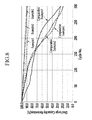
FIG. 7 is a charge and discharge curved line of Examples 1 to 3 and Comparative Examples 1 to 5. -
FIG. 8 is a graph showing the room temperature cycle-life evaluation results measured by full cells obtained from Examples 1 to 3 and Comparative Examples 1 to 3. -
FIG. 9 is a graph showing the 45°C cycle-life evaluation results measured by full cells obtained from Examples 1 to 3 and Comparative Examples 1 to 3. -
FIG. 10 is a graph showing the 45°C cycle-life evaluation results measured by the full cells obtained from Comparative Examples 4 and 5. -
FIG. 11 is a graph showing the charge and discharge characteristics of the half-cell according to Example 4. - Exemplary embodiments will hereinafter be described in detail. However, these embodiments are only exemplary, and the present invention is not limited thereto.
- Some embodiments provide a lithium secondary battery including a positive electrode including a high-voltage positive active material and a separator.
- In certain embodiments, the high-voltage positive active material may refer to an active material having a discharge plateau voltage of greater than or equal to about 4.6V with respect to a Li counter electrode. For example, the high-voltage positive active material may have a discharge plateau voltage of about 4.6V to about 5.3V.
- In certain embodiments, the high-voltage positive active material may include a manganese-based lithium oxide, an olivine-based lithium metal phosphate such as LiCoPO4, LiNiPO4, etc., or a combination thereof having the discharge plateau voltage of greater than or equal to about 4.6V.
- In certain embodiments, the manganese-based lithium oxide may be a compound represented by the following Chemical Formula 1.
Chemical Formula 1 Li1+xNiyMn2-y-z M zO4+w
- In
Chemical Formula 1, the variables can be defined as follows: - 0≤x≤0.2, 0.4≤y≤0.6, 0≤z≤0.2, 0≤w≤0.1, and
- M can be selected from the group consisting of Al, Ti, Mg, Zn, and combinations thereof. In another embodiment, x can be 0≤x<0.1, with 0.4≤y≤0.6, 0≤z≤0.2, 0≤w≤0.1. In other embodiments, y can be 0.45≤y≤0.55, with 0≤x<0.2, 0≤z≤0.2, 0≤w≤0.1. In other embodiments, 0≤x<0.1, 0.45≤y≤0.55, 0≤z≤0.2, 0≤w≤0.1
- In certain embodiments, the high-voltage positive active material is LiNi0.5Mn1.5O4.
- A goal of pursuing eco-friendly energy has lead research to focus on new energy sources. Particularly, a lithium secondary battery as a high energy density and high performance as a main power source or an auxiliary power source for an electric vehicle or a hybrid vehicle is required to apply the stable electric power. For example, the manganese-based lithium oxide may have a high-voltage spinel structure and may be advantageously applied to a positive active material for a lithium secondary battery since the use voltage range provide a high potential of 5 V level. In certain embodiments, the lithium secondary battery in a high voltage lithium battery system may improve the drawback of cell degradation by including a separator including a porous substrate having a porosity of about 40% to about 60%.
- The separator can be decomposed by the separator oxidation, and the decomposed product can fill in the pores of separator and stick to the surface of negative electrode to increase the interface resistance of between the separator and the negative electrode, so causing the degradation of charge and discharge characteristic, which causes more serious problems in the high voltage lithium secondary battery system.
- In addition, a solvent of the electrolyte can be steadily decomposed by repeating cycles at a high temperature and in a high voltage region, particularly, when the high voltage lithium secondary battery system includes the positive active material of manganese-based lithium oxide, and when the cycles are repeated at a high temperature allowing elution of Mn2+ ion from the surface of the positive electrode to be transferred into the electrolyte. The eluted manganese ion and the decomposed product of electrolyte can also be transferred to the negative electrode side and precipitated on the surface of negative electrode plate filling in the pores of separator or stuck on the surface of negative electrode increasing the interface resistance of the separator and the negative electrode, thereby the charge and discharge characteristic are deteriorated.
- For example, the polyolefin-based separator such as polyethylene and polypropylene can be oxidized and decomposed by a radical having a high reactivity such as PF6 radical to produce the radical, and the oxidation reaction steadily occurs in the main chain of a polymer such as polyethylene or polypropylene, etc. The oxidation can completely decompose the polymer to produced carbon degradation products.
- In certain embodiments, the lithium secondary battery can include a separator including a porous substrate so as to effectively solve the aforementioned problems of the high voltage lithium secondary battery system. In certain embodiments, the porosity of the porous substrate can be from about 40% to about 60%. In certain embodiments, the porosity of the porous substrate can be from about 48% to about 60%. For example, a separator having a high porosity of about 40% to about 60% has the excellent porosity and air permeability. Thus, the phenomenon of blocking the pores of separator caused by decomposing the solvent and producing/precipitating the side reaction production during cycles is lessened to improve battery function, particularly, the improvement is significantly accomplished at a high temperature atmosphere.
- In certain embodiments, the substrate of the separator may be formed of polyolefin such as polyethylene, polypropylene, and the like, polyvinylidene fluoride or multi-layers thereof. Mixed multi-layers such as polyethylene/polypropylene double-layered separator, polyethylene/polypropylene/polyethylene triple-layered separator, polypropylene/polyethylene/polypropylene triple-layered separator, and the like may also be used without limitation.
- In certain embodiments, the separator may further include a coating layer on at least one side of the porous substrate. In certain embodiments, the porosity of the porous substrate can be of about 48% to about 60%. The coating layer may include a polymer and a metal filler.
- In certain embodiments, the separator further includes the coating layer, to compensate for loss of mechanical strength due to the high porosity, and poor open-circuit voltage (OCV) may be effectively prevented, and the negative electrode surface-separator bonding characteristic can be improved. In certain embodiments, the cell cycle-life characteristics, the strength, and the defects may be improved by including a coating layer.
- In certain embodiments, the metal filler may be a metal oxide, metal hydroxide, metal phosphate, metal nitrate, metal carbonate, metal sulfate, metal alkoxide, , ceramics such as crystalline glass, and the like. The metal oxide may have a perovskite structure. For example, the metal filler may include MgCO3, BaCO3, Li2CO3, Al(OH)3·H2O, Al2SO4)3, MgSO4, Al(OC2H5)3, YPO4, (ZrO)2P2O7, ZrP2O7, Al(NO3)3, a mixture of Al2(SO4)3 and Al(OC2H5)3, LiAlO2, LiAl5O8, Li5AlO4, MgO, MgAbO4, BaTiO3, CoAl2O4, Li2SiO4, Li2B4O7, Li2MoO3, Al(OH)3, AlPO4, Mg(OH)2, a mixture of Al2O3 and AlPO4, Li2ZrO3, a mixture of Al2O3 and Al(OH)3, AM 1O3 (A= Ca, Ba, Sr, Pb, and the like, M1 = Ti, Zr, Sn, Hf, and the like), Al2O3, and the like, or a combination thereof.
- In certain embodiments, the metal filler may be mixed with a polymer resin as a particle, or it may provide a layer by a general method of, for example, preparing a resin composition solution including the metal filler and a polymer resin and coating the same on at least one surface of separator. In certain embodiments, the metal filler may include a particle having an average particle diameter of, for example, about 0.05 µm to about 2 µm. In certain embodiments, the average particle diameter can be from about 0.05 µm to about 0.1 µm, about 0.1 µm to about 0.5 µm, about 0.5 µm to about 1 µm, or 1 µm to about 2 µm.
- In certain embodiments, the polymer may include polyvinylidenefluoride (PVdF), poly(vinylidene fluoride-hexafluoropropylene) (P(VdF-HFP)), polyethyleneoxide (PEO), polyacrylonitrile (PAN), polyimide (PI), polyamic acid (PAA), polyamideimide (PAI), aramid, or a combination thereof.
- In certain embodiments, the coating layer may include a metal filler of about 5 wt% to about 80 wt% based on 100 wt% of the coating layer. In certain embodiments, the coating layer may include a metal filler of about 5 wt% to about 10 wt%, 10 wt% to about 20 wt%, 20 wt% to about 40 wt%, 40 wt% to about 60 wt%, or 60 wt% to about 80 wt% based on 100 wt% of the coating layer.
- In certain embodiments, the thickness of coating layer may have an influence on the thickness of separator, so it is determined to correspond the thickness of separator. In certain embodiments, the cell resistance may be decreased and the capacity may be increased as the thickness of separator is thinner. In certain embodiments, the appropriate thickness may be set considering both aspects according to the purpose. For example, the coating layer may have a thickness of about 0.5 µm to about 5 µm. In certain embodiments, the coating layer may have a thickness of from about 0.5 µm to about 1 µm, about 1 µm to about 2 µm, about 2 µm to about 3 µm, about 3 µm to about 4 µm, or about 4 µm to about 5 µm.
- In certain embodiments, the thickness of the separator may be determined by the capacity of battery to be required. For example, the separator may have a thickness of about 5 µm to about 30 µm. In certain embodiments, the separator may have a thickness of from about 5 µm to about 15 µm, about 6µm to about 15 µm, about 15 µm to about 20 µm, about 20 µm to about 25 µm, or about 25 µm to about 30 µm.
- Rechargeable lithium batteries may be classified as lithium ion batteries, lithium ion polymer batteries, and lithium polymer batteries according to the presence of a separator and the kind of electrolyte used in the battery. In certain embodiments, the rechargeable lithium batteries may have a variety of shapes and sizes and thus, include cylindrical, prismatic, or coin-type batteries and may be thin film batteries or rather bulky in size.
-
FIG. 1 is the exploded perspective view of a lithium secondary battery according to one embodiment. Referring toFIG. 1 , the lithiumsecondary battery 100 is a cylindrical battery including anegative electrode 112, apositive electrode 114, aseparator 113 interposed between thenegative electrode 112 and thepositive electrode 114, an electrolyte (not shown) impregnating theseparator 113, abattery case 120, and a sealingmember 140 sealing thebattery case 120. Thenegative electrode 112,positive electrode 114, andseparator 113 are sequentially stacked, spirally wound, and placed in abattery case 120 to fabricate such a lithiumsecondary battery 100. - In certain embodiments, the negative electrode can include a current collector and a negative active material layer formed on the current collector. In certain embodiments, the negative active material layer can include a negative active material.
- In certain embodiments, the negative active material can include a material that reversibly intercalates/deintercalates lithium ions, a lithium metal, a lithium metal alloy, a material being capable of doping and dedoping lithium, or a transition metal oxide.
- In certain embodiments, the material that may reversibly intercalate/deintercalate lithium ions includes a carbon material. In certain embodiments, the carbon material may be any carbon-based negative active material generally used in a lithium ion rechargeable battery. Examples of the carbon material include, but are not limited to, crystalline carbon, amorphous carbon, and mixtures thereof. In certain embodiments, the crystalline carbon may be non-shaped, or sheet, flake, spherical, or fiber-shaped natural graphite or artificial graphite. In certain embodiments, the amorphous carbon may be a soft carbon, a hard carbon, a mesophase pitch carbonized product, fired coke, and the like.
- Examples of the lithium metal alloy include lithium and a metal selected from Na, K, Rb, Cs, Fr, Be, Mg, Ca, Sr, Si, Sb, Pb, In, Zn, Ba, Ra, Ge, Al, and Sn.
- Examples of the material being capable of doping and dedoping lithium include Si, SiOx (0 < x < 2), a Si-Q alloy (wherein Q is an element selected from an alkali metal, an alkaline-earth metal, group 13 to 16 elements, a transition element, a rare earth element, or a combination thereof, and is not Si), Sn, Sn02, a Sn-R alloy (wherein R is an element selected from an alkali metal, an alkaline-earth metal, group 13 to 16 elements, a transition element, a rare earth element, or a combination thereof, and is not Sn), or mixtures thereof. At least one of these materials may be mixed with SiO2. In certain embodiments, the elements Q and R may be selected from Mg, Ca, Sr, Ba, Ra, Sc, Y, Ti, Zr, Hf, Rf, V, Nb, Ta, Cr, Mo, W, Tc, Re, Fe, Pb, Ru, Os, Rh, Ir, Pd, Pt, Cu, Ag, Au, Zn, Cd, B, Al, Ga, Sn, In, Tl, Ge, P, As, Sb, Bi, S, Se, Te, Po, and a combination thereof.
- Examples of the transition metal oxide include vanadium oxide, lithium vanadium oxide, and the like.
- In certain embodiments, the negative active material layer also includes a binder and optionally a conductive material.
- In certain embodiments, the binder improves binding properties of the negative active material particles to one another and also, with a current collector. Examples of the binder include polyvinylalcohol, carboxylmethylcellulose, hydroxypropylcellulose, polyvinylchloride, carboxylated polyvinylchloride, polyvinylfluoride, an ethylene oxide-containing polymer, polyvinylpyrrolidone, polyurethane, polytetrafluoroethylene, polyvinylidene fluoride, polyethylene, polypropylene, a styrene-butadiene rubber, an acrylated styrene-butadiene rubber, an epoxy resin, nylon, and the like, but are not limited thereto.
- In certain embodiments, the conductive material is included to improve electrode conductivity. Any electrically conductive material may be used as a conductive material unless it causes a chemical change. Examples of the conductive material include, but are limited to, carbon-based materials such as natural graphite, artificial graphite, carbon black, acetylene black, ketjen black, a carbon fiber, and the like; a metal-based material such as a metal powder or a metal fiber including copper, nickel, aluminum, silver, and the like; a conductive polymer such as polyphenylene derivative, and the like; or mixtures thereof.
- In certain embodiments, the current collector may be selected from the group consisting of a copper film, a nickel film, a stainless steel film, a titanium film, a nickel foam, a copper foam, a polymer substrate coated with a conductive metal, and combinations thereof.
- In certain embodiments, the positive electrode may include a current collector and a positive active material layer disposed on the current collector.
- In certain embodiments, the positive active material can include lithiated intercalation compounds that reversibly intercalate and deintercalate lithium ions. In certain embodiments, the positive active material can be manganese-based lithium oxide.
- In certain embodiments, the compound may have a coating layer on the surface or may be mixed with another compound having a coating layer. In certain embodiments, the coating layer can be made of a coating element compound and may include an oxide of a coating element, a hydroxide of the coating element, an oxyhydroxide of a coating element, an oxycarbonate of a coating element, and a hydroxyl carbonate of a coating element. In certain embodiments, the compound for a coating layer may be amorphous or crystalline. In certain embodiments, the coating element for a coating layer may include Mg, Al, Co, K, Na, Ca, Si, Ti, V, Sn, Ge, Ga, B, As, Zr, or a mixture thereof. In certain embodiments, the coating layer may be formed in a method having no adverse influence on properties of a positive active material by including these elements in the compound. For example, the method may include any coating method such as spraying, dipping, and the like known to those of skill in the art.
- In certain embodiments, the positive active material layer also includes a binder and a conductive material.
- The binder can improve binding properties of the positive active material particles to one another and also, with a current collector. Examples of the binder include at least one component selected from the group consisting of polyvinyl alcohol, carboxylmethyl cellulose, hydroxypropyl cellulose, diacetyl cellulose, polyvinylchloride, carboxylated polyvinyl chloride, polyvinylfluoride, an ethylene oxide-containing polymer, polyvinylpyrrolidone, polyurethane, polytetrafluoroethylene, polyvinylidene fluoride, polyethylene, polypropylene, a styrene-butadiene rubber, an acrylated styrene-butadiene rubber, an epoxy resin, nylon, and the like but are not limited thereto.
- In certain embodiments, the conductive material can be included to improve electrode conductivity. Any electrically conductive material may be used as a conductive material unless it causes a chemical change. Examples of the conductive material include, but are not limited to, one or more of carbon black, acetylene black, ketjen black, carbon fiber, a metal powder or a metal fiber including copper, nickel, aluminum, silver, and polyphenylene derivatives.
- In certain embodiments, the current collector may be Al but is not limited thereto.
- In certain embodiments, the negative and positive electrodes may be fabricated by mixing the active material, a conductive material, and a binder in a solvent into an active material composition and coating the composition on a current collector. The electrode manufacturing method is well known by those of skill in the art. In certain embodiments, the solvent may be N-methylpyrrolidone, but it is not limited thereto.
- In certain embodiments, the electrolyte may include a non-aqueous organic solvent and a lithium salt.
- In certain embodiments, the non-aqueous organic solvent can serve as a medium for transmitting ions taking part in the electrochemical reaction of a battery.
- In certain embodiments, the non-aqueousorganic solvent may include a carbonate-based, ester-based, ether-based, ketone-based, alcohol-based, or aprotic solvent. Examples of the carbonate-based solvent may include dimethyl carbonate (DMC), diethyl carbonate (DEC), dipropyl carbonate (DPC), methylpropyl carbonate (MPC), ethylpropyl carbonate (EPC), methylethyl carbonate (MEC), ethylene carbonate (EC), propylene carbonate (PC), butylene carbonate (BC), and so on. Examples of the ester-based solvent may include methyl acetate, 1,1'-dimethylethyl acetate, n-propyl acetate, dimethylacetate, methylpropionate, ethylpropionate, γ-butyrolactone, decanolide, valerolactone, mevalonolactone, caprolactone, and the like. Examples of the ether-based solvent include dibutyl ether, tetraglyme, diglyme, dimethoxyethane, 2-methyltetrahydrofuran, tetrahydrofuran, and so on, and examples of the ketone-based solvent include cyclohexanone and the like. Examples of the alcohol-based solvent include ethyl alcohol, isopropyl alcohol, and so on, and examples of the aprotic solvent include nitriles such as R-CN (wherein R is a C1 to C20 linear, branched, or cyclic hydrocarbon group that may include a double bond aromatic ring, or an ether bond), amides such as dimethylformamide, dioxolanes such as 1,3-dioxolane, sulfolanes, and the like.
- In certain embodiments, the non-aqueous organic solvent may be used singularly or in a mixture. When the non-aqueous organic solvent is used in a mixture, the mixture ratio may be controlled in accordance with a desirable battery performance.
- In certain embodiments, the carbonate-based solvent may include the mixture of a cyclic carbonate and a linear carbonate. The cyclic carbonate and the linear carbonate are mixed together in the volume ratio of about 1:1 to about 1:9. In certain embodiments, the electrolyte performance may be enhanced when the mixture is used as an electrolyte.
- In certain embodiments, the electrolyte may further include mixtures of a carbonate-based solvent and an aromatic hydrocarbon-based solvent. The carbonate-based solvent and the aromatic hydrocarbon-based organic solvent may be mixed together in the volume ratio of about 1:1 to about 30:1.
- In certain embodiments, the aromatic hydrocarbon-based organic solvent may be represented by the following Chemical Formula 2.

- In Chemical Formula 2, R1 to R6 are each independently hydrogen, halogen, a C1 to C10 alkyl group, a C1 to C10 haloalkyl group, or a combination thereof.
- The aromatic hydrocarbon-based organic solvent may include, but is not limited to, at least one selected from benzene, fluorobenzene, 1,2-difluorobenzene, 1,3-difluorobenzene, 1,4-difluorobenzene, 1,2,3-trifluorobenzene, 1,2,4-trifluorobenzene, chlorobenzene, 1,2-dichlorobenzene, 1,3-dichlorobenzene, 1,4-dichlorobenzene, 1,2,3-trichlorobenzene, 1,2,4-trichlorobenzene, iodobenzene, 1,2-diiodobenzene, 1,3-diiodobenzene, 1,4-diiodobenzene, 1,2,3-triiodobenzene, 1,2,4-triiodobenzene, toluene, fluorotoluene, 1,2-difluorotoluene, 1,3-difluorotoluene, 1,4-difluorotoluene, 1,2,3-trifluorotoluene, 1,2,4-trifluorotoluene, chlorotoluene, 1,2-dichlorotoluene, 1,3-dichlorotoluene, 1,4-dichlorotoluene, 1,2,3-trichlorotoluene, 1,2,4-trichlorotoluene, iodotoluene, 1,2-diiodotoluene, 1,3-diiodotoluene, 1,4-diiodotoluene, 1,2,3-triiodotoluene, 1,2,4-triiodotoluene, xylene, or a combination thereof.
- In certain embodiments, the non-aqueous electrolyte may further include vinylene carbonate or an ethylene carbonate-based compound of the following Chemical Formula 3.

- In Chemical Formula 3, R7 and R8 are each independently selected from the group consisting of hydrogen, a halogen, a cyano group (CN), a nitro group (NO2), and a C1 to C5 fluoroalkyl group, provided that at least one of R7 and R8 is a halogen, a cyano group (CN), a nitro group (NO2), or a C1 to C5 fluoroalkyl group.
- In certain embodiments, the ethylene carbonate-based compound may include difluoro ethylenecarbonate, chloroethylene carbonate, dichloroethylene carbonate, bromoethylene carbonate, dibromoethylene carbonate, nitroethylene carbonate, cyanoethylene carbonate, fluoroethylene carbonate, and the like. The use amount of the vinylene carbonate or the ethylene carbonate-based compound as an additive for improving cycle-life may be adjusted within an appropriate range.
- In certain embodiments, the lithium salt supplies lithium ions in the battery, operates a basic operation of a lithium secondary battery, and improves lithium ion transportation between positive and negative electrodes. Examples of the lithium salt include, but are not limited to, at least one supporting salt selected from LiPF6, LiBF4, LiSbF6, LiAsF6, LiC4F9SO3, LiClO4, LiAlO2, LiAlCl4, LiN(CxF2x+1SO2)(CyF2y+1SO2) (where x and y are natural numbers, LiCl, LiI, LiB(C2O4)2 (lithium bisoxalato borate; LiBOB), or a combination thereof. In certain embodiments, the lithium salt may be used at about 0.1 to about 2.0M concentration. In certain embodiments, the electrolyte performance and lithium ion mobility may be enhanced due to optimal electrolyte conductivity and viscosity when the lithium salt is included at about 0.1 to about 2.0M concentration.
- In certain embodiments, the lithium secondary battery may further include a separator between a negative electrode and a positive electrode, as needed. The separator may be the same as described above.
- Hereinafter, examples of one or more embodiments will be described in detail including comparative examples. However, these examples are not intended to limit the scope of the one or more embodiments..
- Poly(vinylidene fluroide-hexafluoropropylene) copolymer (P(VdF-HFP)) was dissolved in N-methyl-2-pyrrolidone (NMP) at a weight ratio of 6:100 and mixed with Al2O3 to provide a colloid type uniform mixture, and the mixture was coated on the both surfaces of a porous polyethylene substrate and a thickness of 20.0µm in a thickness of 2µm and dried to provide a separator having an entire thickness of 20µm and a porosity of 60%. At this time, the amount of Al2O3 was about 20 wt% based on the weight of the NMP. A coating layer including Al2O3 and P(VdF-HFP) was formed on the polyethylene substrate and the amount of Al2O3 was about 77 wt% based on 100 wt% of the coating layer.
- A LiNi0.5Mn1.5O4 active material having a particle size of 10µm, a carbon-based conductive agent, and a fluorinated resin of polyvinylidene fluoride binder were mixed at a weight ratio of 94:3:3 using an N-methyl pyrrolidone solvent and coated on an Al current collector and then dried and pressed to provide a positive electrode plate. Separately, a negative electrode including an active material of graphite was fabricated. Subsequently, a 18650 cylindrical full cell was fabricated using the obtained positive electrode/negative electrode, an electrolyte having 1.3M concentration of LiPF6 dissolved in a mixture of (3/3/4, volume ratio) of EC(ethylene carbonate)/EMC(ethylmethyl carbonate)/DMC(dimethyl carbonate), and the previously fabricated separator.
- A 18650 cylindrical full cell was fabricated in accordance with the same procedure as in Example 1, except that a separator included a polyethylene substrate having a porosity of 57% and a thickness of 19.0µm.
- A 18650 cylindrical full cell was fabricated in accordance with the same procedure as in Example 1, except that a separator included a polyethylene substrate having a porosity of 48% and a thickness of 19.3µm.
- A 18650 cylindrical full cell was fabricated in accordance with the same procedure as in Example 1, except that a separator included a polyethylene substrate having a porosity of 37% and a thickness of 20.0µm with no coating layer.
- A 18650 cylindrical full cell was fabricated in accordance with the same procedure as in Example 1, except that a separator included a polyethylene substrate having a porosity of 40% and a thickness of 20.0µm with no coating layer.
- A 18650 cylindrical full cell was fabricated in accordance with the same procedure as in Example 1, except that a separator included a polyethylene substrate having a porosity of 46% and a thickness of 20.0µm with no coating layer.
- The separators obtained from Examples 1 to 3 and Comparative Examples 1 to 3 were measured for a thickness, air permeability, porosity, puncture strength, tensile strength, tensile elongation, and thermal shrinkage ratio, and the results are shown in the following Table 1. Each measuring standard is as follows:
- A separator was cut by 15 cm along with a longitudinal direction (MD direction) to provide three specimens, and 10 cm line was drawn on the prepared specimens along with a longitudinal direction (MD direction) using a ball point pen. The length of the drawn line along with the MD direction of each specimen was precisely measured using a projector (or 3-D) until 0.1 cm unit.
- The non-fixed separator specimens according to Examples 1 to 3 were inserted between two sheets of A4 paper, and the inside separator was not fixed while the edge was fixed by PI (polyimide) tape. The prepared specimen was flatly put in the bottom of an oven at a temperature of 120±1°C and allowed to stand for 1 hour, and then the each specimen was precisely measured for the length of the drawn line along with the MD direction by 0.1 cm unit using a projector (or 3-D). The thermal shrinkage was calculated for the average of three specimens according to the following Equation, and the results are shown in the following Table 1.
- Equation of Calculating Thermal Shrinkage Ratio

- The end of the separator specimens of Comparative Examples 1 to 3 were clipped at the MD direction ands and hanged in an oven at a temperature of 105±1°C for one hour. In this case, the lower end of specimen was worn with clips to prevent the flap in the wind. Each specimen was precisely measured for a MD direction line until 0.1 cm unit using a projector (or 3-D), and the thermal shrinkage was calculated with the average of three specimens according to Equation, and the results are shown in the following Table 1.
- It was measured long with a TD direction (perpendicular direction to the length direction) according to the same method, and the results are shown in the following Table 1.
- A 40mm (MD) xiomm (TD) size specimen and a 10mm (MD) x 40mm (TD) size specimen were prepared. A thickness of specimen was measured and reported using a micrometer.
- The tensile strength test was performed by under the condition of a tensile speed of 100mm/min, the maximum loading level of 10kg and the chuck interval of 20mm. At this time, the precisions for maximum loading level and the maximum elongation were 0.1 kg and 0.1 mm, respectively.
- The tensile strength was calculated by substituting the thickness and the maximum loading level with the following Equation, and the results are reported rounding to 1 kgf/cm2 unit.
- Equation of Calculating Tensile Strength

- The tensile elongation was calculated by substituting the average of maximum elongation with the following Equation, and the results are reported rounding to 1% unit.
- Equation of calculating tensile elongation

- The air permeability was measured under the following setting condition using an analyzer of ASAHI SEIKO OKEN TYPE Air Permeation Tester EG01-55-1MR (Asahi Seiko Co., Ltd., Osaka Japan), and the results are shown in the following Table 1.
- Measuring pressure: 0.5 kg/cm2, cylinder pressure: 2.5 kg/cm2, set time: 10 seconds
- Data obtained by measuring 10 cm interval of 1m specimen for 10 times were averaged.
- Puncture strength was measured by a Handy-Type Compression Tester KES-G5 (KES Kato Tech Co., LTD., Kyoto Japan) (terminal end ø1.0mm metal pin) under the following setting condition, and the results are shown in the following Table 1.
- Data obtained by measuring 10 cm intervals of 1m specimen for 10 times were averaged.
Table 1 unit Example 1 Example 2 Example 3 Comparative Example 1 Comparative Example 2 Comparative Example 3 Thickness of separator µm 20.0 19.0 19.3 20.0 20.0 21.0 Air permeation sec/ 100cc 50 193 135 286 249 171 Porosity % 60 57 48 37 40 46 Puncture strength Kgf 380 316 478 586 589 438 Tensile strength MD Kgf/cm2 1700 - 1811 1718 1602 1073 TD 300 - 1055 1446 1537 631 Tensile elongation MD % 35 137 96 143 174 71 TD 120 72 229 222 202 112 Thermal shrinkage ratio MD % - 4.0 2.5 3.5 4.2 - TD - 3.0 1.0 1.0 5.5 - -
FIG. 2a is an SEM image of the polyethylene substrate used in Example 1.FIGS. 2b to FIG. 4 are SEM images of separators obtained from Examples 1 to 3, respectively. - As shown in
FIG. 2a , the pore with a large size of 1 um or more is present in the surface, and the large pores are formed in the inner of the separator. The size of the pores are not directly detected fromFIGS. 2b ,3 , and4 as the coating layer including Al2O3 and P(VdF-HFP) are on the surface of the separator, and instead, may be indirectly expected from the porosity and air permeable results. -
FIG. 5 andFIG. 6 are SEM images of separators obtained from Comparative Examples 1 and 2, respectively. FromFIGS. 5 and6 , the size of the pore was about 100nm, which was extremely smaller than the porous separator inFIG. 2a , and the pore was densely formed on the surface of the separator. - A charge and discharge test was performed using 18650 full cells obtained from the Examples and Comparative Examples. The upper limit charge voltage of full cell was set by 4.8V, and the lower limit discharge voltage thereof was set by 3.0V. The charge and discharge cycle was repeated at a room temperature and 45°C.
- The charge and discharged characteristics were measured by charging the cells according to Examples 1 to 3 and Comparative Examples 1 to 5 at 0.2C and discharging at 0.2C once at room temperature (25°C). The results are shown in
FIG. 7 . All 8 full cells had the similar results in the charge and discharge capacity and profile without the significant difference. - The cycle-life characteristics cells for the full cells according to Examples 1 to 3 and Comparative Examples 1 to 3 were measured by charging the cells at 1.0C and the discharging at 1.0C for 300 cycles at room temperature (25°C). The results are shown in
FIG. 8 .It is confirmed that Examples 1 to 3 showed better cycle-life characteristics than Comparative Examples 1 to 3. - The cycle-life characteristics cells for the full cells according to Examples 1 to 3 and Comparative Examples 1 to 3 were measured by charging the cells at 1.0C and the discharging at 1.0C for 150 cycles at 45°C. The results are shown in
FIG. 9 . Examples 1 to 3 showed the excellent cycle-life characteristics; and particularly Comparative Examples 1 and 2 showed that the cycle-life was remarkably deteriorated according to repeating cycles. - A 18650 cylindrical full cell was fabricated in accordance with the same procedure as in Comparative Example 1, except that the positive active material included 4V spinel-based LiMn2O4 instead of 5V spinel-based LiNi0.5Mn1.5O4.
- A 18650 cylindrical full cell was fabricated in accordance with the same procedure as in Example 1, except that the positive active material included 4V spinel-based LiMn2O4 instead of 5V spinel-based LiNi0.5Mn1.5O4.
- The charge and discharge cycle was repeated at 45°C by setting the upper limit charge voltage of 18650 full cells obtained from Comparative Example 4 and Comparative Example 5 by 4.8V and setting the lower limit discharge voltage thereof by 3.0V, and the results are shown in
FIG. 10 . Comparative Example 5, that replaced the separator of Comparative Example 4 with the separator of Example 1, did not improves the cycle-life characteristics. These results confirm that the desired effects could not obtained only by associating the 4V spinel-based active material and the separator according to Example 1. - A 2030 coin-type half cell was fabricated by using the positive electrode according to Example 1, a lithium foil with a thickness of 100 µm counter electrode and the separator according to Example 1.
- The half-cell according to Example 4 was charged and discharged at 0.1C, 0.2C, 0.5C, and 1C, respectively. The results are shown in
FIG. 11 , in which the positive active material used in Example 1 exhibited the discharge plateau voltage of 4.6V or more. - While the present embodiments have been described in connection with what is presently considered to be practical exemplary embodiments, it is to be understood that the invention is not limited to the disclosed embodiments and is intended to cover various modifications and equivalent arrangements included within the scope of the appended claims. Therefore, the aforementioned embodiments should be understood to be exemplary but not limiting this disclosure in any way.
Claims (15)
- A lithium secondary battery comprising
a positive electrode including a high-voltage positive active material; and
a separator,
wherein the high-voltage positive active material has a discharge plateau voltage of greater than or equal to about 4.6V with respect to a Li counter electrode, and
the separator comprises a porous substrate having porosity of about 40% to about 60%. - The lithium secondary battery of claim 1, wherein the high-voltage positive active material is selected from the group consisting of a compound represented by Chemical Formula 1, olivine-based lithium metalphosphate, and combinations thereof:
Chemical Formula 1 Li1+xNiyMn2-y-z M zO4+w
wherein,0≤x<0.2, 0.4≤y≤0.6, 0≤z≤0.2, 0≤w≤0.1, andM is selected from the group consisting of Al, Ti, Mg, Zn, and combinations thereof. - The lithium secondary battery of claim 1 or 2, wherein the separator comprises a substate, wherein:the substrate comprise at least one kind of polyolefin-based monolayer or multilayer; and/orthe substrate comprises polyethylene, polypropylene, polyvinylidene fluoride, or a multilayer thereof.
- The lithium secondary battery of any one of claims 1 to 3, wherein the separator further comprises a coating layer on at least one side of the porous substrate.
- The lithium secondary battery of claim 4, wherein the coating layer comprises a polymer and a metal filler.
- The lithium secondary battery of claim 5, wherein the metal filler comprises a component selected from the group consisting of metal oxide, metal hydroxide, metal phosphate, metal nitrate, metal carbonate, metal sulfate, metal alkoxide, ceramics, and combinations thereof.
- The lithium secondary battery of claim 5 or 6, wherein the polymer comprises a component selected from the group consisting of polyvinylidenefluoride (PVdF), poly(vinylidene fluoride-hexafluoropropylene) co-polymer (P(VdF-HFP)), polyethyleneoxide (PEO), polyacrylonitrile (PAN), polyimide (PI), polyamic acid (PAA), polyamideimide (PAI), and aramid, optionally wherein the polymer is poly(vinylidene fluoride-hexafluoropropylene) co-polymer (P(VdF-HFP)).
- The lithium secondary battery of any one of claims 5 to 7, wherein the coating layer comprises about 5 wt% to about 80 wt% of a metal filler based on 100 wt% of the coating layer.
- The lithium secondary battery of any one of claims 4 to 8, wherein the coating layer has a thickness of about 0.5µm to about 5µm.
- The lithium secondary battery of any one of claims 1 to 9, wherein the separator has an entire thickness of about 5µm to about 30µm.
- The lithium secondary battery of any one of claims 1 to 10, wherein the lithium secondary battery further comprises a negative electrode including a negative active material selected from natural graphite, artificial graphite, soft carbon, hard carbon, a mesophase pitch carbonized product, fired coke, silicon oxide, or silicon oxide coated with conductive carbon, and combinations thereof.
- The lithium secondary battery of any one of claims 1 to 11, wherein:the lithium secondary battery further comprises a non-aqueous electrolyte, optionally wherein the non-aqueous electrolyte is a mixture of ethylene carbonate, ethylmethyl carbonate and dimethyl carbonate; andthe non-aqueous electrolyte comprises a supporting electrolytic salt, optionally wherein the supporting electrolytic salt is LiPF6, further optionally wherein the supporting electrolytic salt in the non-aqueous electrolyte has a concentration of about 0.5 M to about 2 M.
- The lithium secondary battery of claim 6 or any claim when dependent on claim 6, wherein the metal filler is MgCO3, BaCO3, Li2CO3, Al(OH)3·H2O, Al2(SO4)3, MgSO4, Al(OC2H5)3, YPO4, (ZrO)2 P 2O7, ZrP2O7, Al(NO3)3, a mixture of Al2(SO4)3 and Al(OC2H5)3, LiAlO2, LiAl5O8, Li5AlO4, MgO, MgAl2O4, BaTiO3, CoAl2O4, Li2SiO4, Li2B4O7, Li2MoO3, Al(OH)3, AlPO4, Mg(OH)2, a mixture of Al2O3 and AlPO4, Li2ZrO3, a mixture of Al2O3 and Al(OH)3, AM 1O3 (A= Ca, Ba, Sr, Pb, and the like, M1 =Ti, Zr, Sn, Hf, and the like) or Al2O3.
- The lithium secondary battery of any one of claims 1 to 13, wherein the high-voltage positive active material is LiNi0.5Mn1.5O4.
- The lithium secondary battery of any one of claims 1 to 14, wherein he separator comprises a porous substrate having porosity of about 48% to about 60%.
Applications Claiming Priority (1)
| Application Number | Priority Date | Filing Date | Title |
|---|---|---|---|
| KR1020110107658A KR101649130B1 (en) | 2011-10-20 | 2011-10-20 | Lithium secondary battery |
Publications (3)
| Publication Number | Publication Date |
|---|---|
| EP2584628A2 true EP2584628A2 (en) | 2013-04-24 |
| EP2584628A3 EP2584628A3 (en) | 2017-01-25 |
| EP2584628B1 EP2584628B1 (en) | 2019-04-24 |
Family
ID=46796468
Family Applications (1)
| Application Number | Title | Priority Date | Filing Date |
|---|---|---|---|
| EP12183283.6A Active EP2584628B1 (en) | 2011-10-20 | 2012-09-06 | Lithium secondary battery |
Country Status (5)
| Country | Link |
|---|---|
| US (1) | US9099739B2 (en) |
| EP (1) | EP2584628B1 (en) |
| JP (1) | JP2013089593A (en) |
| KR (1) | KR101649130B1 (en) |
| CN (1) | CN103066319B (en) |
Families Citing this family (24)
| Publication number | Priority date | Publication date | Assignee | Title |
|---|---|---|---|---|
| WO2014025868A1 (en) | 2012-08-07 | 2014-02-13 | Celgard Llc | Improved separator membranes for lithium ion batteries and related methods |
| CN104051689B (en) * | 2013-03-13 | 2020-06-02 | 三星Sdi株式会社 | Separator and rechargeable lithium battery including the same |
| KR101715696B1 (en) * | 2013-04-05 | 2017-03-13 | 주식회사 엘지화학 | Secondary battery with improved extended performances |
| KR102041586B1 (en) * | 2013-06-14 | 2019-11-06 | 삼성에스디아이 주식회사 | Rechargeable lithium battery |
| CN105659410B (en) | 2013-11-06 | 2018-12-04 | Lg化学株式会社 | Diaphragm used for electrochemical equipment |
| US9887407B2 (en) | 2014-04-04 | 2018-02-06 | Lg Chem, Ltd. | Secondary battery with improved life characteristics |
| US10002719B2 (en) * | 2014-04-21 | 2018-06-19 | Lg Chem, Ltd. | Separator having binder layer, and electrochemical device comprising the separator and method of preparing the separator |
| CN104466248B (en) * | 2014-12-17 | 2017-06-16 | 东莞新能源科技有限公司 | A kind of electrolyte and the lithium ion battery using the electrolyte |
| US20160248066A1 (en) * | 2015-02-25 | 2016-08-25 | Celgard, Llc | Separators for high voltage rechargeable lithium batteries and related methods |
| KR101868797B1 (en) * | 2016-03-16 | 2018-06-19 | 상명대학교산학협력단 | Manufacturing method of porous polymer membrane using water pressure |
| CN109314203B (en) * | 2016-06-08 | 2021-11-30 | 远景Aesc 日本有限公司 | Nonaqueous electrolyte secondary battery |
| WO2018052077A1 (en) * | 2016-09-15 | 2018-03-22 | 日本電気株式会社 | Lithium ion secondary battery |
| CN106784673A (en) * | 2016-10-18 | 2017-05-31 | 湖南锂顺能源科技有限公司 | A kind of spinel-type nickel ion doped battery |
| CN107134576B (en) * | 2017-04-01 | 2020-03-10 | 中南大学 | Co2AlO4Material, preparation method and application thereof |
| CN106966438B (en) * | 2017-04-01 | 2018-12-07 | 中南大学 | A kind of spherical shape Co2AlO4Material and its preparation method and application |
| JP6783735B2 (en) * | 2017-09-19 | 2020-11-11 | 株式会社東芝 | Electrodes for lithium-ion secondary batteries, secondary batteries, battery packs and vehicles |
| KR102235277B1 (en) * | 2018-03-15 | 2021-04-01 | 삼성에스디아이 주식회사 | Electrode assembly and rechargeable battery including same |
| JP7174068B2 (en) * | 2018-12-18 | 2022-11-17 | 日本碍子株式会社 | lithium secondary battery |
| CN113678287B (en) * | 2019-04-10 | 2024-06-18 | 株式会社Lg化学 | Positive electrode active material for secondary battery, preparation method thereof, and lithium secondary battery comprising the positive electrode active material |
| CN109970347A (en) * | 2019-04-29 | 2019-07-05 | 齐鲁工业大学 | A TeO2-V2O5-CuO glass-ceramic anode material for improving the performance of lithium-ion batteries |
| FR3111741B1 (en) * | 2020-06-23 | 2022-12-30 | Hfg | HIGH ENERGY AND POWER DENSITY ANODE FOR BATTERIES |
| CN112436179A (en) * | 2020-12-07 | 2021-03-02 | 上汽大众汽车有限公司 | High-safety lithium ion battery |
| CN116565156A (en) * | 2022-01-28 | 2023-08-08 | 通用汽车环球科技运作有限责任公司 | Electroactive materials for high-performance batteries |
| JP2025511609A (en) * | 2022-11-01 | 2025-04-16 | エルジー エナジー ソリューション リミテッド | Separator for secondary battery, secondary battery including the same, and method for manufacturing the secondary battery |
Family Cites Families (25)
| Publication number | Priority date | Publication date | Assignee | Title |
|---|---|---|---|---|
| DE69637084T2 (en) * | 1995-08-28 | 2008-02-07 | Asahi Kasei Emd Corporation | LITHIUM CELL AND METHOD FOR THE PRODUCTION THEREOF |
| JP3175730B2 (en) | 1998-04-27 | 2001-06-11 | 住友化学工業株式会社 | Non-aqueous electrolyte battery separator and lithium secondary battery |
| TW460505B (en) | 1998-04-27 | 2001-10-21 | Sumitomo Chemical Co | Separator for nonaqueous electrolyte battery and lithium secondary battery made from the same |
| JP3634694B2 (en) * | 1998-12-18 | 2005-03-30 | 三洋電機株式会社 | Lithium secondary battery |
| JP3471244B2 (en) * | 1999-03-15 | 2003-12-02 | 株式会社東芝 | Manufacturing method of non-aqueous electrolyte secondary battery |
| US6432586B1 (en) * | 2000-04-10 | 2002-08-13 | Celgard Inc. | Separator for a high energy rechargeable lithium battery |
| JP3615196B2 (en) * | 2001-03-26 | 2005-01-26 | 株式会社東芝 | Positive electrode active material and non-aqueous electrolyte secondary battery |
| DE10238941B4 (en) | 2002-08-24 | 2013-03-28 | Evonik Degussa Gmbh | Electric separator, process for its manufacture and use in lithium high-performance batteries and a battery having the separator |
| US7422825B2 (en) * | 2004-03-30 | 2008-09-09 | Matsushita Electric Industrial Co., Ltd. | Nonaqueous electrolyte secondary battery |
| JP2006196293A (en) * | 2005-01-13 | 2006-07-27 | Sumitomo Metal Mining Co Ltd | Method for producing positive electrode active material for non-aqueous electrolyte secondary battery, positive electrode active material for non-aqueous electrolyte secondary battery, and non-aqueous electrolyte secondary battery |
| US20090181305A1 (en) * | 2005-06-14 | 2009-07-16 | Masatoshi Nagayama | Non-Aqueous Electrolyte Secondary Battery |
| JP2007188777A (en) * | 2006-01-13 | 2007-07-26 | Sony Corp | Separator and non-aqueous electrolyte battery |
| JP5260889B2 (en) * | 2006-05-19 | 2013-08-14 | パナソニック株式会社 | Nonaqueous electrolyte secondary battery |
| JP2008066047A (en) * | 2006-09-06 | 2008-03-21 | Matsushita Electric Ind Co Ltd | Nonaqueous electrolyte battery and separator thereof |
| KR100727248B1 (en) * | 2007-02-05 | 2007-06-11 | 주식회사 엘지화학 | Organic / inorganic composite membrane coated with porous active layer and electrochemical device |
| JP2009032682A (en) | 2007-06-28 | 2009-02-12 | Hitachi Maxell Ltd | Lithium ion secondary battery |
| KR20090050686A (en) | 2007-11-16 | 2009-05-20 | 에스케이에너지 주식회사 | Polyethylene microporous membrane with excellent physical properties and high permeability and surface energy |
| KR100947181B1 (en) * | 2007-11-19 | 2010-03-15 | 주식회사 엘지화학 | Separator with a porous coating layer and an electrochemical device having the same |
| JP2009158484A (en) * | 2007-12-06 | 2009-07-16 | Sumitomo Chemical Co Ltd | Non-aqueous electrolyte secondary battery |
| JP2010034024A (en) * | 2008-06-25 | 2010-02-12 | Hitachi Maxell Ltd | Lithium-ion secondary battery |
| JP2010097696A (en) * | 2008-10-14 | 2010-04-30 | Nec Tokin Corp | Lithium-ion battery |
| EP2405510B1 (en) * | 2009-03-03 | 2015-11-25 | LG Chem, Ltd. | Lithium secondary battery containing high energy density positive electrode materials and an organic/inorganic composite microporous separator membrane |
| JP2011113921A (en) * | 2009-11-30 | 2011-06-09 | Teijin Ltd | Separator for nonaqueous secondary battery, and nonaqueous secondary battery |
| US9356273B2 (en) * | 2009-12-04 | 2016-05-31 | Sony Corporation | Nonaqueous electrolyte secondary battery and separator |
| JP2011154936A (en) * | 2010-01-28 | 2011-08-11 | Hitachi Maxell Ltd | Separator for battery and lithium secondary battery |
-
2011
- 2011-10-20 KR KR1020110107658A patent/KR101649130B1/en active Active
-
2012
- 2012-06-27 US US13/535,109 patent/US9099739B2/en active Active
- 2012-09-06 EP EP12183283.6A patent/EP2584628B1/en active Active
- 2012-09-06 CN CN201210327749.8A patent/CN103066319B/en active Active
- 2012-09-20 JP JP2012206583A patent/JP2013089593A/en active Pending
Non-Patent Citations (1)
| Title |
|---|
| None |
Also Published As
| Publication number | Publication date |
|---|---|
| CN103066319B (en) | 2018-02-16 |
| EP2584628A3 (en) | 2017-01-25 |
| CN103066319A (en) | 2013-04-24 |
| KR101649130B1 (en) | 2016-08-19 |
| KR20130043485A (en) | 2013-04-30 |
| US9099739B2 (en) | 2015-08-04 |
| JP2013089593A (en) | 2013-05-13 |
| EP2584628B1 (en) | 2019-04-24 |
| US20130101886A1 (en) | 2013-04-25 |
Similar Documents
| Publication | Publication Date | Title |
|---|---|---|
| EP2584628B1 (en) | Lithium secondary battery | |
| US12334517B2 (en) | Rechargeable lithium battery | |
| EP3734704B1 (en) | Rechargeable lithium battery | |
| EP3739673A1 (en) | Rechargeable lithium battery | |
| KR100913176B1 (en) | Anode for a lithium secondary battery and a lithium secondary battery comprising the same | |
| EP2624333B1 (en) | Lithium secondary battery | |
| EP2390944B1 (en) | Rechargeable Lithium Battery | |
| US20190355952A1 (en) | Electrode assembly, method for producing same, and secondary battery including same | |
| EP2698850A1 (en) | Positive active material for rechargeable lithium battery, method for preparing same and rechargeable lithium battery including same | |
| KR20130122471A (en) | Composition for negative electrode of lithium rechargable battery, negative electrode containing the same and lithium rechargable battery containing the same | |
| US20150155557A1 (en) | Negative electrode active material for rechargeable lithium battery, method for preparing the same and rechargeable lithium battery using the same | |
| EP4513655A2 (en) | Separator laminate for lithium secondary battery, electrode assembly including the same, and lithium secondary battery including the same | |
| US12183948B2 (en) | Separator for secondary battery, manufacturing method therefor, and lithium secondary battery comprising same | |
| EP3671912A1 (en) | Anode for lithium metal battery, manufacturing method therefor, lithium metal battery including same | |
| EP3163654B1 (en) | Rechargeable lithium battery | |
| KR20130085256A (en) | Rechargeable lithium battery | |
| KR102706490B1 (en) | Electrode assembly for rechargeable lithium battery, and rechargeable lithium battery including same | |
| KR102922988B1 (en) | Electrode for rechargeable lithium battery, electrode assembly and rechargeable lithium battery including the same | |
| KR20140134954A (en) | Negative electrode active material for rechargeable lithium battery, method for preparing the same, and rechargeable lithium battery including the same | |
| US20250079448A1 (en) | Negative electrode active material and rechargeable lithium battery including same | |
| EP4266397A1 (en) | Electrode for lithium secondary battery and lithium secondary battery including same | |
| KR20230135952A (en) | Electrode for rechargeable lithium battery and rechargeable lithium battery including same | |
| EP3817095A1 (en) | Separator for lithium secondary battery, manufacturing method therefor, and lithium secondary battery including same | |
| KR101826143B1 (en) | Rechargeable lithium battery | |
| US10090563B2 (en) | Rechargeable lithium battery and method of preparing same |
Legal Events
| Date | Code | Title | Description |
|---|---|---|---|
| PUAI | Public reference made under article 153(3) epc to a published international application that has entered the european phase |
Free format text: ORIGINAL CODE: 0009012 |
|
| AK | Designated contracting states |
Kind code of ref document: A2 Designated state(s): AL AT BE BG CH CY CZ DE DK EE ES FI FR GB GR HR HU IE IS IT LI LT LU LV MC MK MT NL NO PL PT RO RS SE SI SK SM TR |
|
| AX | Request for extension of the european patent |
Extension state: BA ME |
|
| PUAL | Search report despatched |
Free format text: ORIGINAL CODE: 0009013 |
|
| AK | Designated contracting states |
Kind code of ref document: A3 Designated state(s): AL AT BE BG CH CY CZ DE DK EE ES FI FR GB GR HR HU IE IS IT LI LT LU LV MC MK MT NL NO PL PT RO RS SE SI SK SM TR |
|
| AX | Request for extension of the european patent |
Extension state: BA ME |
|
| RIC1 | Information provided on ipc code assigned before grant |
Ipc: H01M 4/134 20100101ALN20161222BHEP Ipc: H01M 4/36 20060101ALI20161222BHEP Ipc: H01M 10/0587 20100101ALN20161222BHEP Ipc: H01M 4/58 20100101ALI20161222BHEP Ipc: H01M 10/052 20100101ALI20161222BHEP Ipc: H01M 4/133 20100101ALN20161222BHEP Ipc: H01M 2/16 20060101AFI20161222BHEP Ipc: H01M 10/0569 20100101ALN20161222BHEP Ipc: H01M 4/62 20060101ALN20161222BHEP Ipc: H01M 4/525 20100101ALI20161222BHEP Ipc: H01M 10/0525 20100101ALN20161222BHEP Ipc: H01M 2/18 20060101ALI20161222BHEP Ipc: H01M 10/0568 20100101ALN20161222BHEP Ipc: H01M 4/505 20100101ALI20161222BHEP Ipc: H01M 4/131 20100101ALI20161222BHEP |
|
| STAA | Information on the status of an ep patent application or granted ep patent |
Free format text: STATUS: REQUEST FOR EXAMINATION WAS MADE |
|
| 17P | Request for examination filed |
Effective date: 20170725 |
|
| RBV | Designated contracting states (corrected) |
Designated state(s): AL AT BE BG CH CY CZ DE DK EE ES FI FR GB GR HR HU IE IS IT LI LT LU LV MC MK MT NL NO PL PT RO RS SE SI SK SM TR |
|
| STAA | Information on the status of an ep patent application or granted ep patent |
Free format text: STATUS: EXAMINATION IS IN PROGRESS |
|
| 17Q | First examination report despatched |
Effective date: 20180322 |
|
| GRAP | Despatch of communication of intention to grant a patent |
Free format text: ORIGINAL CODE: EPIDOSNIGR1 |
|
| STAA | Information on the status of an ep patent application or granted ep patent |
Free format text: STATUS: GRANT OF PATENT IS INTENDED |
|
| INTG | Intention to grant announced |
Effective date: 20190128 |
|
| GRAS | Grant fee paid |
Free format text: ORIGINAL CODE: EPIDOSNIGR3 |
|
| GRAA | (expected) grant |
Free format text: ORIGINAL CODE: 0009210 |
|
| STAA | Information on the status of an ep patent application or granted ep patent |
Free format text: STATUS: THE PATENT HAS BEEN GRANTED |
|
| AK | Designated contracting states |
Kind code of ref document: B1 Designated state(s): AL AT BE BG CH CY CZ DE DK EE ES FI FR GB GR HR HU IE IS IT LI LT LU LV MC MK MT NL NO PL PT RO RS SE SI SK SM TR |
|
| REG | Reference to a national code |
Ref country code: GB Ref legal event code: FG4D |
|
| REG | Reference to a national code |
Ref country code: CH Ref legal event code: EP |
|
| REG | Reference to a national code |
Ref country code: AT Ref legal event code: REF Ref document number: 1125195 Country of ref document: AT Kind code of ref document: T Effective date: 20190515 Ref country code: IE Ref legal event code: FG4D |
|
| REG | Reference to a national code |
Ref country code: DE Ref legal event code: R096 Ref document number: 602012059276 Country of ref document: DE |
|
| REG | Reference to a national code |
Ref country code: NL Ref legal event code: MP Effective date: 20190424 |
|
| REG | Reference to a national code |
Ref country code: LT Ref legal event code: MG4D |
|
| PG25 | Lapsed in a contracting state [announced via postgrant information from national office to epo] |
Ref country code: NL Free format text: LAPSE BECAUSE OF FAILURE TO SUBMIT A TRANSLATION OF THE DESCRIPTION OR TO PAY THE FEE WITHIN THE PRESCRIBED TIME-LIMIT Effective date: 20190424 |
|
| PG25 | Lapsed in a contracting state [announced via postgrant information from national office to epo] |
Ref country code: AL Free format text: LAPSE BECAUSE OF FAILURE TO SUBMIT A TRANSLATION OF THE DESCRIPTION OR TO PAY THE FEE WITHIN THE PRESCRIBED TIME-LIMIT Effective date: 20190424 Ref country code: FI Free format text: LAPSE BECAUSE OF FAILURE TO SUBMIT A TRANSLATION OF THE DESCRIPTION OR TO PAY THE FEE WITHIN THE PRESCRIBED TIME-LIMIT Effective date: 20190424 Ref country code: PT Free format text: LAPSE BECAUSE OF FAILURE TO SUBMIT A TRANSLATION OF THE DESCRIPTION OR TO PAY THE FEE WITHIN THE PRESCRIBED TIME-LIMIT Effective date: 20190824 Ref country code: NO Free format text: LAPSE BECAUSE OF FAILURE TO SUBMIT A TRANSLATION OF THE DESCRIPTION OR TO PAY THE FEE WITHIN THE PRESCRIBED TIME-LIMIT Effective date: 20190724 Ref country code: SE Free format text: LAPSE BECAUSE OF FAILURE TO SUBMIT A TRANSLATION OF THE DESCRIPTION OR TO PAY THE FEE WITHIN THE PRESCRIBED TIME-LIMIT Effective date: 20190424 Ref country code: LT Free format text: LAPSE BECAUSE OF FAILURE TO SUBMIT A TRANSLATION OF THE DESCRIPTION OR TO PAY THE FEE WITHIN THE PRESCRIBED TIME-LIMIT Effective date: 20190424 Ref country code: HR Free format text: LAPSE BECAUSE OF FAILURE TO SUBMIT A TRANSLATION OF THE DESCRIPTION OR TO PAY THE FEE WITHIN THE PRESCRIBED TIME-LIMIT Effective date: 20190424 Ref country code: ES Free format text: LAPSE BECAUSE OF FAILURE TO SUBMIT A TRANSLATION OF THE DESCRIPTION OR TO PAY THE FEE WITHIN THE PRESCRIBED TIME-LIMIT Effective date: 20190424 |
|
| PG25 | Lapsed in a contracting state [announced via postgrant information from national office to epo] |
Ref country code: LV Free format text: LAPSE BECAUSE OF FAILURE TO SUBMIT A TRANSLATION OF THE DESCRIPTION OR TO PAY THE FEE WITHIN THE PRESCRIBED TIME-LIMIT Effective date: 20190424 Ref country code: RS Free format text: LAPSE BECAUSE OF FAILURE TO SUBMIT A TRANSLATION OF THE DESCRIPTION OR TO PAY THE FEE WITHIN THE PRESCRIBED TIME-LIMIT Effective date: 20190424 Ref country code: BG Free format text: LAPSE BECAUSE OF FAILURE TO SUBMIT A TRANSLATION OF THE DESCRIPTION OR TO PAY THE FEE WITHIN THE PRESCRIBED TIME-LIMIT Effective date: 20190724 Ref country code: GR Free format text: LAPSE BECAUSE OF FAILURE TO SUBMIT A TRANSLATION OF THE DESCRIPTION OR TO PAY THE FEE WITHIN THE PRESCRIBED TIME-LIMIT Effective date: 20190725 Ref country code: PL Free format text: LAPSE BECAUSE OF FAILURE TO SUBMIT A TRANSLATION OF THE DESCRIPTION OR TO PAY THE FEE WITHIN THE PRESCRIBED TIME-LIMIT Effective date: 20190424 |
|
| REG | Reference to a national code |
Ref country code: AT Ref legal event code: MK05 Ref document number: 1125195 Country of ref document: AT Kind code of ref document: T Effective date: 20190424 |
|
| PG25 | Lapsed in a contracting state [announced via postgrant information from national office to epo] |
Ref country code: IS Free format text: LAPSE BECAUSE OF FAILURE TO SUBMIT A TRANSLATION OF THE DESCRIPTION OR TO PAY THE FEE WITHIN THE PRESCRIBED TIME-LIMIT Effective date: 20190824 |
|
| REG | Reference to a national code |
Ref country code: DE Ref legal event code: R097 Ref document number: 602012059276 Country of ref document: DE |
|
| PG25 | Lapsed in a contracting state [announced via postgrant information from national office to epo] |
Ref country code: CZ Free format text: LAPSE BECAUSE OF FAILURE TO SUBMIT A TRANSLATION OF THE DESCRIPTION OR TO PAY THE FEE WITHIN THE PRESCRIBED TIME-LIMIT Effective date: 20190424 Ref country code: RO Free format text: LAPSE BECAUSE OF FAILURE TO SUBMIT A TRANSLATION OF THE DESCRIPTION OR TO PAY THE FEE WITHIN THE PRESCRIBED TIME-LIMIT Effective date: 20190424 Ref country code: SK Free format text: LAPSE BECAUSE OF FAILURE TO SUBMIT A TRANSLATION OF THE DESCRIPTION OR TO PAY THE FEE WITHIN THE PRESCRIBED TIME-LIMIT Effective date: 20190424 Ref country code: DK Free format text: LAPSE BECAUSE OF FAILURE TO SUBMIT A TRANSLATION OF THE DESCRIPTION OR TO PAY THE FEE WITHIN THE PRESCRIBED TIME-LIMIT Effective date: 20190424 Ref country code: AT Free format text: LAPSE BECAUSE OF FAILURE TO SUBMIT A TRANSLATION OF THE DESCRIPTION OR TO PAY THE FEE WITHIN THE PRESCRIBED TIME-LIMIT Effective date: 20190424 Ref country code: EE Free format text: LAPSE BECAUSE OF FAILURE TO SUBMIT A TRANSLATION OF THE DESCRIPTION OR TO PAY THE FEE WITHIN THE PRESCRIBED TIME-LIMIT Effective date: 20190424 |
|
| PG25 | Lapsed in a contracting state [announced via postgrant information from national office to epo] |
Ref country code: IT Free format text: LAPSE BECAUSE OF FAILURE TO SUBMIT A TRANSLATION OF THE DESCRIPTION OR TO PAY THE FEE WITHIN THE PRESCRIBED TIME-LIMIT Effective date: 20190424 Ref country code: SM Free format text: LAPSE BECAUSE OF FAILURE TO SUBMIT A TRANSLATION OF THE DESCRIPTION OR TO PAY THE FEE WITHIN THE PRESCRIBED TIME-LIMIT Effective date: 20190424 |
|
| PLBE | No opposition filed within time limit |
Free format text: ORIGINAL CODE: 0009261 |
|
| STAA | Information on the status of an ep patent application or granted ep patent |
Free format text: STATUS: NO OPPOSITION FILED WITHIN TIME LIMIT |
|
| PG25 | Lapsed in a contracting state [announced via postgrant information from national office to epo] |
Ref country code: TR Free format text: LAPSE BECAUSE OF FAILURE TO SUBMIT A TRANSLATION OF THE DESCRIPTION OR TO PAY THE FEE WITHIN THE PRESCRIBED TIME-LIMIT Effective date: 20190424 |
|
| 26N | No opposition filed |
Effective date: 20200127 |
|
| PG25 | Lapsed in a contracting state [announced via postgrant information from national office to epo] |
Ref country code: SI Free format text: LAPSE BECAUSE OF FAILURE TO SUBMIT A TRANSLATION OF THE DESCRIPTION OR TO PAY THE FEE WITHIN THE PRESCRIBED TIME-LIMIT Effective date: 20190424 Ref country code: MC Free format text: LAPSE BECAUSE OF FAILURE TO SUBMIT A TRANSLATION OF THE DESCRIPTION OR TO PAY THE FEE WITHIN THE PRESCRIBED TIME-LIMIT Effective date: 20190424 |
|
| REG | Reference to a national code |
Ref country code: CH Ref legal event code: PL |
|
| PG25 | Lapsed in a contracting state [announced via postgrant information from national office to epo] |
Ref country code: CH Free format text: LAPSE BECAUSE OF NON-PAYMENT OF DUE FEES Effective date: 20190930 Ref country code: IE Free format text: LAPSE BECAUSE OF NON-PAYMENT OF DUE FEES Effective date: 20190906 Ref country code: LI Free format text: LAPSE BECAUSE OF NON-PAYMENT OF DUE FEES Effective date: 20190930 Ref country code: LU Free format text: LAPSE BECAUSE OF NON-PAYMENT OF DUE FEES Effective date: 20190906 |
|
| REG | Reference to a national code |
Ref country code: BE Ref legal event code: MM Effective date: 20190930 |
|
| PG25 | Lapsed in a contracting state [announced via postgrant information from national office to epo] |
Ref country code: BE Free format text: LAPSE BECAUSE OF NON-PAYMENT OF DUE FEES Effective date: 20190930 |
|
| REG | Reference to a national code |
Ref country code: DE Ref legal event code: R079 Ref document number: 602012059276 Country of ref document: DE Free format text: PREVIOUS MAIN CLASS: H01M0002160000 Ipc: H01M0050409000 |
|
| PG25 | Lapsed in a contracting state [announced via postgrant information from national office to epo] |
Ref country code: CY Free format text: LAPSE BECAUSE OF FAILURE TO SUBMIT A TRANSLATION OF THE DESCRIPTION OR TO PAY THE FEE WITHIN THE PRESCRIBED TIME-LIMIT Effective date: 20190424 |
|
| PG25 | Lapsed in a contracting state [announced via postgrant information from national office to epo] |
Ref country code: HU Free format text: LAPSE BECAUSE OF FAILURE TO SUBMIT A TRANSLATION OF THE DESCRIPTION OR TO PAY THE FEE WITHIN THE PRESCRIBED TIME-LIMIT; INVALID AB INITIO Effective date: 20120906 Ref country code: MT Free format text: LAPSE BECAUSE OF FAILURE TO SUBMIT A TRANSLATION OF THE DESCRIPTION OR TO PAY THE FEE WITHIN THE PRESCRIBED TIME-LIMIT Effective date: 20190424 |
|
| PG25 | Lapsed in a contracting state [announced via postgrant information from national office to epo] |
Ref country code: MK Free format text: LAPSE BECAUSE OF FAILURE TO SUBMIT A TRANSLATION OF THE DESCRIPTION OR TO PAY THE FEE WITHIN THE PRESCRIBED TIME-LIMIT Effective date: 20190424 |
|
| P01 | Opt-out of the competence of the unified patent court (upc) registered |
Effective date: 20230528 |
|
| PGFP | Annual fee paid to national office [announced via postgrant information from national office to epo] |
Ref country code: DE Payment date: 20250902 Year of fee payment: 14 |
|
| PGFP | Annual fee paid to national office [announced via postgrant information from national office to epo] |
Ref country code: GB Payment date: 20250904 Year of fee payment: 14 |
|
| PGFP | Annual fee paid to national office [announced via postgrant information from national office to epo] |
Ref country code: FR Payment date: 20250908 Year of fee payment: 14 |