EP2582687B1 - 2-oxo-1,3-dioxolane-4-carboxylic acid and derivatives thereof, their preparation and use - Google Patents
2-oxo-1,3-dioxolane-4-carboxylic acid and derivatives thereof, their preparation and use Download PDFInfo
- Publication number
- EP2582687B1 EP2582687B1 EP11723932.7A EP11723932A EP2582687B1 EP 2582687 B1 EP2582687 B1 EP 2582687B1 EP 11723932 A EP11723932 A EP 11723932A EP 2582687 B1 EP2582687 B1 EP 2582687B1
- Authority
- EP
- European Patent Office
- Prior art keywords
- oxo
- dioxolane
- carboxylic acid
- acid ester
- preparation
- Prior art date
- Legal status (The legal status is an assumption and is not a legal conclusion. Google has not performed a legal analysis and makes no representation as to the accuracy of the status listed.)
- Active
Links
Images

Classifications
-
- C—CHEMISTRY; METALLURGY
- C07—ORGANIC CHEMISTRY
- C07D—HETEROCYCLIC COMPOUNDS
- C07D317/00—Heterocyclic compounds containing five-membered rings having two oxygen atoms as the only ring hetero atoms
- C07D317/08—Heterocyclic compounds containing five-membered rings having two oxygen atoms as the only ring hetero atoms having the hetero atoms in positions 1 and 3
- C07D317/10—Heterocyclic compounds containing five-membered rings having two oxygen atoms as the only ring hetero atoms having the hetero atoms in positions 1 and 3 not condensed with other rings
- C07D317/32—Heterocyclic compounds containing five-membered rings having two oxygen atoms as the only ring hetero atoms having the hetero atoms in positions 1 and 3 not condensed with other rings with hetero atoms or with carbon atoms having three bonds to hetero atoms with at the most one bond to halogen, e.g. ester or nitrile radicals, directly attached to ring carbon atoms
- C07D317/34—Oxygen atoms
Definitions
- the present invention relates to 2-Oxo-1,3-dioxolane-4-carboxylic acid and derivatives thereof, according to the general formula (V) in which R 1 represents a negative charge, hydrogen or can be preferably Me or Et or an n-valent radical, which may be substituted with at most n-1 further 2-oxo-1,3-dioxolane-4-carboxyl groups, as well as a process for their preparation by means of carboxylation of the corresponding epoxides, a process for their transesterification and their use for the preparation of hydroxyurethanes and as end groups for the blocking of amines.
- V general formula (V) in which R 1 represents a negative charge, hydrogen or can be preferably Me or Et or an n-valent radical, which may be substituted with at most n-1 further 2-oxo-1,3-dioxolane-4-carboxyl groups, as well as a process for their preparation by means of carboxylation of the corresponding epoxide
- R 4 may be hydrogen, straight-chain or branched C 1-8 -alkyl, C 5-12 -cycloalkyl or C 6-15 -aryl.
- R 3 may be straight-chain or branched C 1-8 -alkyl or C 6-15 -aryl.
- WO2004/003001 describes the enzymatic racemate separation of the enantiomers of type (I) but without indicating a synthesis for these compounds.
- EP 1941946 A1 describes the use of a carbonitride catalyst inter alia for the preparation of certain disubstituted organic carbonates.
- These may also be compounds of the general formula (II), where R 10 and R 11 , independently of one another, are selected optional substituents.
- Possible meanings of the substituents are alkyl, aryl, heteroaryl and ester groups CO 2 A, where A may in turn be alkyl or aryl, e.g. straight-chain or branched C 1-6 -alkyl, preferably C 1-3 -alkyl and particularly preferably methyl or ethyl.
- no syntheses for 2-oxo-1,3-dioxolane systems are stated.
- JP 2006-003433 A discloses a sealing composition for liquid crystal display elements which comprises a compound of the general formula (III), where R is H, a hydroxyl group, a cyano group, a carboxylic acid group, an optionally substituted aromatic ring, a straight-chain, branched or cyclic alkyl group, an acyl group or an ester group.
- R is H, a hydroxyl group, a cyano group, a carboxylic acid group, an optionally substituted aromatic ring, a straight-chain, branched or cyclic alkyl group, an acyl group or an ester group.
- R is H, a hydroxyl group, a cyano group, a carboxylic acid group, an optionally substituted aromatic ring, a straight-chain, branched or cyclic alkyl group, an acyl group or an ester group.
- EP 0001088 A1 describes inter alia 2-oxo-1,3-dioxolanes of the general formula (IV), where R can be H or CH 3 .
- Polyurethanes based on polyisocyanates belong to the prior art. These are used for example as adhesives, sealants, casting compositions, as corrosion protection and for coatings. The high resistance to acid, alkalis and chemicals of the cured compositions obtained in this way are advantageous. However, monomeric low molecular weight (poly)isocyanate compounds are toxicologically unacceptable, especially if they are readily volatile or migrate.
- Polyurethane systems can also be obtained starting from cyclic carbonate compounds which are toxicologically acceptable.
- glycerol carbonate (4-(hydroxymethyl)-2-oxo-1,3-dioxolane) is used in cosmetics, for example. Cyclic carbonate compounds react with amines to give hydroxyurethanes.
- the object of the present invention was to essentially avoid at least some of the disadvantages of the prior art described above.
- the aim was to provide a 2-oxo-1,3-dioxolane system which is acceptable, readily accessible and highly reactive with amines and carries at least one further reactive functional group.
- the present invention provides 2-Oxo-1,3-dioxolane-4-carboxylic acid, or a derivative thereof, according to the general formula (V), wherein R 1 represents a negative charge, hydrogen, or a group selected from straight-chain or branched aliphatic groups, aryl groups, aralkyl groups and alkylaryl groups.
- R 1 represents a negative charge
- the counterion to compensate that charge is preferably selected from alkali metal and alkaline earth metal cations, preferrably from Li + , Na + , K + , and 1 ⁇ 2 Ca 2+ .
- the subject derivative is thus an alkali metal or alkaline earth metal salt.
- R 1 represents hydrogen
- the subject compound is thus 2-Oxo-1,3-dioxolane-4-carboxylic acid.
- R 1 represents a group selected from straight-chain or branched aliphatic groups, aryl groups, aralkyl groups and alkylaryl groups the said derivative is thus an ester.
- R 1 represents a C 1-12 -alkyl group.
- R 1 may, for example, be selected from methyl, ethyl, n-propyl, isopropyl, n-butyl, sec-butyl, tert-butyl, n-pentyl, neopentyl, n-hexyl, 2-ethyl-n-hexyl, n-lauryl, cyclohexyl, phenyl and benzyl.
- the 2-oxo-1,3-dioxolane-4-carboxylic acid ester according to the invention is 4-methoxycarbonyl-2-oxo-1,3-dioxolane or 4-ethoxycarbonyl-2-oxo-1,3-dioxolane.
- R 1 is an n-valent radical derived by abstraction of the OH groups of an n-valent polyol which may be substituted by at most n-1 further 2-oxo-1,3-dioxolane-4-carboxylate groups of the general formula (VI)
- R 1 is additionally substituted with the stoichiometrically required number of OH groups.
- the n-valent polyol can comprise for example C 2-4 -(poly)oxyalkylene groups, i.e. groups derived from ethylene oxide, propylene oxide and/or butylene oxide and having one or more oxyalkylene repeat units.
- n 2 to 5. Examples of such relatively high molecular weight multifunctional compounds suitable as binders are discussed below.
- a further subject matter of the present invention is considered to be the preparation of the low molecular weight monomeric 2-oxo-1,3-dioxolane-4-carboxylic acid esters according to the invention.
- These 2-oxo-1,3-dioxolane-4-carboxylic acid esters can be prepared for example by reacting the corresponding epoxides of the formula (VII), where R 1 has the stated meaning, with CO 2 .
- the temperature of the aforementioned reaction with CO 2 can be varied within wide ranges. It should expediently be in the range from 15°C to 150°C, preferably in the range from 30°C to 100°C, and in particular in the range from 60°C to 80 °C.
- the reaction can be carried out in open apparatuses at ambient pressure (ca. 1 bar), for example by means of passing gaseous CO 2 through a suitable reaction solution.
- the reaction can also take place in closed systems at an increased pressure, for example at a pressure of from 1 bar to 100 bars, preferably from 20 bars to 100 bars, and in particular at about 80 bars.
- the reaction with CO 2 can take place without a solvent since the starting materials and the products are generally liquid. However, it has proven to be expedient to carry out the reaction in polar aprotic solvents.
- suitable solvents includes tetrabutyl methyl ether, acetonitrile, acetone, tetrahydrofuran, dimethyl carbonate, toluene, xylene, N-methyl-2-pyrrolidone, N-ethyl-2-pyrrolidone, and mixtures thereof.
- the reaction with CO 2 can generally be carried out without catalyst.
- the procedure expediently involves working in the presence of a catalyst which is selected from metal halides and halogen salts of organic nitrogen compounds, and mixtures thereof.
- the transesterification is carried out in the presence of an enzymatic catalyst or an acidic cation exchanger.
- an enzymatic catalyst or an acidic cation exchanger One of the difficulties which was associated with this transesterification reaction was to find catalysts which catalyse the transesterification at the -COOR 1 group, but do not lead to attacks on the -O-COO-group. The aforementioned catalysts circumvent these difficulties.
- Novozym ® 435 from Novozymes A/S, an immobilized lipase, and the H + form of Amberlite ® 200 from Rohm & Haas Company, i.e. a strongly acidic cation exchanger have proven to be particularly suitable.
- the polyol and the low molecular weight 2-oxo-1,3-dioxolane-4-carboxylic acid ester are preferably used in stoichiometric fractions, where the conversion of the transesterification should preferably be above 80%, based on the low molecular weight 2-oxo-1,3-dioxolane-4-carboxylic acid ester used.
- the reaction temperature is in the range from 50 to 100°C, in which case Novozym ® 435 should be used at about 50 to 80°C and Amberlite ® 200 should be used at ca. 100°C.
- the transesterification with Novozym ® 435 can expediently be carried out without solvents; the transesterification with Amberlite ® 200 is expediently carried out in a suitable solvent.
- the reaction is expediently carried out until essentially the calculated amount of R 1 -OH has been distilled off.
- Suitable polyols are, for example, diols, in particular glycols, triols and tetraols, such as e.g. 1,4-butanediol, neopentyl glycol (2,2-dimethylolpropane), 1,1,1-trimethylolpropane, pentaerythritol and tetramethylolmethane.
- Said polyols can also be modified with C 2-4 -alkylene oxides, in particular ethylene oxide and propylene oxide. In general, it is possible to use all polyols which can also be used for the preparation of conventional polyurethanes.
- the invention further provides the use of the 2-oxo-1,3-dioxolane-4-carboxylic acid esters for the preparation of hydroxyurethanes.
- the cyclic carbonate compounds according to the invention react with amines to give hydroxyurethanes.
- Suitable amines are primary and secondary amines with alkyl groups, aryl groups, aralkyl groups, and alkylaryl groups as radicals.
- Primary amines react more quickly than secondary amines; aliphatic amines react more quickly than aromatic amines.
- aliphatic amines react more quickly than aromatic amines.
- All of the amines specified therein are also suitable for carrying out the present invention.
- Relatively high molecular weight amines such as e.g. Jeffamine ® from Huntsman Corp. and polyether amines from BASF SE are also suitable.
- the 2-oxo-1,3-dioxolane-4-carboxylic acid esters according to the invention are significantly more reactive towards amines than for example the comparable compounds glycerol carbonate (4-(hydroxymethyl)-2-oxo-1,3-dioxolane) and propylene carbonate (4-methyl-2-oxo-1,3-dioxolane). This is true both for the low molecular weight representatives and also for the relatively high molecular weight representatives.
- the reactivity of the 4-methoxycarbonyl-2-oxo-1,3-dioxolane according to the invention towards amines must be in the order of magnitude of the 4-trifluoromethyl-2-oxo-1,3-dioxolane investigated in " H. Tomita, F. Sanda, T. Endo, Journal of Polymer Science: Part A: Polymer Chemistry, Vol. 39, 3678-3685 (2001 )", but without having the disadvantages of the CF 3 group described above.
- polyhydroxyurethane systems lies in the higher hydrophilicity of these systems, which can be attributed to the OH groups present.
- OH groups are in principle also available for the crosslinking with polyisocyanates, although the isocyanate-free systems possible according to the invention are preferred on account of their lower toxicity.
- the low molecular weight 2-oxo-1,3-dioxolane-4-carboxylic acid esters can be used to block amines as end groups (so-called "end caps"), which constitutes a further subject matter of the present invention.
- end caps amines as end groups
- This is also of interest with regard to conventional, amine-crosslinked polyurethane systems since an amine excess can lead to discolorations, while an isocyanate excess is toxicologically unacceptable.
- Example 1 a was repeated as described hereinabove, with the exception that ethyl acrylate was used instead of methyl acrylate.
- the results were essentially as stated in example 1a, with the exception that 4-ethoxycarbonyl-2-oxo-1,3-dioxolane was obtained.
- Example 3 Preparation of 4-methoxycarbonyl-2-oxo-1,3-dioxolane 20 g of methyl epoxypropionate were mixed with 20 g of acetonitrile, 1.5 g of benzyltrimethylammonium chloride and 1.5 g of ZnBr 2 .
- the homogeneous mixture was transferred to a 100 ml pressurized reactor and carboxylated for 6 days at 25°C and a CO 2 pressure of 30 bar. Following carboxylation, the mixture was diluted with 100 g of acetonitrile. The mixture was purified with aluminium oxide and activated carbon. Then, the acetonitrile was distilled off. This gave 4-methoxycarbonyl-2-oxo-1,3-dioxolane (purity 72% (GC), yield 65%).
- GECA 4-methoxycarbonyl-2-oxo-1,3-dioxolane
- neopentyl glycol Sigma-Aldrich
- Novozym ® 435 Novozymes A/S
- GECA 4-methoxycarbonyl-2-oxo-1,3-dioxolane
- 1,4-butanediol Sigma-Aldrich
- Novozym ® 435 Novozymes A/S
- GECA 4-methoxycarbonyl-2-oxo-1,3-dioxolane
- 1,1,1-trimethylolpropane Sigma-Aldrich
- Novozym ® 435 Novozymes A/S
- GECA 4-methoxycarbonyl-2-oxo-1,3-dioxolane
- M n average molecular weight
- Novozym ® 435 Novozymes A/S
- GECA 4-methoxycarbonyl-2-oxo-1,3-dioxolane
- GECA 4-methoxycarbonyl-2-oxo-1,3-dioxolane
- 0.1 mol of ethanolamine were mixed with 0.1 mol of 4-methoxycarbonyl-2-oxo-1,3-dioxolane ("GECA”) and stirred at room temperature. After 0.5 h, 1 h, 3 h and 24 h, the amine number was determined by means of titration and used to calculate the conversion. This procedure was also carried out with 4-methyl-2-oxo-1,3-dioxolane ("propylene carbonate”) and 4-(hydroxymethyl)-2-oxo-1,3-dioxolane ("glycerol carbonate”). The results are reproduced graphically in Fig. 1 and show the high reactivity of 4-methoxycarbonyl-2-oxo-1,3-dioxolane.
- GECA 4-methoxycarbonyl-2-oxo-1,3-dioxolane
- Example 11 was repeated using benzylamine instead of ethanolamine.
- 4-Methoxy-carbonyl-2-oxo-1,3-dioxolane (“GECA”) was investigated both at room temperature and also at +5°C, whereas 4-methyl-2-oxo-1,3-dioxolane ("propylene carbonate”) and 4-(hydroxymethyl)-2-oxo-1,3-dioxolane (“glycerol carbonate”) were tested just at room temperature. The results are reproduced graphically in Fig. 2 and impressively show the exceptional reactivity of 4-methoxycarbonyl-2-oxo-1,3-dioxolane (even at +5°C).
- Example 13 was repeated using Jeffamin ® D 400. Since the reaction with high molecular weight amines generally proceeded more slowly than with low molecular weight amines, the 4-methoxycarbonyl-2-oxo-1,3-dioxolane (GECA) was also only investigated at room temperature. The results are reproduced graphically in Fig. 4 and also show in the present case the high reactivity of 4-methoxycarbonyl-2-oxo-1,3-dioxolane.
- GECA 4-methoxycarbonyl-2-oxo-1,3-dioxolane
- binder 3 from example 7 or 10 was mixed with 0.3 mol of n-butylamine and stirred at room temperature. After 0.5 h, 1 h, 3 h and 24 h, the amine number was determined by means of titration and used to calculate the conversion. This procedure was also carried out with carboxylated Polypox ® R20 (UPPC AG), a trifunctional epoxide which was carboxylated with CO 2 by us, at room temperature. The results are reproduced graphically in Fig. 5 and show the exceptional reactivity of our binder.
- binder 3 from example 7 or 10 was mixed with 0.001 mol of isophoronediamine (binder in excess). The two components were stirred together by hand for 20 seconds, after which a film 300 ⁇ m in thickness was drawn (pot time 2 min, tack-free after 6 hours).
- Example 17 Film formation with 1,3-cyclohexanebis(methylamine)
- binder 3 from example 7 or 10 was mixed with 0.001 mol of 1,3-cyclo-hexanebis(methylamine) (binder in excess). The two components were stirred together by hand for 20 seconds, after which a film 300 ⁇ m in thickness was drawn (pot time 2 min, tack-free after 7 hours).
Landscapes
- Chemical & Material Sciences (AREA)
- Organic Chemistry (AREA)
- Polyurethanes Or Polyureas (AREA)
- Organic Low-Molecular-Weight Compounds And Preparation Thereof (AREA)
- Preparation Of Compounds By Using Micro-Organisms (AREA)
- Low-Molecular Organic Synthesis Reactions Using Catalysts (AREA)
- Catalysts (AREA)
Description
- The present invention relates to 2-Oxo-1,3-dioxolane-4-carboxylic acid and derivatives thereof, according to the general formula (V)

- Structurally similar compounds are already known in the prior art. For example,
WO2004/003001 A1 describes compounds of the general formula (I)
WO2004/003001 describes the enzymatic racemate separation of the enantiomers of type (I) but without indicating a synthesis for these compounds. -
EP 1941946 A1 describes the use of a carbonitride catalyst inter alia for the preparation of certain disubstituted organic carbonates. These may also be compounds of the general formula (II),
-
JP 2006-003433 A 
-
EP 0001088 A1 describes inter alia 2-oxo-1,3-dioxolanes of the general formula (IV), where R can be H or CH3.
- Polyurethanes based on polyisocyanates belong to the prior art. These are used for example as adhesives, sealants, casting compositions, as corrosion protection and for coatings. The high resistance to acid, alkalis and chemicals of the cured compositions obtained in this way are advantageous. However, monomeric low molecular weight (poly)isocyanate compounds are toxicologically unacceptable, especially if they are readily volatile or migrate.
- Polyurethane systems can also be obtained starting from cyclic carbonate compounds which are toxicologically acceptable. Thus, glycerol carbonate (4-(hydroxymethyl)-2-oxo-1,3-dioxolane) is used in cosmetics, for example. Cyclic carbonate compounds react with amines to give hydroxyurethanes.
- However, simple cyclic carbonates such as e.g. 4-methyl-2-oxo-1,3-dioxolane or said 4-(hydroxymethyl)-2-oxo-1,3-dioxolane are not particularly reactive. Studies have been carried out, cf. H. Tomita, F. Sanda, T. Endo, Journal of Polymer Science: Part A: Polymer Chemistry, Vol. 39, 3678-3685 (2001), according to which the reactivity of the 2-oxo-1,3-dioxolanes substituted in 4-position by the group R with amines increases in the order: R = Me < R = H < R = Ph < R = CH2OPh « R = CF3. Unfortunately, such fluorinated compounds are not readily accessible, expensive and (e.g. in the event of fire) potentially toxic. Moreover, low molecular weight monomeric 2-oxo-1,3-dioxolanes are not suitable as binders. Rather, reactive functional groups for example in 4-position are required in order to prepare relatively high molecular weight multifunctional binders which can then be reacted with amines for the polyurethane formation. The industrial accessibility of these 2-oxo-1,3-dioxolanes also plays an important role.
- It was the object of the present invention to essentially avoid at least some of the disadvantages of the prior art described above. In particular, the aim was to provide a 2-oxo-1,3-dioxolane system which is acceptable, readily accessible and highly reactive with amines and carries at least one further reactive functional group.
- This object has been achieved with the features of the independent claims. The dependent claims relate to preferred embodiments.
- The present invention provides 2-Oxo-1,3-dioxolane-4-carboxylic acid, or a derivative thereof, according to the general formula (V),

- In case R1 represents a negative charge the counterion to compensate that charge is preferably selected from alkali metal and alkaline earth metal cations, preferrably from Li+, Na+, K+, and ½ Ca2+. The subject derivative is thus an alkali metal or alkaline earth metal salt. In case R1 represents hydrogen, the subject compound is thus 2-Oxo-1,3-dioxolane-4-carboxylic acid.
- In case R1 represents a group selected from straight-chain or branched aliphatic groups, aryl groups, aralkyl groups and alkylaryl groups the said derivative is thus an ester. In particular R1 represents a C1-12-alkyl group.
- R1 may, for example, be selected from methyl, ethyl, n-propyl, isopropyl, n-butyl, sec-butyl, tert-butyl, n-pentyl, neopentyl, n-hexyl, 2-ethyl-n-hexyl, n-lauryl, cyclohexyl, phenyl and benzyl.
- In particular, the 2-oxo-1,3-dioxolane-4-carboxylic acid ester according to the invention is 4-methoxycarbonyl-2-oxo-1,3-dioxolane or 4-ethoxycarbonyl-2-oxo-1,3-dioxolane.
- However, it is likewise possible that R1 is an n-valent radical derived by abstraction of the OH groups of an n-valent polyol which may be substituted by at most n-1 further 2-oxo-1,3-dioxolane-4-carboxylate groups of the general formula (VI)

- If fewer than n-1 further 2-oxo-1,3-dioxolane-4-carboxylate groups are present, R1 is additionally substituted with the stoichiometrically required number of OH groups.
- In these relatively high molecular weight 2-oxo-1,3-dioxolane-4-carboxylic acid esters, the n-valent polyol can comprise for example C2-4-(poly)oxyalkylene groups, i.e. groups derived from ethylene oxide, propylene oxide and/or butylene oxide and having one or more oxyalkylene repeat units. Preferably, n = 2 to 5. Examples of such relatively high molecular weight multifunctional compounds suitable as binders are discussed below.
- A further subject matter of the present invention is considered to be the preparation of the low molecular weight monomeric 2-oxo-1,3-dioxolane-4-carboxylic acid esters according to the invention. These 2-oxo-1,3-dioxolane-4-carboxylic acid esters can be prepared for example by reacting the corresponding epoxides of the formula (VII), where R1 has the stated meaning, with CO2.

- Epoxides of the formula (VII) are commercially available compounds well-known in the prior art which can be prepared for example by means of epoxidation of the corresponding acrylic acid esters (VIII); for R1 = Me, cf. e.g. Organic Syntheses, Vol. 83, p. 162 (2006):

- Alternative syntheses are also known; for R1 = Et cf. e.g. Organic Syntheses, Coll. Vol. 10, p. 401 (2004); Vol. 75, p. 37 (1998).
- The temperature of the aforementioned reaction with CO2 can be varied within wide ranges. It should expediently be in the range from 15°C to 150°C, preferably in the range from 30°C to 100°C, and in particular in the range from 60°C to 80 °C. The reaction can be carried out in open apparatuses at ambient pressure (ca. 1 bar), for example by means of passing gaseous CO2 through a suitable reaction solution. However, the reaction can also take place in closed systems at an increased pressure, for example at a pressure of from 1 bar to 100 bars, preferably from 20 bars to 100 bars, and in particular at about 80 bars.
- The reaction with CO2 can take place without a solvent since the starting materials and the products are generally liquid. However, it has proven to be expedient to carry out the reaction in polar aprotic solvents. A nonexhaustive list of suitable solvents includes tetrabutyl methyl ether, acetonitrile, acetone, tetrahydrofuran, dimethyl carbonate, toluene, xylene, N-methyl-2-pyrrolidone, N-ethyl-2-pyrrolidone, and mixtures thereof.
- The reaction with CO2 can generally be carried out without catalyst. However, the procedure expediently involves working in the presence of a catalyst which is selected from metal halides and halogen salts of organic nitrogen compounds, and mixtures thereof.
- As has been established above, low molecular weight, monomeric 2-oxo-1,3-dioxolane-4-carboxylic acid esters are not suitable as binders. However, the COOR1 group has the advantage that it is available for further reactions. Thus, relatively high molecular weight, multifunctional representatives of the compound of the general formula (V) according to the invention can be prepared by means of transesterification. Accordingly, a process for the preparation of these relatively high molecular weight multifunctional esters is judged to be a further subject matter of the present invention, where a low molecular weight, monomeric 2-oxo-1,3-dioxolane-4-carboxylic acid ester of the general formula (V) is transesterified with an n-valent polyol.
- In said process, the transesterification is carried out in the presence of an enzymatic catalyst or an acidic cation exchanger. One of the difficulties which was associated with this transesterification reaction was to find catalysts which catalyse the transesterification at the -COOR1 group, but do not lead to attacks on the -O-COO-group. The aforementioned catalysts circumvent these difficulties. Novozym® 435 from Novozymes A/S, an immobilized lipase, and the H+ form of Amberlite® 200 from Rohm & Haas Company, i.e. a strongly acidic cation exchanger, have proven to be particularly suitable.
- The polyol and the low molecular weight 2-oxo-1,3-dioxolane-4-carboxylic acid ester are preferably used in stoichiometric fractions, where the conversion of the transesterification should preferably be above 80%, based on the low molecular weight 2-oxo-1,3-dioxolane-4-carboxylic acid ester used. The reaction temperature is in the range from 50 to 100°C, in which case Novozym® 435 should be used at about 50 to 80°C and Amberlite® 200 should be used at ca. 100°C. The transesterification with Novozym® 435 can expediently be carried out without solvents; the transesterification with Amberlite® 200 is expediently carried out in a suitable solvent. The reaction is expediently carried out until essentially the calculated amount of R1-OH has been distilled off.
- Suitable polyols are, for example, diols, in particular glycols, triols and tetraols, such as e.g. 1,4-butanediol, neopentyl glycol (2,2-dimethylolpropane), 1,1,1-trimethylolpropane, pentaerythritol and tetramethylolmethane. Said polyols can also be modified with C2-4-alkylene oxides, in particular ethylene oxide and propylene oxide. In general, it is possible to use all polyols which can also be used for the preparation of conventional polyurethanes.
- Alternatively, it is possible to firstly transesterify low molecular weight acrylic acid esters with said polyols, then to epoxidize them and then to carboxylate them with CO2. This gives compounds which likewise fall under the general formula (V).
- The invention further provides the use of the 2-oxo-1,3-dioxolane-4-carboxylic acid esters for the preparation of hydroxyurethanes. The cyclic carbonate compounds according to the invention react with amines to give hydroxyurethanes.

- Here in principle two different hydroxyurethanes are possible, namely hydroxyurethanes with primary or secondary hydroxyl groups. In this respect, it has been shown that the electron-withdrawing COOR1 group diverts the reaction essentially in the direction of the hydroxyurethanes with secondary hydroxyl groups since, in the event of attack of the nucleophilic nitrogen atom, the negative charge on the oxygen atom which is closer to the COOR1 group is better stabilized. Hydroxyurethanes with secondary hydroxyl groups have the additional advantage that the back-reaction is hindered. Theoretically, an attack of the amine at the ester group would also be conceivable; however, it was shown analytically that the amine essentially attacks only the 2-oxo-1,3-dioxolane group.
- Suitable amines are primary and secondary amines with alkyl groups, aryl groups, aralkyl groups, and alkylaryl groups as radicals. Primary amines react more quickly than secondary amines; aliphatic amines react more quickly than aromatic amines. As regards the relative reactivities of different amines, compare C. Diakoumakos, D. Kotzev, Non-Isocyanate-Based Polyurethanes Derived upon the Reaction of Amines with Cyclocarbonate Resins, Macromol. Symp., 216, 37-46 (2004), in particular scheme 4 on p. 45. All of the amines specified therein are also suitable for carrying out the present invention. Relatively high molecular weight amines such as e.g. Jeffamine® from Huntsman Corp. and polyether amines from BASF SE are also suitable.
- As is shown below by reference to examples, the 2-oxo-1,3-dioxolane-4-carboxylic acid esters according to the invention are significantly more reactive towards amines than for example the comparable compounds glycerol carbonate (4-(hydroxymethyl)-2-oxo-1,3-dioxolane) and propylene carbonate (4-methyl-2-oxo-1,3-dioxolane). This is true both for the low molecular weight representatives and also for the relatively high molecular weight representatives. The reactivity of the 4-methoxycarbonyl-2-oxo-1,3-dioxolane according to the invention towards amines must be in the order of magnitude of the 4-trifluoromethyl-2-oxo-1,3-dioxolane investigated in "H. Tomita, F. Sanda, T. Endo, Journal of Polymer Science: Part A: Polymer Chemistry, Vol. 39, 3678-3685 (2001)", but without having the disadvantages of the CF3 group described above.
- An additional advantage of the polyhydroxyurethane systems lies in the higher hydrophilicity of these systems, which can be attributed to the OH groups present. These OH groups are in principle also available for the crosslinking with polyisocyanates, although the isocyanate-free systems possible according to the invention are preferred on account of their lower toxicity.
- Moreover, when producing polyhydroxyurethane systems which are based on 2-oxo-1,3-dioxolanes, bubble formation as a result of CO2 that is formed may not arise, even in the presence of moisture. Consequently, largely pore- and bubble-free coatings are possible, which is sometimes problematic for classic polyurethane systems. Furthermore, the thermal stability of such polyhydroxyurethane systems is also higher than the stability of classic polyurethane systems.
- Moreover, the low molecular weight 2-oxo-1,3-dioxolane-4-carboxylic acid esters can be used to block amines as end groups (so-called "end caps"), which constitutes a further subject matter of the present invention. This is also of interest with regard to conventional, amine-crosslinked polyurethane systems since an amine excess can lead to discolorations, while an isocyanate excess is toxicologically unacceptable.
- The present invention is now illustrated in more detail using the examples below with reference to the attached drawings: These show:
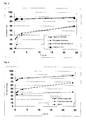
- Fig. 1
- the progress over time of the reaction of various 2-oxo-1,3-dioxolanes with ethanolamine,
- Fig. 2
- the progress over time of the reaction of various 2-oxo-1,3-dioxolanes with benzylamine,
- Fig. 3
- the progress over time of the reaction of various 2-oxo-1,3-dioxolanes with isophoronediamine,
- Fig. 4
- the progress over time of the reaction of various 2-oxo-1,3-dioxolanes with Jeffamin® D 400,
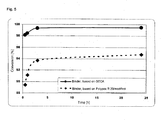
- Fig. 5
- the progress over time of the reaction of various binders based on 2-oxo-1,3-dioxolanes with n-butylamine.
-

- 20 g of the methyl epoxypropionate were mixed with 20 g of tert-butyl methyl ether and 1 g of tetrabutylammonium bromide. The homogeneous mixture was transferred to a 100 ml pressurized reactor and carboxylated for 4 days at 40°C and a CO2 pressure of 20 bar. Following carboxylation, a two-phase system was obtained; the upper phase consisted of tert-butyl methyl ether, and the lower phase consisted of 4-methoxy-carbonyl-2-oxo-1,3-dioxolane (
purity 94% (GC), yield 94%). - The product was characterized as follows: 1H NMR (500 MHz, CDCl3) δ: 3.82 (3H, s, CH3), 4.50 (1 H, dd, J = 5.5, 9.0, CH2), 4.66 (1 H, dd, J = 9.0, 9.0, CH2), 5.09 (1 H, dd, J = 9.0, 5.5, CH); 13C NMR (125 MHz, CDCl3) 6: 53.81 (CH3), 67.00 (CH2), 72.34 (CH), 153.97 (-O-CO-O-), 167.42 (-CO-O-); IR (neat): 1812 cm-1, (-O-CO-O-), 1742 cm-1 (-CO-O-).
- Example 1 a was repeated as described hereinabove, with the exception that ethyl acrylate was used instead of methyl acrylate. The results were essentially as stated in example 1a, with the exception that 4-ethoxycarbonyl-2-oxo-1,3-dioxolane was obtained.
-


-

- 20 g of methyl epoxypropionate were mixed with 20 g of tert-butyl methyl ether, 1.5 g of tetrabutylammonium bromide and 1.5 g of potassium iodide. The homogeneous mixture was transferred to a 100 ml pressurized reactor and carboxylated for 6 days at 50 °C and a CO2 pressure of 30 bar. Following the carboxylation, a two-phase system was obtained; the upper phase consisted of tert-butyl methyl ether, and the lower phase consisted of 4-methoxycarbonyl-2-oxo-1,3-dioxolane (purity 83% (GC), yield 79%).
-

- 0.2 mol of 4-methoxycarbonyl-2-oxo-1,3-dioxolane ("GECA") were mixed with 0.1 mol of neopentyl glycol (Sigma-Aldrich). 5% by weight (based on GECA) of Novozym® 435 (Novozymes A/S) were added thereto. The mixture was stirred and heated to 55 to 60°C. After 72 h, 0.2 mol of methanol had distilled off and the reaction was complete.
-

- 0.2 mol of 4-methoxycarbonyl-2-oxo-1,3-dioxolane ("GECA") were mixed with 0.1 mol of 1,4-butanediol (Sigma-Aldrich). 5% by weight (based on GECA) of Novozym® 435 (Novozymes A/S) were added thereto. The mixture was stirred and heated to 55 to 60°C. After 72 h, 0.2 mol of methanol had distilled off and the reaction was complete.
-

-

- 0.3 mol of 4-methoxycarbonyl-2-oxo-1,3-dioxolane ("GECA") were mixed with 0.1 mol of 1,1,1-trimethylolpropane propoxylate (Sigma-Aldrich, average molecular weight (Mn) ca. 308). 5% by weight (based on GECA) of Novozym® 435 (Novozymes A/S) were added thereto. The mixture was stirred and heated to 55 to 60°C. After 72 h, 0.3 mol of methanol had distilled off and the reaction was complete.
-

-

- 0.3 mol of 4-methoxycarbonyl-2-oxo-1,3-dioxolane ("GECA") were mixed with 0.1 mol of 1,1,1-trimethylolpropane (Sigma-Aldrich). 5% by weight (based on GECA) of Amberlite® 200 (Fluka) were added thereto. The mixture was stirred at 100°C on a water separator. After 5 hours, 0.3 mol of methanol had separated off and the reaction was complete.
- 0.1 mol of ethanolamine were mixed with 0.1 mol of 4-methoxycarbonyl-2-oxo-1,3-dioxolane ("GECA") and stirred at room temperature. After 0.5 h, 1 h, 3 h and 24 h, the amine number was determined by means of titration and used to calculate the conversion. This procedure was also carried out with 4-methyl-2-oxo-1,3-dioxolane ("propylene carbonate") and 4-(hydroxymethyl)-2-oxo-1,3-dioxolane ("glycerol carbonate"). The results are reproduced graphically in
Fig. 1 and show the high reactivity of 4-methoxycarbonyl-2-oxo-1,3-dioxolane. - Example 11 was repeated using benzylamine instead of ethanolamine. 4-Methoxy-carbonyl-2-oxo-1,3-dioxolane ("GECA") was investigated both at room temperature and also at +5°C, whereas 4-methyl-2-oxo-1,3-dioxolane ("propylene carbonate") and 4-(hydroxymethyl)-2-oxo-1,3-dioxolane ("glycerol carbonate") were tested just at room temperature. The results are reproduced graphically in
Fig. 2 and impressively show the exceptional reactivity of 4-methoxycarbonyl-2-oxo-1,3-dioxolane (even at +5°C). - 0.1 mol of isophoronediamine was mixed with 0.2 mol of 4-methoxycarbonyl-2-oxo-1,3-dioxolane ("GECA") and stirred at room temperature. After 0.5 h, 1 h, 3 h and 24 h, the amine number was determined by means of titration and used to calculate the conversion. This procedure was also carried out with 4-methoxycarbonyl-2-oxo-1,3-dioxolane ("GECA") at +5°C and with 4-methyl-2-oxo-1,3-dioxolane ("propylene carbonate") and 4-(hydroxymethyl)-2-oxo-1,3-dioxolane ("glycerol carbonate") at room temperature. The results are reproduced graphically in
Fig. 3 and impressively show the exceptional reactivity of 4-methoxycarbonyl-2-oxo-1,3-dioxolane (even at +5°C). - Example 13 was repeated using Jeffamin® D 400. Since the reaction with high molecular weight amines generally proceeded more slowly than with low molecular weight amines, the 4-methoxycarbonyl-2-oxo-1,3-dioxolane (GECA) was also only investigated at room temperature. The results are reproduced graphically in
Fig. 4 and also show in the present case the high reactivity of 4-methoxycarbonyl-2-oxo-1,3-dioxolane. - 0.1 mol of binder 3 from example 7 or 10


Fig. 5 and show the exceptional reactivity of our binder. - 0.000666 mol of binder 3 from example 7 or 10 was mixed with 0.001 mol of isophoronediamine (binder in excess). The two components were stirred together by hand for 20 seconds, after which a film 300 µm in thickness was drawn (pot time 2 min, tack-free after 6 hours).
- 0.000666 mol of binder 3 from example 7 or 10 was mixed with 0.001 mol of 1,3-cyclo-hexanebis(methylamine) (binder in excess). The two components were stirred together by hand for 20 seconds, after which a film 300 µm in thickness was drawn (pot time 2 min, tack-free after 7 hours).
Claims (9)
- 2-Oxo-1,3-dioxolane-4-carboxylic acid ester of the general formula (V),

- 2-Oxo-1,3-dioxolane-4-carboxylic acid ester of Claim 1, selected from 4-methoxycarbonyl-2-oxo-1,3-dioxolane and 4-ethoxycarbonyl-2-oxo-1,3-dioxolane.
- 2-Oxo-1,3-dioxolane-4-carboxylic acid ester of the general formula (V) as depicted in claim 1, characterized in that R1 is an n-valent radical derived by abstraction of the OH groups of an n-valent polyol and which may be substituted by at most n-1 further 2-oxo-1,3-dioxolane-4-carboxylate groups of the general formula (VI)

- 2-Oxo-1,3-dioxolane-4-carboxylic acid ester of Claim 3, characterized in that the n-valent polyol comprises C2-4-(poly)oxyalkylene groups.
- 2-Oxo-1,3-dioxolane-4-carboxylic acid ester of Claim 3 or 4, characterized in that n = 2 to 5.
- Process for the preparation of a 2-oxo-1,3-dioxolane-4-carboxylic acid ester of one of the Claims 3 to 5, characterized in that a 2-oxo-1,3-dioxolane-4-carboxylic acid ester according to Claim 1 or 2 is transesterified with an n-valent polyol according to the definition of one of the Claims 3 to 5.
- Process of Claim 6, characterized in that the transesterification is carried out in the presence of an enzymatic catalyst or an acidic cation exchanger.
- Use of a 2-oxo-1,3-dioxolane-4-carboxylic acid ester of one of the Claims 1 to 5 for the preparation of hydroxyurethanes.
- Use of a 2-oxo-1,3-dioxolane-4-carboxylic acid ester of Claim 1 or 2 as end group for the blocking of amines.
Priority Applications (1)
| Application Number | Priority Date | Filing Date | Title |
|---|---|---|---|
| EP11723932.7A EP2582687B1 (en) | 2010-06-17 | 2011-05-31 | 2-oxo-1,3-dioxolane-4-carboxylic acid and derivatives thereof, their preparation and use |
Applications Claiming Priority (3)
| Application Number | Priority Date | Filing Date | Title |
|---|---|---|---|
| EP10166244A EP2397474A1 (en) | 2010-06-17 | 2010-06-17 | 2-Oxo-1,3-dioxolan-4-carbolic acid esters, production and use of same |
| EP11723932.7A EP2582687B1 (en) | 2010-06-17 | 2011-05-31 | 2-oxo-1,3-dioxolane-4-carboxylic acid and derivatives thereof, their preparation and use |
| PCT/EP2011/058945 WO2011157551A1 (en) | 2010-06-17 | 2011-05-31 | 2-oxo-1,3-dioxolane-4-carboxylic acid and derivatives thereof, their preparation and use |
Publications (2)
| Publication Number | Publication Date |
|---|---|
| EP2582687A1 EP2582687A1 (en) | 2013-04-24 |
| EP2582687B1 true EP2582687B1 (en) | 2014-11-12 |
Family
ID=43003391
Family Applications (2)
| Application Number | Title | Priority Date | Filing Date |
|---|---|---|---|
| EP10166244A Withdrawn EP2397474A1 (en) | 2010-06-17 | 2010-06-17 | 2-Oxo-1,3-dioxolan-4-carbolic acid esters, production and use of same |
| EP11723932.7A Active EP2582687B1 (en) | 2010-06-17 | 2011-05-31 | 2-oxo-1,3-dioxolane-4-carboxylic acid and derivatives thereof, their preparation and use |
Family Applications Before (1)
| Application Number | Title | Priority Date | Filing Date |
|---|---|---|---|
| EP10166244A Withdrawn EP2397474A1 (en) | 2010-06-17 | 2010-06-17 | 2-Oxo-1,3-dioxolan-4-carbolic acid esters, production and use of same |
Country Status (9)
| Country | Link |
|---|---|
| EP (2) | EP2397474A1 (en) |
| JP (1) | JP5797750B2 (en) |
| CN (1) | CN102947286B (en) |
| AU (1) | AU2011267271B2 (en) |
| BR (1) | BR112012032260B1 (en) |
| CA (1) | CA2802266C (en) |
| ES (1) | ES2525888T3 (en) |
| RU (1) | RU2576621C2 (en) |
| WO (1) | WO2011157551A1 (en) |
Cited By (2)
| Publication number | Priority date | Publication date | Assignee | Title |
|---|---|---|---|---|
| EP3401350A1 (en) | 2017-05-11 | 2018-11-14 | Henkel AG & Co. KGaA | Method for producing functionalized polyesters |
| EP3670618A1 (en) | 2018-12-20 | 2020-06-24 | Henkel AG & Co. KGaA | Method for producing functionalized polyesters |
Families Citing this family (16)
| Publication number | Priority date | Publication date | Assignee | Title |
|---|---|---|---|---|
| US9150709B2 (en) | 2011-10-04 | 2015-10-06 | Basf Se | Epoxy resin compositions comprising a 2-oxo-[1,3] dioxolane derivative |
| RU2632903C2 (en) * | 2011-12-22 | 2017-10-11 | Констракшн Рисёрч Энд Текнолоджи Гмбх | 2-oxo-1,3-dioxolane-4-carboxamides, their production and application |
| RU2014131118A (en) | 2011-12-29 | 2016-02-20 | Басф Се | PRODUCTION OF CYCLOCARBONATE-FUNCTIONALIZED COMPOUNDS |
| US8614342B2 (en) | 2012-01-31 | 2013-12-24 | Basf Se | Process for preparing epoxycarboxylic esters |
| EP2762471A1 (en) * | 2013-01-31 | 2014-08-06 | Construction Research & Technology GmbH | 2-oxo-1,3-dioxolane-4-carboxamide building blocks, their preparation and use |
| EP2818465A1 (en) | 2013-06-26 | 2014-12-31 | Construction Research & Technology GmbH | 2-Oxo-1,3-dioxolane-4-acyl halides, their preparation and use |
| EP2915808A1 (en) | 2014-03-07 | 2015-09-09 | Construction Research & Technology GmbH | 2-Hydroxyethyl 2-oxo-1,3-dioxolane-4-carboxylates, their preparation and use |
| JP6224529B2 (en) * | 2014-06-04 | 2017-11-01 | 大日精化工業株式会社 | Method for producing polyhydroxyurethane |
| EP2998331A1 (en) | 2014-09-17 | 2016-03-23 | Construction Research & Technology GmbH | A curable organic polymer comprising at least one acylurea unit, its preparation and use |
| EP3214938A1 (en) | 2014-11-07 | 2017-09-13 | Basf Se | Agrochemical adjuvant containing 2-oxo-1,3-dioxolan-4 carboxylates |
| AU2016305201B2 (en) | 2015-08-10 | 2020-07-23 | Sika Technology Ag | Process for producing a ring-opening polymerization product |
| US9656943B2 (en) | 2015-10-20 | 2017-05-23 | Chang Chun Plastics Co. Ltd. | Process for producing dimethyl carbonate |
| US10131620B2 (en) | 2015-10-20 | 2018-11-20 | Chang Chun Plastics Co., Ltd. | Process for producing dimethyl carbonate |
| BR112018009765B1 (en) * | 2015-11-16 | 2021-08-10 | Firmenich Sa | AMMONIA AND PRIMARY OR SECONDARY AMINE ODOR NEUTRALIZER |
| AU2017272494A1 (en) | 2016-06-03 | 2019-01-03 | Basf Se | Use of compounds having n 2-oxo-1,3-dioxolane-4-carboxamide units in two-component adhesives |
| FR3088326B1 (en) | 2018-11-09 | 2021-12-03 | Bostik Sa | FUNCTIONALIZED HYDROXYSILANES, SILYLATED POLYURETHANES, AND COMPOSITIONS CONTAINING THEM |
Family Cites Families (10)
| Publication number | Priority date | Publication date | Assignee | Title |
|---|---|---|---|---|
| EP0001088A1 (en) | 1977-09-05 | 1979-03-21 | BASF Aktiengesellschaft | Polymers containing carbonate groups |
| GB9112419D0 (en) * | 1991-06-10 | 1991-07-31 | Shell Int Research | Process for polymer preparation |
| ES2131623T5 (en) * | 1993-12-21 | 2006-08-01 | Basf Corporation | COMPOSITION OF ENDURECIBLE COATING OF CYCLICAL CARBONATES. |
| JP3586881B2 (en) * | 1994-04-19 | 2004-11-10 | 三菱化学株式会社 | Dioxolane-containing solvent |
| DE10118109A1 (en) * | 2001-04-11 | 2002-10-17 | Cognis Deutschland Gmbh | Production of glycerol carbamate esters useful as thickeners in detergent, cosmetic and pharmaceutical compositions, comprises reacting a glycerol, diglycerol or polyglycerol carbonate with an amine |
| CN100469776C (en) * | 2002-05-17 | 2009-03-18 | 奥特拉控股公司 | Improvement in the development of cataracts and other eye diseases |
| WO2004003001A1 (en) | 2002-06-28 | 2004-01-08 | Altus Biologics Inc. | Process for the enzymatic resolution of 1,3-dioxolane-4-carboxylates |
| JP2006009001A (en) * | 2004-05-26 | 2006-01-12 | Japan Paint Manufacturers Association | Method for producing polyhydroxyurethane |
| JP2006003433A (en) | 2004-06-15 | 2006-01-05 | Sekisui Chem Co Ltd | Sealant for liquid crystal display element, vertical conduction material, and liquid crystal display element |
| EP1941946A1 (en) | 2007-01-04 | 2008-07-09 | Max-Planck-Gesellschaft zur Förderung der Wissenschaften e.V. | Carbonitrides as catalysts |
-
2010
- 2010-06-17 EP EP10166244A patent/EP2397474A1/en not_active Withdrawn
-
2011
- 2011-05-31 CA CA2802266A patent/CA2802266C/en active Active
- 2011-05-31 EP EP11723932.7A patent/EP2582687B1/en active Active
- 2011-05-31 RU RU2013101974/04A patent/RU2576621C2/en active
- 2011-05-31 AU AU2011267271A patent/AU2011267271B2/en active Active
- 2011-05-31 CN CN201180029736.6A patent/CN102947286B/en active Active
- 2011-05-31 BR BR112012032260-5A patent/BR112012032260B1/en active Search and Examination
- 2011-05-31 WO PCT/EP2011/058945 patent/WO2011157551A1/en not_active Ceased
- 2011-05-31 ES ES11723932.7T patent/ES2525888T3/en active Active
- 2011-05-31 JP JP2013514624A patent/JP5797750B2/en active Active
Cited By (6)
| Publication number | Priority date | Publication date | Assignee | Title |
|---|---|---|---|---|
| EP3401350A1 (en) | 2017-05-11 | 2018-11-14 | Henkel AG & Co. KGaA | Method for producing functionalized polyesters |
| WO2018206362A1 (en) | 2017-05-11 | 2018-11-15 | Henkel Ag & Co. Kgaa | Method for producing functionalized polyesters |
| US11161935B2 (en) | 2017-05-11 | 2021-11-02 | Henkel Ag & Co. Kgaa | Method for producing functionalized polyesters |
| EP3670618A1 (en) | 2018-12-20 | 2020-06-24 | Henkel AG & Co. KGaA | Method for producing functionalized polyesters |
| WO2020126544A1 (en) | 2018-12-20 | 2020-06-25 | Henkel Ag & Co. Kgaa | Method for producing functionalized polyesters |
| US12122871B2 (en) | 2018-12-20 | 2024-10-22 | Henkel Ag & Co. Kgaa | Method for producing functionalized polyesters |
Also Published As
| Publication number | Publication date |
|---|---|
| CN102947286A (en) | 2013-02-27 |
| RU2576621C2 (en) | 2016-03-10 |
| CN102947286B (en) | 2015-07-08 |
| AU2011267271A1 (en) | 2013-01-10 |
| WO2011157551A1 (en) | 2011-12-22 |
| JP2013530169A (en) | 2013-07-25 |
| RU2013101974A (en) | 2014-07-27 |
| JP5797750B2 (en) | 2015-10-21 |
| CA2802266C (en) | 2018-05-15 |
| EP2397474A1 (en) | 2011-12-21 |
| AU2011267271B2 (en) | 2014-01-30 |
| ES2525888T3 (en) | 2015-01-02 |
| EP2582687A1 (en) | 2013-04-24 |
| BR112012032260A2 (en) | 2015-09-15 |
| BR112012032260B1 (en) | 2018-03-20 |
| CA2802266A1 (en) | 2011-12-22 |
Similar Documents
| Publication | Publication Date | Title |
|---|---|---|
| AU2011267271B2 (en) | 2-Oxo-1,3-dioxolane-4-carboxylic acid esters, their preparation and use | |
| US20140228583A1 (en) | 2-Oxo-1, 3-dioxolane-4-carboxylic Acid and Derivatives Thereof, Their Preparation and Use | |
| EP3114116B1 (en) | 2-hydroxyethyl 2-oxo-1, 3-dioxolane-4-carboxylates, their preparation and use | |
| US9115111B2 (en) | Bicarbonate precursors, method for preparing same and uses thereof | |
| EP3954678A1 (en) | Five-membered cyclic monothiocarbonates | |
| US9546147B2 (en) | Method for producing cyclic carbonates | |
| EP2218708A1 (en) | Method for producing carbonate compound | |
| EP3013811B1 (en) | 2-oxo-1,3-dioxolane-4-acyl halides, their preparation and use | |
| JP5479844B2 (en) | Cyclic carbonate | |
| US4344881A (en) | Process for making alkylene carbonates | |
| JP3475432B2 (en) | Method for producing 2-oxo-1,3-dioxolane | |
| US5034559A (en) | Polyethercarboxylic esters and their preparation | |
| EP2930165B1 (en) | Method for producing carbonate compound | |
| EP2797908B1 (en) | Preparing cyclocarbonate-functionalized compounds | |
| KR20250176715A (en) | Method of manufacturing alkoxyalkyl carbonate from cyclic organic carbonate | |
| JP2002145879A (en) | Method for producing optically active tris-(2,3- epoxypropyl)-isocyanurate |
Legal Events
| Date | Code | Title | Description |
|---|---|---|---|
| PUAI | Public reference made under article 153(3) epc to a published international application that has entered the european phase |
Free format text: ORIGINAL CODE: 0009012 |
|
| 17P | Request for examination filed |
Effective date: 20130117 |
|
| AK | Designated contracting states |
Kind code of ref document: A1 Designated state(s): AL AT BE BG CH CY CZ DE DK EE ES FI FR GB GR HR HU IE IS IT LI LT LU LV MC MK MT NL NO PL PT RO RS SE SI SK SM TR |
|
| RIN1 | Information on inventor provided before grant (corrected) |
Inventor name: KIERAT, RADOSLAW Inventor name: MEZGER, JOCHEN Inventor name: STAUDHAMER, ROSITA Inventor name: WALTHER, BURKHARD Inventor name: MECFEL-MARCZEWSKI, JOANNA |
|
| DAX | Request for extension of the european patent (deleted) | ||
| GRAP | Despatch of communication of intention to grant a patent |
Free format text: ORIGINAL CODE: EPIDOSNIGR1 |
|
| INTG | Intention to grant announced |
Effective date: 20140905 |
|
| RIN1 | Information on inventor provided before grant (corrected) |
Inventor name: WALTHER, BURKHARD Inventor name: MECFEL-MARCZEWSKI, JOANNA Inventor name: KIERAT, RADOSLAW Inventor name: STAUDHAMER, ROSITA Inventor name: MEZGER, JOCHEN |
|
| GRAS | Grant fee paid |
Free format text: ORIGINAL CODE: EPIDOSNIGR3 |
|
| GRAA | (expected) grant |
Free format text: ORIGINAL CODE: 0009210 |
|
| AK | Designated contracting states |
Kind code of ref document: B1 Designated state(s): AL AT BE BG CH CY CZ DE DK EE ES FI FR GB GR HR HU IE IS IT LI LT LU LV MC MK MT NL NO PL PT RO RS SE SI SK SM TR |
|
| REG | Reference to a national code |
Ref country code: GB Ref legal event code: FG4D |
|
| REG | Reference to a national code |
Ref country code: CH Ref legal event code: EP |
|
| REG | Reference to a national code |
Ref country code: AT Ref legal event code: REF Ref document number: 695663 Country of ref document: AT Kind code of ref document: T Effective date: 20141115 |
|
| REG | Reference to a national code |
Ref country code: IE Ref legal event code: FG4D |
|
| REG | Reference to a national code |
Ref country code: DE Ref legal event code: R096 Ref document number: 602011011310 Country of ref document: DE Effective date: 20141224 |
|
| REG | Reference to a national code |
Ref country code: ES Ref legal event code: FG2A Ref document number: 2525888 Country of ref document: ES Kind code of ref document: T3 Effective date: 20150102 |
|
| REG | Reference to a national code |
Ref country code: NL Ref legal event code: VDEP Effective date: 20141112 |
|
| PG25 | Lapsed in a contracting state [announced via postgrant information from national office to epo] |
Ref country code: PT Free format text: LAPSE BECAUSE OF FAILURE TO SUBMIT A TRANSLATION OF THE DESCRIPTION OR TO PAY THE FEE WITHIN THE PRESCRIBED TIME-LIMIT Effective date: 20150312 Ref country code: NL Free format text: LAPSE BECAUSE OF FAILURE TO SUBMIT A TRANSLATION OF THE DESCRIPTION OR TO PAY THE FEE WITHIN THE PRESCRIBED TIME-LIMIT Effective date: 20141112 Ref country code: FI Free format text: LAPSE BECAUSE OF FAILURE TO SUBMIT A TRANSLATION OF THE DESCRIPTION OR TO PAY THE FEE WITHIN THE PRESCRIBED TIME-LIMIT Effective date: 20141112 Ref country code: IS Free format text: LAPSE BECAUSE OF FAILURE TO SUBMIT A TRANSLATION OF THE DESCRIPTION OR TO PAY THE FEE WITHIN THE PRESCRIBED TIME-LIMIT Effective date: 20150312 Ref country code: LT Free format text: LAPSE BECAUSE OF FAILURE TO SUBMIT A TRANSLATION OF THE DESCRIPTION OR TO PAY THE FEE WITHIN THE PRESCRIBED TIME-LIMIT Effective date: 20141112 Ref country code: NO Free format text: LAPSE BECAUSE OF FAILURE TO SUBMIT A TRANSLATION OF THE DESCRIPTION OR TO PAY THE FEE WITHIN THE PRESCRIBED TIME-LIMIT Effective date: 20150212 |
|
| PG25 | Lapsed in a contracting state [announced via postgrant information from national office to epo] |
Ref country code: HR Free format text: LAPSE BECAUSE OF FAILURE TO SUBMIT A TRANSLATION OF THE DESCRIPTION OR TO PAY THE FEE WITHIN THE PRESCRIBED TIME-LIMIT Effective date: 20141112 Ref country code: LV Free format text: LAPSE BECAUSE OF FAILURE TO SUBMIT A TRANSLATION OF THE DESCRIPTION OR TO PAY THE FEE WITHIN THE PRESCRIBED TIME-LIMIT Effective date: 20141112 Ref country code: PL Free format text: LAPSE BECAUSE OF FAILURE TO SUBMIT A TRANSLATION OF THE DESCRIPTION OR TO PAY THE FEE WITHIN THE PRESCRIBED TIME-LIMIT Effective date: 20141112 Ref country code: RS Free format text: LAPSE BECAUSE OF FAILURE TO SUBMIT A TRANSLATION OF THE DESCRIPTION OR TO PAY THE FEE WITHIN THE PRESCRIBED TIME-LIMIT Effective date: 20141112 Ref country code: SE Free format text: LAPSE BECAUSE OF FAILURE TO SUBMIT A TRANSLATION OF THE DESCRIPTION OR TO PAY THE FEE WITHIN THE PRESCRIBED TIME-LIMIT Effective date: 20141112 Ref country code: GR Free format text: LAPSE BECAUSE OF FAILURE TO SUBMIT A TRANSLATION OF THE DESCRIPTION OR TO PAY THE FEE WITHIN THE PRESCRIBED TIME-LIMIT Effective date: 20150213 Ref country code: CY Free format text: LAPSE BECAUSE OF FAILURE TO SUBMIT A TRANSLATION OF THE DESCRIPTION OR TO PAY THE FEE WITHIN THE PRESCRIBED TIME-LIMIT Effective date: 20141112 |
|
| PG25 | Lapsed in a contracting state [announced via postgrant information from national office to epo] |
Ref country code: EE Free format text: LAPSE BECAUSE OF FAILURE TO SUBMIT A TRANSLATION OF THE DESCRIPTION OR TO PAY THE FEE WITHIN THE PRESCRIBED TIME-LIMIT Effective date: 20141112 Ref country code: DK Free format text: LAPSE BECAUSE OF FAILURE TO SUBMIT A TRANSLATION OF THE DESCRIPTION OR TO PAY THE FEE WITHIN THE PRESCRIBED TIME-LIMIT Effective date: 20141112 Ref country code: SK Free format text: LAPSE BECAUSE OF FAILURE TO SUBMIT A TRANSLATION OF THE DESCRIPTION OR TO PAY THE FEE WITHIN THE PRESCRIBED TIME-LIMIT Effective date: 20141112 Ref country code: CZ Free format text: LAPSE BECAUSE OF FAILURE TO SUBMIT A TRANSLATION OF THE DESCRIPTION OR TO PAY THE FEE WITHIN THE PRESCRIBED TIME-LIMIT Effective date: 20141112 Ref country code: RO Free format text: LAPSE BECAUSE OF FAILURE TO SUBMIT A TRANSLATION OF THE DESCRIPTION OR TO PAY THE FEE WITHIN THE PRESCRIBED TIME-LIMIT Effective date: 20141112 |
|
| REG | Reference to a national code |
Ref country code: DE Ref legal event code: R097 Ref document number: 602011011310 Country of ref document: DE |
|
| PLBE | No opposition filed within time limit |
Free format text: ORIGINAL CODE: 0009261 |
|
| STAA | Information on the status of an ep patent application or granted ep patent |
Free format text: STATUS: NO OPPOSITION FILED WITHIN TIME LIMIT |
|
| 26N | No opposition filed |
Effective date: 20150813 |
|
| PG25 | Lapsed in a contracting state [announced via postgrant information from national office to epo] |
Ref country code: MC Free format text: LAPSE BECAUSE OF FAILURE TO SUBMIT A TRANSLATION OF THE DESCRIPTION OR TO PAY THE FEE WITHIN THE PRESCRIBED TIME-LIMIT Effective date: 20141112 Ref country code: LU Free format text: LAPSE BECAUSE OF FAILURE TO SUBMIT A TRANSLATION OF THE DESCRIPTION OR TO PAY THE FEE WITHIN THE PRESCRIBED TIME-LIMIT Effective date: 20150531 |
|
| PG25 | Lapsed in a contracting state [announced via postgrant information from national office to epo] |
Ref country code: SI Free format text: LAPSE BECAUSE OF FAILURE TO SUBMIT A TRANSLATION OF THE DESCRIPTION OR TO PAY THE FEE WITHIN THE PRESCRIBED TIME-LIMIT Effective date: 20141112 |
|
| PG25 | Lapsed in a contracting state [announced via postgrant information from national office to epo] |
Ref country code: IE Free format text: LAPSE BECAUSE OF NON-PAYMENT OF DUE FEES Effective date: 20150531 |
|
| REG | Reference to a national code |
Ref country code: FR Ref legal event code: PLFP Year of fee payment: 6 |
|
| REG | Reference to a national code |
Ref country code: AT Ref legal event code: UEP Ref document number: 695663 Country of ref document: AT Kind code of ref document: T Effective date: 20141112 |
|
| PG25 | Lapsed in a contracting state [announced via postgrant information from national office to epo] |
Ref country code: MT Free format text: LAPSE BECAUSE OF FAILURE TO SUBMIT A TRANSLATION OF THE DESCRIPTION OR TO PAY THE FEE WITHIN THE PRESCRIBED TIME-LIMIT Effective date: 20141112 |
|
| REG | Reference to a national code |
Ref country code: FR Ref legal event code: PLFP Year of fee payment: 7 |
|
| PG25 | Lapsed in a contracting state [announced via postgrant information from national office to epo] |
Ref country code: HU Free format text: LAPSE BECAUSE OF FAILURE TO SUBMIT A TRANSLATION OF THE DESCRIPTION OR TO PAY THE FEE WITHIN THE PRESCRIBED TIME-LIMIT; INVALID AB INITIO Effective date: 20110531 Ref country code: BG Free format text: LAPSE BECAUSE OF FAILURE TO SUBMIT A TRANSLATION OF THE DESCRIPTION OR TO PAY THE FEE WITHIN THE PRESCRIBED TIME-LIMIT Effective date: 20141112 Ref country code: SM Free format text: LAPSE BECAUSE OF FAILURE TO SUBMIT A TRANSLATION OF THE DESCRIPTION OR TO PAY THE FEE WITHIN THE PRESCRIBED TIME-LIMIT Effective date: 20141112 |
|
| PG25 | Lapsed in a contracting state [announced via postgrant information from national office to epo] |
Ref country code: TR Free format text: LAPSE BECAUSE OF FAILURE TO SUBMIT A TRANSLATION OF THE DESCRIPTION OR TO PAY THE FEE WITHIN THE PRESCRIBED TIME-LIMIT Effective date: 20141112 |
|
| PG25 | Lapsed in a contracting state [announced via postgrant information from national office to epo] |
Ref country code: BE Free format text: LAPSE BECAUSE OF FAILURE TO SUBMIT A TRANSLATION OF THE DESCRIPTION OR TO PAY THE FEE WITHIN THE PRESCRIBED TIME-LIMIT Effective date: 20141112 |
|
| REG | Reference to a national code |
Ref country code: FR Ref legal event code: PLFP Year of fee payment: 8 |
|
| PG25 | Lapsed in a contracting state [announced via postgrant information from national office to epo] |
Ref country code: MK Free format text: LAPSE BECAUSE OF FAILURE TO SUBMIT A TRANSLATION OF THE DESCRIPTION OR TO PAY THE FEE WITHIN THE PRESCRIBED TIME-LIMIT Effective date: 20141112 |
|
| PG25 | Lapsed in a contracting state [announced via postgrant information from national office to epo] |
Ref country code: AL Free format text: LAPSE BECAUSE OF FAILURE TO SUBMIT A TRANSLATION OF THE DESCRIPTION OR TO PAY THE FEE WITHIN THE PRESCRIBED TIME-LIMIT Effective date: 20141112 |
|
| REG | Reference to a national code |
Ref country code: FR Ref legal event code: PLFP Year of fee payment: 13 |
|
| REG | Reference to a national code |
Ref country code: GB Ref legal event code: 732E Free format text: REGISTERED BETWEEN 20230921 AND 20230927 |
|
| REG | Reference to a national code |
Ref country code: DE Ref legal event code: R081 Ref document number: 602011011310 Country of ref document: DE Owner name: SIKA TECHNOLOGY AG, CH Free format text: FORMER OWNER: CONSTRUCTION RESEARCH & TECHNOLOGY GMBH, 83308 TROSTBERG, DE |
|
| REG | Reference to a national code |
Ref country code: AT Ref legal event code: PC Ref document number: 695663 Country of ref document: AT Kind code of ref document: T Owner name: SIKA TECHNOLOGY AG, CH Effective date: 20240115 |
|
| PGFP | Annual fee paid to national office [announced via postgrant information from national office to epo] |
Ref country code: DE Payment date: 20250423 Year of fee payment: 15 |
|
| PGFP | Annual fee paid to national office [announced via postgrant information from national office to epo] |
Ref country code: GB Payment date: 20250423 Year of fee payment: 15 Ref country code: ES Payment date: 20250602 Year of fee payment: 15 |
|
| PGFP | Annual fee paid to national office [announced via postgrant information from national office to epo] |
Ref country code: IT Payment date: 20250423 Year of fee payment: 15 |
|
| PGFP | Annual fee paid to national office [announced via postgrant information from national office to epo] |
Ref country code: FR Payment date: 20250423 Year of fee payment: 15 |
|
| PGFP | Annual fee paid to national office [announced via postgrant information from national office to epo] |
Ref country code: CH Payment date: 20250601 Year of fee payment: 15 |
|
| PGFP | Annual fee paid to national office [announced via postgrant information from national office to epo] |
Ref country code: AT Payment date: 20250424 Year of fee payment: 15 |