EP2581586A2 - Starting an aircraft engine of a multi-engine system - Google Patents
Starting an aircraft engine of a multi-engine system Download PDFInfo
- Publication number
- EP2581586A2 EP2581586A2 EP12182404.9A EP12182404A EP2581586A2 EP 2581586 A2 EP2581586 A2 EP 2581586A2 EP 12182404 A EP12182404 A EP 12182404A EP 2581586 A2 EP2581586 A2 EP 2581586A2
- Authority
- EP
- European Patent Office
- Prior art keywords
- engine
- engines
- starting
- energy
- aircraft
- Prior art date
- Legal status (The legal status is an assumption and is not a legal conclusion. Google has not performed a legal analysis and makes no representation as to the accuracy of the status listed.)
- Granted
Links
Images

Classifications
-
- F—MECHANICAL ENGINEERING; LIGHTING; HEATING; WEAPONS; BLASTING
- F02—COMBUSTION ENGINES; HOT-GAS OR COMBUSTION-PRODUCT ENGINE PLANTS
- F02C—GAS-TURBINE PLANTS; AIR INTAKES FOR JET-PROPULSION PLANTS; CONTROLLING FUEL SUPPLY IN AIR-BREATHING JET-PROPULSION PLANTS
- F02C7/00—Features, components parts, details or accessories, not provided for in, or of interest apart form groups F02C1/00 - F02C6/00; Air intakes for jet-propulsion plants
- F02C7/26—Starting; Ignition
-
- B—PERFORMING OPERATIONS; TRANSPORTING
- B64—AIRCRAFT; AVIATION; COSMONAUTICS
- B64C—AEROPLANES; HELICOPTERS
- B64C27/00—Rotorcraft; Rotors peculiar thereto
- B64C27/04—Helicopters
- B64C27/12—Rotor drives
-
- B—PERFORMING OPERATIONS; TRANSPORTING
- B64—AIRCRAFT; AVIATION; COSMONAUTICS
- B64D—EQUIPMENT FOR FITTING IN OR TO AIRCRAFT; FLIGHT SUITS; PARACHUTES; ARRANGEMENT OR MOUNTING OF POWER PLANTS OR PROPULSION TRANSMISSIONS IN AIRCRAFT
- B64D35/00—Transmitting power from power plants to propellers or rotors; Arrangements of transmissions
- B64D35/08—Transmitting power from power plants to propellers or rotors; Arrangements of transmissions characterised by the transmission being driven by a plurality of power plants
-
- F—MECHANICAL ENGINEERING; LIGHTING; HEATING; WEAPONS; BLASTING
- F01—MACHINES OR ENGINES IN GENERAL; ENGINE PLANTS IN GENERAL; STEAM ENGINES
- F01D—NON-POSITIVE DISPLACEMENT MACHINES OR ENGINES, e.g. STEAM TURBINES
- F01D15/00—Adaptations of machines or engines for special use; Combinations of engines with devices driven thereby
- F01D15/10—Adaptations for driving, or combinations with, electric generators
-
- F—MECHANICAL ENGINEERING; LIGHTING; HEATING; WEAPONS; BLASTING
- F02—COMBUSTION ENGINES; HOT-GAS OR COMBUSTION-PRODUCT ENGINE PLANTS
- F02C—GAS-TURBINE PLANTS; AIR INTAKES FOR JET-PROPULSION PLANTS; CONTROLLING FUEL SUPPLY IN AIR-BREATHING JET-PROPULSION PLANTS
- F02C7/00—Features, components parts, details or accessories, not provided for in, or of interest apart form groups F02C1/00 - F02C6/00; Air intakes for jet-propulsion plants
- F02C7/26—Starting; Ignition
- F02C7/264—Ignition
- F02C7/266—Electric
-
- F—MECHANICAL ENGINEERING; LIGHTING; HEATING; WEAPONS; BLASTING
- F02—COMBUSTION ENGINES; HOT-GAS OR COMBUSTION-PRODUCT ENGINE PLANTS
- F02C—GAS-TURBINE PLANTS; AIR INTAKES FOR JET-PROPULSION PLANTS; CONTROLLING FUEL SUPPLY IN AIR-BREATHING JET-PROPULSION PLANTS
- F02C7/00—Features, components parts, details or accessories, not provided for in, or of interest apart form groups F02C1/00 - F02C6/00; Air intakes for jet-propulsion plants
- F02C7/26—Starting; Ignition
- F02C7/268—Starting drives for the rotor, acting directly on the rotor of the gas turbine to be started
-
- F—MECHANICAL ENGINEERING; LIGHTING; HEATING; WEAPONS; BLASTING
- F02—COMBUSTION ENGINES; HOT-GAS OR COMBUSTION-PRODUCT ENGINE PLANTS
- F02N—STARTING OF COMBUSTION ENGINES; STARTING AIDS FOR SUCH ENGINES, NOT OTHERWISE PROVIDED FOR
- F02N11/00—Starting of engines by means of electric motors
- F02N11/006—Starting of engines by means of electric motors using a plurality of electric motors
-
- F—MECHANICAL ENGINEERING; LIGHTING; HEATING; WEAPONS; BLASTING
- F02—COMBUSTION ENGINES; HOT-GAS OR COMBUSTION-PRODUCT ENGINE PLANTS
- F02N—STARTING OF COMBUSTION ENGINES; STARTING AIDS FOR SUCH ENGINES, NOT OTHERWISE PROVIDED FOR
- F02N11/00—Starting of engines by means of electric motors
- F02N11/04—Starting of engines by means of electric motors the motors being associated with current generators
-
- F—MECHANICAL ENGINEERING; LIGHTING; HEATING; WEAPONS; BLASTING
- F02—COMBUSTION ENGINES; HOT-GAS OR COMBUSTION-PRODUCT ENGINE PLANTS
- F02N—STARTING OF COMBUSTION ENGINES; STARTING AIDS FOR SUCH ENGINES, NOT OTHERWISE PROVIDED FOR
- F02N11/00—Starting of engines by means of electric motors
- F02N11/08—Circuits specially adapted for starting of engines
- F02N11/0814—Circuits specially adapted for starting of engines comprising means for controlling automatic idle-start-stop
- F02N11/0844—Circuits specially adapted for starting of engines comprising means for controlling automatic idle-start-stop with means for restarting the engine directly after an engine stop request, e.g. caused by change of driver mind
-
- F—MECHANICAL ENGINEERING; LIGHTING; HEATING; WEAPONS; BLASTING
- F02—COMBUSTION ENGINES; HOT-GAS OR COMBUSTION-PRODUCT ENGINE PLANTS
- F02N—STARTING OF COMBUSTION ENGINES; STARTING AIDS FOR SUCH ENGINES, NOT OTHERWISE PROVIDED FOR
- F02N11/00—Starting of engines by means of electric motors
- F02N11/08—Circuits specially adapted for starting of engines
- F02N11/0862—Circuits specially adapted for starting of engines characterised by the electrical power supply means, e.g. battery
- F02N11/0866—Circuits specially adapted for starting of engines characterised by the electrical power supply means, e.g. battery comprising several power sources, e.g. battery and capacitor or two batteries
-
- F—MECHANICAL ENGINEERING; LIGHTING; HEATING; WEAPONS; BLASTING
- F02—COMBUSTION ENGINES; HOT-GAS OR COMBUSTION-PRODUCT ENGINE PLANTS
- F02N—STARTING OF COMBUSTION ENGINES; STARTING AIDS FOR SUCH ENGINES, NOT OTHERWISE PROVIDED FOR
- F02N11/00—Starting of engines by means of electric motors
- F02N11/08—Circuits specially adapted for starting of engines
- F02N2011/0881—Components of the circuit not provided for by previous groups
- F02N2011/0885—Capacitors, e.g. for additional power supply
-
- F—MECHANICAL ENGINEERING; LIGHTING; HEATING; WEAPONS; BLASTING
- F05—INDEXING SCHEMES RELATING TO ENGINES OR PUMPS IN VARIOUS SUBCLASSES OF CLASSES F01-F04
- F05D—INDEXING SCHEME FOR ASPECTS RELATING TO NON-POSITIVE-DISPLACEMENT MACHINES OR ENGINES, GAS-TURBINES OR JET-PROPULSION PLANTS
- F05D2220/00—Application
- F05D2220/30—Application in turbines
- F05D2220/32—Application in turbines in gas turbines
- F05D2220/329—Application in turbines in gas turbines in helicopters
-
- F—MECHANICAL ENGINEERING; LIGHTING; HEATING; WEAPONS; BLASTING
- F05—INDEXING SCHEMES RELATING TO ENGINES OR PUMPS IN VARIOUS SUBCLASSES OF CLASSES F01-F04
- F05D—INDEXING SCHEME FOR ASPECTS RELATING TO NON-POSITIVE-DISPLACEMENT MACHINES OR ENGINES, GAS-TURBINES OR JET-PROPULSION PLANTS
- F05D2220/00—Application
- F05D2220/70—Application in combination with
- F05D2220/74—Application in combination with a gas turbine
-
- F—MECHANICAL ENGINEERING; LIGHTING; HEATING; WEAPONS; BLASTING
- F05—INDEXING SCHEMES RELATING TO ENGINES OR PUMPS IN VARIOUS SUBCLASSES OF CLASSES F01-F04
- F05D—INDEXING SCHEME FOR ASPECTS RELATING TO NON-POSITIVE-DISPLACEMENT MACHINES OR ENGINES, GAS-TURBINES OR JET-PROPULSION PLANTS
- F05D2240/00—Components
- F05D2240/40—Use of a multiplicity of similar components
-
- F—MECHANICAL ENGINEERING; LIGHTING; HEATING; WEAPONS; BLASTING
- F05—INDEXING SCHEMES RELATING TO ENGINES OR PUMPS IN VARIOUS SUBCLASSES OF CLASSES F01-F04
- F05D—INDEXING SCHEME FOR ASPECTS RELATING TO NON-POSITIVE-DISPLACEMENT MACHINES OR ENGINES, GAS-TURBINES OR JET-PROPULSION PLANTS
- F05D2260/00—Function
- F05D2260/42—Storage of energy
-
- F—MECHANICAL ENGINEERING; LIGHTING; HEATING; WEAPONS; BLASTING
- F05—INDEXING SCHEMES RELATING TO ENGINES OR PUMPS IN VARIOUS SUBCLASSES OF CLASSES F01-F04
- F05D—INDEXING SCHEME FOR ASPECTS RELATING TO NON-POSITIVE-DISPLACEMENT MACHINES OR ENGINES, GAS-TURBINES OR JET-PROPULSION PLANTS
- F05D2260/00—Function
- F05D2260/85—Starting
-
- Y—GENERAL TAGGING OF NEW TECHNOLOGICAL DEVELOPMENTS; GENERAL TAGGING OF CROSS-SECTIONAL TECHNOLOGIES SPANNING OVER SEVERAL SECTIONS OF THE IPC; TECHNICAL SUBJECTS COVERED BY FORMER USPC CROSS-REFERENCE ART COLLECTIONS [XRACs] AND DIGESTS
- Y02—TECHNOLOGIES OR APPLICATIONS FOR MITIGATION OR ADAPTATION AGAINST CLIMATE CHANGE
- Y02T—CLIMATE CHANGE MITIGATION TECHNOLOGIES RELATED TO TRANSPORTATION
- Y02T50/00—Aeronautics or air transport
- Y02T50/60—Efficient propulsion technologies, e.g. for aircraft
Definitions
- the disclosure relates generally to aircraft engines, and more particularly to starting aircraft engines.
- Twin-engine helicopters typically require both engines to operate at a relatively high power output during some phases of flight such as during take-off, for example. During other phases of flight such as cruise, power requirements may be significantly lower and therefore the power output from each engine may be significantly reduced. Even though only one of the two engines may be required during such other phases, it is typically required for safety reasons that both engines remain operating at all times during flight. In an emergency condition such as failure of one of the two engines, this allows the other engine to rapidly increase its power output to make up for the failed engine and take over. When the helicopter is at low altitude, it is imperative that the power output increase by the remaining engine be done as rapidly as possible.
- both engines of a dual-engine helicopter When both engines of a dual-engine helicopter are operating at reduced power output, they are typically not operating within an optimum performance window of the engines. Consequently, depending on the type of mission, both engines of the helicopter operating at a reduced power output setting may operate at a relatively low fuel efficiency (i.e. relatively high fuel consumption) for relatively long portions of a flight.
- the disclosure describes systems and methods for starting an engine of a multi-engine aircraft.
- the disclosure describes multi-engine gas turbine propulsion systems for helicopters.
- a system may for example comprise: a first gas turbine engine and a second gas turbine engine configured to drive a main rotor of the helicopter; an electric starter motor configured to assist starting of the first engine; an energy source configured to deliver electrical energy to the starter motor at a rapid rate during rapid starting of the first engine, the rapid rate being higher than a regular rate used during regular starting of the first engine; and an electric generator coupled to the second gas turbine engine and configured to convert energy from the second gas turbine engine into electrical energy to charge the energy source during operation of the second gas turbine engine.
- the disclosure describes systems for rapidly starting engines of multi-engine aircraft.
- a system may for example comprise: a starter coupled to the aircraft engine and configured to assist starting of the aircraft engine; and an energy source configured to deliver energy to the starter at a rapid rate during rapid starting of the aircraft engine, the rapid rate being higher than a regular rate used during regular starting of the aircraft engine.
- the disclosure describes methods for driving devices on aircraft using multi-engine systems comprising at least first engine and second engines.
- Such a method may for example comprise: using one of the first and second engines to drive the device while the other of the first and second engines is in a shut-down state; rapidly starting the other of the first and second engines by delivering energy to the other of the first and second engines at a rapid delivery rate higher than a regular delivery rate used for regular starting; and using the other of the first and second engines to drive the device.
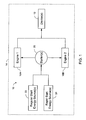
- Fig.1 illustrates a multi-engine system, generally shown at 10, that may be used to power one or more device(s) 12 of aircraft 14.
- aircraft 14 may be a helicopter or another type of aircraft.
- System 10 may comprise two or more engines 16A and 16B that may be configured to collectively and/or separately power device(s) 12.
- Suitable gearbox(es), not shown in FIG. 1 may be disposed between engines 16A, 16B and device(s) 12.
- engines 16A, 16B may comprise one or more gas turbine engine(s) which may serve as a propulsion system for aircraft 14.
- Engines 16A, 16B and device(s) 12 may be engageable so that device(s) 12 may be driven by either first engine 16A, second engine 16B or by both first and second engines 16A, 16B simultaneously.
- Device(s) 12 may include, for example, one or more propeller(s), rotor(s), electric generator(s), pump(s), various mechanical or electrical loads and/or other aircraft accessories or loads.
- System 10 may also comprise one or more starter(s) 20 that may be used to assist starting of at least one of engines 16A, 16B.
- Starter(s) 20 may be of conventional or other types.
- starter(s) 20 may be in the form of an electrical motor or motor/generator.
- Starter(s) 20 and engines 16A, 16B may be configured such that a single starter 20 may be used to start both engines 16A, 16B either simultaneously or separately.
- each of engines 16A and 16B may have its own respective dedicated starter(s) 20.
- Starter(s) 20 may be powered by one or more energy sources 22, 24 capable of delivering energy at a regular rate during regular starting of one of engines 16A, 16B and delivering energy at a rapid rate during rapid starting of one of engines 16A, 16B.
- the higher (rapid) rate at which energy may be delivered to starter(s) 20 during rapid starting, in comparison with regular starting, may correspond to a greater amount of power being delivered to starter(s) 20.
- the rapid energy delivery rate may be achieved by delivering a larger amount of air to starter(s) 20 per unit time in comparison with an amount of air per unit time delivered to starter(s) 20 during regular starting.
- Energy sources 22, 24 may comprise separate energy source(s) 22 configured to deliver energy at a regular rate during regular starting and another energy source(s) 24 configured to deliver energy at a rapid rate during rapid starting.
- energy source(s) 22, 24, may comprise a single device, or multiple devices of a single type, configured to operate selectively in either of regular and high-energy modes.
- energy source(s) 22 and energy source(s) 24 may be of the same or different types.
- energy source(s) 22 used for regular starting, may include, for example, one or more battery(ies) as typically found on aircraft 14.
- Energy source(s) 24 may comprise one or more supercapacitors and may have a significantly higher power density than energy source(s) 22. It will be understood by one skilled in the relevant arts that a supercapacitor may also be known as supercondenser or ultracapacitor and that a supercapacitor may include, for example, an electrochemical capacitor with a relatively high energy density.
- a suitable type of supercapacitor that may be incorporated in energy source(s) 24 may be, for example, an electric double-layer capacitor (EDLC).
- EDLC electric double-layer capacitor
- supercapacitors may be much greater than conventional electrolytic capacitors.
- Supercapacitors may also have a much higher power density than conventional batteries or fuel cells. Power density combines energy density with the speed at which the energy can be delivered to a load. For example, while a supercapacitor may typically not necessarily carry as much energy as a battery, energy from a supercapacitor may be delivered to a load at a much faster rate than energy from a battery. Also, supercapacitors may be charged and/or discharged at a rate that is typically faster than that of conventional batteries.
- energy source(s) 22, 24 may comprise a single set of batteries and/or supercapacitors configured to operate at different output settings under normal and emergency or other rapid-start conditions.
- FIG. 2 illustrates a multi-engine propulsion system, generally shown at 100, that may be used to power one or more rotor(s) 120 of helicopter 140.
- system 100 may also comprise two or more engines 160A and 160B that may be configured to either collectively and/or separately power rotor(s) 120.
- engines 160A, 160B may comprise one or more gas turbine engine(s).
- engines 160A, 160B may be turboshaft engines configured to produce shaft power for driving rotor(s) 120 of helicopter 140.
- Engines 160A, 160B may each comprise high pressure spool(s) 162A, 162B comprising one or more compressor stages and low pressure spool(s) 164A, 164B comprising one or more turbines stages driving output shaft(s) 166A, 166B.
- Engines 160A, 160B and rotor(s) 120 may be engageable via suitable gearbox(es) 190 so that rotor(s) 120 may be driven by either first engine 160A, second engine 160B or by both first and second engines 160A, 160B simultaneously.
- Rotor(s) 120 may include, for example, one or more main rotors of helicopter 140 used for generating lift as well as forward/lateral forces for propelling helicopter 140.
- Rotor(s) 120 may also comprise one or more tail rotors.
- Other device(s) 12, 120 may also or alternatively be driven by engines 160A, 160B including one or more, electric generator(s), pump(s), various mechanical or electrical loads and/or other aircraft accessories or loads.
- System 100 may also comprise one or more starter(s) 20, 200A, 200B that may be used to assist starting of at least one of engines 16, 160A, 160B.
- Starter(s) 200A may be provided for starting first engine 160A and starter(s) 200B may be provided for starting second engine 160B.
- Starter(s) 200A, 200B may be in the form of electrical motors/generators that may be used as motors during starting of engines and as generators during operation for converting mechanical energy from engines 160A, 160B into electrical energy to be used in various parts/systems of helicopter 140.
- Starter(s) 200A, 200B may be powered by one or more energy sources 220A, 220B, 240A, 240B capable of delivering energy at a regular rate during regular starting of one of engines 160A, 160B and delivering energy at a rapid rate during rapid starting of one of engines 160A, 160B.
- Energy sources 220A, 220B, 240A, 240B may be incorporated into separate power control units 210A, 210B associated with each of engines 160A, 160B.
- power control unit 210A may be associated with engine(s) 160A and comprise energy sources 220A and 240A.
- Power control unit 210B may be associated with engine(s) 160B and comprise energy sources 220B and 240B.
- energy sources 220A and 220B may be combined into a single regular start energy source such as energy source 22 shown in FIG. 1 and energy sources 240A and 240B may be combined into a single rapid start energy source such as energy source 24 shown in FIG. 1 .
- Energy sources 220A, 220B may comprise one or more conventional or other types of batteries that may be found on helicopter 140 and used to power various device(s)/accessory(ies) on helicopter 140 and also used for regular starting of engines 160A, 160B via starter/generators 200A, 200B respectively.
- Energy sources 220A, 220B may be rechargeable and may be charged using one or more of engines 160A, 160B.
- energy source(s) 220A may be charged by engine 160B via starter/generator 200B and energy source(s) 220B may be charged by engine 160A via starter/generator 200A.
- An exemplary output voltage of energy source(s) 22, 220A, 220B may be 28 Volts.
- rapid start energy source(s) 24, 240A, 240B may similarly comprise one or more supercapacitors.
- energy source(s) 240A, 240B may each comprise one or more electric double-layer capacitors (EDLCs).
- Energy source(s) 240A, 240B may be used for rapid starting of engines 160A, 160B when required via starter/generators 200A, 200B respectively.
- Energy sources 240A, 240B may be rechargeable and may be charged using one or more of engines 160A, 160B.
- energy source(s) 240A may be charged by engine 160B via starter/generator 200B and energy source(s) 240B may be charged by engine 160A via starter/generator 200A.
- An exemplary output voltage of energy source(s) 24, 240A, 240B may be 200 Volts.
- rapid start energy source(s) 24, 240A, 240B used to rapidly start one of engines 16A, 16B, 160A, 160B in the shut-down state may be charged by the other of engines 16A, 16B, 160A, 160B which is (or has been) operating.
- engines 16A, 16B, 160A, 160B may be used to collectively and/or separately power various device(s) 12, 120 of aircraft 14, 140.
- first engine(s) 16A, 160A and second engine(s) 16B, 160B may be required to be operated at a relatively high power output setting.
- first engine 16A, 160A and second engine 16B, 160B may be sufficient to provide the required amount of power.
- first engine 16A, 160A and second engine 16B, 160B may be operated while the other of first engine 16A, 160A and second engine 16B, 160B may be in a shut-down state.
- the one of first engine 16A, 160A and second engine 16B, 160B may be operated at a higher power output level (e.g. closer to or within an optimum performance window) than it would otherwise if both first engine 16A, 160A and second engine 16B, 160B would be operating simultaneously at reduced power output levels.
- the operation of a single engine at a higher power output level may provide an overall better fuel efficiency (e.g. lower fuel consumption) and lower overall operating expenses than the operation of two engines at reduced power output levels.
- first engine 16A, 160A and second engine 16B, 160B it may be required during operation of only one of first engine 16A, 160A and second engine 16B, 160B that the other of first engine 16A, 160A and second engine 16B, 160B have the ability to be re-started from the shut-down state and rapidly brought to a suitable or full power output level. Accordingly, in the event of an emergency such as a failure of the operating engine, the shut-down engine may have the ability to take over for the failed engine and prevent placing aircraft 14, 140 in a potentially catastrophic situation.
- the re-starting and power output increase of the shut-down engine should be done as rapidly as possible.
- the re-starting and power output increase of the shut-down engine may be initiated and controlled by a control system of aircraft 14, 140.
- System 10, 100 may be used to assist the rapid starting of the one of first engine 16A, 160A and second engine 16B, 160B from a shut-down state during a single-engine operation. System 10, 100 may also be used to assist in rapidly increasing the power output of the one of first engine 16A, 160A and second engine 16B, 160B that has just been started after a successful light-off (e.g. start).
- a successful light-off e.g. start
- system 10, 100 may be used to conduct a method comprising: using one of the first engine 16A, 160A and second engine 16B, 160B to drive device(s) 12, 120 while the other of the first engine 16A, 160A and second engine 16B, 160B is in a shut-down state; rapidly starting the other of the first engine 16A, 160A and second engine 16B, 160B by delivering energy to the other of the first engine 16A, 160A and second engine 16B, 160B at a rapid delivery rate higher than a regular delivery rate used for regular starting; and using the other of the first engine 16A, 160A and second engine 16B, 160B to drive device(s) 12, 120.
- the energy used to rapidly start the one of the first engine 16A, 160A and second engine 16B, 160B may be provided by rapid start energy source(s) 24, 240A, 240B and may be delivered to the one of the first engine 16A, 160A and second engine 16B, 160B via appropriate starter(s) 20, 200A, 200B.
- the rate of energy delivery during rapid starting may be significantly higher than during regular starting of engines 16A, 16B, 160A, 160B using regular start energy source(s) 22, 220A, 220B.
- the rate of energy delivery during rapid starting may be double or more the rate of energy delivery during regular starting.
- the rate of energy delivery during rapid starting may be determined, in whole or in part, by the characteristics of the engine(s) 16A, 16B, 160A, 160B to be restarted, with a goal being to deliver as much start-up energy as possible without destroying engine(s) 16A, 16B, 160A, 160B or components thereof, and thereby defeating the purpose.
- the rate of energy delivery may be six times the rate of energy delivery during regular starting, as that ratio in many cases will allow for at least a limited number of rapid starts without permanently impairing engine(s) 16A, 16B, 160A, 160B or components thereof.
- the starting time during rapid starting may, for example, be six times shorter than during regular starting.
- energy source(s) 24, 240A, 240B may be configured to deliver a suitable energy delivery rate based on specific needs and applications.
- the rapid energy delivery rate may be selected so that starter(s) 200A, 200B may deliver about ten times more power in comparison with regular starting.
- Starter(s) 20, 200A, 200B may not necessarily require to be sized to continuously withstand loads (e.g. torques) associated with rapid starting. Instead, to reduce its weight and size, starter(s) 20, 200A, 200B may be liquid (e.g. oil) cooled and sized to only withstand rapid starting loads either on an intermittent basis (e.g. for relatively brief occurrences) or only a certain number of times before requiring inspection, maintenance and/or replacement. Since rapid starting may be used in emergency conditions (e.g. presumably rarely or never), it may be acceptable and appropriate to perform maintenance and/or replace starter(s) 20, 200A, 200B after such condition has occurred and rapid starting has been used.
- loads e.g. torques
- starter(s) 20, 200A, 200B may be liquid (e.g. oil) cooled and sized to only withstand rapid starting loads either on an intermittent basis (e.g. for relatively brief occurrences) or only a certain number of times before requiring inspection, maintenance and/or replacement. Since rapid starting may be
- Conditions which could potentially require rapid starting of the shut-down engine may include, for example, a sudden performance degradation and/or failure of the operating engine, which would likely require inspection and/or maintenance of the troubled/failed engine in any case. Rapid starting may also be used for an initial starting of one or more of engines 16A, 16B, 160A, 160B at the beginning of a flight/mission, if required, provided that a charge is available in rapid start energy source(s) 24, 240A, 240B. Rapid starting may also be used in a situation where an increase in power may suddenly become necessary and an additional engine may be brought in operation from a shut-down state in a relatively short period of time.
- rapid starting may be done on a more frequent basis under normal or other operating conditions and starter(s) 20, 200A, 200B may be sized appropriately to withstand rapid starting loads/torques on a more frequent basis without necessarily requiring maintenance specifically due to rapid starting.
- system 10, 100 may also be used to assist in increasing the power output of the one of first engine 16A, 160A and second engine 16B, 160B.
- energy from rapid start energy source(s) 24, 240A, 240B may be delivered to starter(s) 20, 200A, 200B at a rapid rate and starter(s) 20, 200A, 200B may be used to increase a speed of high pressure spool(s) 162A, 162B to an optimum light-off speed.
- starter(s) 20, 200A, 200B may be used to further increase a speed of the high pressure spool and, in conjunction with suitable fuel control to the engine, assist in reaching a desired power output level of engine(s) 16A, 16B, 160A, 160B in a relatively short time.
- System 10, 100 may allow the operation of only one engine (or fewer engines than a total number of engines available) in a multi-engine (e.g. twin pack) system when desired for fuel savings in cruise or at other appropriate conditions while having the other (e.g. second) engine in a shut-down state but still available via rapid starting in case of an emergency condition.
- engines 16A, 16B, 160A, 160B may be practically identical so that either one or both may be used to power aircraft 14, 140 under appropriate conditions and that each may be used alternatively to power aircraft 14, 140 while the other is in a shut-down state.
- the alternative shutting down of a different engine when appropriate during subsequent flights may be used to more evenly distribute usage between engines 16A, 16B, 160A, 160B.
Landscapes
- Engineering & Computer Science (AREA)
- Mechanical Engineering (AREA)
- Chemical & Material Sciences (AREA)
- Combustion & Propulsion (AREA)
- General Engineering & Computer Science (AREA)
- Aviation & Aerospace Engineering (AREA)
- Output Control And Ontrol Of Special Type Engine (AREA)
- Power Engineering (AREA)
Abstract
Description
- The disclosure relates generally to aircraft engines, and more particularly to starting aircraft engines.
- Twin-engine helicopters typically require both engines to operate at a relatively high power output during some phases of flight such as during take-off, for example. During other phases of flight such as cruise, power requirements may be significantly lower and therefore the power output from each engine may be significantly reduced. Even though only one of the two engines may be required during such other phases, it is typically required for safety reasons that both engines remain operating at all times during flight. In an emergency condition such as failure of one of the two engines, this allows the other engine to rapidly increase its power output to make up for the failed engine and take over. When the helicopter is at low altitude, it is imperative that the power output increase by the remaining engine be done as rapidly as possible.
- When both engines of a dual-engine helicopter are operating at reduced power output, they are typically not operating within an optimum performance window of the engines. Consequently, depending on the type of mission, both engines of the helicopter operating at a reduced power output setting may operate at a relatively low fuel efficiency (i.e. relatively high fuel consumption) for relatively long portions of a flight.
- Improvement is therefore desirable.
- The disclosure describes systems and methods for starting an engine of a multi-engine aircraft.
- In various aspects, for example, the disclosure describes multi-engine gas turbine propulsion systems for helicopters. Such a system may for example comprise: a first gas turbine engine and a second gas turbine engine configured to drive a main rotor of the helicopter; an electric starter motor configured to assist starting of the first engine; an energy source configured to deliver electrical energy to the starter motor at a rapid rate during rapid starting of the first engine, the rapid rate being higher than a regular rate used during regular starting of the first engine; and an electric generator coupled to the second gas turbine engine and configured to convert energy from the second gas turbine engine into electrical energy to charge the energy source during operation of the second gas turbine engine.
- In another aspect, the disclosure describes systems for rapidly starting engines of multi-engine aircraft. Such a system may for example comprise: a starter coupled to the aircraft engine and configured to assist starting of the aircraft engine; and an energy source configured to deliver energy to the starter at a rapid rate during rapid starting of the aircraft engine, the rapid rate being higher than a regular rate used during regular starting of the aircraft engine.
- In a further aspect, the disclosure describes methods for driving devices on aircraft using multi-engine systems comprising at least first engine and second engines. Such a method may for example comprise: using one of the first and second engines to drive the device while the other of the first and second engines is in a shut-down state; rapidly starting the other of the first and second engines by delivering energy to the other of the first and second engines at a rapid delivery rate higher than a regular delivery rate used for regular starting; and using the other of the first and second engines to drive the device.
- Further details of these and other aspects of the subject matter of this application will be apparent from the detailed description and drawings included below.
- Reference is now made to the accompanying drawings, in which:
-
FIG. 1 is a schematic illustration of a multi-engine system for use in an aircraft; and -
FIG. 2 is a schematic illustration of a multi-engine propulsion system for use in a helicopter. - Various aspects of preferred embodiments are described through reference to the drawings.
-
Fig.1 illustrates a multi-engine system, generally shown at 10, that may be used to power one or more device(s) 12 ofaircraft 14. For example,aircraft 14 may be a helicopter or another type of aircraft.System 10 may comprise two ormore engines FIG. 1 , may be disposed betweenengines engines aircraft 14.Engines first engine 16A,second engine 16B or by both first andsecond engines -
System 10 may also comprise one or more starter(s) 20 that may be used to assist starting of at least one ofengines engines single starter 20 may be used to start bothengines engines more energy sources engines engines - The higher (rapid) rate at which energy may be delivered to starter(s) 20 during rapid starting, in comparison with regular starting, may correspond to a greater amount of power being delivered to starter(s) 20. In case of starter(s) 20 being one or more electric motor(s) for example, the rapid energy delivery rate may, in accordance with Joules Law (P = V*I), be achieved by delivering a larger current (I) to starter(s) 20 than is done during regular starting and/or by delivering the same or larger current (I) at a higher voltage (V). In case of starter(s) 20 being one or more air turbine(s) for example, the rapid energy delivery rate may be achieved by delivering a larger amount of air to starter(s) 20 per unit time in comparison with an amount of air per unit time delivered to starter(s) 20 during regular starting.
-
Energy sources - For example, in a case where starter(s) 20 is/are of electric motor type, energy source(s) 22, used for regular starting, may include, for example, one or more battery(ies) as typically found on
aircraft 14. Energy source(s) 24 may comprise one or more supercapacitors and may have a significantly higher power density than energy source(s) 22. It will be understood by one skilled in the relevant arts that a supercapacitor may also be known as supercondenser or ultracapacitor and that a supercapacitor may include, for example, an electrochemical capacitor with a relatively high energy density. A suitable type of supercapacitor that may be incorporated in energy source(s) 24 may be, for example, an electric double-layer capacitor (EDLC). - In comparison, the energy density of supercapacitors may be much greater than conventional electrolytic capacitors. Supercapacitors may also have a much higher power density than conventional batteries or fuel cells. Power density combines energy density with the speed at which the energy can be delivered to a load. For example, while a supercapacitor may typically not necessarily carry as much energy as a battery, energy from a supercapacitor may be delivered to a load at a much faster rate than energy from a battery. Also, supercapacitors may be charged and/or discharged at a rate that is typically faster than that of conventional batteries.
- Alternatively, energy source(s) 22, 24 may comprise a single set of batteries and/or supercapacitors configured to operate at different output settings under normal and emergency or other rapid-start conditions.
-
FIG. 2 illustrates a multi-engine propulsion system, generally shown at 100, that may be used to power one or more rotor(s) 120 ofhelicopter 140. Similarly tosystem 10,system 100 may also comprise two ormore engines engines engines helicopter 140.Engines Engines first engine 160A,second engine 160B or by both first andsecond engines helicopter 140 used for generating lift as well as forward/lateral forces for propellinghelicopter 140. Rotor(s) 120 may also comprise one or more tail rotors. Other device(s) 12, 120 may also or alternatively be driven byengines -
System 100 may also comprise one or more starter(s) 20, 200A, 200B that may be used to assist starting of at least one ofengines first engine 160A and starter(s) 200B may be provided for startingsecond engine 160B. Starter(s) 200A, 200B may be in the form of electrical motors/generators that may be used as motors during starting of engines and as generators during operation for converting mechanical energy fromengines helicopter 140. - Starter(s) 200A, 200B may be powered by one or
more energy sources engines engines Energy sources power control units engines power control unit 210A may be associated with engine(s) 160A and compriseenergy sources 220A and 240A.Power control unit 210B may be associated with engine(s) 160B and compriseenergy sources energy sources energy source 22 shown inFIG. 1 andenergy sources energy source 24 shown inFIG. 1 . -
Energy sources helicopter 140 and used to power various device(s)/accessory(ies) onhelicopter 140 and also used for regular starting ofengines generators Energy sources engines engine 160B via starter/generator 200B and energy source(s) 220B may be charged byengine 160A via starter/generator 200A. An exemplary output voltage of energy source(s) 22, 220A, 220B may be 28 Volts. - As described above, rapid start energy source(s) 24, 240A, 240B may similarly comprise one or more supercapacitors. For example, energy source(s) 240A, 240B may each comprise one or more electric double-layer capacitors (EDLCs). Energy source(s) 240A, 240B may be used for rapid starting of
engines generators Energy sources engines engine 160B via starter/generator 200B and energy source(s) 240B may be charged byengine 160A via starter/generator 200A. An exemplary output voltage of energy source(s) 24, 240A, 240B may be 200 Volts. Hence, rapid start energy source(s) 24, 240A, 240B used to rapidly start one ofengines engines - During operation,
engines aircraft aircraft first engine second engine first engine second engine first engine second engine first engine second engine first engine second engine - For safety reasons, it may be required during operation of only one of
first engine second engine first engine second engine aircraft aircraft -
System first engine second engine System first engine second engine - For example,
system first engine second engine first engine second engine first engine second engine first engine second engine first engine second engine - The energy used to rapidly start the one of the
first engine second engine first engine second engine engines - Starter(s) 20, 200A, 200B may not necessarily require to be sized to continuously withstand loads (e.g. torques) associated with rapid starting. Instead, to reduce its weight and size, starter(s) 20, 200A, 200B may be liquid (e.g. oil) cooled and sized to only withstand rapid starting loads either on an intermittent basis (e.g. for relatively brief occurrences) or only a certain number of times before requiring inspection, maintenance and/or replacement. Since rapid starting may be used in emergency conditions (e.g. presumably rarely or never), it may be acceptable and appropriate to perform maintenance and/or replace starter(s) 20, 200A, 200B after such condition has occurred and rapid starting has been used. Conditions which could potentially require rapid starting of the shut-down engine may include, for example, a sudden performance degradation and/or failure of the operating engine, which would likely require inspection and/or maintenance of the troubled/failed engine in any case. Rapid starting may also be used for an initial starting of one or more of
engines - Alternatively, rapid starting may be done on a more frequent basis under normal or other operating conditions and starter(s) 20, 200A, 200B may be sized appropriately to withstand rapid starting loads/torques on a more frequent basis without necessarily requiring maintenance specifically due to rapid starting.
- After rapidly starting (e.g. successful lighting off) of the one of
first engine second engine system first engine second engine -
System engines power aircraft power aircraft engines - The above description is meant to be exemplary only, and one skilled in the art will recognize that changes may be made to the embodiments described without departing from the scope of the invention disclosed. For example, while rapid starting of an engine is mainly described using one or more electric starters, it is apparent that other types of starters could also be used in conjunction with the embodiments described. Still other modifications which fall within the scope of the present invention will be apparent to those skilled in the art, in light of a review of this disclosure, and such modifications are intended to fall within the appended claims.
Claims (15)
- A system for rapidly starting an engine (16A;160A) of a multi-engine aircraft, the system comprising:a starter (20;200A) coupled to the aircraft engine (16A;160A) and configured to assist starting of the aircraft engine (16A;160A); andan energy source (24;240A) configured to deliver energy to the starter (20;200A) at a rapid rate during rapid starting of the aircraft engine (16A;160A), the rapid rate being higher than a regular rate used during regular starting of the aircraft engine.
- The system as defined in claim 1, wherein the energy source (24;240A) comprises at least one supercapacitor.
- The system as defined in claim 1 or 2, wherein the energy source (24;240A) comprises at least one double-layer capacitor.
- The system as defined in any preceding claim, wherein the rapid rate of energy delivery is at least double the regular rate of energy delivery.
- The system as defined in any preceding claim, wherein the rapid rate of energy delivery is at least six times the regular rate of energy delivery.
- The system as defined in any preceding claim, wherein the energy source (24;240A) is configured to be charged via a generator (200B) coupled to another engine (16B;160B) of the multi-engine aircraft during operation of the other engine.
- A multi-engine gas turbine propulsion system for an aircraft, the system comprisinga first gas turbine engine (16A;160A) and a second gas turbine engine (16B;160B) configured to drive a device (12;120) of the aircraft;a starting system as defined in any preceding claim; wherein:the starter is an electric starter motor (20;200A) configured to assist starting of the first engine (16A;160B);the energy source (24;240A) is configured to deliver electrical energy to the starter motor (20;200A) at a rapid rate during rapid starting of the first engine (16A;160A), the rapid rate being higher than a regular rate used during regular starting of the first engine (16A;160A); and further comprisingan electric generator (200B) coupled to the second gas turbine engine (16B;160B) and configured to convert energy from the second gas turbine engine (16B;160B) into electrical energy to charge the energy source (24;240A) during operation of the second gas turbine engine (16B;160B).
- The propulsion system of claim 7 wherein said aircraft is a helicopter and said first and second engines (16A,16B;160A,160B) drive a main rotor (120) of said helicopter.
- The system as defined in any preceding claim, wherein the starter or starter motor (20;200A) is sized to withstand loads associated with rapid starting only on an intermittent basis.
- A method for driving a device (12;120) on an aircraft using a multi-engine system comprising at least a first engine (16A;160A) and a second engine (16B;160B), the method comprising:using one (16A;160A) of the first and second engines to drive the device (12;120) while the other (16B;160B) of the first and second engines is in a shut-down state;rapidly starting the other of the first and second engines (16B;160B) by delivering energy to the other (16A;160A) of the first and second engines at a rapid delivery rate higher than a regular delivery rate used for regular starting; andusing the other (16A;160A) of the first and second engines to drive the device (12;120).
- The method as defined in claim 10, comprising charging an energy source (24;240B) using the one (16A;160A) of the first and second engines, the energy source (24;240B) being configured to deliver the energy to the other of the first and second engines at the rapid delivery rate.
- The method as defined in claim 11, wherein rapidly starting the other of the first and second engine includes:increasing a compressor speed of the other of the first and second engines to an optimum light-off speed; andonce lit, further increasing the compressor speed to assist in reaching a desired power level of the other of the first and second engines.
- The method as defined in claim 10, 11 or 12, wherein the rapidly starting of the other of the first and second engines is done upon detection of an emergency condition.
- The method as defined in claim 10, 11 or 12, wherein the rapidly starting of the other of the first and second engines is done upon detection of a performance degradation of the one of the first and second engines.
- The method as defined in claim 10, 11 or 12, wherein the rapidly starting of the other of the first and second engines is done upon detection of a failure of the one of the first and second engines.
Applications Claiming Priority (1)
| Application Number | Priority Date | Filing Date | Title |
|---|---|---|---|
| US13/270,487 US9267438B2 (en) | 2011-10-11 | 2011-10-11 | Starting of aircraft engine |
Publications (3)
| Publication Number | Publication Date |
|---|---|
| EP2581586A2 true EP2581586A2 (en) | 2013-04-17 |
| EP2581586A3 EP2581586A3 (en) | 2017-04-05 |
| EP2581586B1 EP2581586B1 (en) | 2021-11-03 |
Family
ID=46801335
Family Applications (1)
| Application Number | Title | Priority Date | Filing Date |
|---|---|---|---|
| EP12182404.9A Active EP2581586B1 (en) | 2011-10-11 | 2012-08-30 | Starting an aircraft engine of a multi-engine system |
Country Status (2)
| Country | Link |
|---|---|
| US (2) | US9267438B2 (en) |
| EP (1) | EP2581586B1 (en) |
Cited By (10)
| Publication number | Priority date | Publication date | Assignee | Title |
|---|---|---|---|---|
| WO2015145042A1 (en) * | 2014-03-27 | 2015-10-01 | Turbomeca | Architecture of a multi-engine helicopter propulsion system and corresponding helicopter |
| WO2015145076A1 (en) * | 2014-03-27 | 2015-10-01 | Turbomeca | Assistance device for an aircraft free turbine turbomachine |
| WO2015145031A1 (en) | 2014-03-27 | 2015-10-01 | Turbomeca | Turbine engine rapid reactivation method and system |
| WO2015145037A1 (en) * | 2014-03-27 | 2015-10-01 | Turbomeca | Architecture of a multiple-engine helicopter propulsion system, and corresponding helicopter |
| WO2015145077A1 (en) | 2014-03-27 | 2015-10-01 | Turbomeca | Assistance device for a free turbine turbomachine of an aircraft comprising at least two free turbine turbomachines |
| WO2016020607A1 (en) | 2014-08-07 | 2016-02-11 | Turbomeca | Quick-assist device for a free-turbine turbomachine of an aircraft |
| FR3027346A1 (en) * | 2014-10-20 | 2016-04-22 | Turbomeca | REMOVABLE PACK OF REACTIVATION OF A TURBOMOTEUR, ARCHITECTURE OF A PROPULSIVE SYSTEM OF A MULTI-ENGINE HELICOPTER EQUIPPED WITH SUCH PACK AND CORRESPONDING HELICOPTER |
| WO2016062945A1 (en) | 2014-10-20 | 2016-04-28 | Turbomeca | Hybrid propulsion system for a multi-engine aircraft |
| EP3960997A1 (en) * | 2020-08-31 | 2022-03-02 | General Electric Company | In-flight hybrid-electric engine shutdown and restart |
| EP4019405A1 (en) * | 2020-12-22 | 2022-06-29 | Honda Motor Co., Ltd. | Gas turbine system |
Families Citing this family (48)
| Publication number | Priority date | Publication date | Assignee | Title |
|---|---|---|---|---|
| FR2967132B1 (en) * | 2010-11-04 | 2012-11-09 | Turbomeca | METHOD OF OPTIMIZING THE SPECIFIC CONSUMPTION OF A BIMOTING HELICOPTER AND DISSYMMETRIC BIMOTOR ARCHITECTURE WITH A CONTROL SYSTEM FOR ITS IMPLEMENTATION |
| US8631885B2 (en) * | 2010-12-17 | 2014-01-21 | Leo Oriet | Multi-use dual-engine, variable-power drive |
| US9267438B2 (en) | 2011-10-11 | 2016-02-23 | Pratt & Whitney Canada Corp. | Starting of aircraft engine |
| US9429077B2 (en) | 2011-12-06 | 2016-08-30 | Pratt & Whitney Canada Corp. | Multiple turboshaft engine control method and system for helicopters |
| US9248907B2 (en) * | 2012-03-06 | 2016-02-02 | Sikorsky Aircraft Corporation | Engine starting system for rotorcraft in flight |
| US20140084594A1 (en) * | 2012-09-27 | 2014-03-27 | Briggs & Stratton Corporation | Standby generator including two air-cooled engines |
| US10128662B2 (en) * | 2013-09-09 | 2018-11-13 | Ge Aviation Systems Llc | Power system for an aircraft with dual hybrid energy sources |
| FR3011587B1 (en) * | 2013-10-09 | 2015-11-06 | Turbomeca | METHOD OF OPTIMIZING THE SPECIFIC CONSUMPTION OF A BIMOTING HELICOPTER |
| EP2889452B1 (en) * | 2013-12-30 | 2020-07-22 | Rolls-Royce Corporation | System and method for coordinated control of a power system |
| FR3019224B1 (en) * | 2014-03-27 | 2016-03-18 | Turbomeca | METHOD FOR ASSISTING A MULTI-ENGINE HELICOPTER SLEEPING TURBOMOTEUR AND ARCHITECTURE OF A PROPELLANT HELICOPTER SYSTEM COMPRISING AT LEAST ONE TURBOMOTEUR WHICH CAN BE ON SLEEP |
| FR3019221B1 (en) * | 2014-03-27 | 2018-10-12 | Safran Helicopter Engines | HYDRAULIC DEVICE FOR THE EMERGENCY STARTING OF A TURBOMOTEUR, ARCHITECTURE OF A PROPULSIVE SYSTEM OF A MULTI-ENGINE HELICOPTER EQUIPPED WITH SUCH A DEVICE AND CORRESPONDING HELICOPTER |
| FR3027058B1 (en) * | 2014-10-13 | 2016-11-04 | Turbomeca | ARCHITECTURE OF A PROPELLANT HELICOPTER SYSTEM COMPRISING A HYBRID TURBOMOTOR AND A REACTIVATION SYSTEM OF THE HYBRID TURBOMOTOR |
| US10961915B2 (en) | 2015-04-15 | 2021-03-30 | Sikorsky Aircraft Corporation | Systems and methods for starting an engine |
| DE102015105787A1 (en) * | 2015-04-15 | 2016-10-20 | Johann Schwöller | Electric drive for an aircraft and hybrid system for an aircraft |
| WO2017015341A1 (en) * | 2015-07-20 | 2017-01-26 | Sikorsky Aircraft Corporation | Control system for rotorcraft in-flight engine restarting |
| US20170107910A1 (en) * | 2015-10-15 | 2017-04-20 | Ge Aviation Systems Llc | Method and apparatus for starting an aircraft engine and operating a power architecture for an aircraft |
| US10450886B2 (en) | 2015-12-22 | 2019-10-22 | General Electric Company | Hybrid propulsion system including a chemically rechargeable ultra-capacitor |
| FR3047771A1 (en) * | 2016-02-16 | 2017-08-18 | Airbus Operations Sas | SYSTEM AND METHOD FOR STARTING THE ENGINES OF A BIMOTING AIRCRAFT |
| US10760484B2 (en) | 2016-09-16 | 2020-09-01 | Pratt & Whitney Canada Corp. | Multi-engine aircraft power plant with heat recuperation |
| US10641179B2 (en) * | 2016-11-07 | 2020-05-05 | General Electric Company | System and method for starting gas turbine engines |
| US10273019B2 (en) * | 2017-03-06 | 2019-04-30 | Rolls-Royce Corporation | Distributed propulsion system power unit control |
| US10823078B2 (en) * | 2017-06-28 | 2020-11-03 | General Electric Company | Systems and methods for starting a turbine engine |
| US10951095B2 (en) | 2018-08-01 | 2021-03-16 | General Electric Company | Electric machine arc path protection |
| US11332256B2 (en) | 2018-08-21 | 2022-05-17 | General Electric Company | Fault tolerant hybrid electric propulsion system for an aerial vehicle |
| US11015480B2 (en) | 2018-08-21 | 2021-05-25 | General Electric Company | Feed forward load sensing for hybrid electric systems |
| US11027719B2 (en) | 2018-12-03 | 2021-06-08 | General Electric Company | Distributed power generation for a vehicle system |
| US11356024B2 (en) | 2018-12-06 | 2022-06-07 | Unison Industries, Llc | Ignition exciter assembly and method for charging a tank capacitor for an ignition exciter |
| FR3093870B1 (en) * | 2019-03-15 | 2021-04-02 | Safran Electrical & Power | Aircraft electrical network control system |
| US11718408B2 (en) | 2019-03-26 | 2023-08-08 | Pratt & Whitney Canada Corp. | Electric power system for powerplants of a multi-engine aircraft |
| US11408353B2 (en) | 2019-03-28 | 2022-08-09 | Honeywell International Inc. | Auxiliary power unit with plural spool assembly and starter transmission arrangement |
| US11794924B2 (en) * | 2019-05-11 | 2023-10-24 | James Wurth | Start/service aircraft battery system |
| US11725594B2 (en) | 2020-08-31 | 2023-08-15 | General Electric Company | Hybrid electric engine speed regulation |
| US12031479B2 (en) | 2020-08-31 | 2024-07-09 | General Electric Company | Hybrid electric propulsion system load share |
| US12516635B2 (en) | 2020-08-31 | 2026-01-06 | General Electric Company | Compressor stall mitigation |
| FR3118994B1 (en) * | 2021-01-15 | 2022-12-23 | Safran Helicopter Engines | IGNITION METHOD AND DEVICE |
| US11873081B2 (en) | 2021-06-09 | 2024-01-16 | Textron Innovations Inc. | Supplemental engine power control |
| US11905888B2 (en) * | 2021-07-30 | 2024-02-20 | Pratt & Whitney Canada Corp. | Multi-engine system and power transfer between engines thereof |
| US12459659B2 (en) | 2022-03-07 | 2025-11-04 | General Electric Company | Method and apparatus for controlling electrical machines operating with a turbine engine |
| US12077308B2 (en) | 2022-04-14 | 2024-09-03 | Textron Innovations Inc. | Supplemental engine transition control |
| US12054245B2 (en) * | 2022-07-18 | 2024-08-06 | Textron Innovations Inc. | Optimizing usage of supplemental engine power |
| FR3138828A1 (en) * | 2022-08-12 | 2024-02-16 | Safran Helicopter Engines | Propulsion assistance method by detecting a failure of an aircraft turbine engine |
| FR3138827A1 (en) * | 2022-08-12 | 2024-02-16 | Safran Helicopter Engines | Method for managing the exit from a specific consumption mode of an aircraft turbine engine |
| US12006880B2 (en) | 2022-09-12 | 2024-06-11 | General Electric Company | High bandwidth control of turbofan/turboprop thrust response using embedded electric machines |
| FR3148580A1 (en) * | 2023-05-09 | 2024-11-15 | Airbus Helicopters | Method and device for entering and exiting an economical operating mode for a twin-engine aircraft |
| US20250035047A1 (en) * | 2023-07-28 | 2025-01-30 | Rolls-Royce Corporation | Fault tolerant electrical starting of gas-turbine engine |
| US12098695B1 (en) * | 2023-07-28 | 2024-09-24 | Rolls-Royce Corporation | Bus bar interconnect for low voltage battery start of gas-turbine engine |
| US12571350B2 (en) | 2023-07-28 | 2026-03-10 | Rolls-Royce Corporation | Multi-modal gas-turbine engine starting |
| US12180894B1 (en) | 2023-07-28 | 2024-12-31 | Rolls-Royce Corporation | Electric starter verification during gas-turbine engine barring |
Family Cites Families (46)
| Publication number | Priority date | Publication date | Assignee | Title |
|---|---|---|---|---|
| US2723531A (en) | 1947-07-21 | 1955-11-15 | Solar Aircraft Co | Auxiliary power supply device for aircraft and constant speed drive mechanism therefor |
| FR2045805B1 (en) | 1969-06-03 | 1974-06-14 | Ver Flugtechnische Werke | |
| US3869862A (en) | 1972-12-01 | 1975-03-11 | Avco Corp | Fuel conservation system for multi-engine powered vehicle |
| DE2323549C2 (en) | 1973-05-10 | 1982-02-25 | Klöckner-Humboldt-Deutz AG, 5000 Köln | Device for starting one of several engines |
| US3930366A (en) | 1974-07-17 | 1976-01-06 | General Motors Corporation | Helicopter power plant control |
| US3938320A (en) | 1974-07-17 | 1976-02-17 | General Motors Corporation | Starting system for a helicopter power plant control |
| US4147035A (en) | 1978-02-16 | 1979-04-03 | Semco Instruments, Inc. | Engine load sharing control system |
| US4254619A (en) | 1978-05-01 | 1981-03-10 | General Electric Company | Partial span inlet guide vane for cross-connected engines |
| FR2496762B1 (en) | 1980-12-24 | 1985-06-28 | Psa Grpt Int Eco Rech Develop | IGNITION AND RE-IGNITION DEVICE FOR GAS TURBINE |
| CA2013933A1 (en) | 1989-06-05 | 1990-12-05 | General Electric Company | Gas turbine powerplant |
| US5343778A (en) | 1992-11-09 | 1994-09-06 | Alliedsignal Inc. | Multifunction secondary power system |
| US5331935A (en) * | 1993-03-31 | 1994-07-26 | Asap - Aircraft Service And Parts, Inc. | Auxiliary ignition system and method for aircraft engines |
| US5309029A (en) | 1993-06-18 | 1994-05-03 | The United States Of America As Represented By The Secretary Of The Air Force | Aircraft power unit with elective mechanical coupling |
| GB9313905D0 (en) | 1993-07-06 | 1993-08-25 | Rolls Royce Plc | Shaft power transfer in gas turbine engines |
| US5546742A (en) | 1994-07-29 | 1996-08-20 | Alliedsignal Inc. | Aircraft engine electric start system without a separate exciter field inverter |
| JPH0988778A (en) | 1995-07-17 | 1997-03-31 | Denso Corp | Starter generator |
| US5899411A (en) | 1996-01-22 | 1999-05-04 | Sundstrand Corporation | Aircraft electrical system providing emergency power and electric starting of propulsion engines |
| WO1998025014A2 (en) | 1996-12-03 | 1998-06-11 | Elliott Energy Systems, Inc. | Electrical system for turbine/alternator on common shaft |
| GB9910393D0 (en) | 1999-05-05 | 1999-07-07 | Lucas Ind Plc | Electrical generator,an aero-engine including such a generator and an aircraft including such a generator |
| DE10023016B4 (en) * | 2000-05-05 | 2009-10-08 | UMS Umwelt-Meßflug-Systeme GmbH | Aircraft and propulsion system and control method |
| US6639328B2 (en) | 2000-12-19 | 2003-10-28 | Capstone Turbine Corporation | Microturbine/capacitor power distribution system |
| FR2824804B1 (en) | 2001-05-16 | 2003-09-26 | Eurocopter France | DEVICE AND METHOD FOR REGULATING THE POWER OF THE ENGINES OF A MULTI-ENGINE AIRCRAFT WITH ROTARY WING |
| JP3909465B2 (en) | 2001-07-26 | 2007-04-25 | 株式会社日立製作所 | Gas turbine system and control method thereof |
| US6909263B2 (en) | 2002-10-23 | 2005-06-21 | Honeywell International Inc. | Gas turbine engine starter-generator exciter starting system and method including a capacitance circuit element |
| GB2400411B (en) | 2003-04-10 | 2006-09-06 | Rolls Royce Plc | Turbofan arrangement |
| US6895741B2 (en) | 2003-06-23 | 2005-05-24 | Pratt & Whitney Canada Corp. | Differential geared turbine engine with torque modulation capability |
| US7462970B2 (en) * | 2003-12-22 | 2008-12-09 | Caterpillar Inc. | Power system |
| US7111462B2 (en) | 2004-07-21 | 2006-09-26 | Steward-Davis International, Inc. | Onboard supplemental power system at varying high altitudes |
| US7513119B2 (en) | 2005-02-03 | 2009-04-07 | The Boeing Company | Systems and methods for starting aircraft engines |
| US7661271B1 (en) | 2005-03-18 | 2010-02-16 | The United States Of America As Represented By The Secretary Of The Navy | Integrated electric gas turbine |
| US7552582B2 (en) | 2005-06-07 | 2009-06-30 | Honeywell International Inc. | More electric aircraft power transfer systems and methods |
| US7802757B2 (en) | 2005-11-09 | 2010-09-28 | Pratt & Whitney Canada Corp. | Method and system for taxiing an aircraft |
| US7690186B2 (en) | 2005-11-09 | 2010-04-06 | Pratt & Whitney Canada Corp. | Gas turbine engine including apparatus to transfer power between multiple shafts |
| US7481062B2 (en) | 2005-12-30 | 2009-01-27 | Honeywell International Inc. | More electric aircraft starter-generator multi-speed transmission system |
| US7687928B2 (en) | 2006-06-14 | 2010-03-30 | Smiths Aerospace, Llc | Dual-structured aircraft engine starter/generator |
| US7841163B2 (en) | 2006-11-13 | 2010-11-30 | Hamilton Sundstrand Corporation | Turbofan emergency generator |
| FR2914697B1 (en) | 2007-04-06 | 2012-11-30 | Turbomeca | DEVICE FOR ASSISTING THE TRANSIENT PHASES OF ACCELERATION AND DECELERATION |
| US7882691B2 (en) | 2007-07-05 | 2011-02-08 | Hamilton Sundstrand Corporation | High to low pressure spool summing gearbox for accessory power extraction and electric start |
| US7786708B2 (en) | 2007-10-05 | 2010-08-31 | Pratt & Whitney Canada Corp. | Starter/generator system with control to address a voltage rise |
| FR2922860B1 (en) | 2007-10-26 | 2010-01-22 | Eurocopter France | IMPROVEMENT TO GIRAVIONS EQUIPPED WITH TURBOMOTORS |
| US7952221B2 (en) * | 2007-11-14 | 2011-05-31 | Honeywell International Inc. | Enhanced DC electric main engine start system |
| DE102010003632B4 (en) * | 2009-04-06 | 2012-09-13 | Airbus Operations Gmbh | Apparatus and method for converting provided electrical power into mechanical power for starting at least one engine |
| FR2947006B1 (en) * | 2009-06-17 | 2014-10-17 | Eurocopter France | DEVICE AND METHOD FOR STARTING A TURBINE ENGINE EQUIPPED WITH A HELICOPTER, IMPLEMENTING AN ELECTRIC POWER SOURCE COMPRISING DISCHARGE SUPPORT ORGANS |
| FR2967132B1 (en) | 2010-11-04 | 2012-11-09 | Turbomeca | METHOD OF OPTIMIZING THE SPECIFIC CONSUMPTION OF A BIMOTING HELICOPTER AND DISSYMMETRIC BIMOTOR ARCHITECTURE WITH A CONTROL SYSTEM FOR ITS IMPLEMENTATION |
| US9267438B2 (en) | 2011-10-11 | 2016-02-23 | Pratt & Whitney Canada Corp. | Starting of aircraft engine |
| US9429077B2 (en) | 2011-12-06 | 2016-08-30 | Pratt & Whitney Canada Corp. | Multiple turboshaft engine control method and system for helicopters |
-
2011
- 2011-10-11 US US13/270,487 patent/US9267438B2/en active Active
-
2012
- 2012-08-30 EP EP12182404.9A patent/EP2581586B1/en active Active
-
2015
- 2015-07-17 US US14/802,569 patent/US10041412B2/en active Active
Non-Patent Citations (1)
| Title |
|---|
| None |
Cited By (34)
| Publication number | Priority date | Publication date | Assignee | Title |
|---|---|---|---|---|
| RU2690608C2 (en) * | 2014-03-27 | 2019-06-04 | Сафран Хеликоптер Энджинз | Multi-engine helicopter power system architecture and corresponding helicopter |
| RU2702377C2 (en) * | 2014-03-27 | 2019-10-08 | Сафран Хеликоптер Энджинз | Helicopter multimotor power system and corresponding helicopter |
| WO2015145031A1 (en) | 2014-03-27 | 2015-10-01 | Turbomeca | Turbine engine rapid reactivation method and system |
| WO2015145037A1 (en) * | 2014-03-27 | 2015-10-01 | Turbomeca | Architecture of a multiple-engine helicopter propulsion system, and corresponding helicopter |
| WO2015145077A1 (en) | 2014-03-27 | 2015-10-01 | Turbomeca | Assistance device for a free turbine turbomachine of an aircraft comprising at least two free turbine turbomachines |
| FR3019219A1 (en) * | 2014-03-27 | 2015-10-02 | Turbomeca | ARCHITECTURE OF A PROPULSIVE SYSTEM OF A MULTI-ENGINE HELICOPTER AND CORRESPONDING HELICOPTER |
| FR3019218A1 (en) * | 2014-03-27 | 2015-10-02 | Turbomeca | ARCHITECTURE OF A PROPULSIVE SYSTEM OF A MULTI-ENGINE HELICOPTER AND CORRESPONDING HELICOPTER |
| FR3019214A1 (en) * | 2014-03-27 | 2015-10-02 | Turbomeca | ASSISTANCE DEVICE FOR AN AIRCRAFT FREE TURBINE TURBINE |
| FR3019217A1 (en) * | 2014-03-27 | 2015-10-02 | Turbomeca | METHOD AND SYSTEM FOR RAPID REACTIVATION OF TURBOMACHINE |
| KR102285093B1 (en) | 2014-03-27 | 2021-08-03 | 사프란 헬리콥터 엔진스 | An assistance device for a free-turbine engine of an aircraft having at least two free-turbine engines |
| RU2673033C2 (en) * | 2014-03-27 | 2018-11-21 | Сафран Хеликоптер Энджинз | Method and system of quick reactivation of gas turbine engine |
| US10766629B2 (en) | 2014-03-27 | 2020-09-08 | Safran Helicopter Engines | Architecture of a multiple-engine helicopter propulsion system, and corresponding helicopter |
| WO2015145042A1 (en) * | 2014-03-27 | 2015-10-01 | Turbomeca | Architecture of a multi-engine helicopter propulsion system and corresponding helicopter |
| KR20160140833A (en) * | 2014-03-27 | 2016-12-07 | 사프란 헬리콥터 엔진스 | Assistance device for a free turbine turbomachine of an aircraft comprising at least two free turbine turbomachines |
| CN106460674A (en) * | 2014-03-27 | 2017-02-22 | 赛峰直升机发动机公司 | Turbine engine rapid reactivation method and system |
| JP2017512940A (en) * | 2014-03-27 | 2017-05-25 | サフラン ヘリコプター エンジンズ | Assistance device for an aircraft free turbine engine having at least two free turbine engines |
| WO2015145076A1 (en) * | 2014-03-27 | 2015-10-01 | Turbomeca | Assistance device for an aircraft free turbine turbomachine |
| CN106460674B (en) * | 2014-03-27 | 2018-07-20 | 赛峰直升机发动机公司 | The quick reactivation method and system of turbogenerator |
| US10294868B2 (en) | 2014-03-27 | 2019-05-21 | Safran Helicopter Engines | Assistance device for an aircraft turbine engine with a free turbine |
| US10151246B2 (en) | 2014-03-27 | 2018-12-11 | Safran Helicopter Engines | Assistance device for a free-turbine engine of an aircraft having at least two free-turbine engines |
| US10214296B2 (en) | 2014-03-27 | 2019-02-26 | Safran Helicopter Engines | Architecture of a multi-engine helicopter propulsion system and corresponding helicopter |
| RU2683351C2 (en) * | 2014-03-27 | 2019-03-28 | Сафран Хеликоптер Энджинз | Auxiliary device for an aircraft gas turbine engine with a free turbine |
| RU2686236C2 (en) * | 2014-03-27 | 2019-04-24 | Сафран Хеликоптер Энджинз | Assistance device for one of free turbine turbomachines of aircraft comprising at least two free turbine turbomachines |
| WO2016020607A1 (en) | 2014-08-07 | 2016-02-11 | Turbomeca | Quick-assist device for a free-turbine turbomachine of an aircraft |
| FR3027346A1 (en) * | 2014-10-20 | 2016-04-22 | Turbomeca | REMOVABLE PACK OF REACTIVATION OF A TURBOMOTEUR, ARCHITECTURE OF A PROPULSIVE SYSTEM OF A MULTI-ENGINE HELICOPTER EQUIPPED WITH SUCH PACK AND CORRESPONDING HELICOPTER |
| WO2016062943A1 (en) * | 2014-10-20 | 2016-04-28 | Turbomeca | Removable pack for reactivating a turboshaft engine, architecture for a multi-engine system for propelling a helicopter, provided with such a pack, and corresponding helicopter |
| KR20170070236A (en) * | 2014-10-20 | 2017-06-21 | 사프란 헬리콥터 엔진스 | Hybrid propulsion system for a multi-engine aircraft |
| RU2702945C2 (en) * | 2014-10-20 | 2019-10-14 | Сафран Хеликоптер Энджинз | Detachable gas turbine engine reactivation unit, power plant architecture of multimotor helicopter equipped with such unit and corresponding helicopter |
| US10737795B2 (en) | 2014-10-20 | 2020-08-11 | Safran Helicopter Engines | Hybrid propulsion system for a multi-engine aircraft |
| WO2016062945A1 (en) | 2014-10-20 | 2016-04-28 | Turbomeca | Hybrid propulsion system for a multi-engine aircraft |
| US10858999B2 (en) | 2014-10-20 | 2020-12-08 | Safran Helicopter Engines | Removable pack for reactivating a turboshaft engine, architecture for a multi-engine system for propelling a helicopter, provided with such a pack, and corresponding helicopter |
| EP3960997A1 (en) * | 2020-08-31 | 2022-03-02 | General Electric Company | In-flight hybrid-electric engine shutdown and restart |
| EP4019405A1 (en) * | 2020-12-22 | 2022-06-29 | Honda Motor Co., Ltd. | Gas turbine system |
| US12509254B2 (en) | 2020-12-22 | 2025-12-30 | Honda Motor Co., Ltd. | Gas turbine system that mitigates battery electricity consumption during starting or stopping of a gas turbine engine |
Also Published As
| Publication number | Publication date |
|---|---|
| US10041412B2 (en) | 2018-08-07 |
| EP2581586A3 (en) | 2017-04-05 |
| US20130086919A1 (en) | 2013-04-11 |
| US9267438B2 (en) | 2016-02-23 |
| US20150322864A1 (en) | 2015-11-12 |
| EP2581586B1 (en) | 2021-11-03 |
Similar Documents
| Publication | Publication Date | Title |
|---|---|---|
| EP2581586B1 (en) | Starting an aircraft engine of a multi-engine system | |
| KR102318629B1 (en) | Architecture of a multi-engine helicopter propulsion system, and corresponding helicopter | |
| US10214296B2 (en) | Architecture of a multi-engine helicopter propulsion system and corresponding helicopter | |
| KR101809110B1 (en) | A rapid assistance device for a free turbine engine of an aircraft | |
| KR102423792B1 (en) | Hybrid propulsion system for a multi-engine aircraft | |
| US10578025B2 (en) | Hybrid aircraft turbine engine starting system and method | |
| US10040566B2 (en) | Hybrid contingency power drive system | |
| CN106536895B (en) | Auxiliary device for a free turbine of an aircraft comprising at least two free turbines | |
| EP3648278B1 (en) | Energy storage system for a hybrid power system | |
| US8752392B2 (en) | Device and a method for starting a turbine engine fitted to a helicopter, making use of an electrical energy source that includes discharge booster members | |
| RU2672219C2 (en) | Hydraulic device for emergency starting a turbine engine, propulsion system of a multi-engine helicopter provided with such device, and corresponding helicopter | |
| CN106460674B (en) | The quick reactivation method and system of turbogenerator | |
| EP4197913A1 (en) | Aircraft power and propulsion systems and methods of operating aircraft power and propulsion systems |
Legal Events
| Date | Code | Title | Description |
|---|---|---|---|
| PUAI | Public reference made under article 153(3) epc to a published international application that has entered the european phase |
Free format text: ORIGINAL CODE: 0009012 |
|
| AK | Designated contracting states |
Kind code of ref document: A2 Designated state(s): AL AT BE BG CH CY CZ DE DK EE ES FI FR GB GR HR HU IE IS IT LI LT LU LV MC MK MT NL NO PL PT RO RS SE SI SK SM TR |
|
| AX | Request for extension of the european patent |
Extension state: BA ME |
|
| PUAL | Search report despatched |
Free format text: ORIGINAL CODE: 0009013 |
|
| AK | Designated contracting states |
Kind code of ref document: A3 Designated state(s): AL AT BE BG CH CY CZ DE DK EE ES FI FR GB GR HR HU IE IS IT LI LT LU LV MC MK MT NL NO PL PT RO RS SE SI SK SM TR |
|
| AX | Request for extension of the european patent |
Extension state: BA ME |
|
| RIC1 | Information provided on ipc code assigned before grant |
Ipc: F02C 7/26 20060101AFI20170302BHEP Ipc: F01D 15/10 20060101ALI20170302BHEP Ipc: F02N 11/00 20060101ALI20170302BHEP |
|
| STAA | Information on the status of an ep patent application or granted ep patent |
Free format text: STATUS: REQUEST FOR EXAMINATION WAS MADE |
|
| 17P | Request for examination filed |
Effective date: 20171005 |
|
| RBV | Designated contracting states (corrected) |
Designated state(s): AL AT BE BG CH CY CZ DE DK EE ES FI FR GB GR HR HU IE IS IT LI LT LU LV MC MK MT NL NO PL PT RO RS SE SI SK SM TR |
|
| STAA | Information on the status of an ep patent application or granted ep patent |
Free format text: STATUS: EXAMINATION IS IN PROGRESS |
|
| 17Q | First examination report despatched |
Effective date: 20190606 |
|
| GRAP | Despatch of communication of intention to grant a patent |
Free format text: ORIGINAL CODE: EPIDOSNIGR1 |
|
| STAA | Information on the status of an ep patent application or granted ep patent |
Free format text: STATUS: GRANT OF PATENT IS INTENDED |
|
| INTG | Intention to grant announced |
Effective date: 20210521 |
|
| GRAS | Grant fee paid |
Free format text: ORIGINAL CODE: EPIDOSNIGR3 |
|
| GRAA | (expected) grant |
Free format text: ORIGINAL CODE: 0009210 |
|
| STAA | Information on the status of an ep patent application or granted ep patent |
Free format text: STATUS: THE PATENT HAS BEEN GRANTED |
|
| AK | Designated contracting states |
Kind code of ref document: B1 Designated state(s): AL AT BE BG CH CY CZ DE DK EE ES FI FR GB GR HR HU IE IS IT LI LT LU LV MC MK MT NL NO PL PT RO RS SE SI SK SM TR |
|
| REG | Reference to a national code |
Ref country code: GB Ref legal event code: FG4D |
|
| REG | Reference to a national code |
Ref country code: AT Ref legal event code: REF Ref document number: 1444142 Country of ref document: AT Kind code of ref document: T Effective date: 20211115 Ref country code: CH Ref legal event code: EP |
|
| REG | Reference to a national code |
Ref country code: IE Ref legal event code: FG4D |
|
| REG | Reference to a national code |
Ref country code: DE Ref legal event code: R096 Ref document number: 602012077063 Country of ref document: DE |
|
| REG | Reference to a national code |
Ref country code: LT Ref legal event code: MG9D |
|
| REG | Reference to a national code |
Ref country code: NL Ref legal event code: MP Effective date: 20211103 |
|
| REG | Reference to a national code |
Ref country code: AT Ref legal event code: MK05 Ref document number: 1444142 Country of ref document: AT Kind code of ref document: T Effective date: 20211103 |
|
| PG25 | Lapsed in a contracting state [announced via postgrant information from national office to epo] |
Ref country code: RS Free format text: LAPSE BECAUSE OF FAILURE TO SUBMIT A TRANSLATION OF THE DESCRIPTION OR TO PAY THE FEE WITHIN THE PRESCRIBED TIME-LIMIT Effective date: 20211103 Ref country code: LT Free format text: LAPSE BECAUSE OF FAILURE TO SUBMIT A TRANSLATION OF THE DESCRIPTION OR TO PAY THE FEE WITHIN THE PRESCRIBED TIME-LIMIT Effective date: 20211103 Ref country code: FI Free format text: LAPSE BECAUSE OF FAILURE TO SUBMIT A TRANSLATION OF THE DESCRIPTION OR TO PAY THE FEE WITHIN THE PRESCRIBED TIME-LIMIT Effective date: 20211103 Ref country code: BG Free format text: LAPSE BECAUSE OF FAILURE TO SUBMIT A TRANSLATION OF THE DESCRIPTION OR TO PAY THE FEE WITHIN THE PRESCRIBED TIME-LIMIT Effective date: 20220203 Ref country code: AT Free format text: LAPSE BECAUSE OF FAILURE TO SUBMIT A TRANSLATION OF THE DESCRIPTION OR TO PAY THE FEE WITHIN THE PRESCRIBED TIME-LIMIT Effective date: 20211103 |
|
| PG25 | Lapsed in a contracting state [announced via postgrant information from national office to epo] |
Ref country code: IS Free format text: LAPSE BECAUSE OF FAILURE TO SUBMIT A TRANSLATION OF THE DESCRIPTION OR TO PAY THE FEE WITHIN THE PRESCRIBED TIME-LIMIT Effective date: 20220303 Ref country code: SE Free format text: LAPSE BECAUSE OF FAILURE TO SUBMIT A TRANSLATION OF THE DESCRIPTION OR TO PAY THE FEE WITHIN THE PRESCRIBED TIME-LIMIT Effective date: 20211103 Ref country code: PT Free format text: LAPSE BECAUSE OF FAILURE TO SUBMIT A TRANSLATION OF THE DESCRIPTION OR TO PAY THE FEE WITHIN THE PRESCRIBED TIME-LIMIT Effective date: 20220303 Ref country code: PL Free format text: LAPSE BECAUSE OF FAILURE TO SUBMIT A TRANSLATION OF THE DESCRIPTION OR TO PAY THE FEE WITHIN THE PRESCRIBED TIME-LIMIT Effective date: 20211103 Ref country code: NO Free format text: LAPSE BECAUSE OF FAILURE TO SUBMIT A TRANSLATION OF THE DESCRIPTION OR TO PAY THE FEE WITHIN THE PRESCRIBED TIME-LIMIT Effective date: 20220203 Ref country code: NL Free format text: LAPSE BECAUSE OF FAILURE TO SUBMIT A TRANSLATION OF THE DESCRIPTION OR TO PAY THE FEE WITHIN THE PRESCRIBED TIME-LIMIT Effective date: 20211103 Ref country code: LV Free format text: LAPSE BECAUSE OF FAILURE TO SUBMIT A TRANSLATION OF THE DESCRIPTION OR TO PAY THE FEE WITHIN THE PRESCRIBED TIME-LIMIT Effective date: 20211103 Ref country code: HR Free format text: LAPSE BECAUSE OF FAILURE TO SUBMIT A TRANSLATION OF THE DESCRIPTION OR TO PAY THE FEE WITHIN THE PRESCRIBED TIME-LIMIT Effective date: 20211103 Ref country code: GR Free format text: LAPSE BECAUSE OF FAILURE TO SUBMIT A TRANSLATION OF THE DESCRIPTION OR TO PAY THE FEE WITHIN THE PRESCRIBED TIME-LIMIT Effective date: 20220204 Ref country code: ES Free format text: LAPSE BECAUSE OF FAILURE TO SUBMIT A TRANSLATION OF THE DESCRIPTION OR TO PAY THE FEE WITHIN THE PRESCRIBED TIME-LIMIT Effective date: 20211103 |
|
| PG25 | Lapsed in a contracting state [announced via postgrant information from national office to epo] |
Ref country code: SM Free format text: LAPSE BECAUSE OF FAILURE TO SUBMIT A TRANSLATION OF THE DESCRIPTION OR TO PAY THE FEE WITHIN THE PRESCRIBED TIME-LIMIT Effective date: 20211103 Ref country code: SK Free format text: LAPSE BECAUSE OF FAILURE TO SUBMIT A TRANSLATION OF THE DESCRIPTION OR TO PAY THE FEE WITHIN THE PRESCRIBED TIME-LIMIT Effective date: 20211103 Ref country code: RO Free format text: LAPSE BECAUSE OF FAILURE TO SUBMIT A TRANSLATION OF THE DESCRIPTION OR TO PAY THE FEE WITHIN THE PRESCRIBED TIME-LIMIT Effective date: 20211103 Ref country code: EE Free format text: LAPSE BECAUSE OF FAILURE TO SUBMIT A TRANSLATION OF THE DESCRIPTION OR TO PAY THE FEE WITHIN THE PRESCRIBED TIME-LIMIT Effective date: 20211103 Ref country code: DK Free format text: LAPSE BECAUSE OF FAILURE TO SUBMIT A TRANSLATION OF THE DESCRIPTION OR TO PAY THE FEE WITHIN THE PRESCRIBED TIME-LIMIT Effective date: 20211103 Ref country code: CZ Free format text: LAPSE BECAUSE OF FAILURE TO SUBMIT A TRANSLATION OF THE DESCRIPTION OR TO PAY THE FEE WITHIN THE PRESCRIBED TIME-LIMIT Effective date: 20211103 |
|
| REG | Reference to a national code |
Ref country code: DE Ref legal event code: R097 Ref document number: 602012077063 Country of ref document: DE |
|
| PLBE | No opposition filed within time limit |
Free format text: ORIGINAL CODE: 0009261 |
|
| STAA | Information on the status of an ep patent application or granted ep patent |
Free format text: STATUS: NO OPPOSITION FILED WITHIN TIME LIMIT |
|
| 26N | No opposition filed |
Effective date: 20220804 |
|
| PG25 | Lapsed in a contracting state [announced via postgrant information from national office to epo] |
Ref country code: AL Free format text: LAPSE BECAUSE OF FAILURE TO SUBMIT A TRANSLATION OF THE DESCRIPTION OR TO PAY THE FEE WITHIN THE PRESCRIBED TIME-LIMIT Effective date: 20211103 |
|
| PG25 | Lapsed in a contracting state [announced via postgrant information from national office to epo] |
Ref country code: SI Free format text: LAPSE BECAUSE OF FAILURE TO SUBMIT A TRANSLATION OF THE DESCRIPTION OR TO PAY THE FEE WITHIN THE PRESCRIBED TIME-LIMIT Effective date: 20211103 |
|
| PG25 | Lapsed in a contracting state [announced via postgrant information from national office to epo] |
Ref country code: MC Free format text: LAPSE BECAUSE OF FAILURE TO SUBMIT A TRANSLATION OF THE DESCRIPTION OR TO PAY THE FEE WITHIN THE PRESCRIBED TIME-LIMIT Effective date: 20211103 |
|
| REG | Reference to a national code |
Ref country code: CH Ref legal event code: PL |
|
| PG25 | Lapsed in a contracting state [announced via postgrant information from national office to epo] |
Ref country code: LU Free format text: LAPSE BECAUSE OF NON-PAYMENT OF DUE FEES Effective date: 20220830 Ref country code: LI Free format text: LAPSE BECAUSE OF NON-PAYMENT OF DUE FEES Effective date: 20220831 Ref country code: CH Free format text: LAPSE BECAUSE OF NON-PAYMENT OF DUE FEES Effective date: 20220831 |
|
| REG | Reference to a national code |
Ref country code: BE Ref legal event code: MM Effective date: 20220831 |
|
| PG25 | Lapsed in a contracting state [announced via postgrant information from national office to epo] |
Ref country code: IT Free format text: LAPSE BECAUSE OF FAILURE TO SUBMIT A TRANSLATION OF THE DESCRIPTION OR TO PAY THE FEE WITHIN THE PRESCRIBED TIME-LIMIT Effective date: 20211103 |
|
| P01 | Opt-out of the competence of the unified patent court (upc) registered |
Effective date: 20230530 |
|
| PG25 | Lapsed in a contracting state [announced via postgrant information from national office to epo] |
Ref country code: IE Free format text: LAPSE BECAUSE OF NON-PAYMENT OF DUE FEES Effective date: 20220830 |
|
| PG25 | Lapsed in a contracting state [announced via postgrant information from national office to epo] |
Ref country code: BE Free format text: LAPSE BECAUSE OF NON-PAYMENT OF DUE FEES Effective date: 20220831 |
|
| PG25 | Lapsed in a contracting state [announced via postgrant information from national office to epo] |
Ref country code: HU Free format text: LAPSE BECAUSE OF FAILURE TO SUBMIT A TRANSLATION OF THE DESCRIPTION OR TO PAY THE FEE WITHIN THE PRESCRIBED TIME-LIMIT; INVALID AB INITIO Effective date: 20120830 |
|
| PG25 | Lapsed in a contracting state [announced via postgrant information from national office to epo] |
Ref country code: CY Free format text: LAPSE BECAUSE OF FAILURE TO SUBMIT A TRANSLATION OF THE DESCRIPTION OR TO PAY THE FEE WITHIN THE PRESCRIBED TIME-LIMIT Effective date: 20211103 |
|
| PG25 | Lapsed in a contracting state [announced via postgrant information from national office to epo] |
Ref country code: MK Free format text: LAPSE BECAUSE OF FAILURE TO SUBMIT A TRANSLATION OF THE DESCRIPTION OR TO PAY THE FEE WITHIN THE PRESCRIBED TIME-LIMIT Effective date: 20211103 |
|
| PG25 | Lapsed in a contracting state [announced via postgrant information from national office to epo] |
Ref country code: TR Free format text: LAPSE BECAUSE OF FAILURE TO SUBMIT A TRANSLATION OF THE DESCRIPTION OR TO PAY THE FEE WITHIN THE PRESCRIBED TIME-LIMIT Effective date: 20211103 |
|
| PG25 | Lapsed in a contracting state [announced via postgrant information from national office to epo] |
Ref country code: MT Free format text: LAPSE BECAUSE OF FAILURE TO SUBMIT A TRANSLATION OF THE DESCRIPTION OR TO PAY THE FEE WITHIN THE PRESCRIBED TIME-LIMIT Effective date: 20211103 |
|
| PGFP | Annual fee paid to national office [announced via postgrant information from national office to epo] |
Ref country code: DE Payment date: 20250724 Year of fee payment: 14 |
|
| PGFP | Annual fee paid to national office [announced via postgrant information from national office to epo] |
Ref country code: GB Payment date: 20250725 Year of fee payment: 14 |
|
| PGFP | Annual fee paid to national office [announced via postgrant information from national office to epo] |
Ref country code: FR Payment date: 20250723 Year of fee payment: 14 |