EP2579644A1 - Method of handling measurement reporting and related communication device - Google Patents
Method of handling measurement reporting and related communication device Download PDFInfo
- Publication number
- EP2579644A1 EP2579644A1 EP12159424.6A EP12159424A EP2579644A1 EP 2579644 A1 EP2579644 A1 EP 2579644A1 EP 12159424 A EP12159424 A EP 12159424A EP 2579644 A1 EP2579644 A1 EP 2579644A1
- Authority
- EP
- European Patent Office
- Prior art keywords
- cell
- active set
- network
- cell identity
- measurement report
- Prior art date
- Legal status (The legal status is an assumption and is not a legal conclusion. Google has not performed a legal analysis and makes no representation as to the accuracy of the status listed.)
- Withdrawn
Links
- 238000005259 measurement Methods 0.000 title claims abstract description 66
- 238000000034 method Methods 0.000 title claims abstract description 41
- 238000004891 communication Methods 0.000 title claims abstract description 29
- 230000004913 activation Effects 0.000 description 9
- CIWBSHSKHKDKBQ-JLAZNSOCSA-N Ascorbic acid Chemical compound OC[C@H](O)[C@H]1OC(=O)C(O)=C1O CIWBSHSKHKDKBQ-JLAZNSOCSA-N 0.000 description 8
- 238000010586 diagram Methods 0.000 description 8
- 238000012545 processing Methods 0.000 description 5
- 230000000737 periodic effect Effects 0.000 description 4
- 230000001960 triggered effect Effects 0.000 description 4
- 230000004044 response Effects 0.000 description 3
- 238000013500 data storage Methods 0.000 description 2
- XUIMIQQOPSSXEZ-UHFFFAOYSA-N Silicon Chemical compound [Si] XUIMIQQOPSSXEZ-UHFFFAOYSA-N 0.000 description 1
- 230000005540 biological transmission Effects 0.000 description 1
- 230000001419 dependent effect Effects 0.000 description 1
- 238000011161 development Methods 0.000 description 1
- 230000018109 developmental process Effects 0.000 description 1
- 238000005516 engineering process Methods 0.000 description 1
- 230000003116 impacting effect Effects 0.000 description 1
- 238000012423 maintenance Methods 0.000 description 1
- 238000010295 mobile communication Methods 0.000 description 1
- 230000003287 optical effect Effects 0.000 description 1
- 229910052710 silicon Inorganic materials 0.000 description 1
- 239000010703 silicon Substances 0.000 description 1
Images

Classifications
-
- H—ELECTRICITY
- H04—ELECTRIC COMMUNICATION TECHNIQUE
- H04L—TRANSMISSION OF DIGITAL INFORMATION, e.g. TELEGRAPHIC COMMUNICATION
- H04L1/00—Arrangements for detecting or preventing errors in the information received
- H04L1/0001—Systems modifying transmission characteristics according to link quality, e.g. power backoff
- H04L1/0023—Systems modifying transmission characteristics according to link quality, e.g. power backoff characterised by the signalling
- H04L1/0027—Scheduling of signalling, e.g. occurrence thereof
-
- H—ELECTRICITY
- H04—ELECTRIC COMMUNICATION TECHNIQUE
- H04L—TRANSMISSION OF DIGITAL INFORMATION, e.g. TELEGRAPHIC COMMUNICATION
- H04L1/00—Arrangements for detecting or preventing errors in the information received
- H04L1/0001—Systems modifying transmission characteristics according to link quality, e.g. power backoff
- H04L1/0023—Systems modifying transmission characteristics according to link quality, e.g. power backoff characterised by the signalling
- H04L1/0026—Transmission of channel quality indication
Definitions
- the application relates to a method utilized in a wireless communication system and a communication device thereof, and more particularly, to a method of handling measurement reporting in a wireless communication system and a related communication device.
- a Universal Mobile Telecommunications System is the 3rd generation mobile communication technology.
- a Universal terrestrial radio access network includes a core network, which is composed of a plurality of Node Bs and a plurality of base station controllers (or radio network controllers, RNCs).
- UEs For communication quality maintenance, user equipments (UEs) may perform a measurement, to measure strength or signal noise ratio (SNR) of wireless signals.
- the UTRAN first has to send a measurement control message to a UE before the UE performs the measurement.
- the measurement control message includes a field of "measurement type", which defines the measurement type (e.g. intra-frequency measurement) that the UTRAN request the UE to perform.
- a measurement result is sent from the UE to the UTRAN by a measurement report message.
- the UTRAN indicates which events trigger measurement report to the UE.
- the UE may report the measurement result when a measured signal strength or SNR at a common pilot channel (CPICH) of a cell not included in an active set is greater than a CPICH of a cell included in the active set.
- CPICH common pilot channel
- the above condition is defined as a 1 c type event and a condition for triggering the 1 c type event is complied with a number of the cell in the active set is greater than or equal to a cell replacement activation threshold, wherein the cell replacement activation threshold is a minimum number of cells allowed in the active set, and can be configured with the measurement control message.
- the cell replacement activation threshold is a minimum number of cells allowed in the active set, and can be configured with the measurement control message.
- the detailed description can be referred to in 3GPP TS 25.331, so it is not given herein.
- the 1 c type event may cause cells with poor signal strength or the SNR to be replaced.
- the UE may send a new measurement report message after a predefined interval (hereinafter called time-to trigger (TTT)).
- TTT time-to trigger
- the UE may periodically send the measurement report message to the network according to a periodic reporting interval. For example, the network sets the periodic reporting interval to be 5 seconds, thereby the UE may send measurement report message to the network every 5 seconds.
- the network when the network receiving the measurement report message triggered by the 1 c type event, the network may indicate the UE to remove cells with good signal strength or SNR in the active set, causing a call drop and affecting a experience of a user, the detailed reasons is as following.
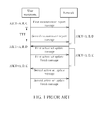
- FIG. 1 is a schematic diagram of a conventional measurement reporting.
- the UE sends a first measurement report message (triggered by the 1 c type event) to the network, to trigger a cell replacement procedure.
- the first measurement report message notifies the network to replace a cell B or C with a cell D. Assuming that the signal quality of the cell C is the weakest cell in the active set ASET, and thereby, the intention of the UE is to replace the cell C with the cell D.
- the UE may send a second measurement report message (triggered by the 1 c type event) to the network actively after the TTT/periodic reporting interval, to trigger another cell replacement procedure, wherein the second measurement report message notifies the network to replace cell B or C with a cell E.
- the UE may send the second measurement report message (reasons can be described as above) to the network. Since the network has already updated the cell information in the active set ASET, i.e. the network identifies that the cell C has been replaced with the cell D, when the network handling the second measurement report message (notifying to replace cell B or C with the cell E), the cell C has not included in the active set ASET of the network. Thus, the network may replace the cell B in the active set ASET with the cell E, causing that the cell (e.g. the cell B) with good communication quality is replaced.
- the network may replace the cell B in the active set ASET with the cell E, causing that the cell (e.g. the cell B) with good communication quality is replaced.
- the second measurement report message may cause the network to unnecessarily replace/remove the cell, impacting call service/quality.
- the cells D and E may have good signal quality/strength only in a short period, and thereby, when the UE leaves a service area of a cell A, the radio links between the UE and the cells A, D and E in the active set ASET may be released, causing the call drop.
- the network may face a race condition with the two measurement report messages, such as the first measurement report message notifying the network to replace the cell B or C with the cell D, and the second measurement report message notifying the network to replace the cell B or C with the cell E.
- the cell replacement procedure may cause a call drop since the cell C has been replaced with the cell D.
- the network in error assumes that the cells indicated in the measurement report message for the cell replacement are all in the active set. However, since the active set has been updated by the network, the cells indicated by the measurement report message may not include in the active set, causing the communication drop.
- the application aims at providing a method of handling measurement reporting in a wireless communication system and a related communication means in order to reduce the probability of a call drop.
- the claimed method of handling measurement reporting for a network maintaining an active set for storing at least a cell identity comprises receiving a measurement report message from the mobile device, wherein the measurement report message is used for notification of a cell replacement procedure and includes a first cell identity corresponding to a first cell, determining whether the first cell identity is included in the active set and whether a number of the cell identity in the active set exceeds a threshold, to generate a result, and performing the cell replacement procedure according to the result.
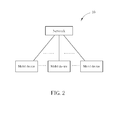
- the wireless communication system 10 can be referred as a Universal Mobile Telecommunications System (UMTS) or any other network systems, and is briefly composed of a network and a plurality of mobile devices.
- the network can be referred as a Universal Terrestrial Radio Access Network (UTRAN), and the mobile devices are referred as to user equipments (UEs), which can be devices such as mobile phones, computer systems, etc.
- UTRAN Universal Terrestrial Radio Access Network
- UEs user equipments
- the network and the UE may be seen as a transmitter or receiver according to transmission direction. For example, for uplink (UL), the UE is the transmitter and the network is the receiver, and for downlink (DL), the network is the transmitter and the UE is the receiver.
- UL uplink
- DL downlink
- the communication device 20 can be the network shown in Fig. 2 .
- the communication device 20 may include a processing means 200, a storage unit 210 and a communication interfacing unit 220.
- the processing means 200 may be a microprocessor or an application specific integrated circuit (ASIC).
- the storage unit 210 may be any data storage device that can store a program code 214, and access and execute the program code 214 by the processing means 200.
- the storage unit 210 includes but is not limited to a subscriber identity module (SIM), read-only memory (ROM), random-access memory (RAM), CD-ROMs, magnetic tapes, floppy disks, and optical data storage devices.
- SIM subscriber identity module
- ROM read-only memory
- RAM random-access memory
- CD-ROMs magnetic tapes
- floppy disks and optical data storage devices.
- the communication interfacing unit 220 is preferably a radio transceiver and can exchange wireless signals with the UE according to processing results of the processing means 200.
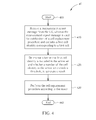
- Fig. 4 is a schematic diagram of a process 40 according to an embodiment of the present invention.
- the process 40 is utilized in a network for handling measurement reporting.
- the network maintains an active set for storing at least a cell identity which is capable of providing a service to the UE.
- the process 40 may be compiled into the program code 214 and includes the following steps:
- the network when the network receives the measurement report message, the network first determines whether the first cell identity known as the cell to be replaced in the measurement report message is included in the active set, and then determines whether the number of the cell identity in the active set exceeds a cell replacement activation threshold known as a minimum number of cells allowed in the active set.
- the network does not trigger the cell replacement procedure when determining the first cell identity is not included in the active set and the number of the cell identity in the active set exceeds the cell replacement activation threshold, and adds the first cell identity in the active set and removes no cell in the active set when the first cell identity is not included in the active set and the number of the cell identity in the active set does not exceed the cell replacement activation threshold, to avoid a race condition causing a call drop in the cell replacement procedure (e.g. the network receives two measurement report messages respectively, and two measurement report messages both indicate to replace the same cell).
- the network performs the general cell replacement procedure if the first cell identity is included in the active set and the number of the cell identity in the active set exceeds the cell replacement activation threshold.
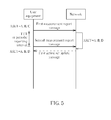
- the UE sends a first measurement report message triggered by 1 c type event to the network, wherein the first measurement report message notifies the network to replace a cell B or C with a cell D, i.e. a signal quality at a common pilot channel (CPICH) corresponding to the cell D is greater than common pilot channels corresponding to cells B, C, the detailed description can be referred to 3GPP communication protocol TS 25.331.
- the network may replace the cell C with the cell D, and sends a first active set update message used for notifying the UE.
- cell information in the active set ASET is updated with cells A, B and D.
- the network receives a second measurement report message (which meets the condition of a time-to trigger or a periodic reporting interval, the detailed description can be referred to the above, so it is not given herein) from the UE before sending the first active set update message, wherein the second measurement report message notifies the network to replace the cell B or C with a cell E.
- the network first determines whether cell identities of the cells B, C are included in the active set. The cell identity of the cell C is not included in the active set since the active set has been updated to include the identities of the cells A, B and C.
- the network determines whether the number of the cell identity in the active set exceeds the cell replacement activation threshold.
- the network adds the cell E in the active set when determining the number of the cell identity in the active set is less than the cell replacement activation threshold, and does not trigger the cell replacement procedure when determining the number of the cell identity in the active set is greater than the cell replacement activation threshold, to avoid the cells in the active set be replaced/removed with unnecessary, causing a call drop.
- the abovementioned steps of the processes including suggested steps can be realized by means that could be hardware, firmware known as a combination of a hardware device and computer instructions and data that reside as read-only software on the hardware device, or an electronic system.
- hardware can include analog, digital and mixed circuits known as microcircuit, microchip, or silicon chip.
- the electronic system can include system on chip (SOC), system in package (Sip), computer on module (COM), and the communication device 20.
- SOC system on chip
- Sip system in package
- COM computer on module
- the present invention provides a method of handling measurement reporting and an apparatus in order to reduce the probability of the call drop.
Landscapes
- Engineering & Computer Science (AREA)
- Quality & Reliability (AREA)
- Computer Networks & Wireless Communication (AREA)
- Signal Processing (AREA)
- Mobile Radio Communication Systems (AREA)
Abstract
Description
- The application relates to a method utilized in a wireless communication system and a communication device thereof, and more particularly, to a method of handling measurement reporting in a wireless communication system and a related communication device.
- A Universal Mobile Telecommunications System (UMTS) is the 3rd generation mobile communication technology. A Universal terrestrial radio access network (UTRAN) includes a core network, which is composed of a plurality of Node Bs and a plurality of base station controllers (or radio network controllers, RNCs).
- For communication quality maintenance, user equipments (UEs) may perform a measurement, to measure strength or signal noise ratio (SNR) of wireless signals. The UTRAN first has to send a measurement control message to a UE before the UE performs the measurement. The measurement control message includes a field of "measurement type", which defines the measurement type (e.g. intra-frequency measurement) that the UTRAN request the UE to perform.
- On the other hand, a measurement result is sent from the UE to the UTRAN by a measurement report message. Note that, with a field of "measurement report criteria" of the measurement control message, the UTRAN indicates which events trigger measurement report to the UE. For example, the UE may report the measurement result when a measured signal strength or SNR at a common pilot channel (CPICH) of a cell not included in an active set is greater than a CPICH of a cell included in the active set. The above condition is defined as a 1 c type event and a condition for triggering the 1 c type event is complied with a number of the cell in the active set is greater than or equal to a cell replacement activation threshold, wherein the cell replacement activation threshold is a minimum number of cells allowed in the active set, and can be configured with the measurement control message. The detailed description can be referred to in 3GPP TS 25.331, so it is not given herein. However, the 1 c type event may cause cells with poor signal strength or the SNR to be replaced.
- Note that, if the UTRAN does not update the active set (e.g. the network does not send an active set update message or the UE does not receive the active set update message) after the UE sends the measurement report message, the UE may send a new measurement report message after a predefined interval (hereinafter called time-to trigger (TTT)). On the other hand, the UE may periodically send the measurement report message to the network according to a periodic reporting interval. For example, the network sets the periodic reporting interval to be 5 seconds, thereby the UE may send measurement report message to the network every 5 seconds.
- However, in the current 3rd generation partnership project (3GPP) specification, when the network receiving the measurement report message triggered by the 1 c type event, the network may indicate the UE to remove cells with good signal strength or SNR in the active set, causing a call drop and affecting a experience of a user, the detailed reasons is as following.
- Please refer to
FIG. 1 , which is a schematic diagram of a conventional measurement reporting. InFIG. 1 , the UE sends a first measurement report message (triggered by the 1 c type event) to the network, to trigger a cell replacement procedure. The first measurement report message notifies the network to replace a cell B or C with a cell D. Assuming that the signal quality of the cell C is the weakest cell in the active set ASET, and thereby, the intention of the UE is to replace the cell C with the cell D. - According to the 3GPP specification, when the network handling the first measurement report message, but an active set update message in response to the first measurement report message has not been sent to the UE, for example, the network does not response to all measurement report messages (e.g. the network considers that the communication quality of the cell does not need to be replaced), the UE may send a second measurement report message (triggered by the 1 c type event) to the network actively after the TTT/periodic reporting interval, to trigger another cell replacement procedure, wherein the second measurement report message notifies the network to replace cell B or C with a cell E.
- Note that, before the network sends the active set update message in response to the first measurement report message and the UE has not receive the active set update message, the UE may send the second measurement report message (reasons can be described as above) to the network. Since the network has already updated the cell information in the active set ASET, i.e. the network identifies that the cell C has been replaced with the cell D, when the network handling the second measurement report message (notifying to replace cell B or C with the cell E), the cell C has not included in the active set ASET of the network. Thus, the network may replace the cell B in the active set ASET with the cell E, causing that the cell (e.g. the cell B) with good communication quality is replaced. In short, since the cell information in the active set ASET has been updated by the network, the second measurement report message may cause the network to unnecessarily replace/remove the cell, impacting call service/quality. Besides, the cells D and E may have good signal quality/strength only in a short period, and thereby, when the UE leaves a service area of a cell A, the radio links between the UE and the cells A, D and E in the active set ASET may be released, causing the call drop.
- As can be seen, the network may face a race condition with the two measurement report messages, such as the first measurement report message notifying the network to replace the cell B or C with the cell D, and the second measurement report message notifying the network to replace the cell B or C with the cell E. In this situation, the cell replacement procedure may cause a call drop since the cell C has been replaced with the cell D. On the other hand, the network in error assumes that the cells indicated in the measurement report message for the cell replacement are all in the active set. However, since the active set has been updated by the network, the cells indicated by the measurement report message may not include in the active set, causing the communication drop.
- This in mind, the application aims at providing a method of handling measurement reporting in a wireless communication system and a related communication means in order to reduce the probability of a call drop.
- This is achieved by a method and a communication device for handling measurement reporting according to claims 1 and 4. The dependent claims pertain to corresponding further developments and improvements.
- As will be seen more clearly from the detailed description following below, the claimed method of handling measurement reporting for a network maintaining an active set for storing at least a cell identity comprises receiving a measurement report message from the mobile device, wherein the measurement report message is used for notification of a cell replacement procedure and includes a first cell identity corresponding to a first cell, determining whether the first cell identity is included in the active set and whether a number of the cell identity in the active set exceeds a threshold, to generate a result, and performing the cell replacement procedure according to the result.
-
-
FIG. 1 is a schematic diagram of a conventional measurement reporting. -
FIG. 2 is a schematic diagram of a wireless communication system according to an embodiment of the present invention. -
FIG. 3 is a schematic diagram of a communication device according to an embodiment of the present invention. -
FIG. 4 is a flowchart of a process according to an embodiment of the present invention. -
FIG. 5 is a schematic diagram of a measurement reporting according to an embodiment of the present invention. - Please refer to
Fig. 2 , which is a schematic diagram of awireless communication system 10 according to an embodiment of the present invention. Thewireless communication system 10 can be referred as a Universal Mobile Telecommunications System (UMTS) or any other network systems, and is briefly composed of a network and a plurality of mobile devices. In the UMTS, the network can be referred as a Universal Terrestrial Radio Access Network (UTRAN), and the mobile devices are referred as to user equipments (UEs), which can be devices such as mobile phones, computer systems, etc. Besides, the network and the UE may be seen as a transmitter or receiver according to transmission direction. For example, for uplink (UL), the UE is the transmitter and the network is the receiver, and for downlink (DL), the network is the transmitter and the UE is the receiver. - Please refer to
Fig. 3 , which is a schematic diagram of acommunication device 20 according to an embodiment of the present invention. Thecommunication device 20 can be the network shown inFig. 2 . Thecommunication device 20 may include a processing means 200, astorage unit 210 and acommunication interfacing unit 220. The processing means 200 may be a microprocessor or an application specific integrated circuit (ASIC). Thestorage unit 210 may be any data storage device that can store aprogram code 214, and access and execute theprogram code 214 by the processing means 200. For example, thestorage unit 210 includes but is not limited to a subscriber identity module (SIM), read-only memory (ROM), random-access memory (RAM), CD-ROMs, magnetic tapes, floppy disks, and optical data storage devices. Thecommunication interfacing unit 220 is preferably a radio transceiver and can exchange wireless signals with the UE according to processing results of the processing means 200. - Please refer to
Fig. 4 , which is a schematic diagram of aprocess 40 according to an embodiment of the present invention. Theprocess 40 is utilized in a network for handling measurement reporting. The network maintains an active set for storing at least a cell identity which is capable of providing a service to the UE. Theprocess 40 may be compiled into theprogram code 214 and includes the following steps: - Step 400: Start.
- Step 410: Receive a measurement report message from the UE, wherein the measurement report message is used for notification of a cell replacement procedure and includes a first cell identity corresponding to a first cell.
- Step 420: Determine whether the first cell identity is included in the active set and whether a number of the cell identity in the active set exceeds a threshold, to generate a result.
- Step 430: Perform the cell replacement procedure according to the result.
- Step 440: End.
- According to the
process 40, when the network receives the measurement report message, the network first determines whether the first cell identity known as the cell to be replaced in the measurement report message is included in the active set, and then determines whether the number of the cell identity in the active set exceeds a cell replacement activation threshold known as a minimum number of cells allowed in the active set. The network does not trigger the cell replacement procedure when determining the first cell identity is not included in the active set and the number of the cell identity in the active set exceeds the cell replacement activation threshold, and adds the first cell identity in the active set and removes no cell in the active set when the first cell identity is not included in the active set and the number of the cell identity in the active set does not exceed the cell replacement activation threshold, to avoid a race condition causing a call drop in the cell replacement procedure (e.g. the network receives two measurement report messages respectively, and two measurement report messages both indicate to replace the same cell). The detailed description can be referred to the above, so it is not given herein. On the other hand, the network performs the general cell replacement procedure if the first cell identity is included in the active set and the number of the cell identity in the active set exceeds the cell replacement activation threshold. - Based on the concept of the
process 40, examples are as follows, and please refer toFIG. 5 . The UE sends a first measurement report message triggered by 1 c type event to the network, wherein the first measurement report message notifies the network to replace a cell B or C with a cell D, i.e. a signal quality at a common pilot channel (CPICH) corresponding to the cell D is greater than common pilot channels corresponding to cells B, C, the detailed description can be referred to 3GPP communication protocol TS 25.331. Assuming that the signal quality of the cell C is the weakest in the active set ASET, and thereby, the network may replace the cell C with the cell D, and sends a first active set update message used for notifying the UE. Meanwhile, cell information in the active set ASET is updated with cells A, B and D. However, the network receives a second measurement report message (which meets the condition of a time-to trigger or a periodic reporting interval, the detailed description can be referred to the above, so it is not given herein) from the UE before sending the first active set update message, wherein the second measurement report message notifies the network to replace the cell B or C with a cell E. In this situation, the network first determines whether cell identities of the cells B, C are included in the active set. The cell identity of the cell C is not included in the active set since the active set has been updated to include the identities of the cells A, B and C. In addition, the network determines whether the number of the cell identity in the active set exceeds the cell replacement activation threshold. The network adds the cell E in the active set when determining the number of the cell identity in the active set is less than the cell replacement activation threshold, and does not trigger the cell replacement procedure when determining the number of the cell identity in the active set is greater than the cell replacement activation threshold, to avoid the cells in the active set be replaced/removed with unnecessary, causing a call drop. - Please note that, the abovementioned steps of the processes including suggested steps can be realized by means that could be hardware, firmware known as a combination of a hardware device and computer instructions and data that reside as read-only software on the hardware device, or an electronic system. Examples of hardware can include analog, digital and mixed circuits known as microcircuit, microchip, or silicon chip. Examples of the electronic system can include system on chip (SOC), system in package (Sip), computer on module (COM), and the
communication device 20. - In conclusion, the present invention provides a method of handling measurement reporting and an apparatus in order to reduce the probability of the call drop.
Claims (6)
- A method of handling measurement reporting for a network in a wireless communication system, the network maintaining an active set for storing at least a cell identity which is capable of providing a service to a mobile device of the wireless communication system, characterized by the method comprising:receiving a measurement report message from the mobile device, wherein the measurement report message is used for notification of a cell replacement procedure and includes a first cell identity corresponding to a first cell;determining whether the first cell identity is included in the active set and whether a number of the cell identity in the active set exceeds a threshold, to generate a result; andperforming the cell replacement procedure according to the result.
- The method of claim 1, characterized in that the step of performing the cell replacement procedure according to the result comprises:not triggering the cell replacement procedure when determining the first cell identity is not included in the active set and the number of the cell identity in the active set exceeds the threshold; andadding the first cell identity in the active set and removing no cell in the active set when the first cell identity is not included in the active set and the number of the cell identity in the active set does not exceed the threshold.
- The method of claim 1, characterized in that the threshold is a minimum number of cells allowed in the active set.
- A network of a wireless communication system for handling measurement reporting, the network maintaining an active set for storing at least a cell identity which is capable of providing a service to a mobile device of the wireless communication system, characterized by the network comprising:means for receiving a measurement report message from the mobile device, wherein the measurement report message is used for notification of a cell replacement procedure and includes a first cell identity corresponding to a first cell;means for determining whether the first cell identity is included in the active set and whether a number of the cell identity in the active set exceeds a threshold, to generate a result; andmeans for performing the cell replacement procedure according to the result.
- The network of claim 4, characterized in that the means for performing the cell replacement procedure according to the result comprises:means for not triggering the cell replacement procedure when determining the first cell identity is not included in the active set and the number of the cell identity in the active set exceeds a threshold; andmeans for adding the first cell identity in the active set and removing no cell in the active set when the first cell identity is not included in the active set and the number of the cell identity in the active set does not exceed the threshold.
- The network of claim 4, characterized in that the threshold is a minimum number of cells allowed in the active set.
Applications Claiming Priority (2)
| Application Number | Priority Date | Filing Date | Title |
|---|---|---|---|
| US201161544290P | 2011-10-07 | 2011-10-07 | |
| TW100141020A TWI419503B (en) | 2011-10-07 | 2011-11-10 | Method for processing measurement return program and related communication device |
Publications (1)
| Publication Number | Publication Date |
|---|---|
| EP2579644A1 true EP2579644A1 (en) | 2013-04-10 |
Family
ID=45976082
Family Applications (1)
| Application Number | Title | Priority Date | Filing Date |
|---|---|---|---|
| EP12159424.6A Withdrawn EP2579644A1 (en) | 2011-10-07 | 2012-03-14 | Method of handling measurement reporting and related communication device |
Country Status (1)
| Country | Link |
|---|---|
| EP (1) | EP2579644A1 (en) |
Citations (1)
| Publication number | Priority date | Publication date | Assignee | Title |
|---|---|---|---|---|
| US20100273472A1 (en) * | 2009-04-22 | 2010-10-28 | Christian Drewes | Method of measurement reporting, method of handling measurement reports, cellular radio terminal and cellular radio network unit |
-
2012
- 2012-03-14 EP EP12159424.6A patent/EP2579644A1/en not_active Withdrawn
Patent Citations (1)
| Publication number | Priority date | Publication date | Assignee | Title |
|---|---|---|---|---|
| US20100273472A1 (en) * | 2009-04-22 | 2010-10-28 | Christian Drewes | Method of measurement reporting, method of handling measurement reports, cellular radio terminal and cellular radio network unit |
Non-Patent Citations (2)
| Title |
|---|
| ACER: "Improvement of event 1c race condition handling in UTRAN to avoid call drop", 3GPP DRAFT; R2-115722 EVENT 1C RACE CONDITION AVOIDANCE 25.331 REL-10 CR, 3RD GENERATION PARTNERSHIP PROJECT (3GPP), MOBILE COMPETENCE CENTRE ; 650, ROUTE DES LUCIOLES ; F-06921 SOPHIA-ANTIPOLIS CEDEX ; FRANCE, vol. RAN WG2, no. San Francisco, USA; 20111114 - 20111118, 4 November 2011 (2011-11-04), XP050563941 * |
| NOKIA: "Intra-frequency measurement events", 3GPP DRAFT; R2-99430, 3RD GENERATION PARTNERSHIP PROJECT (3GPP), MOBILE COMPETENCE CENTRE ; 650, ROUTE DES LUCIOLES ; F-06921 SOPHIA-ANTIPOLIS CEDEX ; FRANCE, vol. RAN WG2, no. Berlin; 19990602, 2 June 1999 (1999-06-02), XP050112783 * |
Similar Documents
| Publication | Publication Date | Title |
|---|---|---|
| US7822414B2 (en) | Connection failure reporting in wireless communication systems | |
| EP2685762B1 (en) | Network entity, wireless transmit/receive unit and corresponding methods for serving high speed downlink shared channel cell change | |
| US8095075B2 (en) | System and method of detecting a sleeping cell and remedying detected conditions in a telecommunication network | |
| EP2525511B1 (en) | Measurement apparatus and method for the communication of an idle mode device having low mobility in a mobile communication system | |
| US20060084432A1 (en) | Differentiated access parameters for random access channel | |
| EP3410776A1 (en) | Communication method, terminal device and network device | |
| CN103583072A (en) | Measurement gaps triggering for a multi SIM mobile device | |
| KR20190088473A (en) | Measurement method, terminal equipment and network equipment | |
| US12543069B2 (en) | User equipment and method related to reporting management | |
| JP2012257277A (en) | Load determination in wireless networks | |
| CN102638780A (en) | Method for handling an emergency packet data network connection | |
| WO2022152483A1 (en) | Random access procedure logging and reporting for wireless networks | |
| US20230038867A1 (en) | User equipment and method related to reporting management | |
| US20140235221A1 (en) | Processing method of user equipment, processing method of mobility management entity, user equipment, mobility management entity, and communications system | |
| US8588761B2 (en) | Method of handling measurement reporting and related communication device | |
| EP3264679A1 (en) | Method and system for assuring emergency call service and corresponding computer program product and computer-readable medium | |
| US8050238B2 (en) | Method and apparatus for improving network access through multi-stage signaling | |
| US20040209593A1 (en) | Wireless mobile station loss prevention in multi-network communication systems | |
| CN105681053A (en) | method for reporting access event | |
| KR20070074129A (en) | Apparatus and method for preventing call cutting in mobile communication system | |
| CN101888651B (en) | Adjustment method of switching control parameter of wireless network and related device | |
| CN103037453B (en) | Method for processing measurement report program and related communication device | |
| CN117896793B (en) | Communication method and communication device | |
| US8798668B2 (en) | Call control system and call control method | |
| CN102740370A (en) | Method, system and device for improving service quality of packet service |
Legal Events
| Date | Code | Title | Description |
|---|---|---|---|
| PUAI | Public reference made under article 153(3) epc to a published international application that has entered the european phase |
Free format text: ORIGINAL CODE: 0009012 |
|
| AK | Designated contracting states |
Kind code of ref document: A1 Designated state(s): AL AT BE BG CH CY CZ DE DK EE ES FI FR GB GR HR HU IE IS IT LI LT LU LV MC MK MT NL NO PL PT RO RS SE SI SK SM TR |
|
| AX | Request for extension of the european patent |
Extension state: BA ME |
|
| 17P | Request for examination filed |
Effective date: 20130912 |
|
| RBV | Designated contracting states (corrected) |
Designated state(s): AL AT BE BG CH CY CZ DE DK EE ES FI FR GB GR HR HU IE IS IT LI LT LU LV MC MK MT NL NO PL PT RO RS SE SI SK SM TR |
|
| 17Q | First examination report despatched |
Effective date: 20131120 |
|
| STAA | Information on the status of an ep patent application or granted ep patent |
Free format text: STATUS: THE APPLICATION IS DEEMED TO BE WITHDRAWN |
|
| 18D | Application deemed to be withdrawn |
Effective date: 20140401 |