EP2579256A1 - Audio classification system - Google Patents
Audio classification system Download PDFInfo
- Publication number
- EP2579256A1 EP2579256A1 EP12182831.3A EP12182831A EP2579256A1 EP 2579256 A1 EP2579256 A1 EP 2579256A1 EP 12182831 A EP12182831 A EP 12182831A EP 2579256 A1 EP2579256 A1 EP 2579256A1
- Authority
- EP
- European Patent Office
- Prior art keywords
- audio
- confidence
- energy
- segments
- classification
- Prior art date
- Legal status (The legal status is an assumption and is not a legal conclusion. Google has not performed a legal analysis and makes no representation as to the accuracy of the status listed.)
- Granted
Links
Images





Classifications
-
- G—PHYSICS
- G10—MUSICAL INSTRUMENTS; ACOUSTICS
- G10L—SPEECH ANALYSIS TECHNIQUES OR SPEECH SYNTHESIS; SPEECH RECOGNITION; SPEECH OR VOICE PROCESSING TECHNIQUES; SPEECH OR AUDIO CODING OR DECODING
- G10L25/00—Speech or voice analysis techniques not restricted to a single one of groups G10L15/00 - G10L21/00
- G10L25/78—Detection of presence or absence of voice signals
- G10L25/81—Detection of presence or absence of voice signals for discriminating voice from music
-
- G—PHYSICS
- G10—MUSICAL INSTRUMENTS; ACOUSTICS
- G10L—SPEECH ANALYSIS TECHNIQUES OR SPEECH SYNTHESIS; SPEECH RECOGNITION; SPEECH OR VOICE PROCESSING TECHNIQUES; SPEECH OR AUDIO CODING OR DECODING
- G10L19/00—Speech or audio signals analysis-synthesis techniques for redundancy reduction, e.g. in vocoders; Coding or decoding of speech or audio signals, using source filter models or psychoacoustic analysis
- G10L19/04—Speech or audio signals analysis-synthesis techniques for redundancy reduction, e.g. in vocoders; Coding or decoding of speech or audio signals, using source filter models or psychoacoustic analysis using predictive techniques
- G10L19/16—Vocoder architecture
- G10L19/18—Vocoders using multiple modes
- G10L19/20—Vocoders using multiple modes using sound class specific coding, hybrid encoders or object based coding
-
- G—PHYSICS
- G10—MUSICAL INSTRUMENTS; ACOUSTICS
- G10L—SPEECH ANALYSIS TECHNIQUES OR SPEECH SYNTHESIS; SPEECH RECOGNITION; SPEECH OR VOICE PROCESSING TECHNIQUES; SPEECH OR AUDIO CODING OR DECODING
- G10L25/00—Speech or voice analysis techniques not restricted to a single one of groups G10L15/00 - G10L21/00
- G10L25/48—Speech or voice analysis techniques not restricted to a single one of groups G10L15/00 - G10L21/00 specially adapted for particular use
- G10L25/51—Speech or voice analysis techniques not restricted to a single one of groups G10L15/00 - G10L21/00 specially adapted for particular use for comparison or discrimination
Definitions
- the present invention relates generally to audio signal processing. More specifically, embodiments of the present invention relate to audio classification methods and systems.
- audio classification involves extracting audio features from an audio signal and classifying with a trained classifier based on the audio features.
- Audio classification is also widely used to support other audio signal processing components.
- a speech-to-noise audio classifier is of great benefits for a noise suppression system used in a voice communication system.
- audio signal processing can implement different encoding and decoding algorithms to the signal depending on whether or not the signal is speech, music or silence.
- an audio classification system includes at least one device operable in at least two modes requiring different resources.
- the system also includes a complexity controller which determines a combination and instructs the at least one device to operate according to the combination. For each of the at least one device, the combination specifies one of the modes of the device, and the resources requirement of the combination does not exceed maximum available resources.
- the at least one device may comprise at least one of a pre-processor for adapting the audio signal to the audio classification system, a feature extractor for extracting audio features from segments of the audio signal, a classification device for classifying the segments with a trained model based on the extracted audio features, and a post processor for smoothing the audio types of the segments.
- an audio classification method includes at least one step which can be executed in at least two modes requiring different resources.
- a combination is determined.
- the at least one step is instructed to execute according to the combination.
- the combination specifies one of the modes of the step, and the resources requirement of the combination does not exceed maximum available resources.
- the at least one step comprises at least one of a pre-processing step of adapting the audio signal to the audio classification; a feature extracting step of extracting audio features from segments of the audio signal; a classifying step of classifying the segments with a trained model based on the extracted audio features; and a post processing step of smoothing the audio types of the segments.
- an audio classification system includes a feature extractor for extracting audio features from segments of the audio signal.
- the feature extractor includes a coefficient calculator and a statistics calculator.
- the coefficient calculator calculates long-term auto-correlation coefficients of the segments longer than a threshold in the audio signal based on the Wiener-Khinchin theorem, as the audio features.
- the statistics calculator calculates at least one item of statistics on the long-term auto-correlation coefficients for the audio classification, as the audio features.
- the system also includes a classification device for classifying the segments with a trained model based on the extracted audio features.
- an audio classification method is provided. Audio features are extracted from segments of the audio signal. The segments are classified with a trained model based on the extracted audio features. To extract the audio features, long-term auto-correlation coefficients of the segments longer than a threshold in the audio signal are calculated based on the Wiener-Khinchin theorem, as the audio features. At least one item of statistics on the long-term auto-correlation coefficients for the audio classification is calculated as the audio features.
- an audio classification system includes a feature extractor for extracting audio features from segments of the audio signal, and a classification device for classifying the segments with a trained model based on the extracted audio features.
- the feature extractor includes a low-pass filter for filtering the segments, where low-frequency percussive components are permitted to pass.
- the feature extractor also includes a calculator for extracting bass indicator feature by applying zero crossing rate (ZCR) on each of the segments, as the audio feature.
- ZCR zero crossing rate
- an audio classification method is provided. Audio features are extracted from segments of the audio signal. The segments are classified with a trained model based on the extracted audio features. To extract the audio features, the segments are filtered through a low-pass filter where low-frequency percussive components are permitted to pass. A bass indicator feature is extracted by applying zero crossing rate (ZCR) on each of the segments, as the audio feature.
- ZCR zero crossing rate
- an audio classification system includes a feature extractor for extracting audio features from segments of the audio signal, and a classification device for classifying the segments with a trained model based on the extracted audio features.
- the feature extractor includes a residual calculator and a statistics calculator.
- the residual calculator calculates residuals of frequency decomposition of at least level 1, level 2 and level 3 respectively by removing at least a first energy, a second energy and a third energy respectively from total energy E on a spectrum of each of frames in the segment.
- the statistics calculator calculates at least one item of statistics on the residuals of the same level for the frames in the segment. The calculated residuals and statistics are included in the audio features.
- an audio classification method is provided. Audio features are extracted from segments of the audio signal. The segments are classified with a trained model based on the extracted audio features. To extracting the audio features, for each of the segments, residuals of frequency decomposition of at least level 1, level 2 and level 3 are calculated respectively by removing at least a first energy, a second energy and a third energy respectively from total energy E on a spectrum of each of frames in the segment. For each of the segments, at least one item of statistics on the residuals of the same level for the frames in the segment is calculated. The calculated residuals and statistics are included in the audio features.
- an audio classification system includes a feature extractor for extracting audio features from segments of the audio signal, and a classification device for classifying the segments with a trained model based on the extracted audio features.
- the feature extractor includes a ratio calculator which calculates a spectrum-bin high energy ratio for each of the segments as the audio feature.
- the spectrum-bin high energy ratio is the ratio between the number of frequency bins with energy higher than a threshold and the total number of frequency bins in the spectrum of the segment.
- an audio classification method is provided. Audio features are extracted from segments of the audio signal. The segments are classified with a trained model based on the extracted audio features. To extract the audio features, a spectrum-bin high energy ratio is calculated for each of the segments as the audio feature. The spectrum-bin high energy ratio is the ratio between the number of frequency bins with energy higher than a threshold and the total number of frequency bins in the spectrum of the segment.
- an audio classification system includes a feature extractor for extracting audio features from segments of the audio signal; and a classification device for classifying the segments with a trained model based on the extracted audio features.
- the classification device includes a chain of at least two classifier stages with different priority levels, which are arranged in descending order of the priority levels.
- Each classifier stage includes a classifier which generates current class estimation based on the corresponding audio features extracted from each of the segments.
- the current class estimation includes an estimated audio type and corresponding confidence.
- Each classifier stage also includes a decision unit. If the classifier stage is located at the start of the chain, the decision unit determines whether the current confidence is higher than a confidence threshold associated with the classifier stage.
- the decision unit terminates the audio classification by outputting the current class estimation. If otherwise, the decision unit provides the current class estimation to all the later classifier stages in the chain. If the classifier stage is located in the middle of the chain, the decision unit determines whether the current confidence is higher than the confidence threshold, or whether the current class estimation and all the earlier class estimation can decide an audio type according to a first decision criterion. If it is determined that the current confidence is higher than the confidence threshold, or the class estimation can decide an audio type, the decision unit terminates the audio classification by outputting the current class estimation, or outputting the decided audio type and the corresponding confidence. Otherwise, the decision unit provides the current class estimation to all the later classifier stages in the chain.
- the decision unit terminates the audio classification by outputting the current class estimation. Or the decision unit determines whether the current class estimation and all the earlier class estimation can decide an audio type according to a second decision criterion. If it is determined that the class estimation can decide an audio type, the decision unit terminates the audio classification by outputting the decided audio type and the corresponding confidence. If otherwise, the decision unit terminates the audio classification by outputting the current class estimation.
- an audio classification method is provided. Audio features are extracted from segments of the audio signal. The segments are classified with a trained model based on the extracted audio features.
- the classifying includes a chain of at least two sub-steps with different priority levels, which are arranged in descending order of the priority levels. Each sub-step involves generating current class estimation based on the corresponding audio features extracted from each of the segments.
- the current class estimation includes an estimated audio type and corresponding confidence. If the sub-step is located at the start of the chain, the sub-step involves determining whether the current confidence is higher than a confidence threshold associated with the sub-step. If it is determined that the current confidence is higher than the confidence threshold, the sub-step involves terminating the audio classification by outputting the current class estimation.
- the sub-step involves providing the current class estimation to all the later sub-steps in the chain. If the sub-step is located in the middle of the chain, the sub-step involves determining whether the current confidence is higher than the confidence threshold, or whether the current class estimation and all the earlier class estimation can decide an audio type according to a first decision criterion. If it is determined that the current confidence is higher than the confidence threshold, or the class estimation can decide an audio type, the sub-step involves terminating the audio classification by outputting the current class estimation, or outputting the decided audio type and the corresponding confidence. If otherwise, the sub-step involves providing the current class estimation to all the later sub-steps in the chain.
- the sub-step involves terminating the audio classification by outputting the current class estimation.
- the sub-step involves determining whether the current class estimation and all the earlier class estimation can decide an audio type according to a second decision criterion. If it is determined that the class estimation can decide an audio type, the sub-step involves terminating the audio classification by outputting the decided audio type and the corresponding confidence. If otherwise, the sub-step involves terminating the audio classification by outputting the current class estimation.
- an audio classification system includes a feature extractor for extracting audio features from segments of the audio signal, a classification device for classifying the segments with a trained model based on the extracted audio features, and a post processor for smoothing the audio types of the segments.
- the post processor includes a detector which searches for two repetitive sections in the audio signal, and a smoother which smoothes the classification result by regarding the segments between the two repetitive sections as non-speech type.
- an audio classification method is provided. Audio features are extracted from segments of the audio signal. The segments are classified with a trained model based on the extracted audio features. The audio types of the segments are smoothed by searching for two repetitive sections in the audio signal, and smoothing the classification result by regarding the segments between the two repetitive sections as non-speech type.
- a computer-readable medium having computer program instructions recorded thereon When being executed by a processor, the instructions enable the processor to execute an audio classification method.
- the method includes at least one step which can be executed in at least two modes requiring different resources.
- a combination is determined.
- the at least one step is instructed to execute according to the combination.
- the combination specifies one of the modes of the step, and the resources requirement of the combination does not exceed maximum available resources.
- the at least one step includes at least one of a pre-processing step of adapting the audio signal to the audio classification, a feature extracting step of extracting audio features from segments of the audio signal, a classifying step of classifying the segments with a trained model based on the extracted audio features, and a post processing step of smoothing the audio types of the segments.
- Fig. 1 is a block diagram illustrating an example audio classification system according to an embodiment of the invention
- Fig. 2 is a flow chart illustrating an example audio classification method according to an embodiment of the present invention
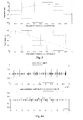
- Fig. 4A is a graph for illustrating a percussive signal and its auto-correlation coefficients
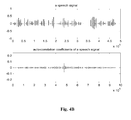
- Fig. 4B is a graph for illustrating a speech signal and its auto-correlation coefficients
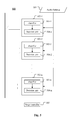
- Fig. 5 is a block diagram illustrating an example classification device according to an embodiment of the present invention.
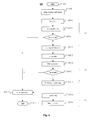
- Fig. 6 is a flow chart illustrating an example process of the classifying step according to an embodiment of the present invention.
- Fig. 7 is a block diagram illustrating an example audio classification system according to according to an embodiment of the present invention.
- Fig. 8 is a flow chart illustrating an example audio classification method according to an embodiment of the present invention.
- Fig. 9 is a block diagram illustrating an example audio classification system according to an embodiment of the invention.
- Fig. 10 is a flow chart illustrating an example audio classification method according to an embodiment of the present invention.
- Fig. 11 is a block diagram illustrating an example audio classification system according to an embodiment of the invention.
- Fig. 12 is a flow chart illustrating an example audio classification method according to an embodiment of the present invention.
- Fig. 13 is a block diagram illustrating an example audio classification system according to an embodiment of the invention.
- Fig. 14 is a flow chart illustrating an example audio classification method according to an embodiment of the present invention.
- Fig. 15 is a block diagram illustrating an example audio classification system according to an embodiment of the invention.
- Fig. 16 is a flow chart illustrating an example audio classification method according to an embodiment of the present invention.
- Fig. 17 is a block diagram illustrating an example audio classification system according to an embodiment of the invention.
- Fig. 18 is a flow chart illustrating an example audio classification method according to an embodiment of the present invention.
- Fig. 19 is a block diagram illustrating an example audio classification system according to an embodiment of the invention.
- Fig. 20 is a flow chart illustrating an example audio classification method according to an embodiment of the present invention.
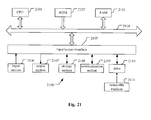
- Fig. 21 is a block diagram illustrating an exemplary system for implementing embodiments of the present invention.
- aspects of the present invention may be embodied as a system (e.g., an online digital media store, cloud computing service, streaming media service, telecommunication network, or the like), device (e.g., a cellular telephone, portable media player, personal computer, television set-top box, or digital video recorder, or any media player), method or computer program product.
- a system e.g., an online digital media store, cloud computing service, streaming media service, telecommunication network, or the like
- device e.g., a cellular telephone, portable media player, personal computer, television set-top box, or digital video recorder, or any media player
- aspects of the present invention may take the form of an entirely hardware embodiment, an entirely software embodiment (including firmware, resident software, microcode, etc.) or an embodiment combining software and hardware aspects that may all generally be referred to herein as a "circuit,” “module” or “system.”
- aspects of the present invention may take the form of a computer program product embodied in one or more computer readable medium(s) having computer readable program code embodied thereon.
- the computer readable medium may be a computer readable signal medium or a computer readable storage medium.
- a computer readable storage medium may be, for example, but not limited to, an electronic, magnetic, optical, electromagnetic, infrared, or semiconductor system, apparatus, or device, or any suitable combination of the foregoing.
- a computer readable storage medium may be any tangible medium that can contain, or store a program for use by or in connection with an instruction execution system, apparatus, or device.
- a computer readable signal medium may include a propagated data signal with computer readable program code embodied therein, for example, in baseband or as part of a carrier wave. Such a propagated signal may take any of a variety of forms, including, but not limited to, electro-magnetic, optical, or any suitable combination thereof.
- a computer readable signal medium may be any computer readable medium that is not a computer readable storage medium and that can communicate, propagate, or transport a program for use by or in connection with an instruction execution system, apparatus, or device.
- Program code embodied on a computer readable medium may be transmitted using any appropriate medium, including but not limited to wireless, wired line, optical fiber cable, RF, etc., or any suitable combination of the foregoing.
- Computer program code for carrying out operations for aspects of the present invention may be written in any combination of one or more programming languages, including an object oriented programming language such as Java, Smalltalk, C++ or the like and conventional procedural programming languages, such as the "C" programming language or similar programming languages.
- the program code may execute entirely on the user's computer, partly on the user's computer, as a stand-alone software package, partly on the user's computer and partly on a remote computer or entirely on the remote computer or server.
- the remote computer may be connected to the user's computer through any type of network, including a local area network (LAN) or a wide area network (WAN), or the connection may be made to an external computer (for example, through the Internet using an Internet Service Provider).
- LAN local area network
- WAN wide area network
- Internet Service Provider for example, AT&T, MCI, Sprint, EarthLink, MSN, GTE, etc.
- These computer program instructions may also be stored in a computer readable medium that can direct a computer, other programmable data processing apparatus, or other devices to function in a particular manner, such that the instructions stored in the computer readable medium produce an article of manufacture including instructions which implement the function/act specified in the flowchart and/or block diagram block or blocks.
- the computer program instructions may also be loaded onto a computer, other programmable data processing apparatus, or other devices to cause a series of operational steps to be performed on the computer, other programmable apparatus or other devices to produce a computer implemented process such that the instructions which execute on the computer or other programmable apparatus provide processes for implementing the functions/acts specified in the flowchart and/or block diagram block or blocks.
- Fig. 1 is a block diagram illustrating an example audio classification system 100 according to an embodiment of the invention.
- audio classification system 100 includes a complexity controller 102. To perform the audio classification on an audio signal, a number of processes such as feature extracting and classifying are involved. Accordingly, audio classification system 100 may include corresponding devices for performing these processes (collectively represented by reference number 101). Some of the devices (each called a multi-mode device) may execute the corresponding processes in different modes requiring different resources. One of such multi-mode devices, device 111, is illustrated in Fig. 1 .
- Executing a process can consume resources such as a memory, an I/O, an electrical power, and a central processing unit (CPU), etc.
- resources such as a memory, an I/O, an electrical power, and a central processing unit (CPU), etc.
- Different algorithms and configurations for performing the same function of the process but requiring different resources provide possibility that the device operates by adopting one of combinations (e.g., modes) of these different algorithms and configurations.
- Each mode may determine specific resources requirement (consumption) of the device.
- a classifying process may input audio features into a classifier to obtain a classification result. To perform this function, a classifier processing more audio features for audio classification may consume more resources than another classifier processing less audio features, if two classifiers are based on the same classification algorithm. This is an example of different configurations.
- a classifier based on a combination of multiple classification algorithms may consume more resources than another classifier based on only one of the algorithms, if two classifiers process the same audio features. This is an example of different algorithms.
- some of the multi-mode devices e.g., device 111 may be configured to be able to operate in different modes requiring different resources. Any of the multi-mode devices may have more than two modes, depending on available optional algorithms and configurations for performing the device's function.
- each of the multi-mode devices may operate in one of its modes. This mode is called as an active mode.
- Complexity controller 102 may determine a combination of active modes of the multi-mode devices, and instructs the multi-mode devices to operate according to the combination, that is, in the corresponding active mode defined in the combination. There may be various possible combinations. Complexity controller 102 may select one of them of which the resources requirement does not exceed maximum available resources.
- the maximum available resources may be fixed, or estimated by collecting information on available resources for audio classification system 100, or set by a user. The maximum available resources may be determined at time of mounting audio classification system 100 or starting audio classification system 100, or at a regular time interval, or at time of starting an audio classification task, or in response to an external command, or even at random.
- the profile includes entries representing the corresponding modes.
- Each entry may at least include a mode identification for identifying the corresponding mode and information on estimated resources requirement in the mode.
- Complexity controller 102 may calculate total resources requirement based on the estimated resources requirement in the entries corresponding to the active modes defined in each of the possible combinations, and select one combination with the total resources requirement below the maximum resources requirement.
- the multi-mode devices may include at least one of a preprocessor, a feature extractor, a classification device and a post processor.
- the pre-processor may adapt the audio signal to audio classification system 100.
- the sampling rate and quantization precision of the audio signal may be different from that required by audio classification system 100.
- the pre-processor may adjust the sampling rate and quantization precision of the audio signal to comply with the requirement of audio classification system 100.
- the pre-processor may pre-emphasize the audio signal to enhance a specific frequency range (e.g., high frequency range) of the audio signal.
- the pre-processor may be optional, even if it is not of multi-mode.
- the feature extractor may extract audio features from the segment.
- the feature extractor extracts the audio features according to requirement of the classifiers. Depending on the requirement of the classifiers, some audio features may be extracted directly from the segment, while some audio features may be audio features extracted from frames (each called as a frame-level feature) in the segment or derivatives of the frame-level features (each called as a window-level feature).
- the classification device classifies (that is, identifies the audio type of) the segment with a trained model.
- One or more active classifiers are organized with a decision making scheme in the trained model.
- the post processor may smooth the audio types of the sequence. By smoothing, un-realistic sudden changes of audio type in the sequence may be removed. For example, a single audio type of "speech" among a large number of continuous "music" is likely to be a wrong estimation, and can be smoothed (removed) by the post processor.
- the post processor may be optional, even if it is not of multi-mode.
- audio classification system 100 may be adapted to the execution environment changing over time, or migrated from one platform to another platform (e.g., from a personal computer to a portable terminal) without significant modification, thus increasing at least one of the availability, the scalability and the portability.
- Fig. 2 is a flow chart illustrating an example audio classification method 200 according to an embodiment of the present invention.
- audio classification method 200 may include corresponding steps of performing these processes (collectively represented by reference number 207). Some of the steps (each called as a multi-mode step) may execute the corresponding processes in different modes requiring different resources.
- audio classification method 200 starts from step 201.
- step 203 a combination of active modes of the multi-mode steps is determined.
- the multi-mode steps is instructed to operate according to the combination, that is, in the corresponding active mode defined in the combination.
- steps 207 the corresponding processes are executed to perform the audio classification, where the multi-mode steps are executed in the active modes defined in the combination.
- the multi-mode steps may include at least one of a pre-processing step of adapting the audio signal to the audio classification; a feature extracting step of extracting audio features from segments of the audio signal; a classifying step of classifying the segments with a trained model based on the extracted audio features; and a post processing step of smoothing the audio types of the segments.
- the pre-processing step and the post processing step may be optional, even if they are not of multi-mode.
- the multi-mode devices and steps include the pre-processor and the pre-processing step respectively.
- the modes of the pre-processor and the modes of the pre-processing step include one mode MP 1 and another mode MP 2 .
- the mode MP 1 the sampling rate of the audio signal is converted with filtering (requiring more resources).
- the mode MP 2 the sampling rate of the audio signal is converted without filtering (requiring less resources).
- a first type of the audio features are not suitable to pre-emphasis, that is to say, can reduce the classification performance if the audio signal is pre-emphasized, and a second type of the audio features are suitable to pre-emphasis, that is to say, can improve the classification performance if the audio signal is pre-emphasized.
- a time-domain pre-emphasis may be applied to the audio signal before the process of feature extracting.
- the modes of the pre-processor and the modes of the pre-processing step include one mode MP 3 and another mode MP 4 .
- the audio signal S(t) is directly pre-emphasized, and the audio signal S(t) and the pre-emphasized audio signal S '( t ) are transformed into frequency domain, so as to obtain a transformed audio signal S( ⁇ ) and a pre-emphasized transformed audio signal S'( ⁇ ) .
- the audio signal S(t) is transformed into frequency domain, so as to obtain a transformed audio signal S( ⁇ ) , and the transformed audio signal S( ⁇ ) is pre-emphasized, for example by using a high-pass filter having the same frequency response as that derived from Eq.(1), so as to obtain a pre-emphasized transformed audio signal S'( ⁇ ).
- the audio features of the first type are extracted from the transformed audio signal S( ⁇ ) not being pre-emphasized, and the audio features of the second type are extracted from the transformed audio signal S'( ⁇ ) being pre-emphasized.
- mode MP 4 because one transform is omitted, less resource is required.
- the modes MP 1 to MP 4 may be independent modes. Additionally, there may be combined modes of the modes MP 1 and MP 3 , the modes MP 1 and MP 4 , the modes MP 2 and MP 3 , and the modes MP 2 and MP 4 . In this case, the modes of the pre-processor and the modes of the pre-processing step may include at least two of the modes MP 1 to MP 4 and the combined modes.
- the first type may include at least one of sub-band energy distribution, residual of frequency decomposition, zero crossing rate (ZCR), spectrum-bin high energy ratio, bass indicator and long-term auto-correlation feature
- the second type may include at least one of spectrum fluctuation (spectrum flux) and mel-frequency cepstral coefficients (MFCC).
- the multi-mode devices include the feature extractor.
- the feature extractor may calculate long-term auto-correlation coefficients of the segments longer than a threshold in the audio signal based on the Wiener-Khinchin theorem.
- the feature extractor may also calculate at least one item of statistics on the long-term auto-correlation coefficients for the audio classification.
- the multi-mode steps include the feature extracting step.
- the feature extracting step may include calculating long-term auto-correlation coefficients of the segments longer than a threshold in the audio signal based on the Wiener-Khinchin theorem.
- the feature extracting step may also include calculating at least one item of statistics on the long-term auto-correlation coefficients for the audio classification.
- Some percussive sounds have a unique property that they are highly periodic, in particular when observed between percussive onsets or measures. This property can be exploited by long-term auto-correlation coefficients of a segment with relatively longer length, e.g. 2 seconds. According to the definition, long-term auto-correlation coefficients may exhibit significant peaks on the delay-points following the percussive onsets or measures. This property cannot be found in speech signals, as they hardly repeat themselves. As illustrated in Fig.
- periodic peaks can be found in the long-term auto-correlation coefficients of a percussive signal, in comparison with the long-term auto-correlation coefficients of a speech signal illustrated in Fig. 4B .
- the threshold may be set to ensure that this property difference can be exhibited in the long-term auto-correlation coefficients.
- the statistics is calculated to capture the characteristics in the long-term auto-correlation coefficients which can distinguish the percussive signal from the speech signal.
- the modes of the feature extractor may include one mode MF 1 and another mode MF 2 .
- the mode MF 1 the long-term auto-correlation coefficients are directly calculated from the segments.
- the mode MF 2 the segments are decimated and the long-term auto-correlation coefficients are calculated from the decimated segments. Because of the decimation, the calculation cost can be reduced, thus reducing the resources requirement.
- the long-term auto-correlation coefficients are calculated based on the Wiener-Khinchin theorem.
- the frequency coefficients are derived by a 2N-point fast-Fourier Transform (FFT):
- FFT Fast-Fourier Transform
- S k FFT s n , 2 ⁇ N
- FFT ( x ,2 N ) denotes 2 N -point FFT analysis of signal x
- the long-term auto-correlation coefficients are subsequently derived as:
- a ⁇ IFFT S k ⁇ S * k
- a ( ⁇ ) is the series of long-term auto-correlation coefficients
- S * ( k ) denotes complex conjugations of S ( k )
- IFFT ( ) represents the inverse FFT.
- the segments s ( n ) is decimated (e.g. by a factor of D, where D>10) before calculating the long-term auto-correlation coefficients, while other calculations remain the same as in the mode MF 1 .
- the complexity is significantly reduced to approximately 8.4x10 4 multiplications. In this case, the complexity is reduced to approximately 5% of the original.
- the statistics may include at least one of the following items:
- the long-term auto-correlation coefficients derived above may be normalized based on the zero-lag value to remove the effect of absolute energy, i.e. the long-term auto-correlation coefficients at zero-lag are identically 1.0. Further, the zero-lag value and nearby values (e.g. lag ⁇ 10 samples) are not considered in calculating the statistics because these values do not represent any self-repetitiveness of the signal.
- each of the segments is filtered through a low-pass filter where low-frequency percussive components are permitted to pass.
- the audio features extracted for the audio classification include a bass indicator feature obtained by applying zero crossing rate (ZCR) on the filtered segment.
- ZCR can vary significantly between voiced and un-voiced part of the speech. This can be exploited to efficiently discriminate speech from other signals.
- quasi-speech signals non-speech signals with speech-like signal characteristics, including the percussive sounds with constant tempo, as well as the rap music
- conventional ZCR is inefficient, since it exhibits similar varying property as found in speech signals. This is due to the fact that the bass-snare drumming measure structure found in many percussive clips (the low-frequency percussive components sampled from the percussive sounds) may result in similar ZCR variation as resulted from the voiced-unvoiced structure of the speech signal.
- the bass indicator feature is introduced as an indicator of the existence of bass sound.
- the low-pass filter may have a low cut-off frequency, e.g. 80Hz, such that apart from low-frequency percussive components (e.g. bass-drum), any other components (including speech) in the signal will be significantly attenuated.
- this bass indicator can demonstrate diverse properties between low-frequency percussive sounds and speech signals. This can result in efficient discrimination between quasi-speech and speech signals, since many quasi-speech signals comprise significant amount of bass components, e.g. rap music.
- the multi-mode devices may include the feature extractor.
- the feature extractor may calculate residuals of frequency decomposition of at least level 1, level 2 and level 3 respectively by removing at least a first energy, a second energy and a third energy respectively from total energy E on a spectrum of each of frames in the segment.
- the feature extractor may also calculate at least one item of statistics on the residuals of the same level for the frames in the segment.
- the multi-mode steps may include the feature extracting step.
- the feature extracting step may include, for each of the segments, calculating residuals of frequency decomposition of at least level 1, level 2 and level 3 respectively by removing at least a first energy, a second energy and a third energy respectively from total energy E on a spectrum of each of frames in the segment.
- the feature extracting step may also include, for each of the segments, calculating at least one item of statistics on the residuals of the same level for the frames in the segment.
- the calculated residuals and statistics are included in the audio features for the audio classification on the corresponding segment.
- the modes of the feature extractor and the feature extracting step may include one mode MF 3 and another mode MF 4 .
- the first energy is a total energy of highest H 1 frequency bins of the spectrum
- the second energy is the total energy of highest H 2 frequency bins of the spectrum
- the third energy is the total energy of highest H 3 frequency bins of the spectrum, where H 1 ⁇ H 2 ⁇ H 3 .
- the first energy is total energy of one or more peak areas of the spectrum
- the second energy is total energy of one or more peak areas of the spectrum, a portion of which includes the peak areas involved in the first energy
- the third energy is a total energy of one or more peak areas of the spectrum, a portion of which includes the peak areas involved in the second energy.
- the peak areas may be global or local.
- R 2 and R 3 be the residuals of level 2 and level 3, obtained by removing the highest H 2 and H 3 frequency bins in S ( ⁇ ) respectively, where H 1 ⁇ H 2 ⁇ H 3 .
- the following facts may be found (ideally) for percussive, speech and music signals:
- L is the index for the highest energy frequency bin
- W is a positive integer defining the width of the peak area, i.e. the peak area has 2 W +1 frequency bins.
- L is searched for as the index for the highest energy frequency bin within a portion of the spectrum, while other process remains the same.
- residuals later levels may be estimated by removing more peaks from the spectrum.
- the statistics may include at least one of the following items:
- the audio features extracted for the audio classification on each of the segments include a spectrum-bin high energy ratio.
- the spectrum-bin high energy ratio is the ratio between the number of frequency bins with energy higher than a threshold and the total number of frequency bins in the spectrum of the segment.
- the residual analysis described above can be replaced by a feature called spectrum-bin high energy ratio.
- the spectrum-bin high energy ratio feature is intended to approximate the performance of the residual of frequency decomposition.
- the threshold may be determined so that the performance approximates the performance of the residual of frequency decomposition.
- the threshold may be calculated as one of the following:
- the audio features may include at least two of auto-correlation coefficients, bass indicator, residual of frequency decomposition and spectrum-bin high energy ratio.
- the modes of the feature extractor and the modes of the feature extracting step may include the modes MF 1 to MF 4 as independent modes. Additionally, there may be combined modes of the modes MF 1 and MF 3 , the modes MF 1 and MF 4 , the modes MF 2 and MF 3 , and the modes MF 2 and MF 4 .
- the modes of the feature extractor and the modes of the feature extracting step may include at least two of the modes MF 1 to MF 4 and the combined modes.
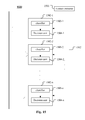
- Fig. 5 is a block diagram illustrating an example classification device 500 according to an embodiment of the invention.
- classification device 500 includes a chain of classifier stages 502-1, 502-2, ..., 502-n with different priority levels. Although more than two classifier stages are illustrated in Fig. 5 , there can be two classifier stages. In the chain, classifier stages are arranged in descending order of the priority levels. In Fig. 5 , classifier stage 502-1 is arranged at the start of the chain, with the highest priority level, classifier stage 502-2 is arranged at the secondly highest position of the chain, with the secondly highest priority level, and so on. Classifier stage 502-n is arranged at the end of the chain, with the lowest priority level.
- Classification device 500 also includes a stage controller 505.
- Stage controller 505 determines a sub-chain starting from the classifier stage with the highest priority level (e.g., classifier stage 502-1).
- the length of the sub-chain depends on the mode in the combination for classification device 500.
- the resources requirement of the modes of classification device 500 is in proportion to the length of the sub-chain. Therefore, classification device 500 may be configured with different modes corresponding to different sub-chains, up to the full chain.
- classifier stages 502-1, 502-2, ..., 502-n have the same structure and function, and therefore only classifier stages 502-1 is described in detail here.
- Classifier stage 502-1 includes a classifier 503-1 and a decision unit 504-1.
- Classifier 503-1 generates current class estimation based on the corresponding audio features 501 extracted from a segment.
- the current class estimation includes an estimated audio type and corresponding confidence.
- Decision unit 504-1 may have different functions corresponding to the position of its classifier stage in the sub-chain.
- the first function is activated. In the first function, it is determined whether the current confidence is higher than a confidence threshold associated with the classifier stage. If it is determined that the current confidence is higher than the confidence threshold, the audio classification is terminated by outputting the current class estimation. If otherwise, the current class estimation is provided to all the later classifier stages (e.g., classifier stages 502-2, ..., 502-n) in the sub-chain, and the next classifier stage in the sub-chain starts to operate.
- a confidence threshold associated with the classifier stage. If it is determined that the current confidence is higher than the confidence threshold, the audio classification is terminated by outputting the current class estimation. If otherwise, the current class estimation is provided to all the later classifier stages (e.g., classifier stages 502-2, ..., 502-n) in the sub-chain, and the next classifier stage in the sub-chain starts to operate.
- the second function is activated. In the second function, it is determined whether the current confidence is higher than the confidence threshold, or whether the current class estimation and all the earlier class estimation (e.g., classifier stage 502-1) can decide an audio type according to a first decision criterion. Because the earlier class estimation may include various decided audio type and associated confidence, various decision criteria may be adopted to decide the most possible audio type and associated deciding class estimation, based on the earlier class estimation.
- the audio classification is terminated by outputting the current class estimation, or outputting the decided audio type and the corresponding confidence. If otherwise, the current class estimation is provided to all the later classifier stages in the sub-chain, and the next classifier stage in the sub-chain starts to operate.
- the third function is activated. It is possible to terminate the audio classification by outputting the current class estimation, or determine whether the current class estimation and all the earlier class estimation can decide an audio type according to a second decision criterion. Because the earlier class estimation may include various decided audio type and associated confidence, various decision criteria may be adopted to decide the most possible audio type and associated deciding class estimation, based on the earlier class estimation.
- the audio classification is terminated by outputting the decided audio type and the corresponding confidence. If otherwise, the audio classification is terminated by outputting the current class estimation.
- the resources requirement of the classification device becomes configurable and scalable by decision paths with different length. Further, in case that an audio type with sufficient confidence is estimated, it can be prevented from going through the entire decision path, increasing the efficiency.
- the decision unit may terminate the audio classification by outputting the current class estimation.
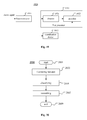
- Fig. 6 is a flow chart illustrating an example process 600 of the classifying step according to an embodiment of the present invention.
- process 600 includes a chain of sub-steps S1, S2, ..., Sn with different priority levels. Although more than two sub-steps are illustrated in Fig. 6 , there can be two sub-steps. In the chain, sub-steps are arranged in descending order of the priority levels. In Fig. 6 , sub-step S1 is arranged at the start of the chain, with the highest priority level, sub-step S2 is arranged at the secondly highest position of the chain, with the secondly highest priority level, and so on. Sub-step Sn is arranged at the end of the chain, with the lowest priority level.
- Process 600 starts from sub-step 601. At sub-step 603, a sub-chain starting from the sub-step with the highest priority level (e.g., sub-step S1) is determined.
- the length of the sub-chain depends on the mode in the combination for the classifying step.
- the resources requirement of the modes of the classifying step is in proportion to the length of the sub-chain. Therefore, the classifying step may be configured with different modes corresponding to different sub-chains, up to the full chain.
- current class estimation is generated with a classifier based on the corresponding audio features extracted from a segment.
- the current class estimation includes an estimated audio type and corresponding confidence.
- Operation 607-1 may have different functions corresponding to the position of its sub-step in the sub-chain.
- the first function is activated. In the first function, it is determined whether the current confidence is higher than a confidence threshold associated with the sub-step. If it is determined that the current confidence is higher than the confidence threshold, at operation 609-1, it is determined that the audio classification is terminated and then, at sub-step 613, the current class estimation is output. If otherwise, at operation 609-1, it is determined that the audio classification is not terminated and then, at operation 611-1, the current class estimation is provided to all the later sub-steps (e.g., sub-steps S2, ..., Sn) in the sub-chain, and the next sub-step in the sub-chain starts to operate.
- a confidence threshold associated with the sub-step.
- the second function is activated. In the second function, it is determined whether the current confidence is higher than the confidence threshold, or whether the current class estimation and all the earlier class estimation (e.g., sub-step S1) can decide an audio type according to the first decision criterion.
- the class estimation can decide an audio type
- the third function is activated. It is possible to terminate the audio classification and go to sub-step 613 to output the current class estimation, or determine whether the current class estimation and all the earlier class estimation can decide an audio type according to the second decision criterion.
- the audio classification is terminated and process 600 goes to sub-step 613 to output the decided audio type and the corresponding confidence. If otherwise, the audio classification is terminated and process 600 goes to sub-step 613 to output the current class estimation.
- the classification result is output. Then process 600 ends at sub-step 615.
- the sub-step may terminate the audio classification by outputting the current class estimation.
- the first decision criterion may comprise one of the following criteria:
- the second decision criterion may comprise one of the following criteria:
- classification device 500 and classifying step 600 if the classification algorithm adopted by one of the classifier stages and the sub-steps in the chain has higher accuracy in classifying at least one of the audio types, the classifier stage and the sub-step is specified with a higher priority level.
- each training sample for the classifier in each of the latter classifier stages and sub-step comprises at least an audio sample marked with the correct audio type, audio types to be identified by the classifier, and statistics on the confidence corresponding to each of the audio types, which is generated by all the earlier classifier stages based on the audio sample.
- training samples for the classifier in each of the latter classifier stages and sub-steps comprises at least audio sample marked with the correct audio type but miss-classified or classified with low confidence by all the earlier classifier stages.
- class estimation is generated for each of the segments in the audio signal through the audio classification, where each of the class estimation includes an estimated audio type and corresponding confidence.
- the multi-mode device and the multi-mode step include the post processor and the post processing step respectively.
- the modes of the post processor and the post processing step include one mode MO 1 and another mode MO 2 .
- the mode MO 1 the highest sum or average of the confidence corresponding to the same audio type in the window is determined, and the current audio type is replaced with the same audio type.
- the mode MO 2 the window with a relatively shorter length is adopted, and/or the highest number of the confidence corresponding to the same audio type in the window is determined, and the current audio type is replaced with the same audio type.
- the multi-mode device and the multi-mode step include the post processor and the post processing step respectively.
- the post processor is configured to search for two repetitive sections in the audio signal, and smooth the classification result by regarding the segments between the two repetitive sections as non-speech type.
- the post processing step comprises searching for two repetitive sections in the audio signal, and smoothing the classification result by regarding the segments between the two repetitive sections as non-speech type.
- the modes of the post processor and the post processing step include one mode MO 3 and another mode MO 4 .
- the mode MO 3 a relatively longer searching range is adopted.
- the mode MO 4 a relatively shorter searching range is adopted.
- the modes may include the modes MO 1 to MO 4 as independent modes. Additionally, there may be combined modes of the modes MO 1 and MO 3 , the modes MO 1 and MO 4 , the modes MO 2 and MO 3 , and the modes MO 2 and MO 4 . In this case, the modes may include at least two of the modes MO 1 to MO 4 and the combined modes.
- Fig. 7 is a block diagram illustrating an example audio classification system 700 according to an embodiment of the present invention.
- the multi-mode device comprises a feature extractor 711, a classification device 712 and a post processor 713.
- Feature extractor 711 has the same structure and function with the feature extractor described in section "Residual of frequency decomposition", and will not be described in detail here.
- Classification device 712 has the same structure and function with the classification device described in connection with Fig. 5 , and will not be described in detail here.
- Post processor 713 is configured to search for two repetitive sections in the audio signal, and smooth the classification result by regarding the segments between the two repetitive sections as non-speech type.
- the modes of the post processor include one mode where a relatively longer searching range is adopted, and another mode where a relatively shorter searching range is adopted.
- Audio classification system 700 also includes a complexity controller 702.
- Complexity controller 702 has the same function with complexity controller 102, and will not be described in detailed here. It should be noted that, because feature extractor 711, classification device 712 and post processor 713 are multi-mode devices, the combination determined by complexity controller 702 may define corresponding active modes for feature extractor 711, classification device 712 and post processor 713.
- Fig. 8 is a flow chart illustrating an example audio classification method 800 according to an embodiment of the present invention.
- audio classification method 800 starts from step 801.
- Step 803 and step 805 have the same function with step 203 and step 205, and will not be described in detail here.
- the multi-mode step comprises a feature extracting step 807, a classifying step 809 and a post processing step 811.
- Feature extracting step 807 has the same function with the feature extracting step described in section "Residual of frequency decomposition", and will not be described in detail here.
- Classifying step 809 has the same function with the classifying process described in connection with Fig. 6 , and will not be described in detail here.
- Post processing step 811 includes searching for two repetitive sections in the audio signal, and smoothing the classification result by regarding the segments between the two repetitive sections as non-speech type.
- the modes of the post processing step include one mode where a relatively longer searching range is adopted, and another mode where a relatively shorter searching range is adopted. It should be noted that, because feature extracting step 807, classifying step 809 and post processing step 811 are multi-mode steps, the combination determined at step 803 may define corresponding active modes for feature extracting step 807, classifying step 809 and post processing step 811.
- Fig. 9 is a block diagram illustrating an example audio classification system 900 according to an embodiment of the invention.
- audio classification system 900 includes a feature extractor 911 for extracting audio features from segments of the audio signal, and a classification device 912 for classifying the segments with a trained model based on the extracted audio features.
- Feature extractor 911 includes a coefficient calculator 921 and a statistics calculator 922.
- Coefficient calculator 921 calculates long-term auto-correlation coefficients of the segments longer than a threshold in the audio signal based on the Wiener-Khinchin theorem, as the audio features.
- Statistics calculator 922 calculates at least one item of statistics on the long-term auto-correlation coefficients for the audio classification, as the audio features.
- Fig. 10 is a flow chart illustrating an example audio classification method 1000 according to an embodiment of the present invention.
- audio classification method 1000 starts from step 1001. Steps 1003 to 1007 are executed to extract audio features from segments of the audio signal.
- step 1003 long-term auto-correlation coefficients of a segment longer than a threshold in the audio signal are calculated as the audio features based on the Wiener-Khinchin theorem.
- At step 1005 at least one item of statistics on the long-term auto-correlation coefficients for the audio classification is calculated as the audio feature.
- step 1007 it is determined whether there is another segment not processed yet. If yes, method 1000 returns to step 1003. If no, method 1000 proceeds to step 1009.
- the segments are classified with a trained model based on the extracted audio features.
- Method 1000 ends at step 1011.
- Some percussive sounds have a unique property that they are highly periodic, in particular when observed between percussive onsets or measures. This property can be exploited by long-term auto-correlation coefficients of a segment with relatively longer length, e.g. 2 seconds. According to the definition, long-term auto-correlation coefficients may exhibit significant peaks on the delay-points following the percussive onsets or measures. This property cannot be found in speech signals, as they hardly repeat themselves. The statistics is calculated to capture the characteristics in the long-term auto-correlation coefficients which can distinguish the percussive signal from the speech signal. Therefore, according to system 900 and method 1000, it is possible to reduce the possibility of classifying the percussive signal as the speech signal.
- the statistics may include at least one of the following items:
- the long-term auto-correlation coefficients derived above may be normalized based on the zero-lag value to remove the effect of absolute energy, i.e. the long-term auto-correlation coefficients at zero-lag are identically 1.0. Further, the zero-lag value and nearby values (e.g. lag ⁇ 10 samples) are not considered in calculating the statistics because these values do not represent any self-repetitiveness of the signal.
- Fig. 11 is a block diagram illustrating an example audio classification system 1100 according to an embodiment of the invention.
- audio classification system 1100 includes a feature extractor 1111 for extracting audio features from segments of the audio signal, and a classification device 1112 for classifying the segments with a trained model based on the extracted audio features.
- Feature extractor 1111 includes a low-pass filter 1121 and a calculator 1122.
- Low-pass filter 1121 filters the segments by permitting low-frequency percussive components to pass.
- Calculator 1122 extracts bass indicator features by applying zero crossing rate (ZCR) on the segments as the audio features.
- ZCR zero crossing rate
- Fig. 12 is a flow chart illustrating an example audio classification method 1200 according to an embodiment of the present invention.
- audio classification method 1200 starts from step 1201. Steps 1203 to 1207 are executed to extract audio features from segments of the audio signal.
- a segment is filtered through a low-pass filter where low-frequency percussive components are permitted to pass.
- a bass indicator feature is extracted by applying zero crossing rate (ZCR) on the segment, as the audio feature.
- ZCR zero crossing rate
- step 1207 it is determined whether there is another segment not processed yet. If yes, method 1200 returns to step 1203. If no, method 1200 proceeds to step 1209.
- the segments are classified with a trained model based on the extracted audio features.
- Method 1200 ends at step 1211.
- ZCR can vary significantly between voiced and un-voiced part of the speech. This can be exploited to efficiently discriminate speech from other signals.
- quasi-speech signals non-speech signals with speech-like signal characteristics, including the percussive sounds with constant tempo, as well as the rap music
- conventional ZCR is inefficient, since it exhibits similar varying property as found in speech signals. This is due to the fact that the bass-snare drumming measure structure found in many percussive clips may result in similar ZCR variation as resulted from the voiced-unvoiced structure of the speech signal.
- the bass indicator feature is introduced as an indicator of the existence of bass sound.
- the low-pass filter may have a low cut-off frequency, e.g. 80Hz, such that apart from low-frequency percussive components (e.g. bass-drum), any other components (including speech) in the signal will be significantly attenuated.
- this bass indicator can demonstrate diverse properties between low-frequency percussive sounds and speech signals. This can result in efficient discrimination between quasi-speech and speech signals, since many quasi-speech signals comprise significant amount of bass components, e.g. rap music.
- Fig. 13 is a block diagram illustrating an example audio classification system 1300 according to an embodiment of the invention.
- audio classification system 1300 includes a feature extractor 1311 for extracting audio features from segments of the audio signal, and a classification device 1312 for classifying the segments with a trained model based on the extracted audio features.
- Feature extractor 1311 includes a residual calculator 1321 and a statistics calculator 1322.
- residual calculator 1321 calculates residuals of frequency decomposition of at least level 1, level 2 and level 3 respectively by removing at least a first energy, a second energy and a third energy respectively from total energy E on a spectrum of each of frames in the segment.
- statistics calculator 1322 calculates at least one item of statistics on the residuals of a same level for the frames in the segment.
- Fig. 14 is a flow chart illustrating an example audio classification method 1400 according to an embodiment of the present invention.
- audio classification method 1400 starts from step 1401. Steps 1403 to 1407 are executed to extract audio features from segments of the audio signal.
- step 1403 residuals of frequency decomposition of at least level 1, level 2 and level 3 are calculated respectively for a segment by removing at least a first energy, a second energy and a third energy respectively from total energy E on a spectrum of each of frames in the segment.
- step 1407 it is determined whether there is another segment not processed yet. If yes, method 1400 returns to step 1403. If no, method 1400 proceeds to step 1409.
- the segments are classified with a trained model based on the extracted audio features.
- Method 1400 ends at step 1411.
- the first energy is a total energy of highest H 1 frequency bins of the spectrum
- the second energy is a total energy of highest H 2 frequency bins of the spectrum
- the third energy is a total energy of highest H 3 frequency bins of the spectrum, where H 1 ⁇ H 2 ⁇ H 3 .
- the first energy is a total energy of one or more peak areas of the spectrum
- the second energy is a total energy of one or more peak areas of the spectrum, a portion of which includes the peak areas involved in the first energy
- the third energy is a total energy of one or more peak areas of the spectrum, a portion of which includes the peak areas involved in the second energy.
- the peak areas may be global or local.
- R 2 and R 3 be the residuals of level 2 and level 3, obtained by removing the highest H 2 and H 3 frequency bins in S ( ⁇ ) respectively, where H 1 ⁇ H 2 ⁇ H 3 .
- the following facts may be found (ideally) for percussive, speech and music signals:
- L is the index for the highest energy frequency bin
- W is a positive integer defining the width of the peak area, i.e. the peak area has 2 W +1 frequency bins.
- L is searched for as the index for the highest energy frequency bin within a portion of the spectrum, while other process remains the same.
- residuals later levels may be estimated by removing more peaks from the spectrum.
- the statistics may include at least one of the following items:
- Fig. 15 is a block diagram illustrating an example audio classification system 1500 according to an embodiment of the invention.
- audio classification system 1500 includes a feature extractor 1501 for extracting audio features from segments of the audio signal, and a classification device 1502 for classifying the segments with a trained model based on the extracted audio features.
- classification device 1502 includes a chain of classifier stages 1502-1, 1502-2, ..., 1502-n with different priority levels. Although more than two classifier stages are illustrated in Fig. 15 , there can be two classifier stages. In the chain, classifier stages are arranged in descending order of the priority levels. In Fig. 15 , classifier stage 1502-1 is arranged at the start of the chain, with the highest priority level, classifier stage 1502-2 is arranged at the secondly highest position of the chain, with the secondly highest priority level, and so on. Classifier stage 1502-n is arranged at the end of the chain, with the lowest priority level.
- classifier stages 1502-1, 1502-2, ..., 1502-n have the same structure and function, and therefore only classifier stages 1502-1 is described in detail here.
- Classifier stage 1502-1 includes a classifier 1503-1 and a decision unit 1504-1.
- Classifier 1503-1 generates current class estimation based on the corresponding audio features extracted from one segment.
- the current class estimation includes an estimated audio type and corresponding confidence.
- Decision unit 1504-1 may have different functions corresponding to the position of its classifier stage in the chain.
- the first function is activated. In the first function, it is determined whether the current confidence is higher than a confidence threshold associated with the classifier stage. If it is determined that the current confidence is higher than the confidence threshold, the audio classification is terminated by outputting the current class estimation. If otherwise, the current class estimation is provided to all the later classifier stages (e.g., classifier stages 1502-2, ..., 1502-n) in the chain, and the next classifier stage in the chain starts to operate.
- the second function is activated. In the second function, it is determined whether the current confidence is higher than the confidence threshold, or whether the current class estimation and all the earlier class estimation (e.g., classifier stage 1502-1) can decide an audio type according to a first decision criterion. Because the earlier class estimation may include various decided audio type and associated confidence, various decision criteria may be adopted to decide the most possible audio type and associated deciding class estimation, based on the earlier class estimation.
- the audio classification is terminated by outputting the current class estimation, or outputting the decided audio type and the corresponding confidence. If otherwise, the current class estimation is provided to all the later classifier stages in the chain, and the next classifier stage in the chain starts to operate.
- the third function is activated. It is possible to terminate the audio classification by outputting the current class estimation, or determine whether the current class estimation and all the earlier class estimation can decide an audio type according to a second decision criterion. Because the earlier class estimation may include various decided audio type and associated confidence, various decision criteria may be adopted to decide the most possible audio type and associated deciding class estimation, based on the earlier class estimation.
- the audio classification is terminated by outputting the decided audio type and the corresponding confidence. If otherwise, the audio classification is terminated by outputting the current class estimation.
- the resources requirement of the classification device becomes configurable and scalable by decision paths with different length. Further, in case that an audio type with sufficient confidence is estimated, it can be prevented from going through the entire decision path, increasing the efficiency.
- the decision unit may terminate the audio classification by outputting the current class estimation.
- Fig. 16 is a flow chart illustrating an example audio classification method 1600 according to an embodiment of the present invention.
- audio classification method 1600 starts from step 1601.
- Step 1603 audio features are extracted from segments of the audio signal.
- the process of classification includes a chain of sub-steps S1, S2, ..., Sn with different priority levels. Although more than two sub-steps are illustrated in Fig. 16 , there can be two sub-steps. In the chain, sub-steps are arranged in descending order of the priority levels. In Fig. 16 , sub-step S1 is arranged at the start of the chain, with the highest priority level, sub-step S2 is arranged at the secondly highest position of the chain, with the secondly highest priority level, and so on. Sub-step Sn is arranged at the end of the chain, with the lowest priority level.
- current class estimation is generated with a classifier based on the corresponding audio features extracted from one segment.
- the current class estimation includes an estimated audio type and corresponding confidence.
- Operation 1607-1 may have different functions corresponding to the position of its sub-step in the chain.
- the first function is activated. In the first function, it is determined whether the current confidence is higher than a confidence threshold associated with the sub-step. If it is determined that the current confidence is higher than the confidence threshold, at operation 1609-1, it is determined that the audio classification is terminated and then, at sub-step 1613, the current class estimation is output. If otherwise, at operation 1609-1, it is determined that the audio classification is not terminated and then, at operation 1611-1, the current class estimation is provided to all the later sub-steps (e.g., sub-steps S2, ..., Sn) in the chain, and the next sub-step in the chain starts to operate.
- a confidence threshold associated with the sub-step.
- the second function is activated. In the second function, it is determined whether the current confidence is higher than the confidence threshold, or whether the current class estimation and all the earlier class estimation (e.g., sub-step S1) can decide an audio type according to the first decision criterion.
- the class estimation can decide an audio type
- the third function is activated. It is possible to terminate the audio classification and go to sub-step 1613 to output the current class estimation, or determine whether the current class estimation and all the earlier class estimation can decide an audio type according to the second decision criterion.
- the audio classification is terminated and method 1600 goes to sub-step 1613 to output the decided audio type and the corresponding confidence. If otherwise, the audio classification is terminated and method 1600 goes to sub-step 1613 to output the current class estimation.
- the classification result is output. Then method 1600 ends at sub-step 1615.
- the sub-step may terminate the audio classification by outputting the current class estimation.
- the first decision criterion may comprise one of the following criteria:
- the second decision criterion may comprise one of the following criteria:
- the classifier stage and the sub-step is specified with a higher priority level.
- each training sample for the classifier in each of the latter classifier stages and sub-step comprises at least an audio sample marked with the correct audio type, audio types to be identified by the classifier, and statistics on the confidence corresponding to each of the audio types, which is generated by all the earlier classifier stages based on the audio sample.
- training samples for the classifier in each of the latter classifier stages and sub-steps comprises at least audio sample marked with the correct audio type but miss-classified or classified with low confidence by all the earlier classifier stages.
- Fig. 17 is a block diagram illustrating an example audio classification system 1700 according to an embodiment of the invention.
- audio classification system 1700 includes a feature extractor 1711 for extracting audio features from segments of the audio signal, and a classification device 1712 for classifying the segments with a trained model based on the extracted audio features.
- Feature extractor 1711 includes a ratio calculator 1721.
- Ratio calculator 1721 calculates a spectrum-bin high energy ratio for each of the segments as the audio feature.
- the spectrum-bin high energy ratio is the ratio between the number of frequency bins with energy higher than a threshold and the total number of frequency bins in the spectrum of the segment.
- Fig. 18 is a flow chart illustrating an example audio classification method 1800 according to an embodiment of the present invention.
- audio classification method 1800 starts from step 1801. Steps 1803 and 1807 are executed to extract audio features from segments of the audio signal.
- a spectrum-bin high energy ratio is calculated for each of the segments as the audio feature.
- the spectrum-bin high energy ratio is the ratio between the number of frequency bins with energy higher than a threshold and the total number of frequency bins in the spectrum of the segment.
- step 1807 it is determined whether there is another segment not processed yet. If yes, method 1800 returns to step 1803. If no, method 1800 proceeds to step 1809.
- the segments are classified with a trained model based on the extracted audio features.
- Method 1800 ends at step 1811.
- the residual analysis described above can be replaced by a feature called spectrum-bin high energy ratio.
- the spectrum-bin high energy ratio feature is intended to approximate the performance of the residual of frequency decomposition.
- the threshold may be determined so that the performance approximates the performance of the residual of frequency decomposition.
- the threshold may be calculated as one of the following:
- Fig. 19 is a block diagram illustrating an example audio classification system 1900 according to an embodiment of the invention.
- audio classification system 1900 includes a feature extractor 1911 for extracting audio features from segments of the audio signal, a classification device 1912 for classifying the segments with a trained model based on the extracted audio features, and a post processor 1913 for smoothing the audio types of the segments.
- Post processor 1913 includes a detector 1921 and a smoother 1922.
- Detector 1921 searches for two repetitive sections in the audio signal.
- Smoother 1922 smoothes the classification result by regarding the segments between the two repetitive sections as non-speech type.
- Fig. 20 is a flow chart illustrating an example audio classification method 2000 according to an embodiment of the present invention.
- audio classification method 2000 starts from step 2001.
- audio features are extracted from segments of the audio signal.
- the segments are classified with a trained model based on the extracted audio features.
- step 2007 the audio types of the segments are smoothed.
- step 2007 includes a sub-step of searching for two repetitive sections in the audio signal, and a sub-step of smoothing the classification result by regarding the segments between the two repetitive sections as non-speech type.
- Method 2000 ends at step 2011.
- any classification results of speech in this signal segment can be considered as miss-classification and revised. For example, considering a piece of rap music with a large number of miss-classifications (as speech), if the repeating pattern search discovers a pair of repetitive sections (possibly the chorus of this rap music) located near the start and end of the music respectively, all classification results between these two sections can be revised to music so that the classification error rate is reduced significantly.
- class estimation for each of the segments in the audio signal may be generated through the classifying.
- Each of the class estimation may include an estimated audio type and corresponding confidence.
- the smoothing may be performed according to one of the following criteria:
- Fig. 21 is a block diagram illustrating an exemplary system for implementing the aspects of the present invention.
- a central processing unit (CPU) 2101 performs various processes in accordance with a program stored in a read only memory (ROM) 2102 or a program loaded from a storage section 2108 to a random access memory (RAM) 2103.
- ROM read only memory
- RAM random access memory
- data required when the CPU 2101 performs the various processes or the like is also stored as required.
- the CPU 2101, the ROM 2102 and the RAM 2103 are connected to one another via a bus 2104.
- An input / output interface 2105 is also connected to the bus 2104.
- the following components are connected to the input / output interface 2105: an input section 2106 including a keyboard, a mouse, or the like ; an output section 2107 including a display such as a cathode ray tube (CRT), a liquid crystal display (LCD), or the like, and a loudspeaker or the like; the storage section 2108 including a hard disk or the like ; and a communication section 2109 including a network interface card such as a LAN card, a modem, or the like.
- the communication section 2109 performs a communication process via the network such as the internet.
- a drive 2110 is also connected to the input / output interface 2105 as required.
- a removable medium 2111 such as a magnetic disk, an optical disk, a magneto - optical disk, a semiconductor memory, or the like, is mounted on the drive 2110 as required, so that a computer program read therefrom is installed into the storage section 2108 as required.
- the program that constitutes the software is installed from the network such as the internet or the storage medium such as the removable medium 2111.
Landscapes
- Engineering & Computer Science (AREA)
- Computational Linguistics (AREA)
- Signal Processing (AREA)
- Health & Medical Sciences (AREA)
- Audiology, Speech & Language Pathology (AREA)
- Human Computer Interaction (AREA)
- Physics & Mathematics (AREA)
- Acoustics & Sound (AREA)
- Multimedia (AREA)
- Circuit For Audible Band Transducer (AREA)
- Auxiliary Devices For Music (AREA)
Abstract
Description
- The present invention relates generally to audio signal processing. More specifically, embodiments of the present invention relate to audio classification methods and systems.
- In many applications, there is a need to identify and classify audio signals. One such classification is automatically classifying an audio signal into speech, music or silence. In general, audio classification involves extracting audio features from an audio signal and classifying with a trained classifier based on the audio features.
- Methods of audio classification have been proposed to automatically estimate the type of input audio signals so that manual labeling of audio signals can be avoided. This can be used for efficient categorization and browsing for large amount of multimedia data. Audio classification is also widely used to support other audio signal processing components. For example, a speech-to-noise audio classifier is of great benefits for a noise suppression system used in a voice communication system. As another example, in a wireless communications system apparatus, through audio classification, audio signal processing can implement different encoding and decoding algorithms to the signal depending on whether or not the signal is speech, music or silence.
- The approaches described in this section are approaches that could be pursued, but not necessarily approaches that have been previously conceived or pursued. Therefore, unless otherwise indicated, it should not be assumed that any of the approaches described in this section qualify as prior art merely by virtue of their inclusion in this section. Similarly, issues identified with respect to one or more approaches should not assume to have been recognized in any prior art on the basis of this section, unless otherwise indicated.
- According to an embodiment of the invention, an audio classification system is provided. The system includes at least one device operable in at least two modes requiring different resources. The system also includes a complexity controller which determines a combination and instructs the at least one device to operate according to the combination. For each of the at least one device, the combination specifies one of the modes of the device, and the resources requirement of the combination does not exceed maximum available resources. The at least one device may comprise at least one of a pre-processor for adapting the audio signal to the audio classification system, a feature extractor for extracting audio features from segments of the audio signal, a classification device for classifying the segments with a trained model based on the extracted audio features, and a post processor for smoothing the audio types of the segments.
- According to an embodiment of the invention, an audio classification method is provided. The method includes at least one step which can be executed in at least two modes requiring different resources. A combination is determined. The at least one step is instructed to execute according to the combination. For each of the at least one step, the combination specifies one of the modes of the step, and the resources requirement of the combination does not exceed maximum available resources. The at least one step comprises at least one of a pre-processing step of adapting the audio signal to the audio classification; a feature extracting step of extracting audio features from segments of the audio signal; a classifying step of classifying the segments with a trained model based on the extracted audio features; and a post processing step of smoothing the audio types of the segments.
- According to an embodiment of the invention, an audio classification system is provided. The system includes a feature extractor for extracting audio features from segments of the audio signal. The feature extractor includes a coefficient calculator and a statistics calculator. The coefficient calculator calculates long-term auto-correlation coefficients of the segments longer than a threshold in the audio signal based on the Wiener-Khinchin theorem, as the audio features. The statistics calculator calculates at least one item of statistics on the long-term auto-correlation coefficients for the audio classification, as the audio features. The system also includes a classification device for classifying the segments with a trained model based on the extracted audio features.
- According to an embodiment of the invention, an audio classification method is provided. Audio features are extracted from segments of the audio signal. The segments are classified with a trained model based on the extracted audio features. To extract the audio features, long-term auto-correlation coefficients of the segments longer than a threshold in the audio signal are calculated based on the Wiener-Khinchin theorem, as the audio features. At least one item of statistics on the long-term auto-correlation coefficients for the audio classification is calculated as the audio features.
- According to an embodiment of the invention, an audio classification system is provided. The system includes a feature extractor for extracting audio features from segments of the audio signal, and a classification device for classifying the segments with a trained model based on the extracted audio features. The feature extractor includes a low-pass filter for filtering the segments, where low-frequency percussive components are permitted to pass. The feature extractor also includes a calculator for extracting bass indicator feature by applying zero crossing rate (ZCR) on each of the segments, as the audio feature.
- According to an embodiment of the invention, an audio classification method is provided. Audio features are extracted from segments of the audio signal. The segments are classified with a trained model based on the extracted audio features. To extract the audio features, the segments are filtered through a low-pass filter where low-frequency percussive components are permitted to pass. A bass indicator feature is extracted by applying zero crossing rate (ZCR) on each of the segments, as the audio feature.
- According to an embodiment of the invention, an audio classification system is provided. The system includes a feature extractor for extracting audio features from segments of the audio signal, and a classification device for classifying the segments with a trained model based on the extracted audio features. The feature extractor includes a residual calculator and a statistics calculator. For each of the segments, the residual calculator calculates residuals of frequency decomposition of at least
level 1,level 2 andlevel 3 respectively by removing at least a first energy, a second energy and a third energy respectively from total energy E on a spectrum of each of frames in the segment. For each of the segments, the statistics calculator calculates at least one item of statistics on the residuals of the same level for the frames in the segment. The calculated residuals and statistics are included in the audio features. - According to an embodiment of the invention, an audio classification method is provided. Audio features are extracted from segments of the audio signal. The segments are classified with a trained model based on the extracted audio features. To extracting the audio features, for each of the segments, residuals of frequency decomposition of at least
level 1,level 2 andlevel 3 are calculated respectively by removing at least a first energy, a second energy and a third energy respectively from total energy E on a spectrum of each of frames in the segment. For each of the segments, at least one item of statistics on the residuals of the same level for the frames in the segment is calculated. The calculated residuals and statistics are included in the audio features. - According to an embodiment of the invention, an audio classification system is provided. The system includes a feature extractor for extracting audio features from segments of the audio signal, and a classification device for classifying the segments with a trained model based on the extracted audio features. The feature extractor includes a ratio calculator which calculates a spectrum-bin high energy ratio for each of the segments as the audio feature. The spectrum-bin high energy ratio is the ratio between the number of frequency bins with energy higher than a threshold and the total number of frequency bins in the spectrum of the segment.
- According to an embodiment of the invention, an audio classification method is provided. Audio features are extracted from segments of the audio signal. The segments are classified with a trained model based on the extracted audio features. To extract the audio features, a spectrum-bin high energy ratio is calculated for each of the segments as the audio feature. The spectrum-bin high energy ratio is the ratio between the number of frequency bins with energy higher than a threshold and the total number of frequency bins in the spectrum of the segment.
- According to an embodiment of the invention, an audio classification system is provided. The system includes a feature extractor for extracting audio features from segments of the audio signal; and a classification device for classifying the segments with a trained model based on the extracted audio features. The classification device includes a chain of at least two classifier stages with different priority levels, which are arranged in descending order of the priority levels. Each classifier stage includes a classifier which generates current class estimation based on the corresponding audio features extracted from each of the segments. The current class estimation includes an estimated audio type and corresponding confidence. Each classifier stage also includes a decision unit. If the classifier stage is located at the start of the chain, the decision unit determines whether the current confidence is higher than a confidence threshold associated with the classifier stage. If it is determined that the current confidence is higher than the confidence threshold, the decision unit terminates the audio classification by outputting the current class estimation. If otherwise, the decision unit provides the current class estimation to all the later classifier stages in the chain. If the classifier stage is located in the middle of the chain, the decision unit determines whether the current confidence is higher than the confidence threshold, or whether the current class estimation and all the earlier class estimation can decide an audio type according to a first decision criterion. If it is determined that the current confidence is higher than the confidence threshold, or the class estimation can decide an audio type, the decision unit terminates the audio classification by outputting the current class estimation, or outputting the decided audio type and the corresponding confidence. Otherwise, the decision unit provides the current class estimation to all the later classifier stages in the chain. If the classifier stage is located at the end of the chain, the decision unit terminates the audio classification by outputting the current class estimation. Or the decision unit determines whether the current class estimation and all the earlier class estimation can decide an audio type according to a second decision criterion. If it is determined that the class estimation can decide an audio type, the decision unit terminates the audio classification by outputting the decided audio type and the corresponding confidence. If otherwise, the decision unit terminates the audio classification by outputting the current class estimation.
- According to an embodiment of the invention, an audio classification method is provided. Audio features are extracted from segments of the audio signal. The segments are classified with a trained model based on the extracted audio features. The classifying includes a chain of at least two sub-steps with different priority levels, which are arranged in descending order of the priority levels. Each sub-step involves generating current class estimation based on the corresponding audio features extracted from each of the segments. The current class estimation includes an estimated audio type and corresponding confidence. If the sub-step is located at the start of the chain, the sub-step involves determining whether the current confidence is higher than a confidence threshold associated with the sub-step. If it is determined that the current confidence is higher than the confidence threshold, the sub-step involves terminating the audio classification by outputting the current class estimation. If otherwise, the sub-step involves providing the current class estimation to all the later sub-steps in the chain. If the sub-step is located in the middle of the chain, the sub-step involves determining whether the current confidence is higher than the confidence threshold, or whether the current class estimation and all the earlier class estimation can decide an audio type according to a first decision criterion. If it is determined that the current confidence is higher than the confidence threshold, or the class estimation can decide an audio type, the sub-step involves terminating the audio classification by outputting the current class estimation, or outputting the decided audio type and the corresponding confidence. If otherwise, the sub-step involves providing the current class estimation to all the later sub-steps in the chain. If the sub-step is located at the end of the chain, the sub-step involves terminating the audio classification by outputting the current class estimation. Or the sub-step involves determining whether the current class estimation and all the earlier class estimation can decide an audio type according to a second decision criterion. If it is determined that the class estimation can decide an audio type, the sub-step involves terminating the audio classification by outputting the decided audio type and the corresponding confidence. If otherwise, the sub-step involves terminating the audio classification by outputting the current class estimation.
- According to an embodiment of the invention, an audio classification system is provided. The system includes a feature extractor for extracting audio features from segments of the audio signal, a classification device for classifying the segments with a trained model based on the extracted audio features, and a post processor for smoothing the audio types of the segments. The post processor includes a detector which searches for two repetitive sections in the audio signal, and a smoother which smoothes the classification result by regarding the segments between the two repetitive sections as non-speech type.
- According to an embodiment of the invention, an audio classification method is provided. Audio features are extracted from segments of the audio signal. The segments are classified with a trained model based on the extracted audio features. The audio types of the segments are smoothed by searching for two repetitive sections in the audio signal, and smoothing the classification result by regarding the segments between the two repetitive sections as non-speech type.
- According to an embodiment of the invention, a computer-readable medium having computer program instructions recorded thereon is provided. When being executed by a processor, the instructions enable the processor to execute an audio classification method. The method includes at least one step which can be executed in at least two modes requiring different resources. A combination is determined. The at least one step is instructed to execute according to the combination. For each of the at least one step, the combination specifies one of the modes of the step, and the resources requirement of the combination does not exceed maximum available resources. The at least one step includes at least one of a pre-processing step of adapting the audio signal to the audio classification, a feature extracting step of extracting audio features from segments of the audio signal, a classifying step of classifying the segments with a trained model based on the extracted audio features, and a post processing step of smoothing the audio types of the segments.
- Further features and advantages of the invention, as well as the structure and operation of various embodiments of the invention, are described in detail below with reference to the accompanying drawings. It is noted that the invention is not limited to the specific embodiments described herein. Such embodiments are presented herein for illustrative purposes only. Additional embodiments will be apparent to persons skilled in the relevant art(s) based on the teachings contained herein.
- The present invention is illustrated by way of example, and not by way of limitation, in the figures of the accompanying drawings and in which like reference numerals refer to similar elements and in which:
-
Fig. 1 is a block diagram illustrating an example audio classification system according to an embodiment of the invention; -
Fig. 2 is a flow chart illustrating an example audio classification method according to an embodiment of the present invention; -
Fig. 3 is a graph for illustrating the frequency response of an example high-pass filter which is equivalent to the time-domain pre-emphasis expressed by Eq.(1) with β = 0.98; -
Fig. 4A is a graph for illustrating a percussive signal and its auto-correlation coefficients; -
Fig. 4B is a graph for illustrating a speech signal and its auto-correlation coefficients; -
Fig. 5 is a block diagram illustrating an example classification device according to an embodiment of the present invention; -
Fig. 6 is a flow chart illustrating an example process of the classifying step according to an embodiment of the present invention; -
Fig. 7 is a block diagram illustrating an example audio classification system according to according to an embodiment of the present invention; -
Fig. 8 is a flow chart illustrating an example audio classification method according to an embodiment of the present invention; -
Fig. 9 is a block diagram illustrating an example audio classification system according to an embodiment of the invention; -
Fig. 10 is a flow chart illustrating an example audio classification method according to an embodiment of the present invention; -
Fig. 11 is a block diagram illustrating an example audio classification system according to an embodiment of the invention; -
Fig. 12 is a flow chart illustrating an example audio classification method according to an embodiment of the present invention; -
Fig. 13 is a block diagram illustrating an example audio classification system according to an embodiment of the invention; -
Fig. 14 is a flow chart illustrating an example audio classification method according to an embodiment of the present invention; -
Fig. 15 is a block diagram illustrating an example audio classification system according to an embodiment of the invention; -
Fig. 16 is a flow chart illustrating an example audio classification method according to an embodiment of the present invention; -
Fig. 17 is a block diagram illustrating an example audio classification system according to an embodiment of the invention; -
Fig. 18 is a flow chart illustrating an example audio classification method according to an embodiment of the present invention; -
Fig. 19 is a block diagram illustrating an example audio classification system according to an embodiment of the invention; -
Fig. 20 is a flow chart illustrating an example audio classification method according to an embodiment of the present invention; and -
Fig. 21 is a block diagram illustrating an exemplary system for implementing embodiments of the present invention. - The embodiments of the present invention are below described by referring to the drawings. It is to be noted that, for purpose of clarity, representations and descriptions about those components and processes known by those skilled in the art but not necessary to understand the present invention are omitted in the drawings and the description.
- As will be appreciated by one skilled in the art, aspects of the present invention may be embodied as a system (e.g., an online digital media store, cloud computing service, streaming media service, telecommunication network, or the like), device (e.g., a cellular telephone, portable media player, personal computer, television set-top box, or digital video recorder, or any media player), method or computer program product. Accordingly, aspects of the present invention may take the form of an entirely hardware embodiment, an entirely software embodiment (including firmware, resident software, microcode, etc.) or an embodiment combining software and hardware aspects that may all generally be referred to herein as a "circuit," "module" or "system." Furthermore, aspects of the present invention may take the form of a computer program product embodied in one or more computer readable medium(s) having computer readable program code embodied thereon.
- Any combination of one or more computer readable medium(s) may be utilized. The computer readable medium may be a computer readable signal medium or a computer readable storage medium. A computer readable storage medium may be, for example, but not limited to, an electronic, magnetic, optical, electromagnetic, infrared, or semiconductor system, apparatus, or device, or any suitable combination of the foregoing. More specific examples (a non-exhaustive list) of the computer readable storage medium would include the following: an electrical connection having one or more wires, a portable computer diskette, a hard disk, a random access memory (RAM), a read-only memory (ROM), an erasable programmable read-only memory (EPROM or Flash memory), an optical fiber, a portable compact disc read-only memory (CD-ROM), an optical storage device, a magnetic storage device, or any suitable combination of the foregoing. In the context of this document, a computer readable storage medium may be any tangible medium that can contain, or store a program for use by or in connection with an instruction execution system, apparatus, or device.
- A computer readable signal medium may include a propagated data signal with computer readable program code embodied therein, for example, in baseband or as part of a carrier wave. Such a propagated signal may take any of a variety of forms, including, but not limited to, electro-magnetic, optical, or any suitable combination thereof.
- A computer readable signal medium may be any computer readable medium that is not a computer readable storage medium and that can communicate, propagate, or transport a program for use by or in connection with an instruction execution system, apparatus, or device.
- Program code embodied on a computer readable medium may be transmitted using any appropriate medium, including but not limited to wireless, wired line, optical fiber cable, RF, etc., or any suitable combination of the foregoing.
- Computer program code for carrying out operations for aspects of the present invention may be written in any combination of one or more programming languages, including an object oriented programming language such as Java, Smalltalk, C++ or the like and conventional procedural programming languages, such as the "C" programming language or similar programming languages. The program code may execute entirely on the user's computer, partly on the user's computer, as a stand-alone software package, partly on the user's computer and partly on a remote computer or entirely on the remote computer or server. In the latter scenario, the remote computer may be connected to the user's computer through any type of network, including a local area network (LAN) or a wide area network (WAN), or the connection may be made to an external computer (for example, through the Internet using an Internet Service Provider).
- Aspects of the present invention are described below with reference to flowchart illustrations and/or block diagrams of methods, apparatus (systems) and computer program products according to embodiments of the invention. It will be understood that each block of the flowchart illustrations and/or block diagrams, and combinations of blocks in the flowchart illustrations and/or block diagrams, can be implemented by computer program instructions. These computer program instructions may be provided to a processor of a general purpose computer, special purpose computer, or other programmable data processing apparatus to produce a machine, such that the instructions, which execute via the processor of the computer or other programmable data processing apparatus, create means for implementing the functions/acts specified in the flowchart and/or block diagram block or blocks.
- These computer program instructions may also be stored in a computer readable medium that can direct a computer, other programmable data processing apparatus, or other devices to function in a particular manner, such that the instructions stored in the computer readable medium produce an article of manufacture including instructions which implement the function/act specified in the flowchart and/or block diagram block or blocks.
- The computer program instructions may also be loaded onto a computer, other programmable data processing apparatus, or other devices to cause a series of operational steps to be performed on the computer, other programmable apparatus or other devices to produce a computer implemented process such that the instructions which execute on the computer or other programmable apparatus provide processes for implementing the functions/acts specified in the flowchart and/or block diagram block or blocks.
-
Fig. 1 is a block diagram illustrating an exampleaudio classification system 100 according to an embodiment of the invention. - As illustrated in
Fig. 1 ,audio classification system 100 includes acomplexity controller 102. To perform the audio classification on an audio signal, a number of processes such as feature extracting and classifying are involved. Accordingly,audio classification system 100 may include corresponding devices for performing these processes (collectively represented by reference number 101). Some of the devices (each called a multi-mode device) may execute the corresponding processes in different modes requiring different resources. One of such multi-mode devices, device 111, is illustrated inFig. 1 . - Executing a process can consume resources such as a memory, an I/O, an electrical power, and a central processing unit (CPU), etc. Different algorithms and configurations for performing the same function of the process but requiring different resources provide possibility that the device operates by adopting one of combinations (e.g., modes) of these different algorithms and configurations. Each mode may determine specific resources requirement (consumption) of the device. For example, a classifying process may input audio features into a classifier to obtain a classification result. To perform this function, a classifier processing more audio features for audio classification may consume more resources than another classifier processing less audio features, if two classifiers are based on the same classification algorithm. This is an example of different configurations. Also, to perform this function, a classifier based on a combination of multiple classification algorithms may consume more resources than another classifier based on only one of the algorithms, if two classifiers process the same audio features. This is an example of different algorithms. In this way, some of the multi-mode devices (e.g., device 111) may be configured to be able to operate in different modes requiring different resources. Any of the multi-mode devices may have more than two modes, depending on available optional algorithms and configurations for performing the device's function.
- In performing the audio classification, each of the multi-mode devices may operate in one of its modes. This mode is called as an active mode.
Complexity controller 102 may determine a combination of active modes of the multi-mode devices, and instructs the multi-mode devices to operate according to the combination, that is, in the corresponding active mode defined in the combination. There may be various possible combinations.Complexity controller 102 may select one of them of which the resources requirement does not exceed maximum available resources. The maximum available resources may be fixed, or estimated by collecting information on available resources foraudio classification system 100, or set by a user. The maximum available resources may be determined at time of mountingaudio classification system 100 or startingaudio classification system 100, or at a regular time interval, or at time of starting an audio classification task, or in response to an external command, or even at random. - In an example, it is possible to establish a profile for each of the multi-mode devices. The profile includes entries representing the corresponding modes. Each entry may at least include a mode identification for identifying the corresponding mode and information on estimated resources requirement in the mode.
Complexity controller 102 may calculate total resources requirement based on the estimated resources requirement in the entries corresponding to the active modes defined in each of the possible combinations, and select one combination with the total resources requirement below the maximum resources requirement. - Depending on specific implementations, the multi-mode devices may include at least one of a preprocessor, a feature extractor, a classification device and a post processor.
- The pre-processor may adapt the audio signal to
audio classification system 100. The sampling rate and quantization precision of the audio signal may be different from that required byaudio classification system 100. In this case, the pre-processor may adjust the sampling rate and quantization precision of the audio signal to comply with the requirement ofaudio classification system 100. Additionally or alternatively, the pre-processor may pre-emphasize the audio signal to enhance a specific frequency range (e.g., high frequency range) of the audio signal. Inaudio classification system 100, the pre-processor may be optional, even if it is not of multi-mode. - To identify the audio type of a segment of the audio signal, the feature extractor may extract audio features from the segment. There may be one or more active classifiers in the classification device. Each classifier needs a number of audio features for performing its classification operation on the segment. The feature extractor extracts the audio features according to requirement of the classifiers. Depending on the requirement of the classifiers, some audio features may be extracted directly from the segment, while some audio features may be audio features extracted from frames (each called as a frame-level feature) in the segment or derivatives of the frame-level features (each called as a window-level feature).
- Based on the audio features extracted from the segment, the classification device classifies (that is, identifies the audio type of) the segment with a trained model. One or more active classifiers are organized with a decision making scheme in the trained model.
- By performing the audio classification on the segments of the audio signal, a sequence of the audio types can be generated. The post processor may smooth the audio types of the sequence. By smoothing, un-realistic sudden changes of audio type in the sequence may be removed. For example, a single audio type of "speech" among a large number of continuous "music" is likely to be a wrong estimation, and can be smoothed (removed) by the post processor. In
audio classification system 100, the post processor may be optional, even if it is not of multi-mode. - Because the resources requirement of
audio classification system 100 can be adjusted by choosing an appropriate combination of active modes,audio classification system 100 may be adapted to the execution environment changing over time, or migrated from one platform to another platform (e.g., from a personal computer to a portable terminal) without significant modification, thus increasing at least one of the availability, the scalability and the portability. -
Fig. 2 is a flow chart illustrating an exampleaudio classification method 200 according to an embodiment of the present invention. - To perform the audio classification on an audio signal, a number of processes such as feature extracting and classifying are involved. Accordingly,
audio classification method 200 may include corresponding steps of performing these processes (collectively represented by reference number 207). Some of the steps (each called as a multi-mode step) may execute the corresponding processes in different modes requiring different resources. - As illustrated in
Fig. 2 ,audio classification method 200 starts fromstep 201. Atstep 203, a combination of active modes of the multi-mode steps is determined. - At
step 205, the multi-mode steps is instructed to operate according to the combination, that is, in the corresponding active mode defined in the combination. - At
steps 207, the corresponding processes are executed to perform the audio classification, where the multi-mode steps are executed in the active modes defined in the combination. - At
step 209,audio classification method 200 ends. - Depending on specific implementations, the multi-mode steps may include at least one of a pre-processing step of adapting the audio signal to the audio classification; a feature extracting step of extracting audio features from segments of the audio signal; a classifying step of classifying the segments with a trained model based on the extracted audio features; and a post processing step of smoothing the audio types of the segments. The pre-processing step and the post processing step may be optional, even if they are not of multi-mode.
- In further embodiments of
audio classification system 100 andaudio classification method 200, the multi-mode devices and steps include the pre-processor and the pre-processing step respectively. The modes of the pre-processor and the modes of the pre-processing step include one mode MP 1 and another mode MP 2. In the mode MP 1 , the sampling rate of the audio signal is converted with filtering (requiring more resources). In the mode MP 2, the sampling rate of the audio signal is converted without filtering (requiring less resources). - Among the audio features extracted for the audio classification, a first type of the audio features are not suitable to pre-emphasis, that is to say, can reduce the classification performance if the audio signal is pre-emphasized, and a second type of the audio features are suitable to pre-emphasis, that is to say, can improve the classification performance if the audio signal is pre-emphasized.
- As an example of pre-emphasizing, a time-domain pre-emphasis may be applied to the audio signal before the process of feature extracting. This pre-emphasis can be expressed as:

where n is the temporal index, s(n) and s'(n) are audio signals before and after the pre-emphasis respectively, and β is the pre-emphasis factor usually set to a value close to 1, e.g. 0.98. - Additionally or alternatively, the modes of the pre-processor and the modes of the pre-processing step include one mode MP 3 and another mode MP 4 . In the mode MP 3 , the audio signal S(t) is directly pre-emphasized, and the audio signal S(t) and the pre-emphasized audio signal S'(t) are transformed into frequency domain, so as to obtain a transformed audio signal S(ω) and a pre-emphasized transformed audio signal S'(ω). In the mode MP 4 , the audio signal S(t) is transformed into frequency domain, so as to obtain a transformed audio signal S(ω), and the transformed audio signal S(ω) is pre-emphasized, for example by using a high-pass filter having the same frequency response as that derived from Eq.(1), so as to obtain a pre-emphasized transformed audio signal S'(ω).
Fig. 3 is a graph for illustrating the frequency response of an example high-pass filter which is equivalent to the time-domain pre-emphasis expressed by Eq.(1) with β = 0.98. - In this case, in the process of extracting the audio features, the audio features of the first type are extracted from the transformed audio signal S(ω) not being pre-emphasized, and the audio features of the second type are extracted from the transformed audio signal S'(ω) being pre-emphasized. In mode MP 4, because one transform is omitted, less resource is required.
- In case that the pre-processor and the pre-processing step have the functions of adapting and pre-emphasizing, the modes MP 1 to MP 4 may be independent modes. Additionally, there may be combined modes of the modes MP 1 and MP 3 , the modes MP 1 and MP 4 , the modes MP 2 and MP 3 , and the modes MP 2 and MP 4 . In this case, the modes of the pre-processor and the modes of the pre-processing step may include at least two of the modes MP 1 to MP 4 and the combined modes.
- In an example, the first type may include at least one of sub-band energy distribution, residual of frequency decomposition, zero crossing rate (ZCR), spectrum-bin high energy ratio, bass indicator and long-term auto-correlation feature, and the second type may include at least one of spectrum fluctuation (spectrum flux) and mel-frequency cepstral coefficients (MFCC).
- In a further embodiment of
audio classification system 100, the multi-mode devices include the feature extractor. The feature extractor may calculate long-term auto-correlation coefficients of the segments longer than a threshold in the audio signal based on the Wiener-Khinchin theorem. The feature extractor may also calculate at least one item of statistics on the long-term auto-correlation coefficients for the audio classification. - In a further embodiment of
audio classification method 200, the multi-mode steps include the feature extracting step. The feature extracting step may include calculating long-term auto-correlation coefficients of the segments longer than a threshold in the audio signal based on the Wiener-Khinchin theorem. The feature extracting step may also include calculating at least one item of statistics on the long-term auto-correlation coefficients for the audio classification. - Some percussive sounds, especially those with relatively constant tempo, have a unique property that they are highly periodic, in particular when observed between percussive onsets or measures. This property can be exploited by long-term auto-correlation coefficients of a segment with relatively longer length, e.g. 2 seconds. According to the definition, long-term auto-correlation coefficients may exhibit significant peaks on the delay-points following the percussive onsets or measures. This property cannot be found in speech signals, as they hardly repeat themselves. As illustrated in
Fig. 4A , periodic peaks can be found in the long-term auto-correlation coefficients of a percussive signal, in comparison with the long-term auto-correlation coefficients of a speech signal illustrated inFig. 4B . The threshold may be set to ensure that this property difference can be exhibited in the long-term auto-correlation coefficients. The statistics is calculated to capture the characteristics in the long-term auto-correlation coefficients which can distinguish the percussive signal from the speech signal. - In this case, the modes of the feature extractor may include one mode MF 1 and another mode MF 2 . In the mode MF 1 , the long-term auto-correlation coefficients are directly calculated from the segments. In the mode MF 2, the segments are decimated and the long-term auto-correlation coefficients are calculated from the decimated segments. Because of the decimation, the calculation cost can be reduced, thus reducing the resources requirement.
- In an example, the segments have a number N of samples s(n), n= 1, 2, ..., N. In the mode MF 1 , the long-term auto-correlation coefficients are calculated based on the Wiener-Khinchin theorem.
- According to the Wiener-Khinchin theorem, the frequency coefficients are derived by a 2N-point fast-Fourier Transform (FFT):

where FFT(x,2N) denotes 2N-point FFT analysis of signal x, and the long-term auto-correlation coefficients are subsequently derived as:
where A(τ) is the series of long-term auto-correlation coefficients, S *(k) denotes complex conjugations of S(k) and IFFT( ) represents the inverse FFT. - In the mode MF 2, the segments s(n) is decimated (e.g. by a factor of D, where D>10) before calculating the long-term auto-correlation coefficients, while other calculations remain the same as in the mode MF 1 .
- For example, if one segment has 32000 samples, which should be zero-padded to 2×32768 samples for efficient FFT, the process in the mode MF 1 requires approximately 1.7×10⁶ multiplications comprised of:
- 1) 2×2×32768×log(2×32768) multiplications used for FFT and IFFT; and
- 2) 4×2×32768 multiplications used for multiplication between frequency coefficients and conjugated coefficients.
- If the segments are decimated by a factor of 16 to 2048 samples, the complexity is significantly reduced to approximately 8.4x10⁴ multiplications. In this case, the complexity is reduced to approximately 5% of the original.
- In an example, the statistics may include at least one of the following items:
- 1) mean: an average of all the long-term auto-correlation coefficients;
- 2) variance: a standard deviation value of all the long-term auto-correlation coefficients;
- 3) High_Average: an average of the long-term auto-correlation coefficients that satisfy at least one of the following conditions:
- a) greater than a threshold; and
- b) within a predetermined proportion of long-term auto-correlation coefficients not lower than all the other long-term auto-correlation coefficients. For example, if all the long-term auto-correlation coefficients are represented as c 1, c 2, ..., c n arranged in descending order, the predetermined proportion of long-term auto-correlation coefficients include c 1, c 2, ..., c m where m/n equals to the predetermined proportion;
- 4) High_Value_Percentage: a ratio between the number of the long-term auto-correlation coefficients involved in the High_Average and the total number of long-term auto-correlation coefficients;
- 5) Low_Average: an average of the long-term auto-correlation coefficients that satisfy at least one of the following conditions:
- c) smaller than a threshold; and
- d) within a predetermined proportion of long-term auto-correlation coefficients not higher than all the other long-term auto-correlation coefficients. For example, if all the long-term auto-correlation coefficients are represented as c 1, c 2, ..., c n arranged in ascending order, the predetermined proportion of long-term auto-correlation coefficients include c 1, c 2, ..., c m where m/n equals to the predetermined proportion;
- 6) Low_Value_Percentage: a ratio between the number of the long-term auto-correlation coefficients involved in the Low_Average and the total number of long-term auto-correlation coefficients; and
- 7) Contrast: a ratio between High_Average and Low_Average.
- As a further improvement, the long-term auto-correlation coefficients derived above may be normalized based on the zero-lag value to remove the effect of absolute energy, i.e. the long-term auto-correlation coefficients at zero-lag are identically 1.0. Further, the zero-lag value and nearby values (e.g. lag < 10 samples) are not considered in calculating the statistics because these values do not represent any self-repetitiveness of the signal.
- In further embodiments of
audio classification system 100 andaudio classification method 200, each of the segments is filtered through a low-pass filter where low-frequency percussive components are permitted to pass. The audio features extracted for the audio classification include a bass indicator feature obtained by applying zero crossing rate (ZCR) on the filtered segment. - ZCR can vary significantly between voiced and un-voiced part of the speech. This can be exploited to efficiently discriminate speech from other signals. However, to classify quasi-speech signals (non-speech signals with speech-like signal characteristics, including the percussive sounds with constant tempo, as well as the rap music), especially the percussive sounds, conventional ZCR is inefficient, since it exhibits similar varying property as found in speech signals. This is due to the fact that the bass-snare drumming measure structure found in many percussive clips (the low-frequency percussive components sampled from the percussive sounds) may result in similar ZCR variation as resulted from the voiced-unvoiced structure of the speech signal.
- In the present embodiments, the bass indicator feature is introduced as an indicator of the existence of bass sound. The low-pass filter may have a low cut-off frequency, e.g. 80Hz, such that apart from low-frequency percussive components (e.g. bass-drum), any other components (including speech) in the signal will be significantly attenuated. As a result, this bass indicator can demonstrate diverse properties between low-frequency percussive sounds and speech signals. This can result in efficient discrimination between quasi-speech and speech signals, since many quasi-speech signals comprise significant amount of bass components, e.g. rap music.
- In a further embodiment of
audio classification system 100, the multi-mode devices may include the feature extractor. For each of the segments, the feature extractor may calculate residuals of frequency decomposition of at leastlevel 1,level 2 andlevel 3 respectively by removing at least a first energy, a second energy and a third energy respectively from total energy E on a spectrum of each of frames in the segment. For each of the segments, the feature extractor may also calculate at least one item of statistics on the residuals of the same level for the frames in the segment. - In a further embodiment of
audio classification method 200, the multi-mode steps may include the feature extracting step. The feature extracting step may include, for each of the segments, calculating residuals of frequency decomposition of at leastlevel 1,level 2 andlevel 3 respectively by removing at least a first energy, a second energy and a third energy respectively from total energy E on a spectrum of each of frames in the segment. The feature extracting step may also include, for each of the segments, calculating at least one item of statistics on the residuals of the same level for the frames in the segment. - The calculated residuals and statistics are included in the audio features for the audio classification on the corresponding segment.
- With frequency decomposition, for some types of percussive signals (e.g. a bass-drumming at a constant tempo), less frequency components can approximate such percussive sounds in comparison with speech signals. The reason is that these percussive signals in natural have less complex frequency composition than speech signals and other types of music signals. Therefore, by removing different number of significant frequency components (e.g., components with highest energy), the residual (remaining energy) of such percussive sounds can exhibit considerably different property when compared to that of speech and other music signals, thus improving the classification performance.
- The modes of the feature extractor and the feature extracting step may include one mode MF 3 and another mode MF 4 .
- In the mode MF 3 , the first energy is a total energy of highest H 1 frequency bins of the spectrum, the second energy is the total energy of highest H 2 frequency bins of the spectrum, and the third energy is the total energy of highest H 3 frequency bins of the spectrum, where H 1<H 2<H 3 .
- In the mode MF 4 , the first energy is total energy of one or more peak areas of the spectrum, the second energy is total energy of one or more peak areas of the spectrum, a portion of which includes the peak areas involved in the first energy, and the third energy is a total energy of one or more peak areas of the spectrum, a portion of which includes the peak areas involved in the second energy. The peak areas may be global or local.
- In an example implementation, let S(k) be the spectrum coefficient series of a segment with power-spectrum energy E, i.e.

where K is the total number of the frequency bins. - In the mode MF 3 , the residual R 1 of
level 1 is estimated by the remaining energy after removing the highest H 1 frequency bins from S(k). This can be expressed as:
where γ = L 1 , L 2 ... L H1 are the indices for the highest H 1 frequency bins. - Similarly, let R 2 and R 3 be the residuals of
level 2 andlevel 3, obtained by removing the highest H 2 and H 3 frequency bins in S(ω) respectively, where H 1<H 2<H 3 . The following facts may be found (ideally) for percussive, speech and music signals: - Percussive sounds: E >> R 1 ≈ R 2 ≈ R 3
- Speech: E > R 1 > R 2 ≈ R 3
- Music: E > R 1 > R 2 > R 3
- In the mode MF 4, the residual R 1 of
level 1 may be estimated by removing the highest peaks of the spectrum, as:
where L is the index for the highest energy frequency bin, and W is a positive integer defining the width of the peak area, i.e. the peak area has 2 W+1 frequency bins. Alternatively, instead of locating a global peak as described above, local peak areas may also be searched for and removed for residual estimation. In this case, L is searched for as the index for the highest energy frequency bin within a portion of the spectrum, while other process remains the same. Similarly as forlevel 1, residuals later levels may be estimated by removing more peaks from the spectrum. - In an example, the statistics may include at least one of the following items:
- 1) a mean of the residuals of the same level for the frames in the same segment;
- 2) variance: a standard deviation of the residuals of the same level for the frames in the same segment;
- 3) Residual_High_Average: an average of the residuals of the same level for the frames in the same segment, which satisfy at least one of the following conditions:
- a) greater than a threshold; and
- b) within a predetermined proportion of residuals not lower than all the other residuals. For example, if all the residuals are represented as r 1 , r 2, ..., r n arranged in descending order, the predetermined proportion of residuals include r 1 , r 2, ..., r m where m/n equals to the predetermined proportion;
- 4) Residual_Low_Average: an average of the residuals of the same level for the frames in the same segment, which satisfy at least one of the following conditions:
- c) smaller than a threshold; and
- d) within a predetermined proportion of residuals not higher than all the other residuals. For example, if all the residuals are represented as r 1 , r 2, ..., r n arranged in ascending order, the predetermined proportion of residuals include r 1 , r 2, ..., r m where m/n equals to the predetermined proportion; and
- 5) Residual_Contrast: a ratio between Residual_High_Average and Residual_Low_Average.
- In further embodiments of
audio classification system 100 andaudio classification method 200, the audio features extracted for the audio classification on each of the segments include a spectrum-bin high energy ratio. The spectrum-bin high energy ratio is the ratio between the number of frequency bins with energy higher than a threshold and the total number of frequency bins in the spectrum of the segment. In some cases where the complexity is strictly limited, the residual analysis described above can be replaced by a feature called spectrum-bin high energy ratio. The spectrum-bin high energy ratio feature is intended to approximate the performance of the residual of frequency decomposition. The threshold may be determined so that the performance approximates the performance of the residual of frequency decomposition. - In an example, the threshold may be calculated as one of the following:
- 1) an average energy of the spectrum of the segment or a segment range around the segment;
- 2) a weighted average energy of the spectrum of the segment or a segment range around the segment, where the segment has a relatively higher weight, and each other segment in the range has a relatively lower weight, or where each frequency bin of relatively higher energy has a relatively higher weight, and each frequency bin of relatively lower energy has a relatively lower weight;
- 3) a scaled value of the average energy or the weighted average energy; and
- 4) the average energy or the weighted average energy plus or minus a standard deviation.
- In further embodiments of
audio classification system 100 andaudio classification method 200, the audio features may include at least two of auto-correlation coefficients, bass indicator, residual of frequency decomposition and spectrum-bin high energy ratio. In case that the audio features include long-term auto-correlation coefficients and residual of frequency decomposition, the modes of the feature extractor and the modes of the feature extracting step may include the modes MF 1 to MF 4 as independent modes. Additionally, there may be combined modes of the modes MF 1 and MF 3 , the modes MF 1 and MF 4, the modes MF 2 and MF 3 , and the modes MF 2 and MF 4 . In this case, the modes of the feature extractor and the modes of the feature extracting step may include at least two of the modes MF 1 to MF 4 and the combined modes. -
Fig. 5 is a block diagram illustrating anexample classification device 500 according to an embodiment of the invention. - As illustrated in
Fig. 5 ,classification device 500 includes a chain of classifier stages 502-1, 502-2, ..., 502-n with different priority levels. Although more than two classifier stages are illustrated inFig. 5 , there can be two classifier stages. In the chain, classifier stages are arranged in descending order of the priority levels. InFig. 5 , classifier stage 502-1 is arranged at the start of the chain, with the highest priority level, classifier stage 502-2 is arranged at the secondly highest position of the chain, with the secondly highest priority level, and so on. Classifier stage 502-n is arranged at the end of the chain, with the lowest priority level. -
Classification device 500 also includes astage controller 505.Stage controller 505 determines a sub-chain starting from the classifier stage with the highest priority level (e.g., classifier stage 502-1). The length of the sub-chain depends on the mode in the combination forclassification device 500. The resources requirement of the modes ofclassification device 500 is in proportion to the length of the sub-chain. Therefore,classification device 500 may be configured with different modes corresponding to different sub-chains, up to the full chain. - All the classifier stages 502-1, 502-2, ..., 502-n have the same structure and function, and therefore only classifier stages 502-1 is described in detail here.
- Classifier stage 502-1 includes a classifier 503-1 and a decision unit 504-1.
- Classifier 503-1 generates current class estimation based on the corresponding audio features 501 extracted from a segment. The current class estimation includes an estimated audio type and corresponding confidence.
- Decision unit 504-1 may have different functions corresponding to the position of its classifier stage in the sub-chain.
- If the classifier stage is located at the start of the sub-chain (e.g., classifier stage 502-1), the first function is activated. In the first function, it is determined whether the current confidence is higher than a confidence threshold associated with the classifier stage. If it is determined that the current confidence is higher than the confidence threshold, the audio classification is terminated by outputting the current class estimation. If otherwise, the current class estimation is provided to all the later classifier stages (e.g., classifier stages 502-2, ..., 502-n) in the sub-chain, and the next classifier stage in the sub-chain starts to operate.
- If the classifier stage is located in the middle of the sub-chain (e.g., classifier stage 502-2), the second function is activated. In the second function, it is determined whether the current confidence is higher than the confidence threshold, or whether the current class estimation and all the earlier class estimation (e.g., classifier stage 502-1) can decide an audio type according to a first decision criterion. Because the earlier class estimation may include various decided audio type and associated confidence, various decision criteria may be adopted to decide the most possible audio type and associated deciding class estimation, based on the earlier class estimation.
- If it is determined that the current confidence is higher than the confidence threshold, or the class estimation can decide an audio type, the audio classification is terminated by outputting the current class estimation, or outputting the decided audio type and the corresponding confidence. If otherwise, the current class estimation is provided to all the later classifier stages in the sub-chain, and the next classifier stage in the sub-chain starts to operate.
- If the classifier stage is located at the end of the sub-chain (e.g., classifier stage 502-n), the third function is activated. It is possible to terminate the audio classification by outputting the current class estimation, or determine whether the current class estimation and all the earlier class estimation can decide an audio type according to a second decision criterion. Because the earlier class estimation may include various decided audio type and associated confidence, various decision criteria may be adopted to decide the most possible audio type and associated deciding class estimation, based on the earlier class estimation.
- In the latter case, if it is determined that the class estimation can decide an audio type, the audio classification is terminated by outputting the decided audio type and the corresponding confidence. If otherwise, the audio classification is terminated by outputting the current class estimation.
- In this way, the resources requirement of the classification device becomes configurable and scalable by decision paths with different length. Further, in case that an audio type with sufficient confidence is estimated, it can be prevented from going through the entire decision path, increasing the efficiency.
- It is possible to include only one classifier stage in the sub-chain. In this case, the decision unit may terminate the audio classification by outputting the current class estimation.
-
Fig. 6 is a flow chart illustrating anexample process 600 of the classifying step according to an embodiment of the present invention. - As illustrated in
Fig. 6 ,process 600 includes a chain of sub-steps S1, S2, ..., Sn with different priority levels. Although more than two sub-steps are illustrated inFig. 6 , there can be two sub-steps. In the chain, sub-steps are arranged in descending order of the priority levels. InFig. 6 , sub-step S1 is arranged at the start of the chain, with the highest priority level, sub-step S2 is arranged at the secondly highest position of the chain, with the secondly highest priority level, and so on. Sub-step Sn is arranged at the end of the chain, with the lowest priority level. - Process 600 starts from
sub-step 601. Atsub-step 603, a sub-chain starting from the sub-step with the highest priority level (e.g., sub-step S1) is determined. The length of the sub-chain depends on the mode in the combination for the classifying step. The resources requirement of the modes of the classifying step is in proportion to the length of the sub-chain. Therefore, the classifying step may be configured with different modes corresponding to different sub-chains, up to the full chain. - All the operations of classifying and making decision in sub-steps S1, S2, ..., Sn have the same function, and therefore only that in sub-steps S1 is described in detail here.
- At operation 605-1, current class estimation is generated with a classifier based on the corresponding audio features extracted from a segment. The current class estimation includes an estimated audio type and corresponding confidence.
- Operation 607-1 may have different functions corresponding to the position of its sub-step in the sub-chain.
- If the sub-step is located at the start of the sub-chain (e.g., sub-step S1), the first function is activated. In the first function, it is determined whether the current confidence is higher than a confidence threshold associated with the sub-step. If it is determined that the current confidence is higher than the confidence threshold, at operation 609-1, it is determined that the audio classification is terminated and then, at
sub-step 613, the current class estimation is output. If otherwise, at operation 609-1, it is determined that the audio classification is not terminated and then, at operation 611-1, the current class estimation is provided to all the later sub-steps (e.g., sub-steps S2, ..., Sn) in the sub-chain, and the next sub-step in the sub-chain starts to operate. - If the sub-step is located in the middle of the sub-chain (e.g., sub-step S2), the second function is activated. In the second function, it is determined whether the current confidence is higher than the confidence threshold, or whether the current class estimation and all the earlier class estimation (e.g., sub-step S1) can decide an audio type according to the first decision criterion.
- If it is determined that the current confidence is higher than the confidence threshold, or the class estimation can decide an audio type, at operation 609-2, it is determined that the audio classification is terminated, and then, at
sub-step 613, the current class estimation is output, or the decided audio type and the corresponding confidence is output. If otherwise, at operation 609-2, it is determined that the audio classification is not terminated, and then, at operation 611-2, the current class estimation is provided to all the later sub-steps in the sub-chain, and the next sub-step in the sub-chain starts to operate. - If the sub-step is located at the end of the sub-chain (e.g., sub-step Sn), the third function is activated. It is possible to terminate the audio classification and go to sub-step 613 to output the current class estimation, or determine whether the current class estimation and all the earlier class estimation can decide an audio type according to the second decision criterion.
- In the latter case, if it is determined that the class estimation can decide an audio type, the audio classification is terminated and
process 600 goes to sub-step 613 to output the decided audio type and the corresponding confidence. If otherwise, the audio classification is terminated andprocess 600 goes to sub-step 613 to output the current class estimation. - At
sub-step 613, the classification result is output. Then process 600 ends atsub-step 615. - It is possible to include only one sub-step in the sub-chain. In this case, the sub-step may terminate the audio classification by outputting the current class estimation.
- In an example, the first decision criterion may comprise one of the following criteria:
- 1) if an average confidence of the current confidence and the earlier confidence corresponding to the same audio type as the current audio type is higher than a threshold, the current audio type can be decided;
- 2) if a weighted average confidence of the current confidence and the earlier confidence corresponding to the same audio type as the current audio type is higher than an threshold, the current audio type can be decided; and
- 3) if the number of the earlier classifier stages deciding the same audio type as the current audio type is higher than a threshold, the current audio type can be decided, and wherein the output confidence is the current confidence or an weighted or un-weighted average of the confidence of the class estimation which can decide the output audio type, where the earlier confidence has the higher weight than the later confidence.
- In another example, the second decision criterion may comprise one of the following criteria:
- 1) among all the class estimation, if the number of the class estimation including the same audio type is the highest, the same audio type can be decided by the corresponding class estimation;
- 2) among all the class estimation, if the weighted number of the class estimation including the same audio type is the highest, the same audio type can be decided by the corresponding class estimation; and
- 3) among all the class estimation, if the average confidence of the confidence corresponding to the same audio type is the highest, the same audio type can be decided by the corresponding class estimation, and
- In further embodiments of
classification device 500 and classifyingstep 600, if the classification algorithm adopted by one of the classifier stages and the sub-steps in the chain has higher accuracy in classifying at least one of the audio types, the classifier stage and the sub-step is specified with a higher priority level. - In further embodiments of
classification device 500 and classifyingstep 600, each training sample for the classifier in each of the latter classifier stages and sub-step comprises at least an audio sample marked with the correct audio type, audio types to be identified by the classifier, and statistics on the confidence corresponding to each of the audio types, which is generated by all the earlier classifier stages based on the audio sample. - In further embodiments of
classification device 500 and classifyingstep 600, training samples for the classifier in each of the latter classifier stages and sub-steps comprises at least audio sample marked with the correct audio type but miss-classified or classified with low confidence by all the earlier classifier stages. - In further embodiments of
audio classification system 100 andaudio classification method 200, class estimation is generated for each of the segments in the audio signal through the audio classification, where each of the class estimation includes an estimated audio type and corresponding confidence. - The multi-mode device and the multi-mode step include the post processor and the post processing step respectively.
- The modes of the post processor and the post processing step include one mode MO 1 and another mode MO 2. In the mode MO 1 , the highest sum or average of the confidence corresponding to the same audio type in the window is determined, and the current audio type is replaced with the same audio type. In the mode MO 2, the window with a relatively shorter length is adopted, and/or the highest number of the confidence corresponding to the same audio type in the window is determined, and the current audio type is replaced with the same audio type.
- In further embodiments of
audio classification system 100 andaudio classification method 200, the multi-mode device and the multi-mode step include the post processor and the post processing step respectively. - The post processor is configured to search for two repetitive sections in the audio signal, and smooth the classification result by regarding the segments between the two repetitive sections as non-speech type. The post processing step comprises searching for two repetitive sections in the audio signal, and smoothing the classification result by regarding the segments between the two repetitive sections as non-speech type.
- The modes of the post processor and the post processing step include one mode MO 3 and another mode MO 4 . In the mode MO 3, a relatively longer searching range is adopted. In the mode MO 4, a relatively shorter searching range is adopted.
- In case that the post processing includes the smoothing based on confidence and repetitive patterns, the modes may include the modes MO 1 to MO 4 as independent modes. Additionally, there may be combined modes of the modes MO 1 and MO 3, the modes MO 1 and MO 4 , the modes MO 2 and MO 3, and the modes MO 2 and MO 4. In this case, the modes may include at least two of the modes MO 1 to MO 4 and the combined modes.
-
Fig. 7 is a block diagram illustrating an exampleaudio classification system 700 according to an embodiment of the present invention. - As illustrated in
Fig. 7 , inaudio classification system 700, the multi-mode device comprises afeature extractor 711, aclassification device 712 and apost processor 713.Feature extractor 711 has the same structure and function with the feature extractor described in section "Residual of frequency decomposition", and will not be described in detail here.Classification device 712 has the same structure and function with the classification device described in connection withFig. 5 , and will not be described in detail here.Post processor 713 is configured to search for two repetitive sections in the audio signal, and smooth the classification result by regarding the segments between the two repetitive sections as non-speech type. The modes of the post processor include one mode where a relatively longer searching range is adopted, and another mode where a relatively shorter searching range is adopted. -
Audio classification system 700 also includes acomplexity controller 702.Complexity controller 702 has the same function withcomplexity controller 102, and will not be described in detailed here. It should be noted that, becausefeature extractor 711,classification device 712 andpost processor 713 are multi-mode devices, the combination determined bycomplexity controller 702 may define corresponding active modes forfeature extractor 711,classification device 712 andpost processor 713. -
Fig. 8 is a flow chart illustrating an exampleaudio classification method 800 according to an embodiment of the present invention. - As illustrated in
Fig. 8 ,audio classification method 800 starts fromstep 801. Step 803 and step 805 have the same function withstep 203 and step 205, and will not be described in detail here. The multi-mode step comprises afeature extracting step 807, a classifyingstep 809 and a post processing step 811.Feature extracting step 807 has the same function with the feature extracting step described in section "Residual of frequency decomposition", and will not be described in detail here.Classifying step 809 has the same function with the classifying process described in connection withFig. 6 , and will not be described in detail here. Post processing step 811 includes searching for two repetitive sections in the audio signal, and smoothing the classification result by regarding the segments between the two repetitive sections as non-speech type. The modes of the post processing step include one mode where a relatively longer searching range is adopted, and another mode where a relatively shorter searching range is adopted. It should be noted that, becausefeature extracting step 807, classifyingstep 809 and post processing step 811 are multi-mode steps, the combination determined atstep 803 may define corresponding active modes forfeature extracting step 807, classifyingstep 809 and post processing step 811. -
Fig. 9 is a block diagram illustrating an exampleaudio classification system 900 according to an embodiment of the invention. - As illustrated in
Fig. 9 ,audio classification system 900 includes a feature extractor 911 for extracting audio features from segments of the audio signal, and aclassification device 912 for classifying the segments with a trained model based on the extracted audio features. Feature extractor 911 includes acoefficient calculator 921 and astatistics calculator 922. -
Coefficient calculator 921 calculates long-term auto-correlation coefficients of the segments longer than a threshold in the audio signal based on the Wiener-Khinchin theorem, as the audio features.Statistics calculator 922 calculates at least one item of statistics on the long-term auto-correlation coefficients for the audio classification, as the audio features. -
Fig. 10 is a flow chart illustrating an exampleaudio classification method 1000 according to an embodiment of the present invention. - As illustrated in
Fig. 10 ,audio classification method 1000 starts fromstep 1001.Steps 1003 to 1007 are executed to extract audio features from segments of the audio signal. - At
step 1003, long-term auto-correlation coefficients of a segment longer than a threshold in the audio signal are calculated as the audio features based on the Wiener-Khinchin theorem. - At
step 1005, at least one item of statistics on the long-term auto-correlation coefficients for the audio classification is calculated as the audio feature. - At
step 1007, it is determined whether there is another segment not processed yet. If yes,method 1000 returns to step 1003. If no,method 1000 proceeds to step 1009. - At
step 1009, the segments are classified with a trained model based on the extracted audio features. -
Method 1000 ends atstep 1011. - Some percussive sounds, especially those with relatively constant tempo, have a unique property that they are highly periodic, in particular when observed between percussive onsets or measures. This property can be exploited by long-term auto-correlation coefficients of a segment with relatively longer length, e.g. 2 seconds. According to the definition, long-term auto-correlation coefficients may exhibit significant peaks on the delay-points following the percussive onsets or measures. This property cannot be found in speech signals, as they hardly repeat themselves. The statistics is calculated to capture the characteristics in the long-term auto-correlation coefficients which can distinguish the percussive signal from the speech signal. Therefore, according to
system 900 andmethod 1000, it is possible to reduce the possibility of classifying the percussive signal as the speech signal. - In an example, the statistics may include at least one of the following items:
- 1) mean: an average of all the long-term auto-correlation coefficients;
- 2) variance: a standard deviation value of all the long-term auto-correlation coefficients;
- 3) High_Average: an average of the long-term auto-correlation coefficients that satisfy at least one of the following conditions:
- a) greater than a threshold; and
- b) within a predetermined proportion of long-term auto-correlation coefficients not lower than all the other long-term auto-correlation coefficients;
- 4) High_Value_Percentage: a ratio between the number of the long-term auto-correlation coefficients involved in High_Average and the total number of long-term auto-correlation coefficients;
- 5) Low_Average: an average of the long-term auto-correlation coefficients that satisfy at least one of the following conditions:
- c) smaller than a threshold; and
- d) within a predetermined proportion of long-term auto-correlation coefficients not higher than all the other long-term auto-correlation coefficients;
- 6) Low_Value_Percentage: a ratio between the number of the long-term auto-correlation coefficients involved in Low_Average and the total number of long-term auto-correlation coefficients; and
- 7) Contrast: a ratio between High_Average and Low_Average.
- As a further improvement, the long-term auto-correlation coefficients derived above may be normalized based on the zero-lag value to remove the effect of absolute energy, i.e. the long-term auto-correlation coefficients at zero-lag are identically 1.0. Further, the zero-lag value and nearby values (e.g. lag < 10 samples) are not considered in calculating the statistics because these values do not represent any self-repetitiveness of the signal.
-
Fig. 11 is a block diagram illustrating an exampleaudio classification system 1100 according to an embodiment of the invention. - As illustrated in
Fig. 11 ,audio classification system 1100 includes a feature extractor 1111 for extracting audio features from segments of the audio signal, and aclassification device 1112 for classifying the segments with a trained model based on the extracted audio features. Feature extractor 1111 includes a low-pass filter 1121 and acalculator 1122. - Low-
pass filter 1121 filters the segments by permitting low-frequency percussive components to pass.Calculator 1122 extracts bass indicator features by applying zero crossing rate (ZCR) on the segments as the audio features. -
Fig. 12 is a flow chart illustrating an exampleaudio classification method 1200 according to an embodiment of the present invention. - As illustrated in
Fig. 12 ,audio classification method 1200 starts fromstep 1201.Steps 1203 to 1207 are executed to extract audio features from segments of the audio signal. - At
step 1203, a segment is filtered through a low-pass filter where low-frequency percussive components are permitted to pass. - At
step 1205, a bass indicator feature is extracted by applying zero crossing rate (ZCR) on the segment, as the audio feature. - At
step 1207, it is determined whether there is another segment not processed yet. If yes,method 1200 returns to step 1203. If no,method 1200 proceeds to step 1209. - At
step 1209, the segments are classified with a trained model based on the extracted audio features. -
Method 1200 ends atstep 1211. - ZCR can vary significantly between voiced and un-voiced part of the speech. This can be exploited to efficiently discriminate speech from other signals. However, to classify quasi-speech signals (non-speech signals with speech-like signal characteristics, including the percussive sounds with constant tempo, as well as the rap music), especially the percussive sounds, conventional ZCR is inefficient, since it exhibits similar varying property as found in speech signals. This is due to the fact that the bass-snare drumming measure structure found in many percussive clips may result in similar ZCR variation as resulted from the voiced-unvoiced structure of the speech signal.
- In the present embodiments, the bass indicator feature is introduced as an indicator of the existence of bass sound. The low-pass filter may have a low cut-off frequency, e.g. 80Hz, such that apart from low-frequency percussive components (e.g. bass-drum), any other components (including speech) in the signal will be significantly attenuated. As a result, this bass indicator can demonstrate diverse properties between low-frequency percussive sounds and speech signals. This can result in efficient discrimination between quasi-speech and speech signals, since many quasi-speech signals comprise significant amount of bass components, e.g. rap music.
-
Fig. 13 is a block diagram illustrating an exampleaudio classification system 1300 according to an embodiment of the invention. - As illustrated in
Fig. 13 ,audio classification system 1300 includes afeature extractor 1311 for extracting audio features from segments of the audio signal, and aclassification device 1312 for classifying the segments with a trained model based on the extracted audio features.Feature extractor 1311 includes aresidual calculator 1321 and astatistics calculator 1322. - For each of the segments,
residual calculator 1321 calculates residuals of frequency decomposition of at leastlevel 1,level 2 andlevel 3 respectively by removing at least a first energy, a second energy and a third energy respectively from total energy E on a spectrum of each of frames in the segment. For each of the segments,statistics calculator 1322 calculates at least one item of statistics on the residuals of a same level for the frames in the segment. -
Fig. 14 is a flow chart illustrating an exampleaudio classification method 1400 according to an embodiment of the present invention. - As illustrated in
Fig. 14 ,audio classification method 1400 starts fromstep 1401.Steps 1403 to 1407 are executed to extract audio features from segments of the audio signal. - At
step 1403, residuals of frequency decomposition of at leastlevel 1,level 2 andlevel 3 are calculated respectively for a segment by removing at least a first energy, a second energy and a third energy respectively from total energy E on a spectrum of each of frames in the segment. - At
step 1405, at least one item of statistics on the residuals of a same level is calculated for the frames in the segment. - At
step 1407, it is determined whether there is another segment not processed yet. If yes,method 1400 returns to step 1403. If no,method 1400 proceeds to step 1409. - At
step 1409, the segments are classified with a trained model based on the extracted audio features. -
Method 1400 ends atstep 1411. - With frequency decomposition, for some types of percussive signals (e.g. a bass-drumming at a constant tempo), less frequency components can approximate such percussive sounds in comparison with speech signals. The reason is that these percussive signals in nature have less complex frequency composition than speech signals and other types of music signals. Therefore, by removing different number of significant frequency components (e.g., components with highest energy), the residual (remaining energy) of such percussive sounds can exhibit considerably different property when compared to that of speech and other music signals, thus improving the classification performance.
- Further, the first energy is a total energy of highest H 1 frequency bins of the spectrum, the second energy is a total energy of highest H 2 frequency bins of the spectrum, and the third energy is a total energy of highest H 3 frequency bins of the spectrum, where H 1 <H 2 <H 3 .
- Alternatively, the first energy is a total energy of one or more peak areas of the spectrum, the second energy is a total energy of one or more peak areas of the spectrum, a portion of which includes the peak areas involved in the first energy, and the third energy is a total energy of one or more peak areas of the spectrum, a portion of which includes the peak areas involved in the second energy. The peak areas may be global or local.
- Let S(k) be the spectrum coefficient series of a segment with power-spectrum energy E, i. e.

where K is the total number of the frequency bins. - In an example, the residual R 1 of
level 1 is estimated by the remaining energy after removing the highest H 1 frequency bins from S(k). This can be expressed as:
where γ = L 1 , L 2 ... L H1 are the indices for the highest H 1 frequency bins. - Similarly, let R 2 and R 3 be the residuals of
level 2 andlevel 3, obtained by removing the highest H 2 and H 3 frequency bins in S(ω) respectively, where H 1 <H 2 <H 3 . The following facts may be found (ideally) for percussive, speech and music signals: - Percussive sounds: E >> R 1 ≈ R 2 ≈ R 3
- Speech: E > R 1 > R 2 ≈ R 3
- Music: E > R 1 > R 2 > R 3
- In another example, the residual R 1 of
level 1 may be estimated by removing the highest peaks of the spectrum, as:
where L is the index for the highest energy frequency bin, and W is a positive integer defining the width of the peak area, i.e. the peak area has 2 W+1 frequency bins. Alternatively, instead of locating a global peak as described above, local peak areas may also be searched for and removed for residual estimation. In this case, L is searched for as the index for the highest energy frequency bin within a portion of the spectrum, while other process remains the same. Similarly as forlevel 1, residuals later levels may be estimated by removing more peaks from the spectrum. - Further, the statistics may include at least one of the following items:
- 1) a mean of the residuals of the same level for the frames in the same segment;
- 2) variance: a standard deviation of the residuals of the same level for the frames in the same segment;
- 3) Residual_High_Average: an average of the residuals of the same level for the frames in the same segment, which satisfy at least one of the following conditions:
- a) greater than a threshold; and
- b) within a predetermined proportion of residuals not lower than all the other residuals;
- 4) Residual_Low_Average: an average of the residuals of the same level for the frames in the same segment, which satisfy at least one of the following conditions:
- c) smaller than a threshold; and
- d) within a predetermined proportion of residuals not higher than all the other residuals; and
- 5) Residual_Contrast: a ratio between Residual_High_Average and Residual_Low_Average.
-
Fig. 15 is a block diagram illustrating an exampleaudio classification system 1500 according to an embodiment of the invention. - As illustrated in
Fig. 15 ,audio classification system 1500 includes afeature extractor 1501 for extracting audio features from segments of the audio signal, and aclassification device 1502 for classifying the segments with a trained model based on the extracted audio features. - As illustrated in
Fig. 15 ,classification device 1502 includes a chain of classifier stages 1502-1, 1502-2, ..., 1502-n with different priority levels. Although more than two classifier stages are illustrated inFig. 15 , there can be two classifier stages. In the chain, classifier stages are arranged in descending order of the priority levels. InFig. 15 , classifier stage 1502-1 is arranged at the start of the chain, with the highest priority level, classifier stage 1502-2 is arranged at the secondly highest position of the chain, with the secondly highest priority level, and so on. Classifier stage 1502-n is arranged at the end of the chain, with the lowest priority level. - All the classifier stages 1502-1, 1502-2, ..., 1502-n have the same structure and function, and therefore only classifier stages 1502-1 is described in detail here.
- Classifier stage 1502-1 includes a classifier 1503-1 and a decision unit 1504-1.
- Classifier 1503-1 generates current class estimation based on the corresponding audio features extracted from one segment. The current class estimation includes an estimated audio type and corresponding confidence.
- Decision unit 1504-1 may have different functions corresponding to the position of its classifier stage in the chain.
- If the classifier stage is located at the start of the chain (e.g., classifier stage 1502-1), the first function is activated. In the first function, it is determined whether the current confidence is higher than a confidence threshold associated with the classifier stage. If it is determined that the current confidence is higher than the confidence threshold, the audio classification is terminated by outputting the current class estimation. If otherwise, the current class estimation is provided to all the later classifier stages (e.g., classifier stages 1502-2, ..., 1502-n) in the chain, and the next classifier stage in the chain starts to operate.
- If the classifier stage is located in the middle of the chain (e.g., classifier stage 1502-2), the second function is activated. In the second function, it is determined whether the current confidence is higher than the confidence threshold, or whether the current class estimation and all the earlier class estimation (e.g., classifier stage 1502-1) can decide an audio type according to a first decision criterion. Because the earlier class estimation may include various decided audio type and associated confidence, various decision criteria may be adopted to decide the most possible audio type and associated deciding class estimation, based on the earlier class estimation.
- If it is determined that the current confidence is higher than the confidence threshold, or the class estimation can decide an audio type, the audio classification is terminated by outputting the current class estimation, or outputting the decided audio type and the corresponding confidence. If otherwise, the current class estimation is provided to all the later classifier stages in the chain, and the next classifier stage in the chain starts to operate.
- If the classifier stage is located at the end of the chain (e.g., classifier stage 1502-n), the third function is activated. It is possible to terminate the audio classification by outputting the current class estimation, or determine whether the current class estimation and all the earlier class estimation can decide an audio type according to a second decision criterion. Because the earlier class estimation may include various decided audio type and associated confidence, various decision criteria may be adopted to decide the most possible audio type and associated deciding class estimation, based on the earlier class estimation.
- In the latter case, if it is determined that the class estimation can decide an audio type, the audio classification is terminated by outputting the decided audio type and the corresponding confidence. If otherwise, the audio classification is terminated by outputting the current class estimation.
- In this way, the resources requirement of the classification device becomes configurable and scalable by decision paths with different length. Further, in case that an audio type with sufficient confidence is estimated, it can be prevented from going through the entire decision path, increasing the efficiency.
- It is possible to include only one classifier stage in the chain. In this case, the decision unit may terminate the audio classification by outputting the current class estimation.
-
Fig. 16 is a flow chart illustrating an exampleaudio classification method 1600 according to an embodiment of the present invention. - As illustrated in
Fig. 16 ,audio classification method 1600 starts fromstep 1601. - At
Step 1603, audio features are extracted from segments of the audio signal. - As illustrated in
Fig. 16 , the process of classification includes a chain of sub-steps S1, S2, ..., Sn with different priority levels. Although more than two sub-steps are illustrated inFig. 16 , there can be two sub-steps. In the chain, sub-steps are arranged in descending order of the priority levels. InFig. 16 , sub-step S1 is arranged at the start of the chain, with the highest priority level, sub-step S2 is arranged at the secondly highest position of the chain, with the secondly highest priority level, and so on. Sub-step Sn is arranged at the end of the chain, with the lowest priority level. - All the operations of classifying and making decision in sub-steps S1, S2, ..., Sn have the same function, and therefore only that in sub-steps S1 is described in detail here.
- At operation 1605-1, current class estimation is generated with a classifier based on the corresponding audio features extracted from one segment. The current class estimation includes an estimated audio type and corresponding confidence.
- Operation 1607-1 may have different functions corresponding to the position of its sub-step in the chain.
- If the sub-step is located at the start of the chain (e.g., sub-step S1), the first function is activated. In the first function, it is determined whether the current confidence is higher than a confidence threshold associated with the sub-step. If it is determined that the current confidence is higher than the confidence threshold, at operation 1609-1, it is determined that the audio classification is terminated and then, at sub-step 1613, the current class estimation is output. If otherwise, at operation 1609-1, it is determined that the audio classification is not terminated and then, at operation 1611-1, the current class estimation is provided to all the later sub-steps (e.g., sub-steps S2, ..., Sn) in the chain, and the next sub-step in the chain starts to operate.
- If the sub-step is located in the middle of the chain (e.g., sub-step S2), the second function is activated. In the second function, it is determined whether the current confidence is higher than the confidence threshold, or whether the current class estimation and all the earlier class estimation (e.g., sub-step S1) can decide an audio type according to the first decision criterion.
- If it is determined that the current confidence is higher than the confidence threshold, or the class estimation can decide an audio type, at operation 1609-2, it is determined that the audio classification is terminated, and then, at sub-step 1613, the current class estimation is output, or the decided audio type and the corresponding confidence is output. If otherwise, at operation 1609-2, it is determined that the audio classification is not terminated, and then, at operation 1611-2, the current class estimation is provided to all the later sub-steps in the chain, and the next sub-step in the chain starts to operate.
- If the sub-step is located at the end of the chain (e.g., sub-step Sn), the third function is activated. It is possible to terminate the audio classification and go to sub-step 1613 to output the current class estimation, or determine whether the current class estimation and all the earlier class estimation can decide an audio type according to the second decision criterion.
- In the latter case, if it is determined that the class estimation can decide an audio type, the audio classification is terminated and
method 1600 goes to sub-step 1613 to output the decided audio type and the corresponding confidence. If otherwise, the audio classification is terminated andmethod 1600 goes to sub-step 1613 to output the current class estimation. - At sub-step 1613, the classification result is output. Then
method 1600 ends at sub-step 1615. - It is possible to include only one sub-step in the chain. In this case, the sub-step may terminate the audio classification by outputting the current class estimation.
- In an example, the first decision criterion may comprise one of the following criteria:
- 1) if an average confidence of the current confidence and the earlier confidence corresponding to the same audio type as the current audio type is higher than a threshold, the current audio type can be decided;
- 2) if a weighted average confidence of the current confidence and the earlier confidence corresponding to the same audio type as the current audio type is higher than an threshold, the current audio type can be decided; and
- 3) if the number of the earlier classifier stages deciding the same audio type as the current audio type is higher than a threshold, the current audio type can be decided, and wherein the output confidence is the current confidence or an weighted or un-weighted average of the confidence of the class estimation which can decide the output audio type, where the earlier confidence has the higher weight than the later confidence.
- In another example, the second decision criterion may comprise one of the following criteria:
- 1) among all the class estimation, if the number of the class estimation including the same audio type is the highest, the same audio type can be decided by the corresponding class estimation;
- 2) among all the class estimation, if the weighted number of the class estimation including the same audio type is the highest, the same audio type can be decided by the corresponding class estimation; and
- 3) among all the class estimation, if the average confidence of the confidence corresponding to the same audio type is the highest, the same audio type can be decided by the corresponding class estimation, and
- In further embodiments of
system 1500 andmethod 1600, if the classification algorithm adopted by one of the classifier stages and the sub-steps in the chain has higher accuracy in classifying at least one of the audio types, the classifier stage and the sub-step is specified with a higher priority level. - In further embodiments of
system 1500 andmethod 1600, each training sample for the classifier in each of the latter classifier stages and sub-step comprises at least an audio sample marked with the correct audio type, audio types to be identified by the classifier, and statistics on the confidence corresponding to each of the audio types, which is generated by all the earlier classifier stages based on the audio sample. - In further embodiments of
system 1500 andmethod 1600, training samples for the classifier in each of the latter classifier stages and sub-steps comprises at least audio sample marked with the correct audio type but miss-classified or classified with low confidence by all the earlier classifier stages. -
Fig. 17 is a block diagram illustrating an exampleaudio classification system 1700 according to an embodiment of the invention. - As illustrated in
Fig. 17 ,audio classification system 1700 includes afeature extractor 1711 for extracting audio features from segments of the audio signal, and aclassification device 1712 for classifying the segments with a trained model based on the extracted audio features.Feature extractor 1711 includes a ratio calculator 1721. Ratio calculator 1721 calculates a spectrum-bin high energy ratio for each of the segments as the audio feature. The spectrum-bin high energy ratio is the ratio between the number of frequency bins with energy higher than a threshold and the total number of frequency bins in the spectrum of the segment. -
Fig. 18 is a flow chart illustrating an exampleaudio classification method 1800 according to an embodiment of the present invention. - As illustrated in
Fig. 18 ,audio classification method 1800 starts fromstep 1801.Steps - At
step 1803, a spectrum-bin high energy ratio is calculated for each of the segments as the audio feature. The spectrum-bin high energy ratio is the ratio between the number of frequency bins with energy higher than a threshold and the total number of frequency bins in the spectrum of the segment. - At
step 1807, it is determined whether there is another segment not processed yet. If yes,method 1800 returns to step 1803. If no,method 1800 proceeds to step 1809. - At
step 1809, the segments are classified with a trained model based on the extracted audio features. -
Method 1800 ends atstep 1811. - In some cases where the complexity is strictly limited, the residual analysis described above can be replaced by a feature called spectrum-bin high energy ratio. The spectrum-bin high energy ratio feature is intended to approximate the performance of the residual of frequency decomposition. The threshold may be determined so that the performance approximates the performance of the residual of frequency decomposition.
- In an example, the threshold may be calculated as one of the following:
- 1) an average energy of the spectrum of the segment or a segment range around the segment;
- 2) a weighted average energy of the spectrum of the segment or a segment range around the segment, where the segment has a relatively higher weight, and each other segment in the range has a relatively lower weight, or where each frequency bin of relatively higher energy has a relatively higher weight, and each frequency bin of relatively lower energy has a relatively lower weight;
- 3) a scaled value of the average energy or the weighted average energy; and
- 4) the average energy or the weighted average energy plus or minus a standard deviation.
-
Fig. 19 is a block diagram illustrating an exampleaudio classification system 1900 according to an embodiment of the invention. - As illustrated in
Fig. 19 ,audio classification system 1900 includes afeature extractor 1911 for extracting audio features from segments of the audio signal, aclassification device 1912 for classifying the segments with a trained model based on the extracted audio features, and apost processor 1913 for smoothing the audio types of the segments.Post processor 1913 includes adetector 1921 and a smoother 1922. -
Detector 1921 searches for two repetitive sections in the audio signal. Smoother 1922 smoothes the classification result by regarding the segments between the two repetitive sections as non-speech type. -
Fig. 20 is a flow chart illustrating an exampleaudio classification method 2000 according to an embodiment of the present invention. - As illustrated in
Fig. 20 ,audio classification method 2000 starts fromstep 2001. Atstep 2003, audio features are extracted from segments of the audio signal. - At
step 2005, the segments are classified with a trained model based on the extracted audio features. - At
step 2007, the audio types of the segments are smoothed. Specifically,step 2007 includes a sub-step of searching for two repetitive sections in the audio signal, and a sub-step of smoothing the classification result by regarding the segments between the two repetitive sections as non-speech type. -
Method 2000 ends at step 2011. - Since repeating pattern can hardly be found between speech signal sections, it can be assumed that if a pair of repetitive sections is identified, the signal segment between this pair of repetitive sections is non-speech. Hence, any classification results of speech in this signal segment can be considered as miss-classification and revised. For example, considering a piece of rap music with a large number of miss-classifications (as speech), if the repeating pattern search discovers a pair of repetitive sections (possibly the chorus of this rap music) located near the start and end of the music respectively, all classification results between these two sections can be revised to music so that the classification error rate is reduced significantly.
- Further, as the classification result, class estimation for each of the segments in the audio signal may be generated through the classifying. Each of the class estimation may include an estimated audio type and corresponding confidence. In this case, the smoothing may be performed according to one of the following criteria:
- 1) applying smoothing only on the audio types with low confidence, so that actual sudden change in the signal can avoid being smoothed;
- 2) applying smoothing between the repetitive sections if the degree of similarity between the repetitive sections is higher than a threshold, so that it can be believed that the input signal is music, or if there is plenty of 'music' decision between the repetitive sections, for example, more than 50% of the existing segments are classified as music, or more than 100 segments are classified as music, or the number of segments classified as music is more than the number of the segments classified as speech;
- 3) applying smoothing between the repetitive sections only if the segments classified as the audio type of music are in the majority of all the segments between the repetitive sections,
- 4) applying smoothing between the repetitive sections only if the collective confidence or average confidence of the segments classified as the audio type of music between the repetitive sections is higher than the collective confidence or average confidence of the segments classified as the audio type other than music between the repetitive sections, or higher than another threshold.
-
Fig. 21 is a block diagram illustrating an exemplary system for implementing the aspects of the present invention. - In
Fig. 21 , a central processing unit (CPU) 2101 performs various processes in accordance with a program stored in a read only memory (ROM) 2102 or a program loaded from astorage section 2108 to a random access memory (RAM) 2103. In theRAM 2103, data required when theCPU 2101 performs the various processes or the like is also stored as required. - The
CPU 2101, theROM 2102 and theRAM 2103 are connected to one another via abus 2104. An input /output interface 2105 is also connected to thebus 2104. - The following components are connected to the input / output interface 2105: an
input section 2106 including a keyboard, a mouse, or the like ; anoutput section 2107 including a display such as a cathode ray tube (CRT), a liquid crystal display (LCD), or the like, and a loudspeaker or the like; thestorage section 2108 including a hard disk or the like ; and acommunication section 2109 including a network interface card such as a LAN card, a modem, or the like. Thecommunication section 2109 performs a communication process via the network such as the internet. - A
drive 2110 is also connected to the input /output interface 2105 as required. A removable medium 2111, such as a magnetic disk, an optical disk, a magneto - optical disk, a semiconductor memory, or the like, is mounted on thedrive 2110 as required, so that a computer program read therefrom is installed into thestorage section 2108 as required. - In the case where the above - described steps and processes are implemented by the software, the program that constitutes the software is installed from the network such as the internet or the storage medium such as the
removable medium 2111. - The terminology used herein is for the purpose of describing particular embodiments only and is not intended to be limiting of the invention. As used herein, the singular forms "a", "an" and "the" are intended to include the plural forms as well, unless the context clearly indicates otherwise. It will be further understood that the terms "comprises" and/or "comprising," when used in this specification, specify the presence of stated features, integers, steps, operations, elements, and/or components, but do not preclude the presence or addition of one or more other features, integers, steps, operations, elements, components, and/or groups thereof.
- The corresponding structures, materials, acts, and equivalents of all means or step plus function elements in the claims below are intended to include any structure, material, or act for performing the function in combination with other claimed elements as specifically claimed. The description of the present invention has been presented for purposes of illustration and description, but is not intended to be exhaustive or limited to the invention in the form disclosed. Many modifications and variations will be apparent to those of ordinary skill in the art without departing from the scope and spirit of the invention. The embodiment was chosen and described in order to best explain the principles of the invention and the practical application, and to enable others of ordinary skill in the art to understand the invention for various embodiments with various modifications as are suited to the particular use contemplated.
- The following exemplary embodiments (each an "EE") are described.
-
EE 1. An audio classification system comprising:- at least one device operable in at least two modes requiring different resources; and
- a complexity controller which determines a combination and instructs the at least one device to operate according to the combination, wherein for each of the at least one device, the combination specifies one of the modes of the device, and the resources requirement of the combination does not exceed maximum available resources,
- a pre-processor for adapting an audio signal to the audio classification system;
- a feature extractor for extracting audio features from segments of the audio signal;
- a classification device for classifying the segments with a trained model based on the extracted audio features; and
- a post processor for smoothing the audio types of the segments.
-
EE 2. The audio classification system according toEE 1, wherein the at least two modes of the pre-processor include a mode where the sampling rate of the audio signal is converted with filtering and another mode where the sampling rate of the audio signal is converted without filtering. -
EE 3. The audio classification system according toEE
wherein at least two modes of the pre-processor include a mode where the audio signal is directly pre-emphasized, and the audio signal and the pre-emphasized audio signal are transformed into frequency domain, and another mode where the audio signal is transformed into frequency domain, and the transformed audio signal is pre-emphasized, and
wherein the audio features of the first type are extracted from the transformed audio signal not being pre-emphasized, and the audio features of the second type are extracted from the transformed audio signal being pre-emphasized. -
EE 4. The audio classification system according toEE 3, wherein the first type includes at least one of sub-band energy distribution, residual of frequency decomposition, zero crossing rate, spectrum-bin high energy ratio, bass indicator and long-term auto-correlation feature, and
the second type includes at least one of spectrum fluctuation and mel-frequency cepstral coefficients. -
EE 5. The audio classification system according toEE 1, wherein the feature extractor is configured to:- calculate long-term auto-correlation coefficients of the segments longer than a first threshold in the audio signal based on the Wiener-Khinchin theorem, and
- calculate at least one item of statistics on the long-term auto-correlation coefficients for the audio classification,
- wherein the at least two modes of the feature extractor include a mode where the long-term auto-correlation coefficients are directly calculated from the segments, and another mode where the segments are decimated and the long-term auto-correlation coefficients are calculated from the decimated segments.
-
EE 6. The audio classification system according toEE 5, wherein the statistics include at least one of the following items:- 1) mean: an average of all the long-term auto-correlation coefficients;
- 2) variance: a standard deviation value of all the long-term auto-correlation coefficients;
- 3) High_Average: an average of the long-term auto-correlation coefficients that satisfy at least one of the following conditions:
- a) greater than a second threshold; and
- b) within a predetermined proportion of long-term auto-correlation coefficients not lower than all the other long-term auto-correlation coefficients;
- 4) High_Value_Percentage: a ratio between the number of the long-term auto-correlation coefficients involved in High_Average and the total number of long-term auto-correlation coefficients;
- 5) Low_Average: an average of the long-term auto-correlation coefficients that satisfy at least one of the following conditions:
- c) smaller than a third threshold; and
- d) within a predetermined proportion of long-term auto-correlation coefficients not higher than all the other long-term auto-correlation coefficients;
- 6) Low_Value_Percentage: a ratio between the number of the long-term auto-correlation coefficients involved in Low_Average and the total number of long-term auto-correlation coefficients; and
- 7) Contrast: a ratio between High_Average and Low_Average.
-
EE 7. The audio classification system according toEE -
EE 8. The audio classification system according toEE 1, wherein the feature extractor is configured to:- for each of the segments, calculate residuals of frequency decomposition of at least
level 1,level 2 andlevel 3 respectively by removing at least a first energy, a second energy and a third energy respectively from total energy E on a spectrum of each of frames in the segment; and - for each of the segments, calculate at least one item of statistics on the residuals of a same level for the frames in the segment,
- wherein the calculated residuals and statistics are included in the audio features, and
- wherein the at least two modes of the feature extractor include
- a mode where the first energy is a total energy of highest H 1 frequency bins of the spectrum, the second energy is a total energy of highest H 2 frequency bins of the spectrum, and the third energy is a total energy of highest H 3 frequency bins of the spectrum, where H 1 <H 2 <H 3, and
- another mode where the first energy is a total energy of one or more peak areas of the spectrum, the second energy is a total energy of one or more peak areas of the spectrum, a portion of which includes the peak areas involved in the first energy, and the third energy is a total energy of one or more peak areas of the spectrum, a portion of which includes the peak areas involved in the second energy.
- for each of the segments, calculate residuals of frequency decomposition of at least
-
EE 9. The audio classification system according toEE 8, wherein the statistics include at least one of the following items:- 1) a mean of the residuals of the same level for the frames in the same segment;
- 2) variance: a standard deviation of the residuals of the same level for the frames in the same segment;
- 3) Residual_High_Average: an average of the residuals of the same level for the frames in the same segment, which satisfy at least one of the following conditions:
- a) greater than a fourth threshold; and
- b) within a predetermined proportion of residuals not lower than all the other residuals;
- 4) Residual_Low_Average: an average of the residuals of the same level for the frames in the same segment, which satisfy at least one of the following conditions:
- c) smaller than a fifth threshold; and
- d) within a predetermined proportion of residuals not higher than all the other residuals; and
- 5) Residual_Contrast: a ratio between Residual_High_Average and Residual_Low_Average.
-
EE 10. The audio classification system according toEE - EE 11. The audio classification system according to
EE 10, wherein the sixth threshold is calculated as one of the following:- 1) an average energy of the spectrum of the segment or a segment range around the segment;
- 2) a weighted average energy of the spectrum of the segment or a segment range around the segment, where the segment has a relatively higher weight, and each other segment in the range has a relatively lower weight, or where each frequency bin of relatively higher energy has a relatively higher weight, and each frequency bin of relatively lower energy has a relatively lower weight;
- 3) a scaled value of the average energy or the weighted average energy; and
- 4) the average energy or the weighted average energy plus or minus a standard deviation.
- EE 12. The audio classification system according to
EE 1, wherein the classification device comprises:- a chain of at least two classifier stages with different priority levels, which are arranged in descending order of the priority levels; and
- a stage controller which determines a sub-chain starting from the classifier stage with the highest priority level, wherein the length of the sub-chain depends on the mode in the combination for the classification device,
- a classifier which generates current class estimation based on the corresponding audio features extracted from each of the segments, wherein the current class estimation includes an estimated audio type and corresponding confidence; and
- a decision unit which
- 1) if the classifier stage is located at the start of the sub-chain,
determines whether the current confidence is higher than a confidence threshold associated with the classifier stage; and
if it is determined that the current confidence is higher than the confidence threshold, terminates the audio classification by outputting the current class estimation, and if otherwise, provides the current class estimation to all the later classifier stages in the sub-chain, - 2) if the classifier stage is located in the middle of the sub-chain,
determines whether the current confidence is higher than the confidence threshold, or whether the current class estimation and all the earlier class estimation can decide an audio type according to a first decision criterion; and
if it is determined that the current confidence is higher than the confidence threshold, or the class estimation can decide an audio type, terminates the audio classification by outputting the current class estimation, or outputting the decided audio type and the corresponding confidence, and if otherwise, provides the current class estimation to all the later classifier stages in the sub-chain, and
- 1) if the classifier stage is located at the start of the sub-chain,
- 3) if the classifier stage is located at the end of the sub-chain,
- terminates the audio classification by outputting the current class estimation,
or - determines whether the current class estimation and all the earlier class estimation can decide an audio type according to a second decision criterion; and
- if it is determined that the class estimation can decide an audio type, terminates the audio classification by outputting the decided audio type and the corresponding confidence, and if otherwise, terminates the audio classification by outputting the current class estimation.
- EE 13. The audio classification system according to EE 12, wherein the first decision criterion comprises one of the following criteria:
- 1) if an average confidence of the current confidence and the earlier confidence corresponding to the same audio type as the current audio type is higher than a seventh threshold, the current audio type can be decided;
- 2) if a weighted average confidence of the current confidence and the earlier confidence corresponding to the same audio type as the current audio type is higher than an eighth threshold, the current audio type can be decided; and
- 3) if the number of the earlier classifier stages deciding the same audio type as the current audio type is higher than a ninth threshold, the current audio type can be decided, and
- EE 14. The audio classification system according to EE 12, wherein the second decision criterion comprises one of the following criteria:
- 1) among all the class estimation, if the number of the class estimation including the same audio type is the highest, the same audio type can be decided by the corresponding class estimation;
- 2) among all the class estimation, if the weighted number of the class estimation including the same audio type is the highest, the same audio type can be decided by the corresponding class estimation; and
- 3) among all the class estimation, if the average confidence of the confidence corresponding to the same audio type is the highest, the same audio type can be decided by the corresponding class estimation, and
- EE 15. The audio classification system according to EE 12, wherein if the classification algorithm adopted by one of the classifier stages has higher accuracy in classifying at least one of the audio types, the classifier stages is specified with a higher priority level.
- EE 16. The audio classification system according to EE 12 or 15, wherein each training sample for the classifier in each of the latter classifier stages comprises at least an audio sample marked with the correct audio type, audio types to be identified by the classifier, and statistics on the confidence corresponding to each of the audio types, which is generated by all the earlier classifier stages based on the audio sample.
- EE 17. The audio classification system according to EE 12 or 15, wherein training samples for the classifier in each of the latter classifier stages comprises at least audio sample marked with the correct audio type but miss-classified or classified with low confidence by all the earlier classifier stages.
- EE 18. The audio classification system according to
EE 1, wherein class estimation is generated for each of the segments in the audio signal through the audio classification, where each of the class estimation includes an estimated audio type and corresponding confidence, and
wherein the at least two modes of the post processor include a mode where the highest sum or average of the confidence corresponding to the same audio type in the window is determined, and the current audio type is replaced with the same audio type, and
another mode where the window with a relatively shorter length is adopted, and/or the highest number of the confidence corresponding to the same audio type in the window is determined, and the current audio type is replaced with the same audio type. - EE 19. The audio classification system according to
EE 1, wherein the post processor is configured to search for two repetitive sections in the audio signal, and smooth the classification result by regarding the segments between the two repetitive sections as non-speech type, and
wherein the at least two modes of the post processor include a mode where a relatively longer searching range is adopted, and another mode where a relatively shorter searching range is adopted. -
EE 20. An audio classification method comprising:- at least one step which can be executed in at least two modes requiring different resources;
- determining a combination; and
- instructing to execute the at least one step according to the combination, wherein for each of the at least one step, the combination specifies one of the modes of the step, and the resources requirement of the combination does not exceed maximum available resources,
- a pre-processing step of adapting an audio signal to the audio classification;
- a feature extracting step of extracting audio features from segments of the audio signal;
- a classifying step of classifying the segments with a trained model based on the extracted audio features; and
- a post processing step of smoothing the audio types of the segments.
- EE 21. The audio classification method according to
EE 20, wherein the at least two modes of the pre-processor include a mode where the sampling rate of the audio signal is converted with filtering and another mode where the sampling rate of the audio signal is converted without filtering. - EE 22. The audio classification method according to
EE 20 or 21, wherein audio features for the audio classification can be divided into a first type not suitable to pre-emphasis and a second type suitable to pre-emphasis, and - wherein at least two modes of the pre-processing step include a mode where the audio signal is directly pre-emphasized, and the audio signal and the pre-emphasized audio signal are transformed into frequency domain, and another mode where the audio signal is transformed into frequency domain, and the transformed audio signal is pre-emphasized, and
- wherein the audio features of the first type are extracted from the transformed audio signal not being pre-emphasized, and the audio features of the second type are extracted from the transformed audio signal being pre-emphasized.
- EE 23. The audio classification method according to EE 22, wherein the first type includes at least one of sub-band energy distribution, residual of frequency decomposition, zero crossing rate, spectrum-bin high energy ratio, bass indicator and long-term auto-correlation feature, and
the second type includes at least one of spectrum fluctuation and mel-frequency cepstral coefficients. - EE 24. The audio classification method according to
EE 20, wherein the feature extracting step comprises:- calculating long-term auto-correlation coefficients of the segments longer than a first threshold in the audio signal based on the Wiener-Khinchin theorem, and
- calculating at least one item of statistics on the long-term auto-correlation coefficients for the audio classification,
- wherein the at least two modes of the feature extracting step include a mode where the long-term auto-correlation coefficients are directly calculated from the segments, and another mode where the segments are decimated and the long-term auto-correlation coefficients are calculated from the decimated segments.
- EE 25. The audio classification method according to EE 24, wherein the statistics include at least one of the following items:
- 1) mean: an average of all the long-term auto-correlation coefficients;
- 2) variance: a standard deviation value of all the long-term auto-correlation coefficients;
- 3) High_Average: an average of the long-term auto-correlation coefficients that satisfy at least one of the following conditions:
- a) greater than a second threshold; and
- b) within a predetermined proportion of long-term auto-correlation coefficients not lower than all the other long-term auto-correlation coefficients;
- 4) High_Value_Percentage: a ratio between the number of the long-term auto-correlation coefficients involved in High_Average and the total number of long-term auto-correlation coefficients;
- 5) Low_Average: an average of the long-term auto-correlation coefficients that satisfy at least one of the following conditions:
- c) smaller than a third threshold; and
- d) within a predetermined proportion of long-term auto-correlation coefficients not higher than all the other long-term auto-correlation coefficients;
- 6) Low_Value_Percentage: a ratio between the number of the long-term auto-correlation coefficients involved in Low_Average and the total number of long-term auto-correlation coefficients; and
- 7) Contrast: a ratio between High_Average and Low_Average.
- EE 26. The audio classification method according to
EE 20 or 21, wherein audio features for the audio classification include a bass indicator feature obtained by applying zero crossing rate on each of the segments filtered through a low-pass filter where low-frequency percussive components are permitted to pass. - EE 27. The audio classification method according to
EE 20, wherein the feature extracting step comprises:- for each of the segments, calculating residuals of frequency decomposition of at least
level 1,level 2 andlevel 3 respectively by removing at least a first energy, a second energy and a third energy respectively from total energy E on a spectrum of each of frames in the segment; and - for each of the segments, calculating at least one item of statistics on the residuals of a same level for the frames in the segment,
- wherein the calculated residuals and statistics are included in the audio features, and
- wherein the at least two modes of the feature extracting step include
- a mode where the first energy is a total energy of highest H 1 frequency bins of the spectrum, the second energy is a total energy of highest H 2 frequency bins of the spectrum, and the third energy is a total energy of highest H 3 frequency bins of the spectrum, where H 1 <H 2 <H 3, and
- another mode where the first energy is a total energy of one or more peak areas of the spectrum, the second energy is a total energy of one or more peak areas of the spectrum, a portion of which includes the peak areas involved in the first energy, and the third energy is a total energy of one or more peak areas of the spectrum, a portion of which includes the peak areas involved in the second energy.
- for each of the segments, calculating residuals of frequency decomposition of at least
- EE 28. The audio classification method according to EE 27, wherein the statistics include at least one of the following items:
- 1) a mean of the residuals of the same level for the frames in the same segment;
- 2) variance: a standard deviation of the residuals of the same level for the frames in the same segment;
- 3) Residual_High_Average: an average of the residuals of the same level for the frames in the same segment, which satisfy at least one of the following conditions:
- a) greater than a fourth threshold; and
- b) within a predetermined proportion of residuals not lower than all the other residuals;
- 4) Residual_Low_Average: an average of the residuals of the same level for the frames in the same segment, which satisfy at least one of the following conditions:
- c) smaller than a fifth threshold; and
- d) within a predetermined proportion of residuals not higher than all the other residuals; and
- 5) Residual_Contrast: a ratio between Residual_High_Average and Residual_Low_Average.
- EE 29. The audio classification method according to EE 21 or 22, wherein audio features for the audio classification include a spectrum-bin high energy ratio which is a ratio between the number of frequency bins with energy higher than a sixth threshold and the total number of frequency bins in the spectrum of each of the segments.
-
EE 30. The audio classification method according to EE 29, wherein the sixth threshold is calculated as one of the following:- 1) an average energy of the spectrum of the segment or a segment range around the segment;
- 2) a weighted average energy of the spectrum of the segment or a segment range around the segment, where the segment has a relatively higher weight, and each other segment in the range has a relatively lower weight, or where each frequency bin of relatively higher energy has a relatively higher weight, and each frequency bin of relatively lower energy has a relatively lower weight;
- 3) a scaled value of the average energy or the weighted average energy; and
- 4) the average energy or the weighted average energy plus or minus a standard deviation.
- EE 31. The audio classification method according to
EE 20, wherein the classifying step comprises:- a chain of at least two sub-steps with different priority levels, which are arranged in descending order of the priority levels; and
- a controlling step of determining a sub-chain starting from the sub-step with the highest priority level, wherein the length of the sub-chain depends on the mode in the combination for the classifying step,
- generating current class estimation based on the corresponding audio features extracted from each of the segments, wherein the current class estimation includes an estimated audio type and corresponding confidence;
- if the sub-step is located at the start of the sub-chain,
determining whether the current confidence is higher than a confidence threshold associated with the sub-step; and
if it is determined that the current confidence is higher than the confidence threshold, terminating the audio classification by outputting the current class estimation, and if otherwise, providing the current class estimation to all the later sub-steps in the sub-chain, - if the sub-step is located in the middle of the sub-chain,
determining whether the current confidence is higher than the confidence threshold, or whether the current class estimation and all the earlier class estimation can decide an audio type according to a first decision criterion; and
if it is determined that the current confidence is higher than the confidence threshold, or the class estimation can decide an audio type, terminating the audio classification by outputting the current class estimation, or outputting the decided audio type and the corresponding confidence, and if otherwise, providing the current class estimation to all the later sub-steps in the sub-chain, and - if the sub-step is located at the end of the sub-chain,
terminating the audio classification by outputting the current class estimation,
or
determining whether the current class estimation and all the earlier class estimation can decide an audio type according to a second decision criterion; and
if it is determined that the class estimation can decide an audio type, terminating the audio classification by outputting the decided audio type and the corresponding confidence, and if otherwise, terminating the audio classification by outputting the current class estimation.
- EE 32. The audio classification method according to EE 31, wherein the first decision criterion comprises one of the following criteria:
- 1) if an average confidence of the current confidence and the earlier confidence corresponding to the same audio type as the current audio type is higher than a seventh threshold, the current audio type can be decided;
- 2) if a weighted average confidence of the current confidence and the earlier confidence corresponding to the same audio type as the current audio type is higher than an eighth threshold, the current audio type can be decided; and
- 3) if the number of the earlier sub-steps deciding the same audio type as the current audio type is higher than a ninth threshold, the current audio type can be decided, and
- EE 33. The audio classification method according to EE 31, wherein the second decision criterion comprises one of the following criteria:
- 1) among all the class estimation, if the number of the class estimation including the same audio type is the highest, the same audio type can be decided by the corresponding class estimation;
- 2) among all the class estimation, if the weighted number of the class estimation including the same audio type is the highest, the same audio type can be decided by the corresponding class estimation; and
- 3) among all the class estimation, if the average confidence of the confidence corresponding to the same audio type is the highest, the same audio type can be decided by the corresponding class estimation, and
- EE 34. The audio classification method according to EE 31, wherein if the classification algorithm adopted by one of the sub-steps has higher accuracy in classifying at least one of the audio types, the sub-steps is specified with a higher priority level.
- EE 35. The audio classification method according to EE 31 or 34, wherein each training sample for the classifier in each of the latter sub-steps comprises at least an audio sample marked with the correct audio type, audio types to be identified by the classifier, and statistics on the confidence corresponding to each of the audio types, which is generated by all the earlier sub-steps based on the audio sample.
- EE 36. The audio classification method according to EE 31 or 34, wherein training samples for the classifier in each of the latter sub-steps comprises at least audio sample marked with the correct audio type but miss-classified or classified with low confidence by all the earlier sub-steps.
- EE 37. The audio classification method according to
EE 20, wherein class estimation is generated for each of the segments in the audio signal through the audio classification, where each of the class estimation includes an estimated audio type and corresponding confidence, and
wherein the at least two modes of the post processing step include a mode where the highest sum or average of the confidence corresponding to the same audio type in the window is determined, and the current audio type is replaced with the same audio type, and
another mode where the window with a relatively shorter length is adopted, and/or the highest number of the confidence corresponding to the same audio type in the window is determined, and the current audio type is replaced with the same audio type. - EE 38. The audio classification method according to
EE 20, wherein the post processing step comprises searching for two repetitive sections in the audio signal, and smoothing the classification result by regarding the segments between the two repetitive sections as non-speech type, and
wherein the at least two modes of the post processing step include a mode where a relatively longer searching range is adopted, and another mode where a relatively shorter searching range is adopted. - EE 39. An audio classification system comprising:
- a feature extractor for extracting audio features from segments of the audio signal, wherein the feature extractor comprises:
- a coefficient calculator which calculates long-term auto-correlation coefficients of the segments longer than a threshold in the audio signal based on the Wiener-Khinchin theorem, as the audio features, and
- a statistics calculator which calculates at least one item of statistics on the long-term auto-correlation coefficients for the audio classification, as the audio features, and
- a classification device for classifying the segments with a trained model based on the extracted audio features.
- a feature extractor for extracting audio features from segments of the audio signal, wherein the feature extractor comprises:
-
EE 40. The audio classification system according to EE 39, wherein the statistics include at least one of the following items:- 1) mean: an average of all the long-term auto-correlation coefficients;
- 2) variance: a standard deviation value of all the long-term auto-correlation coefficients;
- 3) High_Average: an average of the long-term auto-correlation coefficients that satisfy at least one of the following conditions:
- a) greater than a second threshold; and
- b) within a predetermined proportion of long-term auto-correlation coefficients not lower than all the other long-term auto-correlation coefficients;
- 4) High_Value_Percentage: a ratio between the number of the long-term auto-correlation coefficients involved in High_Average and the total number of long-term auto-correlation coefficients;
- 5) Low_Average: an average of the long-term auto-correlation coefficients that satisfy at least one of the following conditions:
- c) smaller than a third threshold; and
- d) within a predetermined proportion of long-term auto-correlation coefficients not higher than all the other long-term auto-correlation coefficients;
- 6) Low_Value_Percentage: a ratio between the number of the long-term auto-correlation coefficients involved in Low_Average and the total number of long-term auto-correlation coefficients; and
- 7) Contrast: a ratio between High_Average and Low_Average.
- EE 41. An audio classification method comprising:
- extracting audio features from segments of the audio signal, comprising:
- calculating long-term auto-correlation coefficients of the segments longer than a threshold in the audio signal based on the Wiener-Khinchin theorem, as the audio features, and
- calculating at least one item of statistics on the long-term auto-correlation coefficients for the audio classification, as the audio features, and
- classifying the segments with a trained model based on the extracted audio features.
- extracting audio features from segments of the audio signal, comprising:
- EE 42. The audio classification method according to EE 41, wherein the statistics include at least one of the following items:
- 1) mean: an average of all the long-term auto-correlation coefficients;
- 2) variance: a standard deviation value of all the long-term auto-correlation coefficients;
- 3) High_Average: an average of the long-term auto-correlation coefficients that satisfy at least one of the following conditions:
- a) greater than a second threshold; and
- b) within a predetermined proportion of long-term auto-correlation coefficients not lower than all the other long-term auto-correlation coefficients;
- 4) High_Value_Percentage: a ratio between the number of the long-term auto-correlation coefficients involved in High_Average and the total number of long-term auto-correlation coefficients;
- 5) Low_Average: an average of the long-term auto-correlation coefficients that satisfy at least one of the following conditions:
- c) smaller than a third threshold; and
- d) within a predetermined proportion of long-term auto-correlation coefficients not higher than all the other long-term auto-correlation coefficients;
- 6) Low_Value_Percentage: a ratio between the number of the long-term auto-correlation coefficients involved in Low_Average and the total number of long-term auto-correlation coefficients; and
- 7) Contrast: a ratio between High_Average and Low_Average.
- EE 43. An audio classification system comprising:
- a feature extractor for extracting audio features from segments of the audio signal; and
- a classification device for classifying the segments with a trained model based on the extracted audio features, and
- a low-pass filter for filtering the segments, where low-frequency percussive components are permitted to pass, and
- a calculator for extracting bass indicator feature by applying zero crossing rate on each of the segments, as the audio feature.
- EE 44. An audio classification method comprising:
- extracting audio features from segments of the audio signal; and
- classifying the segments with a trained model based on the extracted audio features, and
- filtering the segments through a low-pass filter where low-frequency percussive components are permitted to pass, and
- extracting a bass indicator feature by applying zero crossing rate on each of the segments, as the audio feature.
- EE 45. An audio classification system comprising:
- a feature extractor for extracting audio features from segments of the audio signal; and
- a classification device for classifying the segments with a trained model based on the extracted audio features, and
- a residual calculator which, for each of the segments, calculates residuals of frequency decomposition of at least
level 1,level 2 andlevel 3 respectively by removing at least a first energy, a second energy and a third energy respectively from total energy E on a spectrum of each of frames in the segment; and - a statistics calculator which, for each of the segments, calculates at least one item of statistics on the residuals of a same level for the frames in the segment,
- wherein the calculated residuals and statistics are included in the audio features.
- EE 46. The audio classification system according to EE 45, wherein the first energy is a total energy of highest H 1 frequency bins of the spectrum, the second energy is a total energy of highest H 2 frequency bins of the spectrum, and the third energy is a total energy of highest H 3 frequency bins of the spectrum, where H 1<H 2<H 3.
- EE 47. The audio classification system according to EE 45, wherein the first energy is a total energy of one or more peak areas of the spectrum, the second energy is a total energy of one or more peak areas of the spectrum, a portion of which includes the peak areas involved in the first energy, and the third energy is a total energy of one or more peak areas of the spectrum, a portion of which includes the peak areas involved in the second energy.
- EE 48. The audio classification system according to EE 45, wherein the statistics include at least one of the following items:
- 1) a mean of the residuals of the same level for the frames in the same segment;
- 2) variance: a standard deviation of the residuals of the same level for the frames in the same segment;
- 3) Residual_High_Average: an average of the residuals of the same level for the frames in the same segment, which satisfy at least one of the following conditions:
- a) greater than a fourth threshold; and
- b) within a predetermined proportion of residuals not lower than all the other residuals;
- 4) Residual_Low_Average: an average of the residuals of the same level for the frames in the same segment, which satisfy at least one of the following conditions:
- c) smaller than a fifth threshold; and
- d) within a predetermined proportion of residuals not higher than all the other residuals; and
- 5) Residual_Contrast: a ratio between Residual_High_Average and Residual_Low_Average.
- EE 49. An audio classification method comprising:
- extracting audio features from segments of the audio signal; and
- classifying the segments with a trained model based on the extracted audio features, and
- for each of the segments, calculating residuals of frequency decomposition of at least
level 1,level 2 andlevel 3 respectively by removing at least a first energy, a second energy and a third energy respectively from total energy E on a spectrum of each of frames in the segment; and - for each of the segments, calculating at least one item of statistics on the residuals of a same level for the frames in the segment,
- wherein the calculated residuals and statistics are included in the audio features.
- 50. The audio classification method according to EE 49, wherein the first energy is a total energy of highest H 1 frequency bins of the spectrum, the second energy is a total energy of highest H 2 frequency bins of the spectrum, and the third energy is a total energy of highest H 3 frequency bins of the spectrum, where H 1<H 2<H 3.
- EE 51. The audio classification method according to EE 49, wherein the first energy is a total energy of one or more peak areas of the spectrum, the second energy is a total energy of one or more peak areas of the spectrum, a portion of which includes the peak areas involved in the first energy, and the third energy is a total energy of one or more peak areas of the spectrum, a portion of which includes the peak areas involved in the second energy.
- EE 52. The audio classification method according to EE 49, wherein the statistics include at least one of the following items:
- 1) a mean of the residuals of the same level for the frames in the same segment;
- 2) variance: a standard deviation of the residuals of the same level for the frames in the same segment;
- 3) Residual_High_Average: an average of the residuals of the same level for the frames in the same segment, which satisfy at least one of the following conditions:
- a) greater than a fourth threshold; and
- b) within a predetermined proportion of residuals not lower than all the other residuals;
- 4) Residual_Low_Average: an average of the residuals of the same level for the frames in the same segment, which satisfy at least one of the following conditions:
- a) smaller than a fifth threshold; and
- b) within a predetermined proportion of residuals not higher than all the other residuals; and
- 5) Residual_Contrast: a ratio between Residual_High_Average and Residual_Low_Average.
- EE 53. An audio classification system comprising:
- a feature extractor for extracting audio features from segments of the audio signal; and
- a classification device for classifying the segments with a trained model based on the extracted audio features, and
- a ratio calculator which calculates a spectrum-bin high energy ratio for each of the segments as the audio feature, wherein the spectrum-bin high energy ratio is the ratio between the number of frequency bins with energy higher than a threshold and the total number of frequency bins in the spectrum of the segment.
- EE 54. The audio classification system according to EE 53, wherein the feature extractor is configured to determine the threshold as one of the following:
- 1) an average energy of the spectrum of the segment or a segment range around the segment;
- 2) a weighted average energy of the spectrum of the segment or a segment range around the segment, where the segment has a relatively higher weight, and each other segment in the range has a relatively lower weight, or where each frequency bin of relatively higher energy has a relatively higher weight, and each frequency bin of relatively lower energy has a relatively lower weight;
- 3) a scaled value of the average energy or the weighted average energy; and
- 4) the average energy or the weighted average energy plus or minus a standard deviation.
- EE 55. An audio classification method comprising:
- extracting audio features from segments of the audio signal; and
- classifying the segments with a trained model based on the extracted audio features, and
- calculating a spectrum-bin high energy ratio for each of the segments as the audio feature, wherein the spectrum-bin high energy ratio is the ratio between the number of frequency bins with energy higher than a threshold and the total number of frequency bins in the spectrum of the segment.
- EE 56. The audio classification method according to EE 55, wherein the extracting comprises determining the threshold as one of the following:
- 1) an average energy of the spectrum of the segment or a segment range around the segment;
- 2) a weighted average energy of the spectrum of the segment or a segment range around the segment, where the segment has a relatively higher weight, and each other segment in the range has a relatively lower weight, or where each frequency bin of relatively higher energy has a relatively higher weight, and each frequency bin of relatively lower energy has a relatively lower weight;
- 3) a scaled value of the average energy or the weighted average energy; and
- 4) the average energy or the weighted average energy plus or minus a standard deviation.
- EE 57. An audio classification system comprising:
- a feature extractor for extracting audio features from segments of the audio signal; and
- a classification device for classifying the segments with a trained model based on the extracted audio features, and
- a chain of at least two classifier stages with different priority levels, which are arranged in descending order of the priority levels,
- a classifier which generates current class estimation based on the corresponding audio features extracted from each of the segments, wherein the current class estimation includes an estimated audio type and corresponding confidence; and
- a decision unit which
- 1) if the classifier stage is located at the start of the chain,
determines whether the current confidence is higher than a confidence threshold associated with the classifier stage; and
if it is determined that the current confidence is higher than the confidence threshold, terminates the audio classification by outputting the current class estimation, and if otherwise, provides the current class estimation to all the later classifier stages in the chain, - 2) if the classifier stage is located in the middle of the chain,
determines whether the current confidence is higher than the confidence threshold, or whether the current class estimation and all the earlier class estimation can decide an audio type according to a first decision criterion; and
if it is determined that the current confidence is higher than the confidence threshold, or the class estimation can decide an audio type, terminates the audio classification by outputting the current class estimation, or outputting the decided audio type and the corresponding confidence, and if otherwise, provides the current class estimation to all the later classifier stages in the chain, and - 3) if the classifier stage is located at the end of the chain,
terminates the audio classification by outputting the current class estimation, or
determines whether the current class estimation and all the earlier class estimation can decide an audio type according to a second decision criterion; and
if it is determined that the class estimation can decide an audio type, terminates the audio classification by outputting the decided audio type and the corresponding confidence, and if otherwise, terminates the audio classification by outputting the current class estimation.
- 1) if the classifier stage is located at the start of the chain,
- EE 58. The audio classification system according to EE 57, wherein the first decision criterion comprises one of the following criteria:
- 1) if an average confidence of the current confidence and the earlier confidence corresponding to the same audio type as the current audio type is higher than a seventh threshold, the current audio type can be decided;
- 2) if a weighted average confidence of the current confidence and the earlier confidence corresponding to the same audio type as the current audio type is higher than an eighth threshold, the current audio type can be decided; and
- 3) if the number of the earlier classifier stages deciding the same audio type as the current audio type is higher than a ninth threshold, the current audio type can be decided, and
- EE 59. The audio classification system according to EE 57, wherein the second decision criterion comprises one of the following criteria:
- 1) among all the class estimation, if the number of the class estimation including the same audio type is the highest, the same audio type can be decided by the corresponding class estimation;
- 2) among all the class estimation, if the weighted number of the class estimation including the same audio type is the highest, the same audio type can be decided by the corresponding class estimation; and
- 3) among all the class estimation, if the average confidence of the confidence corresponding to the same audio type is the highest, the same audio type can be decided by the corresponding class estimation, and
-
EE 60. The audio classification system according to EE 57, wherein if the classification algorithm adopted by one of the classifier stages has higher accuracy in classifying at least one of the audio types, the classifier stages is specified with a higher priority level. - EE 61. The audio classification system according to
EE 57 or 60, wherein each training sample for the classifier in each of the latter classifier stages comprises at least an audio sample marked with the correct audio type, audio types to be identified by the classifier, and statistics on the confidence corresponding to each of the audio types, which is generated by all the earlier classifier stages based on the audio sample. - EE 62. The audio classification system according to
EE 57 or 60, wherein training samples for the classifier in each of the latter classifier stages comprises at least audio sample marked with the correct audio type but miss-classified or classified with low confidence by all the earlier classifier stages. - EE 63. An audio classification method comprising:
- extracting audio features from segments of the audio signal; and
- classifying the segments with a trained model based on the extracted audio features, and
- a chain of at least two sub-steps with different priority levels, which are arranged in descending order of the priority levels, and
- generating current class estimation based on the corresponding audio features extracted from each of the segments, wherein the current class estimation includes an estimated audio type and corresponding confidence;
- if the sub-step is located at the start of the chain,
determining whether the current confidence is higher than a confidence threshold associated with the sub-step; and
if it is determined that the current confidence is higher than the confidence threshold, terminating the audio classification by outputting the current class estimation, and if otherwise, providing the current class estimation to all the later sub-steps in the chain, - if the sub-step is located in the middle of the chain,
determining whether the current confidence is higher than the confidence threshold, or whether the current class estimation and all the earlier class estimation can decide an audio type according to a first decision criterion; and
if it is determined that the current confidence is higher than the confidence threshold, or the class estimation can decide an audio type, terminating the audio classification by outputting the current class estimation, or outputting the decided audio type and the corresponding confidence, and if otherwise, providing the current class estimation to all the later sub-steps in the chain, and - if the sub-step is located at the end of the chain,
terminating the audio classification by outputting the current class estimation,
or
determining whether the current class estimation and all the earlier class estimation can decide an audio type according to a second decision criterion; and
if it is determined that the class estimation can decide an audio type, terminating the audio classification by outputting the decided audio type and the corresponding confidence, and if otherwise, terminating the audio classification by outputting the current class estimation.
- EE 64. The audio classification method according to EE 63, wherein the first decision criterion comprises one of the following criteria:
- 1) if an average confidence of the current confidence and the earlier confidence corresponding to the same audio type as the current audio type is higher than a seventh threshold, the current audio type can be decided;
- 2) if a weighted average confidence of the current confidence and the earlier confidence corresponding to the same audio type as the current audio type is higher than an eighth threshold, the current audio type can be decided; and
- 3) if the number of the earlier sub-steps deciding the same audio type as the current audio type is higher than a ninth threshold, the current audio type can be decided, and
wherein the output confidence is the current confidence or an weighted or un-weighted average of the confidence of the class estimation which can decide the output audio type, where the earlier confidence has the higher weight than the later confidence.
- EE 65. The audio classification method according to EE 63, wherein the second decision criterion comprises one of the following criteria:
- 1) among all the class estimation, if the number of the class estimation including the same audio type is the highest, the same audio type can be decided by the corresponding class estimation;
- 2) among all the class estimation, if the weighted number of the class estimation including the same audio type is the highest, the same audio type can be decided by the corresponding class estimation; and
- 3) among all the class estimation, if the average confidence of the confidence corresponding to the same audio type is the highest, the same audio type can be decided by the corresponding class estimation, and
wherein the output confidence is the current confidence or an weighted or un-weighted average of the confidence of the class estimation which can decide the output audio type, where the earlier confidence has the higher weight than the later confidence.
- EE 66. The audio classification method according to EE 63, wherein if the classification algorithm adopted by one of the sub-steps has higher accuracy in classifying at least one of the audio types, the sub-steps is specified with a higher priority level.
- EE 67. The audio classification method according to EE 63 or 66, wherein each training sample for the classifier in each of the latter sub-steps comprises at least an audio sample marked with the correct audio type, audio types to be identified by the classifier, and statistics on the confidence corresponding to each of the audio types, which is generated by all the earlier sub-steps based on the audio sample.
- EE 68. The audio classification method according to EE 63 or 66, wherein training samples for the classifier in each of the latter sub-steps comprises at least audio sample marked with the correct audio type but miss-classified or classified with low confidence by all the earlier sub-steps.
- EE 69. An audio classification system comprising:
- a feature extractor for extracting audio features from segments of the audio signal;
- a classification device for classifying the segments with a trained model based on the extracted audio features; and
- a post processor for smoothing the audio types of the segments,
- a detector which searches for two repetitive sections in the audio signal, and
- a smoother which smoothes the classification result by regarding the segments between the two repetitive sections as non-speech type.
- EE 70. The audio classification system according to EE 69, wherein the classification device is configured to generate class estimation for each of the segments in the audio signal through the audio classification, where each of the class estimation includes an estimated audio type and corresponding confidence, and
wherein the smoother is configured to smooth the classification result according to one of the following criteria:- 1) applying smoothing only on the audio types with low confidence,
- 2) applying smoothing between the repetitive sections if the degree of similarity between the repetitive sections is higher than a threshold, or if there is plenty of 'music' decision between the repetitive sections,
- 3) applying smoothing between the repetitive sections only if the segments classified as the audio type of music are in the majority of all the segments between the repetitive sections,
- 4) applying smoothing between the repetitive sections only if the collective confidence or average confidence of the segments classified as the audio type of music between the repetitive sections is higher than the collective confidence or average confidence of the segments classified as the audio type other than music between the repetitive sections, or higher than another threshold.
- EE 71. An audio classification method comprising:
- extracting audio features from segments of the audio signal;
- classifying the segments with a trained model based on the extracted audio features; and
- smoothing the audio types of the segments,
- searching for two repetitive sections in the audio signal, and
- smoothing the classification result by regarding the segments between the two repetitive sections as non-speech type.
- EE 72. The audio classification method according to EE 71, wherein class estimation for each of the segments in the audio signal is generated through the classifying, where each of the class estimation includes an estimated audio type and corresponding confidence, and
wherein the smoothing is performed according to one of the following criteria:- 1) applying smoothing only on the audio types with low confidence,
- 2) applying smoothing between the repetitive sections if the degree of similarity between the repetitive sections is higher than a threshold, or if there is plenty of 'music' decision between the repetitive sections,
- 3) applying smoothing between the repetitive sections only if the segments classified as the audio type of music are in the majority of all the segments between the repetitive sections,
- 4) applying smoothing between the repetitive sections only if the collective confidence or average confidence of the segments classified as the audio type of music between the repetitive sections is higher than the collective confidence or average confidence of the segments classified as the audio type other than music between the repetitive sections, or higher than another threshold.
- EE 73. The audio classification system according to EE 12, wherein the at least one device comprises the feature extractor, the classification device and the post processor, and
wherein the feature extractor is configured to:- for each of the segments, calculate residuals of frequency decomposition of at least
level 1,level 2 andlevel 3 respectively by removing at least a first energy, a second energy and a third energy respectively from total energy E on a spectrum of each of frames in the segment; and - for each of the segments, calculate at least one item of statistics on the residuals of a same level for the frames in the segment,
- wherein the calculated residuals and statistics are included in the audio features, and
- wherein the at least two modes of the feature extractor include
- a mode where the first energy is a total energy of highest H 1 frequency bins of the spectrum, the second energy is a total energy of highest H 2 frequency bins of the spectrum, and the third energy is a total energy of highest H 3 frequency bins of the spectrum, where H 1<H 2<H 3, and
- another mode where the first energy is a total energy of one or more peak areas of the spectrum, the second energy is a total energy of one or more peak areas of the spectrum, a portion of which includes the peak areas involved in the first energy, and the third energy is a total energy of one or more peak areas of the spectrum, a portion of which includes the peak areas involved in the second energy, and
- wherein the post processor is configured to search for two repetitive sections in the audio signal, and smooth the classification result by regarding the segments between the two repetitive sections as non-speech type, and
- wherein the at least two modes of the post processor include a mode where a relatively longer searching range is adopted, and another mode where a relatively shorter searching range is adopted.
- for each of the segments, calculate residuals of frequency decomposition of at least
- EE 74. The audio classification method according to EE 31, wherein the at least one step comprises the feature extracting step, the classifying step and the post processing step, and
wherein the feature extracting step comprises:- for each of the segments, calculating residuals of frequency decomposition of at least
level 1,level 2 andlevel 3 respectively by removing at least a first energy, a second energy and a third energy respectively from total energy E on a spectrum of each of frames in the segment; and - for each of the segments, calculating at least one item of statistics on the residuals of a same level for the frames in the segment,
- wherein the calculated residuals and statistics are included in the audio features, and
- wherein the at least two modes of the feature extracting step include
- a mode where the first energy is a total energy of highest H 1 frequency bins of the spectrum, the second energy is a total energy of highest H 2 frequency bins of the spectrum, and the third energy is a total energy of highest H 3 frequency bins of the spectrum, where H 1<H 2<H 3, and
- another mode where the first energy is a total energy of one or more peak areas of the spectrum, the second energy is a total energy of one or more peak areas of the spectrum, a portion of which includes the peak areas involved in the first energy, and the third energy is a total energy of one or more peak areas of the spectrum, a portion of which includes the peak areas involved in the second energy, and
- wherein the post processing step comprises searching for two repetitive sections in the audio signal, and smoothing the classification result by regarding the segments between the two repetitive sections as non-speech type, and
- wherein the at least two modes of the post processing step include a mode where a relatively longer searching range is adopted, and another mode where a relatively shorter searching range is adopted.
- for each of the segments, calculating residuals of frequency decomposition of at least
- EE 75. A computer-readable medium having computer program instructions recorded thereon, when being executed by a processor, the instructions enabling the processor to execute an audio classification method, comprising:
- at least one step which can be executed in at least two modes requiring different resources;
- determining a combination; and
- instructing to execute the at least one step according to the combination, wherein for each of the at least one step, the combination specifies one of the modes of the step, and the resources requirement of the combination does not exceed maximum available resources,
- a pre-processing step of adapting an audio signal to the audio classification;
- a feature extracting step of extracting audio features from segments of the audio signal;
- a classifying step of classifying the segments with a trained model based on the extracted audio features; and
- a post processing step of smoothing the audio types of the segments.
Claims (15)
- An audio classification system comprising:at least one device operable in at least two modes requiring different resources; anda complexity controller which determines a combination and instructs the at least one device to operate according to the combination, wherein for each of the at least one device, the combination specifies one of the modes of the device, and the resources requirement of the combination does not exceed maximum available resources,wherein the at least one device comprises at least one of the following:a pre-processor for adapting an audio signal to the audio classification system;a feature extractor for extracting audio features from segments of the audio signal;a classification device for classifying the segments with a trained model based on the extracted audio features; anda post processor for smoothing the audio types of the segments.
- The audio classification system according to claim 1, wherein the at least two modes of the pre-processor include a mode where the sampling rate of the audio signal is converted with filtering and another mode where the sampling rate of the audio signal is converted without filtering.
- The audio classification system according to claim 1, wherein audio features for the audio classification can be divided into a first type not suitable to pre-emphasis and a second type suitable to pre-emphasis, and
wherein at least two modes of the pre-processor include a mode where the audio signal is directly pre-emphasized, and the audio signal and the pre-emphasized audio signal are transformed into frequency domain, and another mode where the audio signal is transformed into frequency domain, and the transformed audio signal is pre-emphasized, and
wherein the audio features of the first type are extracted from the transformed audio signal not being pre-emphasized, and the audio features of the second type are extracted from the transformed audio signal being pre-emphasized. - The audio classification system according to claim 1, wherein the feature extractor is configured to:calculate long-term auto-correlation coefficients of the segments longer than a first threshold in the audio signal based on the Wiener-Khinchin theorem, andcalculate at least one item of statistics on the long-term auto-correlation coefficients for the audio classification,wherein the at least two modes of the feature extractor include a mode where the long-term auto-correlation coefficients are directly calculated from the segments, and another mode where the segments are decimated and the long-term auto-correlation coefficients are calculated from the decimated segments.
- The audio classification system according to claim 4, wherein the statistics include at least one of the following items:1) mean: an average of all the long-term auto-correlation coefficients;2) variance: a standard deviation value of all the long-term auto-correlation coefficients;3) High_Average: an average of the long-term auto-correlation coefficients that satisfy at least one of the following conditions:a) greater than a second threshold; andb) within a predetermined proportion of long-term auto-correlation coefficients not lower than all the other long-term auto-correlation coefficients;4) High_Value_Percentage: a ratio between the number of the long-term auto-correlation coefficients involved in High_Average and the total number of long-term auto-correlation coefficients;5) Low_Average: an average of the long-term auto-correlation coefficients that satisfy at least one of the following conditions:c) smaller than a third threshold; andd) within a predetermined proportion of long-term auto-correlation coefficients not higher than all the other long-term auto-correlation coefficients;6) Low_Value_Percentage: a ratio between the number of the long-term auto-correlation coefficients involved in Low_Average and the total number of long-term auto-correlation coefficients; and7) Contrast: a ratio between High_Average and Low_Average.
- The audio classification system according to claim 1, wherein audio features for the audio classification include a bass indicator feature obtained by applying zero crossing rate on each of the segments filtered through a low-pass filter where low-frequency percussive components are permitted to pass.
- The audio classification system according to claim 1, wherein the feature extractor is configured to:for each of the segments, calculate residuals of frequency decomposition of at least level 1, level 2 and level 3 respectively by removing at least a first energy, a second energy and a third energy respectively from total energy E on a spectrum of each of frames in the segment; andfor each of the segments, calculate at least one item of statistics on the residuals of a same level for the frames in the segment,wherein the calculated residuals and statistics are included in the audio features, andwherein the at least two modes of the feature extractor includea mode where the first energy is a total energy of highest H 1 frequency bins of the spectrum, the second energy is a total energy of highest H 2 frequency bins of the spectrum, and the third energy is a total energy of highest H 3 frequency bins of the spectrum, where H 1<H 2<H 3, andanother mode where the first energy is a total energy of one or more peak areas of the spectrum, the second energy is a total energy of one or more peak areas of the spectrum, a portion of which includes the peak areas involved in the first energy, and the third energy is a total energy of one or more peak areas of the spectrum, a portion of which includes the peak areas involved in the second energy.
- The audio classification system according to claim 7, wherein the statistics include at least one of the following items:1) a mean of the residuals of the same level for the frames in the same segment;2) variance: a standard deviation of the residuals of the same level for the frames in the same segment;3) Residual_High_Average: an average of the residuals of the same level for the frames in the same segment, which satisfy at least one of the following conditions:a) greater than a fourth threshold; andb) within a predetermined proportion of residuals not lower than all the other residuals;4) Residual_Low_Average: an average of the residuals of the same level for the frames in the same segment, which satisfy at least one of the following conditions:c) smaller than a fifth threshold; andd) within a predetermined proportion of residuals not higher than all the other residuals; and5) Residual_Contrast: a ratio between Residual_High_Average and Residual_Low_Average.
- The audio classification system according to claim 1, wherein audio features for the audio classification include a spectrum-bin high energy ratio which is a ratio between the number of frequency bins with energy higher than a sixth threshold and the total number of frequency bins in the spectrum of each of the segments.
- The audio classification system according to claim 1, wherein the classification device comprises:a chain of at least two classifier stages with different priority levels, which are arranged in descending order of the priority levels; anda stage controller which determines a sub-chain starting from the classifier stage with the highest priority level, wherein the length of the sub-chain depends on the mode in the combination for the classification device,wherein each of the classifier stages comprises:a classifier which generates current class estimation based on the corresponding audio features extracted from each of the segments, wherein the current class estimation includes an estimated audio type and corresponding confidence; anda decision unit which1) if the classifier stage is located at the start of the sub-chain,
determines whether the current confidence is higher than a confidence threshold associated with the classifier stage; and
if it is determined that the current confidence is higher than the confidence threshold, terminates the audio classification by outputting the current class estimation, and if otherwise, provides the current class estimation to all the later classifier stages in the sub-chain,2) if the classifier stage is located in the middle of the sub-chain,
determines whether the current confidence is higher than the confidence threshold, or whether the current class estimation and all the earlier class estimation can decide an audio type according to a first decision criterion; and
if it is determined that the current confidence is higher than the confidence threshold, or the class estimation can decide an audio type, terminates the audio classification by outputting the current class estimation, or outputting the decided audio type and the corresponding confidence, and if otherwise, provides the current class estimation to all the later classifier stages in the sub-chain, and3) if the classifier stage is located at the end of the sub-chain,
terminates the audio classification by outputting the current class estimation,
or
determines whether the current class estimation and all the earlier class estimation can decide an audio type according to a second decision criterion; and
if it is determined that the class estimation can decide an audio type, terminates the audio classification by outputting the decided audio type and the corresponding confidence, and if otherwise, terminates the audio classification by outputting the current class estimation. - The audio classification system according to claim 10, wherein if the classification algorithm adopted by one of the classifier stages has higher accuracy in classifying at least one of the audio types, the classifier stages is specified with a higher priority level.
- The audio classification system according to claim 10, wherein each training sample for the classifier in each of the latter classifier stages comprises at least an audio sample marked with the correct audio type, audio types to be identified by the classifier, and statistics on the confidence corresponding to each of the audio types, which is generated by all the earlier classifier stages based on the audio sample.
- The audio classification system according to claim 10, wherein training samples for the classifier in each of the latter classifier stages comprises at least audio sample marked with the correct audio type but miss-classified or classified with low confidence by all the earlier classifier stages.
- The audio classification system according to claim 1, wherein class estimation is generated for each of the segments in the audio signal through the audio classification, where each of the class estimation includes an estimated audio type and corresponding confidence, and
wherein the at least two modes of the post processor include a mode where the highest sum or average of the confidence corresponding to the same audio type in the window is determined, and the current audio type is replaced with the same audio type, and
another mode where the window with a relatively shorter length is adopted, and/or the highest number of the confidence corresponding to the same audio type in the window is determined, and the current audio type is replaced with the same audio type. - The audio classification system according to claim 1, wherein the post processor is configured to search for two repetitive sections in the audio signal, and smooth the classification result by regarding the segments between the two repetitive sections as non-speech type, and wherein the at least two modes of the post processor include a mode where a relatively longer searching range is adopted, and another mode where a relatively shorter searching range is adopted.
Applications Claiming Priority (2)
| Application Number | Priority Date | Filing Date | Title |
|---|---|---|---|
| CN201110269279.XA CN102982804B (en) | 2011-09-02 | 2011-09-02 | Method and system of voice frequency classification |
| US201161549411P | 2011-10-20 | 2011-10-20 |
Publications (2)
| Publication Number | Publication Date |
|---|---|
| EP2579256A1 true EP2579256A1 (en) | 2013-04-10 |
| EP2579256B1 EP2579256B1 (en) | 2017-05-17 |
Family
ID=47753190
Family Applications (1)
| Application Number | Title | Priority Date | Filing Date |
|---|---|---|---|
| EP12182831.3A Not-in-force EP2579256B1 (en) | 2011-09-02 | 2012-09-03 | Audio classification system |
Country Status (3)
| Country | Link |
|---|---|
| US (1) | US8892231B2 (en) |
| EP (1) | EP2579256B1 (en) |
| CN (1) | CN102982804B (en) |
Families Citing this family (59)
| Publication number | Priority date | Publication date | Assignee | Title |
|---|---|---|---|---|
| US9183849B2 (en) | 2012-12-21 | 2015-11-10 | The Nielsen Company (Us), Llc | Audio matching with semantic audio recognition and report generation |
| US9195649B2 (en) * | 2012-12-21 | 2015-11-24 | The Nielsen Company (Us), Llc | Audio processing techniques for semantic audio recognition and report generation |
| CN104078050A (en) | 2013-03-26 | 2014-10-01 | 杜比实验室特许公司 | Device and method for audio classification and audio processing |
| CN104079247B (en) * | 2013-03-26 | 2018-02-09 | 杜比实验室特许公司 | Balanced device controller and control method and audio reproducing system |
| US20160155455A1 (en) * | 2013-05-22 | 2016-06-02 | Nokia Technologies Oy | A shared audio scene apparatus |
| US9224385B1 (en) * | 2013-06-17 | 2015-12-29 | Google Inc. | Unified recognition of speech and music |
| US9473852B2 (en) | 2013-07-12 | 2016-10-18 | Cochlear Limited | Pre-processing of a channelized music signal |
| CN104347067B (en) * | 2013-08-06 | 2017-04-12 | 华为技术有限公司 | Audio signal classification method and device |
| CN104347068B (en) * | 2013-08-08 | 2020-05-22 | 索尼公司 | Audio signal processing device and method and monitoring system |
| CN103413553B (en) | 2013-08-20 | 2016-03-09 | 腾讯科技(深圳)有限公司 | Audio coding method, audio-frequency decoding method, coding side, decoding end and system |
| JP6156012B2 (en) * | 2013-09-20 | 2017-07-05 | 富士通株式会社 | Voice processing apparatus and computer program for voice processing |
| CN104683933A (en) | 2013-11-29 | 2015-06-03 | 杜比实验室特许公司 | Audio Object Extraction |
| US9620138B2 (en) * | 2014-05-08 | 2017-04-11 | Telefonaktiebolaget Lm Ericsson (Publ) | Audio signal discriminator and coder |
| CN112802496B (en) | 2014-12-11 | 2025-01-24 | 杜比实验室特许公司 | Metadata-preserving audio object clustering |
| US10055674B2 (en) * | 2015-03-20 | 2018-08-21 | Texas Instruments Incorporated | Confidence estimation for optical flow |
| CN105608114B (en) * | 2015-12-10 | 2019-08-30 | 北京搜狗科技发展有限公司 | A kind of music retrieval method and device |
| US10902043B2 (en) | 2016-01-03 | 2021-01-26 | Gracenote, Inc. | Responding to remote media classification queries using classifier models and context parameters |
| EP3309777A1 (en) * | 2016-10-13 | 2018-04-18 | Thomson Licensing | Device and method for audio frame processing |
| CN106782614B (en) * | 2016-12-26 | 2020-08-18 | 广州酷狗计算机科技有限公司 | Sound quality detection method and device |
| CN107068125B (en) * | 2017-03-31 | 2021-11-02 | 北京小米移动软件有限公司 | Instrument control method and device |
| CN107452401A (en) * | 2017-05-27 | 2017-12-08 | 北京字节跳动网络技术有限公司 | A kind of advertising pronunciation recognition methods and device |
| WO2019002831A1 (en) * | 2017-06-27 | 2019-01-03 | Cirrus Logic International Semiconductor Limited | Detection of replay attack |
| GB2563953A (en) | 2017-06-28 | 2019-01-02 | Cirrus Logic Int Semiconductor Ltd | Detection of replay attack |
| GB201713697D0 (en) | 2017-06-28 | 2017-10-11 | Cirrus Logic Int Semiconductor Ltd | Magnetic detection of replay attack |
| GB201801532D0 (en) | 2017-07-07 | 2018-03-14 | Cirrus Logic Int Semiconductor Ltd | Methods, apparatus and systems for audio playback |
| GB201801530D0 (en) | 2017-07-07 | 2018-03-14 | Cirrus Logic Int Semiconductor Ltd | Methods, apparatus and systems for authentication |
| GB201801526D0 (en) | 2017-07-07 | 2018-03-14 | Cirrus Logic Int Semiconductor Ltd | Methods, apparatus and systems for authentication |
| GB201801528D0 (en) | 2017-07-07 | 2018-03-14 | Cirrus Logic Int Semiconductor Ltd | Method, apparatus and systems for biometric processes |
| GB201801527D0 (en) | 2017-07-07 | 2018-03-14 | Cirrus Logic Int Semiconductor Ltd | Method, apparatus and systems for biometric processes |
| GB2567503A (en) | 2017-10-13 | 2019-04-17 | Cirrus Logic Int Semiconductor Ltd | Analysing speech signals |
| GB201804843D0 (en) | 2017-11-14 | 2018-05-09 | Cirrus Logic Int Semiconductor Ltd | Detection of replay attack |
| GB201801663D0 (en) | 2017-10-13 | 2018-03-21 | Cirrus Logic Int Semiconductor Ltd | Detection of liveness |
| GB201801874D0 (en) | 2017-10-13 | 2018-03-21 | Cirrus Logic Int Semiconductor Ltd | Improving robustness of speech processing system against ultrasound and dolphin attacks |
| GB201803570D0 (en) | 2017-10-13 | 2018-04-18 | Cirrus Logic Int Semiconductor Ltd | Detection of replay attack |
| GB201801661D0 (en) | 2017-10-13 | 2018-03-21 | Cirrus Logic International Uk Ltd | Detection of liveness |
| GB201801664D0 (en) | 2017-10-13 | 2018-03-21 | Cirrus Logic Int Semiconductor Ltd | Detection of liveness |
| US10403303B1 (en) * | 2017-11-02 | 2019-09-03 | Gopro, Inc. | Systems and methods for identifying speech based on cepstral coefficients and support vector machines |
| GB201801659D0 (en) | 2017-11-14 | 2018-03-21 | Cirrus Logic Int Semiconductor Ltd | Detection of loudspeaker playback |
| US11475899B2 (en) | 2018-01-23 | 2022-10-18 | Cirrus Logic, Inc. | Speaker identification |
| US11735189B2 (en) | 2018-01-23 | 2023-08-22 | Cirrus Logic, Inc. | Speaker identification |
| US11264037B2 (en) | 2018-01-23 | 2022-03-01 | Cirrus Logic, Inc. | Speaker identification |
| CN108417219B (en) * | 2018-02-22 | 2020-10-13 | 武汉大学 | An Audio Object Coding and Decoding Method Adapted to Streaming Media |
| US10692490B2 (en) | 2018-07-31 | 2020-06-23 | Cirrus Logic, Inc. | Detection of replay attack |
| CN109166593B (en) * | 2018-08-17 | 2021-03-16 | 腾讯音乐娱乐科技(深圳)有限公司 | Audio data processing method, device and storage medium |
| US10915614B2 (en) | 2018-08-31 | 2021-02-09 | Cirrus Logic, Inc. | Biometric authentication |
| US11037574B2 (en) | 2018-09-05 | 2021-06-15 | Cirrus Logic, Inc. | Speaker recognition and speaker change detection |
| US11017774B2 (en) | 2019-02-04 | 2021-05-25 | International Business Machines Corporation | Cognitive audio classifier |
| GB2582748A (en) * | 2019-03-27 | 2020-10-07 | Nokia Technologies Oy | Sound field related rendering |
| CN110097895B (en) * | 2019-05-14 | 2021-03-16 | 腾讯音乐娱乐科技(深圳)有限公司 | Pure music detection method, pure music detection device and storage medium |
| WO2020227955A1 (en) * | 2019-05-15 | 2020-11-19 | 深圳市大疆创新科技有限公司 | Sound recognition method, interaction method, sound recognition system, computer-readable storage medium and mobile platform |
| CN114402389A (en) * | 2019-09-27 | 2022-04-26 | 雅马哈株式会社 | Sound analysis method, sound analysis device, and program |
| JP2023539121A (en) * | 2020-08-18 | 2023-09-13 | ドルビー ラボラトリーズ ライセンシング コーポレイション | Audio content identification |
| CN112114886B (en) * | 2020-09-17 | 2024-03-29 | 北京百度网讯科技有限公司 | Acquisition method and device for false wake-up audio |
| CN113823277A (en) * | 2021-11-23 | 2021-12-21 | 北京百瑞互联技术有限公司 | Keyword recognition method, system, medium, and apparatus based on deep learning |
| US11948599B2 (en) * | 2022-01-06 | 2024-04-02 | Microsoft Technology Licensing, Llc | Audio event detection with window-based prediction |
| CN115312036B (en) * | 2022-06-29 | 2025-01-10 | 北京捷通数智科技有限公司 | Model training data screening method and device, electronic equipment and storage medium |
| CN116312605A (en) * | 2022-09-09 | 2023-06-23 | 深圳市千岩科技有限公司 | A bass extraction method, electronic device, and computer-readable storage medium |
| CN116189668B (en) * | 2023-04-24 | 2023-07-25 | 科大讯飞股份有限公司 | Voice classification and cognitive disorder detection method, device, equipment and medium |
| CN118410201B (en) * | 2024-03-27 | 2024-11-12 | 深圳市双银科技有限公司 | Voice data classification storage method and system based on Internet of Things platform |
Citations (1)
| Publication number | Priority date | Publication date | Assignee | Title |
|---|---|---|---|---|
| EP2328363A1 (en) * | 2009-09-11 | 2011-06-01 | Starkey Laboratories, Inc. | Sound classification system for hearing aids |
Family Cites Families (39)
| Publication number | Priority date | Publication date | Assignee | Title |
|---|---|---|---|---|
| DE3236000A1 (en) * | 1982-09-29 | 1984-03-29 | Blaupunkt-Werke Gmbh, 3200 Hildesheim | METHOD FOR CLASSIFYING AUDIO SIGNALS |
| JPS59203202A (en) | 1983-04-30 | 1984-11-17 | Sharp Corp | Signal recording system of video tape |
| US5902115A (en) | 1995-04-14 | 1999-05-11 | Kabushiki Kaisha Toshiba | Recording medium on which attribute information on the playback data is recorded together with the playback data and a system for appropriately reproducing the playback data using the attribute information |
| US5712953A (en) | 1995-06-28 | 1998-01-27 | Electronic Data Systems Corporation | System and method for classification of audio or audio/video signals based on musical content |
| GB9705371D0 (en) * | 1997-03-14 | 1997-04-30 | British Telecomm | Control of data transfer and distributed data processing |
| US6466923B1 (en) | 1997-05-12 | 2002-10-15 | Chroma Graphics, Inc. | Method and apparatus for biomathematical pattern recognition |
| US6671407B1 (en) | 1999-10-19 | 2003-12-30 | Microsoft Corporation | System and method for hashing digital images |
| US6901362B1 (en) | 2000-04-19 | 2005-05-31 | Microsoft Corporation | Audio segmentation and classification |
| EP1244093B1 (en) * | 2001-03-22 | 2010-10-06 | Panasonic Corporation | Sound features extracting apparatus, sound data registering apparatus, sound data retrieving apparatus and methods and programs for implementing the same |
| US6973574B2 (en) | 2001-04-24 | 2005-12-06 | Microsoft Corp. | Recognizer of audio-content in digital signals |
| US7020775B2 (en) | 2001-04-24 | 2006-03-28 | Microsoft Corporation | Derivation and quantization of robust non-local characteristics for blind watermarking |
| US6996273B2 (en) | 2001-04-24 | 2006-02-07 | Microsoft Corporation | Robust recognizer of perceptually similar content |
| US6975743B2 (en) | 2001-04-24 | 2005-12-13 | Microsoft Corporation | Robust and stealthy video watermarking into regions of successive frames |
| US7356188B2 (en) | 2001-04-24 | 2008-04-08 | Microsoft Corporation | Recognizer of text-based work |
| US6934694B2 (en) | 2001-06-21 | 2005-08-23 | Kevin Wade Jamieson | Collection content classifier |
| WO2003009277A2 (en) | 2001-07-20 | 2003-01-30 | Gracenote, Inc. | Automatic identification of sound recordings |
| US7877438B2 (en) | 2001-07-20 | 2011-01-25 | Audible Magic Corporation | Method and apparatus for identifying new media content |
| TW561451B (en) | 2001-07-27 | 2003-11-11 | At Chip Corp | Audio mixing method and its device |
| US6785645B2 (en) * | 2001-11-29 | 2004-08-31 | Microsoft Corporation | Real-time speech and music classifier |
| US7373336B2 (en) | 2002-06-10 | 2008-05-13 | Koninklijke Philips Electronics N.V. | Content augmentation based on personal profiles |
| US7082394B2 (en) | 2002-06-25 | 2006-07-25 | Microsoft Corporation | Noise-robust feature extraction using multi-layer principal component analysis |
| US7006703B2 (en) | 2002-06-28 | 2006-02-28 | Microsoft Corporation | Content recognizer via probabilistic mirror distribution |
| US7095873B2 (en) | 2002-06-28 | 2006-08-22 | Microsoft Corporation | Watermarking via quantization of statistics of overlapping regions |
| EP1616275A1 (en) | 2003-04-14 | 2006-01-18 | Koninklijke Philips Electronics N.V. | Method and apparatus for summarizing a music video using content analysis |
| EP1642212B1 (en) | 2003-06-30 | 2006-11-29 | Koninklijke Philips Electronics N.V. | System and method for generating a multimedia summary of multimedia streams |
| US7245767B2 (en) | 2003-08-21 | 2007-07-17 | Hewlett-Packard Development Company, L.P. | Method and apparatus for object identification, classification or verification |
| US7831832B2 (en) | 2004-01-06 | 2010-11-09 | Microsoft Corporation | Digital goods representation based upon matrix invariances |
| FI118834B (en) * | 2004-02-23 | 2008-03-31 | Nokia Corp | Classification of audio signals |
| JP4296330B2 (en) | 2004-04-20 | 2009-07-15 | 株式会社トヨタIt開発センター | Receiver, program and recording medium |
| US7770014B2 (en) | 2004-04-30 | 2010-08-03 | Microsoft Corporation | Randomized signal transforms and their applications |
| DE102004036154B3 (en) * | 2004-07-26 | 2005-12-22 | Fraunhofer-Gesellschaft zur Förderung der angewandten Forschung e.V. | Apparatus and method for robust classification of audio signals and method for setting up and operating an audio signal database and computer program |
| US9123350B2 (en) | 2005-12-14 | 2015-09-01 | Panasonic Intellectual Property Management Co., Ltd. | Method and system for extracting audio features from an encoded bitstream for audio classification |
| US7417504B2 (en) | 2006-08-04 | 2008-08-26 | International Rectifier Corporation | Startup and shutdown click noise elimination for class D amplifier |
| CN101145345B (en) * | 2006-09-13 | 2011-02-09 | 华为技术有限公司 | Audio frequency classification method |
| WO2008075276A1 (en) | 2006-12-19 | 2008-06-26 | Koninklijke Philips Electronics N.V. | Method and system to convert 2d video into 3d video |
| KR100883656B1 (en) * | 2006-12-28 | 2009-02-18 | 삼성전자주식회사 | Method and apparatus for classifying audio signals and method and apparatus for encoding / decoding audio signals using the same |
| US8428949B2 (en) * | 2008-06-30 | 2013-04-23 | Waves Audio Ltd. | Apparatus and method for classification and segmentation of audio content, based on the audio signal |
| CN101751920A (en) * | 2008-12-19 | 2010-06-23 | 数维科技(北京)有限公司 | Audio classification and implementation method based on reclassification |
| US20130070928A1 (en) * | 2011-09-21 | 2013-03-21 | Daniel P. W. Ellis | Methods, systems, and media for mobile audio event recognition |
-
2011
- 2011-09-02 CN CN201110269279.XA patent/CN102982804B/en not_active Expired - Fee Related
-
2012
- 2012-08-22 US US13/591,466 patent/US8892231B2/en not_active Expired - Fee Related
- 2012-09-03 EP EP12182831.3A patent/EP2579256B1/en not_active Not-in-force
Patent Citations (1)
| Publication number | Priority date | Publication date | Assignee | Title |
|---|---|---|---|---|
| EP2328363A1 (en) * | 2009-09-11 | 2011-06-01 | Starkey Laboratories, Inc. | Sound classification system for hearing aids |
Non-Patent Citations (4)
| Title |
|---|
| AARTS R M ET AL: "A REAL-TIME SPEECH-MUSIC DISCRIMINATOR", JOURNAL OF THE AUDIO ENGINEERING SOCIETY, AUDIO ENGINEERING SOCIETY, NEW YORK, NY, US, vol. 47, no. 9, 1 September 1999 (1999-09-01), pages 720 - 725, XP000927392, ISSN: 1549-4950 * |
| EL-MALEH K ET AL: "Speech/music discrimination for multimedia applications", ACOUSTICS, SPEECH, AND SIGNAL PROCESSING, 2000. ICASSP '00. PROCEEDING S. 2000 IEEE INTERNATIONAL CONFERENCE ON 5-9 JUNE 2000, PISCATAWAY, NJ, USA,IEEE, vol. 6, 5 June 2000 (2000-06-05), pages 2445 - 2448, XP010504799, ISBN: 978-0-7803-6293-2 * |
| GARCIA GALAN SEBASTIAN ET AL: "Design and Implementation of a Web-Based Software Framework for Real Time Intelligent Audio Coding Based on Speech/Music Discrimination", AES CONVENTION 122; MAY 2007, AES, 60 EAST 42ND STREET, ROOM 2520 NEW YORK 10165-2520, USA, 1 May 2007 (2007-05-01), XP040508077 * |
| SCHEIRER E ET AL: "Construction and evaluation of a robust multifeature speech/music discriminator", IEEE INTERNATIONAL CONFERENCE ON ACOUSTICS, SPEECH, AND SIGNAL PROCESSING, 1997. ICASSP-97, MUNICH, GERMANY 21-24 APRIL 1997, LOS ALAMITOS, CA, USA,IEEE COMPUT. SOC; US, US, vol. 2, 21 April 1997 (1997-04-21), pages 1331 - 1334, XP010226048, ISBN: 978-0-8186-7919-3, DOI: 10.1109/ICASSP.1997.596192 * |
Also Published As
| Publication number | Publication date |
|---|---|
| US20130058488A1 (en) | 2013-03-07 |
| US8892231B2 (en) | 2014-11-18 |
| EP2579256B1 (en) | 2017-05-17 |
| CN102982804A (en) | 2013-03-20 |
| CN102982804B (en) | 2017-05-03 |
Similar Documents
| Publication | Publication Date | Title |
|---|---|---|
| EP2579256B1 (en) | Audio classification system | |
| JP7150939B2 (en) | Volume leveler controller and control method | |
| CN102473412B (en) | Speech signal interval estimation device and method | |
| Lu et al. | A robust audio classification and segmentation method | |
| JP6185457B2 (en) | Efficient content classification and loudness estimation | |
| KR102410392B1 (en) | Neural network voice activity detection employing running range normalization | |
| JP5551258B2 (en) | Determining "upper band" signals from narrowband signals | |
| KR101266894B1 (en) | Apparatus and method for processing an audio signal for speech emhancement using a feature extraxtion | |
| CN109346109B (en) | Fundamental frequency extraction method and device | |
| EP2339575B1 (en) | Signal classification method and device | |
| JP4572218B2 (en) | Music segment detection method, music segment detection device, music segment detection program, and recording medium | |
| US9240191B2 (en) | Frame based audio signal classification | |
| CN108305639B (en) | Speech emotion recognition method, computer-readable storage medium, and terminal | |
| CN109616098B (en) | Voice endpoint detection method and device based on frequency domain energy | |
| CN108877779B (en) | Method and device for detecting voice tail point | |
| CN113257283A (en) | Audio signal processing method and device, electronic equipment and storage medium | |
| CN109979428B (en) | Audio generation method and device, storage medium and electronic equipment | |
| CN104137179B (en) | Method, detection device and the corresponding computer program of predetermined frequency band are detected in voiceband data signal | |
| CN105103230A (en) | Signal processing device, signal processing method, signal processing program | |
| CN120359567A (en) | Audio scene analysis based on audio content type identification | |
| CN118202408A (en) | Content-aware audio level management | |
| CN116072146A (en) | Pumped storage station detection method and system based on voiceprint recognition | |
| CN108682432A (en) | Speech emotion recognition device | |
| Christian Uhle et al. | Voice activity detection | |
| Wang et al. | Deep learning approaches for voice activity detection |
Legal Events
| Date | Code | Title | Description |
|---|---|---|---|
| PUAI | Public reference made under article 153(3) epc to a published international application that has entered the european phase |
Free format text: ORIGINAL CODE: 0009012 |
|
| AK | Designated contracting states |
Kind code of ref document: A1 Designated state(s): AL AT BE BG CH CY CZ DE DK EE ES FI FR GB GR HR HU IE IS IT LI LT LU LV MC MK MT NL NO PL PT RO RS SE SI SK SM TR |
|
| AX | Request for extension of the european patent |
Extension state: BA ME |
|
| 17P | Request for examination filed |
Effective date: 20131010 |
|
| RBV | Designated contracting states (corrected) |
Designated state(s): AL AT BE BG CH CY CZ DE DK EE ES FI FR GB GR HR HU IE IS IT LI LT LU LV MC MK MT NL NO PL PT RO RS SE SI SK SM TR |
|
| 17Q | First examination report despatched |
Effective date: 20150624 |
|
| RAP1 | Party data changed (applicant data changed or rights of an application transferred) |
Owner name: DOLBY LABORATORIES LICENSING CORPORATION |
|
| GRAP | Despatch of communication of intention to grant a patent |
Free format text: ORIGINAL CODE: EPIDOSNIGR1 |
|
| STAA | Information on the status of an ep patent application or granted ep patent |
Free format text: STATUS: GRANT OF PATENT IS INTENDED |
|
| INTG | Intention to grant announced |
Effective date: 20161212 |
|
| GRAS | Grant fee paid |
Free format text: ORIGINAL CODE: EPIDOSNIGR3 |
|
| GRAA | (expected) grant |
Free format text: ORIGINAL CODE: 0009210 |
|
| STAA | Information on the status of an ep patent application or granted ep patent |
Free format text: STATUS: THE PATENT HAS BEEN GRANTED |
|
| AK | Designated contracting states |
Kind code of ref document: B1 Designated state(s): AL AT BE BG CH CY CZ DE DK EE ES FI FR GB GR HR HU IE IS IT LI LT LU LV MC MK MT NL NO PL PT RO RS SE SI SK SM TR |
|
| REG | Reference to a national code |
Ref country code: GB Ref legal event code: FG4D |
|
| REG | Reference to a national code |
Ref country code: CH Ref legal event code: EP |
|
| REG | Reference to a national code |
Ref country code: IE Ref legal event code: FG4D |
|
| REG | Reference to a national code |
Ref country code: AT Ref legal event code: REF Ref document number: 895121 Country of ref document: AT Kind code of ref document: T Effective date: 20170615 |
|
| REG | Reference to a national code |
Ref country code: DE Ref legal event code: R096 Ref document number: 602012032490 Country of ref document: DE |
|
| REG | Reference to a national code |
Ref country code: NL Ref legal event code: MP Effective date: 20170517 |
|
| REG | Reference to a national code |
Ref country code: FR Ref legal event code: PLFP Year of fee payment: 6 |
|
| REG | Reference to a national code |
Ref country code: LT Ref legal event code: MG4D |
|
| REG | Reference to a national code |
Ref country code: AT Ref legal event code: MK05 Ref document number: 895121 Country of ref document: AT Kind code of ref document: T Effective date: 20170517 |
|
| PG25 | Lapsed in a contracting state [announced via postgrant information from national office to epo] |
Ref country code: HR Free format text: LAPSE BECAUSE OF FAILURE TO SUBMIT A TRANSLATION OF THE DESCRIPTION OR TO PAY THE FEE WITHIN THE PRESCRIBED TIME-LIMIT Effective date: 20170517 Ref country code: ES Free format text: LAPSE BECAUSE OF FAILURE TO SUBMIT A TRANSLATION OF THE DESCRIPTION OR TO PAY THE FEE WITHIN THE PRESCRIBED TIME-LIMIT Effective date: 20170517 Ref country code: LT Free format text: LAPSE BECAUSE OF FAILURE TO SUBMIT A TRANSLATION OF THE DESCRIPTION OR TO PAY THE FEE WITHIN THE PRESCRIBED TIME-LIMIT Effective date: 20170517 Ref country code: GR Free format text: LAPSE BECAUSE OF FAILURE TO SUBMIT A TRANSLATION OF THE DESCRIPTION OR TO PAY THE FEE WITHIN THE PRESCRIBED TIME-LIMIT Effective date: 20170818 Ref country code: NO Free format text: LAPSE BECAUSE OF FAILURE TO SUBMIT A TRANSLATION OF THE DESCRIPTION OR TO PAY THE FEE WITHIN THE PRESCRIBED TIME-LIMIT Effective date: 20170817 Ref country code: AT Free format text: LAPSE BECAUSE OF FAILURE TO SUBMIT A TRANSLATION OF THE DESCRIPTION OR TO PAY THE FEE WITHIN THE PRESCRIBED TIME-LIMIT Effective date: 20170517 Ref country code: FI Free format text: LAPSE BECAUSE OF FAILURE TO SUBMIT A TRANSLATION OF THE DESCRIPTION OR TO PAY THE FEE WITHIN THE PRESCRIBED TIME-LIMIT Effective date: 20170517 |
|
| PGFP | Annual fee paid to national office [announced via postgrant information from national office to epo] |
Ref country code: FR Payment date: 20170925 Year of fee payment: 6 Ref country code: GB Payment date: 20170927 Year of fee payment: 6 |
|
| PG25 | Lapsed in a contracting state [announced via postgrant information from national office to epo] |
Ref country code: RS Free format text: LAPSE BECAUSE OF FAILURE TO SUBMIT A TRANSLATION OF THE DESCRIPTION OR TO PAY THE FEE WITHIN THE PRESCRIBED TIME-LIMIT Effective date: 20170517 Ref country code: BG Free format text: LAPSE BECAUSE OF FAILURE TO SUBMIT A TRANSLATION OF THE DESCRIPTION OR TO PAY THE FEE WITHIN THE PRESCRIBED TIME-LIMIT Effective date: 20170817 Ref country code: IS Free format text: LAPSE BECAUSE OF FAILURE TO SUBMIT A TRANSLATION OF THE DESCRIPTION OR TO PAY THE FEE WITHIN THE PRESCRIBED TIME-LIMIT Effective date: 20170917 Ref country code: LV Free format text: LAPSE BECAUSE OF FAILURE TO SUBMIT A TRANSLATION OF THE DESCRIPTION OR TO PAY THE FEE WITHIN THE PRESCRIBED TIME-LIMIT Effective date: 20170517 Ref country code: PL Free format text: LAPSE BECAUSE OF FAILURE TO SUBMIT A TRANSLATION OF THE DESCRIPTION OR TO PAY THE FEE WITHIN THE PRESCRIBED TIME-LIMIT Effective date: 20170517 Ref country code: SE Free format text: LAPSE BECAUSE OF FAILURE TO SUBMIT A TRANSLATION OF THE DESCRIPTION OR TO PAY THE FEE WITHIN THE PRESCRIBED TIME-LIMIT Effective date: 20170517 Ref country code: NL Free format text: LAPSE BECAUSE OF FAILURE TO SUBMIT A TRANSLATION OF THE DESCRIPTION OR TO PAY THE FEE WITHIN THE PRESCRIBED TIME-LIMIT Effective date: 20170517 |
|
| PG25 | Lapsed in a contracting state [announced via postgrant information from national office to epo] |
Ref country code: DK Free format text: LAPSE BECAUSE OF FAILURE TO SUBMIT A TRANSLATION OF THE DESCRIPTION OR TO PAY THE FEE WITHIN THE PRESCRIBED TIME-LIMIT Effective date: 20170517 Ref country code: RO Free format text: LAPSE BECAUSE OF FAILURE TO SUBMIT A TRANSLATION OF THE DESCRIPTION OR TO PAY THE FEE WITHIN THE PRESCRIBED TIME-LIMIT Effective date: 20170517 Ref country code: CZ Free format text: LAPSE BECAUSE OF FAILURE TO SUBMIT A TRANSLATION OF THE DESCRIPTION OR TO PAY THE FEE WITHIN THE PRESCRIBED TIME-LIMIT Effective date: 20170517 Ref country code: EE Free format text: LAPSE BECAUSE OF FAILURE TO SUBMIT A TRANSLATION OF THE DESCRIPTION OR TO PAY THE FEE WITHIN THE PRESCRIBED TIME-LIMIT Effective date: 20170517 Ref country code: SK Free format text: LAPSE BECAUSE OF FAILURE TO SUBMIT A TRANSLATION OF THE DESCRIPTION OR TO PAY THE FEE WITHIN THE PRESCRIBED TIME-LIMIT Effective date: 20170517 |
|
| PGFP | Annual fee paid to national office [announced via postgrant information from national office to epo] |
Ref country code: DE Payment date: 20170927 Year of fee payment: 6 |
|
| REG | Reference to a national code |
Ref country code: DE Ref legal event code: R097 Ref document number: 602012032490 Country of ref document: DE |
|
| PG25 | Lapsed in a contracting state [announced via postgrant information from national office to epo] |
Ref country code: SM Free format text: LAPSE BECAUSE OF FAILURE TO SUBMIT A TRANSLATION OF THE DESCRIPTION OR TO PAY THE FEE WITHIN THE PRESCRIBED TIME-LIMIT Effective date: 20170517 Ref country code: IT Free format text: LAPSE BECAUSE OF FAILURE TO SUBMIT A TRANSLATION OF THE DESCRIPTION OR TO PAY THE FEE WITHIN THE PRESCRIBED TIME-LIMIT Effective date: 20170517 |
|
| PLBE | No opposition filed within time limit |
Free format text: ORIGINAL CODE: 0009261 |
|
| STAA | Information on the status of an ep patent application or granted ep patent |
Free format text: STATUS: NO OPPOSITION FILED WITHIN TIME LIMIT |
|
| 26N | No opposition filed |
Effective date: 20180220 |
|
| REG | Reference to a national code |
Ref country code: CH Ref legal event code: PL |
|
| PG25 | Lapsed in a contracting state [announced via postgrant information from national office to epo] |
Ref country code: MC Free format text: LAPSE BECAUSE OF FAILURE TO SUBMIT A TRANSLATION OF THE DESCRIPTION OR TO PAY THE FEE WITHIN THE PRESCRIBED TIME-LIMIT Effective date: 20170517 Ref country code: SI Free format text: LAPSE BECAUSE OF FAILURE TO SUBMIT A TRANSLATION OF THE DESCRIPTION OR TO PAY THE FEE WITHIN THE PRESCRIBED TIME-LIMIT Effective date: 20170517 |
|
| REG | Reference to a national code |
Ref country code: IE Ref legal event code: MM4A |
|
| REG | Reference to a national code |
Ref country code: BE Ref legal event code: MM Effective date: 20170930 |
|
| PG25 | Lapsed in a contracting state [announced via postgrant information from national office to epo] |
Ref country code: LU Free format text: LAPSE BECAUSE OF NON-PAYMENT OF DUE FEES Effective date: 20170903 |
|
| PG25 | Lapsed in a contracting state [announced via postgrant information from national office to epo] |
Ref country code: LI Free format text: LAPSE BECAUSE OF NON-PAYMENT OF DUE FEES Effective date: 20170930 Ref country code: CH Free format text: LAPSE BECAUSE OF NON-PAYMENT OF DUE FEES Effective date: 20170930 Ref country code: IE Free format text: LAPSE BECAUSE OF NON-PAYMENT OF DUE FEES Effective date: 20170903 |
|
| PG25 | Lapsed in a contracting state [announced via postgrant information from national office to epo] |
Ref country code: BE Free format text: LAPSE BECAUSE OF NON-PAYMENT OF DUE FEES Effective date: 20170930 |
|
| PG25 | Lapsed in a contracting state [announced via postgrant information from national office to epo] |
Ref country code: MT Free format text: LAPSE BECAUSE OF NON-PAYMENT OF DUE FEES Effective date: 20170903 |
|
| REG | Reference to a national code |
Ref country code: DE Ref legal event code: R119 Ref document number: 602012032490 Country of ref document: DE |
|
| GBPC | Gb: european patent ceased through non-payment of renewal fee |
Effective date: 20180903 |
|
| PG25 | Lapsed in a contracting state [announced via postgrant information from national office to epo] |
Ref country code: HU Free format text: LAPSE BECAUSE OF FAILURE TO SUBMIT A TRANSLATION OF THE DESCRIPTION OR TO PAY THE FEE WITHIN THE PRESCRIBED TIME-LIMIT; INVALID AB INITIO Effective date: 20120903 |
|
| PG25 | Lapsed in a contracting state [announced via postgrant information from national office to epo] |
Ref country code: DE Free format text: LAPSE BECAUSE OF NON-PAYMENT OF DUE FEES Effective date: 20190402 |
|
| PG25 | Lapsed in a contracting state [announced via postgrant information from national office to epo] |
Ref country code: FR Free format text: LAPSE BECAUSE OF NON-PAYMENT OF DUE FEES Effective date: 20180930 |
|
| PG25 | Lapsed in a contracting state [announced via postgrant information from national office to epo] |
Ref country code: CY Free format text: LAPSE BECAUSE OF NON-PAYMENT OF DUE FEES Effective date: 20170517 Ref country code: GB Free format text: LAPSE BECAUSE OF NON-PAYMENT OF DUE FEES Effective date: 20180903 |
|
| PG25 | Lapsed in a contracting state [announced via postgrant information from national office to epo] |
Ref country code: MK Free format text: LAPSE BECAUSE OF FAILURE TO SUBMIT A TRANSLATION OF THE DESCRIPTION OR TO PAY THE FEE WITHIN THE PRESCRIBED TIME-LIMIT Effective date: 20170517 |
|
| PG25 | Lapsed in a contracting state [announced via postgrant information from national office to epo] |
Ref country code: TR Free format text: LAPSE BECAUSE OF FAILURE TO SUBMIT A TRANSLATION OF THE DESCRIPTION OR TO PAY THE FEE WITHIN THE PRESCRIBED TIME-LIMIT Effective date: 20170517 |
|
| PG25 | Lapsed in a contracting state [announced via postgrant information from national office to epo] |
Ref country code: PT Free format text: LAPSE BECAUSE OF FAILURE TO SUBMIT A TRANSLATION OF THE DESCRIPTION OR TO PAY THE FEE WITHIN THE PRESCRIBED TIME-LIMIT Effective date: 20170517 |
|
| PG25 | Lapsed in a contracting state [announced via postgrant information from national office to epo] |
Ref country code: AL Free format text: LAPSE BECAUSE OF FAILURE TO SUBMIT A TRANSLATION OF THE DESCRIPTION OR TO PAY THE FEE WITHIN THE PRESCRIBED TIME-LIMIT Effective date: 20170517 |