EP2578245A2 - Hydrogel coated magnesium medical implants - Google Patents
Hydrogel coated magnesium medical implants Download PDFInfo
- Publication number
- EP2578245A2 EP2578245A2 EP12182662.2A EP12182662A EP2578245A2 EP 2578245 A2 EP2578245 A2 EP 2578245A2 EP 12182662 A EP12182662 A EP 12182662A EP 2578245 A2 EP2578245 A2 EP 2578245A2
- Authority
- EP
- European Patent Office
- Prior art keywords
- hydrogel
- surgical implant
- implant according
- promoting layer
- polyethylene glycol
- Prior art date
- Legal status (The legal status is an assumption and is not a legal conclusion. Google has not performed a legal analysis and makes no representation as to the accuracy of the status listed.)
- Withdrawn
Links
- 239000007943 implant Substances 0.000 title claims abstract description 100
- 239000000017 hydrogel Substances 0.000 title claims abstract description 78
- FYYHWMGAXLPEAU-UHFFFAOYSA-N Magnesium Chemical compound [Mg] FYYHWMGAXLPEAU-UHFFFAOYSA-N 0.000 title claims abstract description 40
- 239000011777 magnesium Substances 0.000 title claims abstract description 40
- 229910052749 magnesium Inorganic materials 0.000 title claims abstract description 38
- 108090000765 processed proteins & peptides Proteins 0.000 claims abstract description 50
- 102000010834 Extracellular Matrix Proteins Human genes 0.000 claims abstract description 36
- 108010037362 Extracellular Matrix Proteins Proteins 0.000 claims abstract description 36
- 102000004196 processed proteins & peptides Human genes 0.000 claims abstract description 36
- 210000002744 extracellular matrix Anatomy 0.000 claims abstract description 34
- 238000000576 coating method Methods 0.000 claims abstract description 33
- 239000011248 coating agent Substances 0.000 claims abstract description 30
- 230000001737 promoting effect Effects 0.000 claims abstract description 23
- BLRPTPMANUNPDV-UHFFFAOYSA-N Silane Chemical compound [SiH4] BLRPTPMANUNPDV-UHFFFAOYSA-N 0.000 claims abstract description 22
- 229910000077 silane Inorganic materials 0.000 claims abstract description 21
- 238000004519 manufacturing process Methods 0.000 claims abstract description 16
- 229920001223 polyethylene glycol Polymers 0.000 claims description 30
- 239000002202 Polyethylene glycol Substances 0.000 claims description 28
- 239000004971 Cross linker Substances 0.000 claims description 26
- 239000003795 chemical substances by application Substances 0.000 claims description 12
- NIXOWILDQLNWCW-UHFFFAOYSA-M Acrylate Chemical compound [O-]C(=O)C=C NIXOWILDQLNWCW-UHFFFAOYSA-M 0.000 claims description 10
- 229920000615 alginic acid Polymers 0.000 claims description 10
- 235000010443 alginic acid Nutrition 0.000 claims description 10
- FHVDTGUDJYJELY-UHFFFAOYSA-N 6-{[2-carboxy-4,5-dihydroxy-6-(phosphanyloxy)oxan-3-yl]oxy}-4,5-dihydroxy-3-phosphanyloxane-2-carboxylic acid Chemical compound O1C(C(O)=O)C(P)C(O)C(O)C1OC1C(C(O)=O)OC(OP)C(O)C1O FHVDTGUDJYJELY-UHFFFAOYSA-N 0.000 claims description 9
- 102000008186 Collagen Human genes 0.000 claims description 9
- 108010035532 Collagen Proteins 0.000 claims description 9
- 229920001436 collagen Polymers 0.000 claims description 9
- 229940072056 alginate Drugs 0.000 claims description 7
- 229920002635 polyurethane Polymers 0.000 claims description 7
- 239000004814 polyurethane Substances 0.000 claims description 7
- 229910000861 Mg alloy Inorganic materials 0.000 claims description 6
- MWOGMBZGFFZBMK-LJZWMIMPSA-N (2s)-2-[[(2s)-2-[[2-[[(2s,3s)-2-[[(2s)-2-amino-3-(4-hydroxyphenyl)propanoyl]amino]-3-methylpentanoyl]amino]acetyl]amino]-3-hydroxypropanoyl]amino]-5-(diaminomethylideneamino)pentanoic acid Chemical compound NC(N)=NCCC[C@@H](C(O)=O)NC(=O)[C@H](CO)NC(=O)CNC(=O)[C@H]([C@@H](C)CC)NC(=O)[C@@H](N)CC1=CC=C(O)C=C1 MWOGMBZGFFZBMK-LJZWMIMPSA-N 0.000 claims description 5
- 108010052768 tyrosyl-isoleucyl-glycyl-seryl-arginine Proteins 0.000 claims description 5
- XQQUSYWGKLRJRA-RABCQHRBSA-N (2s)-2-[[(2s)-2-[[(2s)-2-[[(2s)-6-amino-2-[[(2s,3s)-2-amino-3-methylpentanoyl]amino]hexanoyl]amino]-3-methylbutanoyl]amino]propanoyl]amino]-3-methylbutanoic acid Chemical compound CC[C@H](C)[C@H](N)C(=O)N[C@@H](CCCCN)C(=O)N[C@@H](C(C)C)C(=O)N[C@@H](C)C(=O)N[C@@H](C(C)C)C(O)=O XQQUSYWGKLRJRA-RABCQHRBSA-N 0.000 claims description 4
- PPINMSZPTPRQQB-NHCYSSNCSA-N 2-[[(2s)-1-[(2s)-2-[[(2s)-2-amino-3-methylbutanoyl]amino]propanoyl]pyrrolidine-2-carbonyl]amino]acetic acid Chemical compound CC(C)[C@H](N)C(=O)N[C@@H](C)C(=O)N1CCC[C@H]1C(=O)NCC(O)=O PPINMSZPTPRQQB-NHCYSSNCSA-N 0.000 claims description 4
- 239000008346 aqueous phase Substances 0.000 claims description 4
- 108010088381 isoleucyl-lysyl-valyl-alanyl-valine Proteins 0.000 claims description 4
- 108010039221 lysyl-glutaminyl-alanyl-glycyl-aspartyl-valine Proteins 0.000 claims description 4
- 239000012071 phase Substances 0.000 claims description 4
- 108010072644 valyl-alanyl-prolyl-glycine Proteins 0.000 claims description 4
- 238000005530 etching Methods 0.000 claims description 3
- 125000004386 diacrylate group Chemical group 0.000 claims description 2
- STVZJERGLQHEKB-UHFFFAOYSA-N ethylene glycol dimethacrylate Chemical compound CC(=C)C(=O)OCCOC(=O)C(C)=C STVZJERGLQHEKB-UHFFFAOYSA-N 0.000 claims description 2
- 239000010410 layer Substances 0.000 description 17
- 238000006731 degradation reaction Methods 0.000 description 15
- 230000015556 catabolic process Effects 0.000 description 14
- 239000000463 material Substances 0.000 description 13
- HEMHJVSKTPXQMS-UHFFFAOYSA-M Sodium hydroxide Chemical compound [OH-].[Na+] HEMHJVSKTPXQMS-UHFFFAOYSA-M 0.000 description 12
- 239000007864 aqueous solution Substances 0.000 description 12
- LMDZBCPBFSXMTL-UHFFFAOYSA-N 1-ethyl-3-(3-dimethylaminopropyl)carbodiimide Chemical compound CCN=C=NCCCN(C)C LMDZBCPBFSXMTL-UHFFFAOYSA-N 0.000 description 11
- 125000003277 amino group Chemical group 0.000 description 10
- 239000000243 solution Substances 0.000 description 10
- KFZMGEQAYNKOFK-UHFFFAOYSA-N Isopropanol Chemical compound CC(C)O KFZMGEQAYNKOFK-UHFFFAOYSA-N 0.000 description 9
- 229920000671 polyethylene glycol diacrylate Polymers 0.000 description 8
- 229920000642 polymer Polymers 0.000 description 8
- 238000000034 method Methods 0.000 description 7
- 125000003396 thiol group Chemical group [H]S* 0.000 description 7
- 210000001519 tissue Anatomy 0.000 description 7
- XLYOFNOQVPJJNP-UHFFFAOYSA-N water Substances O XLYOFNOQVPJJNP-UHFFFAOYSA-N 0.000 description 7
- QTBSBXVTEAMEQO-UHFFFAOYSA-N Acetic acid Chemical compound CC(O)=O QTBSBXVTEAMEQO-UHFFFAOYSA-N 0.000 description 6
- IAZDPXIOMUYVGZ-UHFFFAOYSA-N Dimethylsulphoxide Chemical compound CS(C)=O IAZDPXIOMUYVGZ-UHFFFAOYSA-N 0.000 description 6
- LFQSCWFLJHTTHZ-UHFFFAOYSA-N Ethanol Chemical compound CCO LFQSCWFLJHTTHZ-UHFFFAOYSA-N 0.000 description 6
- 230000008878 coupling Effects 0.000 description 6
- 238000010168 coupling process Methods 0.000 description 6
- 238000005859 coupling reaction Methods 0.000 description 6
- 150000003141 primary amines Chemical class 0.000 description 6
- 150000001412 amines Chemical group 0.000 description 5
- 125000003178 carboxy group Chemical group [H]OC(*)=O 0.000 description 5
- 238000006243 chemical reaction Methods 0.000 description 5
- 238000009792 diffusion process Methods 0.000 description 5
- 208000005223 Alkalosis Diseases 0.000 description 4
- IYMAXBFPHPZYIK-BQBZGAKWSA-N Arg-Gly-Asp Chemical compound NC(N)=NCCC[C@H](N)C(=O)NCC(=O)N[C@@H](CC(O)=O)C(O)=O IYMAXBFPHPZYIK-BQBZGAKWSA-N 0.000 description 4
- 230000002340 alkalosis Effects 0.000 description 4
- 230000001413 cellular effect Effects 0.000 description 4
- 239000003814 drug Substances 0.000 description 4
- LEQAOMBKQFMDFZ-UHFFFAOYSA-N glyoxal Chemical compound O=CC=O LEQAOMBKQFMDFZ-UHFFFAOYSA-N 0.000 description 4
- -1 methyloxyl Chemical group 0.000 description 4
- 238000006116 polymerization reaction Methods 0.000 description 4
- 235000018102 proteins Nutrition 0.000 description 4
- 102000004169 proteins and genes Human genes 0.000 description 4
- 108090000623 proteins and genes Proteins 0.000 description 4
- 239000000126 substance Substances 0.000 description 4
- PEEHTFAAVSWFBL-UHFFFAOYSA-N Maleimide Chemical compound O=C1NC(=O)C=C1 PEEHTFAAVSWFBL-UHFFFAOYSA-N 0.000 description 3
- 239000012620 biological material Substances 0.000 description 3
- 150000001718 carbodiimides Chemical class 0.000 description 3
- 230000003247 decreasing effect Effects 0.000 description 3
- 150000002148 esters Chemical class 0.000 description 3
- 238000010348 incorporation Methods 0.000 description 3
- 150000002500 ions Chemical class 0.000 description 3
- 230000004048 modification Effects 0.000 description 3
- 238000012986 modification Methods 0.000 description 3
- 239000000178 monomer Substances 0.000 description 3
- 230000035699 permeability Effects 0.000 description 3
- OXNIZHLAWKMVMX-UHFFFAOYSA-N picric acid Chemical compound OC1=C([N+]([O-])=O)C=C([N+]([O-])=O)C=C1[N+]([O-])=O OXNIZHLAWKMVMX-UHFFFAOYSA-N 0.000 description 3
- JWDFQMWEFLOOED-UHFFFAOYSA-N (2,5-dioxopyrrolidin-1-yl) 3-(pyridin-2-yldisulfanyl)propanoate Chemical compound O=C1CCC(=O)N1OC(=O)CCSSC1=CC=CC=N1 JWDFQMWEFLOOED-UHFFFAOYSA-N 0.000 description 2
- NNRFRJQMBSBXGO-CIUDSAMLSA-N (3s)-3-[[2-[[(2s)-2-amino-5-(diaminomethylideneamino)pentanoyl]amino]acetyl]amino]-4-[[(1s)-1-carboxy-2-hydroxyethyl]amino]-4-oxobutanoic acid Chemical compound NC(N)=NCCC[C@H](N)C(=O)NCC(=O)N[C@@H](CC(O)=O)C(=O)N[C@@H](CO)C(O)=O NNRFRJQMBSBXGO-CIUDSAMLSA-N 0.000 description 2
- SMZOUWXMTYCWNB-UHFFFAOYSA-N 2-(2-methoxy-5-methylphenyl)ethanamine Chemical compound COC1=CC=C(C)C=C1CCN SMZOUWXMTYCWNB-UHFFFAOYSA-N 0.000 description 2
- NIXOWILDQLNWCW-UHFFFAOYSA-N 2-Propenoic acid Natural products OC(=O)C=C NIXOWILDQLNWCW-UHFFFAOYSA-N 0.000 description 2
- JKMHFZQWWAIEOD-UHFFFAOYSA-N 2-[4-(2-hydroxyethyl)piperazin-1-yl]ethanesulfonic acid Chemical compound OCC[NH+]1CCN(CCS([O-])(=O)=O)CC1 JKMHFZQWWAIEOD-UHFFFAOYSA-N 0.000 description 2
- DVLFYONBTKHTER-UHFFFAOYSA-N 3-(N-morpholino)propanesulfonic acid Chemical compound OS(=O)(=O)CCCN1CCOCC1 DVLFYONBTKHTER-UHFFFAOYSA-N 0.000 description 2
- ALYNCZNDIQEVRV-UHFFFAOYSA-N 4-aminobenzoic acid Chemical compound NC1=CC=C(C(O)=O)C=C1 ALYNCZNDIQEVRV-UHFFFAOYSA-N 0.000 description 2
- CSCPPACGZOOCGX-UHFFFAOYSA-N Acetone Chemical compound CC(C)=O CSCPPACGZOOCGX-UHFFFAOYSA-N 0.000 description 2
- 102000004190 Enzymes Human genes 0.000 description 2
- 108090000790 Enzymes Proteins 0.000 description 2
- JOYRKODLDBILNP-UHFFFAOYSA-N Ethyl urethane Chemical compound CCOC(N)=O JOYRKODLDBILNP-UHFFFAOYSA-N 0.000 description 2
- NQTADLQHYWFPDB-UHFFFAOYSA-N N-Hydroxysuccinimide Chemical compound ON1C(=O)CCC1=O NQTADLQHYWFPDB-UHFFFAOYSA-N 0.000 description 2
- 150000001350 alkyl halides Chemical class 0.000 description 2
- 229940064734 aminobenzoate Drugs 0.000 description 2
- 230000000845 anti-microbial effect Effects 0.000 description 2
- 229940088710 antibiotic agent Drugs 0.000 description 2
- 150000001540 azides Chemical group 0.000 description 2
- 230000008901 benefit Effects 0.000 description 2
- 230000015572 biosynthetic process Effects 0.000 description 2
- 210000000988 bone and bone Anatomy 0.000 description 2
- 239000000872 buffer Substances 0.000 description 2
- 125000002843 carboxylic acid group Chemical group 0.000 description 2
- 238000004140 cleaning Methods 0.000 description 2
- 230000021615 conjugation Effects 0.000 description 2
- 238000004132 cross linking Methods 0.000 description 2
- 229940079593 drug Drugs 0.000 description 2
- 125000000524 functional group Chemical group 0.000 description 2
- 239000007789 gas Substances 0.000 description 2
- 229940015043 glyoxal Drugs 0.000 description 2
- 239000003102 growth factor Substances 0.000 description 2
- 230000002209 hydrophobic effect Effects 0.000 description 2
- 125000002887 hydroxy group Chemical group [H]O* 0.000 description 2
- 150000002463 imidates Chemical class 0.000 description 2
- 238000011065 in-situ storage Methods 0.000 description 2
- 239000012528 membrane Substances 0.000 description 2
- KIDHWZJUCRJVML-UHFFFAOYSA-N putrescine Chemical compound NCCCCN KIDHWZJUCRJVML-UHFFFAOYSA-N 0.000 description 2
- 230000009467 reduction Effects 0.000 description 2
- LLXVXPPXELIDGQ-UHFFFAOYSA-N (2,5-dioxopyrrolidin-1-yl) 3-(2,5-dioxopyrrol-1-yl)benzoate Chemical compound C=1C=CC(N2C(C=CC2=O)=O)=CC=1C(=O)ON1C(=O)CCC1=O LLXVXPPXELIDGQ-UHFFFAOYSA-N 0.000 description 1
- FUOJEDZPVVDXHI-UHFFFAOYSA-N (2,5-dioxopyrrolidin-1-yl) 5-azido-2-nitrobenzoate Chemical compound [O-][N+](=O)C1=CC=C(N=[N+]=[N-])C=C1C(=O)ON1C(=O)CCC1=O FUOJEDZPVVDXHI-UHFFFAOYSA-N 0.000 description 1
- NGXDNMNOQDVTRL-UHFFFAOYSA-N (2,5-dioxopyrrolidin-1-yl) 6-(4-azido-2-nitroanilino)hexanoate Chemical compound [O-][N+](=O)C1=CC(N=[N+]=[N-])=CC=C1NCCCCCC(=O)ON1C(=O)CCC1=O NGXDNMNOQDVTRL-UHFFFAOYSA-N 0.000 description 1
- QYEAAMBIUQLHFQ-UHFFFAOYSA-N (2,5-dioxopyrrolidin-1-yl) 6-[3-(pyridin-2-yldisulfanyl)propanoylamino]hexanoate Chemical compound O=C1CCC(=O)N1OC(=O)CCCCCNC(=O)CCSSC1=CC=CC=N1 QYEAAMBIUQLHFQ-UHFFFAOYSA-N 0.000 description 1
- OVBFMUAFNIIQAL-UHFFFAOYSA-N 1,4-diisocyanatobutane Chemical compound O=C=NCCCCN=C=O OVBFMUAFNIIQAL-UHFFFAOYSA-N 0.000 description 1
- KWVGIHKZDCUPEU-UHFFFAOYSA-N 2,2-dimethoxy-2-phenylacetophenone Chemical compound C=1C=CC=CC=1C(OC)(OC)C(=O)C1=CC=CC=C1 KWVGIHKZDCUPEU-UHFFFAOYSA-N 0.000 description 1
- ASNTZYQMIUCEBV-UHFFFAOYSA-N 2,5-dioxo-1-[6-[3-(pyridin-2-yldisulfanyl)propanoylamino]hexanoyloxy]pyrrolidine-3-sulfonic acid Chemical compound O=C1C(S(=O)(=O)O)CC(=O)N1OC(=O)CCCCCNC(=O)CCSSC1=CC=CC=N1 ASNTZYQMIUCEBV-UHFFFAOYSA-N 0.000 description 1
- 150000003923 2,5-pyrrolediones Chemical class 0.000 description 1
- CBYYPIYKJZCKGK-UHFFFAOYSA-N 2-(4-azidophenyl)-2-oxoacetaldehyde;hydrate Chemical group O.[N-]=[N+]=NC1=CC=C(C(=O)C=O)C=C1 CBYYPIYKJZCKGK-UHFFFAOYSA-N 0.000 description 1
- SEFVRKXJJPMVHQ-UHFFFAOYSA-N 2-[[2-[[2-[(2-aminoacetyl)amino]-5-(diaminomethylideneamino)pentanoyl]amino]acetyl]amino]butanedioic acid Chemical compound NC(N)=NCCCC(NC(=O)CN)C(=O)NCC(=O)NC(CC(O)=O)C(O)=O SEFVRKXJJPMVHQ-UHFFFAOYSA-N 0.000 description 1
- FPQQSJJWHUJYPU-UHFFFAOYSA-N 3-(dimethylamino)propyliminomethylidene-ethylazanium;chloride Chemical compound Cl.CCN=C=NCCCN(C)C FPQQSJJWHUJYPU-UHFFFAOYSA-N 0.000 description 1
- SJECZPVISLOESU-UHFFFAOYSA-N 3-trimethoxysilylpropan-1-amine Chemical compound CO[Si](OC)(OC)CCCN SJECZPVISLOESU-UHFFFAOYSA-N 0.000 description 1
- KBQVDAIIQCXKPI-UHFFFAOYSA-N 3-trimethoxysilylpropyl prop-2-enoate Chemical compound CO[Si](OC)(OC)CCCOC(=O)C=C KBQVDAIIQCXKPI-UHFFFAOYSA-N 0.000 description 1
- 239000004475 Arginine Substances 0.000 description 1
- BVKZGUZCCUSVTD-UHFFFAOYSA-M Bicarbonate Chemical compound OC([O-])=O BVKZGUZCCUSVTD-UHFFFAOYSA-M 0.000 description 1
- BTBUEUYNUDRHOZ-UHFFFAOYSA-N Borate Chemical compound [O-]B([O-])[O-] BTBUEUYNUDRHOZ-UHFFFAOYSA-N 0.000 description 1
- 125000001433 C-terminal amino-acid group Chemical group 0.000 description 1
- BVKZGUZCCUSVTD-UHFFFAOYSA-L Carbonate Chemical compound [O-]C([O-])=O BVKZGUZCCUSVTD-UHFFFAOYSA-L 0.000 description 1
- 108010067225 Cell Adhesion Molecules Proteins 0.000 description 1
- 239000004970 Chain extender Substances 0.000 description 1
- 102000012422 Collagen Type I Human genes 0.000 description 1
- 108010022452 Collagen Type I Proteins 0.000 description 1
- 239000007995 HEPES buffer Substances 0.000 description 1
- 101000829980 Homo sapiens Ral guanine nucleotide dissociation stimulator Proteins 0.000 description 1
- UFHFLCQGNIYNRP-UHFFFAOYSA-N Hydrogen Chemical compound [H][H] UFHFLCQGNIYNRP-UHFFFAOYSA-N 0.000 description 1
- WHUUTDBJXJRKMK-VKHMYHEASA-N L-glutamic acid Chemical compound OC(=O)[C@@H](N)CCC(O)=O WHUUTDBJXJRKMK-VKHMYHEASA-N 0.000 description 1
- 239000004472 Lysine Substances 0.000 description 1
- KDXKERNSBIXSRK-UHFFFAOYSA-N Lysine Natural products NCCCCC(N)C(O)=O KDXKERNSBIXSRK-UHFFFAOYSA-N 0.000 description 1
- 239000007993 MOPS buffer Substances 0.000 description 1
- 241001465754 Metazoa Species 0.000 description 1
- 125000000729 N-terminal amino-acid group Chemical group 0.000 description 1
- GRYLNZFGIOXLOG-UHFFFAOYSA-N Nitric acid Chemical compound O[N+]([O-])=O GRYLNZFGIOXLOG-UHFFFAOYSA-N 0.000 description 1
- 229910019142 PO4 Inorganic materials 0.000 description 1
- 239000005700 Putrescine Substances 0.000 description 1
- 102100023320 Ral guanine nucleotide dissociation stimulator Human genes 0.000 description 1
- XSQUKJJJFZCRTK-UHFFFAOYSA-N Urea Chemical compound NC(N)=O XSQUKJJJFZCRTK-UHFFFAOYSA-N 0.000 description 1
- NJSVDVPGINTNGX-UHFFFAOYSA-N [dimethoxy(propyl)silyl]oxymethanamine Chemical compound CCC[Si](OC)(OC)OCN NJSVDVPGINTNGX-UHFFFAOYSA-N 0.000 description 1
- 239000003929 acidic solution Substances 0.000 description 1
- 150000001266 acyl halides Chemical class 0.000 description 1
- 230000001476 alcoholic effect Effects 0.000 description 1
- 150000001299 aldehydes Chemical class 0.000 description 1
- HAXFWIACAGNFHA-UHFFFAOYSA-N aldrithiol Chemical compound C=1C=CC=NC=1SSC1=CC=CC=N1 HAXFWIACAGNFHA-UHFFFAOYSA-N 0.000 description 1
- HSFWRNGVRCDJHI-UHFFFAOYSA-N alpha-acetylene Chemical group C#C HSFWRNGVRCDJHI-UHFFFAOYSA-N 0.000 description 1
- 238000010976 amide bond formation reaction Methods 0.000 description 1
- 150000001408 amides Chemical class 0.000 description 1
- 125000000539 amino acid group Chemical group 0.000 description 1
- 229940035676 analgesics Drugs 0.000 description 1
- 229940035674 anesthetics Drugs 0.000 description 1
- 239000002870 angiogenesis inducing agent Substances 0.000 description 1
- 150000008064 anhydrides Chemical class 0.000 description 1
- 239000000730 antalgic agent Substances 0.000 description 1
- 239000003242 anti bacterial agent Substances 0.000 description 1
- 230000000844 anti-bacterial effect Effects 0.000 description 1
- 239000002260 anti-inflammatory agent Substances 0.000 description 1
- 229940121363 anti-inflammatory agent Drugs 0.000 description 1
- 230000002421 anti-septic effect Effects 0.000 description 1
- 229940121375 antifungal agent Drugs 0.000 description 1
- 239000004599 antimicrobial Substances 0.000 description 1
- 239000002246 antineoplastic agent Substances 0.000 description 1
- 229940064004 antiseptic throat preparations Drugs 0.000 description 1
- 239000003443 antiviral agent Substances 0.000 description 1
- 229940121357 antivirals Drugs 0.000 description 1
- ODKSFYDXXFIFQN-UHFFFAOYSA-N arginine Natural products OC(=O)C(N)CCCNC(N)=N ODKSFYDXXFIFQN-UHFFFAOYSA-N 0.000 description 1
- 108010072041 arginyl-glycyl-aspartic acid Proteins 0.000 description 1
- 108010089975 arginyl-glycyl-aspartyl-serine Proteins 0.000 description 1
- 125000003118 aryl group Chemical group 0.000 description 1
- 150000001502 aryl halides Chemical class 0.000 description 1
- 125000004069 aziridinyl group Chemical group 0.000 description 1
- 230000000975 bioactive effect Effects 0.000 description 1
- 230000004071 biological effect Effects 0.000 description 1
- VYLDEYYOISNGST-UHFFFAOYSA-N bissulfosuccinimidyl suberate Chemical compound O=C1C(S(=O)(=O)O)CC(=O)N1OC(=O)CCCCCCC(=O)ON1C(=O)C(S(O)(=O)=O)CC1=O VYLDEYYOISNGST-UHFFFAOYSA-N 0.000 description 1
- 238000005422 blasting Methods 0.000 description 1
- 239000001273 butane Substances 0.000 description 1
- 239000004202 carbamide Substances 0.000 description 1
- 150000001720 carbohydrates Chemical class 0.000 description 1
- 235000014633 carbohydrates Nutrition 0.000 description 1
- 125000002915 carbonyl group Chemical group [*:2]C([*:1])=O 0.000 description 1
- 150000007942 carboxylates Chemical group 0.000 description 1
- 150000001732 carboxylic acid derivatives Chemical group 0.000 description 1
- 150000001735 carboxylic acids Chemical class 0.000 description 1
- 210000004027 cell Anatomy 0.000 description 1
- 102000008395 cell adhesion mediator activity proteins Human genes 0.000 description 1
- 230000004956 cell adhesive effect Effects 0.000 description 1
- 239000012459 cleaning agent Substances 0.000 description 1
- 238000009833 condensation Methods 0.000 description 1
- 230000005494 condensation Effects 0.000 description 1
- 230000001268 conjugating effect Effects 0.000 description 1
- 229920001577 copolymer Polymers 0.000 description 1
- 238000007334 copolymerization reaction Methods 0.000 description 1
- 230000007797 corrosion Effects 0.000 description 1
- 238000005260 corrosion Methods 0.000 description 1
- 235000018417 cysteine Nutrition 0.000 description 1
- XUJNEKJLAYXESH-UHFFFAOYSA-N cysteine Natural products SCC(N)C(O)=O XUJNEKJLAYXESH-UHFFFAOYSA-N 0.000 description 1
- 125000000151 cysteine group Chemical group N[C@@H](CS)C(=O)* 0.000 description 1
- 239000007857 degradation product Substances 0.000 description 1
- 230000008021 deposition Effects 0.000 description 1
- 238000005137 deposition process Methods 0.000 description 1
- 229940039227 diagnostic agent Drugs 0.000 description 1
- 239000000032 diagnostic agent Substances 0.000 description 1
- ZLFRJHOBQVVTOJ-UHFFFAOYSA-N dimethyl hexanediimidate Chemical compound COC(=N)CCCCC(=N)OC ZLFRJHOBQVVTOJ-UHFFFAOYSA-N 0.000 description 1
- FRTGEIHSCHXMTI-UHFFFAOYSA-N dimethyl octanediimidate Chemical compound COC(=N)CCCCCCC(=N)OC FRTGEIHSCHXMTI-UHFFFAOYSA-N 0.000 description 1
- LRPQMNYCTSPGCX-UHFFFAOYSA-N dimethyl pimelimidate Chemical compound COC(=N)CCCCCC(=N)OC LRPQMNYCTSPGCX-UHFFFAOYSA-N 0.000 description 1
- 238000003618 dip coating Methods 0.000 description 1
- 239000012153 distilled water Substances 0.000 description 1
- 150000002019 disulfides Chemical class 0.000 description 1
- AFOSIXZFDONLBT-UHFFFAOYSA-N divinyl sulfone Chemical group C=CS(=O)(=O)C=C AFOSIXZFDONLBT-UHFFFAOYSA-N 0.000 description 1
- 230000002255 enzymatic effect Effects 0.000 description 1
- 150000002118 epoxides Chemical class 0.000 description 1
- RTZKZFJDLAIYFH-UHFFFAOYSA-N ether Substances CCOCC RTZKZFJDLAIYFH-UHFFFAOYSA-N 0.000 description 1
- 125000002534 ethynyl group Chemical group [H]C#C* 0.000 description 1
- MHMNJMPURVTYEJ-UHFFFAOYSA-N fluorescein-5-isothiocyanate Chemical compound O1C(=O)C2=CC(N=C=S)=CC=C2C21C1=CC=C(O)C=C1OC1=CC(O)=CC=C21 MHMNJMPURVTYEJ-UHFFFAOYSA-N 0.000 description 1
- 150000003948 formamides Chemical class 0.000 description 1
- 239000003193 general anesthetic agent Substances 0.000 description 1
- 229930195712 glutamate Natural products 0.000 description 1
- 108010019407 glycyl-arginyl-glycyl-aspartic acid Proteins 0.000 description 1
- 108010057753 glycyl-arginyl-glycyl-aspartyl-tyrosine Proteins 0.000 description 1
- 230000035876 healing Effects 0.000 description 1
- 229940088597 hormone Drugs 0.000 description 1
- 239000005556 hormone Substances 0.000 description 1
- 229940042795 hydrazides for tuberculosis treatment Drugs 0.000 description 1
- 230000007062 hydrolysis Effects 0.000 description 1
- 238000006460 hydrolysis reaction Methods 0.000 description 1
- 238000003384 imaging method Methods 0.000 description 1
- 230000001939 inductive effect Effects 0.000 description 1
- 238000011221 initial treatment Methods 0.000 description 1
- 230000007794 irritation Effects 0.000 description 1
- 239000012948 isocyanate Substances 0.000 description 1
- 150000002513 isocyanates Chemical class 0.000 description 1
- 150000002540 isothiocyanates Chemical class 0.000 description 1
- 239000002502 liposome Substances 0.000 description 1
- VTHJTEIRLNZDEV-UHFFFAOYSA-L magnesium dihydroxide Chemical compound [OH-].[OH-].[Mg+2] VTHJTEIRLNZDEV-UHFFFAOYSA-L 0.000 description 1
- 239000000347 magnesium hydroxide Substances 0.000 description 1
- 229910001862 magnesium hydroxide Inorganic materials 0.000 description 1
- 238000002595 magnetic resonance imaging Methods 0.000 description 1
- 230000014759 maintenance of location Effects 0.000 description 1
- 239000011159 matrix material Substances 0.000 description 1
- 230000007246 mechanism Effects 0.000 description 1
- 239000013081 microcrystal Substances 0.000 description 1
- 239000004005 microsphere Substances 0.000 description 1
- 239000000203 mixture Substances 0.000 description 1
- 230000000921 morphogenic effect Effects 0.000 description 1
- 210000003205 muscle Anatomy 0.000 description 1
- HOGDNTQCSIKEEV-UHFFFAOYSA-N n'-hydroxybutanediamide Chemical compound NC(=O)CCC(=O)NO HOGDNTQCSIKEEV-UHFFFAOYSA-N 0.000 description 1
- IJDNQMDRQITEOD-UHFFFAOYSA-N n-butane Chemical compound CCCC IJDNQMDRQITEOD-UHFFFAOYSA-N 0.000 description 1
- OFBQJSOFQDEBGM-UHFFFAOYSA-N n-pentane Natural products CCCCC OFBQJSOFQDEBGM-UHFFFAOYSA-N 0.000 description 1
- 229910017604 nitric acid Inorganic materials 0.000 description 1
- 230000000269 nucleophilic effect Effects 0.000 description 1
- 210000000056 organ Anatomy 0.000 description 1
- 239000003960 organic solvent Substances 0.000 description 1
- 230000000399 orthopedic effect Effects 0.000 description 1
- 239000002245 particle Substances 0.000 description 1
- 244000052769 pathogen Species 0.000 description 1
- 230000001717 pathogenic effect Effects 0.000 description 1
- 238000010647 peptide synthesis reaction Methods 0.000 description 1
- 230000000144 pharmacologic effect Effects 0.000 description 1
- NBIIXXVUZAFLBC-UHFFFAOYSA-K phosphate Chemical compound [O-]P([O-])([O-])=O NBIIXXVUZAFLBC-UHFFFAOYSA-K 0.000 description 1
- 239000010452 phosphate Substances 0.000 description 1
- 230000002186 photoactivation Effects 0.000 description 1
- 238000001020 plasma etching Methods 0.000 description 1
- 229920001982 poly(ester urethane) Polymers 0.000 description 1
- 229920001610 polycaprolactone Polymers 0.000 description 1
- 239000004632 polycaprolactone Substances 0.000 description 1
- 229920001184 polypeptide Polymers 0.000 description 1
- 229920003226 polyurethane urea Polymers 0.000 description 1
- 238000002360 preparation method Methods 0.000 description 1
- 125000002924 primary amino group Chemical group [H]N([H])* 0.000 description 1
- 239000000047 product Substances 0.000 description 1
- 230000002035 prolonged effect Effects 0.000 description 1
- 230000005855 radiation Effects 0.000 description 1
- 239000011541 reaction mixture Substances 0.000 description 1
- 238000007086 side reaction Methods 0.000 description 1
- 239000002356 single layer Substances 0.000 description 1
- 238000001179 sorption measurement Methods 0.000 description 1
- 125000006850 spacer group Chemical group 0.000 description 1
- 241000894007 species Species 0.000 description 1
- 238000007592 spray painting technique Methods 0.000 description 1
- 238000005507 spraying Methods 0.000 description 1
- 230000000087 stabilizing effect Effects 0.000 description 1
- 230000003068 static effect Effects 0.000 description 1
- TYFQFVWCELRYAO-UHFFFAOYSA-L suberate(2-) Chemical compound [O-]C(=O)CCCCCCC([O-])=O TYFQFVWCELRYAO-UHFFFAOYSA-L 0.000 description 1
- JJAHTWIKCUJRDK-UHFFFAOYSA-N succinimidyl 4-(N-maleimidomethyl)cyclohexane-1-carboxylate Chemical compound C1CC(CN2C(C=CC2=O)=O)CCC1C(=O)ON1C(=O)CCC1=O JJAHTWIKCUJRDK-UHFFFAOYSA-N 0.000 description 1
- 229940124597 therapeutic agent Drugs 0.000 description 1
- 230000001225 therapeutic effect Effects 0.000 description 1
- CNHYKKNIIGEXAY-UHFFFAOYSA-N thiolan-2-imine Chemical compound N=C1CCCS1 CNHYKKNIIGEXAY-UHFFFAOYSA-N 0.000 description 1
- 150000003573 thiols Chemical group 0.000 description 1
- 238000003325 tomography Methods 0.000 description 1
- 231100000331 toxic Toxicity 0.000 description 1
- 230000002588 toxic effect Effects 0.000 description 1
- 150000003673 urethanes Chemical class 0.000 description 1
- 238000007740 vapor deposition Methods 0.000 description 1
- 239000012808 vapor phase Substances 0.000 description 1
- 238000012800 visualization Methods 0.000 description 1
Images

Classifications
-
- A—HUMAN NECESSITIES
- A61—MEDICAL OR VETERINARY SCIENCE; HYGIENE
- A61L—METHODS OR APPARATUS FOR STERILISING MATERIALS OR OBJECTS IN GENERAL; DISINFECTION, STERILISATION OR DEODORISATION OF AIR; CHEMICAL ASPECTS OF BANDAGES, DRESSINGS, ABSORBENT PADS OR SURGICAL ARTICLES; MATERIALS FOR BANDAGES, DRESSINGS, ABSORBENT PADS OR SURGICAL ARTICLES
- A61L27/00—Materials for grafts or prostheses or for coating grafts or prostheses
- A61L27/28—Materials for coating prostheses
- A61L27/34—Macromolecular materials
-
- A—HUMAN NECESSITIES
- A61—MEDICAL OR VETERINARY SCIENCE; HYGIENE
- A61L—METHODS OR APPARATUS FOR STERILISING MATERIALS OR OBJECTS IN GENERAL; DISINFECTION, STERILISATION OR DEODORISATION OF AIR; CHEMICAL ASPECTS OF BANDAGES, DRESSINGS, ABSORBENT PADS OR SURGICAL ARTICLES; MATERIALS FOR BANDAGES, DRESSINGS, ABSORBENT PADS OR SURGICAL ARTICLES
- A61L27/00—Materials for grafts or prostheses or for coating grafts or prostheses
- A61L27/02—Inorganic materials
- A61L27/04—Metals or alloys
- A61L27/047—Other specific metals or alloys not covered by A61L27/042 - A61L27/045 or A61L27/06
-
- A—HUMAN NECESSITIES
- A61—MEDICAL OR VETERINARY SCIENCE; HYGIENE
- A61L—METHODS OR APPARATUS FOR STERILISING MATERIALS OR OBJECTS IN GENERAL; DISINFECTION, STERILISATION OR DEODORISATION OF AIR; CHEMICAL ASPECTS OF BANDAGES, DRESSINGS, ABSORBENT PADS OR SURGICAL ARTICLES; MATERIALS FOR BANDAGES, DRESSINGS, ABSORBENT PADS OR SURGICAL ARTICLES
- A61L27/00—Materials for grafts or prostheses or for coating grafts or prostheses
- A61L27/50—Materials characterised by their function or physical properties, e.g. injectable or lubricating compositions, shape-memory materials, surface modified materials
- A61L27/54—Biologically active materials, e.g. therapeutic substances
-
- A—HUMAN NECESSITIES
- A61—MEDICAL OR VETERINARY SCIENCE; HYGIENE
- A61L—METHODS OR APPARATUS FOR STERILISING MATERIALS OR OBJECTS IN GENERAL; DISINFECTION, STERILISATION OR DEODORISATION OF AIR; CHEMICAL ASPECTS OF BANDAGES, DRESSINGS, ABSORBENT PADS OR SURGICAL ARTICLES; MATERIALS FOR BANDAGES, DRESSINGS, ABSORBENT PADS OR SURGICAL ARTICLES
- A61L31/00—Materials for other surgical articles, e.g. stents, stent-grafts, shunts, surgical drapes, guide wires, materials for adhesion prevention, occluding devices, surgical gloves, tissue fixation devices
- A61L31/02—Inorganic materials
- A61L31/022—Metals or alloys
-
- A—HUMAN NECESSITIES
- A61—MEDICAL OR VETERINARY SCIENCE; HYGIENE
- A61L—METHODS OR APPARATUS FOR STERILISING MATERIALS OR OBJECTS IN GENERAL; DISINFECTION, STERILISATION OR DEODORISATION OF AIR; CHEMICAL ASPECTS OF BANDAGES, DRESSINGS, ABSORBENT PADS OR SURGICAL ARTICLES; MATERIALS FOR BANDAGES, DRESSINGS, ABSORBENT PADS OR SURGICAL ARTICLES
- A61L31/00—Materials for other surgical articles, e.g. stents, stent-grafts, shunts, surgical drapes, guide wires, materials for adhesion prevention, occluding devices, surgical gloves, tissue fixation devices
- A61L31/08—Materials for coatings
- A61L31/10—Macromolecular materials
-
- A—HUMAN NECESSITIES
- A61—MEDICAL OR VETERINARY SCIENCE; HYGIENE
- A61L—METHODS OR APPARATUS FOR STERILISING MATERIALS OR OBJECTS IN GENERAL; DISINFECTION, STERILISATION OR DEODORISATION OF AIR; CHEMICAL ASPECTS OF BANDAGES, DRESSINGS, ABSORBENT PADS OR SURGICAL ARTICLES; MATERIALS FOR BANDAGES, DRESSINGS, ABSORBENT PADS OR SURGICAL ARTICLES
- A61L31/00—Materials for other surgical articles, e.g. stents, stent-grafts, shunts, surgical drapes, guide wires, materials for adhesion prevention, occluding devices, surgical gloves, tissue fixation devices
- A61L31/14—Materials characterised by their function or physical properties, e.g. injectable or lubricating compositions, shape-memory materials, surface modified materials
- A61L31/16—Biologically active materials, e.g. therapeutic substances
-
- A—HUMAN NECESSITIES
- A61—MEDICAL OR VETERINARY SCIENCE; HYGIENE
- A61L—METHODS OR APPARATUS FOR STERILISING MATERIALS OR OBJECTS IN GENERAL; DISINFECTION, STERILISATION OR DEODORISATION OF AIR; CHEMICAL ASPECTS OF BANDAGES, DRESSINGS, ABSORBENT PADS OR SURGICAL ARTICLES; MATERIALS FOR BANDAGES, DRESSINGS, ABSORBENT PADS OR SURGICAL ARTICLES
- A61L2300/00—Biologically active materials used in bandages, wound dressings, absorbent pads or medical devices
- A61L2300/20—Biologically active materials used in bandages, wound dressings, absorbent pads or medical devices containing or releasing organic materials
- A61L2300/25—Peptides having up to 20 amino acids in a defined sequence
Definitions
- the present disclosure relates generally to magnesium medical implants. More particularly, the present disclosure relates to magnesium implants having hydrogel coatings which delay or prevent degradation of such implants and facilitate attachment of such implants to a target site.
- Magnesium and magnesium alloys have been processed into medical implants for use in animals and humans (referred to herein collectively as "magnesium implant(s)” or simply “implant(s)”). Magnesium implants degrade over time in situ and can advantageously be formulated to possess density and strength in load bearing applications that correspond to bone. Magnesium stents have also been formulated. However, in certain instances, faster than desirable degradation rates, hydrogen gas evolution and degradation products which increase local pH (alkalosis) have been problematic. Hydrogels have been used as a coating on magnesium implants to control rate of degradation and to reduce the risk of developing alkalosis. See, e.g., US Pat. Appln. Pub. Nos. 2010/0023112 and 2009/0240323 . However, hydrogels frequently have a lubricious surface in situ which can result in difficulty in adhering an implant having a hydrogel coating to surrounding tissue and maintaining the position the implant.
- magnesium implants which have controlled or reduced rate of degradation, which do not cause local alkalosis, which promote cellular attachment and adhere to a surgical target site.
- a surgical implant which includes a body and a coating in contact with at least a portion of the body, the body including metallic magnesium, the coating including a hydrogel having an adhesion peptide contained therein.
- the adhesion peptide may be derived from an extracellular matrix protein.
- the adhesion peptide is covalently bonded to the hydrogel.
- the hydrogel may be polyethylene glycol, alginate, collagen and/or polyurethane.
- a method of making a surgical implant includes providing a magnesium based degradable implant body; applying and adhering a functionalized reactive silane based adhesion promoting layer to the implant body; providing a hydrogel monomeric solution having extracellular matrix adhesion peptides incorporated therein; and contacting the hydrogel monomeric solution with the adhesion promoting layer such that the hydrogel polymerizes and bonds to the adhesion promoting layer and encapsulates at least a portion of the implant.
- FIG. 1 is a graph illustrating mass loss of magnesium alloy samples versus polyethylene glycol content of encapsulating hydrogel coatings.
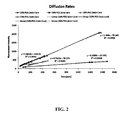
- FIG. 2 is a graph illustrating diffusion rates of fluoroceine (FITC) dye through hydrogel membranes of varying polyethylene glycol content.
- FITC fluoroceine
- Magnesium implants herein include a body made of magnesium and/or a magnesium alloy and a hydrogel coating which incorporates one or more extracellular matrix adhesion peptides (ECMAPs).
- the hydrogel coating may partially or completely encapsulate the body.
- the hydrogel is permeable to aqueous solutions.
- the hydrogel coating is substantially impermeable to aqueous solutions.
- the hydrogel coating is degradable. In some embodiments the hydrogel coating is non-degradable.
- the coatings act to reduce degradation of the magnesium body by limiting aqueous solution exchange at the surface of the magnesium implant and by reducing diffusion of ions proximate to the implant surface that participate in normal magnesium degradation reactions.
- ions include Cl - , SO 4 - and OH - .
- OH - ions which are normal products of magnesium degradation in aqueous solution
- sequestering OH- ions proximate to the surface of the implant body causes an increase in local pH at the body which reduces or halts magnesium degradation.
- Suitable extracellular matrix adhesion peptides include RGD, YIGSR, KQAGDV, REDV, PHSRN, IKVAV, PDGSR, LRGDN, LRE, IKLLI, GFOGER and VAPG.
- a hydrogel incorporating extracellular matrix adhesion peptides is non-degradable and permeable.
- tissue in-growth inductive materials can act as a mechanical support for the implant as tissue grows into the coating and around the implant as the implant degrades. This provides a benefit over degradable materials in which implant loosening during degradation of either a magnesium core or a magnesium coating causes prolonged healing and/or potential failure of the implant. This would be especially advantageous for load bearing implants such as in orthopedics or for implants used in or near moving tissues such as in muscles or in joints.
- a hydrogel incorporating extracellular matrix adhesion peptides is degradable and permeable which ultimately results in a degradable magnesium implant that can have a variable rate of degradation.
- the rate is initially slower while the degradable coating remains relatively intact and cellular attachments are formed.
- the coating degrades, the underlying implant body is exposed to the aqueous solution in greater amounts with a consequent increase in diffusion and degradation of the implant.
- suitable hydrogel materials include polyethylene glycol (PEG), alginate, urethane and cross-linked collagen.
- PEG may have linear or branched multiarm structures.
- functional groups such as methyloxyl, carboxyl, amine, thiol, azide, vinyl sulfone, azide, acetylene and acrylate.
- the end groups may be the same or different which allows for a plethora of combinations of functional end group links to extracellular matrix adhesion peptides.
- Those skilled in the art are familiar with techniques for converting the end groups and coupling peptides thereto.
- a PEG hydrogel may be prepared by photopolymerization of PEG diacrylate (PEGDA).
- PEGDA PEG diacrylate
- Acrylic acid may be copolymerized with PEGDA to provide carboxyl groups available for conjugation to amine groups of extracellular matrix adhesion peptides. Larger amounts of acrylic acid will allow for larger amounts of extracellular matrix adhesion peptides to be incorporated into the copolymer. To promote in-growth, it may be advantageous to incorporate extracellular matrix adhesion peptides throughout the three-dimensional structure of the hydrogel.
- Copolymerization of PEGDA with monoacrylated extracellular matrix adhesion peptides may be accomplished by functionalizing the N-terminal amines of the peptides with N-hydroxyl succinimide. Modification of PEG hydrogels by attachment of maleimide or thiol groups allows utilization of Michael-type addition to incorporate extracellular matrix adhesion peptides.
- Urethane based hydrogels may be utilized with incorporated extracellular matrix adhesion peptides in accordance with the present disclosure.
- urethanes herein contain functional groups, such as carboxylic acid groups, which can be used as anchor sites for extracellular matrix adhesion peptide binding.
- bioactive polyurethaneurea presenting YIGSR is synthesized by incorporating GGGYIGSRGGGK peptide sequences into the polymer backbone. See, Jun, et al. J Biomater. Sci. Polym. Ed. 2004;15(1):73-94 .
- a biodegradable poly(ester-urethane)urea (PEUU) containing RGDS is synthesized from polycaprolactone and 1,4-diisocyanatobutane, with putrescine used as a chain extender. See, Guan et al. Engineering in Medicine and Biology, 2002. 24th Annual Conference and the Annual Fall Meeting of the Biomedical Engineering Society EMBS/BMES Conference, 2002. Proceedings of the Second Joint, Volume: 1, page(s): 761 - 762 vol. 1.
- Polyurethane scaffolds can be modified with radio frequency glow discharge followed by surface coupling of RGDS peptide. Id .
- Polyethylene glycol modified polyurethane (PU-PEG) may also be utilized in accordance with the present disclosure.
- Cell adhesive peptide Gly-Arg-Gly-Asp can be photochemically grafted to the surface of the hydrogel utilizing GRGD-N-Succinimidyl-6-[4'-azido-2'-nitrophenylamino]hexanoate (SANPAH) on a PU-PEG surface through adsorption and subsequent ultraviolet irradiation. See, Lin et al., Artif Organs. 2001 Aug;25(8):617-21 .
- Alginates may be covalently modified with extracellular matrix adhesion peptides by formation of an amide bond between the carboxylic acid groups on the alginate chain and amine groups on the cell adhesion molecule. Alginates may also be covalently modified with extracellular matrix adhesion peptides utilizing aqueous carbodiimide chemistry. See, e.g., Rowley et al., Biomaterials. 1999 Jan; 20(1):45-53 (covalent modification of alginate with GRGDY peptides using carbodiimide functional crosslinkers). Extracellular matrix adhesion peptides contain a terminal amine group for such bonding.
- the amide bond formation may be catalyzed by 1-ethyl-3-(3-dimethylaminopropyl)carbodiimide (EDC), which is a water soluble enzyme commonly used in peptide synthesis.
- EDC 1-ethyl-3-(3-dimethylaminopropyl)carbodiimide
- EDC 1-ethyl-3-(3-dimethylaminopropyl)carbodiimide
- EDC 1-ethyl-3-(3-dimethylaminopropyl)carbodiimide
- EDC 1-ethyl-3-(3-dimethylaminopropyl)carbodiimide
- HOBT 1-hydroxybenxotriazole
- hydrogels should be linked to extracellular matrix adhesion peptides by cross-linking procedures which preferably do not cause denaturing or misfolding of the extracellular matrix adhesion peptides.
- the terms "linked” or “conjugated” are used interchangeably herein and are intended to include any or all of the mechanisms known in the art for coupling a hydrogel to a extracellular matrix adhesion peptide.
- any chemical or enzymatic linkage known to those with skill in the art is contemplated including those which result from photoactivation and the like.
- Homofunctional and heterobifunctional cross linkers are all suitable.
- Reactive groups which can be cross-linked with a cross-linker include primary amines, sulfhydryls, carbonyls, carbohydrates and carboxylic acids.
- PEG may be covalently bound to amino acid residues via a reactive group.
- Reactive groups are those to which an activated PEG molecule may be bound (e. g., a free amino or carboxyl group).
- N-terminal amino acid residues and lysine (K) residues have a free amino group and C-terminal amino acid residues have a free carboxyl group.
- Sulfhydryl groups e.g., as found on cysteine residues
- enzyme-assisted methods for introducing activated groups e.g., hydrazide, aldehyde, and aromatic-amino groups specifically at the C-terminus of a polypeptide may be utilized.
- Cross-linkers are conventionally available with varying lengths of spacer arms or bridges.
- Cross-linkers suitable for reacting with primary amines include homobifunctional cross-linkers such as imidoesters and N-hydroxysuccinimidyl (NHS) esters.
- imidoester cross-linkers include dimethyladipimidate, dimethylpimelimidate, and dimethylsuberimidate.
- NHS-ester cross-linkers include disuccinimidyl glutamate, disucciniminidyl suberate and bis (sulfosuccinimidyl) suberate.
- Accessible amine groups present on the N-termini of peptides react with NHS-esters to form amides.
- NHS-ester cross-linking reactions can be conducted in phosphate, bicarbonate/carbonate, 4-(2-hydroxyethyl) piperazine-1-ethane sulfonic acid (HEPES), 3-(N-morpholino) propane sulfonic acid (MOPS) and borate buffers. Other buffers can be used if they do not contain primary amines.
- the reaction of NHS-esters with primary amines should be conducted at a pH of between about 7 and about 9 and a temperature between about 4°C and 30°C for about 30 minutes to about 2 hours.
- the concentration of NHS-ester cross-linker can vary from about 0.1 to about 10 mM.
- NHS-esters are either hydrophilic or hydrophobic. Hydrophilic NHS-esters are reacted in aqueous solutions although DMSO may be included to achieve greater solubility. Hydrophobic NHS-esters are dissolved in a water miscible organic solvent and then added to the aqueous reaction mixture
- Sulfhydryl reactive cross-linkers include maleimides, alkyl halides, aryl halides and a-haloacyls which react with sulfhydryls to form thiol ether bonds and pyridyl disulfides which react with sulfhydryls to produce mixed disulfides.
- Sulfhydryl groups on peptides and proteins can be generated by techniques known to those with skill in the art, e.g., by reduction of disulfide bonds or addition by reaction with primary amines using 2-iminothiolane.
- maleimide cross-linkers include succinimidyl 4- ⁇ N-maleimido-methyl) cyclohexane-1-carboxylate and m-maleimidobenzoyl-N-hydroxysuccinimide ester.
- haloacetal cross-linkers include N-succinimidyl (4-iodoacetal) aminobenzoate and sulfosuccinimidyl (4-iodoacetal) aminobenzoate.
- pyridyl disulfide cross-linkers examples include 1,4-Di-[3'-2'-pyridyldithio(propionamido)butane] and N-succinimidyl-3-(2-pyridyldithio)-propionate.
- Carboxyl groups are cross-linked to primary amines or hydrazides by using carbodimides which result in formation of amide or hydrazone bonds. In this manner, carboxy-termini of peptides or proteins can be linked.
- carbodiimide cross-linkers include 1-ethyl-3-(3-dimethylaminopropyl)-carbodiimide hydrochloride and N, N 1 -dicyclohexylcarbodiimide.
- Arylazide cross-linkers become reactive when exposed to ultraviolet radiation and form aryl nitrene.
- arylazide cross-linkers examples include azidobenzoyl hydrazide and N-5-azido-2 nitrobenzoyloxysuccinimide.
- Glyoxal cross linkers target the guanidyl portion of arginine.
- An example of a glyoxal cross-linker is p-azidophenyl glyoxal monohydrate.
- Heterobifunctional cross-linkers which possess two or more different reactive groups are suitable for use herein.
- Examples include cross-linkers which are amine-reactive at one end and sulfhydryl-reactive at the other end such as 4-succinimidyl-oxycarbonyl-a-(2-pyridyldithio)-toluene, N- succinimidyl-3-(2-pyridyldithio)-propionate and the maleimide cross-linkers discussed above.
- extracellular matrix adhesion peptides may be incorporated into cross-linked collagen via amine conjugation using, e.g., the techniques described above, to free amine groups in collagen.
- terminal carboxylic acid residues on the peptides may be attached to amino groups on collagen using 1-ethy-3-(3-dimethylaminopropyl)-carbodiimide (EDC) and N-hydroxysuccinamide (NHS) chemistry. See, e.g., Steffens et al., Tissue Eng. 2004 Sep-Oct; 10(9-10):1502-9 .
- cysteine terminated RGD peptides may be attached to amino groups on type 1 collagen via succinimidyl 6-(3-[2-pyridyldithio]-propionamido) hexanoate (Sulfo-LC-SPDP). See, e.g., Burgess et al., Ann Biomed Eng, 2000 Jan:28(1):110-8 .
- Permeability of the hydrogel may be varied to alter diffusivity of water and ions around the body of the magnesium implant.
- varying the amount of hydrogel polymeric phase to the amount of aqueous phase affects permeability.
- the ratio of polymer to aqueous solution may range from about 20% hydrogel polymer and about 80% aqueous solution to about 70% hydrogel polymer and about 30% aqueous solution. Any amount within this range is contemplated, e.g., about 20% polymer, about 30% polymer, about 40% polymer versus a corresponding amount of aqueous phase.
- the magnesium degradation rate decreased with increasing PEGDA content.
- the coating may be applied to the implant body by a variety of techniques.
- the outer surface of the body may be initially treated by etching through exposure to plasma or an acidic solution such as dilute nital solution (1-10 ml nitric acid plus 100 ml ethanol). See, e.g., Zhao et al., Corrosion Science, 2008, 50(7):1939-1953 (3% nital).
- picric acid e.g., 5gm picric acid plus 0.5 ml acetic acid plus 5ml water plus 25ml ethanol ( Zhang et al., Materials Science and Engineering A 2008, 488(1-2):102-111 ), or 3.5gm picric acid plus 6.5ml acetic acid plus 20ml water plus 100 ml ethanol ( Kannan et al., Biomaterials, 2008 May, 29(15):2306-14 ).
- Preparation may include cleaning the outer surface of the base material with a cleaning agent such as isopropyl alcohol or acetone.
- a cleaning agent such as isopropyl alcohol or acetone.
- one or more adhesion promoting layers made of, e.g., a silane may be applied to the body.
- initial treatment may include cleaning the outer surface of the base material with isopropyl alcohol, plasma etching the outer surface of the base material and applying the silane to the plasma etched surface.
- NaOH can be used as a passivating agent to convert Mg to Mg(OH) 2 .
- the body may be washed, e.g., with a 1% NaOH solution, thoroughly rinsed with distilled water and then applying the silane to the NaOH treated surface.
- the outer surface of the base material is grit blasted and then cleaned with isopropyl alcohol and then silane is applied to the cleansed grit blasted surface.
- the silane coating may incorporate acrylate or amine terminated functionality through plasma assisted polymerization or solution phase polymerization.
- the silane provided may have functionality capable of reacting with a nucleophilic group, e.g., a hydroxyl or amino group.
- the silane may comprise isocyanate, isothiocyanate, ester, anhydride, acyl halide, alkyl halide, epoxide, or aziridine functionality.
- the adhesion promoting layer is a thin layer of silane having a thickness in the range of, for example, about 0.5 to about 5,000 ⁇ and preferably, about 2 to about 50 ⁇ .
- a full monolayer of amine terminated silane (3-aminopropyltrimethoxysilane [APTMS]) may have a thickness of about 10.5 ⁇ . See, e.g., Cui et al., Surface and Interfaces Analysis. 2010 .
- a full layer of acrylate terminated silane (3-acryloxypropyl) trimethoxysilane (APTS) has a thickness of about 12.5 ⁇ . See, e.g., Müllner et al., J Am Chem Soc. 2010 Nov 24;132(46):16587-92 .
- the hydrogel layer may be coupled to the adhesion promoting layer via a photoinitiator and UV light or by using crosslinkers such as those described above to link the hydrogel species to silane groups.
- a photoinitiator is adsorbed to silane, the magnesium body is dip coated in hydrogel monomer solution and then cured through interfacial photopolymerization. In this manner, polymerization occurs close to the magnesium body surface where the photoinitiator is concentrated.
- hydrogel monomers may be applied, e.g., by vapor deposition or plasma deposition, and may polymerize and cure upon condensation from the vapor phase.
- Plasma is an ionized gas maintained under vacuum and excited by electrical energy, typically in the radiofrequency range. Because the gas is maintained under vacuum, the plasma deposition process occurs at or near room temperature. Plasma can be used to deposit hydrogel polymers onto the adhesion promoting layer.
- other coating techniques may be utilized, e.g., dip coating, spray coating, painting or wiping, and the like.
- one or more medicinal agents are associated with the hydrogel coating.
- “Medicinal agent” is used herein its broadest sense and includes any substance or mixture of substances which may have any clinical use. It is to be understood that medicinal agent encompasses any drug, including hormones, antibodies, therapeutic peptides, etc., or a diagnostic agent such as a releasable dye which has no biological activity per se. Growth factors, angiogenic factors and other protein based therapeutic agents can be incorporated into the hydrogel in the same manner as the extracellular matrix adhesion peptides described above which can further encourage cell ingrowth and tissue generation.
- medicinal agents examples include anticancer agents, analgesics, anesthetics, anti-inflammatory agents, growth factors such as bone morphogenic proteins (BMPs), antimicrobials, and radiopaque materials.
- BMPs bone morphogenic proteins
- the medicinal agents may be in the form of dry substance in aqueous solution, in alcoholic solution or particles, microcrystals, microspheres or liposomes.
- An extensive recitation of various medicinal agents is disclosed in Goodman and Gilman, The Pharmacological Basis of Therapeutics, 10th ed. 2001 , or Remington, The Science and Practice of Pharmacy, 21 ed. (2005 ).
- the term "antimicrobial” is meant to encompass any pharmaceutically acceptable agent which is substantially toxic to a pathogen. Accordingly, “antimicrobial” includes antiseptics, antibacterials, antibiotics, antivirals, antifungals and the like.
- Radiopaque materials include releasable and non-releasable agents which render the implant visible in any known imaging technique such as X-ray radiographs, magnetic resonance imaging, computer assisted tomography and the like.
- the radiopaque material may be any conventional radiopaque material known in the art for allowing radiographic visualization the implant.
Landscapes
- Health & Medical Sciences (AREA)
- Life Sciences & Earth Sciences (AREA)
- Chemical & Material Sciences (AREA)
- General Health & Medical Sciences (AREA)
- Veterinary Medicine (AREA)
- Public Health (AREA)
- Epidemiology (AREA)
- Animal Behavior & Ethology (AREA)
- Medicinal Chemistry (AREA)
- Transplantation (AREA)
- Oral & Maxillofacial Surgery (AREA)
- Dermatology (AREA)
- Heart & Thoracic Surgery (AREA)
- Surgery (AREA)
- Vascular Medicine (AREA)
- Inorganic Chemistry (AREA)
- Engineering & Computer Science (AREA)
- Biomedical Technology (AREA)
- Molecular Biology (AREA)
- Materials For Medical Uses (AREA)
Abstract
Description
- This application claims the benefit of and priority to
U.S. Provisional Patent Application No. 61/530,117, filed September 1, 2011 - The present disclosure relates generally to magnesium medical implants. More particularly, the present disclosure relates to magnesium implants having hydrogel coatings which delay or prevent degradation of such implants and facilitate attachment of such implants to a target site.
- Magnesium and magnesium alloys have been processed into medical implants for use in animals and humans (referred to herein collectively as "magnesium implant(s)" or simply "implant(s)"). Magnesium implants degrade over time in situ and can advantageously be formulated to possess density and strength in load bearing applications that correspond to bone. Magnesium stents have also been formulated. However, in certain instances, faster than desirable degradation rates, hydrogen gas evolution and degradation products which increase local pH (alkalosis) have been problematic. Hydrogels have been used as a coating on magnesium implants to control rate of degradation and to reduce the risk of developing alkalosis. See, e.g.,
US Pat. Appln. Pub. Nos. 2010/0023112 and2009/0240323 . However, hydrogels frequently have a lubricious surface in situ which can result in difficulty in adhering an implant having a hydrogel coating to surrounding tissue and maintaining the position the implant. - There is a need for magnesium implants which have controlled or reduced rate of degradation, which do not cause local alkalosis, which promote cellular attachment and adhere to a surgical target site.
- A surgical implant is provided which includes a body and a coating in contact with at least a portion of the body, the body including metallic magnesium, the coating including a hydrogel having an adhesion peptide contained therein. In some embodiments, the adhesion peptide may be derived from an extracellular matrix protein. In embodiments, the adhesion peptide is covalently bonded to the hydrogel. In embodiments the hydrogel may be polyethylene glycol, alginate, collagen and/or polyurethane.
- A method of making a surgical implant includes providing a magnesium based degradable implant body; applying and adhering a functionalized reactive silane based adhesion promoting layer to the implant body; providing a hydrogel monomeric solution having extracellular matrix adhesion peptides incorporated therein; and contacting the hydrogel monomeric solution with the adhesion promoting layer such that the hydrogel polymerizes and bonds to the adhesion promoting layer and encapsulates at least a portion of the implant.
- The accompanying drawings, which are incorporated in and constitute a part of this specification, illustrate aspects of the presently disclosed hydrogel coated magnesium implants, and together with a general description and the detailed description of the embodiments of the disclosed magnesium implants herein given, serve to explain certain principles of the disclosed magnesium implants.
-
FIG. 1 is a graph illustrating mass loss of magnesium alloy samples versus polyethylene glycol content of encapsulating hydrogel coatings. -
FIG. 2 is a graph illustrating diffusion rates of fluoroceine (FITC) dye through hydrogel membranes of varying polyethylene glycol content. - Magnesium implants herein include a body made of magnesium and/or a magnesium alloy and a hydrogel coating which incorporates one or more extracellular matrix adhesion peptides (ECMAPs). In embodiments, the hydrogel coating may partially or completely encapsulate the body. In some embodiments, the hydrogel is permeable to aqueous solutions. In some embodiments, the hydrogel coating is substantially impermeable to aqueous solutions. In some embodiments, the hydrogel coating is degradable. In some embodiments the hydrogel coating is non-degradable. Without wishing to be bound by any particular theory, it is believed that the coatings act to reduce degradation of the magnesium body by limiting aqueous solution exchange at the surface of the magnesium implant and by reducing diffusion of ions proximate to the implant surface that participate in normal magnesium degradation reactions. Such ions include Cl-, SO4 - and OH-. By limiting diffusion of OH- ions (which are normal products of magnesium degradation in aqueous solution) away from the implant, irritation from local alkalosis is reduced or eliminated. In addition, since magnesium degradation in aqueous solution halts at a pH greater than 12, sequestering OH- ions proximate to the surface of the implant body causes an increase in local pH at the body which reduces or halts magnesium degradation. In essence, continued release of OH- ions caused by magnesium degradation into a static environment created by the coating leads to a self-limiting chemical reaction. In addition, incorporation of acrylate groups into the hydrogel promotes reduction of free OH- ions by hydrolysis with acrylate groups.
- The tendency for lubricious hydrogel surfaces to be relatively frictionless or slippery may be disadvantageous when an implant is intended to fixed in place and load bearing or if cellular attachment and/or in-growth of surrounding tissue is desirable. Incorporation of extracellular matrix adhesion peptides into the hydrogel promotes cellular attachment to and into the hydrogel coating, thus stabilizing the magnesium implant at a target site. Suitable extracellular matrix adhesion peptides are known in the art and include RGD, YIGSR, KQAGDV, REDV, PHSRN, IKVAV, PDGSR, LRGDN, LRE, IKLLI, GFOGER and VAPG.
- In some embodiments, a hydrogel incorporating extracellular matrix adhesion peptides is non-degradable and permeable. Such non-degradable tissue in-growth inductive materials can act as a mechanical support for the implant as tissue grows into the coating and around the implant as the implant degrades. This provides a benefit over degradable materials in which implant loosening during degradation of either a magnesium core or a magnesium coating causes prolonged healing and/or potential failure of the implant. This would be especially advantageous for load bearing implants such as in orthopedics or for implants used in or near moving tissues such as in muscles or in joints. In some embodiments, a hydrogel incorporating extracellular matrix adhesion peptides is degradable and permeable which ultimately results in a degradable magnesium implant that can have a variable rate of degradation. The rate is initially slower while the degradable coating remains relatively intact and cellular attachments are formed. As the coating degrades, the underlying implant body is exposed to the aqueous solution in greater amounts with a consequent increase in diffusion and degradation of the implant.
- Examples of suitable hydrogel materials include polyethylene glycol (PEG), alginate, urethane and cross-linked collagen. PEG may have linear or branched multiarm structures. For incorporation of extracellular matrix adhesion peptides, one or both of the two hydroxyl end groups of PEG can be converted to functional groups such as methyloxyl, carboxyl, amine, thiol, azide, vinyl sulfone, azide, acetylene and acrylate. The end groups may be the same or different which allows for a plethora of combinations of functional end group links to extracellular matrix adhesion peptides. Those skilled in the art are familiar with techniques for converting the end groups and coupling peptides thereto. See, e.g., Zhu, Biomaterials 31 (2010) 4639-4656. For example, a PEG hydrogel may be prepared by photopolymerization of PEG diacrylate (PEGDA). Acrylic acid may be copolymerized with PEGDA to provide carboxyl groups available for conjugation to amine groups of extracellular matrix adhesion peptides. Larger amounts of acrylic acid will allow for larger amounts of extracellular matrix adhesion peptides to be incorporated into the copolymer. To promote in-growth, it may be advantageous to incorporate extracellular matrix adhesion peptides throughout the three-dimensional structure of the hydrogel. Copolymerization of PEGDA with monoacrylated extracellular matrix adhesion peptides may be accomplished by functionalizing the N-terminal amines of the peptides with N-hydroxyl succinimide. Modification of PEG hydrogels by attachment of maleimide or thiol groups allows utilization of Michael-type addition to incorporate extracellular matrix adhesion peptides.
- Urethane based hydrogels may be utilized with incorporated extracellular matrix adhesion peptides in accordance with the present disclosure. In embodiments, urethanes herein contain functional groups, such as carboxylic acid groups, which can be used as anchor sites for extracellular matrix adhesion peptide binding. For example, bioactive polyurethaneurea presenting YIGSR is synthesized by incorporating GGGYIGSRGGGK peptide sequences into the polymer backbone. See, Jun, et al. J Biomater. Sci. Polym. Ed. 2004;15(1):73-94. A biodegradable poly(ester-urethane)urea (PEUU) containing RGDS is synthesized from polycaprolactone and 1,4-diisocyanatobutane, with putrescine used as a chain extender. See, Guan et al. Engineering in Medicine and Biology, 2002. 24th Annual Conference and the Annual Fall Meeting of the Biomedical Engineering Society EMBS/BMES Conference, 2002. Proceedings of the Second Joint, Volume: 1, page(s): 761 - 762 vol. 1. Polyurethane scaffolds can be modified with radio frequency glow discharge followed by surface coupling of RGDS peptide. Id. Polyethylene glycol modified polyurethane (PU-PEG) may also be utilized in accordance with the present disclosure. Cell adhesive peptide Gly-Arg-Gly-Asp (GRGD) can be photochemically grafted to the surface of the hydrogel utilizing GRGD-N-Succinimidyl-6-[4'-azido-2'-nitrophenylamino]hexanoate (SANPAH) on a PU-PEG surface through adsorption and subsequent ultraviolet irradiation. See, Lin et al., Artif Organs. 2001 Aug;25(8):617-21.
- Alginates may be covalently modified with extracellular matrix adhesion peptides by formation of an amide bond between the carboxylic acid groups on the alginate chain and amine groups on the cell adhesion molecule. Alginates may also be covalently modified with extracellular matrix adhesion peptides utilizing aqueous carbodiimide chemistry. See, e.g., Rowley et al., Biomaterials. 1999 Jan; 20(1):45-53 (covalent modification of alginate with GRGDY peptides using carbodiimide functional crosslinkers). Extracellular matrix adhesion peptides contain a terminal amine group for such bonding. The amide bond formation may be catalyzed by 1-ethyl-3-(3-dimethylaminopropyl)carbodiimide (EDC), which is a water soluble enzyme commonly used in peptide synthesis. EDC reacts with carboxylate moieties on the alginate backbone creating activated esters which are reactive towards amines. To reduce unfavorable side reactions, EDC may be used in conjunction with N-hydroxysuccinimide, N-hydroxysulfylsuccinimide or 1-hydroxybenxotriazole (HOBT) to facilitate amide bonding over competing reactions.
- In general, hydrogels should be linked to extracellular matrix adhesion peptides by cross-linking procedures which preferably do not cause denaturing or misfolding of the extracellular matrix adhesion peptides. The terms "linked" or "conjugated" are used interchangeably herein and are intended to include any or all of the mechanisms known in the art for coupling a hydrogel to a extracellular matrix adhesion peptide. For example, any chemical or enzymatic linkage known to those with skill in the art is contemplated including those which result from photoactivation and the like. Homofunctional and heterobifunctional cross linkers are all suitable. Reactive groups which can be cross-linked with a cross-linker include primary amines, sulfhydryls, carbonyls, carbohydrates and carboxylic acids. For example, PEG may be covalently bound to amino acid residues via a reactive group. Reactive groups are those to which an activated PEG molecule may be bound (e. g., a free amino or carboxyl group). For example, N-terminal amino acid residues and lysine (K) residues have a free amino group and C-terminal amino acid residues have a free carboxyl group. Sulfhydryl groups (e.g., as found on cysteine residues) may also be used as a reactive group for attaching PEG. In addition, enzyme-assisted methods for introducing activated groups (e.g., hydrazide, aldehyde, and aromatic-amino groups) specifically at the C-terminus of a polypeptide may be utilized.
- Cross-linkers are conventionally available with varying lengths of spacer arms or bridges. Cross-linkers suitable for reacting with primary amines include homobifunctional cross-linkers such as imidoesters and N-hydroxysuccinimidyl (NHS) esters. Examples of imidoester cross-linkers include dimethyladipimidate, dimethylpimelimidate, and dimethylsuberimidate. Examples of NHS-ester cross-linkers include disuccinimidyl glutamate, disucciniminidyl suberate and bis (sulfosuccinimidyl) suberate. Accessible amine groups present on the N-termini of peptides react with NHS-esters to form amides. NHS-ester cross-linking reactions can be conducted in phosphate, bicarbonate/carbonate, 4-(2-hydroxyethyl) piperazine-1-ethane sulfonic acid (HEPES), 3-(N-morpholino) propane sulfonic acid (MOPS) and borate buffers. Other buffers can be used if they do not contain primary amines. The reaction of NHS-esters with primary amines should be conducted at a pH of between about 7 and about 9 and a temperature between about 4°C and 30°C for about 30 minutes to about 2 hours. The concentration of NHS-ester cross-linker can vary from about 0.1 to about 10 mM. NHS-esters are either hydrophilic or hydrophobic. Hydrophilic NHS-esters are reacted in aqueous solutions although DMSO may be included to achieve greater solubility. Hydrophobic NHS-esters are dissolved in a water miscible organic solvent and then added to the aqueous reaction mixture
- Sulfhydryl reactive cross-linkers include maleimides, alkyl halides, aryl halides and a-haloacyls which react with sulfhydryls to form thiol ether bonds and pyridyl disulfides which react with sulfhydryls to produce mixed disulfides. Sulfhydryl groups on peptides and proteins can be generated by techniques known to those with skill in the art, e.g., by reduction of disulfide bonds or addition by reaction with primary amines using 2-iminothiolane. Examples of maleimide cross-linkers include succinimidyl 4-{N-maleimido-methyl) cyclohexane-1-carboxylate and m-maleimidobenzoyl-N-hydroxysuccinimide ester. Examples of haloacetal cross-linkers include N-succinimidyl (4-iodoacetal) aminobenzoate and sulfosuccinimidyl (4-iodoacetal) aminobenzoate. Examples of pyridyl disulfide cross-linkers include 1,4-Di-[3'-2'-pyridyldithio(propionamido)butane] and N-succinimidyl-3-(2-pyridyldithio)-propionate.
- Carboxyl groups are cross-linked to primary amines or hydrazides by using carbodimides which result in formation of amide or hydrazone bonds. In this manner, carboxy-termini of peptides or proteins can be linked. Examples of carbodiimide cross-linkers include 1-ethyl-3-(3-dimethylaminopropyl)-carbodiimide hydrochloride and N, N1-dicyclohexylcarbodiimide. Arylazide cross-linkers become reactive when exposed to ultraviolet radiation and form aryl nitrene. Examples of arylazide cross-linkers include azidobenzoyl hydrazide and N-5-azido-2 nitrobenzoyloxysuccinimide. Glyoxal cross linkers target the guanidyl portion of arginine. An example of a glyoxal cross-linker is p-azidophenyl glyoxal monohydrate.
- Heterobifunctional cross-linkers which possess two or more different reactive groups are suitable for use herein. Examples include cross-linkers which are amine-reactive at one end and sulfhydryl-reactive at the other end such as 4-succinimidyl-oxycarbonyl-a-(2-pyridyldithio)-toluene, N- succinimidyl-3-(2-pyridyldithio)-propionate and the maleimide cross-linkers discussed above.
- Both surface coupling, as well as bulk coupling within the three-dimensional architecture of hydrogels can be readily obtained with the above-described conjugating chemistry. Indeed, in embodiments, by manipulation of surface and bulk coupling, materials having one type of extracellular matrix adhesion peptide coupled internally in the matrix and another type of extracellular matrix adhesion peptide coupled on the surface can be provided.
- In some embodiments extracellular matrix adhesion peptides may be incorporated into cross-linked collagen via amine conjugation using, e.g., the techniques described above, to free amine groups in collagen. For example, terminal carboxylic acid residues on the peptides may be attached to amino groups on collagen using 1-ethy-3-(3-dimethylaminopropyl)-carbodiimide (EDC) and N-hydroxysuccinamide (NHS) chemistry. See, e.g., Steffens et al., Tissue Eng. 2004 Sep-Oct; 10(9-10):1502-9. As another example, cysteine terminated RGD peptides may be attached to amino groups on type 1 collagen via succinimidyl 6-(3-[2-pyridyldithio]-propionamido) hexanoate (Sulfo-LC-SPDP). See, e.g., Burgess et al., Ann Biomed Eng, 2000 Jan:28(1):110-8.
- Permeability of the hydrogel may be varied to alter diffusivity of water and ions around the body of the magnesium implant. For example, varying the amount of hydrogel polymeric phase to the amount of aqueous phase affects permeability. In embodiments, the ratio of polymer to aqueous solution may range from about 20% hydrogel polymer and about 80% aqueous solution to about 70% hydrogel polymer and about 30% aqueous solution. Any amount within this range is contemplated, e.g., about 20% polymer, about 30% polymer, about 40% polymer versus a corresponding amount of aqueous phase. As can be seen from
FIG. 1 , the magnesium degradation rate decreased with increasing PEGDA content.FIG. 2 illustrates diffusion rates of water soluble fluoroceine dye through hydrogel membranes of varying PEGDA content and indicates that diffusivity decreased with increasing PEGDA content. Taken together, it is shown that decreasing permeability and diffusivity to aqueous solution results in slowing of magnesium degradation which may be varied by controlling concentration properties of the hydrogel coating. - The coating may be applied to the implant body by a variety of techniques. The outer surface of the body may be initially treated by etching through exposure to plasma or an acidic solution such as dilute nital solution (1-10 ml nitric acid plus 100 ml ethanol). See, e.g., Zhao et al., Corrosion Science, 2008, 50(7):1939-1953 (3% nital). Other examples include picric acid, e.g., 5gm picric acid plus 0.5 ml acetic acid plus 5ml water plus 25ml ethanol (Zhang et al., Materials Science and Engineering A 2008, 488(1-2):102-111), or 3.5gm picric acid plus 6.5ml acetic acid plus 20ml water plus 100 ml ethanol (Kannan et al., Biomaterials, 2008 May, 29(15):2306-14).
- Preparation may include cleaning the outer surface of the base material with a cleaning agent such as isopropyl alcohol or acetone. After the body surface has been etched, one or more adhesion promoting layers made of, e.g., a silane may be applied to the body. In embodiments, initial treatment may include cleaning the outer surface of the base material with isopropyl alcohol, plasma etching the outer surface of the base material and applying the silane to the plasma etched surface. NaOH can be used as a passivating agent to convert Mg to Mg(OH)2. For example, the body may be washed, e.g., with a 1% NaOH solution, thoroughly rinsed with distilled water and then applying the silane to the NaOH treated surface. Those skilled in the art may determine other suitable concentrations of NaOH. With grit blasting, the outer surface of the base material is grit blasted and then cleaned with isopropyl alcohol and then silane is applied to the cleansed grit blasted surface.
- The silane coating may incorporate acrylate or amine terminated functionality through plasma assisted polymerization or solution phase polymerization. The silane provided may have functionality capable of reacting with a nucleophilic group, e.g., a hydroxyl or amino group. In particular, the silane may comprise isocyanate, isothiocyanate, ester, anhydride, acyl halide, alkyl halide, epoxide, or aziridine functionality. In embodiments, the adhesion promoting layer is a thin layer of silane having a thickness in the range of, for example, about 0.5 to about 5,000 Å and preferably, about 2 to about 50 Å. For example, a full monolayer of amine terminated silane (3-aminopropyltrimethoxysilane [APTMS]) may have a thickness of about 10.5 Å. See, e.g., Cui et al., Surface and Interfaces Analysis. 2010. As another example, a full layer of acrylate terminated silane (3-acryloxypropyl) trimethoxysilane (APTS) has a thickness of about 12.5 Å. See, e.g., Müllner et al., J Am Chem Soc. 2010 Nov 24;132(46):16587-92.
- After the adhesion promoting layer is applied, the hydrogel layer may be coupled to the adhesion promoting layer via a photoinitiator and UV light or by using crosslinkers such as those described above to link the hydrogel species to silane groups. For example, in embodiments, a photoinitiator is adsorbed to silane, the magnesium body is dip coated in hydrogel monomer solution and then cured through interfacial photopolymerization. In this manner, polymerization occurs close to the magnesium body surface where the photoinitiator is concentrated. For example, 10 µl of 50/mg/ml 2,2-dimethoxy-2-phenyl-acetophenone in dimethyl sulfoxide (DMSO):1 ml PEGDA solution is utilized and cured with UV light for 60 seconds. Excess monomer is rinsed off after polymerization is completed. Alginates may be polymerized through the use of counterions such as Ca++.
- In embodiments, hydrogel monomers may be applied, e.g., by vapor deposition or plasma deposition, and may polymerize and cure upon condensation from the vapor phase. Plasma is an ionized gas maintained under vacuum and excited by electrical energy, typically in the radiofrequency range. Because the gas is maintained under vacuum, the plasma deposition process occurs at or near room temperature. Plasma can be used to deposit hydrogel polymers onto the adhesion promoting layer. As mentioned above, other coating techniques may be utilized, e.g., dip coating, spray coating, painting or wiping, and the like.
- In embodiments, one or more medicinal agents are associated with the hydrogel coating. "Medicinal agent" is used herein its broadest sense and includes any substance or mixture of substances which may have any clinical use. It is to be understood that medicinal agent encompasses any drug, including hormones, antibodies, therapeutic peptides, etc., or a diagnostic agent such as a releasable dye which has no biological activity per se. Growth factors, angiogenic factors and other protein based therapeutic agents can be incorporated into the hydrogel in the same manner as the extracellular matrix adhesion peptides described above which can further encourage cell ingrowth and tissue generation.
- Examples of medicinal agents that can be used include anticancer agents, analgesics, anesthetics, anti-inflammatory agents, growth factors such as bone morphogenic proteins (BMPs), antimicrobials, and radiopaque materials. Such medicinal agents are well-known to those skilled in the art. The medicinal agents may be in the form of dry substance in aqueous solution, in alcoholic solution or particles, microcrystals, microspheres or liposomes. An extensive recitation of various medicinal agents is disclosed in Goodman and Gilman, The Pharmacological Basis of Therapeutics, 10th ed. 2001, or Remington, The Science and Practice of Pharmacy, 21 ed. (2005). As used herein, the term "antimicrobial" is meant to encompass any pharmaceutically acceptable agent which is substantially toxic to a pathogen. Accordingly, "antimicrobial" includes antiseptics, antibacterials, antibiotics, antivirals, antifungals and the like. Radiopaque materials include releasable and non-releasable agents which render the implant visible in any known imaging technique such as X-ray radiographs, magnetic resonance imaging, computer assisted tomography and the like. The radiopaque material may be any conventional radiopaque material known in the art for allowing radiographic visualization the implant.
- Although the present disclosure has been described with respect to preferred embodiments, it will be readily apparent, to those having ordinary skill in the art that changes and modifications may be made thereto without departing from the spirit or scope of the subject implant.
- The invention may be described by reference to the following numbered paragraphs:-
- 1. A surgical implant comprising a body and a coating over at least a portion of the body, the body including metallic magnesium, the coating including a hydrogel having an extracellular adhesion peptide contained therein.
- 2. The surgical implant according to paragraph 1 wherein the metallic magnesium is a magnesium alloy.
- 3. The surgical implant according to paragraph 1 wherein the hydrogel is non-degradable.
- 4. The surgical implant according to paragraph 1 wherein the hydrogel is degradable.
- 5. The surgical implant according to paragraph 1 wherein the hydrogel is selected from the group consisting of polyethylene glycol, alginate, collagen and polyurethane.
- 6. The surgical implant according to paragraph 5 wherein the polyethylene glycol is polyethylene glycol acrylate.
- 7. The surgical implant according to paragraph 6 wherein the polyethylene glycol acrylate is selected from the group consisting of polyethylene glycol diacrylate, polyethylene glycol dimethacrylate and multiarm polyethylene glycol acrylate.
- 8. The surgical implant according to paragraph 1 wherein the extracellular matrix adhesion peptide is covalently bonded to the hydrogel.
- 9. The surgical implant according to paragraph 1 wherein the extracellular matrix adhesion peptide is selected from the group consisting of RGD, YIGSR, KQAGDV, REDV, PHSRN, IKVAV, PDGSR, LRGDN, LRE, IKLLI, GFOGER and VAPG.
- 10. The surgical implant according to paragraph 1 further comprising a medicinal agent.
- 11. The surgical implant according to paragraph 1 further comprising an adhesion promoting layer between the body and the hydrogel.
- 12. The surgical implant according to paragraph 11 wherein the adhesion promoting layer comprises a silane.
- 13. The surgical implant according to paragraph 1 wherein the hydrogel includes from about 20% to about 70% of a polymeric phase and from about 80% to about 30% of an aqueous phase.
- 14. The surgical implant according to paragraph 1 wherein the hydrogel coating encapsulates the entire implant
- 15. A method of making a surgical implant comprising
providing a magnesium based degradable implant body;
applying and adhering a functionalized reactive silane based adhesion promoting layer to the implant body;
providing a hydrogel monomeric solution having extracellular matrix adhesion peptides incorporated therein; and
contacting the hydrogel monomeric solution with the adhesion promoting layer such that the hydrogel polymerizes and bonds to the adhesion promoting layer and encapsulates at least a portion of the implant. - 16. The method of making a surgical implant according to paragraph 15 wherein the silane is functionalized with a heterobifunctional crosslinker or a homobifunctional crosslinker.
- 17. The method of making a surgical implant according to paragraph 15 wherein the hydrogel is selected from the group consisting of polyethylene glycol, alginate, collagen and polyurethane.
- 18. The method of making a surgical implant according to paragraph 15 wherein the extracellular matrix adhesion peptides are selected from the group consisting of RGD, YIGSR, KQAGDV, REDV, PHSRN, IKVAV, PDGSR, LRGDN, LRE, IKLLI, GFOGER and VAPG.
- 19. The method of making a surgical implant according to paragraph 15 wherein the extracellular matrix adhesion peptides are covalently bonded to the hydrogel.
- 20. The method of making a surgical implant according to paragraph 15 wherein the hydrogel coating encapsulates the entire implant.
- 21. The method of making a surgical implant according to paragraph 15 further comprising etching the implant body prior to applying and adhering a functionalized reactive silane based adhesion promoting layer to the implant body.
Claims (15)
- A surgical implant comprising a body and a coating over at least a portion of the body, the body including metallic magnesium, the coating including a hydrogel having an extracellular adhesion peptide contained therein.
- The surgical implant according to claim 1 wherein the metallic magnesium is a magnesium alloy.
- The surgical implant according to claim 1 or claim 2, wherein the hydrogel is selected from the group consisting of polyethylene glycol, alginate, collagen and polyurethane.
- The surgical implant according to claim 3 wherein the polyethylene glycol is polyethylene glycol acrylate, optionally selected from the group consisting of polyethylene glycol diacrylate, polyethylene glycol dimethacrylate and multiarm polyethylene glycol acrylate.
- The surgical implant according to any preceding claim, further comprising a medicinal agent.
- The surgical implant according to any preceding claim, further comprising an adhesion promoting layer between the body and the hydrogel, wherein the adhesion promoting layer optionally comprises a silane.
- The surgical implant according to any preceding claim, wherein the hydrogel includes from about 20% to about 70% of a polymeric phase and from about 80% to about 30% of an aqueous phase.
- The surgical implant according to any preceding claim, wherein the hydrogel coating encapsulates the entire implant.
- A method of making a surgical implant comprising
providing a magnesium based degradable implant body;
applying and adhering a functionalized reactive silane based adhesion promoting layer to the implant body;
providing a hydrogel monomeric solution having extracellular matrix adhesion peptides incorporated therein; and
contacting the hydrogel monomeric solution with the adhesion promoting layer such that the hydrogel polymerizes and bonds to the adhesion promoting layer and encapsulates at least a portion of the implant. - The method of making a surgical implant according to claim 9 wherein the silane is functionalized with a heterobifunctional crosslinker or a homobifunctional crosslinker.
- The method of making a surgical implant according to claim 9 or claim 10, wherein the hydrogel is selected from the group consisting of polyethylene glycol, alginate, collagen and polyurethane.
- The surgical implant according to any one of claims 1 to 8, or the method of making a surgical implant according to any one of claims 9 to 11, wherein the extracellular matrix adhesion peptides are selected from the group consisting of RGD, YIGSR, KQAGDV, REDV, PHSRN, IKVAV, PDGSR, LRGDN, LRE, IKLLI, GFOGER and VAPG.
- The surgical implant according to any one of claims 1 to 8, or the method of making a surgical implant according to any one of claims 9 to 12, wherein the extracellular matrix adhesion peptides are covalently bonded to the hydrogel.
- The method of making a surgical implant according one of claims 9 to 13 wherein the hydrogel coating encapsulates the entire implant.
- The method of making a surgical implant according to one of claims 9 to 14 further comprising etching the implant body prior to applying and adhering a functionalized reactive silane based adhesion promoting layer to the implant body.
Applications Claiming Priority (2)
| Application Number | Priority Date | Filing Date | Title |
|---|---|---|---|
| US201161530117P | 2011-09-01 | 2011-09-01 | |
| US13/595,246 US20130060348A1 (en) | 2011-09-01 | 2012-08-27 | Hydrogel Coated Magnesium Medical Implants |
Publications (2)
| Publication Number | Publication Date |
|---|---|
| EP2578245A2 true EP2578245A2 (en) | 2013-04-10 |
| EP2578245A3 EP2578245A3 (en) | 2015-01-21 |
Family
ID=47753741
Family Applications (1)
| Application Number | Title | Priority Date | Filing Date |
|---|---|---|---|
| EP12182662.2A Withdrawn EP2578245A3 (en) | 2011-09-01 | 2012-08-31 | Hydrogel coated magnesium medical implants |
Country Status (2)
| Country | Link |
|---|---|
| US (1) | US20130060348A1 (en) |
| EP (1) | EP2578245A3 (en) |
Cited By (3)
| Publication number | Priority date | Publication date | Assignee | Title |
|---|---|---|---|---|
| DE102013004420A1 (en) * | 2012-08-20 | 2014-02-20 | Alexander Kopp | Support body and method for its production |
| CN103830777A (en) * | 2014-02-20 | 2014-06-04 | 吉林大学 | REDV modification novel biodegradable coronary artery coating support |
| CN108939158A (en) * | 2018-07-27 | 2018-12-07 | 吉林大学 | Small intestine acellular matrix film combination metal mesh breast wall repairing material |
Families Citing this family (9)
| Publication number | Priority date | Publication date | Assignee | Title |
|---|---|---|---|---|
| US9469677B2 (en) * | 2013-11-13 | 2016-10-18 | University of Pittsburgh—of the Commonwealth System of Higher Education | Biomimetic coating of magnesium alloy for enhanced corrosion resistance and calcium phosphate deposition |
| WO2016126773A1 (en) * | 2015-02-03 | 2016-08-11 | University Of Pittsburgh-Of The Commonwealth System Of Higher Education | Self-assembled organosilane coatings for resorbable metal medical devices |
| WO2016134866A1 (en) * | 2015-02-24 | 2016-09-01 | botiss biomaterials GmbH | Collagen-containing wound dressing and method for the production thereof |
| US10226244B2 (en) | 2015-10-02 | 2019-03-12 | Conmed Corporation | Regulating degradation of surgical implants |
| WO2018125868A1 (en) * | 2016-12-30 | 2018-07-05 | Spirox, Inc. | Nasal implants and methods of use |
| US11331418B2 (en) * | 2019-08-26 | 2022-05-17 | Mervyn B. Forman | Medical devices for continuous delivery of therapeutic agents |
| JP7675196B2 (en) * | 2021-01-26 | 2025-05-12 | フェノックス ゲーエムベーハー | Coated Medical Devices |
| US20220354488A1 (en) | 2021-05-10 | 2022-11-10 | Cilag Gmbh International | Absorbable surgical staples comprising sufficient structural properties during a tissue healing window |
| CN119901790A (en) * | 2025-01-17 | 2025-04-29 | 清华大学 | A flexible and degradable lactic acid sensor and its preparation method and application |
Citations (2)
| Publication number | Priority date | Publication date | Assignee | Title |
|---|---|---|---|---|
| US20090240323A1 (en) | 2008-03-20 | 2009-09-24 | Medtronic Vascular, Inc. | Controlled Degradation of Magnesium Stents |
| US20100023112A1 (en) | 2008-07-28 | 2010-01-28 | Biotronik Vi Patent Ag | Biocorrodible implant with a coating comprising a hydrogel |
Family Cites Families (6)
| Publication number | Priority date | Publication date | Assignee | Title |
|---|---|---|---|---|
| US7166133B2 (en) * | 2002-06-13 | 2007-01-23 | Kensey Nash Corporation | Devices and methods for treating defects in the tissue of a living being |
| EP2111338A4 (en) * | 2007-02-06 | 2011-08-10 | Univ Leland Stanford Junior | HYDROGEL-METAL ASSEMBLY |
| EP2155810A4 (en) * | 2007-06-13 | 2013-07-03 | Fmc Corp | ALGINATE COATED GEL-CONTAINING POLYSACCHARIDE FOAM COMPOSITE, PREPARATORY METHODS, AND USE THEREOF |
| DE102008006455A1 (en) * | 2008-01-29 | 2009-07-30 | Biotronik Vi Patent Ag | Implant comprising a body made of a biocorrodible alloy and a corrosion-inhibiting coating |
| EP2266638A3 (en) * | 2009-06-25 | 2014-08-13 | Biotronik VI Patent AG | Biocorrodible implant having an active coating |
| CA2780490C (en) * | 2009-11-10 | 2021-01-26 | The Johns Hopkins University | Hydrogel-based vascular lineage cell growth media and uses thereof |
-
2012
- 2012-08-27 US US13/595,246 patent/US20130060348A1/en not_active Abandoned
- 2012-08-31 EP EP12182662.2A patent/EP2578245A3/en not_active Withdrawn
Patent Citations (2)
| Publication number | Priority date | Publication date | Assignee | Title |
|---|---|---|---|---|
| US20090240323A1 (en) | 2008-03-20 | 2009-09-24 | Medtronic Vascular, Inc. | Controlled Degradation of Magnesium Stents |
| US20100023112A1 (en) | 2008-07-28 | 2010-01-28 | Biotronik Vi Patent Ag | Biocorrodible implant with a coating comprising a hydrogel |
Non-Patent Citations (14)
| Title |
|---|
| BURGESS ET AL., ANN BIOMED ENG, vol. 28, no. 1, January 2000 (2000-01-01), pages 110 - 8 |
| CUI ET AL., SURFACE AND INTERFACES ANALYSIS, 2010 |
| GOODMAN; GILMAN: "The Pharmacological Basis of Therapeutics", 2001 |
| GUAN ET AL.: "Engineering in Medicine and Biology", 24TH ANNUAL CONFERENCE AND THE ANNUAL FALL MEETING OF THE BIOMEDICAL ENGINEERING SOCIETY EMBS/BMES CONFERENCE, 2002. PROCEEDINGS OF THE SECOND JOINT, vol. 1, 2002, pages 761 - 762 |
| JUN ET AL., J BIOMATER. SCI. POLYM. ED., vol. 15, no. 1, 2004, pages 73 - 94 |
| KANNAN ET AL., BIOMATERIALS, vol. 29, no. 15, May 2008 (2008-05-01), pages 2306 - 14 |
| LIN ET AL., ARTIF ORGANS., vol. 25, no. 8, August 2001 (2001-08-01), pages 617 - 21 |
| MILLINER ET AL., J AM CHEM SOC., vol. 132, no. 46, 24 November 2010 (2010-11-24), pages 16587 - 92 |
| REMINGTON: "The Science and Practice of Pharmacy", 2005 |
| ROWLEY ET AL., BIOMATERIALS, vol. 20, no. 1, January 1999 (1999-01-01), pages 45 - 53 |
| STEFFENS ET AL., TISSUE ENG., vol. 10, no. 9-10, September 2004 (2004-09-01), pages 1502 - 9 |
| ZHANG ET AL., MATERIALS SCIENCE AND ENGINEERING A, vol. 488, no. 1- 2, 2008, pages 102 - 111 |
| ZHAO ET AL., CORROSION SCIENCE, vol. 50, no. 7, 2008, pages 1939 - 1953 |
| ZHU, BIOMATERIALS, vol. 31, 2010, pages 4639 - 4656 |
Cited By (4)
| Publication number | Priority date | Publication date | Assignee | Title |
|---|---|---|---|---|
| DE102013004420A1 (en) * | 2012-08-20 | 2014-02-20 | Alexander Kopp | Support body and method for its production |
| WO2014029379A1 (en) | 2012-08-20 | 2014-02-27 | Alexander Kopp | Implant and method for the production thereof |
| CN103830777A (en) * | 2014-02-20 | 2014-06-04 | 吉林大学 | REDV modification novel biodegradable coronary artery coating support |
| CN108939158A (en) * | 2018-07-27 | 2018-12-07 | 吉林大学 | Small intestine acellular matrix film combination metal mesh breast wall repairing material |
Also Published As
| Publication number | Publication date |
|---|---|
| US20130060348A1 (en) | 2013-03-07 |
| EP2578245A3 (en) | 2015-01-21 |
Similar Documents
| Publication | Publication Date | Title |
|---|---|---|
| EP2578245A2 (en) | Hydrogel coated magnesium medical implants | |
| Sun et al. | An injectable and instant self-healing medical adhesive for wound sealing | |
| Zhang et al. | Recent progress of highly adhesive hydrogels as wound dressings | |
| Zhang et al. | Hydrogels based on pH-responsive reversible carbon–nitrogen double-bond linkages for biomedical applications | |
| Rahimnejad et al. | Mussel-inspired hydrogel tissue adhesives for wound closure | |
| Boerman et al. | Next generation hemostatic materials based on NHS-ester functionalized poly (2-oxazoline) s | |
| US6541116B2 (en) | Superoxide dismutase or superoxide dismutase mimic coating for an intracorporeal medical device | |
| JP4503825B2 (en) | Methods and compositions for preventing adhesion formation in biological tissues | |
| Bridges et al. | Anti-inflammatory polymeric coatings for implantable biomaterials and devices | |
| CN107106719B (en) | Tissue Adhesive Porous Hemostatic Products | |
| US10005936B2 (en) | Photoactive bioadhesive compositions | |
| EP2389894B1 (en) | Hydrogel implants with varying degrees of crosslinking | |
| EP2100628A1 (en) | Self-degradable adhesive for medical use of two-component reactant system comprising powder-liquid or powder-powder | |
| US9259473B2 (en) | Polymer hydrogel adhesives formed with multiple crosslinking mechanisms at physiologic pH | |
| CN108525016B (en) | PEG hydrogel based on rapidly degradable chemical bond and its preparation method and application | |
| Cholewinski et al. | Underwater contact behavior of alginate and catechol-conjugated alginate hydrogel beads | |
| JP2011246714A (en) | Hydrogel transplant with various degrees of crosslinking | |
| JP2011246712A (en) | Hydrogel implants with varying degrees of crosslinking | |
| EP2389895B1 (en) | Hydrogel implants with varying degrees of crosslinking | |
| JP2009526862A5 (en) | ||
| JP2011245312A (en) | Hydrogel implants with varying degrees of crosslinking | |
| CN105377963A (en) | Hydrophobic tissue adhesives | |
| KR20130046283A (en) | Hyaluronic acid catechol conjugate and use thereof | |
| Shi et al. | Polymeric hydrogels for post-operative adhesion prevention: A review | |
| CN111803718B (en) | A kind of anti-fibrotic drug sustained-release coating and preparation method thereof |
Legal Events
| Date | Code | Title | Description |
|---|---|---|---|
| PUAI | Public reference made under article 153(3) epc to a published international application that has entered the european phase |
Free format text: ORIGINAL CODE: 0009012 |
|
| AK | Designated contracting states |
Kind code of ref document: A2 Designated state(s): AL AT BE BG CH CY CZ DE DK EE ES FI FR GB GR HR HU IE IS IT LI LT LU LV MC MK MT NL NO PL PT RO RS SE SI SK SM TR |
|
| AX | Request for extension of the european patent |
Extension state: BA ME |
|
| PUAL | Search report despatched |
Free format text: ORIGINAL CODE: 0009013 |
|
| AK | Designated contracting states |
Kind code of ref document: A3 Designated state(s): AL AT BE BG CH CY CZ DE DK EE ES FI FR GB GR HR HU IE IS IT LI LT LU LV MC MK MT NL NO PL PT RO RS SE SI SK SM TR |
|
| AX | Request for extension of the european patent |
Extension state: BA ME |
|
| RIC1 | Information provided on ipc code assigned before grant |
Ipc: A61L 27/34 20060101ALI20141215BHEP Ipc: A61L 31/10 20060101ALI20141215BHEP Ipc: A61L 27/54 20060101ALI20141215BHEP Ipc: A61L 31/02 20060101ALI20141215BHEP Ipc: A61L 31/16 20060101ALI20141215BHEP Ipc: A61L 27/04 20060101AFI20141215BHEP |
|
| STAA | Information on the status of an ep patent application or granted ep patent |
Free format text: STATUS: THE APPLICATION IS DEEMED TO BE WITHDRAWN |
|
| 18D | Application deemed to be withdrawn |
Effective date: 20150722 |